
Scholars debate. Is John o’Groats the end of the road north, or the beginning of the road south? Worth noting that if you were coming from Norway to pillage or settle, you would have sailed south to get here and John o’Groats would have been the beginning of the main land.
So, with no more road ahead of us, we set out to explore the rather small center of John o’Groats.

We walked along the cliff for a ways and then returned for an ice-cream and a photo session in front of the well known signpost.

Those achieved, it was time for whisky. And we headed for the 8 Doors Distillery, so named because of the legendary 8 door house of Jan de Groot. (https://www.8doorsdistillery.com/ )
Unfortunately the distillery was only founded 2022 so has yet to produce a whisky that has fully matured for sale. But they are working on it! In the interim they had some blends from other distilleries for us to try. We decided that we disliked the heavy peat flavor that is a characteristic of many Scotch whiskeys. And so, it appears, do the owners of 8 Doors. Kind of exciting to be present at the creation. They invited us to come back in a decade or so … It was sunny, gloriously sunny, but windy, as cliff locations often are, so it was soon time to return to the camper.
Rather than ship the truck to the Orkneys, we had decided to simply take a day tour. So, the next day, we walked to the pier for the 40 minute ferry crossing to Burwick in the Orkneys.

Once we landed, buses were waiting to take us over the Churchill barriers to Kirkwall, the capital city. (https://www.orkney.com/ ) The drive is a treat for Royal Navy history fans as it circles Scapa Flow, the site of the fabled Royal Navy base.
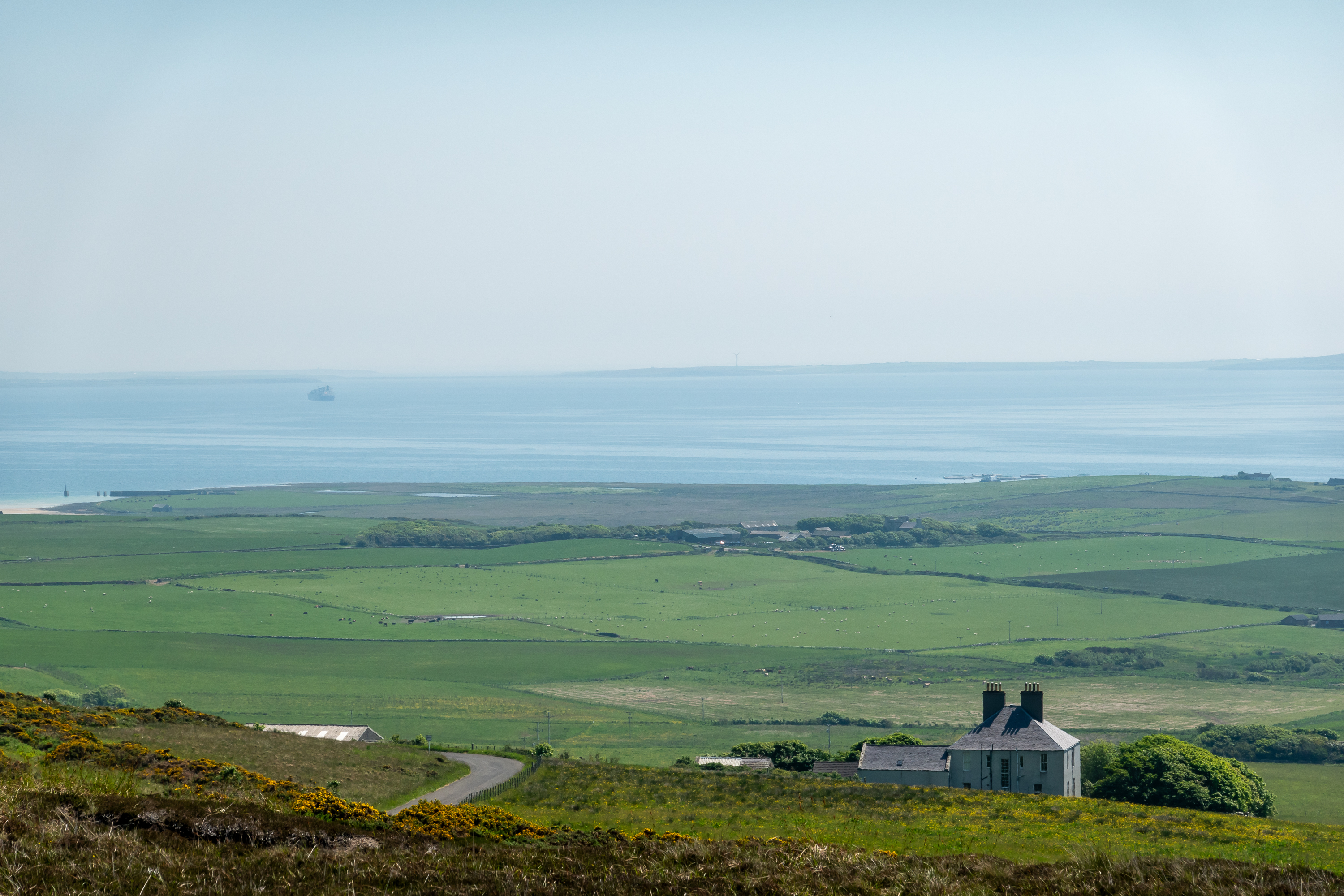
Hard to imagine today, but at the beginning of the twentieth century one could see a hundred ships of the Grand Fleet filling the bay.

During the first World War, the Royal Navy sank block ships in some of the channels to prevent a surprise attack. During the second World War an intrepid U-Boat commander slipped past the block ships and sank the battleship Royal Oak which was at anchor. After this appalling loss of life, Churchill ordered a cement and earthen fill be added over the block ships to completely block the channels. (https://en.wikipedia.org/wiki/Scapa_Flow ) Today’s road runs over three of them. During winter storms, these barriers are quite dangerous and they can be closed to traffic.
Our first stop in Kirkwall was a much needed cup of coffee in the local town hall coffee shop. Thus refreshed, we enjoyed a lengthy visit to St. Magnus Cathedral, which was quite fascinating in its Norse characteristics rather than the Norman/Medieval styling one sees all over the UK. Subtly different, everywhere we looked.
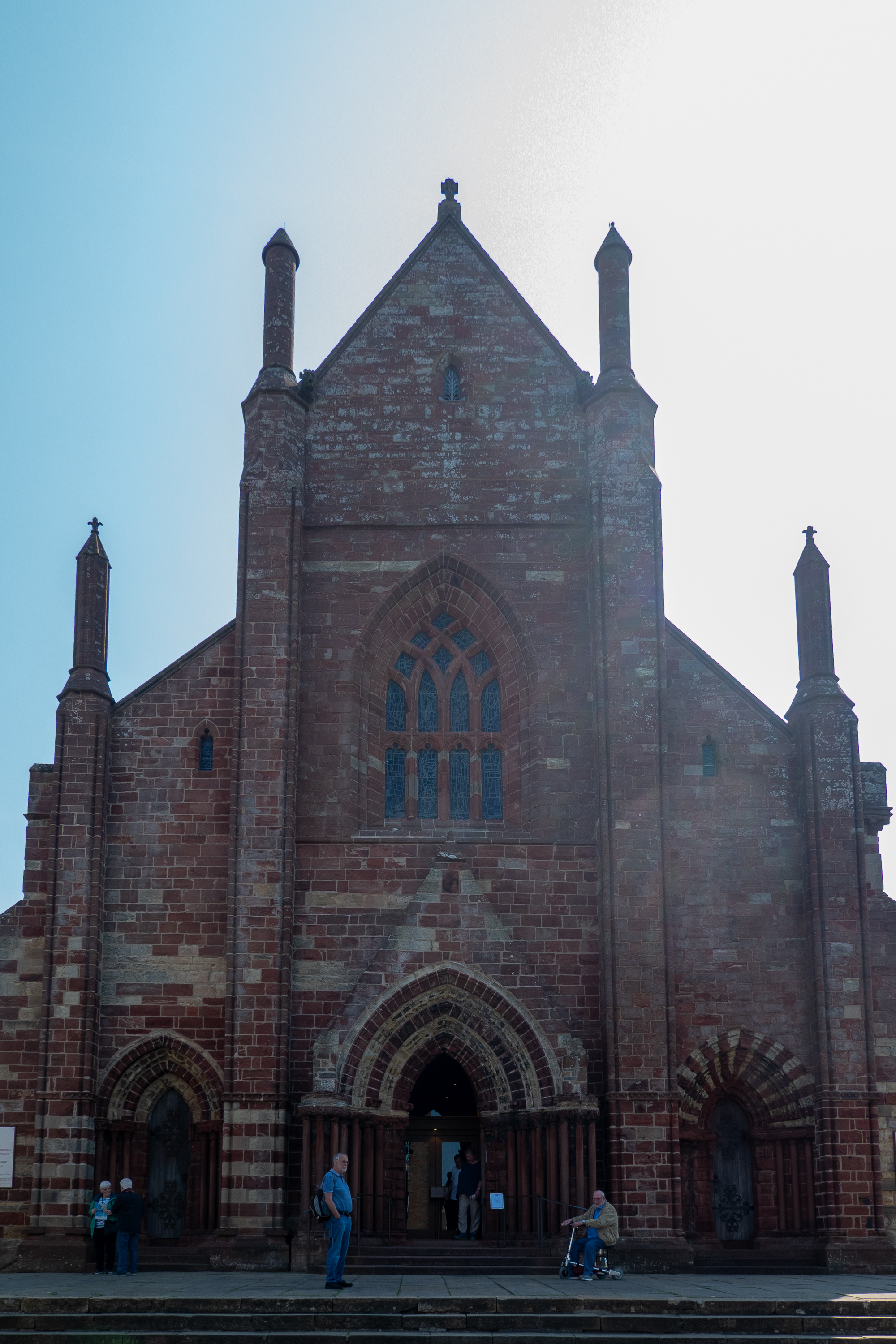
The cathedral dates from 1137 and is named for Magnus Erlendsson, Earl of Orkney, who was murdered by his cousin. Stories grew up of miracles at the grave of Magnus and he was considered to be a saint. A casket of bones found during a 1919 restoration is believed to be his. The cathedral was part of the Archdiocese of Nidaros, part of Trondheim in Norway until after 1468. St. Magnus is the only cathedral, that we know of, with a dungeon. Lots of great reading here: https://sites.scran.ac.uk/stmagnus//index.htm
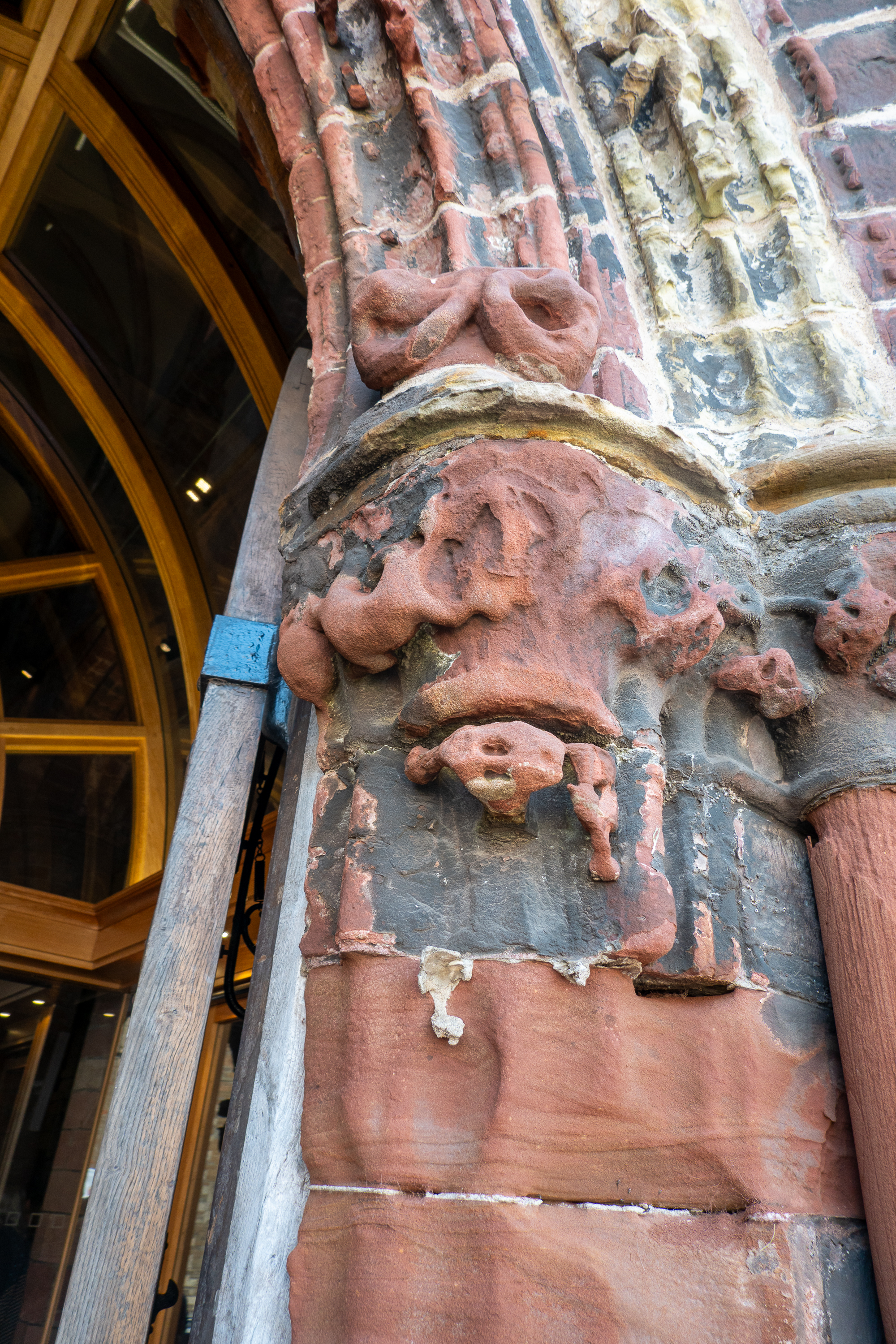
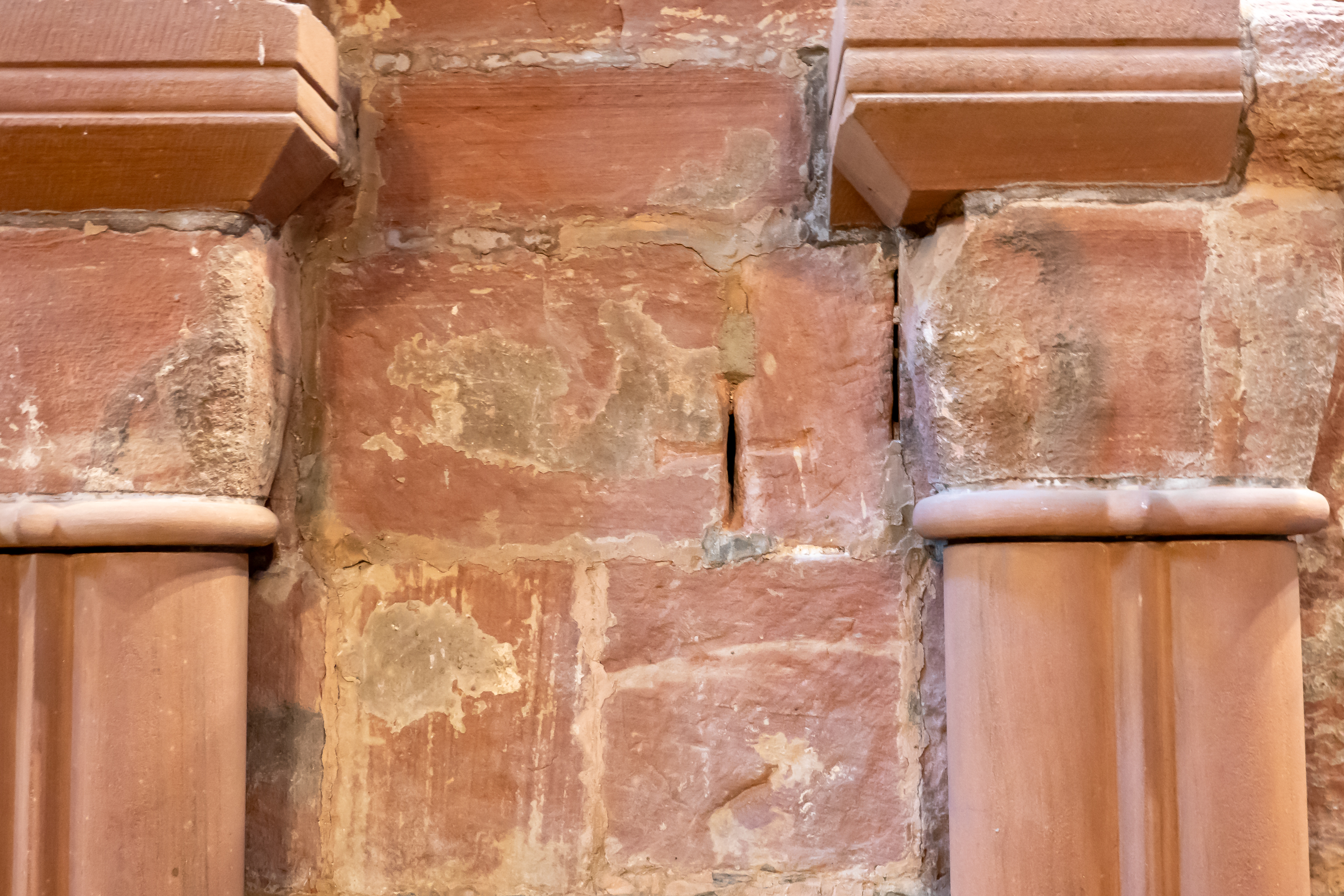
https://the-past.com/feature/marks-of-devotion-exploring-historic-graffiti-in-st-magnus-cathedral-kirkwall/

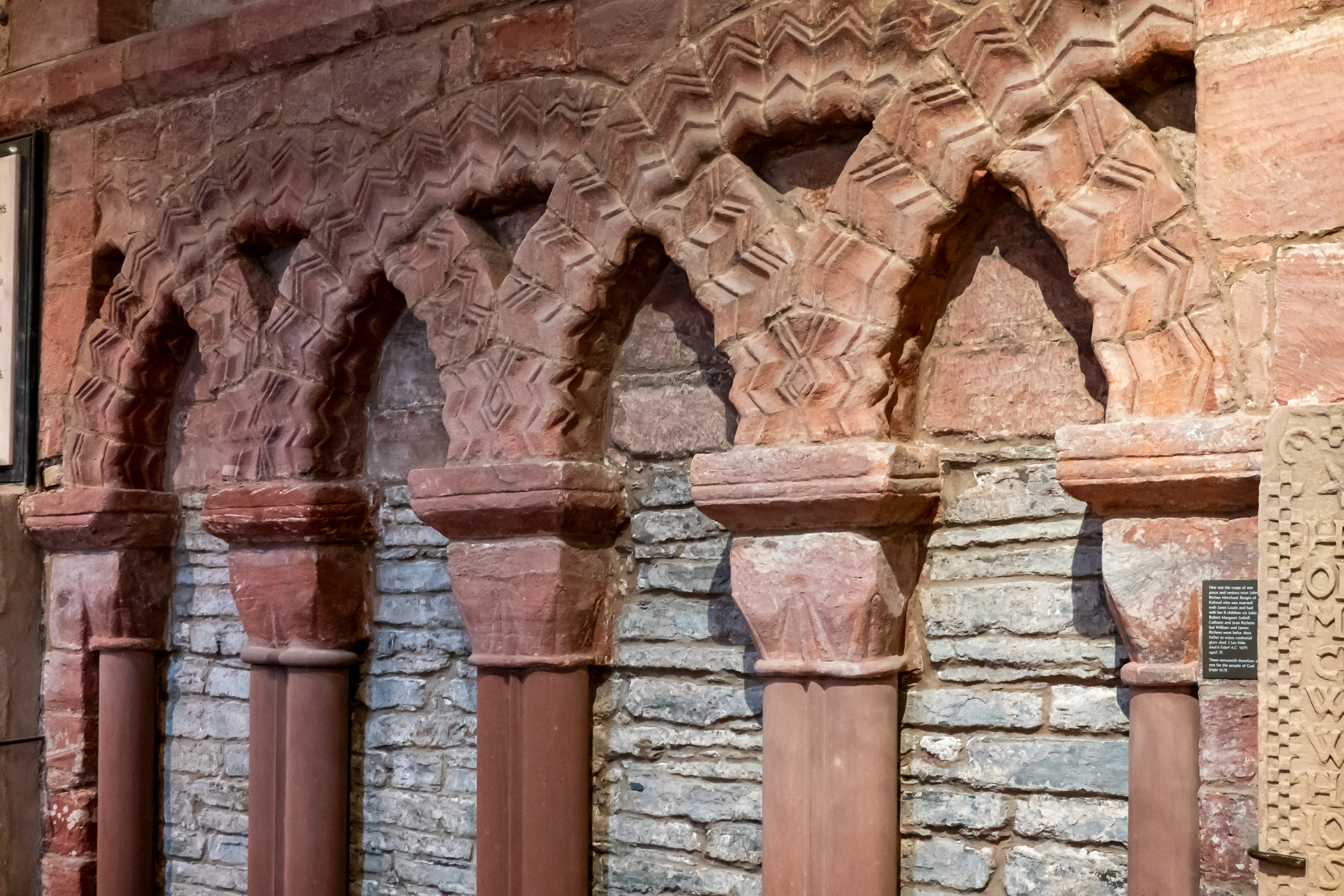
But the red sandstone is simply beautiful.


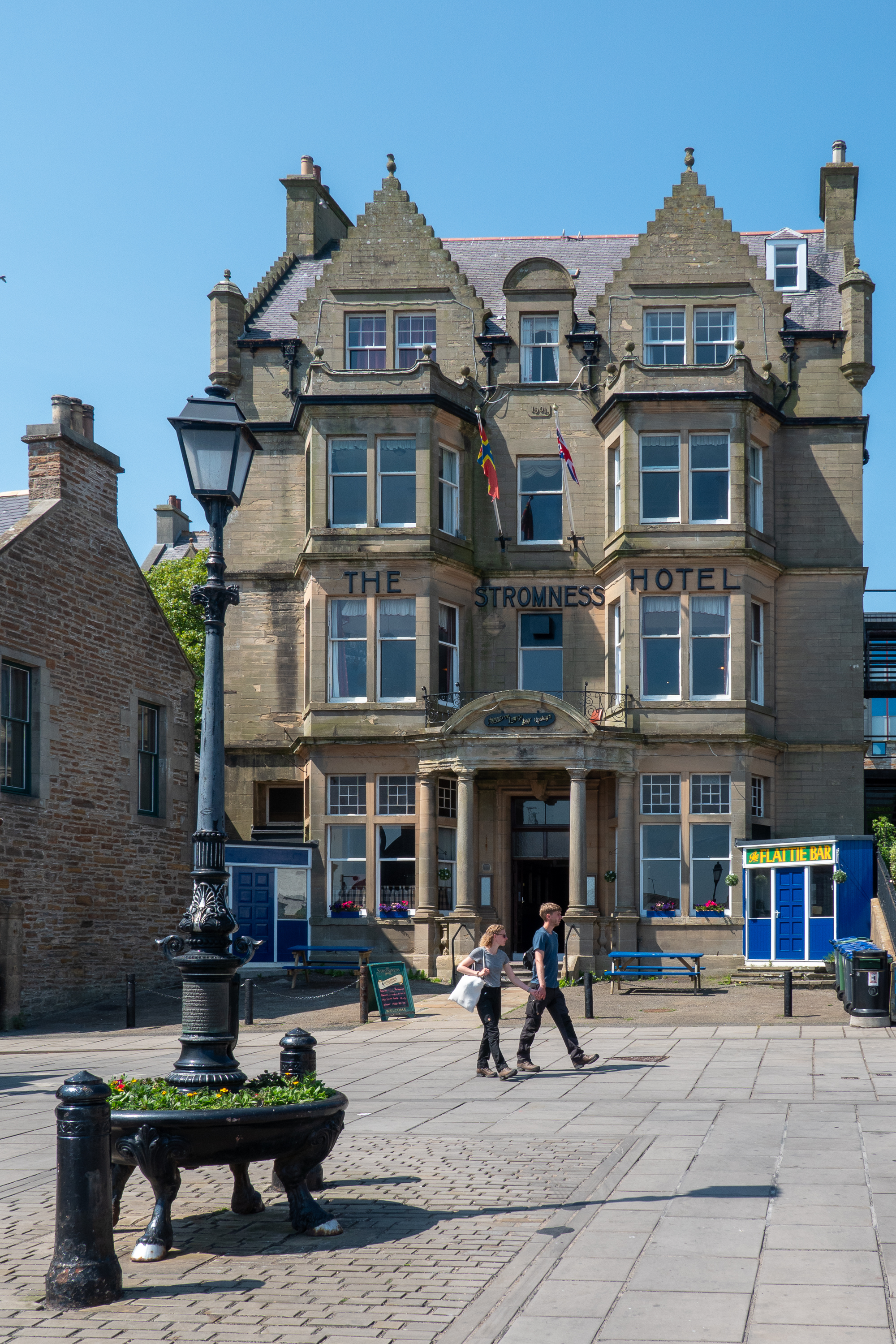
We also wandered the grounds of the Bishop’s Palace and the Earl’s Palace. Both are currently very much in ruins but the grounds were interesting with information panels at various spots. Finally, we went to the art/craft show in the same town hall. Denise regretted that she had no space to carry back more wool as there were some wonderful offerings! Back on the bus we headed for lunch in Stromness. We went low brow and bought lunch goodies at a bakery, recommended by our driver, and ate them on the waterfront, by the docks. We finished with an ice-cream! Yes, there is a pattern here.
The bus then took us to see the stone age village of Skara Brae. (https://en.wikipedia.org/wiki/Skara_Brae )
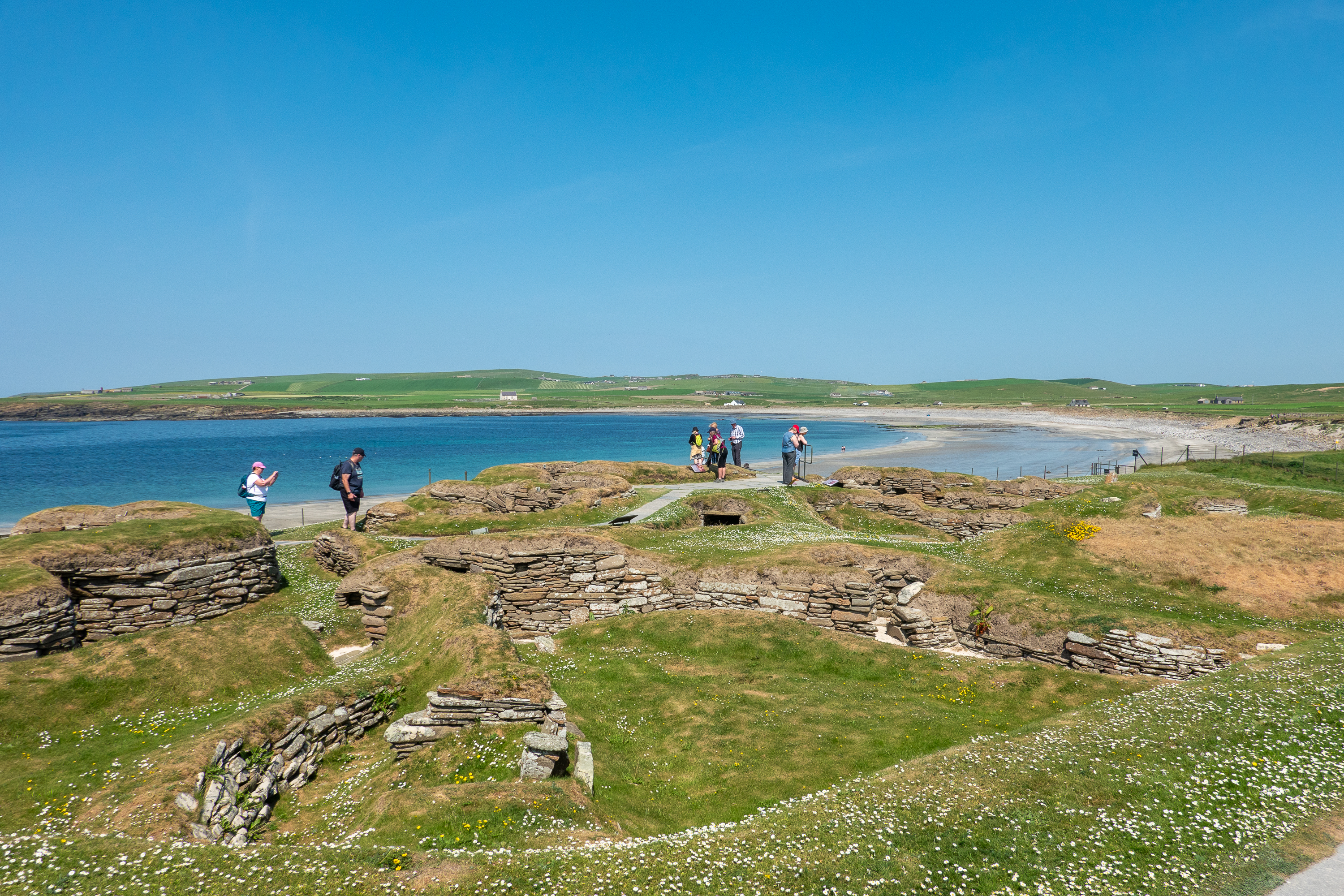
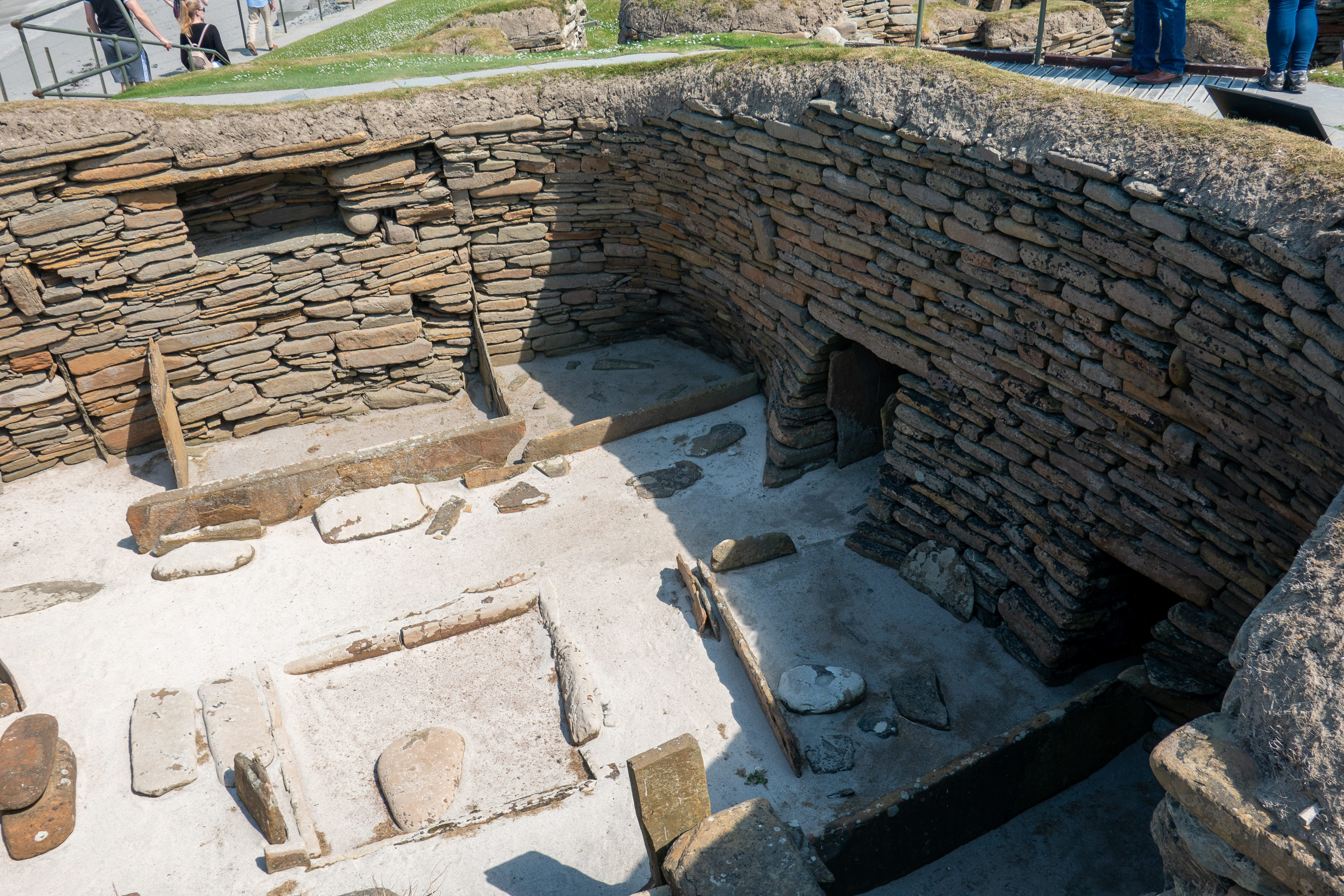
Uncovered during a major winter storm, the ten stone dwellings were absolutely fascinating. They were occupied over 5,000 years ago. The stone built furniture is preserved and clearly visible. Cupboards, beds and boxes are all intact. We were told that the sea was originally quite distant from the dwellings although now they are on the edge of a cliff. There are probably more dwellings that have not yet been excavated.


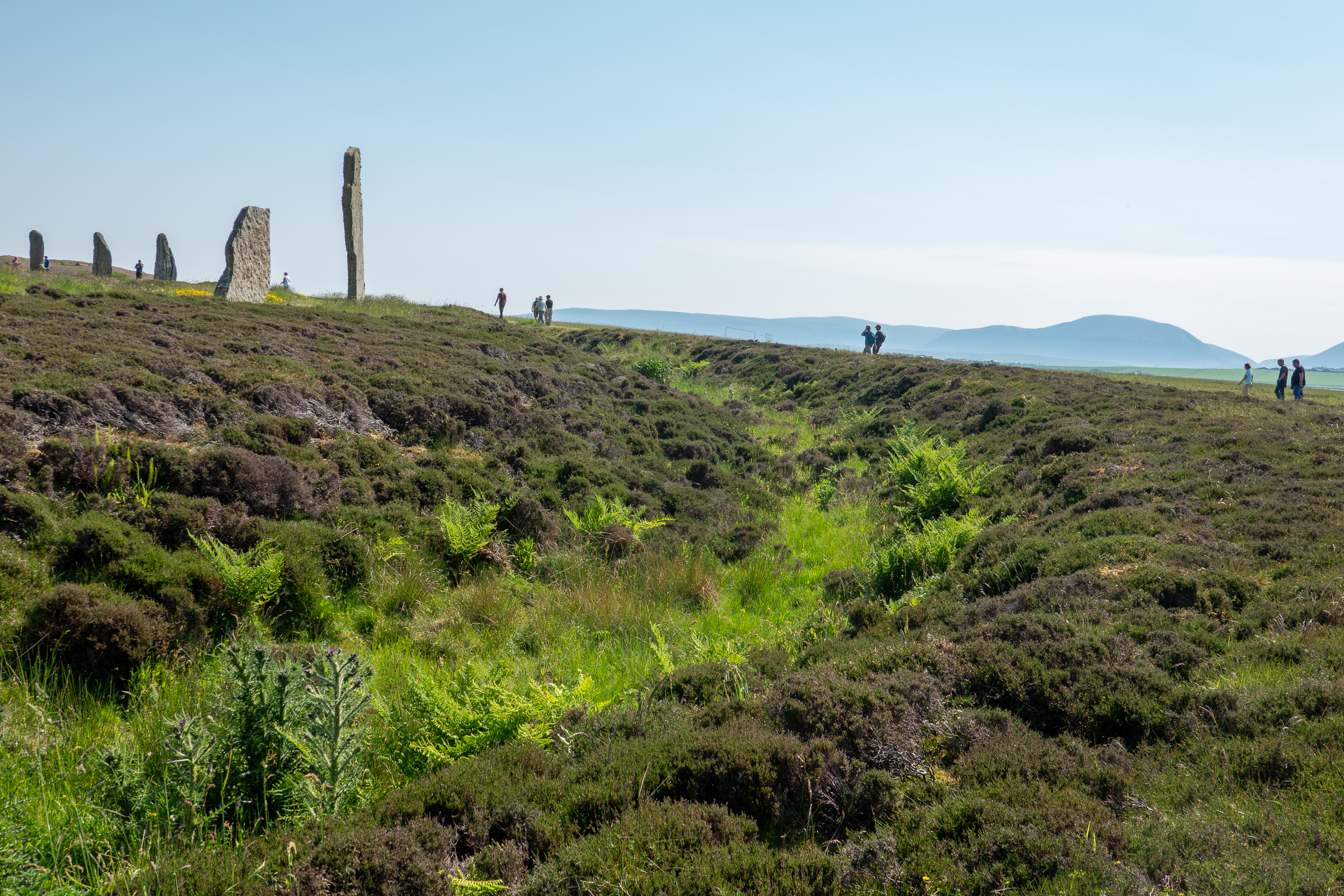
We then headed to the standing stones henge forming the Ring of Brodgar.

This is a vast circle of 36 standing stones, built 4,000 years ago. There may have been as many as 60 stones originally. No one knows why this was erected or what role it played.

Our final stop was the Italian Chapel. Our guide explained the history of this and especially how it was constructed. It was built in 1943 and it is really quite amazing that Italian prisoners of war could construct something so beautiful out of bits and pieces lying around. It is maintained following an agreement with the prisoners when they were returned to Italy and one of the main creators returned later to see it again.


You can see the curve of the Quonset hut.

After this excellent tour full of local tidbits and charm, we returned to the ferry and John o’Groats.

 DiploStrat