Monthly Archives: October 2023

Amboise, Or an Island in the Loire, Part Two.

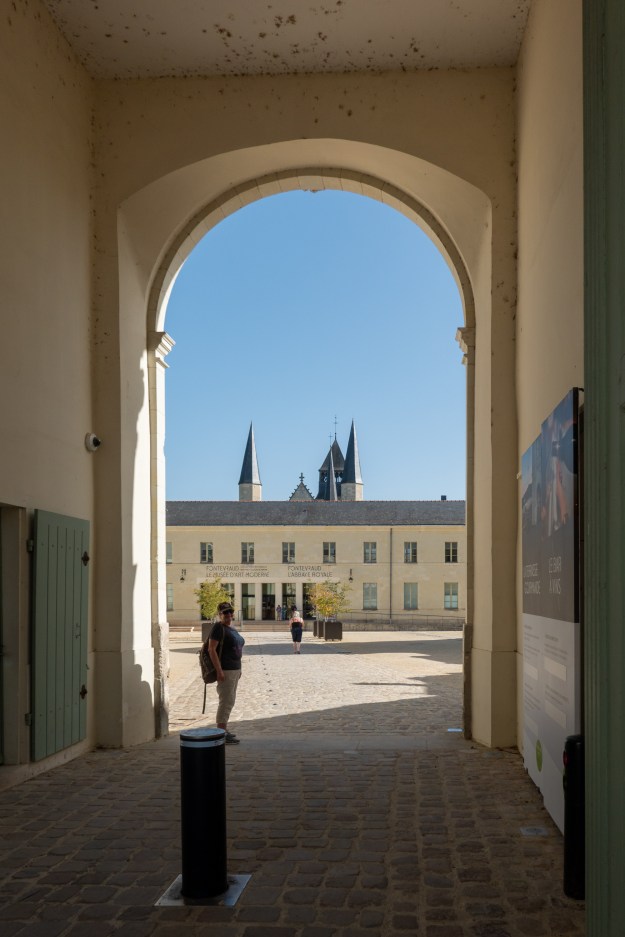
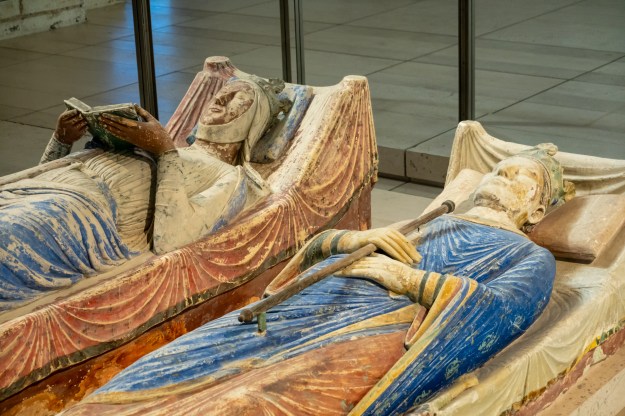
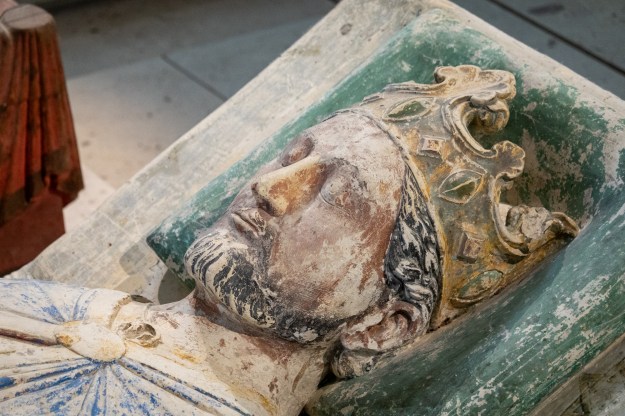
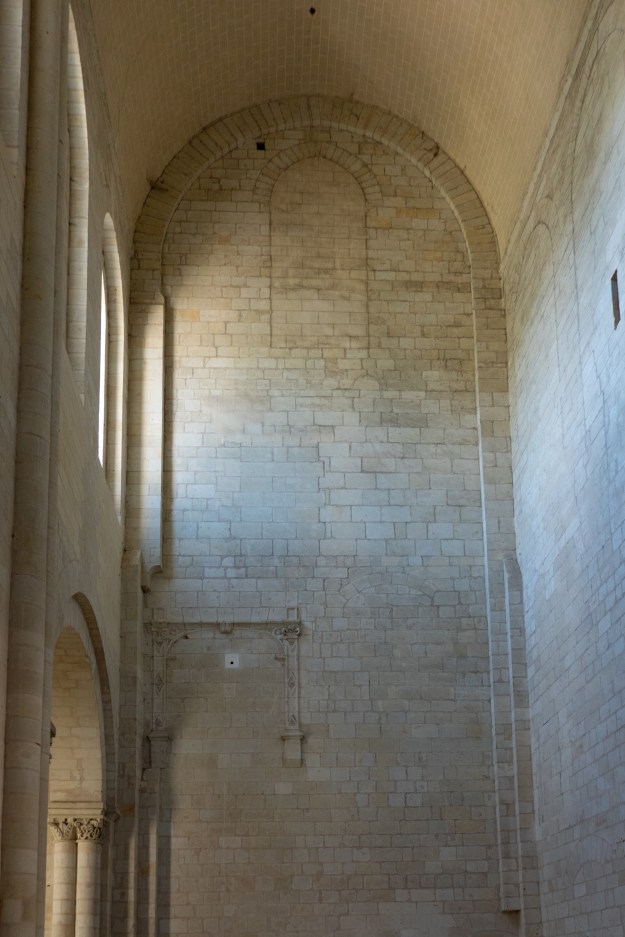
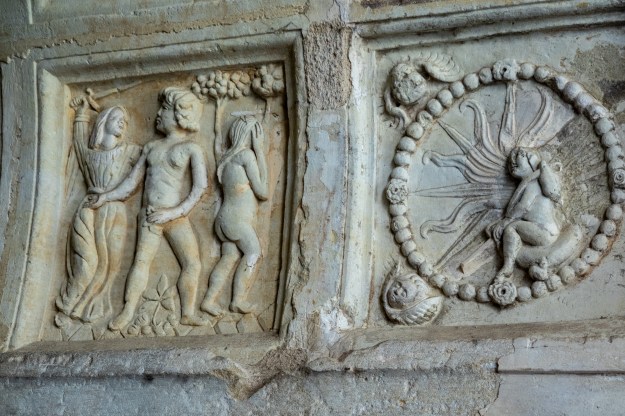
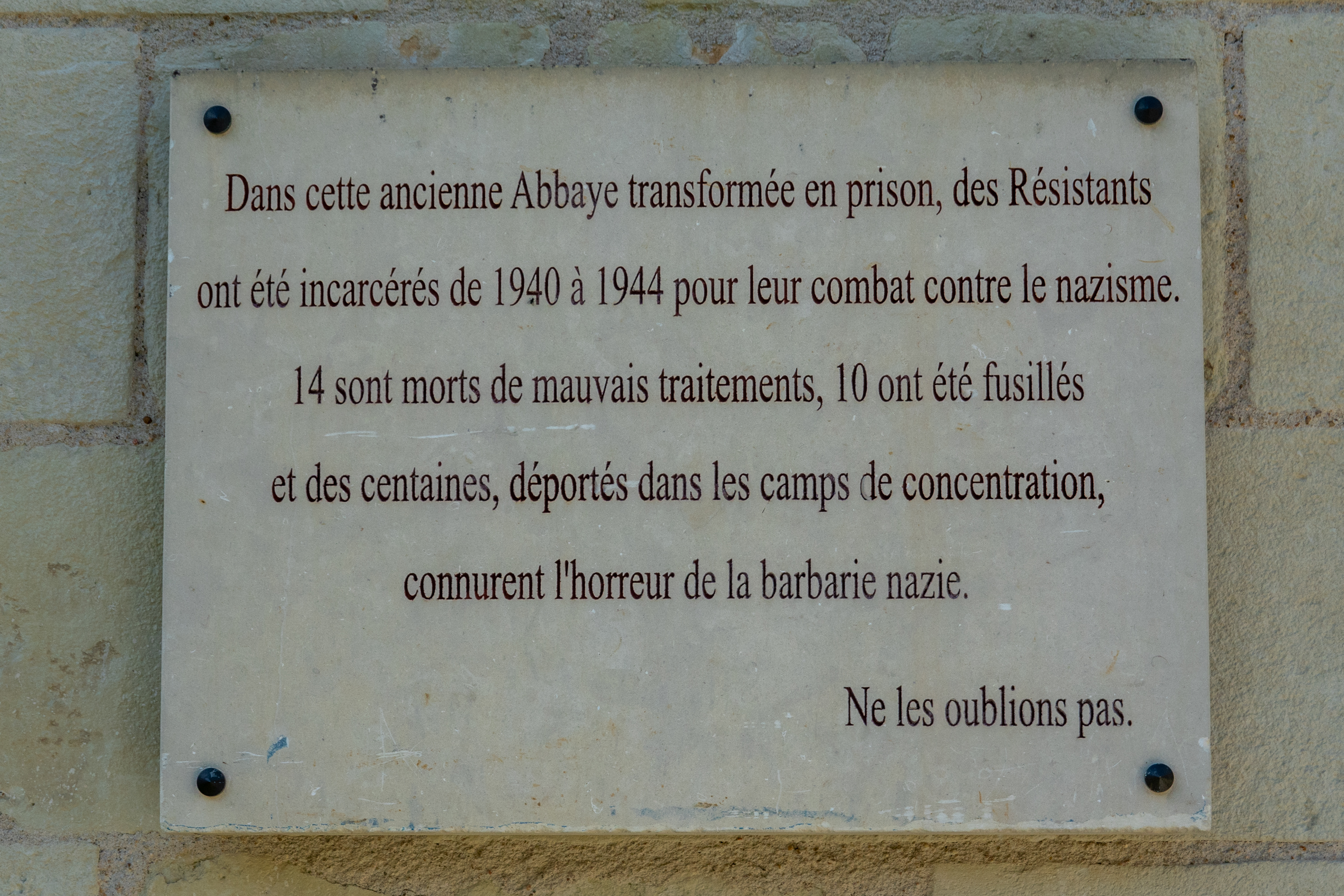
Clean clothes in hand, we set out for the Fontevraud Royal Abbey. Established in 1101 the Abbey was always headed by an Abbess, despite the presence of monks. It became a prison during the French Revolution and remained one until 1963.  It was then renovated to show its former life. Perhaps the Abbey’s greatest claim to fame is as the resting place of three of the great (or infamous) Plantagenets – Henry II, Eleanor of Aquitaine, and their son, Richard, known as the Lionhearted. A reminder that a lot of “English” monarchs really had their roots in France. There are lots of serious books about the Plantagenets; for something a little, but not much, lighter, try the historical fiction of Sharon Kay Penman. (https://sharonkaypenman.com/book-category/us-editions/) Penman’s books cover eras and characters made popular in various TV shows, plays, and movies, such as “Cadfael”, “Richard III”, “Robin Hood”, “The Kingdom of Heaven”, “The Lion in Winter”, and many others.

We enjoyed a wonderful (full menu) lunch on the square before touring the Abbey.
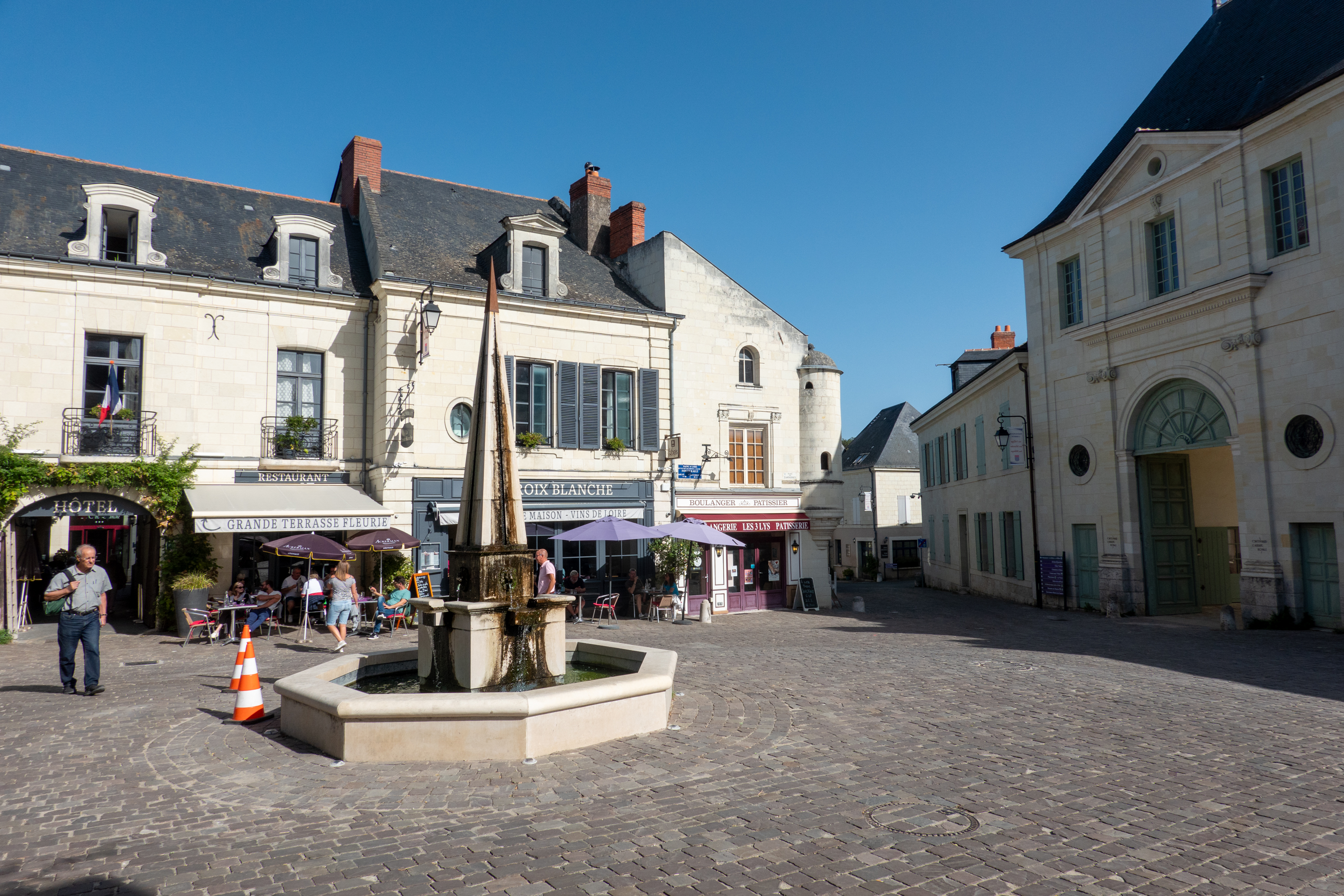
Lunch to the left, Abby to the right.
The Germans used the prison as well.

We finished our day at the Clos des Cordeliers. (https://www.clos-des-cordeliers.com)

Graffiti left by a Parisian sentenced to ten years of hard labor.

According to legend, the prison was so harsh that it was called a “prison for guards.”
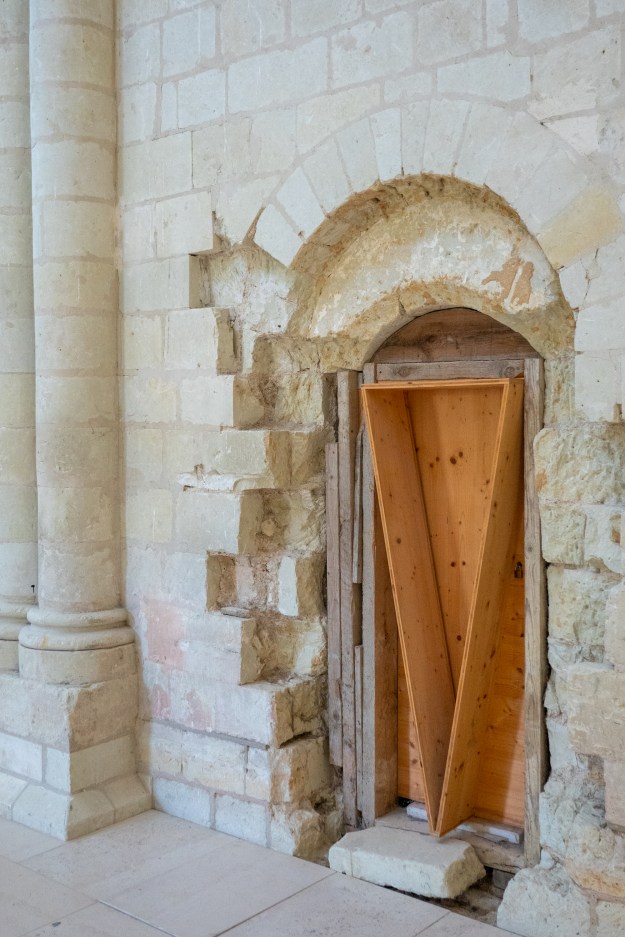
Note the food slot at the bottom of the door.

The Clos des Cordeliers is part of France Passion, so we were able to spend the night. We enjoyed a great tasting and chat with the staff and we learned that the harvest had just finished, so everyone was happy!  We bought several bottles and moved the camper for the night.

In Saumer, the aire was on an island in the middle of the Loire. A quick pop across the bridge on the bike and you were in the old town. And now, reaching Amboise, we parked on yet another island in a very dry River Loire. So we got on our bikes and popped across another bridge to reconnoiter.

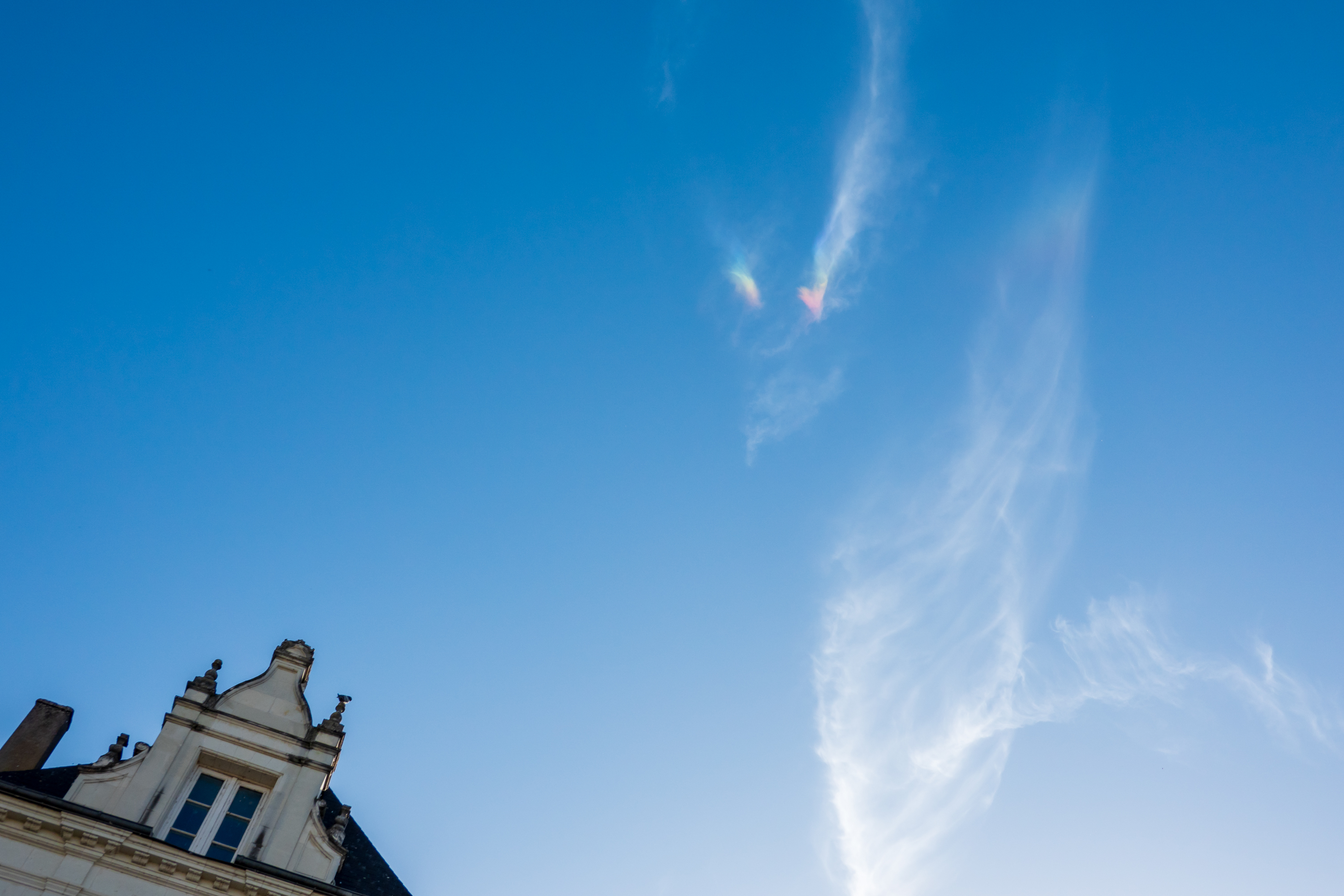
Wild, rainbow effect in the sky.

The main street was busy with tourists. So, naturally, we stopped for a coffee and a goody. And we came back for a wine tasting in a gallery under the castle.

Love buildings built over the road. Site of the dreaded flat tire!

We had come to Amboise specifically to see the Clos Lucé and the Parc Leonardo da Vinci. We found it and, the next morning, returned just as it opened.

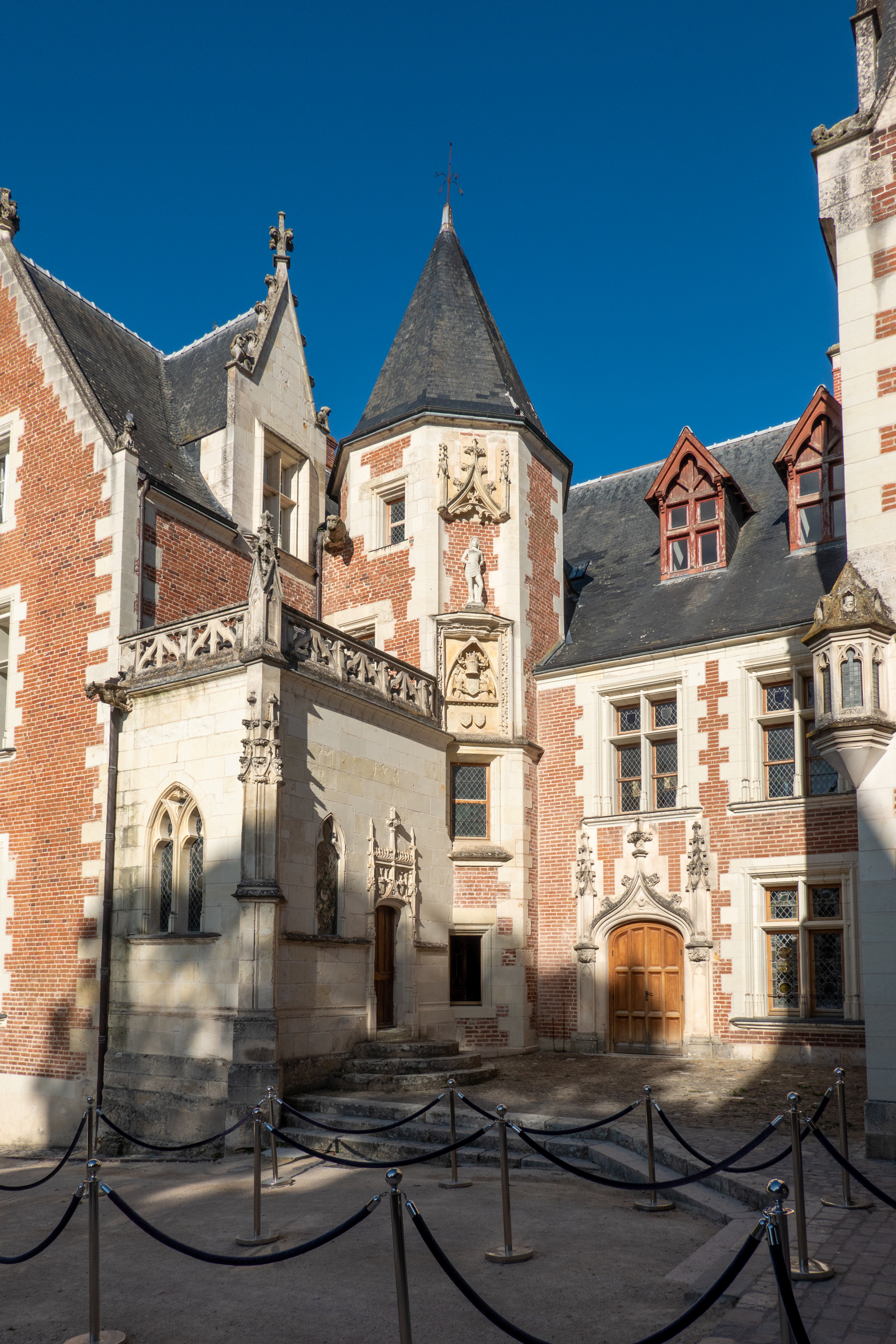
The chateau Clos Lucé was originally a fortified residence. Unusual in that all you can see from the road is a nondescript gate.

Were it not for the signs, you would never notice the entrance.
Step inside the gate and it is a whole new world. A very comfortable house, still joined to the original military tower, and huge, extensive gardens.

Leonardo da Vinci spent the last three years of his life here, at the invitation, in 1516, of Francois 1 of  France, and so left a treasure trove of possessions. 
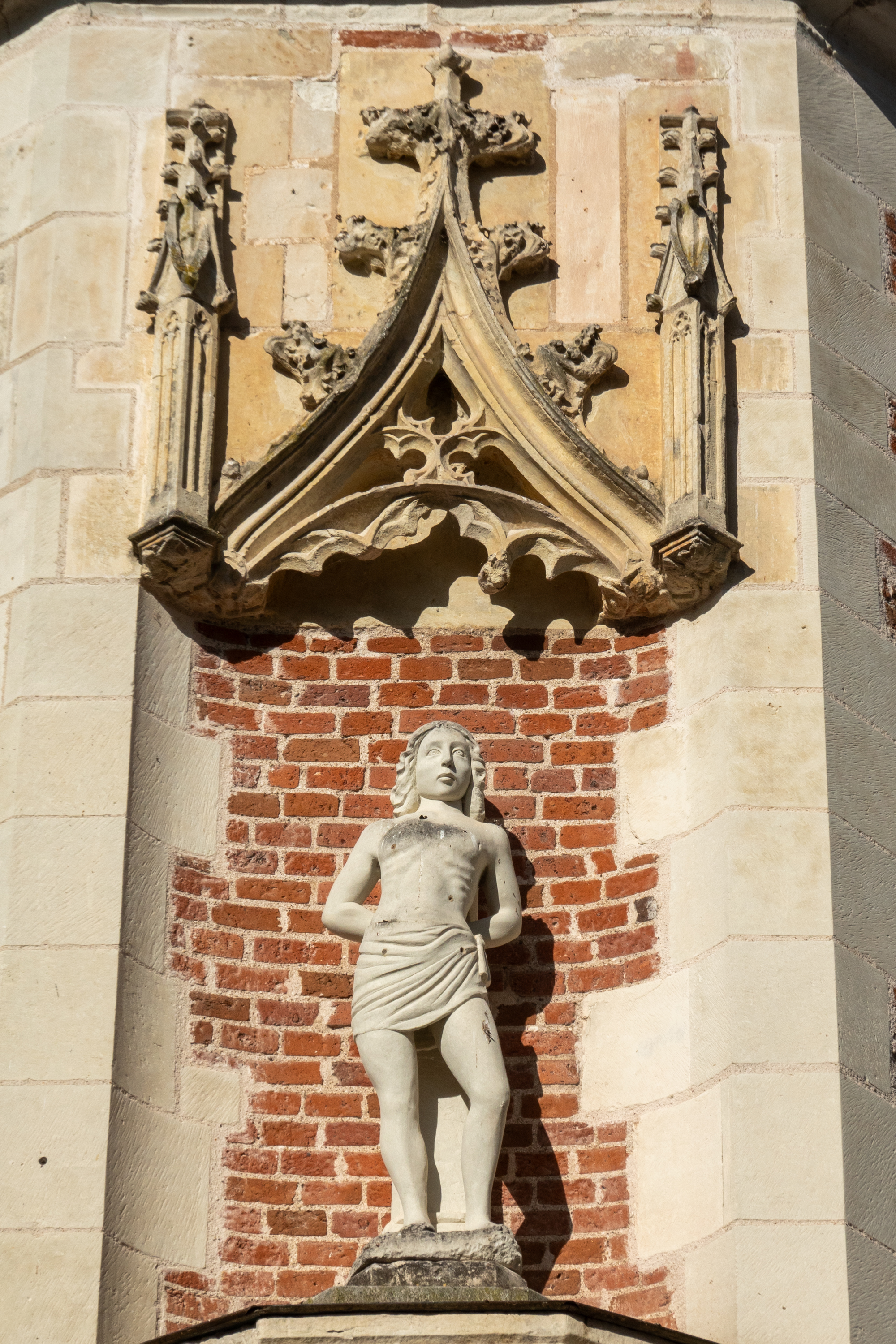
Front door to the main house.
View towards the castle.
Prayer offerings in the chapel wall. Note the dates.

The house itself was fascinating and included Leonardo’s bed chamber, a “loggia” or gallery, the Oratory of Anne of Brittany, with frescos painted by some of Leonardo’s students and other fascinating rooms. The whole effect was light and airy.

Beautiful ceiling decorations.

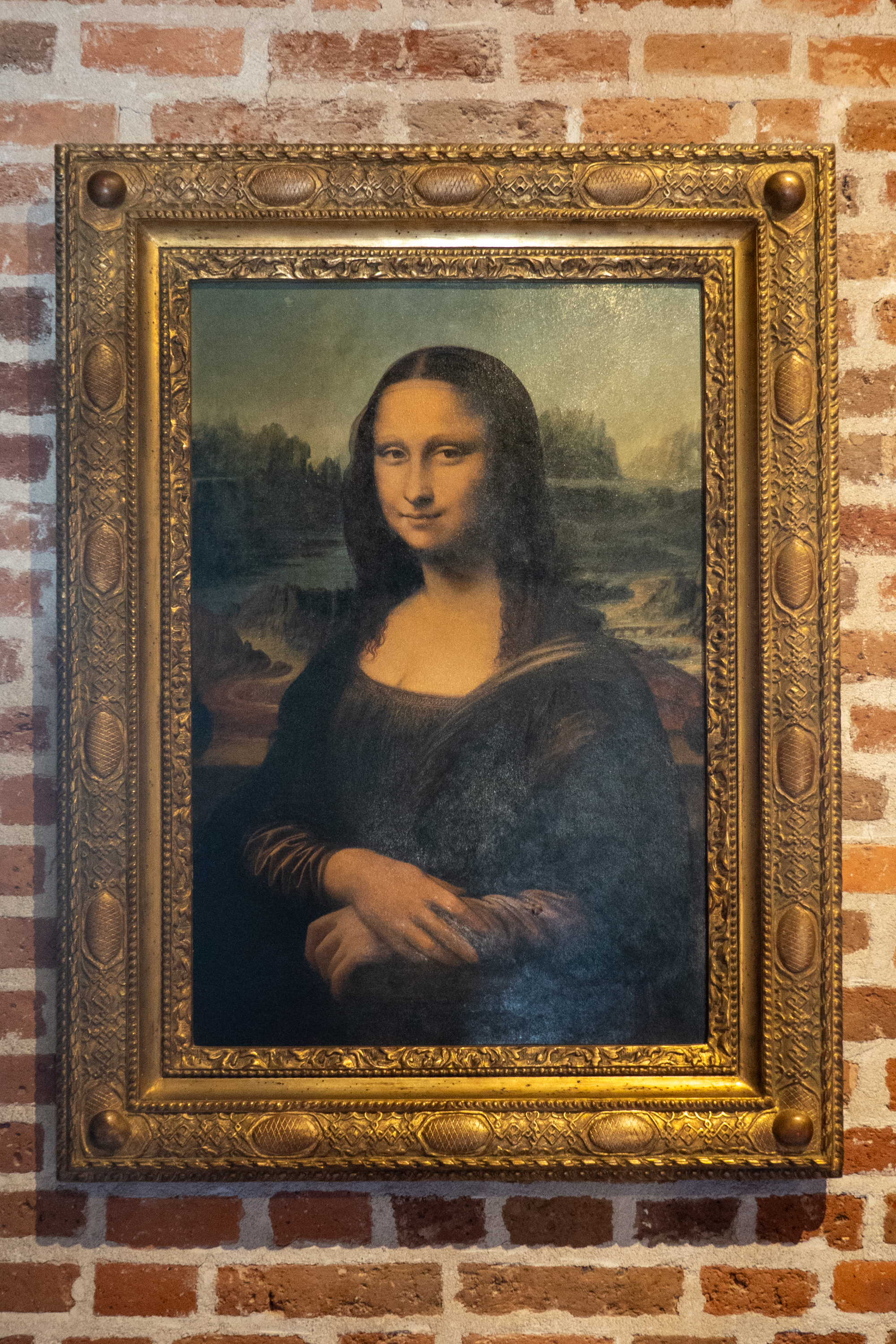
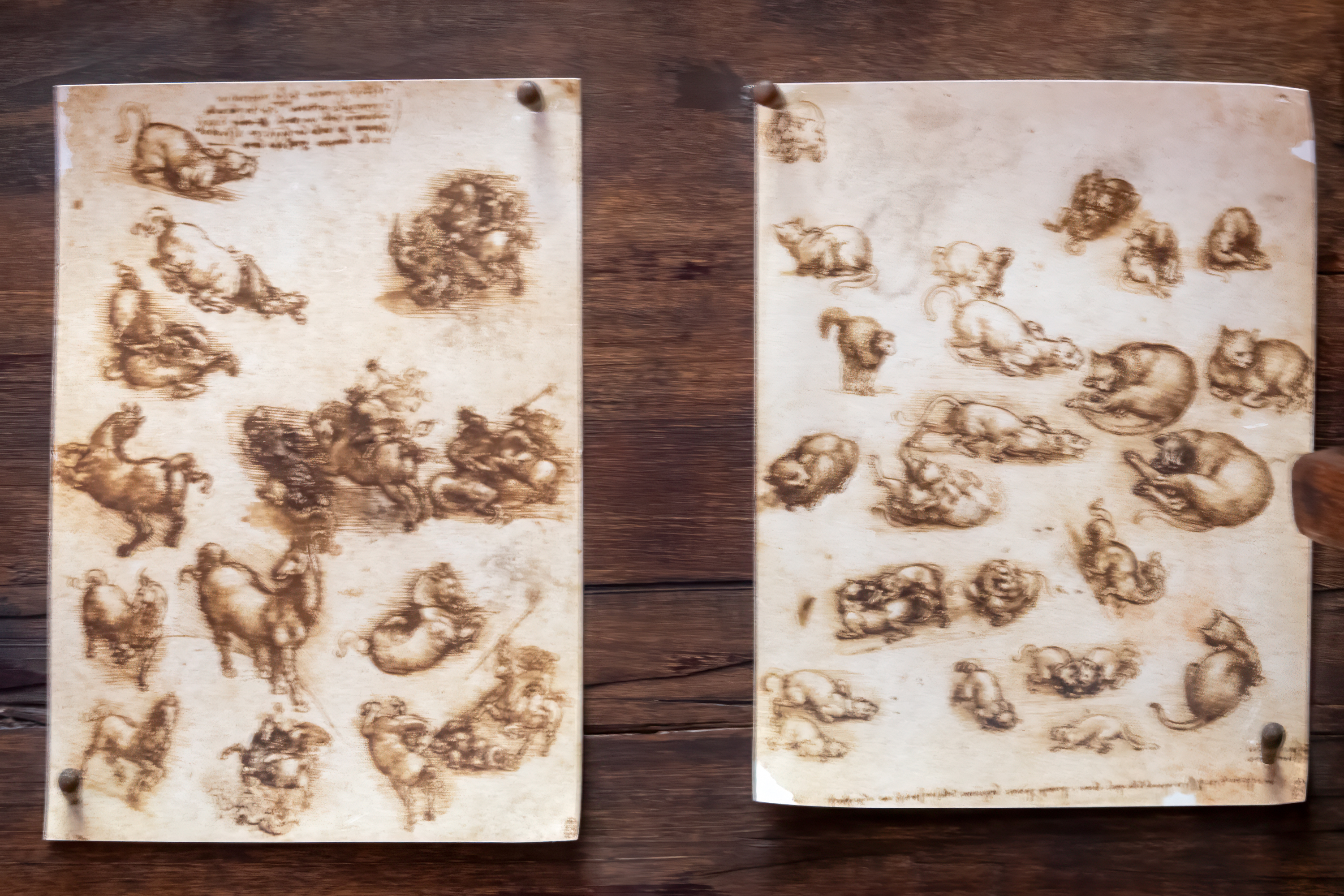
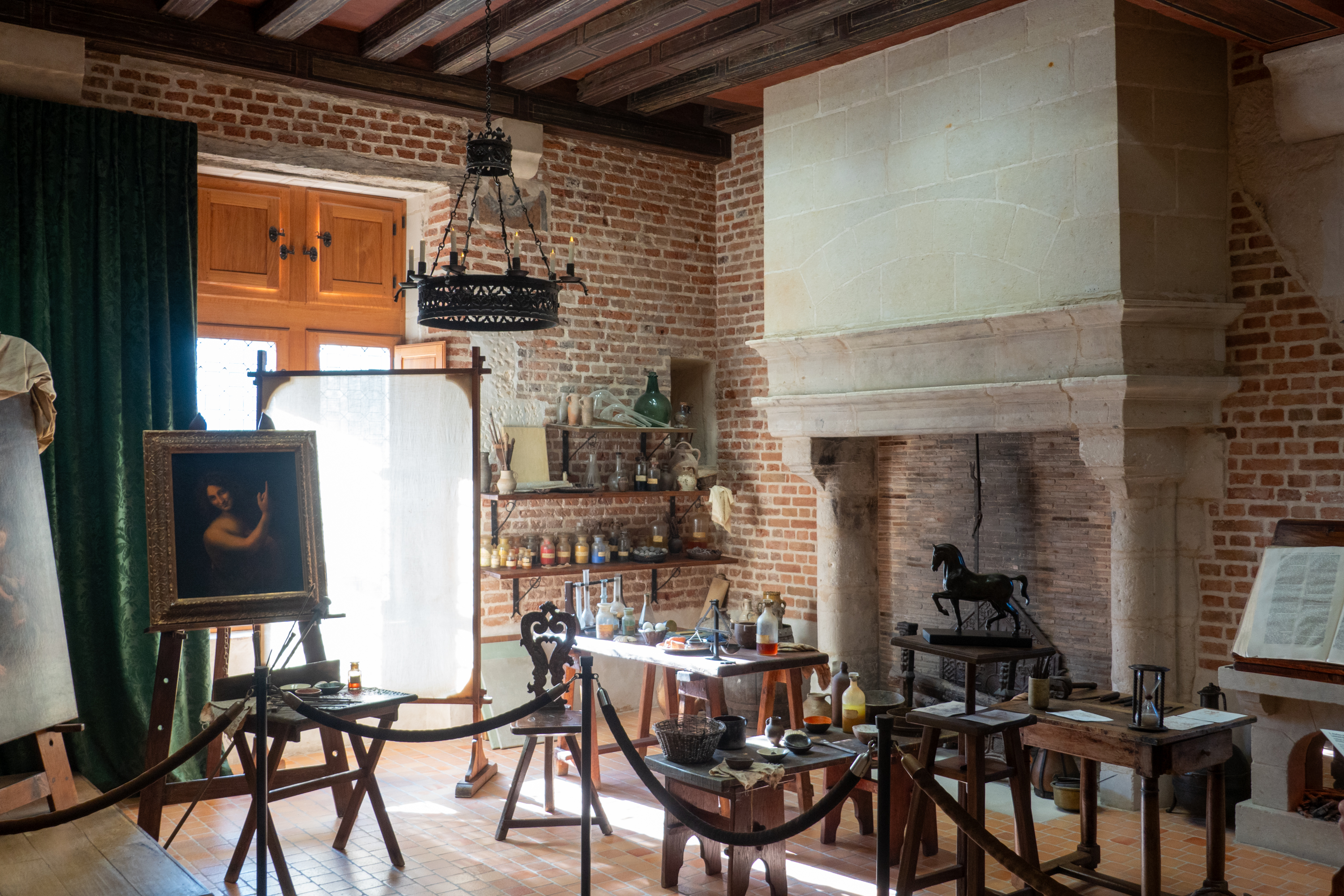
Leonardo’s workshops were a series of three rooms, each concentrating on his various interests.  Denise liked the painting one best, it included a copy of the Mona Lisa, which is easier to view than the one at the Louvre!  Leonardo’s easel and paintbrushes, workbenches and his last drawings including a cat series that Fred liked especially.
Musical instruments. The middle one appears to be an African banjo.
Cats and Horses

There was a clever display of Leonardo receiving a visit from the Cardinal Luigi of Aragon. The latter made an extensive journey though Europe. The journey was detailed by Antonio de Beatis, his secretary and it is a fascinating story for anyone interested in the famous painting, the Mona Lisa, or simply European life at the time. Read more here: https://monalisa.org/2012/09/08/the-travel-journal-of-antonio-de-beatis/

A work in progress.
And Leonardo receives the Cardinal from Aragon.

In the basement were exhibits of a number of Leonard’s inventions, including mockups and miniatures.
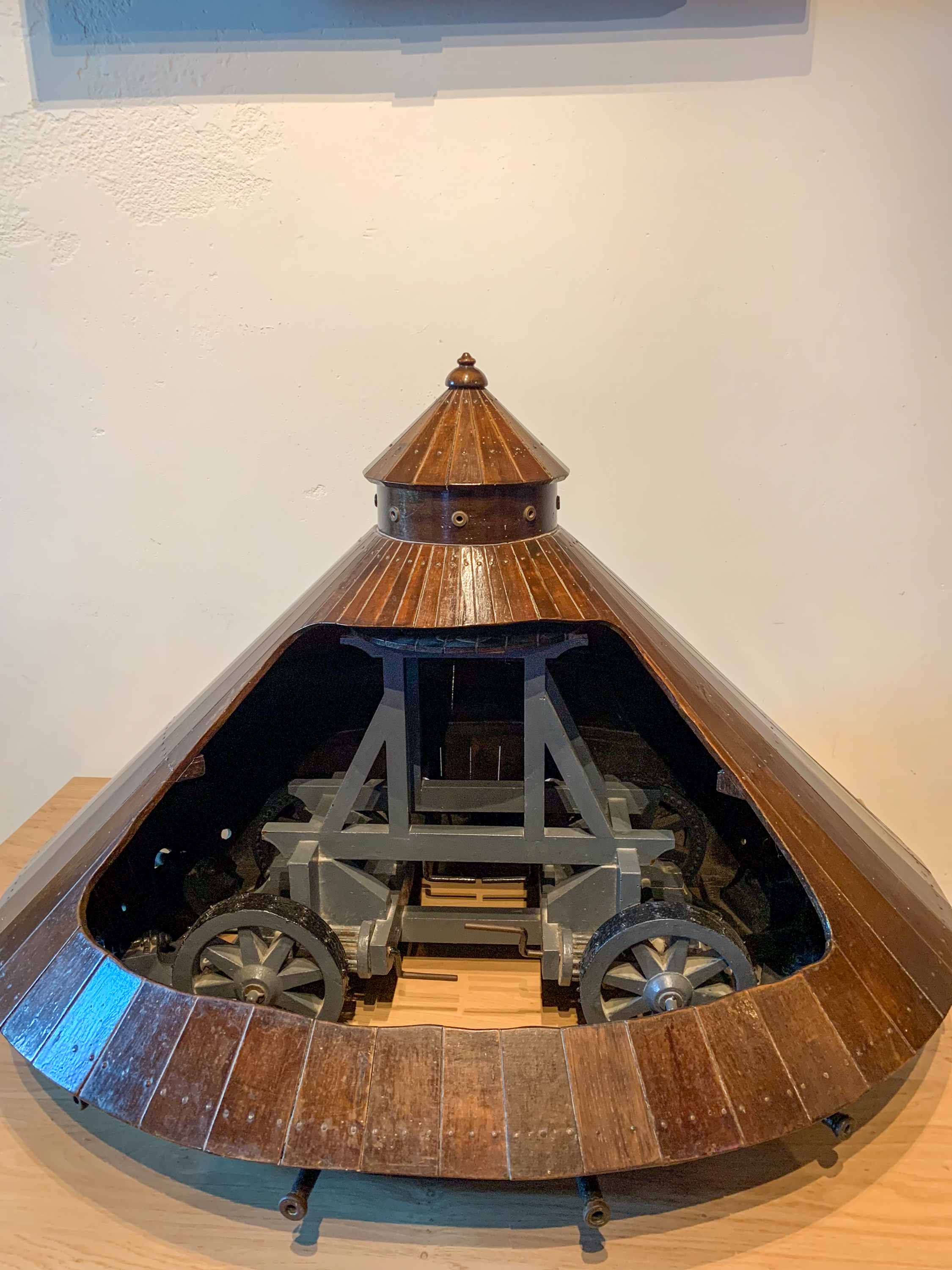
Not as far fetched as you might think. Since ancient times, armored shelters were built to protect battering rams, sappers, and others when attacking walled cities and forts. And modern tanks still use sloping armor – certain physics haven’t changed!

This one is armor geek supreme – a breech loading gun, using a worm gear to close the breech. Why is this significant? Leonardo designed a form of tank and the only way the guns could be reloaded safely was from inside the tank, through the breech. But, for another few hundred years, most cannon would be muzzle loading.

Sadly, this mockup is just a toy for children and does not have any of Da Vicnci’s mechanism inside. But it gives a idea.

And he also built a windup, spring powered car as well as a paddle boat with flywheels to smooth out the power. And, of course, a helicopter! As with so many of his ideas, the problem was the lack of any kind of real motor, a problem that didn’t really get solved until the invention of the steam engine.

Then in the Parc we were able to see them full size, including moving bridges and Archimedes Screws and such.  A fabulous visit. People talk about a person being a “Renaissance Person.” Leonardo Da Vinci was the whole renaissance in one person.
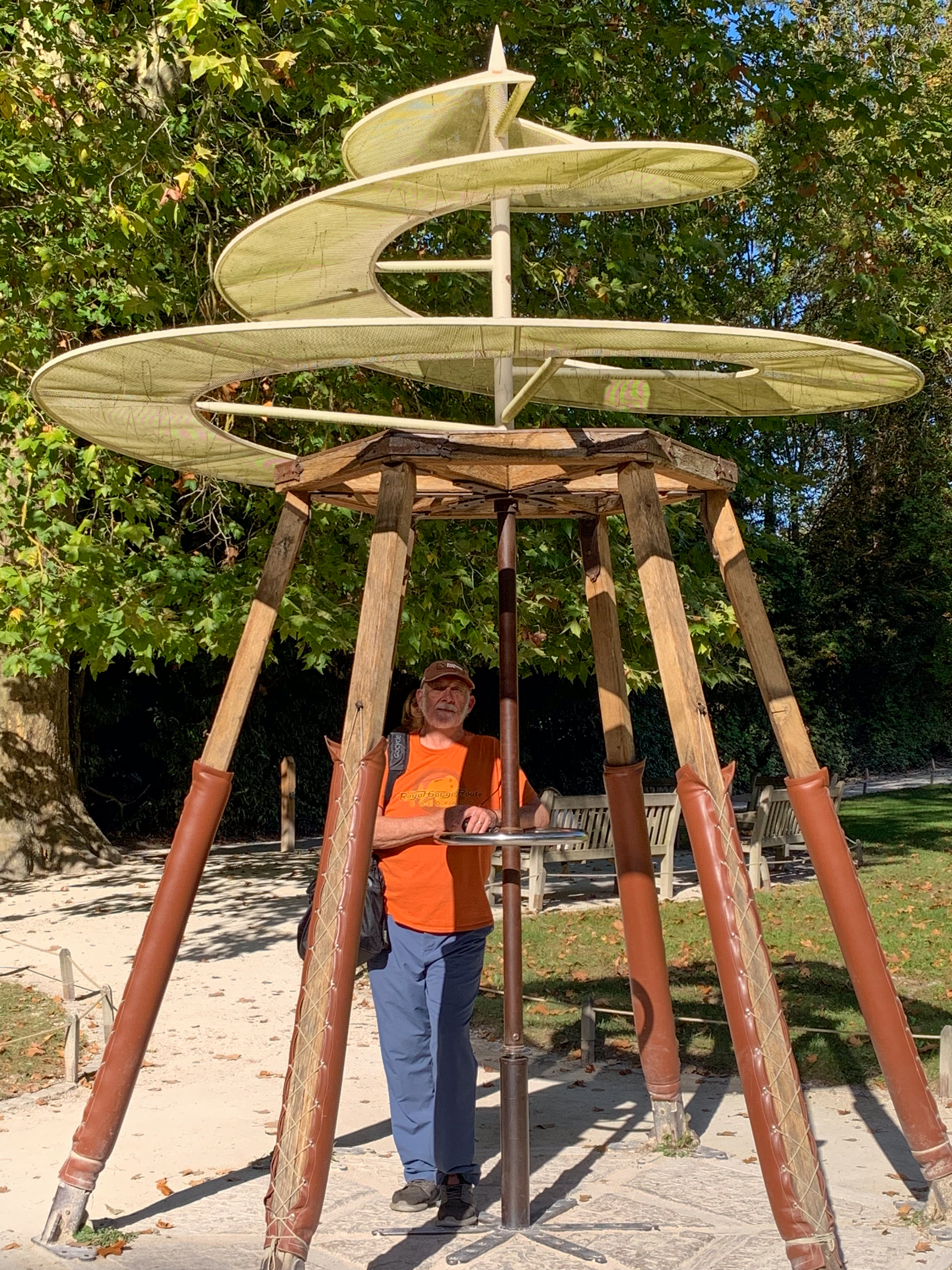
No, I couldn’t get it to take off!

We also visited the Chateau of Amboise, which is an interesting juxtaposition of fortification and more modern chateau. 
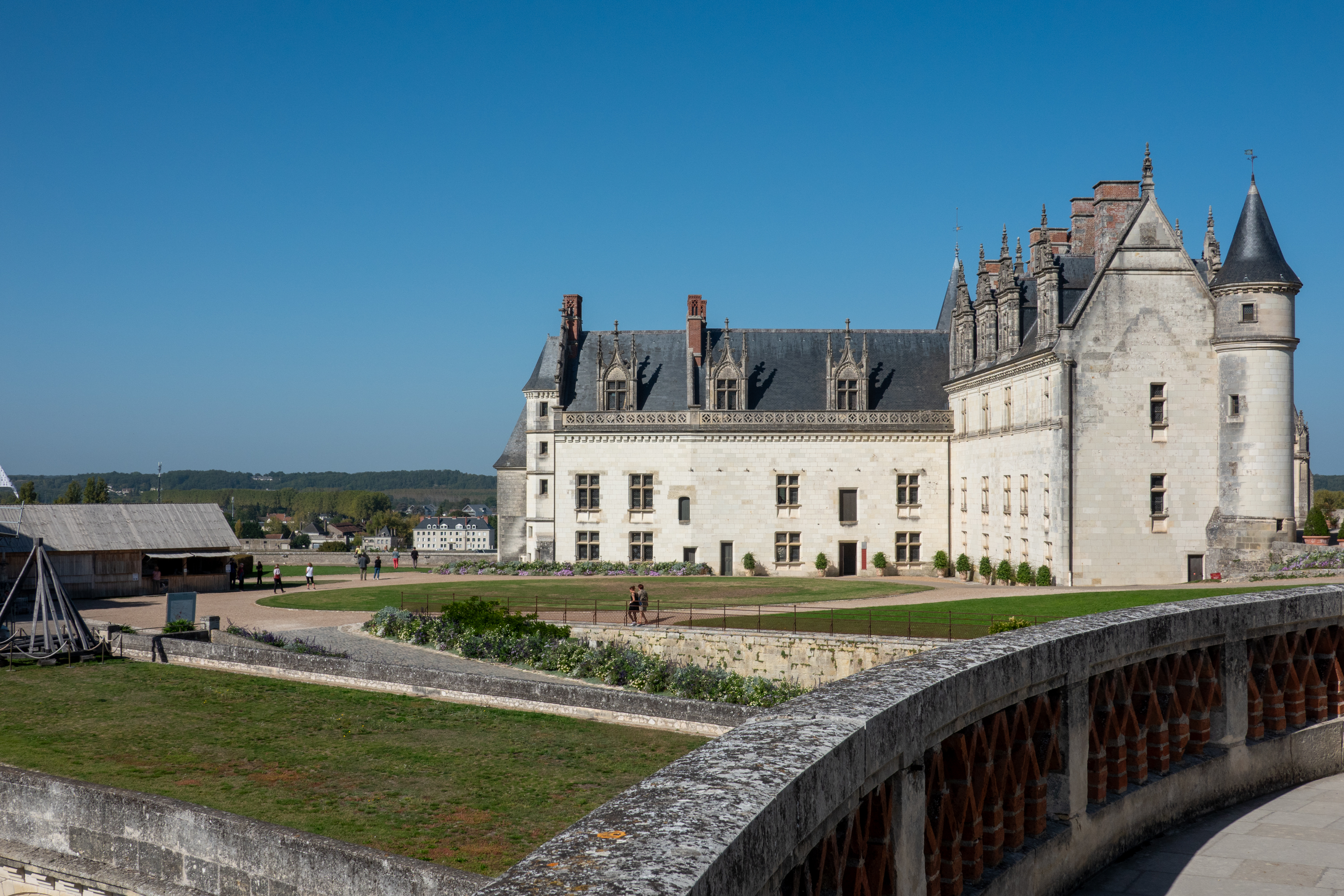
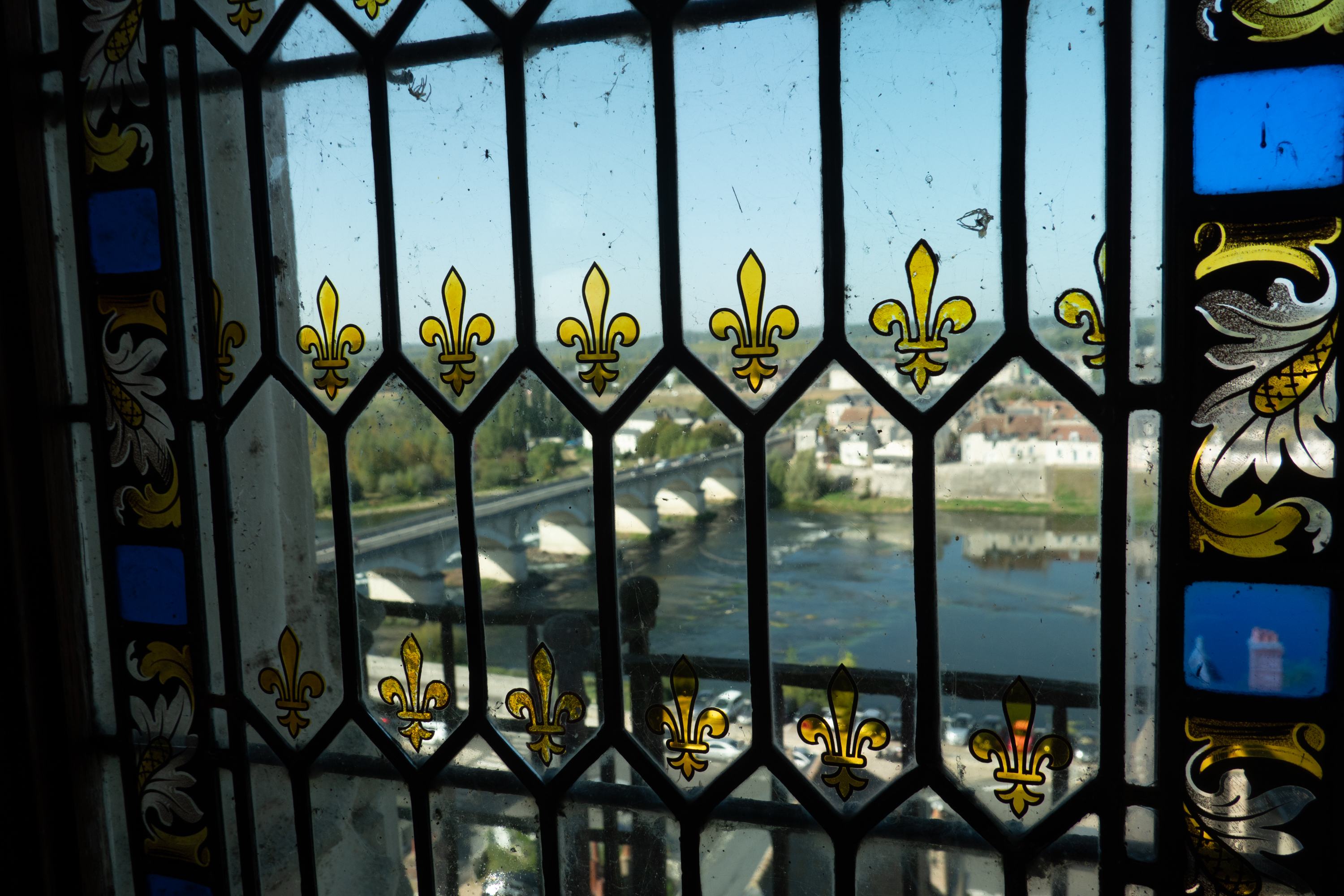
The the older battlements leveled, this new, free standing building was erected on the site, with stunning views over the river.

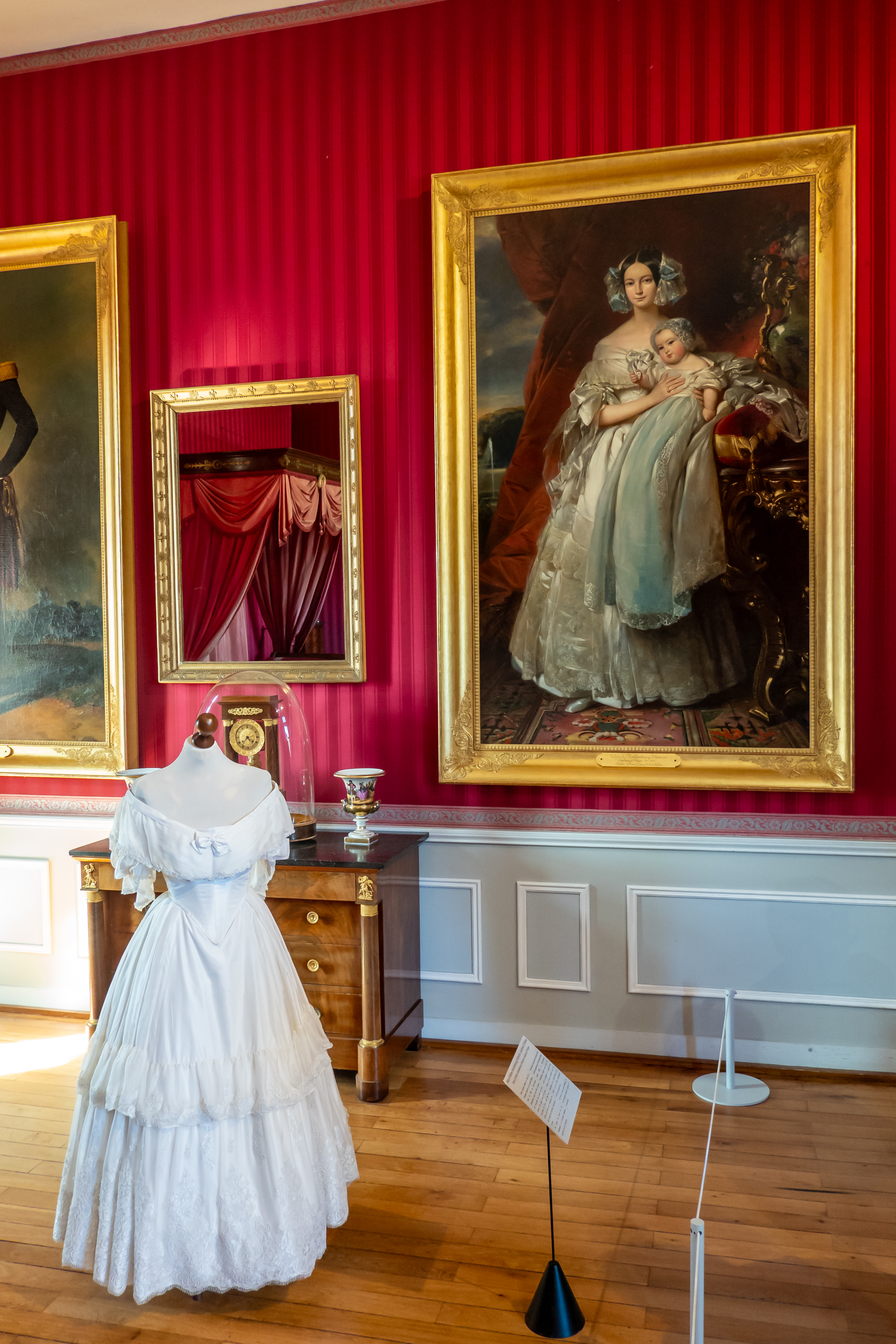
It was confiscated during the French Revolution and returned to the one remaining (surviving) member of the family that had owned it afterwards.  Needless to say, it required restoration.  The main floor contained medieval furniture and the upper floors Regency furniture as it was restored post Revolution.

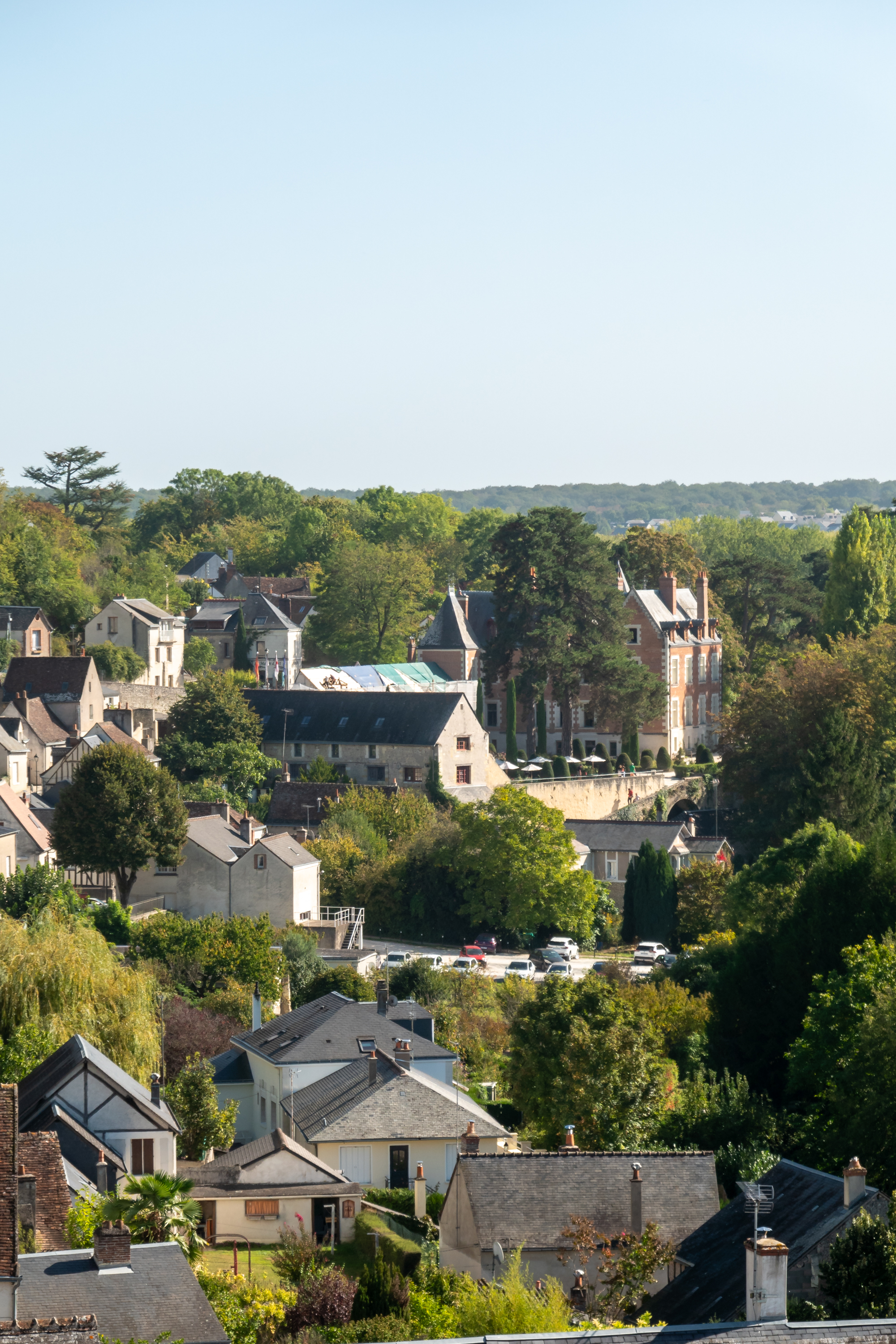
Fred also got a very nasty flat caused by sharp flints (silex), which are everywhere in the region.  Fortunately he found a great bike shop to help him fix the flat.

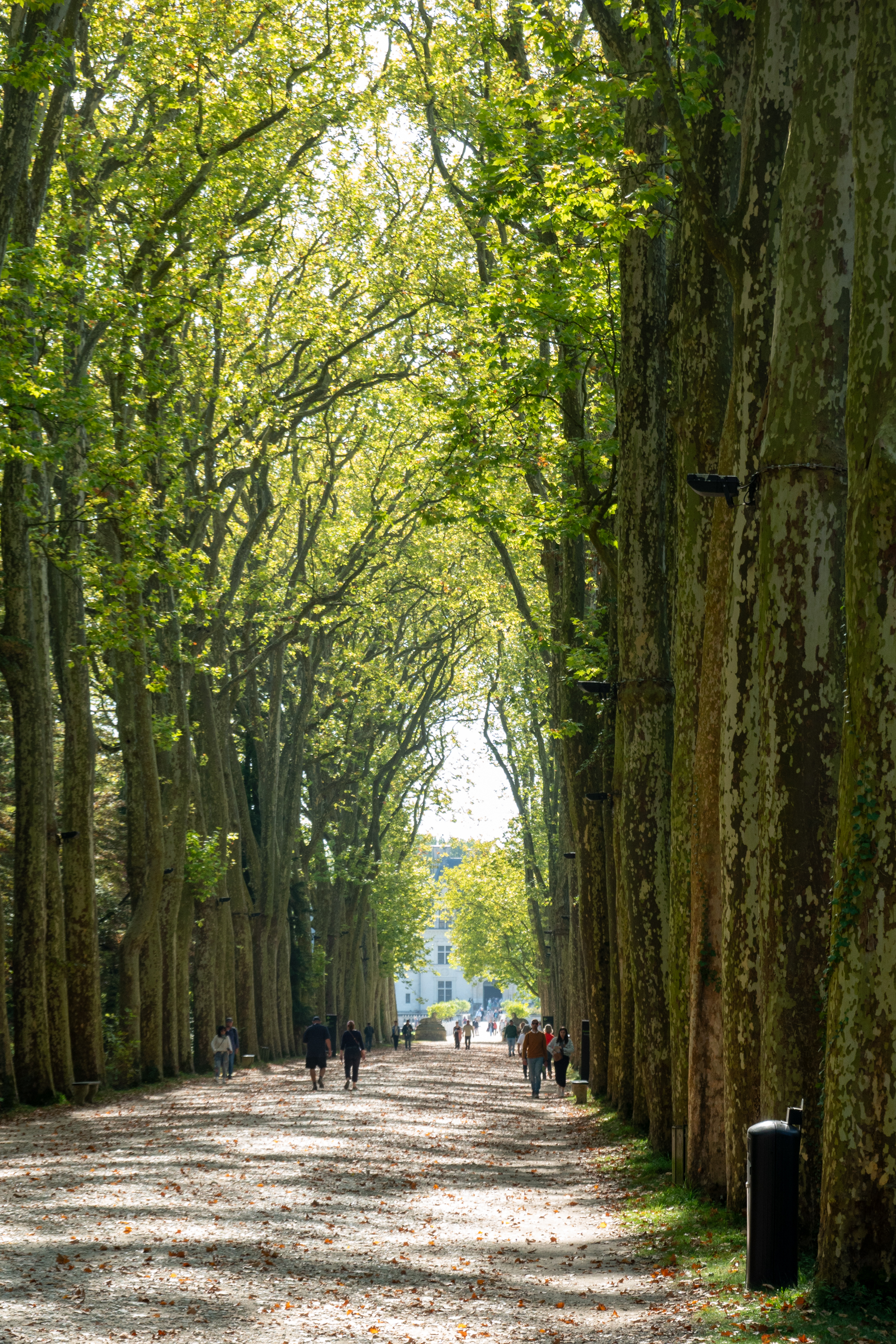
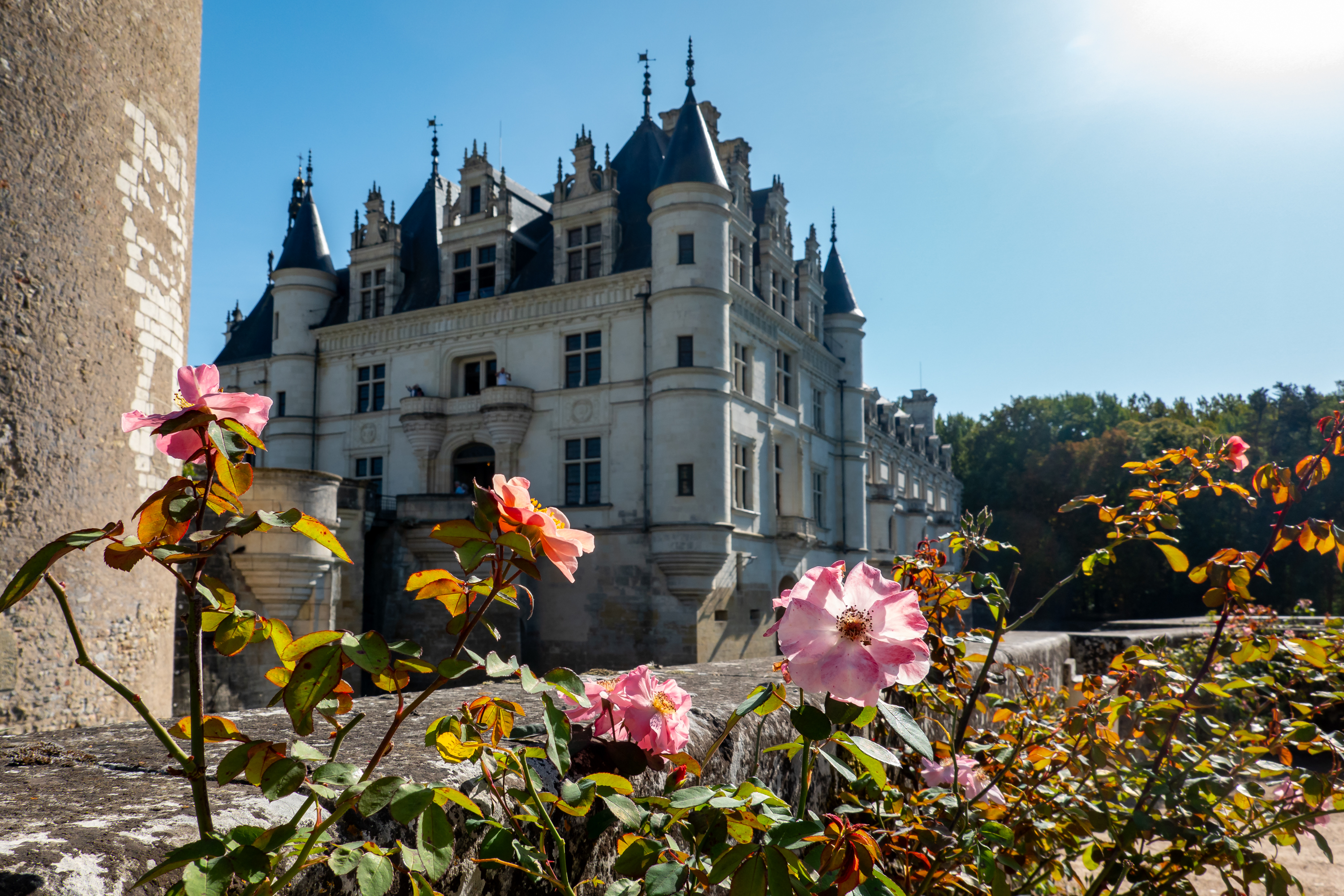
Our final stop in the Loire Valley was the Chateau of Chenonceaux.  We felt a need to see at least one well visited and well known chateau!  In actual fact, we benefited from summer weather and fall crowds (that is – none!) so we had an excellent day.  We had planned to go to an Aire right beside the chateau entrance, but the access was so narrow, we parked in the free parking just outside.  (And besides, we had already touched a railway crossing sign trying to make the first turn. Grrr! Annoying, as had we come in through the chateau entrance, as opposed to the GPS direct route, we would have made the turn easily. As we did the second time!)

The next morning we awoke to a roaring noise. We panicked as loud noises are never good!
Turned out to be a hot air ballon.

It was an easy walk to the chateau. We started by admiring a row of Citroens of all different ages.
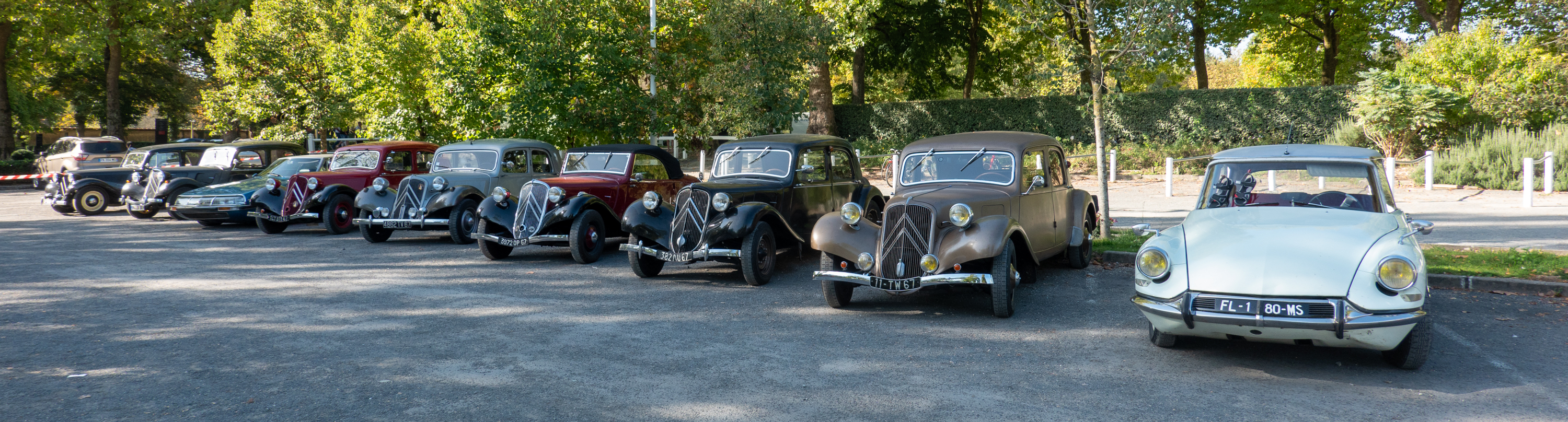
The blue car is a Citroen SM. Equipped with a Maserati engine it finally had enough power to fully exploit its amazing hydro pneumatic suspension.
The red car is an old Traction Avant – front wheel drive. Citroens were always the most innovative cars around.


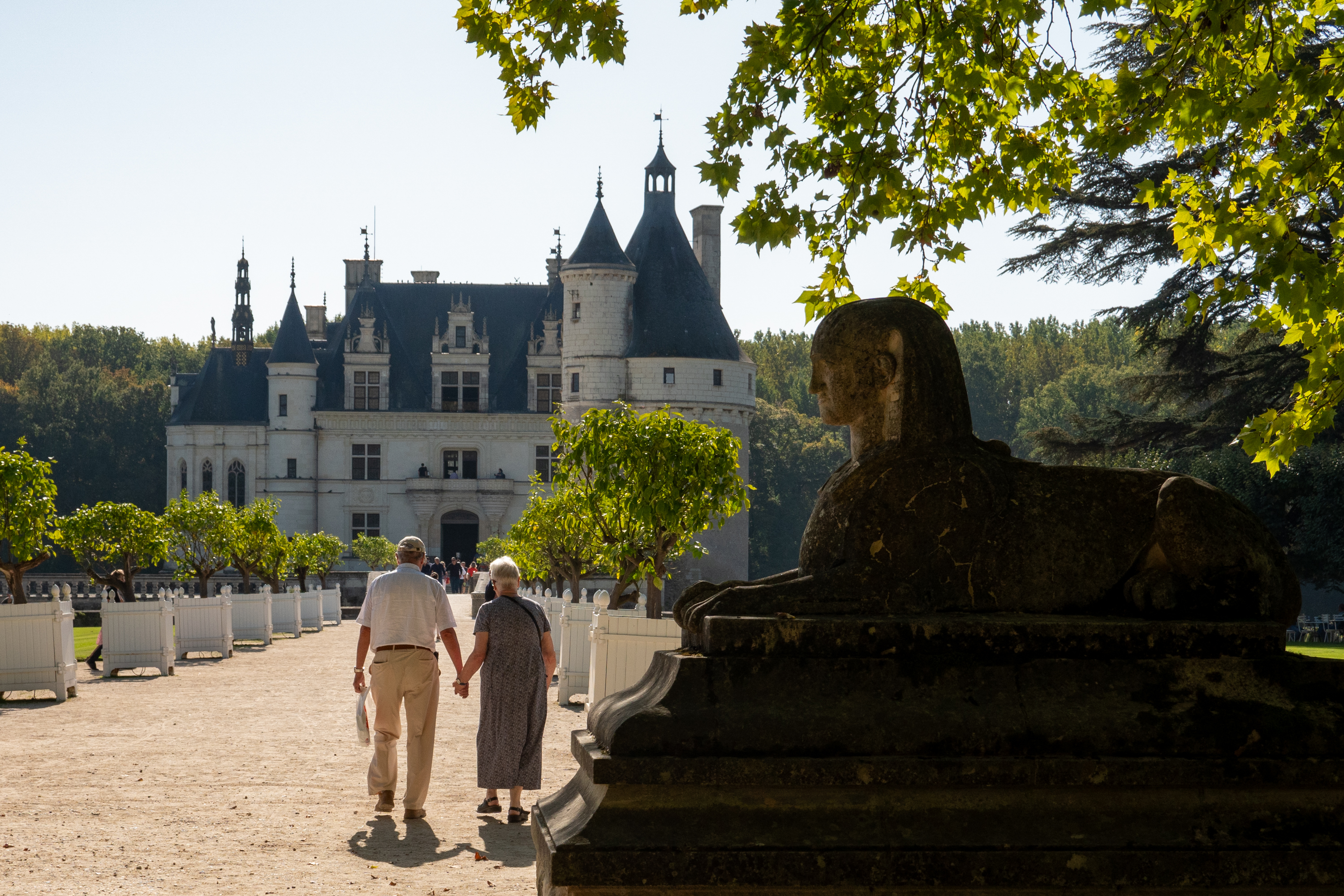
There are hundreds of chateaux in the Loire valley, but Chenonceau (https://en.wikipedia.org/wiki/Château_de_Chenonceau) stands out because it was built on the site of a fortified mill (!!) on a tiny river island and later expanded with a bridge out over the water. It was also the home of a number of powerful and competing women. (https://www.chenonceau.com/wp-content/uploads/2018/03/guide-2018-UK.pdf)
This painting, said to be Katherine Briçonnet, caught my eye. (https://en.wikipedia.org/wiki/Katherine_Briçonnet)

Unlike many of the others, she looks like someone you could meet today, mastic collar not withstanding.

And she was largely responsible for transforming the mill into one of the most remarkable chateaux in the world. So, unlike the Medici lady (https://en.wikipedia.org/wiki/Catherine_de%27_Medic), you probably would like to meet her.

And, with that, we headed back for dinner.
And on to the Loire Valley

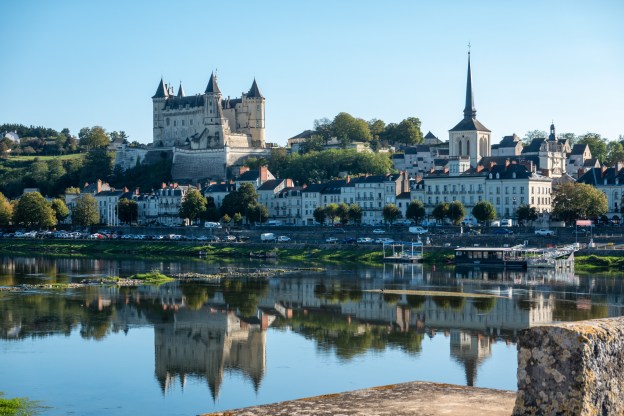
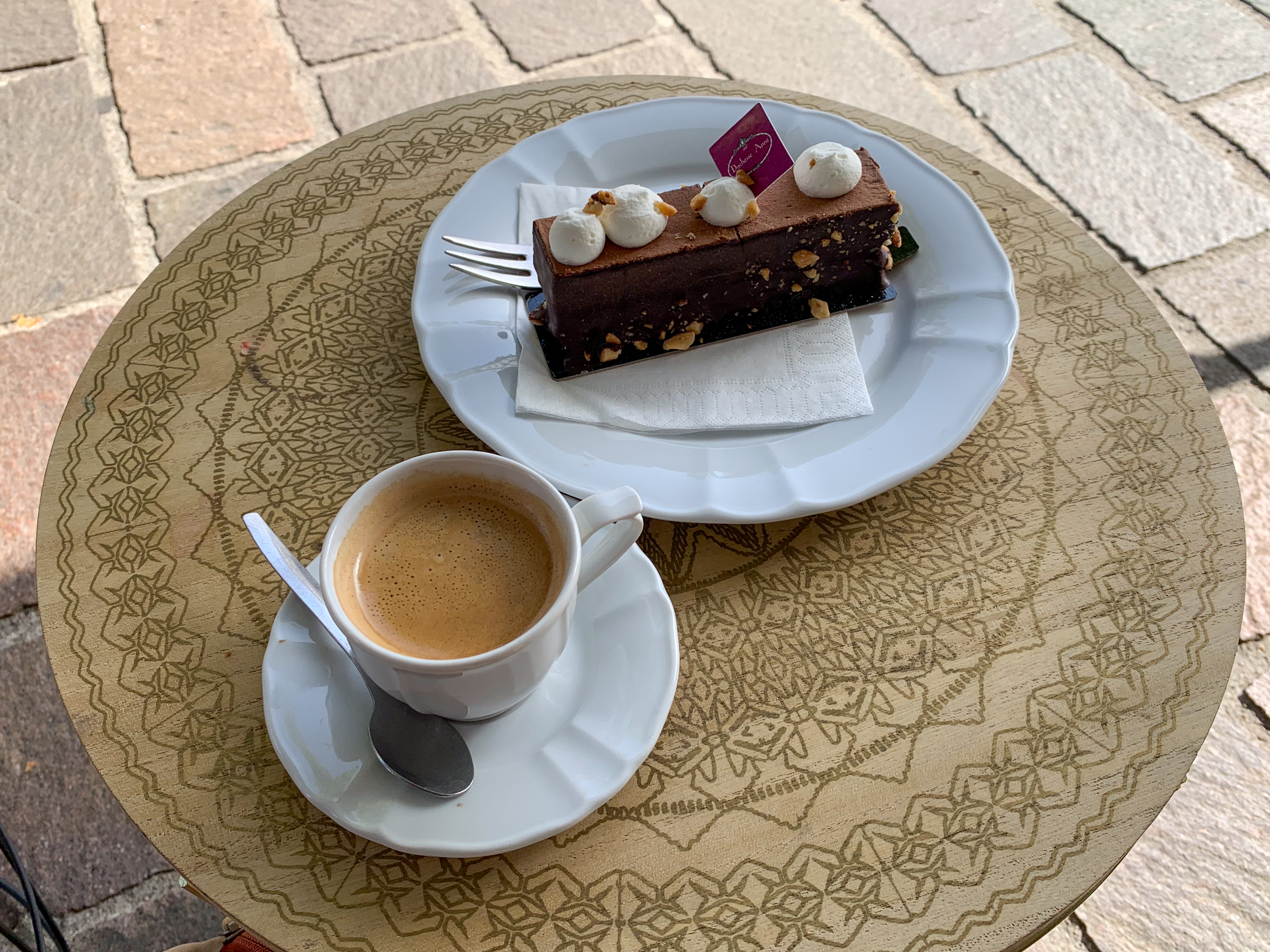
Our first stop was the small town of Saumur, where we found a pleasant campground, with a view of the Chateau, on an island in the river Loire.  The drought was obviously quite serious in this part of France as there was very little water in the Loire.  It was primarily stretches of sand with water in a few sections.  Fred assembled the bikes and we set out for the Tourist Information office for a map.  We also discovered the Maison de Vin, next door, and learned a lot about the many local “appellations” or types of wine.  The Information Office also recommended a Bakery/Patissier called La Duchesse Anne, to which we repaired forthwith! It was indeed wonderful and we enjoyed coffee and a cake there on three consecutive days!

Yes, it tastes as good as it looks.

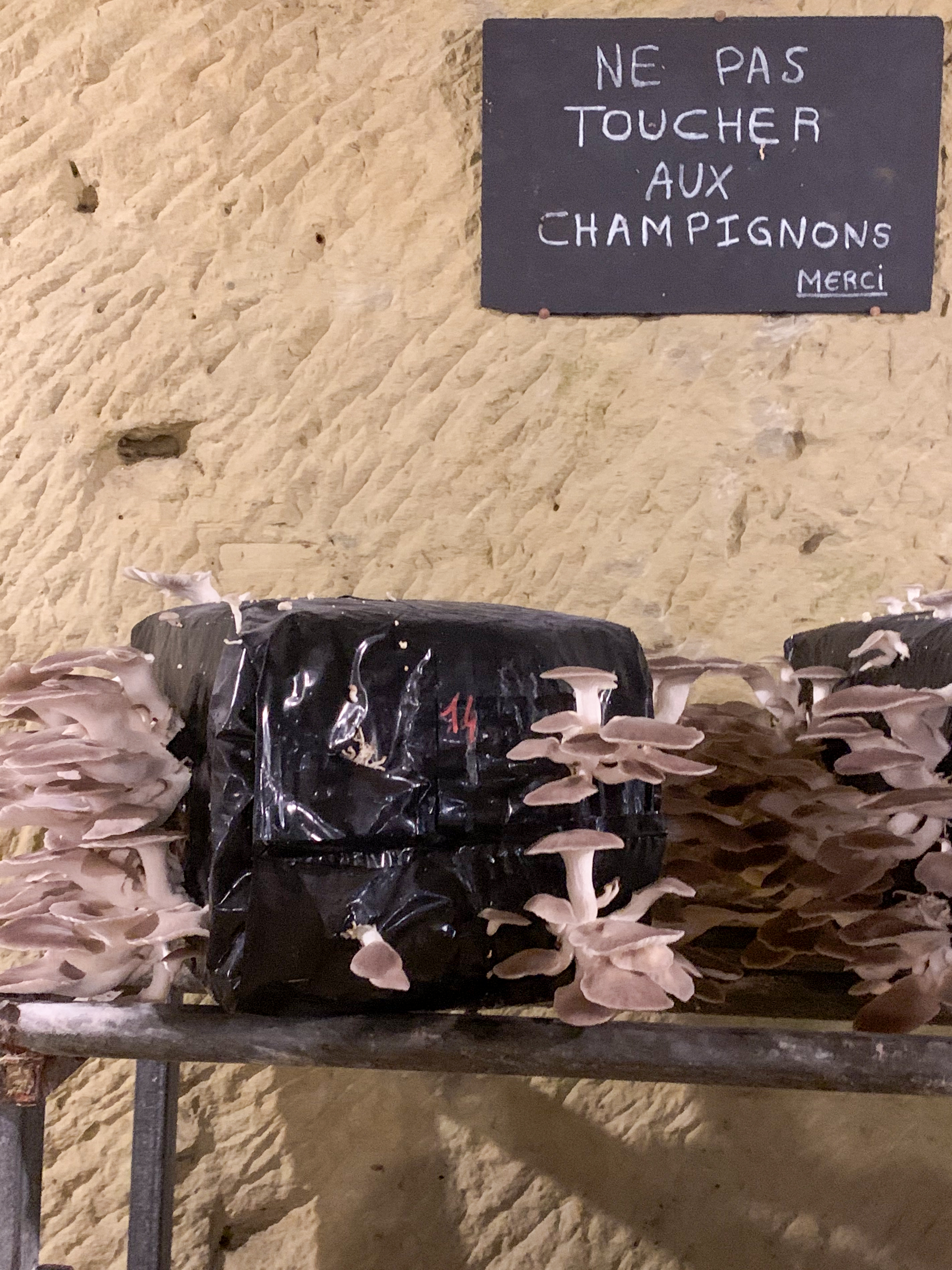
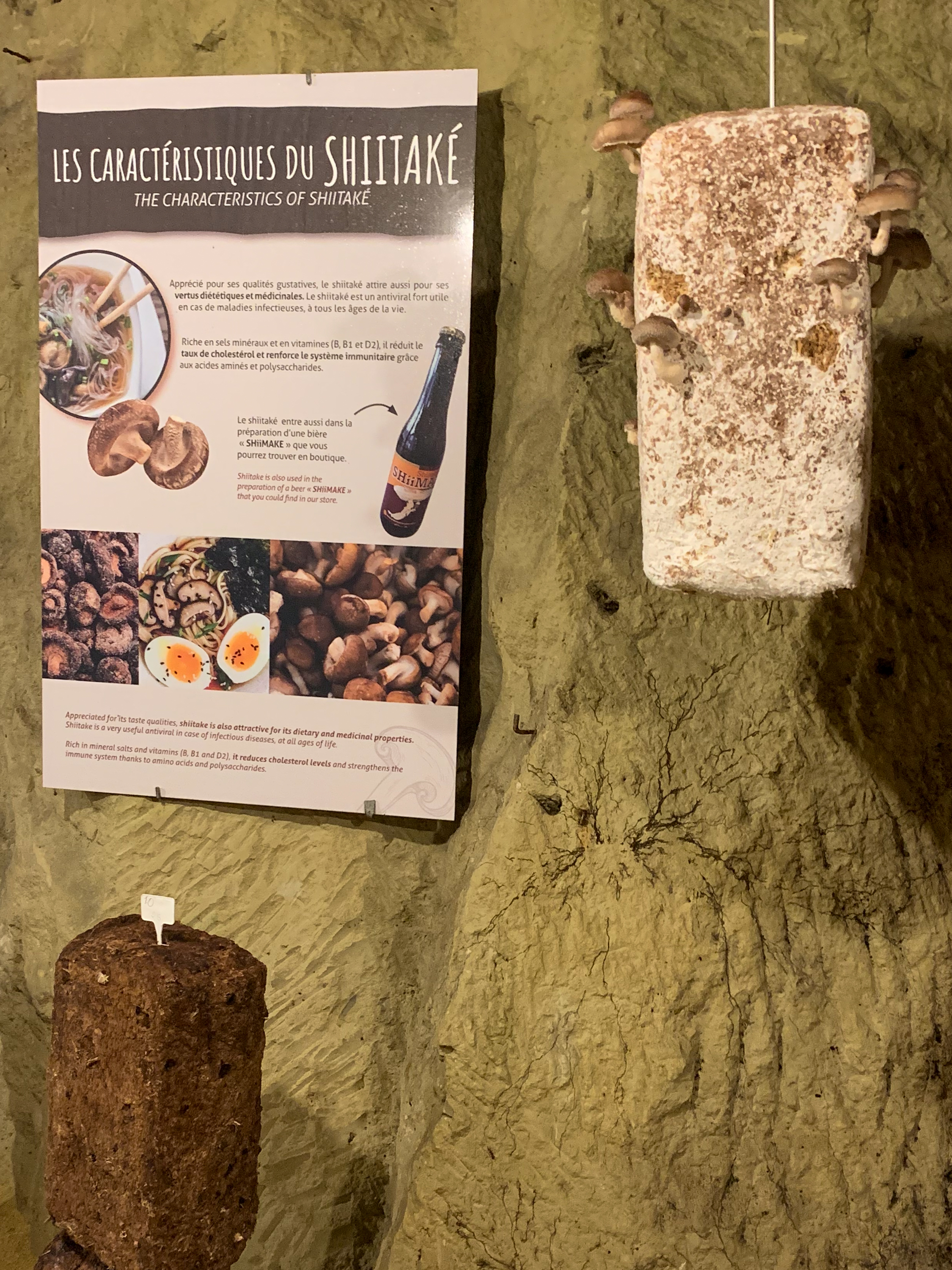
The following day we cycled out to the Musee de Champignons or Mushroom Museum.  It was an interesting concept that both tracked the history of mushrooms, displayed the various kinds, and also grew them for sale. 

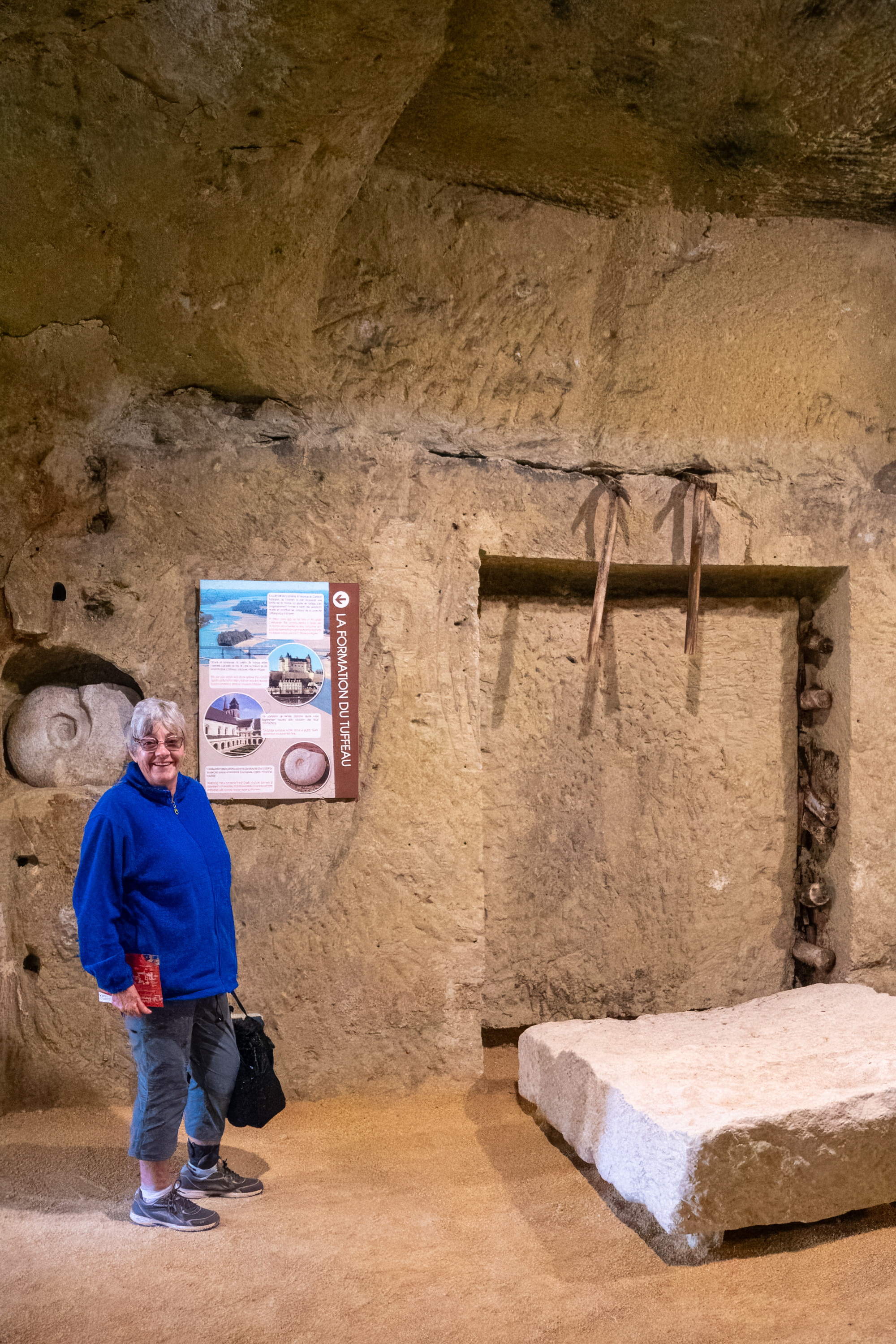
The cliffs along the Loire are made of a soft limestone which produces natural caves. And, as the rock is so soft, the caves have been expanded into quarries, wine cellars, houses, and mushroom farms.

We wandered through quite fascinated by the different methods of cultivation and ended our visit with a purchase of what turned out to be wonderfully tasty mushrooms.  Denise wishes she had bought more. Even Fred ate them.

Mushrooms growing out of blocks of compost.
Shiitakes in the wild.
Denise admires a quarry exhibit, showing how the blocks are cut out.
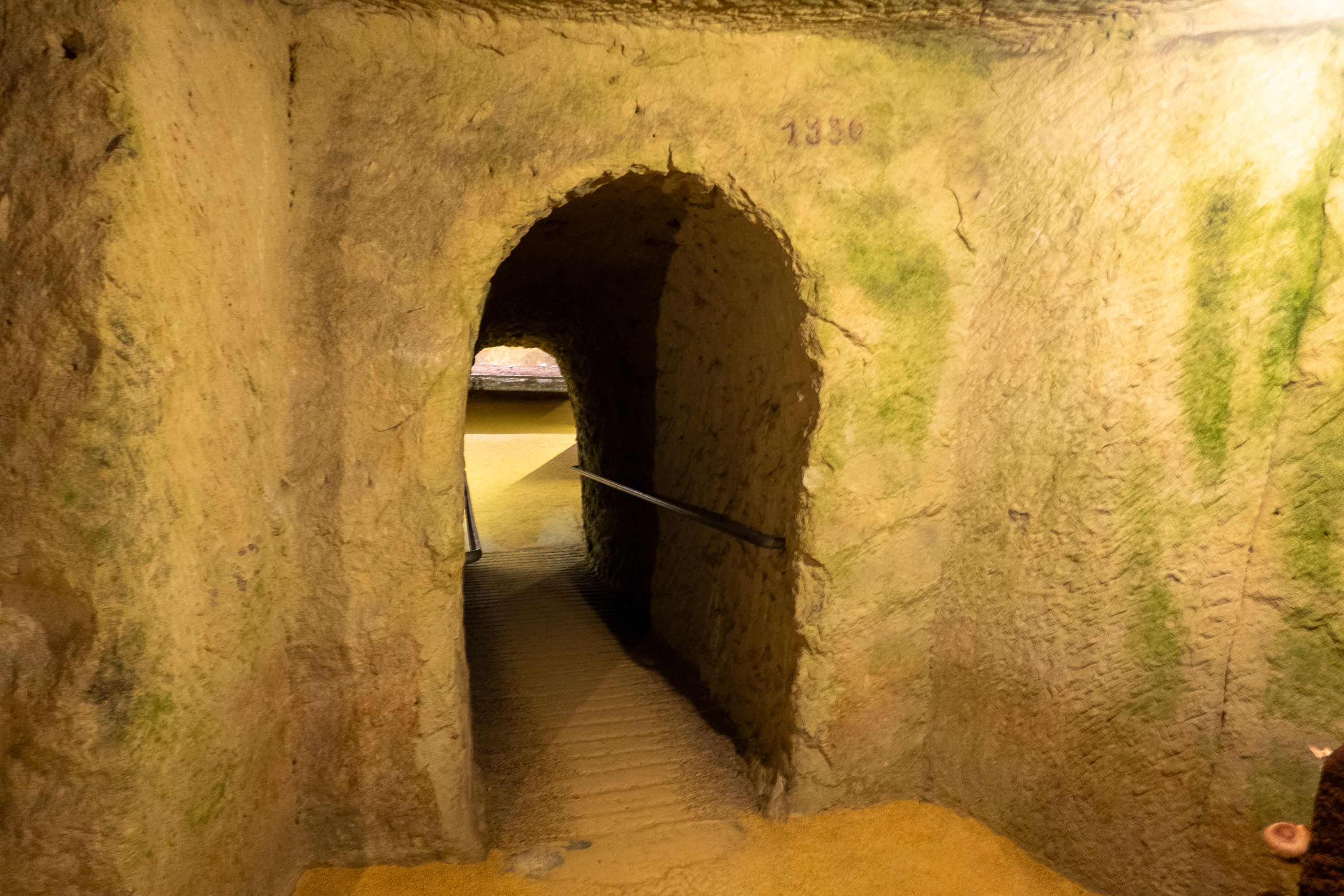
Passage from one chamber to another.
Don’t know what kind it is, but it is colorful.

No, they don’t leave the mushrooms in the dark and feed them stuff, but they are grown on various types of composted material. And there is not a lot of light, either.
In the afternoon, we cycled to the Musée de Blindes or Tank Museum.  Yes, another one! Fred enjoyed it!  Denise made it through! (https://www.museedesblindes.fr/en/)

One of their claims to fame is the only running Tiger II. (The Bovington museum boasts a running Tiger I.) The Tiger tanks were slow, but their heavy armor made them impervious to almost every Allied anti-tank weapon. The low velocity 75mm gun, fitted on most Sherman tanks, could not penetrate the armor at any range. The high velocity 88mm, on the other hand, was very accurate and could penetrate any Allied tank at out to two miles. Terrifying.

There are books on all of this. Let us just say that Fred is not a great fan of General Leslie McNair. But, in a Darwinian way, he was right – there were never enough Tigers or Panthers to change the balance – but this was no comfort to the Allied tankers who got off the first shot, only to watch it bounce of without causing damage. The superior German armor was defeated with air power – bombing the factories and close air support, and numbers. One German tanker complained, “We run out of ammunition before they run out of tanks!” The complexity and weight of these tanks meant that many had to be abandoned when they broke down.

The ultimate armored nightmare of World War II, the Tiger II tank. The Germans could simply not produce enough or keep them running.
Half of the Tiger nightmare – the massive front armor.
A special feature of the museum is that the history of many of their vehicles is known. The plaque next to this self-propelled gun shows it being examined by US troops after it was knocked out.
Two armor piercing hits. The upper shattered the armor and the lower burned its way through.
French armored doctrine makes extensive use of high speed armored reconnaissance vehicles equipped with anti-tank guns, This unusual beast has four “grousers” or cleated metal wheels for extra traction while still maintaining the speed of a wheeled vehicle. (https://en.wikipedia.org/wiki/Panhard_EBR)

Our final jaunt was in the trusty Little Tourist Train which took us up the big hill to the Chateau, now a museum, and showed us some of the old part of town which we had not discovered for ourselves. 

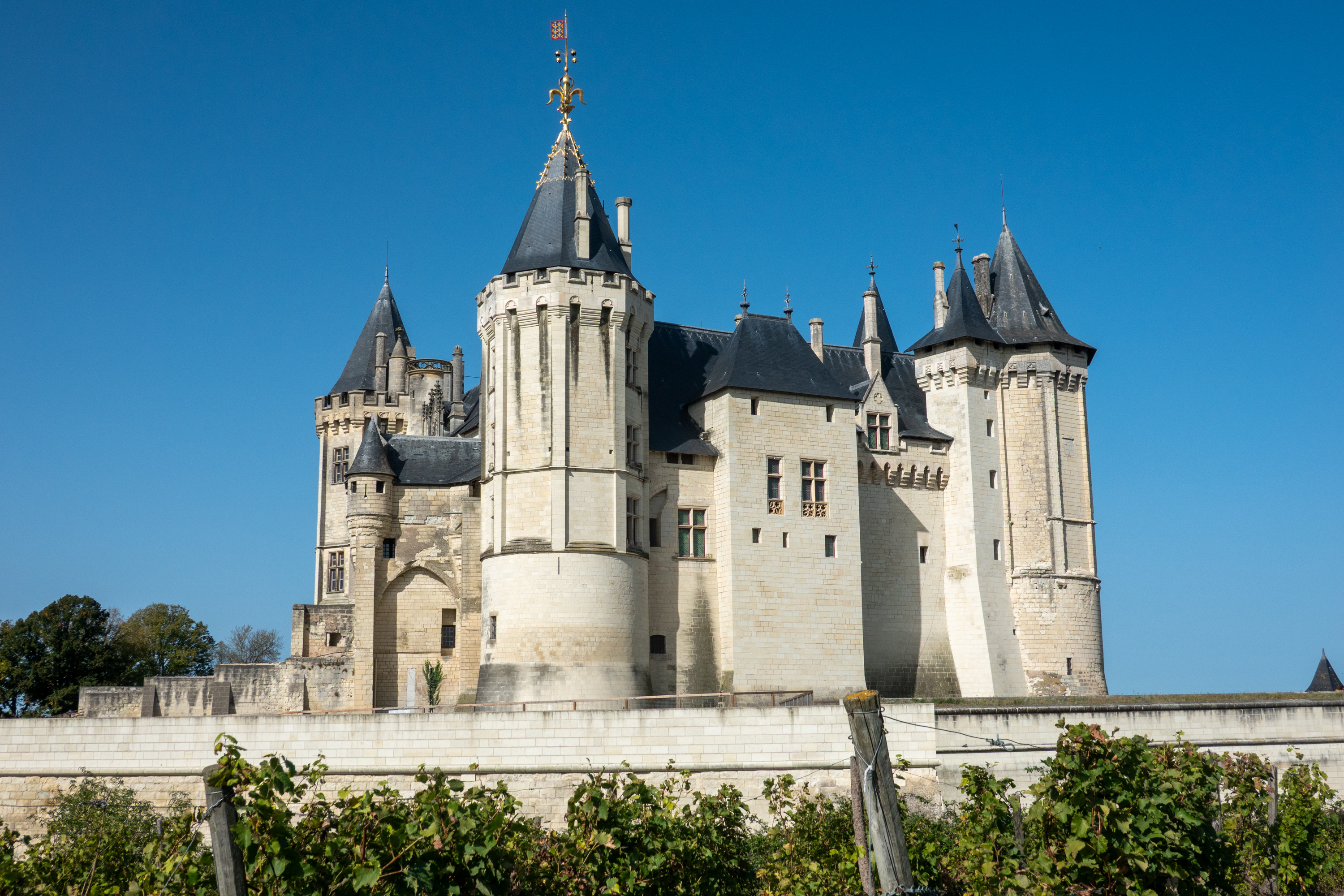
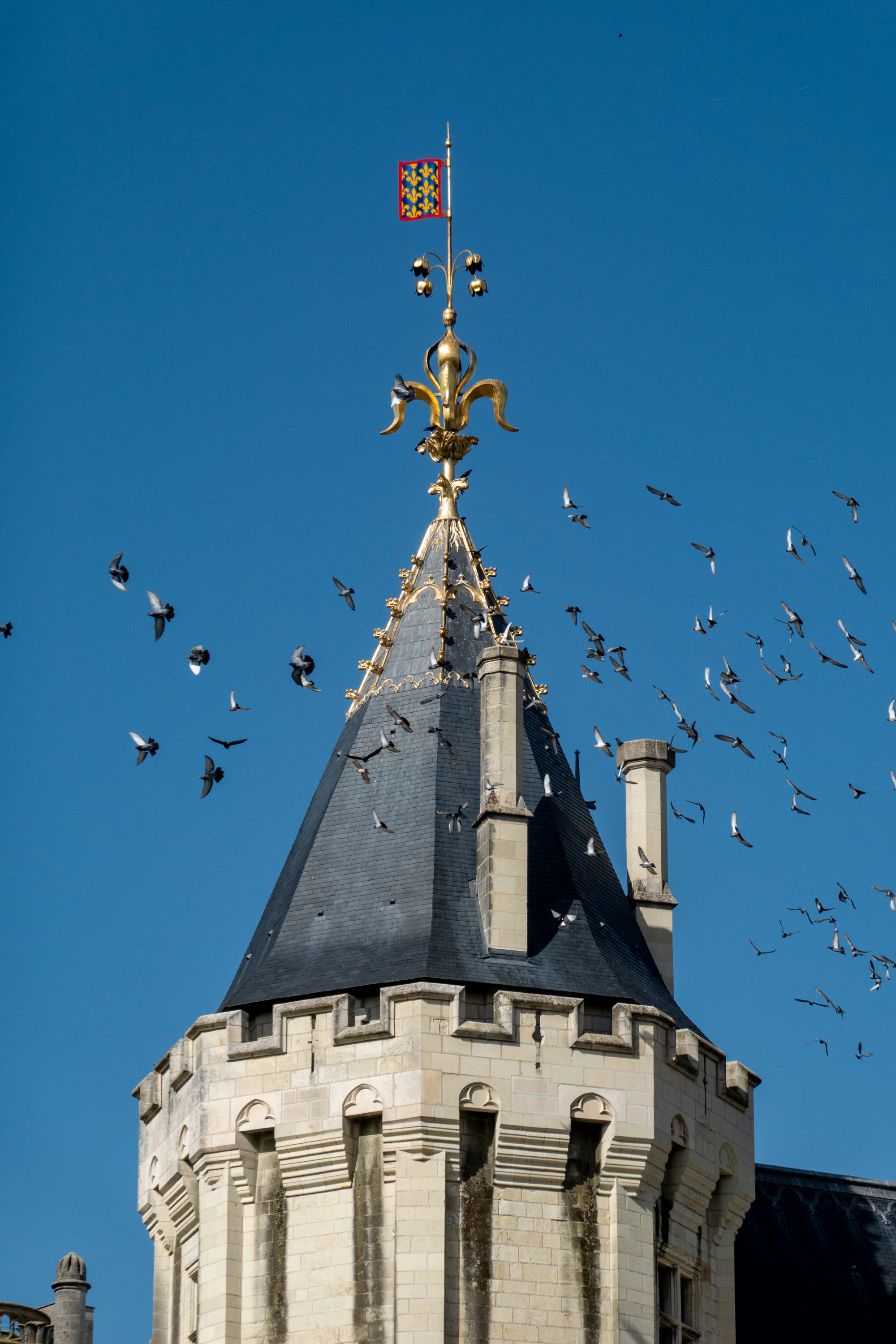
Saumur Chateau
The birds of Saumur Chateau

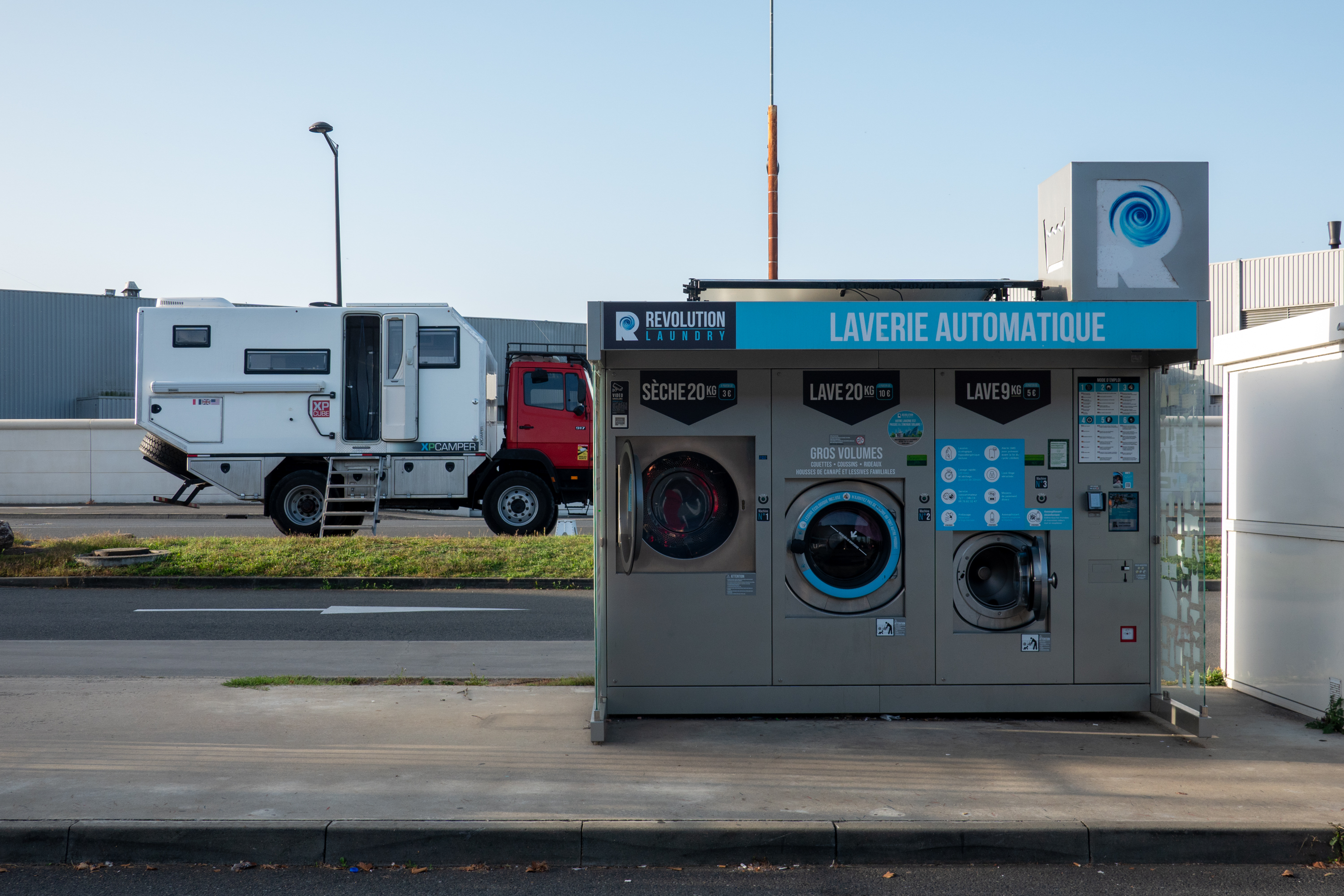
Our greatest discovery has been the Revolution Launderette/Lavarie. (Now “WashME.” https://www.revolution-laundry.com/fr-fr/) We first found one in Skipton and were delighted to find them in France as well. Generally found in supermarket parking lots, they are easy to get to and have a BIG washing machine and dryer. (‘murican Speed Queen.) So you can shop while doing the laundry and there is room to do the sheets, etc. And did we mention that they take credit cards and the soap in included? Perfect!

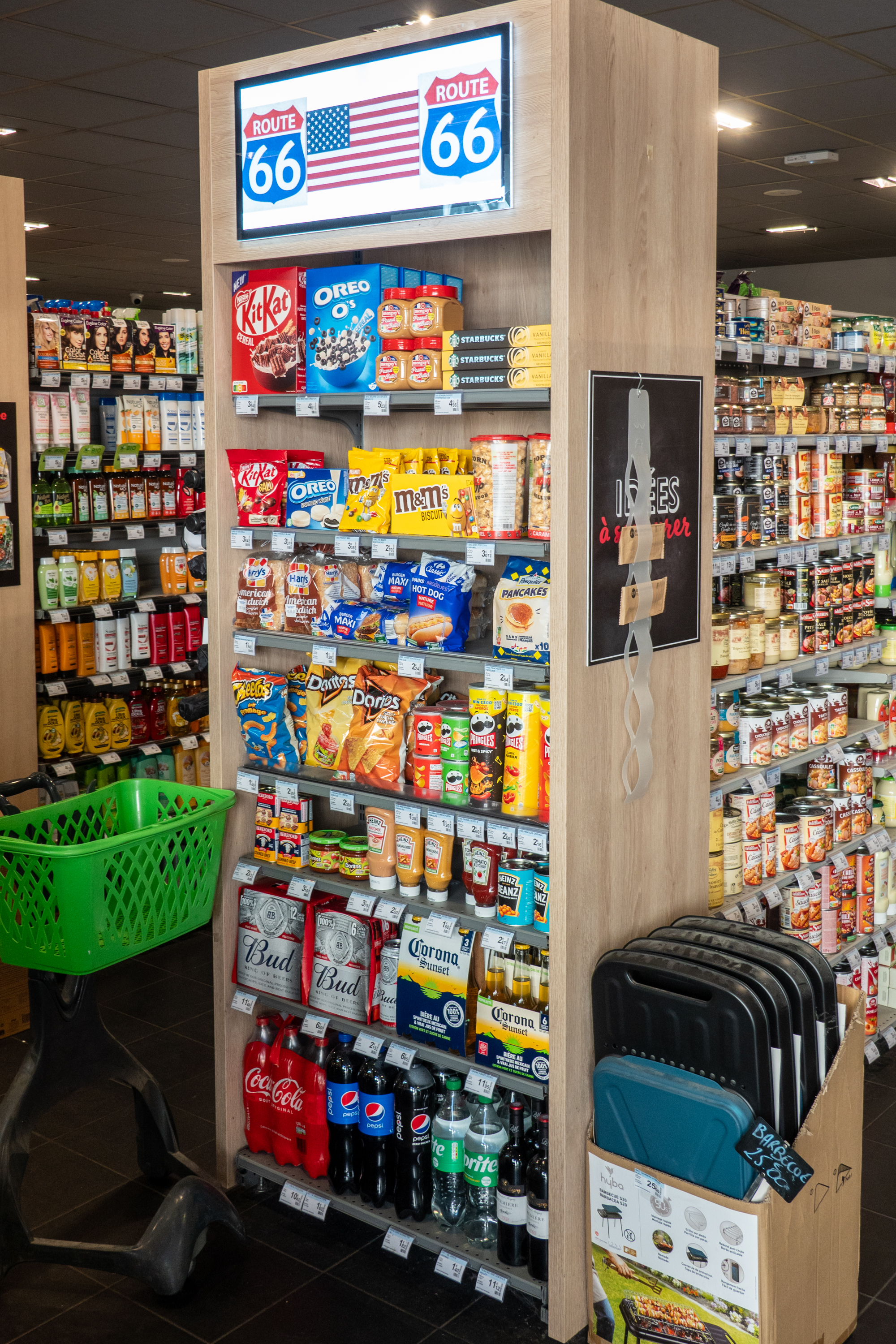
It is a challenge to do the grocery shopping on a bicycle without proper panniers. (Looking at YOU GoCycle!) But this Carrefour City was simply lovely.
And, if you are feeling homesick, they have a section of American style foods.

The Loire campaign has begun.

Chez les Bretons

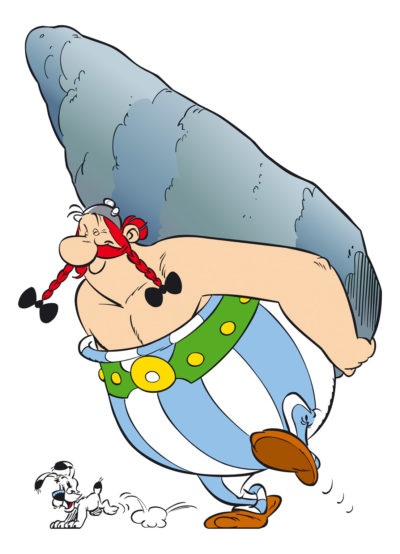
For the title of this post to make any sense, you have to understand Asterix, a wonderful, anachronistic French comic strip about a Gaul and his buddies who defy the Romans. They travel the Roman world, having great adventures and making lots of jokes about peoples and cultures. For example, the Brits, who have not discovered tea yet, stop fighting the Romans every day at four o’clock to drink hot water “with a spot of milk.” The Swiss interrupt orgies to clean up all the cheese, the Spanish roads are terrible and packed with tourists in August, and they are still digging a tunnel under the Channel while listening to four long haired troubadours. (No one thinks they will amount to much.) Romans all have funny names, like the dirty centurion “Insalubrious” and he is assigned boring guard duty at the town of “Tedium.” Of course, the Gaullish bard, who signs badly, is “Cacafonix.” And the translation of these names and jokes between English and French is great. See more: https://en.wikipedia.org/wiki/Asterix

At any rate, Asterix’s best buddy is Obelix who delivers Menhirs. And Bretagne, or Brittany, is famous for its menhirs. So, we are chez les bretons, looking for menhirs.

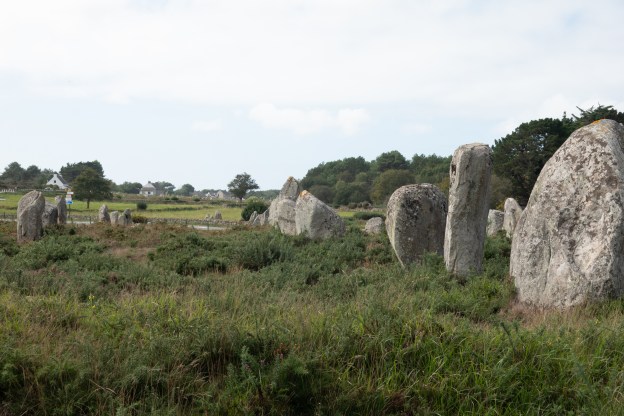
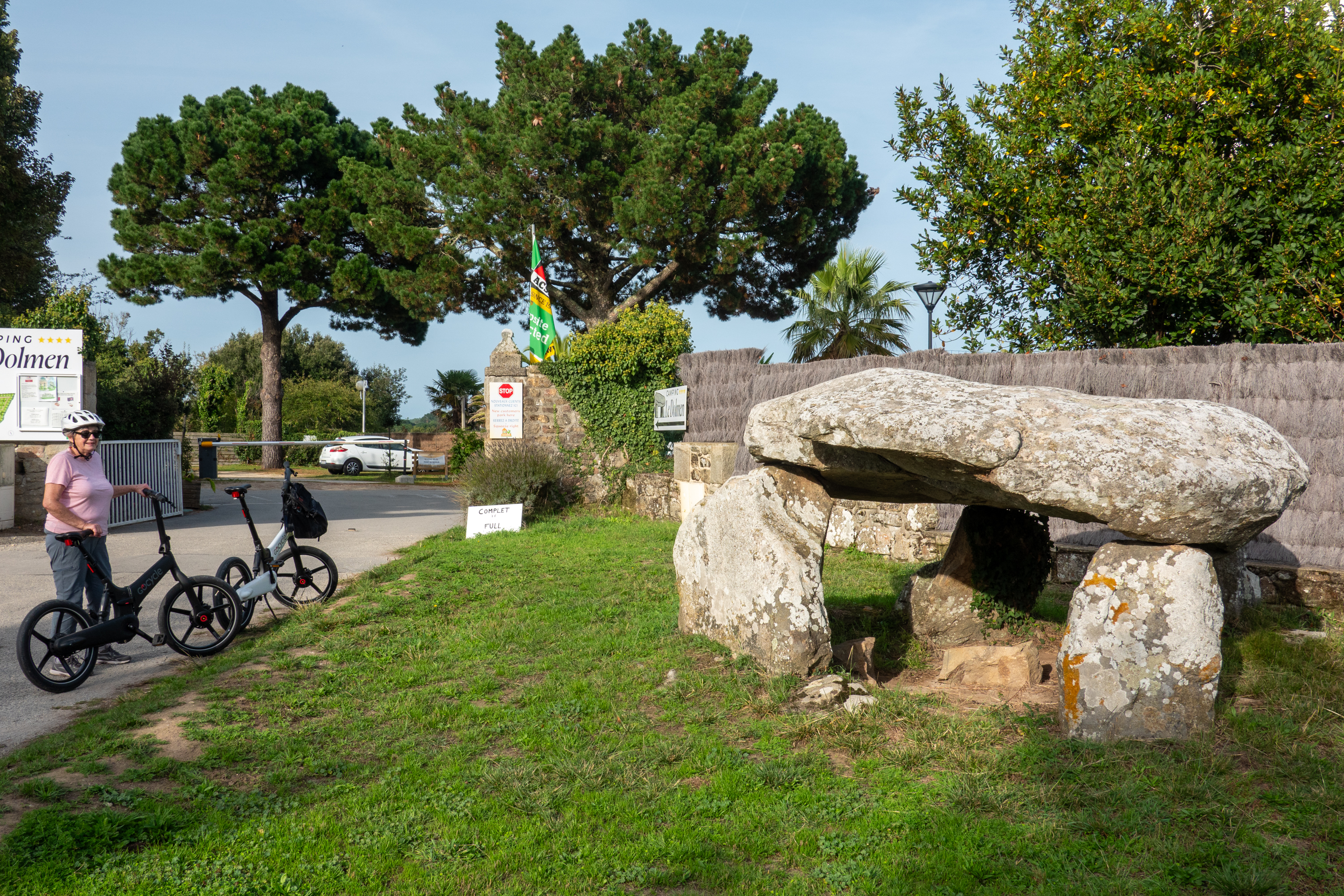
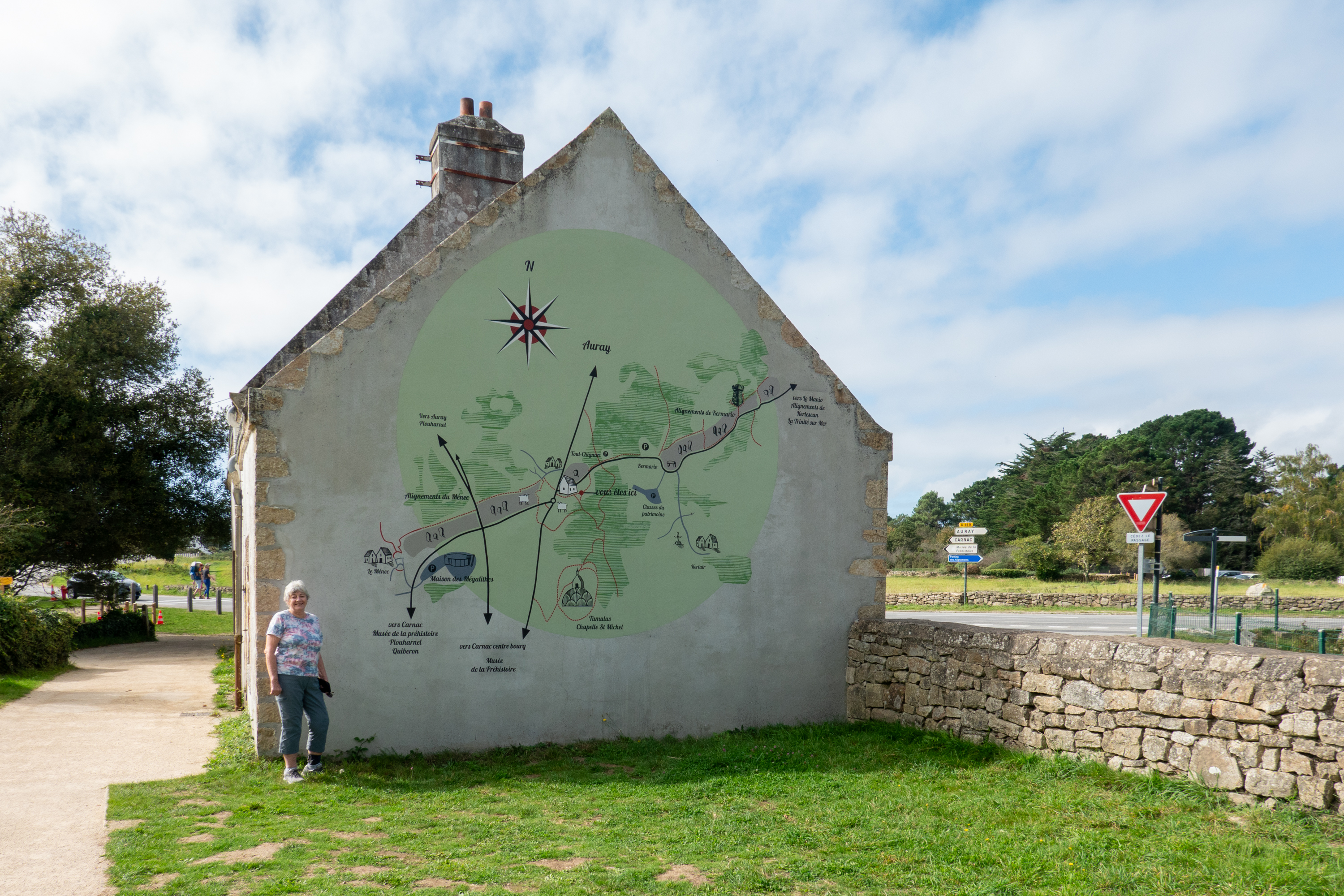
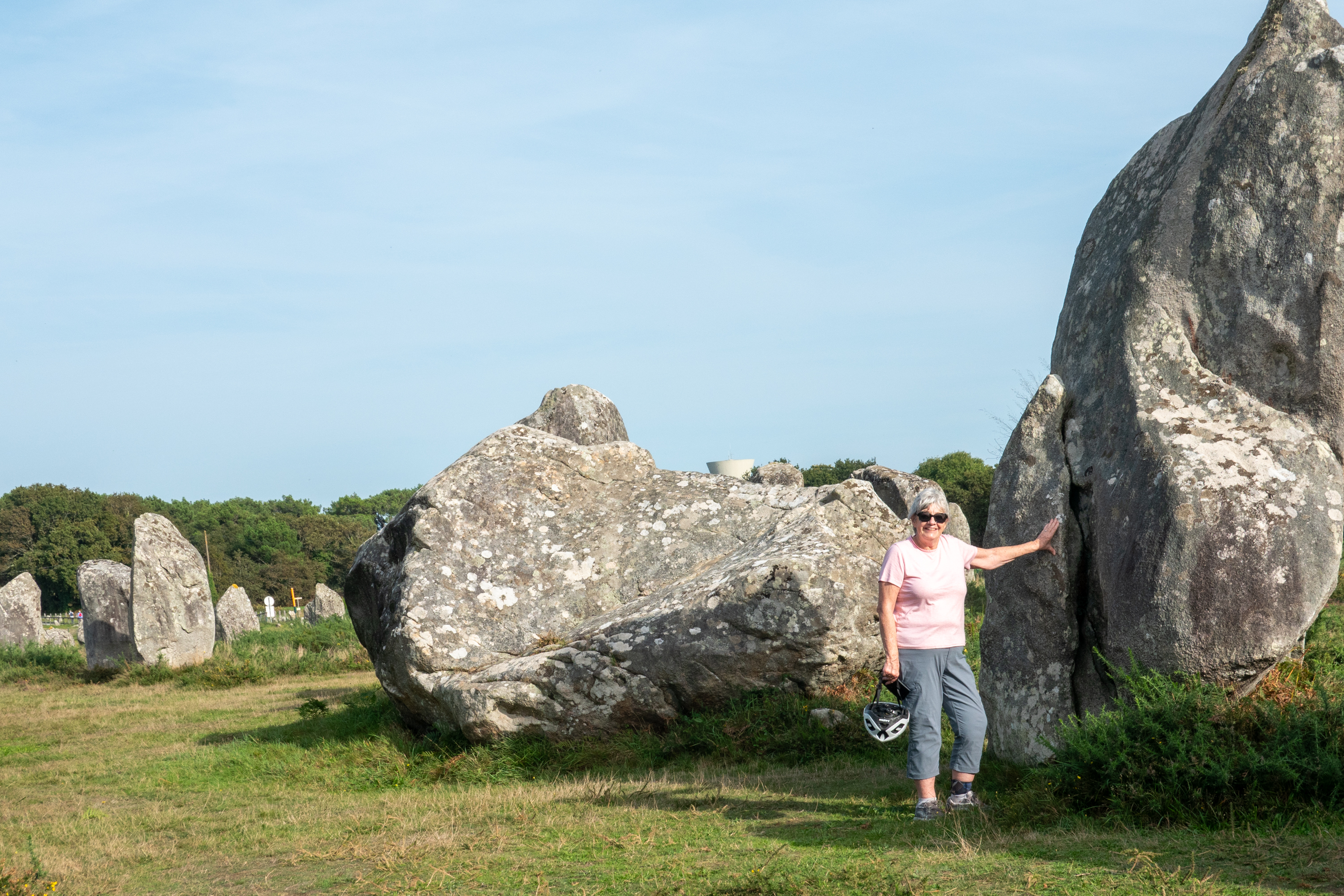
Menhirs are great big rocks, set upright, usually called “standing stones” in English: https://en.wikipedia.org/wiki/Menhir These things are everywhere. We saw them in the Orkneys and, in France, at Carnac, they are arranged in long rows. So, as we were now up to date on WW2 history, we decided it was time for something even older and headed to Carnac.  After settling in at a campground named “Le Dolmen” (guess what they have at the gate), we unloaded the bikes and headed out to explore. 

Not many KOA’s can boast a megalithic tomb at the gate.

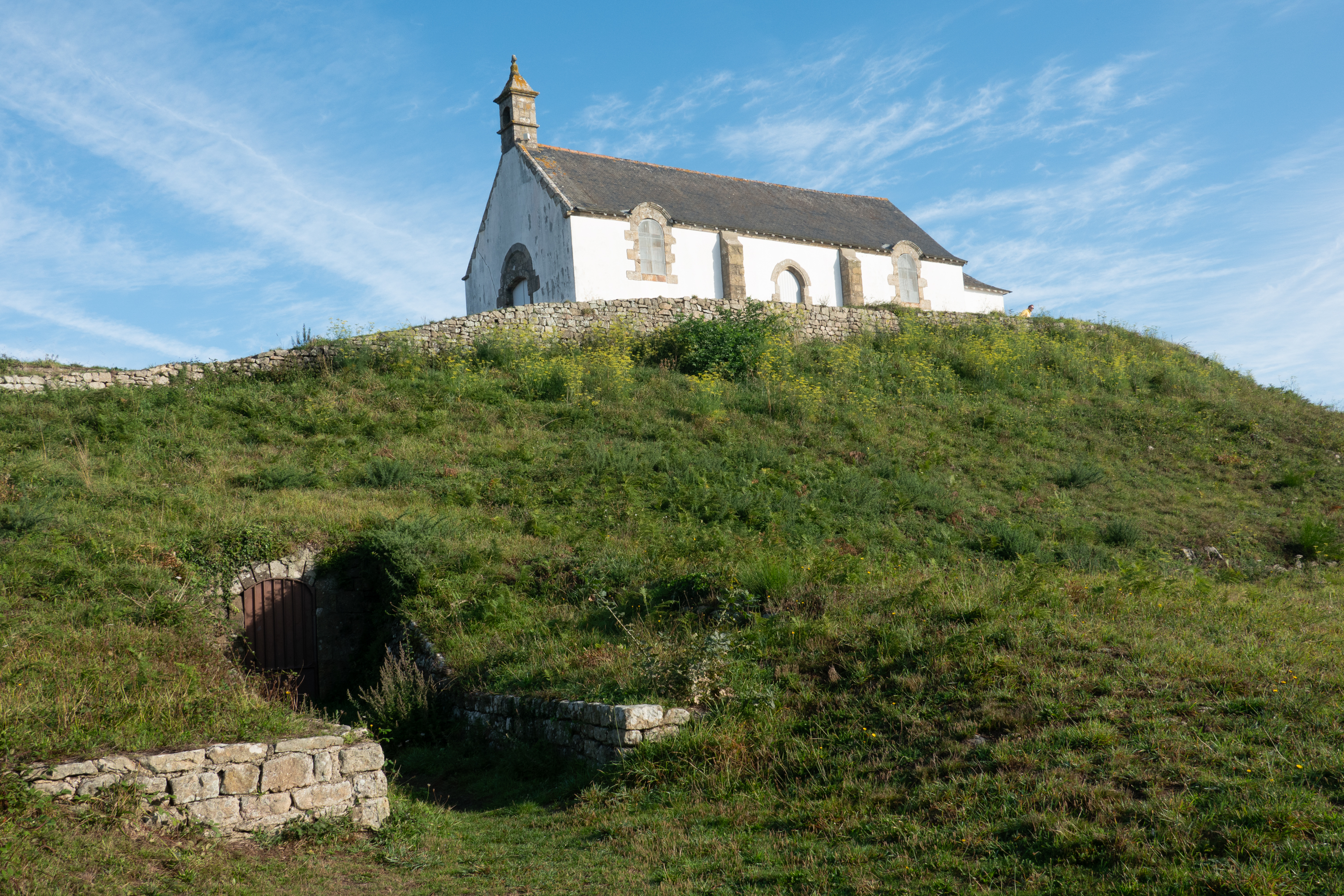
Our first stop was the tumulus and Chapel of St. Michel. 

At first glance, an ordinary little church built on a hill. But this hill is a tumulus, that is, a large mound of earth, piled over a dolmen, or neolithic tomb. You can still see the entrances to the underground galleries, but you can no longer go inside the tunnels or burial chamber. A neat example of something hiding in plain sight; unless you knew that the hill was artificial, it simply looks like any other hill. Probably no accident that there is a church on top; it probably sits on an ancient temple.

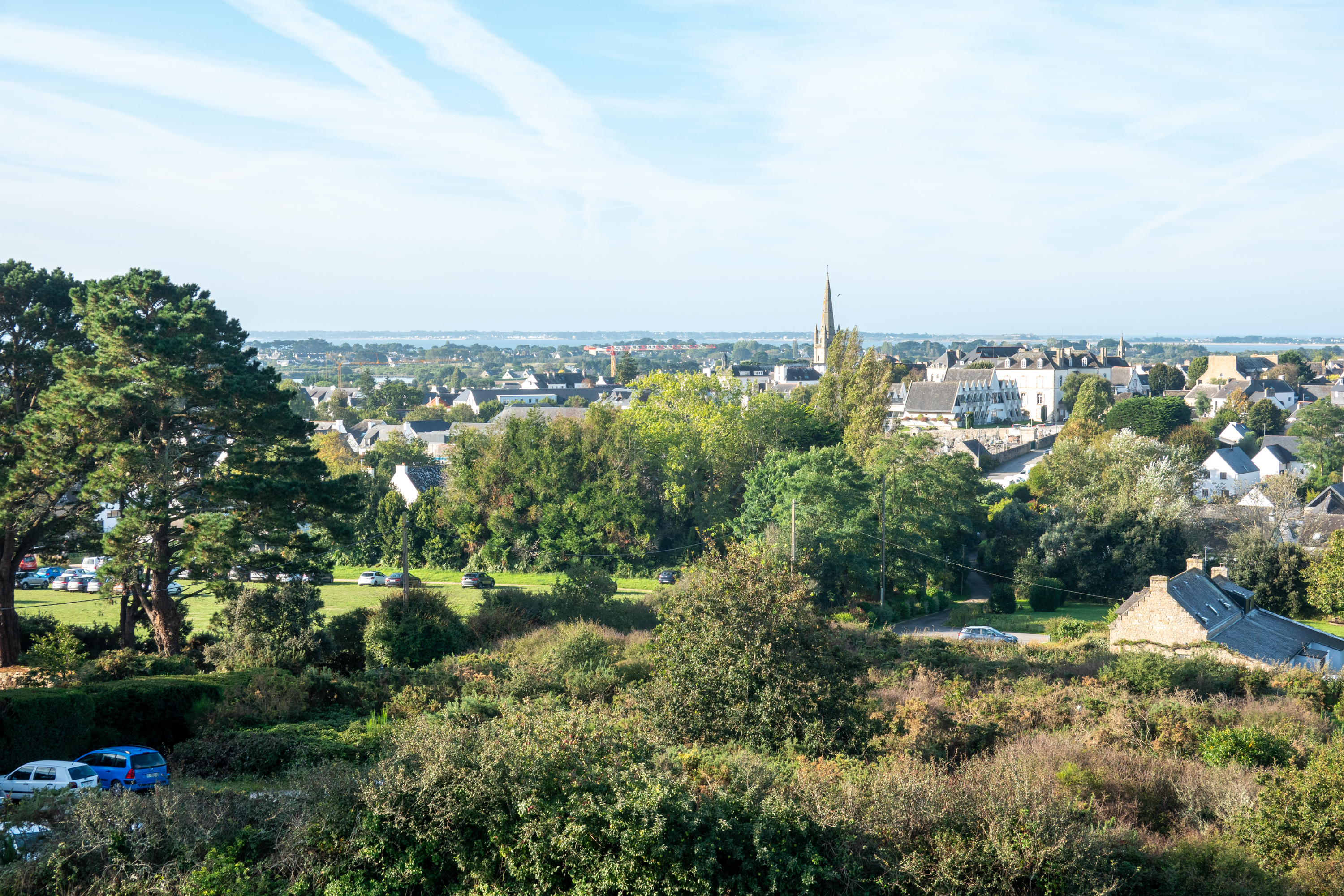
Unfortunately, the burial tumulus and the chapel are closed but the view of Carnac from the top is spectacular. 

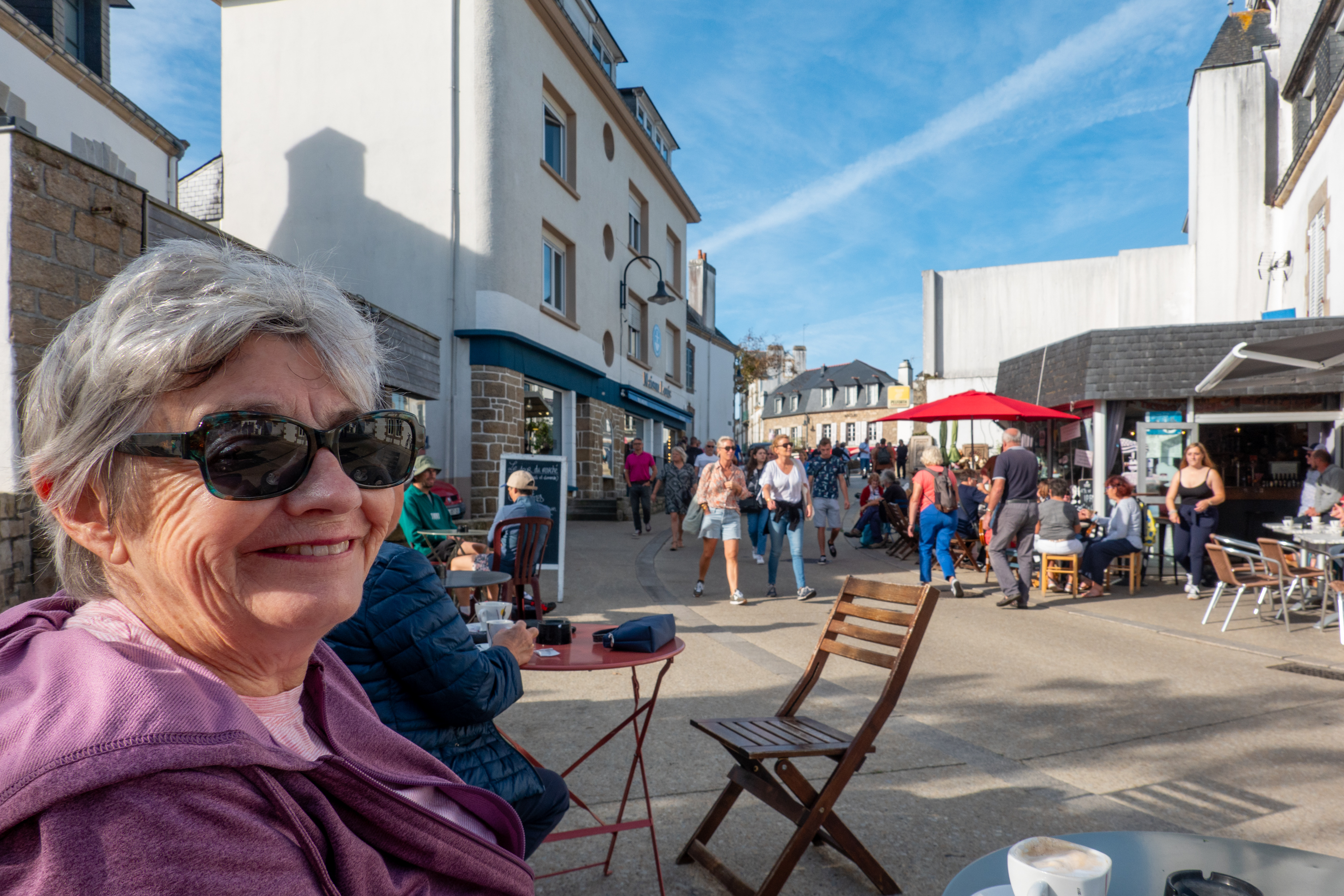
As we cycled back down the hill, we fell upon the Sunday morning market in full swing. Denise can never turn her back on a market, so we parked the bikes and went to see what they had available.  Answer? A lot.  After stocking up on vegetables and admiring the fish and meat stalls, (and wishing the fridge was big enough to buy some), we stopped for a coffee in the town square. 

We saw several of these market trucks which open out into full grocery store style counters.
The coffee was actually terrible! And we could not buy a goodie as the line at the boulangerie stretched down the block. But we enjoyed watching the world go by (buy?).

As we returned to the bikes, we found a stall selling strawberries, so we bought two tubs (and had a free raspberry tub thrown in!)  So, laden with loot, we returned to the camper for lunch and to sort out purchases.

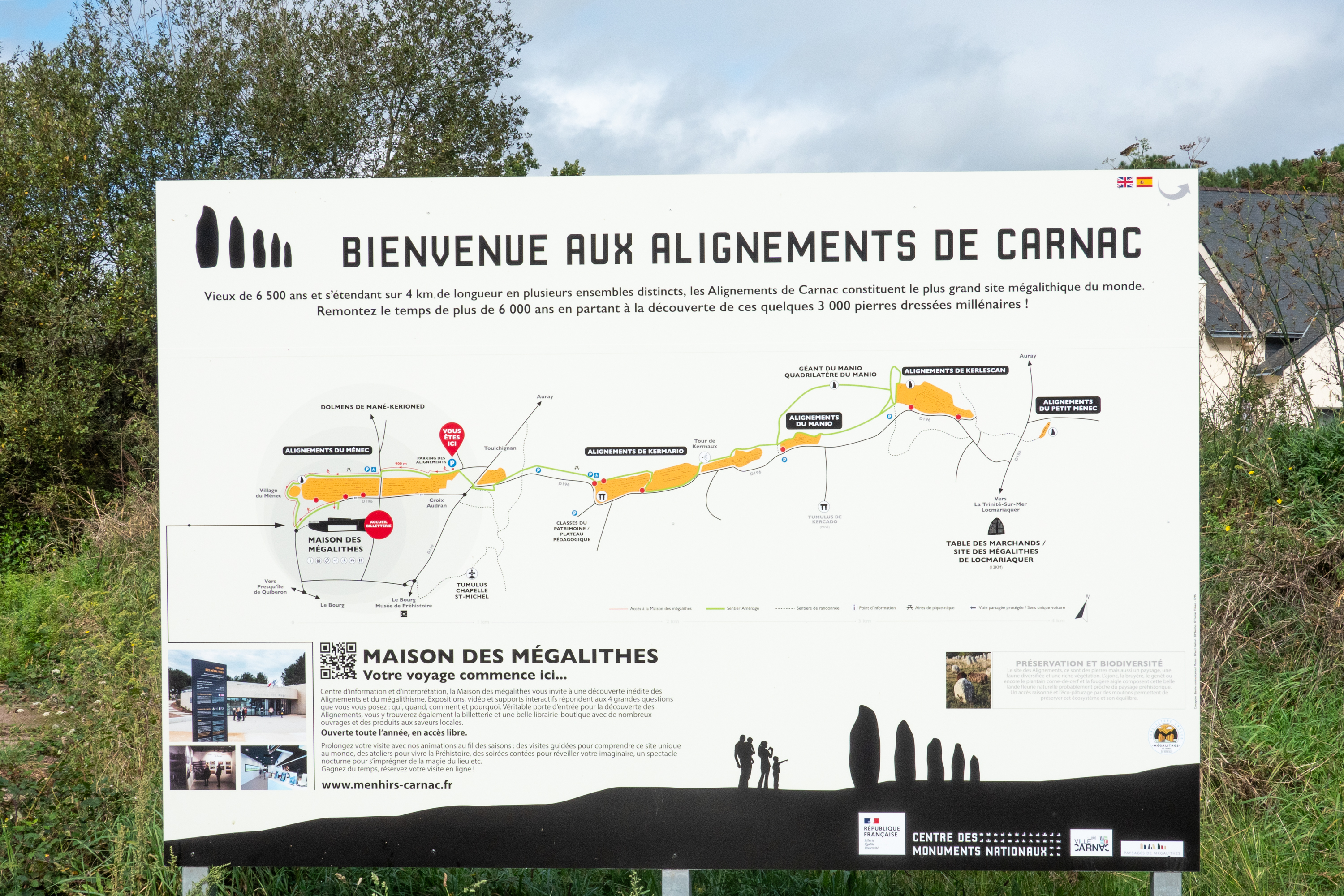
We then set out to view the rows of menhirs which cover the surrounding areas.  It is assumed that they had a religious significance and there were  burial mounds with stone roofs in some areas. 

We decided to take the “Little Tourist  Train” so we could see more of the surrounding area. The train route included Carnac Beach, which was obviously no longer as active as during the summer months, but still quite busy.  We returned to the bikes and cycled out past several of the groupings. At one point Fred climbed a tower to get a better view of the rows of stones.  The groupings cover a length of 10 Km from start to finish.  Talking of finish, we finished with an ice cream and returned to the campground!

We then headed north to St. Malo and checked into a huge and very busy Aire on a most convenient bus route to the Intra Muros or old walled part of St. Malo.  (Never understood why the French use the very Spanish term “Intramuros.”) We took advantage of the bus the next day as it was very windy and bike riding risked to be unpleasant.  Plus bus rides are always fun!

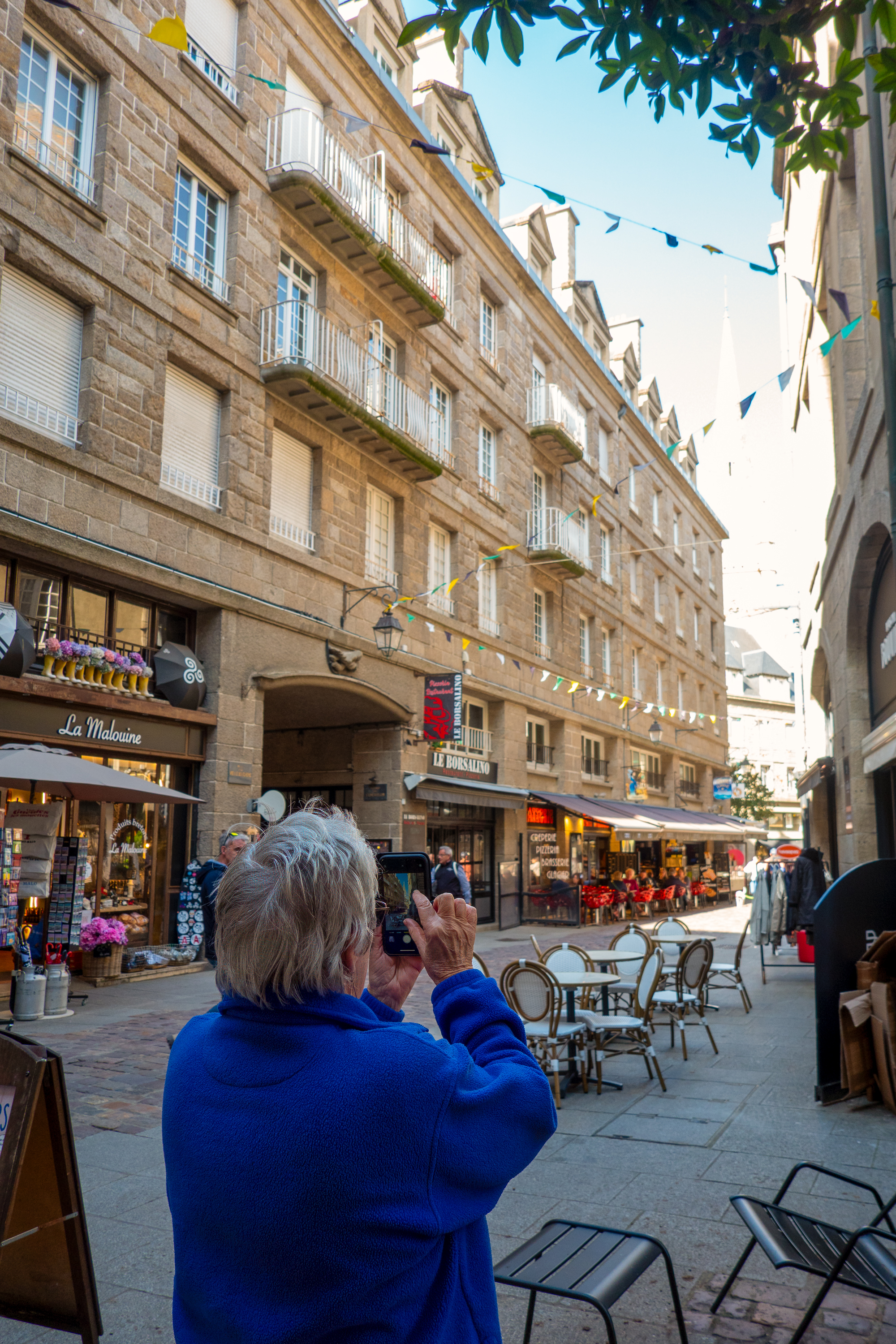
Tourist strip, just warming up.

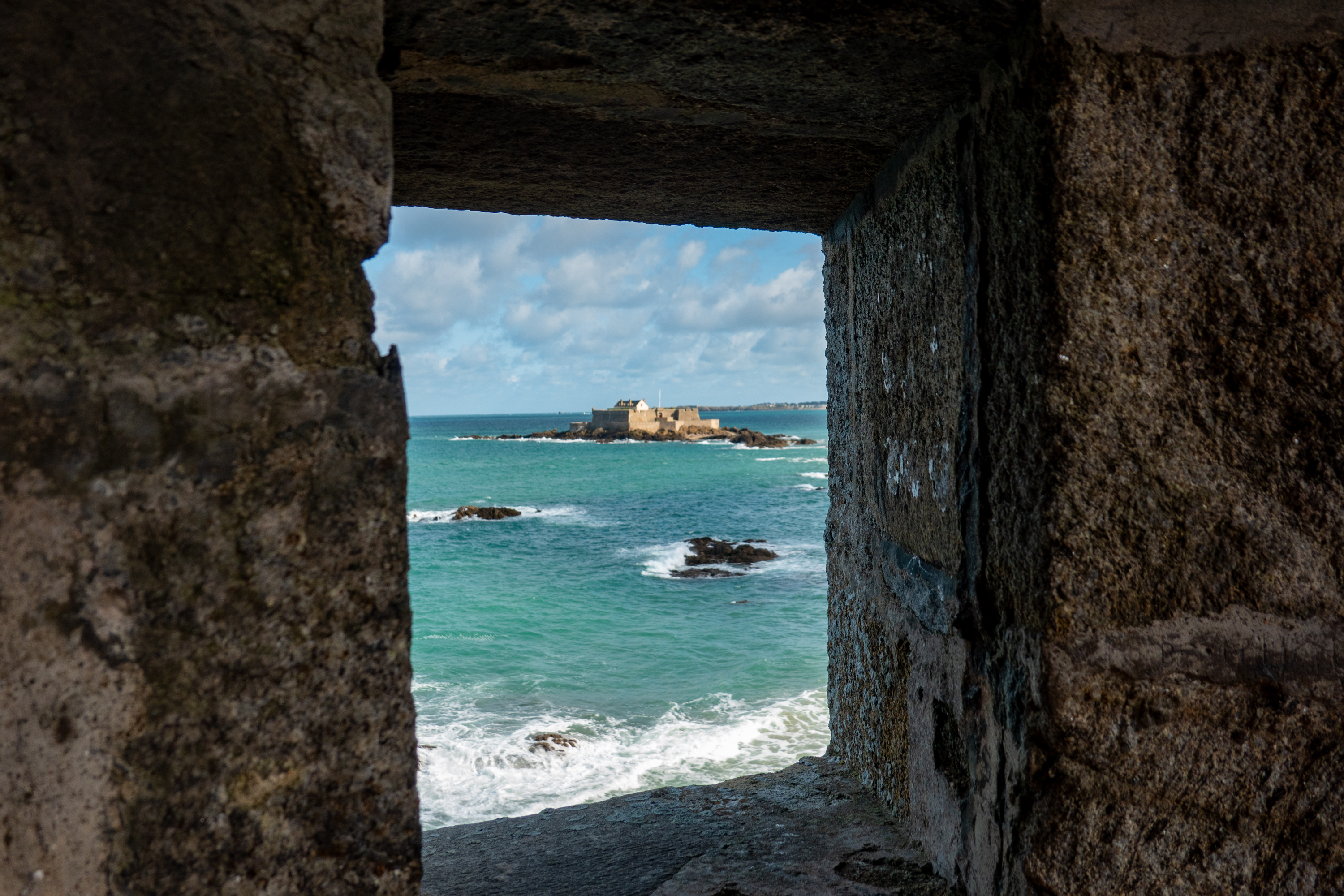
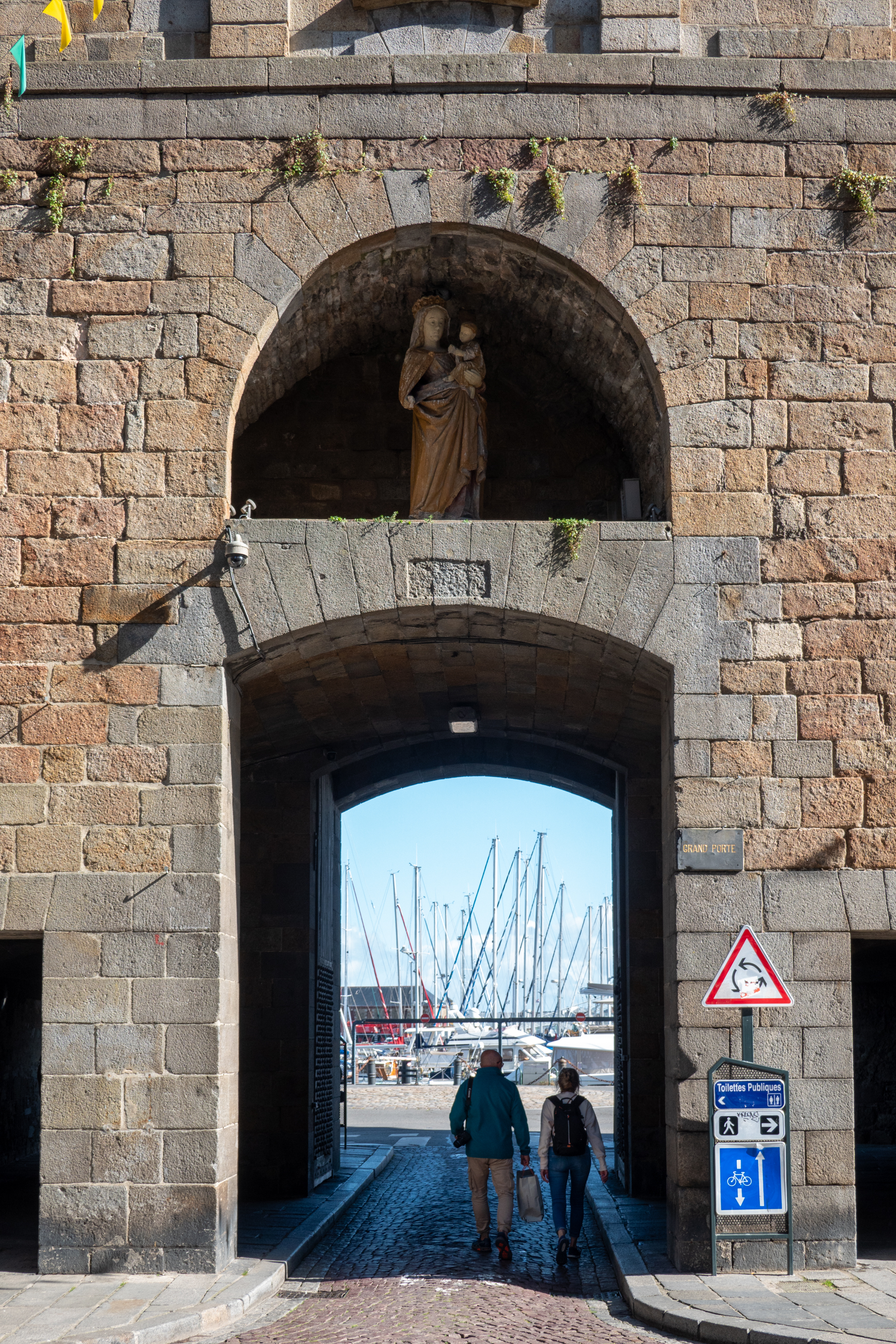
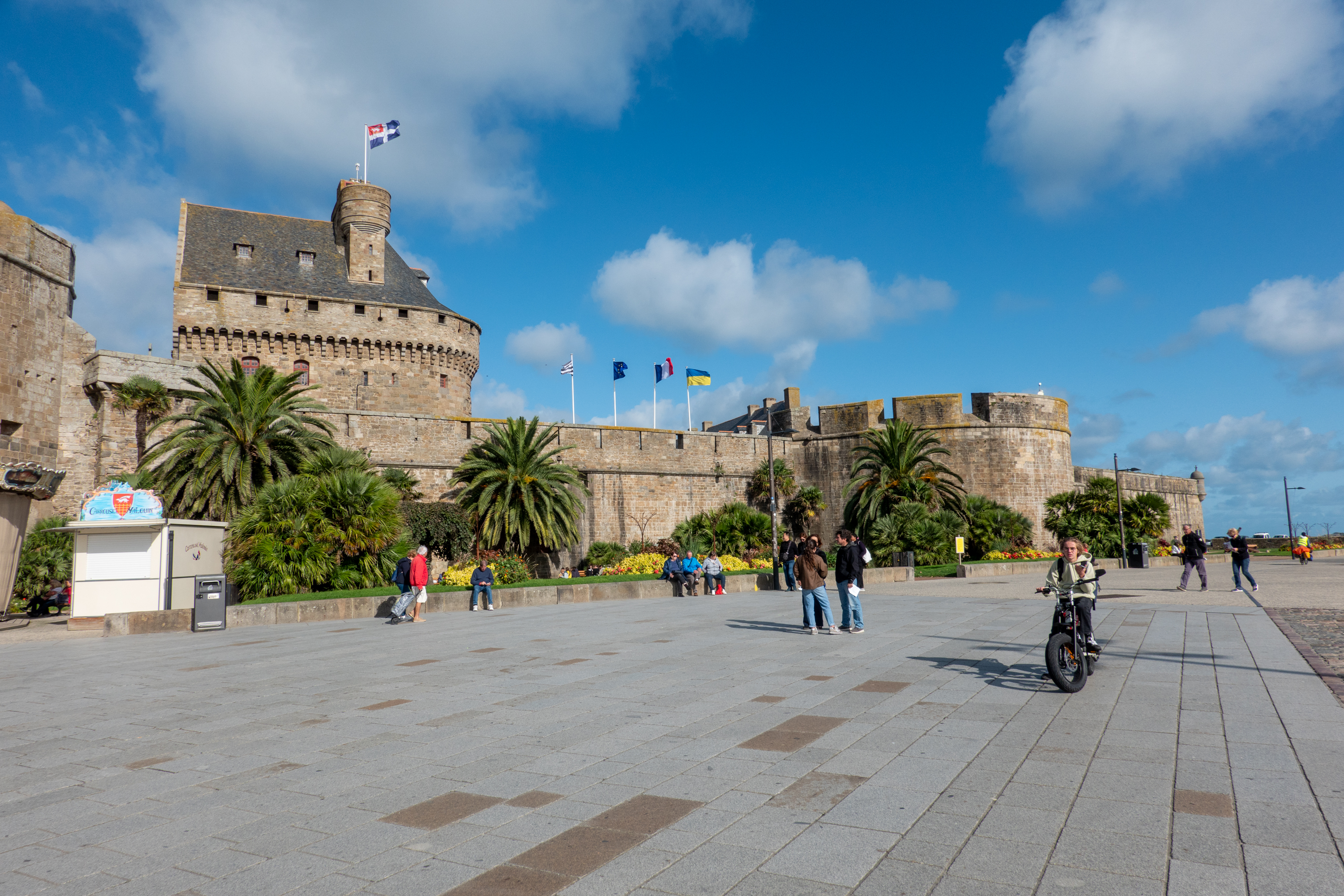
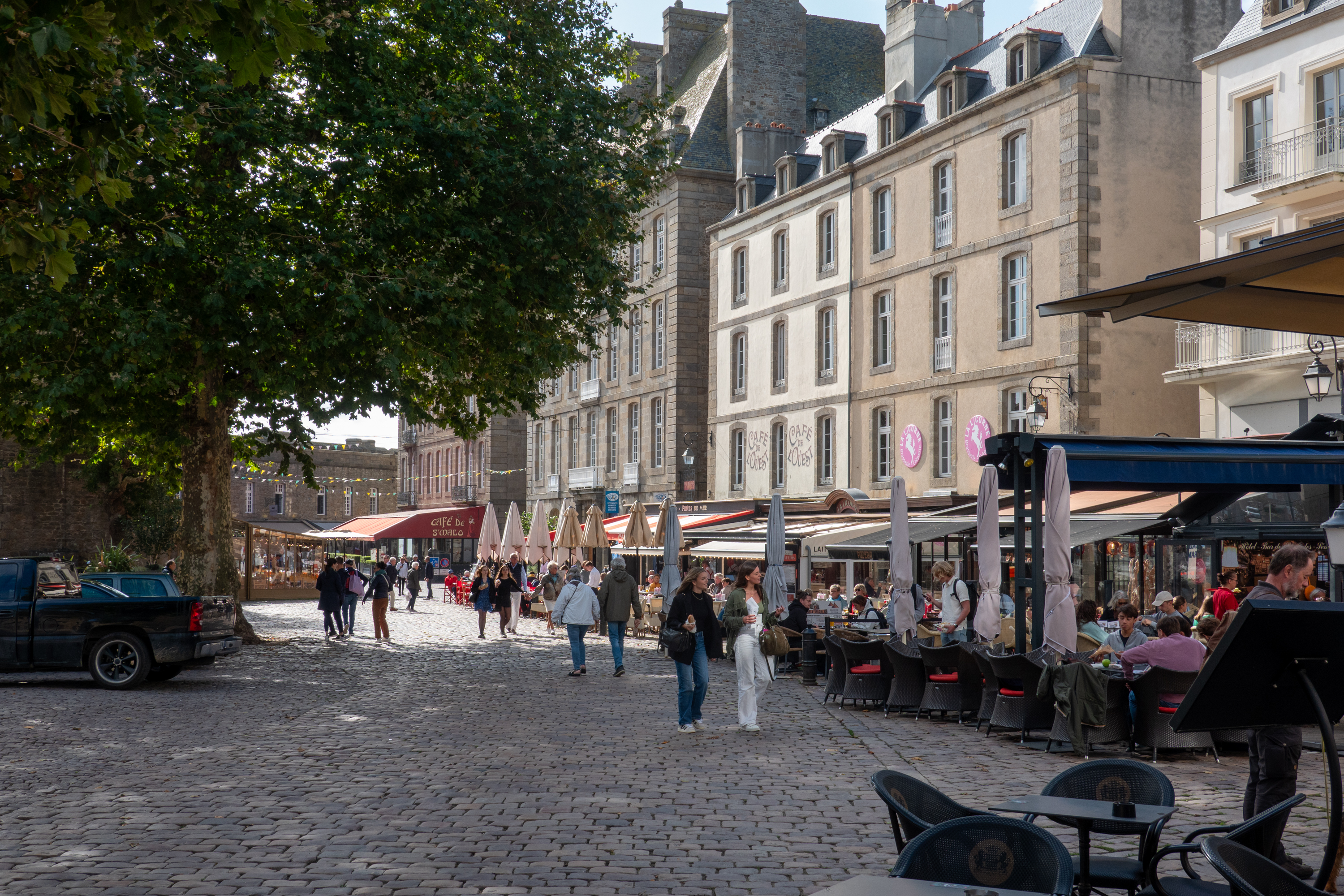
We enjoyed wandering the old cobbled streets walked along the ramparts and admired the forts off the coast, which were closed for the season. 

These are the rocks that probably stopped the English fire ship “Vesuvius.”

St. Malo was hotly contested over the years. In 1693, During the war of English Succession, the English under Admiral John Benbow, attacked with fire ships. There was massive damage and, sadly, the most famous casualty was a local cat.

For the history geeks, the round tower in other photos is to the left of the picture, as is the fort on an island, photographed above. The fireship “Vesuvius” grounded, “a pistol shot distance,” before it hit the city wall, probably on the rocks in the photos above.

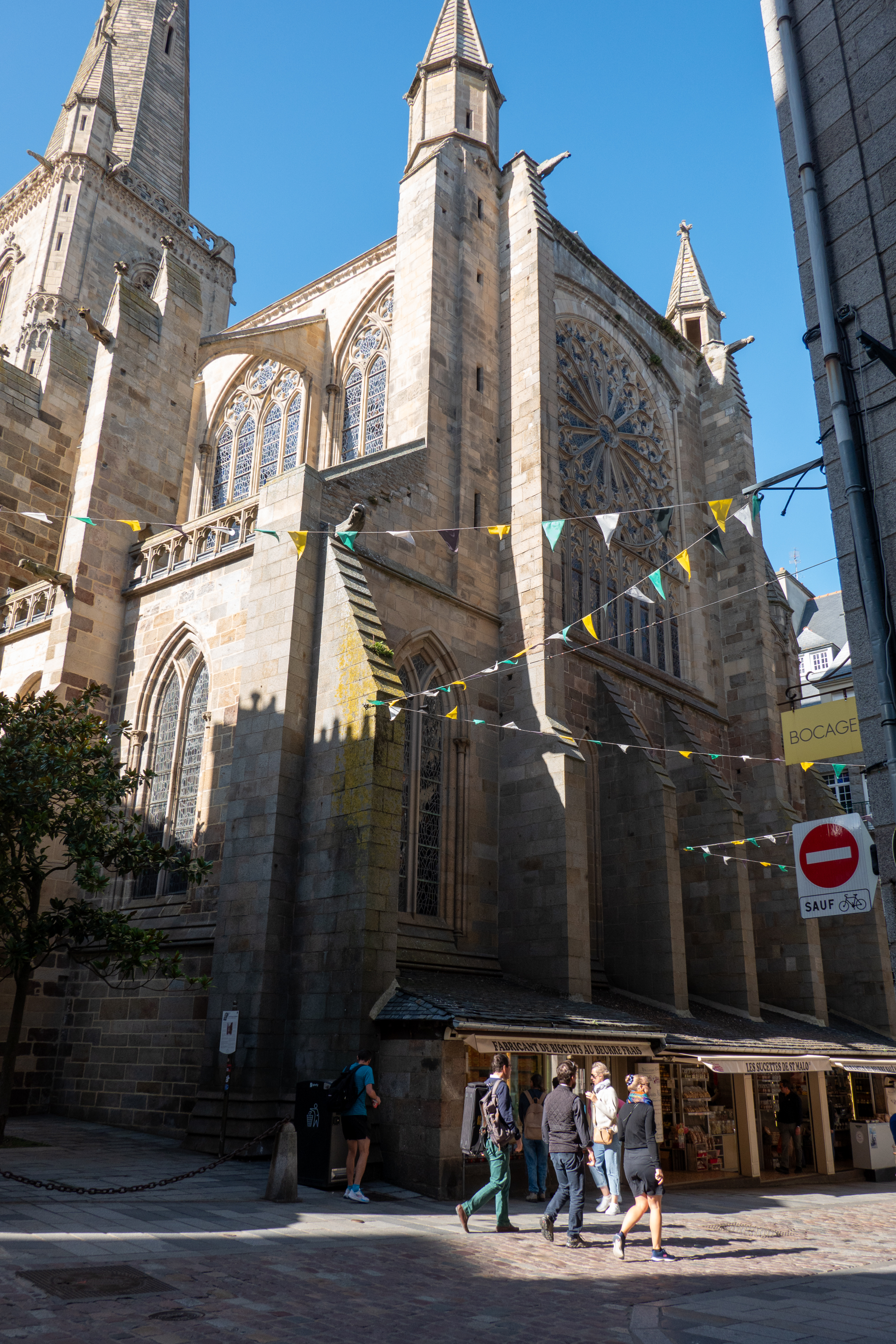
Following our tour of the windy ramparts, we worked our way down to the cathedral.

After a lovely lunch and a great ice-cream, we found our return bus and went back to the camper.

Our final visit, on the following day and on our way out of town, was to the Aquarium.  It was both fun and educational, beginning with small tanks with lots of information on the smaller fish they contained.  As we moved along the tanks got bigger and bigger, with resulting bigger fish.

Finally, we saw huge tanks with with sharks, rays and other large fish.  

Back to Omaha, and Beyond

We chose a campsite on the cliffs above Omaha Beach and really felt the history of the location. Felt like we were camping with ghosts. As part of our we-ain’t-at-a-KOA tonight series, Wilderstandnest 73 is right in the campsite. What, you ask, is a Wilderstandnest? Follow the link: http://www.atlantikwall.co.uk/atlantikwall/fn_p_wn73_vierville_sur_mer.php The pictures are good, but sadly, they are very small.

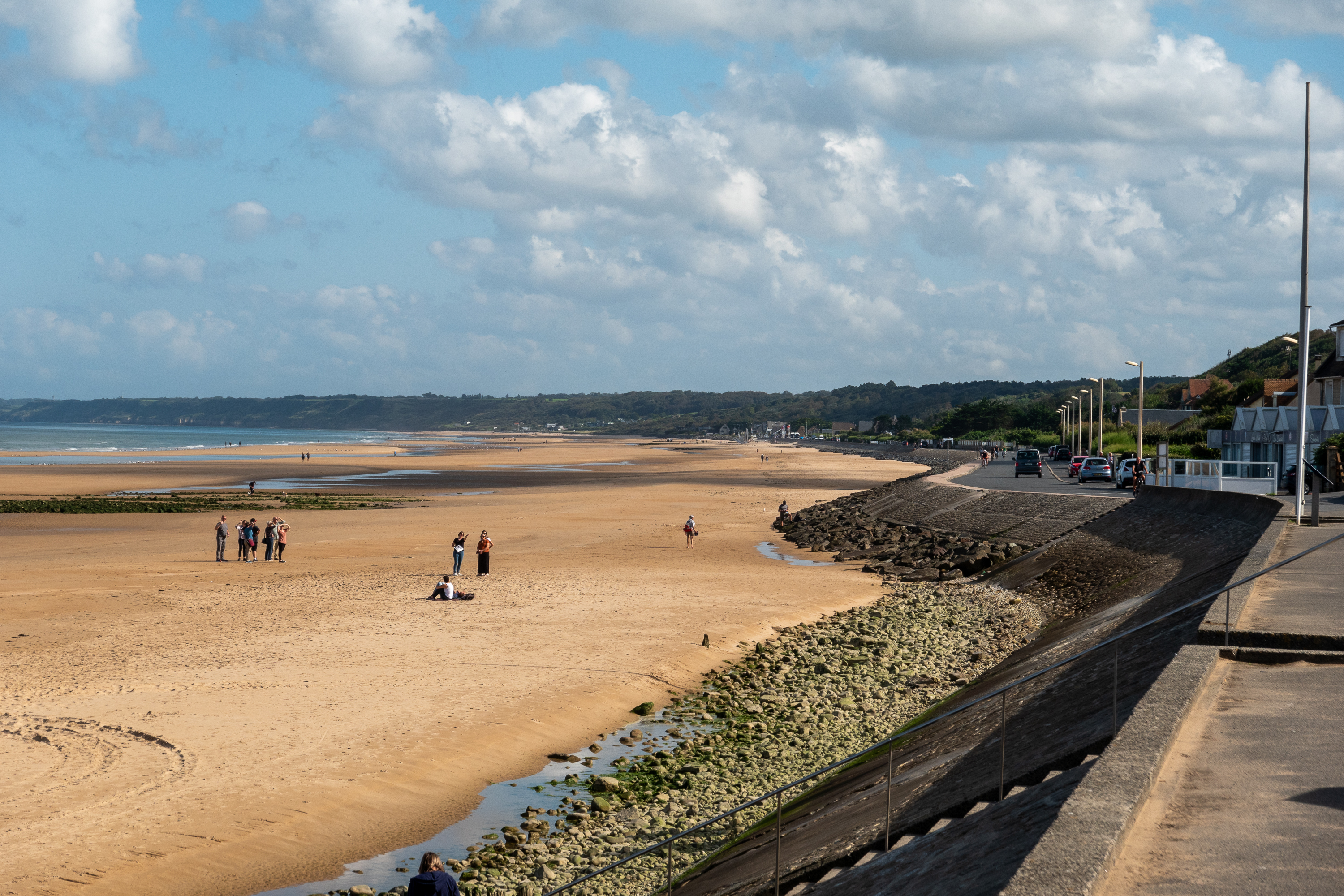
We took the bicycles and rode down into Vierville sur Mer which brought us onto the beach. 

The beach is beautiful on a sunny afternoon. Not at all like the morning of 6 June 1944.

Looking at the cliffs behind us, made us very much aware of the challenges faced during the Normandy landing.  They are steep except for five draws, which were of course the main objectives for the Allies and guarded by the Germans. No movie has yet managed to show just how steep the cliff is behind Omaha beach. (“Saving Private Ryan” is close, but the reality was still worse.) (https://warfarehistorynetwork.com/article/vierville-sur-mer-cracking-a-cricial-draw-at-omaha-beach/#:~:text=The%20Vierville%2Dsur%2DMer%20Draw%2C%20a%20road%20that%20cut,long%2C%20crescent%2Dshaped%20shoreline.)

Realizing that the Vierville draw was not actually taken on D-Day, we cycled along the beach to Les Moulins to see if we could guess where the troops finally got off the beach. We actually got it right – fairly logical if you scan the cliffs. Afterwards we turned back towards Viervielle for a coffee and ice-cream at the hotel where we had had coffee and Calvados in 1989!  The Calvados, in 1989, was a gift from a gentleman who walked up to us and said, “Thank you. Because of you I don’t speak German.” Later, down on the beach we met a German tourist in tears. We didn’t ask.

It was an emotional moment to see it all again. But perhaps the best thing is that it was simply full of tourists and people on the beach, enjoying a sunny afternoon.

Denise having coffee. Monument to the US 29th Infantry is in the background, built on the top of an Wilderstandnest.
Sunrise over Omaha Beach

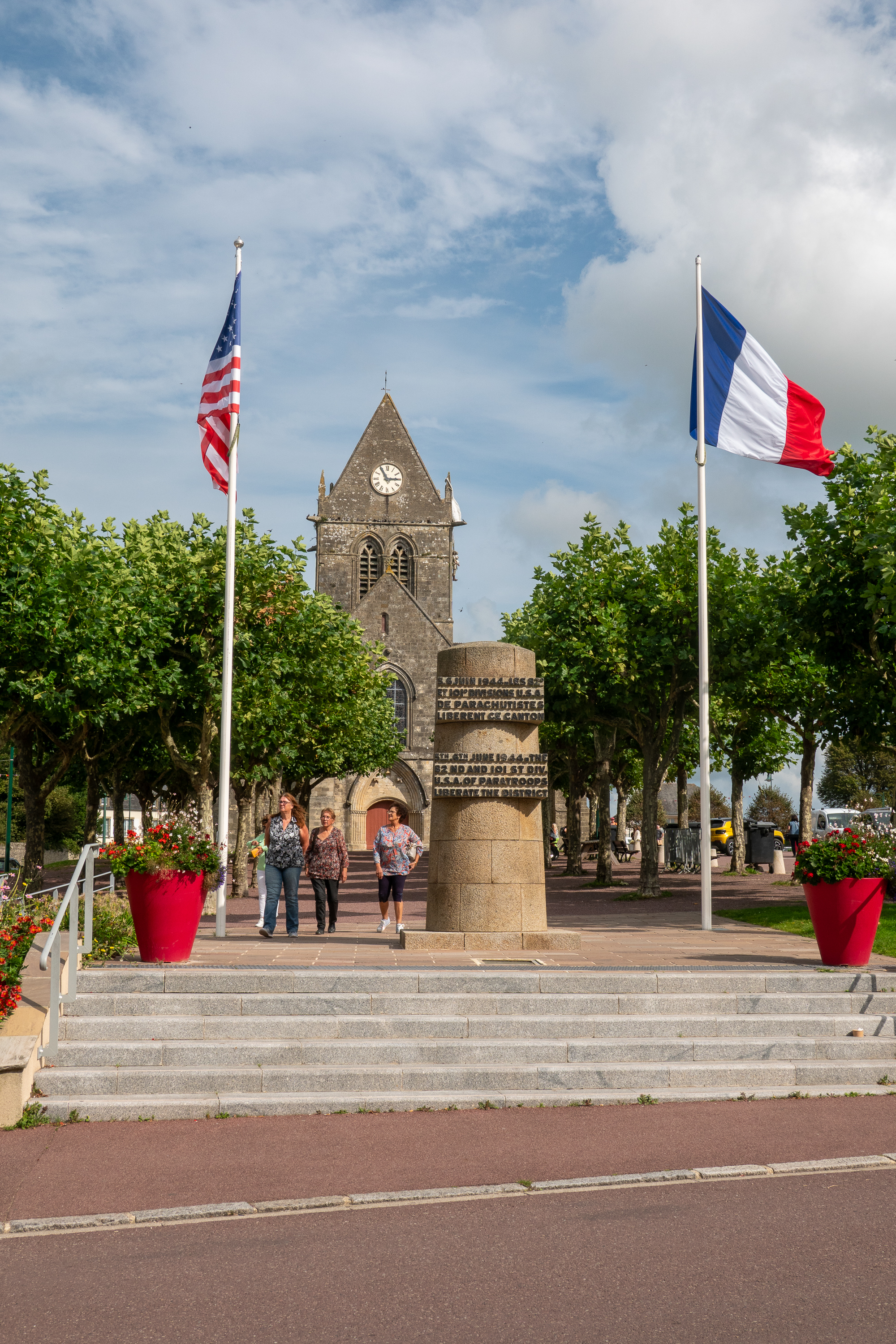
Our next stop was Ste Mere Eglise, which we had also visited in 1989.  Famous as the goal of a paratrooper raid where one of the paratroopers, John Steele, got hooked onto the church steeple and hung there for a few hours.  He was however rescued and lived to tell the tale and jump again. And he has returned to Saint Mere Eglise.

The bottom of this cross is an old Roman column.

We enjoyed a coffee at a bistro at the side of the church. There are lots of displays of photos from 1944. It was amazing to compare those photos with the pleasant scenes of tourists today.

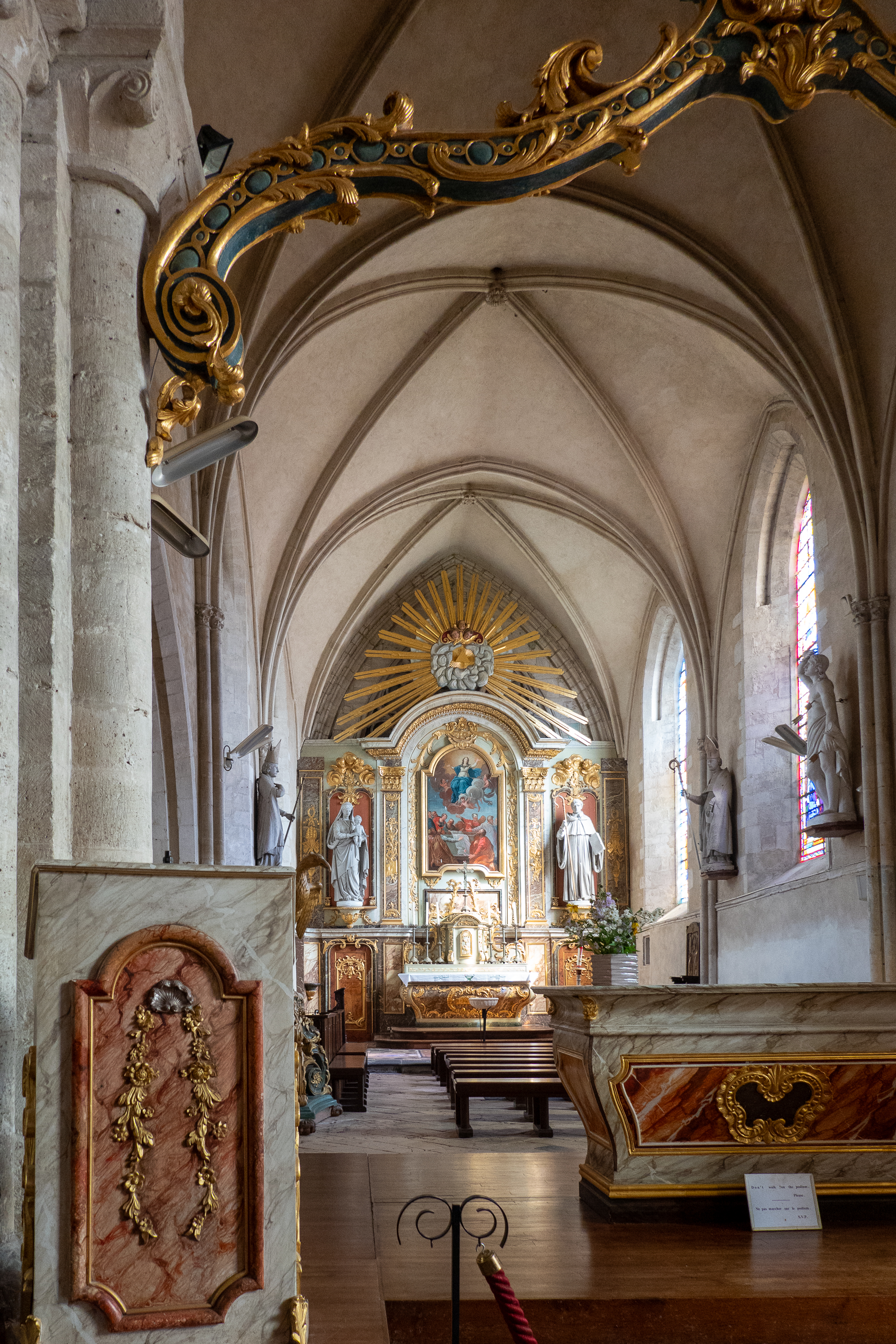
Church interior.
Stained glass window in the Church.
Denise standing on a corner looking at June 1944 photos of the same spot.

We also visited the Airborne Museum, which had been upgraded since our last visit.  (https://airborne-museum.org/en/homepage/) It is huge and on the list of must visits. A new “experience” includes a walk in the dark (red light) through a mockup of a C47 with paratroopers inside.  At the end of the plane, you step out the door onto a clear glass area with a view of the terrain below in miniature.  As guns flash around you and wind hits your face, it gaves a small sense of how it must have been.  Quite disconcerting.

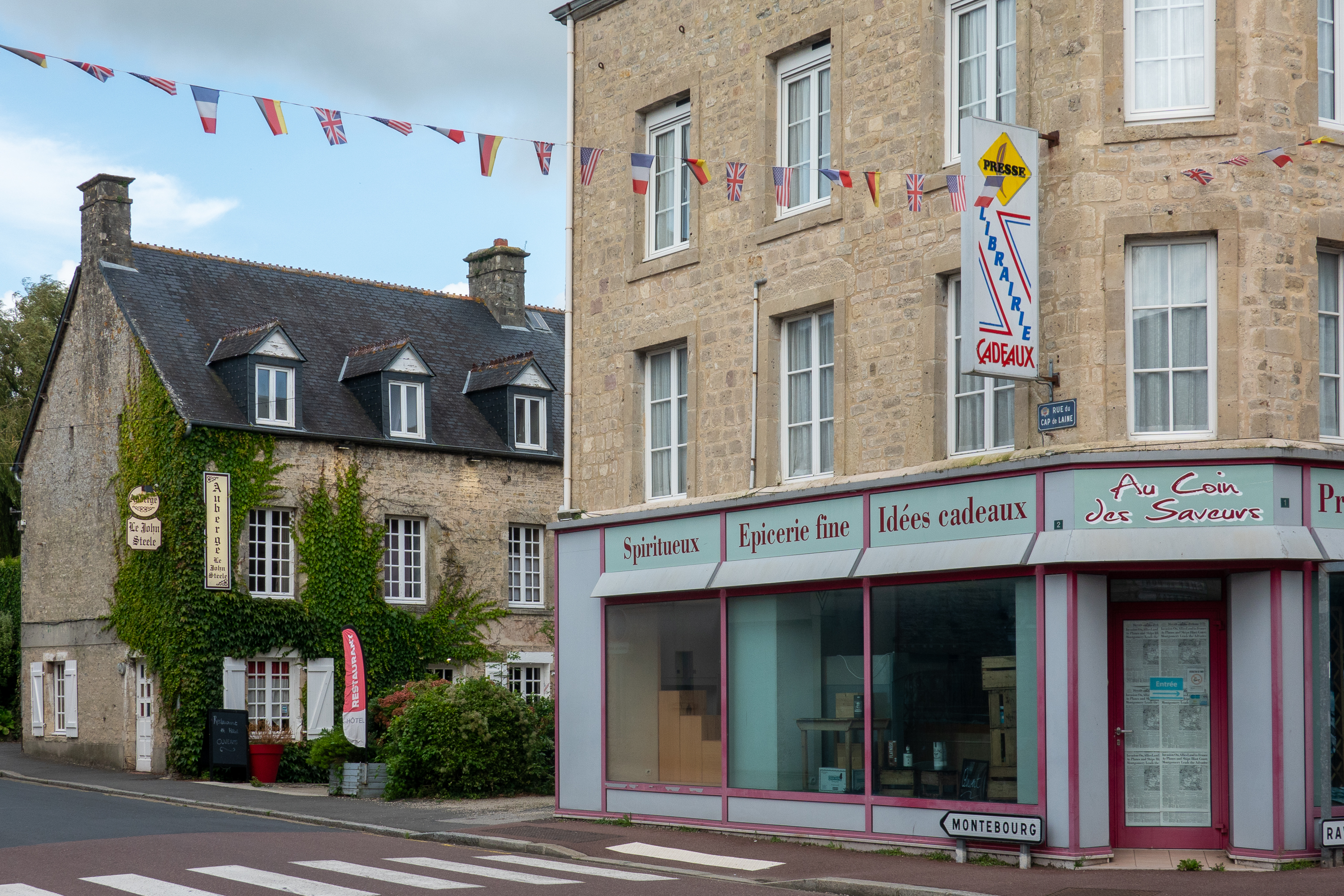
The Auberge John Steele, where, if memory serves, we stayed in 1989.
The church from the main street.

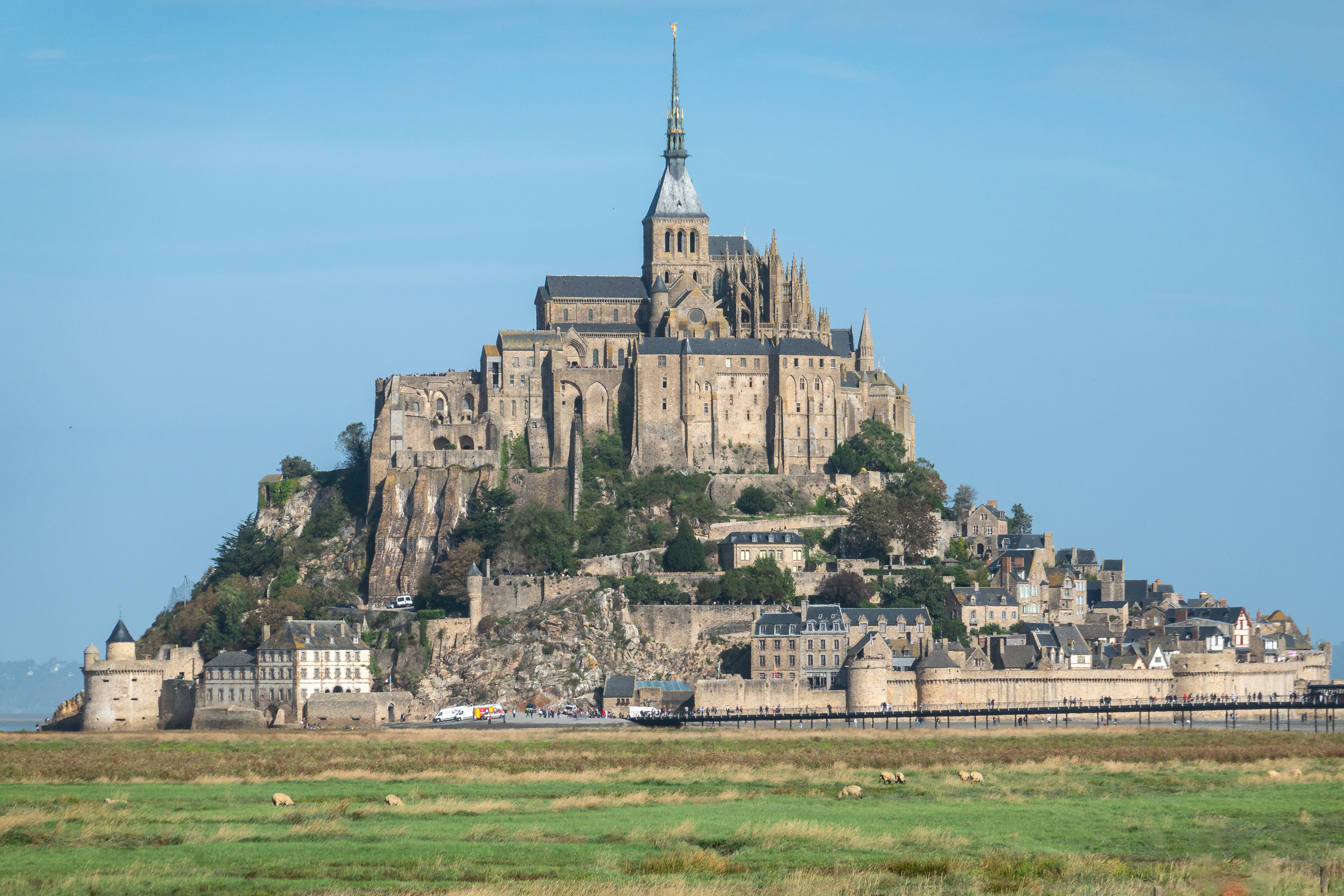
We had not planned to stop at Mont St Michel, which we had visited in 1989, but once we saw it on the skyline, we could not resist.  It has become very much a tourist goal and the parking is regulated. Close in camping is impossible without a reservation, which we did not have.  But we found a lovely Aire, La Bidonnière in the little village of Ardevon, right nearby.  Next morning we cycled back towards the Mont via a cycle path.

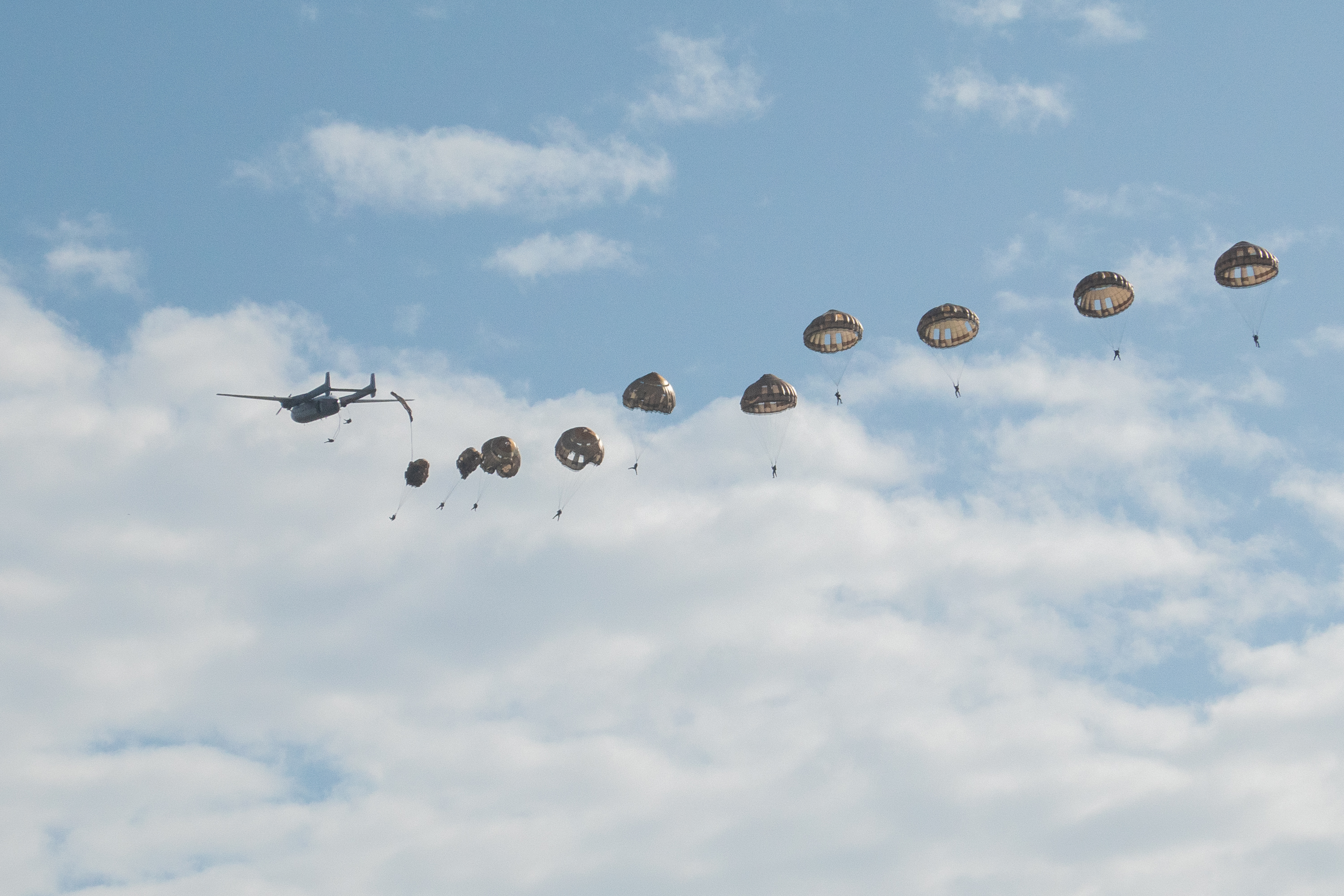
The first sight we saw was parachutists walking back to their buses.

There is no longer an issue with the famous tided, as a huge bridge has been built across the sands and you can easily walk or cycle right to the base of the Mont.  Entry to the Mont is on foot only and shuttle busses run from the car parks.

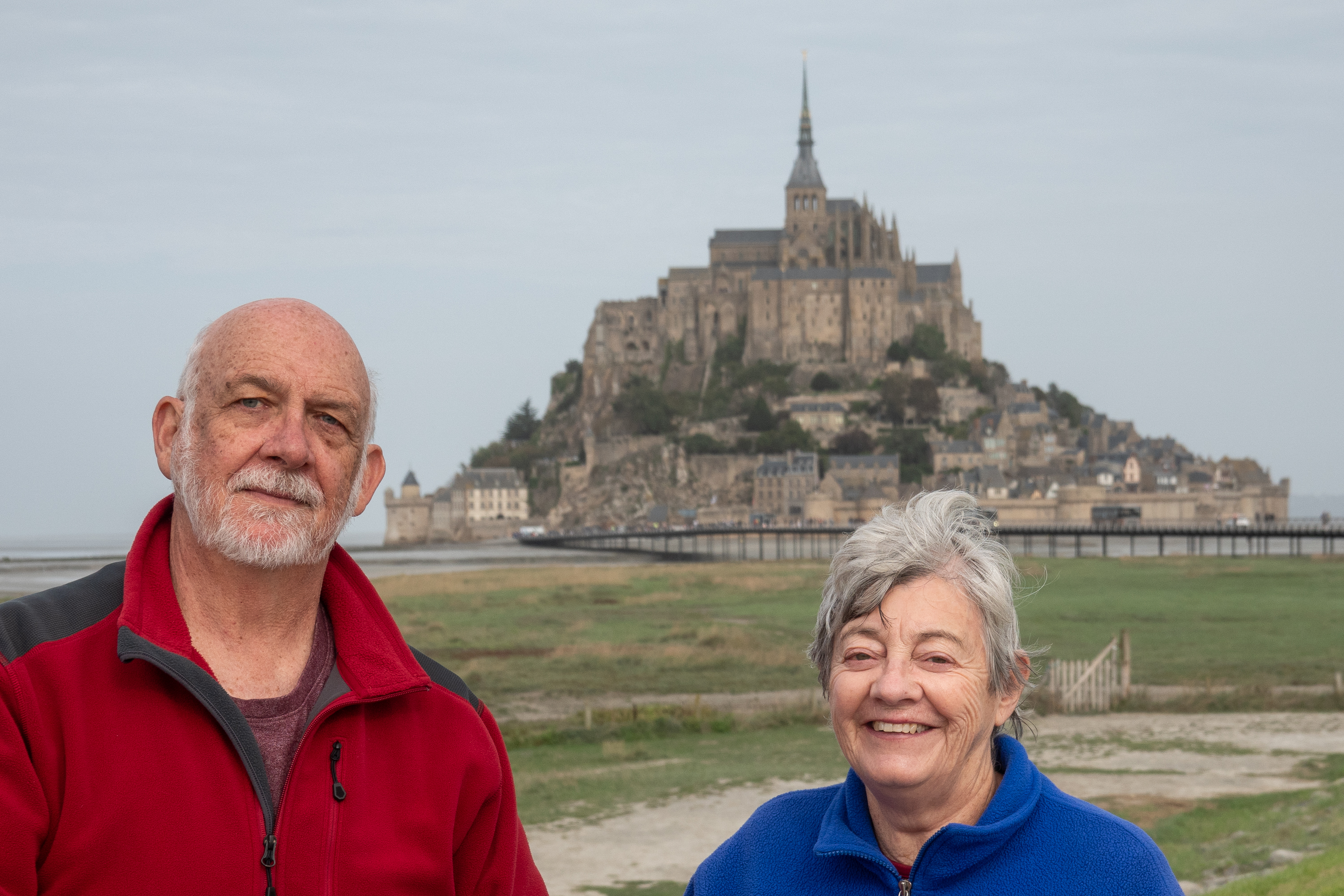
Obligatory tourist shot with the bridge just visible in the background.

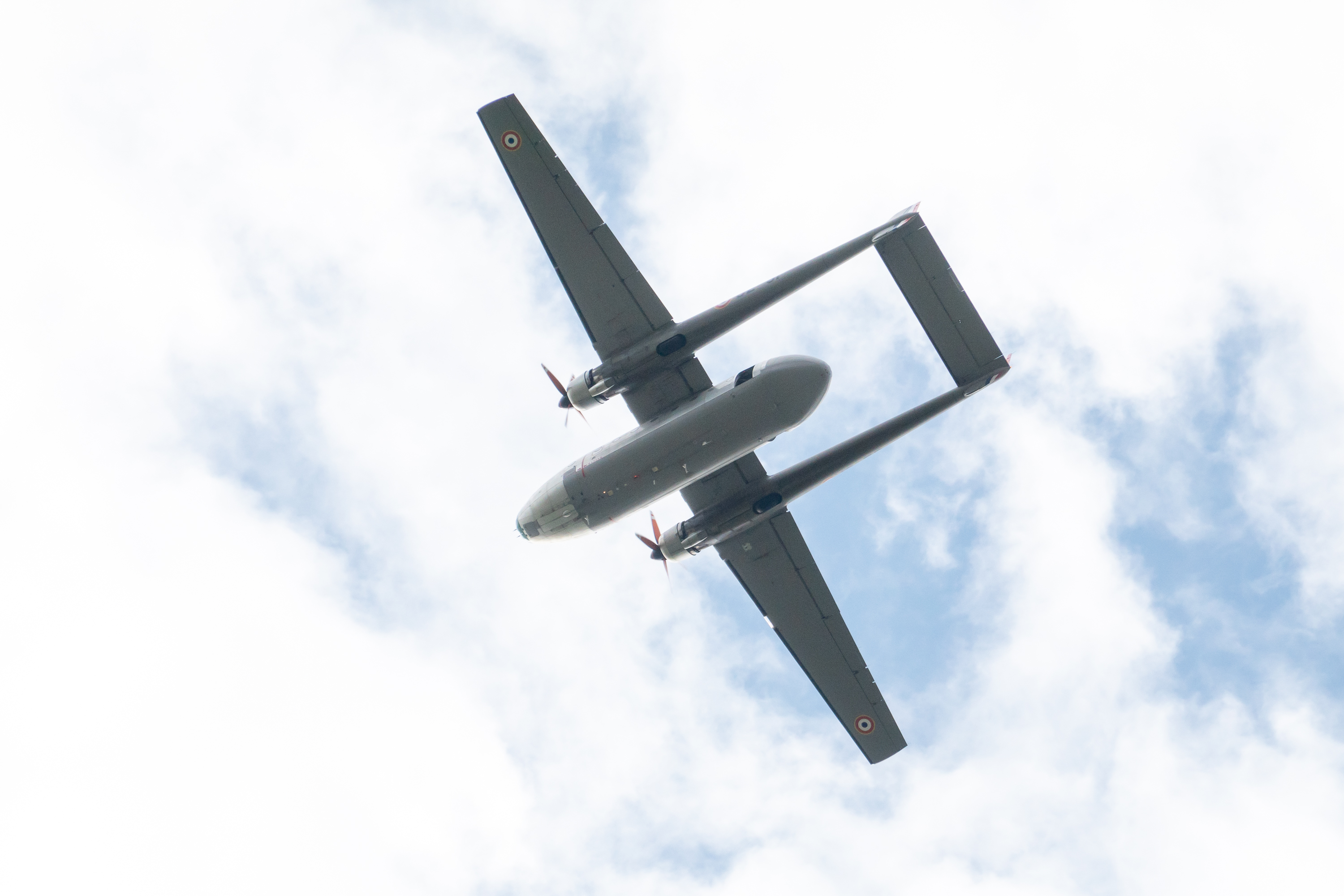
While we were admiring the view, we were overflown (again) by the last flying Noratlas in France, dropping another stick of parachutists.

A great show, but why? Friend of ours cracked the code. It was Saint Michael’s day and Saint Michael is the patron saint of paratroopers.

It was a cool cloudy day but we were fortunate to see the Mont in sunlight for a short while. 

The beauty shot

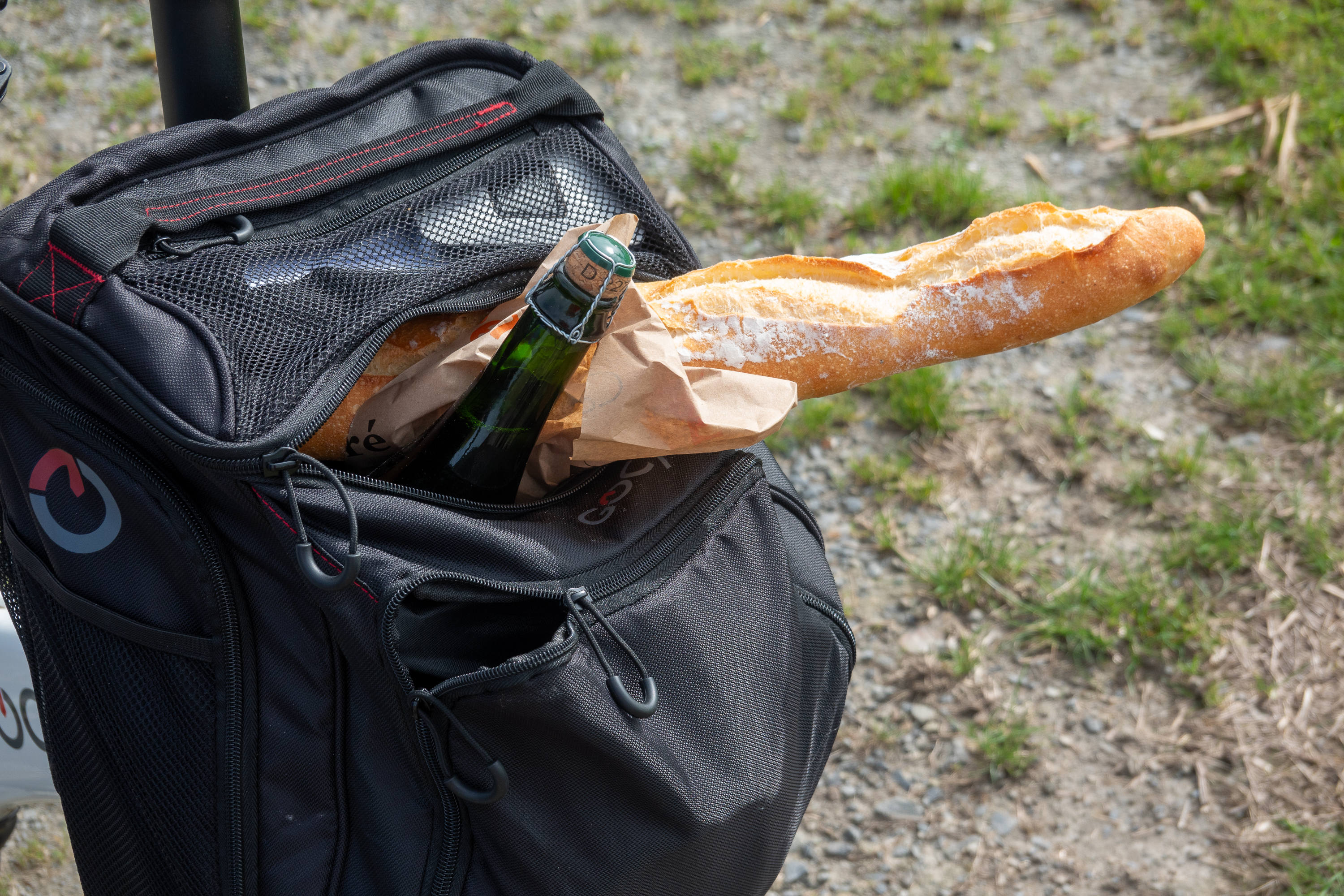
We then went for a traditional galette lunch at a cafe in Beauvoir, bought some bread and cider, and returned to the camper via country lanes and wonderful views of the small stone built villages and fields.

Still life of velo and baguette.
The Mont at sunset.

While we were in Mont St. Michel, it became clear that we were having some odd electrical behavior. Fred was concerned that we were not charging our camper battery adequately due to a possible starter battery malfunction.  So, we located an auto electrician who also advertised heavy truck repairs and headed for Rennes.  The company was most helpful and a charming gentleman tested the batteries and the alternator before pronouncing everything in perfect working order, a relief to both of us. (Mildly amazing, in fact, as the batteries are about five years old. Clearly that side of the system is working well.)

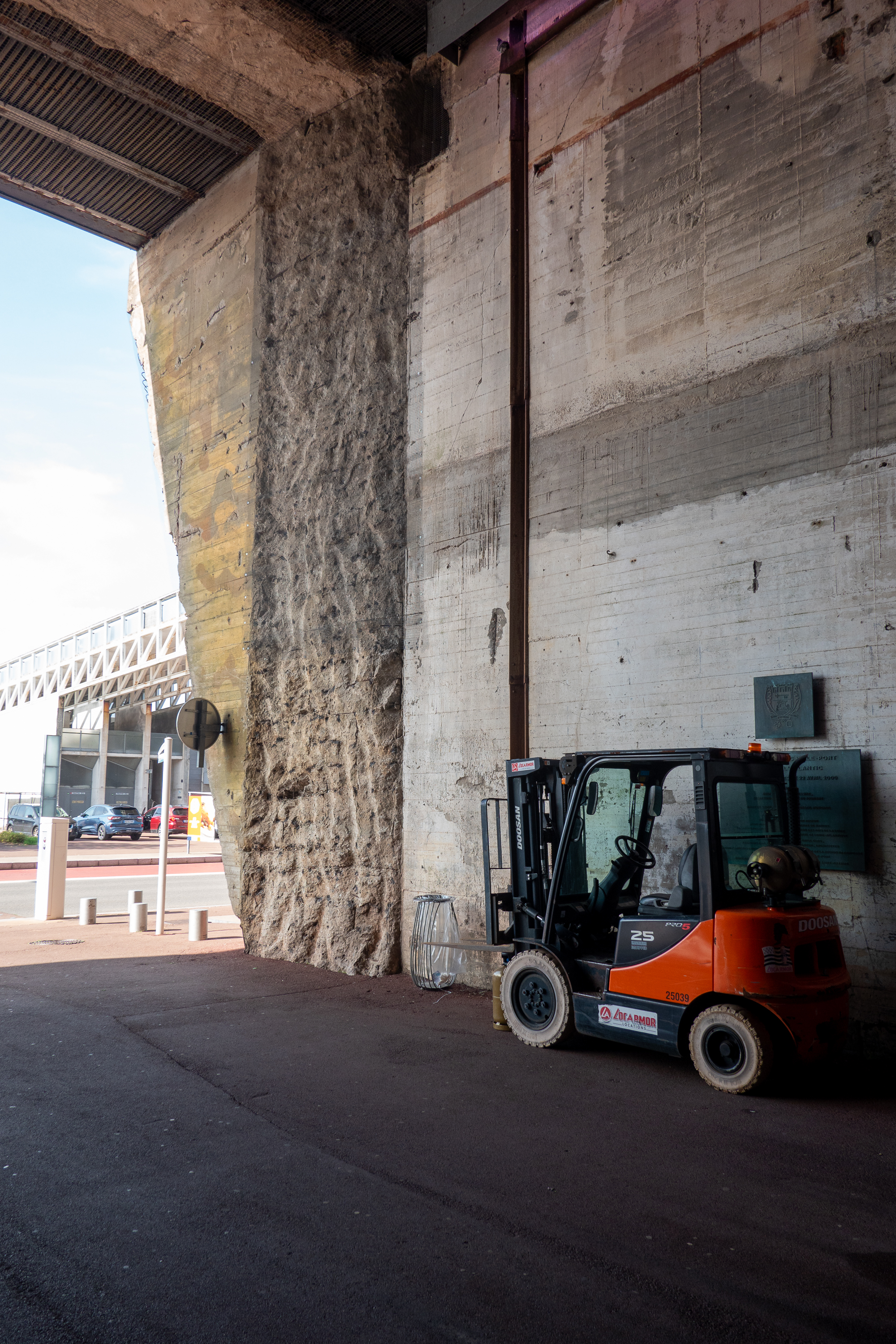
As we were slightly off route, we headed for St. Nazaire were Fred wanted to visit the former German submarine pens.  The Battle of the Atlantic has been called the longest battle of the war and winning it kept Great Britain in the war and made possible the Normandy invasion. There are many, many studies, Fred recommends Jonathan Dimbleby’s book as he spends a lot of time on the strategic and diplomatic challenges of the Atlantic battles; the “why” as well as the “what.” Obviously, the major German protagonists were submarines based in France. Early on, the Germans realized that the submarines were at their most vulnerable when in port and thus constructed an amazing series of massive, bomb proof buildings. (https://en.wikipedia.org/wiki/Submarine_pen#:~:text=the%20preliminary%20stage.-,France,metres%20of%20concrete%20were%20used.) Fans of the famous Dam Busters squadron will recall that they, and the US Army Air Force, tried mightily to destroy them. Most are still intact.

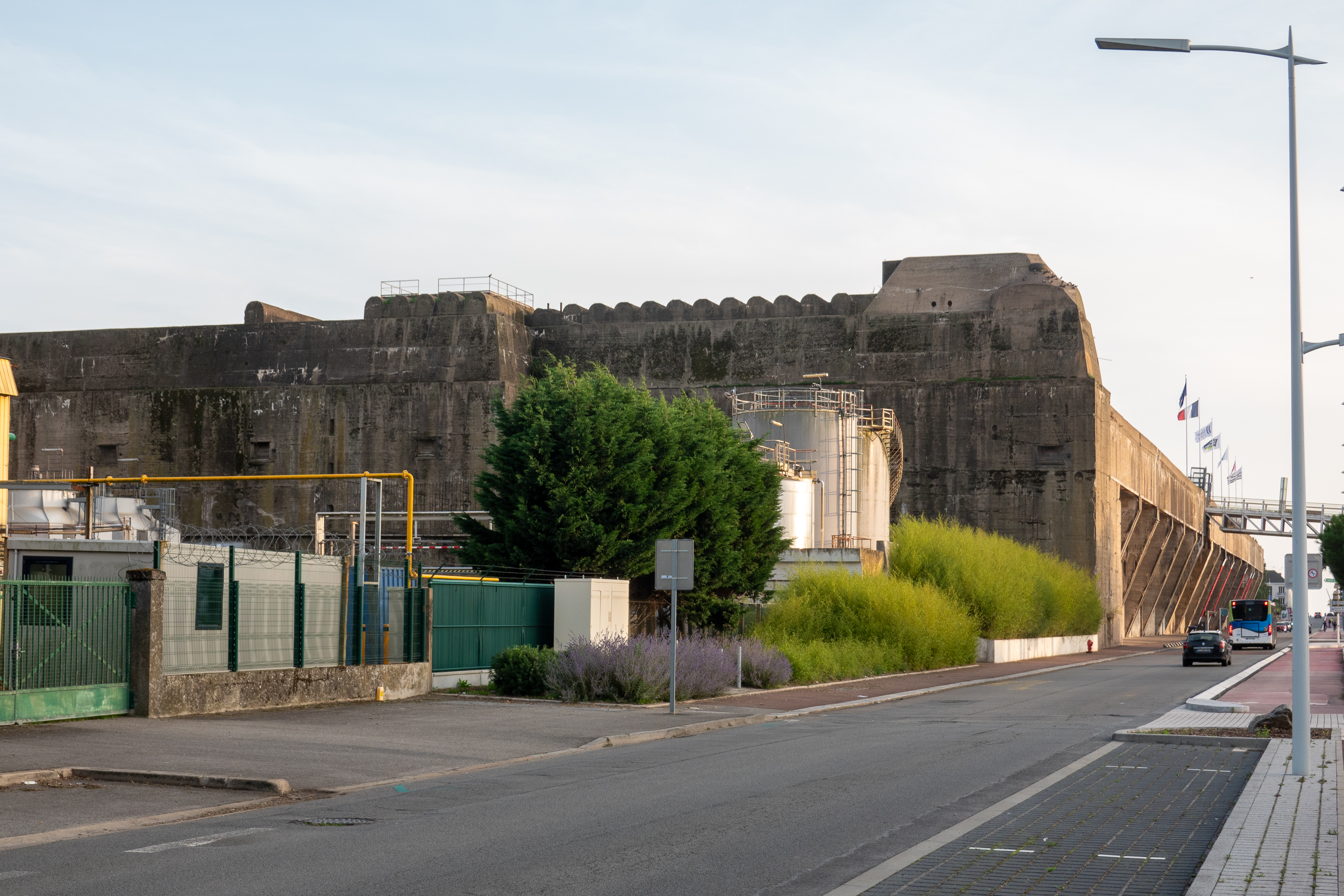
We found the pens easily – bit too big to miss – and there is an Aire right beside them.  It was very much an industrial area, so the Aire was just an uninspiring parking lot, but it served its purpose for a night. 

Doesn’t look that special, until you realize that it is all concrete.
The roof was specially designed to absorb bomb blast and covered with anti-aircraft batteries.

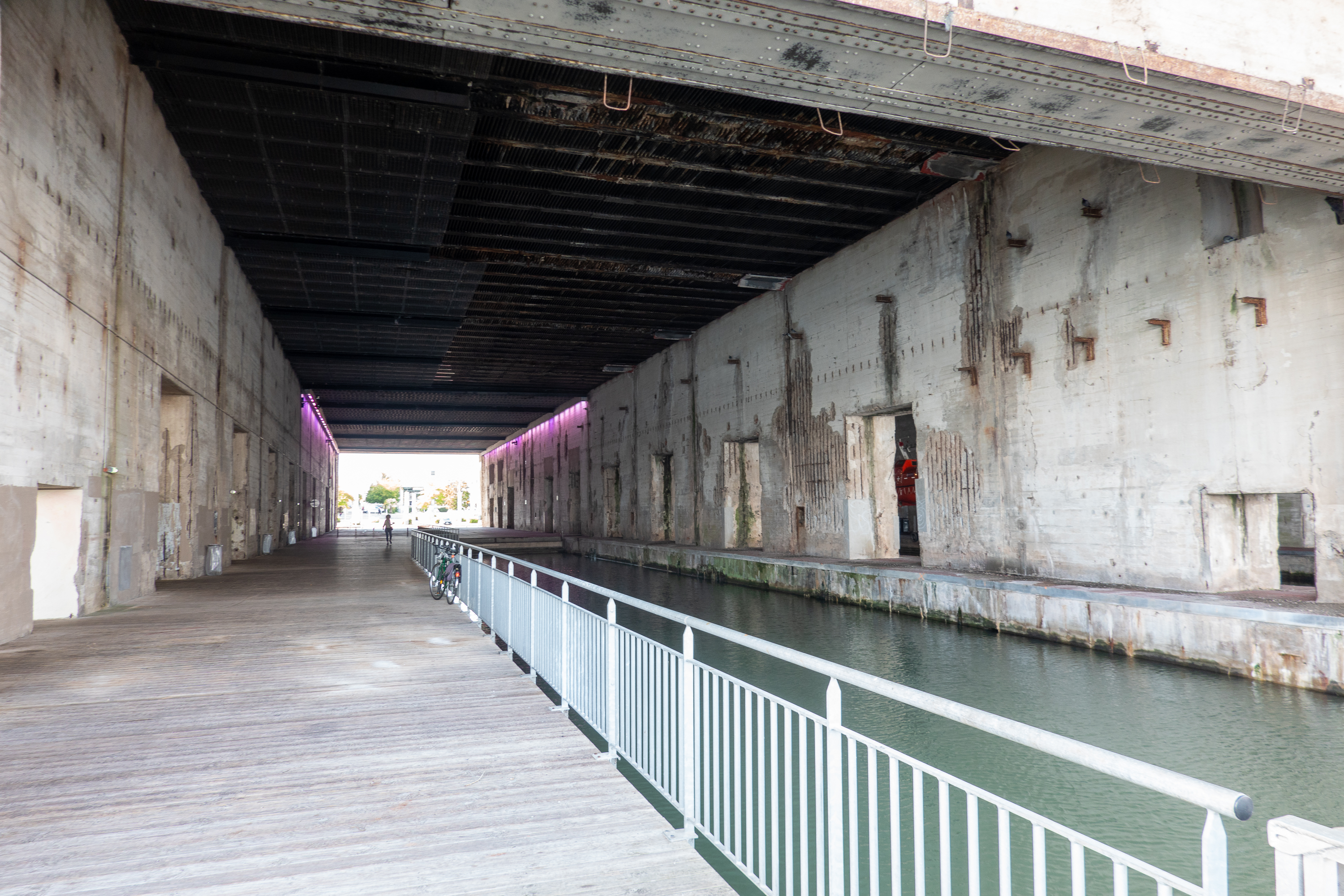
Each pen could hold up to four submarines in the water and at least two on the dry side. There were massive gantries to lift the boars and, of course, workshops, stores, and everything necessary to keep the submarines at sea.

View from the water side.

The highlight of the visit from Fred’s point of view was the amazing construction of the pens. 

Here you can see where one of the land side walls has been chipped out. That must have taken some time and effort as it is all reinforced concrete.

Denise thoroughly enjoyed the Escal’ Atlantique, a multi-media attraction which explained the role of the St. Nazaire shipyards in the building of such famous ocean liners as the Normandie, the France, and, more recently, the Queen Mary. (https://www.saint-nazaire-tourisme.com/les-visites/les-sites-de-visite/escalatlantic/). Although later eclipsed by LeHavre for the transatlantic crossing, St. Nazaire remained a major port for transit to the US, Asia, Africa, and South America.  The display is set up showing interiors of the liners of different eras, with cabin views, deck views, engine views, and certain artifacts from the different liners.  You can even send a “day” walking the promenade deck, feeling the wind. The tour ended with  a short film followed by a drop in a lifeboat back to the lower level.  A cool ending to a most interesting visit.  A short walk back to the camper led us past a Carrefour so we were able to make a purchase or two!