
We chose a campsite on the cliffs above Omaha Beach and really felt the history of the location. Felt like we were camping with ghosts. As part of our we-ain’t-at-a-KOA tonight series, Wilderstandnest 73 is right in the campsite. What, you ask, is a Wilderstandnest? Follow the link: http://www.atlantikwall.co.uk/atlantikwall/fn_p_wn73_vierville_sur_mer.php The pictures are good, but sadly, they are very small.
We took the bicycles and rode down into Vierville sur Mer which brought us onto the beach.
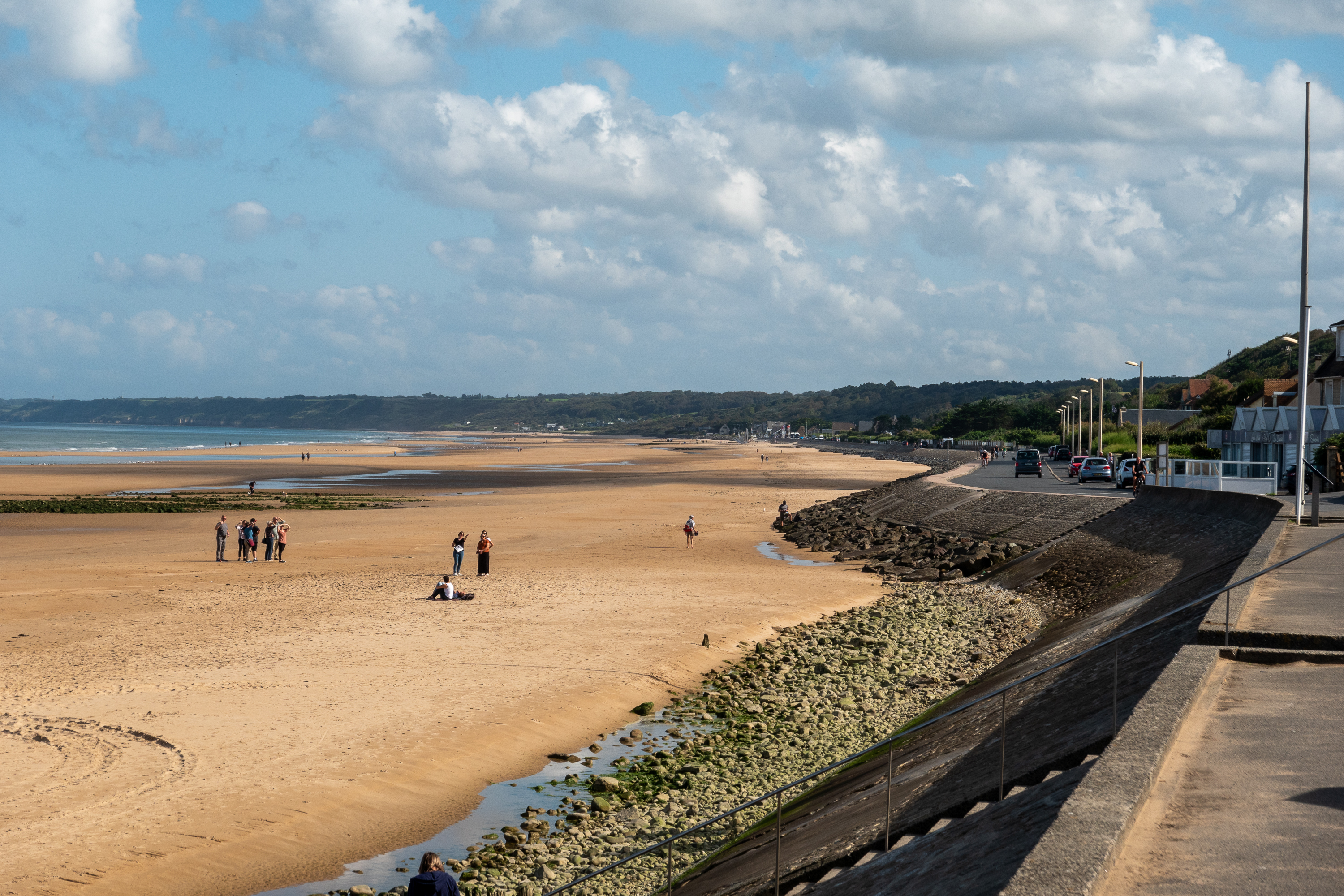
Looking at the cliffs behind us, made us very much aware of the challenges faced during the Normandy landing. They are steep except for five draws, which were of course the main objectives for the Allies and guarded by the Germans. No movie has yet managed to show just how steep the cliff is behind Omaha beach. (“Saving Private Ryan” is close, but the reality was still worse.) (https://warfarehistorynetwork.com/article/vierville-sur-mer-cracking-a-cricial-draw-at-omaha-beach/#:~:text=The%20Vierville%2Dsur%2DMer%20Draw%2C%20a%20road%20that%20cut,long%2C%20crescent%2Dshaped%20shoreline.)
Realizing that the Vierville draw was not actually taken on D-Day, we cycled along the beach to Les Moulins to see if we could guess where the troops finally got off the beach. We actually got it right – fairly logical if you scan the cliffs. Afterwards we turned back towards Viervielle for a coffee and ice-cream at the hotel where we had had coffee and Calvados in 1989! The Calvados, in 1989, was a gift from a gentleman who walked up to us and said, “Thank you. Because of you I don’t speak German.” Later, down on the beach we met a German tourist in tears. We didn’t ask.
It was an emotional moment to see it all again. But perhaps the best thing is that it was simply full of tourists and people on the beach, enjoying a sunny afternoon.


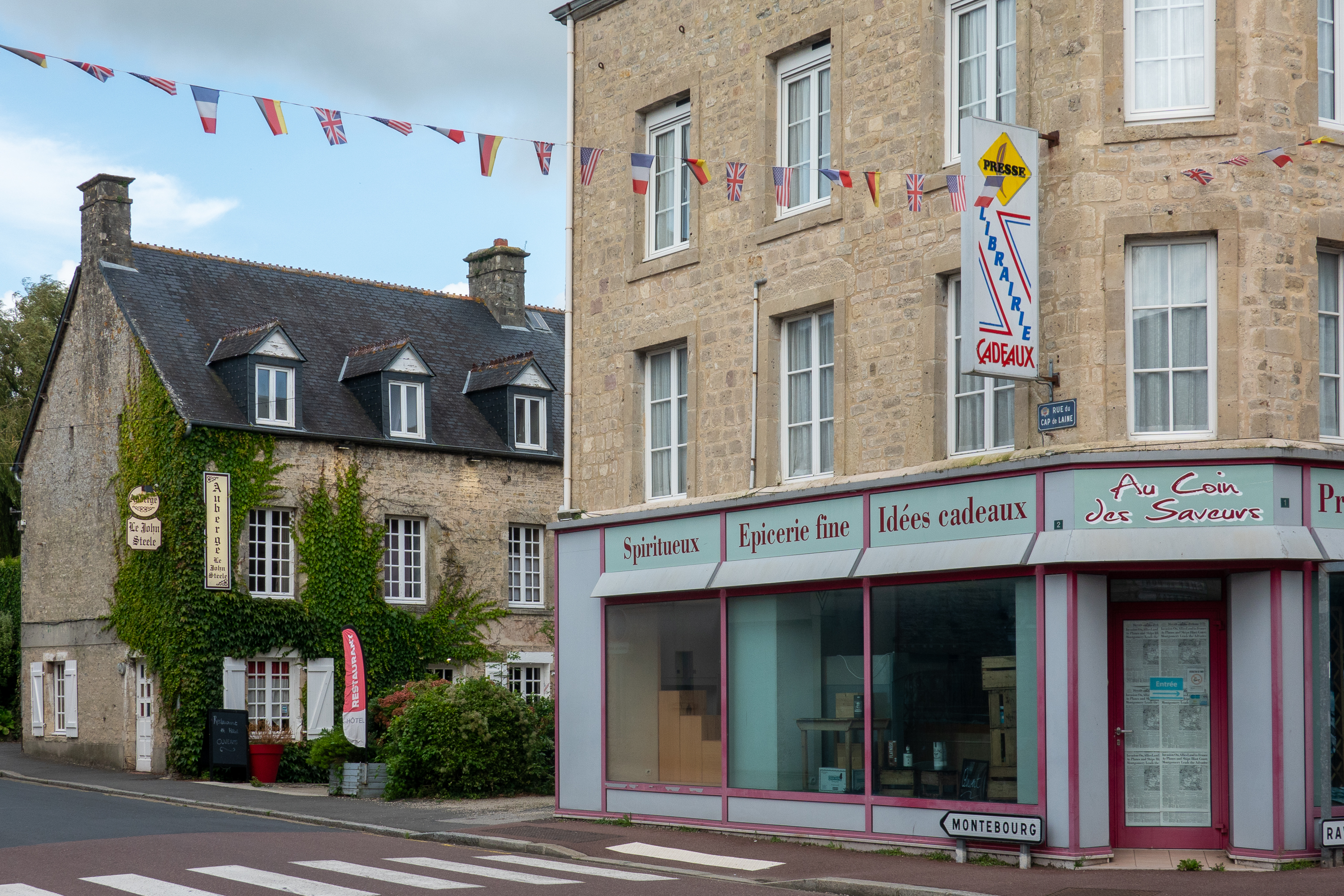
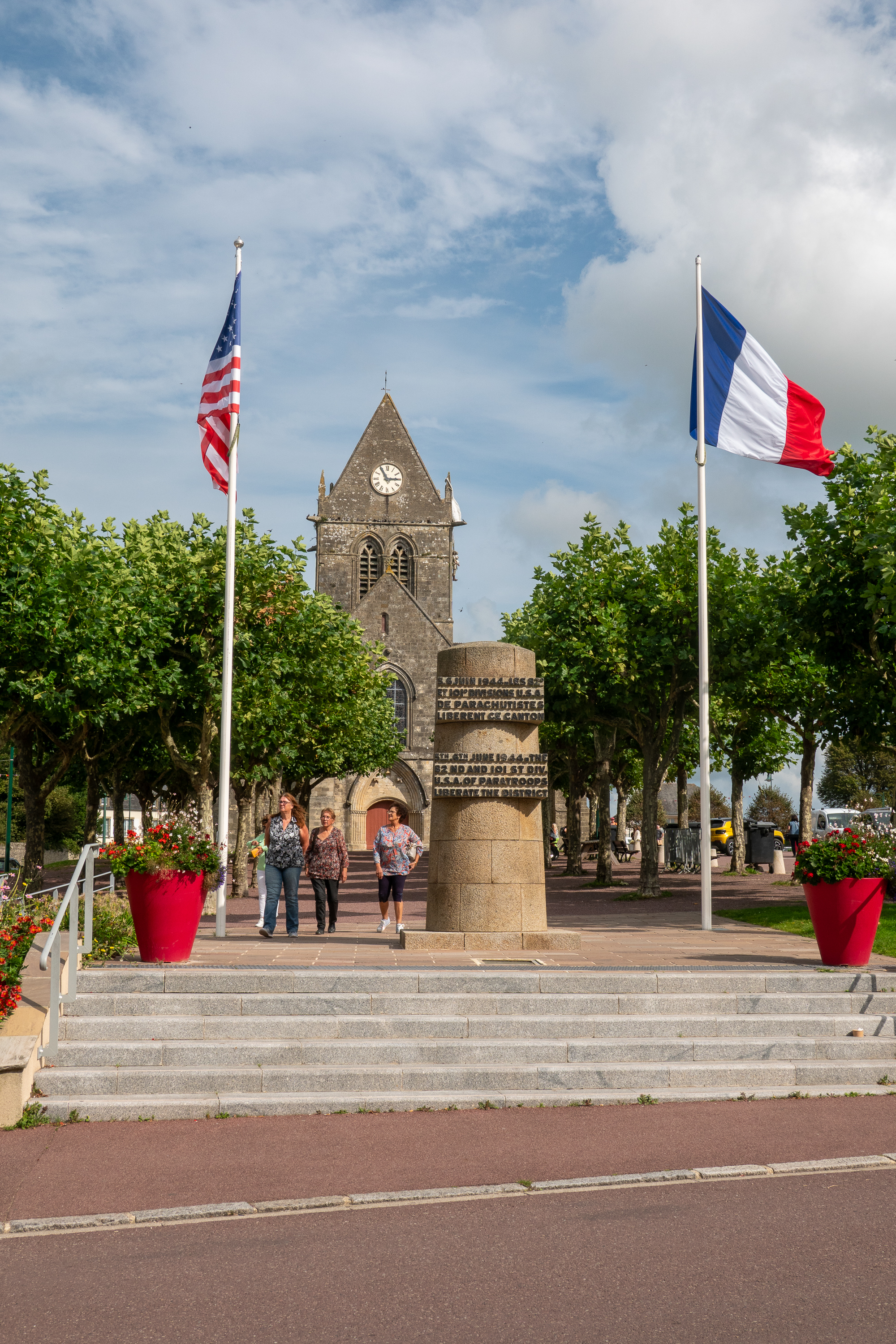
Our next stop was Ste Mere Eglise, which we had also visited in 1989. Famous as the goal of a paratrooper raid where one of the paratroopers, John Steele, got hooked onto the church steeple and hung there for a few hours. He was however rescued and lived to tell the tale and jump again. And he has returned to Saint Mere Eglise.

We enjoyed a coffee at a bistro at the side of the church. There are lots of displays of photos from 1944. It was amazing to compare those photos with the pleasant scenes of tourists today.
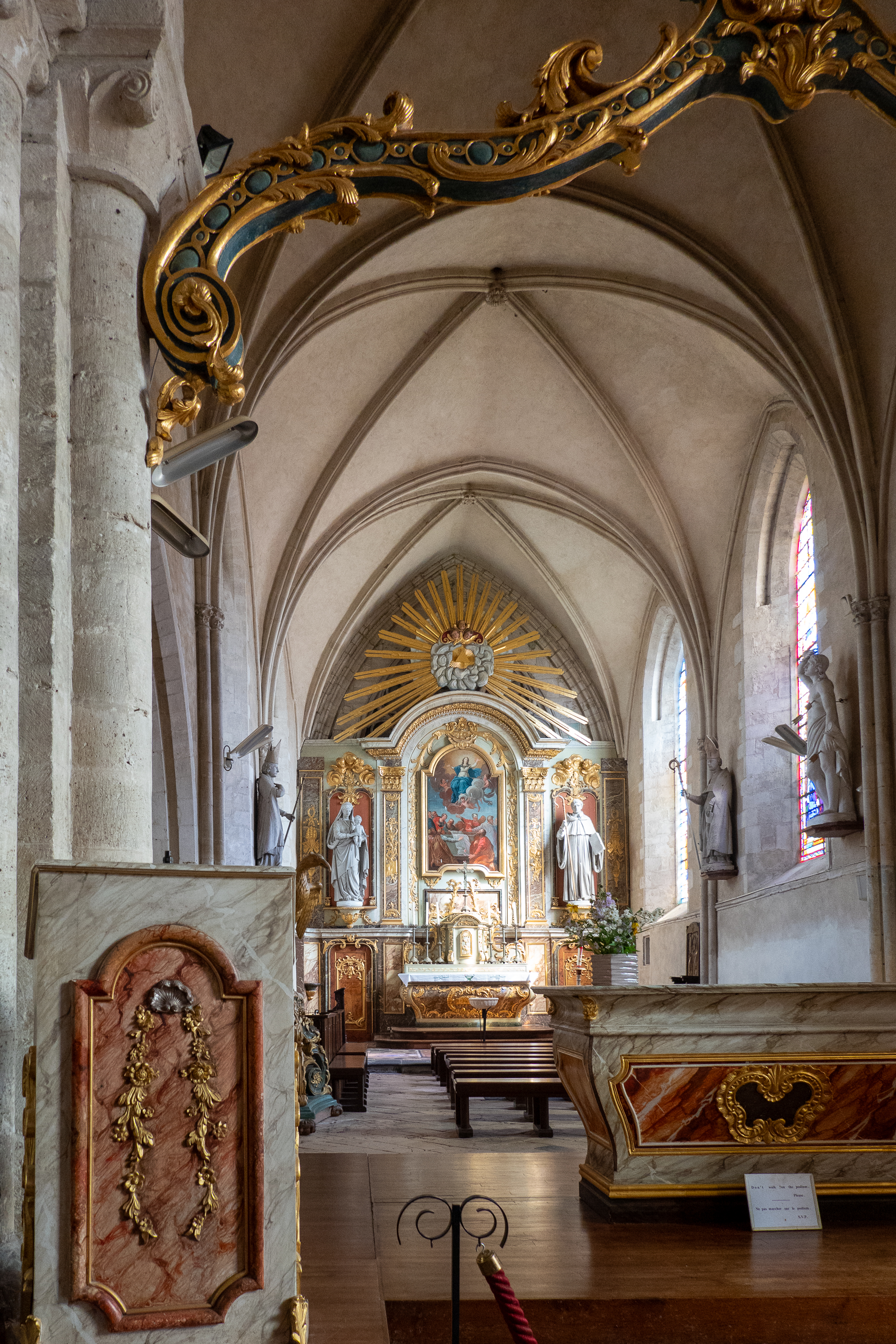


We also visited the Airborne Museum, which had been upgraded since our last visit. (https://airborne-museum.org/en/homepage/) It is huge and on the list of must visits. A new “experience” includes a walk in the dark (red light) through a mockup of a C47 with paratroopers inside. At the end of the plane, you step out the door onto a clear glass area with a view of the terrain below in miniature. As guns flash around you and wind hits your face, it gaves a small sense of how it must have been. Quite disconcerting.
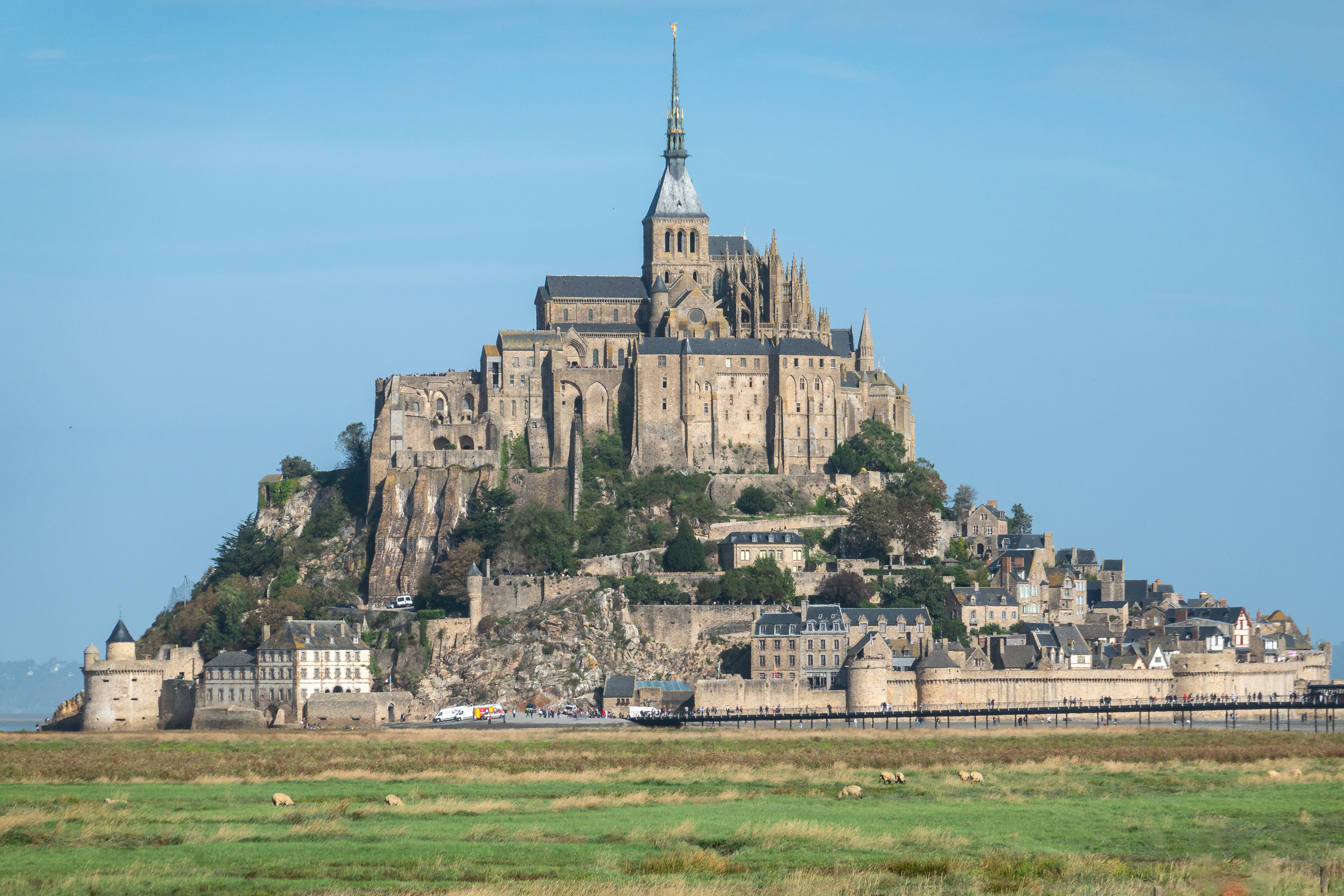
We had not planned to stop at Mont St Michel, which we had visited in 1989, but once we saw it on the skyline, we could not resist. It has become very much a tourist goal and the parking is regulated. Close in camping is impossible without a reservation, which we did not have. But we found a lovely Aire, La Bidonnière in the little village of Ardevon, right nearby. Next morning we cycled back towards the Mont via a cycle path.

There is no longer an issue with the famous tided, as a huge bridge has been built across the sands and you can easily walk or cycle right to the base of the Mont. Entry to the Mont is on foot only and shuttle busses run from the car parks.
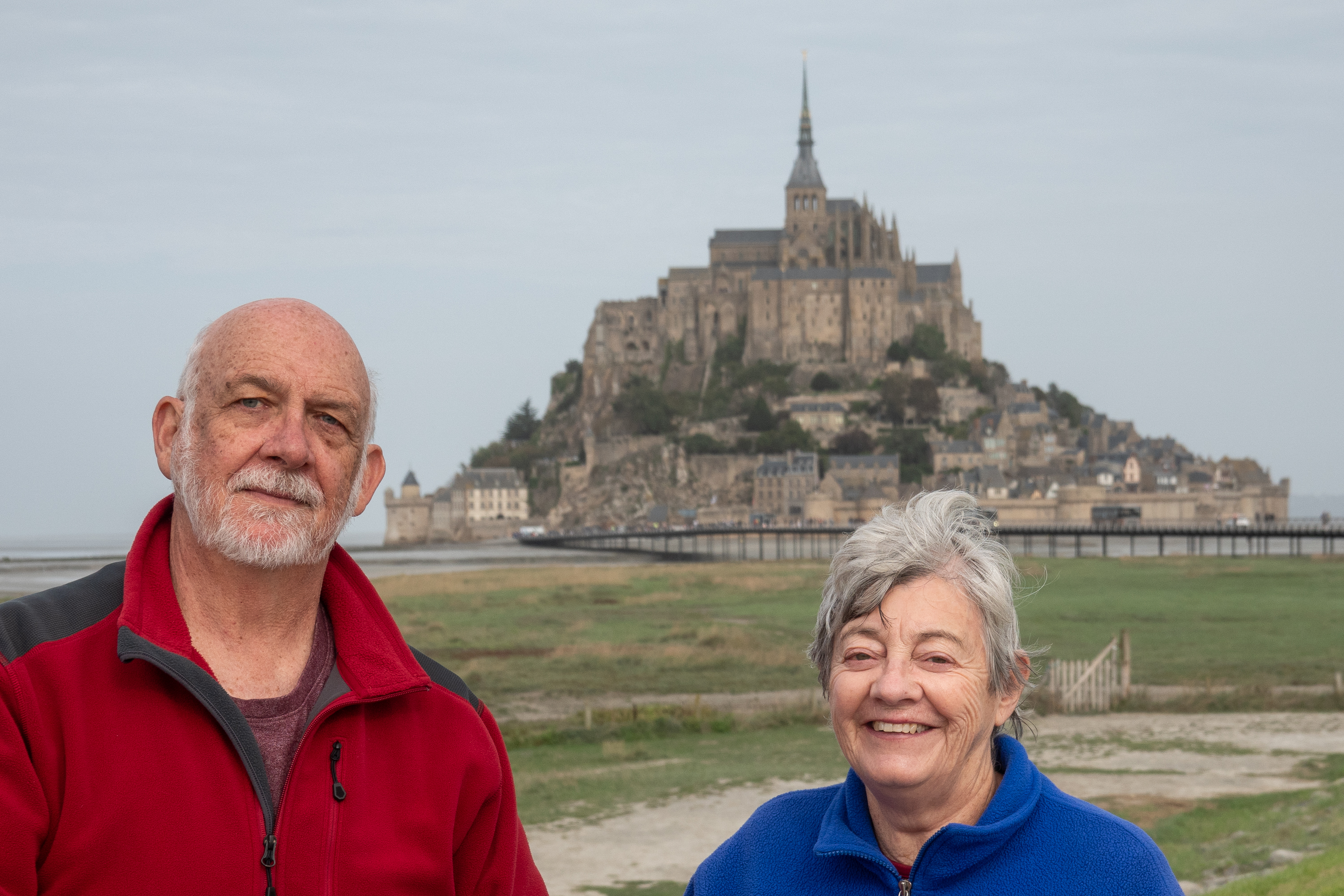
While we were admiring the view, we were overflown (again) by the last flying Noratlas in France, dropping another stick of parachutists.
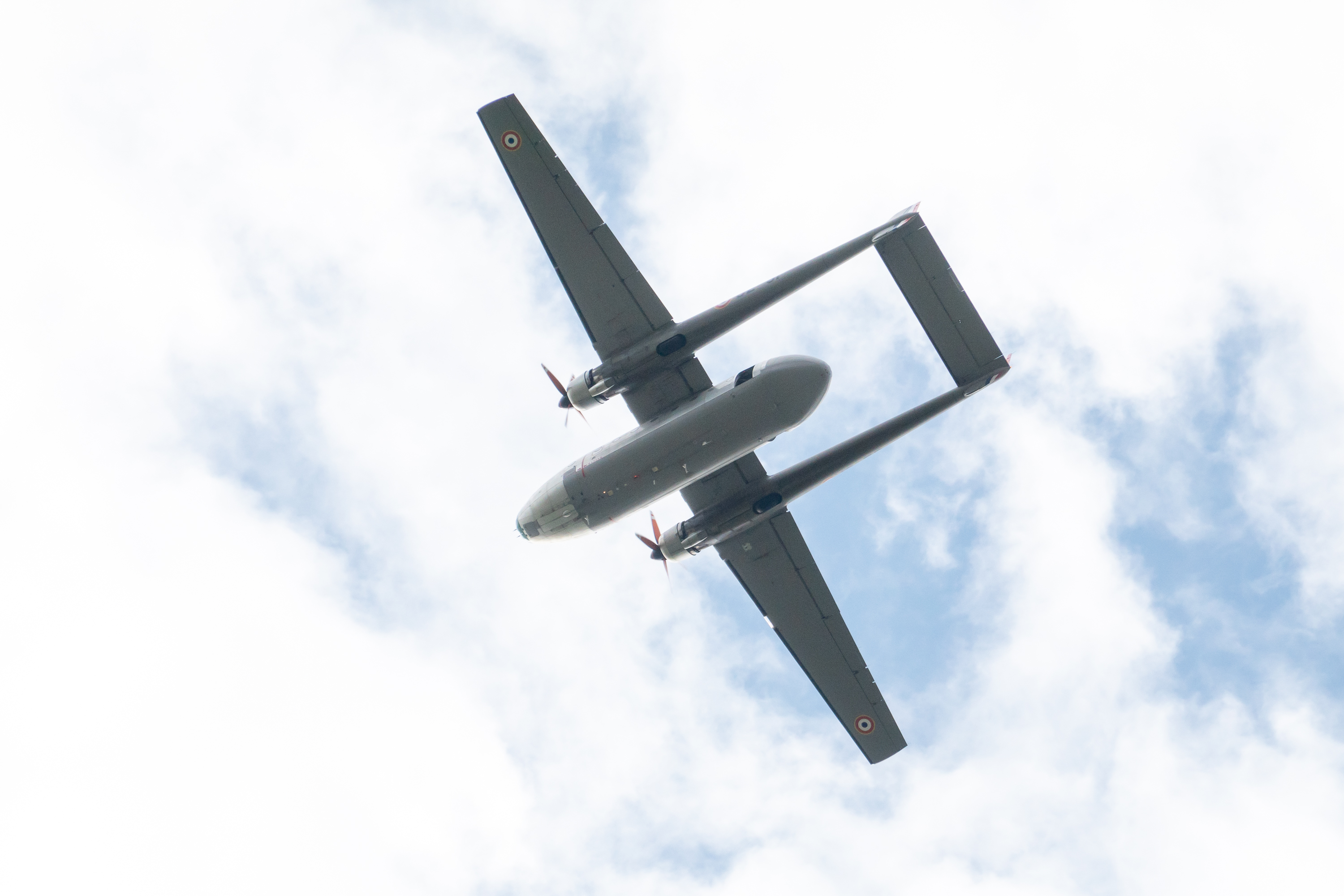
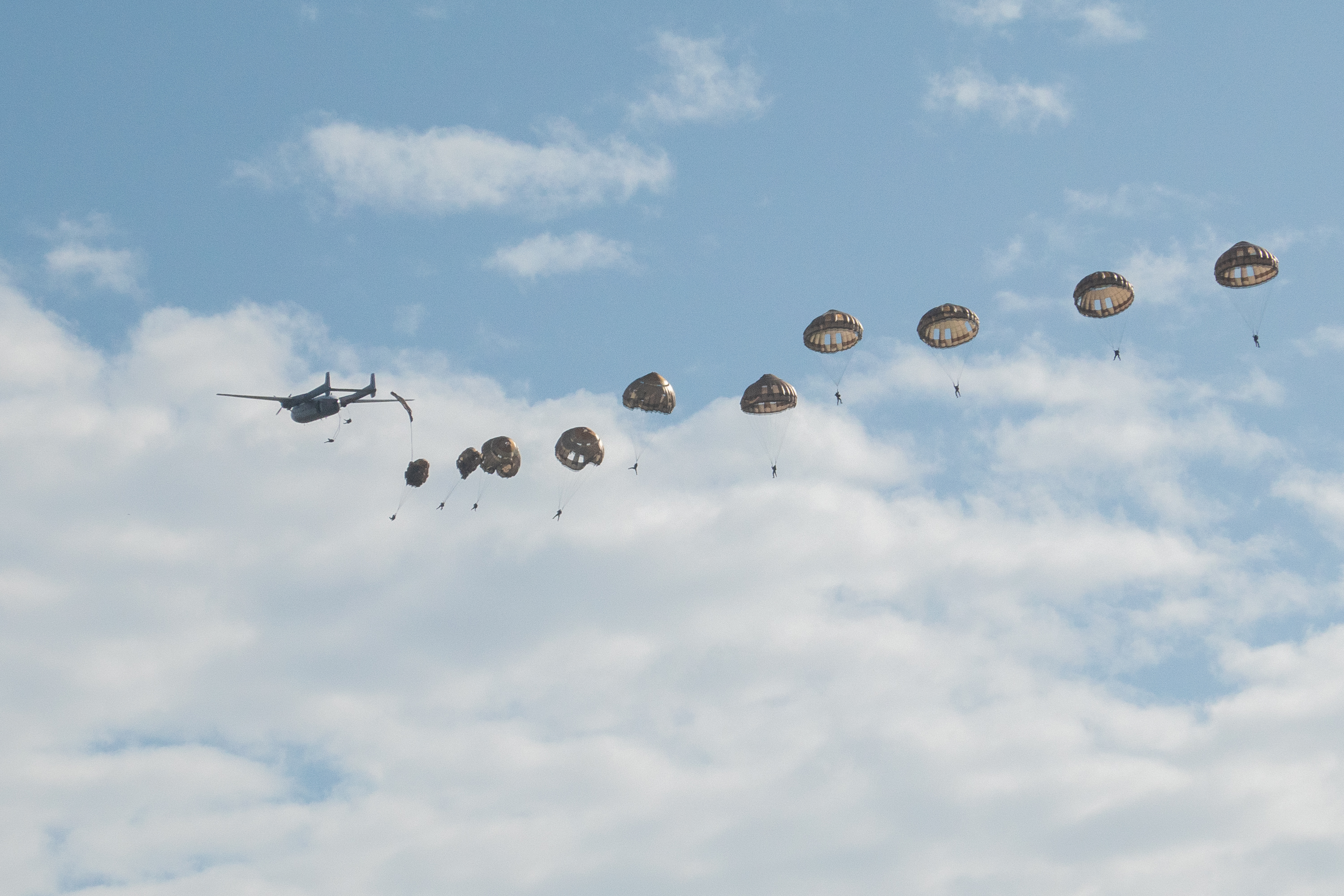
A great show, but why? Friend of ours cracked the code. It was Saint Michael’s day and Saint Michael is the patron saint of paratroopers.
It was a cool cloudy day but we were fortunate to see the Mont in sunlight for a short while.
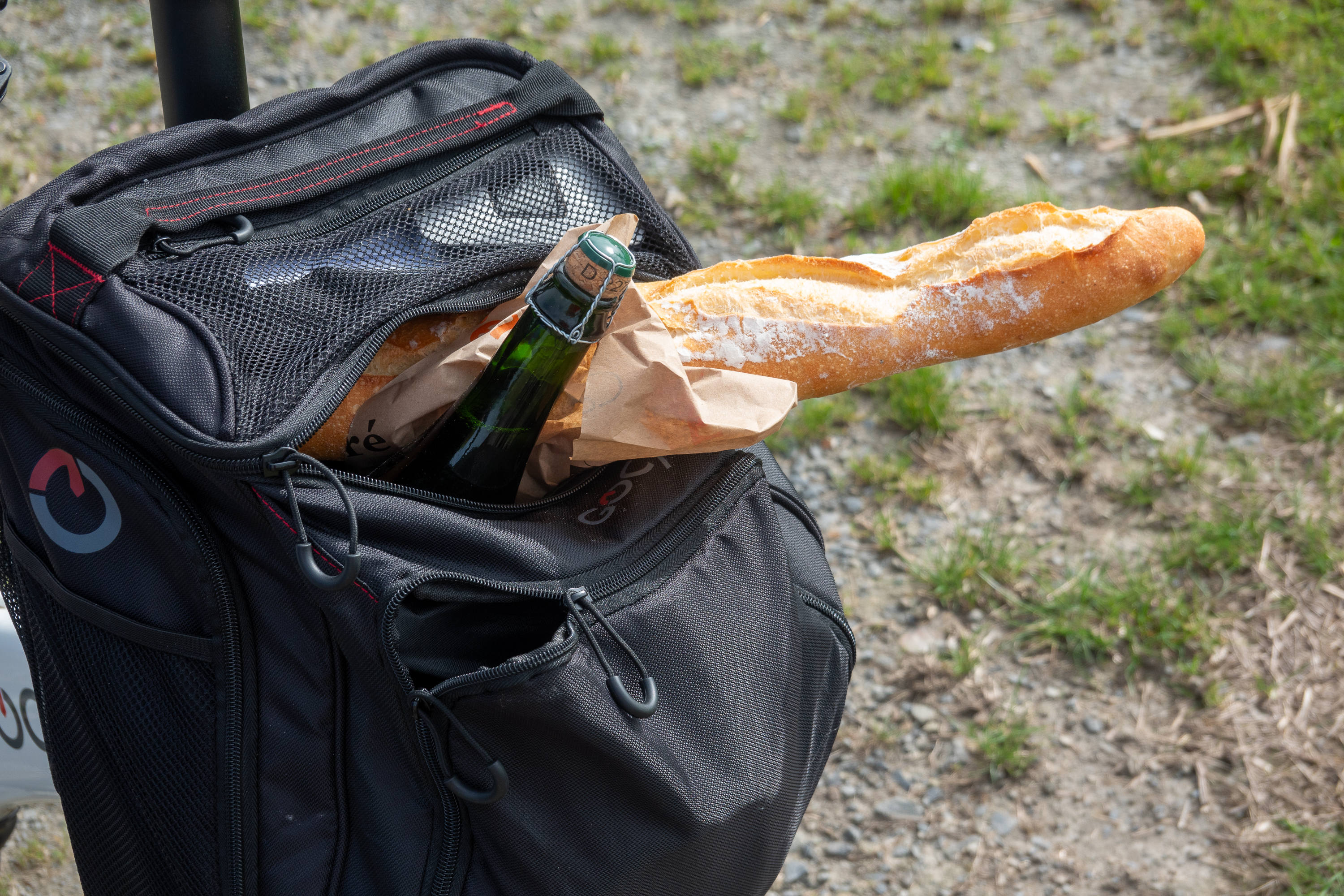
We then went for a traditional galette lunch at a cafe in Beauvoir, bought some bread and cider, and returned to the camper via country lanes and wonderful views of the small stone built villages and fields.

While we were in Mont St. Michel, it became clear that we were having some odd electrical behavior. Fred was concerned that we were not charging our camper battery adequately due to a possible starter battery malfunction. So, we located an auto electrician who also advertised heavy truck repairs and headed for Rennes. The company was most helpful and a charming gentleman tested the batteries and the alternator before pronouncing everything in perfect working order, a relief to both of us. (Mildly amazing, in fact, as the batteries are about five years old. Clearly that side of the system is working well.)
As we were slightly off route, we headed for St. Nazaire were Fred wanted to visit the former German submarine pens. The Battle of the Atlantic has been called the longest battle of the war and winning it kept Great Britain in the war and made possible the Normandy invasion. There are many, many studies, Fred recommends Jonathan Dimbleby’s book as he spends a lot of time on the strategic and diplomatic challenges of the Atlantic battles; the “why” as well as the “what.” Obviously, the major German protagonists were submarines based in France. Early on, the Germans realized that the submarines were at their most vulnerable when in port and thus constructed an amazing series of massive, bomb proof buildings. (https://en.wikipedia.org/wiki/Submarine_pen#:~:text=the%20preliminary%20stage.-,France,metres%20of%20concrete%20were%20used.) Fans of the famous Dam Busters squadron will recall that they, and the US Army Air Force, tried mightily to destroy them. Most are still intact.
We found the pens easily – bit too big to miss – and there is an Aire right beside them. It was very much an industrial area, so the Aire was just an uninspiring parking lot, but it served its purpose for a night.
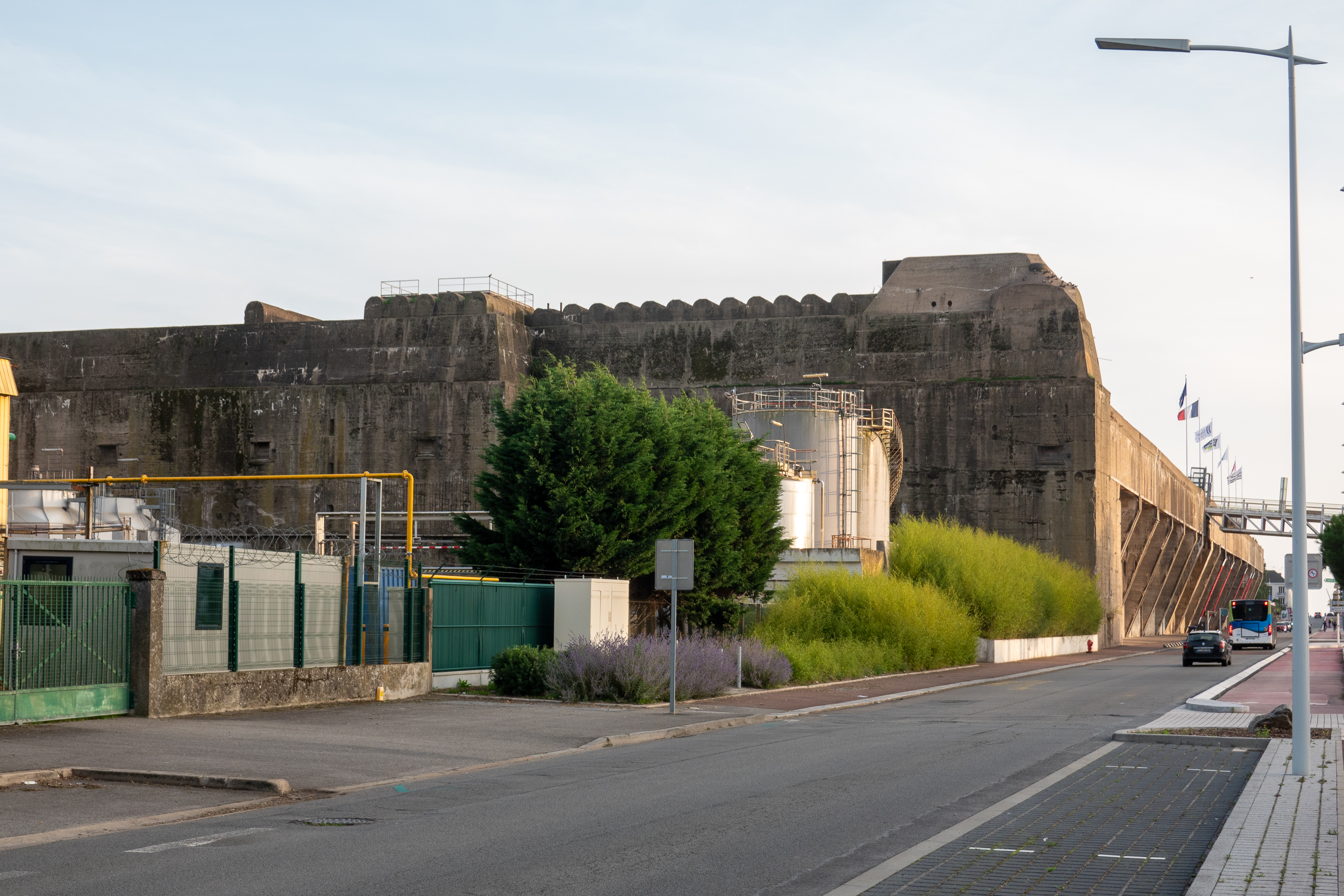

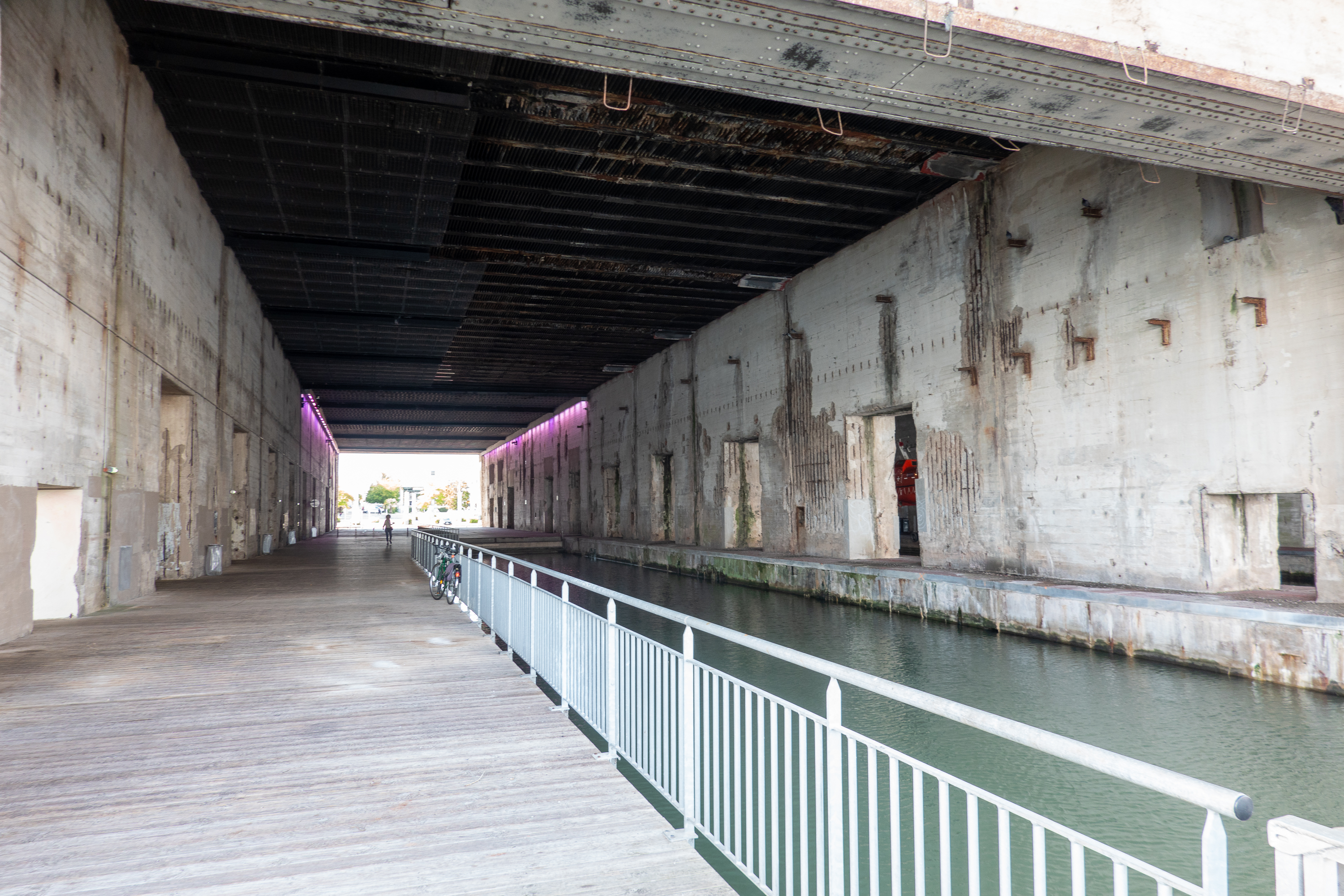
Each pen could hold up to four submarines in the water and at least two on the dry side. There were massive gantries to lift the boars and, of course, workshops, stores, and everything necessary to keep the submarines at sea.
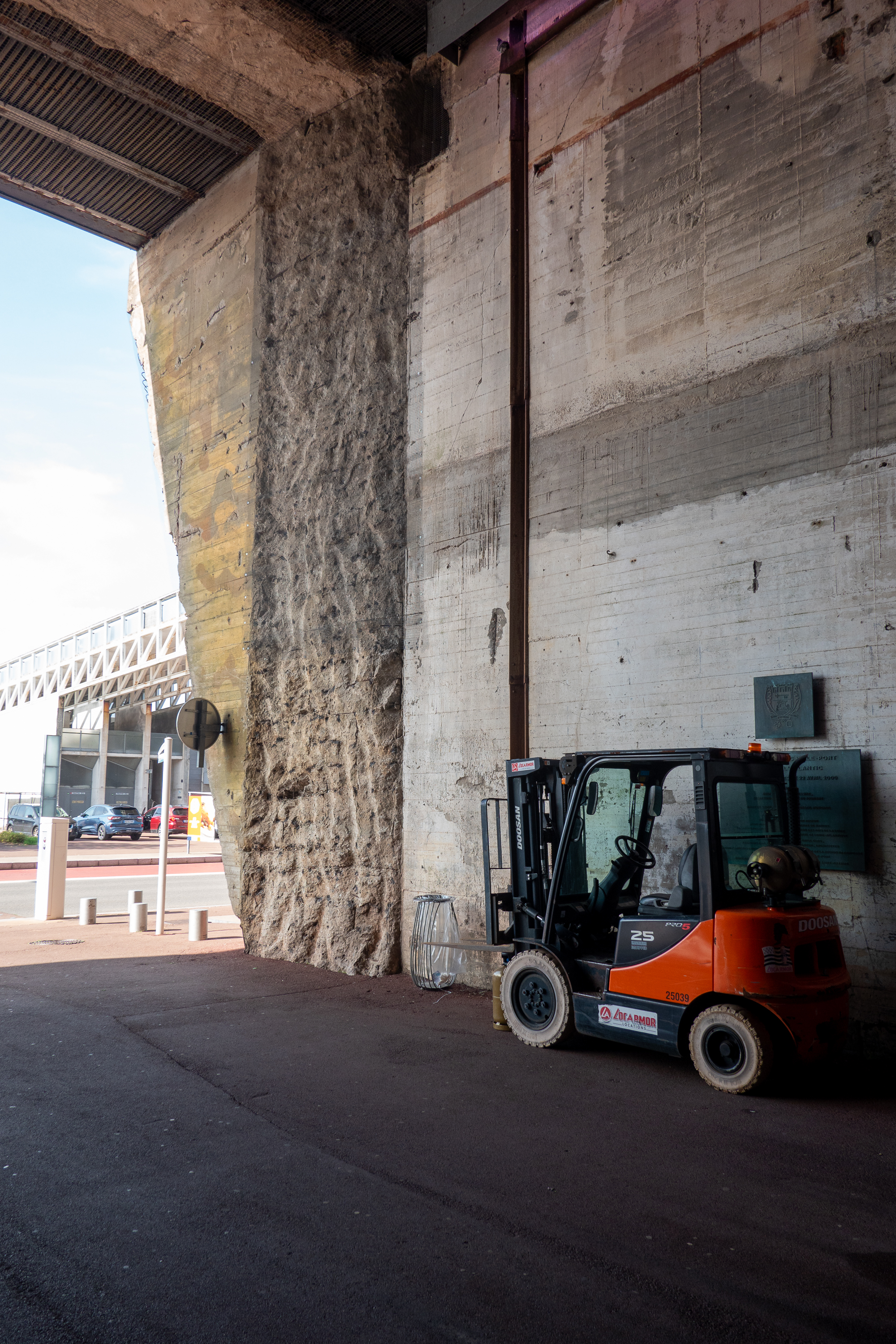
The highlight of the visit from Fred’s point of view was the amazing construction of the pens.
Denise thoroughly enjoyed the Escal’ Atlantique, a multi-media attraction which explained the role of the St. Nazaire shipyards in the building of such famous ocean liners as the Normandie, the France, and, more recently, the Queen Mary. (https://www.saint-nazaire-tourisme.com/les-visites/les-sites-de-visite/escalatlantic/). Although later eclipsed by LeHavre for the transatlantic crossing, St. Nazaire remained a major port for transit to the US, Asia, Africa, and South America. The display is set up showing interiors of the liners of different eras, with cabin views, deck views, engine views, and certain artifacts from the different liners. You can even send a “day” walking the promenade deck, feeling the wind. The tour ended with a short film followed by a drop in a lifeboat back to the lower level. A cool ending to a most interesting visit. A short walk back to the camper led us past a Carrefour so we were able to make a purchase or two!
 DiploStrat