For the title of this post to make any sense, you have to understand Asterix, a wonderful, anachronistic French comic strip about a Gaul and his buddies who defy the Romans. They travel the Roman world, having great adventures and making lots of jokes about peoples and cultures. For example, the Brits, who have not discovered tea yet, stop fighting the Romans every day at four o’clock to drink hot water “with a spot of milk.” The Swiss interrupt orgies to clean up all the cheese, the Spanish roads are terrible and packed with tourists in August, and they are still digging a tunnel under the Channel while listening to four long haired troubadours. (No one thinks they will amount to much.) Romans all have funny names, like the dirty centurion “Insalubrious” and he is assigned boring guard duty at the town of “Tedium.” Of course, the Gaullish bard, who signs badly, is “Cacafonix.” And the translation of these names and jokes between English and French is great. See more: https://en.wikipedia.org/wiki/Asterix
At any rate, Asterix’s best buddy is Obelix who delivers Menhirs. And Bretagne, or Brittany, is famous for its menhirs. So, we are chez les bretons, looking for menhirs.

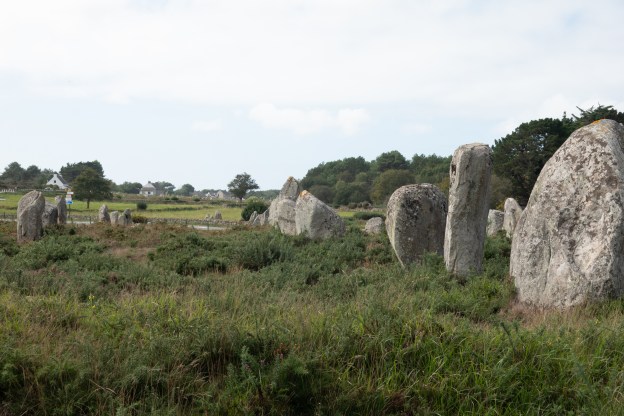
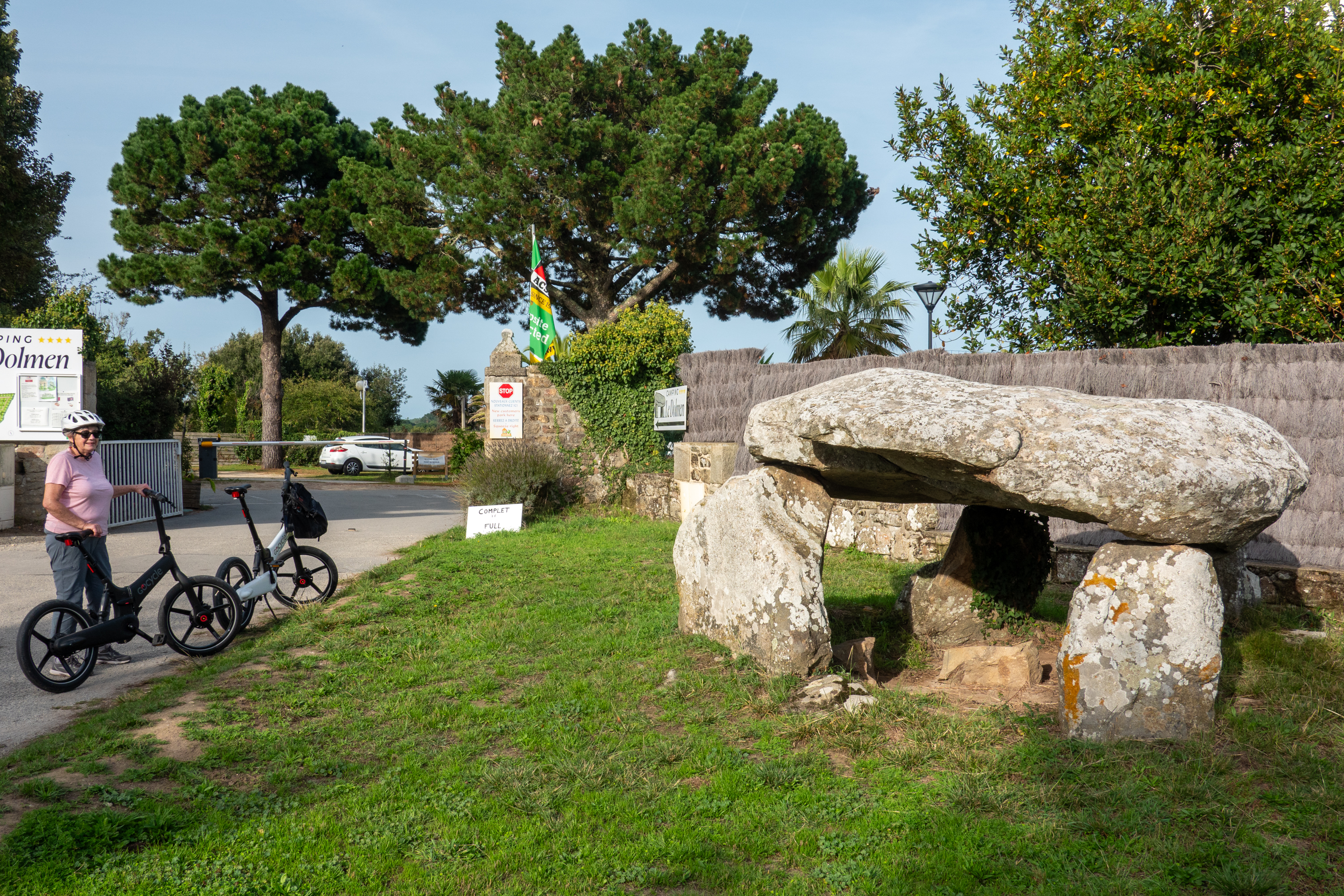
Menhirs are great big rocks, set upright, usually called “standing stones” in English: https://en.wikipedia.org/wiki/Menhir These things are everywhere. We saw them in the Orkneys and, in France, at Carnac, they are arranged in long rows. So, as we were now up to date on WW2 history, we decided it was time for something even older and headed to Carnac. After settling in at a campground named “Le Dolmen” (guess what they have at the gate), we unloaded the bikes and headed out to explore.
Our first stop was the tumulus and Chapel of St. Michel.

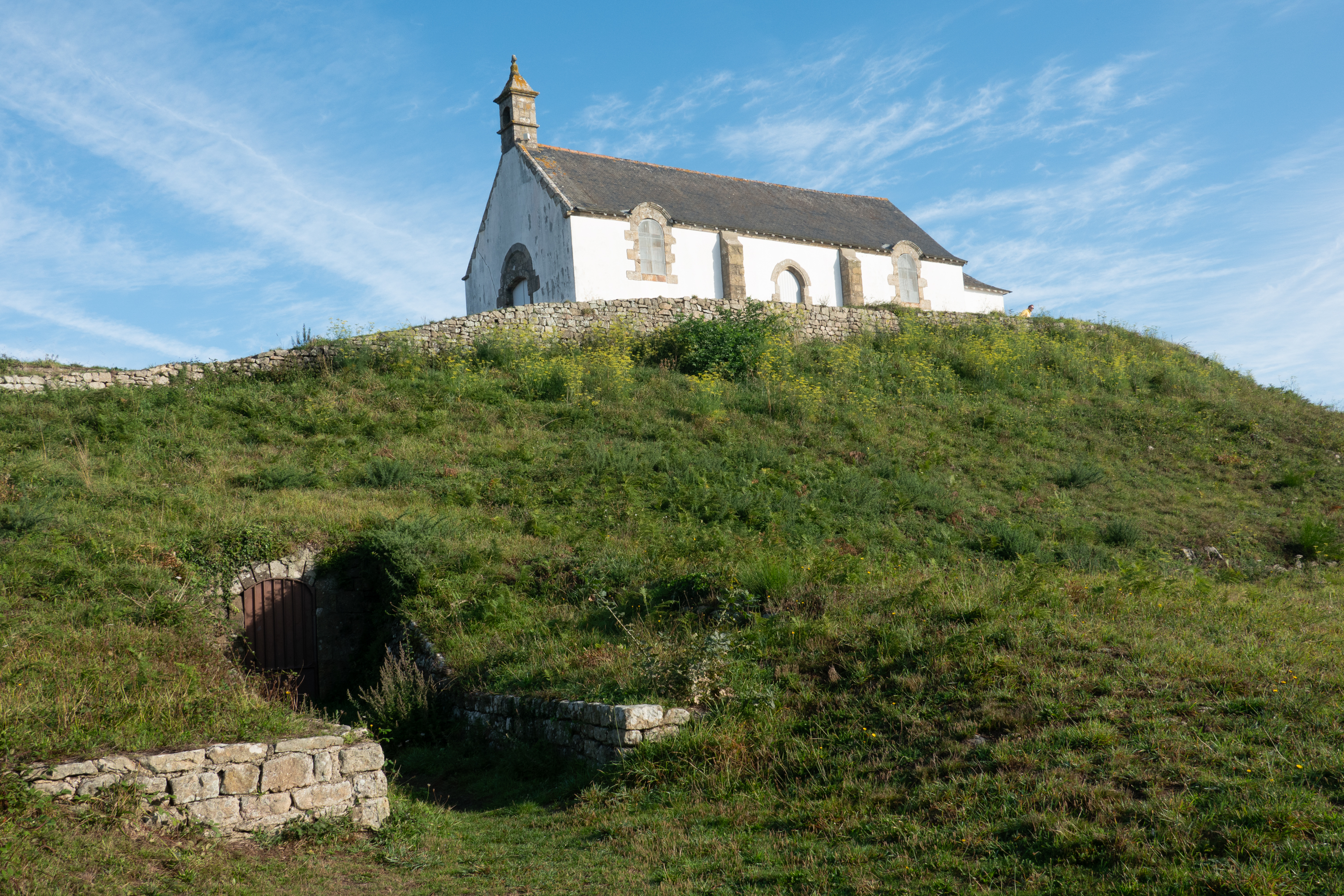
At first glance, an ordinary little church built on a hill. But this hill is a tumulus, that is, a large mound of earth, piled over a dolmen, or neolithic tomb. You can still see the entrances to the underground galleries, but you can no longer go inside the tunnels or burial chamber. A neat example of something hiding in plain sight; unless you knew that the hill was artificial, it simply looks like any other hill. Probably no accident that there is a church on top; it probably sits on an ancient temple.

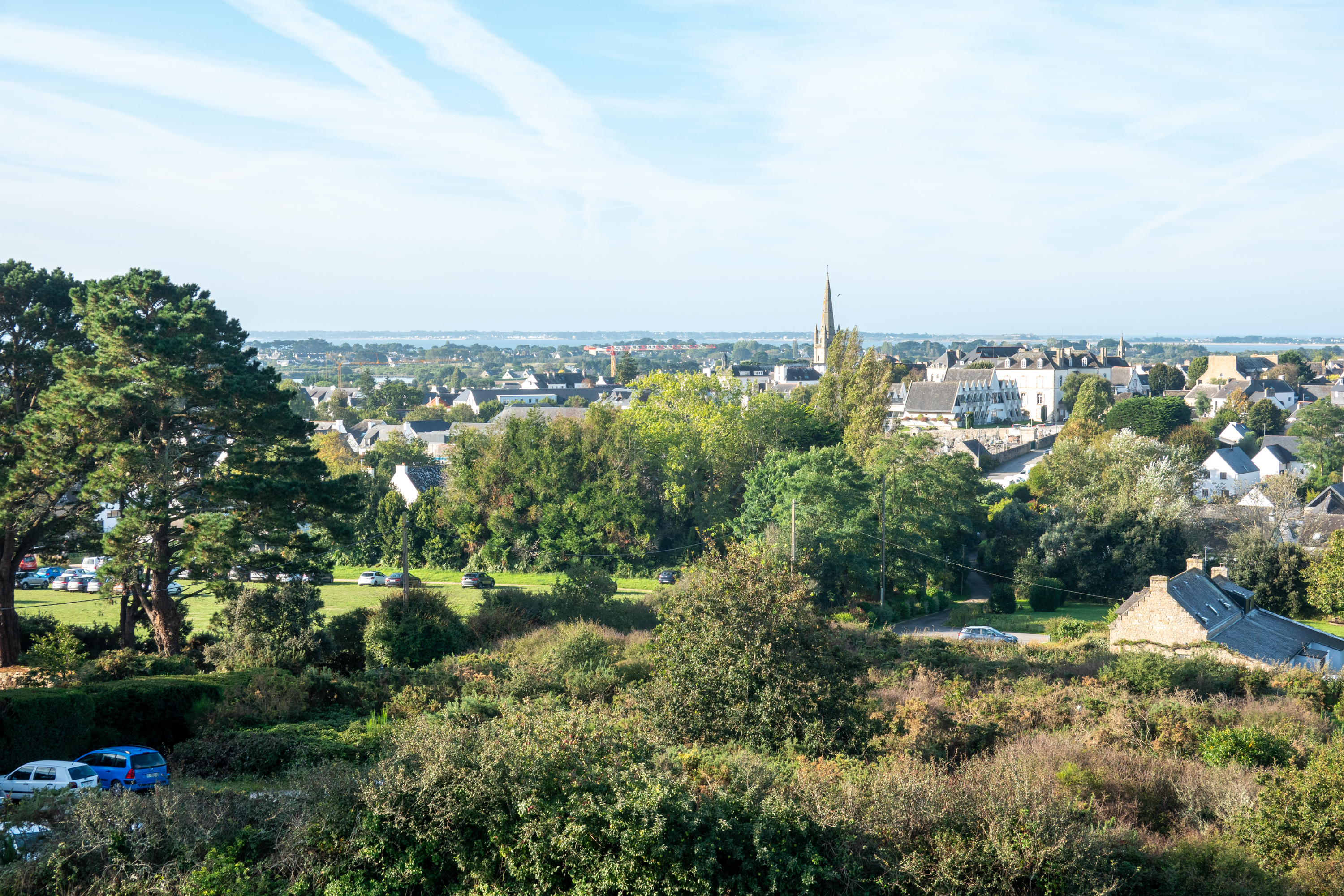
Unfortunately, the burial tumulus and the chapel are closed but the view of Carnac from the top is spectacular.
As we cycled back down the hill, we fell upon the Sunday morning market in full swing. Denise can never turn her back on a market, so we parked the bikes and went to see what they had available. Answer? A lot. After stocking up on vegetables and admiring the fish and meat stalls, (and wishing the fridge was big enough to buy some), we stopped for a coffee in the town square.

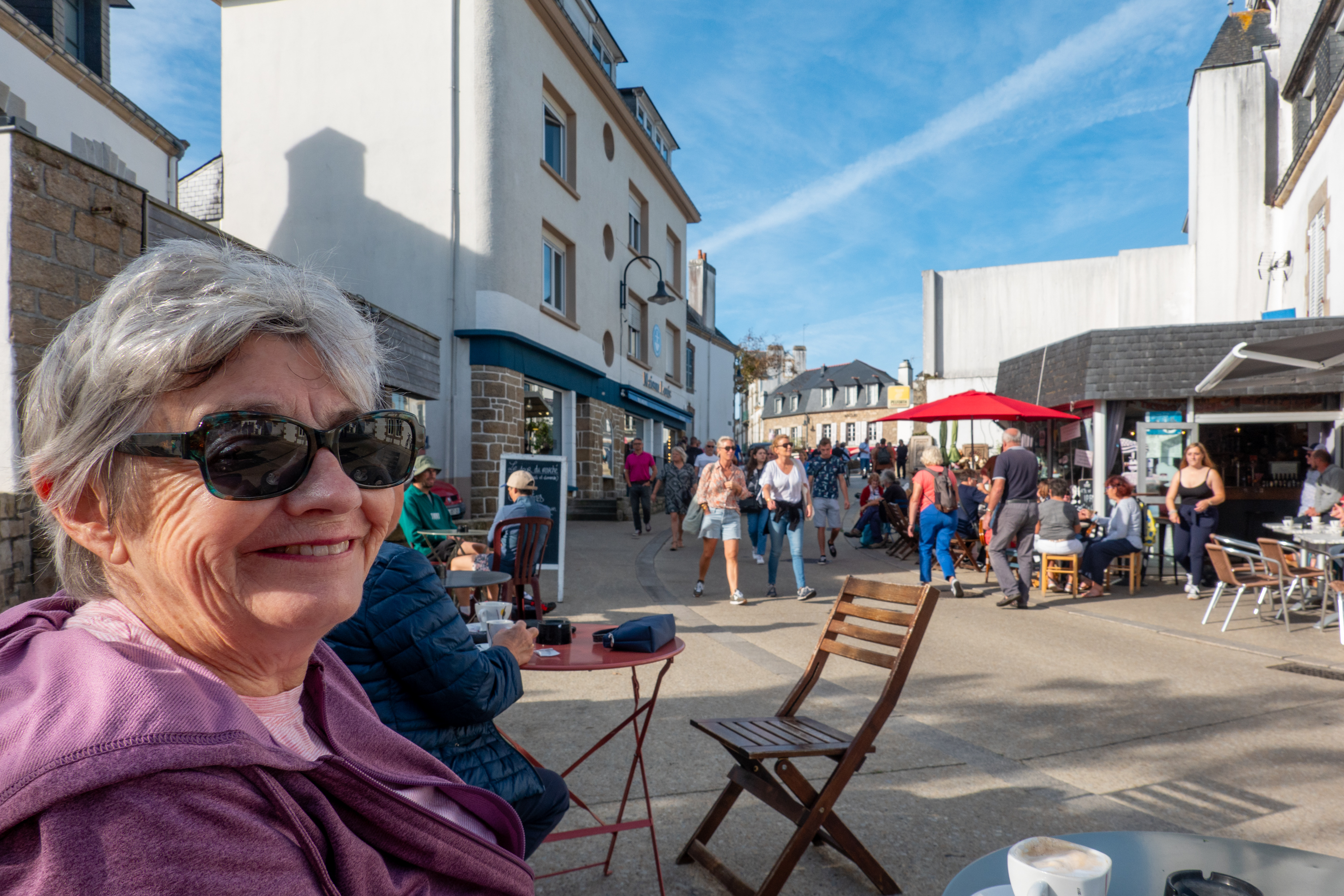
As we returned to the bikes, we found a stall selling strawberries, so we bought two tubs (and had a free raspberry tub thrown in!) So, laden with loot, we returned to the camper for lunch and to sort out purchases.
We then set out to view the rows of menhirs which cover the surrounding areas. It is assumed that they had a religious significance and there were burial mounds with stone roofs in some areas.
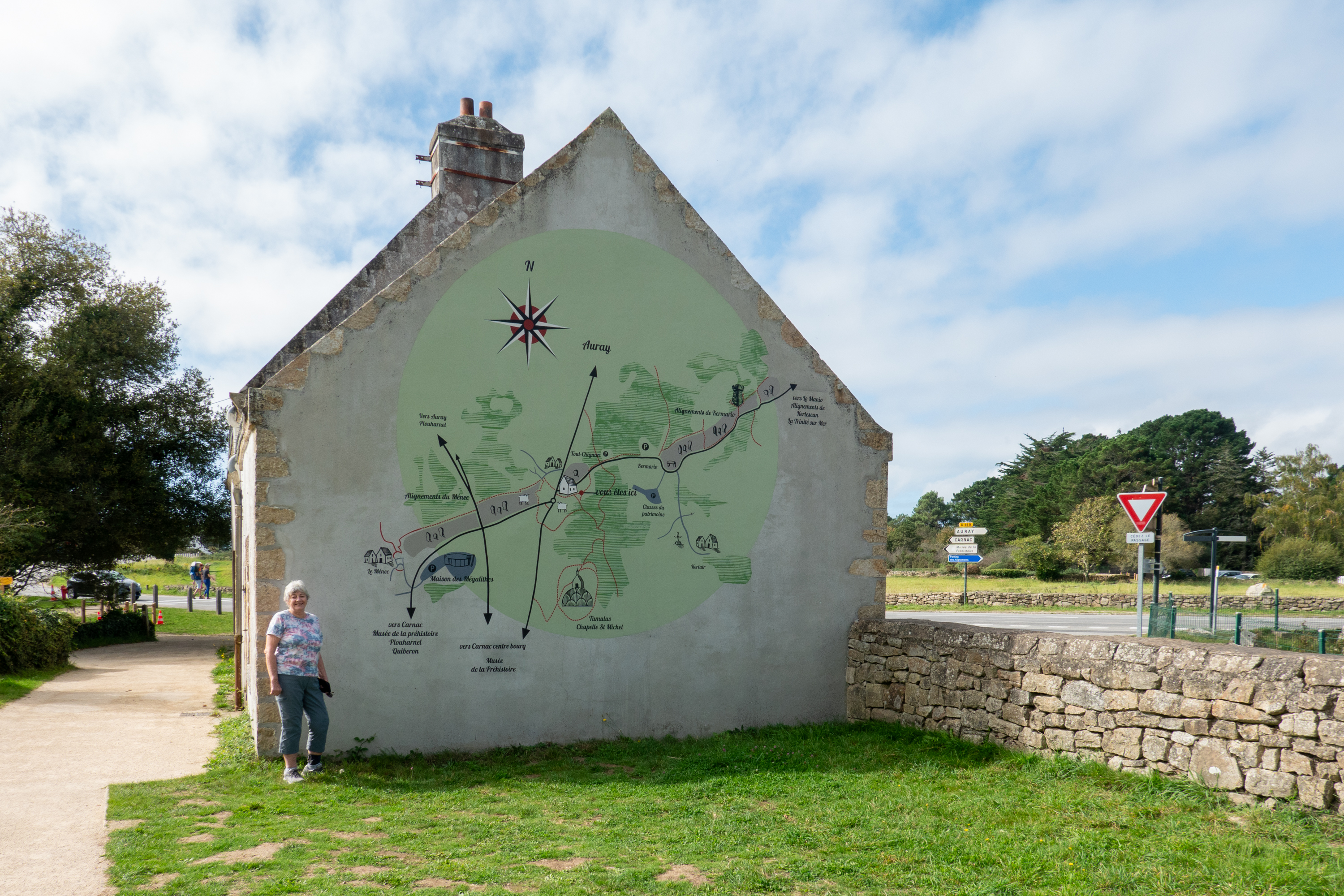


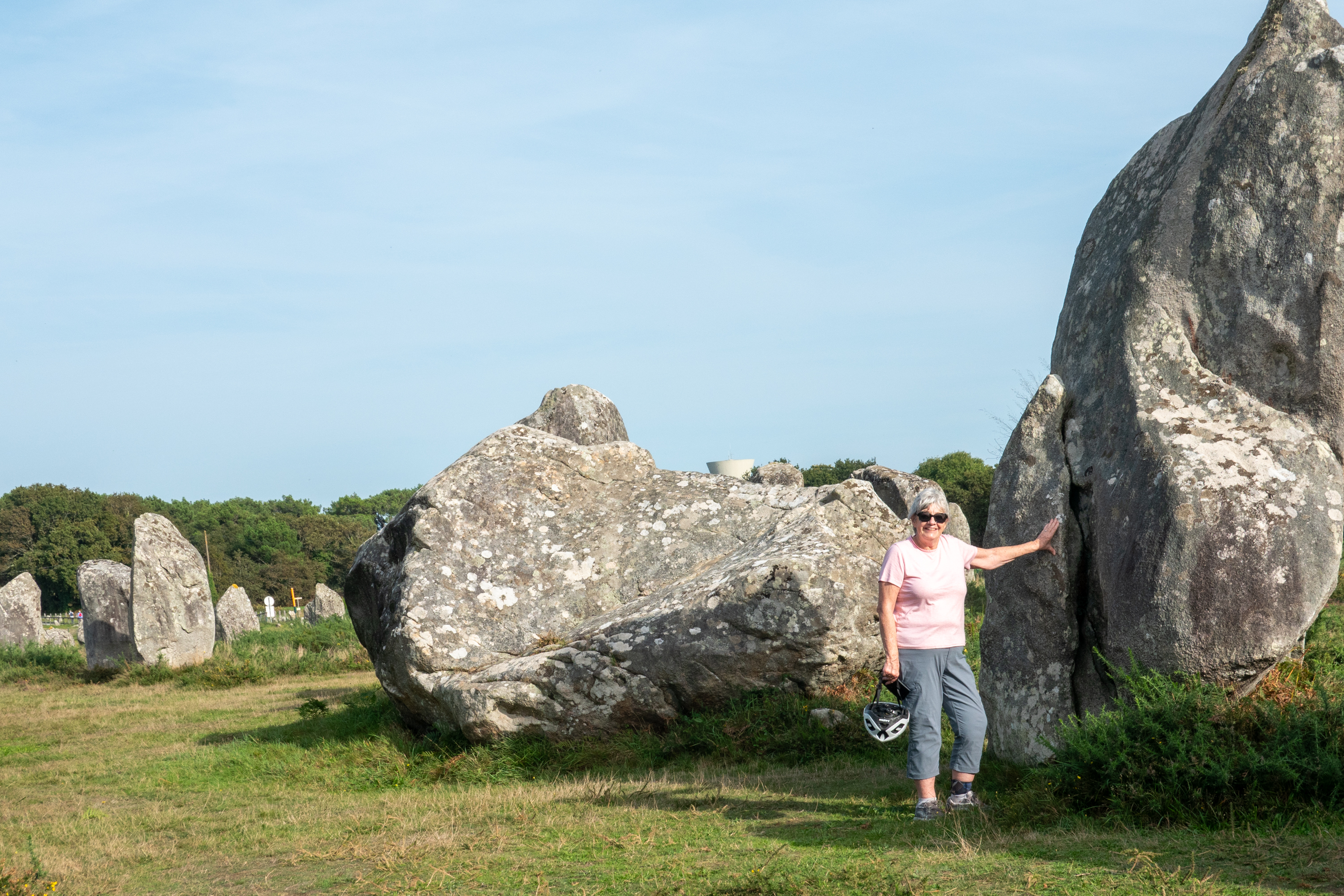

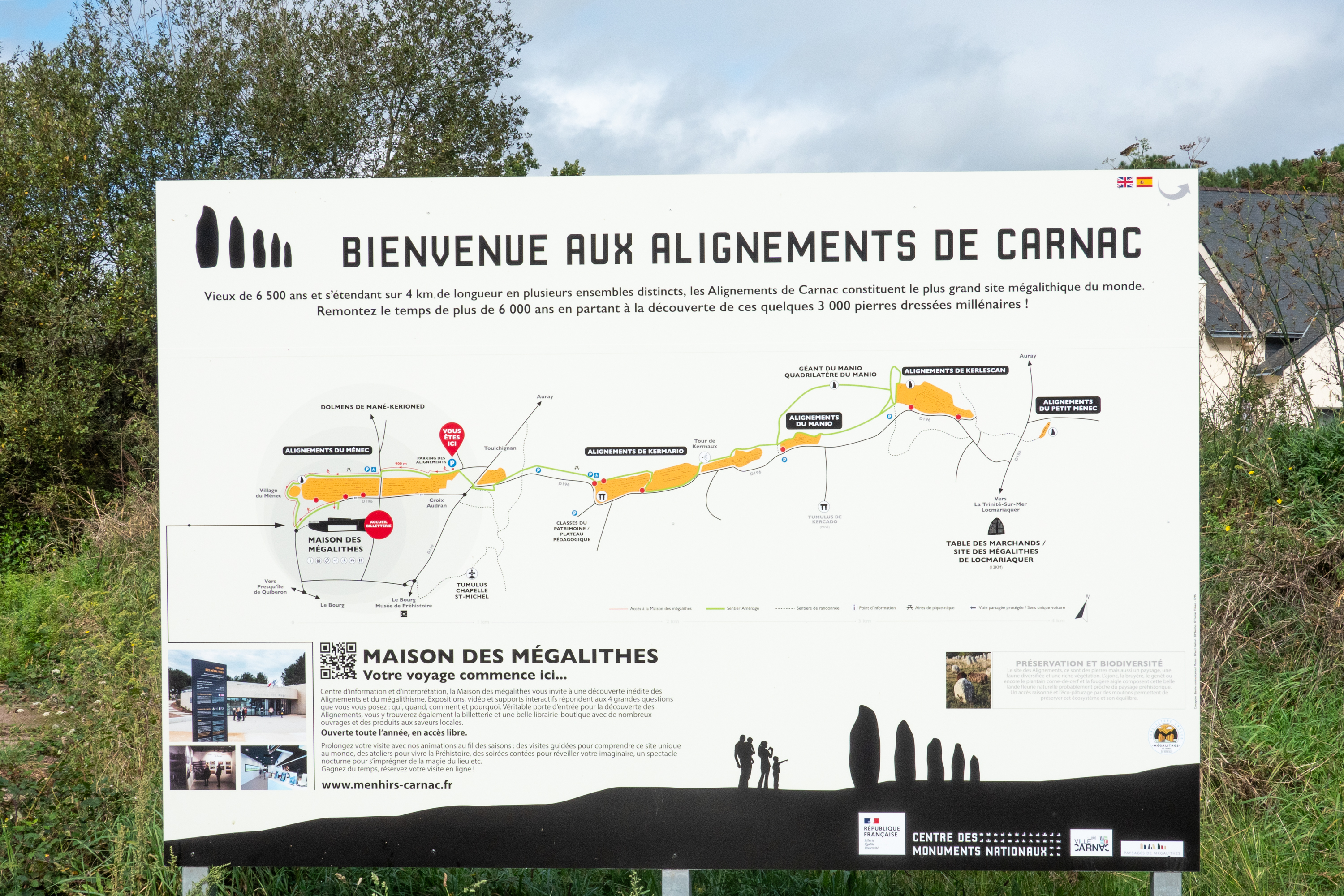


We decided to take the “Little Tourist Train” so we could see more of the surrounding area. The train route included Carnac Beach, which was obviously no longer as active as during the summer months, but still quite busy. We returned to the bikes and cycled out past several of the groupings. At one point Fred climbed a tower to get a better view of the rows of stones. The groupings cover a length of 10 Km from start to finish. Talking of finish, we finished with an ice cream and returned to the campground!
We then headed north to St. Malo and checked into a huge and very busy Aire on a most convenient bus route to the Intra Muros or old walled part of St. Malo. (Never understood why the French use the very Spanish term “Intramuros.”) We took advantage of the bus the next day as it was very windy and bike riding risked to be unpleasant. Plus bus rides are always fun!
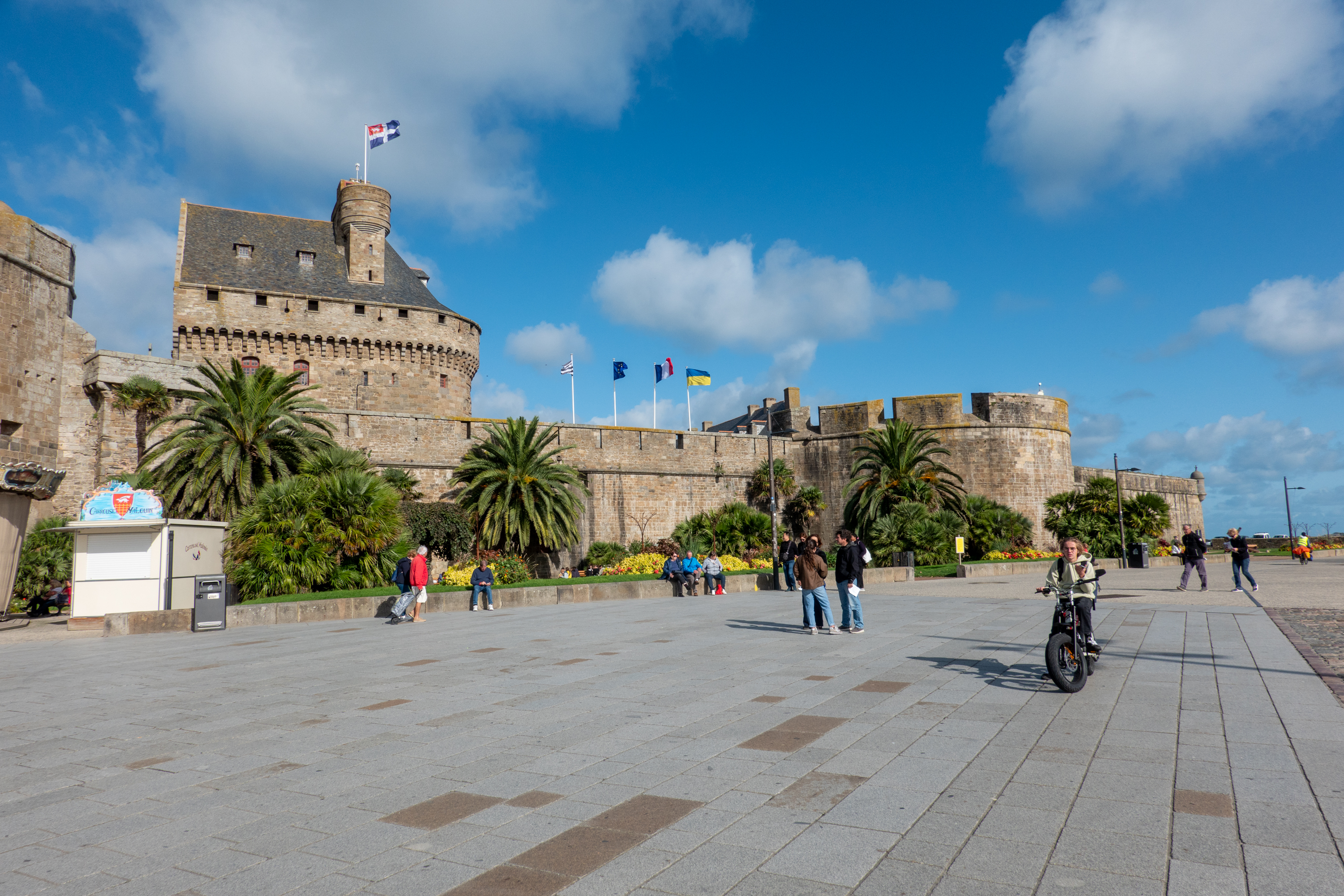
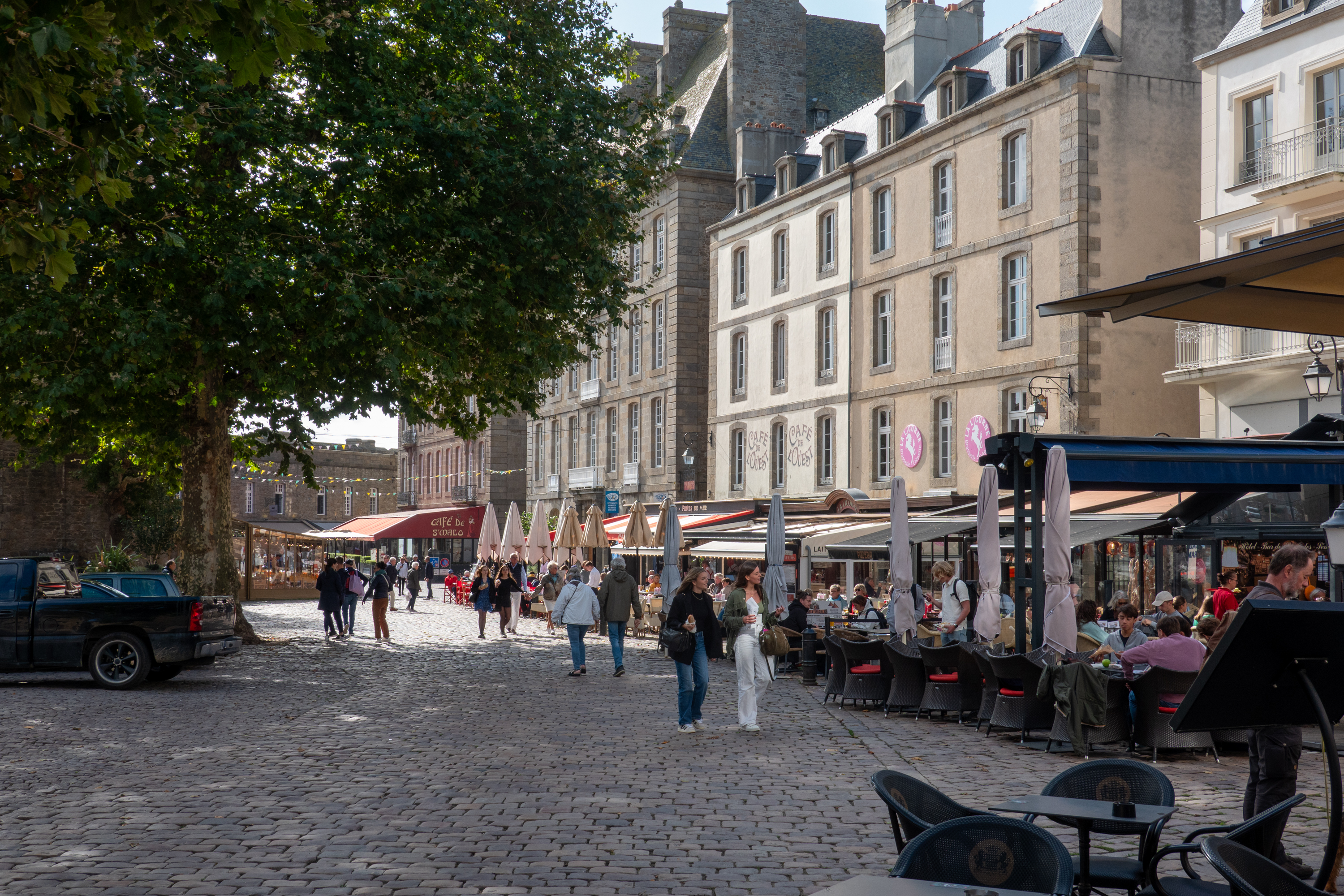
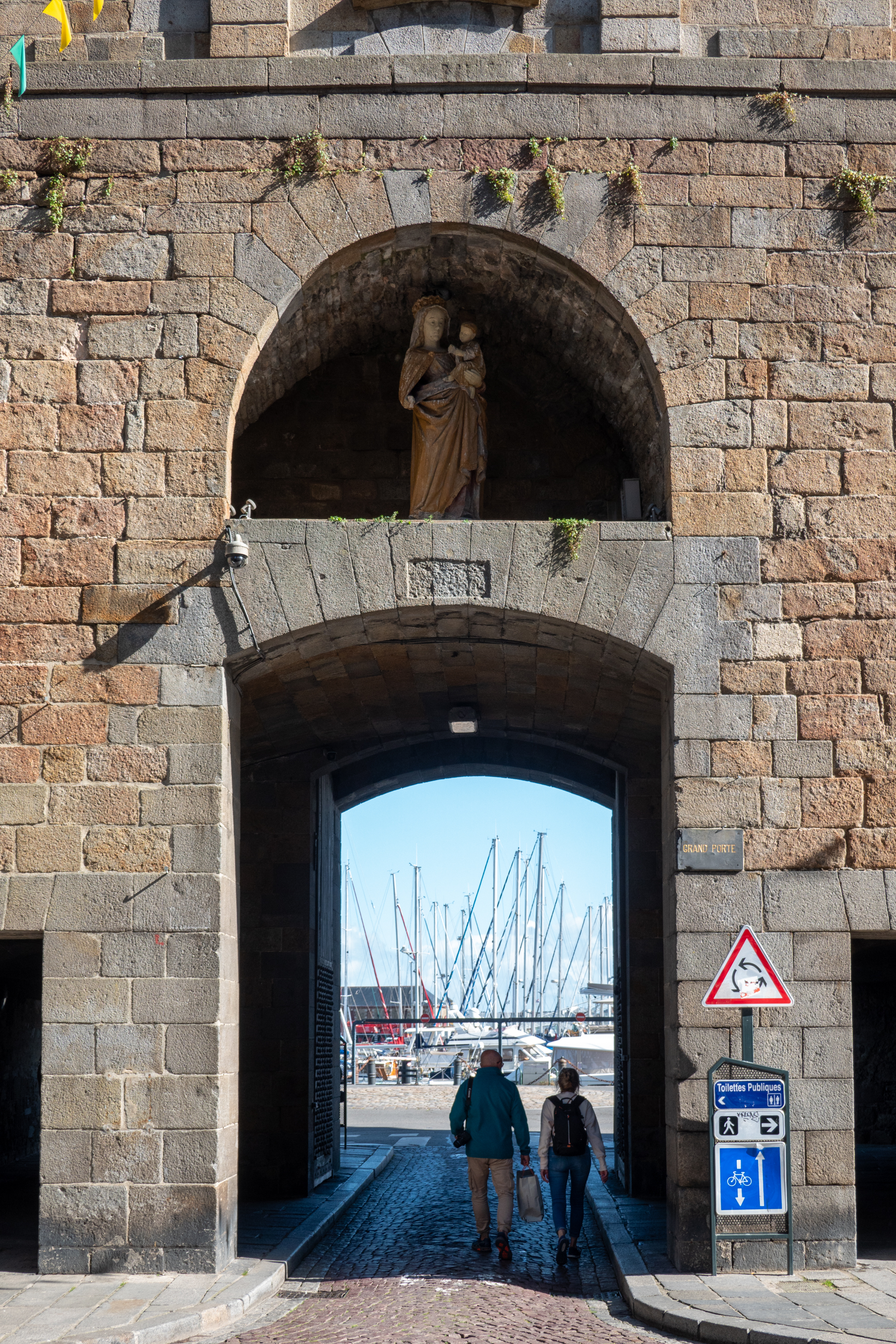
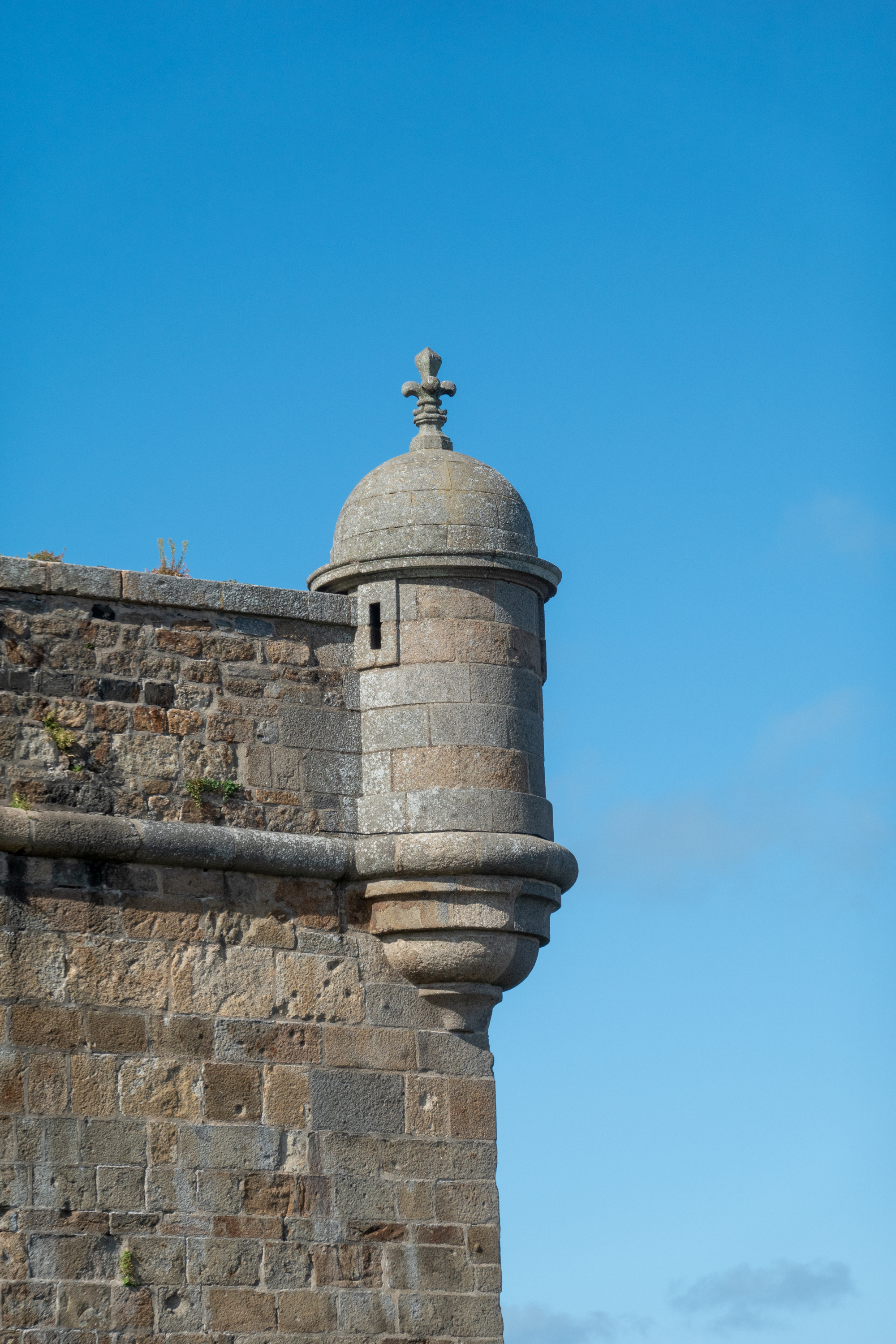
We enjoyed wandering the old cobbled streets walked along the ramparts and admired the forts off the coast, which were closed for the season.

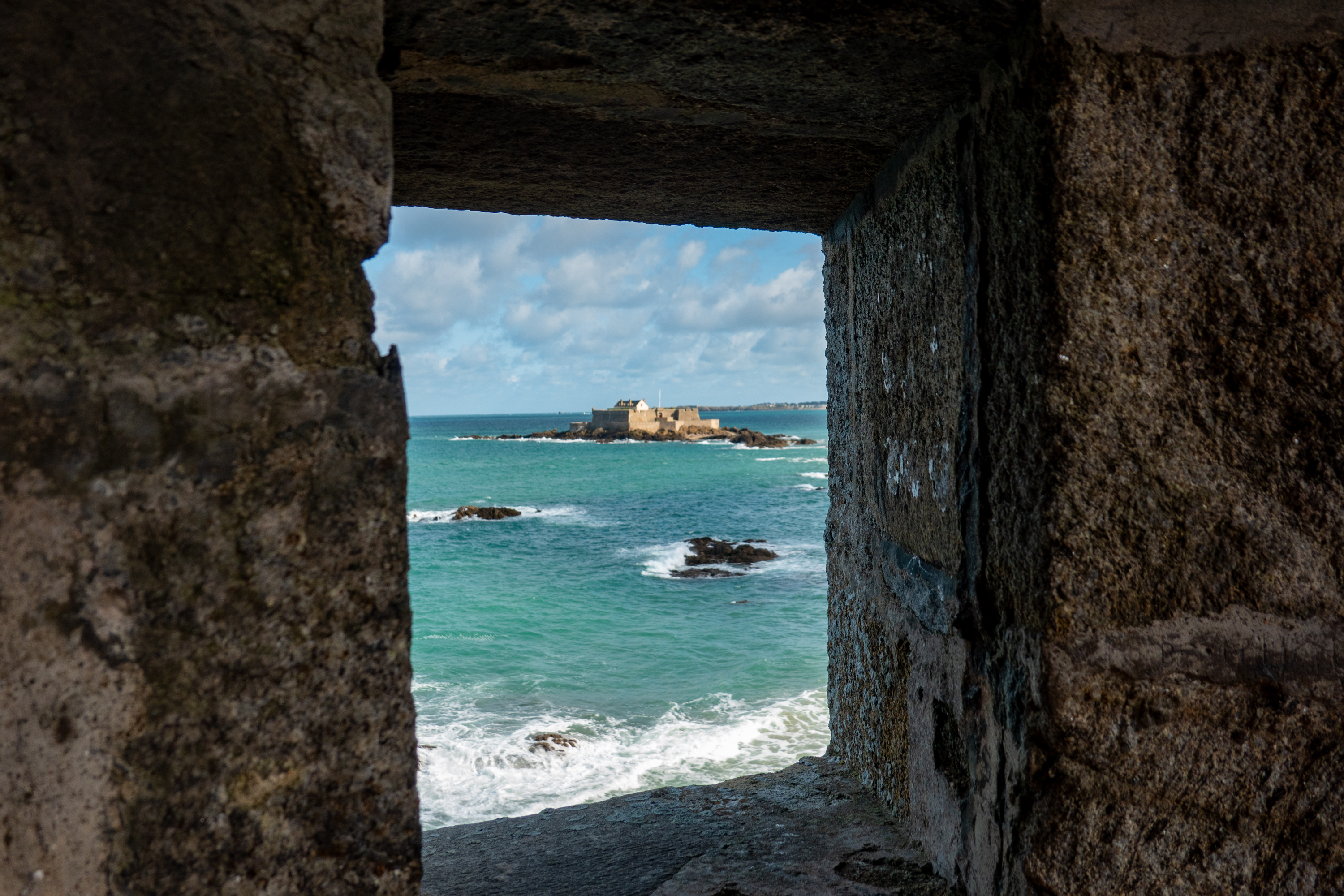
St. Malo was hotly contested over the years. In 1693, During the war of English Succession, the English under Admiral John Benbow, attacked with fire ships. There was massive damage and, sadly, the most famous casualty was a local cat.

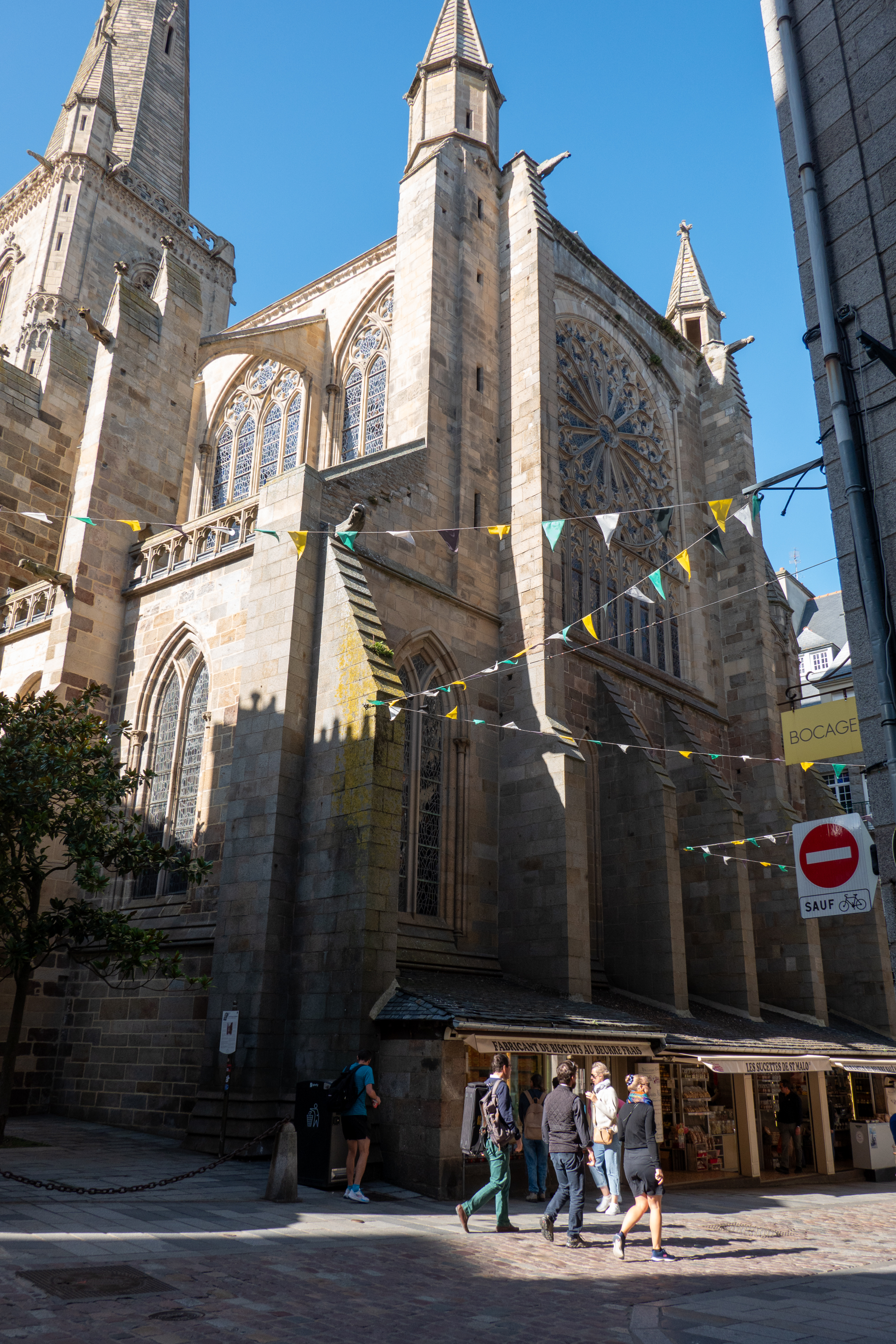
Following our tour of the windy ramparts, we worked our way down to the cathedral.


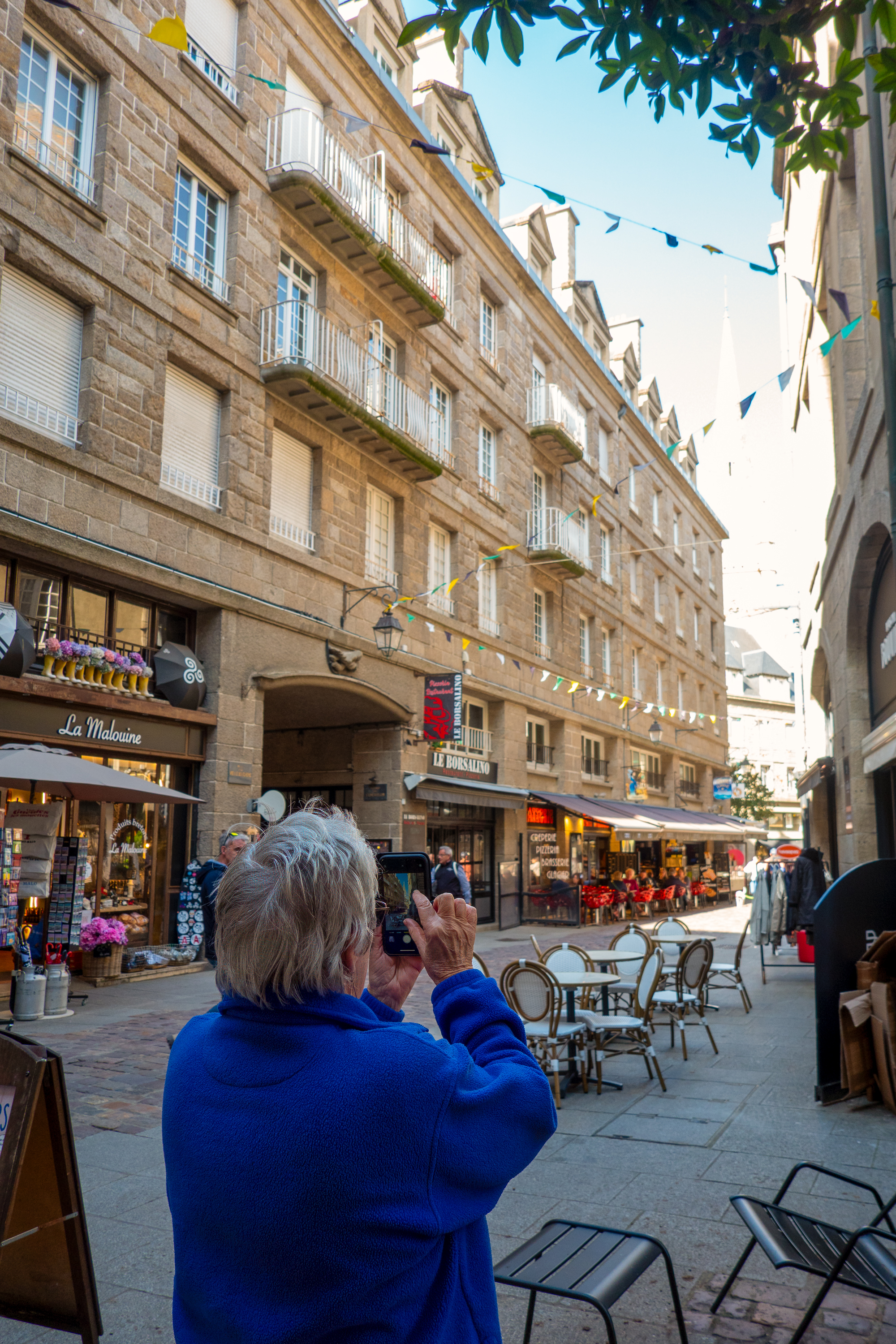
After a lovely lunch and a great ice-cream, we found our return bus and went back to the camper.


Our final visit, on the following day and on our way out of town, was to the Aquarium. It was both fun and educational, beginning with small tanks with lots of information on the smaller fish they contained. As we moved along the tanks got bigger and bigger, with resulting bigger fish.
Finally, we saw huge tanks with with sharks, rays and other large fish.
 DiploStrat