
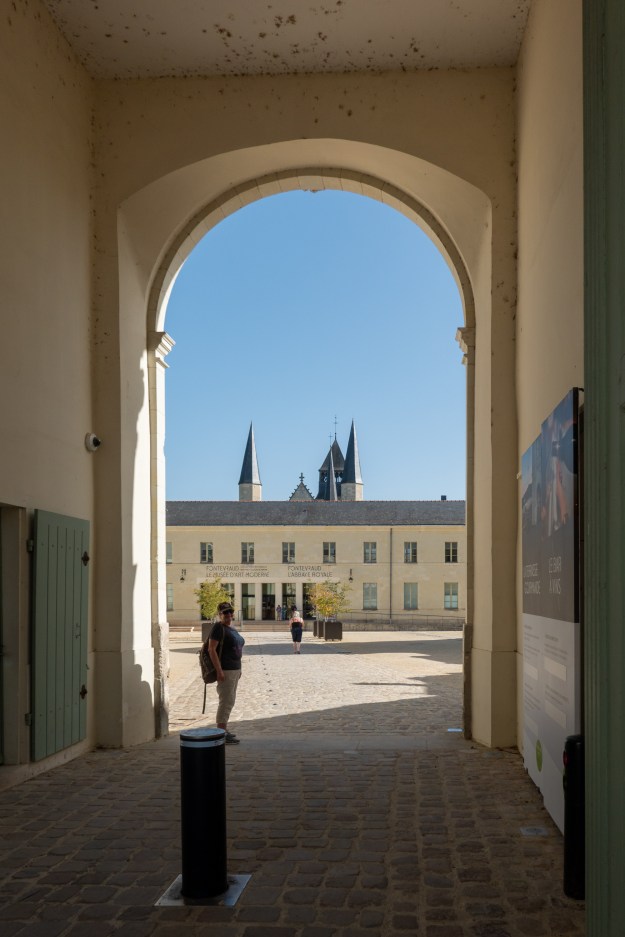
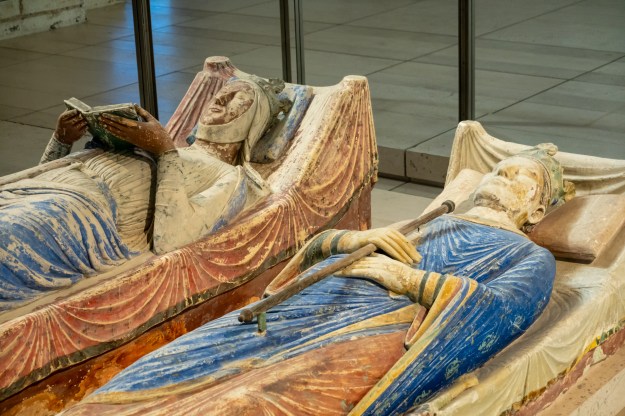
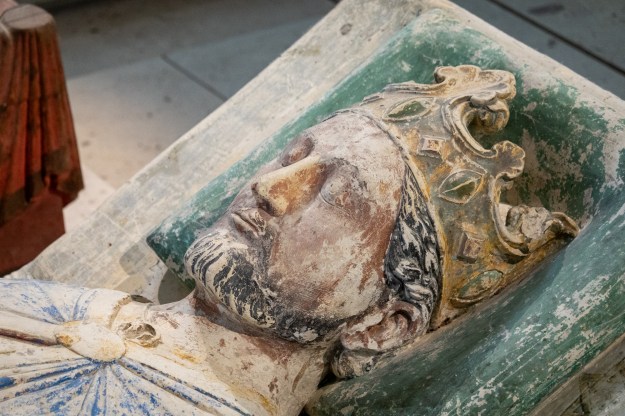
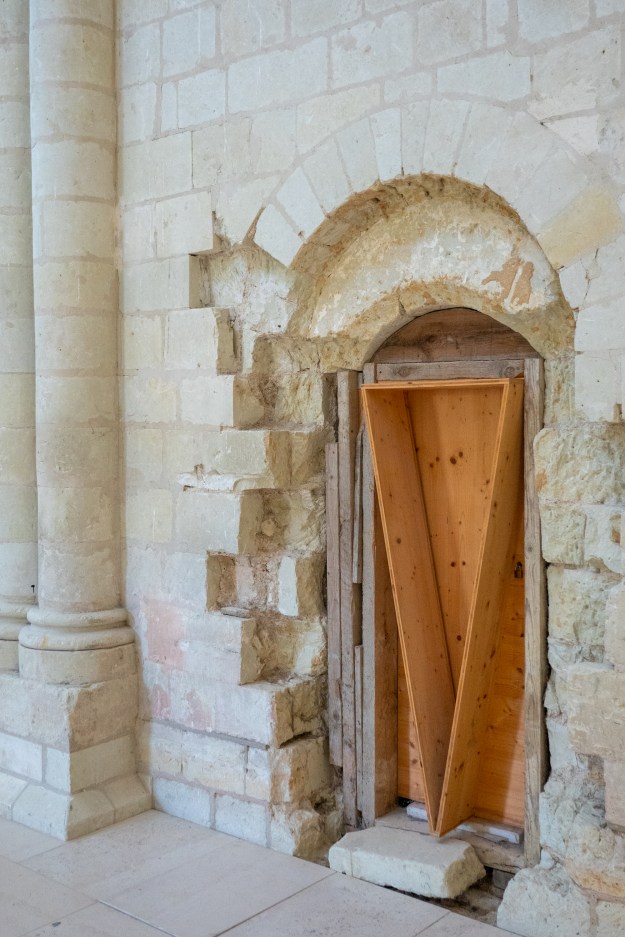
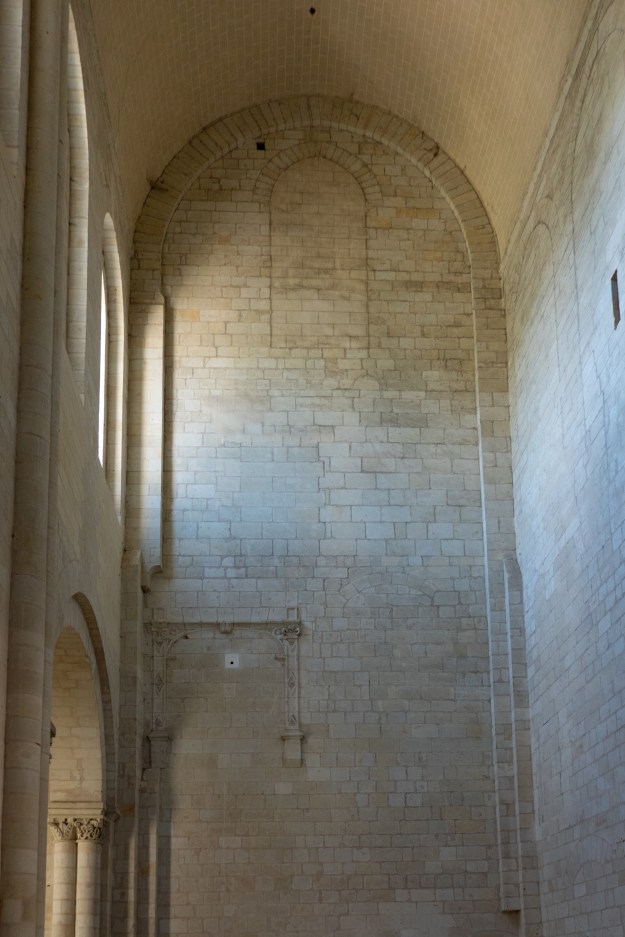
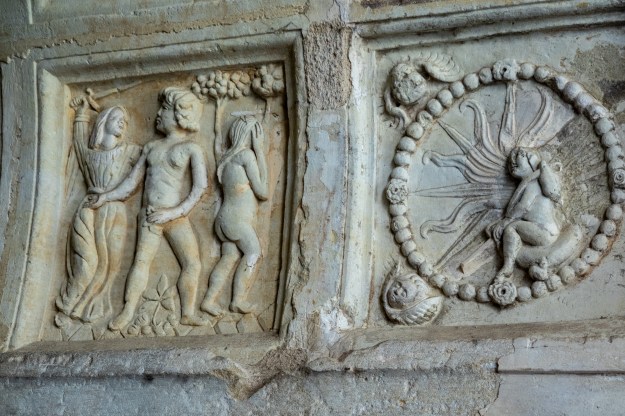
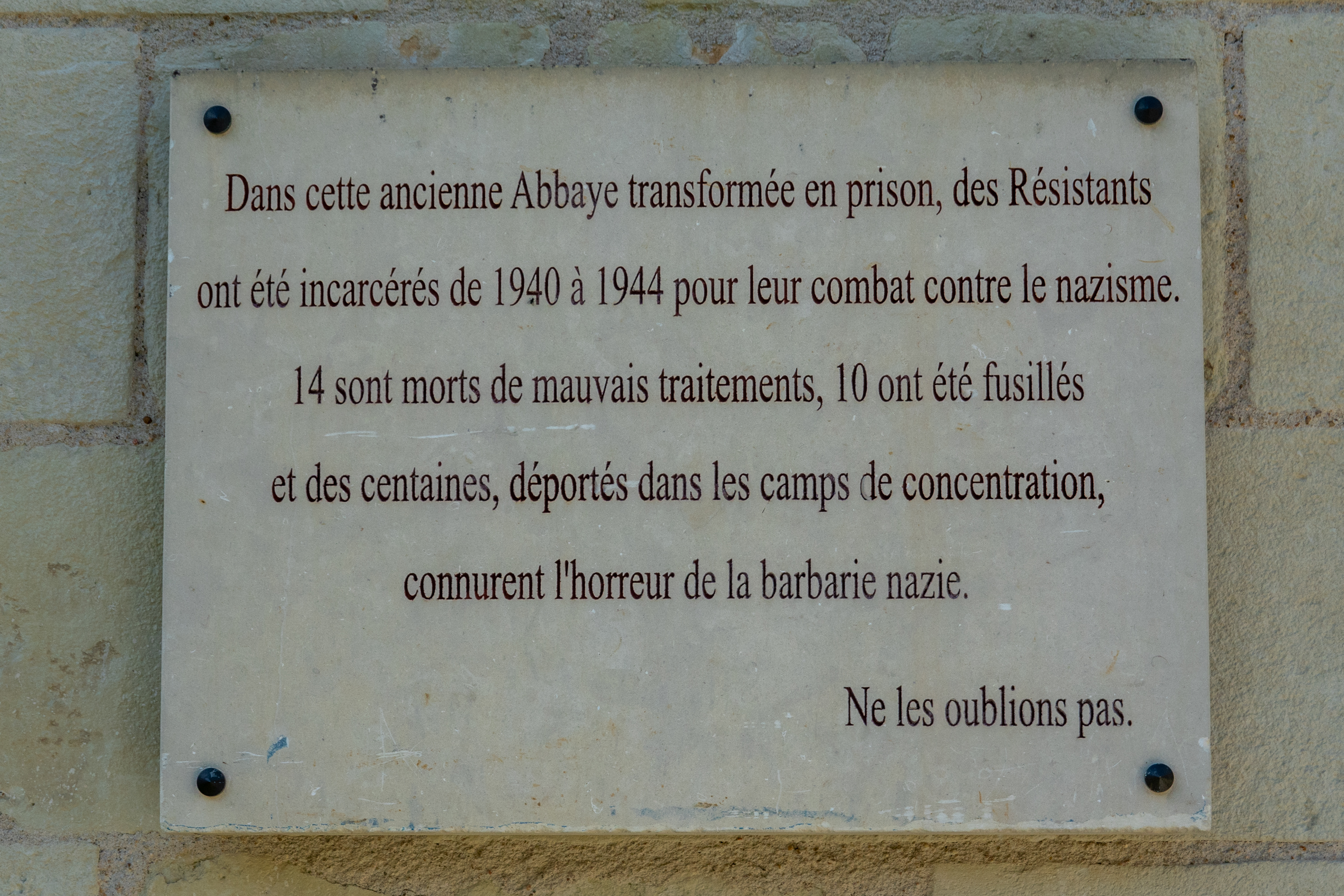
Clean clothes in hand, we set out for the Fontevraud Royal Abbey. Established in 1101 the Abbey was always headed by an Abbess, despite the presence of monks. It became a prison during the French Revolution and remained one until 1963. It was then renovated to show its former life. Perhaps the Abbey’s greatest claim to fame is as the resting place of three of the great (or infamous) Plantagenets – Henry II, Eleanor of Aquitaine, and their son, Richard, known as the Lionhearted. A reminder that a lot of “English” monarchs really had their roots in France. There are lots of serious books about the Plantagenets; for something a little, but not much, lighter, try the historical fiction of Sharon Kay Penman. (https://sharonkaypenman.com/book-category/us-editions/) Penman’s books cover eras and characters made popular in various TV shows, plays, and movies, such as “Cadfael”, “Richard III”, “Robin Hood”, “The Kingdom of Heaven”, “The Lion in Winter”, and many others.
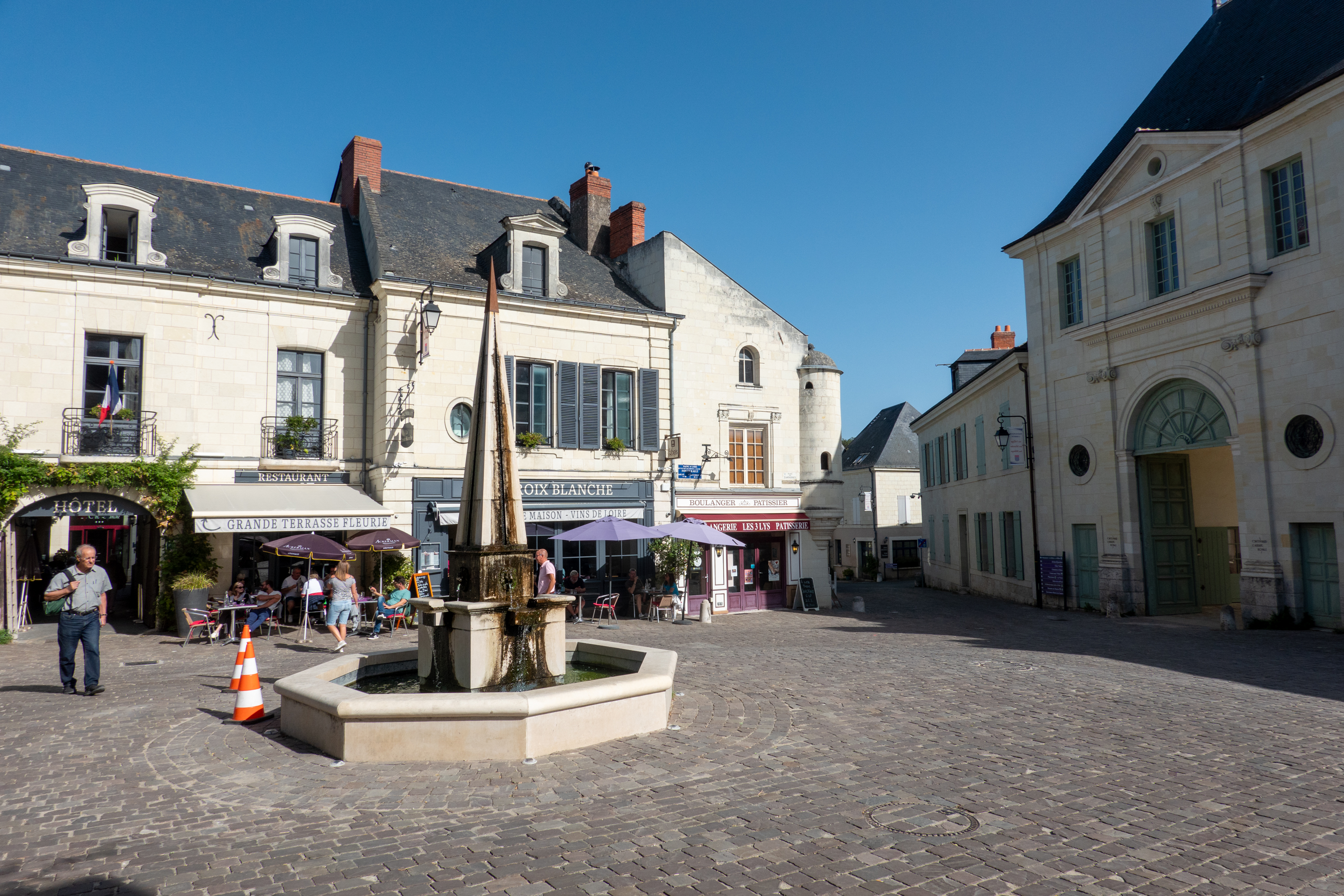
We enjoyed a wonderful (full menu) lunch on the square before touring the Abbey.





We finished our day at the Clos des Cordeliers. (https://www.clos-des-cordeliers.com)

According to legend, the prison was so harsh that it was called a “prison for guards.”

The Clos des Cordeliers is part of France Passion, so we were able to spend the night. We enjoyed a great tasting and chat with the staff and we learned that the harvest had just finished, so everyone was happy! We bought several bottles and moved the camper for the night.

In Saumer, the aire was on an island in the middle of the Loire. A quick pop across the bridge on the bike and you were in the old town. And now, reaching Amboise, we parked on yet another island in a very dry River Loire. So we got on our bikes and popped across another bridge to reconnoiter.

The main street was busy with tourists. So, naturally, we stopped for a coffee and a goody. And we came back for a wine tasting in a gallery under the castle.

We had come to Amboise specifically to see the Clos Lucé and the Parc Leonardo da Vinci. We found it and, the next morning, returned just as it opened.
The chateau Clos Lucé was originally a fortified residence. Unusual in that all you can see from the road is a nondescript gate.


Leonardo da Vinci spent the last three years of his life here, at the invitation, in 1516, of Francois 1 of France, and so left a treasure trove of possessions.
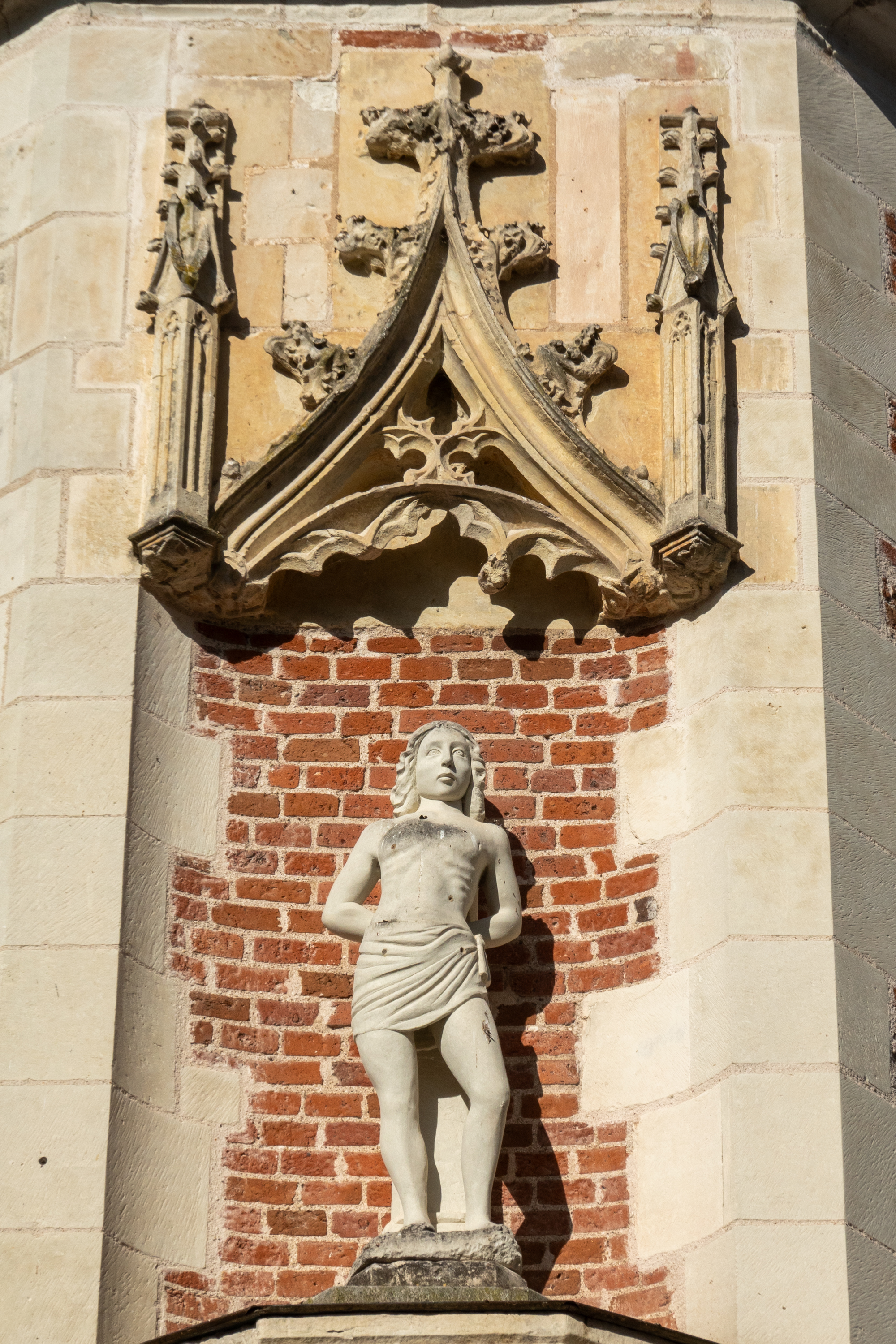

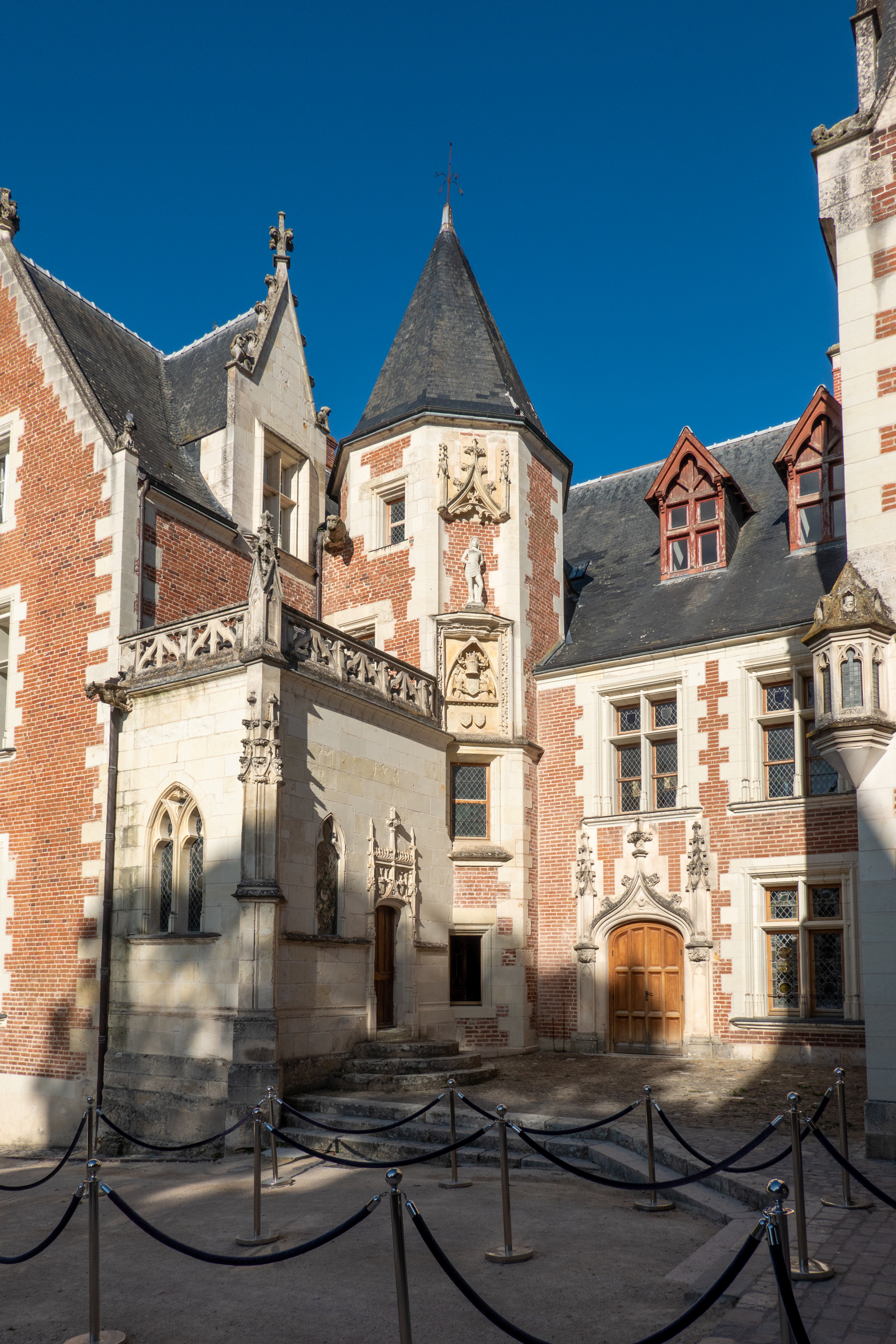


The house itself was fascinating and included Leonardo’s bed chamber, a “loggia” or gallery, the Oratory of Anne of Brittany, with frescos painted by some of Leonardo’s students and other fascinating rooms. The whole effect was light and airy.

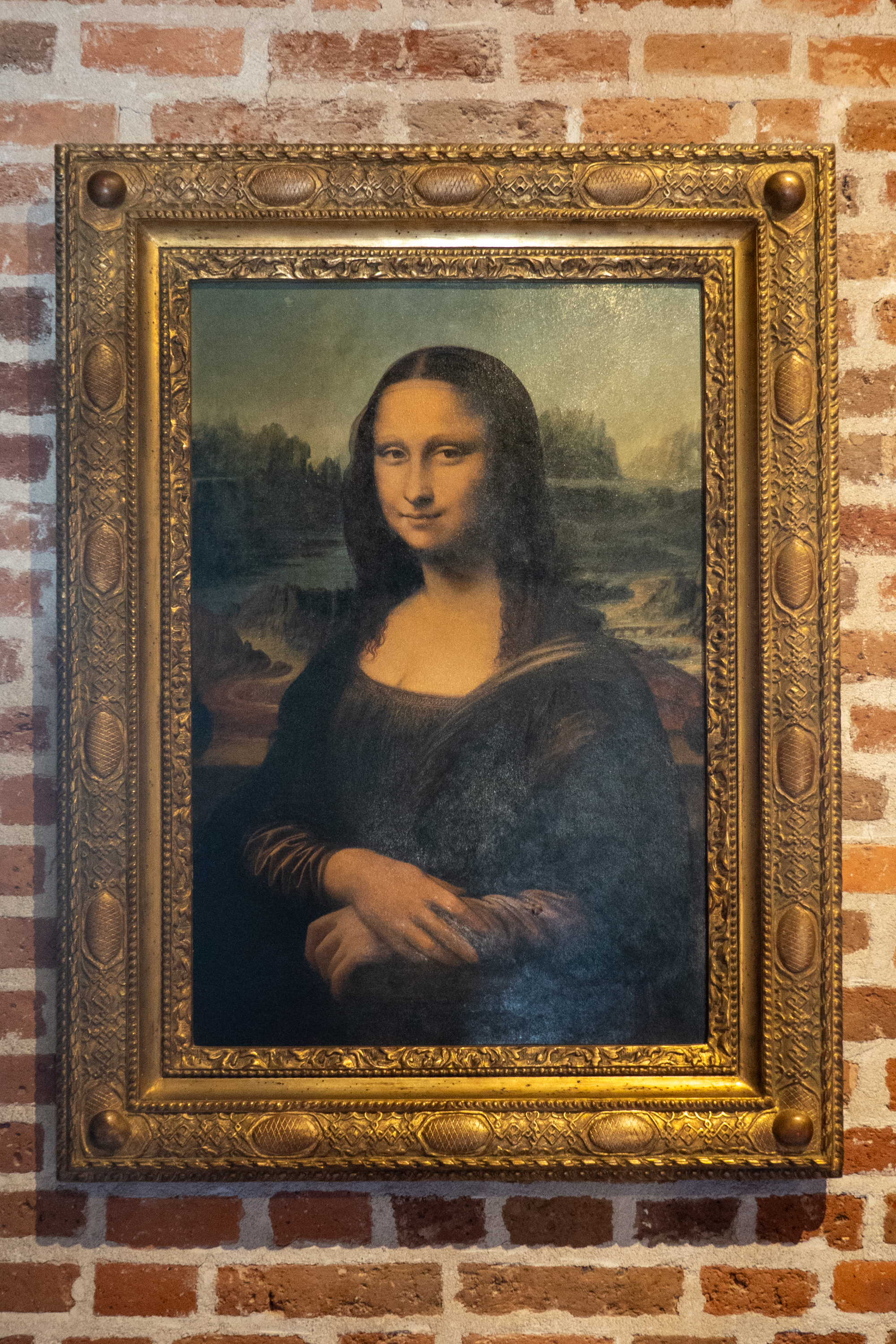
Leonardo’s workshops were a series of three rooms, each concentrating on his various interests. Denise liked the painting one best, it included a copy of the Mona Lisa, which is easier to view than the one at the Louvre! Leonardo’s easel and paintbrushes, workbenches and his last drawings including a cat series that Fred liked especially.
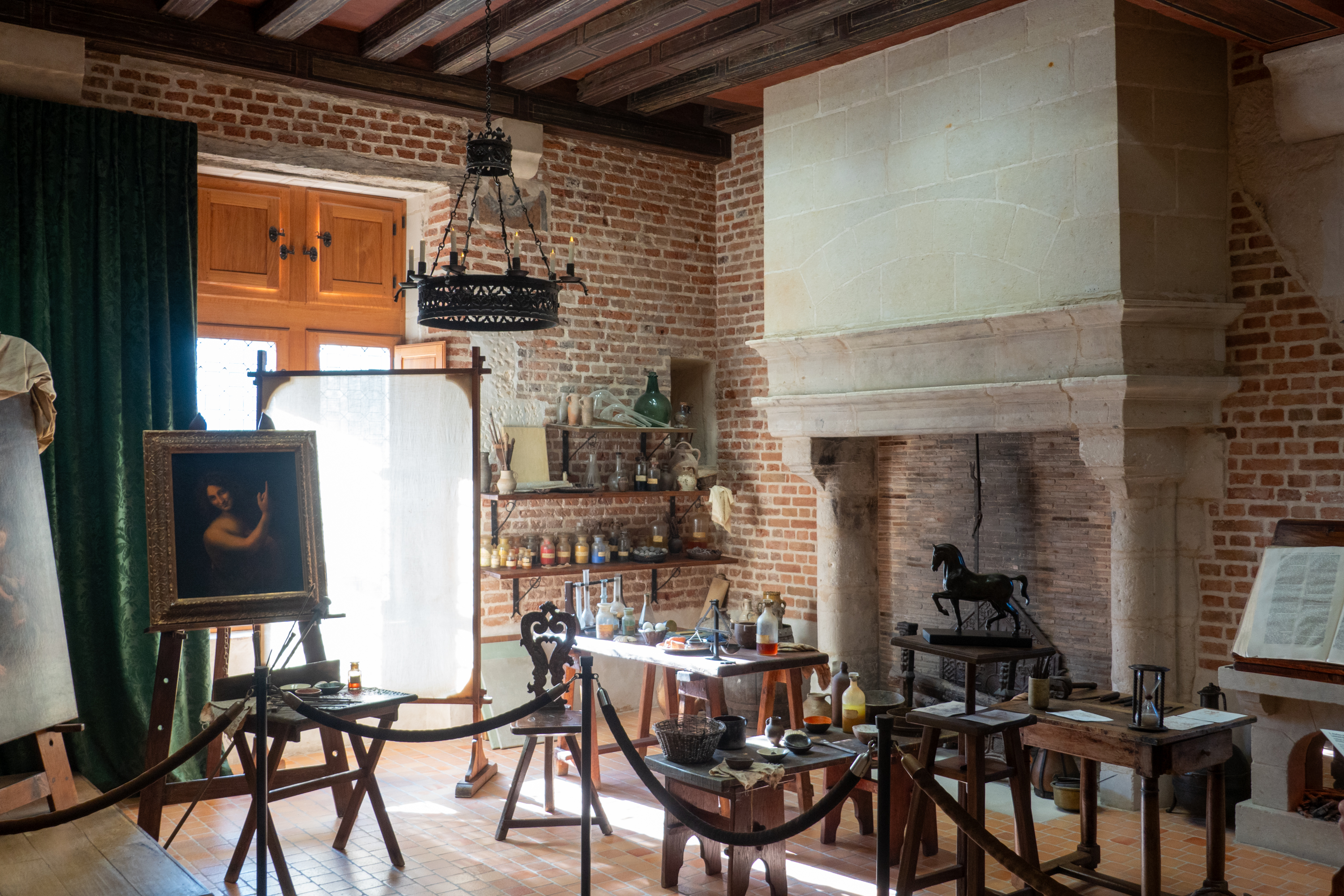

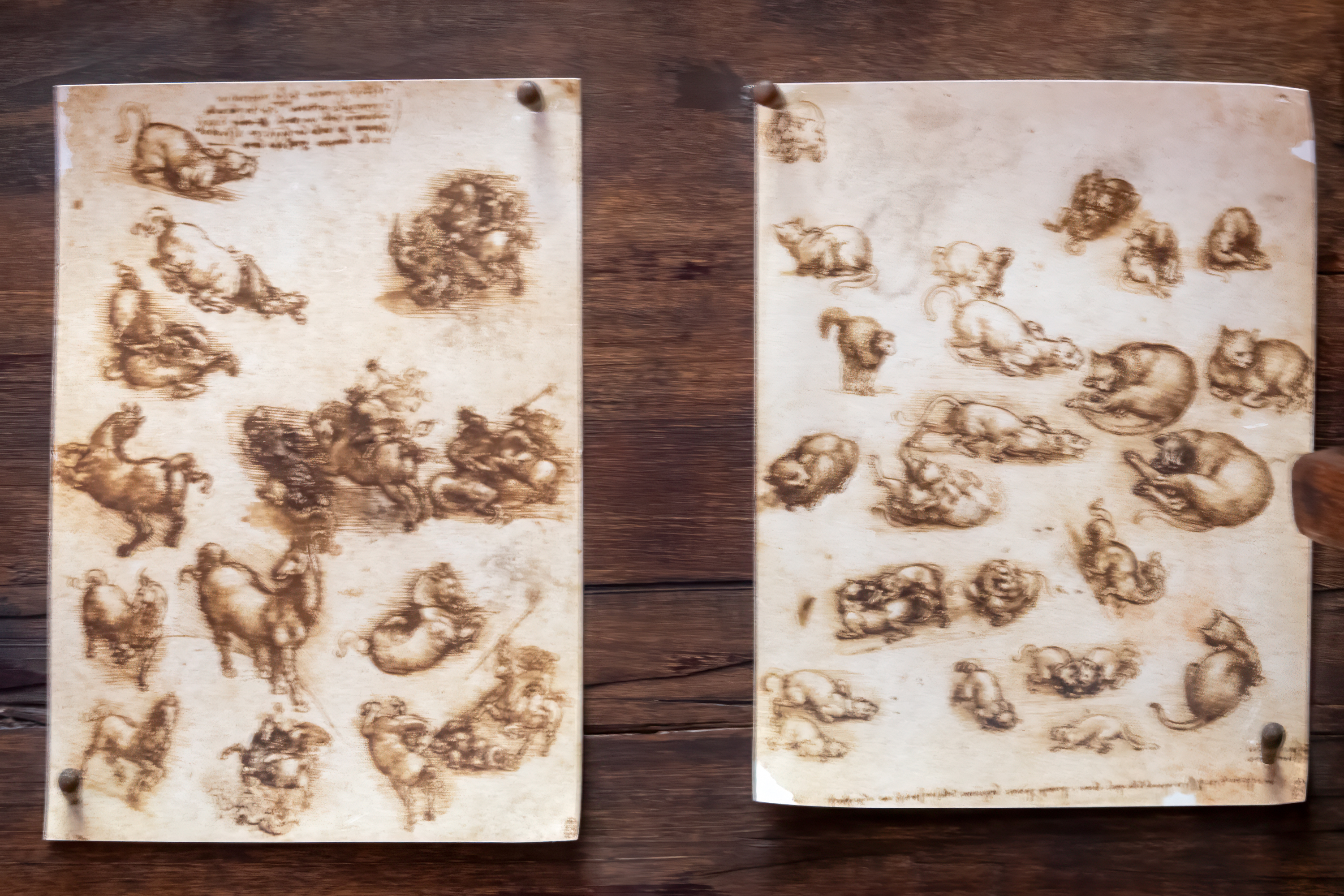
There was a clever display of Leonardo receiving a visit from the Cardinal Luigi of Aragon. The latter made an extensive journey though Europe. The journey was detailed by Antonio de Beatis, his secretary and it is a fascinating story for anyone interested in the famous painting, the Mona Lisa, or simply European life at the time. Read more here: https://monalisa.org/2012/09/08/the-travel-journal-of-antonio-de-beatis/


In the basement were exhibits of a number of Leonard’s inventions, including mockups and miniatures.
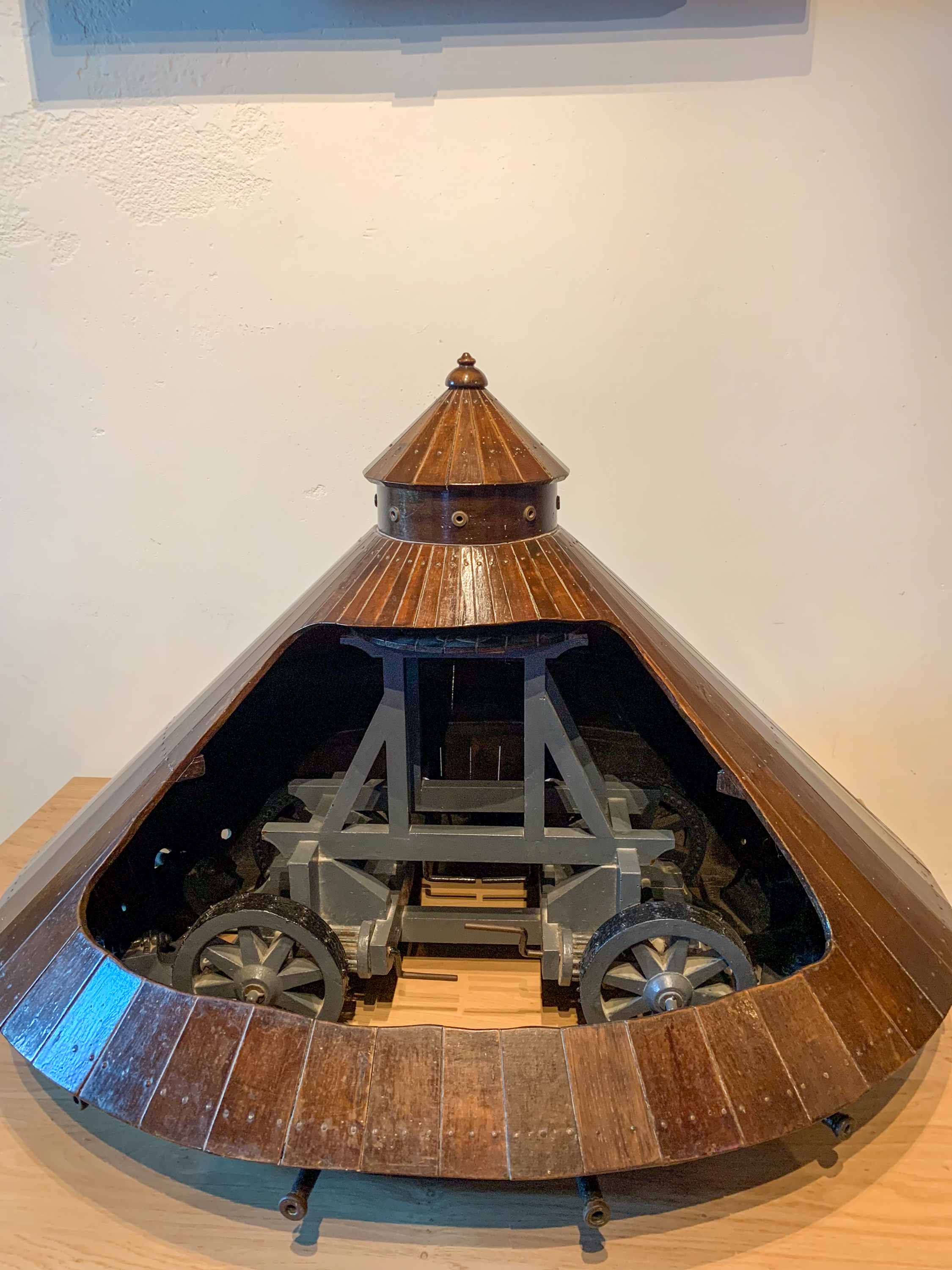
Not as far fetched as you might think. Since ancient times, armored shelters were built to protect battering rams, sappers, and others when attacking walled cities and forts. And modern tanks still use sloping armor – certain physics haven’t changed!

This one is armor geek supreme – a breech loading gun, using a worm gear to close the breech. Why is this significant? Leonardo designed a form of tank and the only way the guns could be reloaded safely was from inside the tank, through the breech. But, for another few hundred years, most cannon would be muzzle loading.

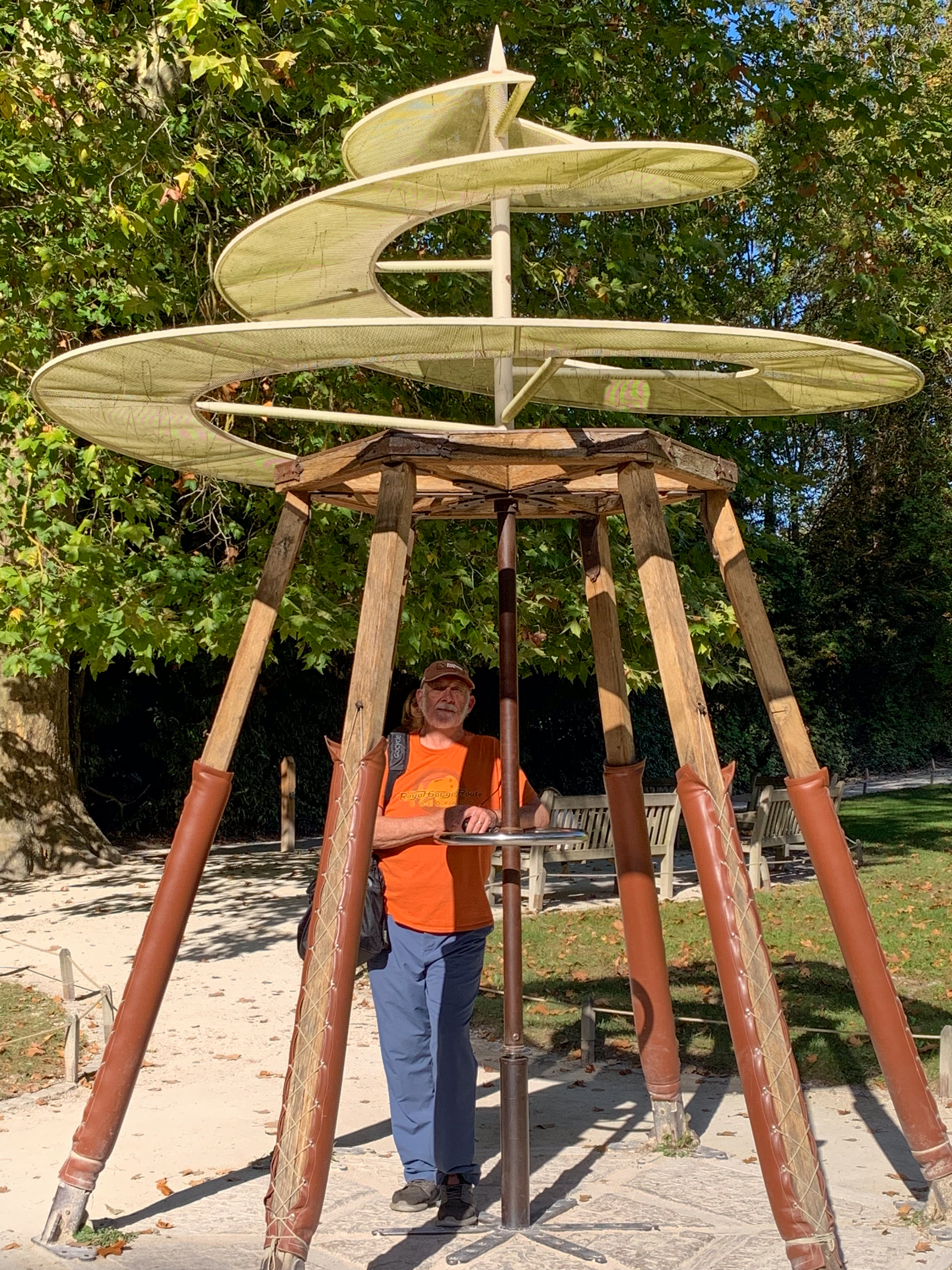
And he also built a windup, spring powered car as well as a paddle boat with flywheels to smooth out the power. And, of course, a helicopter! As with so many of his ideas, the problem was the lack of any kind of real motor, a problem that didn’t really get solved until the invention of the steam engine.
Then in the Parc we were able to see them full size, including moving bridges and Archimedes Screws and such. A fabulous visit. People talk about a person being a “Renaissance Person.” Leonardo Da Vinci was the whole renaissance in one person.
We also visited the Chateau of Amboise, which is an interesting juxtaposition of fortification and more modern chateau.
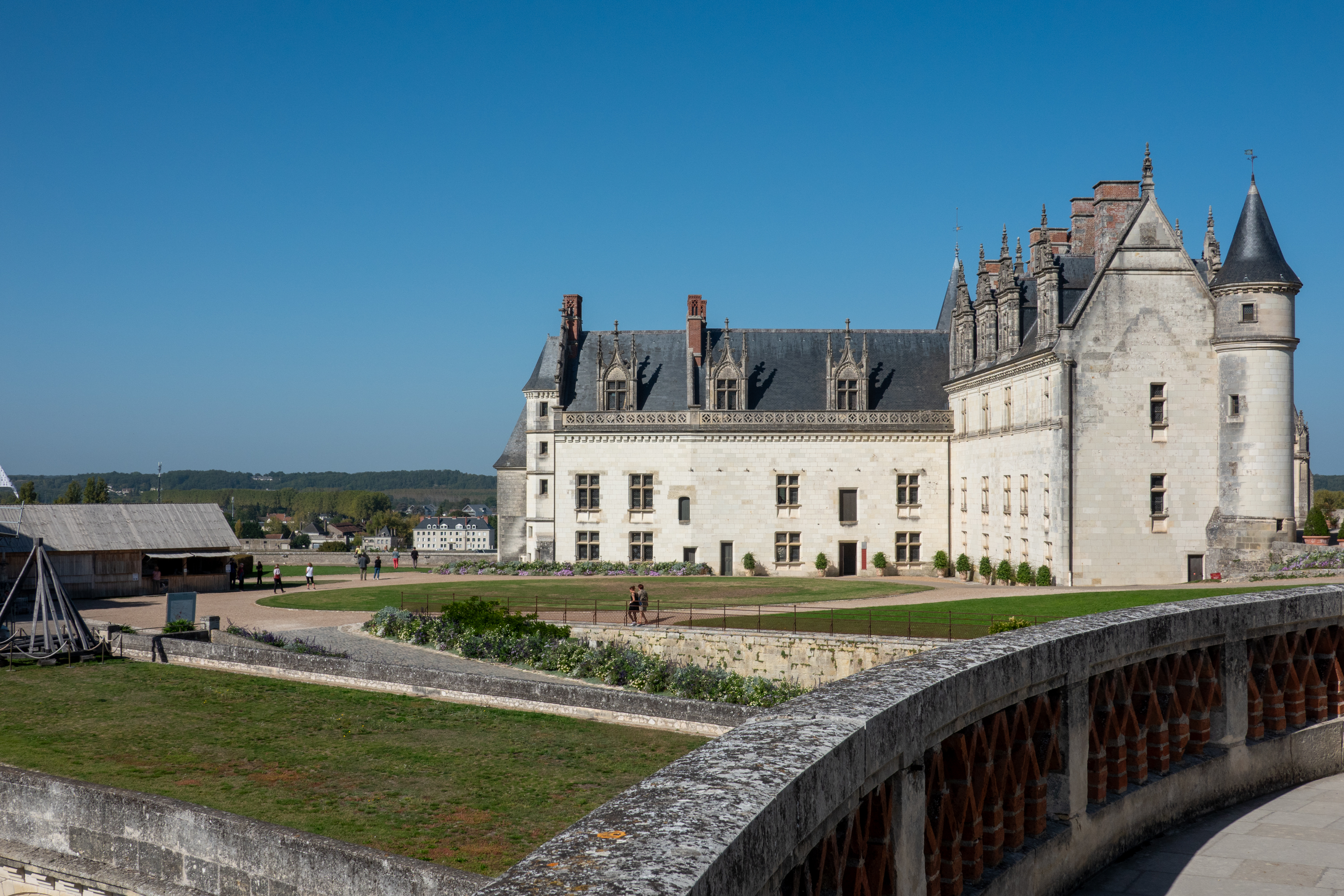
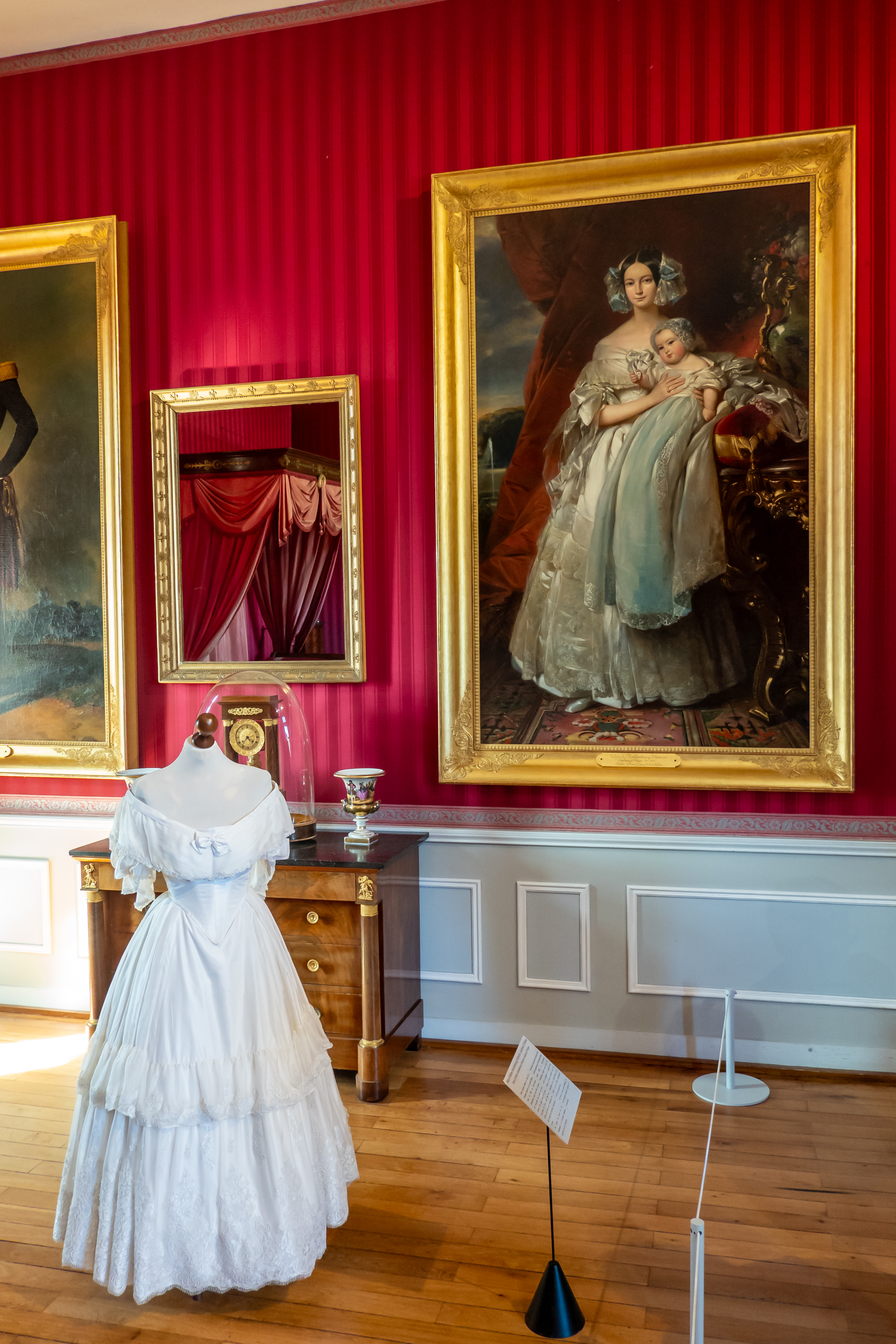
It was confiscated during the French Revolution and returned to the one remaining (surviving) member of the family that had owned it afterwards. Needless to say, it required restoration. The main floor contained medieval furniture and the upper floors Regency furniture as it was restored post Revolution.

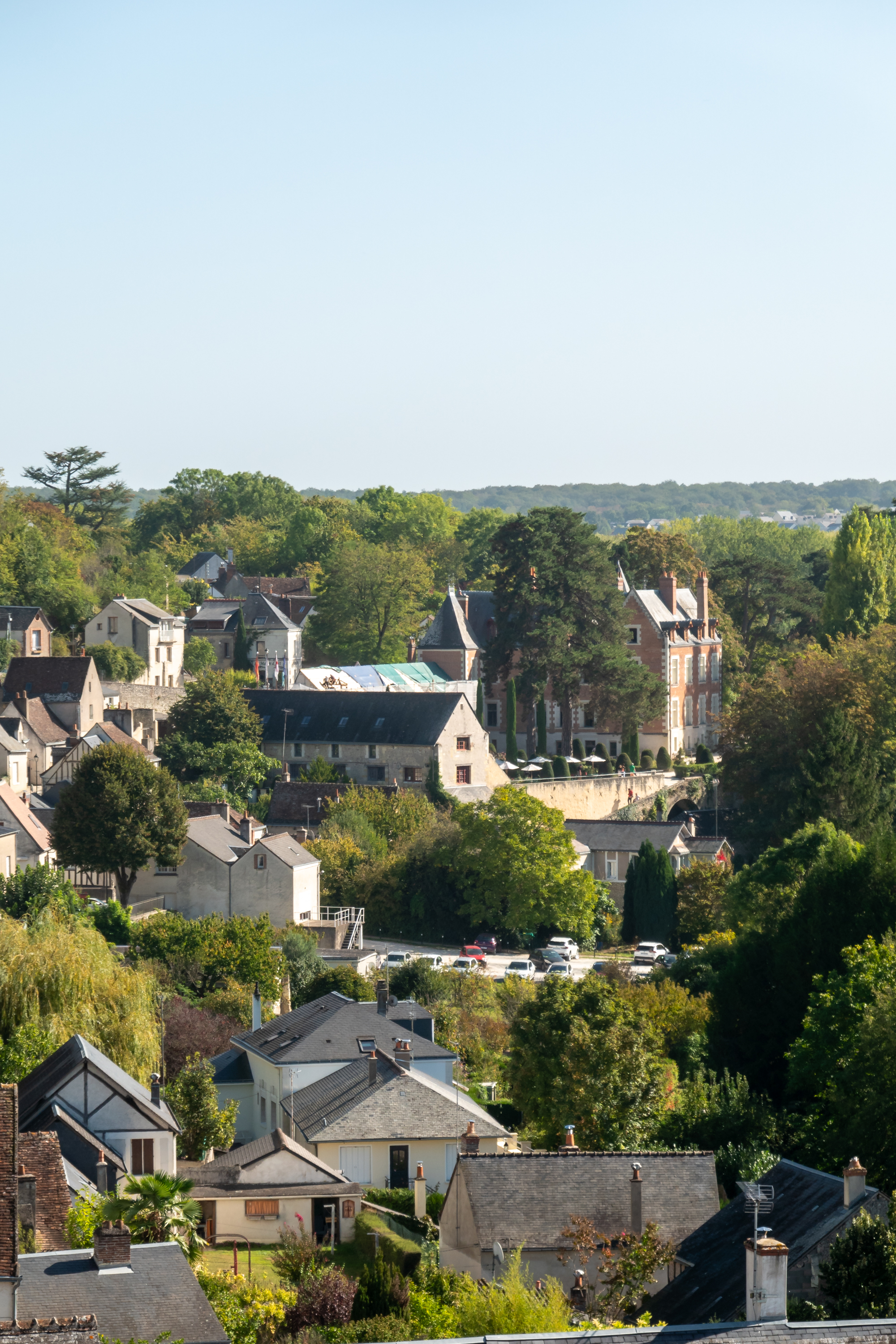
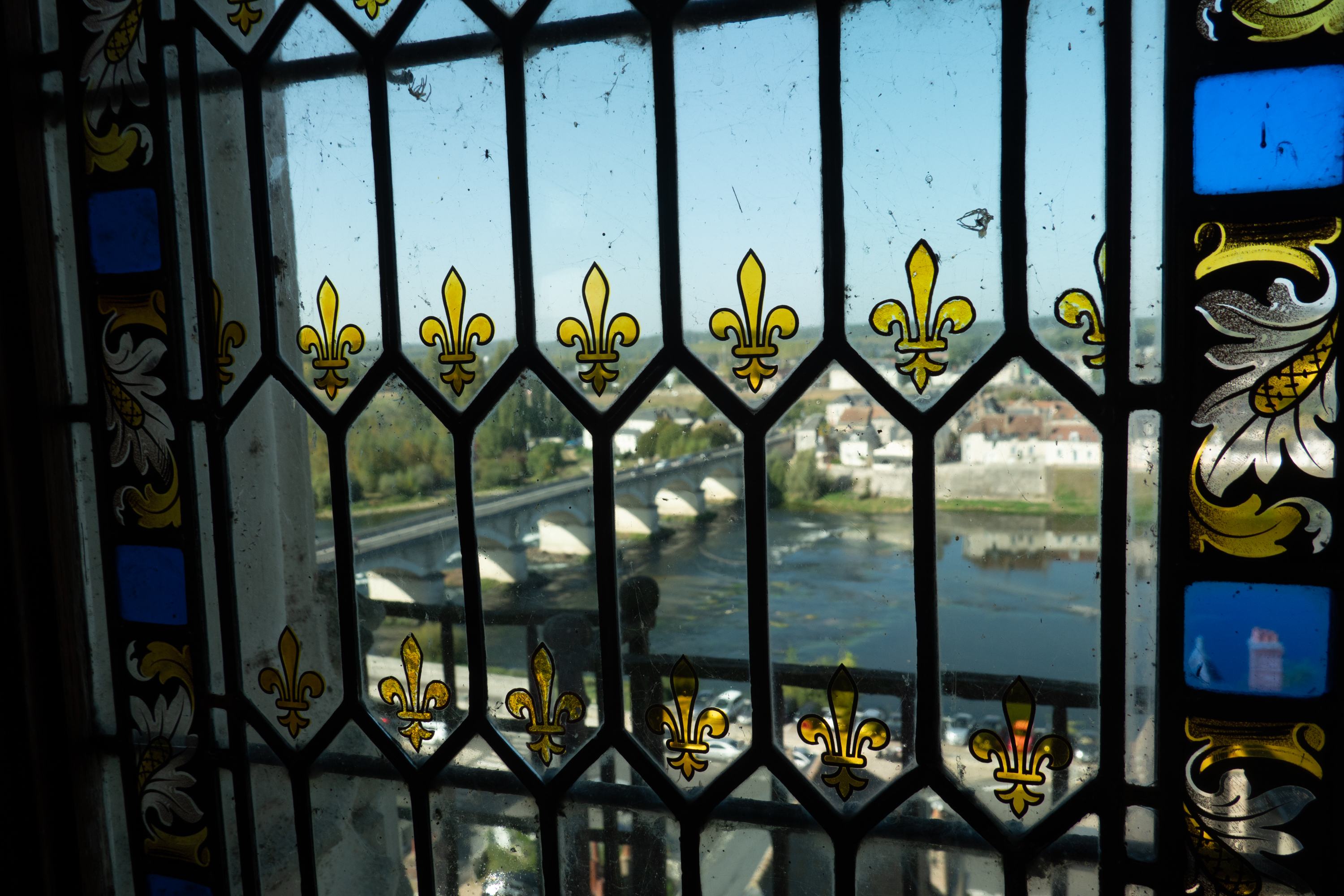

Fred also got a very nasty flat caused by sharp flints (silex), which are everywhere in the region. Fortunately he found a great bike shop to help him fix the flat.
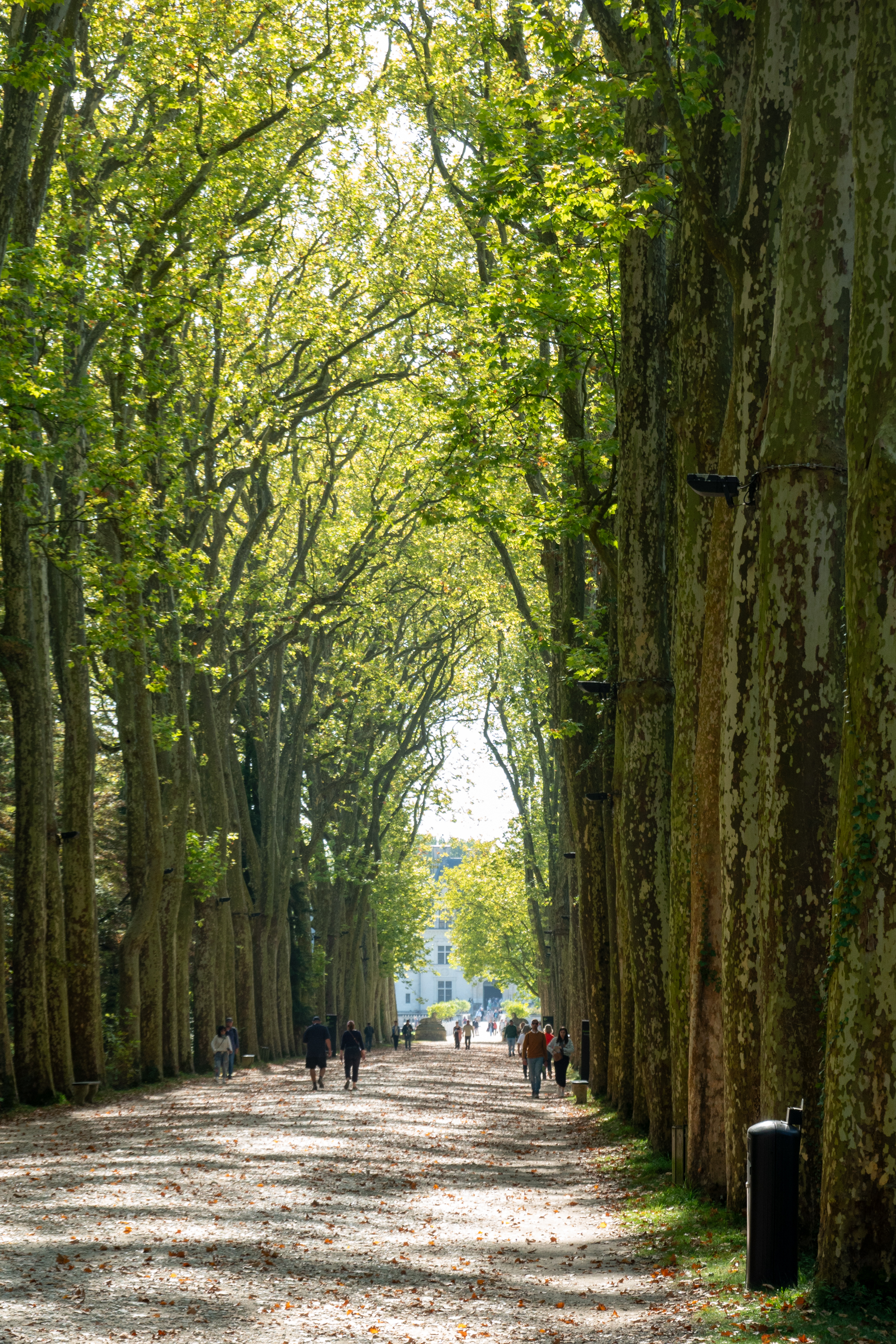
Our final stop in the Loire Valley was the Chateau of Chenonceaux. We felt a need to see at least one well visited and well known chateau! In actual fact, we benefited from summer weather and fall crowds (that is – none!) so we had an excellent day. We had planned to go to an Aire right beside the chateau entrance, but the access was so narrow, we parked in the free parking just outside. (And besides, we had already touched a railway crossing sign trying to make the first turn. Grrr! Annoying, as had we come in through the chateau entrance, as opposed to the GPS direct route, we would have made the turn easily. As we did the second time!)

Turned out to be a hot air ballon.
It was an easy walk to the chateau. We started by admiring a row of Citroens of all different ages.
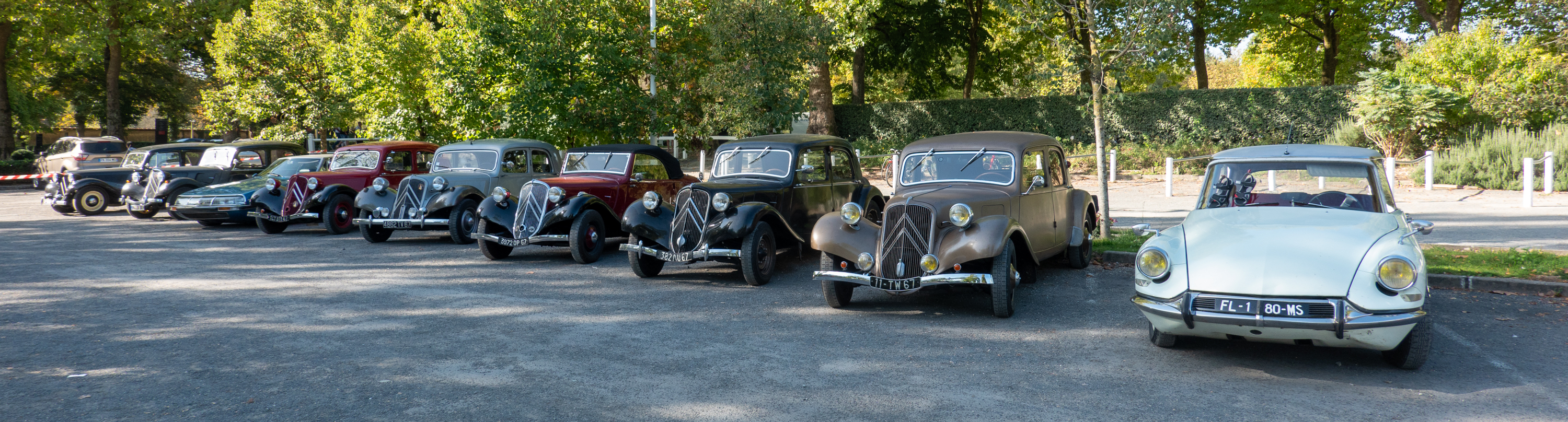

The red car is an old Traction Avant – front wheel drive. Citroens were always the most innovative cars around.
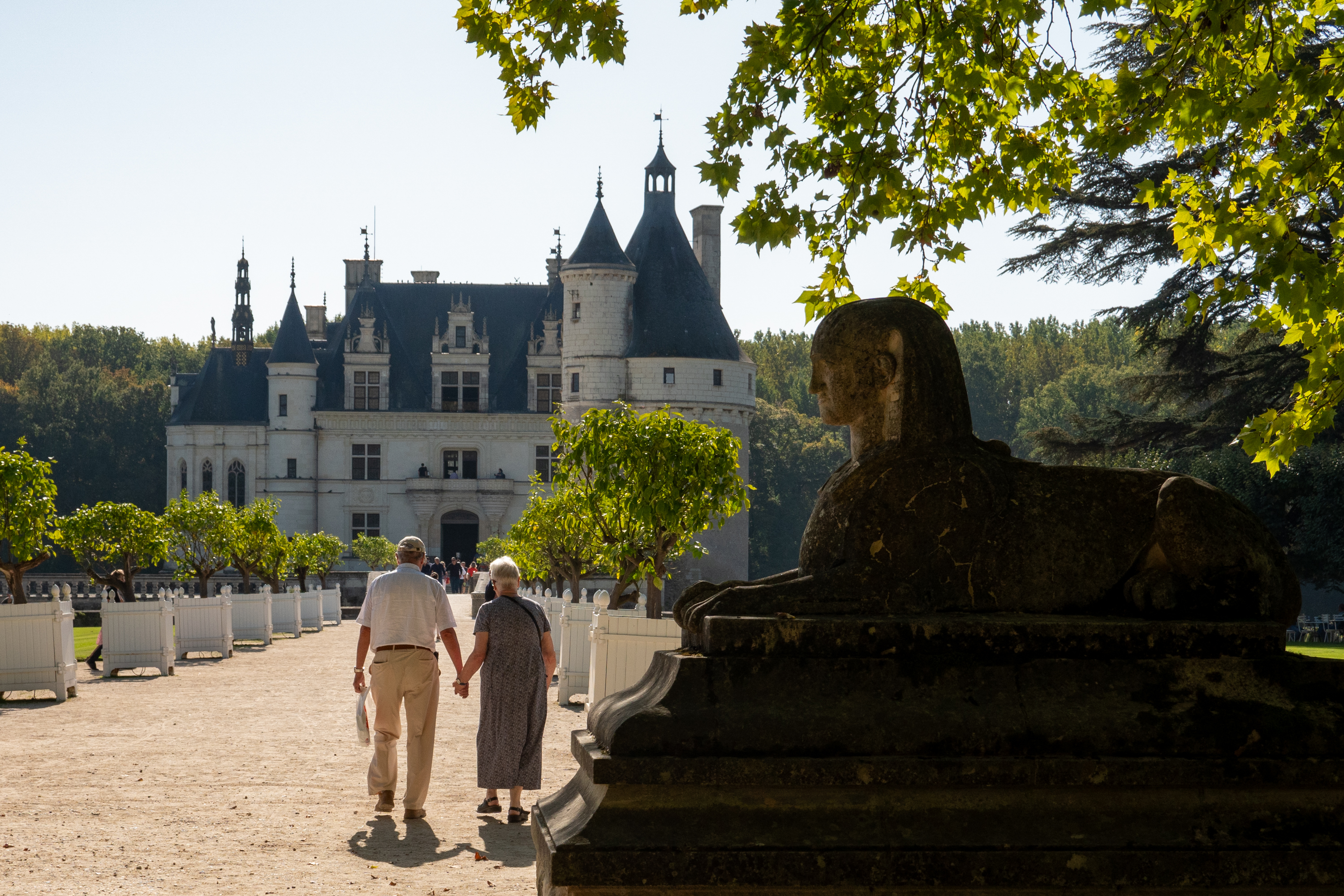
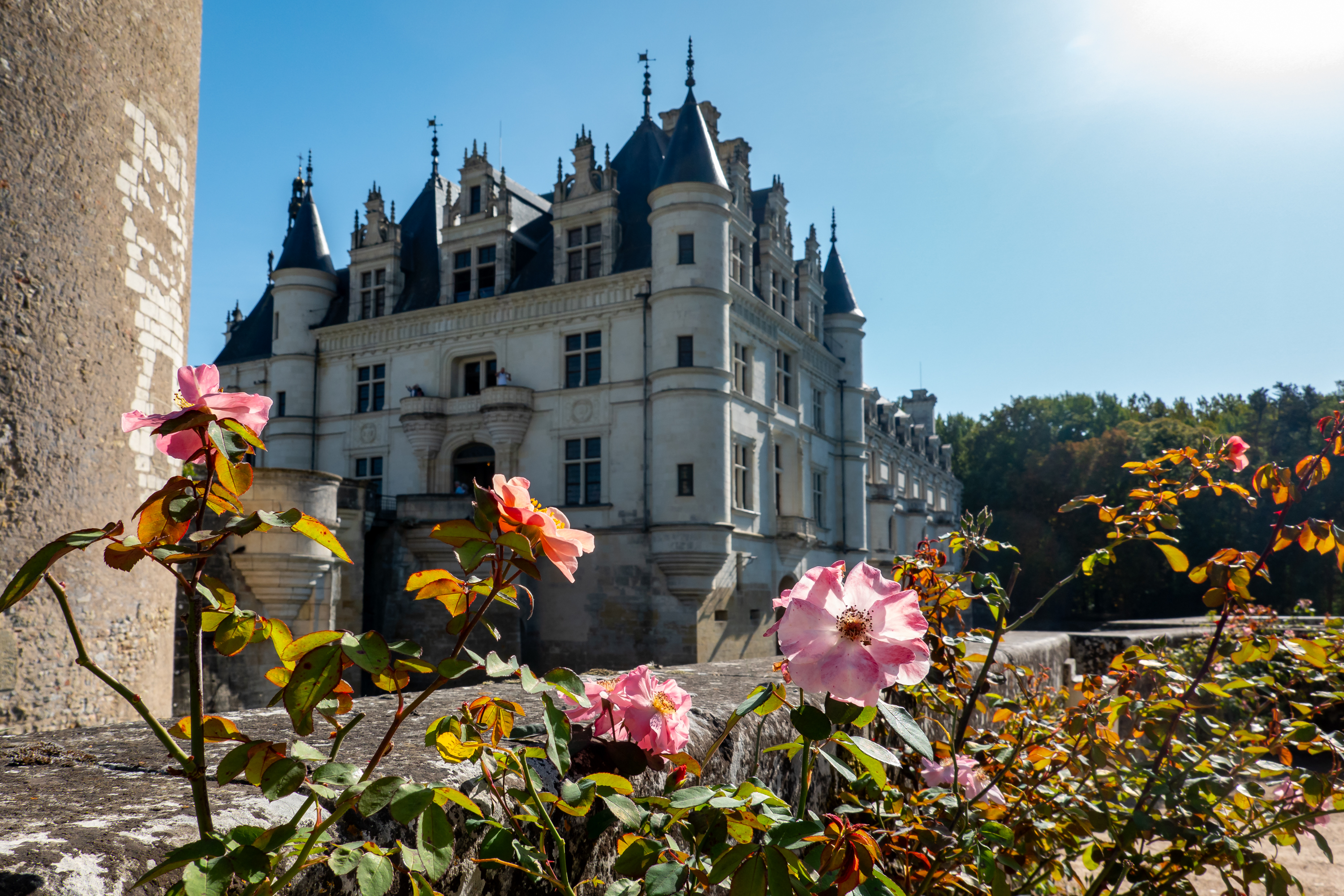
There are hundreds of chateaux in the Loire valley, but Chenonceau (https://en.wikipedia.org/wiki/Château_de_Chenonceau) stands out because it was built on the site of a fortified mill (!!) on a tiny river island and later expanded with a bridge out over the water. It was also the home of a number of powerful and competing women. (https://www.chenonceau.com/wp-content/uploads/2018/03/guide-2018-UK.pdf)


This painting, said to be Katherine Briçonnet, caught my eye. (https://en.wikipedia.org/wiki/Katherine_Briçonnet)
Unlike many of the others, she looks like someone you could meet today, mastic collar not withstanding.
And she was largely responsible for transforming the mill into one of the most remarkable chateaux in the world. So, unlike the Medici lady (https://en.wikipedia.org/wiki/Catherine_de%27_Medic), you probably would like to meet her.
And, with that, we headed back for dinner.
 DiploStrat