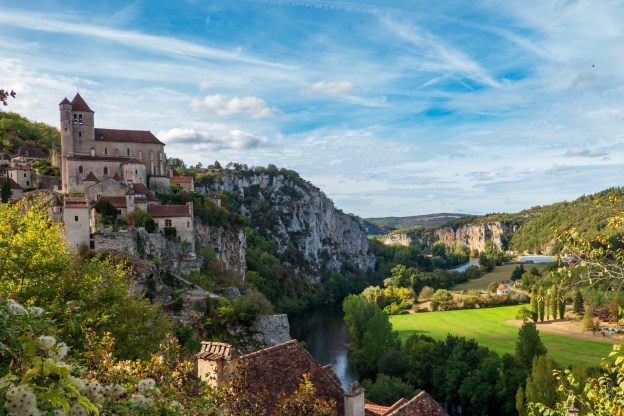
And where, you may ask, is the Dordogne? Well, it is a Department of France with a long, long history. Long as in back to the Middle Ages? Nope, longer. How ’bout the Gauls and Romans? Nope, longer. Greeks? Too soon. OK, we’ll give you neolithic, and that is why we are here. The Lascaux cave paintings are the stuff of legend.
As we headed south our first stop was at an aire on a country horse farm. It was excellent and provided power, water and a bag of tomatoes when we arrived! We enjoyed visiting with the horses and went to the neighboring town of Bellac for groceries and laundry. And on to Montignac where we camped in a pleasant aire, an easy, if very steep, 20 minute drive to the Lascaux caves.
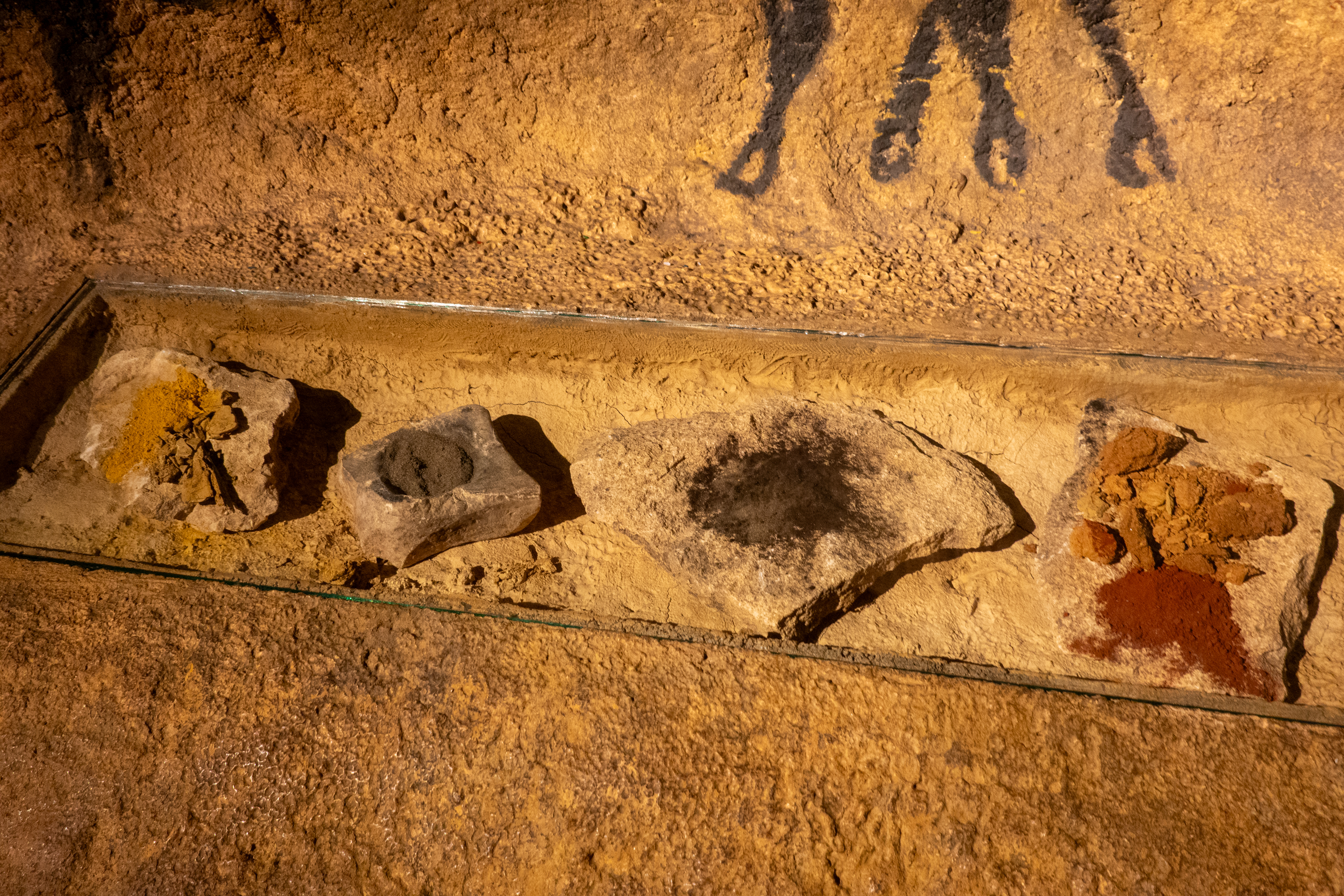
And on to a complex explanation. Visitors are no longer allowed in most of the original caves because of deterioration to the paintings. (They are a bit old.) In the 1960’s a full size replica of the original cave was constructed inside another cave nearby. After careful measurement, some 85% of the paintings were recreated by craftsmen using similar dyes, tools and methods to those used by Cro-Magnon man – a six year undertaking. This is Lascaux II. More recently, a digital presentation of the cave has been opened in a nearby modern building, complete with films and other high tech displays. That is Lascaux IV.
We chose to go to Lascaux II because we wanted the feeling of being in a real cave rather than a representation of one. It was fabulous.
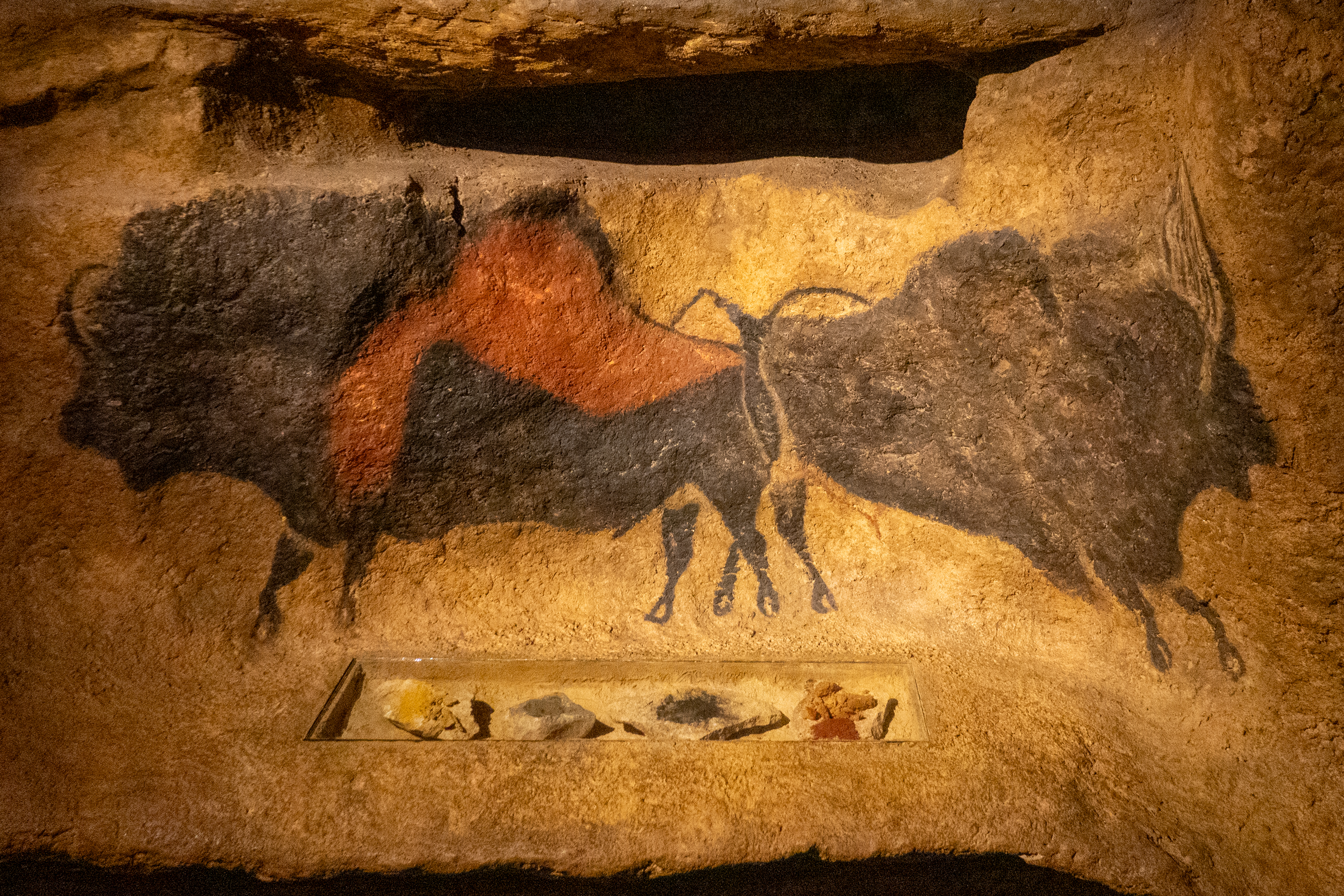
We had an excellent guide who knew all about his subject and the paintings were large and amazingly colorful.



A visit to a different set of caves in Rouffingnac proved interesting. This cave had been excavated to install a small electric mining train, which enabled them to limit the number of visitors. (We are suckers for trains of any size or kind!) They had opened up the cave passages to build the railway. Most of these paintings, or mostly outlines, had been painted while the artists were on their backs and cover the ceiling. The paintings themselves are much less colorful and impressive until you realize that you have ridden a train for some thirty minutes through passages that have been cleared of mud. In neolithic times, you would have had to crawl in and then lie on your back to see much. Clearly, this was not a temple or gathering place for a lot of people.
There are many, many caves all over this area, some with paintings, and some with classic commercial cave stalactites and stalagmites. It would take weeks to see them all but we enjoyed the ones we did see.
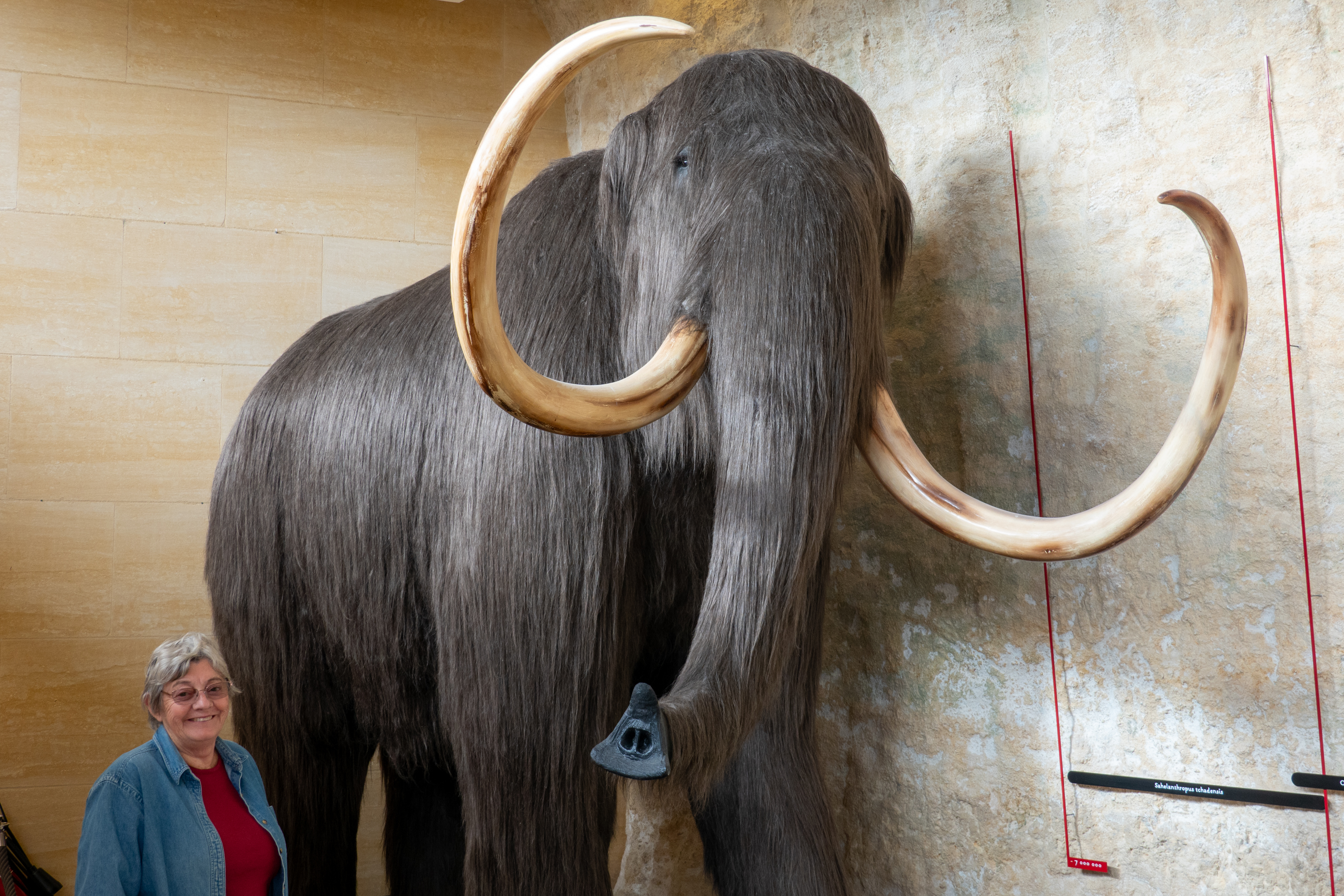
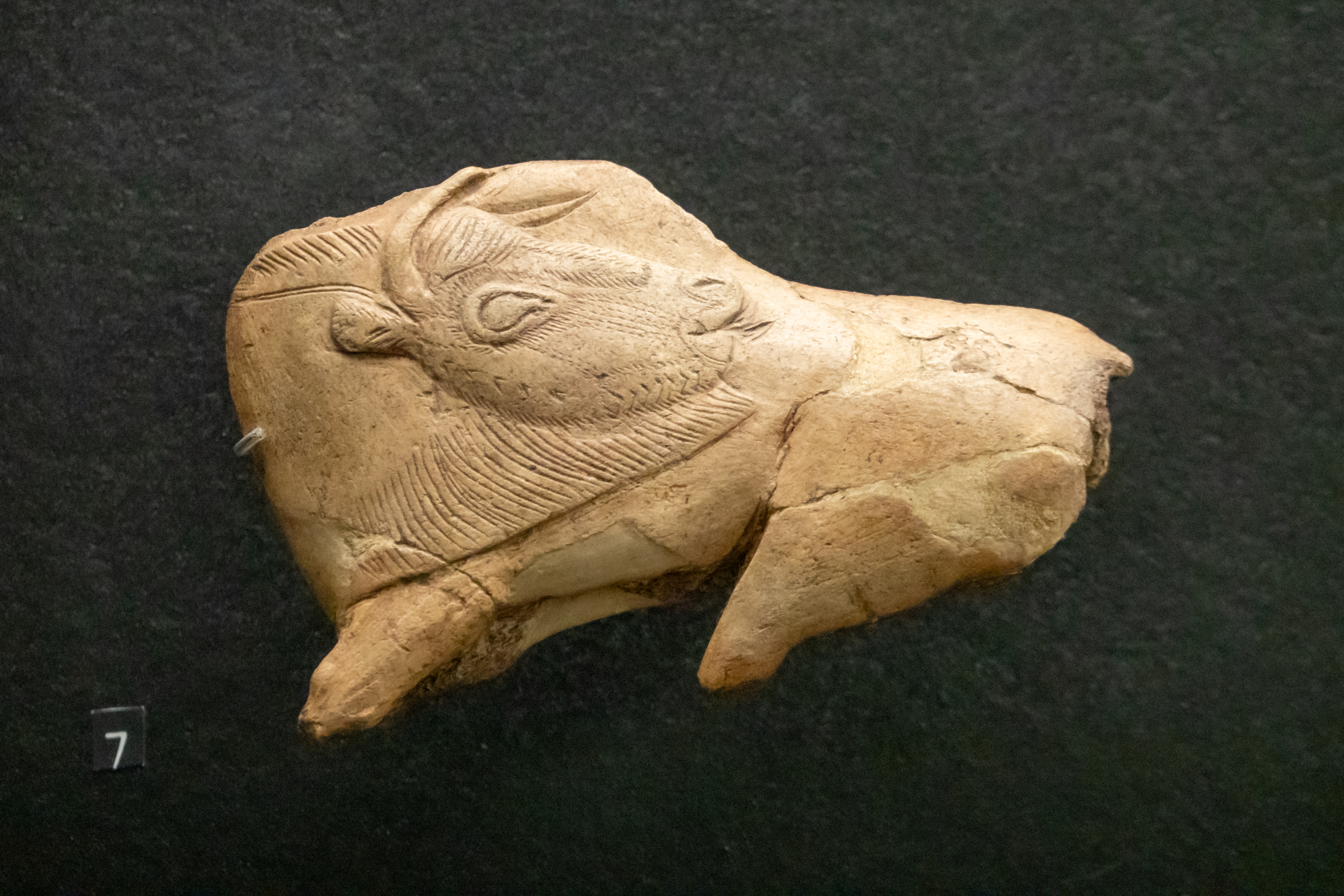
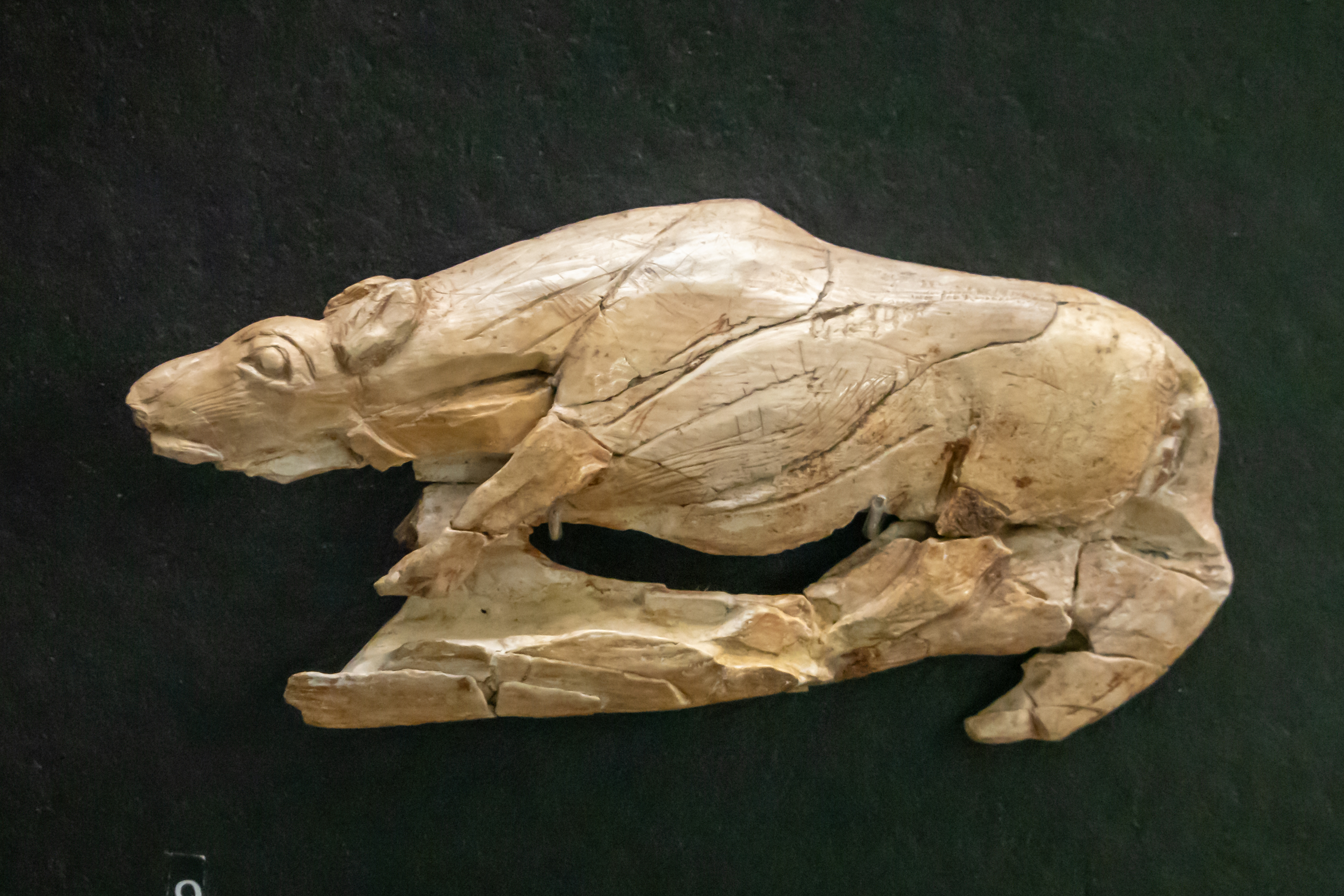
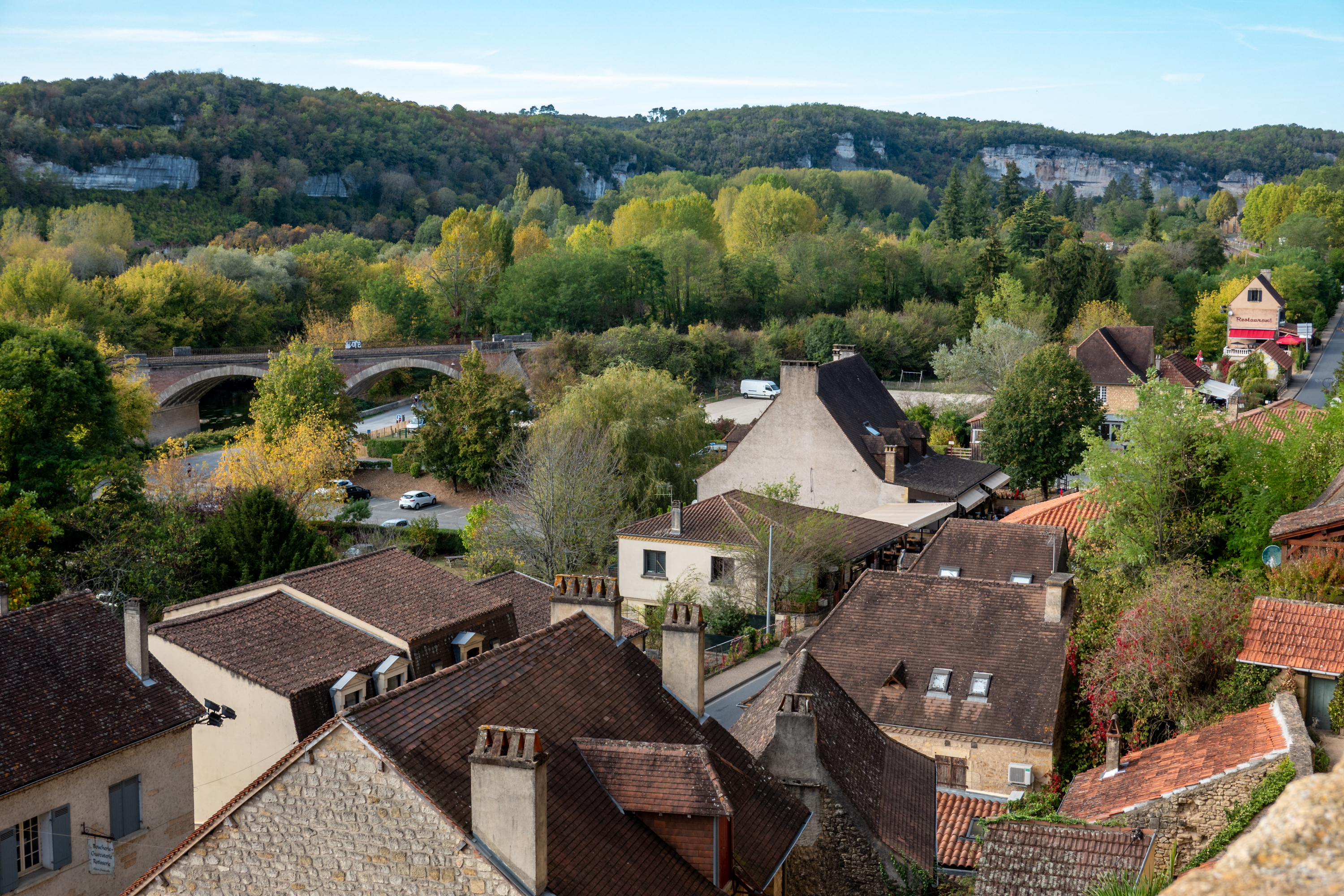
We camped in Las Eyzies-de-Tayac-Sineuil (say that three times fast) for our Rouffingnac visit and while there we visited the excellent National Museum of Prehistory.
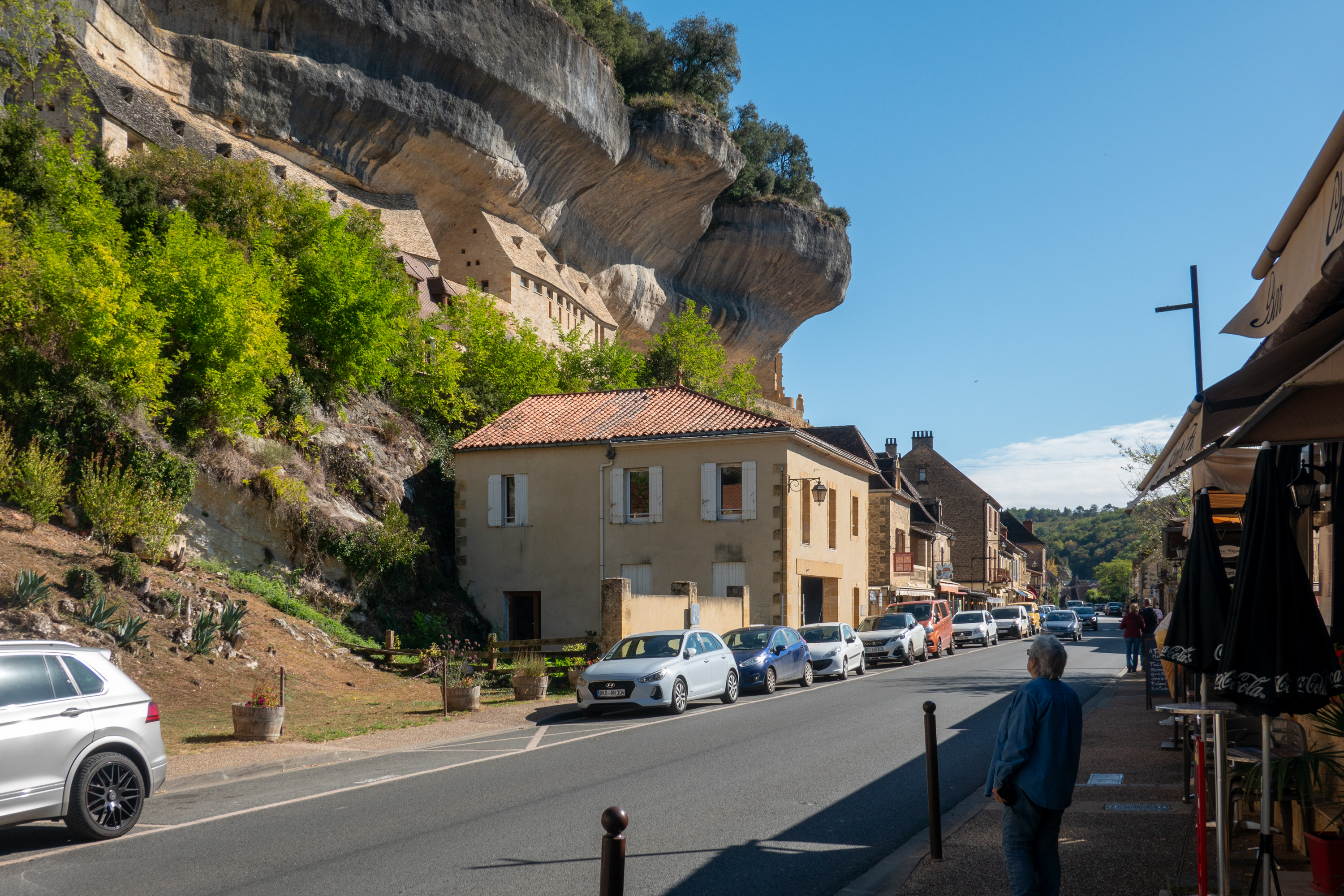
The museum, is built into the ruins of Las Eyzies Chateau, which, in turn, was built directly into the side of the cliff. The Museum has thousands of examples of tools, artifacts, statues, and recreations of paintings and dwelling caves from the Cro-Magnon era, culled from the entire area.

Moving east, we drove to Cahors, which has a most interesting fortified medieval bridge, built in from 1308 to 1378, called the Valentré Bridge, which we wanted to see. It is a UNESCO World Heritage site.
We knew we would have to park and take the bikes to see it as all the roads around it had weight limitations. But when we made it to the large car park that allowed camper parking, it became clear that it was a mess, full of double parked cars, residential campers and there was not a chance we could park. And then someone parked beyond the end of a row. Grrr! In fact, we barely got out. Since I could not get my own shot of the Valentre bridge, I am shamelessly stealing this amazing shot by my neighbor Bruce Dale. Bruce did this for a living for National Geographic and you can see more of his great work at: https://brucedale.com

So we gave up on Cahors and drove to St. Cirq Lapopie, a village east of Cahors, that Denise wanted to visit.
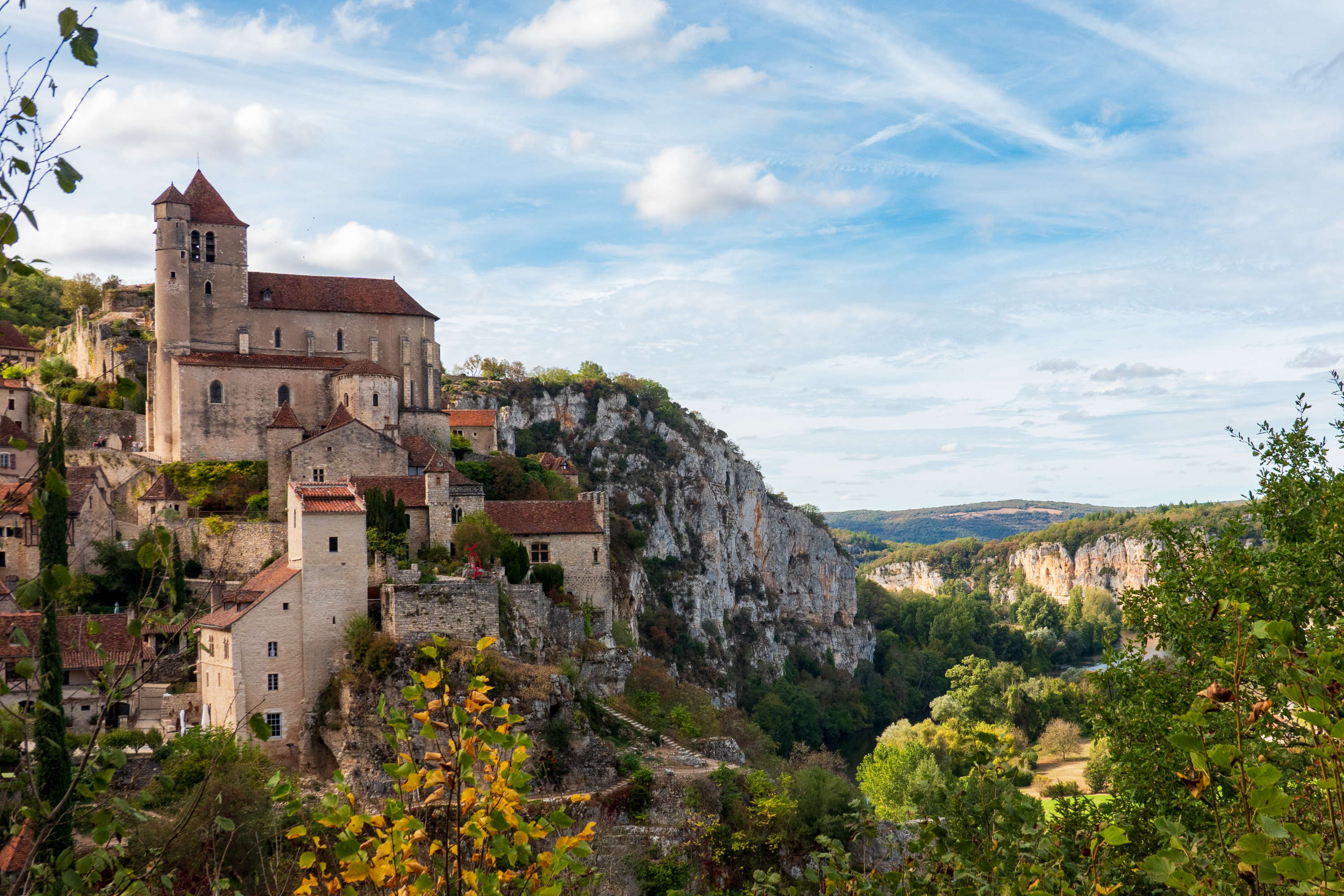
It was an amazing visit. We camped down by the river with a full view of the hilltop village above us.

We took the bikes, grateful for their electric feature, and climbed the steep winding road to the village. This village defined the term “vertical real estate” and the views from it were amazing. We visited the church of St Cyr and Ste Julitte, saints dating from the fourth century, and saw at least some of the 13 historic buildings there!
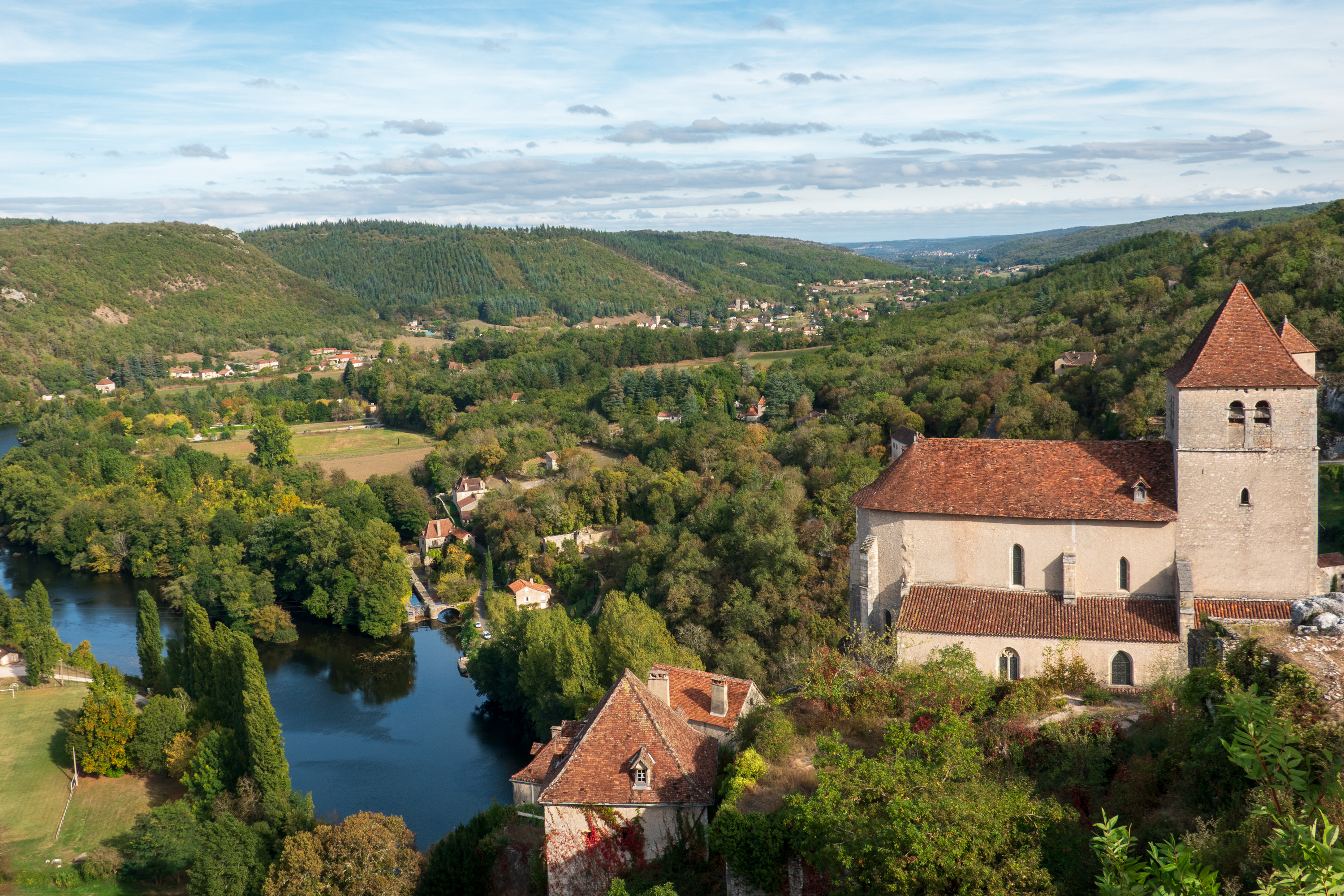

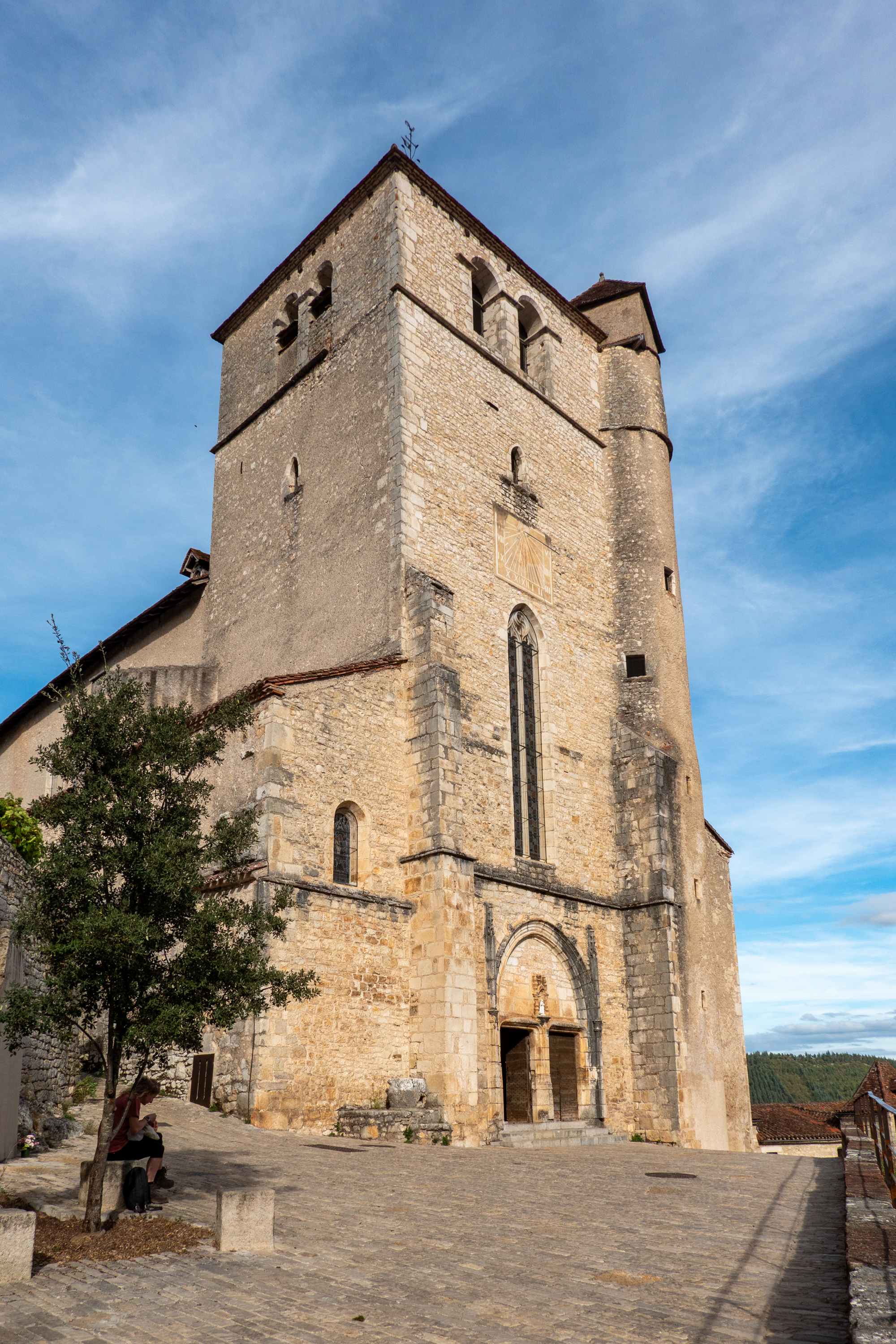


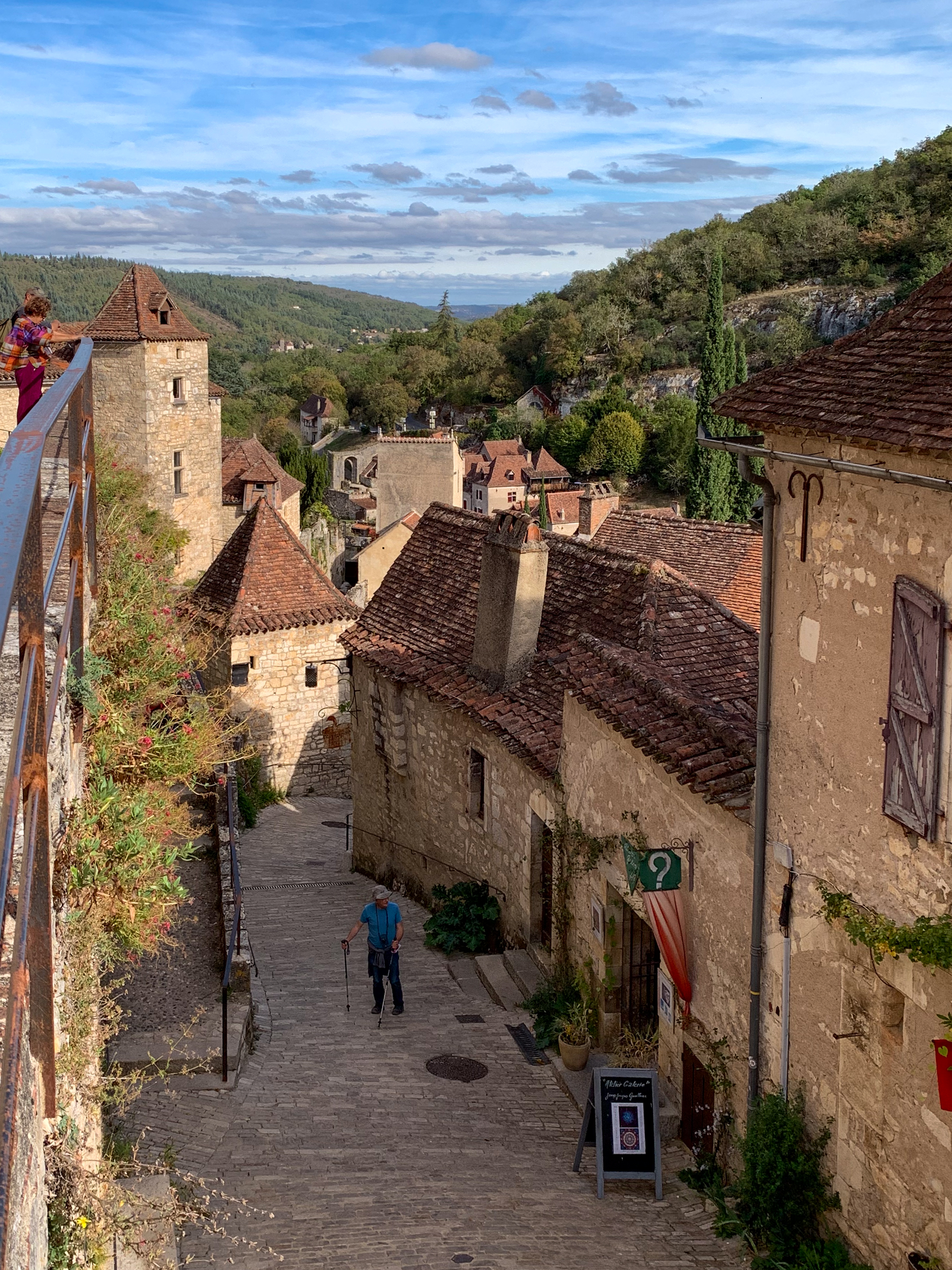
Unfortunately, a lot of the artisanal shops that Denise wanted to visit were closed. The shoulder season really closes up in October. But a cafe on the main square was open and we enjoyed a coffee and an ice-cream before heading back down the hill.
Both the road we took in and the road by which we left were amazing.
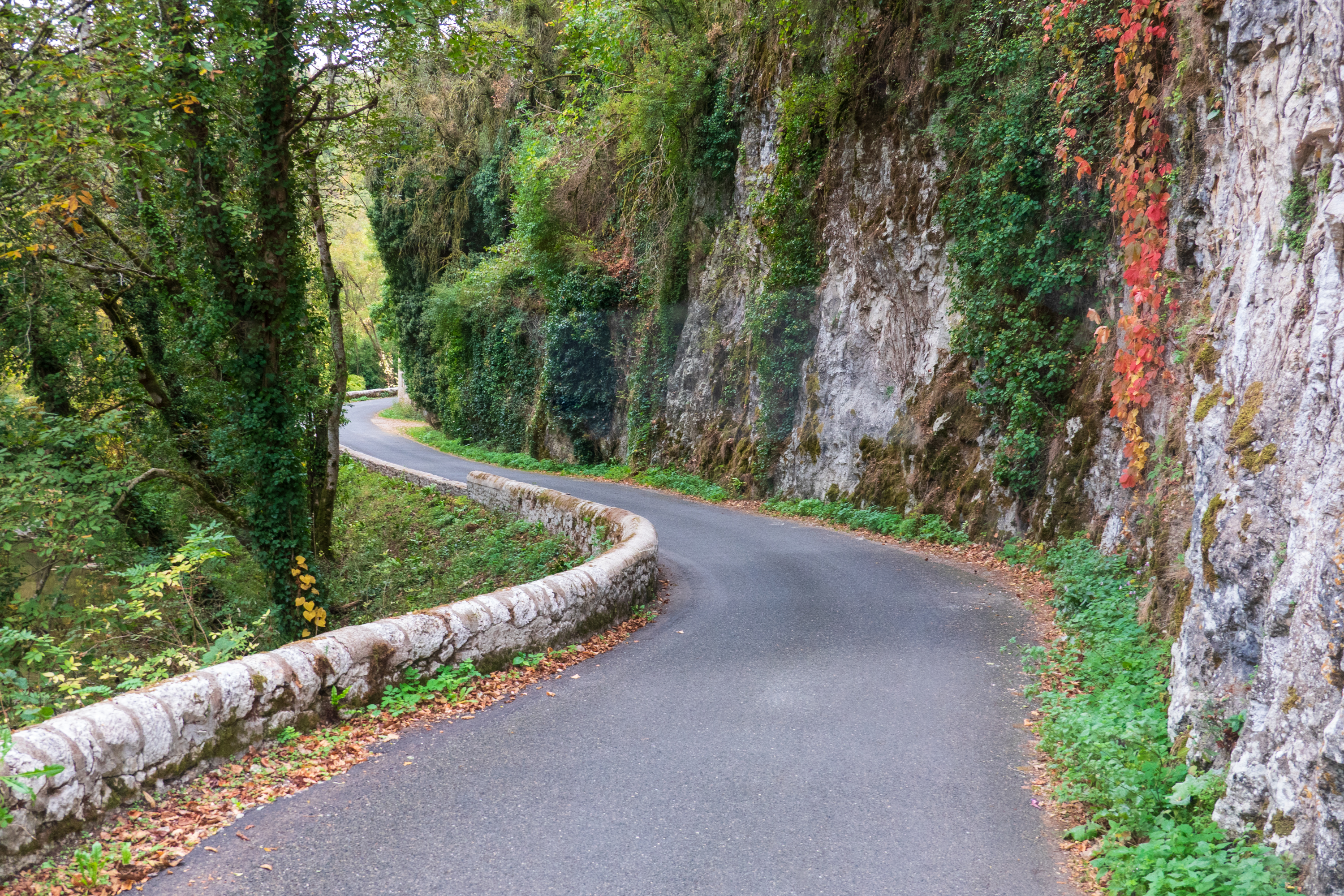
They were one lane, winding roads along the cliffs with incredible views and we came upon a couple of small villages which did not even show on the map.
For example, the village of Lugangnac had a full size old fashioned windmill with sails and a chapel beside the road with a plaque “For Bread and Prayer”.


We stopped at the next larger village Limogne en Quercy for coffee in the village square.
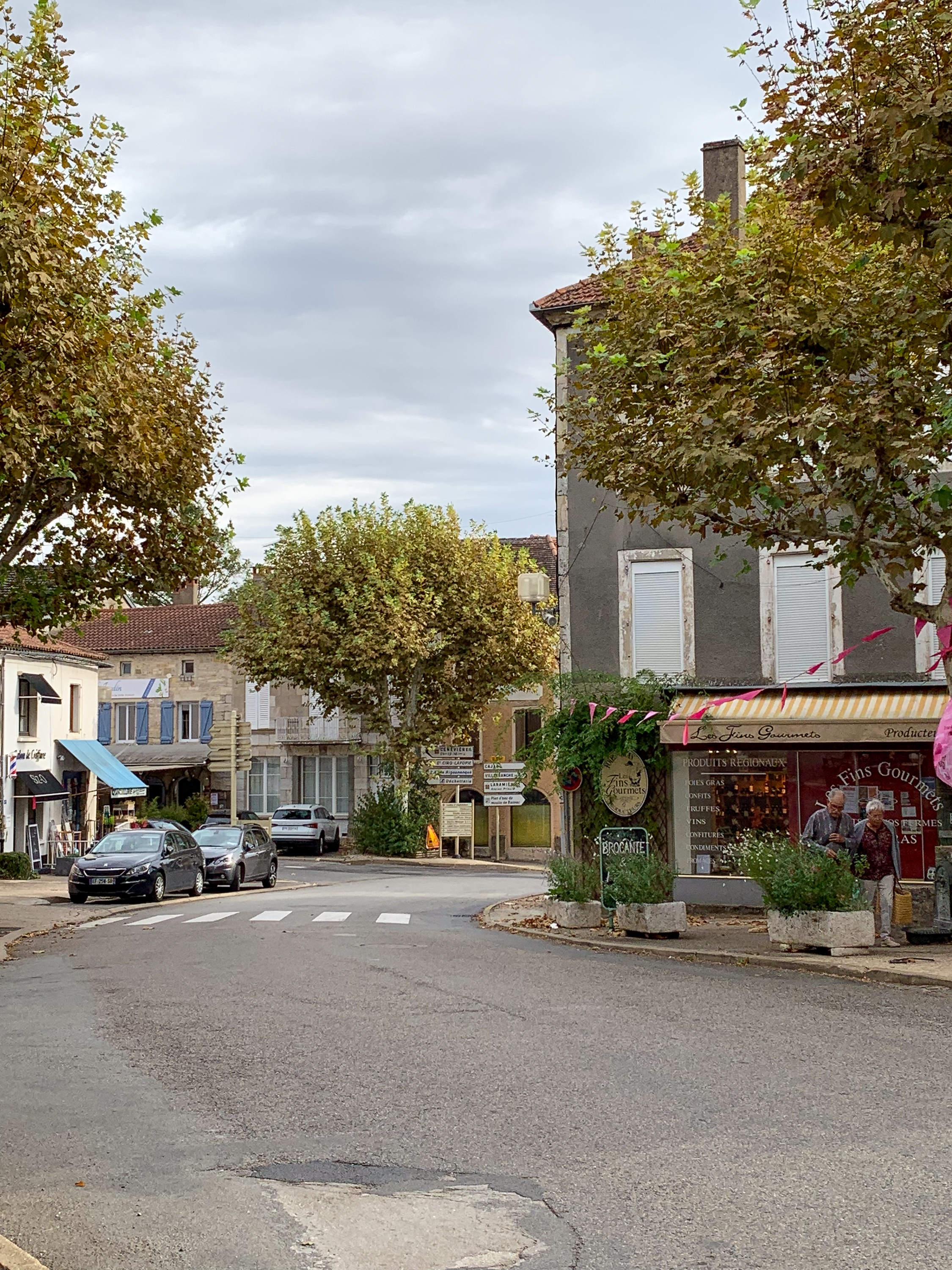
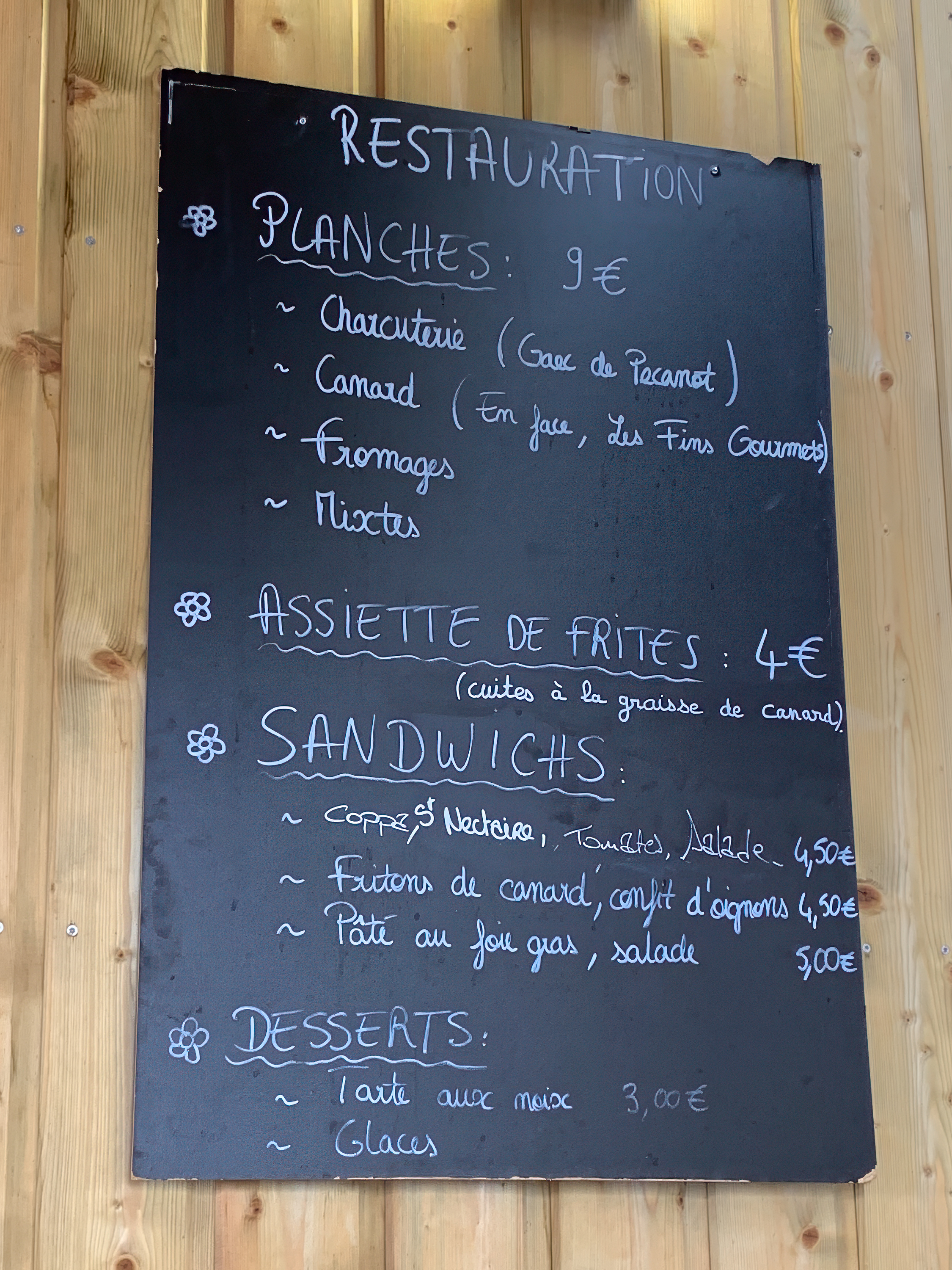

Denise went wandering while Fred ordered coffee and went to the boulangerie to acquire a treat to eat with it. He came back with apple goodies and an absolutely huge bread that we shall be eating for months! (He is no longer allowed into a boulangerie without adult supervision.)
Coffee and goodies accomplished, we pressed on towards Toulouse. From the Neolithic to the Space Age!
 DiploStrat