
As we headed east, we stopped in Gaillac to taste some more wine! We enjoyed a visit and overnight stay at a local family winery called Long Pech. (https://www.long-pech.fr/). We had quite the adventure getting to the vineyard. We were driving along a normal, if narrow “D” (Departmental, i.e. State) road when Miss Neverlost, our GPS, suddenly directed us off to the right. After a few kilometers of driving on single track though what felt like people’s backyards, we finally reached the winery.
We had a lovely tasting with the lady winemaker and spent the night on a hill with a view over the vineyards as far as the eye could see.

But it started raining in the night. We tracked an amazing amount of the resulting mud into the front of the cab. Fred found the mud so slick that his foot kept threatening to slide off of the clutch pedal – no fun.
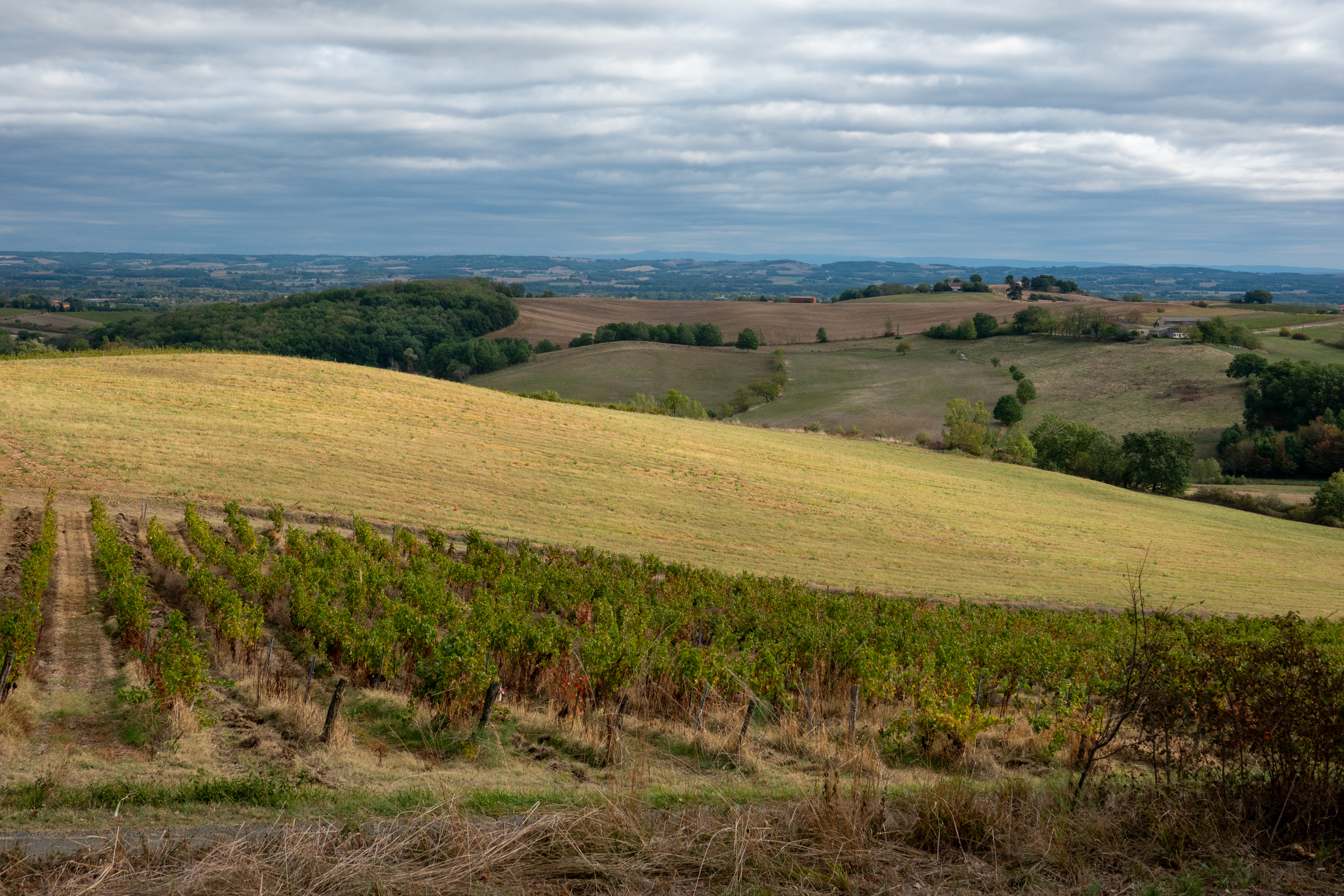
This time we ignored the GPS and took the main road. If there was a restriction it completely escaped the notice of the steady stream of huge tractor trailers that was climbing up the same road. Was a bit of a white knuckle drive.
This is not the first time that the GPS has steered us off of main roads, but we are hesitant to change our weight/size dimensions as we don’t want to get trapped on restricted roads. We could probably re-list ourselves as 7,5 tonnes, as the breakpoints appear to be 3,5 tonnes and 7,5 tonnes. No easy answer.
We headed into the aire in Gaillac. A former commercial campground, it is down a narrow descending trail. (Of course, we met a camper coming up.) The spaces were bound with hedges and most had picnic shelters. As the weather brightened a bit, we got the bikes out and went exploring.
The first stop was the Abbey of Saint Michael, a huge red brick complex by the River Tarn.
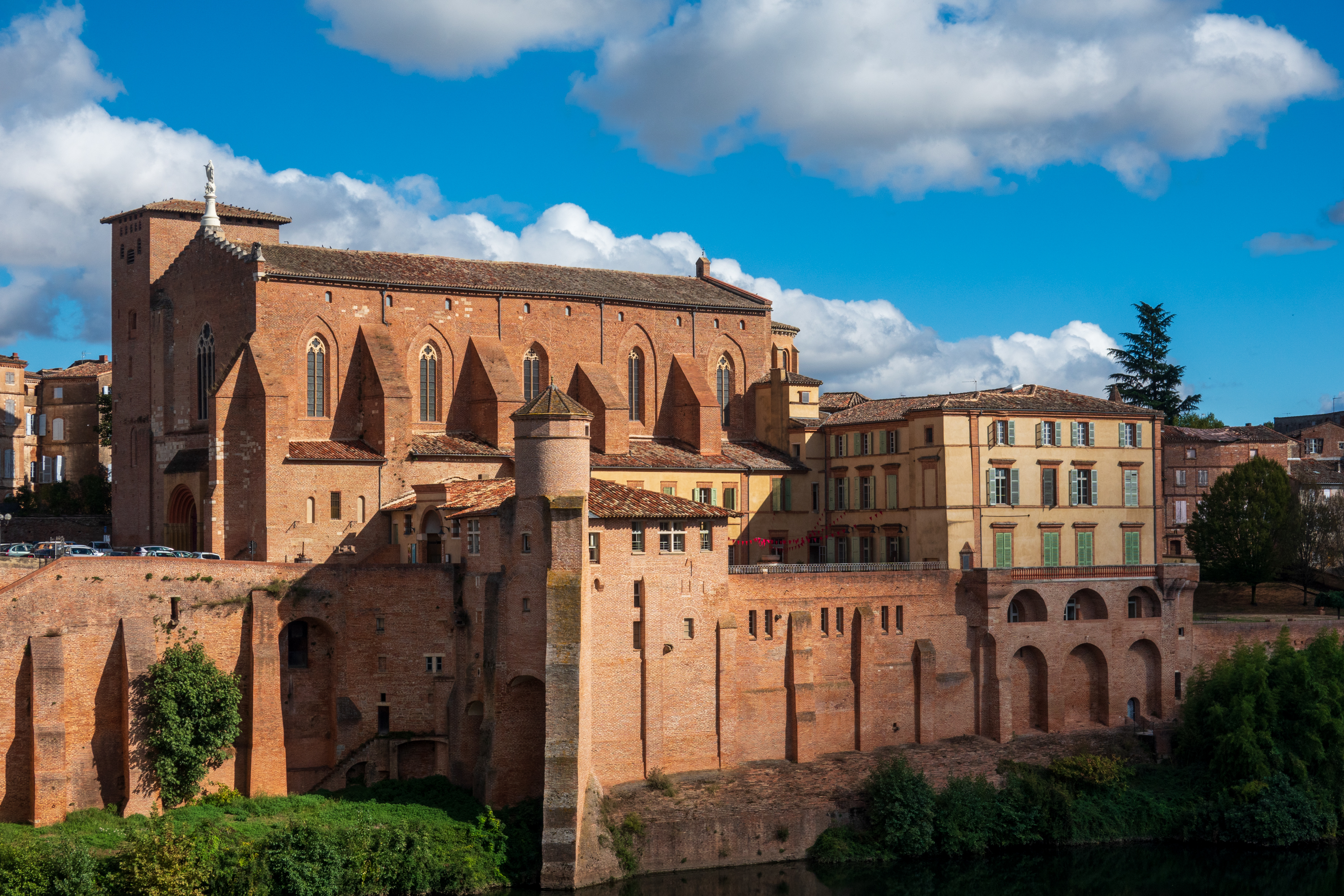
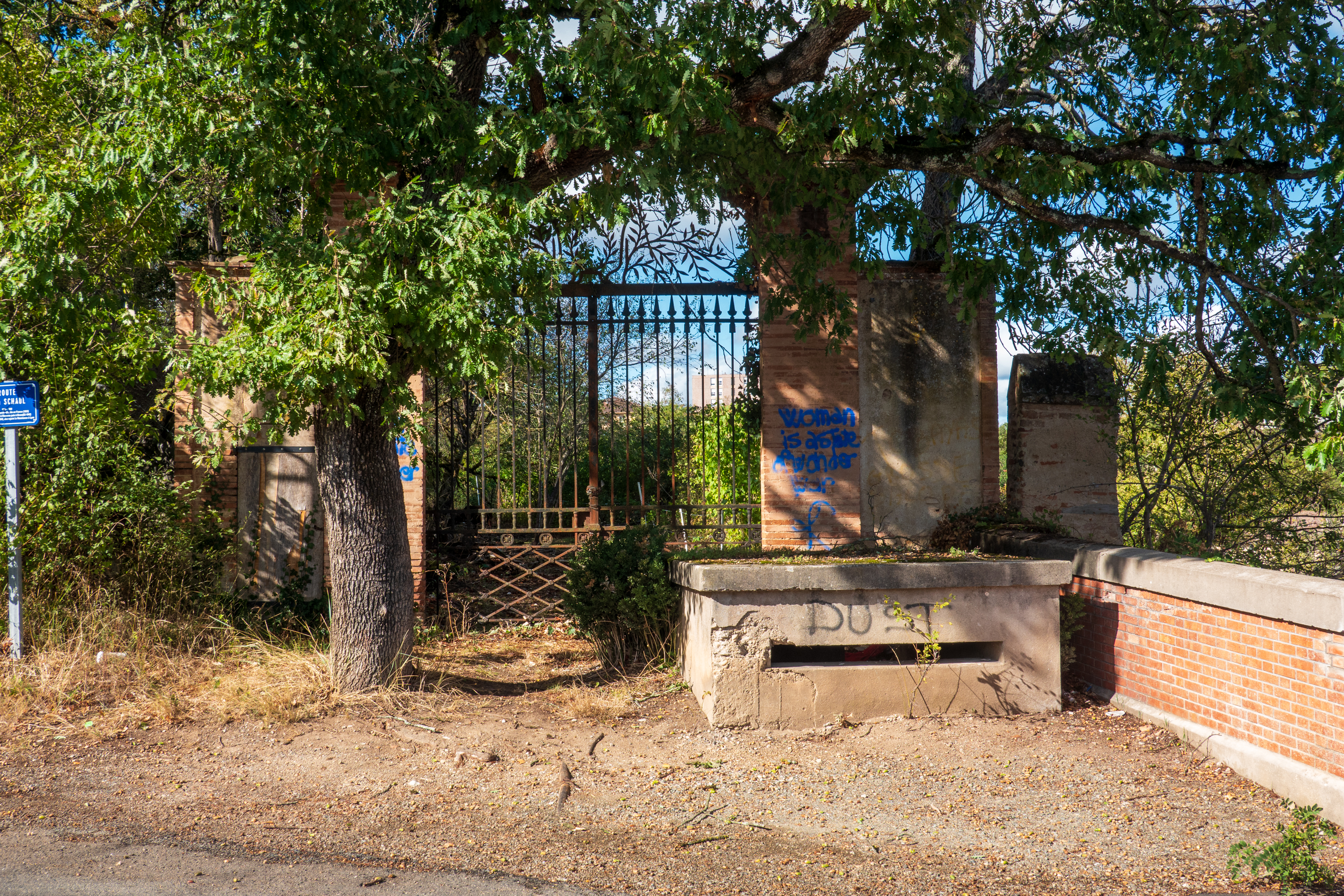
We wanted to see the museum but it was unfortunately closed and we had enough wine that we did not need to buy more from the Maison de Vin! We continued up to the main square and had coffee and then visited the church of Saint-Pierre.
This church was first founded in 972 and it was quite fascinating to see the old color on the stonework, including trompe d’oeil, especially on the pillars. Some of the paint was flaking off and some of the stone work was crumbling but it was a magnificent church and obviously still very much in use.


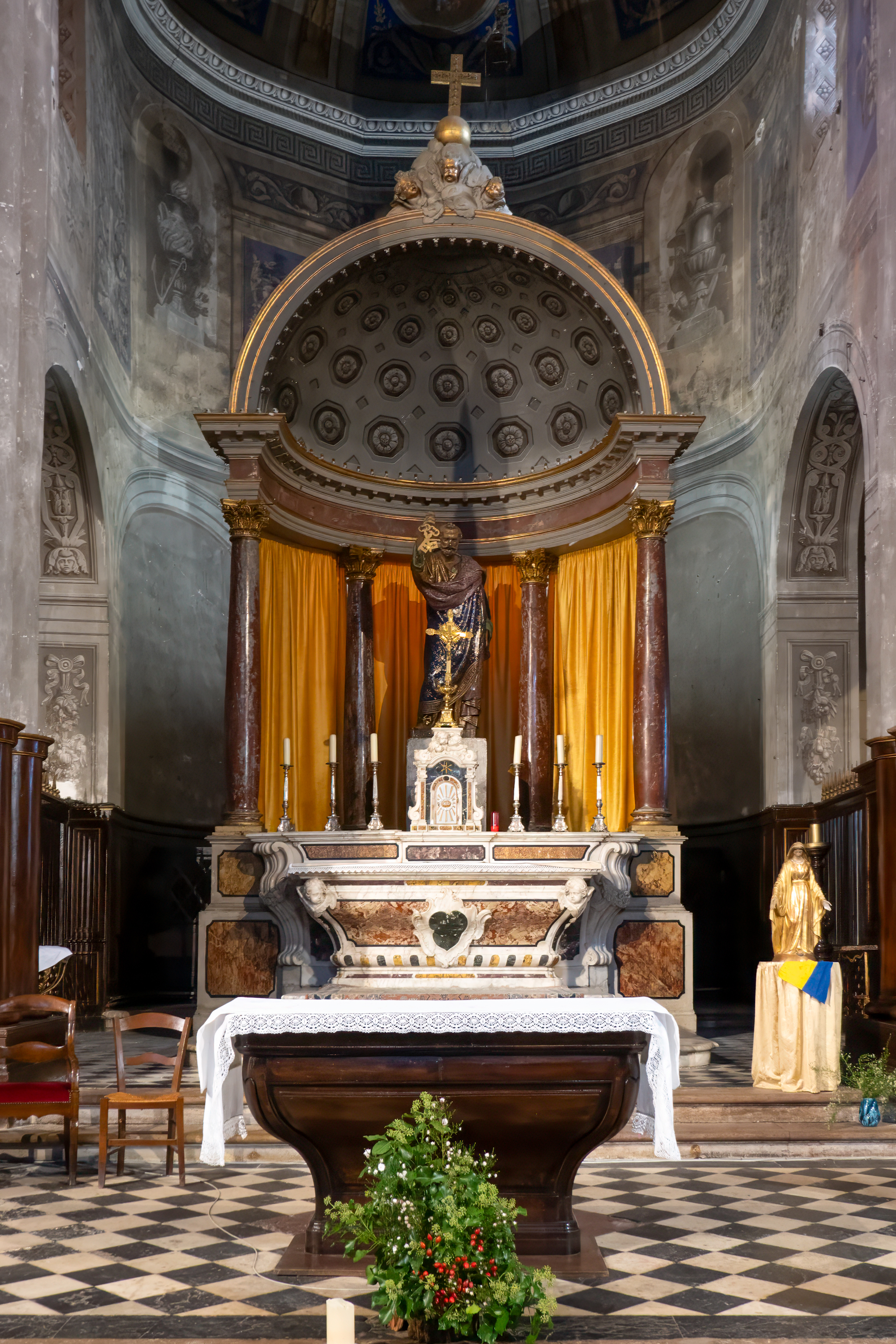
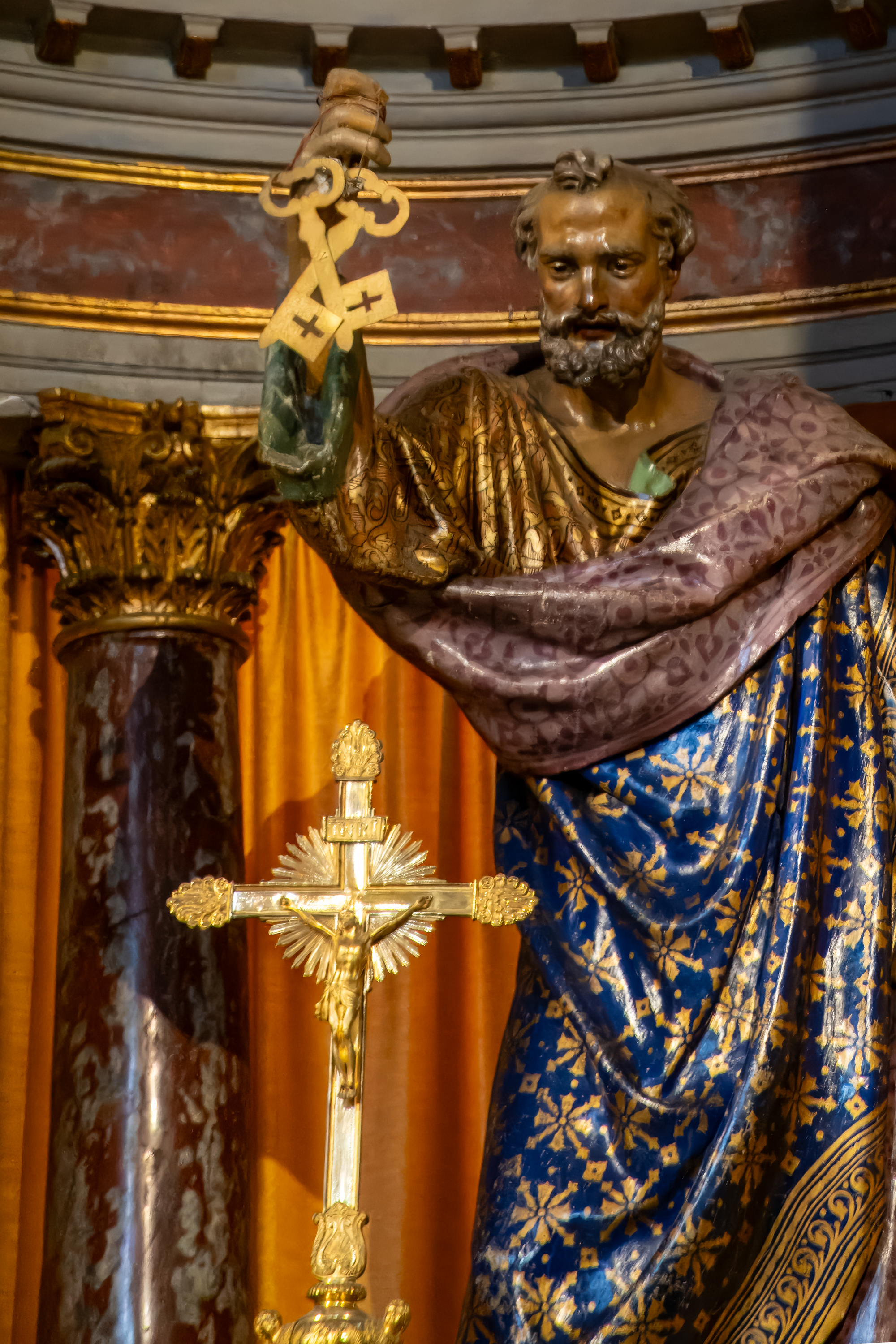
Unlike many ancient churches, Sainte-Pierre is not on an open square, but is completely surrounded by other buildings, even to the front.
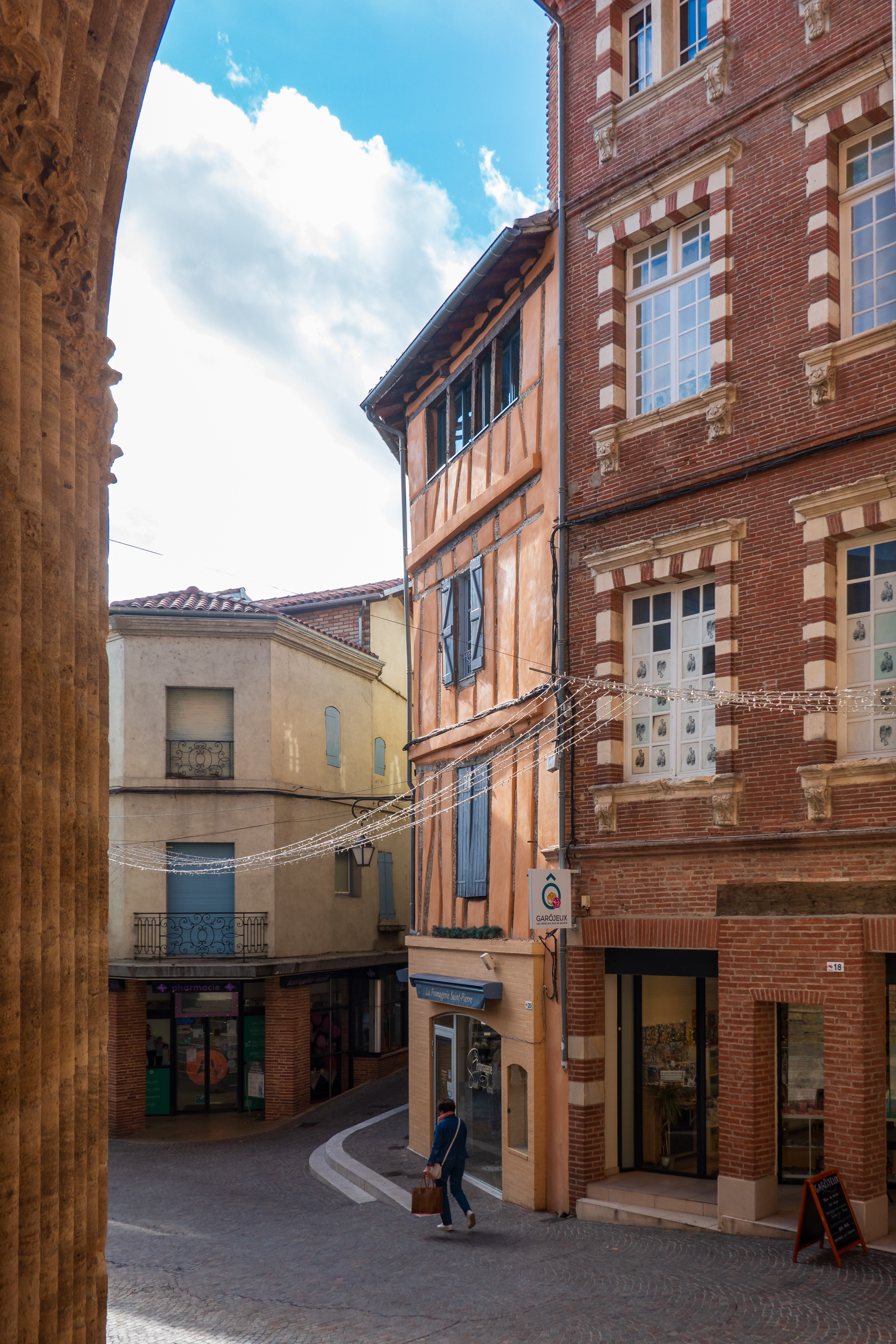

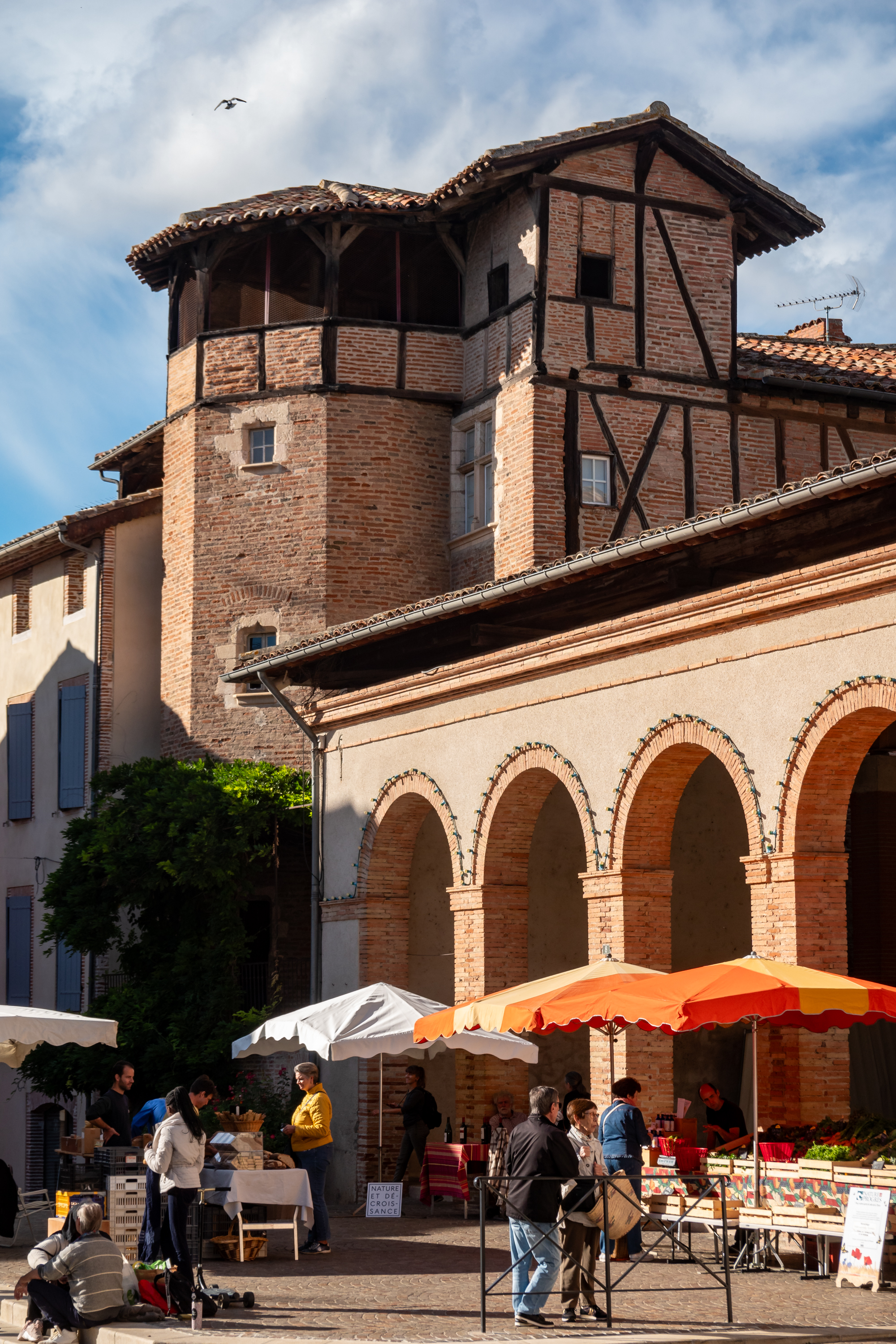
From Gaillac we moved on to Albi, famous as the focus of the crusade against the Cathars. Catharism is a fascinating subject: https://en.wikipedia.org/wiki/Catharism. Fred remembers that when he was in college, there were posters up inviting people to discussions of Gnosticism, so at least some elements are still around.
The aire at Albi was pleasant and we could see the famous red brick church on the horizon. It was raining, again, so we settled in.
The next morning proved sunny so the bikes came out and we headed across the Vieux Pont (with some difficulty as it is under repair!).
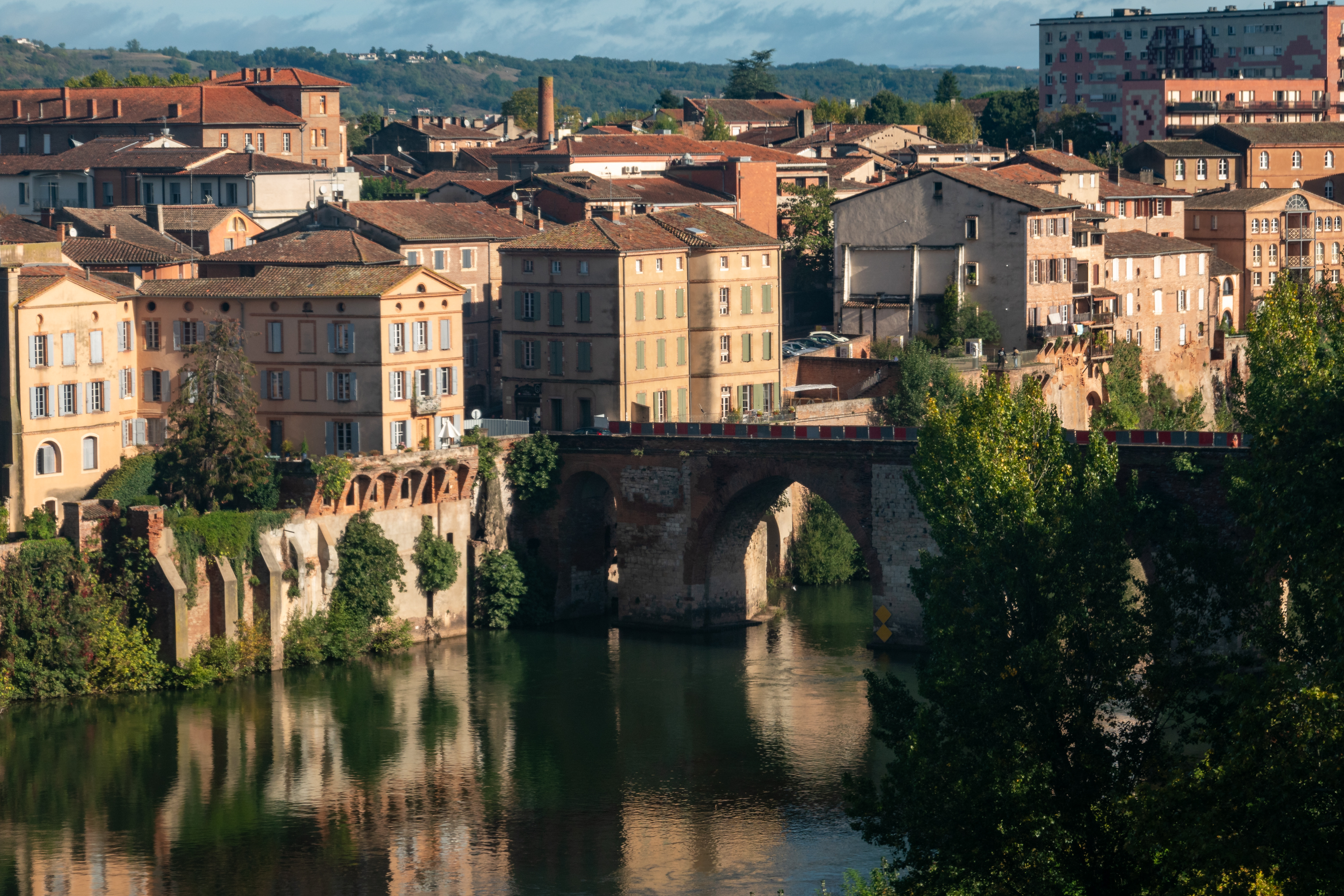
We started our visit at the Toulouse Lautrec Museum which is located in the old bishop’s Palace, an amazing building. The grandeur of it reminded us of visits to the Prinz-Bishoff’s Palace in Wurzburg, Germany.

The art of Henri de Toulouse Lautrec on display ran the gamut from his early work, often of animals and especially horses, to his later, more cartoonish work and posters. A bit like Pablo Picasso, Toulouse-Lautrac was an accomplished classical painter, but only achieved fame when he developed a new, more unique style, even if that style was much less technically accomplished. We did not try to photograph the actual art, but focussed on the amazing building.

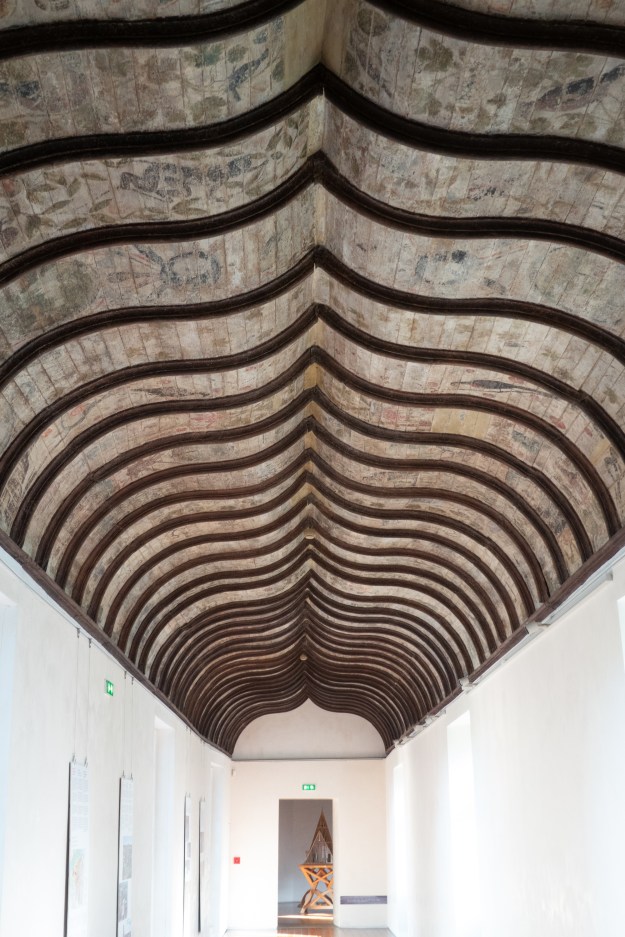
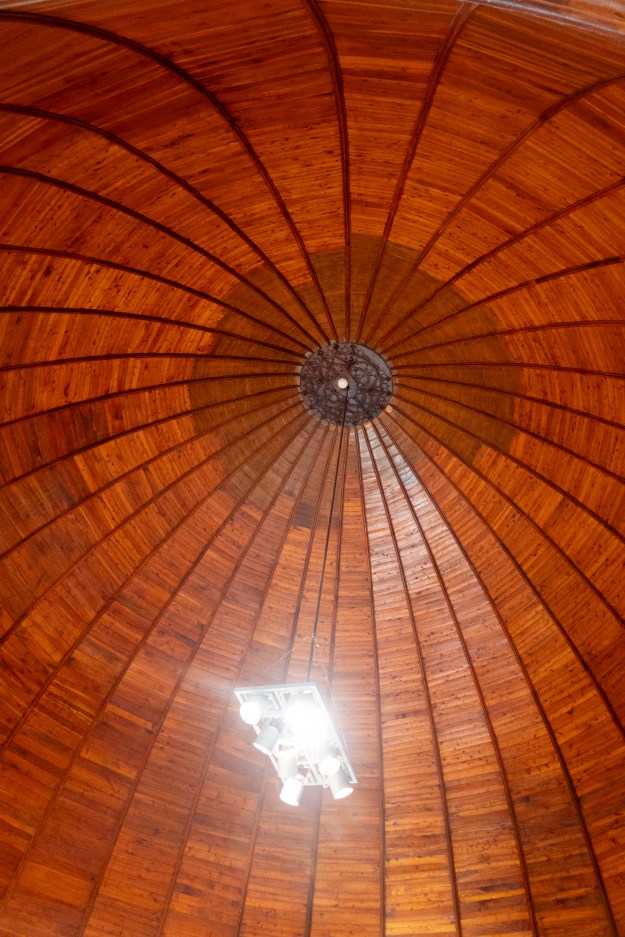

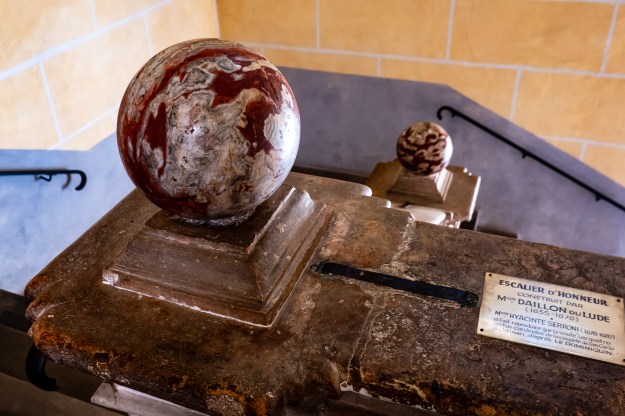
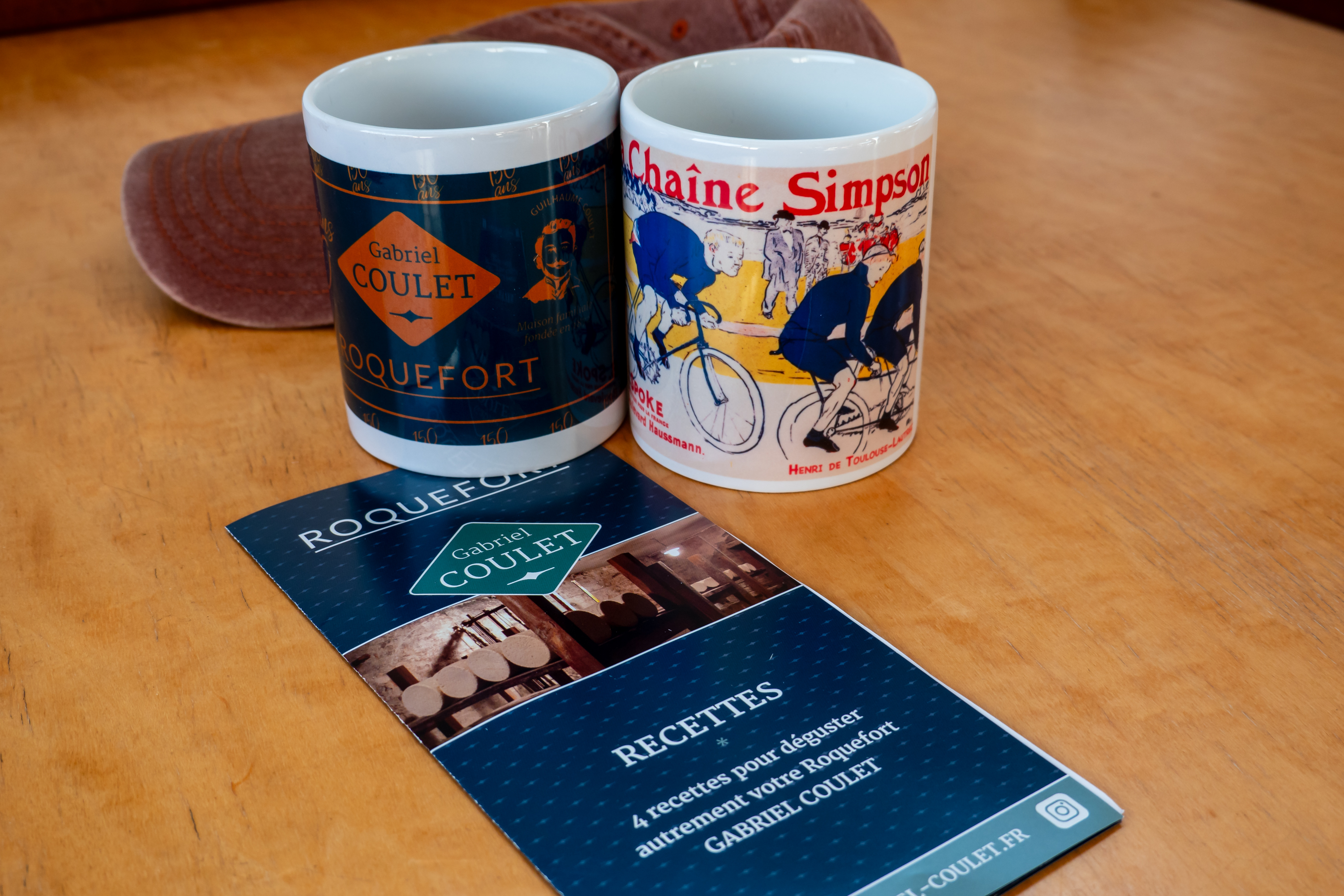
Fred, never a Toulouse-Lautrec fan, bought a mug in the gift shop. The mug was decorated with a bicycle chain poster and the bicycle motif made it acceptable!
Albi is, as you might expect, almost achingly pretty.

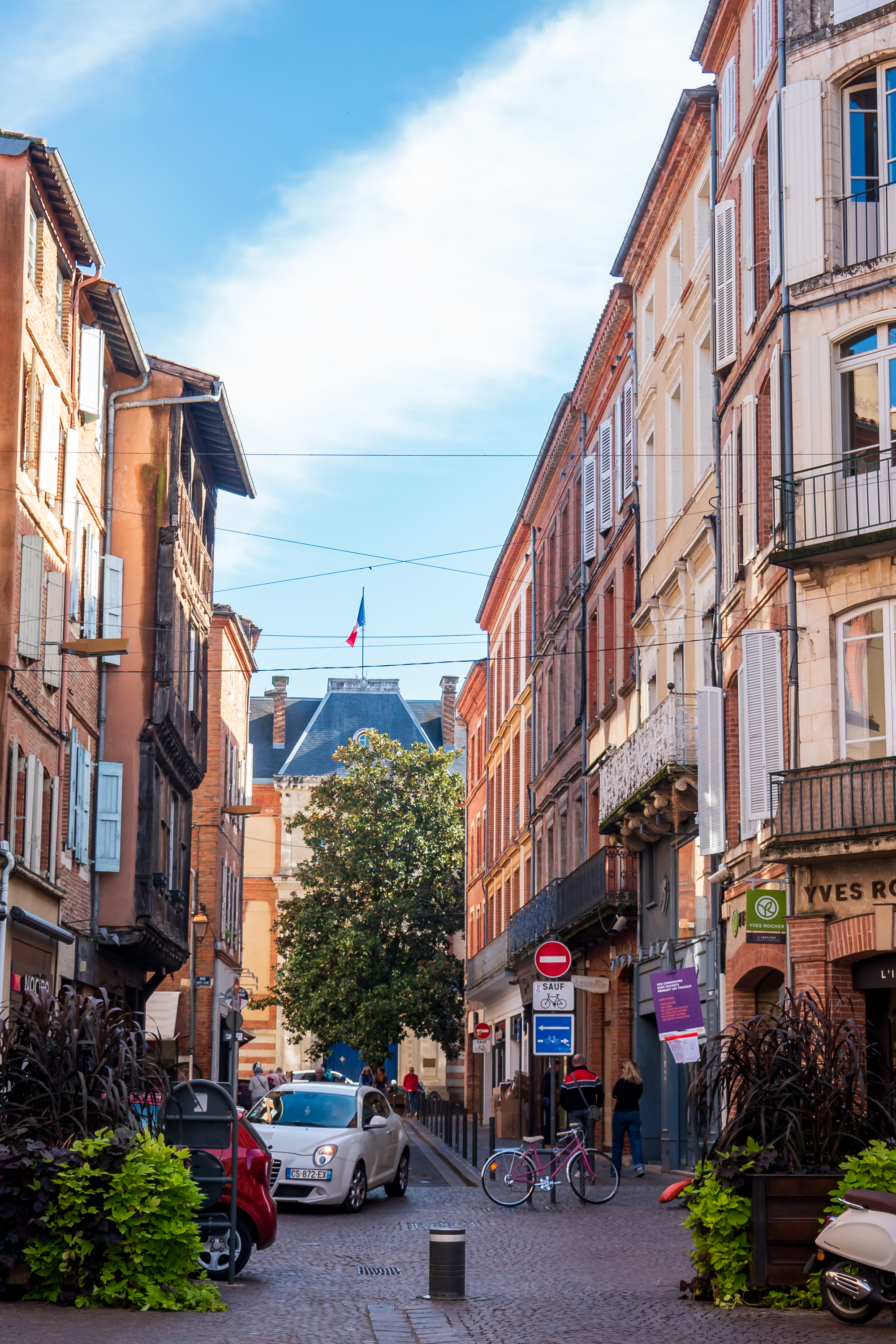

After a great lunch (cassoulet again!) on the square, we headed to the Cathedral of Sainte Cecilia, the huge red brick cathedral.
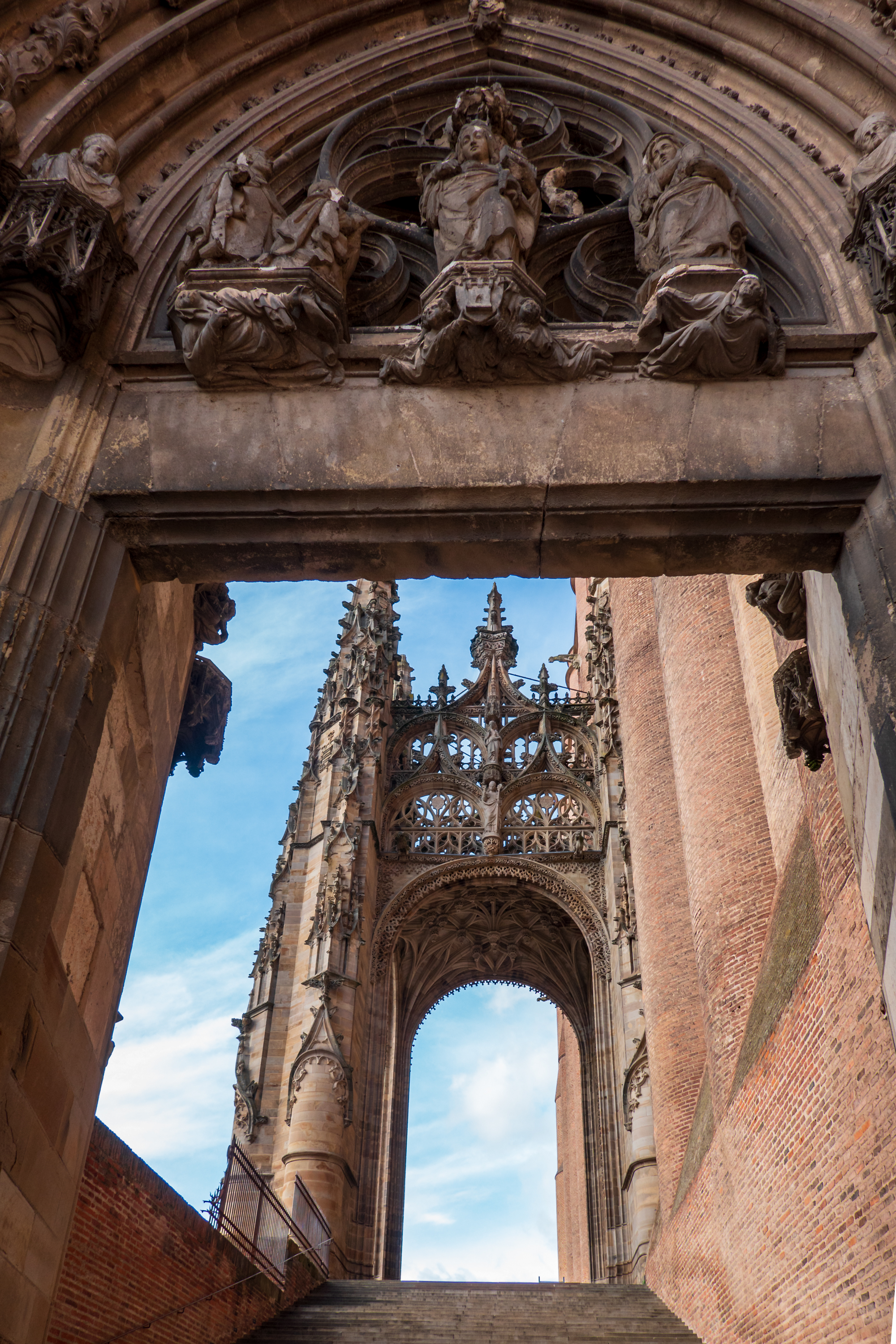

The red brick, as opposed to the white limestone of more northern cathedrals, gives the building a different aspect. There are about 29 different chapels, each one dedicated to a different saint, and each one full of ornate and intricate stonework and frescoes and paintings, describing the life of the respective saint.
The curved sections of wall replace the classic flying buttresses of a gothic cathedral. Folks knew their materials!
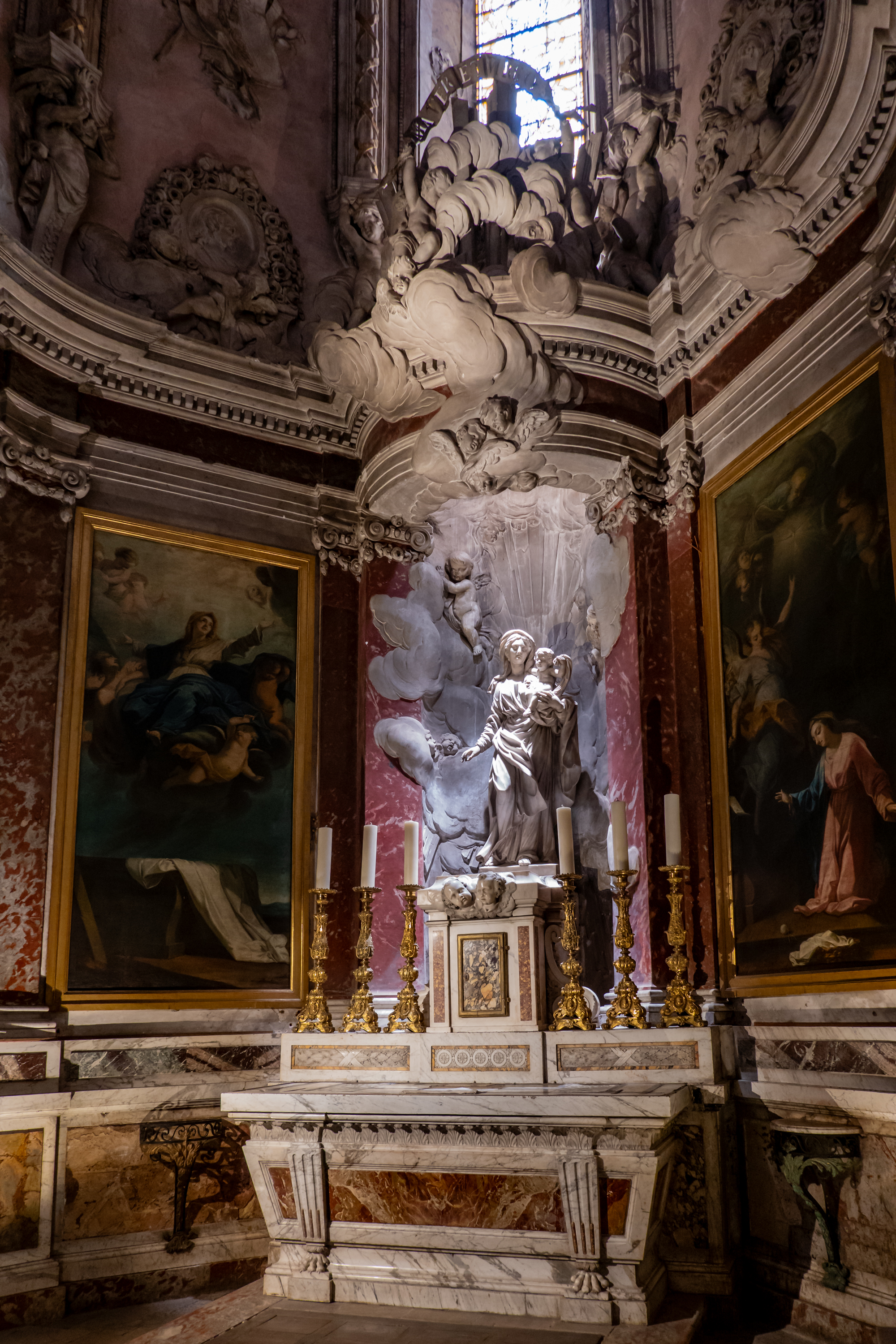
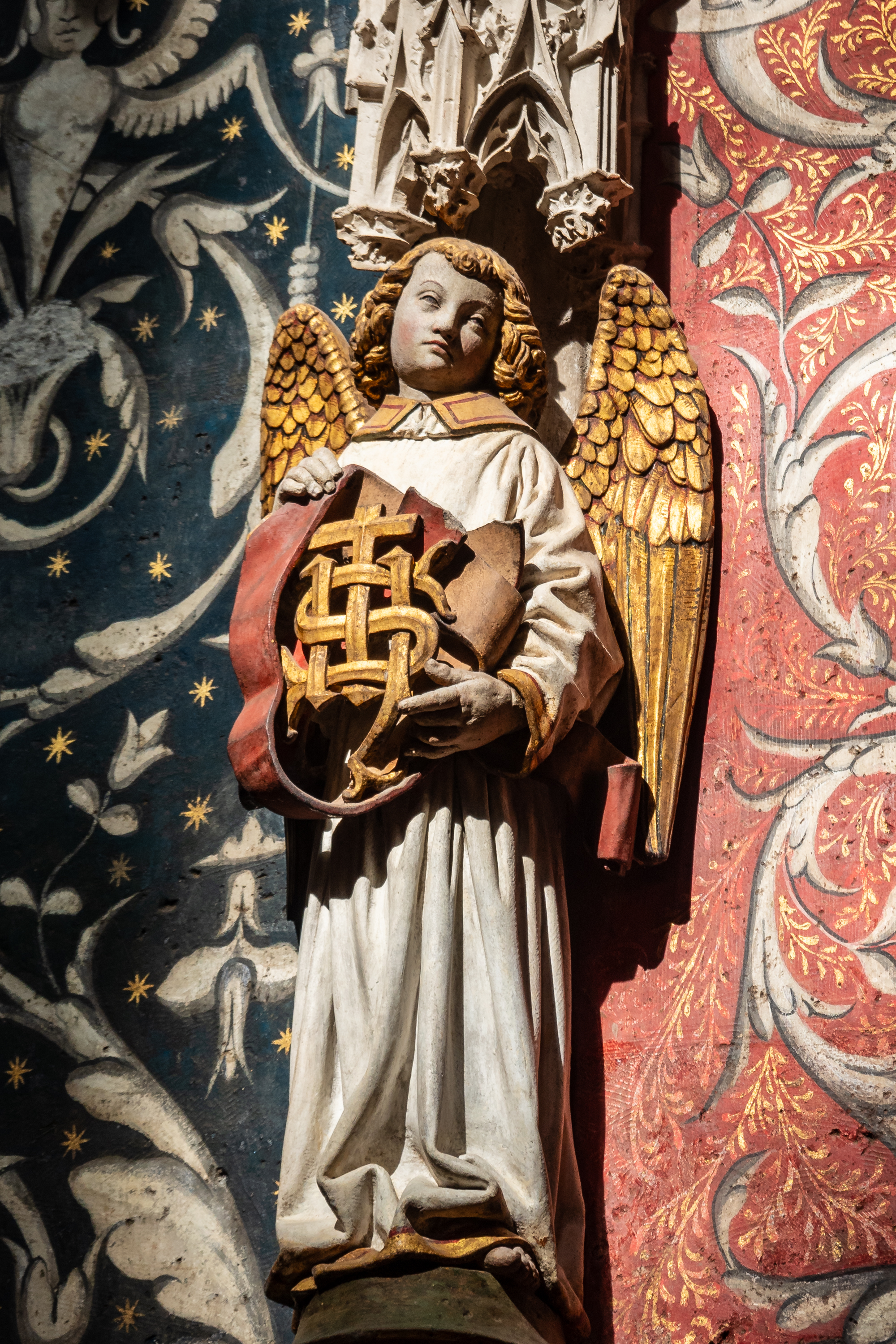

If you make a payment, you can see the inner altar and the Cathedral treasures. Naturally, we paid up and climbed the narrow stairs to the exhibit. These included gold and silver plates and cups, art work, exquisite decorated manuscripts, and gruesome wonders such reliquary skulls.
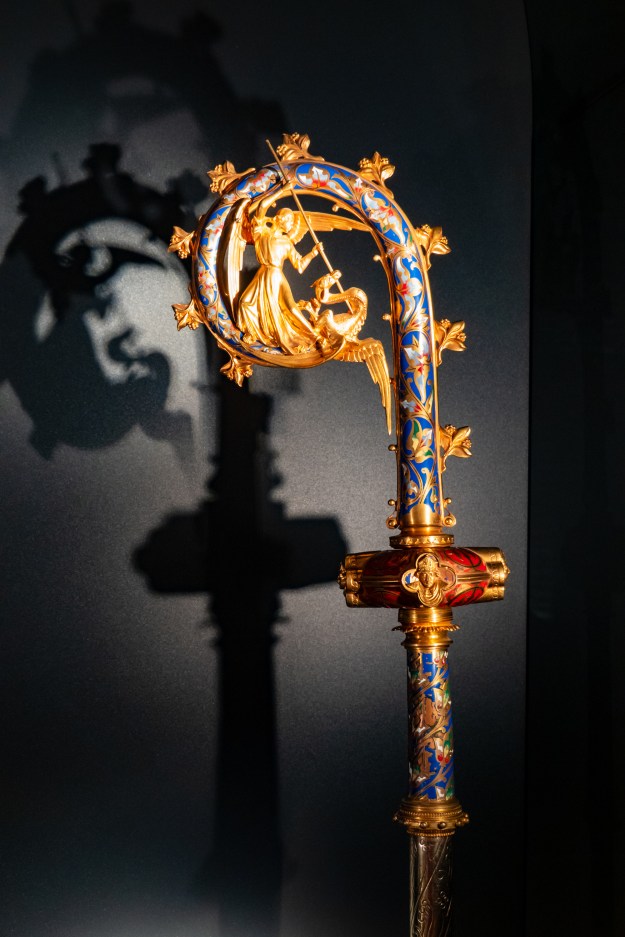
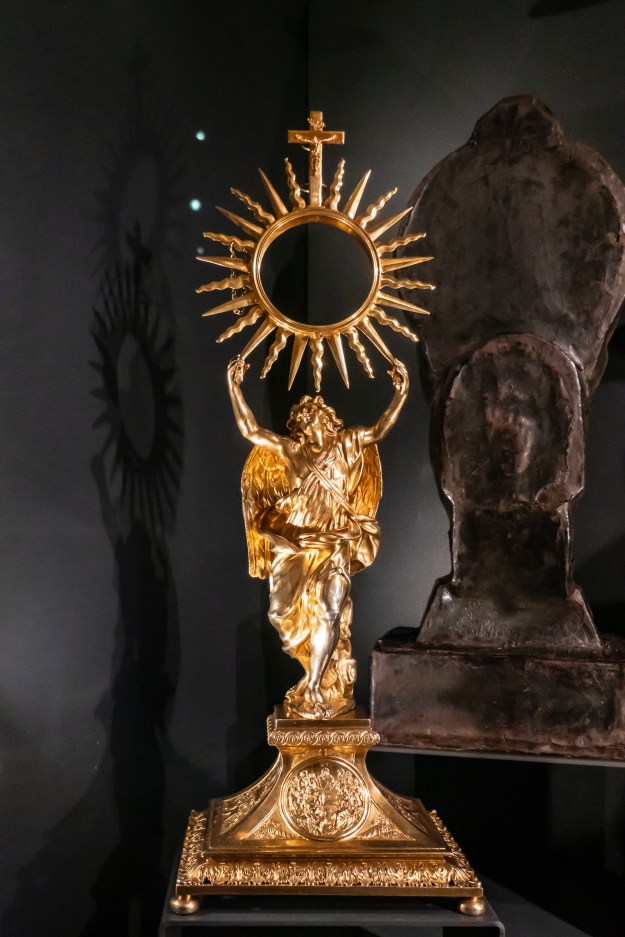
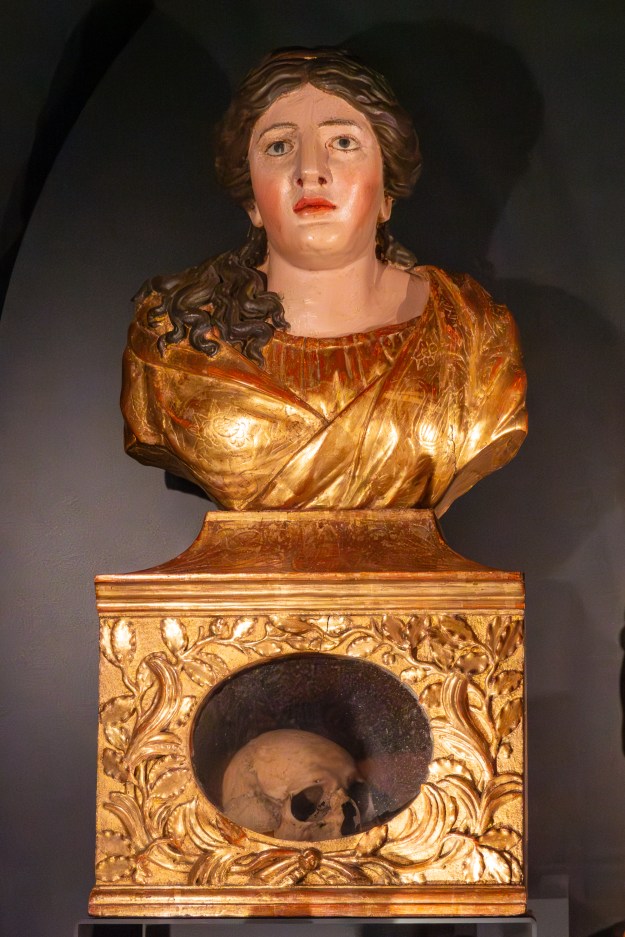


The Basilica of Saint Cecilia is an amazing church, with a long history: https://en.wikipedia.org/wiki/Albi_Cathedral Fittingly, Saint Cecilia is a patroness of musicians. (https://en.wikipedia.org/wiki/Saint_Cecilia)

Fred then decided to get a haircut so off he went again on his bike. He got rather scalped so he is lacking hair now. (Hopefully) it will grow back!
 DiploStrat