
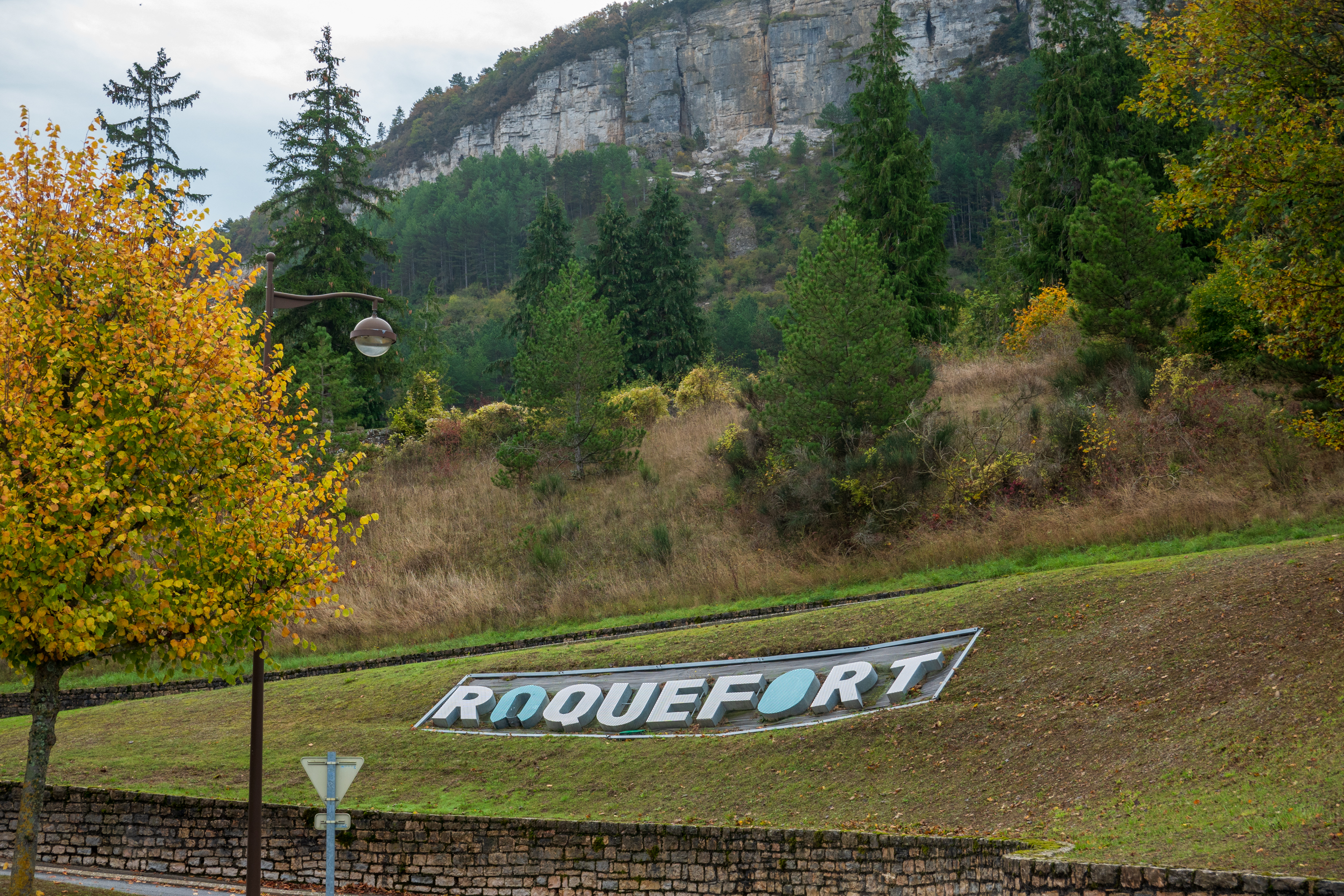
Denise had spent time on an exchange with a French family in this part of France in 1964, so for old times sake, we headed to Roquefort to see the caves and buy some cheese. It was a beautiful dry morning (finally) and we enjoyed the beautiful views we saw, over the valley as we drove the country roads towards Roquefort. As it was Saturday, the town was a lot quieter than we had expected but we parked in the free Aire and then climbed up the steep street towards the top. The place was completely empty and appeared very closed, but then we came upon the Maison Gabriel Coulet, founded in 1872, which was open. We were able to descend to their cave, where a film described the founding of the Maison and the making of Roquefort cheese. We then went into the storage cave where we could see wheels of cheese ageing both in the “visitor” section and in the real cave, which was separated from visitors. The magic of Roquefort cheese is the natural mold spores found in the “fleurine” caves. Fleurines are natural fissures in the cliff while allow air flow into the caves.

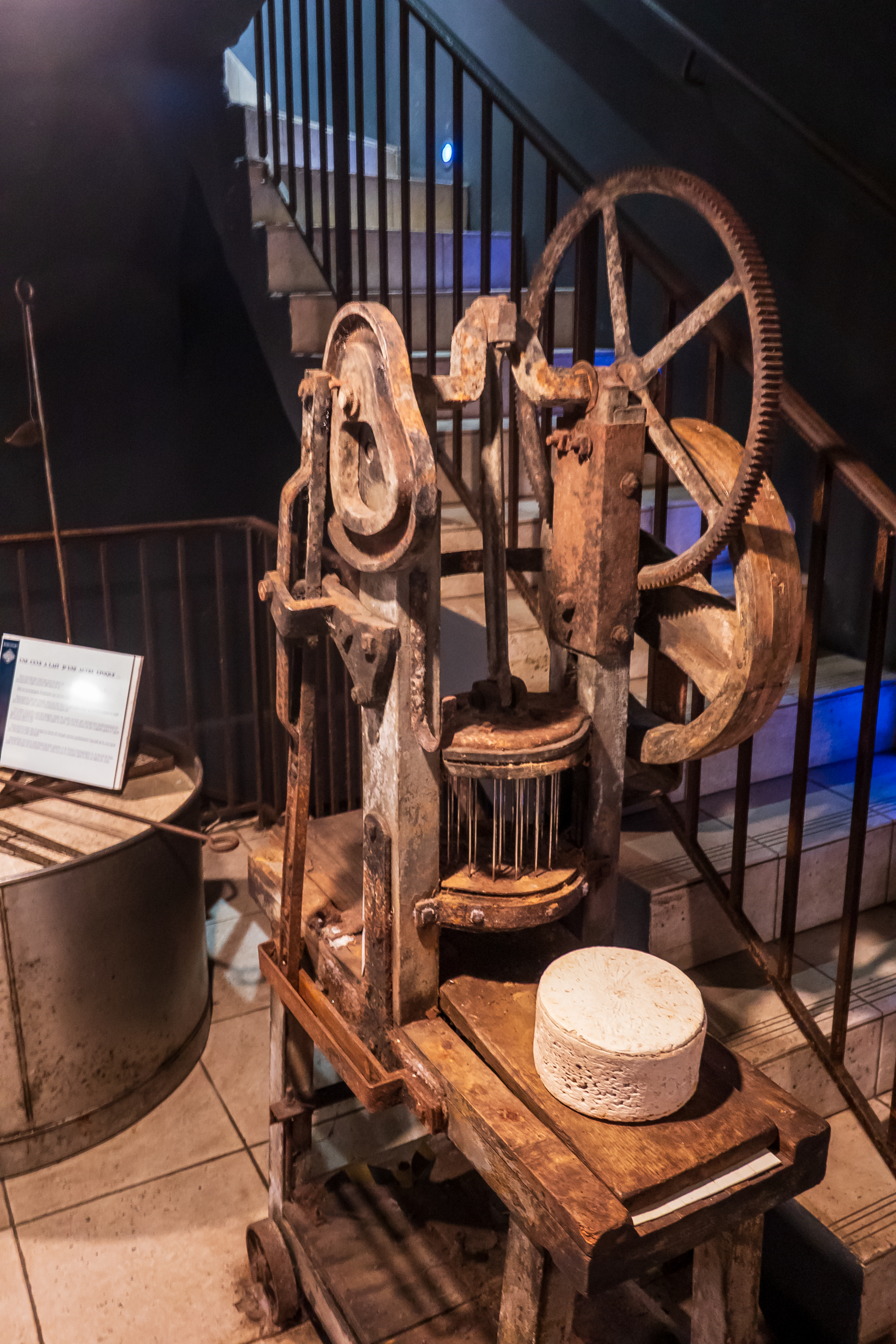


We then, of course, bought our cheese, a sampler of each of their four types of cheese.. This was a much smaller Maison than the enormous Societé brand which we discovered further up the street and which was much larger. But we enjoyed the intimacy of the smaller group. More than you ever wanted to know about Roquefort cheese can be found here: https://en.wikipedia.org/wiki/Roquefort


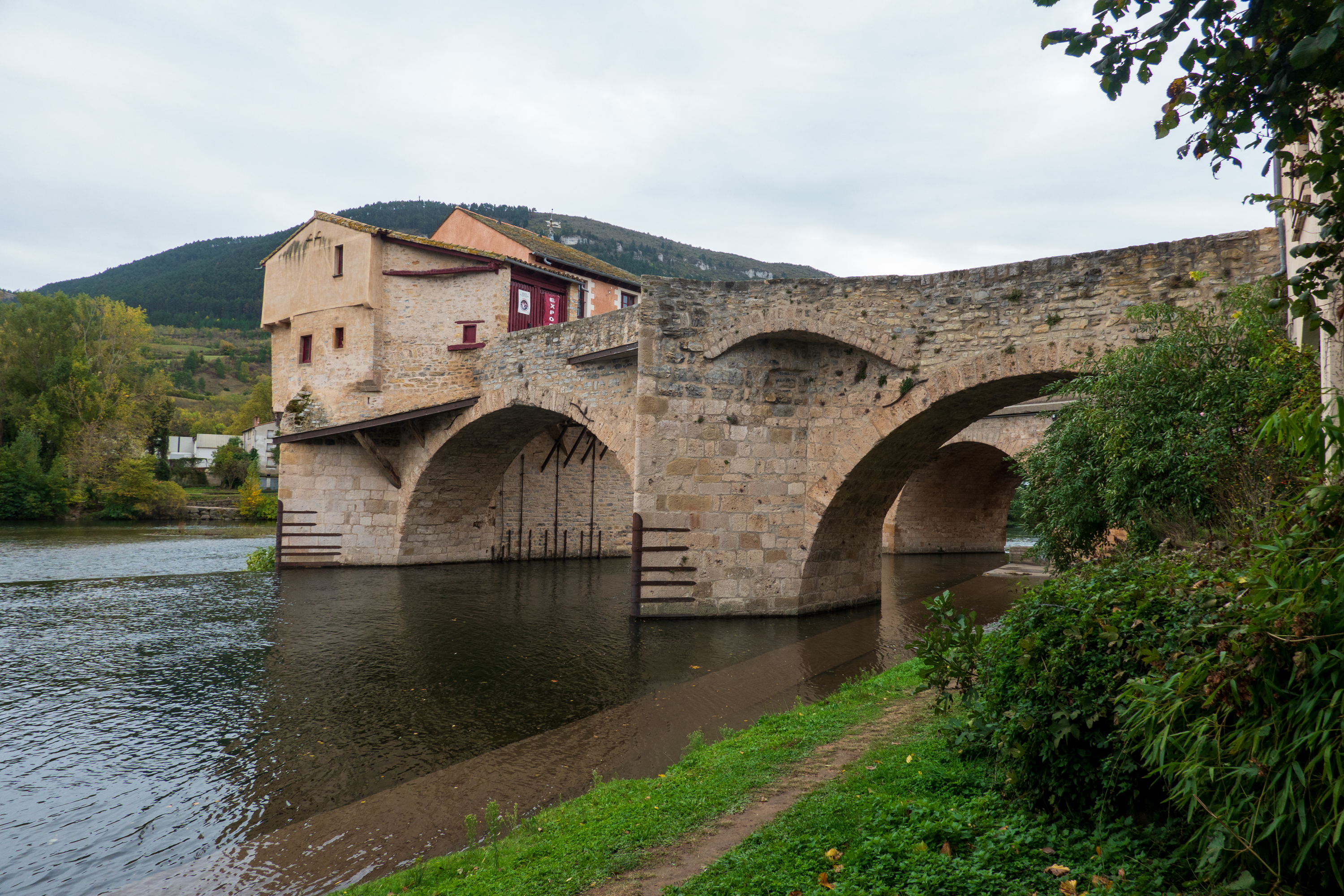
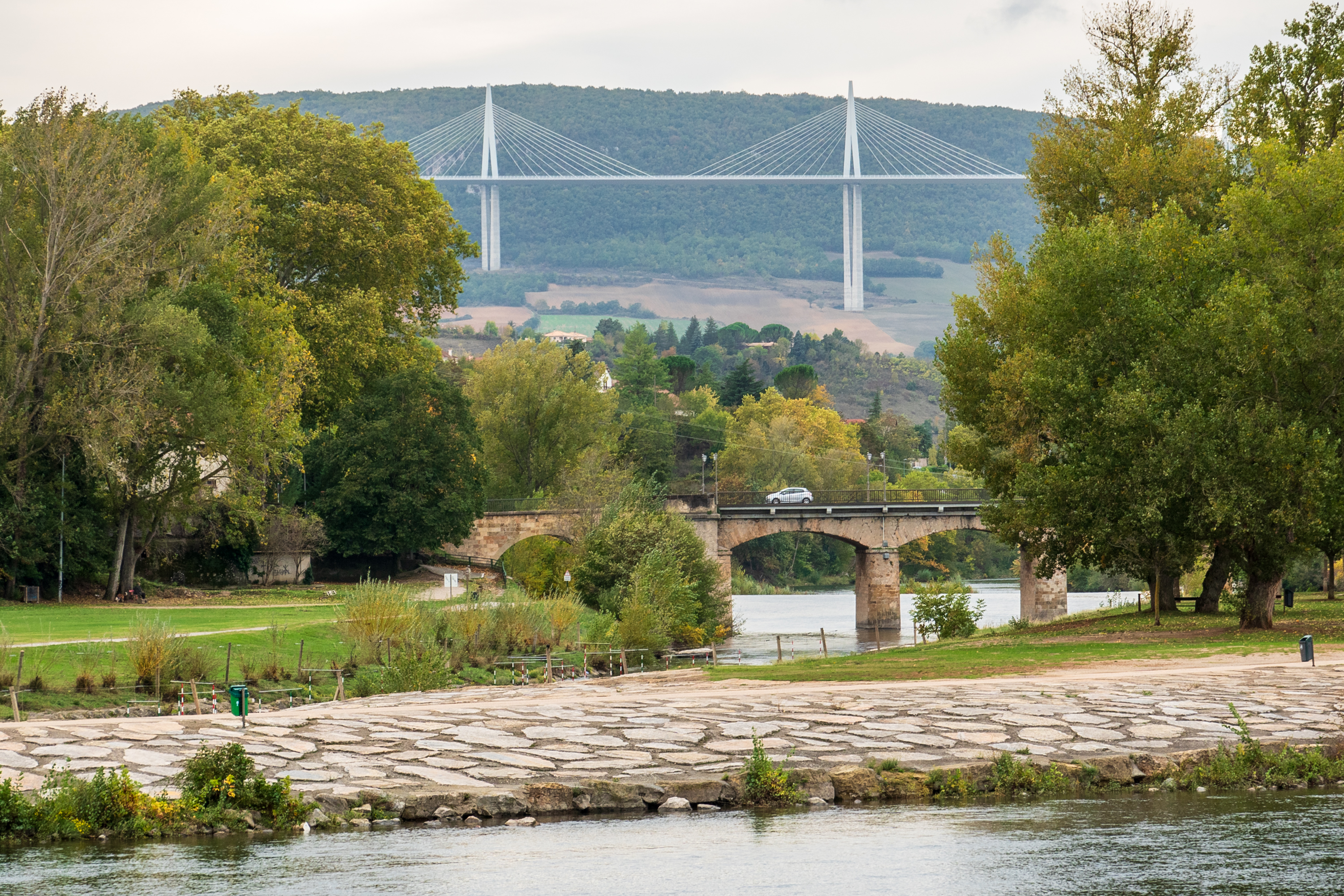
The following day, we headed to Millau, entirely for sentimental reasons – Denise stayed there in 1964. Again the views on the route were spectacular. We found the Aire and set out on the bikes to visit the “Vieux Pont” (Old Bridge) and “Vieux Moulin” (Old Mill) which sat upon it.

Millau is some 3,000 years old. In Roman times it was a center of earthen ware and in the 19th century it was famous for gloves. Interestingly it was an English town during the Hundred Years War. (Much further south than Fred would have expected.) The old bridge dates from the middle ages when it boasted seventeen arches and three towers. Neglect and floods have reduced it to two arches and one tower/mill – an art museum.

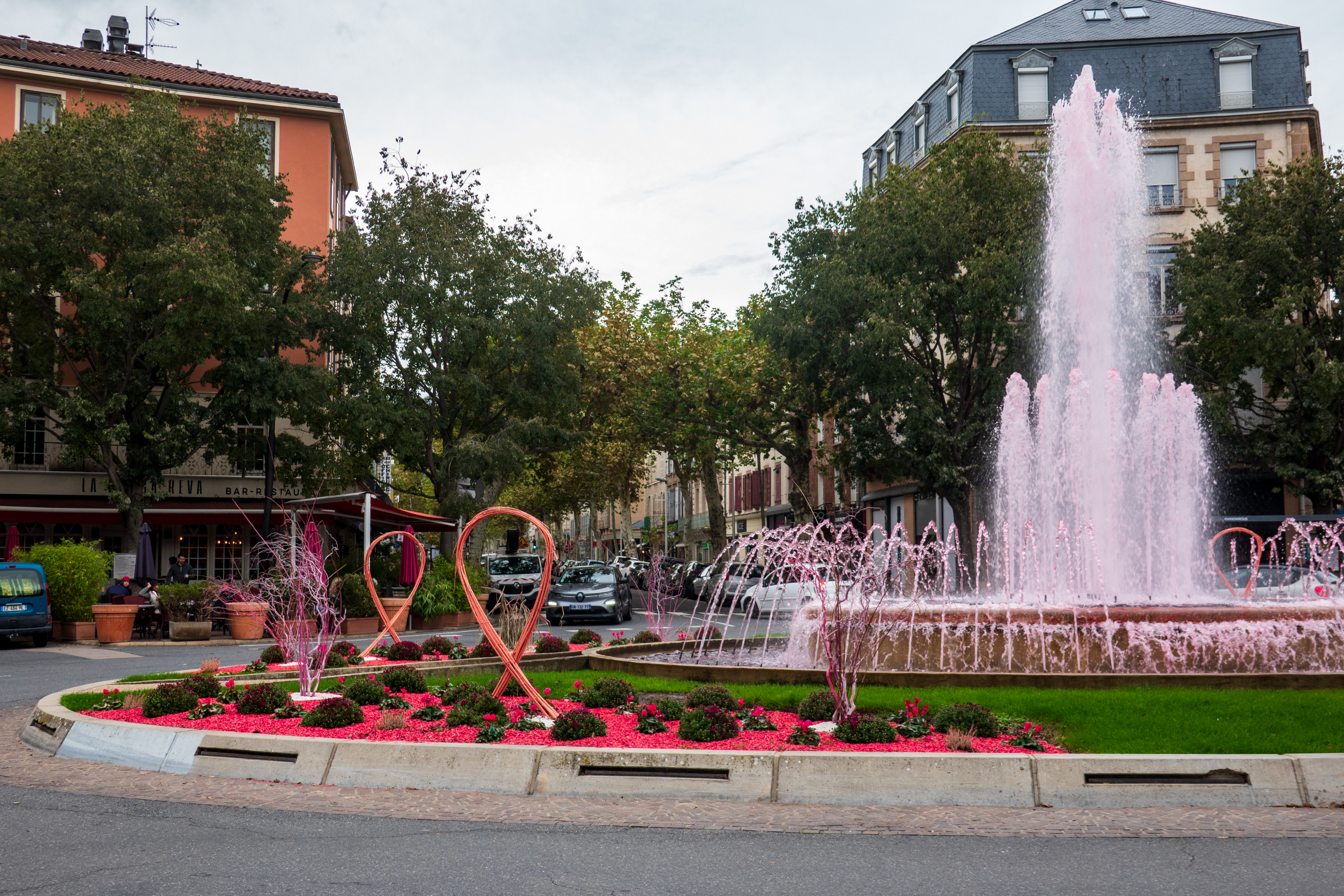
We rode along the Tarn River, with the hills around Millau in full view. We then headed into town for a coffee on the square. Never found a coffee and ended up taking the long way home – medieval towns can be confusing!
The Millau Viaduct is simply huge and amazing. Denise was disappointed that we passed under and not over it. As the wind was blowing, Fred had a more neutral opinion. (https://en.wikipedia.org/wiki/Millau_Viaduct)

We had hoped to see some Roman ruins but they were closed so the next day we headed out towards Montpellier.
 DiploStrat