Monthly Archives: May 2024

Into Germany

The next day, we crossed into Germany with Münster as our first stop. We stayed at a riding stable! It was very close to town and on an easy bike route into the center. It was quite a novel experience watching the horses, and the 85 Shetland ponies, leave the stable each morning and take themselves to the fields, so that their stalls could be cleaned and breakfast set out.  Needless to say, they came back quite happily knowing that breakfast was waiting!

A lot of ponies, all in one place!
Observing the new campers.
Yes, it was crowded. No, we weren’t getting out anytime soon.
So, what time is breakfast?
Heading back for breakfast!

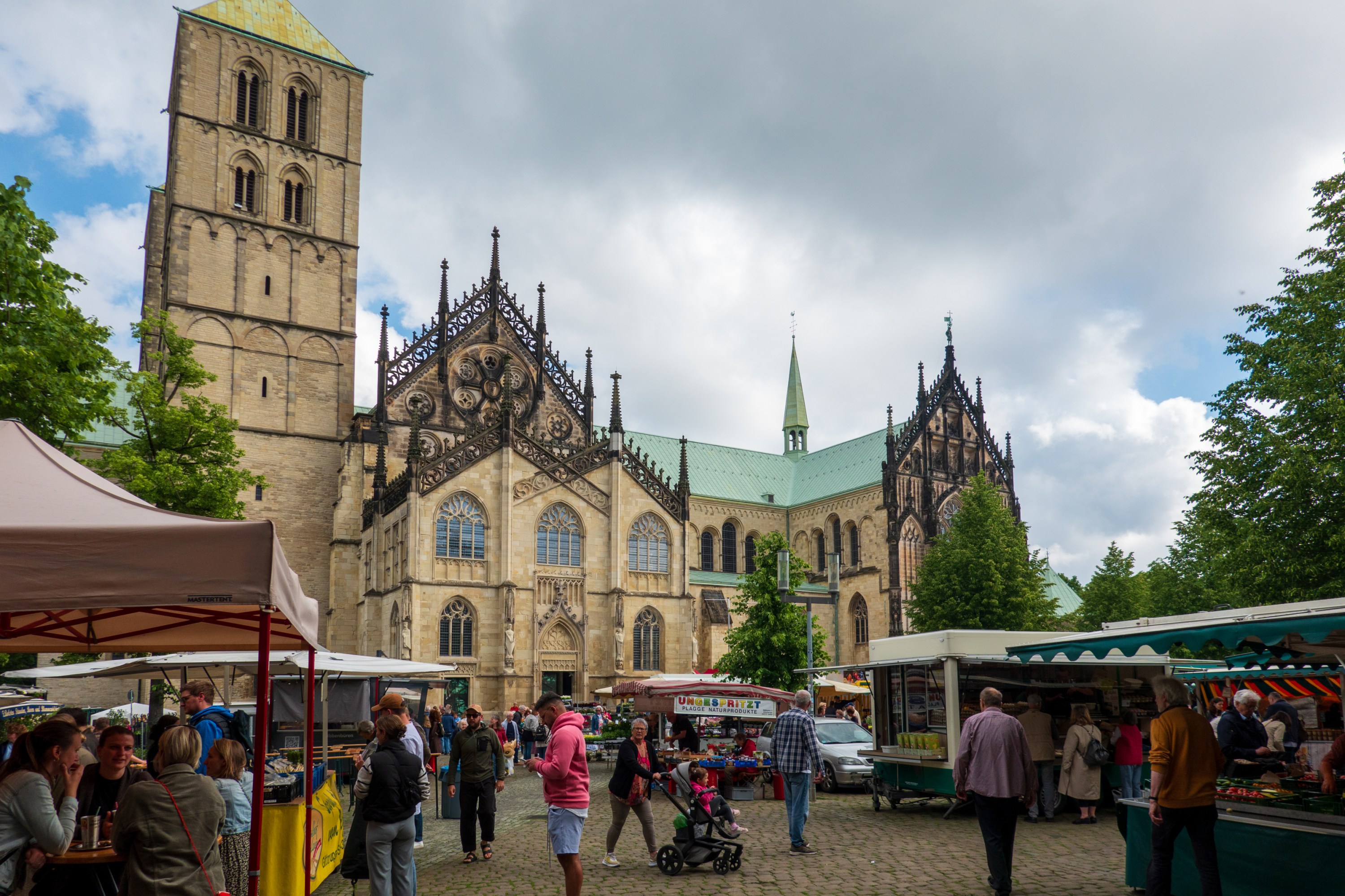
Münster proved to be a pleasant town with lots of traditional architecture.  We cycled in on Market Day, so we of course had to browse the market. 
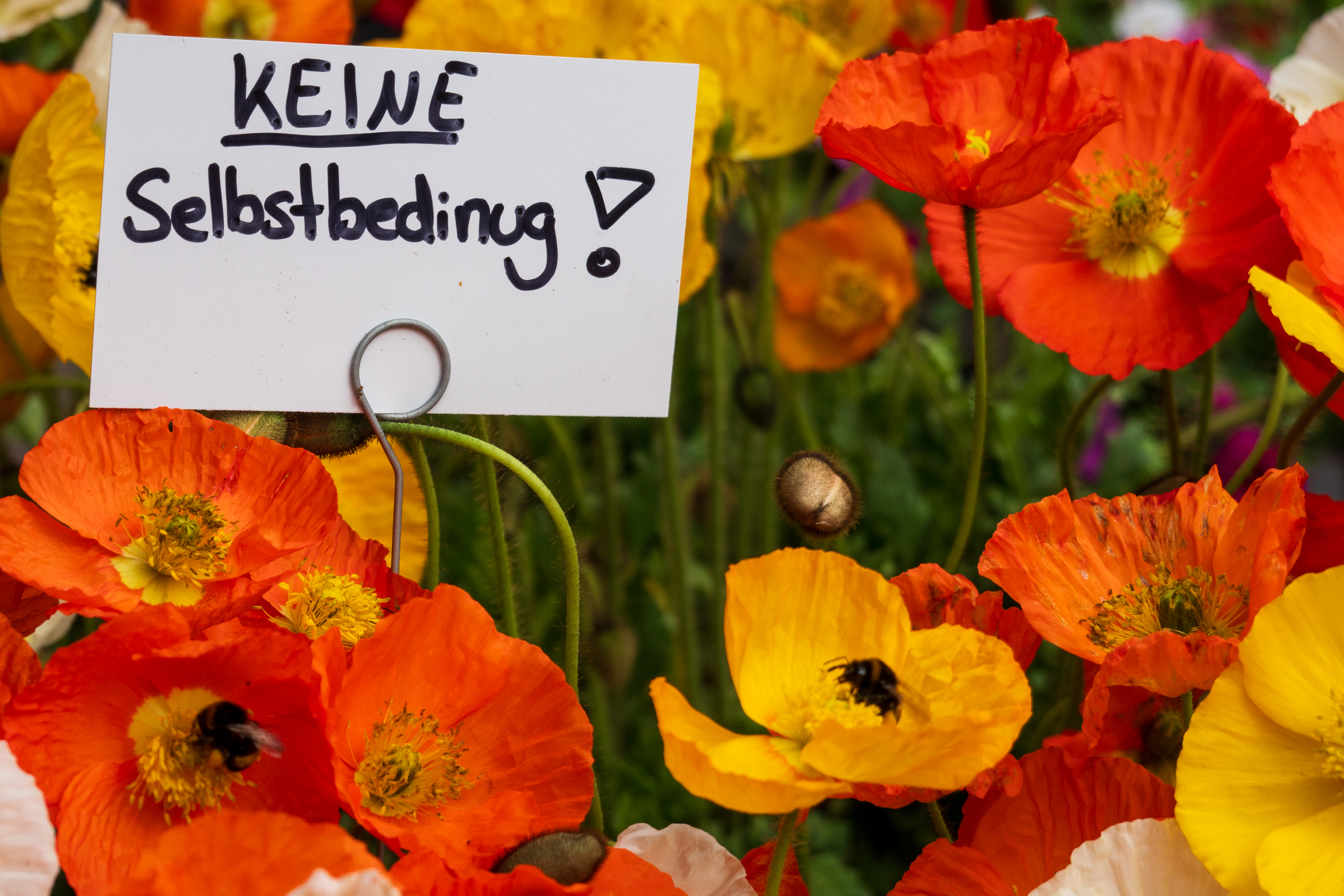
Denise purchased a some vegetables and looked longingly at the flower arrangements but they really do not hold up well in the camper.  

Yes, they are fresh!
Not self spreading, but the bees don’t care.

We then visited the Dom St Paul (Cathedral) which sits on the Markt or main square.  The Dom was constructed between 1225 and 1265 but suffered extensive bomb damage during WW2. 

Baptismal font.

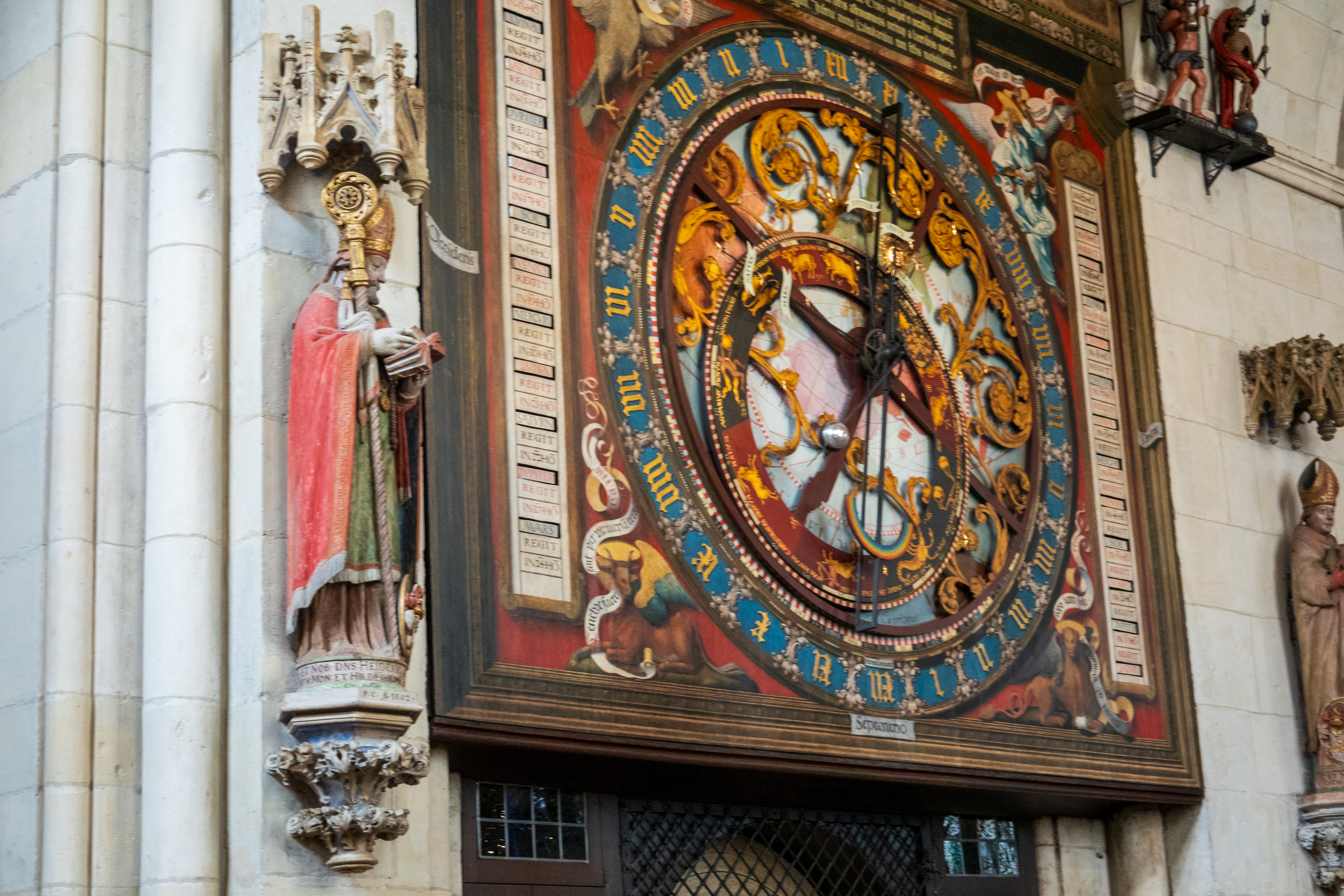
Inside is an amazing astronomical clock dating from 1540. The first Münster astronomical clock was built in 1408 – but destroyed in 1534 by iconoclasts during the Anabaptist disturbances. It features figures of the Magi who pay tribute to the infant Jesus at noon each day.  We unfortunately missed the noon show, but did hear Death (upper right) striking the bell for the half hour!
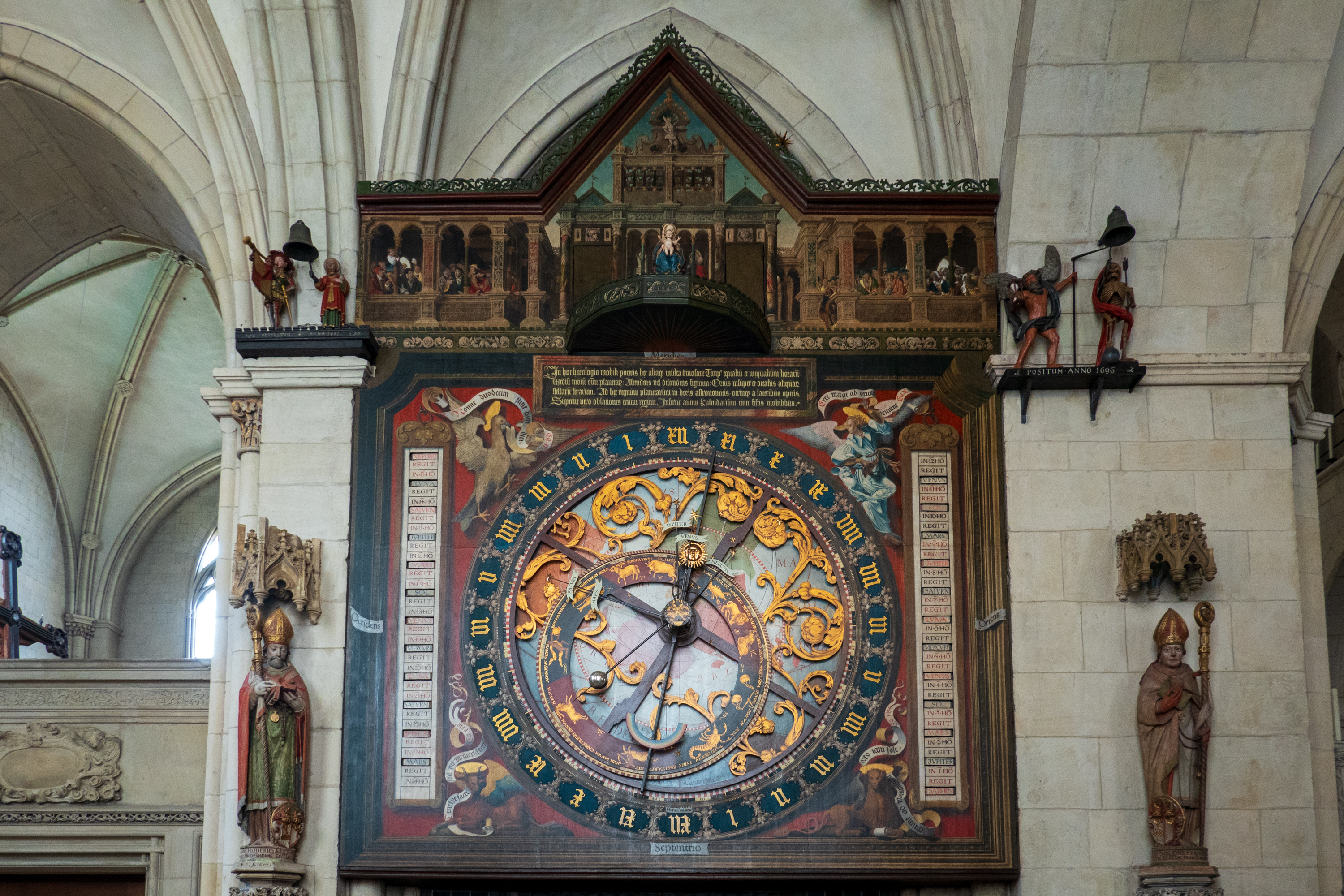
The clock in all its glory.

Astronomical clocks are intended to tell the time and to act as calendars for religious festivals. And, in the Christian Church, these were set from the date of the Spring New Moon, making the transfer to a mechanical mechanism a bit tricky. So Christians face a bit of math with Easter dates, as do Muslims with Ramadan. The new clock was a team effort from 1540 to 1542. A mathematician and a cathedral preacher did the maths. A blacksmith actually built the mechanism, and a painter decorated the whole thing. In 1582 the Pope changed the calendar and leap years had to be added. Easter dates, already challenging, went out the window. Updates kept the clock running until 1927 when it stopped. Rather than being retired, it underwent another restoration from 1929 to 1932. It was removed from the church for safety during World War II and, as its vault was not destroyed in the bombings, it was reinstalled and made to run again at the end of 1951.

Beautiful doorway.
Yet another, smaller clock.
Suspect he is really reading the owner’s manual!
Modern stained glass.

Reading the clock takes a four page guide, but this clock, one of the youngest of its type, has an accuracy of 532 years. You could spend hours staring at it.

After leaving the church, we moved on to the market street in search of lunch.
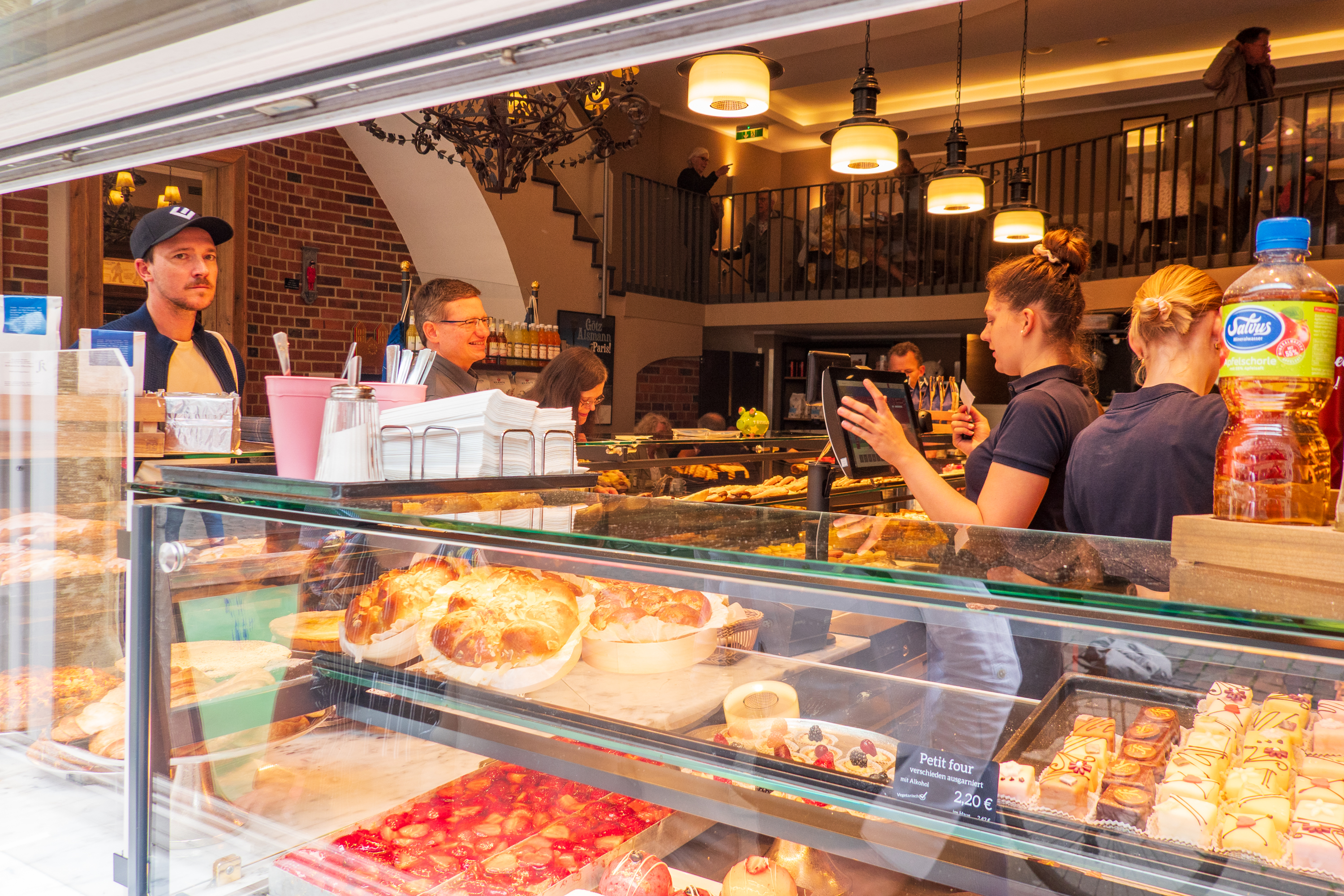
Goodies!
The Rathaus. Means city hall, but, on a bad day, the name sounds about right in English.
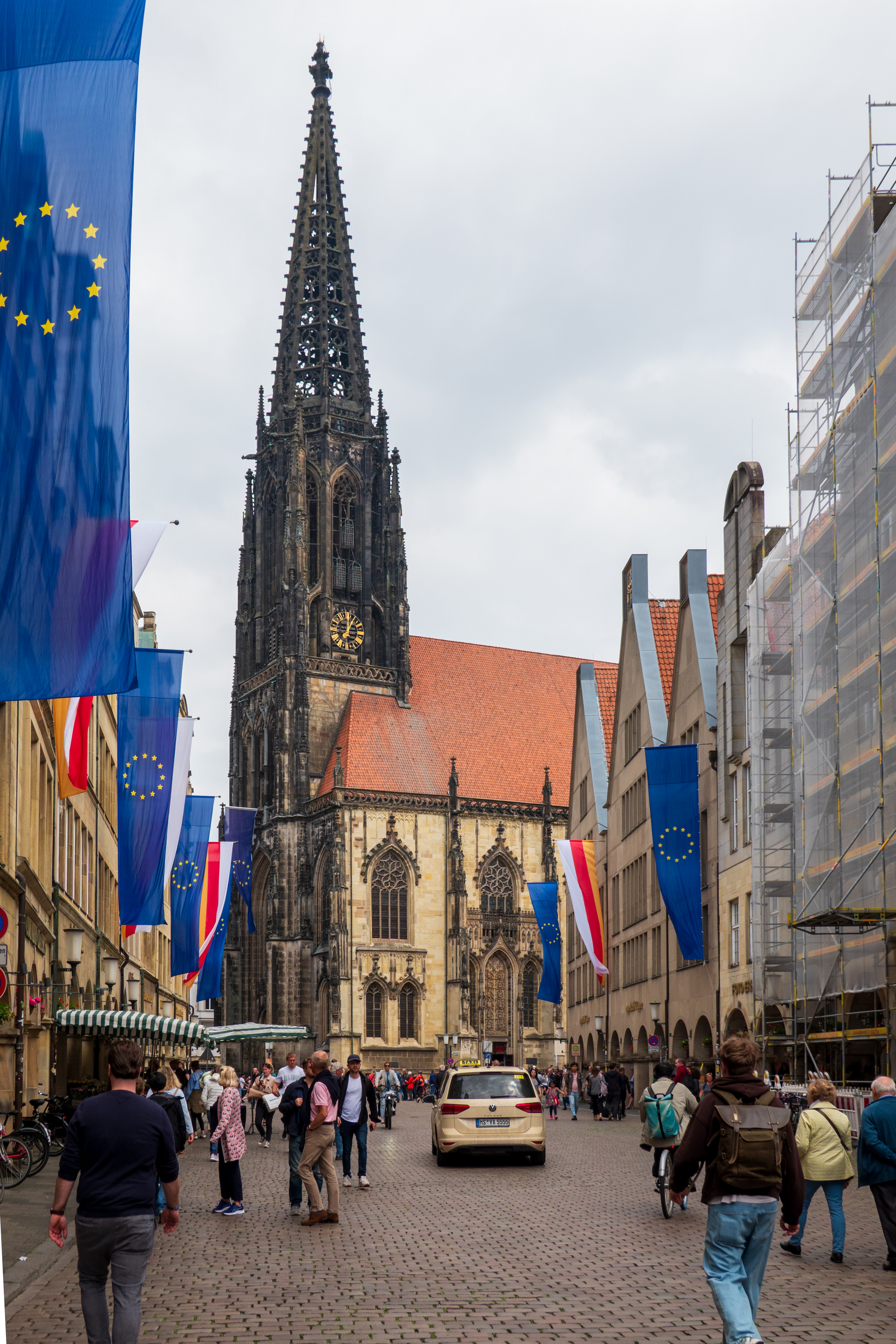
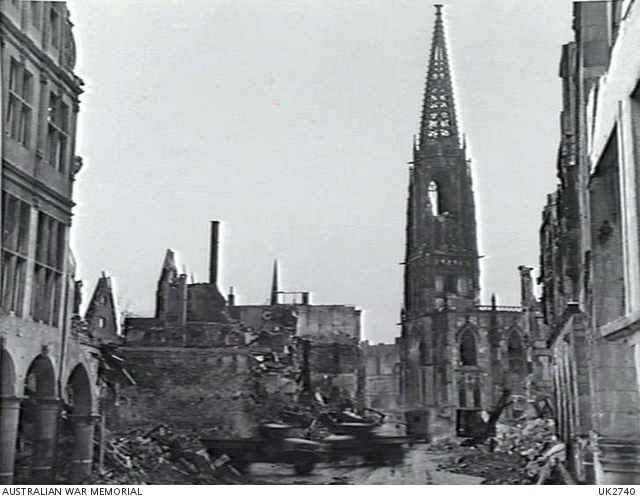
St. Lamberti
The same street in 1945. There are equally terrifying pictures of the same street in the ’30’s, draped in Swastikas.

We found a wonderful, if pricy restaurant and had a great meal.
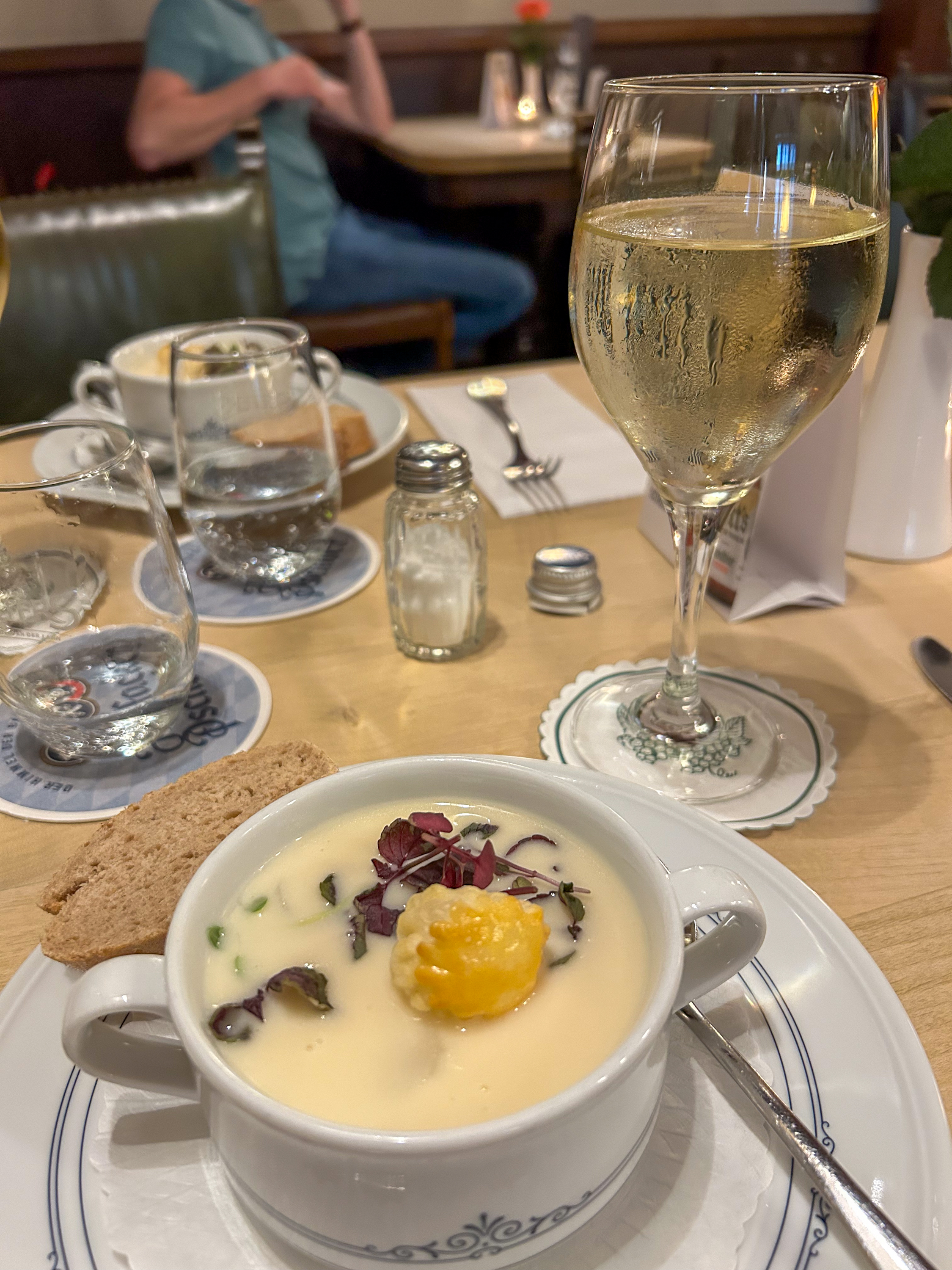
In the spring, people go nuts for white asparagus. One of the best forms is in a soup, and this one was divine.

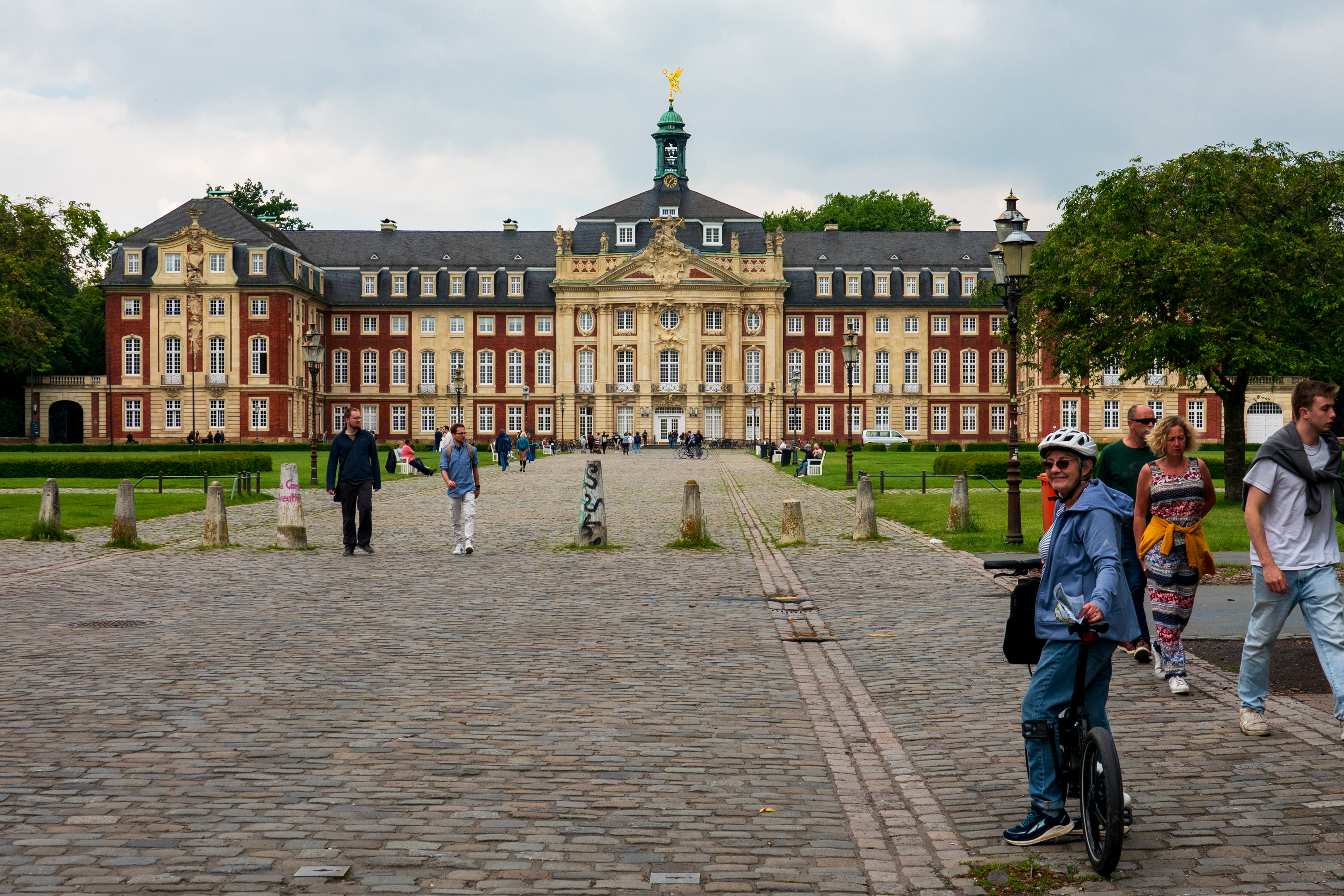
One the way back to the camper, we cycled by the Schloss, formerly the residence of the Prince-Bishops of Münster and now the headquarters of the university.  (https://en.wikipedia.org/wiki/Schloss_Münster) Fortunately we returned to the camper before yet another thunderstorm and downpour!
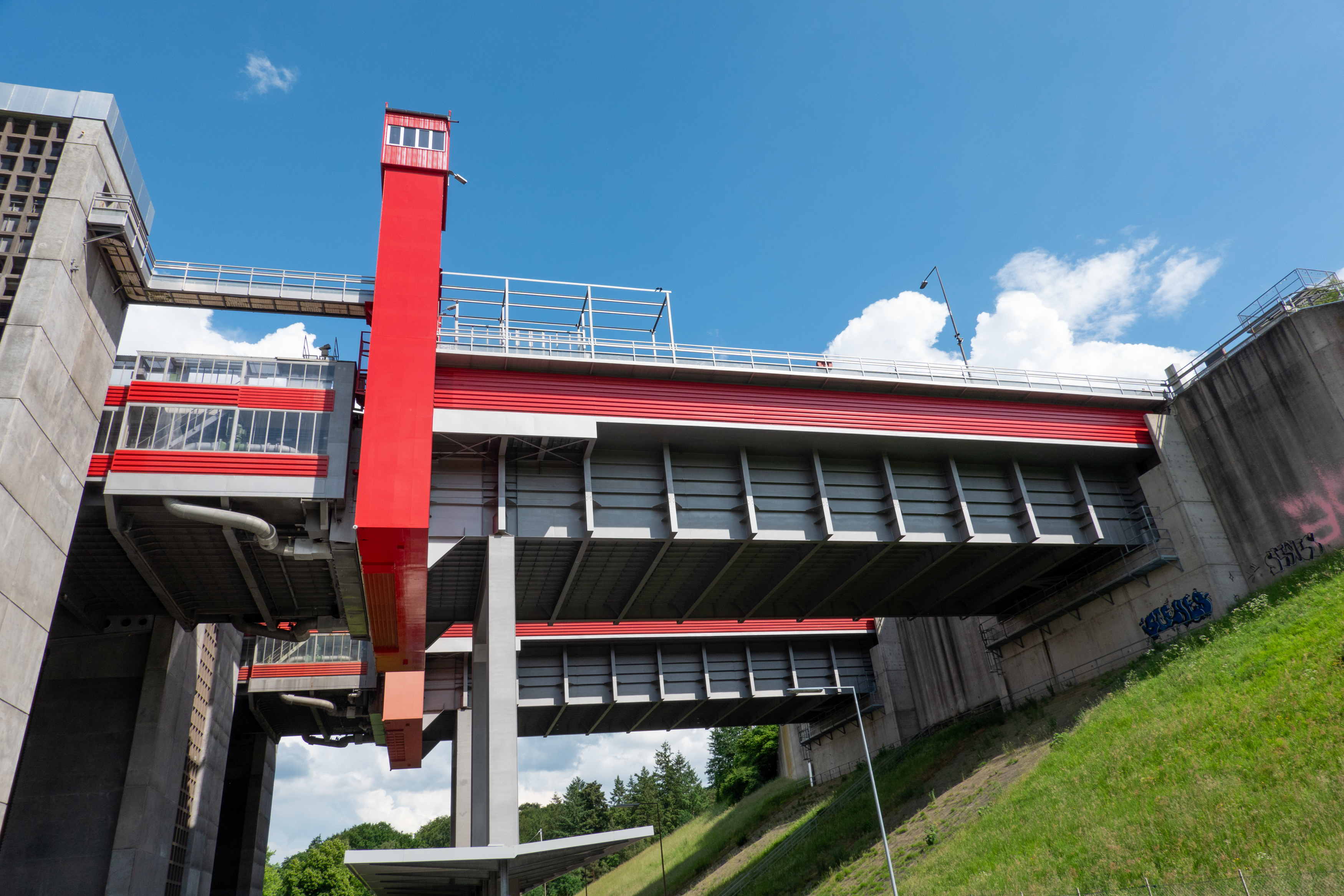
If Münster is infamous for the damage it suffered during WWII, Lüneburg is famous for not having been bombed. We found a stellplatz within easy biking distance, and, as a bonus, it is the parking lot for the Scharnebeck ship lift. (https://en.wikipedia.org/wiki/Scharnebeck_twin_ship_lift)

The horizontal structures between the blocky towers are the gondolas that lift and lower ships.

This proved most interesting as we watched barges and various other pleasure boats be lifted or lowered 38 meters from one canal level to the other.  Having visited the Falkirk Wheel, Fred was fascinated by the different approach to the same problem. The lift or descent takes next to no energy as the gondola is matched with four counterweights. And remember, because of displacement, the gondola always weighs the exactly the same, whether there is a boat in it or not.
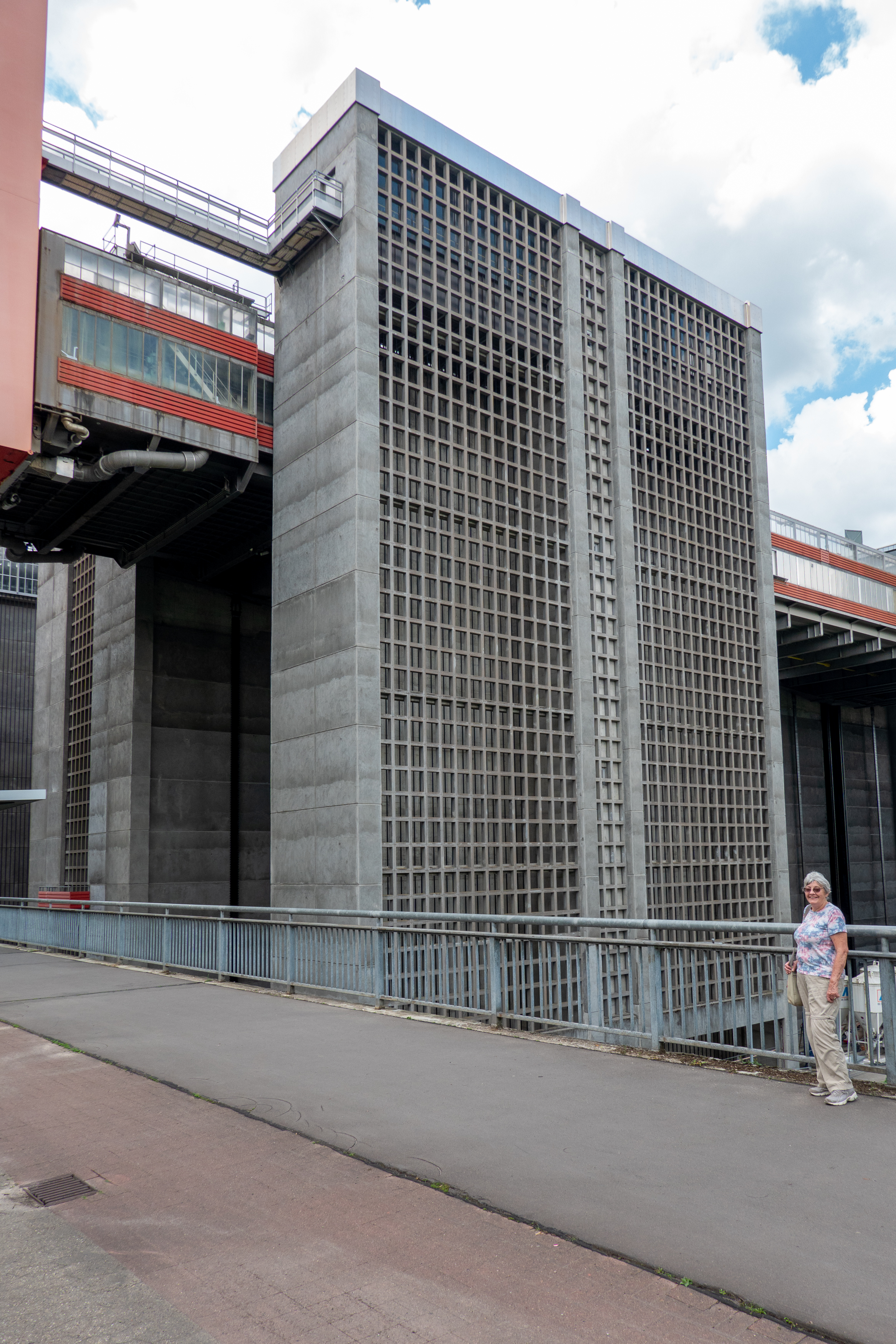
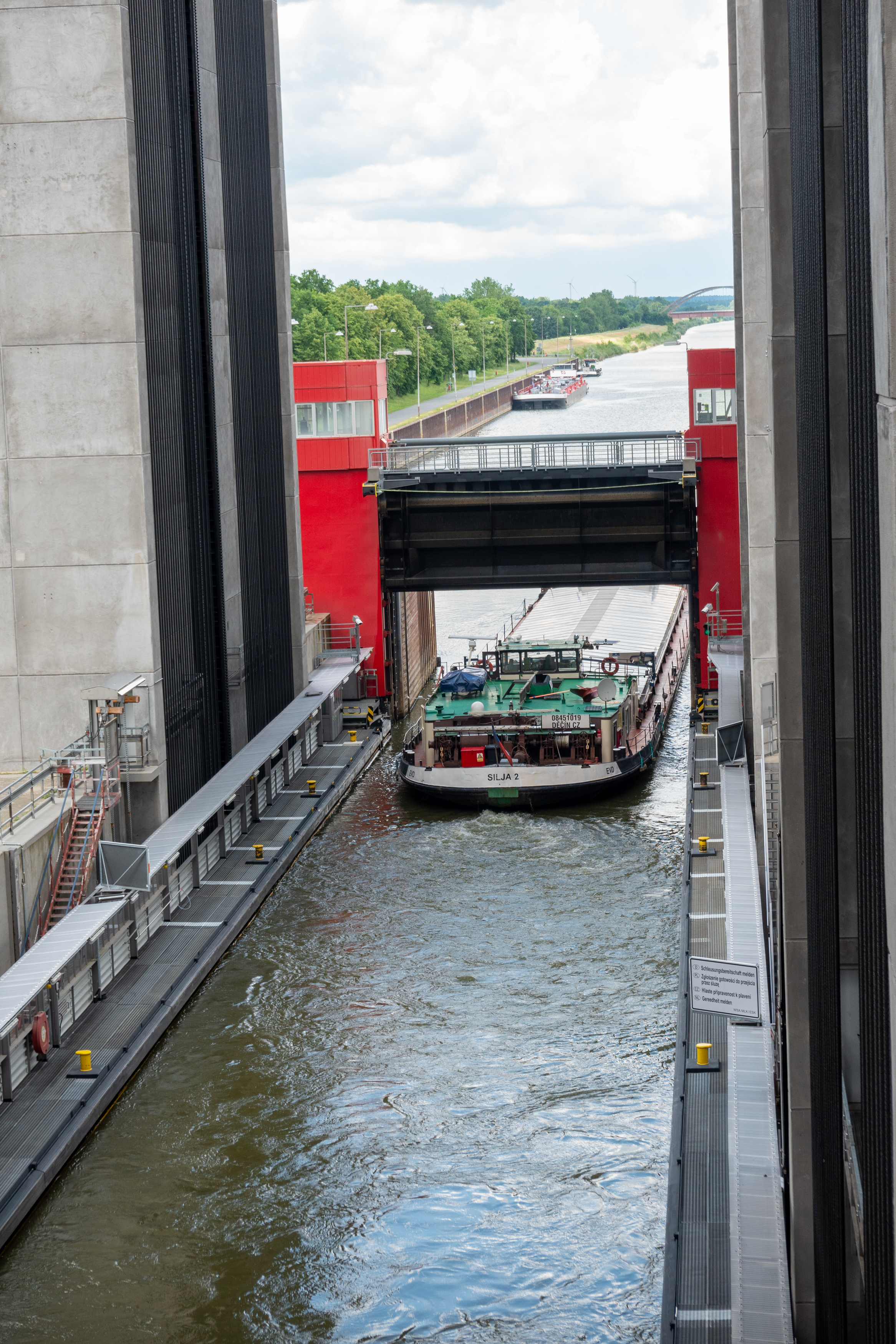
Yes, it’s big. the grey towers hold the massive counterweights.
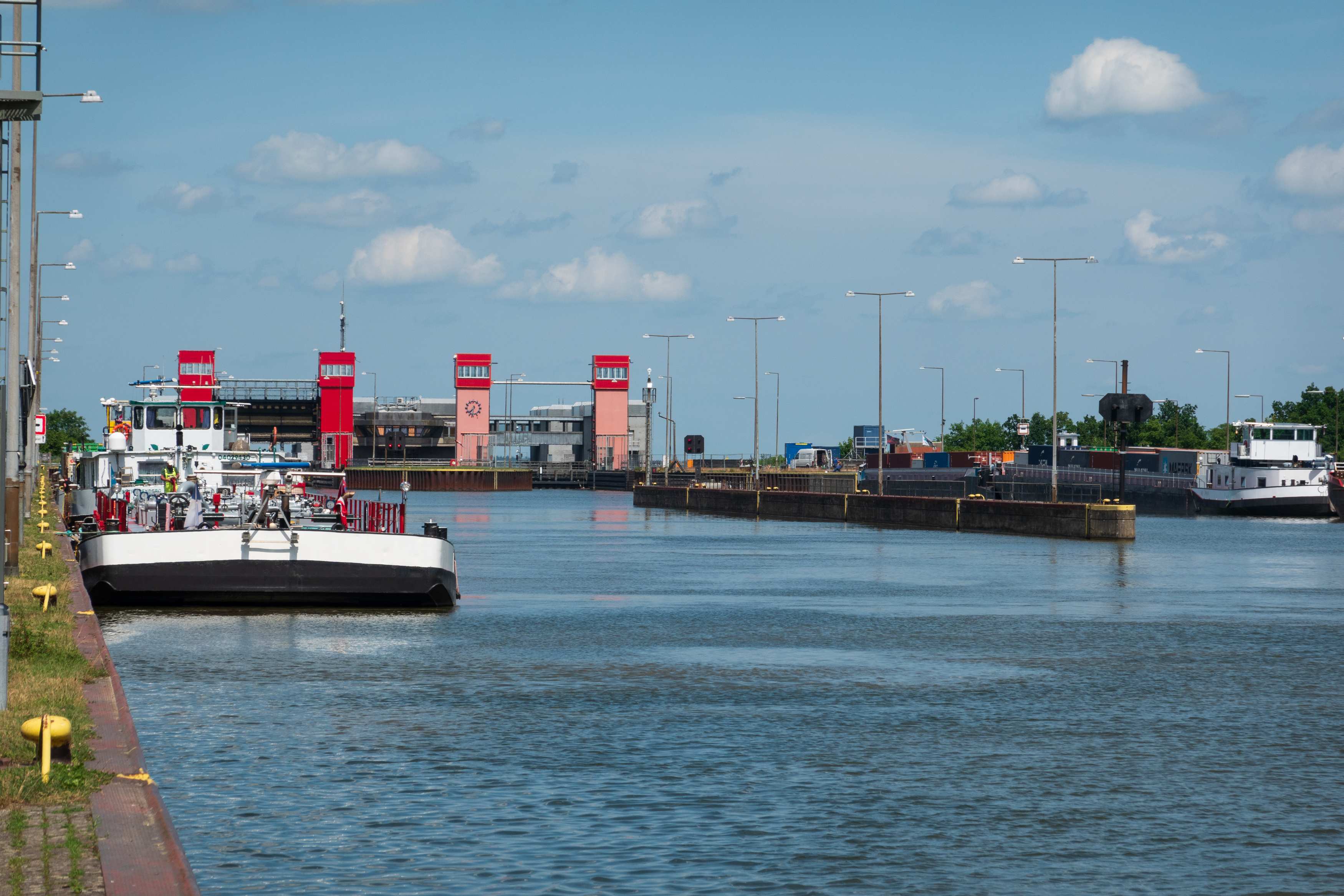
Entering the gondola in the lower position.
About half way up, almost to the level of the street. It seems to take forever to get the boats into the gondola, but the actual ascent only takes three minutes.
Looking up at the upper passage. The gondola, on the left, has reached the top, 38 metres higher.
Approach to the ship lift from the higher side.

The Sunday we arrived we watched a party boat being lifted. Monday it did not appear that a single ship used the lift.

The cycle trip into town was a little longer (about 10Km) but we enjoyed the visit.  The town was part of the Hanseatic League based on the salt mined there beginning in 956.  We admired the 14th century crane, used for hauling the salt up until the late Middle Ages. 
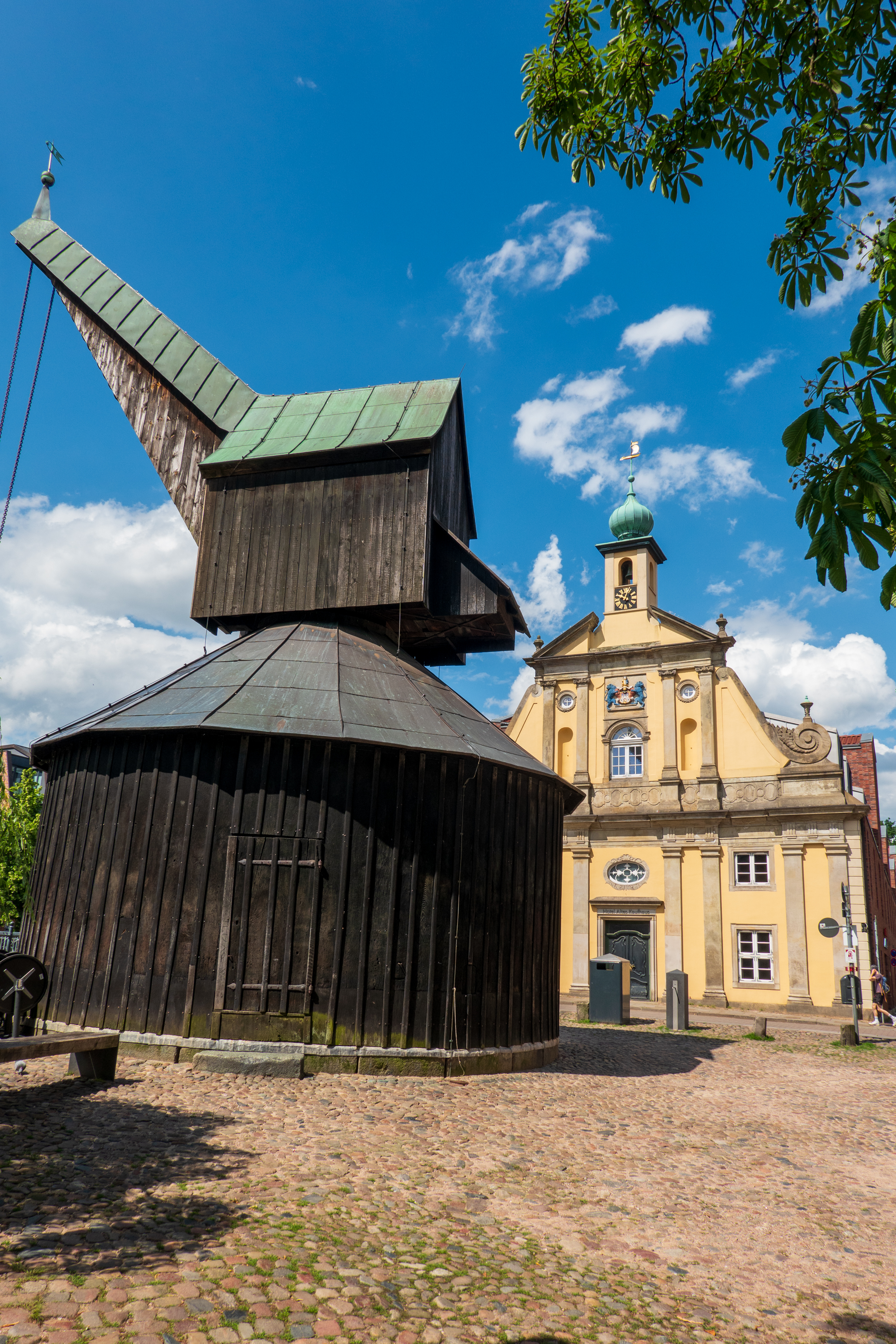
The crane is most impressive,

The old crane is Lüneburg’s secret landmark. A crane is mentioned for the first time in 1346. We could not see inside as the crane is only open to formal tours. The German texts say that it is operated by “carrying wheels.” Probably what would be called today “Treadwheels.” People step inside and walk to provide the power.

Treadwheels on a crane.

When Lüneburg was connected to the railway network in 1846, the crane became redundant.

Salt boats on the canal.

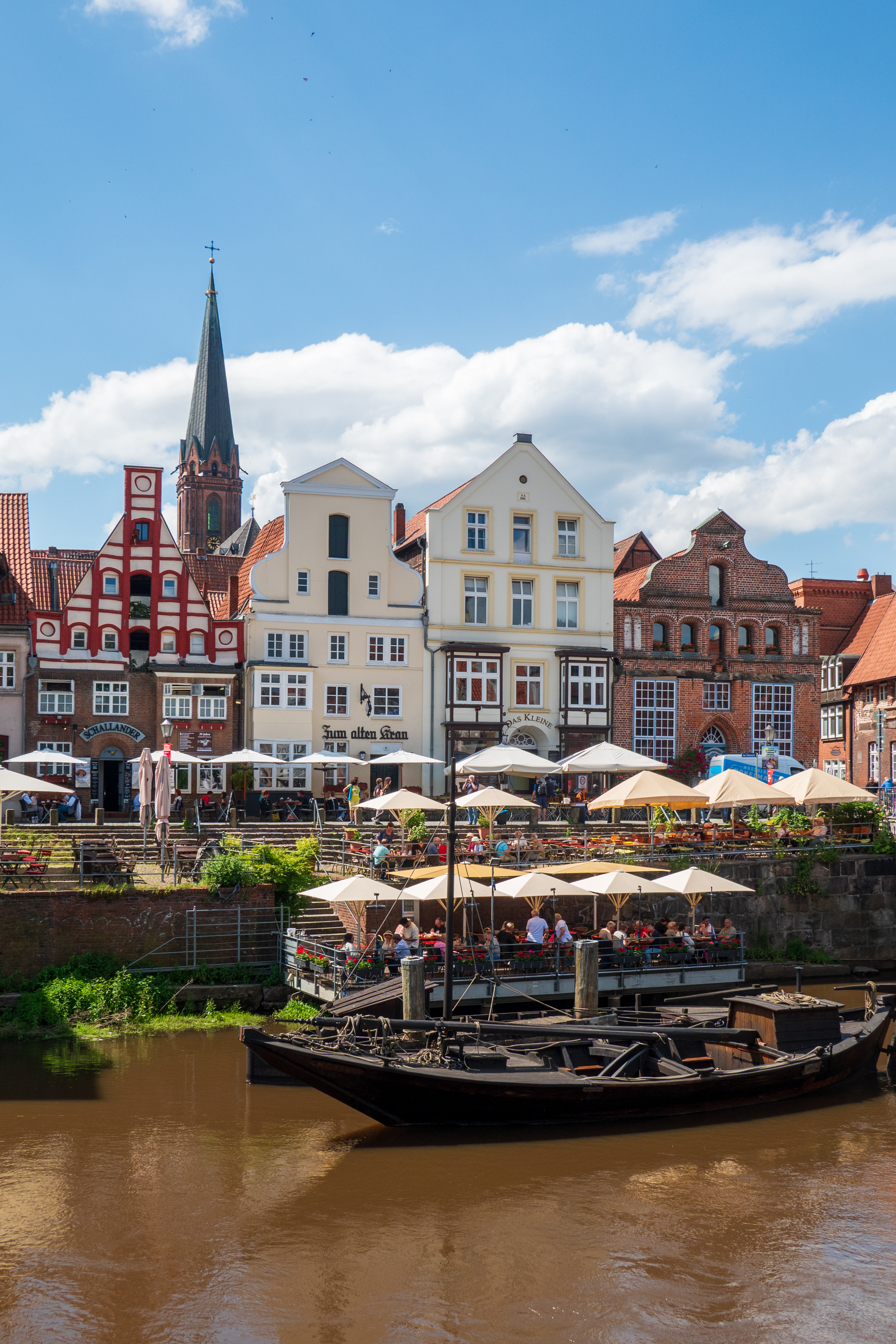
And (of course) we stopped for a coffee and a cake (Kaffee und Kuchen) beside the canal, as we admired the really old houses. 
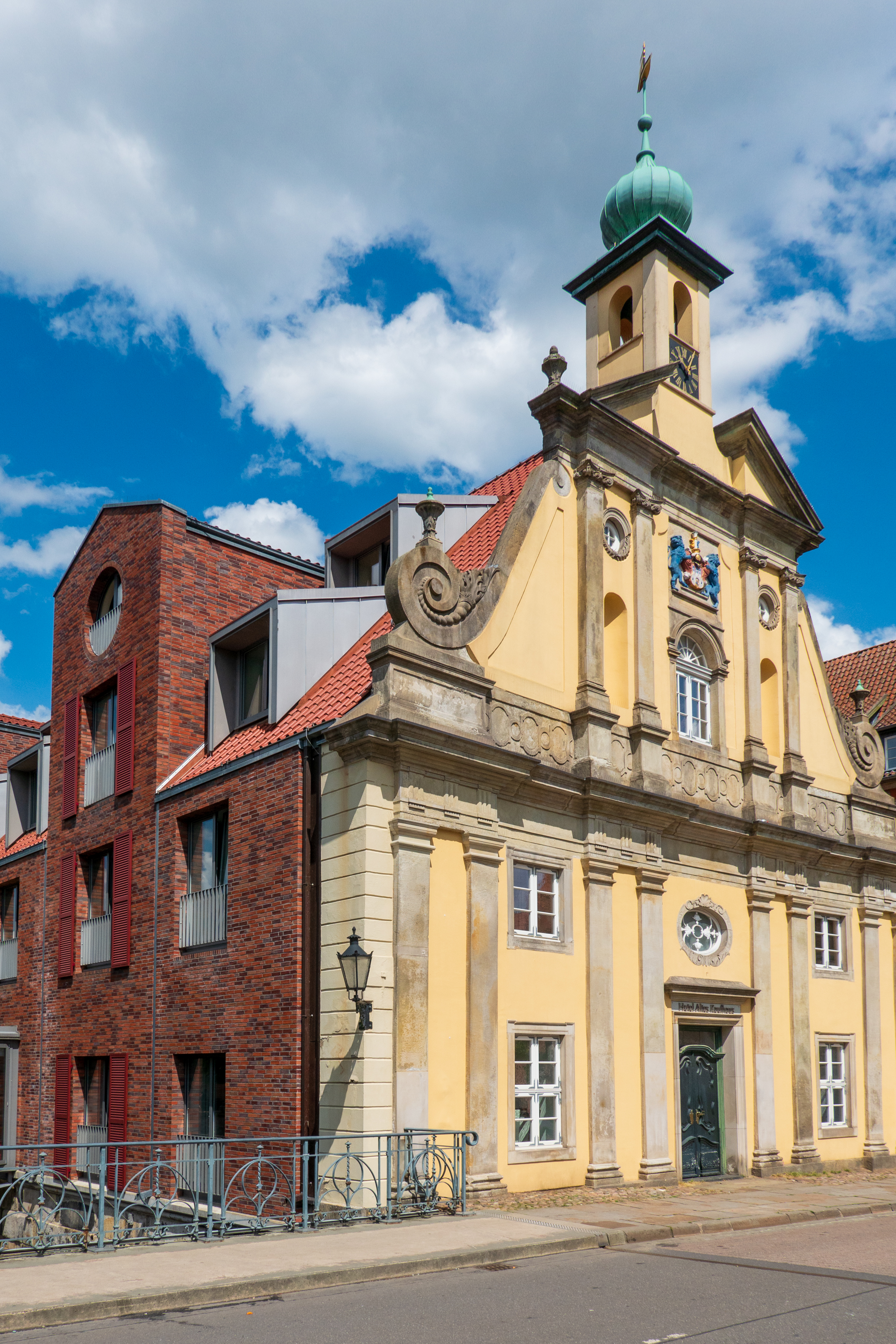
Note the modern side and older facade.
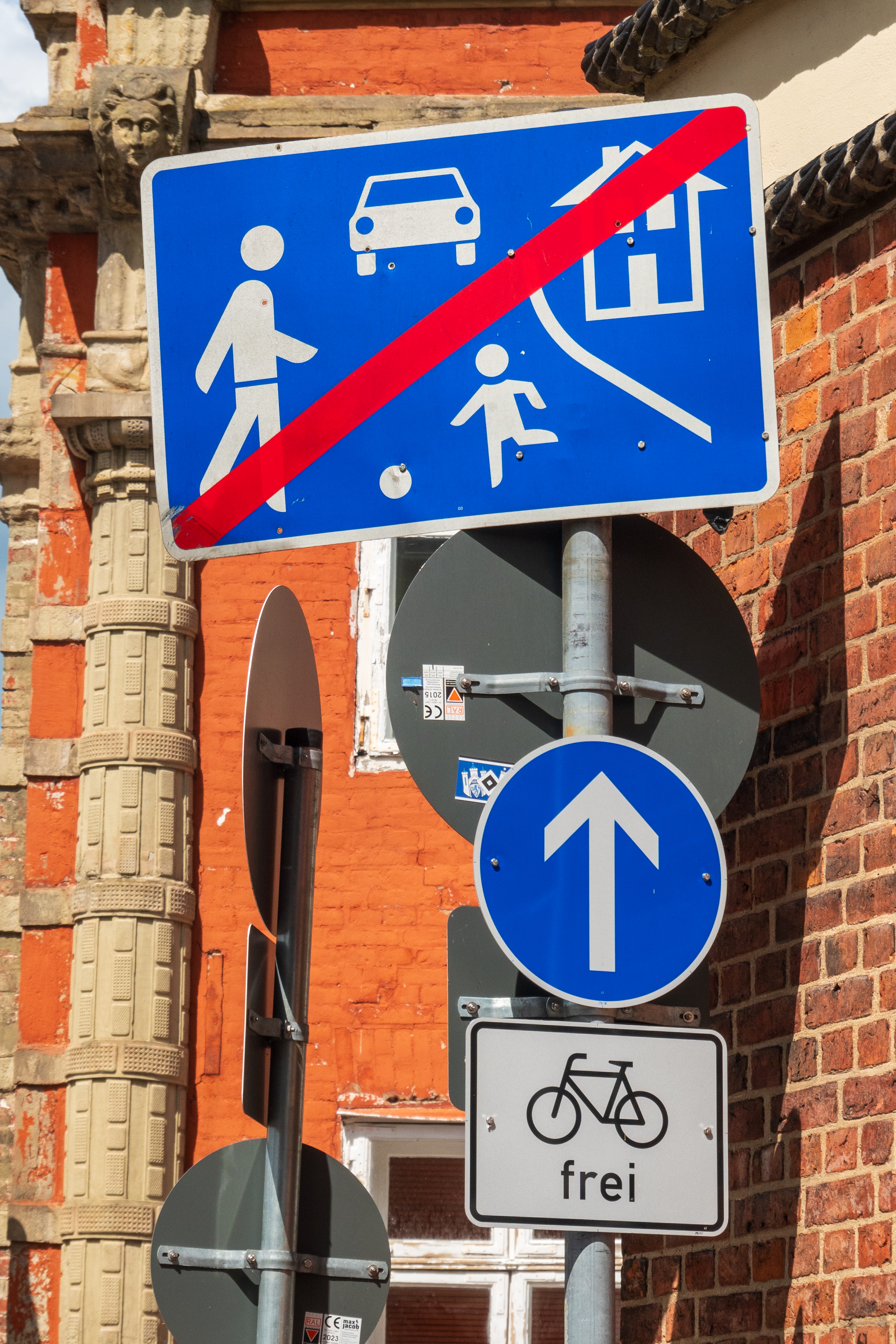
Not sure how to read this sign. Seems like you can’t play ball in the street but there is free passage for bikes. We took it!
Goodies at the old fish market, by the canal.
The Rathaus.
Beautiful brickwork.

As noted, Lüneburg survived the war without damage so there was no rebuilding.

On the practical side, the camping thinned out after the weekend and was quite pleasant and there is an ALDI within walking distance! The little things, like food, matter!
The waiting is the Hardest Part!

With a tip of the hat to Tom Petty.

So, it would be nearly a week before our parts could arrive. As they used to say in parts of West Africa, “What to do?”

Having pretty much mined out the tourist attractions of Nijmegen and Arnhem, we decided to head north to Enkhuizen to visit the Zuiderzee Museum, which had been recommended to us.  This would allow us to answer that burning question, what exactly is the Zuiderzee? (Hint, look here: https://en.wikipedia.org/wiki/Zuiderzee)

We found a campsite in easy walking and biking distance of all sorts of useful places, like the Vomar Supermarket and the museum, and checked in – happy to get the perfect spot.  Oh, the joys of easy access to a supermarket!  We made at least three visits on the day we were there, as one can only carry so much on a bicycle! Fred even got a hair cut from a Kurd who shaved him with seemed to be a dry razor! Scary as all get out, but, amazingly, no irritation.

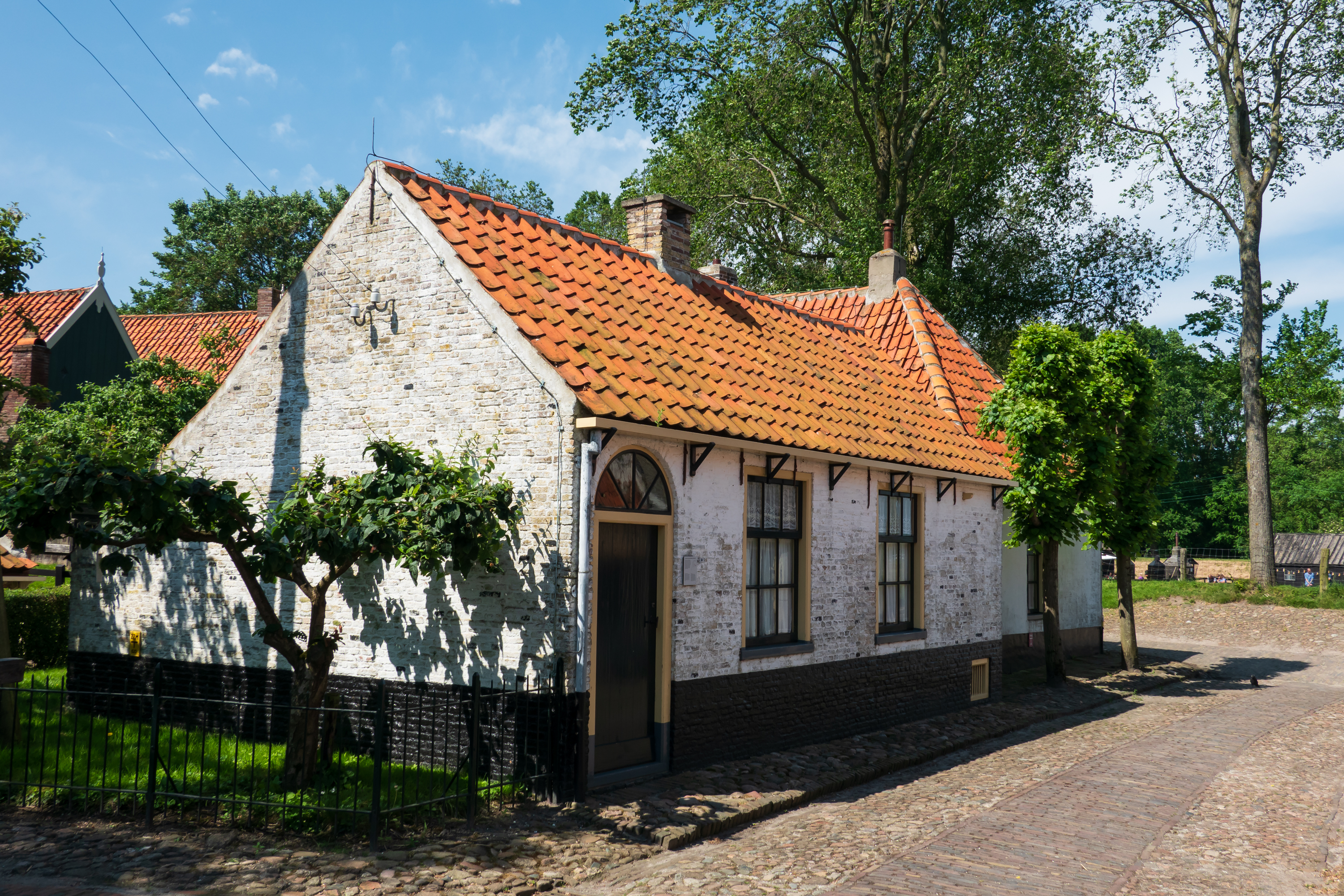
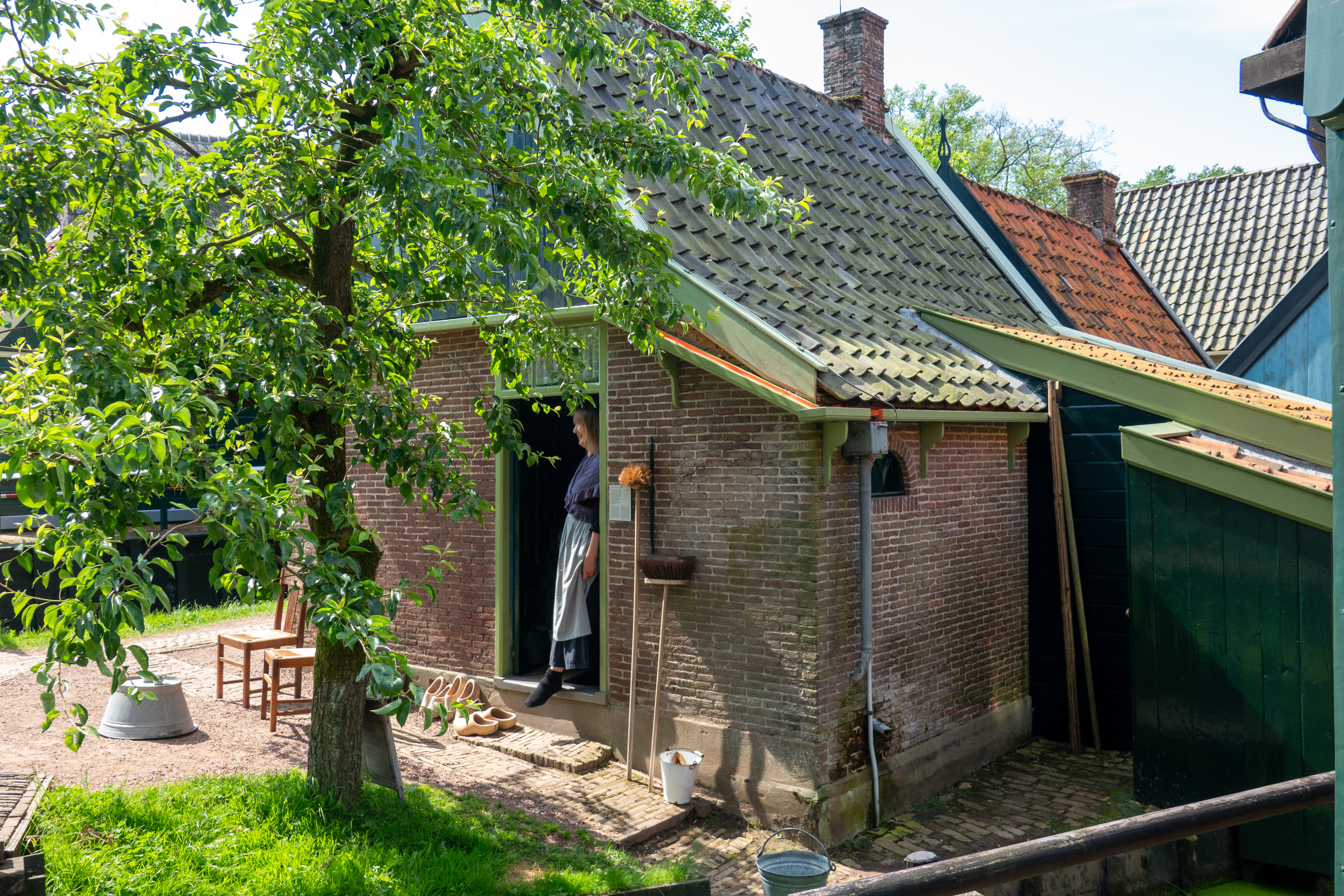
We enjoyed our museum visit.  The weather was lovely and we started with the outdoor town with its displays and buildings of the turn of the nineteenth century.  We are suckers for places like Williamsburg, old Sturbridge village, and the Weal and Downland museum.

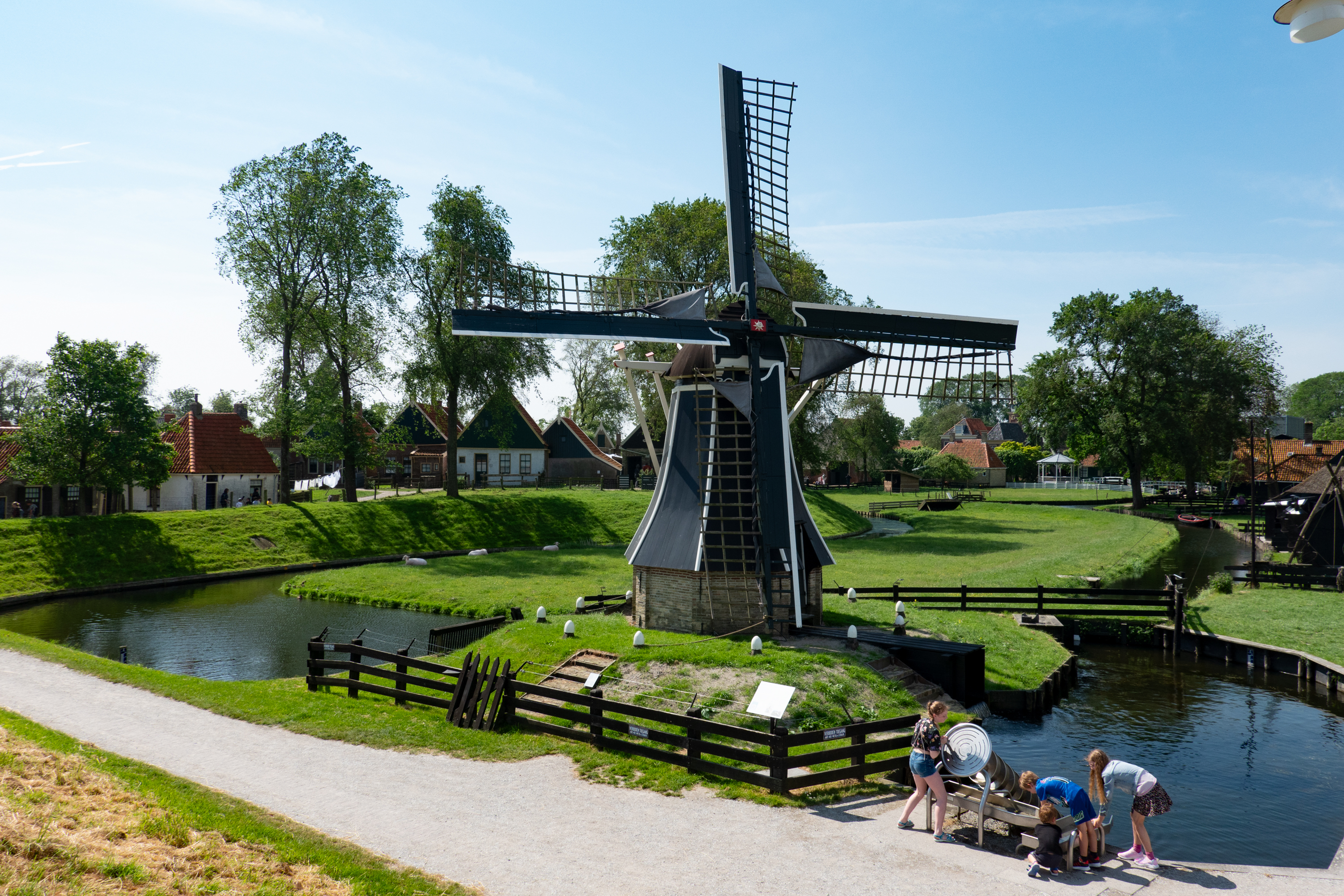
Looking down from the dyke at one of the windmills that pumped out the water. The kids are playing with a model of an Archimedes screw.
City street.
Kids playing.
Drooling over the goodies and trying to take an artsy craftsy picture.
Nifty duplex – perfect place to raise a dozen kids per side.
Canals everywhere and all used to move things.
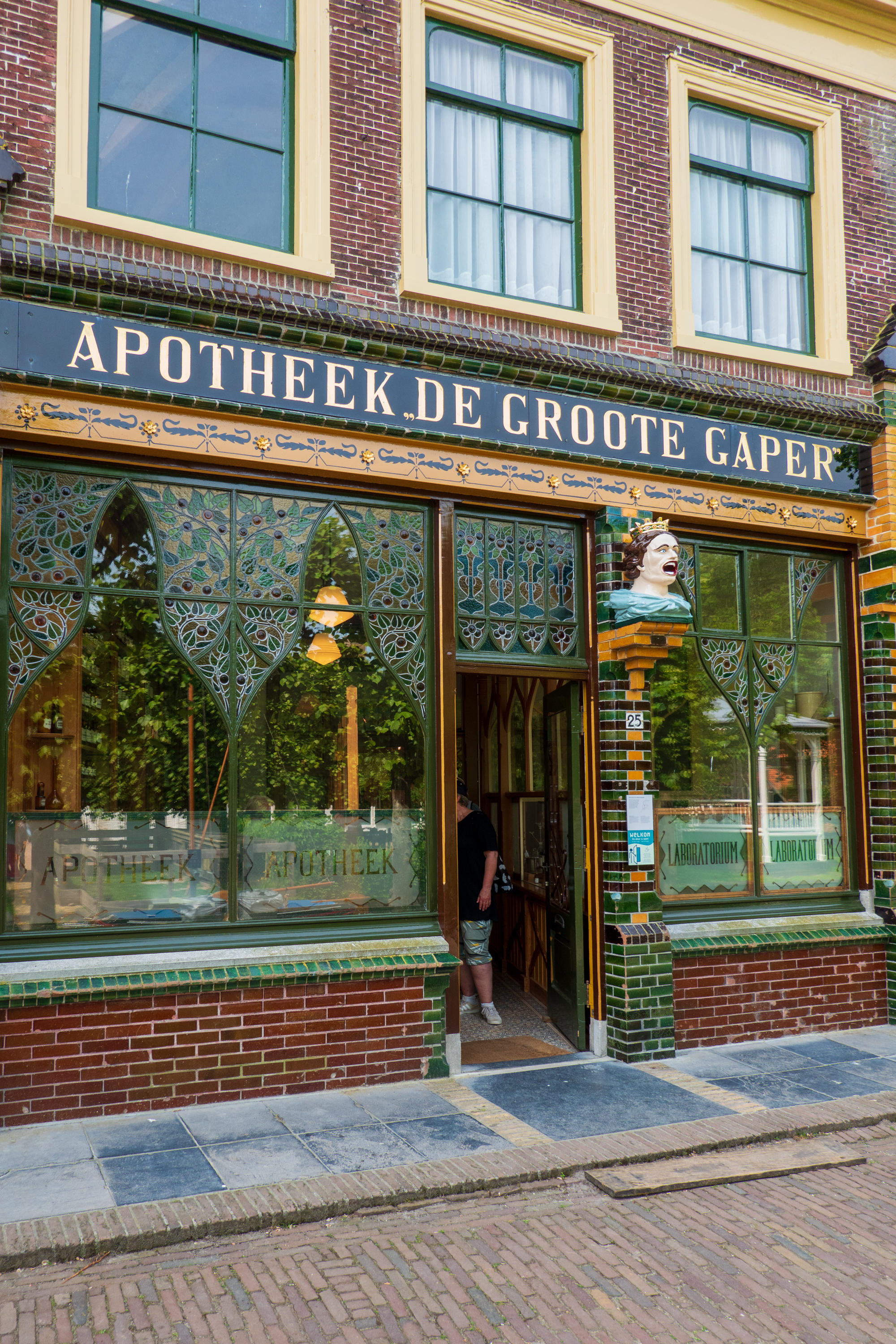
Drugstore.
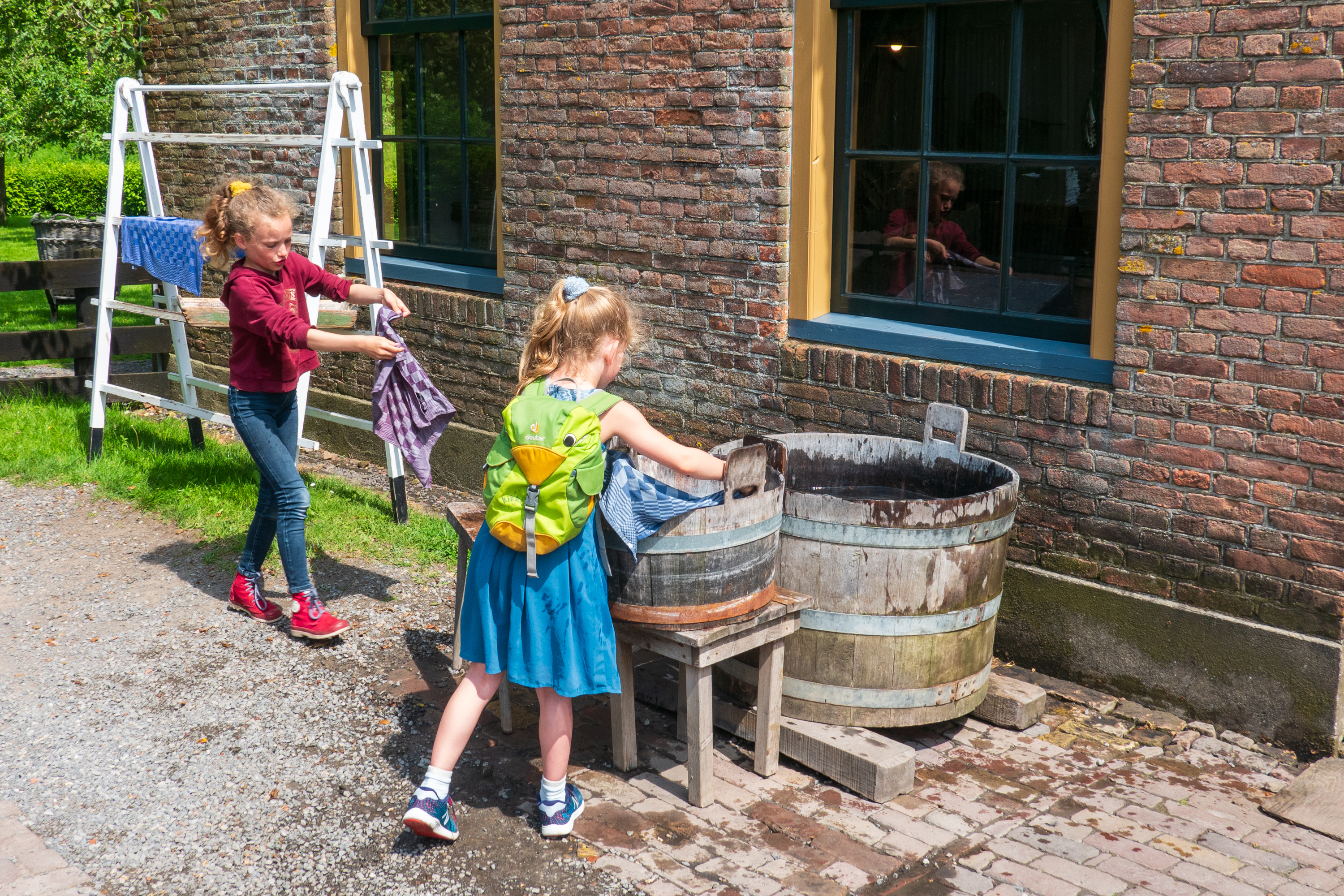
Not sure I want my washing station right there. The steam laundry looks better!
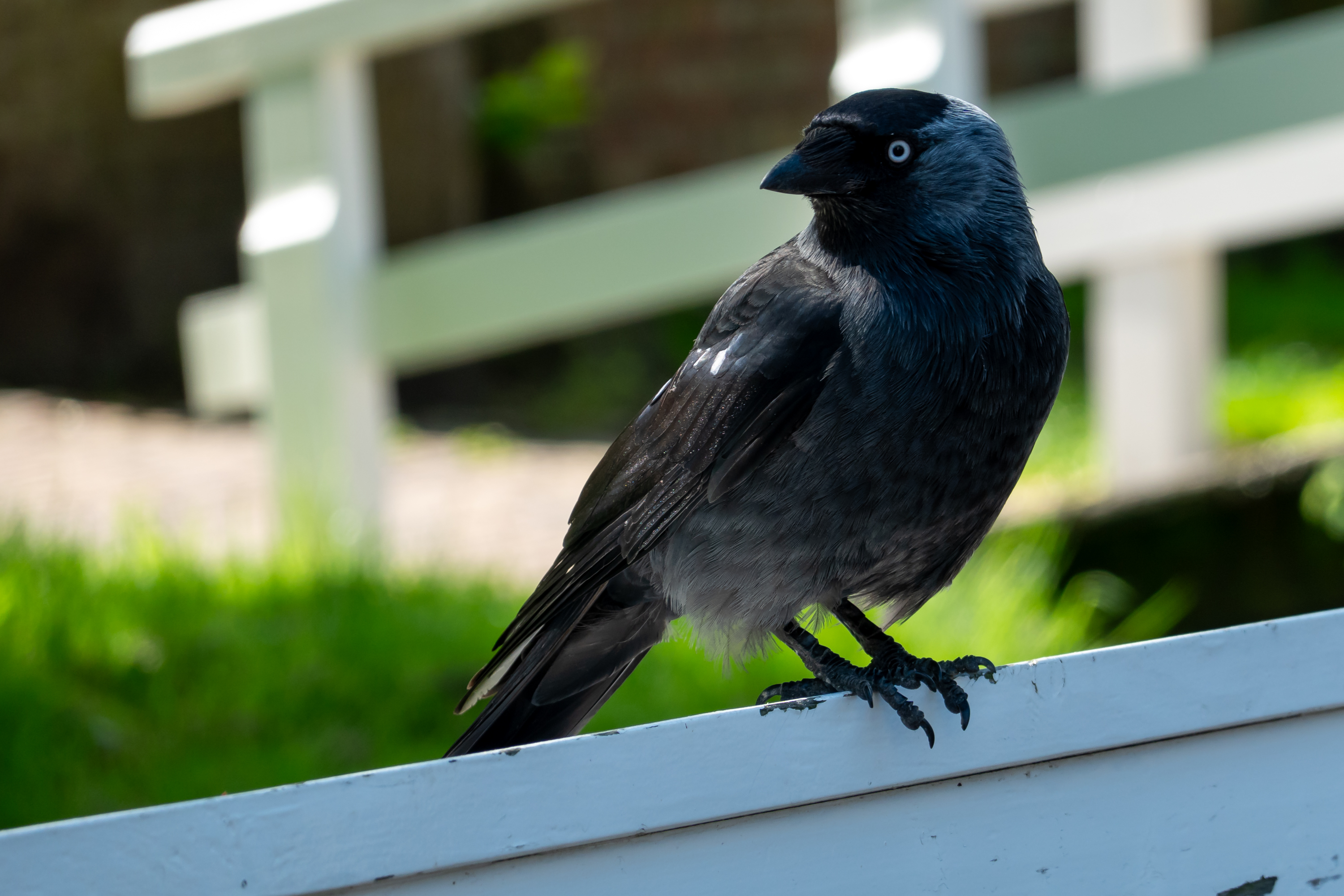
This fellow wanted to help us with our coffee and cake.
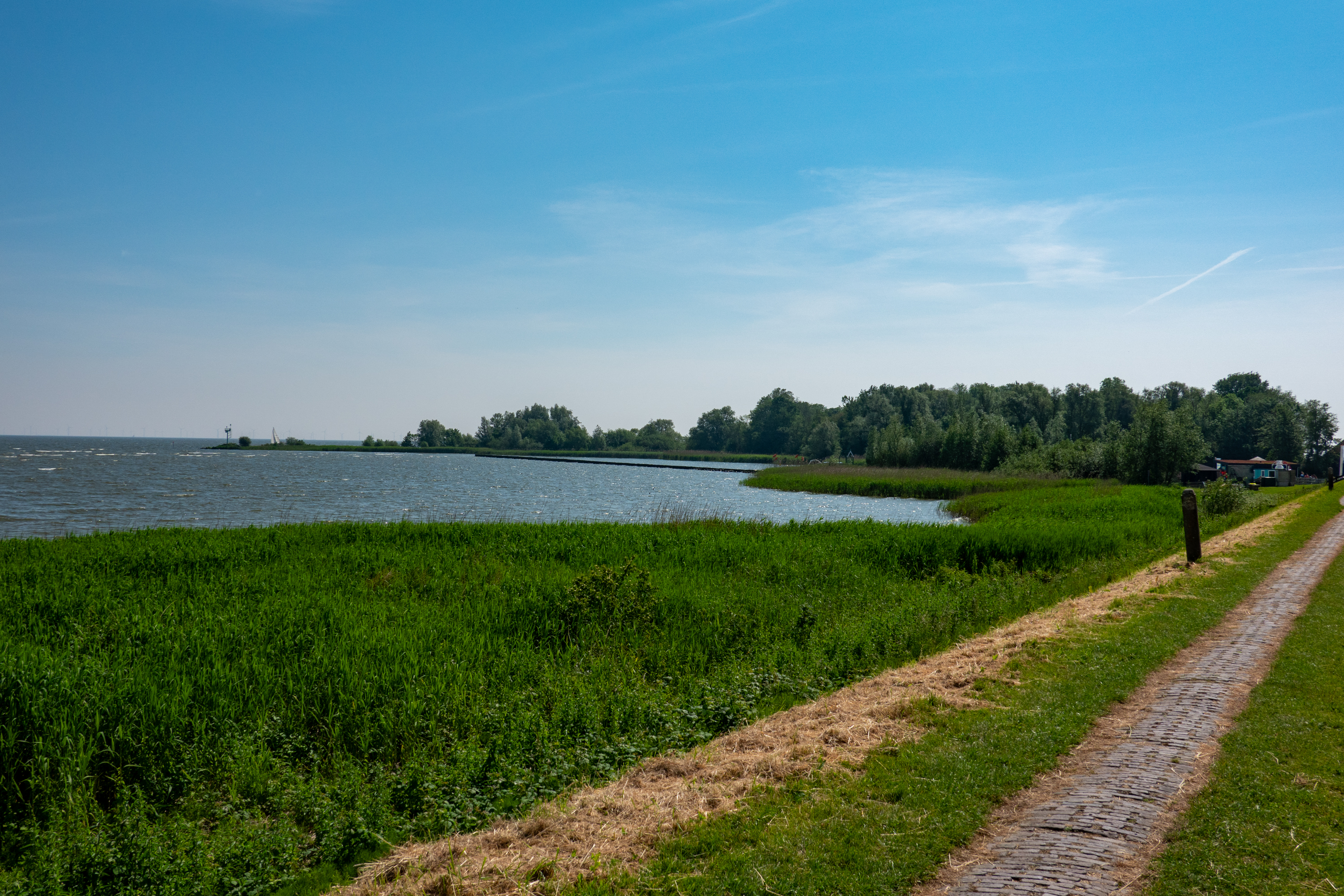
Looking from the dyke out over the Zuiderzee.
Very basic town house.
“Magic” gutters. Here they feed the rain barrel outside the house.
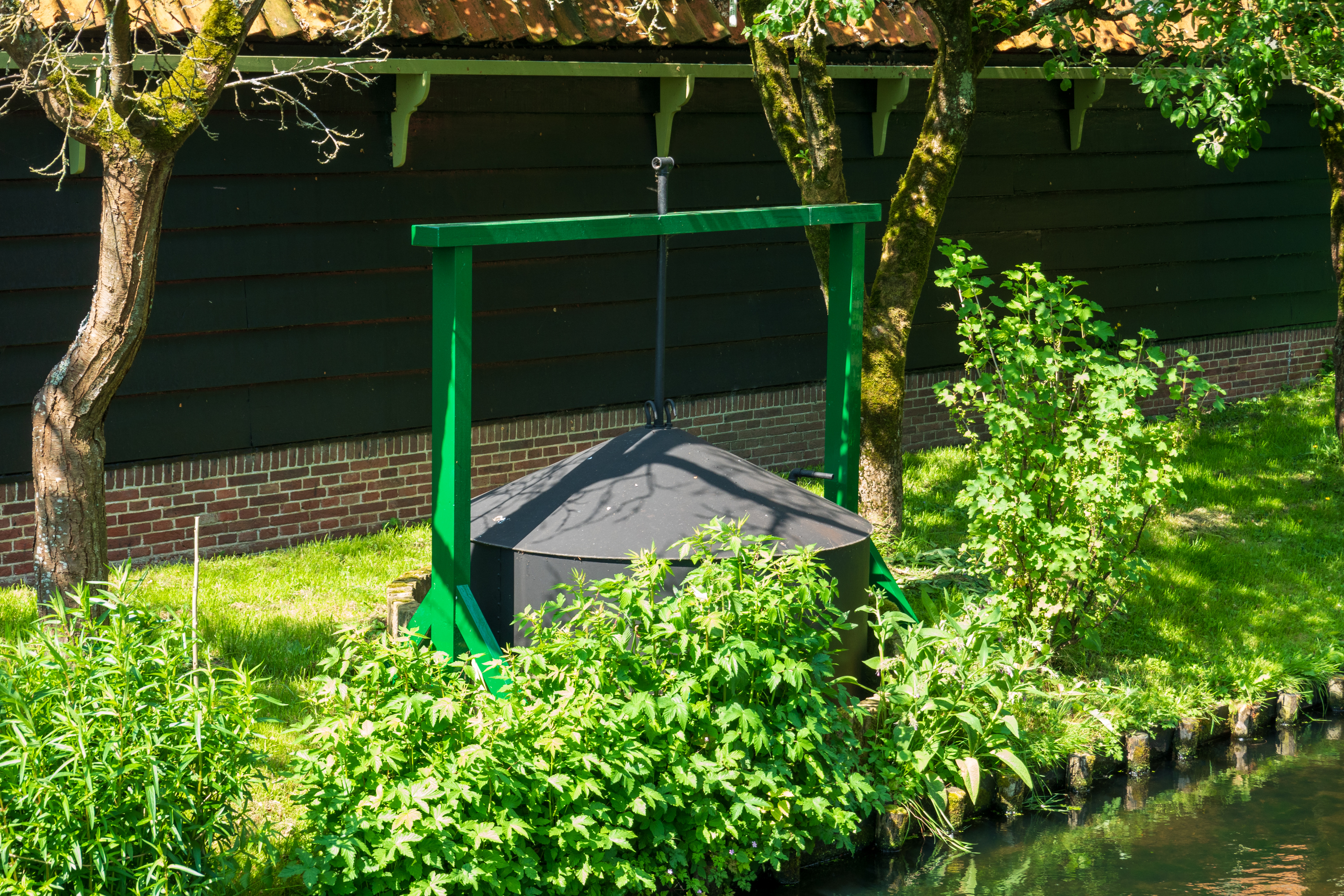
When you have all of that water and decomposing vegetation, you can harvest methane gas!
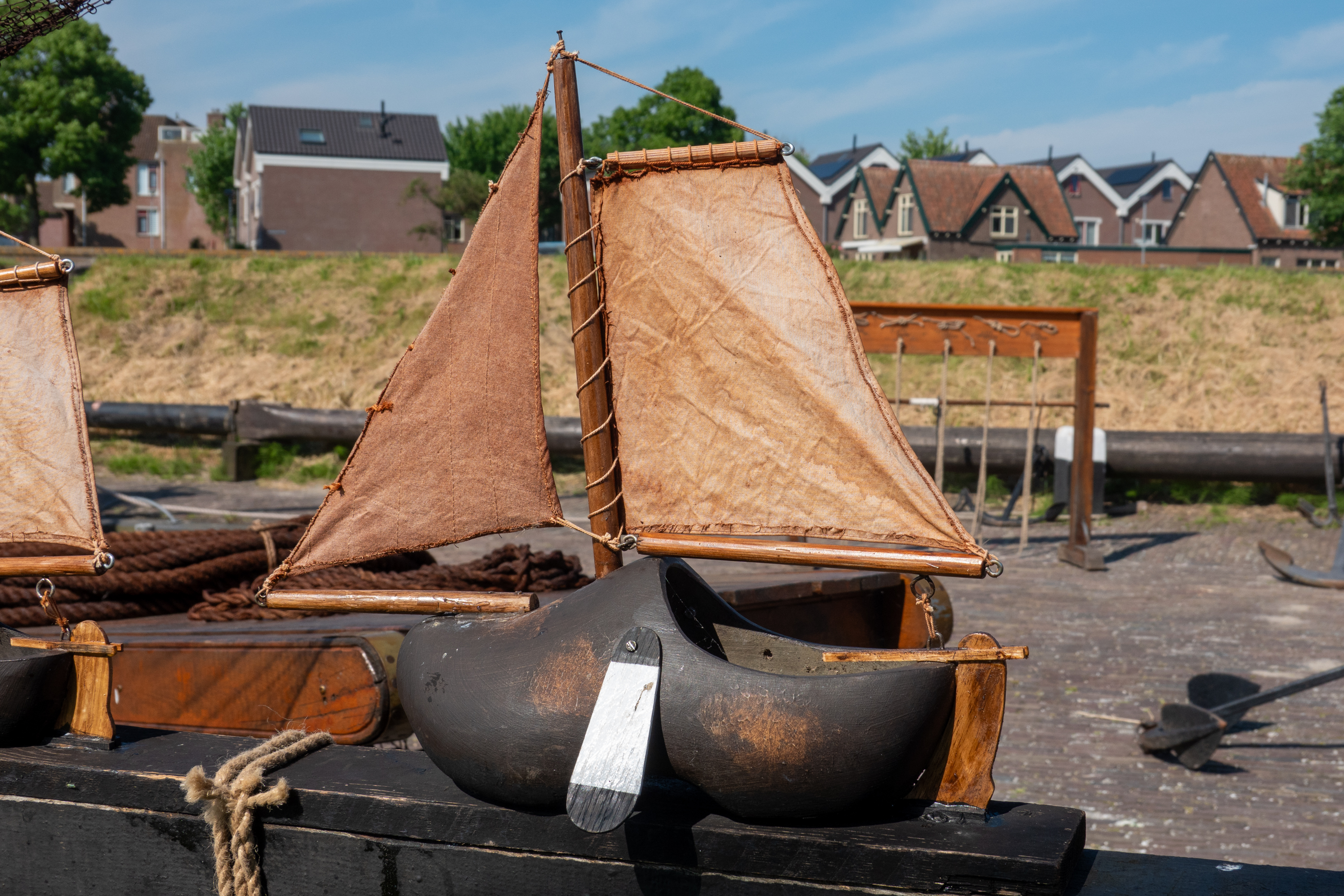
Sabot sailing boat, complete with lee board. Very Dutch!
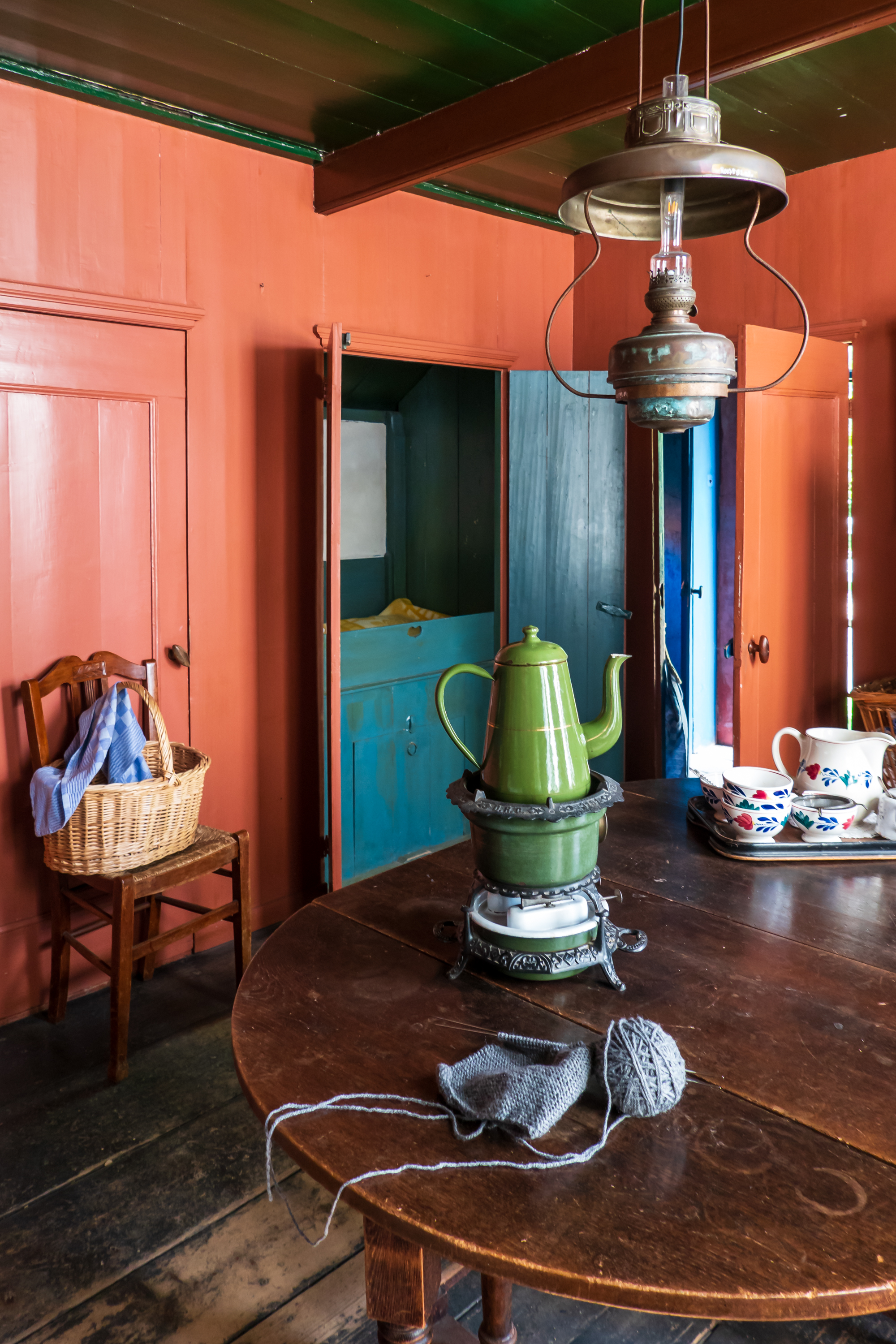
During the summer, all cooking was done using this paraffin stove.
Pull the gutter in and it fills your water barrel inside the house.
Boat with lee board pulled up.

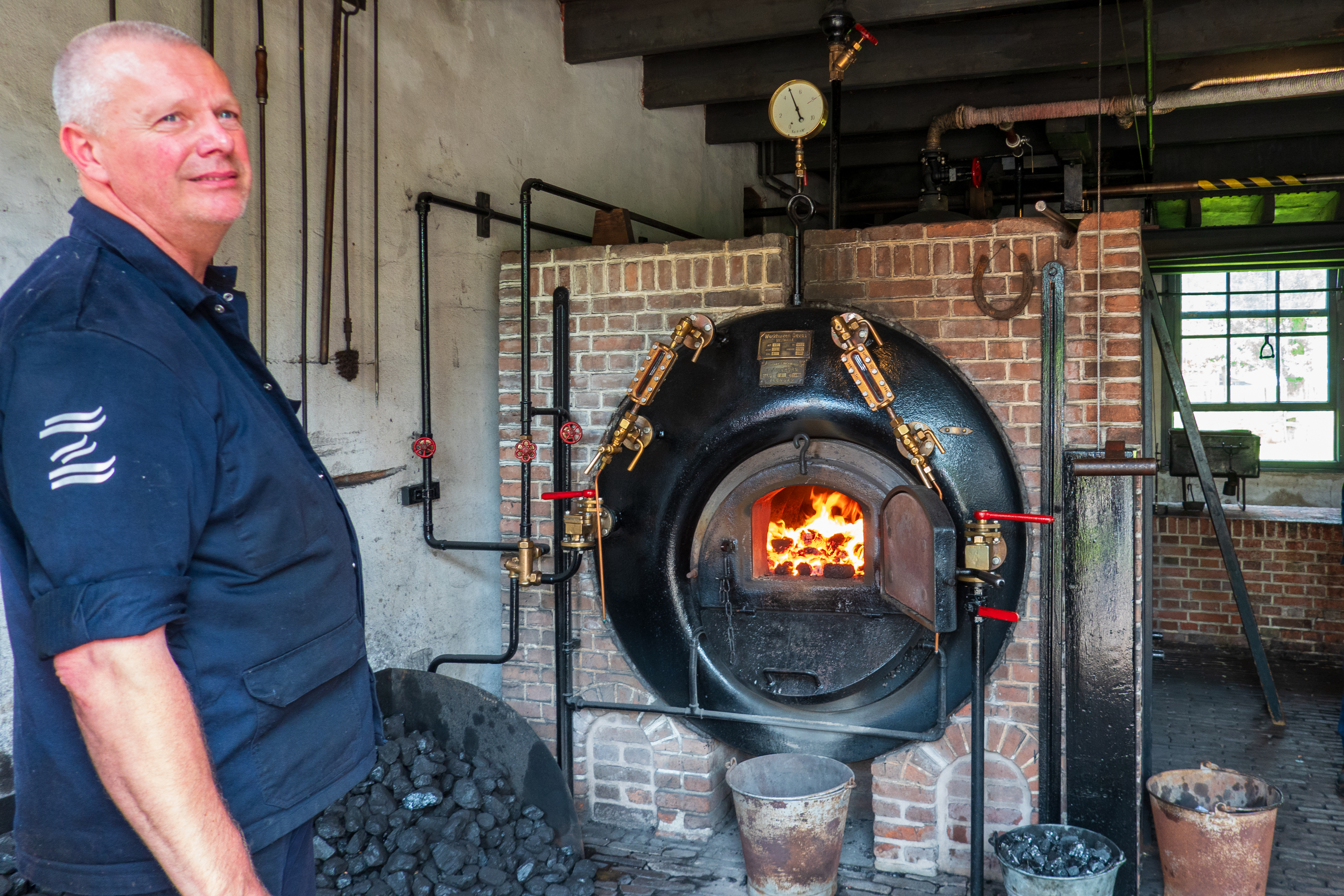
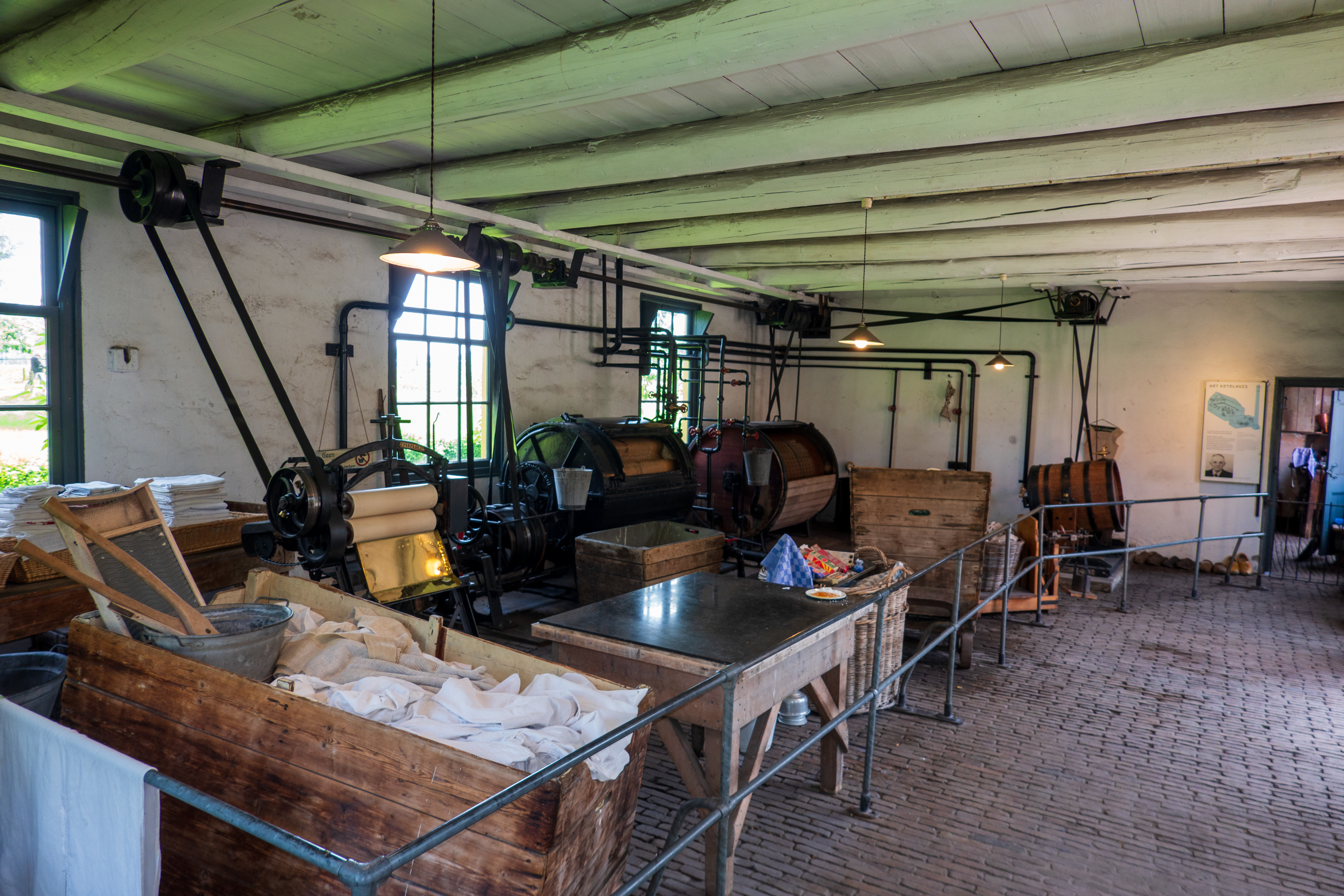
Fred especially enjoyed the steam laundry with its engine. Who would have imagined that there would have been a need for a large, mechanical laundry? And that the owner would become one of the wealthiest people in town. (Nice house!)

Firing up the boiler.
Always important to get good help.
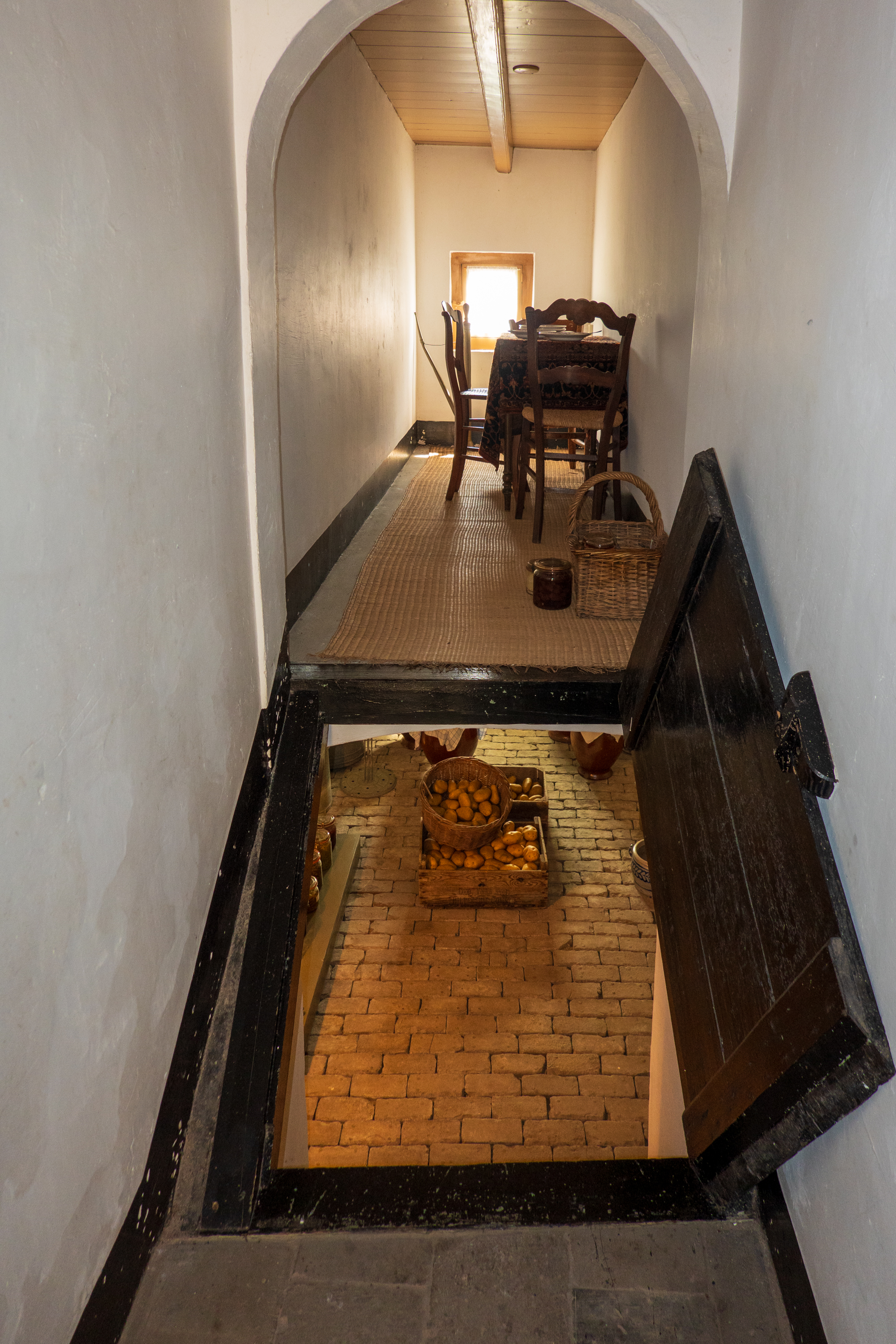
The laundry owner’s house even had a cellar, under the stairs.
The power shaft along the roof ran washers and other machines.
The laundry owner’s house was definitely up market.

We also learned some more about the herring fishing industry and the reasons for and effects of building the dyke on the local population.  Folks whose houses were on the wrong side of the dyke got wetter.

The car park is at a considerable distance and a ferry runs from the museum to the town on a continuous cycle.  We took advantage of this and made the round trip on the ferry, which gave us good views of the town of Enkhuizen from the water and of the bridge that runs across the dyke. 

The watergate.
Fishing vessels.
Citroen 2CV (We love these old beasts.)

Finishing the outdoor museum, we moved on to the indoor part of the museum. The theme here is water, especially the history of horrific floods that lead to the dyke across the mouth of the Zuiderzee. There were also exhibits of local life and industry, including some wonderful old films. The boat house held a wide range of local boats, including an ice boat.

After another night of heavy rain and thunderstorms (and a somewhat waterlogged campground), we headed back to Nijmegen for the bicycle repair the following day.

The parts were in and the GoCycle rep had brought them down from Amsterdam personally. After what seemed at times an eternity of waiting, the actual replacement of the board took ten minutes, and solved the problem. GoCycle also checked our battery that would not charge and provided a new one as a warranty repair. Bikes repaired, the ride back to the campground was super easy!

The Bridge that was too Far (Part 2 Arnhem)

Our campground in Malden sits right between the two major drop zones of the 82nd Airborne. We crossed the Maas-Waal canal to the west of town anytime we drove anywhere. Our rides into town to tour or visit the bike shop went right down the route of the old road. The sense of history was palpable.

To our east, in the Groesbeek landing zone, is the Freedom Museum. (https://freedommuseum.com/#) This museum, a bit like the Peace Museum in Caen, France, touches on a subject that most British and Americans cannot really understand – life under occupation. The US and Britain suffered terrible losses, but we never suffered an occupation by a foreign army. Occupation raises many complex issues as each person tries to decide where to place themself on the spectrum between full collaboration and active resistance. There are some very thoughtful exercises you can do to help you understand the challenges. And the usual selections of moving maps and and bomb shelter where you can feel a raid. Not at all the usual military museum – highly recommended.

Finally, on a day with a decent weather forecast and rain jackets in hand, we set off to Arnhem to see the bridge that really was too far. We started by taking the bus to the station in Nijmegen, then the nifty double decker train to Arnhem (which took about 10 minutes!).

Once in Arnhem, we found the bus at the station to take us to Oosterbeek, home of the Airborne Museum in Hartenstein. (https://en.wikipedia.org/wiki/Airborne_Museum_’Hartenstein’) If Arnhem itself is a bit gritty, Oosterbeek is a lovely spa suburb.

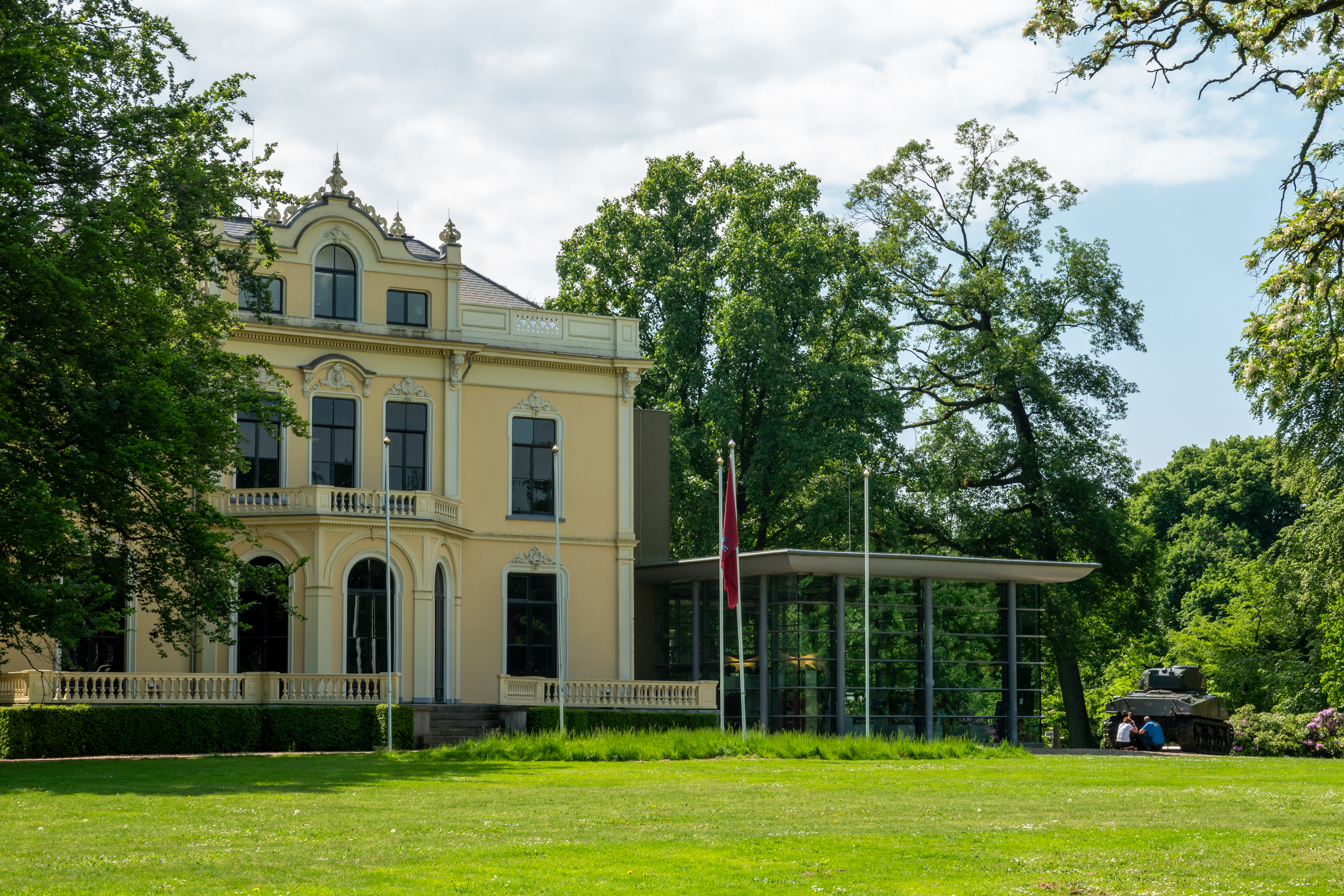
A very different museum from the Freedom Museum, this museum is based on the important role that the Villa Hartenstein played to both the Allies and the Germans, both of whom used it as their headquarters (at different times!) during Operation Market Garden.

The villa. See the wikipedia link for a wartime photo.
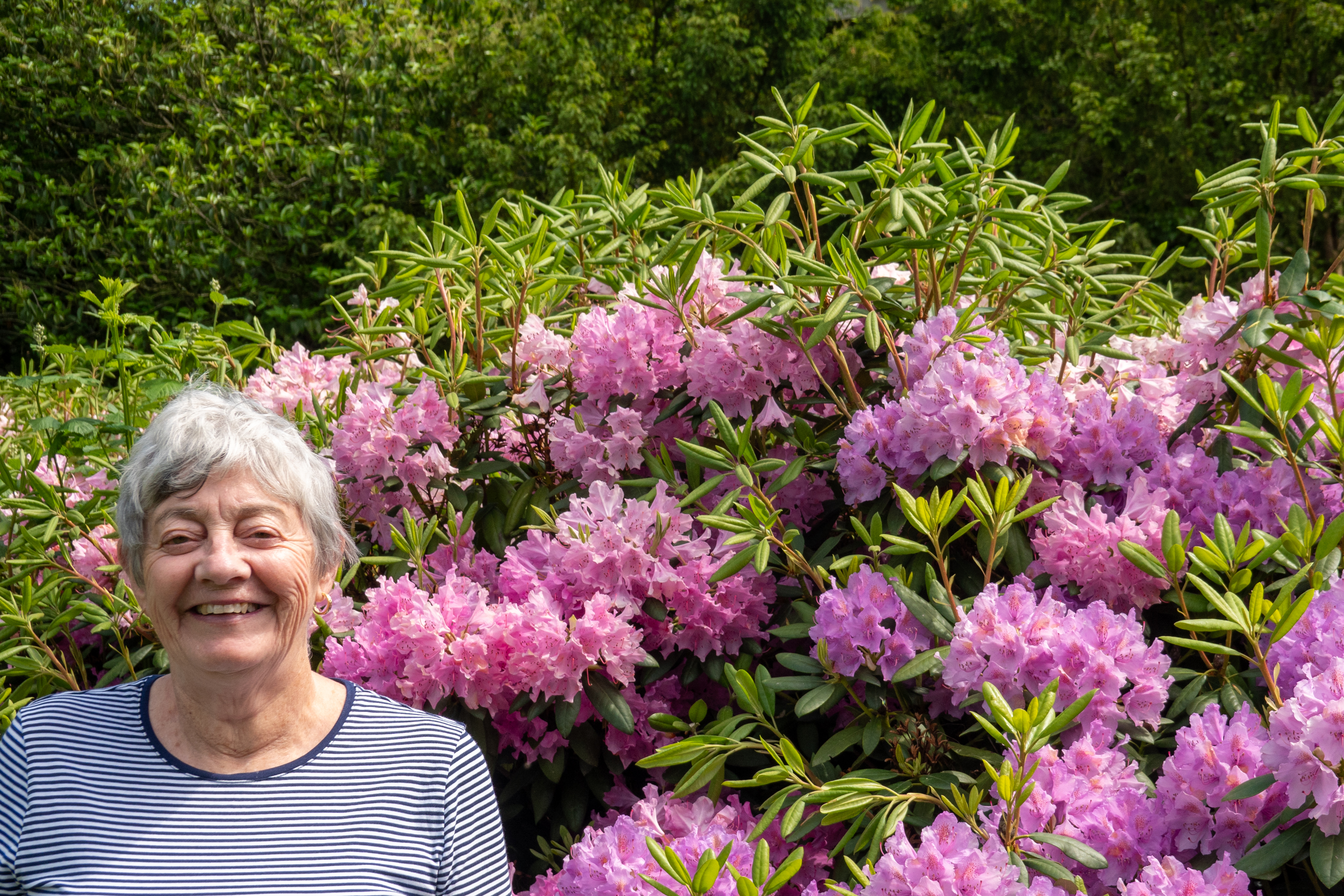
Denise among the Rhododendrons.

The museum is known for the “Airborne Experience,” which lets you walk through the battle from one side to the other. It was well done. The actual room that Colonel Urquhart used as his headquarters has been restored, complete with mannikins. The nearby St. Elizabeth hospital was used by both sides, at the same time. A most challenging arrangement!

Next to the museum was a lovely restaurant. We joined a decidedly upmarket crowd (and a few cyclists) for a nice lunch in the sun.

After taking the bus back into town, we walked until we could see the Arnhem bridge.

Unlike Nijmegen, this is a replacement bridge.

Photo taken, we headed back to the station to repeat our journey back to the camper. And it did not rain!

A Saga of Bridges (Part 1 Nijmegen)

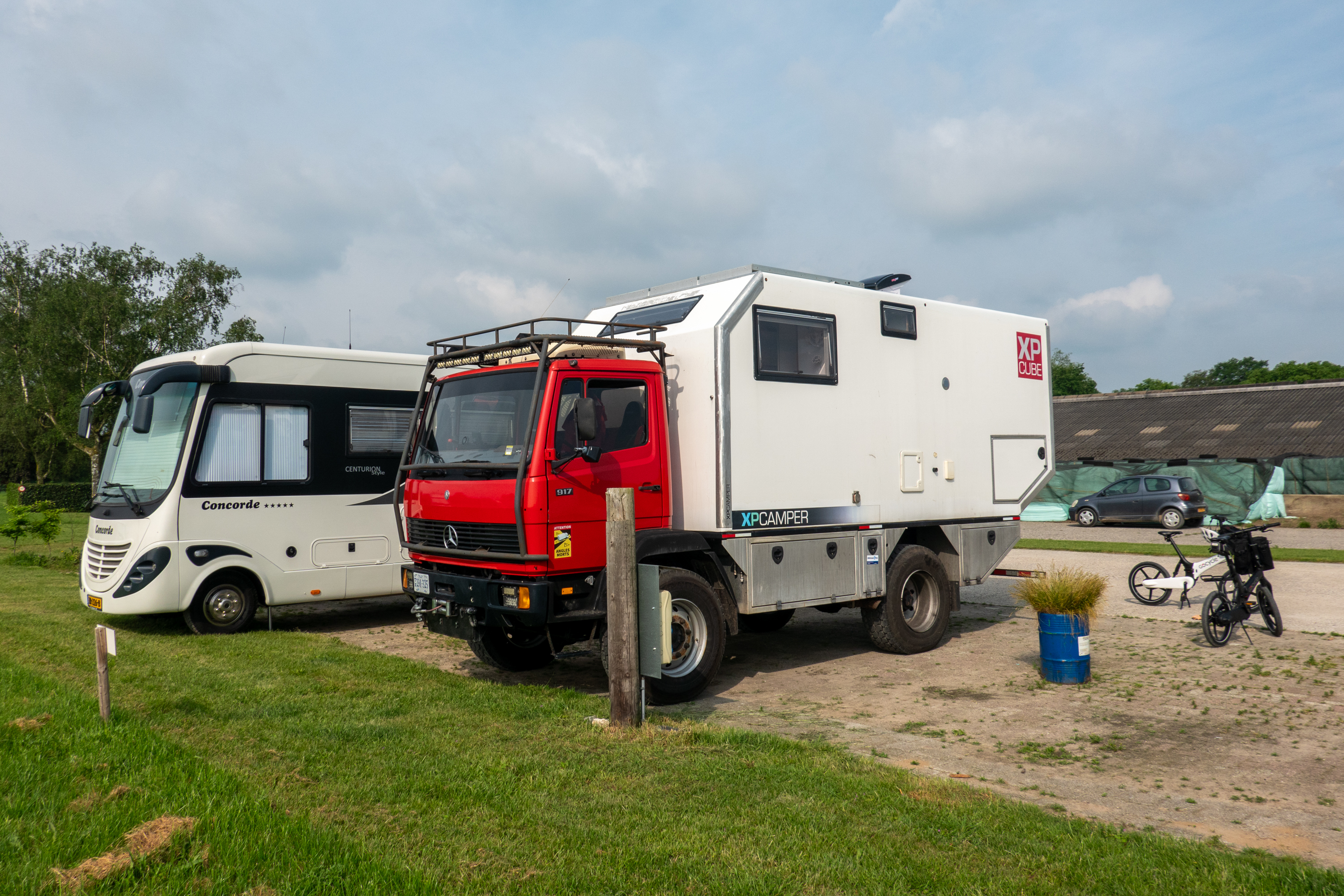
We found a lovely aire/stellpatz just south of Nijmegen (https://camperplaatsmalden.nl) and settled in to what was to become our new home for a long time! The camperplaats Malden is a working farm and we often had a decidedly bovine serenade and bouquet!

We are never the biggest thing around.

We had picked Nijmegen as the local GoCycle dealer, FIJN-Fietsen (https://fijn-fietsen.nl) is listed on the GoCycle website as having a GoCycle guru. We had also chosen Nijmegen as it is on the “Bridge too Far” road and we had wanted to visit some of the sites of Operation Market Garden. Nijmegen is also probably the oldest town in the Netherlands, dating back to the Romans, at least.

What was Operation Market Garden? In short, in my amateur opinion, albeit shared by several authors, it is yet another proof that General Montgomery was not very good, and worse, not willing to own up to his failings. (See: General Sosabowski) For a reasonable overview, start with the Wikipedia (https://en.wikipedia.org/wiki/Operation_Market_Garden) and move on to books by Cornelius Ryan or Trevor Beevor.

Setting out from the campsite, we rode through a pretty forest and dropped right onto the amazing Dutch cycle route network. In fact, we reached town so quickly that we overshot our turn! The “guru” turned out to be Roy Fijn, the owner of the shop and a wonderful bike nut and GoCycle enthusiast. Roy took the time to look at both bicycles and found a quirk with the one that did have power, plus the need for new brake pads. So he agreed to place the order for the parts and hoped they would be in the following day. Great news!

Unfortunately, Murphy noticed the situation and struck! That night we learned that the parts (motherboards) were only available in the UK and there were only two there. They would be sent but due to the holiday weekend (yes, another one!) it would be the following week before they arrived. Fred meanwhile was managing to cycle with no power, as Holland is fortunately quite flat! So we set out to plot how to spend the next few days.

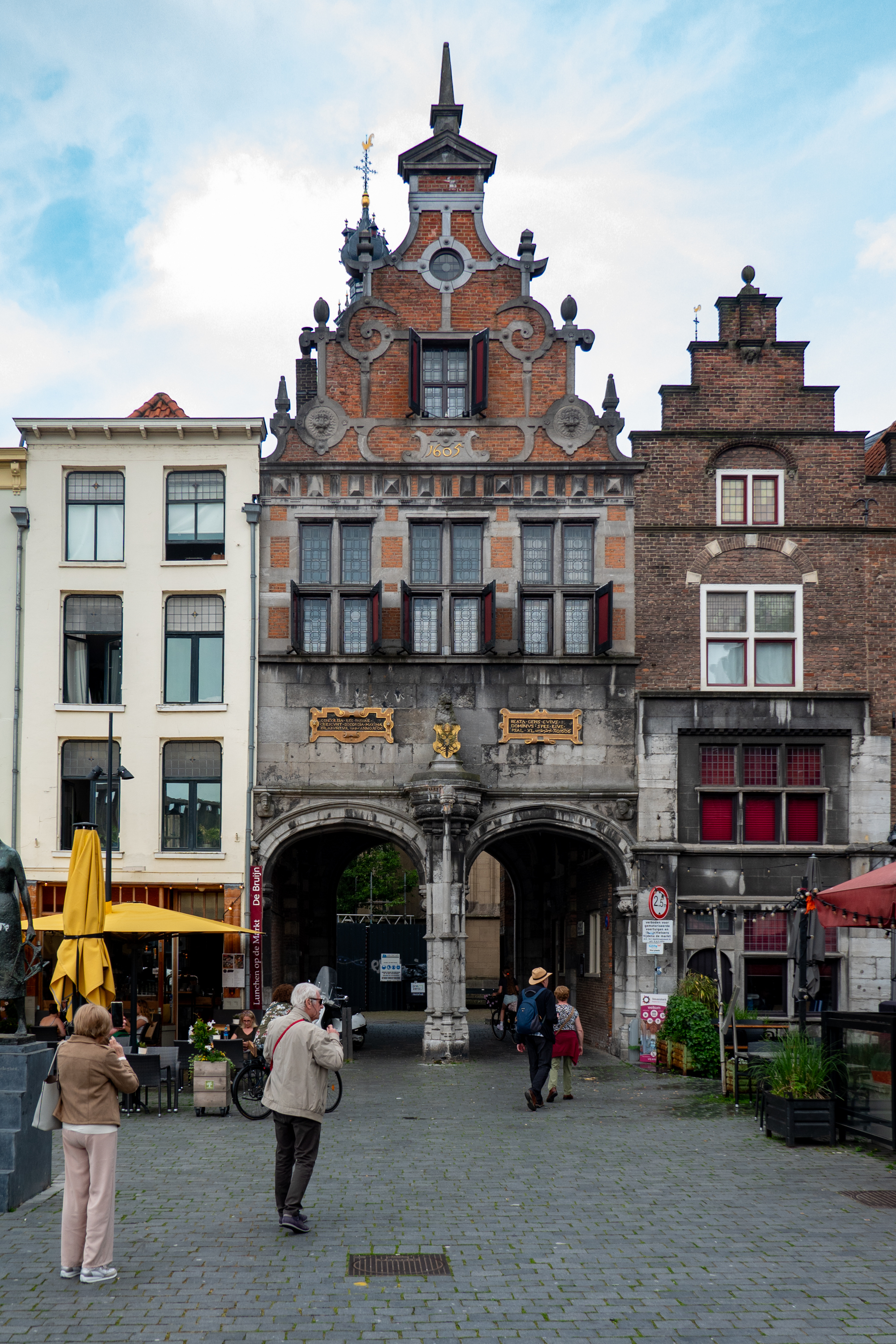
The weather forecast in Nijmegen was decent for the following day, so we organized the bikes and set out to visit Nijmegen. We found the old town and Market Square easily and began our visit with coffee and apple pie (with whipped cream of course) watching huge trucks descend the narrow, medieval pedestrian walkway we had just climbed. Great fun!

We weren’t even sure we could ride our bikes up this street, and then the big trucks started heading down!

After Denise raided the cheese shop, we moved on to the city tourist office and then went to the Church of St. Stevens. (https://en.wikipedia.org/wiki/Saint_Stephen%27s_Church,_Nijmegen) This was most interesting as it is now a Protestant church. It had been both Catholic and Protestant multiple times in the past, depending on the politics of the day and this was clearly visible especially when looking at the altar.

Spare, even compared to English cathedrals. Services are still held on Sundays.
Double arches leading from the market to the cathedral.
Glorious organ.
Tombs under the altar spaces.

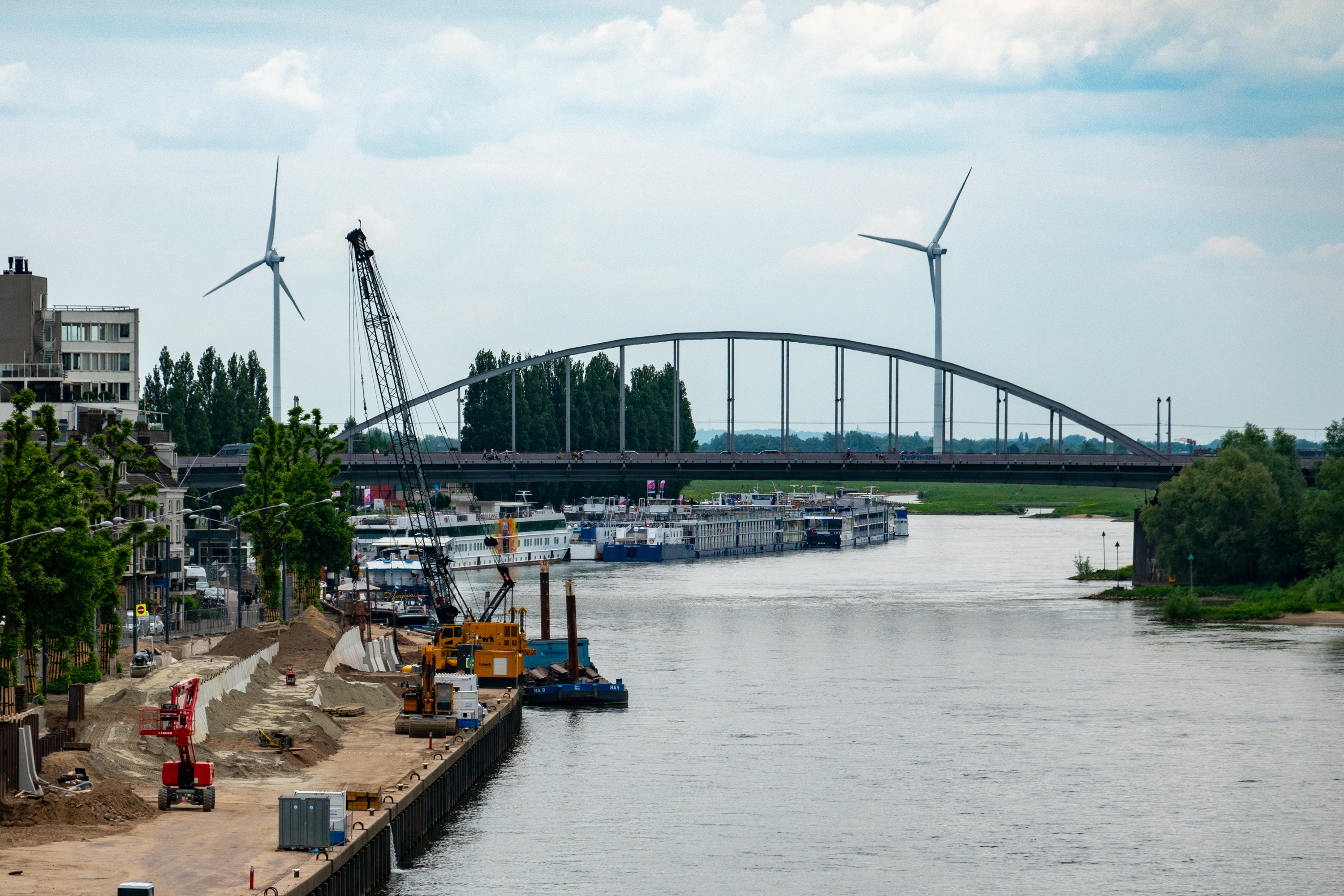
It was then time to find the remains of the old castle which had been demolished in 1795 to make cement. (!!! Talk about commercializing your history!) (https://en.intonijmegen.com/discover/history/historicaltimeline/demolition-of-the-castle-nijmegen-loses-its-crown-jewel) We found the ruins of the St Nicholas Chapel, also known as the Valkhof Chapel, which dates back to 1030. This makes it one of the oldest surviving stone buildings in the Netherlands. We also saw the Barbarossa ruins which date back to 1155. Both were part of this huge castle. The view of the Bridge, which had been taken by the US 82nd Airborne during Operation Market Garden, in 1944, was also good. Though the trees could have used a trim as they rather intruded on the view. There is an excellent site outlining a personal view of Market Garden and Nijmegen. (https://alondoninheritance.com/out-of-london/operation-market-garden-nijmegen-and-the-valkhof/) The Valkhof park was a center of German defense of Nijmegen.

We decided to get a better view and went down to the river’s edge, where we found restaurants as well as a great view of the bridge!

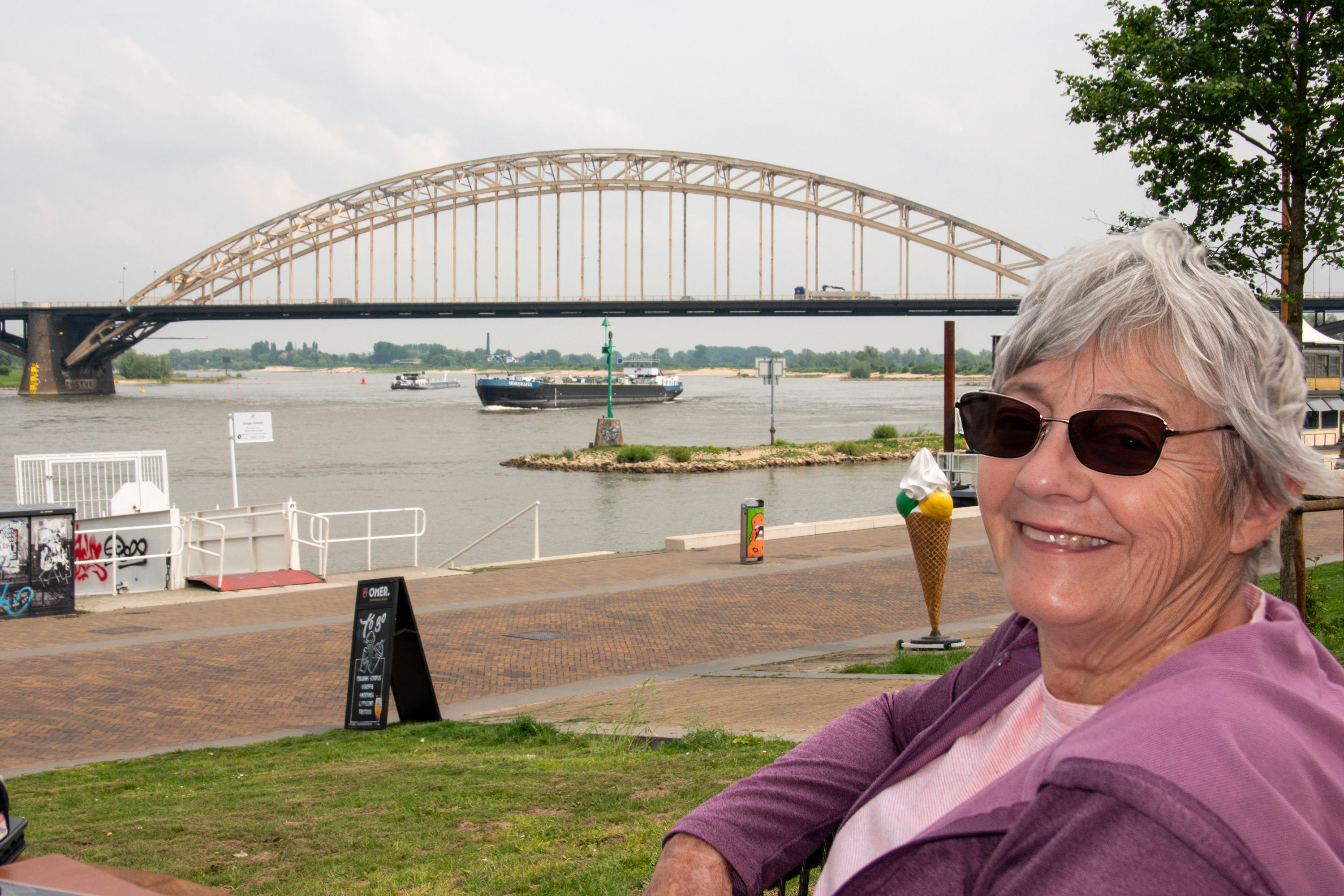
We could not resist and thoroughly enjoyed our lunch as we watched barges passing by on the river. Trivia. This bridge was actually built by the Germans as the Dutch blew the original, 1930’s bridge, when the Germans invaded. In Market Garden, this was the bridge that was not too far, but was, perhaps, too late.

We even got a bit of sun.
Nothing runs like a Deere. In this case, a barge load of them.

Nijmegen has a lot of museums. One of the more interesting ones is the De Bastei Museum. (https://www.debastei.nl/en) The De Bastei (“the bastion”) museum, which was built into the remaining ramparts of the old castle, literally, an old gun bastion, is a bit of an interesting train wreck of museums, covering ruins, dating back to the Romans, and concluding with do it yourself mechanical exhibits which allow you to try to bridge the river, Roman style, set up a river powered ferry, and control flooding. Hours of education and entertainment! The museum brought to life the centuries long relationship between the river and the town from the earliest days when the Romans first established a town there to the present day.

It had cooled off and dark clouds were amassing, so we decided to head for home. Unfortunately the rain started very quickly and was heavy at times, so we arrived back at the camper looking like chilled drowned rats! Hot cappuccinos were required!

The next day quickly became laundry day with all the wet clothes to deal with. We found a local Revolution laundry about twenty minutes drive away, conveniently located by a DIY store so that we could A: park the truck and B: Fred could shop for Rust-oleum paint so that Fred can repaint the roof rack over the cab – it is rusting, We were successful in both endeavors, but the actual painting will have to await a week of sunshine!

Off to the Races!

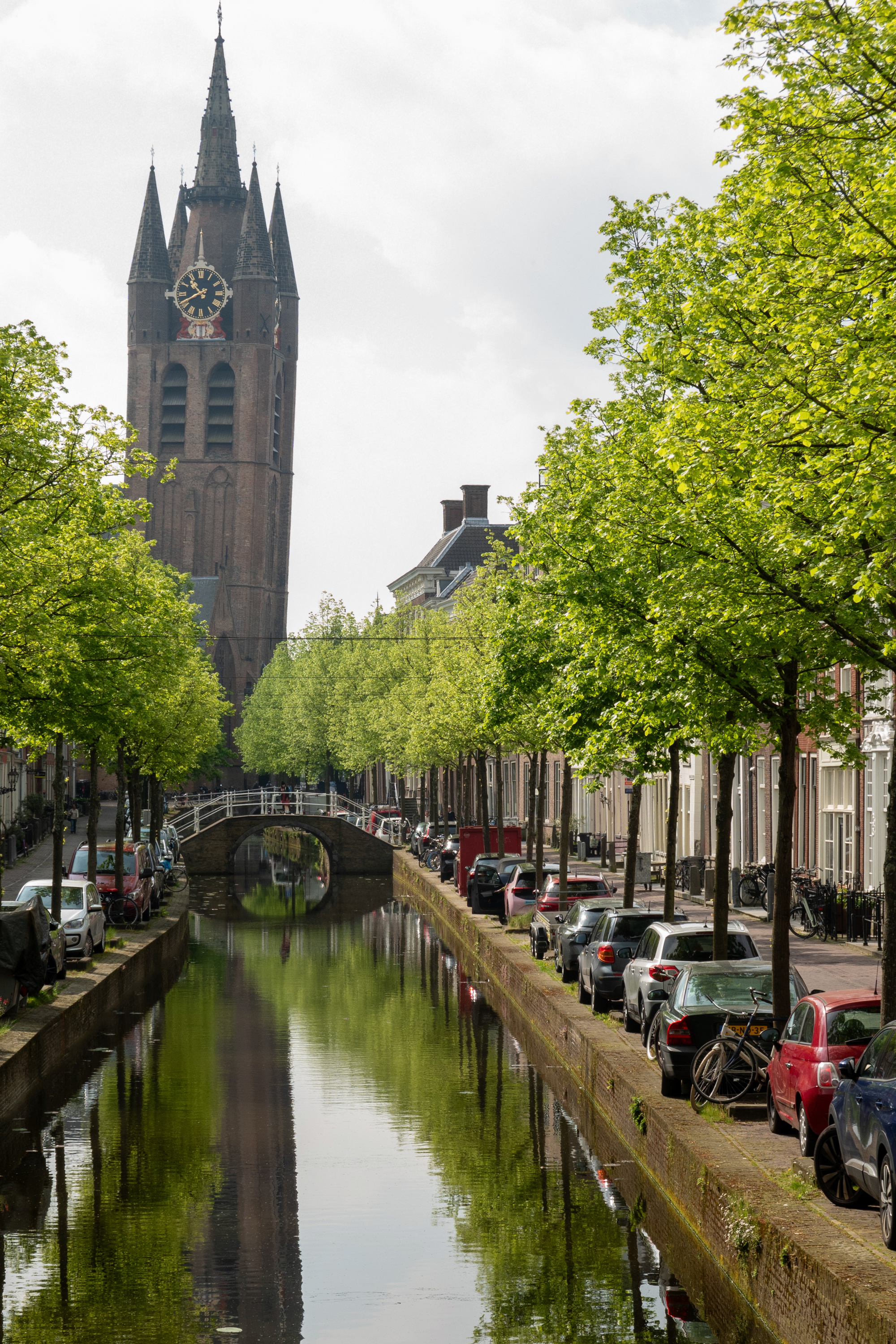
We detoured briefly to Delft on our way to the campground near Leiden. Denise wanted to see it, and although it was a holiday and the Delft porcelain factory was closed, she was expecting a quiet small town. It turned out to be a day of races with hordes of people. We parked not far from the center of town in a huge park by a lake and bicycled in. The wonderful Dutch bike trails soon delivered us into town and yes, Delft really does look like a post card, complete with a leaning tower and, of course, canals.

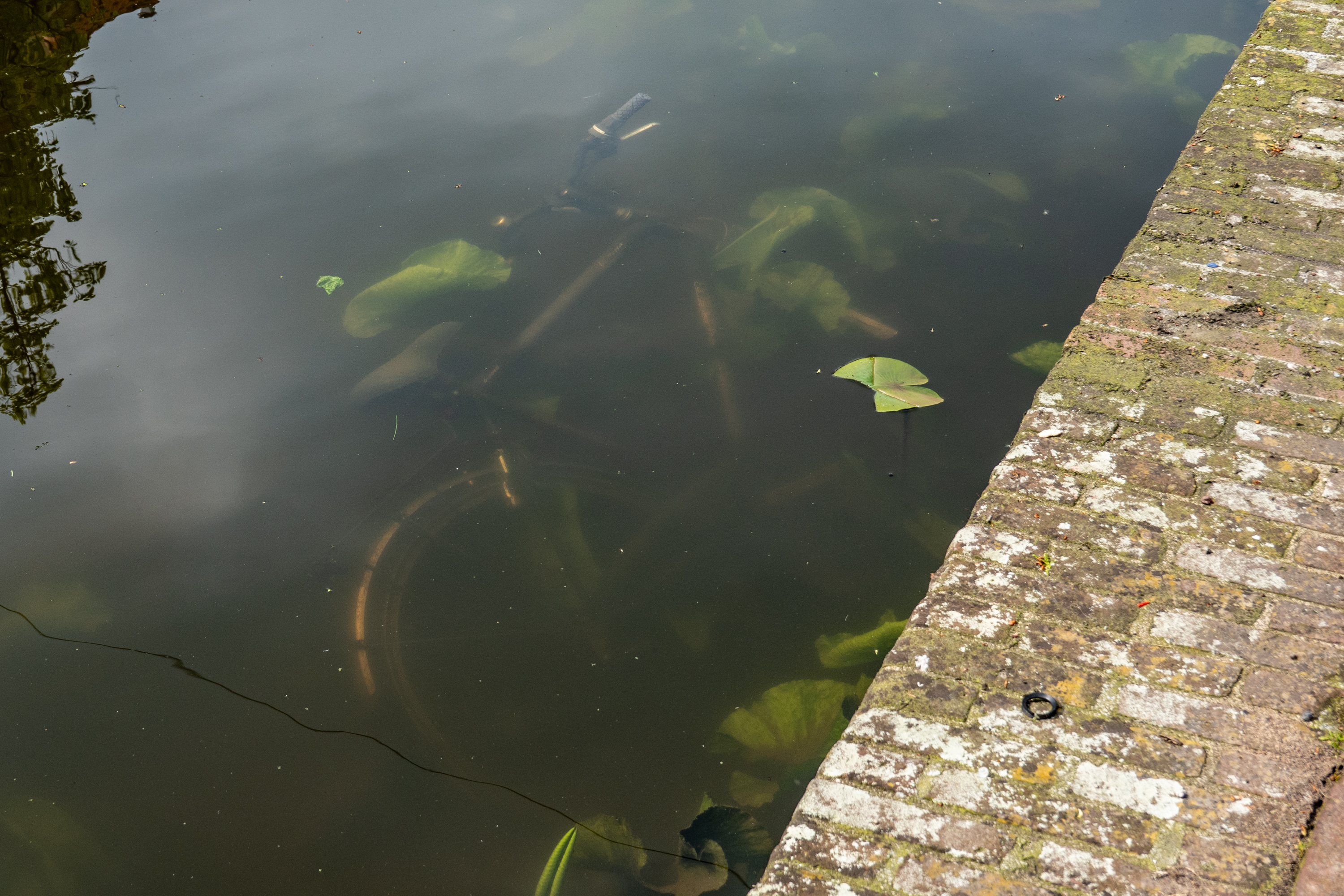
We found a quiet side street to park our bikes, being careful not to join the bikes already in the canal!

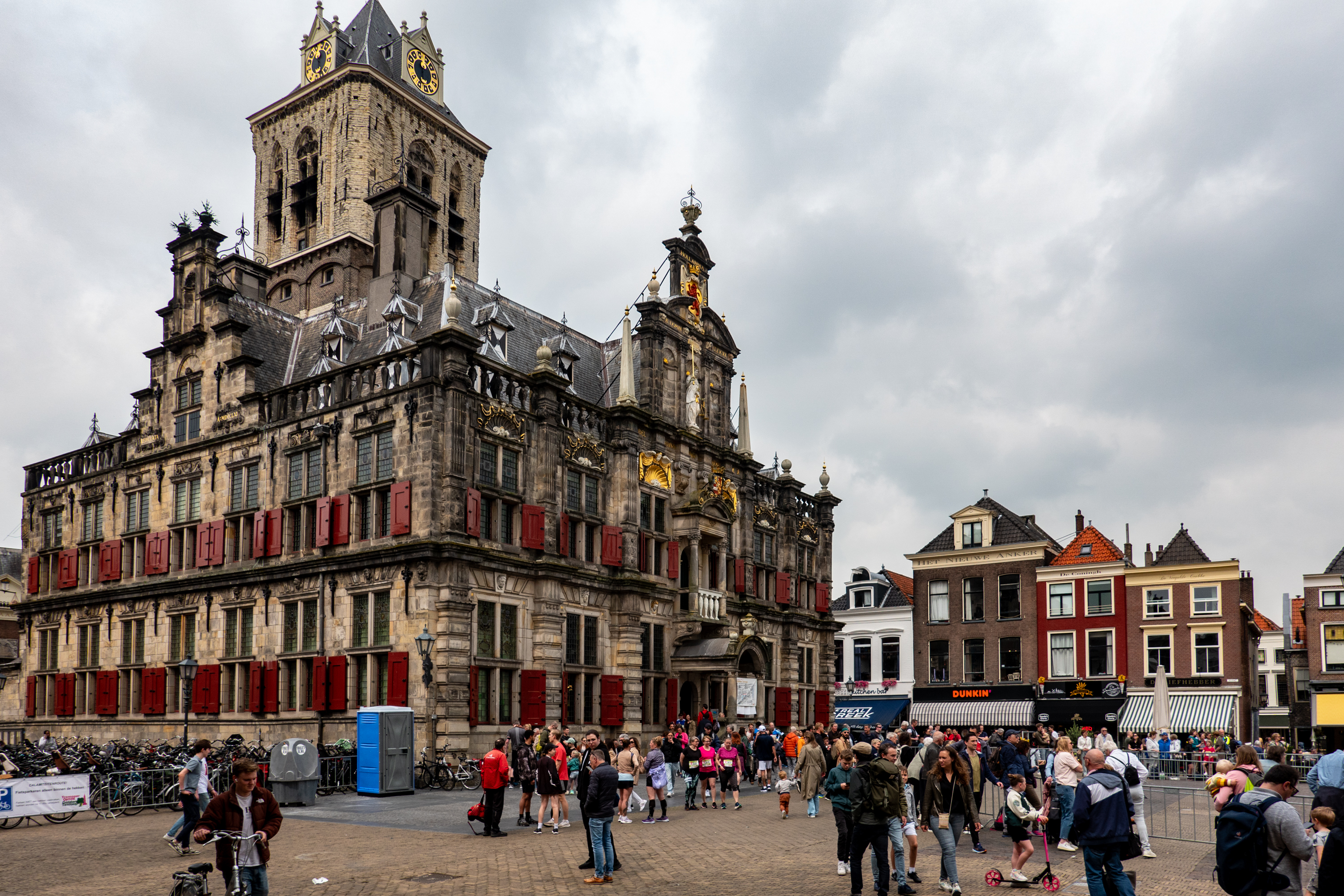
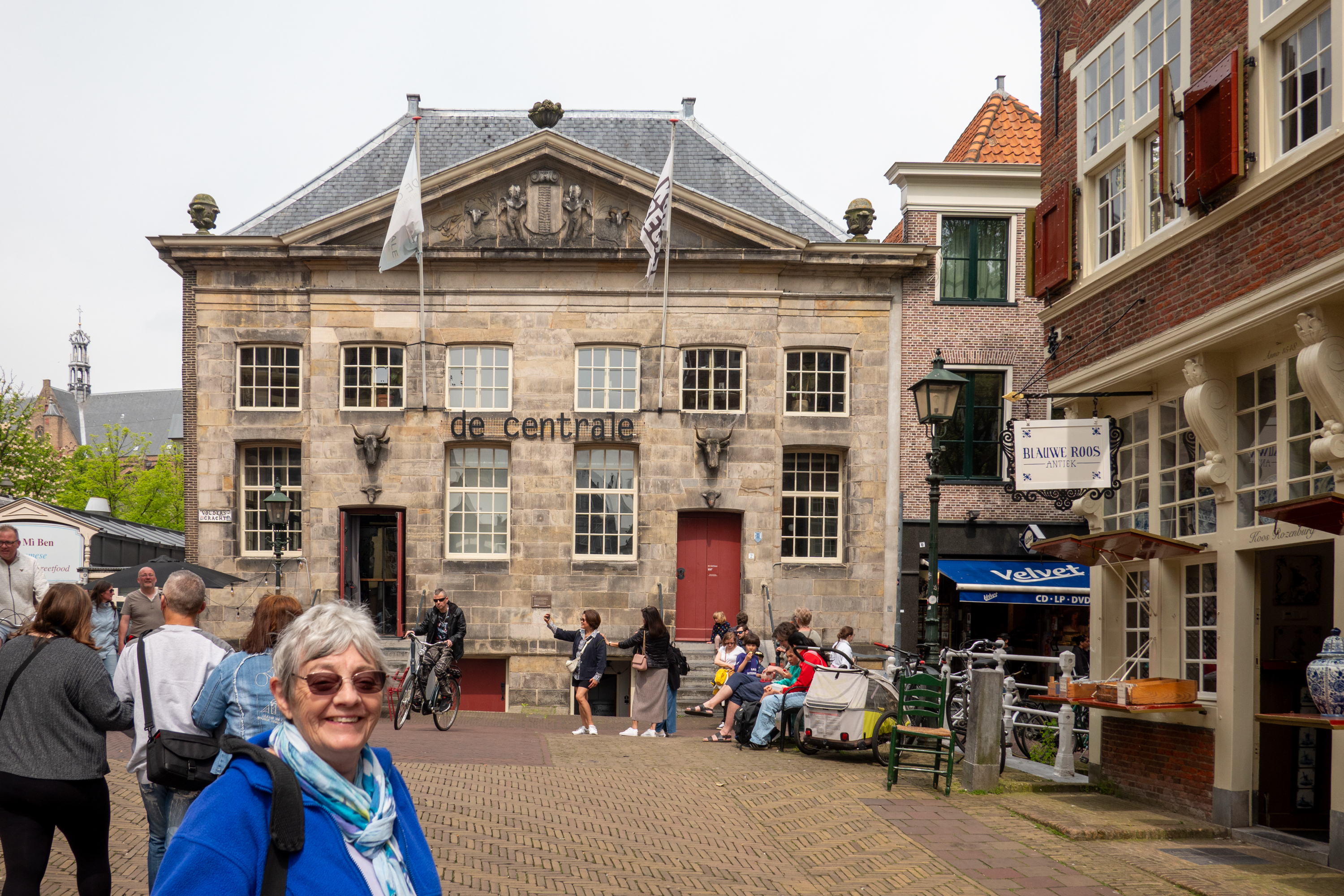
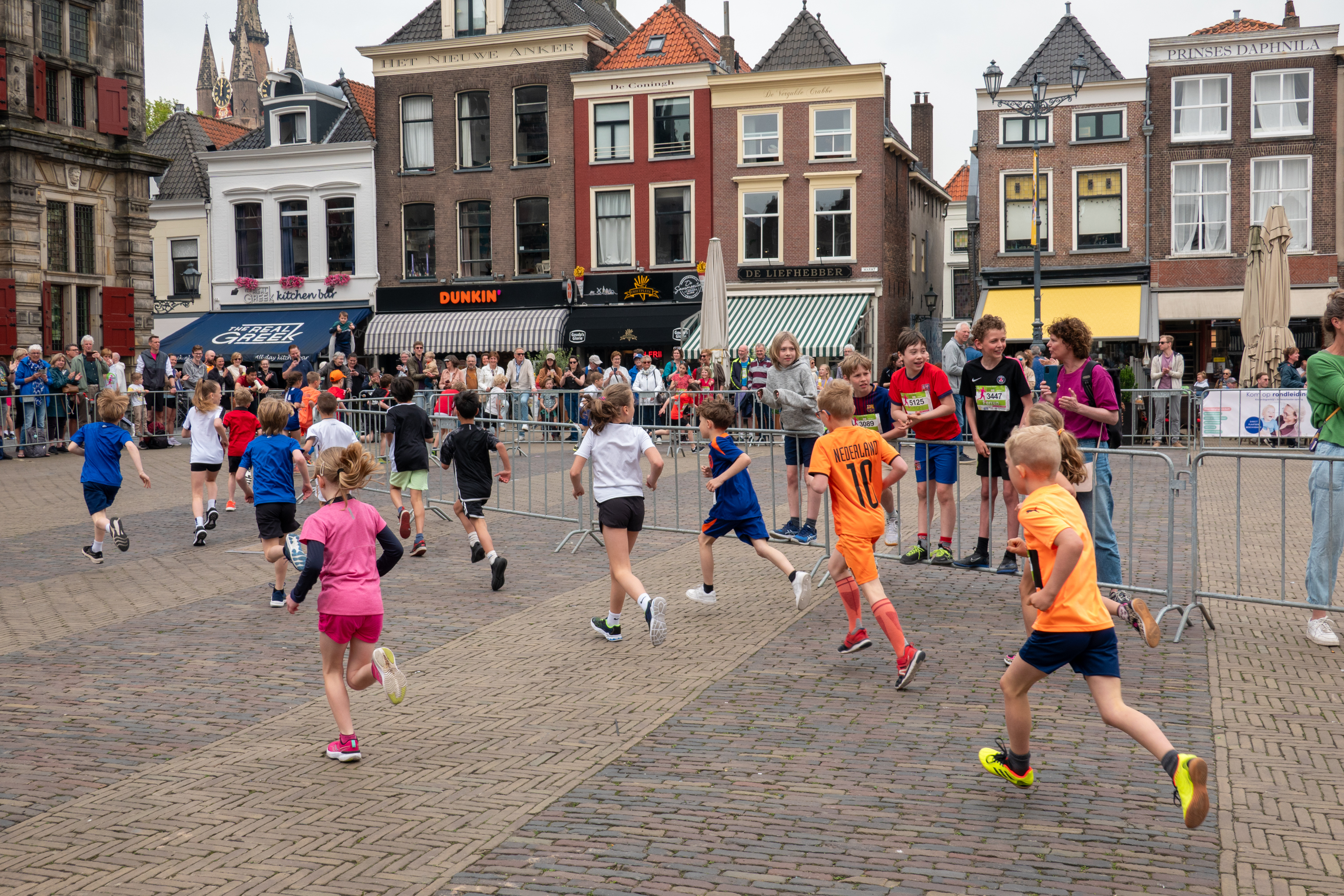
We then worked our way to the main square or “Markt” and found it blocked off with metal railings for the various races. We wandered a little, admiring the old buildings in the medieval trading center or “Waag.” There was the house with butter above it (for butter trading), one with cows’ heads (for meat), and fish etc. And of course the Town Hall.

We enjoyed watching the children’s race around the Markt,

The highlight of our morning was finding a wonderful waffle restaurant. Two cups of coffee, and two different styles of waffle (Brussels and Liegois) later, we were able to face the crowds celebrating Ascension Day.(https://wafelsenzoenen.nl/Menu/)

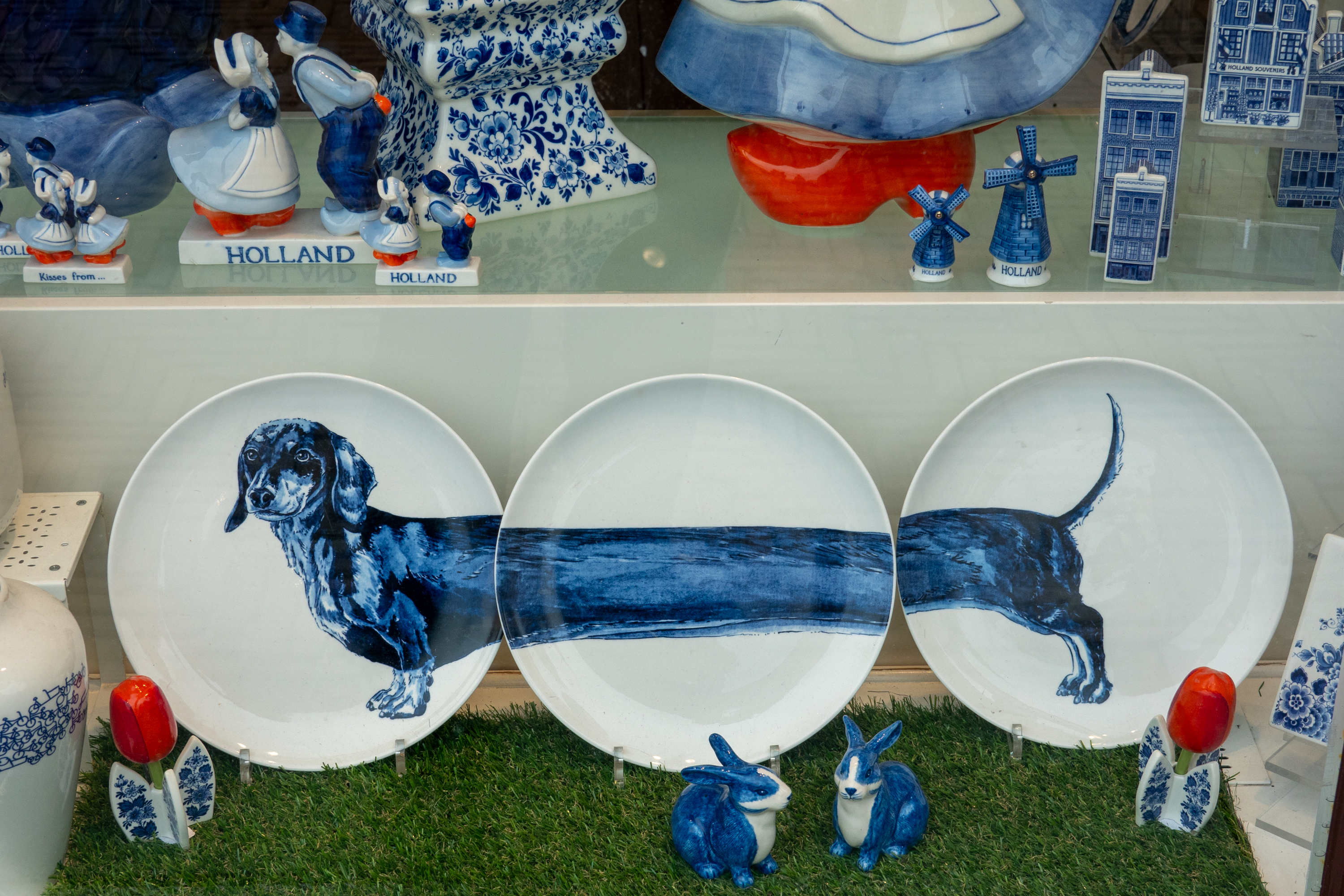
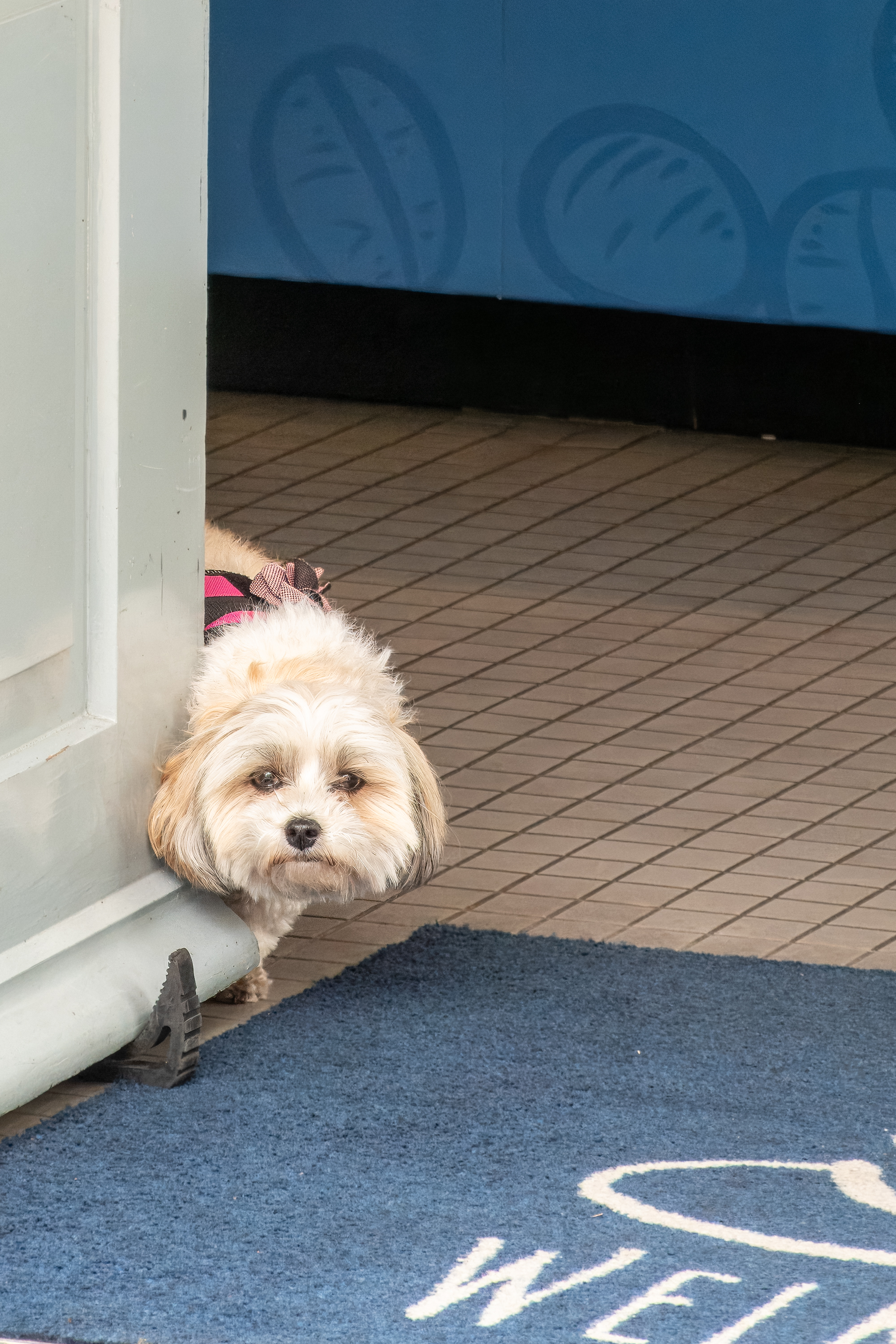
Fortified with coffee, we could enjoy a bit of whimsy in the local shops. (We have friends with dogs who would especially enjoy these images!)

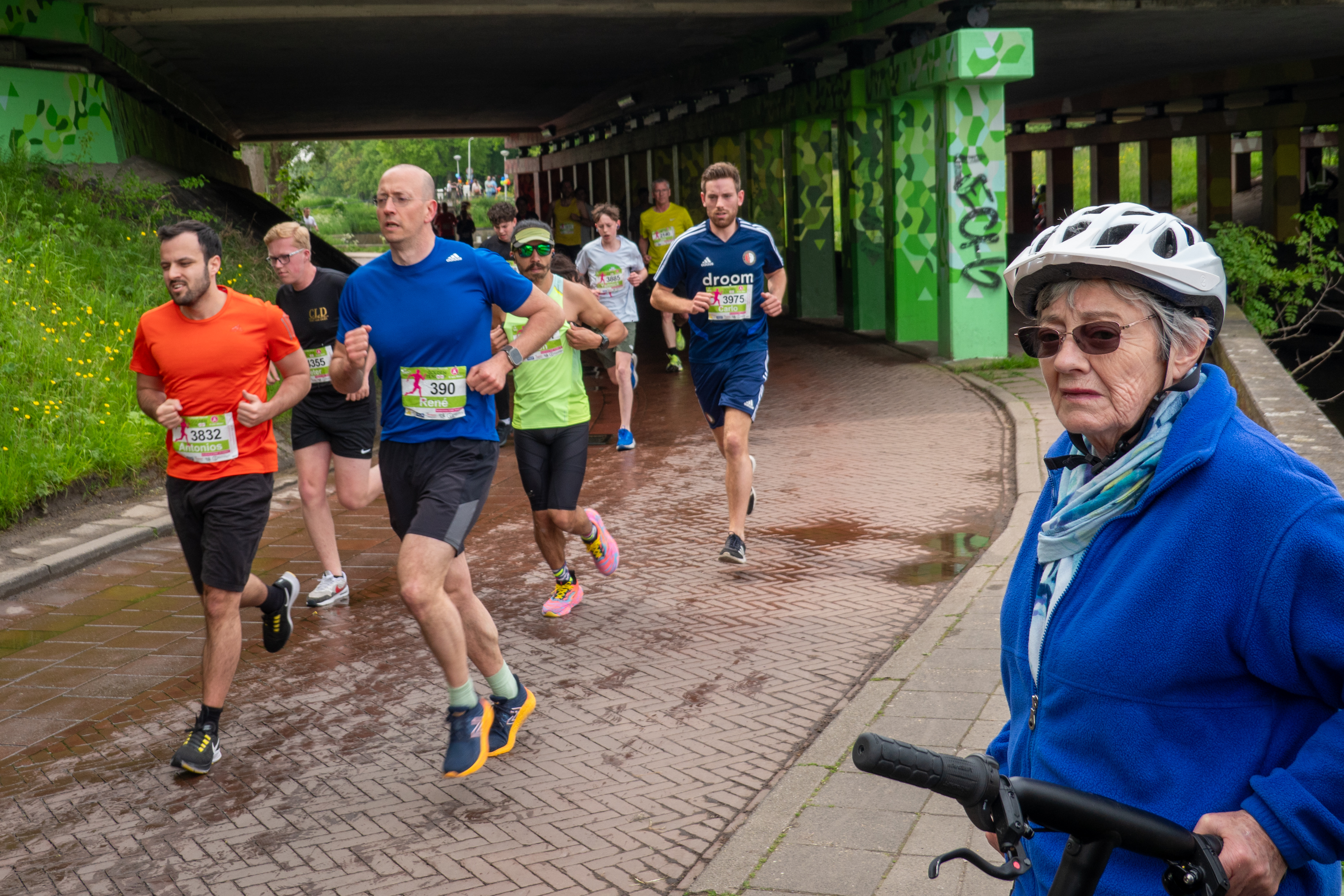
We found a stand selling Bitterballen, which Fred really likes, and nibbled on some before heading back to the bikes to get back to the truck. Or trying to! We found our route back blocked with another race, adults this time. But we did eventually succeed.

We then made our way to the campground outside of Leiden, our base while we attempted to repair our bikes.

The next day, the ride into Leiden was delightful, with a beautiful section across the polder. We found the GoCycle dealer, but we were not able to see the technician who knew GoCycles until late in the afternoon as his cat was very ill. As cat lovers, we were very patient.

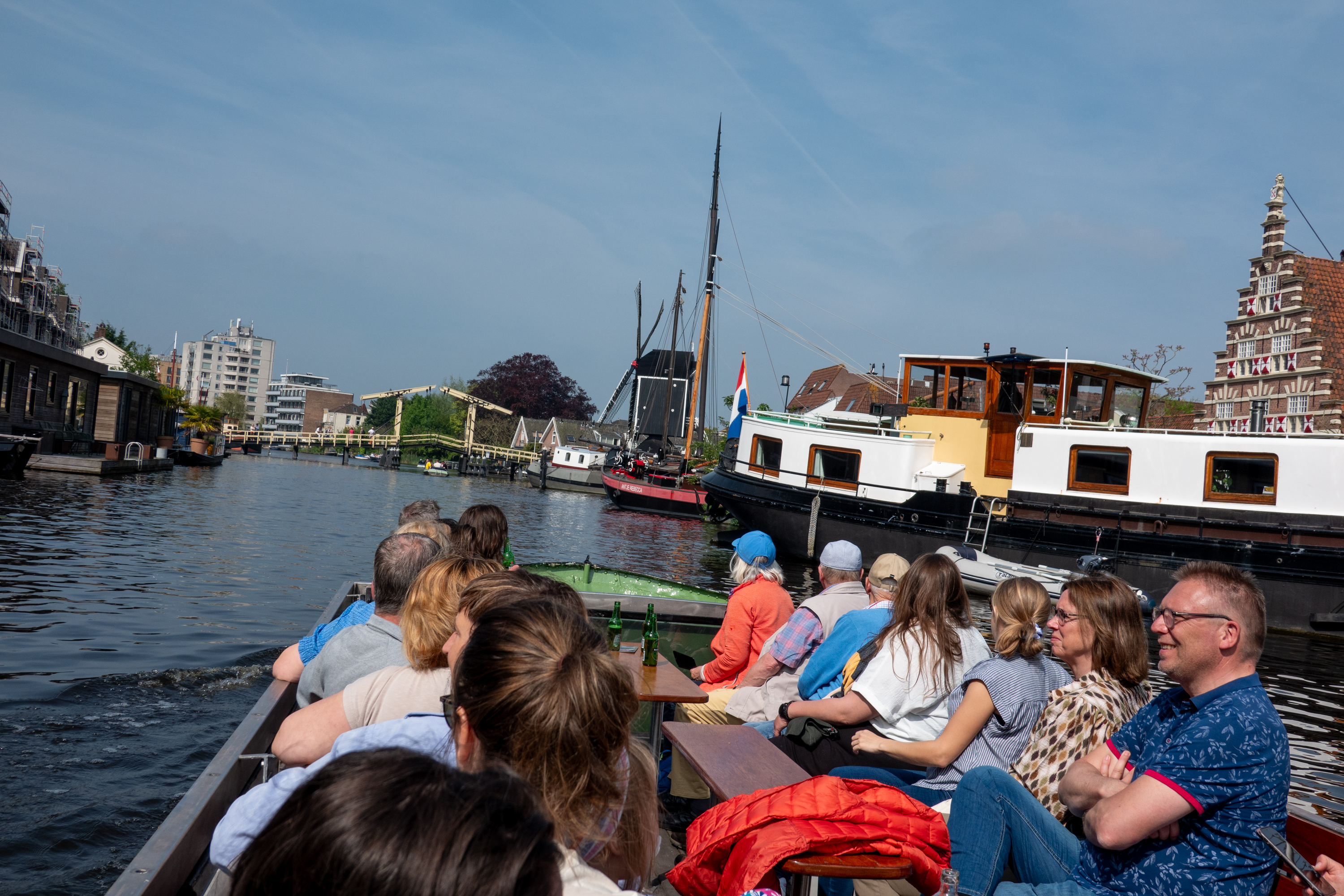
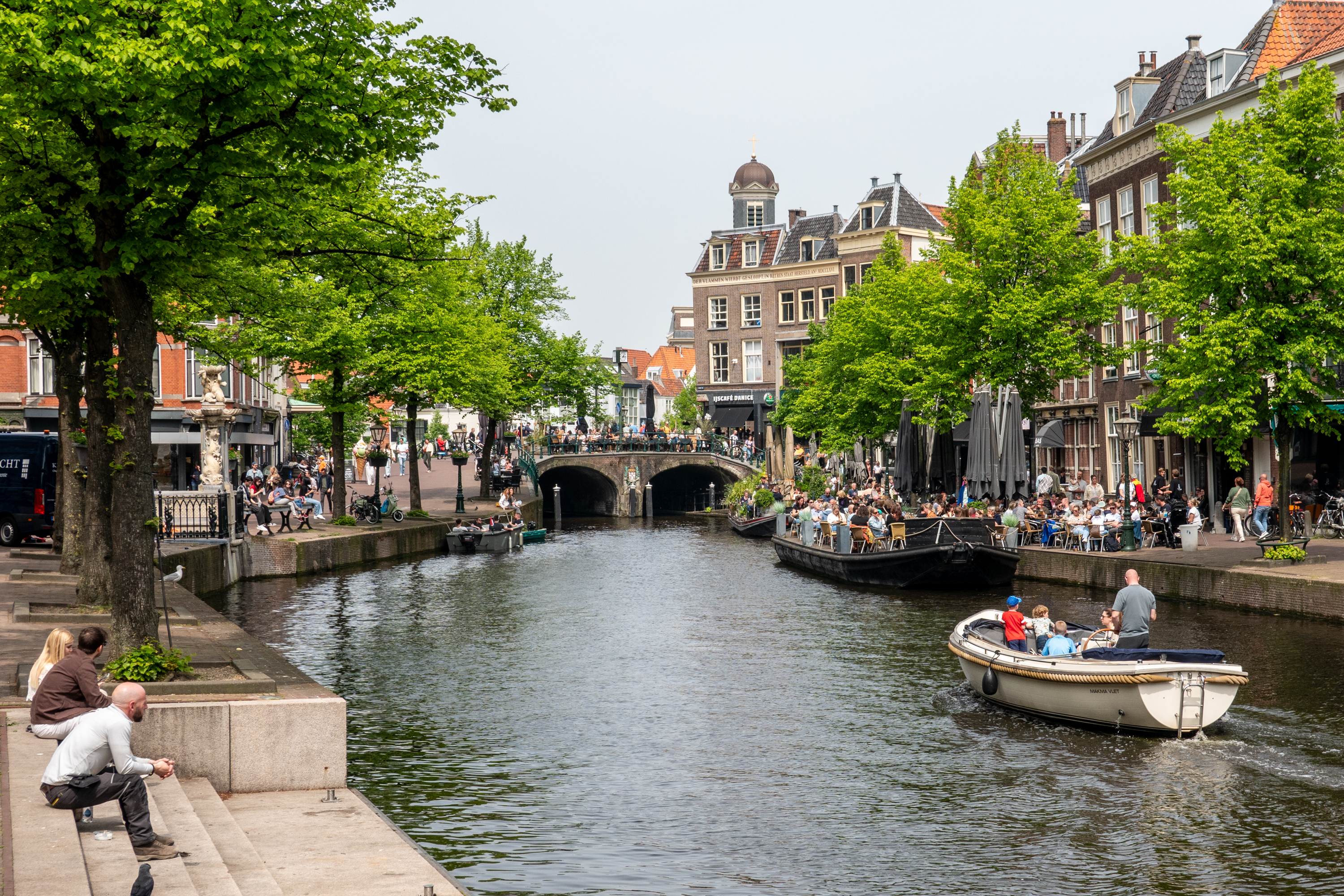
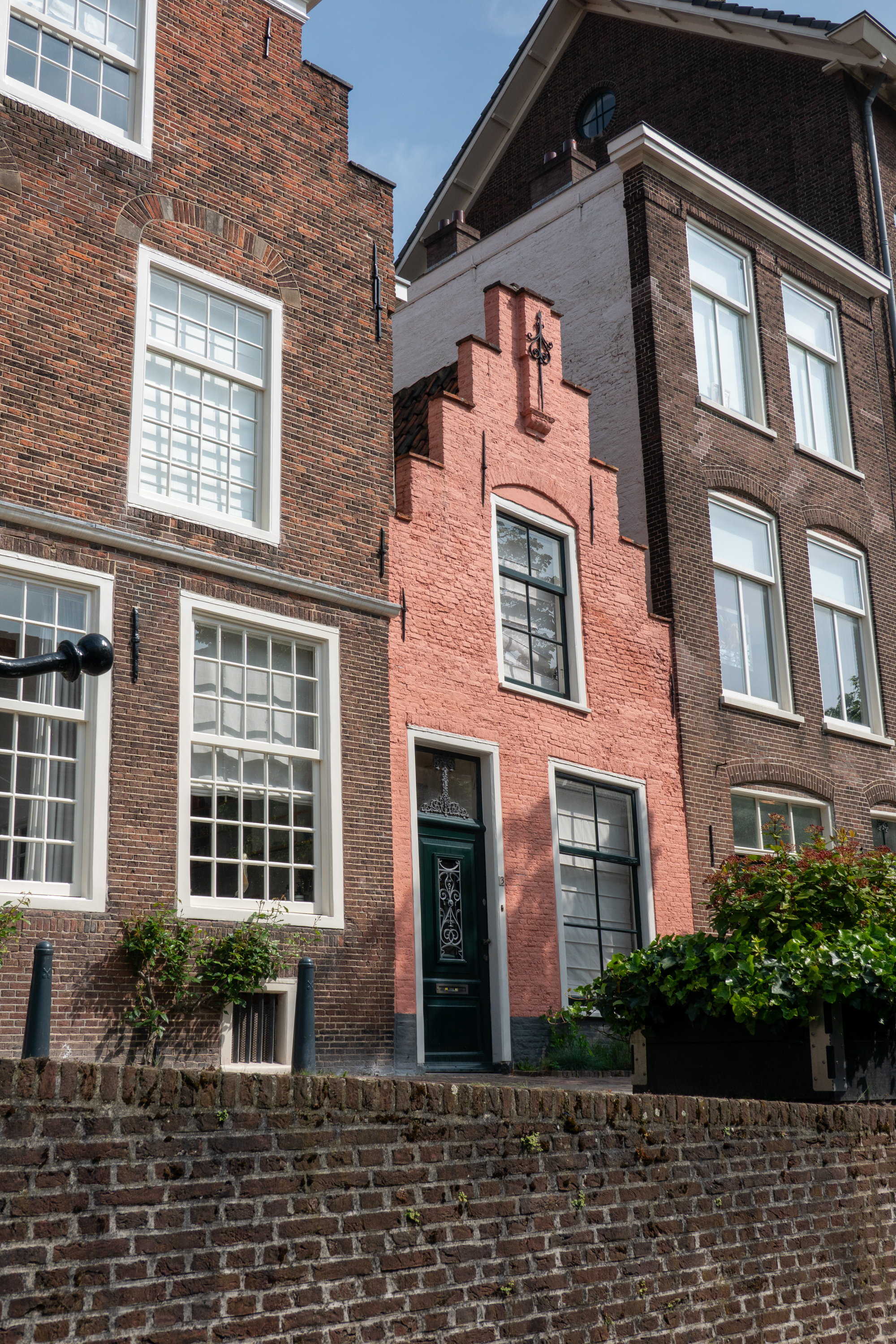
We set out to spend a pleasant day in Leiden, a beautiful town full of canals, canal side cafes and restaurants and wonderful ice-cream shops! For Americans, it has a special importance as many of the Pilgrims lived here before the famous voyage to Massachusetts. We started with a canal cruise which showed us even more of the traditional architecture and history of the town.

Canal tunnel under the street, complete with an underground intersection.
Plaque commemorating one the the Pilgrim Fathers.
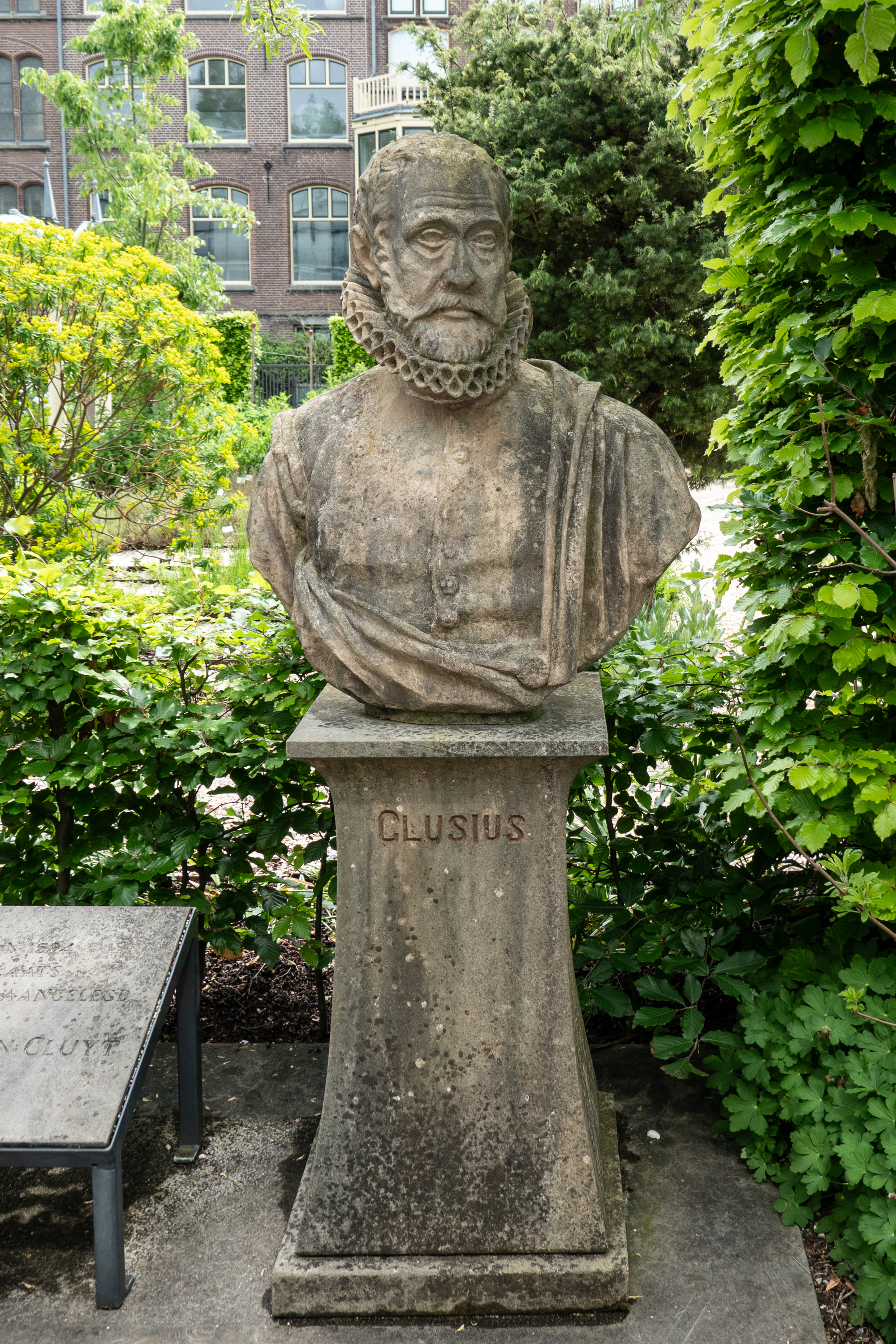
Statue in the botanical gardens, dedicated to the “father” of the Dutch tulips.
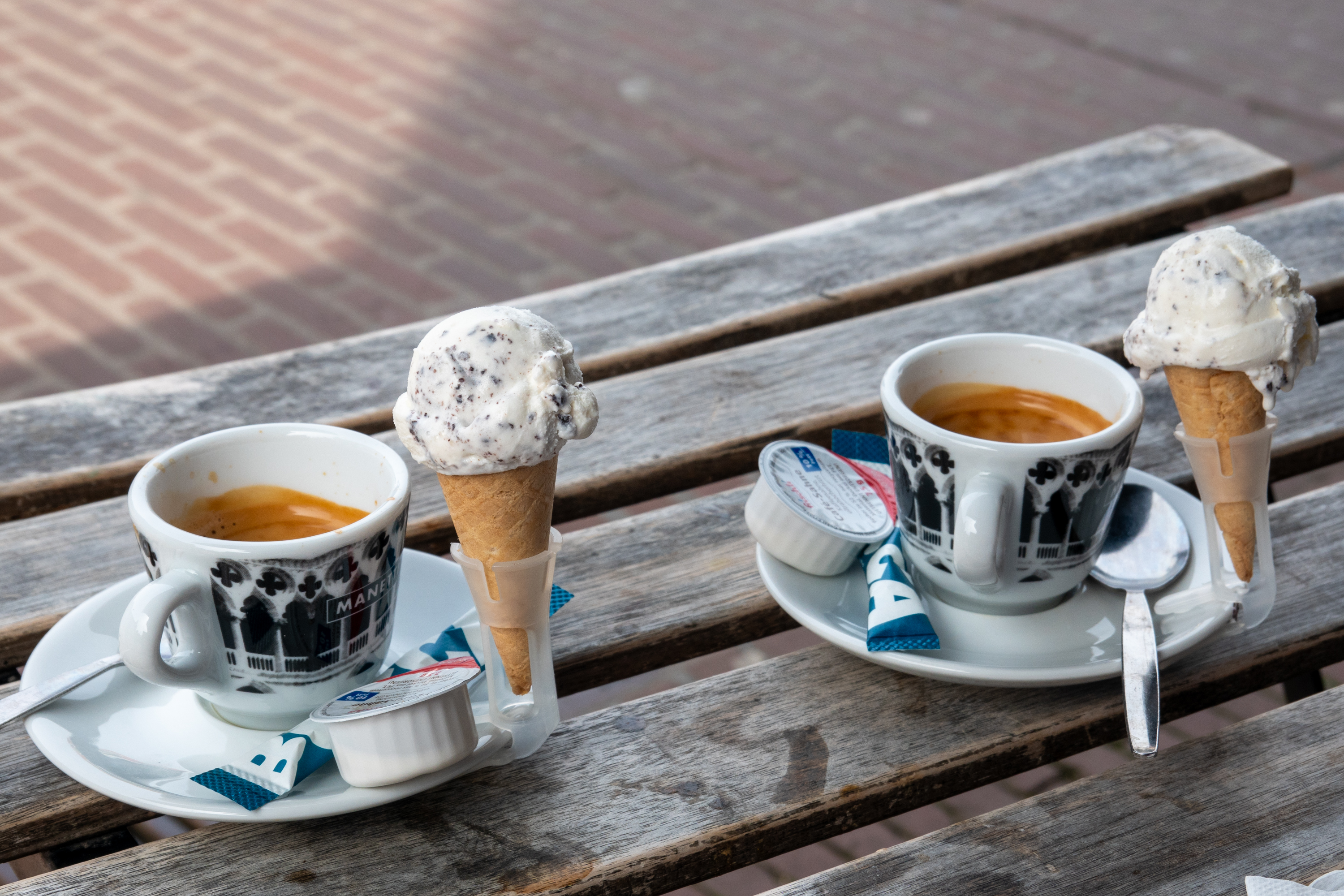
Absolutely over the top espresso service. Yes, those are real miniature cones with real ice cream!
The pink building was a cat house, set up to service the needs of the cadets at the military academy across the canal.
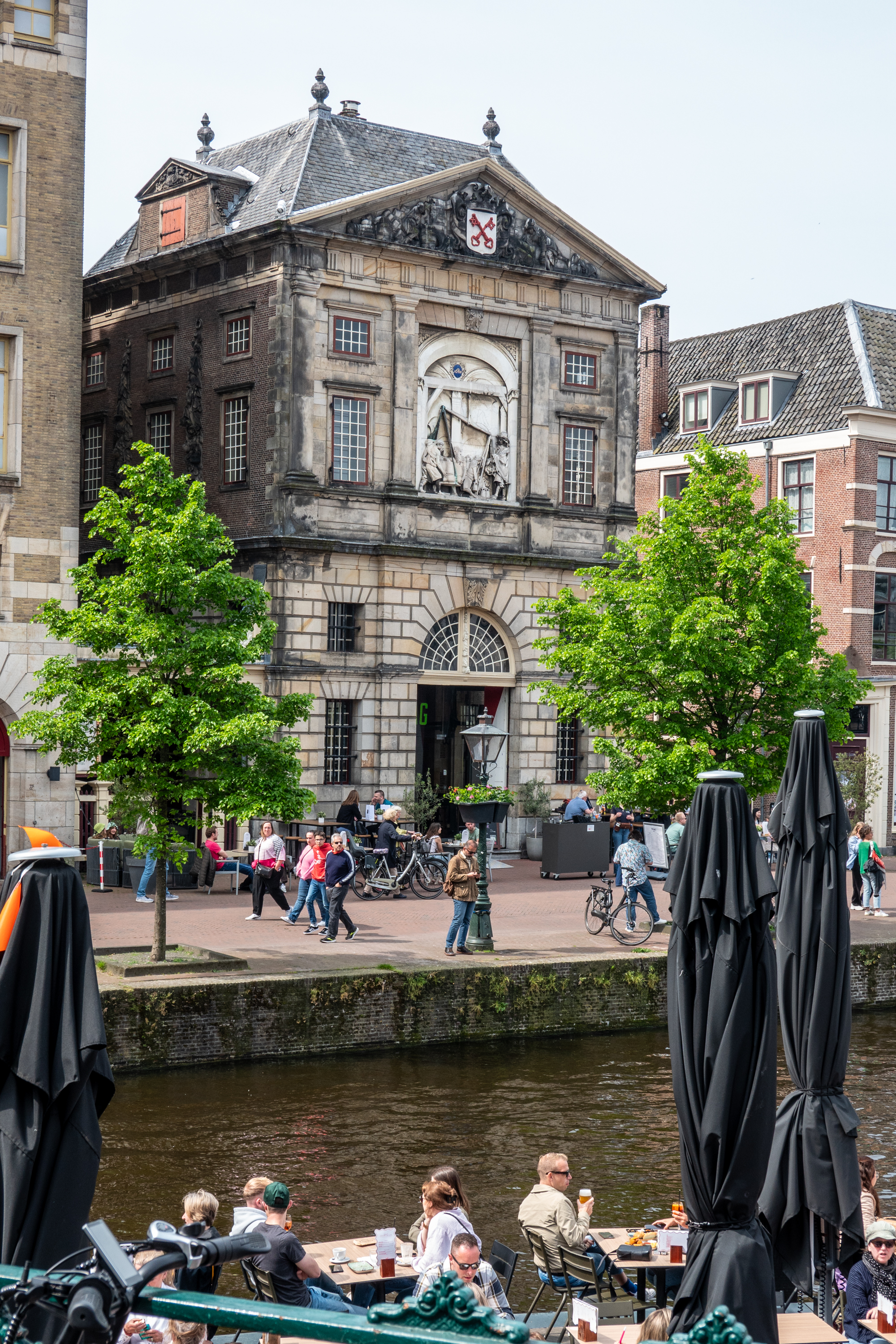
The seal of the city of Leiden has the crossed keys – one to the city and the other to heaven.
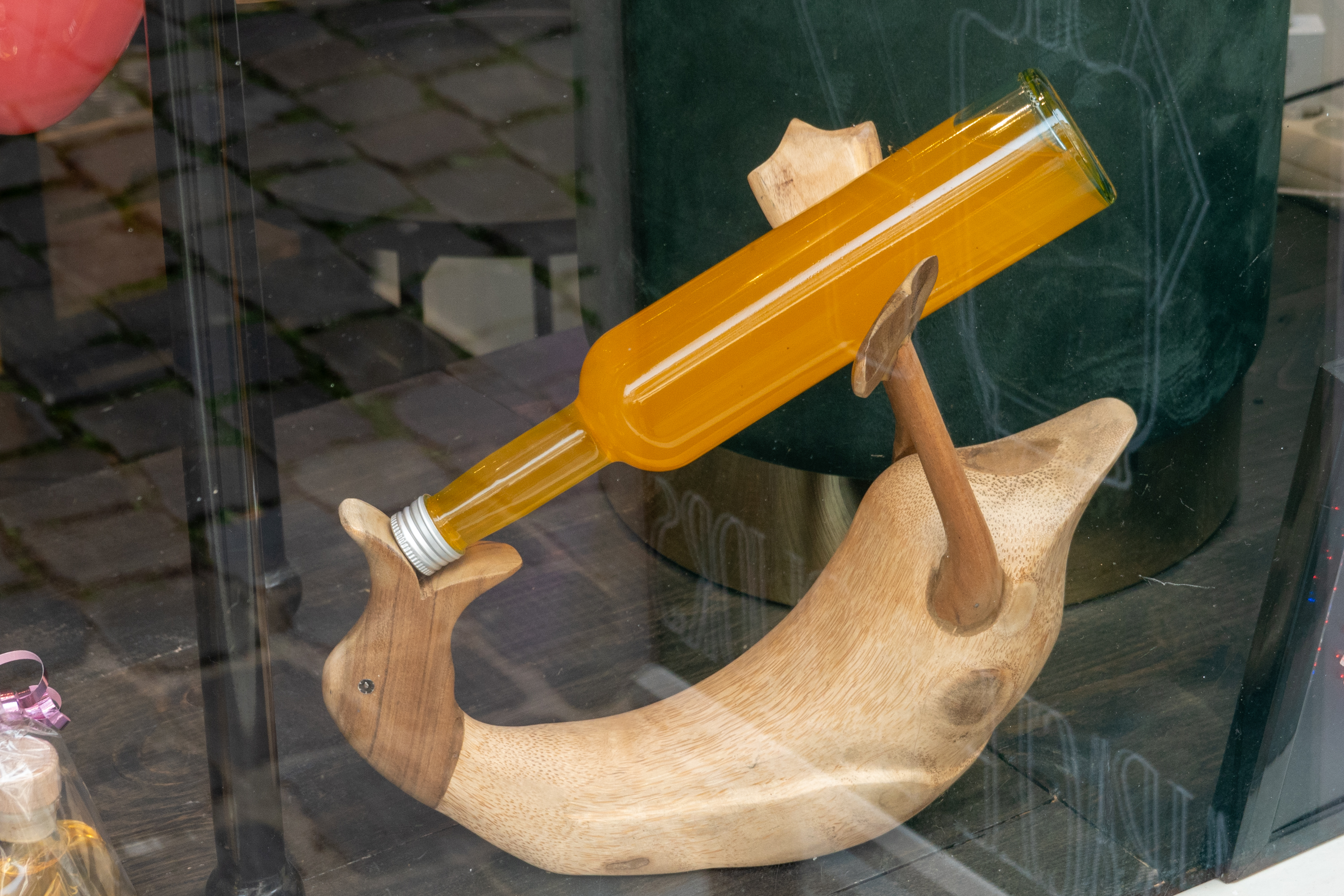
Wonderful happy duck bottle holder in local firewater store.
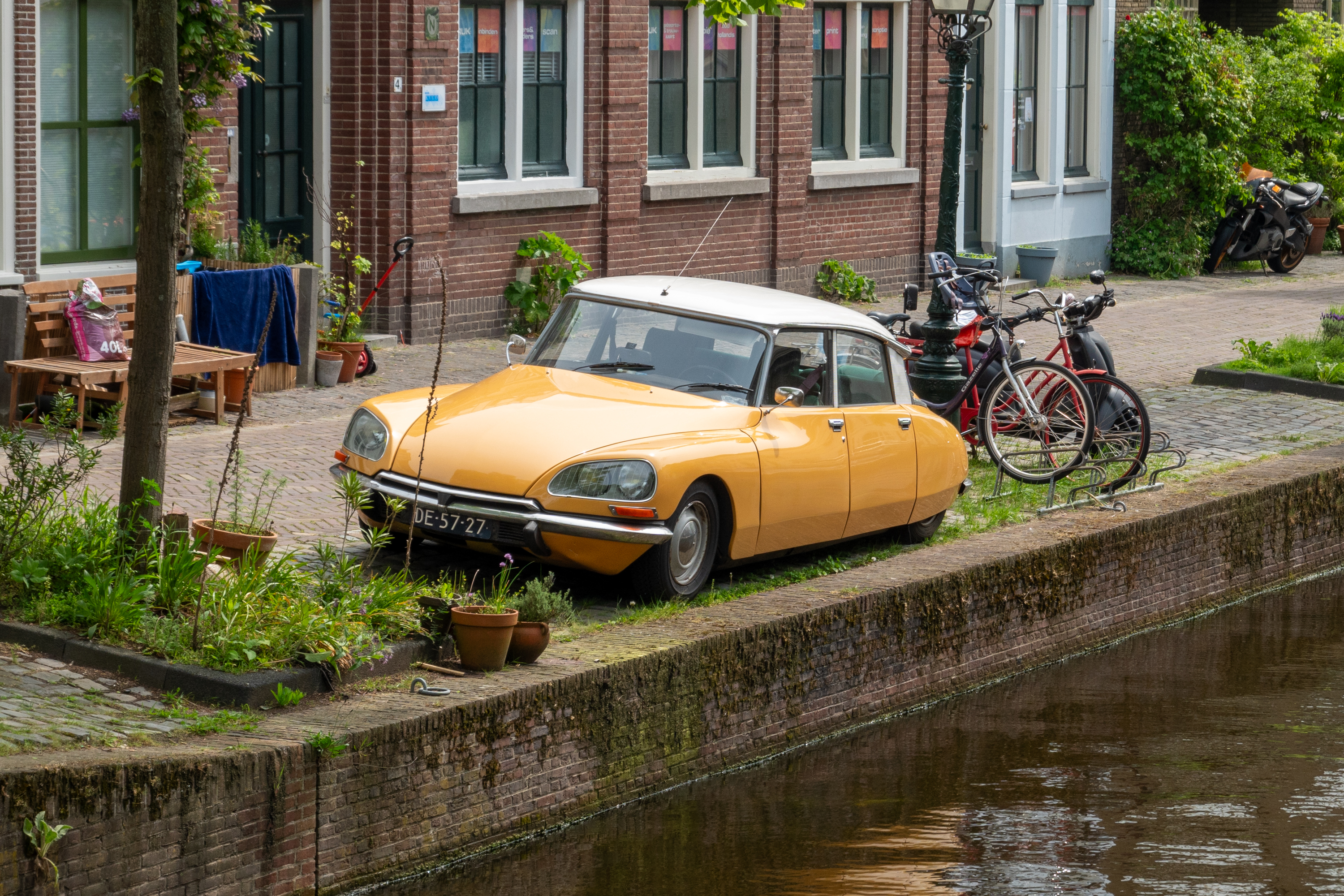
Ever since our days in Cameroon, we have had a thing for Citroen DS. (DS = Déesse = goddess)

By the time we finally found the Pilgrim Museum, it was too full for us to get in. So we headed back to the GoCycle dealer.

The tech consulted with GoCycle headquarters in the UK, removed the mother board, and determined that it was corroded and would have to be replaced. Naturally, he had none in stock and, due to holiday weekends, he was unsure when he would receive it.

Our ride back to the campground was applauded by this feathered friend.

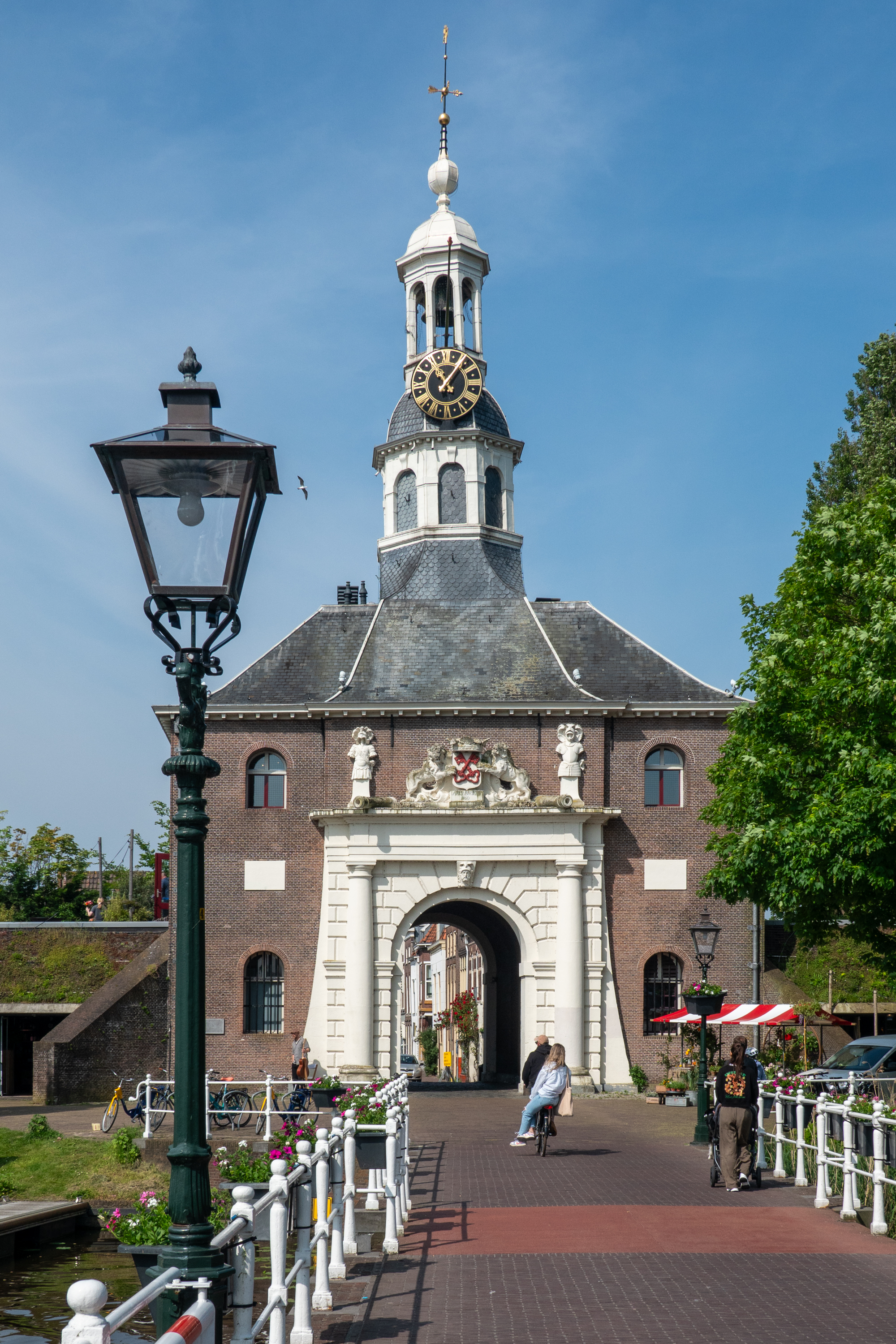
The following day we returned to town for the Saturday market. Denise was greatly in need of various food items as we had still not been able to find a supermarket. We had also noted that the Dutch prefer to be paid in cash whenever possible, which had not been the case in the UK or in France. Our route to the market passed through one of the old gates.

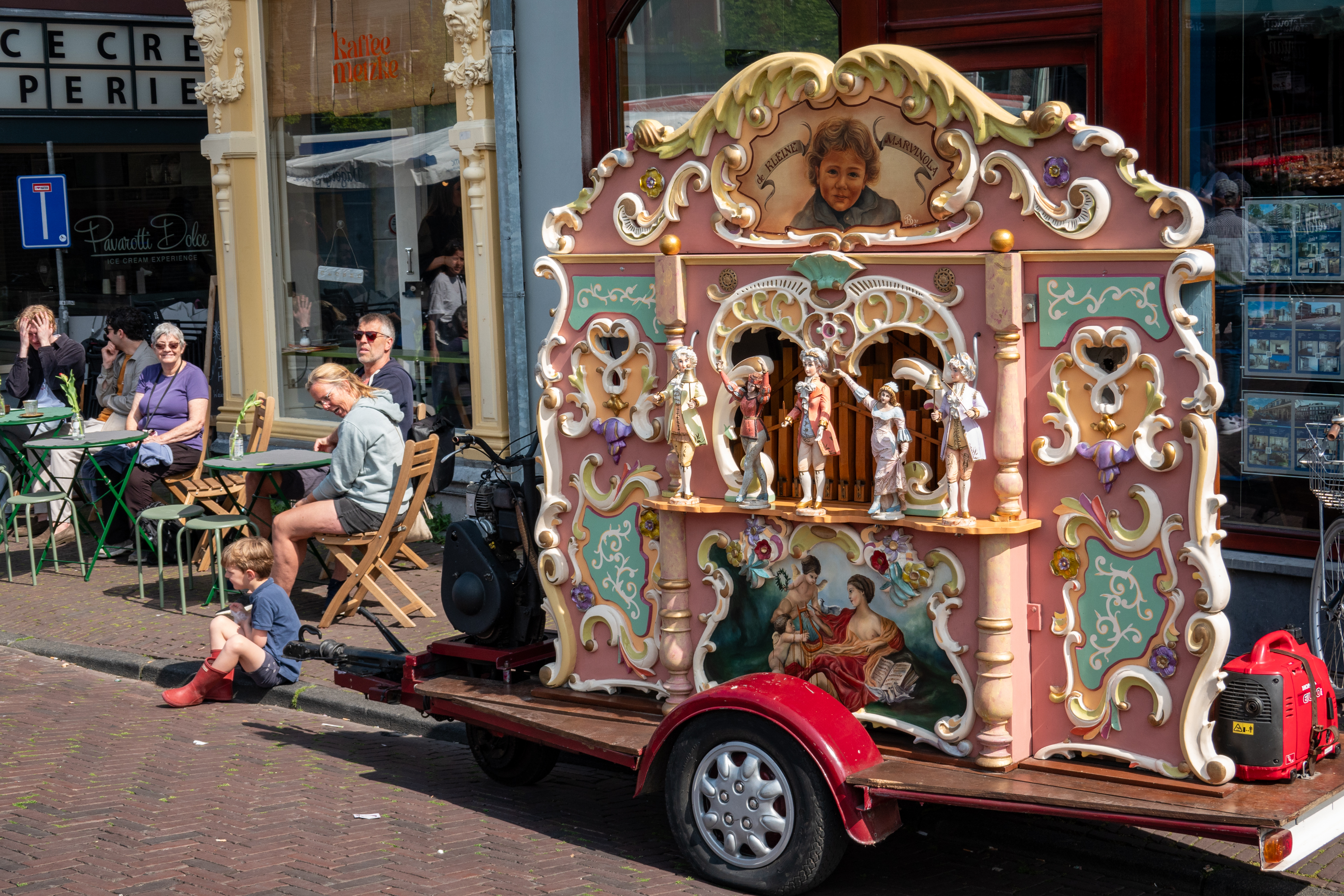
After the ride, we of course had to fortify ourselves with more pancakes and coffee, serenaded by a giant rolling music box, complete with animated figures.

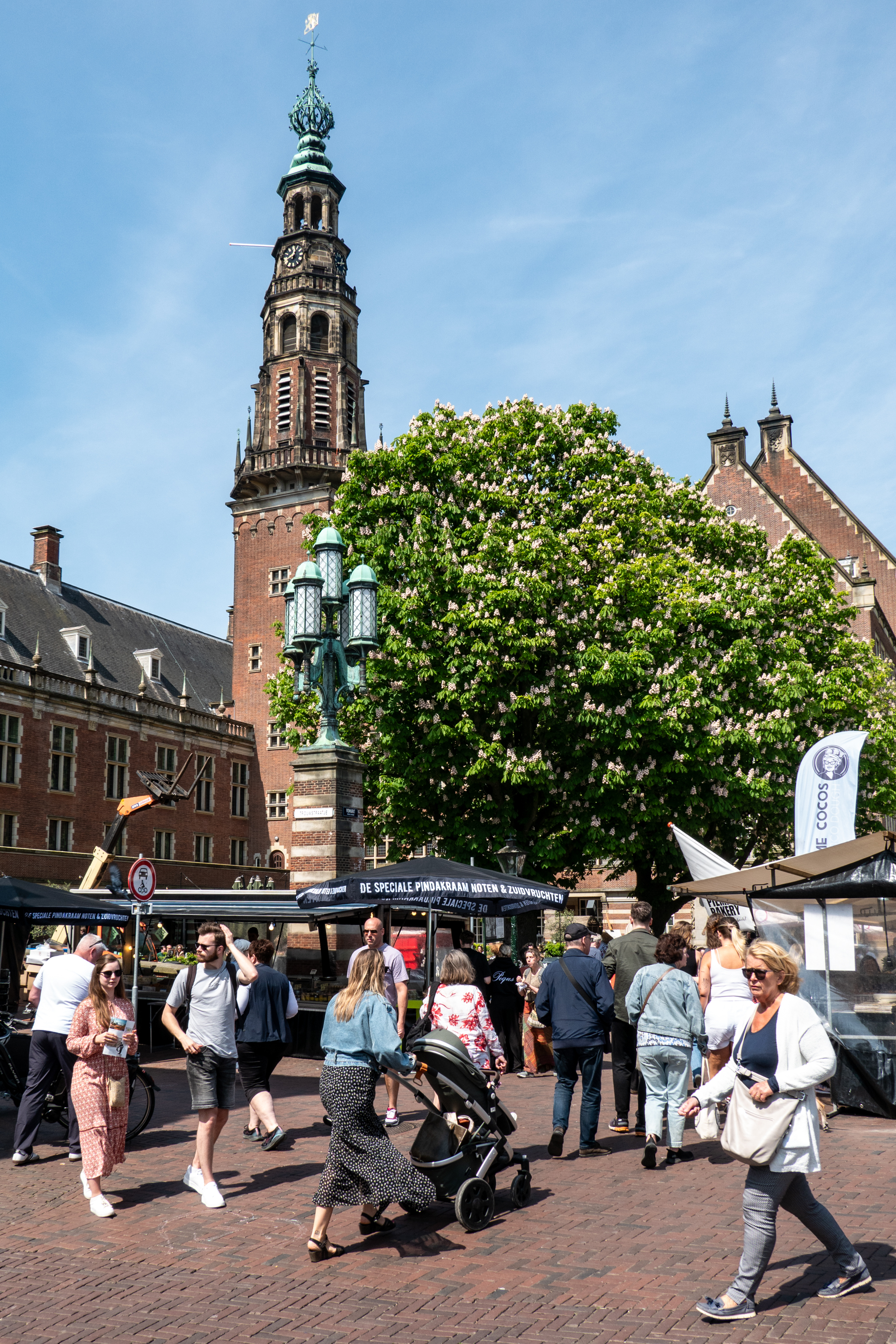
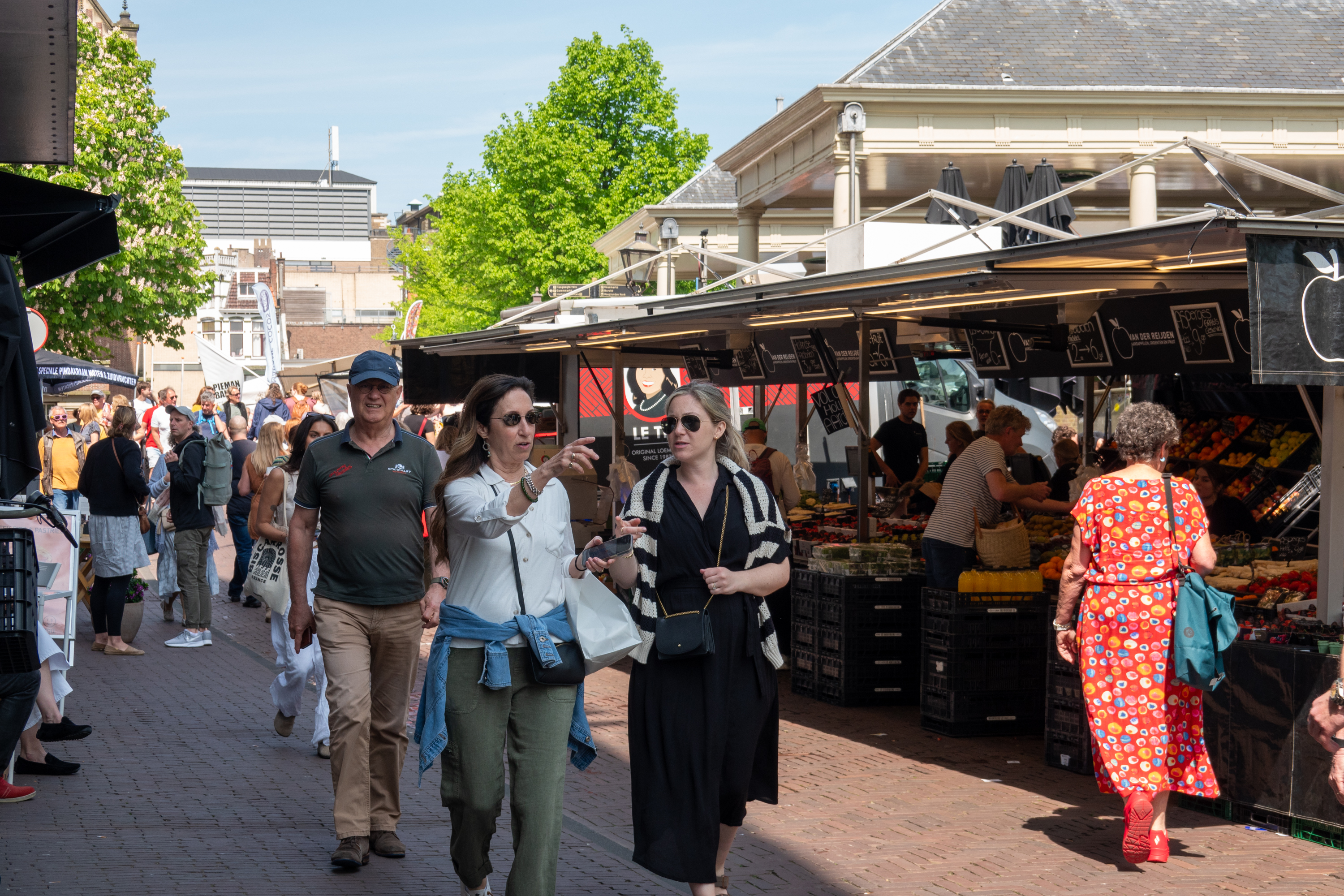
We then explored the market and shopped till we dropped. Compared to the previous day, the place was heaving!

There is no really big square in the center, so this market runs all along the sides of several canals.

We had lunch at an Indonesian kiosk, giving Fred a chance to dust off his Bahasa Indonesia; some 50 years old. The young man running the “warung” was suitably impressed, even if he had been born in the Netherlands. Talk about feeling old!

It was then time to fit all our purchases into the bicycle bags and make it home. This was somewhat of a challenge but we packed everything in! On the way, Denise realized that her bike no longer had electric power so serious maintenance became even more critical.

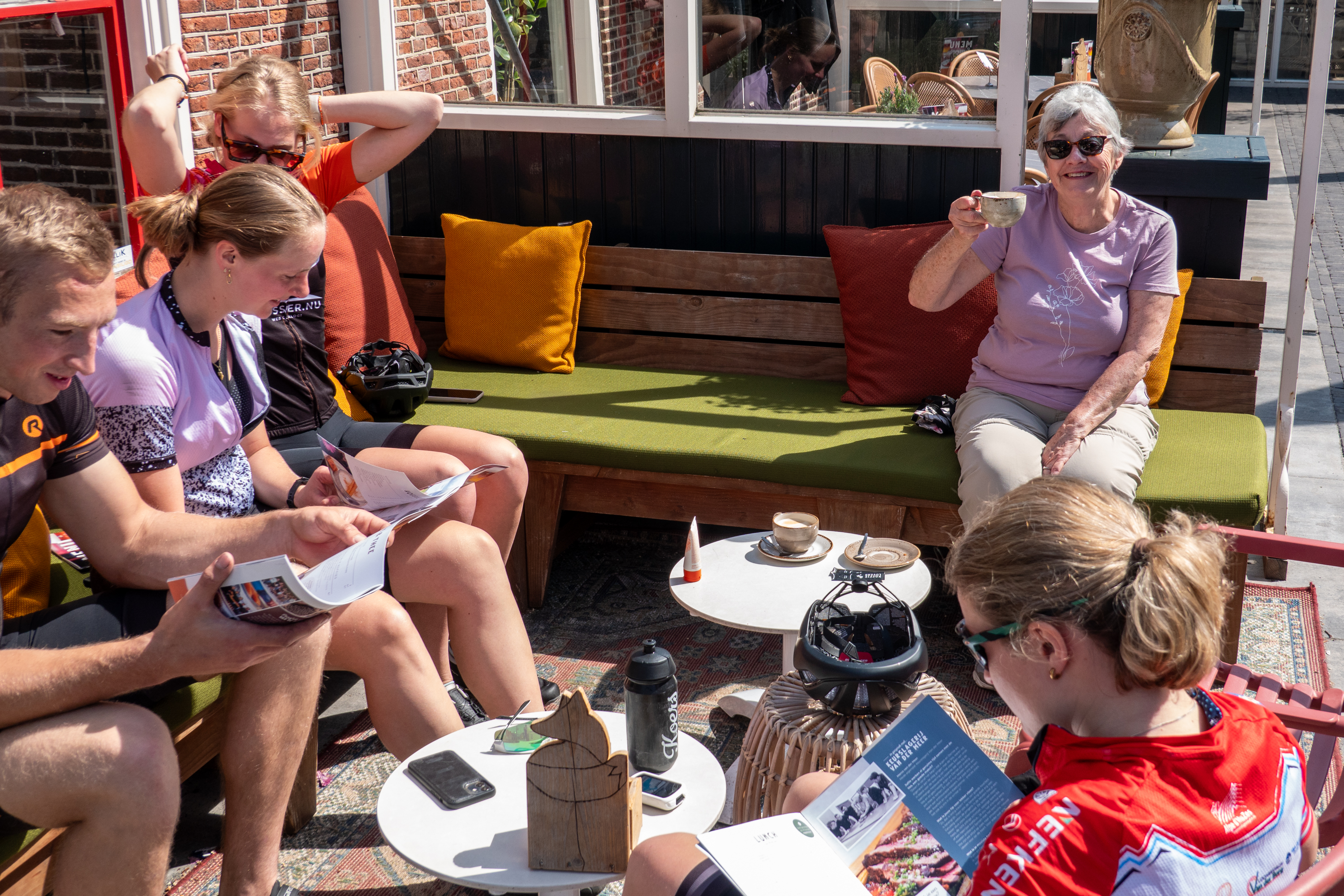
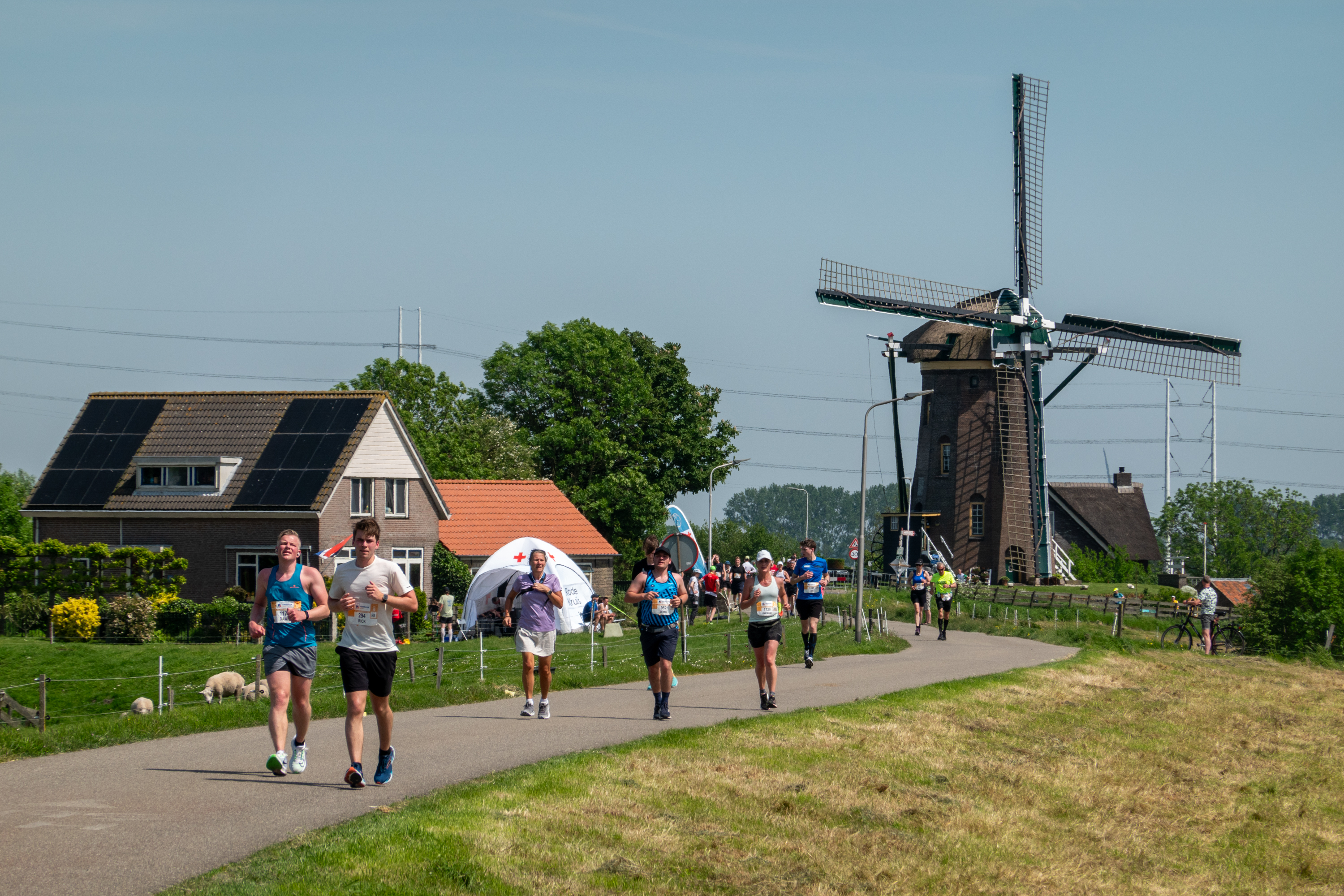
The following day, we had planned to visit the windmills on a local bike route. Fred took the bike with no battery power and we set off. We had seen signs for a marathon race and knew it would not be a good day to go to Leiden, but we found the marathon was coming our way, anyway! We found a very pleasant coffee shop where we had coffee and bitterballen, and then split a huge chicken burger. Needless to say, no dinner was served that evening.

We shared our space with some obscenely fit young cyclists. From the food and beer they were knocking back, it must have been a serious ride!

Then the first runners arrived – a half a dozen East African runners who were a full 30 minutes ahead of the next runners. So early that Fred could not get a picture in time. Amazing!

We did make it to one windmill despite the road closures and were able to chat to the lady who lived there. She and her family were running a water station. She took the time to tell us about her windmill.

The mill pulls water from the fields in front and lifts it to the canal on the other side of the dyke.

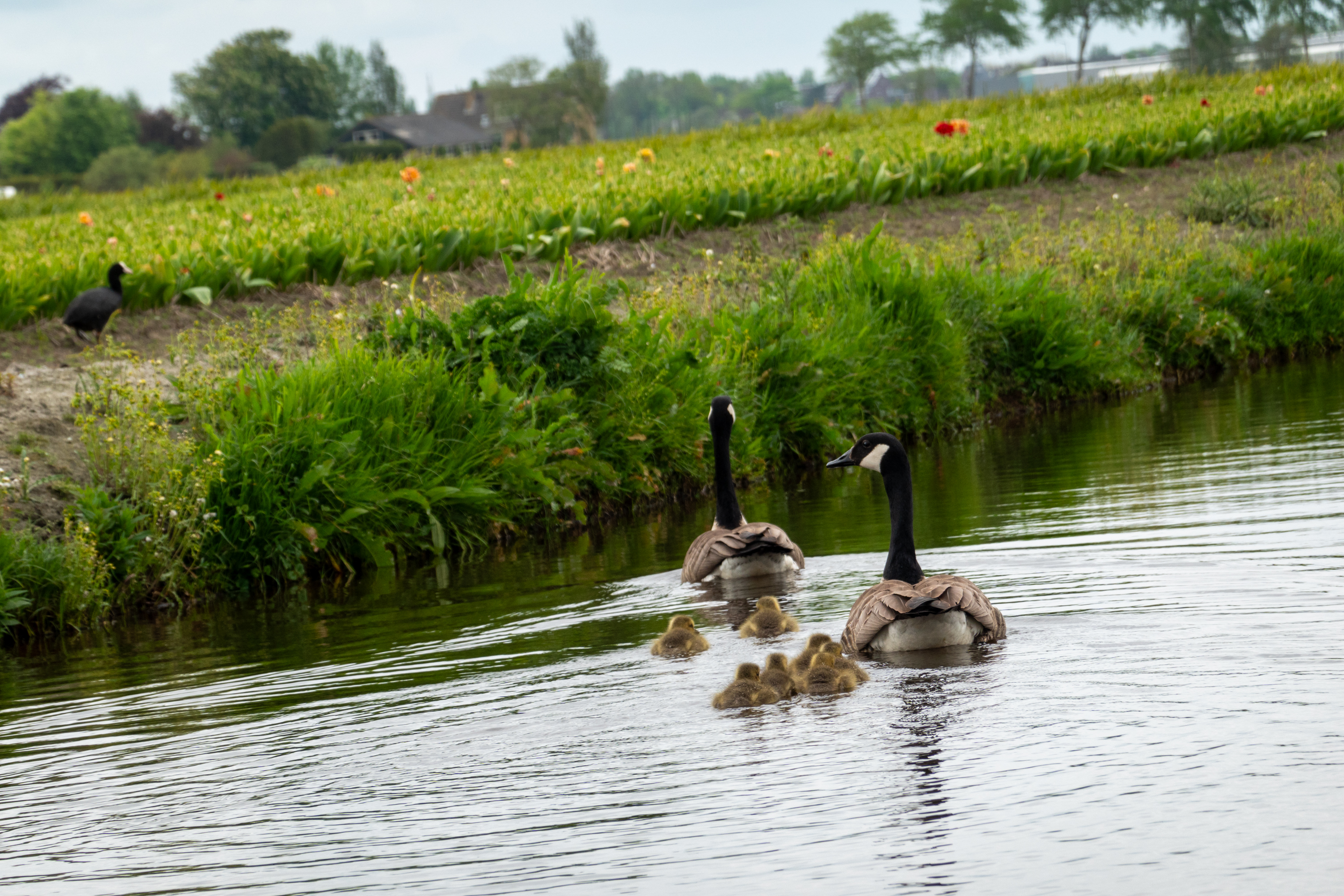
We have thoroughly enjoyed cycling along the polders (or drained fields). Always edged by canals, the polders are a great source of bird life and flowers. Daisies and other wild flowers abound, with a few poppies already out. We have seen nesting coots and geese, some with babies, and a beautiful heron drying his wings. And rabbits bounding across the fields.

Given the severity of the bike situation and the fact that the bicycle technician in Leiden was not very experienced with GoCycles, we decided to move on to Nijmegen, which we had wanted to visit and where there was a more experienced technician.

A New Flag on the Door

With the arrival of May, it was time to head back to Dulles for the flight to England. On landing, we retraced our taxi/train/taxi tango and picked up the truck which started the very first time. And, there were no signs of water leaks.

Parked at the Congresbury Arms for our first jet lagged night.

The next morning we headed off to spend a weekend with Denise’s brother and sister-in-law near Chichester. A family gathering including Denise’s sister and brother-in-law on Saturday was wonderful. We also walked through and admired local bluebell woods, which brought back childhood memories for Denise.

We then headed north to Atkinson Vos for two spa days for the truck.

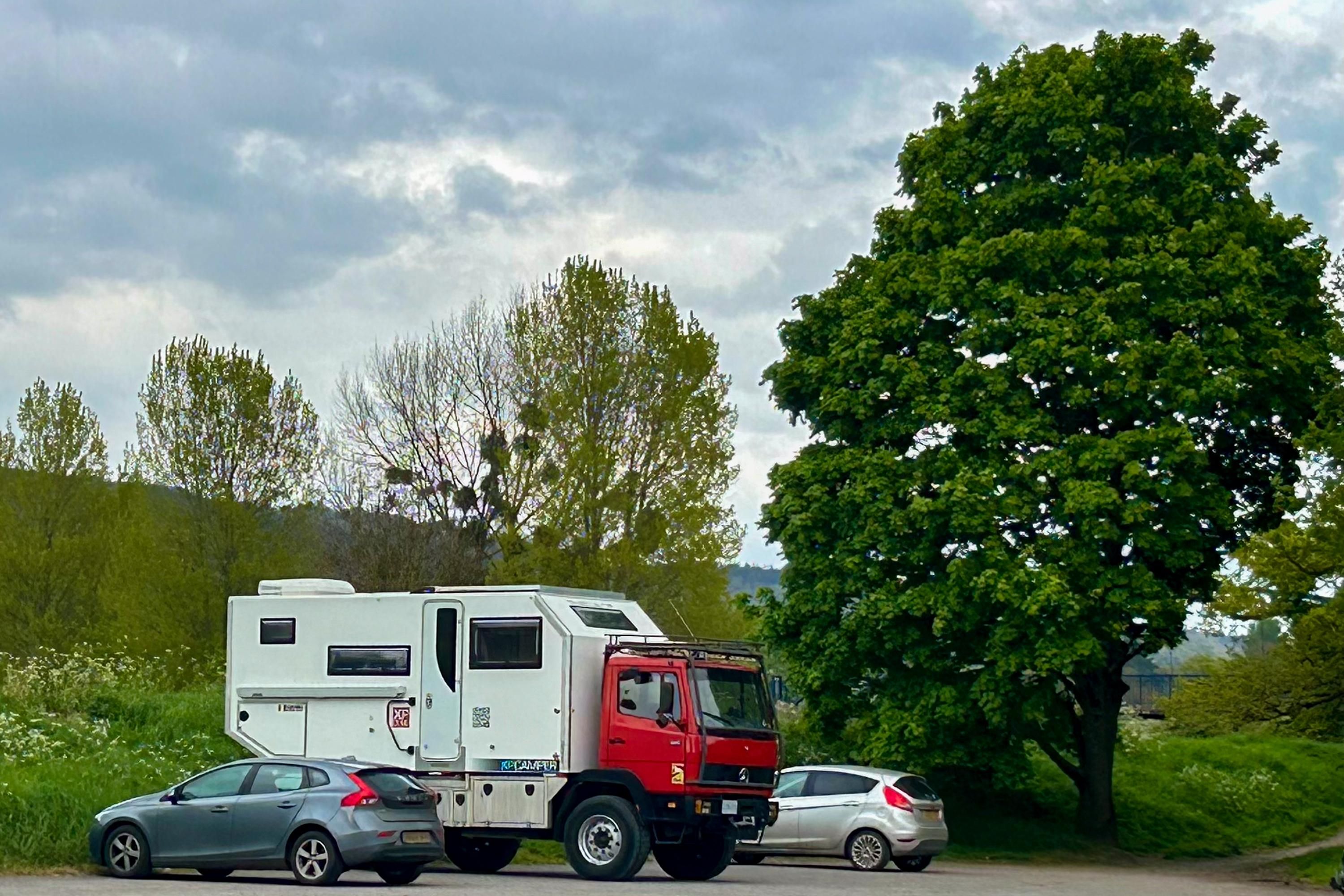
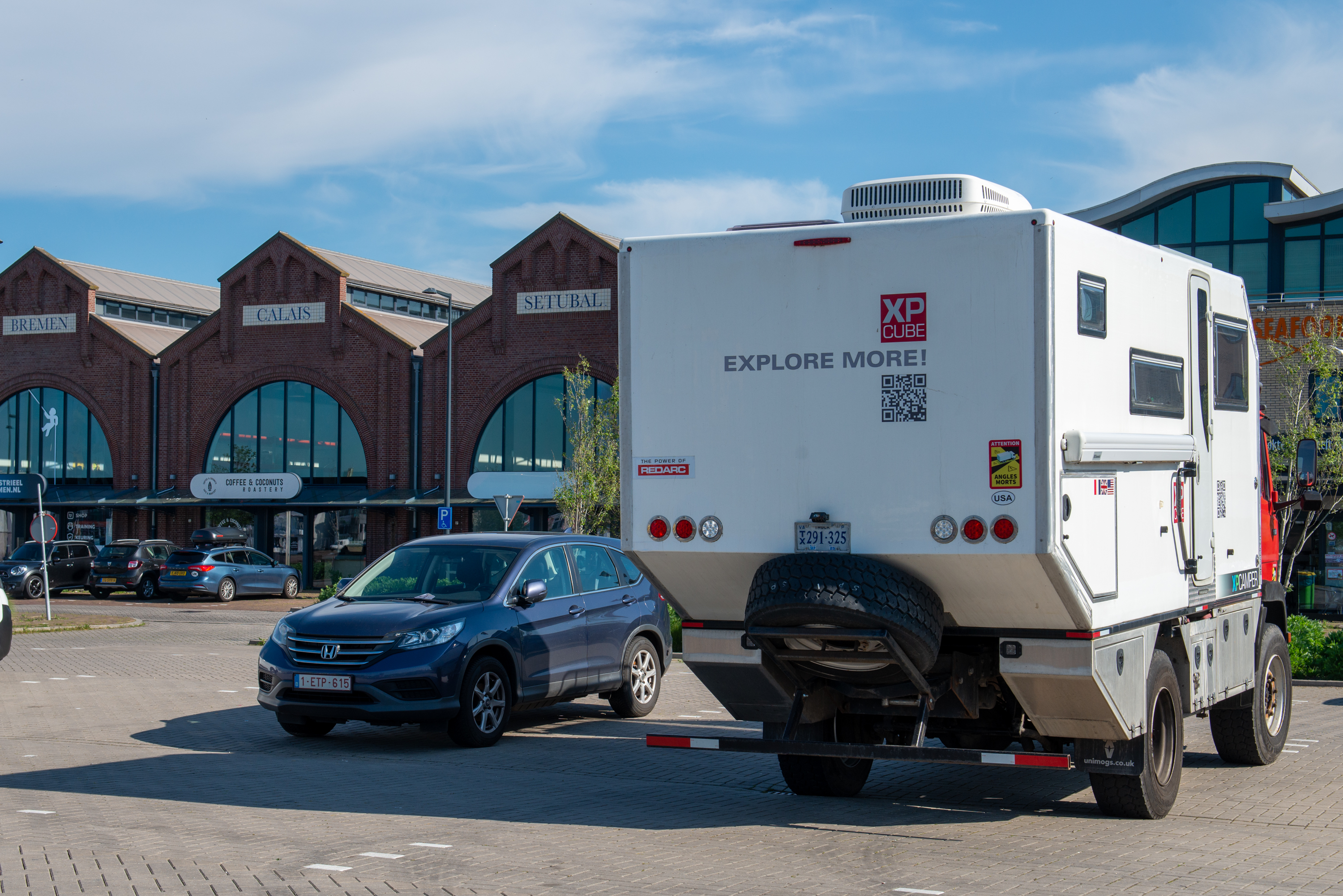
Glamour shot in the parking lot.

We were greeted as old friends and got all manner of service and work done. The list is getting shorter and shorter, but the oddest things take the greatest effort – like reorienting the water pump so that it is right side up.

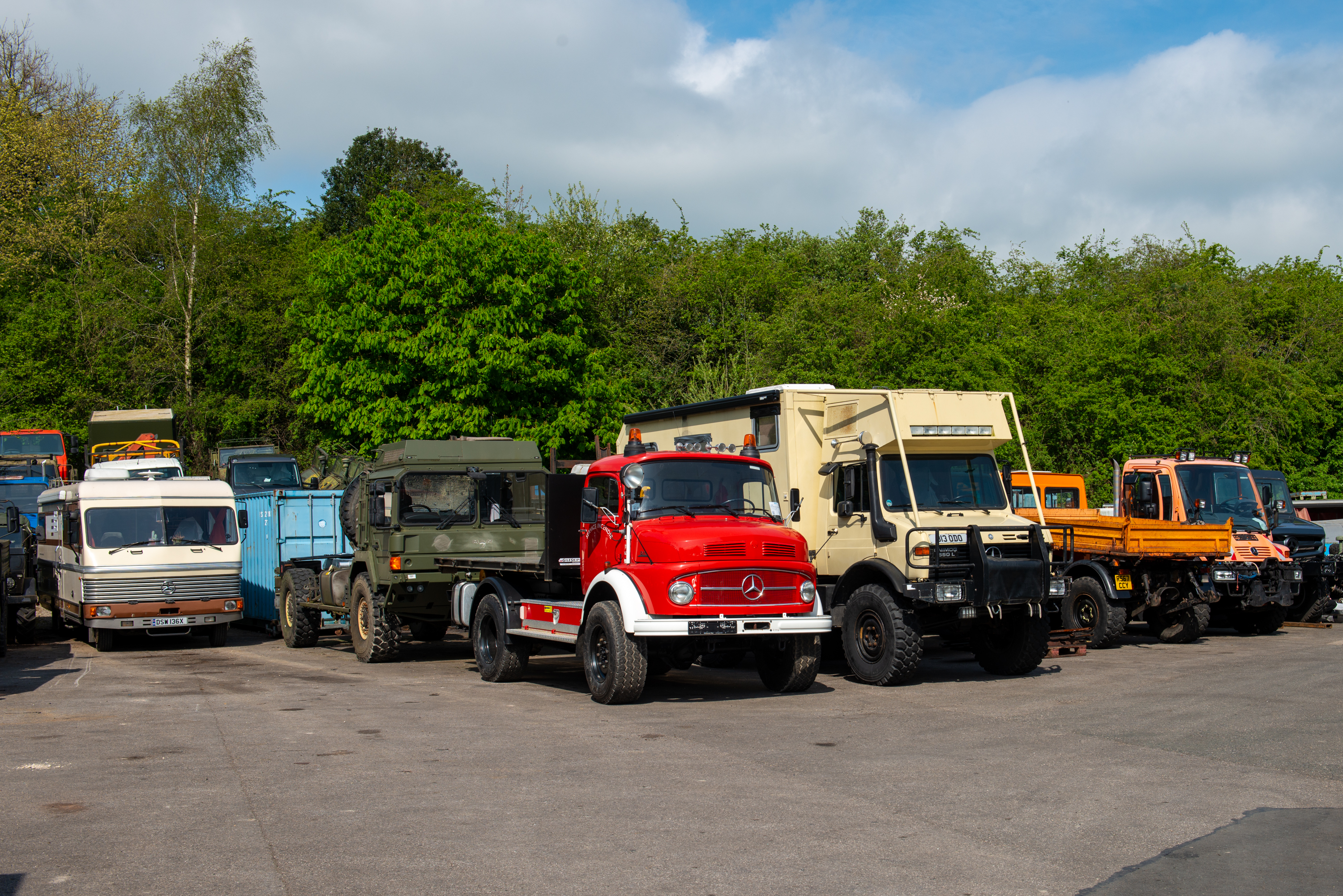
Nifty trucks, new and (very) old.
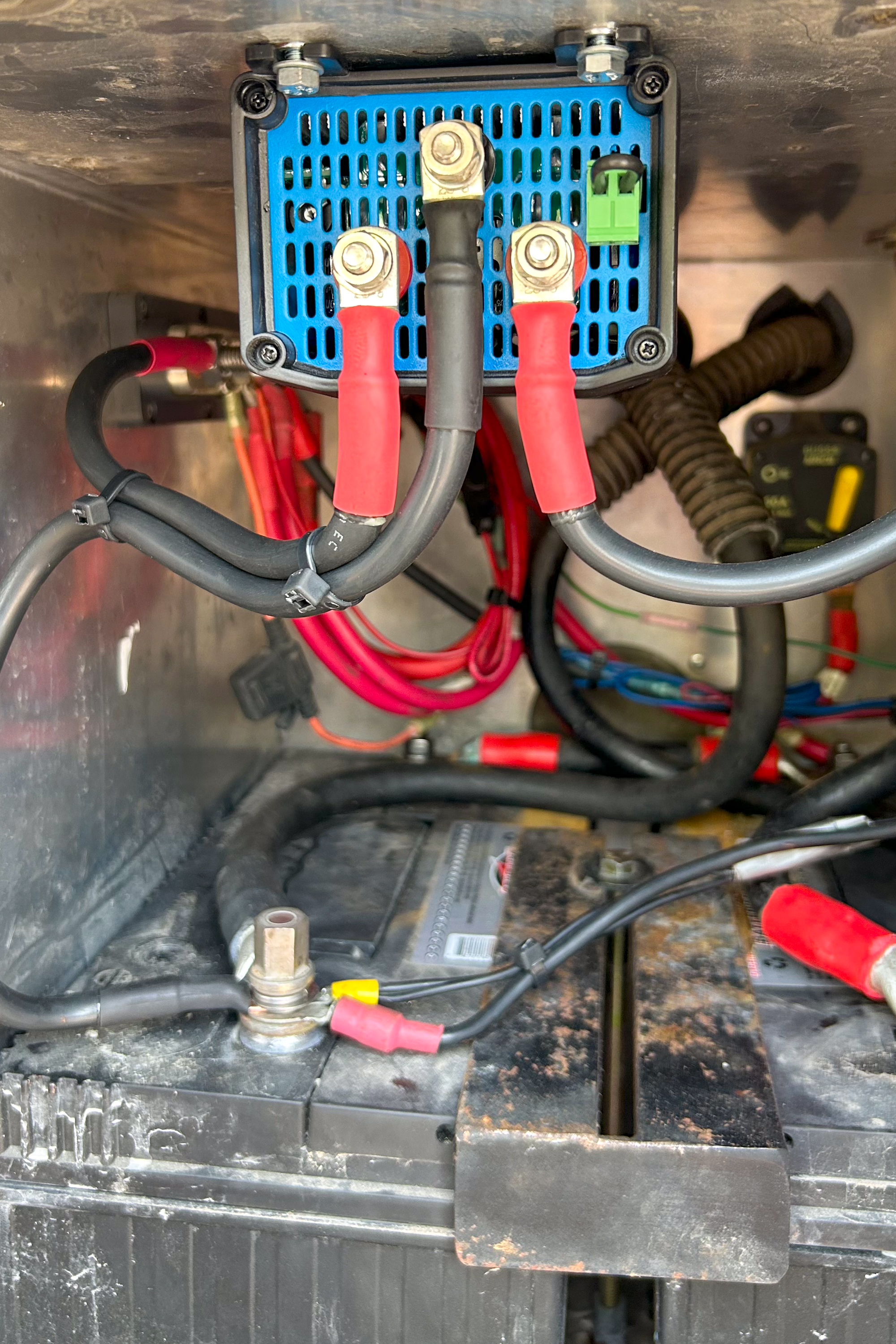
New battery charger with neater wiring.
Old iron holds a LOT of oil.
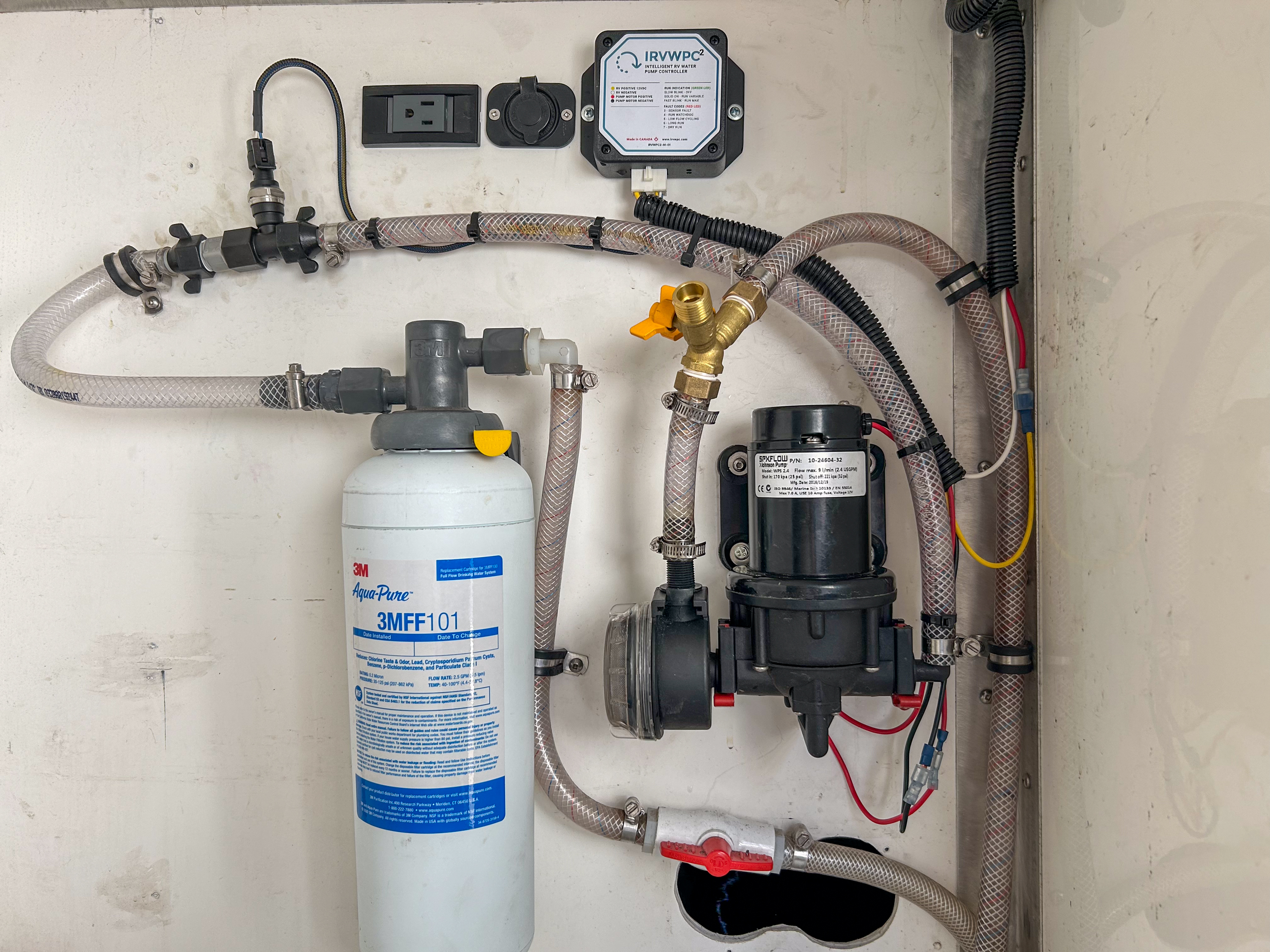
New pump controller and better routing.

While the truck was worked on, we stayed in an old coaching inn in Bentham.

Sometimes you just have to make a few compromises to get the car around back! (Note shaved corner!)
Room with a view
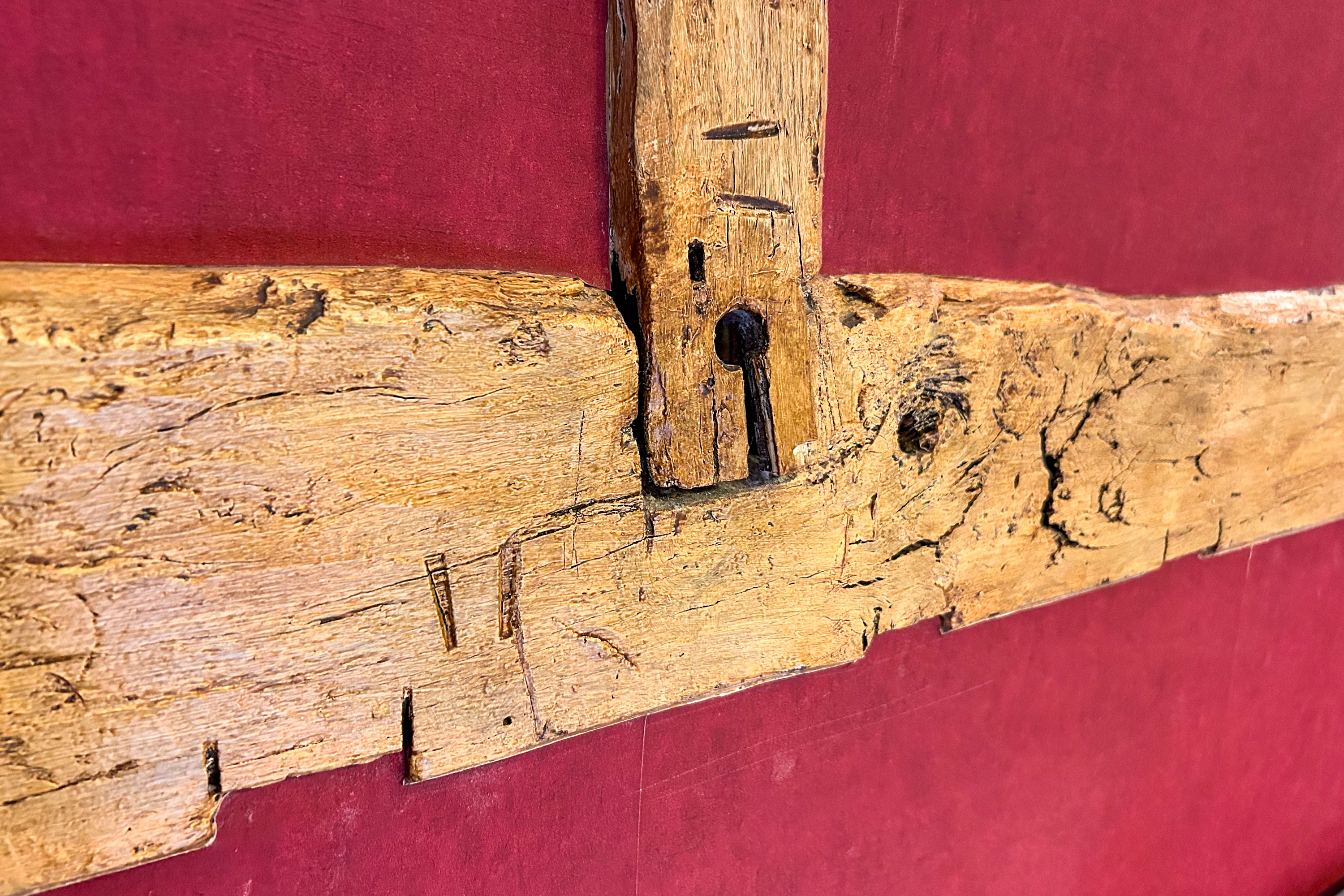
Wonderful old beams

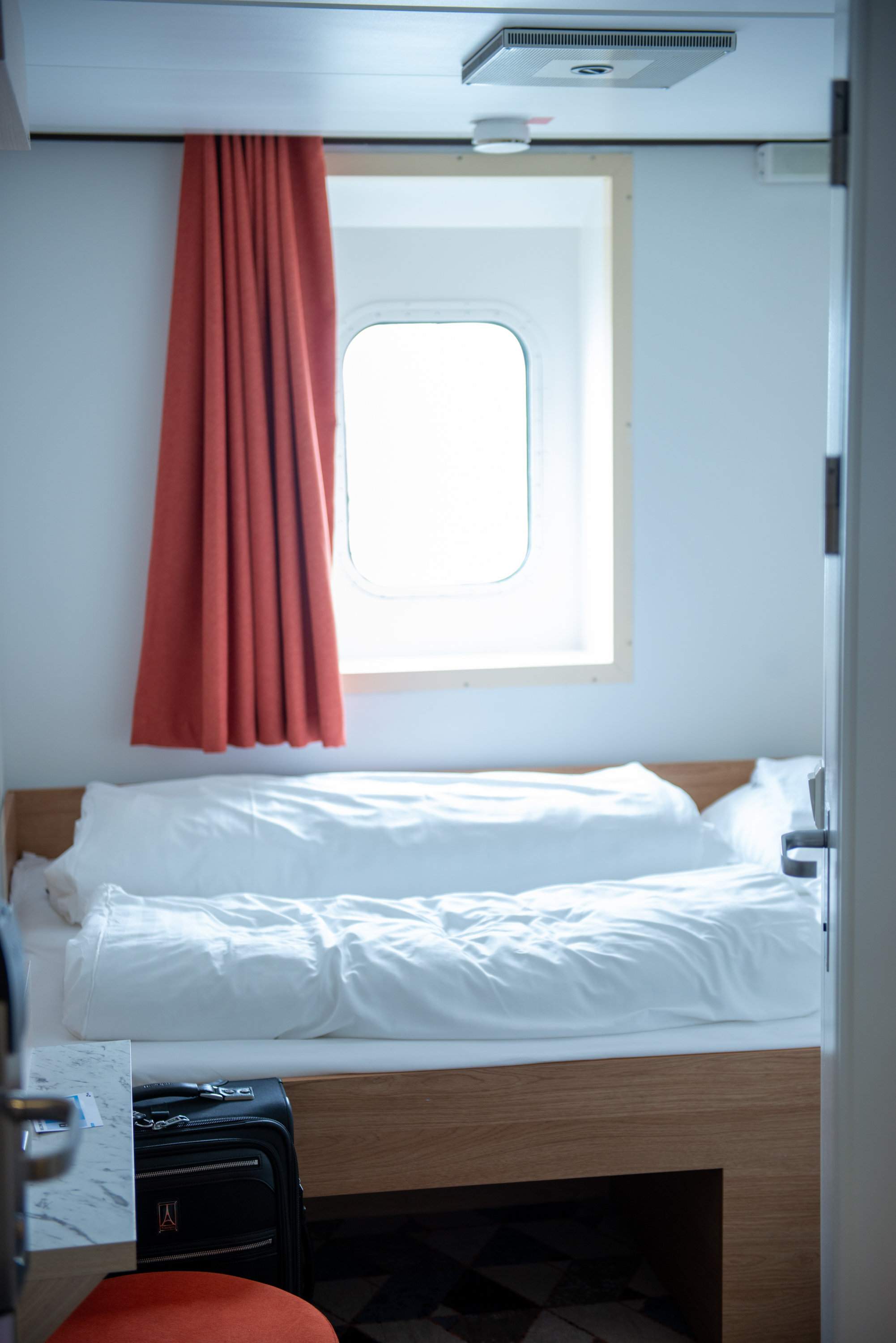
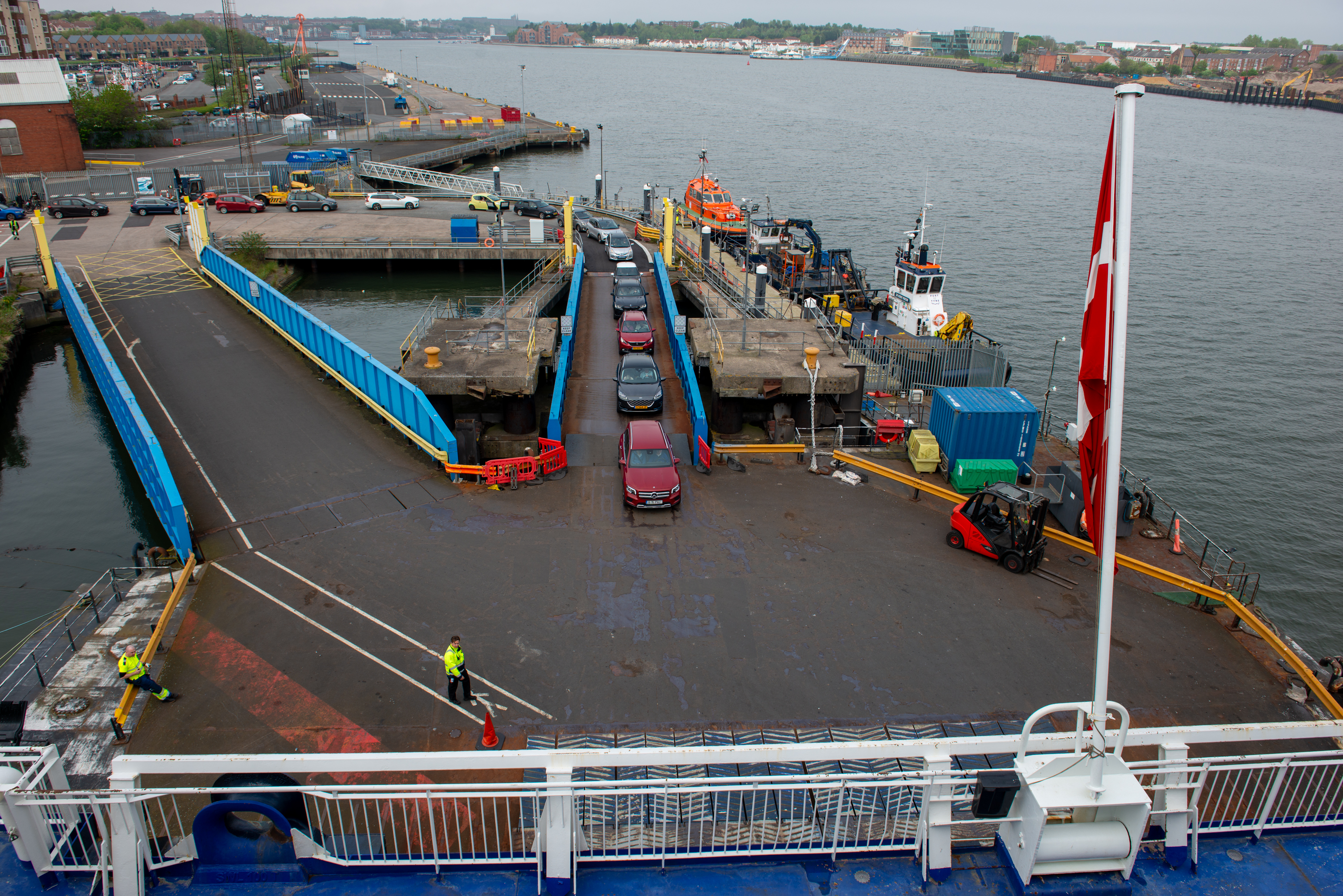
Then our trip really began as we prepared ourselves for a ferry crossing from Newcastle to Ijmuiden, near Amsterdam. We left early giving ourselves lots of time for the boarding and it was just as well, as the Tyne Tunnel was reduced to one lane in each direction and there was a huge back up. But we made it on time, boarded, and found our rather small but totally adequate cabin.

We were early enough to watch the parade of cars come on board.
Architecture on the Tyne; very modern and very old.

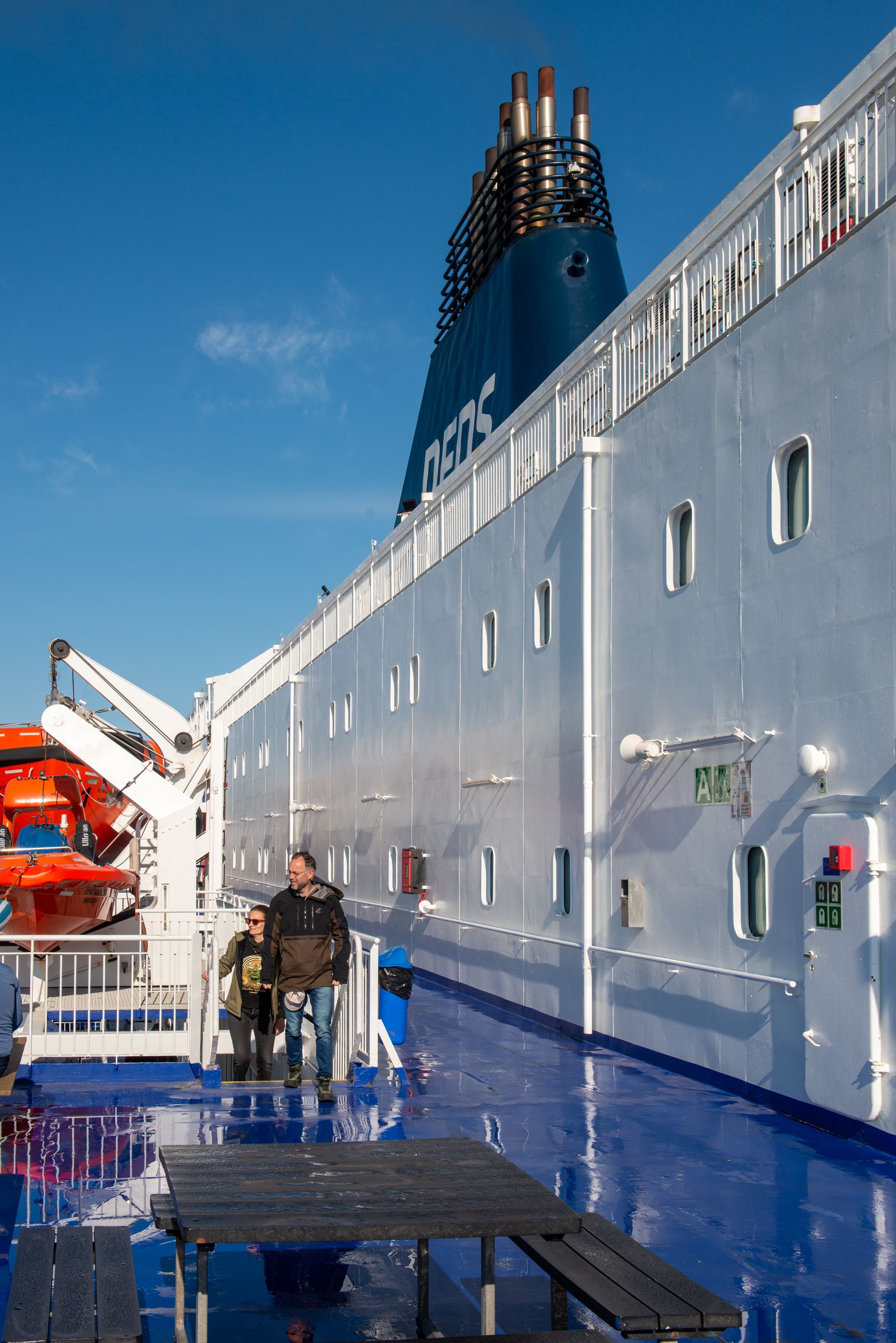
We decided to go to the restaurant for dinner, rather than the buffet and thoroughly enjoyed it. The service was excellent and the food better than we expected. And this is a ferry boat. The big cruise lines make a huge effort to recognize repeat customers. Here, lots of truckers are literally regulars and know the staff by their first names.

Steelworks on the skyline.
Old warehouses made into stylish shops.
Denise, ready to put a new flag on the door.

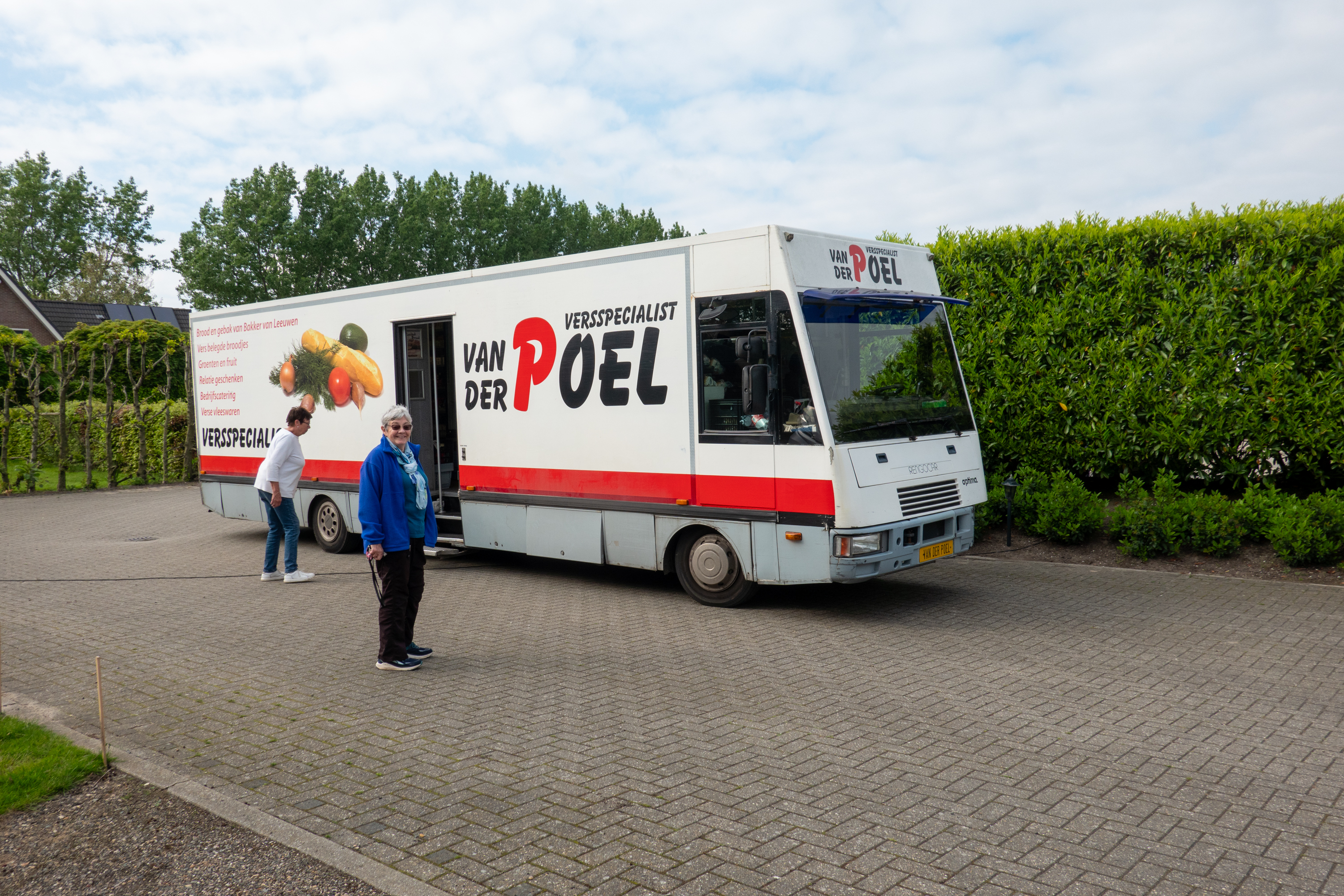
So far we have found camping to be a little more challenging in the Netherlands than in France. After a bank holiday in UK, we arrived in the Netherlands to a series of holiday weekends. When a few attempts at reservations were met with “Sorry, we’re full!” we have been very careful to be sure that we have confirmed reservations. And even then, we have been in overflows or had to extend extra days. The Dutch are out and on the road! But the campgrounds themselves have been lovely. Our first campground included a grocery truck which came every evening and sold all necessary products. As we have not found any large supermarkets (more on this subject later), this was a bit help!

As we have not found grocery stores with parking, having a camp store that comes to you was wonderful. And packed with fresh veggies and an insanely wide range of products!

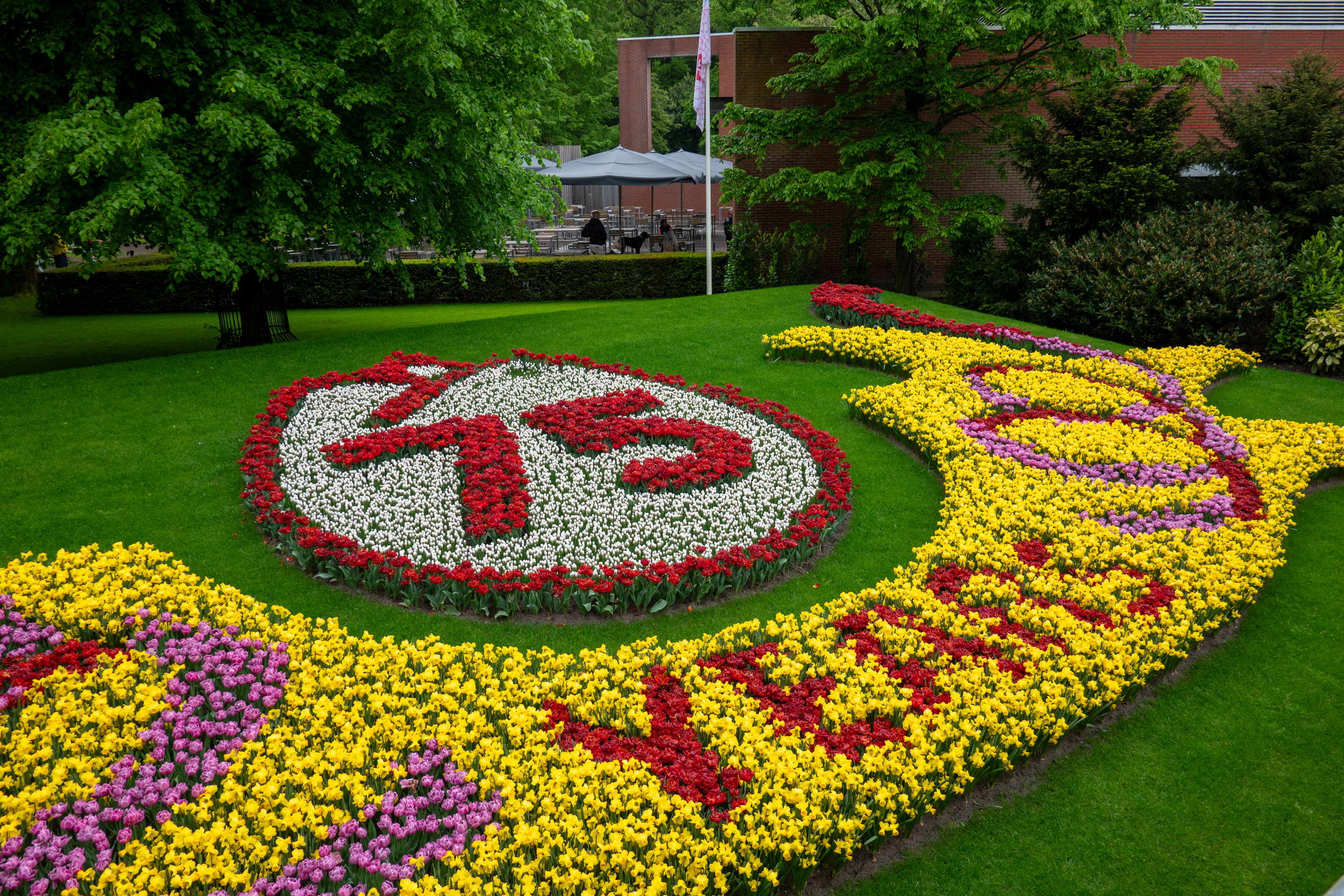
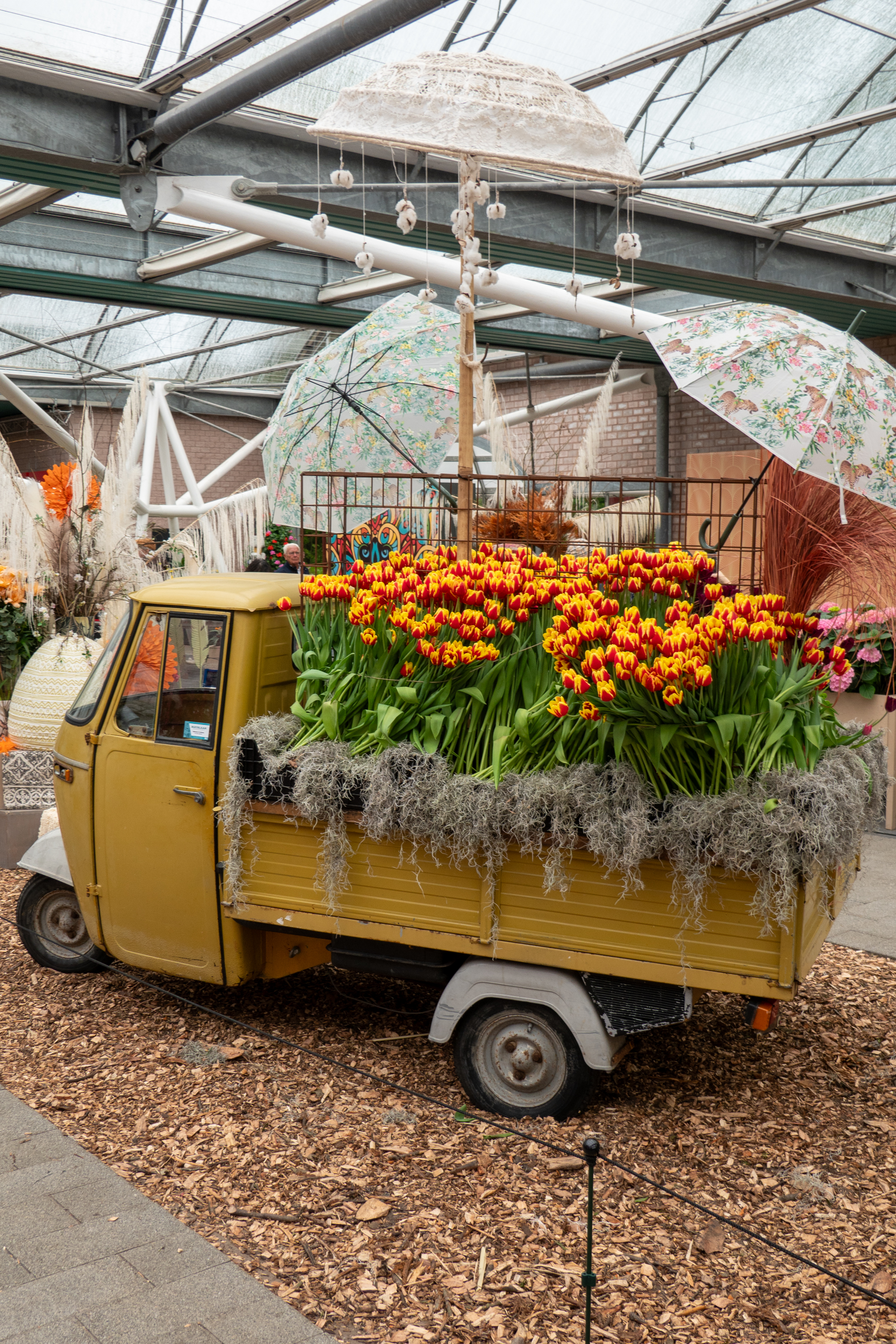
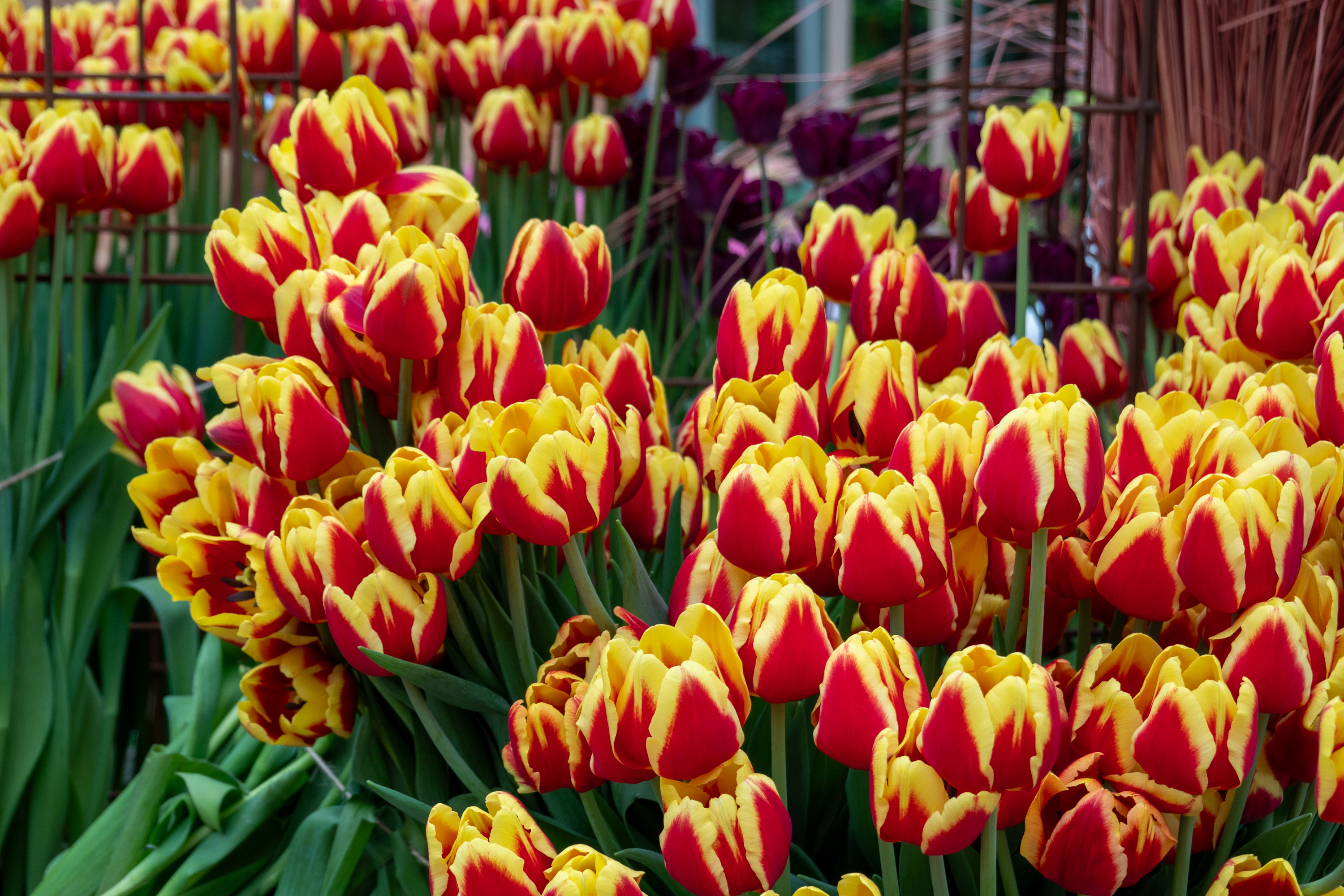
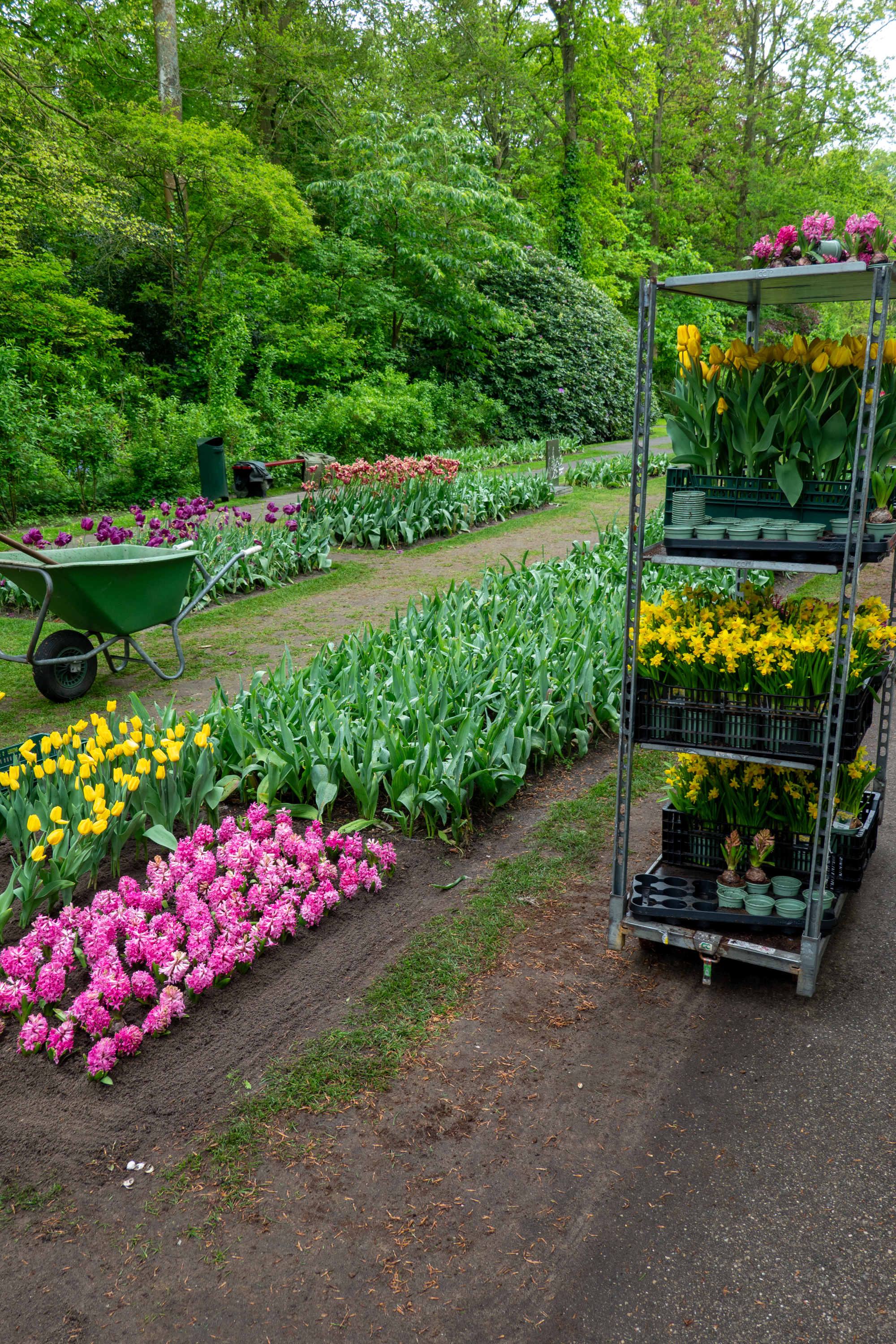
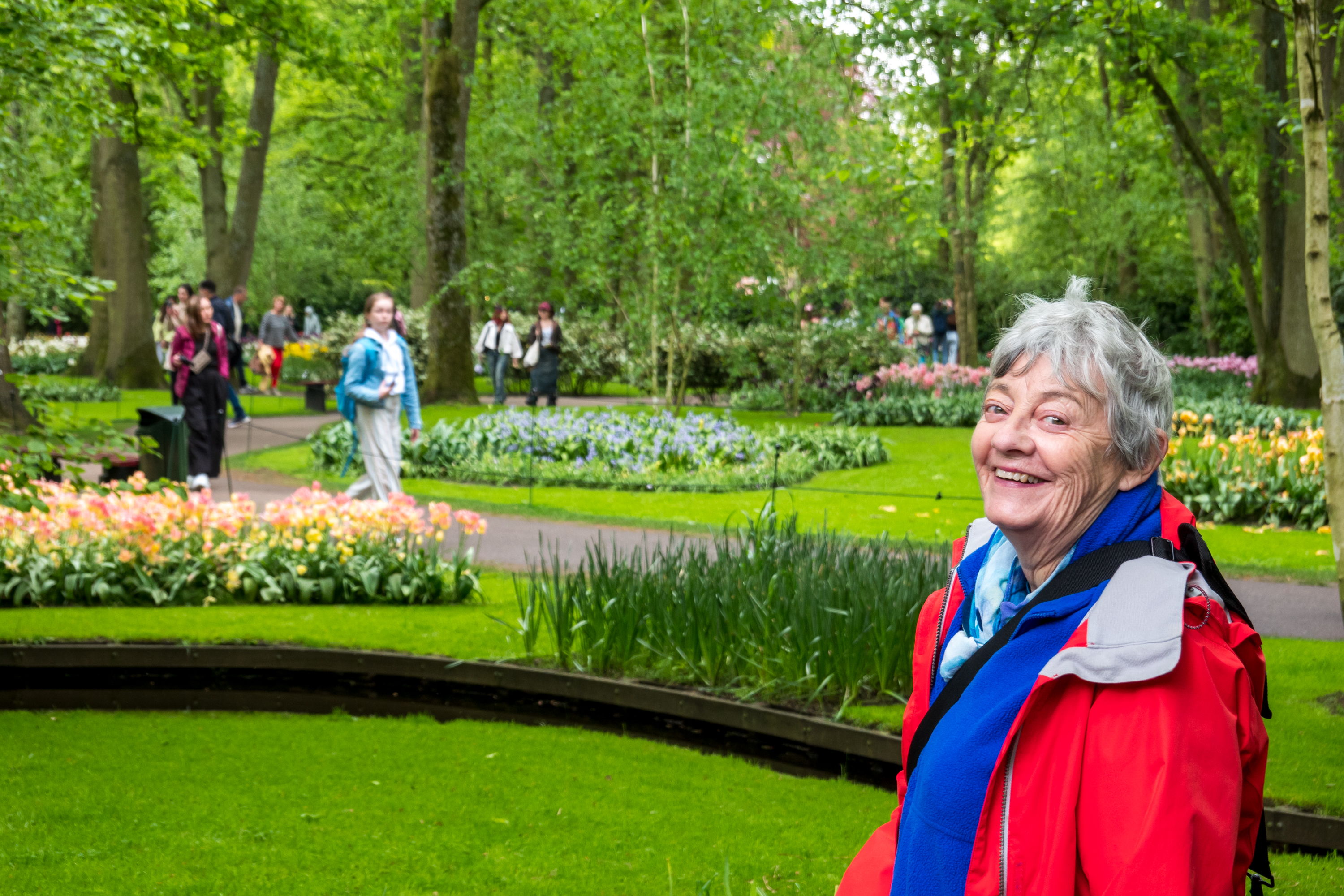
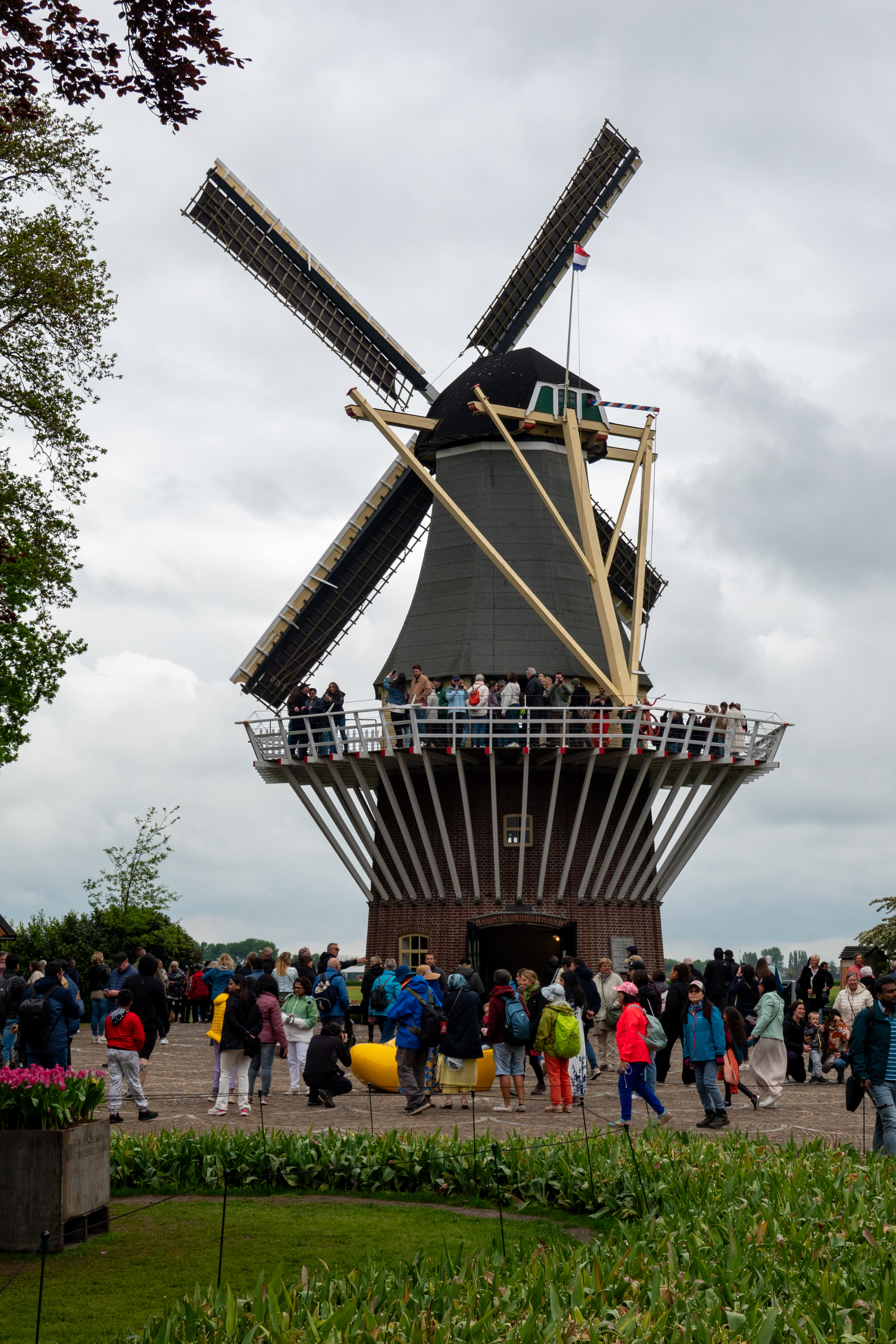
The Keukenhof is one of the largest flower gardens in the world, covering some 79 acres. (https://keukenhof.nl/nl/) It opens every spring for a flower and tulip display. We were a bit late in the season, but it was still amazing. Naturally, we had tickets for the cloudy/rainy day, but we cycled the 10 Km to the park wearing multiple layers. It was chilly enough to keep our jackets on all day! It was the very end of the season and most of the tulips and other spring flowers had finished. We do give them credit though for replenishing a lot of the beds with new blooming tulips and daffodils so that those coming during the last four days would still see some color.

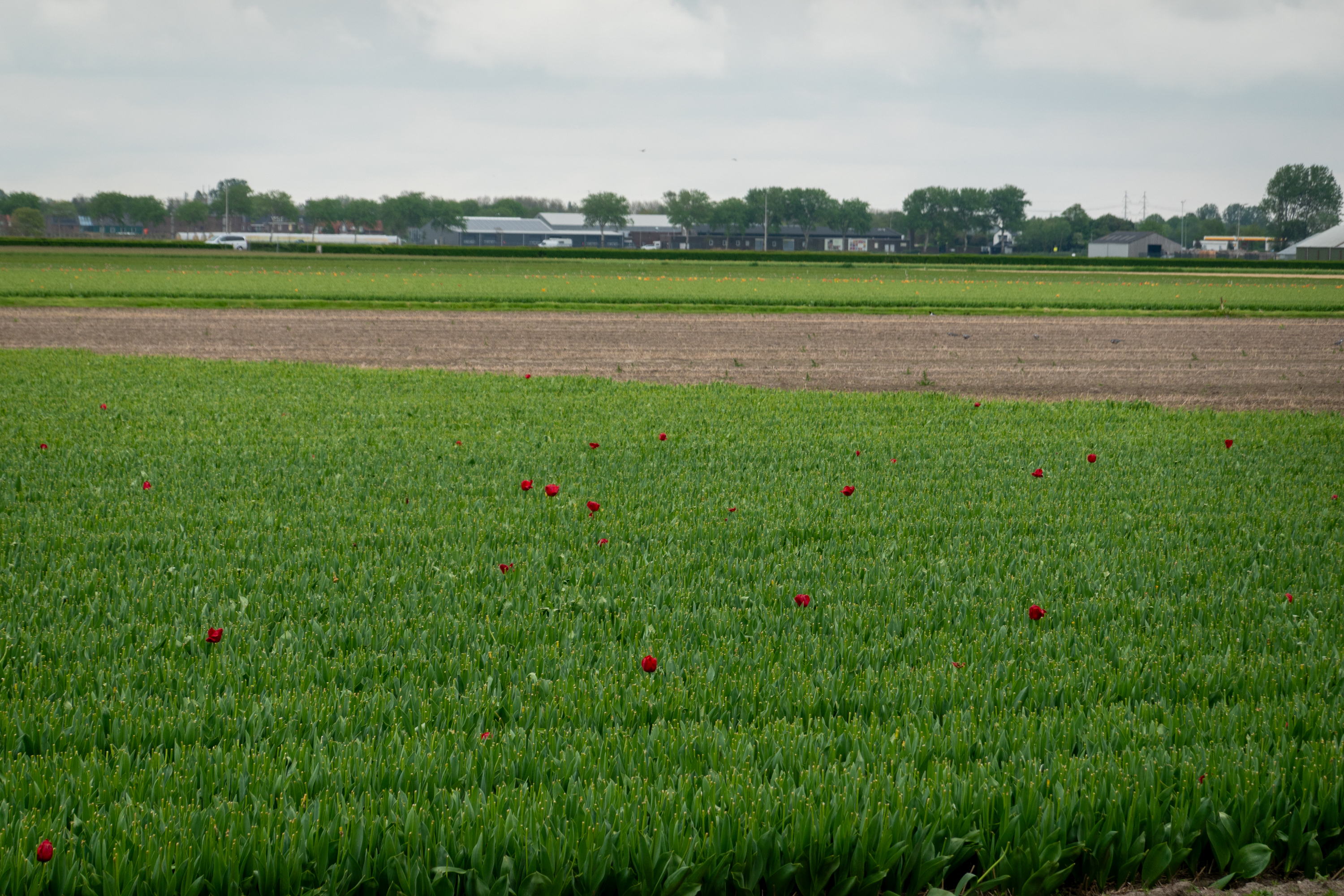
We also took a fun ride on the Whisper Boat, which included seeing the only field with tulips which had not yet been shaved (cut). So we did have a pleasurable experience.

It is said to be better to leave a few blooms than to damage the pants – which are needed for new bulbs.
Canadian tourists.
You can see what a show it would be if the fields had not been cut. “Shaved” in the local parlance.
Stilt dancers
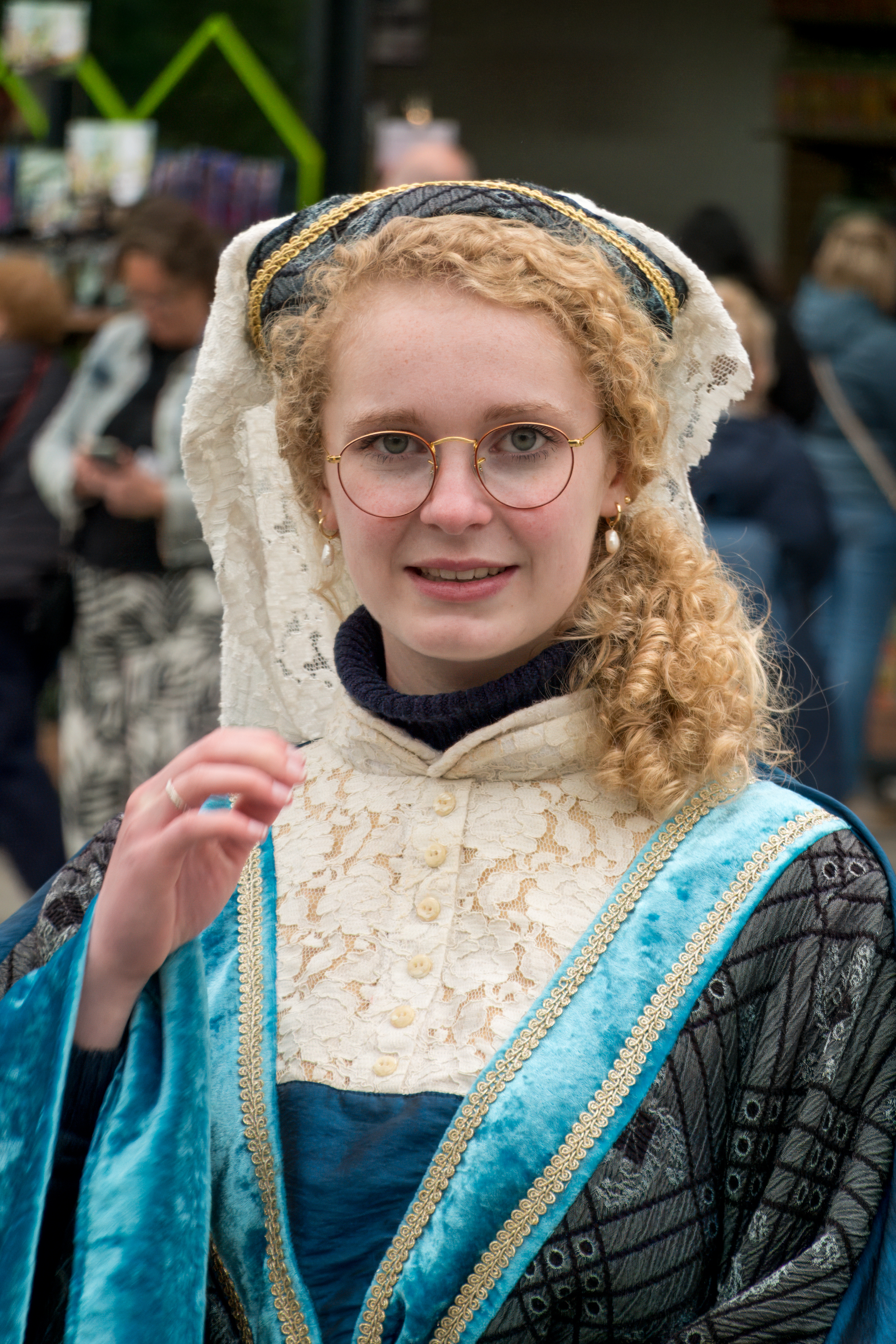
Tourist photo with young ladies in costume.

It was our first trip on the bikes and it was clear that bike riding in Holland is not the same as in the US. The Dutch cycle very fast! The infrastructure is amazing, even out in the country. There are separate lanes for bicycles and these lanes have their own traffic lights and priority rules. Amazingly, electric bicycles and powered scooters are allowed with no restrictions. We are getting better and loving it. The Dutch are WAY ahead of the US or UK and even France.

We realized that one of the electric bikes was not working well and so we decided to head to Leiden where there was an authorized dealer and managed to get into the closest campground by agreeing to be in the field, rather than the campground.

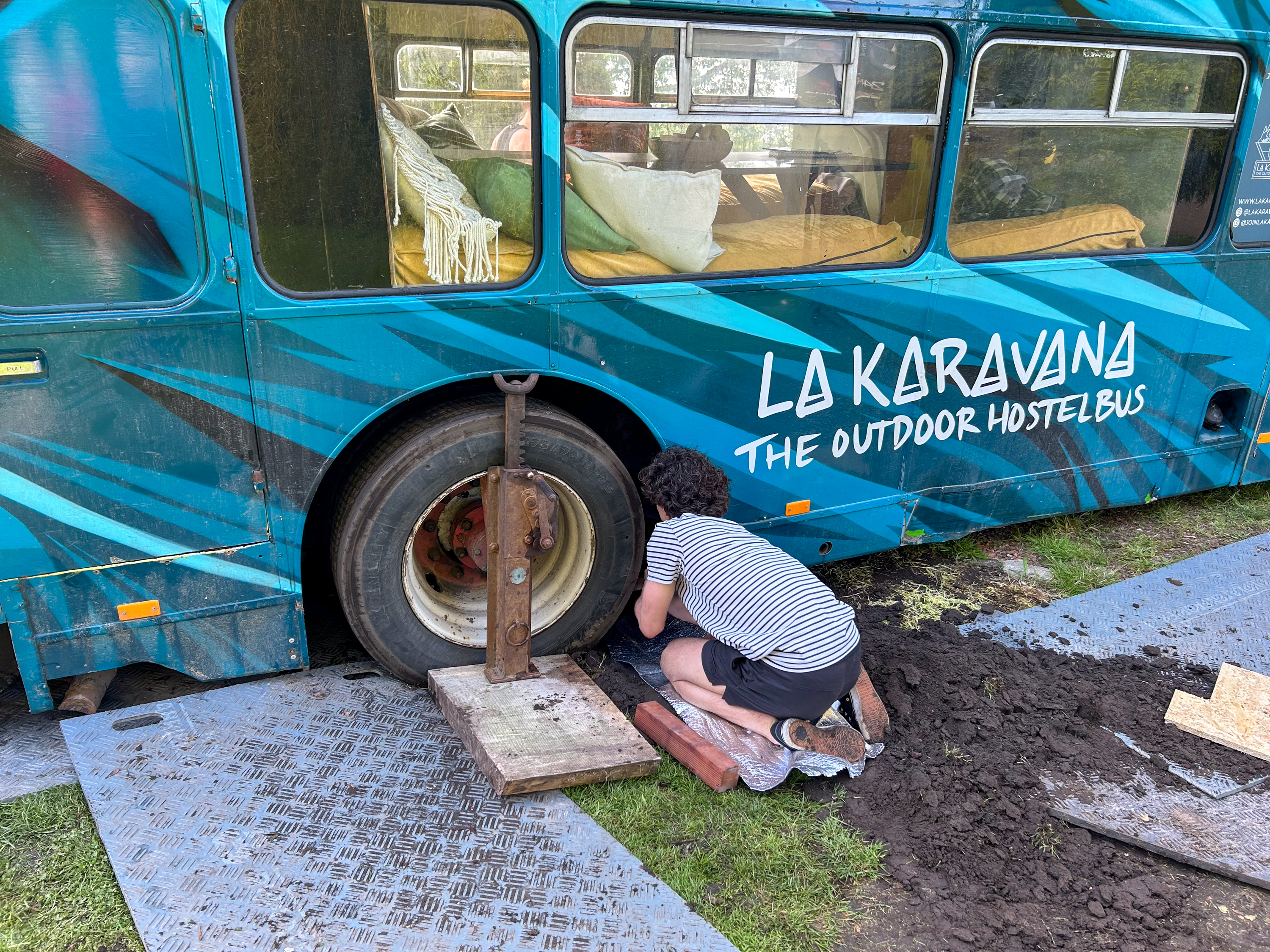
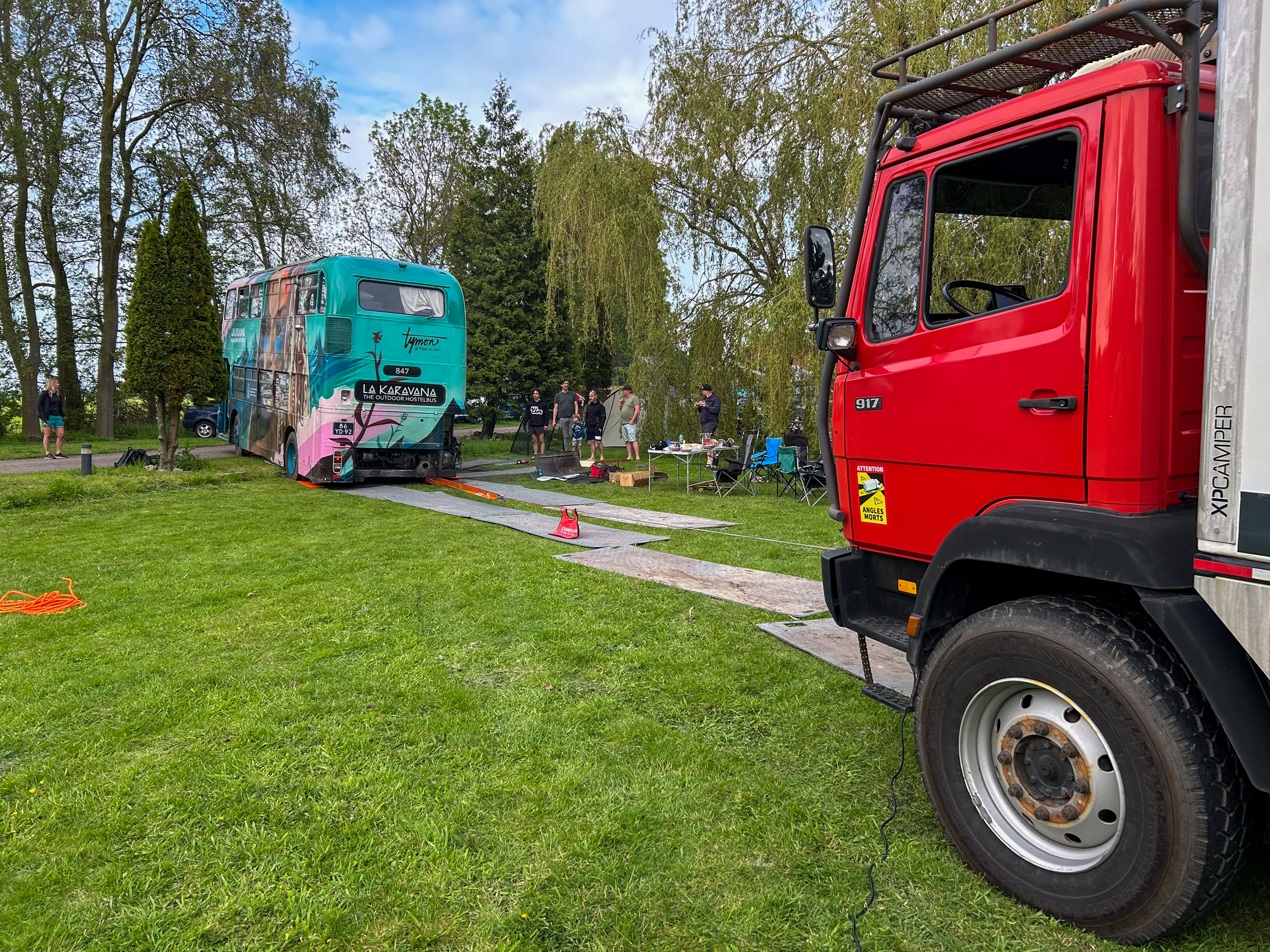
We actually had an interesting first afternoon as we ended up winching out an English double decker bus, that had sunk in the dirt up to the body. Digging was required as well!

Gotta fit the jack in here somehow!

Fred finally got them out with a combination of jacks, traction ramps, and, finally, a pull from our front winch.

Only the third time we have used the winches.

Took a while to get all of the toys put away again! And the bicycle saga is only beginning!