
After leaving the ferry in Rodby, an easy drive took us to Nakskov, in the Lolland Falster region of Denmark. Nakskov is a resort destination with a large campground and lots of summer homes. It even has a beach and claims the warmest water in Denmark. Still too chilly to tempt us!
We had planned a day of visits to a sugar museum and then on the second day, a ride on the Post Boat in the Nakskov Fjord. However, the first day, Sunday, proved sunny so Fred decided it was time to paint the roof rack over the cab. Like everything else, it had really suffered in the soggy English winter. So he borrowed a ladder from someone in the campground and spent the day painting the roof rack (and himself) a lovely glossy black. Weeks later, he still sports Goth fingernails – Rust Oeleum is tenacious stuff! Denise meanwhile assisted where she could and then took a walk out to the point to admire the fjord.


To celebrate completion of the project, we took ourselves out to dinner at a lovely restaurant nearby.
The next day proved much cloudier and windier but we cycled into the town and had a look around.
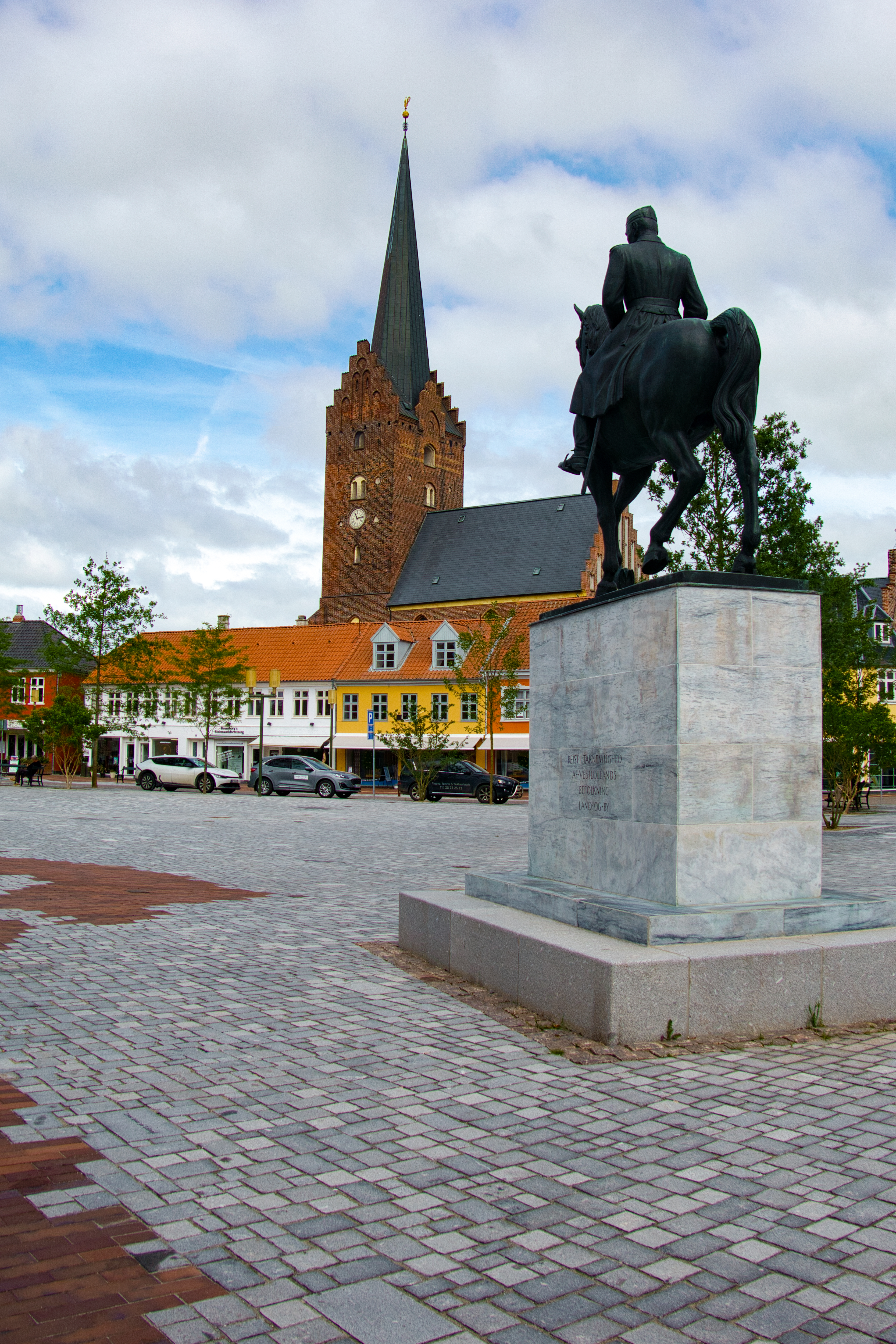
Being Monday tourist attractions were mostly closed but such is life! It seems that one must close on Monday to recover from the effort of closing on Sunday. Banks were open, but would not change money. In fact, they have no tellers and a sign that no cash is handled in the bank. Interesting. So it was off to the ATM and that did work.
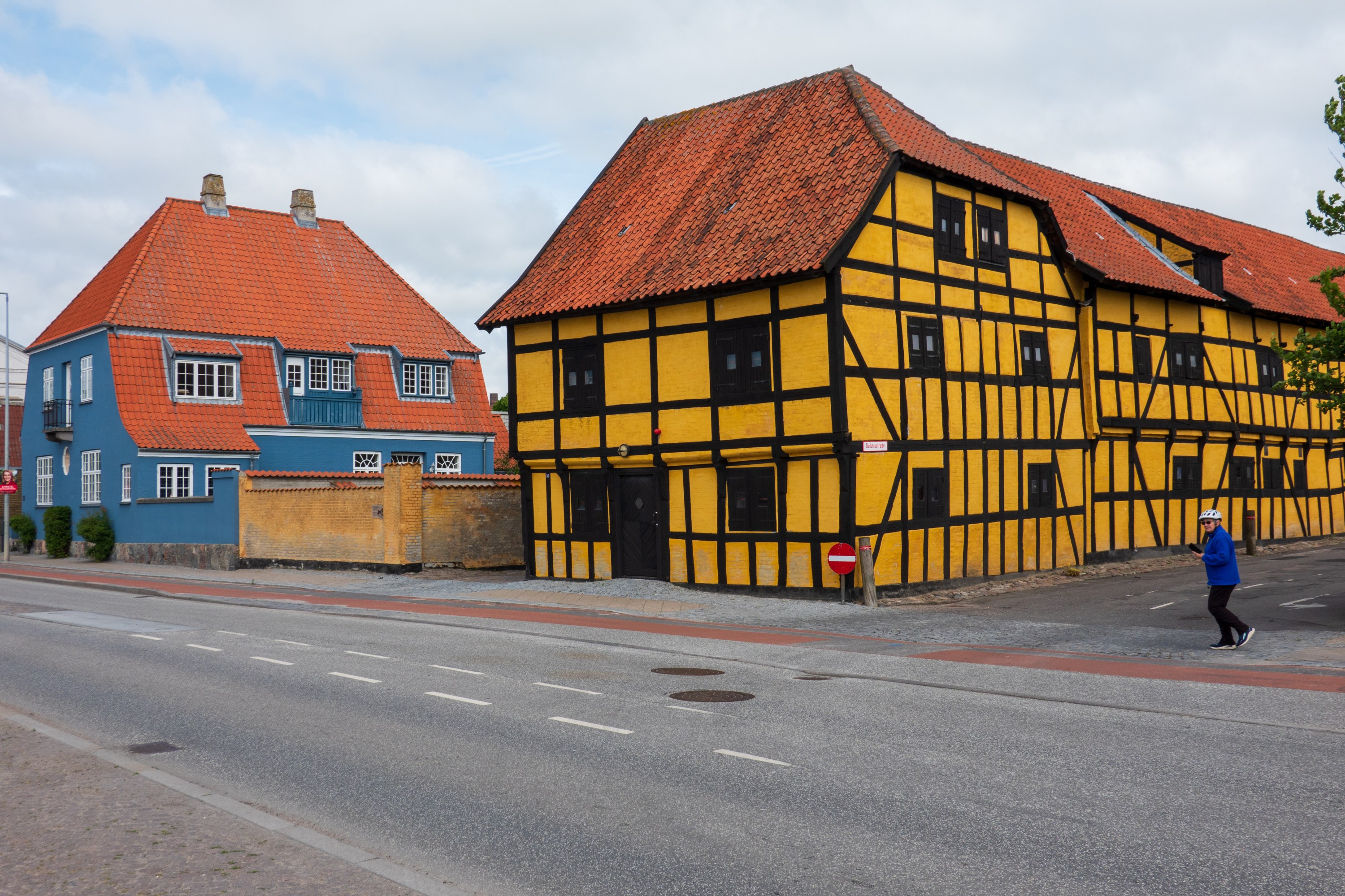
We admired the small section of town with older buildings, many of which were painted a dark yellow.
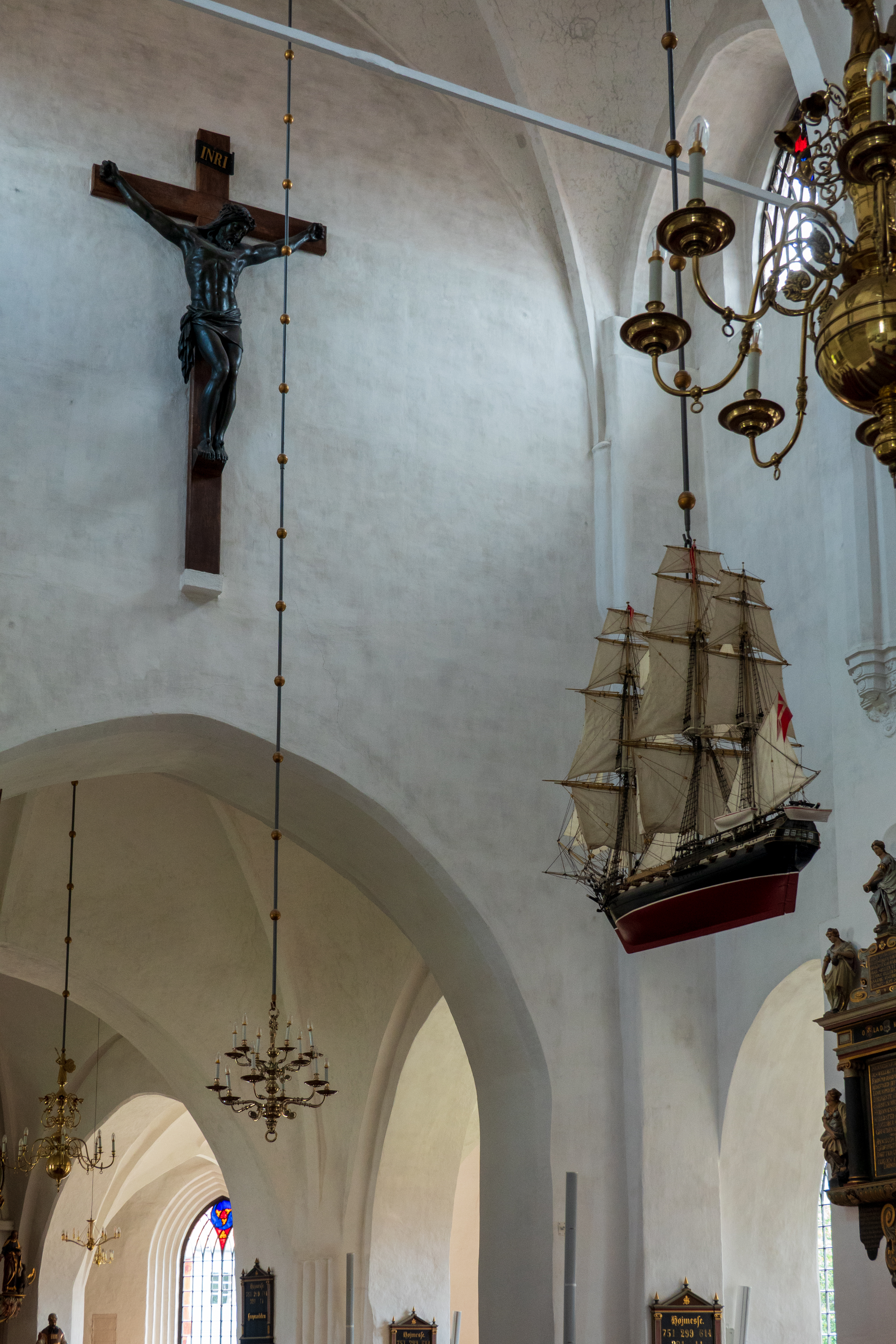
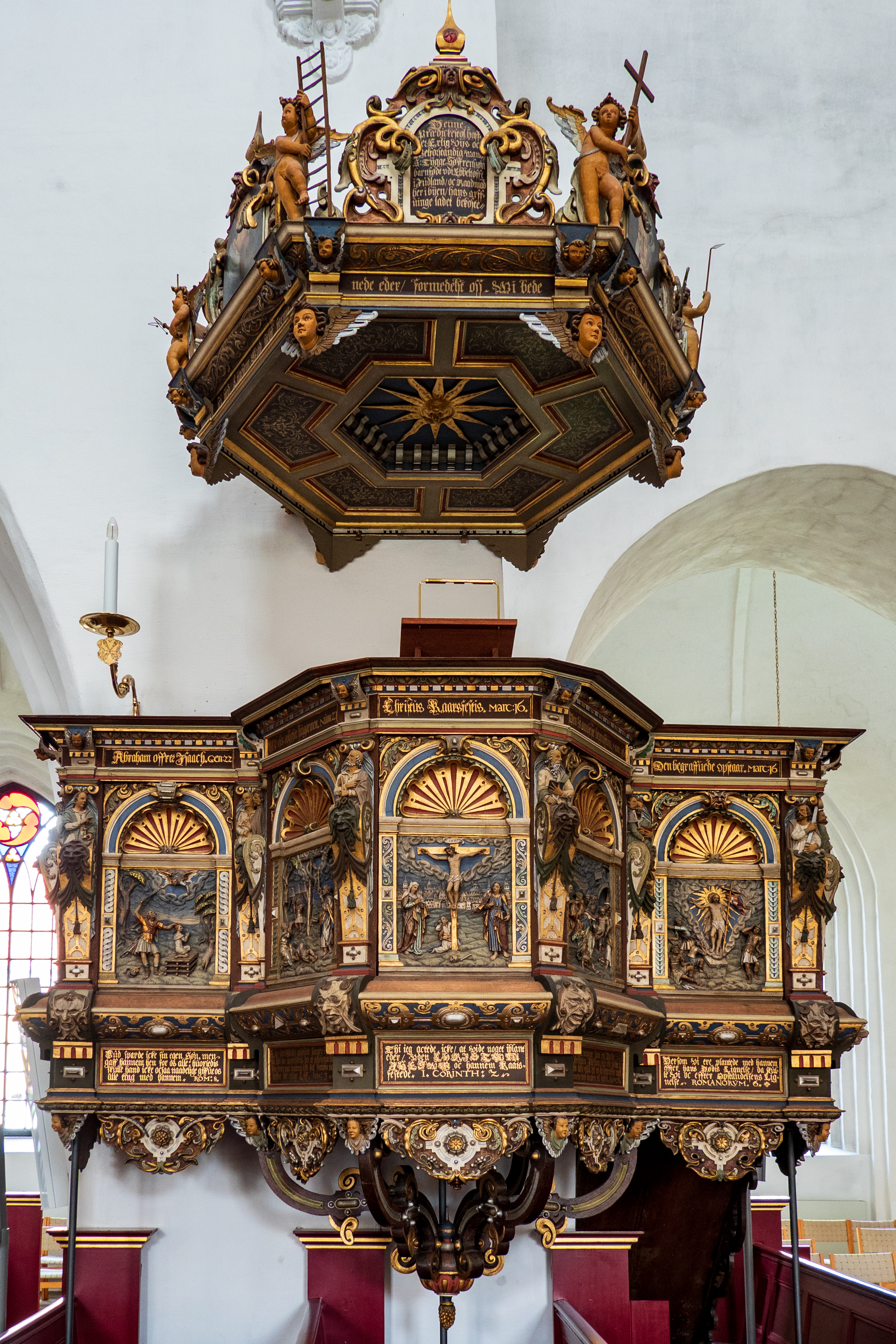
We also visited the church, St. Nickolai. It was interesting and in keeping with the importance of the fishing industry to Nakskov, a model of a boat was hanging in the church above some pews.
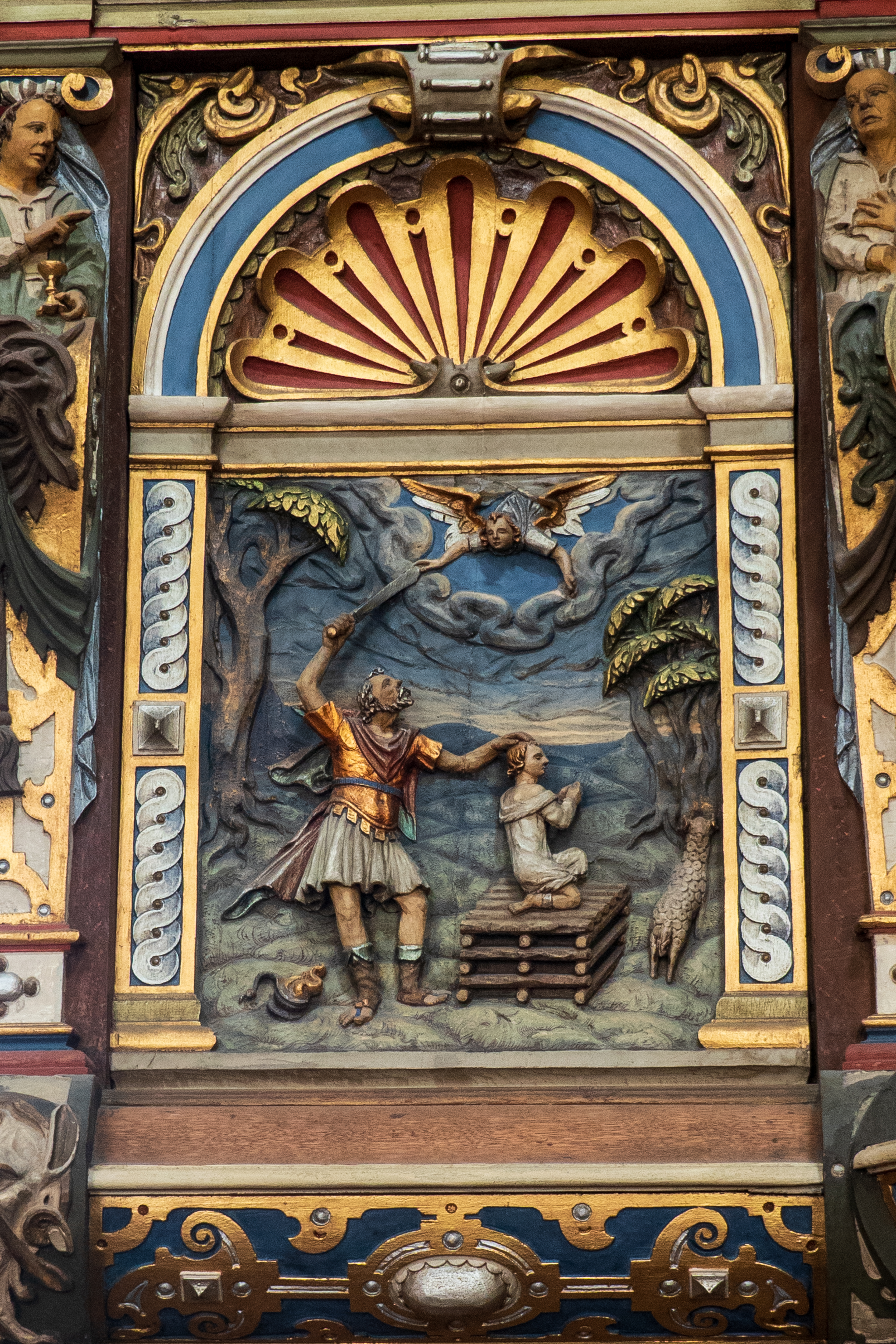
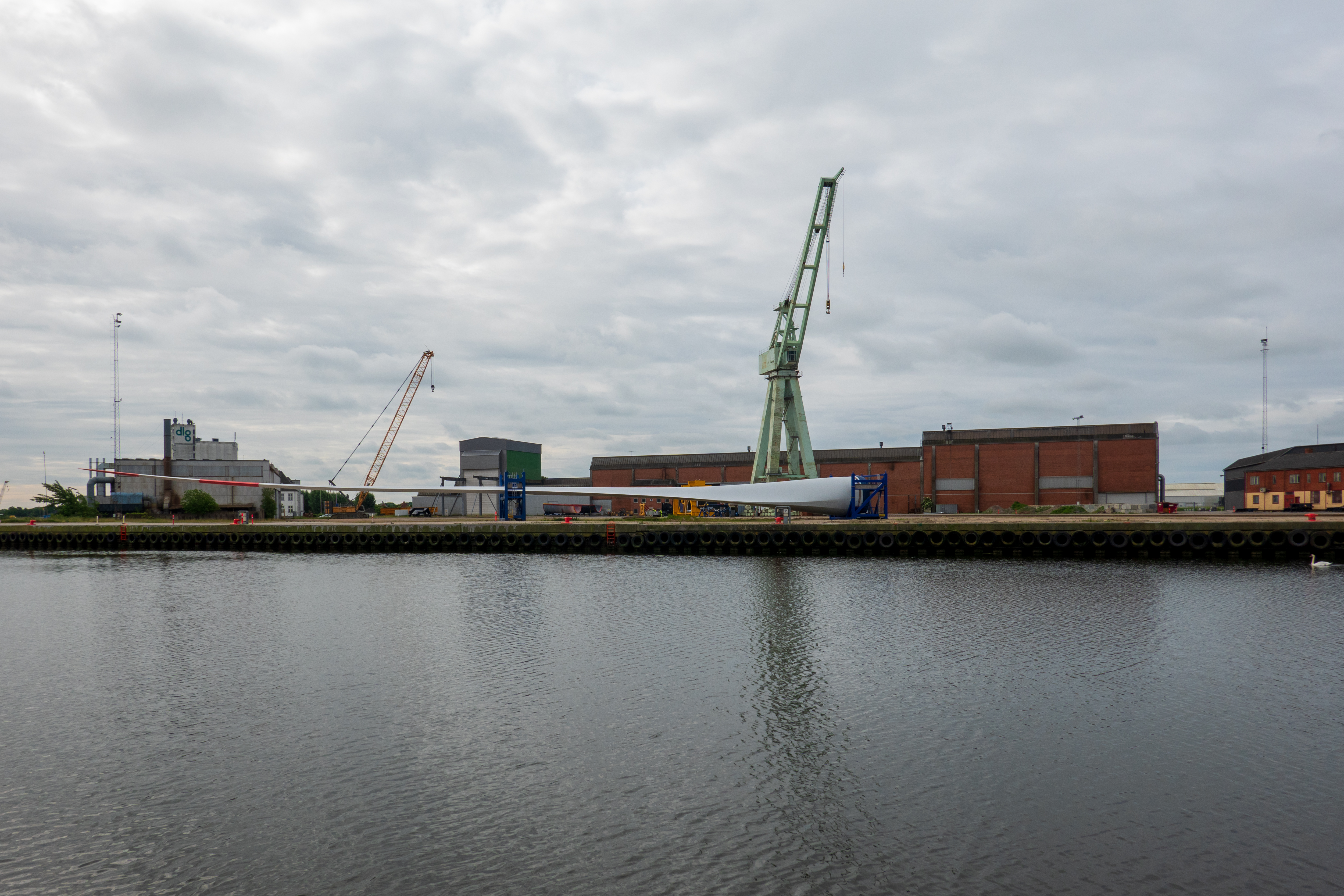
The Post Boat did sail on Tuesday morning and we enjoyed the trip, although the sun barely poked through. The water was calm and the wind quite decent. Sailing out of the harbor, we admired that factory that makes massive windmill blades.
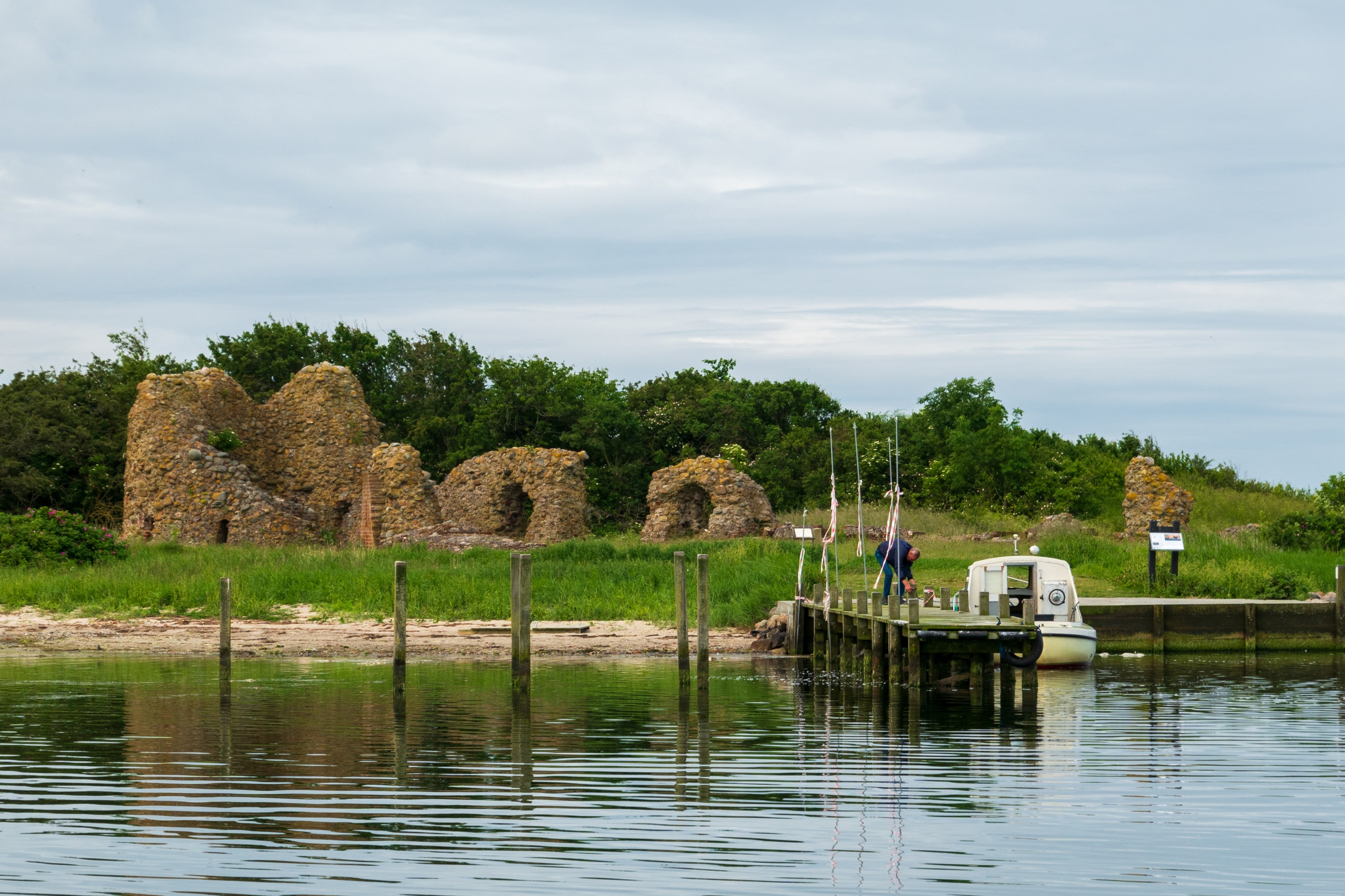
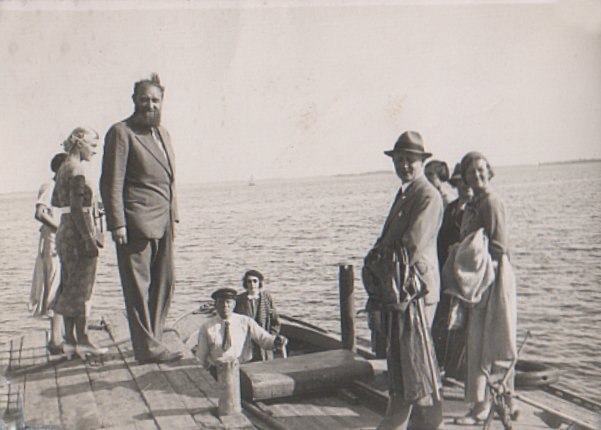
We visited two islands in the bay, both with wildlife preserves. The first, Enehøje, had been owned by the Danish explorer, Peter Freuchen. We had never heard of him, but he is actually a most interesting gentleman: https://en.wikipedia.org/wiki/Peter_Freuchen.
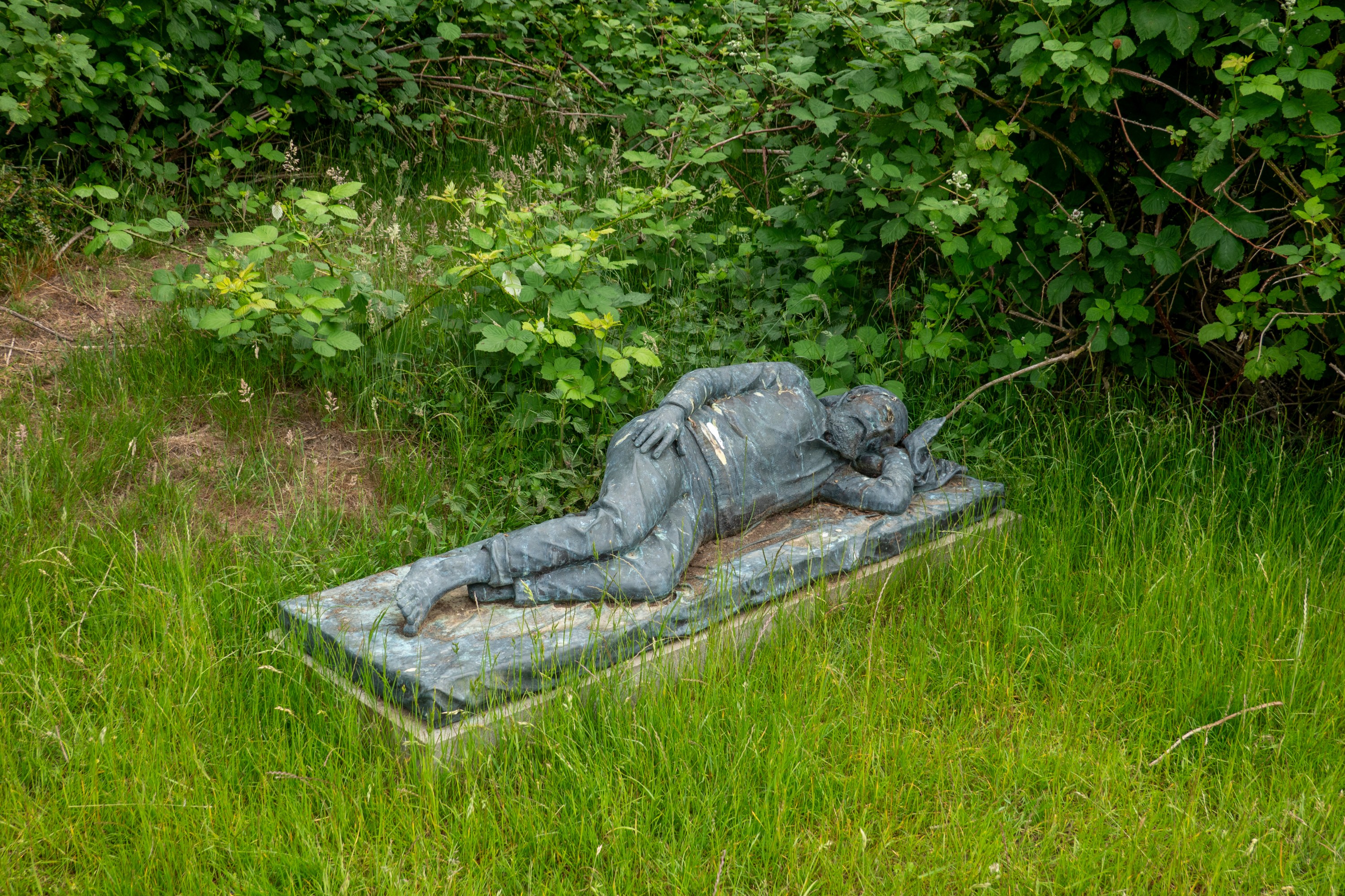

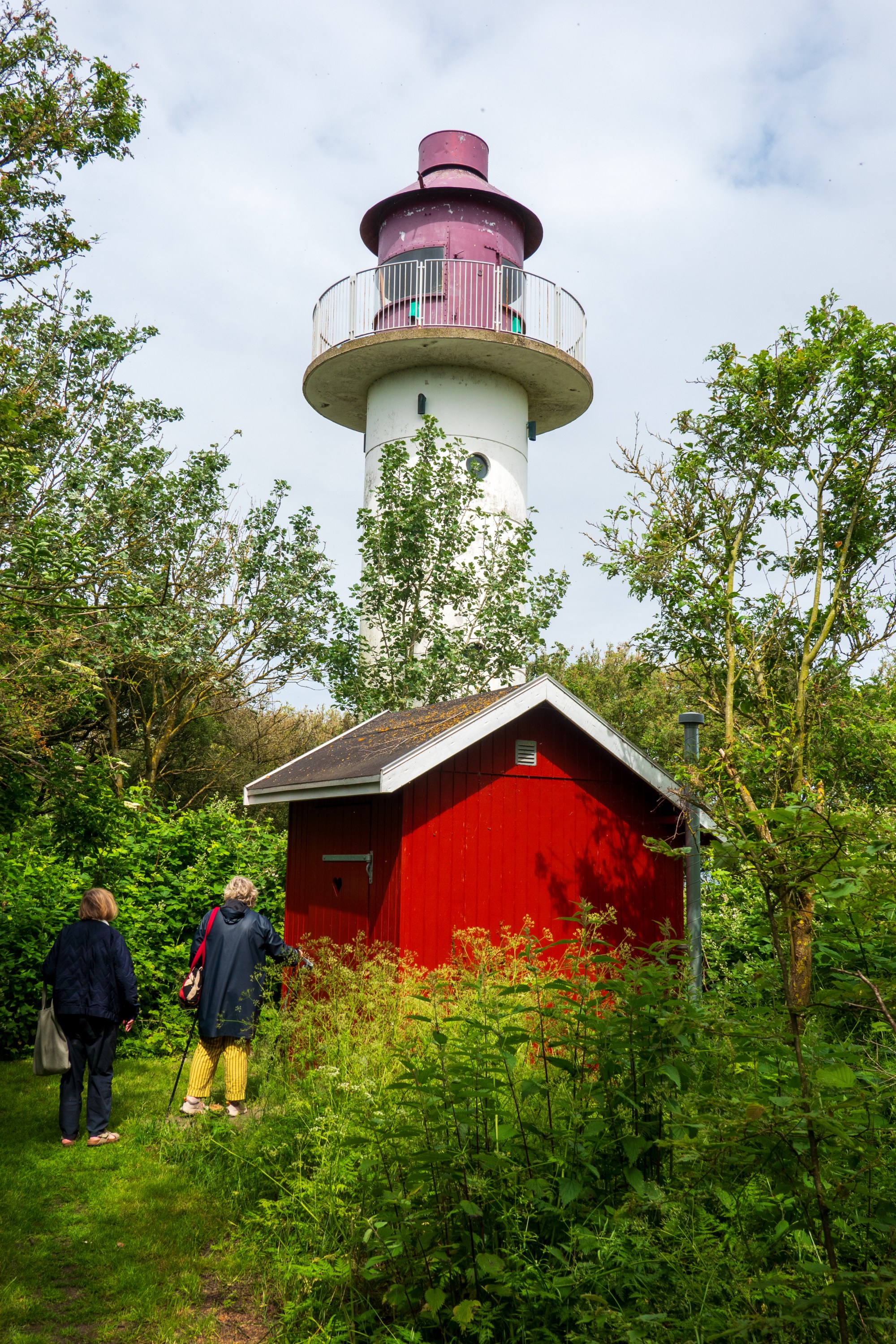

We ate our pack lunch on the second of the two. Fred climbed the lookout tower and admired ships through the 15 centimeter (!!) binoculars. Huge!
While chatting with the other passengers on the boat, we discovered that there was a cherry winery, the Frederiksdahl Kirsebaervin, nearby. Cherry wine? As in, made with cherries, not grapes? Such an interesting idea that we had to visit. Needless to say, it had just closed when we arrived, but a charming gentleman opened it up for us and we enjoyed a tasting. (https://frederiksdal.com/int) We bought a selection of wines, including sparkling and cordials. Cherry wine is a serious wine, but much stronger and less sweet than grape wine. Much more of a cordial than a drinking wine, at least to our tastes. One recommended drink is to mix with strawberry/rhubarb tonic water. Not bad at all.
We could not stay overnight at the winery, but were directed to a small port nearby, where we could camp for the night. This proved to have a great view of the Tars to Spodsbjerg ferry. We enjoyed watching its hourly comings and goings.

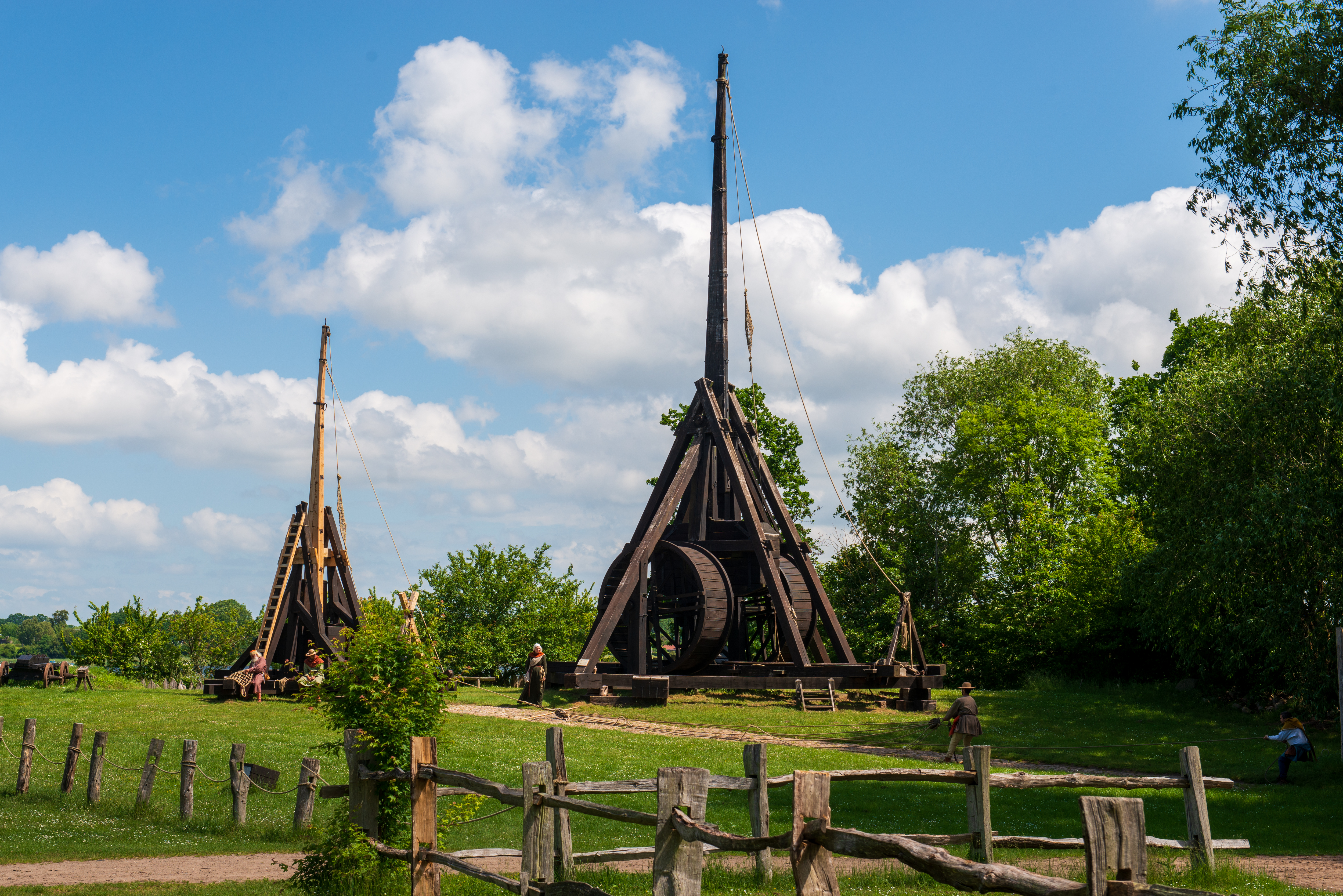
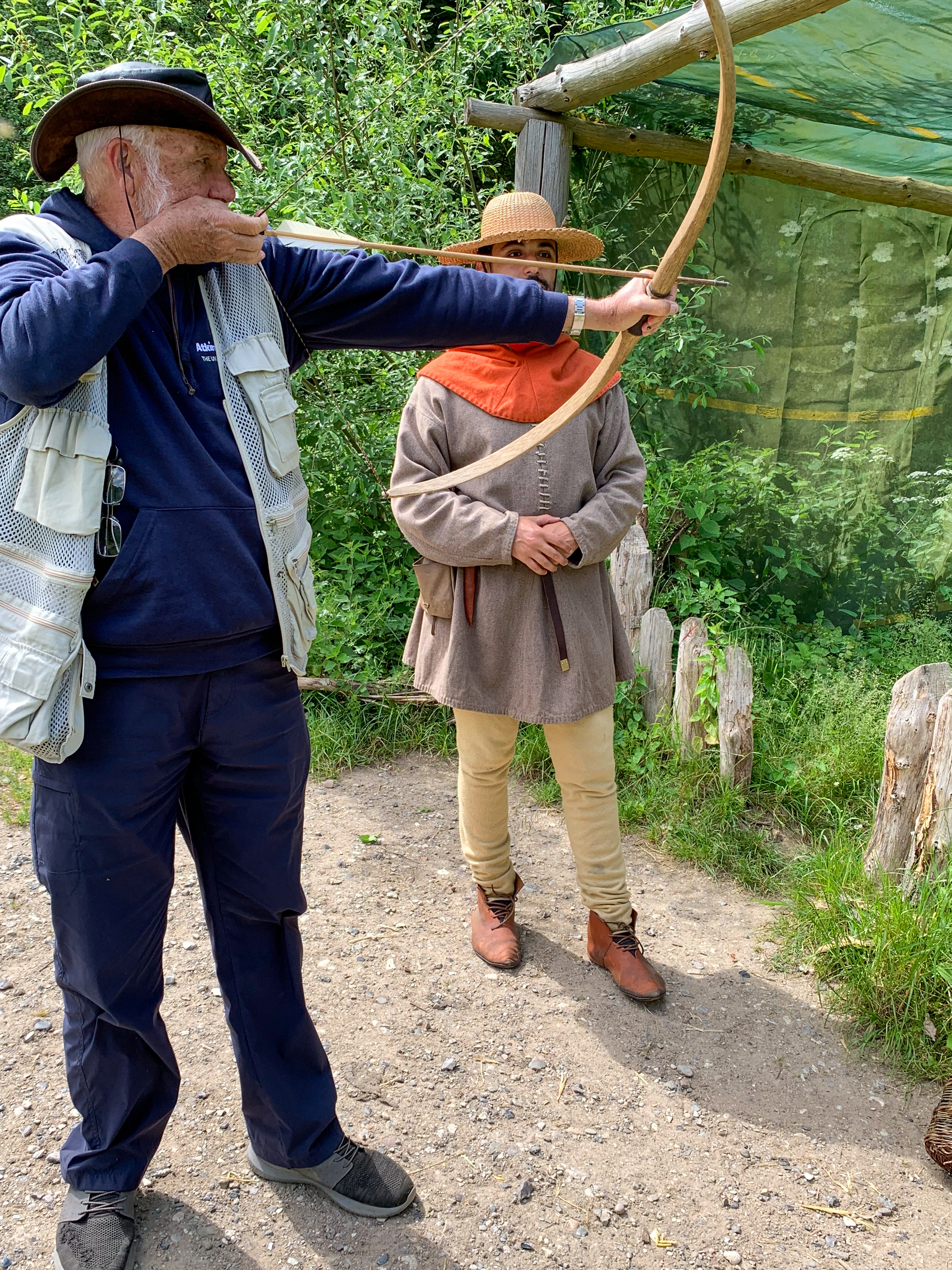
Our next stop, at the Mitteladldercentret, or Medieval Center was interesting and well worth it. (https://www.middelaldercentret.dk/?lang=en) We are suckers for “living history” exhibits. We wandered in, looking for lunch, only to learn that they had not one, but two trebuchets and they were going to fire them at noon! Too cool! OK, you have to be a real medieval history freaque to even know what a trebuchet is, but let us just say that for hundreds of years it was the biggest dog in the artillery game. Lobbing stones in a ballistic arc, it could be used as a kind of long range battering ram. (You could also lob all manner of other things as well.) Read more here: https://en.wikipedia.org/wiki/Trebuchet
Fred was thrilled to actually see one in action. Needless to say, the rocks landed in the river so as to avoid damage to the houses across the river! The small trebuchet was armed by audience participation – they dragooned a dozen or so folks to pull the ropes that pulled down the throwing arm. The big one used the squirrel wheel winch.


There was also a competition or “joust” between two knights which Denise enjoyed. The horses seemed to be having a good time also! All the staff were in medieval costume which added to the atmosphere.

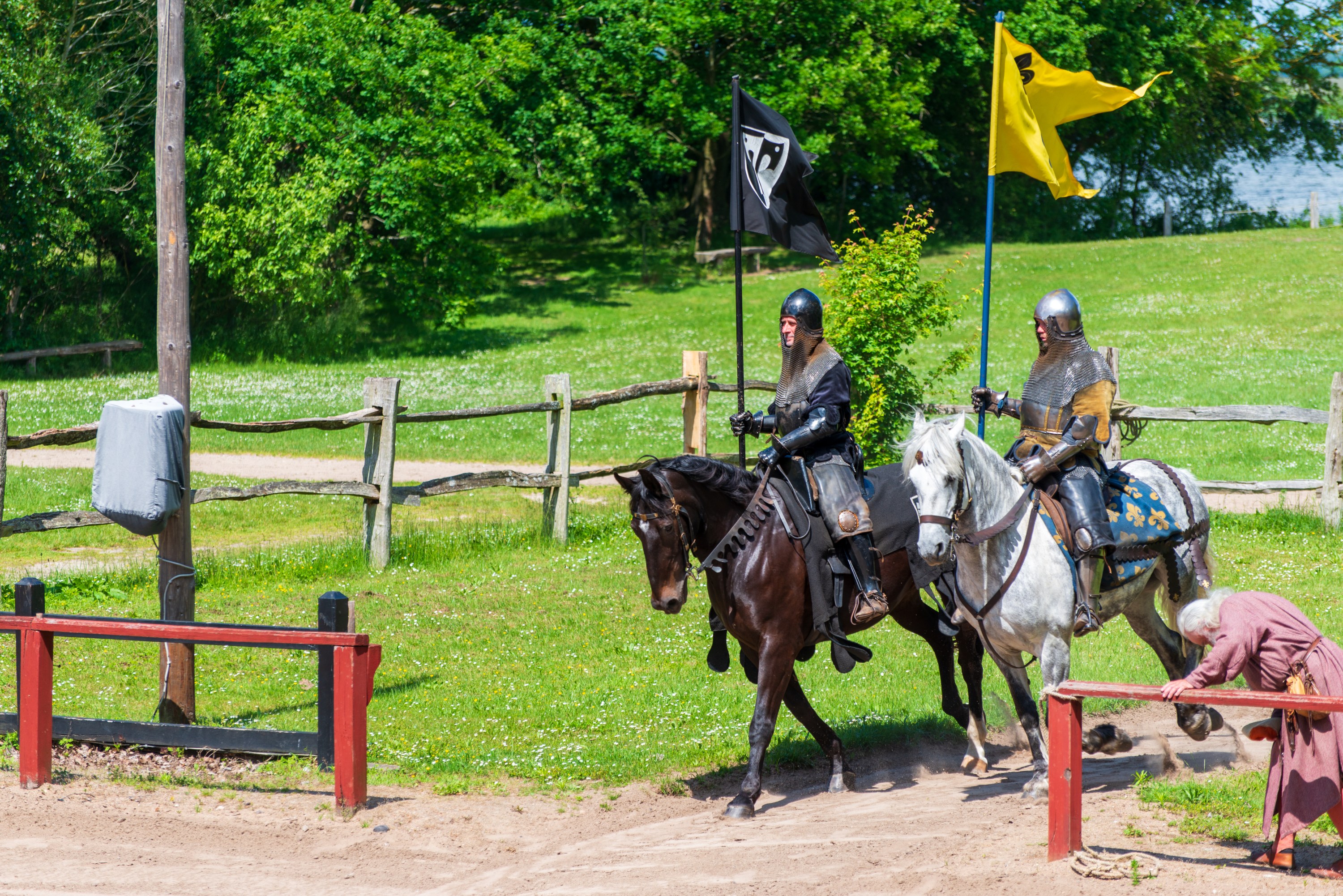

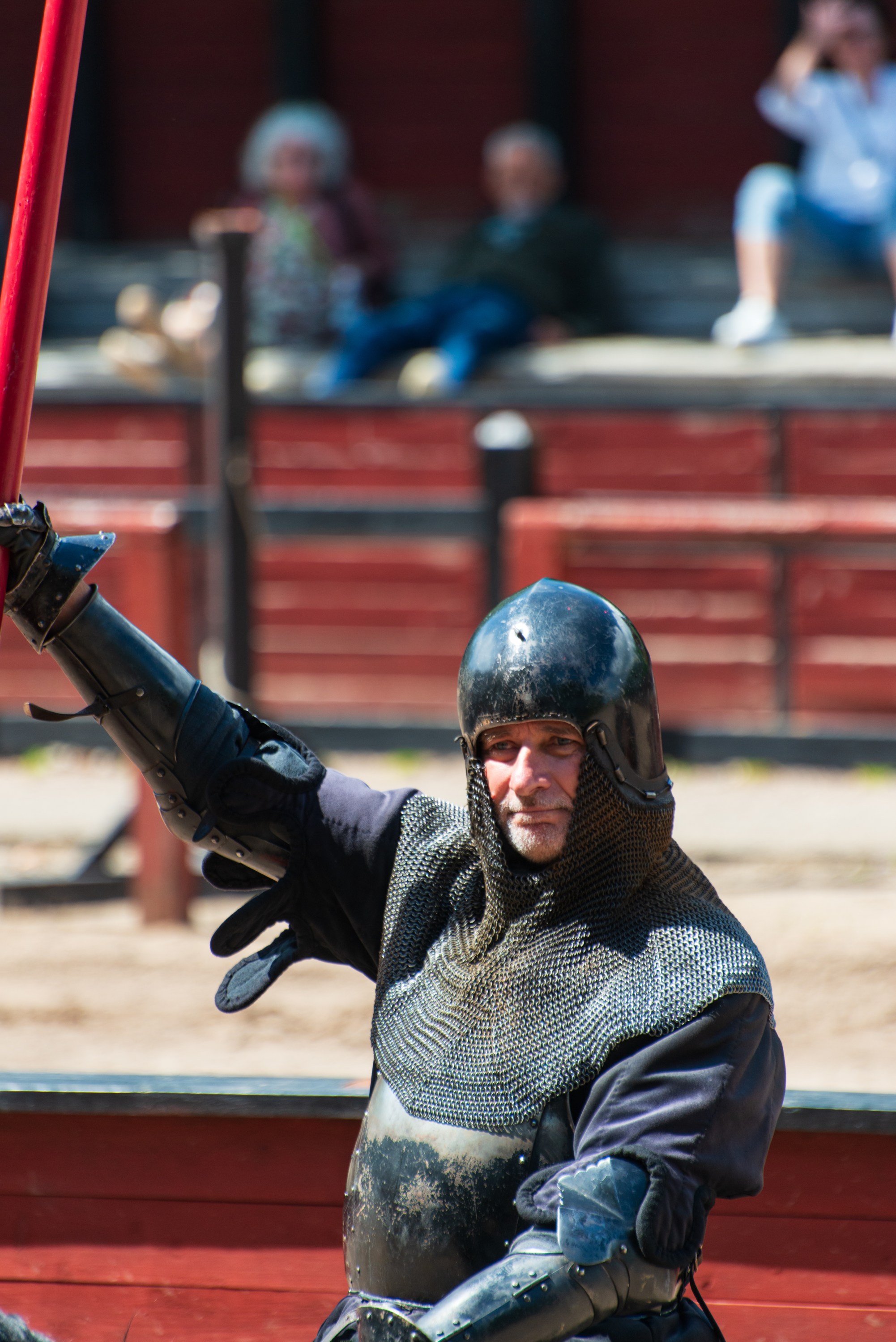
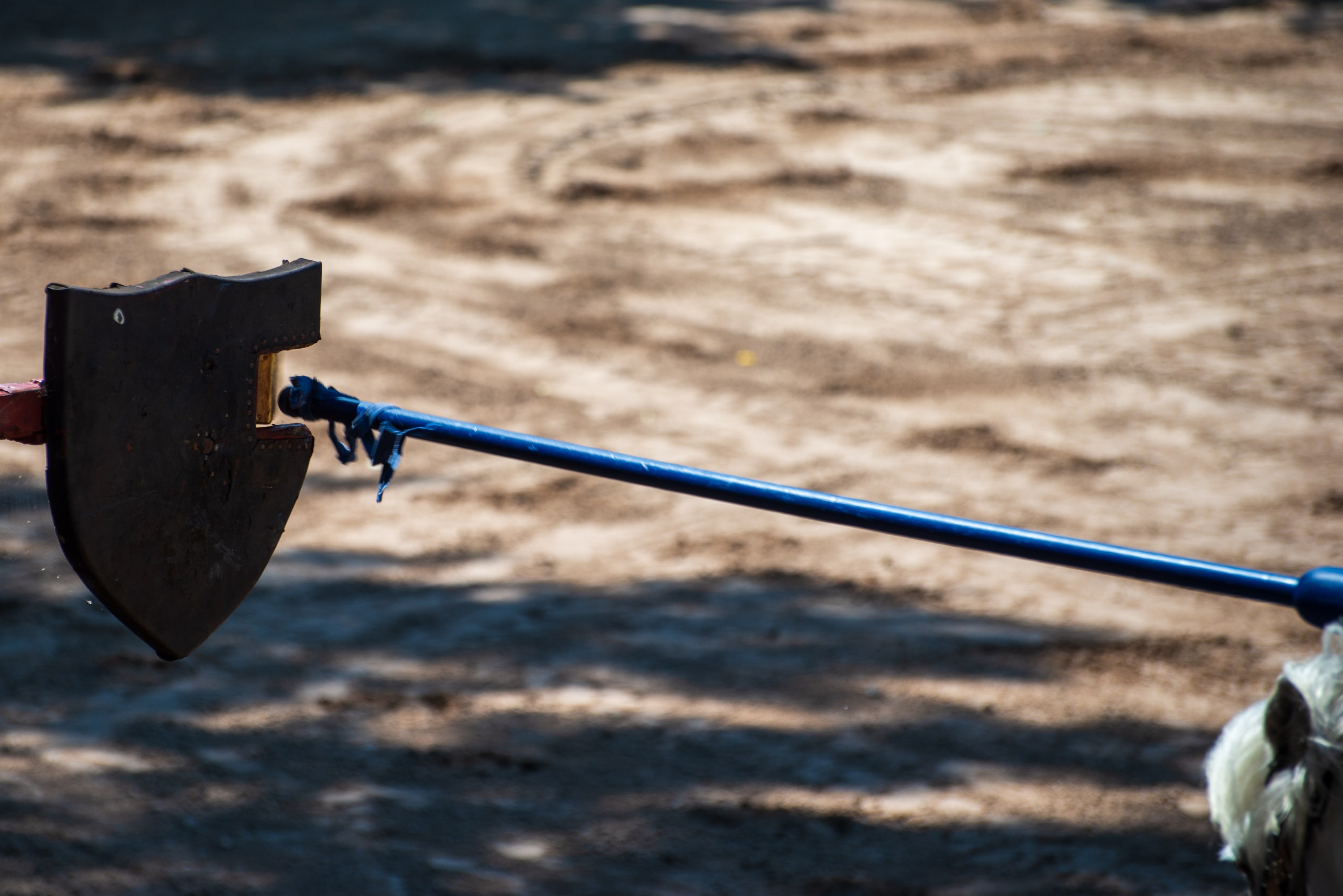
Even with stunt lances and real armor, these guys had to be good not to hurt themselves. The displays of lance vs, various targets, to say nothing of each other, was most impressive. It felt like being an extra in the movie “A Knight’s Tale.”



We stayed the night in the parking lot and moved on the next day to Roskilde, known for its Viking Museum.
 DiploStrat