
Crossing the big bridge/tunnel from Copenhagen to the southern part of Sweden, we discovered different kroner (the Danish ones had been challenging enough!), and yet another language that we did not speak! We have found being unable to speak these languages more challenging than we expected. We have clearly gotten too comfortable touring where we have no problems communicating.
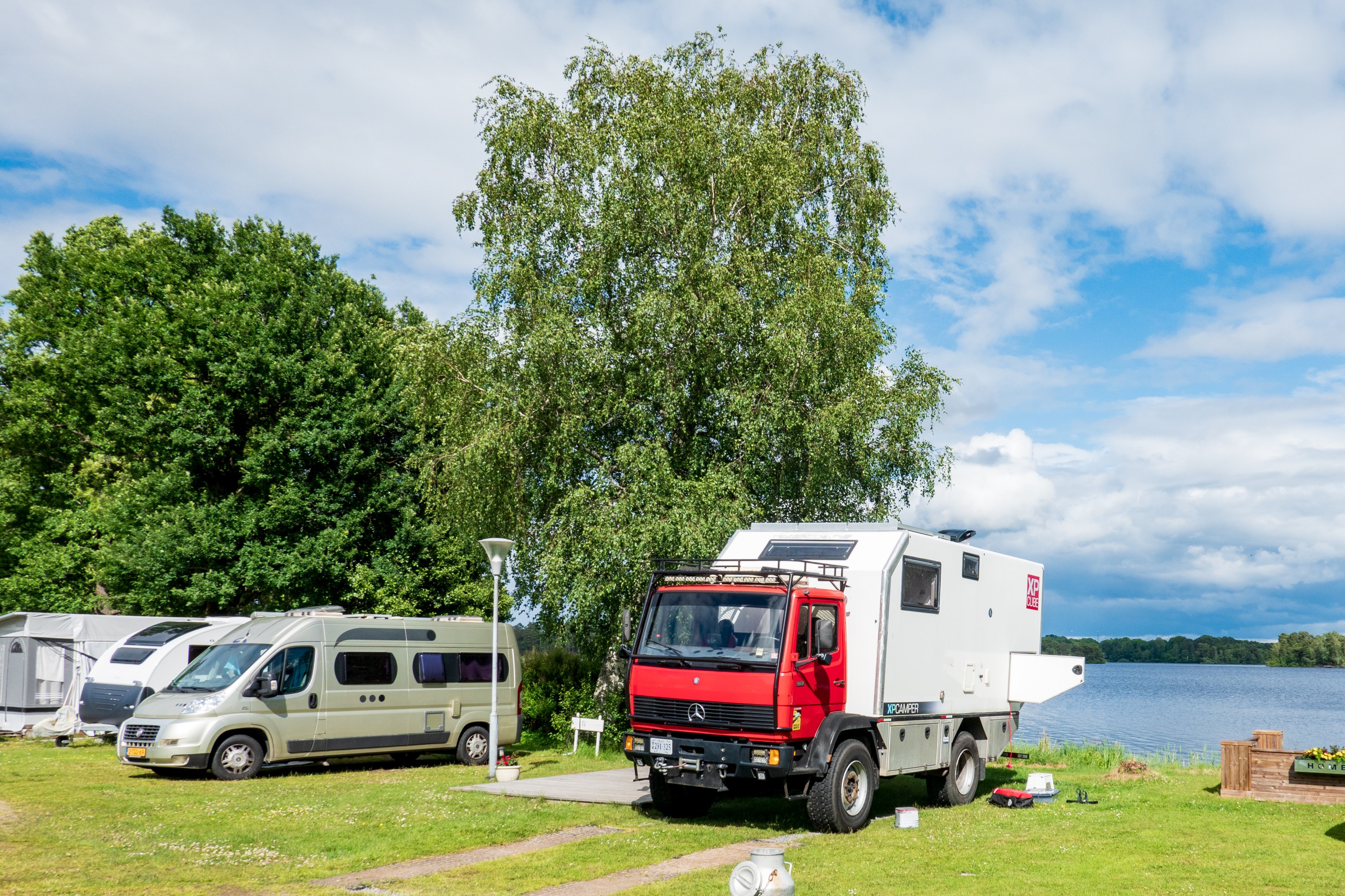
We headed for Vaxjo because Denise wanted to see the “Glass Country” of southern Sweden. Vaxjo is lake vacation land and we stayed at a nice site backing onto a pretty lake. When the sun came out, it was just beautiful. They gave us a lovely site with a wooden deck, but it rained too much to use it.
The next morning, we got on the bikes and headed into town, with a pause under an overpass to let a cloudburst pass.
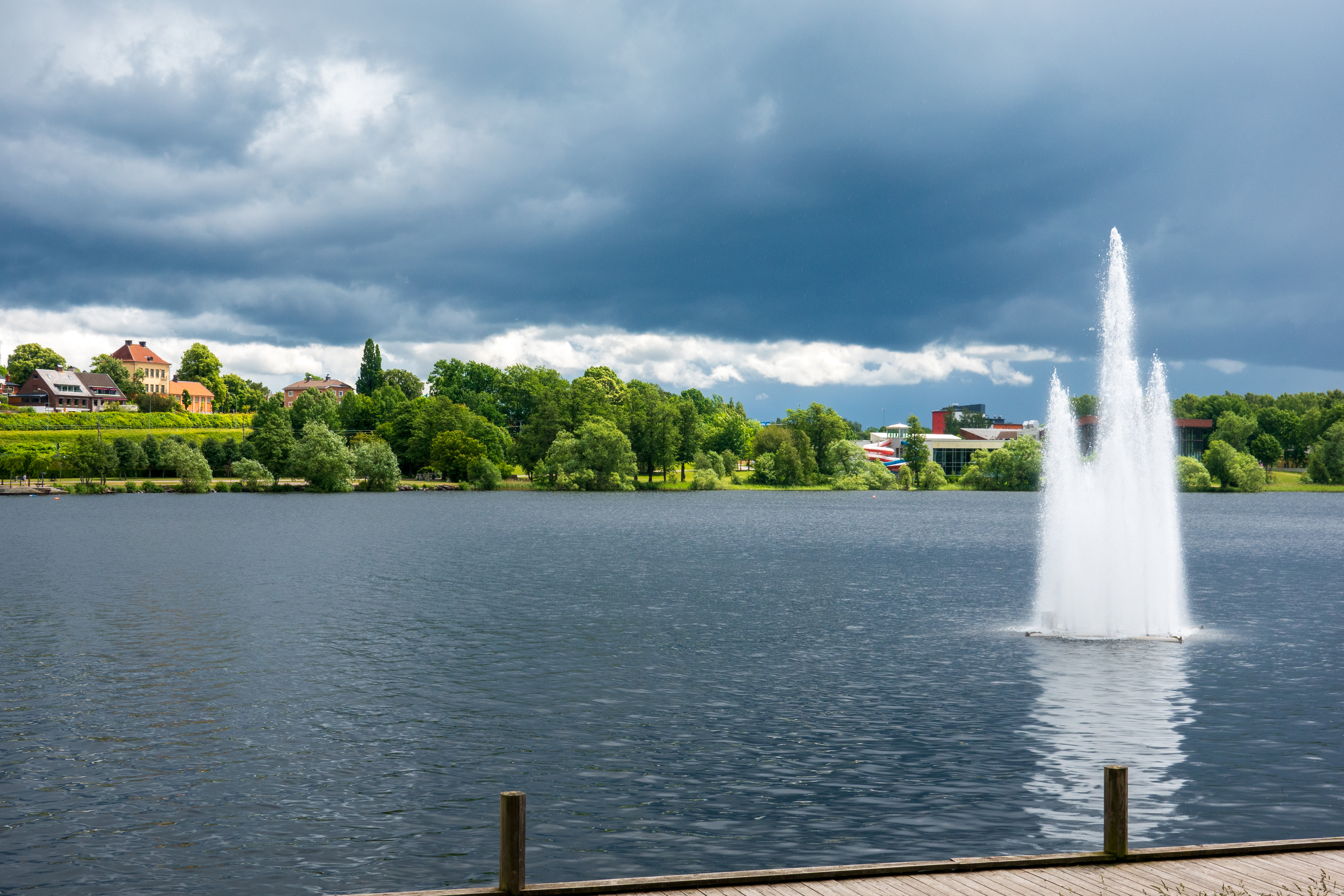
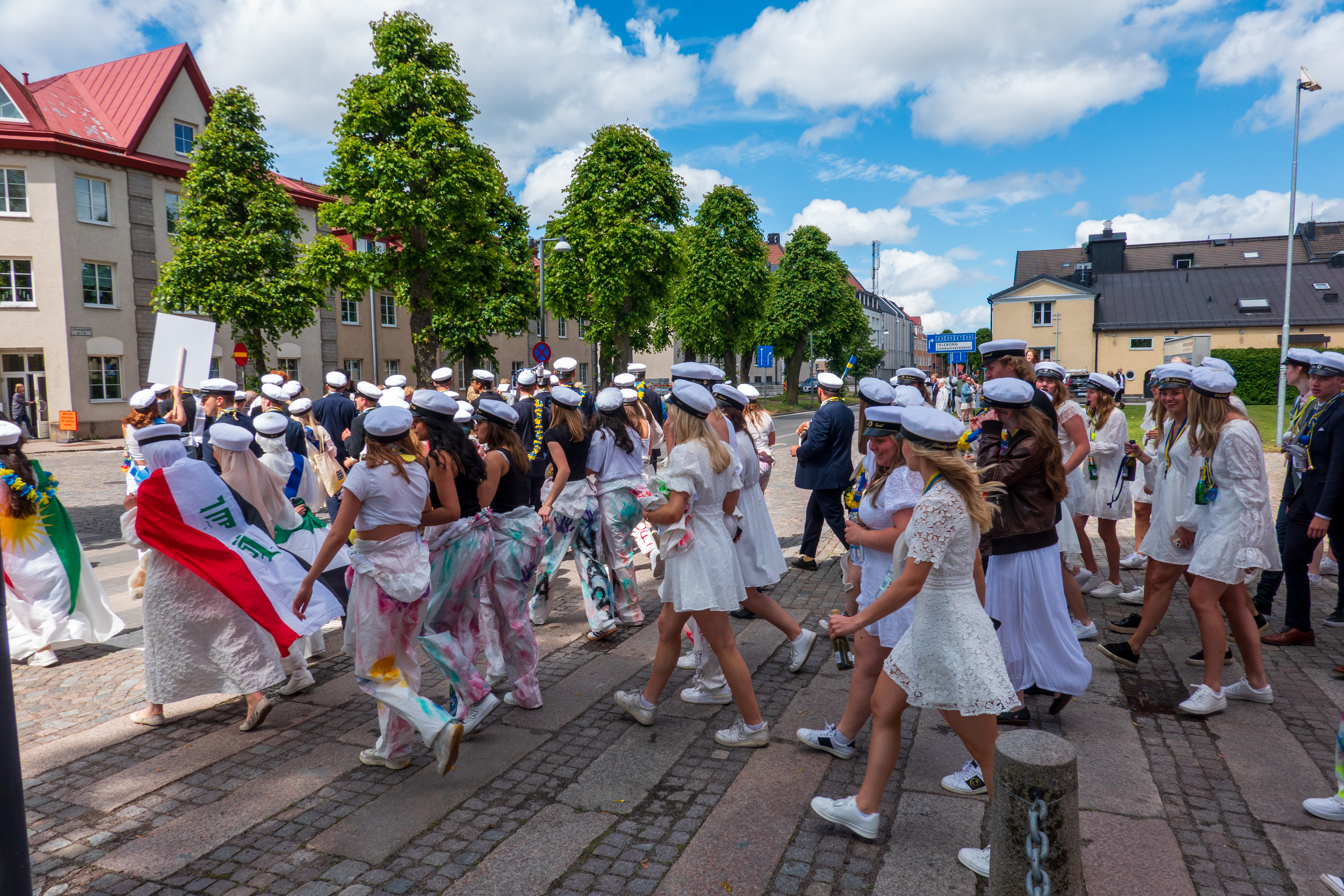
Downtown Vaxjo turned out to be very pretty, with more lakes, a scenic church, and graduating students marching everywhere.

Our first stop was the glass museum, which turned out to be more of a display of artistic glass pieces than an actual museum.

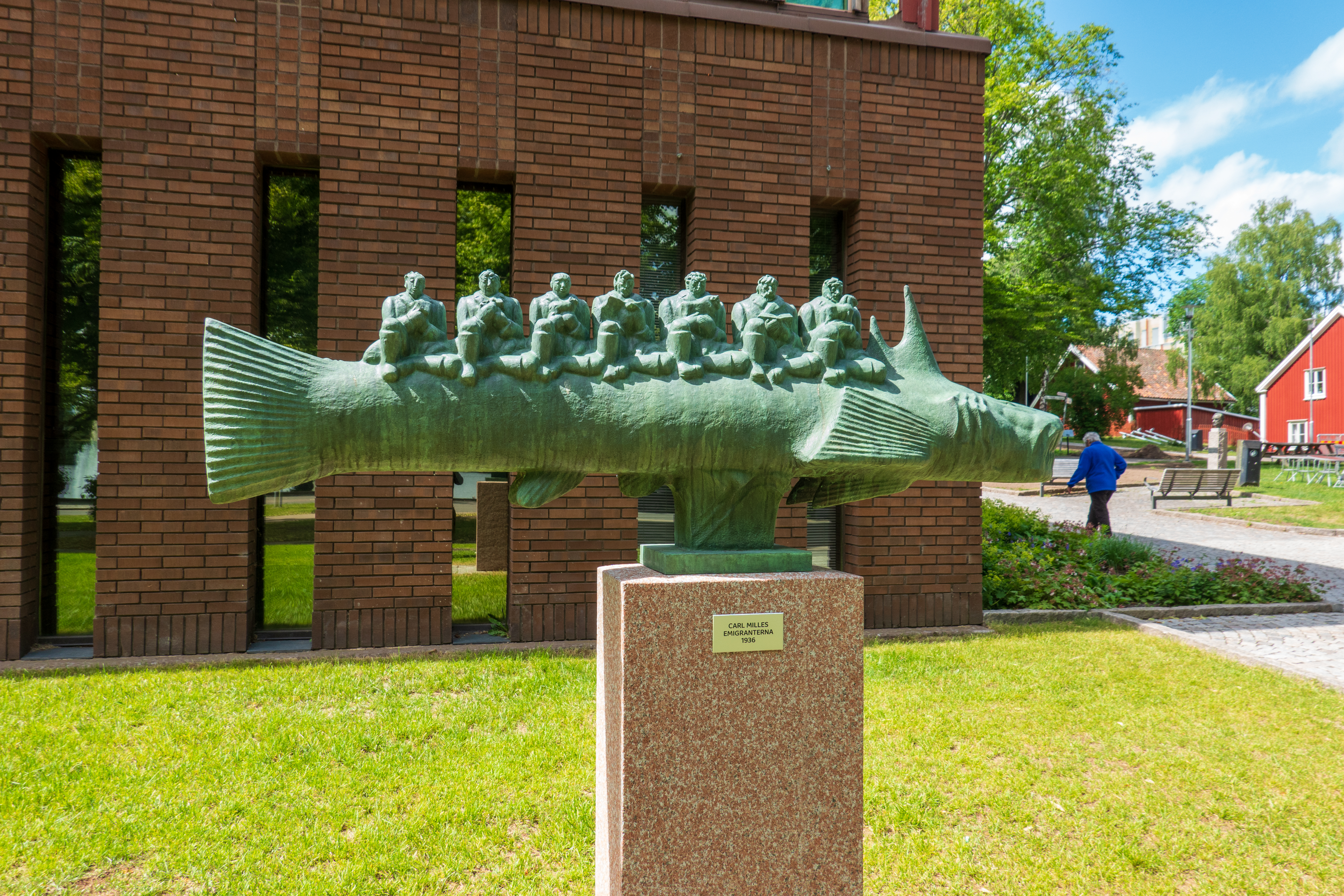
But we very much enjoyed the Museum of Swedish Emigration, which dealt with the vast number of Swedes, who had emigrated to the US, including mode of transportation and where they settled in the US. Some fascinating artifacts and stories of Swedes on the Titanic – some made it, many did not. We had seen a mirror image museum in Duluth, Minnesota.

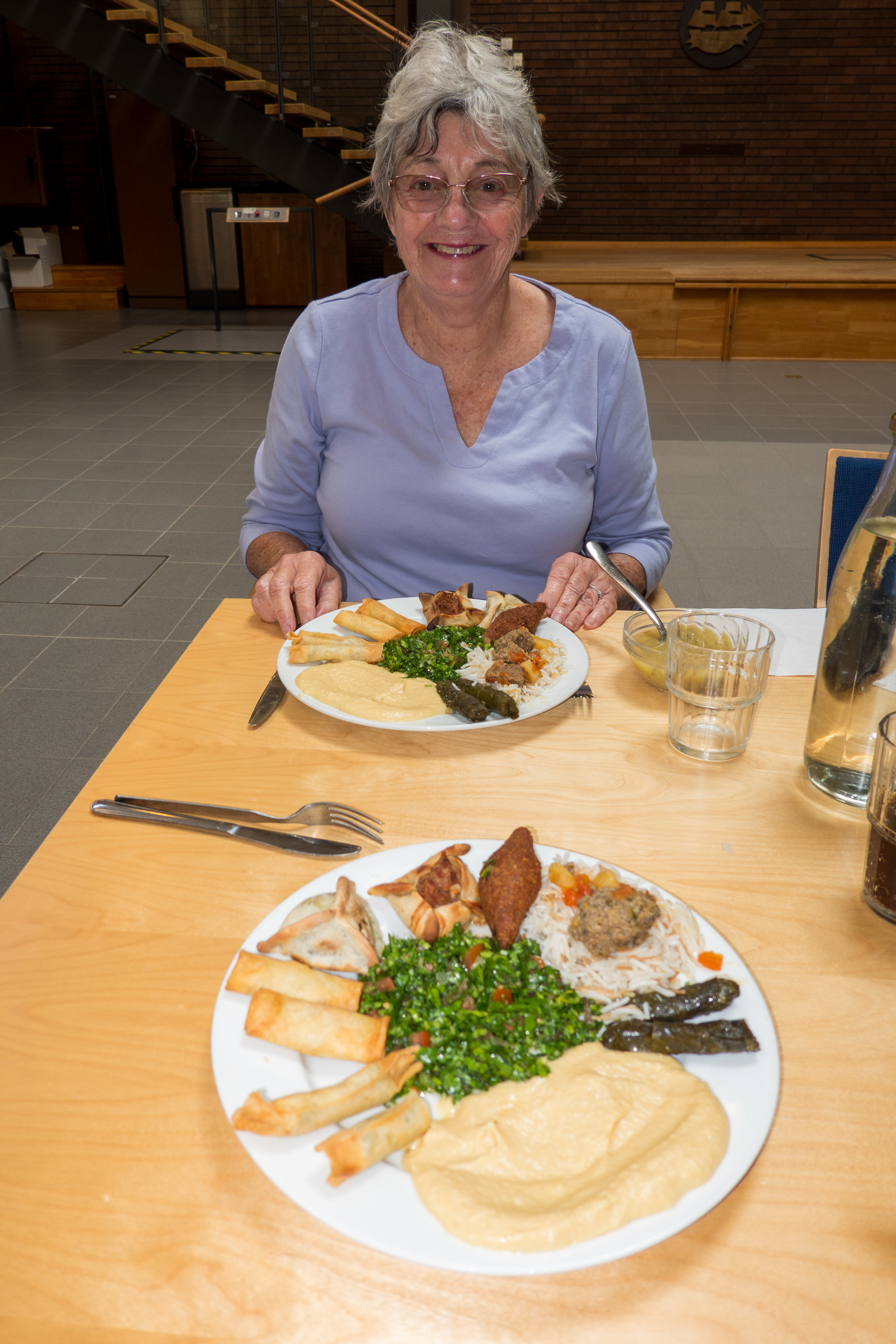
The Museum had a lunch counter serving Lebanese food, to our surprise. So, of course, we ate lunch there and had a nice chat with the owner and her mother.. An interesting reminder not to focus exclusively on immigration to the United States. There are immigrants going everywhere – anywhere they can make a better life.
After lunch, we took advantage of a break in the rain and wandered the town a little, visiting the church. As might be expected, the church featured some interesting glass decorations.
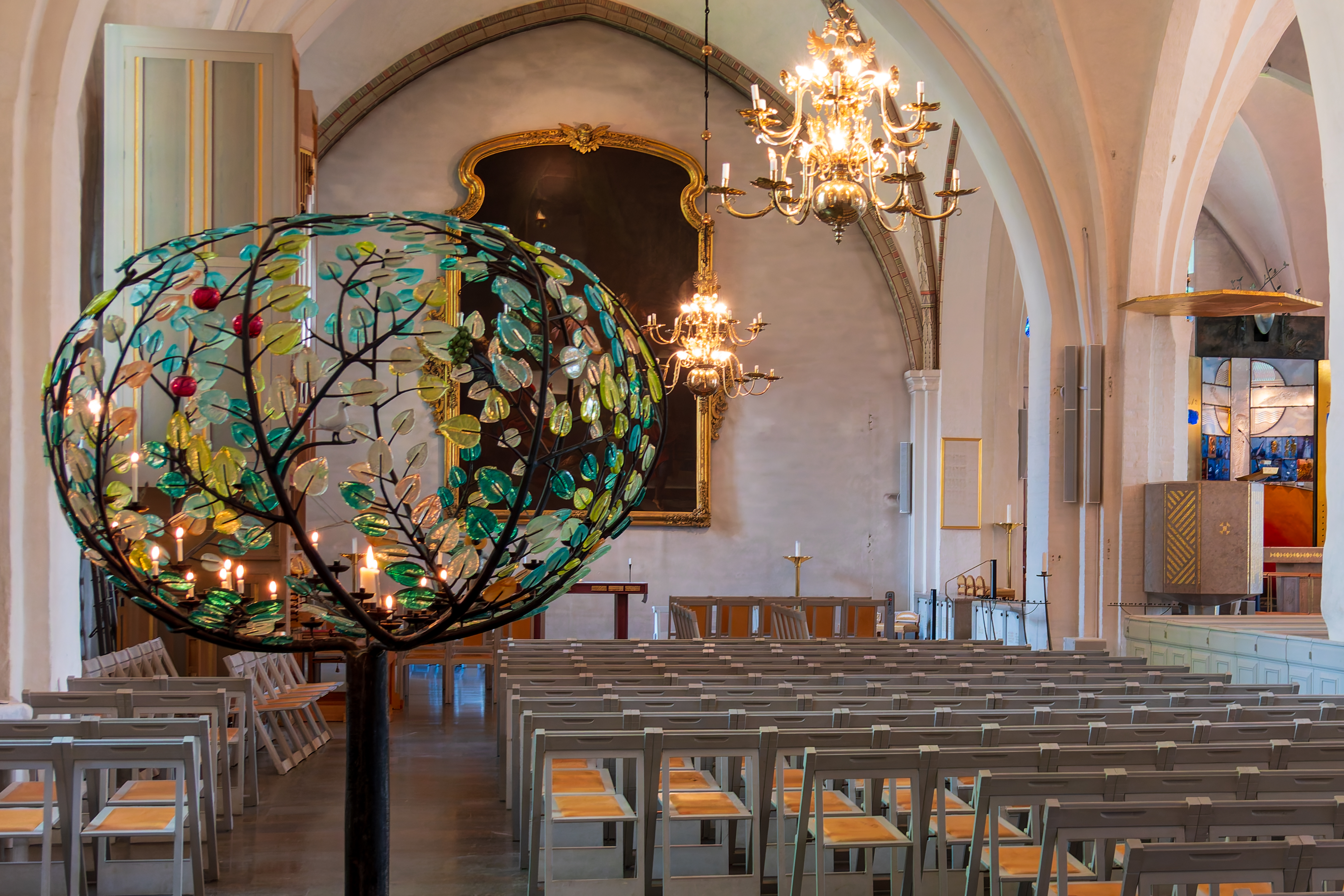

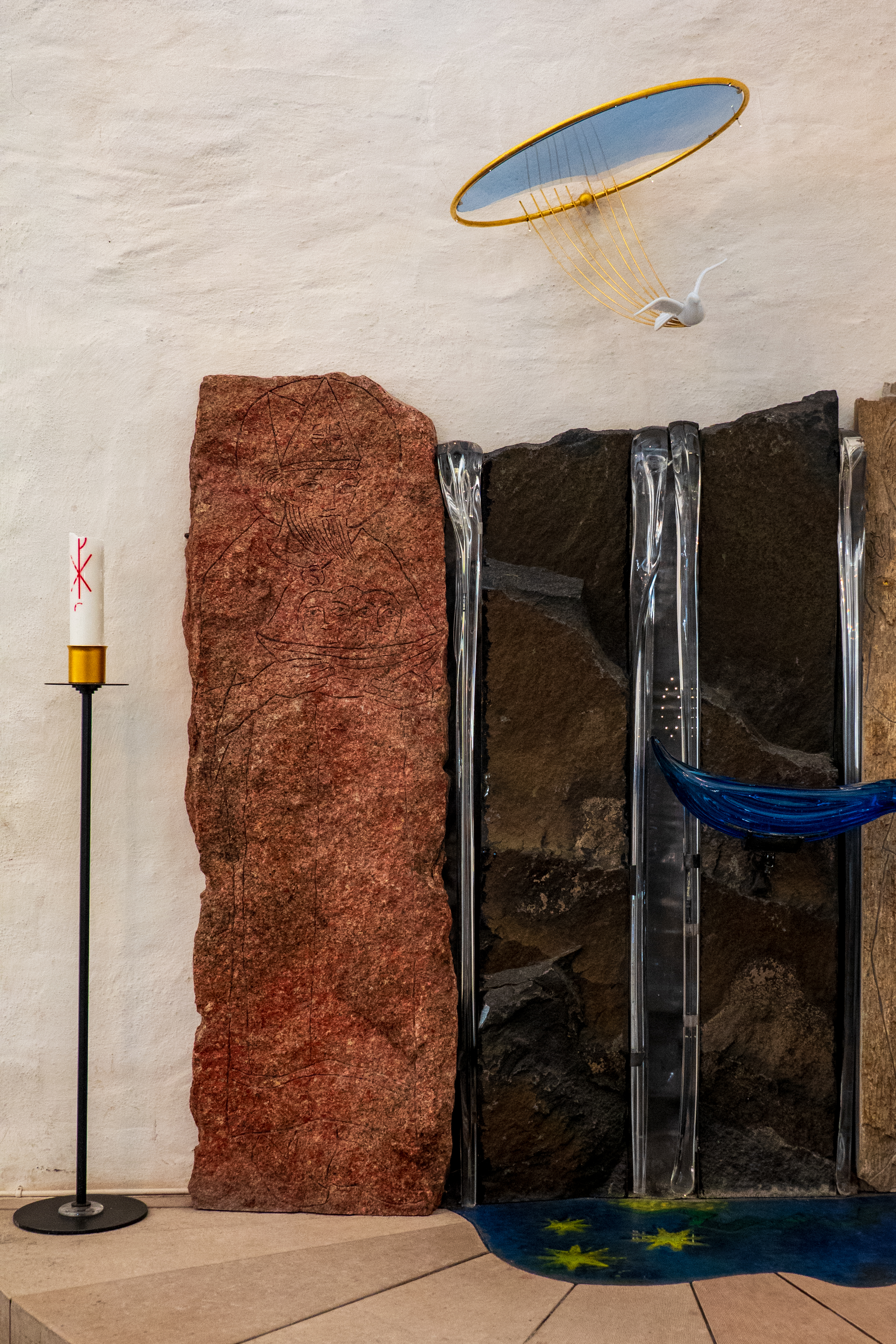

Stepping outside the church, we applauded a parade of graduating students, many wearing the flags of their home nations. We then dashed for the camper before the next deluge. Yes, rain is still a common feature of our travels!

Next day we headed east and stopped at a couple of glass blowing workshops and sales points. The best was the Bergdala Glass works where we could watch glass blowers in action. The whole process is fascinating and a complete OSHA nightmare!
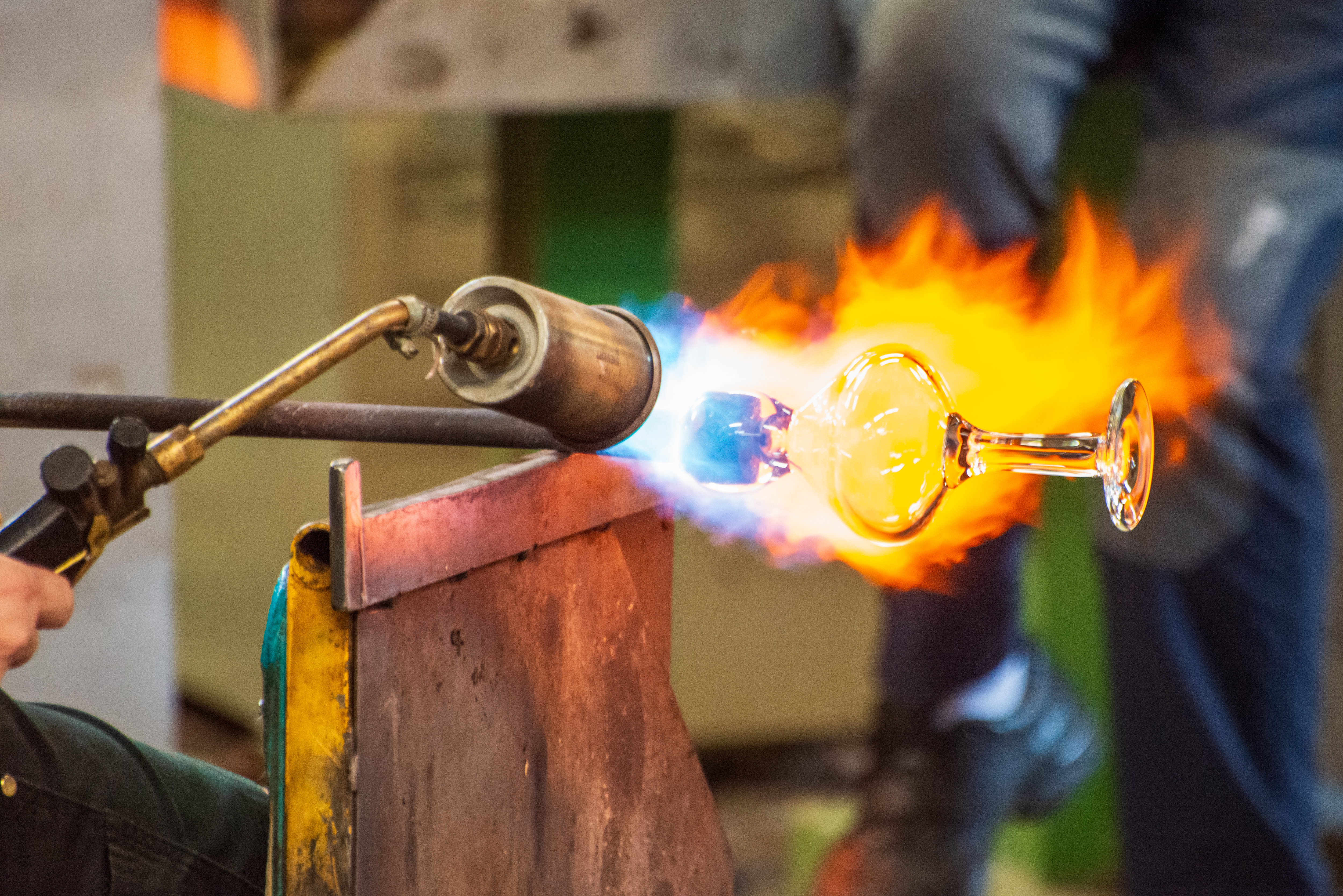

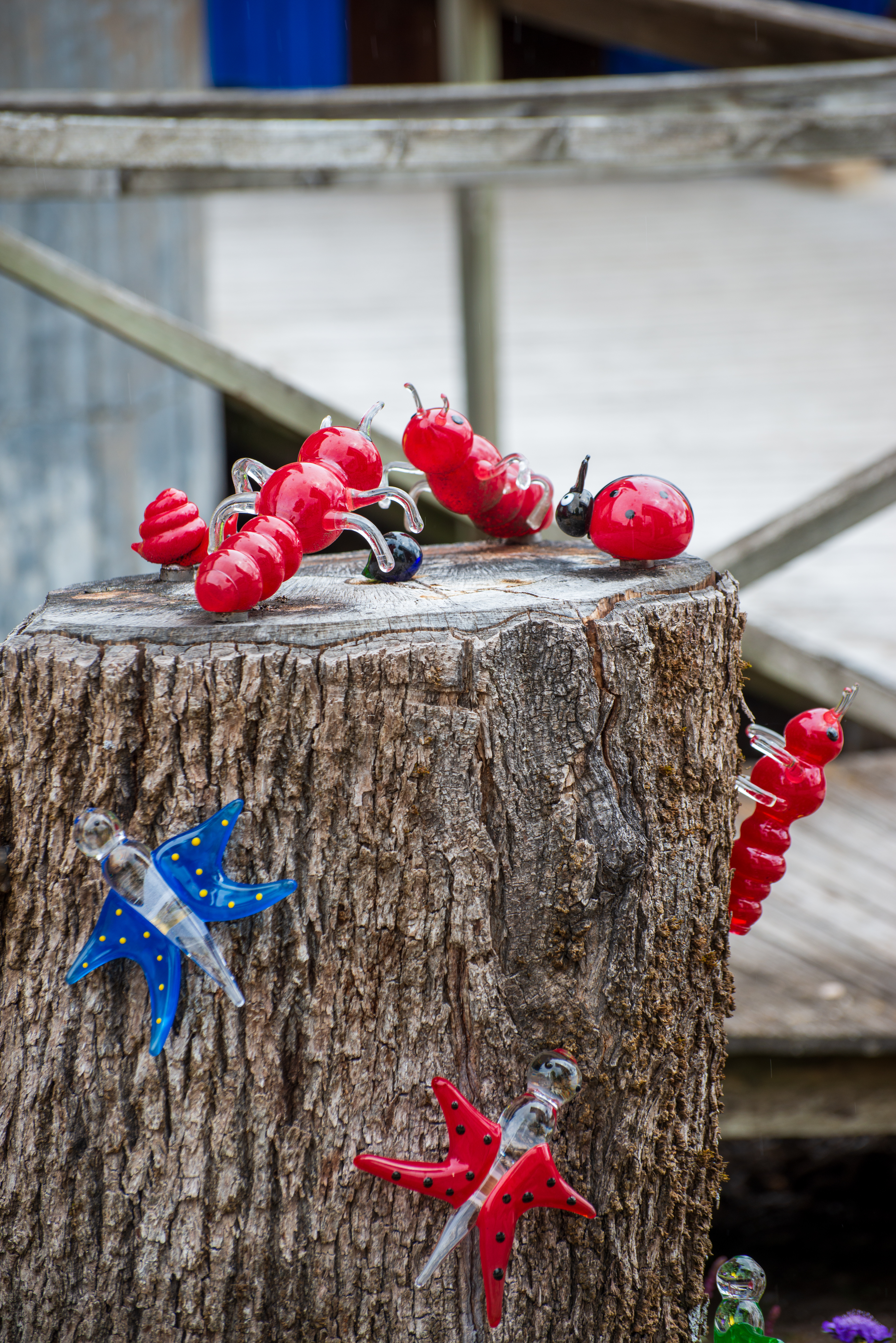
Glass blowing has always been labor intensive and glass decorating even more so.
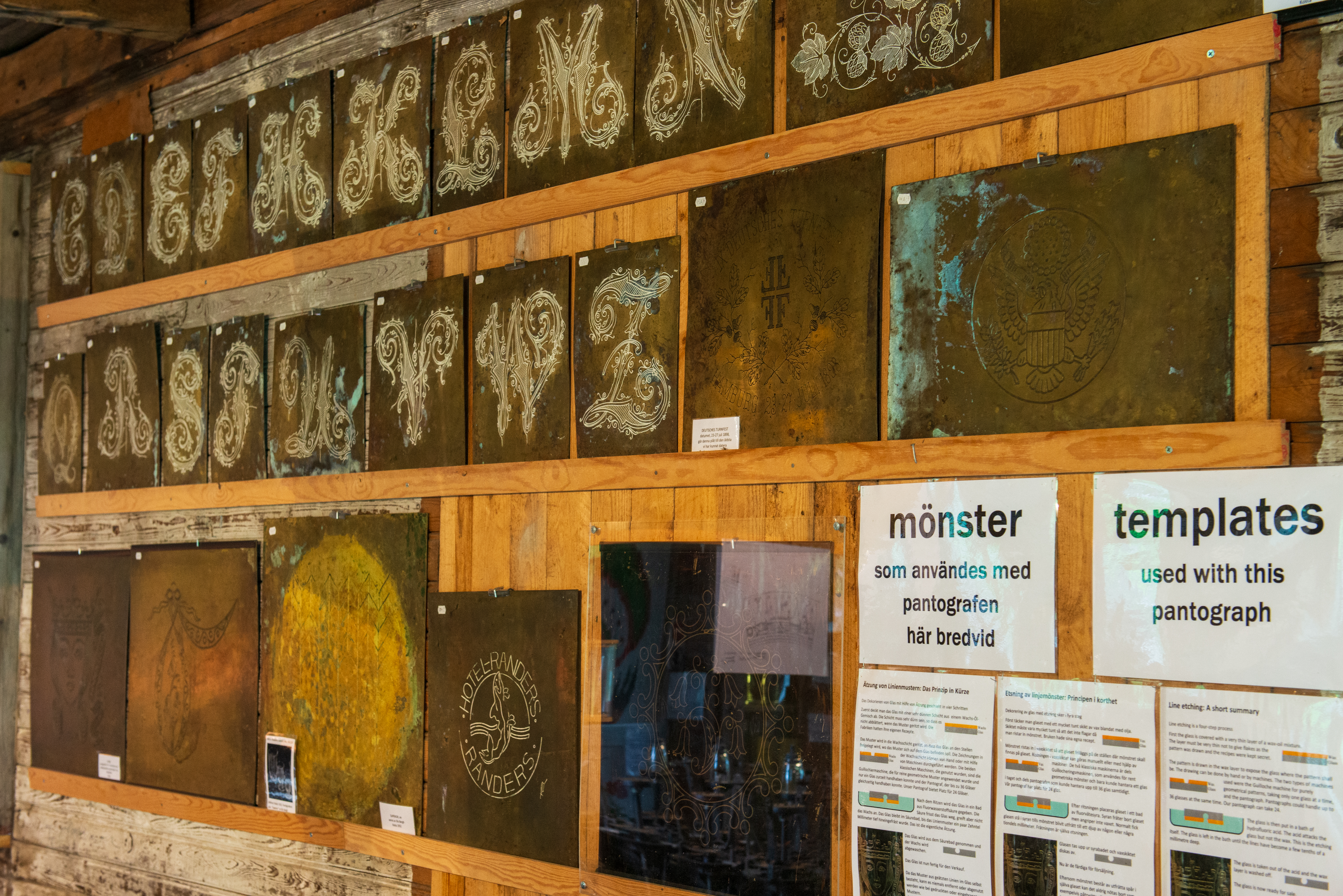
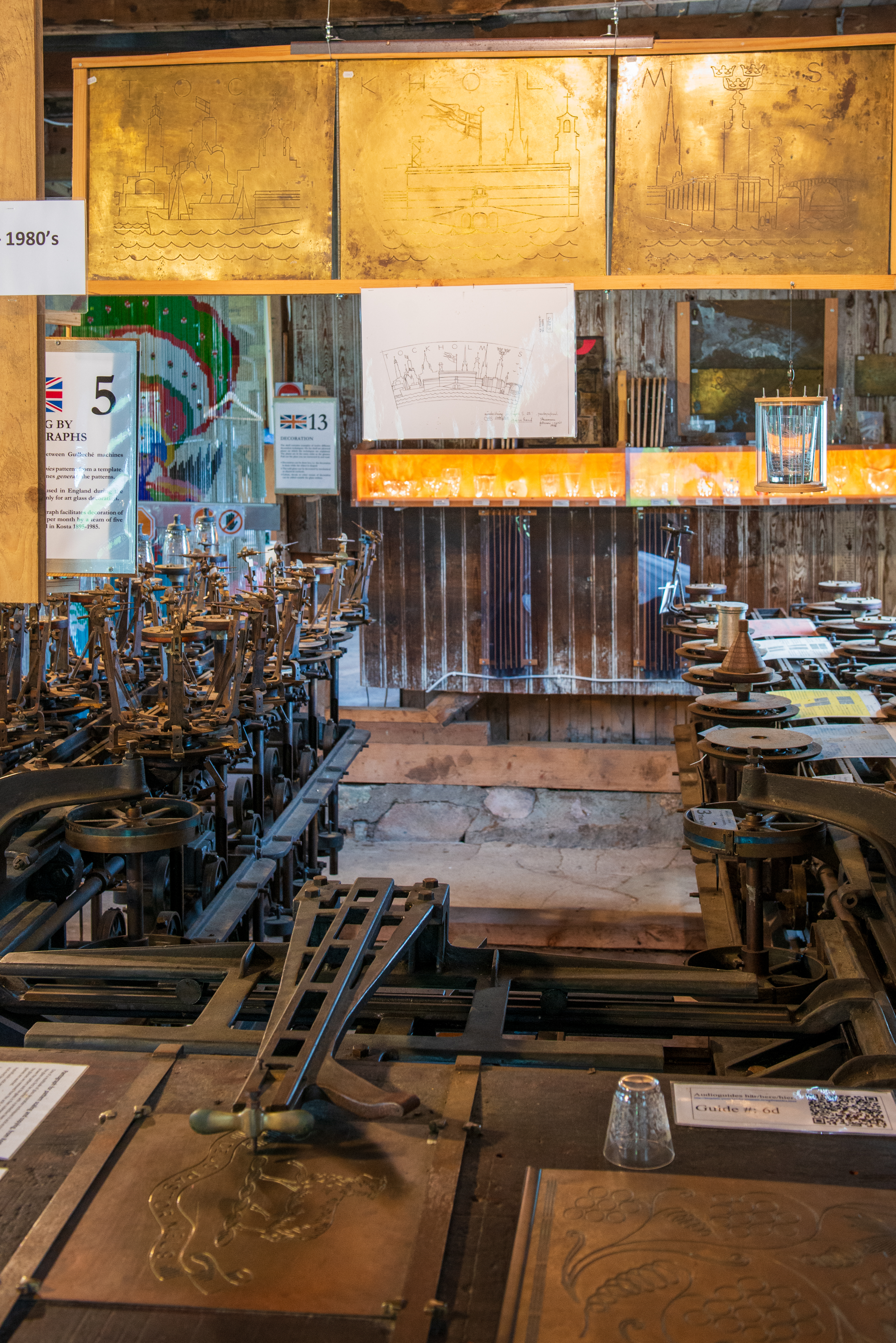

In the 1800’s there were some amazing machines developed to automate the process and make decorated glass more accessible for more people. Next to the glass blowing demonstrations there is a fascinating museum, full of historical glass moulding and decorating machinery, dating back to the 19th century. The Museum docent was very knowledgeable and explained it all to us. We tend to think of programming as something to do with computers. These machines were programmed with various cams and gears. The process is quite complex but very interesting. Drill down on the various links in this site: https://bergdala-glastekniska-museum.se/eng-index.html Lot of interesting reading for mechanically inclined souls who want to learn a bit about the industrial revolution and the transition of a luxury good into a commonly available product. Like most people, we have always just looked at glassware and never considered what it took to create it.
Our last stop on the Swedish mainland was Kalmar, which has a lovely old castle dating back to 1180.
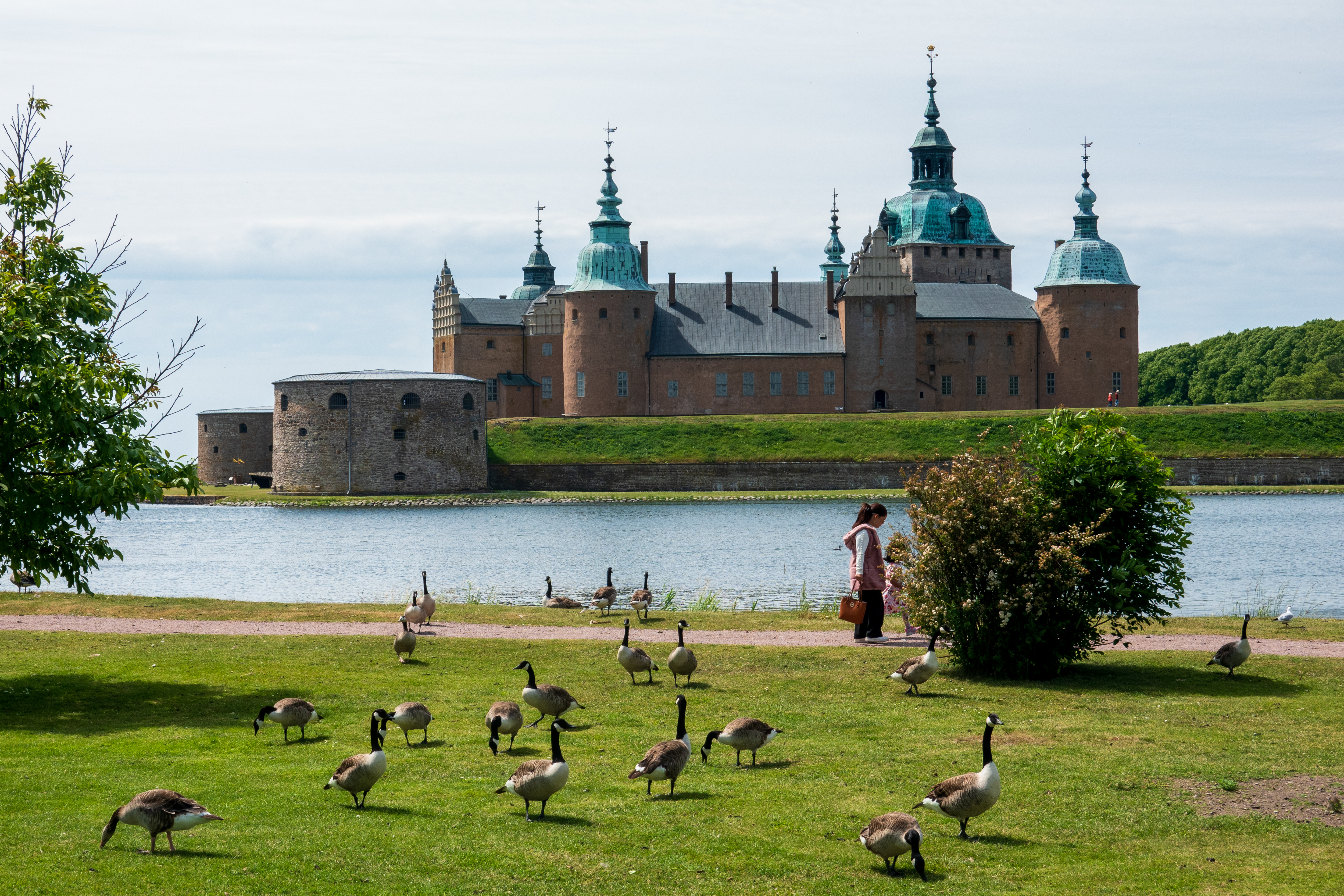
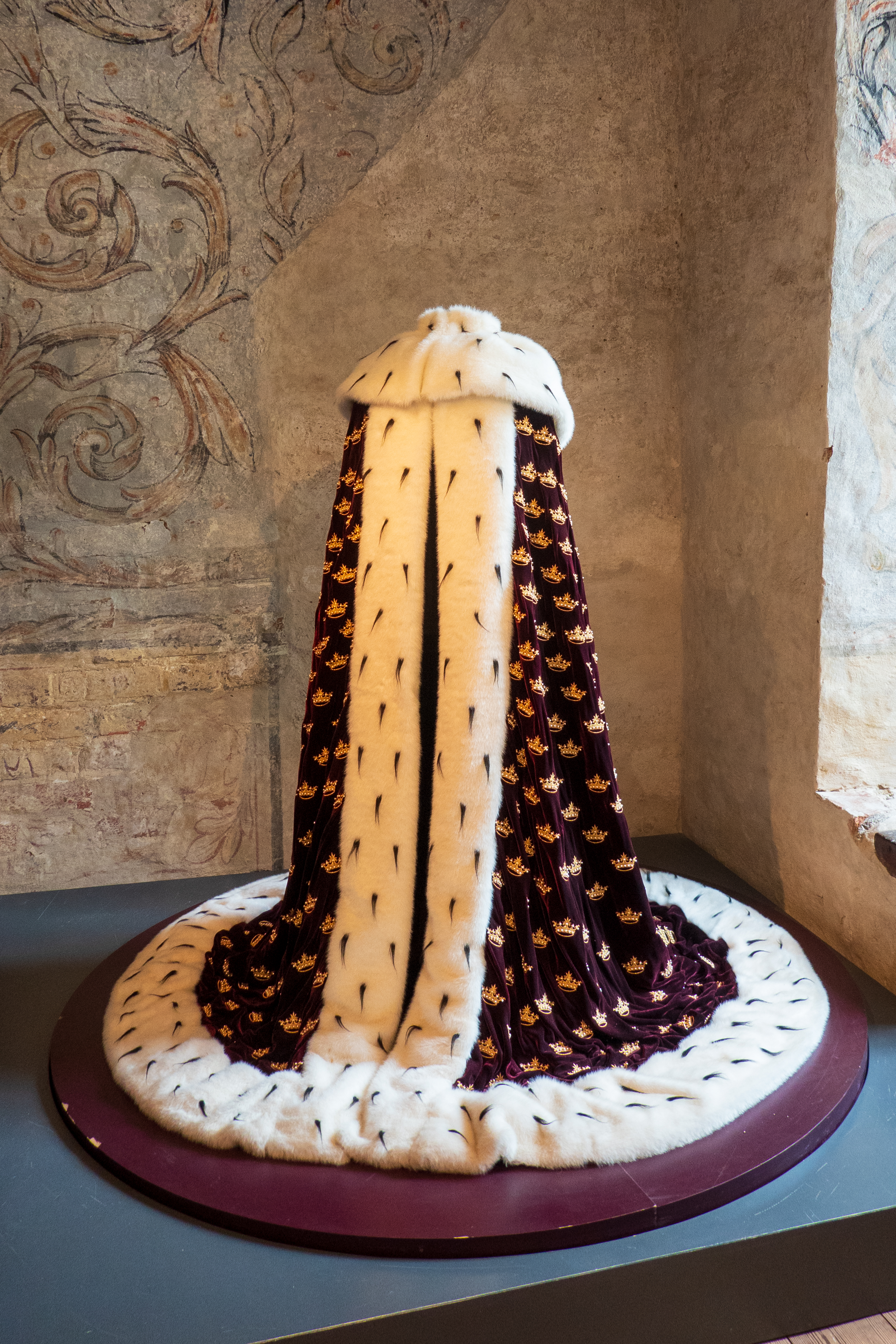
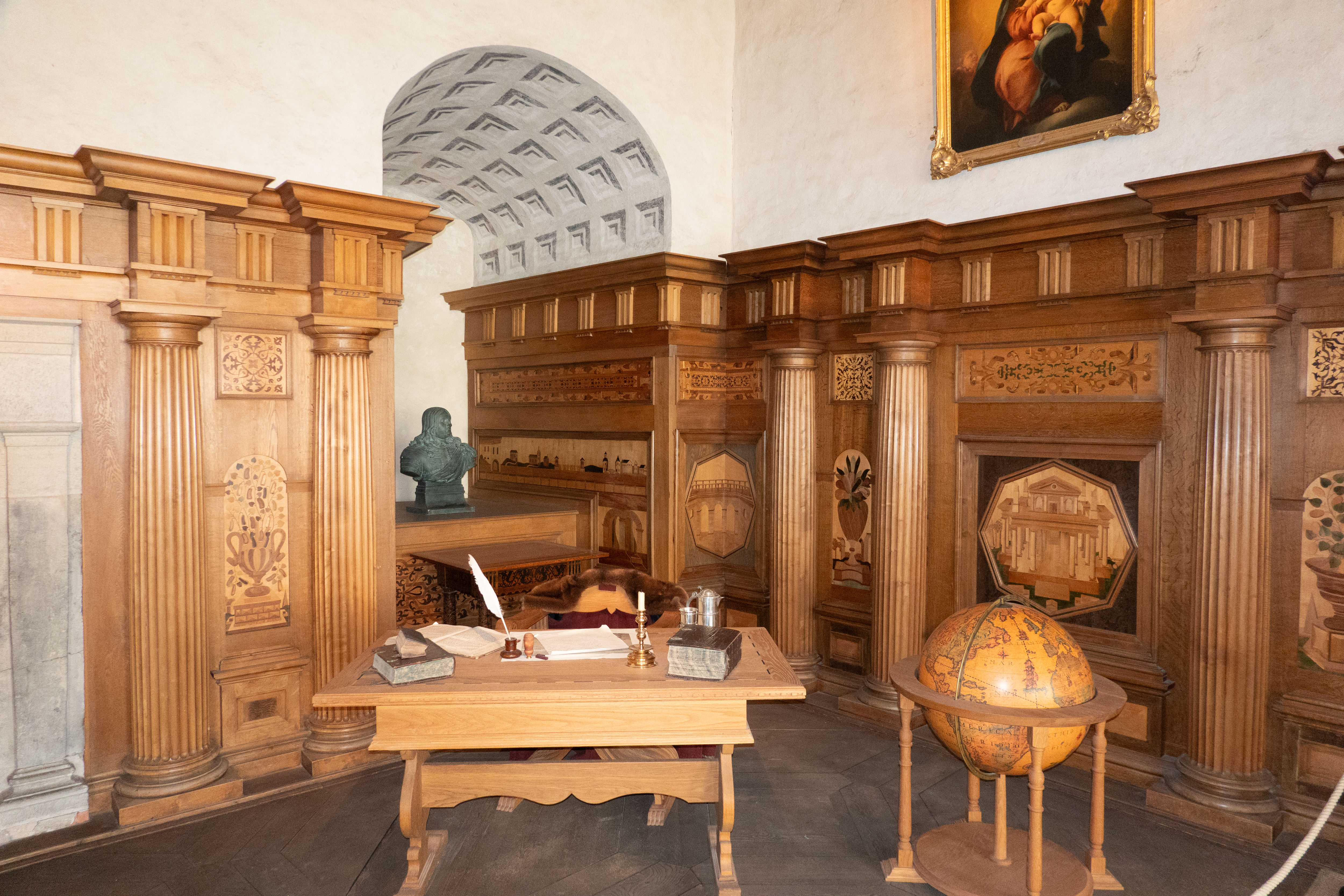
Initially a defense tower to protect against pirate attack and attacks by other enemies, it was slowly extended and was indeed a mighty fortress as it was strategically placed on what was, historically, the southern border with Denmark. The Swedes and the Danes have a long and turbulent history. Later it was transformed into a Renaissance palace. It remains a symbol of Kalmar and was long a site of international politics, courtly intrigues and sieges and battles.
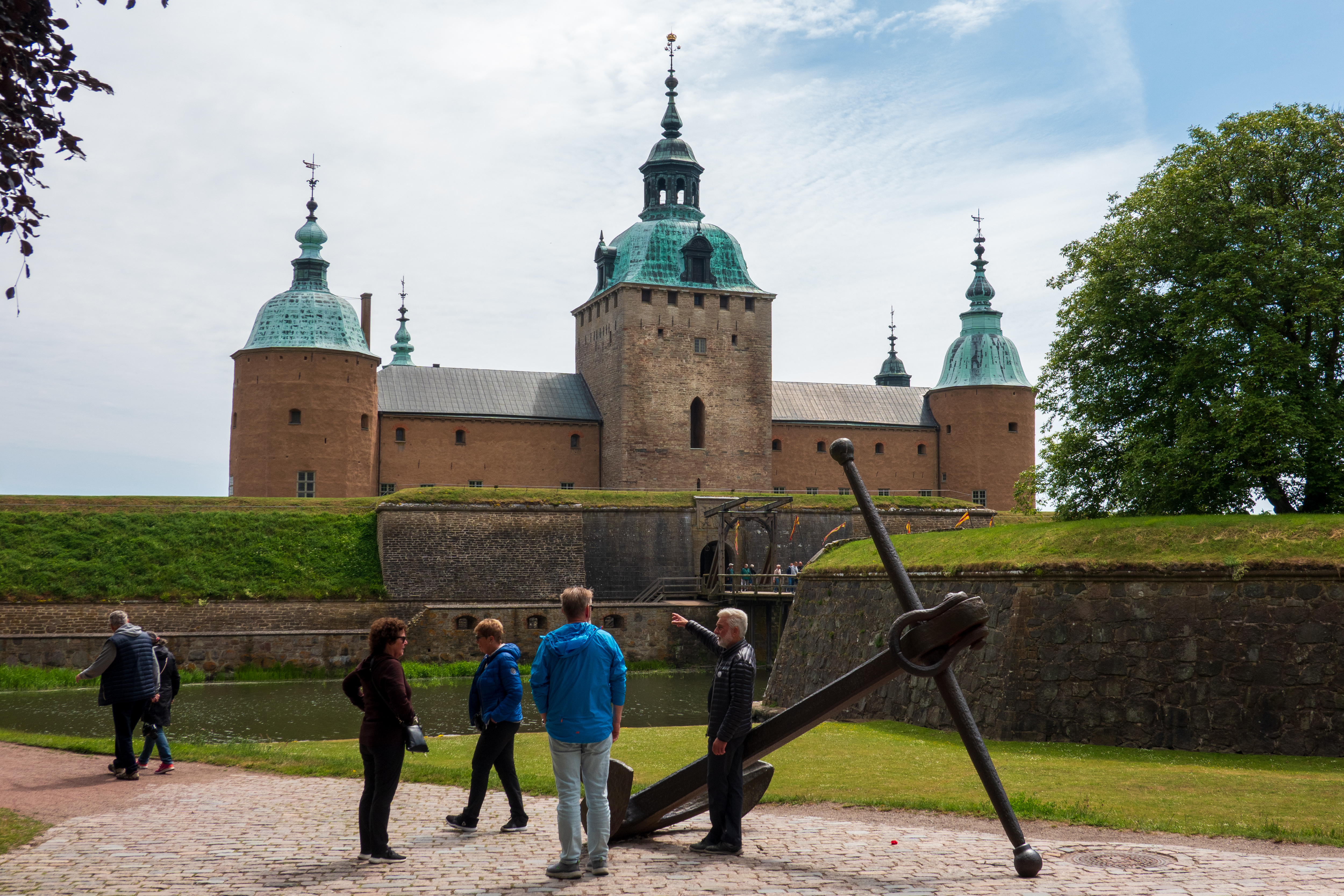
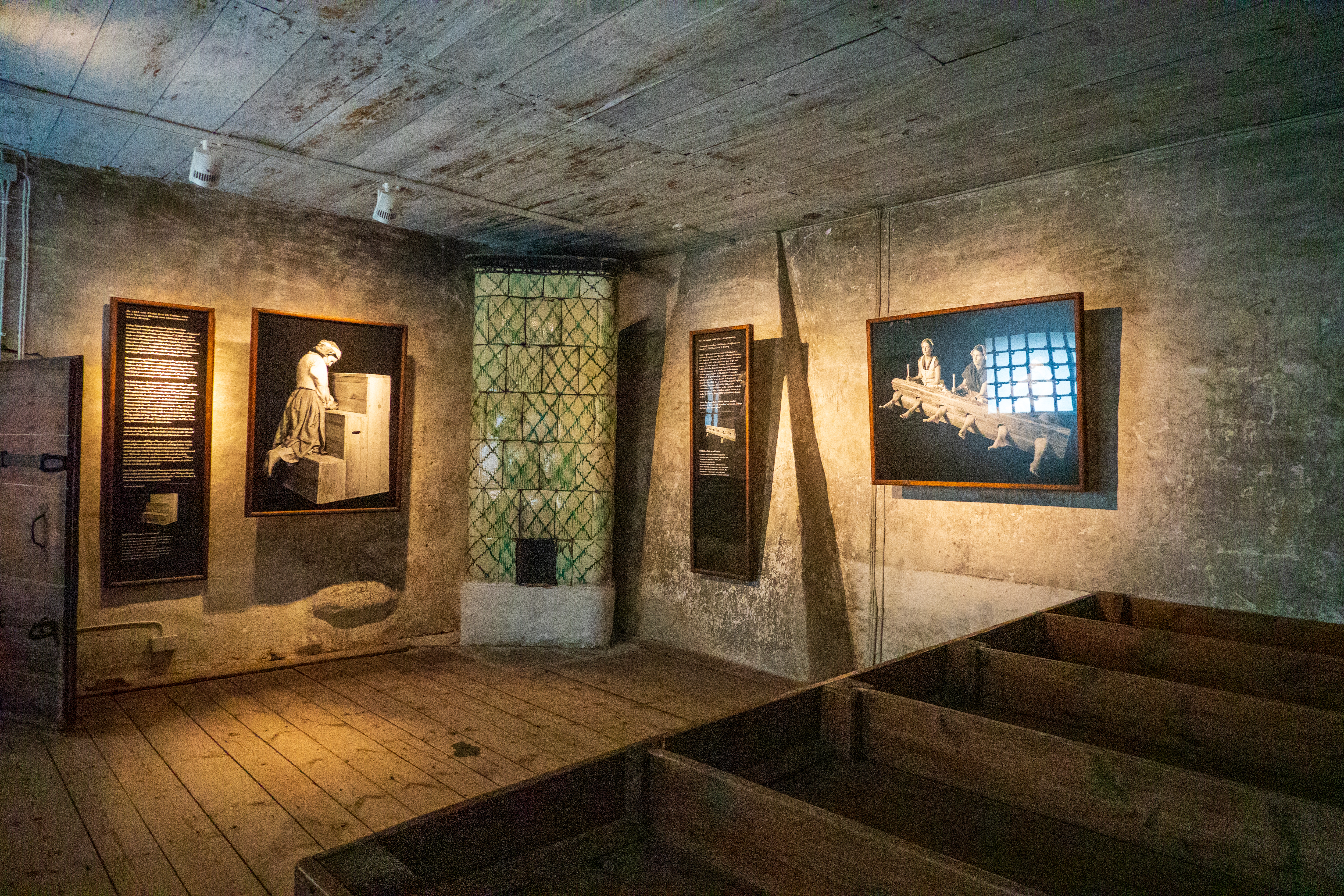
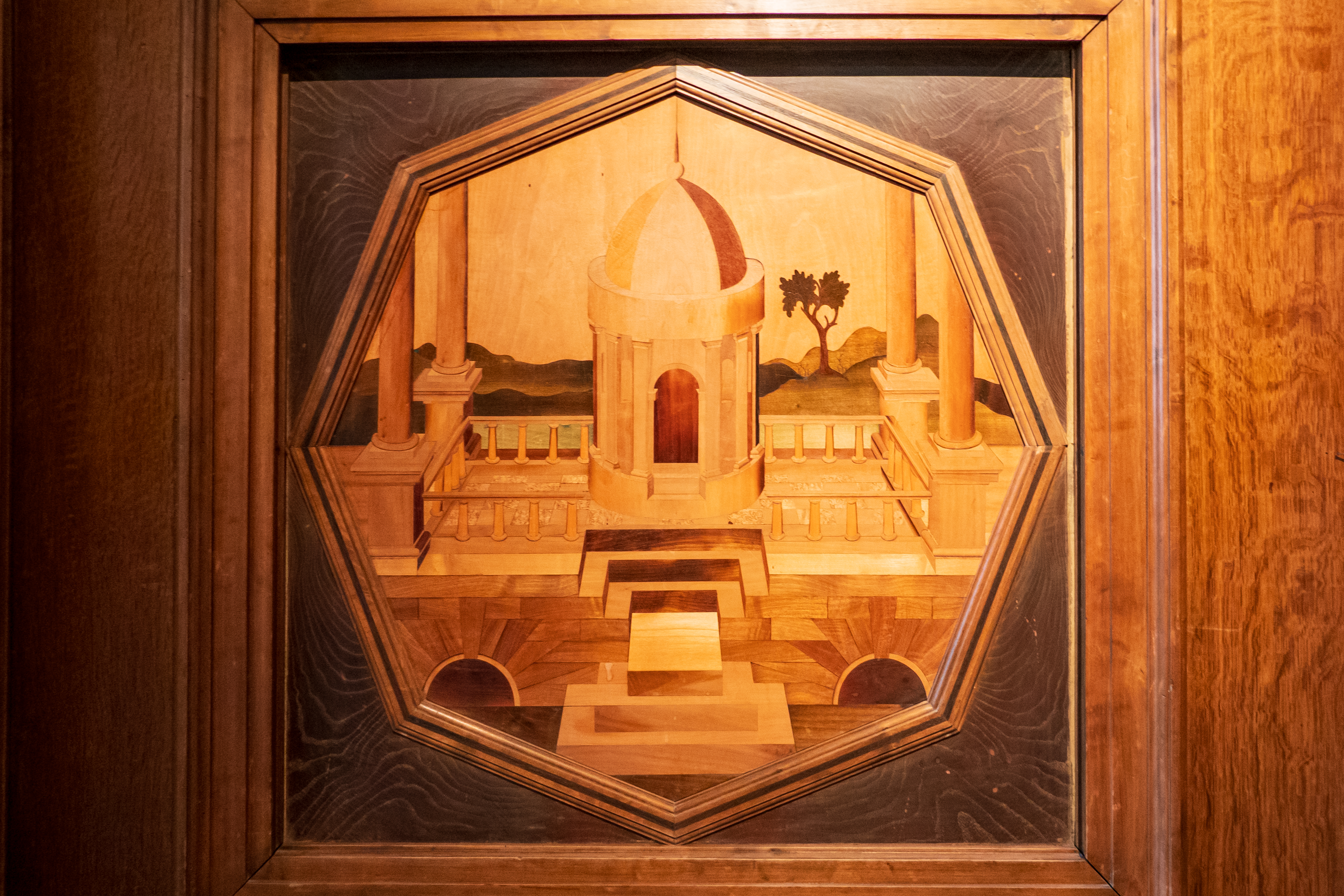
We thoroughly enjoyed our visit and admired the models of the castle at different stages of development over the centuries, the various items of medieval furniture, and a huge, walk through, multi media presentation on witches, their trials, and their burning(!!). (Not our favorite exhibit.)
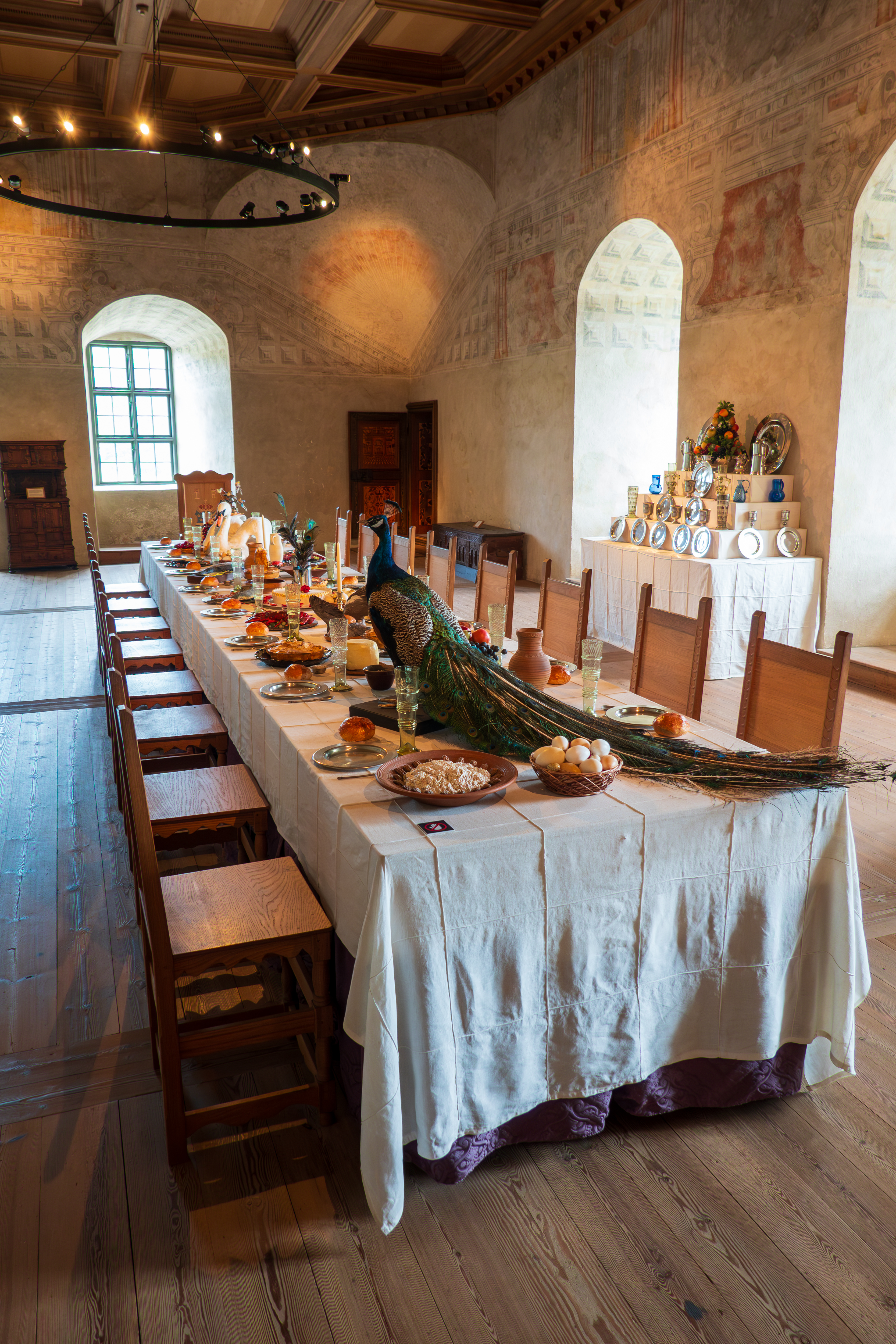
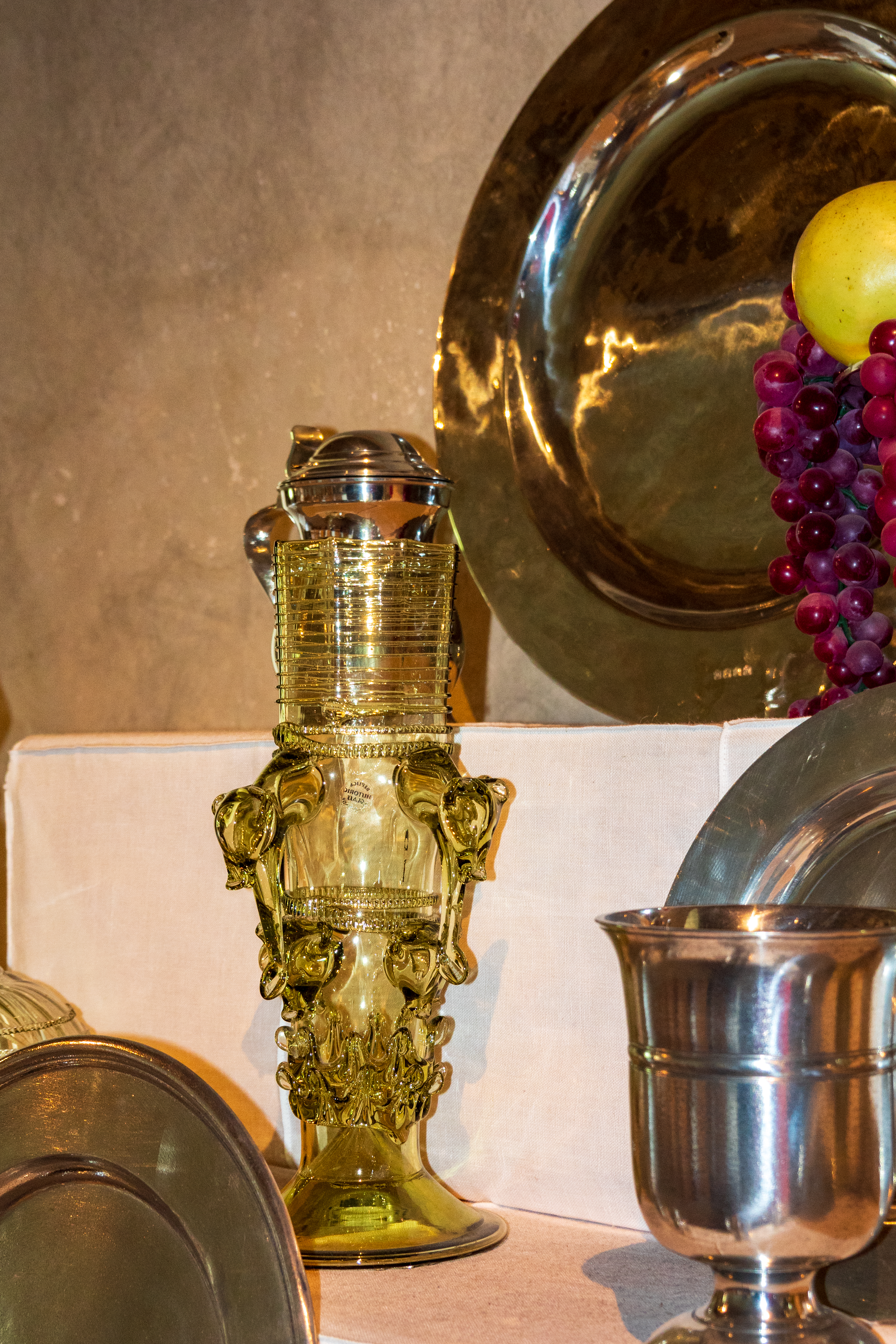
A table in the Grey Hall was set for a dinner during a specific visit of the king of the era, including a white swan and a peacock with full tail plumes on the table and a selection of typical foods, like fish pie with a pastry fish standing on it.




After a cycle through town, we returned to our campsite to take on fresh water and drain our grey water. We were parked at the service point when we suddenly noticed smoke rising. Lots of smoke. A large camper had caught on fire and, within moments, flames were leaping towards the sky. A scary situation, with campers all around it. Fred encouraged them all to move, which they did, before tires began exploding. The fire department came and stayed until it was out and just a burned out hulk on the ground. The firemen told Fred that they do not try to extinguish an RV fire – too much diesel fuel to spread and too much propane. They control the spread and let it burn out. What a dreadful thing to happen.

We then drove onto the island of Oland and found a stellplatz by a small harbor where we could camp.
We set out on our bicycles to visit an Iron Age Burial site with a number of different stones, some set in a circle, some in a boat shape, and some burial mounds. It was most interesting and a good ride.


The next day, we awoke to sea mist and had to wait for it to clear before daring to ride the roads.
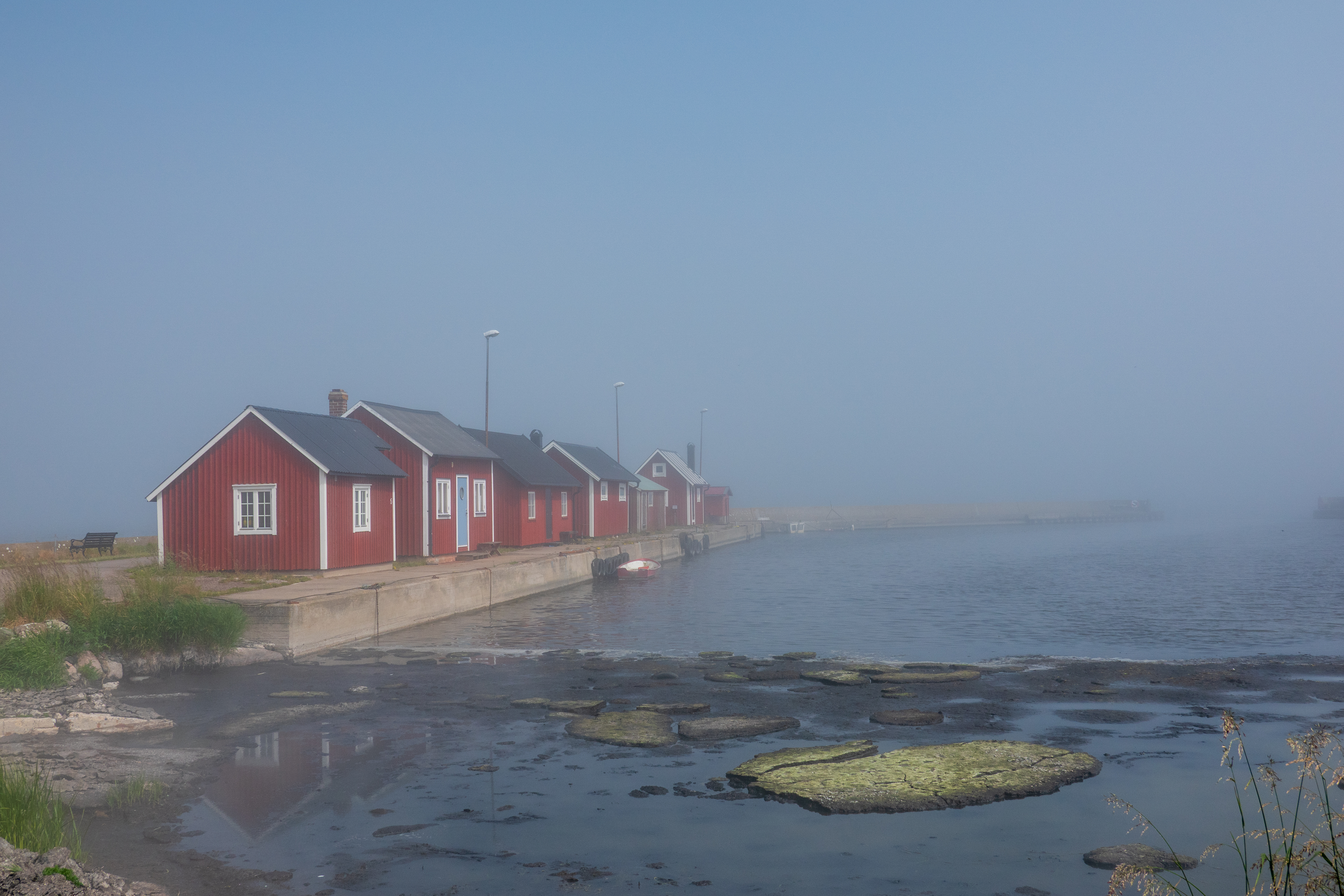
By afternoon it was clear and we headed off for the Eketorp Fort, a 5th century reconstruction.

We knew it was closed (it was Monday after all!) but the gate was open and at least 20 visitors were rambling around.
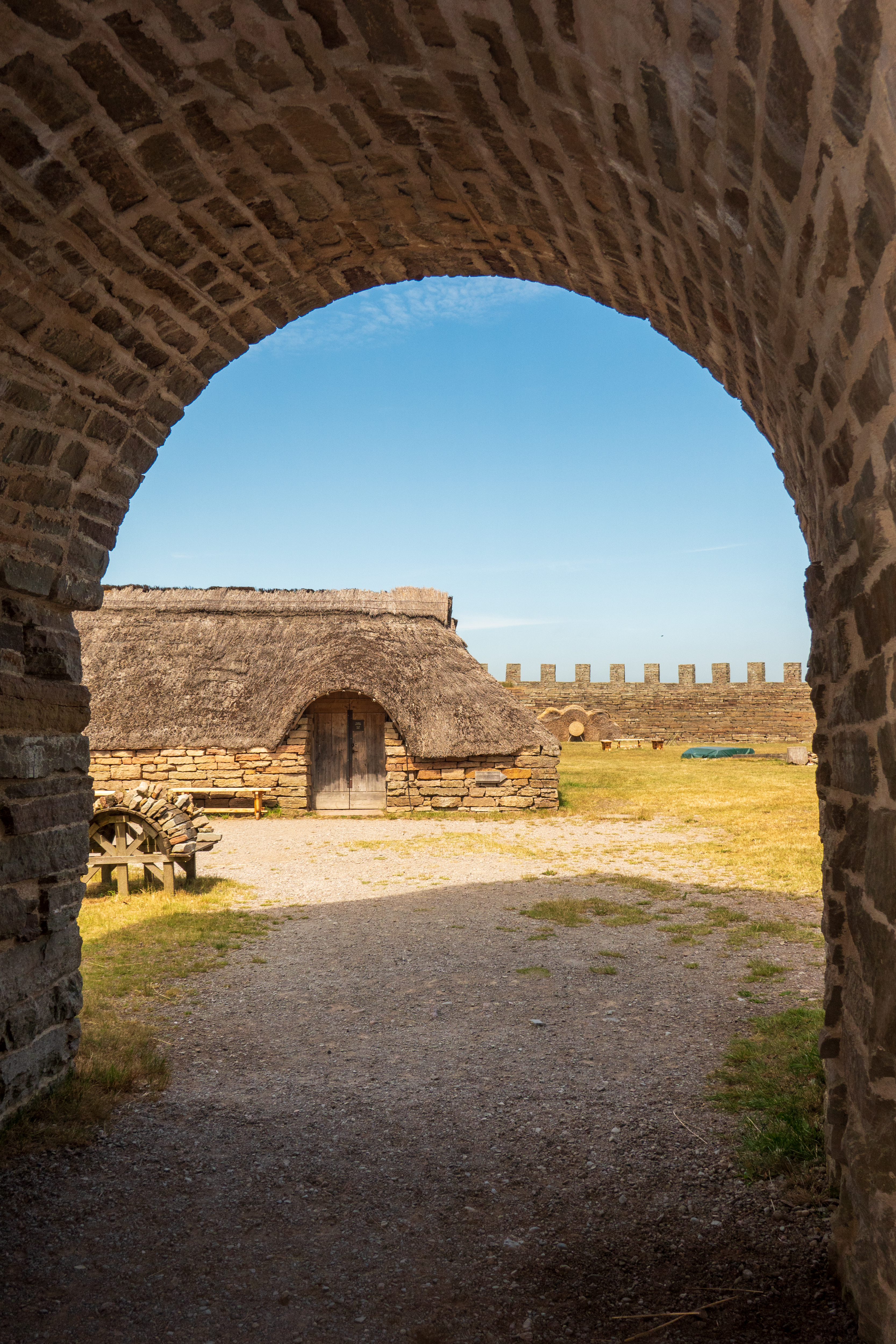
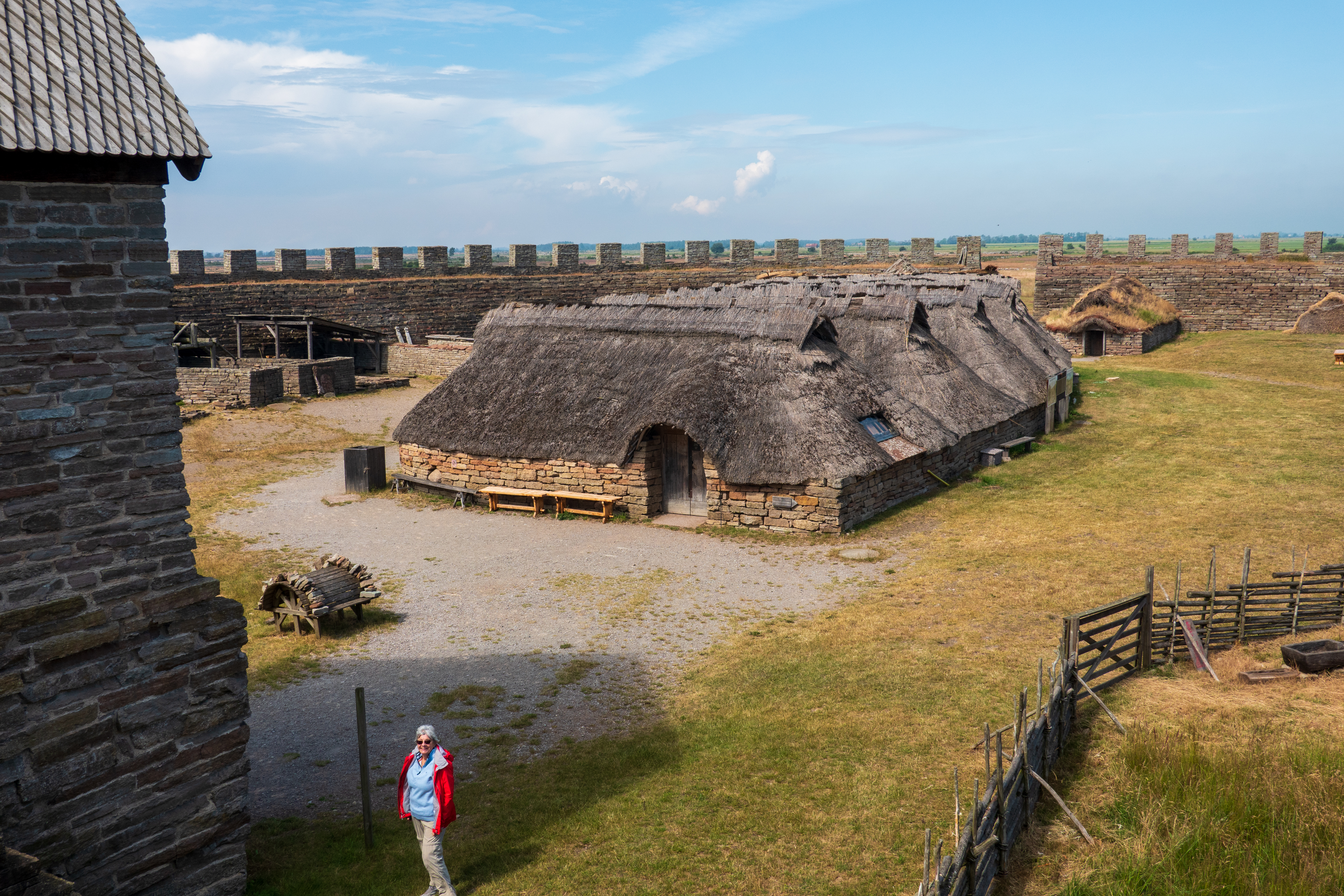
There is obviously more to discover, archeologists have reconstructed what they can, and a certain amount of guess work has taken place. But there is a lovely view from the battlements, over the flat area called Stora Alvaret.
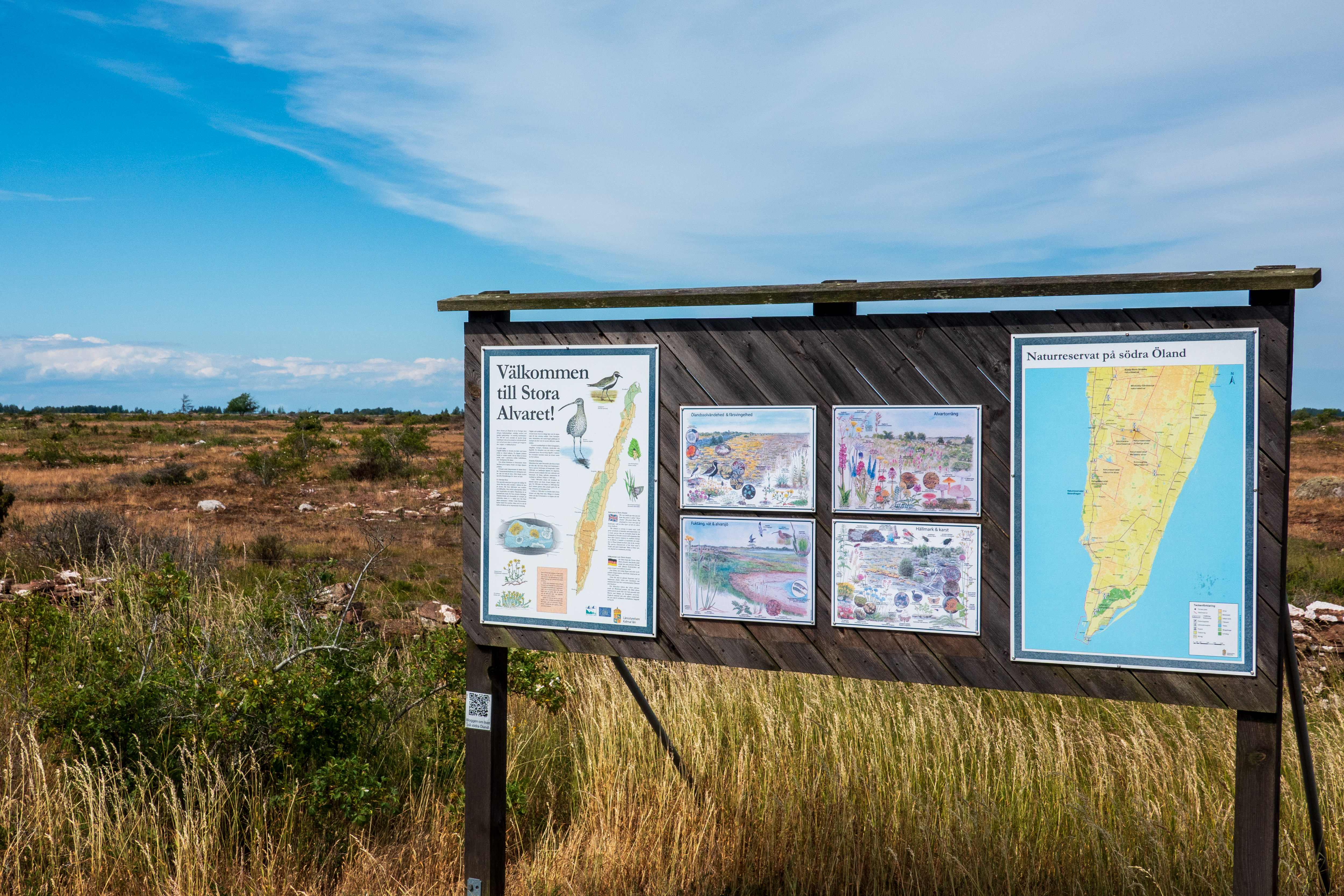
This is a limestone “pavement,” which is a habitat for numerous rare and endangered species.
It has a very thin earth layer so agriculture is limited, unlike in the northern part of the island where there are more trees and much better topsoil and intensive agriculture. By 4.00 PM the sea mist was wafting back, so that was the end of our biking. The next day we headed for Trelleborg and the ferry to Rostock.
The ferry to Rostock was our third ferry ride and we initially found it less pleasant than the others. After a long day’s drive, we camped at the port which worked well, except that our on line registration did not go through and we had to reregister to enter. Of course, our credit card was billed twice so, we had to report that to the appropriate credit card. Grrr!

The ferry departed at 7.30 AM with final registration at 6.30 AM. We were there before 6.00 AM and had no problems with the check in or navigating the ramps.
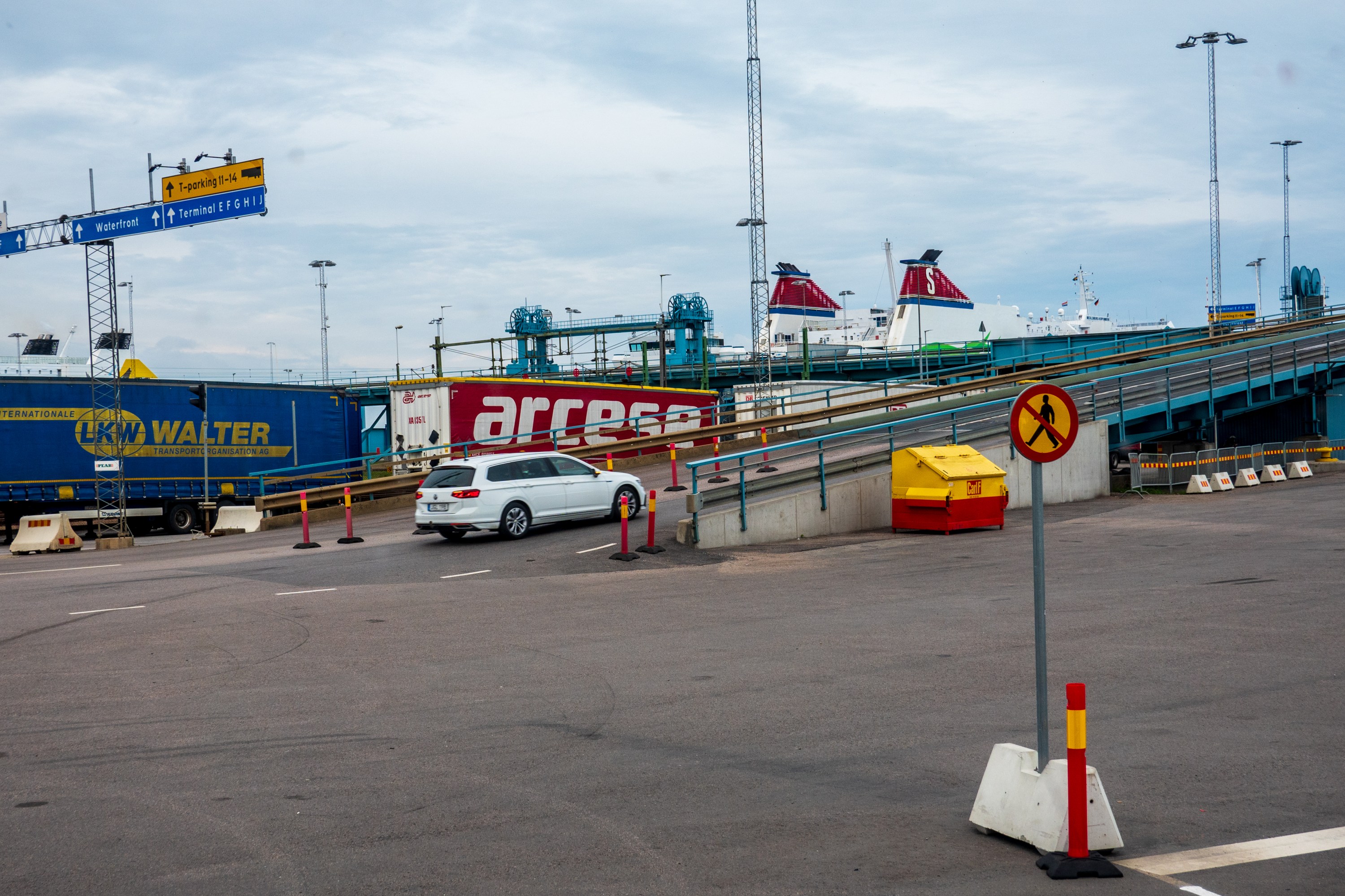
Once on board, we headed for the cafe and a pleasant second breakfast – been a long day since 4.00 AM!
The ferry was smaller than we expected for a six hour trip and to our surprise had very limited seating. The only lounges, for which you had to pay extra, had almost no windows and the economy class, airline style seating was crammed together. There was a large cafe area, furnished with hard chairs and tables, and several families had spread blankets in the corners. Interestedly, there was a reserved area for long haul truckers, with its own cafeteria line.
We decided to book a cabin as the thought of spending six hours in a cafe environment did not appeal. It was a great decision, the cabin was very pleasant with a bed for Fred to catch up on his sleep and a sofa for Denise to sit and read.
That afternoon we arrived in Rostock.
 DiploStrat