
We decided that our next main stop was to be Lutherstadt Wittenberg, part of the Martin Luther Trail. En route we made an interim stop at a delightful little town called Malchow, which sits on an island in a series of lakes. It is a tourist destination and has a very pleasant Stellplatz on a marina. Once settled in, we rode into the town to explore.
Arriving at the town, we, and everybody else, had to wait for a swing bridge to close.
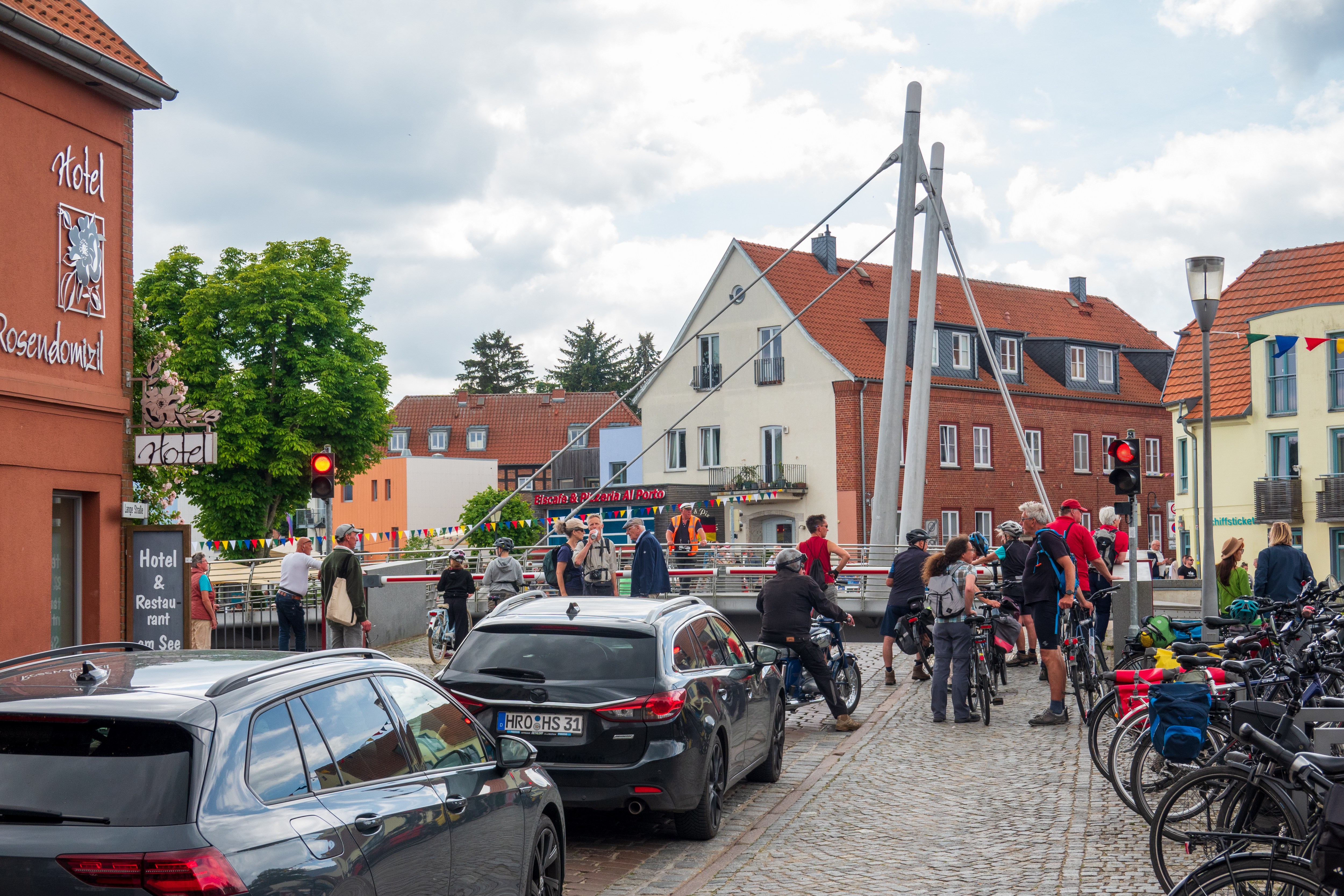
Since the Middle Ages, Malchow has been connected to the mainland with a causeway, a lift bridge, and, in 1868, a wooden swing bridge. This became steel in 1912 and was destroyed during the war. (Malchow was a Nobel ammunition plant and employed hundreds of slave laborers from nearby camps.) After the war, the bridge was rebuilt and deteriorated several times. The latest bridge was completed in 2013.
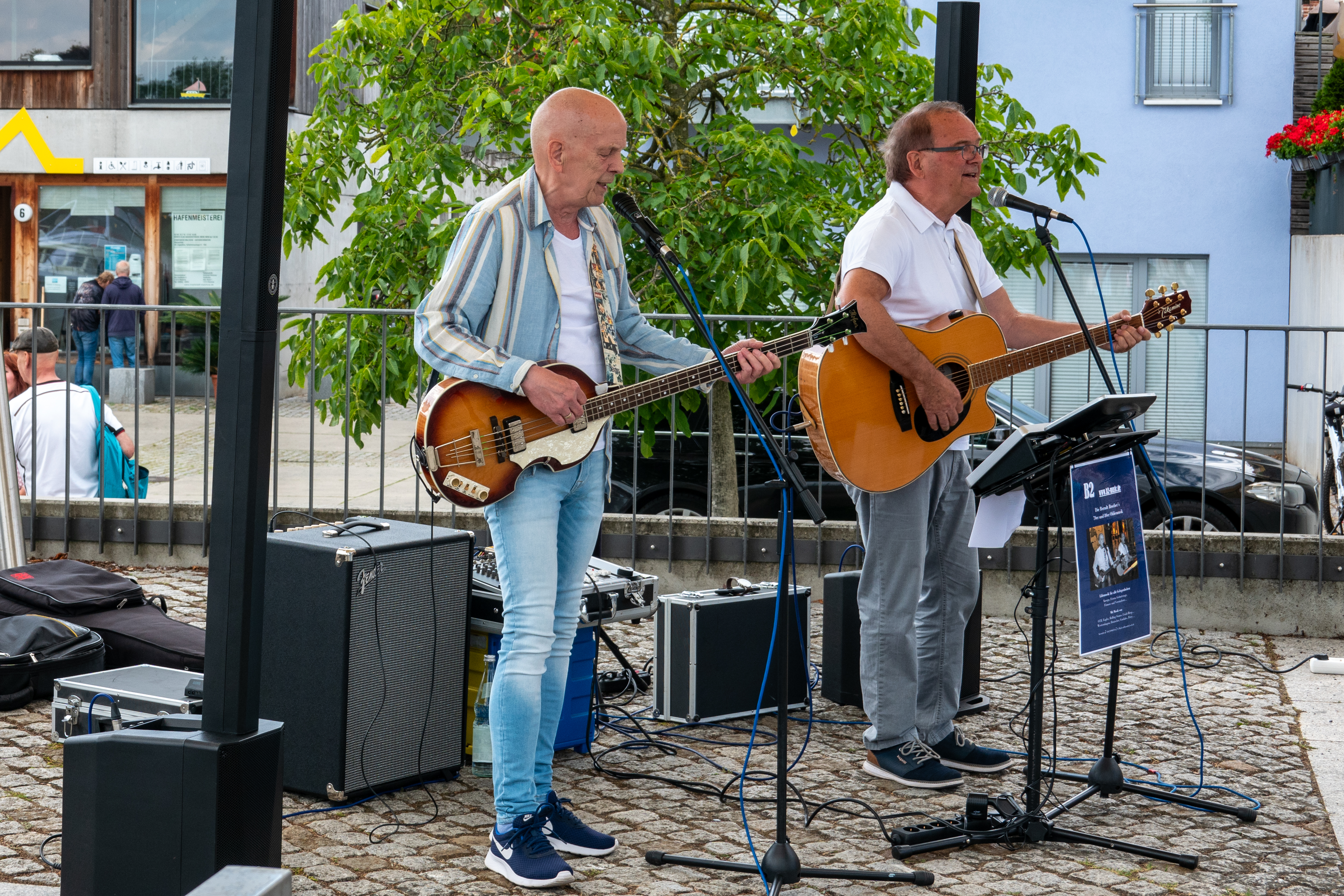
We found the bridge in full “swing.” As it was Sunday, there was a line of pleasure and tourist boats needing to pass beneath or through it. There was live music and lots happening. Such fun. We enjoyed a coffee beside the bridge watching the action!


Heading on to Lutherstadt Wittenberg, we found a very pleasant campground on the other side of the Elbe River, with incredible views of the town.

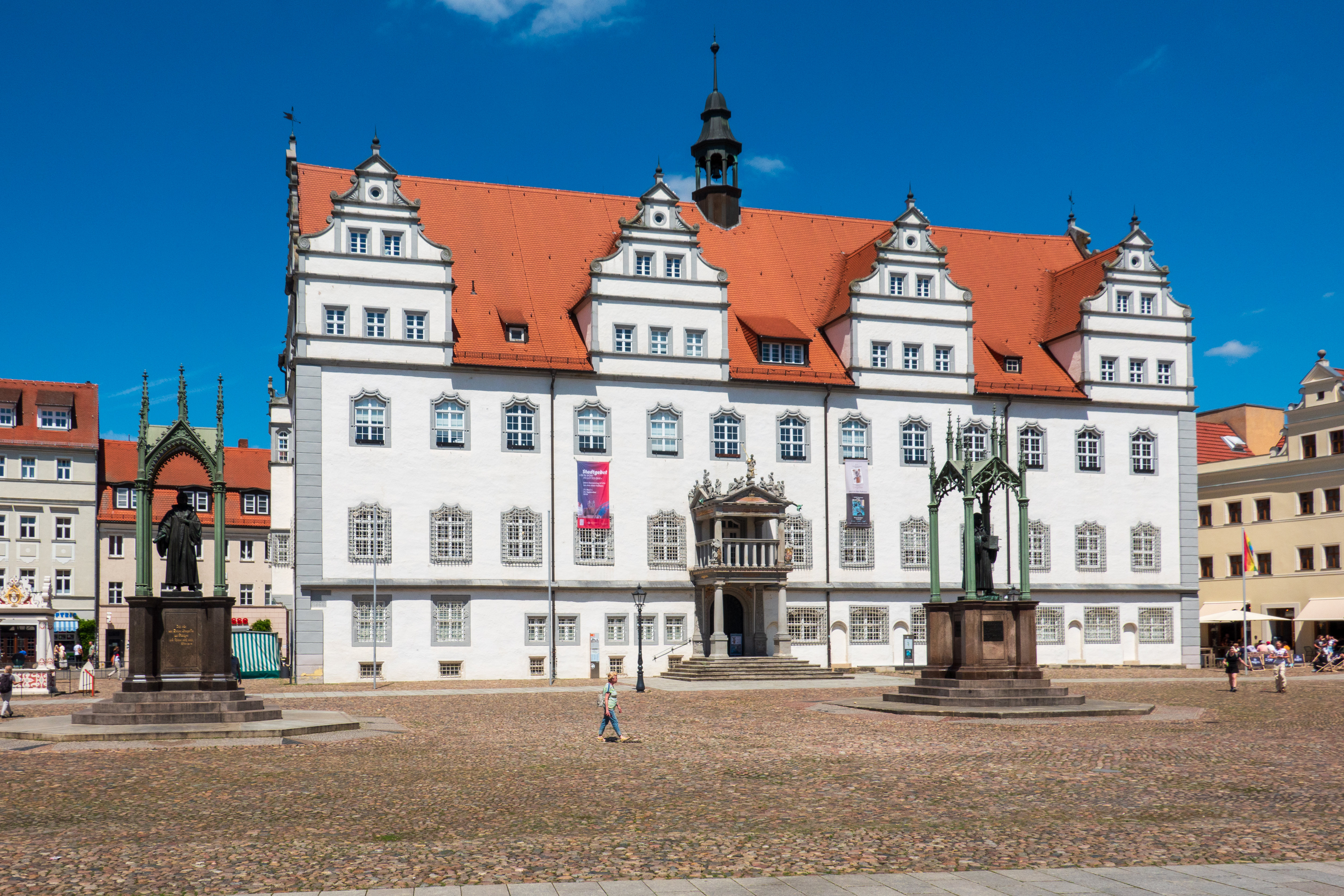
We went into town and set out on our quest to learn more about Martin Luther. Wittenberg is where he lived for a great deal of his life, once he married and had children.
The downtown is delightful, with water channels running along the main streets!

We did see the famous door into the church (a replacement door, but similar) where Luther nailed his 95 theses. This sounds dramatic, but, in fact, it was common practice. This door was the Instagram of its day. It was not the act of nailing the theses to the door that was revolutionary, but rather their content, which split the Western church and led to hundreds of years of bloodshed.

Unfortunately, two of the places we wanted to visit were closed. The Luther House, where he actually lived, is closed for renovations until next year and the DDR (life in communist east Germany) museum was closed until Wednesday. We were there on a Monday – of course.




The lady who runs the campground insisted that we should visit the Wittenberg 360 display. This turned out to be a huge diorama, in the 19th century style. However, instead of being a painting, it is circular photo composition, three stories tall. You climb a tower in the middle and absorb Wittenberg in the time of Luther. (https://www.wittenberg360.de/en/)
A series of commentaries, available in English, explained what we were looking at. We learned not only about life in the time of Luther, but also major events in his life. Sounds hokey, but it is actually quite impressive.
 DiploStrat