
When we last saw our heroes …
They were taking the alternate route, which involved going north, almost to Karlsruhe, before heading south, a much greater distance. After our great dinner in Warnau, we reached a Stellplatz in Bad Krozingen, just to the south, and right on a train route in to the main station in Freiburg.
Why Freiburg? Denise studied there as a student in 1971 and Fred wanted to hear the organs in the Freiburg Minster (there are four) as he has long had a surround sound recording of them. (http://www.windsorlatinmass.org/wtnews/220626.pdf) And, of course, it is a wonderful, historic city.
We noted that there was a regular Tuesday evening concert, so that became our goal. We set out from the Stellplatz after lunch and walked the 15 minutes through a park to the train station. The train was a bit late, but, a short ride took us to the Freiburg Hauptbahnhof, where we hopped a tram to the old town. Gotta love real public transport.

Our first stop was the Augustiner Museum, which was showing a large display of early Italian religious art and paintings as a special exhibit. Not what we were expecting but we jumped in.
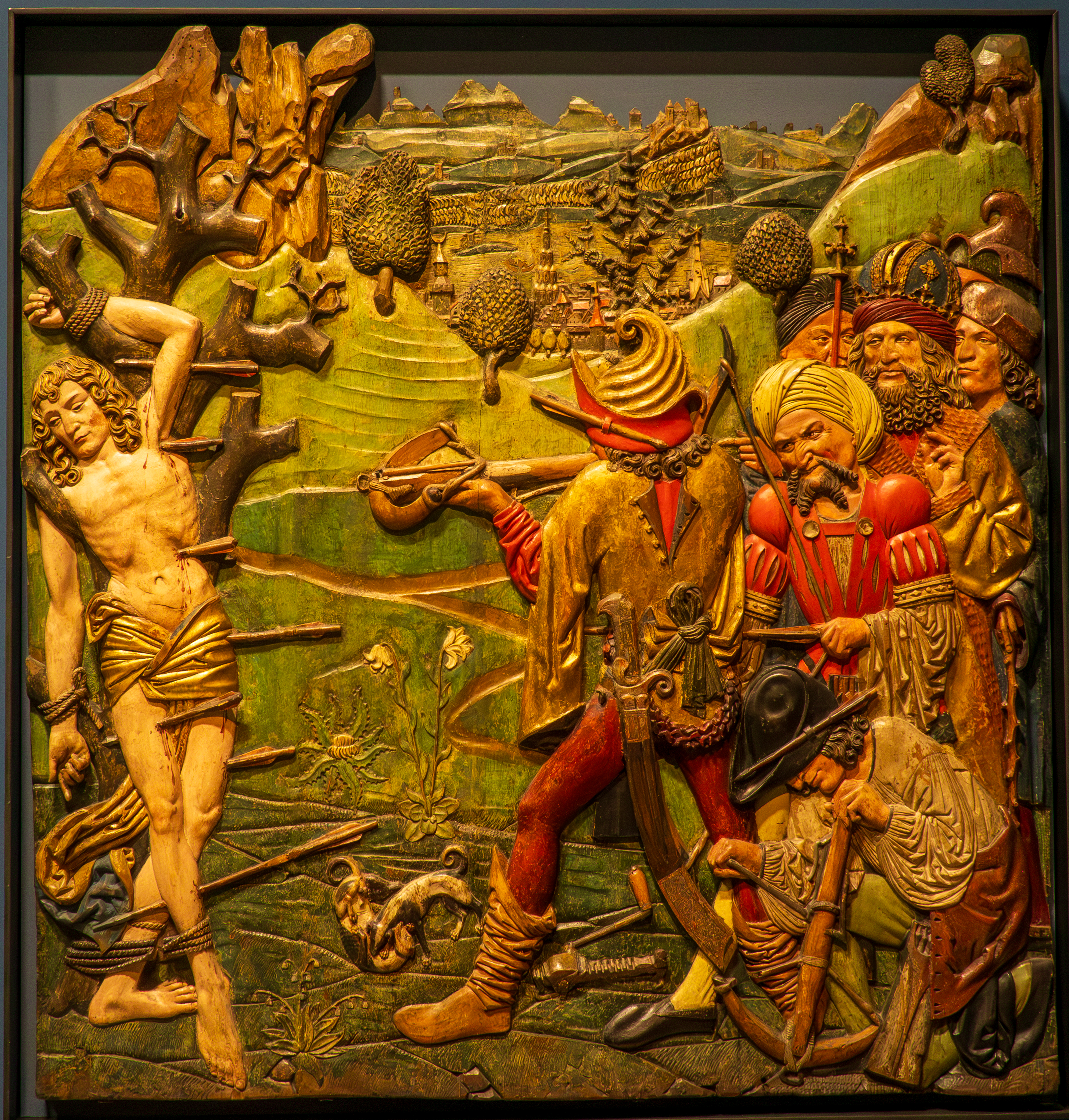
All of the art was beautiful but one piece jumped out – an almost photo realistic carving of the martyrdom of Saint Sebastian. (https://en.wikipedia.org/wiki/Saint_Sebastian) Somebody had way too much time on their hands. Look at those snarky faces! And the two fighting dogs. The cross bows are probably anachronistic, but incredibly detailed, even to the winders. And, for the rest of the story, the saint survived being shot with arrows and, after recovering from his wounds, went back to preaching. This time the emperor Diocletian ordered that he be beaten to death. He did not recover a second time.
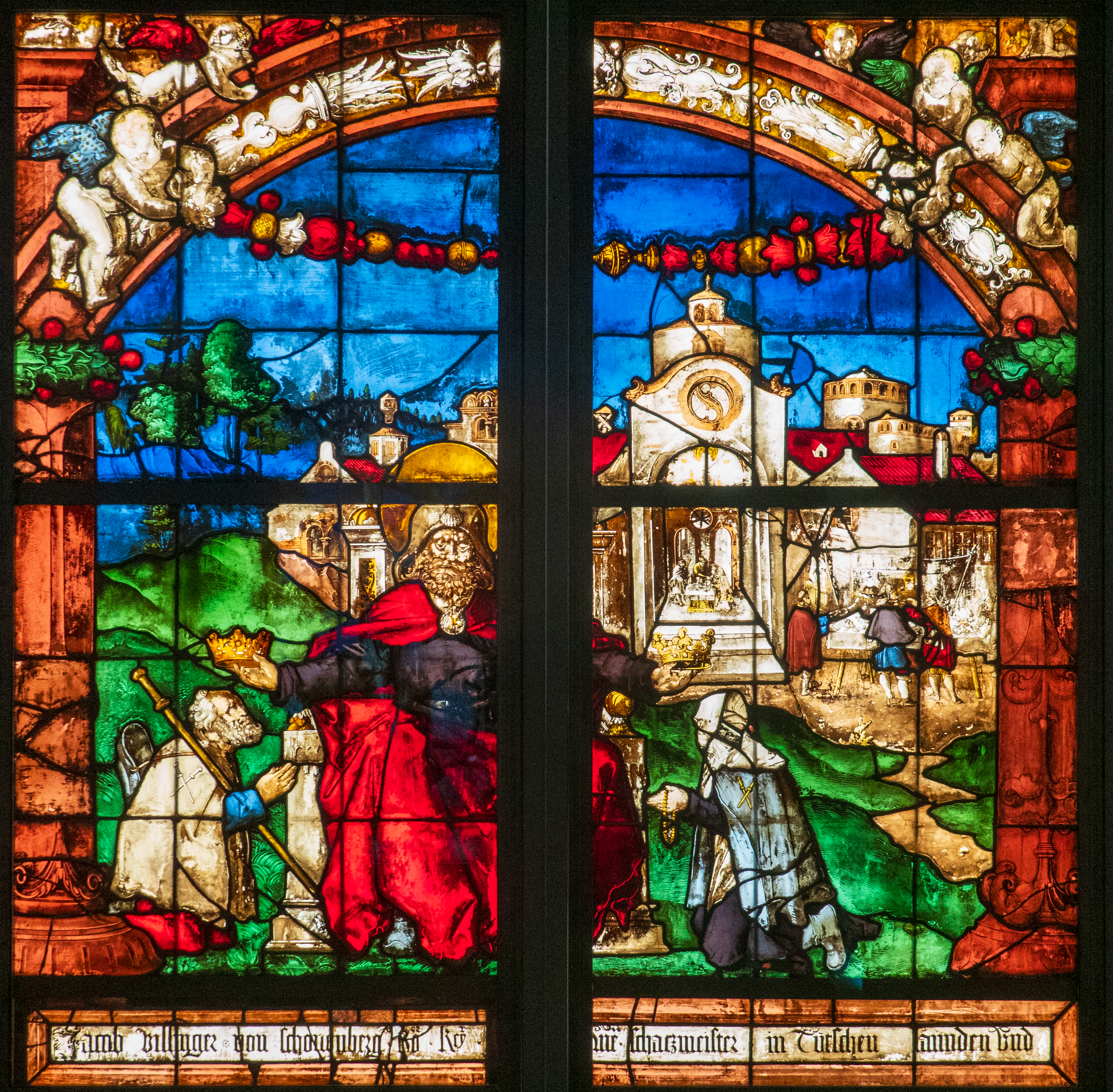
The Freiburg Minster is famously always under repair and many of the original stained glass windows and statues have been removed to the museum for display. (Local wags insist that if you see a picture of the Minister without scaffolding, it is Photoshop.) Duplicates of the statues and windows are now in the Minster and the originals are safe in the museum. The museum was air conditioned which also felt delightful on a hot day.



We headed for the Schlossberg (castle rock), a hill overlooking the city, which gives a fine views of the Minster and the two large gates remaining from medieval times; St. Martin’s Tor and the Schwabentor. The more energetic can hike further to Roman ruins and other attractions.


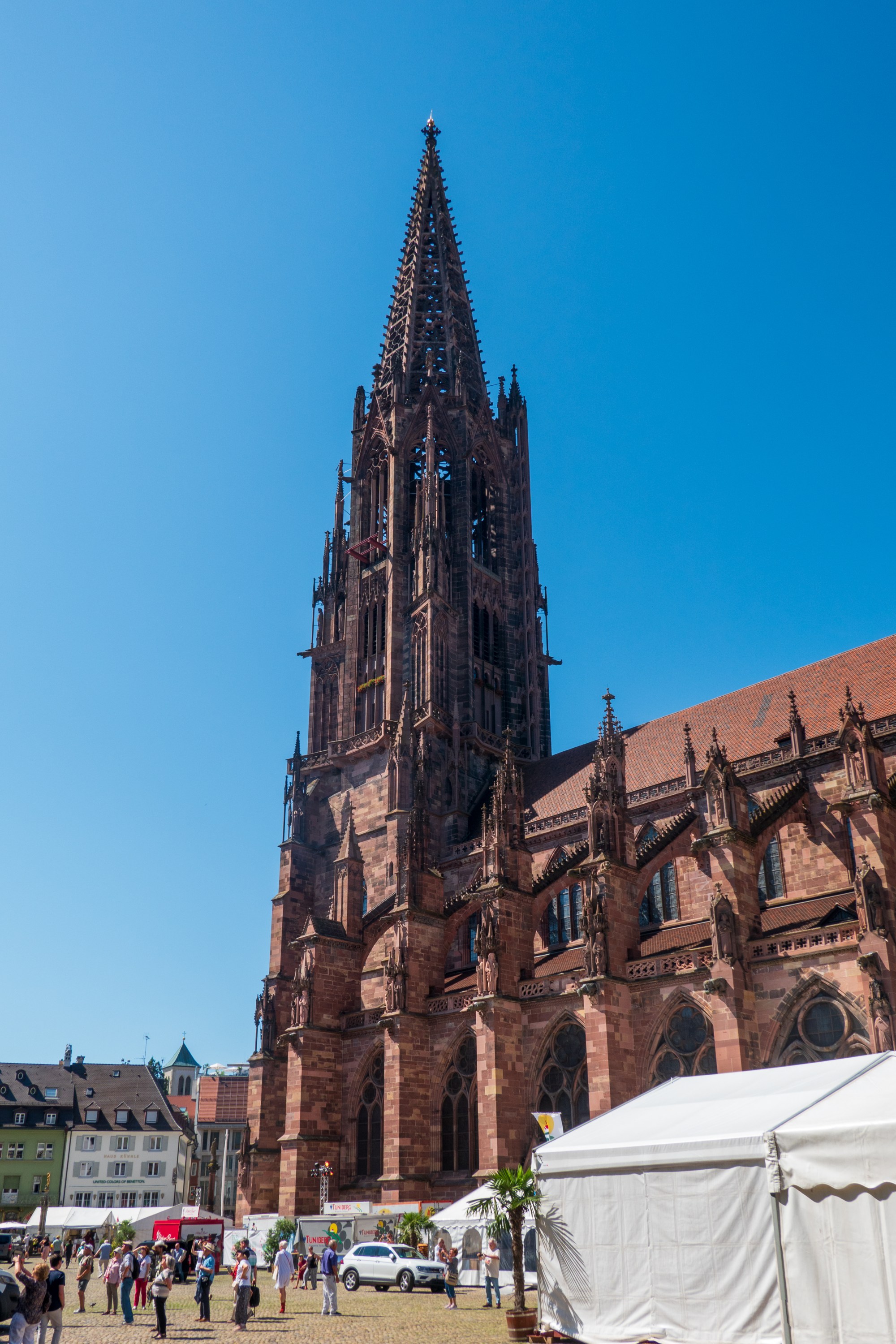
We then visited the Minster and scanned all the statues! We started with the old anti-semitic trope of Ecclesia and Synagoga flanking the entrance. (We had lamented this theme at a previous church.) The former represents Christianity and holds all of the symbols of salvation. The latter represents Judaism and is shown as blind and powerless. Sadly, we have not fully outgrown this stupidity, even in our own country, today. (The lines in the photos are a mesh to protect the statues from pigeons.)


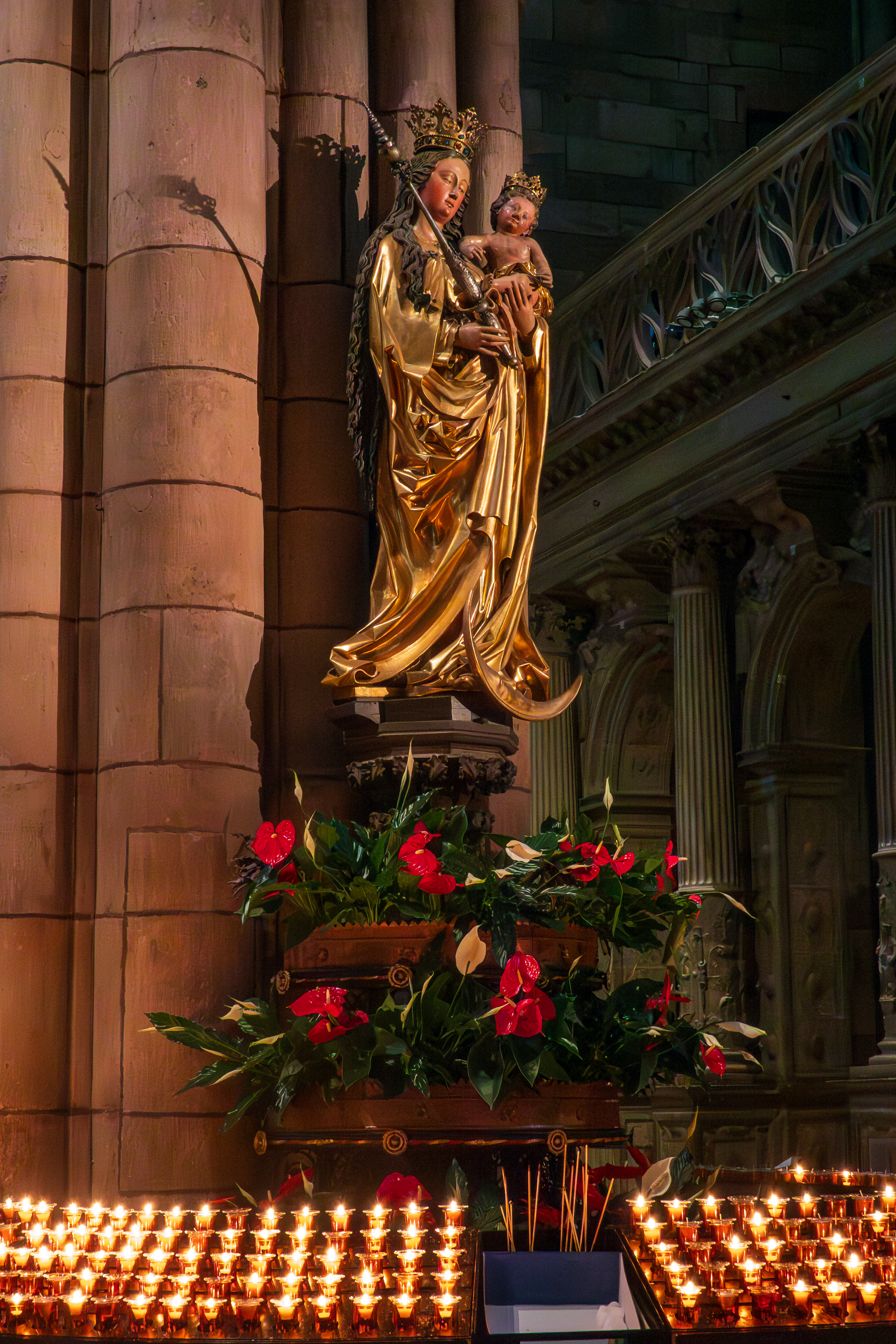


(On the left.)
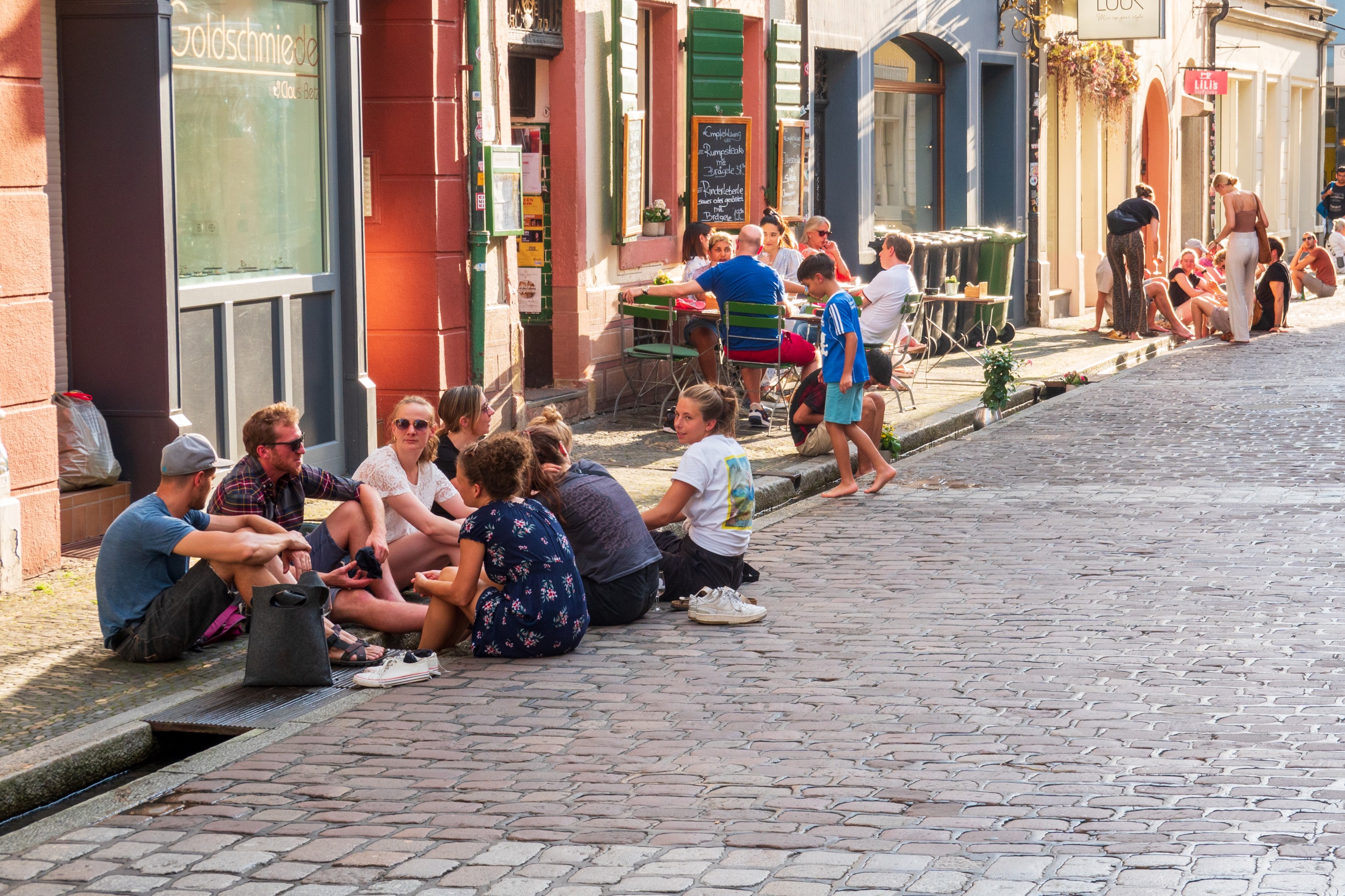
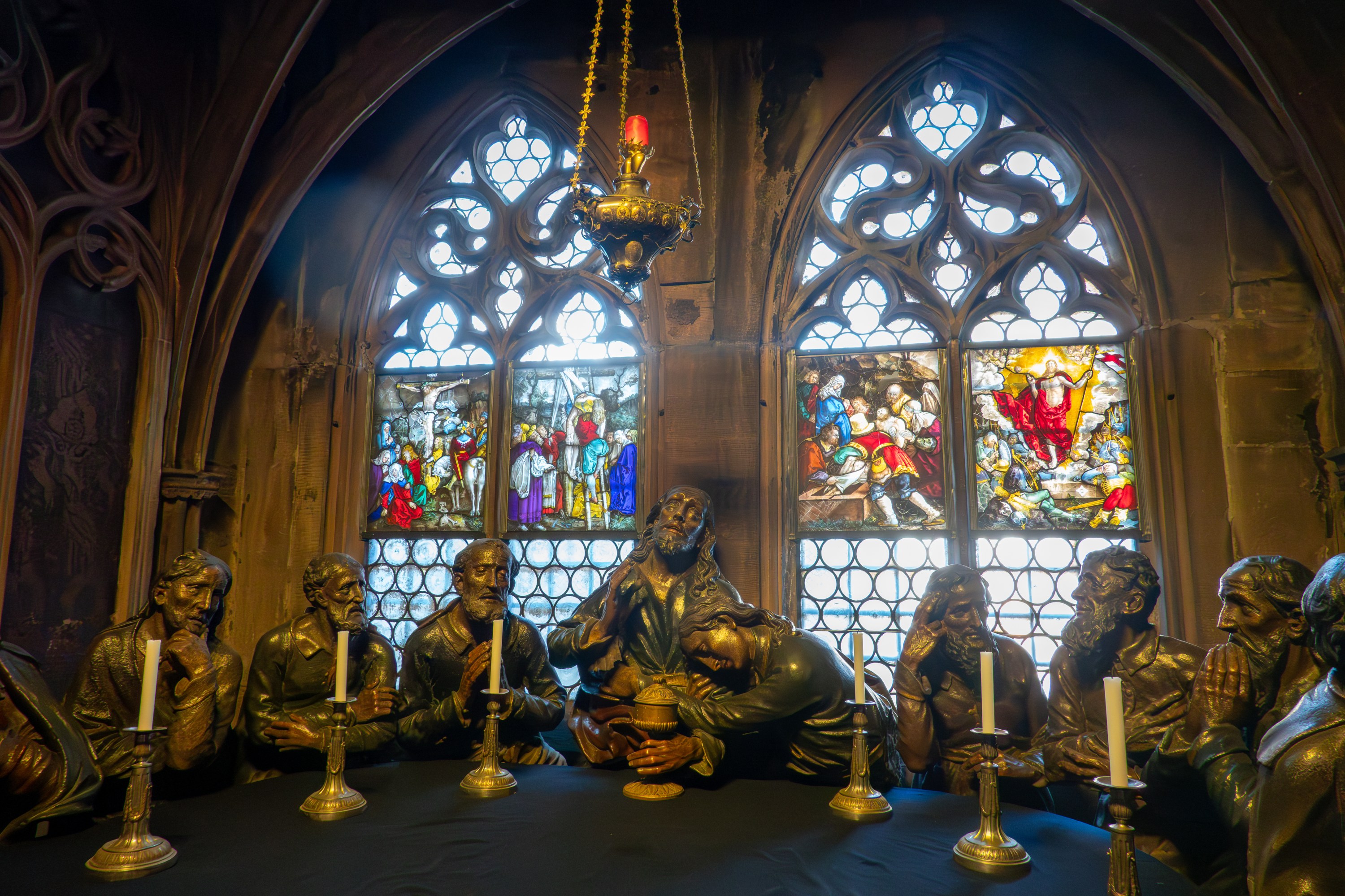

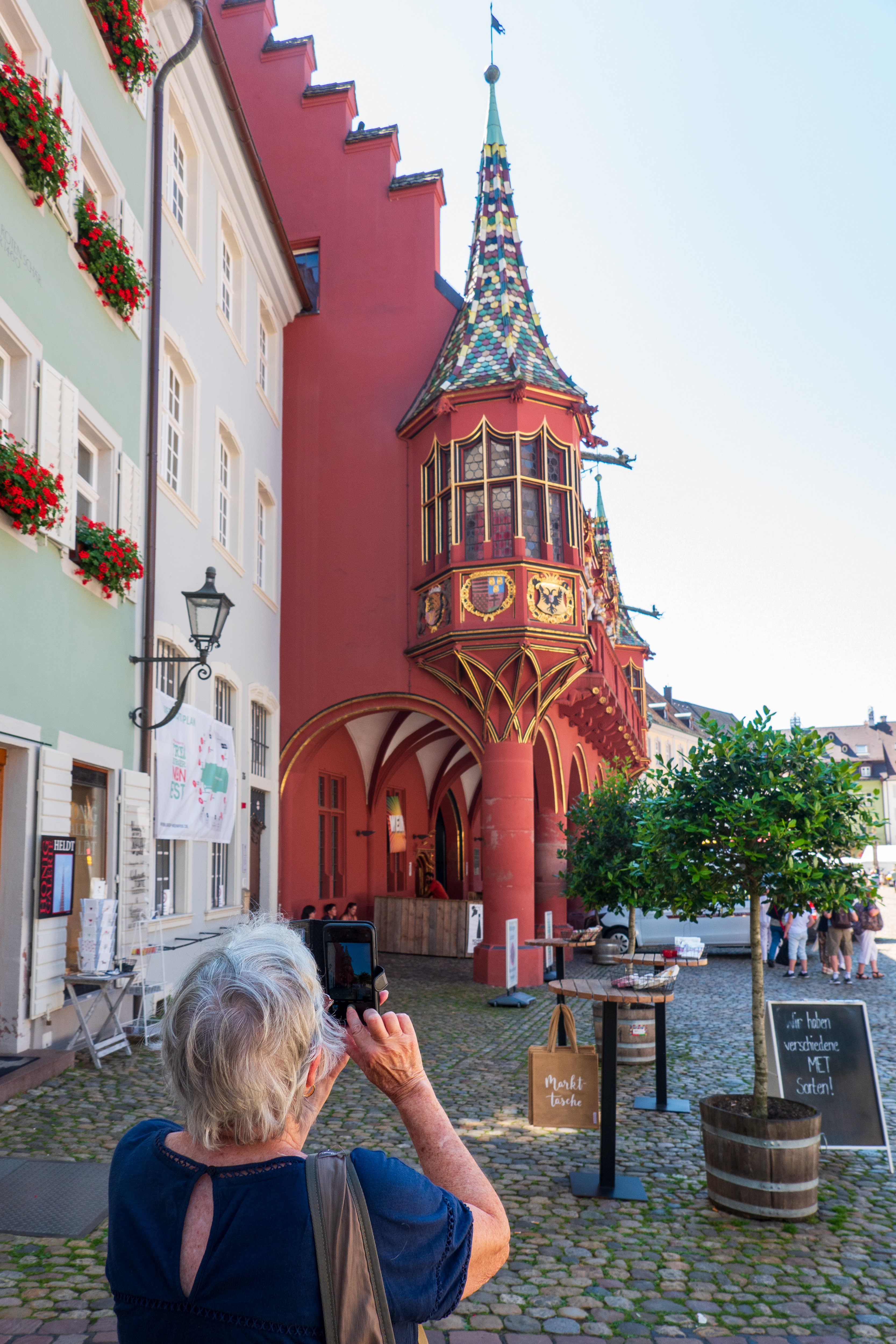

We found out where to buy tickets for the organ concert and returned to the Minster as a Wine Festival was in full swing.

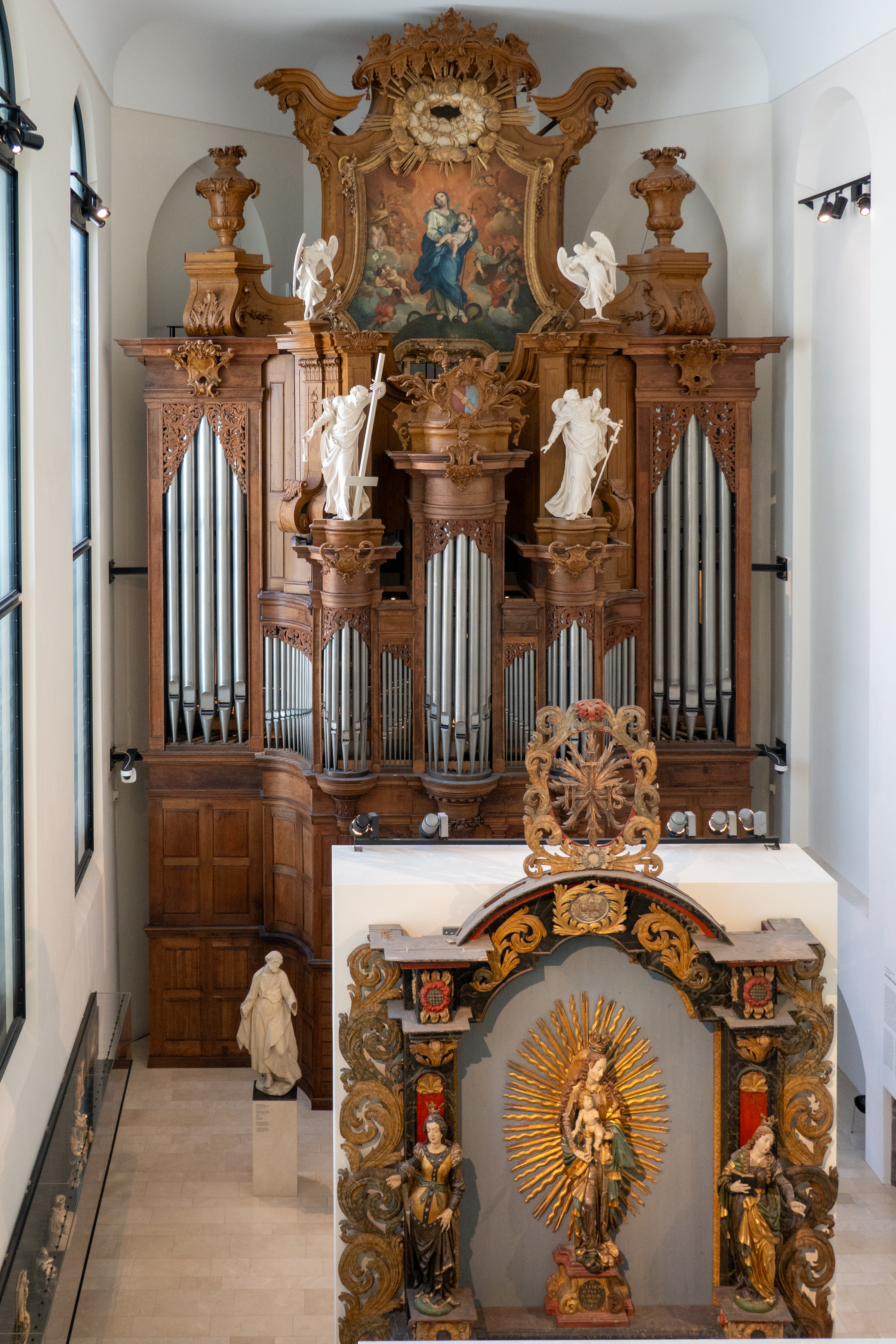
After enjoying our wine, we moved into the Minster for the concert. The organ(s) date from the 17th century and are magnificent instruments. There are actually four organs in different locations around the church. They can be played from individual consoles at each instrument or from one central one.
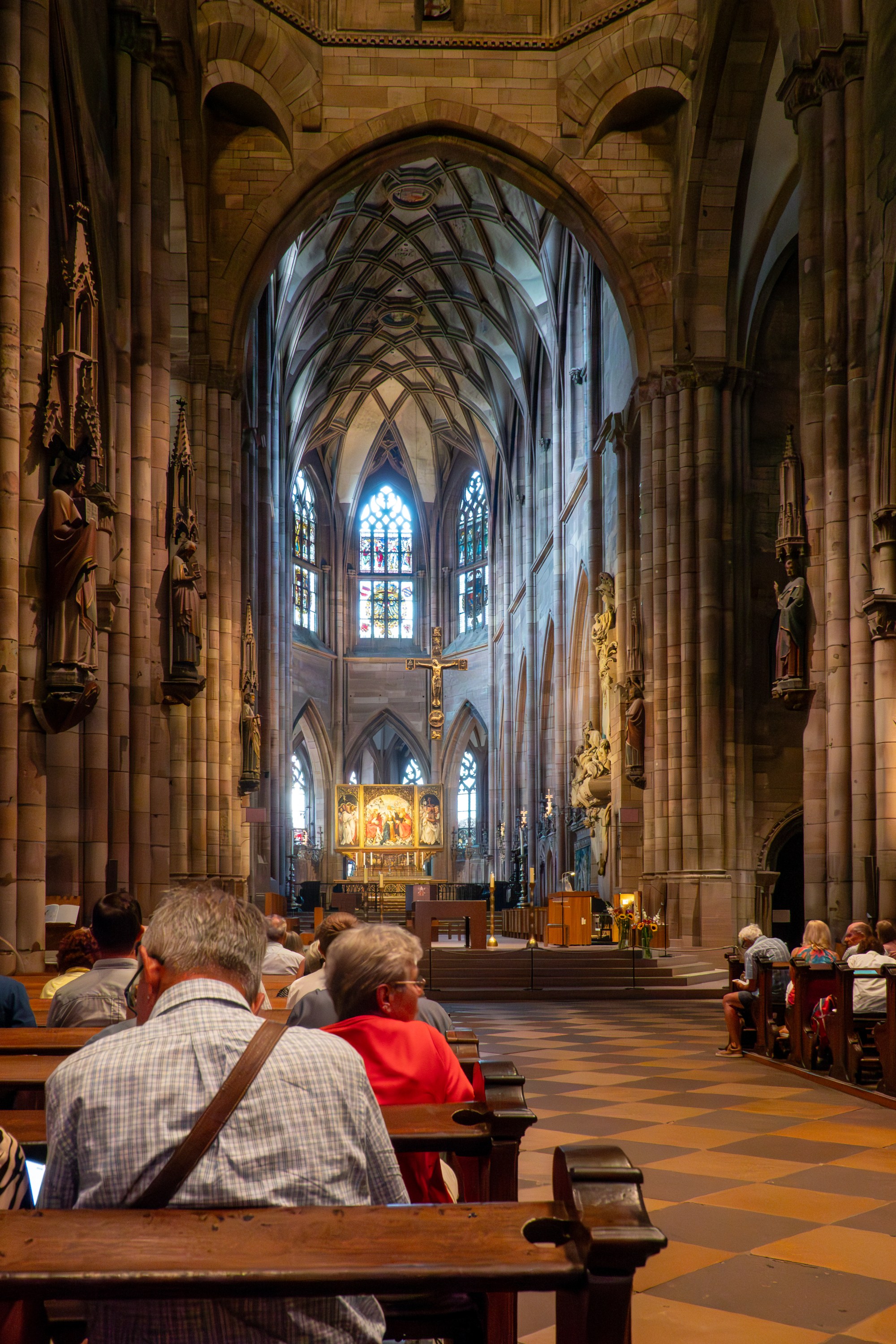

We enjoyed the concert, which finished about 10:00 PM. The crowds in the square had not diminished and the wine festival was still in full swing. As we walked away from the square, looking for the tram line, we saw a taxi waiting. The driver was willing to take us back to Bad Krozingen! An expensive but welcome way to get home to the camper and a great end to the day.

The following day, we set out on our bikes to cycle to the nearby village of Staufen, to admire the ruins of a hill fort (burgruine Staufen) and to visit to a vineyard. (https://www.weingut-wiesler.de) We also hoped to miss the evening thunderstorm.
The Weingut Wiesler had an excellent selection of house made white wines, grown right on the slopes below the ruins. They did not have a license for a tasting – you had to buy. So we had a good chat with the owner and we managed to fit three bottles into the front bicycle bag before cycling back to the camper. And we did miss the storm!
We could have spent more time in Staufen, a town famously associated with Faust. (https://www.staufen-im-breisgau.de/staufen-en.html)
We had hoped to visit more of the Black Forest but as the main road was blocked to us by a Low Emission Zone, that was not going to work. So we headed north to a Stellplatz at Bruchsal. Turned out to be very nice and we admired a smart expo truck. Can’t love the color, but we did admire the protective skids on the cab and roof – just what you need to protect against trees, etc. Liked the roomier DOKA (double cab) but, like a lot of Euro campers, there are nowhere near enough windows for hot weather use. And they make us look so small!

We walked to the Schloss Bruschsal, the former palace of the Prince-Bishop.


Prince-Bishops seem a most unchristian abomination, but medieval Europe had a lot of them. The Prince-Bishops certainly knew how to live well – their palaces were huge and obscenely ornate. And we keep finding more of them.
But the real reason for our visit is that the palace now contains a museum of mechanical musical instruments. (https://www.dmm-bruchsal.de) We took a tour (in German!) to discover the different instruments there. They ranged from tiny music boxes to moving figures, and from organs to player pianos to monster fairground instruments. As a techie aside, these incredible instruments are prime examples of early programming techniques. In most cases you could load any number of different programs to play different songs. Precursors of modern sound systems. They don’t, however, play MP-3’s.


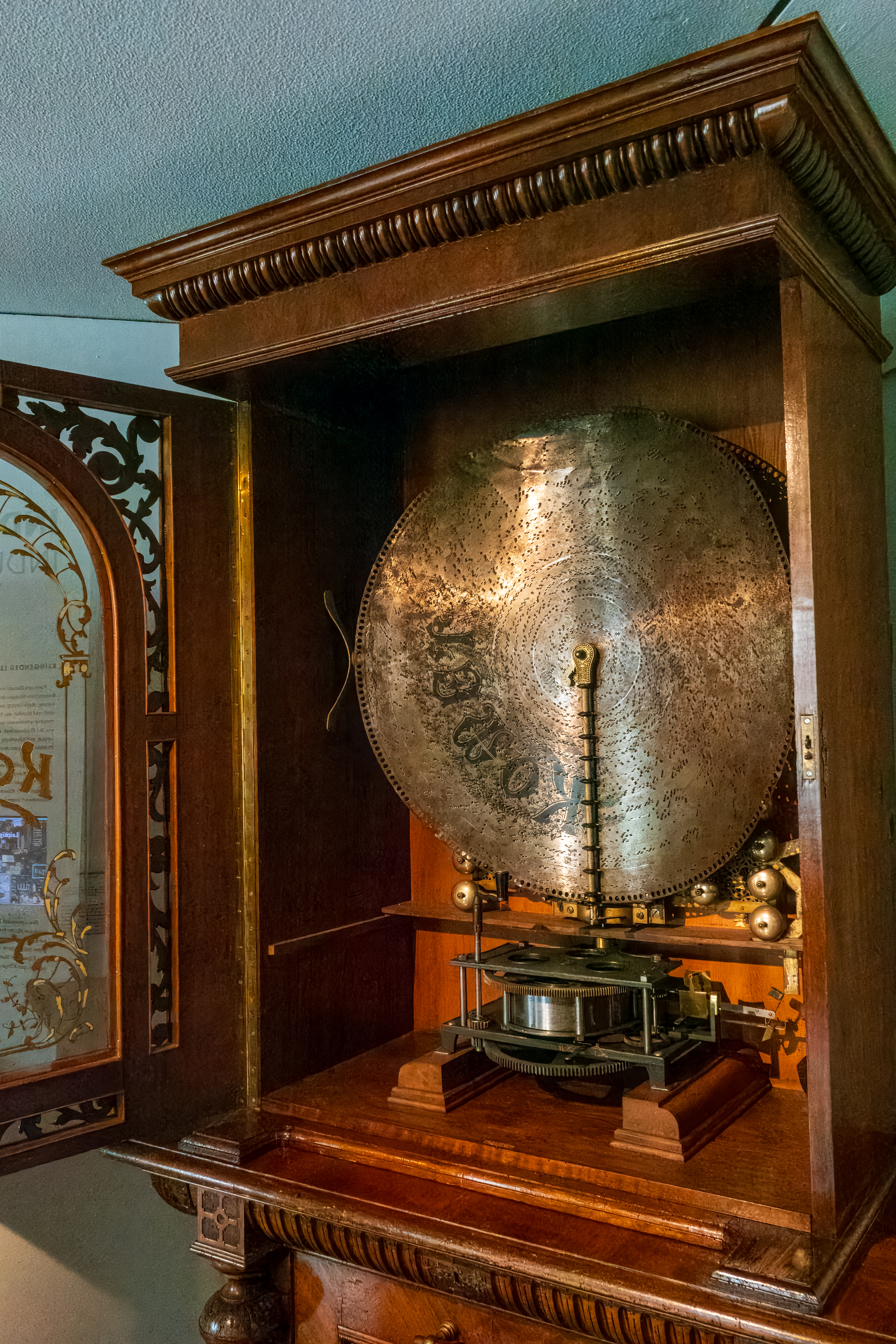


The Sousa band is on a wagon, intended for fairgrounds and markets. All in all, a fascinating study in the congruence of technologies – programming, mechanical timing devices, and musical instruments.
 DiploStrat