
No one goes to Kusel except to burn it. First the Croatians in 1635 and finally the French in 1794. But as our son had lived in a second floor apartment there, for four years as an officer in the US Army, we had a sacred pilgrimage to see it again. Denise spent several weeks in Kusel while Trevor was recovering from an injury and was on crutches.


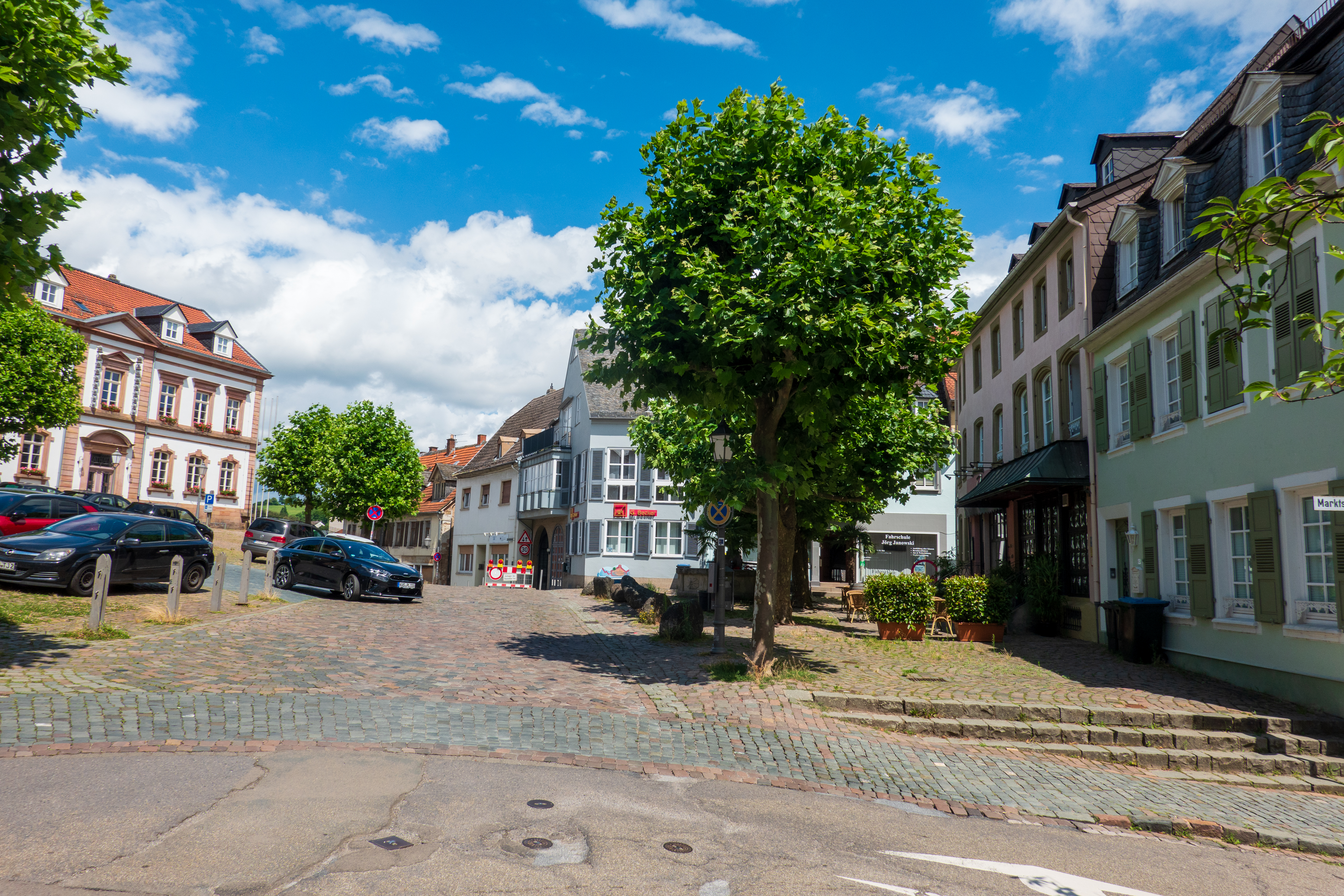
It turned into just a drive by visit as it was Saturday, and everything was closed in preparation for an Italian Festival. Sadly, the town was showing the need for a little TLC. A number of shops were empty and an overall lack of maintenance was visible. Perhaps this is the result of some of the nearby US bases closing or drawing down. Even Trevor’s favorite doner kebab shop was closed at lunch. And for those who have yet to experience the sublime joys of doner kebab, see here: https://en.wikipedia.org/wiki/Doner_kebab#:~:text=A%20typical%20kebab%20consists%20of,stuffed%20into%20the%20bread%20itself.


We took the necessary photos and decided to move on to Trier.
On arrival, we settled into a winery, just outside of town.
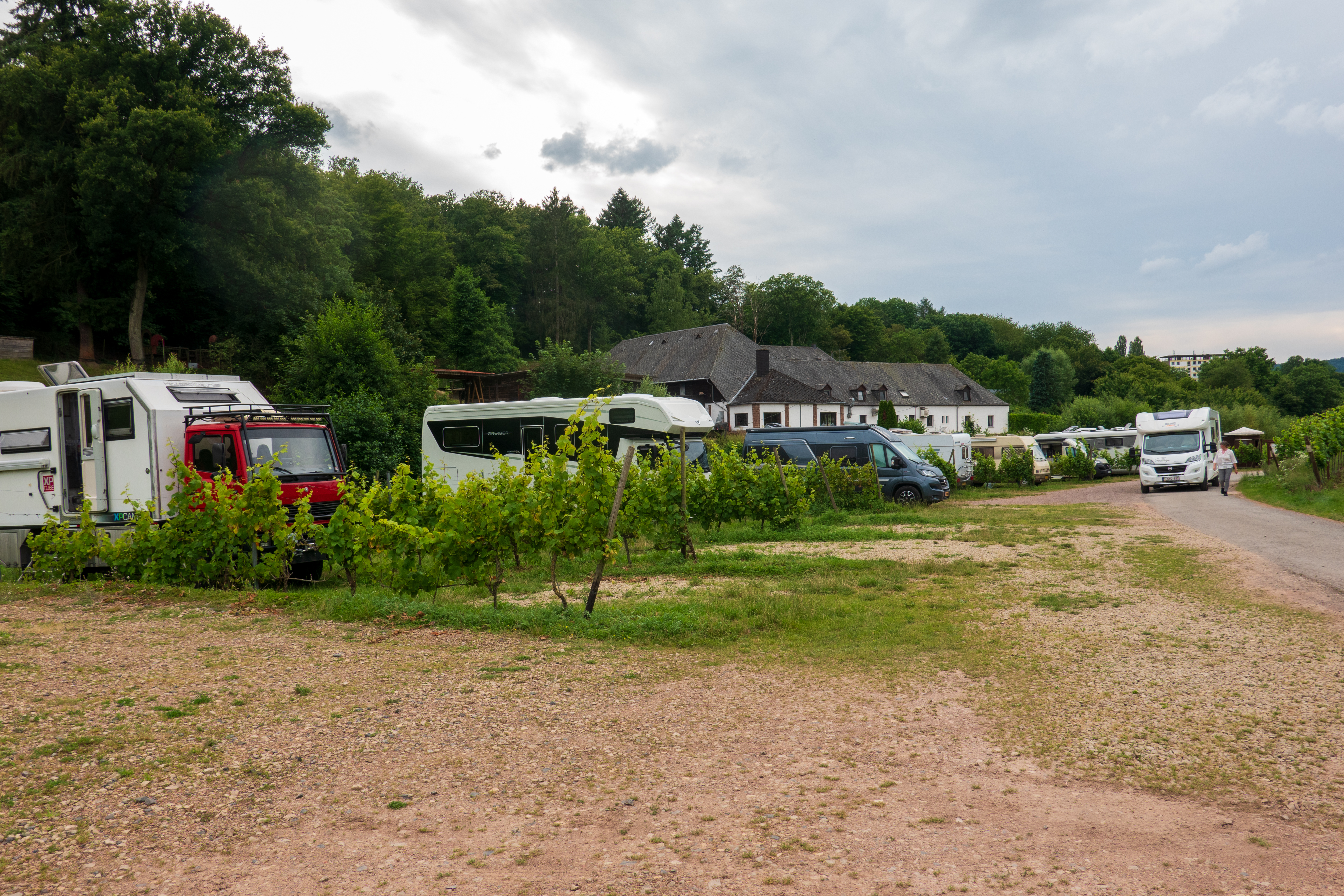
The winery was advertising wine tasting and a restaurant. For some reason tasting was not available, but we did have an interesting evening meal. Fred is not going to be looking for pork neck recipes, but the leftovers made good Chinese food.
The next day we biked into Trier. We had visited briefly, years before, and were not sure about another visit. We found that visiting on bikes and being able to wander, rather than visit in a tour bus, made a big difference.
Trier was known as Augusta Treverorum and had about 80,000 inhabitants in 300 AD. It is considered the oldest city in Germany. Fred rather suspects that this is not quite fair to the ancient Germans. They may not have build in stone, but undoubtedly had several large settlements. Trier has a lot for history hounds: https://en.wikipedia.org/wiki/Trier It was very easy to see the Roman foundations of the present city.

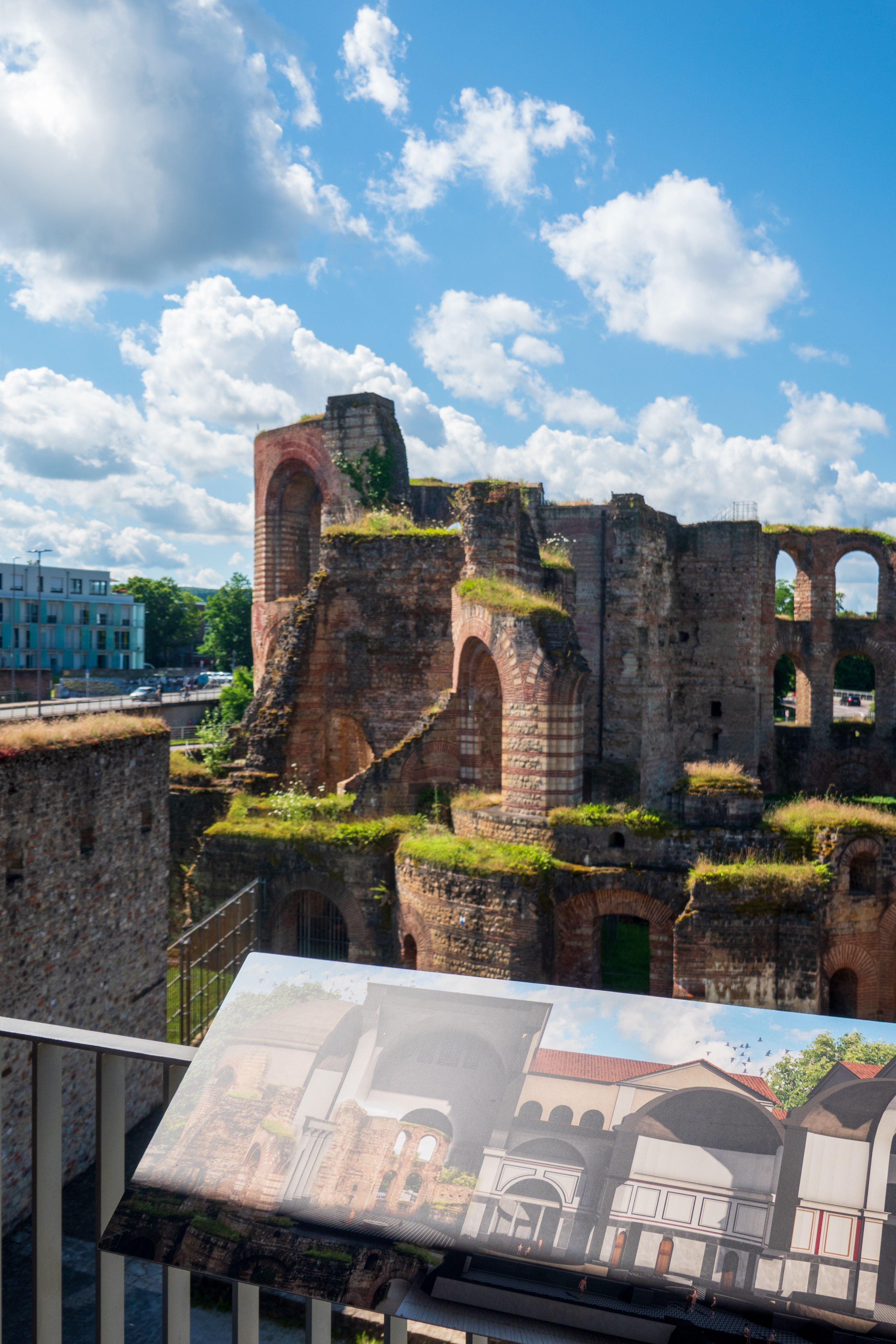
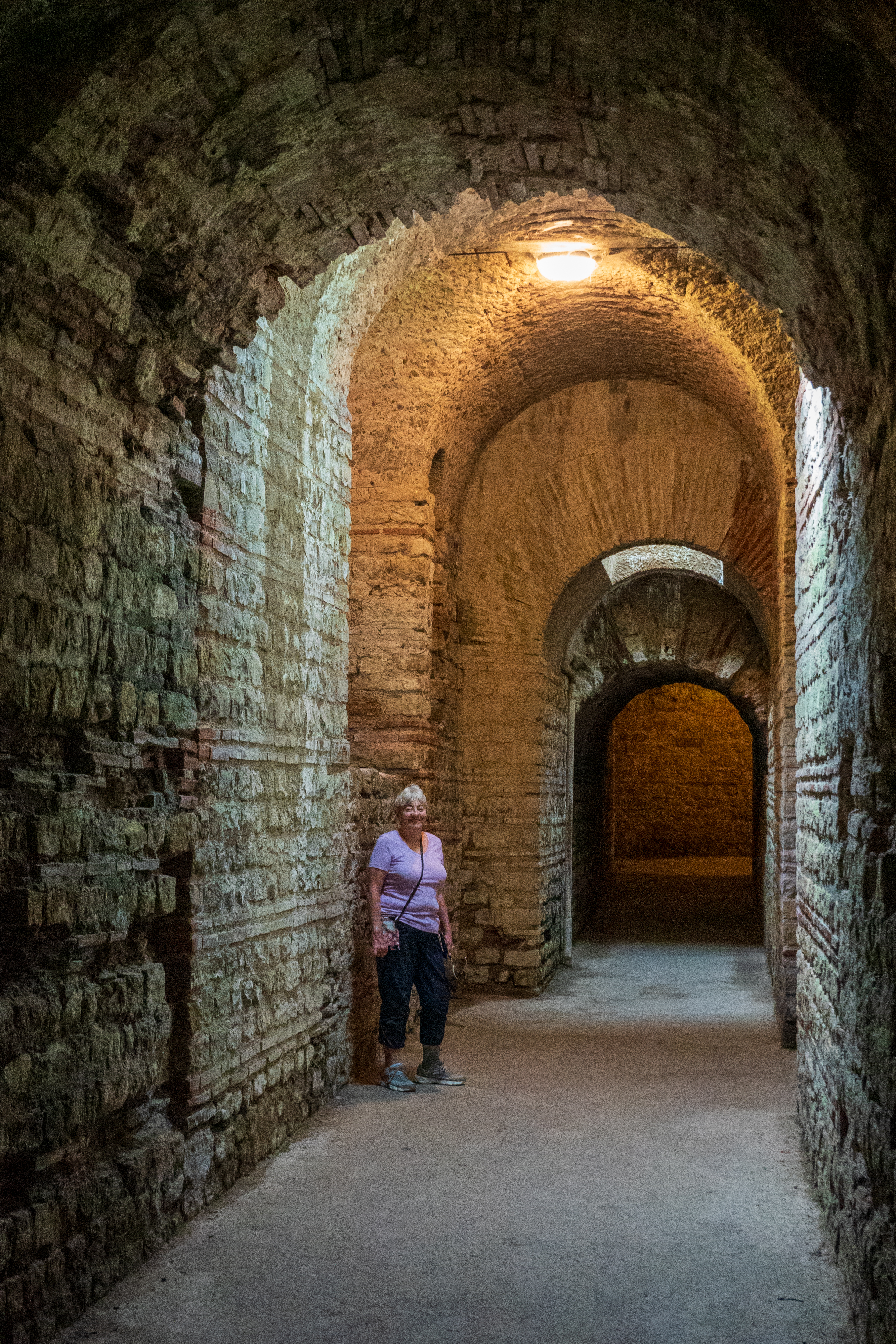
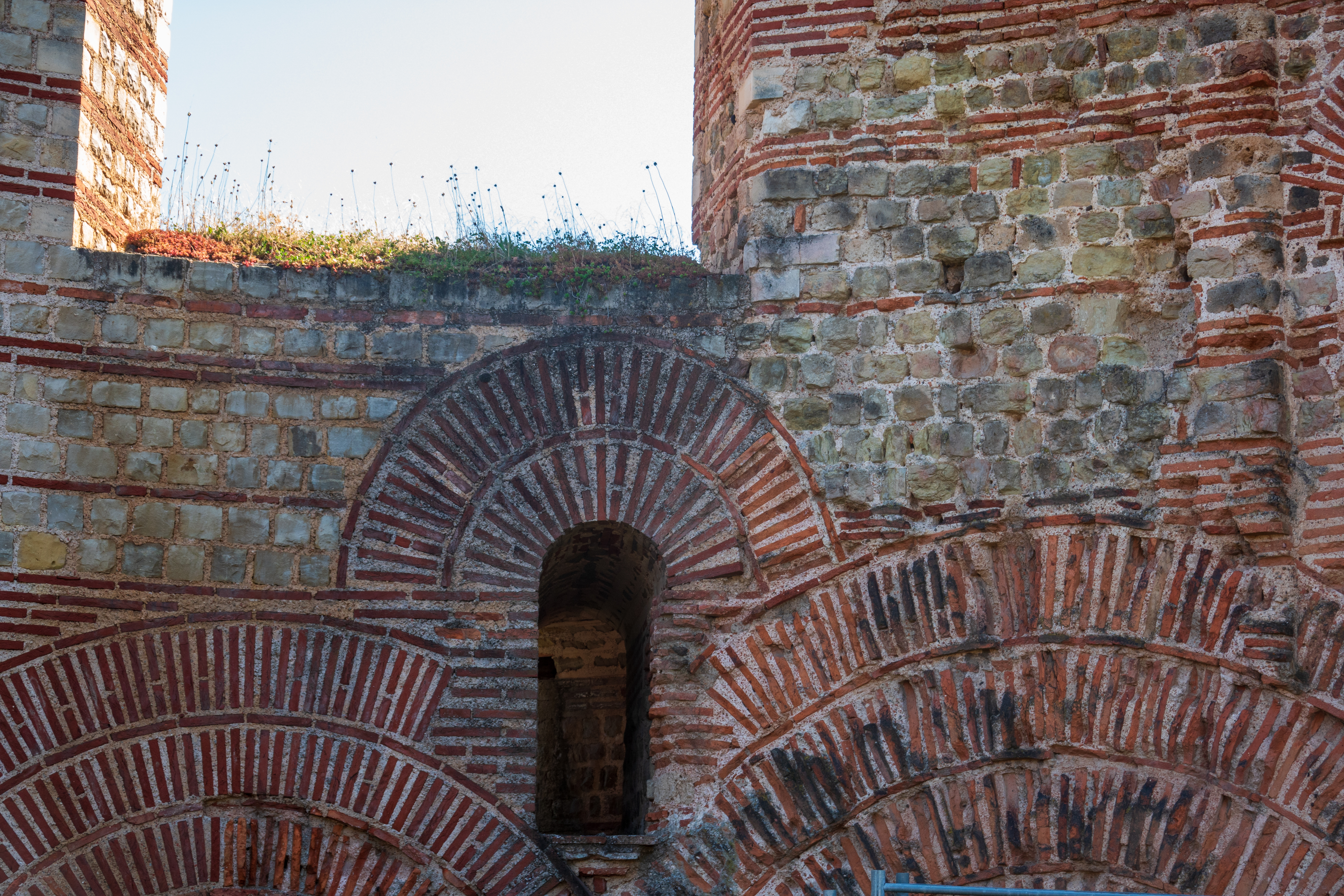
We started our visit with the Kaiserthermen or Imperial Baths. At the start of the 4th century, Trier became an imperial residence. Part of the western Roman Empire, which included Britannia, Gaul, and the Iberian Peninsula, was administered from Trier. Thus construction began on several prestigious imperial buildings, including the baths complex. Built as baths, work came to a halt when Emperor Constantine shifted towards the east. The baths were partly torn down and partly completed as a reception and parade hall with barracks was created, but enough of the structure remains for a most interesting visit. It is possible to wander the underground passageways with the hypocaust in full view. Great fun!
We then biked to the Porta Nigra, or at least we tried to. We got there, but the town was packed and there was a huge market on both sides of the gate.
So we gave up on attempting a visit and went for lunch. Since we had missed our doner kebab in Kusel, we ate one in Trier, right on the main square.



We then headed to the Amphitheater, after a quick visit with our old friends Ecclesia and Synagoga – they are everywhere, this time on the Liebfrauenkirche. (https://en.wikipedia.org/wiki/Ecclesia_and_Synagoga)

On one side, the trifecta of goodness. The church, Saint Peter, and Adam, the father of man.


And, on the other side, the temptation of Eve, John the Baptist, and, turning away from St. John, Synagoga, the symbol of the Jewish faith.
All of this is as subtle as a brick through the window, and, in a world where people could not read Scripture for themselves, bred generations of hate and persecution. The roots of anti-semitism go way back, with terrible consequences to this day.
It is believed that the amphitheater was built between 160 and 200 AD, at the same time as the city walls. Oddly, it could also be used as a city gate, as the city wall went across the hill to the left of the photo. All of the seats were removed long ago to reuse the stones. A pity as the site is so well preserved.

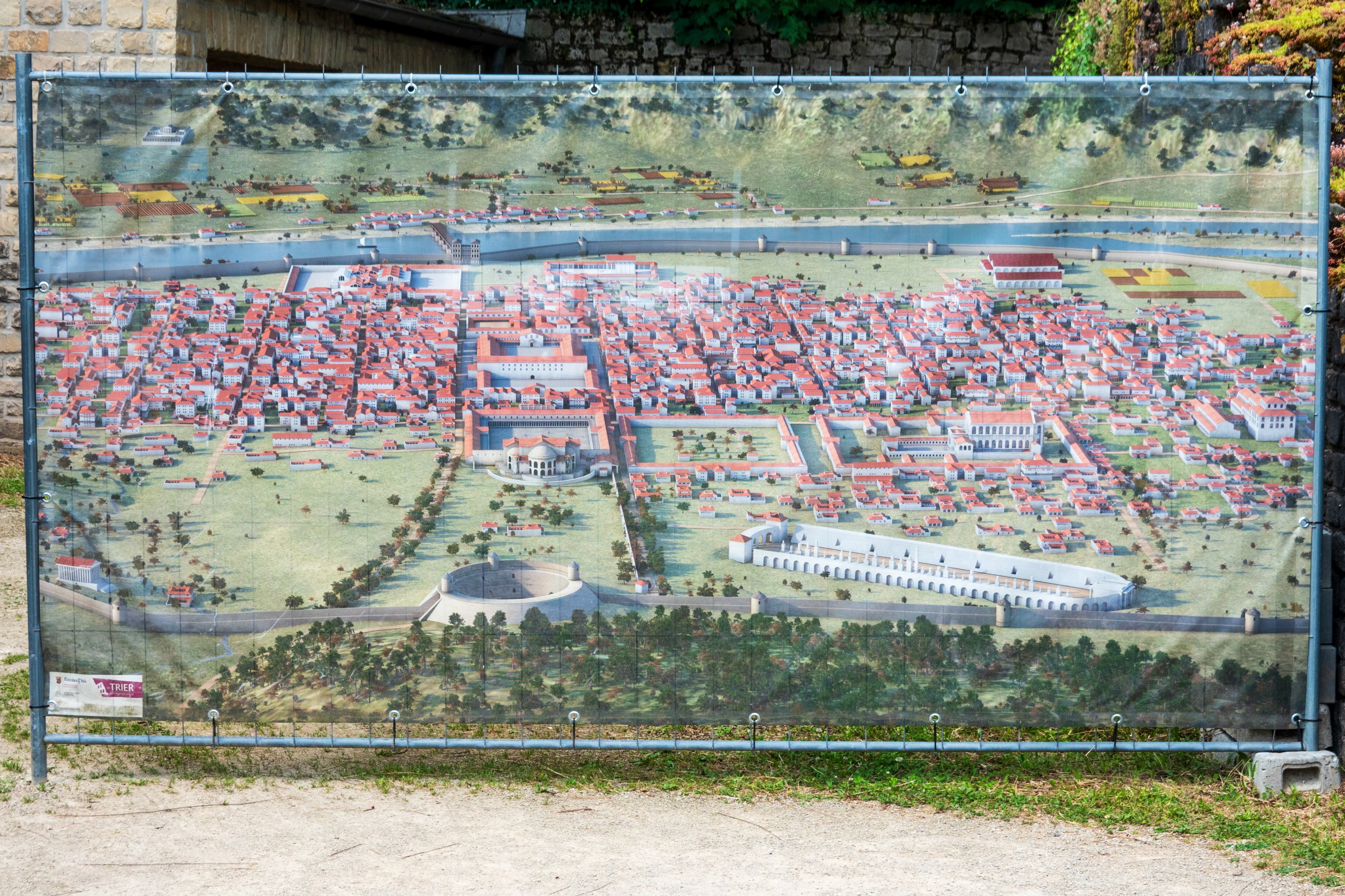
It is believed to have held about 20,000 spectators. It is possible to see the cells, below the seating, where the animals, comdemned prisoners, or contestants were kept before entry into the arena.

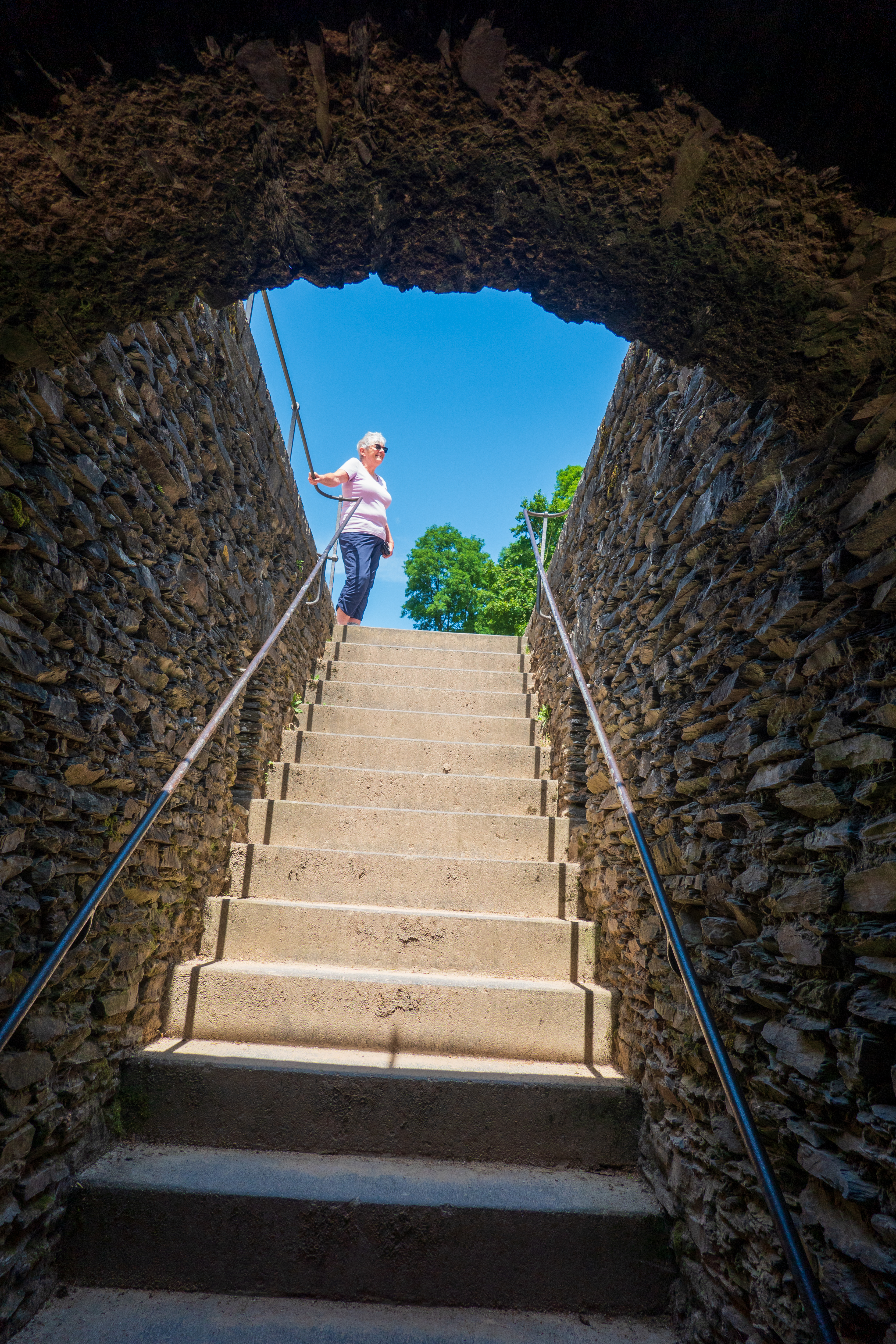
This is the only Roman amphitheater that we have visited with an intact wooden floor. This is probably because of the Bread and Circus festival that used to be held in Trier. Prowling under the floor of the arena made it especially chilling. Fans of movies like Spartacus and Barabbas will love it. (And keep yer Airplane! jokes to yourselves!)

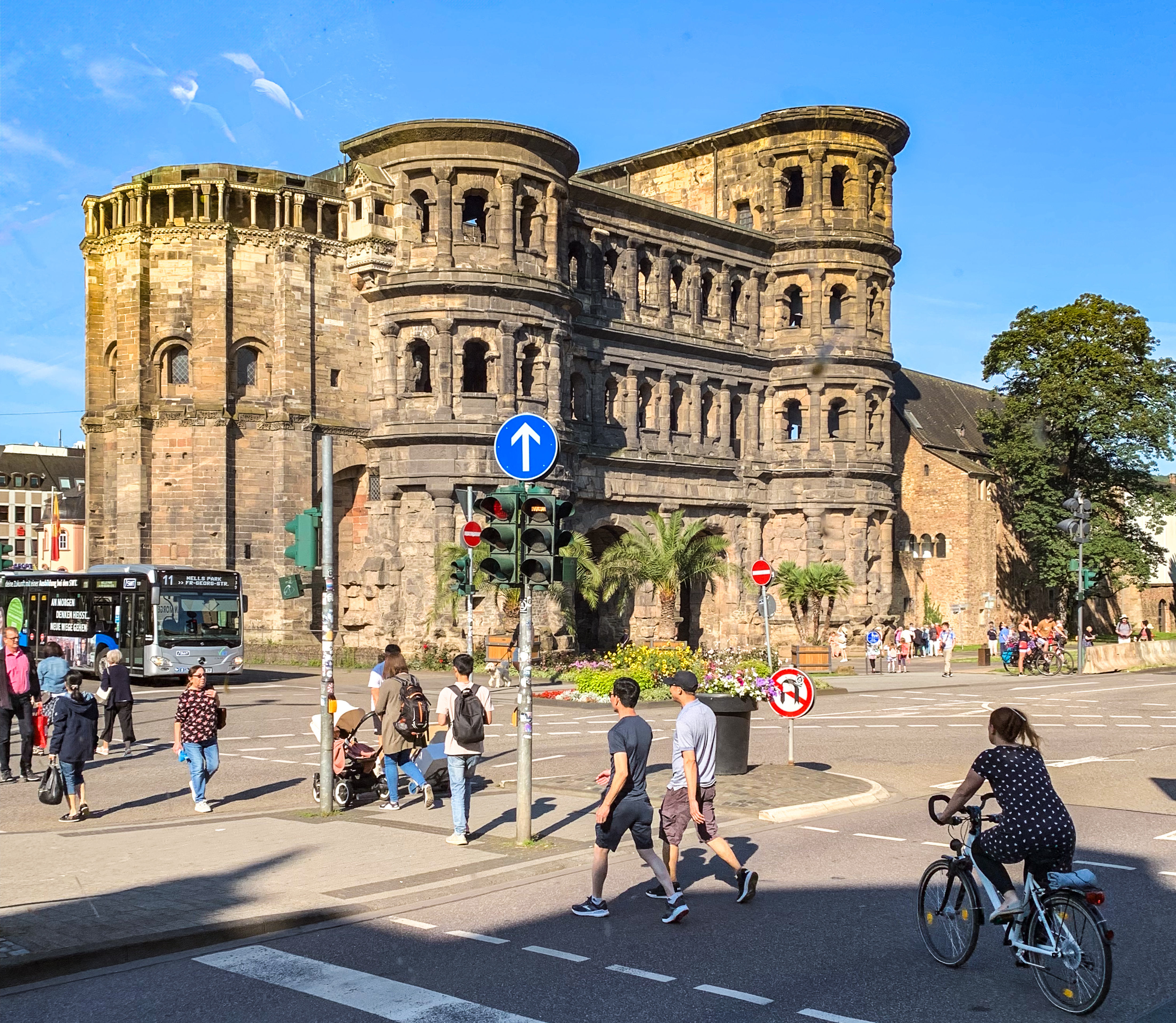
Denise for the win! The market made it impossible to get a decent picture of the Porta Nigra, but then driving out of town we stopped at a traffic light and Denise scored this with an iPhone! (https://en.wikipedia.org/wiki/Porta_Nigra)
 DiploStrat