
The garden near Ghent was on a horse farm. More horses! However these horses were mares undergoing artificial insemination. Once confirmed to be pregnant, the mares go to the farms of the future owners of the foals. After the foals are delivered and thriving, the mares return home to repeat the cycle. Never seen that before.
We settled in and the next day we unpacked the bikes and set off for the 40 minute ride into Ghent. We chose the sightly longer route which took us along the river. The downtown was heaving!

Ghent is a port city in northwest Belgium, at the confluence of the Leie and Scheldt rivers. During the Middle Ages it was a prominent city-state. Today it’s a university town and is known for medieval architecture.
We knew that Ghent was having its annual festival but we could not believe the number of tourists in town. We at once felt the need for sustenance when faced with a mass of stages, tents. sound systems and live music in some of them, so we stopped for coffee and a cream and strawberry waffle (the wafting cooking smells were irresistible). Yes, it was the very end of strawberry season but these were some of the best strawberries we have ever eaten!
Thus fortified, we parked the bicycles and set out to explore a little. The narrow, medieval streets led us to the river and a boat cruise on the river, the best way to see the sights given the hordes of tourists.

We passed under the St. Michael’s Bridge, which is famous for the statue of St. Michael and the Dragon.


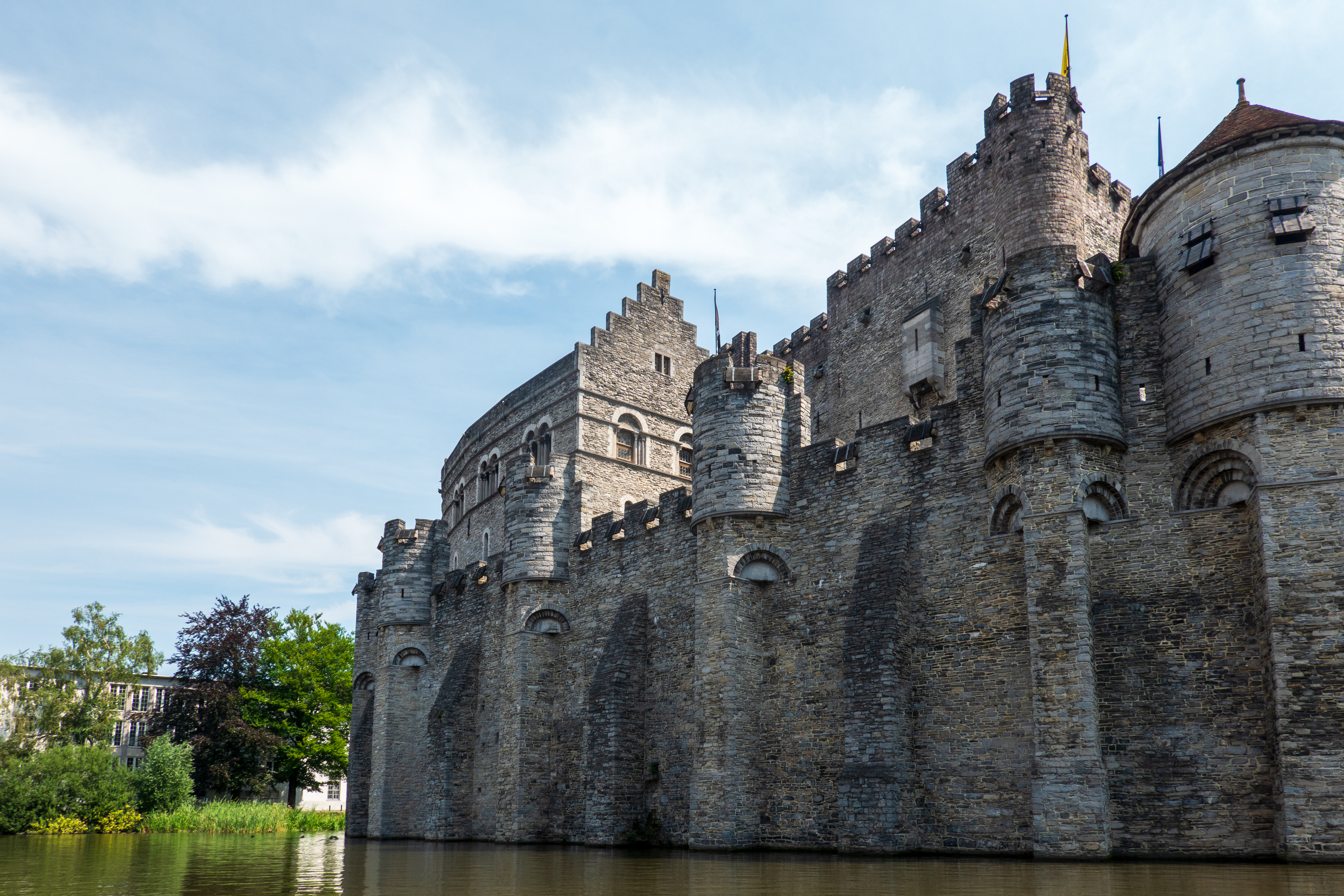
We also saw the twelfth century Gravensteen Castle.


Lunch was at a Nepali restaurant on a side street with charming waiters and, most important of all, available tables. We enjoyed dosas, momos, and a platter with a variety of dishes which we shared. Doesn’t everyone go to a Nepali restaurant in Belgium?

If you have been following, you will remember the picture of Mons Meg, an enormous (25 inch) bombard (cannon/mortar) at Edinburgh Castle. (https://diplostrat.net/2023/06/23/into-scotland/) Her sister, Mad Meg, is in Ghent, at bit closer to home. The third bombard has been lost. And, if you were wondering, the IJN battleship Yamato had 18 inch guns; the USS Missouri, 16 inch. Amateurs! The stone cannon ball weighs over 375 pounds.
We then decided that we had had enough of the madding crowds and retrieved our bicycles and headed for the camper.
We remained an extra day as the weather was decent and Fred wanted to finish the painting of the roof rack, which he had begun in Denmark. Our host loaned us a ladder and the painting was successfully completed. We even had two dogs to supervise.
 DiploStrat