
As we had decided to return to the US by sea, we found ourselves with a few days to spend in Wales. Our last Welsh visit was to the northern castles about 38 years ago, so it was time to discover some of the south.
We started off staying at Our Welsh Caravan and Camping (https://ourwelsh.co.uk/), near the village of Gilfach Koch. The campground itself was roomy and featured sheep all around.

The village served as the inspiration for the town in the book and later, movie, “How Green was my Valley.” (https://en.wikipedia.org/wiki/Gilfach_Goch)

We had hoped to visit Caerphilly Castle, but it turned out that we were rather farther away than we had hoped. So we cast around for a different place to visit and found the Royal Mint in the nearby (we thought) village of Llantrisant .
Google maps kept suggesting very complex routes, so we started out on Welsh cycle route number four (https://en.wikipedia.org/wiki/National_Cycle_Route_4 ) which we expected to be pretty manageable. Silly us. It proved to be quite a challenge. We started off up a steep hill and then the trail disappeared leaving us up on the ridge with spectacular views but riding a rut along a field.

We managed to get to the top of the hill and met some mountain bike cyclists descending a much better trail (almost a road). We asked for directions and continued towards the Mint. After a series of odd streets and tracks, we made it. Note to all – don’t ride small wheel bikes on Welsh bike trails!
The first order of business was lunch, to fortify ourselves after our travails. The cream tea looked excellent but more than we could manage. The Royal Mint was a most interesting site and the tour was excellent. (https://www.royalmint.com/) Because it was a non working Sunday, we were allowed onto the Mint floor. This meant that we were able to view the buckets of coins that had been prepared for the sixty countries of the world, including some, like Cuba and Ecuador, that we had lived in. Sadly, they discouraged the taking of samples. Unfortunately no photography was allowed. We resolved to stay on the Google route back to the campground but we again found ourselves walking on steep, overgrown paths and faced with locked gates! But we made it, and even managed to find a supermarket where we could purchase some items we were lacking. It is worth noting that there were lots of road works going on and all of these included bicycle accommodation, so things may be easier in the future.
Our next stop was a campground outside St. Davids. (https://en.wikipedia.org/wiki/St_Davids) We were up on the cliff and we arrived on a cloudy, rainy, windy afternoon with absolutely no view. However the staff assured us that the views were spectacular, when it stopped raining!!

The next day proved to be bright and sunny and the sea view was spectacular. We decided it was time for a cliff walk and set out to walk on the Pembrokeshire Cliff Walk to the Blue Lagoon. (https://www.nationaltrust.org.uk/visit/wales/abereiddi-to-abermawr/the-blue-lagoon-at-abereiddi) The campground provided easy directions.
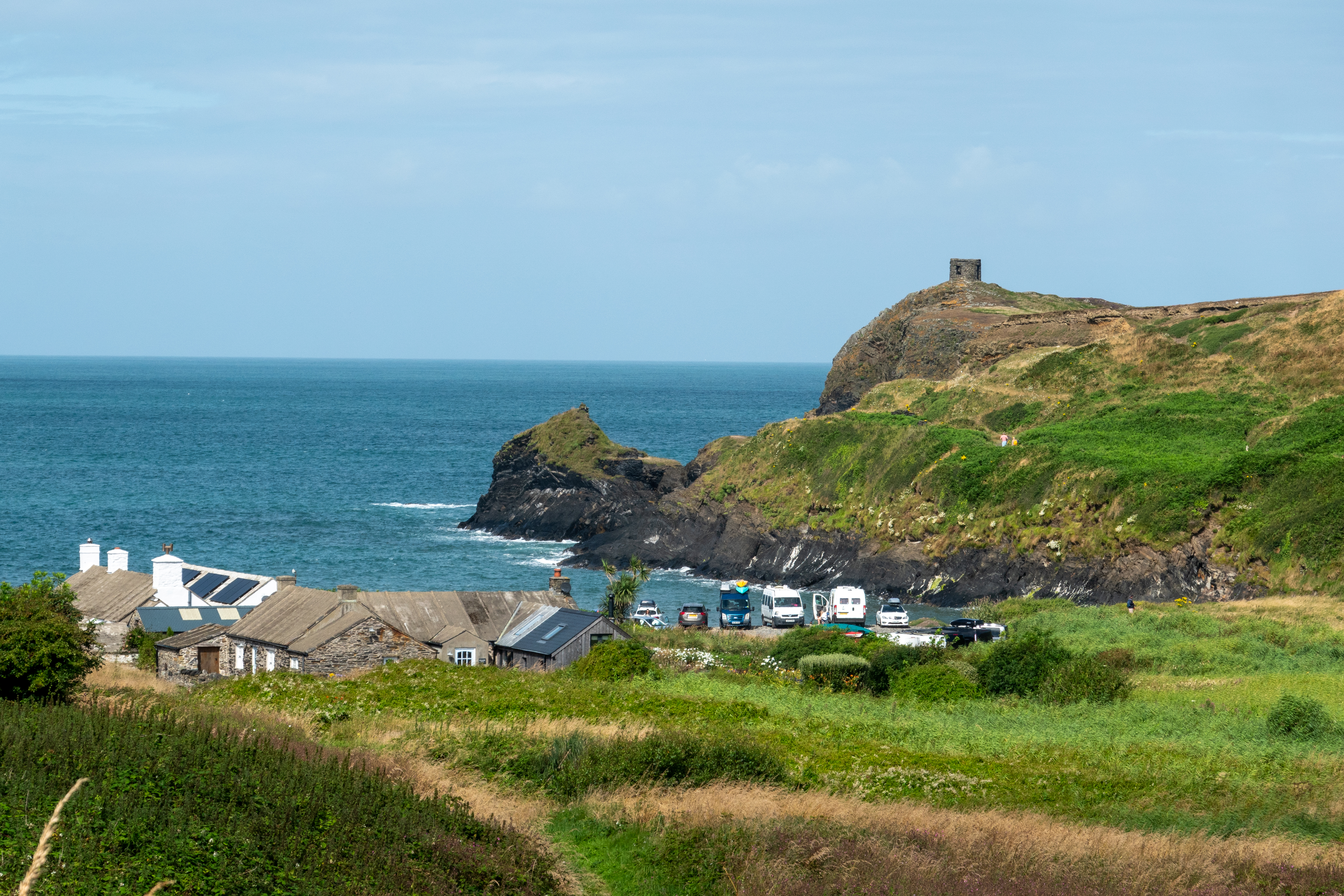

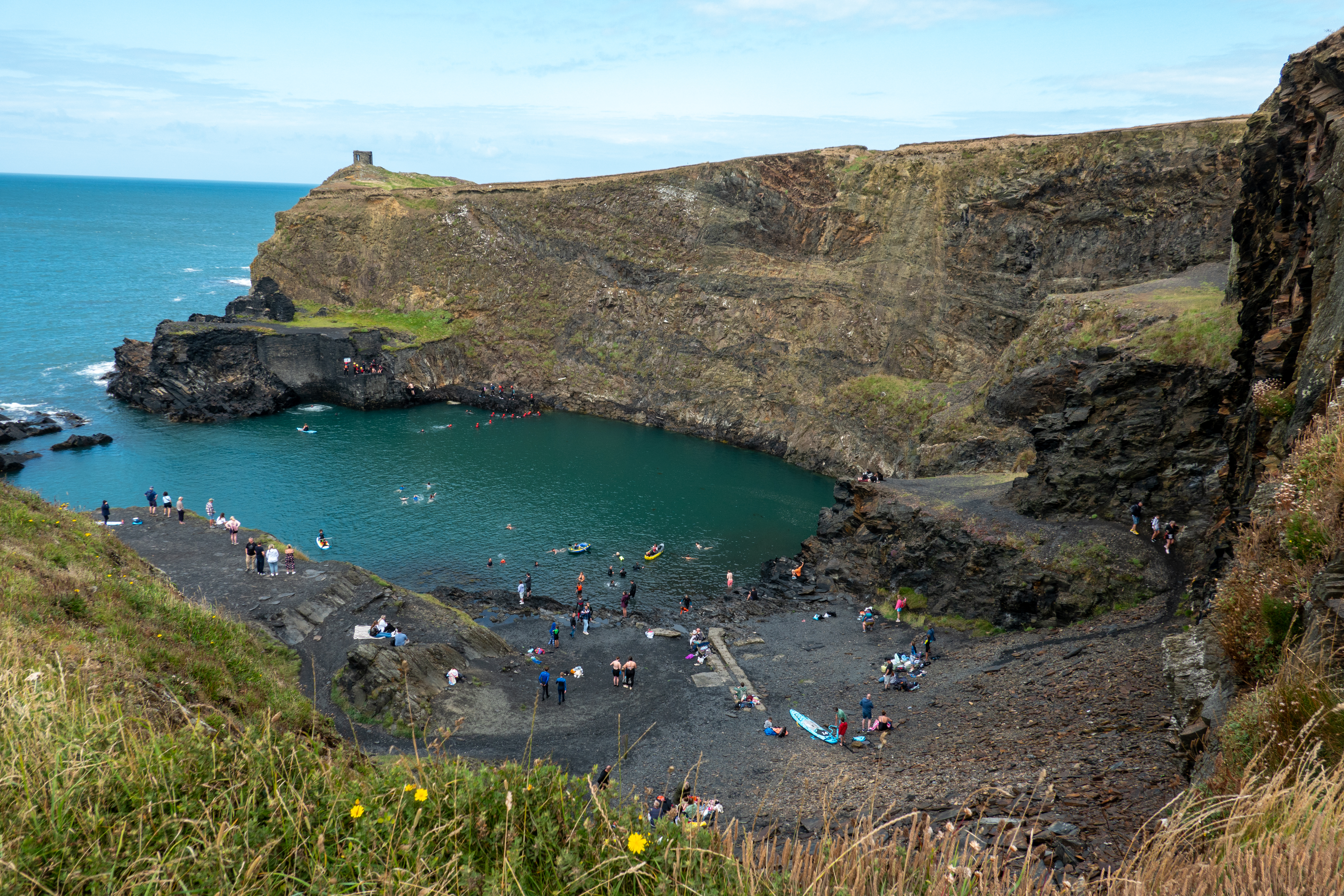
The lagoon is a deep bay, formed when the ocean was allowed to full the pit of an old slate quarry. The slate turns the water a glorious blue. Sorry, no Brooke Shields at this lagoon.
Once there, we enjoyed the views of the coves and small beaches. A fund raising morning was underway with people jumping in the lagoon to earn money for charity. We skipped the jump and paid up in cash! We continued along the coast for a bit before returning to the campground. Never found any remains of the horse drawn tramway that was used to haul the slate to a nearby harbor, just the path.
The next day was dry but looked rather more unsettled. We took the summer bus into St. Davids to explore and, of course, to lunch. The place was heaving, but we managed to find a table at a local pub and had a dose of fish and chips. Then we headed down to the cathedral and the ruins of the Bishops’ Palace. (https://en.wikipedia.org/wiki/St_Davids_Bishops_Palace)


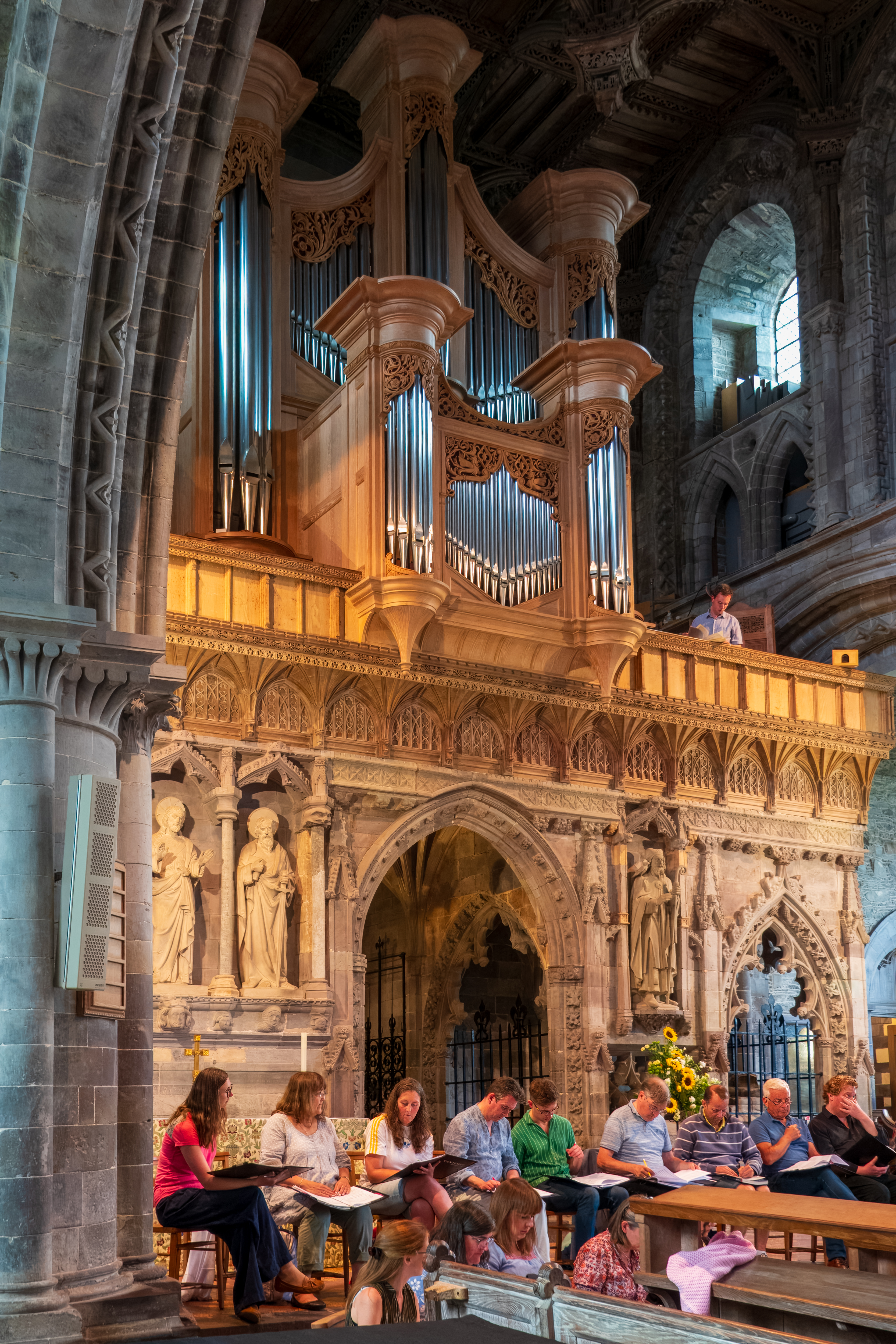
Though in ruins, it was clear how the palace had worked and it was most interesting. We then went to visit the Cathedral. (https://en.wikipedia.org/wiki/St_Davids_Cathedral) More than any other church we have visited, you could really see where new wings and expansions had been added over the years.

We managed to arrive as the choir was practicing, which was fun!


St Davids is known as the smallest CITY in the UK and is a charming spot. See correction in the comments! Seems that a cathedral brings benefits.


The original plan had been to continue up towards Anglesea but we changed our minds and headed to the Welsh and English Marches instead to visit Offa’s Dyke. (https://en.wikipedia.org/wiki/Offa’s_Dyke) We camped in a great site in a field beside the railway line. (https://panpwntoncampsite.co.uk/) We love trains!

The campground was on the obligatory narrow lane. This one was long and quite a challenge with the usual parked vehicles and bushes to scrape the side of the truck, but we made it, several times.

We walked into the town of Knighton to visit the Information Center and learn about the history of the dyke.


Yes, we seem to have a thing about the walls, Hadrian, Antoinine, and now Offa, that surrounded England. Gotta control those pesky Scots and Welsh!


Just outside of Knighton is the Spaceguard Centre, one of the more unusual sites we have found. (https://spaceguardcentre.com) The Centre is dedicated to locating and tracking objects, like asteroids and comets, which might strike the earth. We were wary about tackling the steep hill on our E-bikes, so we ground our way up in the 917, navigating long, single track lanes.

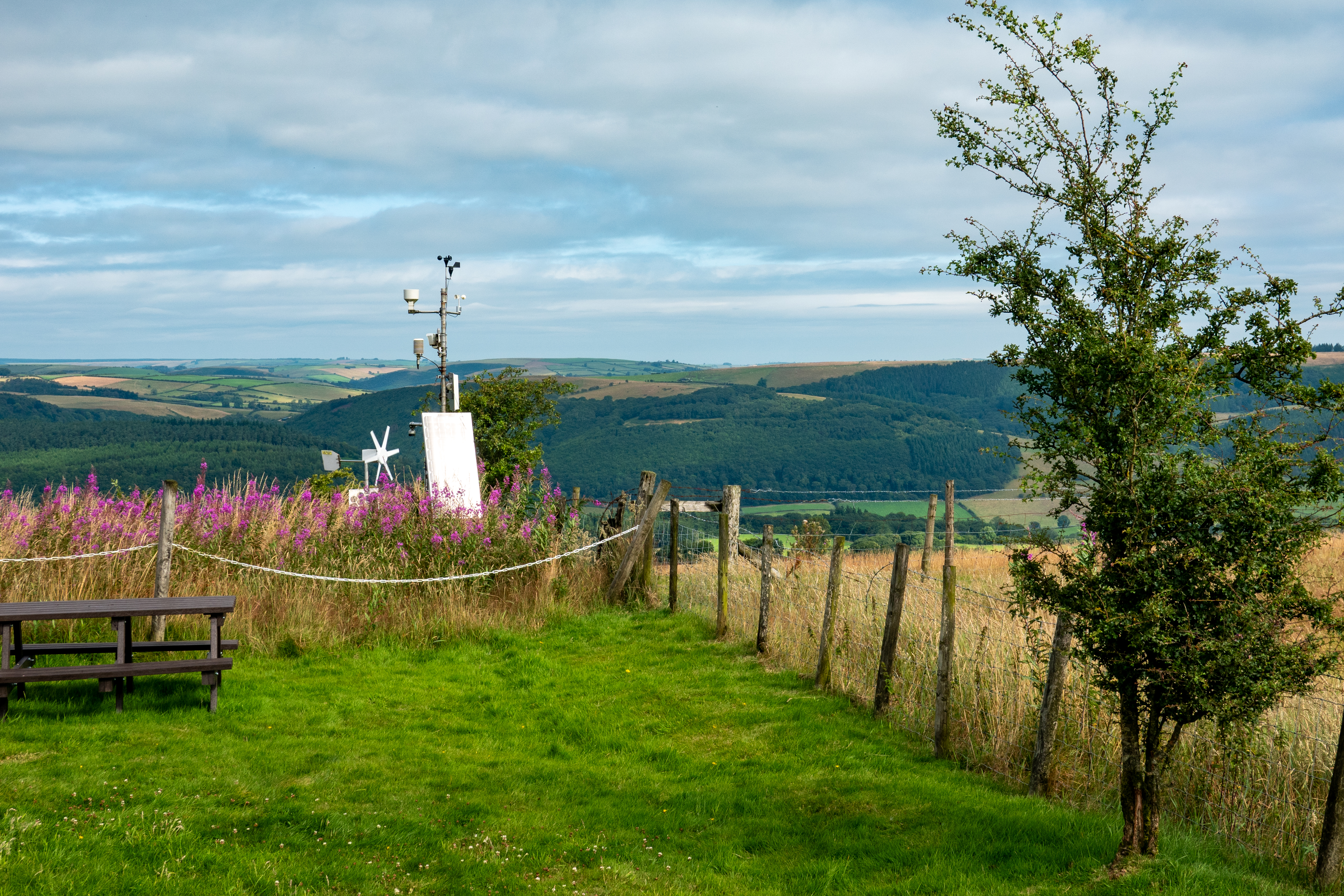
The Centre is on a dark, remote mountaintop and studies Near Earth Objects in conjunction with NASA and other observatories world wide. The Director gave us a fascinating tour, full of information. You will never be able to watch the movie Armageddon again and the views over the Marches are stunning.
The road up the mountain was of course, a single lane road but we fortunately did not meet (too) many other vehicles either on our way up or down! The visits are timed so that visitors can descend before the next group goes up. This helps!!
Then it was time to head back to Yatton, to store the camper and begin the final stage of our journey on an Oceania cruise. En route we stopped near Birmingham and visited the Black Country living museum. We love outdoor museums. (https://bclm.com/)


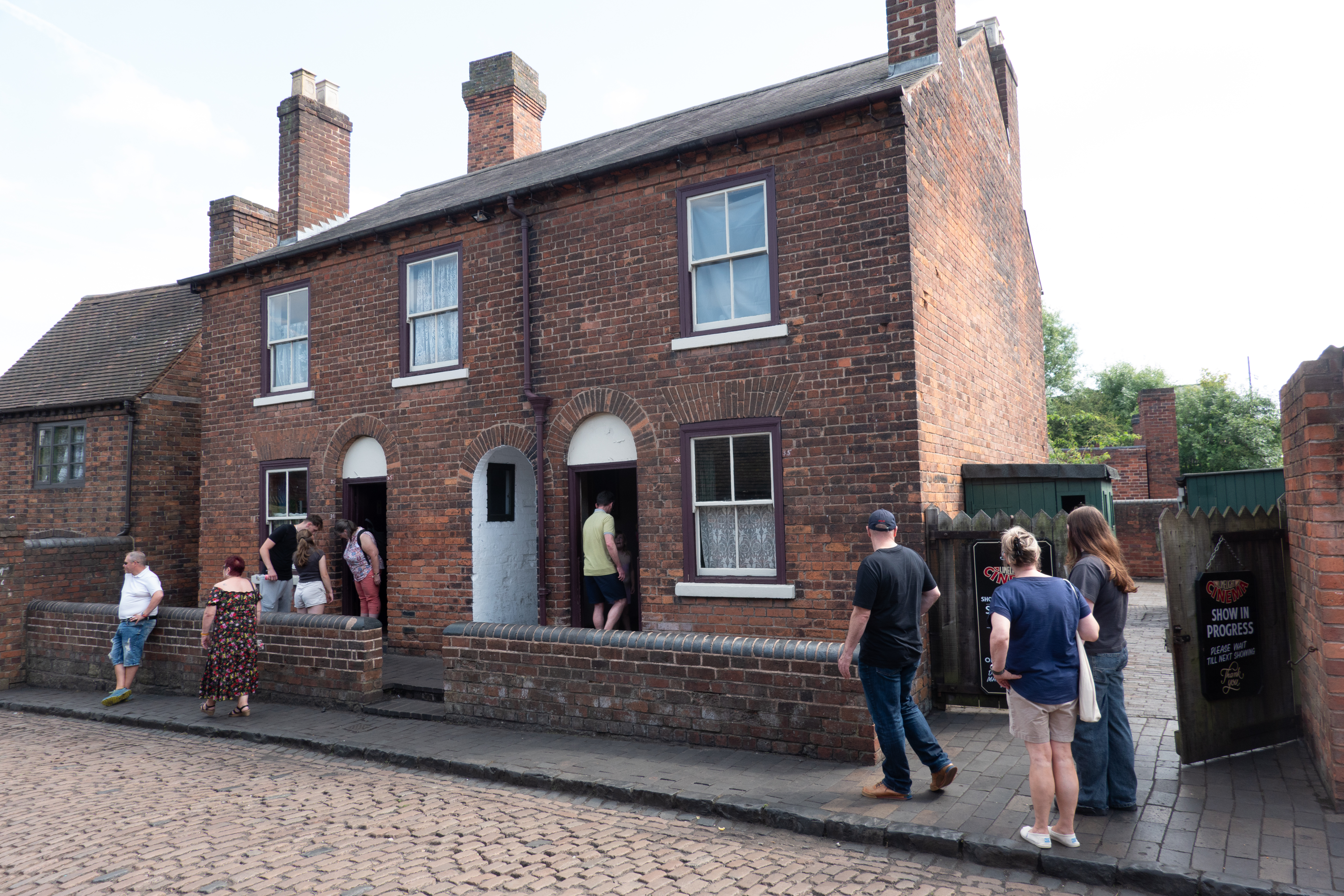

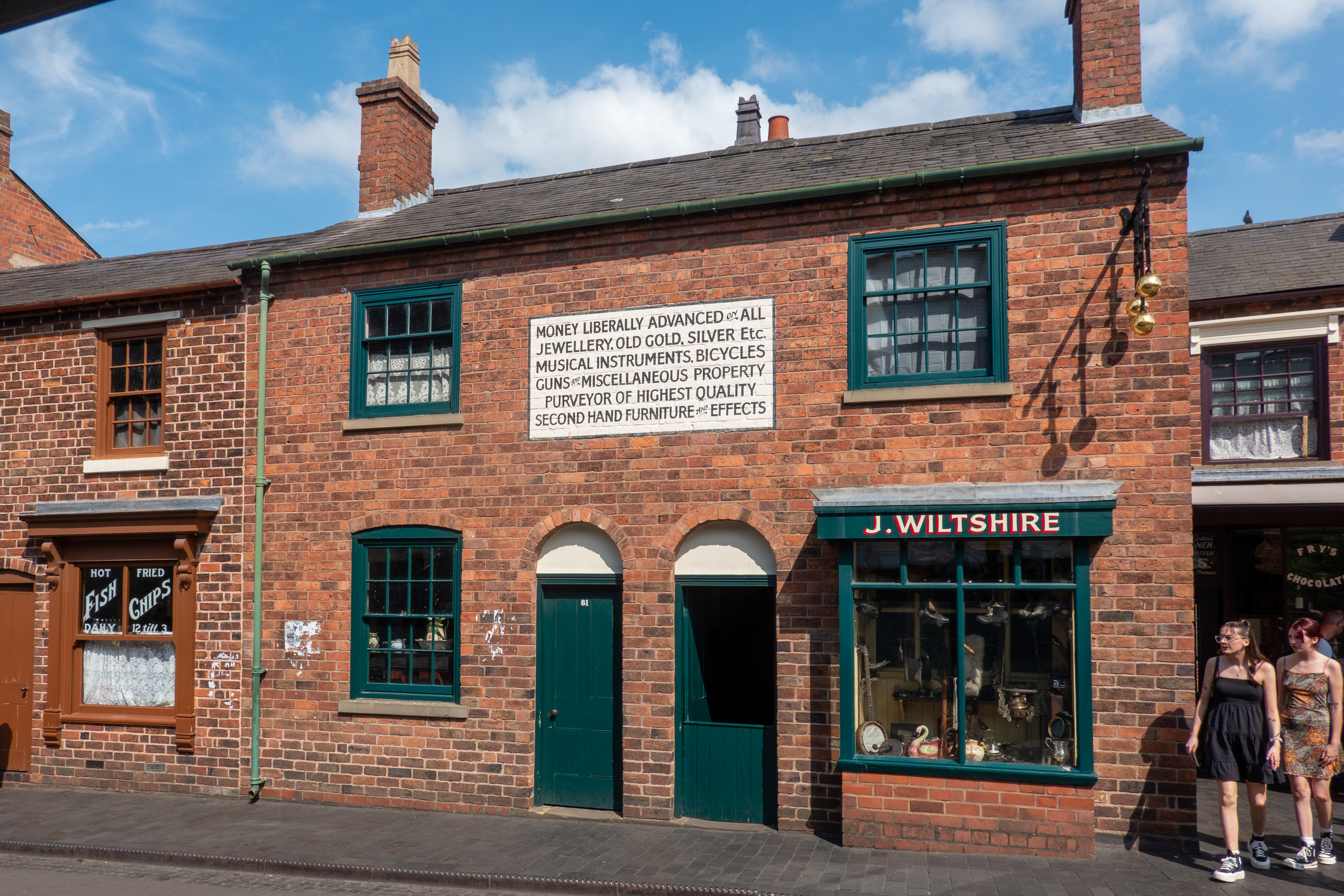


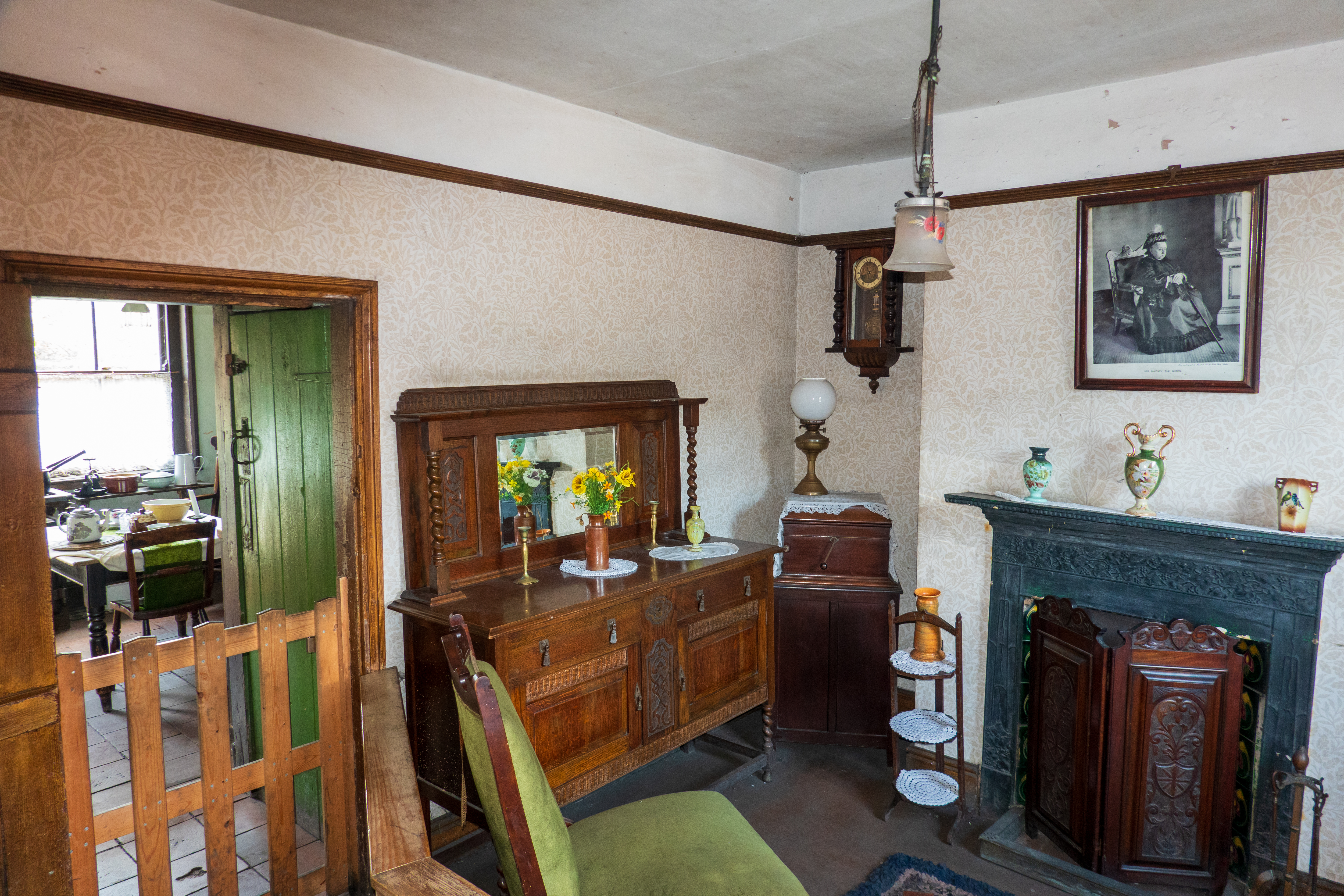

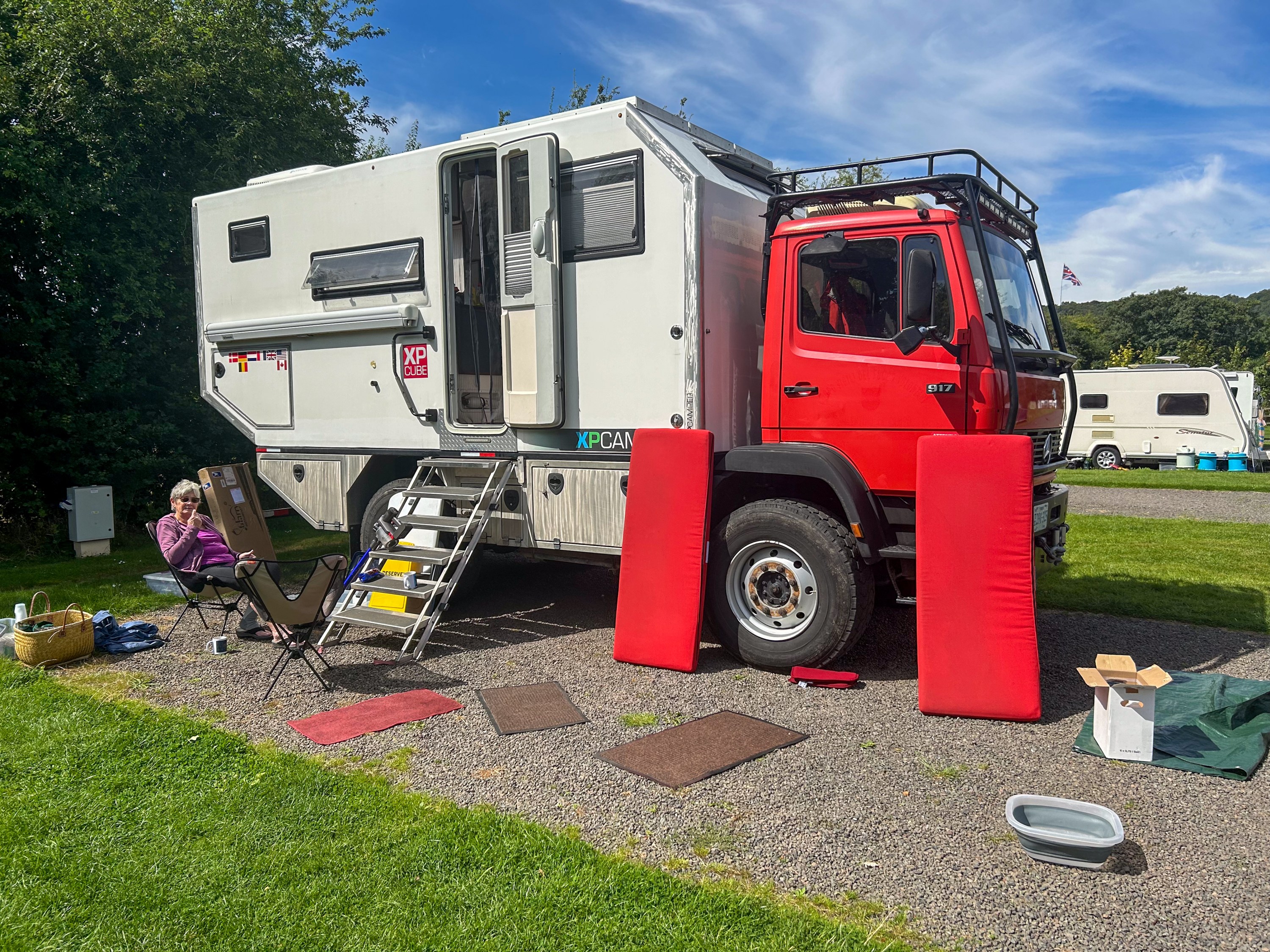
We finished by giving the camper a full cleaning and preparation for storage for the winter.
 DiploStrat
Just for accuracy Fred, I think St David’s is actually described as the smallest City in the UK, not the smallest Town. Subtle difference, the existence of a cathedral being the key factor. The cathedral issue has recently been superceded as other towns have now been granted city status without a cathedral, but hey, that’s UK history for you!!
Cheers Trevor PS have really enjoyed reading these. Look forward to next year’s!!