
We landed in Bergen and took a coach to our hotel. They had no space until 3:00 PM and were not terribly helpful about anything, so we jammed our luggage in their luggage room, which was totally uncontrolled and full to the brim. That done, we set out to discover Bergen on a grey, damp day.
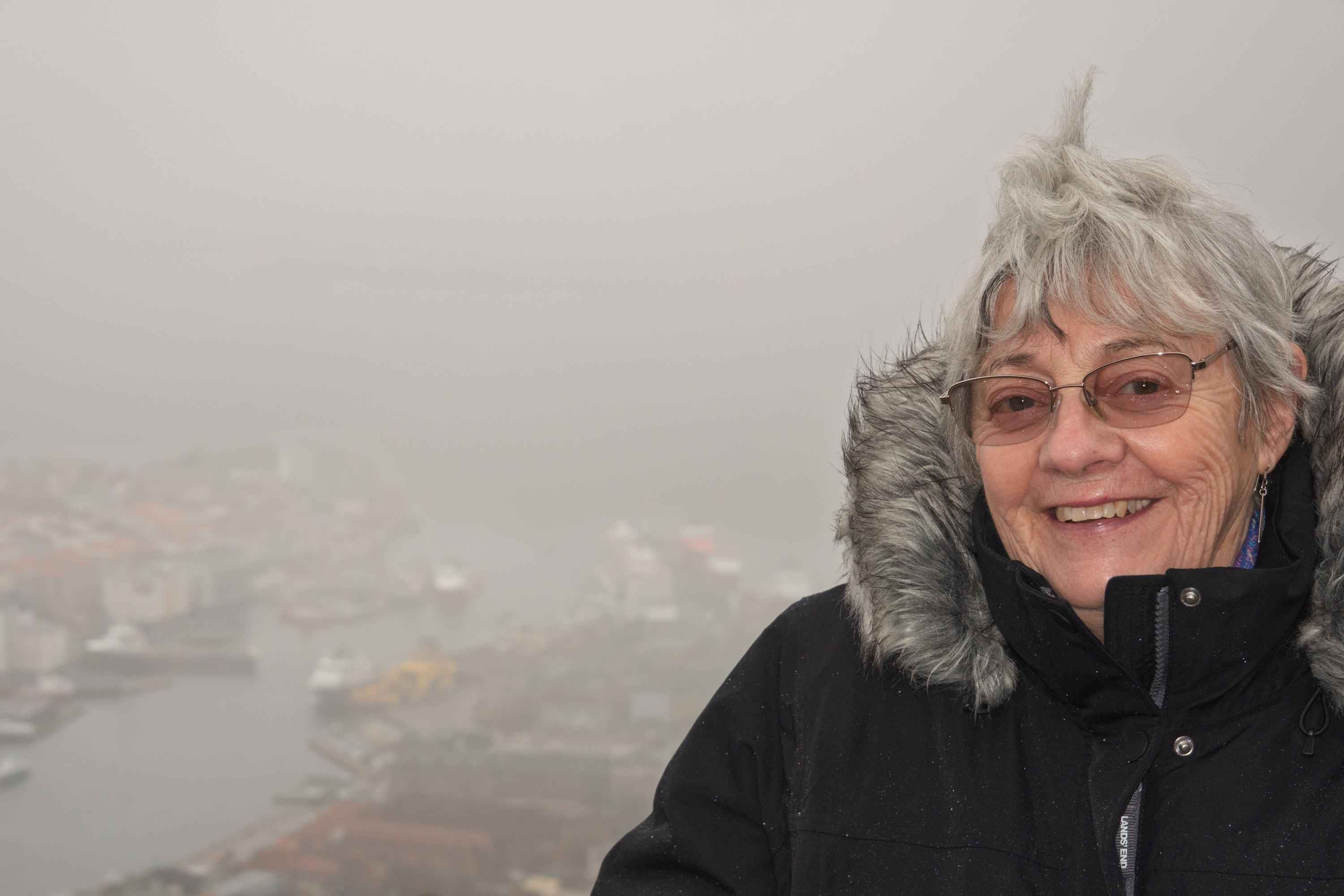
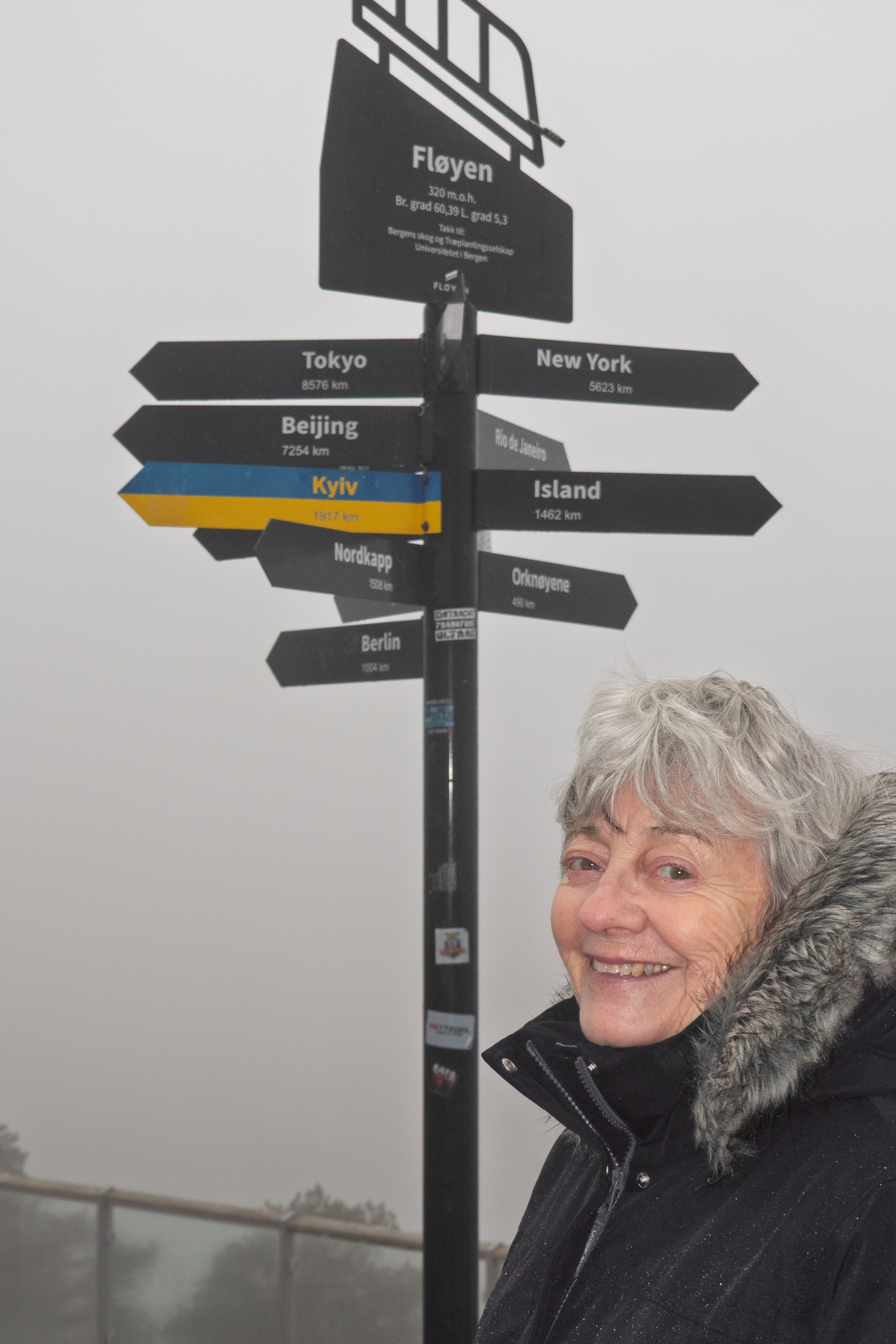
First stop was a coffee shop for sustenance! Then we headed for the cable car to go up the Floien, which provides wonderful views of the city. And indeed the view was spectacular and we were just in time to see it before the clouds rolled in and the view disappeared!

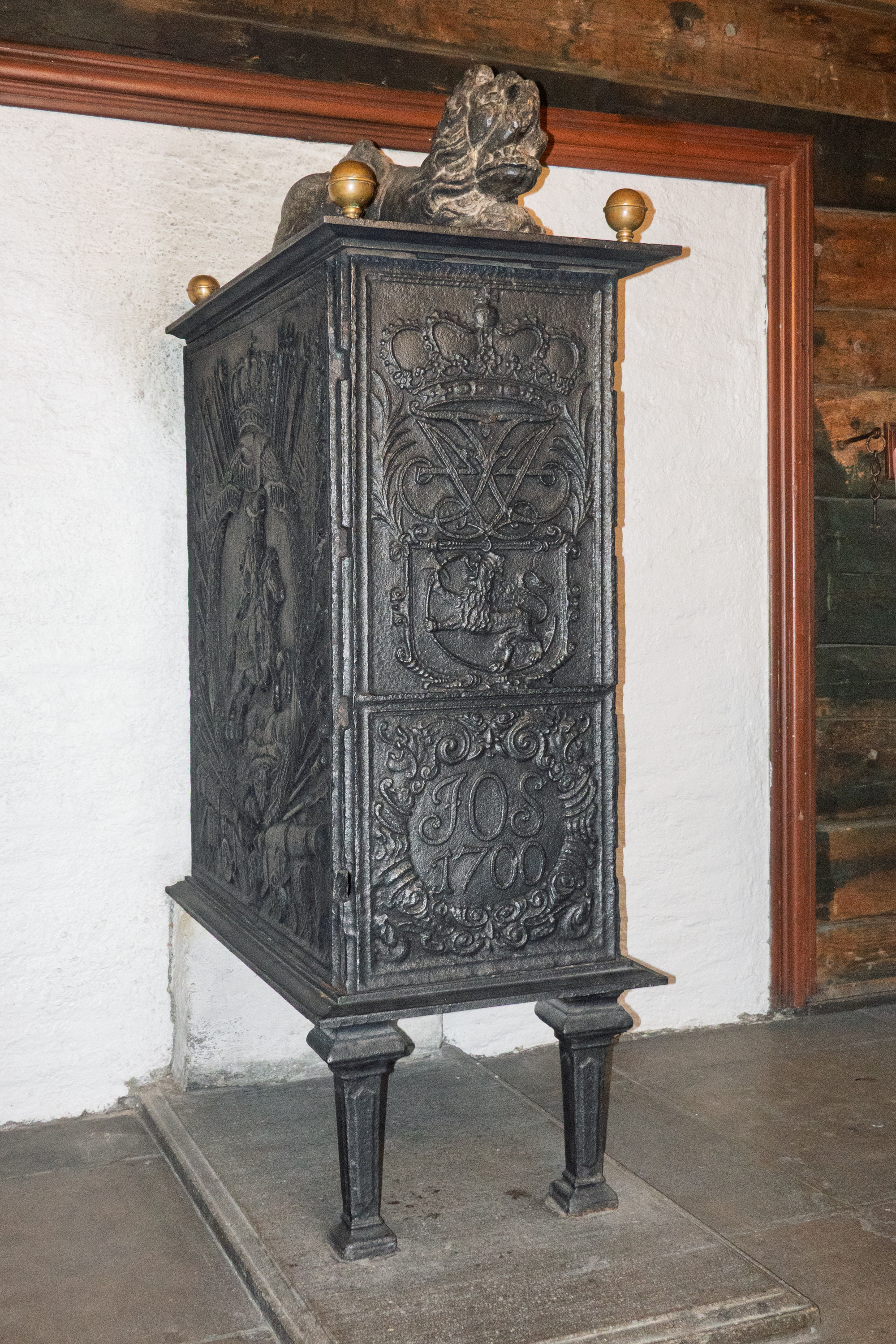
Escaping the souvenir stands, we re-boarded the cable car and descended to the waterfront. Then, as it began to rain, we headed to the Hanseatic Museum. In Lübeck in Germany, we first remarked on the importance of the Hanseatic League, in the development of trading and society in general in the early Middle Ages. Their trading routes stretched from Tallinn to London. We had seen mention of the League in Denmark, Holland and in northern Germany with Bergen the most northern reach of the League. For those who need a review before the quiz, here you go: https://en.wikipedia.org/wiki/Hanseatic_League
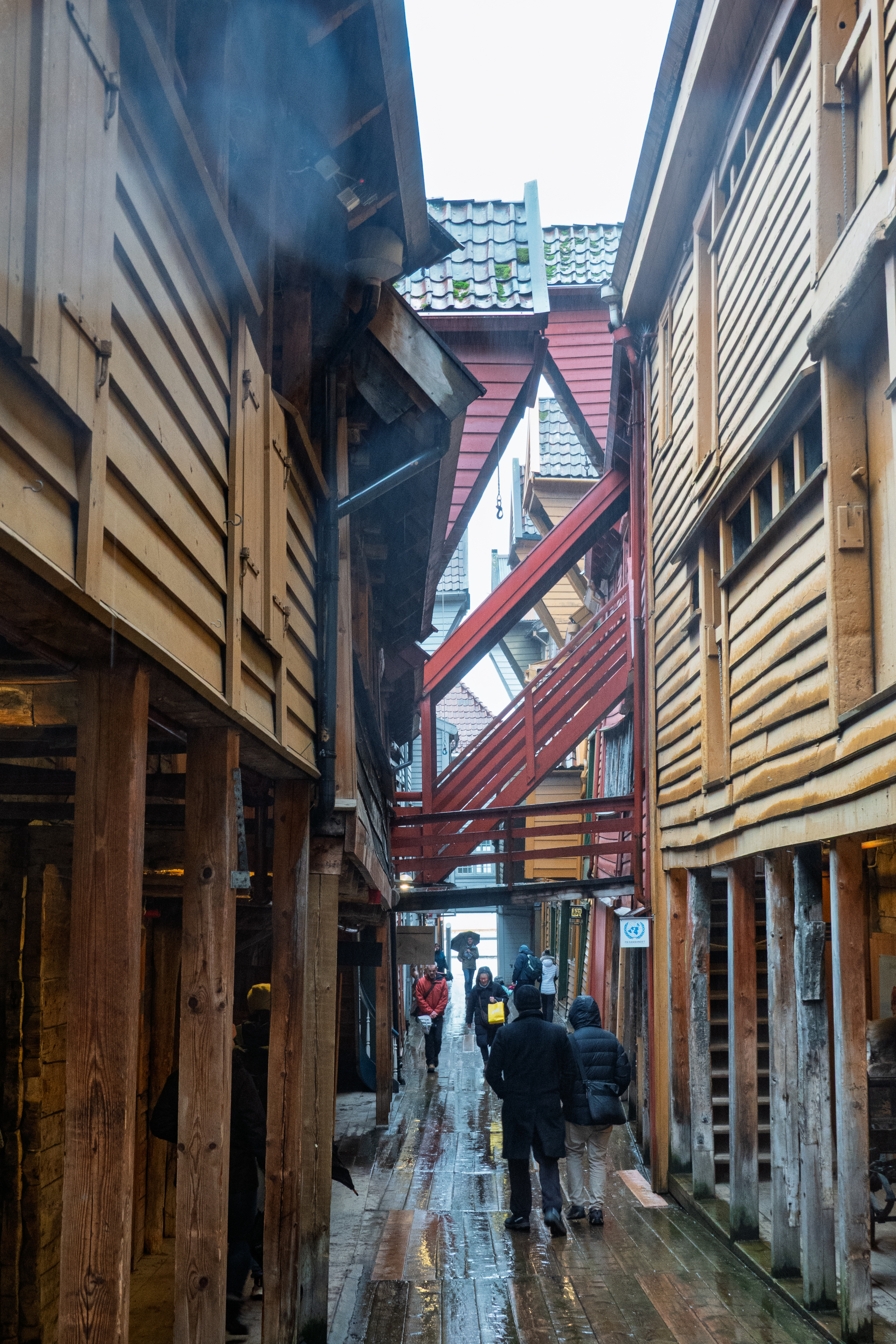
The museum was housed in a “tenement” or multi story house where visiting traders would lodge while doing business in Bergen. (See image at the top.) Cod was brought from Northern Norway and exchanged for grain and other goods from further south.
It seems that, at least initially, the Germans sailed to Bergen in the summer, and then overwintered, hence the need for the communal housing. In the beginning, they could not bring their wives, but eventually some married local women and settled in Bergen.




The German influence is so strong that local wags joke that it is impossible to make a sentence in Norwegian without using at least one German word.
As we were definitely in the off season, we found a lot of restaurants closed. We ended a tiny little pizzeria run by some charming Syrians. It was excellent!
We then wandered along the Bryggen, the old port with its colored houses facing the sea and narrow, cobbled lanes between buildings We went to the Bryggens Museum, which has remnants of old buildings and displays of the history of the port.
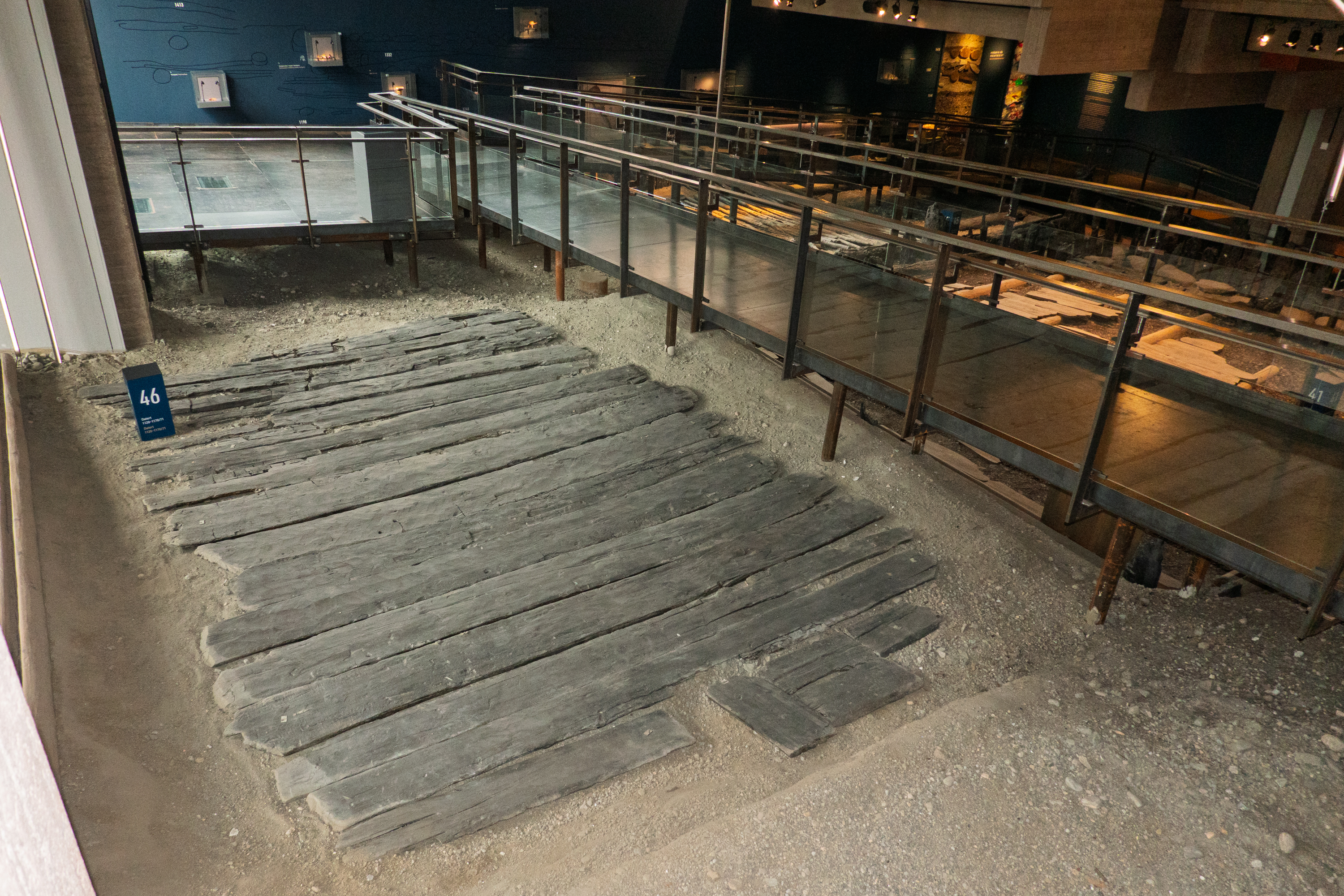

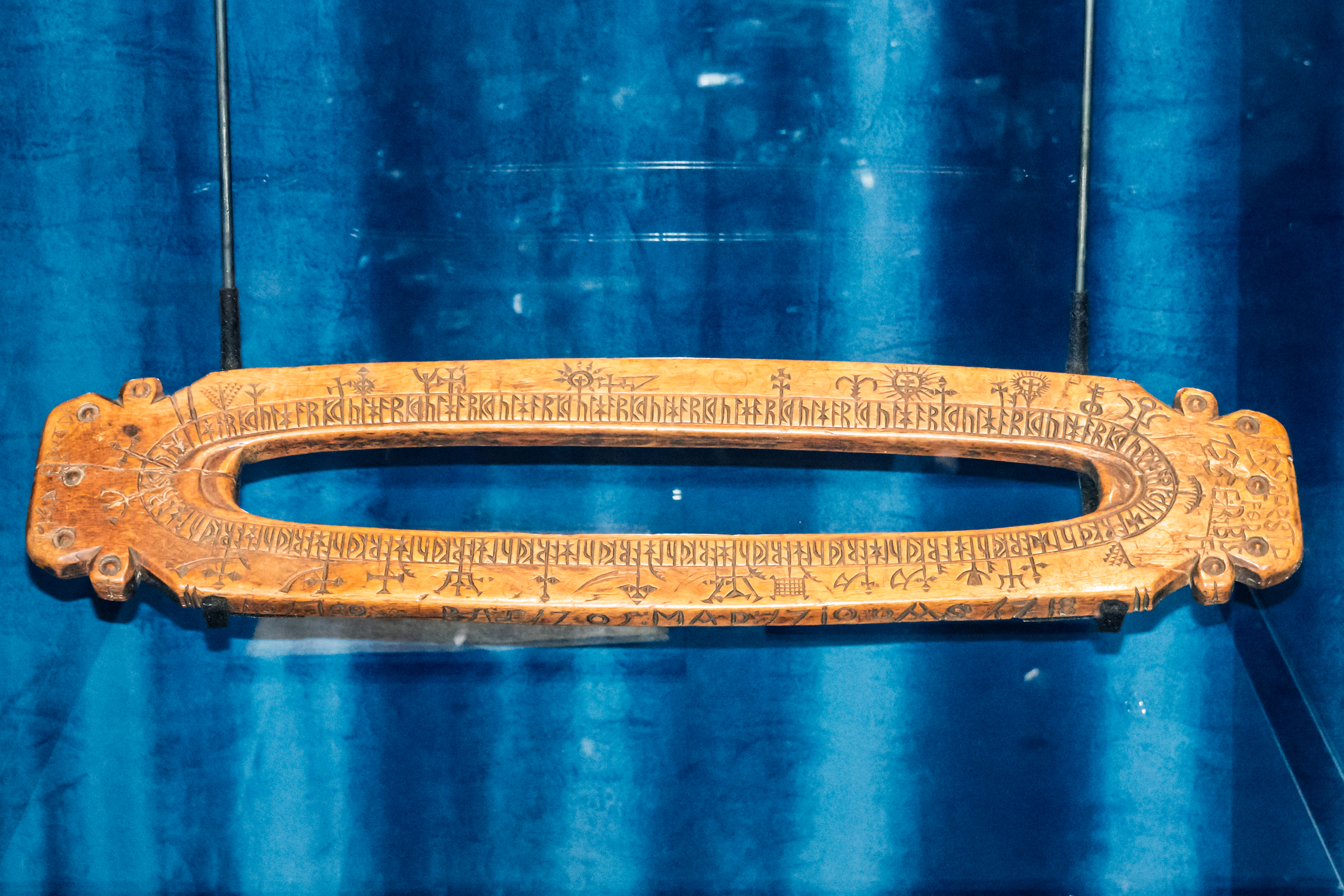
On the second floor was an amazing exhibit of the Law Code set by King Magnus VI, (the Lagabote, the Law Mender,) in 1274. It had some amazingly modern ideas. (https://en.wikipedia.org/wiki/Magnus_the_Lawmender)
The next day we headed to the train station to take the train from Bergen to Oslo, known to be an amazing mountain trip. We were getting ready to take our luggage to the platform when we were notified that the train was cancelled due to landslides. Bummer! Here is the trip we wanted! (https://www.visitnorway.com/plan-your-trip/getting-around/by-train/the-bergen-railway/) Maybe next time.
In a near panic, we grabbed a taxi and headed for the airport. Once there, we were stunned to learn that there are no ticket sales points – all tickets must be purchased on line. We found a bench and went to work. We finally got through to SAS, and once we were in the system a charming desk clerk, who turned out to be the supervisor, got us onto the next flight. It might have been cheaper to have flown to the US, but we were able to maintain our Oslo hotel reservations, and British Airways flight to the UK for the following day
 DiploStrat