
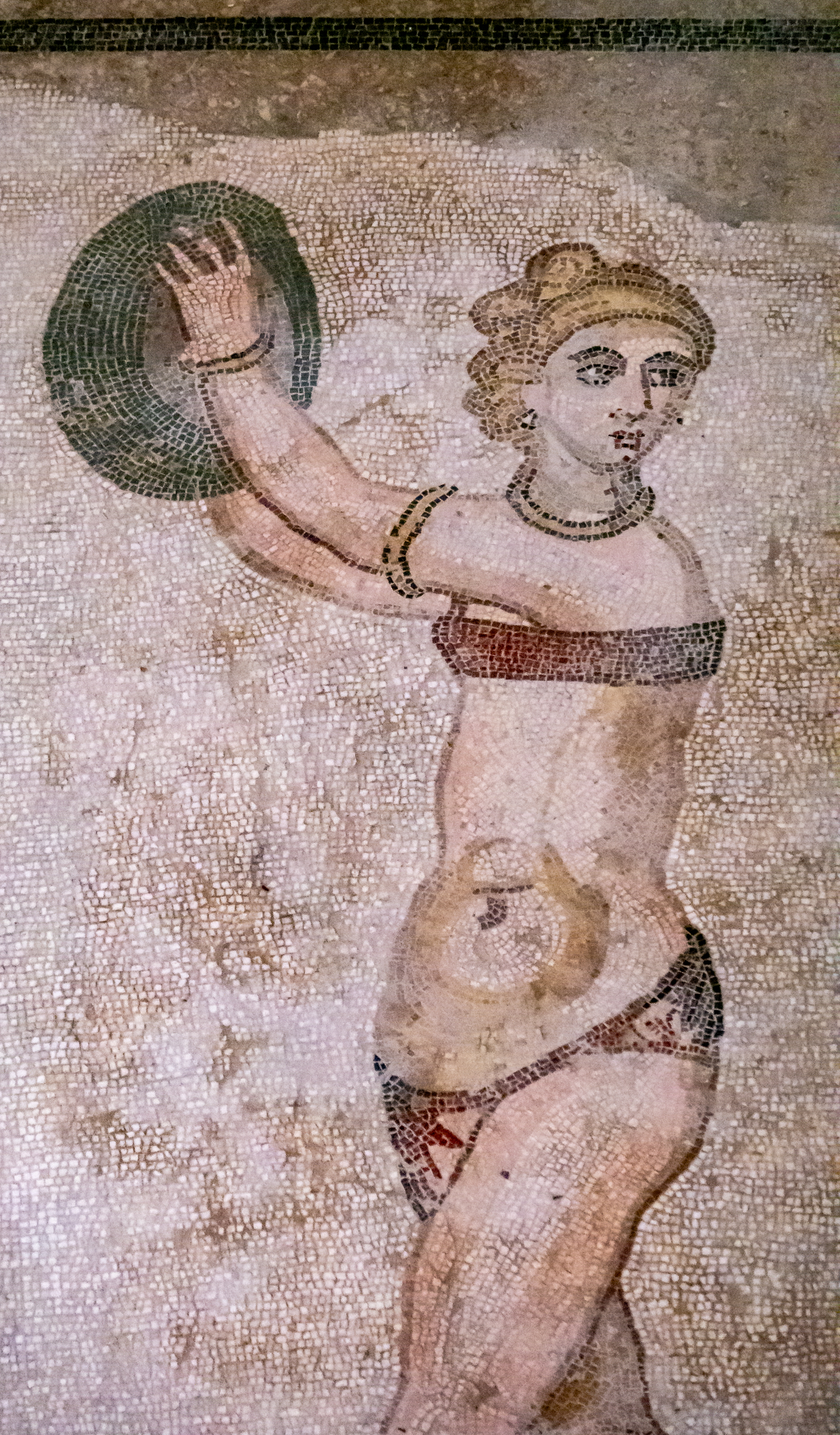
The Villa Romana del Casale near Piazza Armerina, is famous for its mosaics. Especially one, the so called “Bikini Girls.” So naturally, this was at the top of Fred’s list. Denise was less impressed, wondering why, when there was so much total nudity in ancient art, “bikinis” should attract attention. Fair question. And Fred wondered why an ancient home owner, with all of the various subjects to choose from, from Gods to heroes, hunts to wars, would choose bikini girls. We set out to find out.
Probably looted several times, by various invaders, the villa was finally covered by a landslide in the 12th century. So while some of the mosaics were lost, many are still completely intact. Unlike many sites, most of the walls are still intact and so you have a real sense of walking through the villa. You can get a feel of the layout of the house.
The Villa is dated around 400 AD and is believed to have been the home of a wealthy landowner. (https://en.wikipedia.org/wiki/Villa_Romana_del_Casale)
The interior is dark and to protect the mosaics, you walk around on elevated platforms.


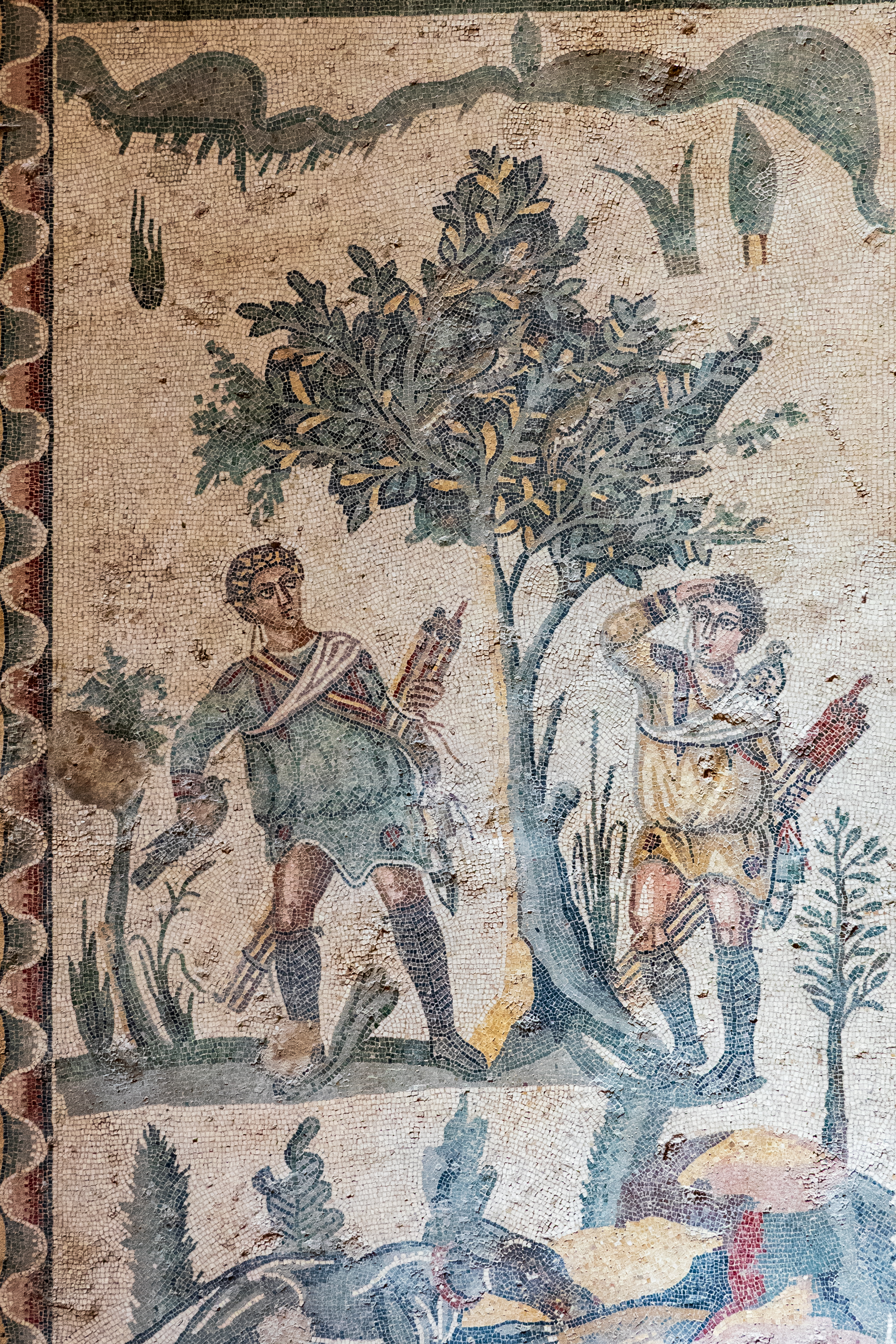
And, to answer Fred’s question, the showpiece of the villa was indeed a huge hunting scene that stretched from side to side – a magnificent walkway. It was much too large, and dark for me to photograph in its entirety, but it covered all aspects of hunting. Fortunately there is a public domain image of the entire hunt, available on the web. (Note that the saturation in this image has been pushed, hard. The actual colors that you can see are more accurate in my images.




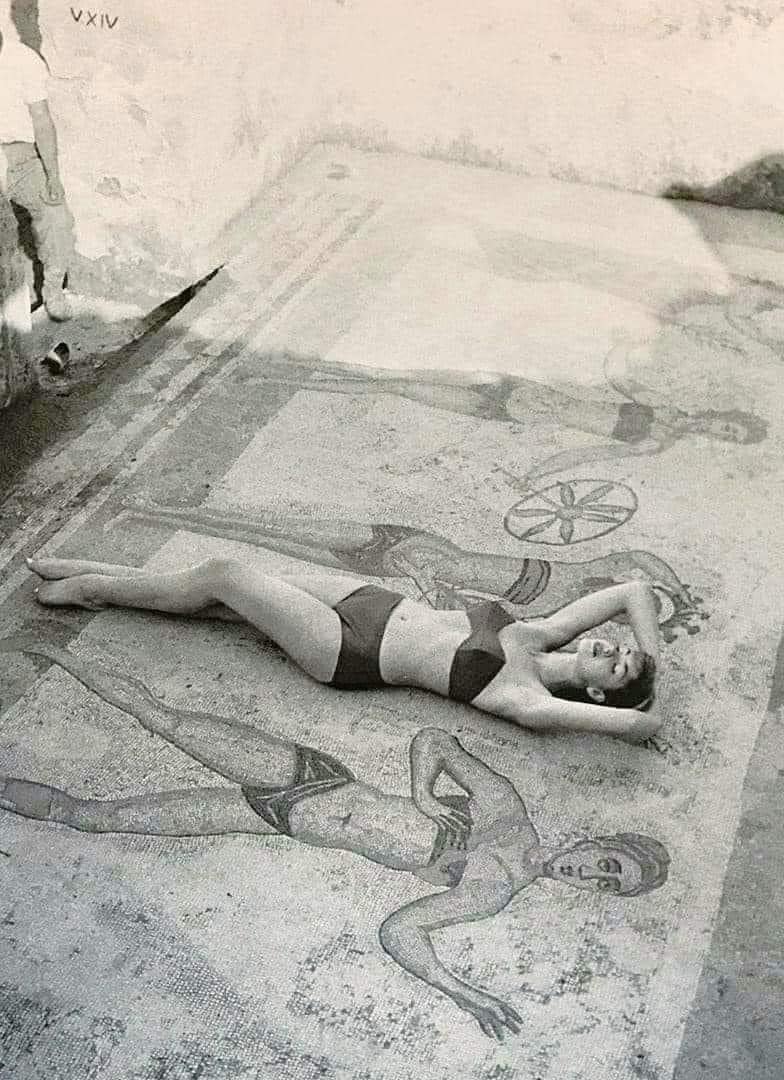
And yes, we did see the bikini girls. It appears that the image is of games, long jump (with weights), discus, running (relay?), and a ball game. Two of the girls have won prizes, awarded by the lady in the lower left. The section in the upper left is confusing. Was the mosaic of the girls put down over a previous, geometric design floor?



Roman chariots were often raced by teams, represented by color, blue, green, white, and red. This bizarre image shows each of the colors being pulled by a different pair of birds. The actual layout of the spina of the circus is exactly correct and the team in the lower right is being awarded a laurel branch.

And yes, there are adventure stories as well.

So while the life size girls were interesting, the villa, as a whole, was much, much more. A fabulous visit.
As we left the GPS took us through the center of the town of Piazza Armerina. There is a bypass, there is no access to this road from the west. (???) This drive proved quite exciting as we climbed up through the hill town on a steep, cobblestone street, with cars parked on both sides, and about a foot of clearance on either side. However, once we made it through that, the trip to the Mons Gibel Campground in Belpasso was easier.
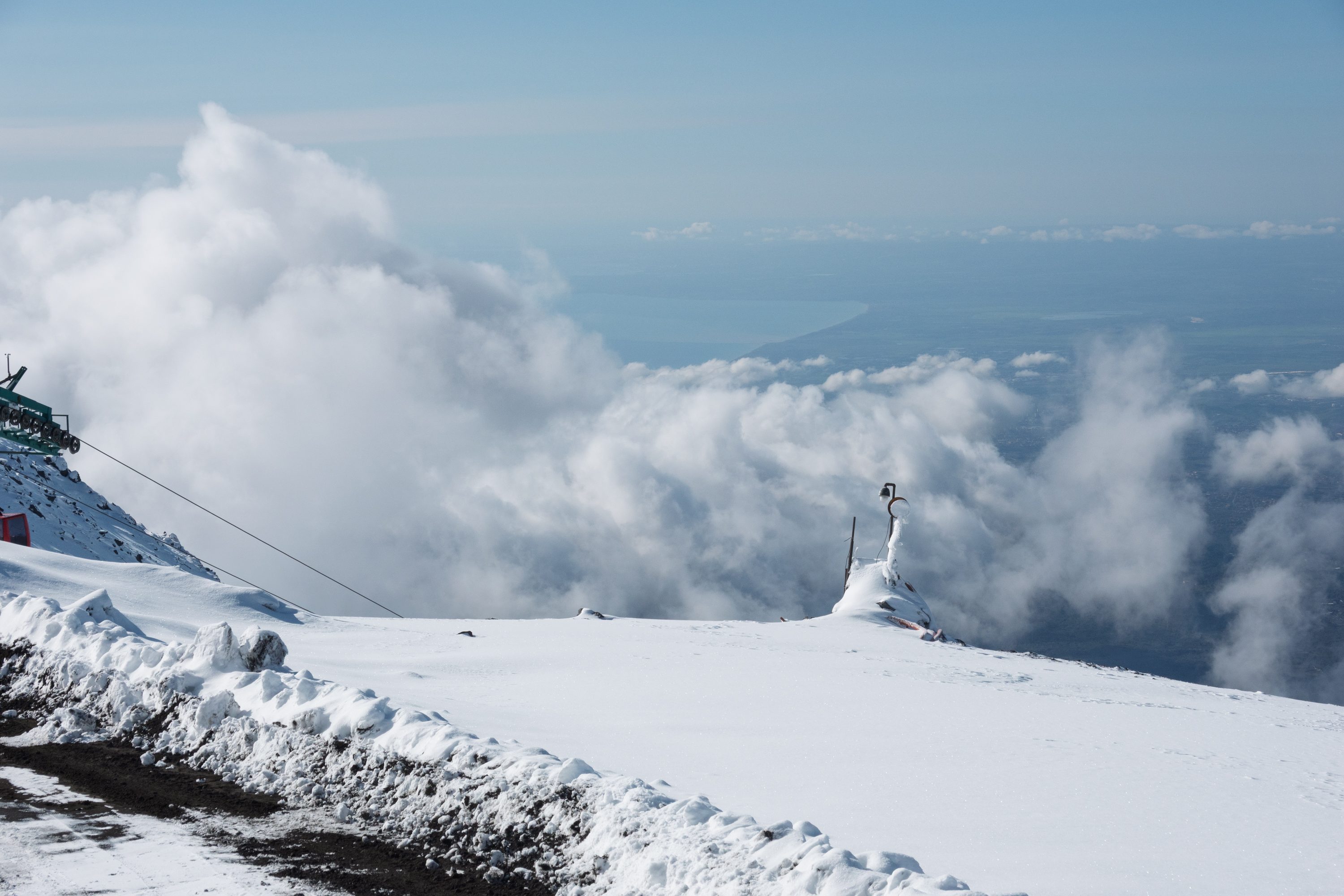
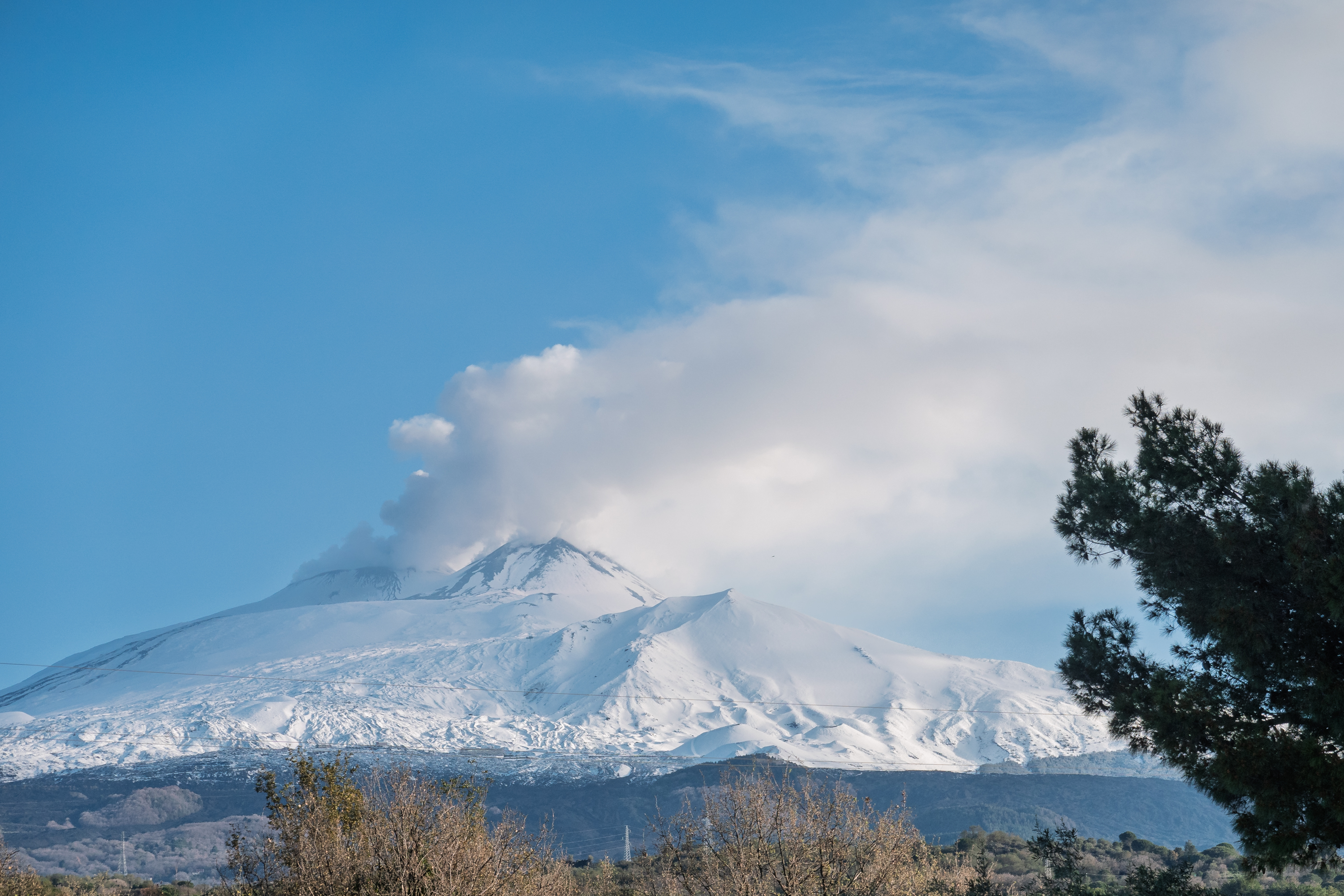
As we neared the campground we had a spectacular view of Mt. Etna, covered in snow. Sadly, we could not stop for a photo, as we were on the motorway. After the usual grind through one lane roads, we reached our very nice campground up on the slopes. We did have to wait a day for it to stop raining however!! But the next day proved amazing and we headed off at 8 AM to get the maximum viewing time.

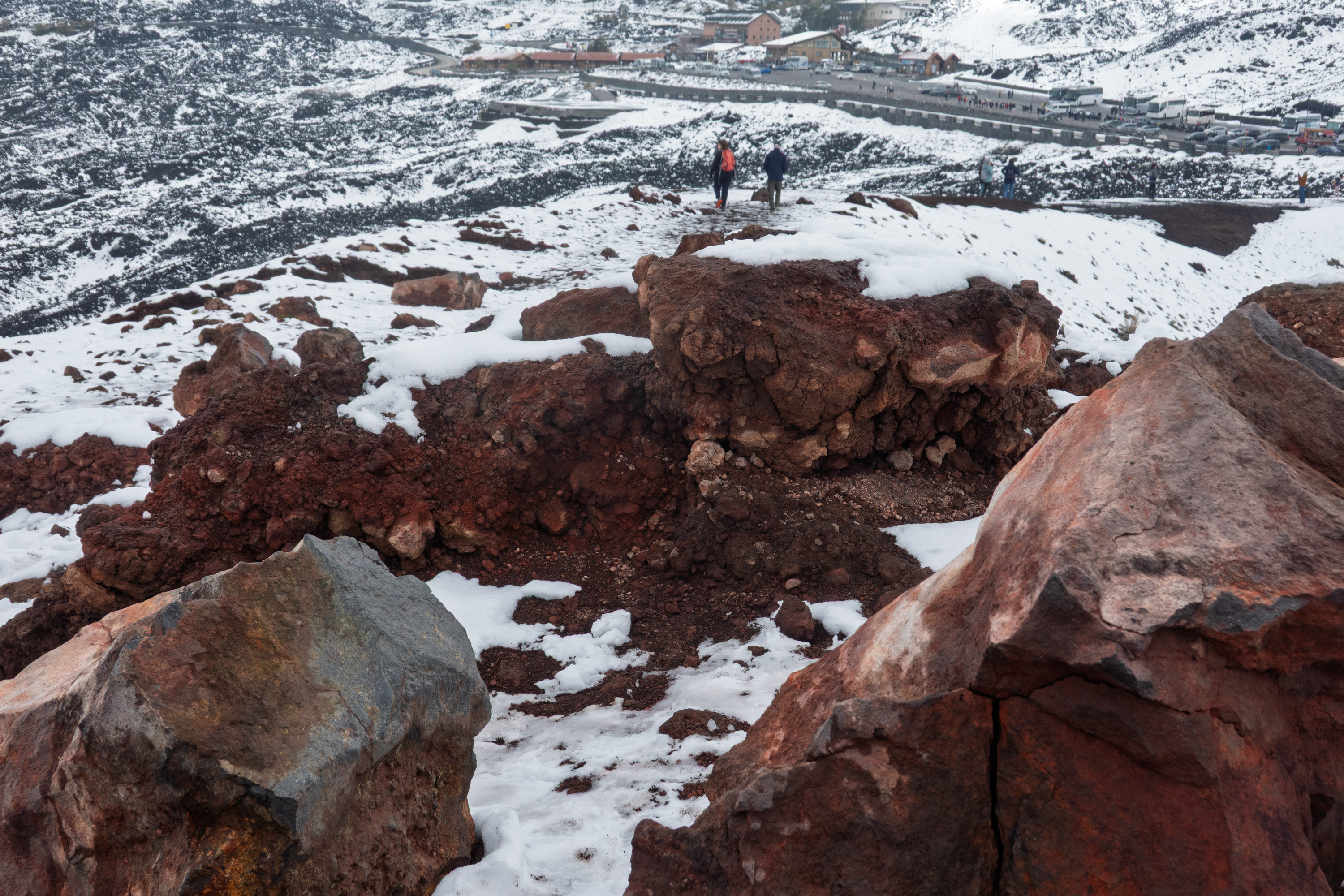
While it turned out that there was actually plenty of parking up at the refuge, we shared a shuttle with a German couple. On arriving, we noted that the rain the previous day at the campground had fallen as snow on the mountain. About three inches of fresh snow everywhere. We should have worn our snow boots!! But we managed fine with hiking shoes. We took the cable car from the refuge up to the 2500m level. This cable car is at least the third to have been built as the volcano keeps destroying them.




The next day we headed for Messina to catch the ferry to the mainland. This proved to be remarkably easy and we found the embarkation point with no trouble thanks to the GPS. The crossing was about 20 minutes and we again enjoyed sunshine and calm seas.


Up next, Pompeii.
 DiploStrat