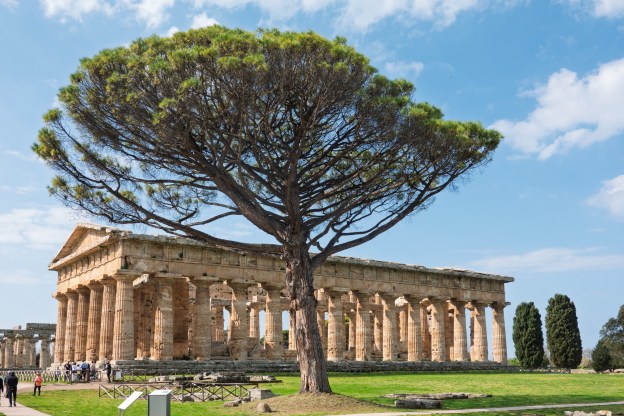
After the crossing from Sicily, we spent one night near the coast before heading north. The drive had beautiful scenery, with hill top towns, vast valleys and distant snow capped peaks. And the autostrada was decent. We were glad that we had driven and not looked for a ferry to Naples.
Our first stop was at Paestum, an interesting town first developed by Greeks and then taken over by Romans. (https://en.wikipedia.org/wiki/Paestum) Paestum is a bit off of most of the main tourist routes. Rather a pity as it is lovely, interesting, was mentioned by Mark Twain in “Innocents Abroad,” and was used in the movies “Jason and the Argonauts” and “Clash of the Titans.”
We camped right at the ruins, in a very pleasant parking lot.

Upon arrival, we explored and found the entry to the ruins before enjoying a great pizza at a local restaurant. We set off the next morning to visit the ruins and thoroughly enjoyed our ramble through various temples, and housing areas.


These temples may have been dedicated to Hera.
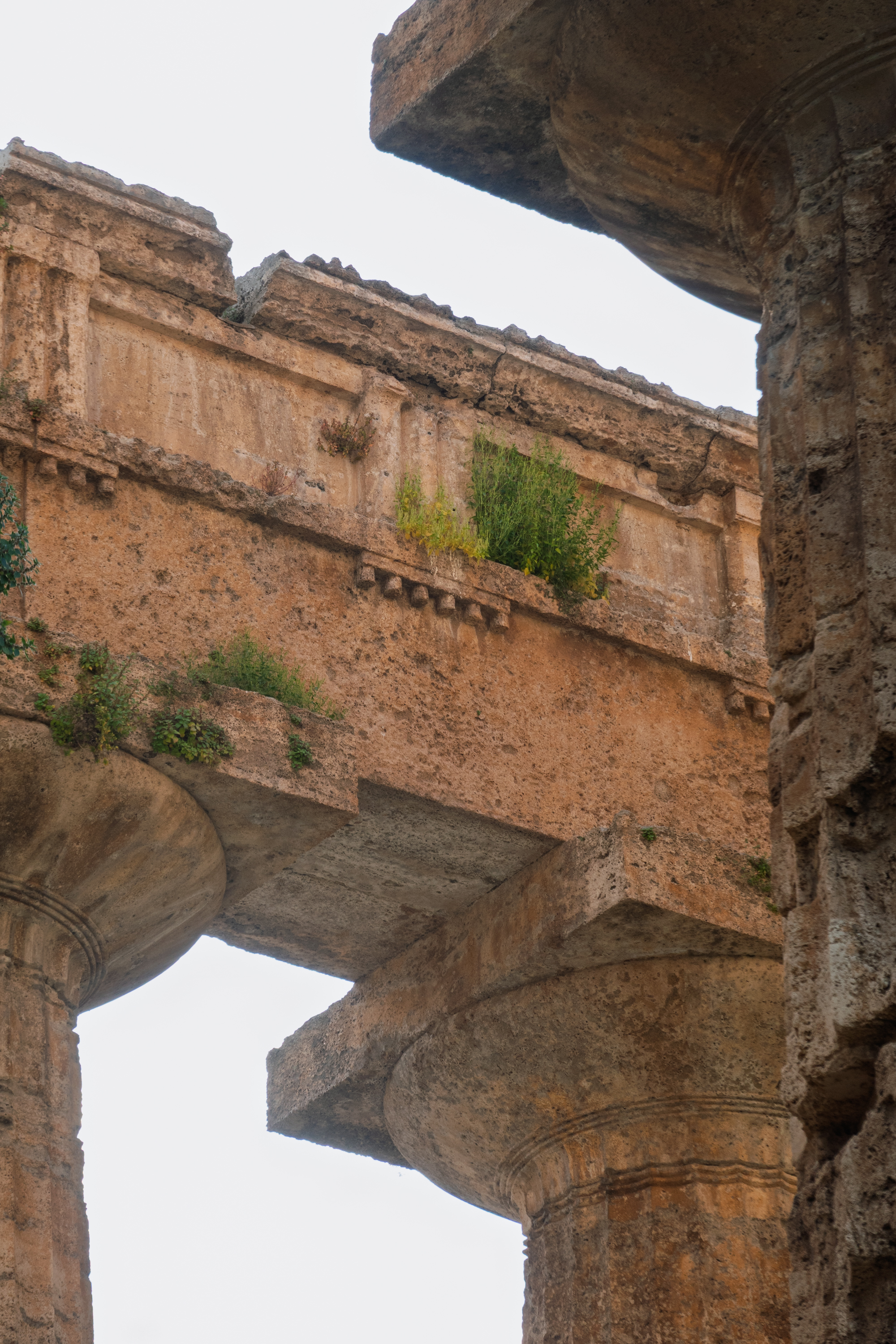


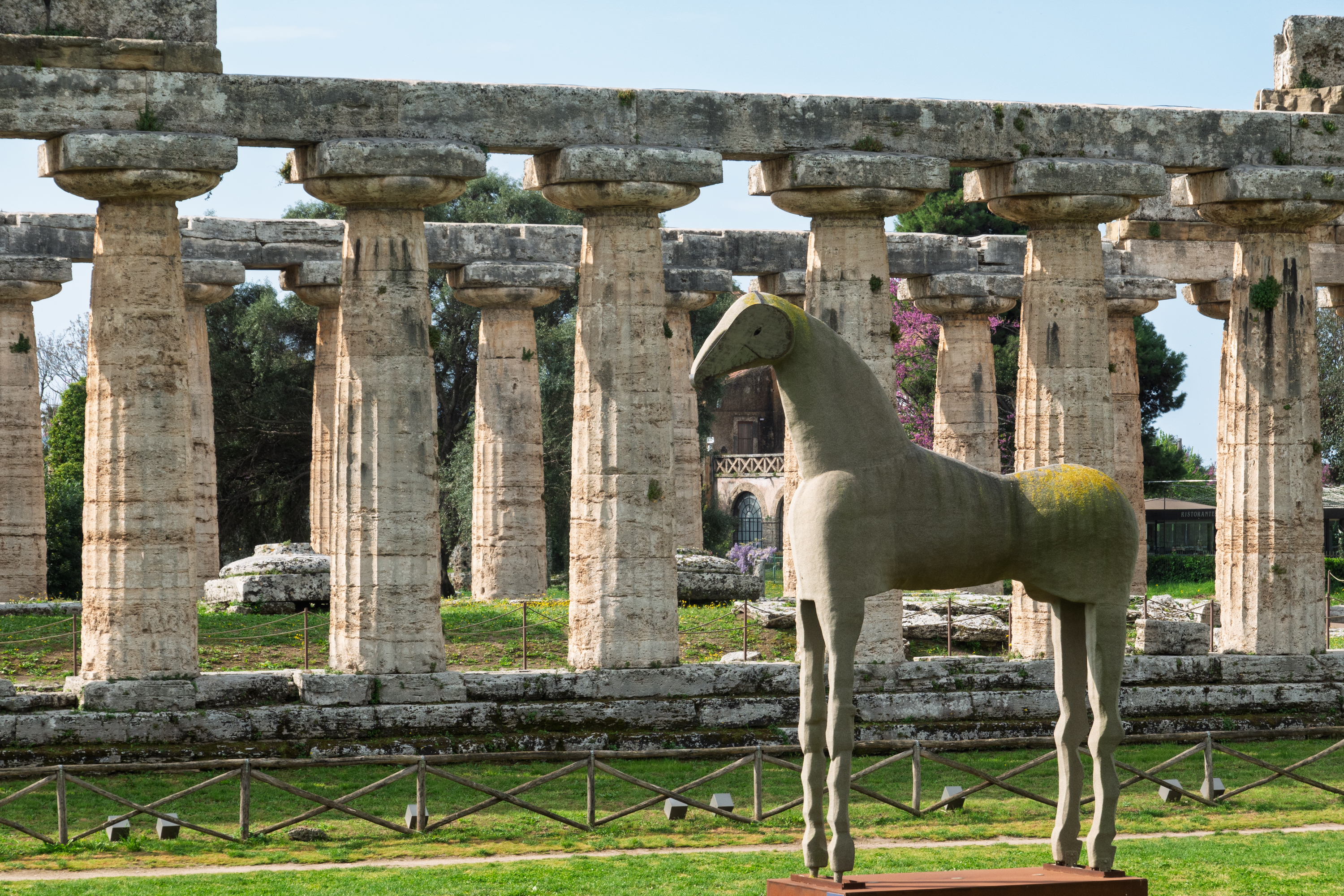
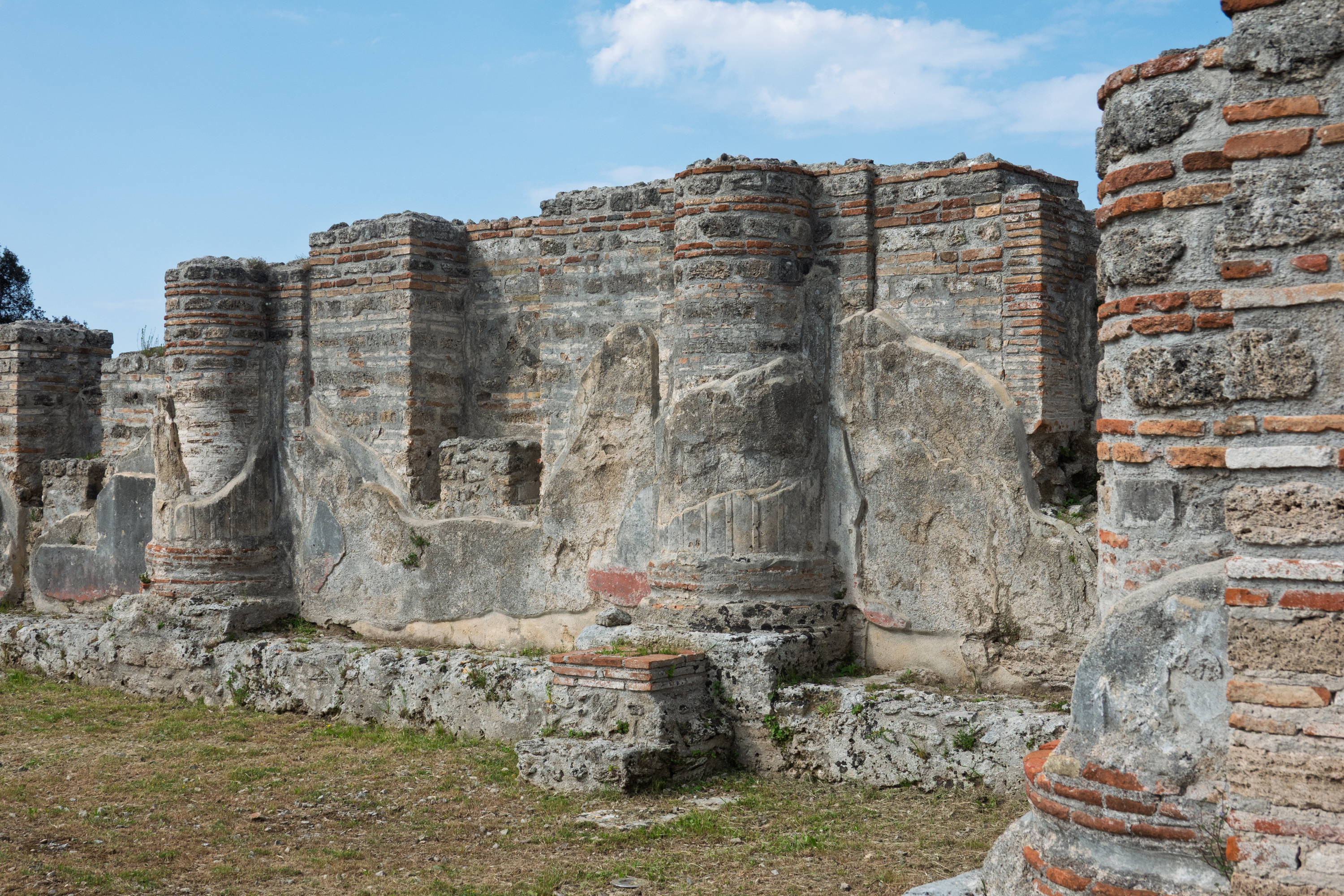
It was delightful to be able to climb into a temple, a twin of the Parthenon, and explore it without the crowds we encountered in Athens! If you look closely, especially in protected corners, you can still see traces of color. It makes you realize that Hollywood often got it wrong – the stone temples we admire today were brightly colored originally.
We also visited the Museum where a number of artifacts from the ruins were on display. These beautiful, sometimes delicate objects add a very human touch to what can otherwise simply begin to look like a lot of stones.



We moved on after lunch and stopped at a handy supermarket with a big enough parking lot to park the 917. We even found a huge pet store, and after some great crossed language exchanges, were able to buy litter for the composting toilet.
Chores completed, we headed for Erculano.
Upon arrival, we had great adventures as the GPS was convinced that the campground was up a steep, narrow road that ended in a two meter tall bridge. And there was traffic in both directions. Grrr!
Fortunately, we were able to find a “Y” junction and turn around, but it was a tight squeeze all the way back down the hill, made worse by lots of traffic. But, as usual, we were NOT the biggest truck on the road! Once we got the right address, the campground was easy to access and quite lovely.

The weather had been sunny and warm since we left Sicily and we set off the next day to explore Herculanum, which was (a long) walking distance from our campground.
It turned out that it was the first Sunday of the month, so the entrance was free, which was a pleasant surprise. It was quite busy, but never unpleasant as people were dispersed, so it never felt crowded. The actual site was amazing.
Your first view is from the modern ground level and it feels as if you are in an airplane above the ruins. (https://en.wikipedia.org/wiki/Herculaneum)

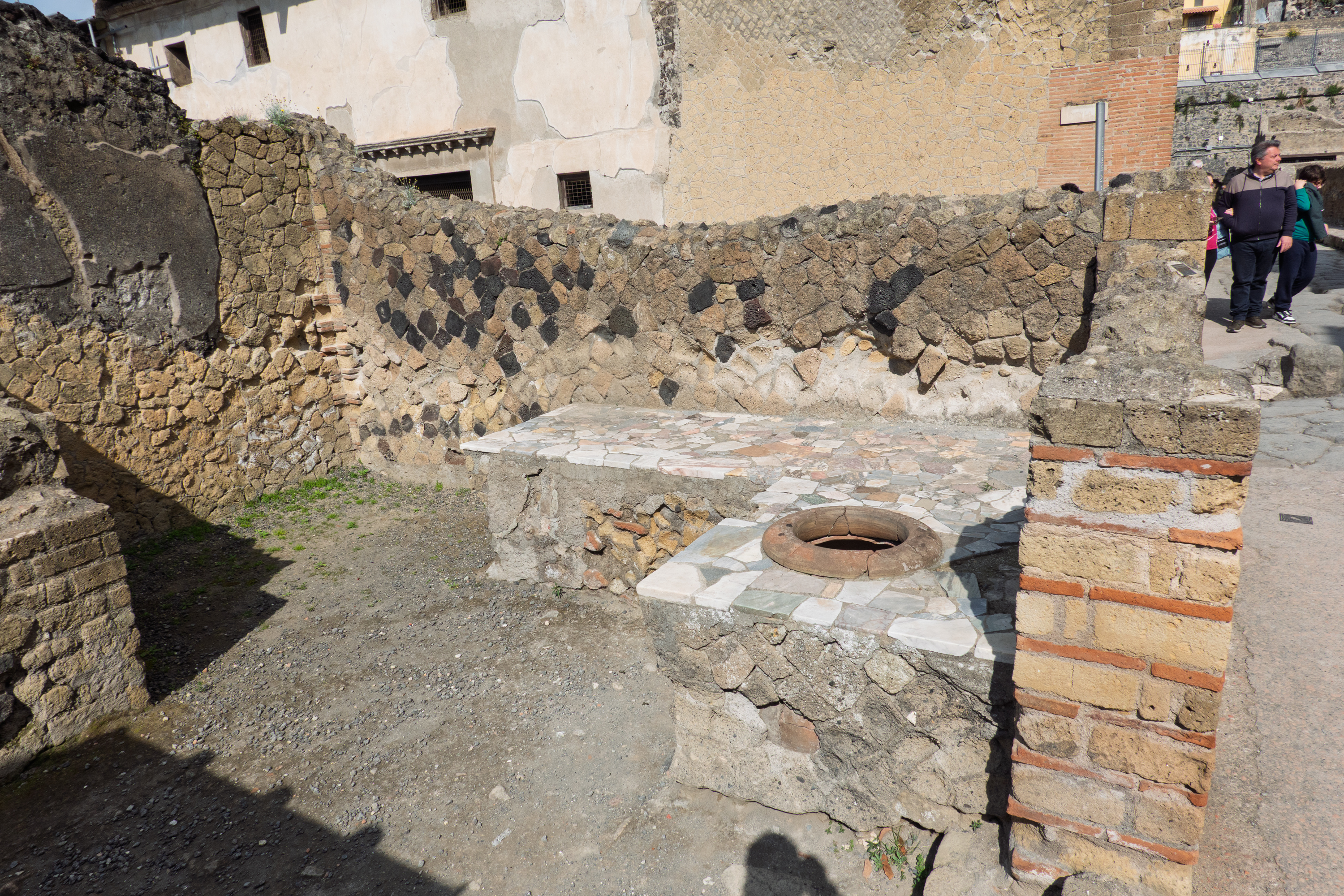
Most of the houses were two or three stories high and most still had mosaics, frescoes and even wooden remains, like roofs.
Unlike Pompeii, Herculaneum was covered, not with much ash, but with a muddy slurry. Over the millennia, that slurry hardened into volcanic rock. So the ruins were only found when digging a well and first explored through horizontal tunnels like mine shafts. To this day, most of the ruins, including the forum, are still under the modern city and may never be exposed. An actual lava flow, in the 1600’s didn’t help, either.

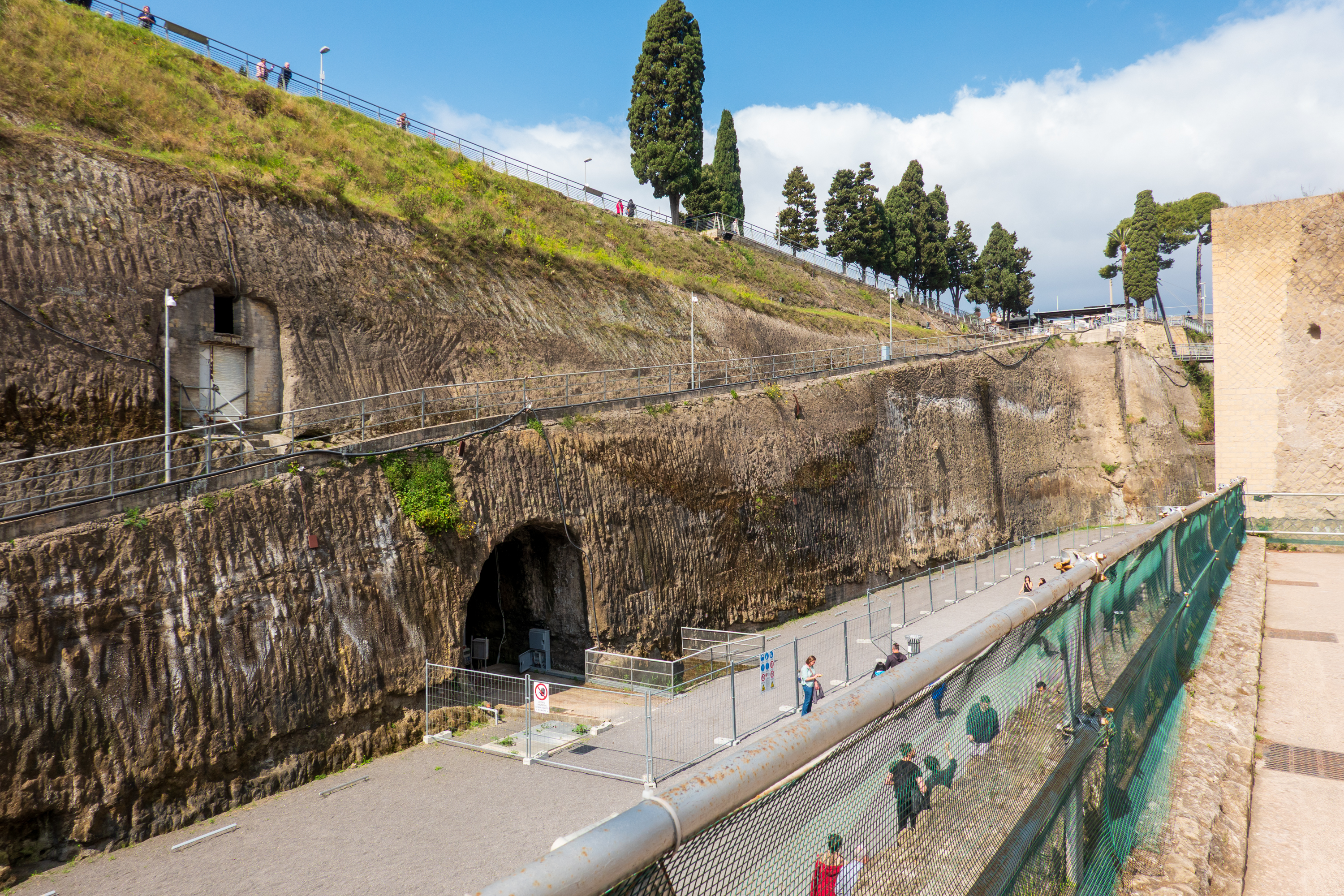
Roman cities contained “insula” or large blocks of apartments. (https://en.wikipedia.org/wiki/Insula_(building)) Wealthy people might have big apartments or live in a standalone “domus.”

Looking from the ocean side, on the modern ground level, you can look down to the old waterfront, with the sewer drain on the left, the boathouses, and the stairs up into the city. Note at least four different ground levels.
Because of the way Herculaneum was covered, many of the buildings are intact, up to three stories. Walking a ruined site, when all you can see is the outline of ancient foundations, it can be hard to envision real buildings. Here you can step right into the spaces where people lived and see the rooms as they saw them.




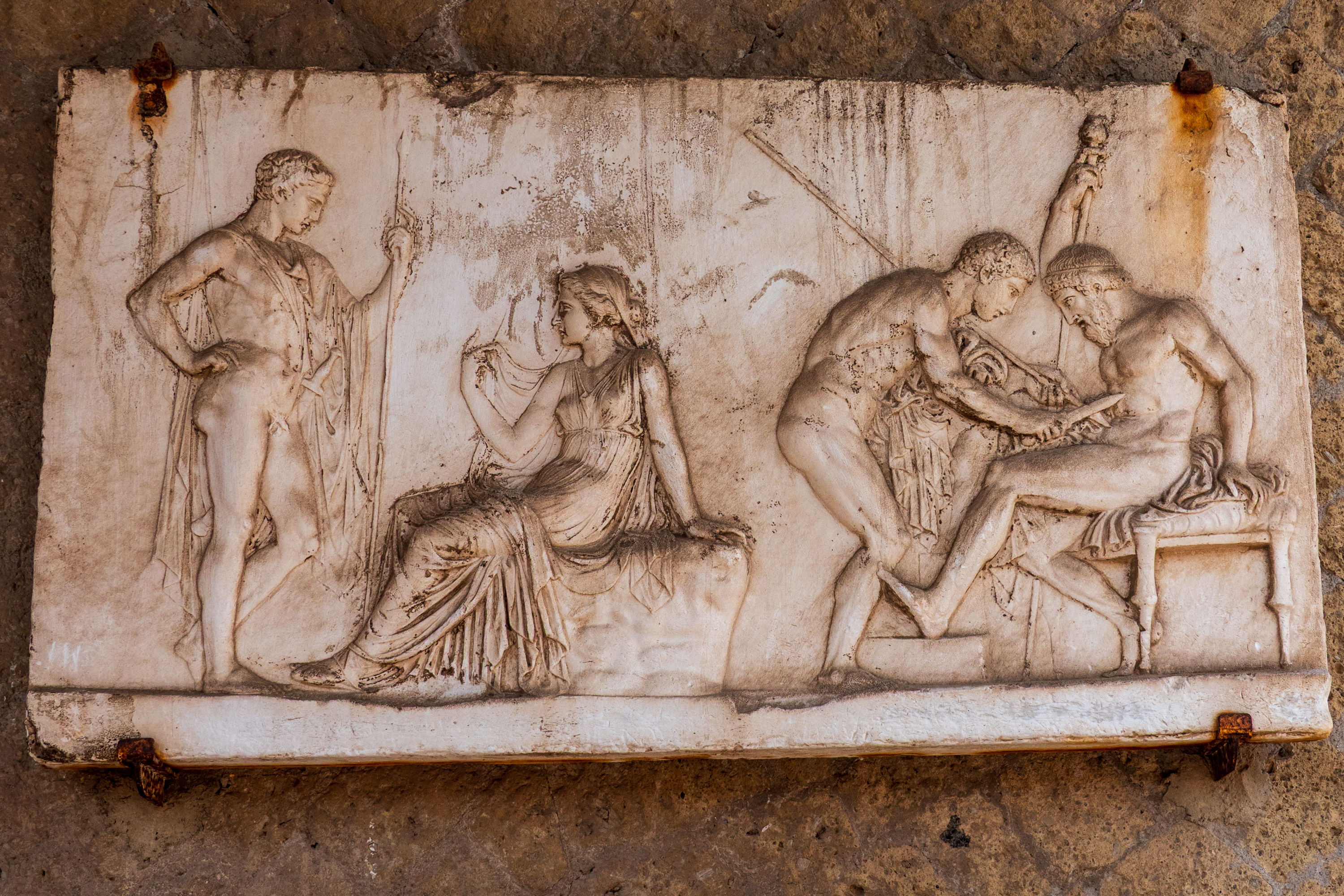
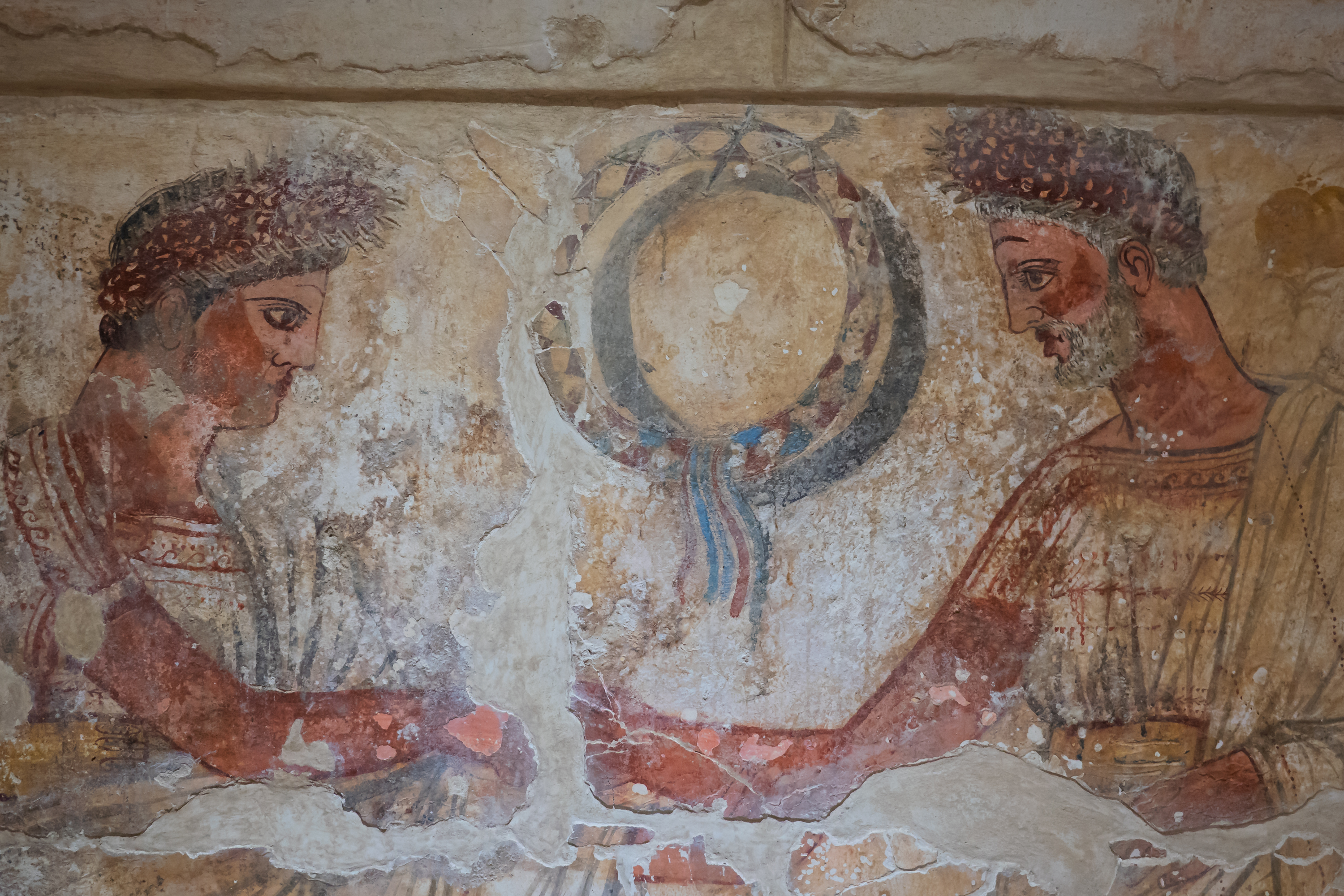
This is a wild one. Telephus, on the right, was a king, in Asia Minor. When the Greeks attacked his city, thinking that it as Troy, he was wounded by the spear of Achilles.
The wound would not heal until Achilles himself treated it with “rust” from his spear. (verdigris might indeed have curative power) In exchange, Telephus led the Greeks to Troy, but fought on the side of the Trojans. For some reason, the Augustinian Romans really liked this story. Don’t know the man and woman on the left. Sorry. You can read the whole twisted tale here: https://en.wikipedia.org/wiki/Telephus
Fabulous frescos in the College of the Augustales, a group of freedmen dedicated to the Emperor Augustus.
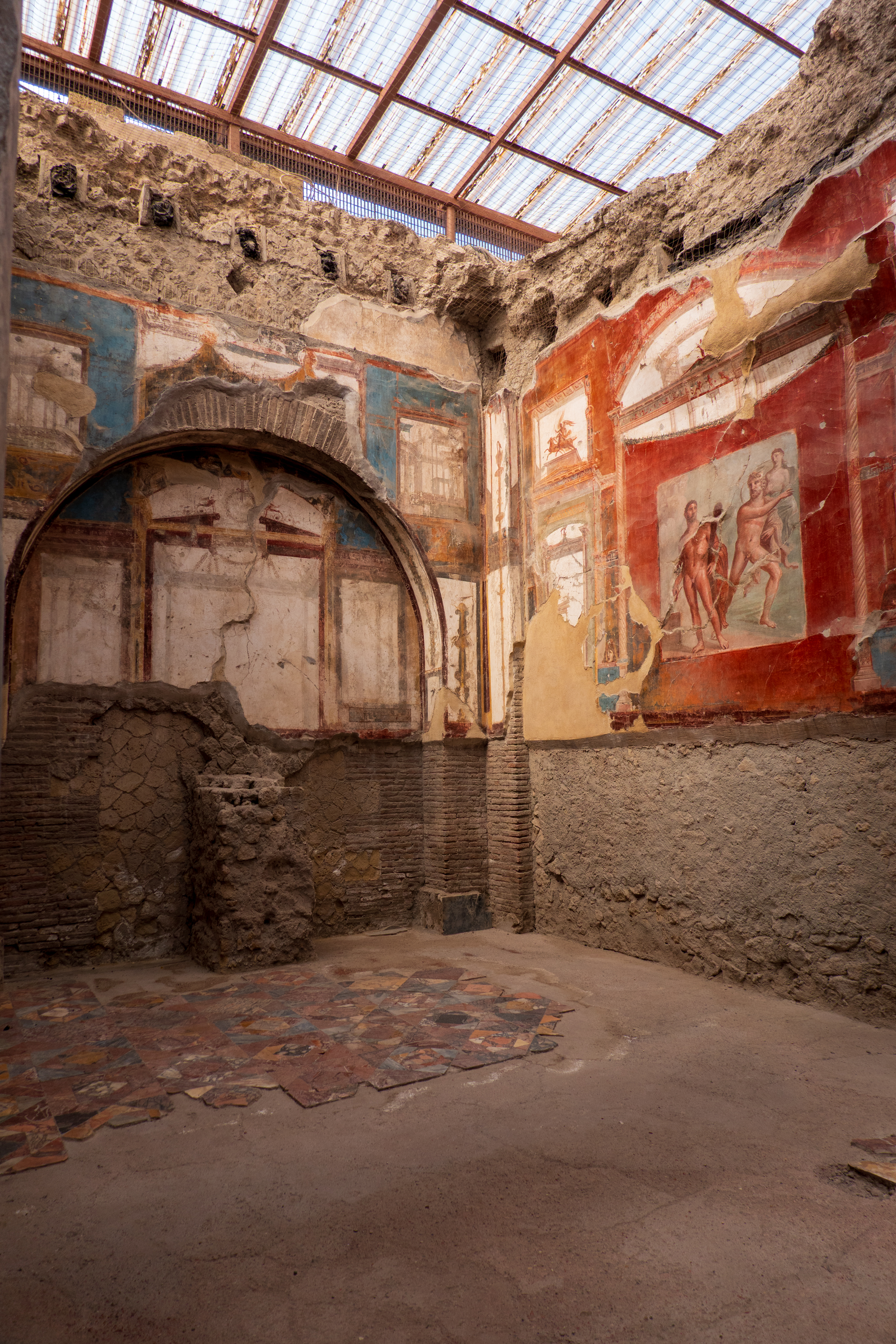

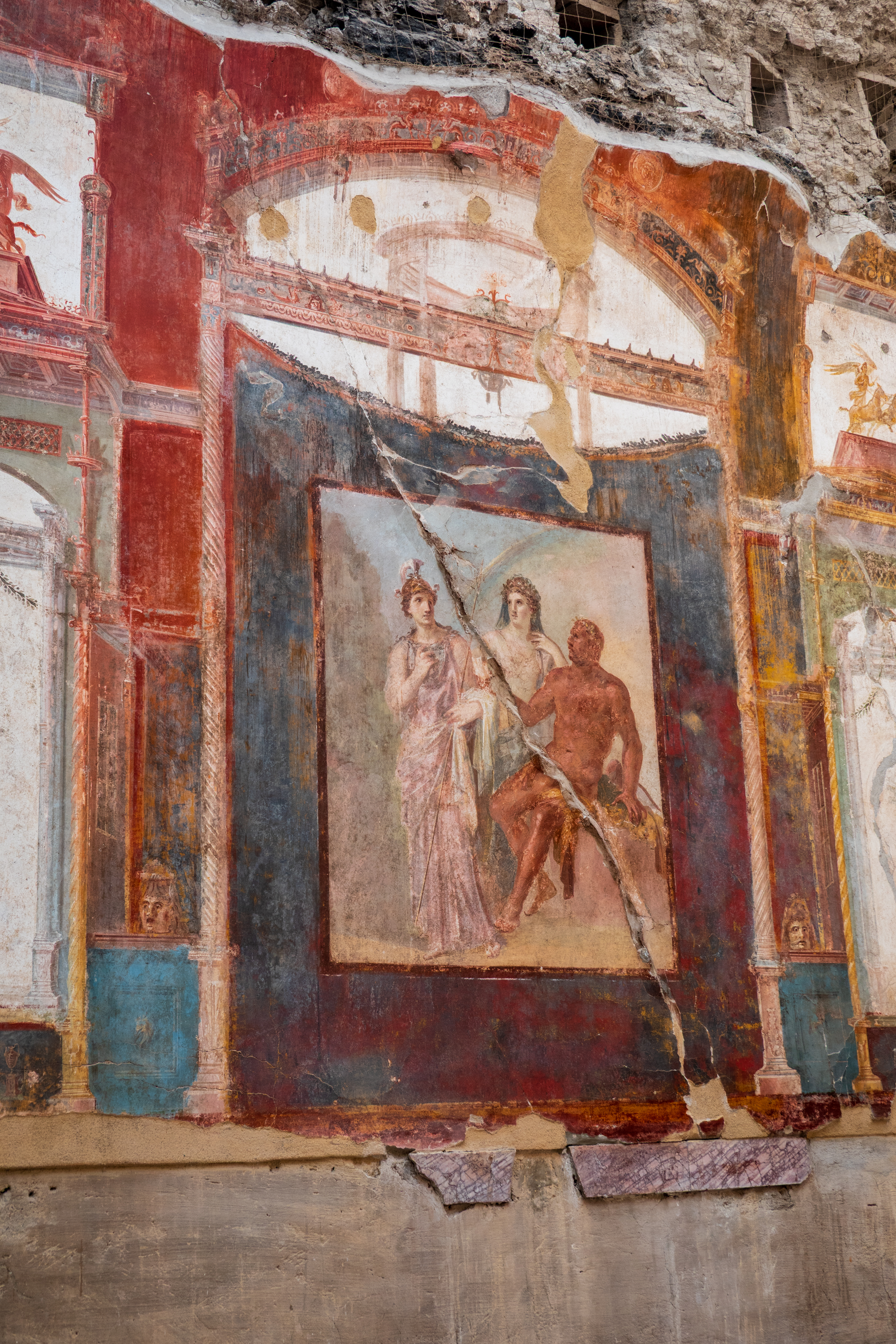
The center image is wild, featuring Heracules, with his lion skin and club and the river god, Achelous, who is carrying off Deianira. Heracles will save her, marry, or rape her, and she, in turn will be his unwitting murderer, having been deceived by a centaur, whom Heracles had previously killed. Confused yet?
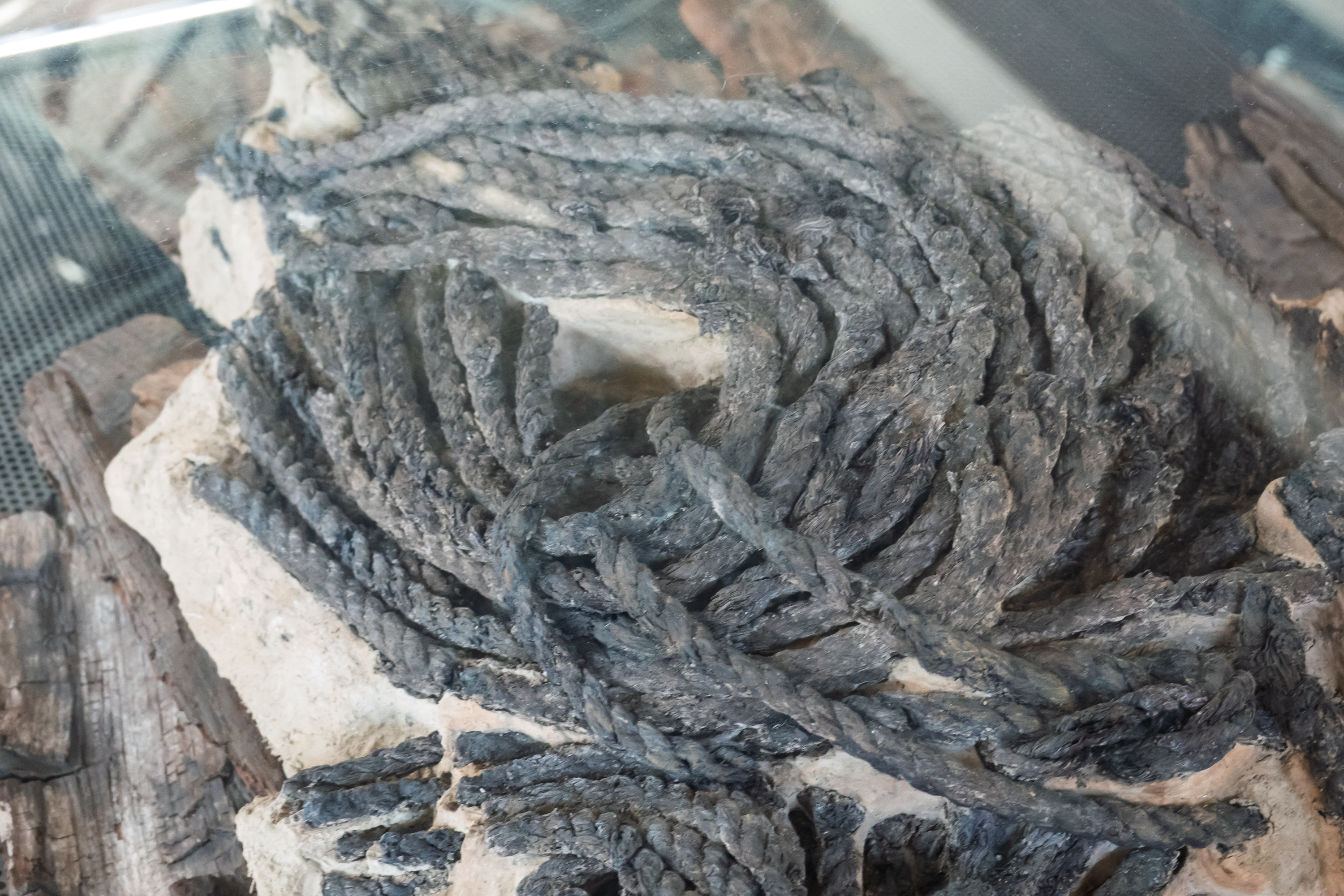
Wooden objects have typically not survived from ancient times. Herculaneum is known for having some of the very few wooden artifacts. One of which is a Roman boat, not all that different from modern Italian dories.

The saddest part was the collection of skeletons in the warehouses at the port. Waiting for the boat that never came.
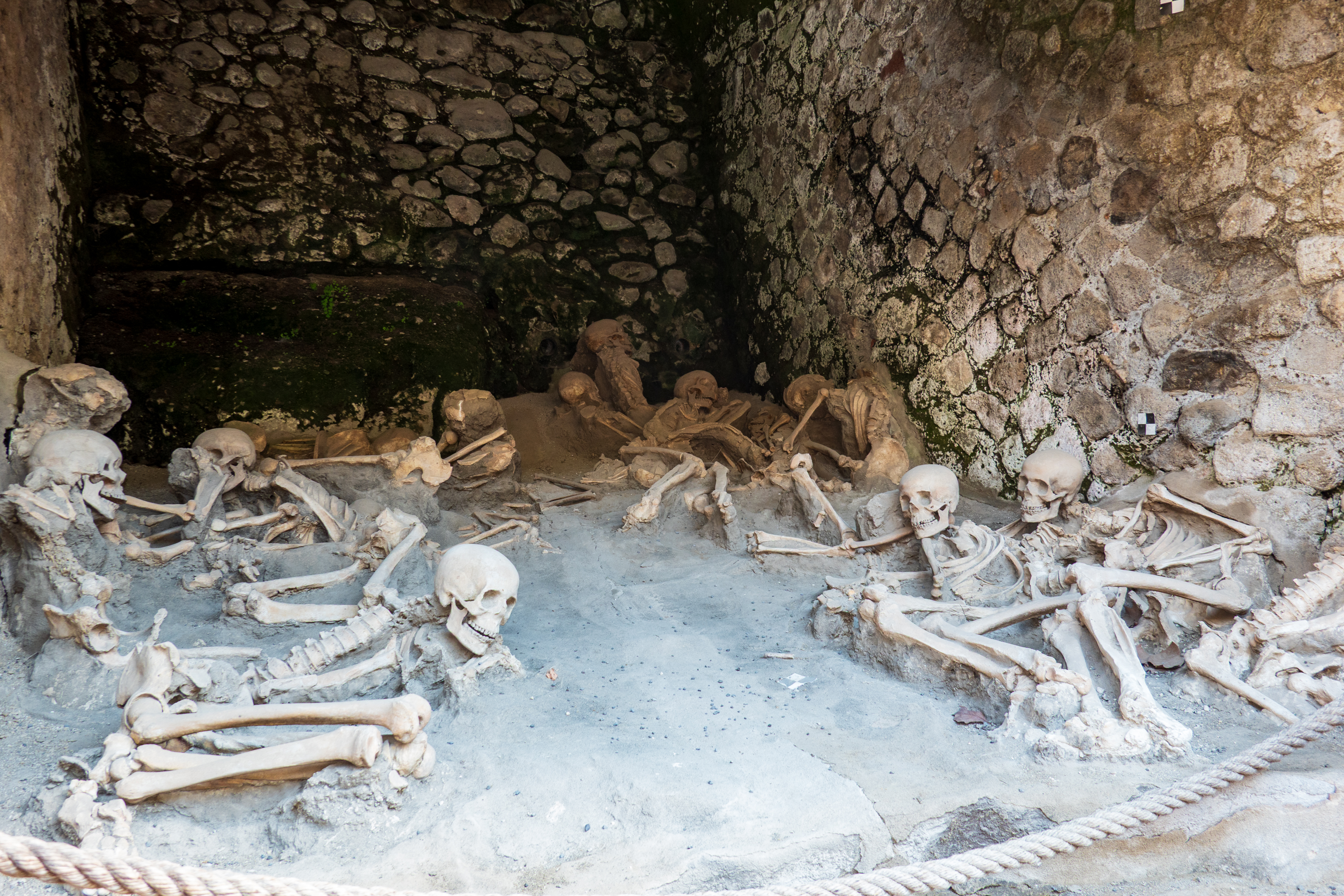
People came running to the port in the hopes of rescue and died instantly when the pyroclastic flow hit. Their bodies remain as they were found in the late 1800’s.
There is a nice museum and these images help convey the human touch.


On the way back to the campground, we of course had to enjoy an ice-cream! Both the rest and the sugar were needed to make it back up the steep hill!

When Fred was a child in Rome, he loved Fiat 600 taxis, as they had cool jump seats. One drove by, while we were having our ice cream. Couldn’t get a photo, but we stole this one form the web:

The next day we set out for Pompeii.
 DiploStrat
The photo with the skeletons is so sad. I am always interested to learn how different cultures preserve places of death and their skeletons.
P.S. I ❤️ Fiat 500s…I had a cute orange
Grrrr…
…cute modern orange 🍊 one with manual transmission when we lived in Seattle. I could park it everywhere.