
The Gara Medouar successfully viewed, and the Mummy successfully avoided, we headed to Rissani to acquire some fruit and vegetables.

The latter were limited but we purchased some wonderful melons and also some fresh dates. This area is melon growing country and they were freshly picked. In fact we passed many small trucks, loaded to the gunnels with melons, heading to the main cities.
Partially for old times sake, Denise wanted to at least see the dunes on the very southern and western edge of Morocco, the Chebbi Erg. (Morocco does not actually have a lot of sand dunes.) We had seen dunes in the Sahara in 1974 and in Jordan in 2017, where we rode a camel and camped in the desert, tourist style. So we headed to a lovely campground called Haven La Chance. (https://www.havenlachancehotel.com) It was very hot (about 100F) but the campground did have some shade.

As promised, it did back right onto the dunes so we could easily wander out and do some sand walking. Fred was in no mood to see if he could stick nine tons of truck in the sand. He had dealt with than when he was younger! And it was no fun, even with a lighter vehicle!

We are used to being the odd camper out, so it was comforting that there were about five other expedition campers, built on a variety of trucks from a German Mann to a Unimog. One even had 3 axles and was going to be shipped to Canada. One wonders why such a huge truck would be needed there. But it looks comfortable.


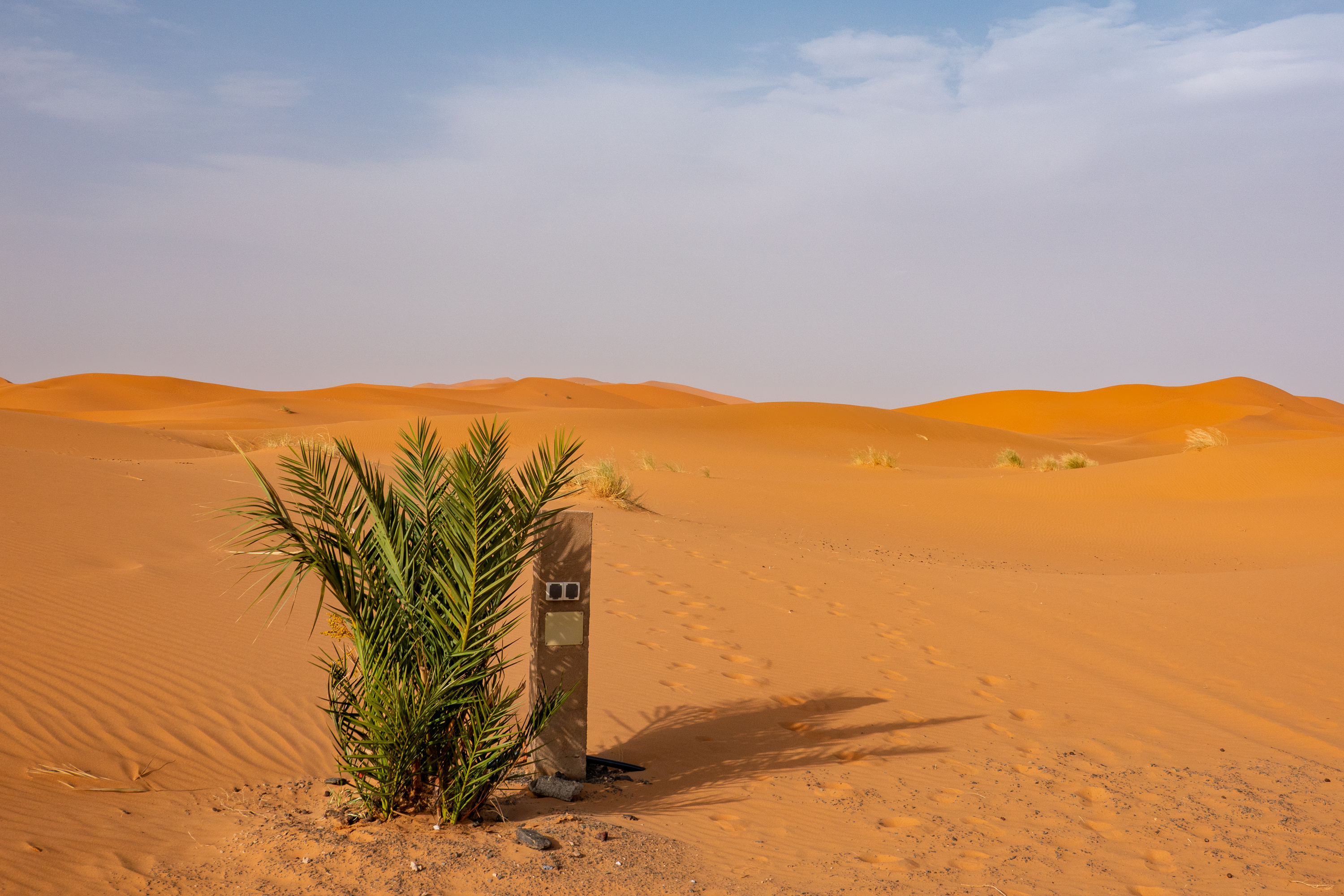

Finally heading north at last, our next stop was a campground with the delightful name of the Kasbah Hotel Jurassique, in the Ziz Gorge. We quickly dubbed it “Jurassic Park.” (https://www.kasbahjurassique.com) It was a great campground, with a washing machine (!) so we stayed an extra day to do laundry. When we arrived, there was only one other camper there, and they left the next morning. But after having the place to ourselves all day, the next evening a half a dozen campers arrived as well as an equal number of motorcyclists. Met a nice young Spanish couple.

We also ate dinner there and it was excellent. We both decided to have shish kebabs rather than face another tagine. Our kebabs arrived and were much enjoyed; then another set arrived. There was no way we could eat four more mixed shish kebabs, so we asked very nicely if we could take them with us. Of course, but don’t ask for a doggie bag – just take the plate and bring it back when you can! Thus we ended up with a delightful dinner the next night.
The next great challenge ahead was the Legionnaire Tunnel. (https://sahara-overland.com/tag/tunnel-de-legionnaires/) Dug in the ’20’s, it is said to have 3.5m of clearance. We are 3.55m. Yet we saw trucks passing all the time. The hotel owner assured us that we would have no problems. Hmmmm. We set out with just touch of trepidation, with Fred carefully eyeballing every truck that passed.

Turns out, we fit with no problems. And then we moved into snow country. Yes, it snows in the Atlas and they close the roads. This area is used as summer pasture for sheep and they even have snow barriers, made out of adobe.

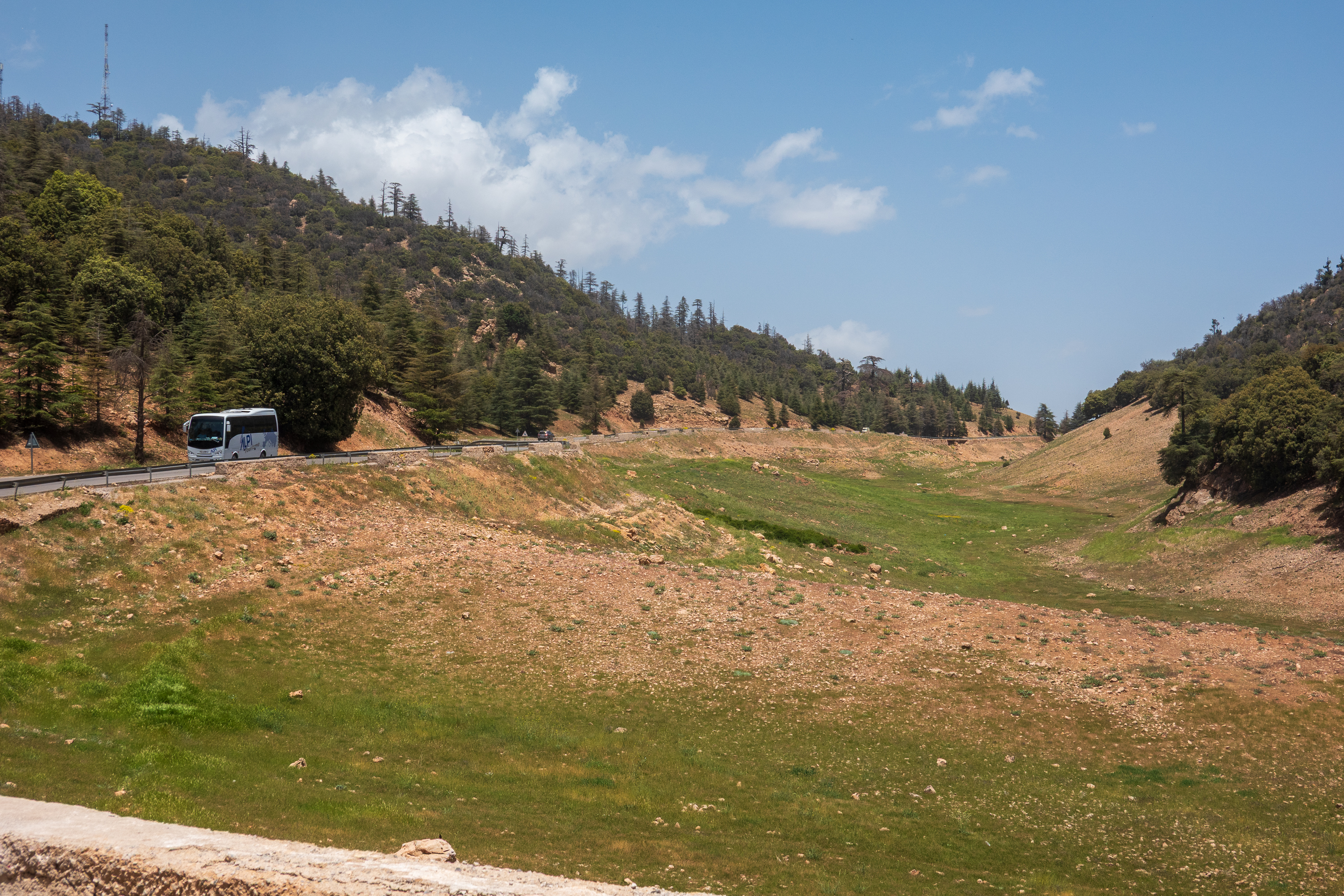

Moving up the Ziz valley we admired the views and the dense agriculture on the valley floor.


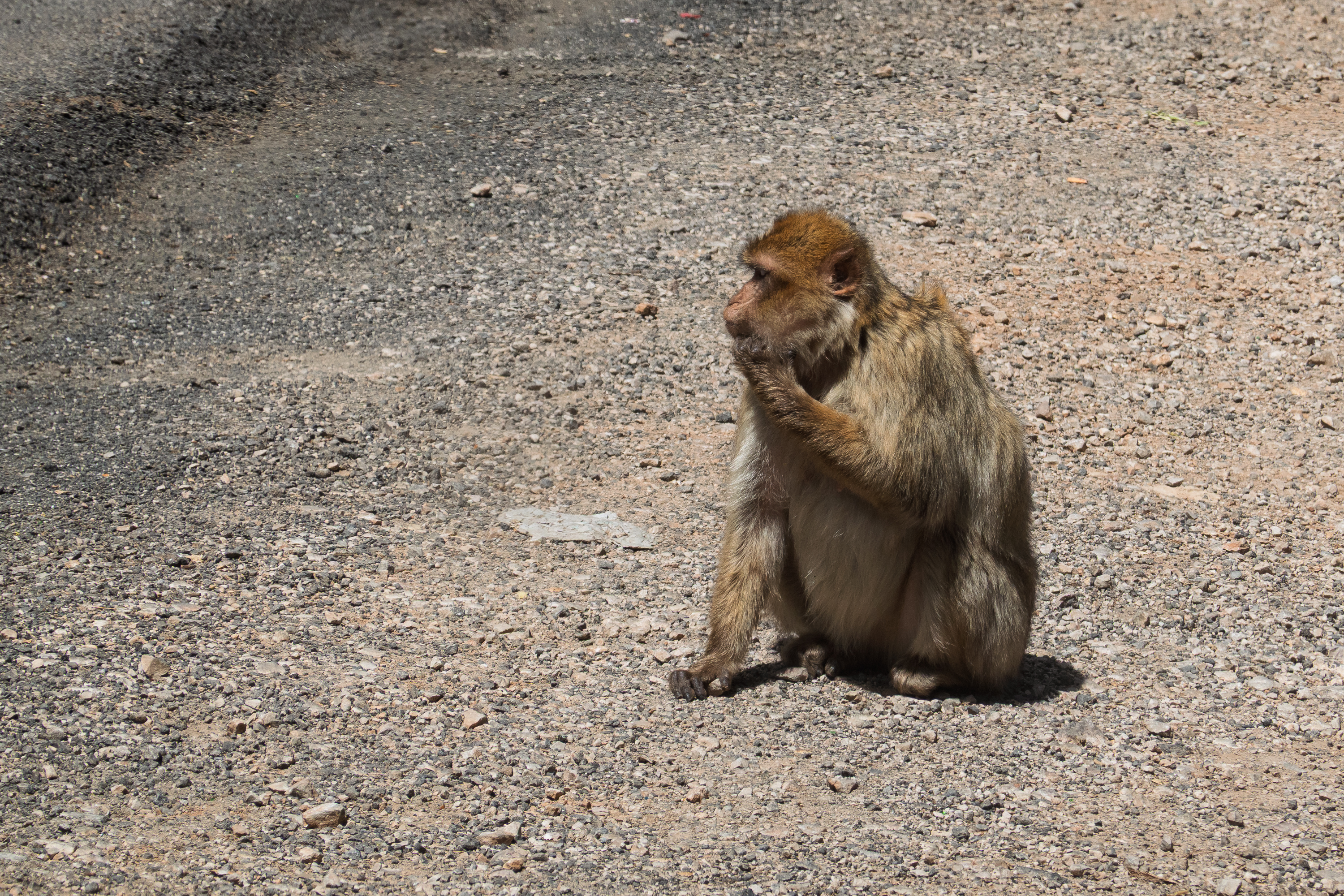
And on to Azrou, where, during the descent to the town, we saw more trees than we had seen in the last three weeks. The town itself is encircled by cedars and holm oaks, and we saw a number of Barbary apes in the picnic areas, obviously awaiting goodies.

We settled into a nice, locally run campground. (“My grandmother planted the cherry trees.”)

Azrou is famous as a source of Amazigh carpets, so, the next morning we drove into town. A little too early. Moroccans really do not start their businesses until almost noon. We wanted to look at a carpet place and, of course, they were all closed. However, one man in the souk, who was open, agreed to find one of the carpet vendors, who was having coffee. And once he opened up, he realized that we needed more choice and took us to his warehouse. So we headed deeper into the souk, down an alley, and up the stairs. We had a wonderful time shopping (more tea) and made some (too many?) purchases.


And on to our next stop, Fes. One cannot go to Morocco and not go to Fes! Like many, we stayed at the Diamant Vert (Green Diamond), basically a huge water park with bungalows and a campground attached. Finally met the Dutch couple with a twin of our truck – they drove into, but decided not to stay at the campground in Zagora. Fred was off for technobabble about suspensions, etc.
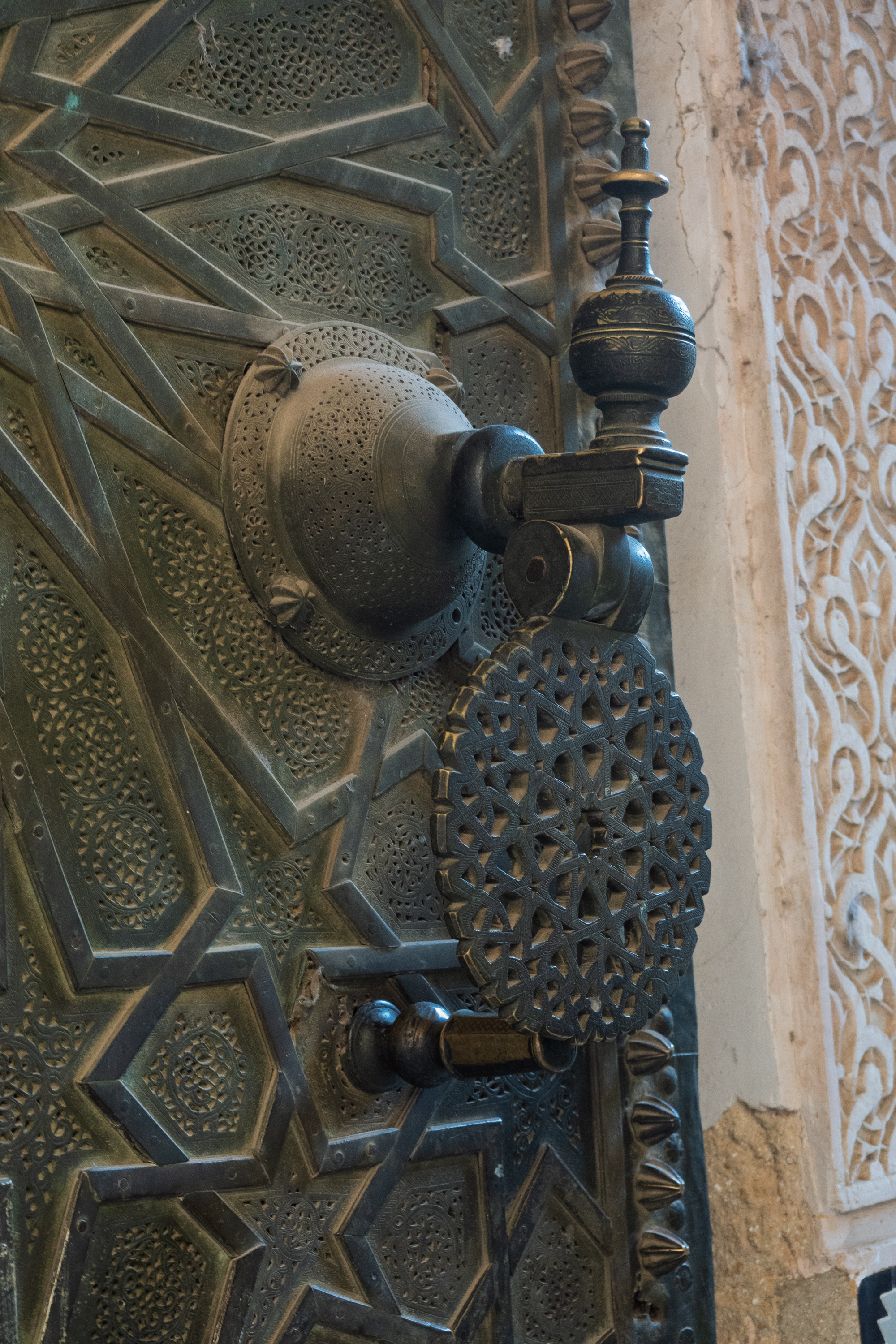
We took a taxi from our campsite and asked to be taken to the Musee Dar el-Blatha. Trick was, the driver didn’t know where it was and we had to use our phone GPS to get there! The Musee Dar el-Blatha was most interesting. It was originally a palace, begun by Moulay el-Hassan in 1873 and is now a Museum of Arts and Traditions with exhibits back to Roman times, at least. All very well done. It has retained its Moorish features, with beautifully decorated wooden doorways and tile work.
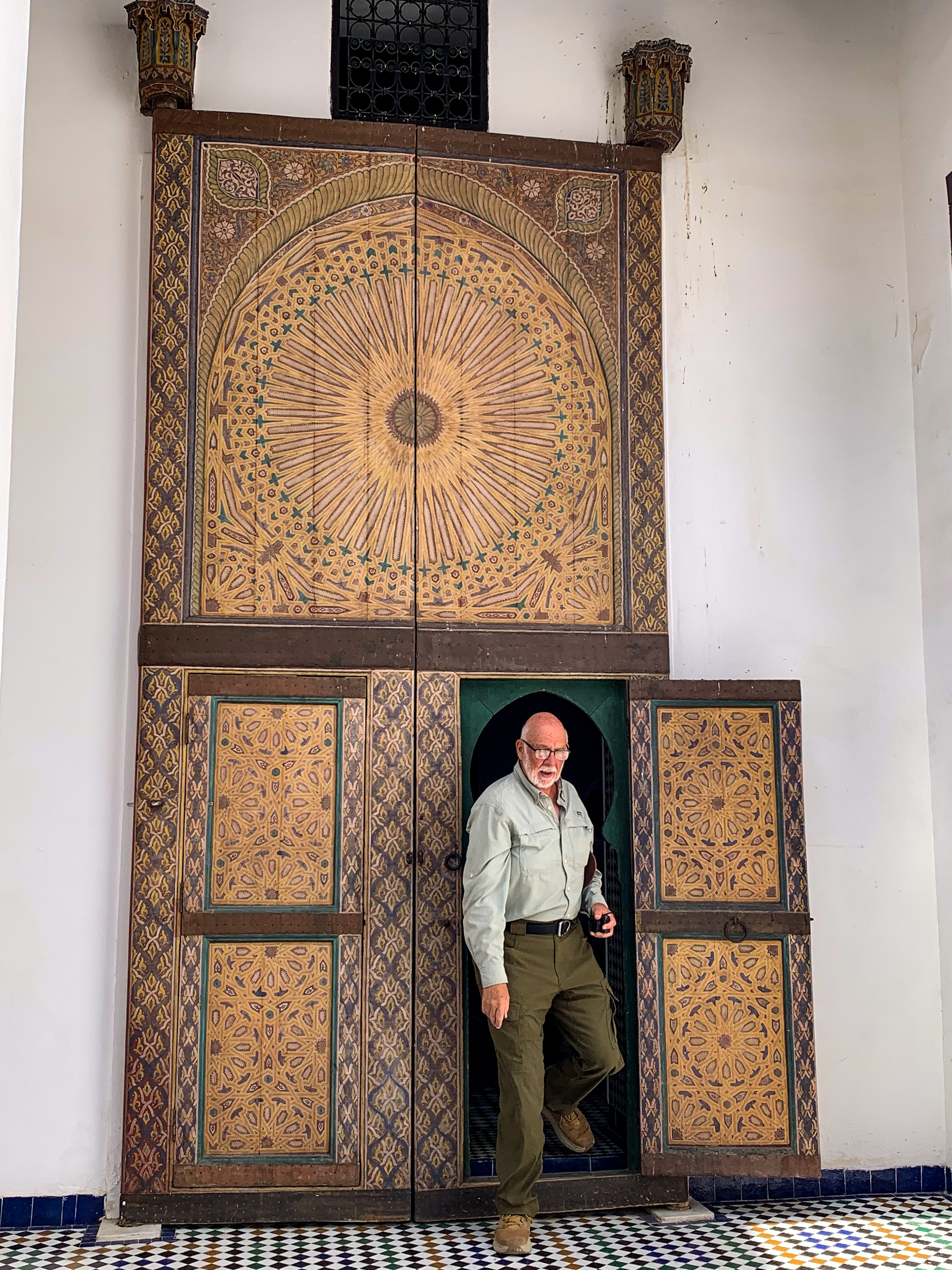


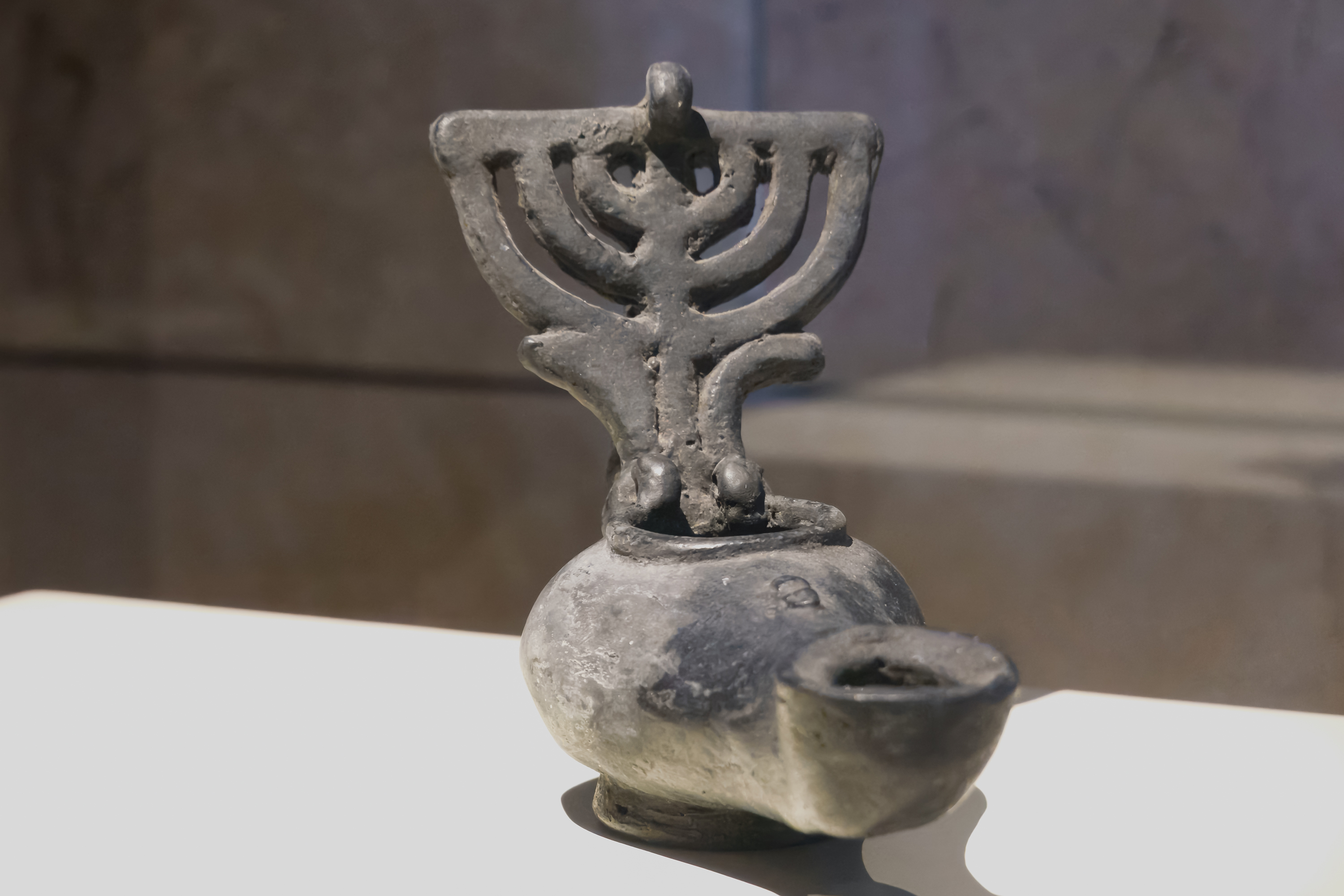
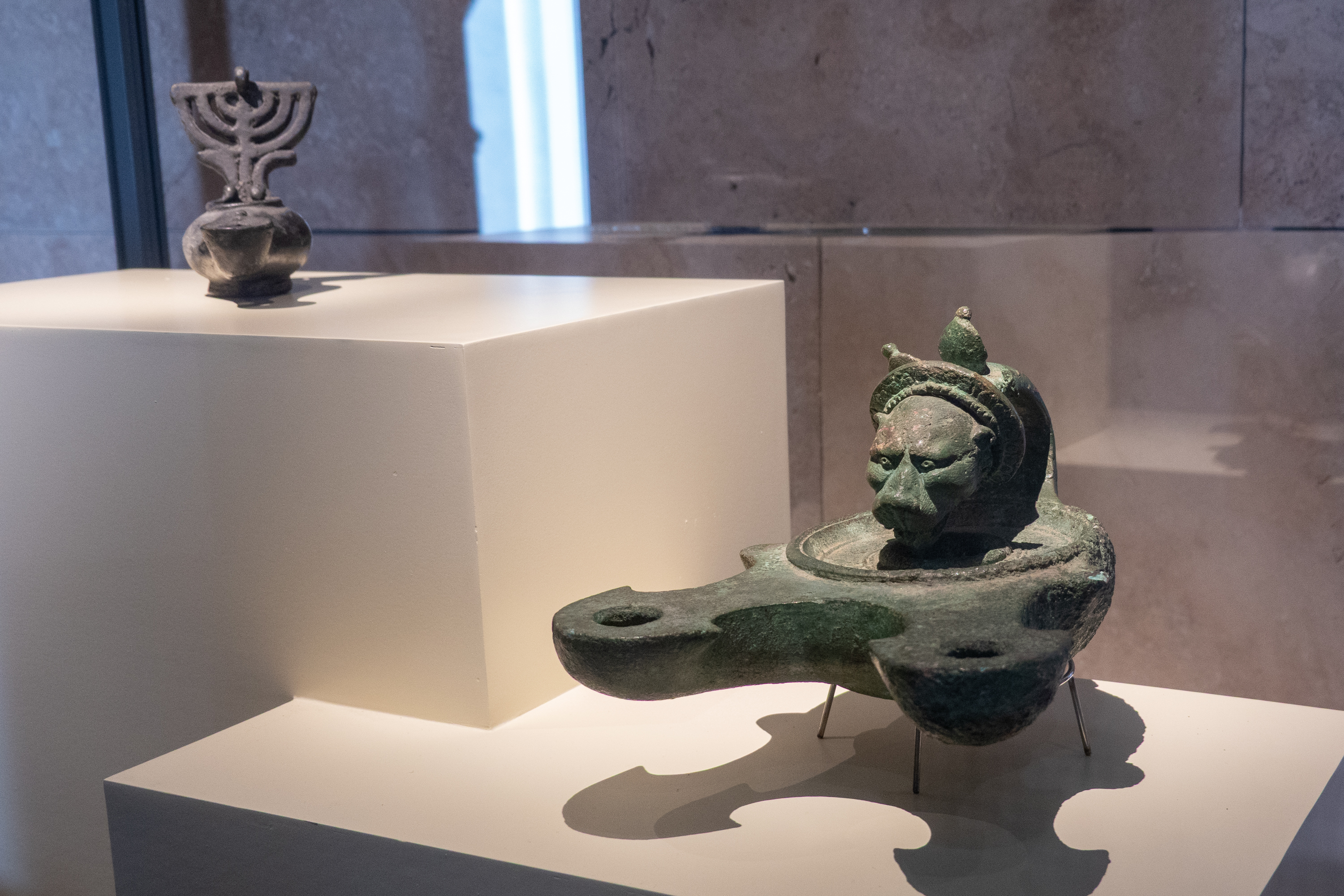


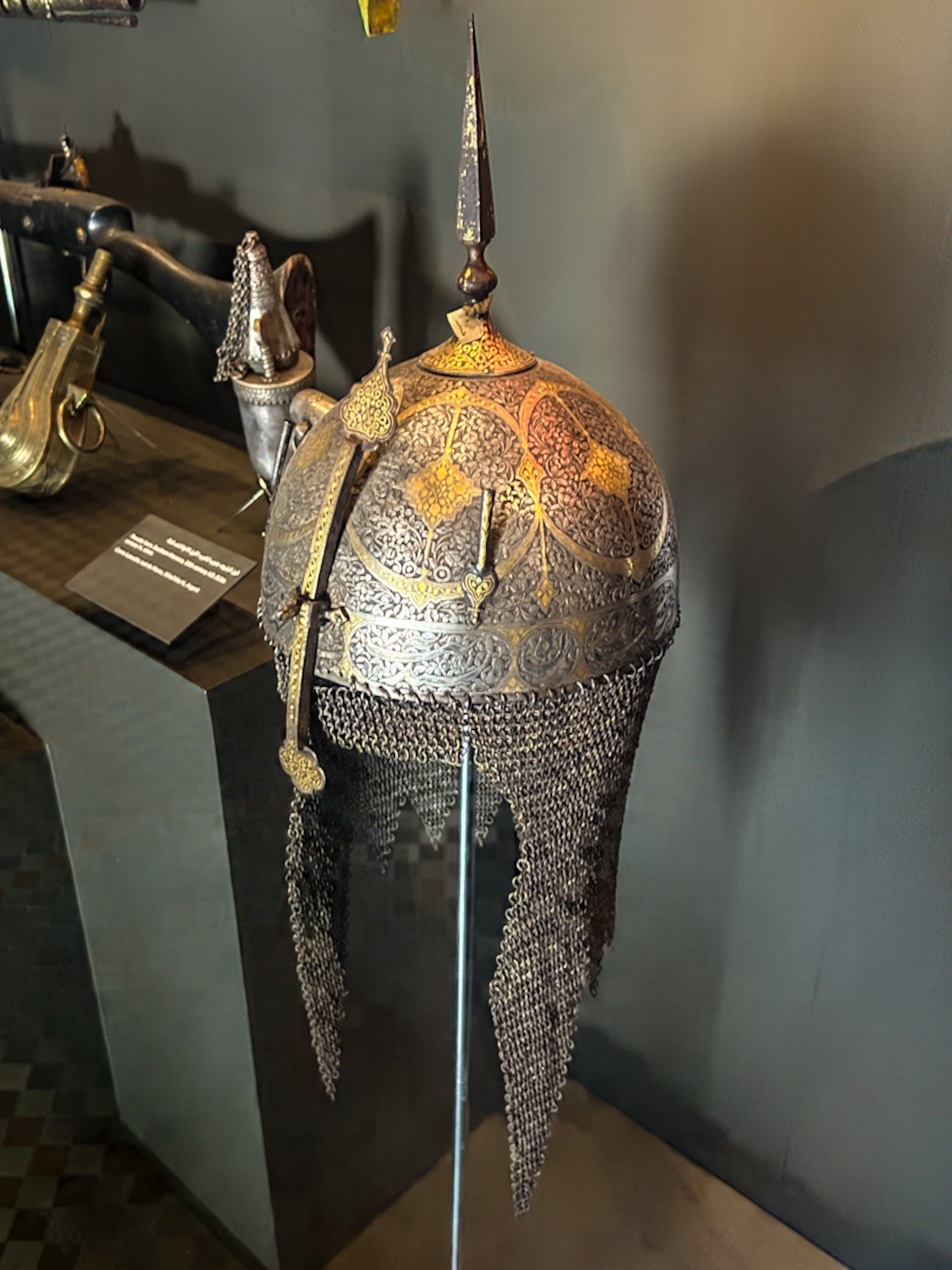


The museum still has its beautiful gardens.
Sadly, about half way through, one of the guards decided that we could not longer take pictures with a camera, only a phone. ???
Well Grrr! And we were just about to photograph some beautiful clothes!
So we gave up on the museum and went out to find lunch.
We decided on a Moroccan restaurant near the souk. Our table was two flights of stairs up from the street, and then up on a tiny balcony. Amazing! Don’t find this at McDonalds.

Denise enjoyed her last Pastilla or chicken and almond pie!
After lunch, we plunged into the souk, looking for gifts.


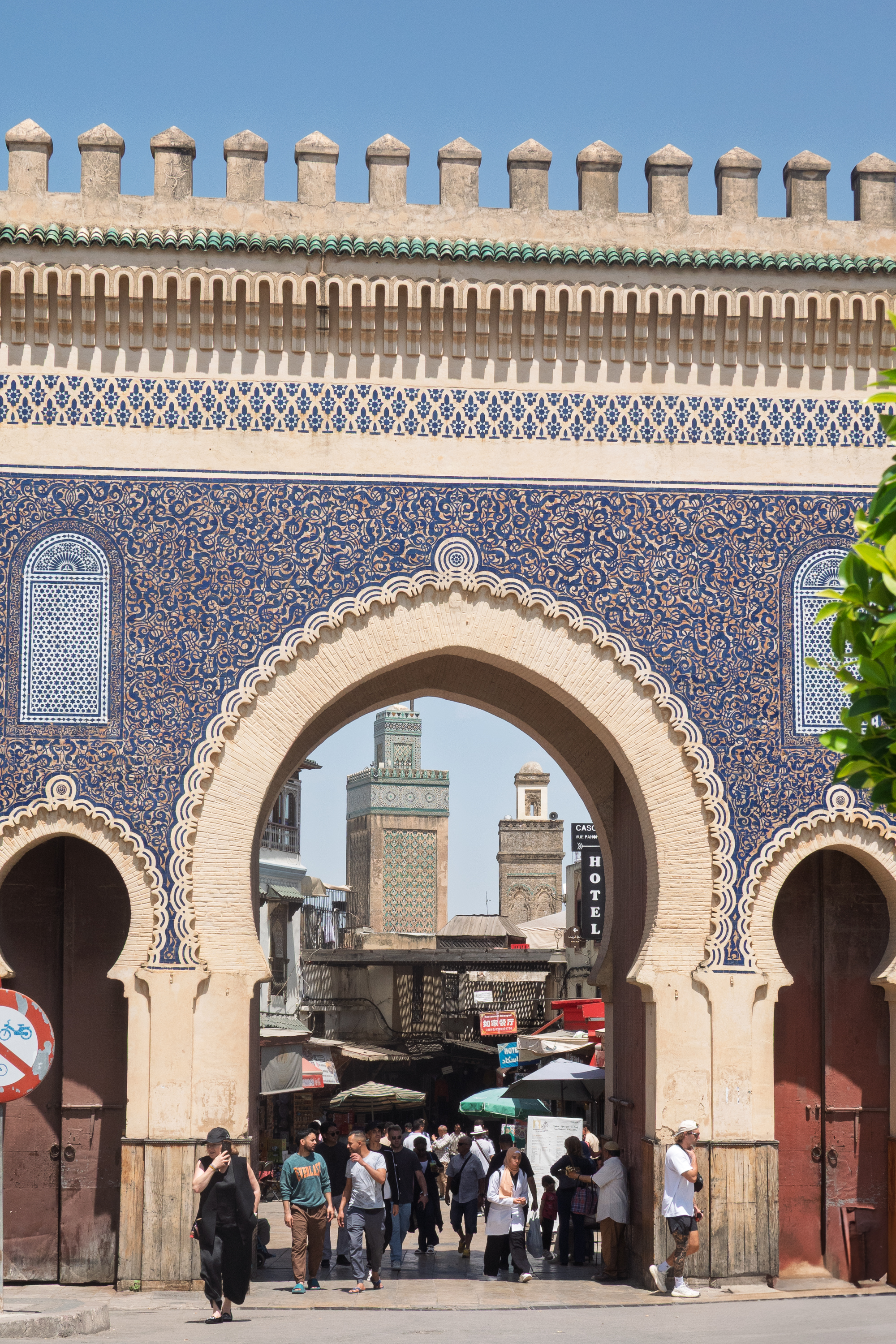
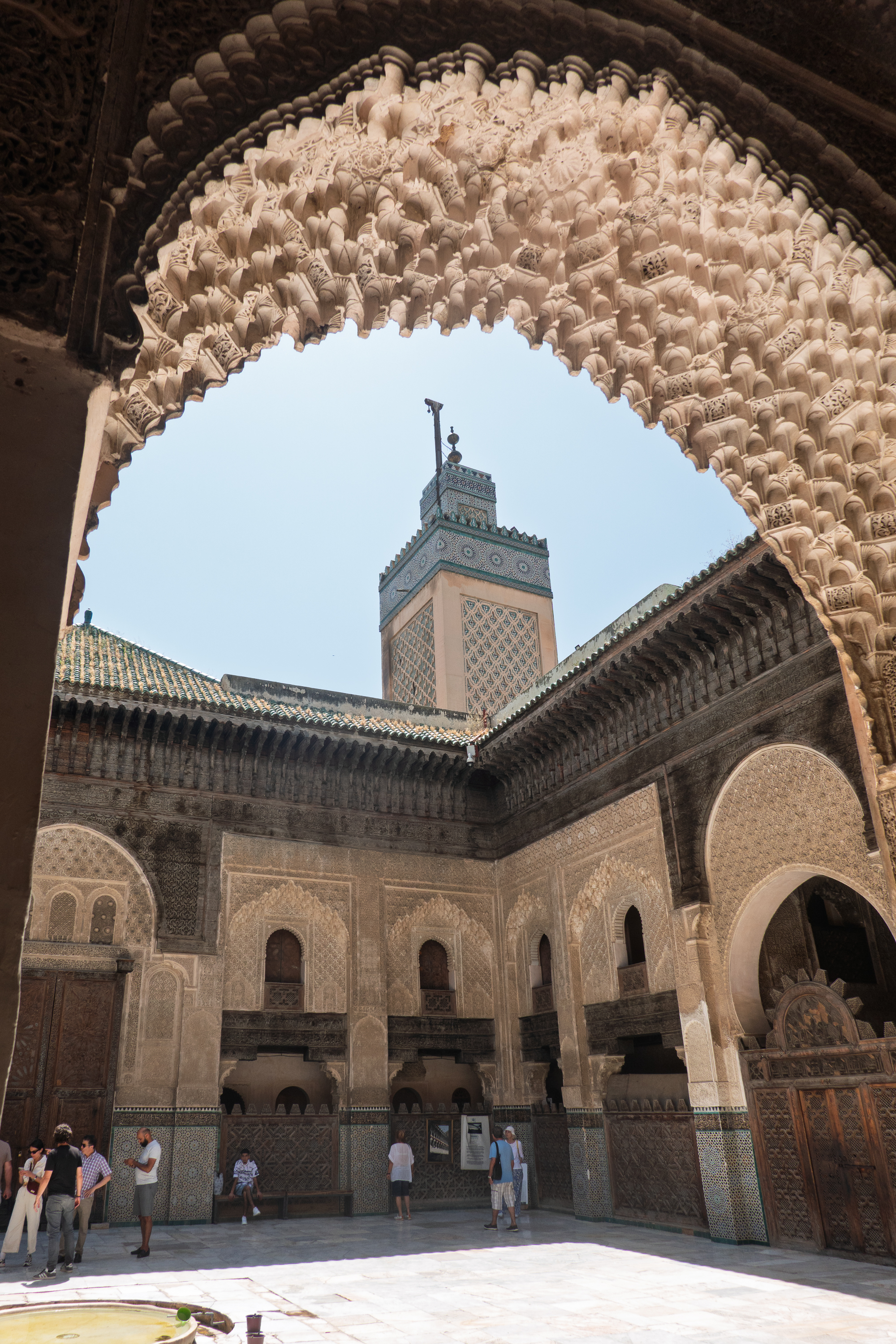
Once past the hour of prayer, when it is closed, we found the Bou Inania Medersa. (https://en.wikipedia.org/wiki/Bou_Inania_Madrasa) Constructed between 1350 and 1355, it is an Islamic school, a medersa/madrasa that is also used daily as a mosque. The decoration and tiling is quite lovely.


In the museum, we had seen parts of a water clock. There is one outside the medersa. We know what they looked like, and where they were, but not how they actually worked. Somehow, metal balls fell from the top into metal bowls. Incomplete – no bowls, no balls, but way cool! (https://en.wikipedia.org/wiki/Dar_al-Magana) Look at the Wiki link for an historic image. Amazing to stand in the same place.

Then it was on to Chefchaouen, our final visit before taking the ferry to Spain.
 DiploStrat