
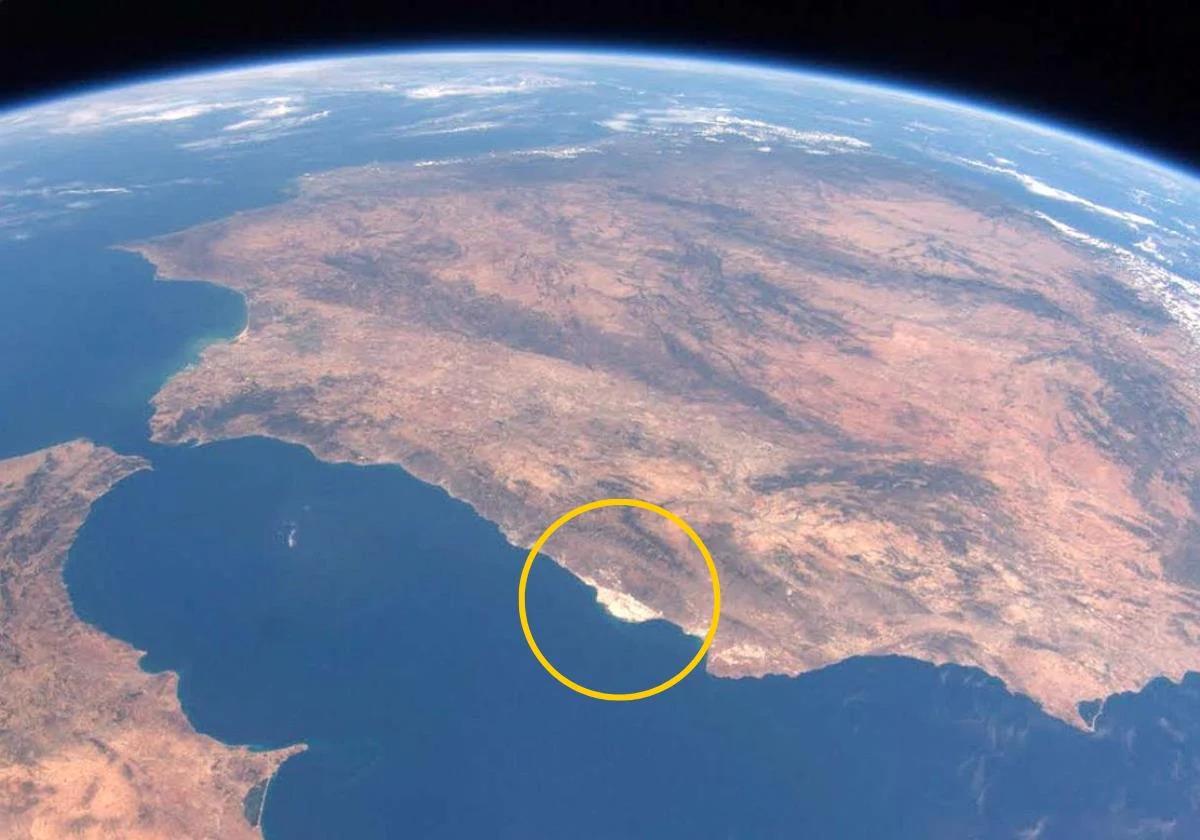
From Granada we headed to Playa Mojacar. Rather than retrace our route past Baza, we decided to try the coast road. This proved to be a bit of a disappointment – few views of the sea and miles and miles of plastic greenhouses. This part of Spain produces the majority of Europe’s winter vegetables and these are grown under miles of plastic sheeting – so much plastic that it can be seen from space!
The campground near Playa Mojacar was very pleasant and we were able to find a site with shade. Playa Mojacar itself was our first exposure to the famous expat communities of Spain. We had heard of them, but it was still jolting to see half of the street signs in English. The air conditioner tech was wonderful, spending days trying to repair the air conditioner, but in the end, we needed a 110v compressor and they are not available in Europe. Bummer.

Over the weekend we headed up the coast to see if we might have better luck with the agency that represents our air conditioner brand in Spain. We spent the weekend at a pleasant beach resort up the coast, but learned Monday that they had no 110v compressors and that shipment from Asia would be slow. Double bummer! So we gave up and headed out to Segovia.
Scouring Park4Night for an overnight stop, we found an “Area” (municipal campground) in the little town of Castillo de Garcimuñoz. Little? Population 163 little. But it boasted a small castle with free camper parking. By the time night fell the lot was full and campers were overflowing into the tourist parking lot. The castle, which functions as an arts venue was, sadly, closed. First time we have camped directly at a castle. Not your typical KOA!
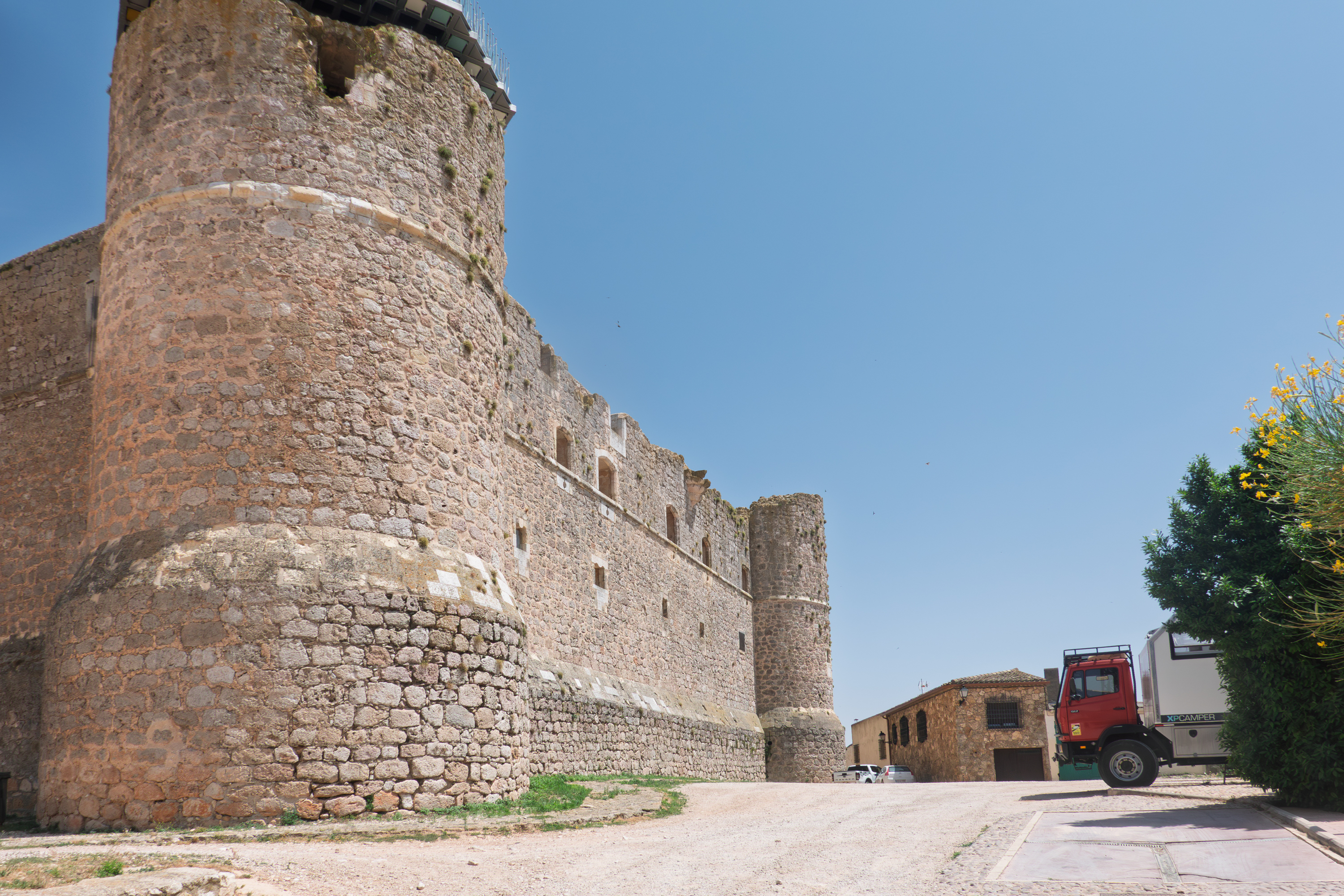
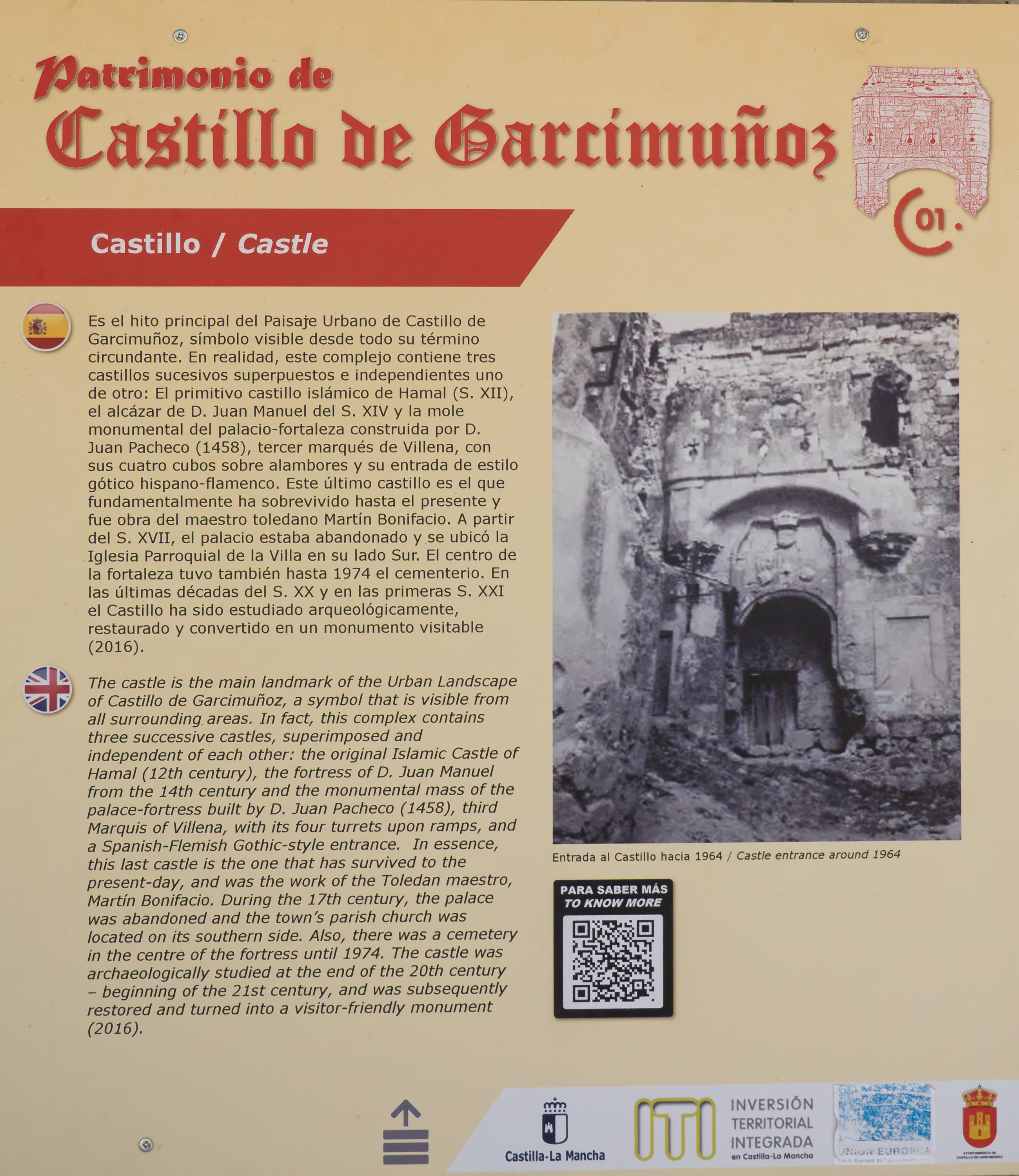


The castle had morphed into a church and finally into a art venue, but, when built, it was the real deal, high up on a hill and right in the middle of the wars between Christians and Moors. We used some of our time to finish a puzzle.

Bypassing Madrid due to its size and the heat, we pressed on to Segovia. A Roman aqueduct, a Moorish alcazar, and a cathedral – what more could you ask? Well, we wanted a campground with a grocery store nearby. We got it, and our neighbors even loaned us a nifty shopping trolley to make it easier to get our groceries home. Nice.
We took at taxi to the Alcazar, at it was the highest and most distant point. The idea was then to walk back, downhill, through the city. The Alcazar in Segovia dates from the twelfth century and is now a UNESCO World Heritage site. Originally a Roman castra, it was rebuilt by the Berber Almoravids, then built in stone in the time of King Alfonso VIII in the 13th century. It was a royal residence and fortress and used for storing the Castilian Treasury. Our visit was fun for the art, the views from the top, and the artillery school.(https://en.wikipedia.org/wiki/Alcázar_of_Segovia).
We started our visit with a coffee and then the obligatory tourist shot at the entrance.

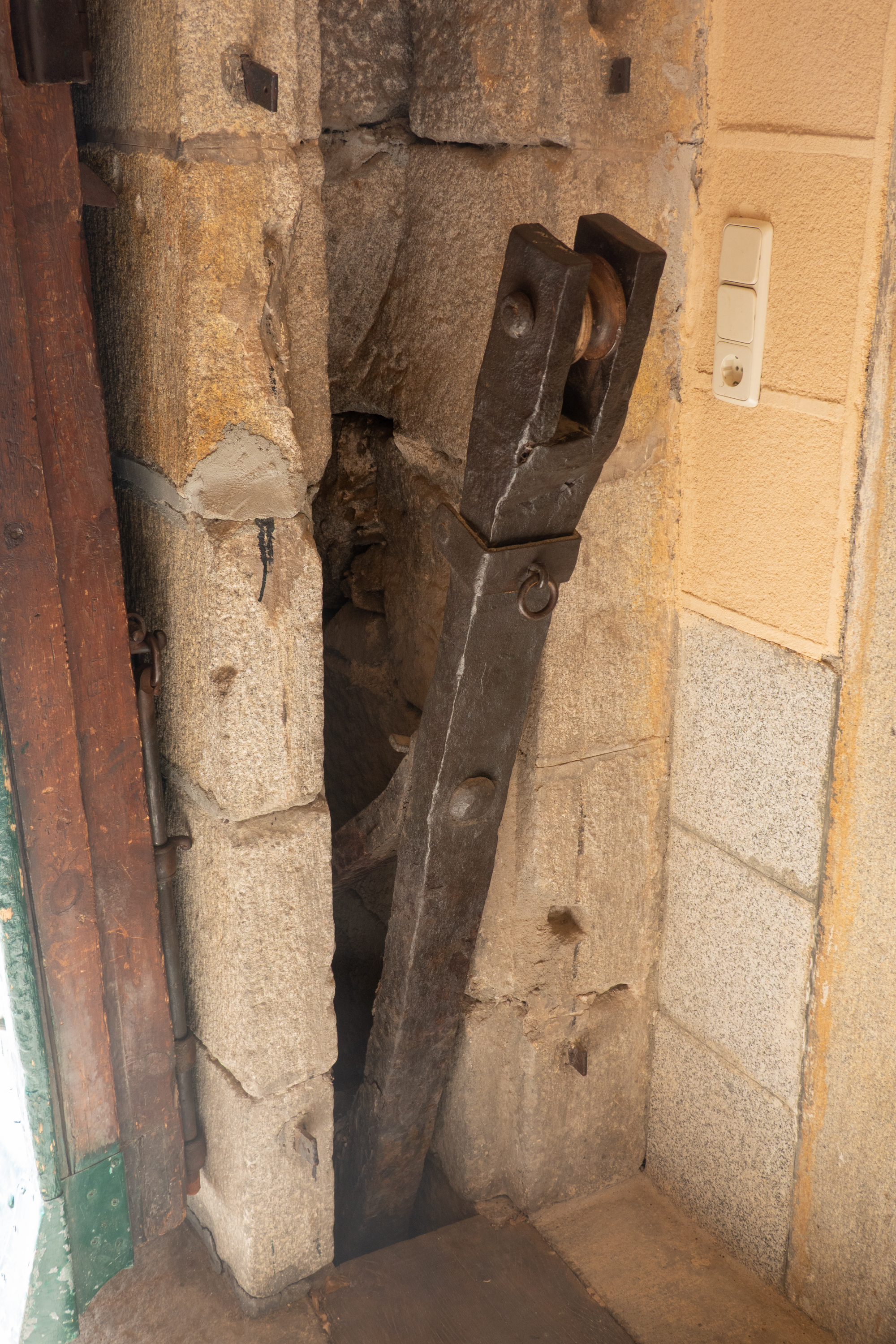

A long climb took us to the top of the tower and great views.


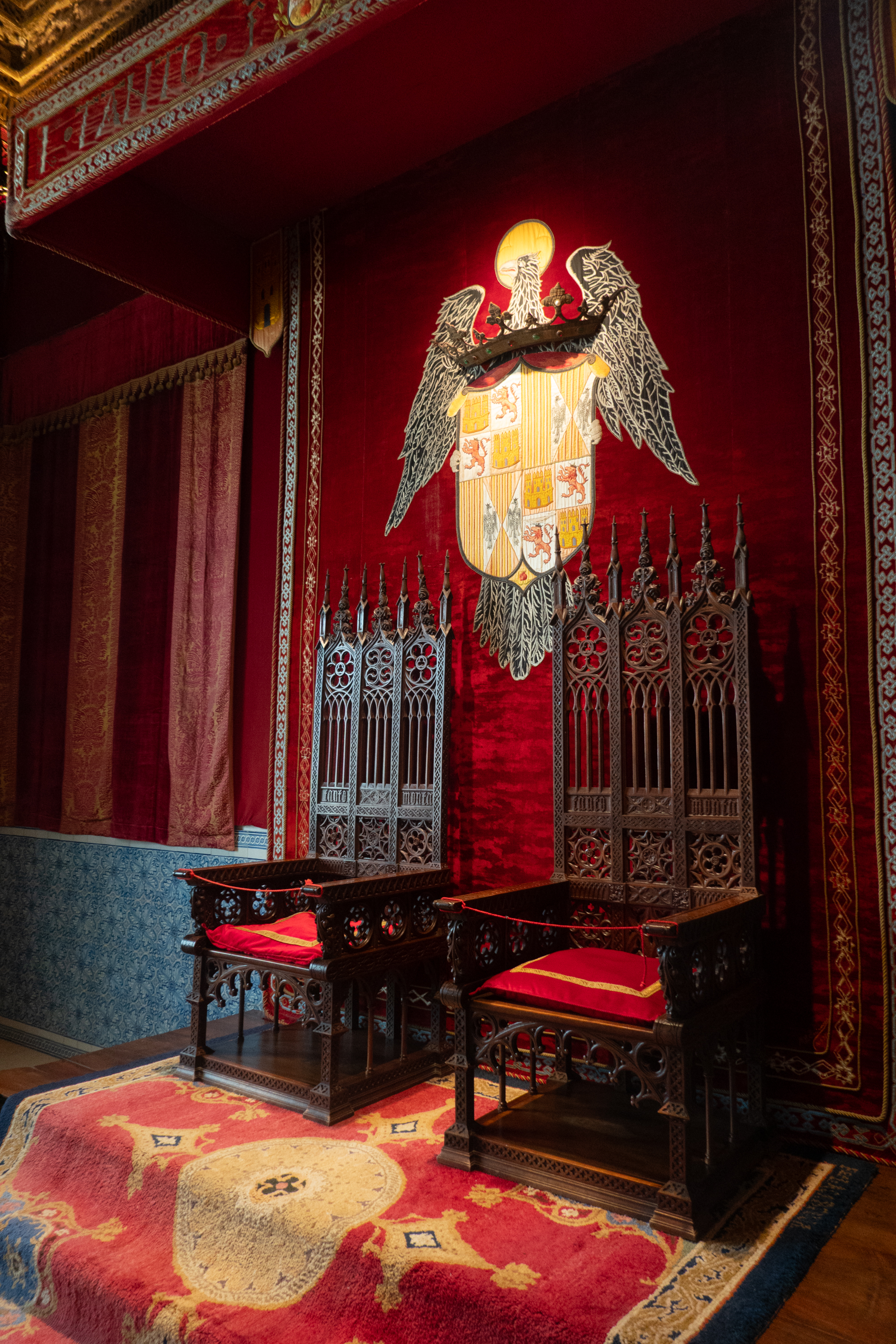
We then moved on to visit the rooms and galleries. They were full of interesting objects and art.



The 1965 movie “El Cid” has been called the thinking person’s epic. Good story, with some basis in legend, if not as many facts. But Rodrigo Diaz de Vivar, known as the Cid, was, in fact, a fascinating person. Hailed as Spain’s national hero, he was not, in fact, a great part of the Reconquista, having spent half his life in the service of Moorish emirs, often fighting against Christians.
He was, however, opposed to the arrival of the new wave of Almoravids from Morocco, but only if it threatened his hold on Valencia. (https://en.wikipedia.org/wiki/El_Cid)
Alphonso X was known as “El Sabio” (The wise). (https://en.wikipedia.org/wiki/Alfonso_X_of_Castile) He was an accomplished musician and collector of music. Fred has a CD that contains some of his “Cantigas de Santa Maria.” (Did you know that when Moroccan kings put the image of the Virgin at the head of their armies they won?) (https://www.sequentia.org/recordings/recording09.html) But he was also a Castilian king and took the city of Cadiz from the Moors. Doing so, he also claimed the ocean for Christians. Note the detail on the right – while everyone is hailing the conquest of the sea, is that a Moor and a Jew weeping at the loss?


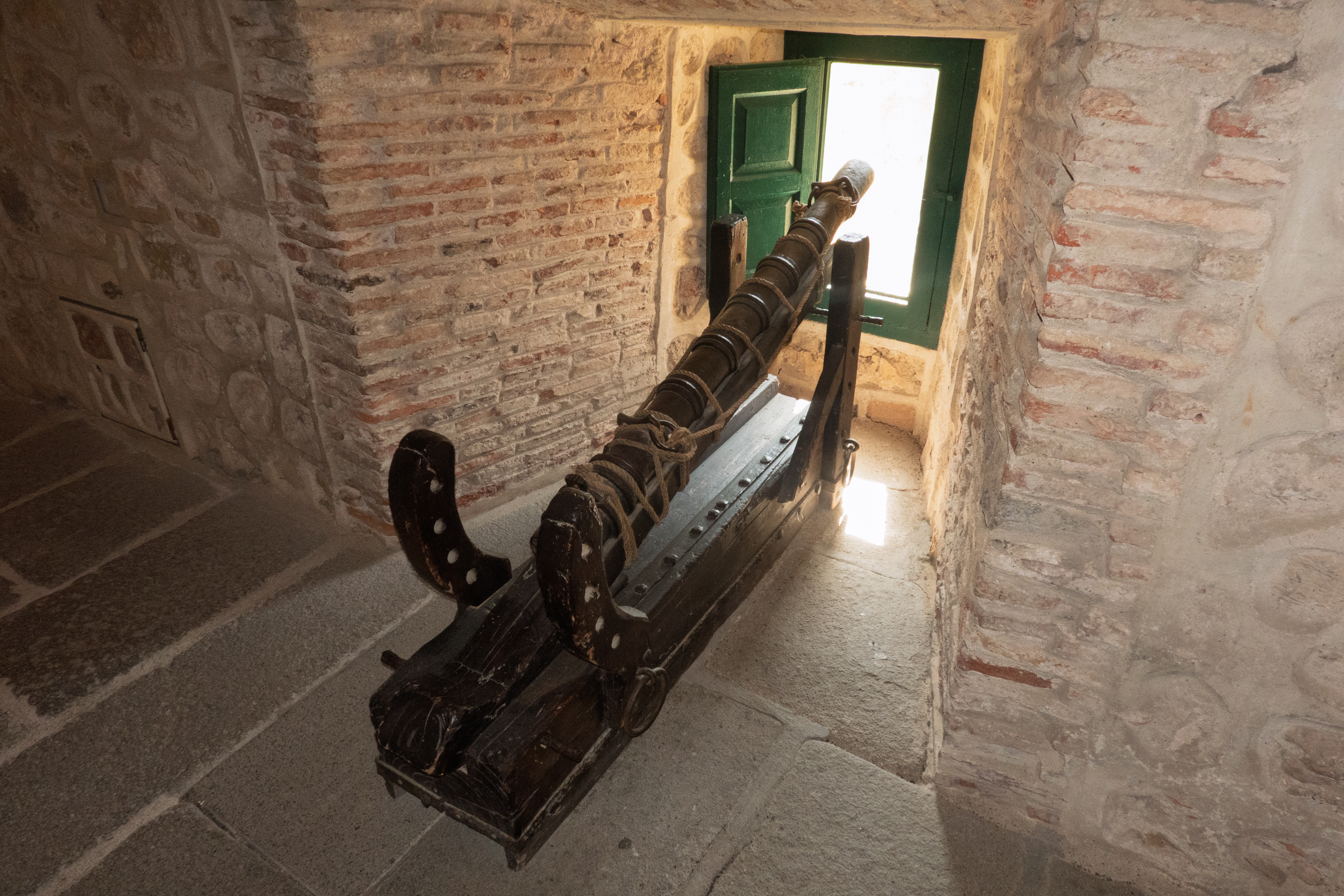
The Alcazar houses the Spanish Artillery School museum. Lots of exhibits about things that go “BOOM!”


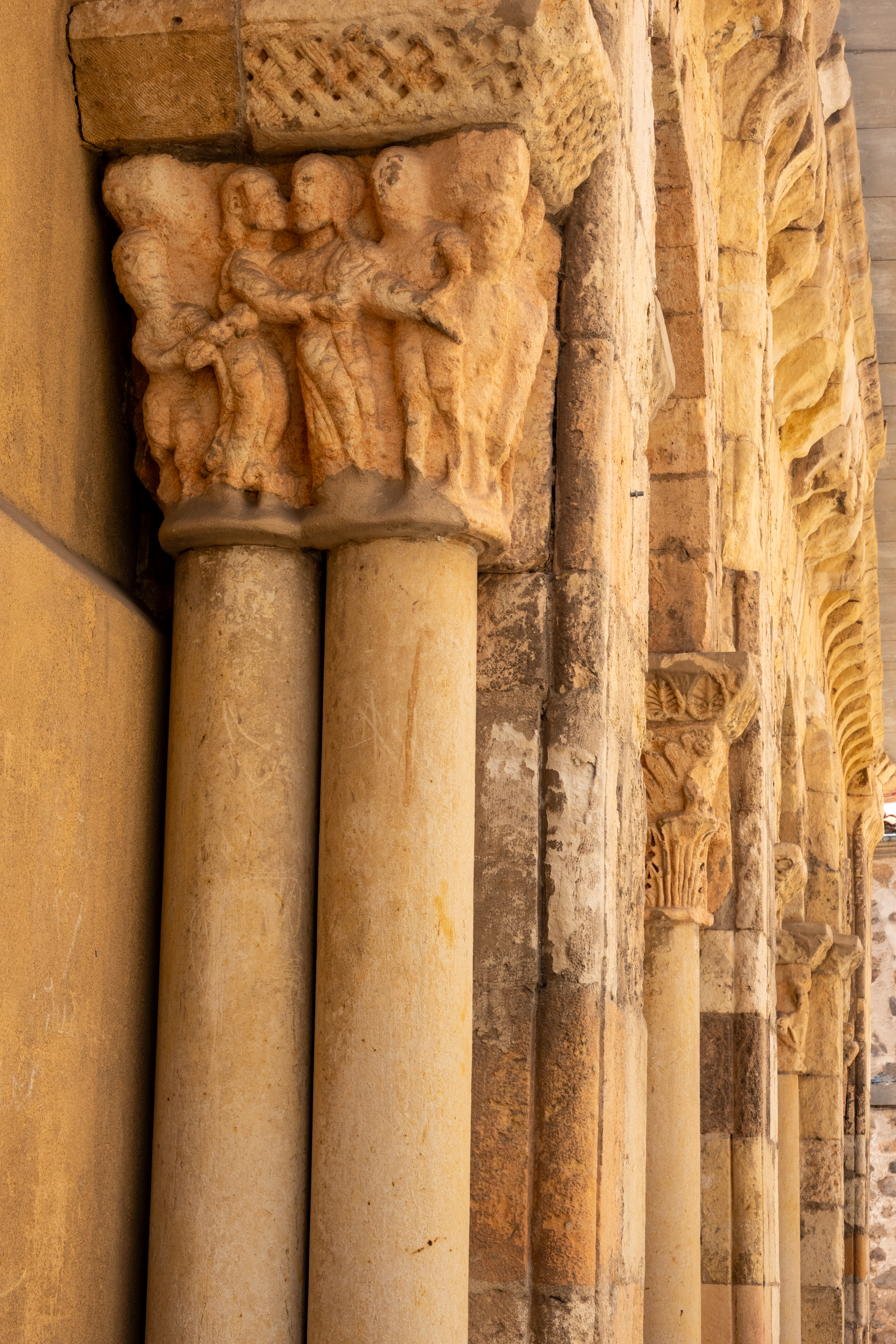
The cathedral, built very late (mid 18th century), was not out of the ordinary, but it was wonderfully cool inside! (https://en.wikipedia.org/wiki/Segovia_Cathedral)


The Segovia Aqueduct is really neat, if only because it is big and built without mortar. But it also features a nifty filtering system and was used all the way into the 19th century. All in all, amazing, and a nice counterpoint to our visit to the Pont du Garde in France. (https://en.wikipedia.org/wiki/Aqueduct_of_Segovia)


We ended our town visit with a typically monstrous Spanish lunch. The food, eaten outside in a pleasant plaza, a bit out of tourist central, was great and we had a nice chat with our neighbors at the next table – a British gentleman with a French wife. A French wife who has spent most of her life in England.


We finished the day with an easy taxi ride back to the campground.











 DiploStrat