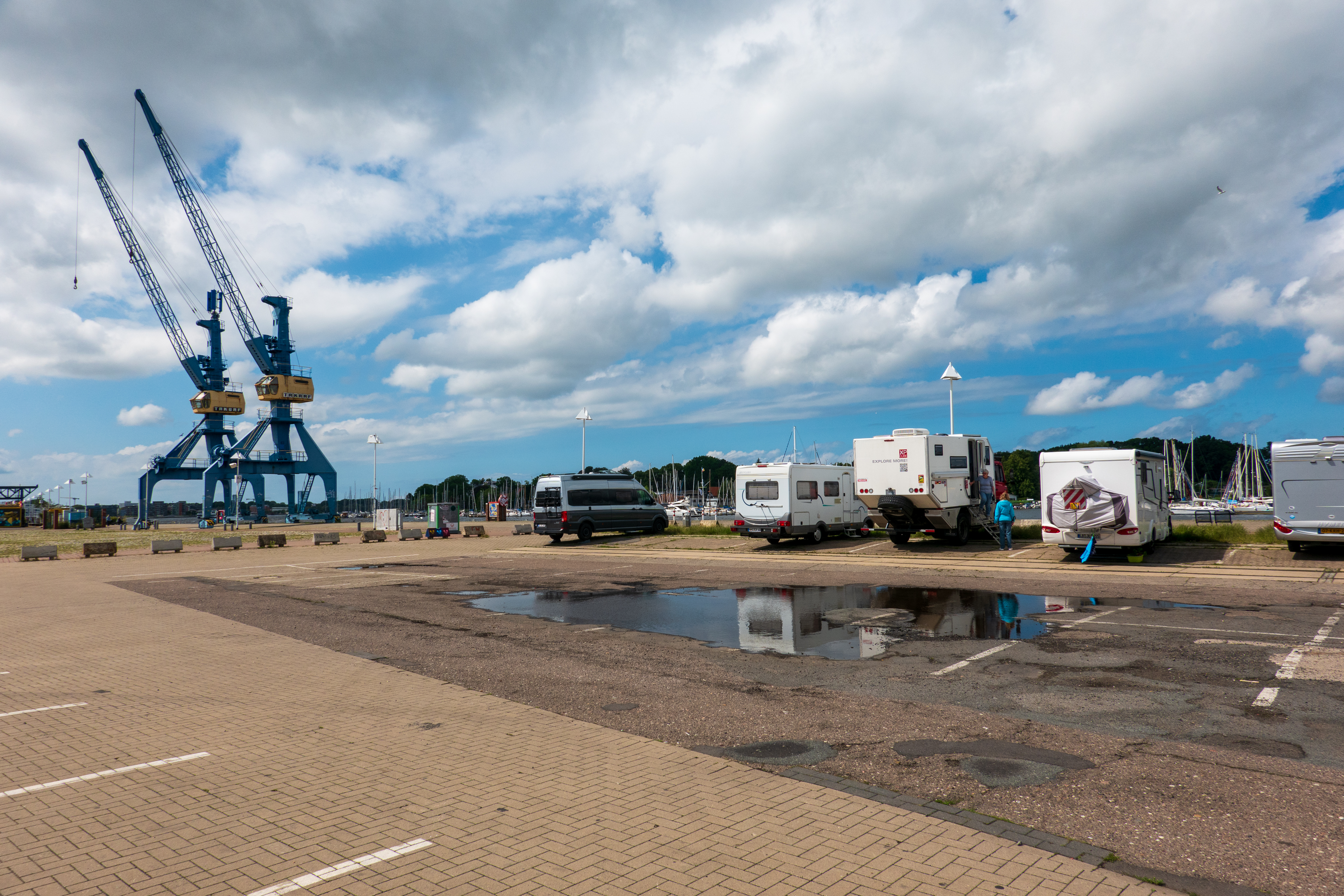
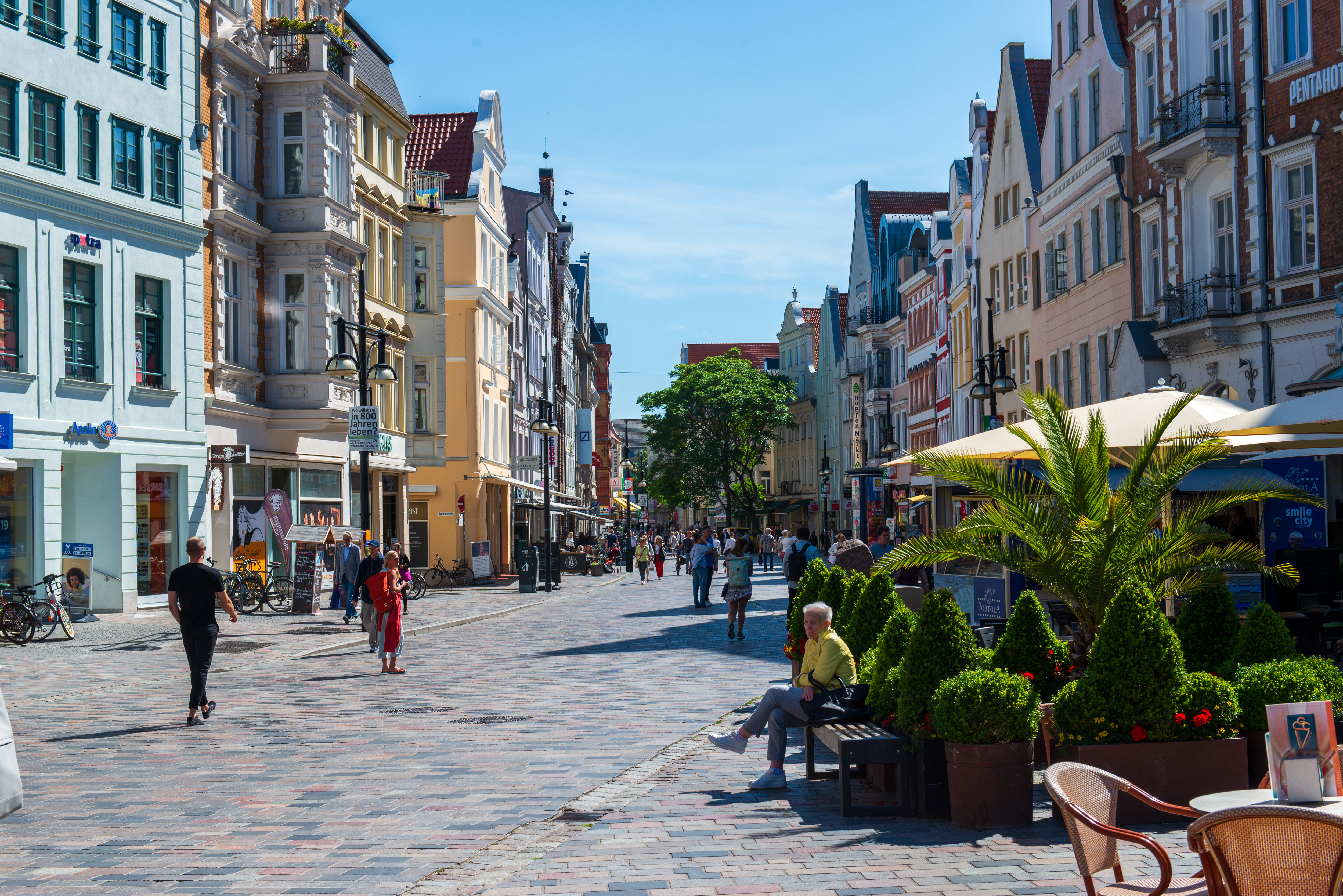
We landed in Rostock and headed for the city parking lot by the port, which accepts campers for a fee. It was a lovely location in easy walking distance of the Old Town and after we were organized (and early enough for a prime waterfront spot), we walked into town to have a look and had a coffee and an apple strudel (shared).
Lots of space when we arrived.
By the weekend it was packed.
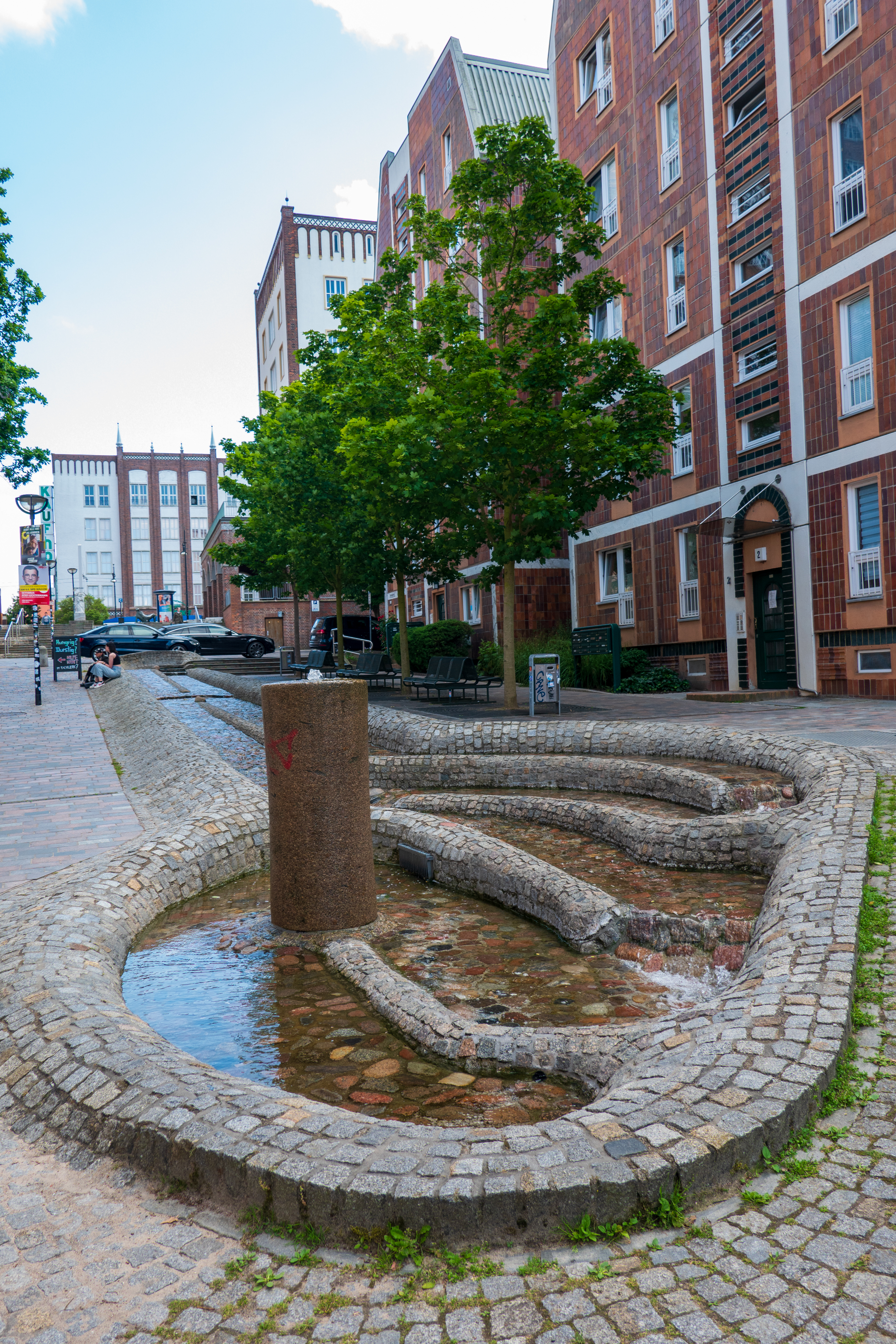
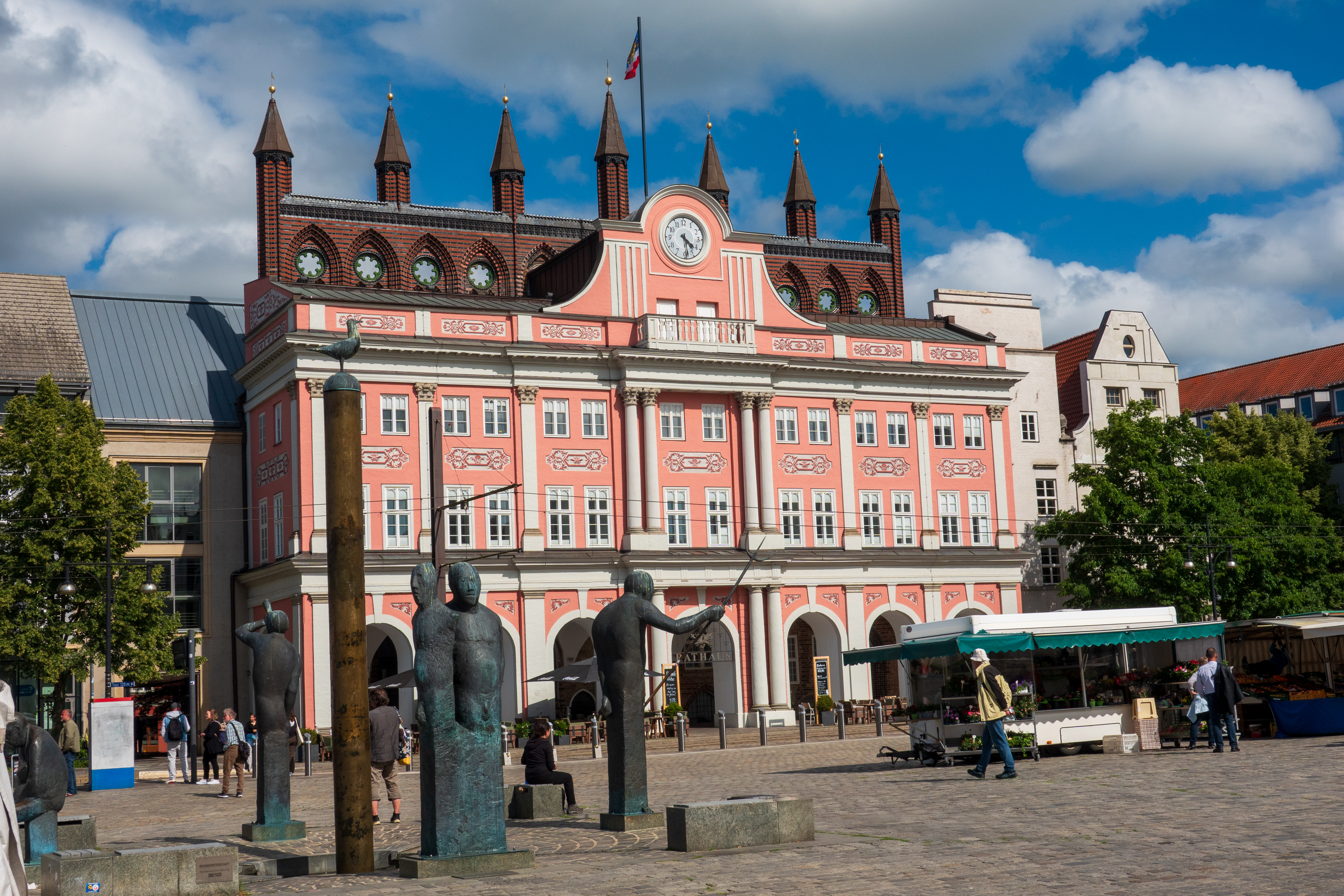
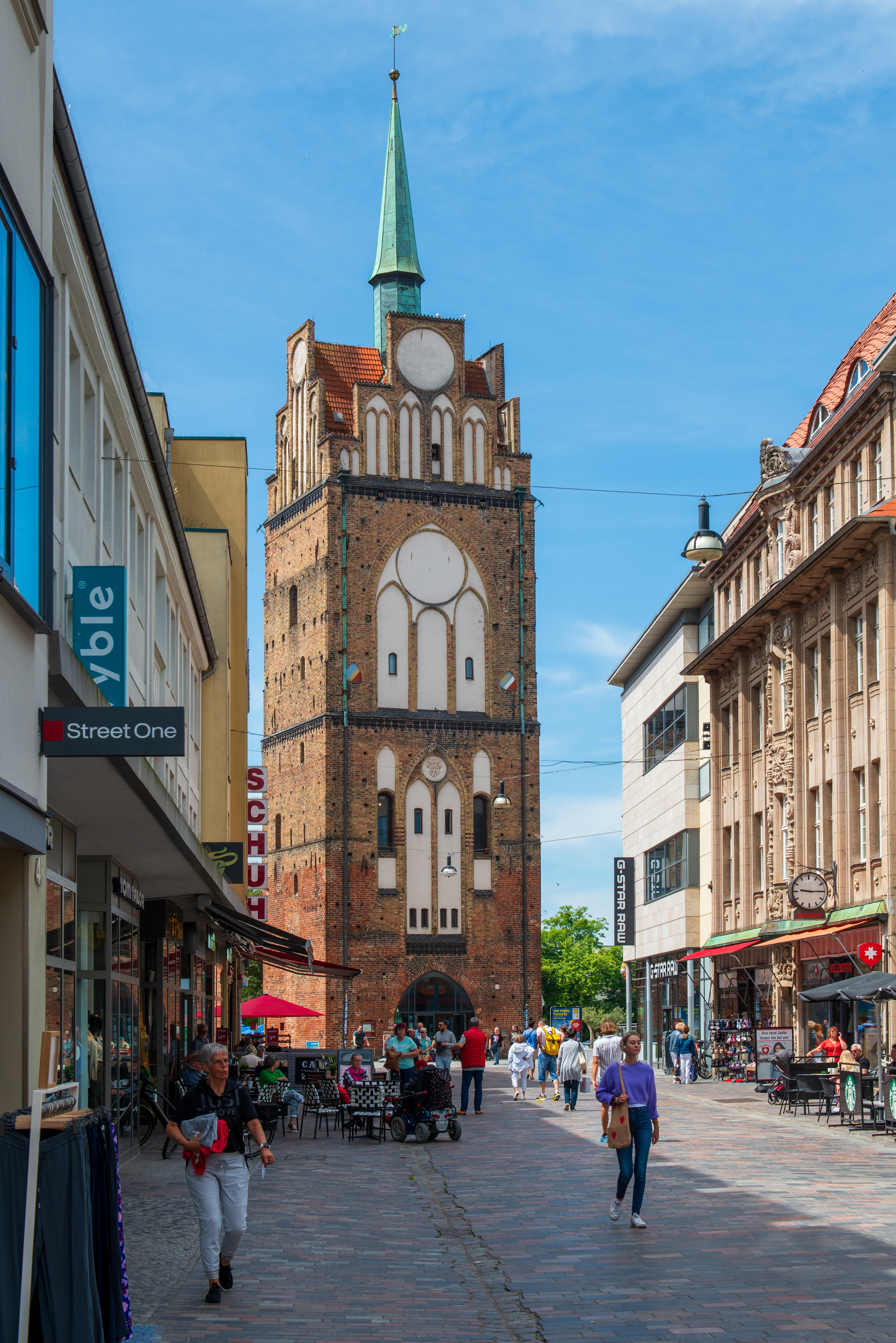
Rostock is not high on the list of scenic towns in Germany, but parts were very pretty.
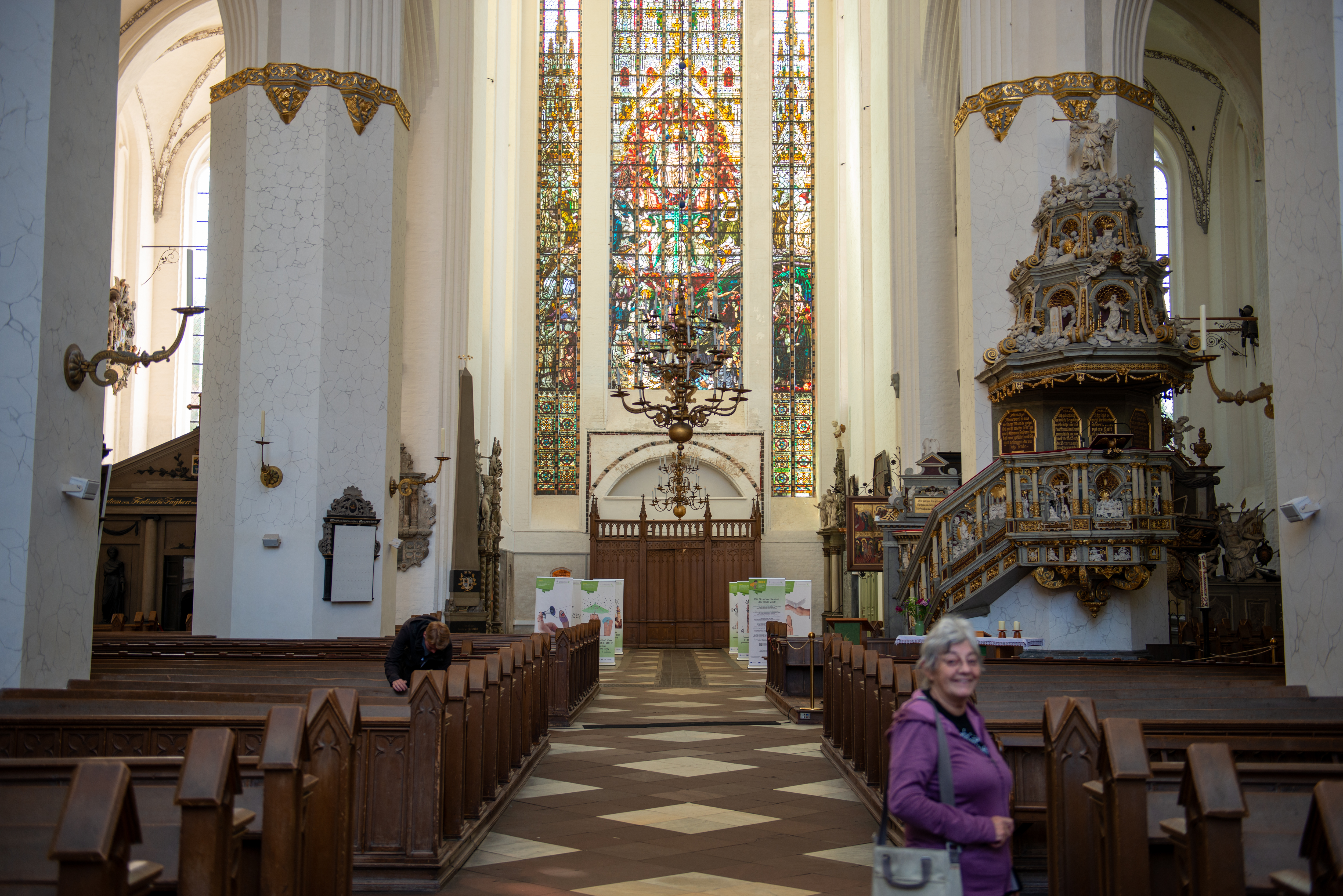
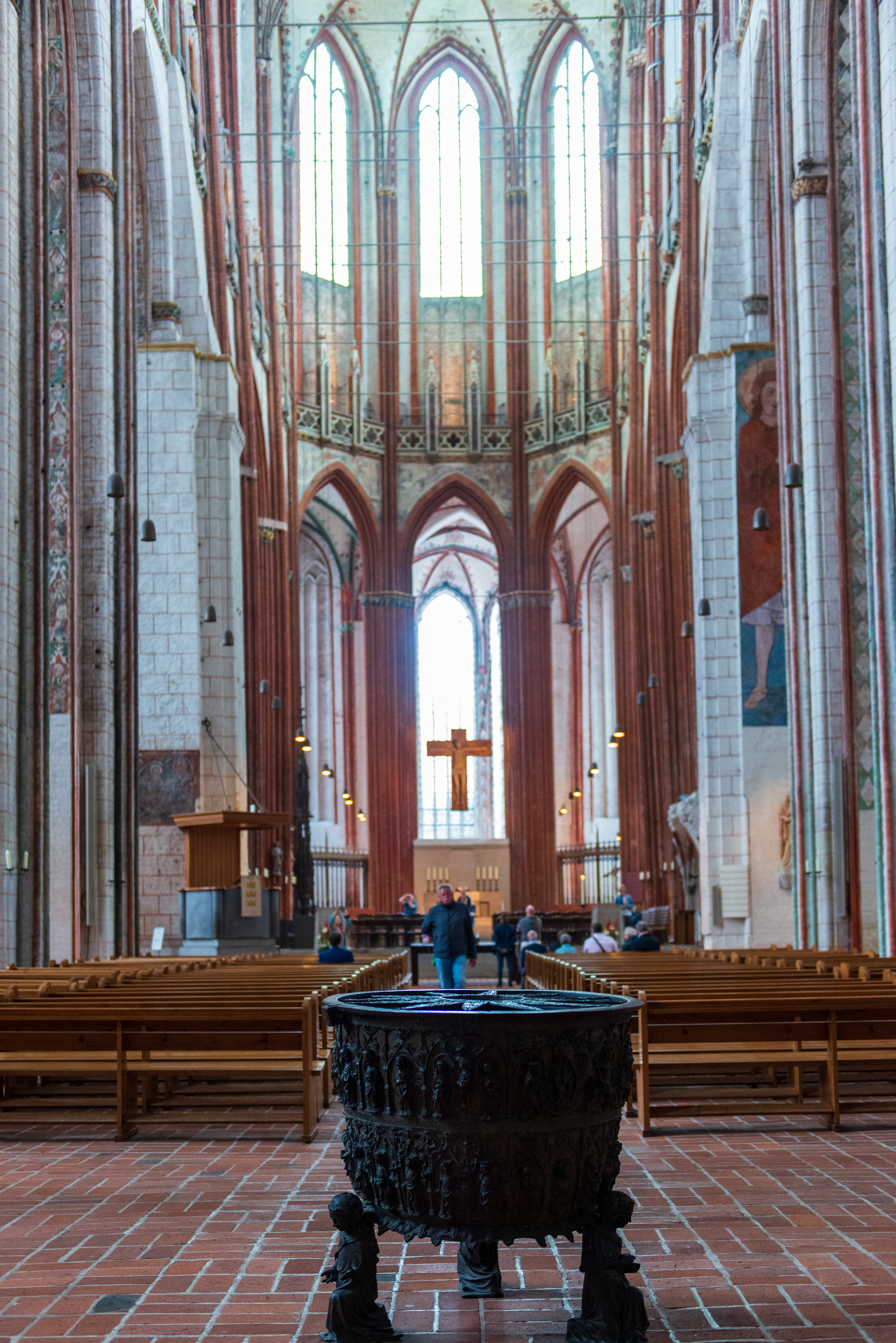
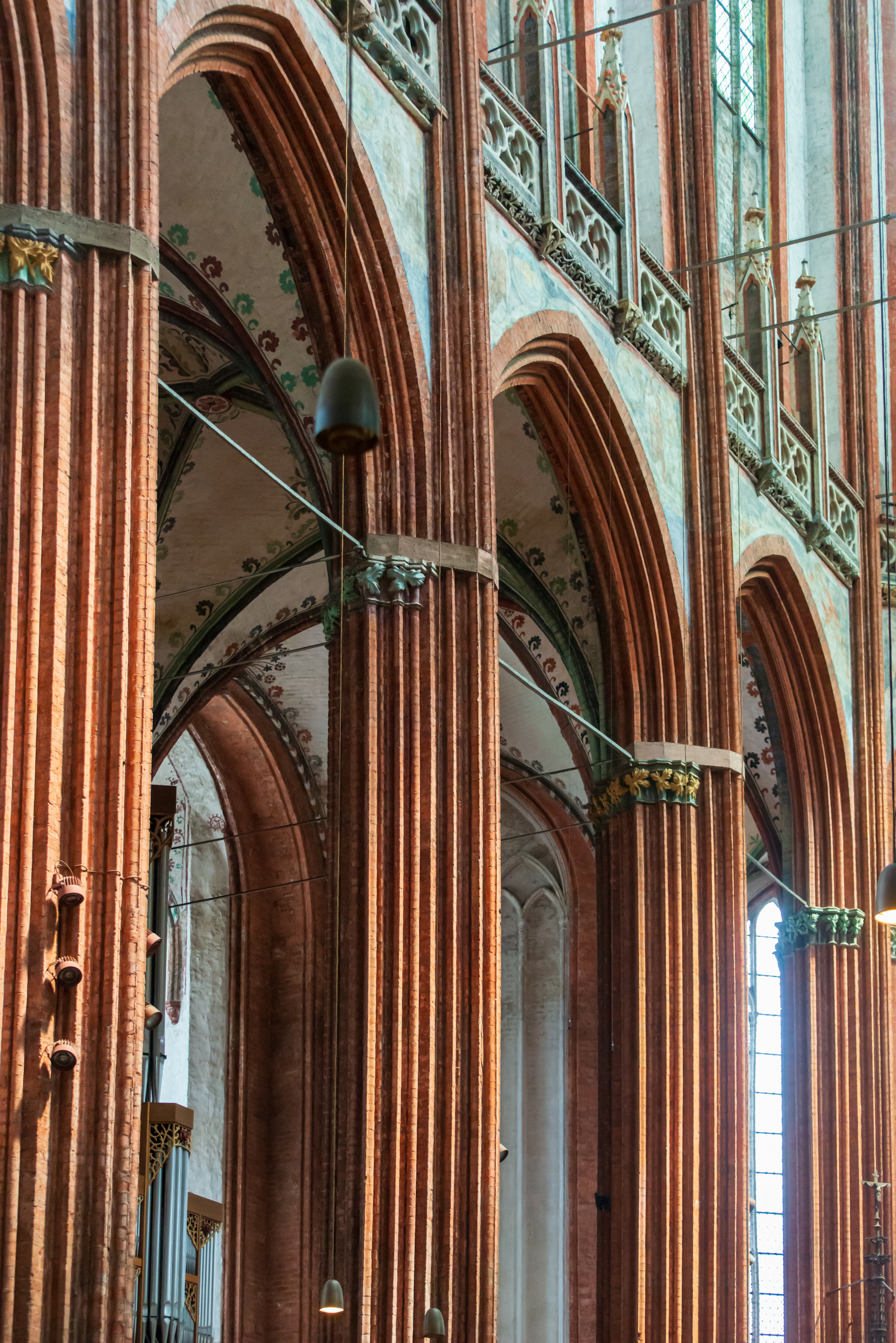
The next day we headed to the Marienkirche, the Church of Saint Mary. A first hall church was built there in 1290, rebuilt as a three nave church and basilica in 1290 and completed in 1398 and 1454. 9https://en.wikipedia.org/wiki/St._Mary%27s_Church,_Rostock)
Behind Denise are the “Last Judgement” window and the ornate pulpit.
It is quite an amazing church, with a huge organ from 1770. The organ has has been rebuilt several times.
Simply massive.
We were able to hear it for three short pieces and thoroughly enjoyed it.
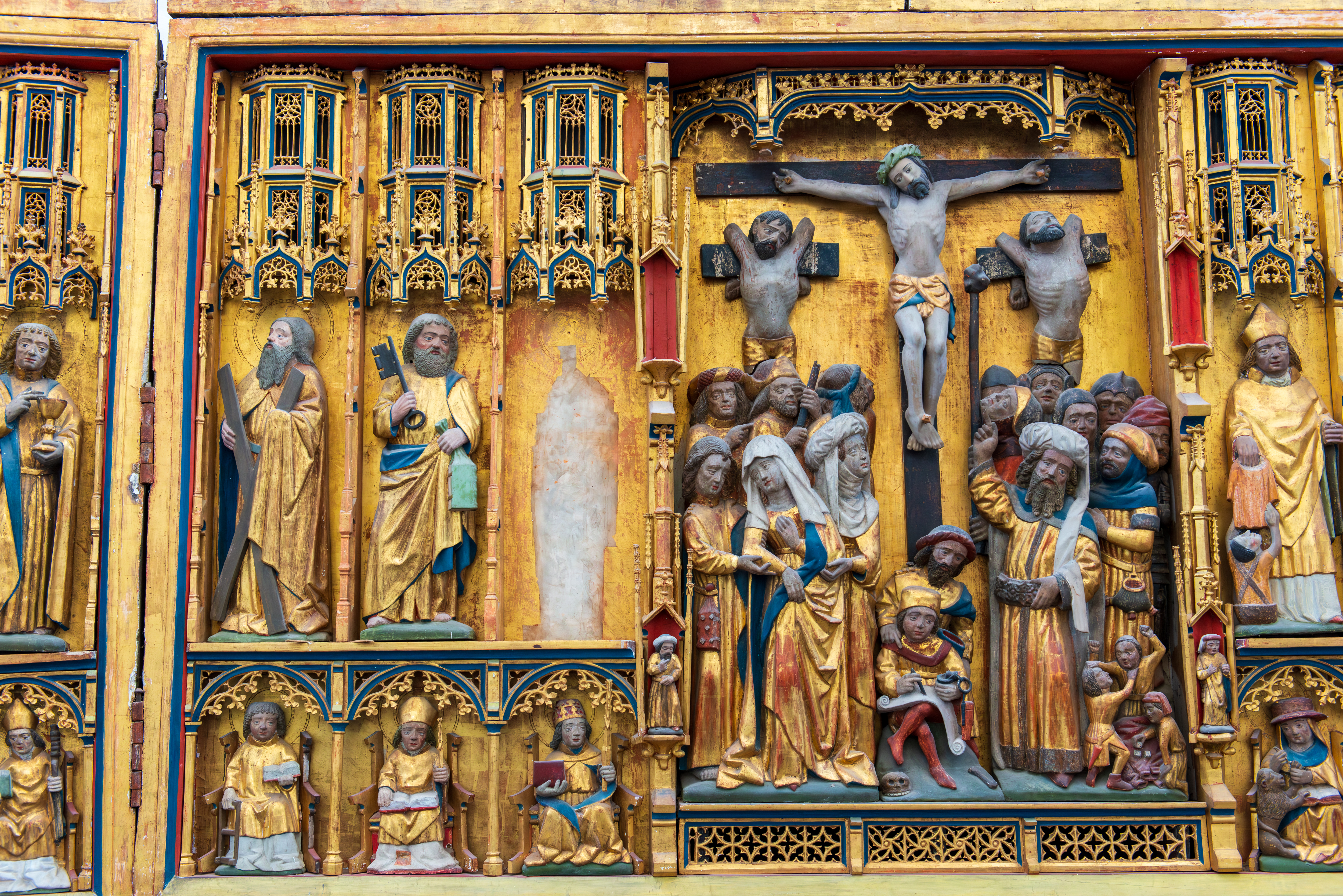
Many European churches have fold out, triptych paintings or carvings, often placed behind an altar. This one was the main altar of the church of Saint Nicolas. The Saint Nicolas Church was badly damaged during the war.
The triptych as presented today.
The triptych was removed for safekeeping during the war. When it came back, one of the saints (St. Nicolas?) was missing.
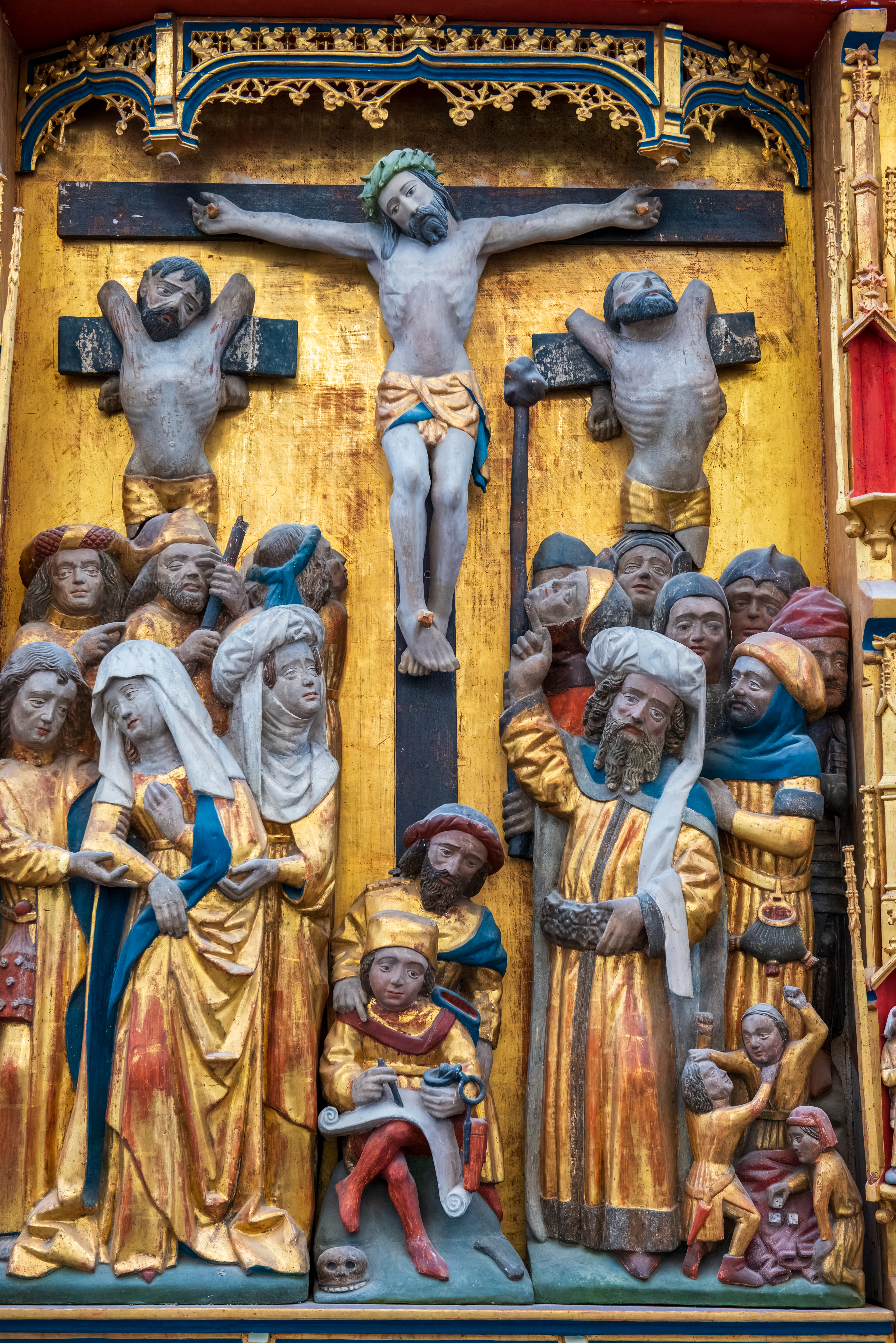
Things you find in the basement. Not much is known of the origin of this painting on wood, but zoom in and you can find almost every Christian moment/message/symbol, even the Shroud of Turin. Today it rests on one of the walls, a reminder that medieval churches were literally Bibles in stone for people who could not read.
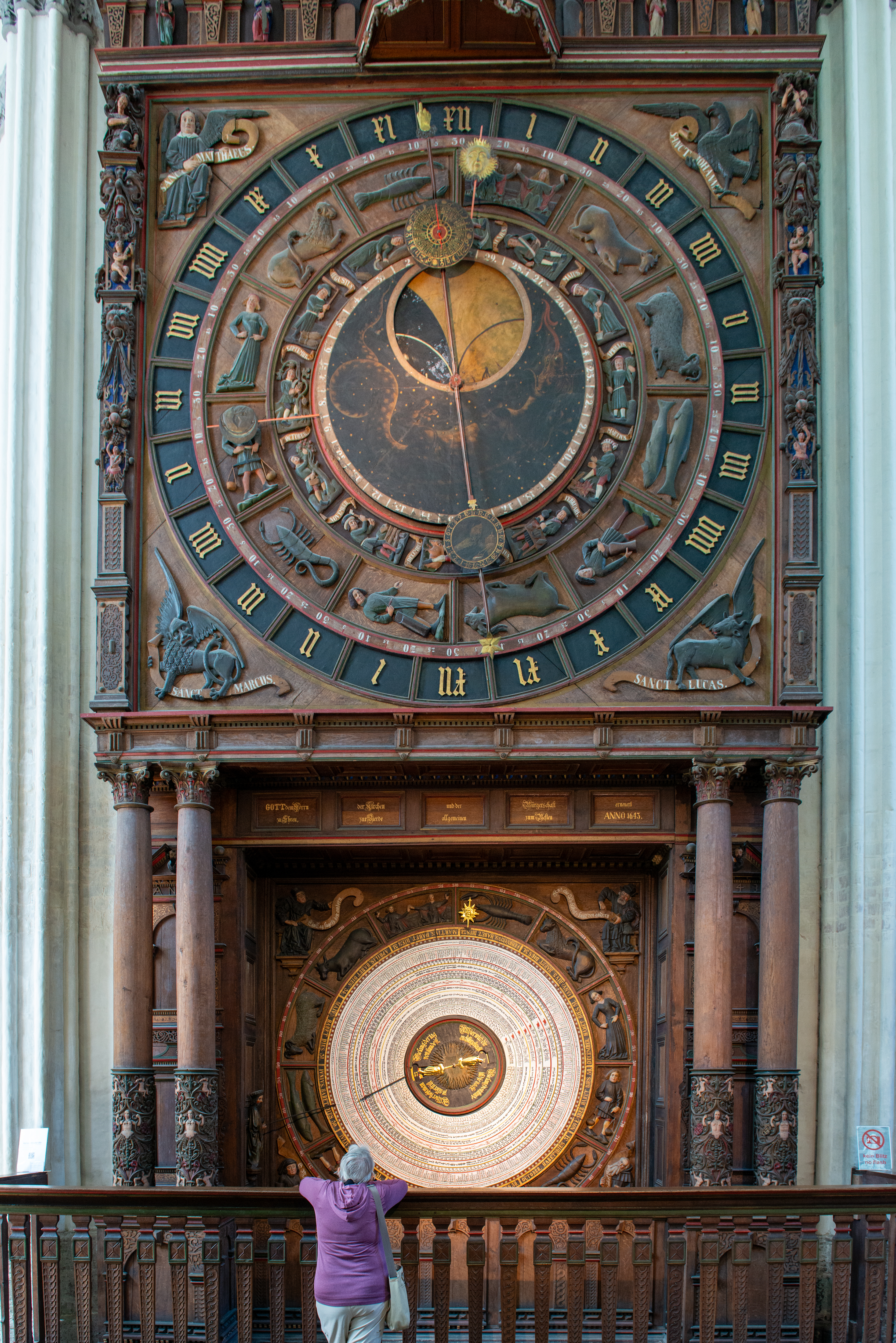
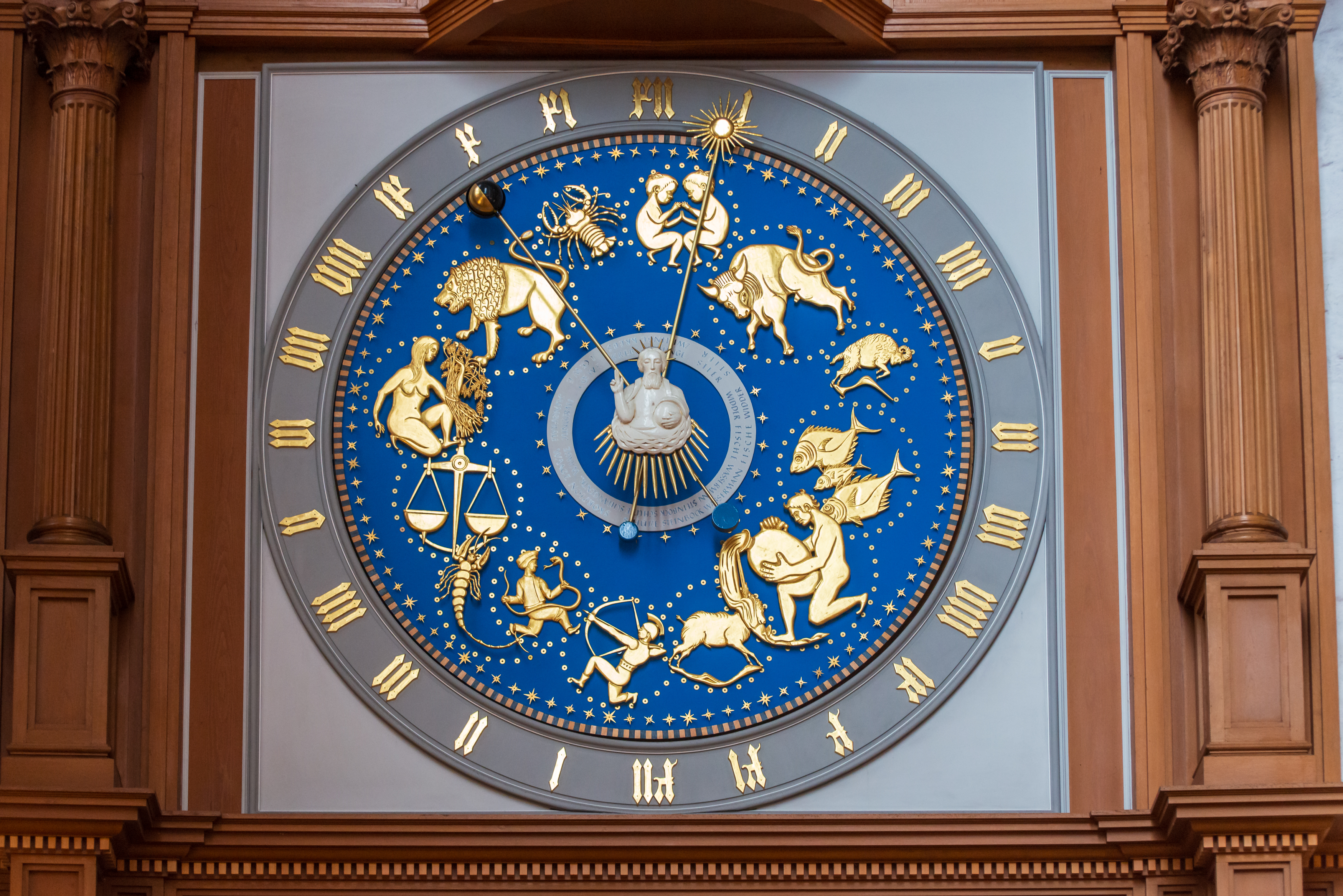
The Church also has an amazing Astronomical Clock from 1472.
Denise getting oriented as to time, space, and the sign of the Zodiac.
It is wound daily, by hand, and still runs on the original medieval clockwork mechanism, which was restored in 1977. At noon, the Apostles visit the Jesus, but they are so far up, you can barely see them. There there is a calendar plate with information on the day and year, with time, zodiac, solar altitude, and phase of the moon. The calendar plate has been replaced four times.
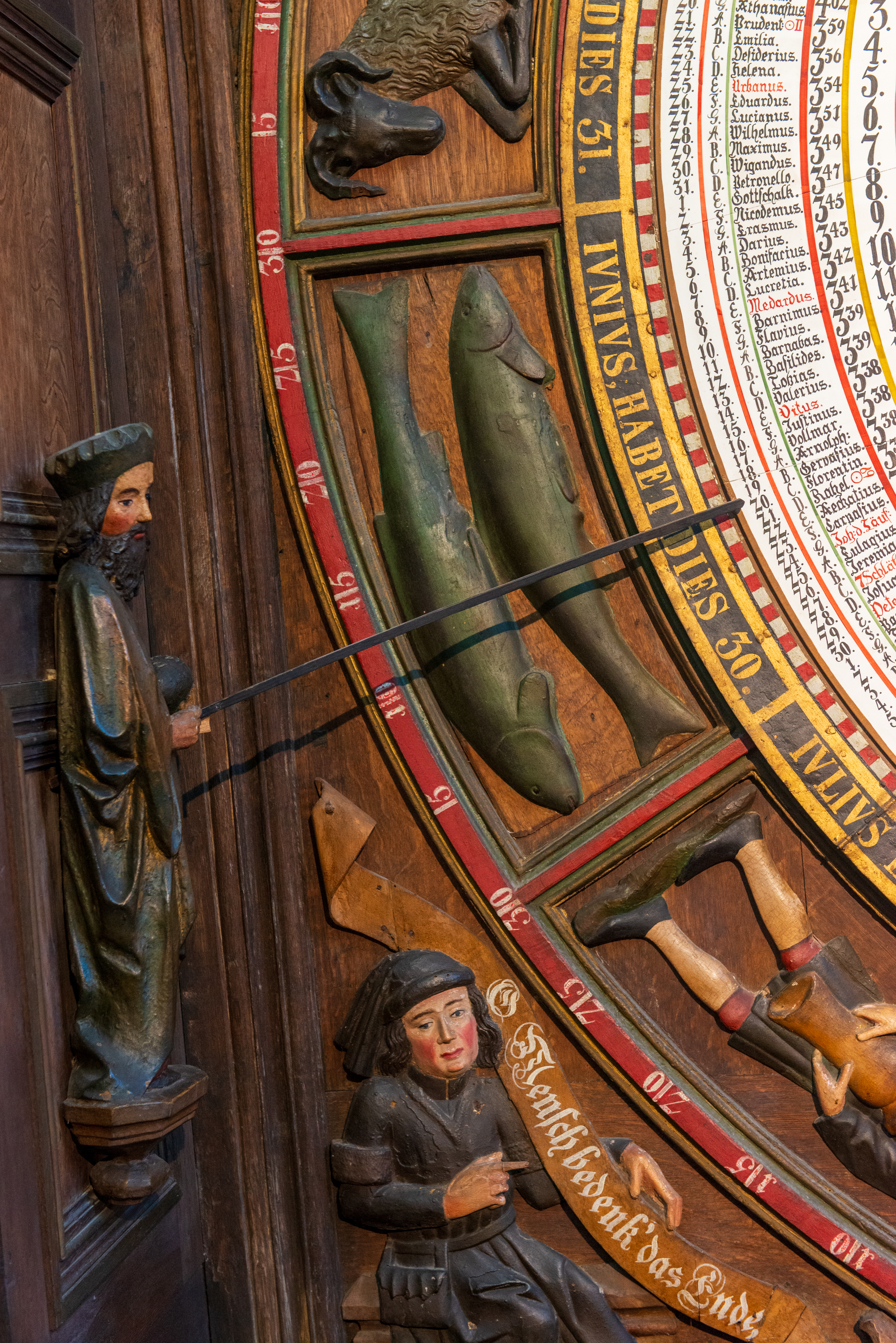
The gentleman in the picture on the left is pointing to the date and time of our visit. You can’t wear it, like a Rolex Day/Date, but it tells you so much more. Note the reminder – June (IVNIVS) has 30 days. Did you remember the I – J and the Y – U shifts? Fans of Indiana Jones and the Last Crusade will get it. And watch their step.
You are here, in time. First time we have ever seen Gemini, the twins, presented as two fish.
Remember learning to read a clock when you were a child. This is the mother of all clock faces.
While at the Church, we saw a leaflet for a choral concert on the Friday evening. A visiting choir from Schwerin was to sing a dozen settings of “Songs of Praise, Psalms and Prayers”. We decided to extend our time by a day so that we could attend.
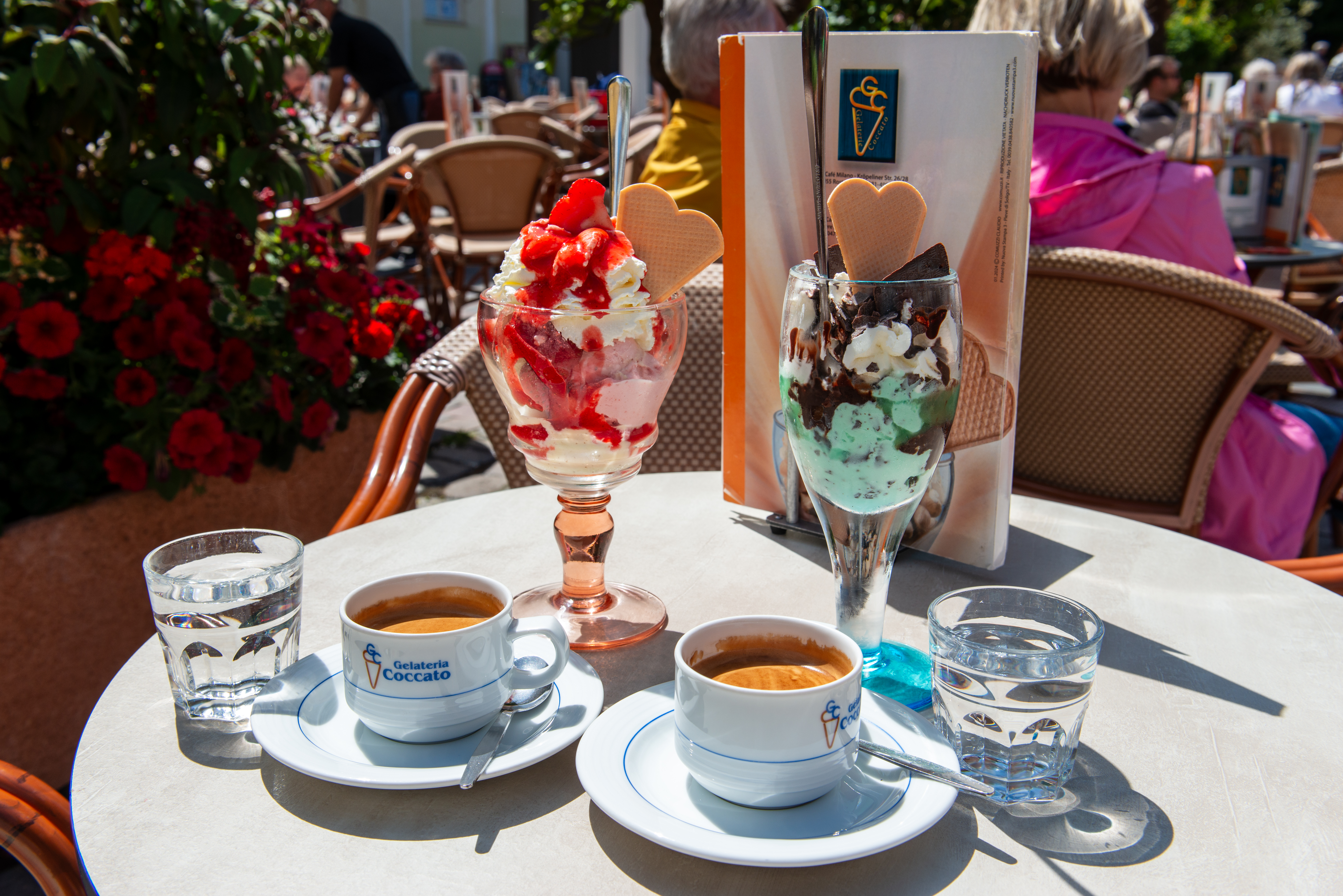
We headed for a currywurst as a late lunch followed by an ice cream extravaganza on the street.
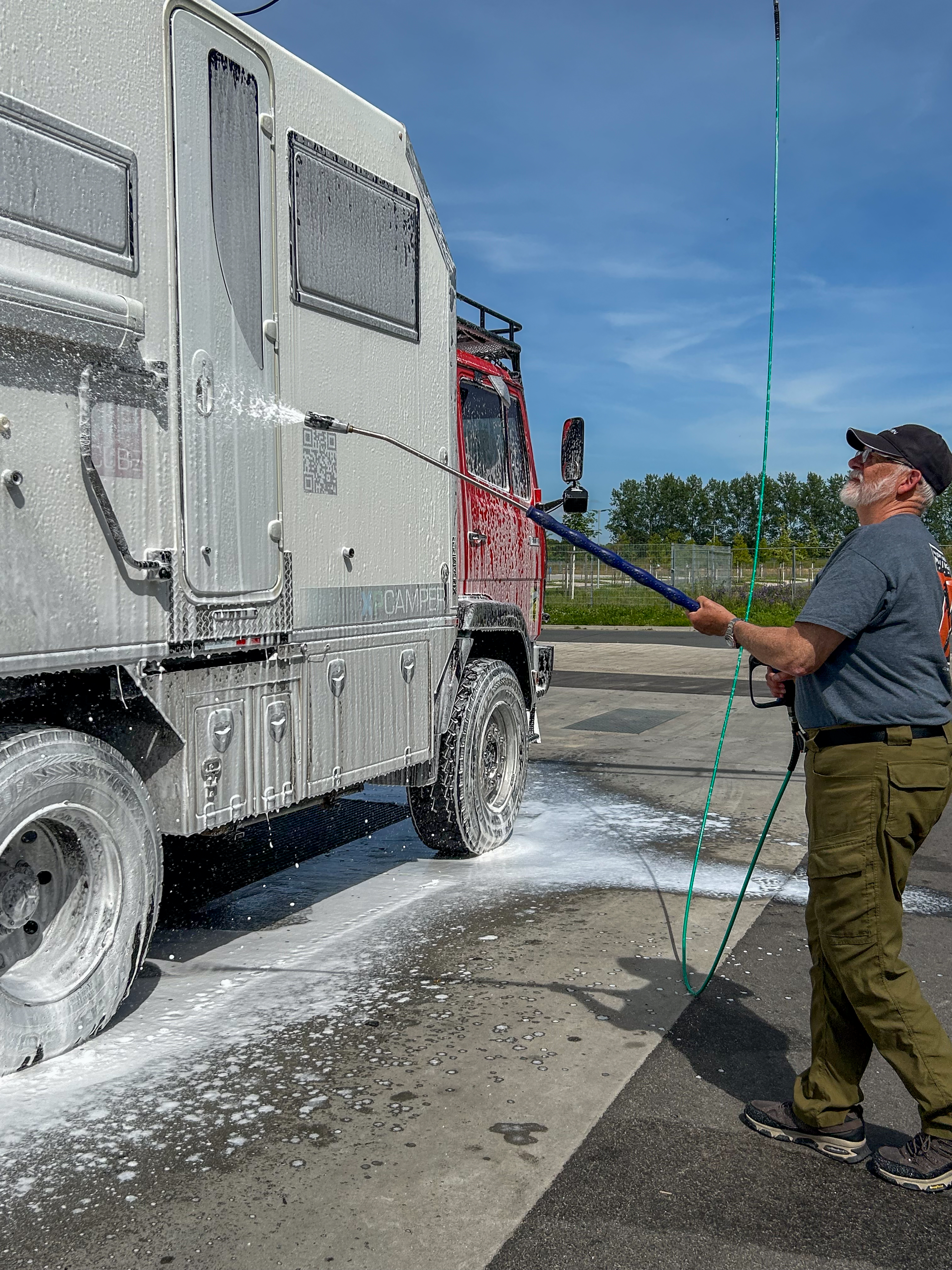
Then we went off to wash the camper as it was dirty. It had proved hard to find a car wash that could handle a camper. We followed a gentleman washing his tractor trailer in preparation for a show! Fortunately he could explain how everything worked.
REALLY needed a brush, but things were still better.
The following day was laundry day and grocery shopping day. Both at the same place and great fun. The grocery store was huge and had absolutely everything.
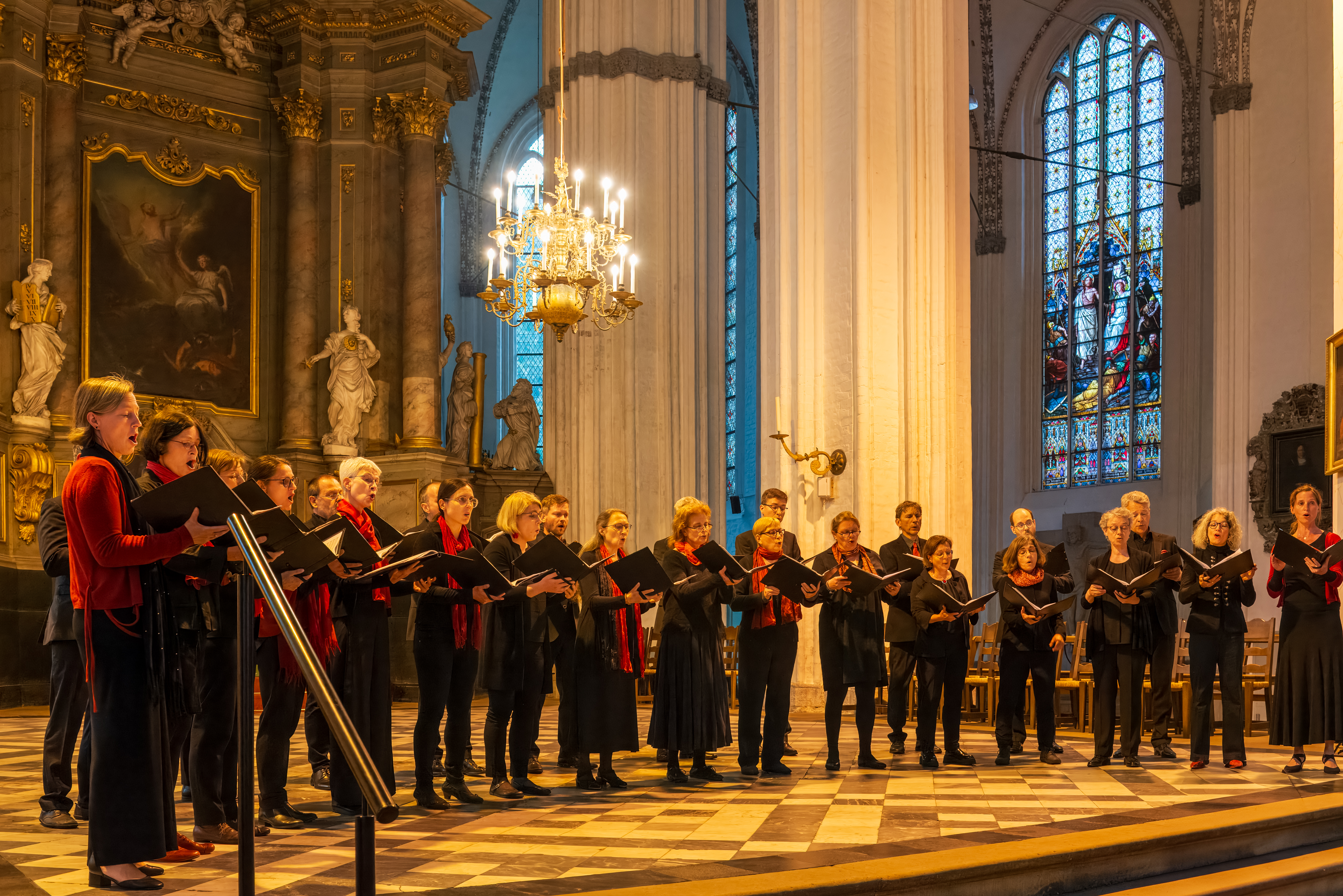
Rain was forecast but fortunately stopped, just before we left for the concert. The visiting choir consisted of 24 singers and they sang a selection of settings to psalms and other sacred music from Gabrielli to Stravinsky, Mendelssohn to William Mundy (1529 to 1591). Everything was a cappella and the pitch note was given by their director using a tuning fork against his head. He often sang the notes of all four parts. Really quite amazing and beautifully sung.
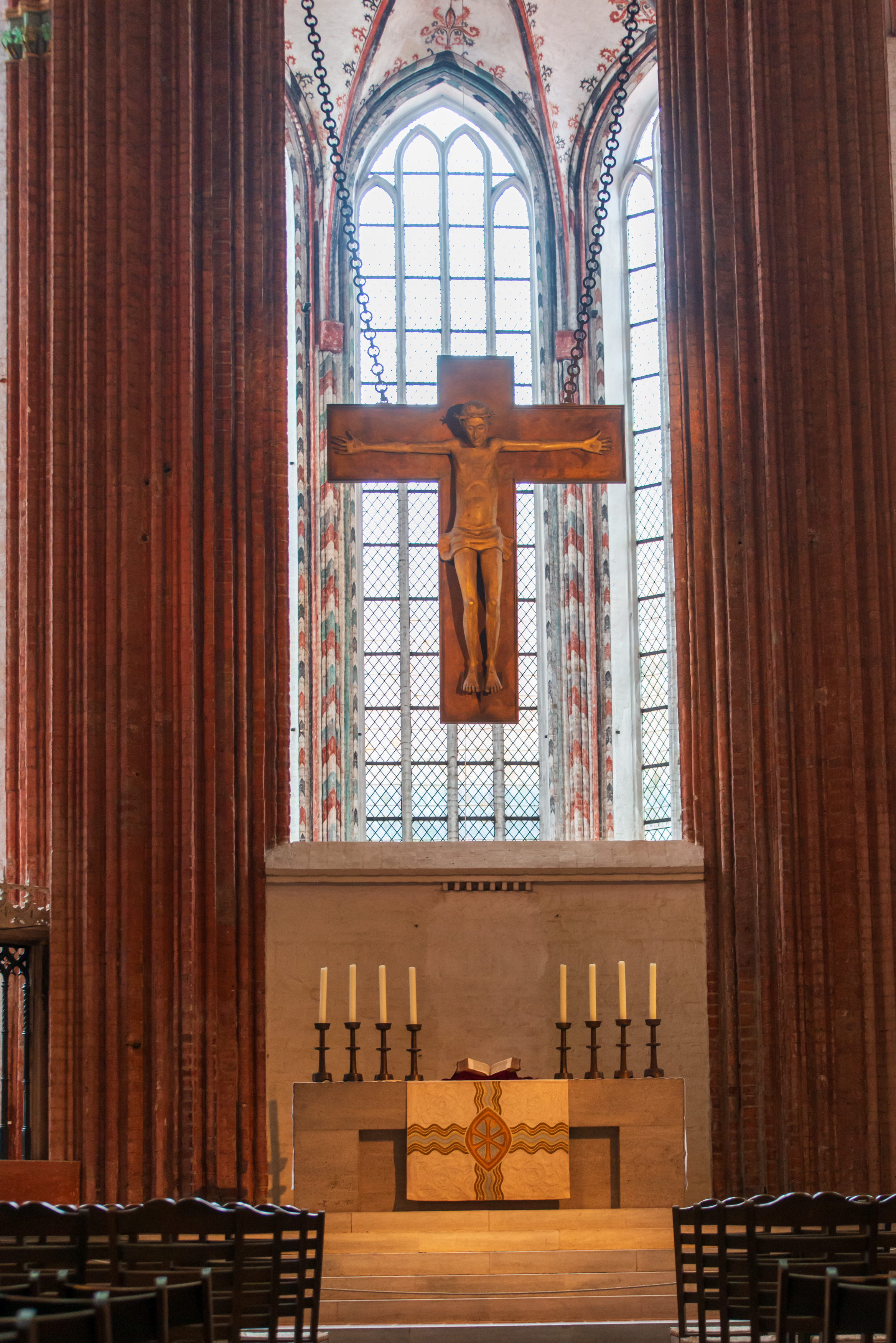
High altar in the background.
We decided that our next stop was to be Lutherstadt Wittenberg, part of the Martin Luther Trail.
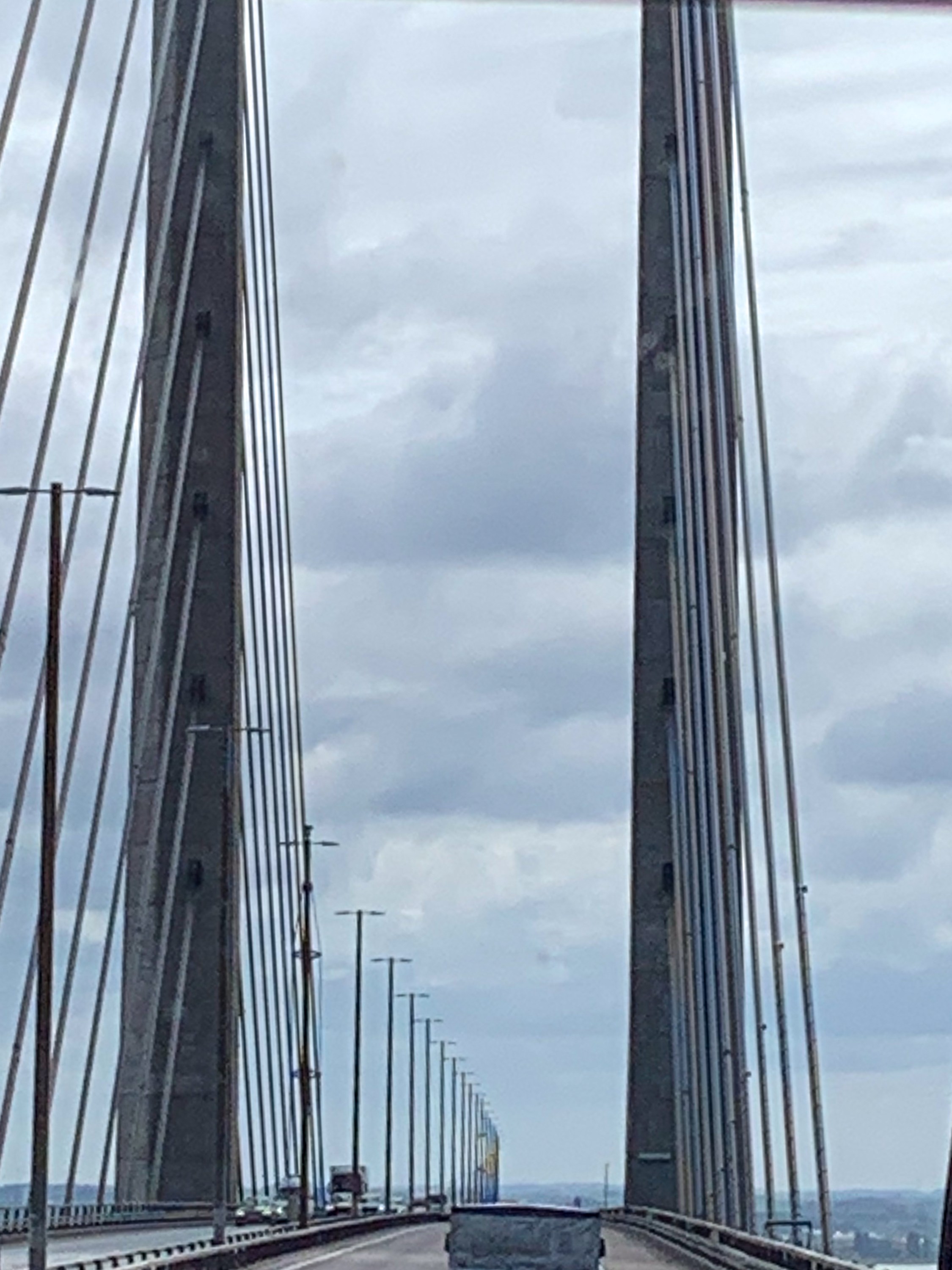
Crossing the big bridge/tunnel from Copenhagen to the southern part of Sweden, we discovered different kroner (the Danish ones had been challenging enough!), and yet another language that we did not speak! We have found being unable to speak these languages more challenging than we expected. We have clearly gotten too comfortable touring where we have no problems communicating.
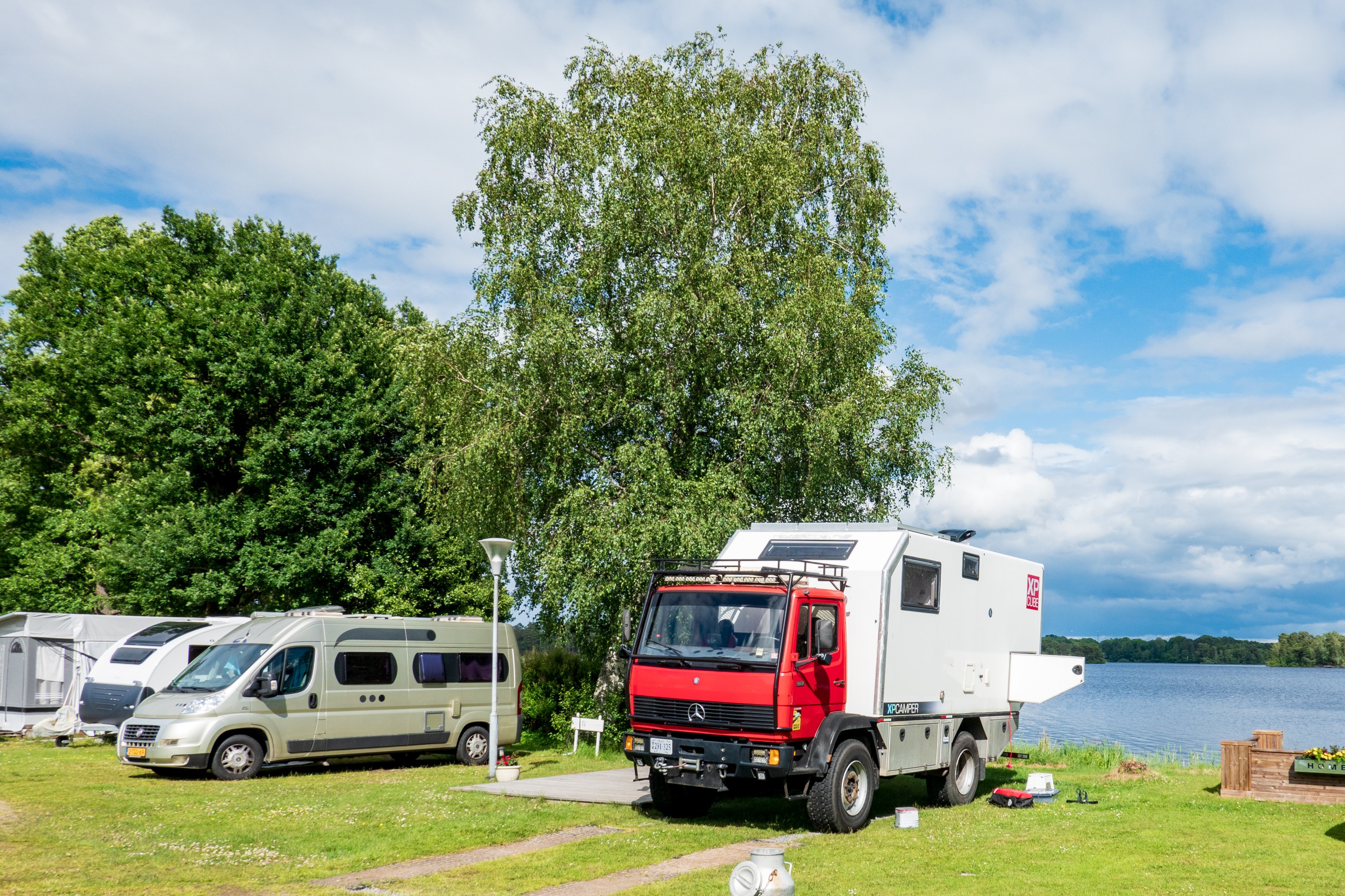
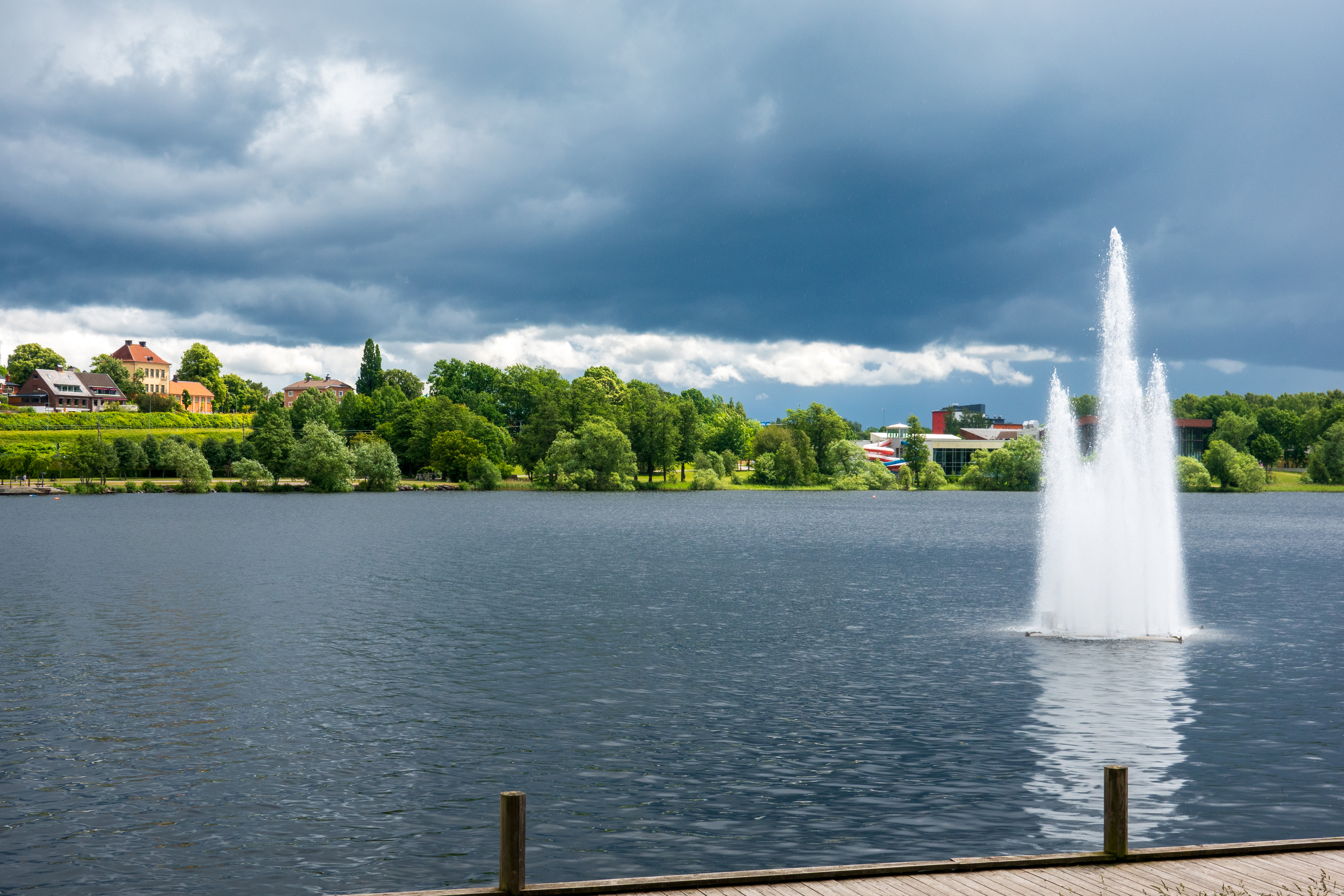
We headed for Vaxjo because Denise wanted to see the “Glass Country” of southern Sweden. Vaxjo is lake vacation land and we stayed at a nice site backing onto a pretty lake. When the sun came out, it was just beautiful. They gave us a lovely site with a wooden deck, but it rained too much to use it.
The next morning, we got on the bikes and headed into town, with a pause under an overpass to let a cloudburst pass.
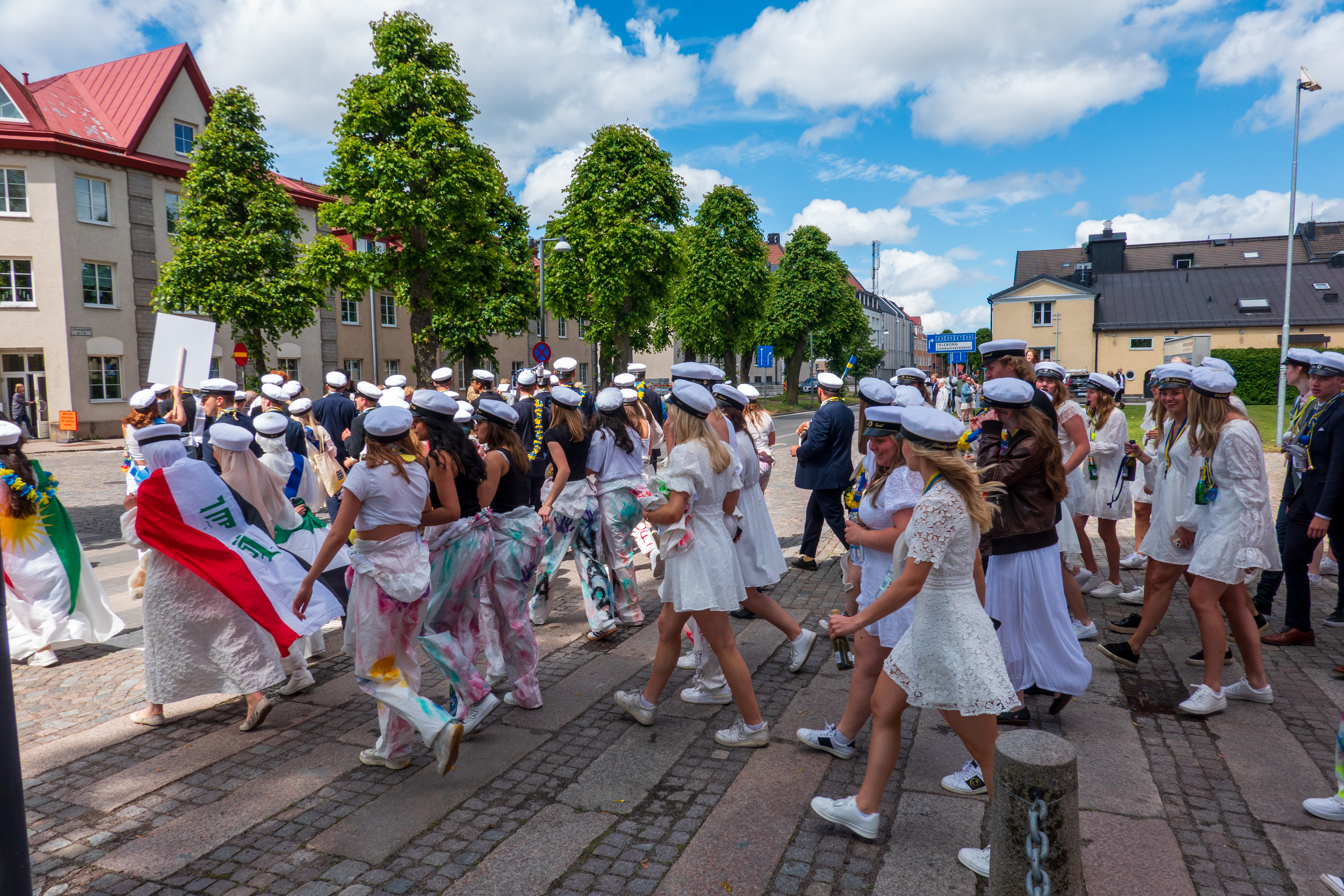
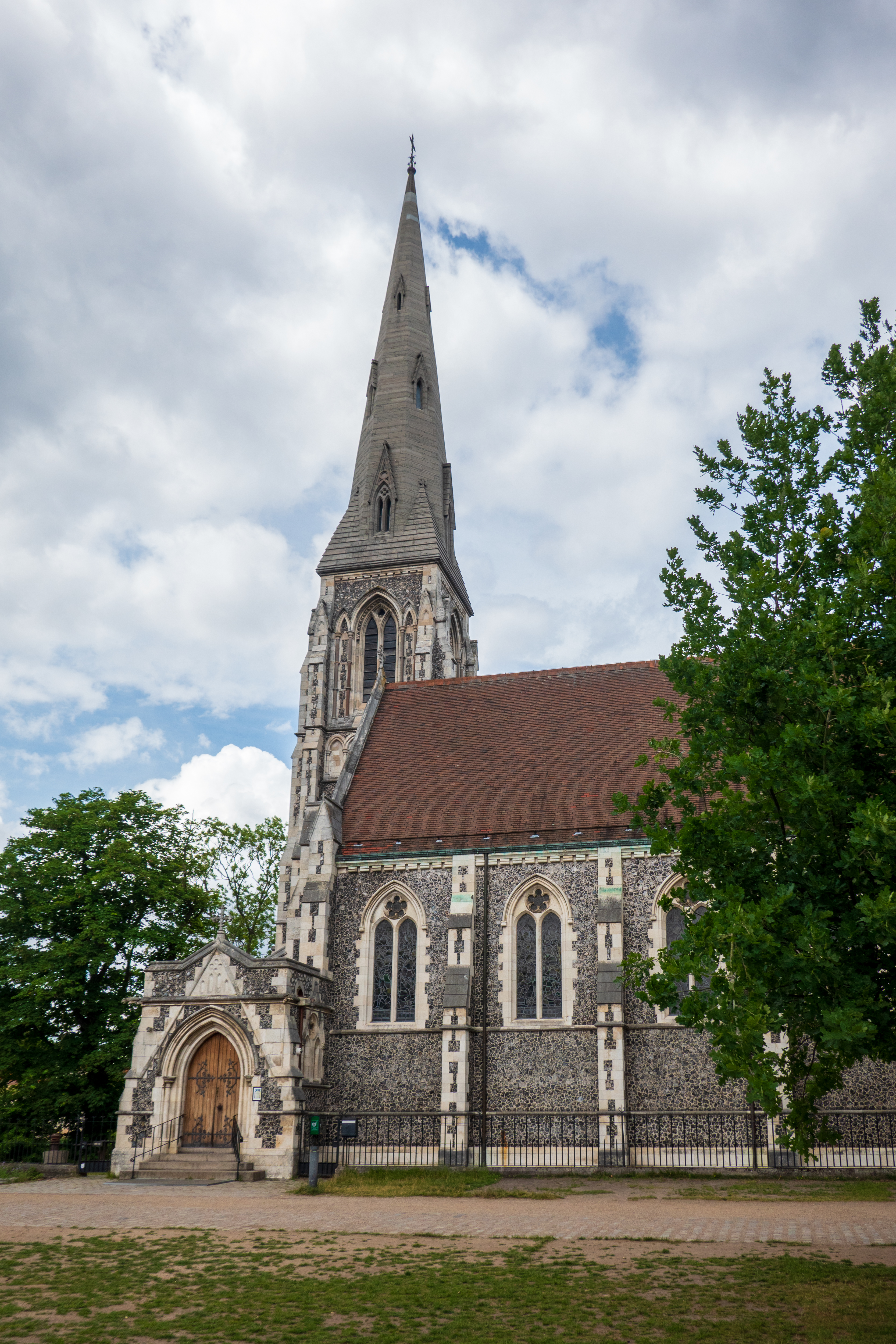
Downtown Vaxjo turned out to be very pretty, with more lakes, a scenic church, and graduating students marching everywhere.
Our first stop was the glass museum, which turned out to be more of a display of artistic glass pieces than an actual museum.
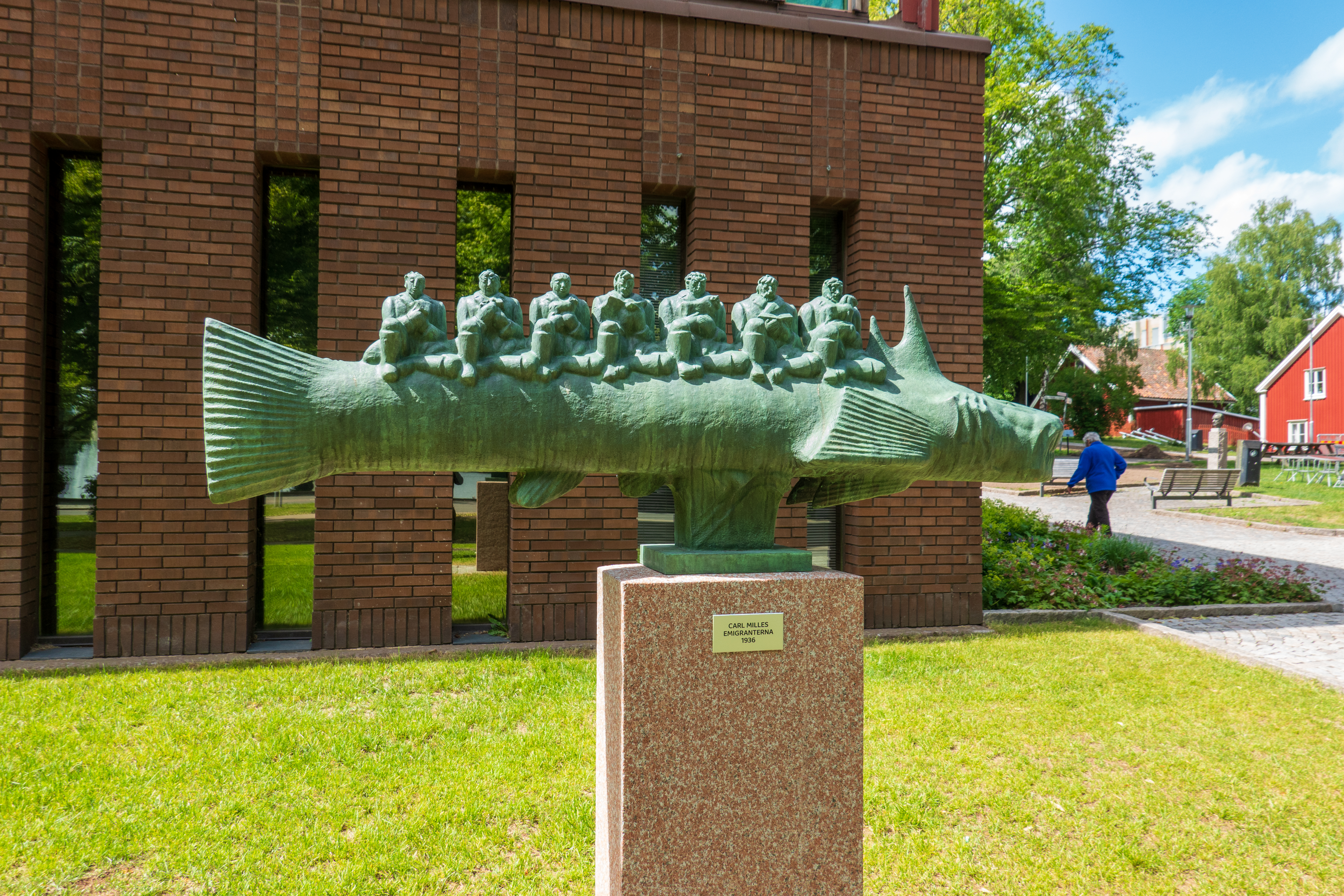
But we very much enjoyed the Museum of Swedish Emigration, which dealt with the vast number of Swedes, who had emigrated to the US, including mode of transportation and where they settled in the US. Some fascinating artifacts and stories of Swedes on the Titanic – some made it, many did not. We had seen a mirror image museum in Duluth, Minnesota.
Artistic representation of immigrants on a fish.
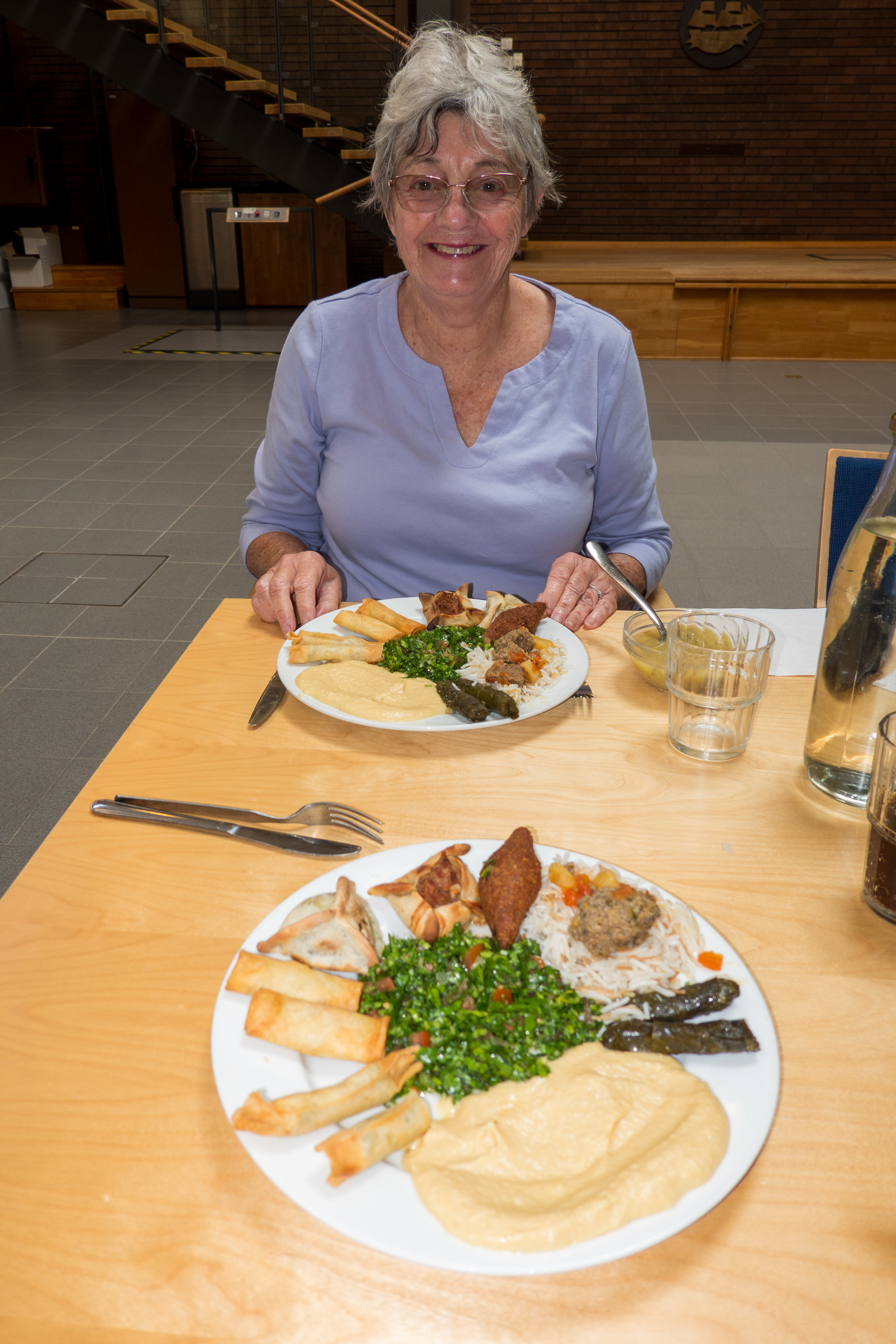
The Museum had a lunch counter serving Lebanese food, to our surprise. So, of course, we ate lunch there and had a nice chat with the owner and her mother.. An interesting reminder not to focus exclusively on immigration to the United States. There are immigrants going everywhere – anywhere they can make a better life.
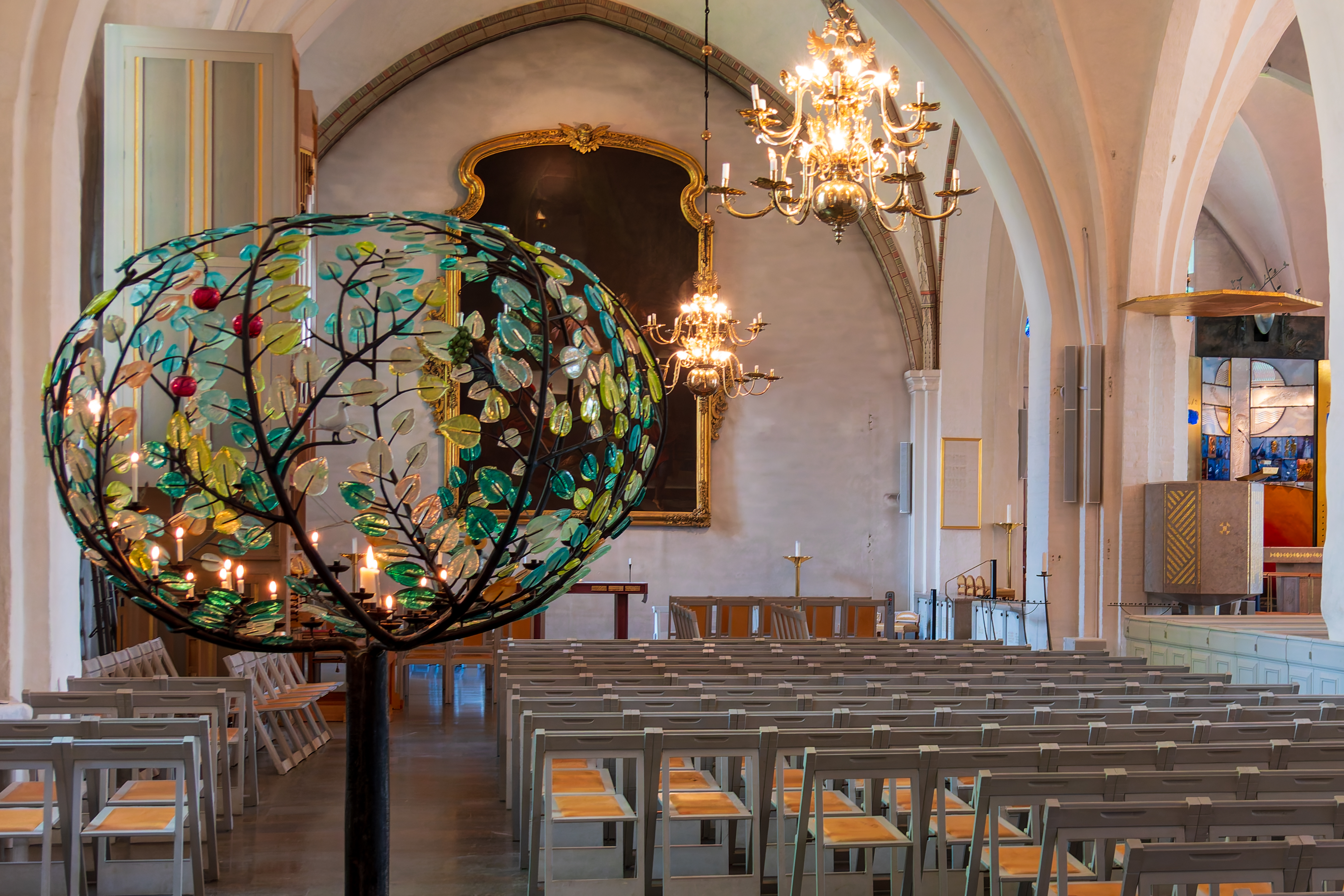
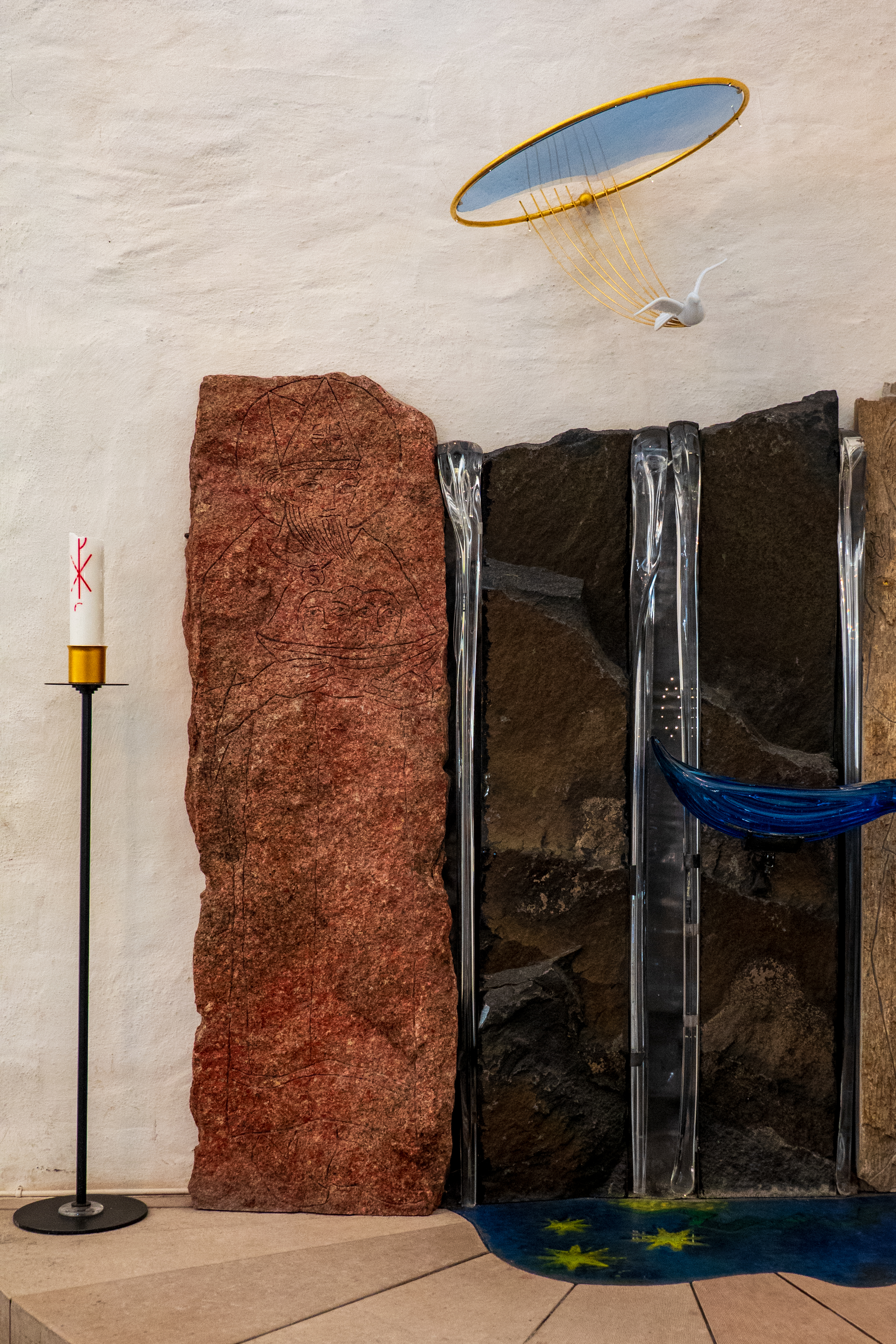
After lunch, we took advantage of a break in the rain and wandered the town a little, visiting the church. As might be expected, the church featured some interesting glass decorations.
Tree of life with votive candles.
We always light a candle for all of our friends and the state of the world as a whole.
Unique baptistery. (Click to expand and admire the dove.)
Pretty glass decoration in three dimensions.
Stepping outside the church, we applauded a parade of graduating students, many wearing the flags of their home nations. We then dashed for the camper before the next deluge. Yes, rain is still a common feature of our travels!
Every graduation needs a band.Many of the students were wearing the flags of their home countries.
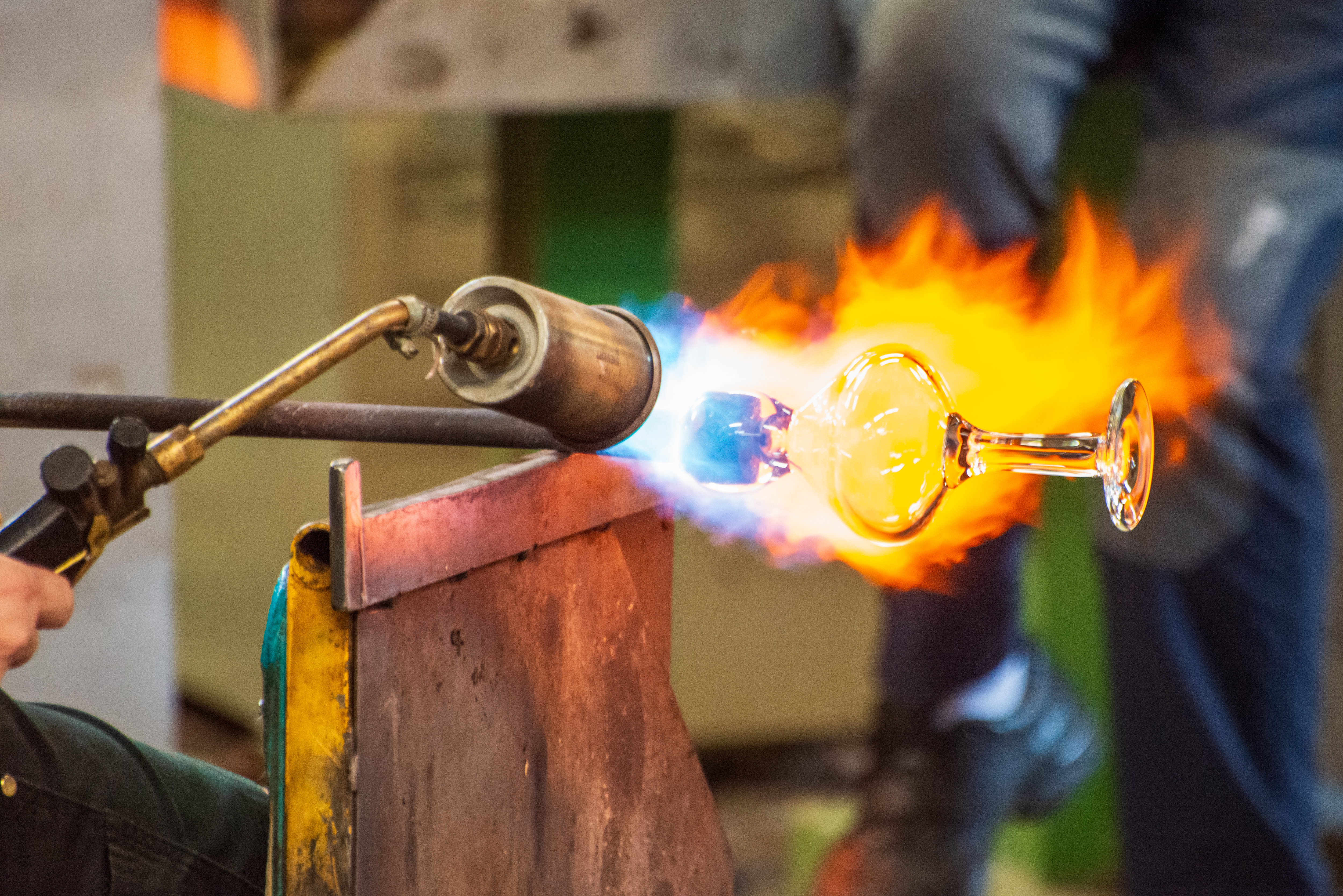
Next day we headed east and stopped at a couple of glass blowing workshops and sales points. The best was the Bergdala Glass works where we could watch glass blowers in action. The whole process is fascinating and a complete OSHA nightmare!
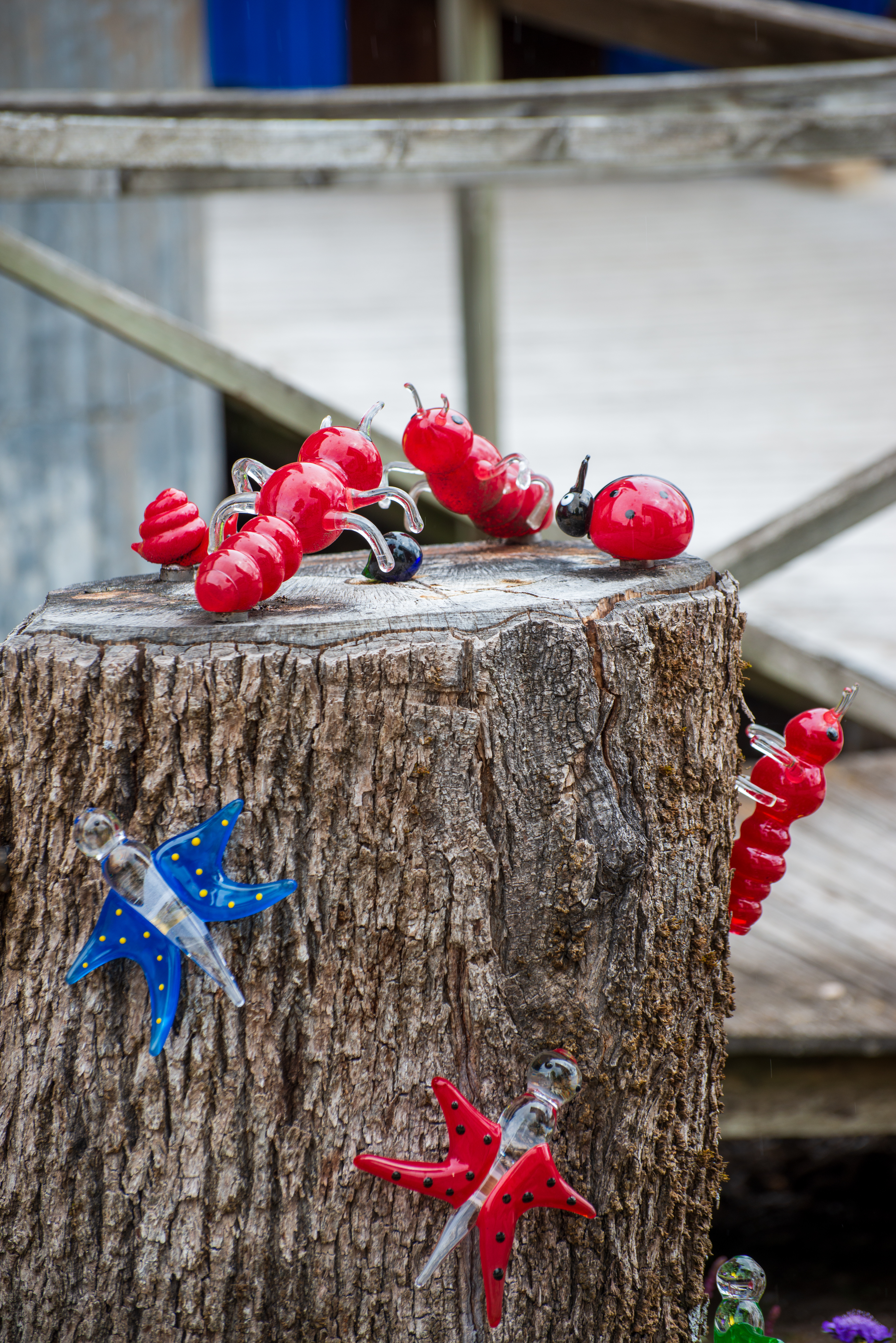
Glass insects on a stump in the parking lot.
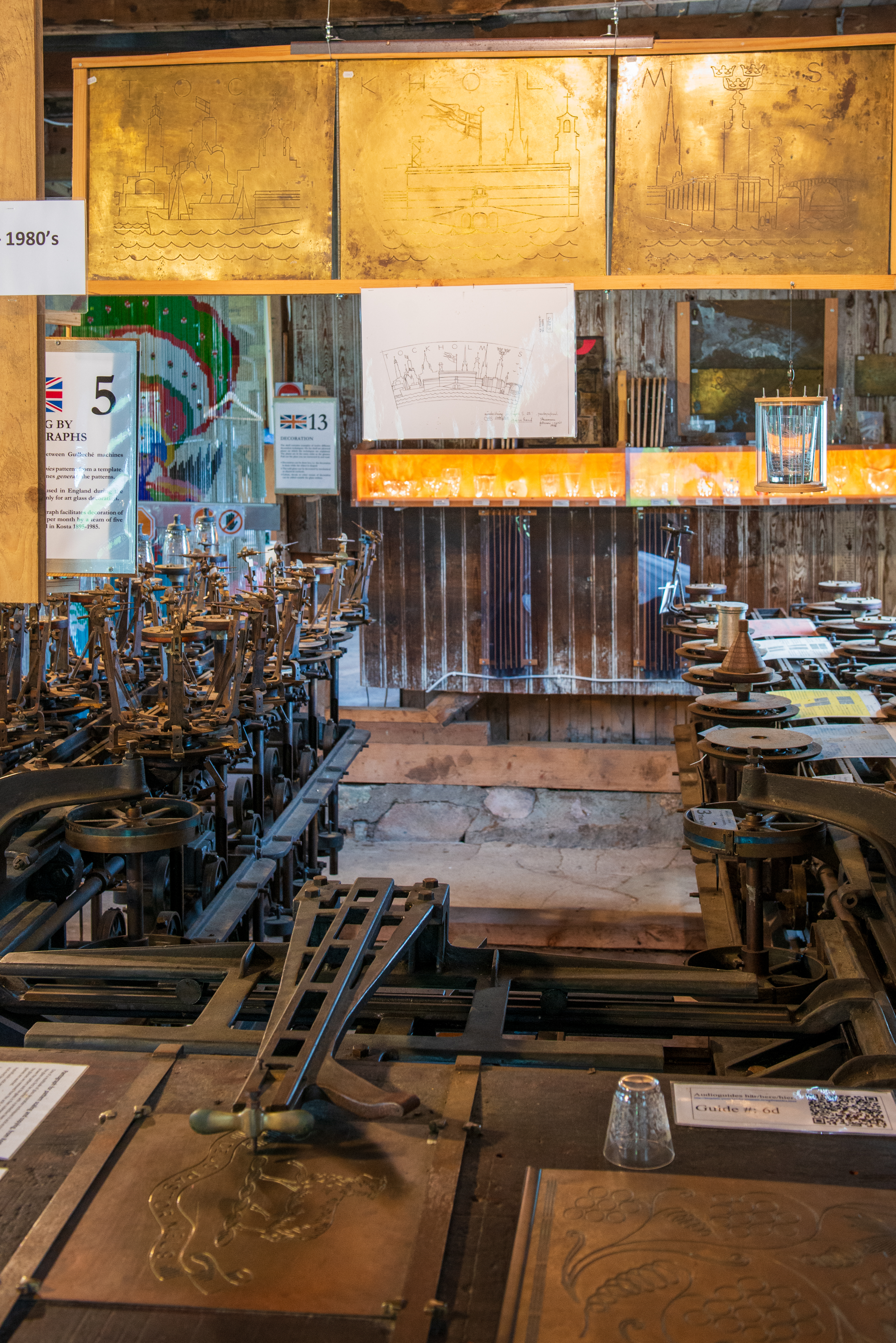
Glass blowing has always been labor intensive and glass decorating even more so.
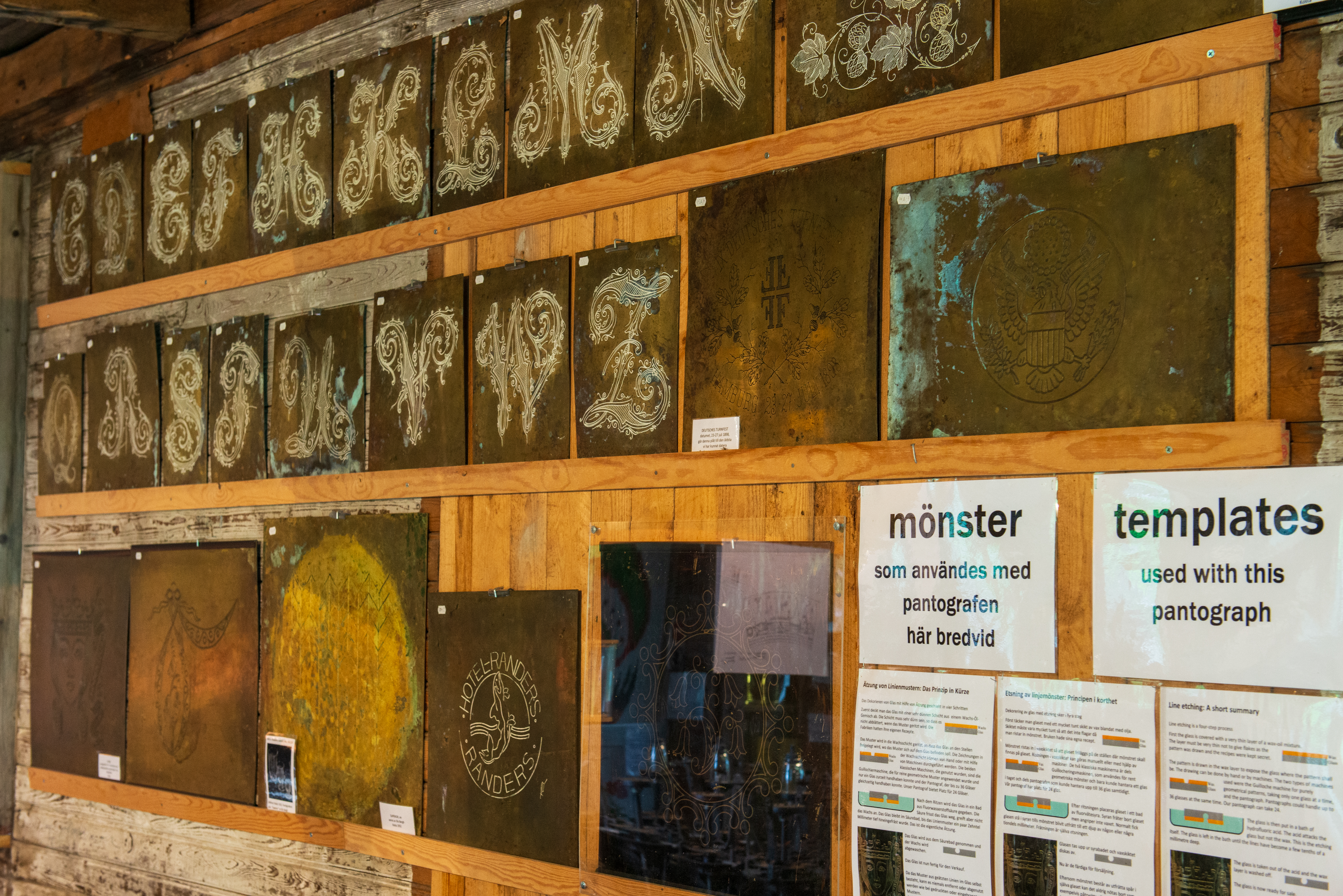
Templates for patterns that would be cut by the machine in the image to the right.
As the (very) skilled operator traced the pattern in the foreground, it would be cut into a dozen glasses at the back.
This device would put a design on one glass at a time, but required no great skill to use.
In the 1800’s there were some amazing machines developed to automate the process and make decorated glass more accessible for more people. Next to the glass blowing demonstrations there is a fascinating museum, full of historical glass moulding and decorating machinery, dating back to the 19th century. The Museum docent was very knowledgeable and explained it all to us. We tend to think of programming as something to do with computers. These machines were programmed with various cams and gears. The process is quite complex but very interesting. Drill down on the various links in this site: https://bergdala-glastekniska-museum.se/eng-index.html Lot of interesting reading for mechanically inclined souls who want to learn a bit about the industrial revolution and the transition of a luxury good into a commonly available product. Like most people, we have always just looked at glassware and never considered what it took to create it.
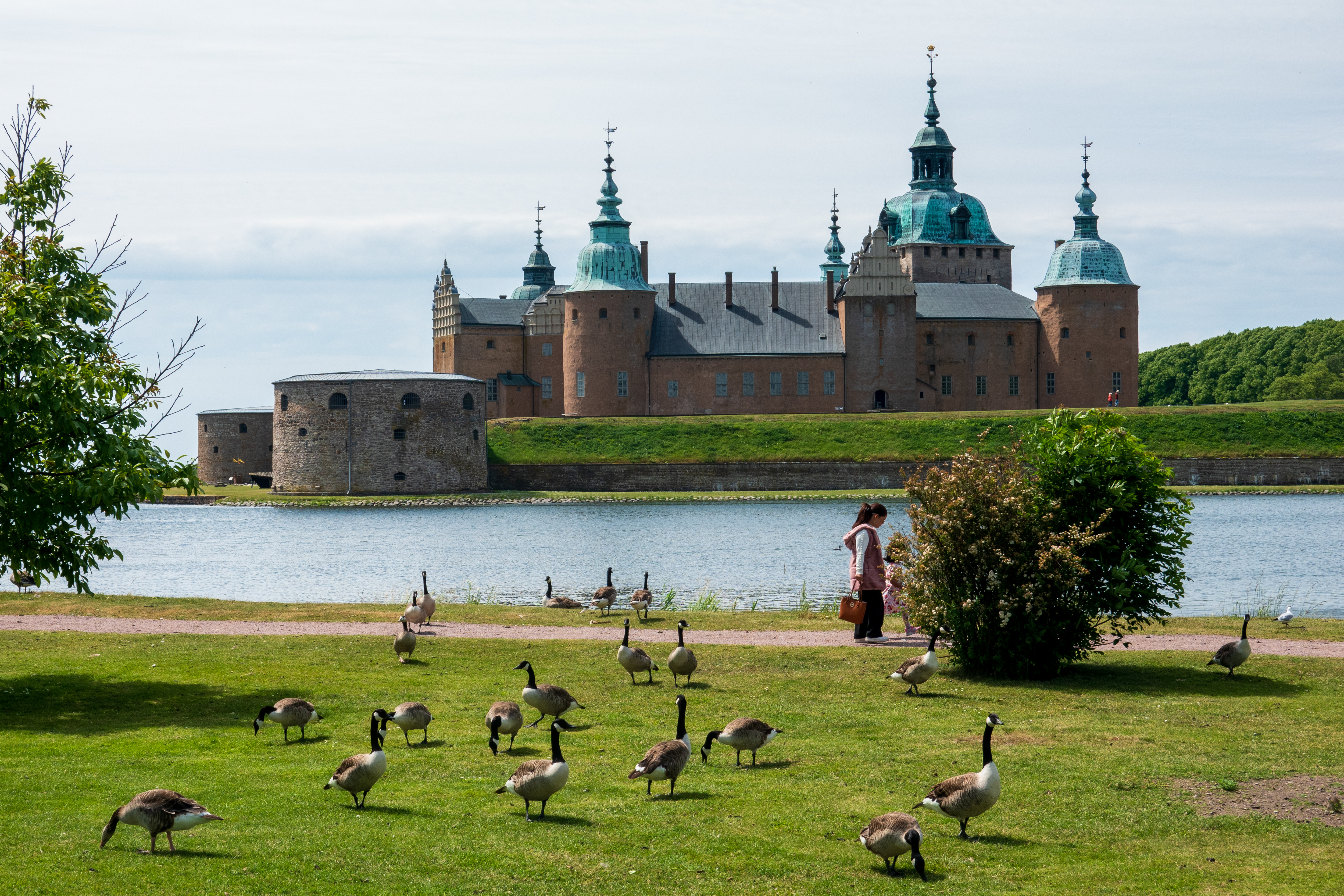
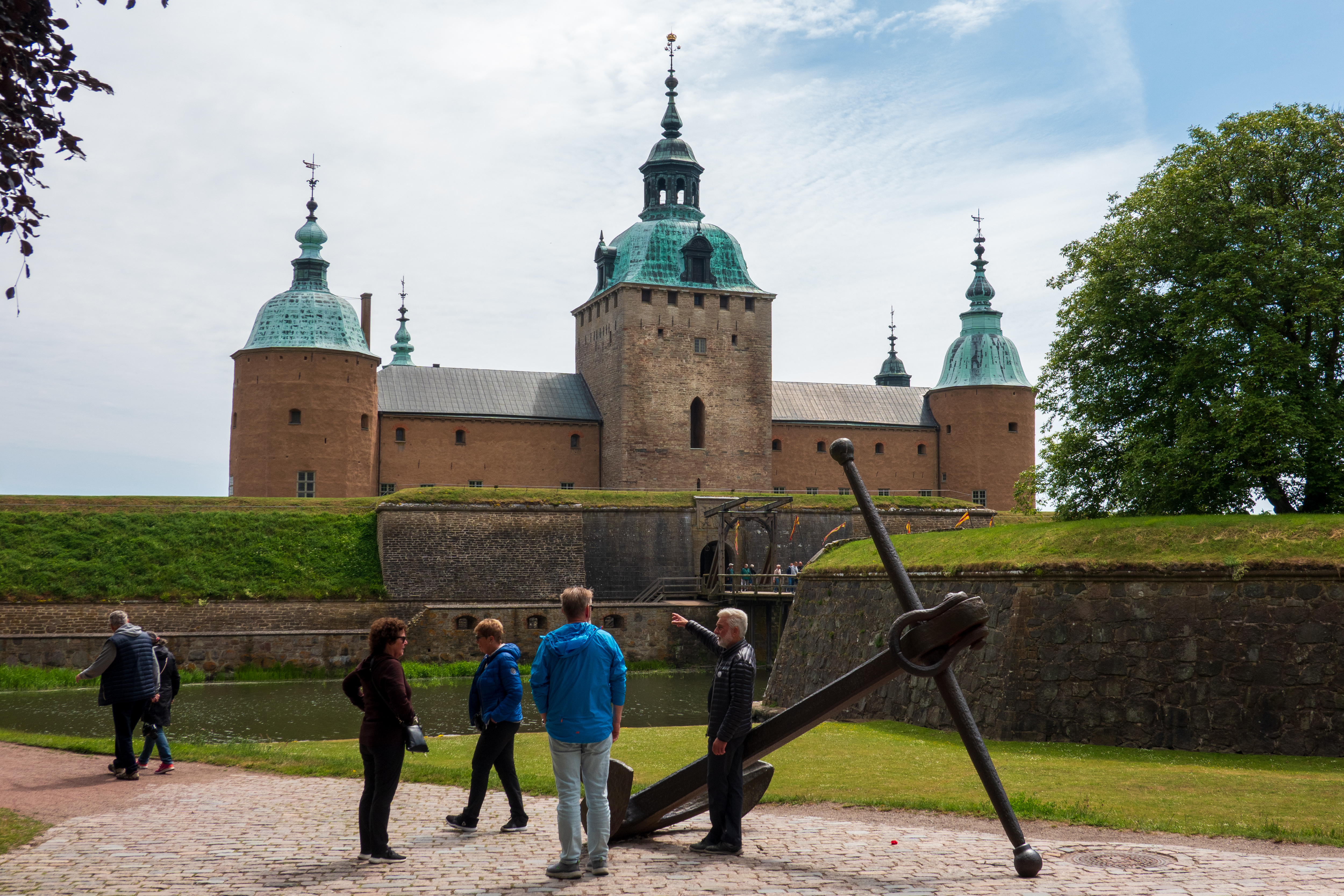
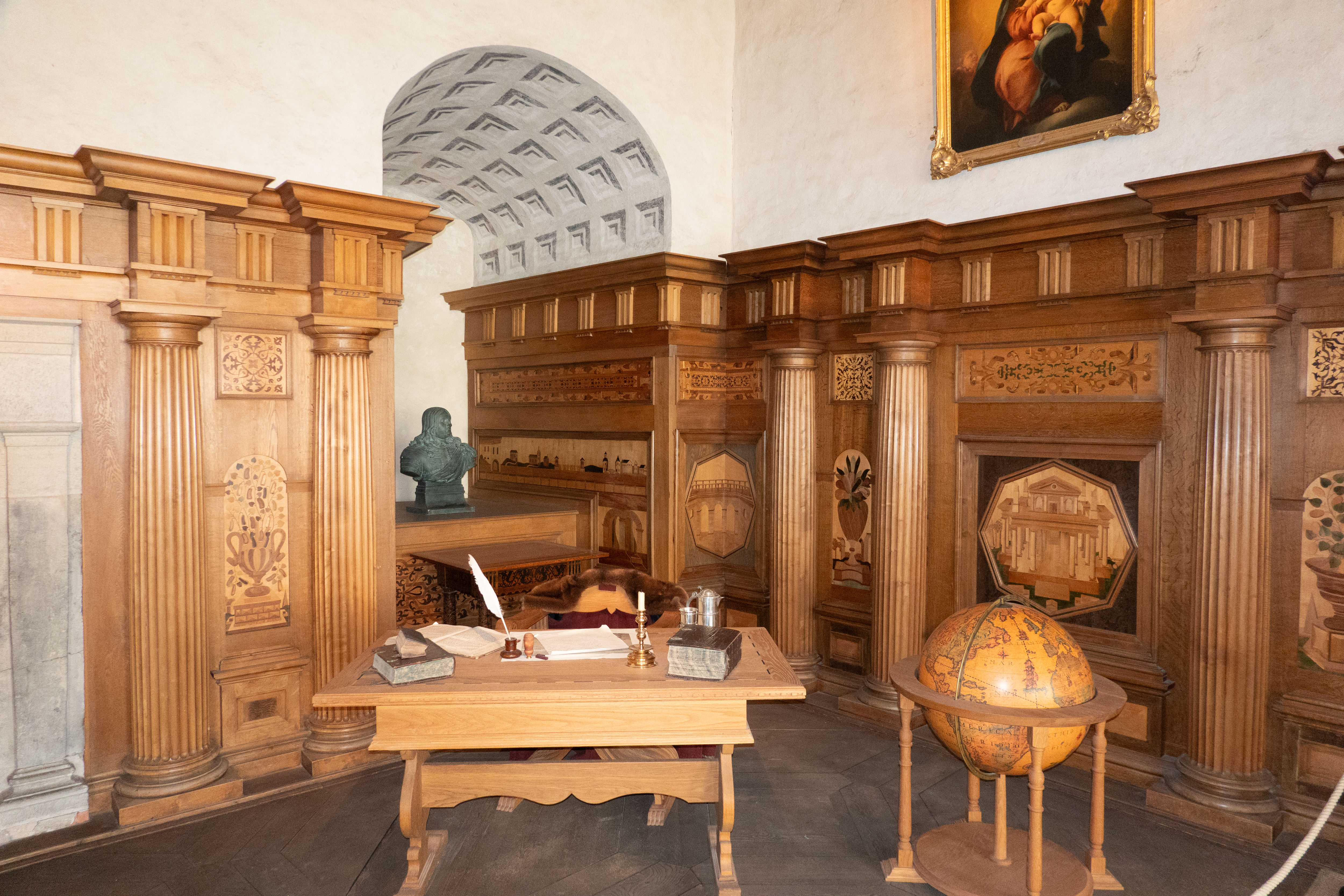
Our last stop on the Swedish mainland was Kalmar, which has a lovely old castle dating back to 1180.
Speaking of immigrants, the Canada geese have moved in.
Initially a defense tower to protect against pirate attack and attacks by other enemies, it was slowly extended and was indeed a mighty fortress as it was strategically placed on what was, historically, the southern border with Denmark. The Swedes and the Danes have a long and turbulent history. Later it was transformed into a Renaissance palace. It remains a symbol of Kalmar and was long a site of international politics, courtly intrigues and sieges and battles.
Main entrance. Note the square tower in the middle, the oldest part of the castle.
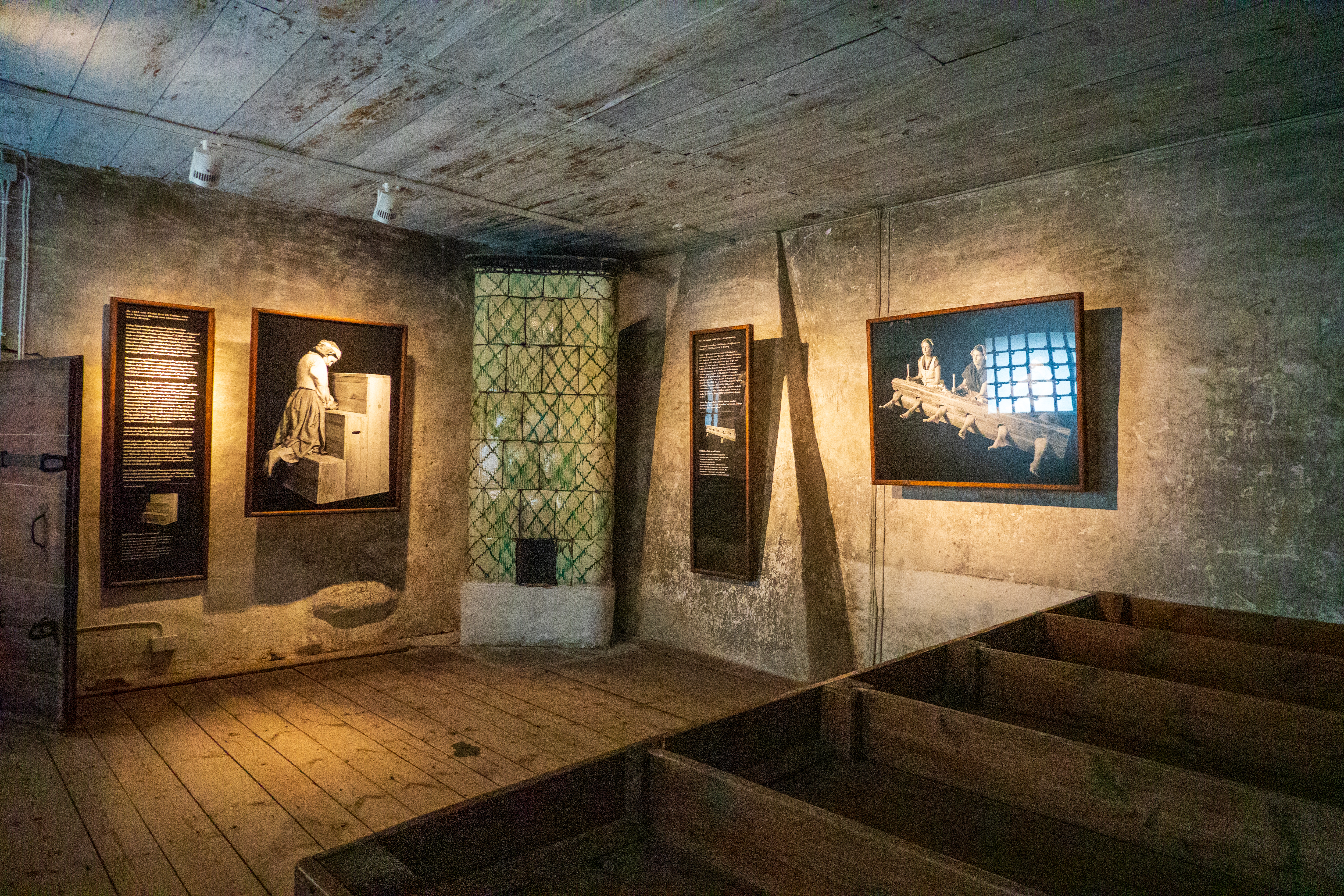
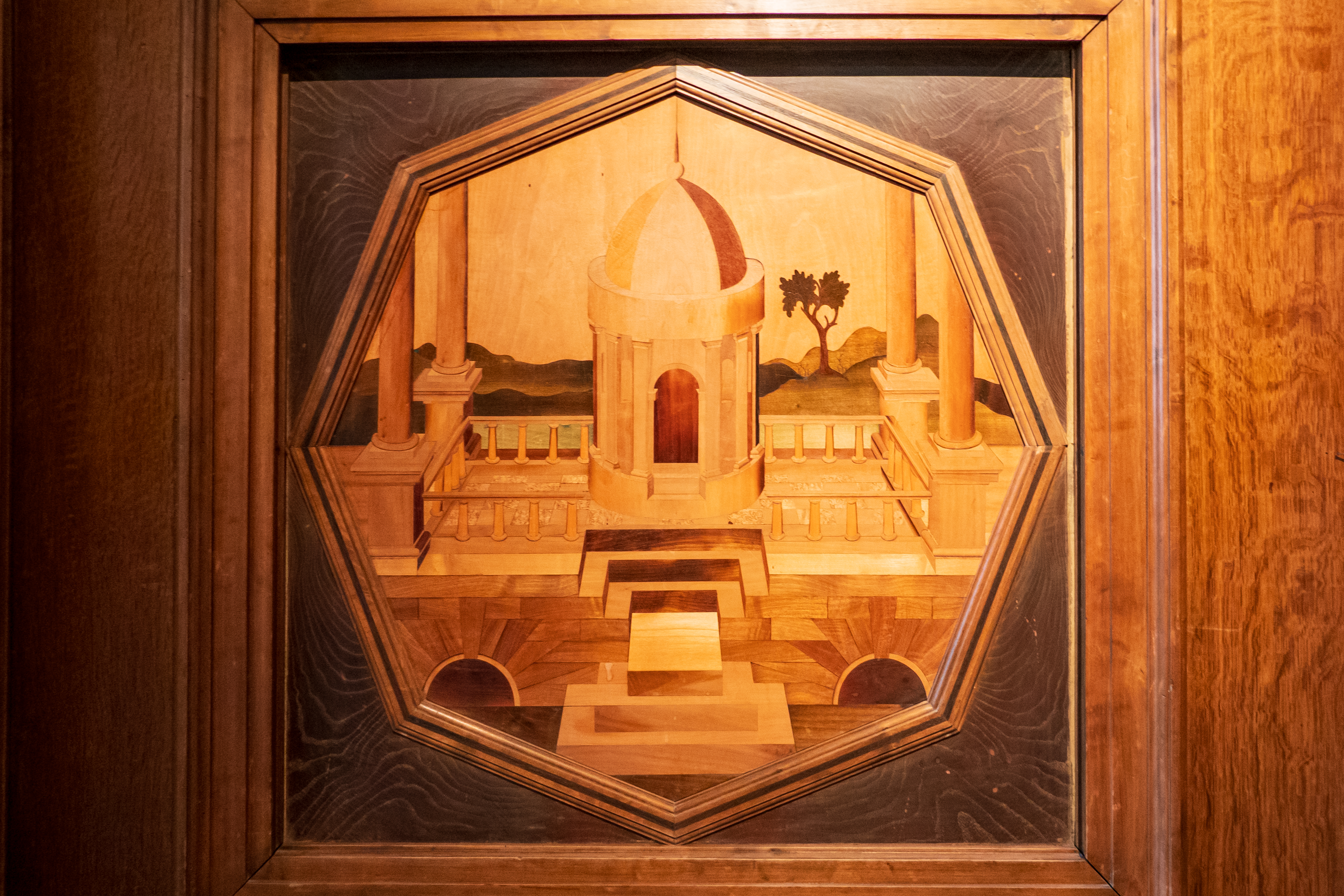
We thoroughly enjoyed our visit and admired the models of the castle at different stages of development over the centuries, the various items of medieval furniture, and a huge, walk through, multi media presentation on witches, their trials, and their burning(!!). (Not our favorite exhibit.)
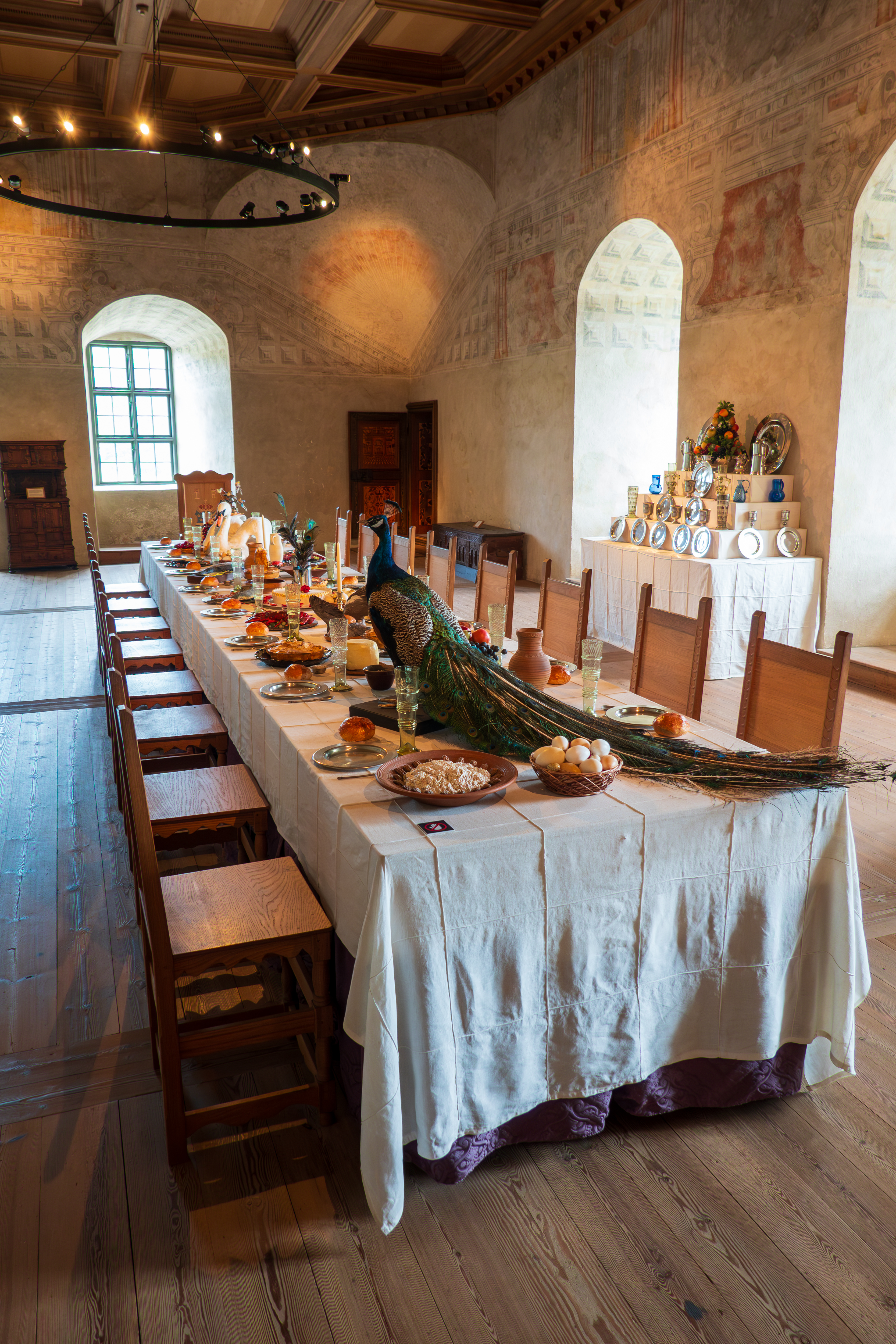
A table in the Grey Hall was set for a dinner during a specific visit of the king of the era, including a white swan and a peacock with full tail plumes on the table and a selection of typical foods, like fish pie with a pastry fish standing on it.
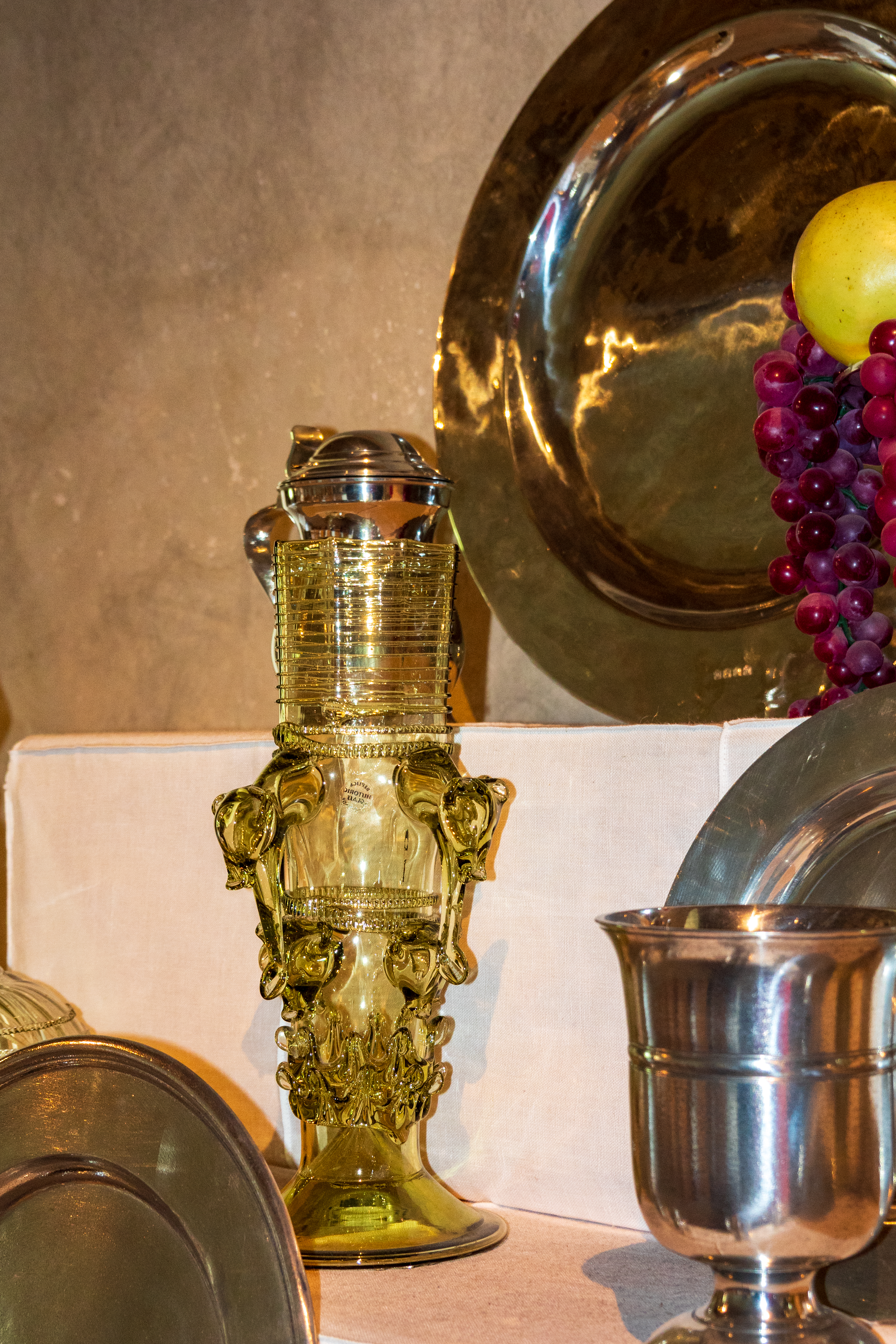
Note the moulded, decorated glasses. (Click to expand.)Where all of that food is prepared.
Decorated glassware – now has a new meaning.
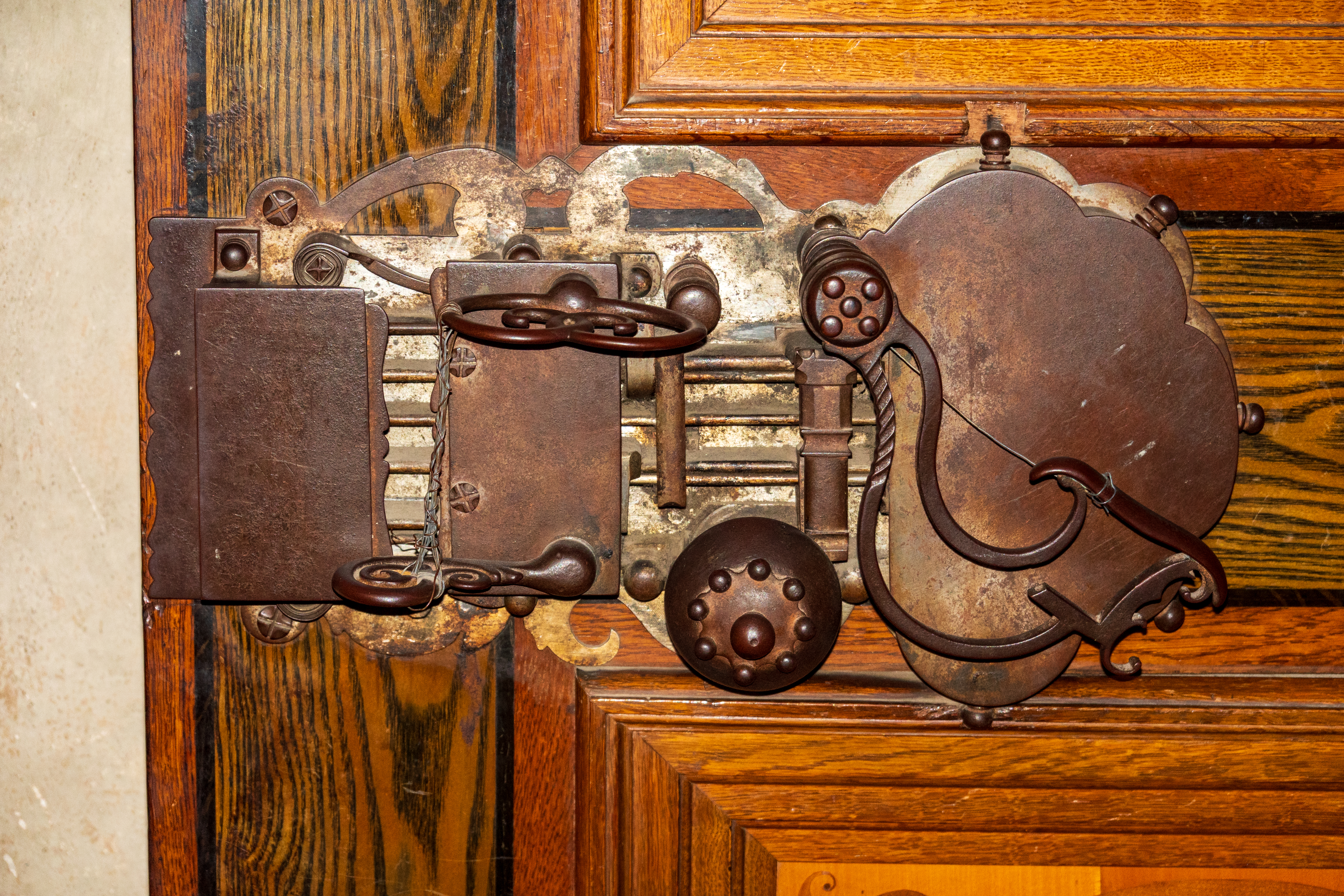
Ornate lock.
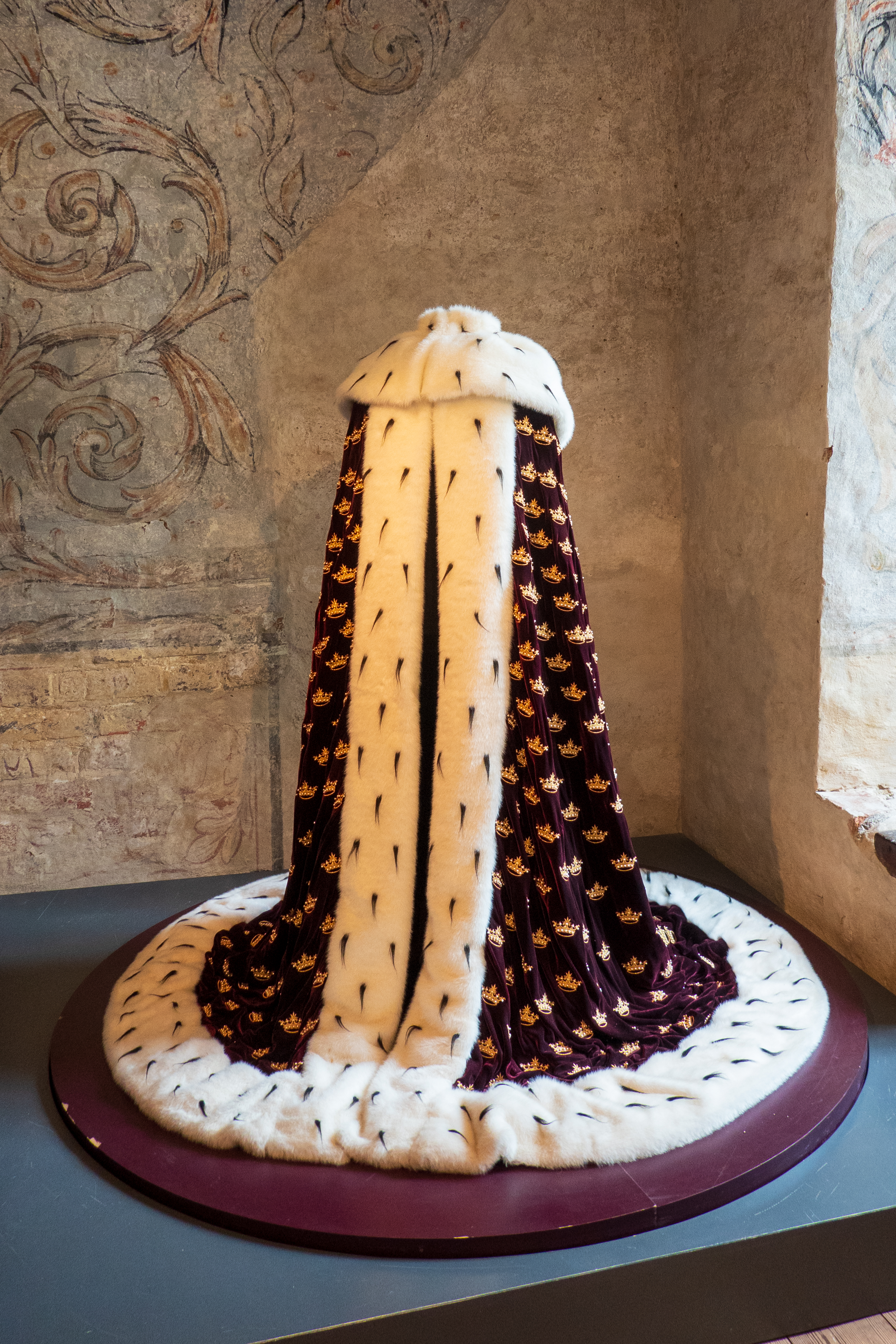
The castle was used as a women’s prison at times.Royal Apartment
Hollywood gets it wrong. You can’t pick the lock when there is no door. They simply lower you through the ceiling, if they don’t simply drop you.Detail of hunting scene around the ceiling.
After a cycle through town, we returned to our campsite to take on fresh water and drain our grey water. We were parked at the service point when we suddenly noticed smoke rising. Lots of smoke. A large camper had caught on fire and, within moments, flames were leaping towards the sky. A scary situation, with campers all around it. Fred encouraged them all to move, which they did, before tires began exploding. The fire department came and stayed until it was out and just a burned out hulk on the ground. The firemen told Fred that they do not try to extinguish an RV fire – too much diesel fuel to spread and too much propane. They control the spread and let it burn out. What a dreadful thing to happen.
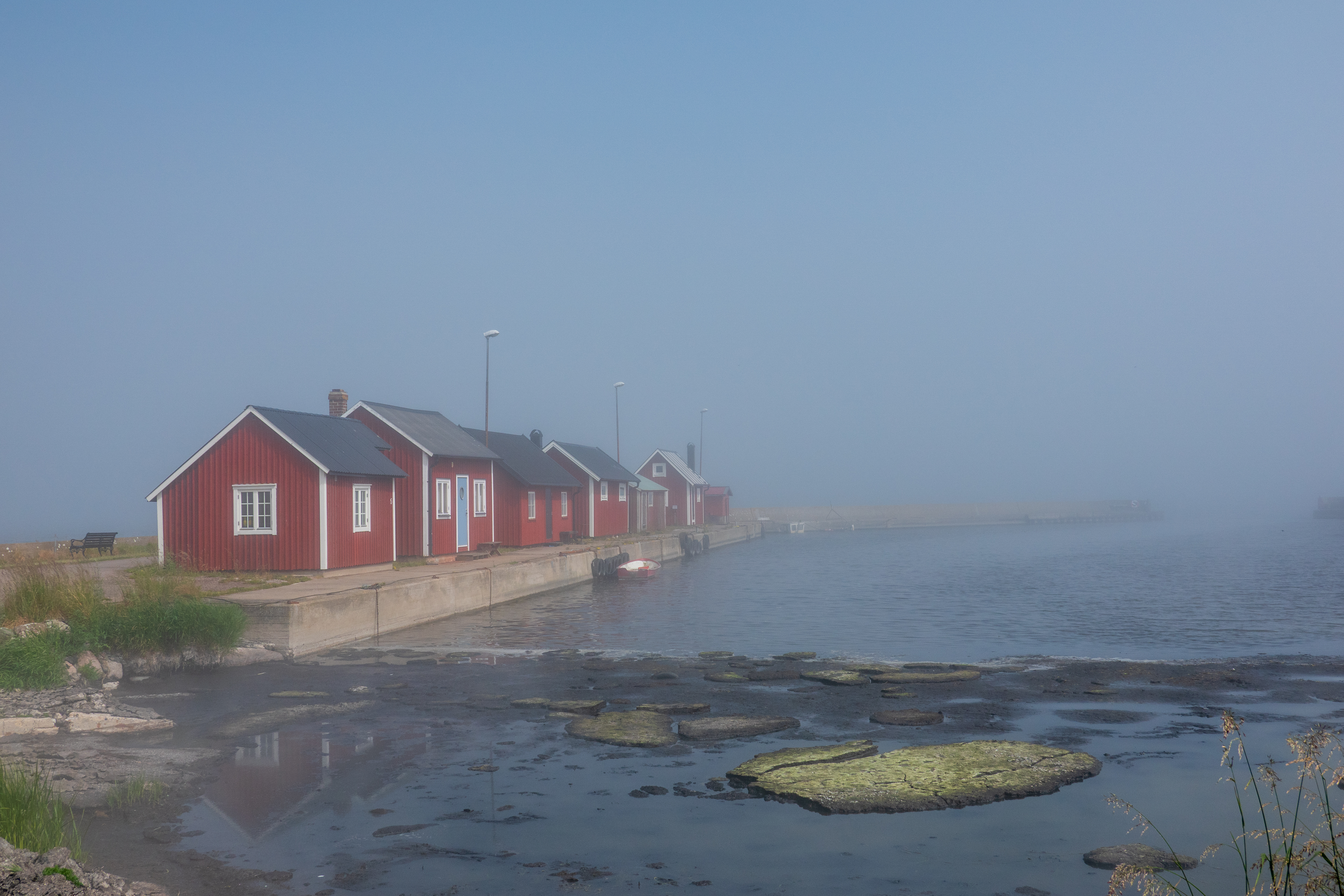
We then drove onto the island of Oland and found a stellplatz by a small harbor where we could camp.
We set out on our bicycles to visit an Iron Age Burial site with a number of different stones, some set in a circle, some in a boat shape, and some burial mounds. It was most interesting and a good ride.
The next day, we awoke to sea mist and had to wait for it to clear before daring to ride the roads.
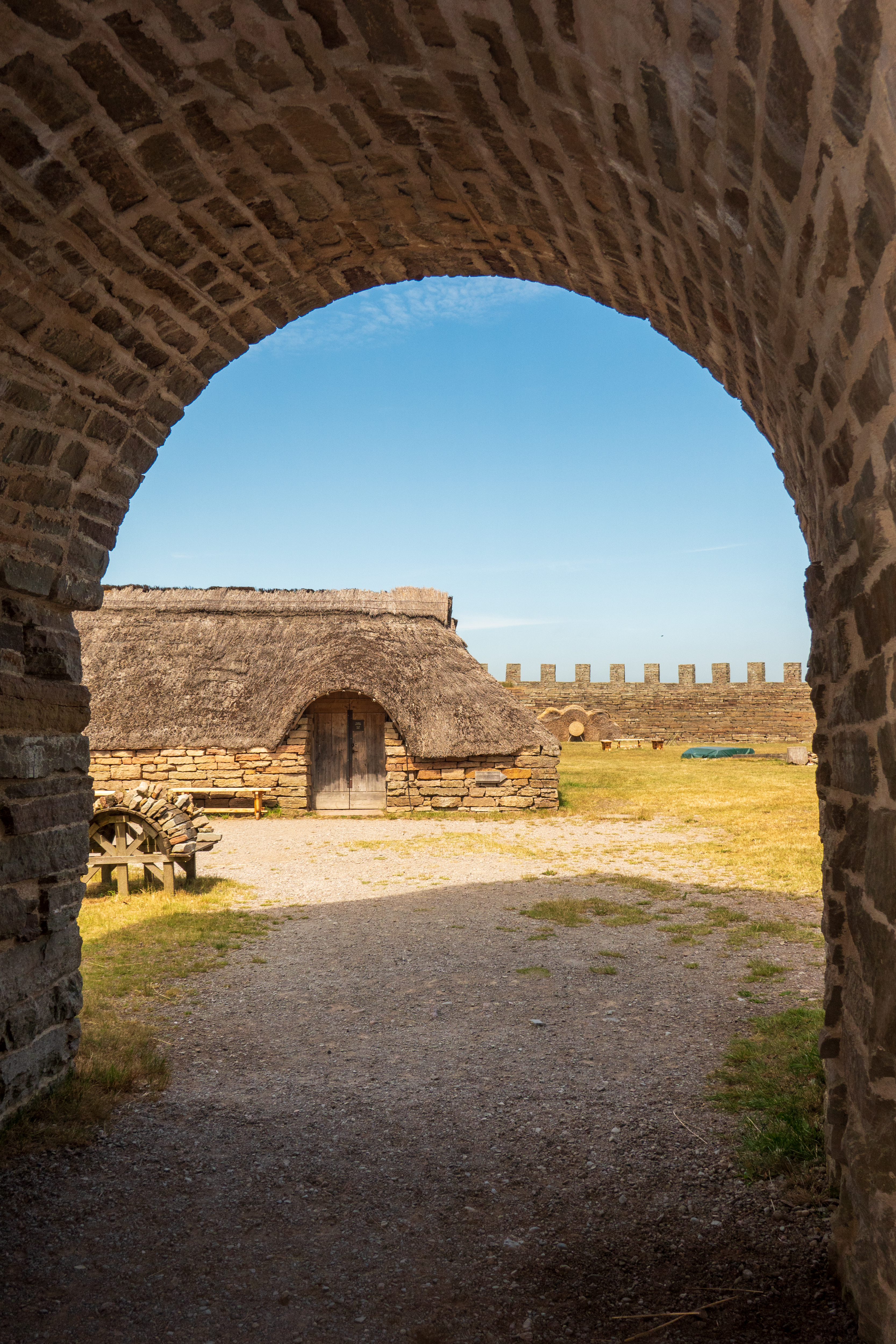
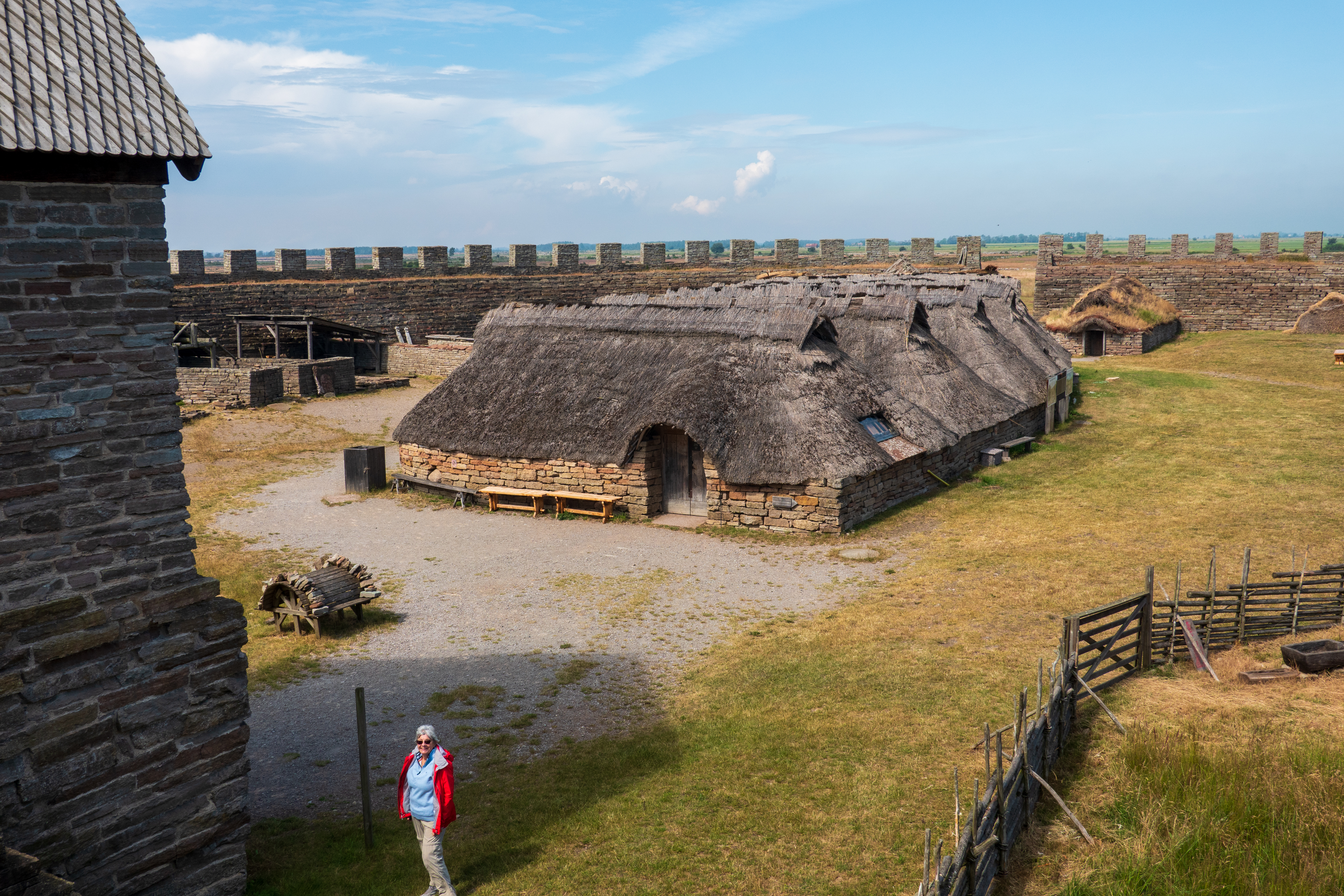
By afternoon it was clear and we headed off for the Eketorp Fort, a 5th century reconstruction.
We knew it was closed (it was Monday after all!) but the gate was open and at least 20 visitors were rambling around.
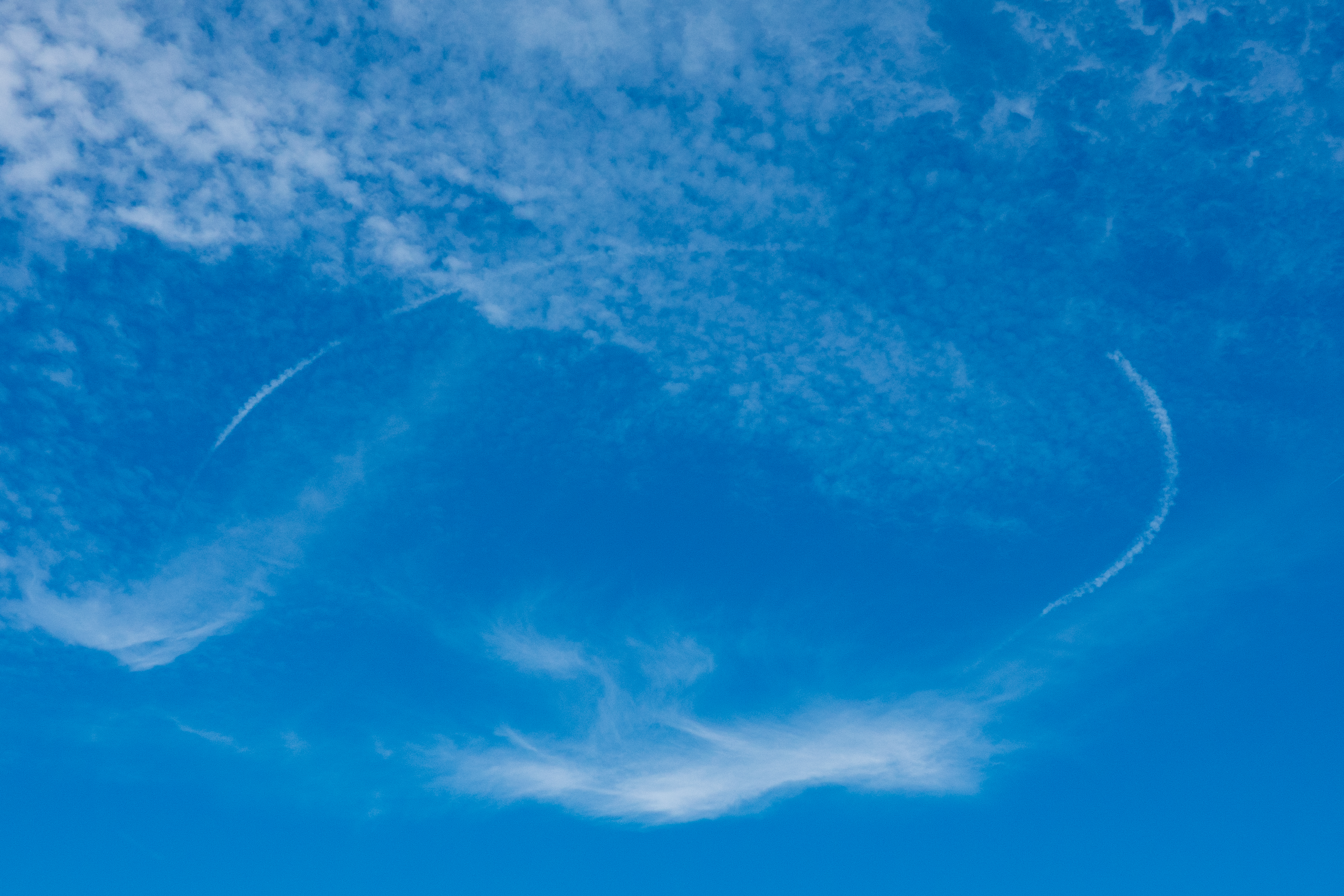
Fighter planes dueling overhead. We could hear, but never see them
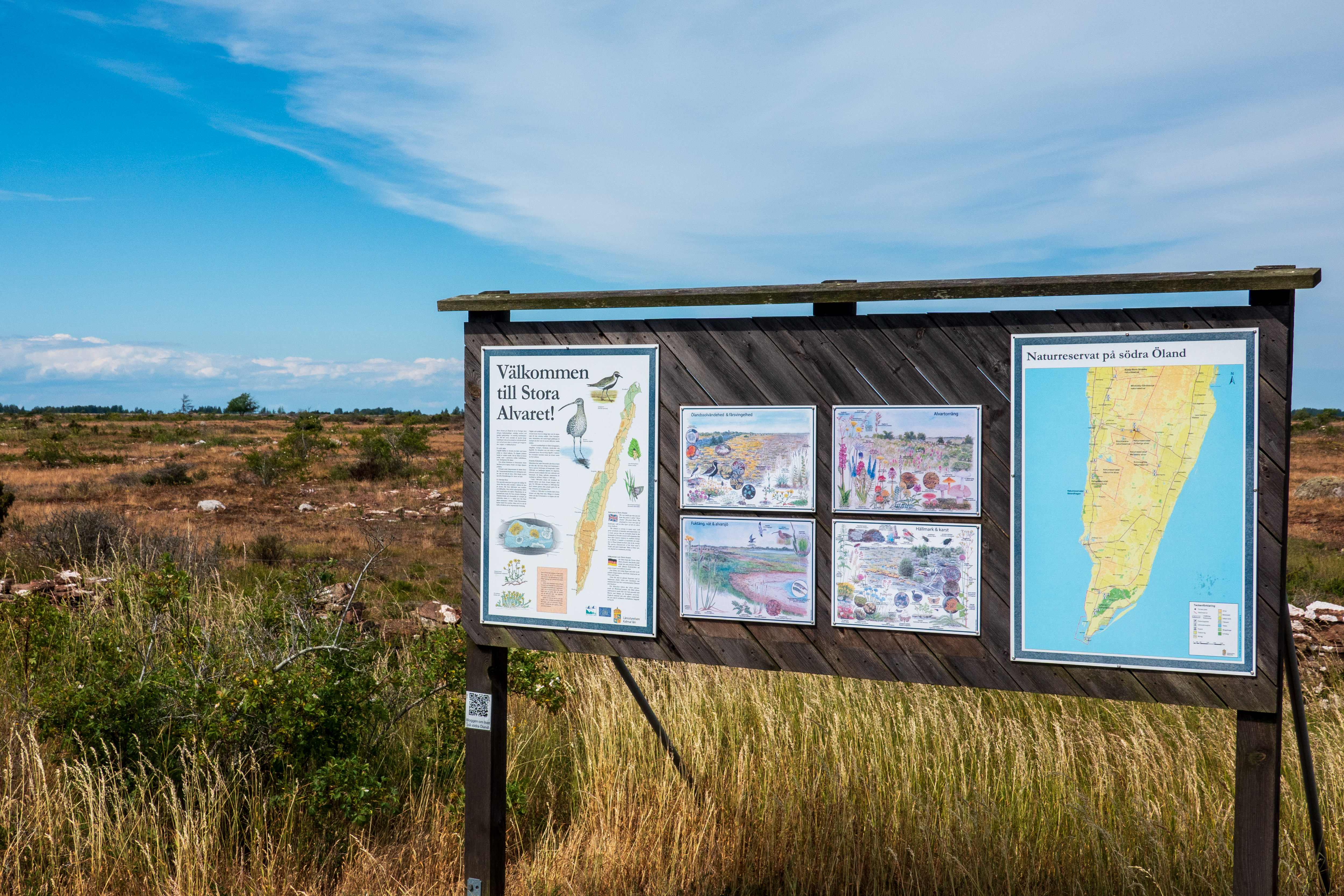
There is obviously more to discover, archeologists have reconstructed what they can, and a certain amount of guess work has taken place. But there is a lovely view from the battlements, over the flat area called Stora Alvaret.
This is a limestone “pavement,” which is a habitat for numerous rare and endangered species.
It has a very thin earth layer so agriculture is limited, unlike in the northern part of the island where there are more trees and much better topsoil and intensive agriculture. By 4.00 PM the sea mist was wafting back, so that was the end of our biking. The next day we headed for Trelleborg and the ferry to Rostock.
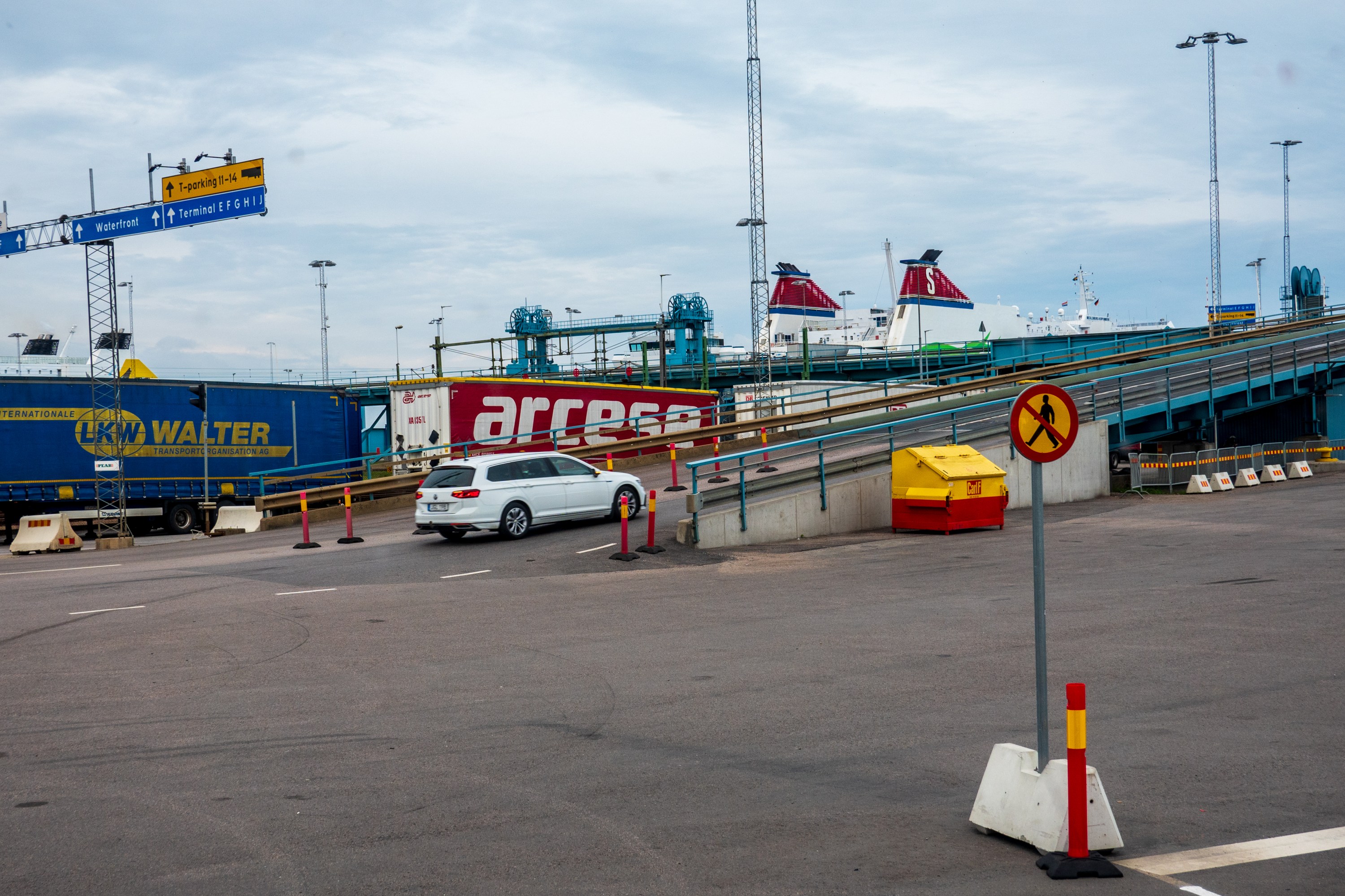
The ferry to Rostock was our third ferry ride and we initially found it less pleasant than the others. After a long day’s drive, we camped at the port which worked well, except that our on line registration did not go through and we had to reregister to enter. Of course, our credit card was billed twice so, we had to report that to the appropriate credit card. Grrr!
You will note that some of our campsites are decidedly industrial.
The ferry departed at 7.30 AM with final registration at 6.30 AM. We were there before 6.00 AM and had no problems with the check in or navigating the ramps.
Once on board, we headed for the cafe and a pleasant second breakfast – been a long day since 4.00 AM!
The ferry was smaller than we expected for a six hour trip and to our surprise had very limited seating. The only lounges, for which you had to pay extra, had almost no windows and the economy class, airline style seating was crammed together. There was a large cafe area, furnished with hard chairs and tables, and several families had spread blankets in the corners. Interestedly, there was a reserved area for long haul truckers, with its own cafeteria line.
We decided to book a cabin as the thought of spending six hours in a cafe environment did not appeal. It was a great decision, the cabin was very pleasant with a bed for Fred to catch up on his sleep and a sofa for Denise to sit and read.
We headed to Copenhagen for a couple of days, staying at a monster campground; what appears to be the mother temple of the Danish camping association. As big as it is, it was quite pleasant with the sites grouped into little clusters surrounded by hedges which gave a lot of privacy. And, it had a washing machine! We are finding laundry a much greater challenge on this trip, so any time we find a campsite with a laundry, we jump on it.
We have seen an amazing selection of exotic American vehicles – a GMC motorhome from the ’70’s. And still ahead of its time.
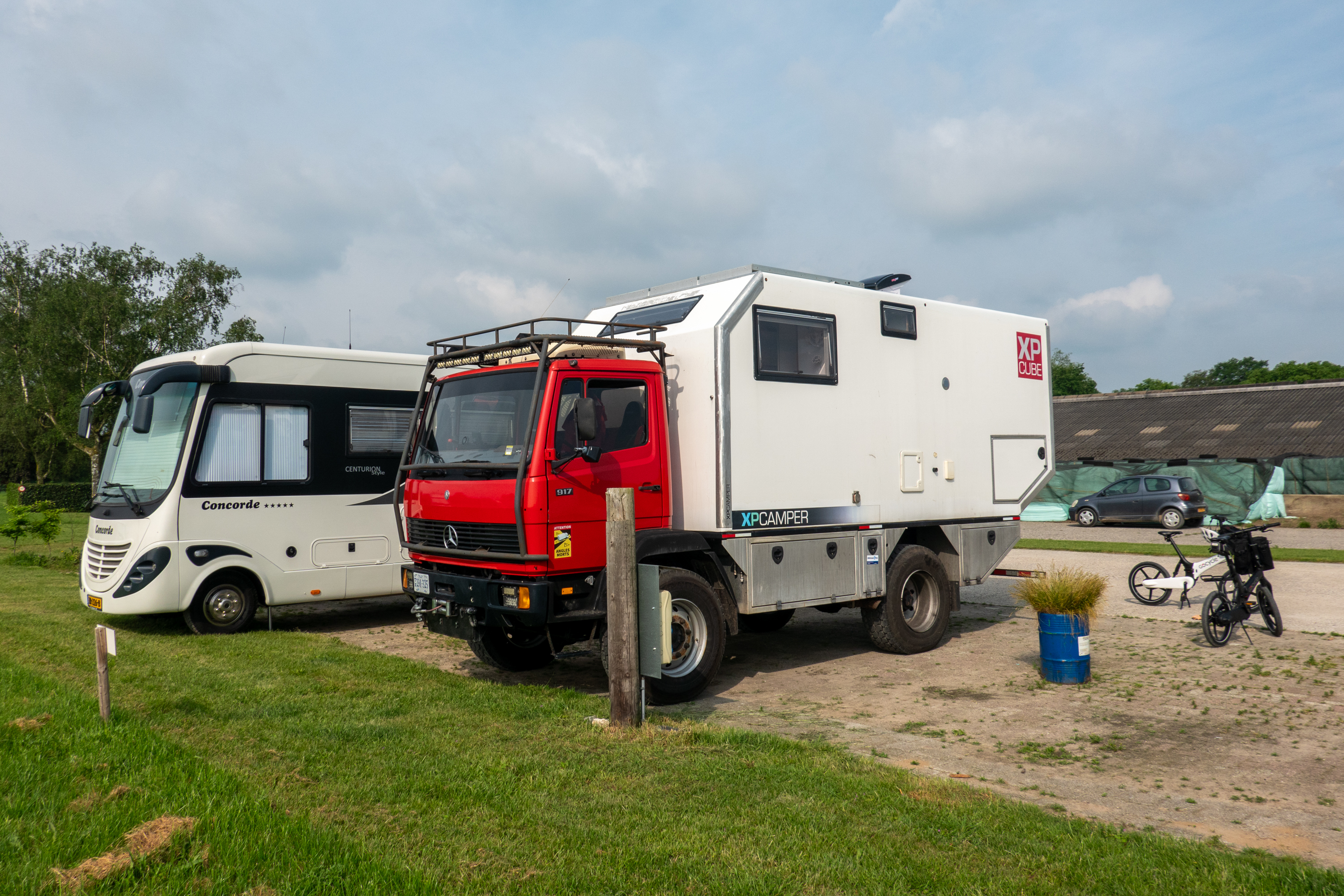
The owner of this home-brew fire truck conversion came tapping at our door. He was pleased to find a kindred vehicle.
One of the reasons for choosing this site is that is is only about 15 minutes walk from a suburban train station. We fumbled a bit the first time, it was hard to find the actual station, and then the ticket machine did not work, but we managed to get to the main station downtown in about 20 minutes.
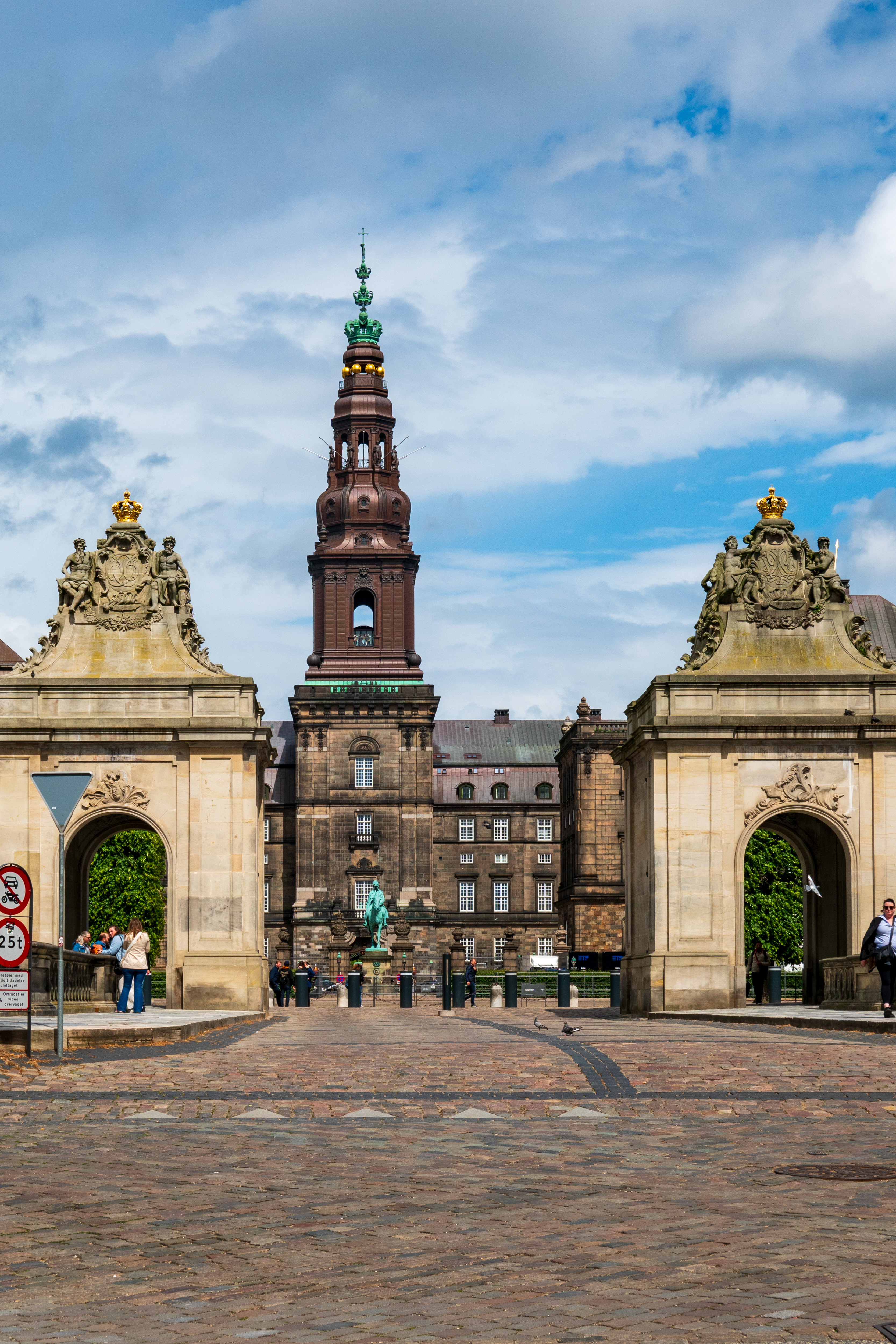
Christiansborg Palace
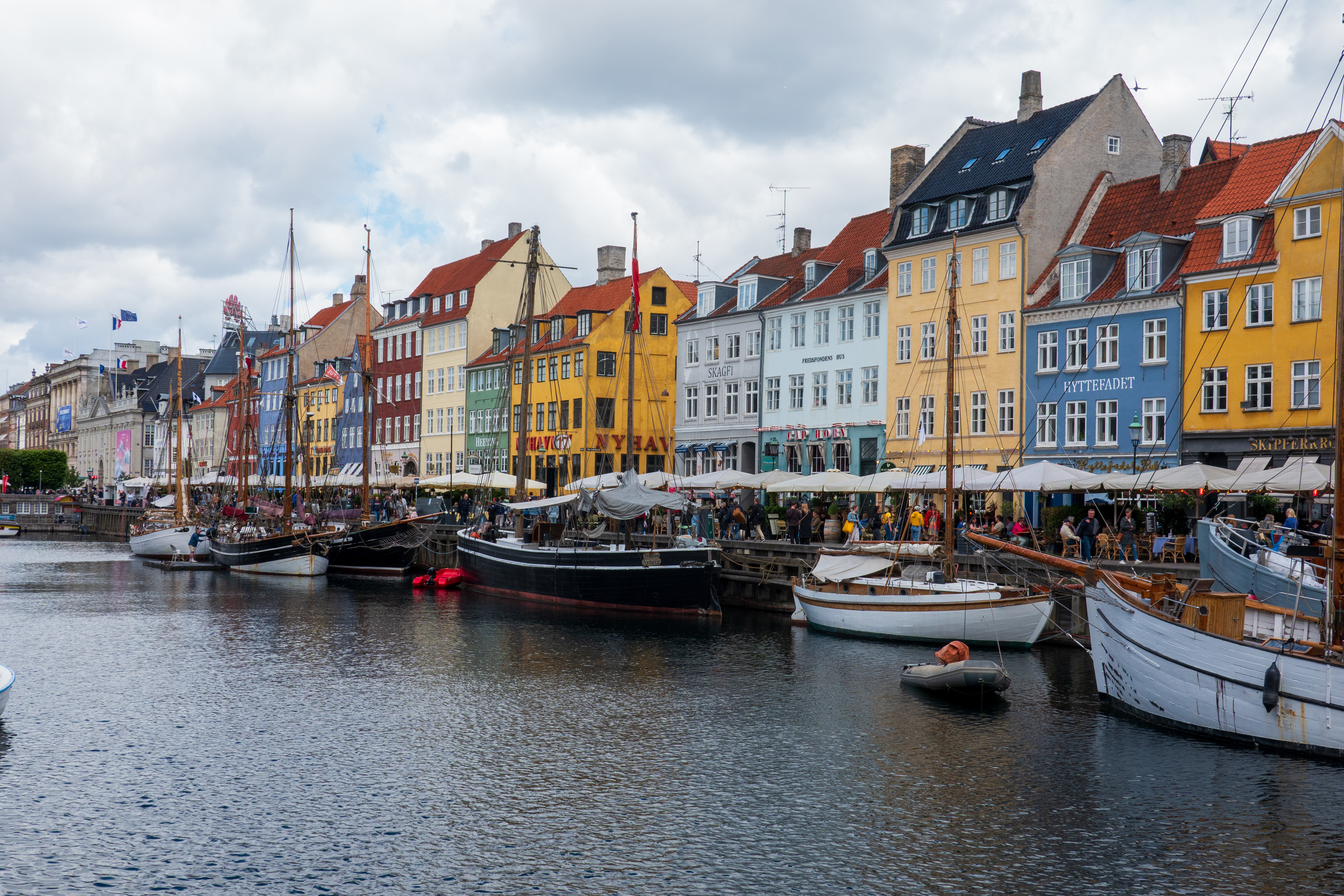
Postcard street scene
Our main purpose was to visit the National Museum and this took most of the day – it is a large museum. (https://en.natmus.dk) It also has a lovely restaurant and, of course, we started our day with coffee before tacking the various floors. It quickly became clear that it is more a museums for Danes to discover the world and less a museum to teach foreigners about Denmark. So we got a world tour and an overview of Danish history.
Ever since the movie, Ben-Hur, Fred has been interested in galleys. (See also: Barcelona) This is a really rare piece. Click the image to see the detail. The only better model may be part of Trajan’s column.Palace from the museum.
We enjoyed our visit and also our rather late lunch there, the traditional Danish open face sandwich again.
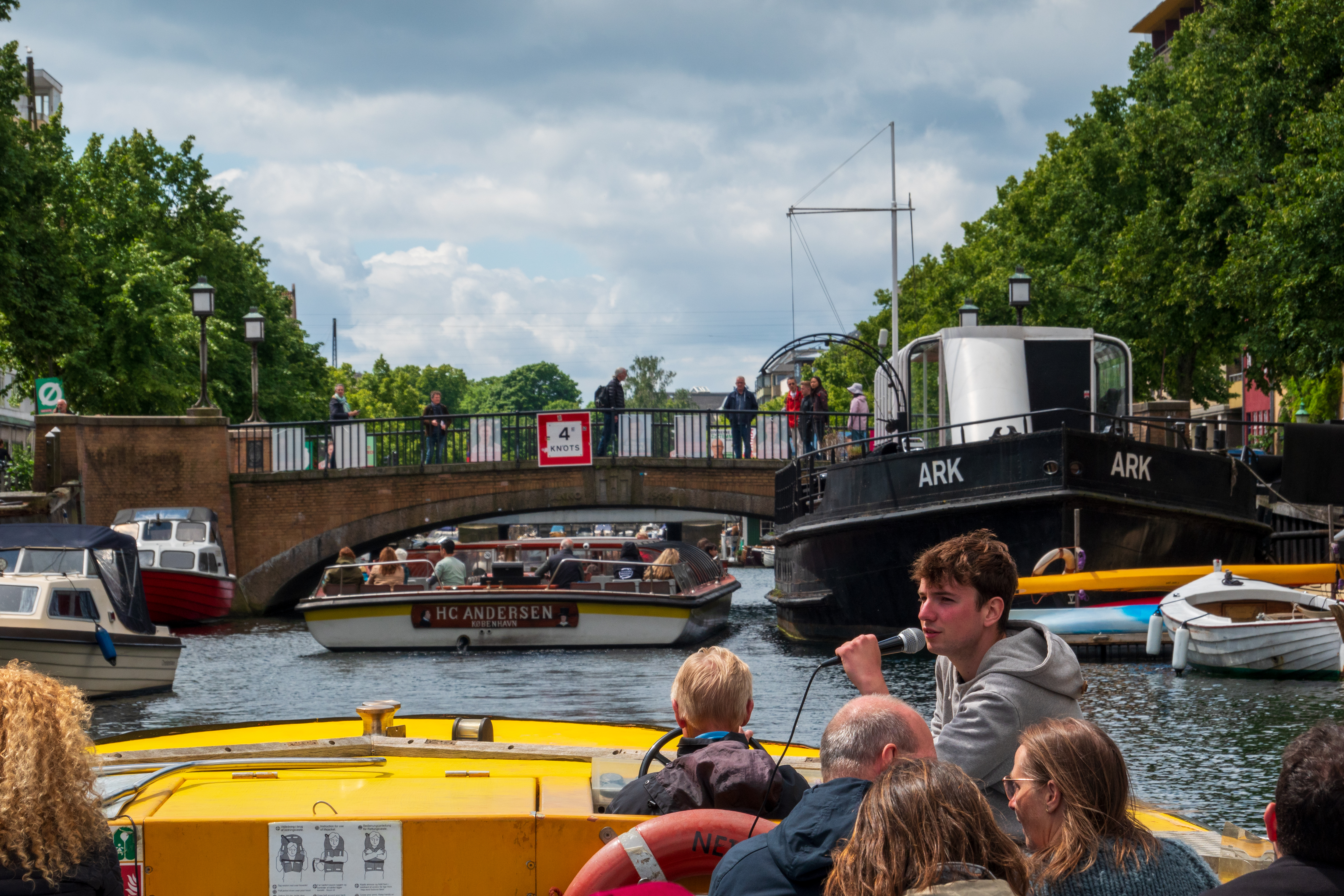
The following day was a Monday, which means most things are closed in Europe. (Grrr!) We took the train again, helping some German tourists who were as bewildered as we were the first day, and started our day with a Hop On Hop Off Bus, which is a really good way of getting an orientation to a new place. We included a canal/harbour boat cruise, which was most interesting, as it showed different aspects of the harbour.
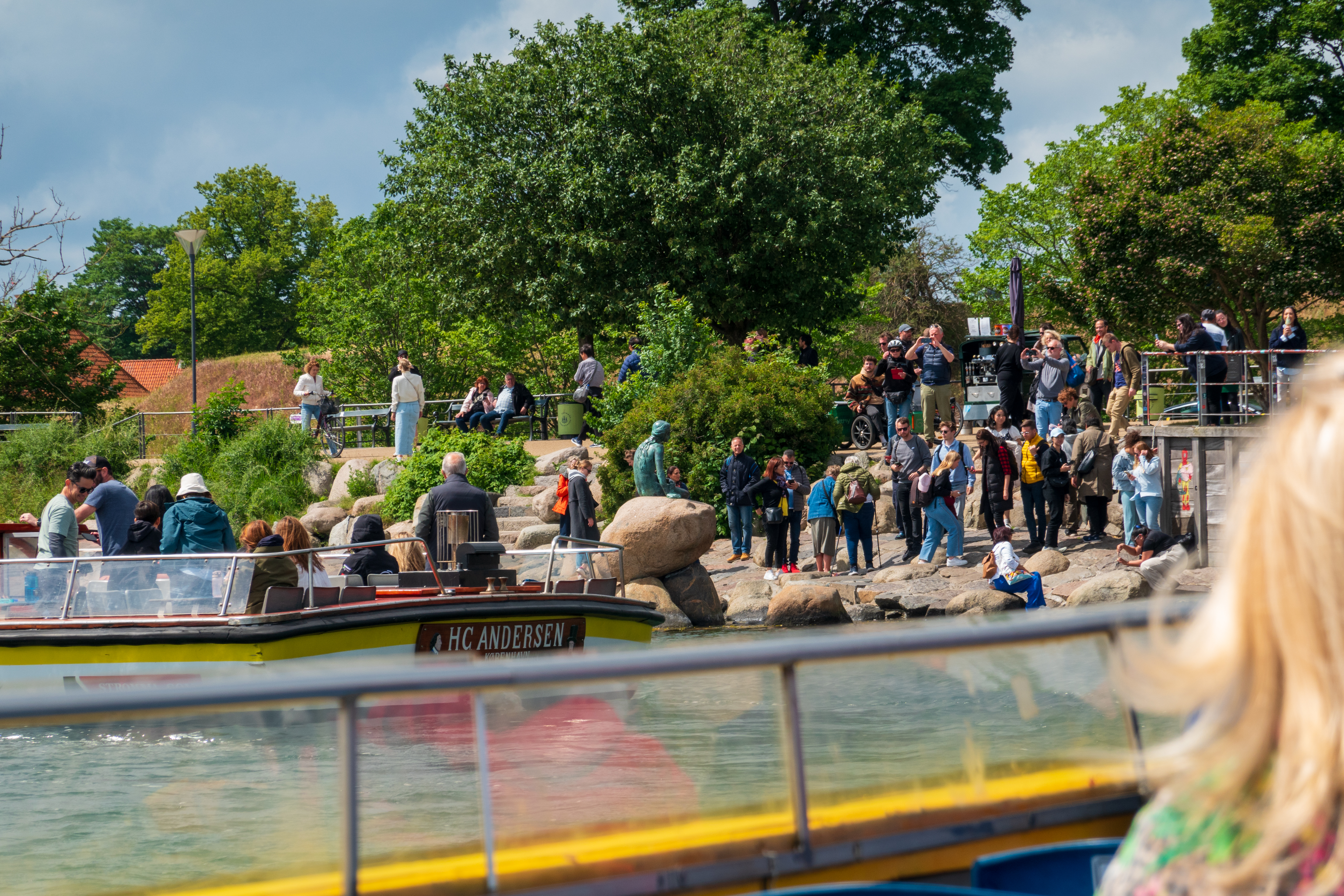
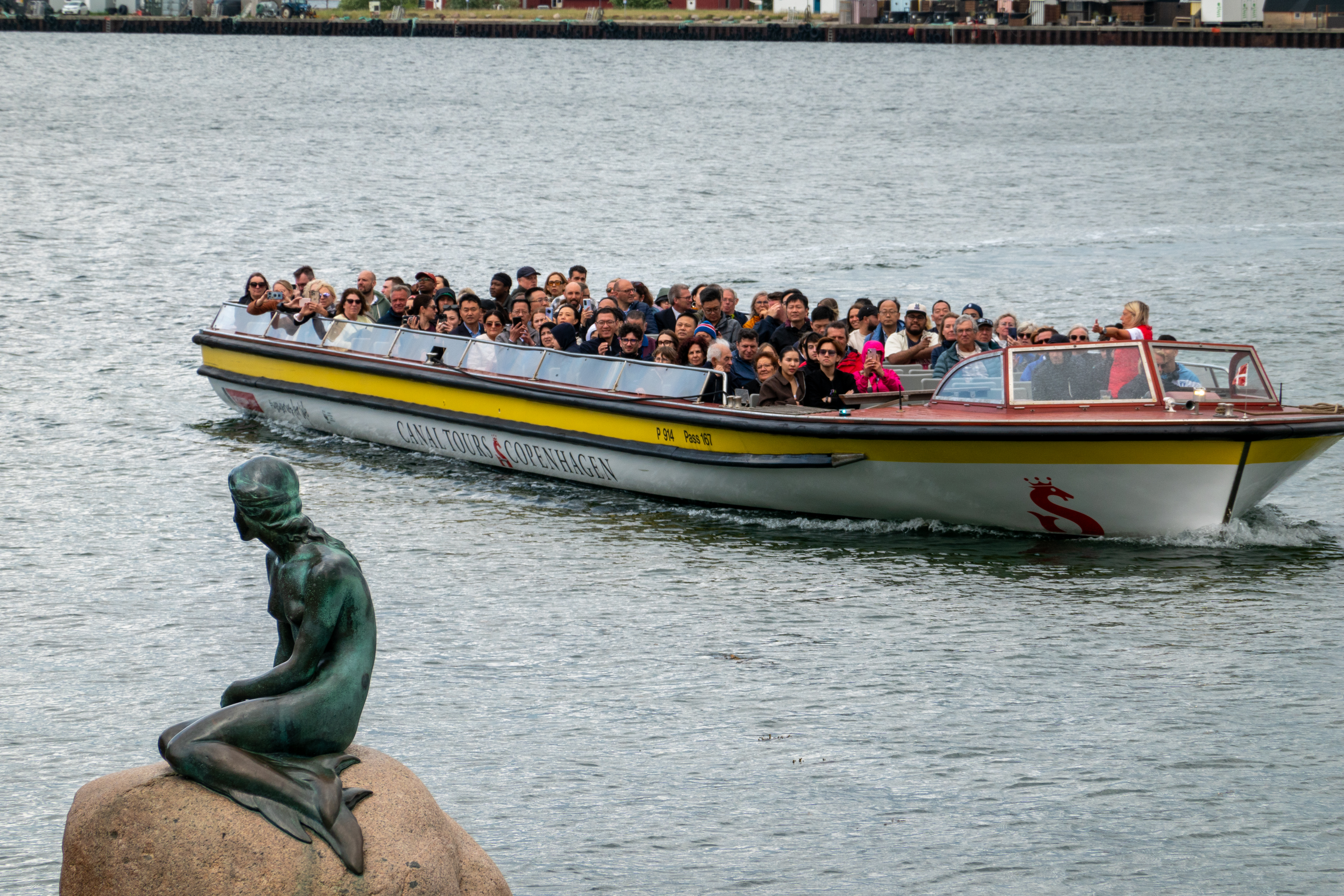
The canal part of the tour wandered through various neighborhoods.Boat scrum at the Little Mermaid.
Memories of our Viking crossing which began our Euro Saga.
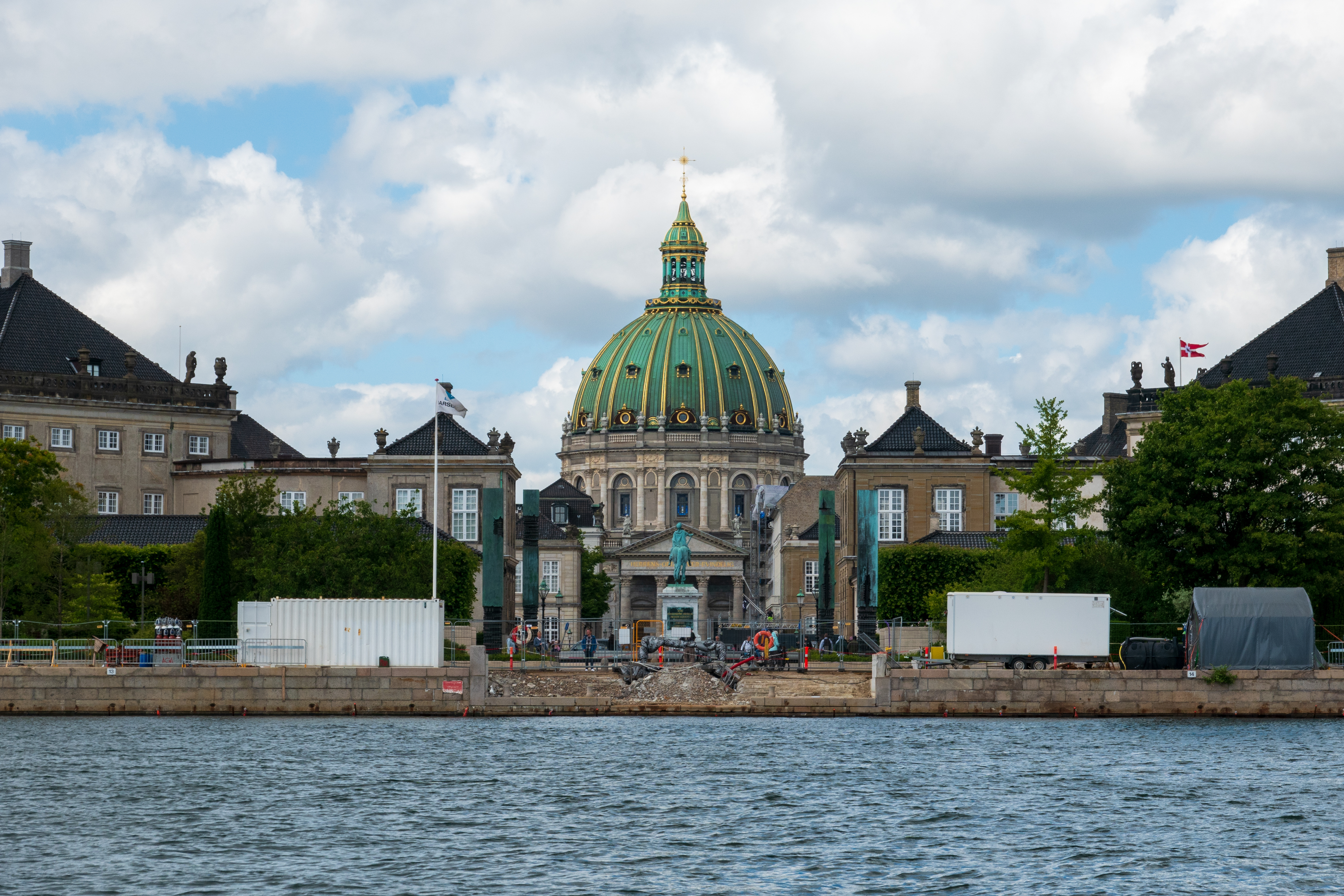
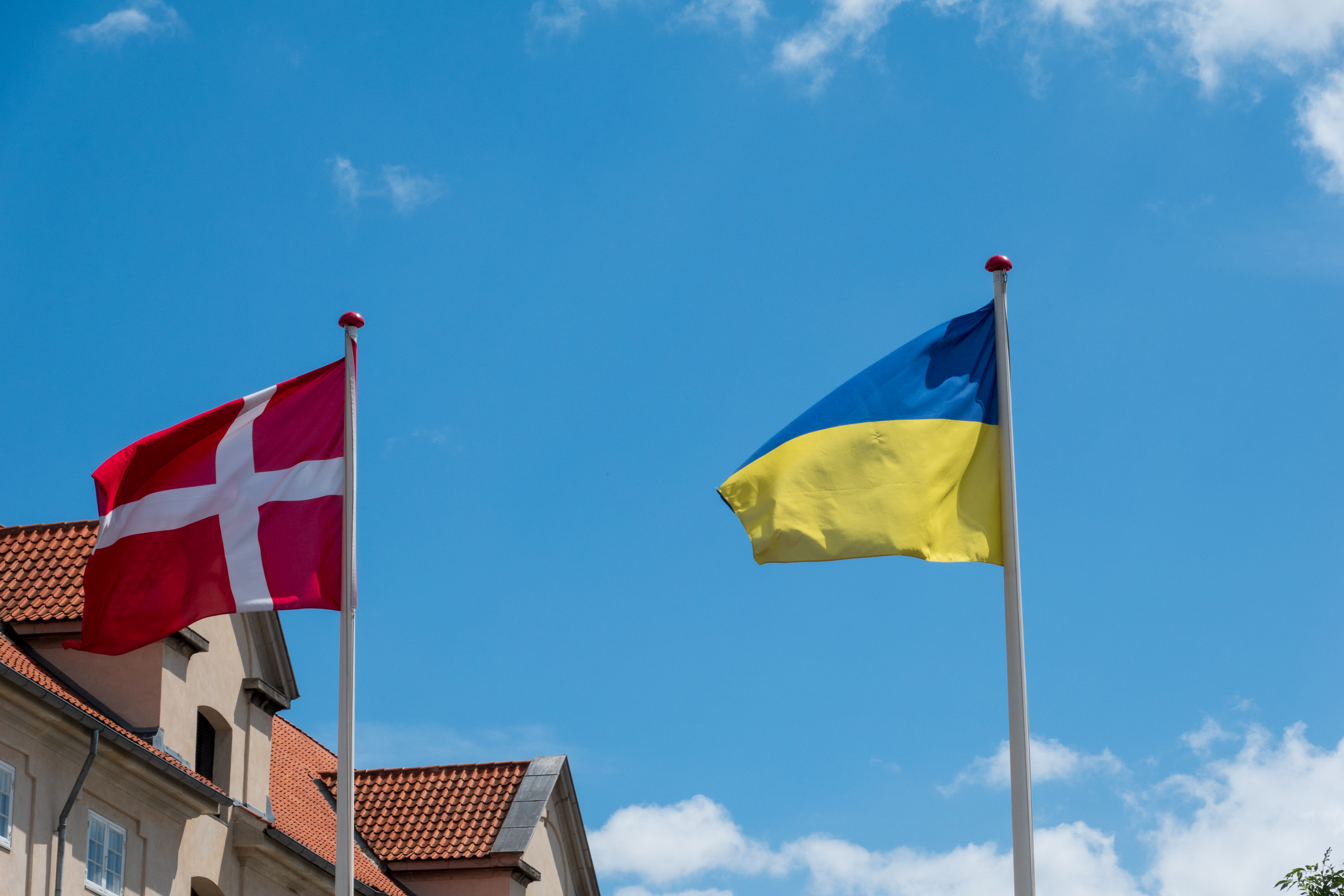
Frederik’s ChurchUkrainian flags are everywhere. The Danes get it.
Canal side dining.
We ate lunch beside one of the canals and then headed to the Museum of Danish Resistance.
The Resistance museum is a high tech, underground museum which was most interesting as it portrayed the three reactions to the Nazi occupation – Resistance, Acceptance and Avoidance. Like many museums we visited, it does not shy away from hard questions. (https://en.natmus.dk/museums-and-palaces/the-museum-of-danish-resistance/)
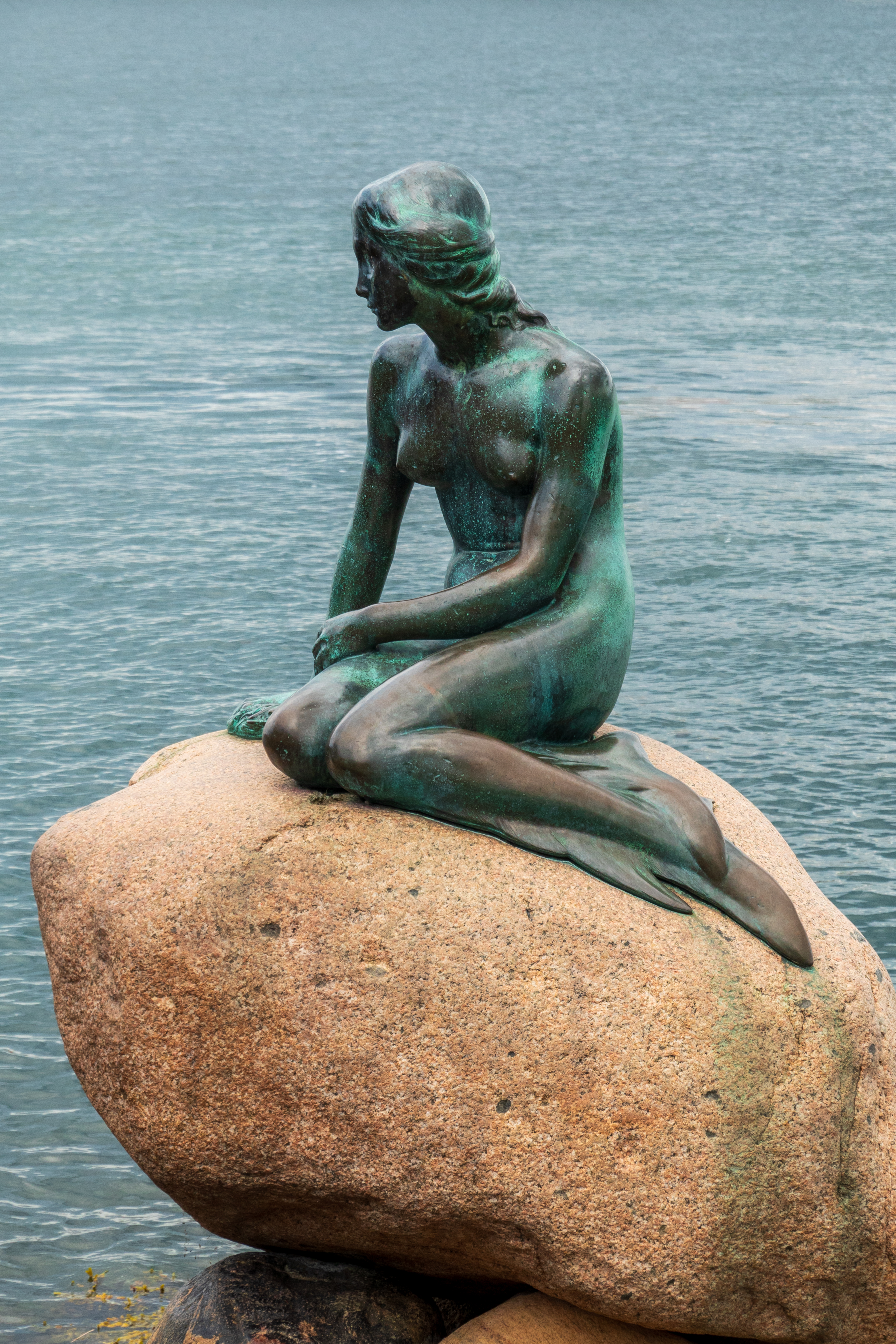
We then headed to the Little Mermaid to take her picture from the front. The boat cruise had shown us her rear!
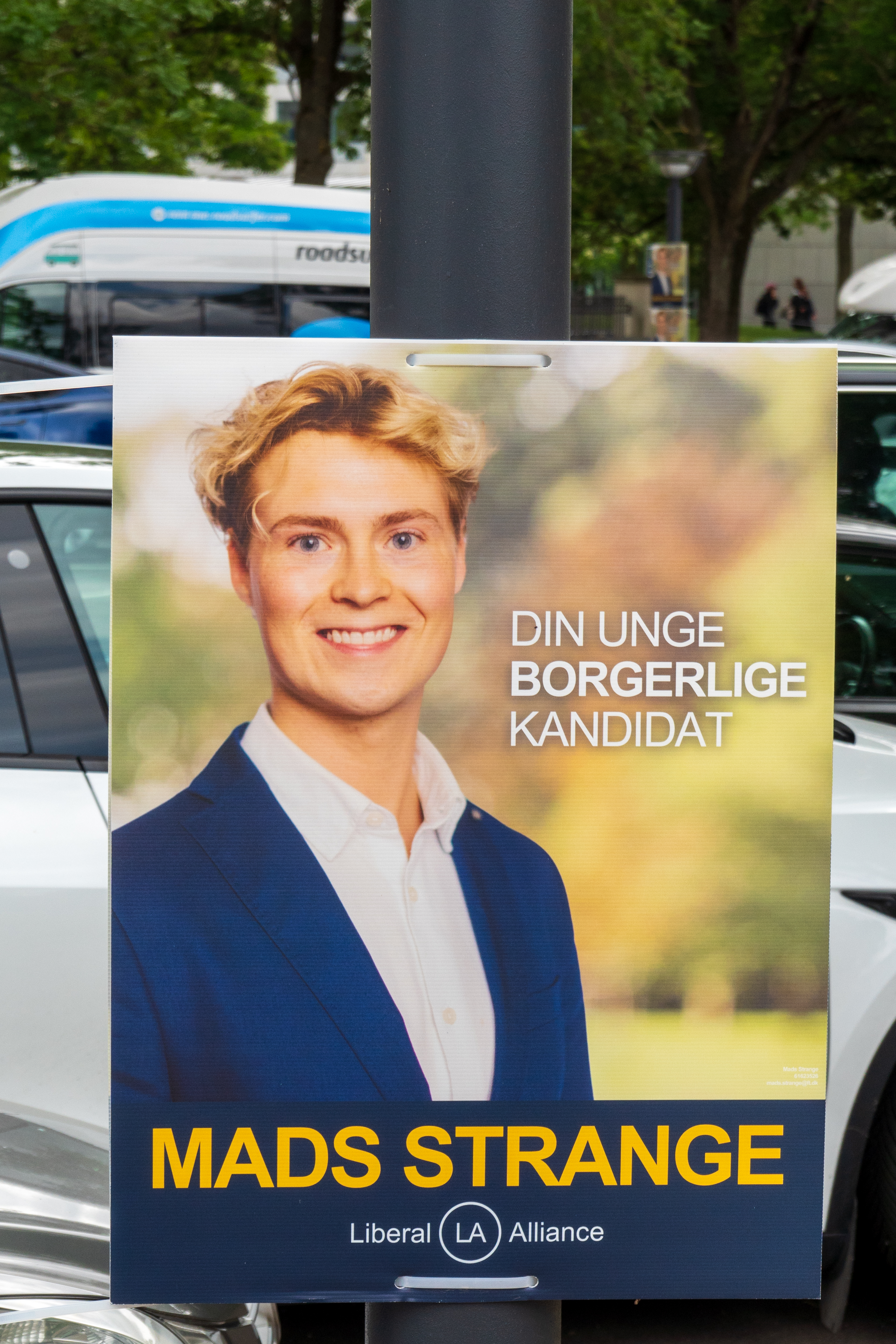
Tourists, like us, by the boat load!Don’t know if this is a better name for a politician or an action hero.
We headed north to Roskilde and camped in a parking lot. Not the height of luxury, but it was quiet and there were no knocks on the door in the night. Next morning we set off on our bicycles for the Viking Ship Museum, despite the nasty black cloud on the horizon. (https://www.vikingeskibsmuseet.dk/en/) Sure enough, a 15 minute bike ride later, the heavens opened, just as we were locking up the bikes. We headed for coffee and dried off a bit before joining a 45 minute tour in English.
In the museum building, where the original ships are displayed, our guide was a young historian who knew a great deal about the period and gave us lots of information on the five different Viking ships which had been raised from the bay nearby. He was also well versed in Viking history in general and their expansion across the world. As a geo-history nut, Fred loved discussing this part with him.
Known as the Skuldelev ships, the museum ships were all older ships that had been deliberately sunk around 1070 to block the channel and to protect Roskilde from attack. They were found in the bay, about 20 kilometers north of Roskilde.
They are planning to move the museum, but the problem is that the building was constructed around the ships and there is now no way to get them out.
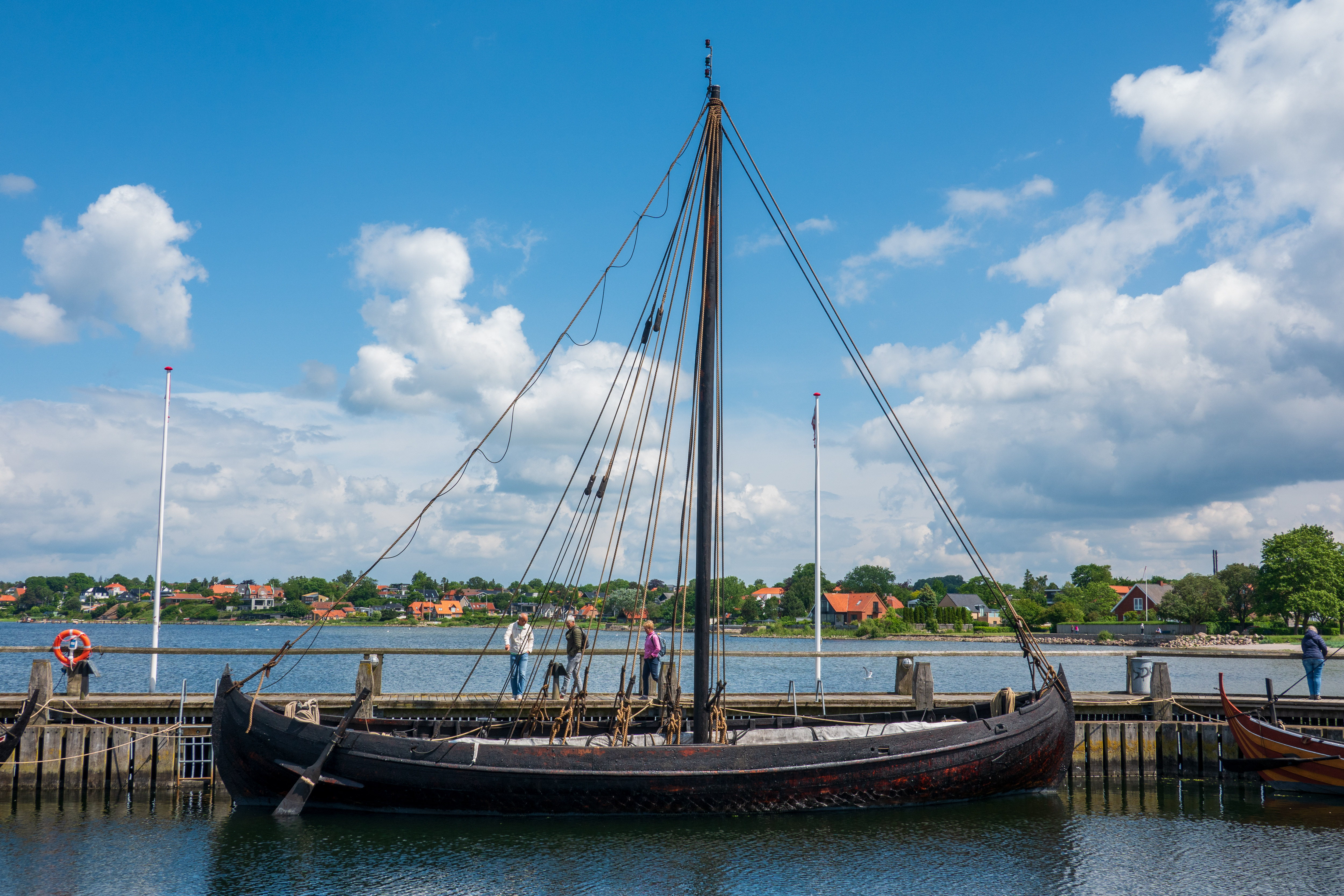
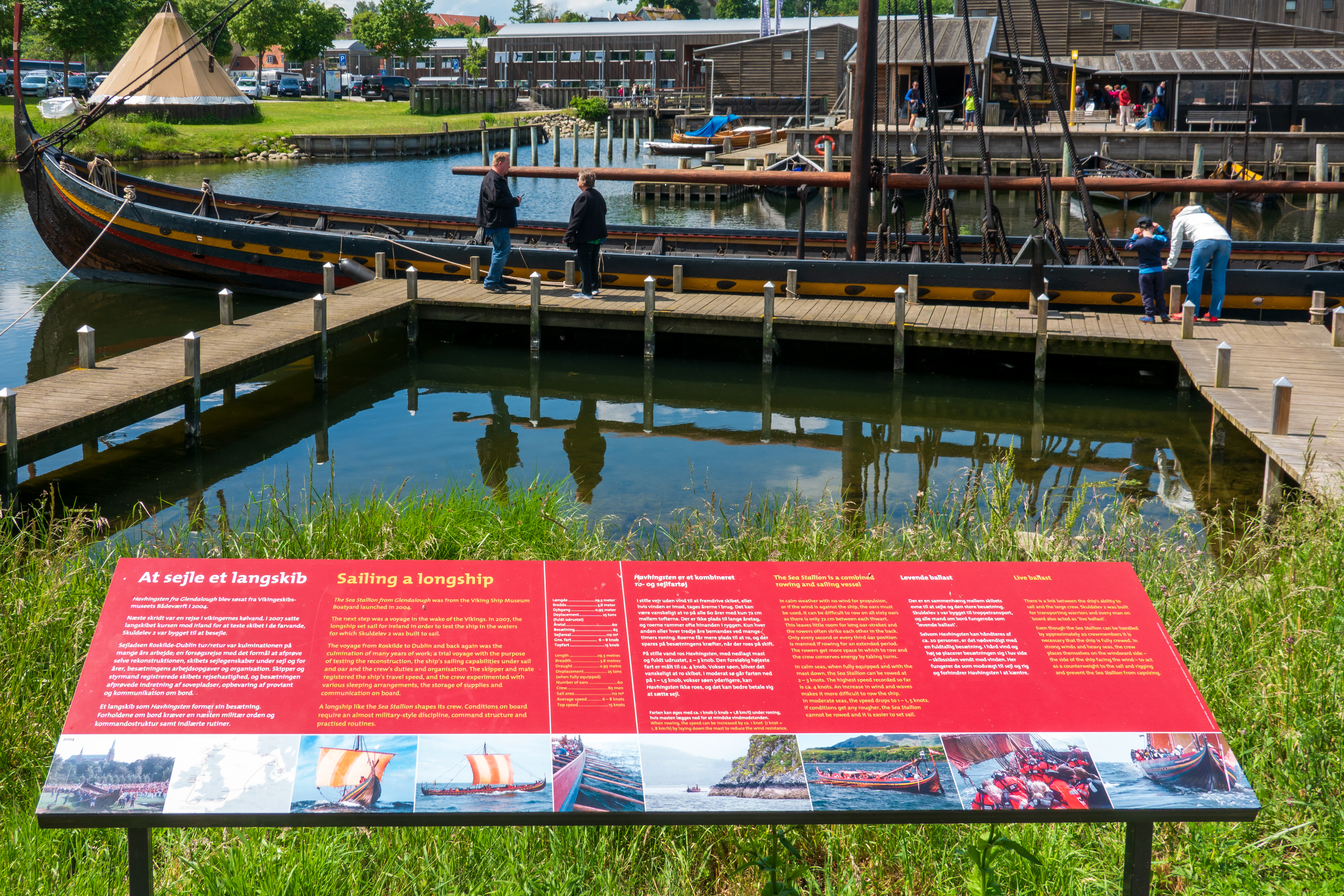
Obviously none of the ships was complete, and they had deteriorated during the hundreds of years that they had been under water, but the museum has pieced them together as accurately as possible. At 30 metres, Skuldelev 2, rebuilt as the Sea Stallion, was one of the largest Viking warships ever found. (https://en.wikipedia.org/wiki/Havhingsten_fra_Glendalough)
This thing that looks a bit like a shark appears to be part of the keel, where the mast was stepped.Viking ship by IKEA – some assembly required.
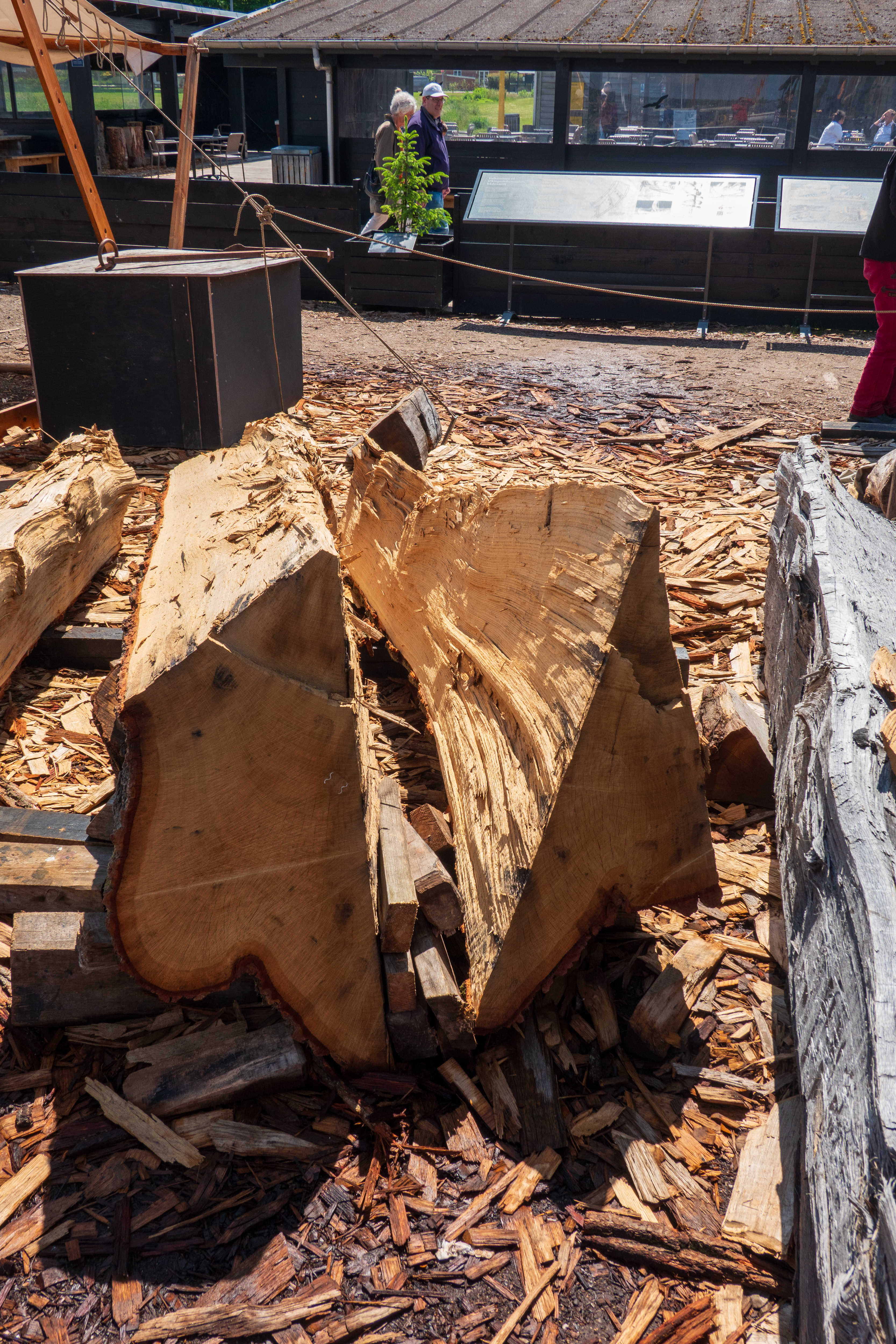
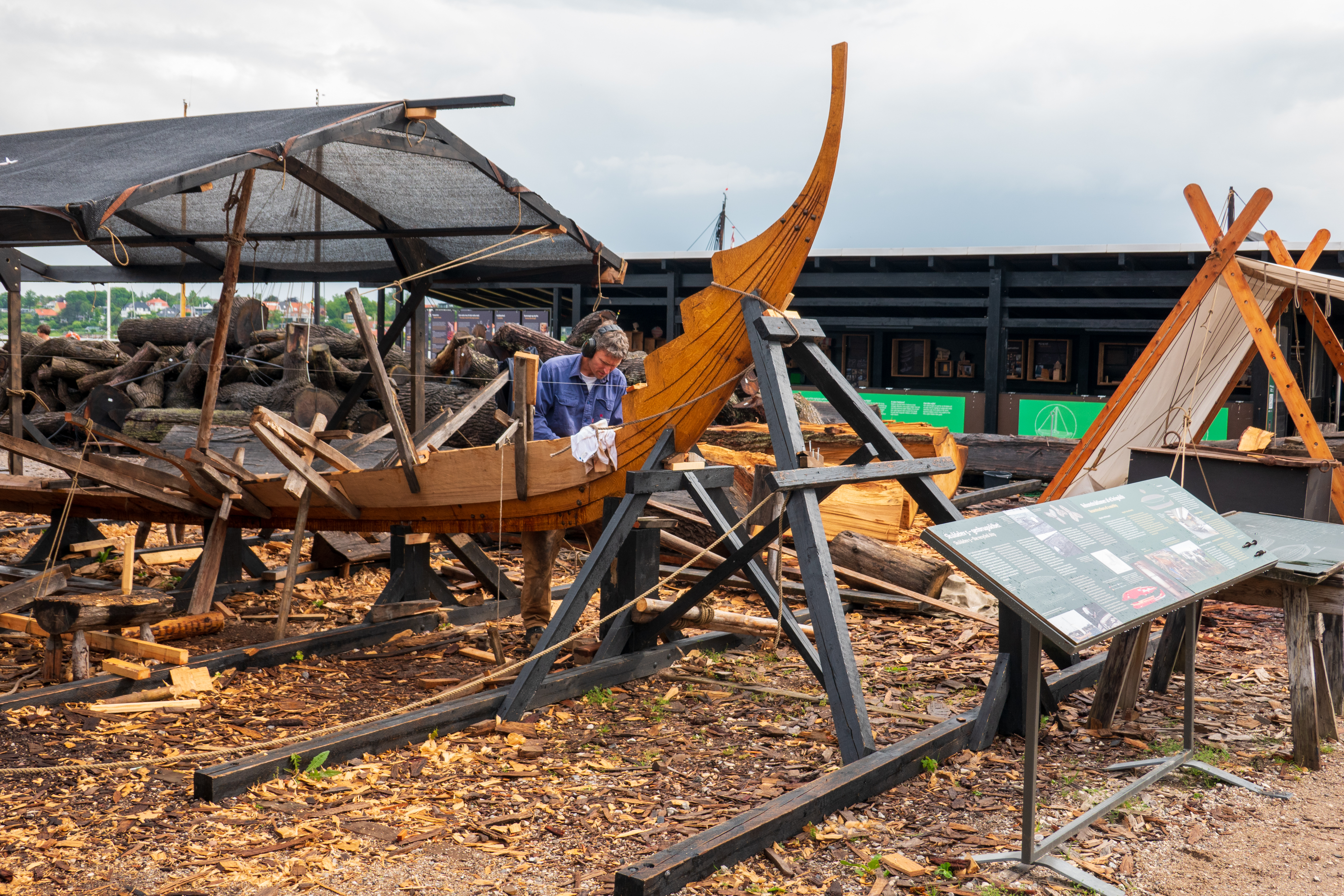
Amazing to look at original wood work, hundreds of years old.Not a replica, but a full reconstruction, with every effort to use the original techniques as best they can be determined,Not all of the ships were the fast, longships, some were freighters.
Back outside, we visited the Sea Stallion, a full scale reconstruction (not a replica) of a Viking ship built in Dublin around 1042. (Who knew the Vikings actually settled, as opposed to raiding, in Ireland?) The reconstructed ship was even sailed to Dublin, but it is speculated that the modern crew took longer than the Vikings would have taken back in the day.
So what is the difference between a replica and a reconstruction? The movie company, Universal built a Viking ship for the movie The Vikings and MGM built a replica of HMS Bounty for Mutiny on the Bounty. The ships looked right, but were built with modern techniques and the Bounty even had a diesel engine. A reconstruction, on the other hand, is built with period correct techniques and tools – a lot harder, but a fantastic opportunity to see how ancient techniques actually worked. Note: some were a lot better than you would expect.
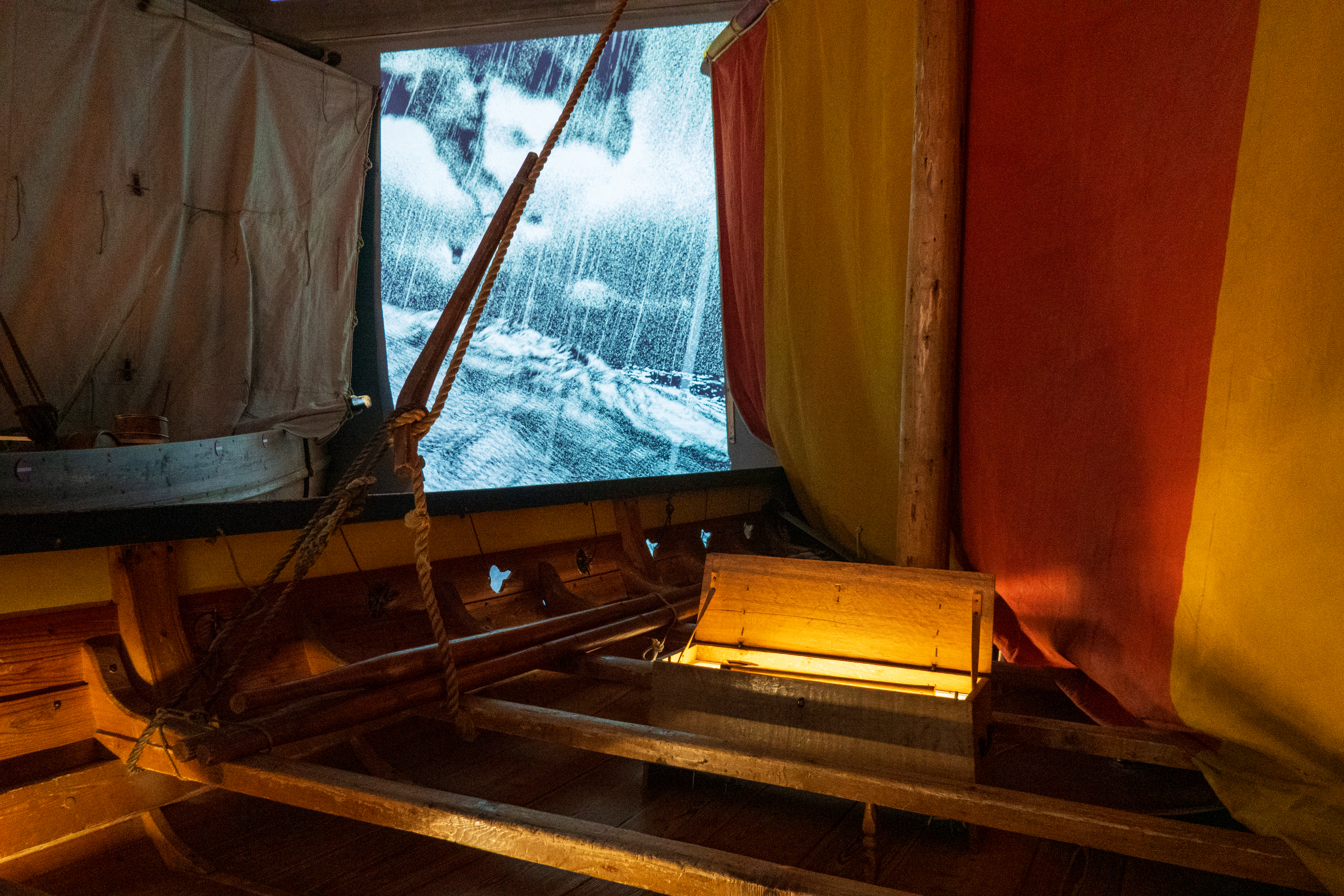
You can get into one of two ship mockups in a studio and sail into the storm!
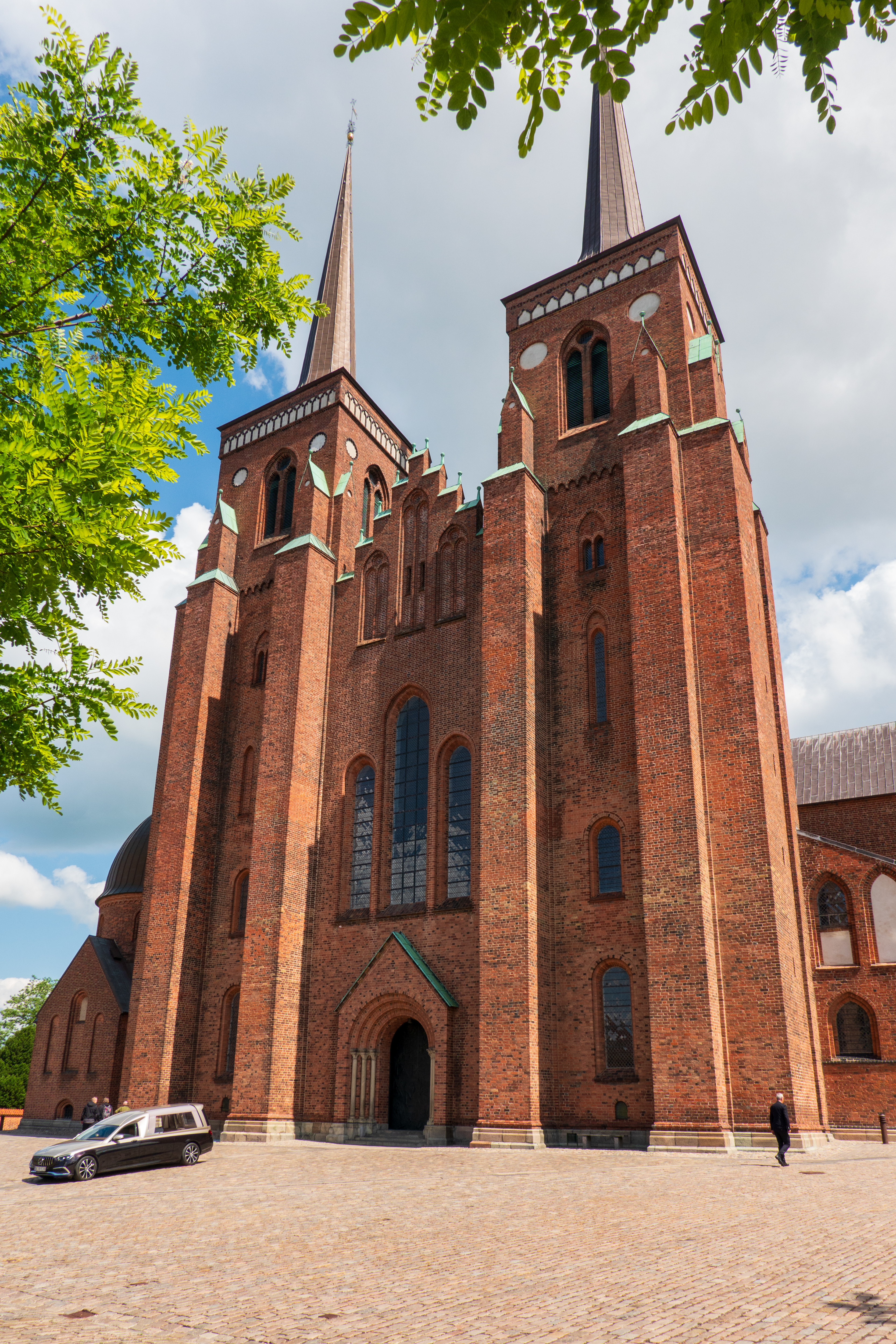
We finished our visit with lunch, a “Viking Platter.” A selection of interesting dishes – one being more than enough for the two of us. We then headed up the hill to the church. Sadly, a funeral prevented a visit inside.
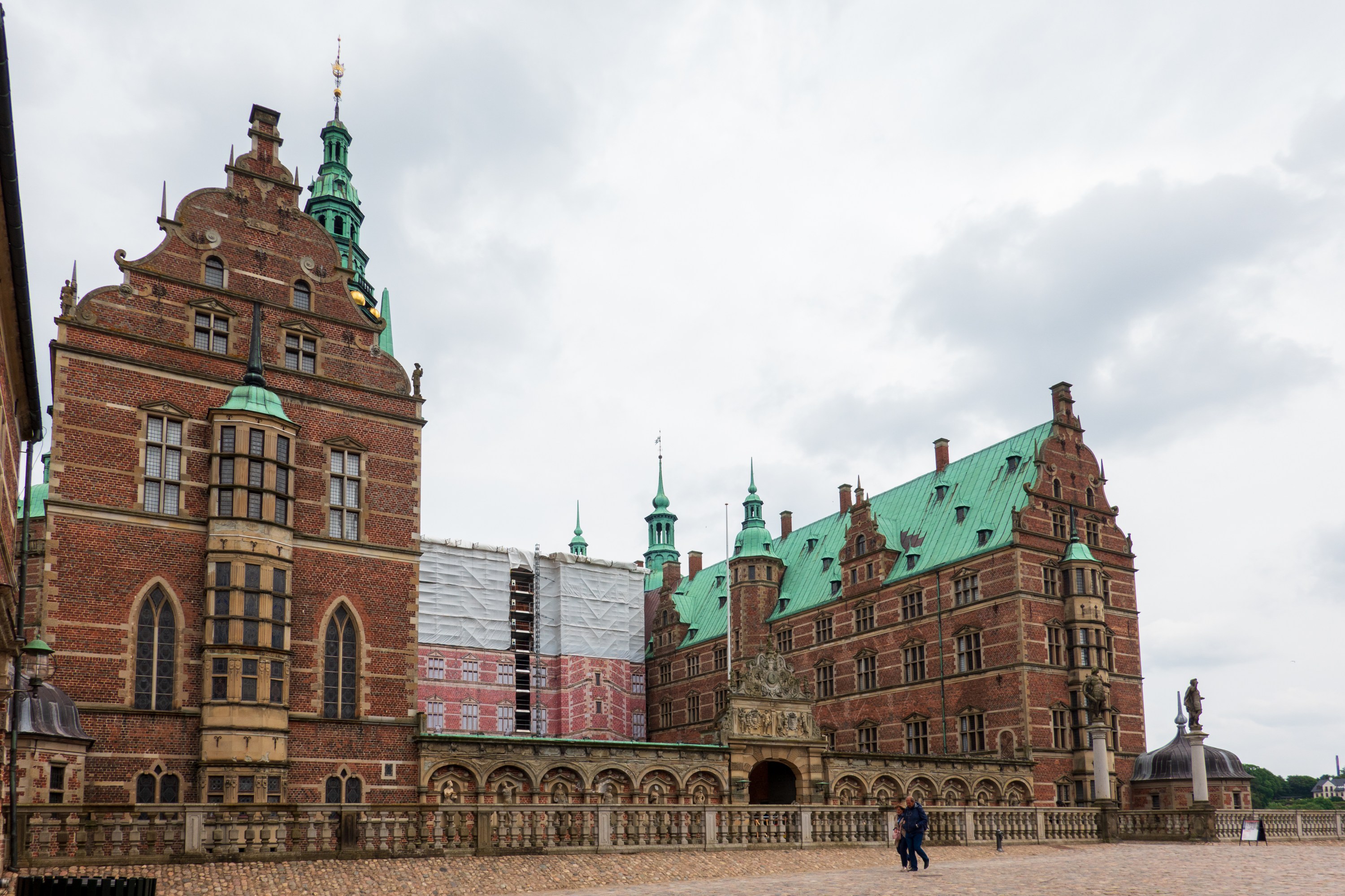
We moved on to a lovely campground in Hillerod and, in a burst of sunshine, set out to find the Frederiksborg castle. (https://dnm.dk/en/frederiksborg-castle/) From the website: Frederiksborg Castle was built by King Christian IV in the early decades of the 17th century and is the largest Renaissance complex in the Nordic region. The aim of the building was to show off and enhance Christian IV’s status as a powerful European monarch. Accordingly the castle is richly adorned with symbolic and decorative elements: for example, the impressive Neptune Fountain and the Marble Gallery of the King’s Wing. Another study in obscene income inequality. And keeping up with the neighbor nation Joneses!
A short ride and we were at the main entrance. It was closed as it was later than 5 PM and so we set off back to the campground as it began to rain!! Again!
The next morning we headed to the Castle. No sun, but no rain.
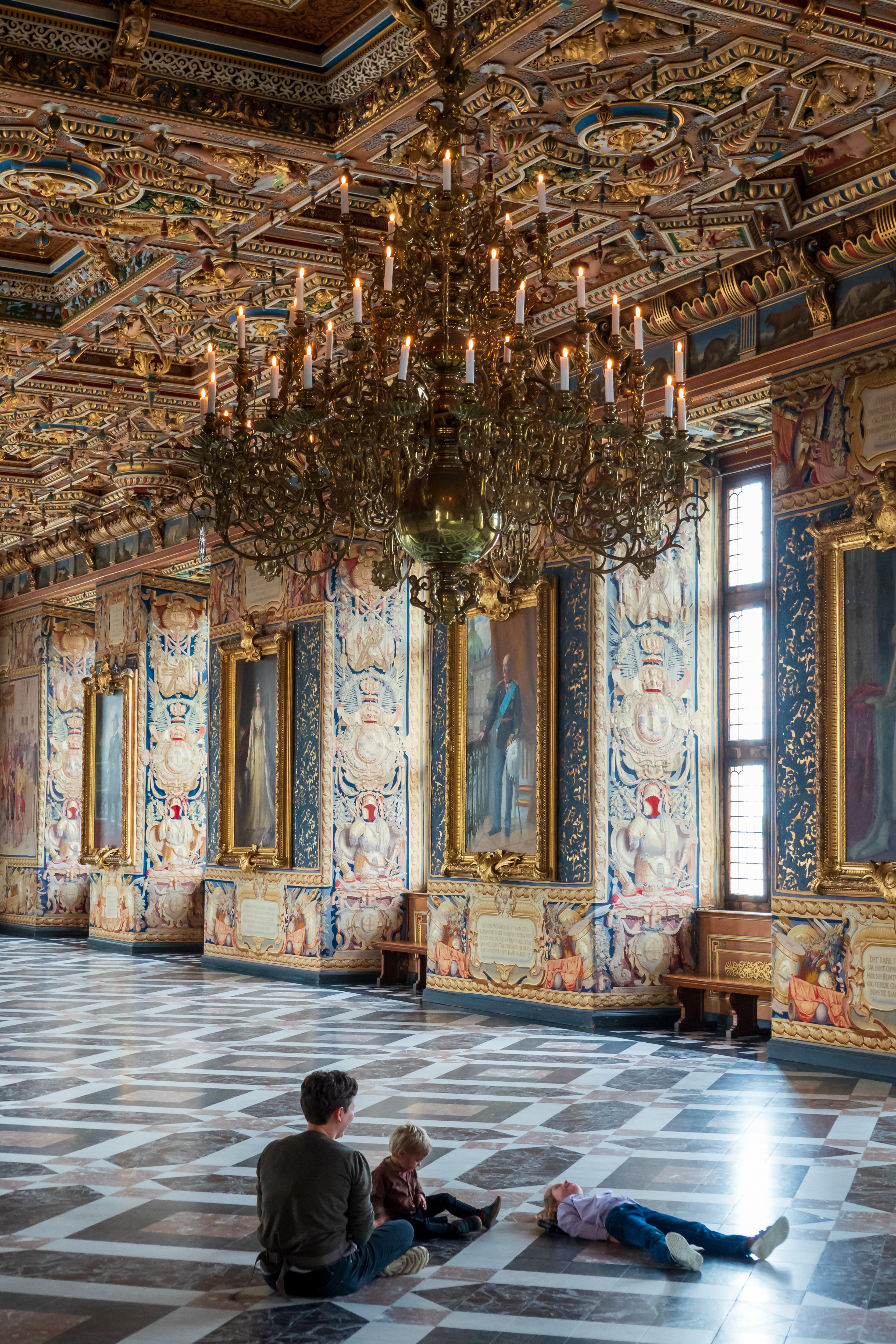
It was was “royally” decorated with spectacular ceilings in reception rooms.
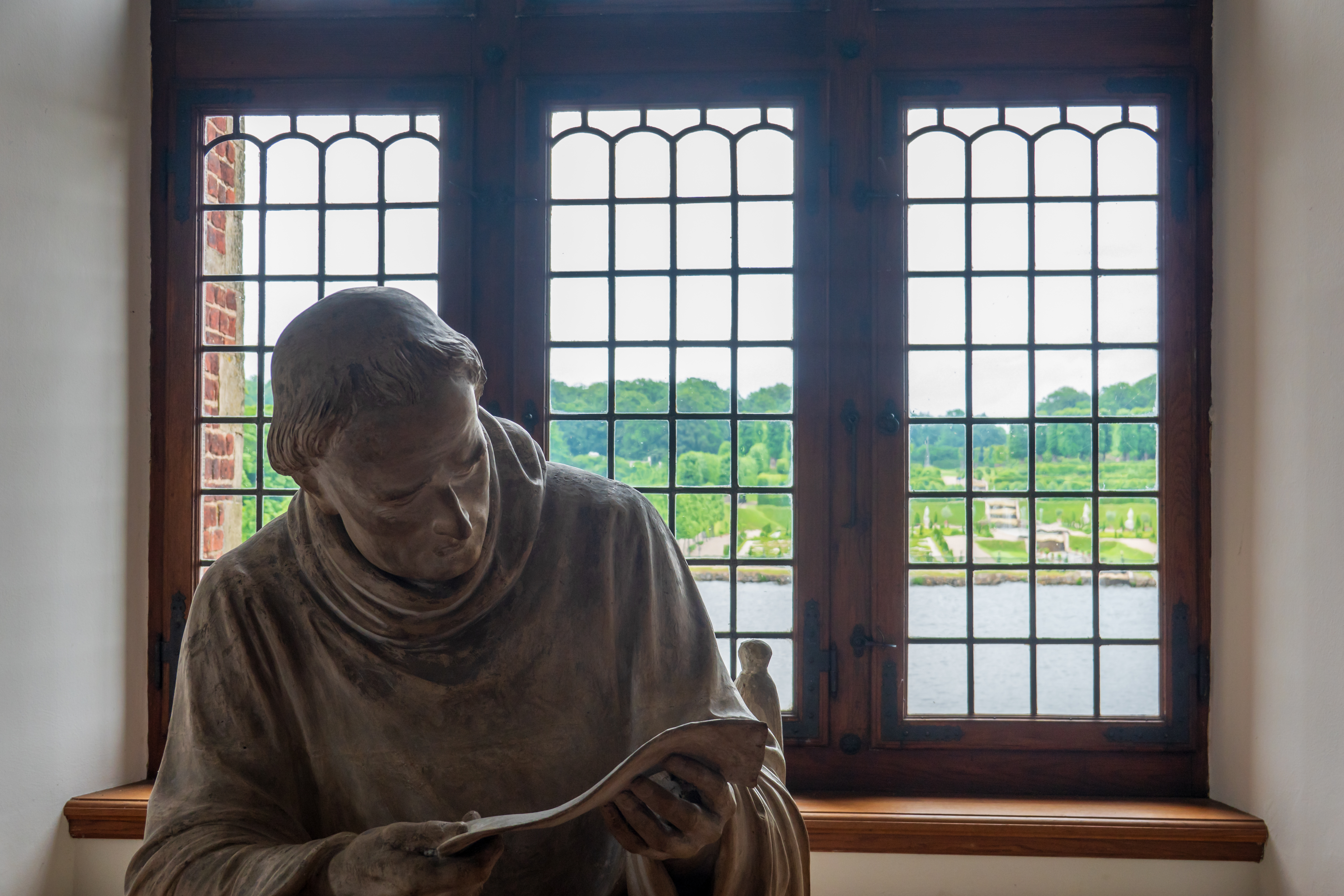
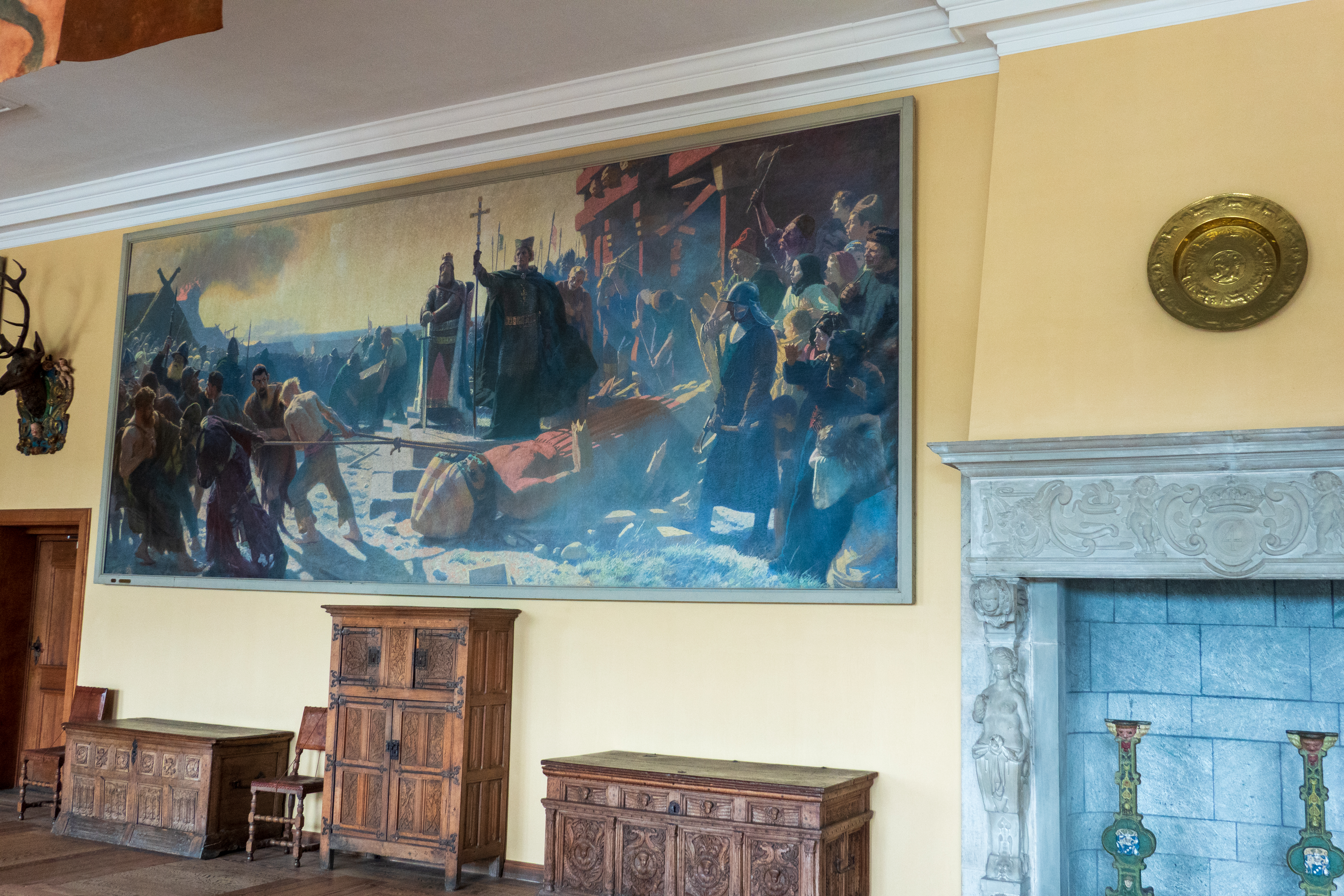
The palace has great views of the enormous formal gardens.I have always marveled that the Scandinavians ever converted to Christianity. This painting appears to show a king or bishop destroying a statue of one of the Norse gods.
Sometimes the littlest tourists know how to get the best views.
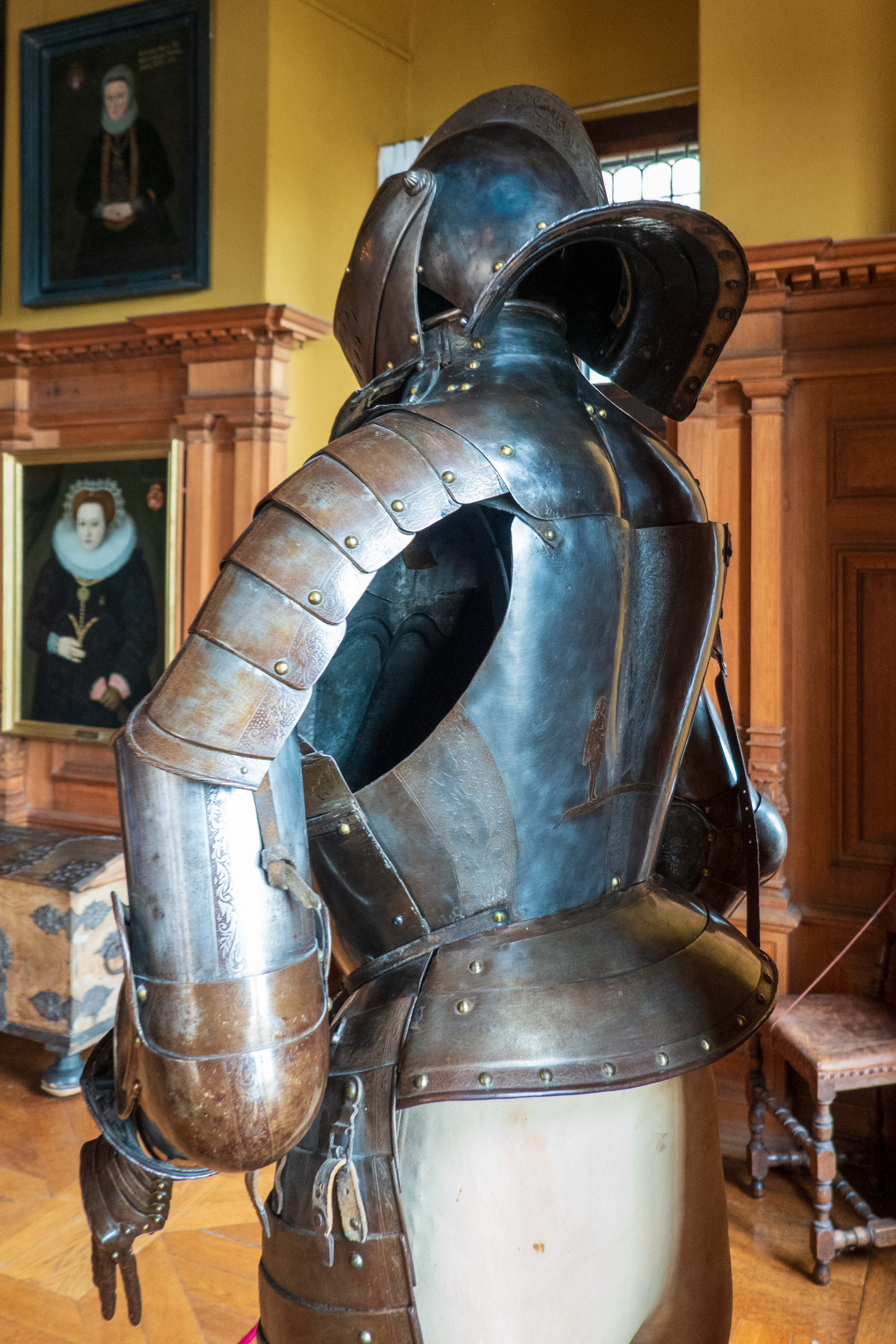
A stunningly beautiful suit of armor.
Another mechanical astronomical model.
Would love to have this in our living room.
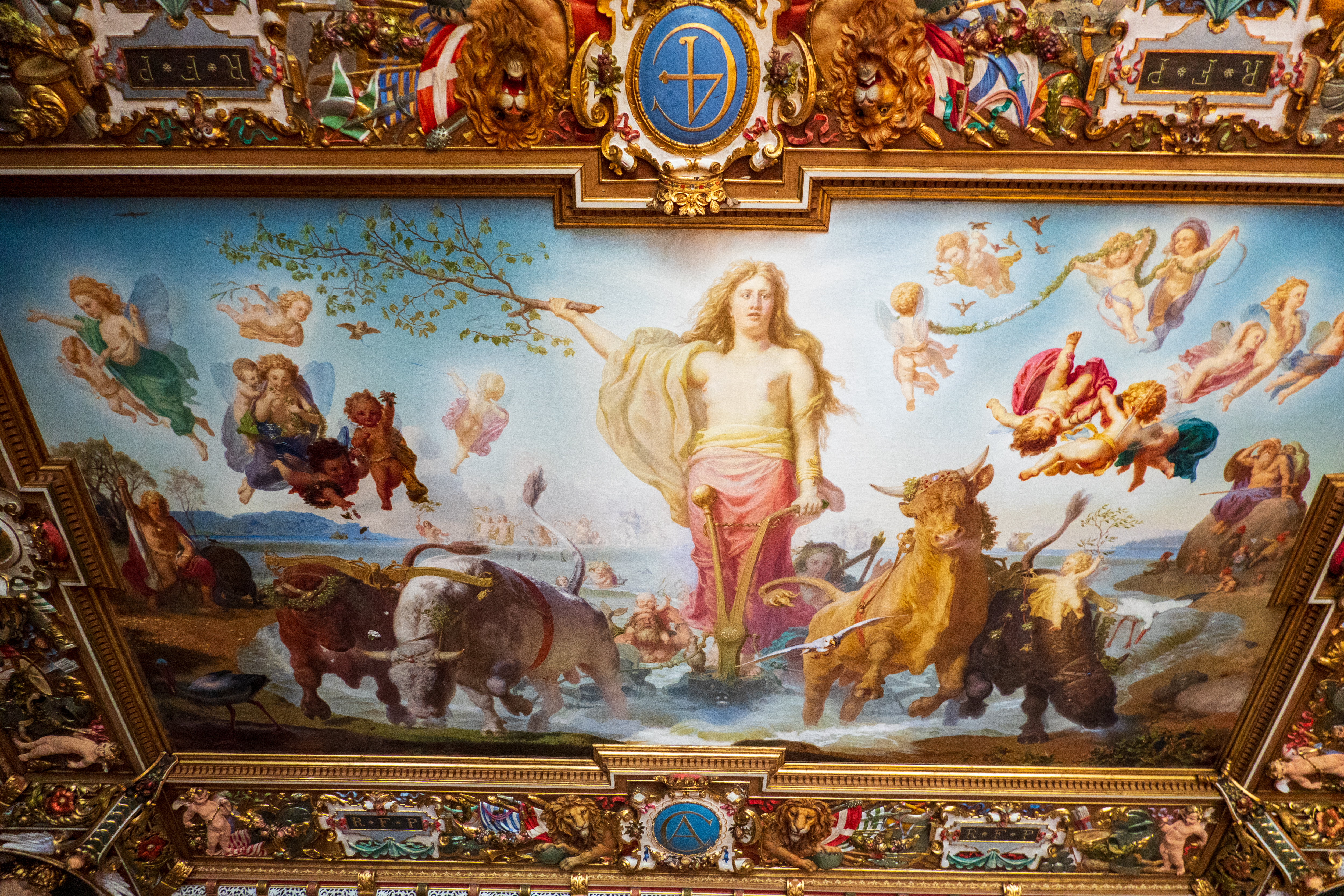
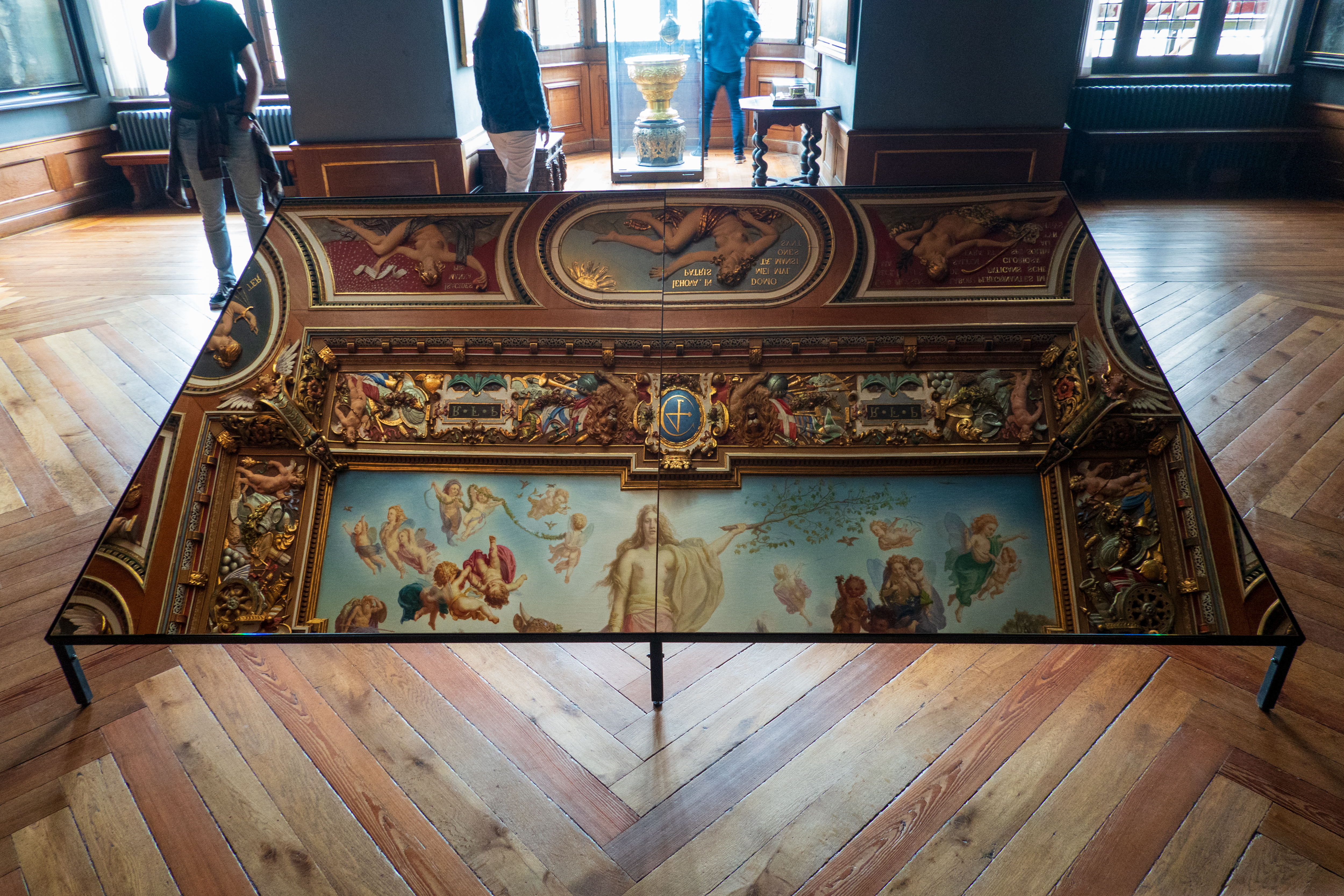
The ceiling art is a bit over the top. literally.
And so you don’t have to lie on the floor, they put a mirror on the floor.
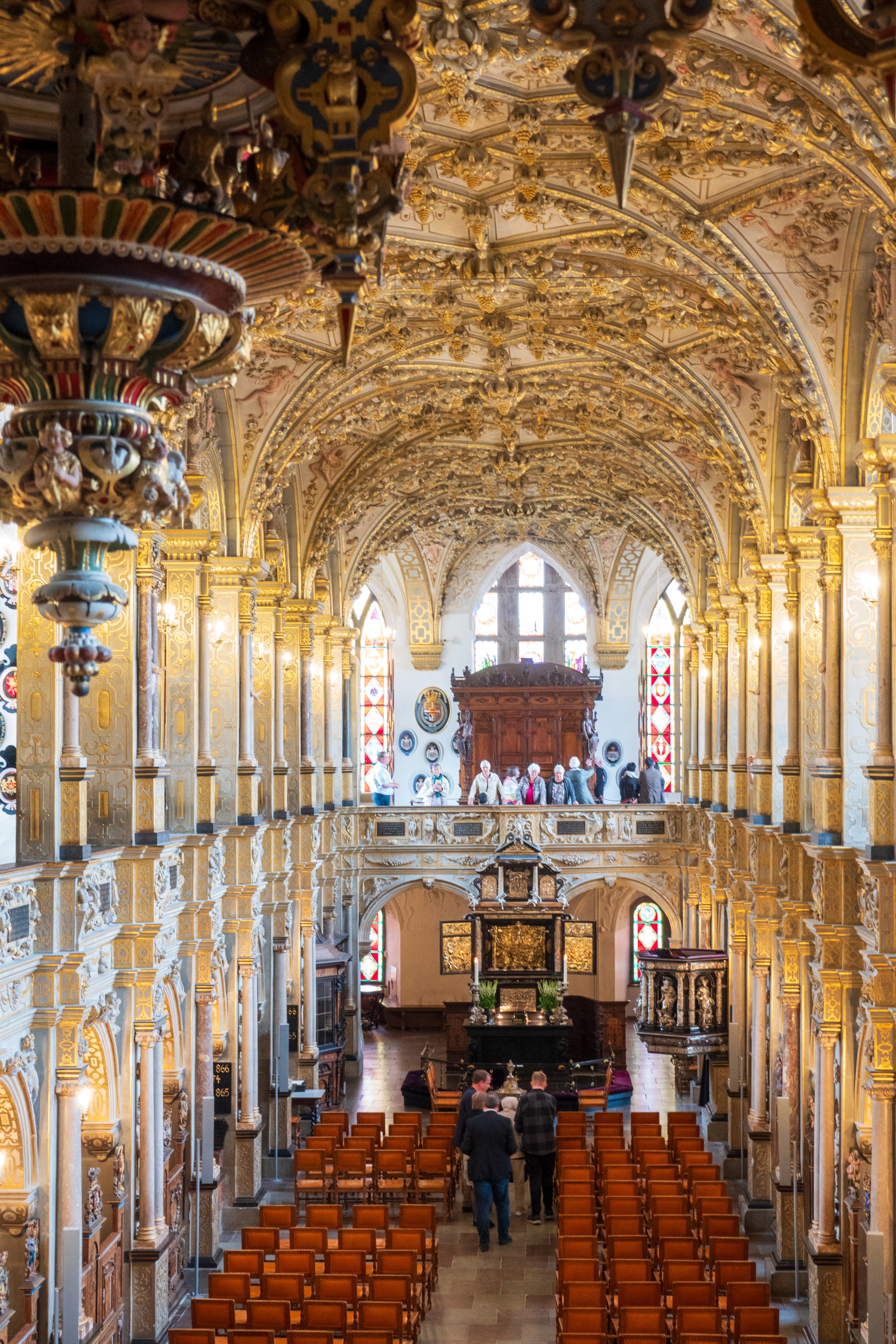
The highlight from our point of view was the chapel, which was simply glorious. We were walking along a corridor when one of the docents told us to hurry – the chapel would be opened for only a few minutes before the wedding. Wonderful opportunity to see everything lit up and decorated.
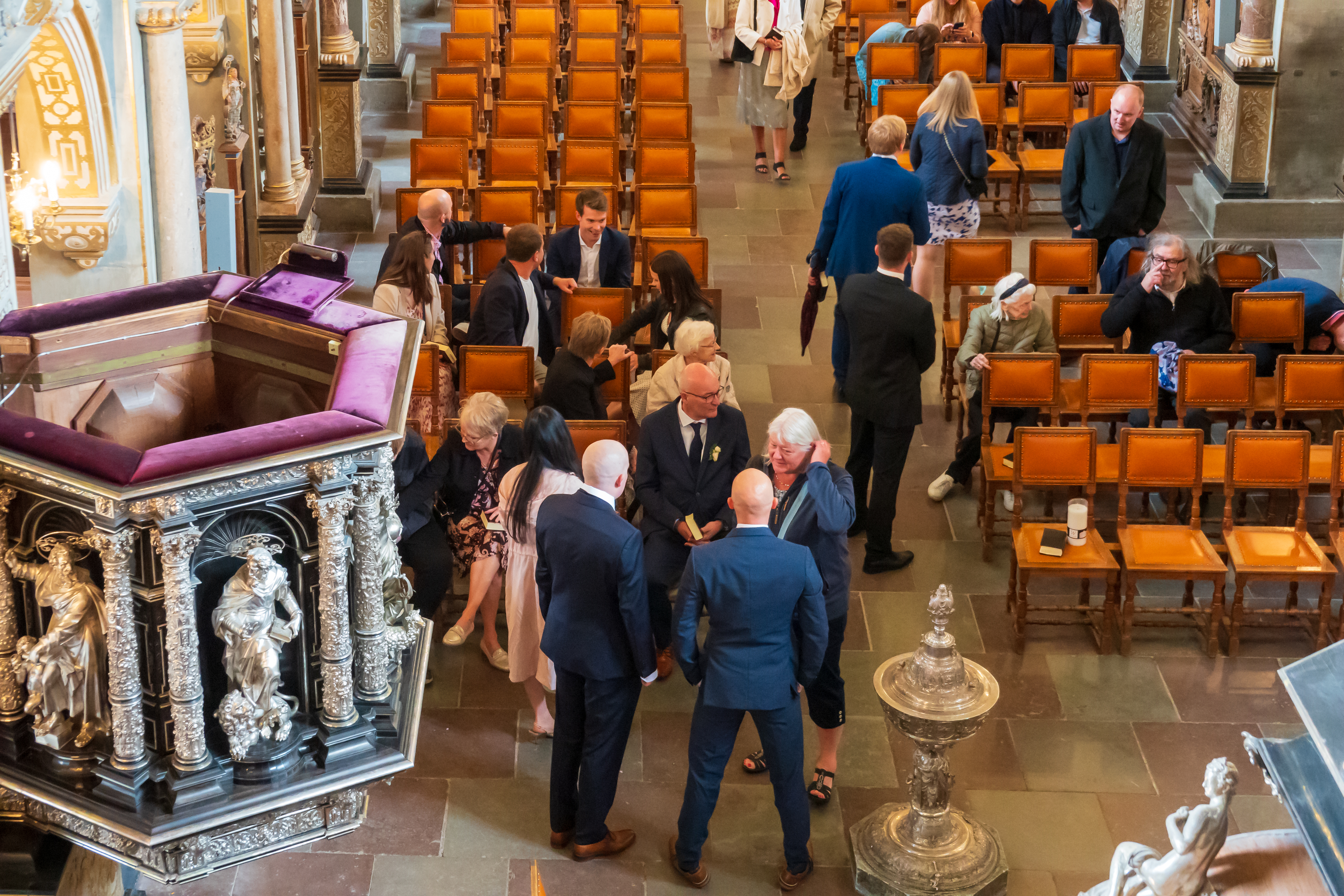
Preparations were underway for a wedding but we were permitted to enter the gallery running the length of the chapel and to marvel at the ornate ceiling and at the number of royal boxes each with its individual crest.
We have a thing about organs.
Amazing decoration.
Wedding party huddle.
We returned to collect the camper and set out for Copenhagen.
Beginning to fear that there are no Danish pastries in Denmark.
After leaving the ferry in Rodby, an easy drive took us to Nakskov, in the Lolland Falster region of Denmark. Nakskov is a resort destination with a large campground and lots of summer homes. It even has a beach and claims the warmest water in Denmark. Still too chilly to tempt us!
We had planned a day of visits to a sugar museum and then on the second day, a ride on the Post Boat in the Nakskov Fjord. However, the first day, Sunday, proved sunny so Fred decided it was time to paint the roof rack over the cab. Like everything else, it had really suffered in the soggy English winter. So he borrowed a ladder from someone in the campground and spent the day painting the roof rack (and himself) a lovely glossy black. Weeks later, he still sports Goth fingernails – Rust Oeleum is tenacious stuff! Denise meanwhile assisted where she could and then took a walk out to the point to admire the fjord.
First task was to cover the truck. Fortunately, Fred had thought to buy painter’s tape and plastic sheeting.
Looks better, but I still missed a lot of spots!
To celebrate completion of the project, we took ourselves out to dinner at a lovely restaurant nearby.
The next day proved much cloudier and windier but we cycled into the town and had a look around.
Being Monday tourist attractions were mostly closed but such is life! It seems that one must close on Monday to recover from the effort of closing on Sunday. Banks were open, but would not change money. In fact, they have no tellers and a sign that no cash is handled in the bank. Interesting. So it was off to the ATM and that did work.
We admired the small section of town with older buildings, many of which were painted a dark yellow.
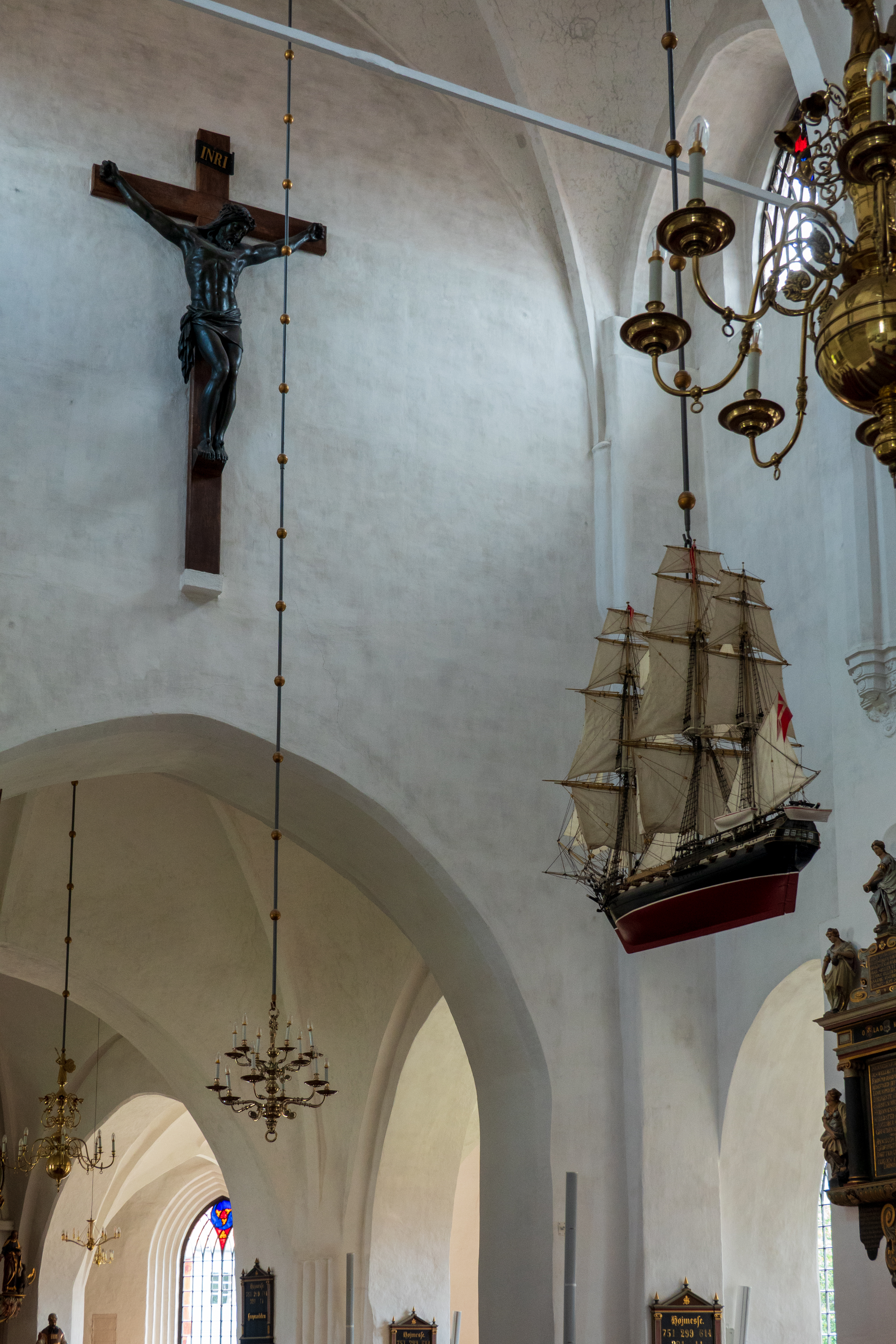
We also visited the church, St. Nickolai. It was interesting and in keeping with the importance of the fishing industry to Nakskov, a model of a boat was hanging in the church above some pews.
Ship model suspended in the church.
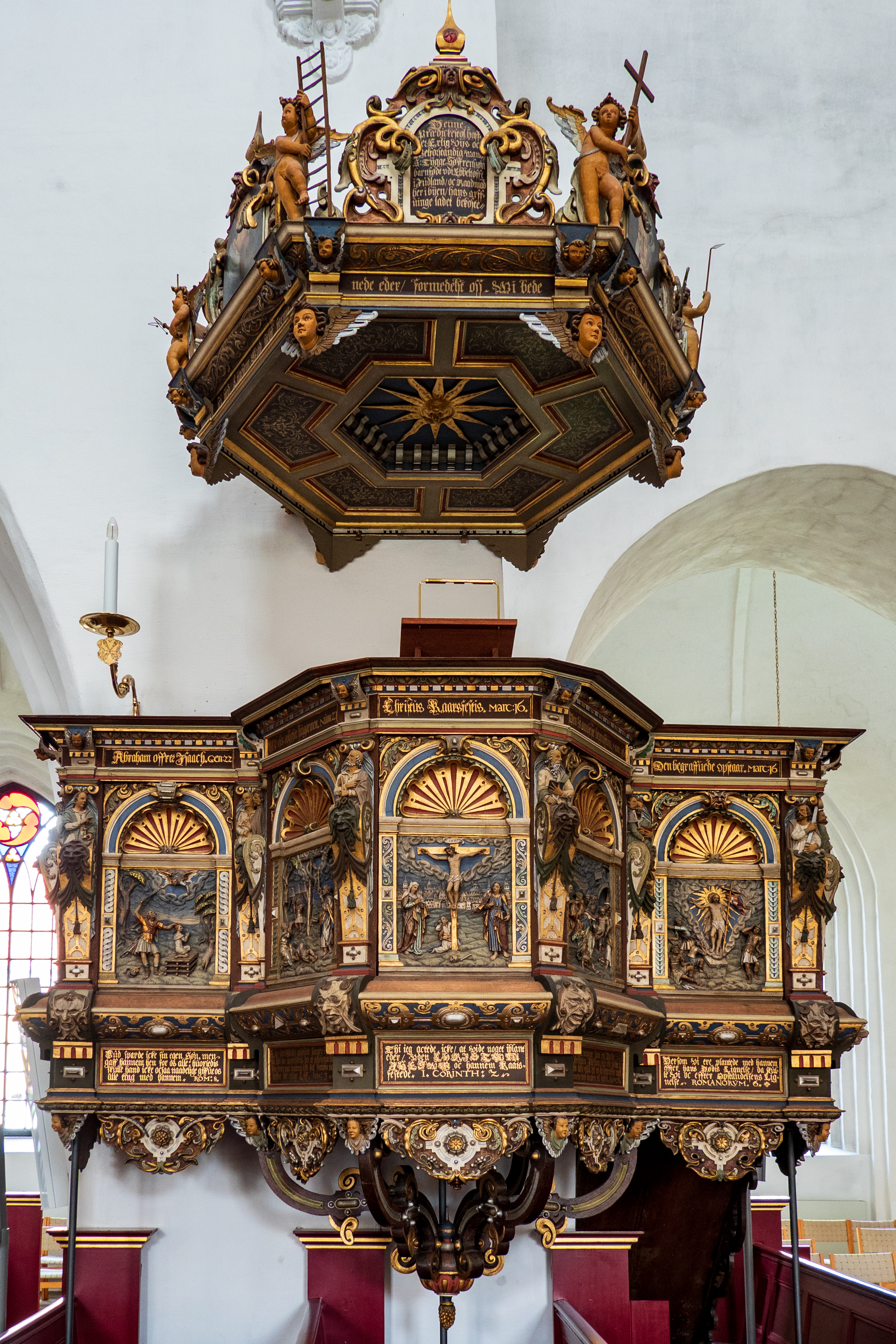
Gloriously decorated pulpit.
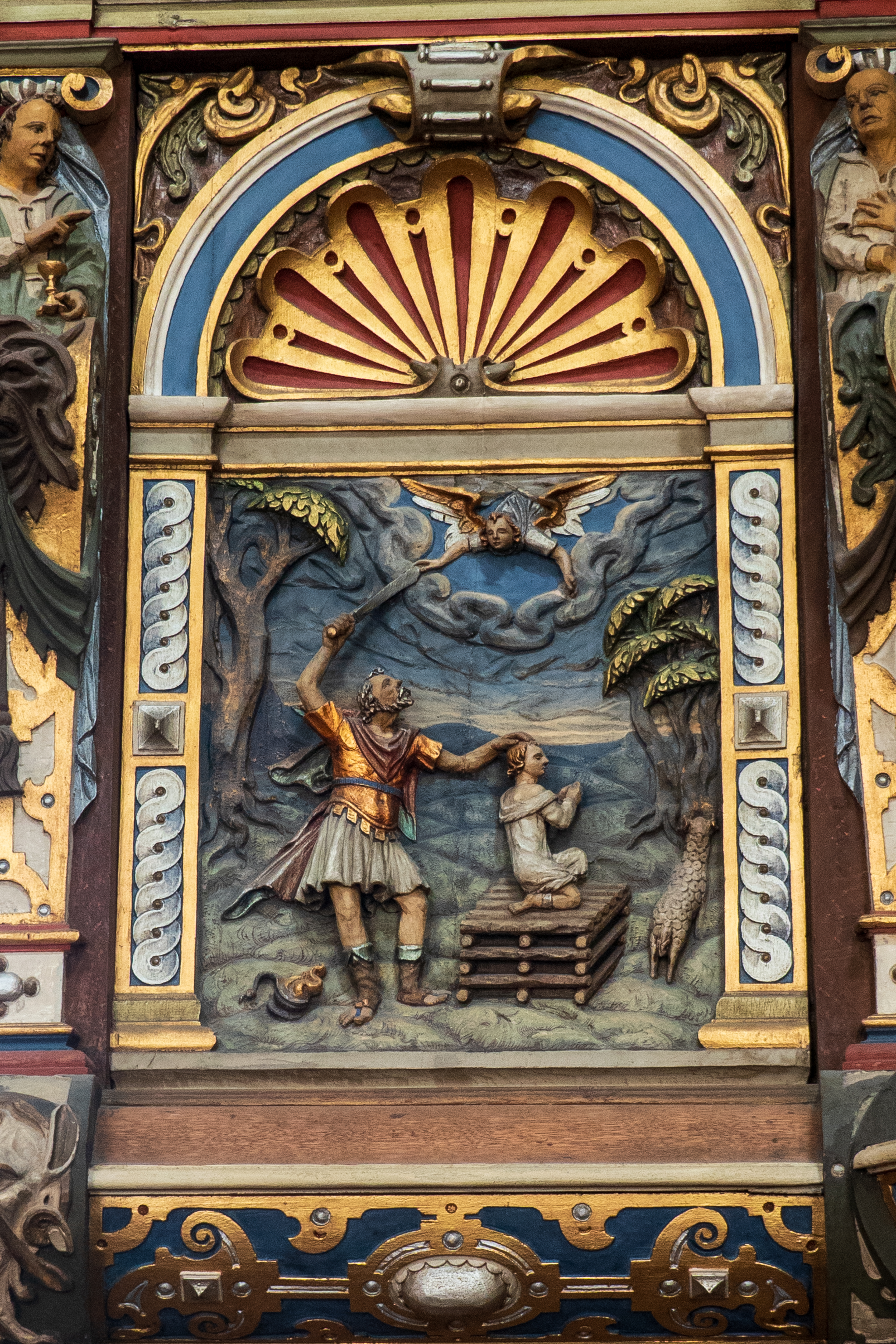
Very detailed, and Scripturally correct, detail of Abraham and Isaac.
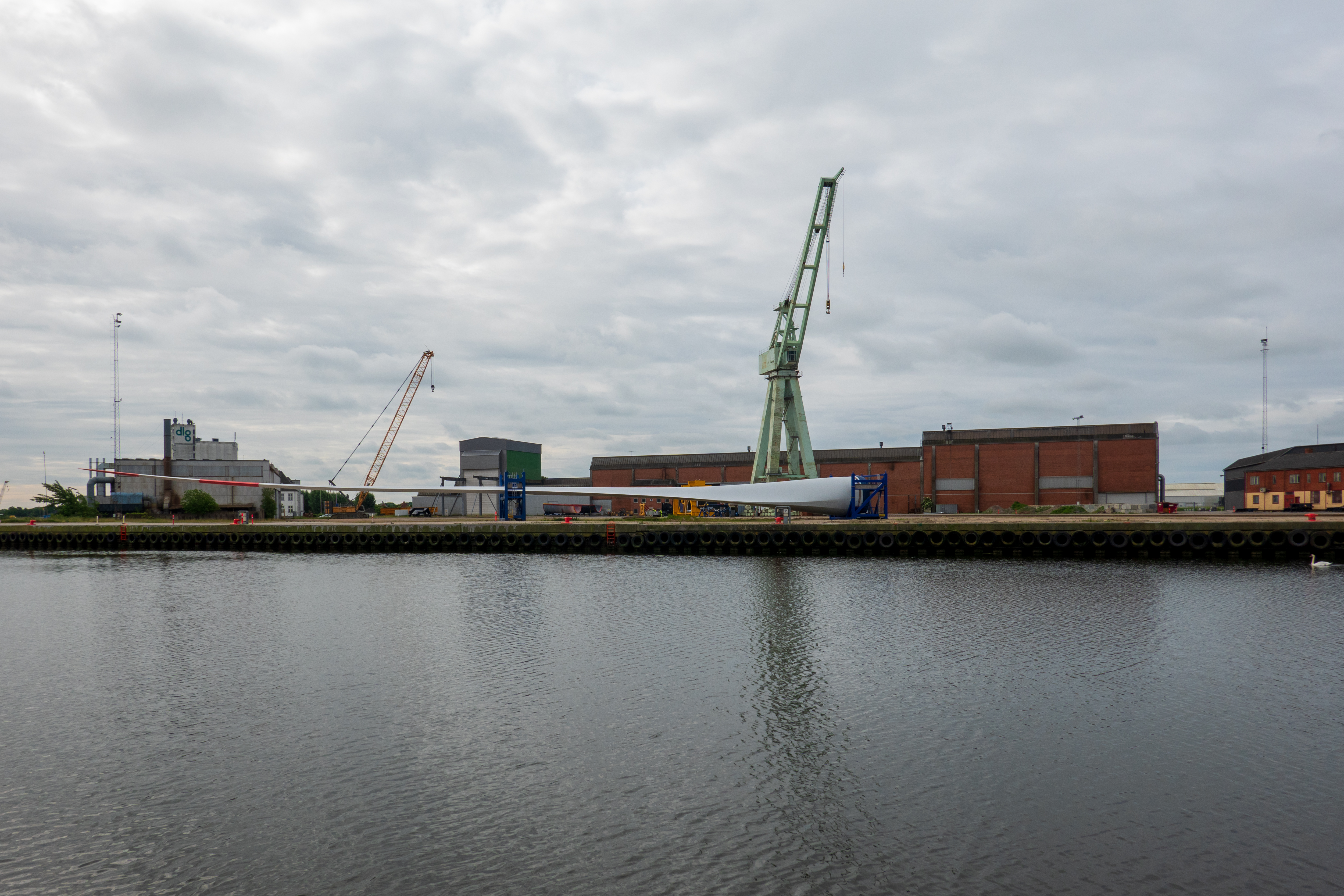
The Post Boat did sail on Tuesday morning and we enjoyed the trip, although the sun barely poked through. The water was calm and the wind quite decent. Sailing out of the harbor, we admired that factory that makes massive windmill blades.
We visited two islands in the bay, both with wildlife preserves. The first, Enehøje, had been owned by the Danish explorer, Peter Freuchen. We had never heard of him, but he is actually a most interesting gentleman: https://en.wikipedia.org/wiki/Peter_Freuchen.
We ate our pack lunch on the second of the two. Fred climbed the lookout tower and admired ships through the 15 centimeter (!!) binoculars. Huge!
While chatting with the other passengers on the boat, we discovered that there was a cherry winery, the Frederiksdahl Kirsebaervin, nearby. Cherry wine? As in, made with cherries, not grapes? Such an interesting idea that we had to visit. Needless to say, it had just closed when we arrived, but a charming gentleman opened it up for us and we enjoyed a tasting. (https://frederiksdal.com/int) We bought a selection of wines, including sparkling and cordials. Cherry wine is a serious wine, but much stronger and less sweet than grape wine. Much more of a cordial than a drinking wine, at least to our tastes. One recommended drink is to mix with strawberry/rhubarb tonic water. Not bad at all.
We could not stay overnight at the winery, but were directed to a small port nearby, where we could camp for the night. This proved to have a great view of the Tars to Spodsbjerg ferry. We enjoyed watching its hourly comings and goings.
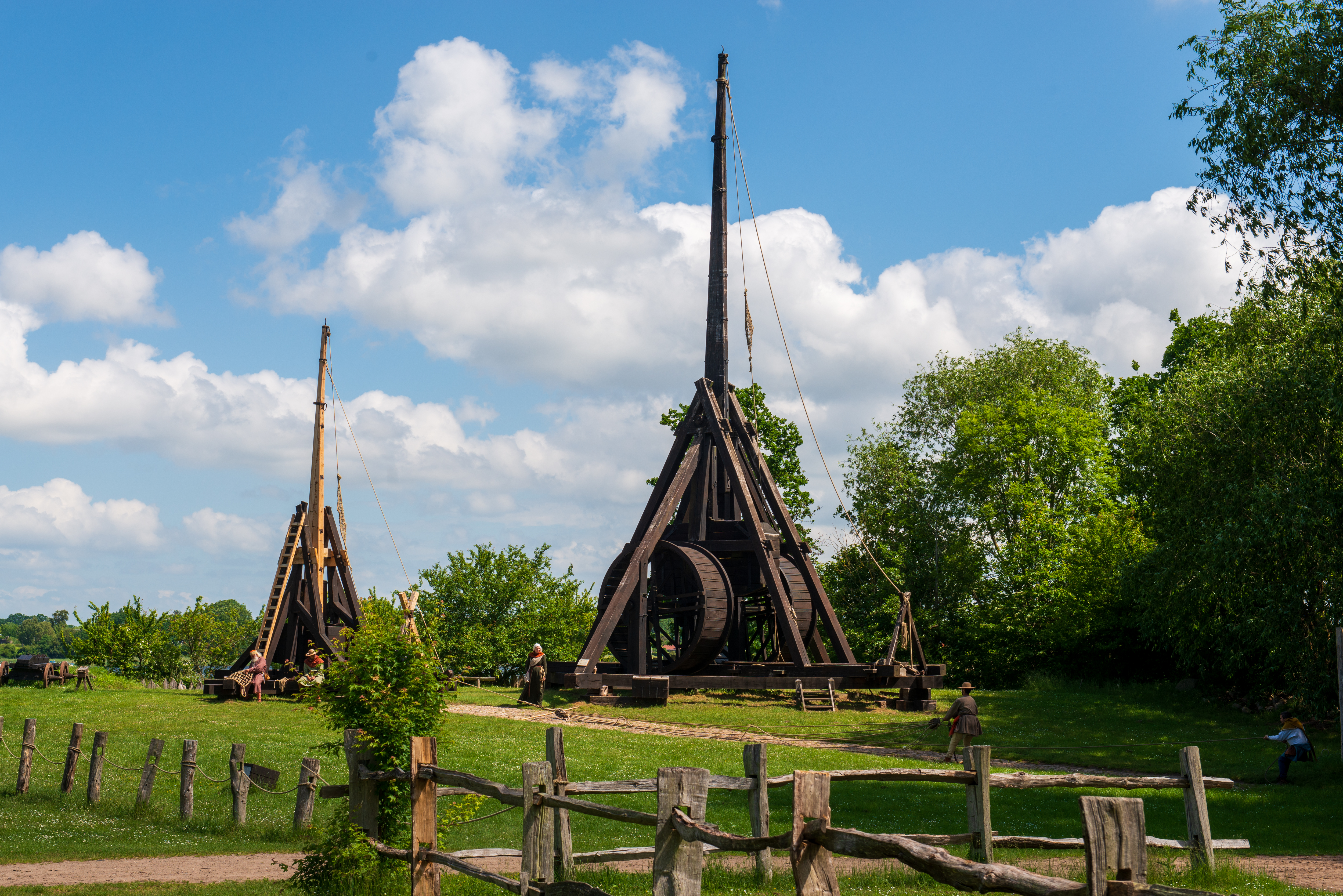
Our next stop, at the Mitteladldercentret, or Medieval Center was interesting and well worth it. (https://www.middelaldercentret.dk/?lang=en) We are suckers for “living history” exhibits. We wandered in, looking for lunch, only to learn that they had not one, but two trebuchets and they were going to fire them at noon! Too cool! OK, you have to be a real medieval history freaque to even know what a trebuchet is, but let us just say that for hundreds of years it was the biggest dog in the artillery game. Lobbing stones in a ballistic arc, it could be used as a kind of long range battering ram. (You could also lob all manner of other things as well.) Read more here: https://en.wikipedia.org/wiki/Trebuchet
Fred was thrilled to actually see one in action. Needless to say, the rocks landed in the river so as to avoid damage to the houses across the river! The small trebuchet was armed by audience participation – they dragooned a dozen or so folks to pull the ropes that pulled down the throwing arm. The big one used the squirrel wheel winch.
Not one, but TWO trebuchets!
Using the squirrel wheel winch to pull down and lock the throwing arm.
Firing, or releasing the small trebuchet.
And the stone is on its way!
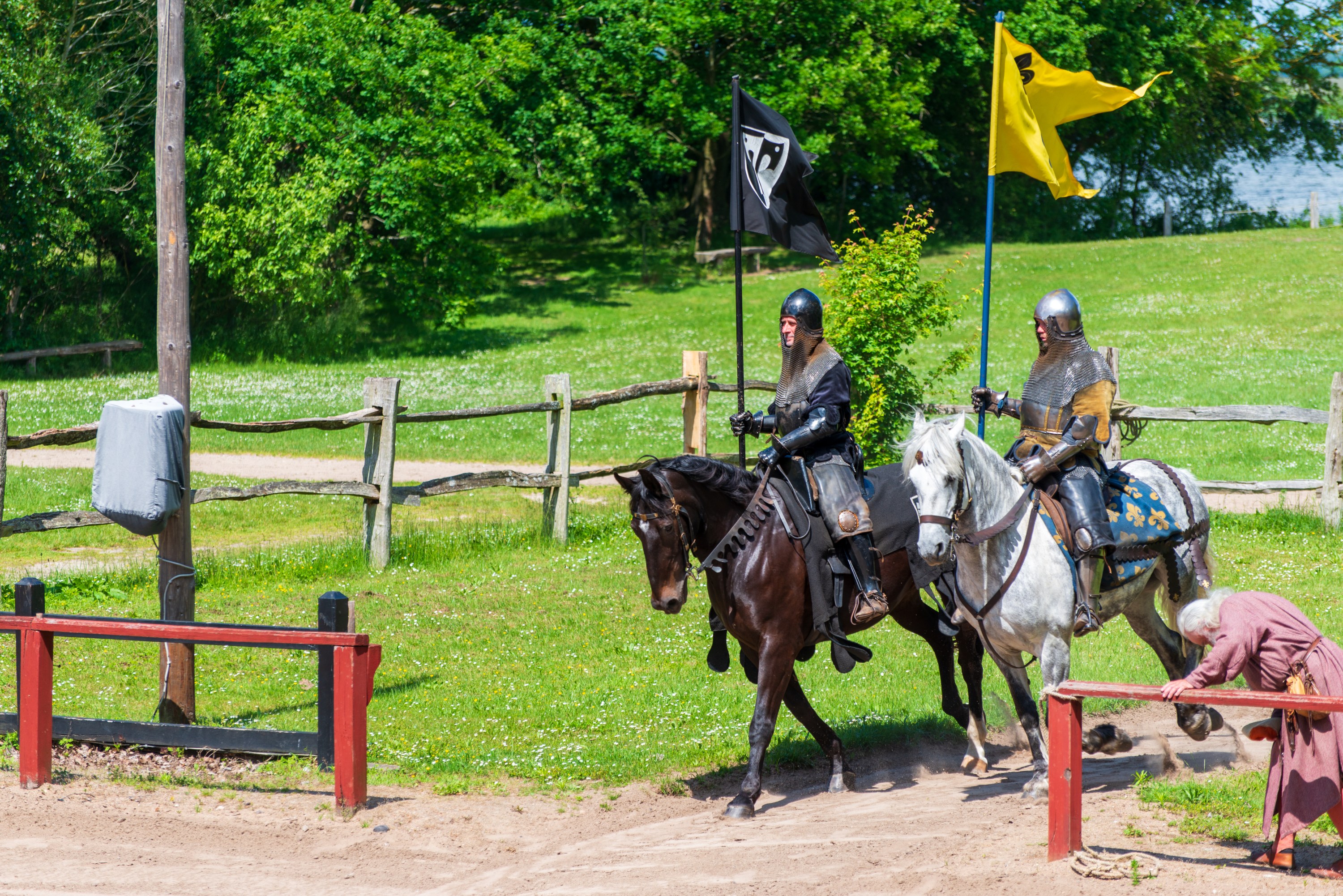
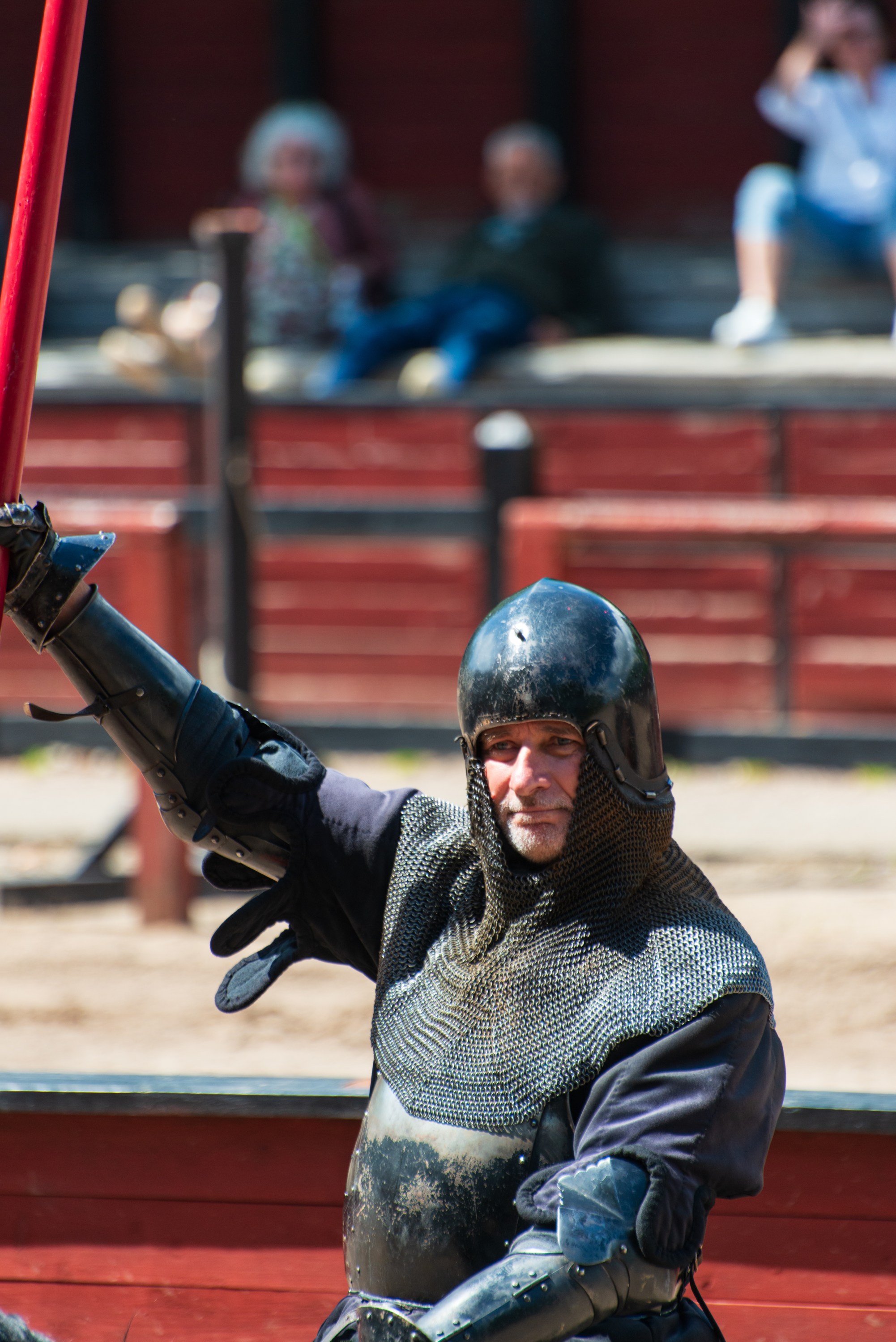
There was also a competition or “joust” between two knights which Denise enjoyed. The horses seemed to be having a good time also! All the staff were in medieval costume which added to the atmosphere.
As well as being a bit of a comedian in several languages, the presenter was actually very well versed in his medieval arts and crafts.
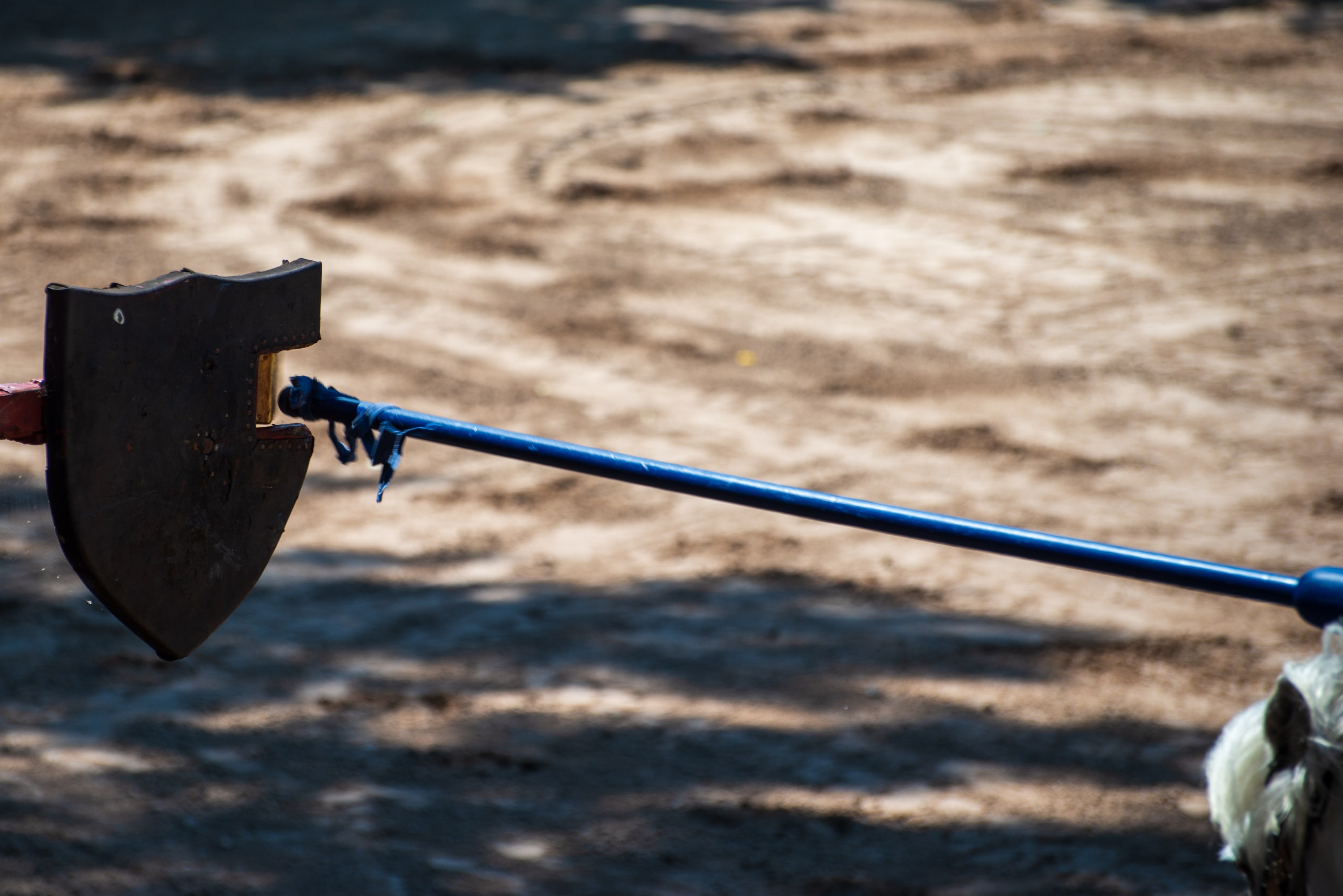
Even with stunt lances and real armor, these guys had to be good not to hurt themselves. The displays of lance vs, various targets, to say nothing of each other, was most impressive. It felt like being an extra in the movie “A Knight’s Tale.”
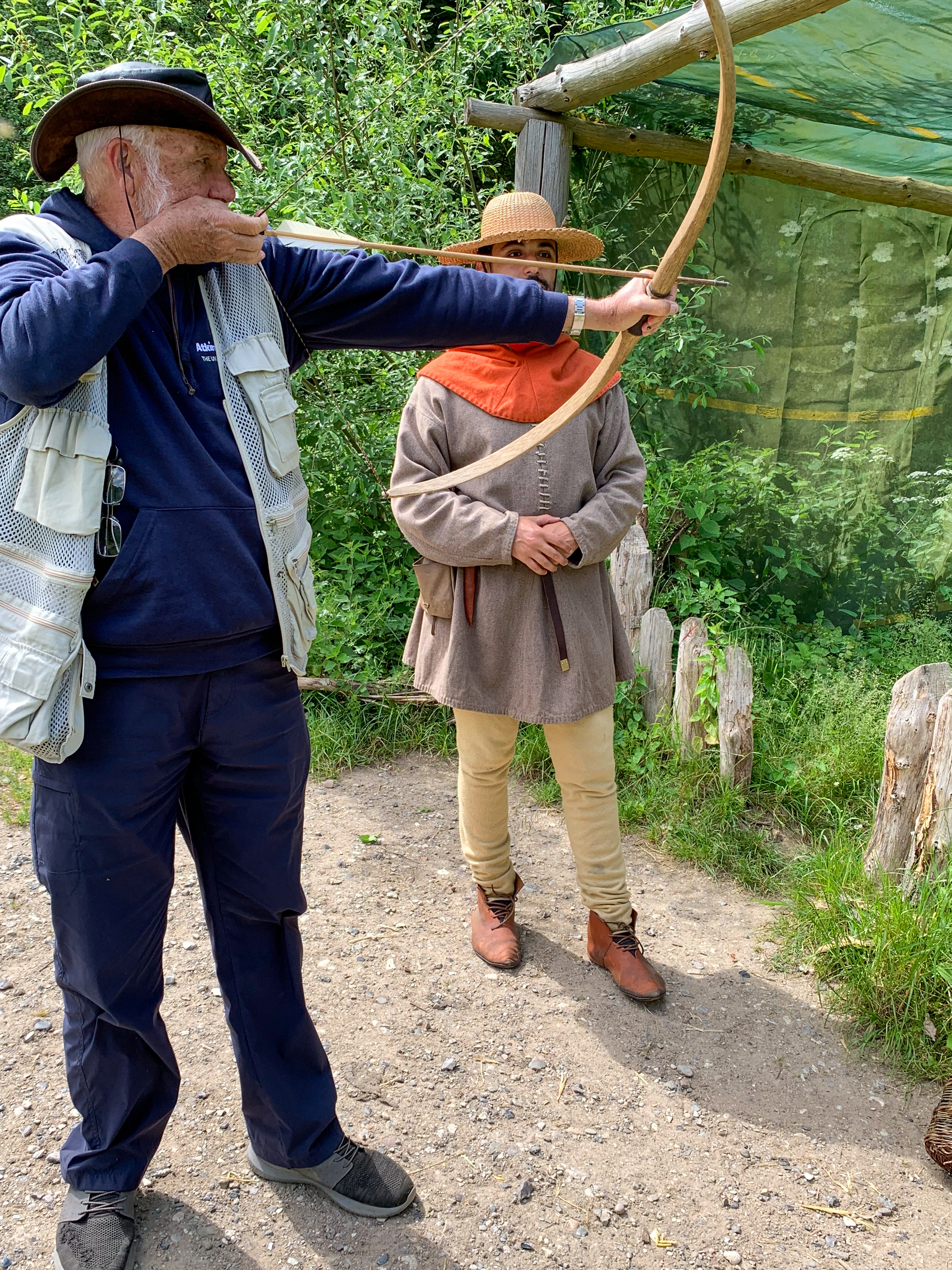
Fred tries his hand at the bow.
Thatched roof, pulled back so you can see how it is constructed.
Village feels like traveling back in time.
We stayed the night in the parking lot and moved on the next day to Roskilde, known for its Viking Museum.
Continuing north, our next stop was Lübeck, another of the great Hanseatic towns. We had made a reservation at a campground on a bus route into the old town. We then heard from Ron and Ton Corbin, who mentioned that they could meet us there and they would make reservations at the same campsite. We had last met in Aigues Mortes in France as they finished a tour last November. (https://travelintiger.com)
Together again, but this time with more sunlight!
Wildest grey water drain I have ever seen. You wheel this thing up to your truck. If Mohammed cannot go to the mountain, then …
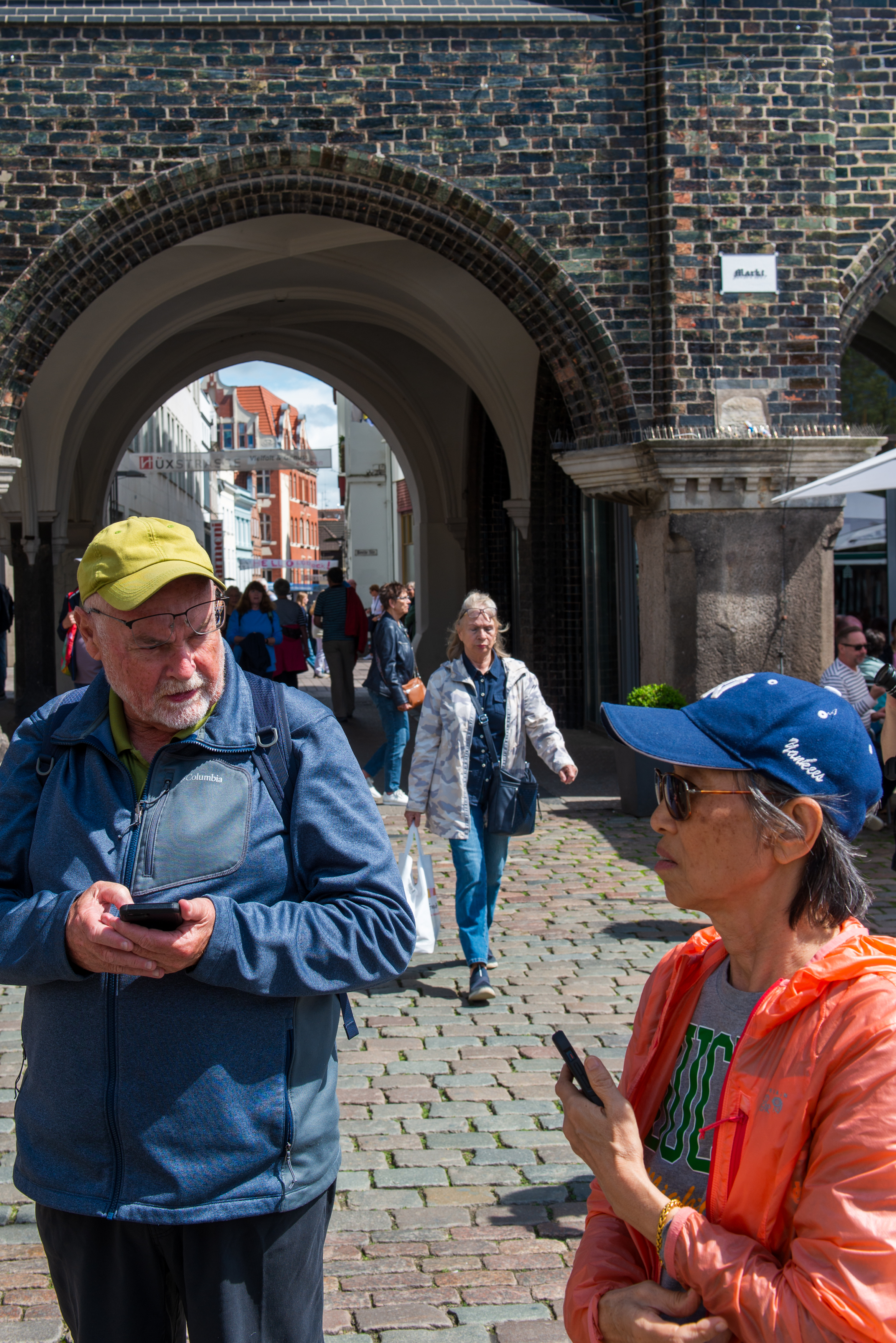
So we set off on the bus, bearing rain wear as the weather forecast was not great. To our surprise the sun came out and we had a great time discovering Lübeck. The bus, every 15 minutes, dropped us right at the old city gate.
The old city gate, the Holstentor, once the only entrance to the city. Built in 1466.
Peace at home, force abroad.
We started our visit at the market, as always!
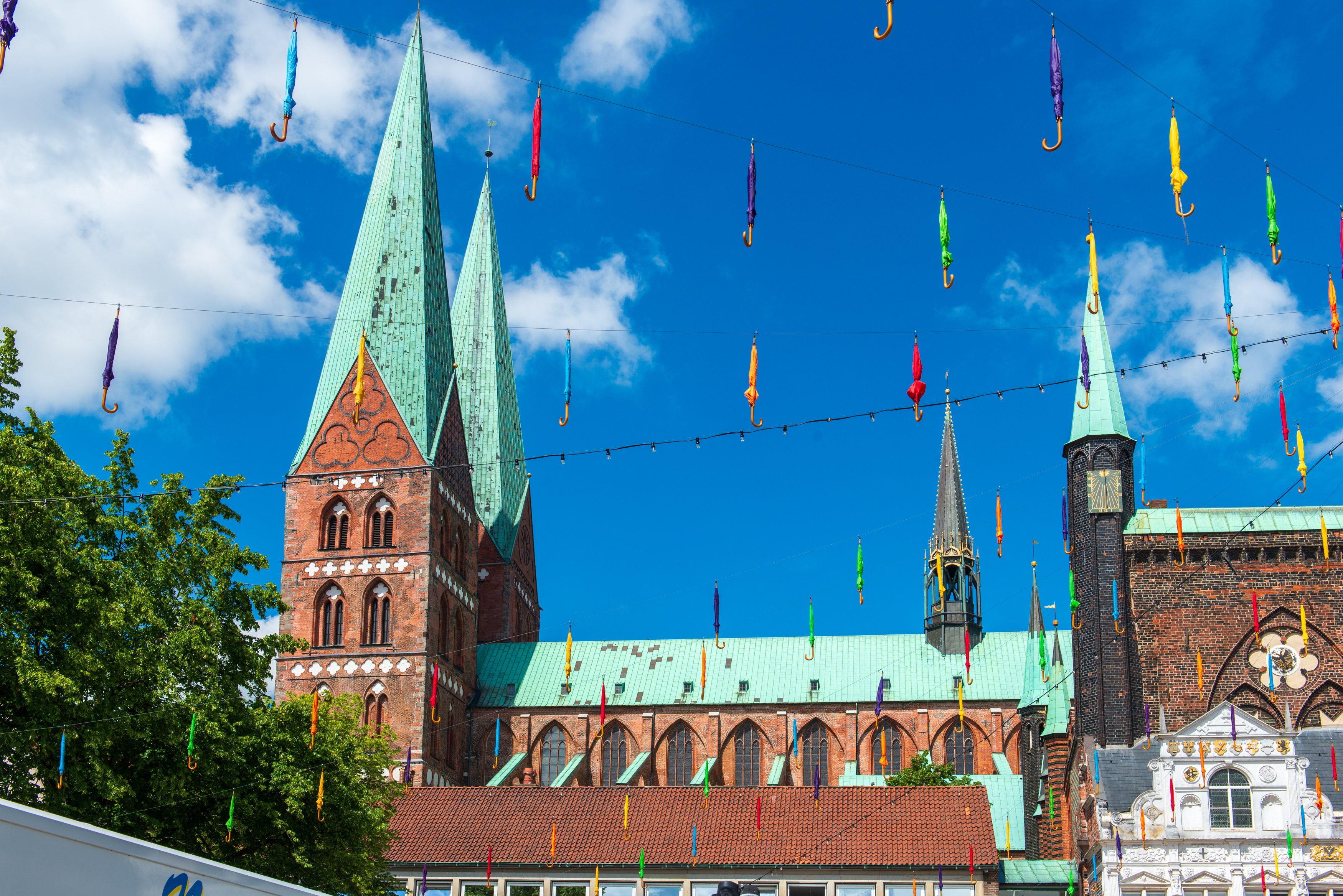
The sky was full of umbrellas. To keep it from raining?Denise, with the fatal menu.
Wall built to reinforce the church, with big holes to let the wind through.Ron and Ton debate routes.
Lübeck is known for its marzipan so our first stop was to taste and buy some. Our first effort fizzled as, for the first time, ever, we encountered a waitress who refused to wait on us because we asked if she had a menu in English. She simply walked off and didn’t even wait for Denise to dust off her German. We did better on our second try.
Coffee and marzipan accomplished, we set off to discover the town, wandering the streets, admiring the architecture, and enjoying a walk along the canal.
Main shopping street.Wonderful old street. Click to expand.
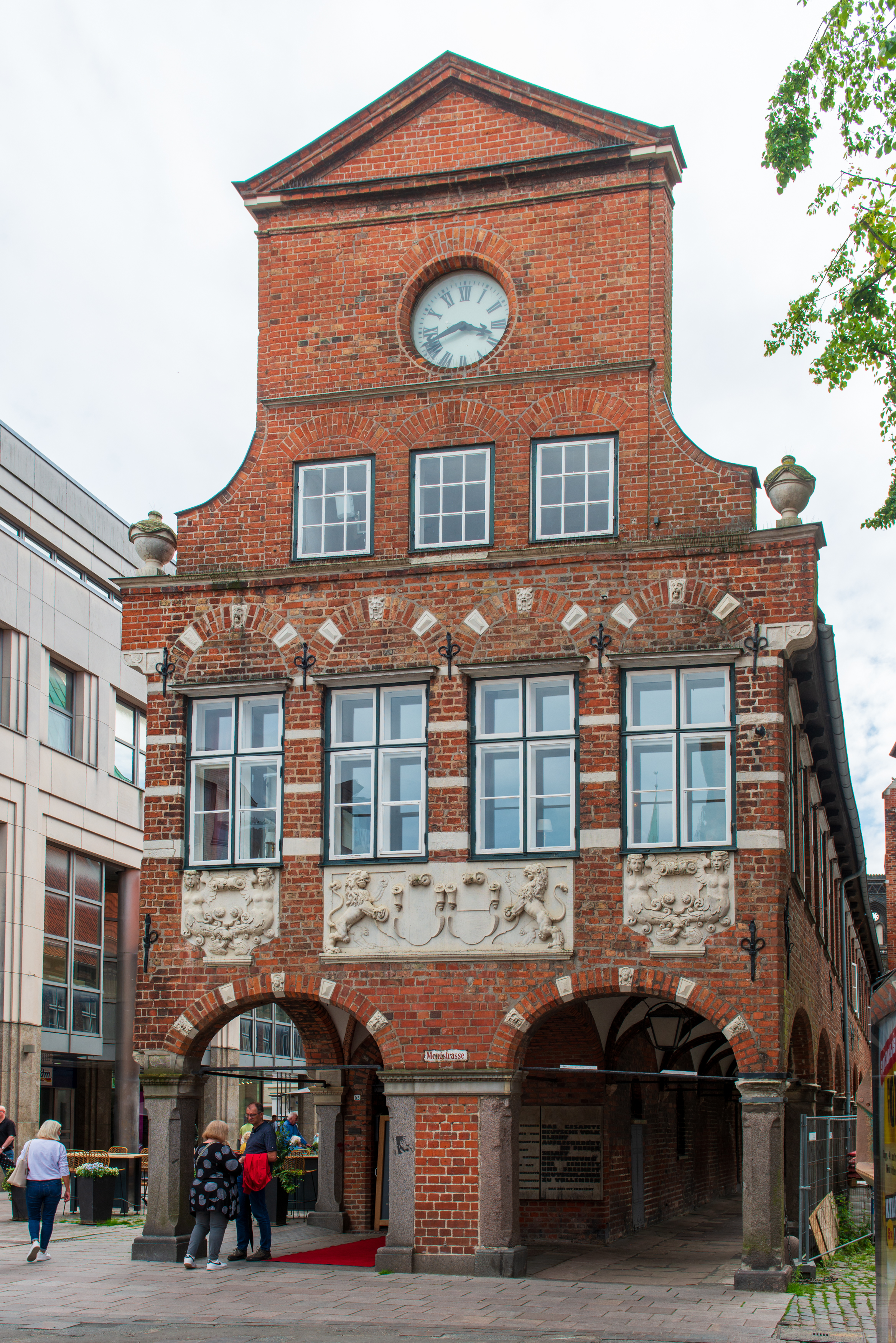
Old market building.
Denise had made a day trip to Lubeck, about fifty years ago.
She was thrilled to revisit old sites.
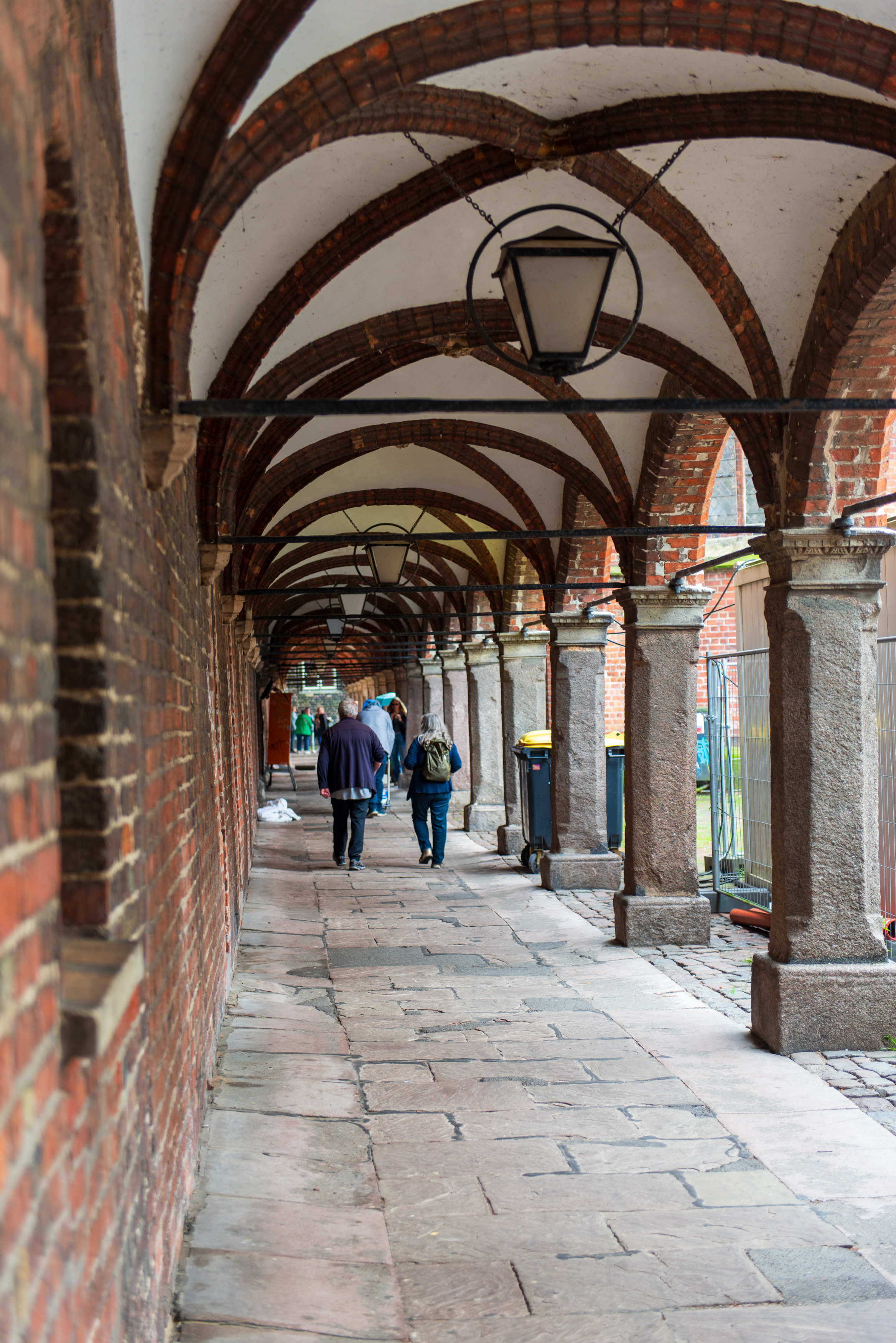
Covered passage next to the market.
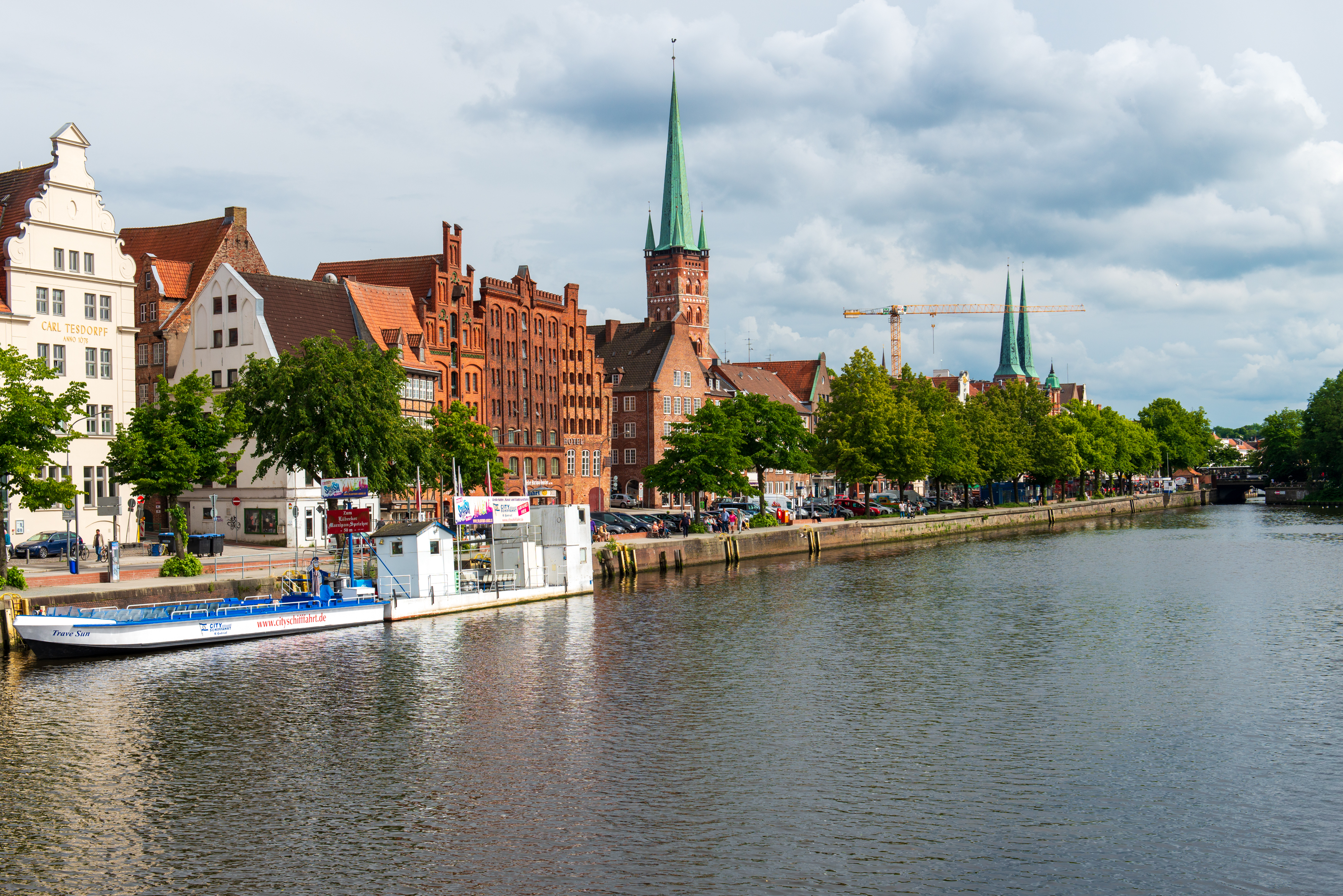
View along the river.
On a second visit we visited the Marien Kirche or St. Mary’s Church. The church was severely damaged during World War II but has been rebuilt.
We have a thing about these amazing clocks.
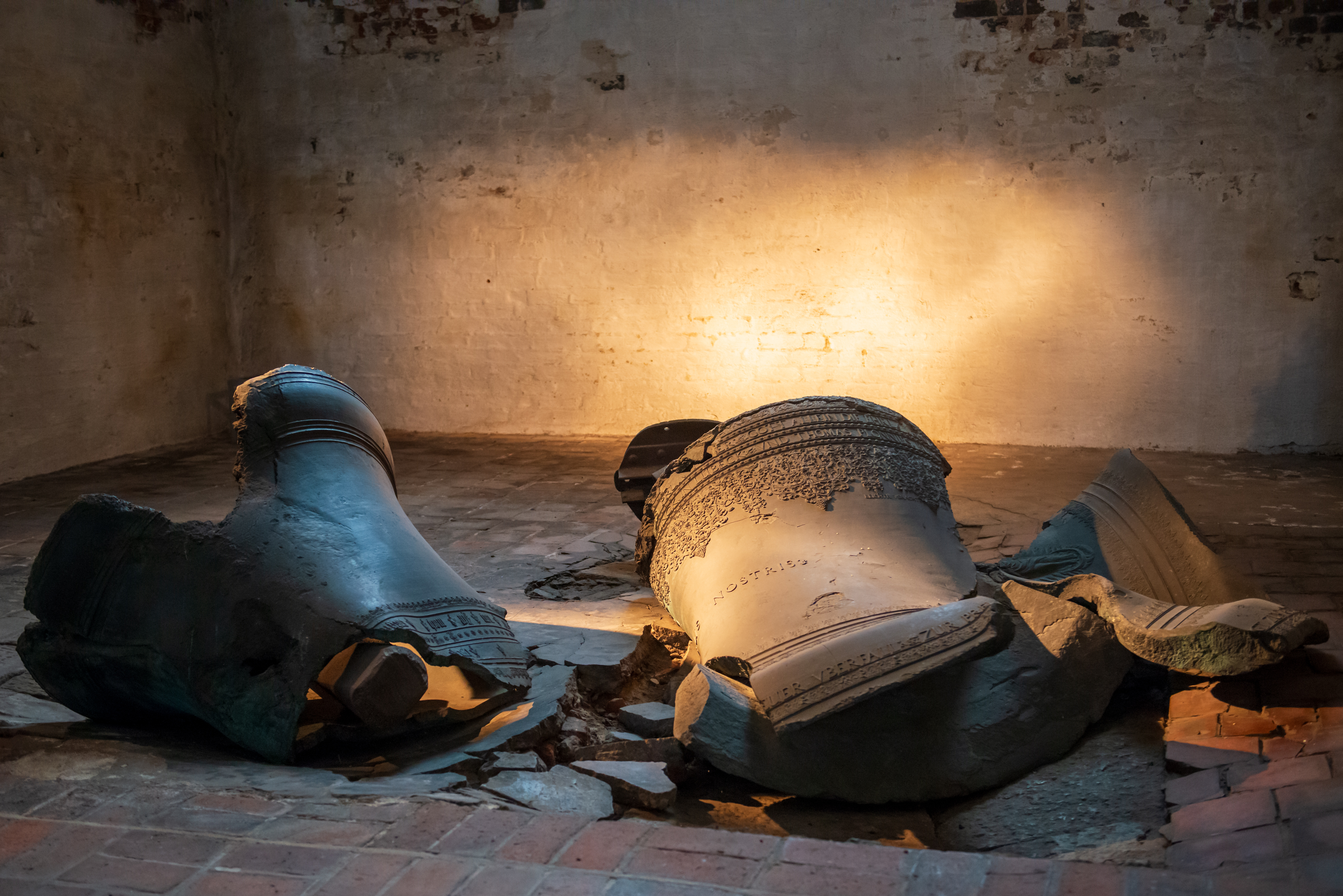
We admired the astronomical clock and also stood wondering before the bell shards lying in one corner. These pieces are all that was left of the bells after they fell during the bombing. They have been most poingnantly displayed.
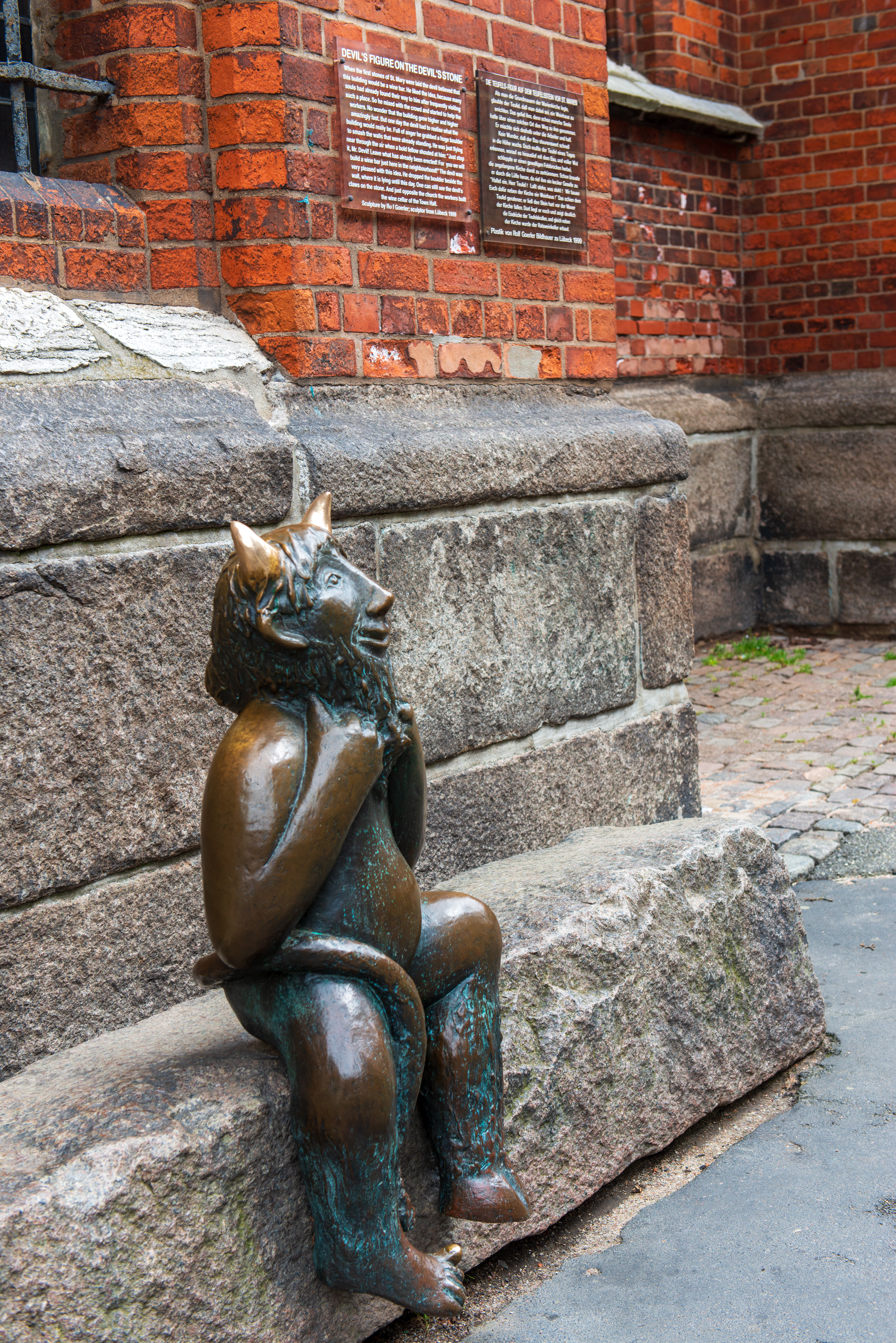
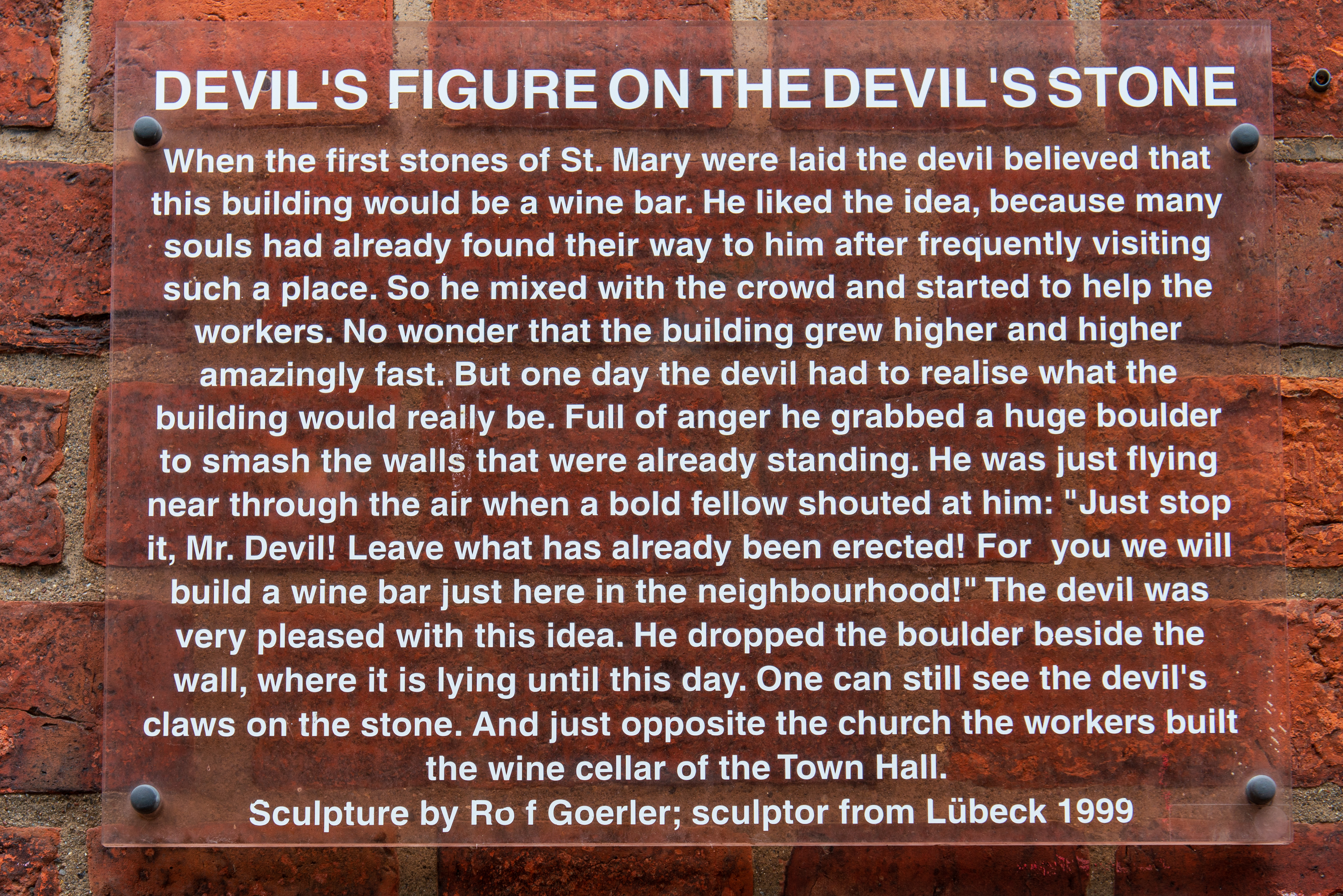
On a lighter note, we met with the devil. He as, of course, outside of the church.
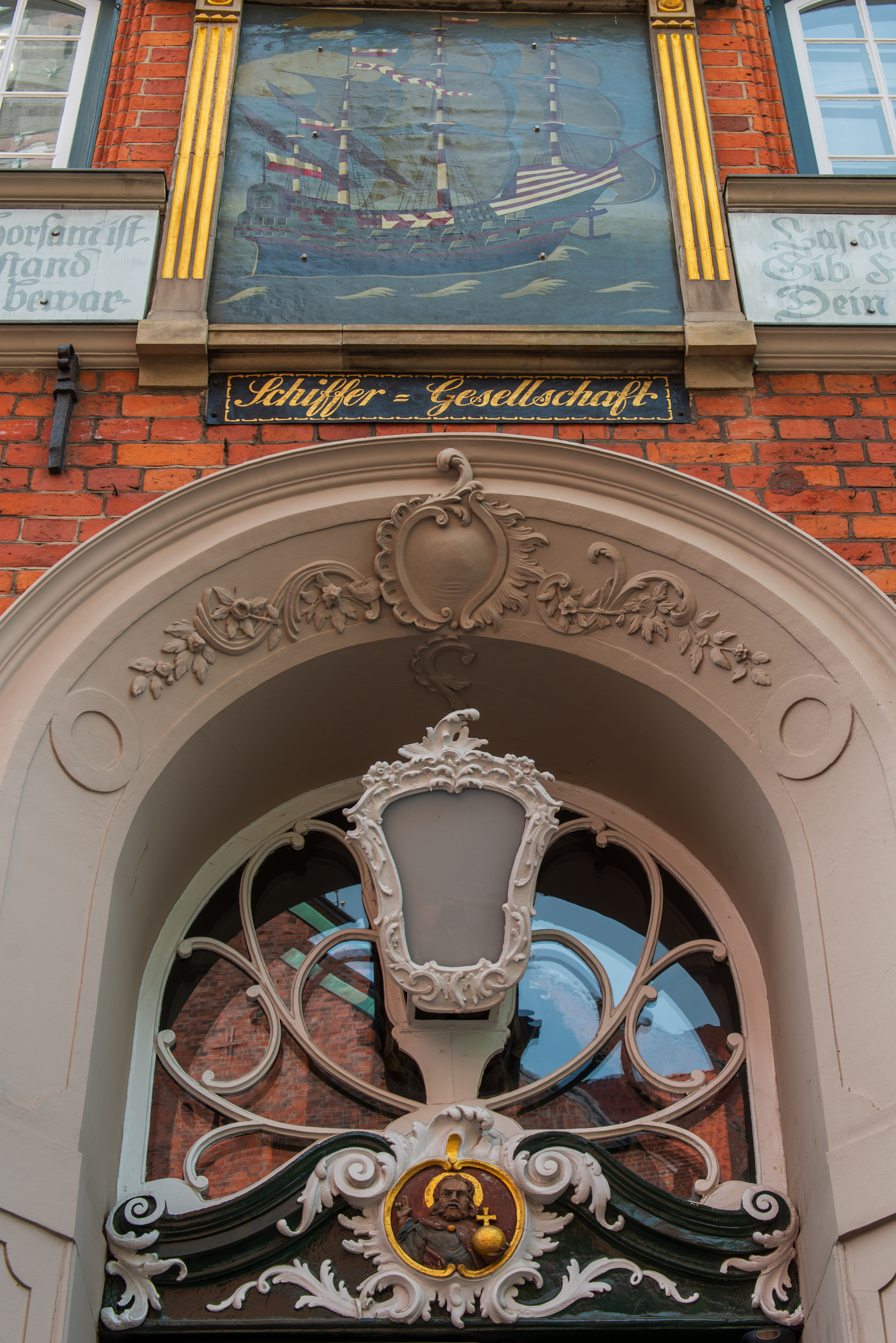
We had a lovely lunch at one of the oldest buildings in the city, one that fortunately missed being damaged during the WW II bombing. It was formerly the assembly hall of the traditional Schiffergesellschaft, the mariners’ association. Over the centuries it offered a crash pad for destitute sailors as well as seating, by language, for the various captains who navigated the Baltic.
The moonlight Madonna.
Fancier than most union halls in the US.
The guild bought the house, built in red brick renaissance style in 1535, and made it their assembly hall.
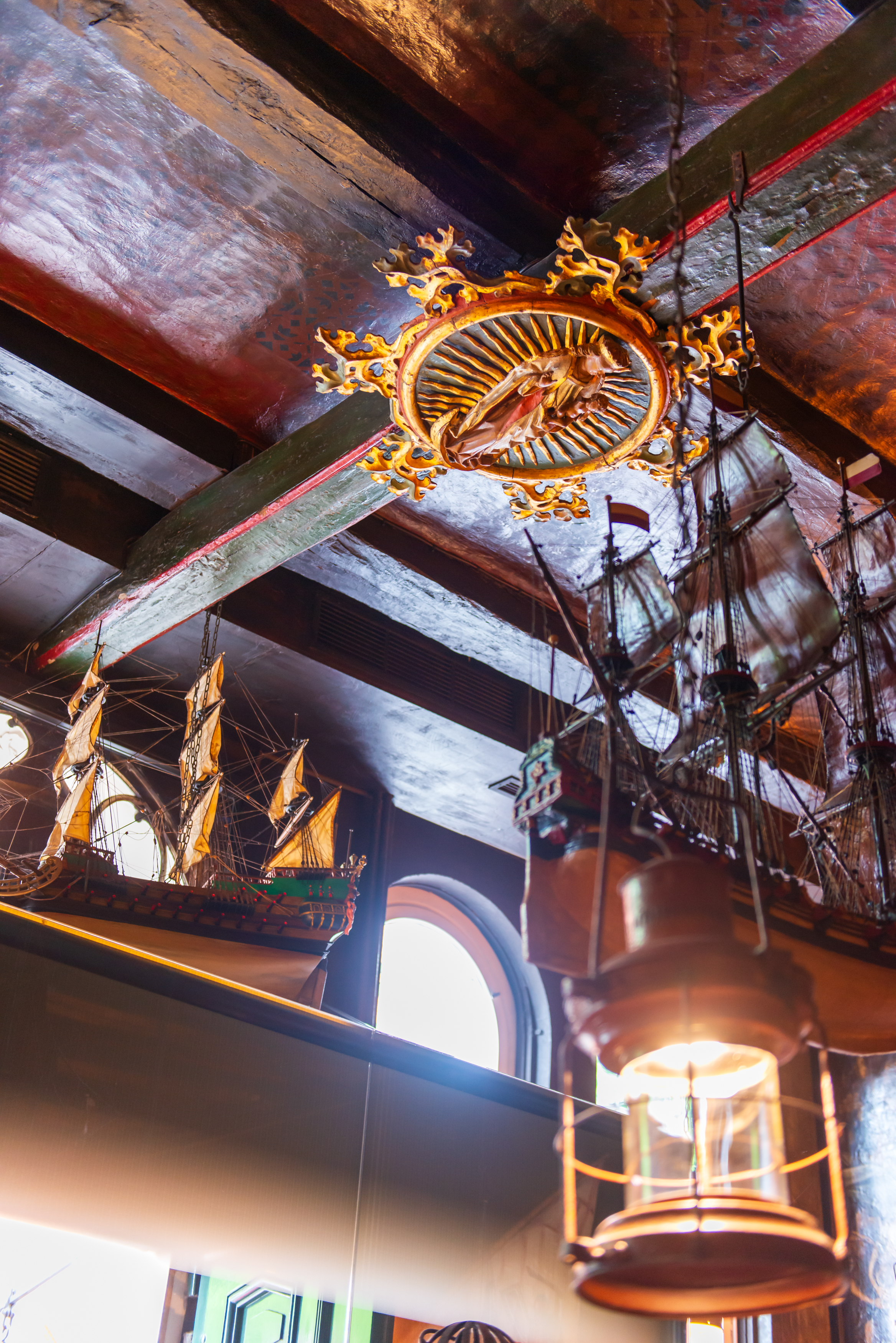
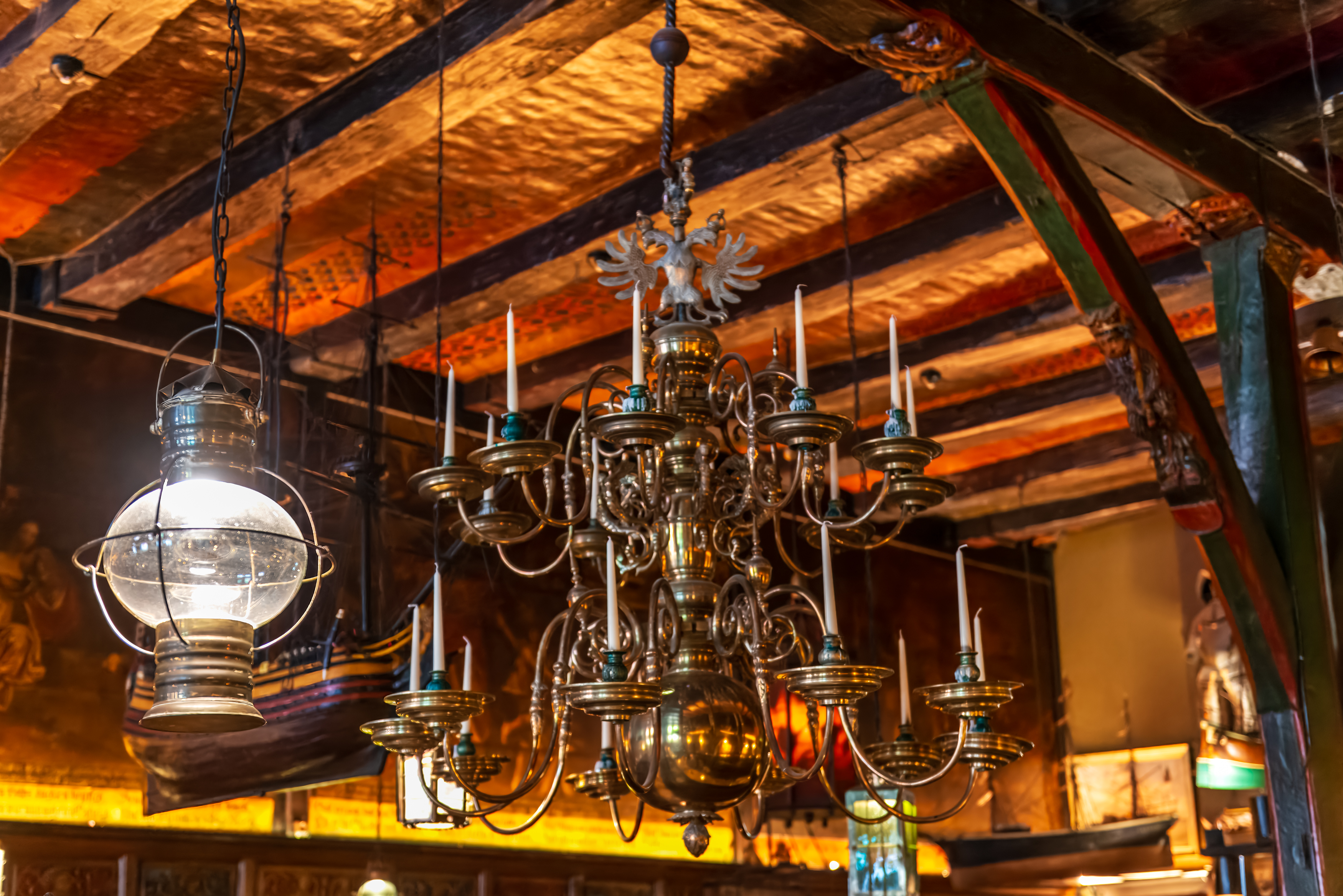
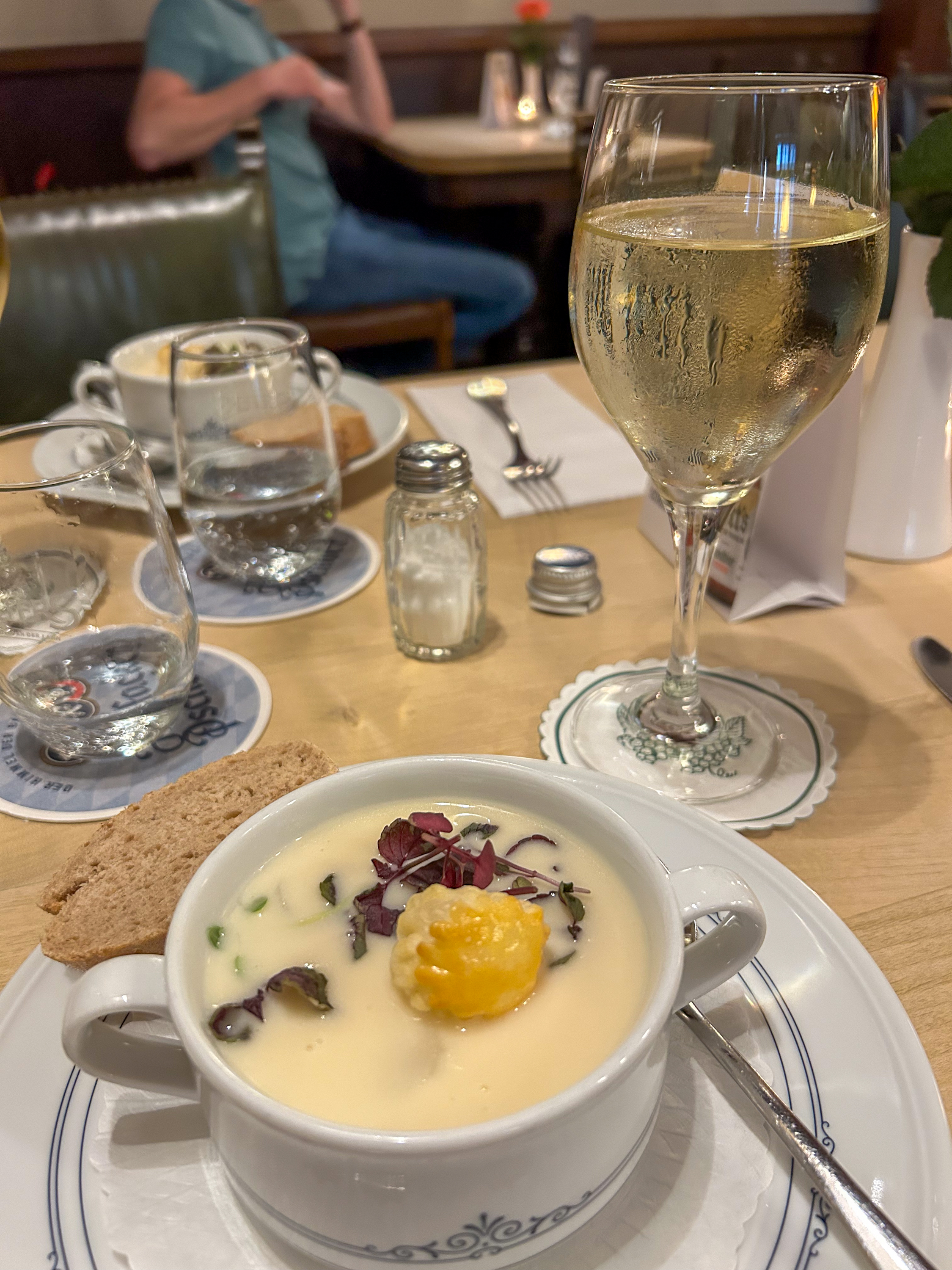
Today, the Schiffergesellschaft is a landmark and also an excellent restaurant. We admired the large number of hanging ships which decorate the ceiling. Bible verses and wall paintings, darkened with age, decorate the walls. Our lunch was excellent, especially the white asparagus soup. It is the season after all!!
Are you SURE that’s what it says?
As the rain started, we caught our bus back to the campsite.
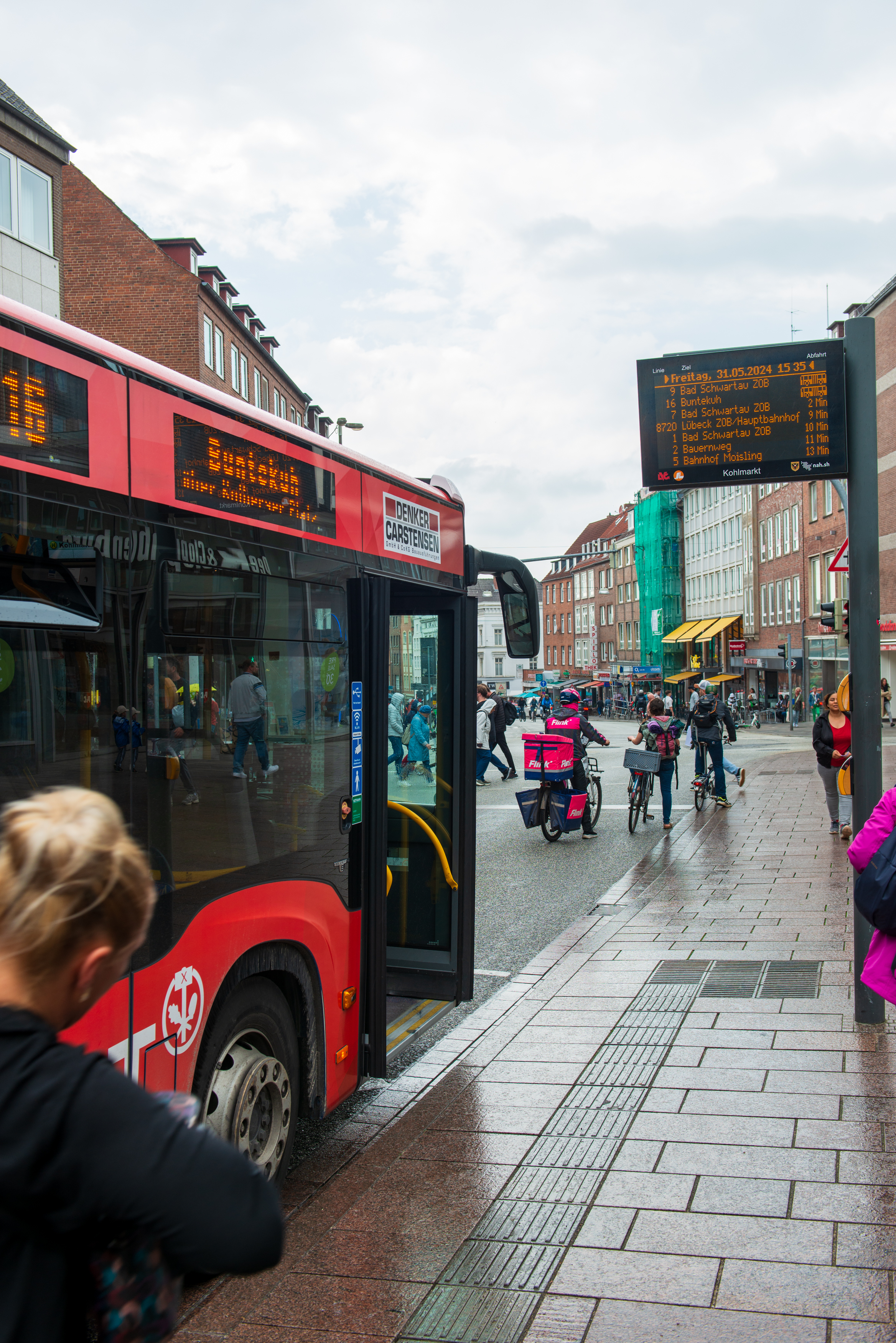
Love the high tech bus signs.
Heading north the next day, we tried a short detour to Kellenhusen, where Denise had worked as a student. Unfortunately, due to a Saturday festival, we could not even get to, let alone drive into, the car park, so we gave up and continued north to the ferry from Puttgarten to Rødby in Denmark.
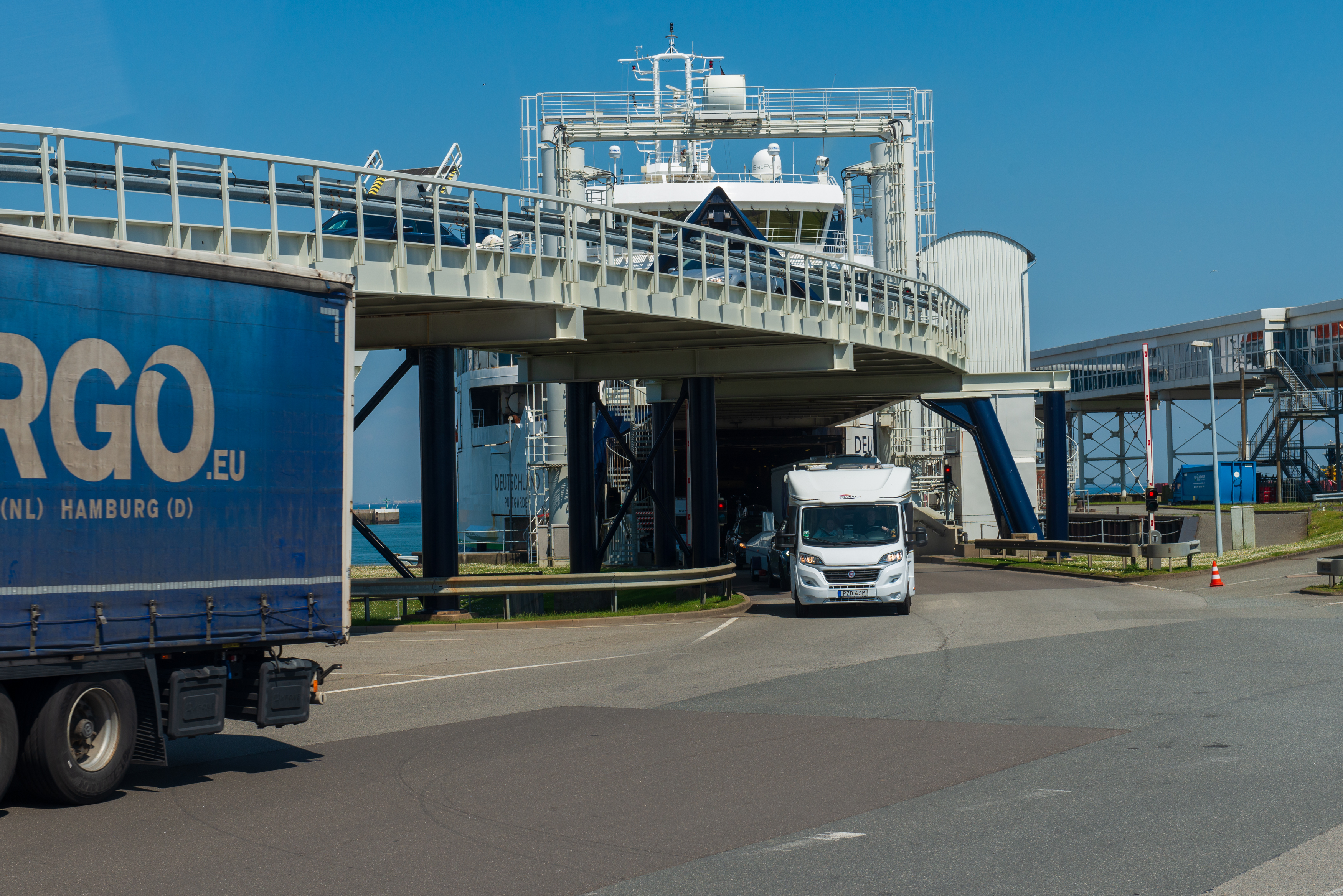
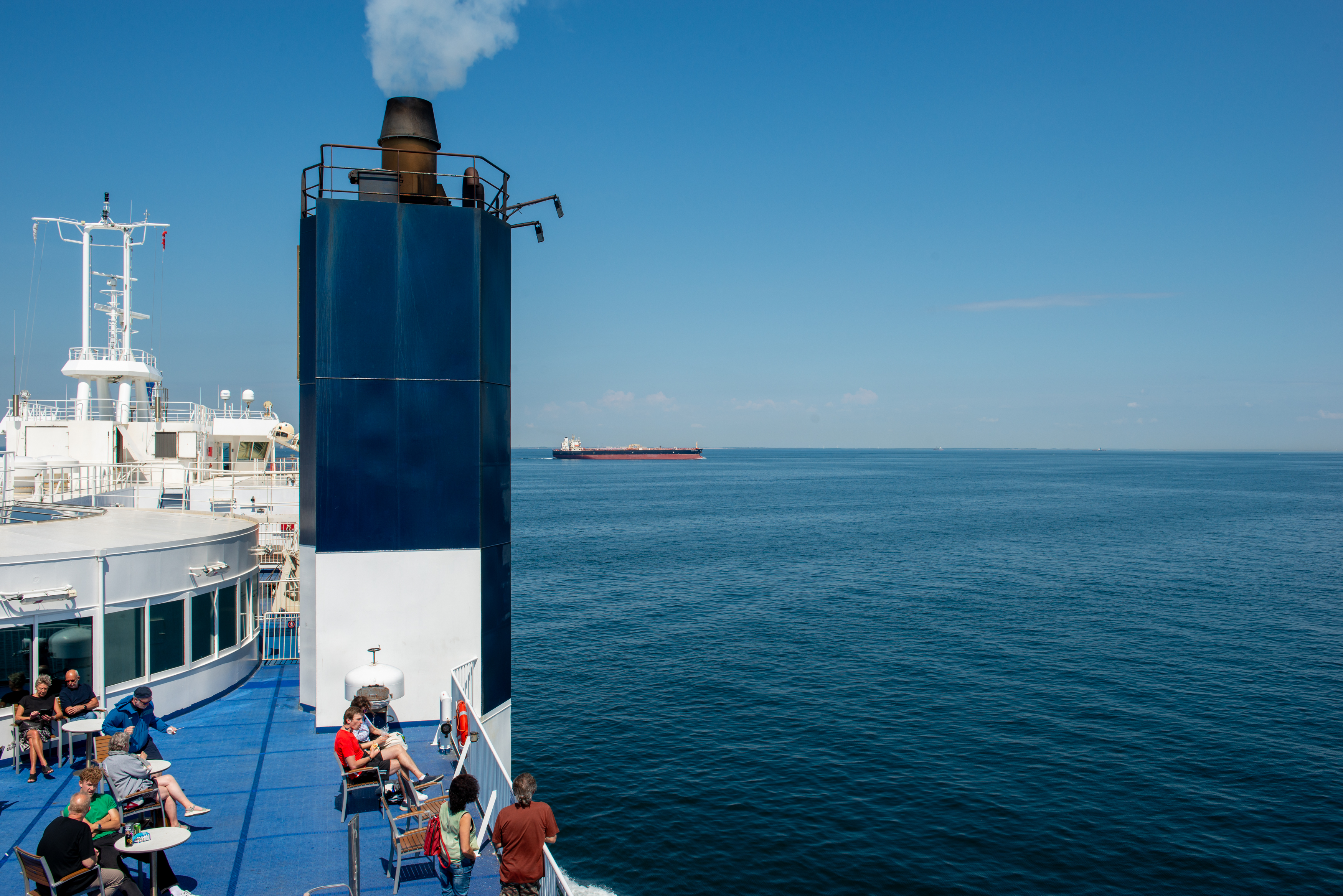
Boarding was fast and easy, with bi-level ramps.Doesn’t look it, but the stack gas is mostly water vapor.
We passed another ferry, going the other way.
Boarding was easy and we enjoyed the 40 minute trip in sunny weather and very calm seas!
The coolest car on the ferry, a German plated MGA. Note the suitcase properly stowed on the luggage rack. The driver sported a cloth cap and proper driving gloves. All too cool for school!
The next day, we crossed into Germany with Münster as our first stop. We stayed at a riding stable! It was very close to town and on an easy bike route into the center. It was quite a novel experience watching the horses, and the 85 Shetland ponies, leave the stable each morning and take themselves to the fields, so that their stalls could be cleaned and breakfast set out. Needless to say, they came back quite happily knowing that breakfast was waiting!
A lot of ponies, all in one place!
Observing the new campers.
Yes, it was crowded. No, we weren’t getting out anytime soon.
So, what time is breakfast?
Heading back for breakfast!
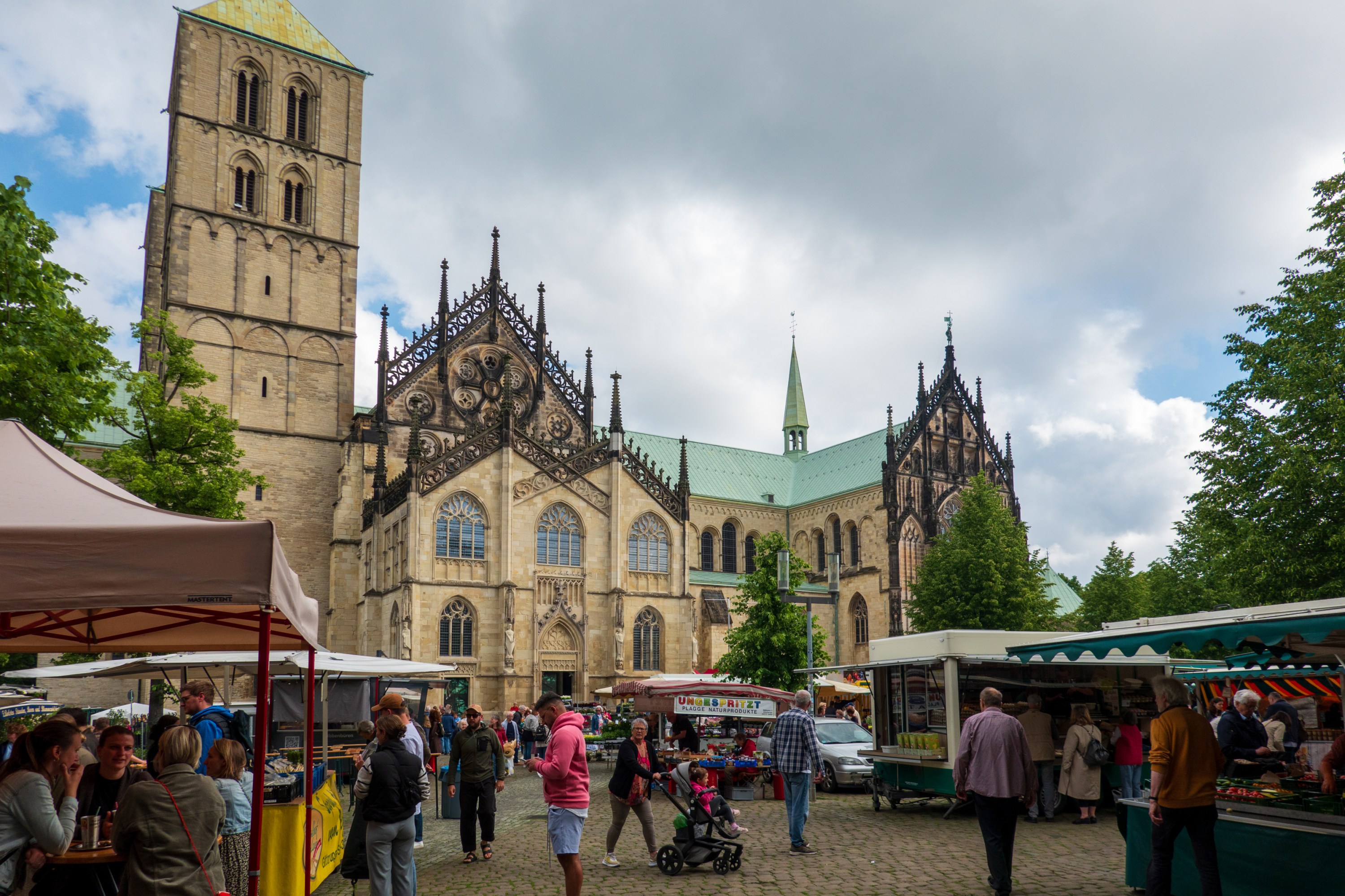
Münster proved to be a pleasant town with lots of traditional architecture. We cycled in on Market Day, so we of course had to browse the market.
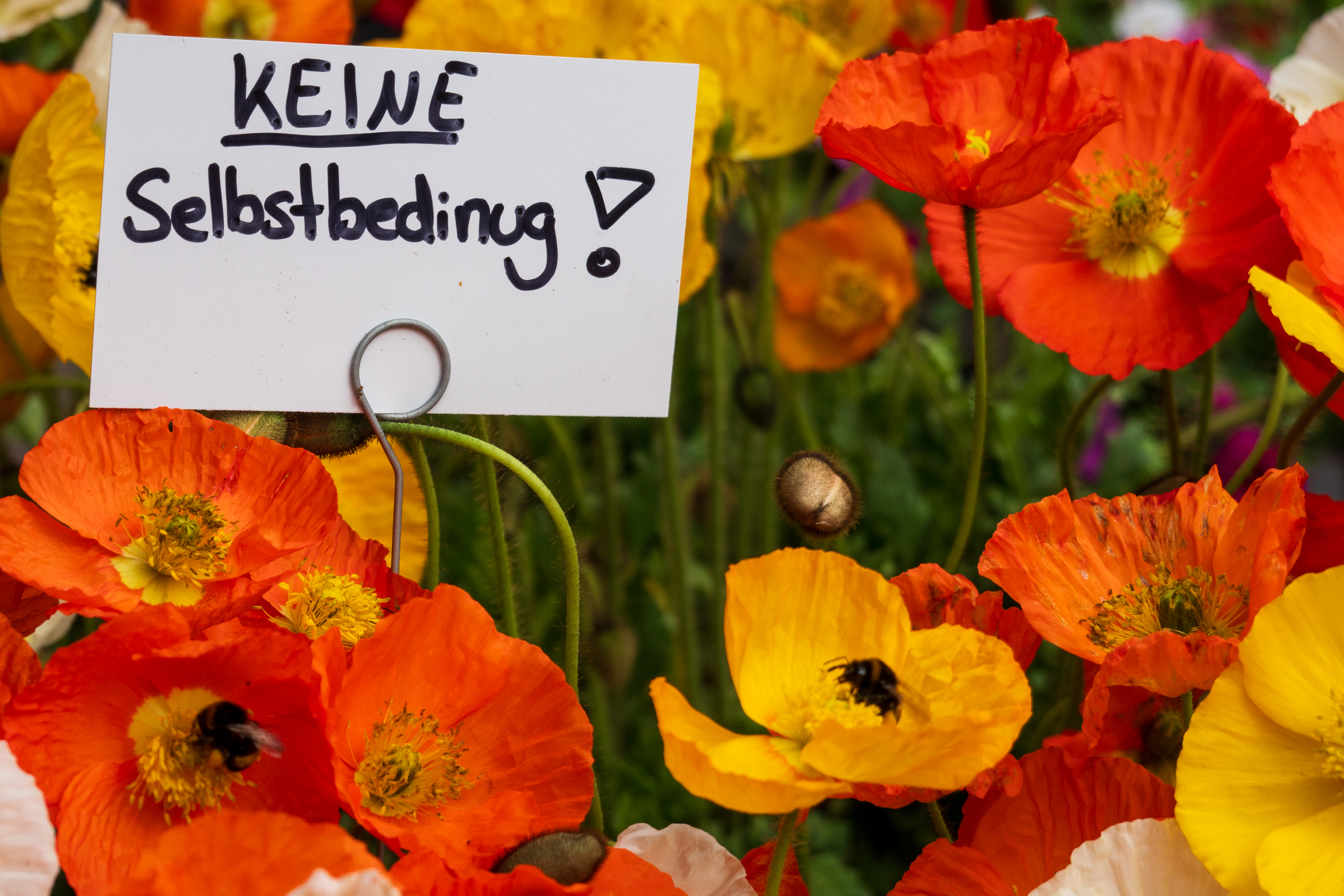
Denise purchased a some vegetables and looked longingly at the flower arrangements but they really do not hold up well in the camper.
Yes, they are fresh!
Not self spreading, but the bees don’t care.
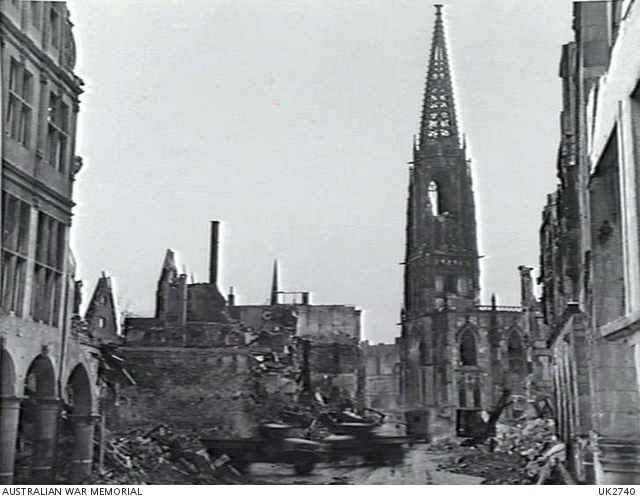
We then visited the Dom St Paul (Cathedral) which sits on the Markt or main square. The Dom was constructed between 1225 and 1265 but suffered extensive bomb damage during WW2.
Baptismal font.
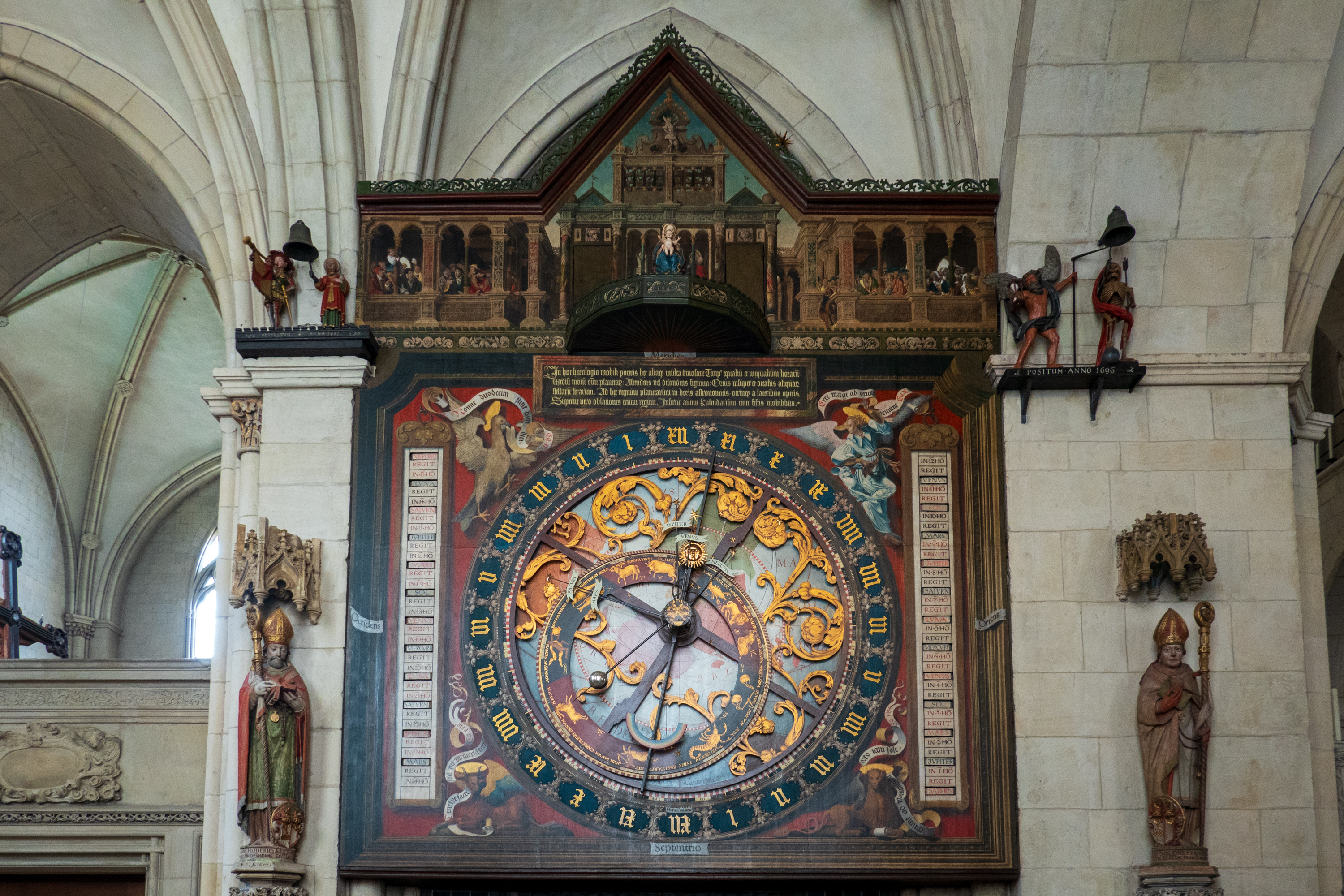
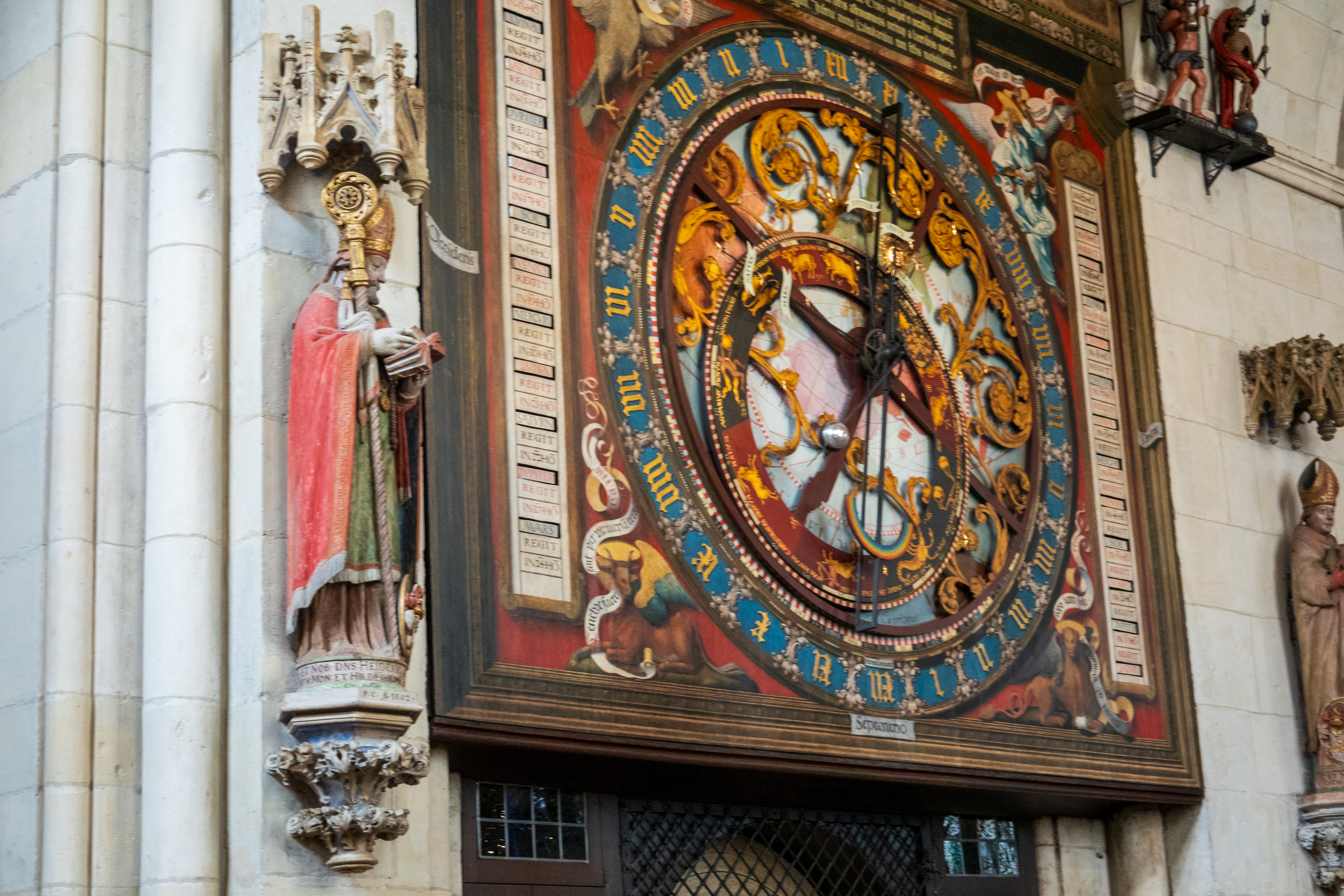
Inside is an amazing astronomical clock dating from 1540. The first Münster astronomical clock was built in 1408 – but destroyed in 1534 by iconoclasts during the Anabaptist disturbances. It features figures of the Magi who pay tribute to the infant Jesus at noon each day. We unfortunately missed the noon show, but did hear Death (upper right) striking the bell for the half hour!
The clock in all its glory.
Astronomical clocks are intended to tell the time and to act as calendars for religious festivals. And, in the Christian Church, these were set from the date of the Spring New Moon, making the transfer to a mechanical mechanism a bit tricky. So Christians face a bit of math with Easter dates, as do Muslims with Ramadan. The new clock was a team effort from 1540 to 1542. A mathematician and a cathedral preacher did the maths. A blacksmith actually built the mechanism, and a painter decorated the whole thing. In 1582 the Pope changed the calendar and leap years had to be added. Easter dates, already challenging, went out the window. Updates kept the clock running until 1927 when it stopped. Rather than being retired, it underwent another restoration from 1929 to 1932. It was removed from the church for safety during World War II and, as its vault was not destroyed in the bombings, it was reinstalled and made to run again at the end of 1951.
Beautiful doorway.Yet another, smaller clock.
Suspect he is really reading the owner’s manual!Modern stained glass.
Reading the clock takes a four page guide, but this clock, one of the youngest of its type, has an accuracy of 532 years. You could spend hours staring at it.
After leaving the church, we moved on to the market street in search of lunch.
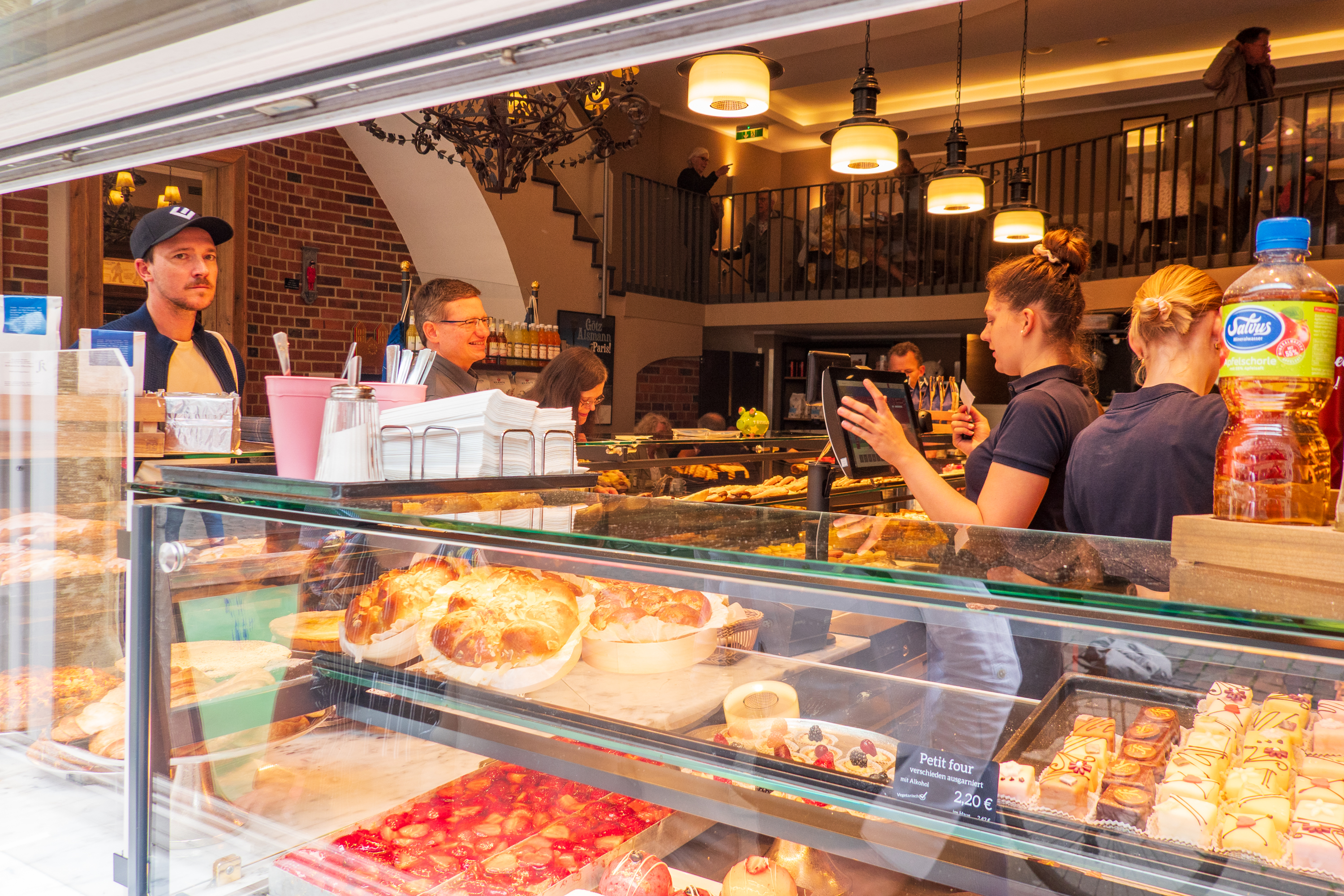
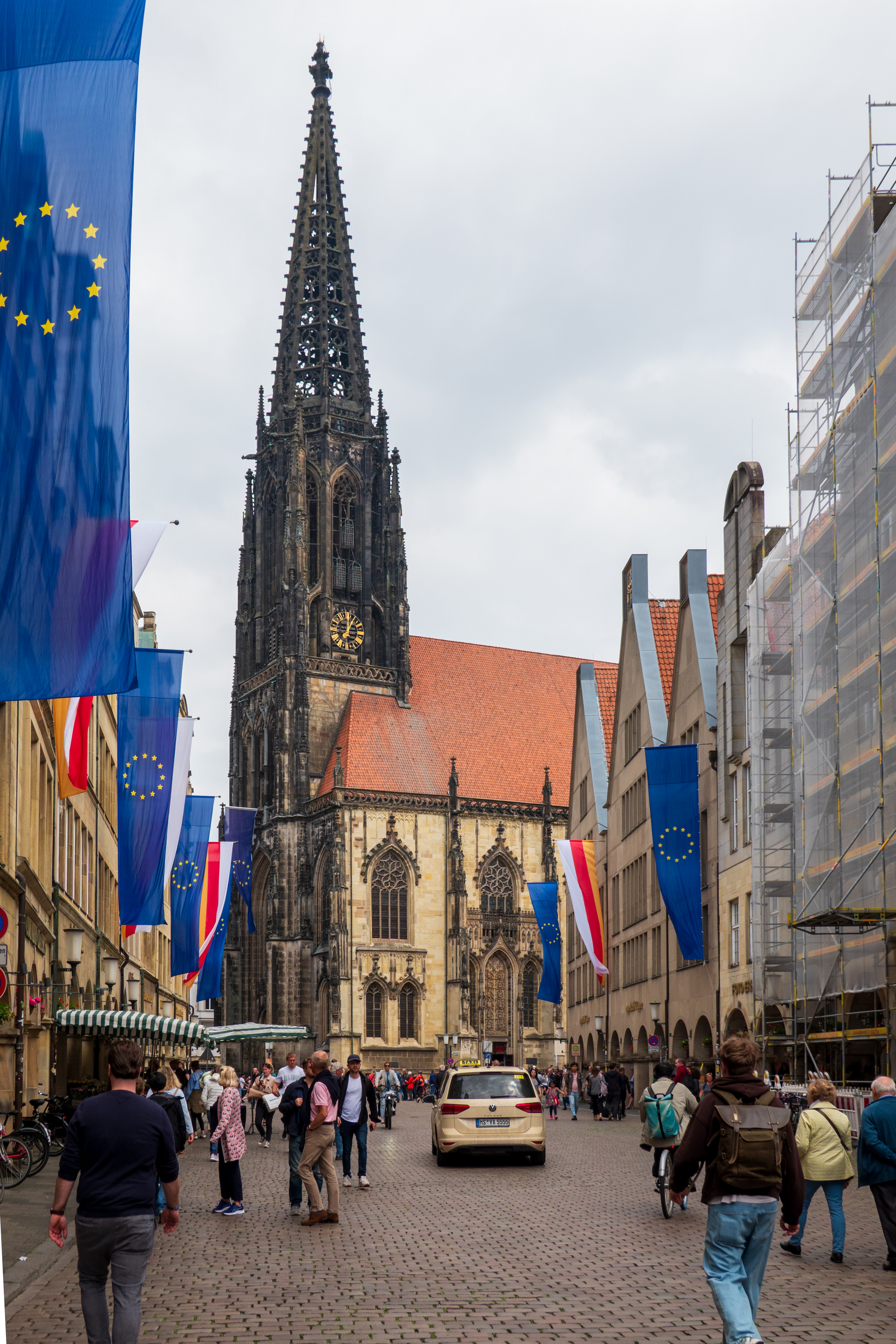
Goodies!The Rathaus. Means city hall, but, on a bad day, the name sounds about right in English.St. Lamberti The same street in 1945. There are equally terrifying pictures of the same street in the ’30’s, draped in Swastikas.
We found a wonderful, if pricy restaurant and had a great meal.
In the spring, people go nuts for white asparagus. One of the best forms is in a soup, and this one was divine.
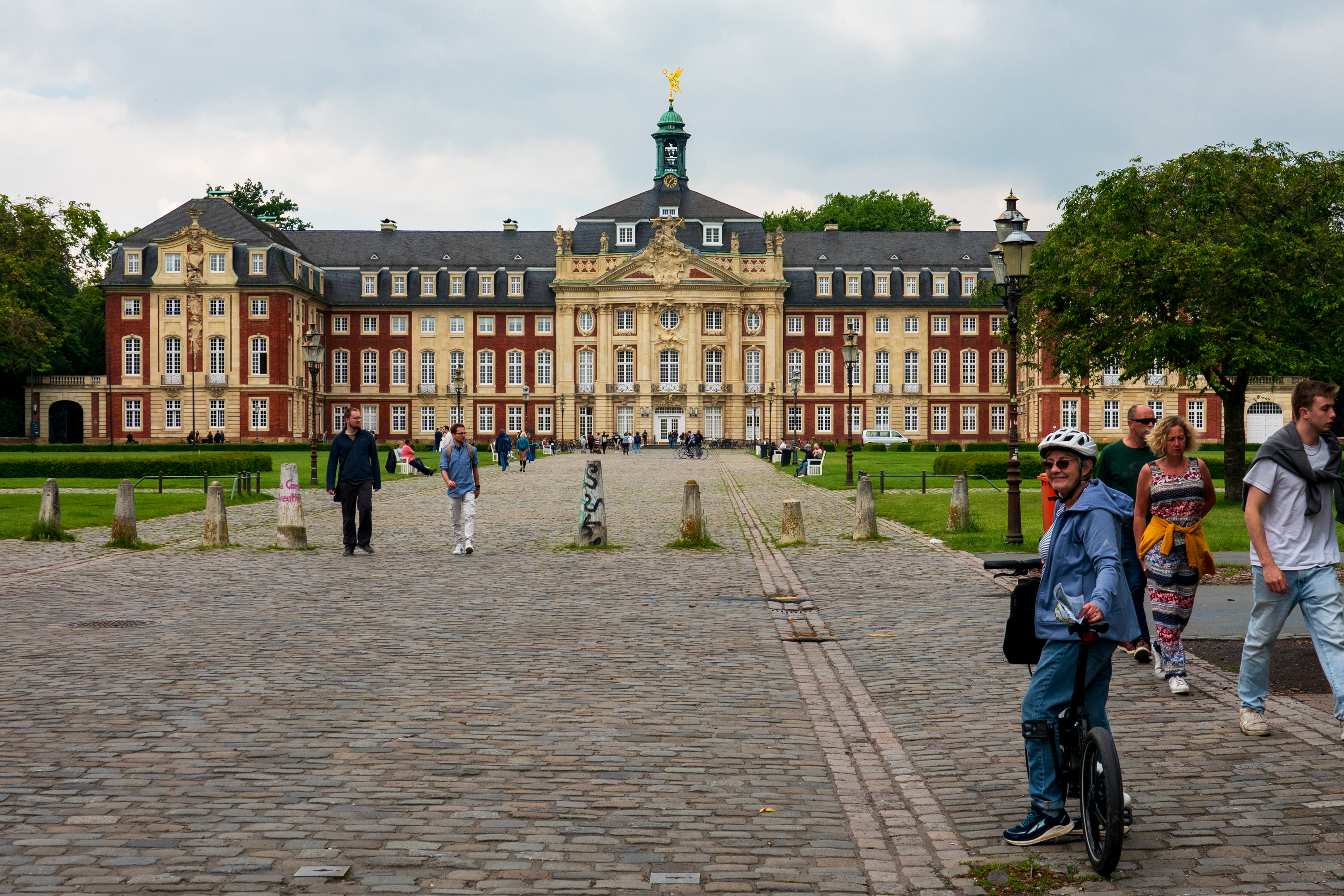
One the way back to the camper, we cycled by the Schloss, formerly the residence of the Prince-Bishops of Münster and now the headquarters of the university. (https://en.wikipedia.org/wiki/Schloss_Münster) Fortunately we returned to the camper before yet another thunderstorm and downpour!
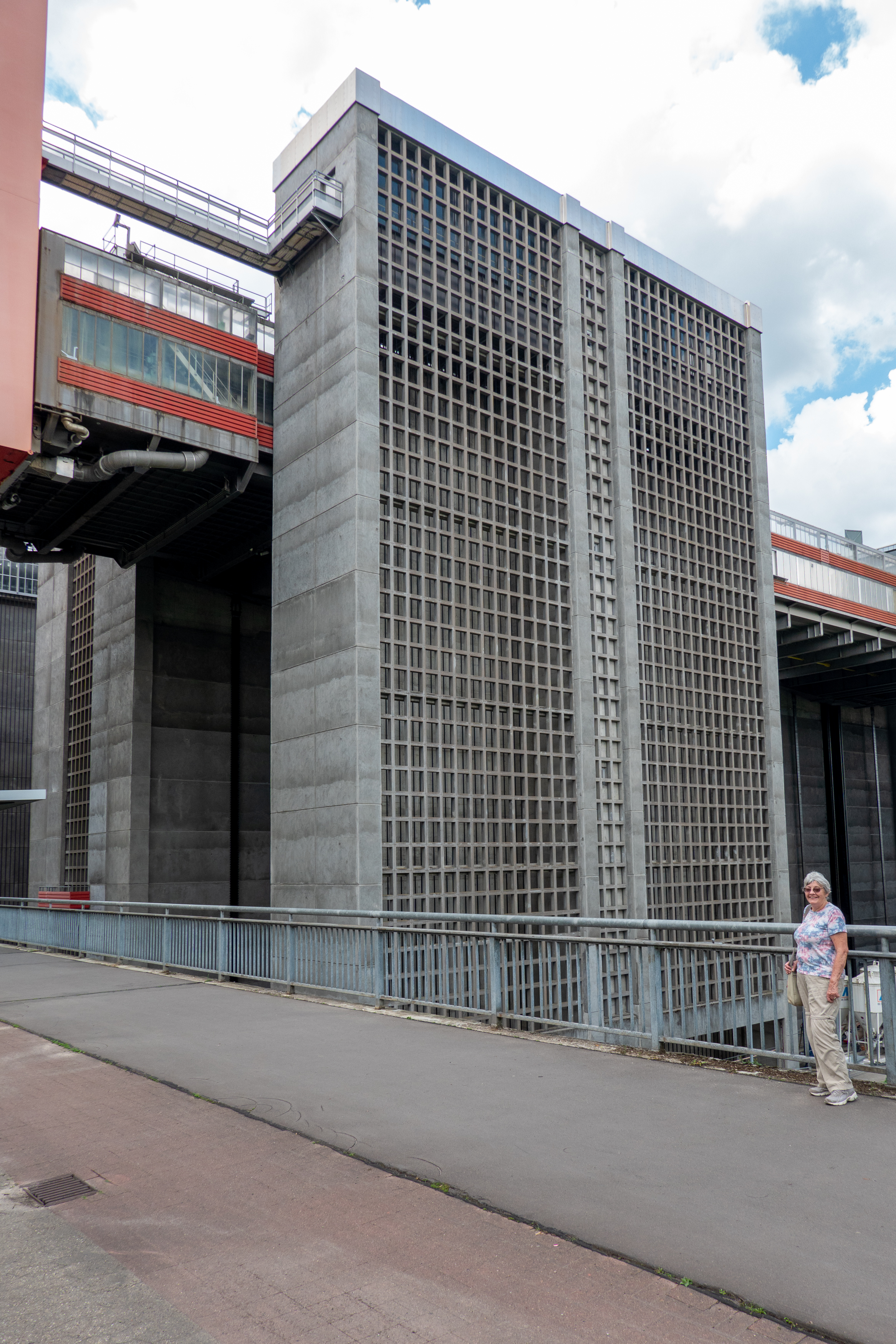
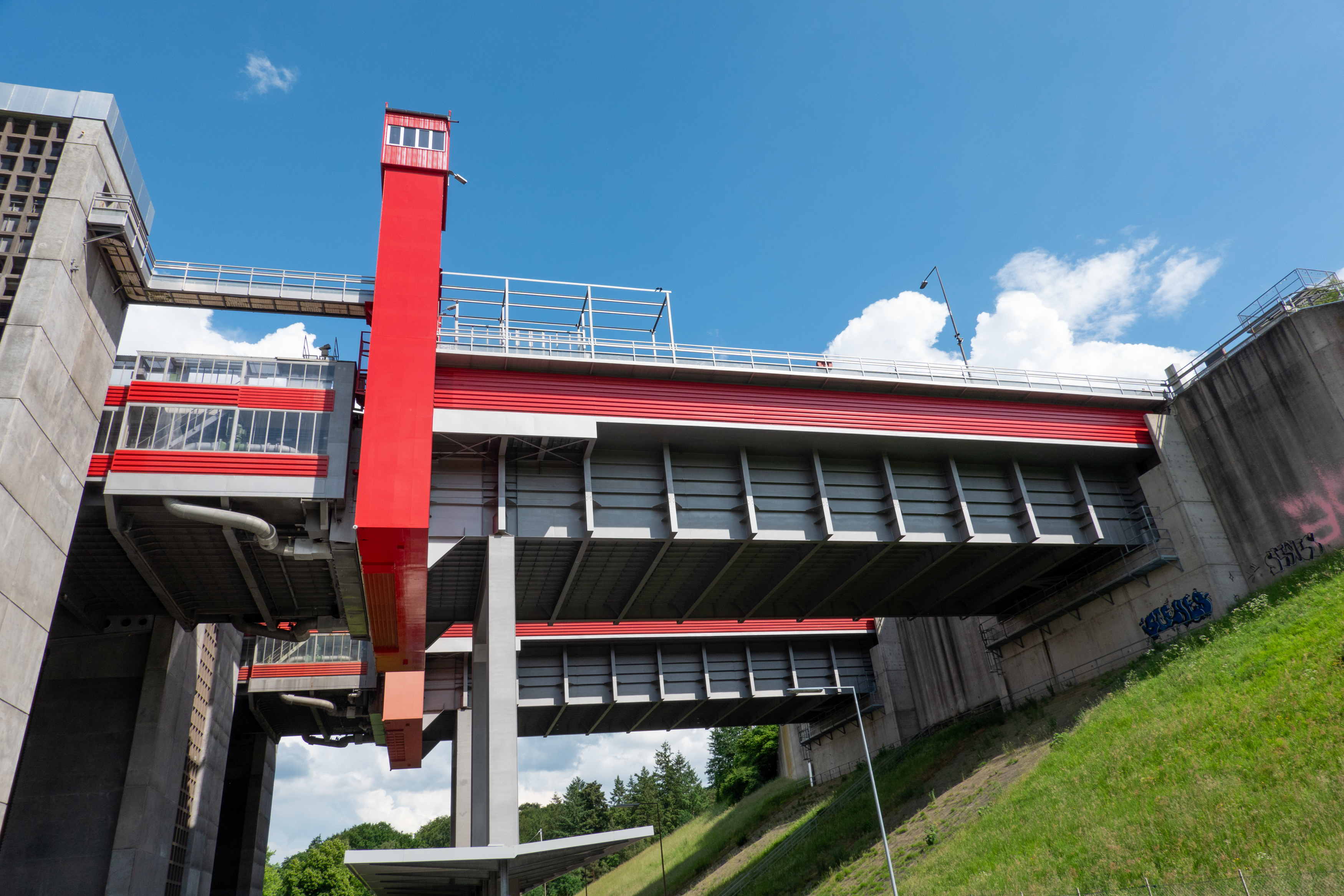
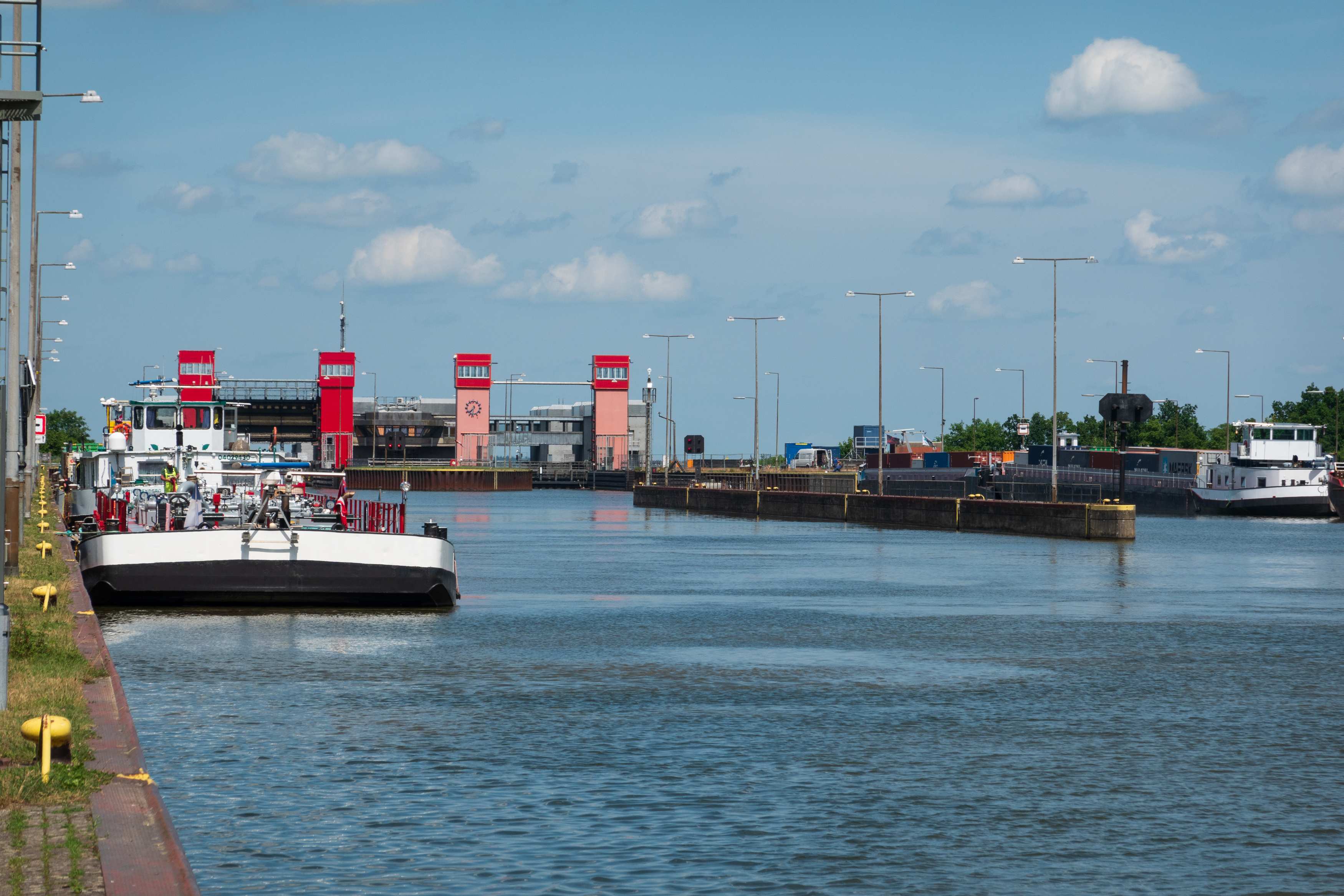
If Münster is infamous for the damage it suffered during WWII, Lüneburg is famous for not having been bombed. We found a stellplatz within easy biking distance, and, as a bonus, it is the parking lot for the Scharnebeck ship lift. (https://en.wikipedia.org/wiki/Scharnebeck_twin_ship_lift)
The horizontal structures between the blocky towers are the gondolas that lift and lower ships.
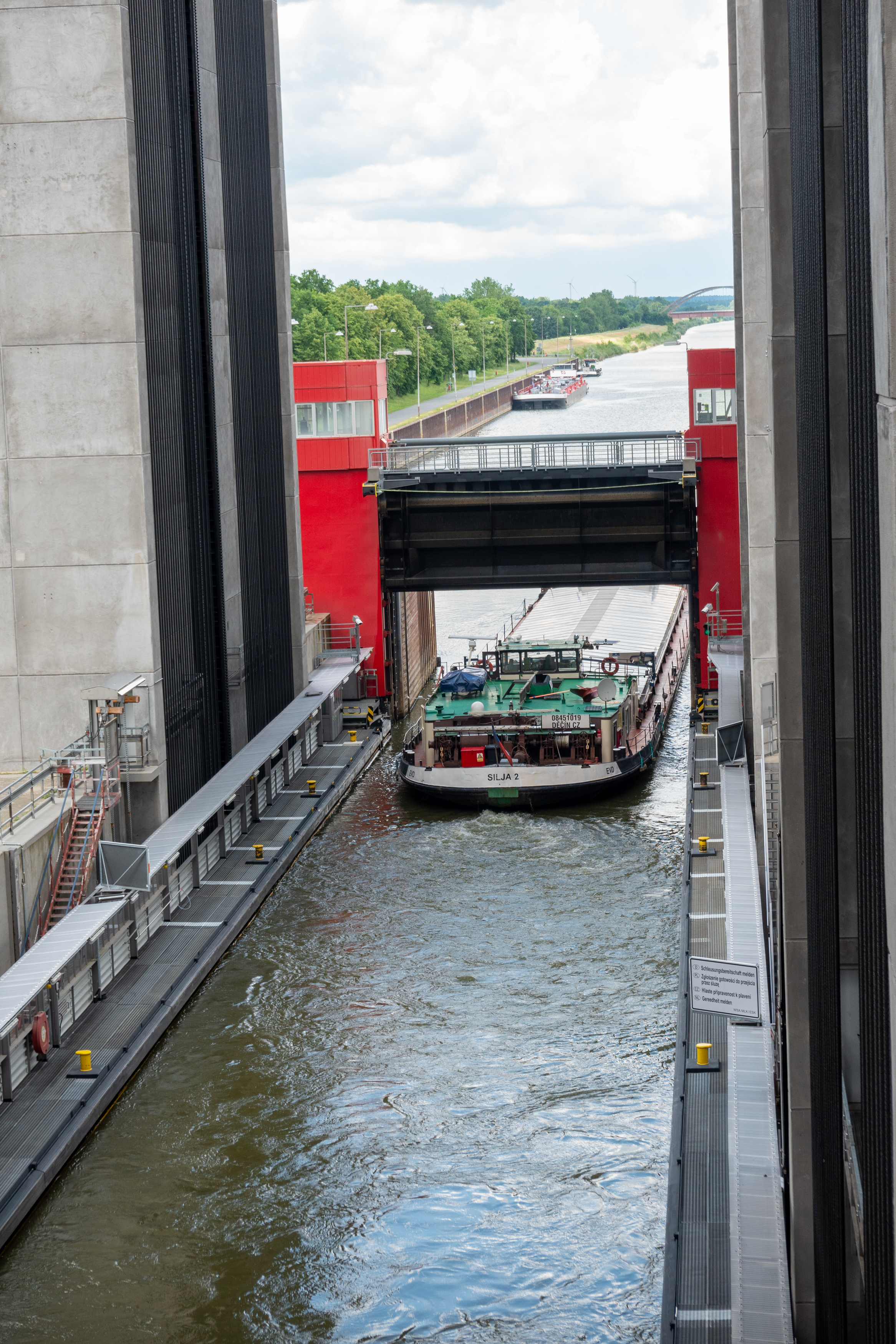
This proved most interesting as we watched barges and various other pleasure boats be lifted or lowered 38 meters from one canal level to the other. Having visited the Falkirk Wheel, Fred was fascinated by the different approach to the same problem. The lift or descent takes next to no energy as the gondola is matched with four counterweights. And remember, because of displacement, the gondola always weighs the exactly the same, whether there is a boat in it or not.
Yes, it’s big. the grey towers hold the massive counterweights.
Entering the gondola in the lower position.
About half way up, almost to the level of the street. It seems to take forever to get the boats into the gondola, but the actual ascent only takes three minutes.
Looking up at the upper passage. The gondola, on the left, has reached the top, 38 metres higher.
Approach to the ship lift from the higher side.
The Sunday we arrived we watched a party boat being lifted. Monday it did not appear that a single ship used the lift.
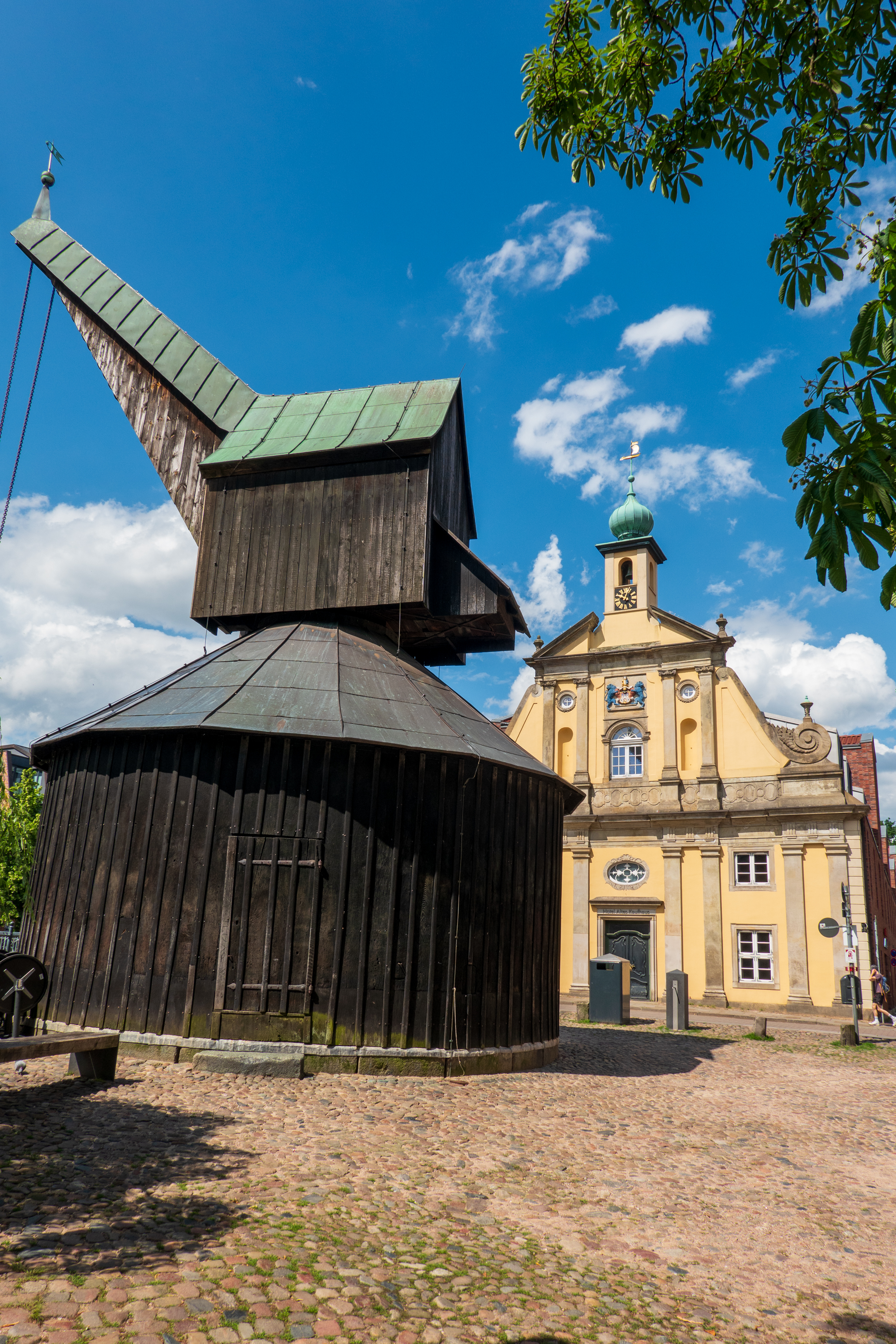
The cycle trip into town was a little longer (about 10Km) but we enjoyed the visit. The town was part of the Hanseatic League based on the salt mined there beginning in 956. We admired the 14th century crane, used for hauling the salt up until the late Middle Ages.
The crane is most impressive,
The old crane is Lüneburg’s secret landmark. A crane is mentioned for the first time in 1346. We could not see inside as the crane is only open to formal tours. The German texts say that it is operated by “carrying wheels.” Probably what would be called today “Treadwheels.” People step inside and walk to provide the power.
Treadwheels on a crane.
When Lüneburg was connected to the railway network in 1846, the crane became redundant.
Salt boats on the canal.
And (of course) we stopped for a coffee and a cake (Kaffee und Kuchen) beside the canal, as we admired the really old houses.
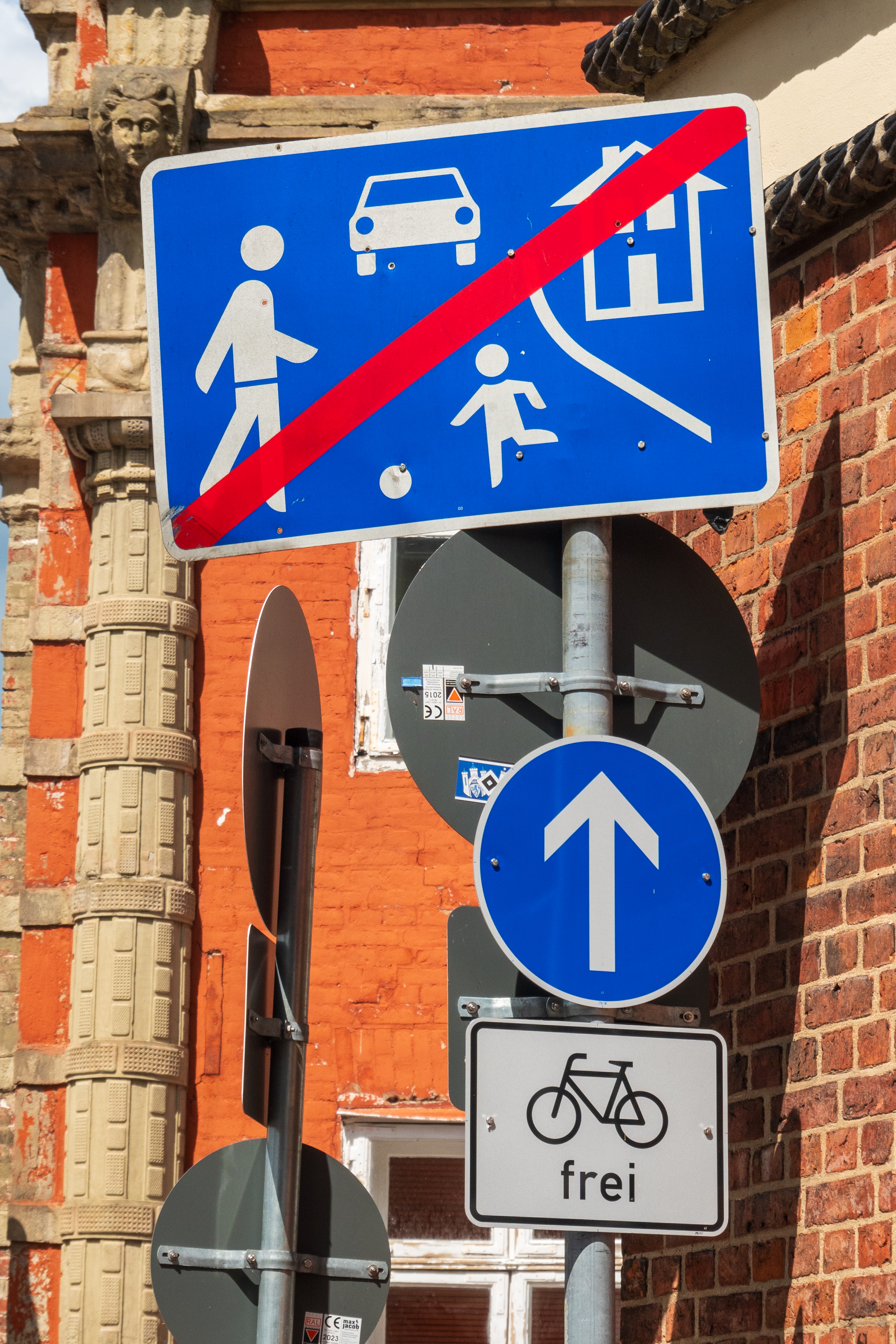
Note the modern side and older facade.Not sure how to read this sign. Seems like you can’t play ball in the street but there is free passage for bikes. We took it!
Goodies at the old fish market, by the canal.The Rathaus.Beautiful brickwork.
As noted, Lüneburg survived the war without damage so there was no rebuilding.
On the practical side, the camping thinned out after the weekend and was quite pleasant and there is an ALDI within walking distance! The little things, like food, matter!
So, it would be nearly a week before our parts could arrive. As they used to say in parts of West Africa, “What to do?”
Having pretty much mined out the tourist attractions of Nijmegen and Arnhem, we decided to head north to Enkhuizen to visit the Zuiderzee Museum, which had been recommended to us. This would allow us to answer that burning question, what exactly is the Zuiderzee? (Hint, look here: https://en.wikipedia.org/wiki/Zuiderzee)
We found a campsite in easy walking and biking distance of all sorts of useful places, like the Vomar Supermarket and the museum, and checked in – happy to get the perfect spot. Oh, the joys of easy access to a supermarket! We made at least three visits on the day we were there, as one can only carry so much on a bicycle! Fred even got a hair cut from a Kurd who shaved him with seemed to be a dry razor! Scary as all get out, but, amazingly, no irritation.
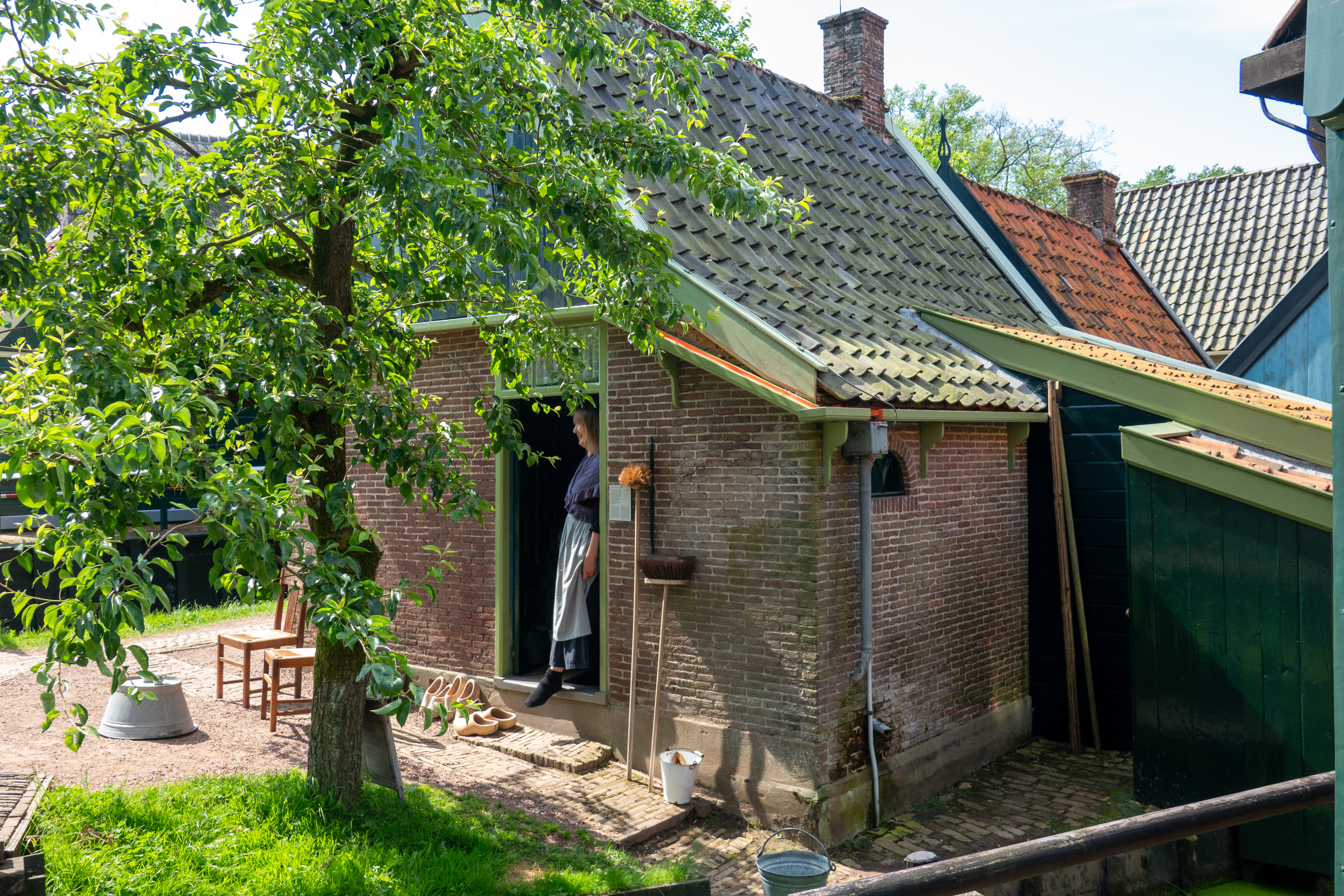
We enjoyed our museum visit. The weather was lovely and we started with the outdoor town with its displays and buildings of the turn of the nineteenth century. We are suckers for places like Williamsburg, old Sturbridge village, and the Weal and Downland museum.
Looking down from the dyke at one of the windmills that pumped out the water. The kids are playing with a model of an Archimedes screw.City street.
Kids playing.Drooling over the goodies and trying to take an artsy craftsy picture.Nifty duplex – perfect place to raise a dozen kids per side.
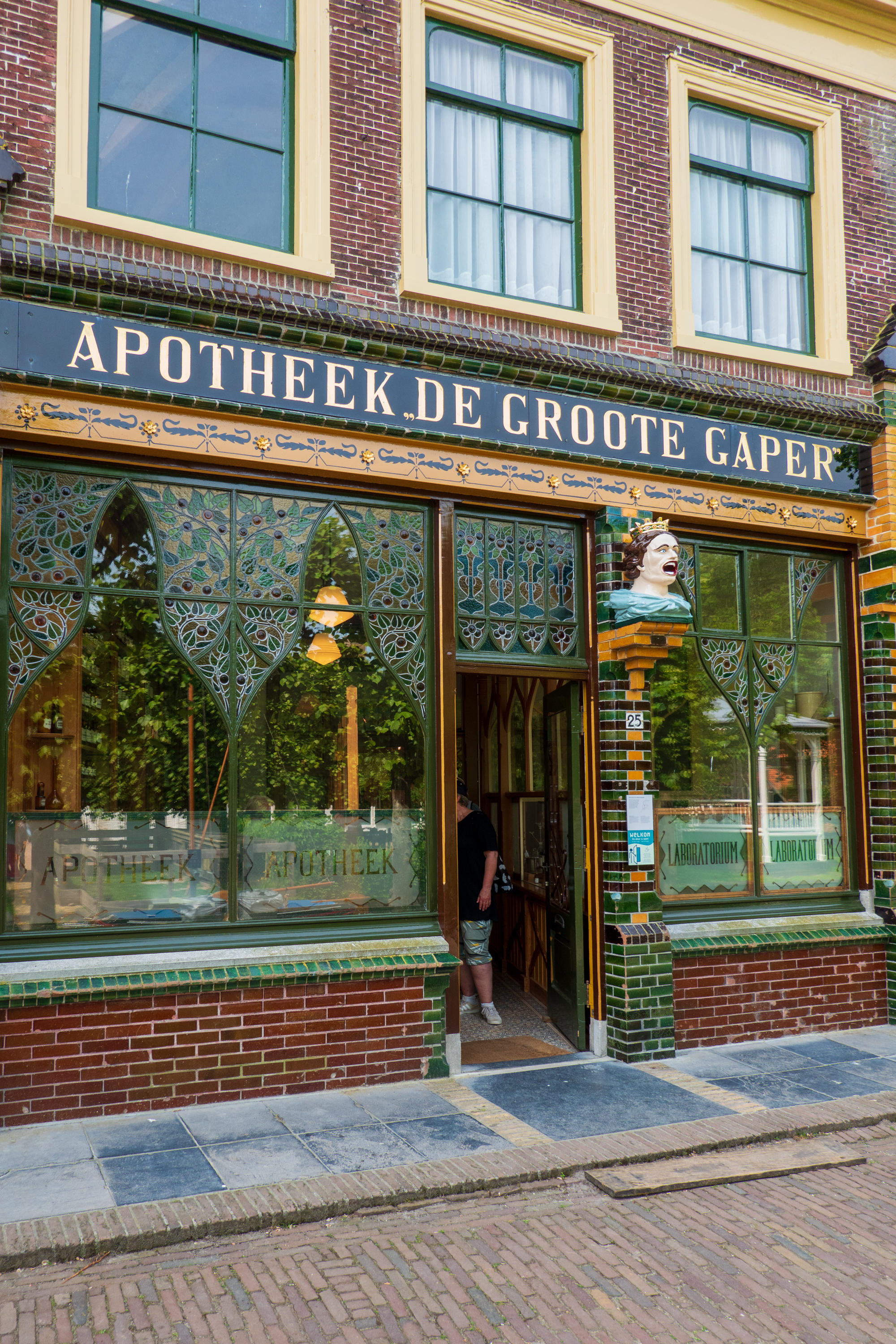
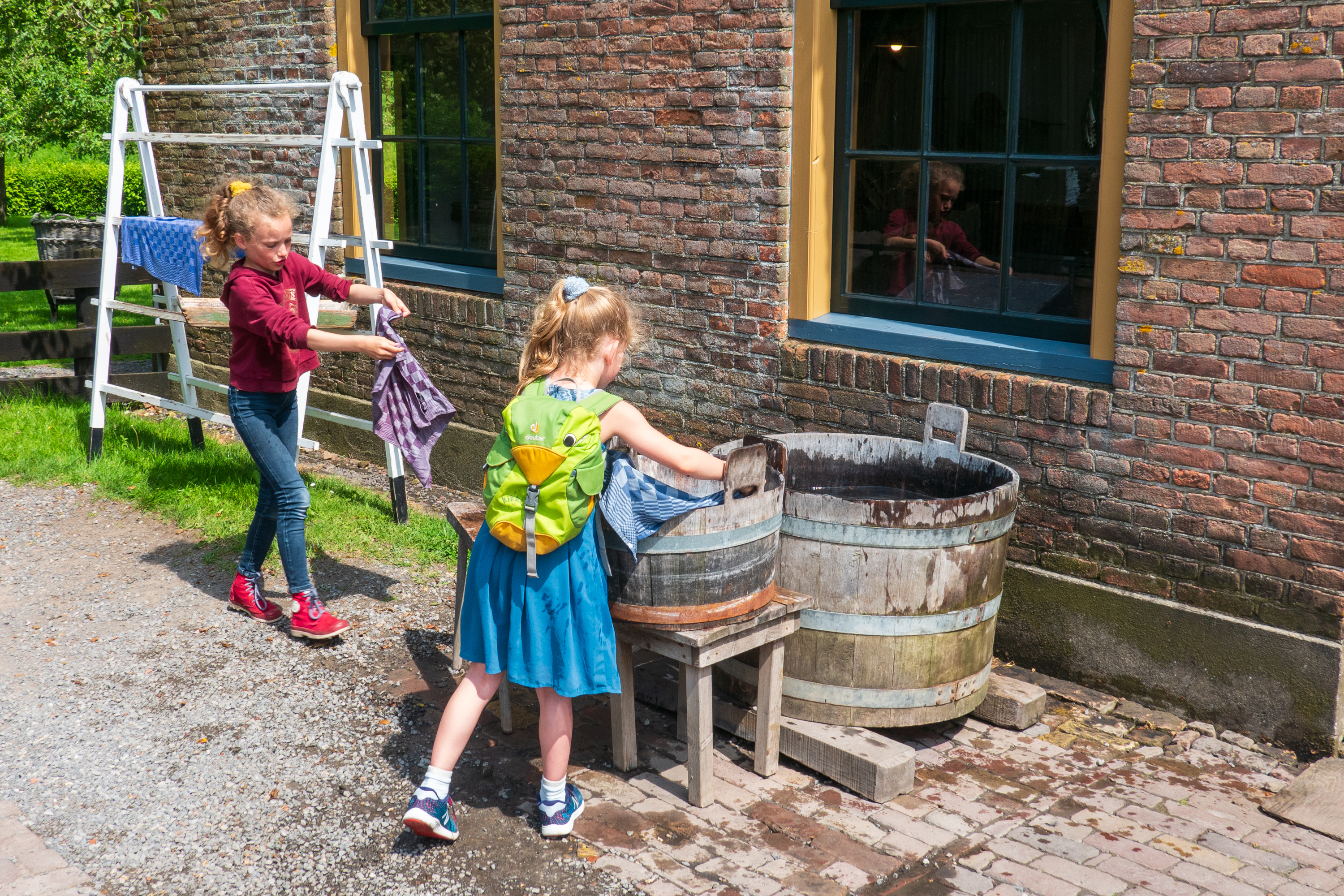
Canals everywhere and all used to move things.Drugstore.Not sure I want my washing station right there. The steam laundry looks better!
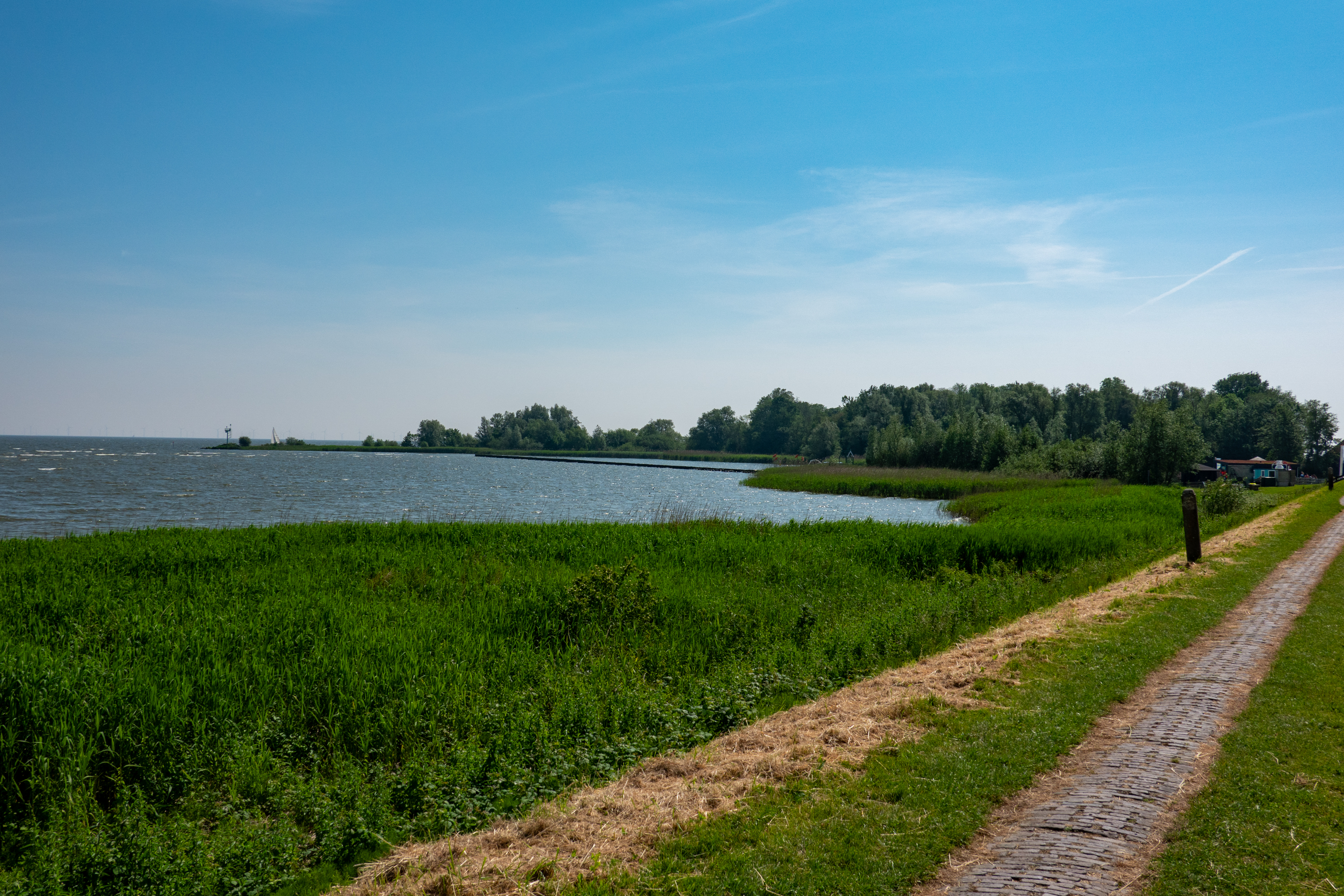
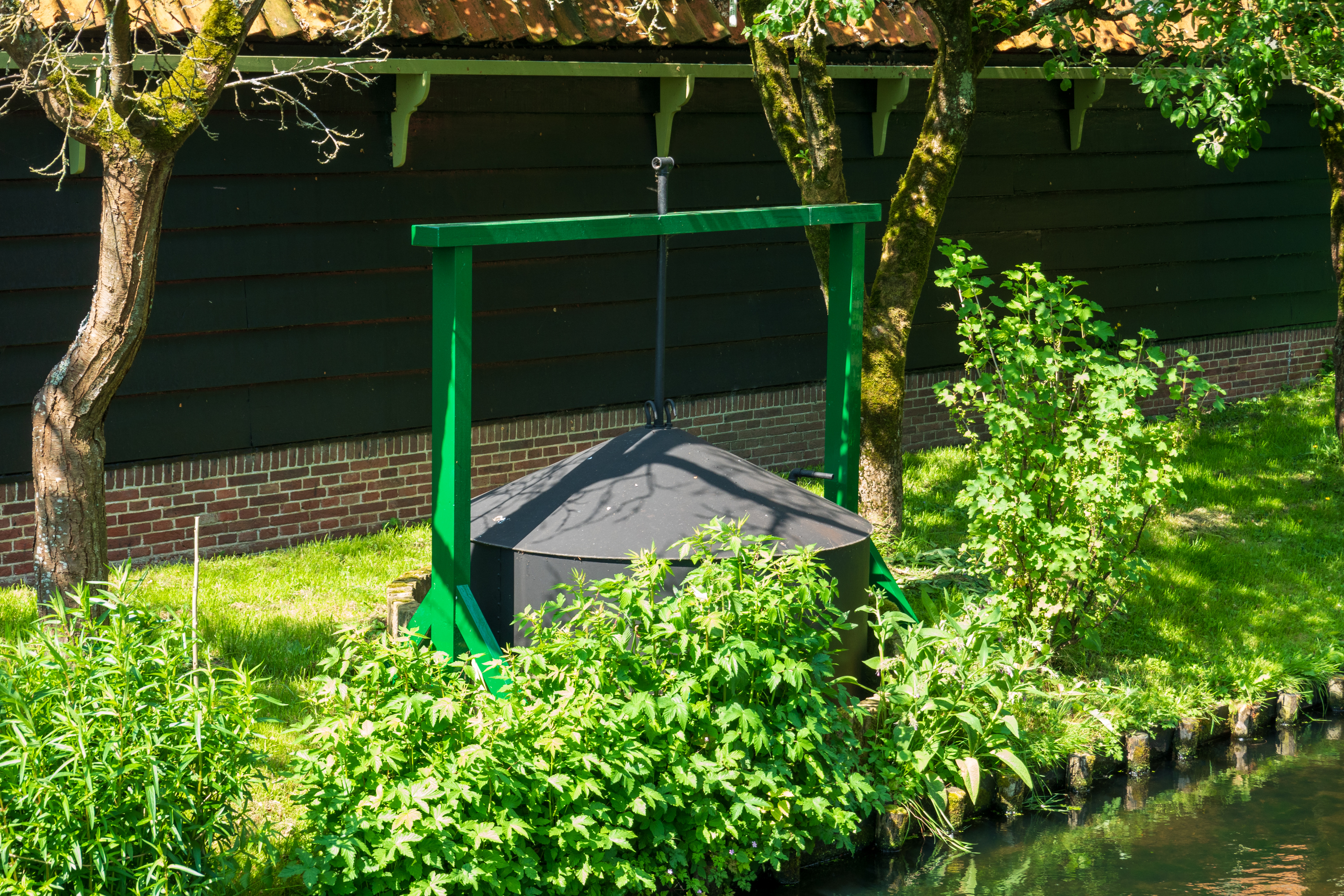
This fellow wanted to help us with our coffee and cake.Looking from the dyke out over the Zuiderzee.Very basic town house.“Magic” gutters. Here they feed the rain barrel outside the house.When you have all of that water and decomposing vegetation, you can harvest methane gas!
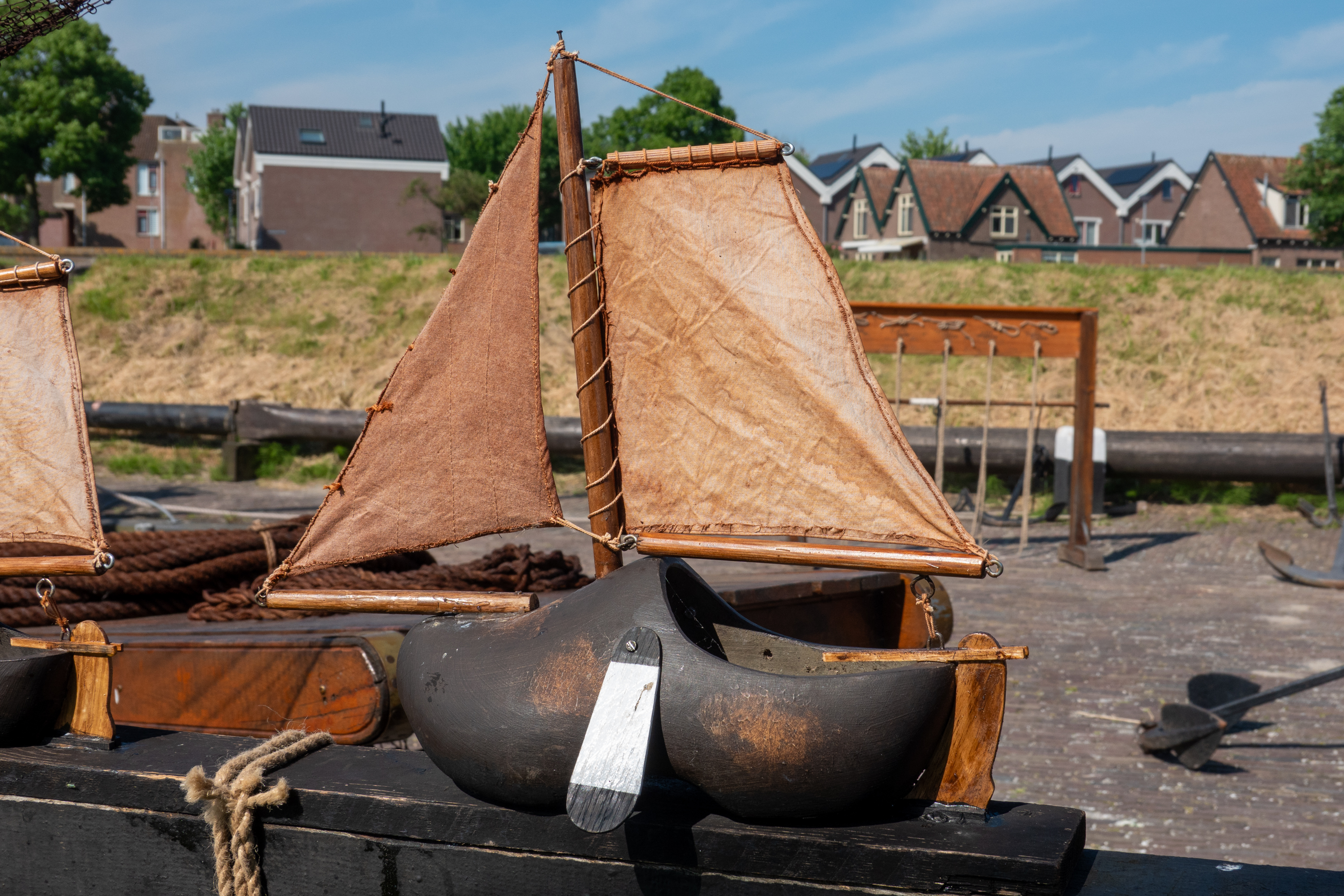
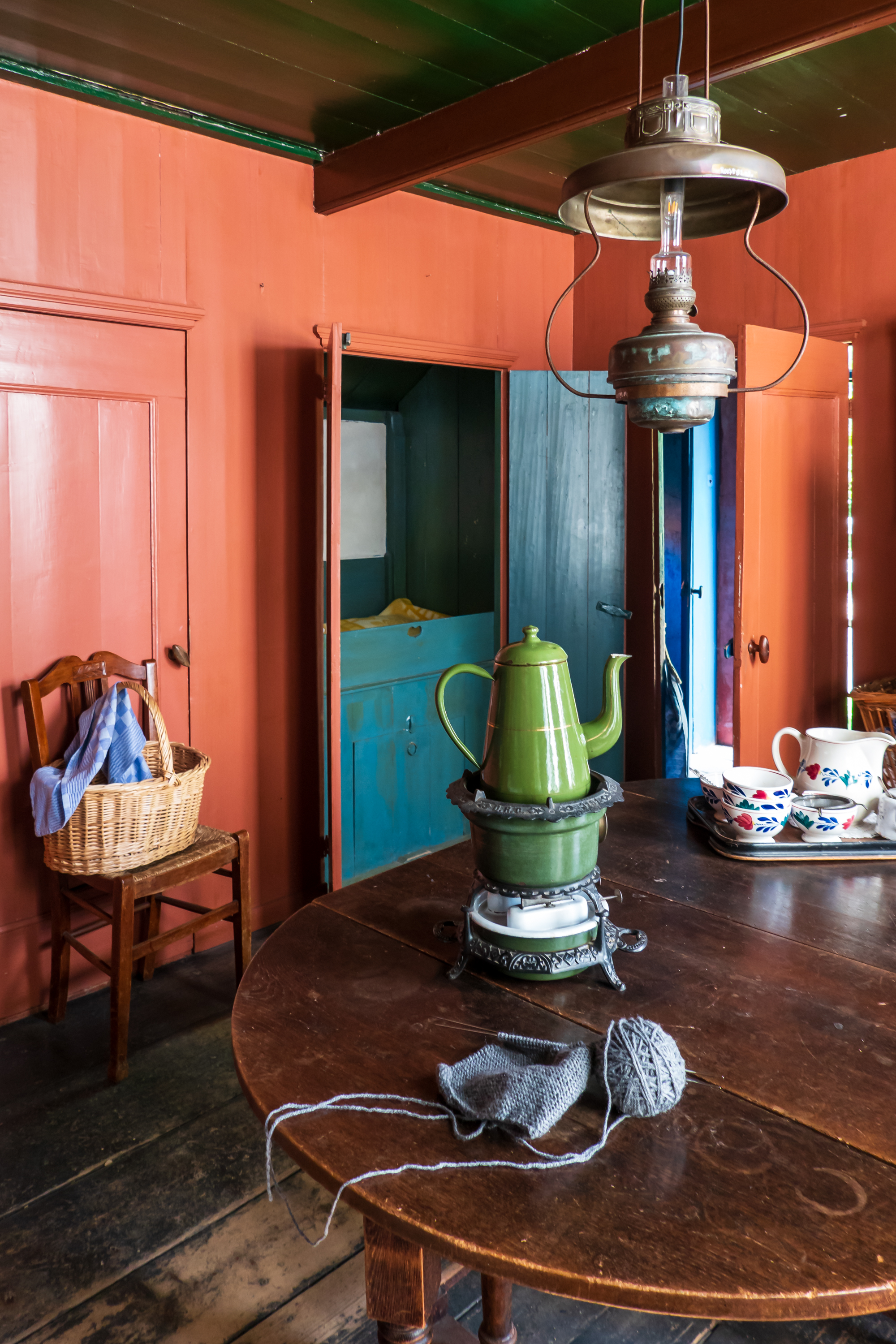
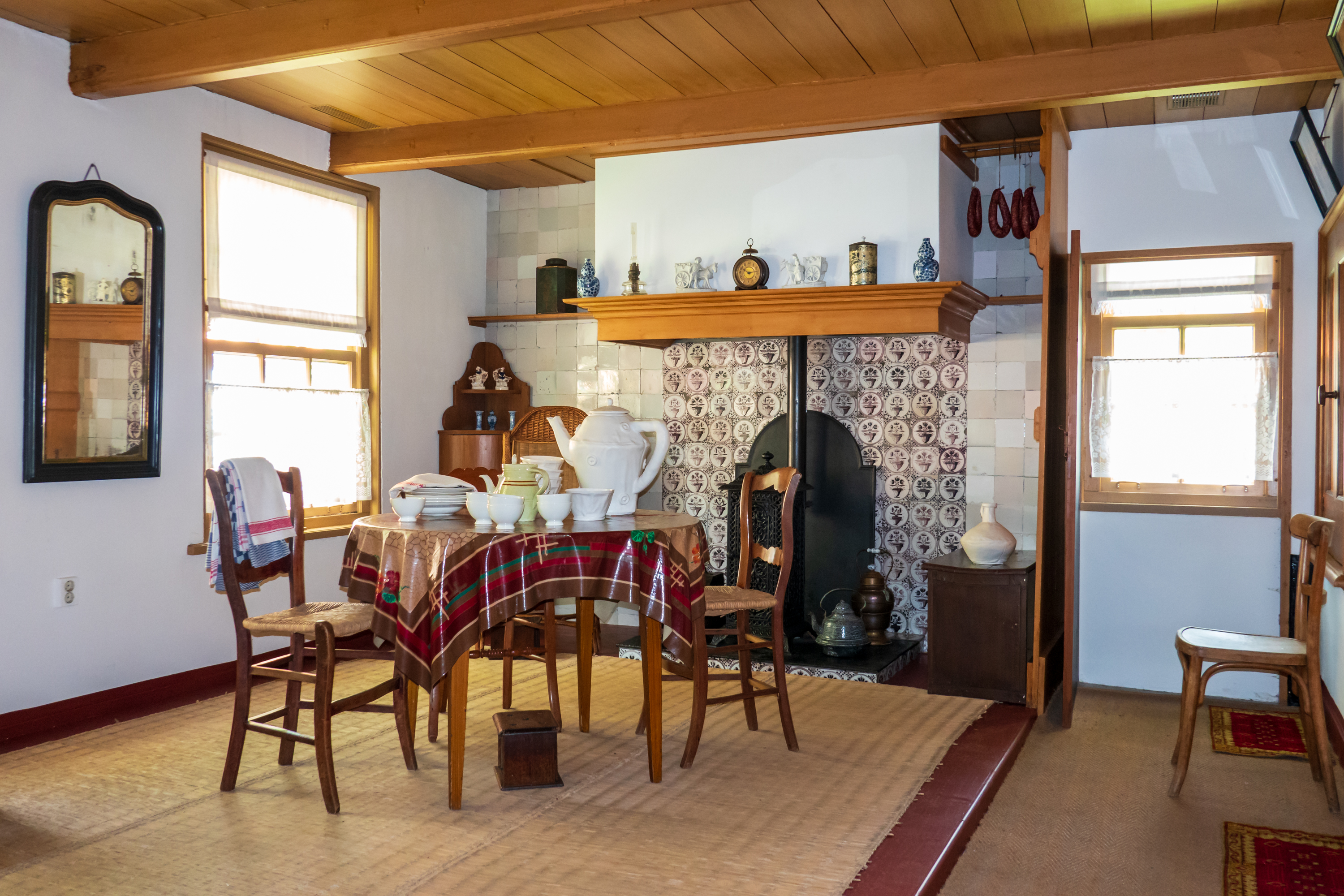
Sabot sailing boat, complete with lee board. Very Dutch!During the summer, all cooking was done using this paraffin stove.Pull the gutter in and it fills your water barrel inside the house.Boat with lee board pulled up.
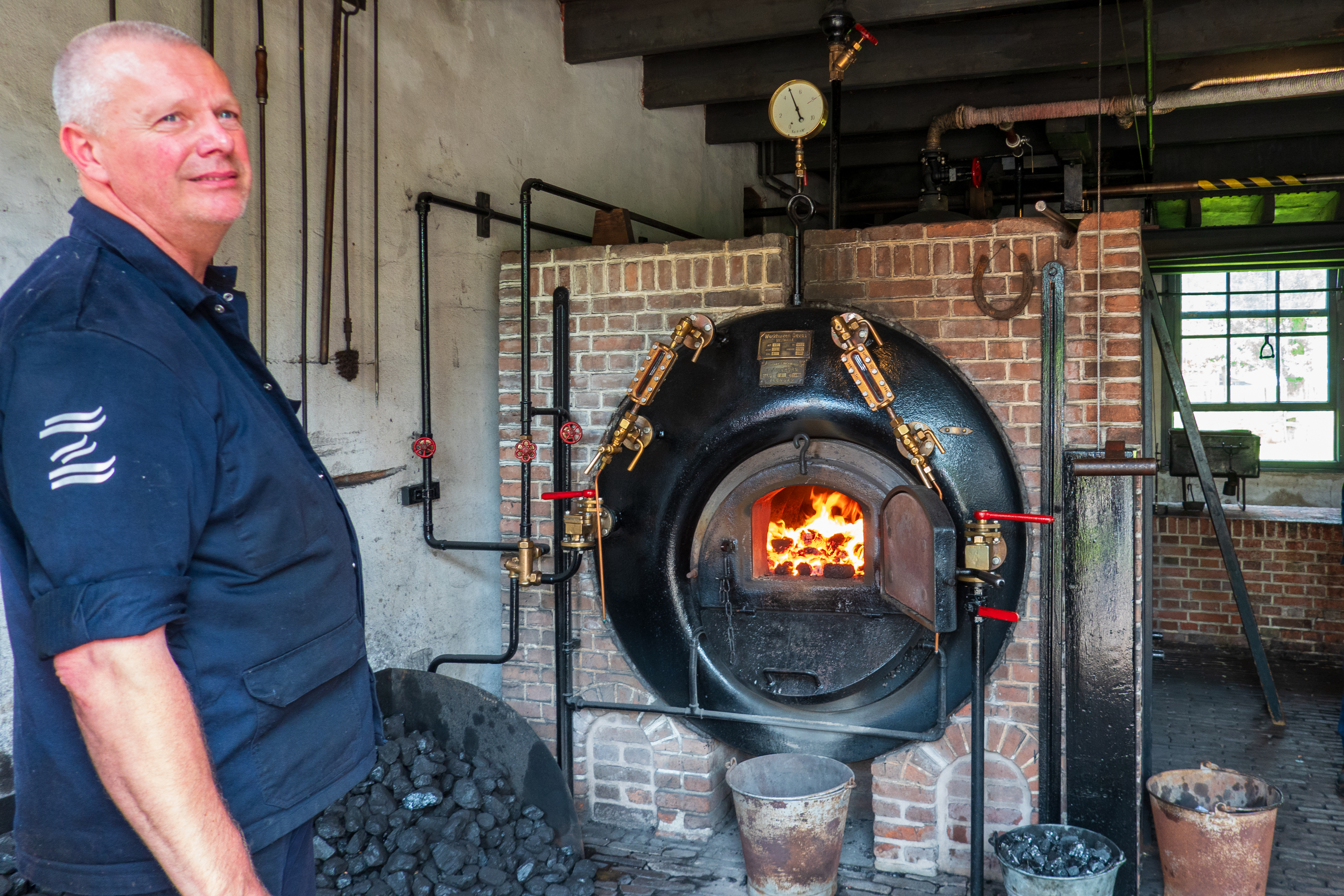
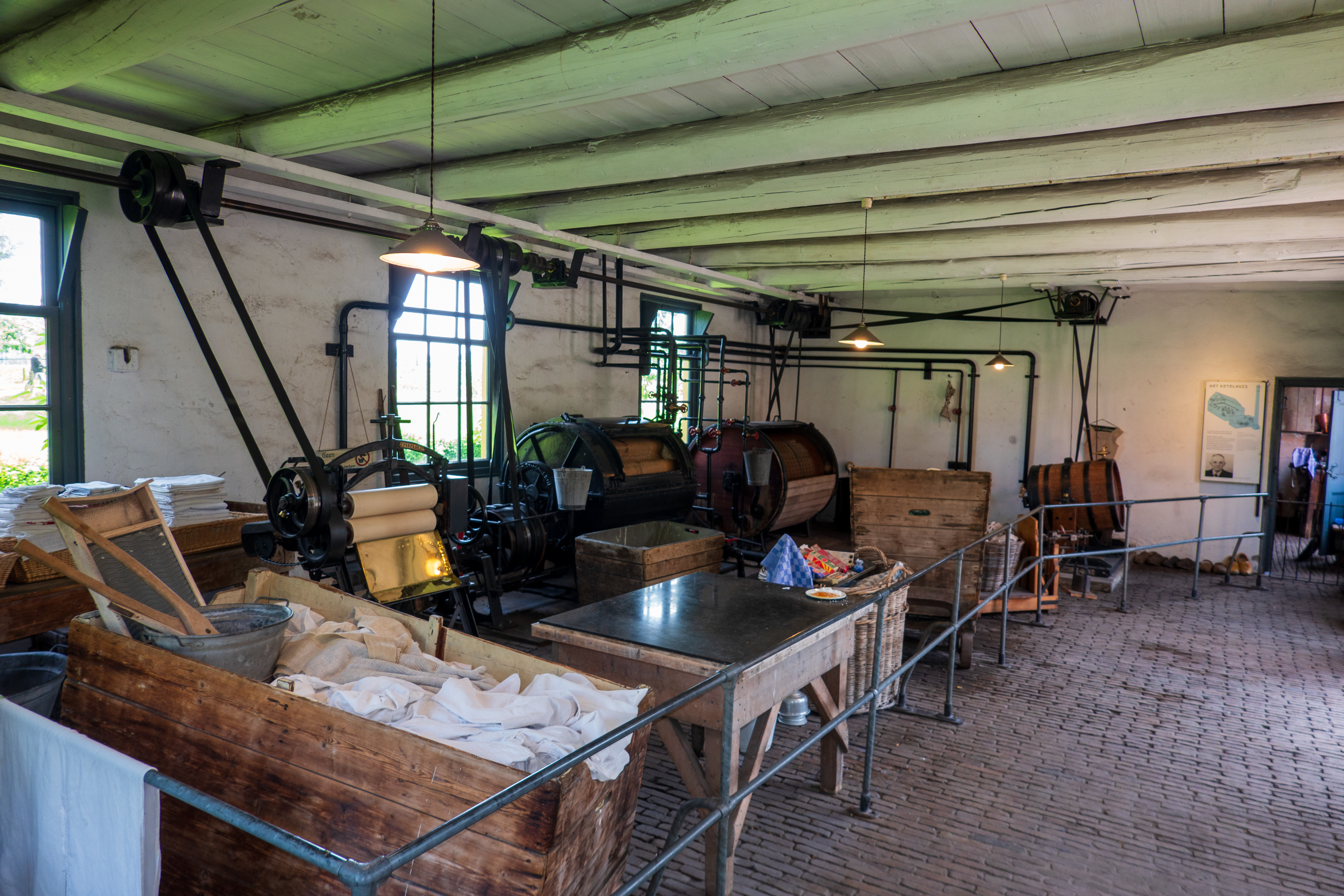
Fred especially enjoyed the steam laundry with its engine. Who would have imagined that there would have been a need for a large, mechanical laundry? And that the owner would become one of the wealthiest people in town. (Nice house!)
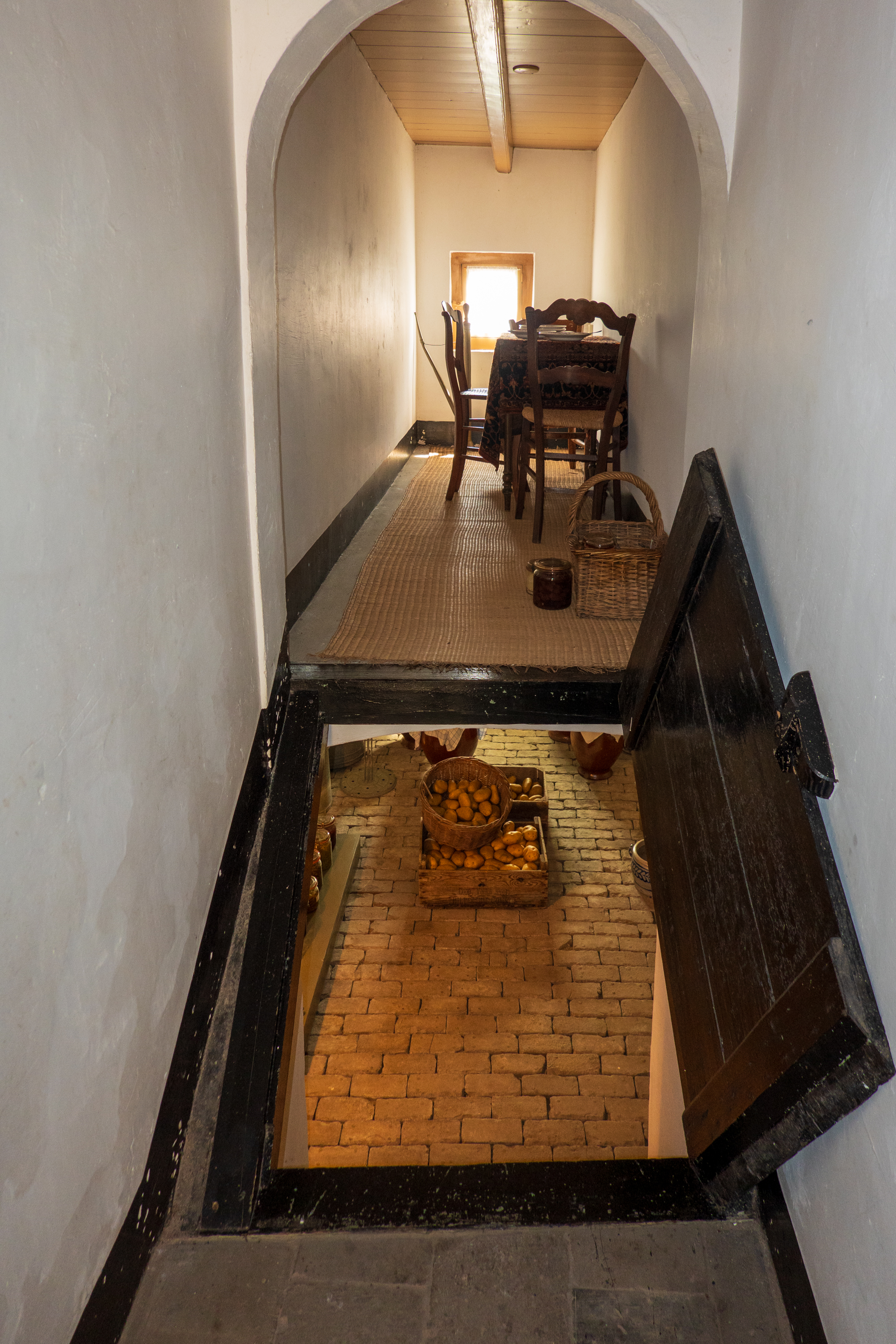
Firing up the boiler.Always important to get good help.The laundry owner’s house even had a cellar, under the stairs.
The power shaft along the roof ran washers and other machines.The laundry owner’s house was definitely up market.
We also learned some more about the herring fishing industry and the reasons for and effects of building the dyke on the local population. Folks whose houses were on the wrong side of the dyke got wetter.
The car park is at a considerable distance and a ferry runs from the museum to the town on a continuous cycle. We took advantage of this and made the round trip on the ferry, which gave us good views of the town of Enkhuizen from the water and of the bridge that runs across the dyke.
The watergate.
Fishing vessels.Citroen 2CV (We love these old beasts.)
Finishing the outdoor museum, we moved on to the indoor part of the museum. The theme here is water, especially the history of horrific floods that lead to the dyke across the mouth of the Zuiderzee. There were also exhibits of local life and industry, including some wonderful old films. The boat house held a wide range of local boats, including an ice boat.
After another night of heavy rain and thunderstorms (and a somewhat waterlogged campground), we headed back to Nijmegen for the bicycle repair the following day.
The parts were in and the GoCycle rep had brought them down from Amsterdam personally. After what seemed at times an eternity of waiting, the actual replacement of the board took ten minutes, and solved the problem. GoCycle also checked our battery that would not charge and provided a new one as a warranty repair. Bikes repaired, the ride back to the campground was super easy!
Our campground in Malden sits right between the two major drop zones of the 82nd Airborne. We crossed the Maas-Waal canal to the west of town anytime we drove anywhere. Our rides into town to tour or visit the bike shop went right down the route of the old road. The sense of history was palpable.
To our east, in the Groesbeek landing zone, is the Freedom Museum. (https://freedommuseum.com/#) This museum, a bit like the Peace Museum in Caen, France, touches on a subject that most British and Americans cannot really understand – life under occupation. The US and Britain suffered terrible losses, but we never suffered an occupation by a foreign army. Occupation raises many complex issues as each person tries to decide where to place themself on the spectrum between full collaboration and active resistance. There are some very thoughtful exercises you can do to help you understand the challenges. And the usual selections of moving maps and and bomb shelter where you can feel a raid. Not at all the usual military museum – highly recommended.
Finally, on a day with a decent weather forecast and rain jackets in hand, we set off to Arnhem to see the bridge that really was too far. We started by taking the bus to the station in Nijmegen, then the nifty double decker train to Arnhem (which took about 10 minutes!).
Once in Arnhem, we found the bus at the station to take us to Oosterbeek, home of the Airborne Museum in Hartenstein. (https://en.wikipedia.org/wiki/Airborne_Museum_’Hartenstein’) If Arnhem itself is a bit gritty, Oosterbeek is a lovely spa suburb.
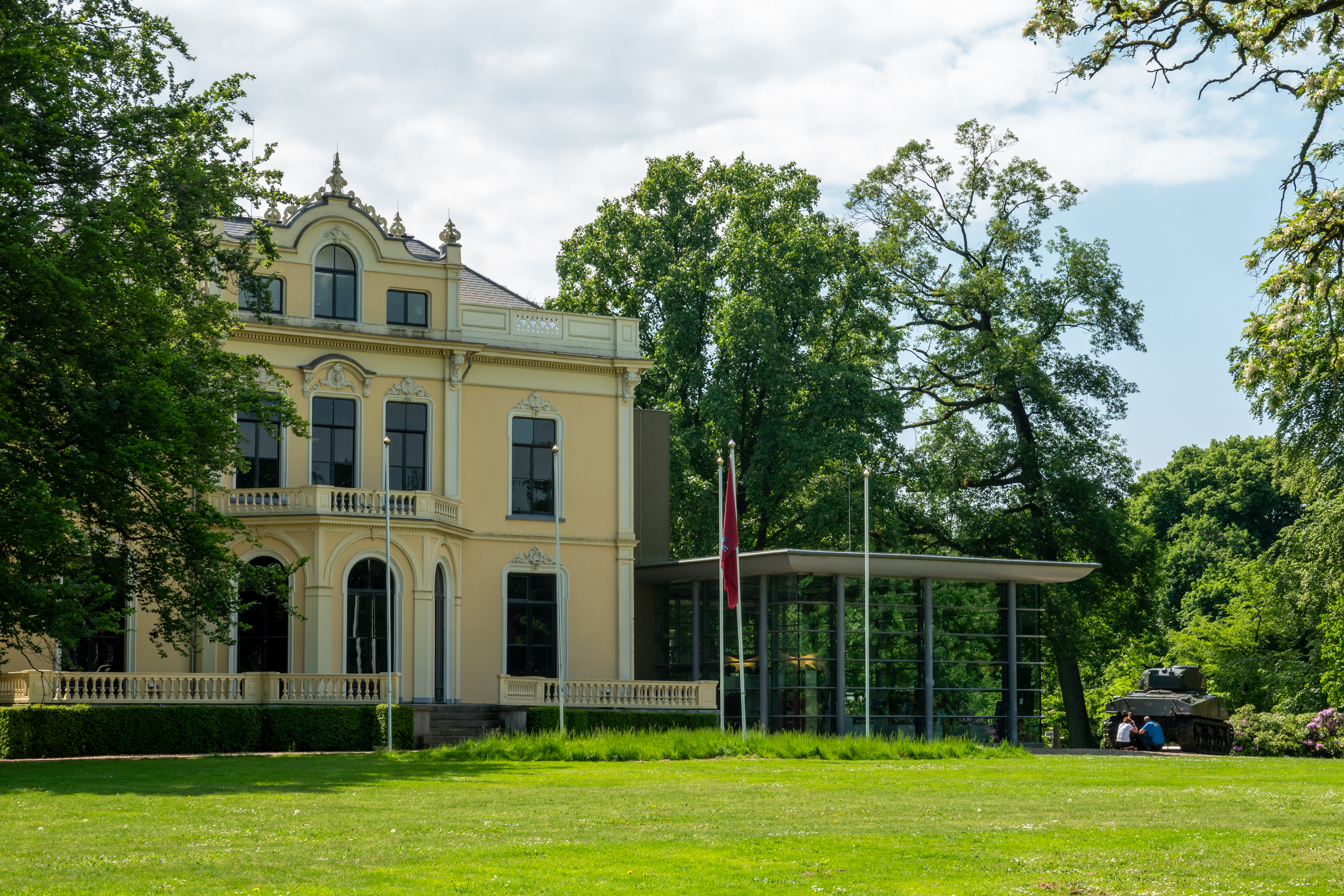
A very different museum from the Freedom Museum, this museum is based on the important role that the Villa Hartenstein played to both the Allies and the Germans, both of whom used it as their headquarters (at different times!) during Operation Market Garden.
The villa. See the wikipedia link for a wartime photo.
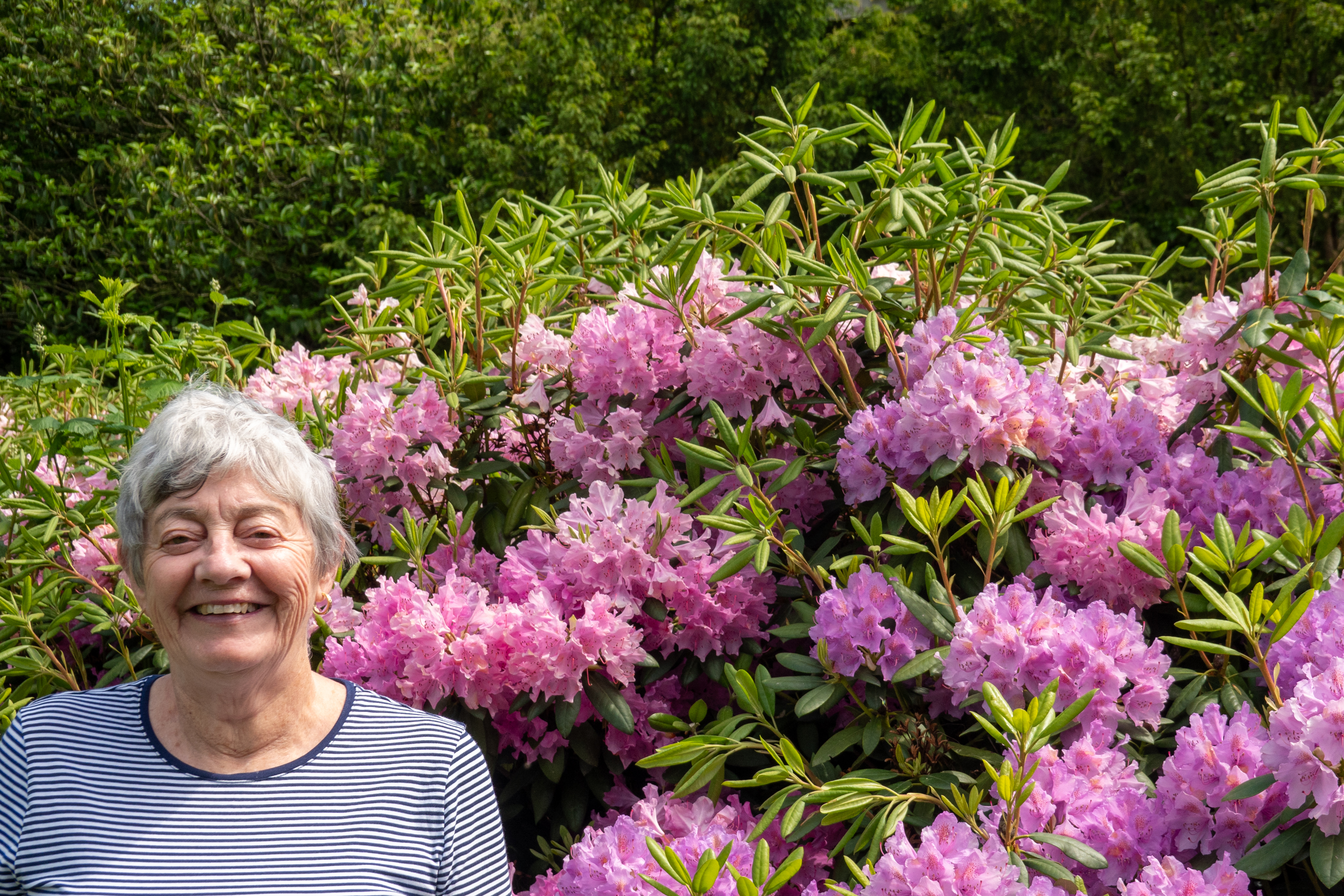
Denise among the Rhododendrons.
The museum is known for the “Airborne Experience,” which lets you walk through the battle from one side to the other. It was well done. The actual room that Colonel Urquhart used as his headquarters has been restored, complete with mannikins. The nearby St. Elizabeth hospital was used by both sides, at the same time. A most challenging arrangement!
Next to the museum was a lovely restaurant. We joined a decidedly upmarket crowd (and a few cyclists) for a nice lunch in the sun.
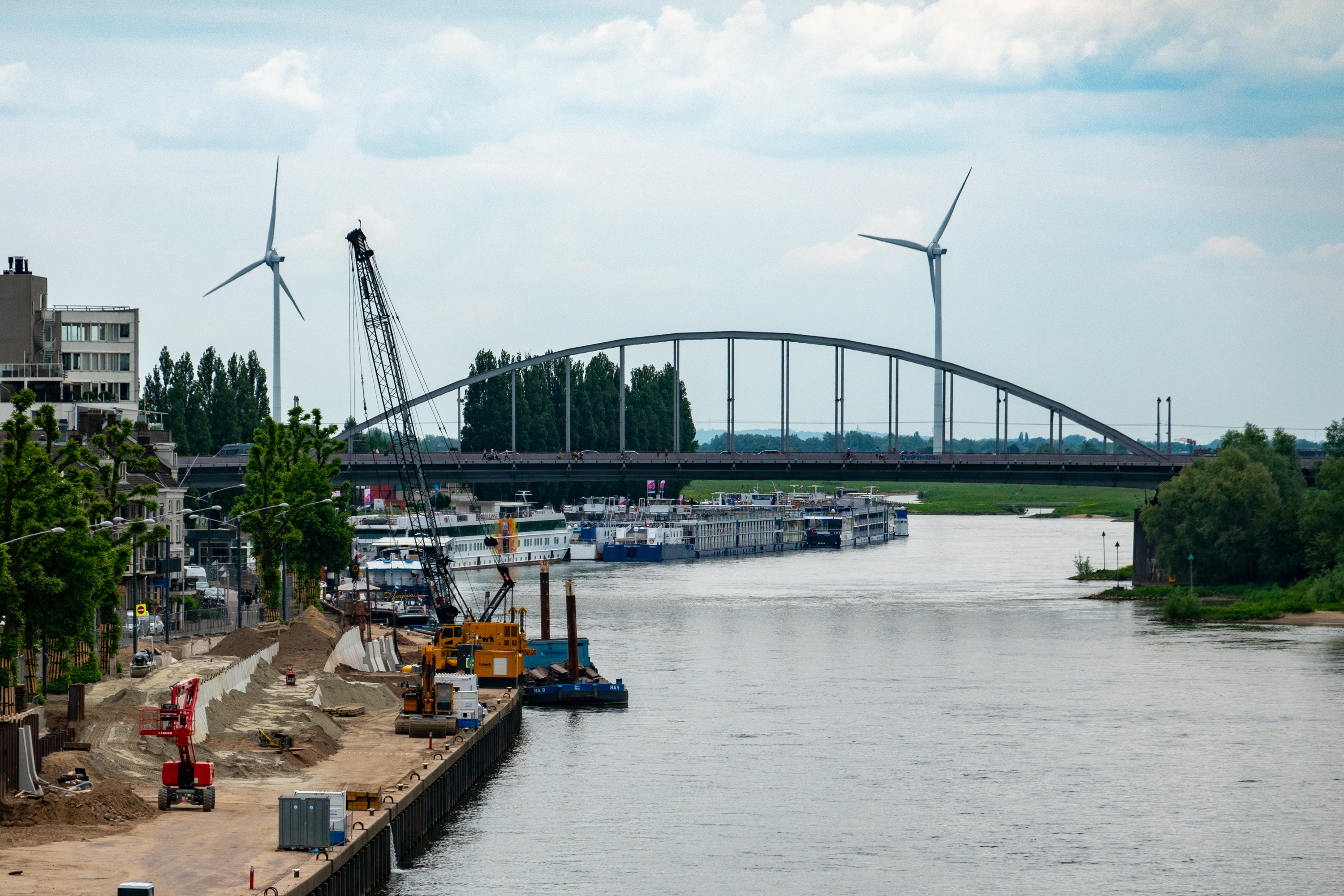
After taking the bus back into town, we walked until we could see the Arnhem bridge.
Unlike Nijmegen, this is a replacement bridge.
Photo taken, we headed back to the station to repeat our journey back to the camper. And it did not rain!
We found a lovely aire/stellpatz just south of Nijmegen (https://camperplaatsmalden.nl) and settled in to what was to become our new home for a long time! The camperplaats Malden is a working farm and we often had a decidedly bovine serenade and bouquet!
We are never the biggest thing around.
We had picked Nijmegen as the local GoCycle dealer, FIJN-Fietsen (https://fijn-fietsen.nl) is listed on the GoCycle website as having a GoCycle guru. We had also chosen Nijmegen as it is on the “Bridge too Far” road and we had wanted to visit some of the sites of Operation Market Garden. Nijmegen is also probably the oldest town in the Netherlands, dating back to the Romans, at least.
What was Operation Market Garden? In short, in my amateur opinion, albeit shared by several authors, it is yet another proof that General Montgomery was not very good, and worse, not willing to own up to his failings. (See: General Sosabowski) For a reasonable overview, start with the Wikipedia (https://en.wikipedia.org/wiki/Operation_Market_Garden) and move on to books by Cornelius Ryan or Trevor Beevor.
Setting out from the campsite, we rode through a pretty forest and dropped right onto the amazing Dutch cycle route network. In fact, we reached town so quickly that we overshot our turn! The “guru” turned out to be Roy Fijn, the owner of the shop and a wonderful bike nut and GoCycle enthusiast. Roy took the time to look at both bicycles and found a quirk with the one that did have power, plus the need for new brake pads. So he agreed to place the order for the parts and hoped they would be in the following day. Great news!
Unfortunately, Murphy noticed the situation and struck! That night we learned that the parts (motherboards) were only available in the UK and there were only two there. They would be sent but due to the holiday weekend (yes, another one!) it would be the following week before they arrived. Fred meanwhile was managing to cycle with no power, as Holland is fortunately quite flat! So we set out to plot how to spend the next few days.
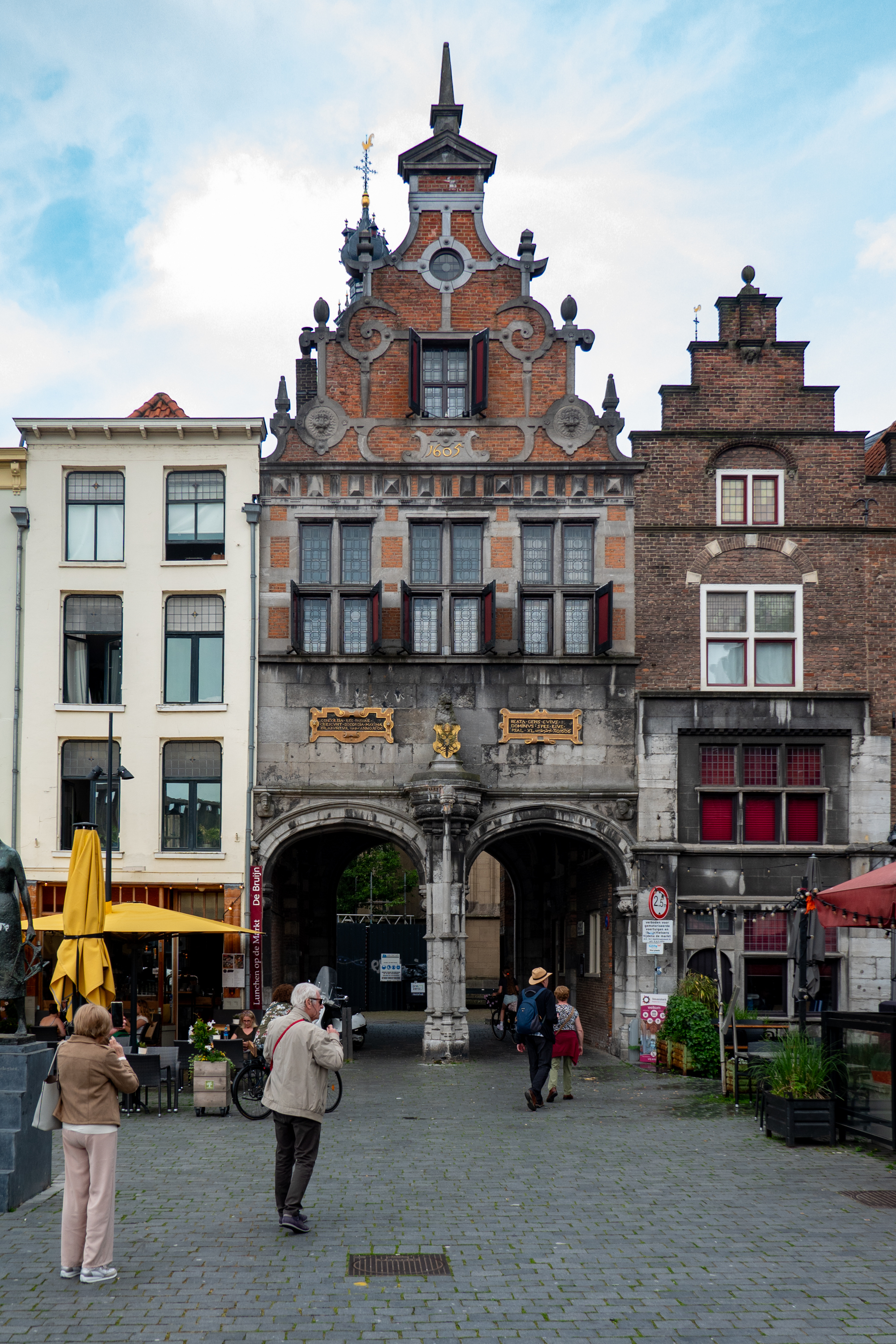
The weather forecast in Nijmegen was decent for the following day, so we organized the bikes and set out to visit Nijmegen. We found the old town and Market Square easily and began our visit with coffee and apple pie (with whipped cream of course) watching huge trucks descend the narrow, medieval pedestrian walkway we had just climbed. Great fun!
We weren’t even sure we could ride our bikes up this street, and then the big trucks started heading down!
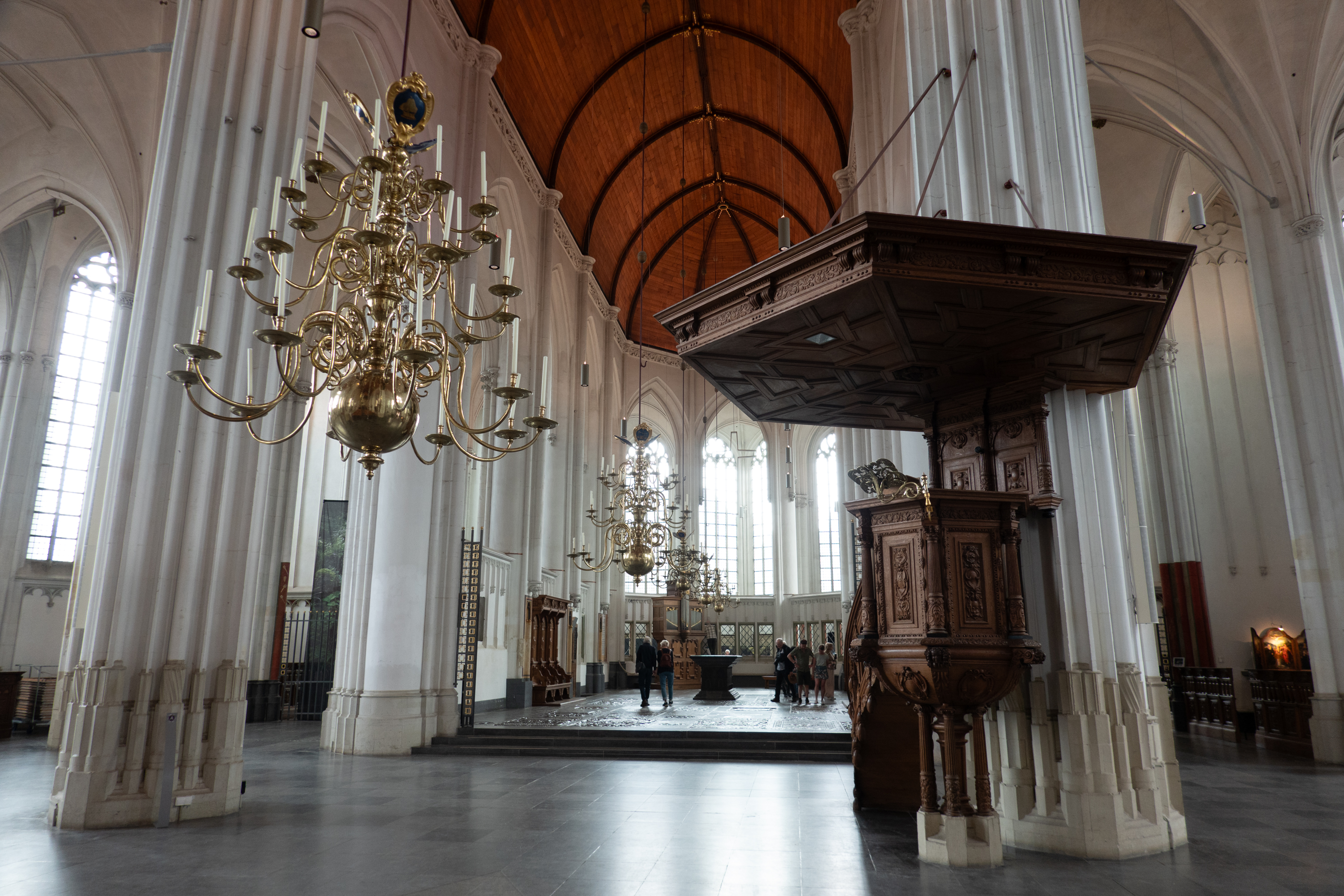
After Denise raided the cheese shop, we moved on to the city tourist office and then went to the Church of St. Stevens. (https://en.wikipedia.org/wiki/Saint_Stephen%27s_Church,_Nijmegen) This was most interesting as it is now a Protestant church. It had been both Catholic and Protestant multiple times in the past, depending on the politics of the day and this was clearly visible especially when looking at the altar.
Spare, even compared to English cathedrals. Services are still held on Sundays.
Double arches leading from the market to the cathedral.
Glorious organ.
Tombs under the altar spaces.
It was then time to find the remains of the old castle which had been demolished in 1795 to make cement. (!!! Talk about commercializing your history!) (https://en.intonijmegen.com/discover/history/historicaltimeline/demolition-of-the-castle-nijmegen-loses-its-crown-jewel) We found the ruins of the St Nicholas Chapel, also known as the Valkhof Chapel, which dates back to 1030. This makes it one of the oldest surviving stone buildings in the Netherlands. We also saw the Barbarossa ruins which date back to 1155. Both were part of this huge castle. The view of the Bridge, which had been taken by the US 82nd Airborne during Operation Market Garden, in 1944, was also good. Though the trees could have used a trim as they rather intruded on the view. There is an excellent site outlining a personal view of Market Garden and Nijmegen. (https://alondoninheritance.com/out-of-london/operation-market-garden-nijmegen-and-the-valkhof/) The Valkhof park was a center of German defense of Nijmegen.
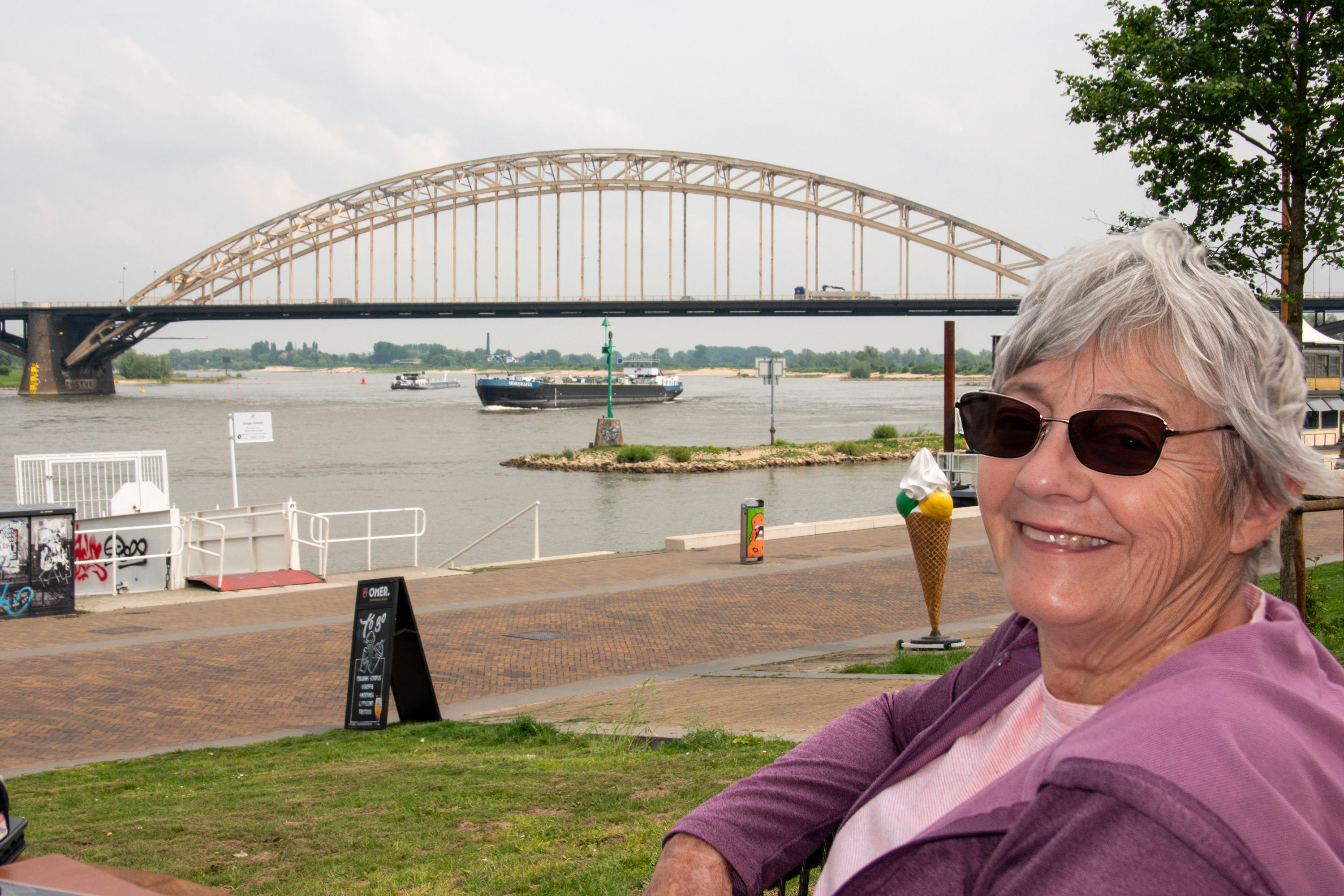
We decided to get a better view and went down to the river’s edge, where we found restaurants as well as a great view of the bridge!
We could not resist and thoroughly enjoyed our lunch as we watched barges passing by on the river. Trivia. This bridge was actually built by the Germans as the Dutch blew the original, 1930’s bridge, when the Germans invaded. In Market Garden, this was the bridge that was not too far, but was, perhaps, too late.
We even got a bit of sun.
Nothing runs like a Deere. In this case, a barge load of them.
Nijmegen has a lot of museums. One of the more interesting ones is the De Bastei Museum. (https://www.debastei.nl/en) The De Bastei (“the bastion”) museum, which was built into the remaining ramparts of the old castle, literally, an old gun bastion, is a bit of an interesting train wreck of museums, covering ruins, dating back to the Romans, and concluding with do it yourself mechanical exhibits which allow you to try to bridge the river, Roman style, set up a river powered ferry, and control flooding. Hours of education and entertainment! The museum brought to life the centuries long relationship between the river and the town from the earliest days when the Romans first established a town there to the present day.
It had cooled off and dark clouds were amassing, so we decided to head for home. Unfortunately the rain started very quickly and was heavy at times, so we arrived back at the camper looking like chilled drowned rats! Hot cappuccinos were required!
The next day quickly became laundry day with all the wet clothes to deal with. We found a local Revolution laundry about twenty minutes drive away, conveniently located by a DIY store so that we could A: park the truck and B: Fred could shop for Rust-oleum paint so that Fred can repaint the roof rack over the cab – it is rusting, We were successful in both endeavors, but the actual painting will have to await a week of sunshine!





















































































 DiploStrat