
Or who knew that there were so many Roman ruins in this part of France?
Roman ruins are no strangers after our stay in Jordan but we still enjoyed every stone! It is easy to forget that Caesar’s Gallic wars ended before the birth of the Christ and that for centuries thereafter, Gaul, modern France, was close to the very center of the Roman world. Lots of Romans, especially combat veterans, settled there and lots of Gauls became Romans soldiers and they too Romanized. And the Romans knew how to build! Everything from roads, to drains, to waterworks, on up to massive theaters, arenas, and temples. Arguably, their greatest contribution to civilization was the recognition that if people were to be healthy in a city there were two great needs – clean water and effective sewers. The Romans built their cities around both. And some of those water systems, aqueducts, were simply amazing.
We started the tour with a visit to Pont du Gard, which was on Fred’s must see list. We stayed at an aire on the south side of the river and bicycled into the site as the sun was shining and we were anxious to seize the moment. We then proceeded to take a round about way due to muddled signage and were completely lost. It turned out we had cycled to the viewing tower (Belvedere) and were quite a way from the Aqueduct, down a trail that was only marginally bicyclable. It was a lovely ride through the woods and an olive grove and we found a portion of the aqueduct leading to the Pont. Not the famous bridge, but impressive none the less.

We kept hunting! We turned around and found our way to the “real thing”. And it was breathtaking.
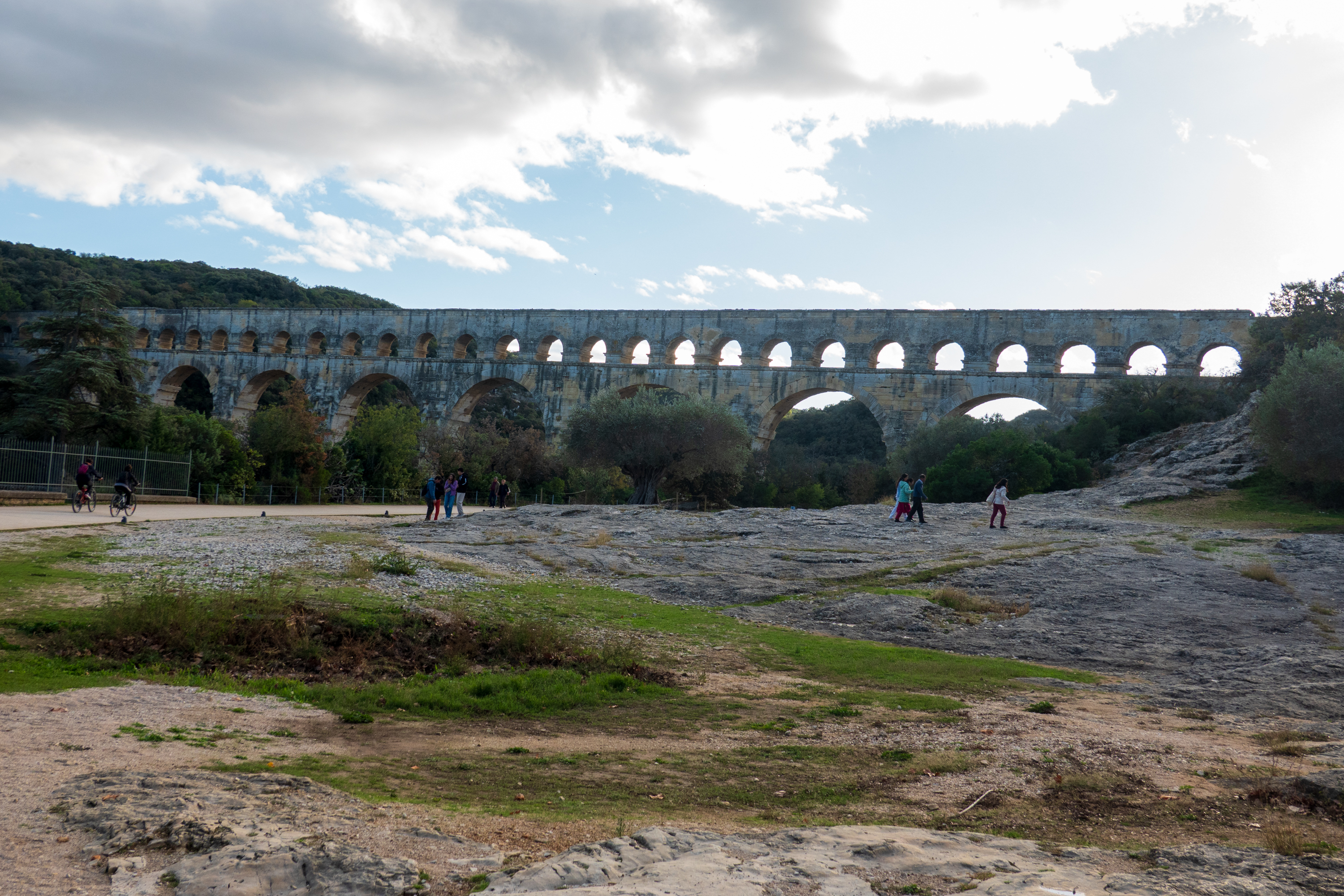
It is really quite amazing and includes a much later 18th century footbridge, which we of course crossed.
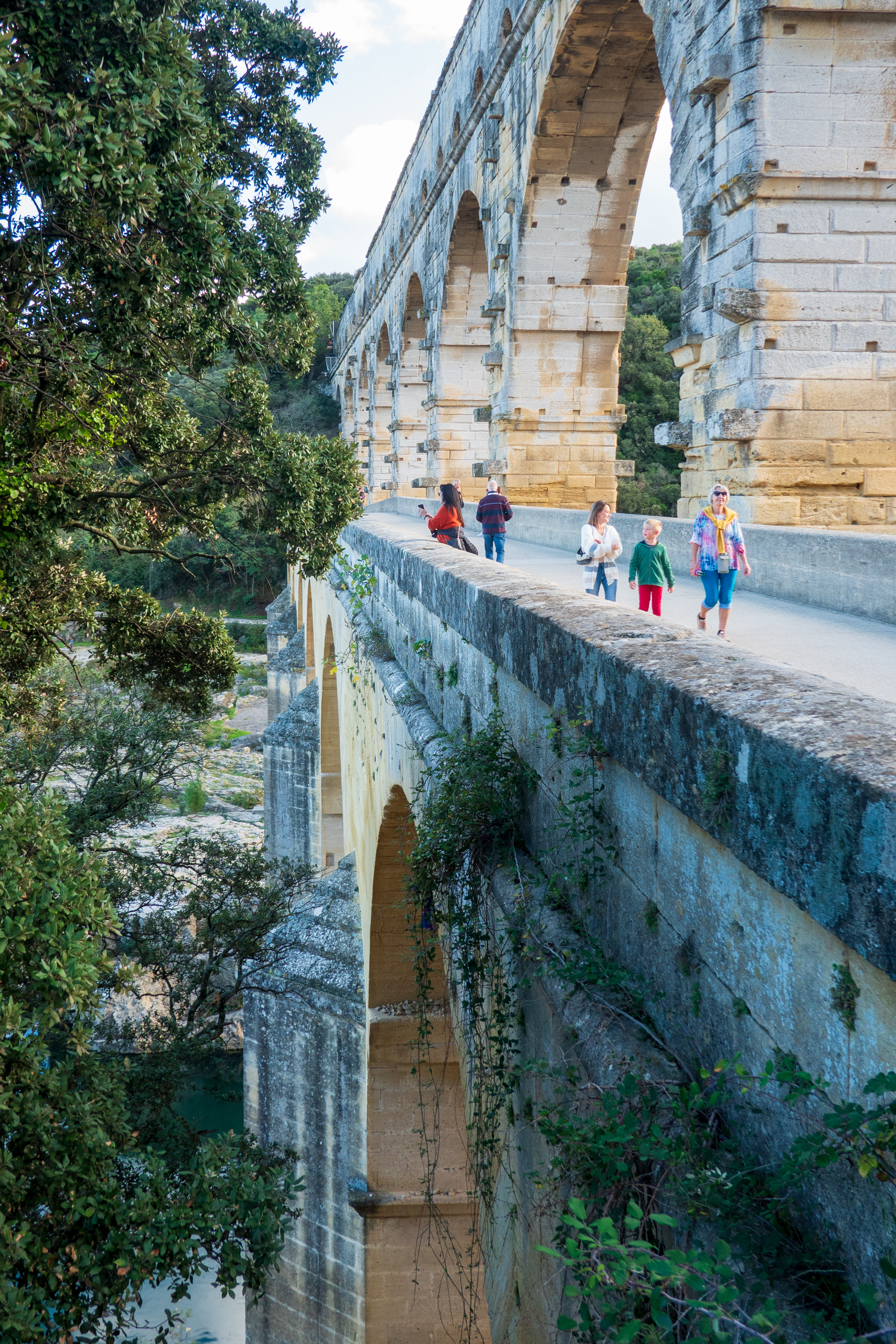
There were steps leading to the top from the northern bank of the river. Denise declined due to her sore ankle but Fred climbed to the top and took photos.
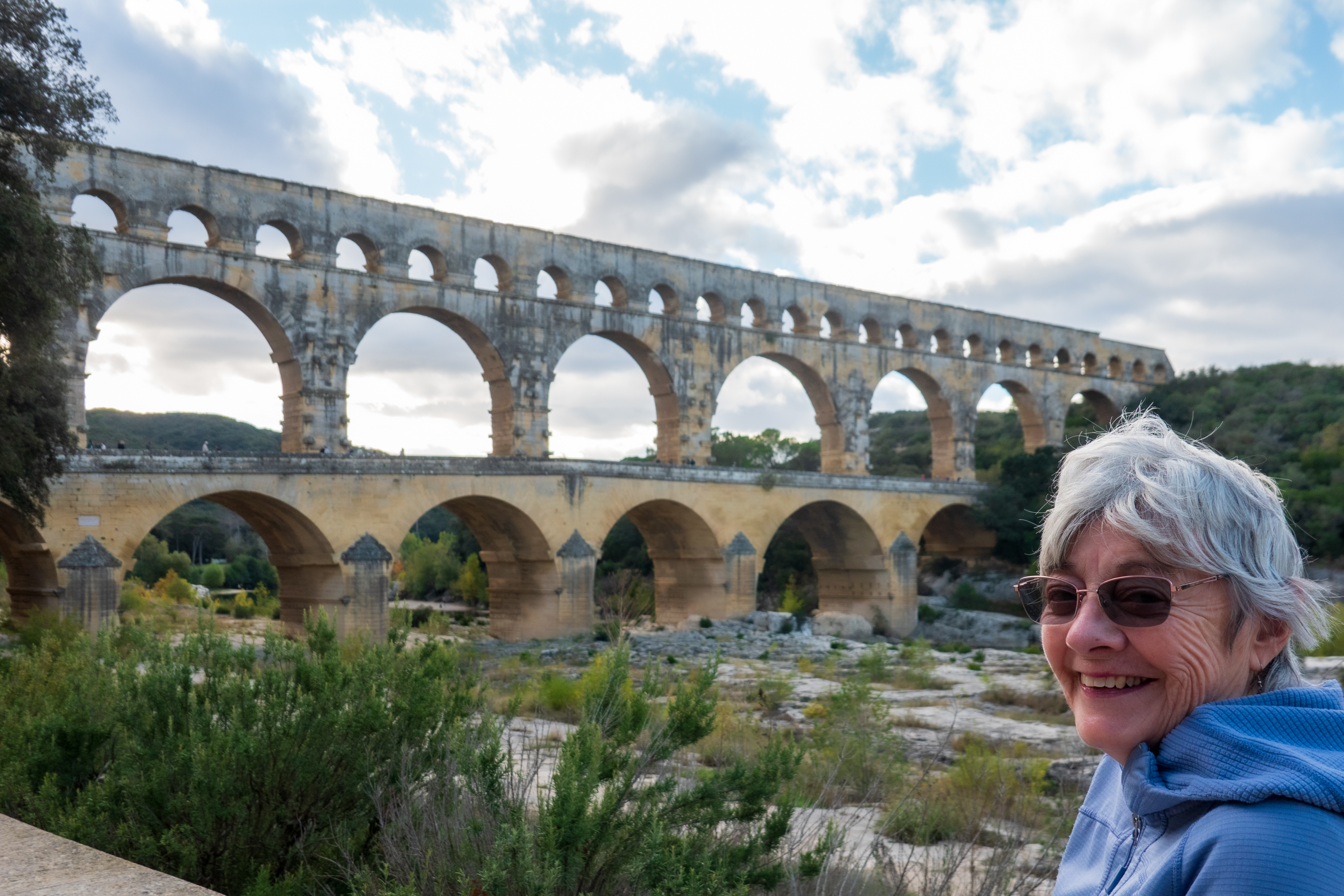
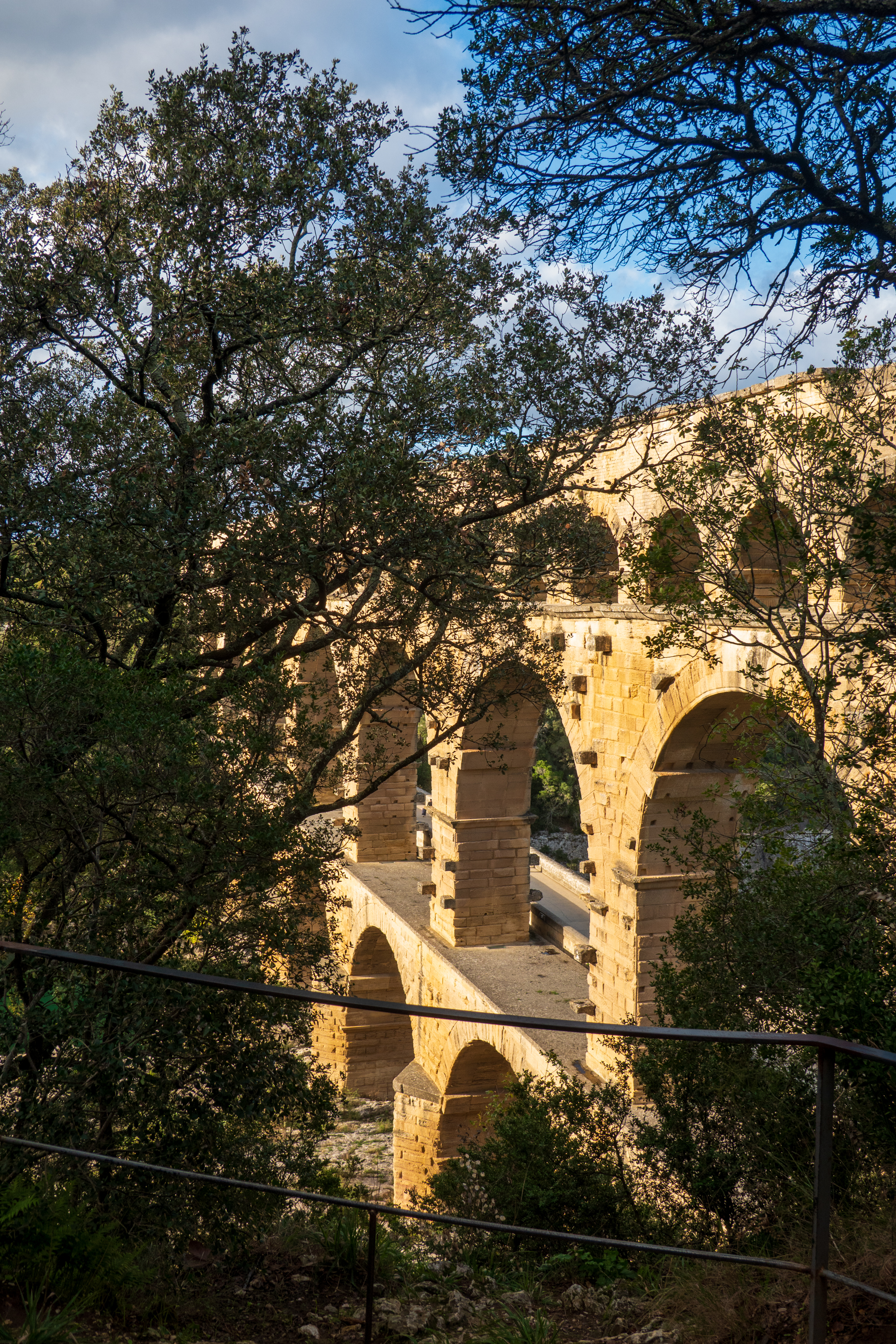
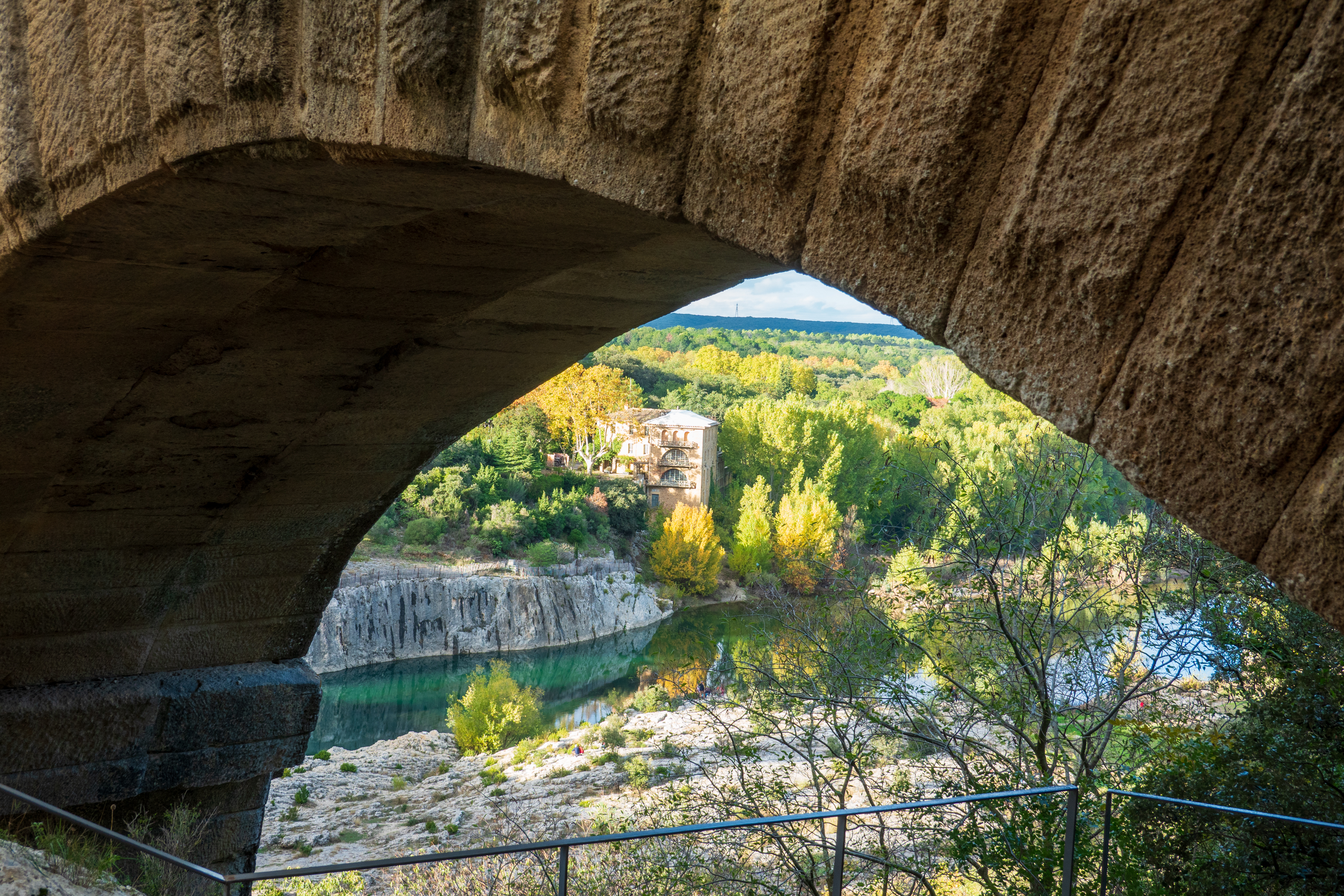
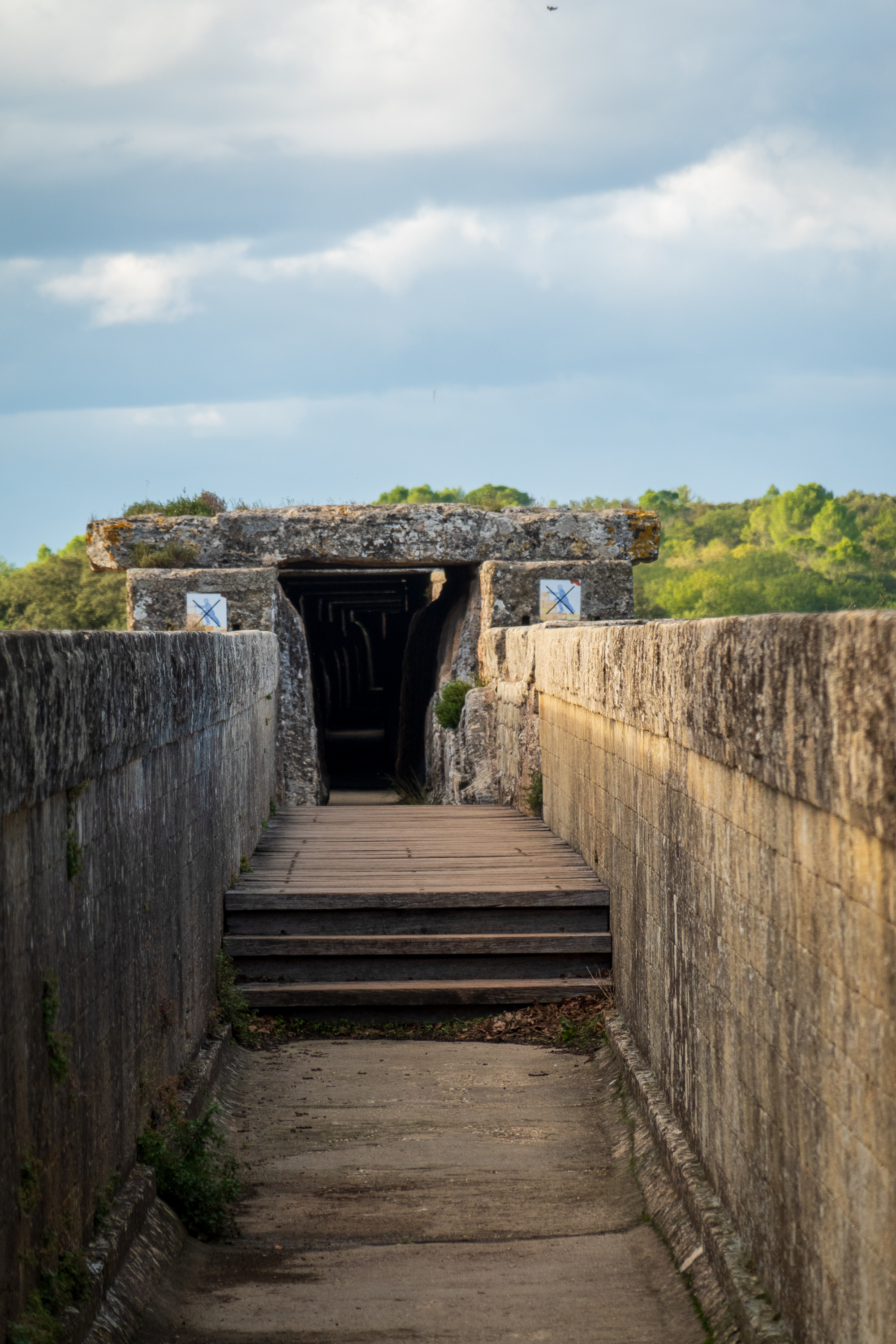
Evening was coming and it gets chilly fast, even in the south of France. So we stopped for hot chocolate and then headed back to the aire. You can read more about the Pont here: https://en.wikipedia.org/wiki/Pont_du_Gard (One of their better articles.)
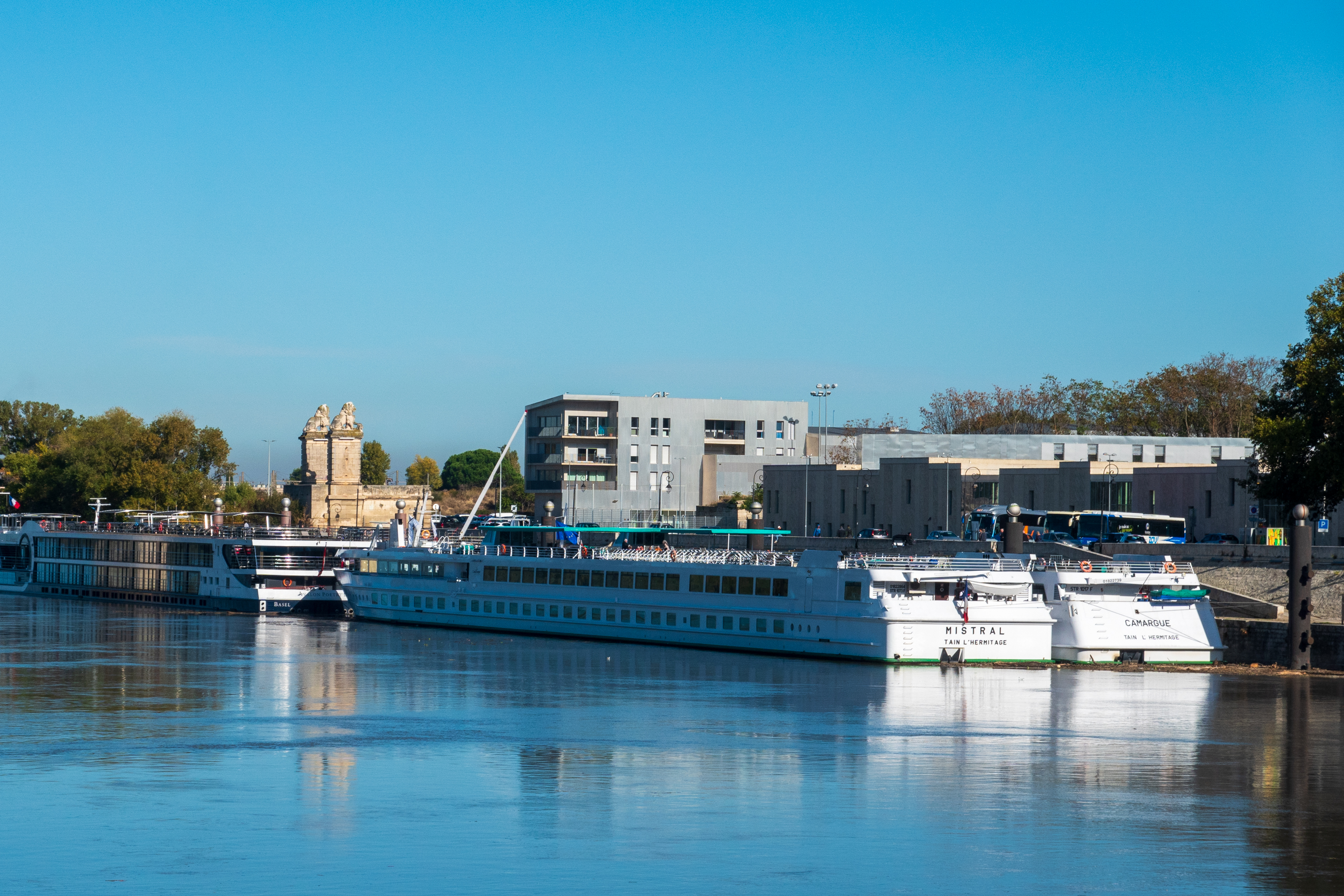
Our next planned visit was to Arles and we found an aire beside a marina and with good bus connections to Arles and Nimes. We were also becoming seriously worried about our leaks, so we took one day and went to Codognan to consult with a RV repair shop that specialized in leak control. (https://www.techniloisir.fr) He didn’t want to hear what we thought so as not to prejudice his own research. So we headed across the street to a lovely bakery for a coffee and goodies while we waited. He opined that the window was fine, but “It is raining in your camper.” We had serious leaks, just not at the window. We received valuable information but he had a line of camper vans waiting for repair so he could not work on our camper. (“It’s going to take a lot of work!” he predicted) SPOILER: Turned out that he was exactly right. But that is another post!
Back at our aire, we worked out the bus schedule and found the stop. Early one morning, we set off and thirty minutes later, we were in Arles.
We had a wonderful day. The Foundation Vincent Van Gogh was unfortunately closed due to a new art exhibit being prepared but we set out to explore.
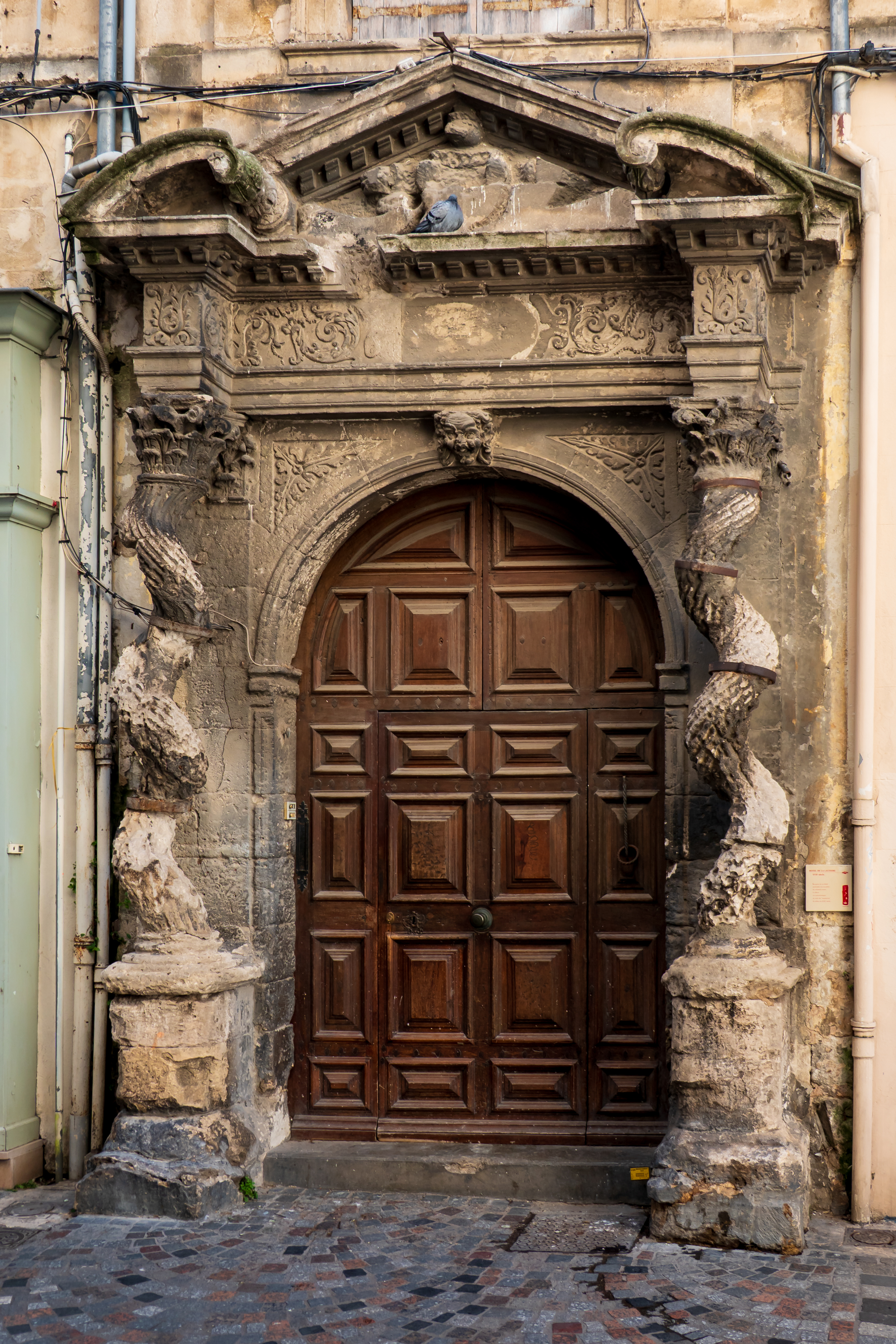

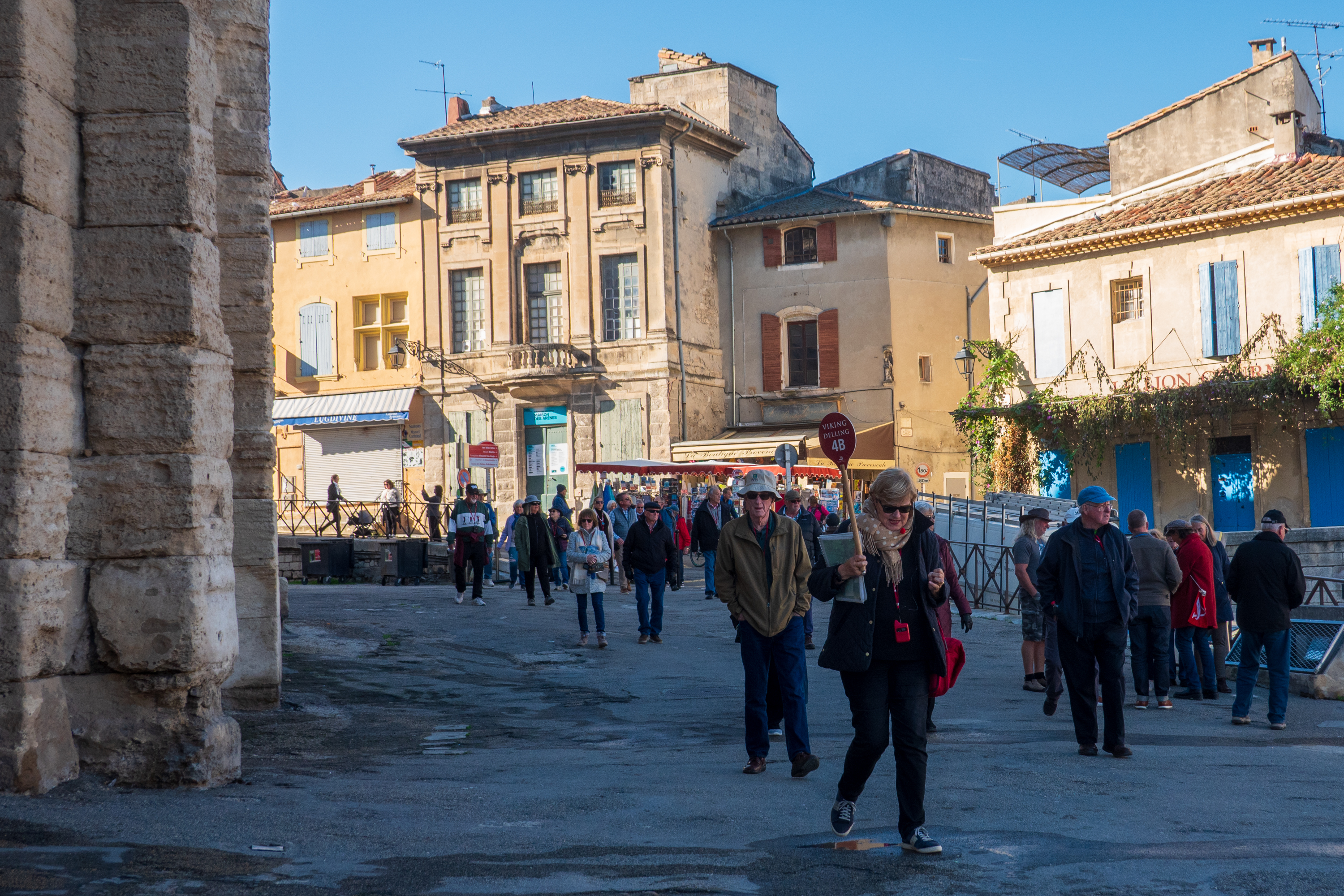
“Modern” Arles was wonderful, but there were lots of Roman ruins to see.

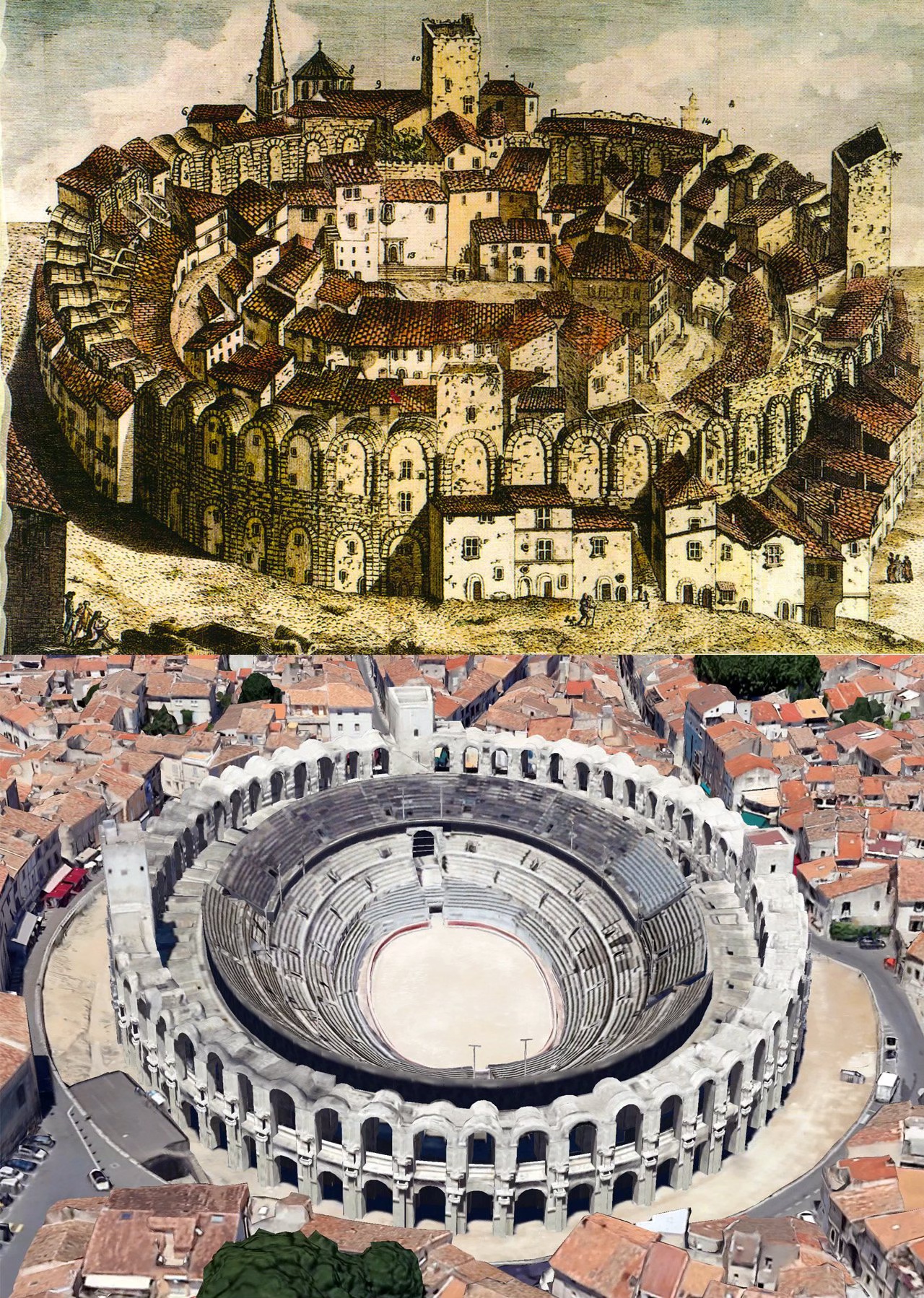
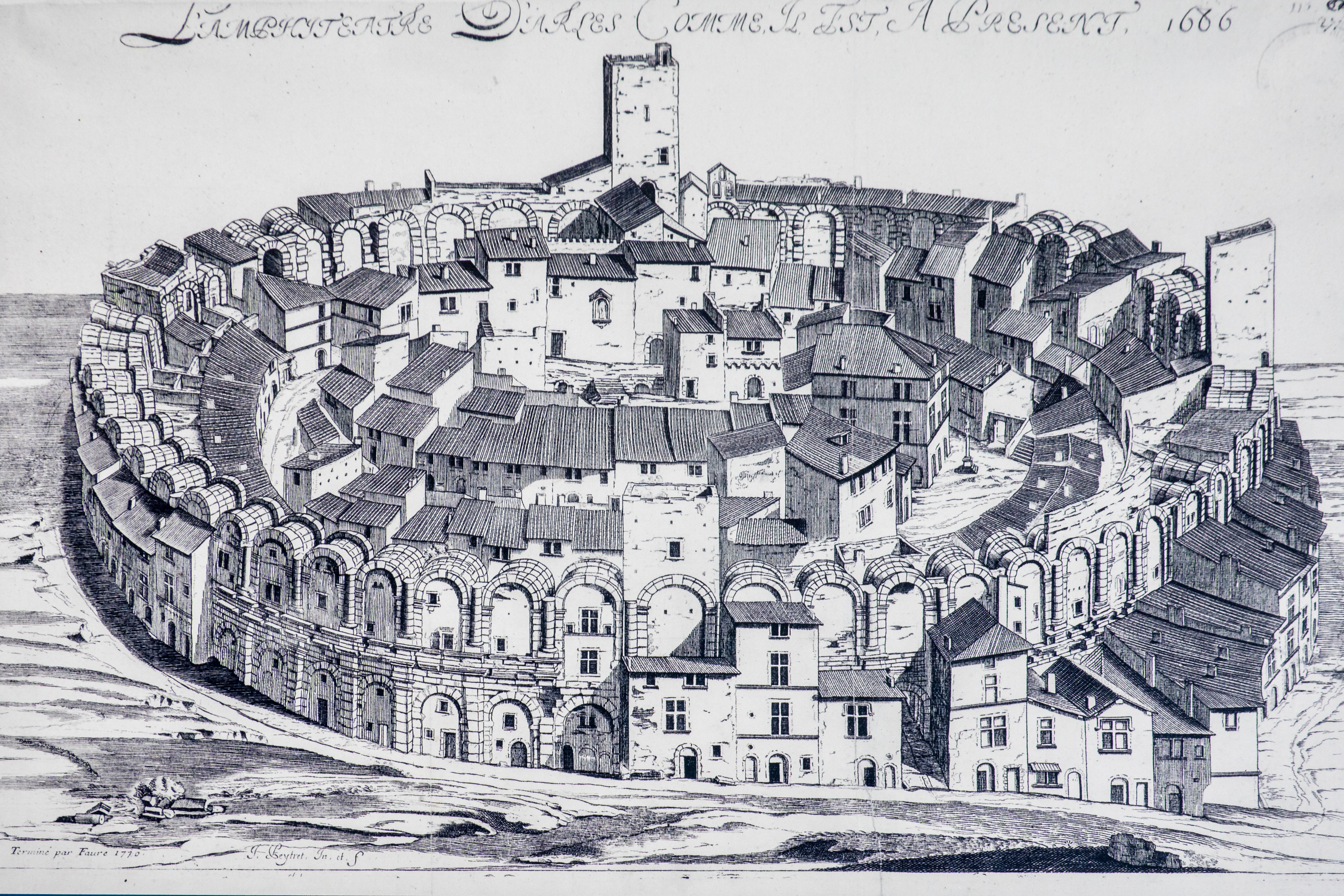
We started at the Roman Amphitheater, which is still in use. It even has new metal galleries added.
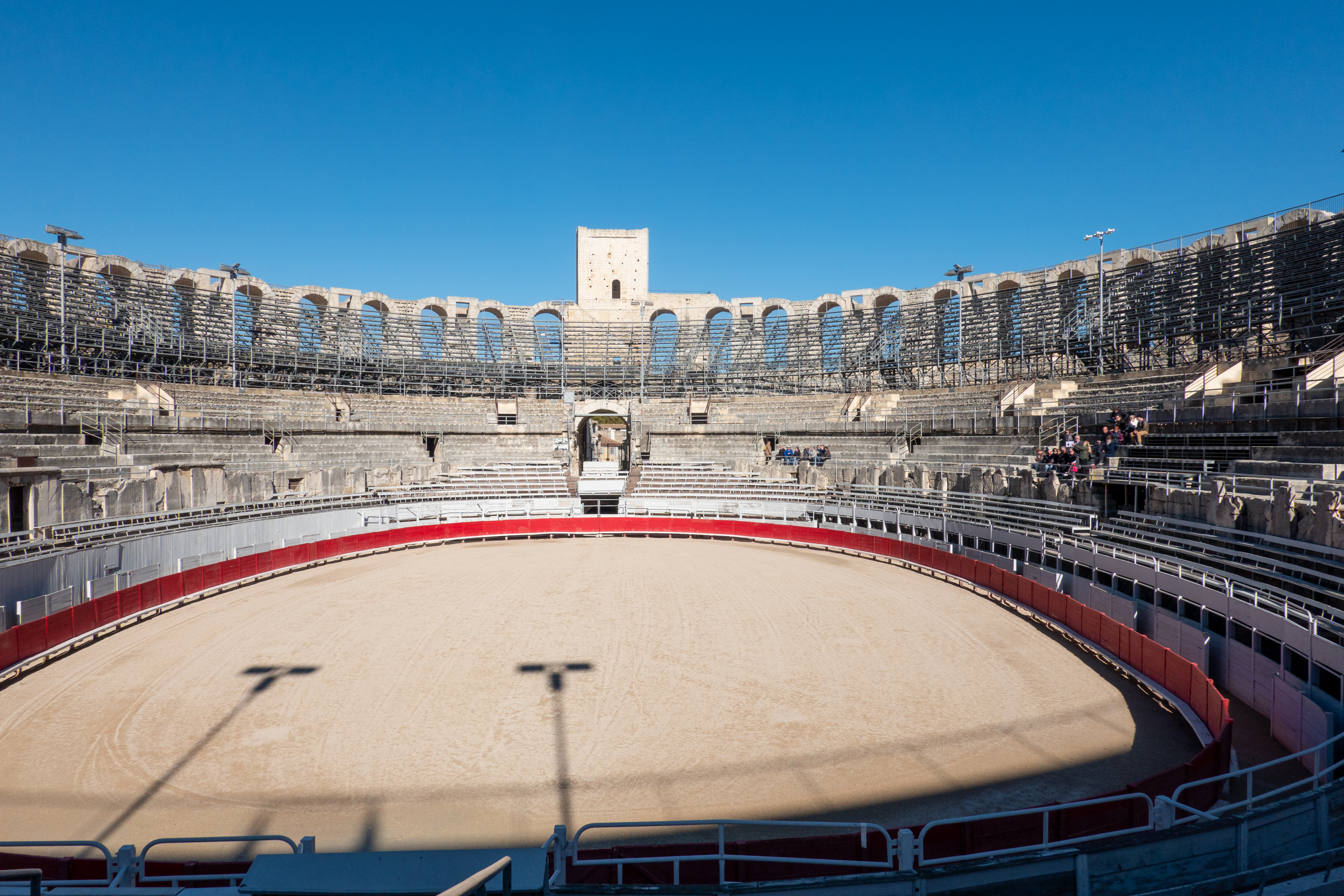
Quite amazing to imagine actually going to gladiatorial contest, or later, a bull fight here, sitting on the very seats used by the ancients. By the middle ages, it had became a veritable city as it was divided into houses.
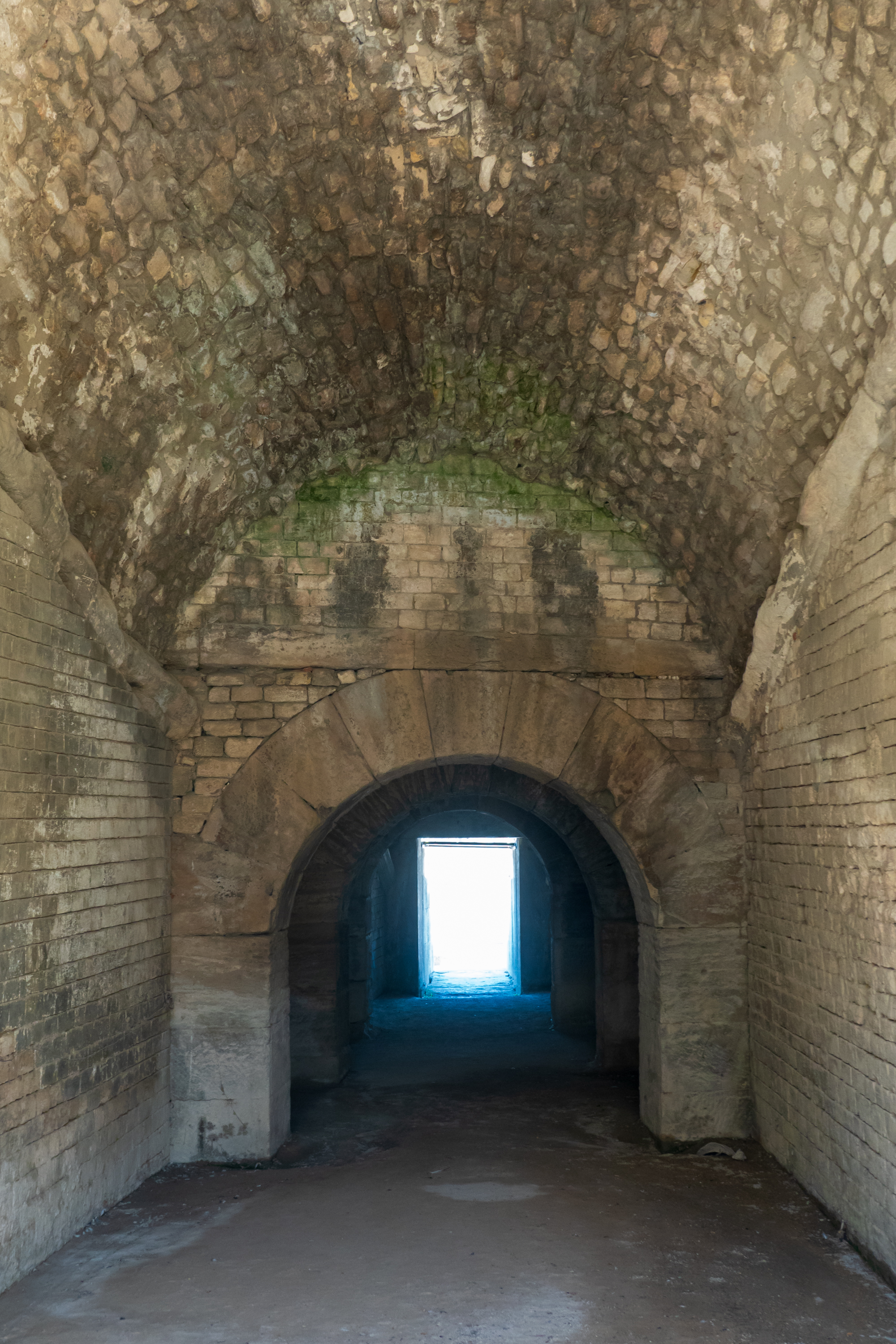
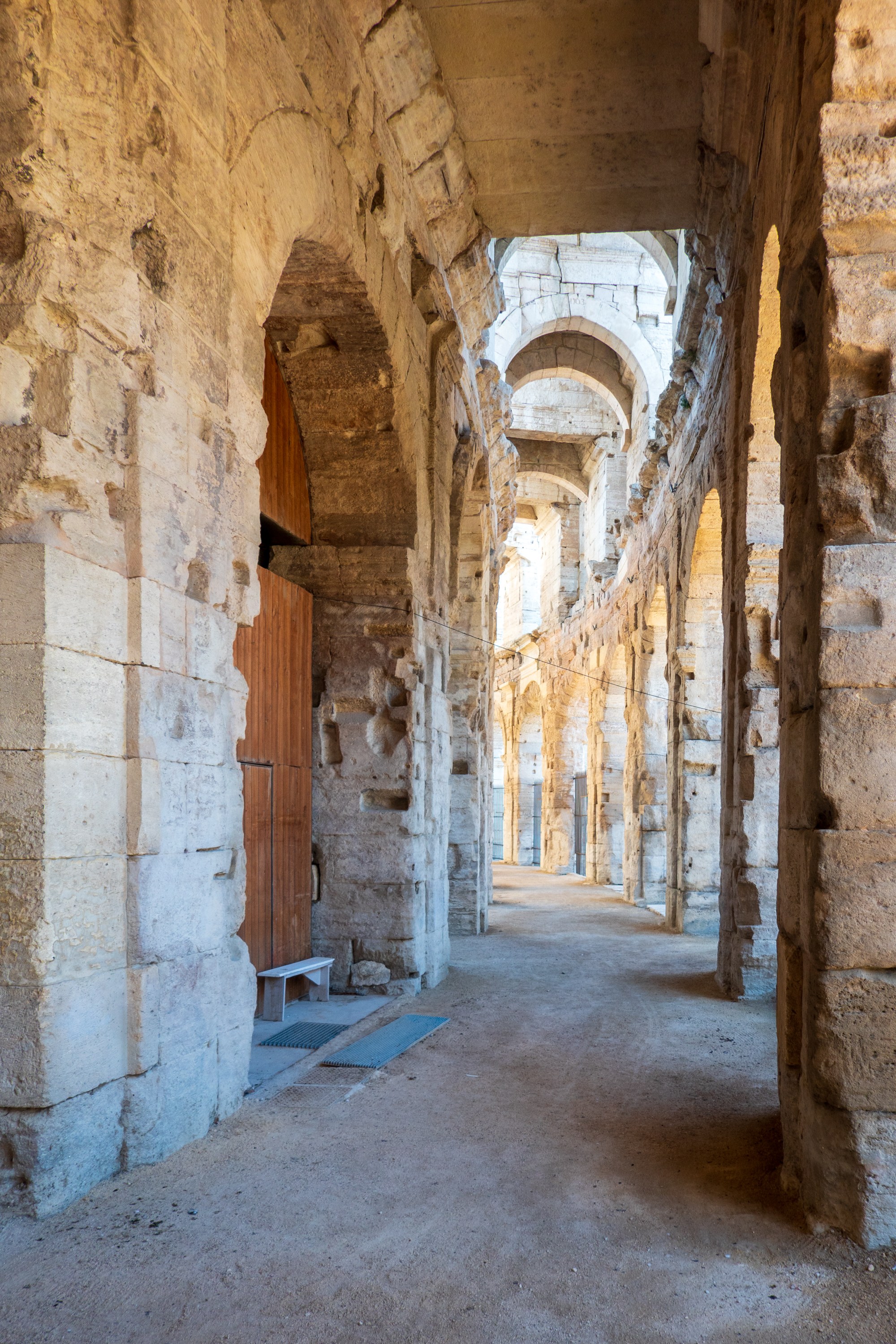

Our next stop was the Constantine Baths from the fourth century AD. Quite a lot of the hypocaust was still visible.
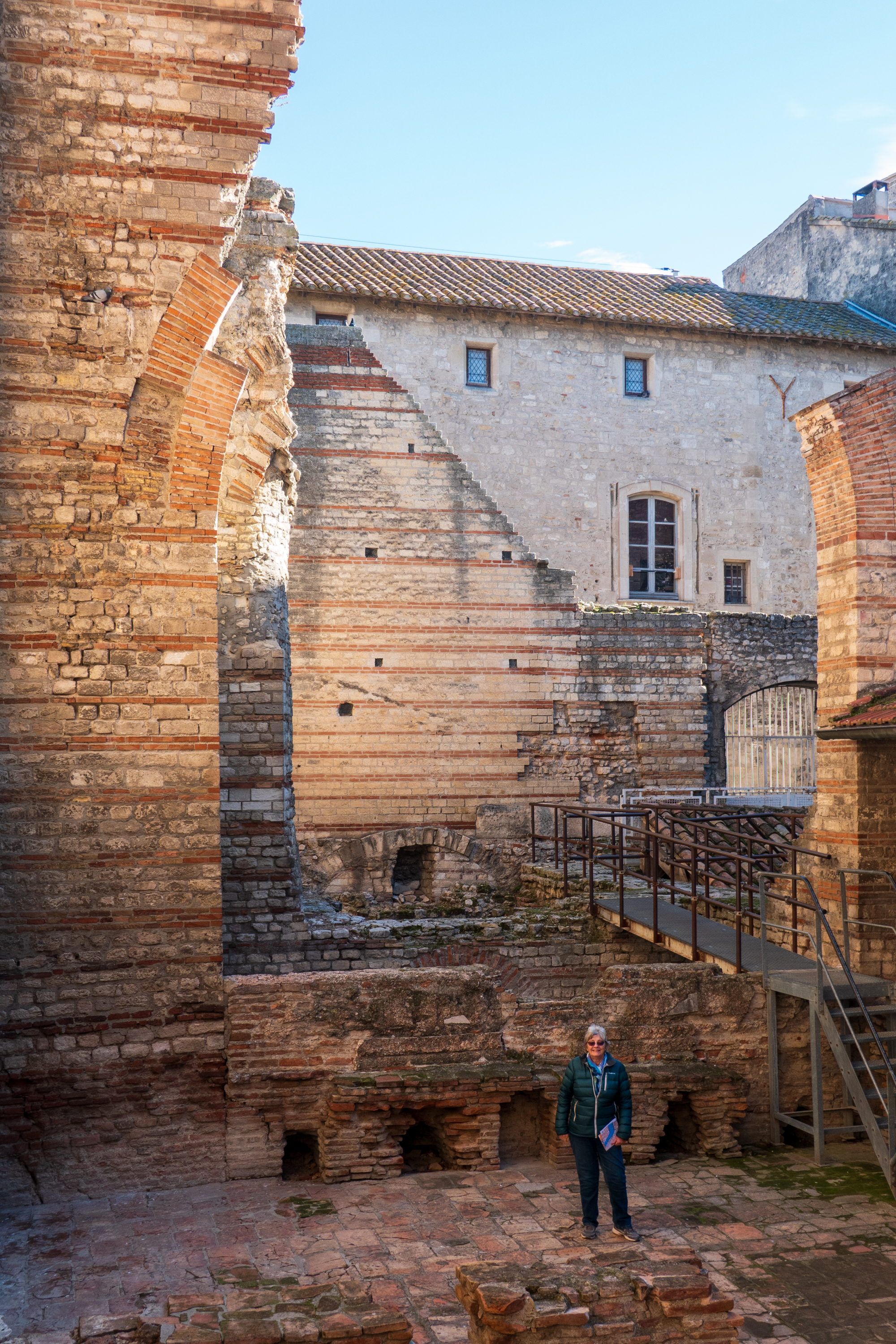
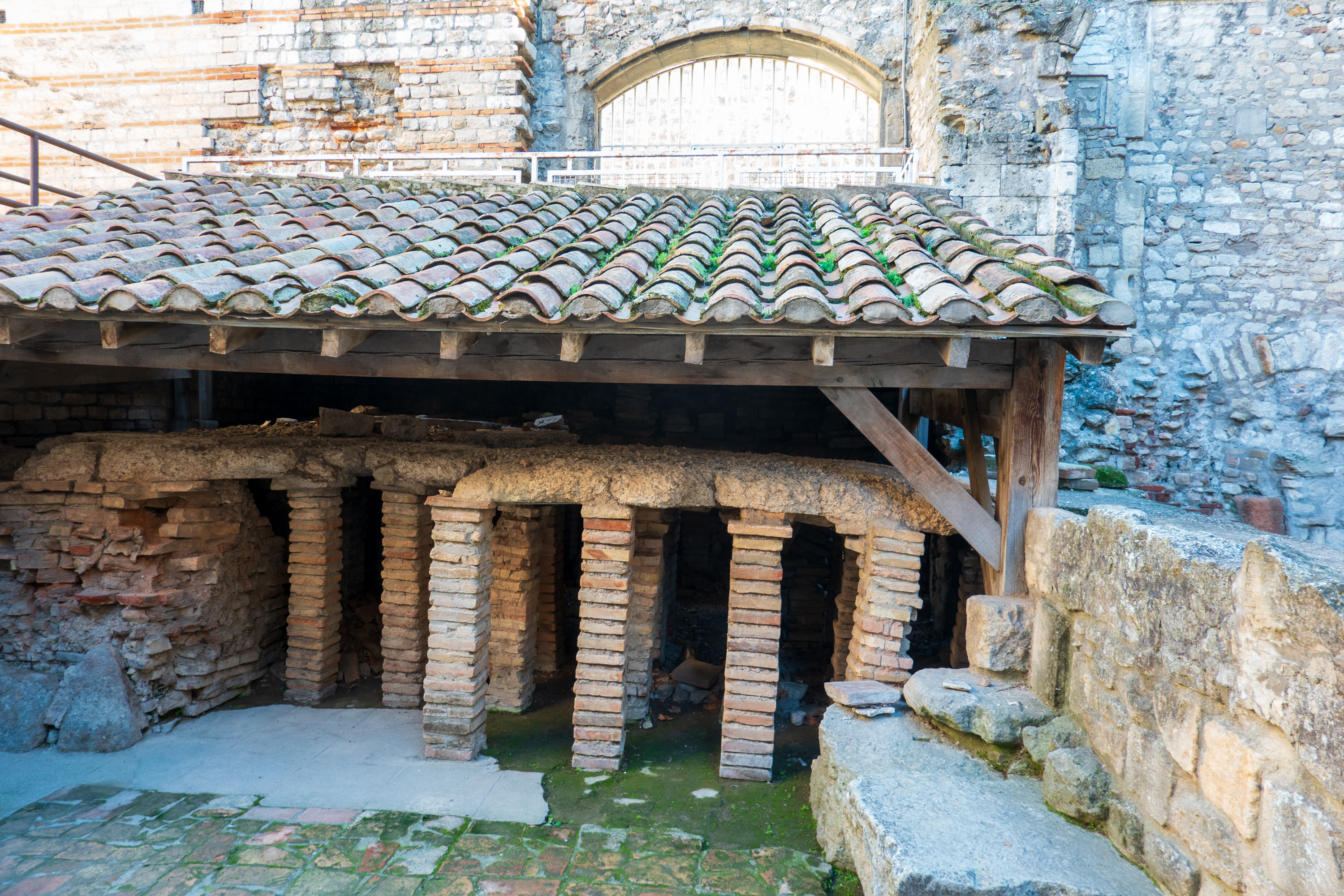

So much has been written on the wonderful engineering of Roman baths, hot and cold baths and underfloor heating. There is also a new theory that they could spread disease if the water was not changed often enough.
This particular structure was thought, for years, to have been a palace. It was only later, when excavated, that the plumbing was exposed.
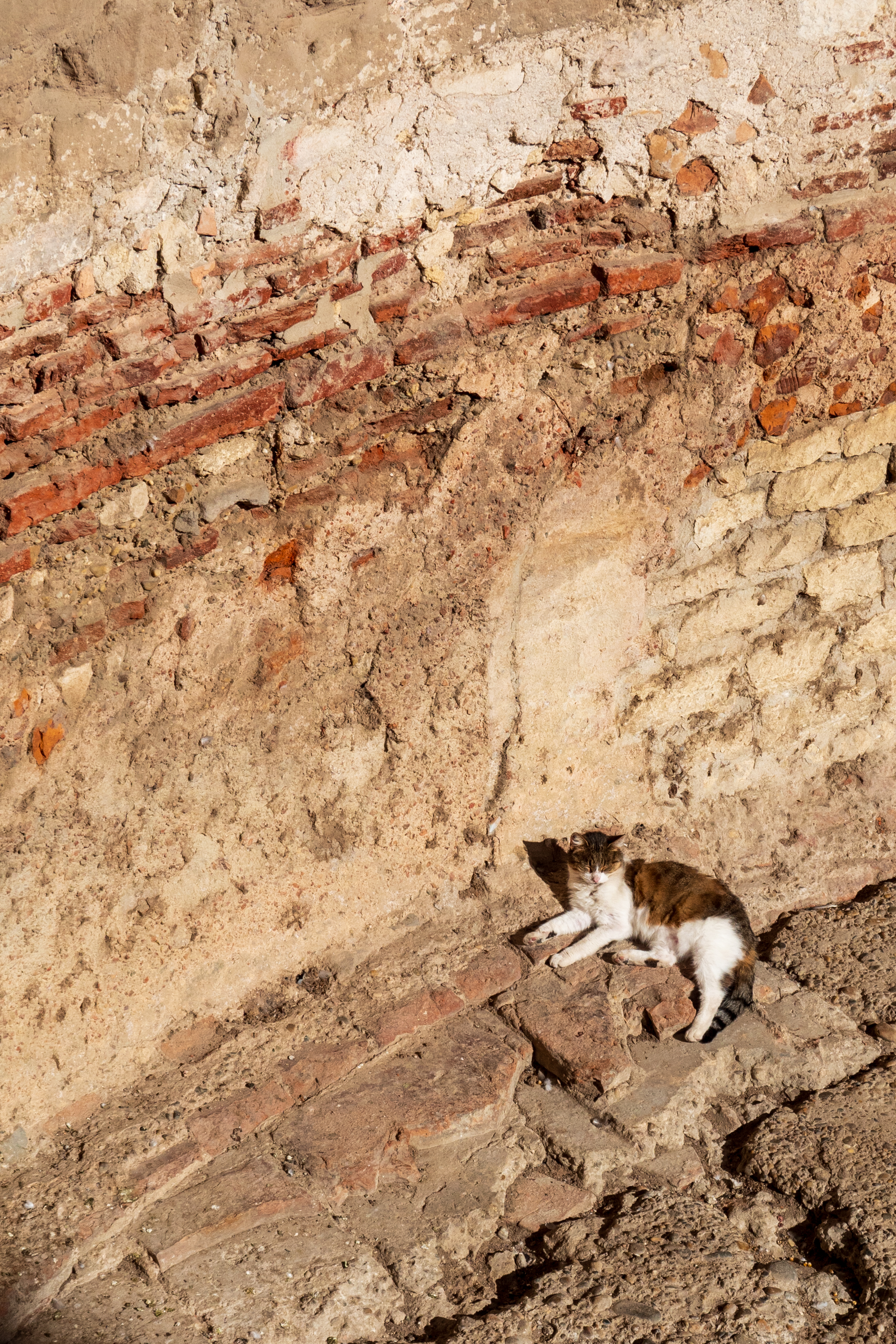
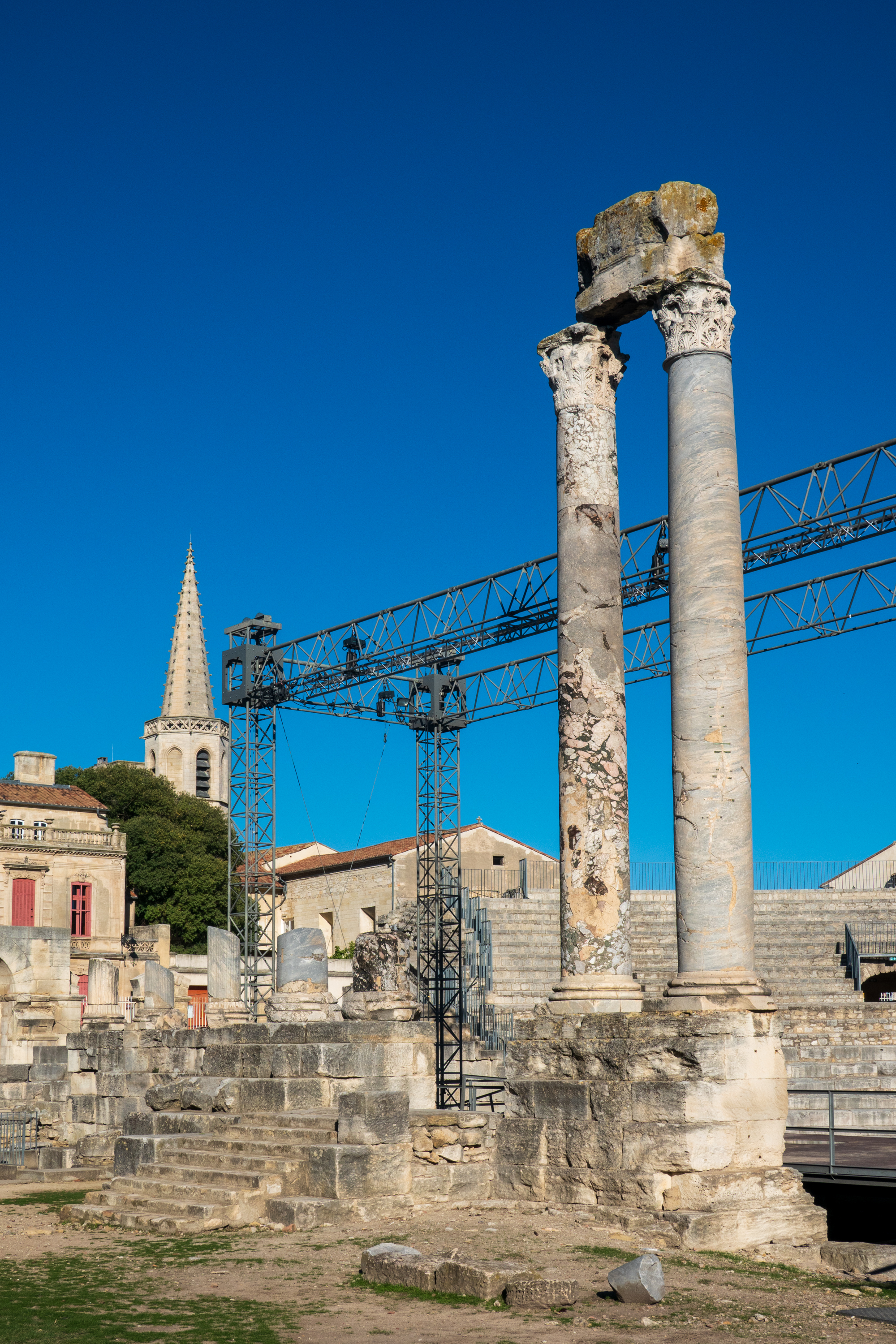
The Roman theatre is still in use as well. Leads to the anachronistic clash of ancient stone with modern lighting equipment.
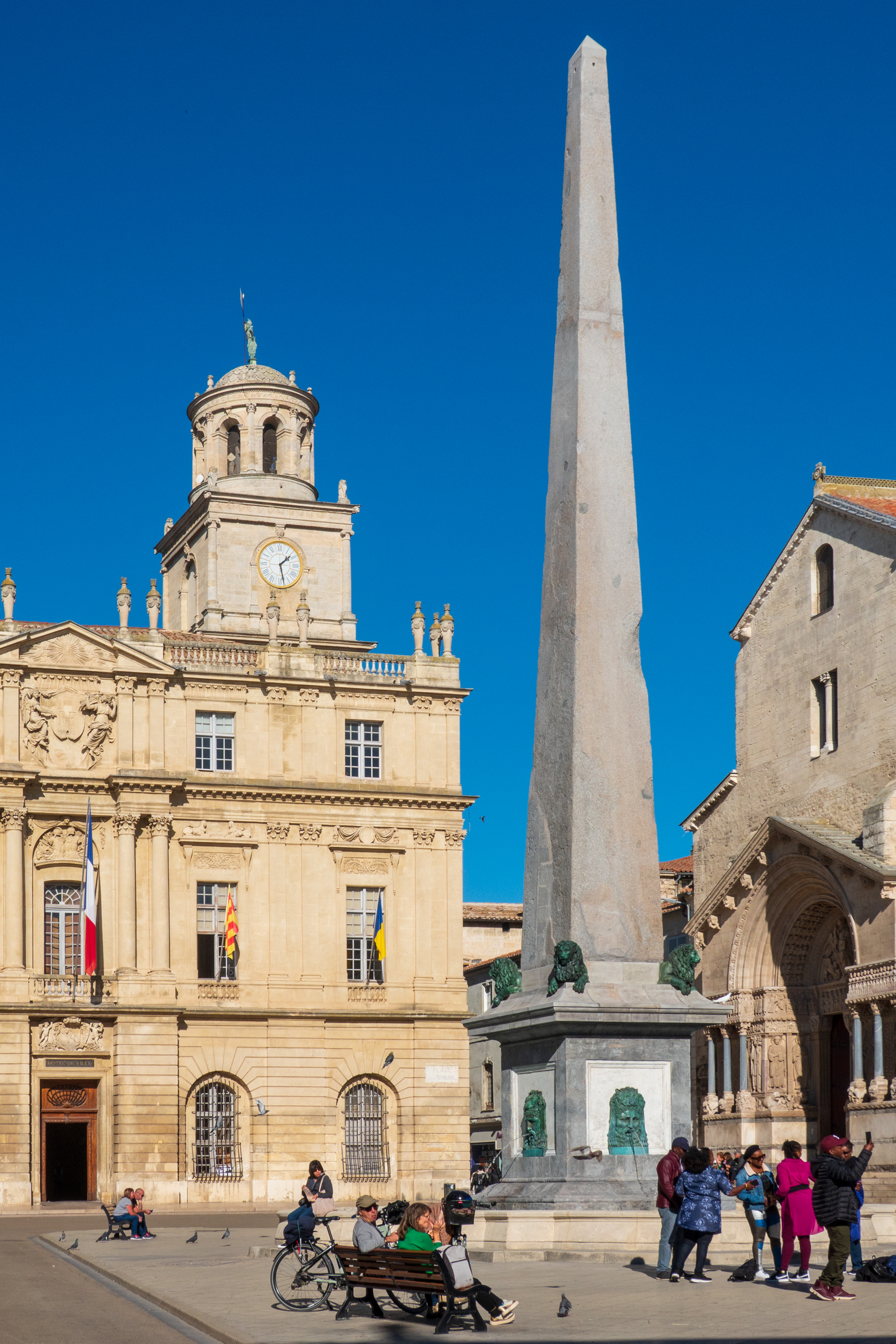
We stopped at the Place de la Republique with its Roman obelisk and also visited the Church of St. Trophime.

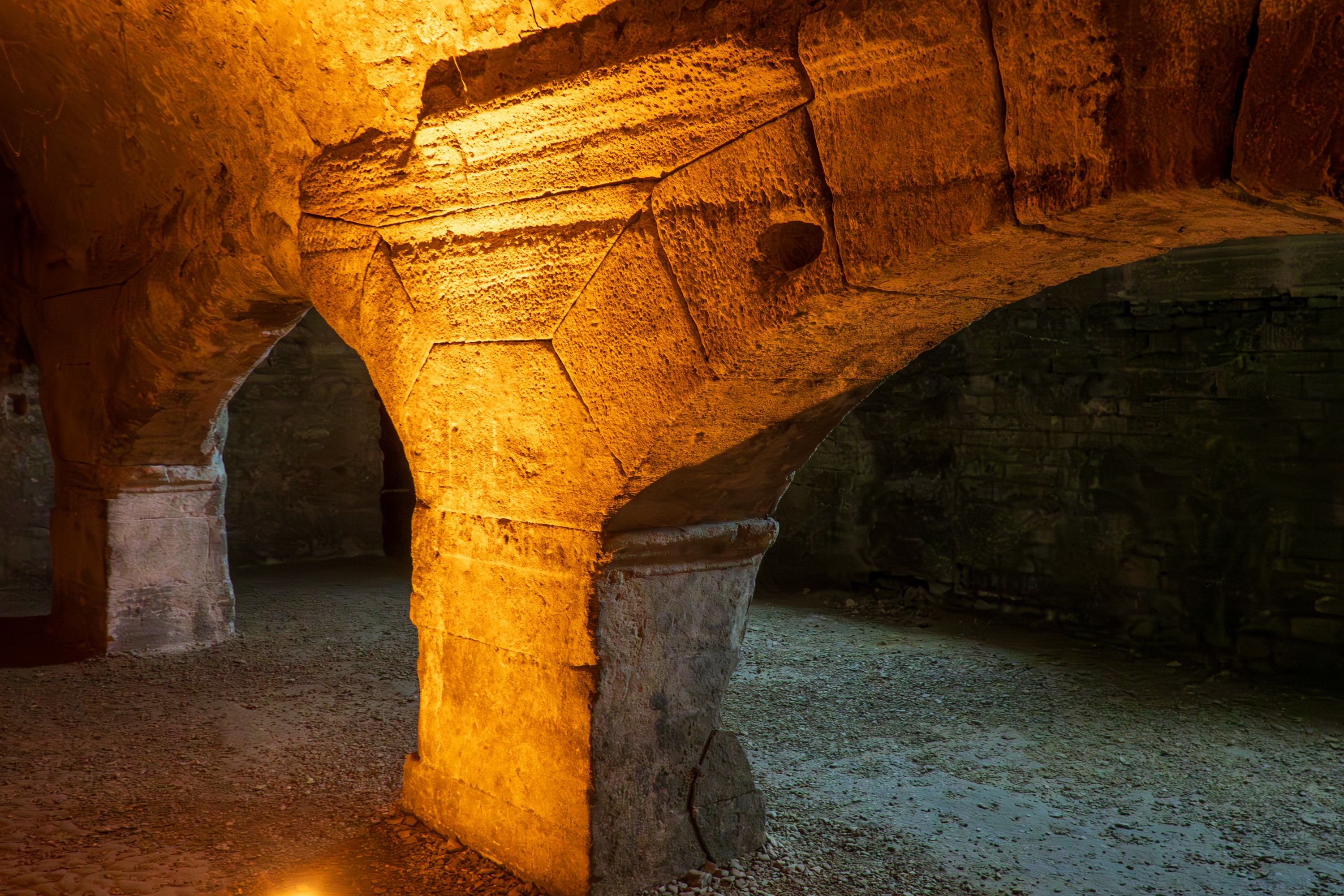
Perhaps the most interesting Roman site in Arles is the least known – the massive underground foundations of the old Roman forum, known as the cryptoporticus. (https://en.wikipedia.org/wiki/Cryptoporticus)

We had a wonderful lunch sitting outside in one of the squares, before hopping the bus back home.
 DiploStrat