We flew into Heathrow from Oslo and made our way to Yatton to pick up the camper for what may be the last time. The night we arrived, we enjoyed a wonderful dinner with some old friends who made the effort to come down from Bristol and see us in our hotel. It was a joy to see them after too many years. The next morning we had a ride to the camper with the owner of the storage lot, Motorhome Matt. (https://www.motorhomematt.co.uk) Matt has truly given us service above and beyond. Then after loading everything up we set out for Chichester and Denise’s brother’s house.
Denise’s sister took us on the rounds of the stores to stock the camper. She also organized an excellent family lunch and get together in amazingly good weather for England in early March. Fred even washed the truck!
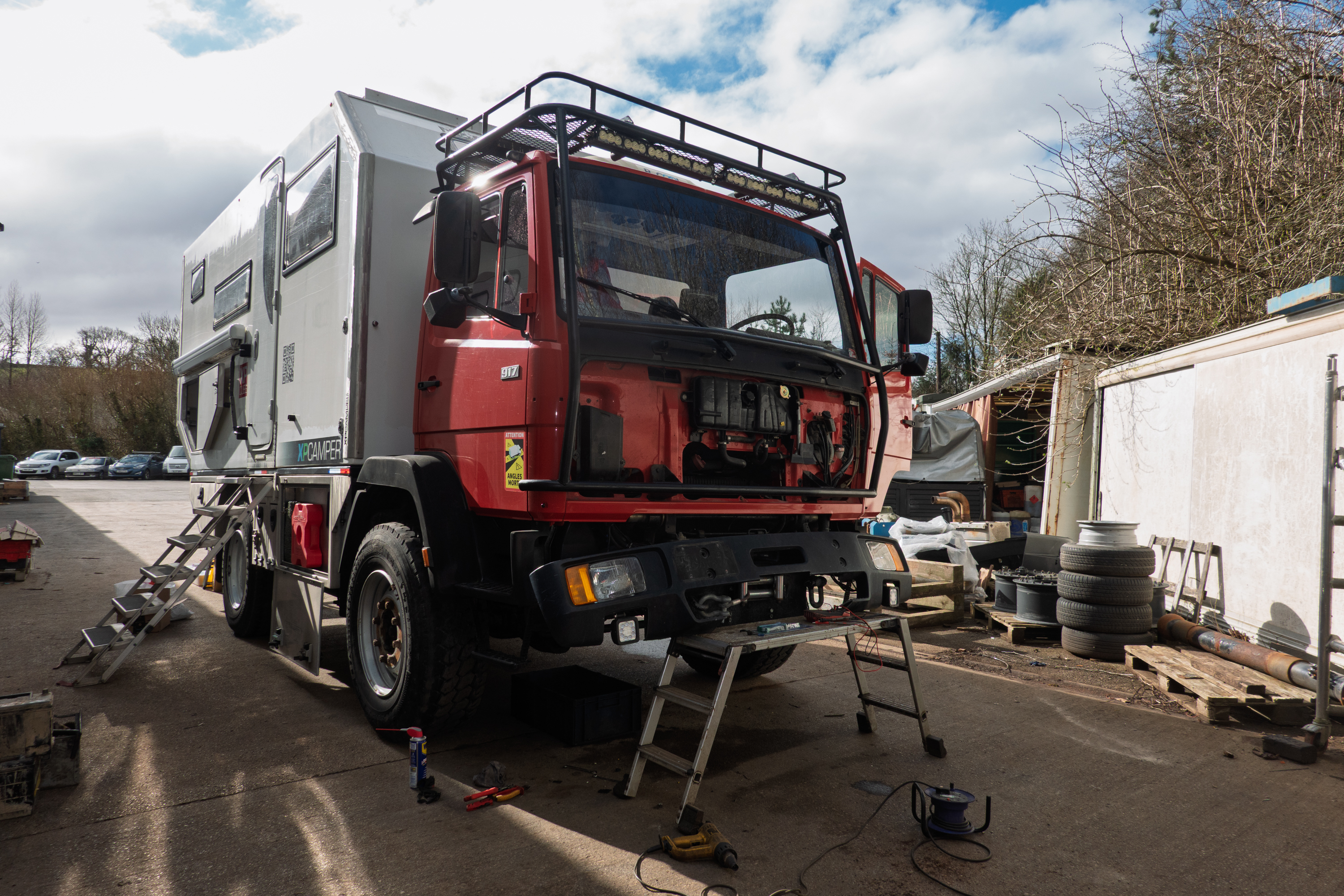
After a great weekend we set out for the north and the annual visit to Atkinson Vos. There were a number of issues to address, including the installation of new headlights as ours had drowned in the constant rain of the previous winter storage.
Say “Ahhh!”
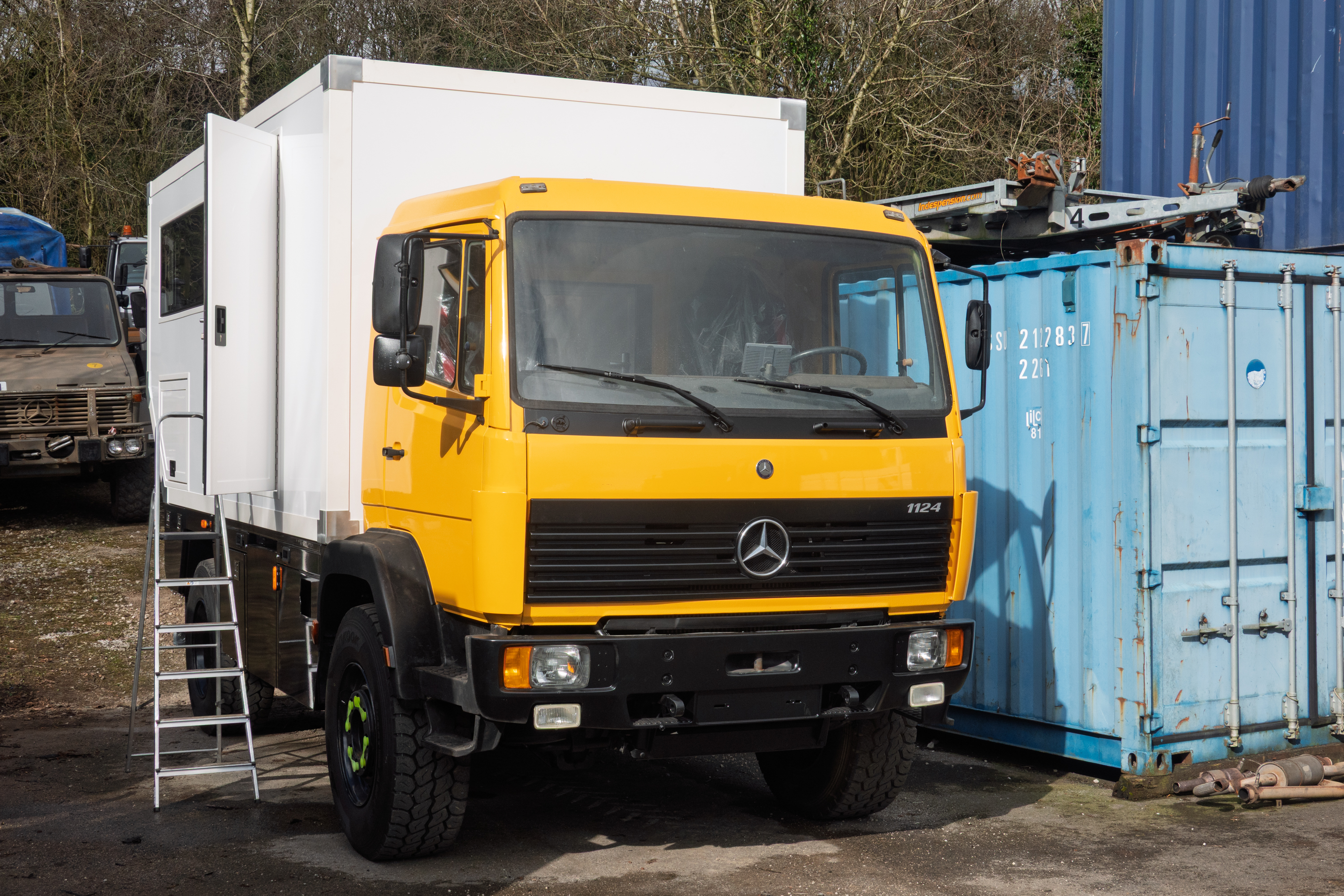
A twin of our truck, under construction.
Denise and the chicas, errr, Yorkshire lasses of Atkinson Vos.
Real people don’t get misty eyed at the prospect of not returning to a garage, but Atkinson Vos have simply been wonderful. It is hard to imagine that we will probably not be back.
Soon, all was accomplished and we headed south to spend time with an old friend from Botswana, in Glossop in the Derbyshire Peaks. Each time we cross the moors in Yorkshire, the Peaks in Derbyshire or the South Downs, we are reminded how beautiful England is.
Next stop was Mansfield for servicing of the Webasto Dual Top. We were welcomed back like old friends. They replaced some pieces and we learned that our Dual Top had the worst encrustation of lime scale that they had ever seen! Fred made a run to a near by store for a case of descaling solution.
And then it was on, to Derby, where we stopped at a wonderful Mercedes Benz truck dealership to try to get a front end alignment. Unfortunately, this could not be done, as we need a new part which is unavailable anywhere in Europe as it is obsolete. Amazingly, the dealership refused any payment. We did persuade them to accept a bottle of firewater – for their Christmas Party. Fred is working the part problem. We shall eventually solve it but it may take a while. As our Belgian supplier noted, “We have over 60,000 MAN and Mercedes Benz parts, but we ain’t got that one!” (Liberal, idiomatic translation.) While the truck was on the rack, we made a walking visit to our first UK Costco, about a mile away. Truly wild to compare and contrast with a US Costco! The real challenge was getting all of our purchases into our shopping bags and then carrying them the mile back to the truck. Many rest stops were required!
Our next stop after Derby was Havant, near Portsmouth, back in the south of England. Amazingly Denise could attend an informal annual reunion with the girls from her year of the Northern Grammar School for Girls in Portsmouth. She had left the school in 1966 to go to Australia, where her father had been assigned with the Royal Navy.
Denise with the ladies
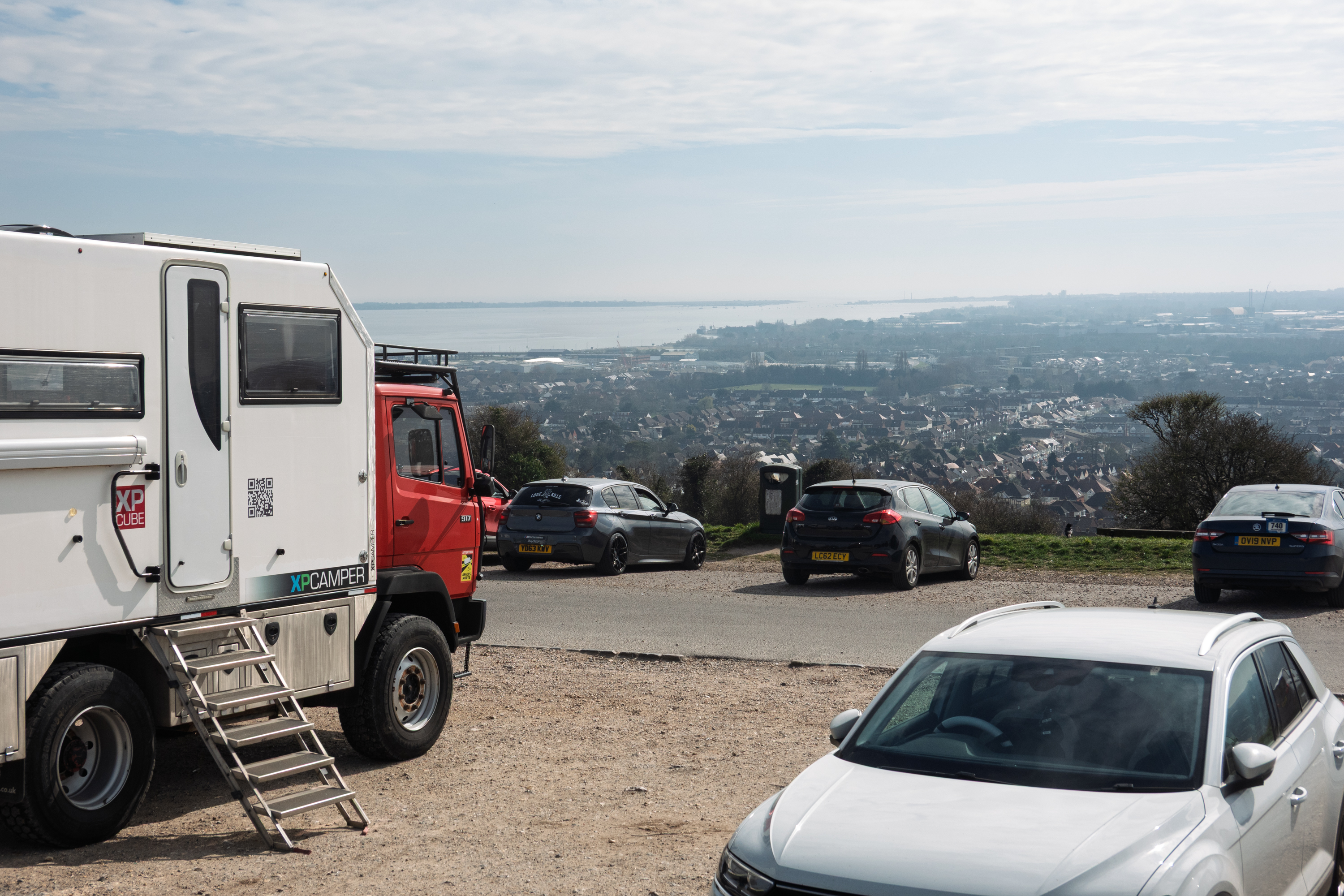
Denise was surprised how many of the ladies remembered her and she had a wonderful time. As there was no place to park at the pub, Fred passed the time on a scenic overlook on Portsdown Hill, watching for French invaders.
No French invaders today.
We then headed on to visit Denise’s sister and brother in law in Kingsfold, in West Sussex. We all went for dinner at the local pub, which let us camp for the night. Another great evening! The next day we headed to the coast and took the Shuttle to Calais. First stop was the Cite de L’Europe for a shopping expedition at the monster Carrefour! Always a happy place!
The larders stocked with French goodies, we headed out to an aire we had located in the town of Aire-sur-la-Lys. This turned out to be a municipal aire, run by the town, and right beside a canal basin full of boats. (Seems like a joke – we stayed at an aire in Aire.)
Denise buying more veggies from a couple making the round of the aire.
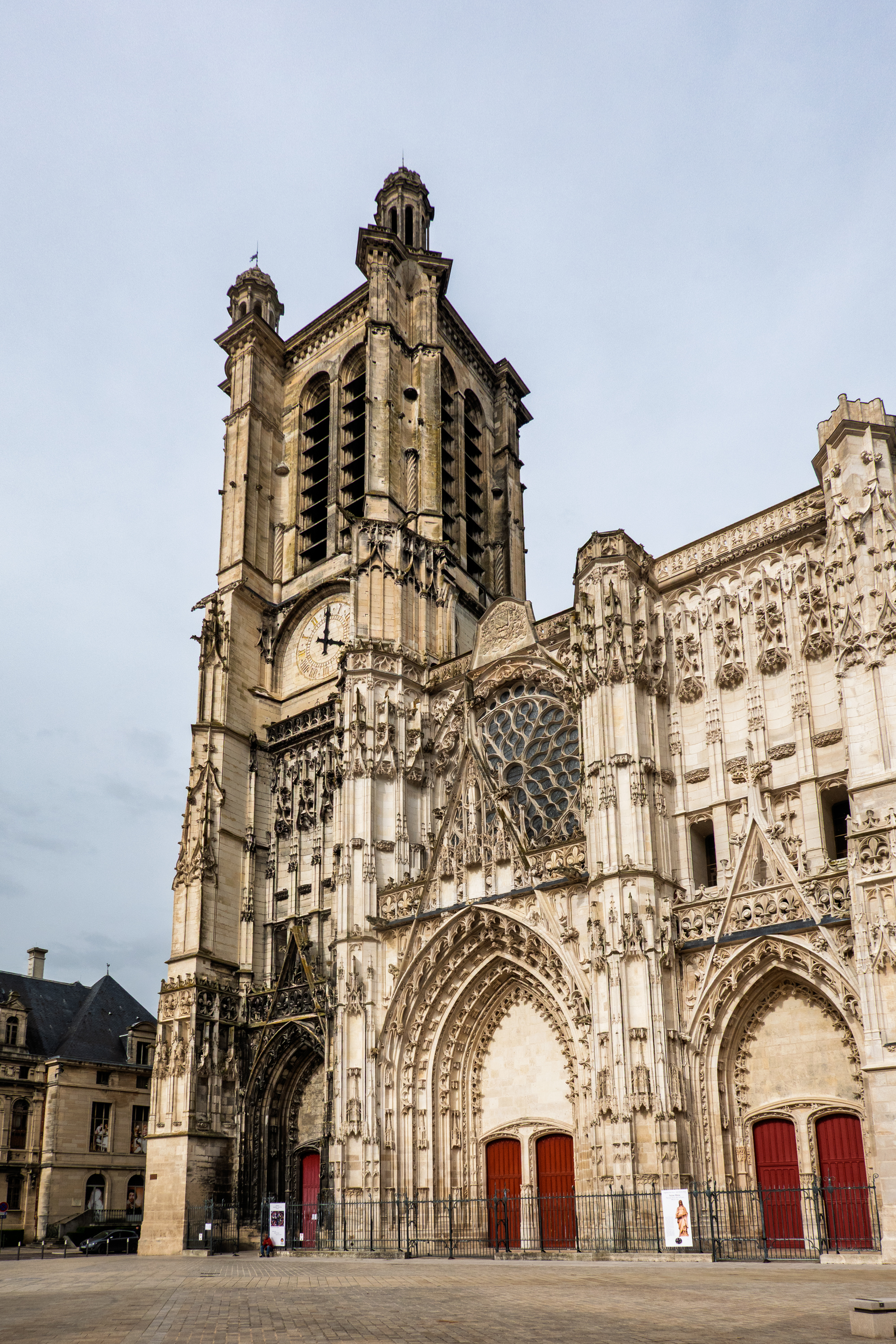
Quite lovely and we could have stayed longer, but we set off the next day and stopped at Troyes. We arrived in time for a walk into town.
Settling in for the night.
As in many other places in France, it is clear that the French remember and appreciate the US contribution to the liberation.
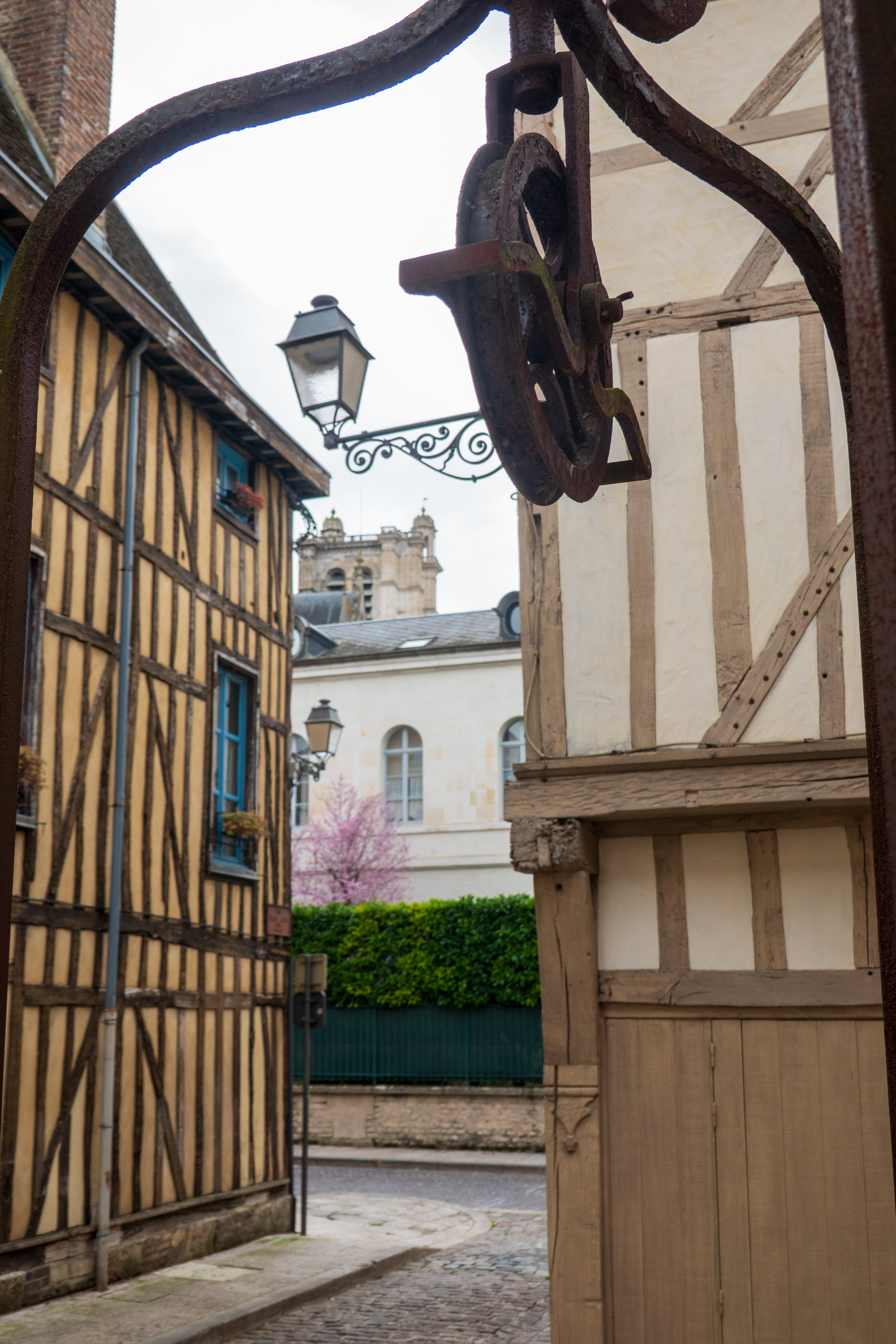
Troyes had been recommended as a quaint place, famous for its very English looking half-timbered buildings. (https://en.wikipedia.org/wiki/Troyes) Denise has a talent for finding lesser known places to stop.
Yes, this is really Fance, not England.
A whole town of houses from the 14th and 15th centuries, some of which had fallen down, some of which were half way there, and some of which looked like they had been built yesterday.
Less than inspiring!This column was simply a monster.
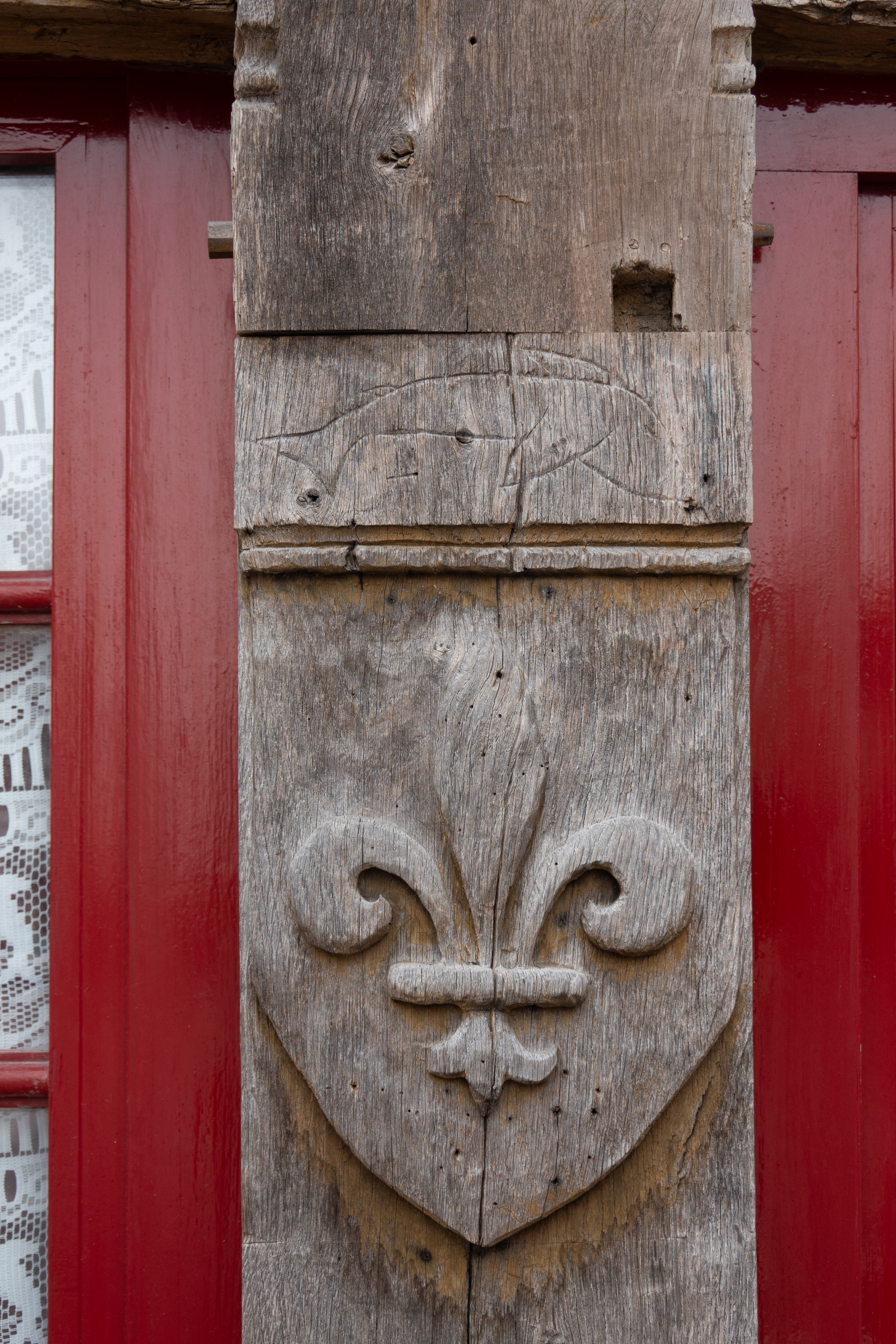
Fleur de lys and the dauphin.
Some of the buildings had notations.
Vendor of Blackthorne fire water.
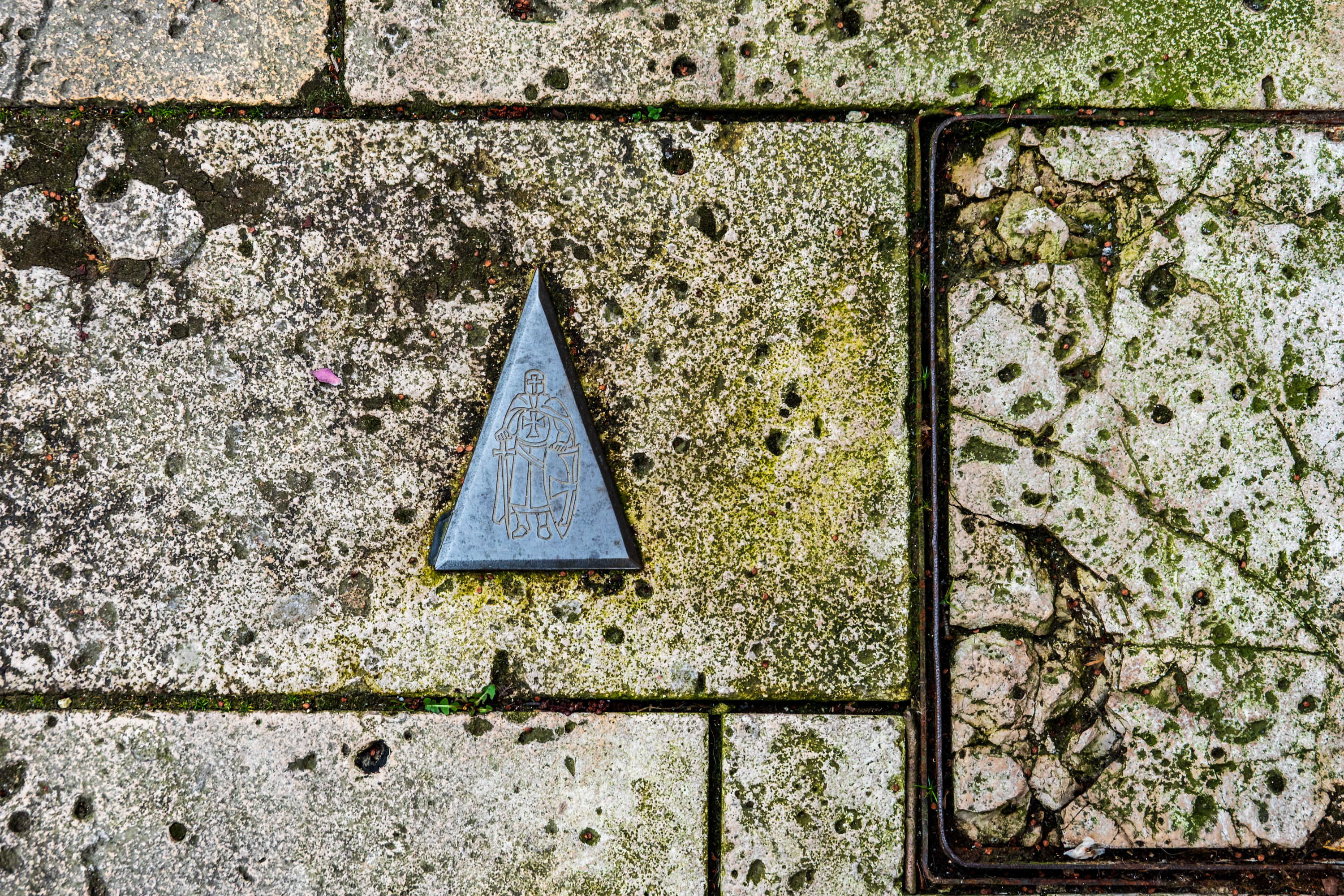
There were pilgrim markers all over town.
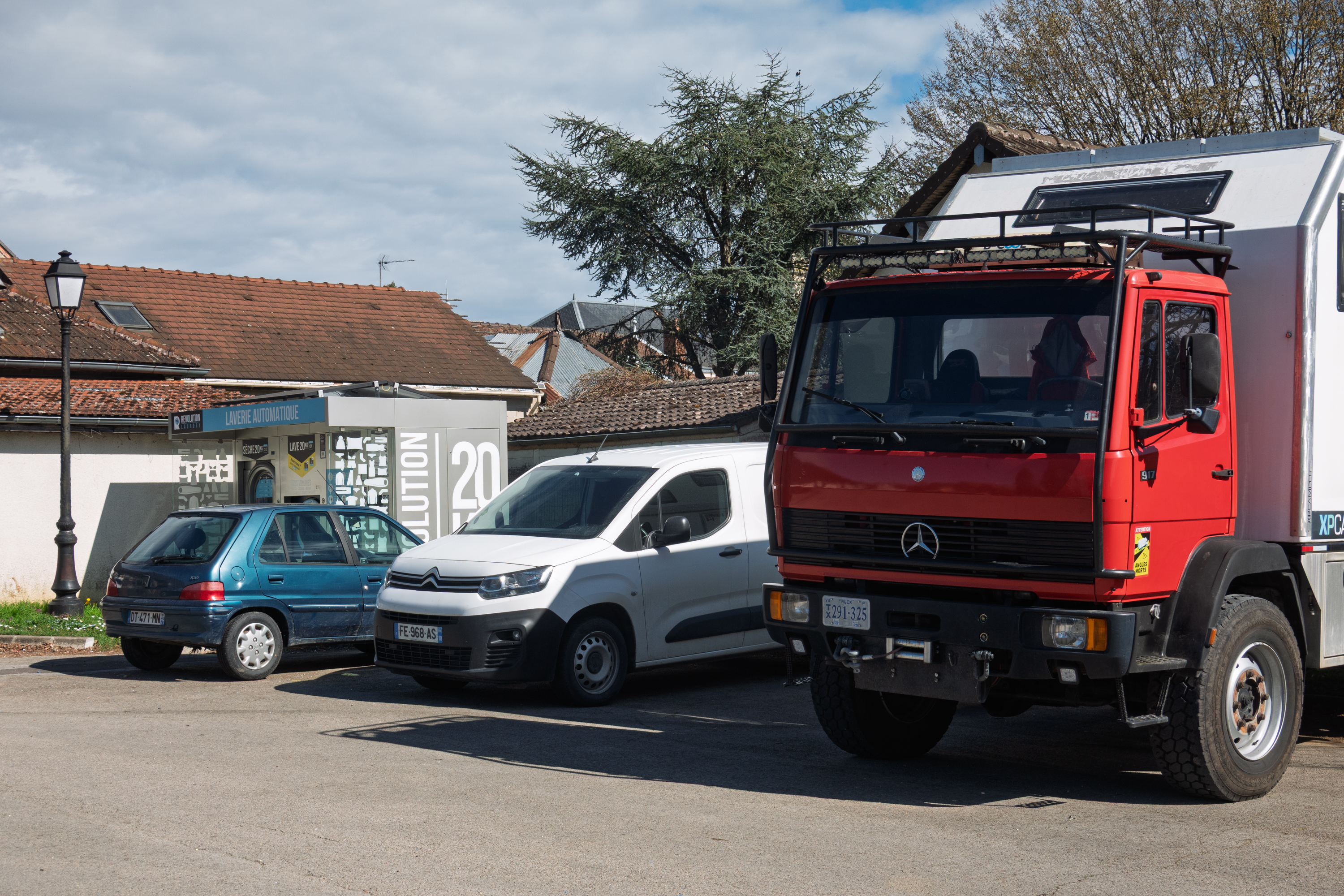
One of our favorite stops – a Revolution launderette. In rainy Europe a big dryer is wonderful, nay, essential.
And when you find the launderette in a picturesque town, on market day, and with easy parking – heaven.
Our final stop in France was in the Beaujolais region. We stopped at a winery called Domaine Philippe Aufranc, just above (literally) the village of Fleurie. This is the first of our many camping sites at the top of mountains and was an exercise in a first gear grind up a narrow, one lane road. (No traffic on a dark Saturday evening.) The winery was closed on the Saturday in the late afternoon when we arrived; there was nobody there. Not hard to find a roomy spot.
However, we were able to touch base with the owner the next morning and enjoyed a private tasting. At least Denise did, Fred was driving. We bought several bottles. We were literally just up the hill from the famous George le Boeuf vineyard, so the neighborhood was good for wine.
We landed in Bergen and took a coach to our hotel. They had no space until 3:00 PM and were not terribly helpful about anything, so we jammed our luggage in their luggage room, which was totally uncontrolled and full to the brim. That done, we set out to discover Bergen on a grey, damp day.
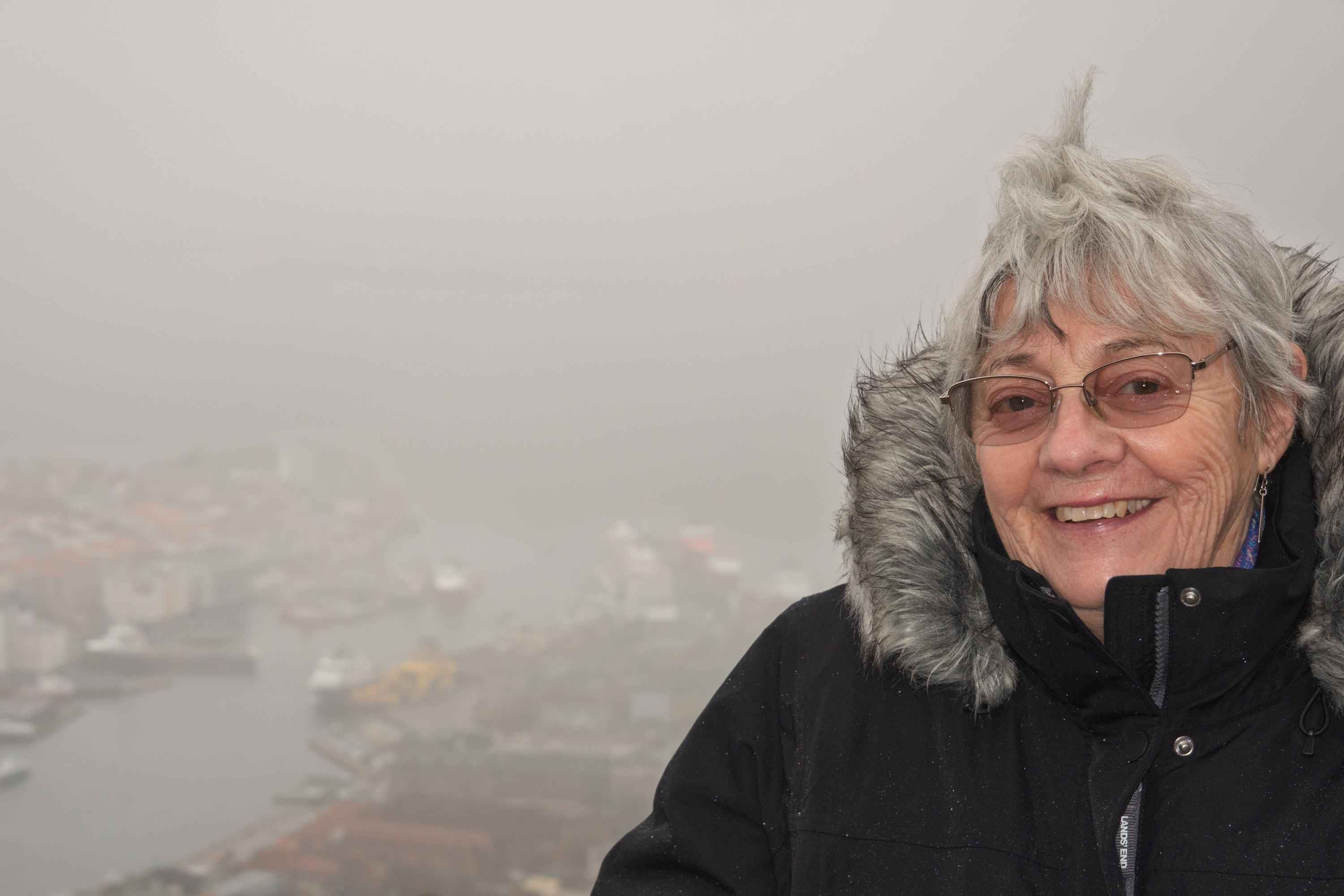
First stop was a coffee shop for sustenance! Then we headed for the cable car to go up the Floien, which provides wonderful views of the city. And indeed the view was spectacular and we were just in time to see it before the clouds rolled in and the view disappeared!
Great view! But enjoy it quick, the clouds are rolling in!
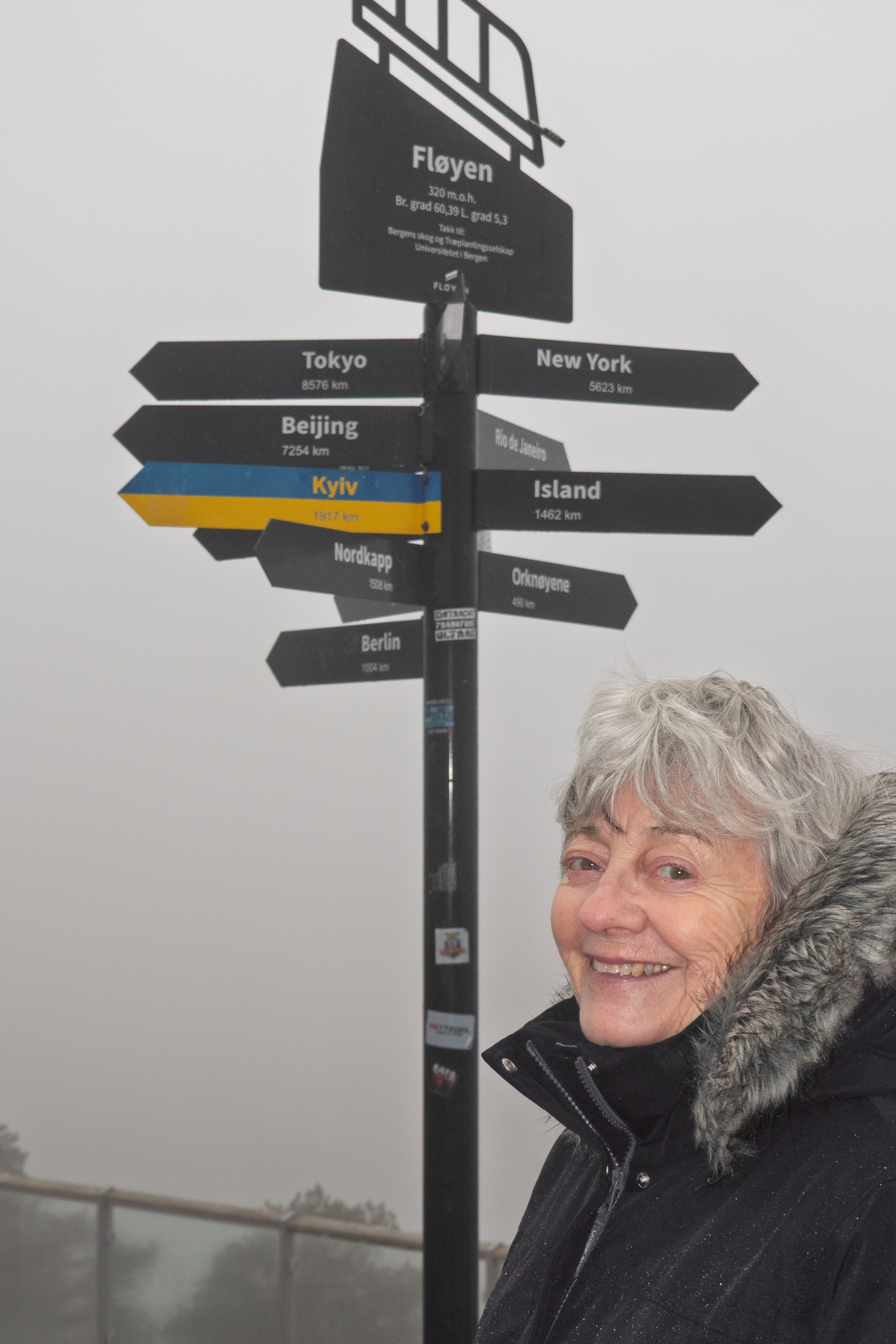
Denise determining where we are.
Escaping the souvenir stands, we re-boarded the cable car and descended to the waterfront. Then, as it began to rain, we headed to the Hanseatic Museum. In Lübeck in Germany, we first remarked on the importance of the Hanseatic League, in the development of trading and society in general in the early Middle Ages. Their trading routes stretched from Tallinn to London. We had seen mention of the League in Denmark, Holland and in northern Germany with Bergen the most northern reach of the League. For those who need a review before the quiz, here you go: https://en.wikipedia.org/wiki/Hanseatic_League
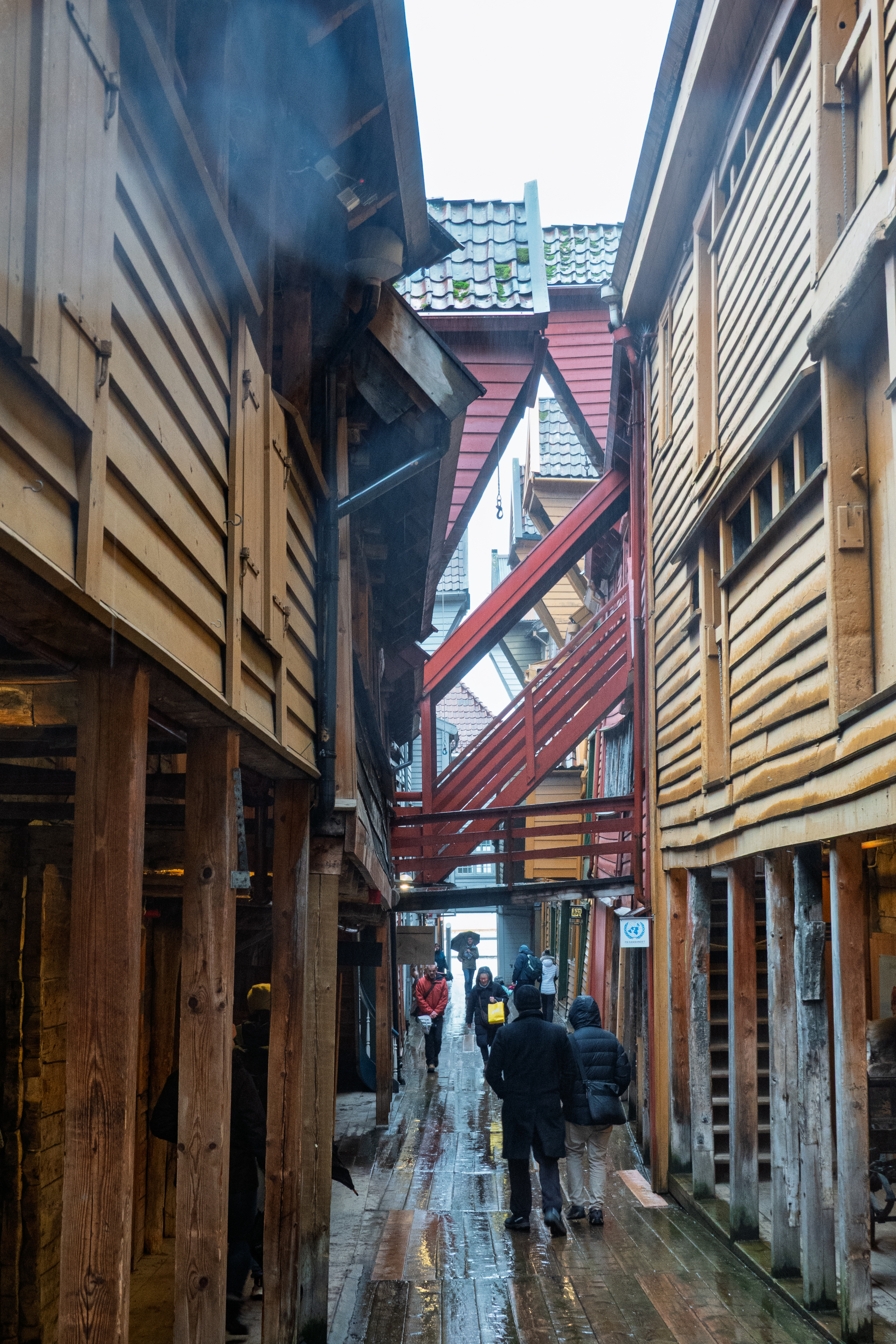
The museum was housed in a “tenement” or multi story house where visiting traders would lodge while doing business in Bergen. (See image at the top.) Cod was brought from Northern Norway and exchanged for grain and other goods from further south.
It seems that, at least initially, the Germans sailed to Bergen in the summer, and then overwintered, hence the need for the communal housing. In the beginning, they could not bring their wives, but eventually some married local women and settled in Bergen.
Tenements along the Bryggen, Bergen’s old waterfront. Repurposed as stores, hotels, and museums.
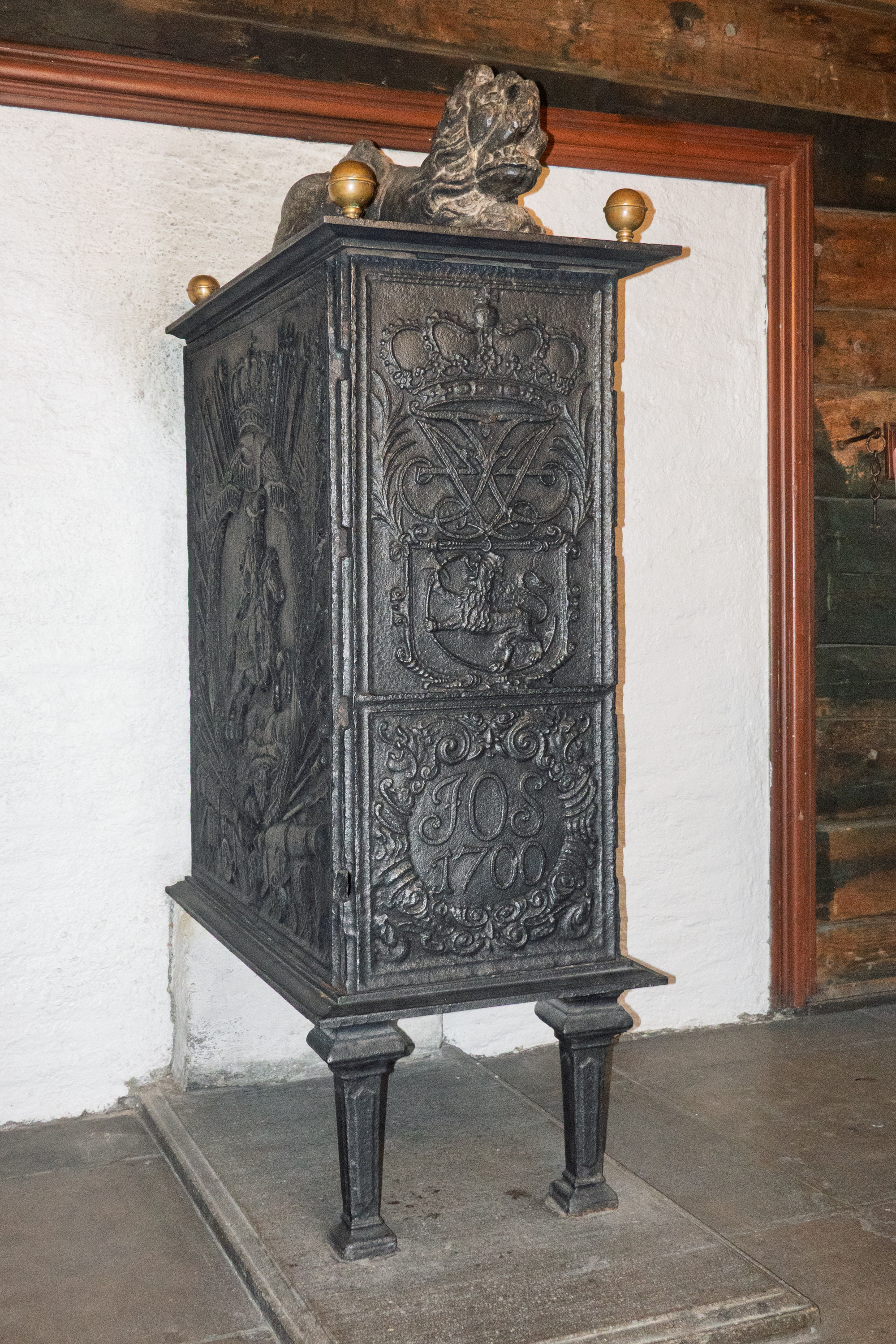
Back of the tenements.Original tenement repurposed into a boutique store.Communal kitchenWhat do you do if you get bored waiting for dinner? You carve graffiti.Original painted decorations over a doorway.
The bridges between the buildings reminded of the lady bridges in Jeddah. Only here the goal was to stay out of the rain and snow.Ornate lamp. Dated 1938??Most of the common rooms had big heaters.Hand washing station.
The German influence is so strong that local wags joke that it is impossible to make a sentence in Norwegian without using at least one German word.
As we were definitely in the off season, we found a lot of restaurants closed. We ended a tiny little pizzeria run by some charming Syrians. It was excellent!
We then wandered along the Bryggen, the old port with its colored houses facing the sea and narrow, cobbled lanes between buildings We went to the Bryggens Museum, which has remnants of old buildings and displays of the history of the port.
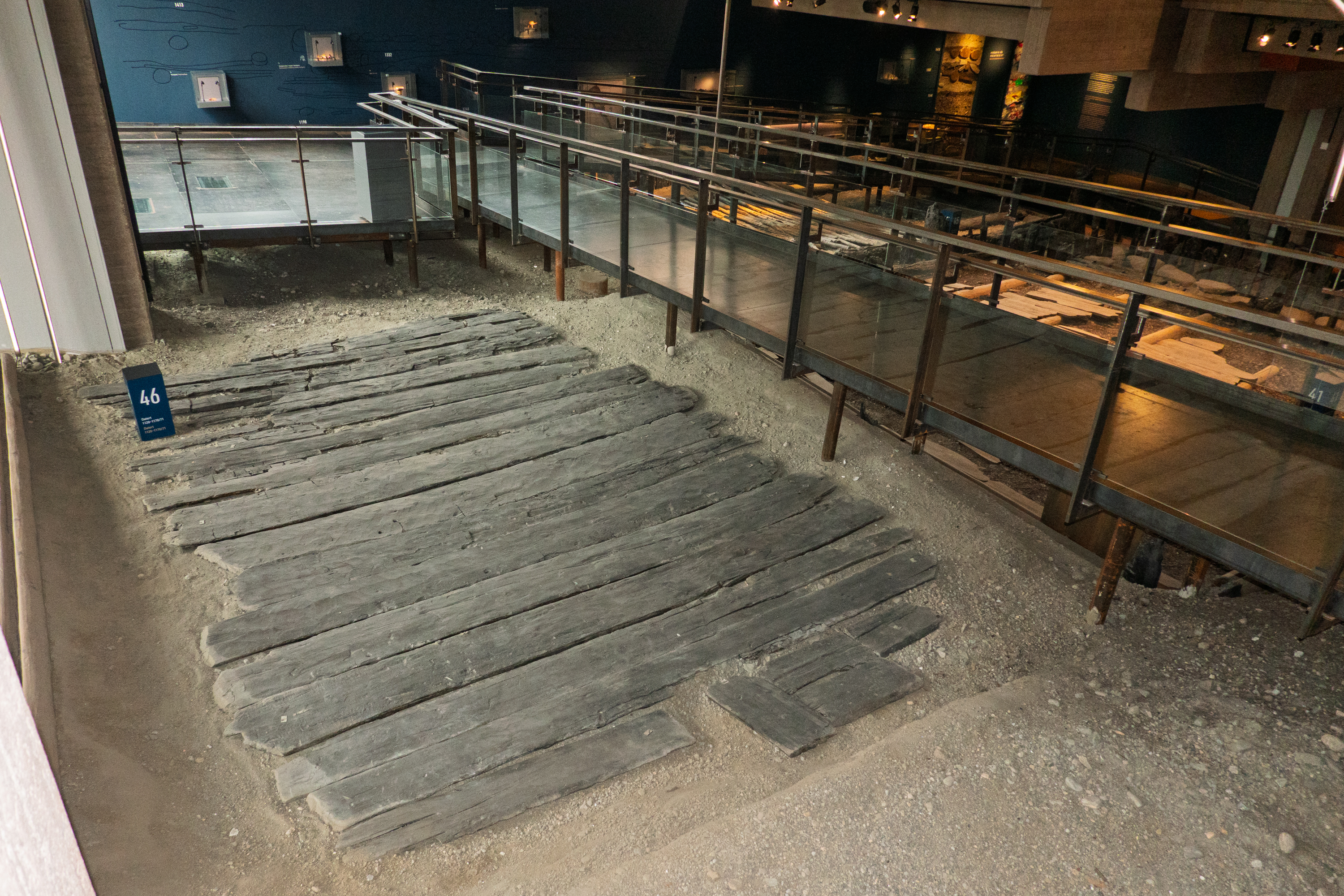
Original, wooden flooring.
A very official document, complete with seals.
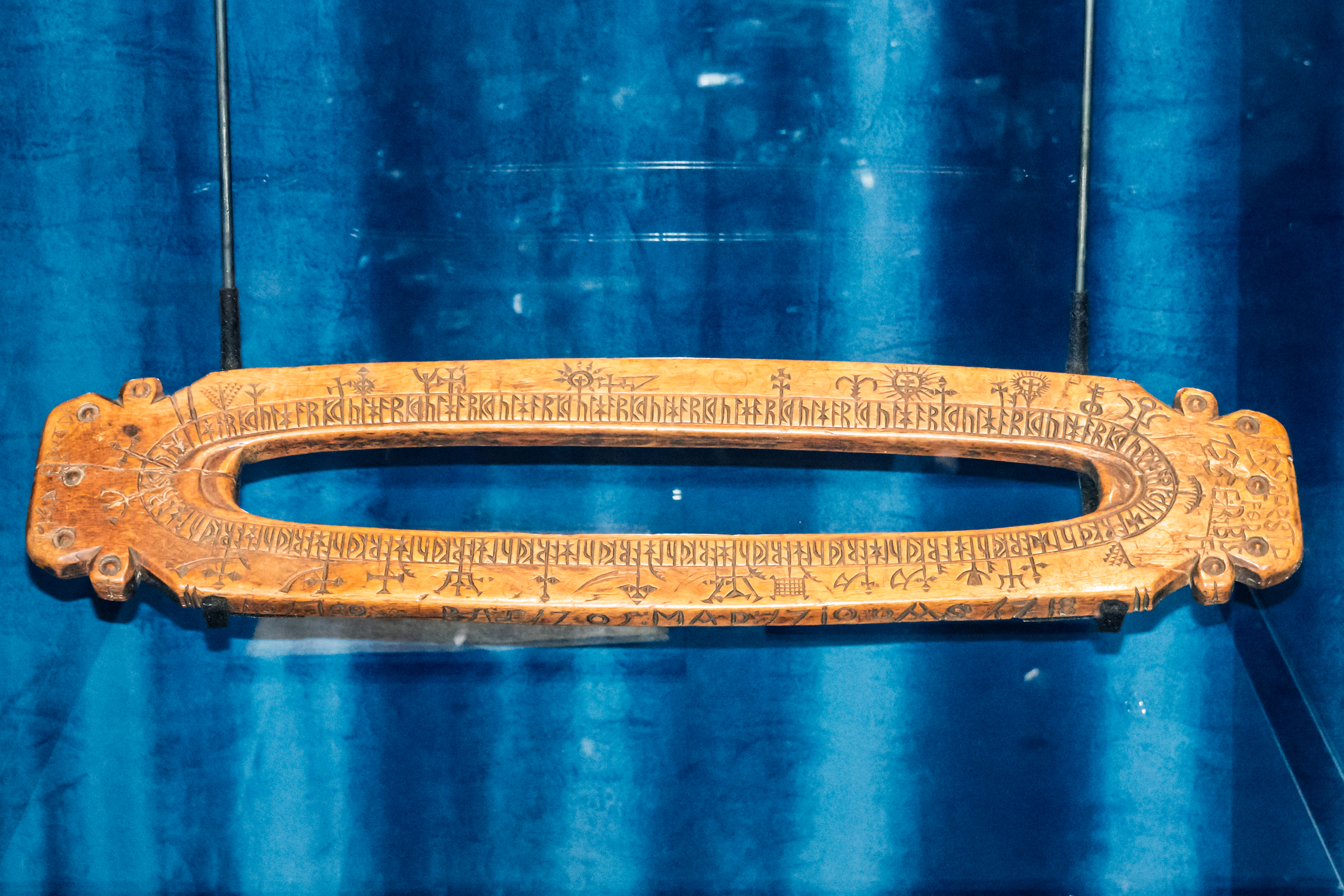
Fascinating “perpetual” calendar, marked in runes, but with Christian saints’ days marked.
On the second floor was an amazing exhibit of the Law Code set by King Magnus VI, (the Lagabote, the Law Mender,) in 1274. It had some amazingly modern ideas. (https://en.wikipedia.org/wiki/Magnus_the_Lawmender)
The next day we headed to the train station to take the train from Bergen to Oslo, known to be an amazing mountain trip. We were getting ready to take our luggage to the platform when we were notified that the train was cancelled due to landslides. Bummer! Here is the trip we wanted! (https://www.visitnorway.com/plan-your-trip/getting-around/by-train/the-bergen-railway/) Maybe next time.
In a near panic, we grabbed a taxi and headed for the airport. Once there, we were stunned to learn that there are no ticket sales points – all tickets must be purchased on line. We found a bench and went to work. We finally got through to SAS, and once we were in the system a charming desk clerk, who turned out to be the supervisor, got us onto the next flight. It might have been cheaper to have flown to the US, but we were able to maintain our Oslo hotel reservations, and British Airways flight to the UK for the following day
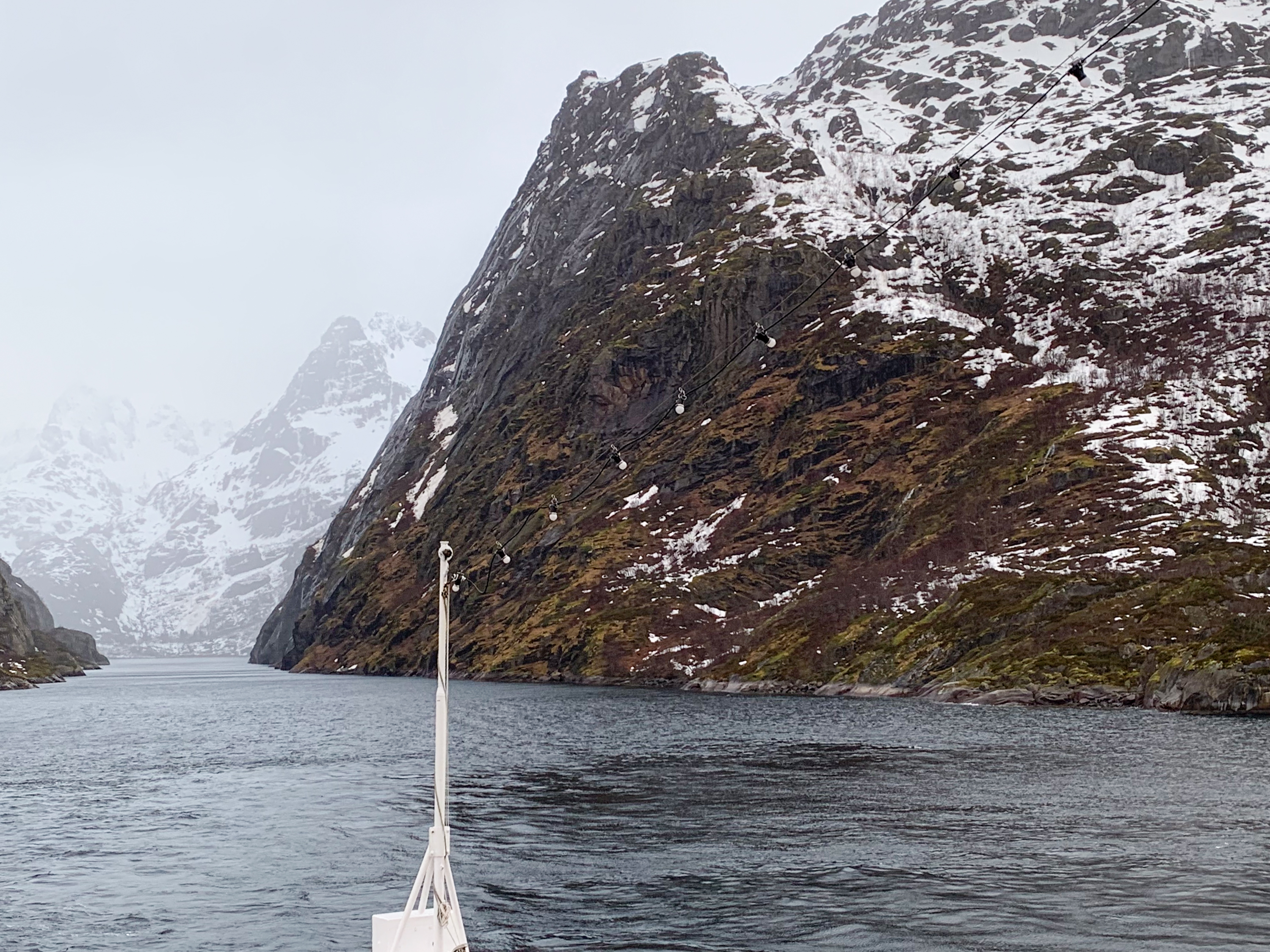
We continued up the coast but unfortunately a norovirus had been brought aboard our ship. There were multiple announcements about the danger, but, after a life in challenging countries, we were confident that our personal washing/sanitary regime would be adequate. We were careful, but we were wrong – it was not enough.
Fred succumbed first. And Denise a couple of days later.
We passed a beautiful range of mountains known as the “Seven Sisters.”
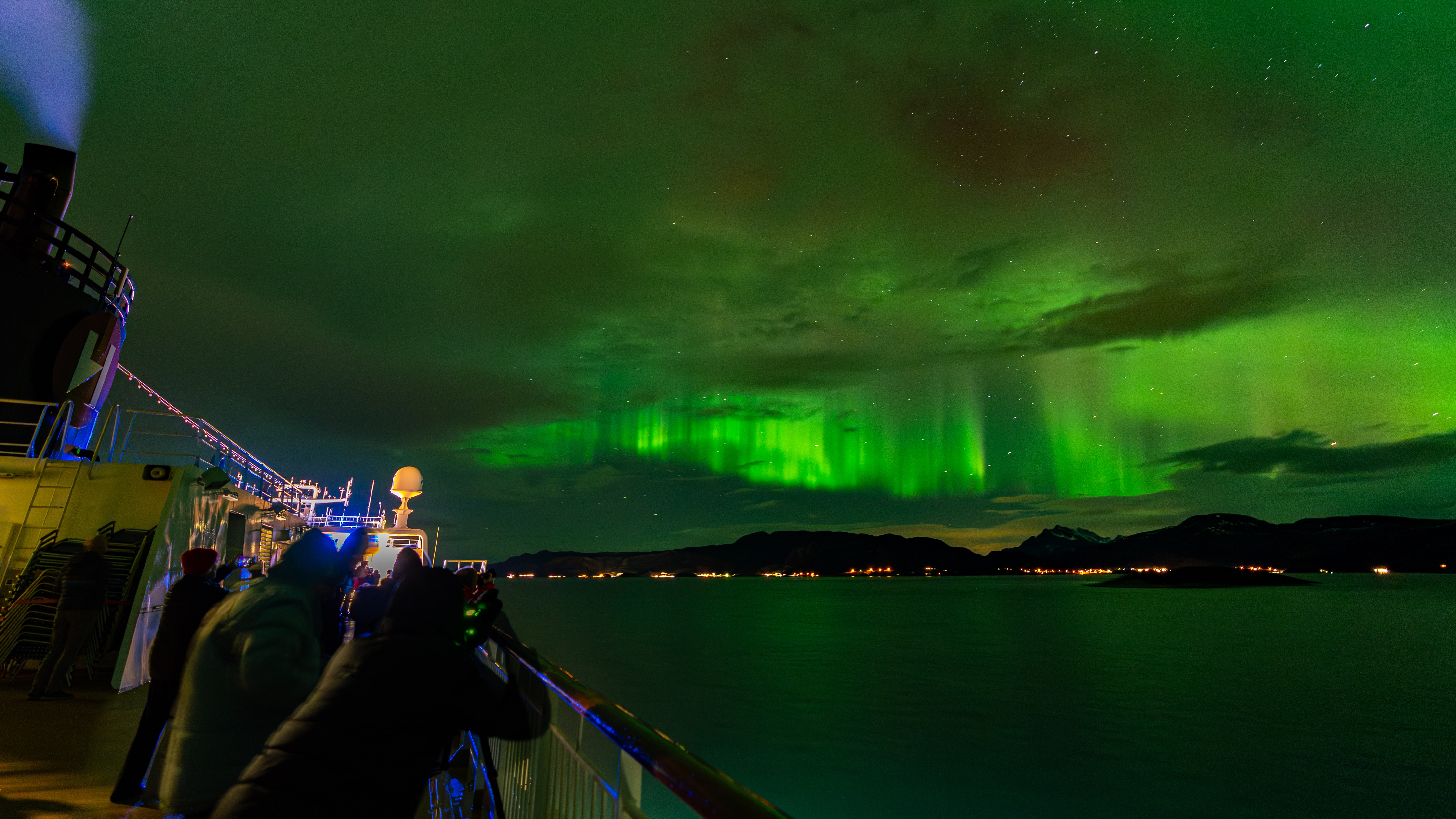
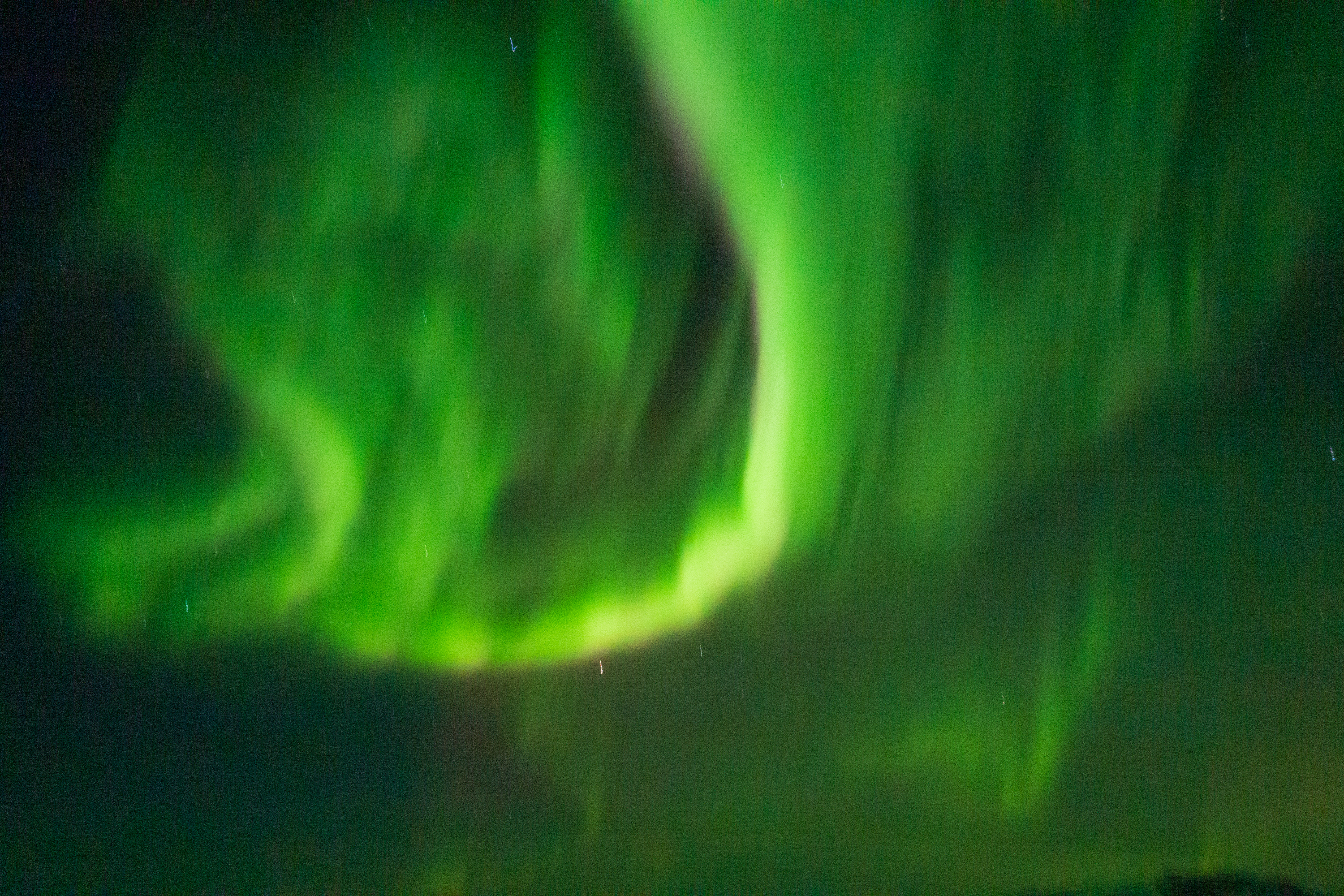
Crossing the Arctic Circle there was an announcement that the northern lights were visible. We joined the crowds on deck admiring and trying to get a photo. The best northern lights photos are time lapse images taken with a tripod on solid ground. Hand held on a moving ship is not going to get you much. But “not much” is still quite spectacular.
It is REALLY hard to hand hold for over a second on a moving ship!There was an excellent pro photographer on board. He shared some of his photos.
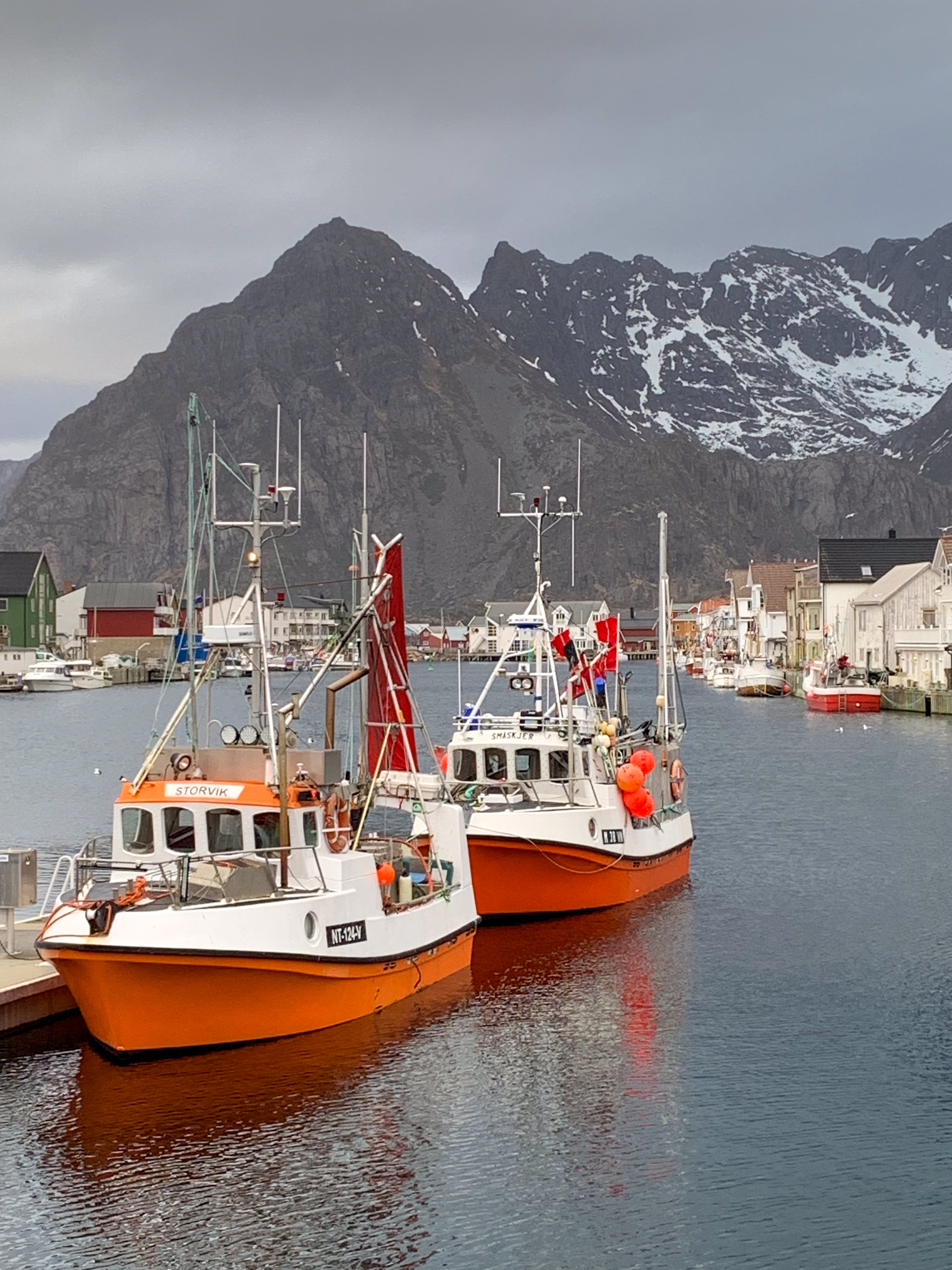
The Lofoten Islands are where the world’s larges cod catches are made between January and April of each year. Denise made a visit to Henningsvaer in the Lofoten, a fishing village about 12 Km southwest of Svolvaer.
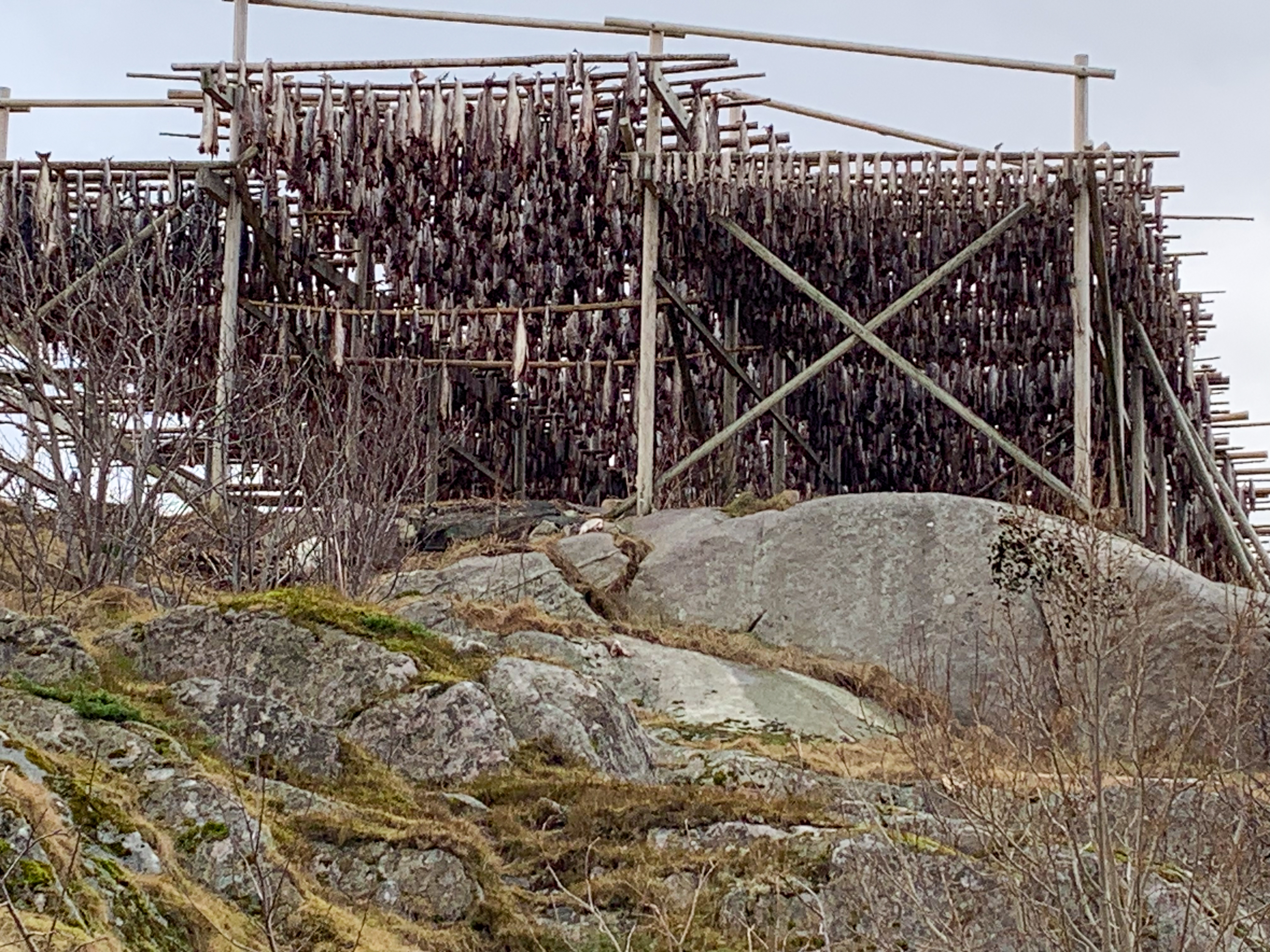
A brief film in an Art Gallery set the tone and a wander through the village completed it. Quite interesting are the racks upon which the fish is dried before being shipped all over the world.
Bacalao on in the raw!
The village is known for having a flat full sized soccer field – a real challenge in mountainous region. Teams come from all over to play there.
We continued to Stokmarknes, where there is a most interesting Hurtigruten Maritime Museum. The company was founded in 1893 to facilitate postal service to northern Norway. The history of the company was also shown. The Museum includes a full sized ship, MS Finnmarken, which retired in 1956. (https://www.museumnord.no/en/our-venues/hurtigruten-museum/)
Arriving at Tromso, Denise took a cable car trip up to Storsteinen.
There were amazing views of the town below from the viewing area.
She then visited the Arctic Cathedral, a quite spectacular modern church.
Courtesy of the onboard photographer.
Courtesy of Denise.
Our next stop, Honningsvag, should have enabled us to visit the North Cape, however, by now, we were both self isolating due to sickness. Sorry, no photos.
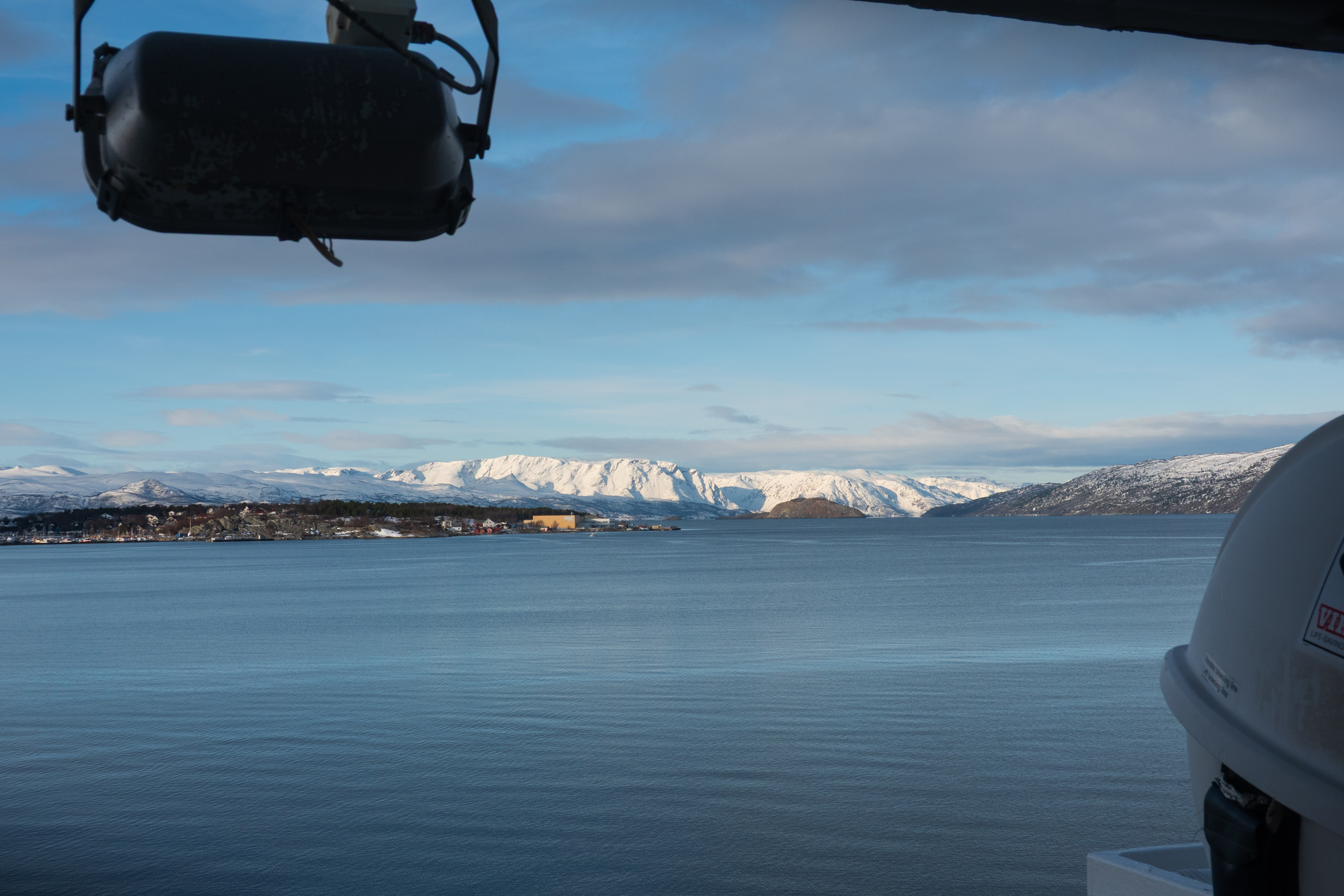
Alta Harbor
By the time we stopped at Alta, we were able to take a walk in the town and to visit the Northern Lights Cathedral.
This is another really spectacular modern cathedral with an exhibition showing how Alta became the epicenter for research into the Aurora Borealis between the 19th and 20th centuries. We also enjoyed the short film about the Northern Lights. The visit to the town was also interesting. It was very modern and amazingly clean.
Northern lights cathedral.
Street scene.
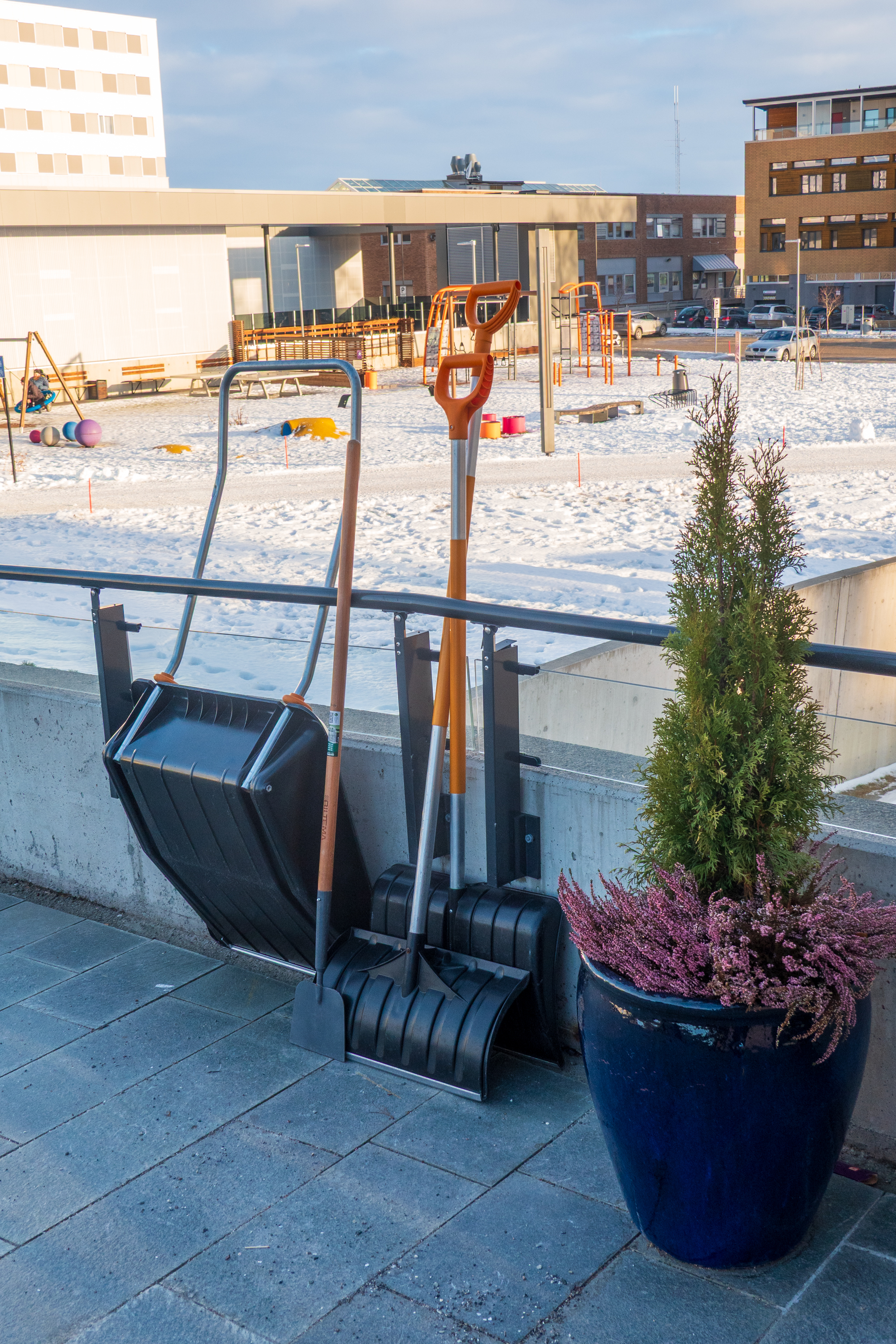
Study in snow removal gear.
The northern lights were visible every night.Another nice pro shot.
We also took the opportunity to walk in the towns of Lodingen and Rorvik, interesting coastal towns.
Lodingen was tiny and we enjoyed a snowy walk.
Denise in the snow.
Pretty sunset.
In Rorvik we visited the small Maritime Museum, which included a fascinating exhibit by a local salmon farm company. We learned all about salmon farming and how Norway has perfected it for maximum sustainability. The fish live in special netted areas known as “acuatraz.”
Like many buildings in Norway, this is very modern, like a miniature of the Sydney Opera House.
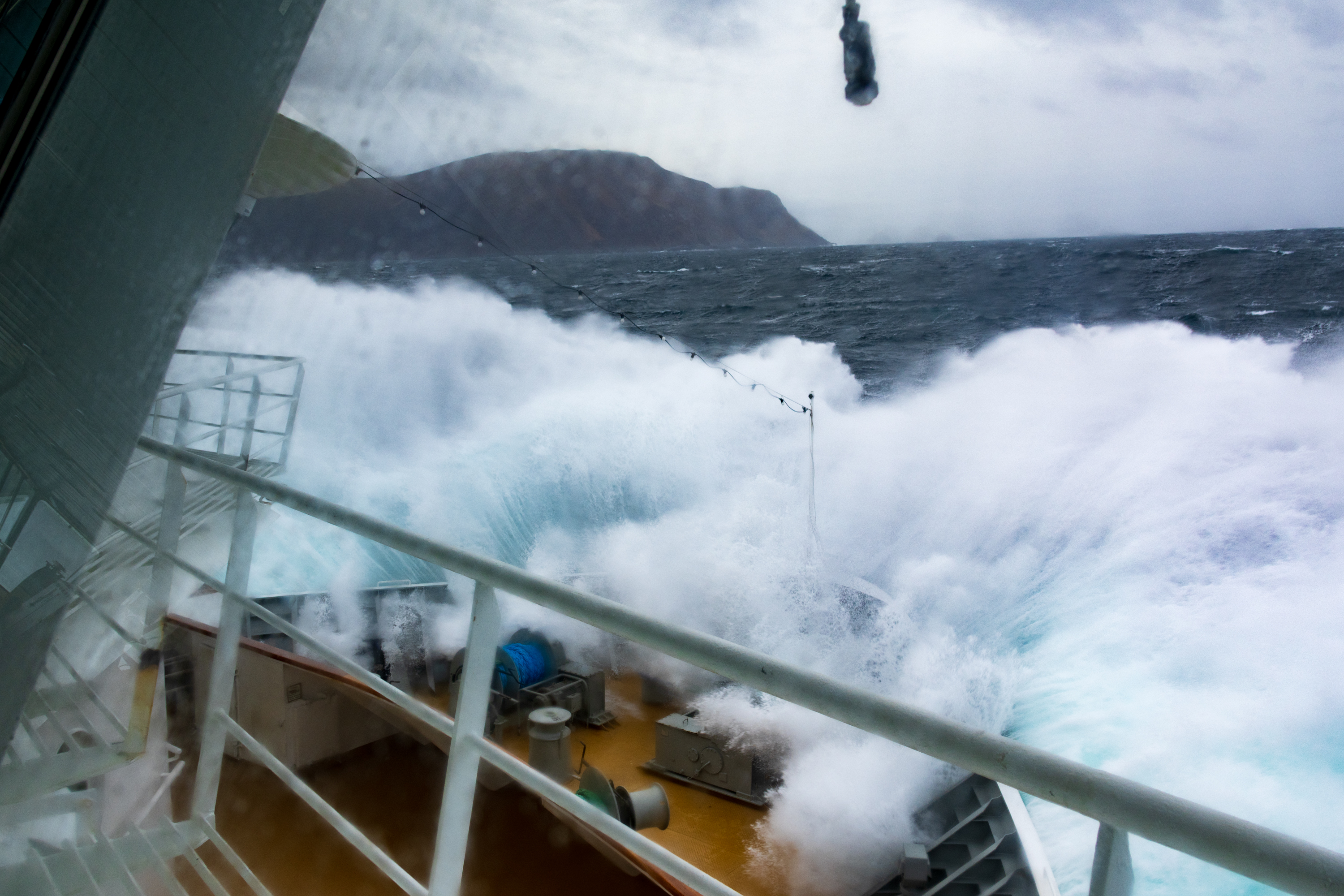
Unfortunately our visit to Molde was cancelled due to rough seas and we sailed to Bergen using as many inland waterways as possible to reduce the possible damage to passengers!
This is why they don’t put extra paint on the sides!
Waves were projected to be as high as 16 feet. And they were.
We settled into our small, but comfortable cabin. The bath has a heated floor! Yes! The first night featured some decent rock and roll seas.
The port hole is nice, but there is a walking deck outside.
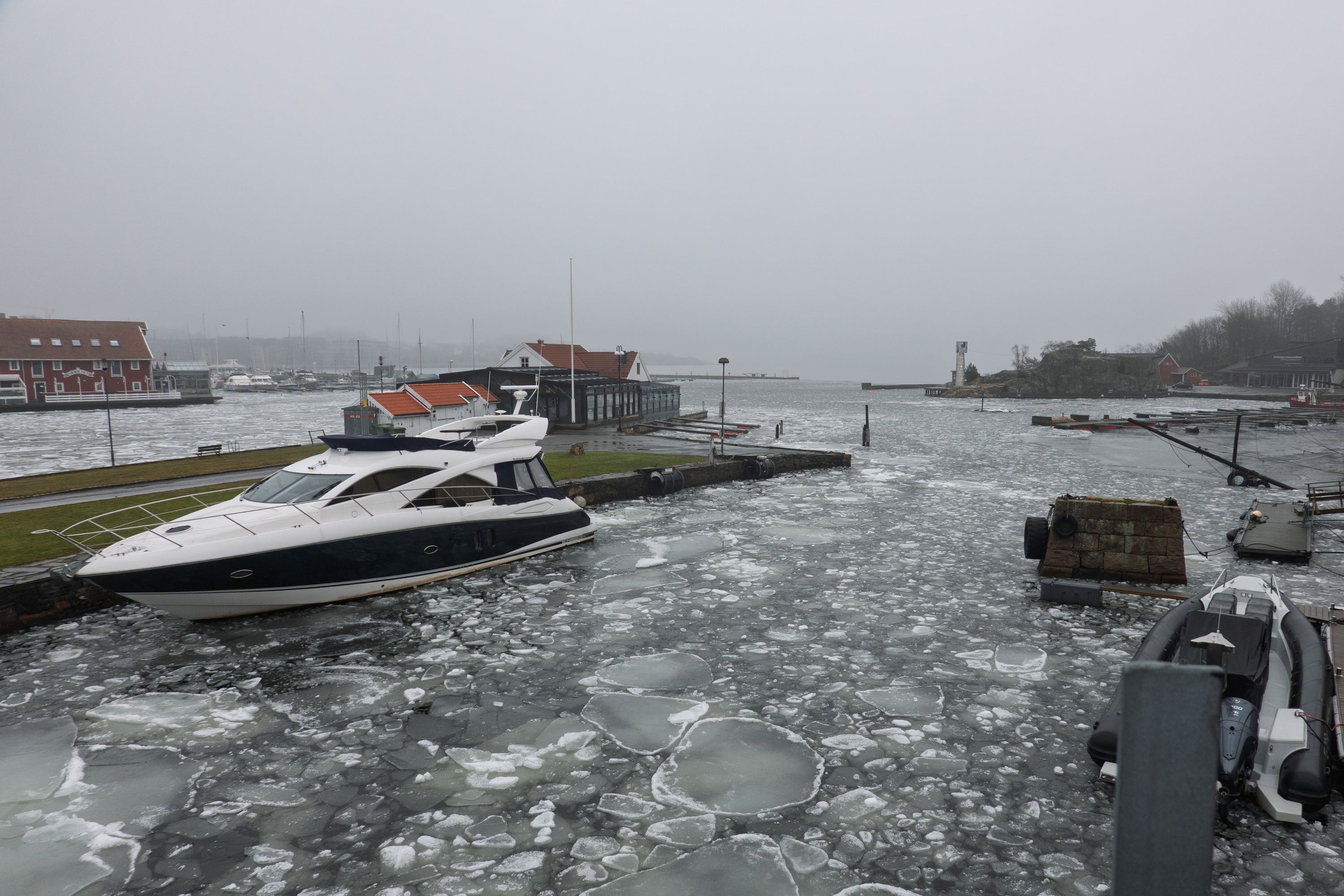
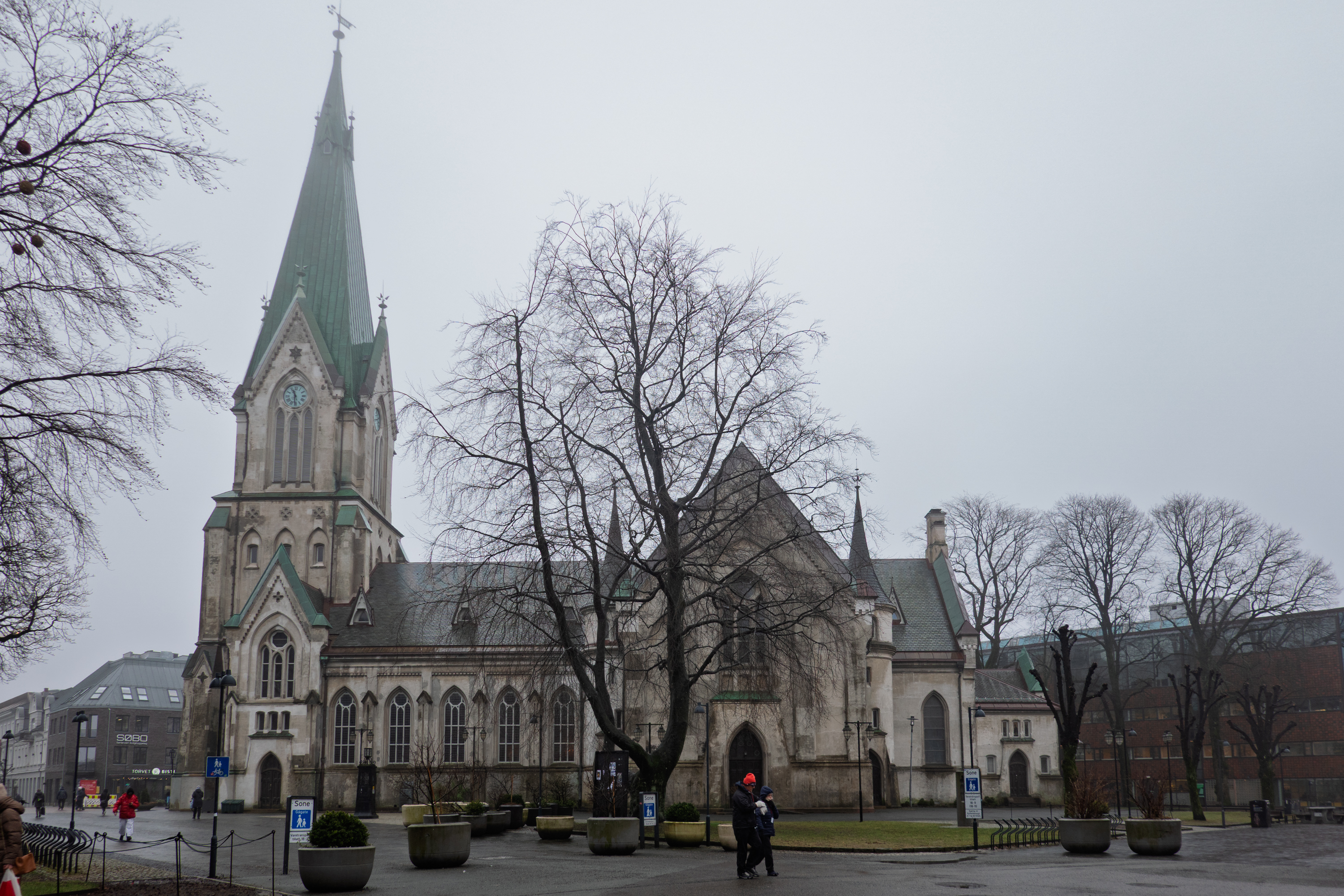
And so the voyage begins. Our first stop was Kristiansand on a gloomy, foggy day.
It was not actually raining but our color photos look black and white! Visibility was not good but it was most atmospheric. We wandered the town, visiting the oldest wooden buildings in Norway and discovering by accident a wonderful cafe/bakery. We could not take photos inside the church as there was a service, but we peeked in.
Our second stop was in Haugesund. A former Viking center, it is also an important oil town. We did not leave the ship. The stop was very early in the morning (from 7 to 9.30 AM) and it was pouring with rain. We did make some soggy deck circuits on the walking deck as we left.
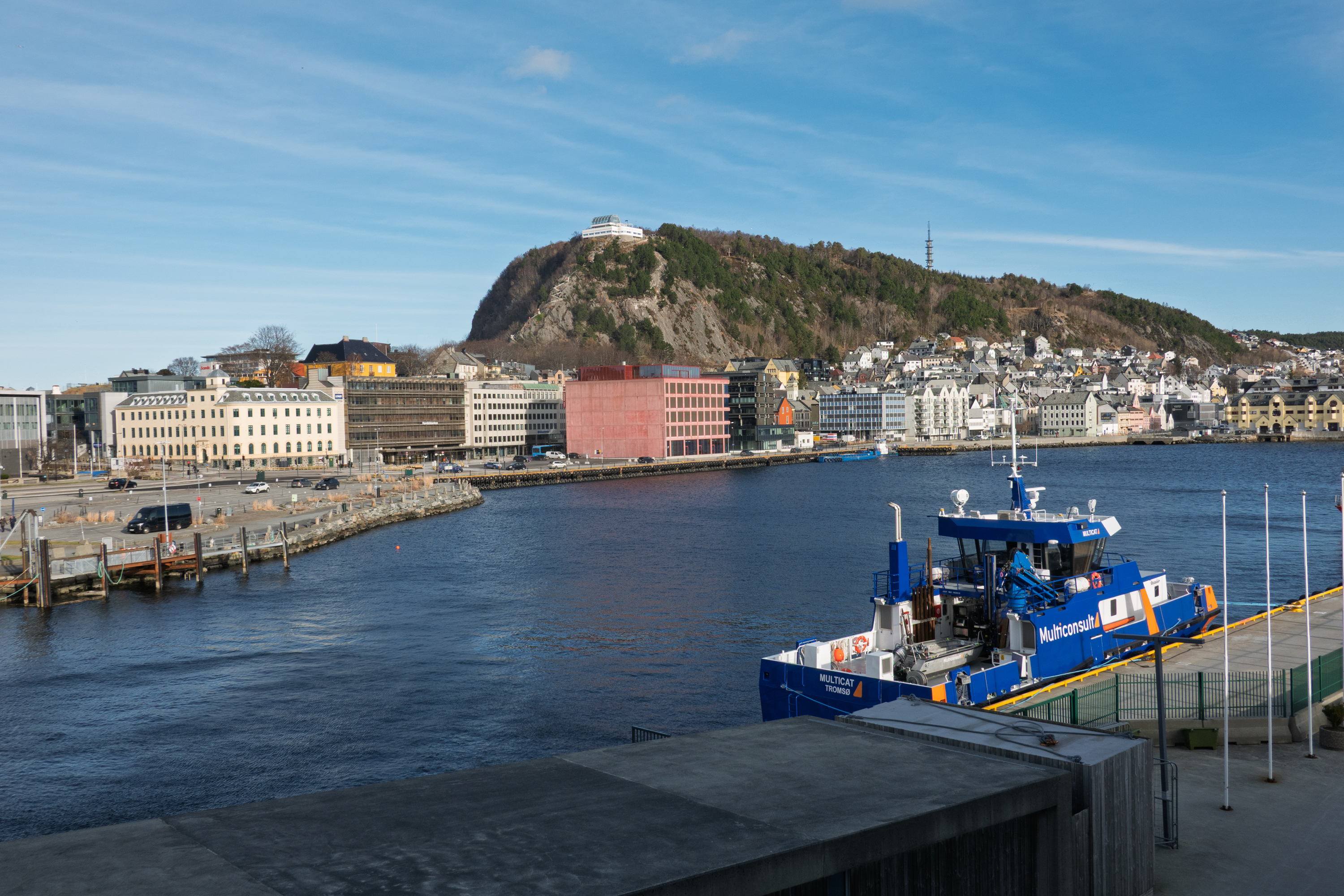
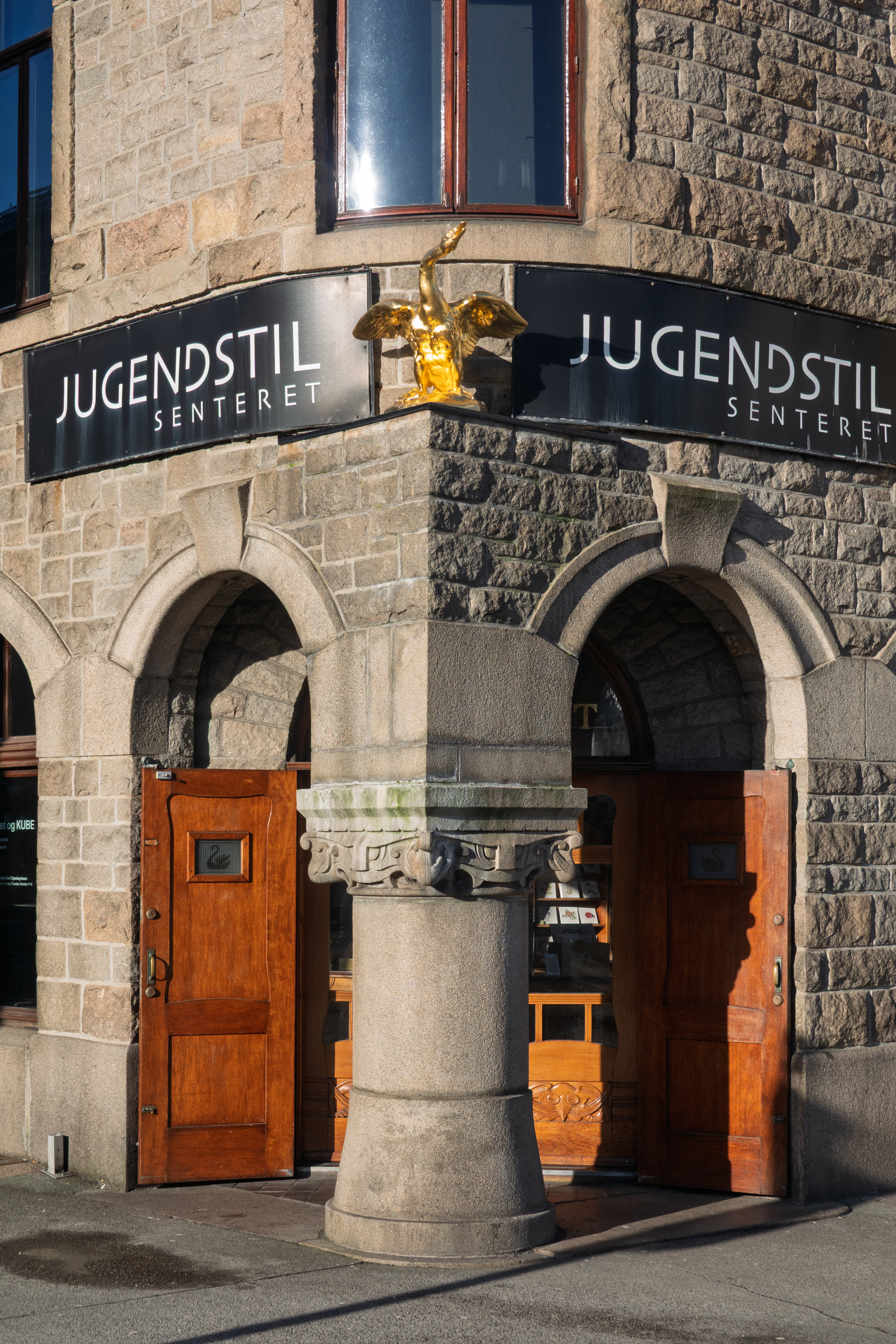
Åalesund saw a great improvement in the weather. (Å is pronounced “Al” as in “alley.”) We actually saw the sun! It was a lovely town, rebuilt in art nouveau style in 1904 after a major fire.
The town is very pretty, dominated by parks working their way up a steep hill.
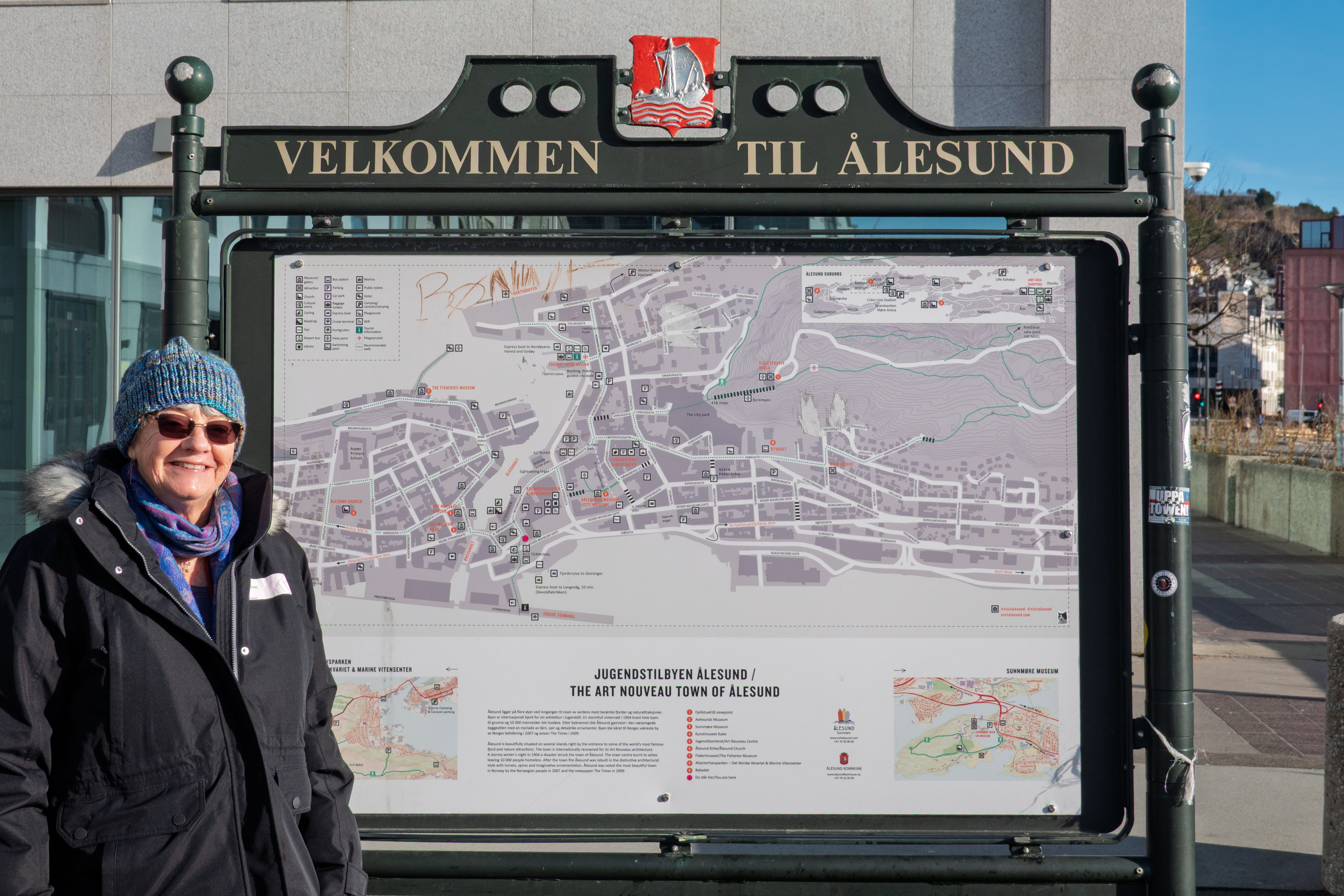
The Chamber of Commerce wants to be sure that you will not get lost.
Denise supporting the Tourist bureau.
Lots of pedestrian walking/shopping areas.
Odd little ship leaving the harbor.
We enjoyed our walk through town, finishing with a visit to the Art Museum. Part of this was housed in a lovely building which had formerly been a chemist shop.
Old Chemist shop, now museum.
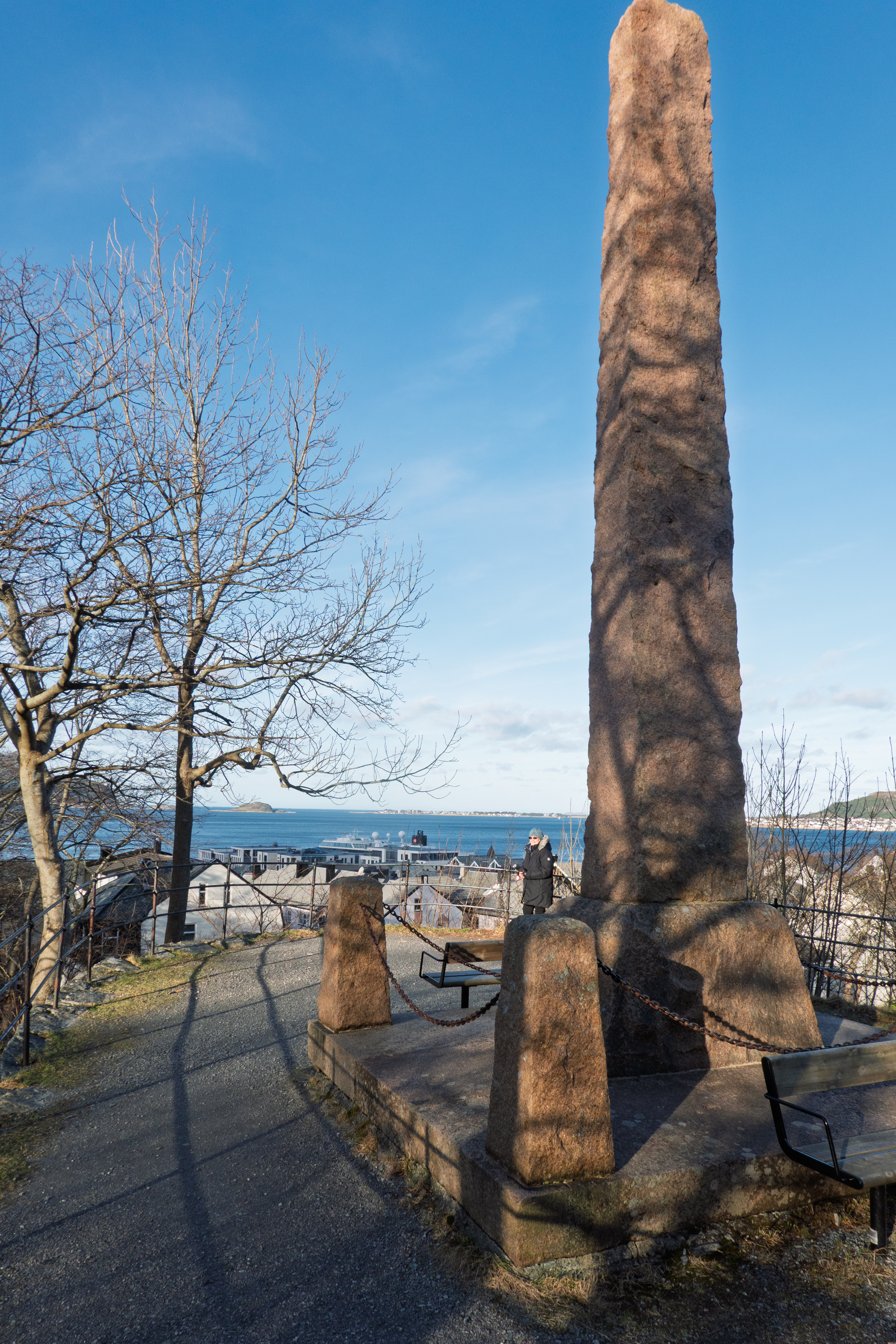
Standing stone half way up the hill – where we wimped out.
The furniture displays were interesting as was the art. The spare Scandinavian style that we think of today was not the mode at the beginning of the 20th century.
Sailing into Brønnøysund, the ship detoured to view the Torghatten, a granite dome with a hole through it. (https://en.wikipedia.org/wiki/Torghatten ) As one might imagine, there are lots of legends!
While there is a geological explanation, the idea of a troll throwing a spear is more fun!
Brønnøysund was an interesting place. The town is named after the small island Brønnøya (Old Norse: Brunnøy) since it is located on the island. The first element is brunnr which means “well” and the second element is øy which means “island”. The final element of the name is sund which means “strait”, referring to the strait of water that flows alongside the island and town. Islands with freshwater wells were important for seafarers. (https://en.wikipedia.org/wiki/Brønnøysund) (And the ø is pronounced a bit like the British “oy!) or the French “oeil.” We’re learning.)
A much smaller town than Ålesund, we wandered through the shopping mall and were amazed by the variety of shops and what they contained. The kitchen store would be a find in the DC area. It might help to like fishing but one could live quite comfortably in Brønnøysund. We visited the Trollfjell Geopark, with its displays of the geology of the surrounding area, the Vega Archipelago. (https://trollfjellgeopark.no/index.php/en/ )
Porthole view.
You never know where an old American car will show up!
When we last saw our heroes, they were planning to drive the length of the Norwegian coast. On further consideration, we decided that we had had enough of one lane roads in Scotland and so cancelled the visit to Norway and rebooked as a cruise with the Hurtigruten company.(https://www.hurtigruten.com/en-us/about-us/voyages/north-cape-line) With luck, we might get to see the northern lights and would not have to worry about trying to stud the tires, etc.
After cancelled flights and rebooking, via telephone calls to India, we set off, in February, from Dulles with British Airways. We had a pleasant flight to Oslo, via a painless connection at Heathrow. With three suitcases of both winter and summer gear, and bits for the camper, we splurged for a very expensive taxi to the hotel. in downtown Oslo. The hotel turned out to be lovely and right in the middle of the shopping district – a good thing as Fred had neglected to pack his light gloves or his knit cap. We dropped into a shopping mall and asked about gloves in a store. A lovely young lady wearing a sunn (o))) t-shirt directed us to a sporting/camping store. Want to feel old? Back in the ’60’s, Fred had, and still has, a sunn amplifier, but now, the same logo is used by a drone/drudge/noise rock band that use sunn amps for ear numbing feedback. (https://en.wikipedia.org/wiki/Sunn_O)))) The gear store was excellent and hands and ears are now warm!
Downtown Oslo is quite compact, with an interesting mixture of modern buildings and a few of a more classic, European style.
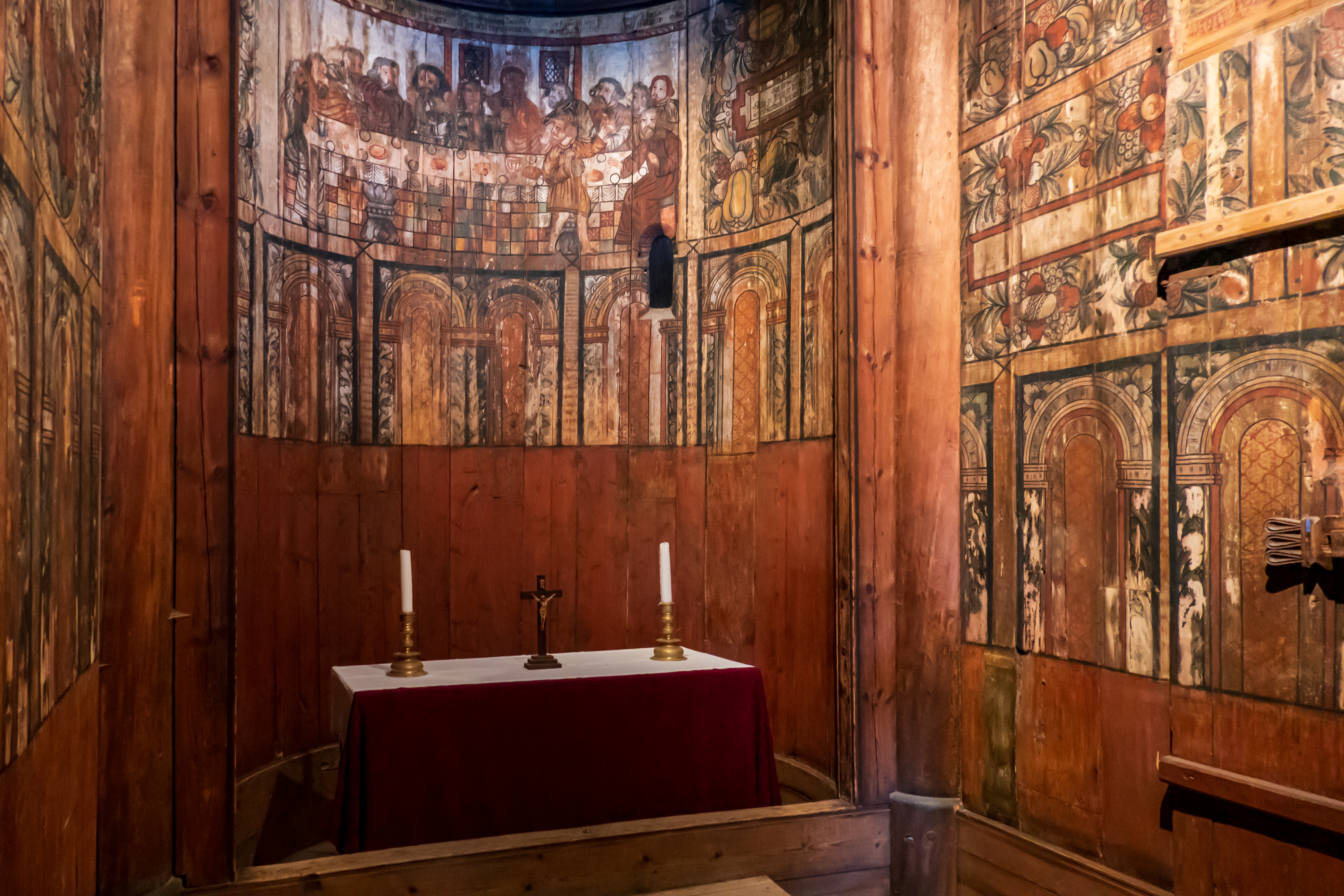
We hopped a bus to the open air folk museum. A bit like the Weald and Downland Museum, Colonial Williamsburg, and others, this is a collection of relocated historic buildings. (https://norskfolkemuseum.no/en) The stave church was especially interesting as we had actually visited a stave church in, of all places, South Dakota. (https://diplostrat.net/2019/07/07/going-to-the-devil/)
Fred, of course, was most taken by a museum cat who was out enjoying the sun.
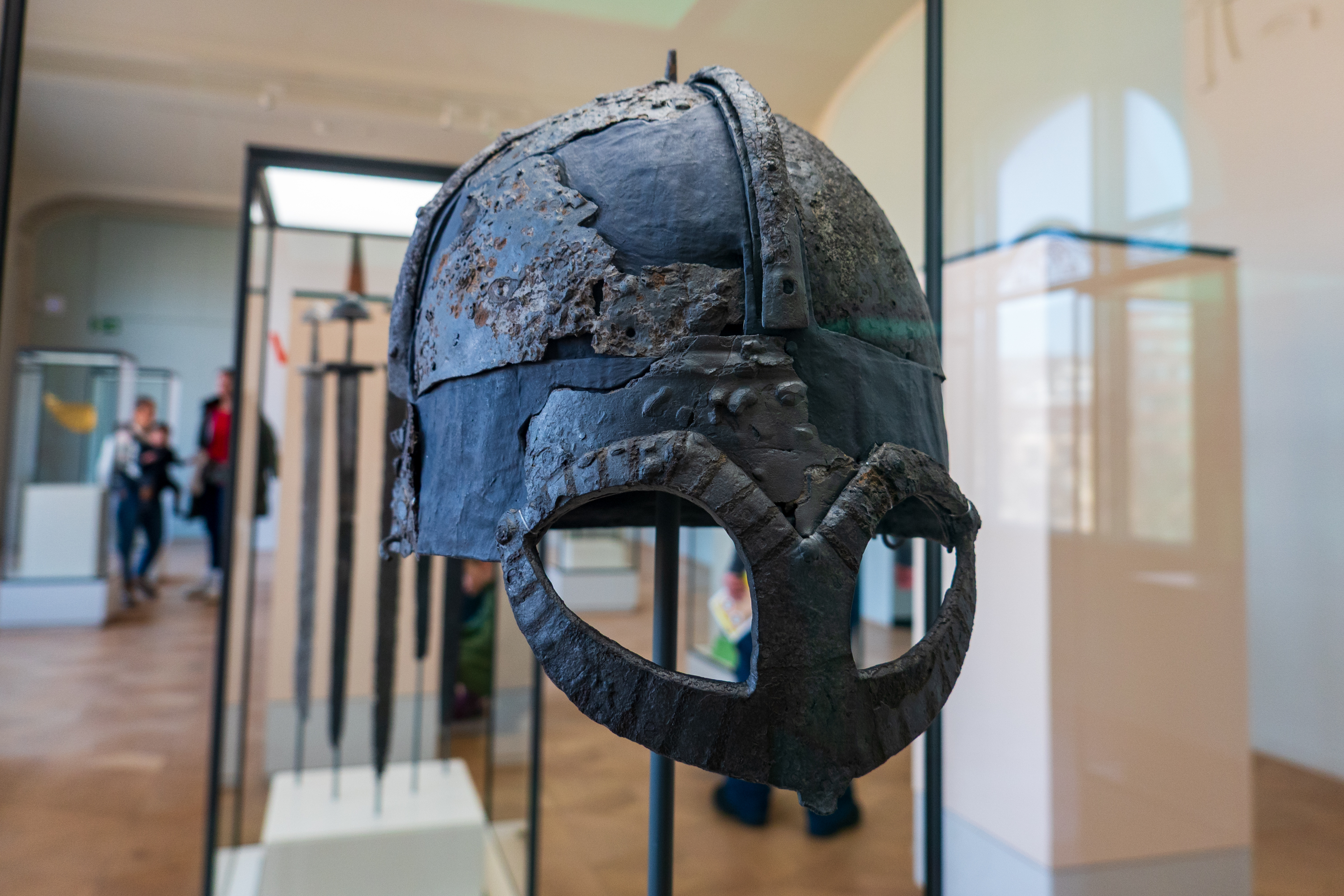
The national museum of cultural history, down town, was a surprise as it was highly themed/concept, and not historically or chronologically, arranged. (https://en.wikipedia.org/wiki/Museum_of_Cultural_History,_Oslo) Exhibits ranged from Ice Age geology to a model of Temple Grandin’s slaughter house. (!!) It did include the oldest known Viking helmet and other Viking grave goods.
Ernest Borgnine wore something similar in the 1950’s movie “The Vikings.”
Beautiful craftsmanship. Makes you wonder – was this somebody’s weapon, or merely an ornament?
As might be expected, the museum featured many carved church doorways.
Parts of the museum building itself were simply gorgeous.
The Viking Museum, with its complete ship, is currently closed for renovation. Bummer, but we had seen ships last year in Denmark.
The following morning we were given a short bus tour of Oslo, courtesy of Hurtigruten. We had expected that the “tour” would be a simple drive to the pier, but it turned out to be much, much more. We started up at the skiing complex with the Olympic level ski jump, which was totally scary!
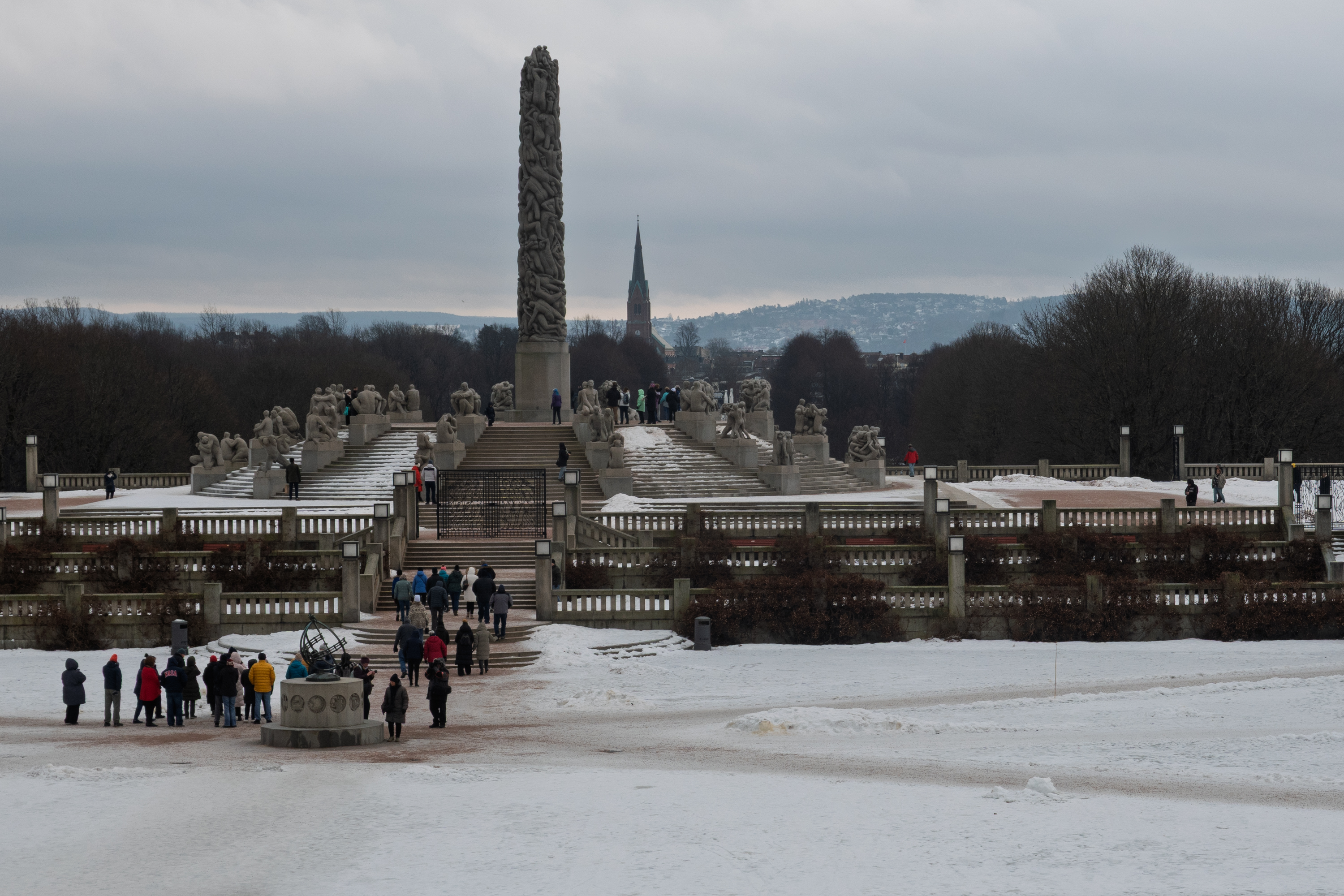
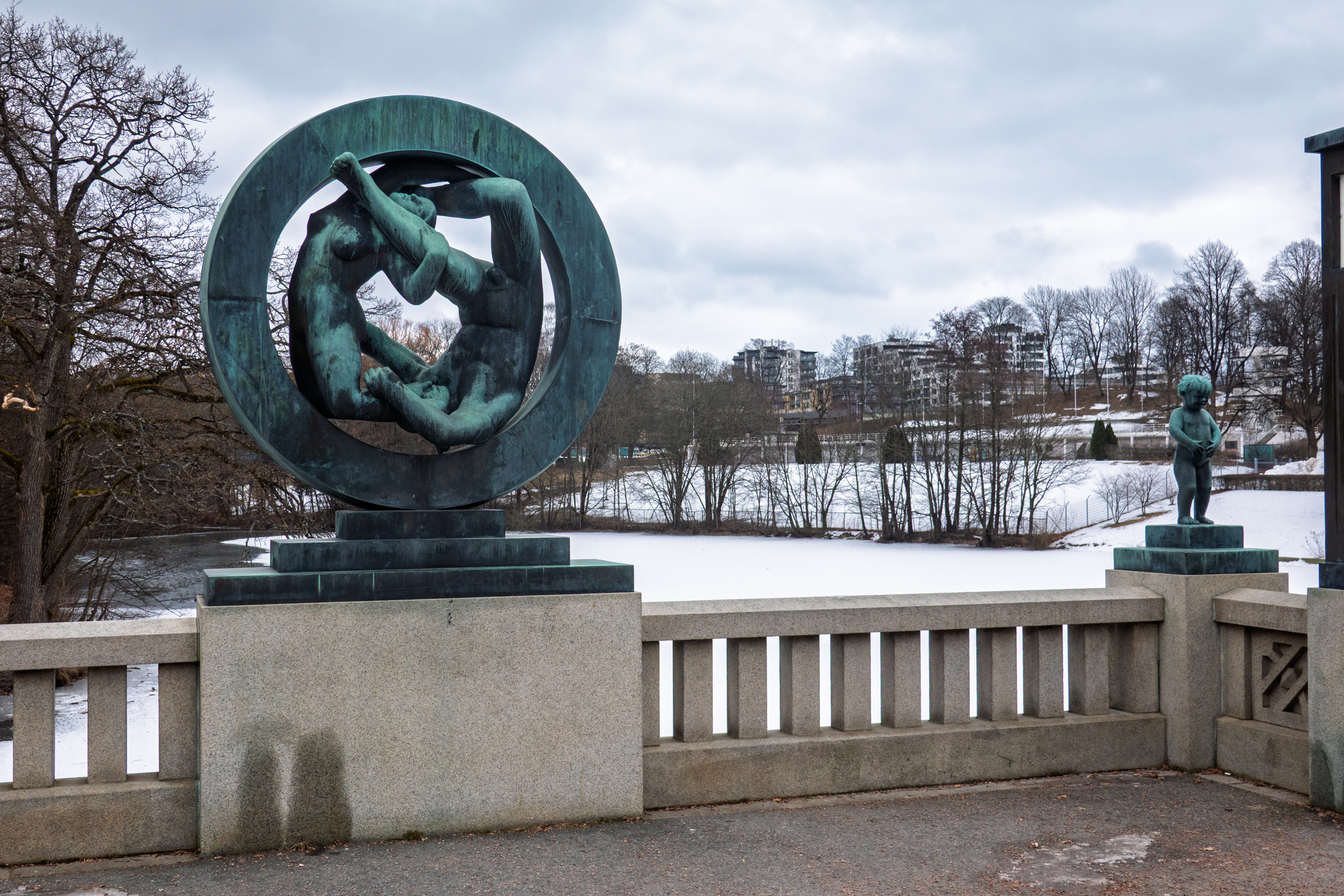
We then went to the Frogner Park, which includes the Vigeland Sculpture Park. https://vigeland.museum.no/en/vigelandpark) This is hundreds of nude granite and bronze statues, all based on the Circle of Life theme. An additional group of statues surrounded a huge fountain, which was obviously not running. Vigeland himself appears to be a most interesting, misogynistic soul. A rather dead rose garden surrounded the fountain – it would be a joy in summer.
We joined our ship the MS Tollfjord and celebrated our departure from Oslo that evening with a small Sail-away toast. Skoal!
— Worth taking a US camper to Europe, and if so, — How do you do it?
The simple answers are that:
— It is definitely worth it, — We prefer traveling in our own camper that we know, and, — There are lots of different ways to travel by camper in Europe.
Herewith, as a starting point, the presentation that we gave at Overland EXPO East. Enjoy!
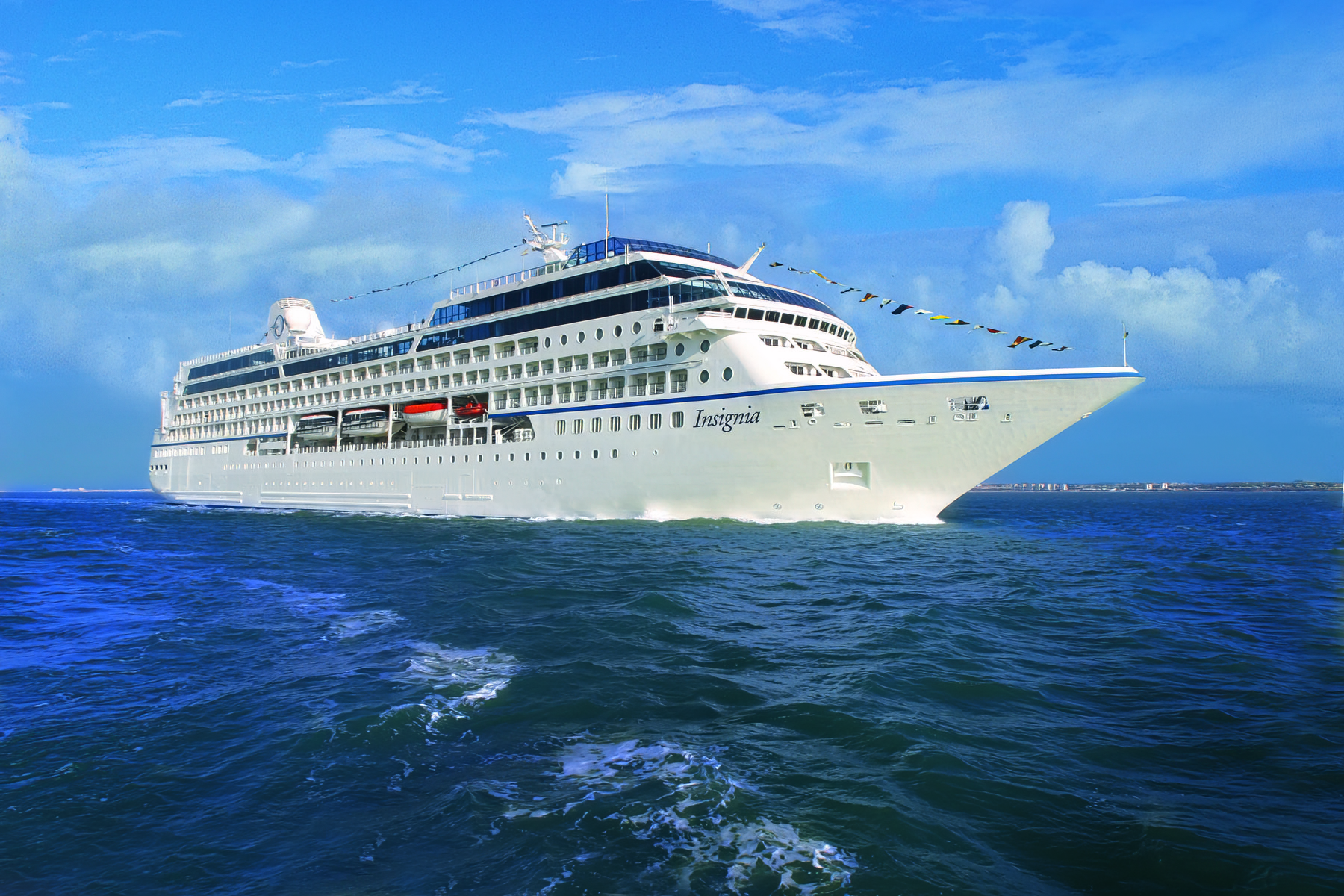
We started the Euro saga by sea and, thereafter, returned to the US on round trip tickets from UK. But these tickets limit the time in the US, so we needed to break the cycle and have more time in the US. We cast around for options. A one way ticket cost almost as much as a round trip, so we decided to try to go by sea. The obvious choice is the Queen Mary, but having been on her twice, she is not our favorite ship. Then Denise had a breakthrough; she discovered an Oceania ship from London to New York, with stops in Ireland and, of all places, Sainte Pierre and Miquelon. (More on this later.) (https://www.oceaniacruises.com) We had never taken a trip with Oceania, but friends of ours love it. The dates worked and so we signed up.
The ship was leaving from Tilbury Docks on the eastern side of London. With the 917 safely parked, and our bags packed, we took the train from Yatton, to Paddington Station in London. We then managed to meet (always a challenge) the taxi service, which we had prebooked. Traffic was absolutely horrendous and the 45 miles took about two and a half hours. We had a rather uninspiring stay at a hotel near the port, before finding another taxi to take us to the port, the next day.
The Tilbury terminal turned out to be an old port, newly refinished, and perhaps most famous as the landing port for the Windrush immigrants. (https://www.bbc.com/news/uk-43782241) And we would never had heard of these folks were it not for an episode of Call the Midwife.
Boarding was easy and we sailed that evening, following a car/truck ferry down the Thames.
Click on the photo; it was dark and these things are amazing to look at.
After dark we sailed past a mysterious set of towers in the river. The Maunsell Forts were built to keep the Germans from laying mines and to provide a platform for anti-aircraft guns. It appears that we passed the Red Sands fort. (https://en.wikipedia.org/wiki/Maunsell_Forts)
After the war, they fell into disuse and some were used for “pirate” radio stations back when the UK did not permit private radio stations. I remember listening to “wonderful, Radio London” back in the summer of 1967.
The next morning, we were in Bruges. (OK, Zeebrugge, to be exact.) We chose not to go ashore, as we had visited Bruges a couple of weeks previously and frankly wanted a day to recover from putting the camper in storage, multiple train and taxi trips, and the rest. (https://diplostrat.net/2024/07/24/more-horses/) We caught up with the Yasmine, the ferry we had seen leaving London and watched a nifty dredge busy deepening the channel and, in the process, delighting all of the hungry sea birds.
Dinner is served!
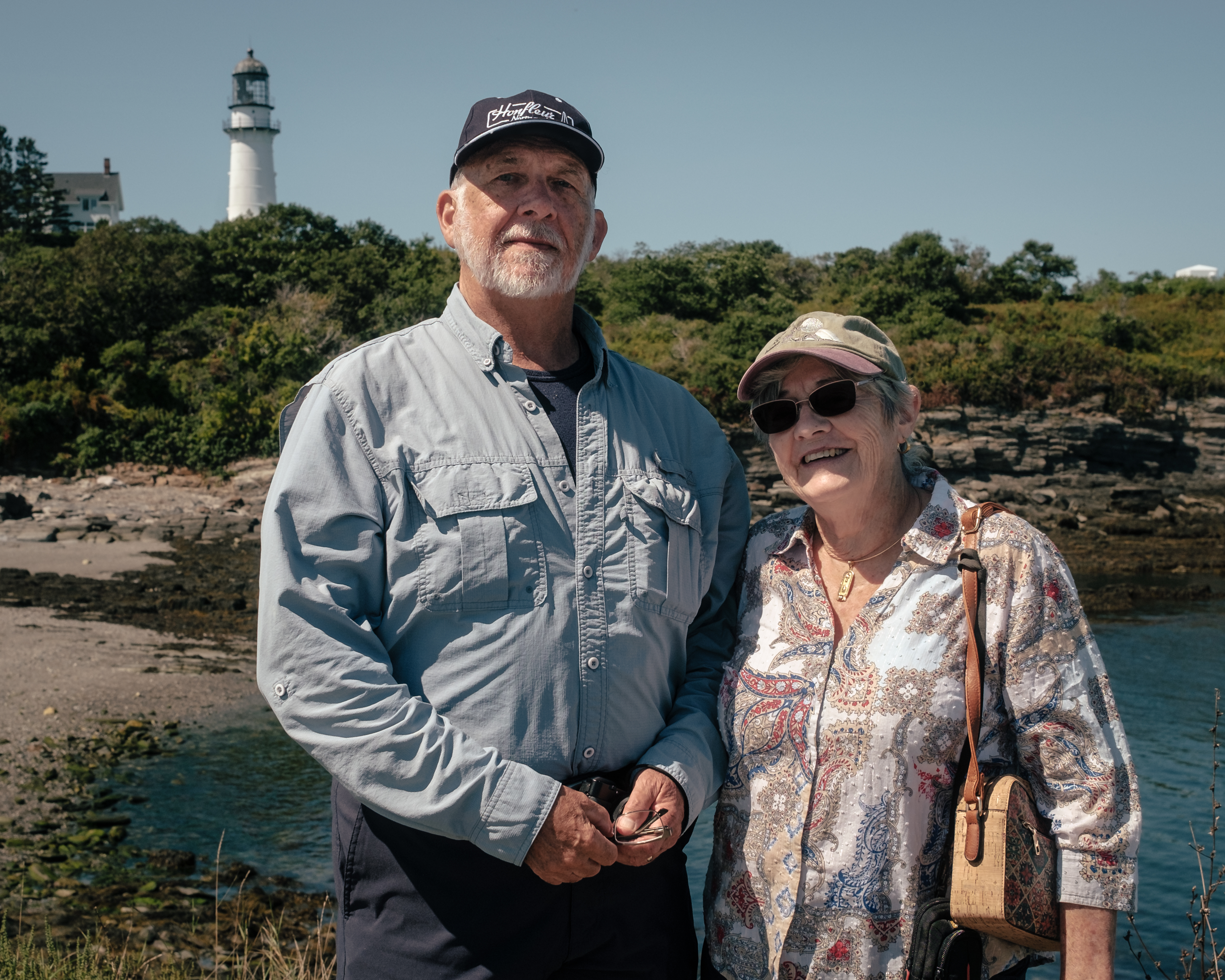
The next stop, Honfleur, in France, turned out to be an unexpected gem. Honfleur is a charming historic town with a lovely old port, right across the river from the much bigger port of Le Havre. (https://en.wikipedia.org/wiki/Honfleur) It was an easy shuttle ride to town where the bus stopped in the middle of a HUGE aire – campers as far as the eye could see. We, of course, set off in search of coffee and a croissant, which we enjoyed overlooking the little harbor basin.
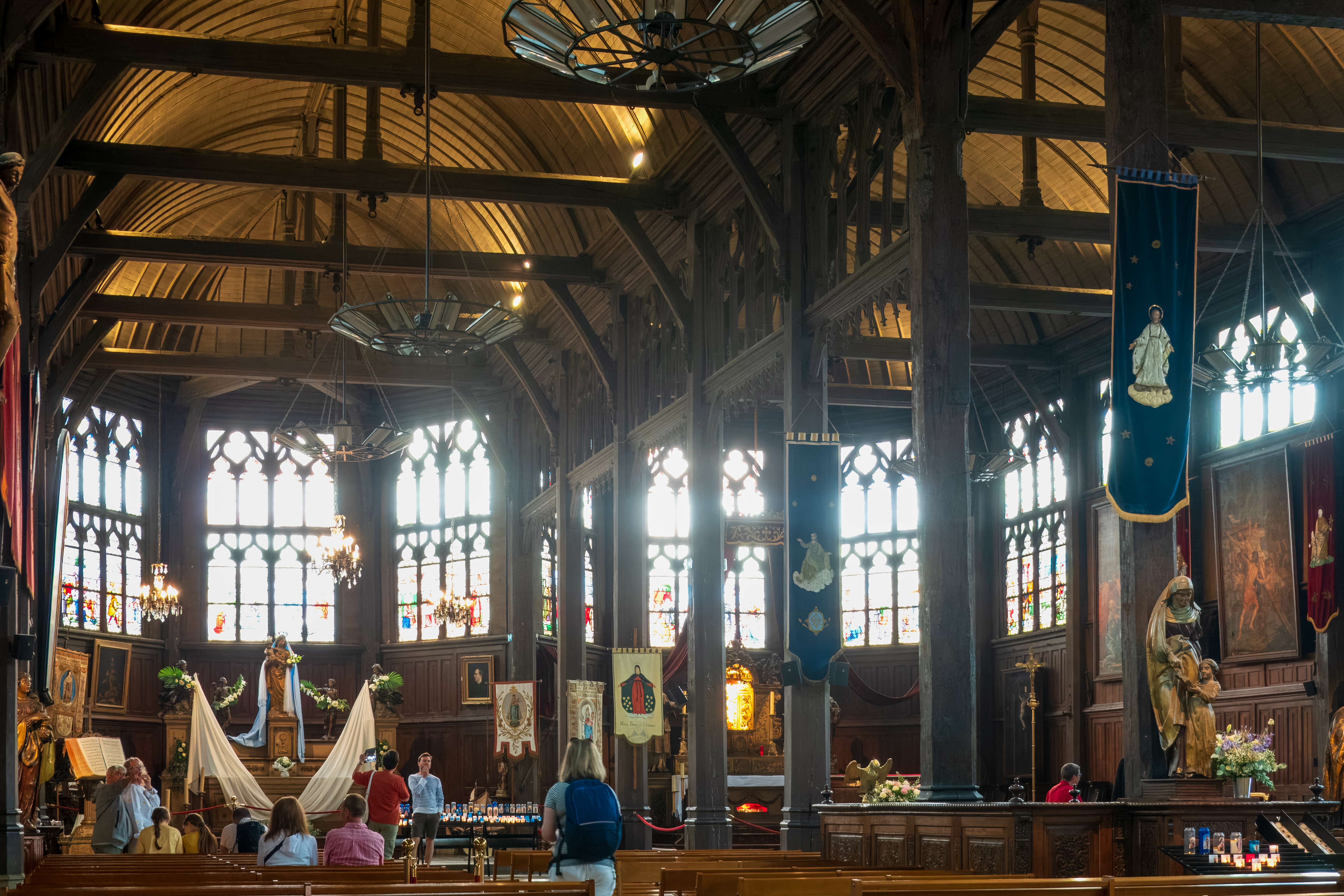
We had managed to pack one electric toothbrush motor, but no brushes. After a quick visit to a pharmacy to acquire the last brush in the store, we raided a chocolate factory for gifts and set out to visit the very old church.
The bell tower is actually across the street from the church.
St. Catherine’s Church, in the form of a market hall or two ship’s hulls.
Largest wooden church in France, all timbers cut by Norman axemen. No two the same length.
One of my favorites; I love the view of the music and the performance notes.Cow piss. Be sure to sample local treats!
The basin was very scenic.
And the kids were there sketching and painting.
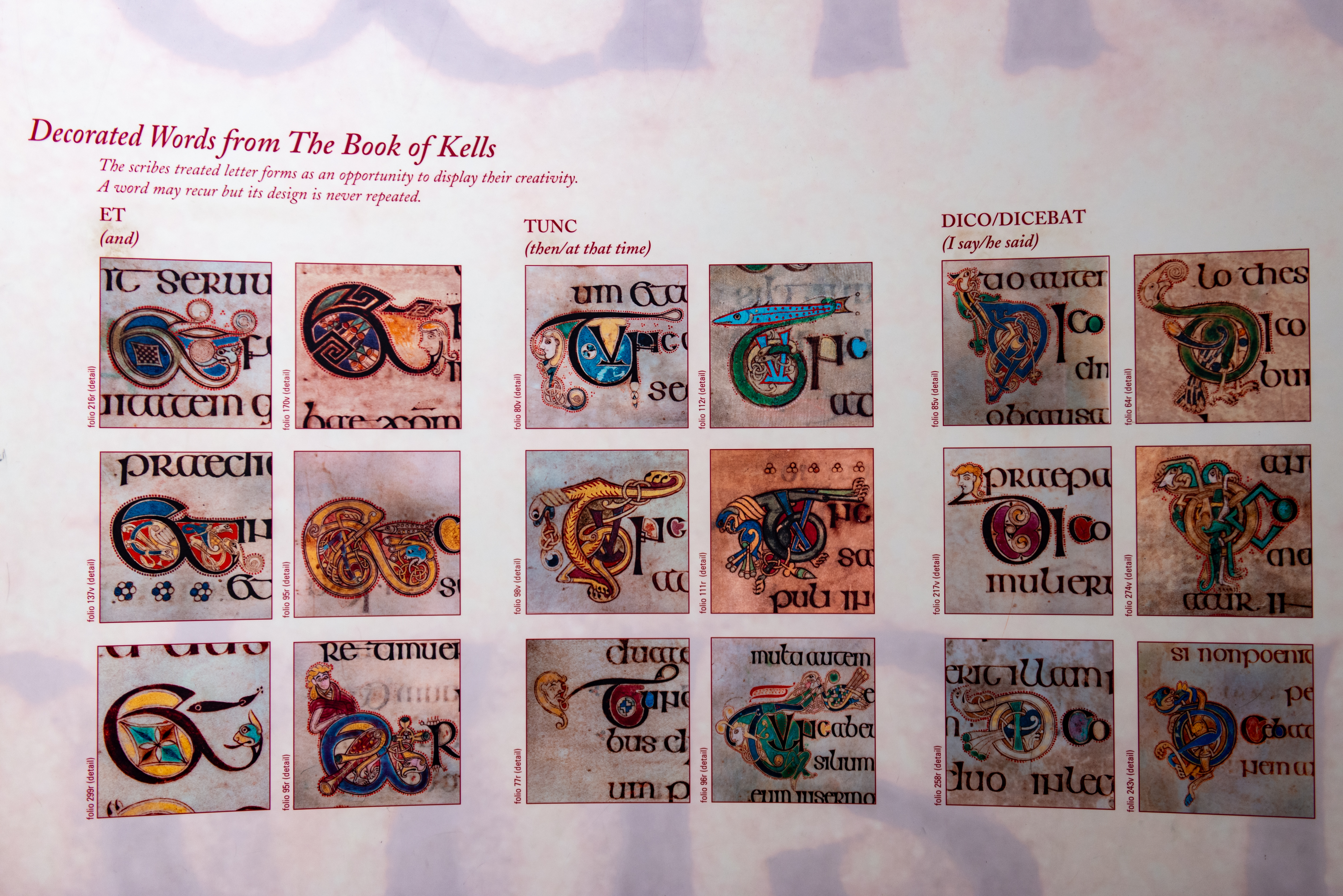
The ship then headed for Ireland where the weather proved to be very Irish, at least in Dublin. The expression is, I believe, “a soft day”. It was a bit misty and moist but we had a super afternoon at the University of Dublin. We had prebooked a visit to the University to visit the Book of Kells. First we had an excellent tour of the university campus.
The Campanile under repair. Legend has it that bad things happen to students who walk under it.
This video exhibit was very pretty. Not sure we understand the point of the decorations floating away, but it is spectacular.
The Library was itself spectacular, even though a lot of the books had been removed so that the library could be renovated. How long would it take to read all of those books? And most are ancient originals. (The dust alone might be fatal!)
But enough books remained in the stacks to give you a good idea of the tremendous scope. The library also contained the harp of Brian Boru. (https://en.wikipedia.org/wiki/Brian_Boru)
We wished we could have had a second day in Dublin to visit some of the other museums, specifically the emigration museum. We may have to return!
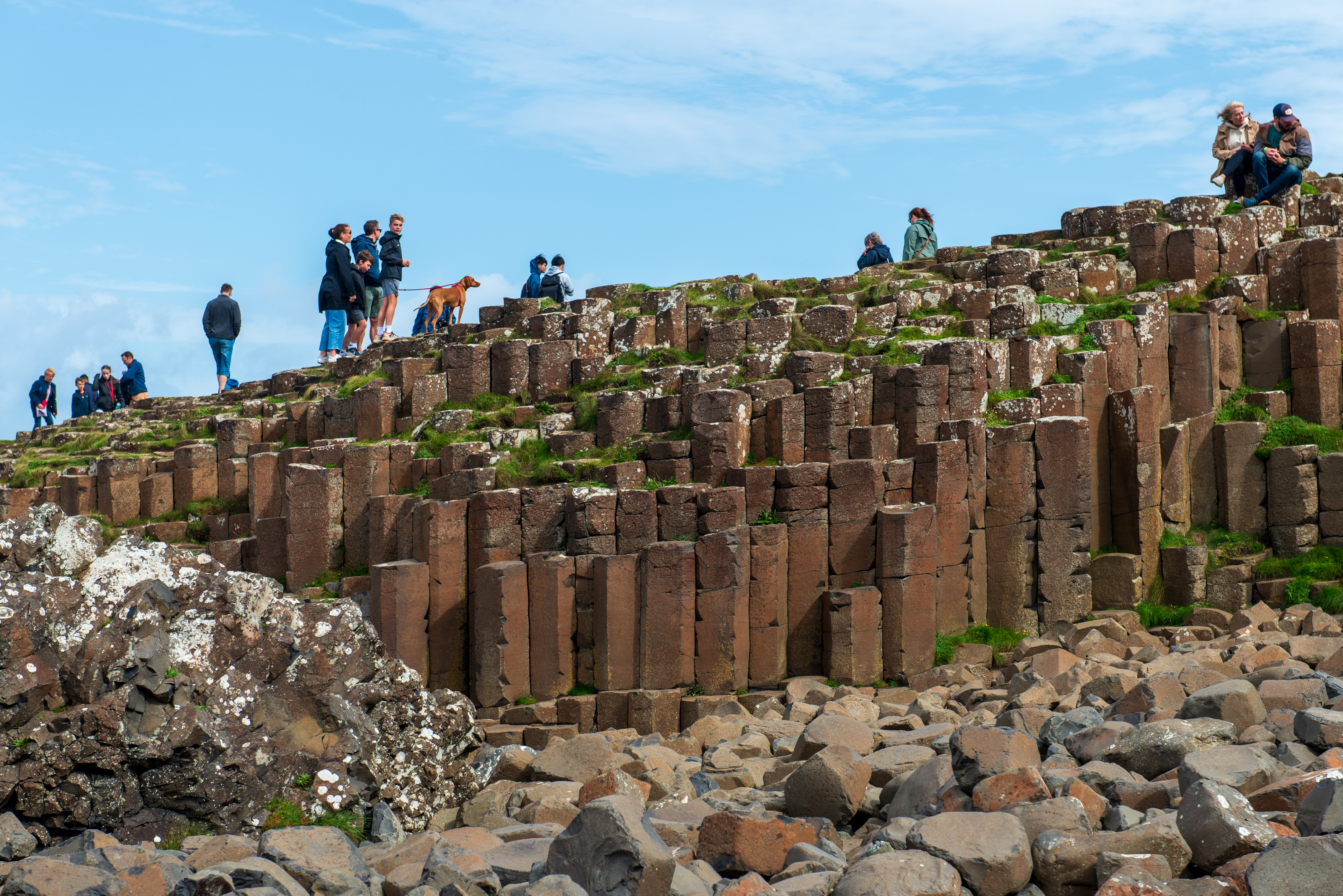
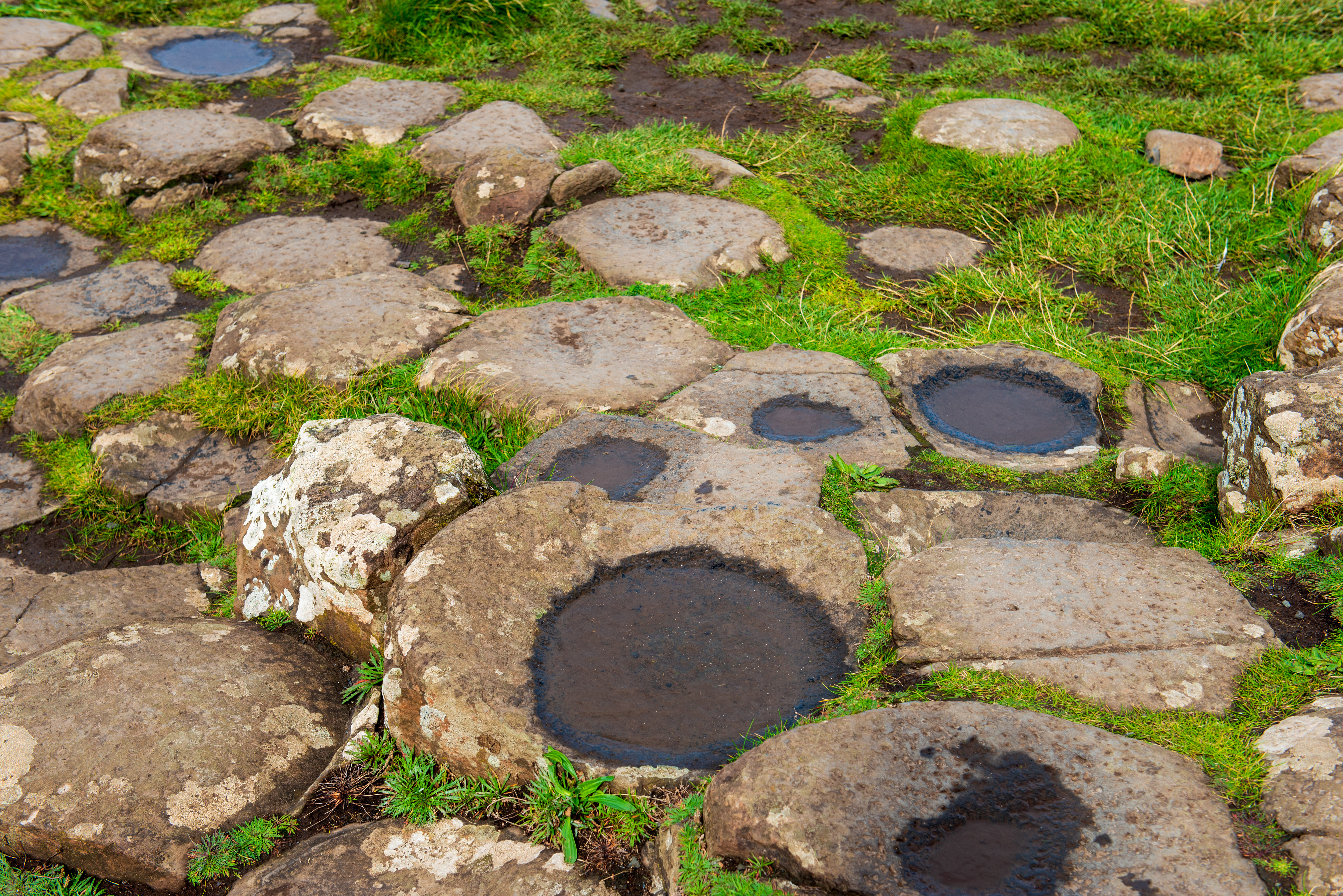
And on to Belfast where we had booked a trip to the Giants Causeway. (https://en.wikipedia.org/wiki/Giant%27s_Causeway) Denise had long wanted to see the “causeway” and we were delighted to get the chance. We passed on the Titanic displays.
Where the basalt had not yet eroded, the columns looked like stepping stones.
The views from the bus were spectacular and walking down to the Causeway and back to the visitor center was interesting (and good exercise). And it did not rain!
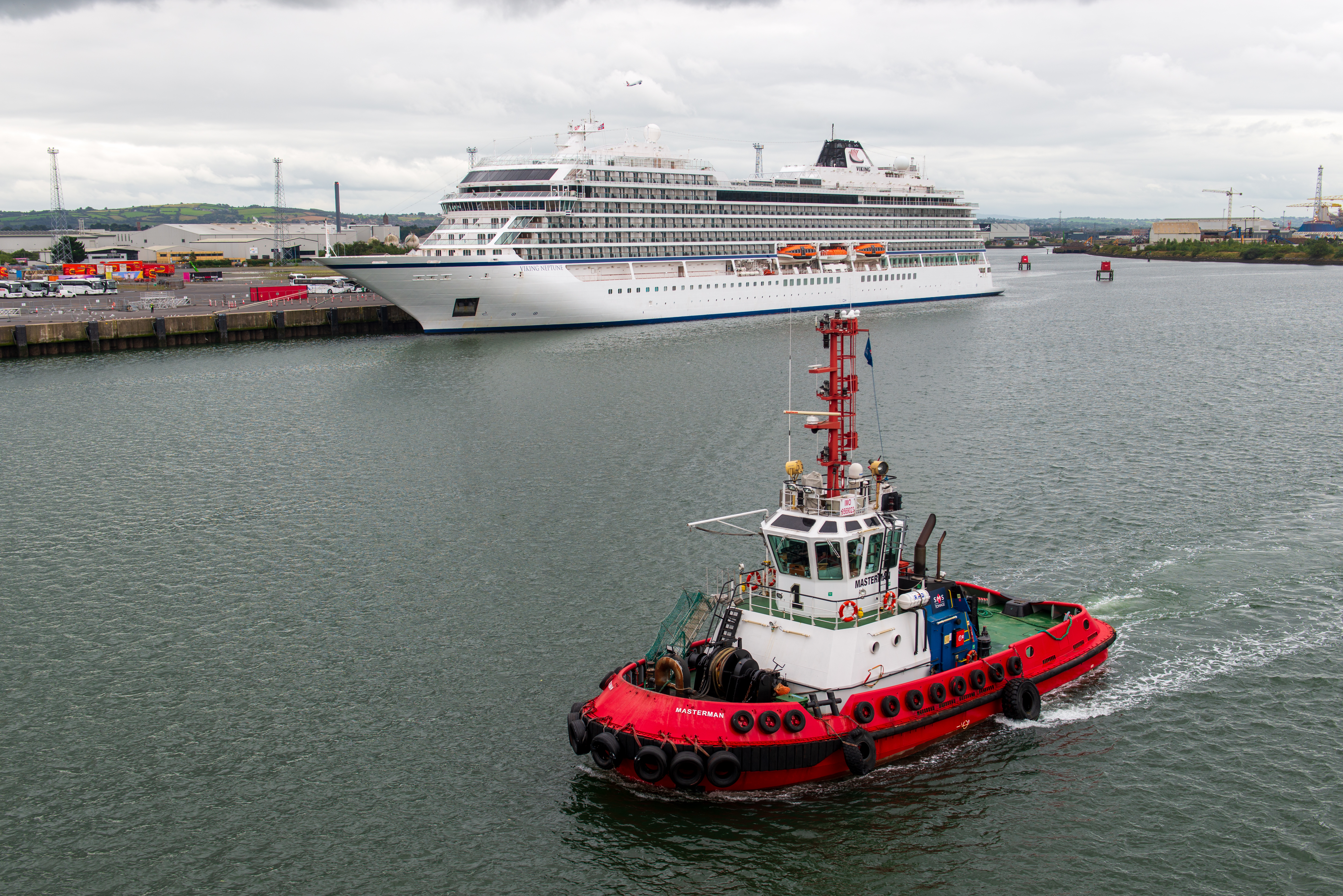
Sailing out of Belfast, we passed a familiar sight, a Viking ship, a twin of the ship that we took to Europe back in 2023.
We first saw these pivoting tugs back in the Panama Canal in the 1970’s. They have a central dive system that allows them to push or pull in any direction. Something like this: https://en.wikipedia.org/wiki/Voith_Schneider_Propeller
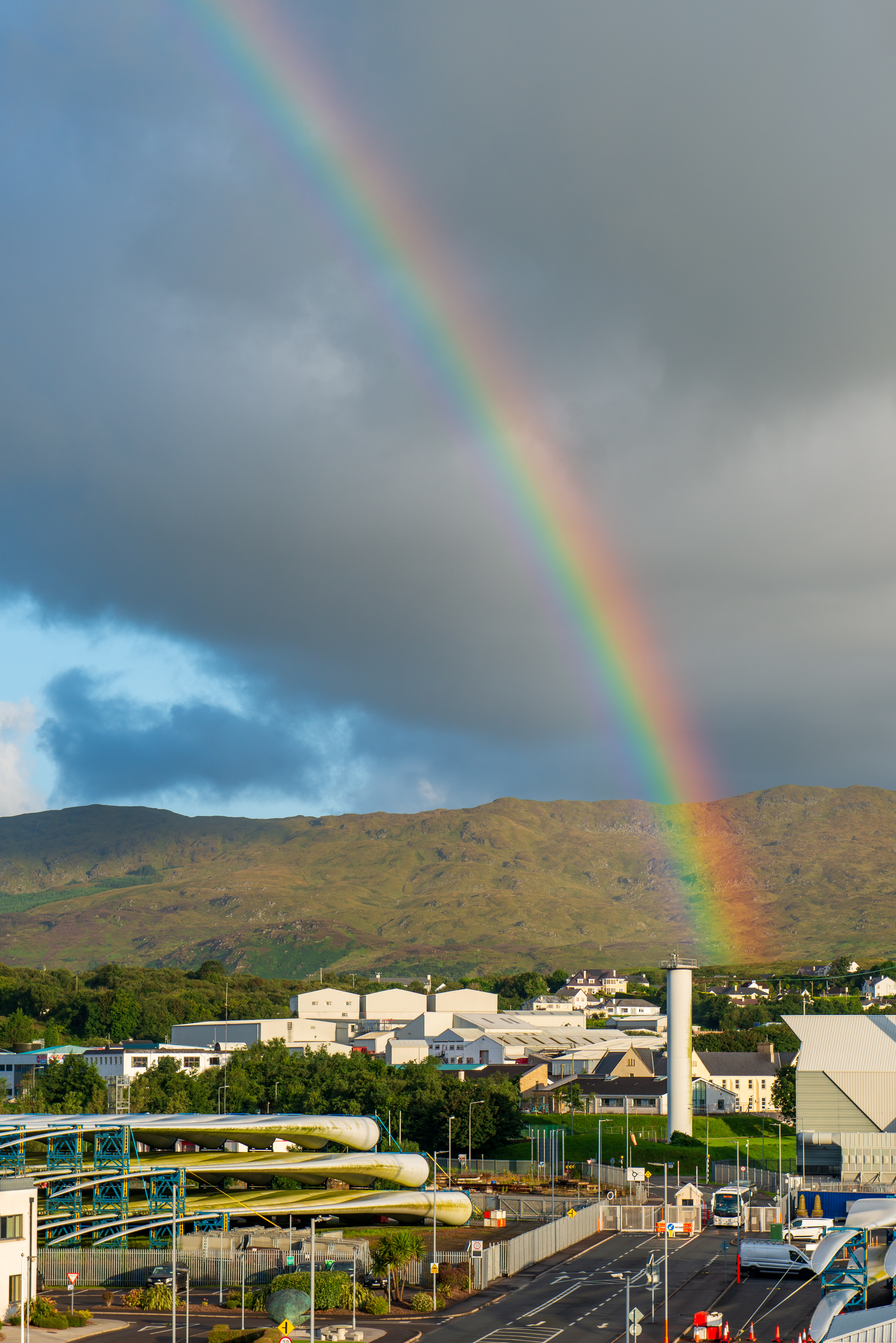
The final stop in Ireland was in Killeybegs, which no one on board had ever heard of. We certainly had not. We went ashore and found a coffee shop, and enjoyed a walk around the very small fishing town. Small as it was, it made one person very happy; we helped him find a cell phone store which actually had a cable that he had not been able to find!
The Chamber of Commerce went all out, welcoming us with a beautiful rainbow.
The waterfront and the harbor were bustling with activity.
We then set off across the Northern Atlantic. It was a lot rougher than we expected (it was August) and the Insignia, originally designed to sail the Caribbean, did not do well in rough seas. In fact, we were obliged to miss our next stop in St. John’s, Newfoundland because our speed had to be reduced to keep passengers safe. We all regretted this. (We learned that several other ports had been cancelled on the way over to UK.) So we held on tight and enjoyed our days at sea, pleased that we did not need the ubiquitous seasickness bags, scattered everywhere about the ship.
Atlantic Dolphin, pretty but distant.
Obligatory sunset photo.
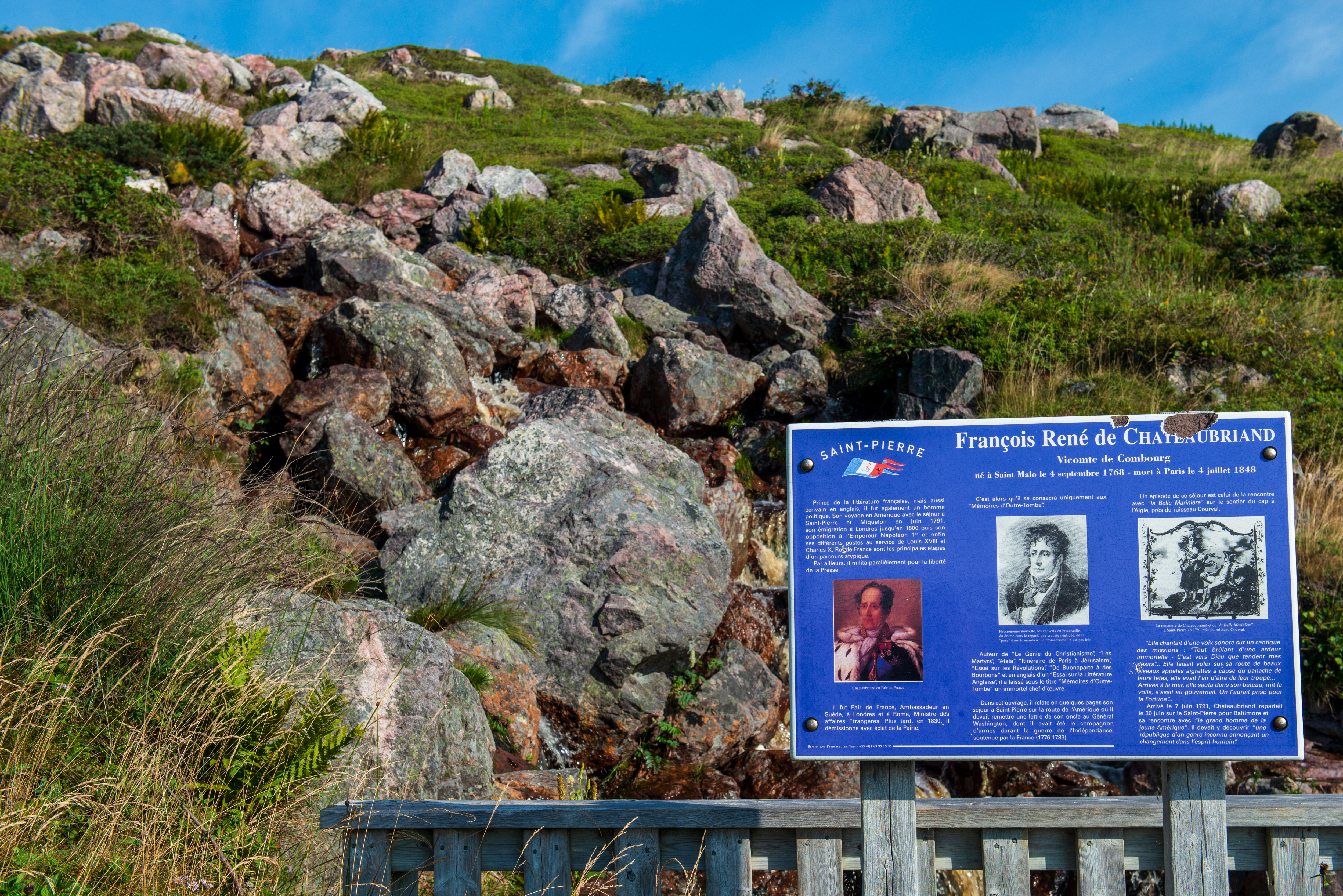
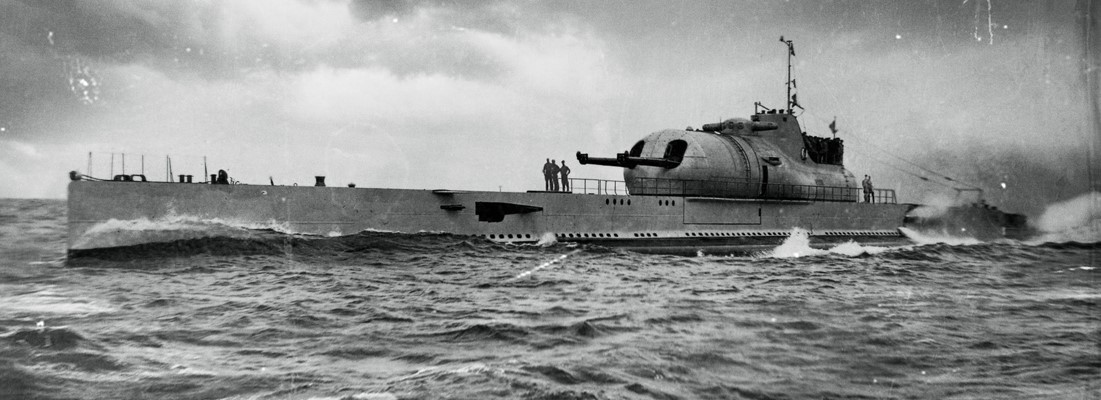
There is a small archipelago of some eight islands off the coast of Canada and these islands are actually a part of France; a self governing territory that sends a representative to the National Assembly. And the story of how this came to be is even more fascinating and convoluted, turning on wars, Cod fish, Al Capone, and involving one of the largest and strangest submarines ever built. You can’t make this up: https://en.wikipedia.org/wiki/Saint_Pierre_and_Miquelon) We skipped the shuttle and walked into town, admiring the views of the harbor.
We were not the first tourists to pass this way.
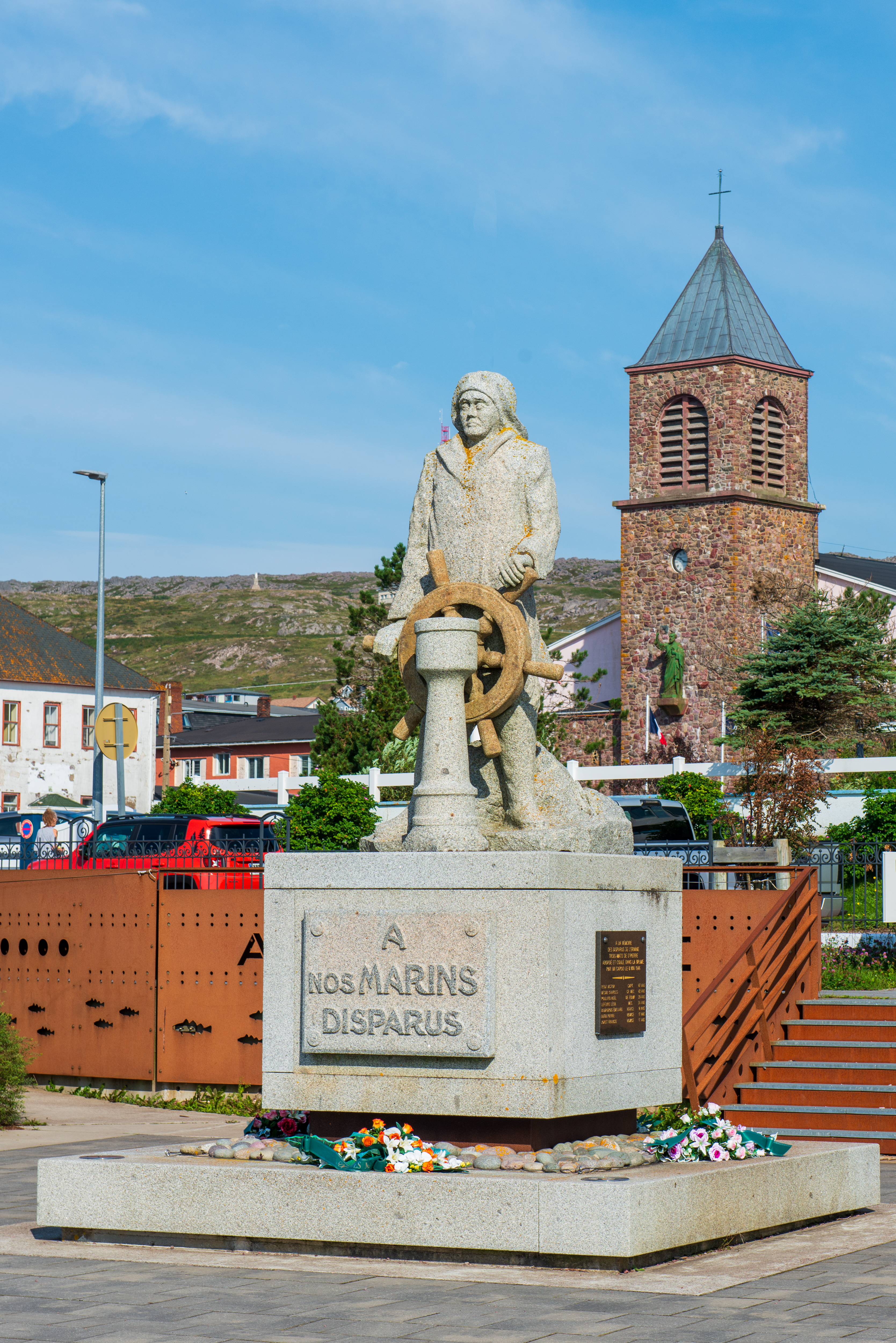
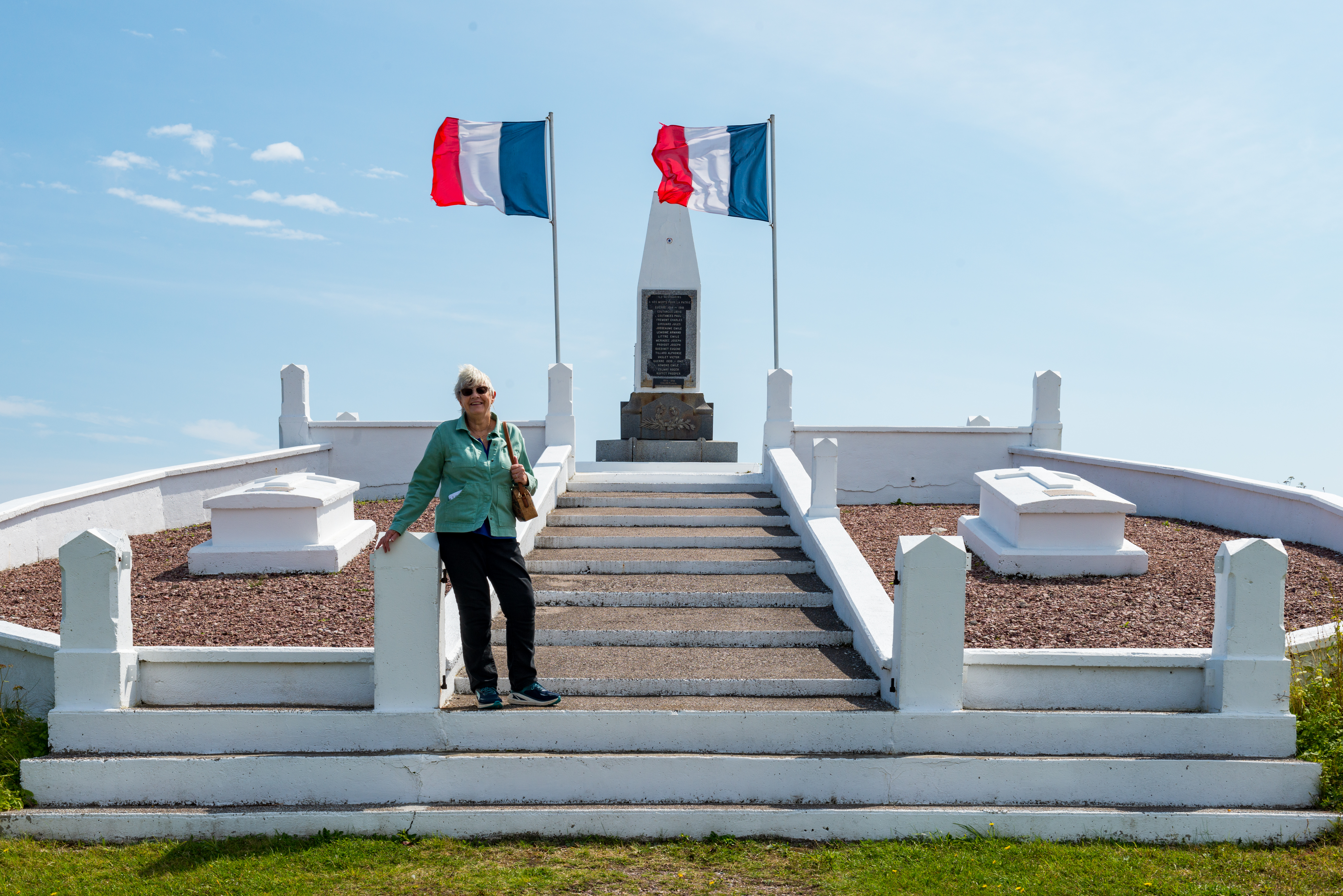
Memorial to lost sailors.
Cannon on the waterfront.
We wandered the scenic town and had a last galette lunch from a food truck. We also visited the little museum with neat prohibition exhibits. Fortunately, the weather was glorious. And then it was off to the Isle-aux-Marins, a mostly uninhabited island in the harbor. (https://en.wikipedia.org/wiki/Île-aux-Marins)
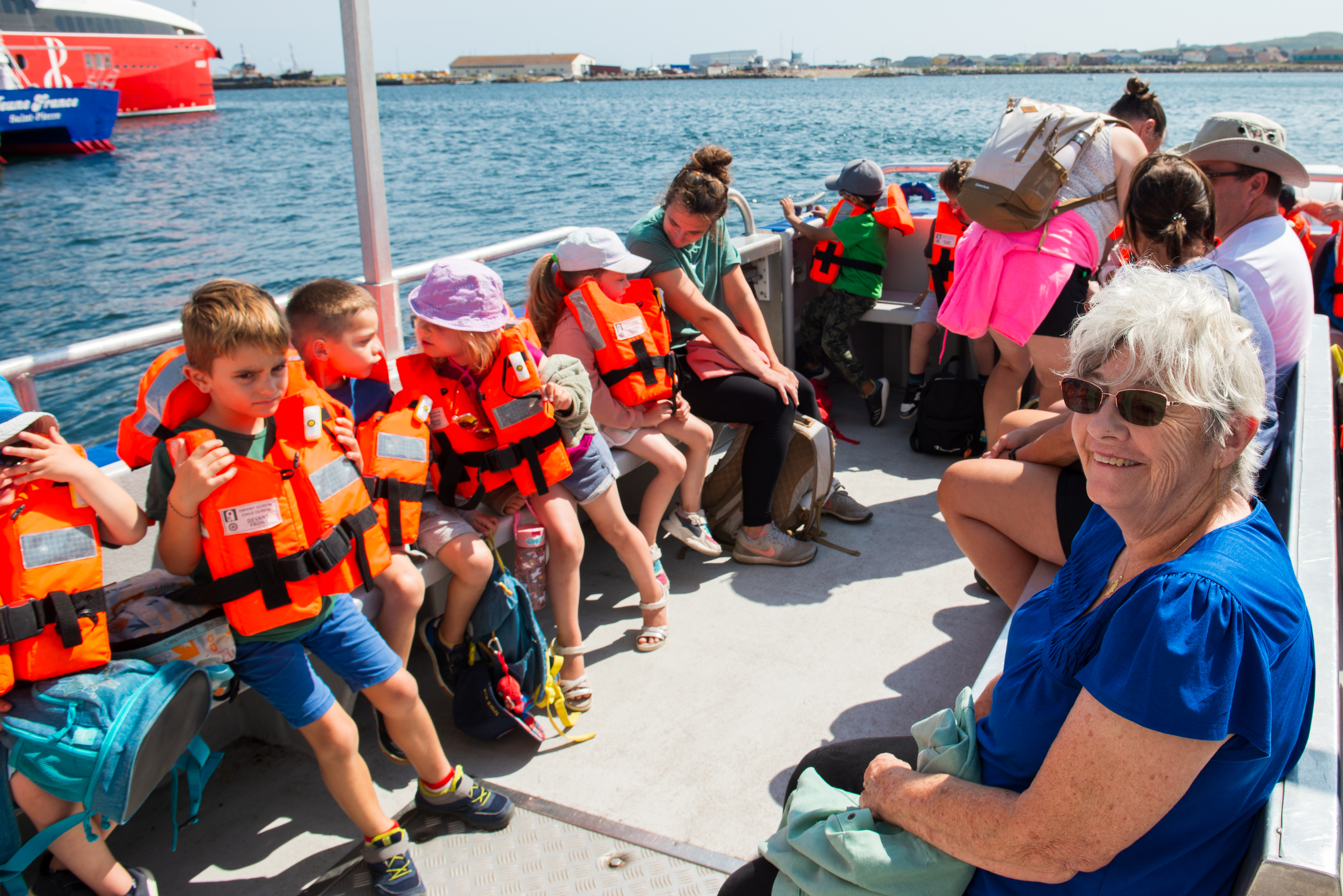
Denise herding school children on the ferry to the Île-aux-Marins.The Insignia seen from the Île-aux-Marins.
We were met by old friends, Tiger camper owners, and photographers. They swept us up and entertained us all day – lunch, views, history, we did it all! (https://www.stonecoastphotography.com)
Fred’s father had been the officer in charge of the US Navy “armed guards” on a Liberty ship during World War II. They manned the guns. (https://en.wikipedia.org/wiki/Liberty_ship) Like many veterans, he rarely talked about his experiences, so there is a huge gap in family lore. It was fascinating to visit the site where so many Liberty ships, the ships that won the war, were build and launched.
Replica of a bow, with the forward gun tub.
The display is located right on the site of some of the original slipways where the ships were built.
Maine sea food. Everyone else had the same idea on a pretty day.My horn’s louder than yours. A lot louder! A reminder that the weather can be dangerous in Maine.
Looks so much cooler when a pro does it!Nifty rocks that look just like petrified wood.We had last camped with Knapp and Ella (and hound) in 2016 at the Tiger Rally outside of Leadville, Colorado.
Fred’s take of the classic Portland light.
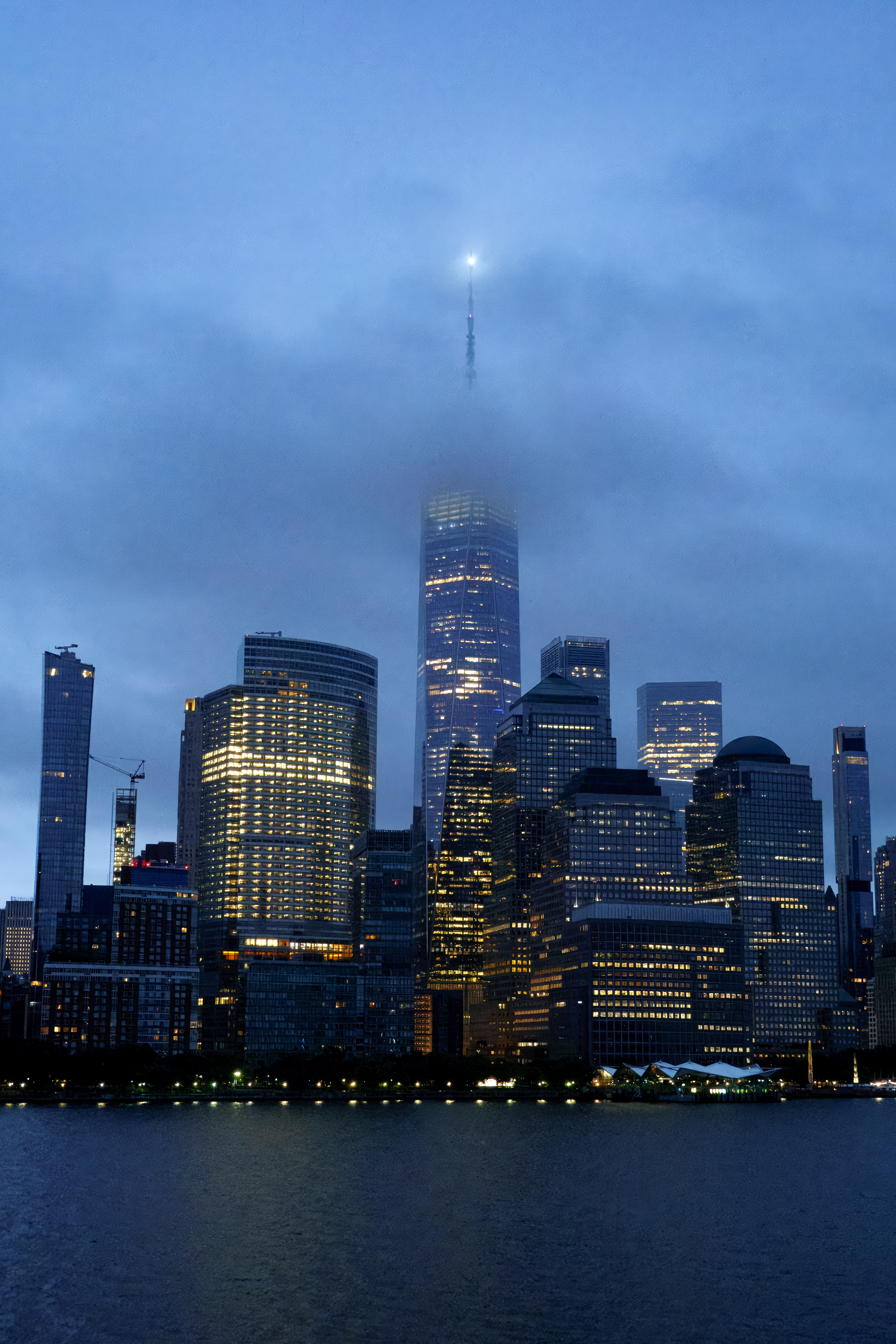
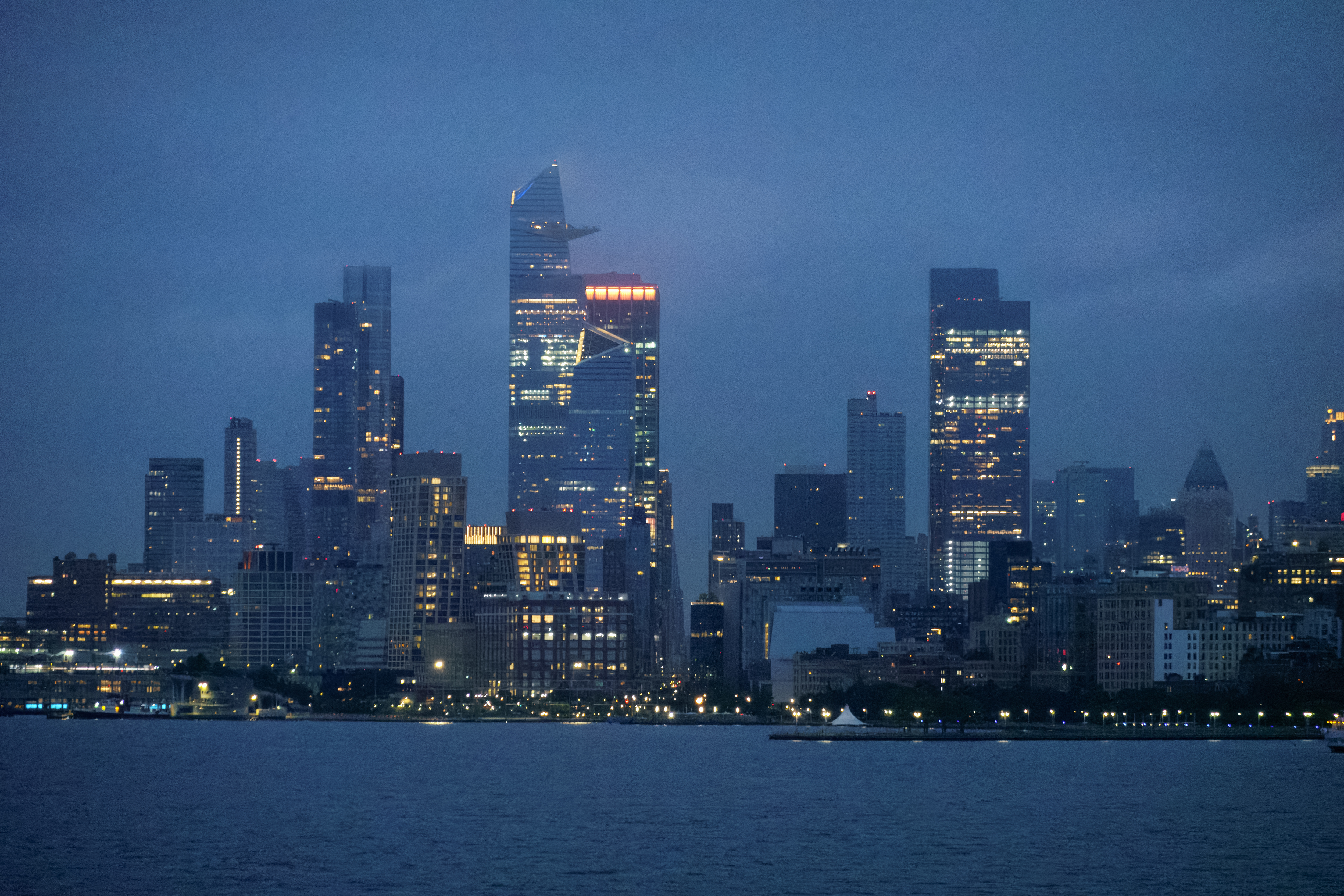
We stayed on board in Newport and the next day, arrived in New York. We sailed up the river at daybreak to dock at almost the same pier where Fred first left the United States back in 1955. Been a long, strange trip to come full circle.
Manhattan from the Hudson.
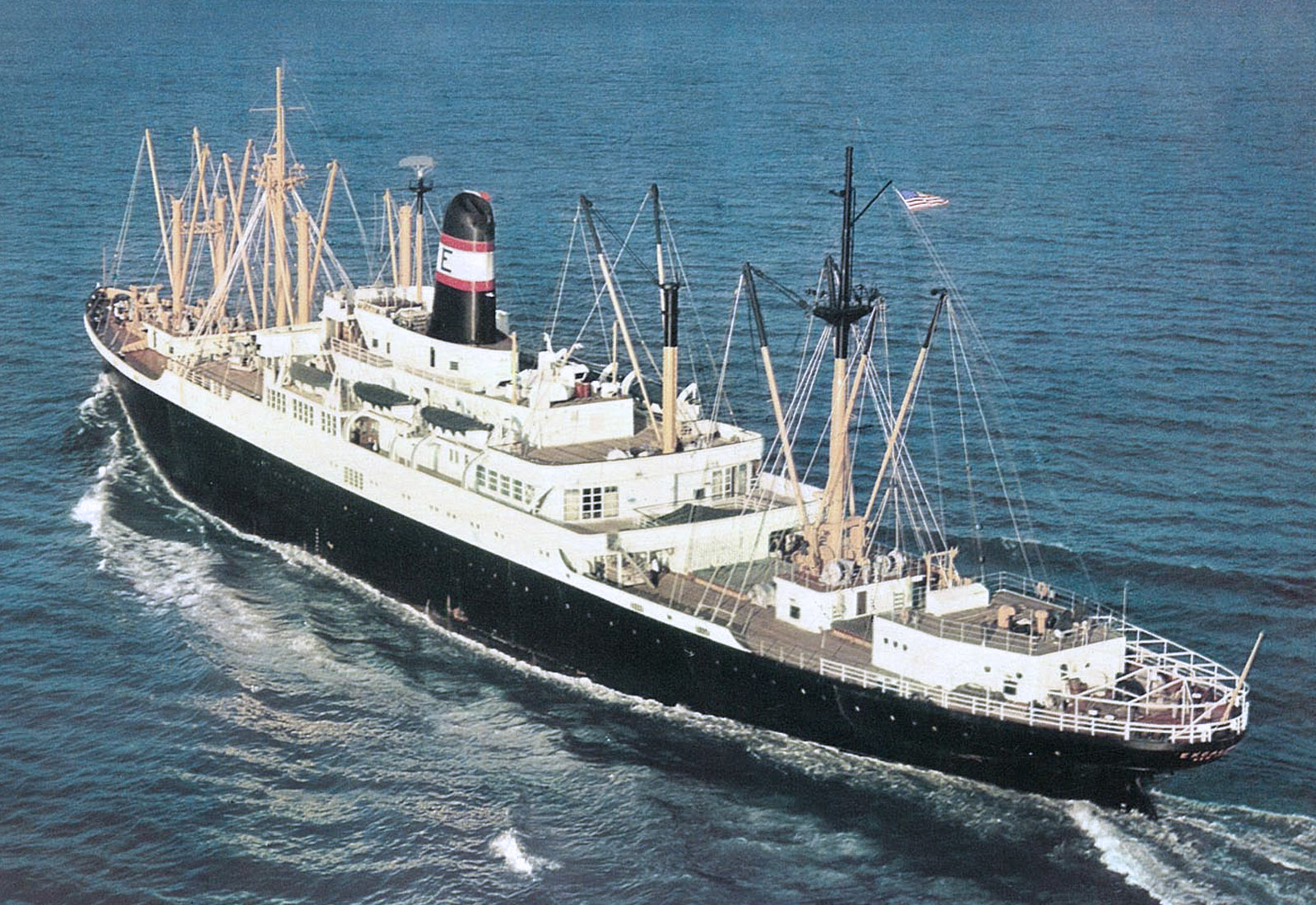
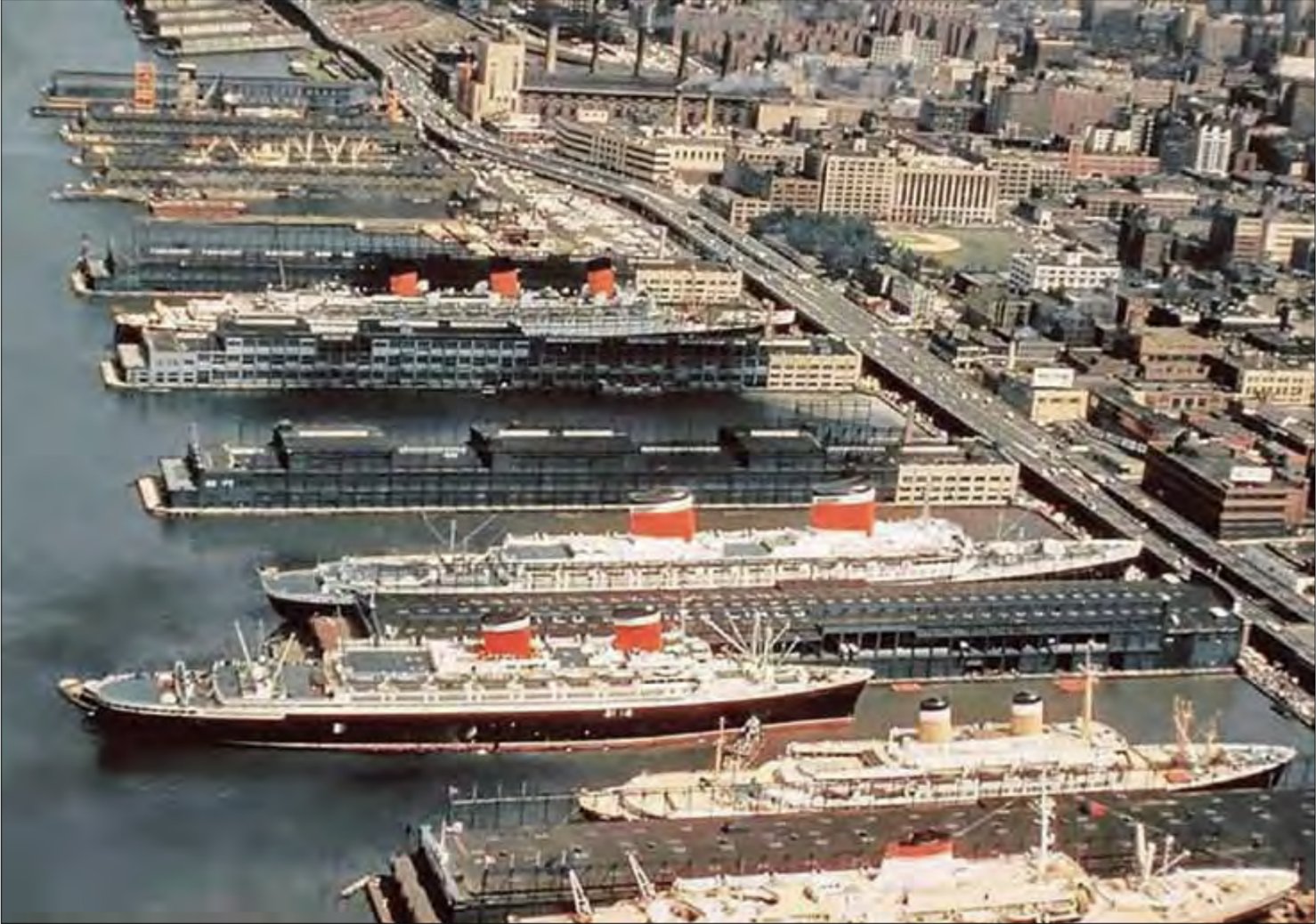
Fred first left the US, bound for New Delhi, via Beirut, on one of the Four Aces, the S.S. Exeter. The ship with the yellow stacks in the picture below, is either the S.S. Constitution or the S.S. Independence, American Export Lines ships, tied up at the same pier. The Cook family later used these ships for home leave travel from Naples to New York.
S.S. Exeter
Busy day on the Hudson. Everyone is in town. How many of these classic ships can YOU name>
We hopped on the Acela for Washington and, in a few hours, collapsed at home.
As we had decided to return to the US by sea, we found ourselves with a few days to spend in Wales. Our last Welsh visit was to the northern castles about 38 years ago, so it was time to discover some of the south.
We started off staying at Our Welsh Caravan and Camping (https://ourwelsh.co.uk/), near the village of Gilfach Koch. The campground itself was roomy and featured sheep all around.
We had hoped to visit Caerphilly Castle, but it turned out that we were rather farther away than we had hoped. So we cast around for a different place to visit and found the Royal Mint in the nearby (we thought) village of Llantrisant .
Google maps kept suggesting very complex routes, so we started out on Welsh cycle route number four (https://en.wikipedia.org/wiki/National_Cycle_Route_4 ) which we expected to be pretty manageable. Silly us. It proved to be quite a challenge. We started off up a steep hill and then the trail disappeared leaving us up on the ridge with spectacular views but riding a rut along a field.
The track was rough, but the views were wonderful.
We managed to get to the top of the hill and met some mountain bike cyclists descending a much better trail (almost a road). We asked for directions and continued towards the Mint. After a series of odd streets and tracks, we made it. Note to all – don’t ride small wheel bikes on Welsh bike trails!
The first order of business was lunch, to fortify ourselves after our travails. The cream tea looked excellent but more than we could manage. The Royal Mint was a most interesting site and the tour was excellent. (https://www.royalmint.com/) Because it was a non working Sunday, we were allowed onto the Mint floor. This meant that we were able to view the buckets of coins that had been prepared for the sixty countries of the world, including some, like Cuba and Ecuador, that we had lived in. Sadly, they discouraged the taking of samples. Unfortunately no photography was allowed. We resolved to stay on the Google route back to the campground but we again found ourselves walking on steep, overgrown paths and faced with locked gates! But we made it, and even managed to find a supermarket where we could purchase some items we were lacking. It is worth noting that there were lots of road works going on and all of these included bicycle accommodation, so things may be easier in the future.
Our next stop was a campground outside St. Davids. (https://en.wikipedia.org/wiki/St_Davids) We were up on the cliff and we arrived on a cloudy, rainy, windy afternoon with absolutely no view. However the staff assured us that the views were spectacular, when it stopped raining!!
After the rain, the sky was magnificent, and yes, we could see the Irish Sea.
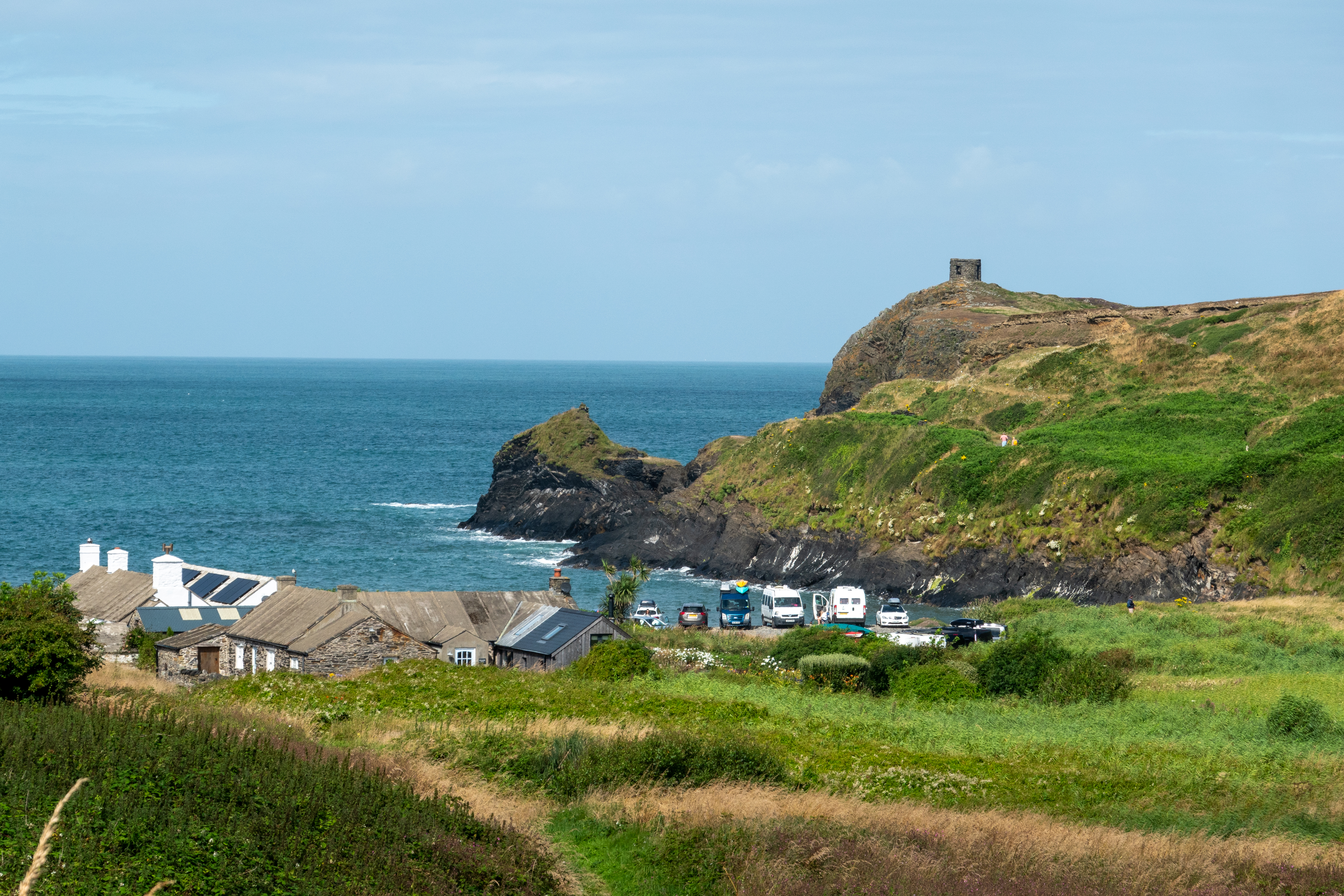
View of the village with the ruins of mining buildings and workers cottages.
Denise captures the view.
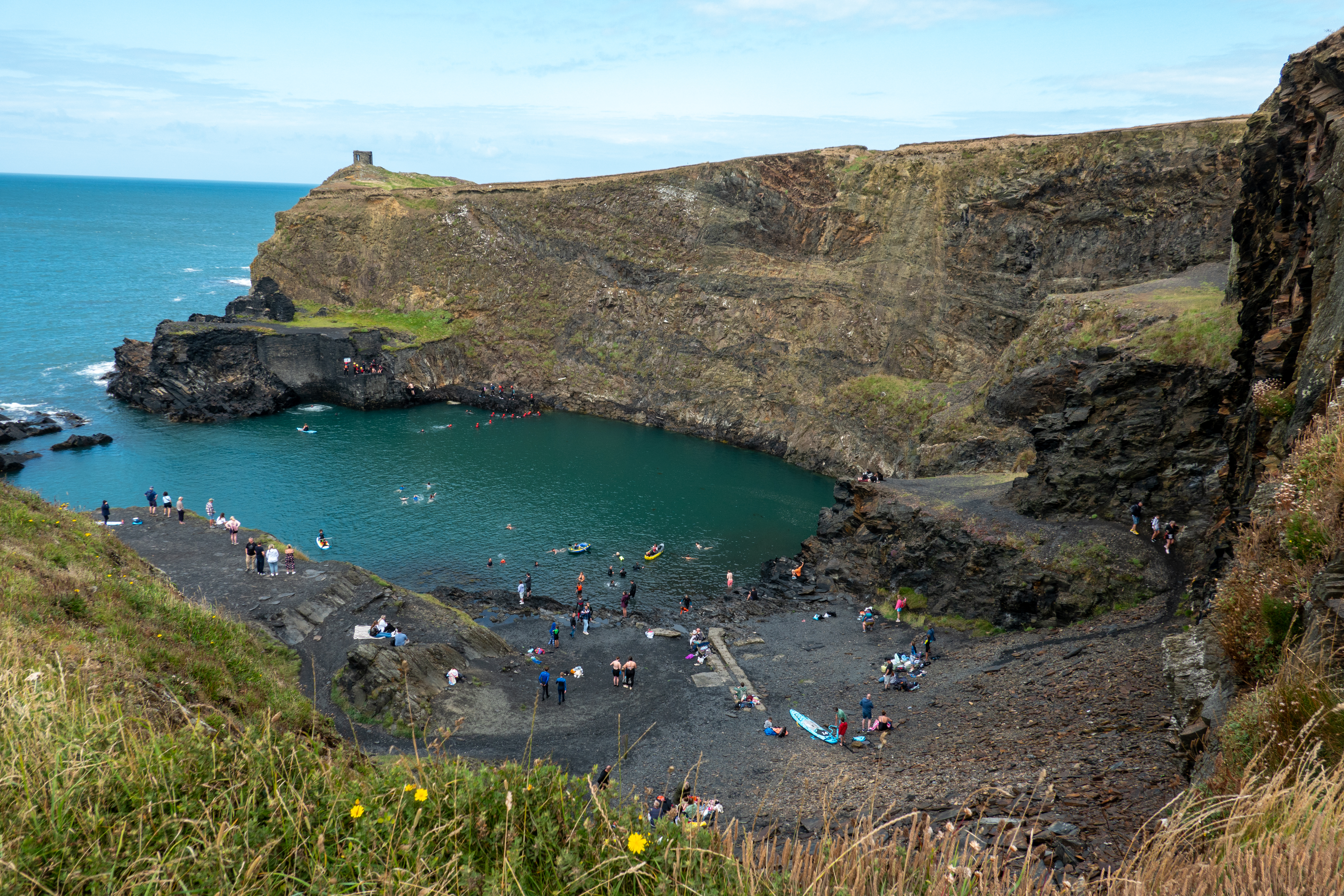
The lagoon is a deep bay, formed when the ocean was allowed to full the pit of an old slate quarry. The slate turns the water a glorious blue. Sorry, no Brooke Shields at this lagoon.
Once there, we enjoyed the views of the coves and small beaches. A fund raising morning was underway with people jumping in the lagoon to earn money for charity. We skipped the jump and paid up in cash! We continued along the coast for a bit before returning to the campground. Never found any remains of the horse drawn tramway that was used to haul the slate to a nearby harbor, just the path.
The next day was dry but looked rather more unsettled. We took the summer bus into St. Davids to explore and, of course, to lunch. The place was heaving, but we managed to find a table at a local pub and had a dose of fish and chips. Then we headed down to the cathedral and the ruins of the Bishops’ Palace. (https://en.wikipedia.org/wiki/St_Davids_Bishops_Palace)
The cathedral seen from the ruins of the Bishops’ Palace.
Each room had detailed annotations and this great hall has bees’ nests, set off with orange cones. Don’t disturb the workers!
Though in ruins, it was clear how the palace had worked and it was most interesting. We then went to visit the Cathedral. (https://en.wikipedia.org/wiki/St_Davids_Cathedral) More than any other church we have visited, you could really see where new wings and expansions had been added over the years.
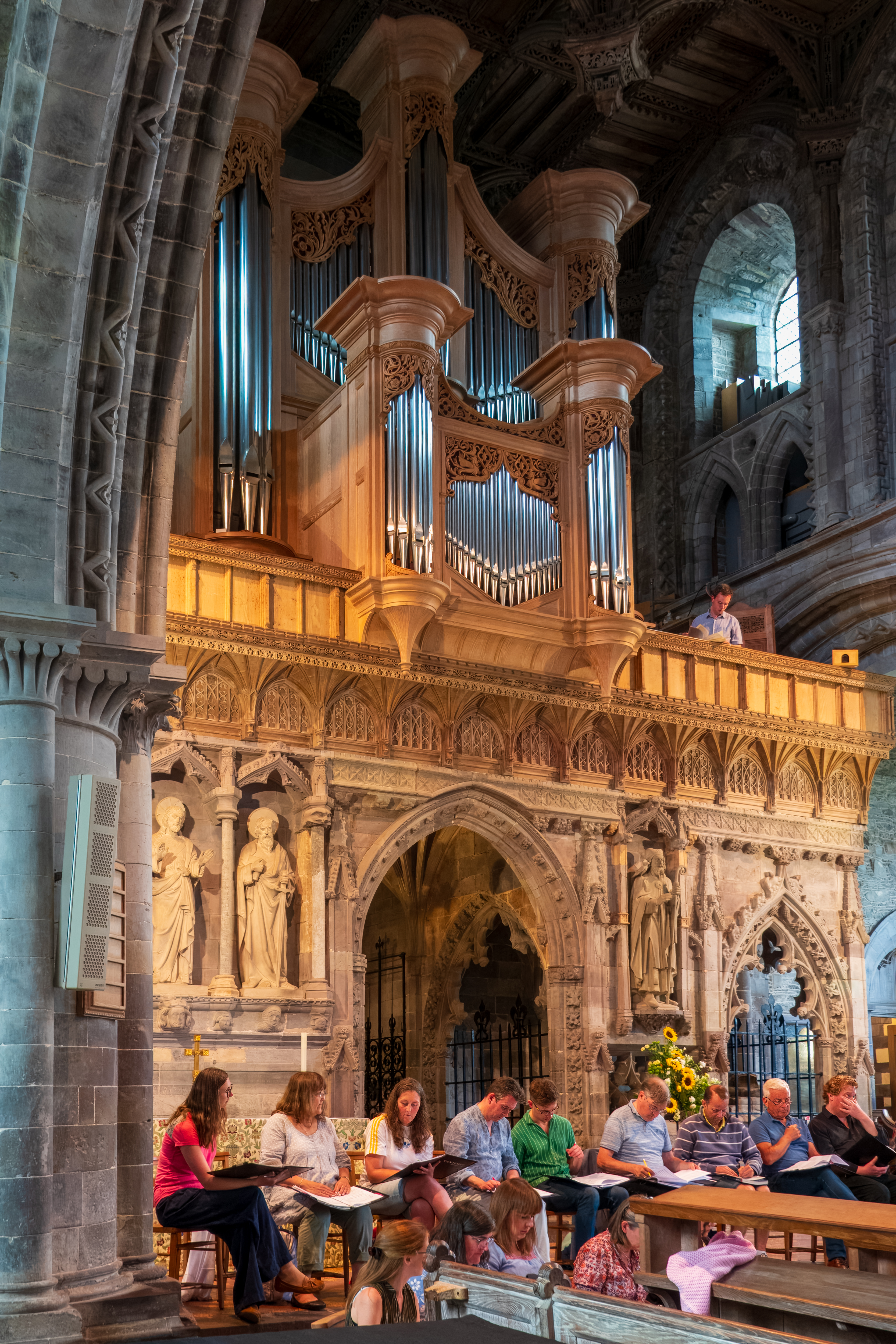
We managed to arrive as the choir was practicing, which was fun!
Choir practicing outside the rood screen.The choir space, behind the rood screen.
St Davids is known as the smallest CITY in the UK and is a charming spot. See correction in the comments! Seems that a cathedral brings benefits.
St Davids was the first cathedral choir in the UK to use girls rather than boys with the men.Formerly external window, now made into a small inside altar.
The original plan had been to continue up towards Anglesea but we changed our minds and headed to the Welsh and English Marches instead to visit Offa’s Dyke. (https://en.wikipedia.org/wiki/Offa’s_Dyke) We camped in a great site in a field beside the railway line. (https://panpwntoncampsite.co.uk/) We love trains!
The campground was on the obligatory narrow lane. This one was long and quite a challenge with the usual parked vehicles and bushes to scrape the side of the truck, but we made it, several times.
We drove REALLY slowly, climbing the bank to avoid the parked cars.
We walked into the town of Knighton to visit the Information Center and learn about the history of the dyke.
Looking down the High Street.
And looking up the street to the market cross.
Yes, we seem to have a thing about the walls, Hadrian, Antoinine, and now Offa, that surrounded England. Gotta control those pesky Scots and Welsh!
The dyke and ditch are hard to recognize; it is amazing that anything can be seen at all.
Denise crosses the line.
Just outside of Knighton is the Spaceguard Centre, one of the more unusual sites we have found. (https://spaceguardcentre.com) The Centre is dedicated to locating and tracking objects, like asteroids and comets, which might strike the earth. We were wary about tackling the steep hill on our E-bikes, so we ground our way up in the 917, navigating long, single track lanes.
Fred got kudos from the director for making all of the turns and grades!
The views over the marches were spectacular.
The Centre is on a dark, remote mountaintop and studies Near Earth Objects in conjunction with NASA and other observatories world wide. The Director gave us a fascinating tour, full of information. You will never be able to watch the movie Armageddon again and the views over the Marches are stunning.
The road up the mountain was of course, a single lane road but we fortunately did not meet (too) many other vehicles either on our way up or down! The visits are timed so that visitors can descend before the next group goes up. This helps!!
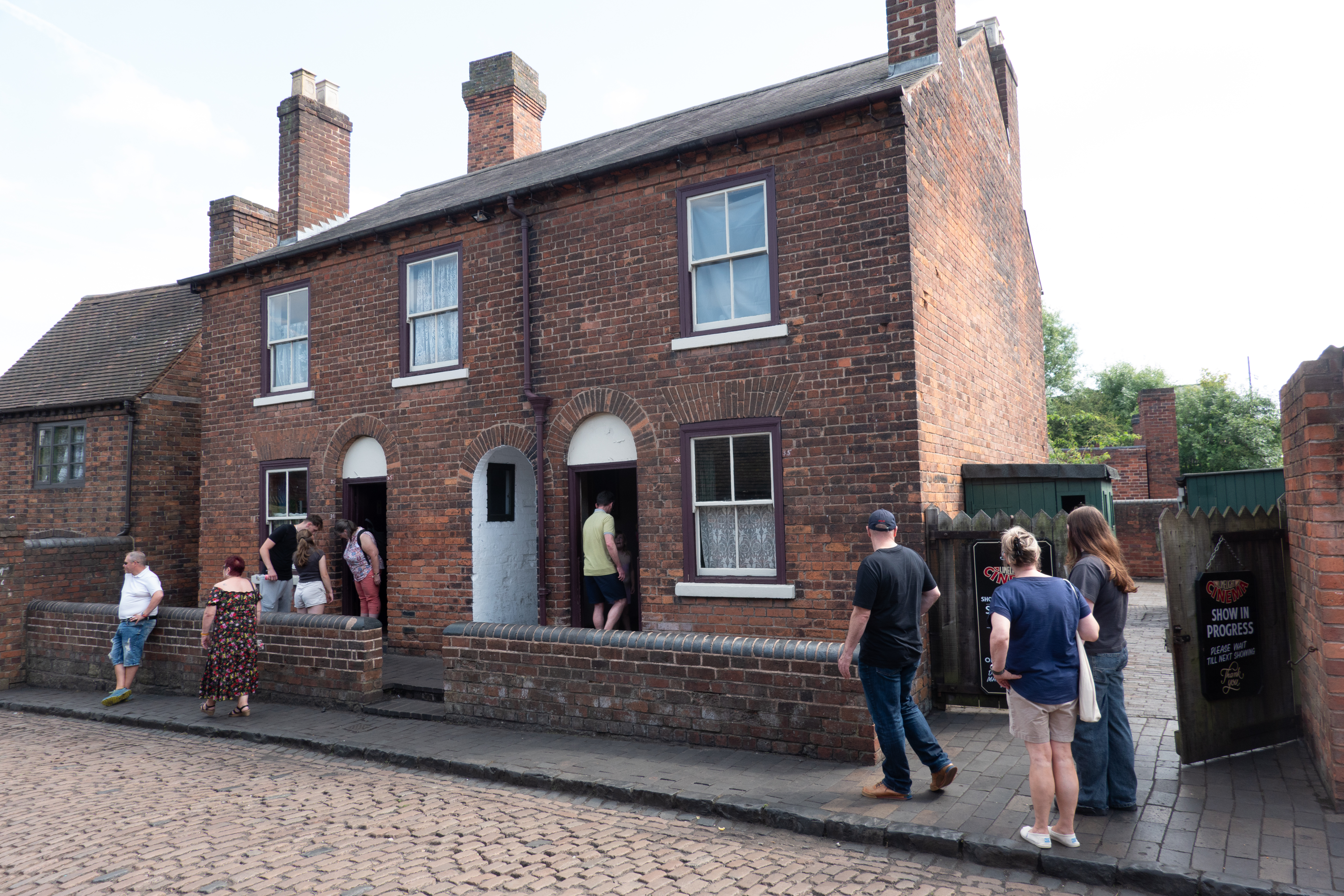
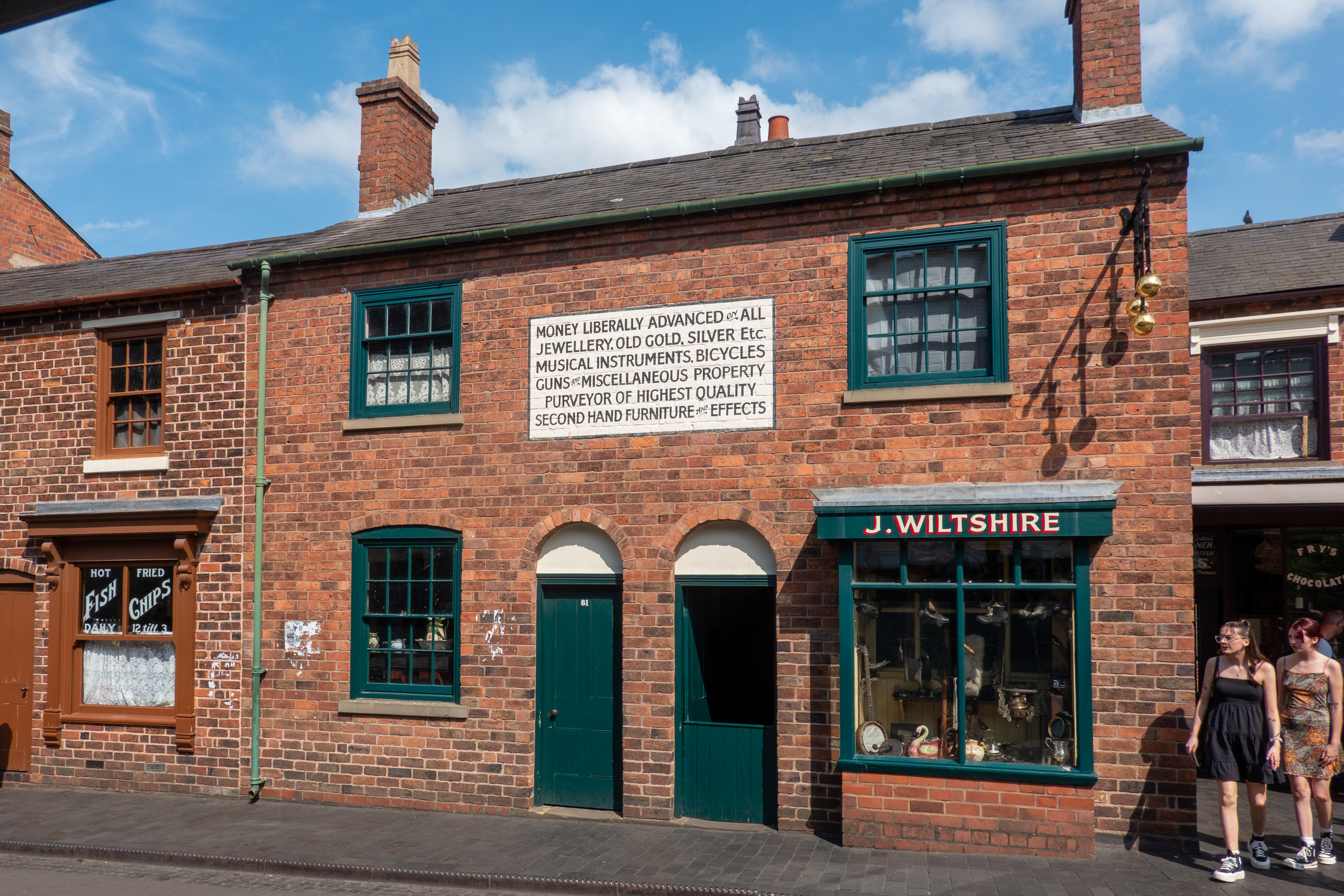
Then it was time to head back to Yatton, to store the camper and begin the final stage of our journey on an Oceania cruise. En route we stopped near Birmingham and visited the Black Country living museum. We love outdoor museums. (https://bclm.com/)
Some of the cottages.
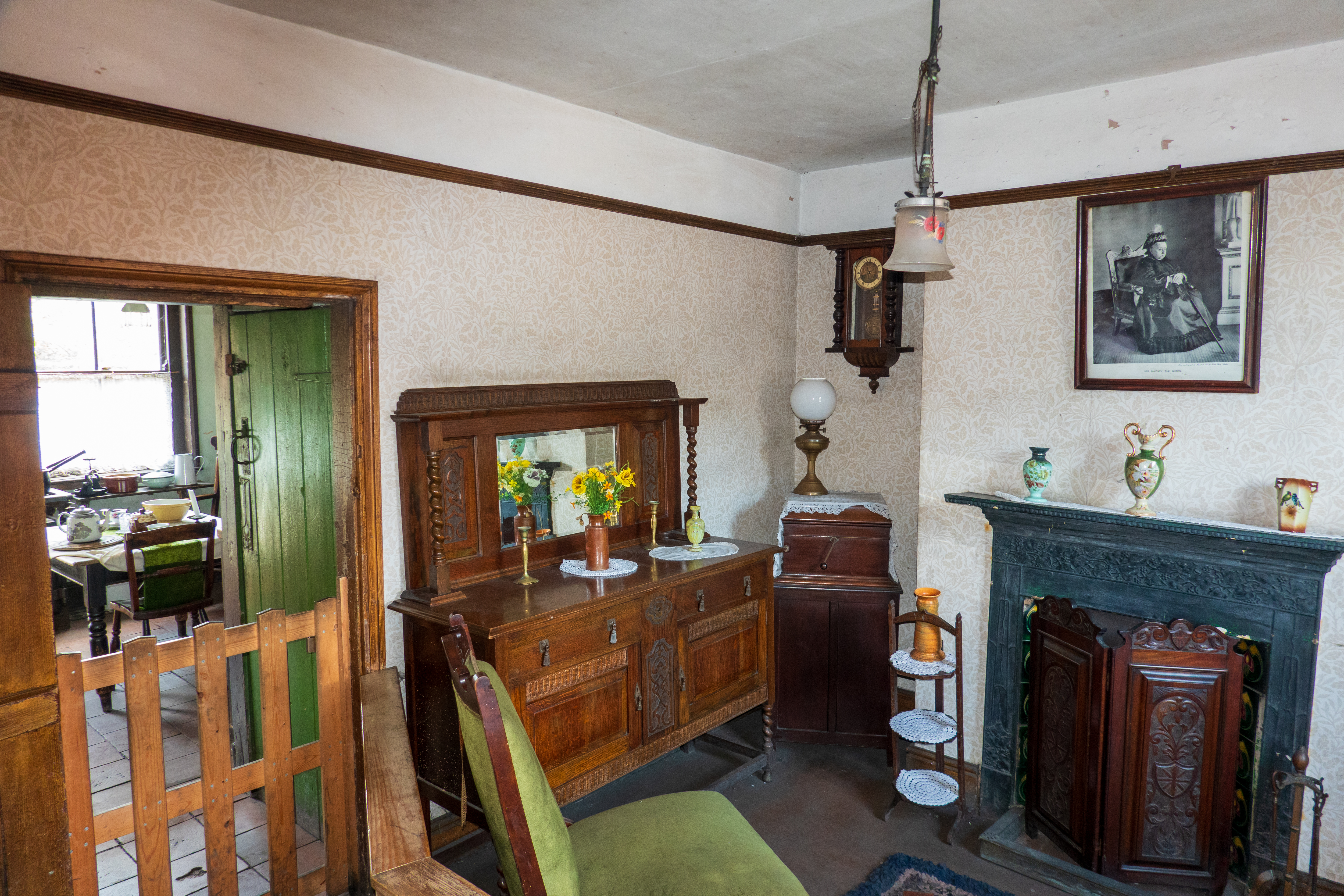
This house was meticulously reconstructed, even down to the tilt. It tilts because of subsidence, caused by mining tunnels settling.
In this case, they were able to locate and interview a previous occupant of the house, and decorate with actual possessions.Denise loved the old car window banner.
We finished by giving the camper a full cleaning and preparation for storage for the winter.
Ypres can be pronounced at least three ways, and spelled at least four ways, in Flemish, French, and Cockney. After the horrific losses in the Great War, the British and the Commonwealth own the town, and so we went with the Cockney pronunciation – “Wipers.” Back in the day, it was probably preceded by at least one unprintable epithet. We went to Ypres to visit the historic sites.
En route to Ypres from Bruges, we stopped at a most interesting Aire in the parking lot of an ice-cream factory/restaurant. Ice cream AND a restaurant AND free camping ? A triple threat! (https://smart-ijs.be) Shows up as a “farm” stay on Park4Night! We enjoyed an ice cream on the day we arrived.
Basic gravel lot, but each site had electricity and the dump station was better than most campgrounds.
The next day, we cycled into the nearby towns of Wingene and Egem.
See food truck to the left.
The Egem church is not on any tourist route, but it is, in fact, very pretty. After visiting the church, we decided to skip the sandwiches we had bought for lunch and wandered over to a food truck. The local butcher was having work done on his shop, and was selling from his truck. We found bitterballen (https://en.wikipedia.org/wiki/Bitterballen), a favorite, and then Fred decided to have a hamburger and of course a few Belgian fries. Great fun! (The sandwich did get eaten the next day – nothing goes to waste!)
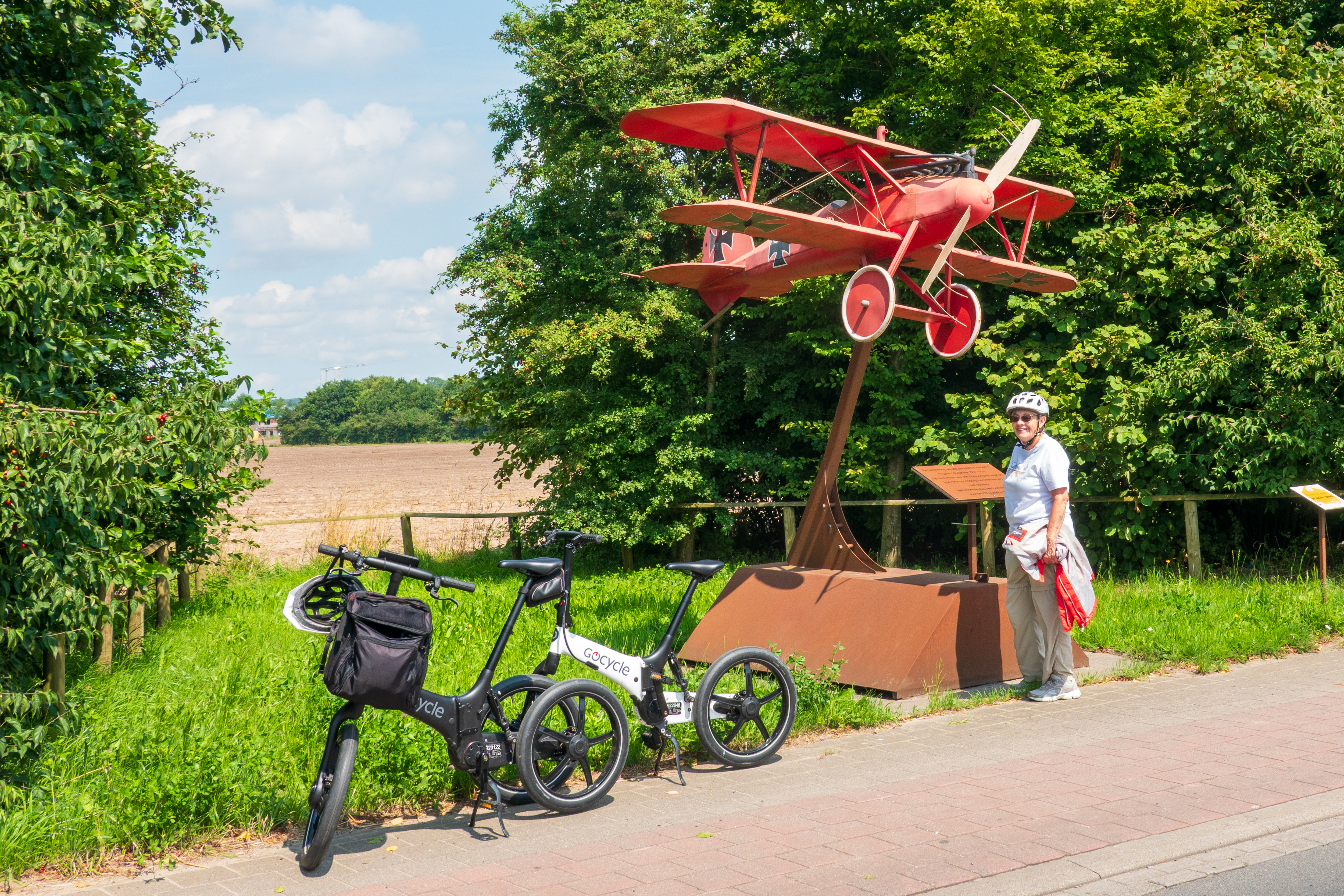
A replica of the Albatros aircraft that flew from this field. The US B-17 Herky Jerky II is said to have crashed nearby during WWII.
On the ride home, we stopped at a small monument at the site of a Great War German airfield.
Arriving back at the ice cream factory, we went to the restaurant for a really pleasant outdoor meal. It is always fun to eat out when we do not have to move the truck or head out on bicycles.
Ypres simply drips history and we learned a lot. Fred had a boss who was deeply into the Western Front association, but we have always concentrated on the Second World war. This was new territory for us, literally and historically. (https://en.wikipedia.org/wiki/Ypres_Salient) This map gives an idea. The Germans held to the right, the Allies to the left. And thousands upon thousands still lie in the beautiful fields all around.
We camped in an urban campground, in easy walking distance of the downtown. (https://urban-gardens.be/en/ypres/) We wandered along the river, into the pretty town center. Ypres was essentially flattened in the Great War but has been reconstructed in the original style. We bravely resisted the siren call of the chocolate stores, but stopped for more ice cream. After the cold and soggy start to our trip, it had turned sunny and warm – just lovely.
Arial photo from winter of 1917. Taken from an observation ballon?
This photo is a map you can still use today. The Menin Gate is at the top center with Hellfire Corner beyond, out of the picture. Our campground was off to the top right. You can see the ruins of the towers in the central square. The Flanders Fields Museum (https://www.inflandersfields.be/en) is in the building at the center bottom. The Flanders Fields Museum is large and intense – it even has a section dedicated to all of the colonial troops, French and Commonwealth, who came to fight. There is a lion of India up in the memorial gardens on the city wall.
Picture taken across the open square in the photo above. Note the ’50’s Thunderbird, but one of the many classic American cars that we encountered.Happier scenes today.
Pretty shrine to the Virgin, along the river.
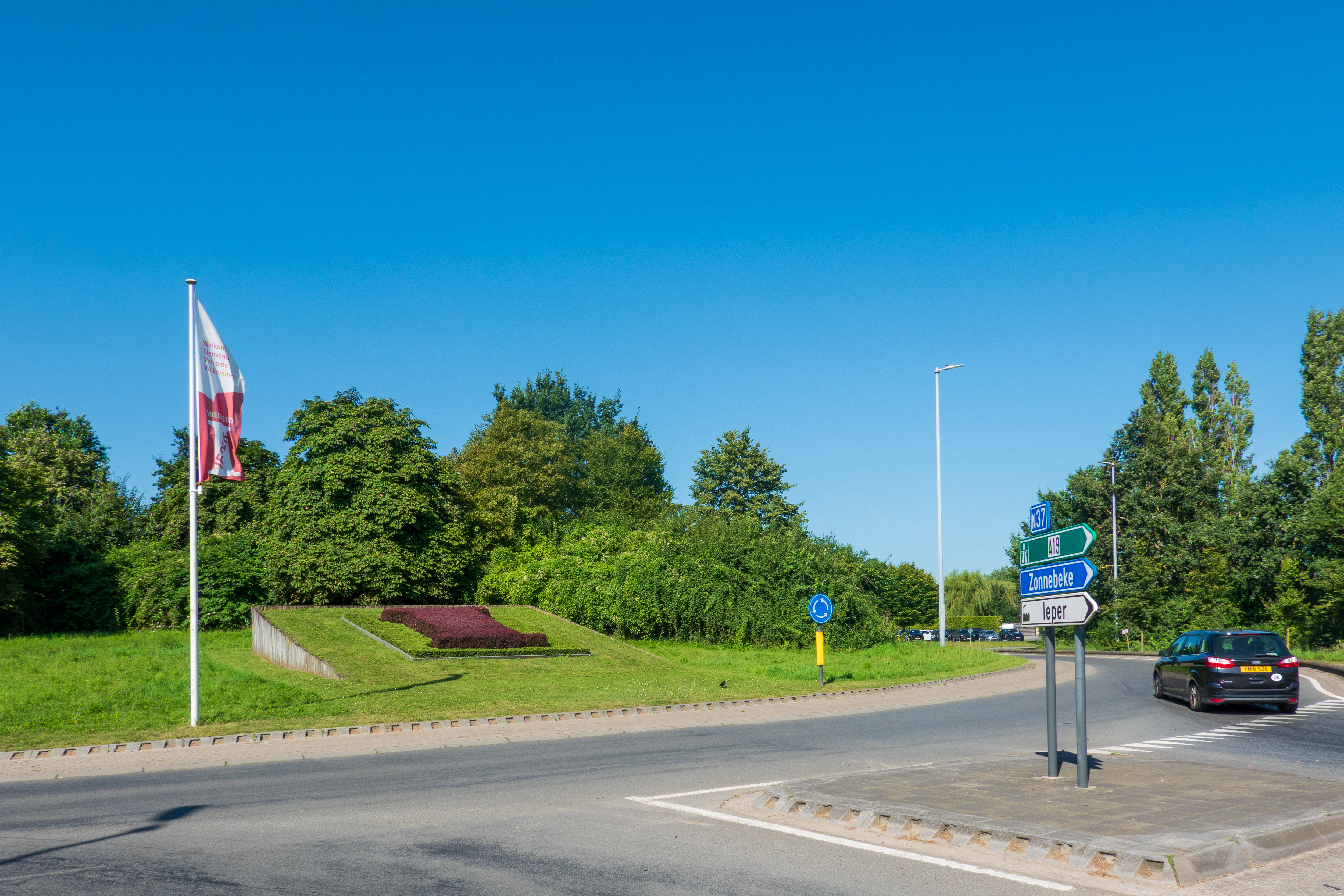
Hellfire Corner So called as the German artillery had it dialed in. Today the only challenge is drivers who don’t know how to negotiate a roundabout.
Denise admires a shell outside of the Museum. Yes, that is a marine caliber projectile.
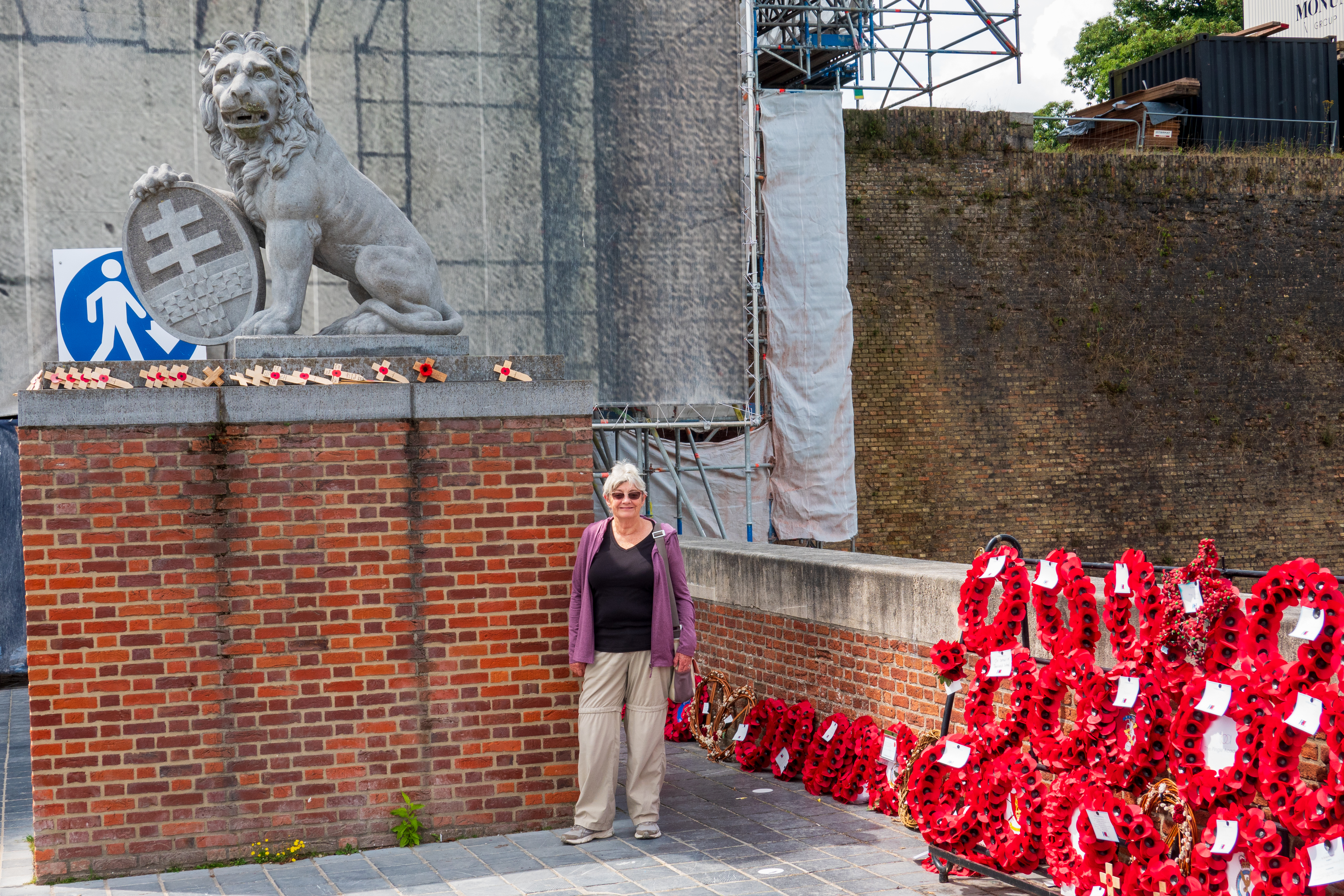
We attended the Last Post ceremony at the Menin Gate War Memorial. This takes place at 8:00 PM each evening. The Last Post is the British equivalent of Taps. The Belgian police have performed the ceremony every night since 1928, stopping only during the German occupation in World War Two. (https://www.cwgc.org/our-work/blog/the-history-of-the-last-post/) Our European brothers and sisters have never forgotten the Anglo-American sacrifices in the wars. The Menin Gate is currently under reconstruction but the Last Post on three bugles is still poignant – listen to the video below.
Denise with poppies.
The gate building was built in the 1920’s as a war memorial.
What with the duration of the war and the power of explosives, many bodies were never recovered.
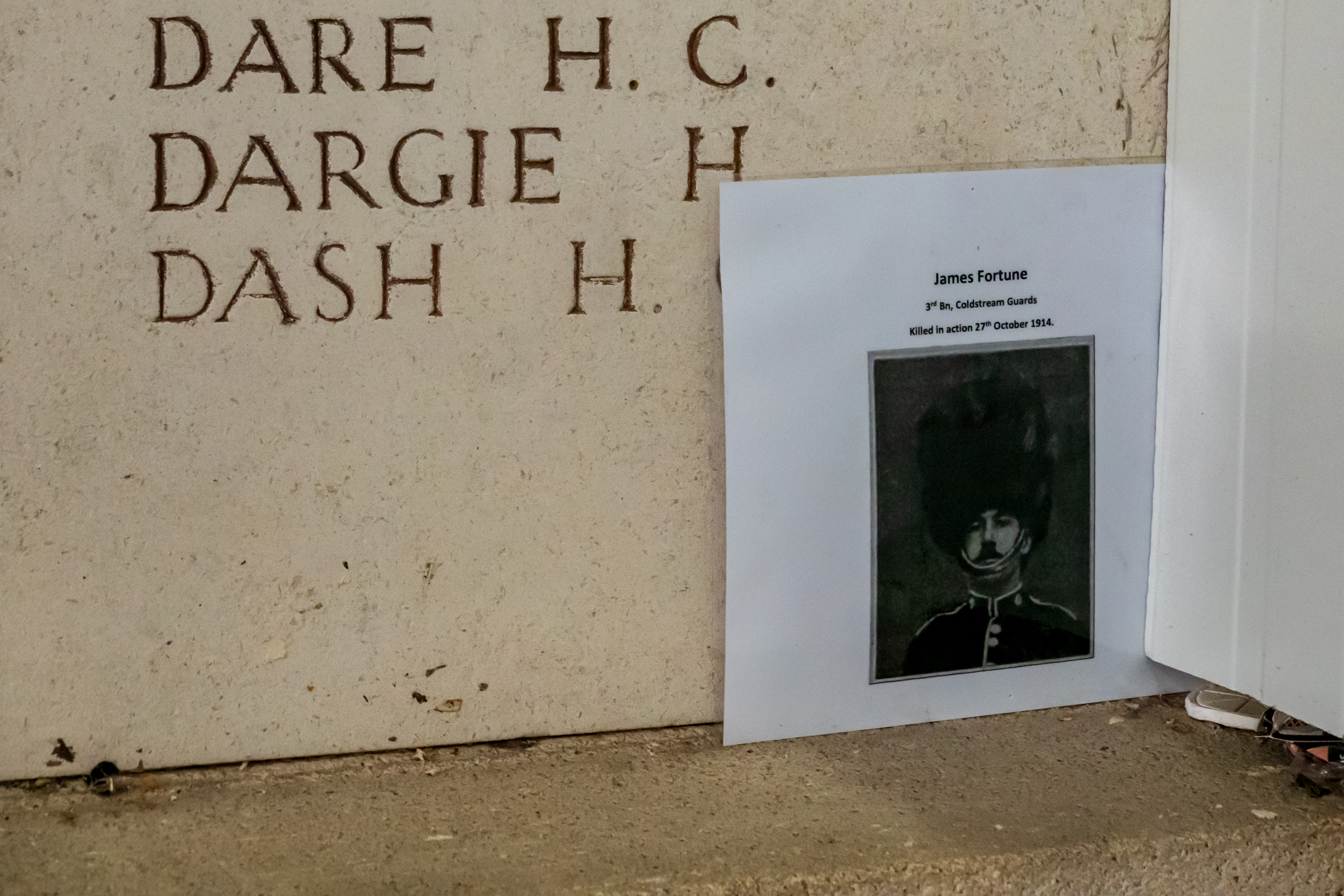
People still bring pictures of family members to place inside the gate. It is hard to avoid tears – an entire generation lost in Flanders Fields.
Then we took our bikes and set out to visit sites outside the city. Cultural difference – the United States makes an extreme effort to repatriate or at least consolidate remains. After the Great War, most of the bodies were buried in dozens of cemeteries scattered all around. Far too many for us to visit all, but each was remarkably well tended. (Some even had the odd German body as well.)
At a hotel, just out of town, you can still visit the remains of trenches and bunkers. One bunker was built by the British and then captured by the Germans, who promptly built a wall in front of it, as the entrance now faced the wrong way!
The bunker is to the right.
Looking at the water, you can understand trench foot.
Lots of shell casings and a lot of duds as well.
The whole scene is achingly beautiful today.
Just to the east and south of Ypres is Hill 60, the site of some insane fighting over the course of the entire war. (https://en.wikipedia.org/wiki/Hill_60_(Ypres)) With the help of a bunch of maps, we set out to visit. Our first stop was the Canadian memorial atop what is left of Hill 60.
Ypres from Hill 60.
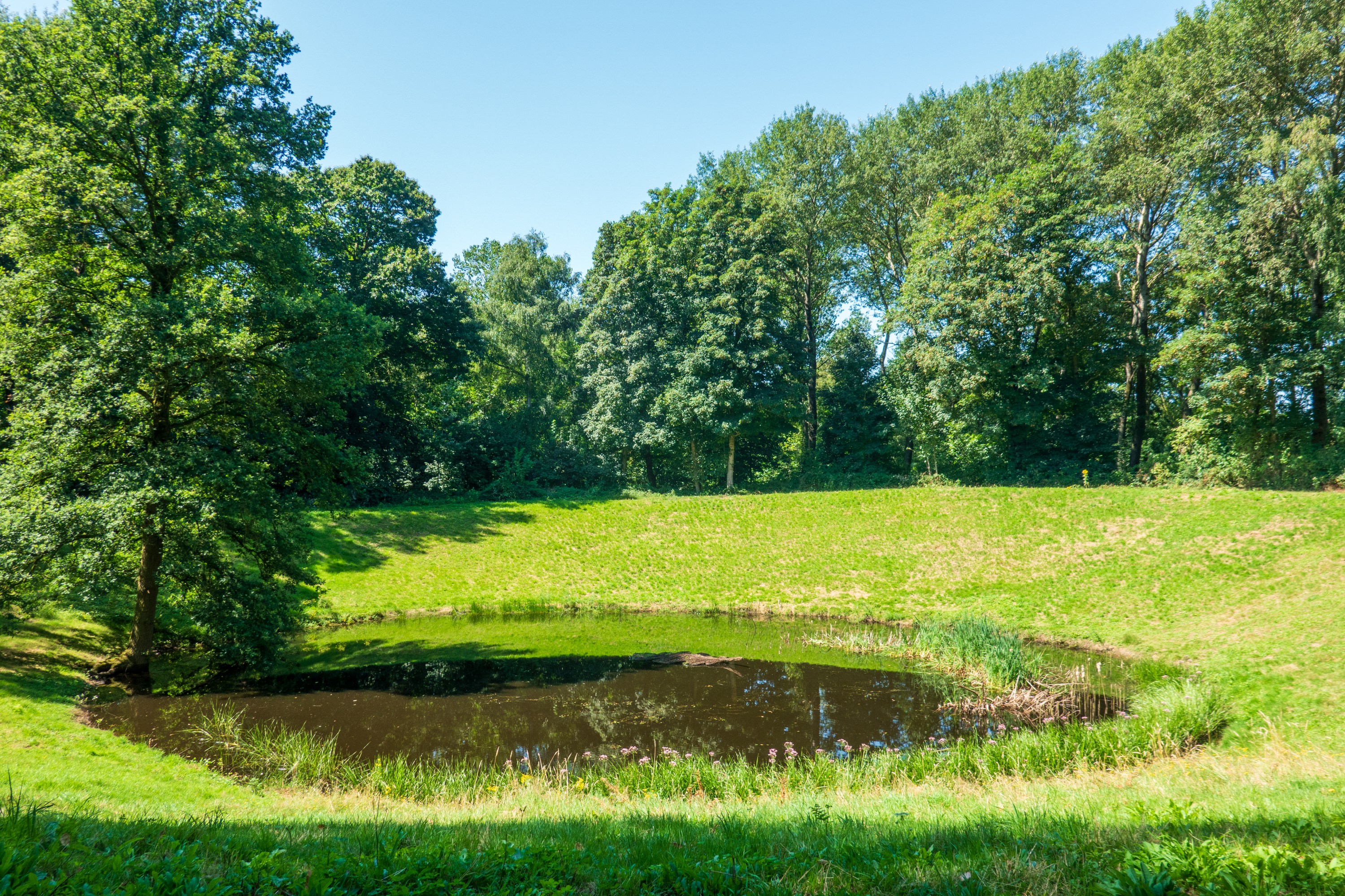
Sadly, the museum in the Sanctuary Woods was closed, but once atop Hill 60 it was easy to see why it was so important; you could see all the way back to Ypres. The other side of the railway line was the Caterpillar, where you can still see traces of a mine crater. When all of the mines were fired, some 990,000 pounds of explosives went off. German casualties were estimated at 10,000 dead. Said to be the largest non-nuclear explosion, loudest man-made noise (heard in London), and any number of other grisly superlatives. Ominously, one of the mines only exploded in 1955, when struck by lightning and one is said to be completely lost. And, it gets worse – this area saw many successful (??) gas attacks.
It is hard to believe that during the Great War there we absolutely no trees left standing for miles around. Today much of the area is preserved and the woods are full of the detritus of war and monuments to brave men and the stupidity of war.
Every ditch is a former trench.
It was a great, if sobering ride, so we enjoyed this quixotic roundabout.
We headed next for Bruges, a very short distance. We stayed at another hotel/camping aire, surrounded by horses again! Including a cute foal! We have stayed with lots of horses on this trip!
Bruges was a Hanseatic city and the trading hub between the Hanseatic cities of the far North, England and Germany, and the main trading centers in France, Spain and Italy from the 13th to 15th centuries. The Hanseatic League is actually a fascinating institution and did much to shape the modern history of Northern Europe: https://en.wikipedia.org/wiki/Hanseatic_League
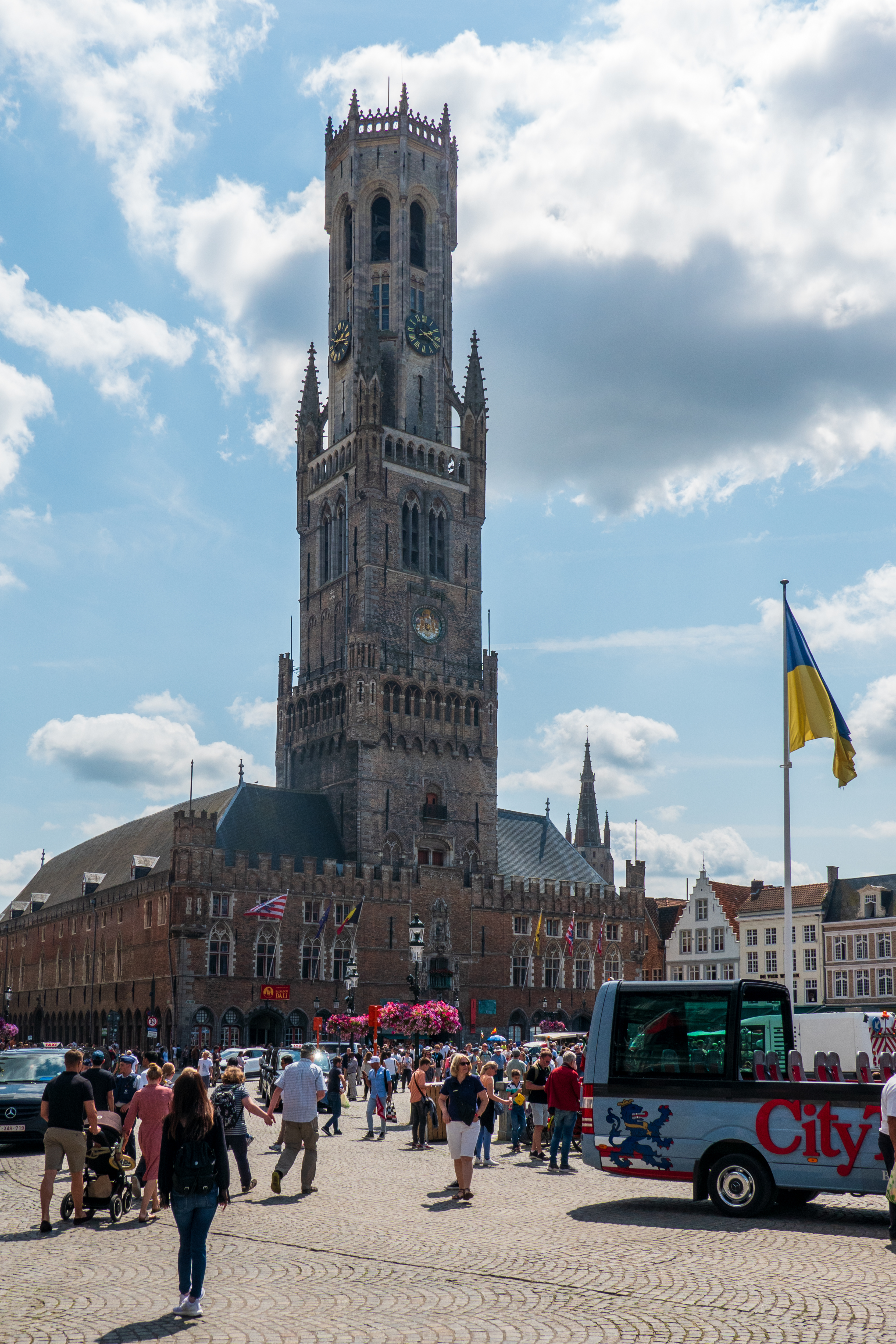
Medieval architecture abounds in the main square and there are extensive canals. We cycled in on the first afternoon so as to get our bearings and have a quick look at the town. It was a rather cloudy, dark afternoon but we were able to explore a little and enjoy an ice-cream in the main square. The next day was very wet so we stayed in the camper and enjoyed a quiet day. We were parked in a large field and we could not believe the number of campers that came and parked right beside us, leaving the rest of the field empty! Magnetic personalities? Prurient interest? Who knows?
The next day dawned sunny and warm so we headed into the town to begin our visit at the Church of Our Lady, which is also a fascinating museum. (https://en.wikipedia.org/wiki/Church_of_Our_Lady,_Bruges) It has a tall brick church tower, the second tallest of the world, which illustrates the craftsmanship of the Bruges builders.
A LOT of bricks!Note the bricks in the ceiling.
High altar.
Steps to an insanely ornate pulpit. Amazingly, this is Protestant, not Catholic.
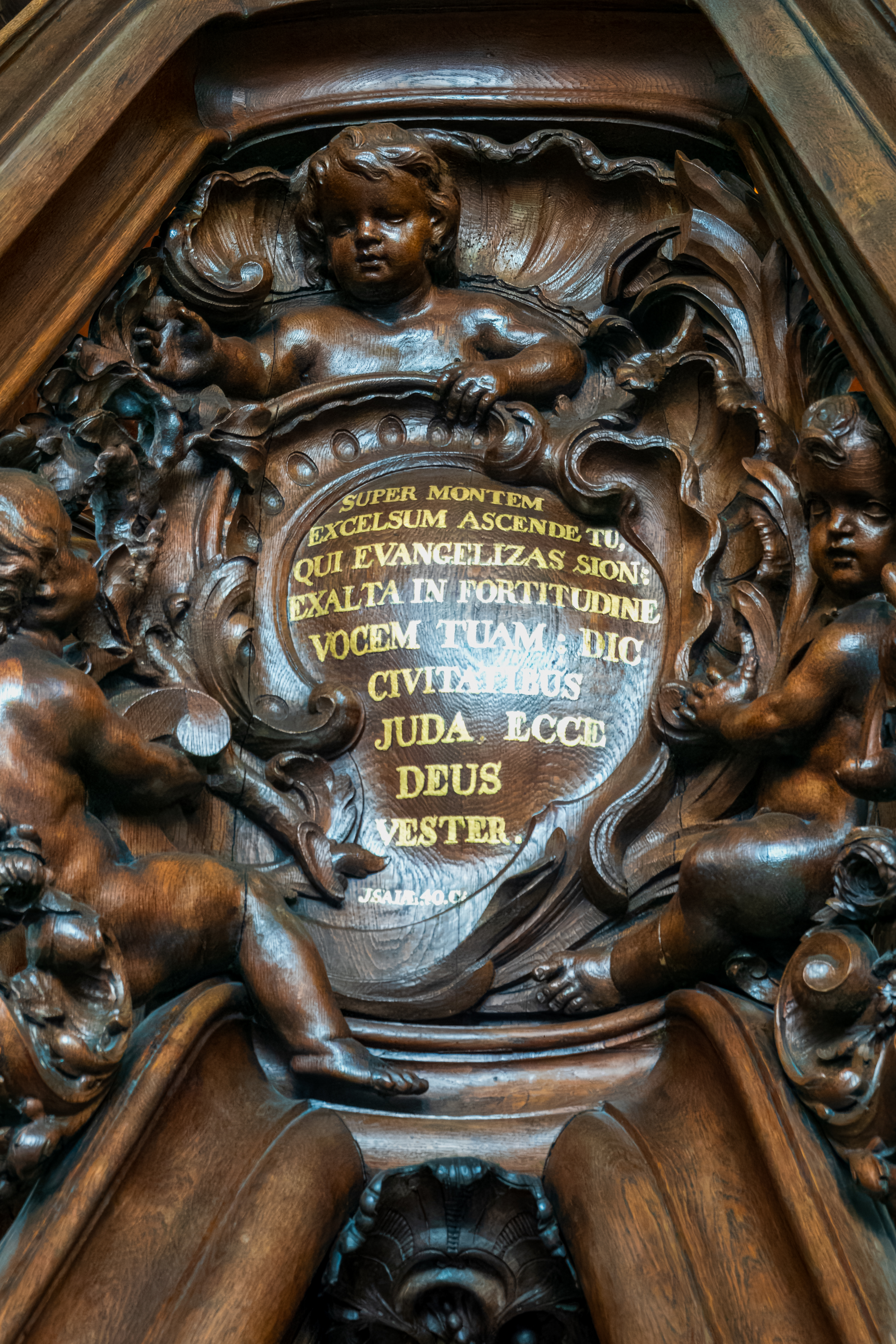
Wood carving detail.
Inside there is a selection of art, including Michelangelo’s world-famous Madonna and Child.
There are also numerous paintings, 13th and 14th century painted crypts, and the 15th and 16th century tombs of Mary of Burgundy and Charles the Bold.
Amazing detail.
The iconography puts images like the cruxifixction at the head of the deceased.
We have never seen such ornate confessionals and, of course, there was an astronomical clock.
We also saw books of music, written in medieval format. Try sight singing that!
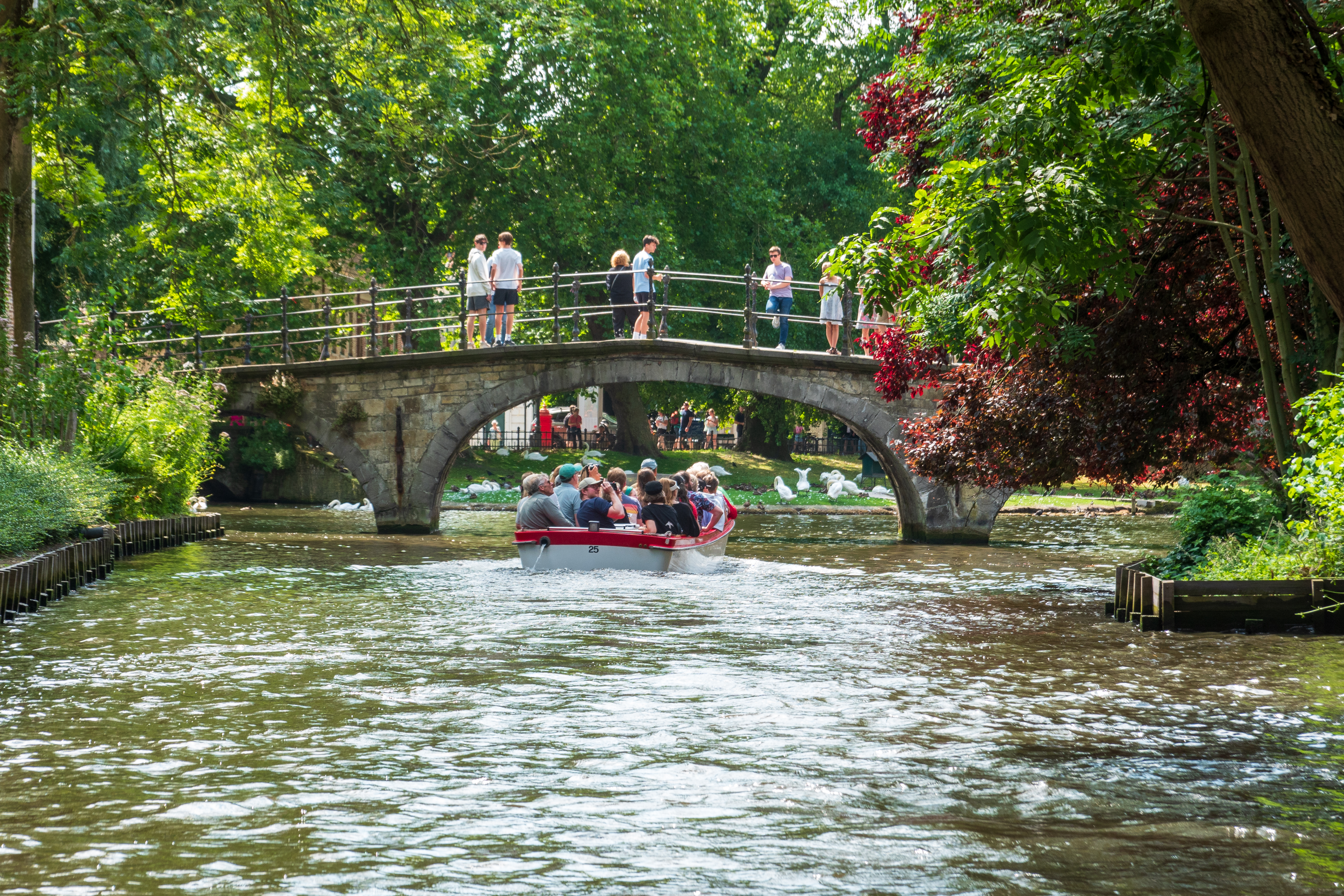
We then headed for a canal cruise as the number of tourists was quickly increasing. It was very pleasant and gave us an overview of the town.
We attempted to go to the Chocolate Museum but were turned away as too many tour groups had already booked entry.
Saved from the calories of chocolate, we made our way back to the Markt to admire the crowds (https://en.wikipedia.org/wiki/Markt,_Bruges) and enjoy the rest of our visit. We even survived being stopped by the police for cycling the wrong way on a one way street. Should have believed Google maps!





















































































 DiploStrat