Category Archives: Expedition Vehicle Travel

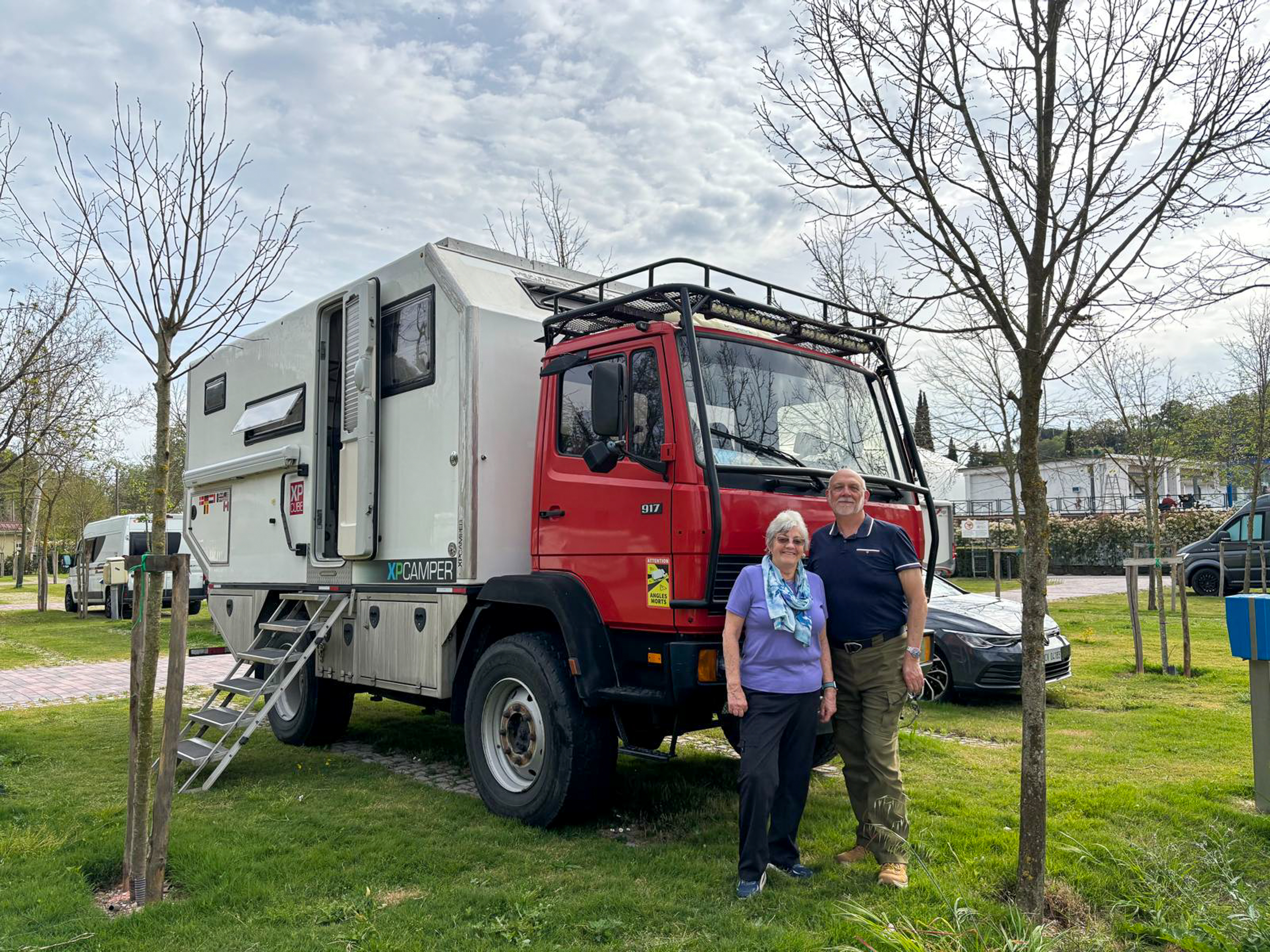
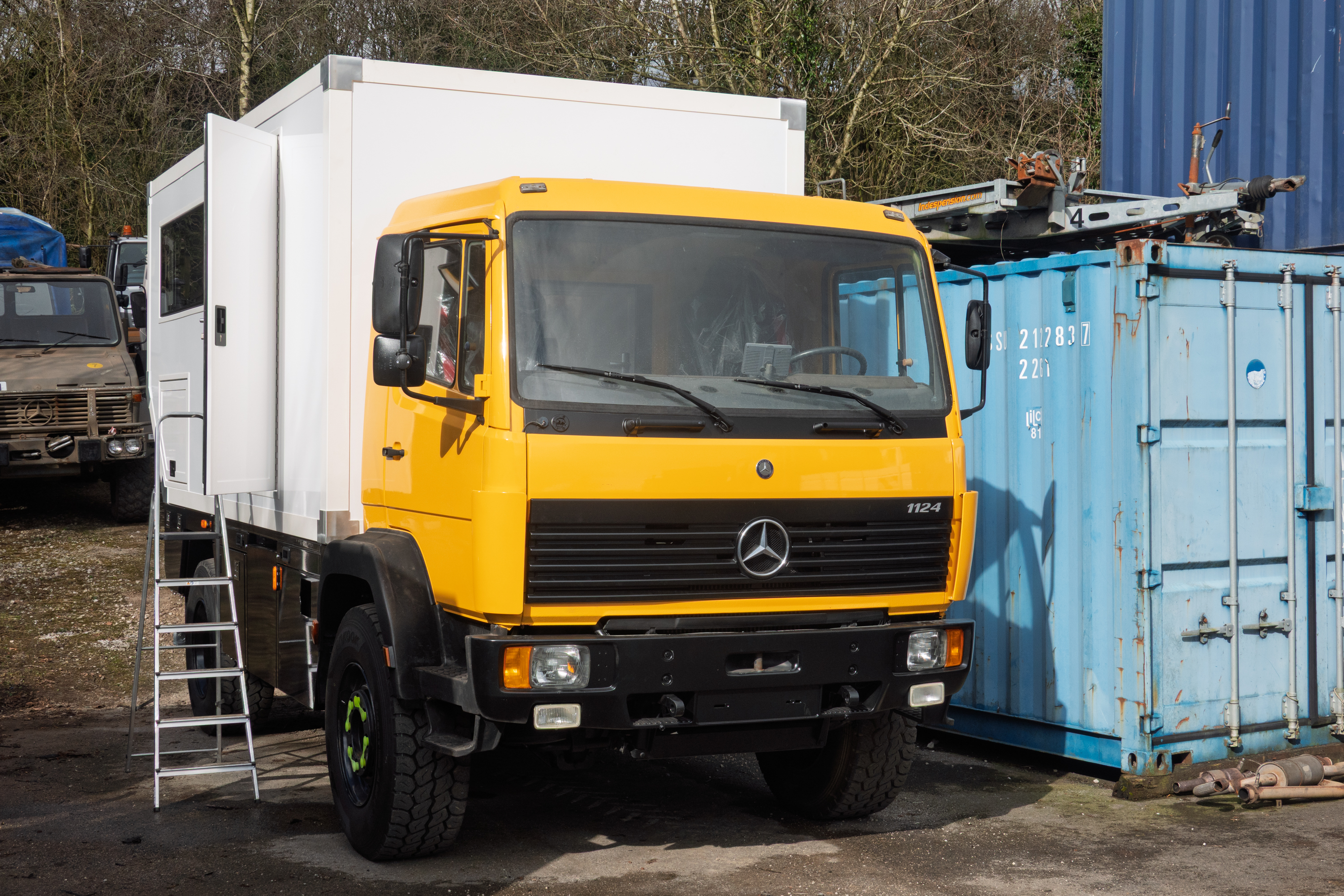
An expedition vehicle is basically a four season capable RV that does not depend on hookups and has 4×4.

I Came for the Waters

And stayed for the “Express.”

On to Casablanca.

Casablanca is a huge city; not at all what you might expect. We drove for more than an hour through suburbs full of big apartment blocks, and passed miles of beach resorts. There was a spectacular amount of building all around. Huge apartment complexes all along the road as far as the eye can see!  Some looked like tourist rentals, others like lower cost housing.

We ended up staying in a sort of abandoned campground, with a guardian, some 40 minutes drive south of the city. Everything was terribly run down, but actually clean and serviceable. It was clearly once a lovely facility.

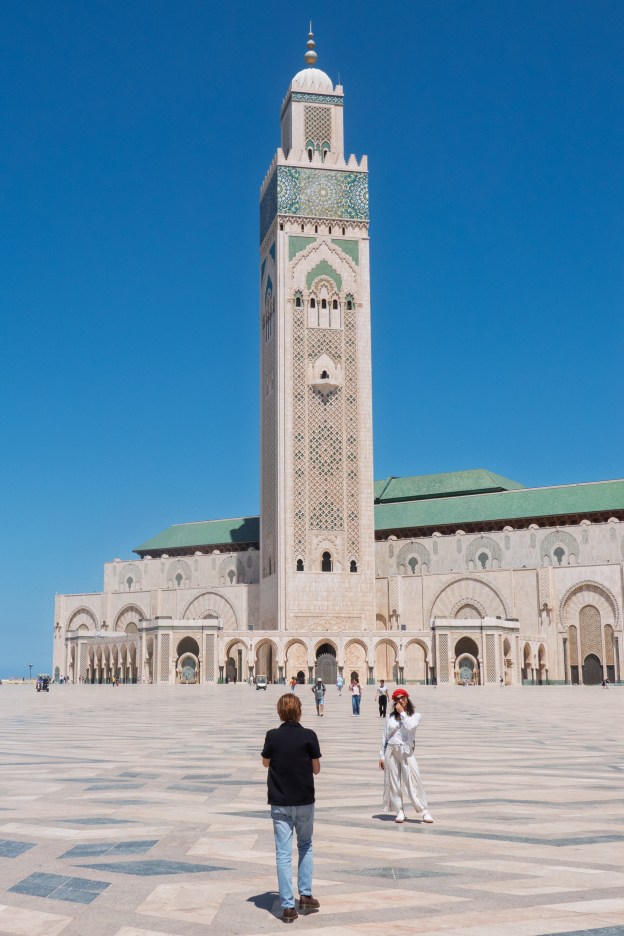
One of the great attractions of Casablanca is the Hassan II mosque, Interestingly for a country as liberal as Morocco, this is one of the very few mosques open to non-Muslims. (https://en.wikipedia.org/wiki/Hassan_II_Mosque) We had to visit, so, the next day we set off with a Spanish gentleman, also was also staying in the campground. We were some forty minutes south of the mosque, so we were happy to let the taxi navigate the endless roundabouts and swirling traffic. We had not pre-booked tickets but were able to walk right in. 

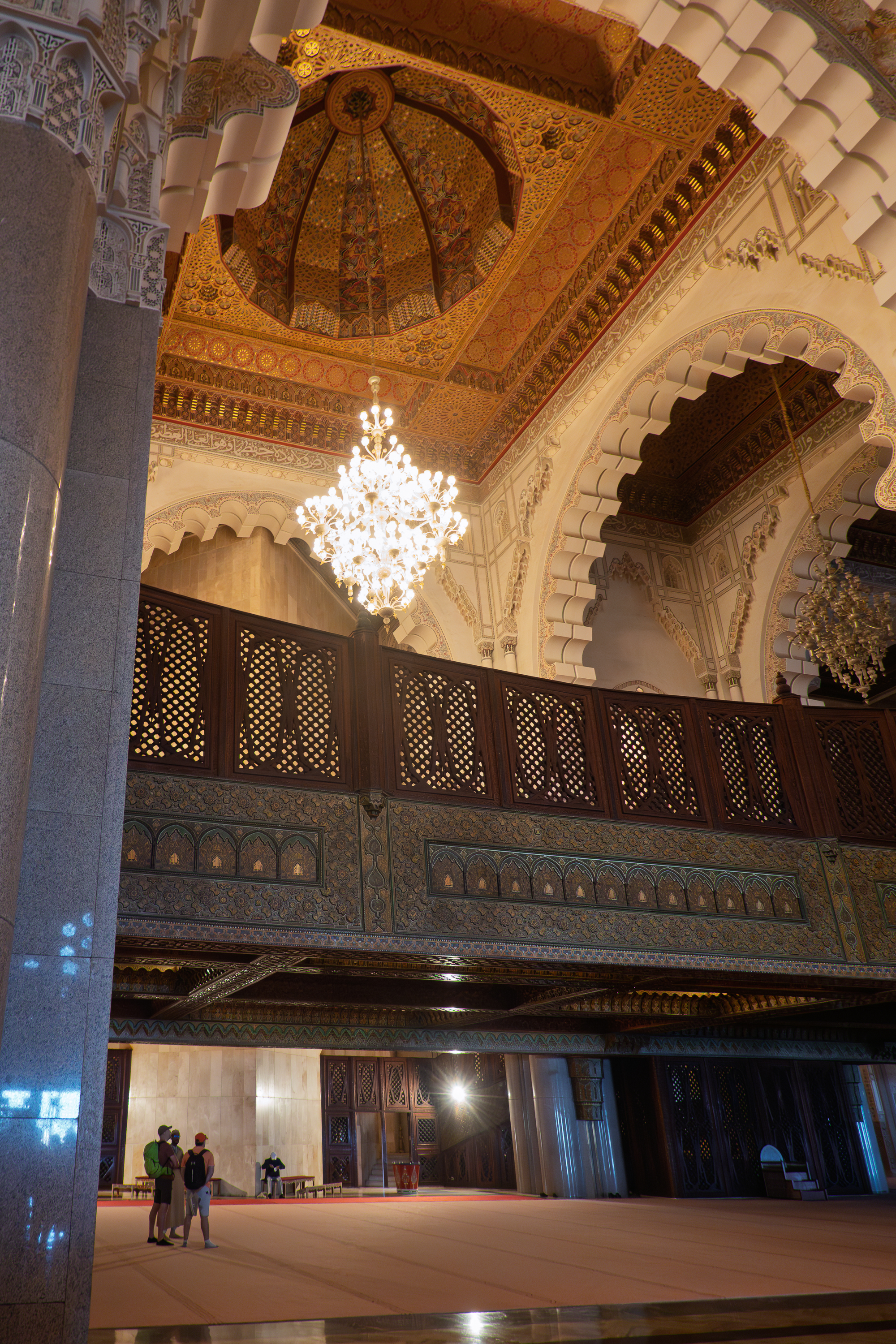
It is as big as it looks, and as ornate as any cathedral.

The tours all split up into different languages. The English speaking group was huge so we opted for the Spanish speaking group. It seemed like a better idea, and it proved to be an excellent one.  We had a super guide who spoke at length on what it means to be a Moslem in Morocco, discussed the roles of both men and women in the mosque, and generally covered how the mosque fits into daily life. He also gave information on the construction of the spectacular mosque. 

Denise takes it all in.
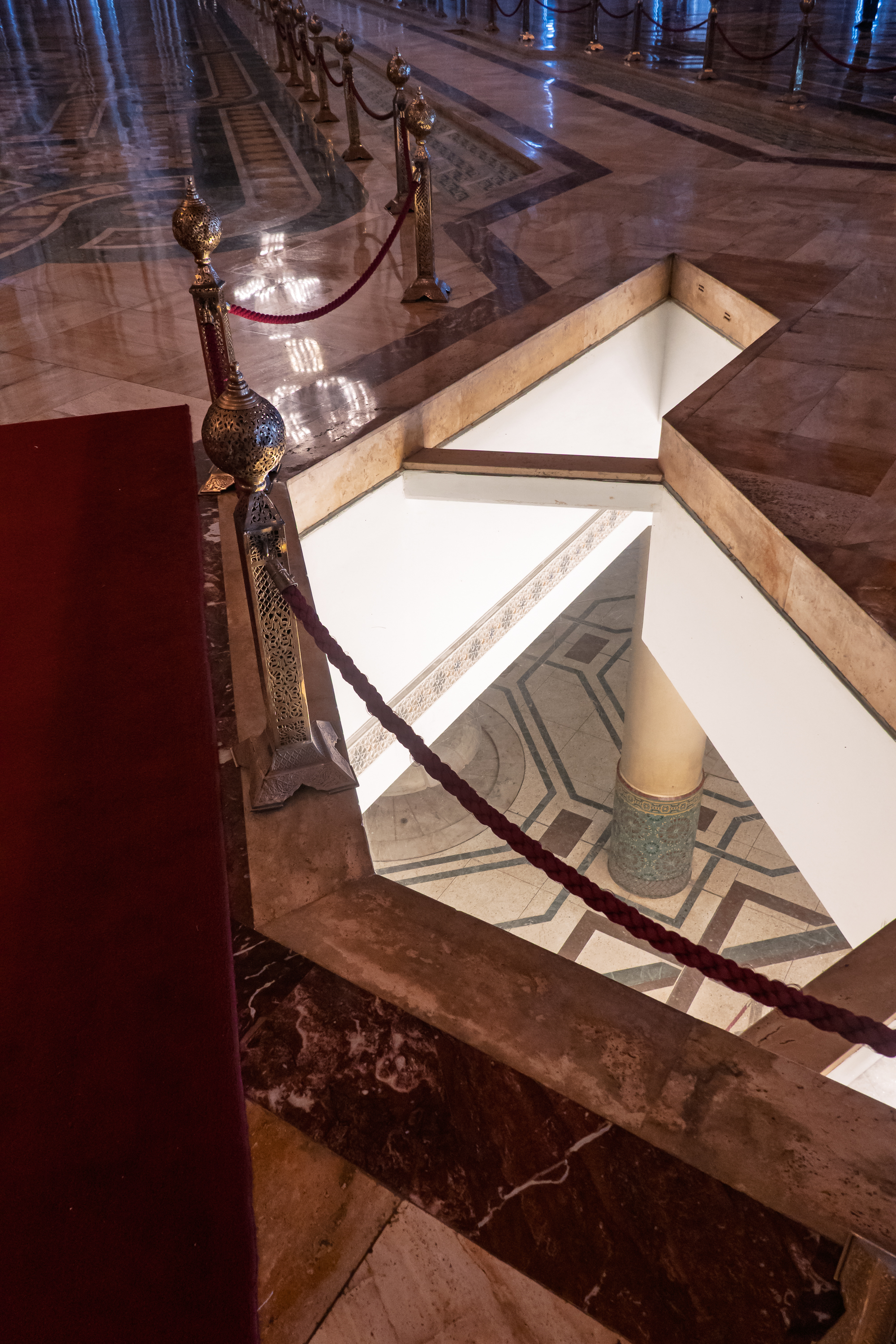
View down to the washing area,
Washing fountain
Women’s gallery. As in some synagogues, worshipers are segregated by sex.
On important holy days, all of these would be in use.

As with Judaism, Islam requires ritual washing before attending prayers. You may wash at home or at the mosque, which, in this case, has massive facilities.

By the time the tour finished it was lunch time.  We walked over to Rick’s Cafe thinking that although the actual movie was filmed in Hollywood, it would be fun to have a burger at Rick’s.  Once we got there we changed our minds.  There was an expensive, full French luncheon menu only. And lines of people waiting. This was one tourist trap we could miss.

Cannon on the walls of the medina.

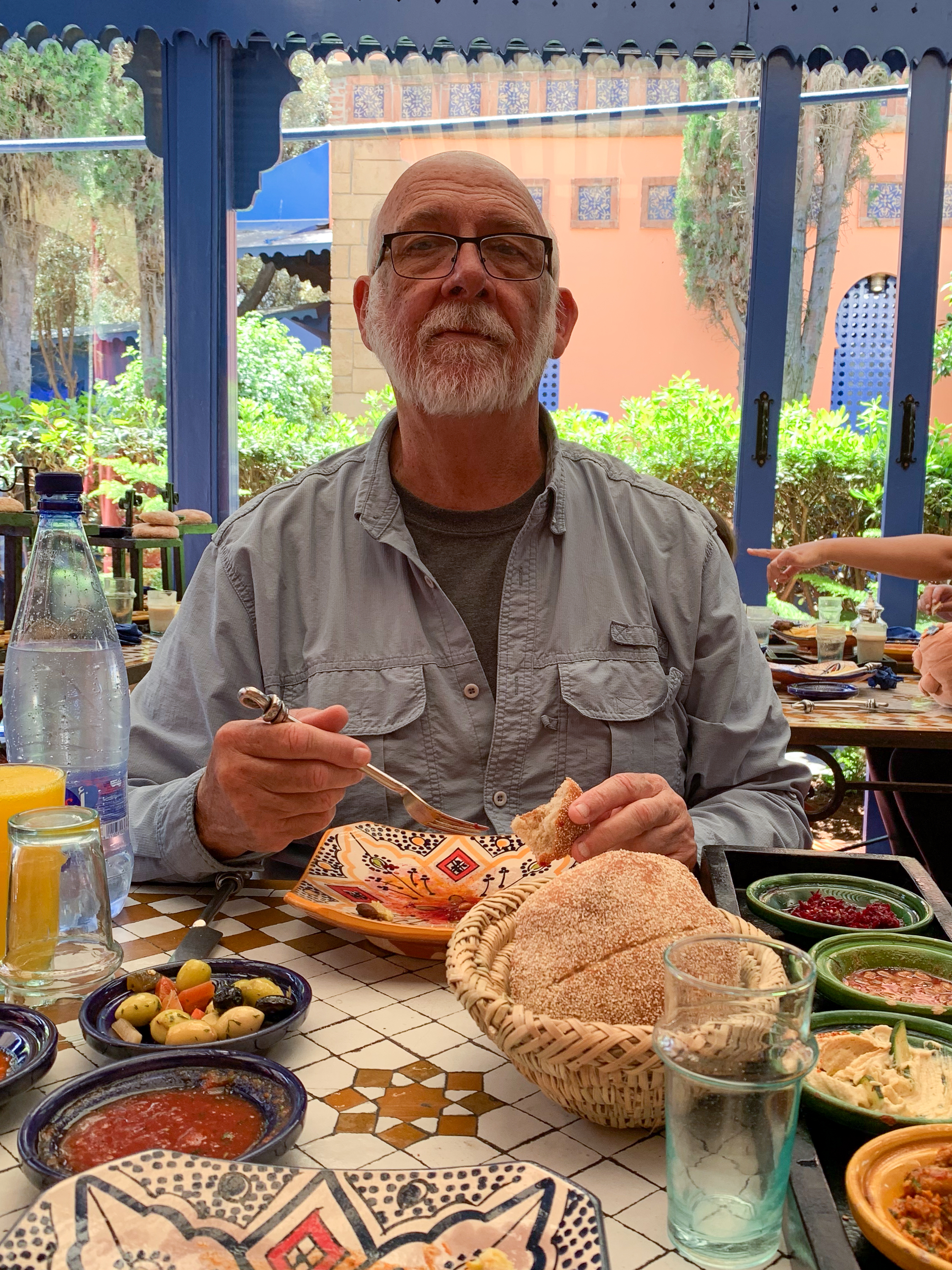
So we set off in search of La Sqala, a Moroccan restaurant on the edge of the Medina, with an excellent reputation.  (https://sqala.ma/la-sqala-english/) Although the restaurant clearly caters to tourists, at least 50% of the diners were Moroccans. A good sign.
After lunch we flagged a petit taxi and set off looking for the Abderrahman Slaoui Museum museum. (https://en.wikipedia.org/wiki/Abderrahman_Slaoui_Museum) The taxi driver was not heading were we wanted to go, but after getting approval to drop his other passenger first, we were off. “You’ll never find it otherwise.” As always, Moroccans go above and beyond. He then plunged into the souk. We were grateful that the taxi had no extra paint – it was narrow!

Cathedral – we actually skipped this one.
Bummer – museum closed! We have a thing about finding holidays.
Arab League Park
Family enjoying the park.

Our museum visit a bust, it was time for coffee, ice cream, and colonial architecture.

Beautiful old building.
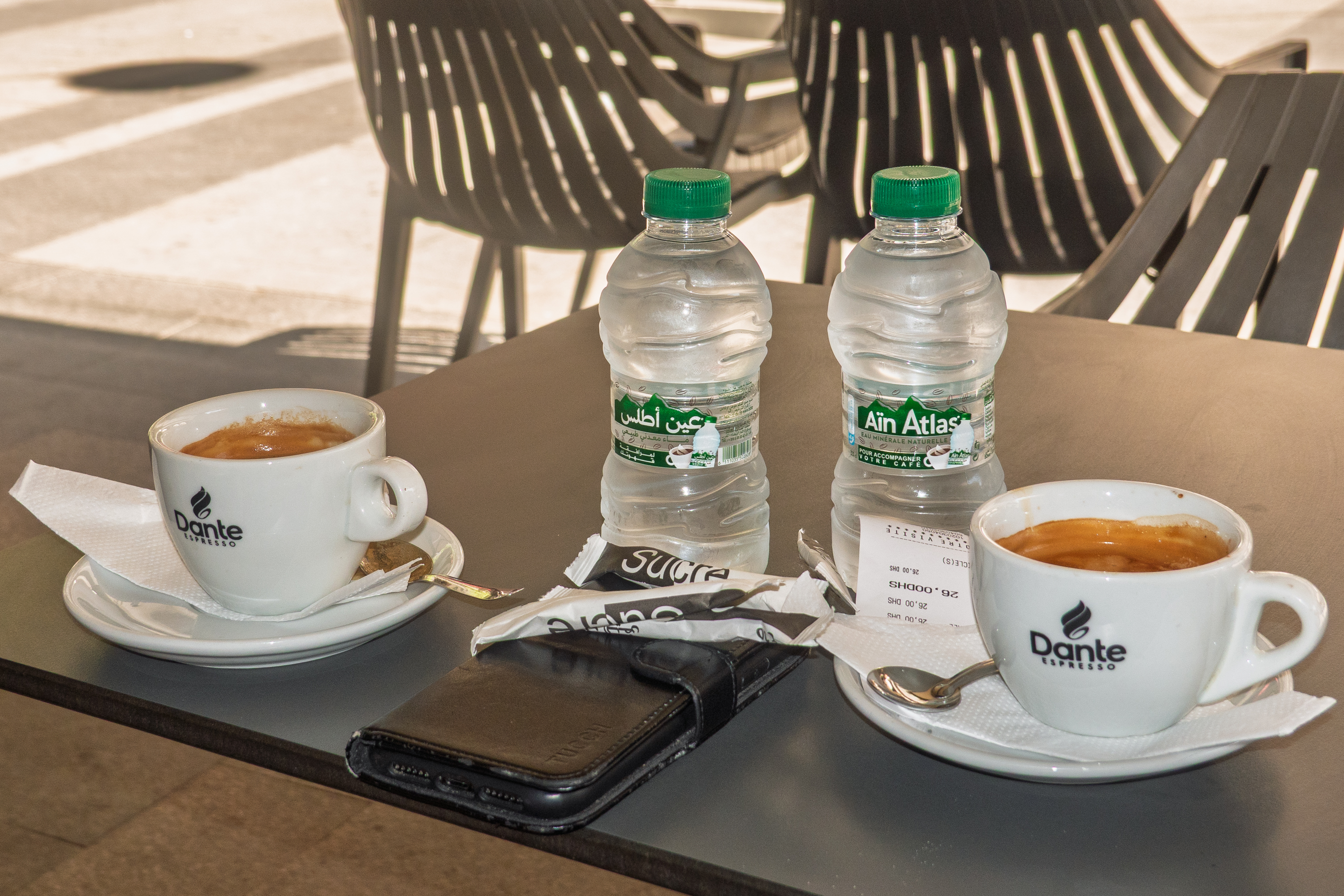
The cold water is a really nice touch in the heat.

We returned to the mosque to await pick up.

Surf’s up.
But the beach is rocky.

Back at the campsite, we enjoyed a pick up tapas style dinner with our Spanish friend, complete with Kirkland artichoke hearts from Costco, Spain.

French, Arabic, and Klingon? Greek? No – Amazigh, or Berber.

Our next destination was Marrakesh. If the movie put Casablanca on everyone’s mind, then the Crosby, Stills, and Nash song, “Marrakesh” did the same for Marrakesh.

Marrakesh, proved to be a much more manageable city by our standards. The campsite, north of the city, was pleasant.  We initially parked by our big brother, a huge Expo truck. 

People always think that the 917 is large, until they see it next to another expo truck.
OK, Not sure that an American Class A would be my first choice for Morocco – or anywhere in Europe, for that matter.
Blast from the past: Motorcycle tour group living out of the backs of their cars, just was we did for decades.
Our campsite outside of Jos, Nigeria, 1974. Indoor plumbing is nice!

The campsite booked us a taxi taking a maximum of six persons for 100 dirham (about $10 total) and we were off!.

We began by taking a one hour horse and carriage ride – a bit pricier than the taxi! This gave us a chance to orient ourselves a bit and we were dropped at the entrance to the souk.

Parking
Water stop.

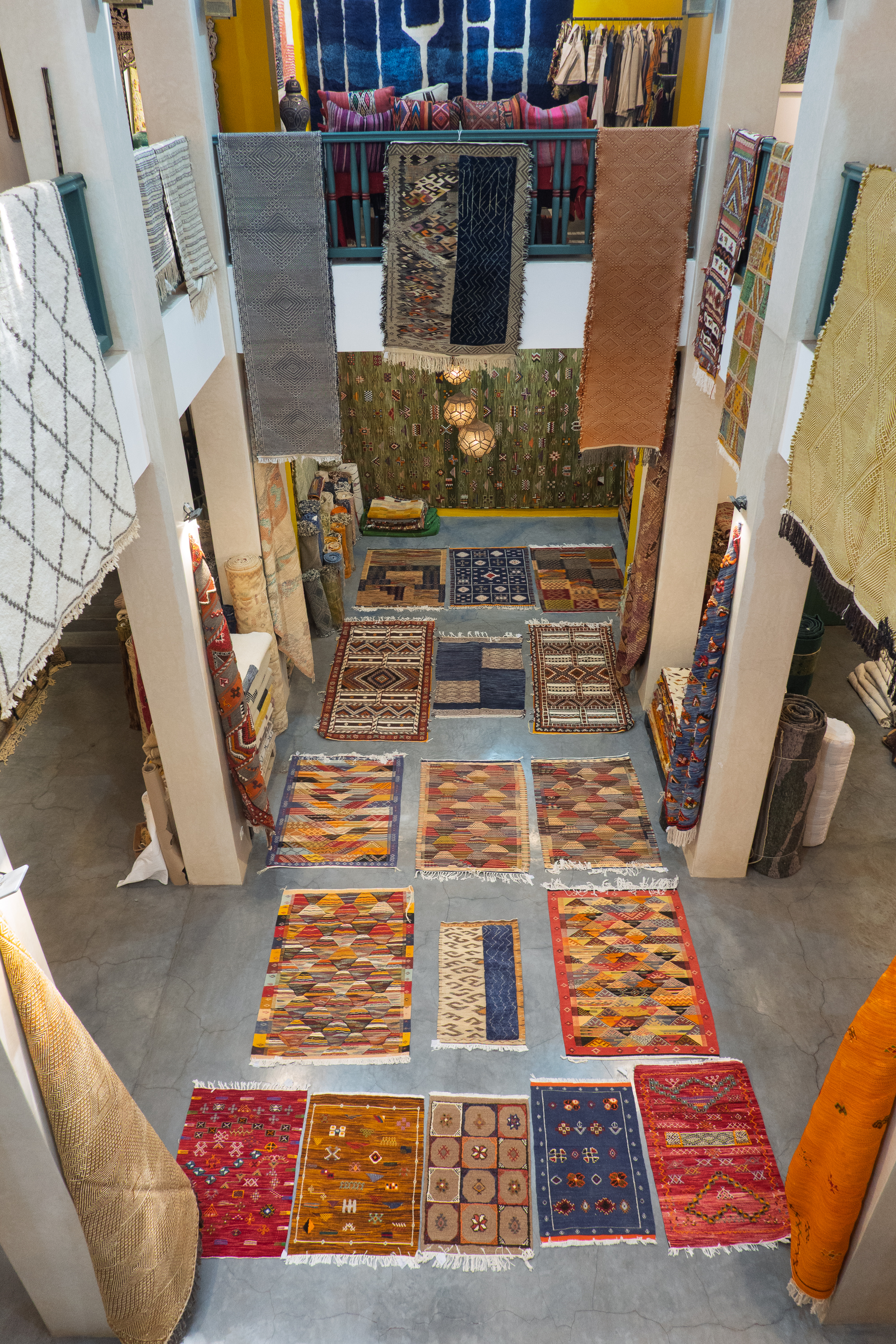
We entered, started to wander, and saw a sign for coffee on a rooftop cafe restaurant. Perfect! We entered the ground floor doorway, looked right and saw an incredible carpet display. So we headed right and found ourselves in an amazing three story carpet warehouse with rugs of all shapes and sizes from all the carpet making areas.

Street in the souk.
Beautiful display.
Three floors of rugs.

Ibrahim, the manager/owner was wonderful and pulled out rugs from all over.  We looked at lots before deciding to think about it and heading upstairs to the roof for lunch.

Morocco is all about getting up onto the roof.

This proved to be a wonderful place. Shady, with a charming young lady serving the excellent Moroccan food.  We had a lovely lunch and then returned downstairs to spend some money and to arrange to have the carpets shipped to DC. 

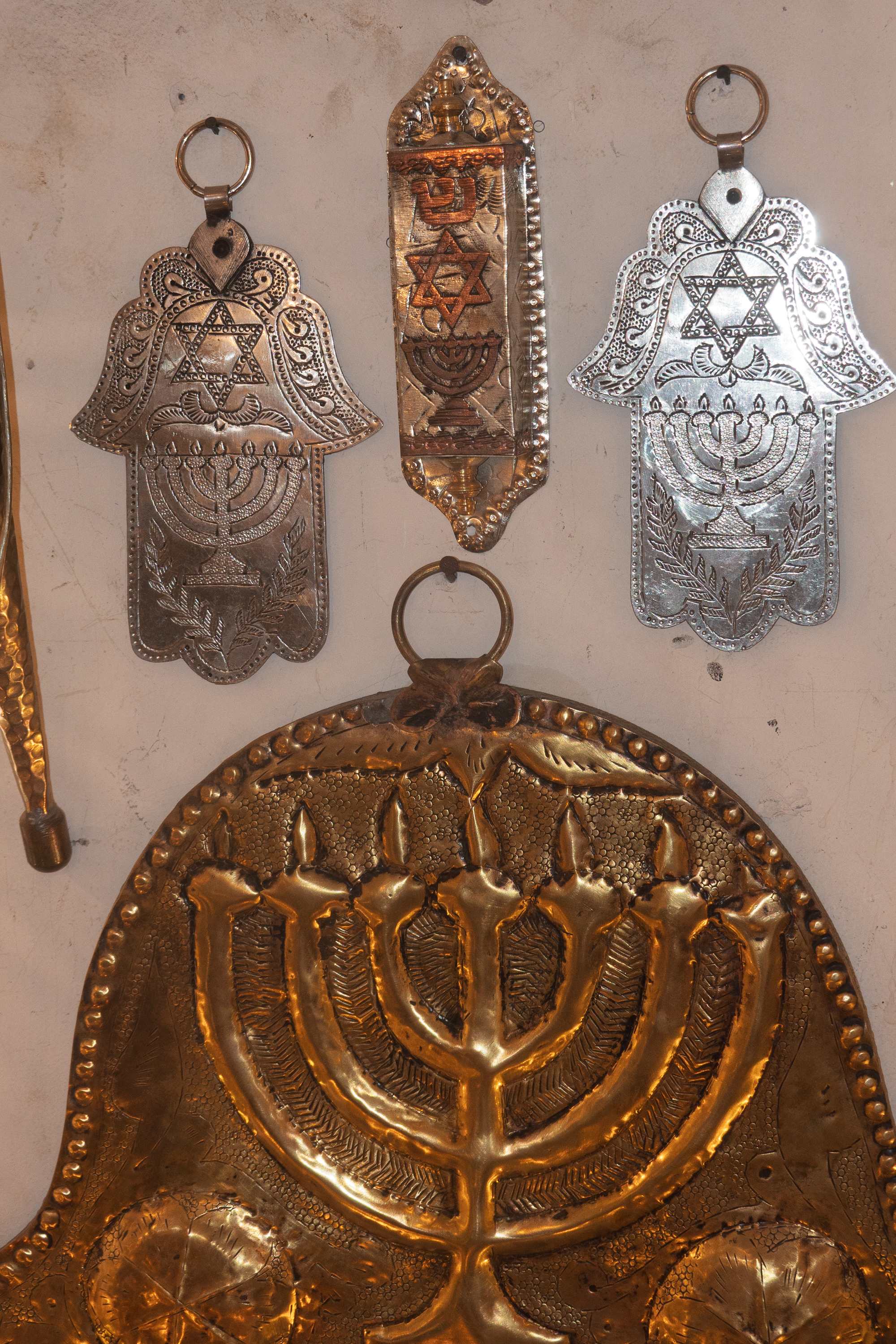
After lunch we stopped into a metal store to admire lamps. We noticed some interesting Judaica.
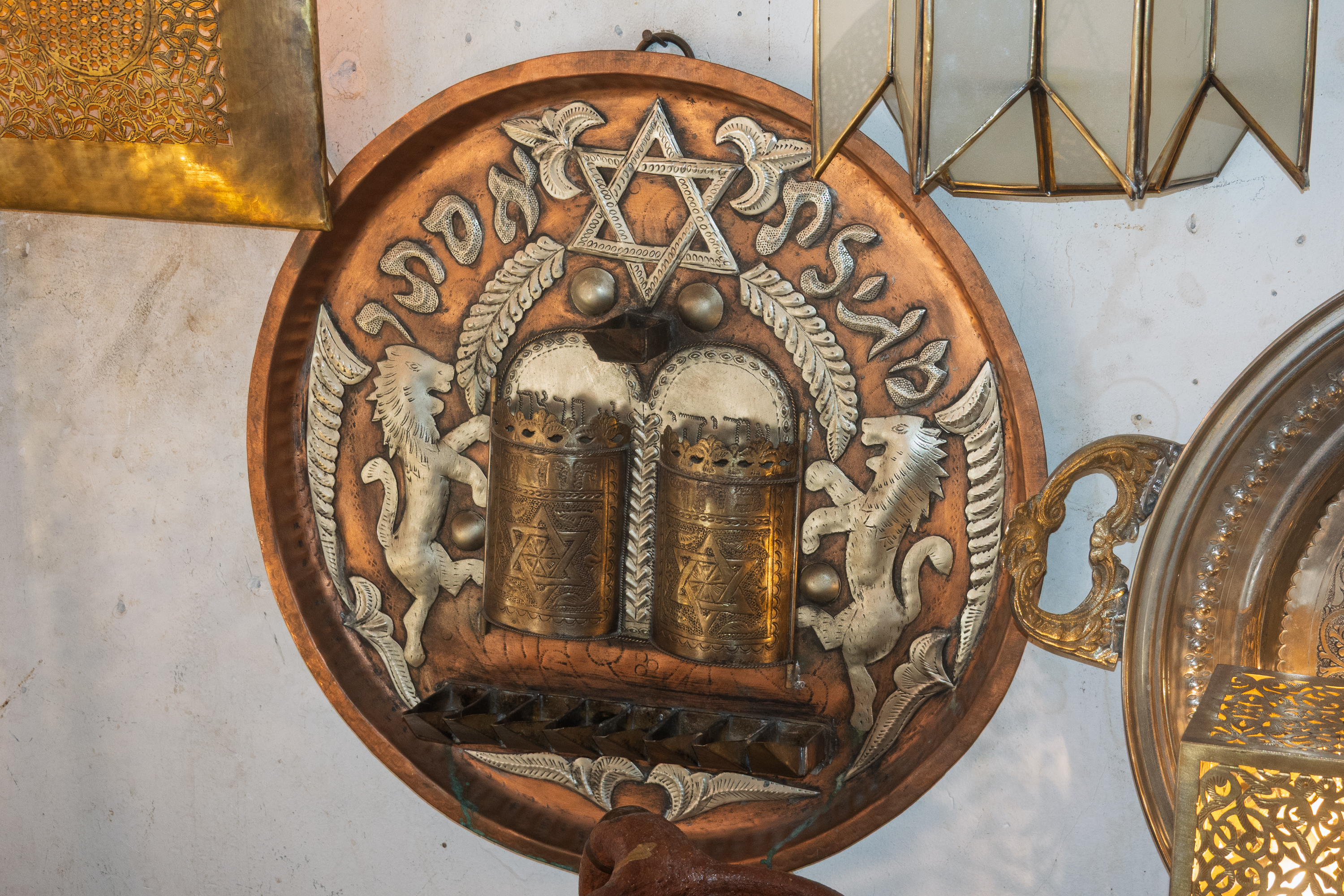
The Hamsa, or Hand of Fatima or Miriam. Whatever you call it, it protects against evil.

Morocco has always had a large Jewish population, especially after the “Reconquista” in 1492, when Ferdinand and Isabela began the serious expulsion of Moors and Jews from Spain. (https://en.wikipedia.org/wiki/Reconquista) After 1948 many Moroccan Jews emigrated to Israel. Today the Jewish population is low. The interrelationship between Morocco and Spain, and between Christians, Jews, and Muslims in this area is well beyond this blog and fills books. Let us just say that it is much deeper and more complex than many realize and covers everything from politics, to food, to religion, to music, to language, and beyond. (Almost any Spanish word that begins with the letter “a” comes from the Arabic. For example, “Azucar” comes from “Al Zukar.” The movie “El Cid” only begins to scratch the surface of this complex mix.

We went looking for the museum of Moroccan music. (https://museedelamusique.ma/en/) This was housed in an 18th century house deep in the souk.
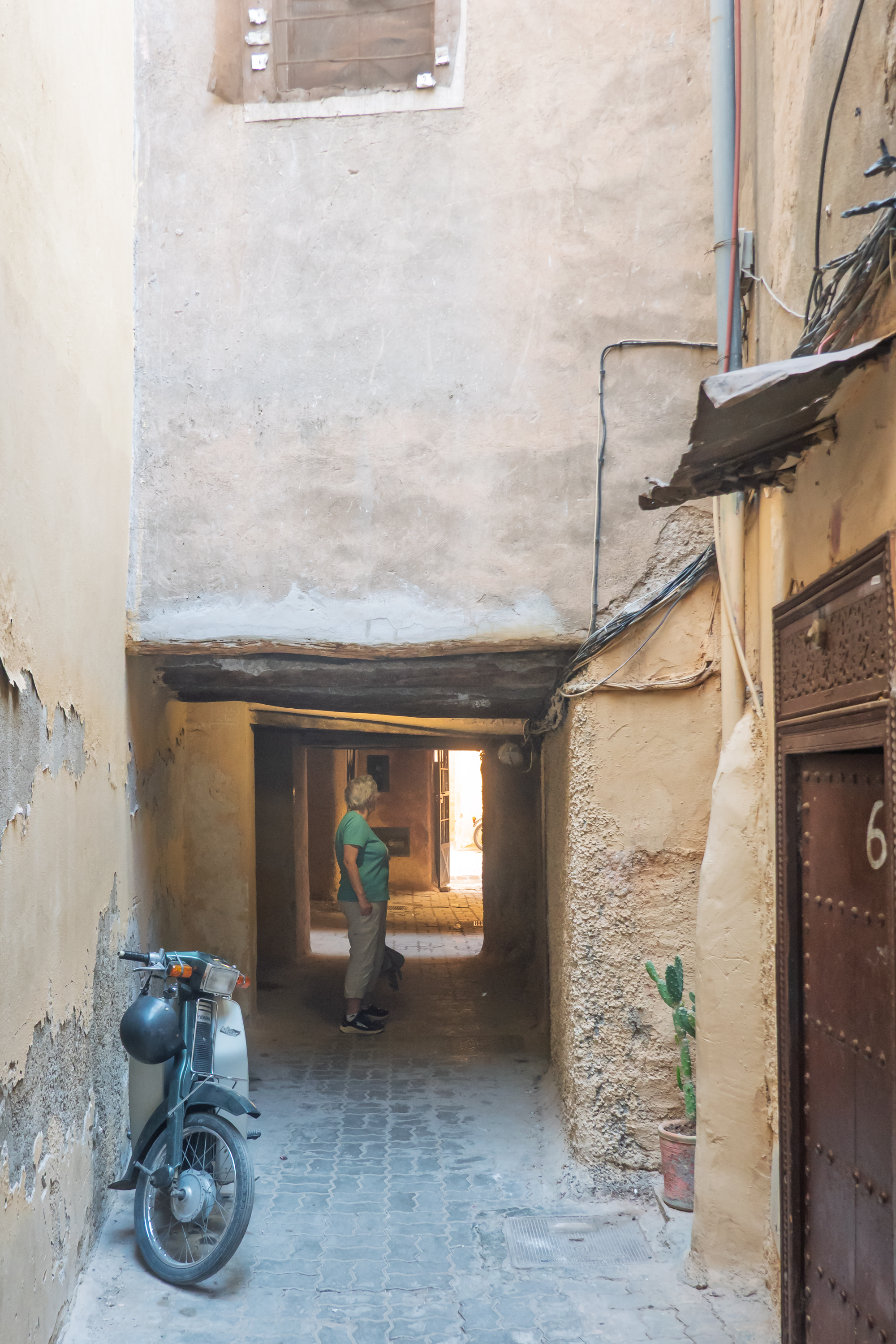
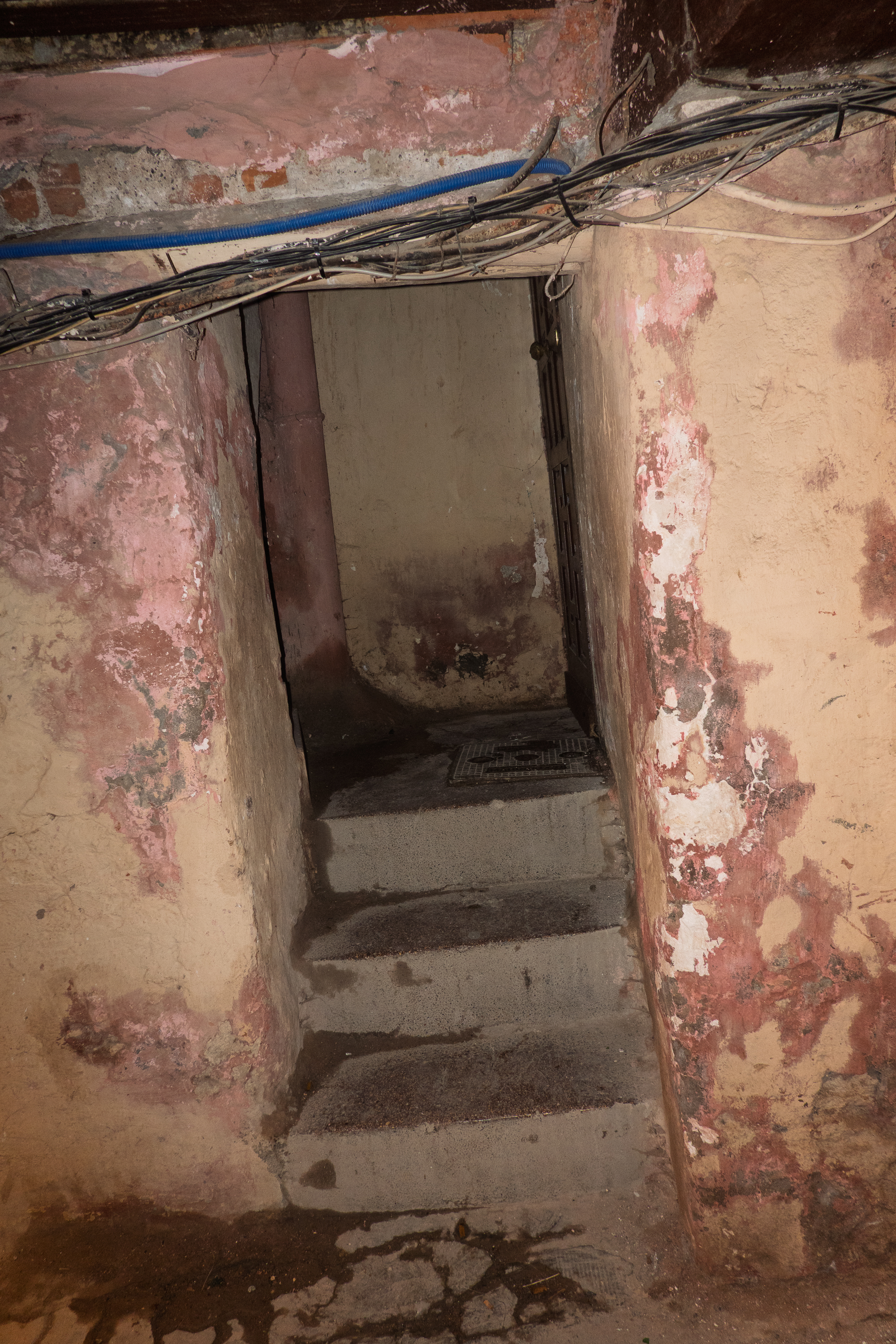
Down here? Really?

The building was a fascinating maze, almost as interesting as the musical exhibits themselves. Narrow stairs led to wandering passages. Sadly, there was no live music during our visit.
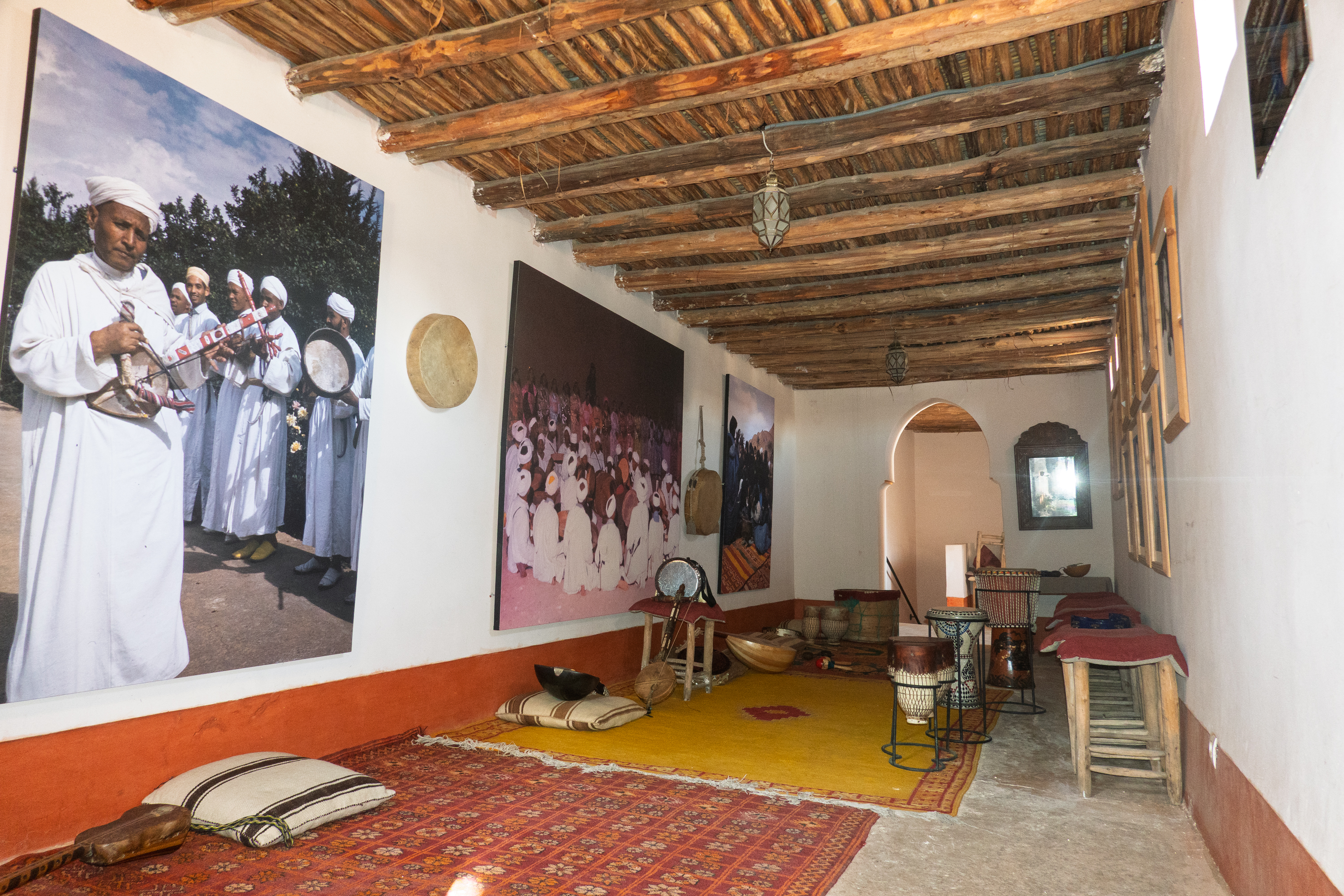
Performance hall. Here they encouraged you to touch the instruments.
The decoration was breath taking. Note the skylight to let the light in and the heat out.
Where might this stair lead?
Much of the souk was damaged in the earthquake.

We spent a little more time in the souk before heading back for our taxi pickup

During our second day, we visited Jemma el Fnaa, the main square, a UNESCO site and, frankly, a bit of an annoying tourist trap.

“THE” Square
Carriages awaiting tourists.
And, yes, we paid for this one. But it did get us some peace.

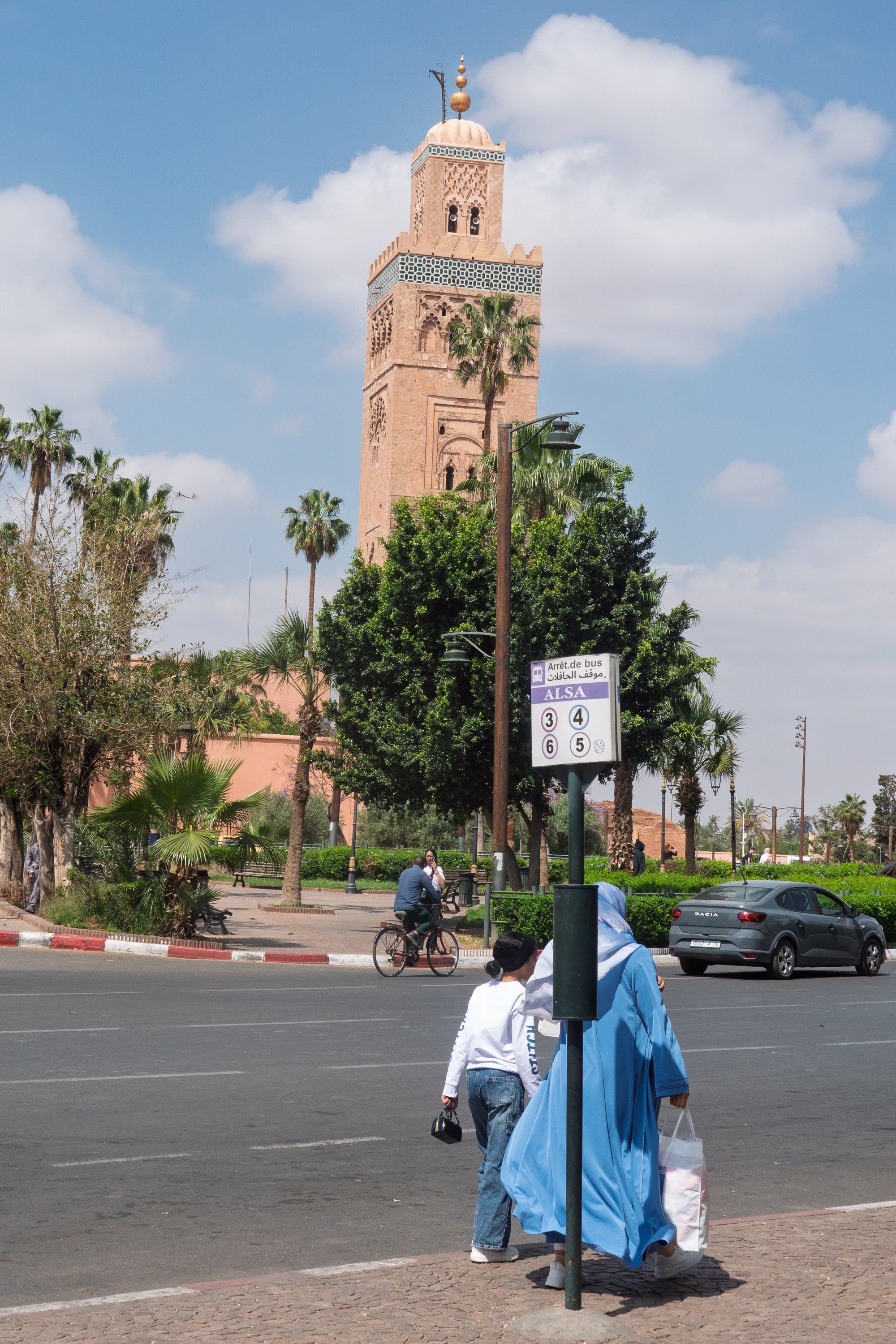
We REALLY do not like being accosted by touts or having money demanded by snake charmers. Pity, because otherwise, we would have sat down and enjoyed a show. We walked past the famous Koutoubia mosque, which is said to have been the model for the Alhambra, in Spain, and went back deep into the souk.

We purchased some slippers for a friend. After deep discussions of price, the shoe seller had a cousin lead us to the leather store to buy some purses for other friends.

Brushing each piece with a flame, to show that it is not Chinese plastic.
We made these cats happy as we bought a lot. But, of course, first we demanded tea. Not going to set a price until we have mint tea. What do we look like? Tourists?
Yes, you also have to watch for cars and motorbikes.

We then headed for the same rooftop restaurant for another lunch! Just as good as the day before and the young lady seemed both surprised and genuinely happy to see us come back. We felt like old friends.

This time we simply returned to the campsite in a petit taxi, our own Marrakech Express. Much easier than trying to link up with a booked taxi.

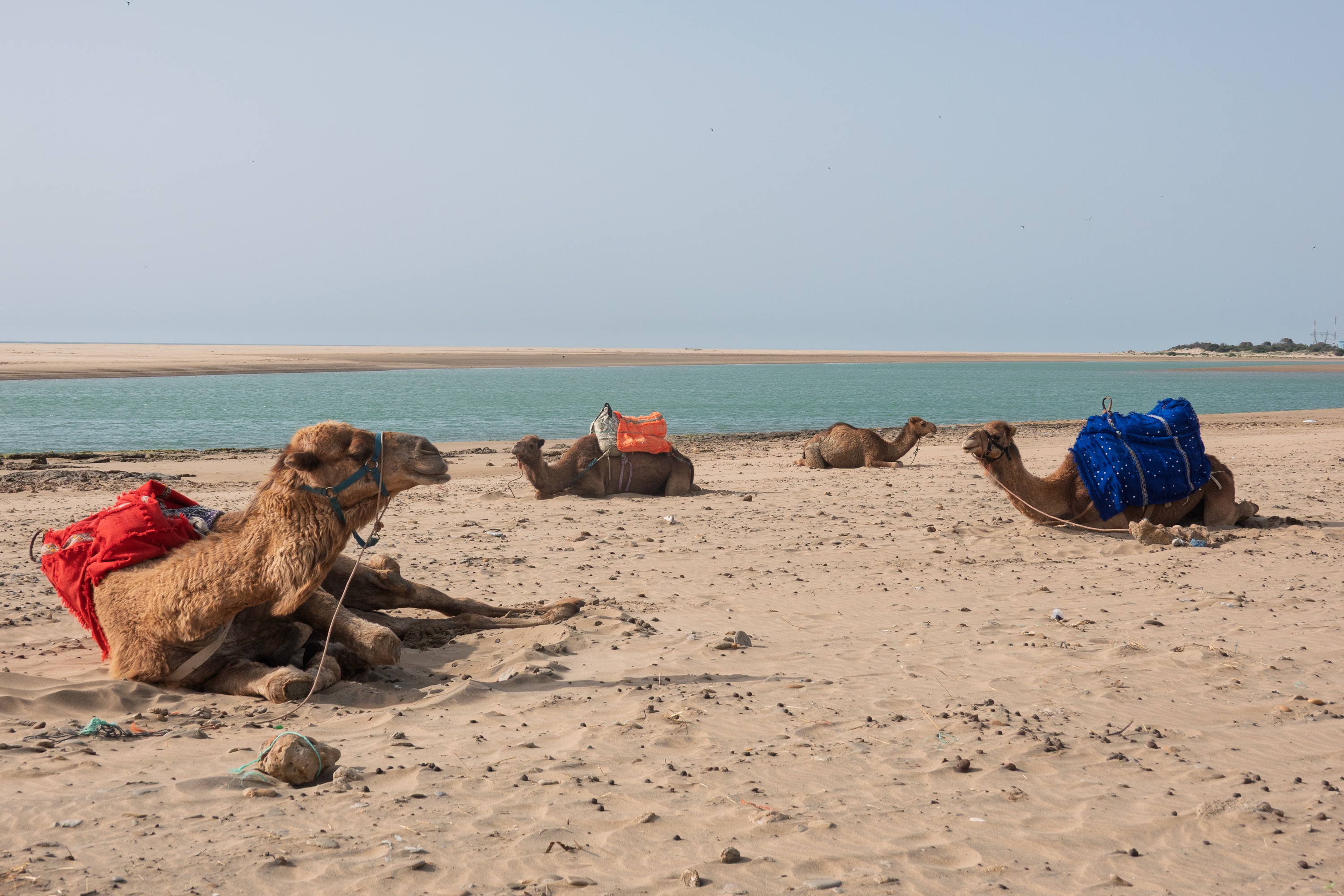
Morocco at last!

We had a pleasant crossing. The weather was so calm that we arrived at Tangier Med about two hours early.

We then tried to follow rather vague instructions (in Italian and Arabic) about how to disembark. The first line we stood in wanted the importation papers for the truck, which were, of course, in the truck and not accessible. There were several of us in the same situation. We were told to go to another line and get an escort to go down to the garage for our papers. The second line told all of this that that was nonsense. They would process immigration and we should all handle the vehicles on the pier. So our passports were duly stamped and we disembarked, prepared to process the vehicle in customs. This we did, but it took at least two hours. One hour before we were able to begin the process, and one hour while they decided what to do as we had no carte grise (grey card, the universal European auto registry), only Virginia registration papers, which are white. (carte blanche?)

In the end, they came back with our temporary import permit and we were off on the motorway for our first campsite, just north of Asilah. Never heard of Asilah? Neither had we. (https://en.wikipedia.org/wiki/Asilah) How about the old imperialist line “Perdicaris alive or el Raisuni dead!” Raisuni built a palace in Asilah, allegedly with the proceeds from ransoming Perdicaris (And sorry Ms. Bergen, Perdicaris was a man.) (https://en.wikipedia.org/wiki/Perdicaris_affair)

Asilah is a classic Moroccan coastal city, overshadowed by the more famous Tangier and Casablanca. Today that means a classic, historic center, surrounded by vast new, modern housing blocks and thousands of beach vacation developments. Miles and miles of them.

The campground proved to be pleasant and we settled in.  The next day was the Muslim holy day of Friday and hence, like Sunday in the United States, the town was likely to be closed. So we stayed home, only paying a visit to a small supermarket about four kilometers away on our bicycles.

It seems that, in Morocco, couscous is most often served on Friday and for lunch. It being Friday, we ordered couscous for dinner. It was good but not wonderful. Note taken – next time order it at lunch!

Our European router does not have service in Morocco, so we headed into Asilah the next day in search of a local SIM card. The taxi driver took us by the INWI telecom store, but it was still closed at 10:00 AM. It was supposed to open at 9:00 AM. We noted the location and the taxi dropped us at the entrance to the Medina. 

After a quick reconnaissance, and, of course, a coffee for people and traffic watching, we wandered back to the shop and found it open. Happily, the gentleman at the shop spoke a bit of French, a bit of English, and a lot of SIM. Within 15 minutes, we had a month’s unlimited 4G service for about $50. Didn’t even have to change the password!

Denise needed fruit and vegetables and she made some judicious purchases (bearing in mind that Fred would have to carry them!) from some street vendors.  Amongst them were some wonderful strawberries. We also found a much needed ATM. Morocco is a country that likes to be paid in cash. Credit cards need only rarely apply.

After a quick wander through the modern part of town, we headed back towards the Medina. Lunch was excellent, at a restaurant recommended by our taxi driver. We then set off in earnest to explore the old fort and Medina. 

We came upon a gentleman playing a traditional three stringed guitar type instrument. Fred found it tough going, although the lack of frets makes it easy to play any scale you want.

A pleasant, low key introduction to a new country.

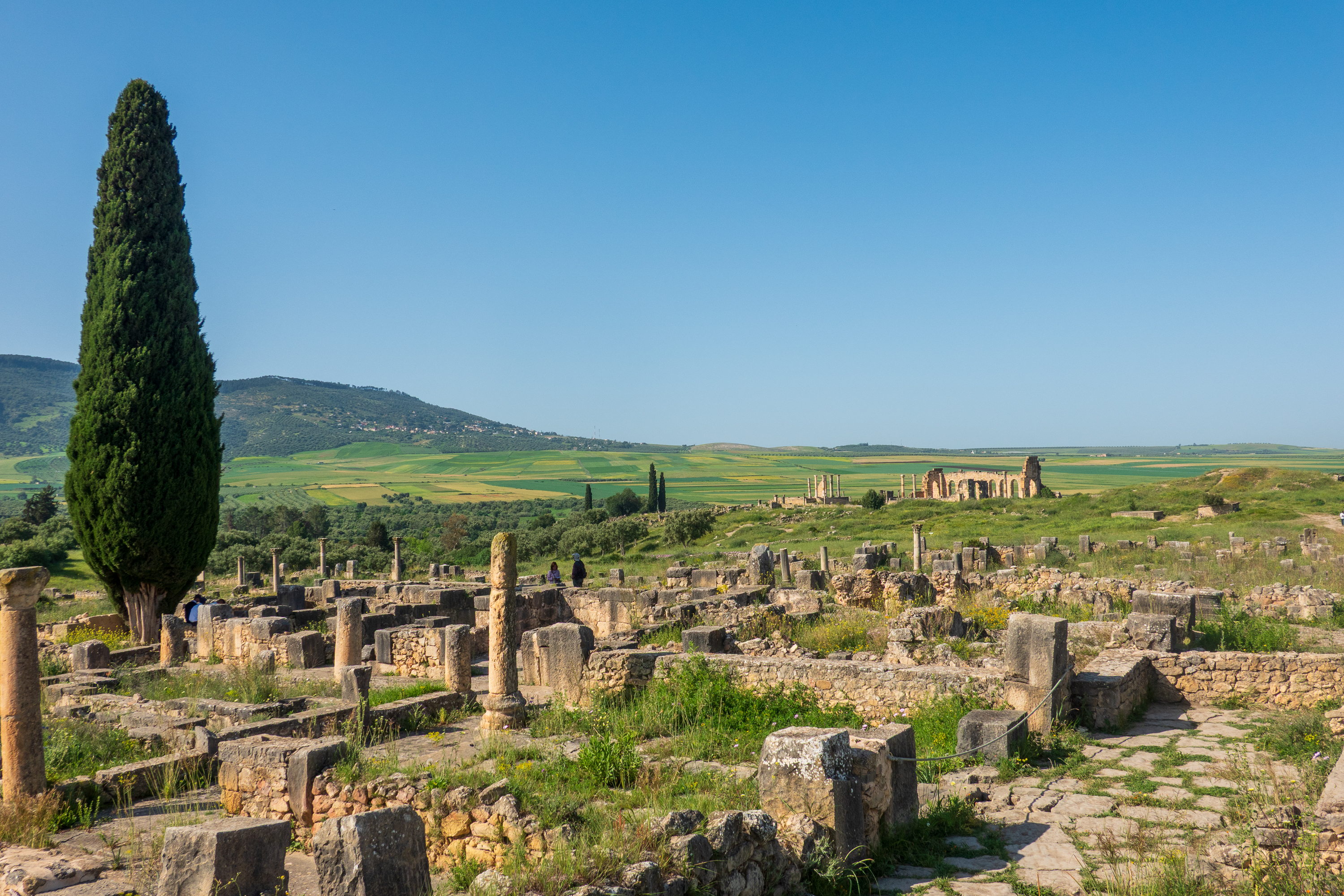
We set off the next day to the Roman site of Volubilis. We found a nearby campsite and, after determining that the mountains looked too mean for biking, set off to visit the next day. Arrived early in the morning, before the heat, before the tour busses, and before the ticket office opened.

Our multiple visits to Roman sites in Jordan, in Paestum, and in Herculanum, had given us a greater understanding of what we were seeing and we were quite happy without a guide.

The basilica on the hill.

There are a lot of wonderful mosaics, but sadly, they are not protected and are aging with the sun. 

Diana getting into the tub. And spilling the water. Fortunately, she has staff. (And no peeking – there is a whole. sad story about the gentleman on the right..
Hercules with the wild dog.
Portrait?
Baby Hercules with snakes.
Impluvium, to catch the rain, inside a wealthy home.
Every Roman town had a decumanus, a main east – west street. Gate at the top would have lead to Tangier.
Denise admires an olive press.

We strolled the decumanus, which would have been a main shopping street, with covered galleries on the sides, the sewer underneath, and lots of shops, temples, and wealthy homes.

Triumphal arch at the bottom of the decumanus. Fans of the film “Patton” will recognize this arch.
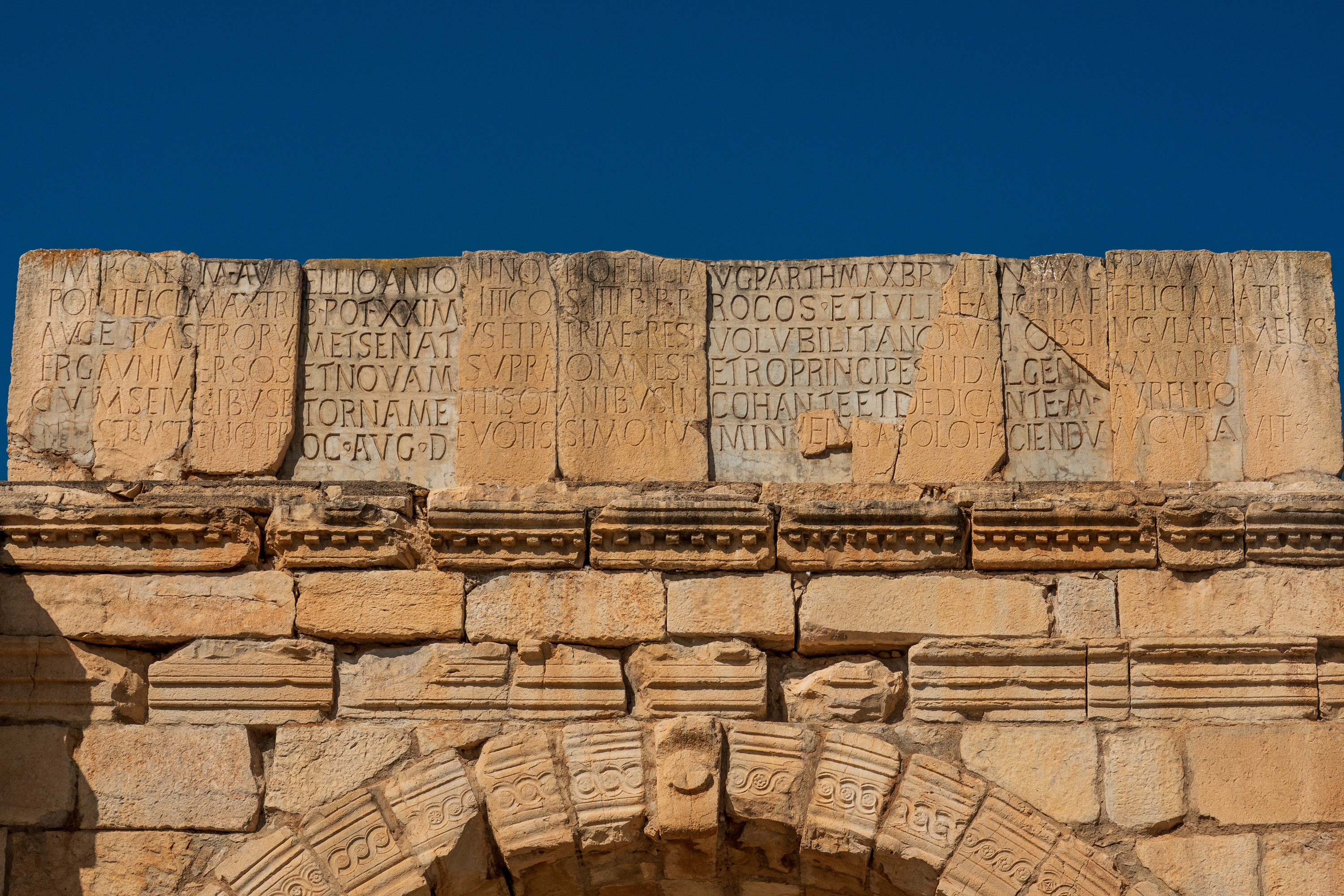
Always remember to dedicate your arch to the emperor who gave you a tax break.

We planned then to head into Meknes to shop at the big Carrefour.  Fred had a little trouble getting enough air pressure for the brakes to release, so there was a short delay in leaving. Heat? Altitude? We wondered why. All would become clear at Carrefour.

Arriving in Meknes, it was clear that we could not get into the formal car park, but the guardian had managed to fit us right up against the stadium wall, with lots of room for our ladder. Parking guardians are everywhere and can achieve great things. So off we went for a great Euro style shop. Happy, happy. After loading our groceries, Fred realized he had insufficient air pressure to move.  We had a serious leak not good at all.

So, Fred chatted with the guardian. “You don’t happen to have a cousin who is a diesel mechanic, do you?” “Let me think.”

Fifteen minutes later, the guardian led Fred around the corner to a man working on a car parked outside a small auto parts store. The mechanic agreed to come look at the truck. He could hear the leak but rising the cab was difficult as we were on a slope against a wall, and with no air pressure, we could not release the brakes to roll back. So we raised the cab, braced it with non-OSHA approved blocks of wood and found the leak. And, when the first repair did not hold, the mechanic went off to the market for a new hose.

This installed and tested, we were charged the princely sum of $30.00. We were needless to say, thrilled, and paid a tip. And to the guardian as well.

Don’t try this at home, kids!

Welcome to Morocco indeed!

Arrivederci Italia!

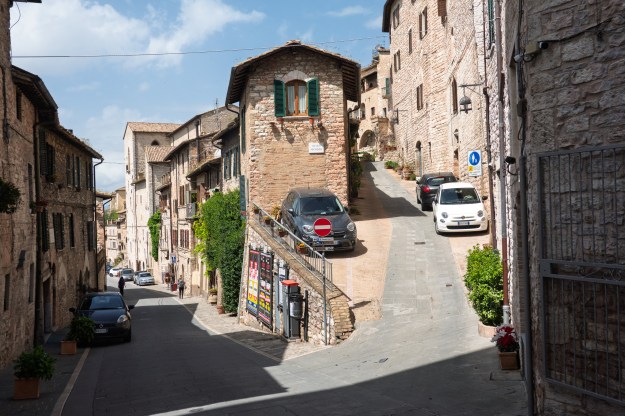
The cloud and threatening rain that dogged our last day in Rome became serious rain as we headed north to Assisi.  In fact, the downpour lasted all night and most of the morning of the following day. 
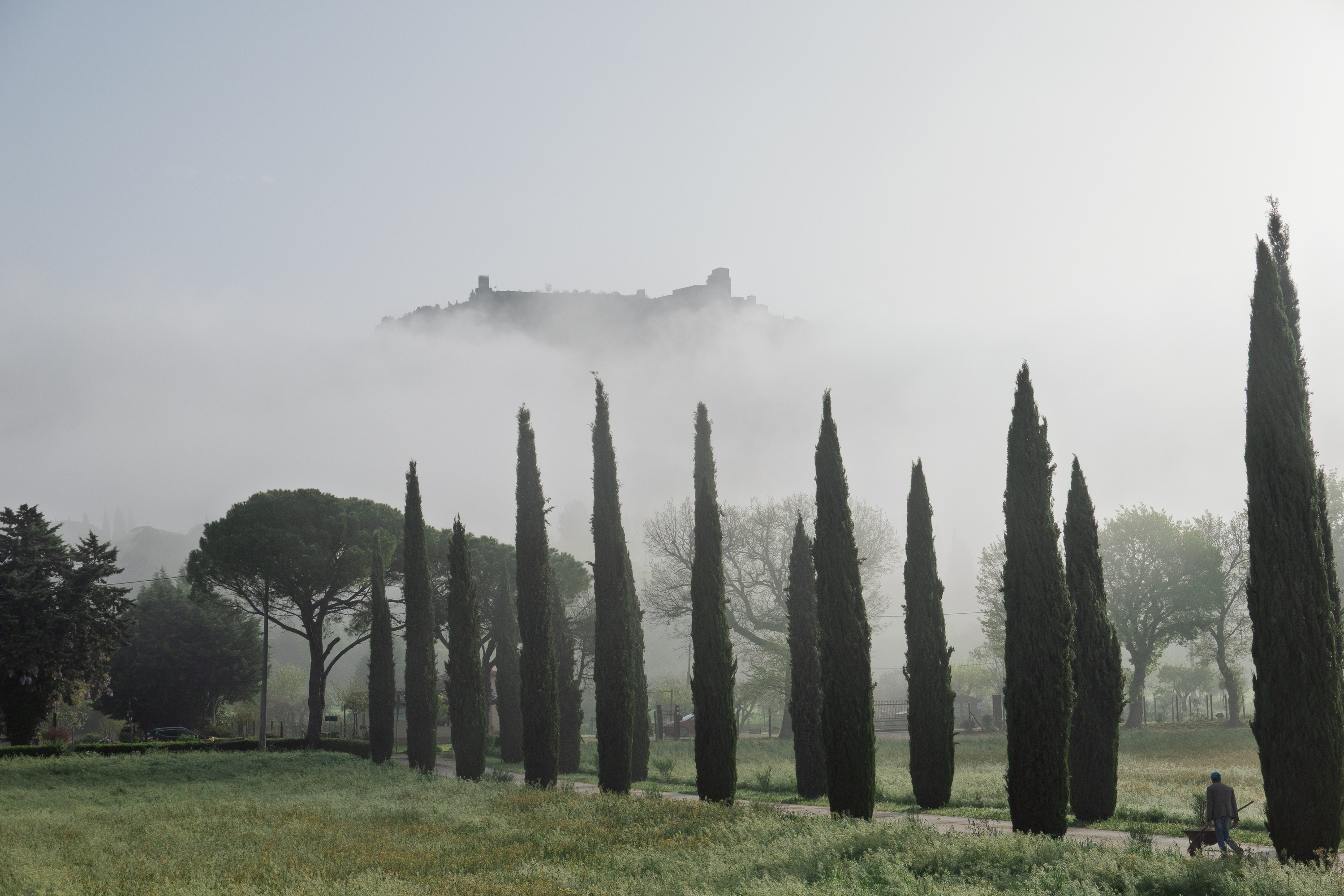
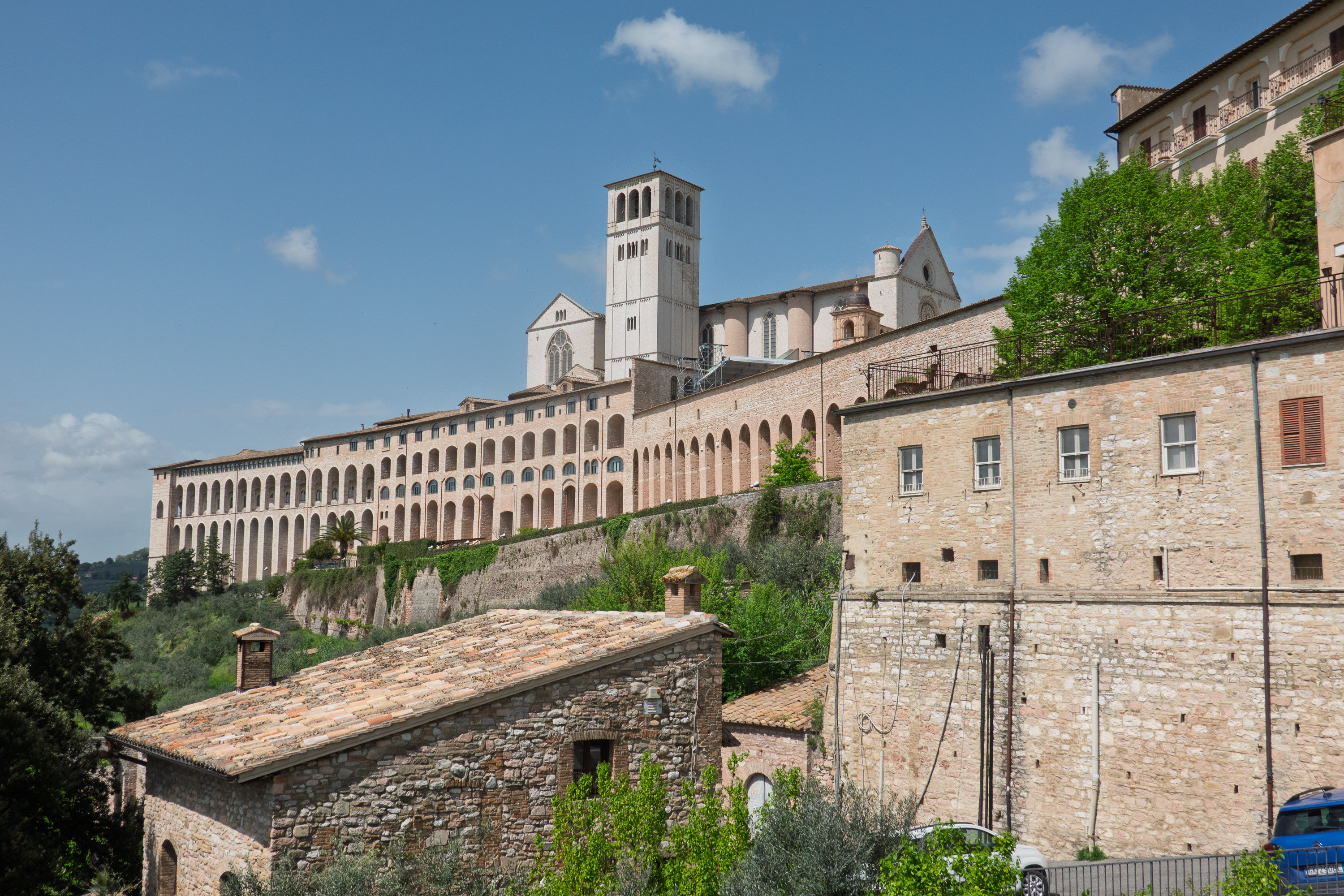
In the afternoon, with umbrella in hand, we walked to the local supermarket to stock up on a few items.  We escaped the rain but watched it settle in again for the night.  But the weather report said the next day would be fine and it was.  We purchased bus tickets and boarded the bus to ride up the very steep hill to the town of Assisi.

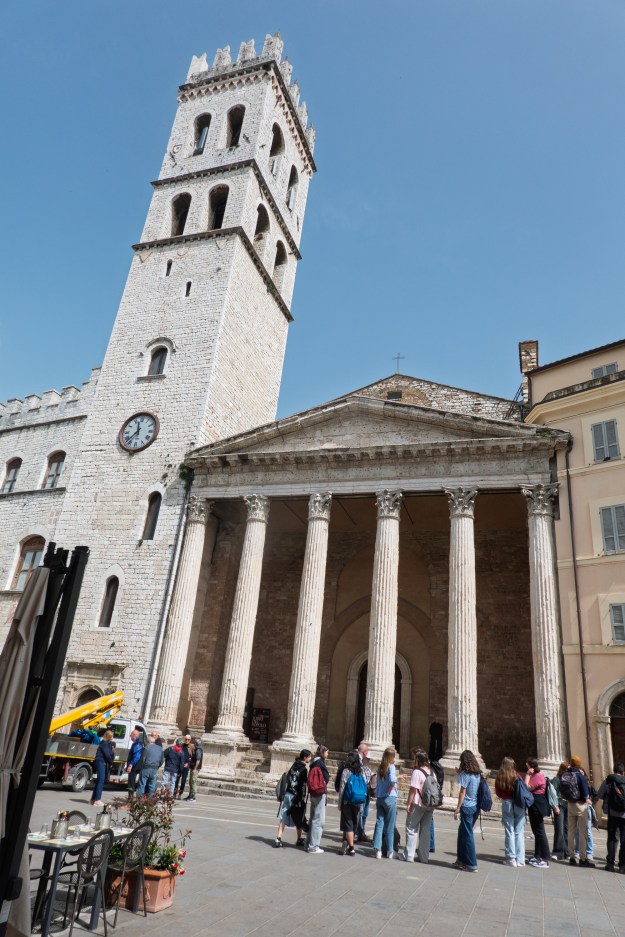
Known for being the birthplace of St. Francis, Assisi is very much a town of religious importance to the Roman Catholic Church with a large number of churches.  The Basilica of St. Francis is a site of pilgrimage. 

The construction of the Basilica began in 1228 immediately after the canonization of Francis of Assisi.  It consists of two churches, the Upper and the Lower, which has a a crypt, where St. Francis is buried.  Both churches are decorated with frescoes by such artists as Giotto and his contemporaries.  The frescoes are spectacular but unfortunately photography is forbidden.  There are more details and photos in Wikipedia for those who are interested.

We explored the town and had lunch in a restaurant built into a medieval house with arches. 

A fun experience, as was the gelato (of course) that we enjoyed later in our exploration.  We then walked down the hill, back to our campground.  Much more fun to walk down than up!

Our final stop in Italy was in Lucca.  This was during Holy Weekend and we were unable to find a space near Cinque Terre as everything was full.  We spent four nights there and it rained solidly for two of the days (and turned our site to mud!) but again we had one sunny day to visit Lucca. 

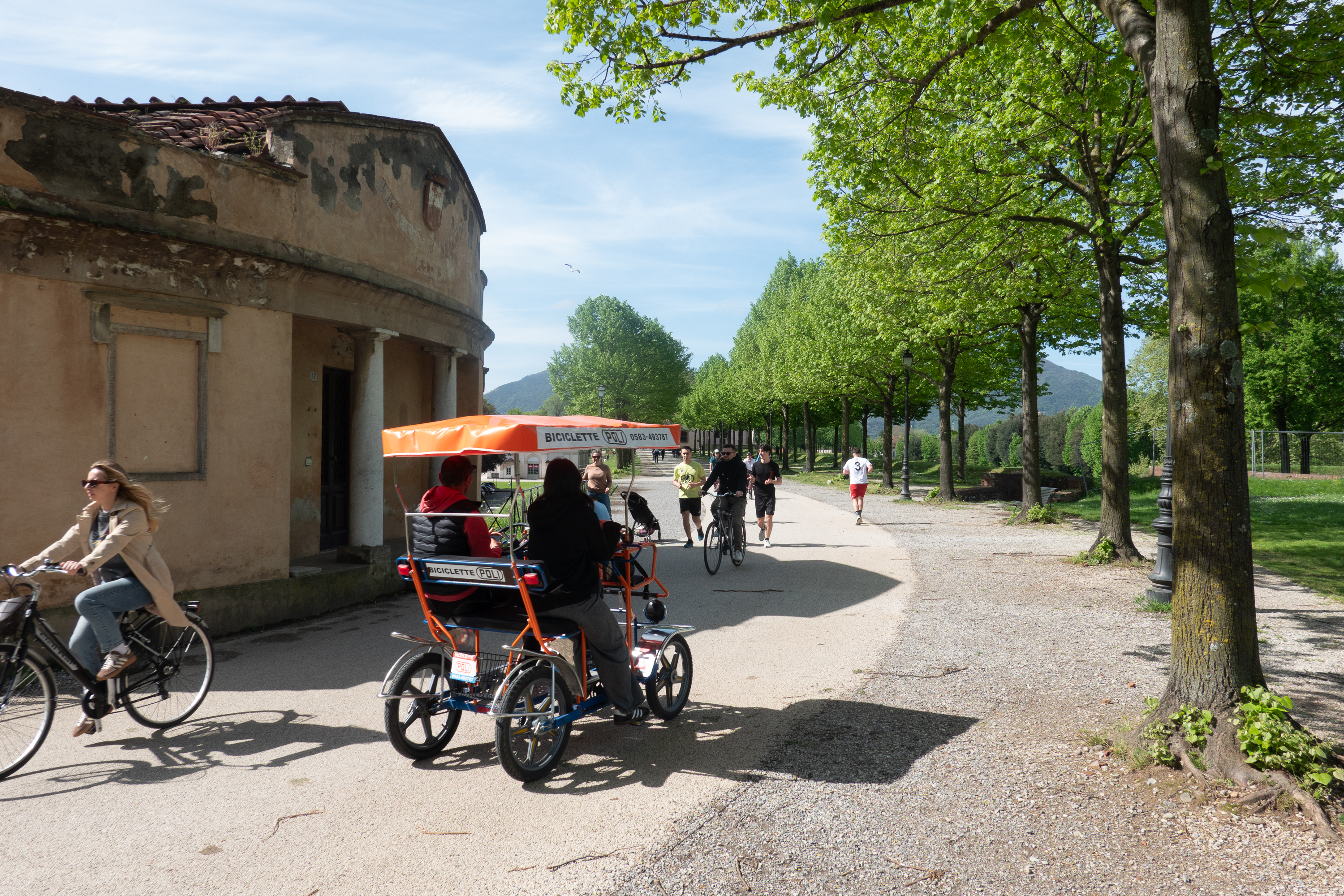
We walked a section of the city wall before deciding to rent a pedal surrey!  We actually rented an electric one and enjoyed a full circuit of the town in splendor and ease!  Lucca was a fun town to wander, with a busy pedestrian shopping street and lots of restaurants.  

Lots of European towns have vestiges of ancient walls. In Lucca, the circuit of the medieval walls is complete and the walls are so wide, there is a road on top. (Thankfully limited to bicycles and pedestrians.) Lucca’s walls are so spectacular, that they even have their own museum and you can walk the streets and follow the outline of the old Roman walls.

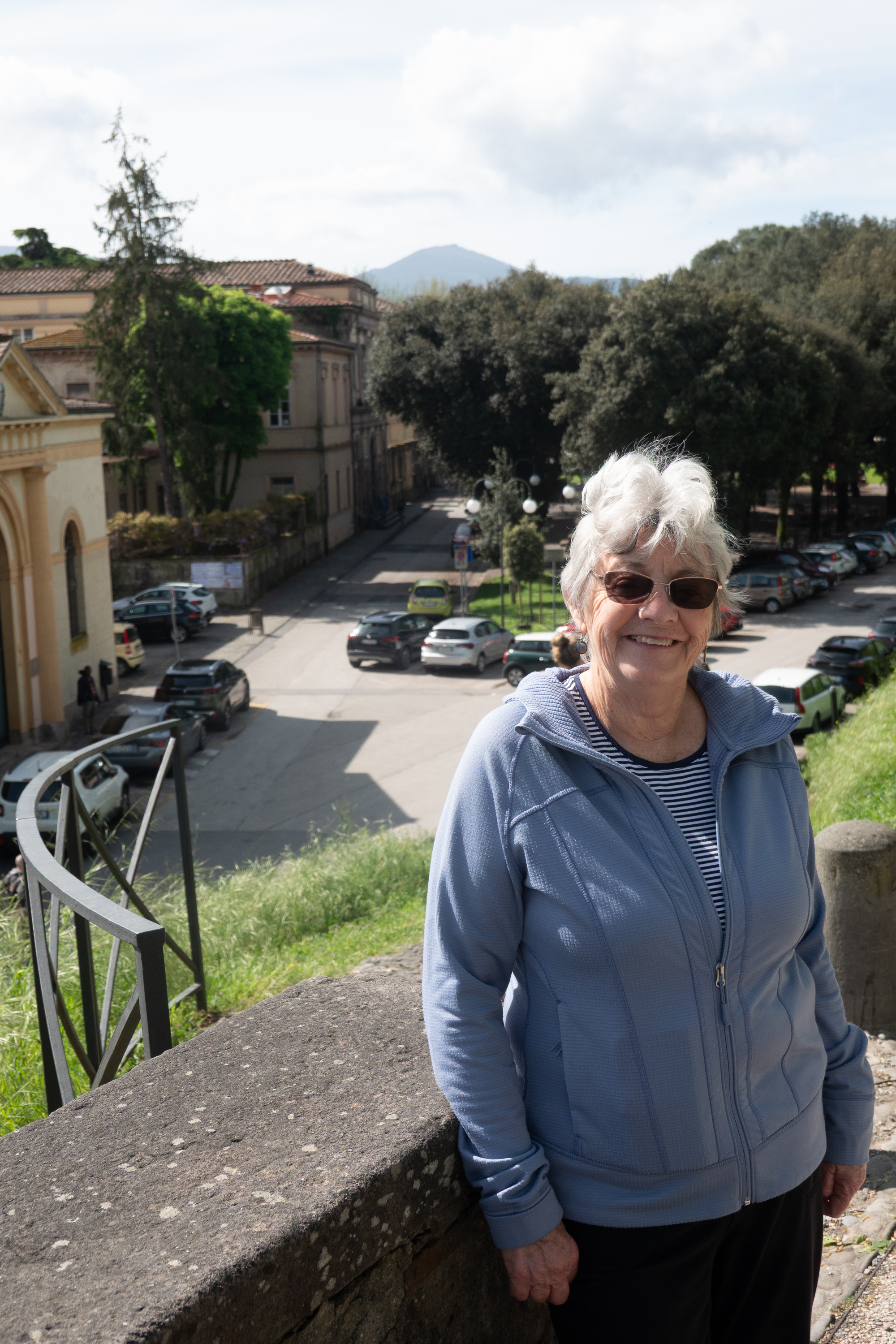
Denise on the wall.
Fred, trolling for passengers.

We even found the old Roman amphitheater. The galleries have long since been converted to houses, but the arena floor boasts a range of restaurants. We went elsewhere as this was the only place in Lucca where we were accosted by touts.

On Easter Monday we set off for Genoa again in preparation for the ferry to Morocco.  It was an interesting drive that followed the coast line.  We had already noted that most houses in Italy are painted a light brown, however as we drove, we began to see houses of pink, or blue, or darker brown.  As mentioned earlier, we dd not get to see the Cinque Terre towns, but we did get some idea of them from the hill towns with varied colored houses.

We had booked a camper storage lot for the night before our ferry departure as the ferry check in began at 7:00 AM. We asked at a campground but the owner was skeptical – the road was narrow and everyone double parked. The owner of the storage lot assured us that, no matter how narrow it looked, we would fit. He was right, but we held our breaths! The lot was huge, winding back at multiple levels. And he even had a dump station and drinking water. While most of the vehicles were in storage, we were clearly not the first to spend the night.

We arrived about 7:30 AM and received boarding passes very quickly from GNV.  However. we also needed police clearance and the police did not arrive until 8.30 am.  There was, of course, a huge queue by then!  We declined to join it and waited for the crowd to thin before standing in line.  Passports stamped, we waited in line until about 11:00 AM when we were boarded on the ferry.  We found our cabin and moved in, this time equipped with warm clothes for the hyper GNV air conditioning. Ferries can’t match the standards of cruise ships, but this was not bad and even had a double bed.

Two nights to Morocco!

Rome – The Eternal Part ][

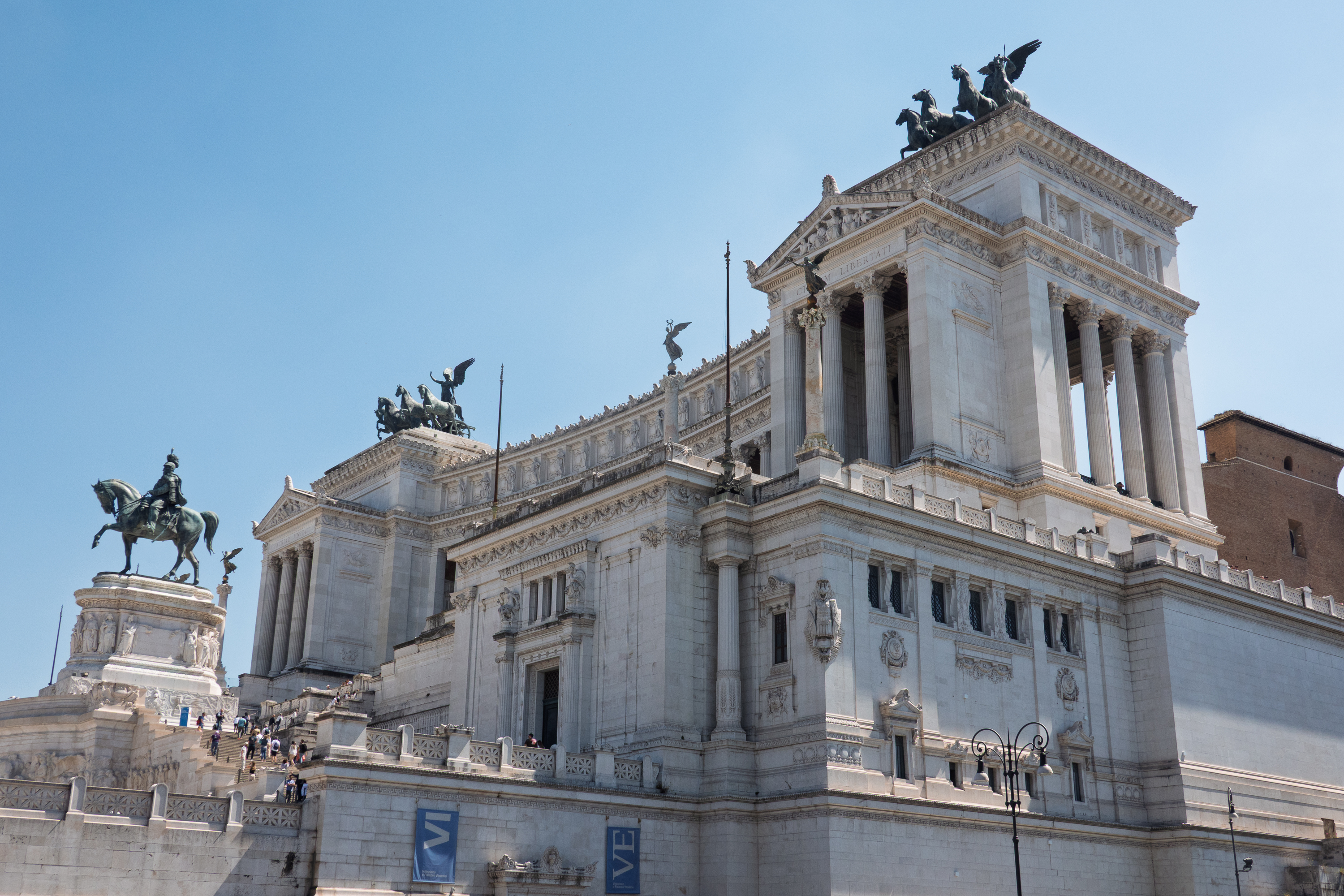
On our second day we started out to see Trajan’s Monument and Market. A  city bus took us to the Piazza Venezia where we saw the huge Vittorio Emmanuel II Monument, built to celebrate the unification of Italy. 

You can see why Mussolini liked to give speeches here.

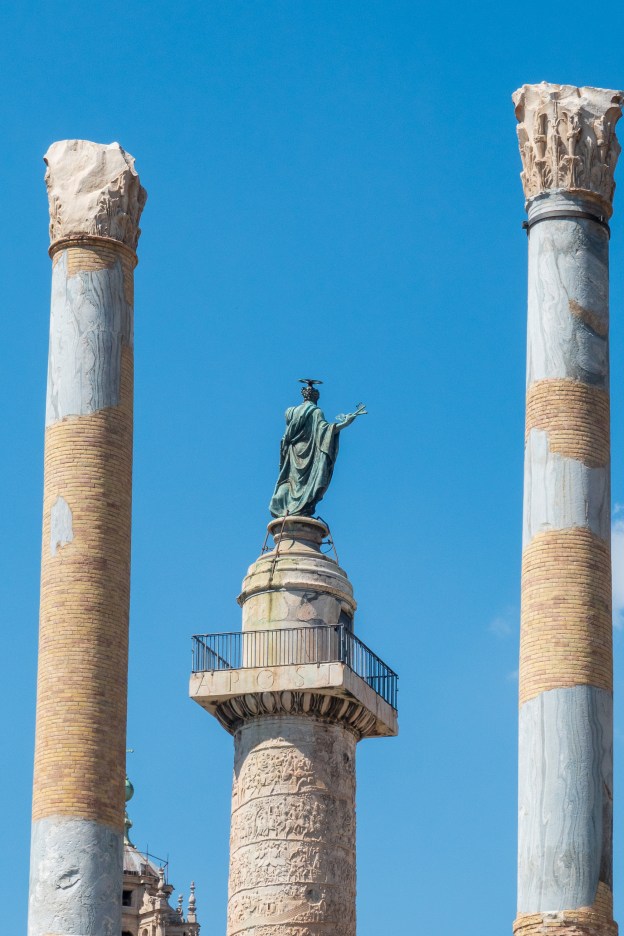
We crossed the square to Trajan’s Column and continued walking on the bridges across and above the Forum to the building known as Trajan’s Market, now home to the Museum of the Imperial Forums. (https://www.mercatiditraiano.it/en)

Trajan’s Column from the Forum side.
Trajan’s Column from the Market side.

Trajan was an accomplished emperor. Some of those accomplishments came at the expense of other nations and, sadly, some have impacts that carry on to this day. (https://en.wikipedia.org/wiki/Trajan) The column is famous for its very detailed images of the Roman Army on campaign. It is so tall, that the ancient Romans would never have been able to see it up close. Today, we can actually examine the images: https://www.trajans-column.org/?page_id=107 History nuts like Fred can stare at them for hours, and then critique all of the movies about Rome.

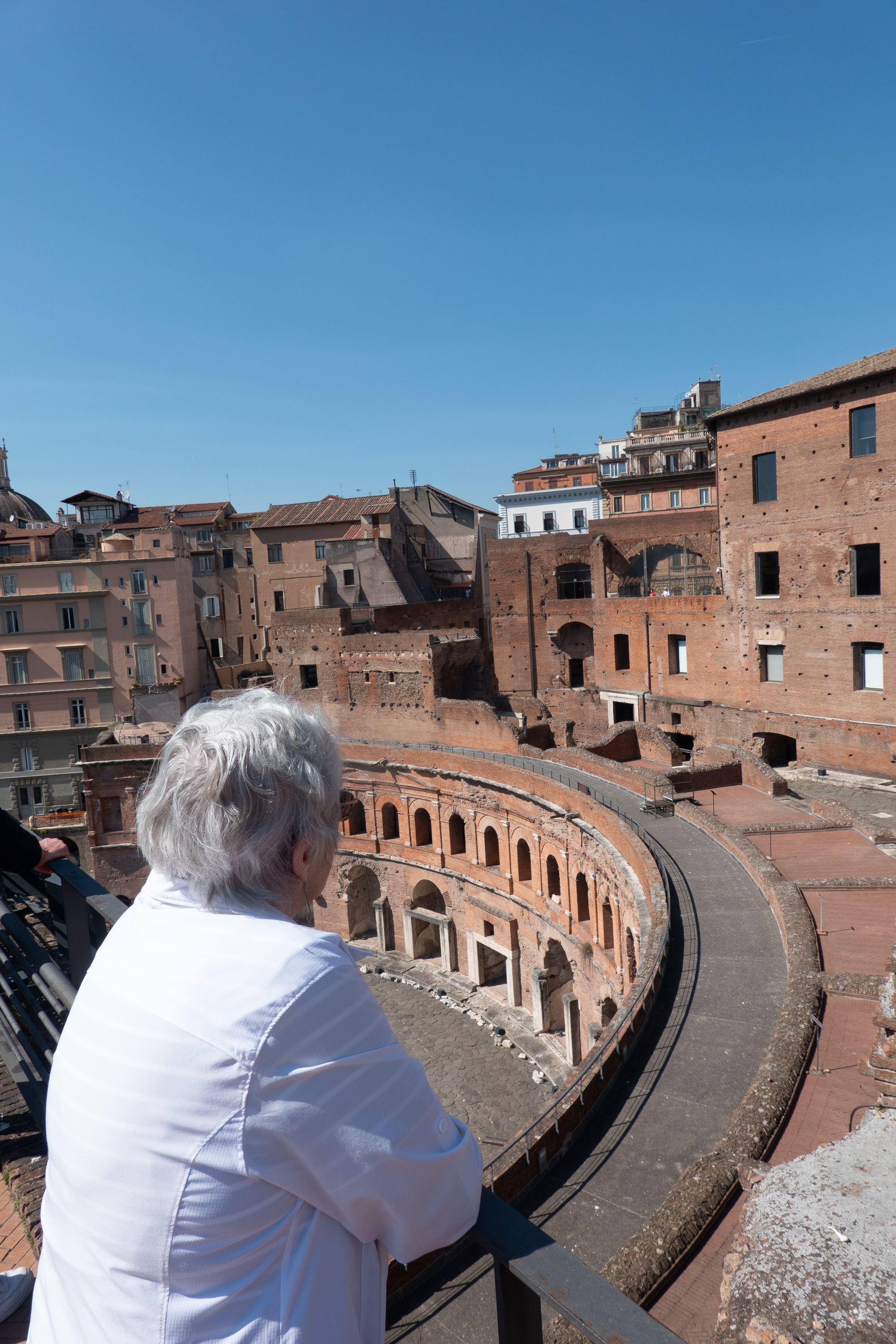
“Trajan’s Market” was actually more likely to have been a huge, multi-story administrative complex, rather than a shopping center, it was quite impressive.  We really enjoyed the Museum. We were unaware that there were, in fact, different forums built or expanded by different emperors over the centuries!  The view from the roof over the Forum was spectacular.

Shops or offices, the galleries are huge.
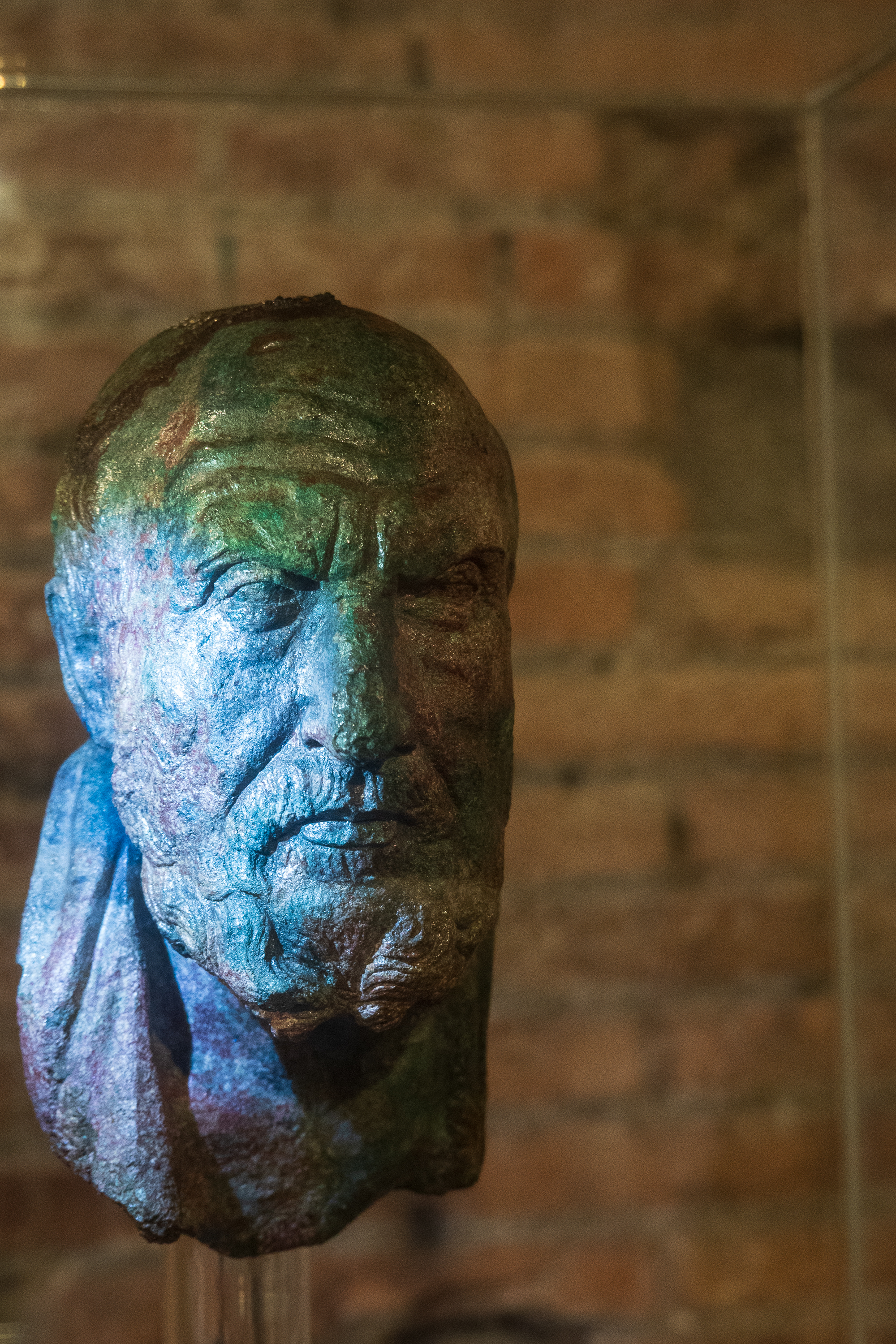
There are the remains of many statues, quite a few, as you might imagine, of Damian’s.
The detail is quite amazing.
Artistic sculpture
Makers mark on an amphora. Adds a very human touch.
Fred was fascinated at the integration of this modern building into the ruins.
Denise admires the Market.
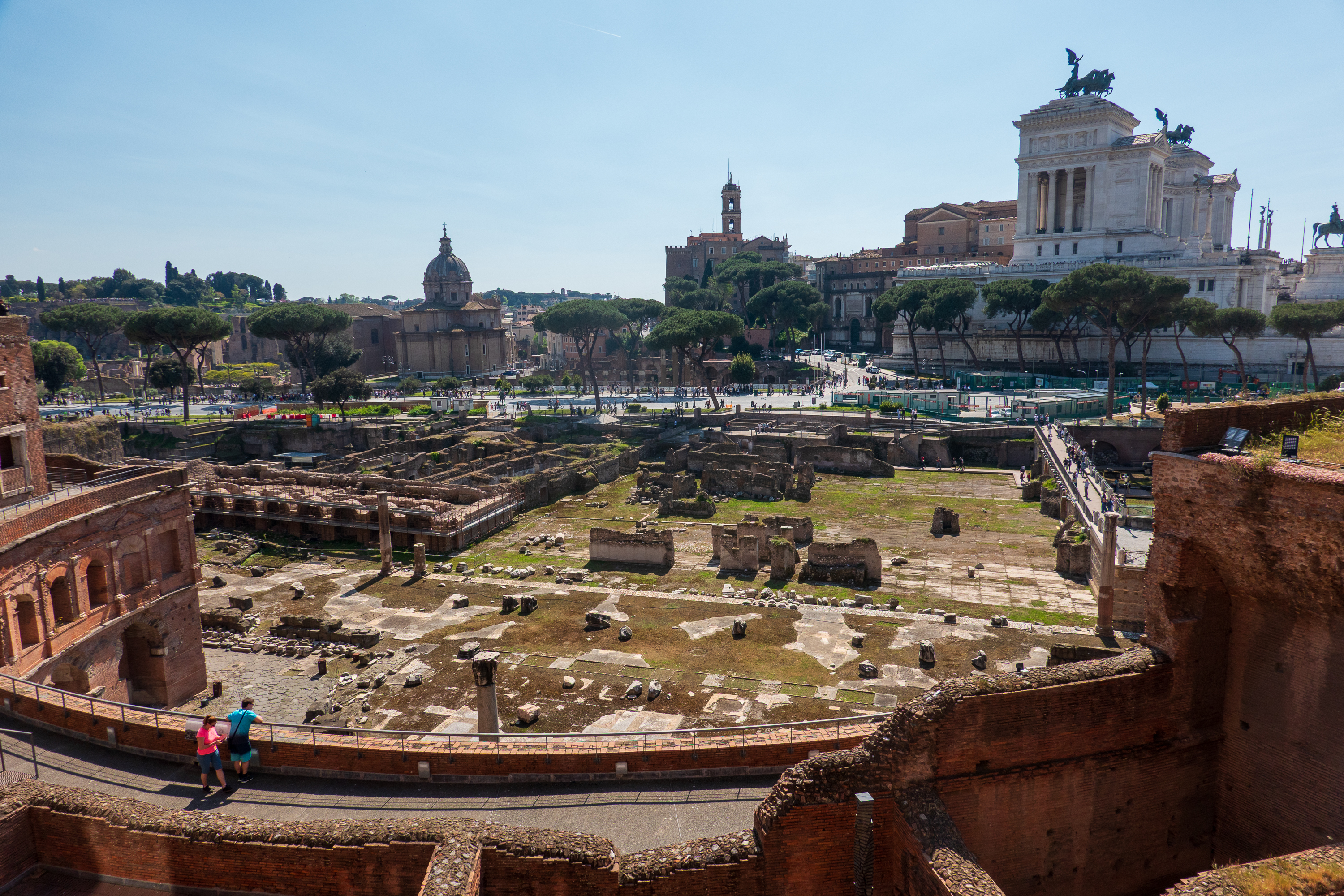
The Forum from the top of Trajan’s Market.

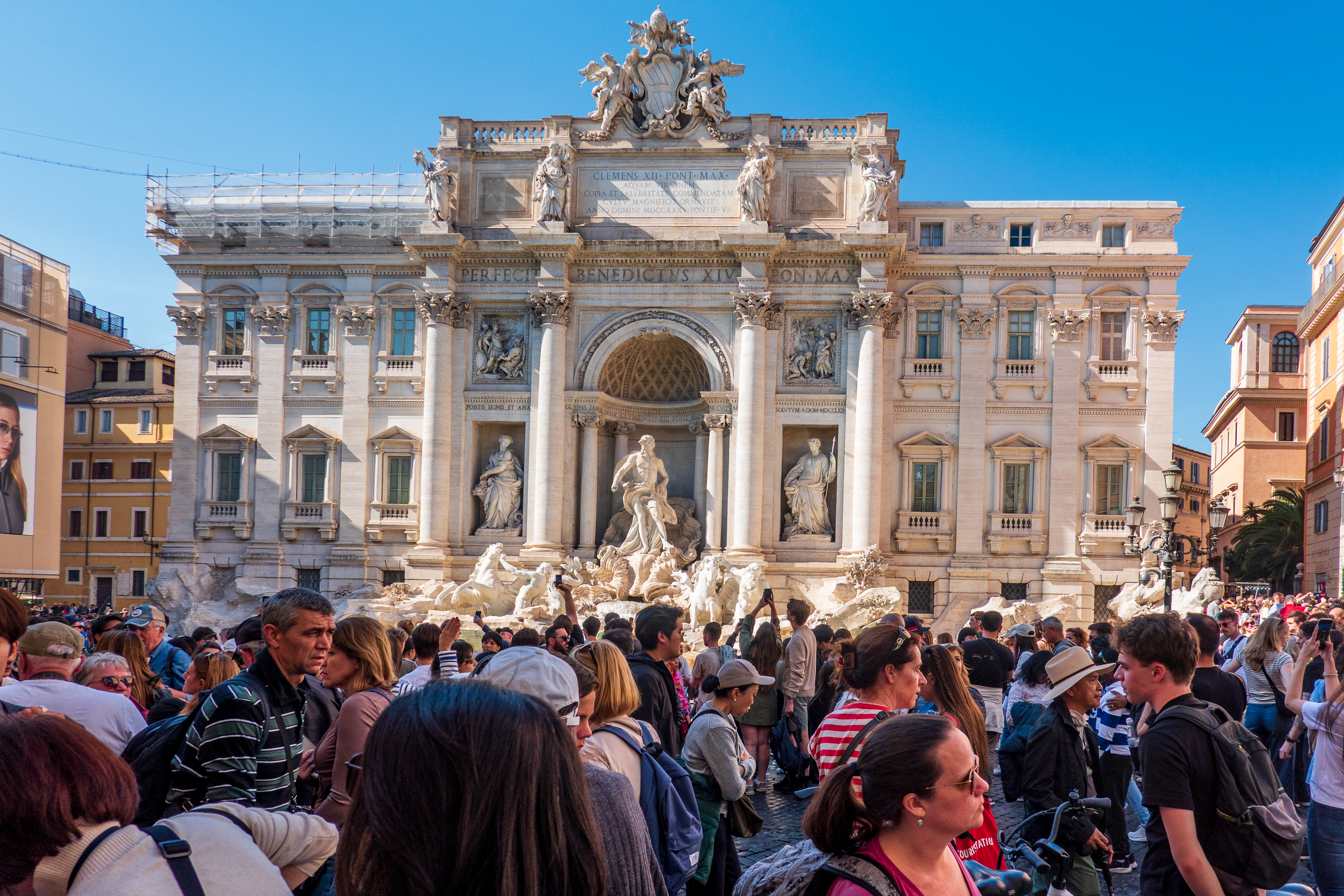
We then headed to the Trevi fountain, to commune with a couple of thousand other visitors.  At least that is what it seemed like!  That box checked, we enjoyed a gelato to recover and then headed back to the train station.

Nifty street with bridges.
Yes, there is a fountain there.

Our third day was Vatican Day.  We saw the Vatican in the company of a friend, a former colleague from our time in Bangui. Javier, originally from Venezuela, is now the Chief of Protocol for the Holy See.

Javier complains that the job is giving him grey hair.

Protocol is a challenge under the best of circumstances – do it right and nobody notices; get something wrong and EVERYBODY notices. As you might imagine, the Pope’s passing created tremendous amounts of work.

It was an amazing visit, and the memory of it will stay with us forever.  We started in the corridors, or loggias, of the administrative office buildings of the Vatican’s Department of State, where Raphael painted the stories of the Bible, from the creation onwards, on the ceilings.  Quite amazing.  We have worked in a lot of office buildings, but never one like this.

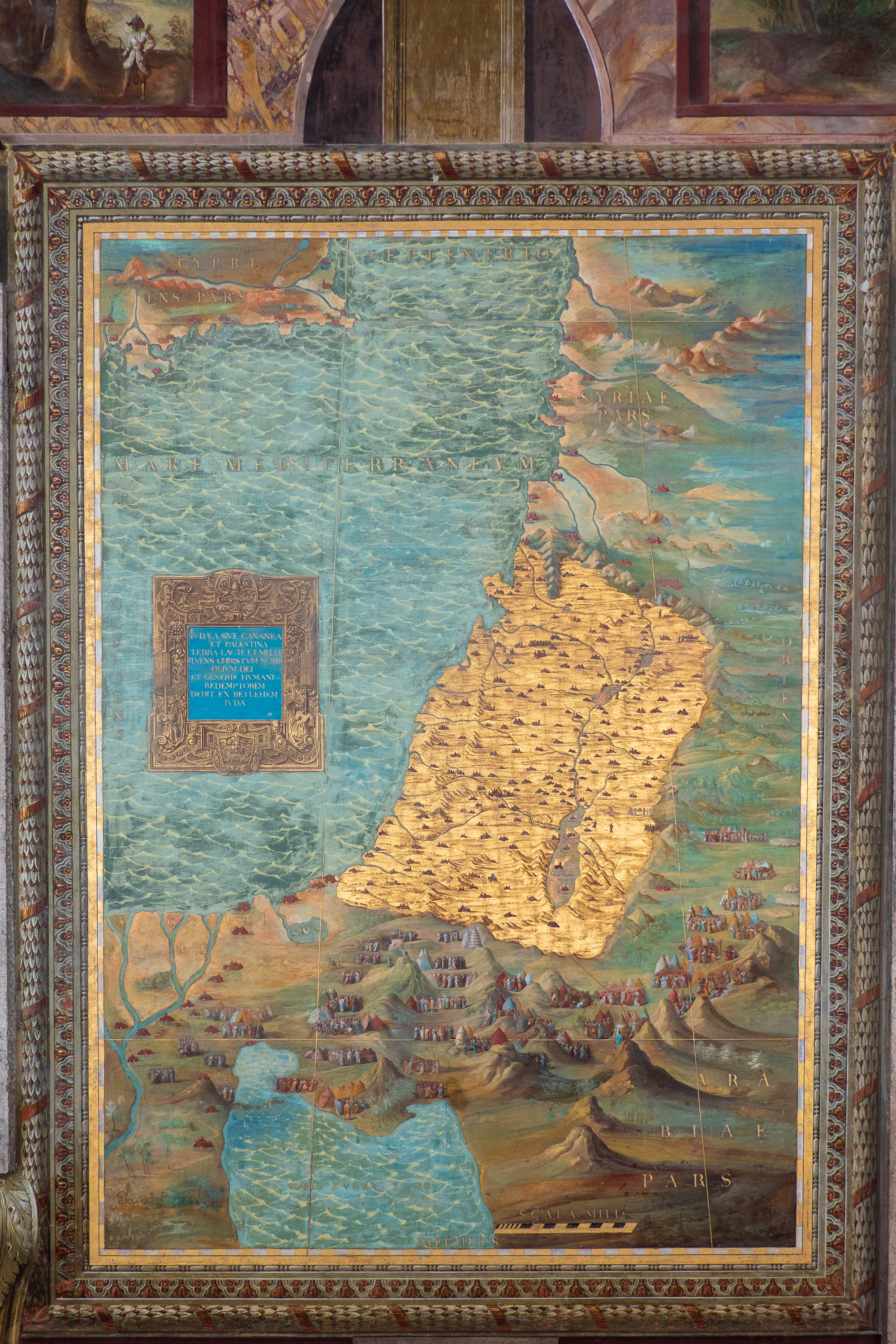
Javier took our picture in front of the map always shown to the Australian ambassador. Can you see why?
The Holy Land, done in gold.
Walking the loggia of history.
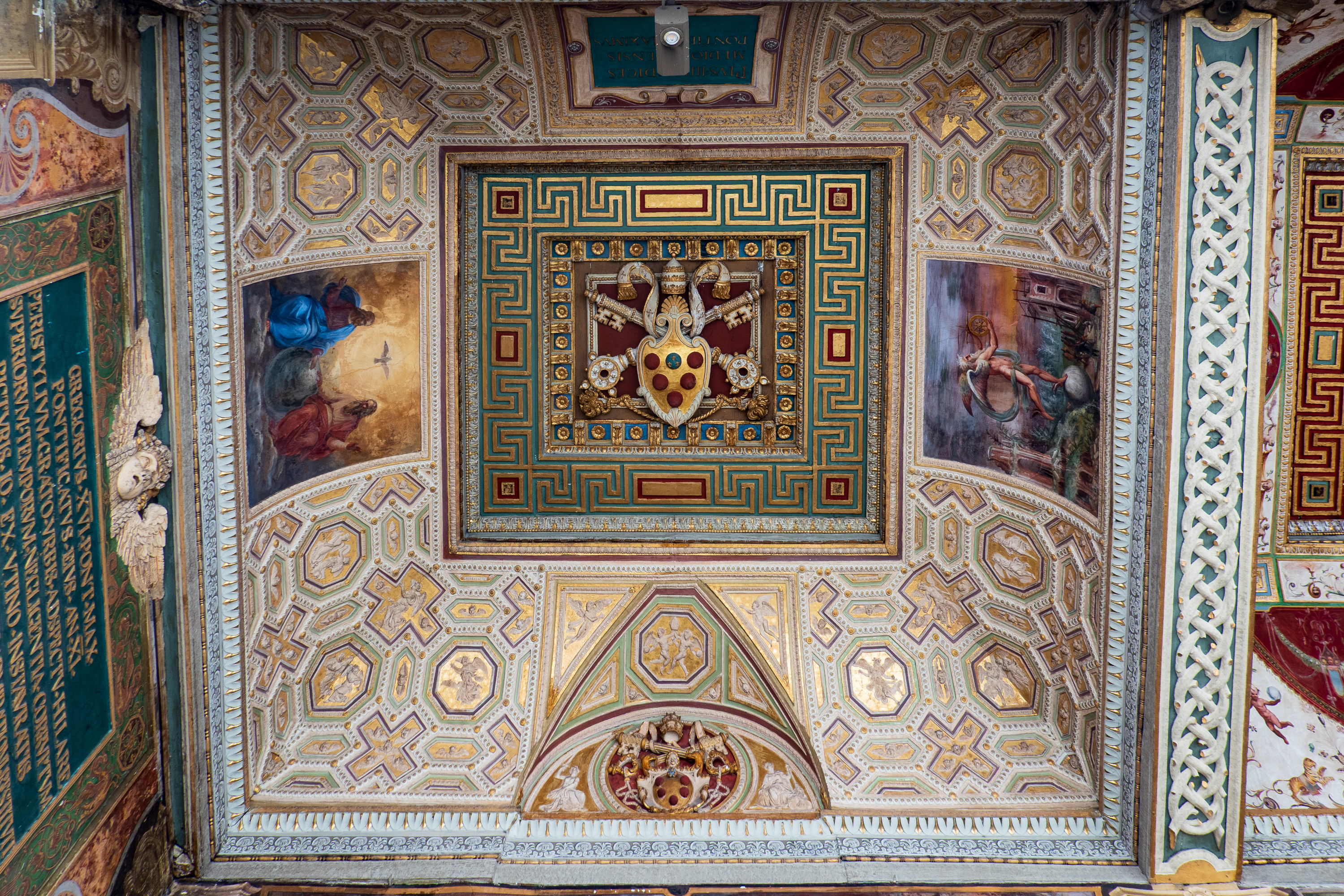
Ceiling detail.

We also viewed the Basilica of St. Peter from above.

Setting up for Easter Sunday. A few people are expected. Sadly, no coffee hour after the service.
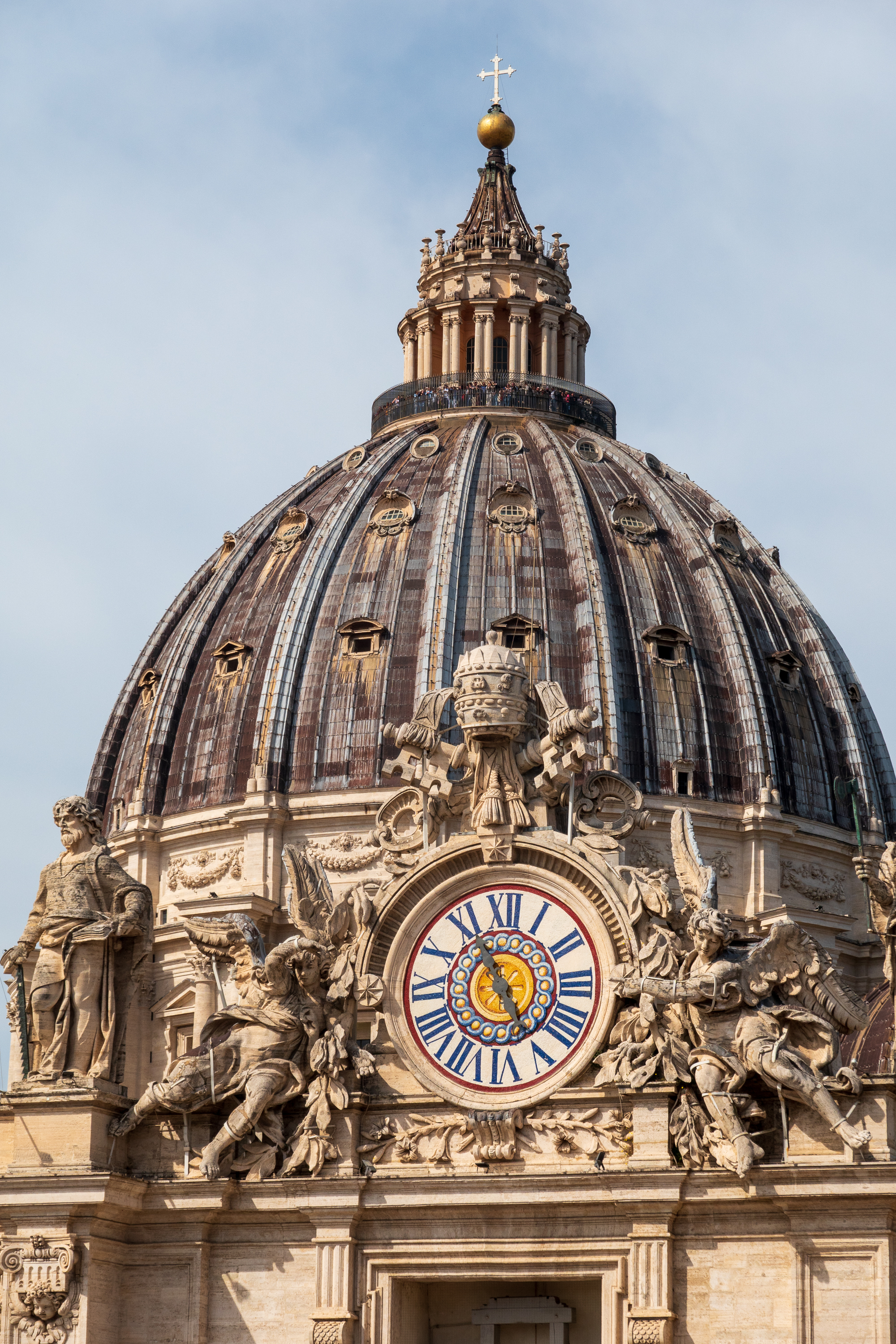
The dome of the basilica.

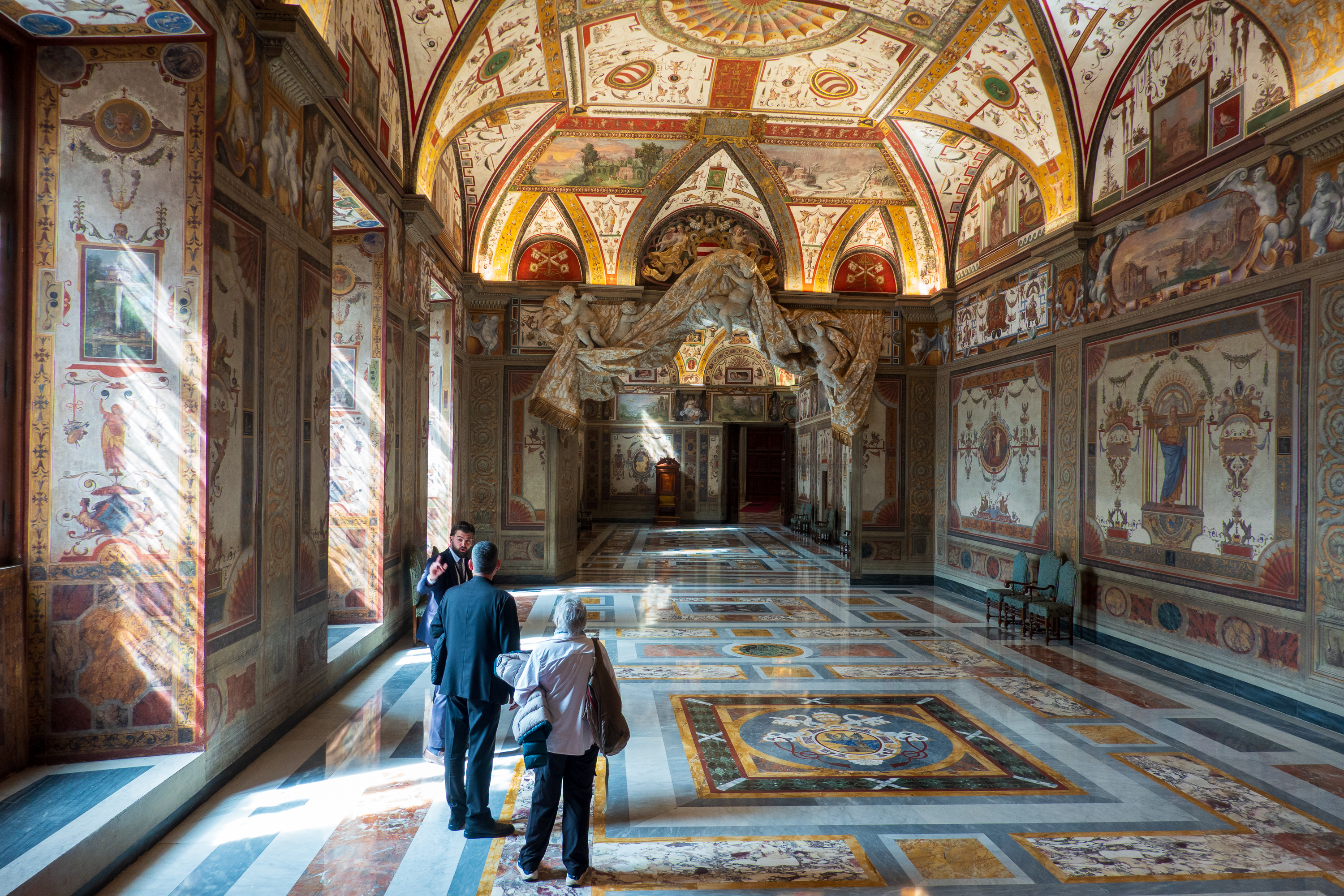
We then followed the conclave processional route through the Hall of Dukes and the Hall of Kings. At the time of our visit the Pope was out of hospital and in residence.  Since his death, our visit takes on a special note as the incredible decoration of these rooms will be yet again seen on TV screens when the conclave to elect a new Pope begins. While the Sistine Chapel is open to tourists – so many that we could not peek in – these rooms are not open to the public. And yet their level of decoration is the same or greater than the Sistine Chapel.

Every detail is significant – note the keys, symbol of the authority of the Pope. This is the hall of dukes, which leads to the hall of kings.
Pope, assisted by a Cardinal, receiving royalty – symbol of Papal authority over secular rulers. (Who, historically, have not always agreed.)
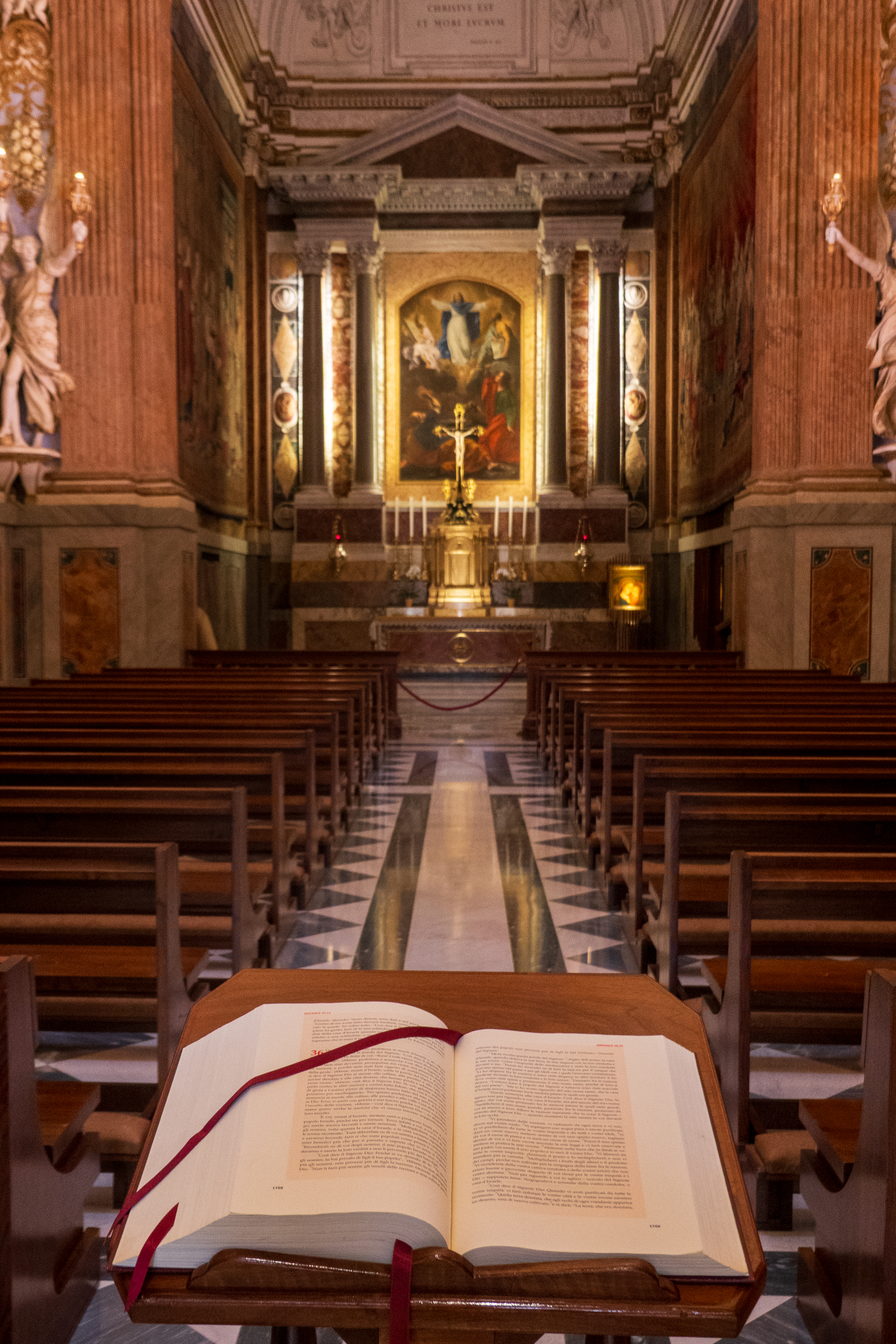
Pauline Chapel

We admired the Pauline Chapel: https://en.wikipedia.org/wiki/Cappella_Paolina Cool 3D view of the Pauline Chapel: https://www.vatican.va/various/cappelle/paolina_vr/

We took a break to visit Vatican gardens, where every plant mentioned in the Bible is grown. The garden is quiet and peaceful and very well maintained. The wisteria was in full bloom. Just lovely.  

Nice to take a break after the intensity of all of the Baroque art.

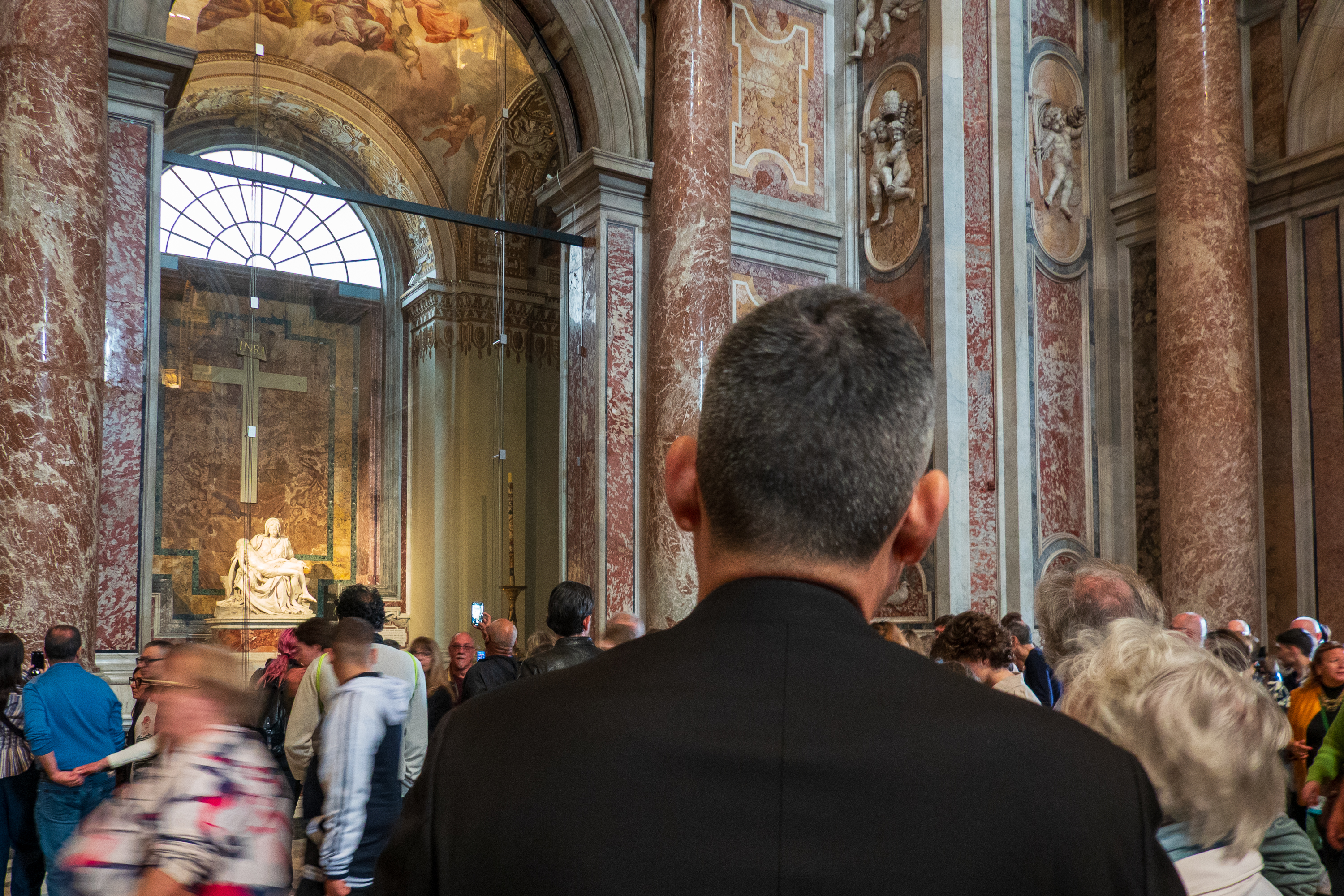
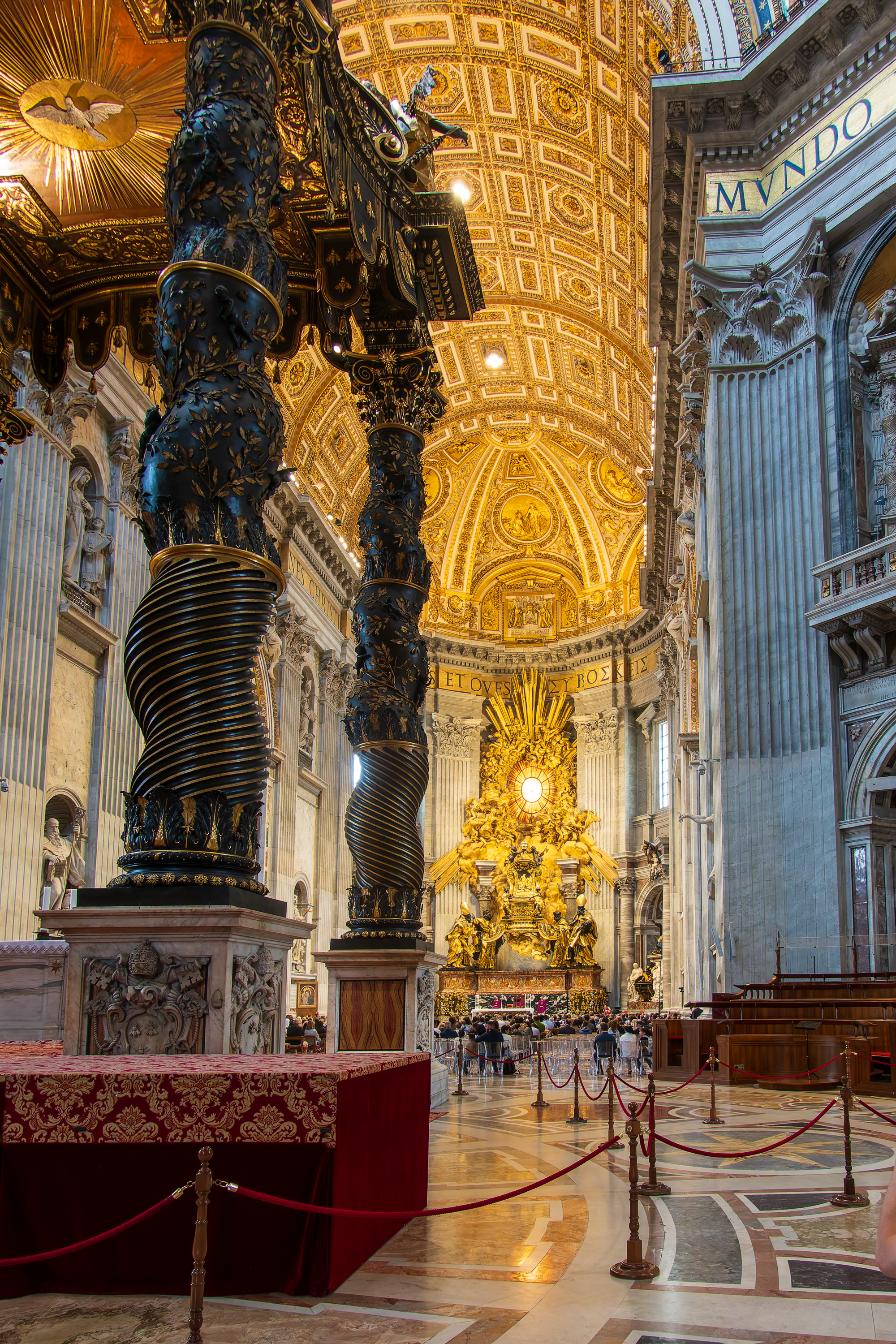
A quick visit to the Basilica came next. Despite the crowds, we marveled at the Pieta, by Michelangelo and the baldachin (https://en.wikipedia.org/wiki/St._Peter%27s_Baldachin) above the grave of Saint Peter. The frescoes everywhere were amazing.

Javier and Denise peer through the crowds.
It really is as amazing as reputed.
Amazing that there is a lot of evidence that Saint Peter really is buried right here.
Altar

Like everybody else, we were in awe of the Basilica. (https://en.wikipedia.org/wiki/St._Peter%27s_Basilica) It is simply overwhelming, in size, history, and religious importance.

We had a most interesting experience during our visit. A gentleman, perhaps hearing us speaking English, approached Javier and asked for his blessing. Javier gave it, of course. But it was a poignant reminder that not all of the visitors were tourists like us – many are true pilgrims. We discussed with Javier at length how hard it is to balance the role of the Basilica as a living church with the demands of tourism. (A challenge not unique to Saint Peter’s.) Seems that Pope Francis was particularly concerned about maintaining a dignified church while still making anyone feel welcome. During our visit we could see a section of the Basilica cordoned off for a reaffirmation of wedding vows. It really is an active church.

We then headed to the Residence for lunch. We ate in what is basically the cardinals’ dining hall. Even looks a bit like a college dining room – not at all decorative. (A bit of a jolt after so many ornate spaces.) Until his illness, the Pope ate lunch here every day, his table was just over there. And yes, there was pasta and it was very good.

Proving that no challenge was too great, Javier even drove us back to the campground because he wanted to see our camper. We had to make an extra circuit because there is an impassable median outside the campground! Hopefully, we can return a bit of Javier’s hospitality this Fall when he visits Washington.

Javier wanted our picture with the truck.

We were stunned to learn that you cannot simply visit the Forum – you must get tickers in advance, and there were none left. So we broke down and booked a tour of the Forum and the Colosseum. Not our favorite way to visit anywhere but we had no choice. There are great guides and there are others. Sadly, we had one of the others, but it would have made little difference had we visited on our own.  Everywhere was packed with people. Between the crowds and the weather, we did not get any great images of the Forum or the Colosseum. Pity, but you will just have to visit on your own!

Forum Romanum
Inside of the Colosseum, showing a bit of the floor over the underground passages.

But we came, we saw, we learned, and returned to the campground feeling that we had packed as much into four days as was possible. Clearly, it was Javier who made it all special.

We were heading for Genoa to take the ferry to Morocco, but as we were now in Holy Week, we had found little availability in campgrounds north of Rome.  We did find space at a sosta below Assisi, so that was our next stop. 

Rome – The Eternal, Part One

Fred was not all that interested in Rome; we tend to avoid big cities and Rome certainly qualifies as big. But we have a colleague from our tour in Bangui, currently at the Vatican, and he had invited us to visit. And visit we did. Of course, every element of our visit has taken on new meaning with the passing of Pope Francis and the election of Pope Leo.

Arriving in Rome, we went to the campground recommended by our friends, Ron and Ton. (https://travelintiger.com) The campground, La Via Flaminia (https://www.villageflaminio.com/en/), is close to a station with regular trains into Rome and, once there, easy access to the Metro.

The first thing to greet us upon checking in was this blast from the past. We first encountered Rotel in Tamanrasset, in 1974. Always had a soft spot for them as it is a kind of a wild way to travel. And, back in Tamanrasset, they cleaned up an absolutely disgusting ablution block to the point that we could use it. (We had been planning to simply drive out into the desert each day; it was that grim.) (https://www.rotel.de/index.html)

This beast is fairly simple. In Tamanrasset they had a Mercedes bus, the “hotel” trailer, and finally a 6×6 truck to carry fuel, spares, and mechanics.

In 1958, Fred and his mother spent six months in Rome when they were evacuated from Amman during the Iraqi revolution of 1958. (https://en.wikipedia.org/wiki/14_July_Revolution) Fred remembers grilled cheese sandwiches on the Via Veneto, just up from the US embassy, so, of course, we returned to the site and Fred relived childhood memories.

Looking down the Via Veneto towards the chancery.
When the money ran low, we moved to a pensione, the Ludovici. This may be it, now a hotel. We had the corner room on the third or fourth floor. Even had a sink in our room!

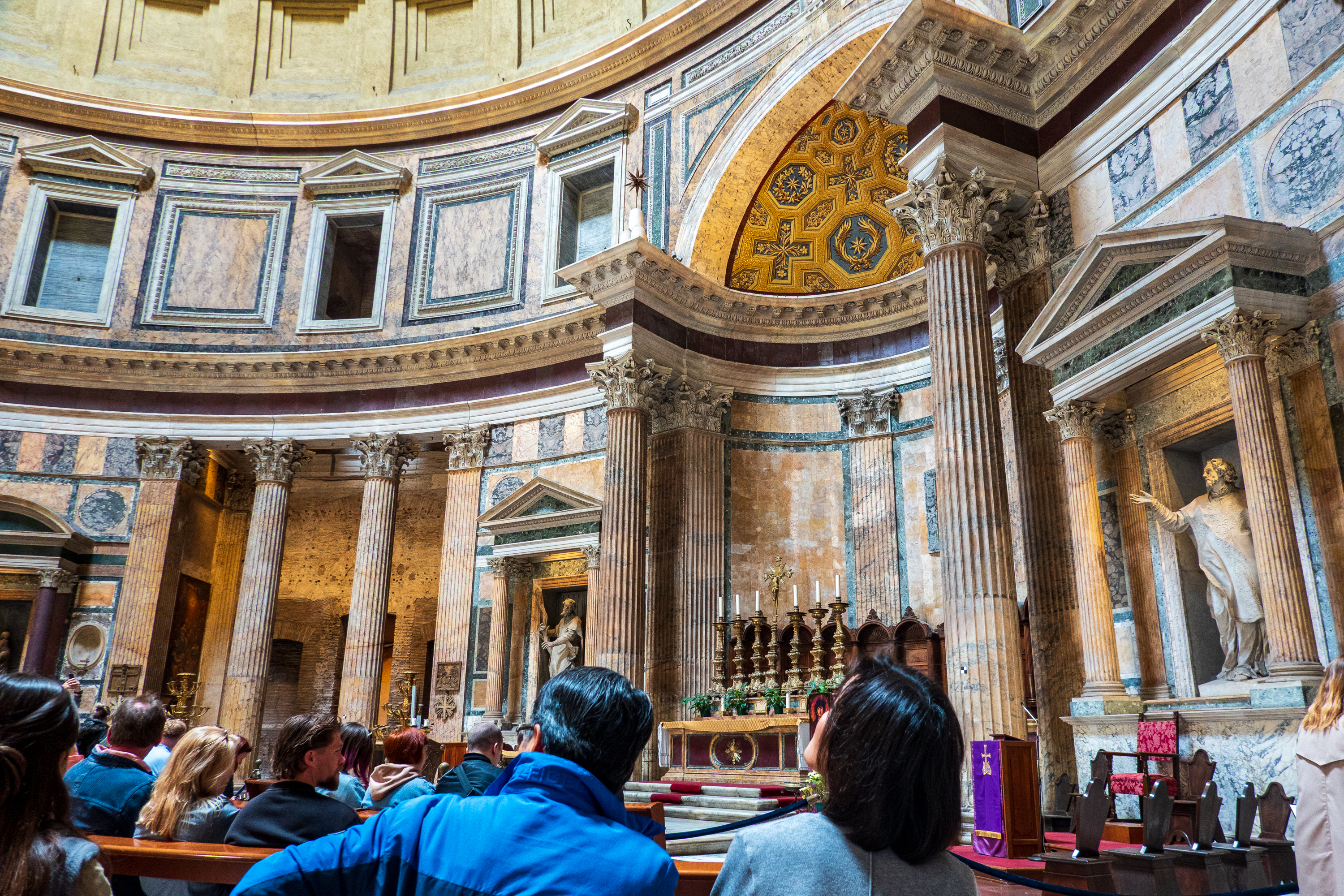
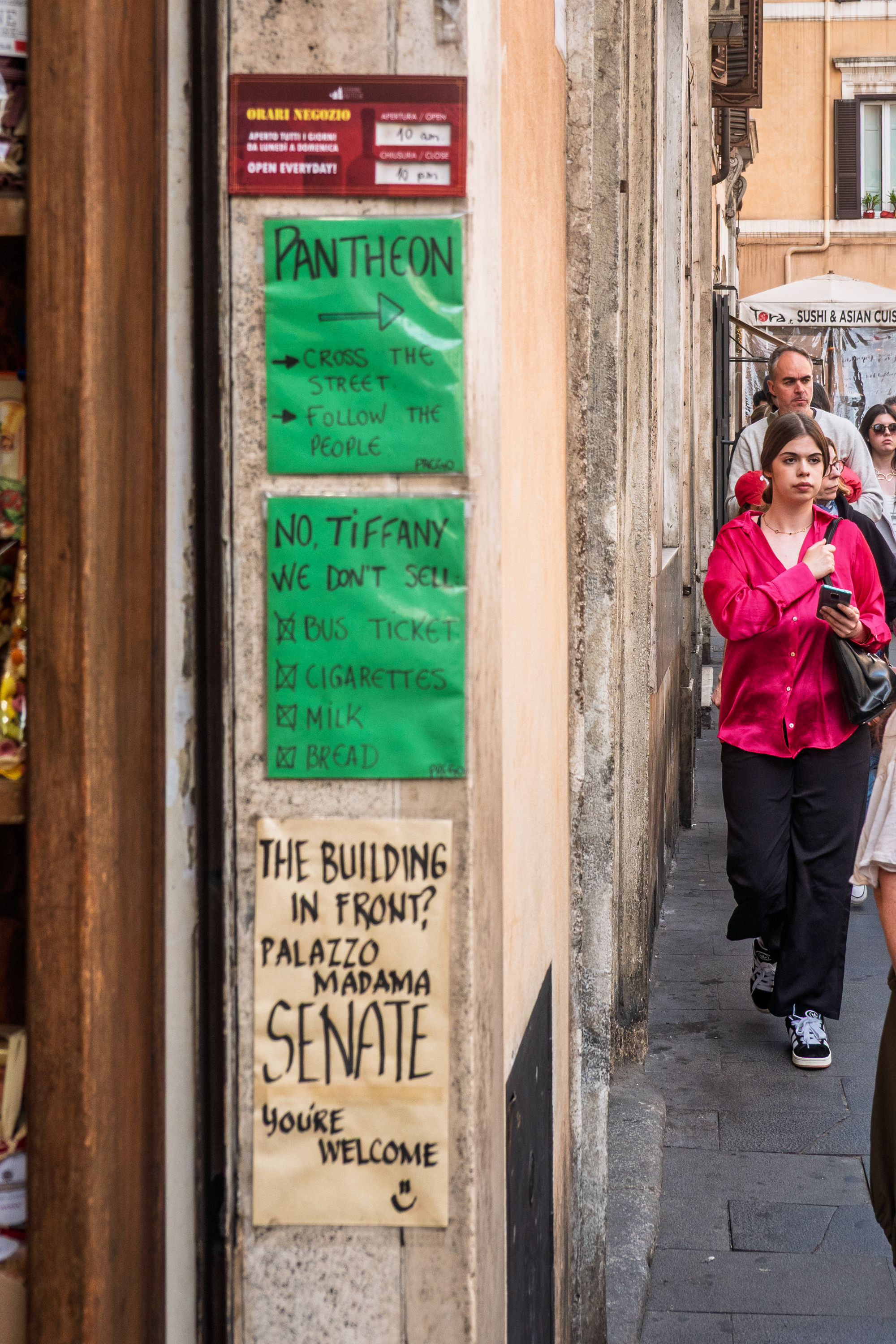
Turning to serious tourism, we visited the Pantheon, just a train, metro, and a hike away.

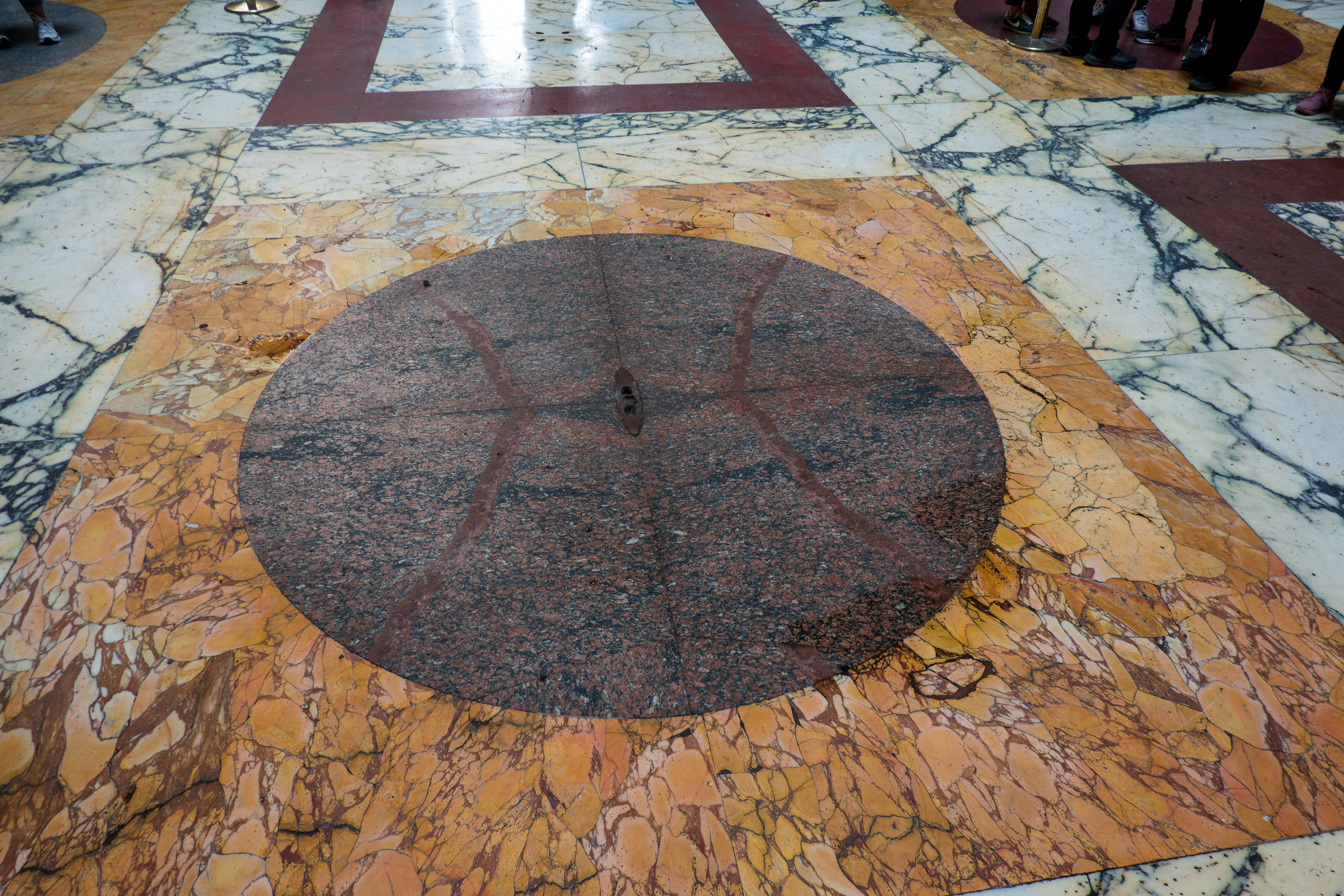
We joined the (not too bad) crowds and marveled at the oculus in the ceiling that lets in the rain, and the drain below it that lets it out.

Everyone was looking up.
The oculus casts a nifty round spot of light.
And the rain exits here.
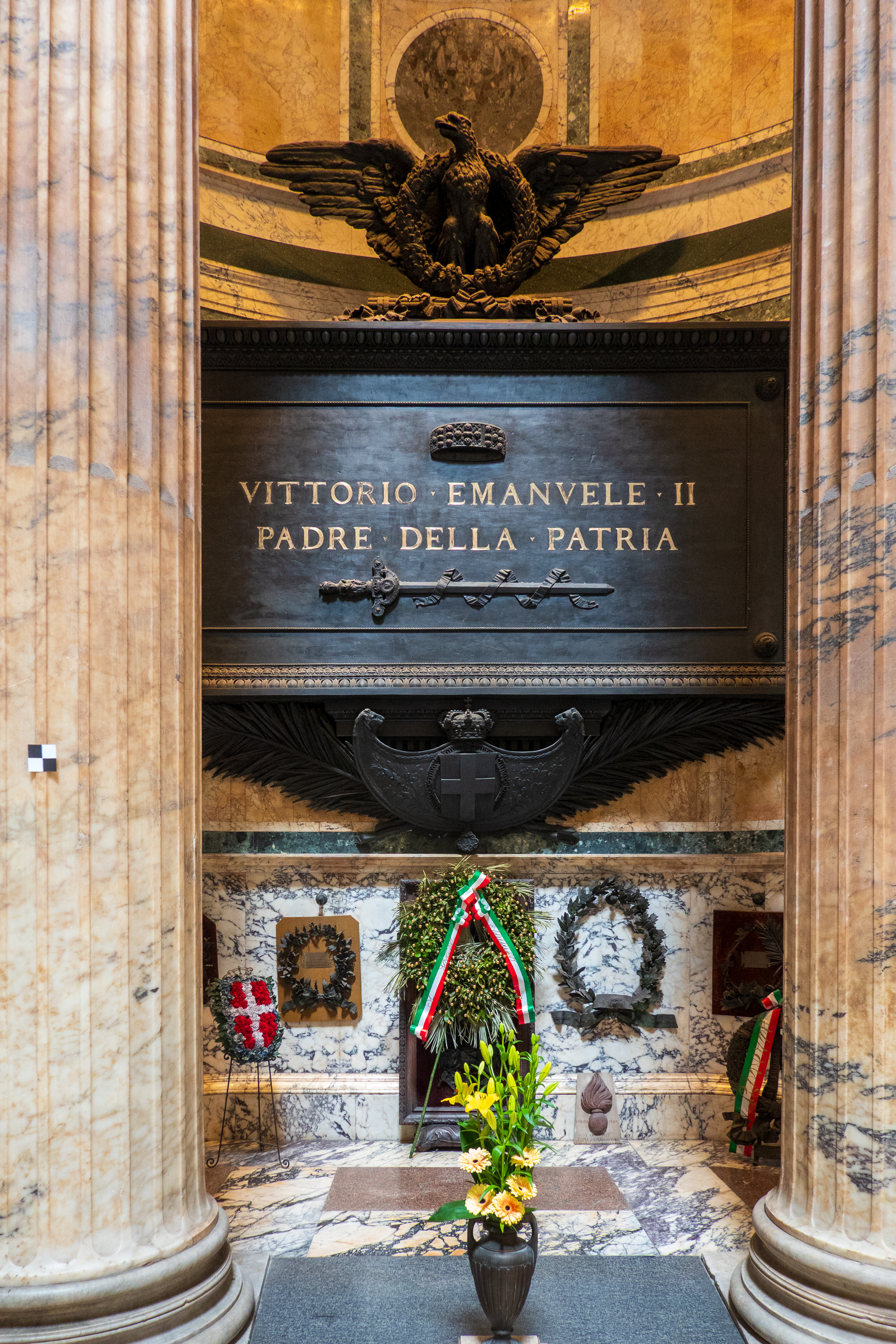
Tomb of Victor Emmanuel.
Ceiling detail in the entrance.
Doors, big doors.

Originally built by Hadrian from 118 to 125 AD in a form governed by circles and squares, it later became a Baroque styled church. (https://en.wikipedia.org/wiki/Pantheon,_Rome)

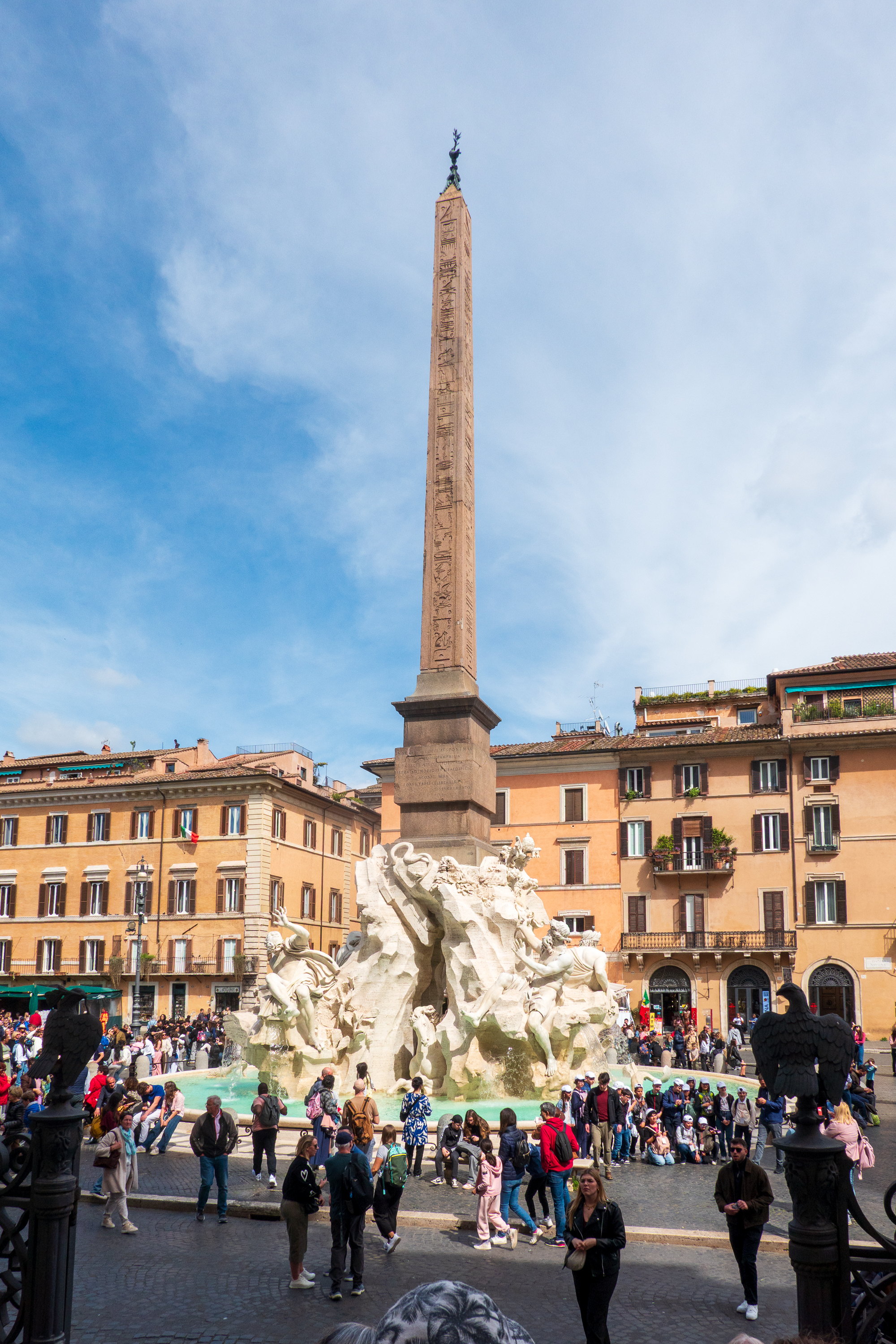
We then headed to the Piazza Navona, to admire Bernini”s Fountain of the Four Rivers, representing the Danube, the Plata, the Ganges and the Nile. 

The square
The fountain, one of at least two, actually.

Quite an amazing piece of sculpture.  We wandered into the Church of Sant’ Agnes in Agone, designed by Borromini.  Another very ornate and spectacular church. (https://en.wikipedia.org/wiki/Sant%27Agnese_in_Agone) And Agone has nothing to do with physical agony.

Saint Sebastian

After another great pizza, we went to the Church of San Luigi dei Francesi to admire the three Caravaggio Altar paintings.  (https://en.wikipedia.org/wiki/San_Luigi_dei_Francesi)

Helps to be tall.

They were quite spectacular. Fred, being taller, got a better view than Denise did. There were tour groups blocking our view. 

You may or may not like baroque art, but you have to agree that it is stunning, and a bit different from the Baptist church where we were married. The idea was to provide a view of heaven. One can debate the theology, but the beauty is amazing – a riot of colors and textures of paint, marble and gold. A lot of gold.

In Rome and Pompeii both, we  became very aware of crowds of tourists, both in tours and individually.  And it was only April.  We were glad that we had not come in June or July. How bad are the crowds? Try this:

Clearly, patience runs thin after a while!

Arrivederci!

Pompeii – Ticking the Biggest Box

Fred had not visited Pompeii for more years than he likes to remember (he was under 10 at the time!) and Denise had never visited so we were excited to be able to visit. Pompeii is, after all, one of the absolute “must visits” on the Roman history circuit.

This required a train ride, which we had read about and assumed would be a simple matter. Silly us!  To begin with, the station manager was bored, to say the least and barely was able to tell us which platform to use, let alone when the train would leave.  Even in Italian; we would not have dared ask in English. But, sure enough the train arrived and we got on.  The windows had some kind of coating so we could not see out, which was an interesting experience, as we were checking the stations as we went by.  We then arrived at a station where the train stopped and we had to get off. Fortunately one of the passengers told us which platform to wait on for the train to Pompeii.

We made it to Pompeii only to find a huge line of people waiting. In disgust, we went down to the square and found a lovely restaurant. We started with a coffee and a croissant, and finished with a shared pizza.  A slightly odd one, with broccoli, but NO tomato sauce. Isn’t that illegal? Still, it was quite tasty and the waitress was most impressed as it seems to be a local speciality. Feeling thus prepared, we girded our loins and took our place at the end of the line.

Almost an hour and a half later, we made it into the ruins and headed to the back to see the amphitheater and thus do the circuit a bit backwards, so as to avoid the crowds. We stopped on our way in to see the Forum, with the temple of Zeus at one end with Vesuvius behind.

And, after Agrigento, we know that the altar was outside, in front of the temple.

Most dramatic. It was super busy, despite being a Monday of the supposed low season. Tourists today, but, back in the day, this space would have been full of shoppers and people going about their business, just as in a contemporary city.

Bronze Apollo, outside the Temple of Apollo, on the Forum. Somebody got his bow.
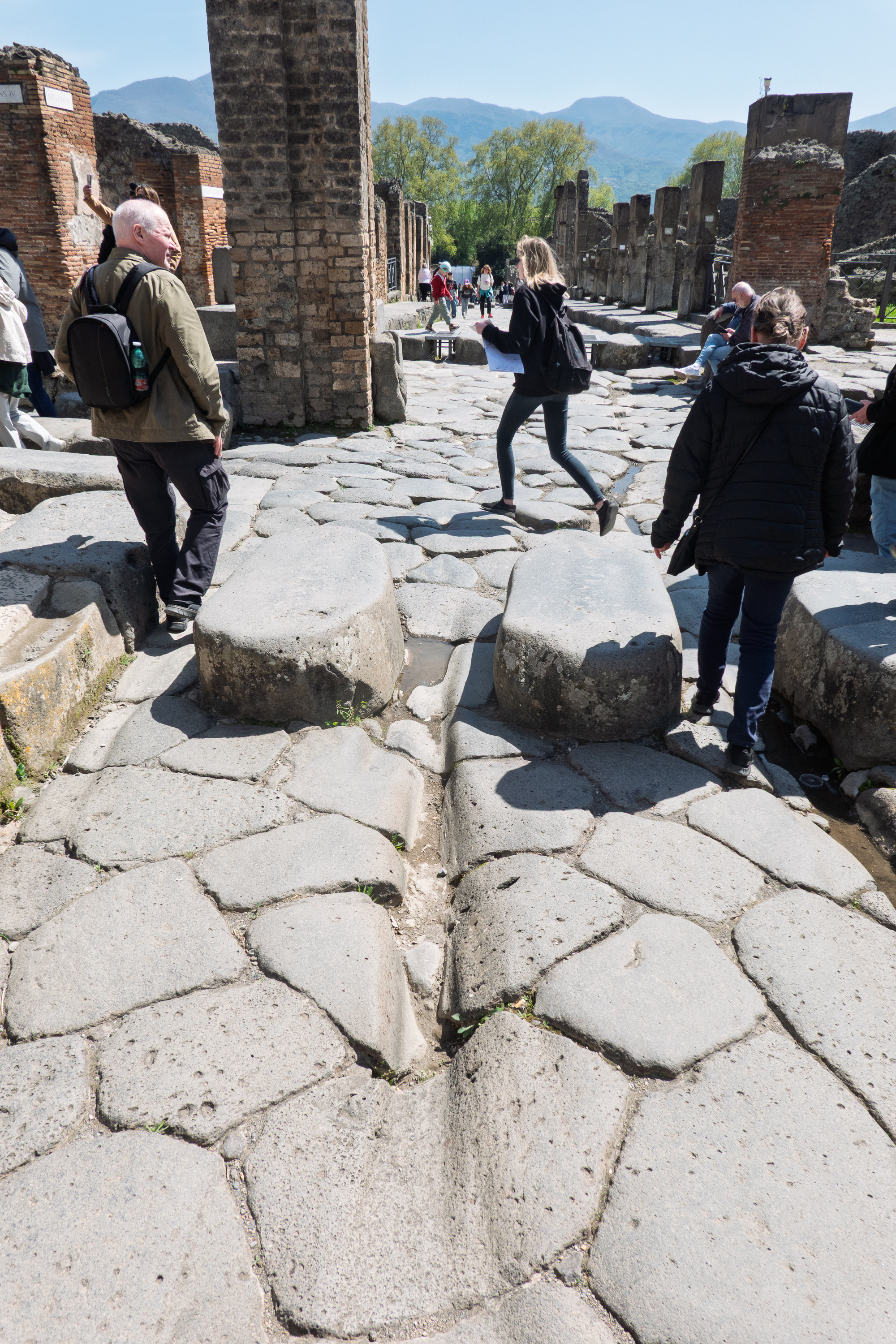
How many carts did it take to wear that groove between the famous stepping stones?

We enjoyed our visit but we were also somewhat disappointed that a lot of the major sites, including many or the named houses, were closed. That said, there were plenty of wonderful frescoes.

House or tavern of the four divinities – Apollo, Jupiter, Mercury, and Diana or Luna.
Elephants on the walls and a mosaic on the floor.
Mercury, up close.
What’s cooking?

We are always thinking of food, so we loved the thermopolia. (https://en.wikipedia.org/wiki/Thermopolium)

Again, this road stopped being used in 79 AD, so all of this wear is actually from Roman times.
Didn’t see the house with the famous, “Beware of the Dog” mosaic, but the guard dog theme appears to be common.

View through the vestibule into the atrium with the impluvium to catch the rain.

Do this long enough and you can become really annoying in your ability to name all the parts of an upper class (patrician) Roman house.
Mill for grinding or crushing.
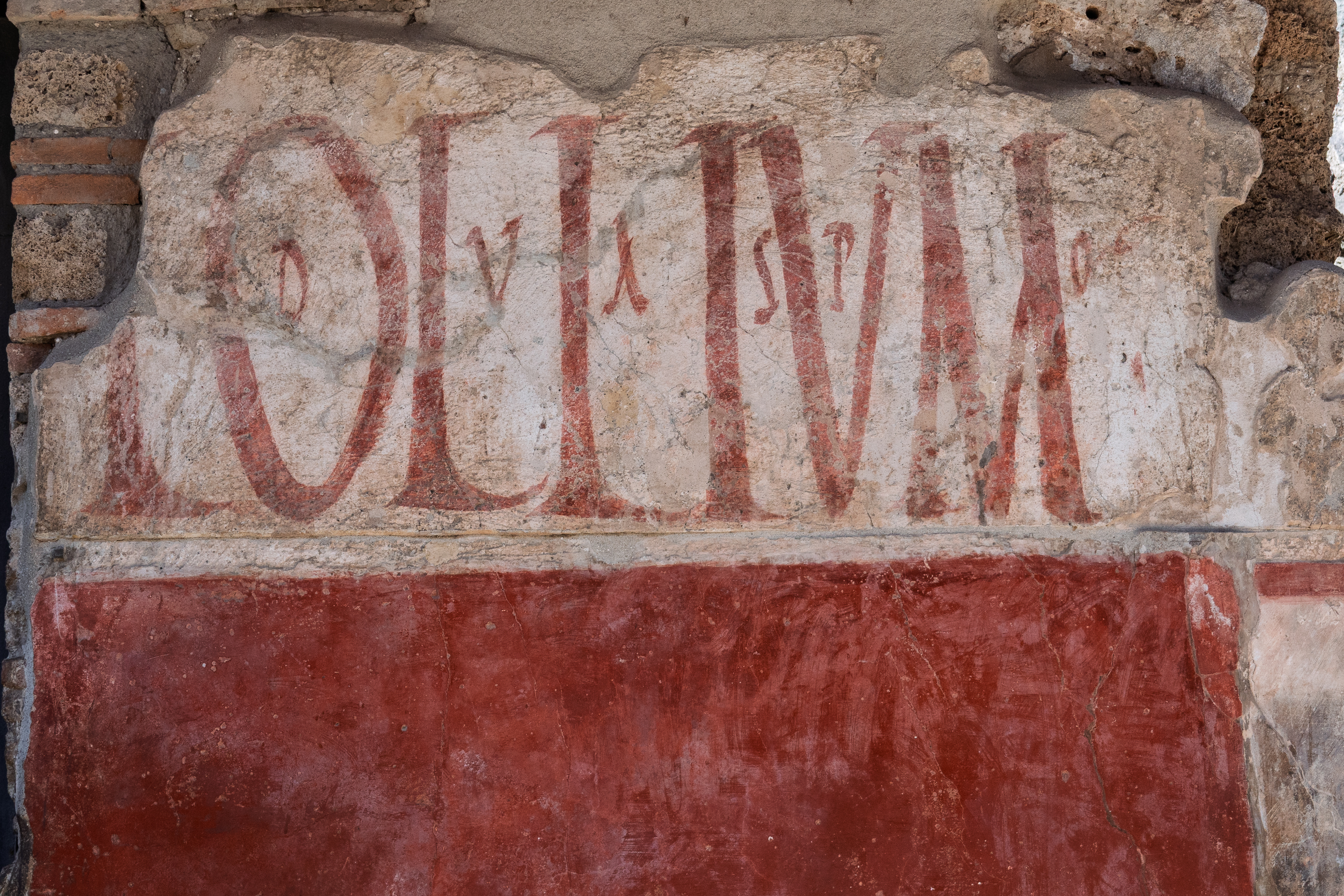
Not sure, but it looks like this sign may have a translation in Greek between the Latin letters. Greek was the common language of trade and education in much of the Roman world. Graffiti is especially human.

So many of the classic movies show Roman cities of gleaming white marble. Actually, the Romans built mostly with concrete, covered it with plaster, and then painted it red. They LOVED red, which they got from cinnabar. In Pompeii the cinnabar was ground more finely and thus the red is even redder than usual.

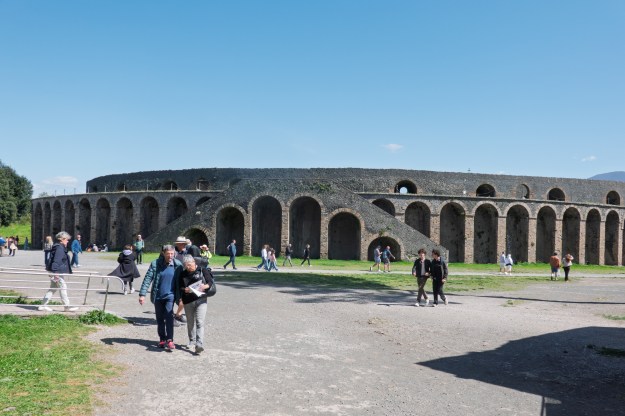
At the back of the ruins, we reached the amphitheater.

Dated at 70 BC, it may be the oldest known. Then, as now, sports fans can get unruly. In 59 AD, a riot that broke out between the people of Pompeii and the citizens of Nuceria . Like football games today, gladiatorial games and chariot races often enflamed town rivalries in Ancient Rome. In this case, the riot not only resulted in maiming, bloodshed, and death but a ban on holding games in Pompeii’s amphitheatre at all for a subsequent 10 years. Of course, the destruction of the city caused an even longer pause in performances.

What we know of the event comes from an account from Roman senator and historian Tacitus. In The Annals, he remarks, “About the same time a trifling beginning led to frightful bloodshed between the inhabitants of Nuceria and Pompeii, at a gladiatorial show exhibited by Livineius Regulus, who had been, as I have related, expelled from the Senate. With the unruly spirit of townsfolk, they began with abusive language of each other;  then they took up stones and at last weapons, the advantage resting with the populace of Pompeii, where the show was being exhibited”. 

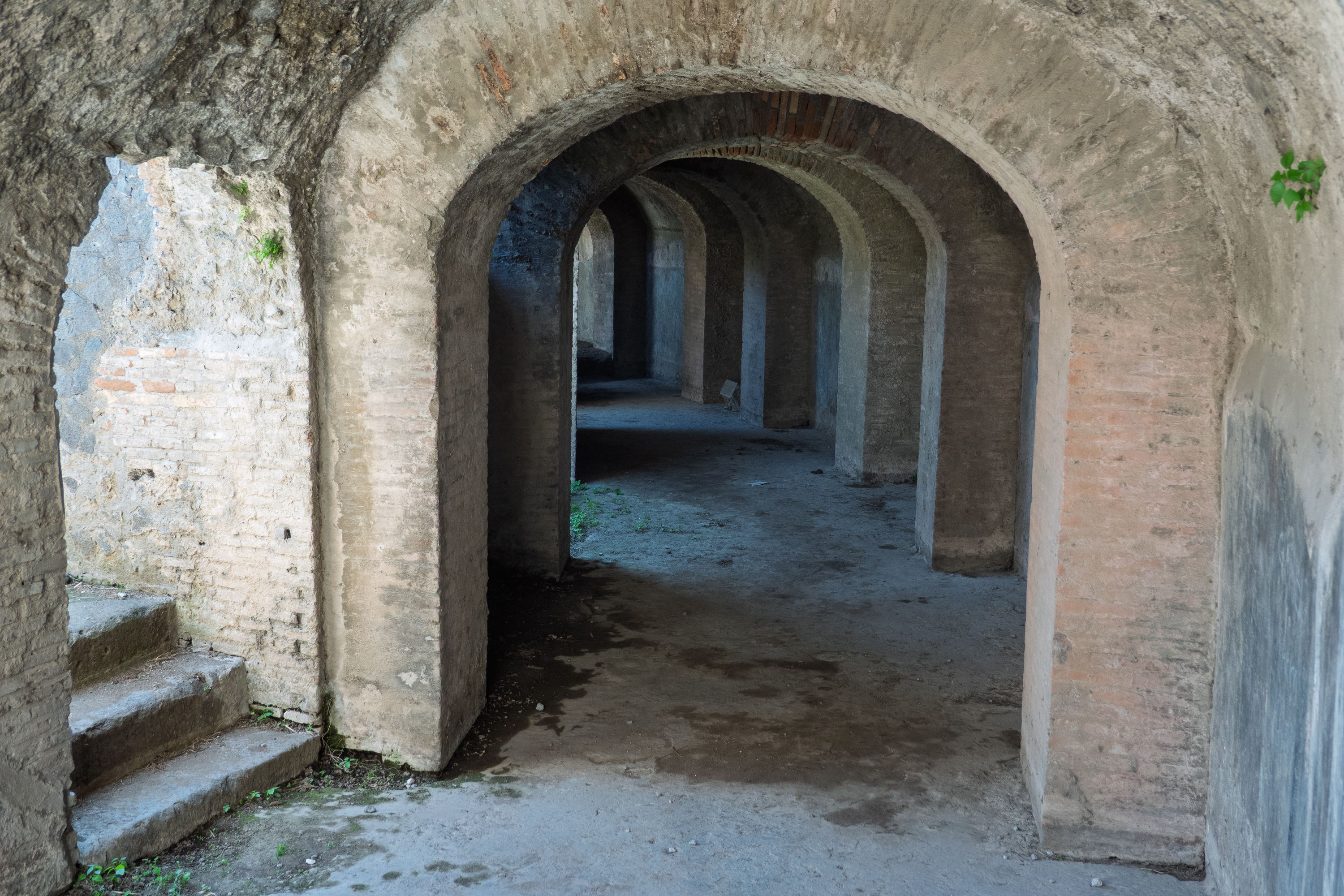
Spooky to stand where thousands of people walked to see the show.

Fun inside and outside the arena.

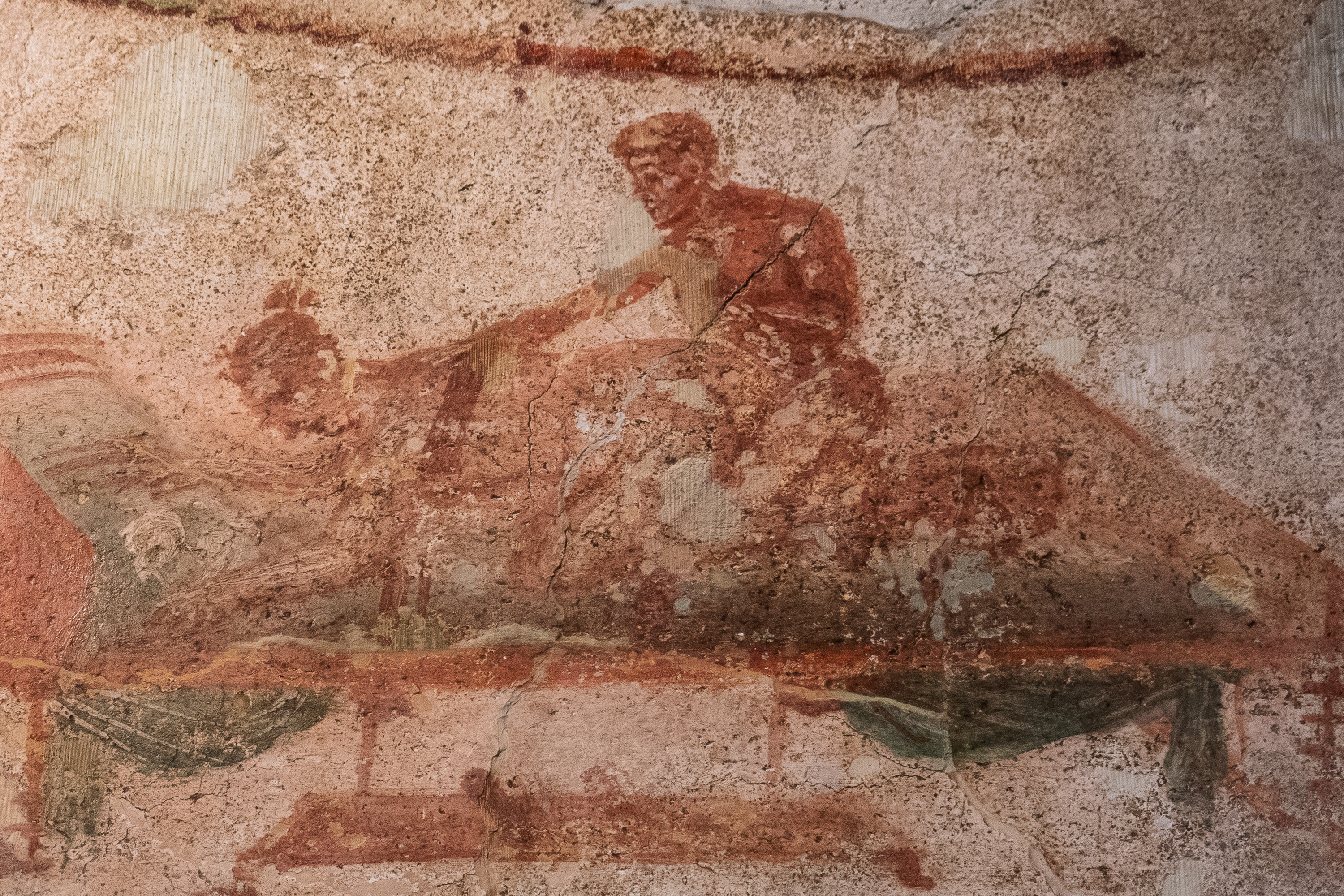
After being forced to go three ways around the square because of closed roads, we did manage to see “the” brothel, the one with specific inscriptions. Pompeii had lots of them; at least 25, not counting inns and taverns. Fred found it a bit uninspiring, but, despite the crowds, managed two photos of the infamous frescos.

Just pick from the menu on the wall, you want it, we do it! Only the finest girls from the East! Two floors, lots of beds, no waiting! With that, we made our way to the exit.

After an ice-cream and a coffee back at the restaurant where we had our pizza., we were ready to tackle the trip home and headed back to the station to return to Herculanum. 

There was actually an announcement this time;  the Naples train was arriving. Great, we hopped on board, expecting that the train would stop at Herculanum, a major site.  No, it proved to be an express and we ended up in Naples. We weren’t the only ones – there was a group of Spaniards who were having the same problem! We commiserated about the challenges of not speaking Italian! Fortunately, we were able to just catch the stopping train to return to Herculanum and our camper. The trudge up the hill was just as steep, but we made it back.

So, should you visit Pompeii? Yes, of course, it is one of the largest ruins of its type. Most others, for example Gadara or Jerash, in Jordan, (https://diplostrat.net/2016/07/27/heading-north-the-adventure-begins/) (https://diplostrat.net/2016/08/02/jerash-our-exploration-of-the-decapolis-continues/) have only a fraction of the city, usually the Forum, excavated. Herculaneum may be more instructive as most buildings are intact up to the second story and above, and this makes it much easier to understand things as you are literally stepping inside buildings from the past, not merely admiring foundations.

Worth noting that most Roman (and Greek) ruins simply “disappeared” as people never stopped living on the site and kept reusing the same structures. See, for example, the amphitheater in Arles, which became a medieval apartment block. It took a volcano or an earthquake or similar event to stop the clock and preserve a city, frozen in time.

So, if you only have one day, and you are only going to see one city, make it Pompeii. And, for the hard core, Pompeii could easily take up several days, to cover each district. But that said, Herculaneum is still special and should not be missed.

It is not all Greek …

After the crossing from Sicily, we spent one night near the coast  before heading north.  The drive had beautiful scenery, with hill top towns, vast valleys and distant snow capped peaks.  And the autostrada was decent.  We were glad that we had driven and not looked for a ferry to Naples.

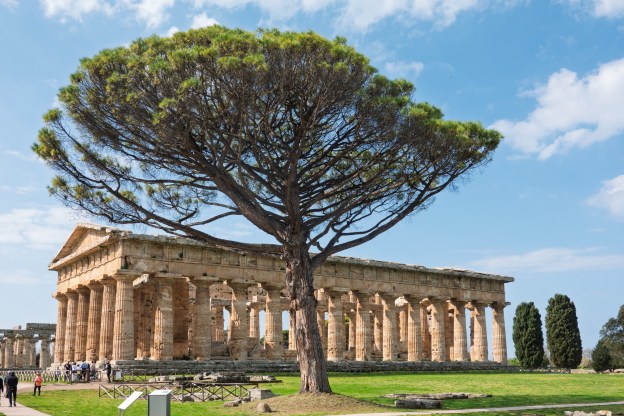
Our first stop was at Paestum, an interesting town first developed by Greeks and then taken over by Romans.  (https://en.wikipedia.org/wiki/Paestum) Paestum is a bit off of most of the main tourist routes. Rather a pity as it is lovely, interesting, was mentioned by Mark Twain in “Innocents Abroad,” and was used in the movies “Jason and the Argonauts” and “Clash of the Titans.”

We camped right at the ruins, in a very pleasant parking lot.

Look out the door, and there is the Temple of Athena.

Upon arrival, we explored and found the entry to the ruins before enjoying a great pizza at a local restaurant. We set off the next morning to visit the ruins and thoroughly enjoyed our ramble through various temples, and housing areas. 

Denise in ruins!
Most of the views looked like postcards.
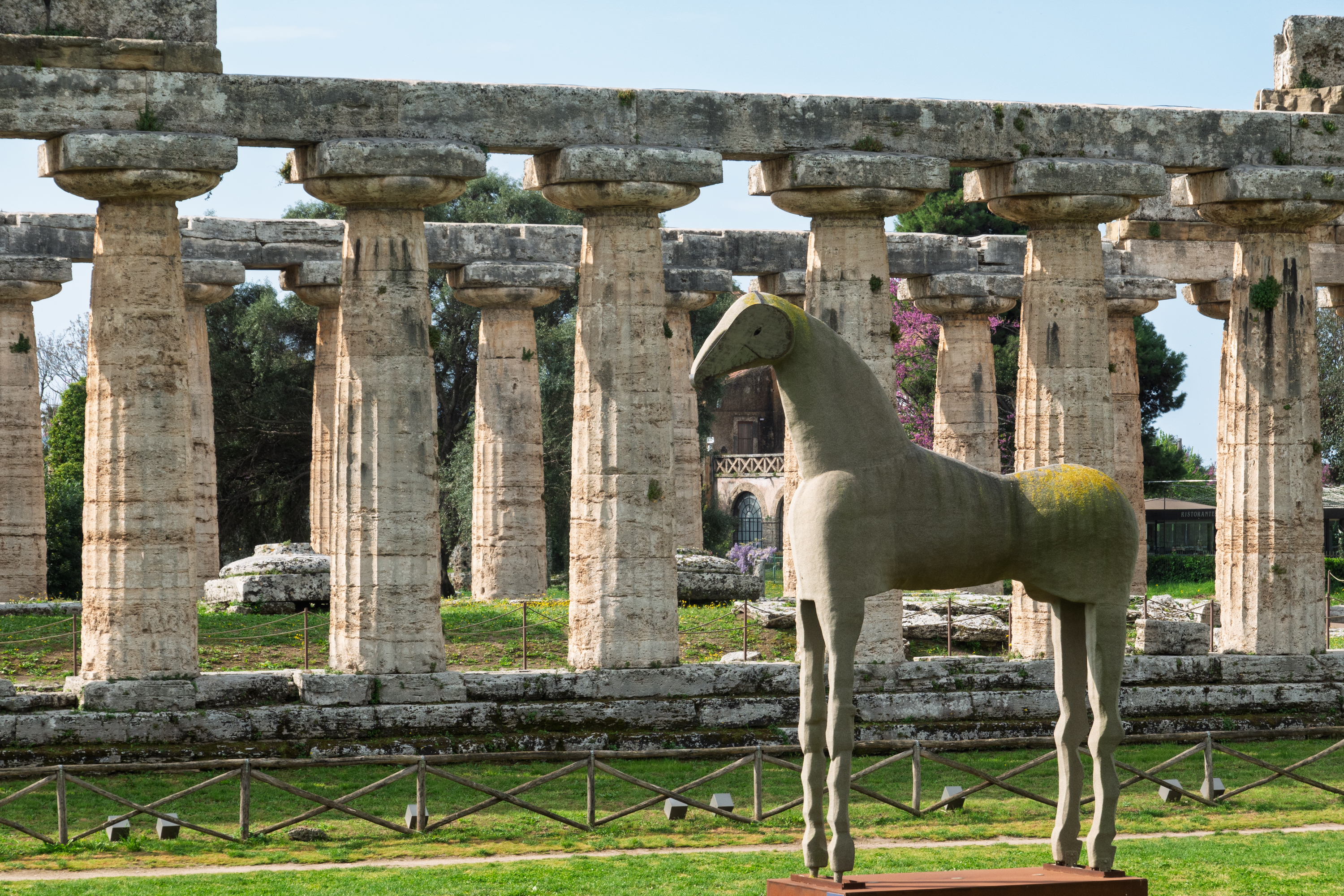
These temples may have been dedicated to Hera.
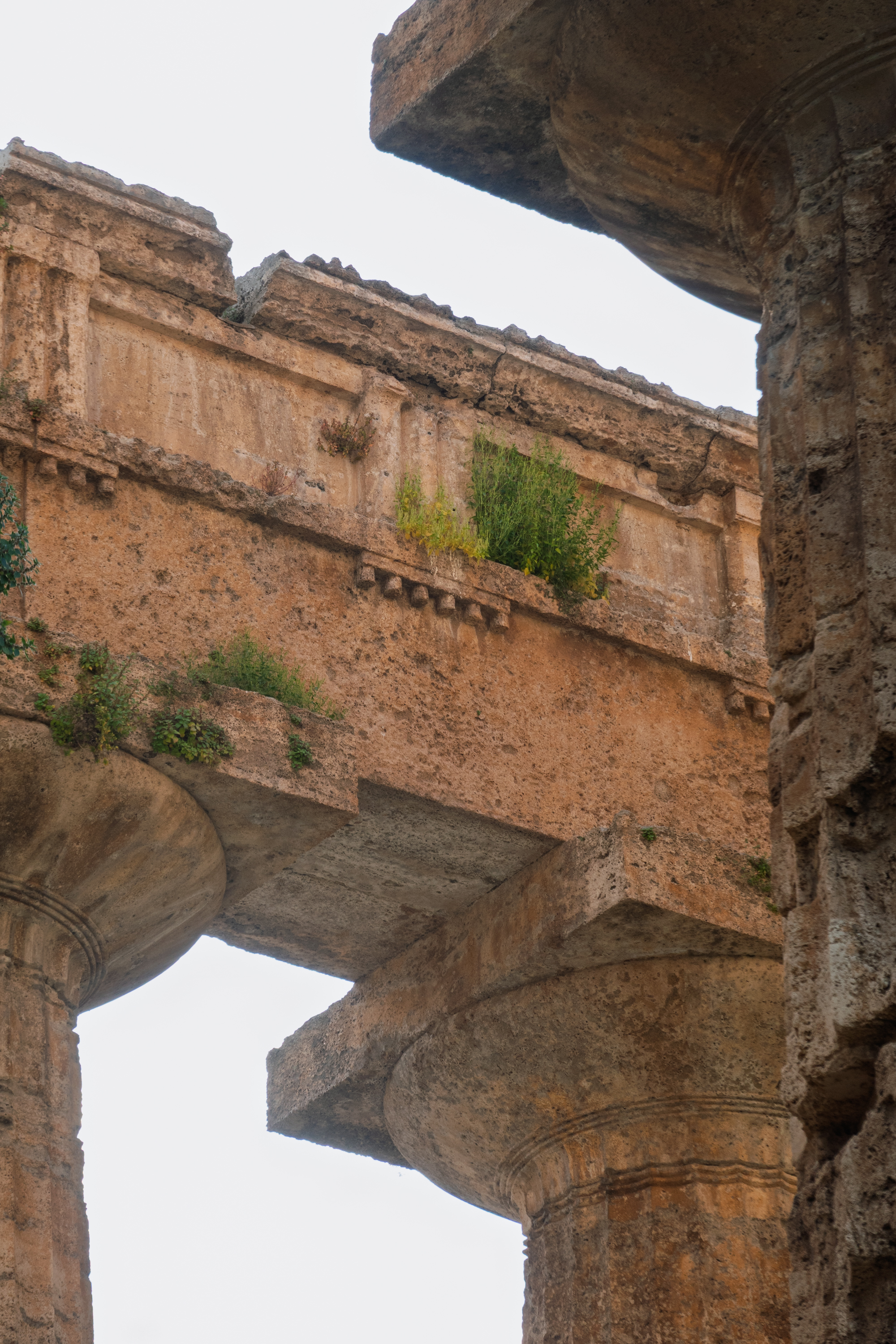
For those who wonder, this is a Doric capital.
Pretty, modern restaurant, right at the edge of the ruins.
Guide lizard, hustling the tourists.
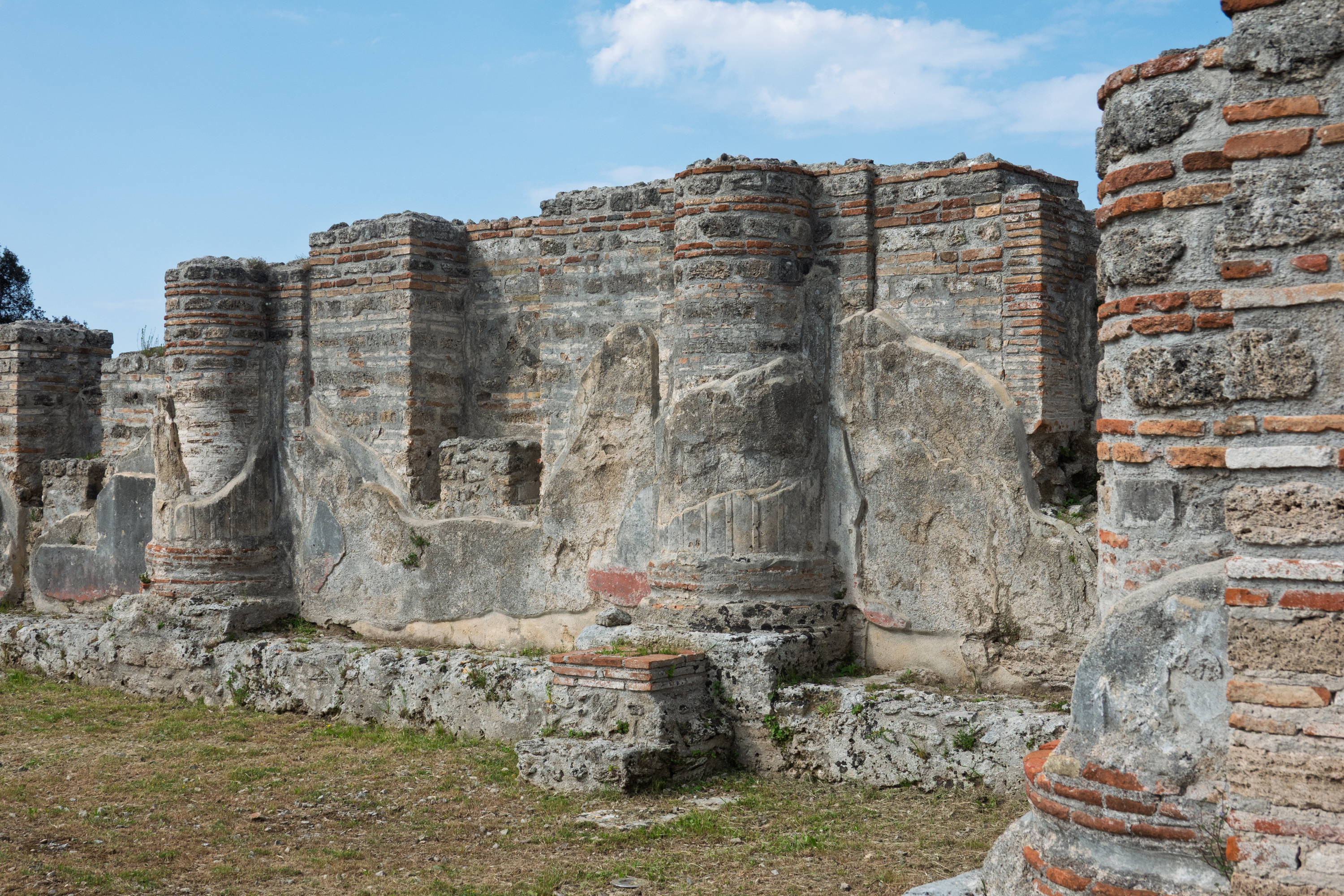
Roman ruins. The Greeks did not use concrete or bricks the same way.

It was delightful to be able to climb into a temple, a twin of the Parthenon, and explore it without the crowds we encountered in Athens! If you look closely, especially in protected corners, you can still see traces of color. It makes you realize that Hollywood often got it wrong – the stone temples we admire today were brightly colored originally. 

We also visited the Museum where a number of artifacts from the ruins were on display. These beautiful, sometimes delicate objects add a very human touch to what can otherwise simply begin to look like a lot of stones.

The “diving man” was the ceiling of a tomb and has become the symbol of Paestum.
This may be Heracles killing a giant, something he did often.
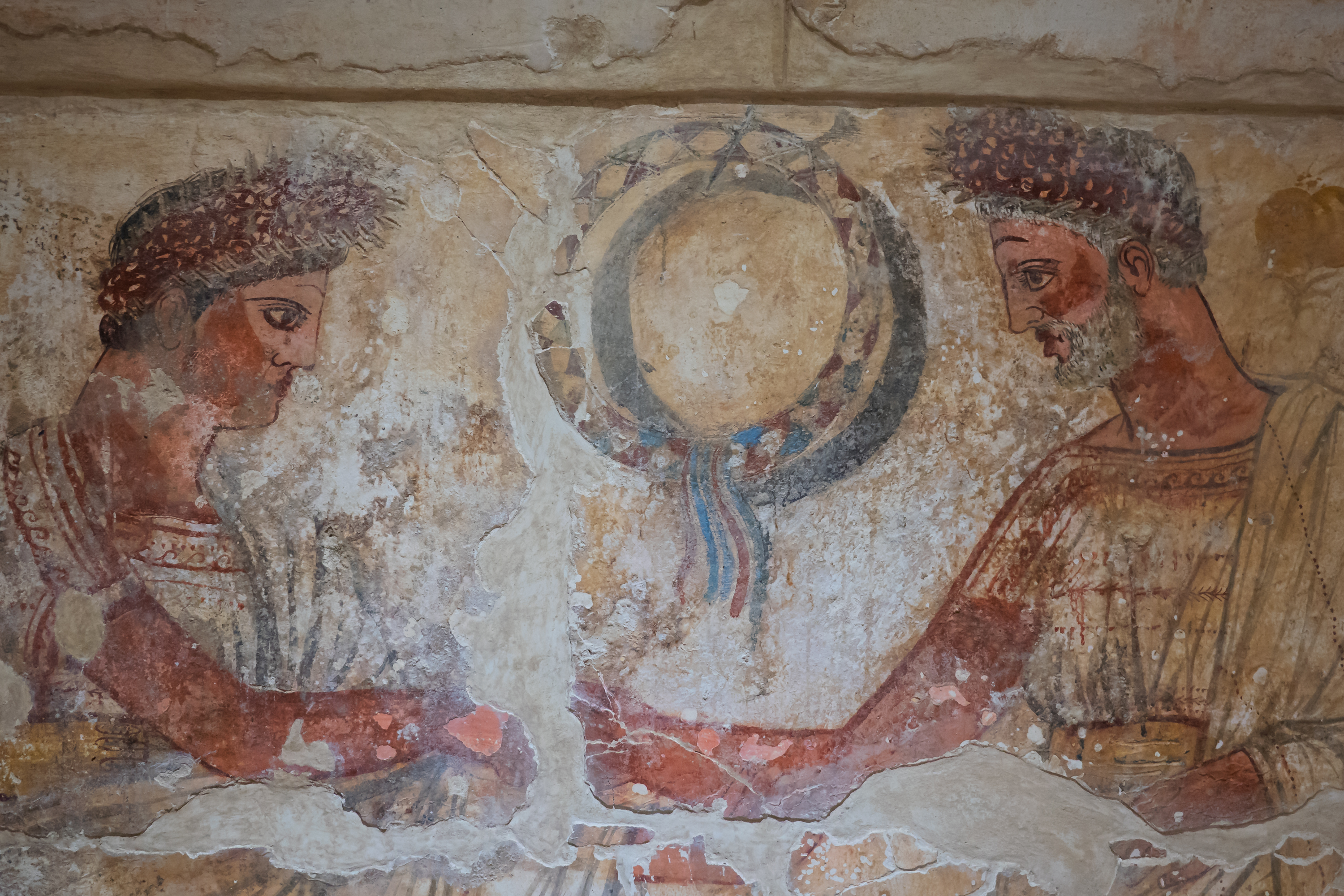
This beautiful fresco had been prized out of the wall and stolen.
We, on the other hand, kill ice creams.

We moved on after lunch and stopped at a handy supermarket with a big enough parking lot to park the 917. We even found a huge pet store, and after some great crossed language exchanges, were able to buy litter for the composting toilet.

Chores completed, we headed for Erculano.

Upon arrival, we had great adventures as the GPS was convinced that the campground was up a steep, narrow road that ended in a two meter tall bridge. And there was traffic in both directions. Grrr!

Fortunately, we were able to find a “Y” junction and turn around, but it was a tight squeeze all the way back down the hill, made worse by lots of traffic. But, as usual, we were NOT the biggest truck on the road! Once we got the right address, the campground was easy to access and quite lovely.

Yes, that is Vesuvius, overlooking the campground.

The weather had been sunny and warm since we left Sicily and we set off the next day to explore Herculanum, which was (a long) walking distance from our campground.

It turned out that it was the first Sunday of the month, so the entrance was free, which was a pleasant surprise.  It was quite busy, but never unpleasant as people were dispersed, so it never felt crowded.  The actual site was amazing.

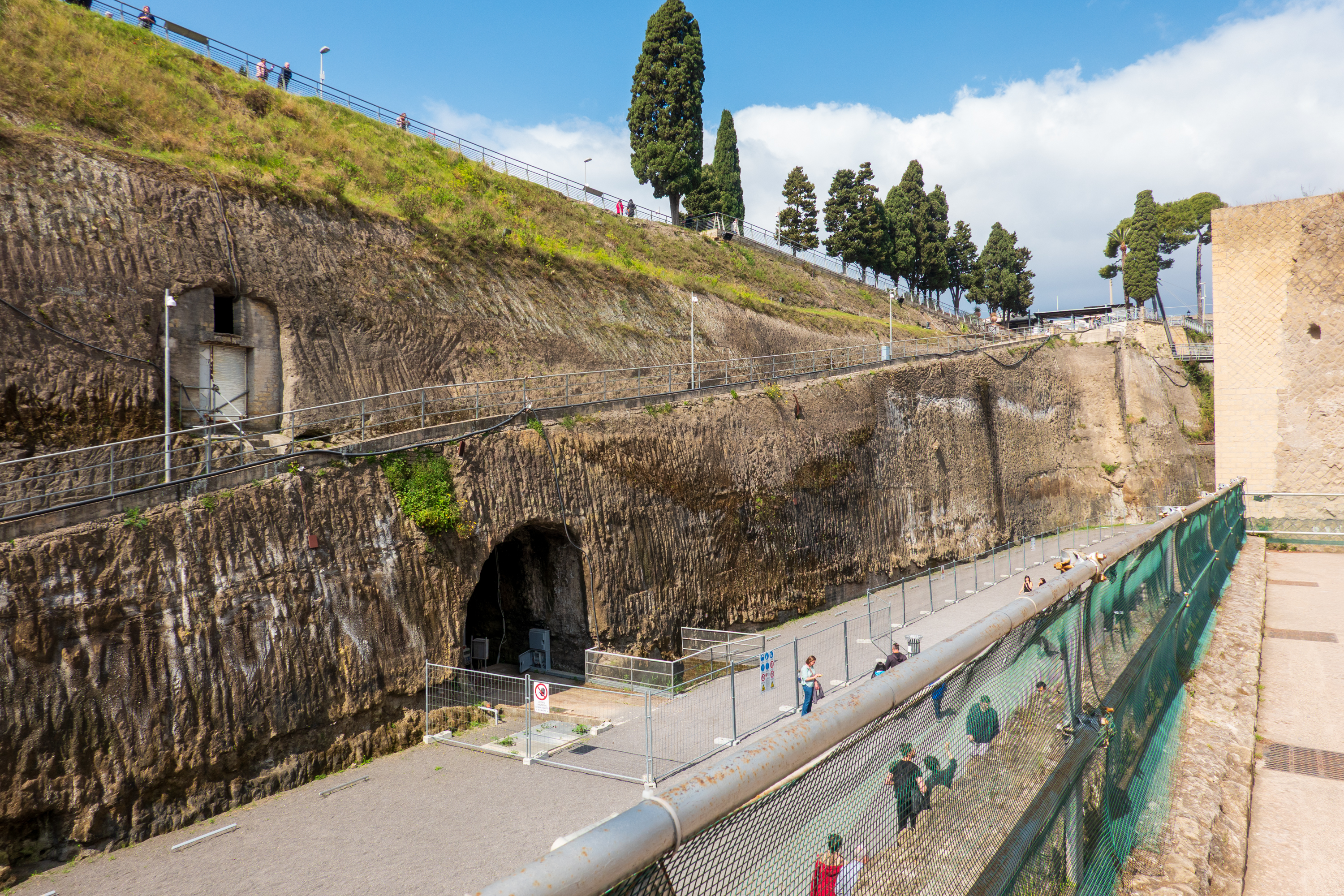
Your first view is from the modern ground level and it feels as if you are in an airplane above the ruins. (https://en.wikipedia.org/wiki/Herculaneum)

Most of the houses were two or three stories high and most still had mosaics, frescoes and even wooden remains, like roofs.

Unlike Pompeii, Herculaneum was covered, not with much ash, but with a muddy slurry. Over the millennia, that slurry hardened into volcanic rock. So the ruins were only found when digging a well and first explored through horizontal tunnels like mine shafts. To this day, most of the ruins, including the forum, are still under the modern city and may never be exposed. An actual lava flow, in the 1600’s didn’t help, either.

Those arches, seen from the modern ground level, were the entrances to warehouses on the water front.
From the Roman waterfront, you can see the 30 meters or so of hardened volcanic mud that covered the city.

Roman cities contained “insula” or large blocks of apartments. (https://en.wikipedia.org/wiki/Insula_(building)) Wealthy people might have big apartments or live in a standalone “domus.”

Looking from the ocean side, on the modern ground level, you can look down to the old waterfront, with the sewer drain on the left, the boathouses, and the stairs up into the city. Note at least four different ground levels.

Because of the way Herculaneum was covered, many of the buildings are intact, up to three stories. Walking a ruined site, when all you can see is the outline of ancient foundations, it can be hard to envision real buildings. Here you can step right into the spaces where people lived and see the rooms as they saw them.

Denise in the peristyle, admiring the impluvium.
The Romans liked the color red, and used it a lot.
Altar to the lares and penates, the household gods?
Beautiful floor tiling.
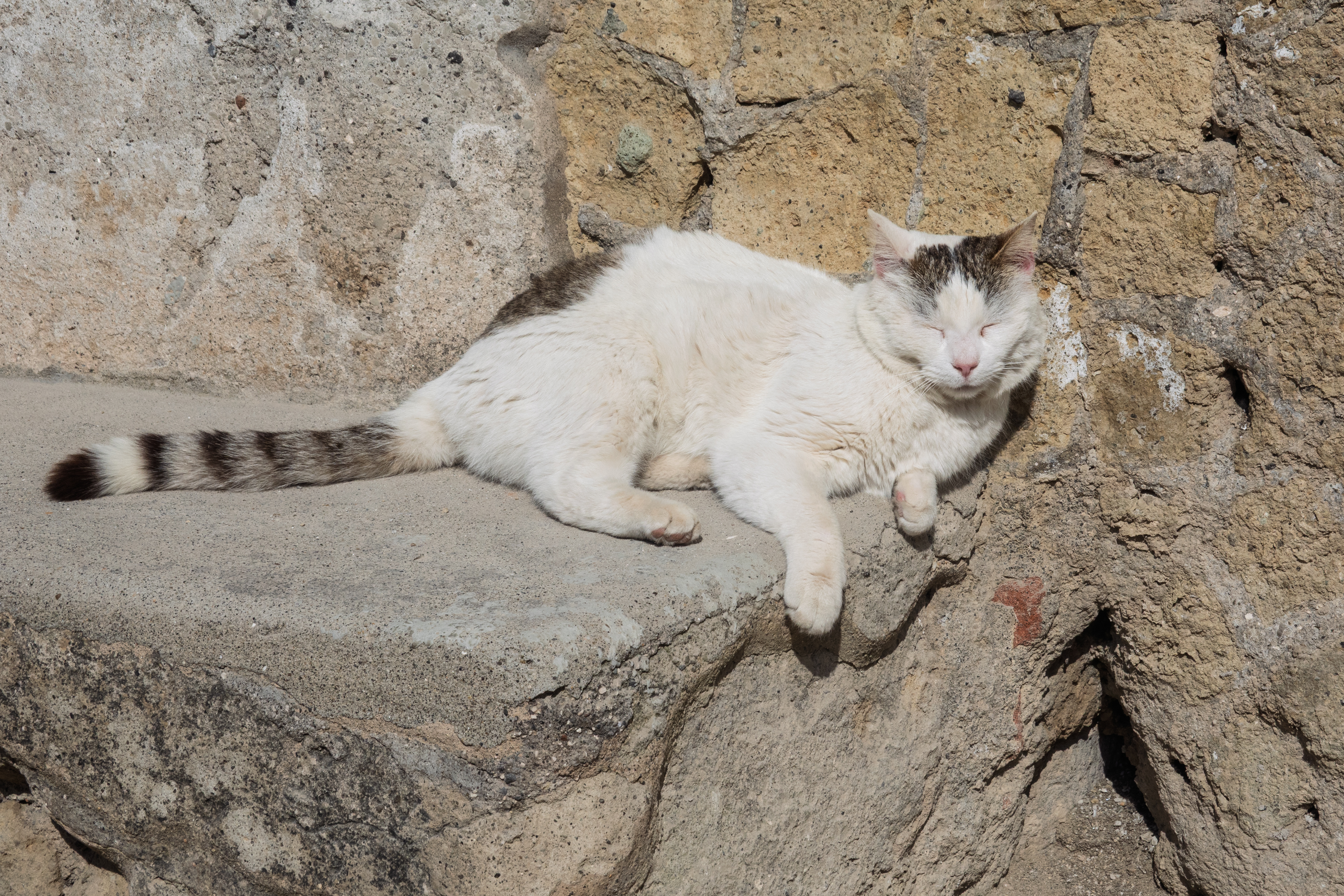
We have found that the cats know the best spots.
Typically Roman, columns made of bricks. Cover them with plaster and it looks like marble at a fraction of the cost.
Brick column with plaster.
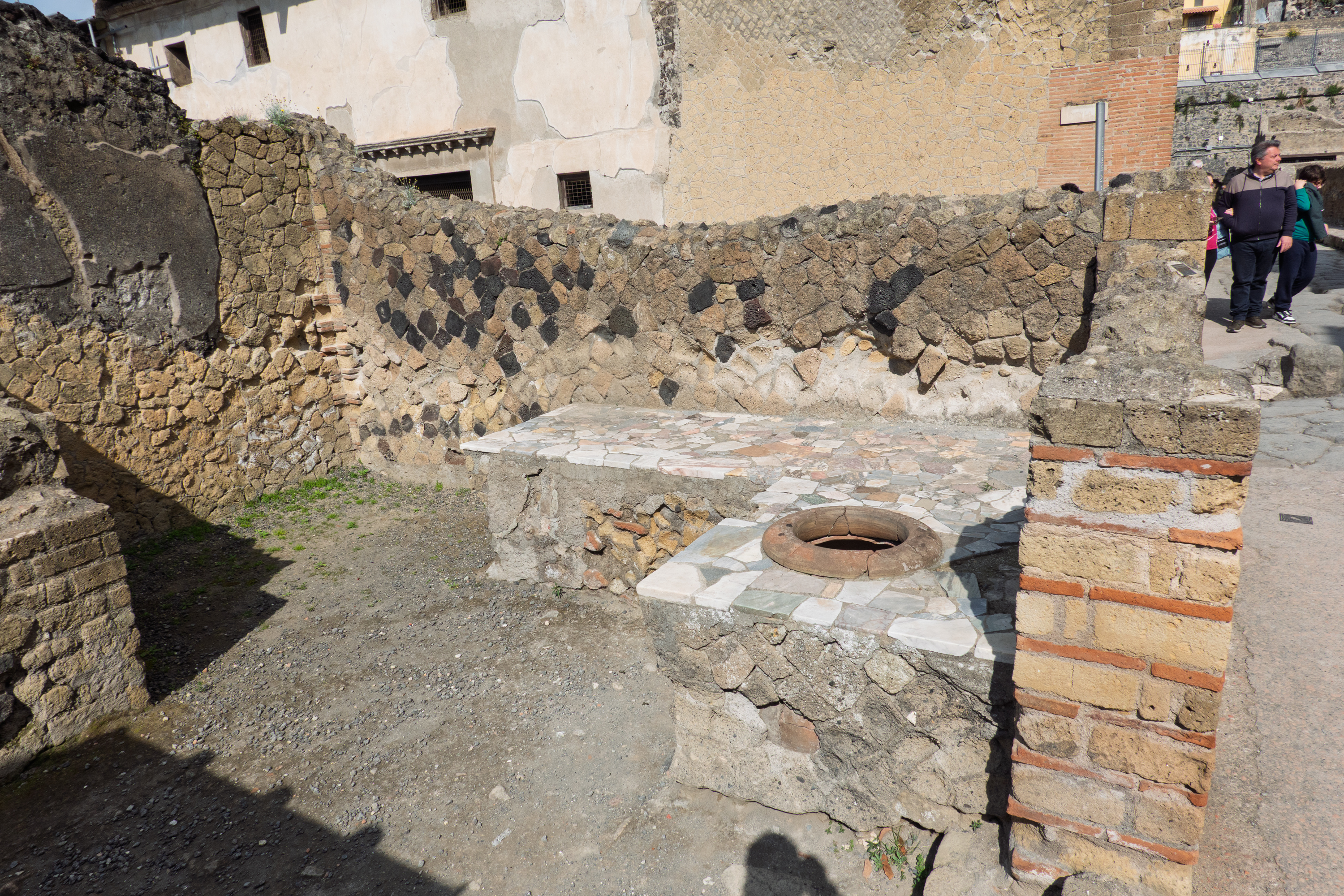
A thermopolium, or store selling hot food. You stick an amphora in the hole. A lot of the poorer people, living in the insulae, did not having cooking facilities and would buy a lot of their food in places like this.

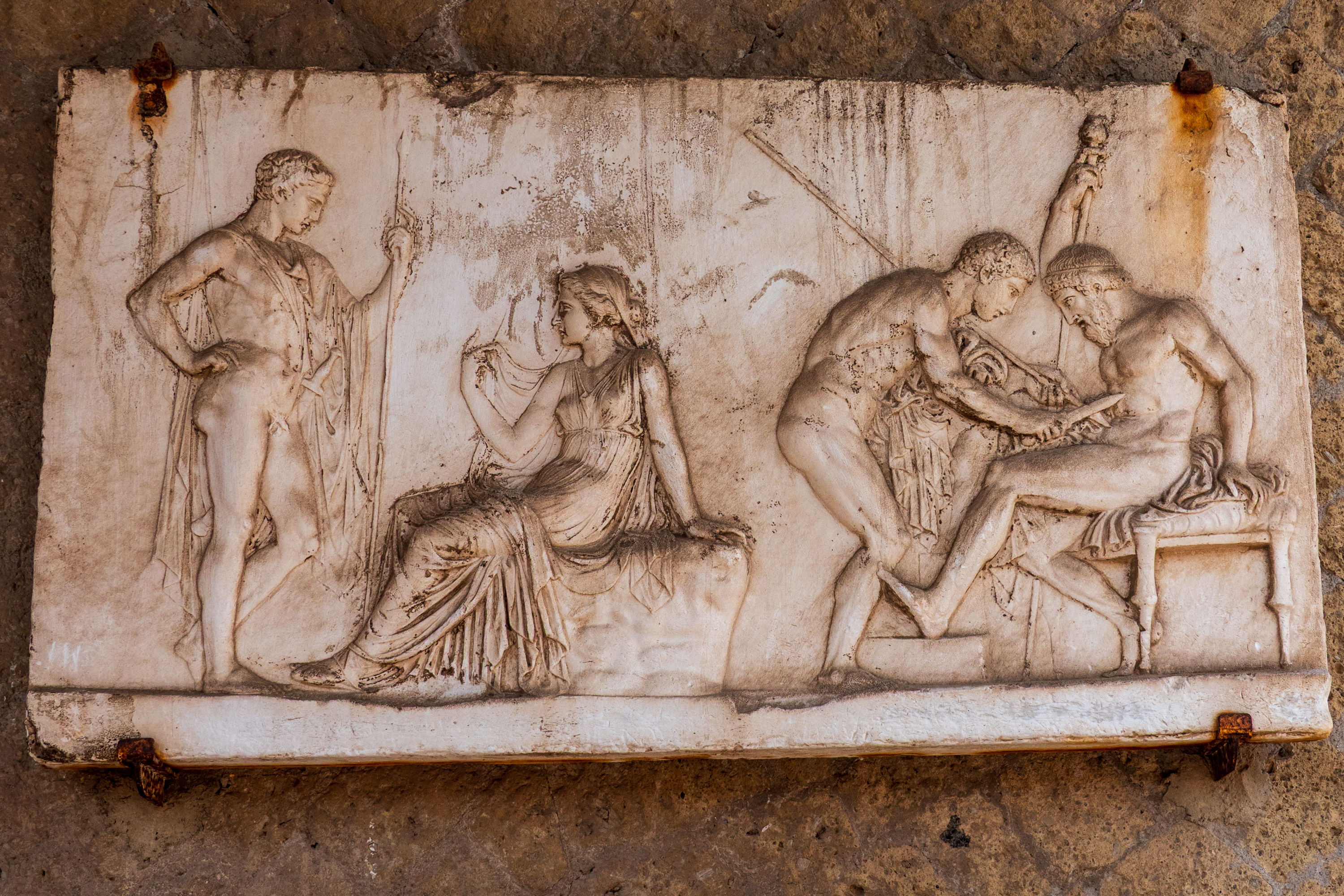
This is a wild one. Telephus, on the right, was a king, in Asia Minor. When the Greeks attacked his city, thinking that it as Troy, he was wounded by the spear of Achilles.

The wound would not heal until Achilles himself treated it with “rust” from his spear. (verdigris might indeed have curative power) In exchange, Telephus led the Greeks to Troy, but fought on the side of the Trojans. For some reason, the Augustinian Romans really liked this story. Don’t know the man and woman on the left. Sorry. You can read the whole twisted tale here: https://en.wikipedia.org/wiki/Telephus

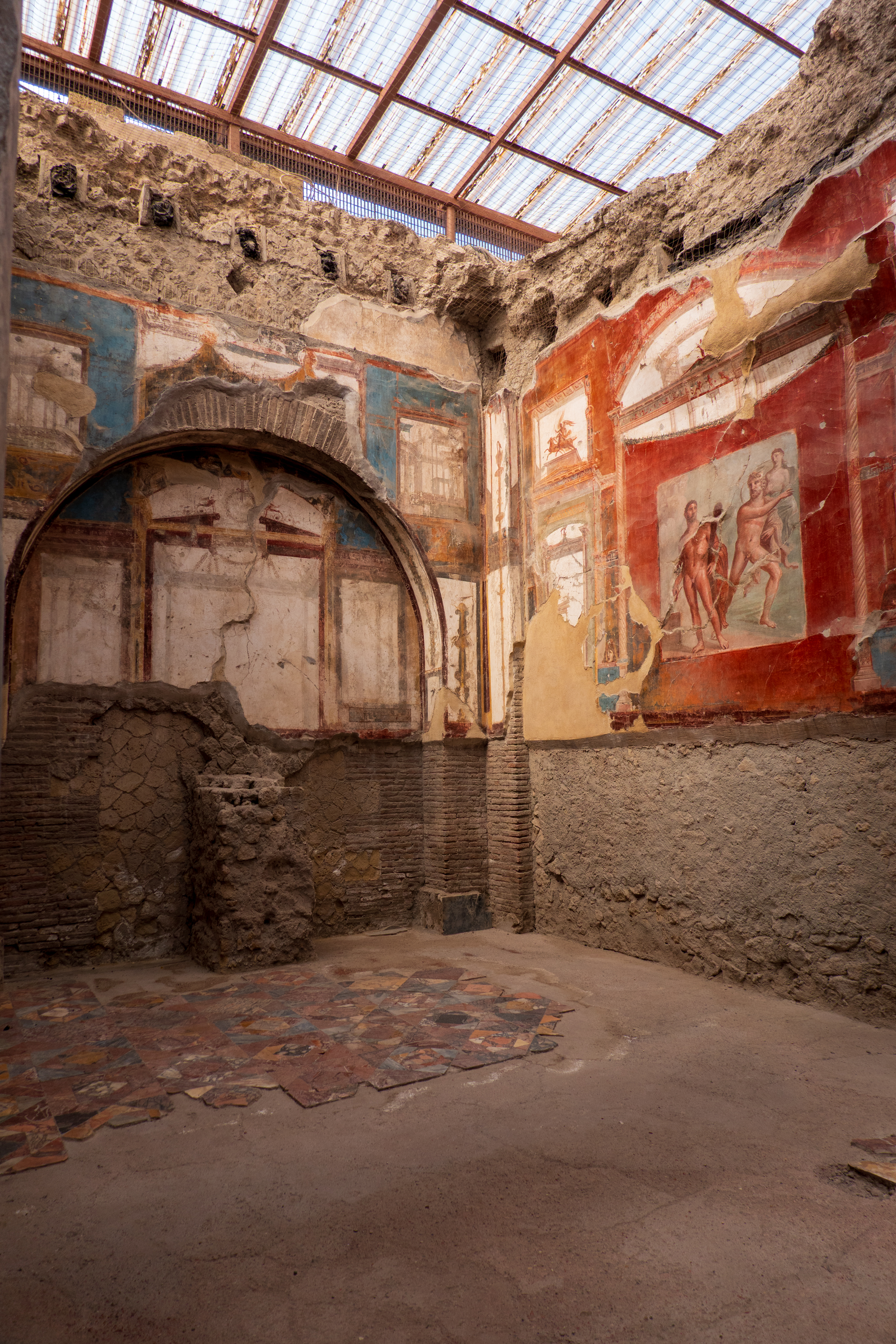
Fabulous frescos in the College of the Augustales, a group of freedmen dedicated to the Emperor Augustus.

Hercles, Achelous, and Deianira.
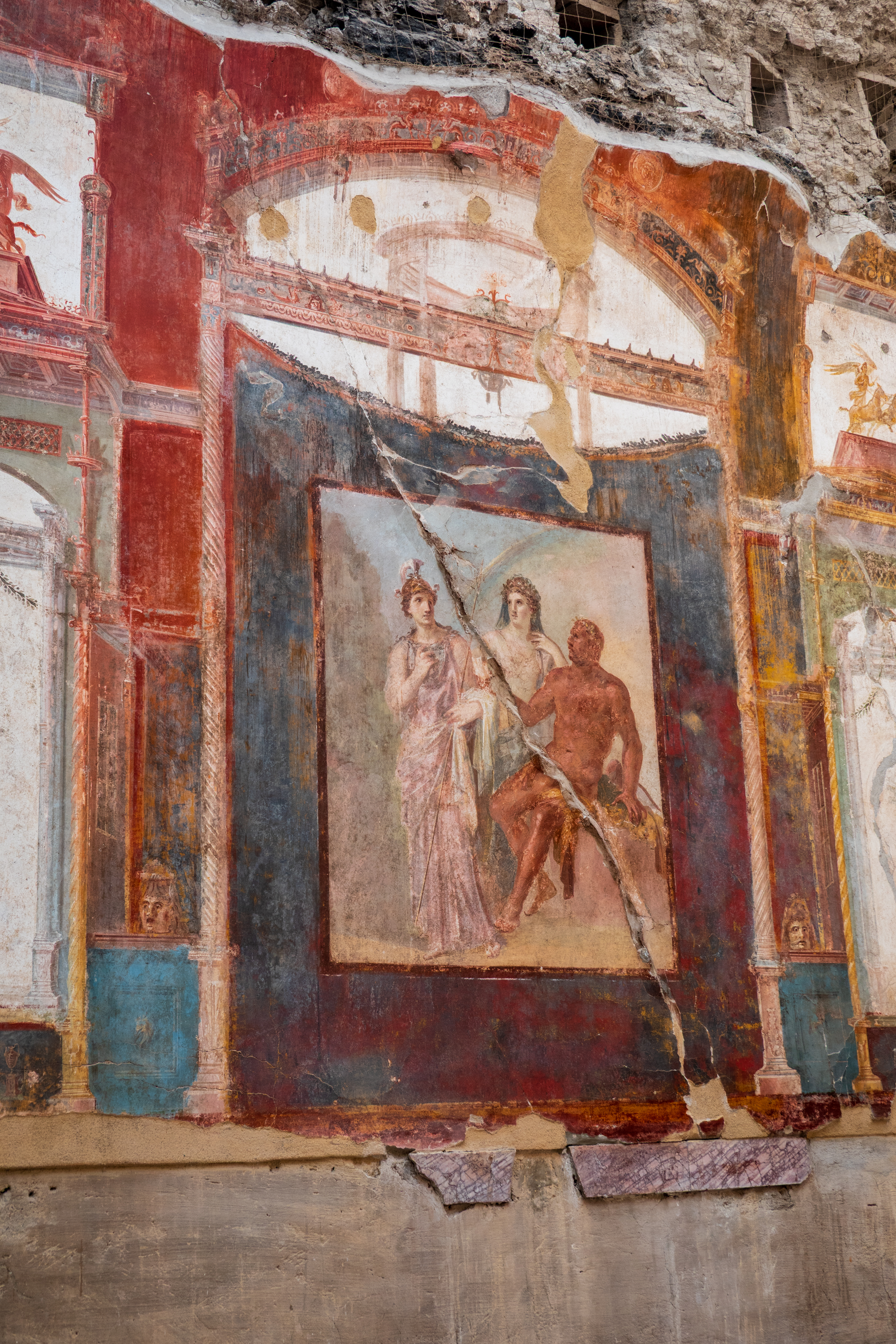
Heracles welcomed into heaven by Minerva and Juno. (Athena and Hera)

The center image is wild, featuring Heracules, with his lion skin and club and the river god, Achelous, who is carrying off Deianira. Heracles will save her, marry, or rape her, and she, in turn will be his unwitting murderer, having been deceived by a centaur, whom Heracles had previously killed. Confused yet?

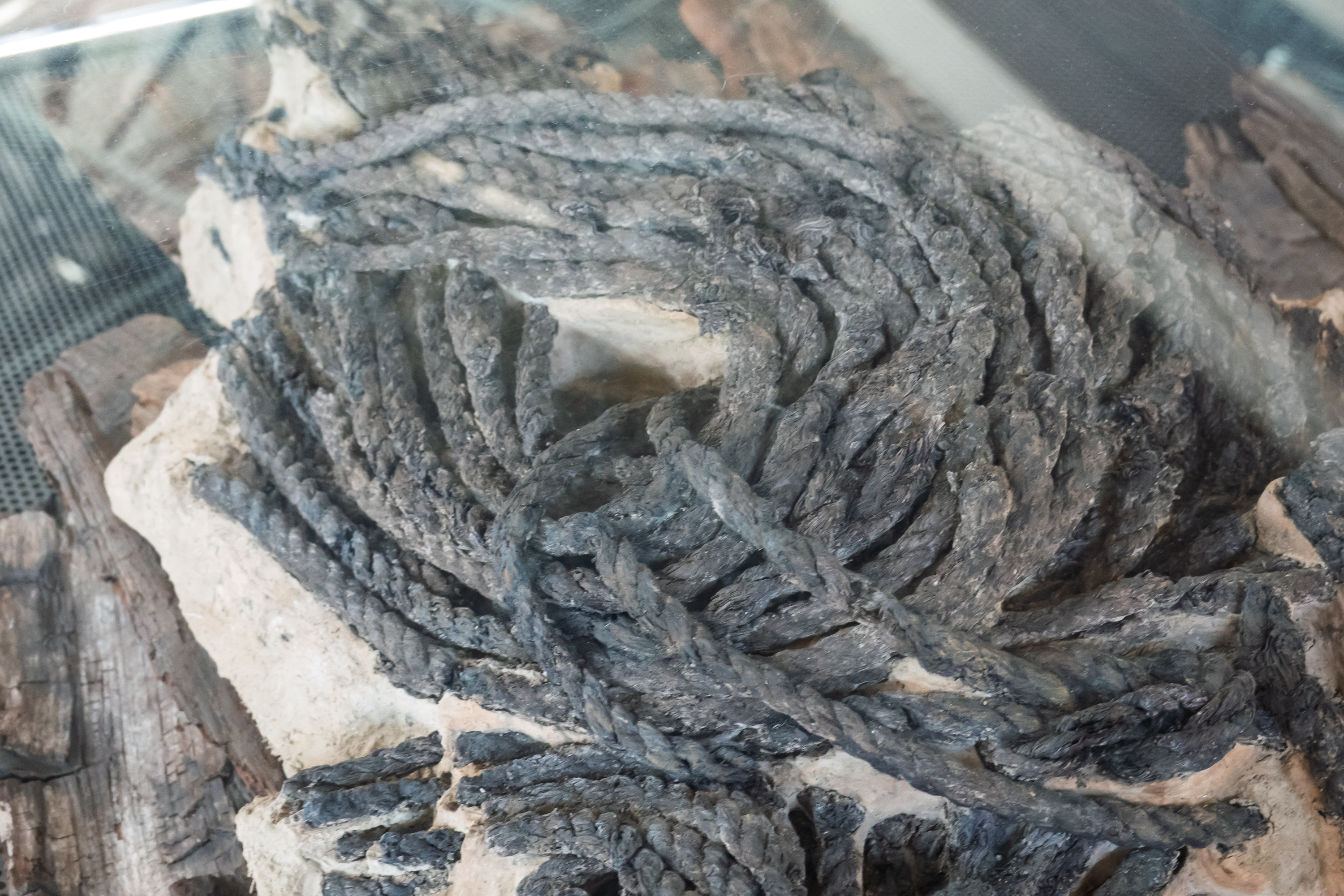
Wooden objects have typically not survived from ancient times. Herculaneum is known for having some of the very few wooden artifacts. One of which is a Roman boat, not all that different from modern Italian dories.

Roman boat.
And a rope, still coiled and ready to use.


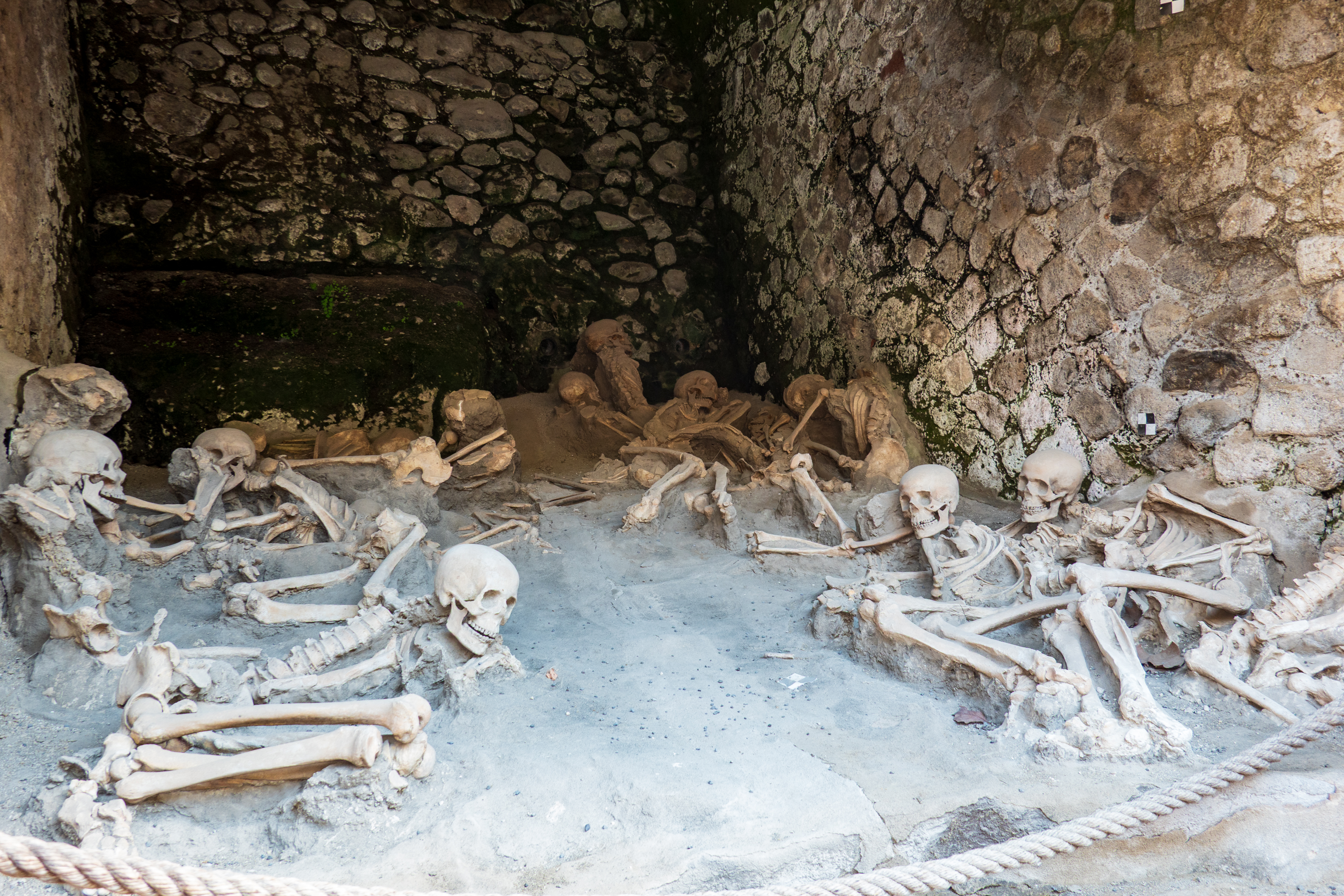
The saddest part was the collection of skeletons in the warehouses at the port. Waiting for the boat that never came.

People came running to the port in the hopes of rescue and died instantly when the pyroclastic flow hit.  Their bodies remain as they were found in the late 1800’s.

There is a nice museum and these images help convey the human touch.

The statue is life sized and so realistic that you expect her to speak.
Nice fresco, but look at a wooden table with domestic items, still ready to use.

On the way back to the campground, we of course had to enjoy an ice-cream!  Both the rest and the sugar were needed to make it back up the steep hill!

We stumbled across a meeting of owners of vintage Fiat 500s.

When Fred was a child in Rome, he loved Fiat 600 taxis, as they had cool jump seats. One drove by, while we were having our ice cream. Couldn’t get a photo, but we stole this one form the web:

The next day we set out for Pompeii.

Sicilia, off to a Soggy Start

We left France and crossed over into Italy, a most interesting trip with lovely scenery and a huge tunnel, which due to our registration as a truck, not a camper, cost us €200 Euros!!!!! We were somewhat stunned but paid up. The hardest part was that the lady in the toll booth kept demanding different registration papers. Turns out that she was desperately searching for any document that would allow her to charge the lower rate. We, on the other hand, were panicking that we would not be able to cross. (https://en.wikipedia.org/wiki/Fréjus_Road_Tunnel) Once though the 13 km of tunnel, we headed for an agricampeggio, or campsite at a small farm, way up the mountain above Asti.  (Another first gear grind on a one lane road.) We did not make it into the town of Asti, as we had a number of maintenance issues to accomplish. We de-limed the boiler of the Webasto heating system, which took a while!  We also cleaned and checked the bicycles so as to be able to use them, if the opportunity presented.

We left about 3 PM on the third day and headed for Genoa where we were booked on the evening ferry to Palermo.  It proved to be a pleasant drive.

We were able to find a semi-legal spot to park and make coffee. Always a challenge on the weekend as many trucks are not allowed to work and so they clog all of the rest areas as they wait out the time. So, as in this case, do laundry. The infrastructure for long haul truckers is not as good as it is in the US.

The descent into Genoa involved a thousand tunnels, bridges, and bewildering on and off ramps. But Miss Neverlost (TomTom GPS) was spot on and the boarding process was actually very easy. 

We were early and it was not crowded.
Dramatic sky.

One of the marshalers was actually a West Cameroonian! We were loading about 100 – 150 vehicles this evening; easy. In high summer it would be 800 and much more chaotic. As always, the actual parking inside the ship is traumatic as they want you closer to the bulkhead, closer to the vehicle in front of you, and there are a thousand people shouting “Faster, faster!” But we survived.

Our cabin was small but adequate for sleeping. It was, however, freezing and, as we had brought the wrong clothes, we ended up sleeping in our coats!

Would have killed for a nice, Scandinavian duvet!

The ferry was quite empty, so finding a seat to view the sea while drinking a cappuccino was easy.  The restaurant served excellent pizza also!  The Mediterranean Sea was calm and we arrived in Palermo a little early.  We had booked a downtown sosta, which had been recommended to us with the proviso that it totally lacked charm but was practical for sightseeing.  The drive was the usual challenge, unexpected one way streets, double parked cars, bus lanes, traffic, and darkness, but we made it. Our space was tight but we did manage to get our ladder down.  And once in, we did not move the truck until we left!

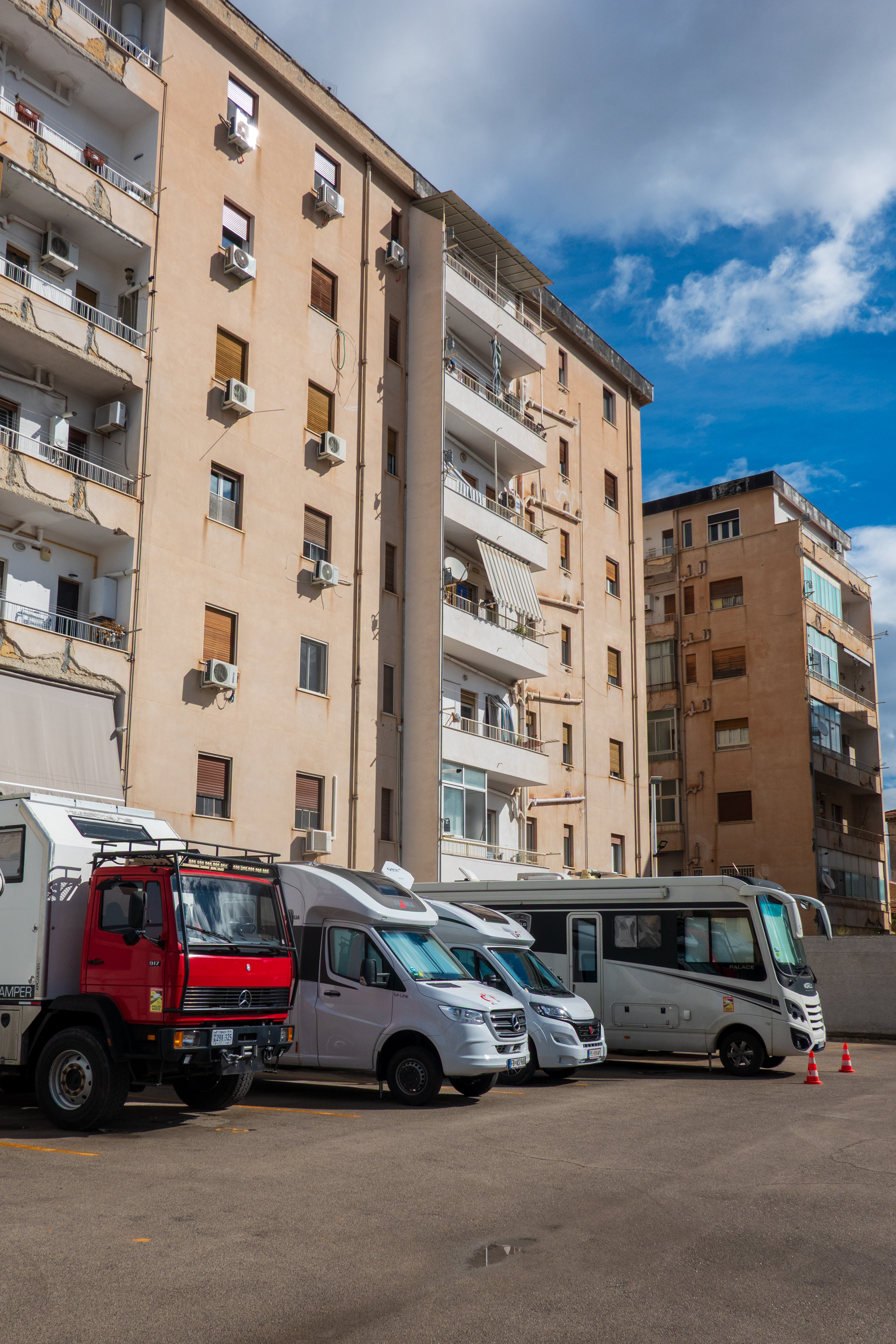
We are NEVER the biggest, but there wasn’t any extra room, either.

Palermo was interesting and we enjoyed our visit except for the constant rain.  We managed to miss some of it by ducking into a coffee shop for morning coffee and a restaurant for an excellent meal at lunch time.  We started at the Quattro Canti, the four corners.  This is officially known as Piazza Vigliena, and is a Baroque square.  It is considered the center of the Historic District and is the intersection of the two major streets in Palermo.  

Denise counts the corners.
News stand.
These ladies look as if they are waiting to offer directions.
Lion outside the theatre.
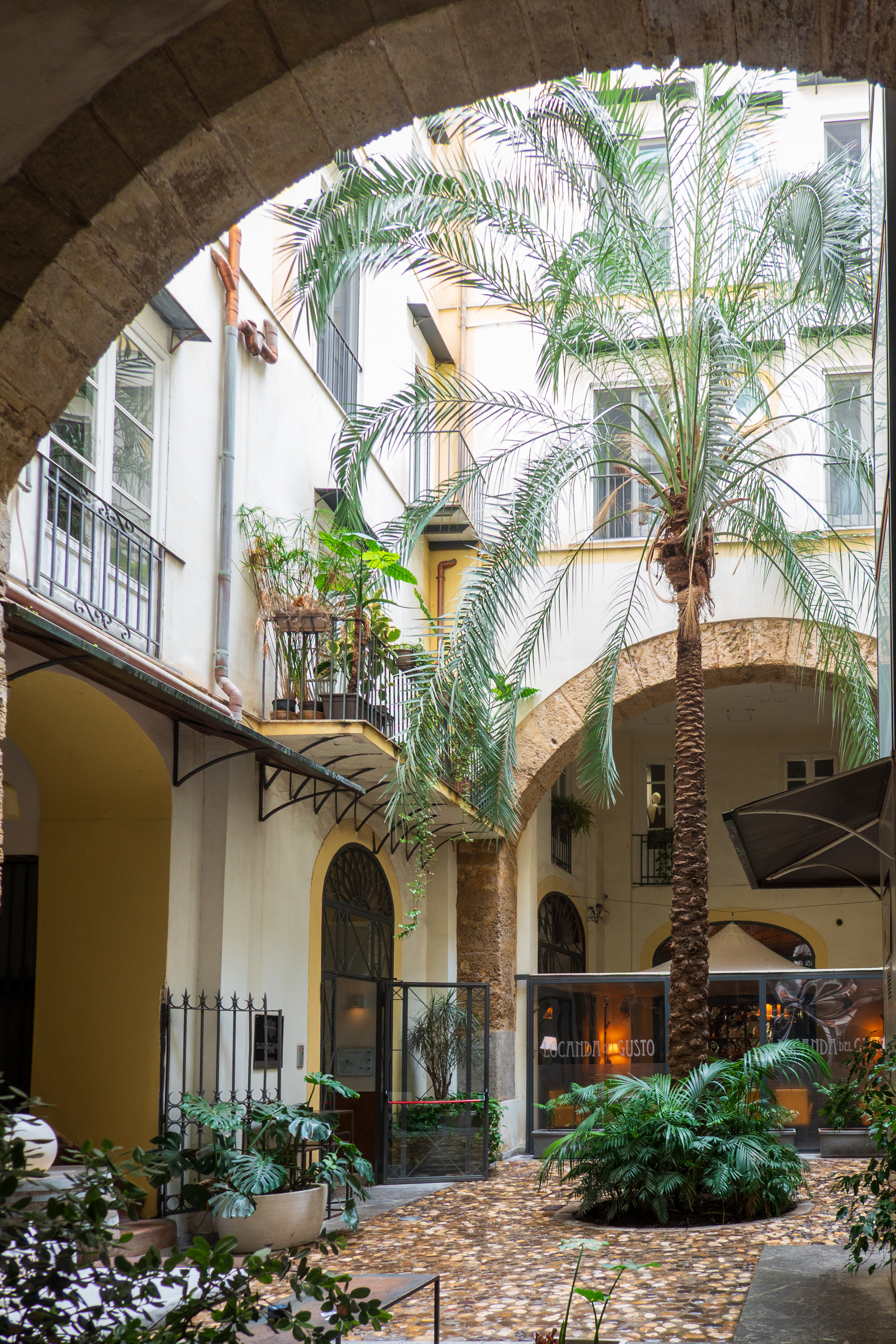
Every time you looked through an arch or doorway, you found a beautiful inner courtyard.

We never pass up a cathedral.

Ready for a procession.
The great doors only open on special occasions.
Saint Christopher is the patron saint of travelers. We always hope he will look out for us.
Detailed Biblical images.

Lunch was at a very nice little restaurant on a side street, leading to the theatre.

Classic narrow residential street. Gotta wonder that they get satellite at all.
I’ll guess, water pumps to get water to upper floor apartments?


We visited the amazing Norman Palace with its Palatine Chapel, famous for detailed mosaics telling various Bible stories.  Unfortunately the State rooms were closed as they are used by the Senate of Sicily.  (https://en.wikipedia.org/wiki/Palazzo_dei_Normanni#:~:text=The%20Palazzo%20dei%20Normanni%20(%22Norman,the%20subsequent%20rulers%20of%20Sicily.)

Inside the palace.
Great wheels. Note that the whole cabin is on long leather springs.
Incredible ceiling. This far south, the art looks very Byzantine.
Saints Peter and Paul debate Simon (the Magus) before Nero. Never heard of Simon – a rather interesting fellow: https://en.wikipedia.org/wiki/Simon_Magus#/media/File:Death_of_simon_magus.jpg
Music stand.
Mosaic detail.

We then got absolutely soaked walking back to the camper as it thundered, it hailed, and it poured. 

City gate.
A REALLY tenacious tree!

We had planned to stay another day to visit Monreale but a similar weather forecast inspired us to head south where it looked to be a bit drier.

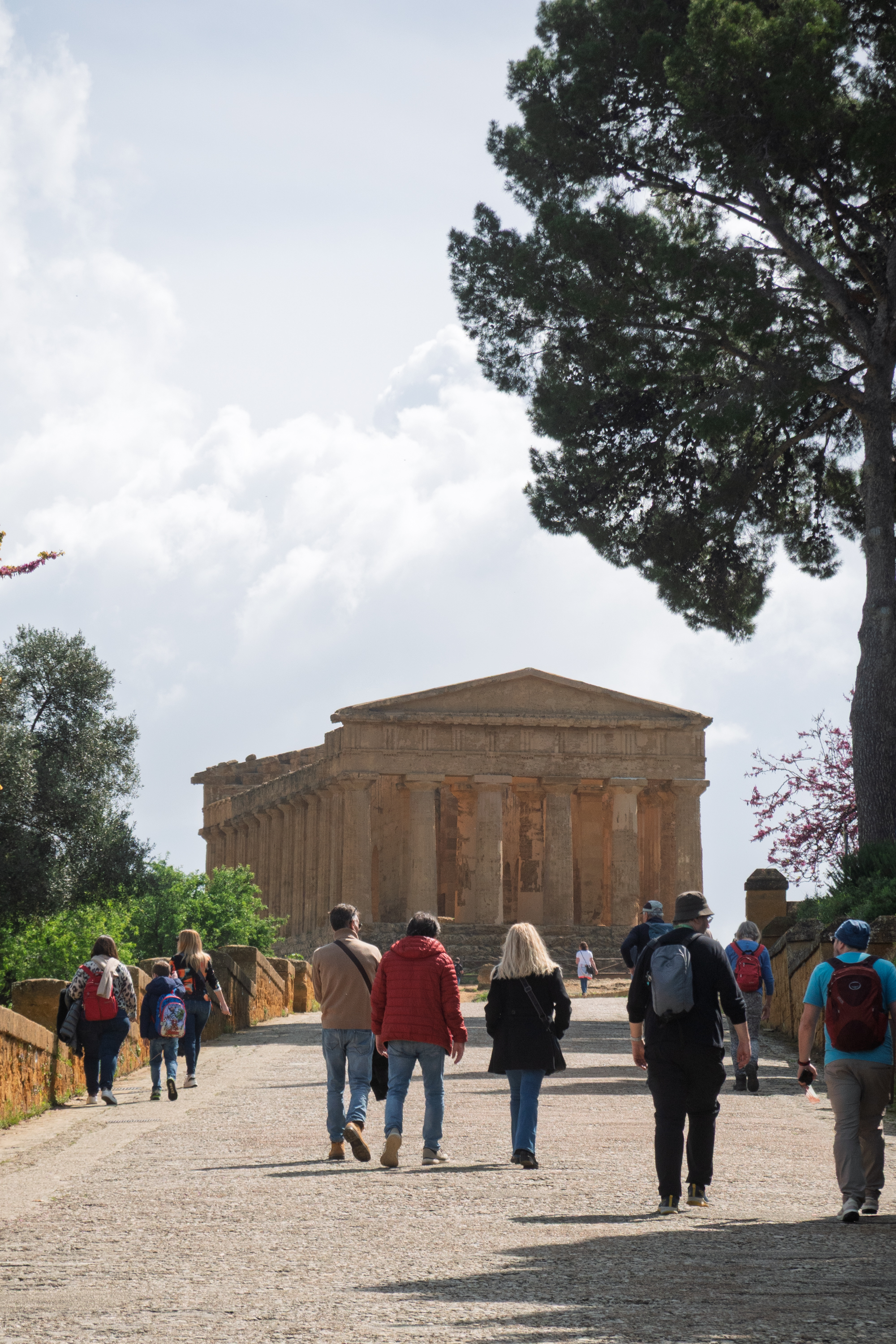
So we headed to Agrigento, where we hoped to see the Valley of the Temples.  It was pouring, so we had to stay an extra day there in order to get a dry day for visiting the temples, and what a day it was. Cloudless skies gave us a real appreciation for what it must be like to visit in July. It was actually warm enough to enjoy a gelato. The Greek temple ruins were amazing and stretched out over two miles or so. So walking both ways was a healthy four miles. We enjoyed the exercise! (Not!)

Looking back from the top. Was a long hike to get here!
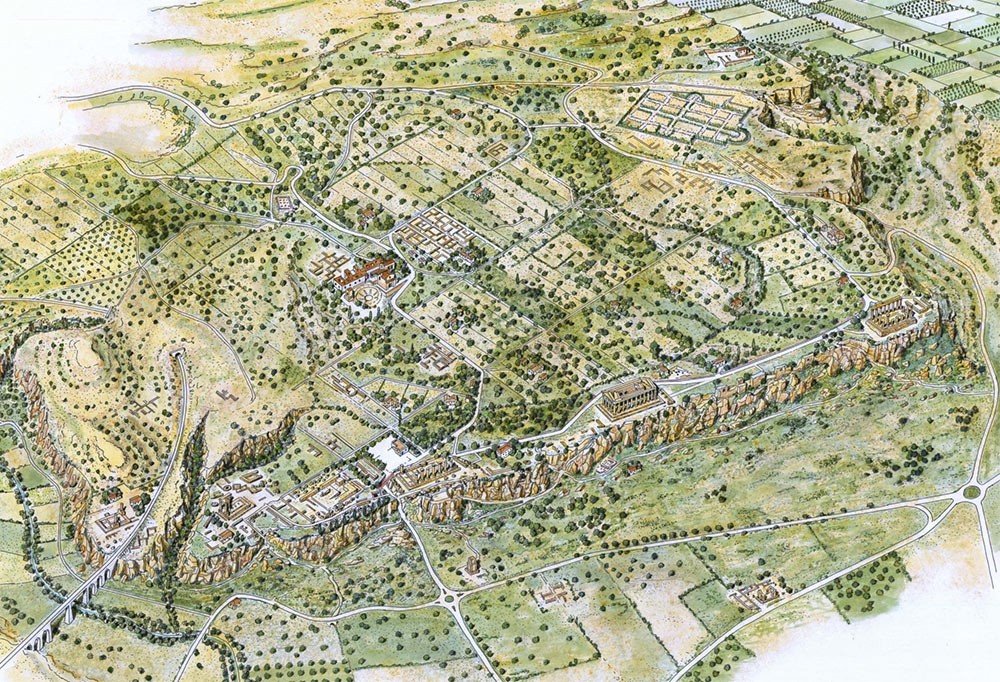
You enter at the lower left and work your way along the ridge to the temple at the middle right, and then back. The Roman town was more in the upper middle of this image.
Denise and massive column capital.
Denise and her new boyfriend.
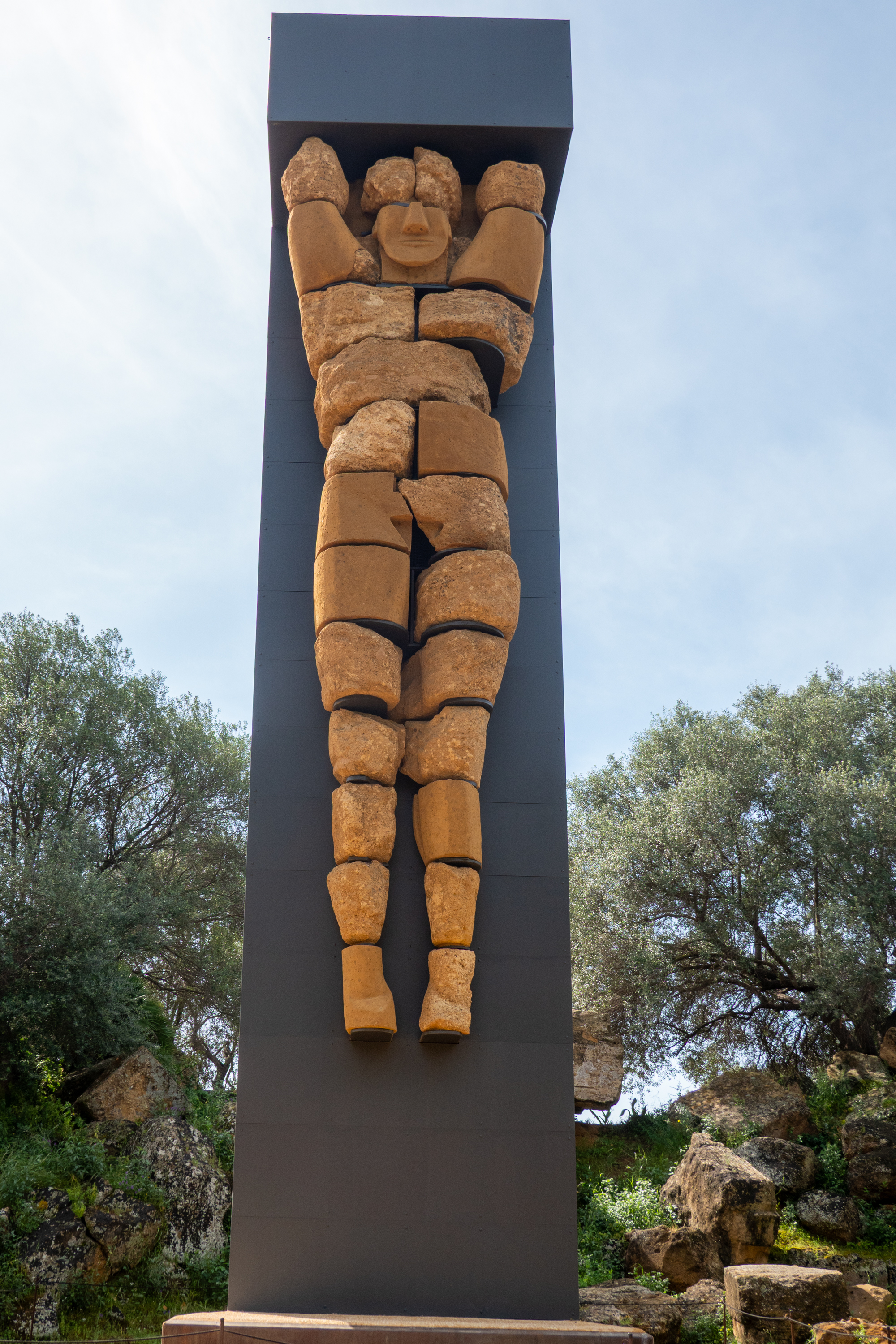
Statue pieces re-erected.

Explanation of the giant statues.
There are accounts that the city, sitting on its ridge, was most impressive when seen from the sea.
The Parthenon, in Athens, is most impressive. Then you realize that it was but one of dozens of identical temples, scattered throughout the Mediterranean.
Yes, those are doric capitals.
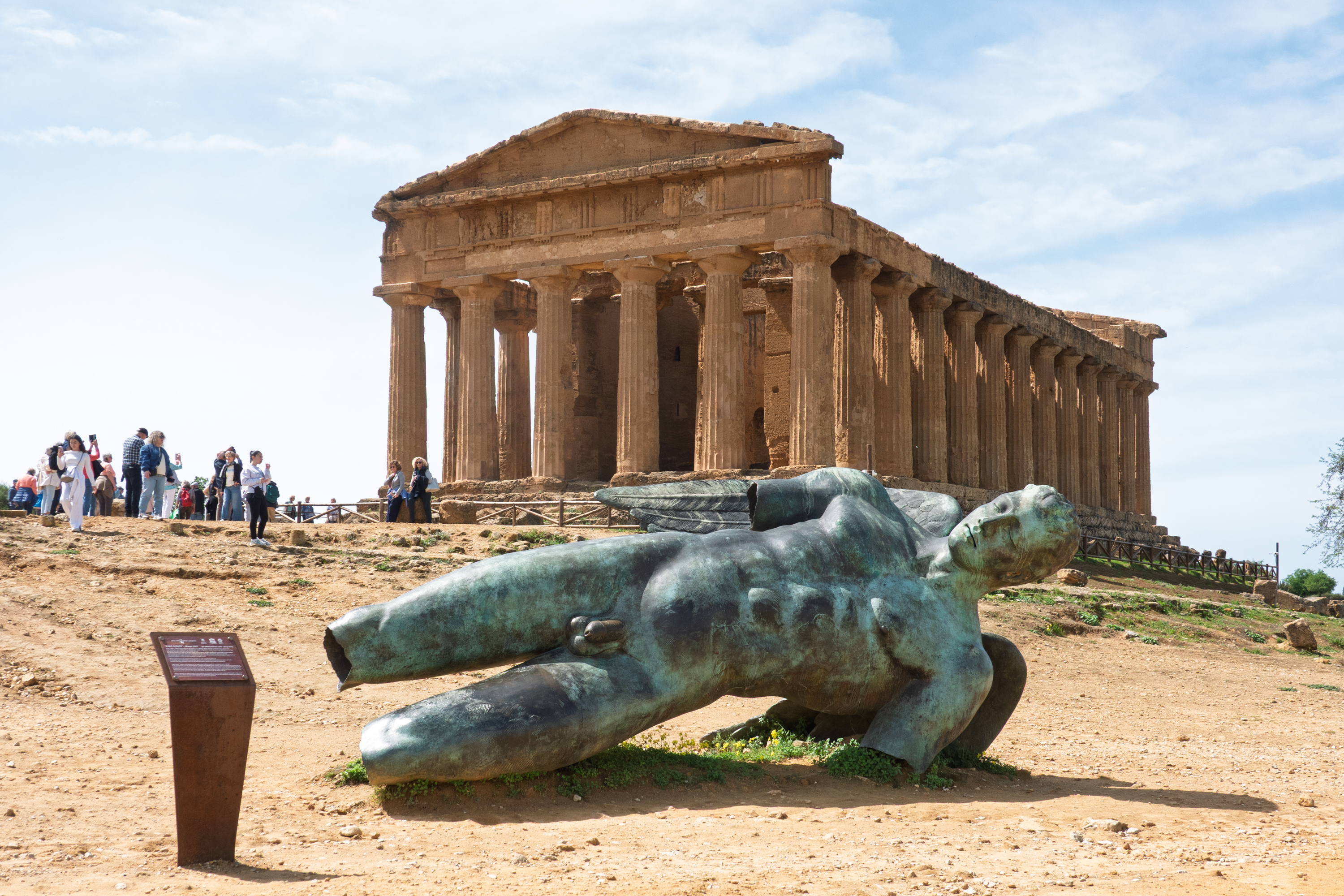
The Arigento money shot; a modern reproduction of a statue of Icarus, in front of the temple of Concord. Accordingly to legend, Icarus and his father were fleeing to Sicily. Icarus, of course, flew too high and the sun’s heat melted the wax that held the feathers to his wings, leading to a fatal fall.
Read the story here” https://en.wikipedia.org/wiki/Icarus#:~:text=Icarus%20ignored%20Daedalus’s%20instructions%20not,and%20Icarus%20escape%20by%20ship.

The local bus took us up the hill to the temples but we cheated and took a taxi back. expensive, but worth every penny!

Other than the visit, we did two loads of laundry on “dry” afternoons that poured with rain so we ended up with the camper full of damp clothes!

On the Road Again – A Dash Through England and France

We flew into Heathrow from Oslo and made our way to Yatton to pick up the camper for what may be the last time.  The night we arrived, we enjoyed a wonderful dinner with some old friends who made the effort to come down from Bristol and see us in our hotel.  It was a joy to see them after too many years.  The next morning we had a ride to the camper with the owner of the storage lot, Motorhome Matt. (https://www.motorhomematt.co.uk) Matt has truly given us service above and beyond. Then after loading everything up we set out for Chichester and Denise’s brother’s house.

Denise’s sister took us on the rounds of the stores to stock the camper. She also organized an excellent family lunch and get together in amazingly good weather for England in early March. Fred even washed the truck!

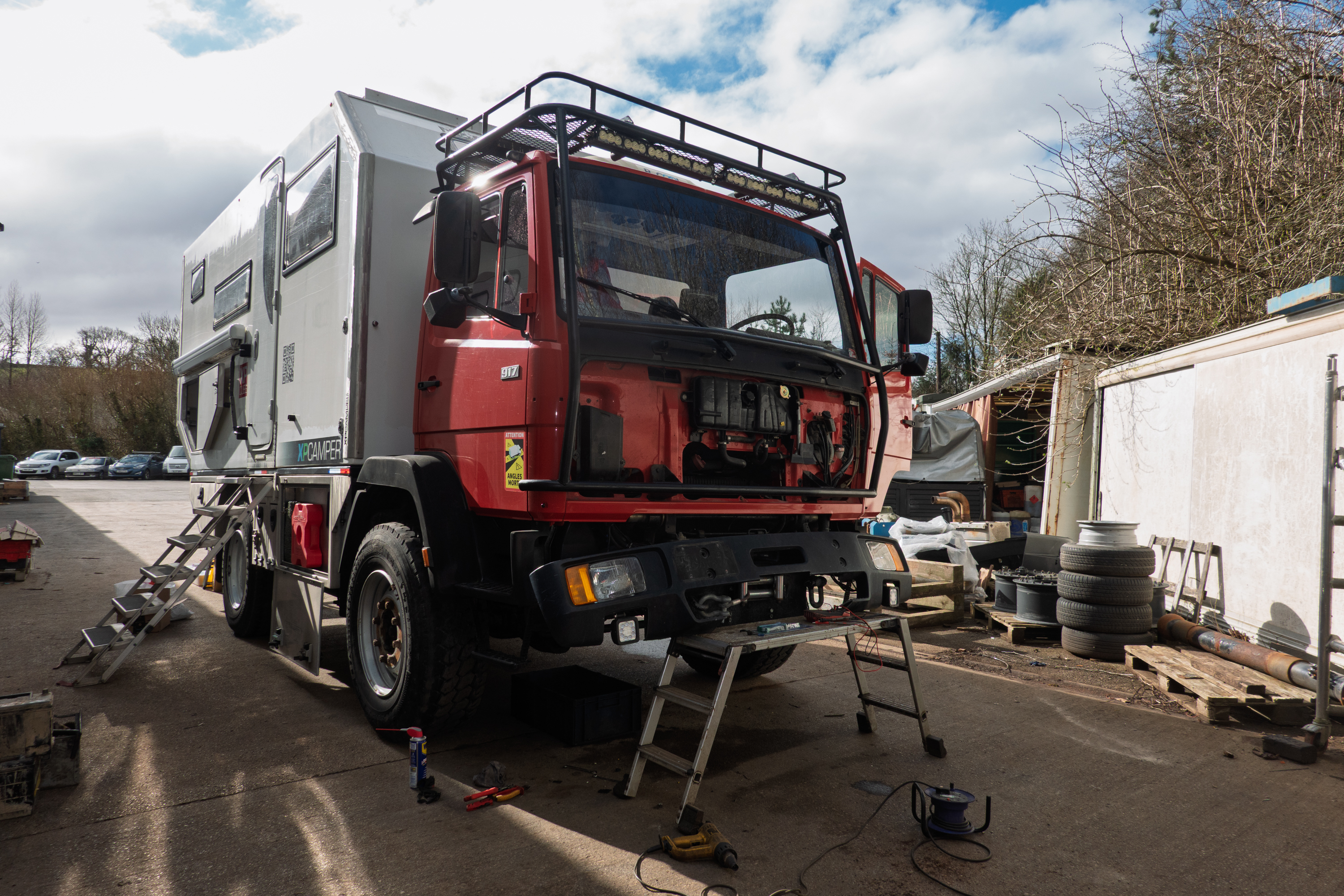
After a great weekend we set out for the north and the annual visit to Atkinson Vos.  There were a number of issues to address, including the installation of new headlights as ours had drowned in the constant rain of the previous winter storage. 

Say “Ahhh!”
A twin of our truck, under construction.
Denise and the chicas, errr, Yorkshire lasses of Atkinson Vos.

Real people don’t get misty eyed at the prospect of not returning to a garage, but Atkinson Vos have simply been wonderful. It is hard to imagine that we will probably not be back.

Soon, all was accomplished and we headed south to spend time with an old friend from Botswana, in Glossop in the Derbyshire Peaks.  Each time we cross the moors in Yorkshire, the Peaks in Derbyshire or the South Downs, we are reminded how beautiful England is.

Next stop was Mansfield for servicing of the Webasto Dual Top. We were welcomed back like old friends. They replaced some pieces and we learned that our Dual Top had the worst encrustation of lime scale that they had ever seen! Fred made a run to a near by store for a case of descaling solution.

And then it was on, to Derby, where we stopped at a wonderful Mercedes Benz truck dealership to try to get a front end alignment.  Unfortunately, this could not be done, as we need a new part which is unavailable anywhere in Europe as it is obsolete. Amazingly, the dealership refused any payment. We did persuade them to accept a bottle of firewater – for their Christmas Party.  Fred is working the part problem.  We shall eventually solve it but it may take a while. As our Belgian supplier noted, “We have over 60,000 MAN and Mercedes Benz parts, but we ain’t got that one!” (Liberal, idiomatic translation.) While the truck was on the rack, we made a walking visit to our first UK Costco, about a mile away. Truly wild to compare and contrast with a US Costco! The real challenge was getting all of our purchases into our shopping bags and then carrying them the mile back to the truck. Many rest stops were required!

Our next stop after Derby was Havant, near Portsmouth, back in the south of England.  Amazingly Denise could attend an informal annual reunion with the girls from her year of the Northern Grammar School for Girls in Portsmouth.  She had left the school in 1966 to go to Australia, where her father had been assigned with the Royal Navy.

Denise with the ladies

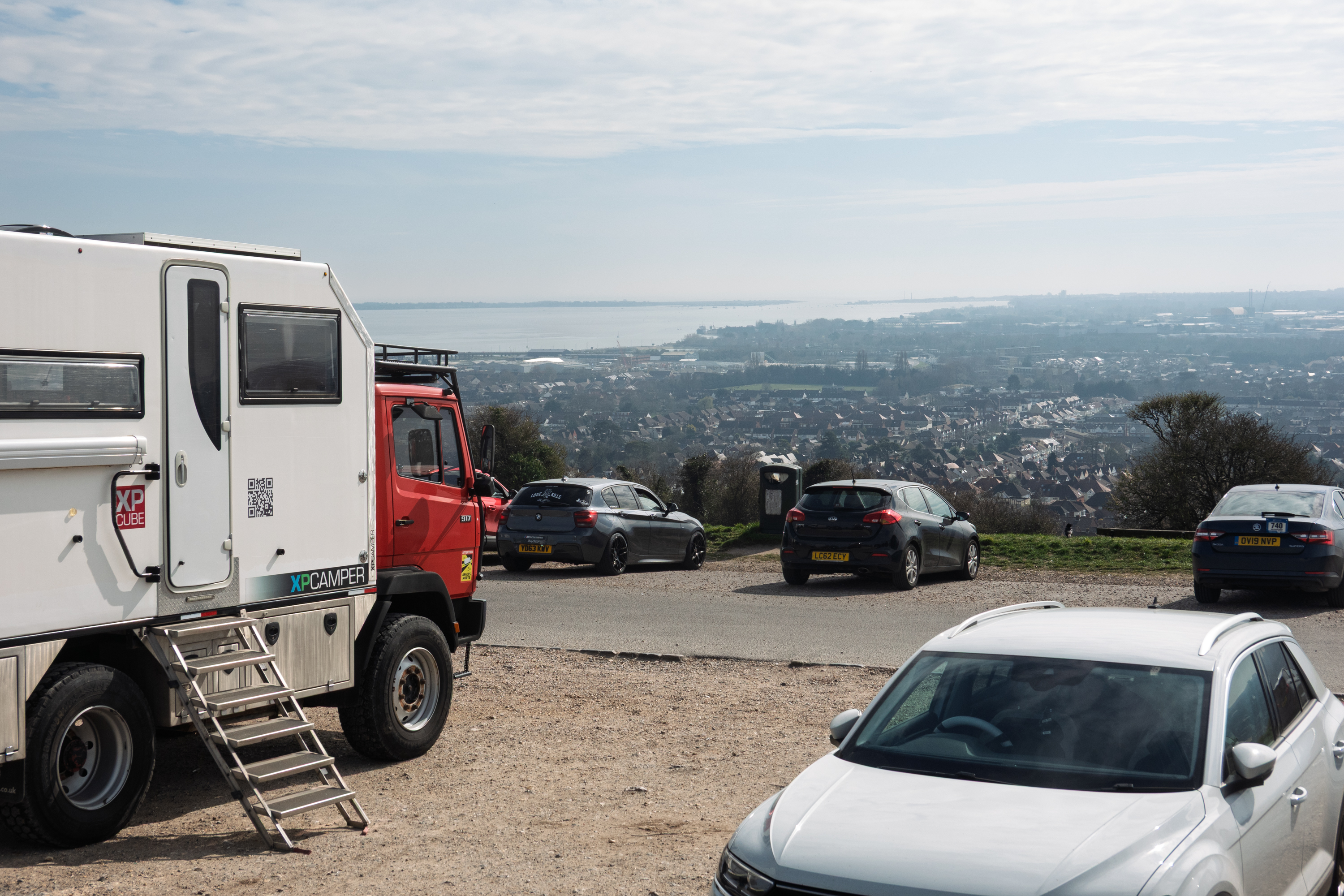
Denise was surprised how many of the ladies remembered her and she had a wonderful time. As there was no place to park at the pub, Fred passed the time on a scenic overlook on Portsdown Hill, watching for French invaders.

No French invaders today.

We then headed on to visit Denise’s sister and brother in law in Kingsfold, in West Sussex. We all went for dinner at the local pub, which let us camp for the night. Another great evening!  The next day we headed to the coast and took the Shuttle to Calais.  First stop was the Cite de L’Europe for a shopping expedition at the monster Carrefour!  Always a happy place!

The larders stocked with French goodies, we headed out to an aire we had located in the town of Aire-sur-la-Lys.  This turned out to be a municipal aire, run by the town, and right beside a canal basin full of boats.  (Seems like a joke – we stayed at an aire in Aire.)

Denise buying more veggies from a couple making the round of the aire.

Quite lovely and we could have stayed longer, but we set off the next day and stopped at Troyes. We arrived in time for a walk into town. 

Settling in for the night.
As in many other places in France, it is clear that the French remember and appreciate the US contribution to the liberation.

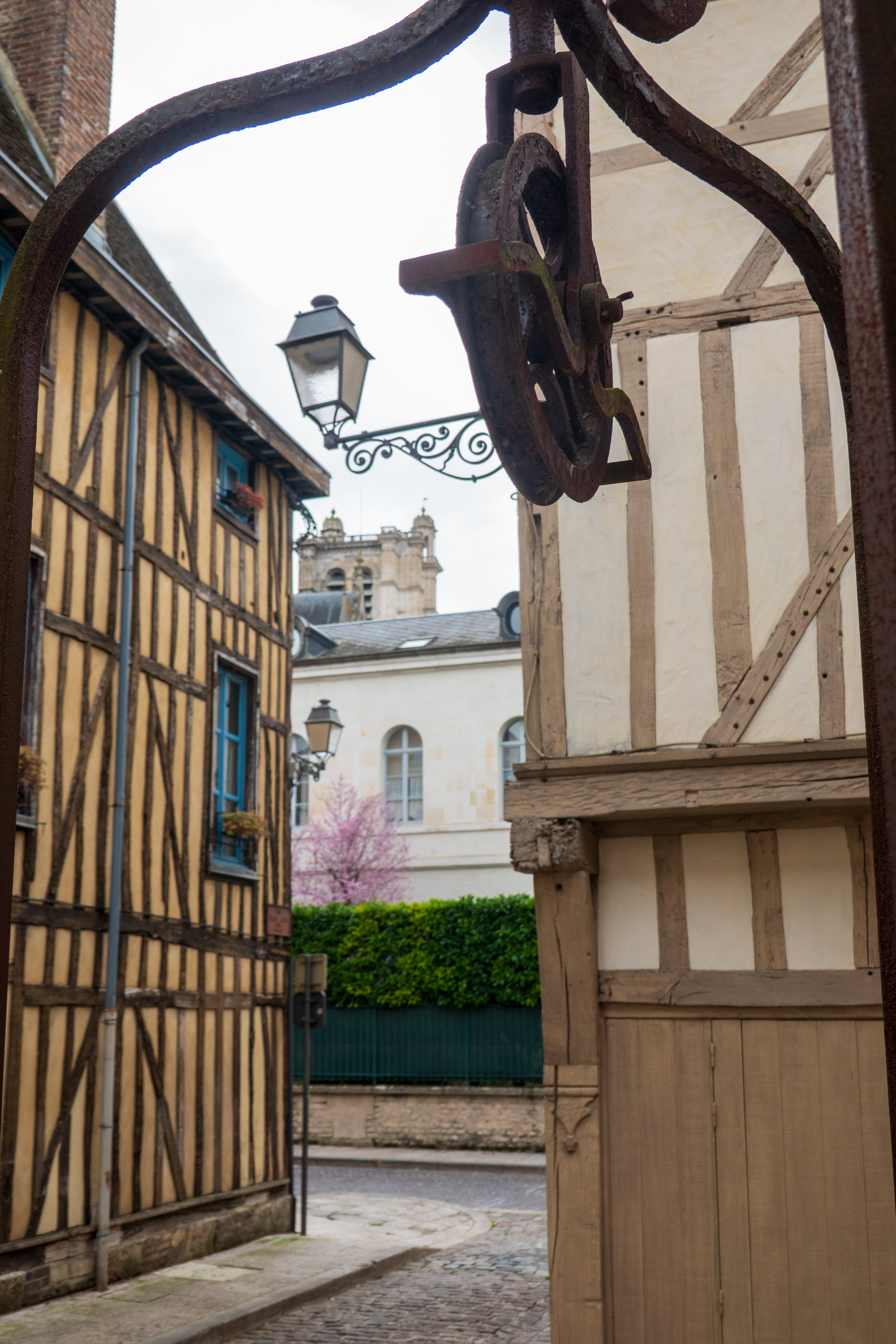
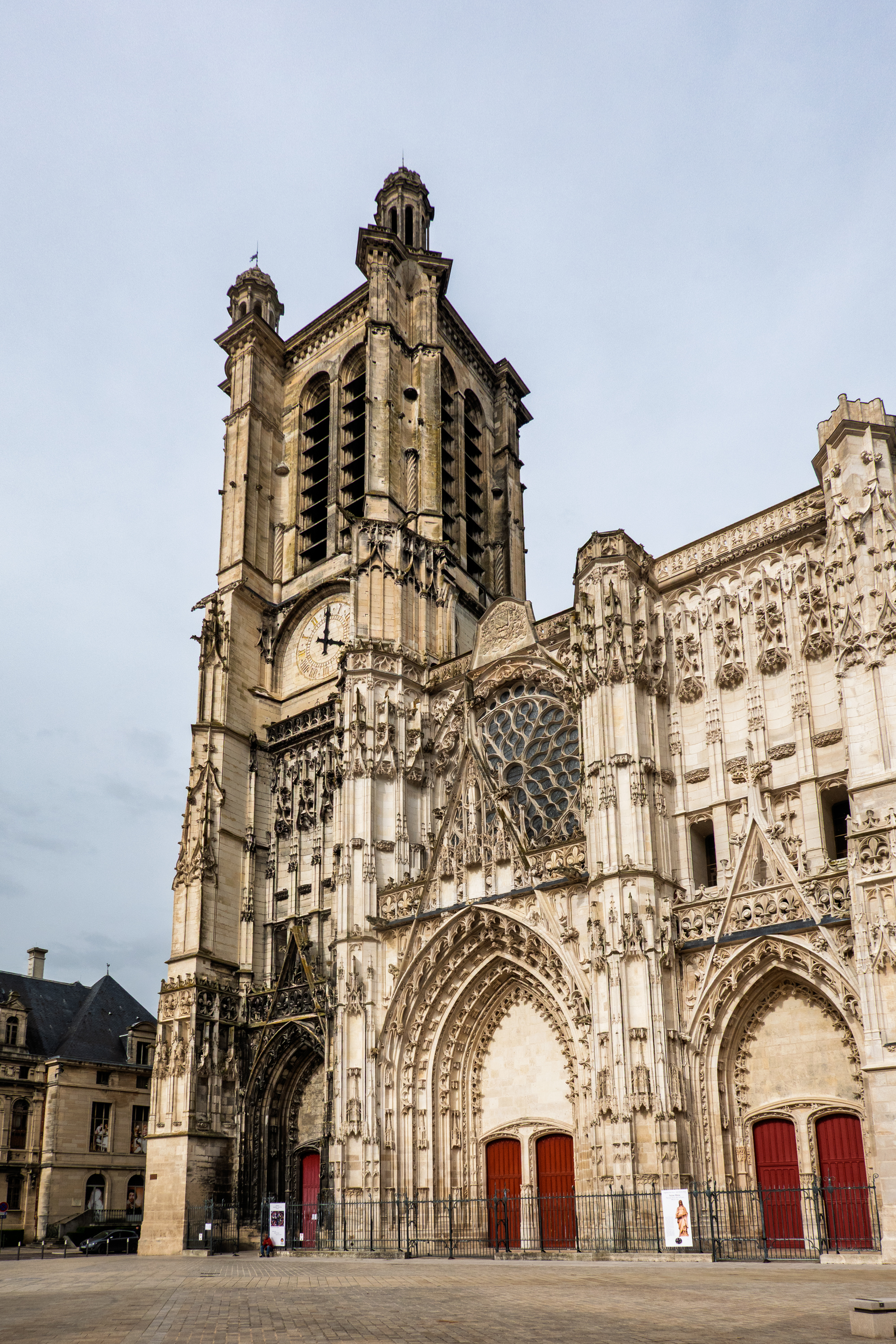
Troyes had been recommended as a quaint place, famous for its very English looking half-timbered buildings. (https://en.wikipedia.org/wiki/Troyes) Denise has a talent for finding lesser known places to stop.

Yes, this is really Fance, not England.

A whole town of houses from the 14th and 15th centuries, some of which had fallen down, some of which were half way there, and some of which looked like they had been built yesterday.

Less than inspiring!
This column was simply a monster.
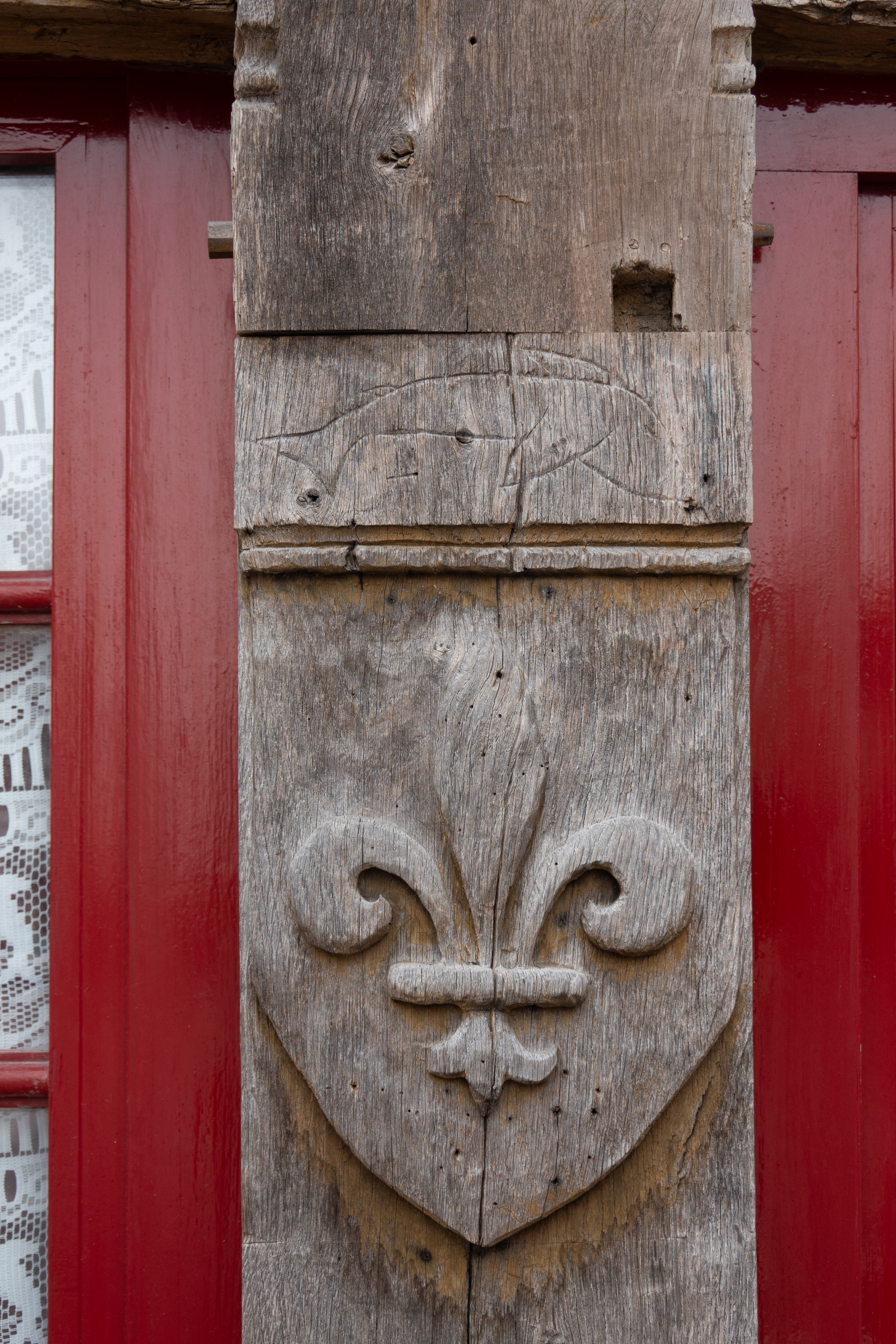
Fleur de lys and the dauphin.
Some of the buildings had notations.
Vendor of Blackthorne fire water.
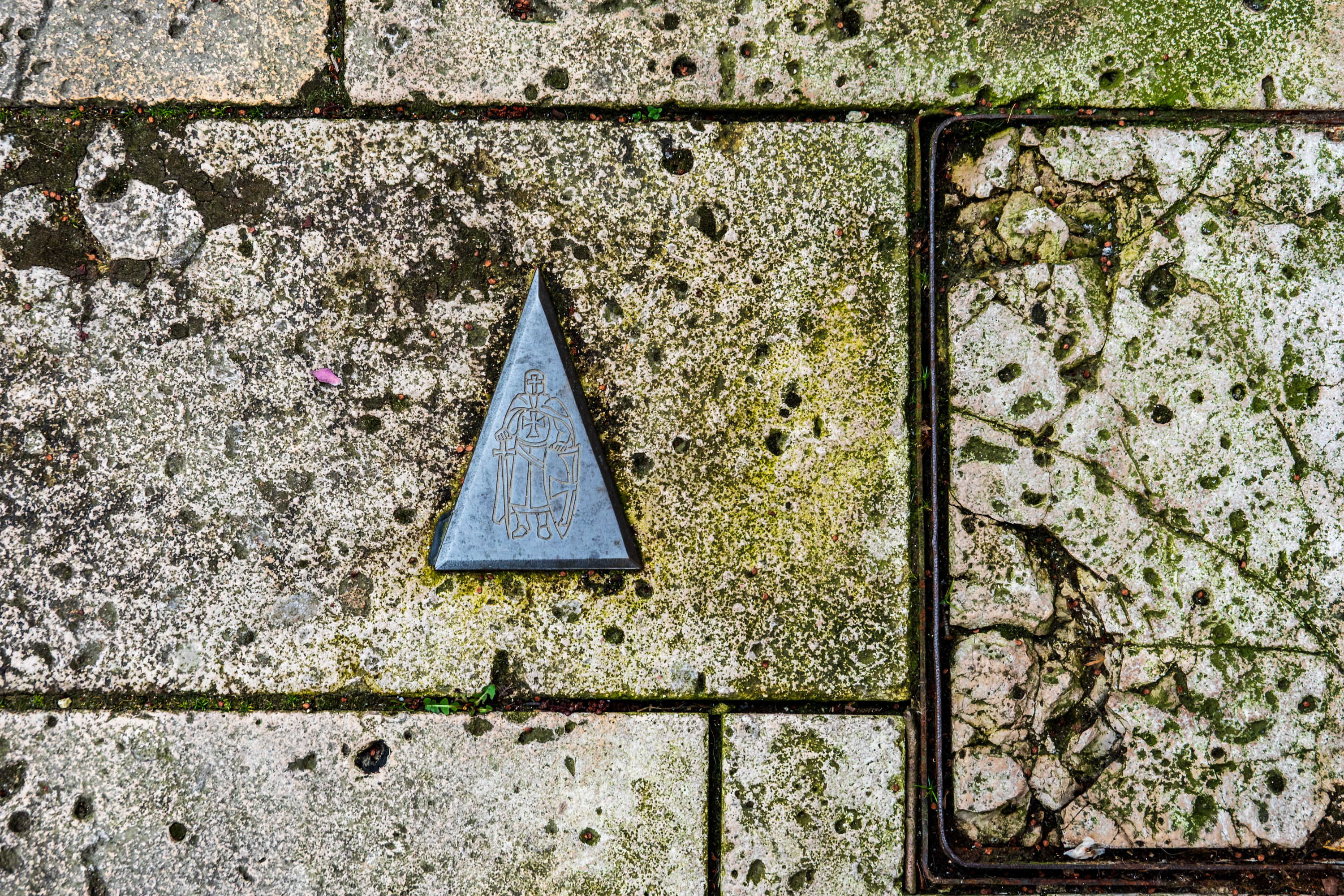
There were pilgrim markers all over town.
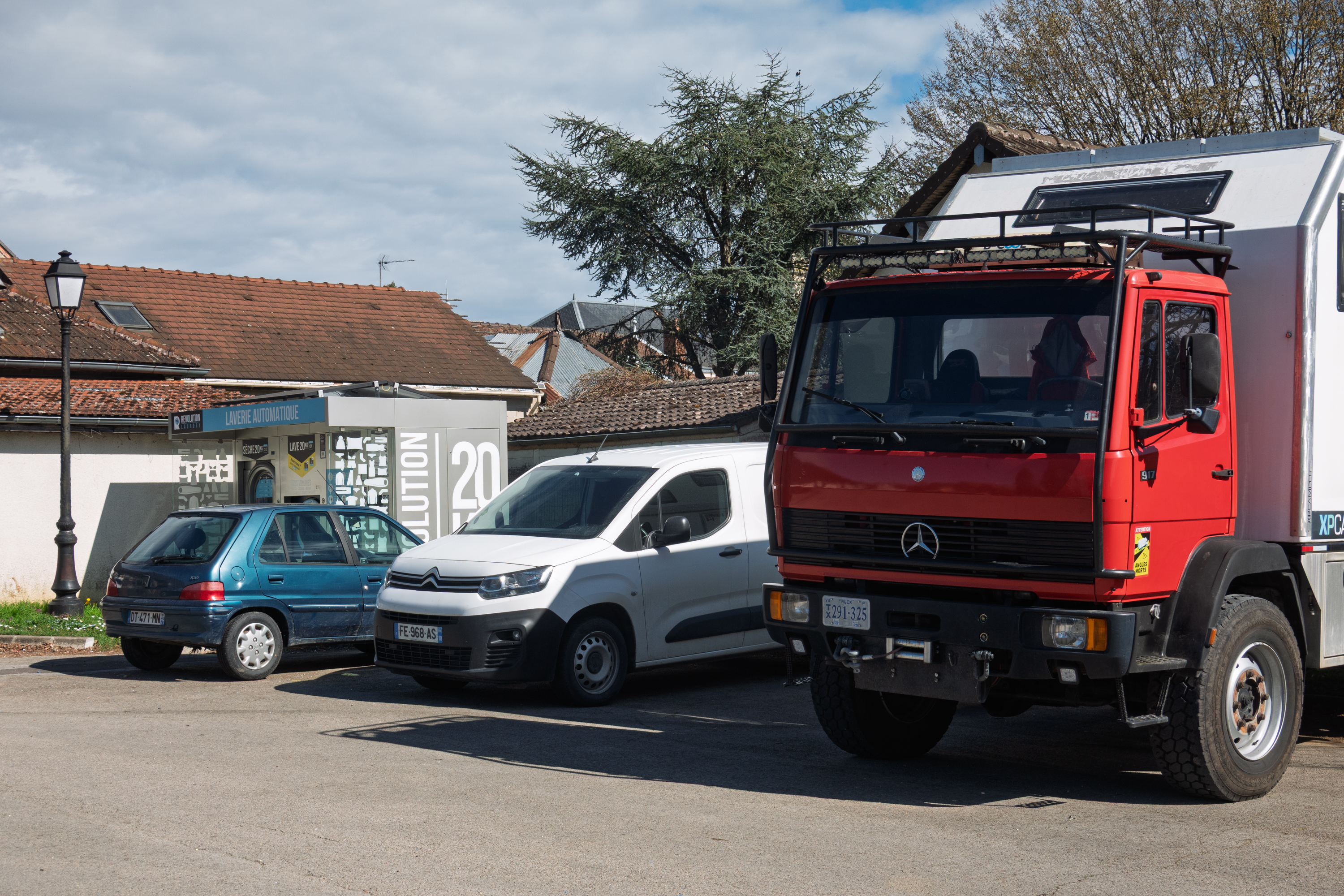
One of our favorite stops – a Revolution launderette. In rainy Europe a big dryer is wonderful, nay, essential.
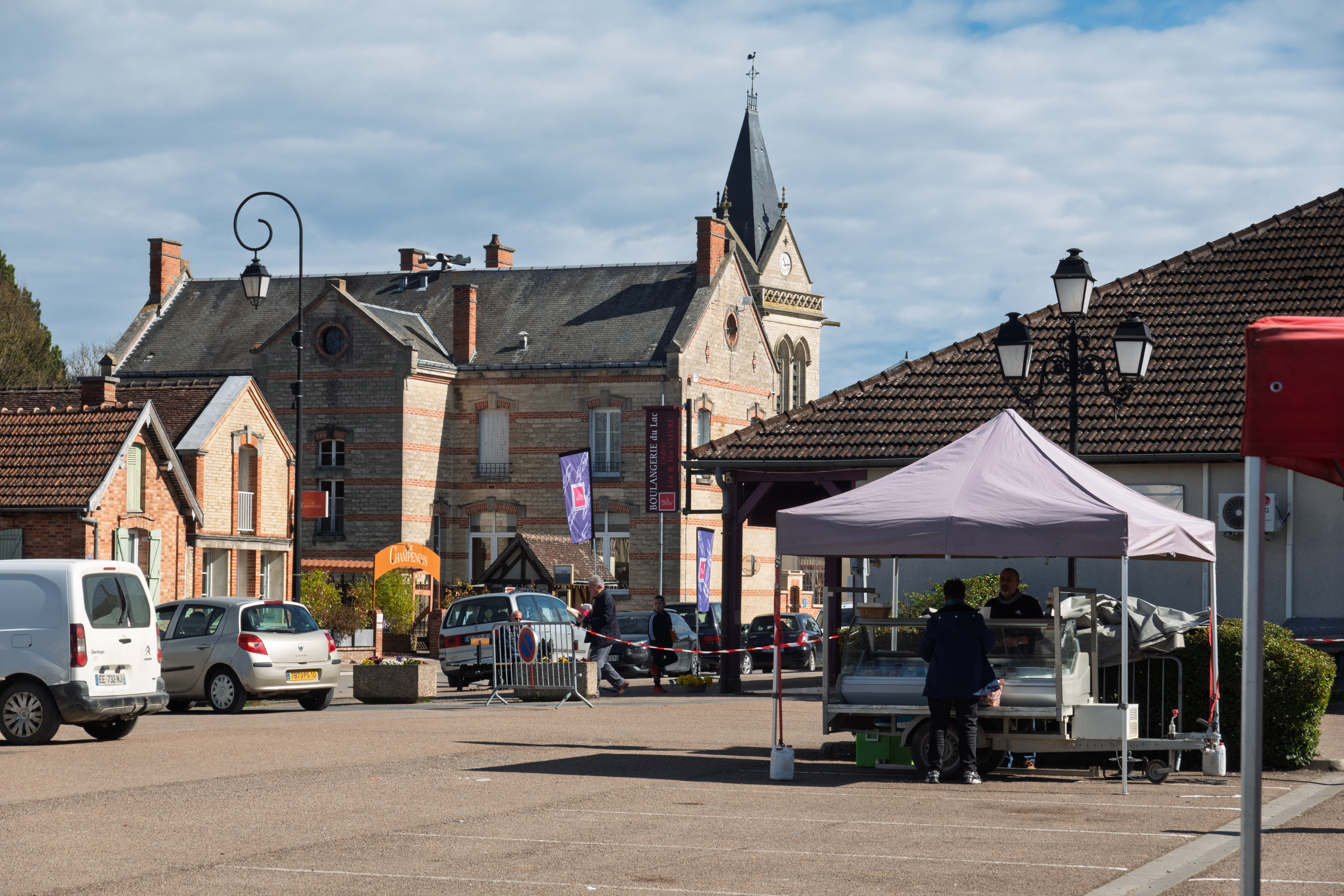
And when you find the launderette in a picturesque town, on market day, and with easy parking – heaven.

Our final stop in France was in the Beaujolais region.  We stopped at a winery called Domaine Philippe Aufranc, just above (literally) the village of Fleurie.  This is the first of our many camping sites at the top of mountains and was an exercise in a first gear grind up a narrow, one lane road. (No traffic on a dark Saturday evening.) The winery was closed on the Saturday in the late afternoon when we arrived; there was nobody there. Not hard to find a roomy spot.

However, we were able to touch base with the owner the next morning and enjoyed a private tasting. At least Denise did, Fred was driving. We bought several bottles. We were literally just up the hill from the famous George le Boeuf vineyard, so the neighborhood was good for wine.

And then, on into Italy.

And finally, Bergen!

We landed in Bergen and took a coach to our hotel.  They had no space until 3:00 PM and were not terribly helpful about anything, so we jammed our luggage in their luggage room, which was totally uncontrolled and full to the brim.  That done, we set out to discover Bergen on a grey, damp day.

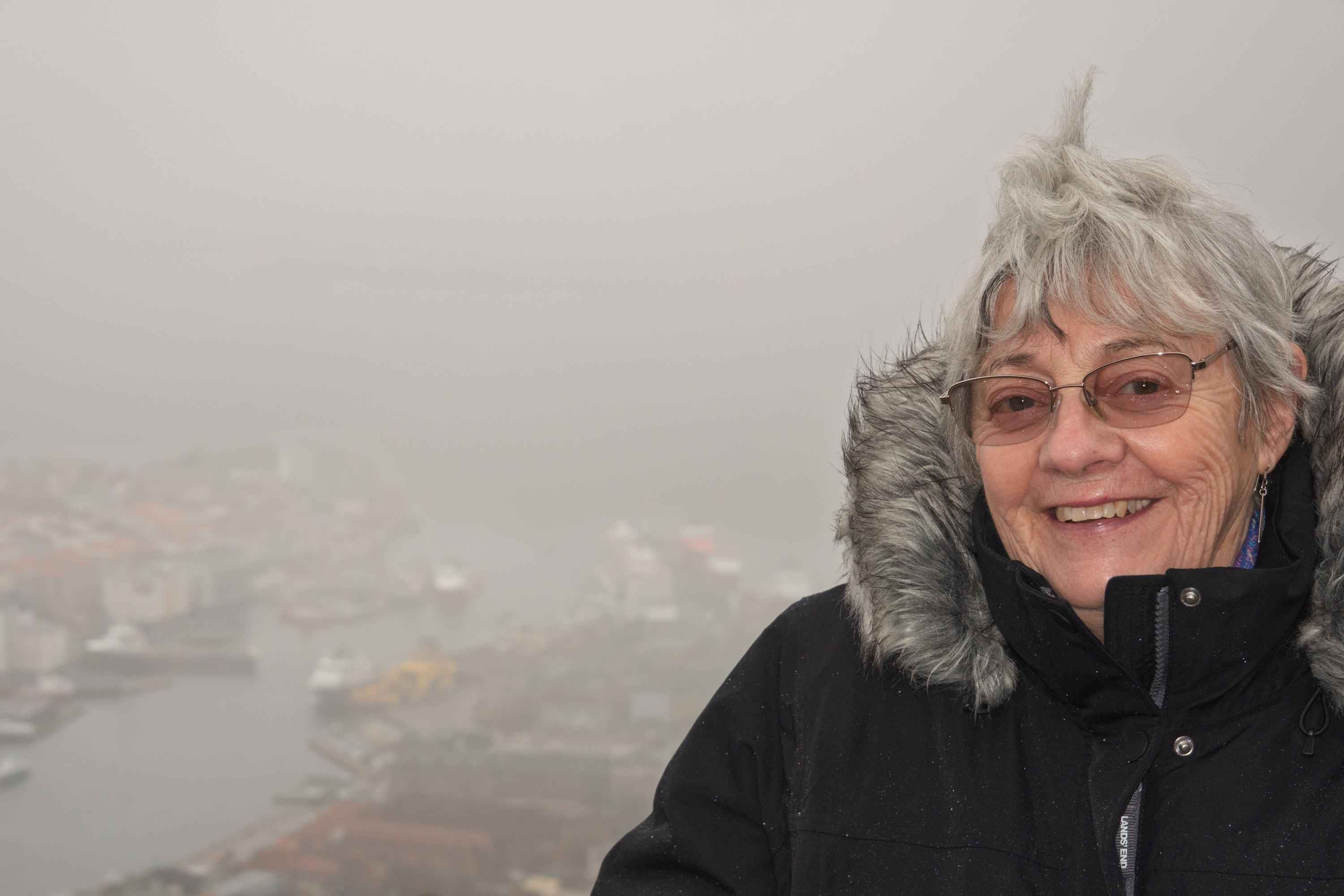
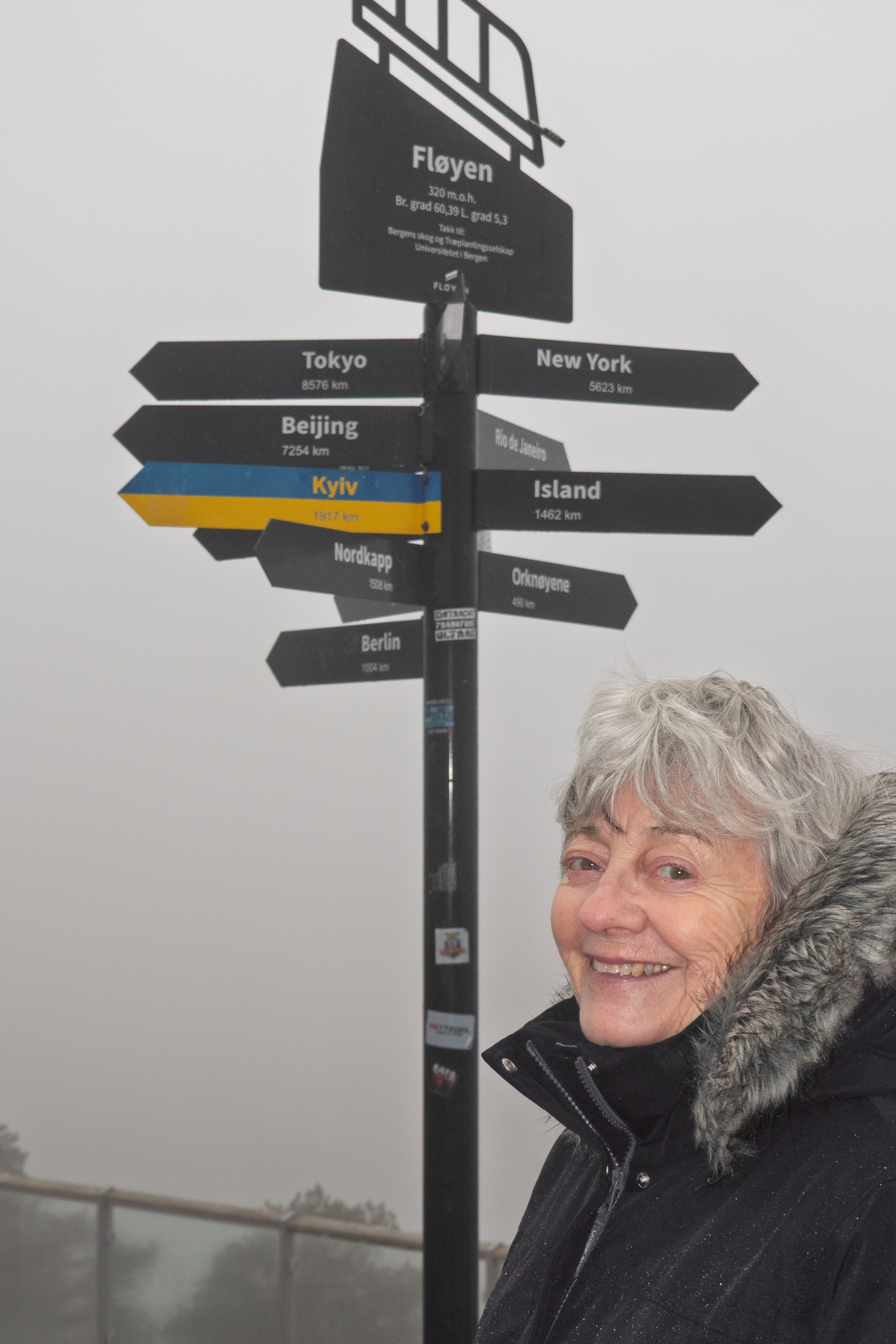
First stop was a coffee shop for sustenance! Then we headed for the cable car to go up the Floien, which provides wonderful views of the city.  And indeed the view was spectacular and we were just in time to see it before the clouds rolled in and the view disappeared! 

Great view! But enjoy it quick, the clouds are rolling in!
Denise determining where we are.

Escaping the souvenir stands, we re-boarded the cable car and descended to the waterfront. Then, as it began to rain, we headed to the Hanseatic Museum.  In Lübeck in Germany, we first remarked on the importance of the Hanseatic League, in the development of trading and society in general in the early Middle Ages.  Their trading routes stretched from Tallinn to London. We had seen mention of the League in Denmark, Holland and in northern Germany with Bergen the most northern reach of the League. For those who need a review before the quiz, here you go: https://en.wikipedia.org/wiki/Hanseatic_League

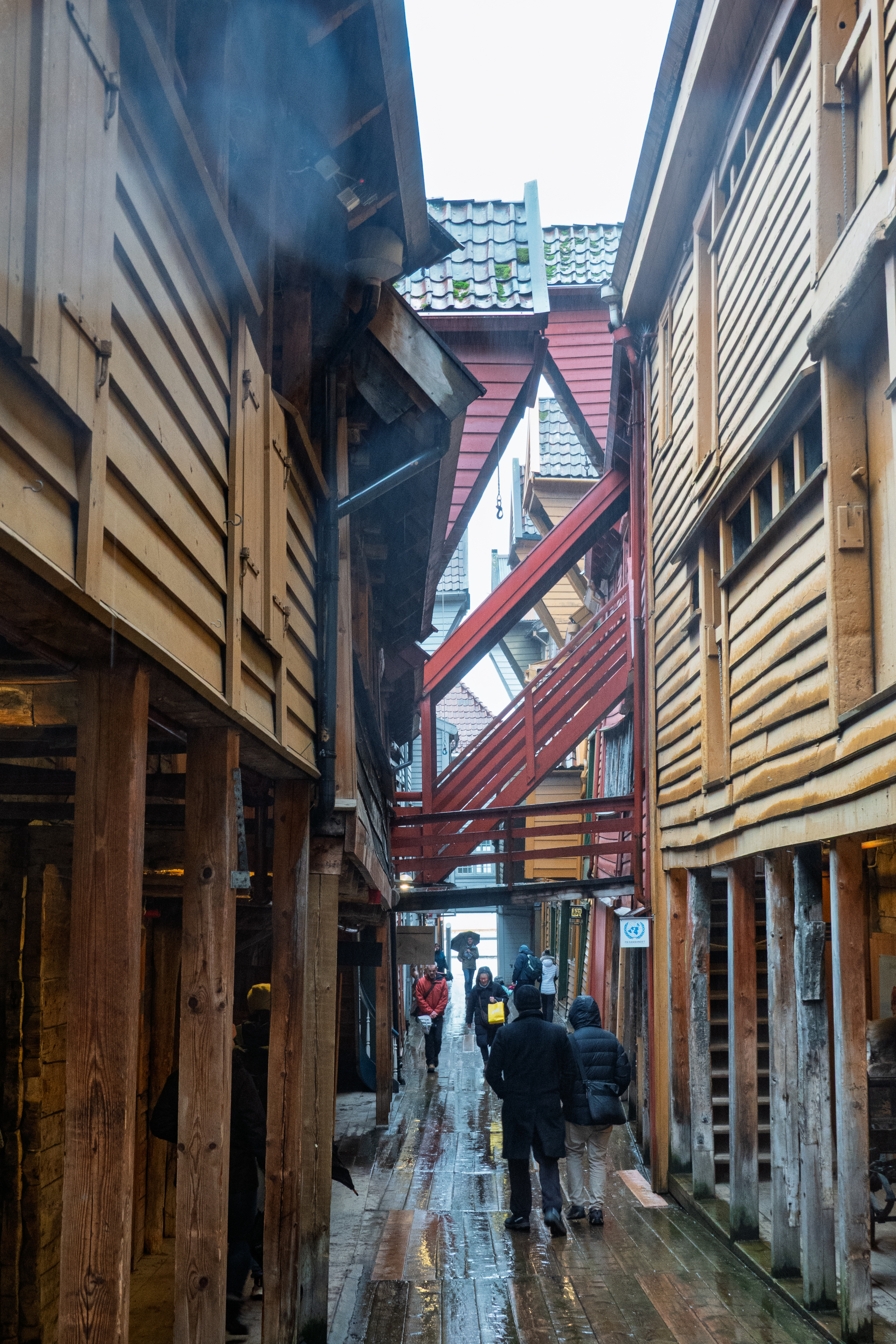
The museum was housed in a “tenement” or multi story house where visiting traders would lodge while doing business in Bergen. (See image at the top.) Cod was brought from Northern Norway and exchanged for grain and other goods from further south. 

It seems that, at least initially, the Germans sailed to Bergen in the summer, and then overwintered, hence the need for the communal housing. In the beginning, they could not bring their wives, but eventually some married local women and settled in Bergen.

Tenements along the Bryggen, Bergen’s old waterfront. Repurposed as stores, hotels, and museums.
Back of the tenements.
Original tenement repurposed into a boutique store.
Communal kitchen
What do you do if you get bored waiting for dinner? You carve graffiti.
Original painted decorations over a doorway.
The bridges between the buildings reminded of the lady bridges in Jeddah. Only here the goal was to stay out of the rain and snow.
Ornate lamp. Dated 1938??

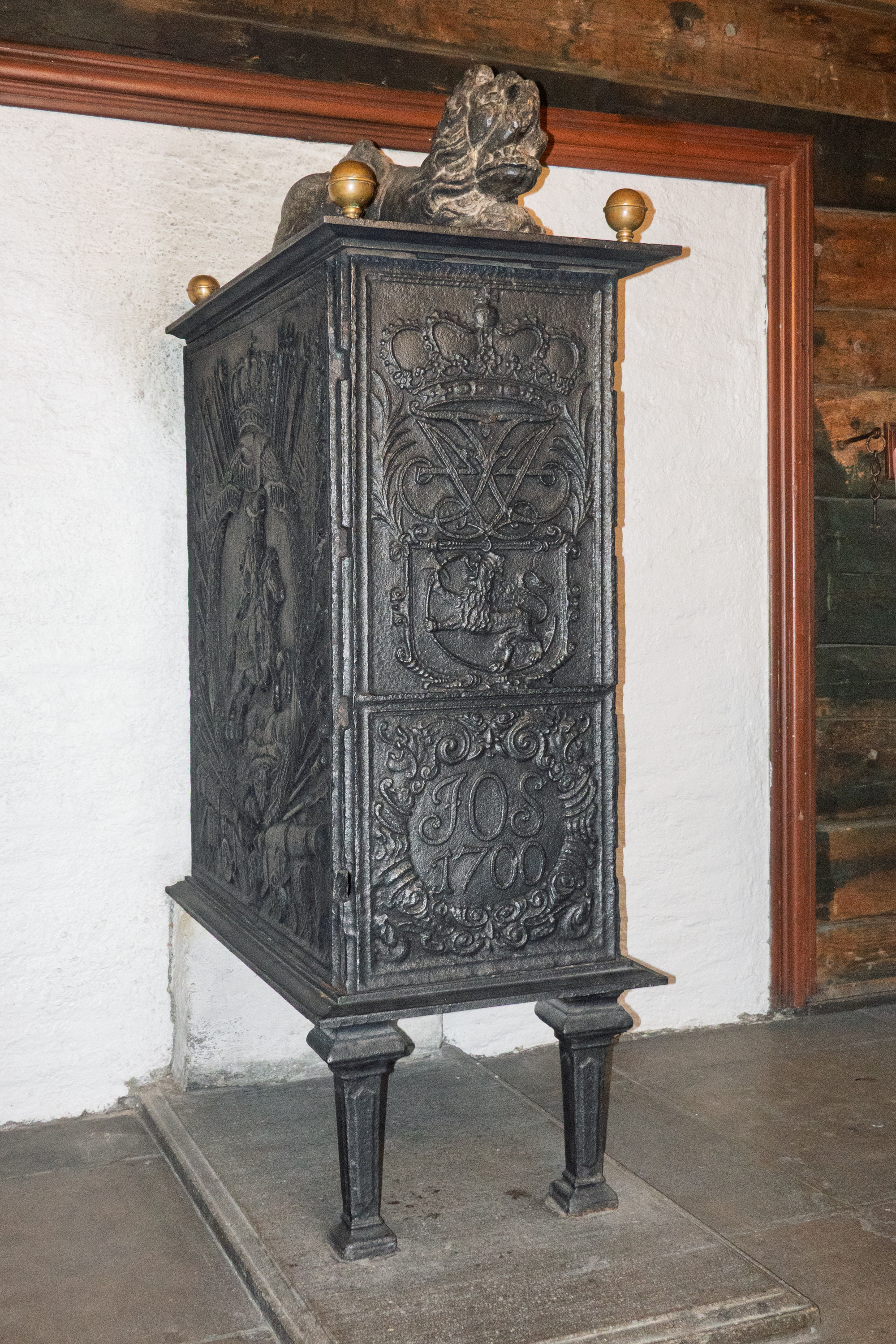
Most of the common rooms had big heaters.
Hand washing station.

The German influence is so strong that local wags joke that it is impossible to make a sentence in Norwegian without using at least one German word.

As we were definitely in the off season, we found a lot of restaurants closed. We ended a tiny little pizzeria run by some charming Syrians.  It was excellent!

We then wandered along the Bryggen, the old port with its colored houses facing the sea and narrow, cobbled lanes between buildings  We went to the Bryggens Museum, which has remnants of old buildings and displays of the history of the port. 

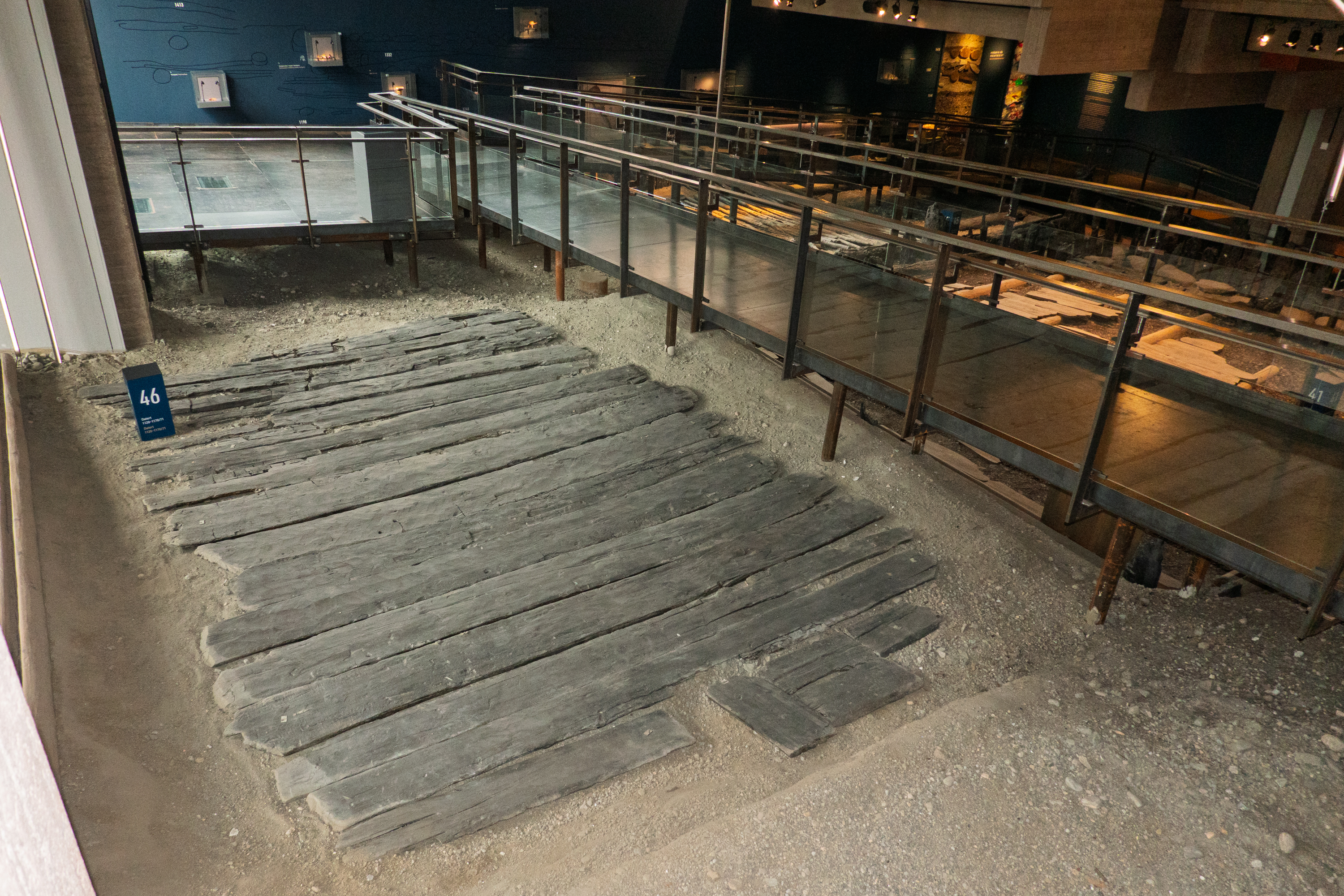
Original, wooden flooring.
A very official document, complete with seals.

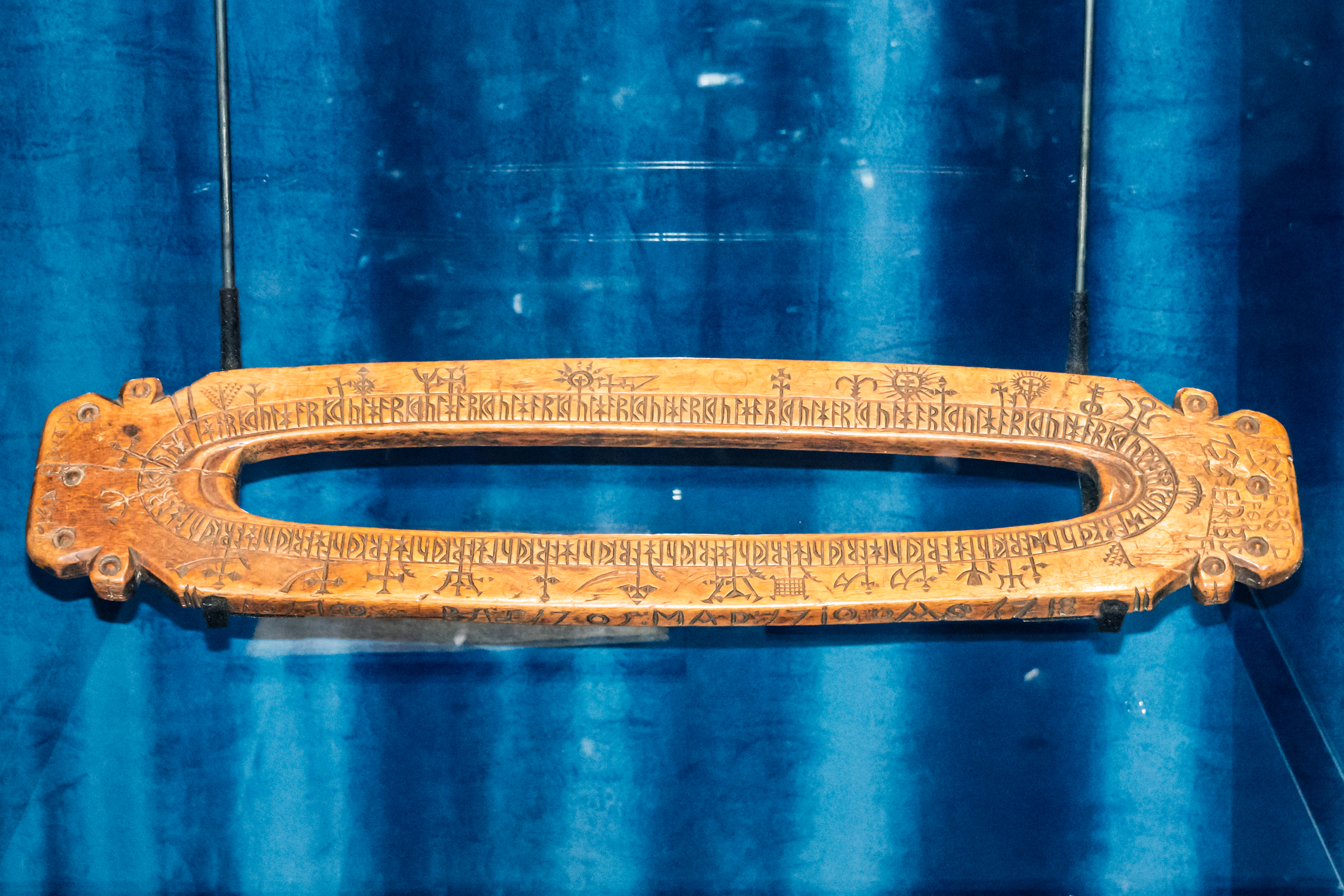
Fascinating “perpetual” calendar, marked in runes, but with Christian saints’ days marked.

On the second floor was an amazing exhibit of the Law Code set by King Magnus VI, (the Lagabote, the Law Mender,) in 1274.  It had some amazingly modern ideas. (https://en.wikipedia.org/wiki/Magnus_the_Lawmender)

The next day we headed to the train station to take the train from Bergen to Oslo, known to be an amazing mountain trip.  We were getting ready to take our luggage to the platform when we were notified that the train was cancelled due to landslides.  Bummer! Here is the trip we wanted! (https://www.visitnorway.com/plan-your-trip/getting-around/by-train/the-bergen-railway/) Maybe next time.

In a near panic, we grabbed a taxi and headed for the airport. Once there, we were stunned to learn that there are no ticket sales points – all tickets must be purchased on line. We found a bench and went to work. We finally got through to SAS, and once we were in the system a charming desk clerk, who turned out to be the supervisor, got us onto the next flight.  It might have been cheaper to have flown to the US, but we were able to maintain our Oslo hotel reservations, and British Airways flight to the UK for the following day