We continued up the coast but unfortunately a norovirus had been brought aboard our ship. There were multiple announcements about the danger, but, after a life in challenging countries, we were confident that our personal washing/sanitary regime would be adequate. We were careful, but we were wrong – it was not enough.
Fred succumbed first. And Denise a couple of days later.
We passed a beautiful range of mountains known as the “Seven Sisters.”
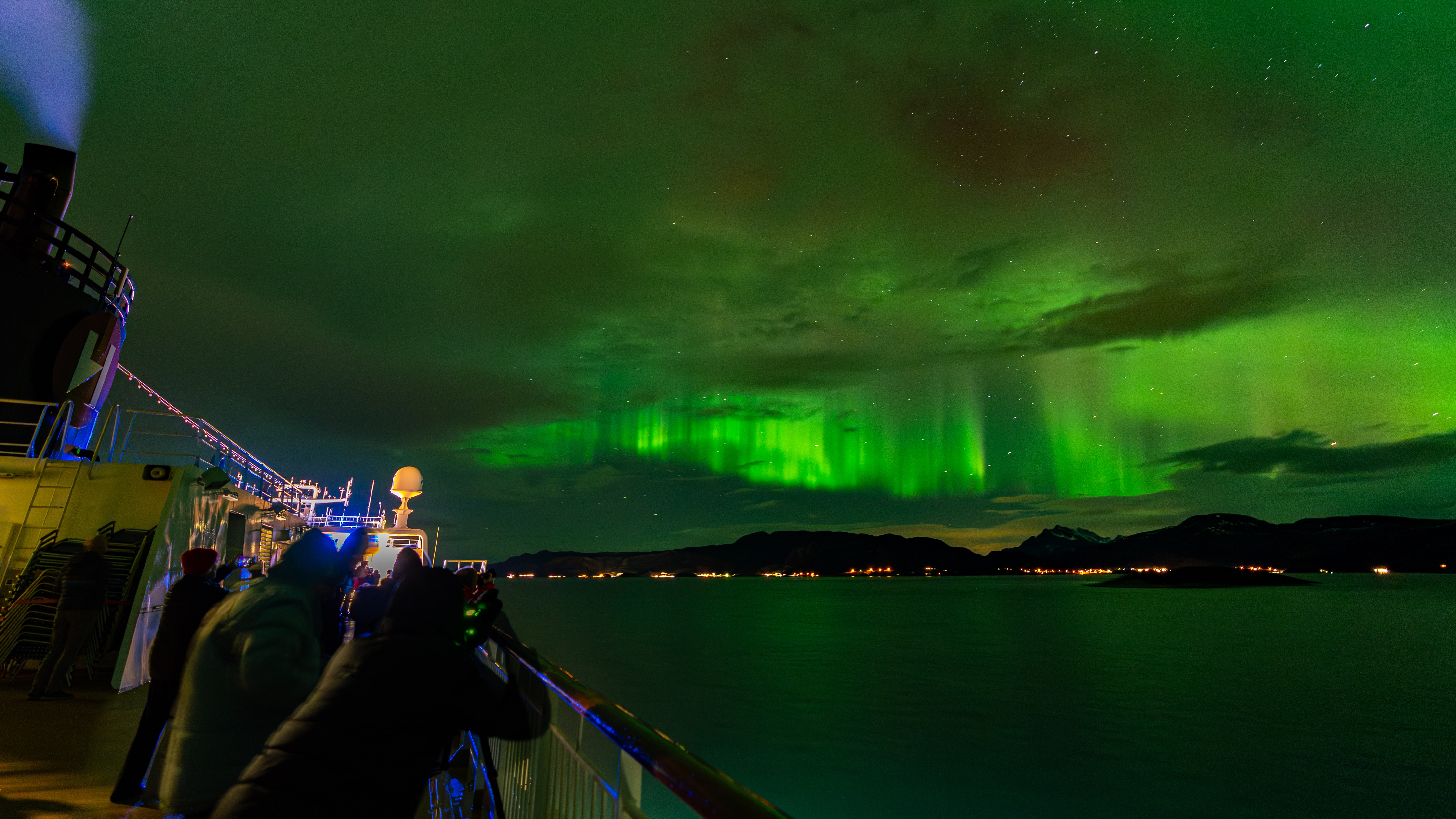
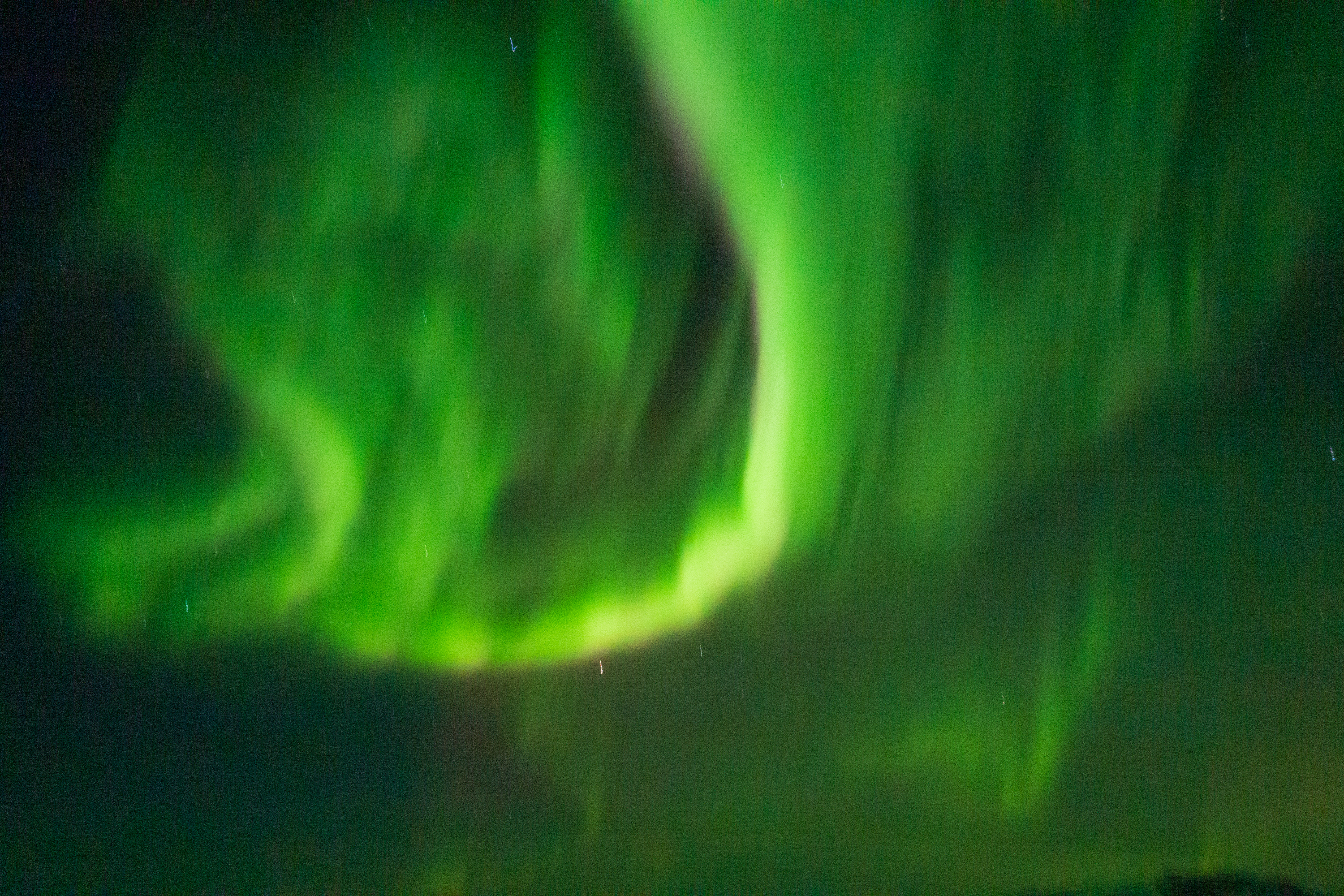
Crossing the Arctic Circle there was an announcement that the northern lights were visible. We joined the crowds on deck admiring and trying to get a photo. The best northern lights photos are time lapse images taken with a tripod on solid ground. Hand held on a moving ship is not going to get you much. But “not much” is still quite spectacular.
It is REALLY hard to hand hold for over a second on a moving ship!There was an excellent pro photographer on board. He shared some of his photos.
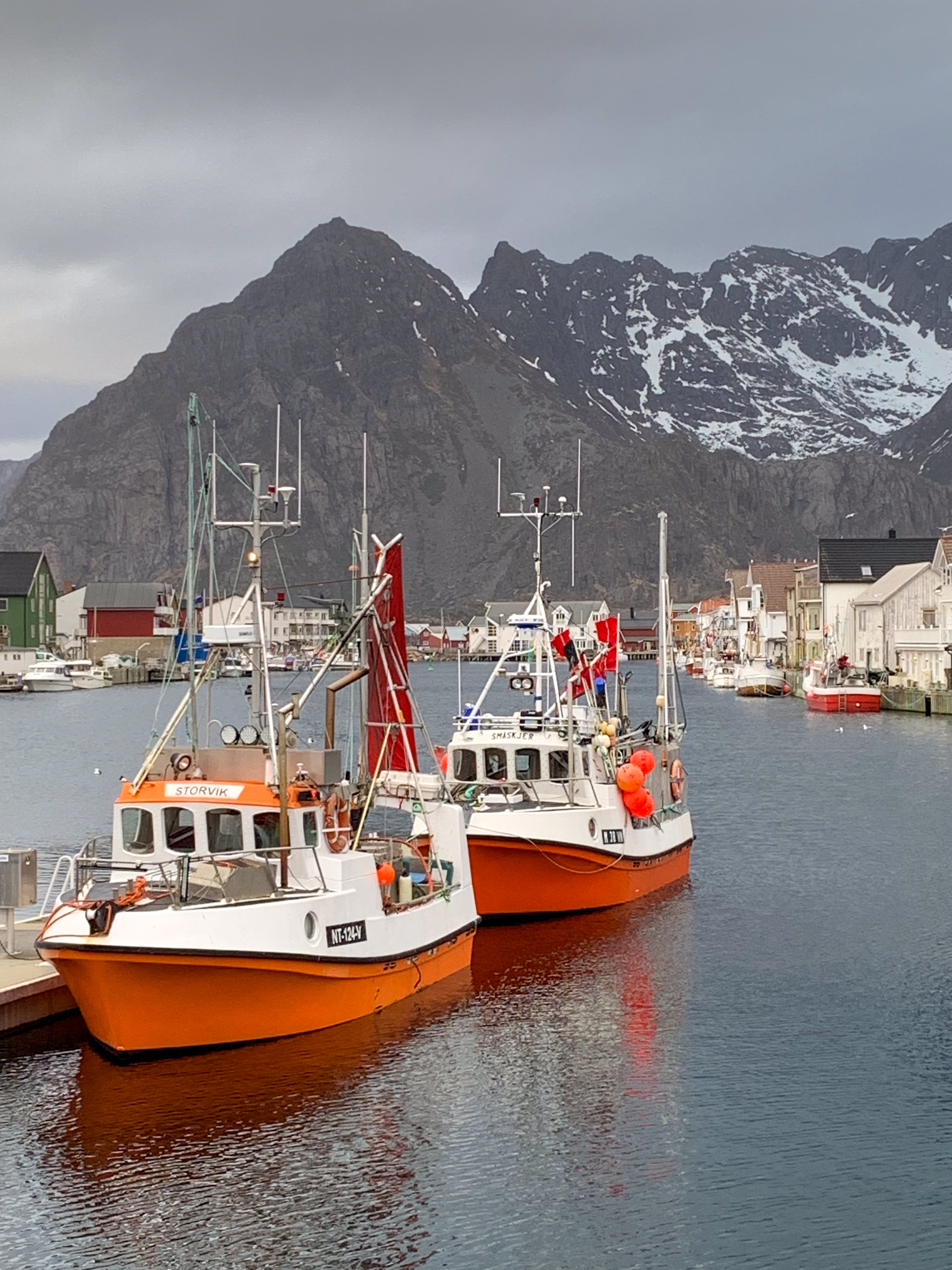
The Lofoten Islands are where the world’s larges cod catches are made between January and April of each year. Denise made a visit to Henningsvaer in the Lofoten, a fishing village about 12 Km southwest of Svolvaer.
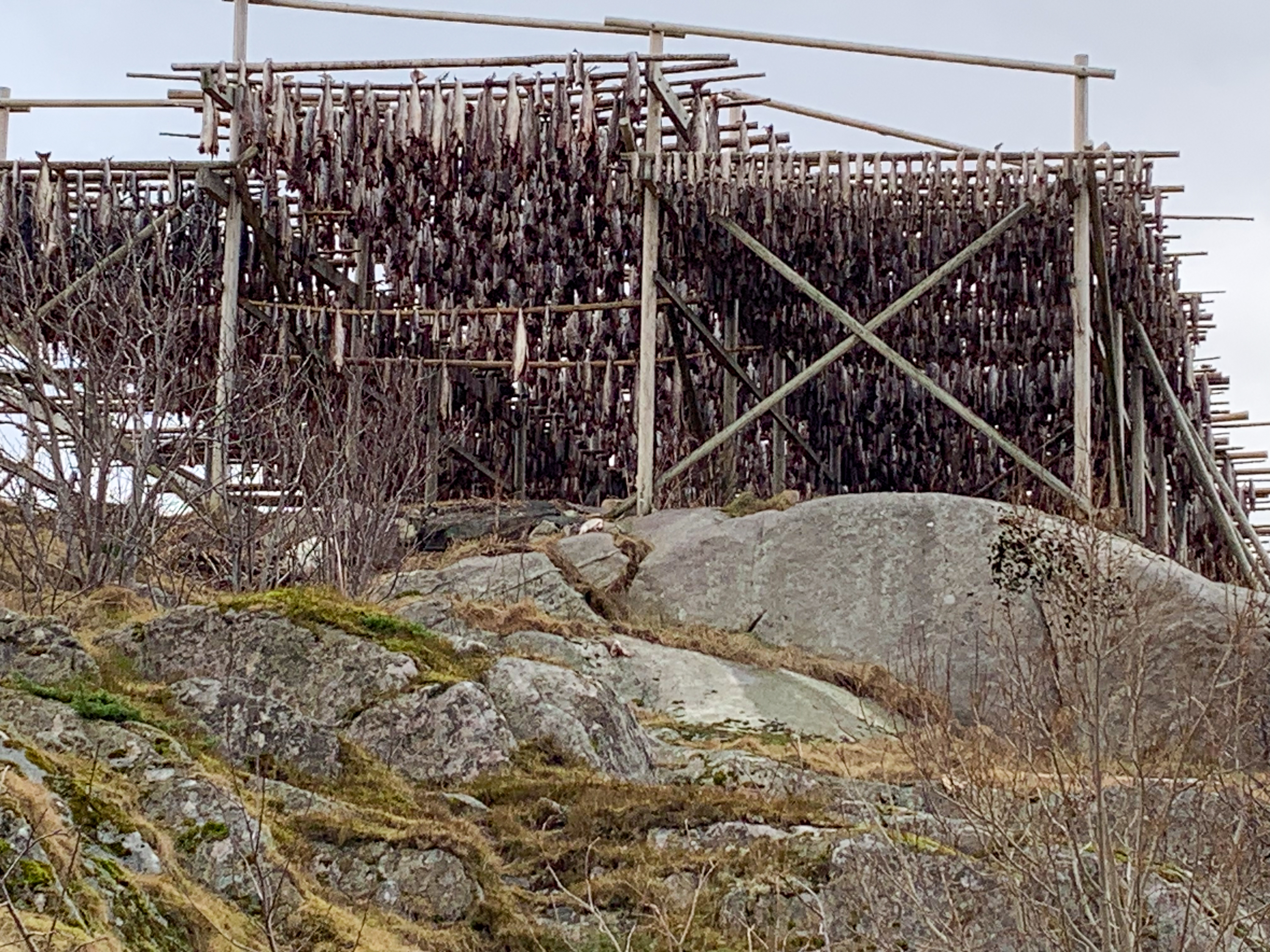
A brief film in an Art Gallery set the tone and a wander through the village completed it. Quite interesting are the racks upon which the fish is dried before being shipped all over the world.
Bacalao on in the raw!
The village is known for having a flat full sized soccer field – a real challenge in mountainous region. Teams come from all over to play there.
We continued to Stokmarknes, where there is a most interesting Hurtigruten Maritime Museum. The company was founded in 1893 to facilitate postal service to northern Norway. The history of the company was also shown. The Museum includes a full sized ship, MS Finnmarken, which retired in 1956. (https://www.museumnord.no/en/our-venues/hurtigruten-museum/)
Arriving at Tromso, Denise took a cable car trip up to Storsteinen.
There were amazing views of the town below from the viewing area.
She then visited the Arctic Cathedral, a quite spectacular modern church.
Courtesy of the onboard photographer.
Courtesy of Denise.
Our next stop, Honningsvag, should have enabled us to visit the North Cape, however, by now, we were both self isolating due to sickness. Sorry, no photos.
Alta Harbor
By the time we stopped at Alta, we were able to take a walk in the town and to visit the Northern Lights Cathedral.
This is another really spectacular modern cathedral with an exhibition showing how Alta became the epicenter for research into the Aurora Borealis between the 19th and 20th centuries. We also enjoyed the short film about the Northern Lights. The visit to the town was also interesting. It was very modern and amazingly clean.
Northern lights cathedral.
Street scene.
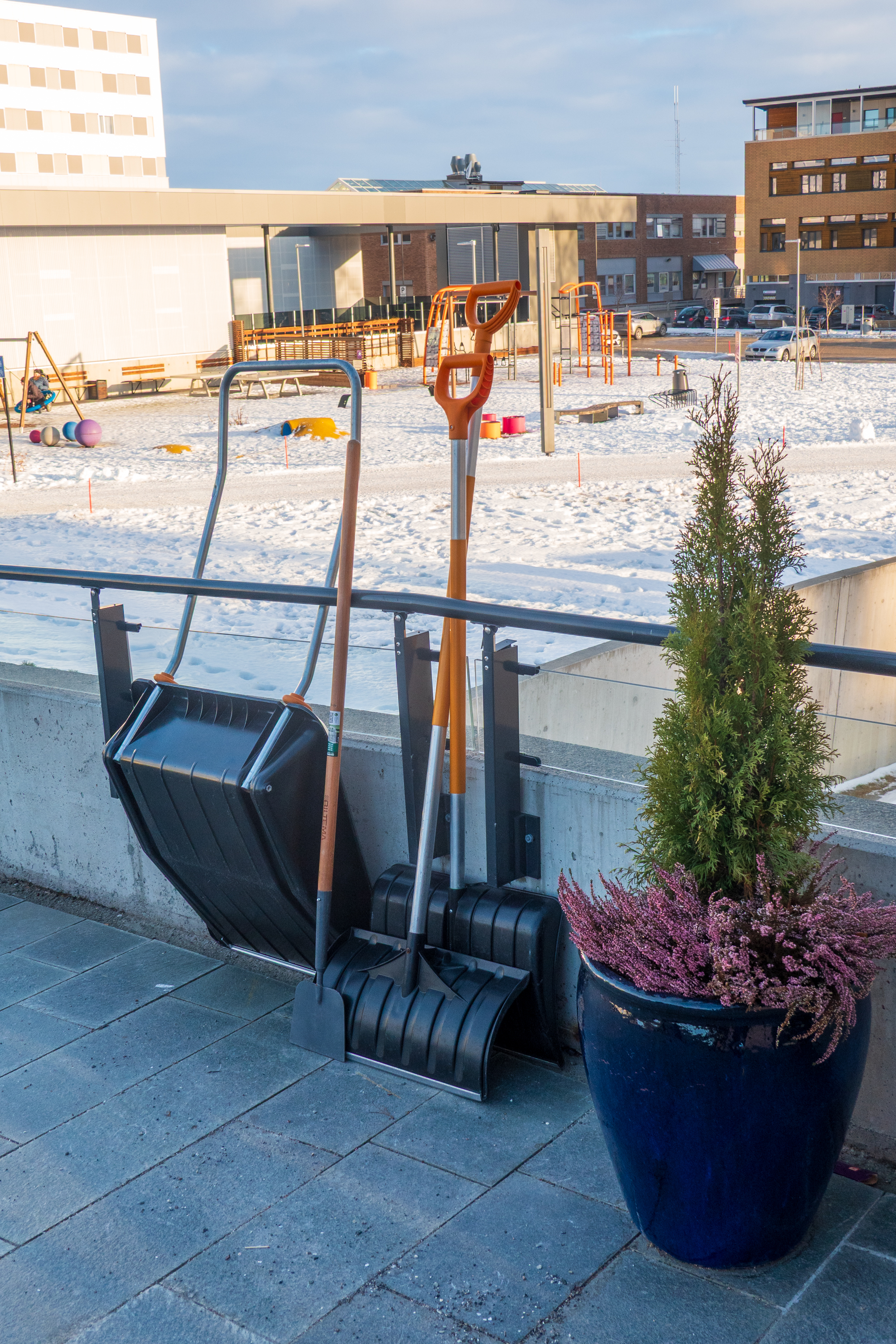
Study in snow removal gear.
The northern lights were visible every night.Another nice pro shot.
We also took the opportunity to walk in the towns of Lodingen and Rorvik, interesting coastal towns.
Lodingen was tiny and we enjoyed a snowy walk.
Denise in the snow.
Pretty sunset.
In Rorvik we visited the small Maritime Museum, which included a fascinating exhibit by a local salmon farm company. We learned all about salmon farming and how Norway has perfected it for maximum sustainability. The fish live in special netted areas known as “acuatraz.”
Like many buildings in Norway, this is very modern, like a miniature of the Sydney Opera House.
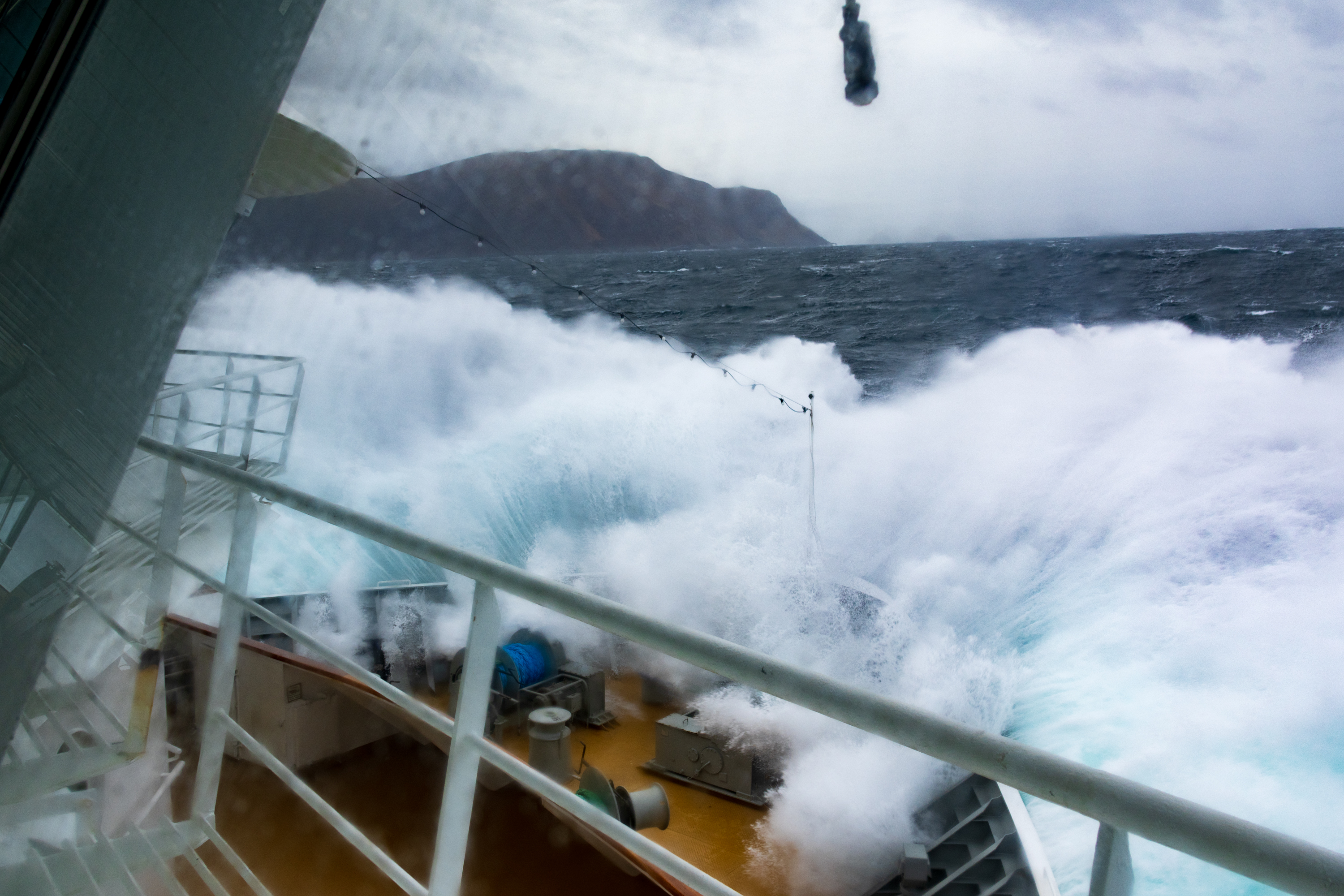
Unfortunately our visit to Molde was cancelled due to rough seas and we sailed to Bergen using as many inland waterways as possible to reduce the possible damage to passengers!
This is why they don’t put extra paint on the sides!
Waves were projected to be as high as 16 feet. And they were.
We settled into our small, but comfortable cabin. The bath has a heated floor! Yes! The first night featured some decent rock and roll seas.
The port hole is nice, but there is a walking deck outside.
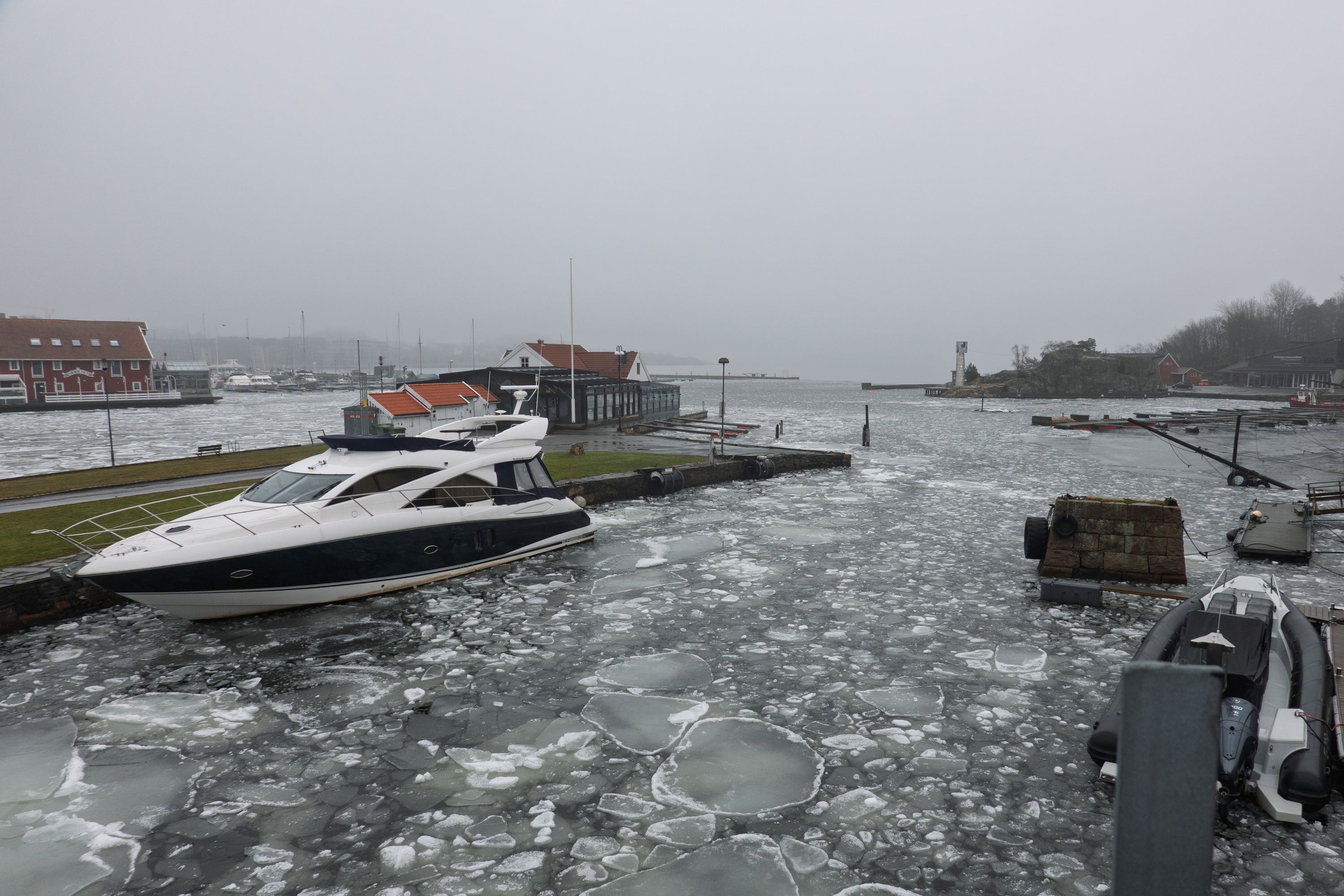
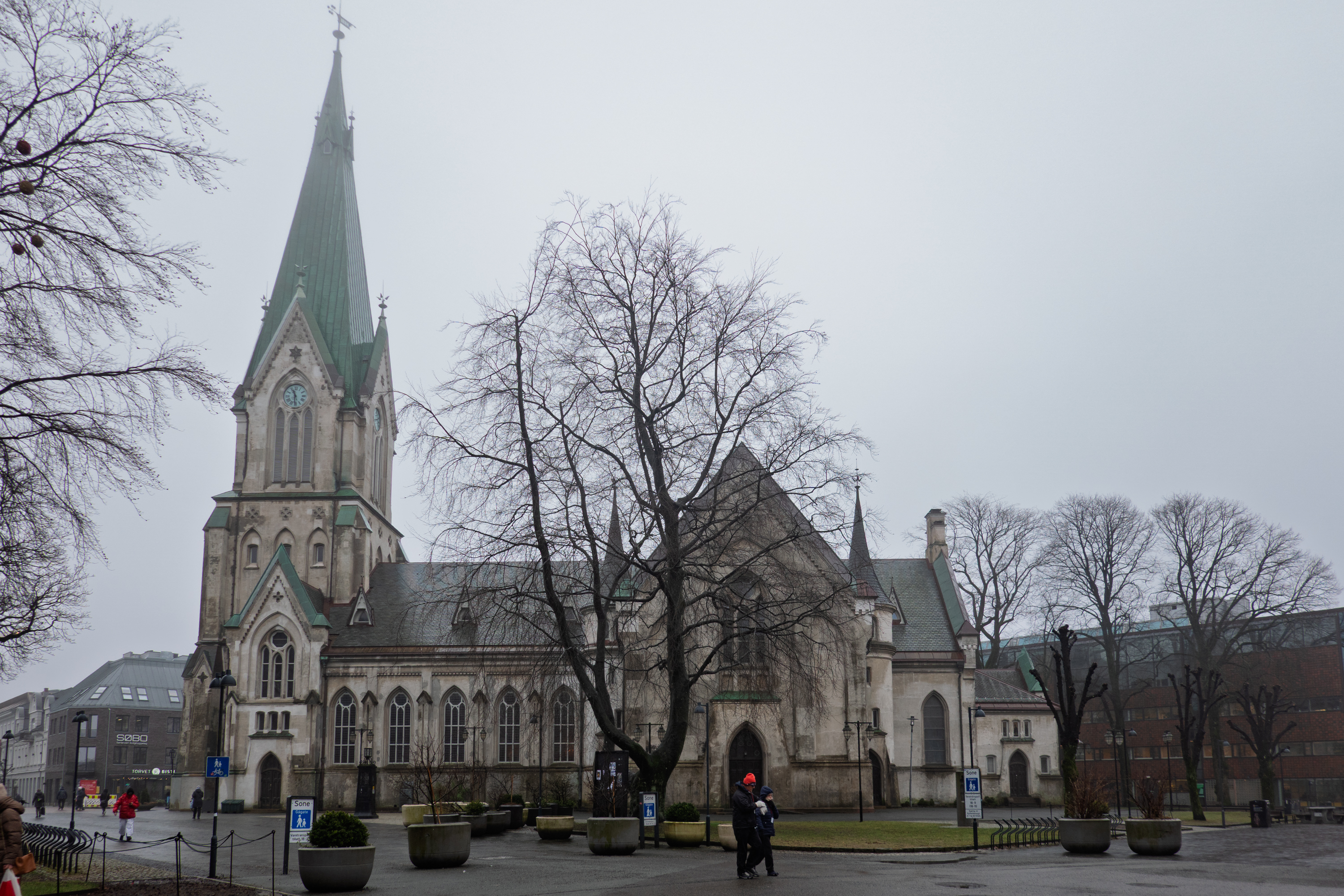
And so the voyage begins. Our first stop was Kristiansand on a gloomy, foggy day.
It was not actually raining but our color photos look black and white! Visibility was not good but it was most atmospheric. We wandered the town, visiting the oldest wooden buildings in Norway and discovering by accident a wonderful cafe/bakery. We could not take photos inside the church as there was a service, but we peeked in.
Our second stop was in Haugesund. A former Viking center, it is also an important oil town. We did not leave the ship. The stop was very early in the morning (from 7 to 9.30 AM) and it was pouring with rain. We did make some soggy deck circuits on the walking deck as we left.
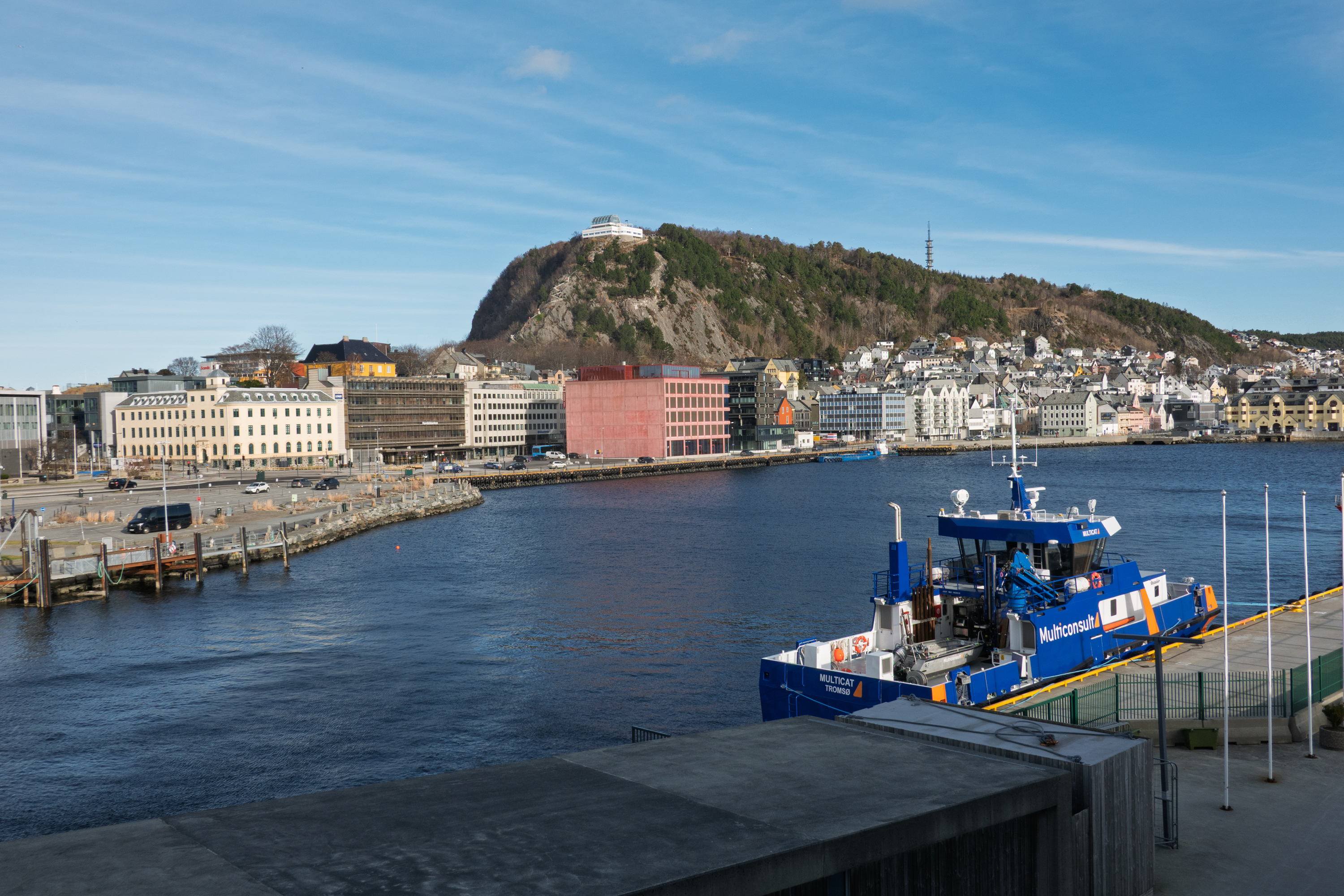
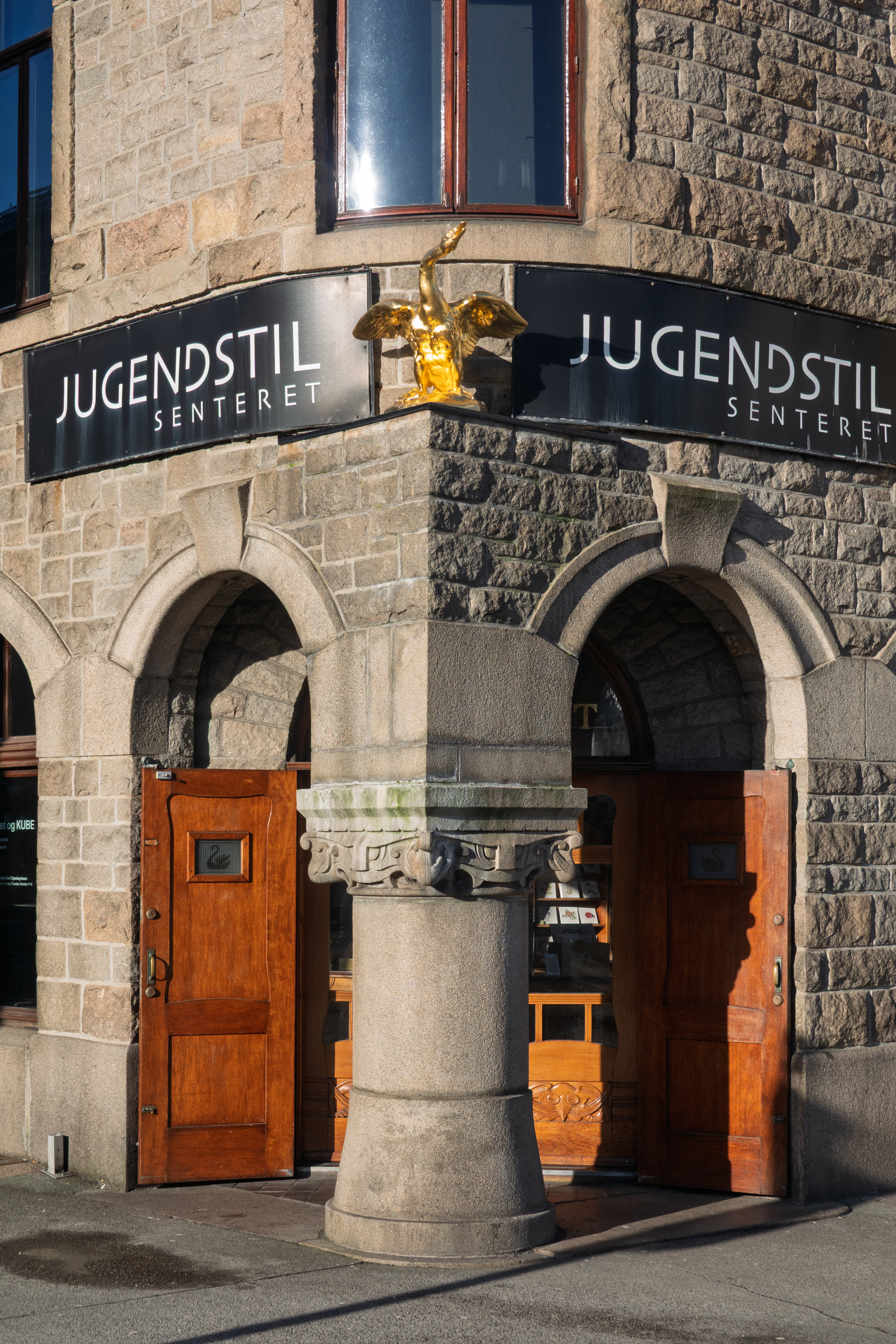
Åalesund saw a great improvement in the weather. (Å is pronounced “Al” as in “alley.”) We actually saw the sun! It was a lovely town, rebuilt in art nouveau style in 1904 after a major fire.
The town is very pretty, dominated by parks working their way up a steep hill.
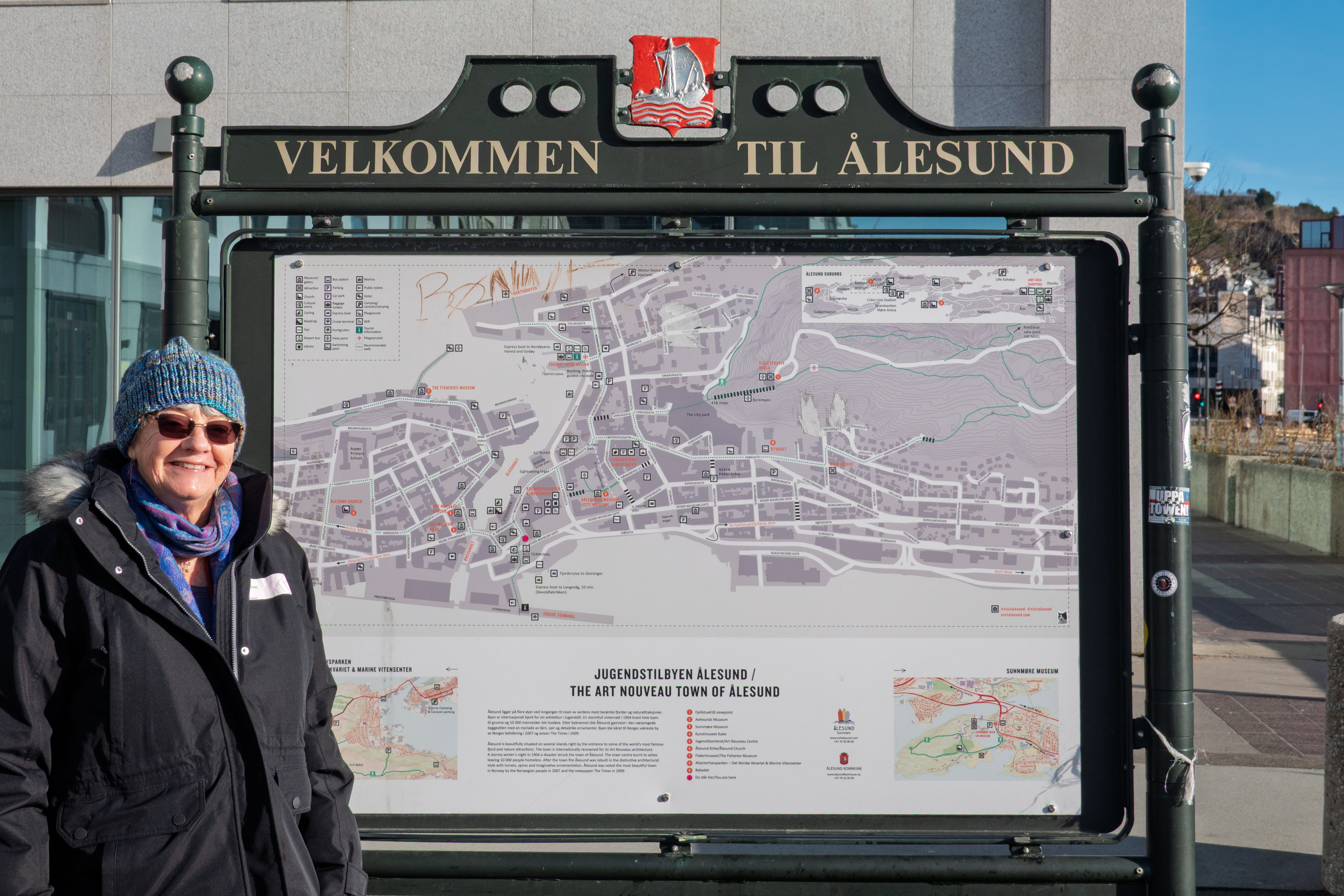
The Chamber of Commerce wants to be sure that you will not get lost.
Denise supporting the Tourist bureau.
Lots of pedestrian walking/shopping areas.
Odd little ship leaving the harbor.
We enjoyed our walk through town, finishing with a visit to the Art Museum. Part of this was housed in a lovely building which had formerly been a chemist shop.
Old Chemist shop, now museum.
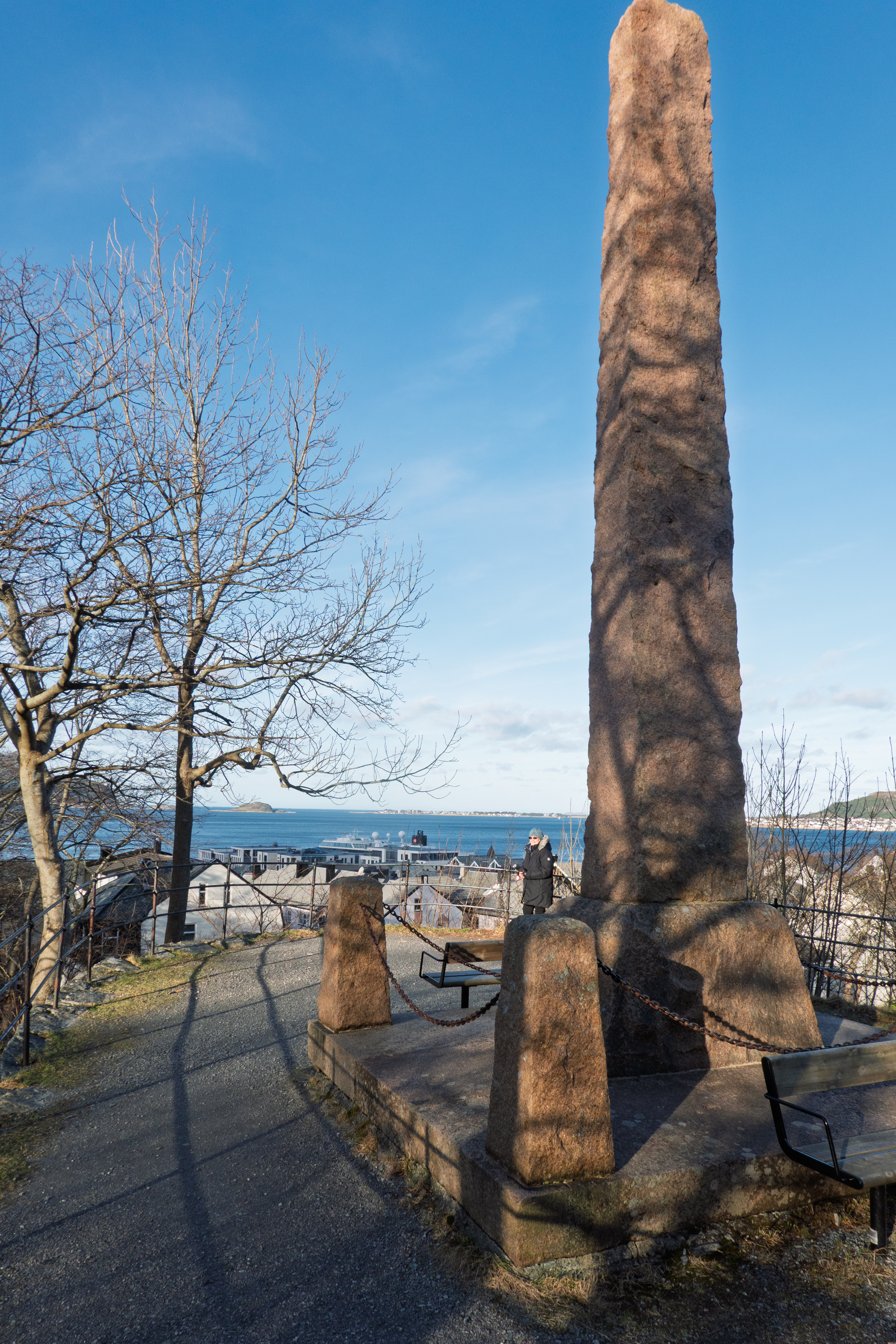
Standing stone half way up the hill – where we wimped out.
The furniture displays were interesting as was the art. The spare Scandinavian style that we think of today was not the mode at the beginning of the 20th century.
Sailing into Brønnøysund, the ship detoured to view the Torghatten, a granite dome with a hole through it. (https://en.wikipedia.org/wiki/Torghatten ) As one might imagine, there are lots of legends!
While there is a geological explanation, the idea of a troll throwing a spear is more fun!
Brønnøysund was an interesting place. The town is named after the small island Brønnøya (Old Norse: Brunnøy) since it is located on the island. The first element is brunnr which means “well” and the second element is øy which means “island”. The final element of the name is sund which means “strait”, referring to the strait of water that flows alongside the island and town. Islands with freshwater wells were important for seafarers. (https://en.wikipedia.org/wiki/Brønnøysund) (And the ø is pronounced a bit like the British “oy!) or the French “oeil.” We’re learning.)
A much smaller town than Ålesund, we wandered through the shopping mall and were amazed by the variety of shops and what they contained. The kitchen store would be a find in the DC area. It might help to like fishing but one could live quite comfortably in Brønnøysund. We visited the Trollfjell Geopark, with its displays of the geology of the surrounding area, the Vega Archipelago. (https://trollfjellgeopark.no/index.php/en/ )
Porthole view.
You never know where an old American car will show up!
When we last saw our heroes, they were planning to drive the length of the Norwegian coast. On further consideration, we decided that we had had enough of one lane roads in Scotland and so cancelled the visit to Norway and rebooked as a cruise with the Hurtigruten company.(https://www.hurtigruten.com/en-us/about-us/voyages/north-cape-line) With luck, we might get to see the northern lights and would not have to worry about trying to stud the tires, etc.
After cancelled flights and rebooking, via telephone calls to India, we set off, in February, from Dulles with British Airways. We had a pleasant flight to Oslo, via a painless connection at Heathrow. With three suitcases of both winter and summer gear, and bits for the camper, we splurged for a very expensive taxi to the hotel. in downtown Oslo. The hotel turned out to be lovely and right in the middle of the shopping district – a good thing as Fred had neglected to pack his light gloves or his knit cap. We dropped into a shopping mall and asked about gloves in a store. A lovely young lady wearing a sunn (o))) t-shirt directed us to a sporting/camping store. Want to feel old? Back in the ’60’s, Fred had, and still has, a sunn amplifier, but now, the same logo is used by a drone/drudge/noise rock band that use sunn amps for ear numbing feedback. (https://en.wikipedia.org/wiki/Sunn_O)))) The gear store was excellent and hands and ears are now warm!
Downtown Oslo is quite compact, with an interesting mixture of modern buildings and a few of a more classic, European style.
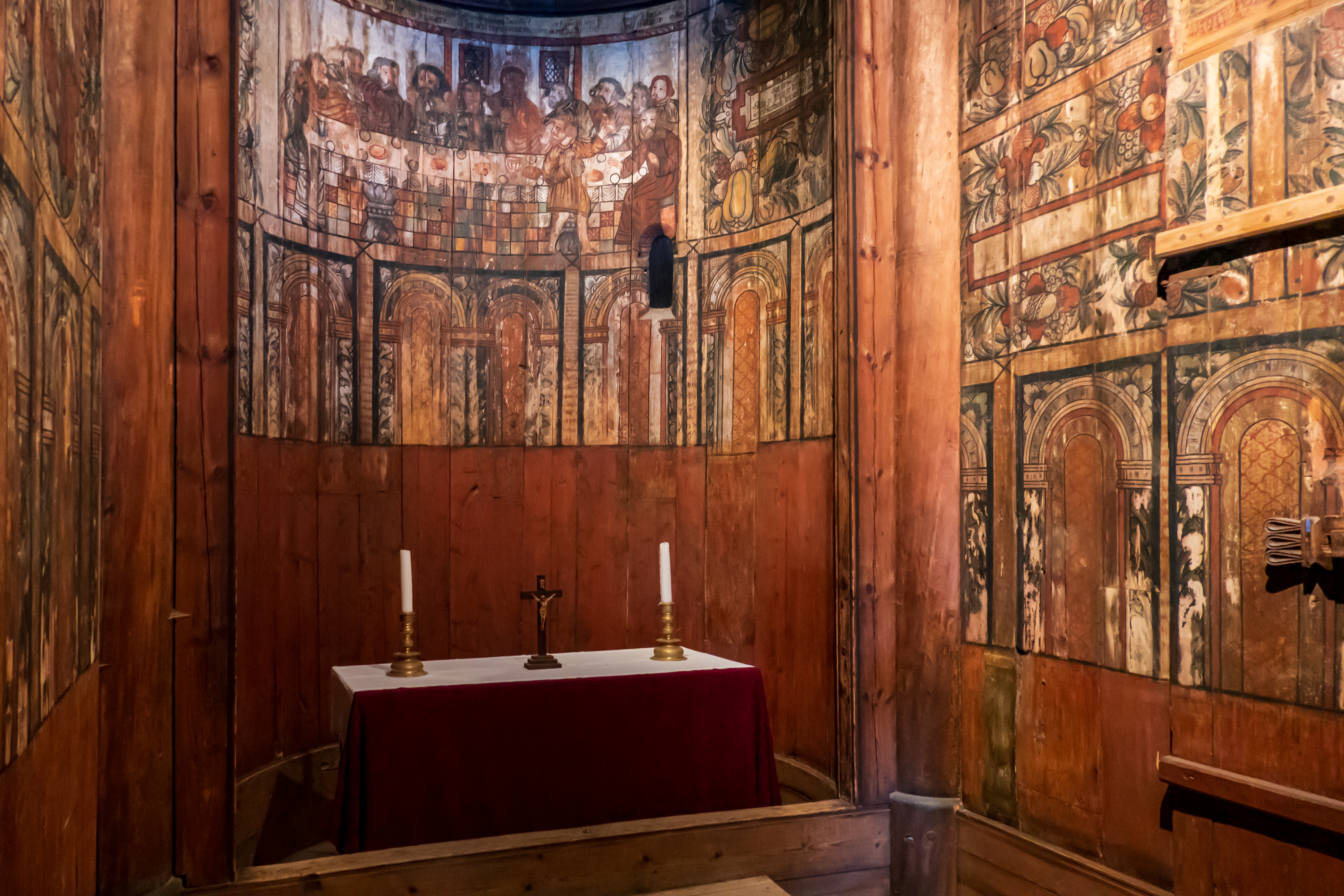
We hopped a bus to the open air folk museum. A bit like the Weald and Downland Museum, Colonial Williamsburg, and others, this is a collection of relocated historic buildings. (https://norskfolkemuseum.no/en) The stave church was especially interesting as we had actually visited a stave church in, of all places, South Dakota. (https://diplostrat.net/2019/07/07/going-to-the-devil/)
Fred, of course, was most taken by a museum cat who was out enjoying the sun.
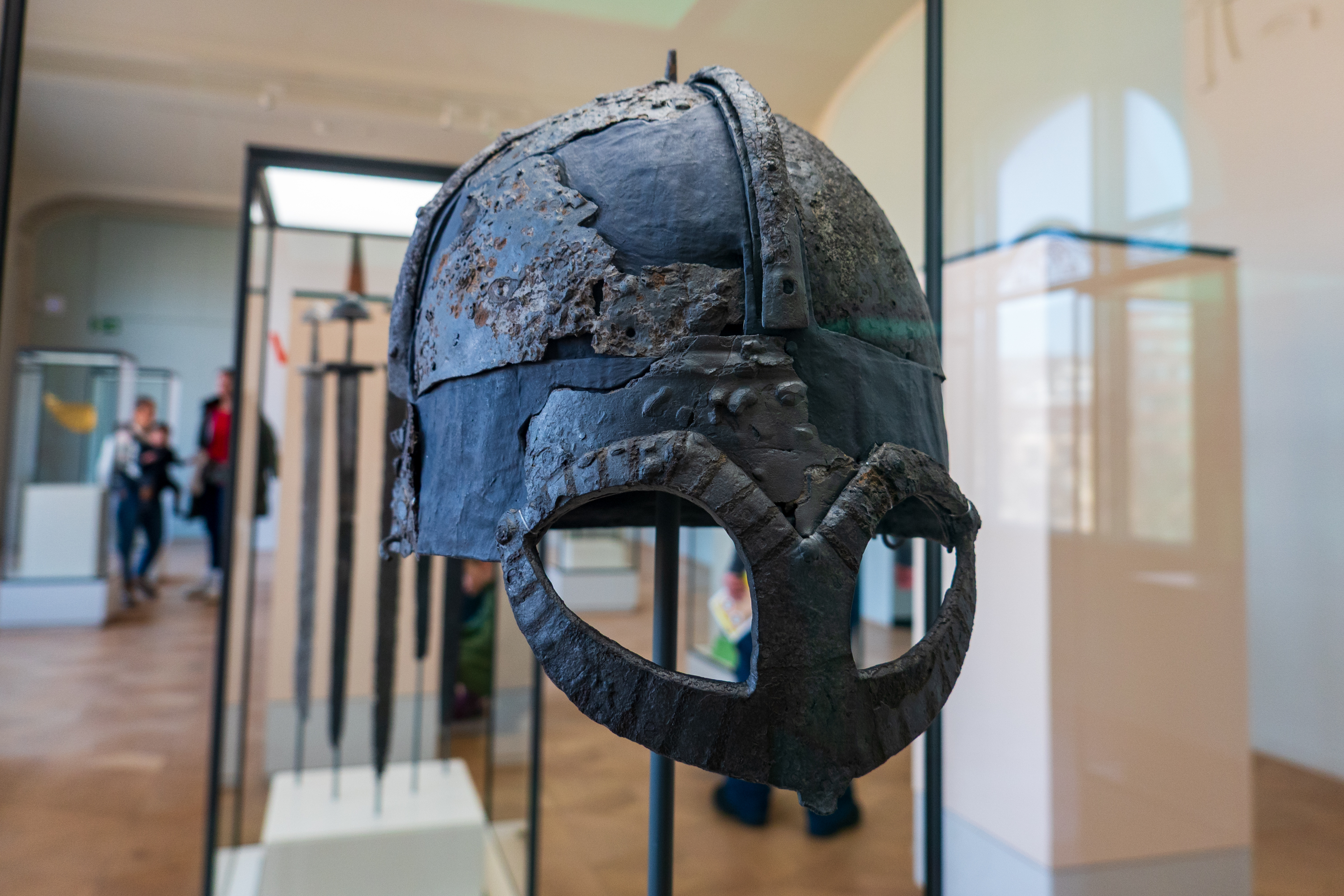
The national museum of cultural history, down town, was a surprise as it was highly themed/concept, and not historically or chronologically, arranged. (https://en.wikipedia.org/wiki/Museum_of_Cultural_History,_Oslo) Exhibits ranged from Ice Age geology to a model of Temple Grandin’s slaughter house. (!!) It did include the oldest known Viking helmet and other Viking grave goods.
Ernest Borgnine wore something similar in the 1950’s movie “The Vikings.”
Beautiful craftsmanship. Makes you wonder – was this somebody’s weapon, or merely an ornament?
As might be expected, the museum featured many carved church doorways.
Parts of the museum building itself were simply gorgeous.
The Viking Museum, with its complete ship, is currently closed for renovation. Bummer, but we had seen ships last year in Denmark.
The following morning we were given a short bus tour of Oslo, courtesy of Hurtigruten. We had expected that the “tour” would be a simple drive to the pier, but it turned out to be much, much more. We started up at the skiing complex with the Olympic level ski jump, which was totally scary!
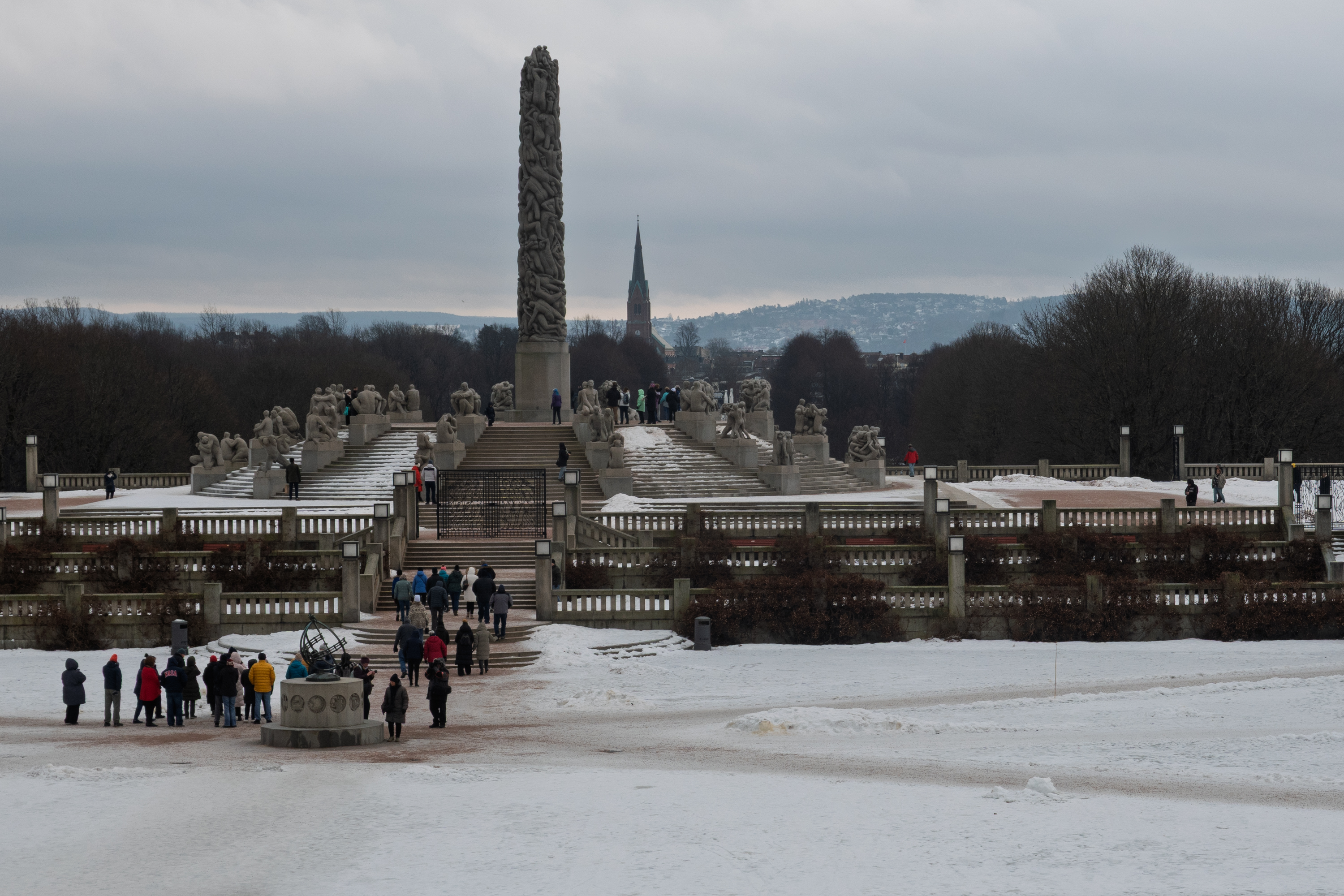
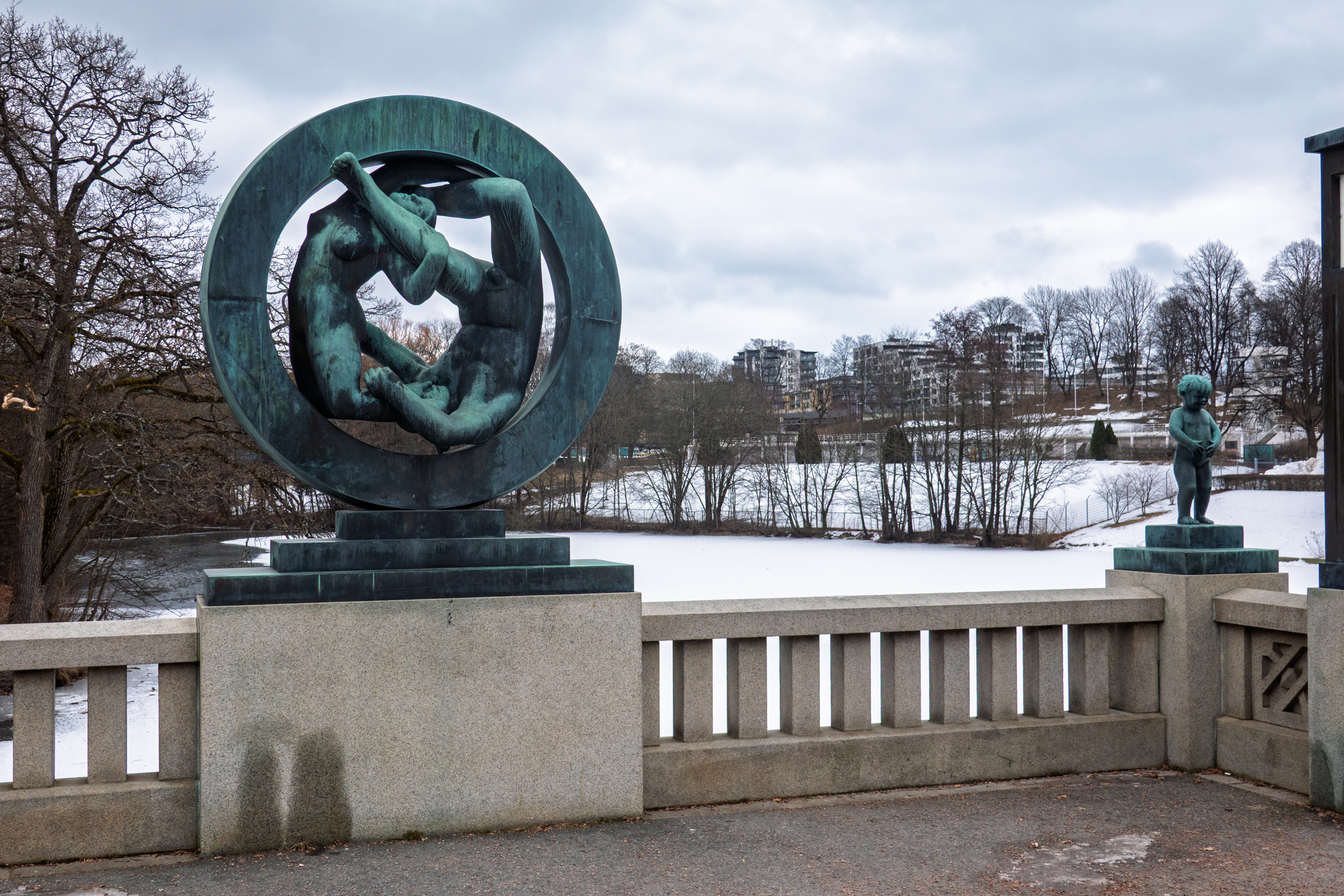
We then went to the Frogner Park, which includes the Vigeland Sculpture Park. https://vigeland.museum.no/en/vigelandpark) This is hundreds of nude granite and bronze statues, all based on the Circle of Life theme. An additional group of statues surrounded a huge fountain, which was obviously not running. Vigeland himself appears to be a most interesting, misogynistic soul. A rather dead rose garden surrounded the fountain – it would be a joy in summer.
We joined our ship the MS Tollfjord and celebrated our departure from Oslo that evening with a small Sail-away toast. Skoal!
We had expected to wait about a week for our truck to appear, but plans have a habit of going awry and the ship carrying the 917, the Hawaiian Highway, was about 2 weeks late!
Because of the delay, Denise’s brother ended up hosting us for a total of three weeks, which really was above and beyond the call of duty. We were, needless to say, very grateful. And, as always, we had great fun together!
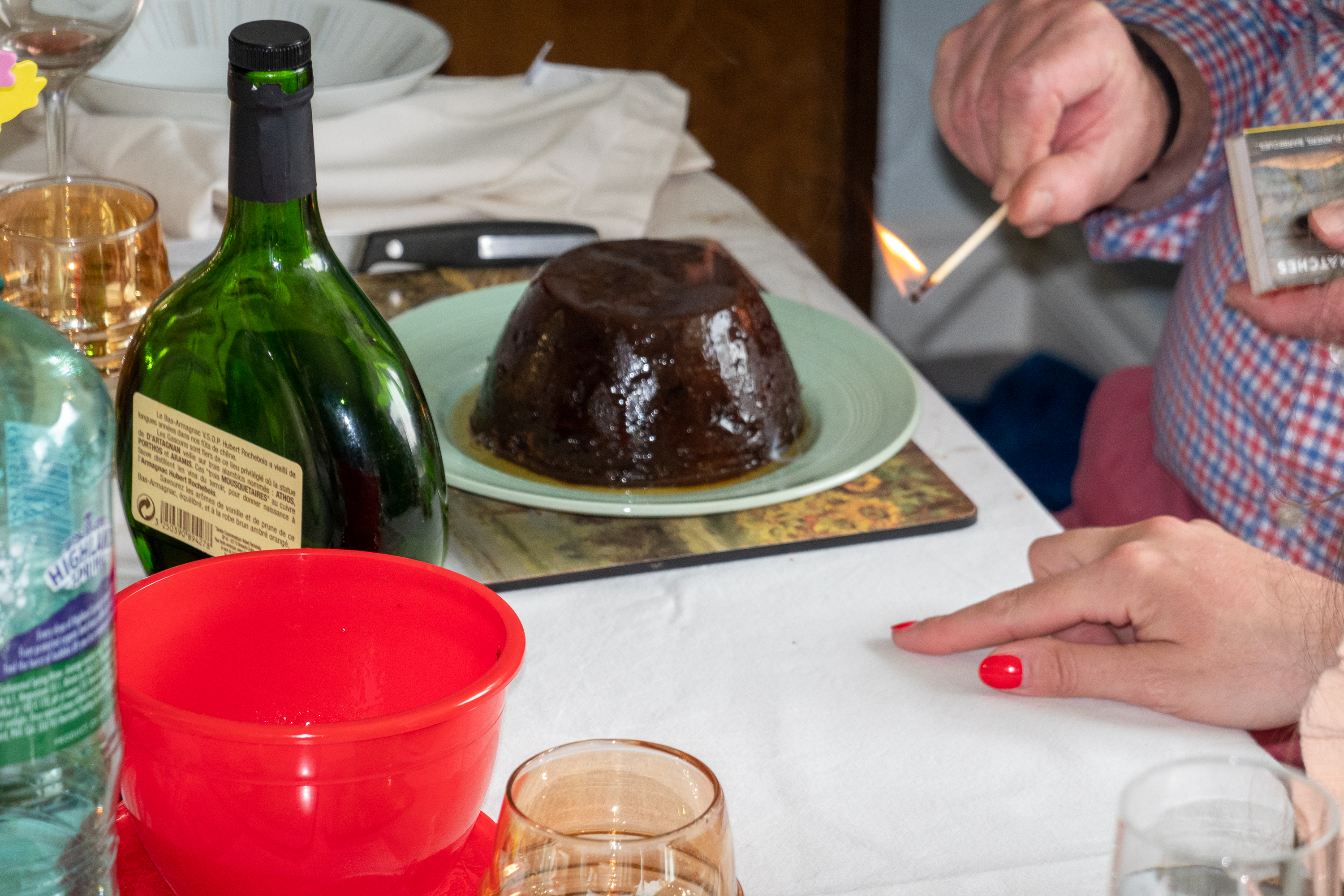
Easter included plum pudding napalm.
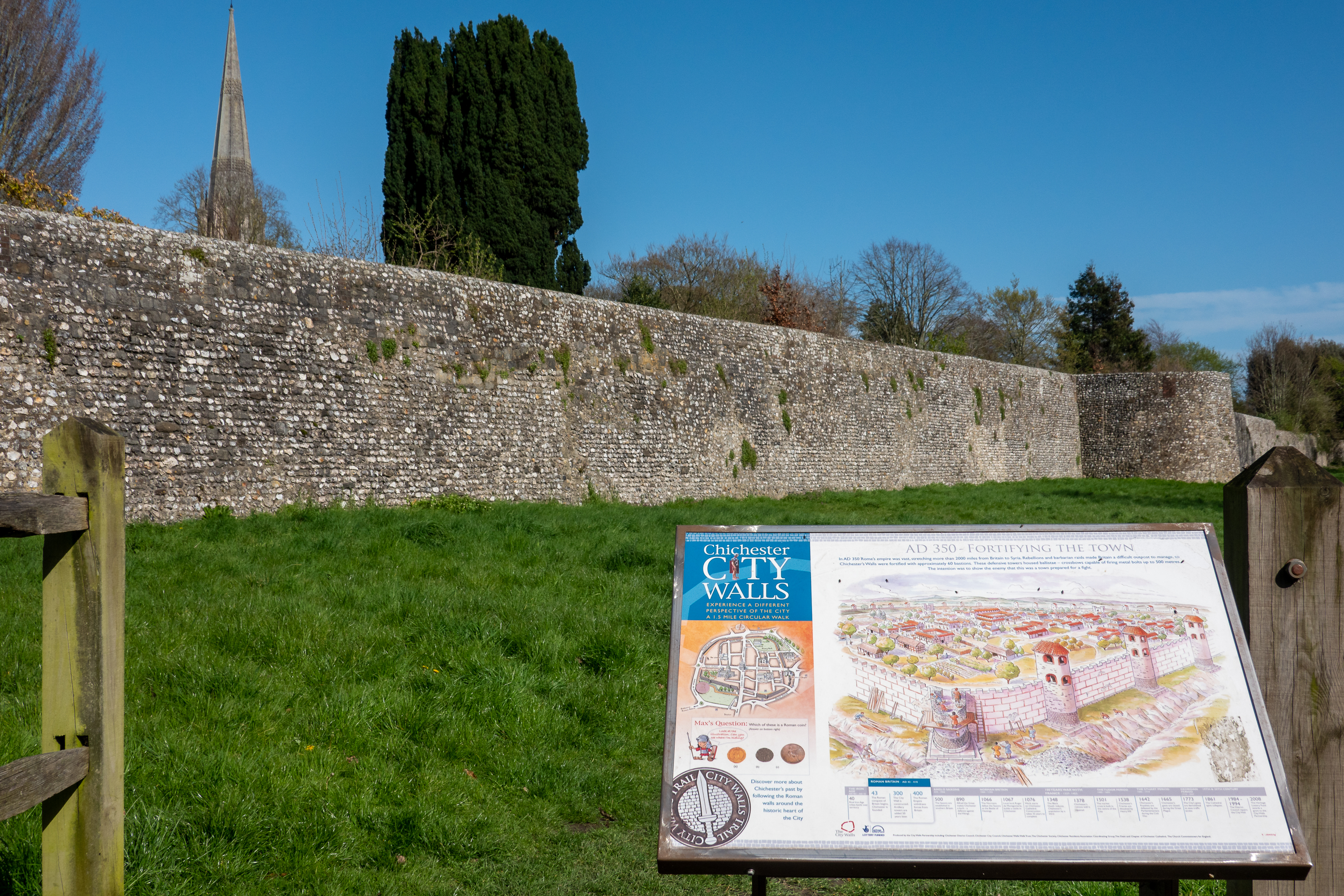
While near Chichester, in Sussex, we were able to explore the area a little. We made several visits to Chichester, a lovely Roman town with fragments of wall still existing and the traditional Roman cardo layout, with four main streets leading to the medieval cross in the center of town. (“Chester” comes from the Latin, “castra” meaning fortress. See also Doncaster, Leicester, and all the rest.) There are lots of fun shops (for a few important purchases) and wonderful coffee shops for a coffee or light lunch.
Little hill in a city park? Yup! Original motte from a motte and bailey castle.
Chichester cathedral
On a rather chilly day we went to the Wetlands Reserve at Arundel, a nearby town, to view its amazing selection of different ducks, coots and swans. They are free to leave if they wish but most obviously do not. They looked quite at home.
Photographing the geese.
Arundel castle as seen from the wetlands.
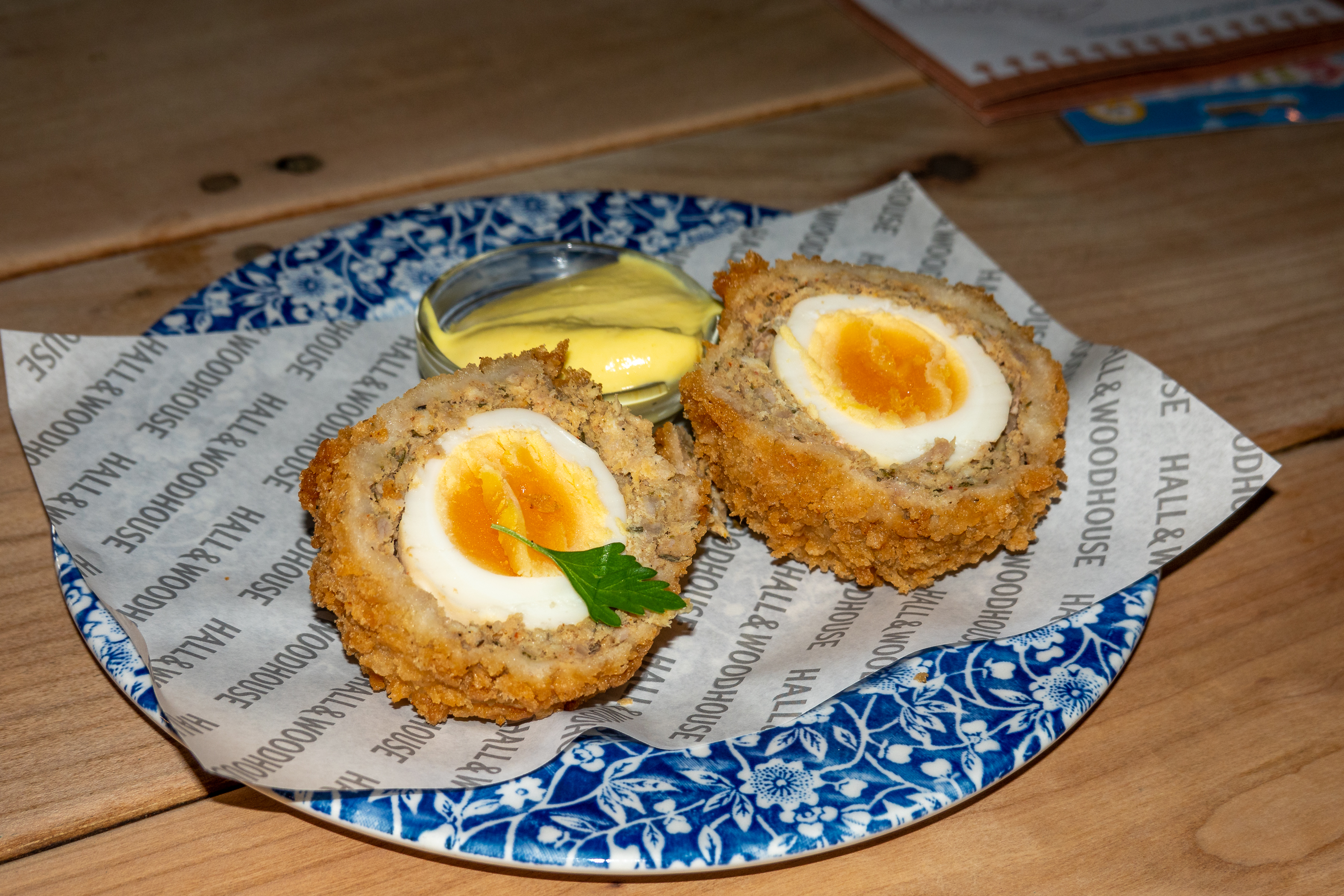
Local pub had Scotch eggs.
Fred and Denise’s brother, Trevor, snuck out for a quick visit to the little Air Museum at Tangmere. Devotees of the Battle of Britain will have heard of Tangmere, one of the many RAF bases. (https://www.tangmere-museum.org.uk) The little museum is well worth a visit for the extensive memorabilia and, next time, the flight simulators!
Crashed Hurricane, dug out of the ground.
Peering into an intake you find the engine inside.Pondering the difference between a Harrier and a Sea Harrier.
In 1937 the Gloucester Gladiator became operational with the RAF; the last biplane. It even served during most of WWII. (https://en.wikipedia.org/wiki/Gloster_Gladiator) In 1943 the Gloucester Meteor became the first operational jet fighter on the allied side – a span of only six years. (https://en.wikipedia.org/wiki/Gloster_Meteor) Considering that the first jets were only conceived of in the late 1930, this was an insanely short time. The Meteor was so secret that pilots were no allowed over German lines least one crash and be recovered. The Meteor was used to intercept V1 flying bombs and to tip them over with the wing so that the gyro would fail and the bomb would crash. That would have been a wild maneuver.
Fred was amazed; he knew that the Allies were working on jets, but did not know that any were ever operational.
Gloucester Meteor. (The Jordanian air force used these as ground attack aircraft into the 1950’s.)
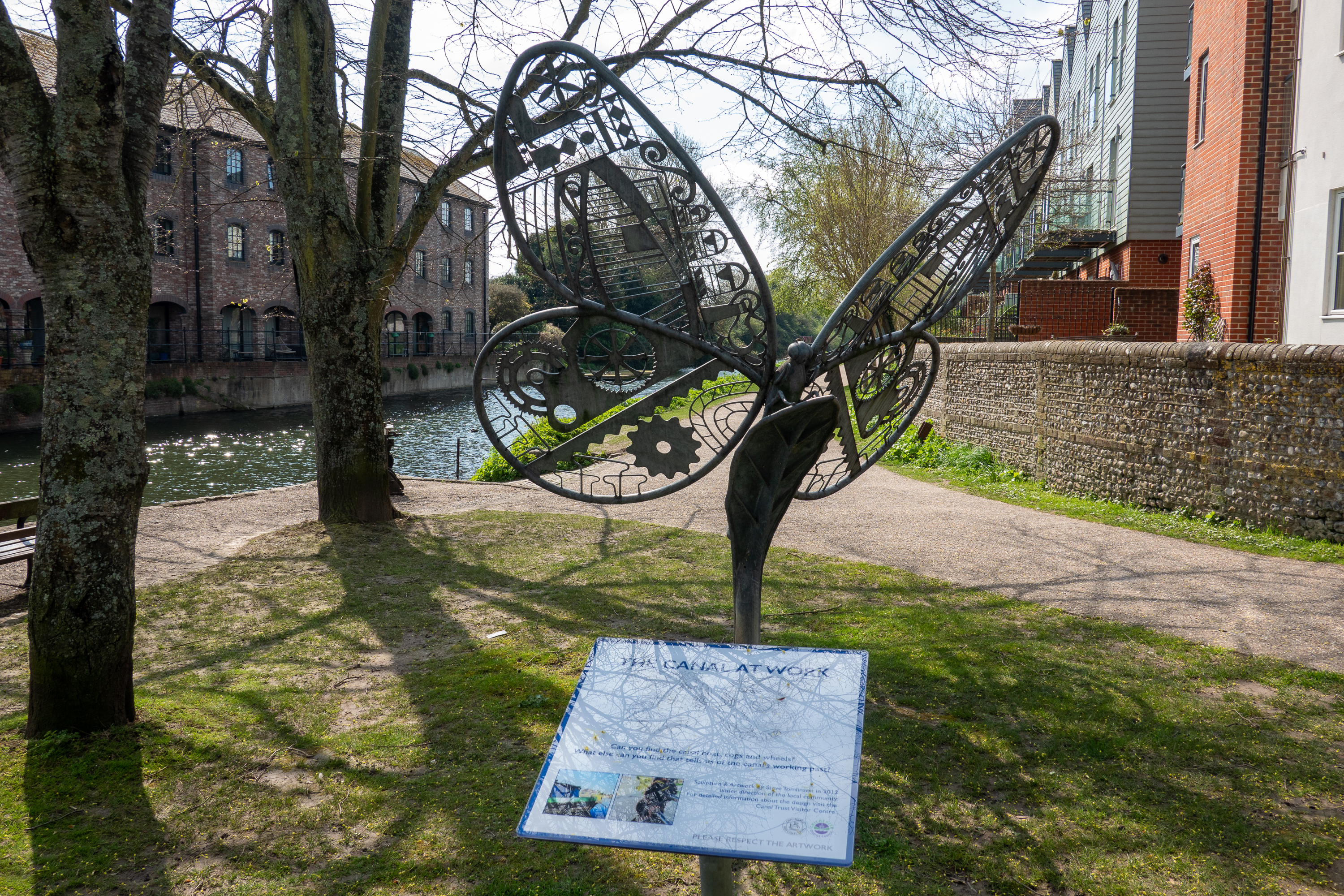
Chichester also has a Ship Canal and we enjoyed a lovely walk along the towpath one morning. In the early 1800’s, there was an idea to connect London with the sea near Chichester. The goal was route to carry heavy cargo that was protected from French raiders on the Channel. The canal never reached London or made any money, but it did make it to Chichester. Quite an interesting little artifact. (https://en.wikipedia.org/wiki/Chichester_Canal) Again, we saw a selection of ducks, coots, and moorhens.
The final basin in Chichester,Clever art. Expand the image and look closely at the wings.
Waling the tow path.
Little tug used to move barges, now only for maintenance.Old machinery
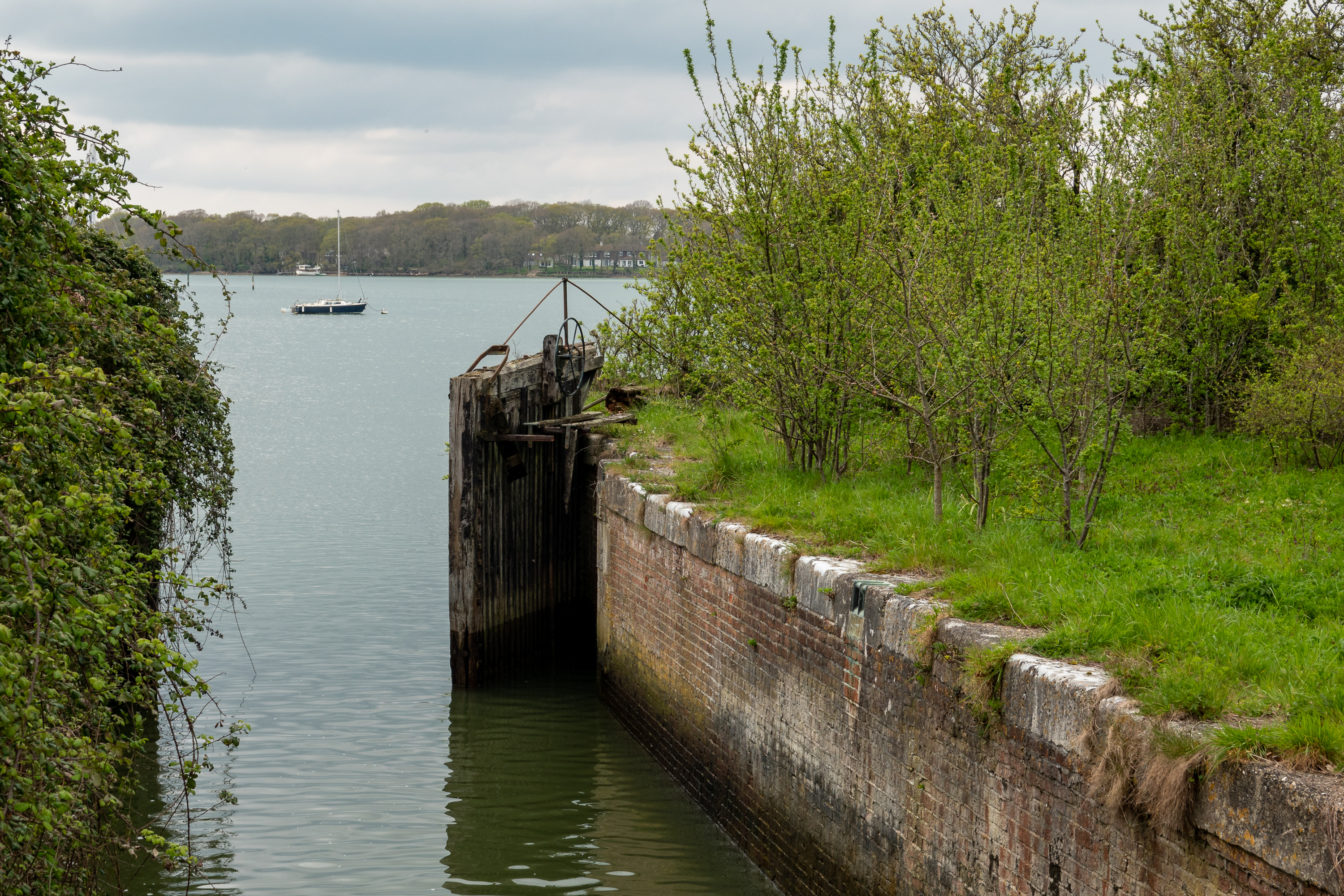
Chichester cathedral from the canal.And in 1828, by Turner.End of the canal near Bosham. The lock gate is due to tides.
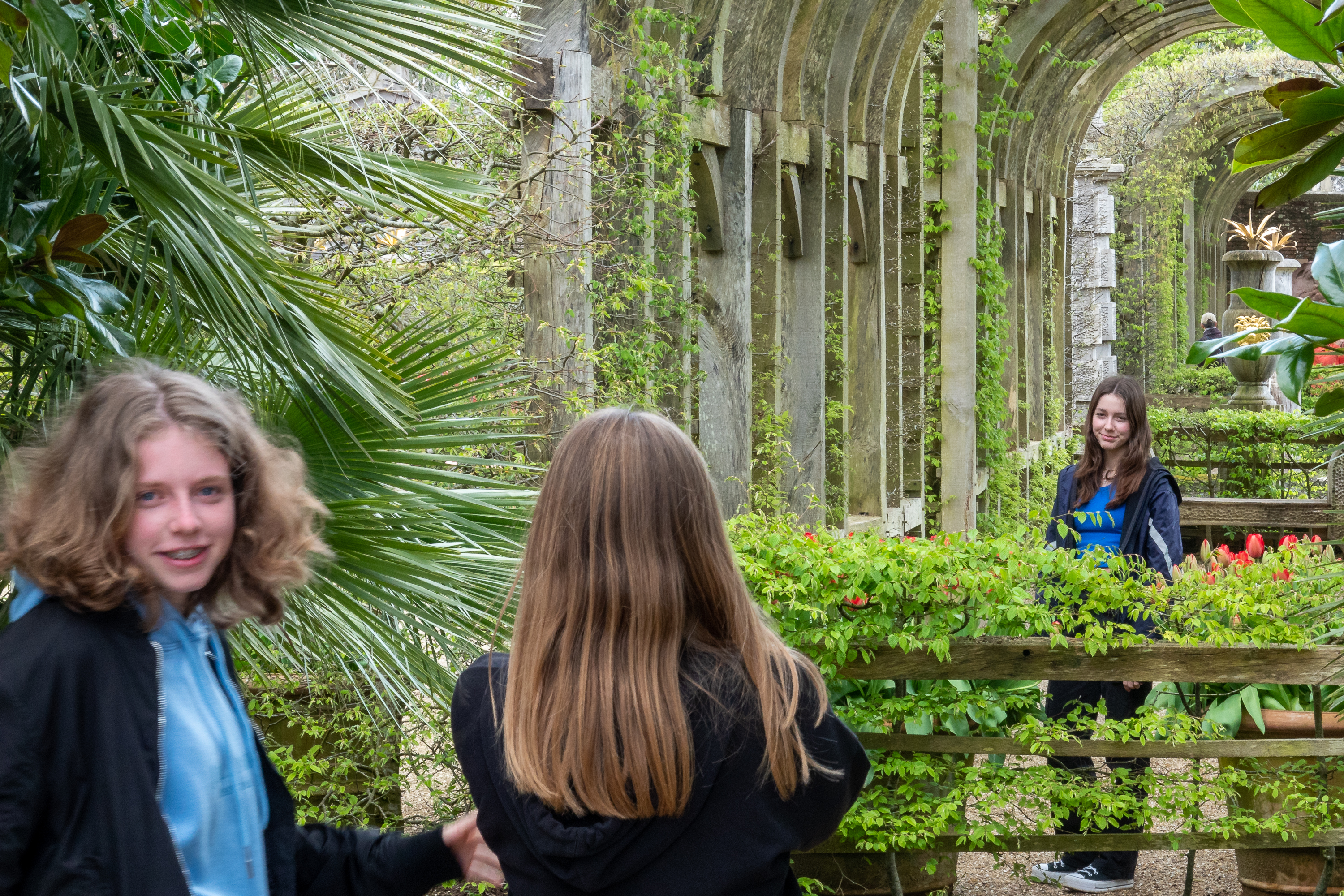
We were back in Arundel a week or so later to visit the Castle and to explore the gardens during the Tulip Festival. The Festival had been delayed for a week as with a chilly spring, the tulips were not flowering!
The displays were wonderful, though some flowers were still not open.
The tour of the Castle, which is the home of the Duke of Norfolk, the Earl Marshal of England, was most interesting. (https://en.wikipedia.org/wiki/Duke_of_Norfolk) (You don’t want to meet the current Duke on the road; he is under a six month driving ban!)
The castle is old, parts are Norman, huge, in good condition, and still occupied by the family. Needless to say, it has been expanded and altered many times. Some of the bedrooms you can visit are still used for guests! This leads to the odd anachronism of telephones and modern magazines in odd places. Arundel should definitely be on your short list of castles to visit, if only for the only intact portcullis the first that we have ever seen. (https://www.arundelcastle.org)
The Dukes of Norfolk are hereditary Earls Marshal. While this used to mean tending to the king’s horses, now the primary duty is to organize major state occasions. For example, the funeral of Elizabeth II and, more recently, the coronation of Charles III. (https://en.wikipedia.org/wiki/Earl_Marshal)
Those are real watch towers, once manned day and night.
The portcullis was the emergency gate to a castle. Should an enemy succeed in arranging a sneak attack, a swing of the sledge hammer and the portcullis would drop to bar entry. This would allow time to close the gates and raise or burn the bridge.
Counterweights made it easier to raise the portcullis. Usually, there were two; outer and inner. In the event of a sneak attack you dropped both to trap the attackers in the gate house where they could be killed with arrows or noxious things dropped through the “murder holes” in the roof and walls.
Looking from the old, Norman tower and walls to the newer living quarters which were added when the castle no longer had a military purpose.
Denise admires the great hall.
Simply stunning stairway.
The third Duke of Norfolk, aged 66.
Victorian loo
The family is still staunch Catholic. There is much Catholic art everywhere.
The Norfolks built a beautiful Catholic cathedral, just across the street from the castle. Castle gardens in the foreground.
Teeny-hopper tourists
Unusual fountain of Mary, Queen of Heaven.
A royal telephone. When not open to tourists, the family use the public parts of the castle for guests.
Denise, celebrating the sun which is peeking out.
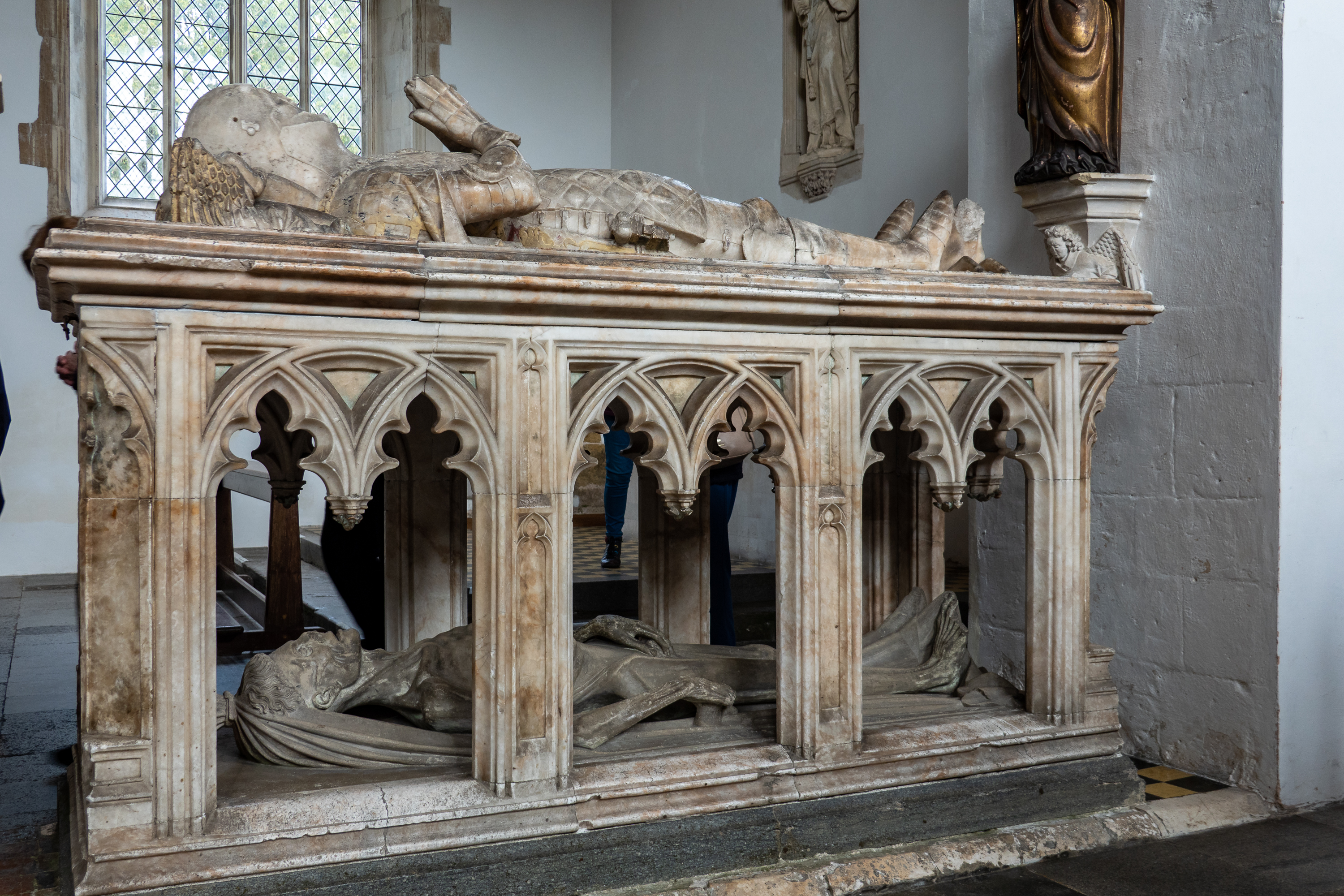
The second effigy, underneath, is the “momento mori,” the reminder of mortality.
The effigy on the top of the tomb is pretty strait forward, dripping with symbolism.
Some of the original color remains, a reminder that these were never cold, stone images.
If you read the Bayeux Tapestry in the original latin (doesn’t everybody?), you will learn that Edward went to the church at Bosham before leaving on his ill-fated trip to what is now Normandy. WE went to Bosham to have fish and chips at a great pub with Denise’s cousin, visiting with his wife from Iceland. (Small world. His wife’s nephew is a great guitar tech at a guitar shop in Arlington and performed an amazing setup on Fred’s Strat!)
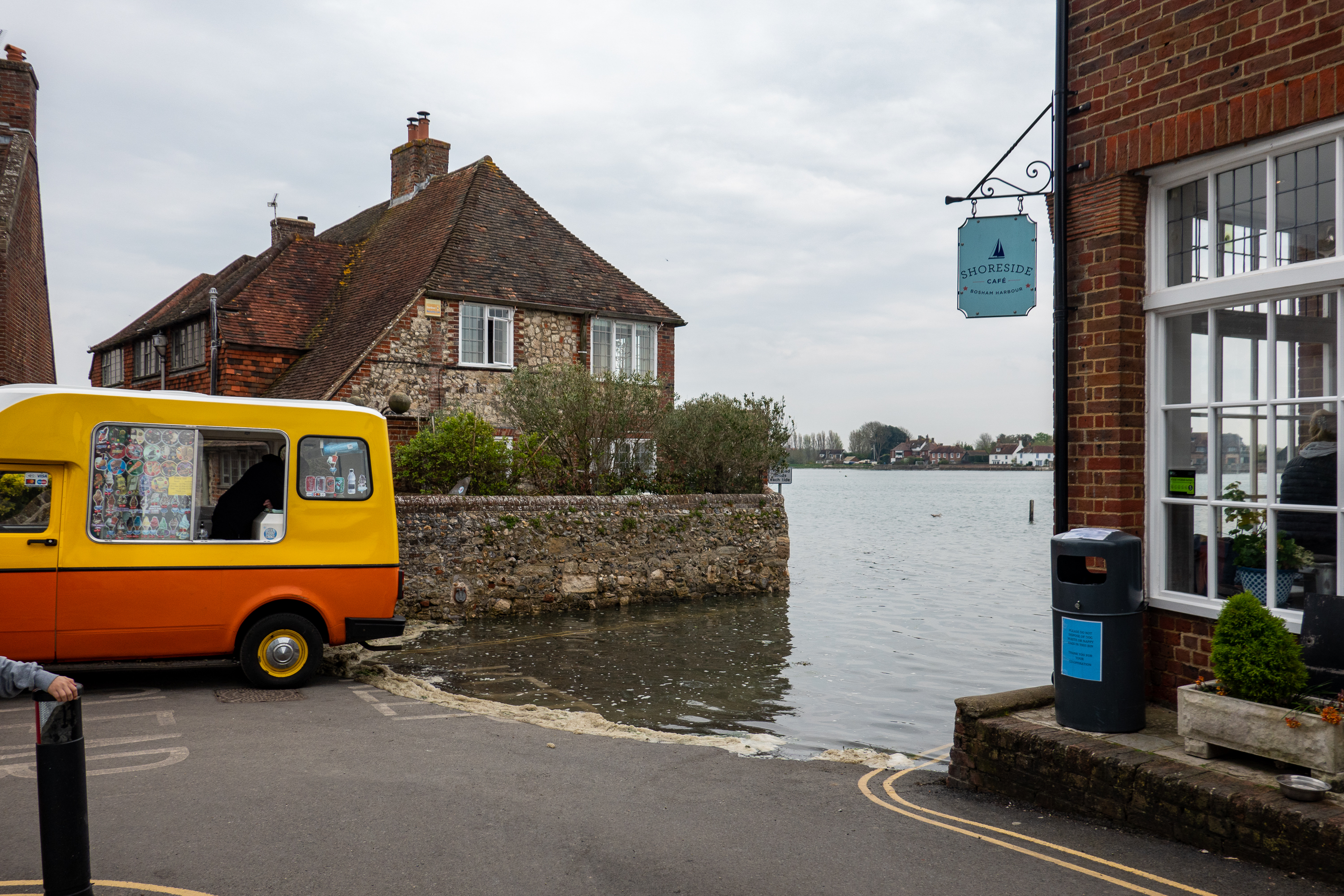
Bosham is an interesting little town as parts of it flood every high tide. And even though it has been doing this since Edward’s time, people still park in the wrong places! And, fish and chips enjoyed, we also visited the church, which is still there, if greatly expanded. (https://boshamchurch.org.uk)
Mary Collins and her son, who died in 1918 at age 24.
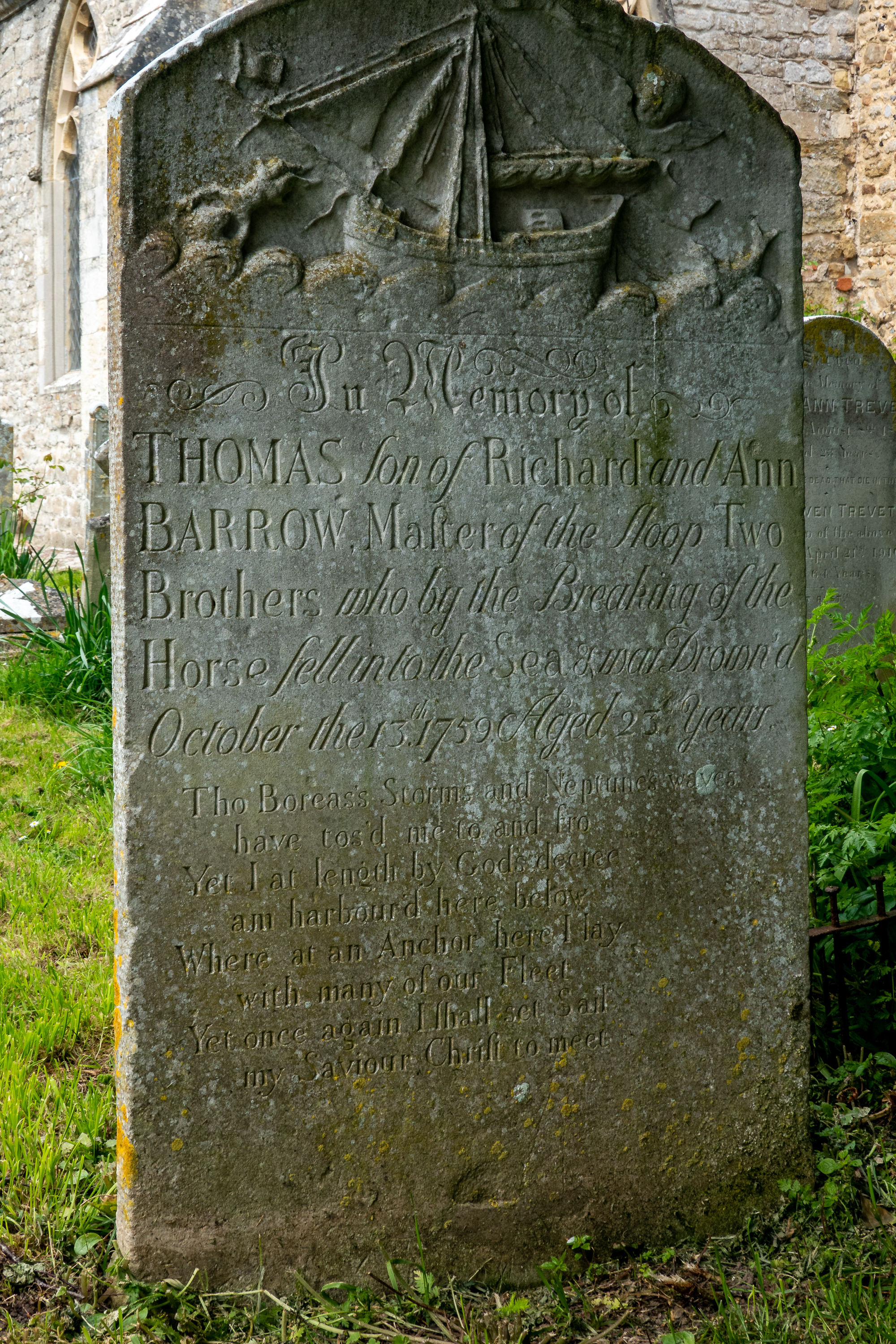
And Thomas, who drowned in a storm in 1759, age 23.
Denise, believing the sign.Ya think?
In this case, the threshold doesn’t hold the thresh, but keeps out the tide.
Ice creams available – limited time offer!
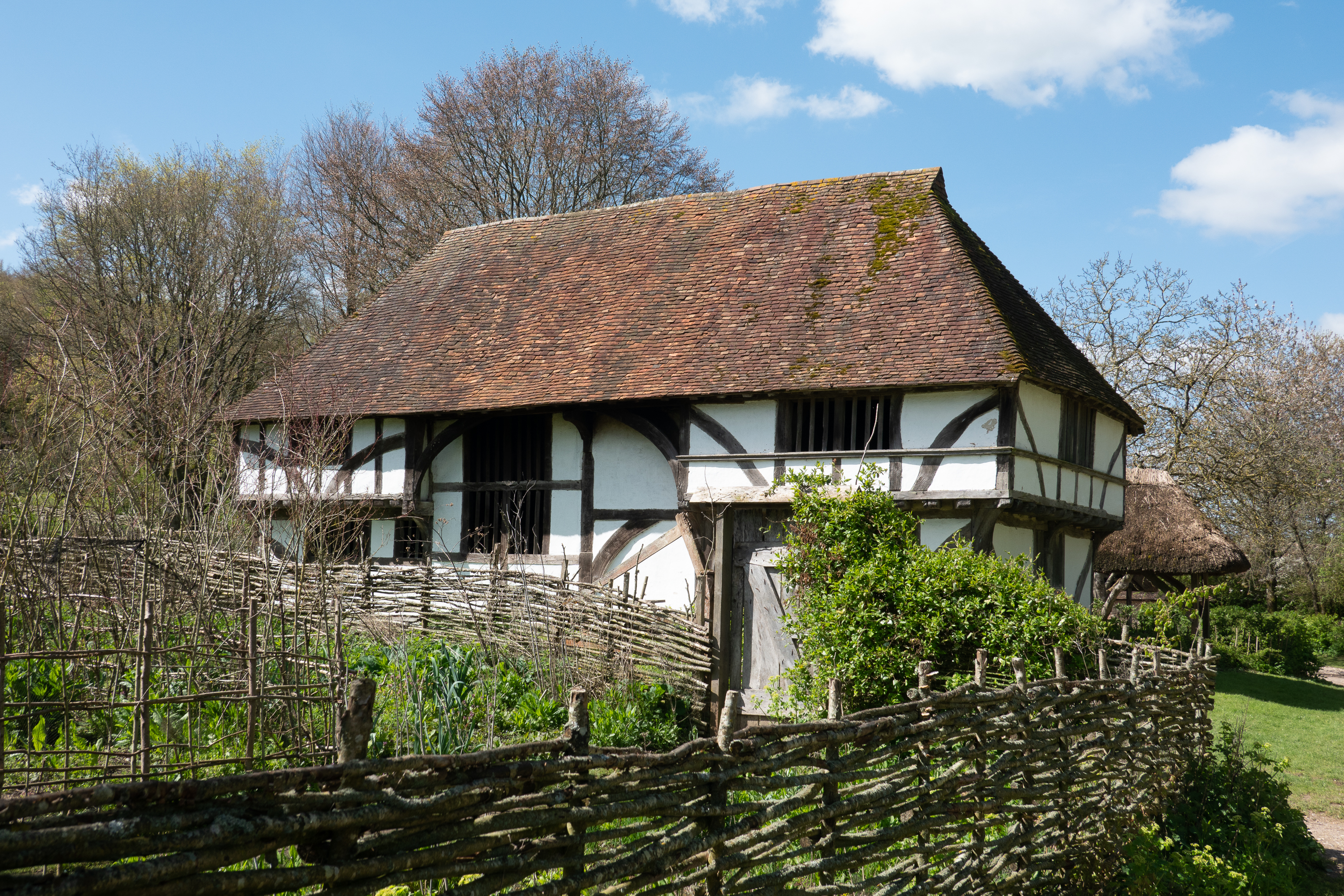
We spent a lovely morning at the Weald and Downland Museum. Our first visit in about 30 years! (https://www.wealddown.co.uk) The Weald and Downland museum is a large, open air collection of “vernacular” buildings from the Middle Ages on. Basically, the buildings in which real people, not the nobility, lived and worked. It has parallels in Colonial Williamsburg and Old Sturbridge Village in Massachusetts. If your image of the past begins with castles and stately homes, this museum completes the picture with houses of more ordinary people. It has expanded a bit and there were new exhibits.
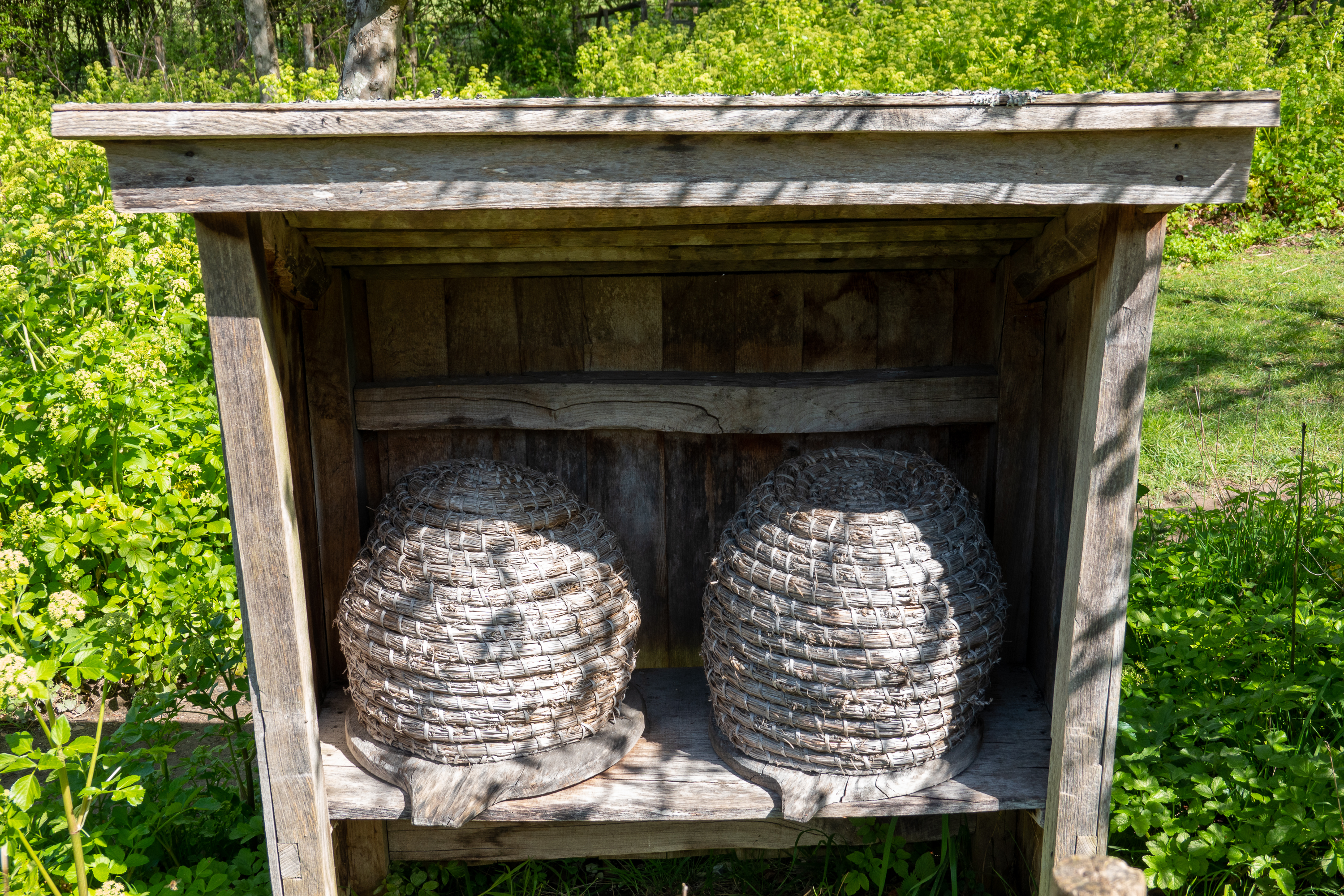
Beautiful roofing work, but no chimney.Bedroom with “bed clothes.”Table set for dinner.Pegs to hold your shingles in place.
House of a wealthy merchant or farmer.Early RV
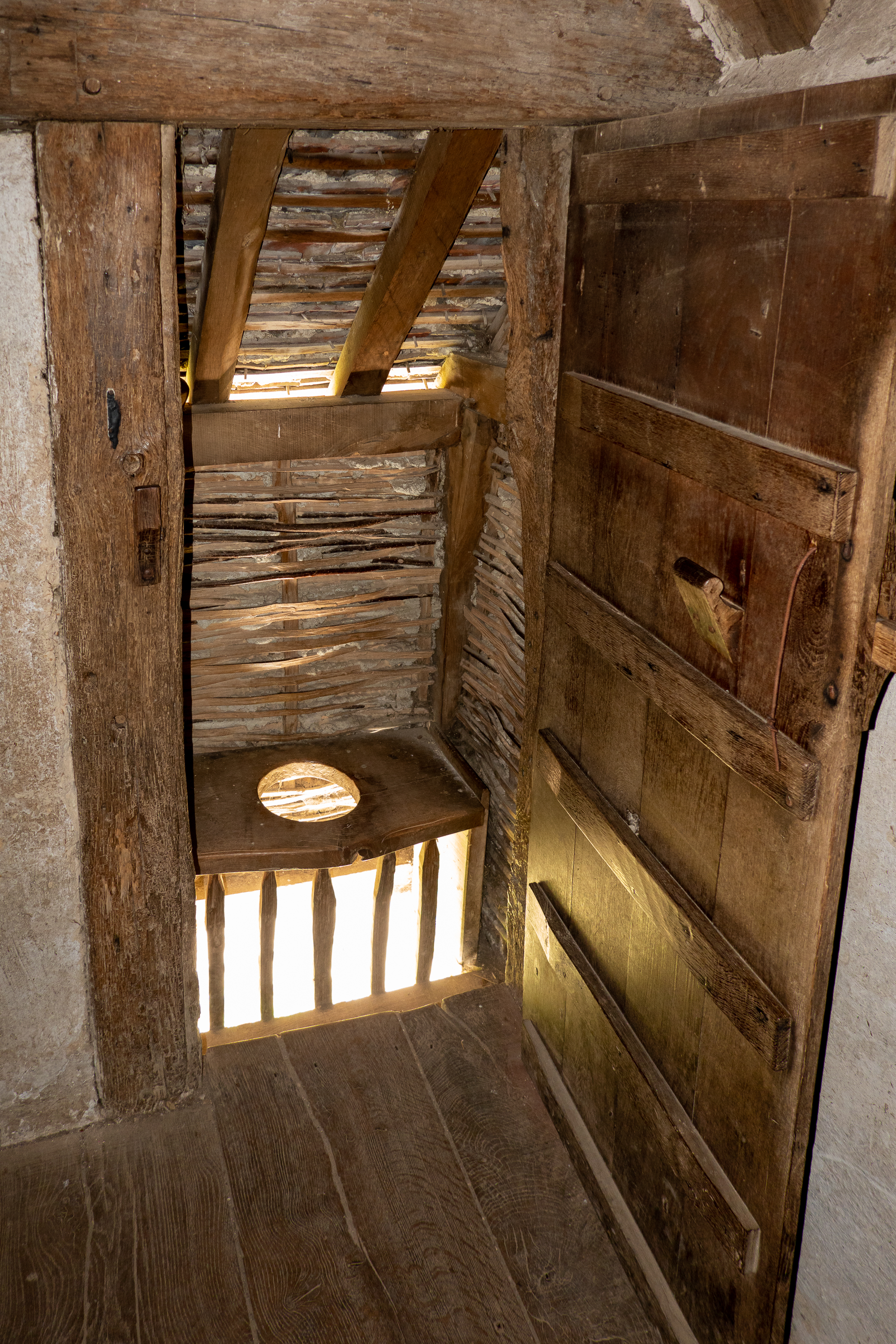
Wealthy merchant, a garderobe.Nasty job, cleaning the cess pit.
One of our family pastimes is noting family names that are actually professions. In this case, Thatcher.This is one of the more modern houses; it has a chimney – required after the fire of London.
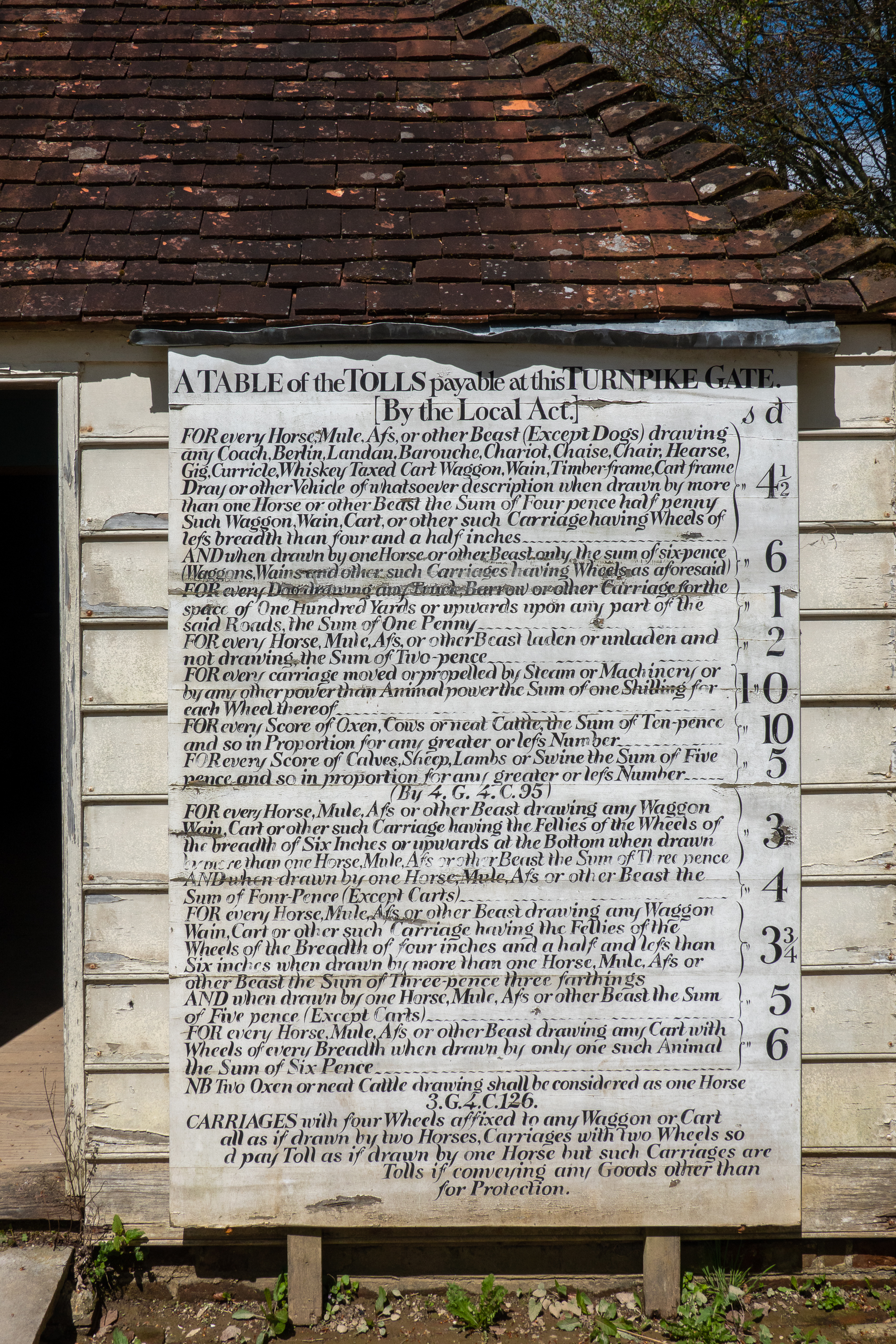
Medieval radioFans of Georgette Hyer will approve of “The Toll Gate.”This is simply one of the houses you can see from the museum.
I suspect that this one has indoor plumbing, heat, and power.
A reminder that when these building are relocated, every single stone and beam has to be marked for reassembly.And here are the tolls to be collected.
Finally, we had word that we could pick up the 917 in Southampton. We really appreciated the train system around that area. We had taken the train from Gatwick Airport to Trevor’s local station, Barnham, when we arrived. Later we took the train from Barnham to Chichester to shop and now we took the train from Barnham to Southampton to pick up the truck. A great system. The Brits always complain about the trains, but would that we had similar service around DC. Oh, we did. And we had street cars in DC – until the great Firestone/General Motors campaign of the 1950’s. Breaks your heart.
And she has arrived, in perfect condition.
We spent a day unpacking our clothes as we had shipped some in the camper. We had also locked most of our possessions in the back garage, so that all needed to be organized and sorted.
Those who know our family know why this was an ESSENTIAL provision for the trip!
Then we visited the camper storage facility that we had thought to use during our returns to the States only to find that they thought us to to be “inappropriate.” So we are currently looking at alternatives – stand by; trains may be involved again! We had our first shopping trip and then headed back to prepare for departure.
After finding our bearings on day one, we had a better idea of what we wanted to see on day two. We started by taking the Hop On Hop Off bus on its second route.
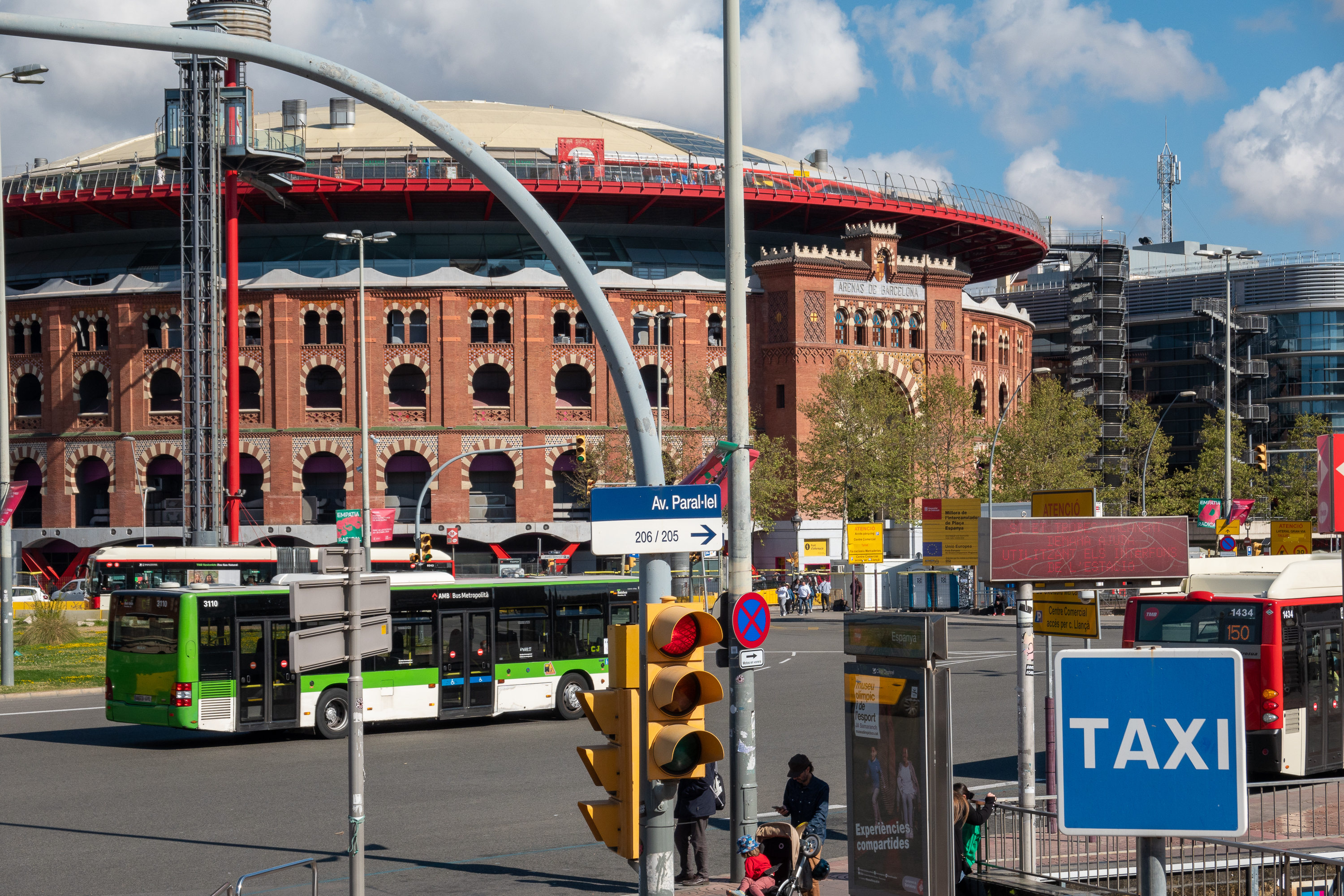
The arches on the bull ring harken back to the Romans and the Moors.
American Cultural Imperialism!
Everyone recommended the Barcelona Maritime Museum (https://www.mmb.cat/en/) So we “hopped” off the bus at the front door. It is an amazing place with a full size reproduction of the galley “Real”, the flagship of the Holy League Fleet at the Battle of Lepanto. (1571)
This beast is massive and, for fans of classical galleys, note that the ram is now well above the water line. This allows the ship to be faster than a Greco/Roman galley. These ships were fitted with cannon in the bow.
The world is divided into two types of people, normal people who have never heard of the Battle of Lepanto and geeks like Fred who love this stuff. (https://en.wikipedia.org/wiki/Battle_of_Lepanto) He remembers a young adult book about the battle which turned on the adventures of a young fisherman who was there, met Miguel de Cervantes, the Spanish author, and had other adventures. Cervantes was badly injured during the battle.
Fred needless to say, knew all about this and was absolutely fascinated by both the small scale model and the full size reconstruction, which had been built for the 300 year anniversary. (Build a few more and we could make a great movie!)
Large scale model
Displays about the life led by the enslaved rowers were interesting, if depressing. While there were some paid rowers, as in Roman times (sorry, Ben-Hur is wrong), most were slaves who spent all their time chained four or five to the oar. When not in battle, the ship was typically rowed by only a quarter of the rowers at a time, but they never left their oars, day or night, while at sea. Moslem scholars noted that you could smell a Christian galley before you saw it.
Denise showing off the fine lines and shallow draft. (Of the galley.)
The Ottoman admiral (amir al-bahr, now you know where the word originated – literally the commander of the fleet), Ali Pasha is supposed to have told his Christian galley slaves, “If I win the battle, I promise you your liberty. If the day is yours, then God has given it to you.” John of Austria, more laconically, warned his crew, “There is no paradise for cowards.”
The building housing the Maritime Museum is itself of great historical interest. It dates back to 1500 and was built as a multi-lane shipyard, where the original ship was built.
Each of the galleries in the shipyard is huge. Amazing to consider that most of the Spanish galleys at Lepanto were built in this very building.
History records that by the Battle of Lepanto in 1571, the galley was being replaced by the galleass. (https://en.wikipedia.org/wiki/Galleass) Most scholars attribute much of the Holy Leagues success against the Ottomans to placement of six galleasses at the front of the fleet where their unique ability to fire broadsides devastated the Ottoman galleys which could only fire forwards.
The reconstruction is beautiful.
By the Battle of the Armada in 1588, almost all of the ships used were galleons with no oars, but lots of cannon on the sides. But, it is reported that there were four great Venetian galleasses that were seaworthy enough to cross the Bay of Biscay.
Outside of the museum, the paving was being repaired. And right underneath was ancient paving. Roman? Medieval?
On a nice bright sunny day we took a cable car from the port up a hill to the south of the city. The views were spectacular and included full city views (See pictures at top of page) plus the loading of a ferry to Morocco. We even saw a Unimog camper being loaded. And enjoyed a nice cappucino coffee with our view!
These ferries go all over the Mediterranean; Italy, Morocco and beyond.
We visited more museums while in Barcelona. The first was the Picasso Museum. The mature Picasso is a specialized form of art. But we had learned that the Picasso museum featured his early work as well, and that aspect of the museum was absolutely fascinating – to watch him evolve from a superb, but very “classic” painter into an avant garde artist. While Fred is not a fan of the avant garde, it is clear that he would never have become as famous had he continued in the traditional vein. (No photos)
But our taste runs to music rather than Picasso and after another wonderful tapas dinner, we enjoyed an excellent Flamenco guitar and dance concert at the Palau de la Musica. The guitarists were stunning and we even bought a CD! (https://www.barcelonaguitartrio.com/en/bcn3-2/) They are a local group and the audience clearly liked and supported them.
Incredible ceiling
The hall was beautiful and had a definite Barcelona/Gaudi vibe.
Your photo with the band.
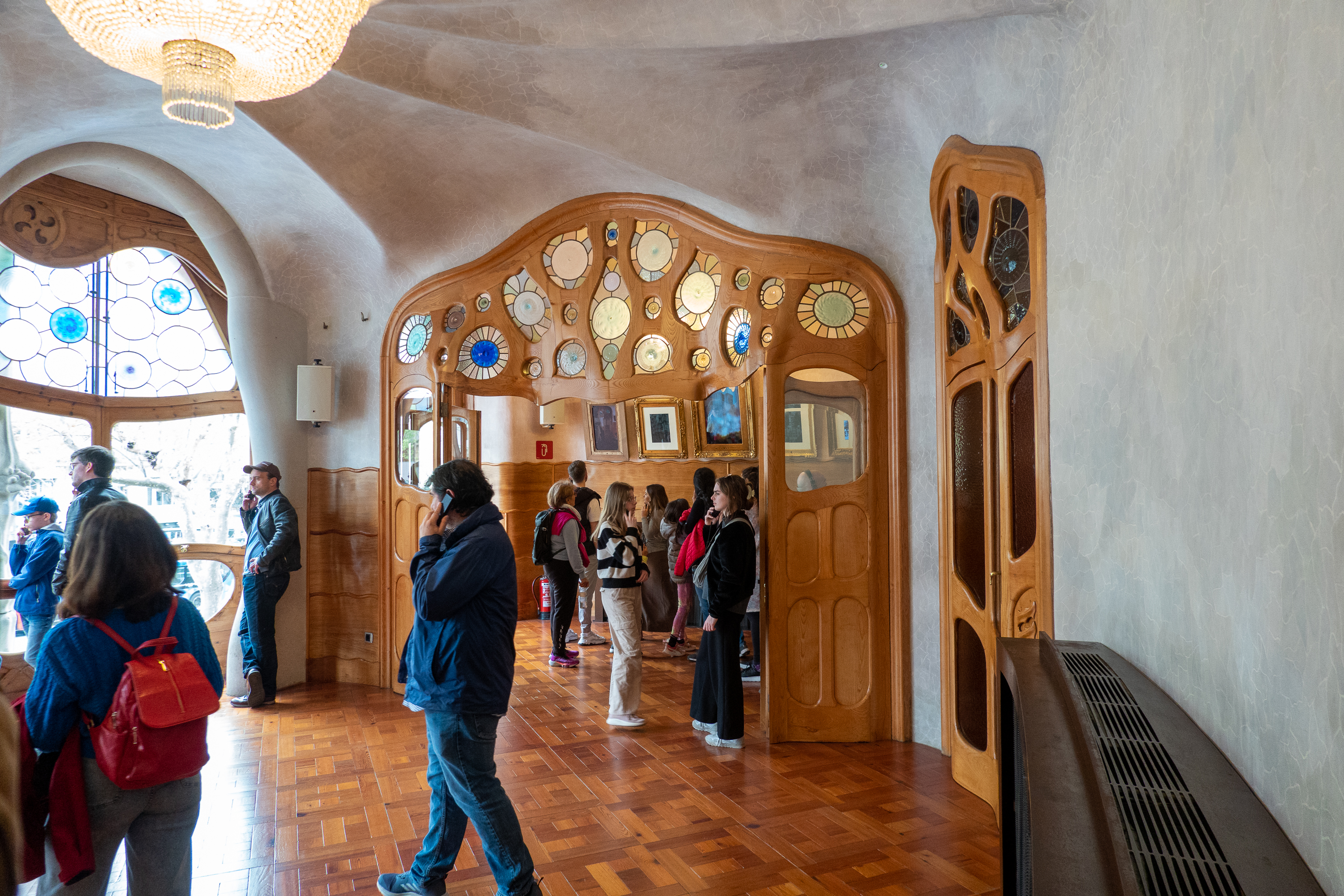
The second Museum was the Casa Batilo, remodeled by Gaudi with a free hand and deep pockets. The result is an absolutely different house design, though based on some very interesting science, with no straight lines anywhere. (https://www.casabatllo.es/en/) Casa Batilo means “bat house” but sometimes it seemed more batspit crazy!
Even the exterior is unusual. Not unique, as there are many buildings in Barcelona with the fantasy curved lines.
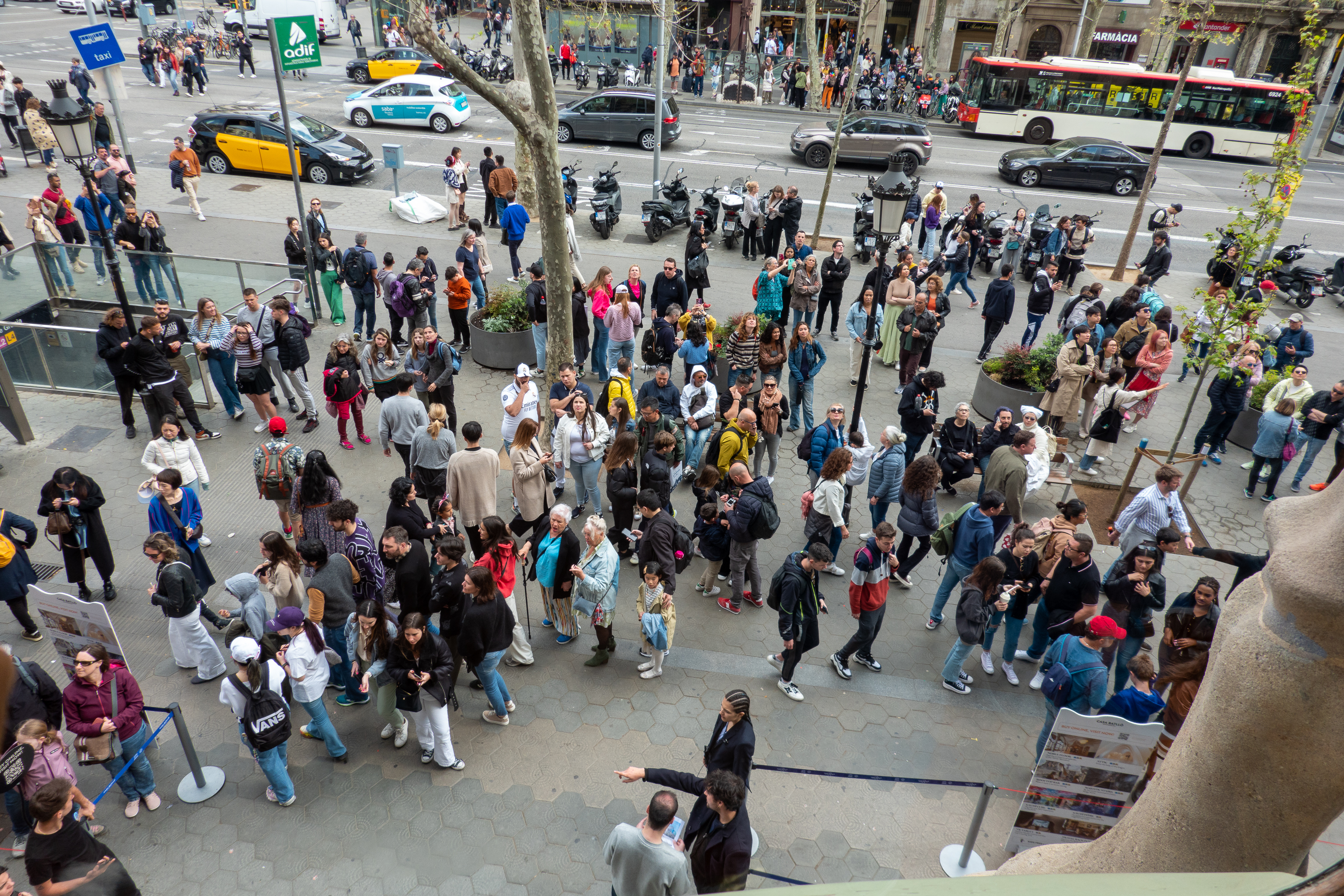
Big crowdBent walls and underwater colors
Wild colors, but this air shaft is actually practical.
Denise, debating whether we need a new front door.
The last hurrah of the visit is a hallucinogenic light show. The ’60’s live!
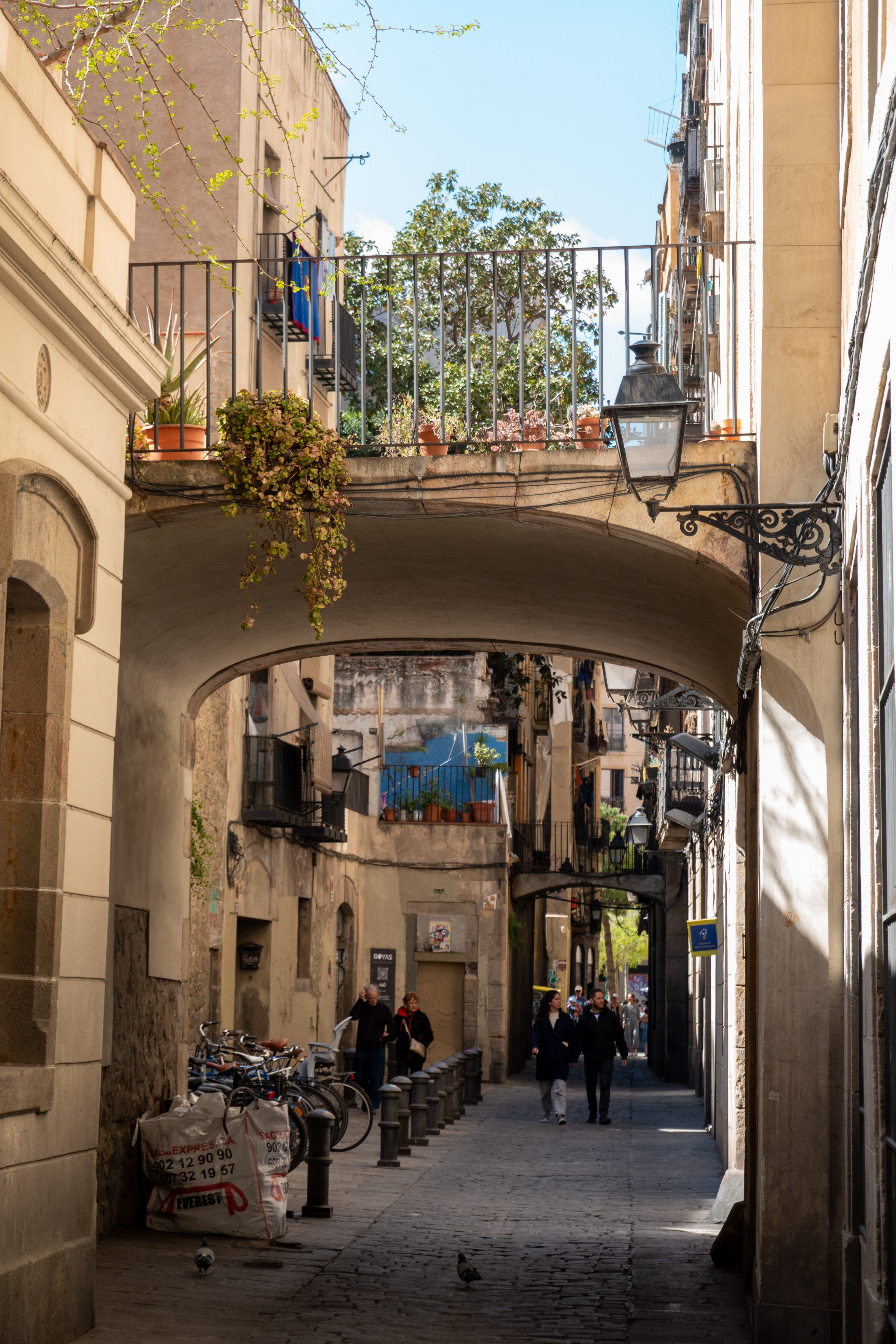
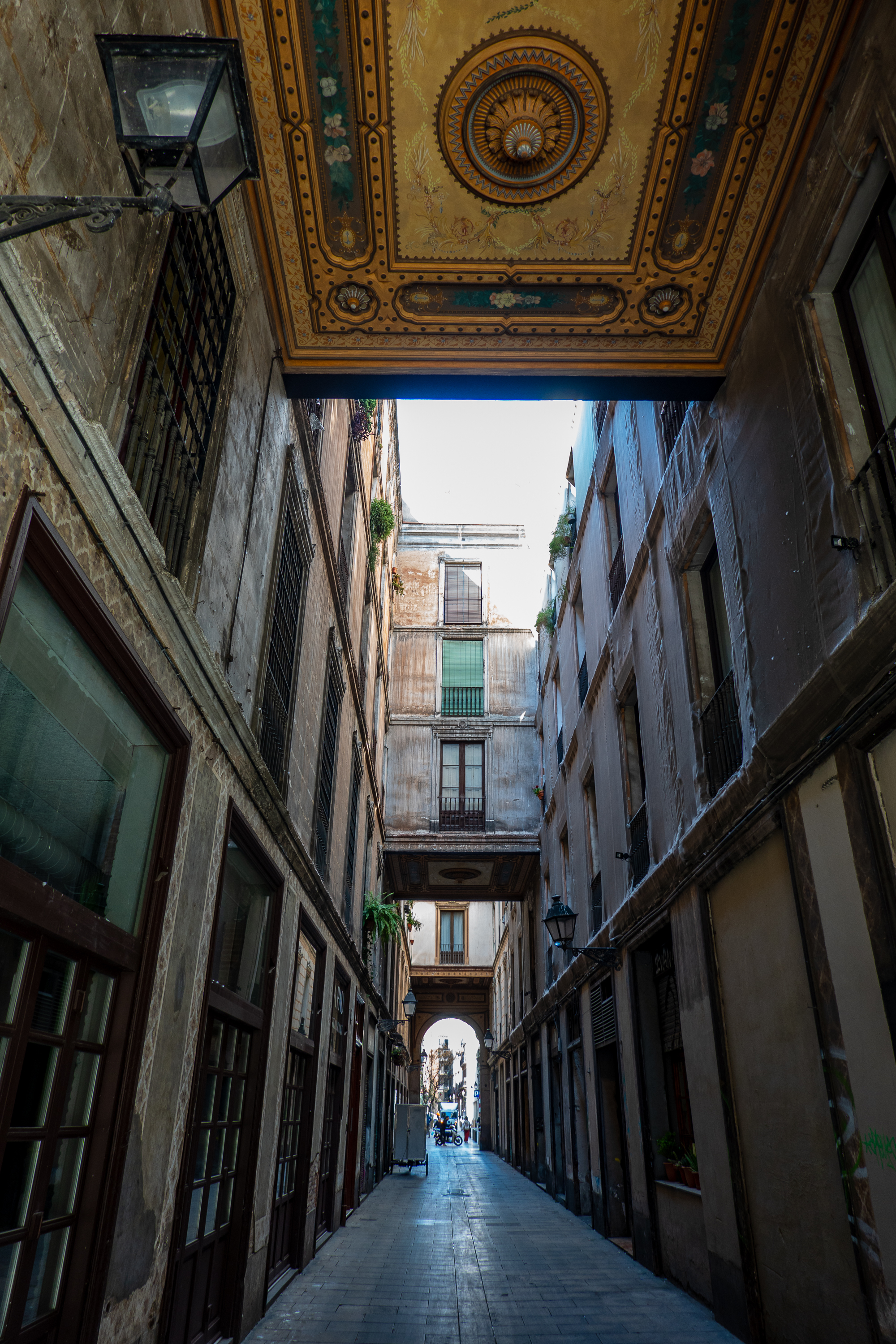
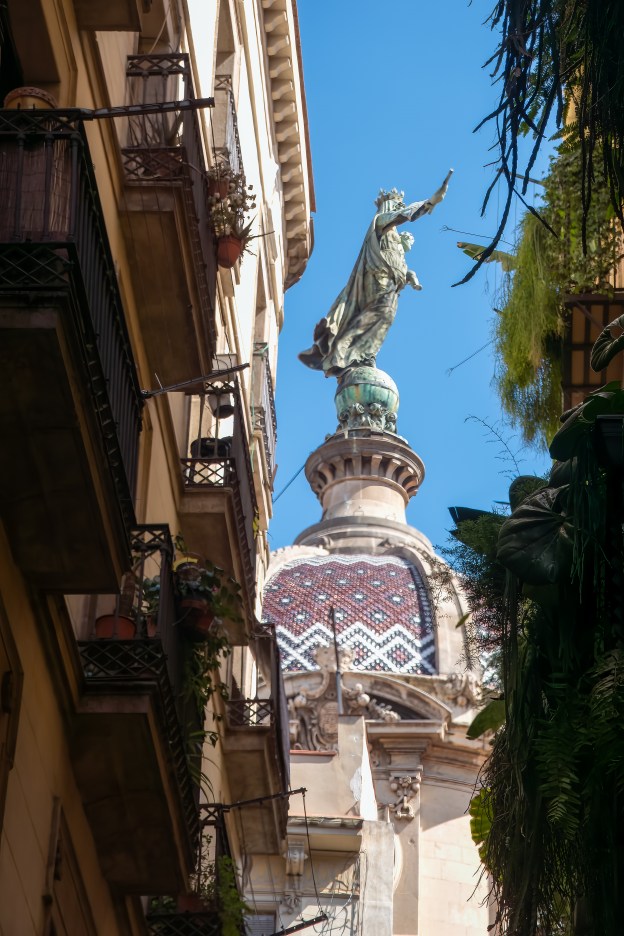
Lastly, we simply enjoyed wandering the tiny streets of the Gothic section near our hotel. You never know what you will find….we found ice cream shops (with wonderful ice cream inside), apartments and bridges built over the streets.
SavorySweet
Sadly, the cathedral was covered with wraps.
A confusion of walls and arches. Always reuse what is already there.
A seminal event of modern Catalan history was the Siege of Barcelona during the War of Spanish Succession. (https://en.wikipedia.org/wiki/Siege_of_Barcelona_%281713%E2%80%931714%29) The results were far reaching in many spheres, and one result was the leveling of the Born district to make a clear fire zone outside the city walls.
When it was restored, a large, modern steel market was built.
And when it reached the end of its commercial life, it was to be razed. When this started it was discovered that the market sat on an extensive range of ruins and, even better, because of municipal records, the exact details of almost every building were known. (https://elbornculturaimemoria.barcelona.cat/)
And, with that, it was time to pack for the flight to Gatwick.
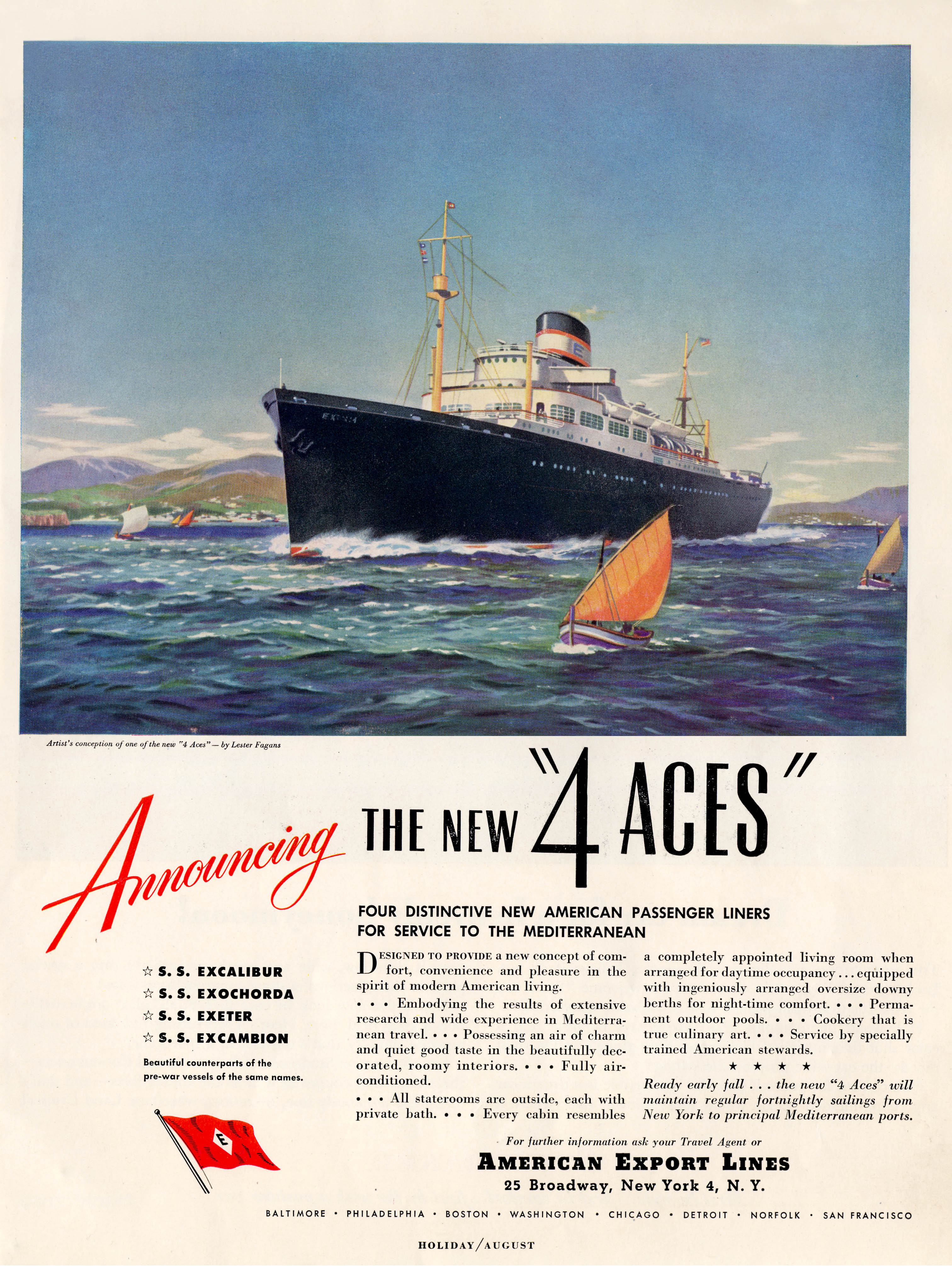
In 1955 the S.S Exeter sailed into Barcelona harbor.
On deck was a five year old Fred who remembers to this day – Spanish railway cars have four big wheels and not eight small wheels like US trains, and that the clamshells on dock cranes don’t have teeth so they don’t puncture the hulls of ships as they load and unload things like coal. His father took two pencils and some string to explain how cargo booms can more items between the pier and a ship. Useful things for a five year old to understand!
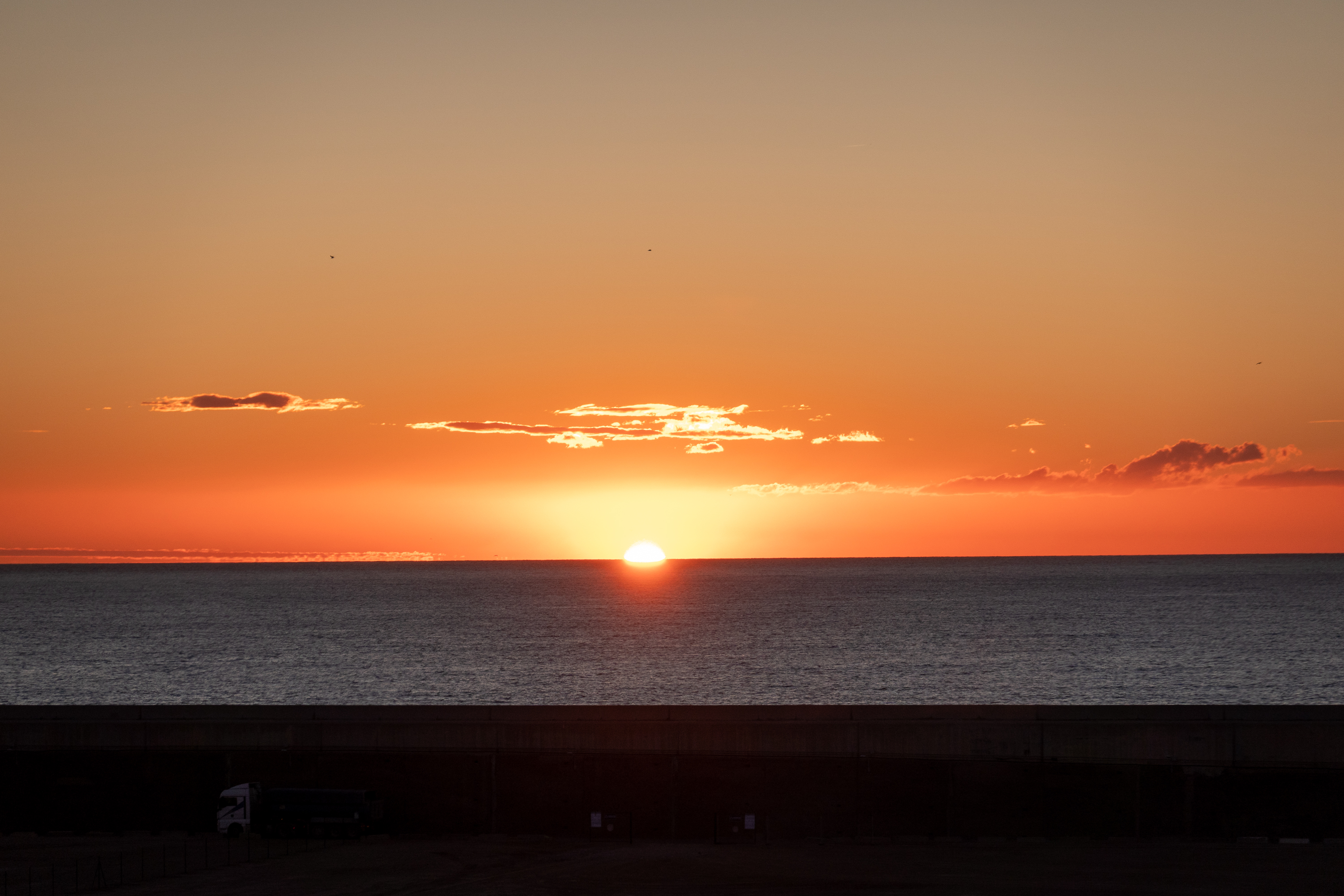
Our arrival in Barcelona began with a pretty sunrise.
Barcelona harbor is still busy and now has a huge section devoted to cruise ships and ferries. We disembarked and grabbed a taxi to our hotel, conveniently located down near the water and deep in the gothic district, aka, tourist central.
Hotel Colonial, originally build as a bank, in the 1880’s.
We like the hop on/off busses available in many cities as they allow you an overview and can help you to get an impression of a city and to start to get your bearings. We bought a two day ticket and set off. We had thought to get off and admire the new Familia Sagrada (Sacred Family) cathedral, but the crowds were huge and it was not clear that we would be able to get on the next bus.
So we got off at the top of La Rambla, the main tourist strip and inspiration for the title of this post, and went looking for lunch. This turned out to be a nice little restaurant in an ancient cellar. A tourist trap to be sure, but a very nice trap. (https://julivertmeu.com/)
Lunch is down here
Denise and paella
Fabulous wash stand
Hams and sausages in the market.
After lunch, we continued back to the hotel, admiring (?) the crowds.
Dinner was a wander through the neighborhood in search of tapas. We especially enjoyed the Chorizo Napalm.
We loved this apartment, built over the street.
Xorizo flambéGlorious views down every street. (Santa Maria del Mar)
As 2020 opened, we began to get serious about our plans to spend a year or three traveling in Europe and North Africa in the 917.
The idea was fairly simple – ship the truck to Europe and start traveling in a part of the world that had mostly been fly over countries for most of our lives. Then came COVID.
Now, in 2023, it was time for another look. Several things had changed – the increasing enforcement of the Schengen Agreement which limits time in the European Union to 90 days in, followed by 90 days out, was a major complication. Although there are reports that enforcement is variable, the penalty for overstay is a ban from entering the EU for three years, so this is not something that we want to risk. So this means that we will be traveling in and out of the UK, where we can get 180 days at a time, and then dropping into the EU.
So we launched into a siege of repairs and upgrades, picked a shipping company, and made a reservation. Denise found a repositioning cruise on Viking with very low rates, so we chose that as an alternative to flying. In the end, as the ship carrying the truck is running about two weeks late, this was probably not a good idea for the initial trip – would have been better for subsequent returns to the UK, but it was a lot of fun. And an interesting opportunity to compare/contrast with our almost identical trip on Seabourn.
We drove up to Baltimore to drop off the truck, to almost exactly the same place where Fred recovered his Blazer in 1975, after the trans Sahara trip. (https://pbase.com/diplostrat/sahara) When Fred received the truck in ’74 it had been completely looted – here’s hoping that we do better this time!
The 917 settled in with new neighbors on the pier. Ended up sitting there for two weeks.
We flew to Fort Lauderdale to join the Viking Star. Boarding was easy and we set out to explore the ship which, while larger, was almost the twin in layout to the Seabourn Sojourn. It was fascinating to note what was the same and what differed from the other ship. In the end, they were more alike than different.
In the old days, you boarded from dark, dingy pier warehouses. Now you use the same type of jetway as an airport.
Home for the next week.
Viking has wonderful baths on both their river and ocean ships.
Looking around the harbor we noted a RoRo of the type that would take the 917 to England.
After an easy departure, the Pilot went ashore and, later, we waved goodbye to Miami. We were finally en route.
We settled into the routine at sea. And we enjoyed the wonderful weather.
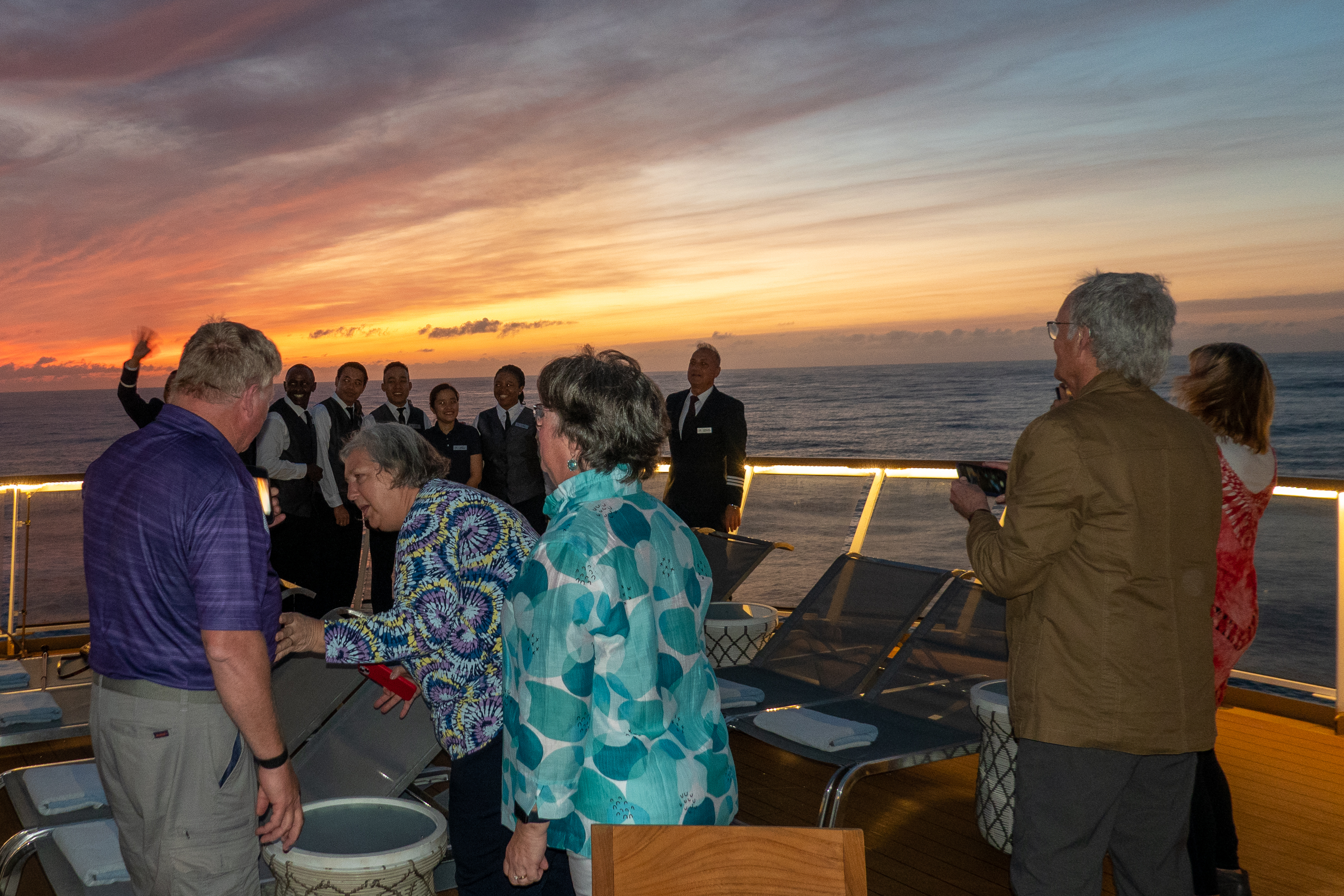
Passengers gathering to photograph part of the dining staff against the sunset.
The formal portrait. (I sent it to the chief of restaurant services, the gentleman on the right.)
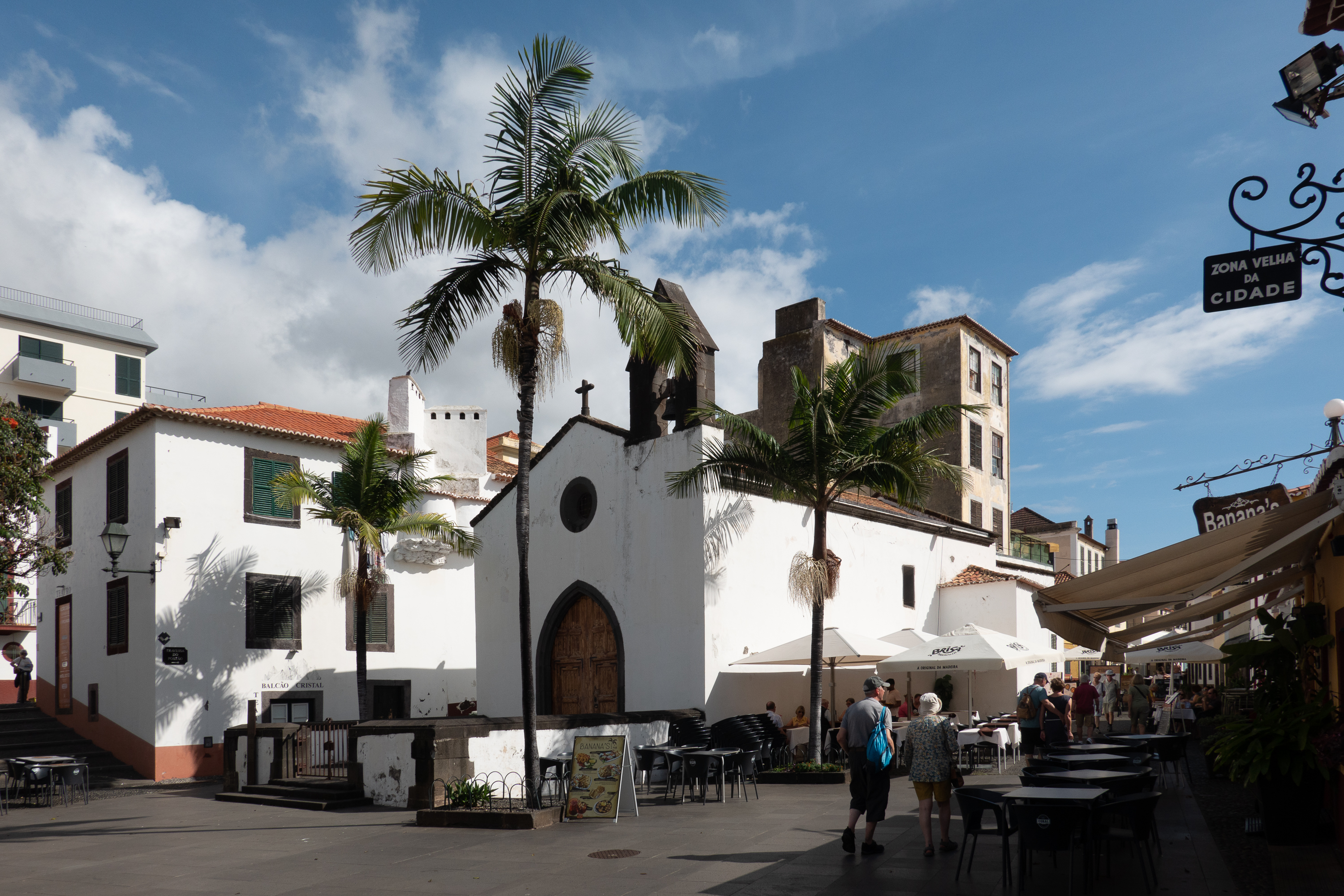
We skipped going ashore in Phillipsburg, but were looking forward to Madeira, a kind of magical place. It is easy to see why it it is so high on the European list of vacation spots. With only a four hour visit, we skipped the the packaged tours and set off into town to in search of coffee and a visit to the cathedral.
Funchal is really pretty.
Our first stop was the park where we admired a statue of Bolivar and had a chat with a lovely lady who had just moved back to Madeira after living in Venezuela for years.
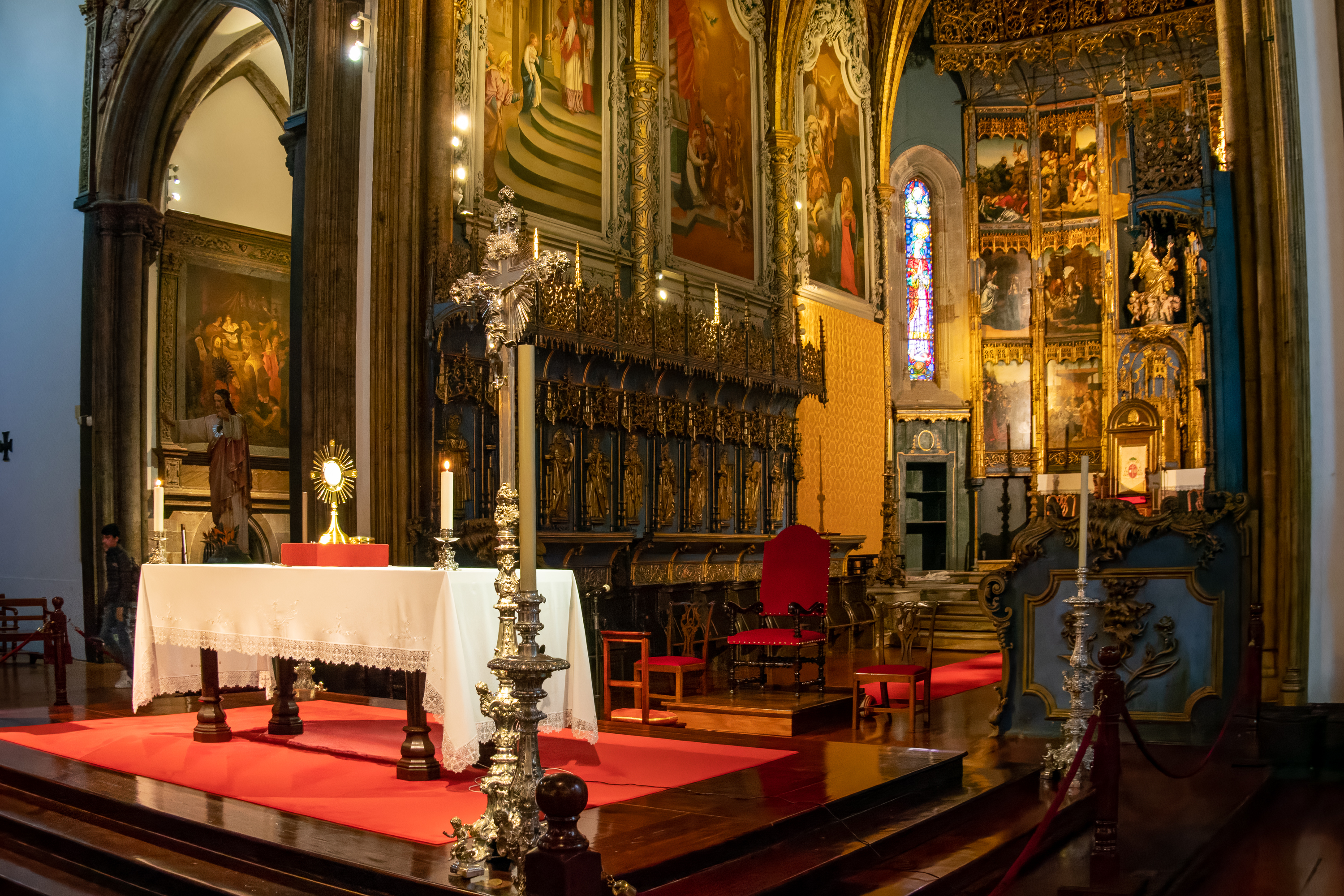
Fortified with and espresso and a gelato, we visited the cathedral, a rather plain, gothic building, dating from the late 16th century. One of the few intact buildings from the early colonial period.
Nowhere near as large or gaudy as some the the large European cathedrals, Funchal is still very nice.
The ceiling was spectacular.
Galleon style tour boat, sailing in front of the downtown.
Sailing away from Funchal we passed Kong’s island. 😉
(Kong was not receiving visitors.)
Sadly, we passed through the Straits of Gibralter at night.
Allegedly, the Viking Star is very “green” and most of this is water vapor.
We passed on the Moroccan side.
The next day we sailed up the Mediterranean coast of Spain towards Barcelona.
The Penon d’Ifach (A really big rock)
As the sun set, we passed Ibiza. Barcelona tomorrow morning.
In the latter part off 2022, Denise’s brother wrote that he and his wife were going to take a repositioning cruise from Lisbon to Miami and then continue to make a circuit of some of the lessor known Caribbean ports. Would we like to meet them in Miami or join them for some or all of the trip? Didn’t take long for us to decide that we were hooked. So, in early November 2022, we boarded a flight to Lisbon, via Zurich. The day after our arrival in Lisbon, we were off to Porto in the north, via a stop over at the Shrine of Fatima. https://en.wikipedia.org/wiki/Sanctuary_of_Fátima
Some of the faithful make their approach to the shrine on their knees.Denise was pleased to see an old English style letter box.
Panoramic view of Shrine
Arriving in Porto, we checked into an amazing hotel. The bad news is that it is on a pedestrian street, so we had to schlep our suitcases over the cobbles, the good news was that the hotel is a repurposed 16 th century townhouse/palace, with a new, modern building on the rear. So the public areas had parts that even included Roman constructions, while the hotel rooms were completely modern.
The hotel was up the street to the right.
Old fountain in the hotel hall
We were lucky to have superb guide. A former air traffic controller with the Portuguese Air Force, his English was better than ours. We started wth a visit to a port warehouse.
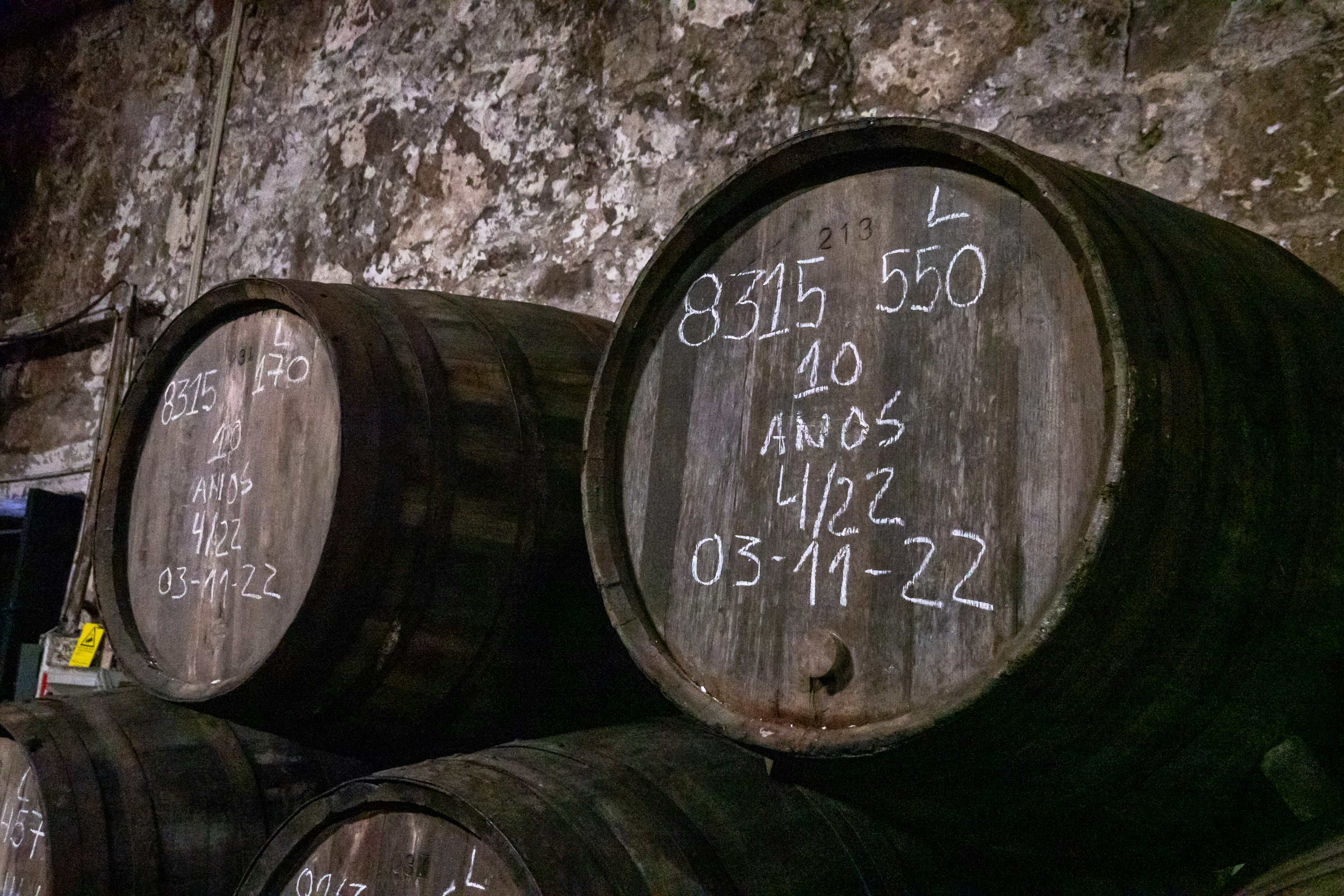
There are several varieties of port aged for different times.Each port tastes even better than it looks.
We then travelled up the Douro valley into the wine country.
We stopped to admire a small country church and a classic stone bridge as we continued up the valley. The views were beautiful.
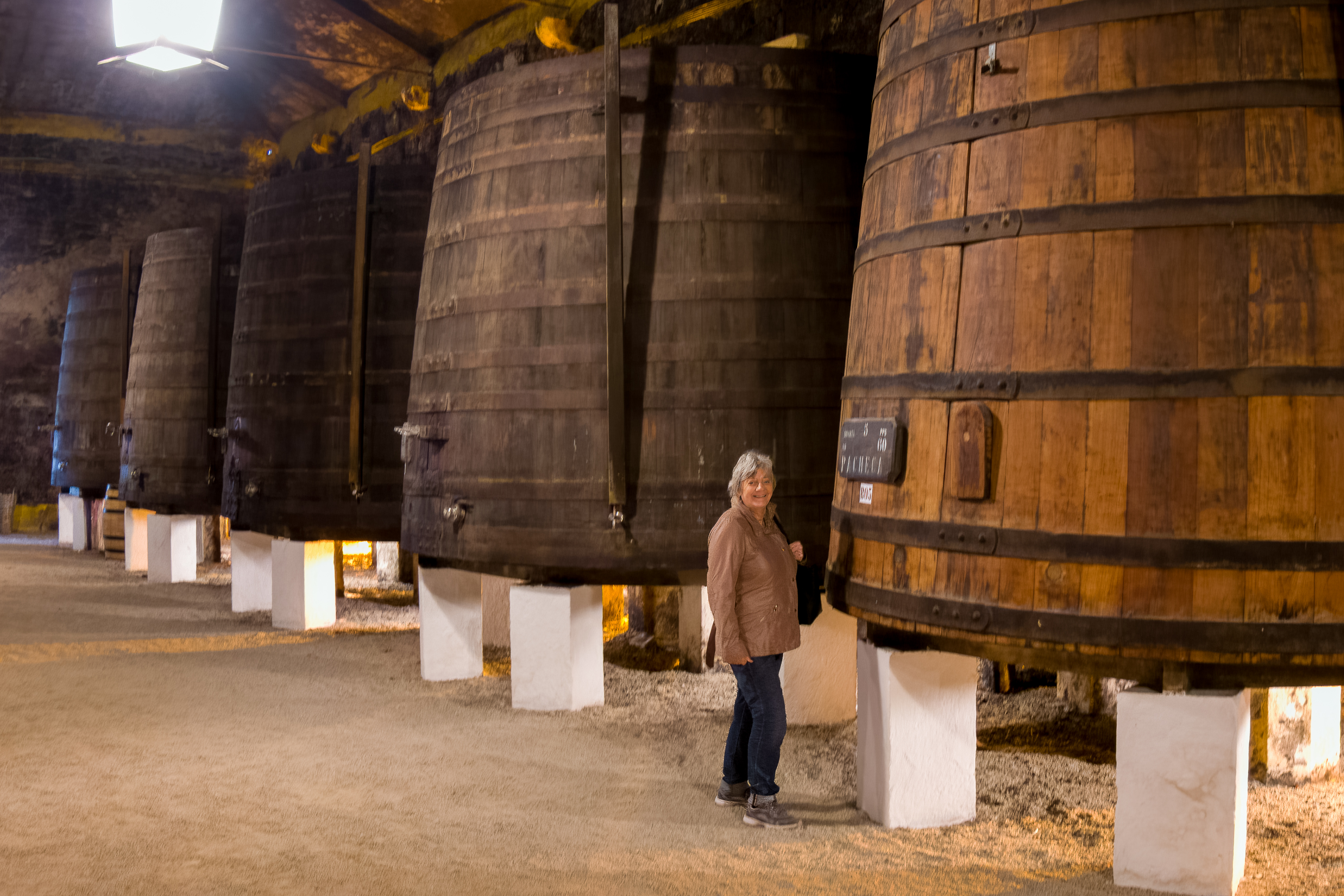
We stopped at the Pacheca winery for a tasting and a fabulous, multi-course lunch with a different wine for each course. (The Pacheca Winery is spelled “Pacheca” and not Pacheco as it is woman owned.) For those of us who don’t usually drink port, it was fun to discover a new variety of wine. (https://quintadapacheca.com/)
Peacocks admiring tourists.
The neighbors, the Sandeman winery, is much more famous.
Denise planning to fit a small container of port in her suitcase.
Leaving Porto, we drove back to Lisbon, stopping in Coimbra to sample pastel de nata, custard pastries which were developed by nuns with too many eggs and are simply delicious.
Lisbon Cathedral
Wine with a view; it comes to you!
Belem tower, 16th century defense of Lisbon
After a quick windshield tour of Lisbon, [we will have to return,] we arrived at the pier just as Trevor and Sheila pulled up from their flight from UK. Check in/boarding is instantaneous, other than Fred having a momentary panic that he had lost his phone – found to be in his hand. (!!) Our actual sailing was delayed due to a heavy swell at the mouth of the river.
Lisbon skyline as we sail down the river.
The next morning we plowed into the mid Atlantic swell and settled into shipboard life. We much much prefer longer crossings to daily visits to ports packed with duty “free” shops and other tourist traps. The ship was simply lovely and we quickly discovered that every day had to begin with a visit to the gym if we were to still fit into our clothes.
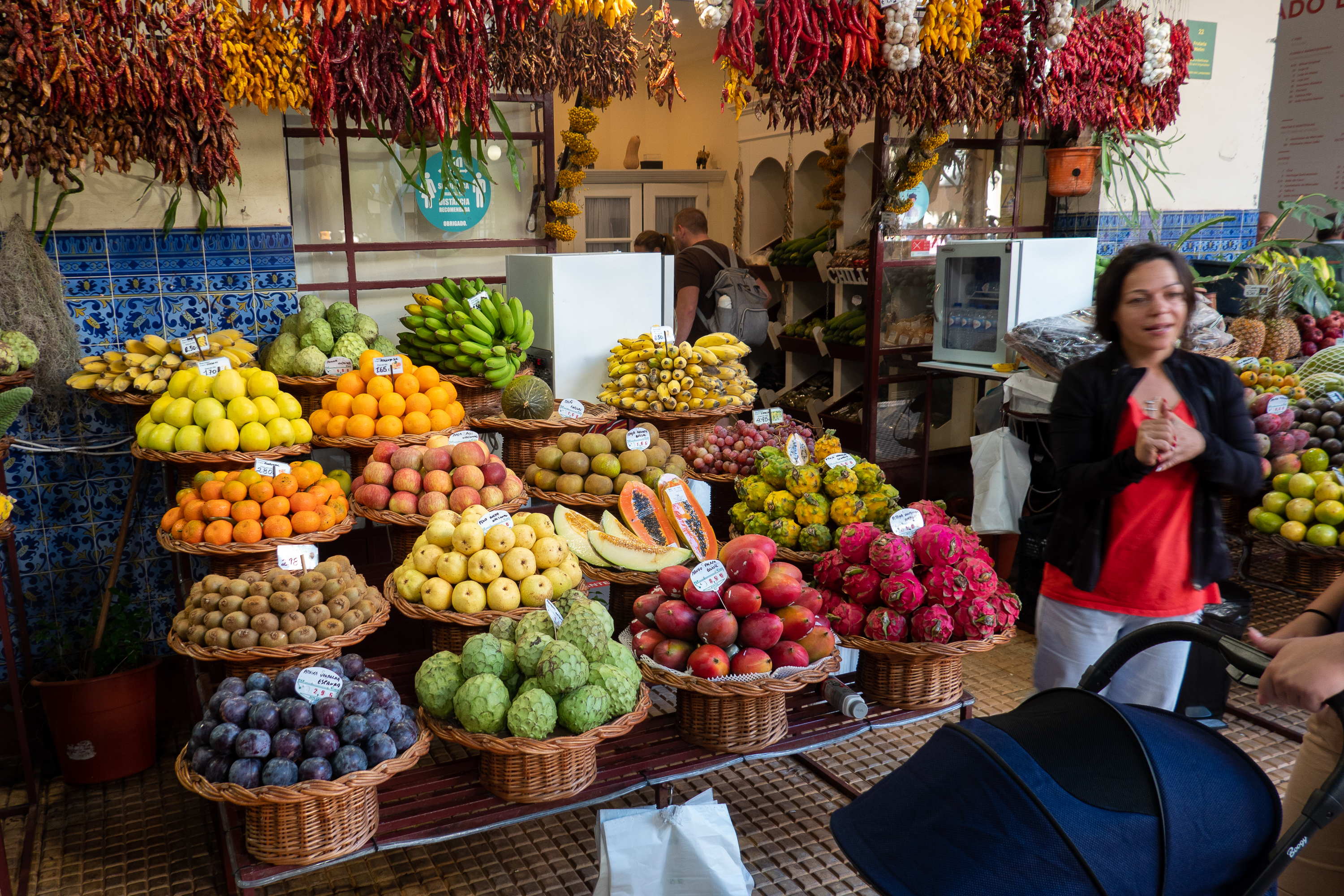
Our first stop was Funchal on the island of Madeira. Madeira is one of the rare islands with a self sustaining economy. That said, it also owes much to the transatlantic trade, all the way back to the 1500’s. Because of the prevailing winds and its westward location, it was a crucial provisioning point for ships sailing west. We started our visit at the market.
The fruit was a riot of color.
The flower sellers wore beautiful, traditional outfits, and, as far as we can tell, this is for real – there weren’t many tourists about.
Cable car to the top
Colonial archiecture
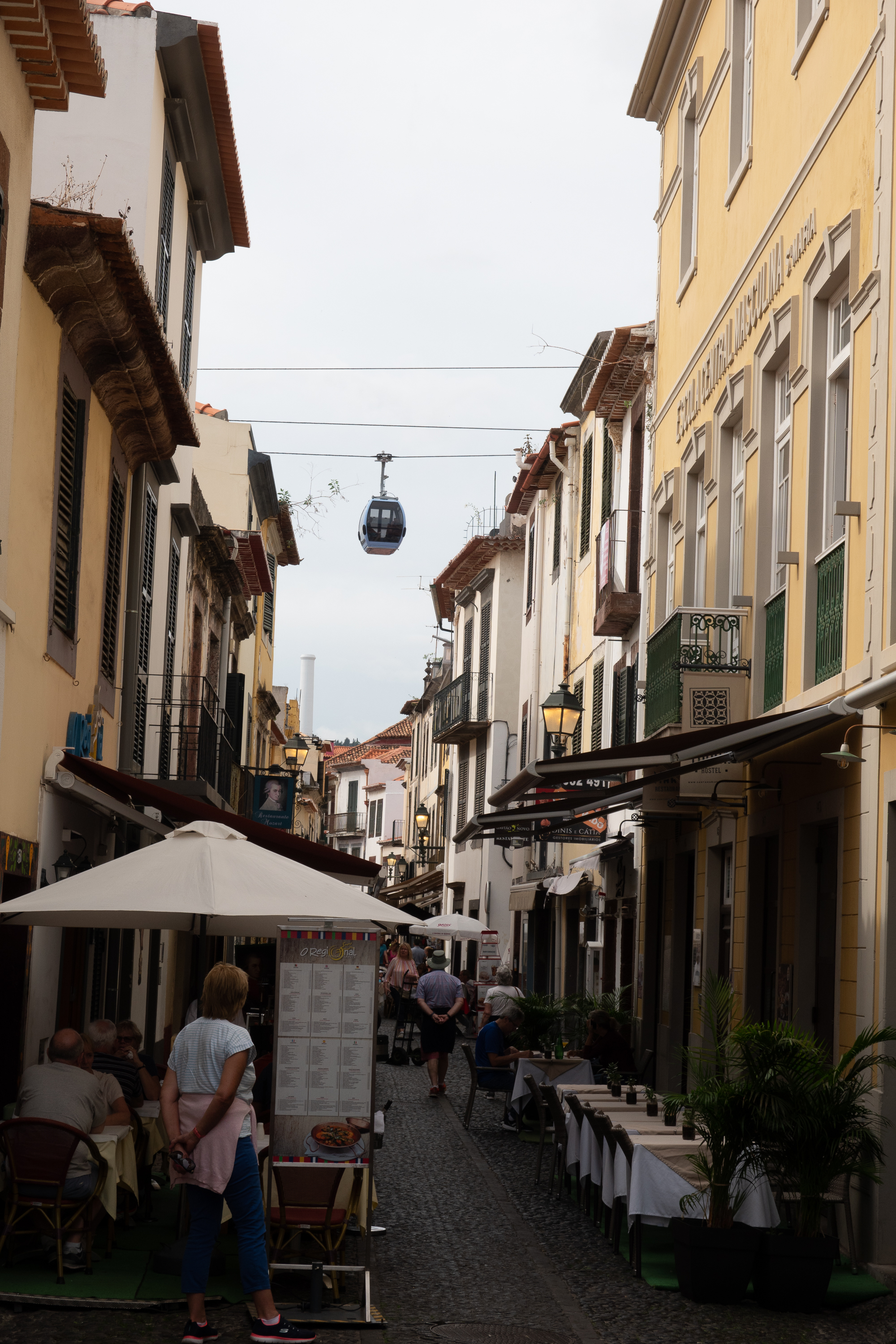
Cable car over narrow streets.
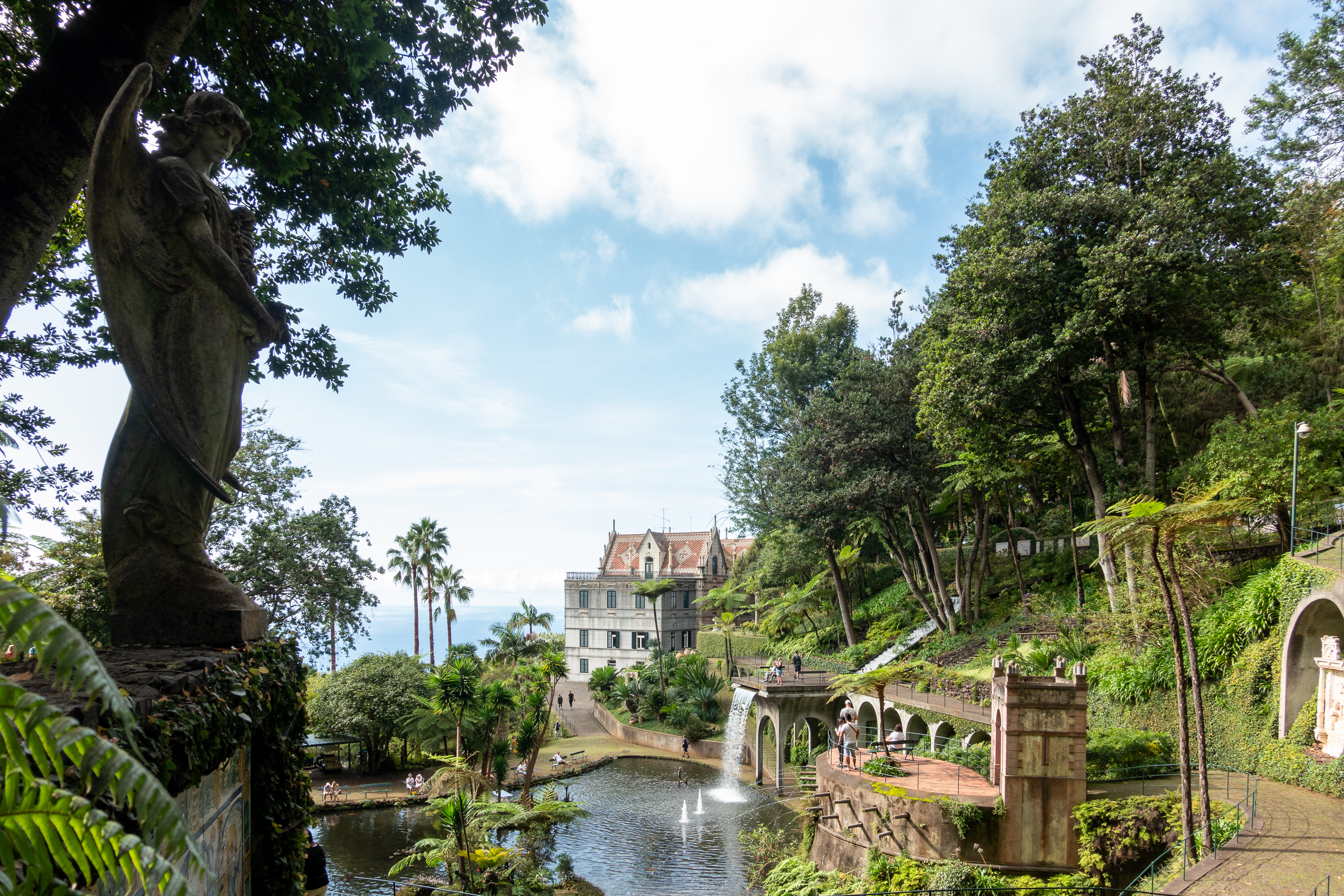
The gardens at the top of the cliff are simply stunning.
We enjoyed a cable car ascent, and visiting the market, glorious gardens, and a drug store for some essentials.
We left Funchal at sunset and set out for Miami.
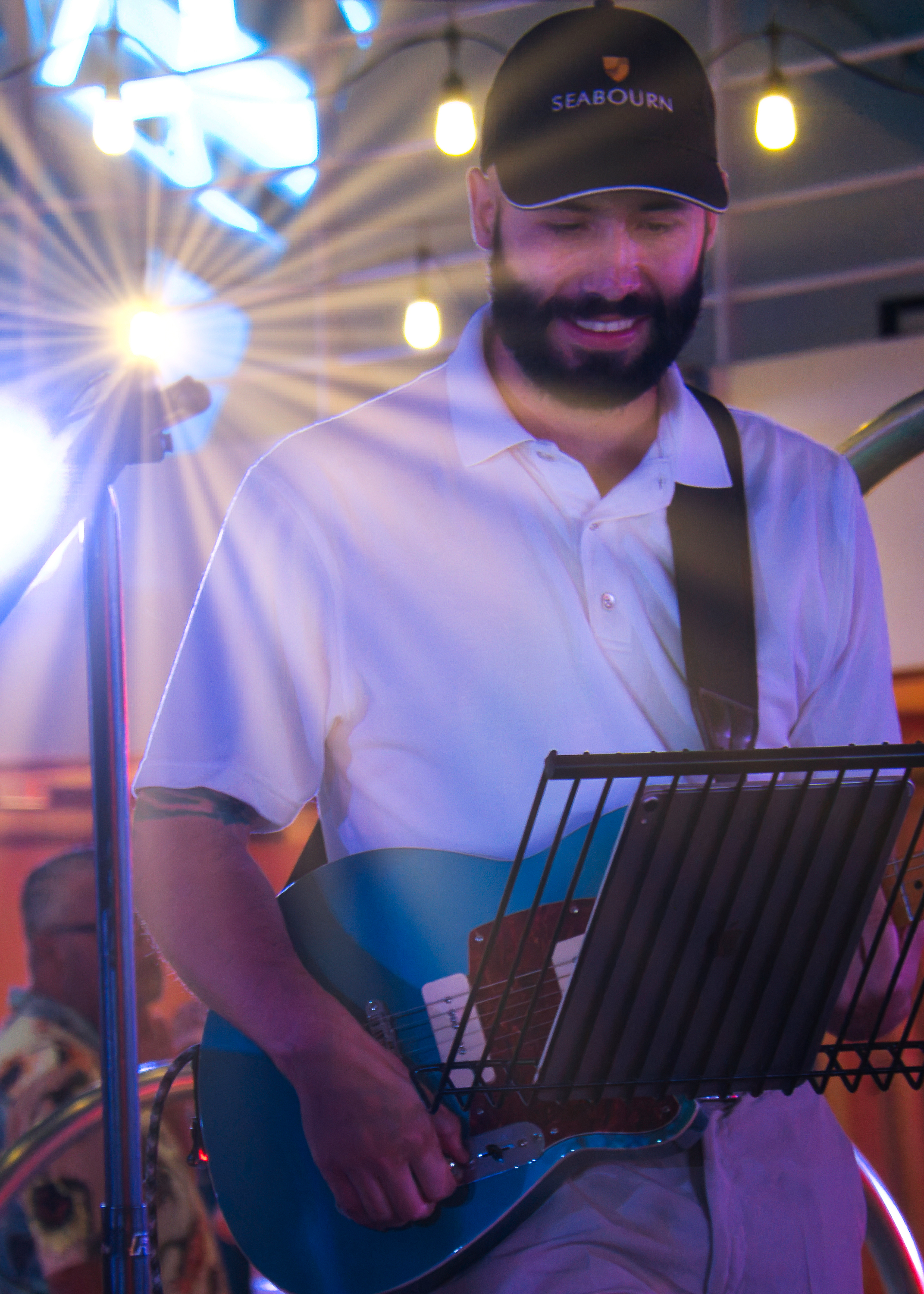
Fred made friends with the two guitarists working on board, one a Colombian who played in the stage band, and the other a Brit, who played in the jazz combo. Both are conservatory graduates and the Brit noted that this is the only job he has had since graduation a few years ago. And yes, both read music very well and are jaw droppingly good.
The crossing was wonderful and we soon arrived in Miami for the turnaround for the Caribbean part of the trip.
Approaching Miami, we saw the “Obesity of the Seas.”
Freedom Tower, Miami
Miami skyline by night
Denise and Fred have lived around the Caribbean for years; Panama, Cuba, Venezuela, and Fred has done several temporary duties in the area, Haiti, the Dominican Republic, Guyana, Trinidad, and even a short, post-hurricane Ivan visit to the Cayman Islands, (https://pbase.com/diplostrat/cayman) but we have never done the classic tourist circuit.
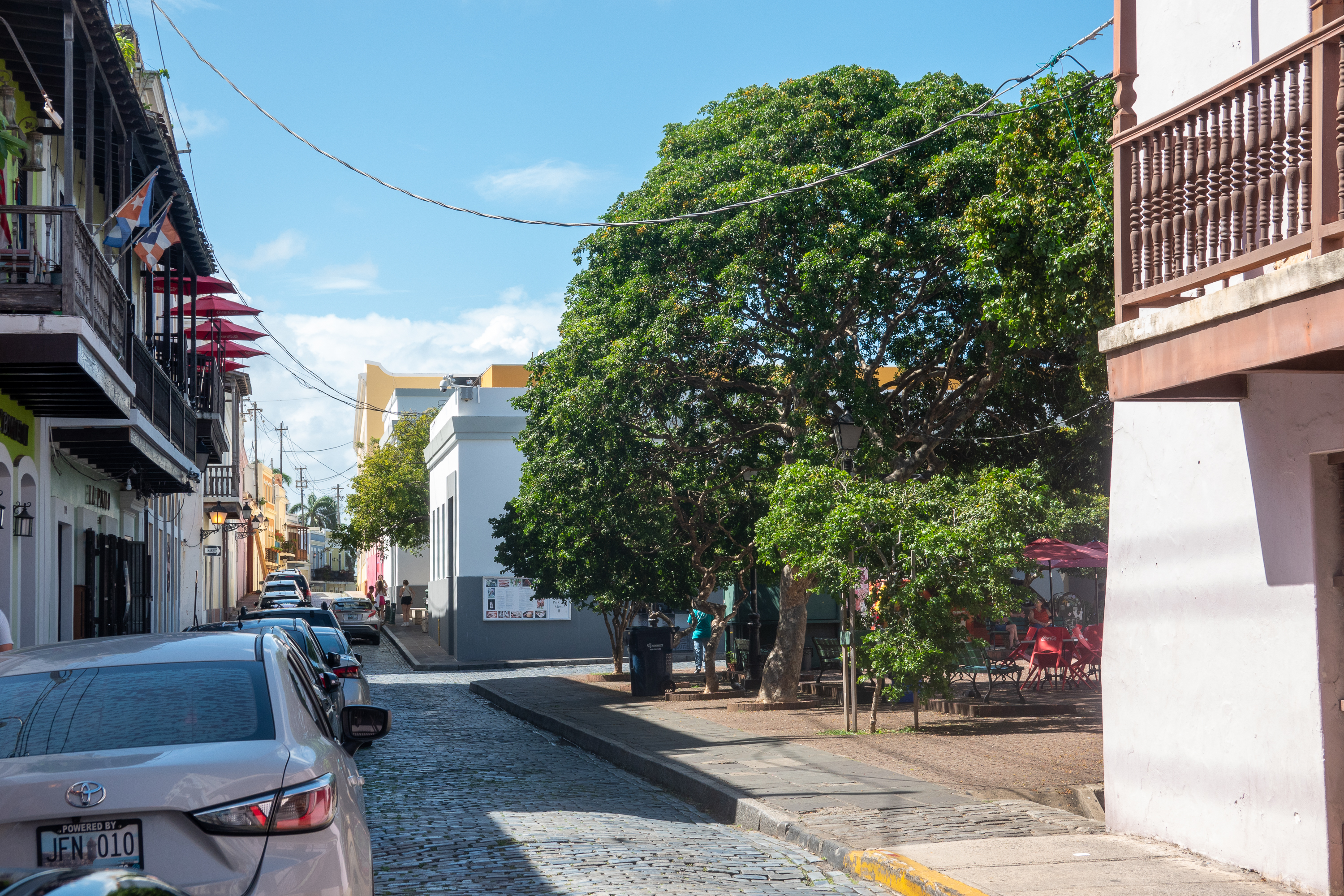
First up was Puerto Rico and here we felt most at home. Not surprisingly Puerto Rico feels much like Ecuador, Venezuela, or any other former Spanish colony.
El Morro (from the sea)
More Morro (from the land)
Classic colonial streets
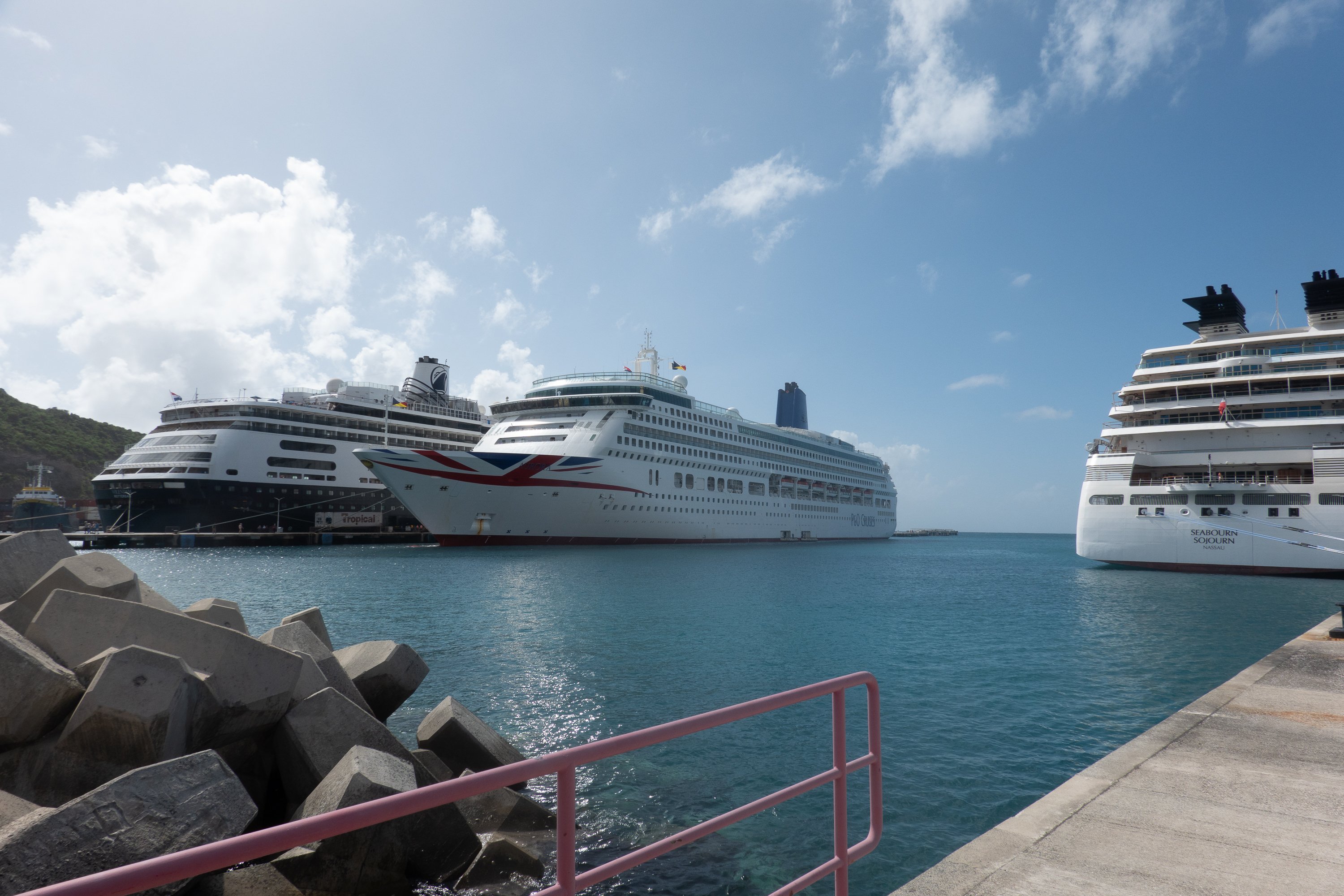
Our first view of the classic Caribbean mass tourism.
Our next port was Sint Maarten, an island shared, since 1648, between France and the Netherlands. The history of the island follows many of the same trends of other Caribbean islands – massive importation of slaves and indentured workers to grow sugar, cotton, tobacco, and salt. Fabulously wealthy colonialists and many, many slave revolts. Today, tourism is the life blood of the island and its airport is one of the busiest in the area, famous for a beach and road right at the end of the runway. We hired a taxi for a day trip ‘round the sights and a lunch in the market on the French side.
Storm shattered resort
The orange iguana was named “Trump.”
Market on the French side of the island. Fort Louis on the hill.
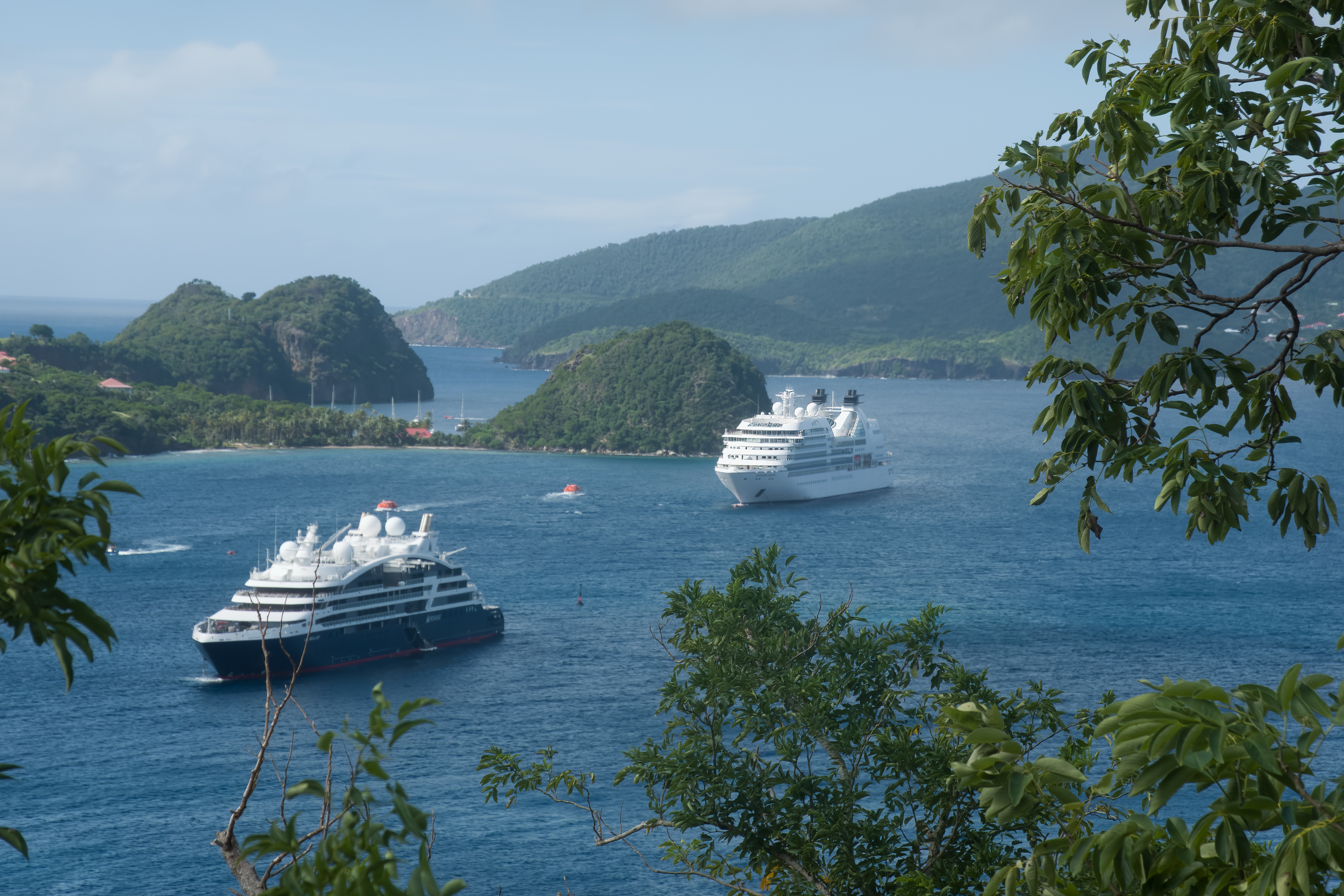
We had a rainy day in Guadeloupe. We hiked up a knee poppingly steep hill to Fort Napoleon. The views were tremendous and there was a surprisingly comprehensive little museum inside the fort.
The fort was named for Napoleon, but he never actually visited.
The for has lots of iguanas, indeed, they are so common that they are in the decor.
Denise celebrates the top of the hill.
Cafe Creole, the local Irish Coffee
Our next island visit was to Antigua and again we chartered a taxi and visited the famous Nelson’s Dockyard. The dockyard has been rebuilt as a tourist attraction, but has several reasonable exhibits on Napoleonic era sailing and naval operations.
Nelson? Well, it is called Nelson’s Dockyard today, but he was roundly disliked by the Antiguans, who resented his upholding the Navigation Acts which prohibited trade with the new United States. They even held up his promotion for years. In return, he dismissed them as worse than the American rebels. Still worth a visit.
The sugar trade, especially, made the Caribbean Islands as valuable as any gold mine or oil well for hundreds of years and most changed hands many, many times following bloody raids and sieges. Hence the proliferation of forts you can visit. Like many other islands, Antigua’s list of resident/vacation home owners is a real who’s who of Anglo-American actors, musicians, and other personalities. You might be hard pressed to name one who doesn’t have a place on Antigua.
A classic cruise ship moment, a steel band. (And yes, they were excellent.)
St. Kitts is about as small as they come. Traveling around the island you are struck by the use of the singular; there is often only one of a facility on the whole island – “This is our …” Bank, hospital, car dealer, etc. Note that this is emphatically NOT the case with churches; here the quantity and variety is infinite. At the end of the 19th century the sugar trade was dying out and the plantation owners were eager to cut their costs. One solution was to build a narrow gauge railroad to link all of the major plantations and allow them to consolidate their harvests at one, modern sugar mill, as opposed to using windmills at each plantation to crush the harvest. In the end, it didn’t work, and today the bumpy tracks are used to to tourists around the island at the blazing speed of ten miles per hour. And even that is rough! But lots of fun.
Rough Atlantic to the left and calm Caribbean to the right.
The track was as rough as it looks, but a lot of fun.
Seabourn was very proud of its picnic in the surf.
From St. Kitts we sailed back to Miami via the British Virgin Islands and flew home.
Heading down the Rhine, we enjoyed the many castles perched on crags and of course, the Lorelei Rock.
Interesting trivia. During WWII the Allies generally tried to avoid bombing churches or old castles. So, suddenly, lots of railroad tunnel mouths and other points got converted into “churches.” And so they remain to this day, with trains running through them every day.
The “church” of Our Lady of the Tracks!Great RV campsite!
A Viking sistership.
… and an older style Rhine boat.
The Captain, piloting the boat from one of two outside conning stations.
For those of us old enough to have stood a bridge watch with a wheel and lee helm, the high tech controls of the Viking river boat are amazing!
Yes, people are THAT close!
Passing on to the Moselle River, we stopped at Cochem, where the highlight of our visit was the eleventh century Reichsburg Castle high on a hill, overlooking the town. https://www.reichsburg-cochem.de/index.php?id=4&L=1
The final highlight of our tour and one that was totally unexpected was our visit to the city of Luxembourg. We began at the American Military Cemetery just outside town and were much moved by the simplicity and yet emotion inspired by the rows of white crosses. More than 5,000 US Servicemen are buried there including General Patton. (https://www.abmc.gov/cemeteries-memorials/europe/luxembourg-american-cemetery#.W6KwTS-ZOEI)
Patton reviews the troops.
After this visit, we headed into town, where we explored on a walking tour the Chemin de la Corniche with its spectacular view of the 17thcentury wall and city, the main market area and the Notre Dame Cathedral.
We returned to the Cathedral for a wonderful, thirty-minute organ recital. You can see and hear a bit here. (Hint: Crank up the volume!)
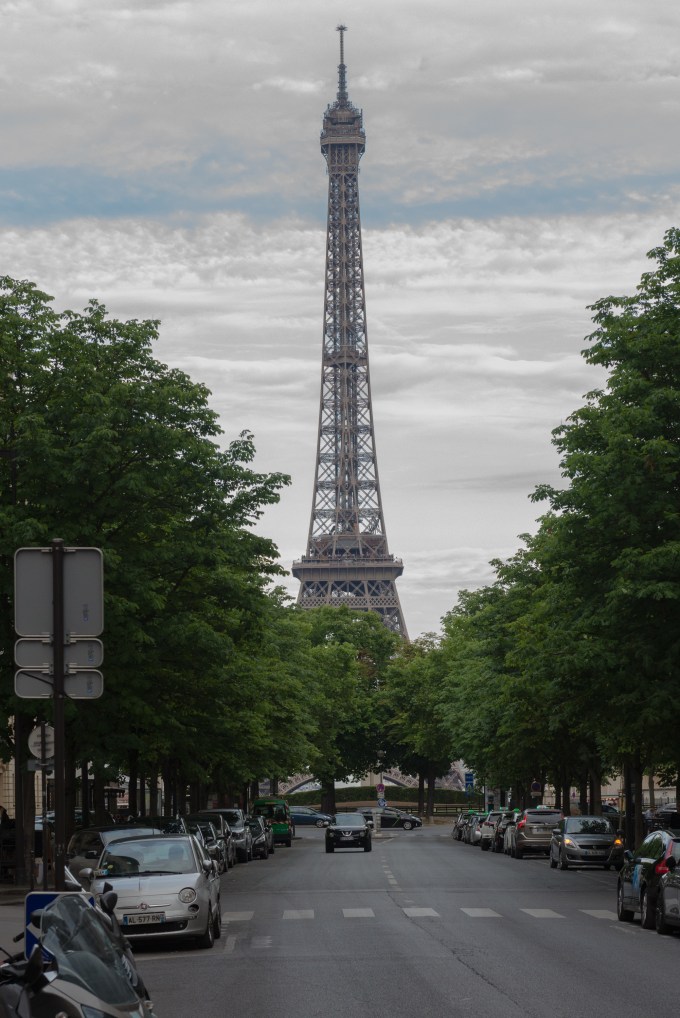
And having left our boat, we headed to Paris by bus. Once there, we visited a Moroccan restaurant near our hotel which we knew from previous visits had a long lunch the following day with a friend from Bangui. Then back to the US after a great trip.
We unfortunately left the sunshine behind as we entered Germany. The transit from the Czech Republic to Germany was by bus and our first stop was Nuremberg. This turned out to be a bit of a loss as a rock concert prevented us from visiting the (in)famous “Triumph of the Will” stadium (https://en.wikipedia.org/wiki/Triumph_of_the_Will) and the trial museum was not open either. We had to content ourselves with a visit to the market and a sample of the famous local sausages.
Nuremberg market square with the 14th century Schooner Brunnen fountain in the front and the Frauenkirche (Church of Our Lady) in the background.
It was difficult to imagine this square as the site of Hitler’s final speech in “The Triumph of the Will.” May it always be remembered today for sausages and Lebkuchen, gingerbread cookies.
Fountain detail
Figure on fountain
The Männleinlaufen, an animated clock on the Frauenkirche
We finished our visit to Nuremberg with a view of the town from the Castle.
After Nuremberg we arrived at the boat in Bamberg and spent our first night on board. The next morning we set off in the pouring rain to see Bamberg. As it was a Sunday, a lot of museums were closed and we were unable to enter the Cathedral due to Sunday services, but we had a pleasant, if damp, view of our first German town and would certainly return.
The Fuersten gate to the Bamberg cathedral has two interesting statues; “Ecclesia” and “Synagoga.”
Ecclesia is crowed with heaven. She used to carry a staff with a Crucifix, symbolizing the power of the church on earth. (Original statues were removed in 1937.)
Synagoga is, however, blindfolded and carries a broken rod. (A not too subtle message!)
According to legend, the bishop of Bamberg would not grant the citizens any land for the construction of a town hall. This prompted the townsfolk to ram stakes into the river Regnitz to create an artificial island, on which they built the town hall they so badly wanted.
The bridge over the river runs right through the town hall. (On the inner wall is a plaque dedicated to Claus von Stauffenberg. From the Bamberg area, he was one of the leaders of “Operation Valkyrie”; the plot to assassinate Hitler.)
Beautiful statue on the bridge
We ended with coffee and cake (yes, there is a theme here!) in a Konditorei and returned to the ship, feeling warmer! We left around midday heading for Wurzburg down the Rhine-Main-Danube Canal.
We traveled several rivers during this cruise and enjoyed them all! We are total lock and canal fanatics, having transited the Panamá Canal, the Suez Canal, and parts of the Kennet and Avon Canal. If the Rhine-Main-Danube Canal is less well known than Suez or Panamá, it is an amazing engineering accomplishment with a long history. Read more here: https://en.wikipedia.org/wiki/Rhine–Main–Danube_Canal
Approaching a Lock
Waiting for a boat to leave the Lock
Lock gates opening after lowering the boat
For those who are wondering, the Viking river cruise boats are very much like miniature ocean liners. They are carefully sized to fit the locks but despite being very long and narrow, they do not feel cramped at all. Indeed, the general feeling is one of extreme spaciousness. Because of low clearance, the bridge, and indeed everything on the top deck, can be lowered.
The next day, we took a full day excursion to Rothenburg ob der Tauber. The rain was not constant and we enjoyed an extended walking tour of the town, which is one of the best preserved of the old towns, many of which suffered extensive bomb damage during World War II.
The medieval feel is quite strong and included a costumed minstrel band singing, drumming and asking for beer up and down the high street. Great fun.
Carriage
Marching Band
Beer for the Band
Toast
Folk Dance
A bit of whimsy
We spotted a stork’s nest and walked the town walls and visited the Hauptkirche of Saint Jakob (high or main church).
Nesting Stork
Nest on the roof
On the battlements
Street Scene
The church contains the Altar of the Holy Blood, a reliquary said to contain the blood of the Christ.
Main Altar
Reliquary
On our return to Wurzburg we visited the Bishops’ Residenz, a UNESCO listed site built between 1720 and 1744 by the prince bishops. A very opulent palace created for some very powerful men of their time, with extensive marble, gold stucco and frescoes.
Nothing modest about this palace
The ceiling frescos were later featured in the PBS series “Civilizations.” Beyond the theme of the superiority of Europe, they feature amazing trompe d’oeil elements like people who begin as paintings on the ceiling and end as statues and figures painted so that they appear to be standing outside of the fame of the ceiling; an amazing 3-D effect. Religious scholars could use this palace as the setting for a discussion of the doctrine of the poverty of the Christ. (Yes, that is sarcasm.)
Grand Stairway (Photo from the Web.)
We declined the all day tour to Heidelberg as the sun was peeking through and we preferred to sail on the river and enjoy the view.
We weren’t the only ones enjoying a quiet day on the river.
Lumpia, pancit, ribs!
The cuisine on board was excellent European food, so we were surprised to learn that the chef is actually a Filipino. When he learned the Fred had lived in the Philippines, a Filipino feast was prepared for lunch.
We stopped briefly in the small town of Collenberg. At one time it had an interesting motte and bailey castle. The motte was a hill overlooking the Main River and the bailey extended down to the river’s edge, allowing it to control traffic.
The keep on the motte, overlooking the town. (Now used for music festivals.)
The original wall, by the river, repurposed for houses, both old and new.
Tied up at the pier in Collenberg
RV’s parked in the riverside campground.
Local official checking out the river boat. He collected a toll in cookies.
The following day we were due in Mainz in the mid morning but were delayed because of heavy lock traffic on the Main River.
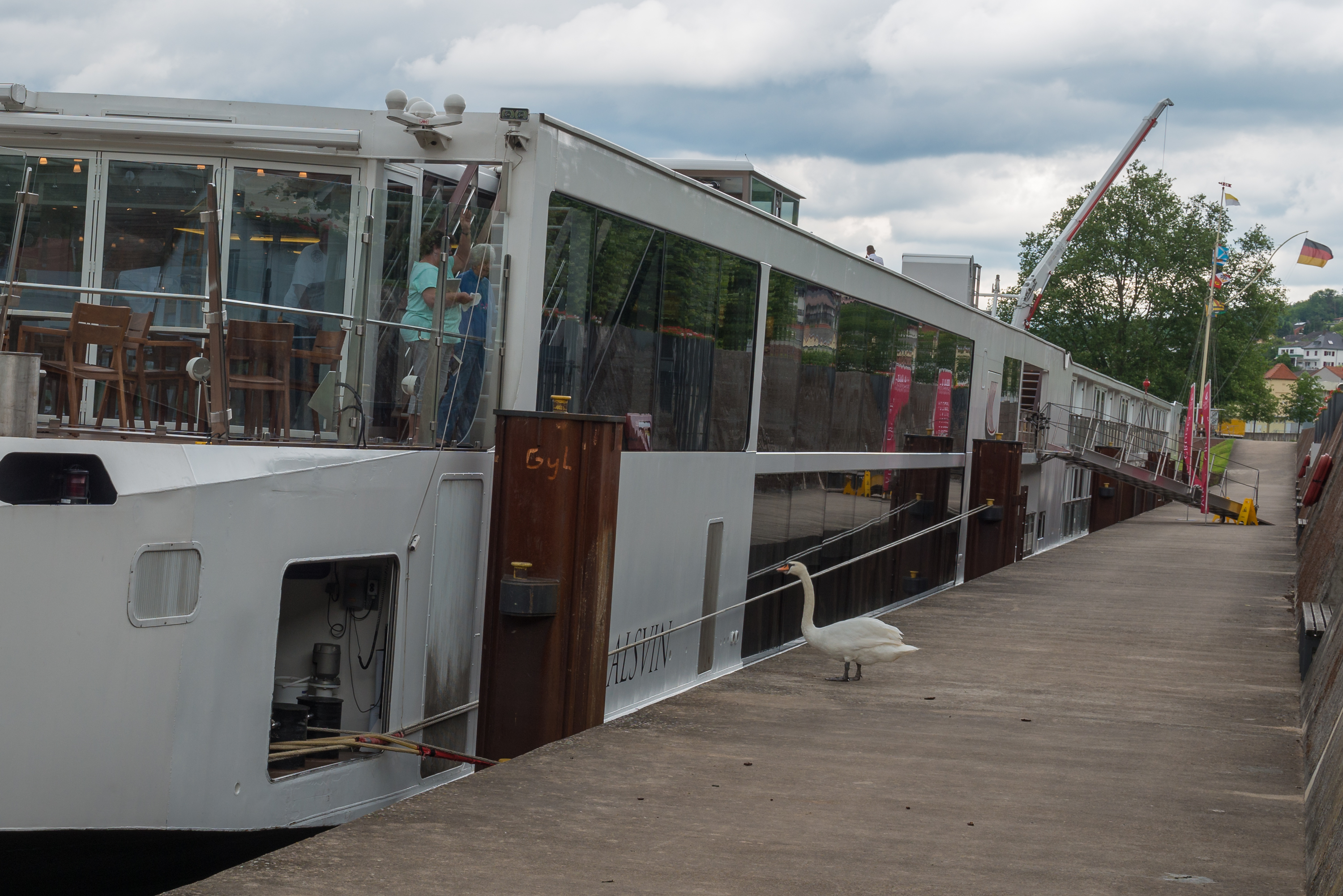
Tied up at Mainz. You can see how long these river boats are.
This messed up the guides that Viking had booked so we headed out alone for the Gutenberg Museum, which was the highlight of the day for us. We viewed the Gutenberg Bibles on display in the museum, which are amazing and still so colorful after all this time. We watched a printing demonstration in German, which was fun for both of us and showed the color techniques. (Denise speaks German, but Fred does not. He had the greater challenge!)
Been a long evolution from this to an inkjet on your desk
If they can fit, so can we!
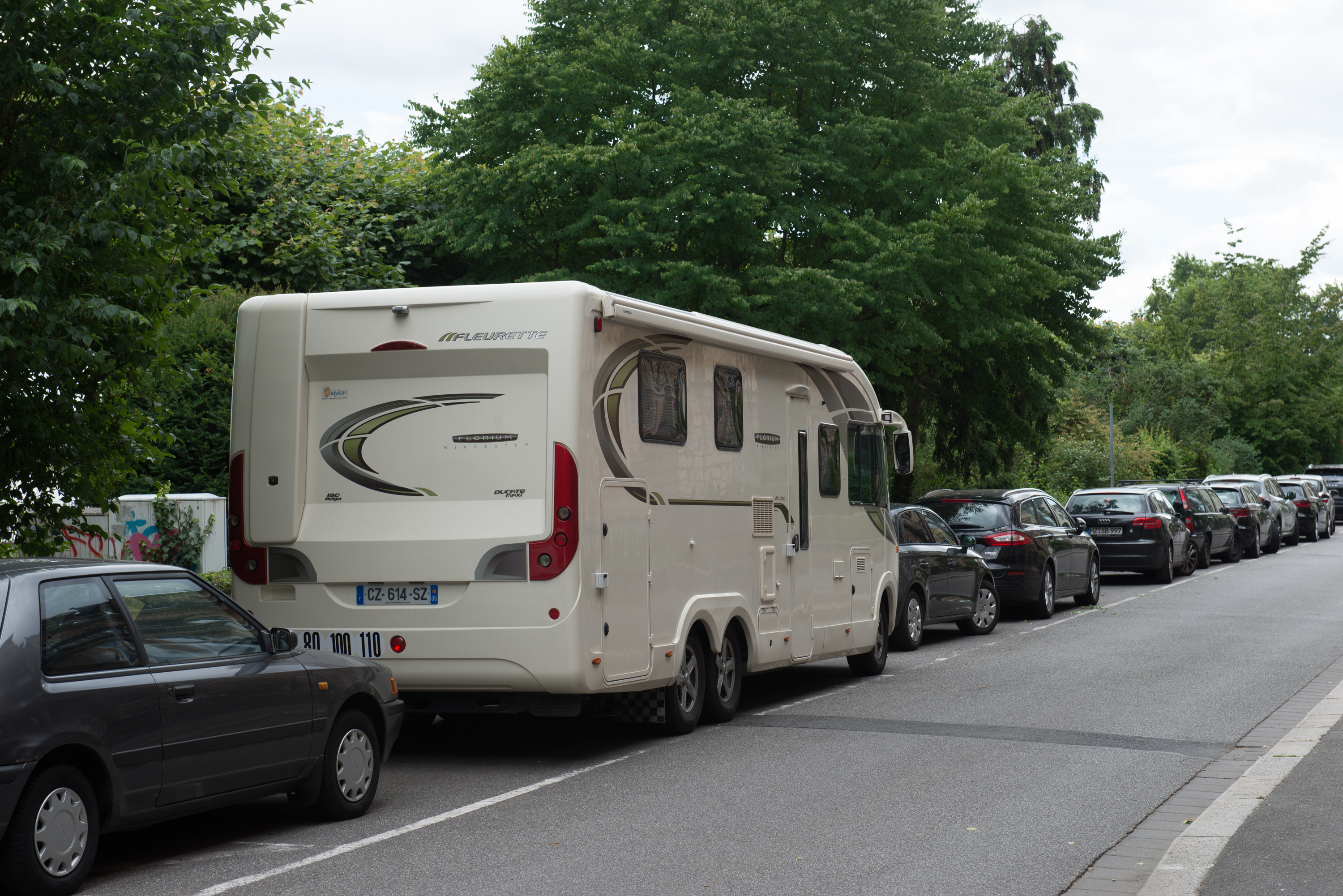
With our plans to ship our camper to Europe, we were always alert for signs of campgrounds and campers. It was interesting to see this beast parked on the street in Mainz.
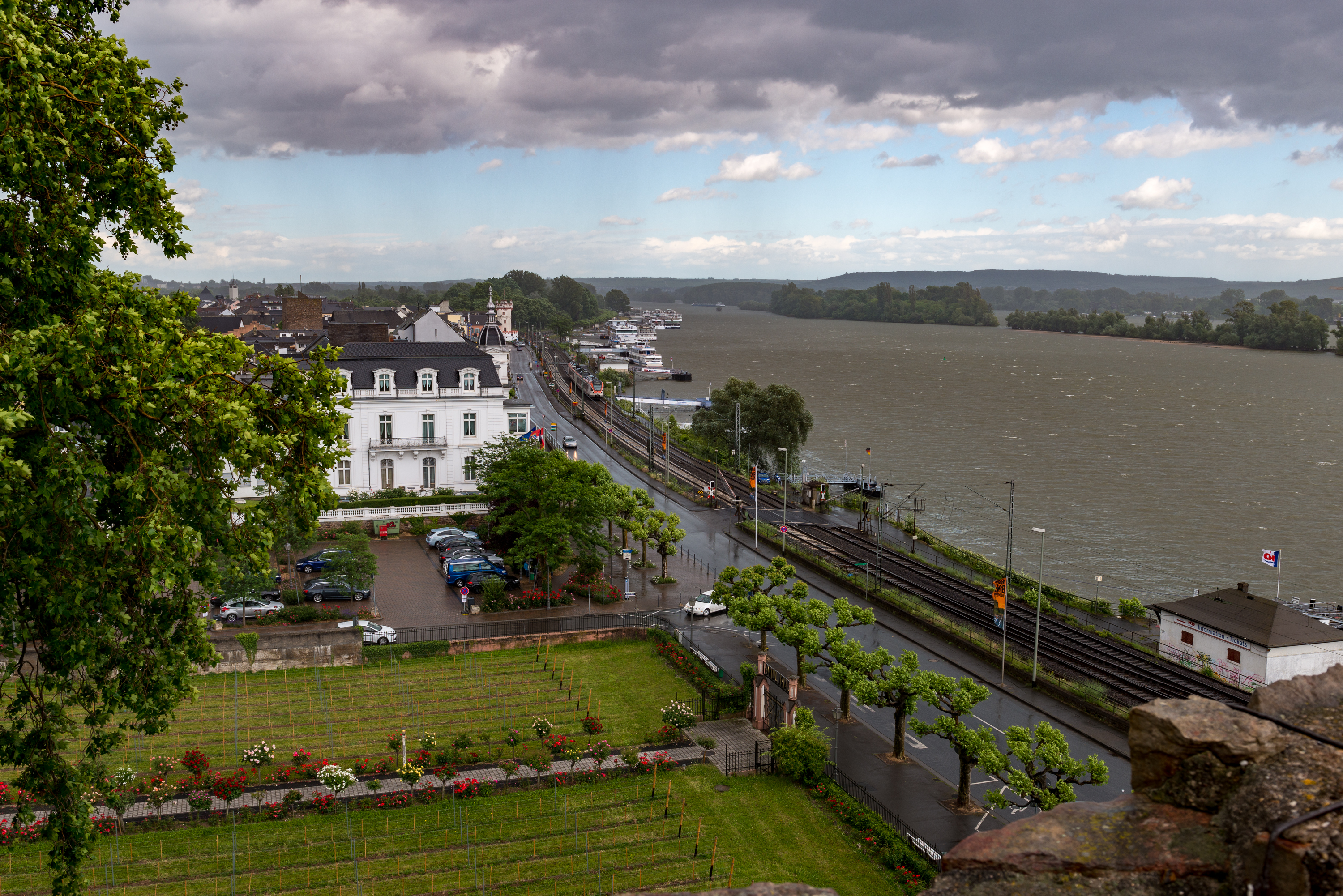
That afternoon we visited Rudesheim am Rhein. We wandered the town and headed for the Rheingau Wine Museum at Brömser Castle. https://www.ruedesheim.de/en/wine-culinary-art/wine-culture/The museum, located in the 1,000-year-old castle, was itself interesting and dealt with the history of wine making but the fabulous part was the castle tower itself. This was accessible to those wishing to climb it, which we of course did, and enjoyed spectacular views of the river and town from the top.
Threatening skies
We love prowling the winding stairways of medieval castles, cathedrals, and other buildings. This little tower was one of the best textbook cases of how these passages were laid out to favor both communication and defense. For those of you who are not medieval fortification nuts, the stairs were built as a clockwise spiral so that an attacker climbing the stairs would have his sword arm blocked by the central support. A defender, on the other hand, would have his right hand free. The steps were also often uneven, so as to cause someone not familiar with the stair way to stumble. And, of course, they were only one person wide so that attackers could never take advantage of numbers.
Denise has her right hand free to defend against attackers climbing the stairs.
Watch your Step!
We missed the two museums devoted to torture and crime, although the toy and railway museum might be a better bet. A good reason to go back? Of course! Where else can you find an inn with a medieval tower flying the Harley-Davidon flag?




















































































 DiploStrat