As 2020 opened, we began to get serious about our plans to spend a year or three traveling in Europe and North Africa in the 917.
The idea was fairly simple – ship the truck to Europe and start traveling in a part of the world that had mostly been fly over countries for most of our lives. Then came COVID.
Now, in 2023, it was time for another look. Several things had changed – the increasing enforcement of the Schengen Agreement which limits time in the European Union to 90 days in, followed by 90 days out, was a major complication. Although there are reports that enforcement is variable, the penalty for overstay is a ban from entering the EU for three years, so this is not something that we want to risk. So this means that we will be traveling in and out of the UK, where we can get 180 days at a time, and then dropping into the EU.
So we launched into a siege of repairs and upgrades, picked a shipping company, and made a reservation. Denise found a repositioning cruise on Viking with very low rates, so we chose that as an alternative to flying. In the end, as the ship carrying the truck is running about two weeks late, this was probably not a good idea for the initial trip – would have been better for subsequent returns to the UK, but it was a lot of fun. And an interesting opportunity to compare/contrast with our almost identical trip on Seabourn.
We drove up to Baltimore to drop off the truck, to almost exactly the same place where Fred recovered his Blazer in 1975, after the trans Sahara trip. (https://pbase.com/diplostrat/sahara) When Fred received the truck in ’74 it had been completely looted – here’s hoping that we do better this time!
The 917 settled in with new neighbors on the pier. Ended up sitting there for two weeks.
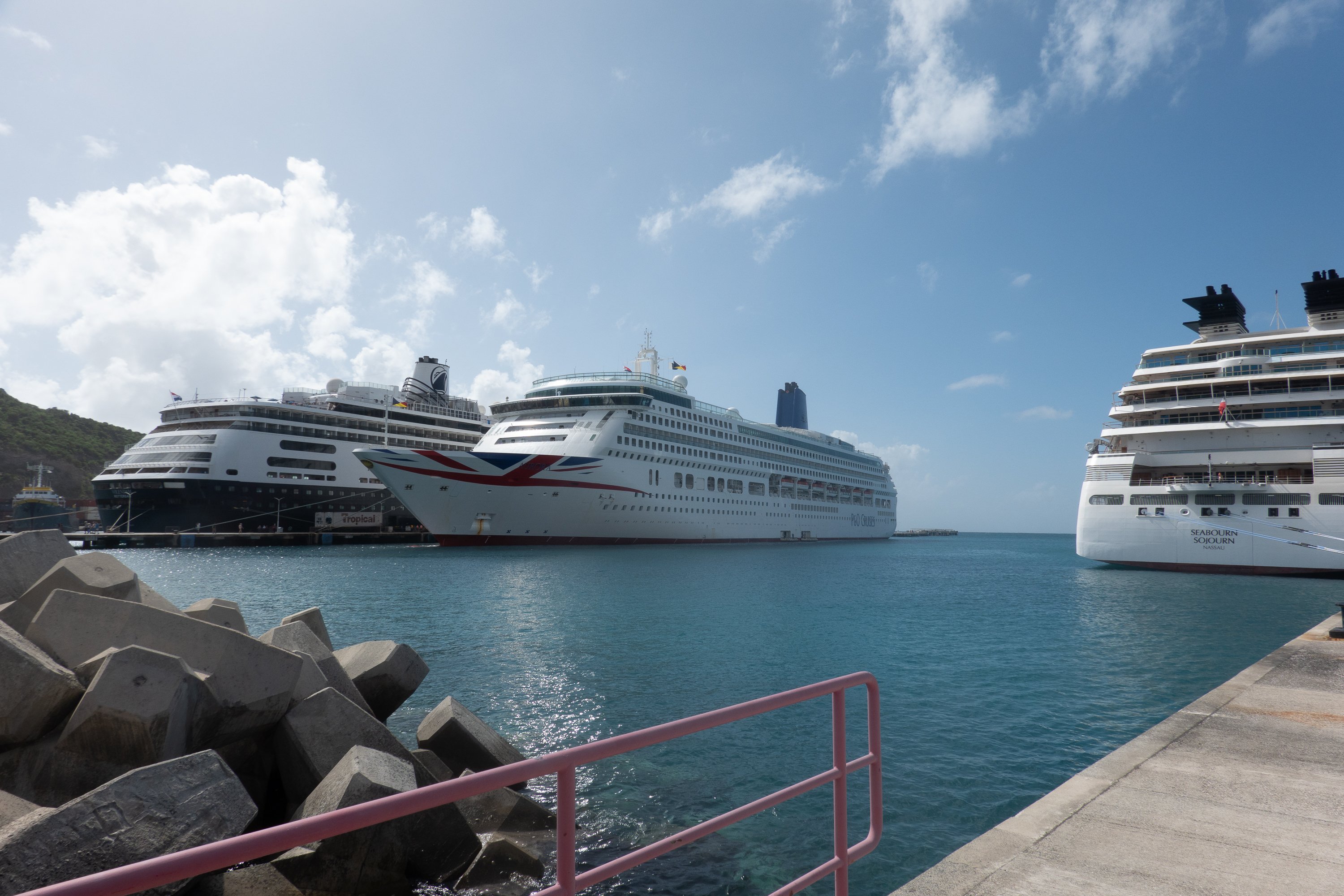
We flew to Fort Lauderdale to join the Viking Star. Boarding was easy and we set out to explore the ship which, while larger, was almost the twin in layout to the Seabourn Sojourn. It was fascinating to note what was the same and what differed from the other ship. In the end, they were more alike than different.
In the old days, you boarded from dark, dingy pier warehouses. Now you use the same type of jetway as an airport.
Home for the next week.
Viking has wonderful baths on both their river and ocean ships.
Looking around the harbor we noted a RoRo of the type that would take the 917 to England.
After an easy departure, the Pilot went ashore and, later, we waved goodbye to Miami. We were finally en route.
We settled into the routine at sea. And we enjoyed the wonderful weather.
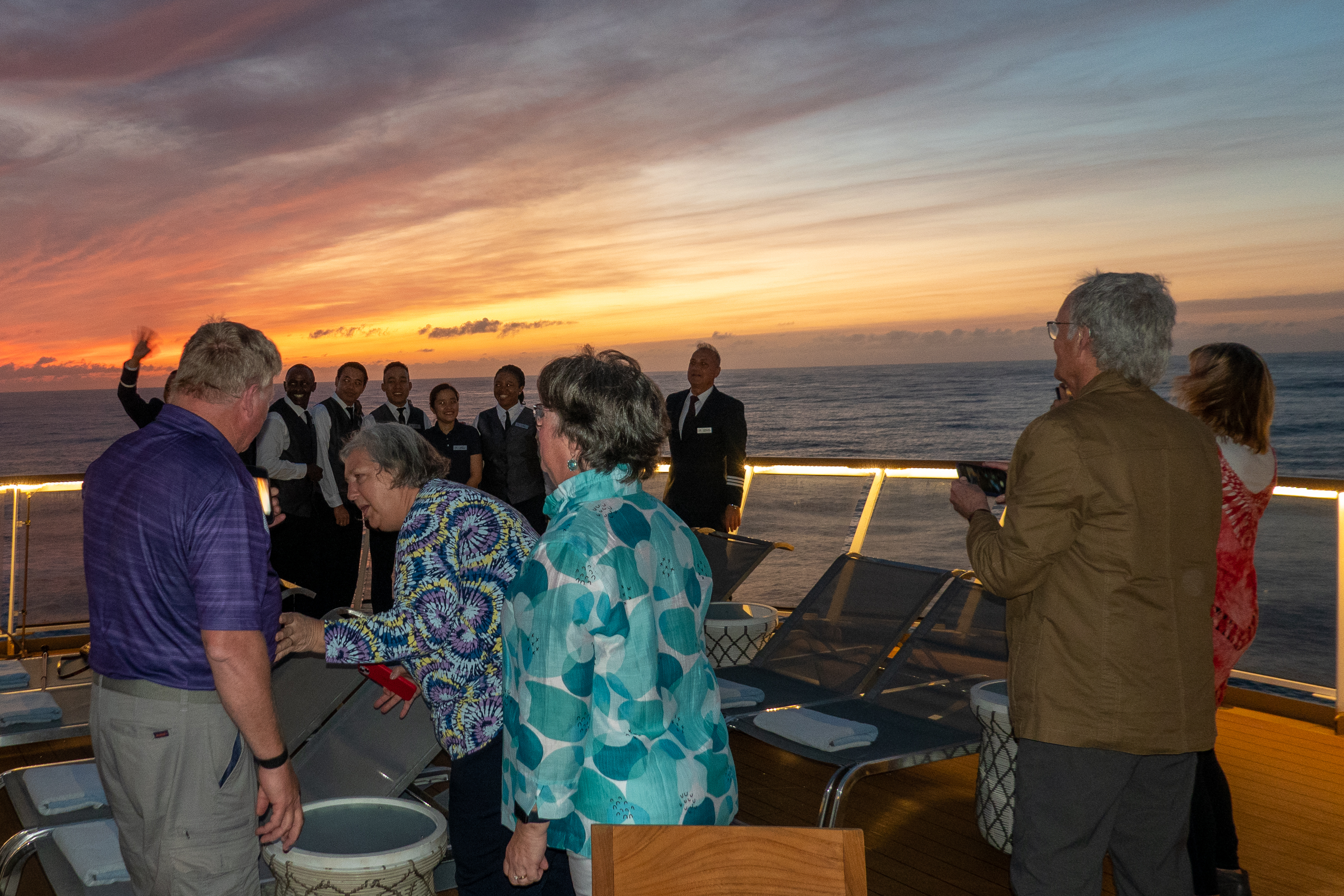
Passengers gathering to photograph part of the dining staff against the sunset.
The formal portrait. (I sent it to the chief of restaurant services, the gentleman on the right.)
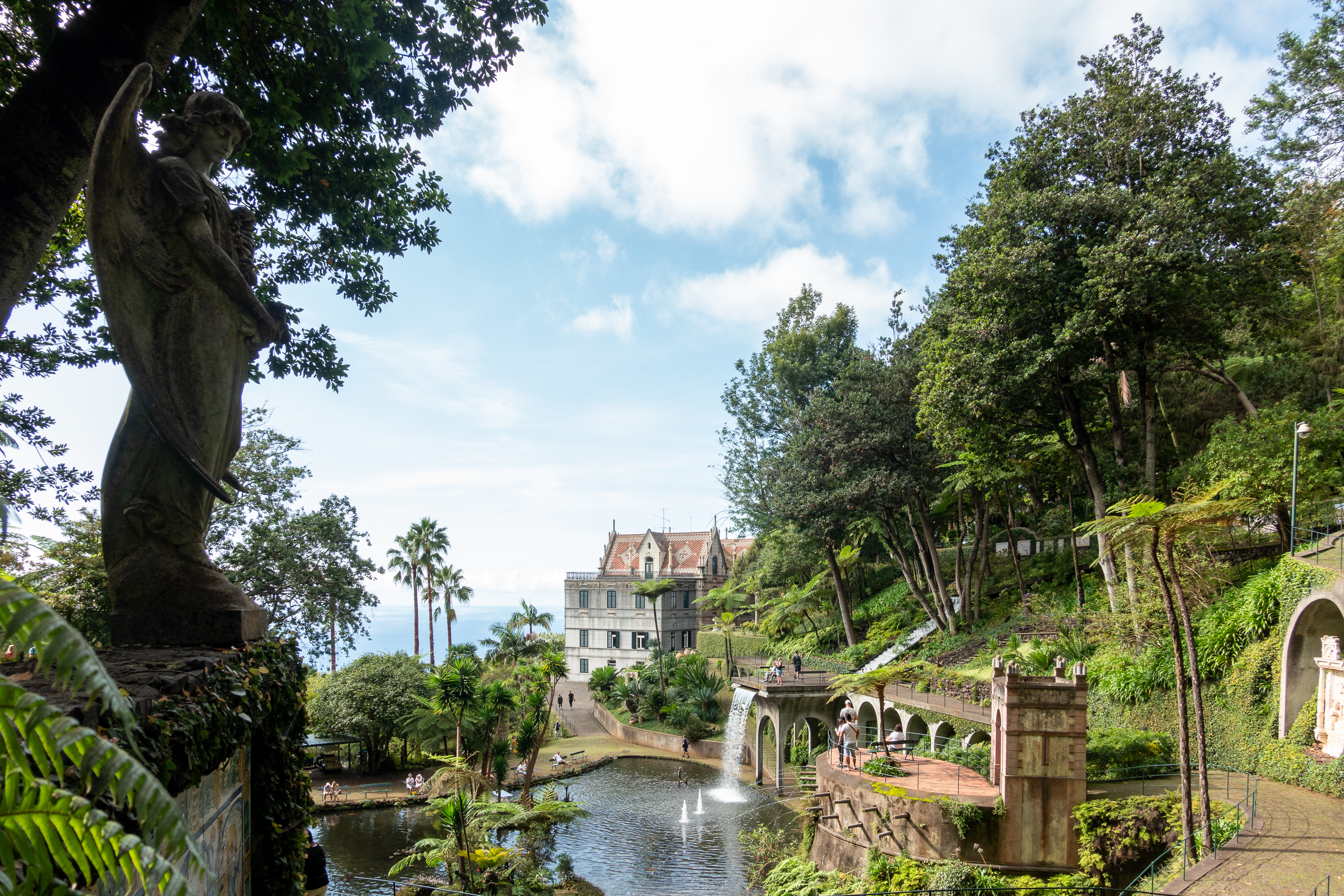
We skipped going ashore in Phillipsburg, but were looking forward to Madeira, a kind of magical place. It is easy to see why it it is so high on the European list of vacation spots. With only a four hour visit, we skipped the the packaged tours and set off into town to in search of coffee and a visit to the cathedral.
Funchal is really pretty.
Our first stop was the park where we admired a statue of Bolivar and had a chat with a lovely lady who had just moved back to Madeira after living in Venezuela for years.
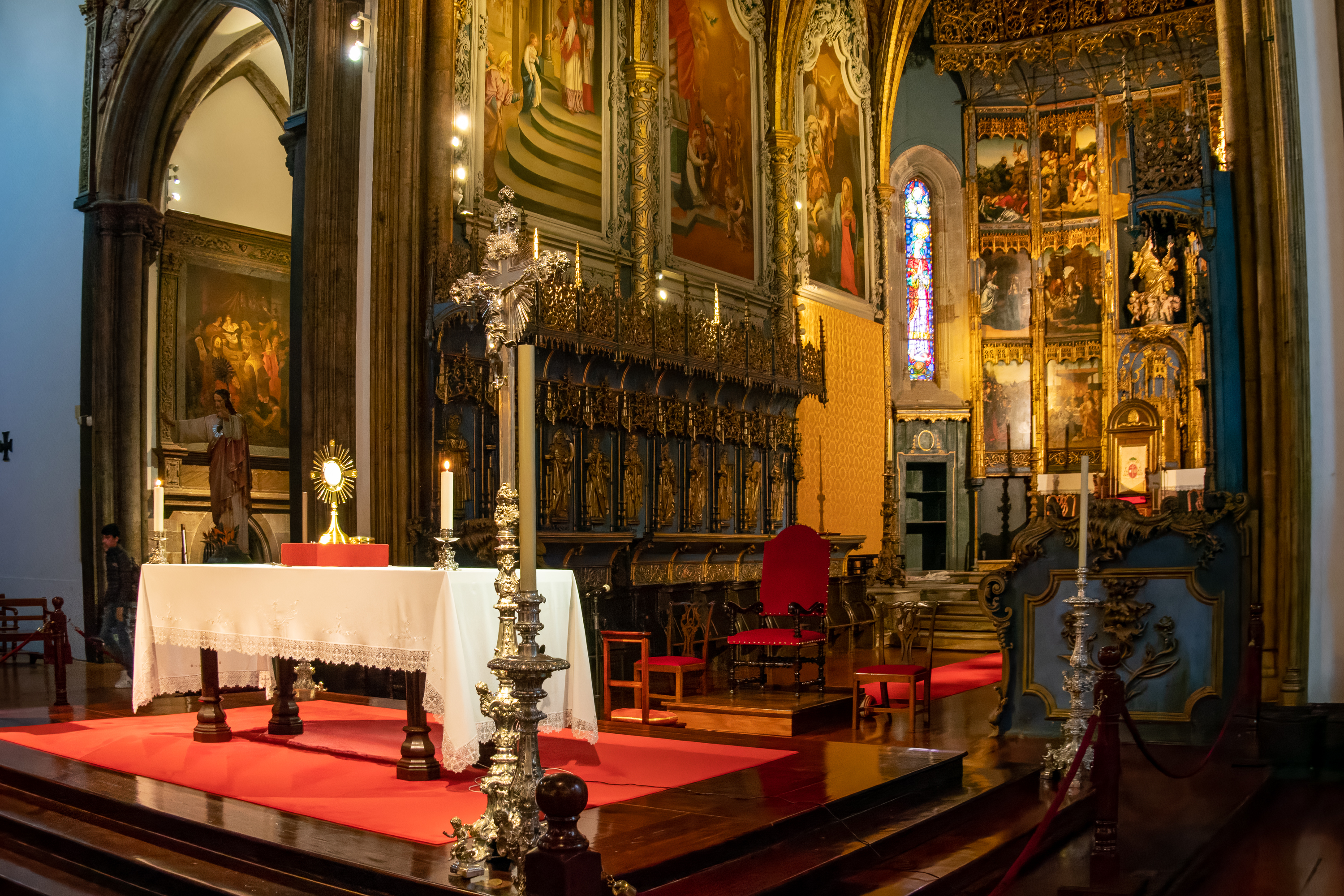
Fortified with and espresso and a gelato, we visited the cathedral, a rather plain, gothic building, dating from the late 16th century. One of the few intact buildings from the early colonial period.
Nowhere near as large or gaudy as some the the large European cathedrals, Funchal is still very nice.
The ceiling was spectacular.
Galleon style tour boat, sailing in front of the downtown.
Sailing away from Funchal we passed Kong’s island. 😉
(Kong was not receiving visitors.)
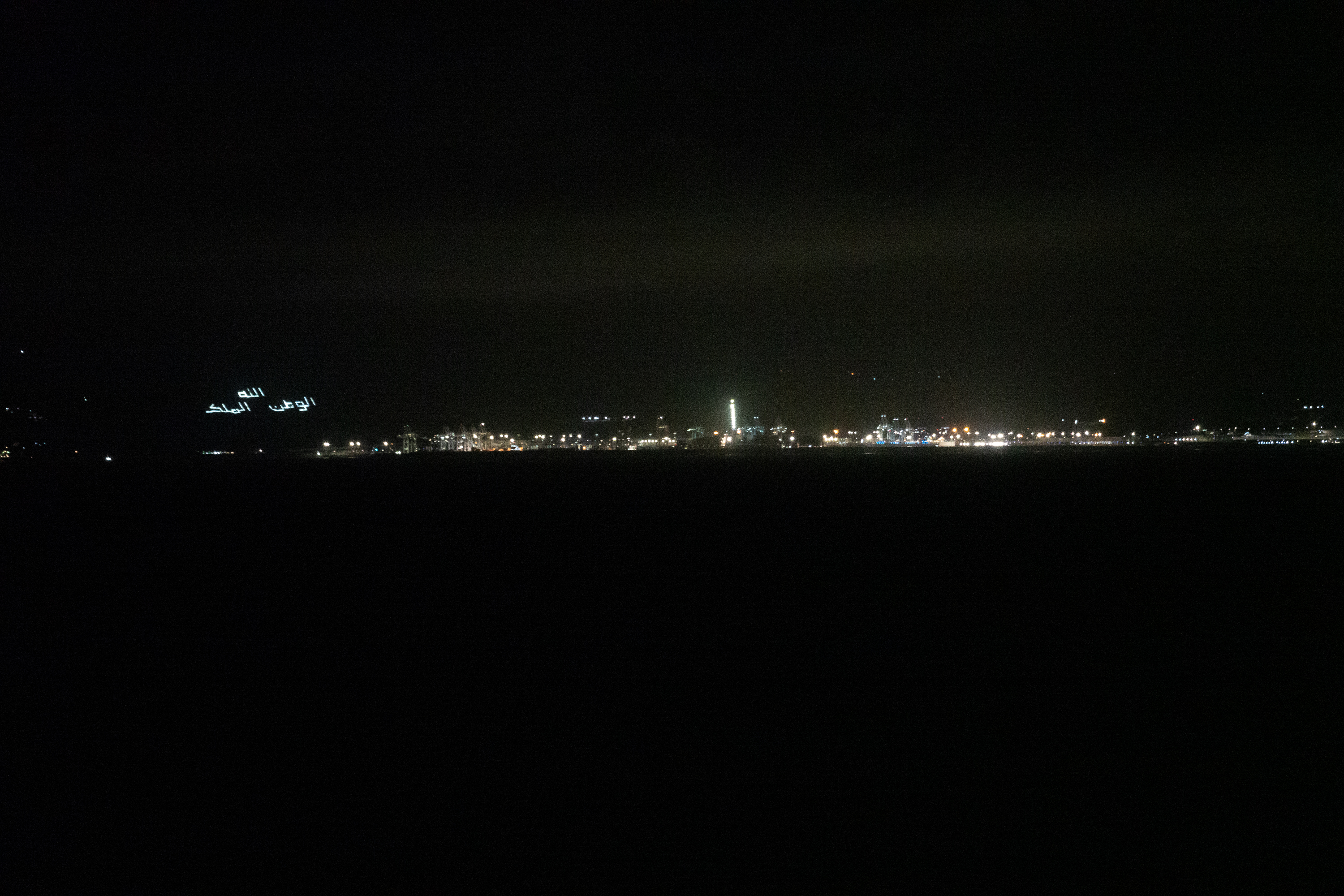
Sadly, we passed through the Straits of Gibralter at night.
Allegedly, the Viking Star is very “green” and most of this is water vapor.
We passed on the Moroccan side.
The next day we sailed up the Mediterranean coast of Spain towards Barcelona.
The Penon d’Ifach (A really big rock)
As the sun set, we passed Ibiza. Barcelona tomorrow morning.
In the latter part off 2022, Denise’s brother wrote that he and his wife were going to take a repositioning cruise from Lisbon to Miami and then continue to make a circuit of some of the lessor known Caribbean ports. Would we like to meet them in Miami or join them for some or all of the trip? Didn’t take long for us to decide that we were hooked. So, in early November 2022, we boarded a flight to Lisbon, via Zurich. The day after our arrival in Lisbon, we were off to Porto in the north, via a stop over at the Shrine of Fatima. https://en.wikipedia.org/wiki/Sanctuary_of_Fátima
Some of the faithful make their approach to the shrine on their knees.Denise was pleased to see an old English style letter box.
Panoramic view of Shrine
Arriving in Porto, we checked into an amazing hotel. The bad news is that it is on a pedestrian street, so we had to schlep our suitcases over the cobbles, the good news was that the hotel is a repurposed 16 th century townhouse/palace, with a new, modern building on the rear. So the public areas had parts that even included Roman constructions, while the hotel rooms were completely modern.
The hotel was up the street to the right.
Old fountain in the hotel hall
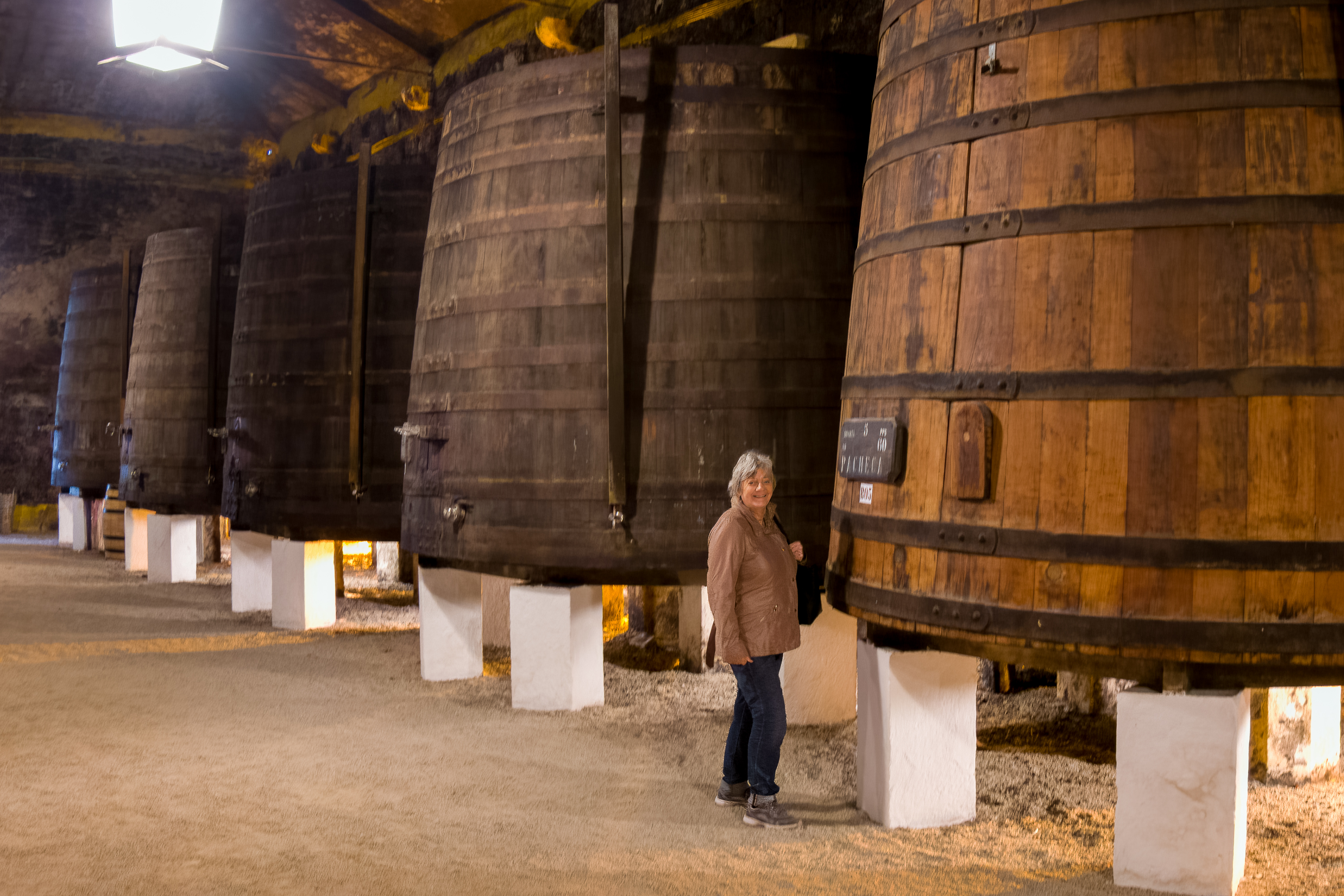
We were lucky to have superb guide. A former air traffic controller with the Portuguese Air Force, his English was better than ours. We started wth a visit to a port warehouse.
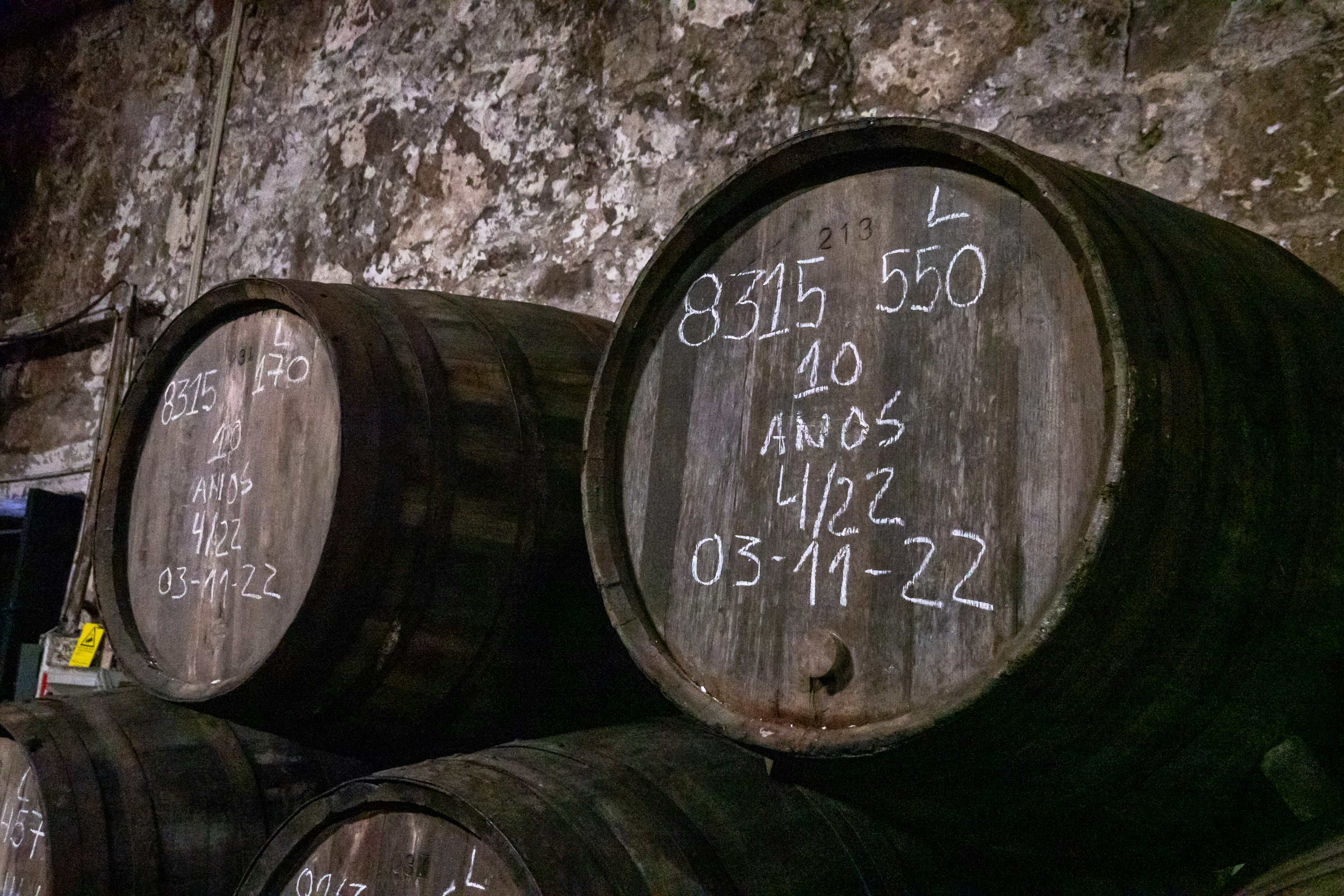
There are several varieties of port aged for different times.Each port tastes even better than it looks.
We then travelled up the Douro valley into the wine country.
We stopped to admire a small country church and a classic stone bridge as we continued up the valley. The views were beautiful.
We stopped at the Pacheca winery for a tasting and a fabulous, multi-course lunch with a different wine for each course. (The Pacheca Winery is spelled “Pacheca” and not Pacheco as it is woman owned.) For those of us who don’t usually drink port, it was fun to discover a new variety of wine. (https://quintadapacheca.com/)
Peacocks admiring tourists.
The neighbors, the Sandeman winery, is much more famous.
Denise planning to fit a small container of port in her suitcase.
Leaving Porto, we drove back to Lisbon, stopping in Coimbra to sample pastel de nata, custard pastries which were developed by nuns with too many eggs and are simply delicious.
Lisbon Cathedral
Wine with a view; it comes to you!
Belem tower, 16th century defense of Lisbon
After a quick windshield tour of Lisbon, [we will have to return,] we arrived at the pier just as Trevor and Sheila pulled up from their flight from UK. Check in/boarding is instantaneous, other than Fred having a momentary panic that he had lost his phone – found to be in his hand. (!!) Our actual sailing was delayed due to a heavy swell at the mouth of the river.
Lisbon skyline as we sail down the river.
The next morning we plowed into the mid Atlantic swell and settled into shipboard life. We much much prefer longer crossings to daily visits to ports packed with duty “free” shops and other tourist traps. The ship was simply lovely and we quickly discovered that every day had to begin with a visit to the gym if we were to still fit into our clothes.
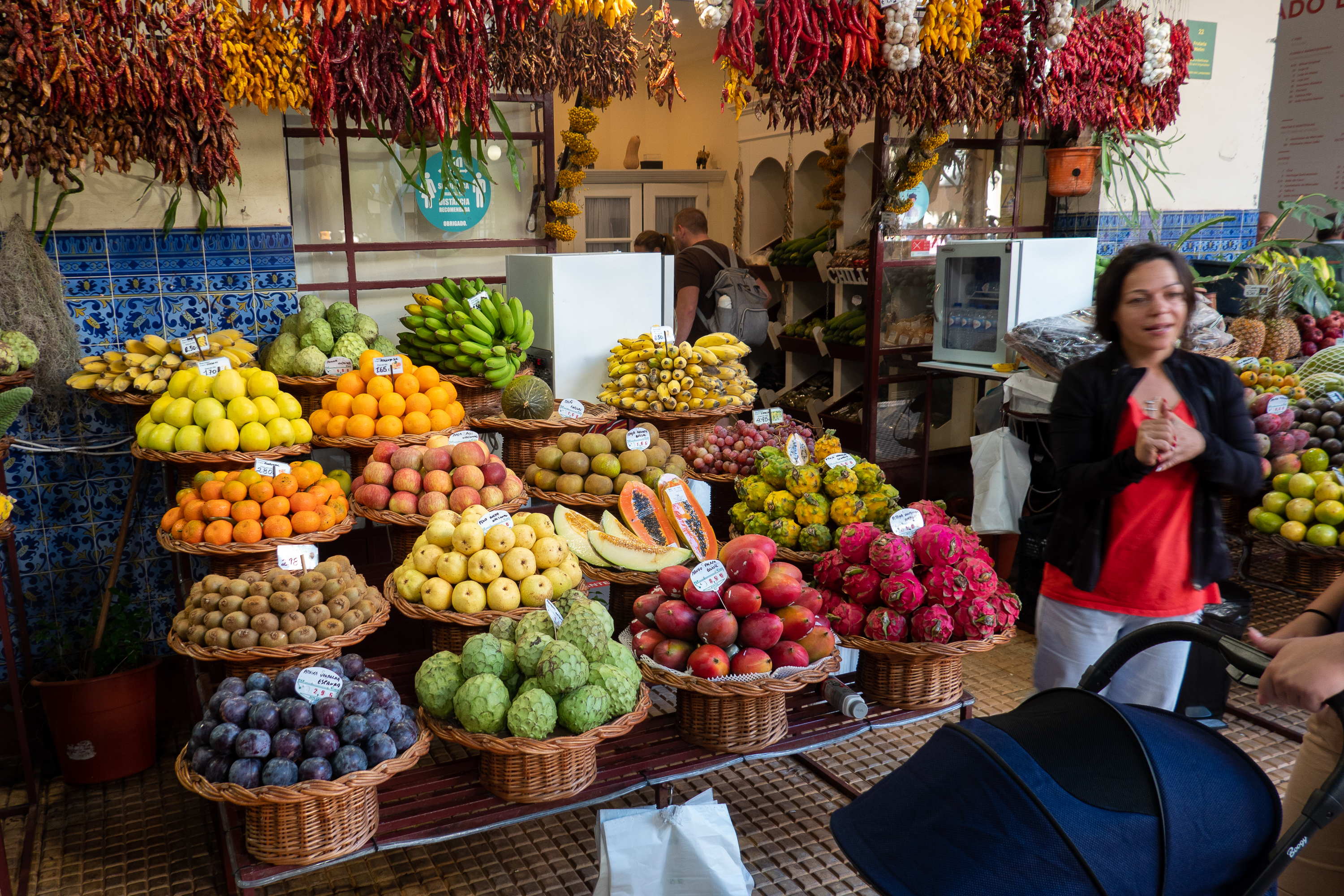
Our first stop was Funchal on the island of Madeira. Madeira is one of the rare islands with a self sustaining economy. That said, it also owes much to the transatlantic trade, all the way back to the 1500’s. Because of the prevailing winds and its westward location, it was a crucial provisioning point for ships sailing west. We started our visit at the market.
The fruit was a riot of color.
The flower sellers wore beautiful, traditional outfits, and, as far as we can tell, this is for real – there weren’t many tourists about.
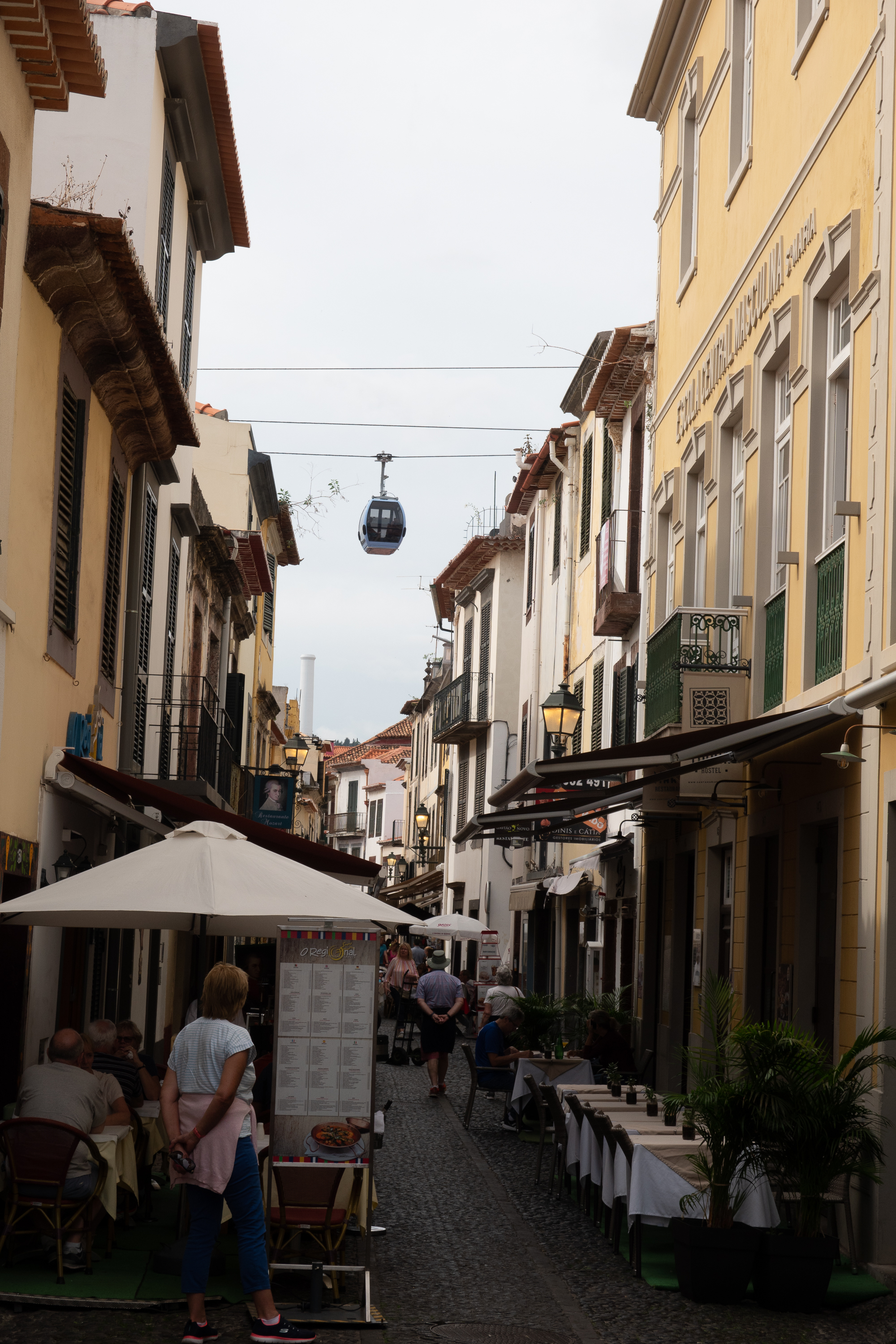
Cable car to the top
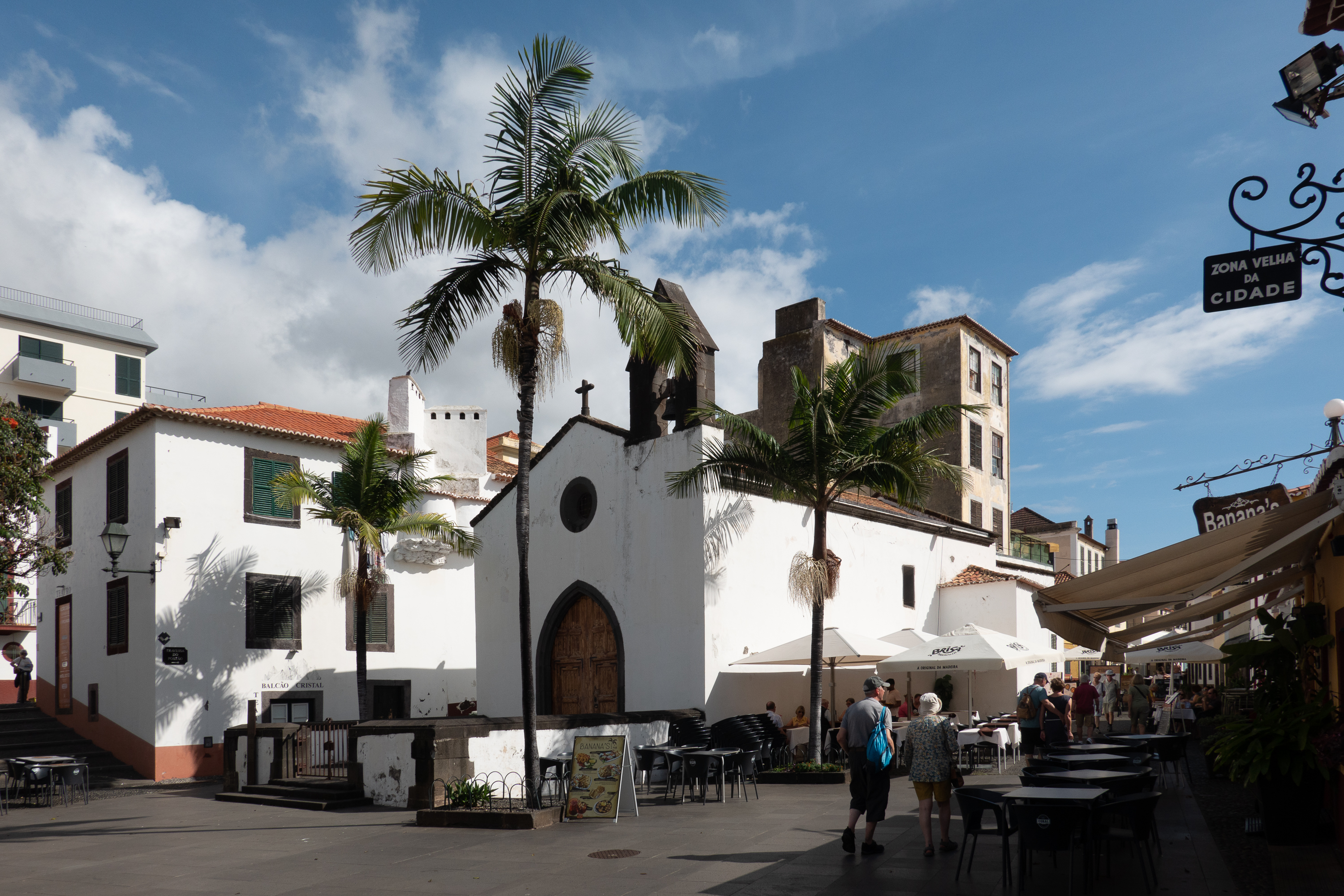
Colonial archiecture
Cable car over narrow streets.
The gardens at the top of the cliff are simply stunning.
We enjoyed a cable car ascent, and visiting the market, glorious gardens, and a drug store for some essentials.
We left Funchal at sunset and set out for Miami.
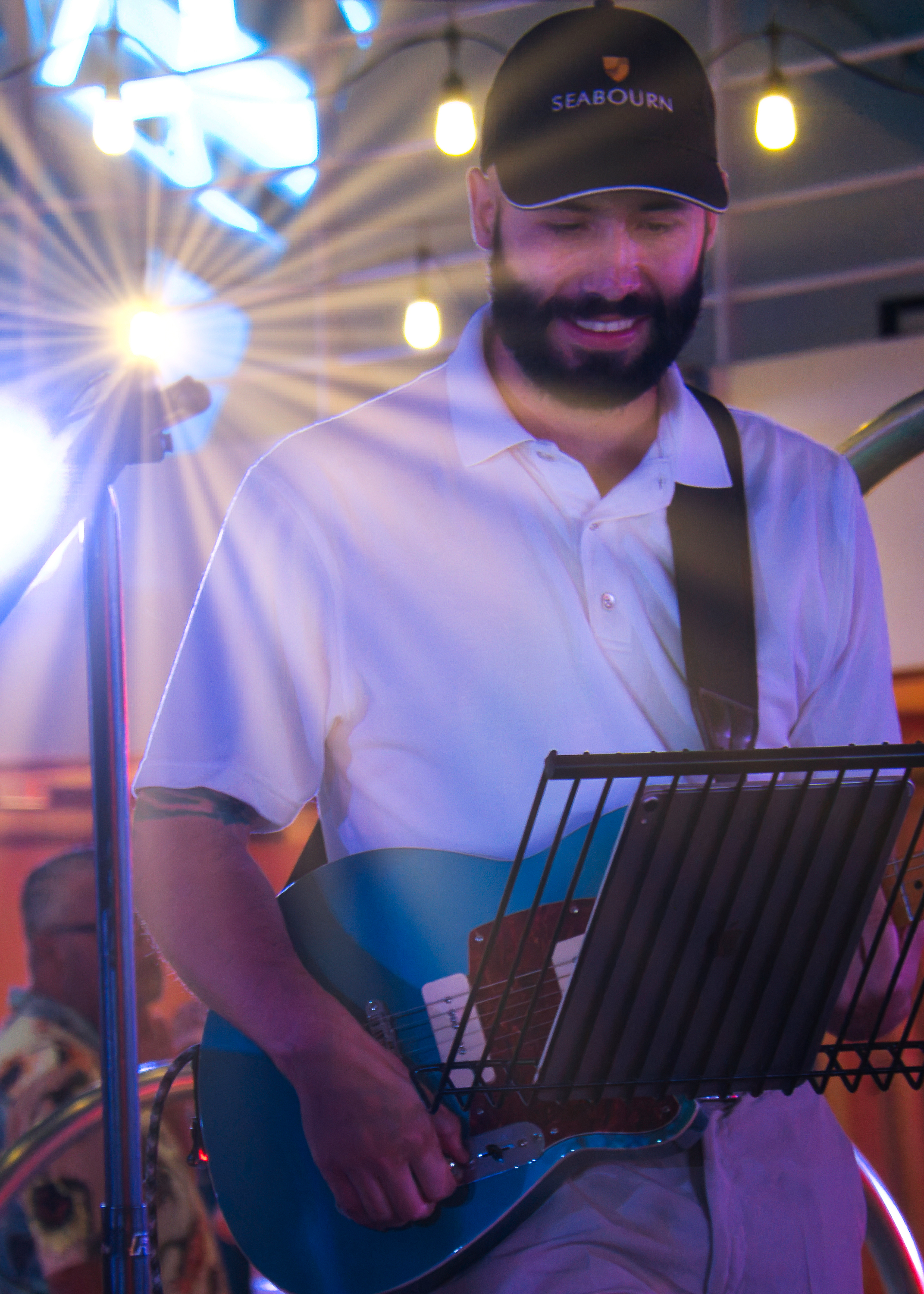
Fred made friends with the two guitarists working on board, one a Colombian who played in the stage band, and the other a Brit, who played in the jazz combo. Both are conservatory graduates and the Brit noted that this is the only job he has had since graduation a few years ago. And yes, both read music very well and are jaw droppingly good.
The crossing was wonderful and we soon arrived in Miami for the turnaround for the Caribbean part of the trip.
Approaching Miami, we saw the “Obesity of the Seas.”
Freedom Tower, Miami
Miami skyline by night
Denise and Fred have lived around the Caribbean for years; Panama, Cuba, Venezuela, and Fred has done several temporary duties in the area, Haiti, the Dominican Republic, Guyana, Trinidad, and even a short, post-hurricane Ivan visit to the Cayman Islands, (https://pbase.com/diplostrat/cayman) but we have never done the classic tourist circuit.
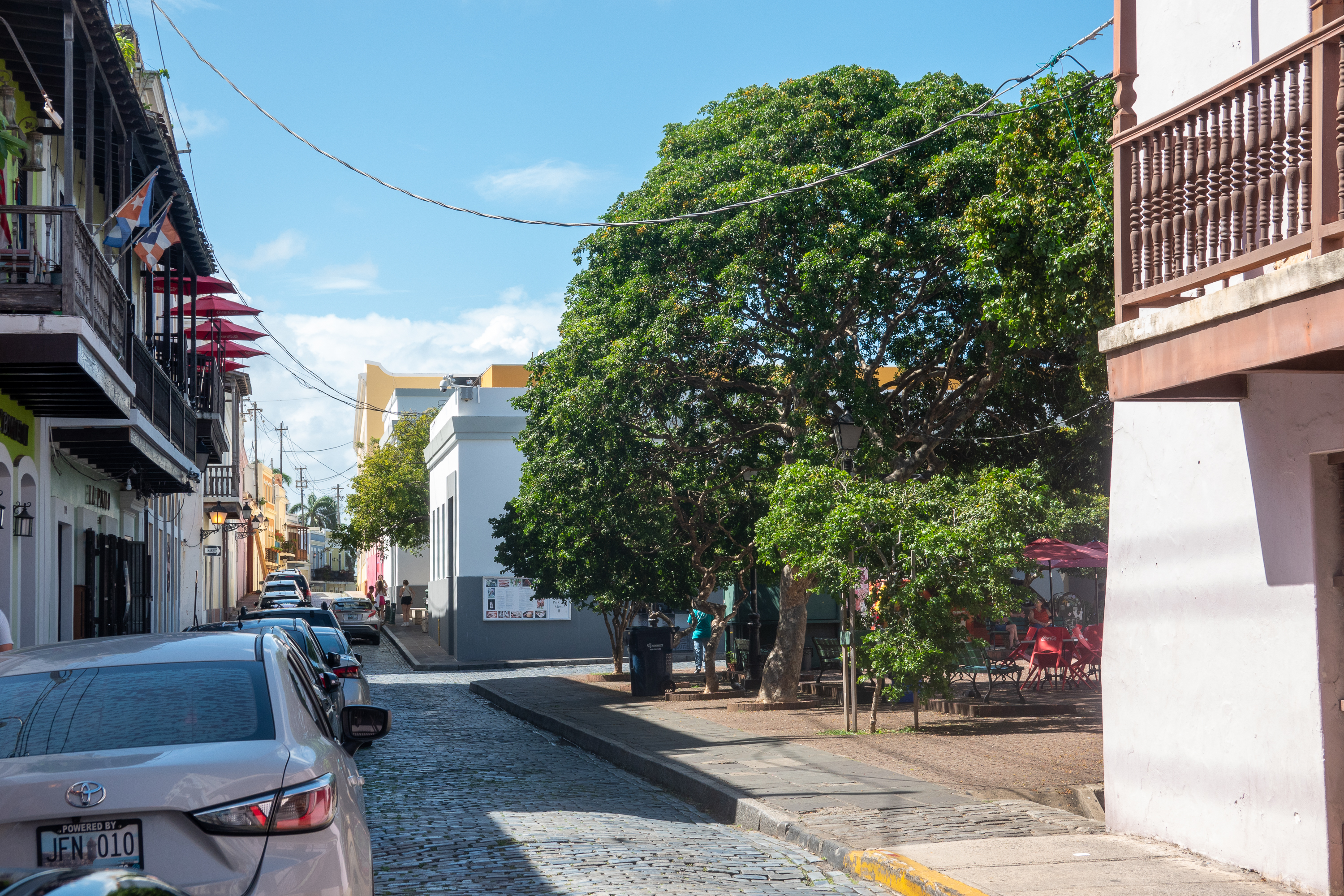
First up was Puerto Rico and here we felt most at home. Not surprisingly Puerto Rico feels much like Ecuador, Venezuela, or any other former Spanish colony.
El Morro (from the sea)
More Morro (from the land)
Classic colonial streets
Our first view of the classic Caribbean mass tourism.
Our next port was Sint Maarten, an island shared, since 1648, between France and the Netherlands. The history of the island follows many of the same trends of other Caribbean islands – massive importation of slaves and indentured workers to grow sugar, cotton, tobacco, and salt. Fabulously wealthy colonialists and many, many slave revolts. Today, tourism is the life blood of the island and its airport is one of the busiest in the area, famous for a beach and road right at the end of the runway. We hired a taxi for a day trip ‘round the sights and a lunch in the market on the French side.
Storm shattered resort
The orange iguana was named “Trump.”
Market on the French side of the island. Fort Louis on the hill.
We had a rainy day in Guadeloupe. We hiked up a knee poppingly steep hill to Fort Napoleon. The views were tremendous and there was a surprisingly comprehensive little museum inside the fort.
The fort was named for Napoleon, but he never actually visited.
The for has lots of iguanas, indeed, they are so common that they are in the decor.
Denise celebrates the top of the hill.
Cafe Creole, the local Irish Coffee
Our next island visit was to Antigua and again we chartered a taxi and visited the famous Nelson’s Dockyard. The dockyard has been rebuilt as a tourist attraction, but has several reasonable exhibits on Napoleonic era sailing and naval operations.
Nelson? Well, it is called Nelson’s Dockyard today, but he was roundly disliked by the Antiguans, who resented his upholding the Navigation Acts which prohibited trade with the new United States. They even held up his promotion for years. In return, he dismissed them as worse than the American rebels. Still worth a visit.
The sugar trade, especially, made the Caribbean Islands as valuable as any gold mine or oil well for hundreds of years and most changed hands many, many times following bloody raids and sieges. Hence the proliferation of forts you can visit. Like many other islands, Antigua’s list of resident/vacation home owners is a real who’s who of Anglo-American actors, musicians, and other personalities. You might be hard pressed to name one who doesn’t have a place on Antigua.
A classic cruise ship moment, a steel band. (And yes, they were excellent.)
St. Kitts is about as small as they come. Traveling around the island you are struck by the use of the singular; there is often only one of a facility on the whole island – “This is our …” Bank, hospital, car dealer, etc. Note that this is emphatically NOT the case with churches; here the quantity and variety is infinite. At the end of the 19th century the sugar trade was dying out and the plantation owners were eager to cut their costs. One solution was to build a narrow gauge railroad to link all of the major plantations and allow them to consolidate their harvests at one, modern sugar mill, as opposed to using windmills at each plantation to crush the harvest. In the end, it didn’t work, and today the bumpy tracks are used to to tourists around the island at the blazing speed of ten miles per hour. And even that is rough! But lots of fun.
Rough Atlantic to the left and calm Caribbean to the right.
The track was as rough as it looks, but a lot of fun.
Seabourn was very proud of its picnic in the surf.
From St. Kitts we sailed back to Miami via the British Virgin Islands and flew home.
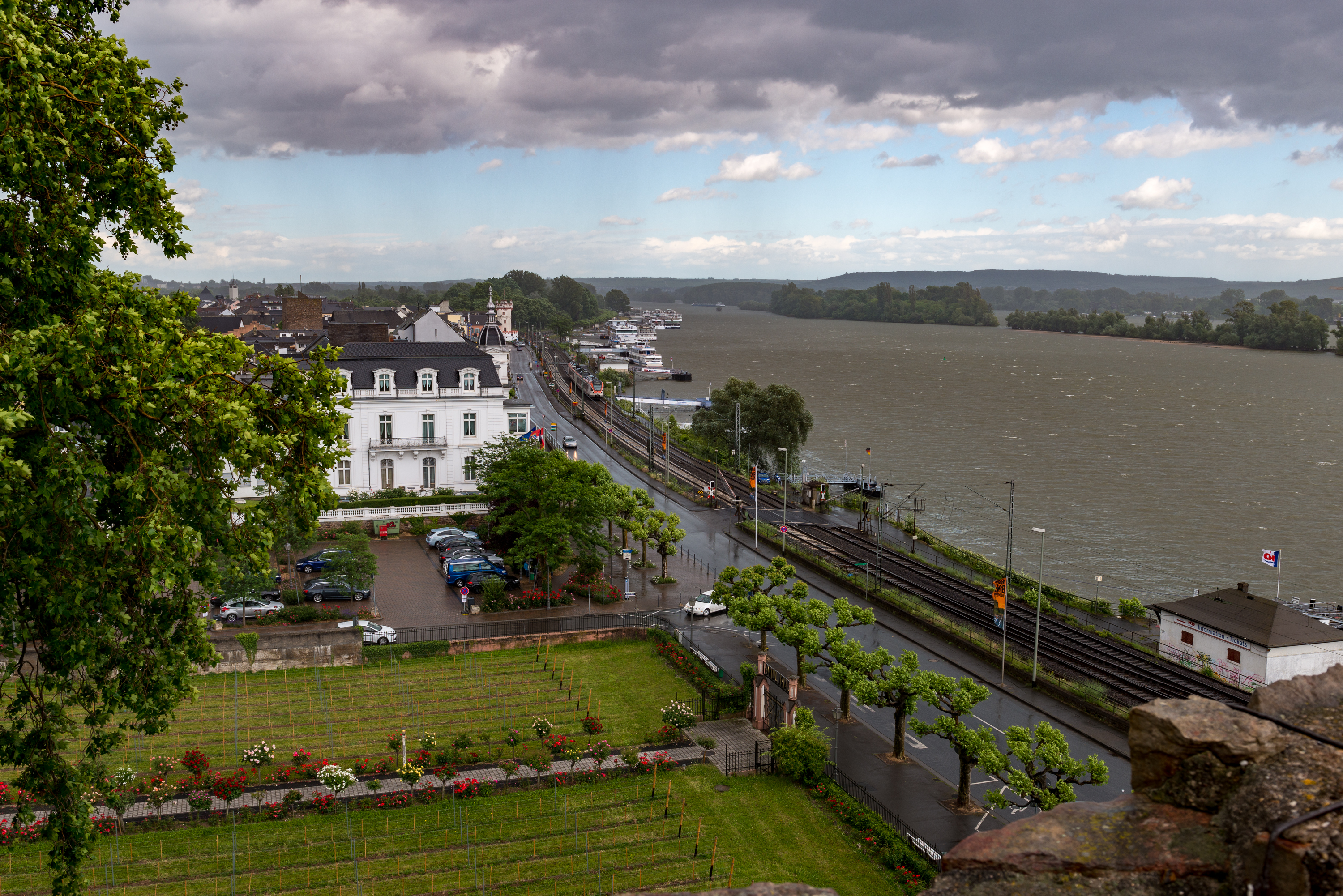
Heading down the Rhine, we enjoyed the many castles perched on crags and of course, the Lorelei Rock.
Interesting trivia. During WWII the Allies generally tried to avoid bombing churches or old castles. So, suddenly, lots of railroad tunnel mouths and other points got converted into “churches.” And so they remain to this day, with trains running through them every day.
The “church” of Our Lady of the Tracks!Great RV campsite!
A Viking sistership.
… and an older style Rhine boat.
The Captain, piloting the boat from one of two outside conning stations.
For those of us old enough to have stood a bridge watch with a wheel and lee helm, the high tech controls of the Viking river boat are amazing!
Yes, people are THAT close!
Passing on to the Moselle River, we stopped at Cochem, where the highlight of our visit was the eleventh century Reichsburg Castle high on a hill, overlooking the town. https://www.reichsburg-cochem.de/index.php?id=4&L=1
The final highlight of our tour and one that was totally unexpected was our visit to the city of Luxembourg. We began at the American Military Cemetery just outside town and were much moved by the simplicity and yet emotion inspired by the rows of white crosses. More than 5,000 US Servicemen are buried there including General Patton. (https://www.abmc.gov/cemeteries-memorials/europe/luxembourg-american-cemetery#.W6KwTS-ZOEI)
Patton reviews the troops.
After this visit, we headed into town, where we explored on a walking tour the Chemin de la Corniche with its spectacular view of the 17thcentury wall and city, the main market area and the Notre Dame Cathedral.
We returned to the Cathedral for a wonderful, thirty-minute organ recital. You can see and hear a bit here. (Hint: Crank up the volume!)
And having left our boat, we headed to Paris by bus. Once there, we visited a Moroccan restaurant near our hotel which we knew from previous visits had a long lunch the following day with a friend from Bangui. Then back to the US after a great trip.
We unfortunately left the sunshine behind as we entered Germany. The transit from the Czech Republic to Germany was by bus and our first stop was Nuremberg. This turned out to be a bit of a loss as a rock concert prevented us from visiting the (in)famous “Triumph of the Will” stadium (https://en.wikipedia.org/wiki/Triumph_of_the_Will) and the trial museum was not open either. We had to content ourselves with a visit to the market and a sample of the famous local sausages.
Nuremberg market square with the 14th century Schooner Brunnen fountain in the front and the Frauenkirche (Church of Our Lady) in the background.
It was difficult to imagine this square as the site of Hitler’s final speech in “The Triumph of the Will.” May it always be remembered today for sausages and Lebkuchen, gingerbread cookies.
Fountain detail
Figure on fountain
The Männleinlaufen, an animated clock on the Frauenkirche
We finished our visit to Nuremberg with a view of the town from the Castle.
After Nuremberg we arrived at the boat in Bamberg and spent our first night on board. The next morning we set off in the pouring rain to see Bamberg. As it was a Sunday, a lot of museums were closed and we were unable to enter the Cathedral due to Sunday services, but we had a pleasant, if damp, view of our first German town and would certainly return.
The Fuersten gate to the Bamberg cathedral has two interesting statues; “Ecclesia” and “Synagoga.”
Ecclesia is crowed with heaven. She used to carry a staff with a Crucifix, symbolizing the power of the church on earth. (Original statues were removed in 1937.)
Synagoga is, however, blindfolded and carries a broken rod. (A not too subtle message!)
According to legend, the bishop of Bamberg would not grant the citizens any land for the construction of a town hall. This prompted the townsfolk to ram stakes into the river Regnitz to create an artificial island, on which they built the town hall they so badly wanted.
The bridge over the river runs right through the town hall. (On the inner wall is a plaque dedicated to Claus von Stauffenberg. From the Bamberg area, he was one of the leaders of “Operation Valkyrie”; the plot to assassinate Hitler.)
Beautiful statue on the bridge
We ended with coffee and cake (yes, there is a theme here!) in a Konditorei and returned to the ship, feeling warmer! We left around midday heading for Wurzburg down the Rhine-Main-Danube Canal.
We traveled several rivers during this cruise and enjoyed them all! We are total lock and canal fanatics, having transited the Panamá Canal, the Suez Canal, and parts of the Kennet and Avon Canal. If the Rhine-Main-Danube Canal is less well known than Suez or Panamá, it is an amazing engineering accomplishment with a long history. Read more here: https://en.wikipedia.org/wiki/Rhine–Main–Danube_Canal
Approaching a Lock
Waiting for a boat to leave the Lock
Lock gates opening after lowering the boat
For those who are wondering, the Viking river cruise boats are very much like miniature ocean liners. They are carefully sized to fit the locks but despite being very long and narrow, they do not feel cramped at all. Indeed, the general feeling is one of extreme spaciousness. Because of low clearance, the bridge, and indeed everything on the top deck, can be lowered.
The next day, we took a full day excursion to Rothenburg ob der Tauber. The rain was not constant and we enjoyed an extended walking tour of the town, which is one of the best preserved of the old towns, many of which suffered extensive bomb damage during World War II.
The medieval feel is quite strong and included a costumed minstrel band singing, drumming and asking for beer up and down the high street. Great fun.
Carriage
Marching Band
Beer for the Band
Toast
Folk Dance
A bit of whimsy
We spotted a stork’s nest and walked the town walls and visited the Hauptkirche of Saint Jakob (high or main church).
Nesting Stork
Nest on the roof
On the battlements
Street Scene
The church contains the Altar of the Holy Blood, a reliquary said to contain the blood of the Christ.
Main Altar
Reliquary
On our return to Wurzburg we visited the Bishops’ Residenz, a UNESCO listed site built between 1720 and 1744 by the prince bishops. A very opulent palace created for some very powerful men of their time, with extensive marble, gold stucco and frescoes.
Nothing modest about this palace
The ceiling frescos were later featured in the PBS series “Civilizations.” Beyond the theme of the superiority of Europe, they feature amazing trompe d’oeil elements like people who begin as paintings on the ceiling and end as statues and figures painted so that they appear to be standing outside of the fame of the ceiling; an amazing 3-D effect. Religious scholars could use this palace as the setting for a discussion of the doctrine of the poverty of the Christ. (Yes, that is sarcasm.)
Grand Stairway (Photo from the Web.)
We declined the all day tour to Heidelberg as the sun was peeking through and we preferred to sail on the river and enjoy the view.
We weren’t the only ones enjoying a quiet day on the river.
Lumpia, pancit, ribs!
The cuisine on board was excellent European food, so we were surprised to learn that the chef is actually a Filipino. When he learned the Fred had lived in the Philippines, a Filipino feast was prepared for lunch.
We stopped briefly in the small town of Collenberg. At one time it had an interesting motte and bailey castle. The motte was a hill overlooking the Main River and the bailey extended down to the river’s edge, allowing it to control traffic.
The keep on the motte, overlooking the town. (Now used for music festivals.)
The original wall, by the river, repurposed for houses, both old and new.
Tied up at the pier in Collenberg
RV’s parked in the riverside campground.
Local official checking out the river boat. He collected a toll in cookies.
The following day we were due in Mainz in the mid morning but were delayed because of heavy lock traffic on the Main River.
Tied up at Mainz. You can see how long these river boats are.
This messed up the guides that Viking had booked so we headed out alone for the Gutenberg Museum, which was the highlight of the day for us. We viewed the Gutenberg Bibles on display in the museum, which are amazing and still so colorful after all this time. We watched a printing demonstration in German, which was fun for both of us and showed the color techniques. (Denise speaks German, but Fred does not. He had the greater challenge!)
Been a long evolution from this to an inkjet on your desk
If they can fit, so can we!
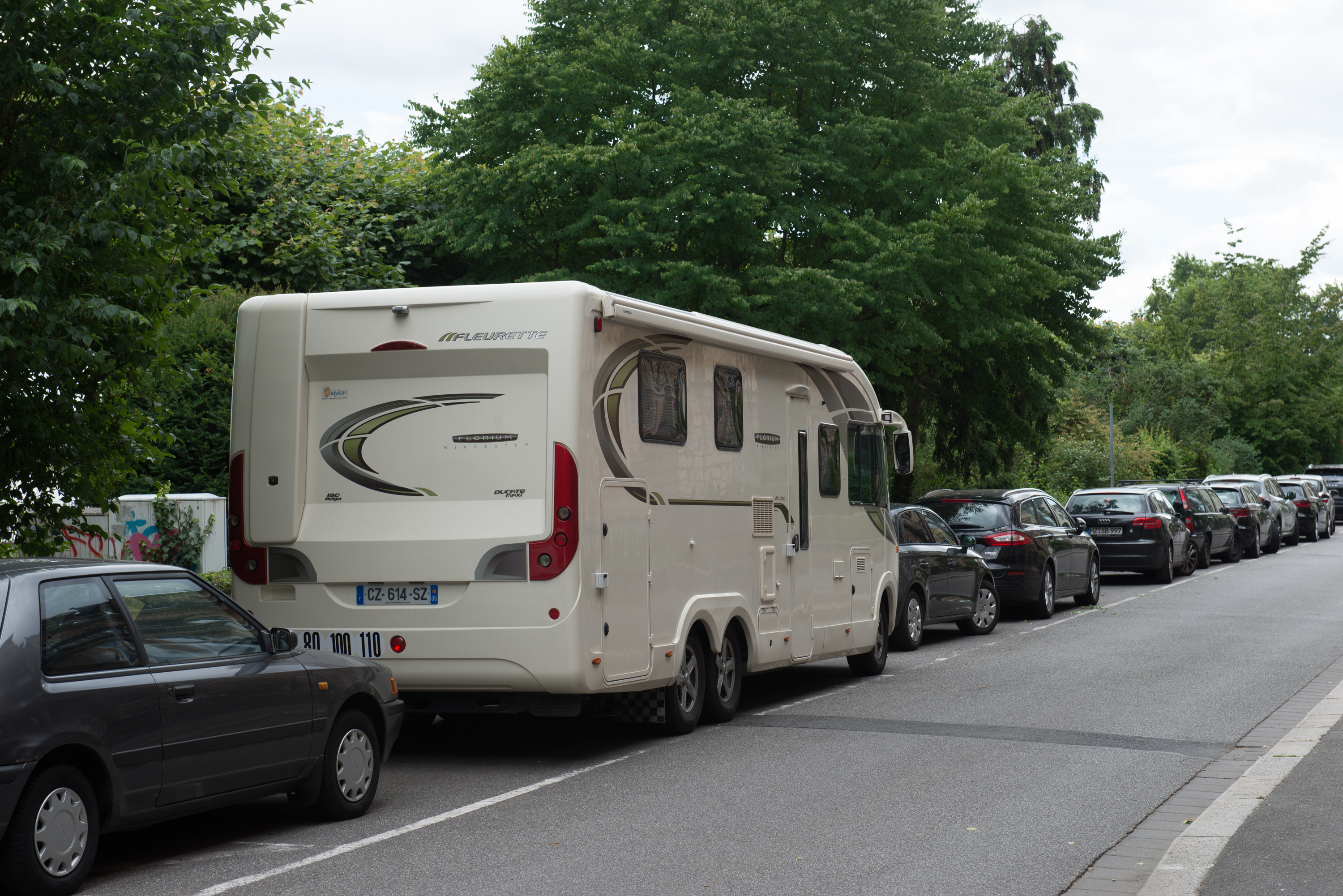
With our plans to ship our camper to Europe, we were always alert for signs of campgrounds and campers. It was interesting to see this beast parked on the street in Mainz.
That afternoon we visited Rudesheim am Rhein. We wandered the town and headed for the Rheingau Wine Museum at Brömser Castle. https://www.ruedesheim.de/en/wine-culinary-art/wine-culture/The museum, located in the 1,000-year-old castle, was itself interesting and dealt with the history of wine making but the fabulous part was the castle tower itself. This was accessible to those wishing to climb it, which we of course did, and enjoyed spectacular views of the river and town from the top.
Threatening skies
We love prowling the winding stairways of medieval castles, cathedrals, and other buildings. This little tower was one of the best textbook cases of how these passages were laid out to favor both communication and defense. For those of you who are not medieval fortification nuts, the stairs were built as a clockwise spiral so that an attacker climbing the stairs would have his sword arm blocked by the central support. A defender, on the other hand, would have his right hand free. The steps were also often uneven, so as to cause someone not familiar with the stair way to stumble. And, of course, they were only one person wide so that attackers could never take advantage of numbers.
Denise has her right hand free to defend against attackers climbing the stairs.
Watch your Step!
We missed the two museums devoted to torture and crime, although the toy and railway museum might be a better bet. A good reason to go back? Of course! Where else can you find an inn with a medieval tower flying the Harley-Davidon flag?
In May of 2017, we were temporarily without a camper, and Denise decided that she needed a trip somewhere! So, as we are loyal PBS viewers and as several friends had enjoyed a Viking River cruise in Europe, we made a last minute decision to cruise with Viking on their Prague to Paris jaunt. We gave Viking only about three weeks notice, but we were pleasantly surprised that they managed to fit us in with a minimum of fuss and bother, both on the cruise, and on our various flights.
We first flew, via Amsterdam, to Prague, a city that Denise had always wanted to visit. We were greeted with lovely sunny weather and thoroughly enjoyed our ramble around the city on the afternoon of our arrival.
It was such a lovely day, we just had to have cake and espresso! It was at this point that we discovered that, despite being in the EU, the Czech Republic is not a Euro country. Worse, most ATM’s in Prague only accept local cards! Finally we were able to exchange US$ cash for sufficient local currency and the coffee and goodies were ours. The moral of the story is that it is always a good idea to have some local currency on hand!
Beautiful architecture
Municipal House (Obecní dům)
Old Town Square (Staromestske names)
Doorway on the “Street of Paris”
This is known as the house “At the Minute” and was Franz Kafka’s childhood home
Not all of Prague was dignified and classic, we enjoyed several oddball sights as well:
Super BLING
It seems that for some orientals, wedding photos in Europe are a thing.
Working off your beer or merely reloading during your workout?
Being quite tired, we had dinner in a restaurant in our hotel, which served local specialties. The “queen” of Czech cooking is said to be roast beef with cream sauce, Svíčková. Certainly the dish we had was out of this world. When we looked it up in our European cookbook, we realized that the book dated from the Cold War and noted that this dish, along with the famous Prague Ham, was unavailable locally. Reminded us of Cuba – Cubans would look at a Cuban cookbook from Miami and comment, “Yeah, my mother would talk about those dishes.” How times change! We found a recipe in a cookbook on our riverboat and photographed it! You can also find various recipes on the Internet: https://www.eatingeurope.com/svickova-braised-beef-recipe/
A tour the next morning showed us some of the city’s highlights, including the Prague Castle with its spectacular views and interesting history. (See photo at top of post.) (https://en.wikipedia.org/wiki/Prague_Castle)
St. Vitus Cathedral. (This church was used as a background in the movie “A Knight’s Tale.”)
I so need these for our drains
Mosaic on the Exterior of the Cathedral
Denise nails the image
Back of St. Vitus
Parts of the Prague Castle as still used as government offices. (We had flashbacks was we watched a motorcade arrive!)
Ah, memories! And this time we don’t have to do anything!
Then we simply joined the crowds to enjoy the spectacle of the ceremonial changing of the guard.
Love the old goose step, Soviet style
Prague, like many medieval cities sits astride a river.
One way to cross the river is the Charles Bridge, famous for its many statues.
Two are especially interesting. It is a crucifixion scene, labeled in Hebrew – an incentive for Jews to convert. (We were to see more of this theme.)
The caption on this crucifix is in Hebrew and exhorts Jews to convert to Christianity.
And if you weren’t ready to convert, there is a statue on the spot where John of Nepomuk is said to have been martyred by being thrown off the bridge. Notice that the image of the saint and the cross are shiny – you touch them for luck. (https://en.wikipedia.org/wiki/John_of_Nepomuk)
Both were reminders that history has its rough side.
Charles iV, King of Bohemia and Holy Roman Emperor. Note the incredible detail of his clothing.
The bridge is named for Charles IV: https://en.wikipedia.org/wiki/Charles_IV,_Holy_Roman_Emperor
Once back in the city center, we chose to leave the tour and enjoy a quiet lunch a little off the beaten track.
We duly admired the famous clock striking the hour off the Market Square. In addition to telling the time and various astronomical data, it features saints and apostles appearing at the windows. Of course, you need a degree to understand all of the data presented – and this thing was built in the 1400’s! Read more here: https://en.wikipedia.org/wiki/Prague_astronomical_clock
Click on the image to enlarge and see St. Peter, with his key to Heaven, in the window
And we tried the local delicacy of Tredelnik, a charcoal roasted pastry. (https://en.wikipedia.org/wiki/Trdeln%C3%ADk) Keeping up with the times, it is now available filled with soft ice cream. A divine mess!
Baking over charcoal on spinning wooden rods.
And another famous street food, Prague Ham.
Prague Ham
The pastry/Ice cream fix accomplished, we had to find a horse carriage for the obligatory tour.
That night, we went to a tourist dinner with local dishes and traditional dancing. The music was great, the dancing was fun, and the costumes lovely, but the food at our hotel was better!
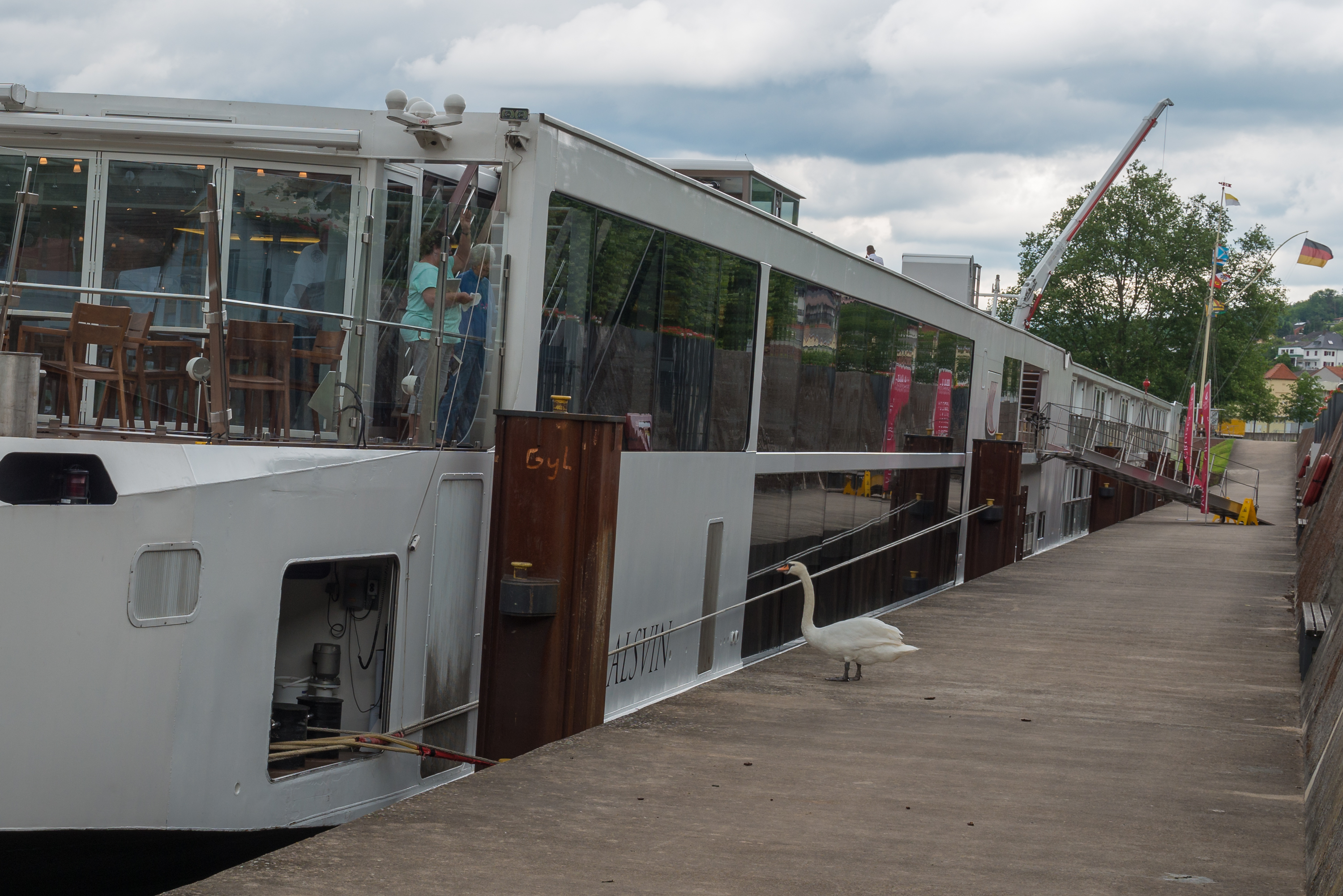
The next morning we headed off by bus to Germany to board the Viking Alsvin. We spent the first night tied up to an industrial dock at Bamberg.
A visit to the island of Malta was also on our “Must Visit List” as Denise had spent a month there with her family when she was twelve and she was keen to see how much she recognized. In fact, Floreana and Valletta had not changed much at all but most of the old decorated buses with crucifixes hanging from the rear view mirrors were nowhere to be seen, only a few preserved as tourist attractions. The island’s history is long and varied. Held by the Arabs from 870 AD, it was given to the Knights of St. John in 1530 by the Holy Roman Emperor. Charles V. Napoleon captured it in 1798 but left in 1800 after British involvement. It was an important British naval base during World War II and British influence continued until independence in 1964. You can read more of Malta’s amazing history here: http://www.maltauncovered.com/malta-history/
The day dawned cool and cloudy and we watched as the island came into view. We took on the pilot and then approached the breakwater. The Queen Elizabeth maneuvered slowly into the port and made a compete 180 degree turn to her docking space. Valletta is a challenging port to enter with hard turns and minimal clearance. Fortunately, the winds were low. I grew up traveling by sea and later served briefly as a Midshipman. Put bluntly, the maneuverability of modern passenger ships, equipped with pods and thrusters is amazing. And it is generally all done without tugs.
Pilot Launch.
Harbor entrance.
Turning back out towards the harbor entrance before docking.
Armed with our sweatshirts, we set off to Mdina, along with the rest of an organized tour. Mdina flourished under the Romans, and was held by the Saracens until the Normans took over in 1090.
View from Mdina looking back towards Valletta.
We liked Mdina with its curved streets and small squares and escaped from the group for a short wander around.
Street sign in English and Maltese.
Street scene.
Mdina is famous for its curved streets.
Virgin and Child embedded in a house wall.
The doors of the traditional houses were fascinating. Each door, with its individual lock and knocker, almost certainly led into a lovely and unseen courtyard. Some were in better shape than others but all were interesting.
Knock or ring the bell.
We also came across a lovely little church with ornately painted ceilings and paintings.
It has been written that some church ceilings were intended to be literal representations of looking up to heaven – this church certainly reflected that image – the Virgin, the Christ, and the angels were looking right down on us.
We then returned to Valletta where we were shown the main street, the new outdoor theater and we visited St. John’s Co-Cathedral. The Cathedral was completed in 1577 and was dedicated to the patron saint of the Knights of Saint John and linked to the Cathedral in Mdina. (https://en.wikipedia.org/wiki/Saint_John%27s_Co-Cathedral) The interior is incredibly ornate and there are many great works of art.
Not exactly the same as the typical American protestant church interior.
Highest of High Baroque.
Angels holding up a lamp.
Doorway after doorway.
We then seized the opportunity to escape from the tour and set out to find lunch. We ate al fresco (and it was windy and chilly) in a small restaurant behind the Cathedral. Lunch was excellent, Denise’s swordfish was fresh and Fred’s ravioli with Maltese sausage was tasty.
Note the street sign in Maltese, an amalgam of Arabic and Sicilian dialect.
We noted that the sun was finally breaking through so we decided it was time to head out. As always we did a little shopping and then we headed for the Lascaris War Rooms 40 meters underground.
View of the Grand Harbor.
Saluting Gallery.
Beautiful Stonework.
We had heard that the War Rooms had recently been restored and opened to visitors and, naturally, Fred was keen to see them, having seen them in any number of WWII movies.
One of the outer tunnels.
Map Room, in this case Sicily.
Bit of rock over the tunnel.
The War Rooms are located in a network of tunnels and chambers, which housed Britain’s War headquarters in Malta. Operations rooms for the Air Force; for Anti Aircraft Gun Operations, for Cyphers and Code Encryptions etc. can all be seen. The War Rooms were used by General Eisenhower and his team during the Allied advance on Sicily and they remained in use throughout the Cold War until 1977.
We received directions towards the port and set off through a Government ministry to the street. The offices were all open to a wide verandah through which we walked, which felt rather odd but no one seemed to mind! One advantage of Valletta is that ships dock very close to the city and no transportation is needed to return to our ship. We had planned to take the Barrakka Lift to carry us down the cliff but we emerged much further down than we had expected so we went for a cup of coffee and an ice cream instead in a little café beside the water.
The famous lift. Note the massive scale of the fortifications everywhere. Malta was besieged many times and the Knights took defense very seriously.
Denise had visited Athens in 1964 and had memories of a coach tour to the Acropolis with Beatles songs playing in the background. Remember Eight Days a Week?!!
Porch of the Caryatids (Denise Photo from 1964. We had a nicer day.)
We chose to join a Cunard tour here and while we are now sure that we are not big tour people, in Athens this worked, as viewing the Akropolis was part of a group effort with at least 25 tour guides and buses at the same time. No way to get far from the madding crowd. Also Athens was basically closed for the Orthodox Easter weekend, so options were limited anyway.
We stopped first at the Tomb of the Unknown Soldier.
The honor guard performs an interesting, slow motion, drill.
Our first view of the Acropolis.
We fought our way up onto the hill in company with all the other tour guides speaking various languages and bus loads of tourists from all over the world. All seemed to concentrate on the Parthenon and it was impossible to hear anything! The Parthenon was finished in 432BC and dedicated to the goddess Athena, the patron of Athens. Considerable renovation is being undertaken on the site to stabilize it and give a better idea of how it looked. It is fascinating to see the new column pieces waiting to be put into place.
Jacks
Tourists
Roofing Tiles
We managed to escape the crowds on the rear side, where there is a view over the city of Athens towards the port of Piraeus. We could admire the Queen Elizabeth in the distance.
We also managed some photos without the hordes near the Erectheion, an ancient temple to Athena and Poseidon built around 406 BC. Supporting part of the roof are the famous Caryatids, or female figures as supporting columns. All are replicas as the originals are kept away from the corrosive air of Athens in the Acropolis Museum. One original can be seen in the British Museum, as it was appropriated by Lord Elgin, along with the Parthenon marbles, back in the 19th century.
Compare with Denise’s 1964 photo, note that the steel supports are gone.
Beautiful Ceiling detail
The Erechtheion
Side view
Denise at the Erqchtheion
We then took advantage of free time and wandered the streets before finding a café, where we could sit outside and enjoy a sandwich.
REALLY big bubbles!
View of the Acropolis
Romanian Musician. (Support live music, I bought his CD.)
A little more wandering and then back to the ship.
Unfortunately the weather was dull and overcast as we passed through the Dardanelles but the sun came out as we reached Istanbul. We were going to have a beautiful day in one of the most spectacular cities on earth!
The Dardanelles with Gallipoli on the left.
Istanbul’s two most famous mosques as the sun rises.
Istanbul’s two most famous mosques.
Denise had visited Istanbul in 1964 and had really enjoyed her visit. So we splurged and ordered a private vehicle and guide so that we could see as much as possible and not be constrained by a coach tour. And it proved to be an excellent choice as we were able to add an extra visit to our day.
We started our visit by walking up the Hippodrome to the Blue Mosque. Another “Ben-Hur” moment. Byzantium was famous for chariot racing: https://en.wikipedia.org/wiki/Chariot_racing
We passed muster with the guards at the entrance and Denise was not required to add a long skirt to her outfit though she did cover her head. Part of the interior is reserved for Moslem men, of course, but there is a large area for tourists and the beautiful mosaics of the interior can be admired.
Perfect place for the family tourist shot.
Column
Nothing can prepare you for the sheer size of the building.
Vast open space.
Dome
Minbar. Would be a pulpit in the Christian church. The symbolism is literally that of a stairway to heaven.
Ceiling mosaics
We then headed to the Hagia Sophia, which was built as a Christian church, then used as a mosque, and is now a museum and under extensive renovation. It is simply huge. (https://en.wikipedia.org/wiki/Hagia_Sophia)
Almost nothing can prepare you for the sheer volume of Hagia Sophia. Expand this image and take in the size.
It is also interesting in that the Turks are removing some of the Moslem frescos, which had been placed over the Christian mosaics to hide them so that you can see the building in two styles. Quite fascinating.
Politicians never change – the emperor and empress making offerings to the Virgin and Child. Politics aside, the mosaic artistry is amazing.
Virgin and Child on the ceiling; a view to Heaven.
Mosaic in context.
We wandered through and also climbed the stairs to the upstairs balcony for the best views.
Blue Mosque from Hagia Sophia.
Ceiling
Bookmarked Marble
Finally, we came to this, the cenotaph of Henricus Danolo.Henricus Danolo was the Doge of Venice who directed the sacking of Constantinople in 1204. (https://en.wikipedia.org/wiki/Enrico_Dandolo) Ironic that despite all of the conflict between Christians and Muslims, it was the conflict between Christians themselves which caused the greatest damage. (And, of course, made it possible for the Muslims to take Constantinople.)
And, for a bit of human (and bird) scale:
Hot lunch!
Clean, and happy, bird.
Our next stop was the Cistern. Denise had not visited this previously so neither of us knew of it and we added it to our itinerary. A most interesting part of the former water system for the Topkapi Palace, it is no longer in use except as a tourist site. Fascinating to visit and see the carp swimming in the water in the dark. (https://en.wikipedia.org/wiki/Basilica_Cistern)
One of the most amazing sites we have ever visited.
Medusa head column base.
Carp in the Dark
“Hen’s Eye” Column
And on to the Topkapi Palace Museum. Here we saw various exhibits of life under the sultans and grabbed a sandwich at the snack bar. The views over the Bosporus were amazing, but we found the palace itself a bit flat.
The Queen Elizabeth from the Topkapi Palace.
Fountain
Apparently the tulip beds are famous but we were a little too late to enjoy them. One shady bed at Topkapi was still in flower so we appreciated that!
Finally, after a quick visit to the souk, we returned to the ship.
Istanbul’s answer to Tyson’s Corner. (Denise got lost here as a child!)
Ibriks for Turkish coffee and an trumpet?
Domed ceiling in the market.
You want it, they have it.
The weather was perfect, we had an excellent guide and had enjoyed an excellent visit.
One of our reasons for returning by sea was the itinerary of the Cunard liner, Queen Elizabeth, which included calls at Istanbul, Athens, and Malta, all of which Denise had visited as a teenager and wanted to revisit. (Cunard was also offering a really good rate so we had made arrangements with Cunard to join the Queen Elizabeth at Aqaba.)
After living in Panamá, we were really looking forward to a transit of the the Suez Canal. We started our transit early in the morning, following the Europa II (which we had seen in Aqaba) and the Queen Mary 2, which we would join in Southhampton.
Line ahead through the Canal. Note the tugs close by in the event that the side winds cause problems. (The winds can be so strong that the ships actually “crab” just like airplanes.)
As ships cannot pass in much of the Canal, ships are grouped in convoys and timed to pass in the lakes or the new double section of the Canal. In the early days, ships tied up to piers on the banks in order to pass. We had 24 ships in our convoy, beginning with three liners of which we were the third. The entire length of the transit we were greeted with cheers, whistles, and a cacophony of horns. Three liners in a row, two of the from Cunard, was quite a spectacle and the folks loved it.
Container ships falling in line to follow us through the Canal.
There was plenty to see. Various monuments, security outposts, ferries crossing the canal and lots of towns, all with trees and green plants in contrast to the desert elsewhere.
Monument to Canal workers.
Outpost. (Boring duty sitting there all day.)
Emergency bridges, waiting to carry tanks across the Canal in the next war.
Damaged water tower.
Passengers viewing mosque.
Small boat in the Canal.
Crew selfie.
At one point ships were travelling south on a different channel and their stacks and containers could be seen through the sand dunes. Quite an interesting sight as there was no water to be seen!
Ferry. Notice the container ship going south in the other channel. Zoom in to see all of the people on the ferry cheering and whistling.
In addition to opening the second lane, there is constant maintenance all along the Canal. The sheer amount of sand is impressive. Not the mountains of Panamá, perhaps, but still a lot of work.
The lakes were full of ships.
Never one to miss a photo opportunity, we maneuvered with the Queen Mary 2 after we left the Canal.
Denise with the Queen.
Queen Mary 2 in the sunset.
Selfie with the Queen
After the transit, we headed for the Dardanelles and Istanbul.
After leaving Petra, we headed for Wadi Rum, a desert area with spectacular scenery made famous by Lawrence of Arabia, the man and the movie, and by filming for various other films including the recent “The Martian”. Fred was skeptical – “We’ve done the Sahara, the Kalahari, and even the Great American Desert. Why do you want to go to the Valley of the Moon?” Denise held firm and we had wonderful time! (http://wadirum.jo)
Everyone goes to Wadi Rum to see the desert. But, in fact, the Bedu have stayed at Wadi Rum over the years because there is so much water. You won’t see it immediately, but once your eye gets trained, the signs of water are everywhere.
Water Trap
We stayed in a luxury Bedouin camp (or tented hotel) novel and quite comfortable. We arrived rather early and found the place deserted. Probably should have made a stop en route but we were a little short on information at that point. A little more Arabic would have been useful at times!
View of the Dining Area
However, once we sorted out what was happening, we crashed a party of Italian tourists and enjoyed a great buffet lunch of salads with chicken and rice. The meal was cooked traditionally – buried in the sand with a wood fire on top. This, of course, made for great photo ops. The meal was further enhanced by a dancing waiter! We then relaxed for the early part of the afternoon in the shaded divan with the desert coolers running.
Rockin’ Tea Service
Sarb
The Chefs Display Their Talents
Feline Observer
View of the “Rooms”
As the temperature began to cool, our driver arrived to take us on a tour of the desert. We made ourselves comfortable in the back of the pickup truck and headed out to our first stop; the site of the filming for the “base camp” in the movie “The Martian”. Our guide had been present at some of the filming so was very enthusiastic about it all.
Site of Matt Damon’s base camp
We also saw several sites relating to Lawrence of Arabia (the person, not the movie) along with scenic sites like a natural rock bridge.
Beduin camp
Natural Bridge
Mushroom Rock
Rock Drawings
The only spot for cell phone reception!
Our guide stopped just before sundown and made us tea in the desert before our return to the camp just after sunset.
Tea on the Sands
Sunset
Dinner was a traditional meal called sarb, cooked in a fire pit in the ground. We were served an excellent chicken and mutton with assorted vegetables and pilafs. The temperature was starting to drop so we headed back to our tent for the night.
Camp by Night
A celebration of food!
The room decor was a bit over the top!
After an excellent Arab style breakfast with hard boiled eggs, bread, foule and toppings, we headed out. We made a stop along the way at the historic train station of the Hejaz Railway where old carriages and a locomotive could be seen. The Hejaz Railway was an engineering marvel. It was a tragedy that it was never really rebuilt following the First World War. And, in today’s political climate, it probably never will be. (https://en.wikipedia.org/wiki/Hejaz_Railway)
A modern train still runs, carrying potash, we saw it several times as the camp is close to the main line.
No, Lawrence didn’t miss this one, it is actually a Japanese engine from the 1950’s.
Footplate
Restored Coach
Unusual Coupler
Flatcars with Sandbags – as in the movie, “Lawrence of Arabia.”
The modern potash trains are less picturesque, if more valuable.
And on to Aqaba where we hope the Queen Elizabeth awaits us! Our driver had arranged access to the port and he left us right beside the ship. Other than the fact that we were trying to go up the gangway while thousands of passengers were coming down, it was the easiest ship boarding we have ever had. We were greeted by the Purser’s office and escorted on board to our cabin. We had hoped to visit Aqaba a little before boarding but we seized the moment and a nearly empty ship to do laundry and settle in.
As we waited to sail, we watched the Europa II depart.






























 One way to cross the river is the Charles Bridge, famous for its many statues.


 Both were reminders that history has its rough side.


 The next morning we headed off by bus to Germany to board the Viking Alsvin. We spent the first night tied up to an industrial dock at Bamberg.


 Henricus Danolo was the Doge of Venice who directed the sacking of Constantinople in 1204. (


