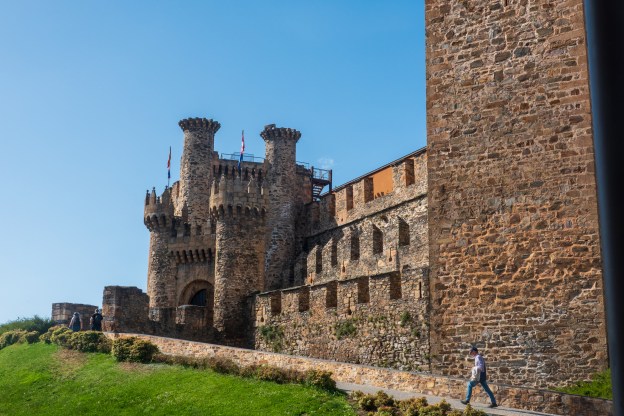
It was time to head east, so our next stop was just over the border in Castilla y Leon, in Ponferrada, named after the iron reinforced bridge (Pons Ferrata) that still crosses the river. Probably built by the Romans, in medieval times it was an important river crossing along the Camino.
It’s a Gas, Gas, GAS!
This is the first of our gas station visits, or, more correctly, an aire or sosta set in the parking lot of a large filling station. This one had a large number of spaces, an incredible view of the hills, and was surprisingly pleasant.
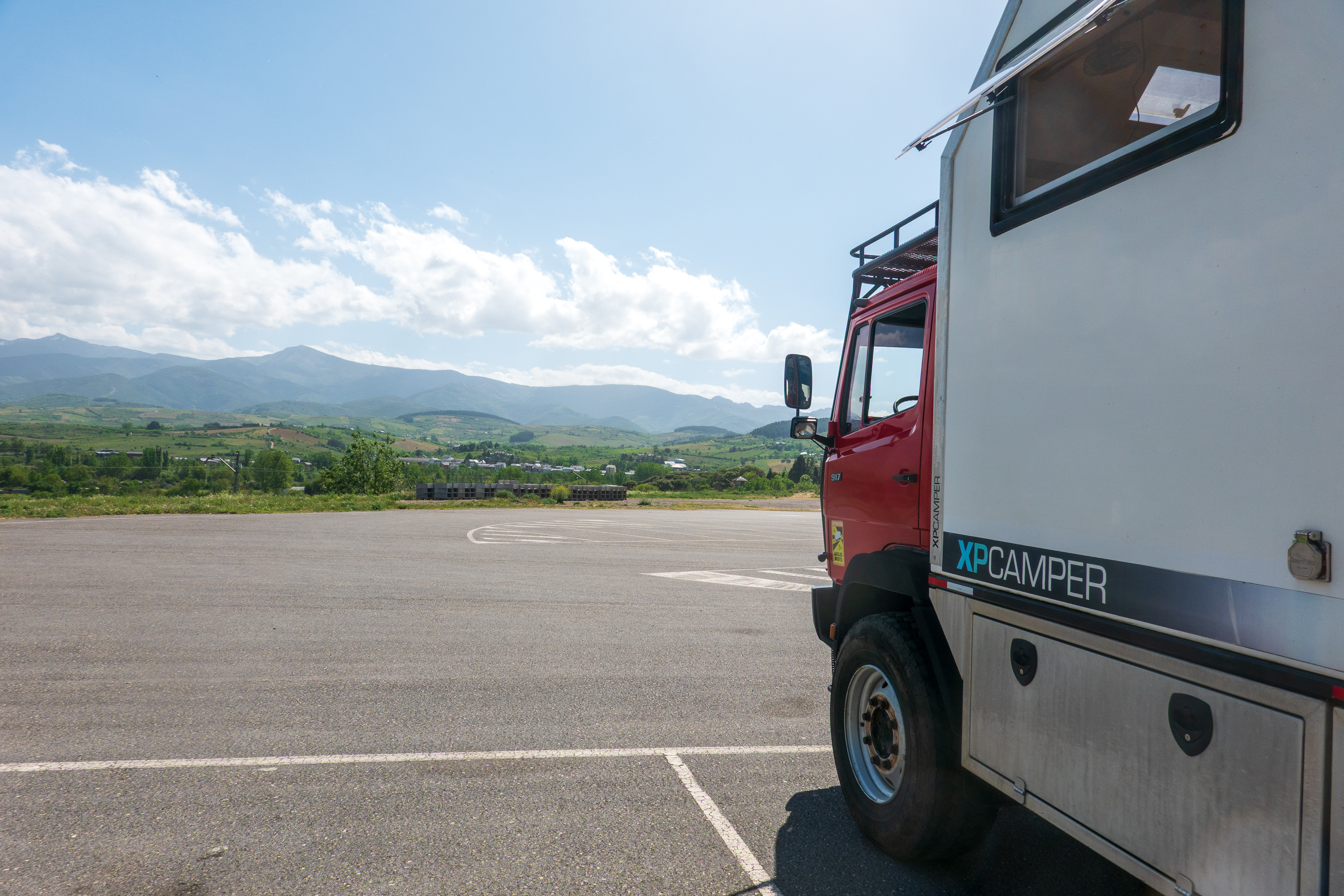
All in all, a brilliant execution as it used parking spaces that would probably be empty at night. And the campers used the small grocery store, restaurant, and, wonder of wonders, a truck wash!
One of the managers also helped us find a garage to, yet again, tighten the fan/power steering belts which had started squealing. By helped, we mean that he put us in his car, drove us to the garage, introduced us to the owner, and told him that he had to attend to us immediately. Which he did. You don’t get this at your local KOA.
There’s GOLD in Them Thar Hills!
The next morning we headed into the hills to visit Las Medulas, gold mines from before the Roman era. (https://en.wikipedia.org/wiki/Las_Médulas) We are Roman history nuts and love to marvel at Roman engineering – cities, bridges, aqueducts, etc. Las Medulas takes this to a whole new level of mega project. Using a technique called “Ruina montium” (Latin for “wrecking of mountains”), the Romans washed away whole mountains, leaving behind an artificial Bryce/Zion/Capitol Reef which stretches for miles. Suddenly the building of the Colosseum doesn’t seem so hard.
Why did they do all of this, for hundreds of years? Upon discovering that the local people, the Asturs (from whom we get the name, Asturias) mined alluvial/placer gold, the Romans moved in to industrialize the process. Eight aqueducts brought water from hundreds of miles away. That’s right, hundreds of miles. Then that water was sent into tunnels dug deep into the mountains by thousands of workers. The water then split the mountains apart and washed the ore laden soil out where the gold was retrieved. Fleeces were used to collect gold flecks, as in the legend of the golden fleece of Colchis.
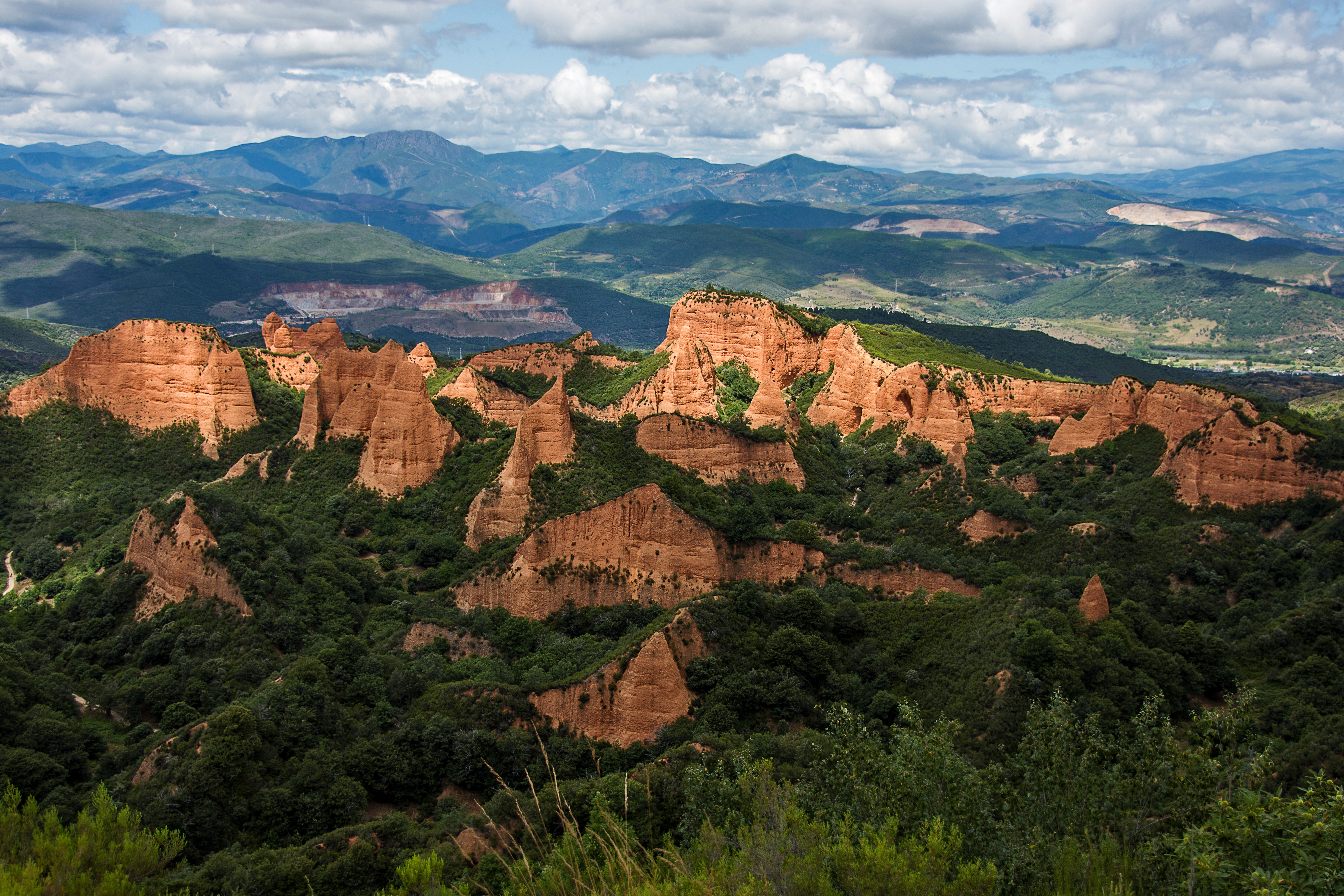

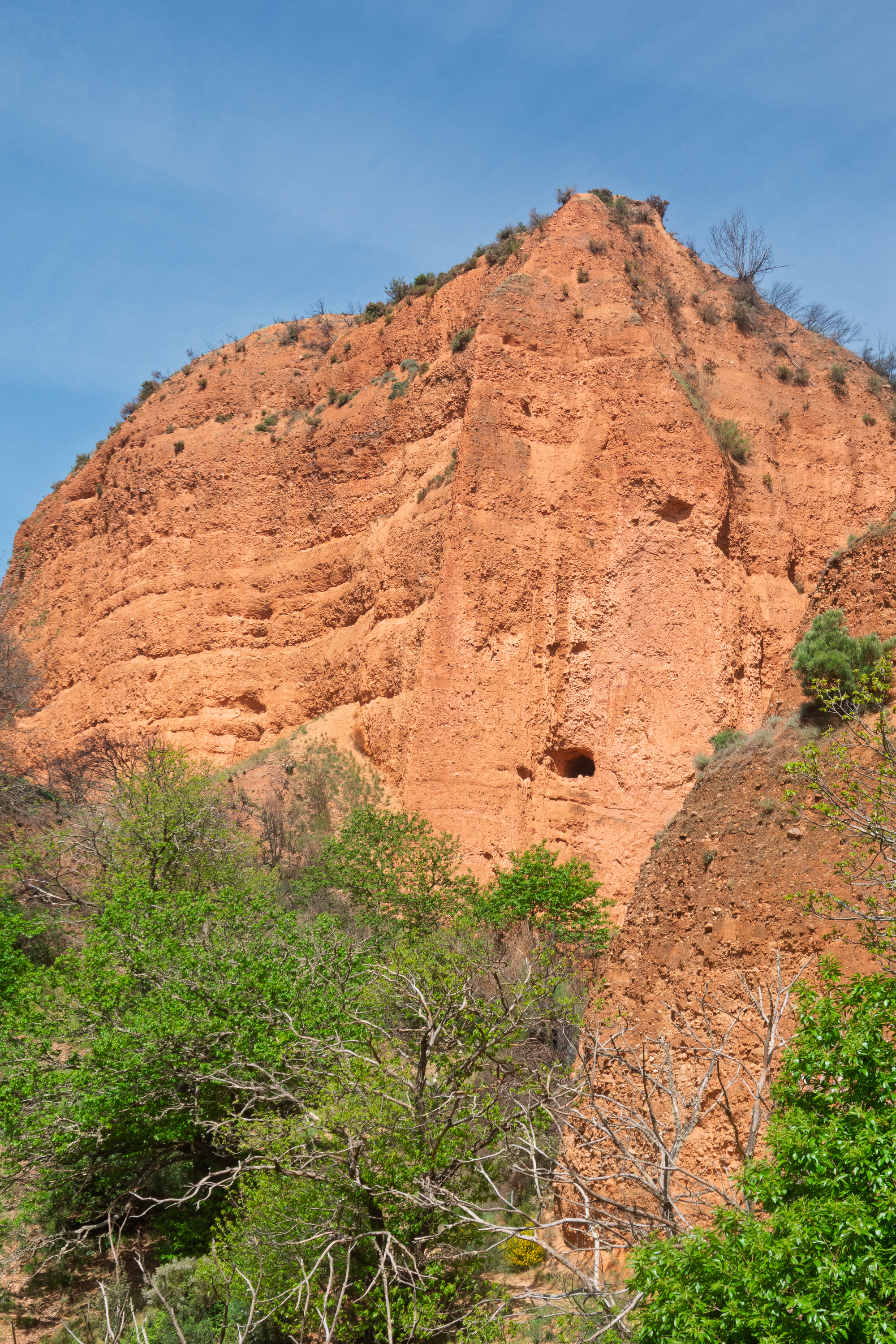
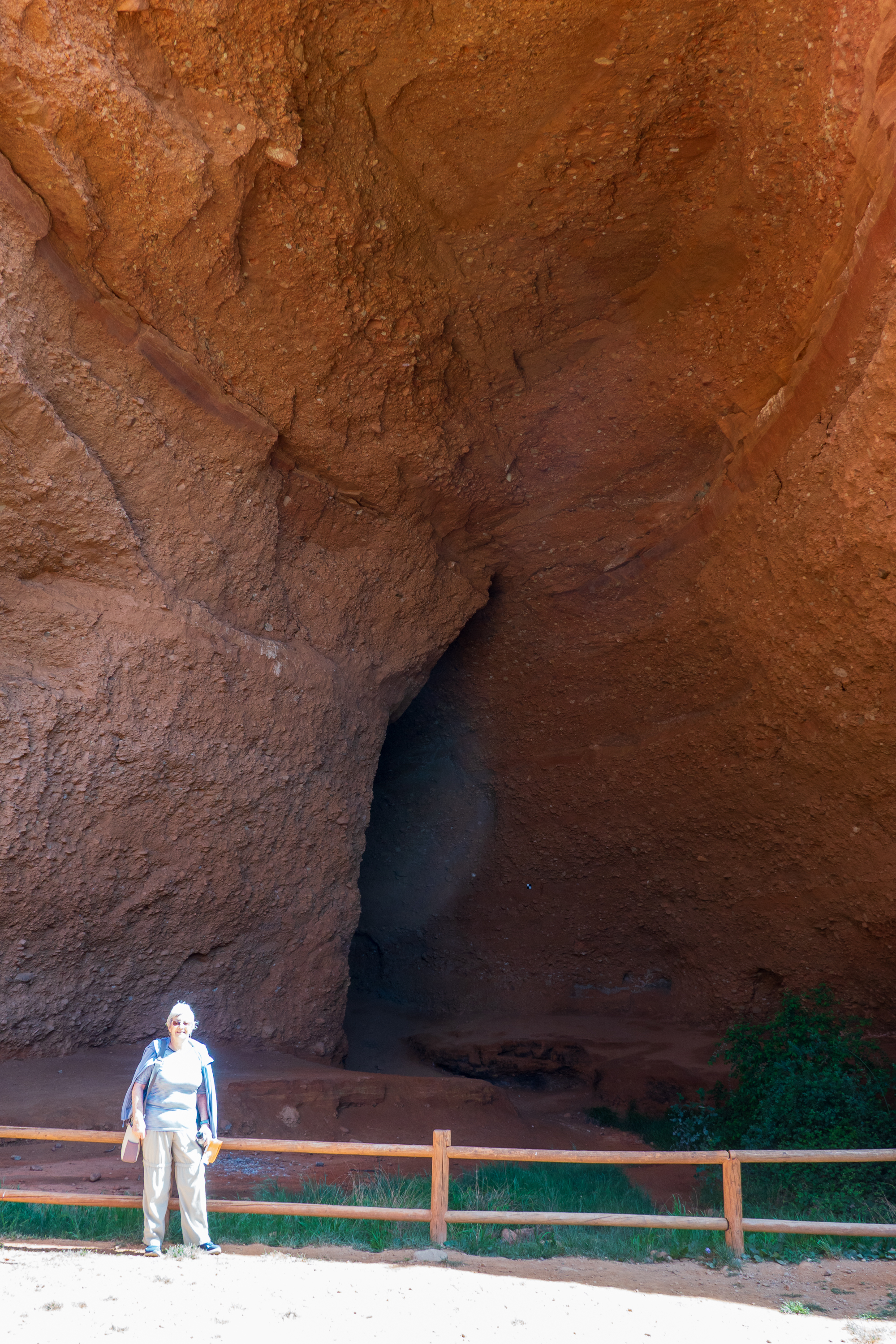
And then, when the mountains had literally been washed away, they began classic gallery mining along exposed ore seams. Pliny reports that the losses of workers were so high that it was safer to dive for Tyrian purple “fish.” (The snails used to make Tyrian purple, the imperial dye. https://en.wikipedia.org/wiki/Tyrian_purple )
The scale of the area is incredible; even more so when you realize that you are walking through a completely artificial, man made landscape. Amazing that this site is not better known. See: https://en.wikipedia.org/wiki/Las_Médulas A full visit would take days and require hours of hiking over miles of trails. A feat best left for our younger and fitter friends!
We returned to the camper for lunch and then back to Ponferrada.
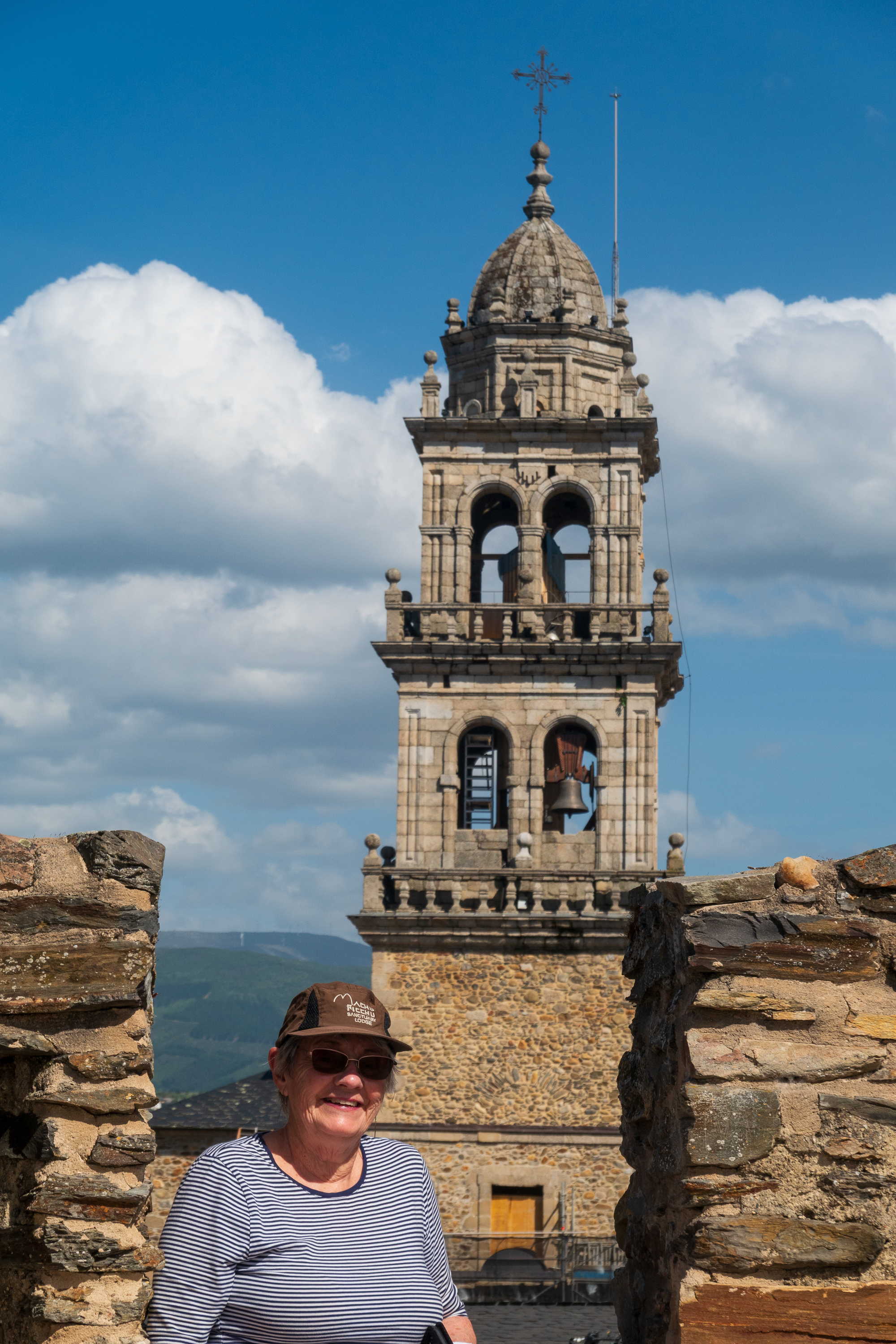
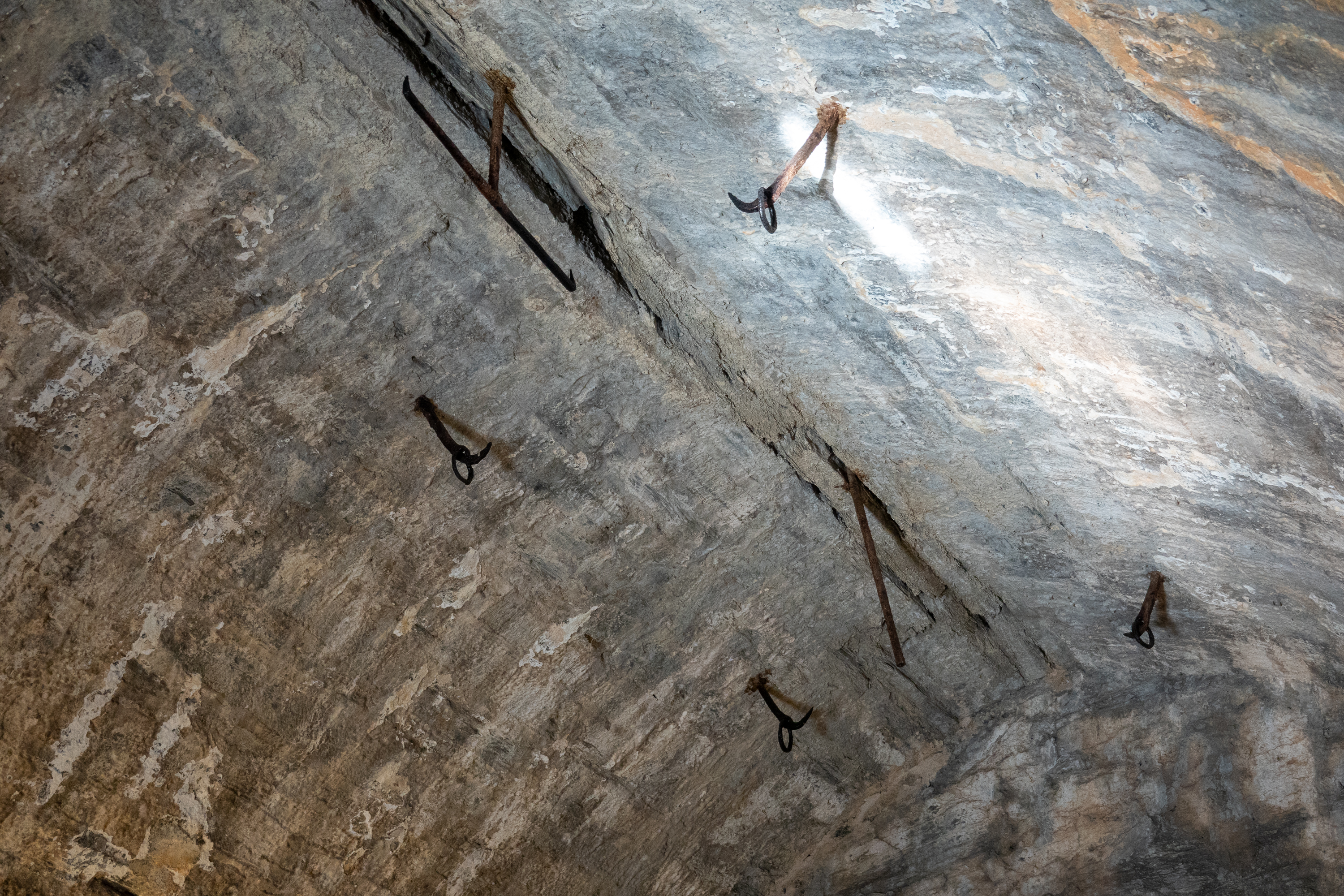
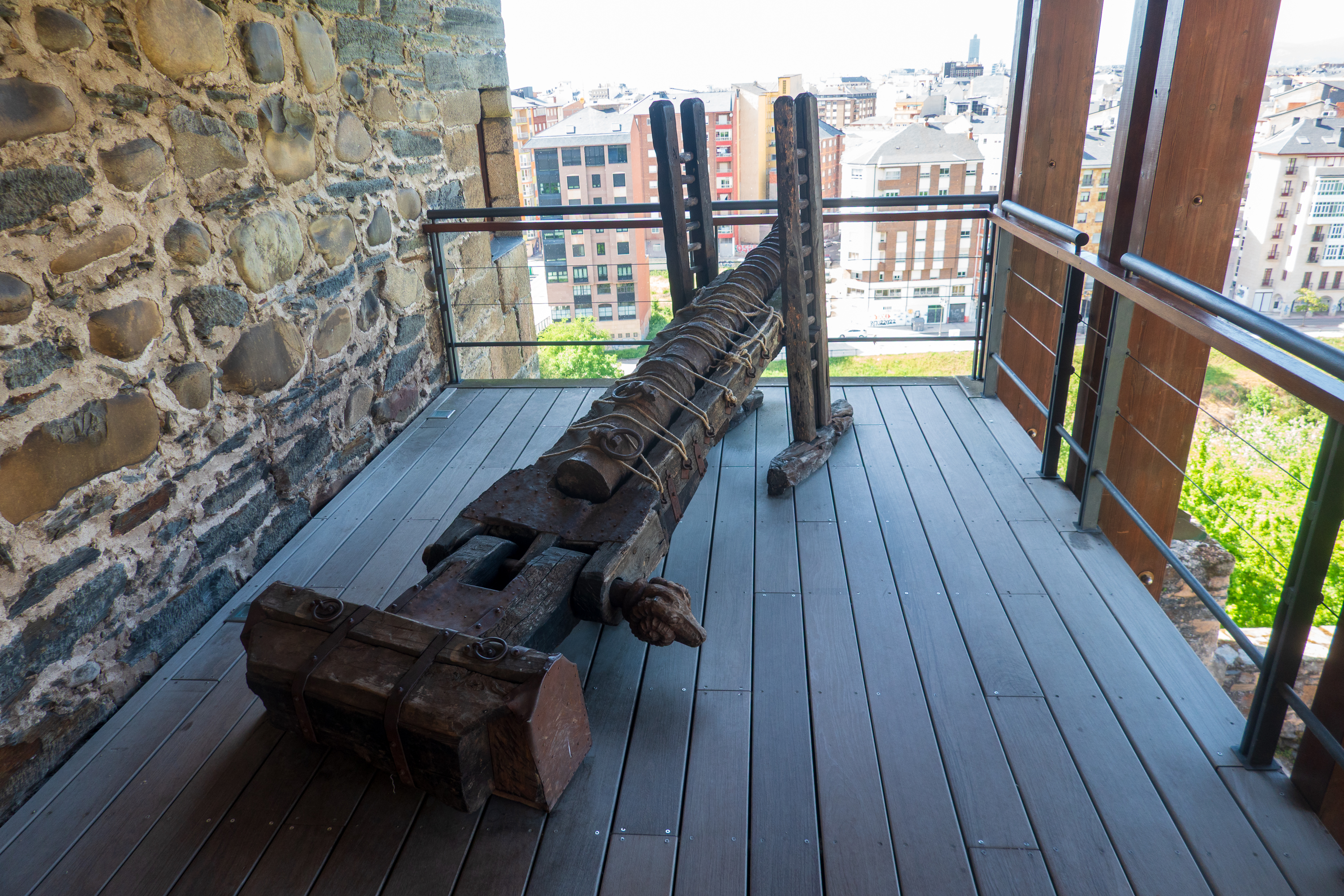
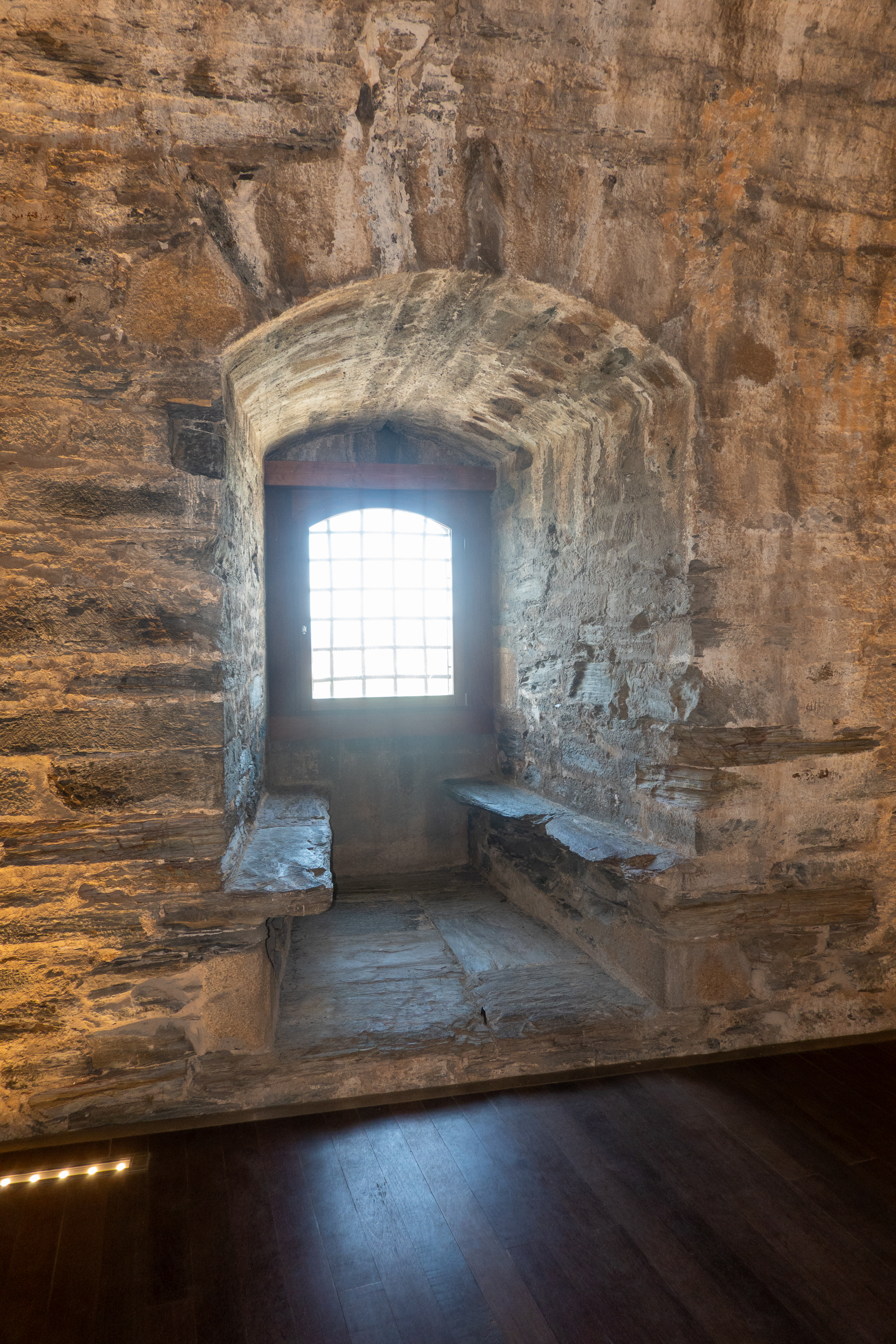
At about 4.30 PM we walked the half a kilometer or so to the Templar Castle, built to protect the pilgrims using the bridge on the Camino to Santiago. The site was originally a pre-Roman “castro” and then a Roman fort. It was used to protect pilgrims on the Camino, and owned by the Templar order for some 30 years. Afterwards it had many owners, many rebuilds, and is now owned by the Spanish government and is an excellent visit. There is next to nothing of the original Templar castle left, but it is a textbook example of castle construction and expansion.
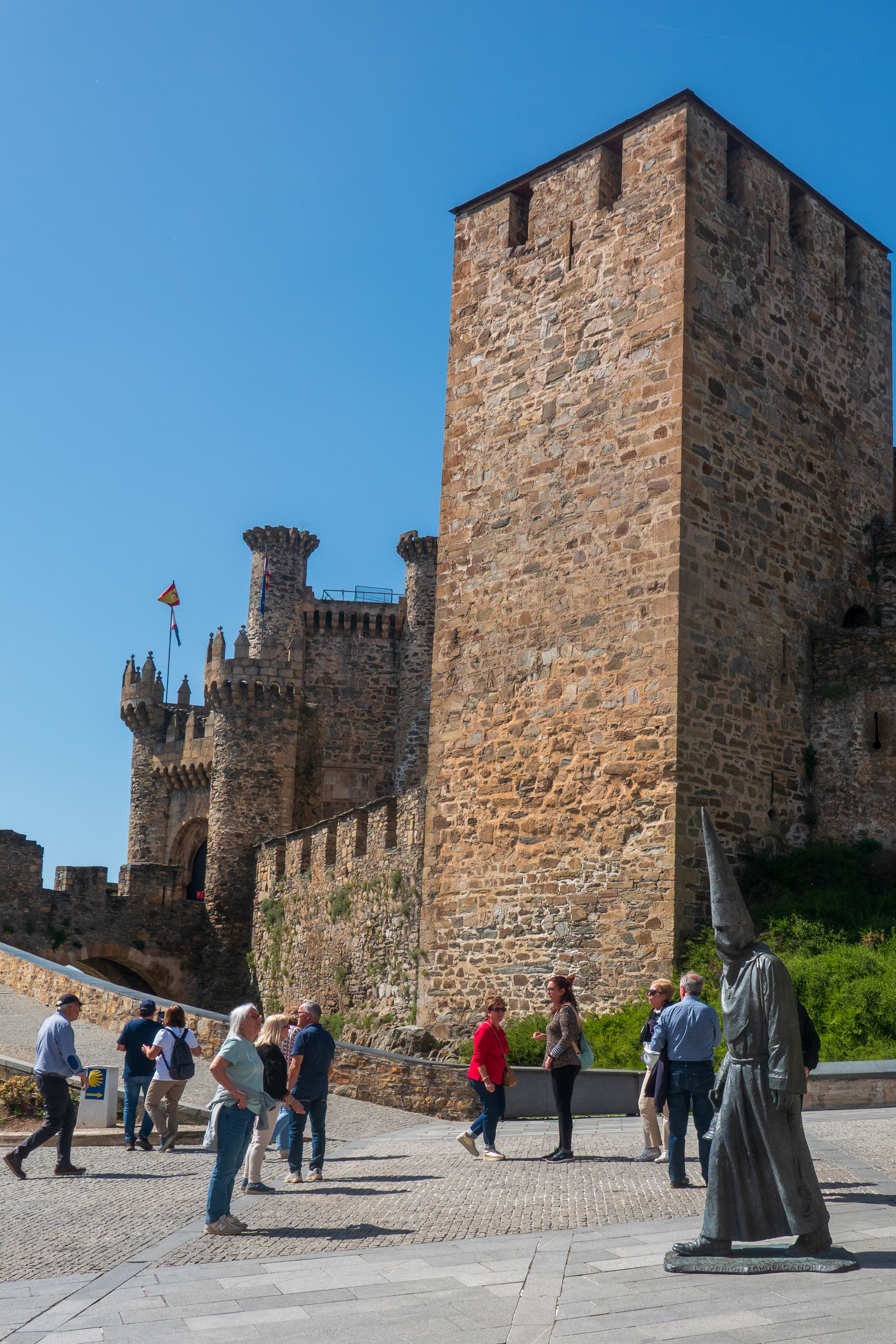
The excellent museum displays have good information on medieval life and made one interesting comment on Spanish castles, both Christian and Muslim – they could have many purposes. One was, of course, as protection against invasion or Reconquista by Christians or Moors. The next was protection against or control of your feudal neighbors, and finally, in more modern times, conflict between Spain and Portugal.
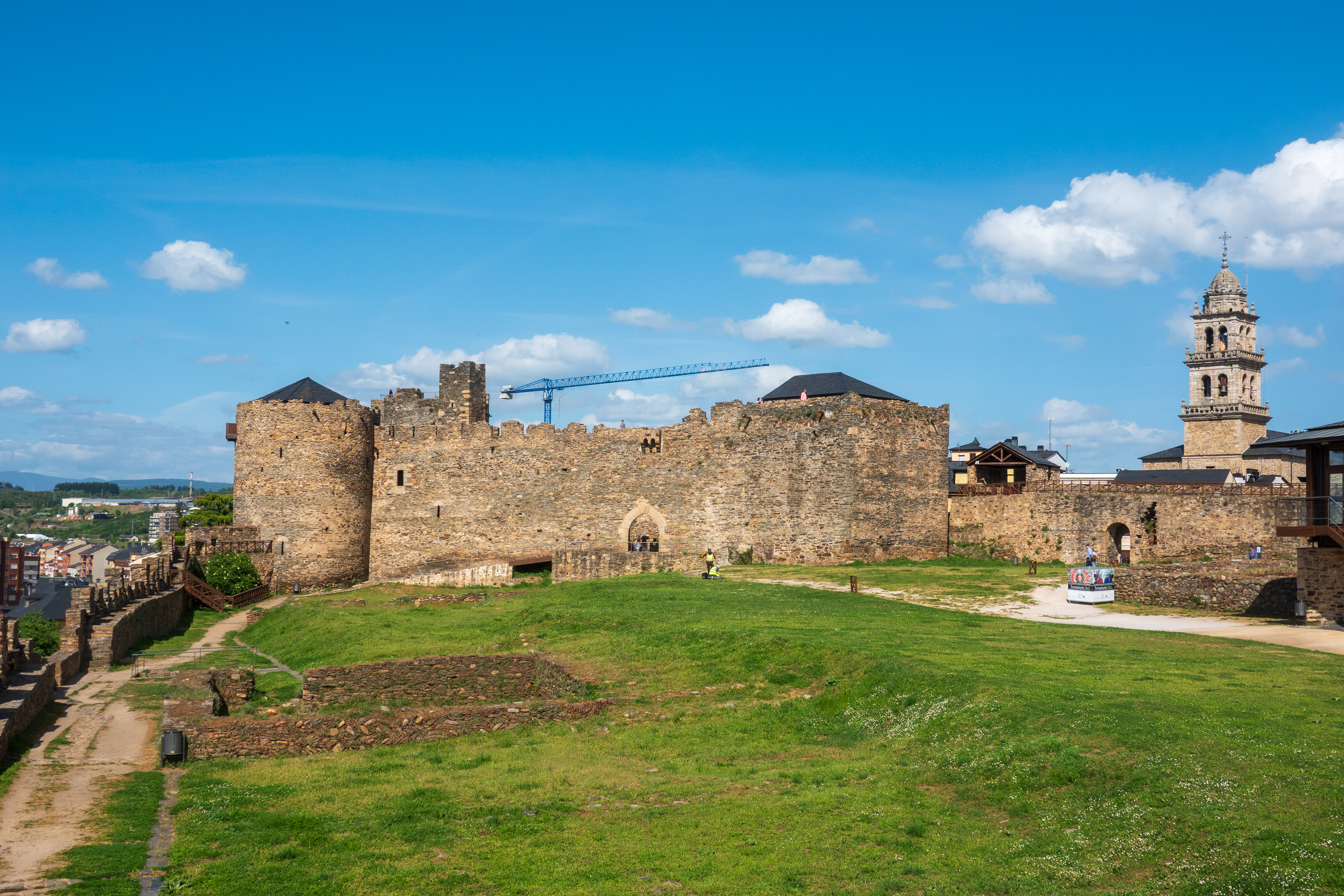
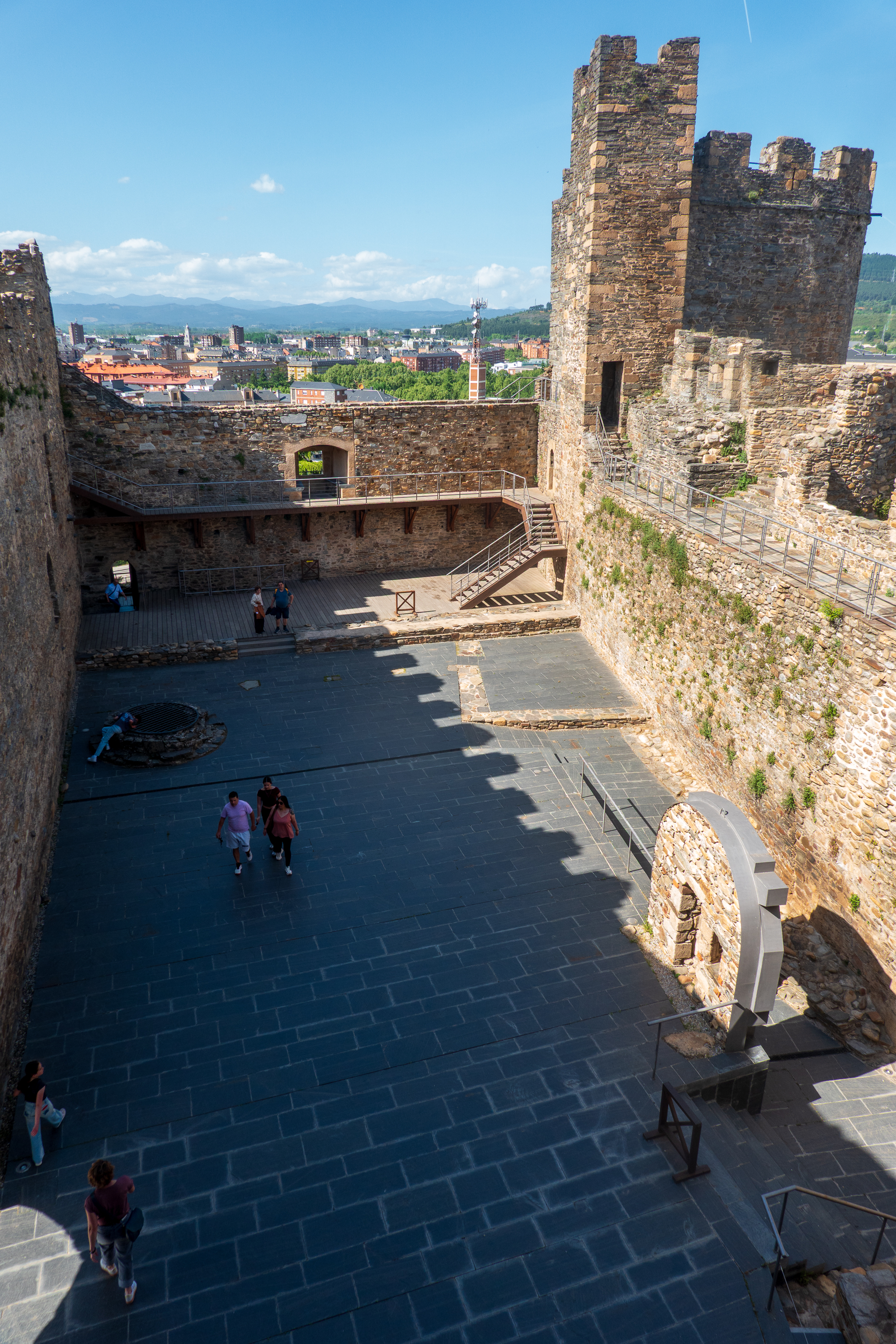
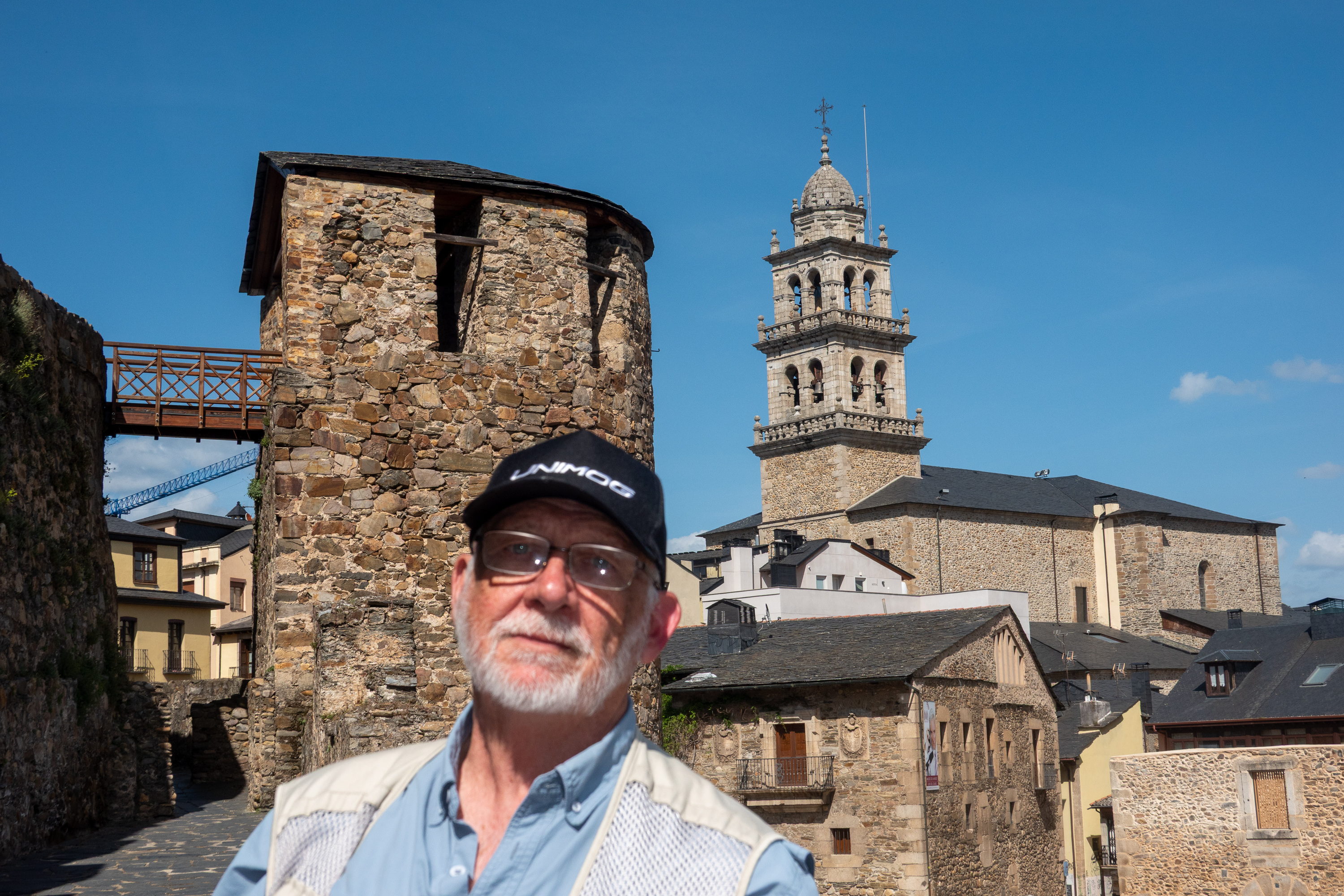
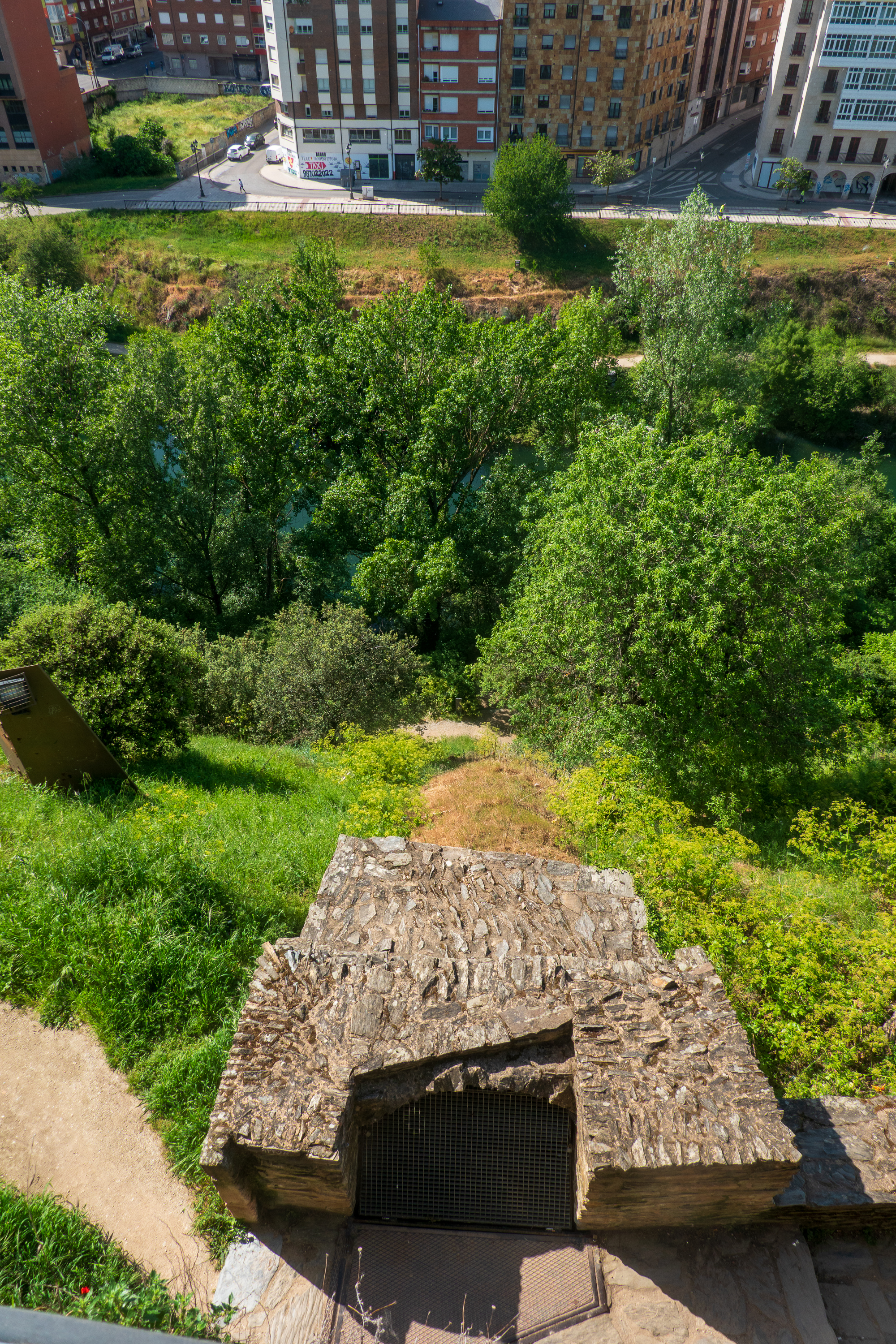
A castle was an investment for the ages! And still a tourist draw today.
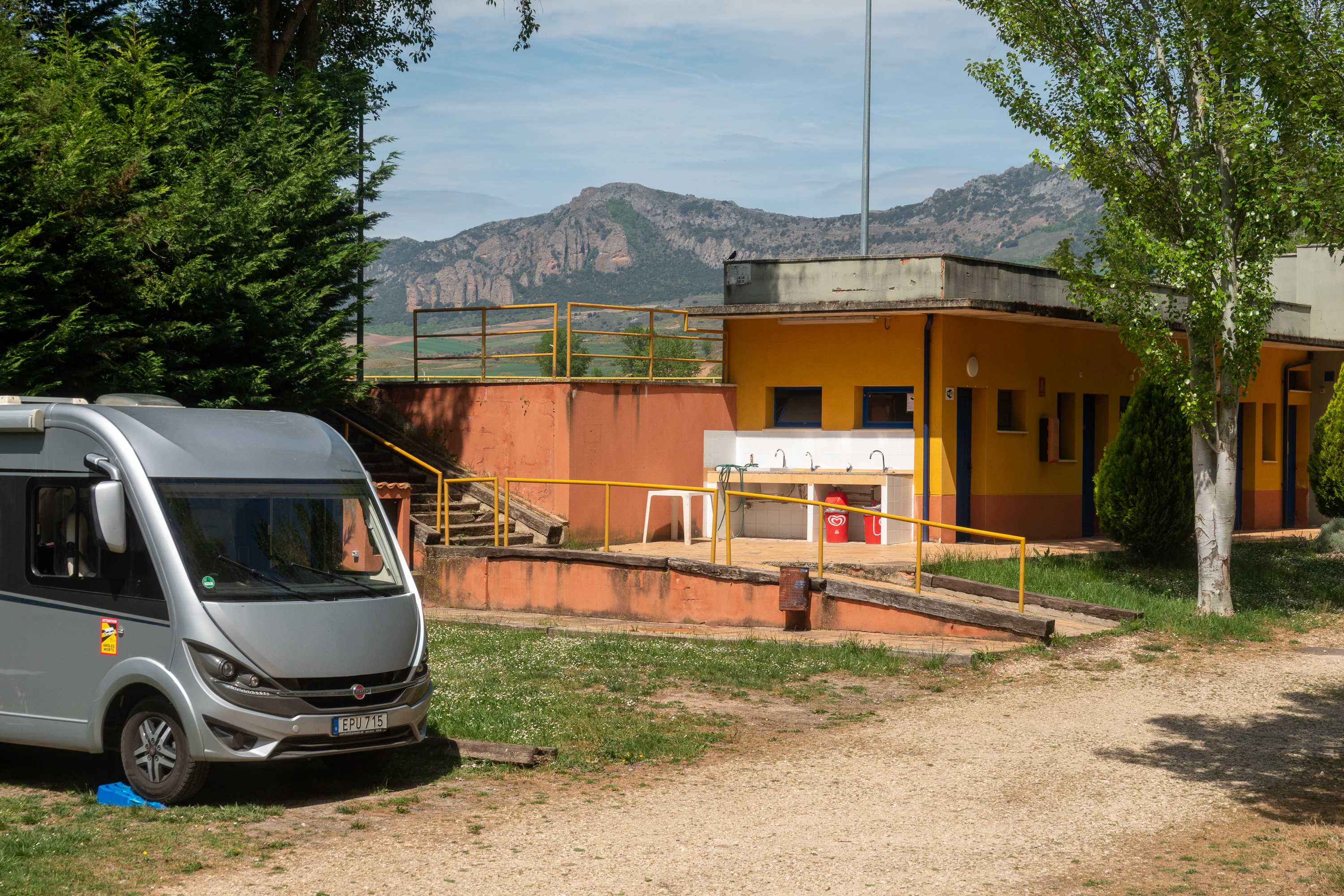
Continuing East we stopped at a funky little campground described as having a “GDR” vibe. (East German) That alone was enough to make us stop. While the site did, indeed, look very run down, it was very pleasant, almost empty, all of the facilities worked (sort of), and, when someone actually showed up, not expensive. Interesting that two of the people staying were tent camping from a car. Not as common as vans or motorhomes. (https://park4night.com/en/place/134997)
So When ARE you open?
We found that tourist sites often opened from 10.00 AM to 2.00 PM and then 4.30 PM to 8.30 PM. But some are open all day, with no lunch break. And the hours are reported differently by different, and sometimes even the same, website. It makes it hard to know when to go!
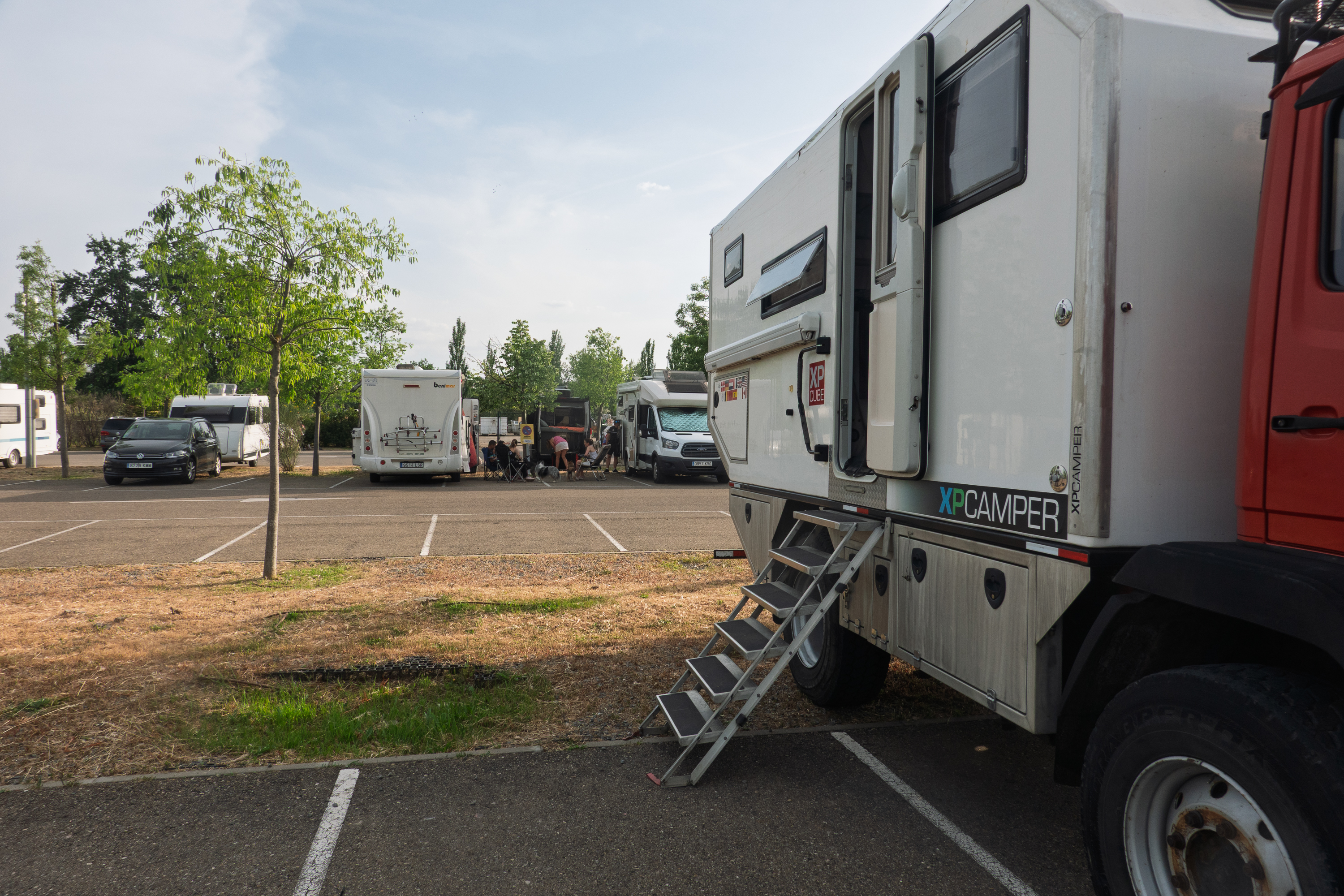
This we discovered in our next stop in Zaragoza, Aragon. We stopped here because Denise wanted to see the Aljaferia Palace, rumored to be Moorish architecture. It proved challenging. Car parks close to the Palace all had warnings of theft and damage issues on Park4Night. So we ended up in a lovely parking lot, about 30 minutes walk away, with a number of other campers all attending a dog show. There were lots of dogs!!
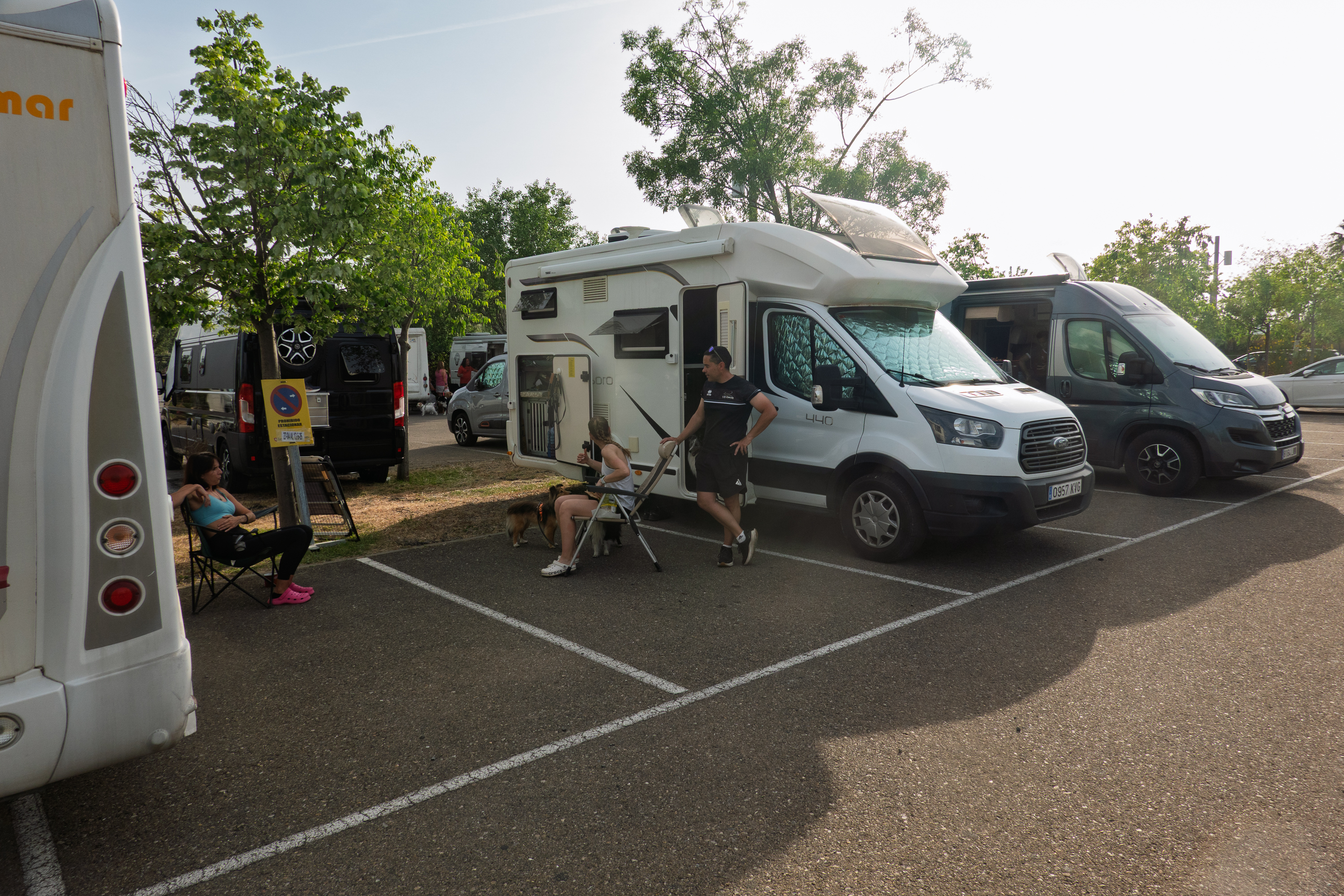
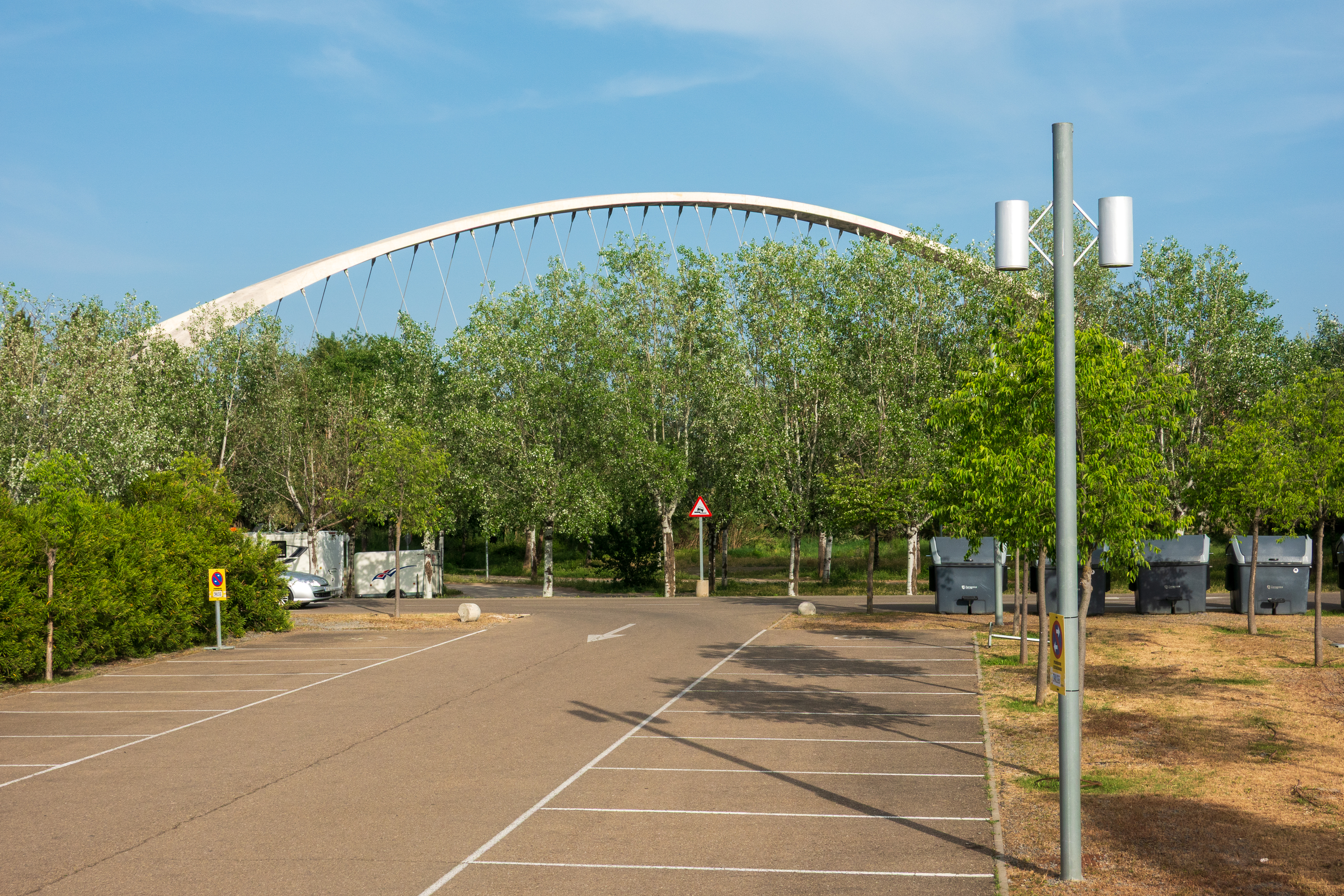
We double checked the website and it stated that the Palace was open from 10.00 AM to 6.00 PM. So foolishly believing the website, we headed out on foot at about 2.00 PM. We were afraid of traffic on our bikes. That turned out to be a mistake, as there were huge bike lanes and quiet streets!
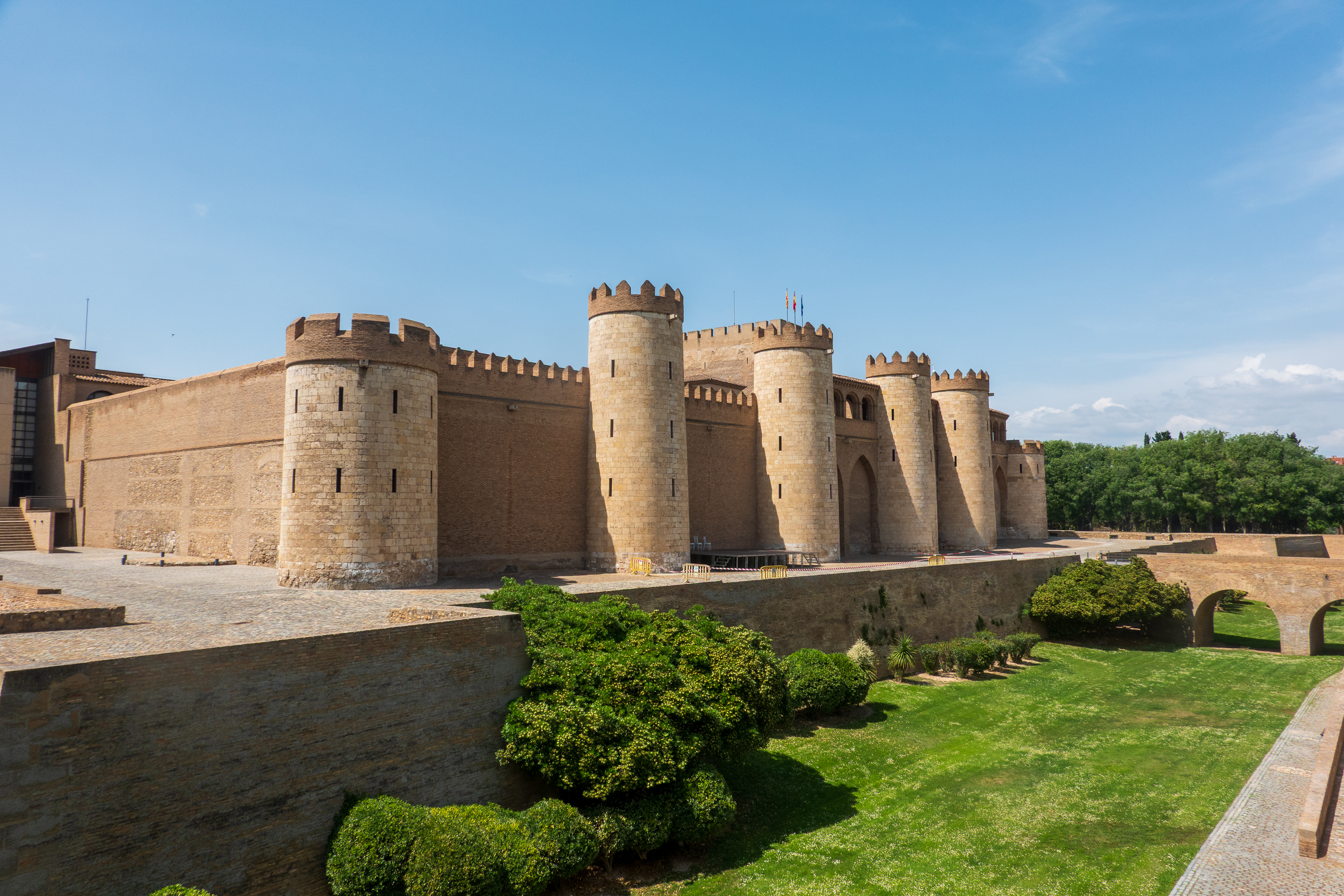
We arrived, to find that it opened at 4.30 PM. Entry was free that day, but it was closed until 4.30 for special group visits. So, we had two hours to kill and no nice little cafes nearby to spend time in. We popped into a little store, run by Ecuadorians. We had a nice chat about the old country, but they did not have tables or coffee, so we kept walking. It was hot, but we found a local dive bar (cash ONLY!), bought a bottle of sparkling water, and had a surprisingly pleasant sit at their sidewalk tables. Heading back, we found a place to buy an ice cream and took them into the park to eat and sit a bit. Meanwhile the queue was getting longer and longer and it actually was almost 5.00 PM before we could enter. The last 30 minutes being spent standing in the sunshine in mid 80F temperatures.
The Palace was most interesting. Fans of the movie “El Cid” may remember the Moorish emir that El Cid spares at the beginning of the movie, al-Mu’tamin. Brilliantly portrayed by the British actor, Douglas Wilmer, the real Mu’tamin provided the real Ruy of Vivar with refuge and employment when the later was exiled by King Alphonso. (https://en.wikipedia.org/wiki/Yusuf_al-Mu’taman_ibn_Hud )
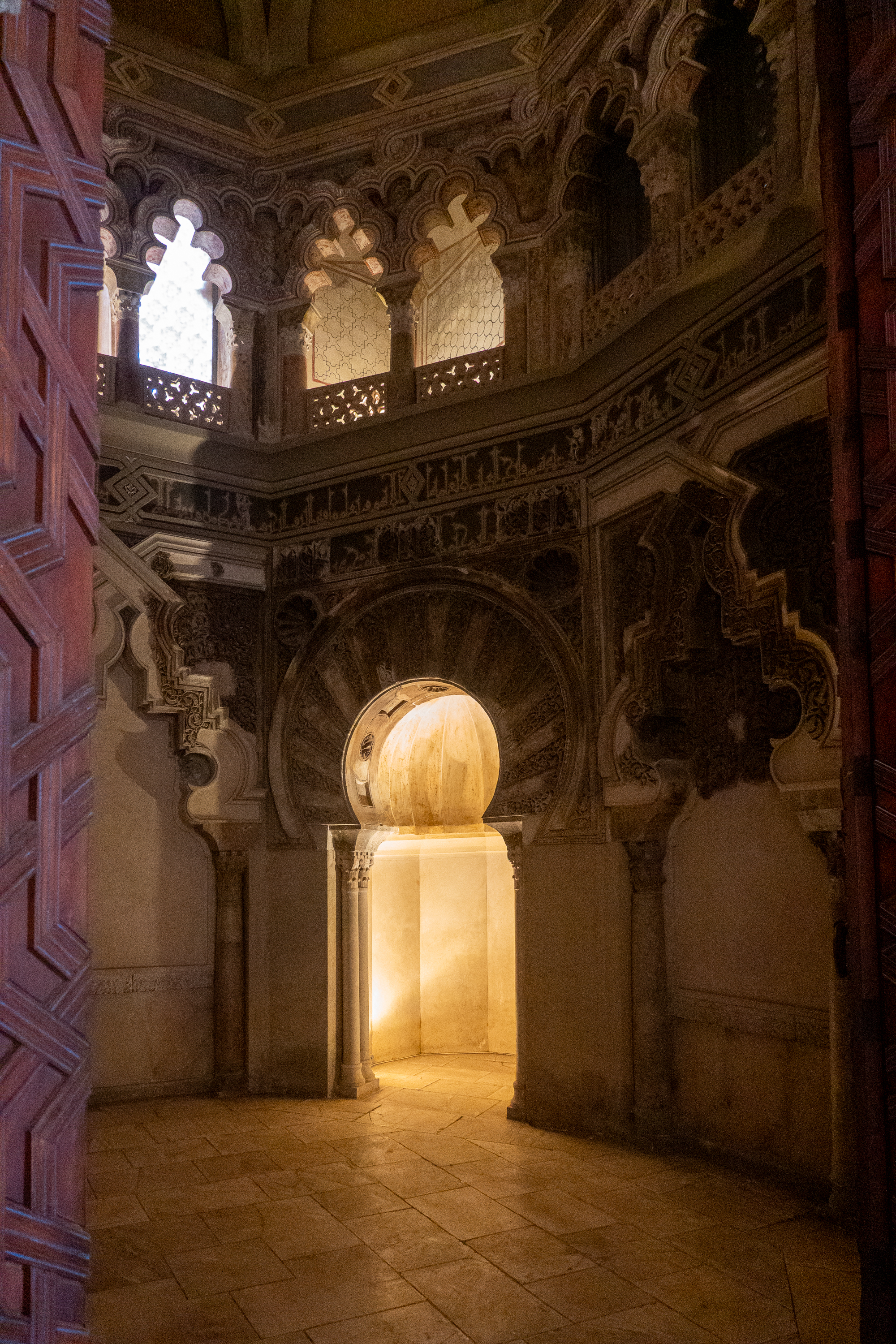
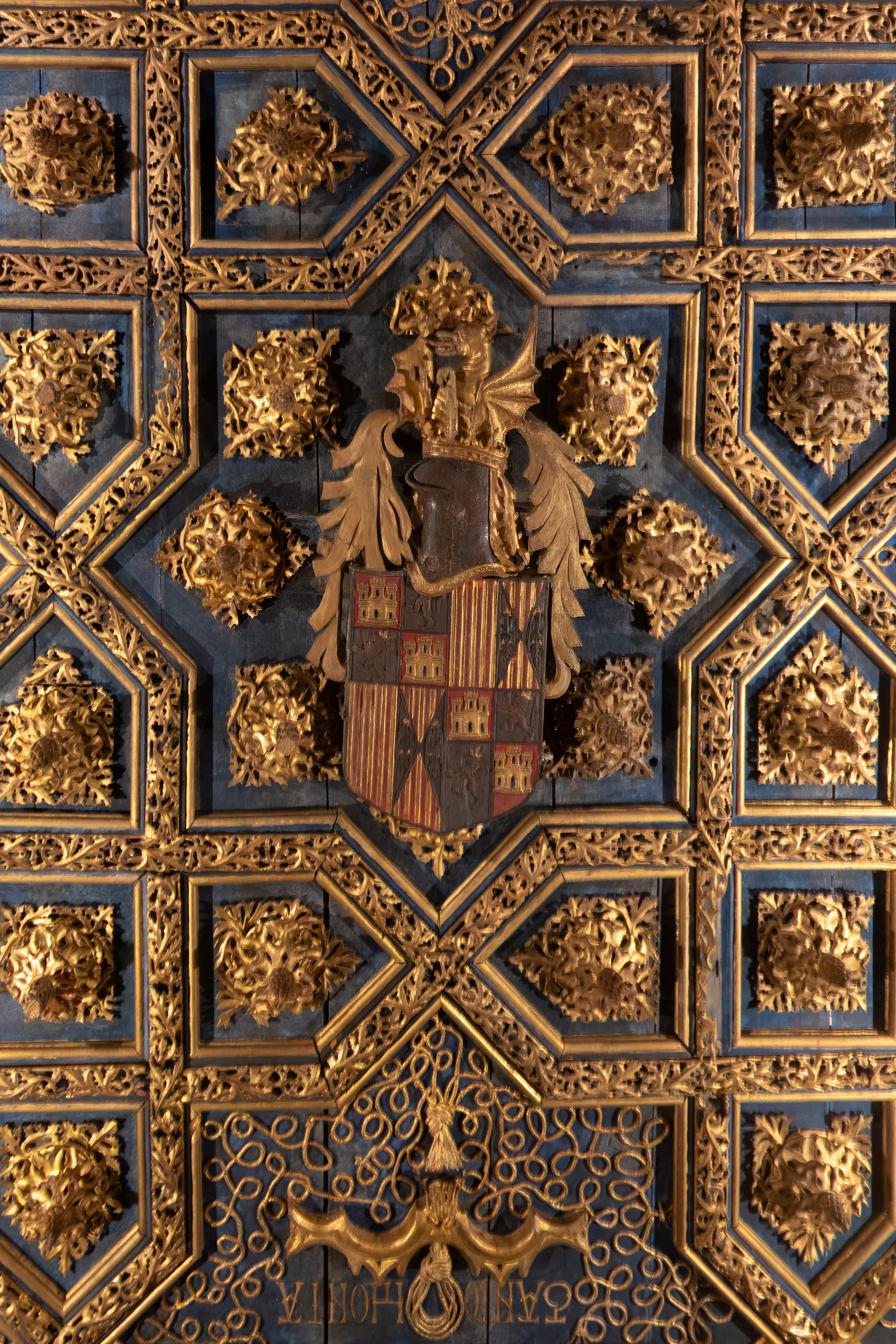
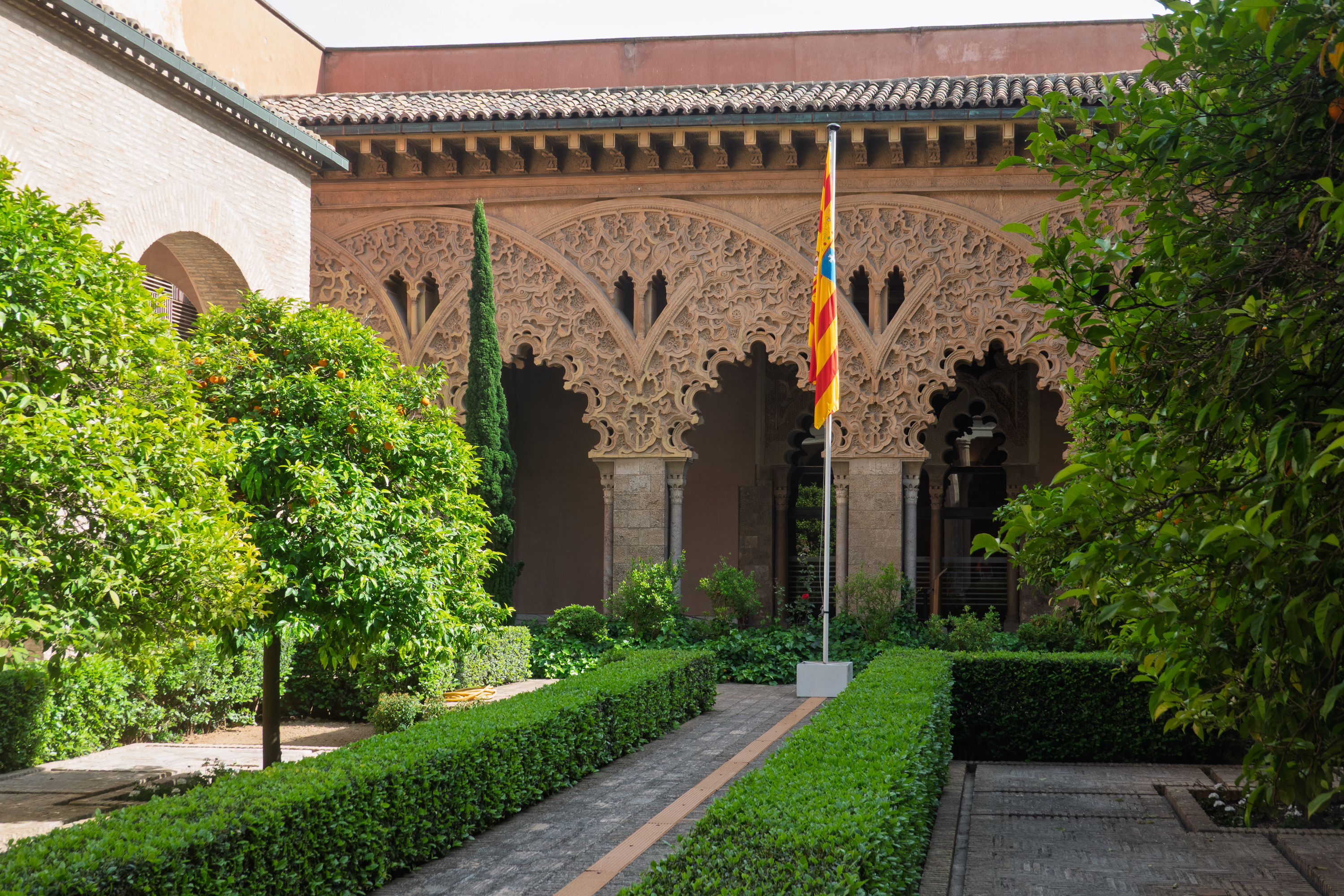
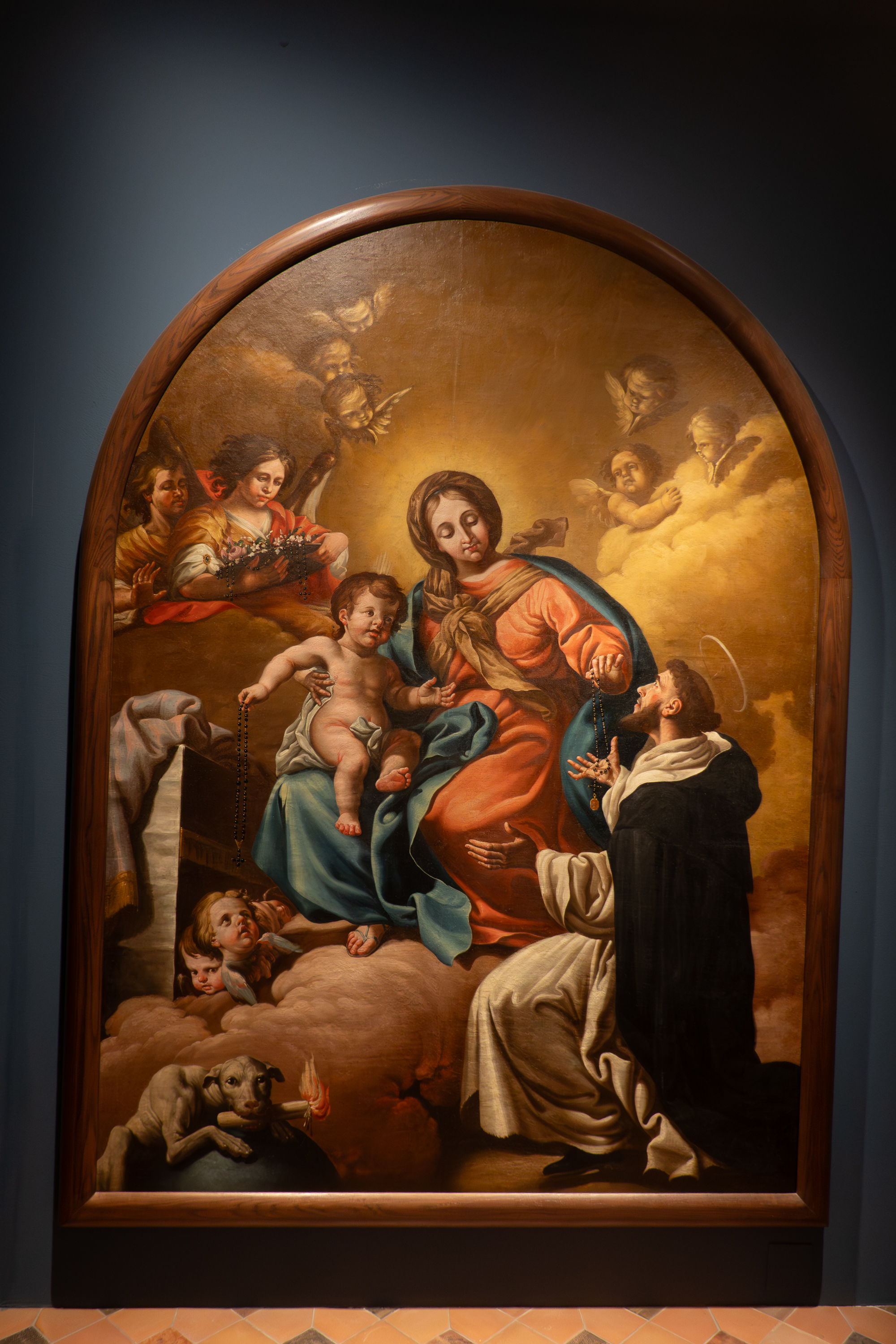
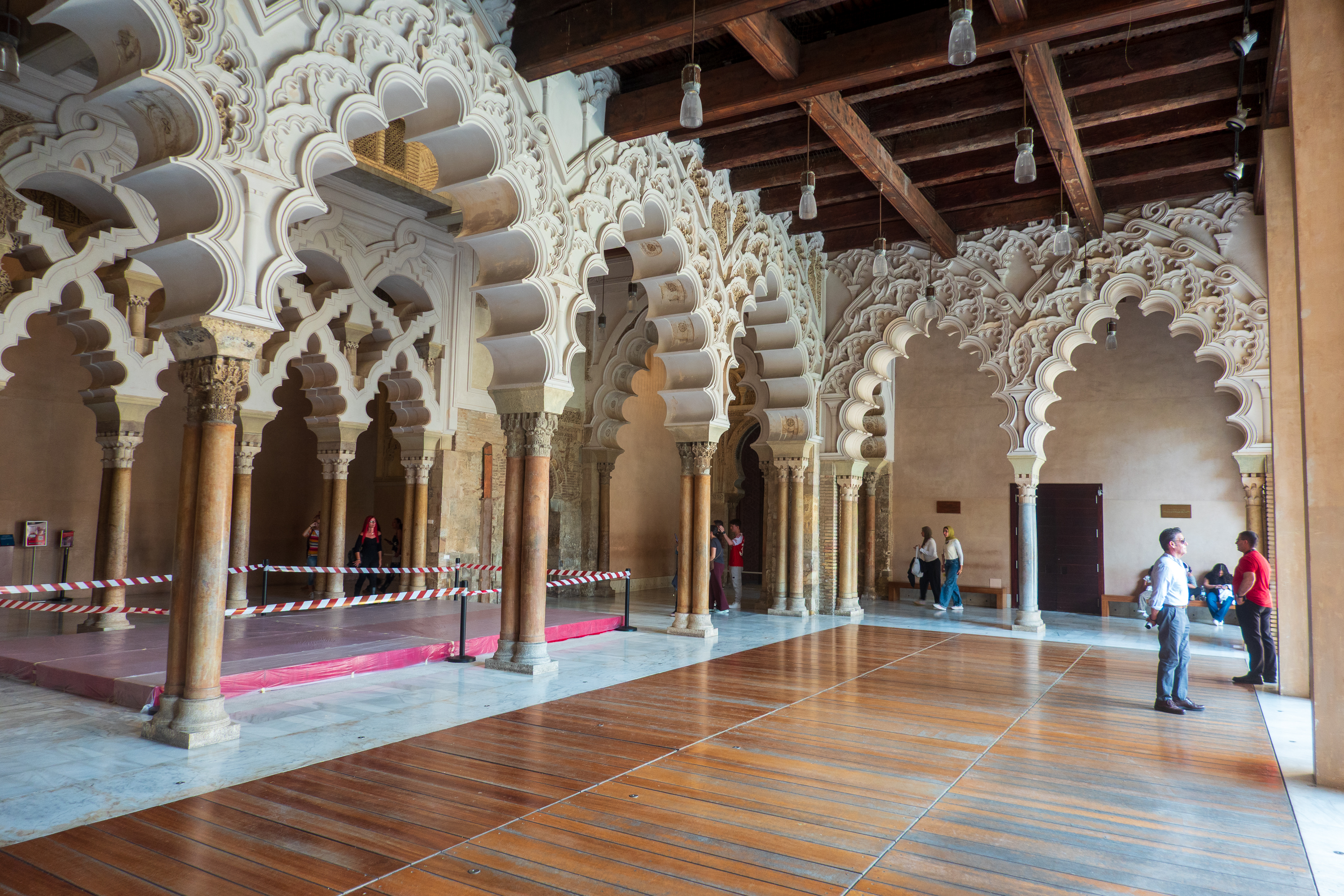
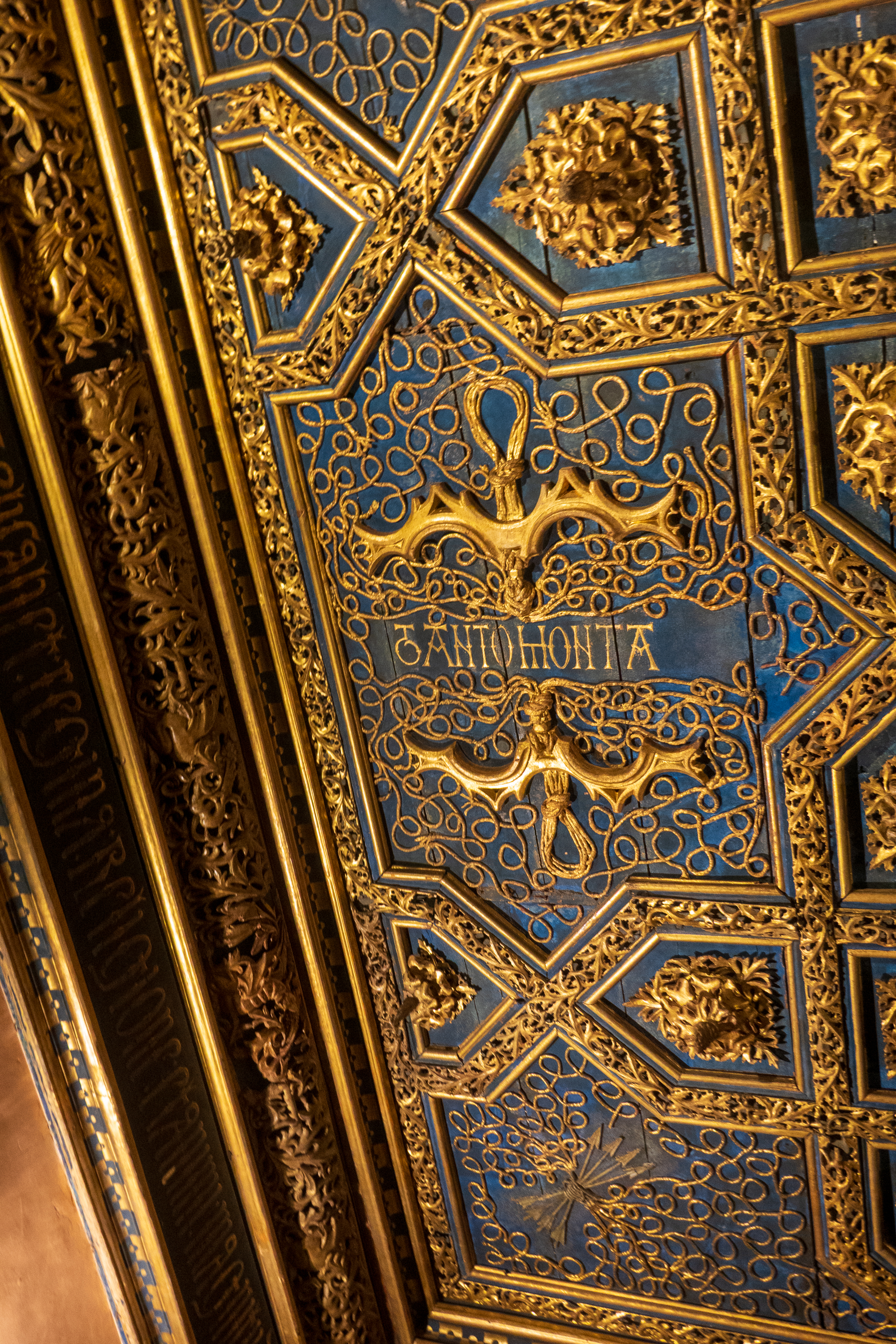
Here again, as in southern Spain, we found the “tanto monta” motto of Ferdinand and Isabella. Hard to love these Catholic monarchs, but the motto which means that whatever one says goes for both, was remarkably progressive for an age when queens were more often considered property of their husbands than actual rulers. (https://en.wikipedia.org/wiki/Catholic_Monarchs_of_Spain)
There was still a long line to enter when we left about 6.15 PM but we were fortunate enough to find a taxi with a most pleasant driver, who was happy to return us to our camper.

