Category Archives: Other Travel

Trips not taken by EV.

Jerash, Our exploration of the Decapolis Continues

And finally on to another Decapolis city, Jerash. (https://en.wikipedia.org/wiki/Jerash) It can be argued that if you can only visit one Roman site in your lifetime, it should be Jerash. As the city was rarely attacked (most of its life it did not even have walls) and because it was abandoned after an earthquake, there are few other sites in the world where the original layout of a Roman city, with its Cardo and crossing streets is so easy to see. Fred remembers picnics at Jerash as being particularly wonderful.

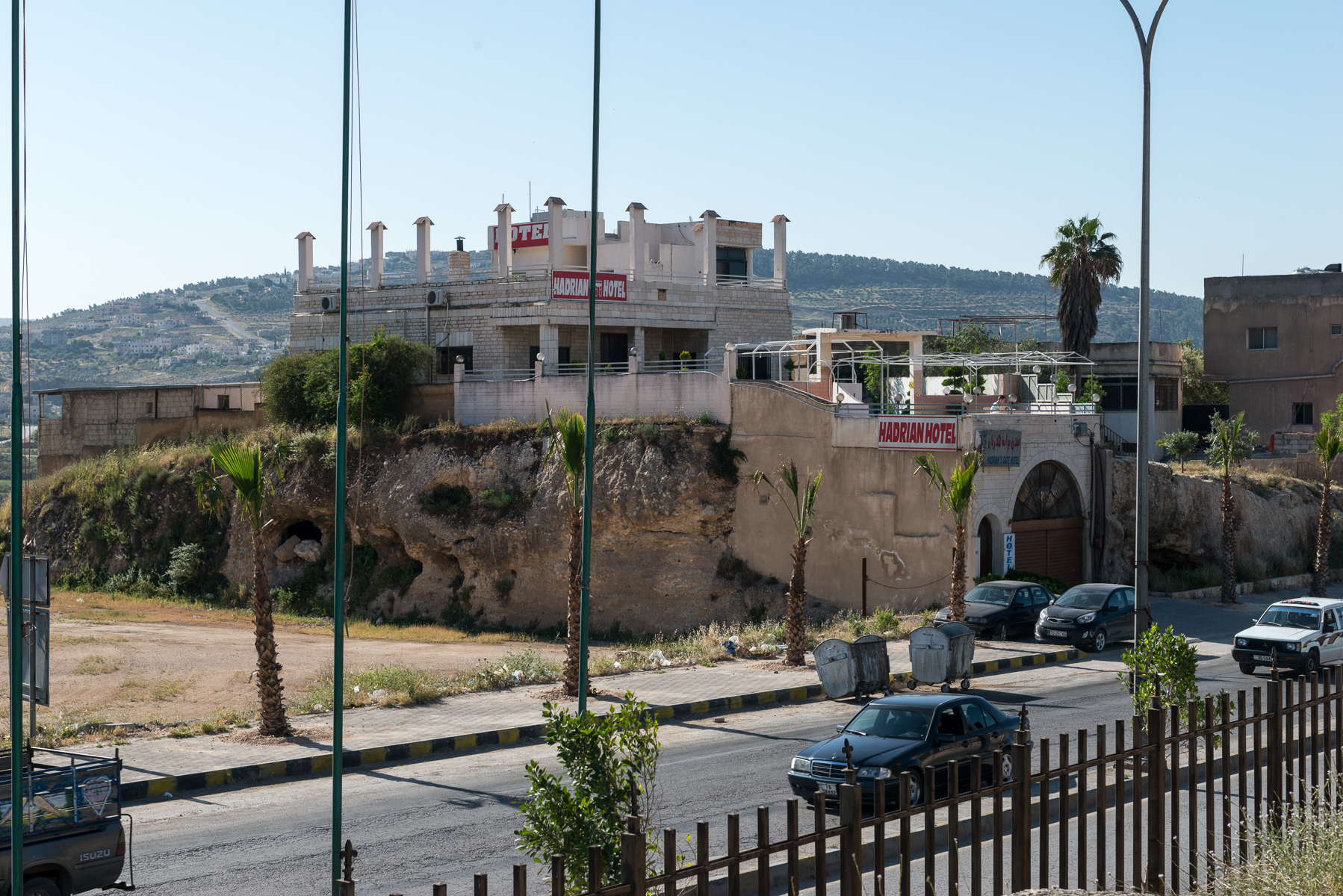
We arrived in the evening and checked into our hotel. (https://www.tripadvisor.com/Hotel_Review-g293988-d1212305-Reviews-Hadrian_s_Gate_Hotel-Jerash_Jerash_Governorate.html)

The Hadrian's Gate hotel, literally across the street from the entrance to the ruins.

The Hadrian’s Gate hotel, literally across the street from the entrance to the ruins.

Fred took a quick photographic tour of the street before we stepped out for Jordanian fast food for dinner.

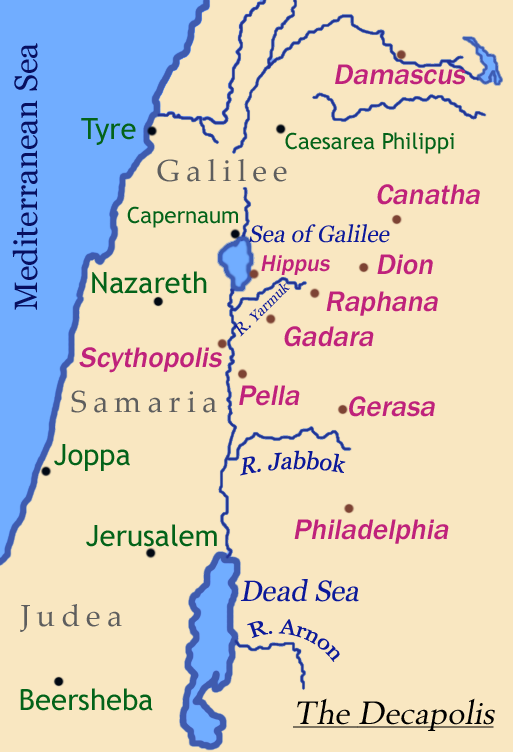
First, a review of the ten cities of the Decapolis:

The Decapolis

We started our visit to Jordan in Philadelphia (Amman) and then went to Gadara (Um Qais) and now we are at Gerasa (Jerash). We were up and about early and into the ruins via Hadrian’s Gate by 8.30 AM.

It was delightfully cool and there were no schoolchildren! The ruins are extensive and much has not been excavated. So get your sunhat, water bottle and come along. The ruins look a bit like this:

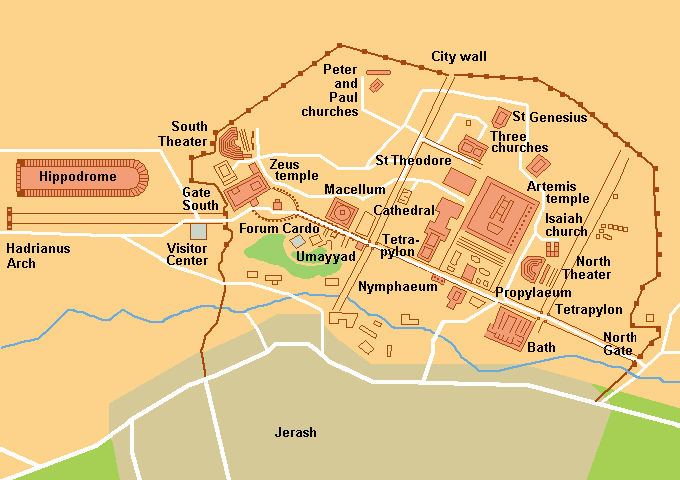
Map of the Ruins

We entered at Hadrian’s Gate on the left of the map. Note that the arch was well outside of the walls, which were not, in fact, built until late in the life of the city. Our guidebook had warned that a visit needed 3 to 4 hours to do it justice and indeed, we spent about 4 hours there and saw most of it, including the sheep and goats grazing amongst the ruins. We saw the hippodrome (and imagined the chariot races), the Forum, the Agora, the Cardo Maximus or colonnaded main thoroughfare, temples to Zeus and Artemis, the Nymphaeum (public water fountain), multiple theaters and several churches (dating from the Christian times, often using stones from the aforementioned temples in their construction). Each crossroad had its tetrapylon (archway with four entrances) which solved the problem of roads not quite lining up!


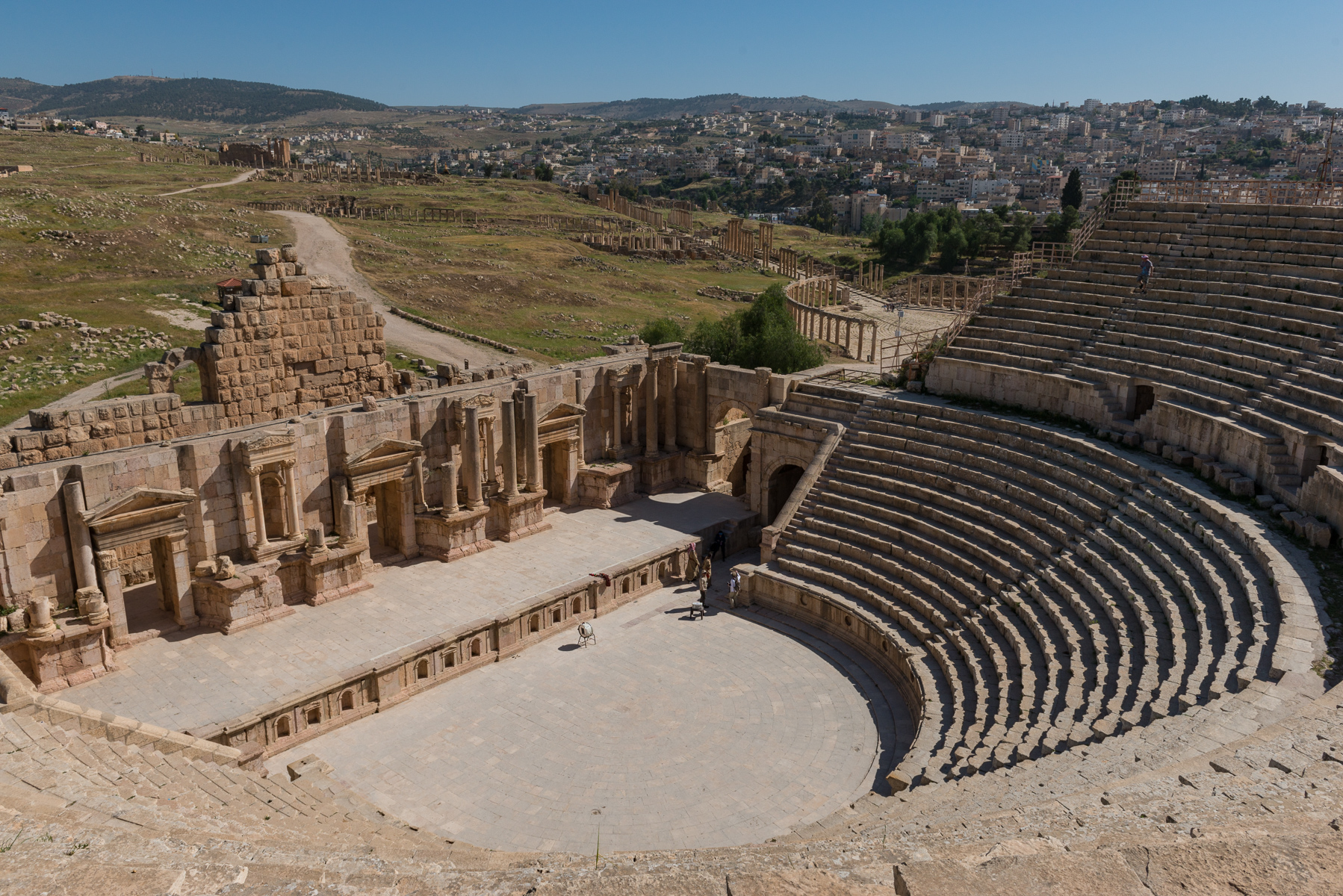
The South Theatre is stunning.

South Theatre, looking towards the Temple of Artemis. Forum to the right with the modern city behind.

South Theatre, looking towards the Temple of Artemis. Forum to the right with the modern city behind.

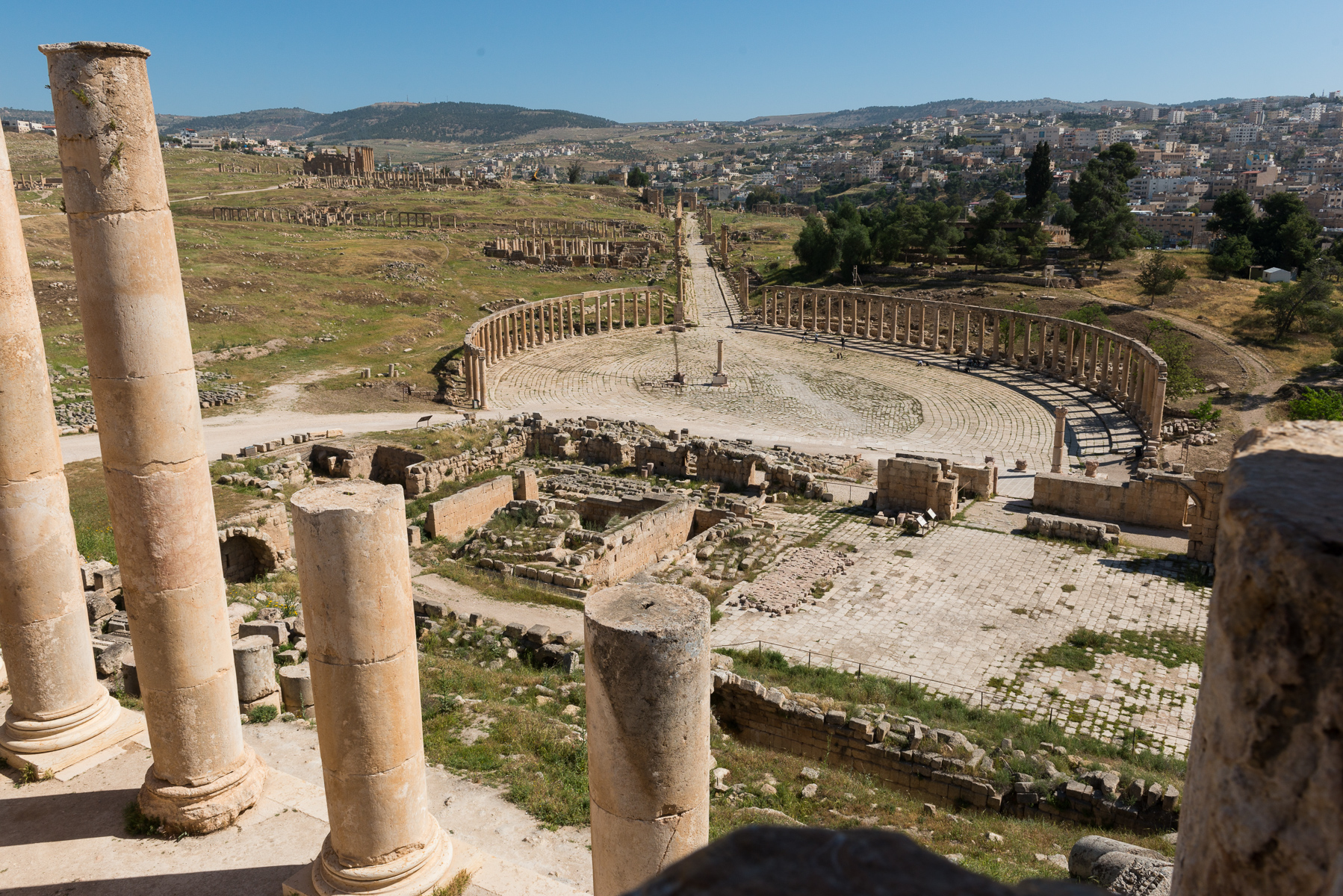
Perhaps the most iconic shot of Jerash is the oval Forum.

View from the Temple of Zeus, looking north down the Cardo. The Temple of Artemis is to the left on the slope. Note the vast expanses still to be excavated.

View from the Temple of Zeus, looking north down the Cardo. The Temple of Artemis is to the left on the slope. Note the vast expanses still to be excavated.

The oval forum

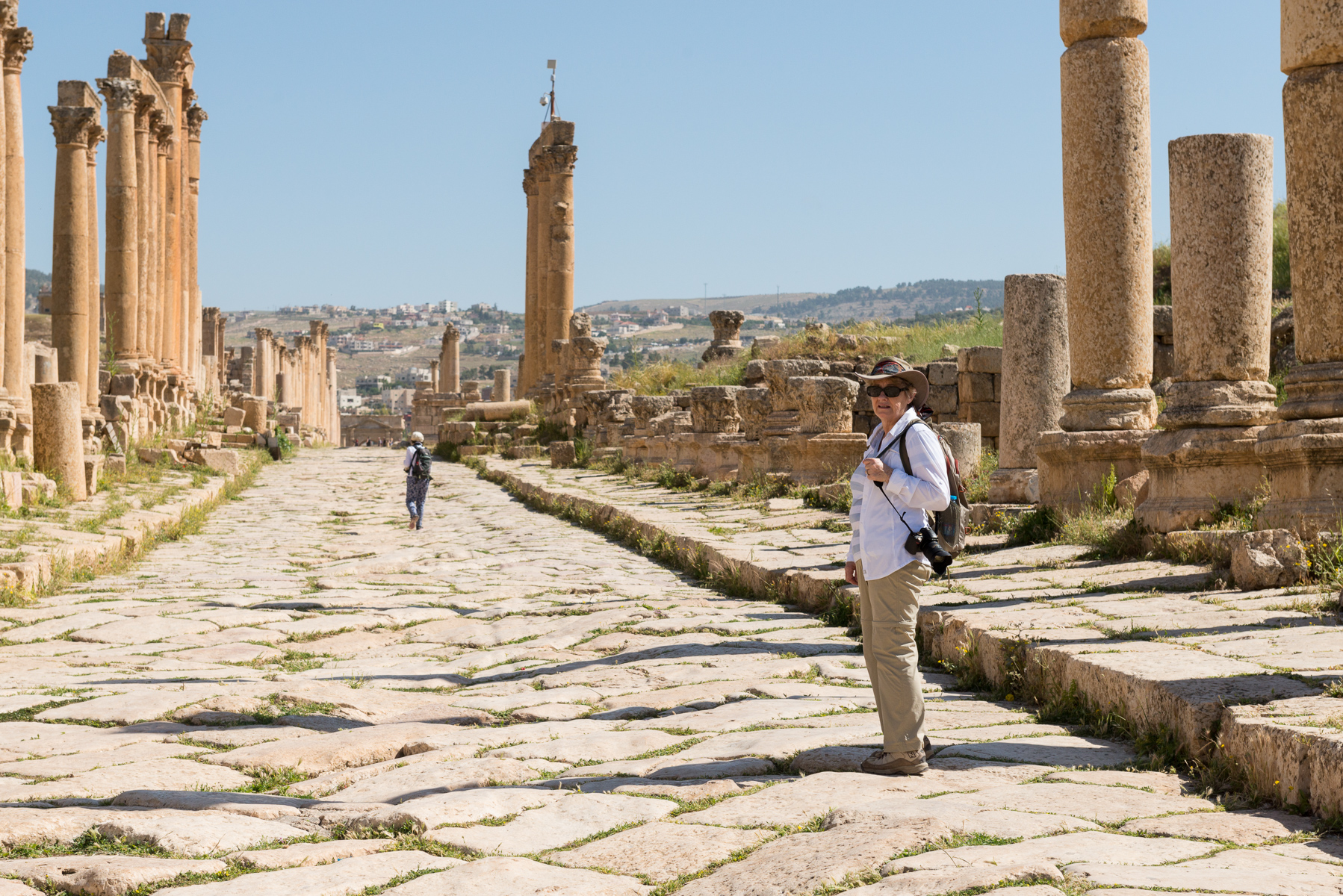
Walking the streets it is easy to imagine life in Jerash in about 150AD.

Denise on Jerash's Rodeo Drive.

Denise on Jerash’s Rodeo Drive.

The Temple of Artemis is one of the main attractions of Jerash. Artemis was the patron goddess of the city.

Temple of Artemis, square on. The central colonnaded building is only a tiny part of what was a huge temple complex. The Crusaders later used it as a fort.

Temple of Artemis, square on. The central colonnaded building is only a tiny part of what was a huge temple complex. The Crusaders later used it as a fort.

The Temple of Artemis as it appeared when I visited as a child. Notice that none of the surrounding space has been excavated.

The Temple of Artemis as it appeared when Fred visited as a child. Notice that none of the surrounding space had been excavated.


Worth remembering that Jerash was continuously occupied from Greek times, about 300BC through about 740AD, when an earthquake destroyed much of the historic city. Thus a temple or synagogue became a church, became a mosque, etc. Can be a challenge to know which era you are really looking at. That said, the site is huge and you can really get a sense of the city, even more so than in Um Qais (Gadara) which is tightly wrapped around an acropolis. https://en.wikipedia.org/wiki/Jerash

By the time we reached the top, near the church of St. Peter and St. Paul, we could look back over the ruins and noting the arrival of bus loads of kids, we decided to call it a day.

Looking over the ruins towards the modern city on the left. Temple of Zeus on the right. Notice all of the unexcavated land.

Looking over the ruins towards the modern city on the left. Temple of Zeus on the right. Notice all of the unexcavated land.

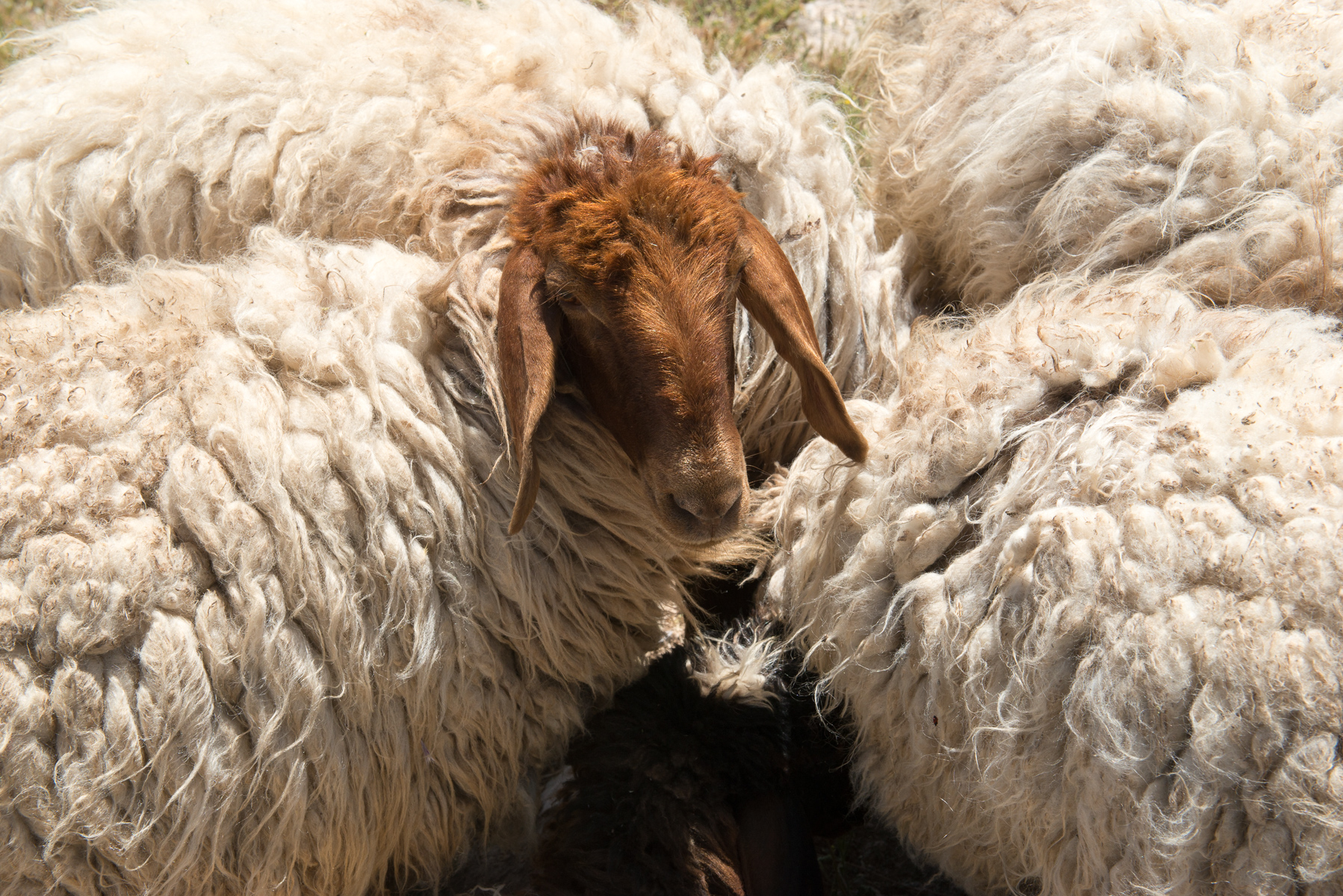
After morning in the ruins, we returned to the hotel and Fred went out to get a take away lunch. After a lemon mint drink to revive us and a half a sandwich each, we loaded up our luggage from the hotel into our car and headed south to the Dead Sea, saying “Good bye” to the historic sheep of Jerash.

Historic Sheep

Heading North, the Adventure Begins

First stop, Umm Quais, in the far north of the country, to visit the Roman ruins of Gadara, part of the Decapolis. (https://en.wikipedia.org/wiki/Umm_Qais)

The Cardo was the main street of a Roman city.

The Cardo was the main street of a Roman city.

We hired a guide and from him learned a lot about the theatre (and how to find the perfect spot for a voice to carry) and a group of rectangular ruins along the Roman road, which were clearly shops. Much of the city is constructed of black volcanic stone.

Kids at Play

A row of shops in Gadara.

A row of shops in Gadara.

We also learned that blocks were placed diagonally on the roads so that the chariots were quieter but pedestrian crossings had squared blocks placed for ease of crossing.

Chariot and Cart Wheel Marks

There is a complete Roman town to be discovered here with temples, baths and other buildings common to Roman life. In fact, excavations were being undertaken at the far end of the Roman road on two storey shops and homes.

You can see how much is left to excavate.

You can see how much is left to excavate.

Years ago, in Arequipa, Peru, we thought that it was wonderful when Peruvians and not just foreign tourists visited historic and other sites. Again in Um Qais we were delighted to see how many Jordanians were touring the site.

Roman building elements reused for a church.

Roman building elements reused for a church.

And, as always, Denise quickly attracted an entourage.

Chix

From the lookout point at Umm Quais, the view was stupendous. We saw Mount Hermon, the Sea of Galilee, the Golan Heights (now Israel), and Syria, in the distance. We even heard the distant sound of artillery fire or bombing, which brought home to us the reality of the conflicts in that part of the Middle East. We enjoyed a lovely lunch at the Rest House, gazing over the Sea of Galilee and down into Israel at the foot of the valley.

Lunch

We then headed south to Ajloun Castle, a former Ayyubid Castle, set on a hill with more great views. (https://en.wikipedia.org/wiki/Ajloun_Castle)

Castle on the Hilltop


It was never taken by the Crusaders and the full range of fortifications, from moat to murder gaps (not just holes), trebuchet balls, and extra towers can be clearly seen.


The castle was later damaged by the Mongols and restored.

Stairs

Again, we toured with and around busloads of schoolgirls and, as always, Denise made their day! (And they made ours.)

And, after a hard day to touring, a cup of coffee.

The Starbucks at Ajloun


AND ON TO JORDAN, FIRST STOP AMMAN

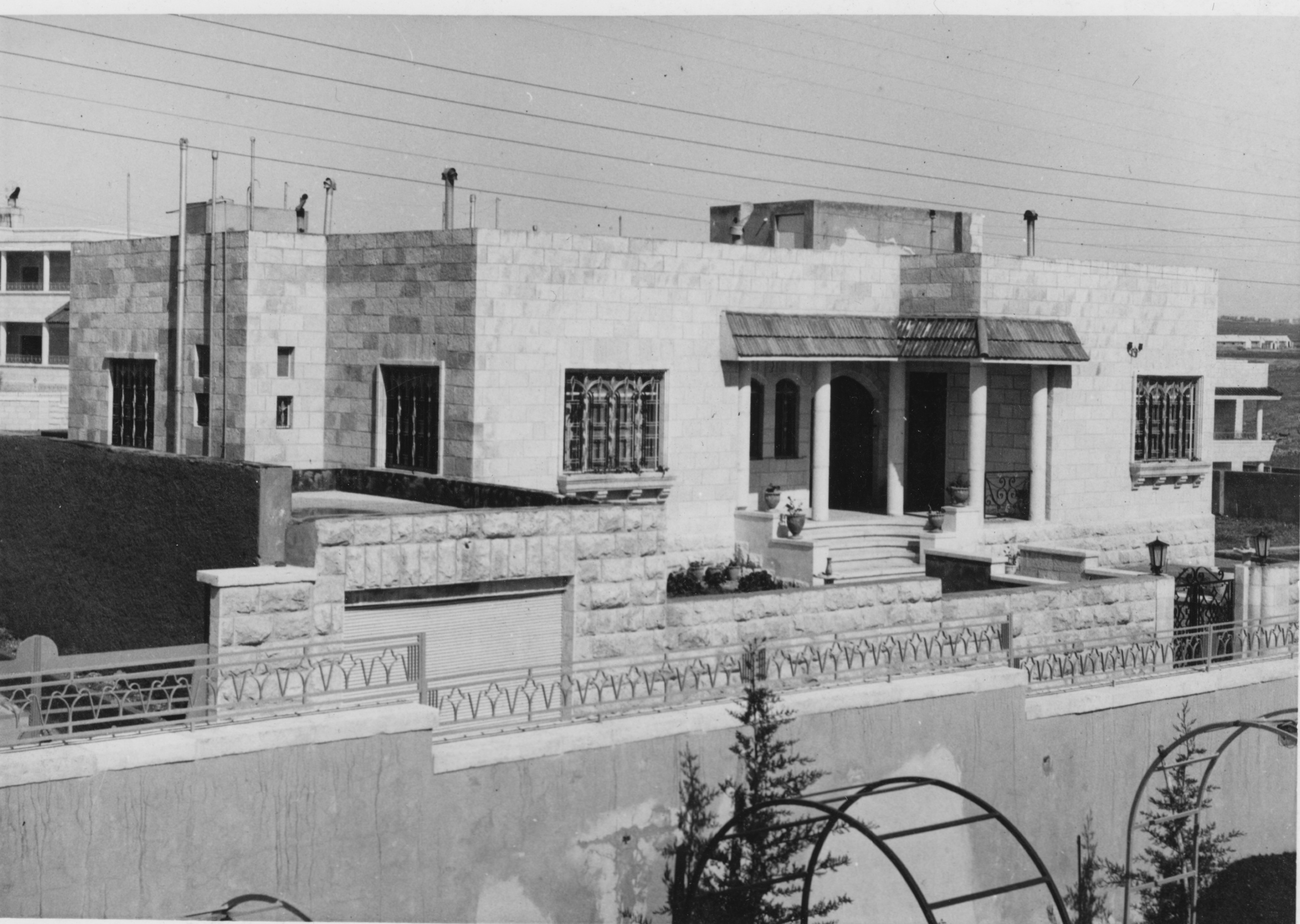
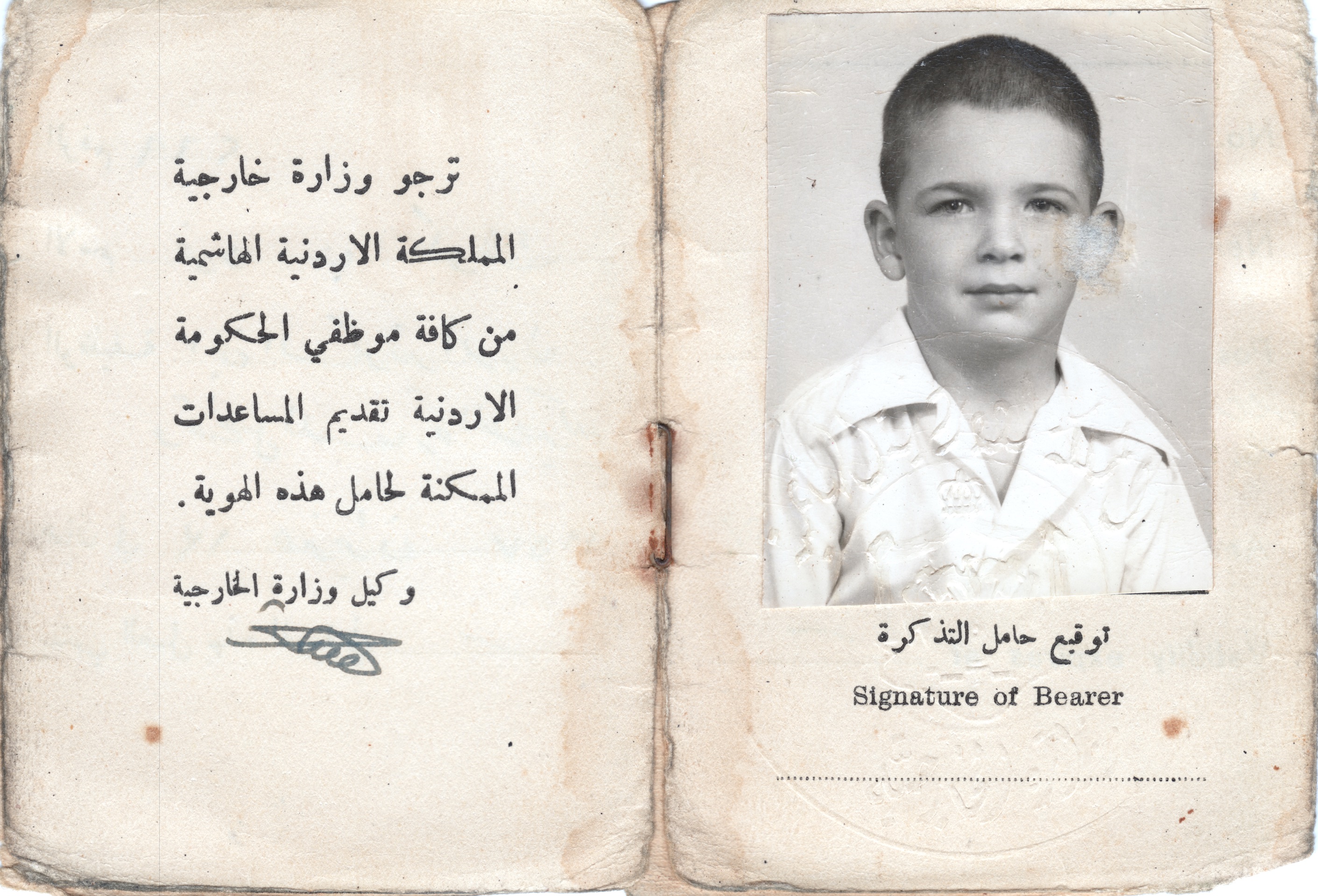
To say that you will see changes when returning to a country that you left 55 years previously, is putting it mildly. Fred had talked a lot about his time in Jordan so Denise was eager to see it.

Amman in the 1940's

Amman in the 1940’s

The flight on Royal Jordanian was pleasant and immigration and customs were easily dealt with. We had procured visas in advance but probably this was unnecessary as airport visas are readily available. The shock began at the airport. Amman’s airport in the 1950’s was a single runway (where Hussein bin Talal used to race his sports car) and a Quonset hut, which served as a terminal. A portly sergeant handled the formalities. In those days Air Jordan’s primary aircraft was a couple of DC-3’s and the heaviest traffic was old Avro “York” airliners carrying pilgrims to Mecca. Today’s bustling modern airport was quite different.

We were met by a driver from the company from which we had contracted transportation services (http://jordan-car-and-driver.com) and were taken to our hotel in Amman. Amman seemed a mixture of older and more modern architecture (with some ancient thrown in) though the traffic did seem especially modern!

Some notes on Amman. Amman is an ancient site, perhaps most famous as Philadelphia, part of the Decapolis: https://en.wikipedia.org/wiki/Decapolis The cities of the Decapolis play an important part in Jordan’s ancient history and are a focus of our visit.

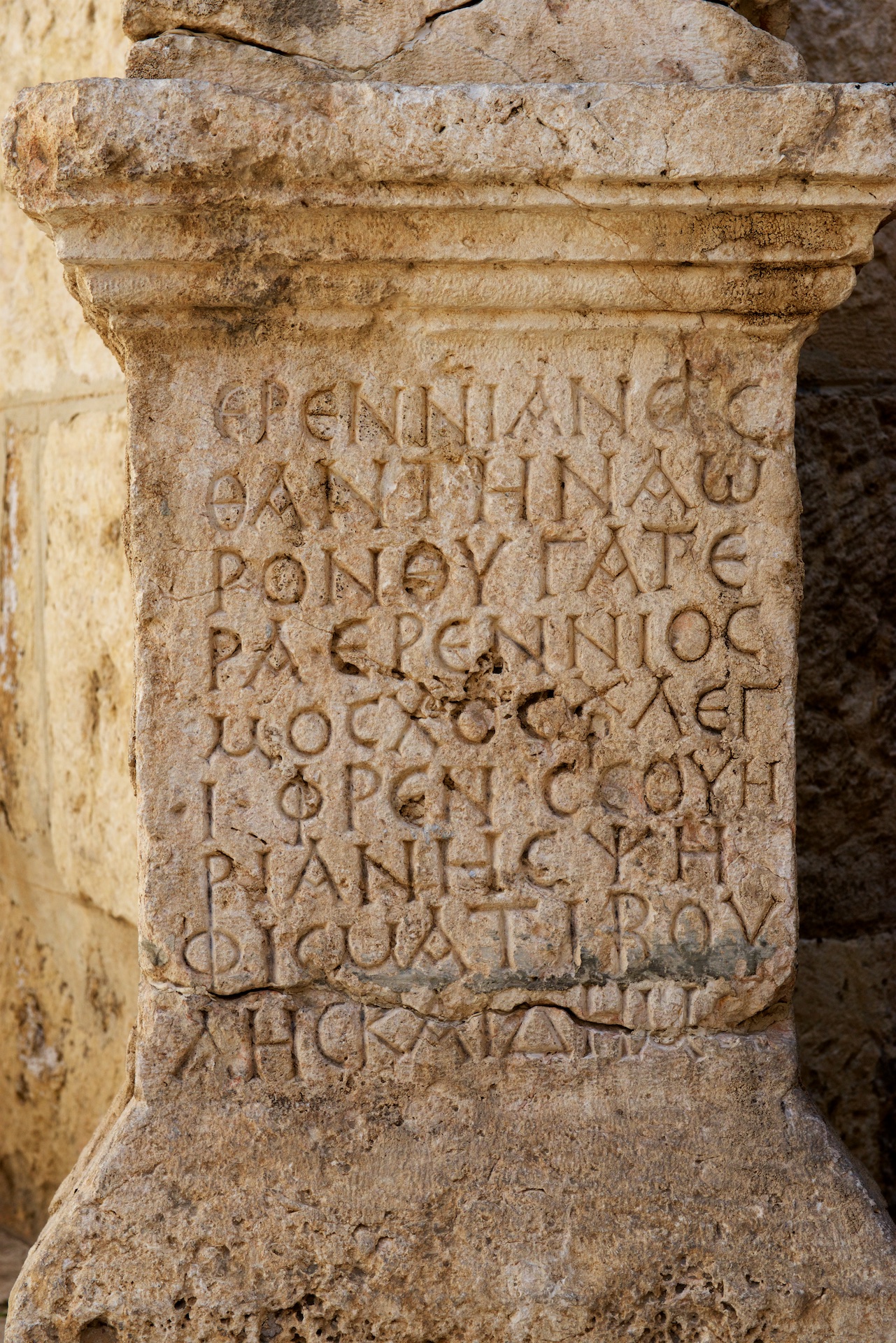
Greek was the lingua franca of the Decapolis and most of the east.

Greek was the lingua franca of the Decapolis and most of the east.

The next day we were picked up by our driver and began our explorations at the Roman theatre, to take advantage of the morning light.

AmmanNorth 032

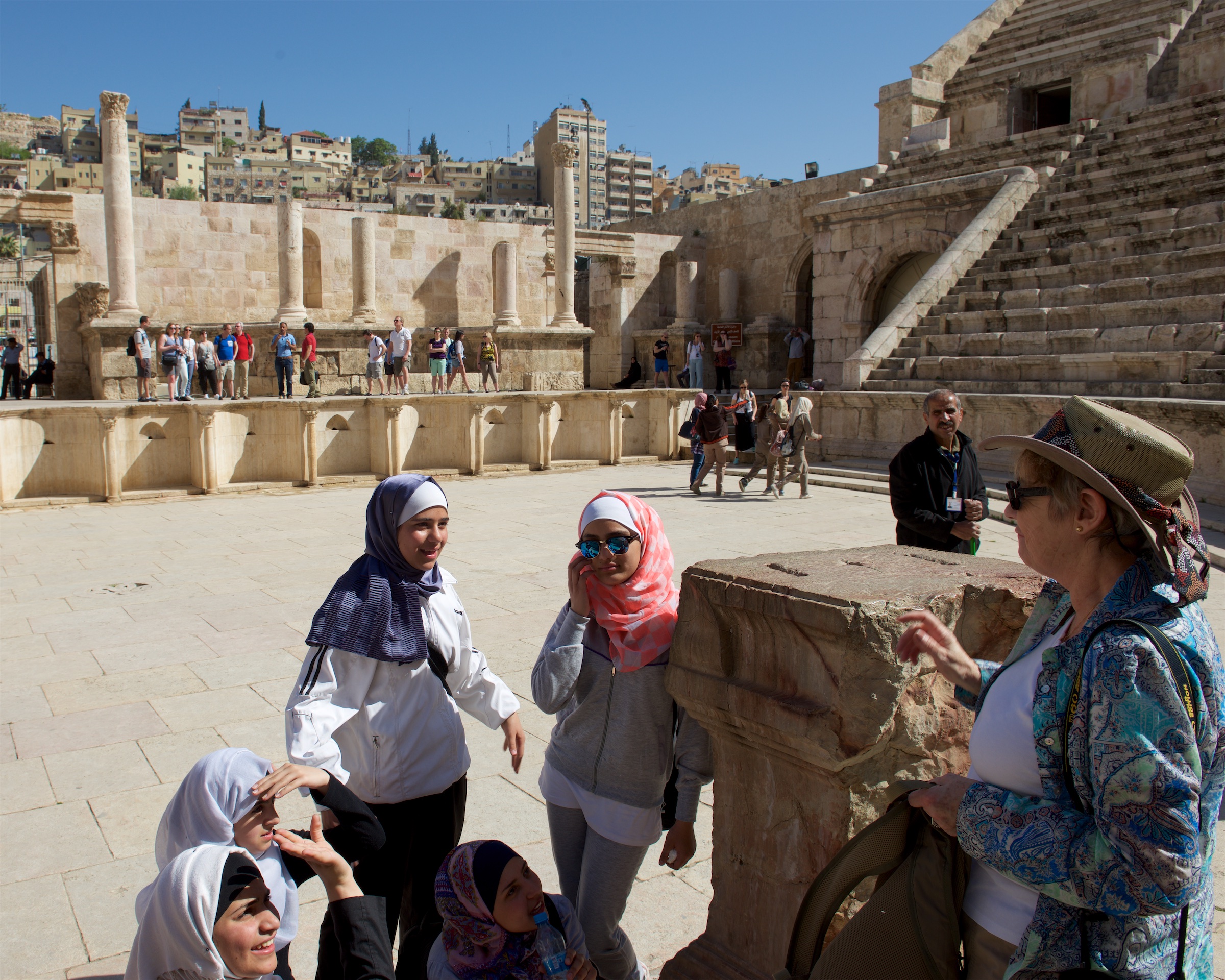
The theatre is wonderfully preserved and is still used for presentations. Fred remembers watching “Holiday on Ice” there – the concept of an ice show in a Roman theatre boggles the mind. We had the place to ourselves for a while before the first batch of tourists and school children arrived. April is apparently the month for school visits and we met bus loads of school children (primarily middle or high school level) at most sites we visited. They always wanted to practice their English and chat with Denise. She is now the star of the show on a great number of Jordanian cell-phones!

AmmanNorth 036

In the gallery.

After the theatre, we headed up to the Citadel, which sits on Jebel al Quala’a, a fortified site since the Bronze and Iron Ages. Ironically, this is one of the few sites that Fred cannot remember visiting, but there must have been a school trip. It features great views of the city, the ruins of the Temple of Hercules dating from the Roman occupation (AD161-180), a Byzantine church, and an Umayyad palace and massive cisterns. Like most Middle Eastern sites, the ruins lie in layer after layer as the sites have been in constant use for thousands of years.


Our final stop in the busy morning was the Jordan Museum, which is housed in a fine modern building. A visit includes the history of Jordan up to the present day and includes a display of the Dead Sea Scrolls.

The soundtrack of the film of Bedouin life was only an Arabic soundtrack but much could be deduced from the film. After a quick snack at the hotel, we returned to the theatre in the early evening visit another with a display of national costumes and mosaics from the Roman ruins at Jerash. Finally, we wandered the shops in the souk. Fred wanted to find a traditional incense burner but we discovered that we should have bought it in Jeddah. (Denise sought consolation at the silversmith’s.) We ended with a drive up Jebel Amman to see where Fred had lived but we could not find his house. As expected, the old directions of “the first paved road after the Third Circle” don’t work anymore – the Zahran District is wall-to-wall government buildings and the open wheat fields are long gone.

The old Home

The old Home


Saudi Arabia

Saudi Arabia remains one of the more mysterious countries on earth. A major producer of oil, an important market for US exports, and site of the two holiest sites in Islam, it is vitally important to millions of people. Yet because it does not issue tourist visas it is largely unknown to westerners. We were fascinated by the opportunity to visit.


We began the saga by flying to Jeddah via Frankfurt. Arriving at Jeddah in the evening we knew we were not in Kansas any more or for that matter anywhere else that we had previously visited. Ever. Let’s start with the airport; why does a country that does not issue tourist visas at all have a huge airport (15 square kilometers) with about a dozen terminals? For the Hajj, of course. In 2015 just under 1,400,000 non-Saudis made the Hajj, Umrah, or other pilgrimage. That is a lot of folk; over 80,000 on a single day. (Disney World does over 50,000 a day – you get the scale.)


Once we sorted out which immigration line to get in (the family one as we were neither diplomats nor both males), and passed our retinal and fingerprint scans, and shown our visas, which had been obtained with great difficulty, we were officially admitted and met our friend, Mary to begin our visit. It became clear that this would be an interesting experience as Denise would be wearing an abayat whenever she left Mary’s housing compound, which was reserved for foreigners and so more relaxed. This seemed odd at first but, amazingly, seemed quite normal after a day or so.


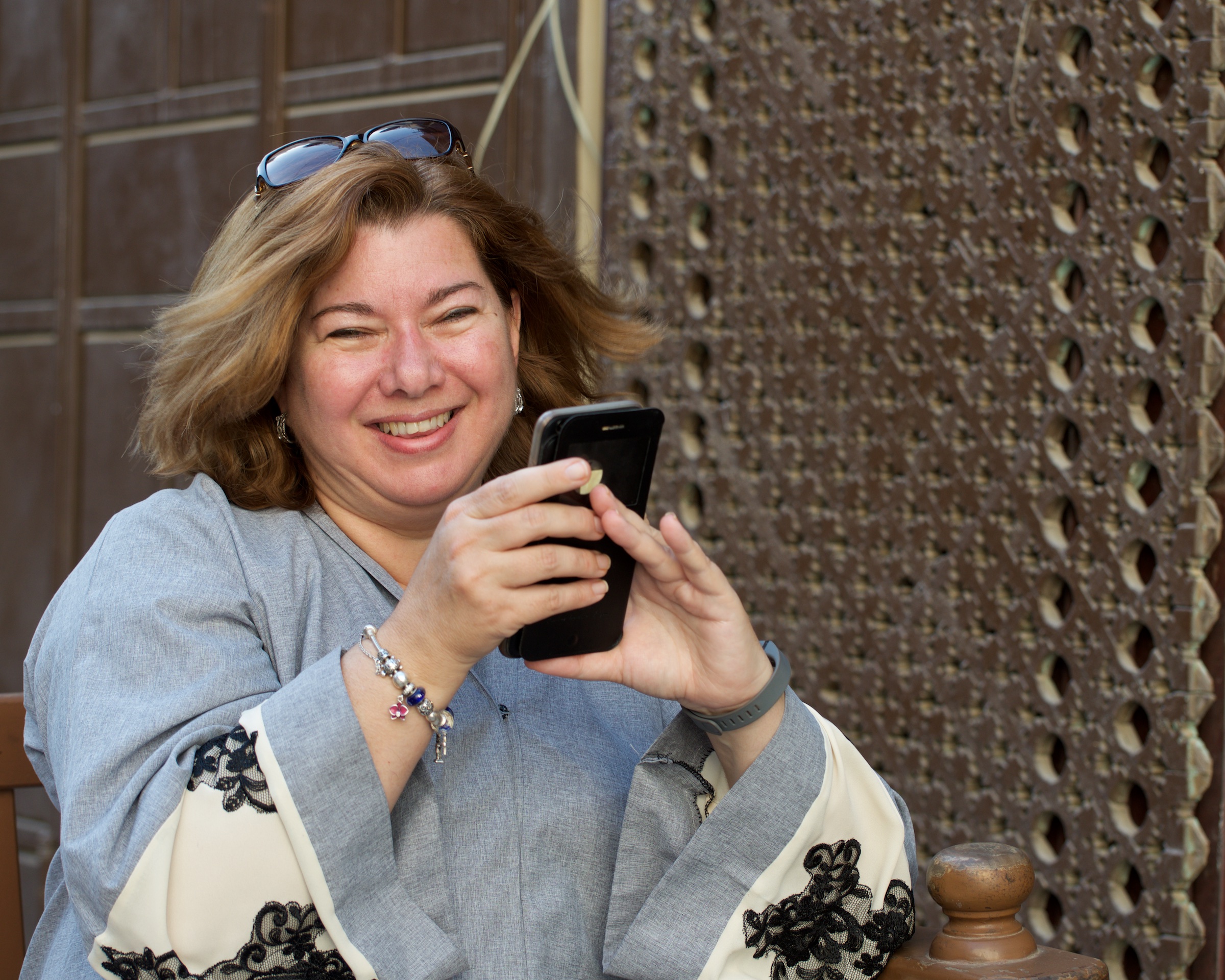
Mary is a wonderful tour guide. When we served together in Bolivia she saved Fred’s bacon at a major conference in Santa Cruz and followed up with a visit to the famous Jesuit Missions nearby. She is, not surprisingly, also very, very good at her (impossible) job in Jeddah, and like all good diplomats, knows everybody. And, like all modern Consular officers, she lives on her cell phone, even when taking leave to show guests around.
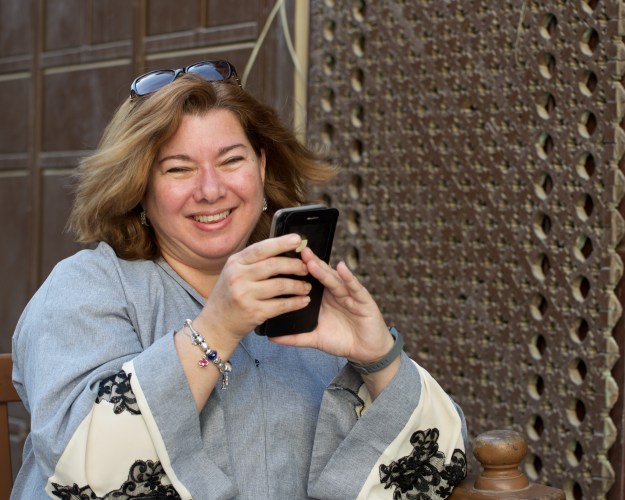
Jeddah 016

After breakfast with a Marine colleague who was in Jeddah to inspect the Marine Security Guard Detachment,  we set out on the first day to visit the city of Taif, about two hours from Jeddah. Taif is up in the mountains and is known for its cool and even rainy climate (!) and the cultivation of roses. In fact it was raining when we arrived, which we were not expecting! First we went to the Alkamal Rosewater and Rose Products factory where we saw the process of distilling rosewater from the locally produced rose petals. We were made most welcome, covered with rose petals, and enjoyed Arab hospitality with local coffee. (Starbucks fans be warned, Saudi coffee is not what you expect – it is so lightly roasted that it is closer to a yellow color. Definitely an acquired taste for those of us rasied on Turkish coffee.)

Denise and Mary

This slideshow requires JavaScript.


We tried to invite our host for lunch but he overruled us and we were honored to receive an invitation to lunch with the Alkamal family at their house. We enjoyed a wonderful meal of different fish and shrimp with two kinds of pilaf. Lunch included the complete family including teenagers and college students and Fred was a source of great interest to them. They thought his attempts at Arabic were hilarious. (He declined, however, to let them record him on their iPhones!) Lunch was followed by a traditional honeyed dessert with noodles and coffee, taken on the patio amidst much conversation. After lunch we visited the Festival of Roses before returning to Jeddah.
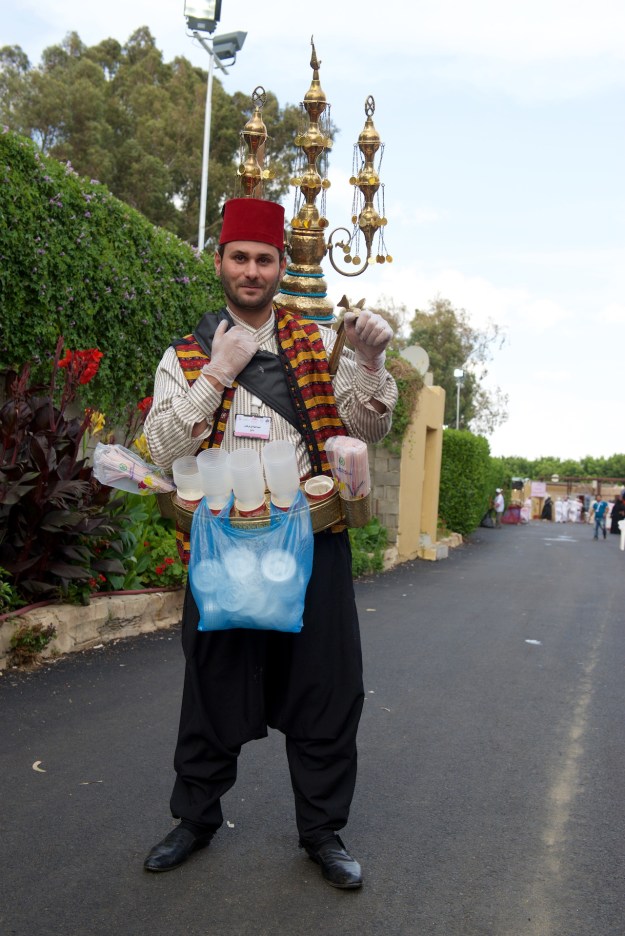
 

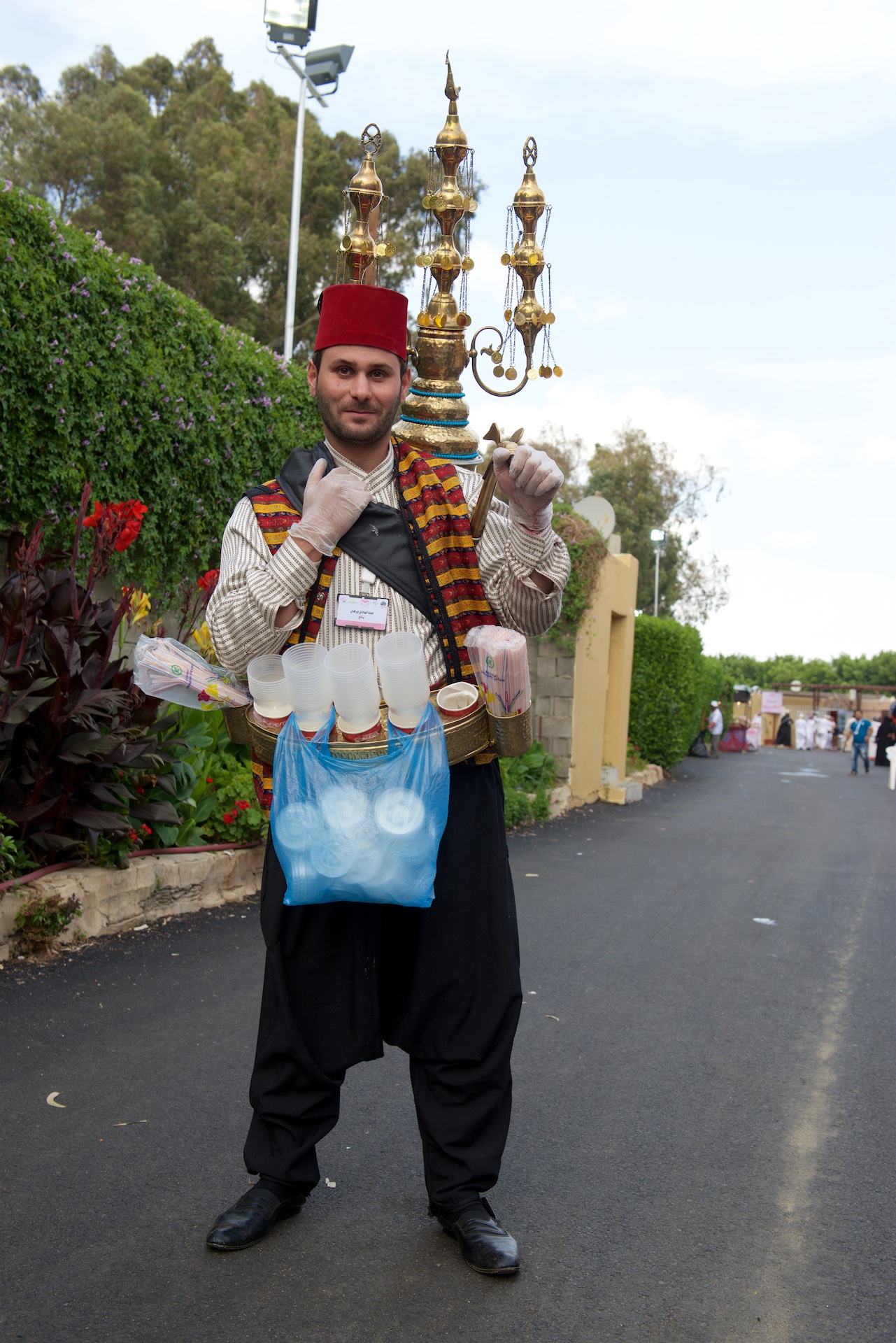
Juice seller in Turkish costume. They were everywhere when Fred was a child in Amman. This gentleman, in Taif, is updated with plastic gloves and disposable cups. The little cymbals let you hear him coming.

Juice seller in Turkish costume. They were everywhere when Fred was a child in Amman. This gentleman, in Taif, is updated with plastic gloves and disposable cups.
The little cymbals let you hear him coming.


On our second day, we tried to visit the Tayebat Museum in Jeddah. It was unfortunately closed for renovation but we were able to view some of the traditional architecture from the outside.

Then we went abayat shopping in the Al Shatie market where Denise bought one for everyday use and one more formal one.
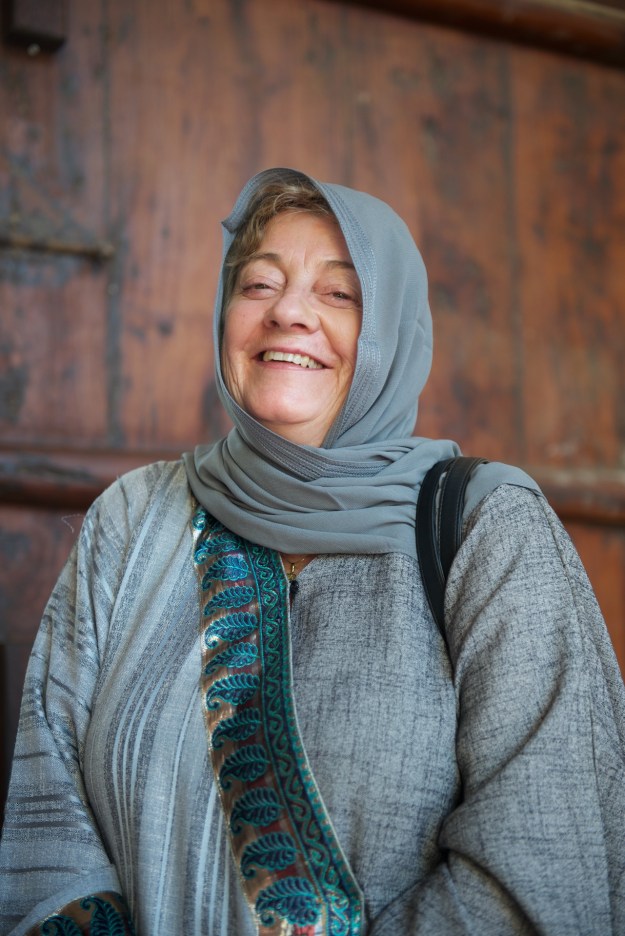
Denise


Great fun! This was followed by lunch at Bab El Yemen (Gate of Yemen) where Denise finally got to try the fabled Yemeni fish that Fred had enjoyed both in Djibouti and in Yemen. We also discovered the wonderful lemon and mint drinks, which we enjoyed and found immensely refreshing for the next few days. (Think of a non-alcoholic Mojito.)

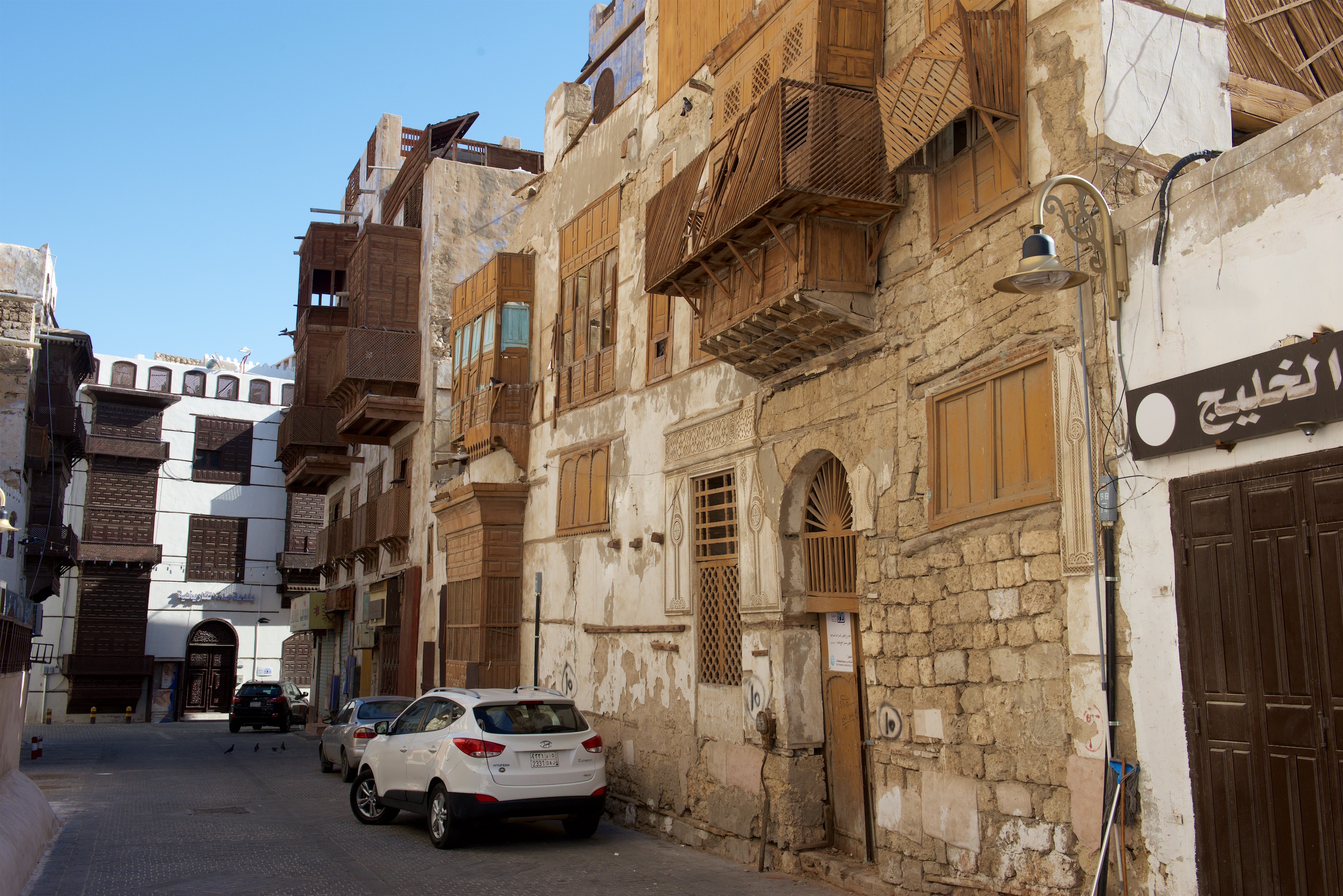
Later in the afternoon we went to visit El Balad, the old section of Jeddah, which is an amazing warren of streets and old houses, often in bad repair.
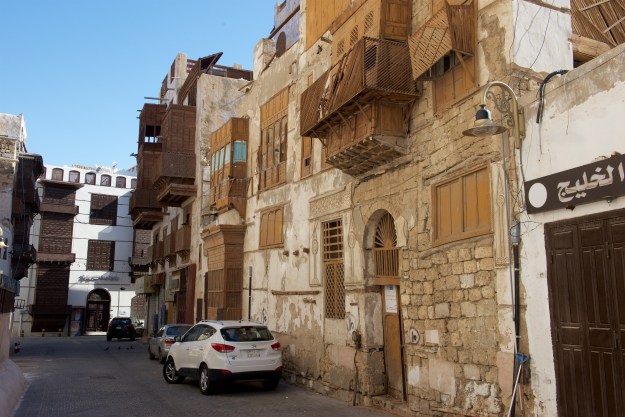
The old city.

The old city.

Our guide, Samir, is a former local employee of the Consulate General and is now conservator of El Balad was in charge of this. We visited the Beit Shorbatly a most interesting house and museum.

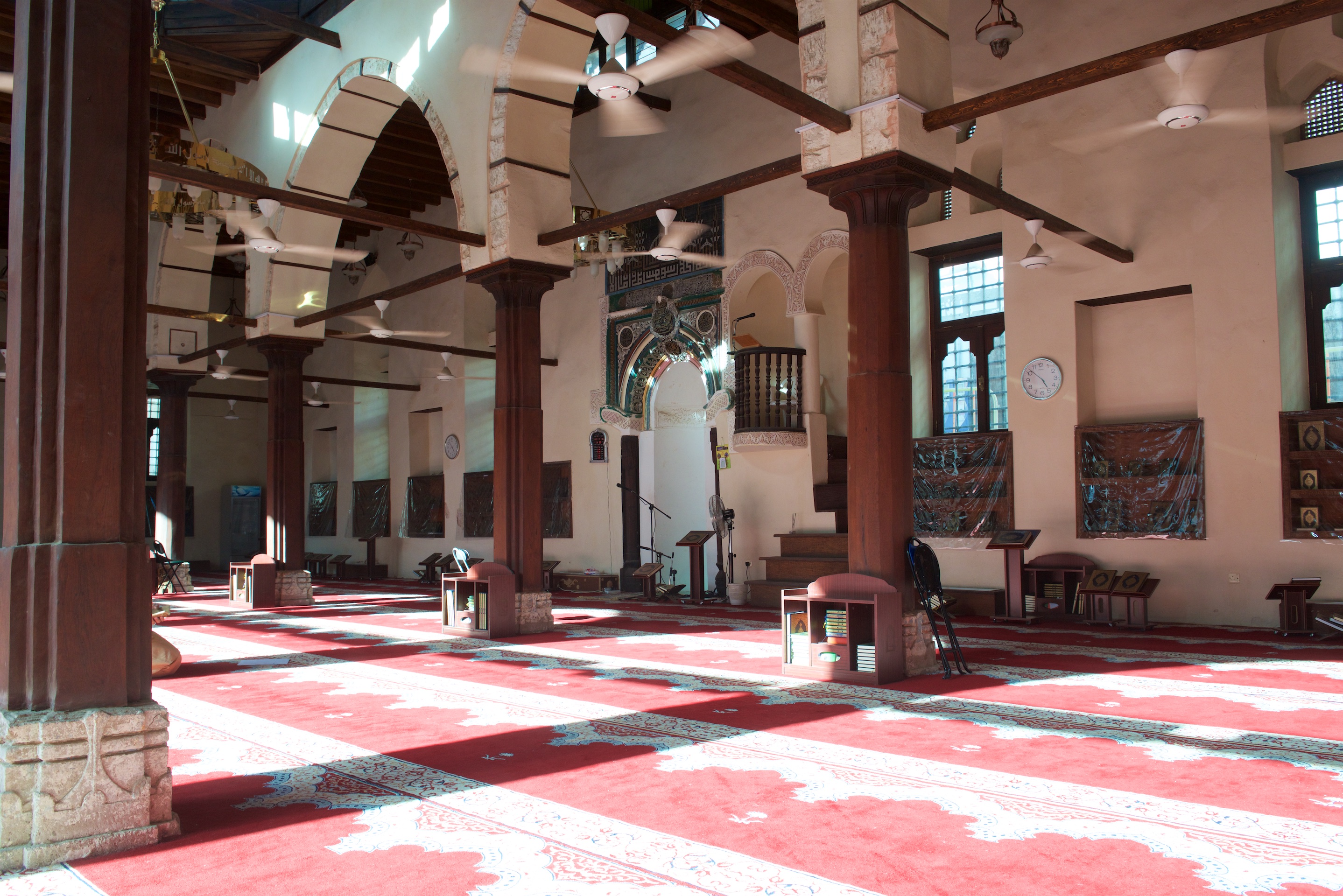
WE also visited the Al Shafi Mosque, a 700 year old building with a 1400 year old minaret. Fred and our guide were able to enter and take pictures but Mary and Denise stayed at the door as they were not in the women’s section.
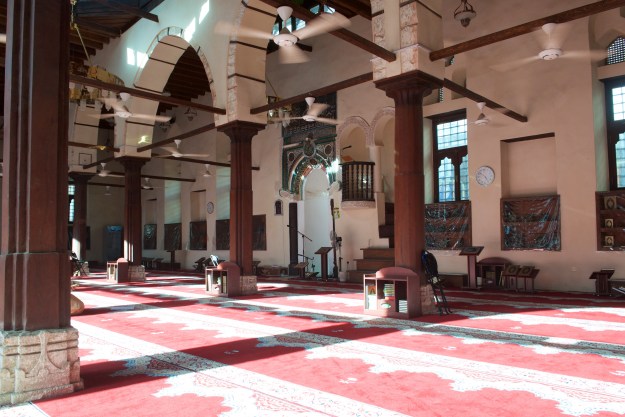
Photo taken towards the minbar or pulpit.

Photo taken towards the minbar or pulpit.


Finally, we visited the Beit Naseef, a house where the first King of Saudi Arabia gave audiences. Now it is in the process of being renovated. We went to the roof, via the staircases made wide and high enough for loaded camels to climb to the upper floor, to watch the sunset and to hear the evening call to prayers from the six or so mosques nearby. We drank tea and after a snack of foule (a bean soup) with bread, we did indeed hear the simultaneous calls to prayer at sunset. It was very moving.

Home of a wealthy Jeddah merchant, previously used by the first king of Saudi Arabia, Abdul Azziz ibn Saud to hold audiences in Jeddah.

Home of a wealthy Jeddah merchant, previously used by the first king of Saudi Arabia, Abdul Azziz ibn Saud to hold audiences in Jeddah.

The street zig-zags so that you have to pass the store fronts.

The street zig-zags so that you have to pass the store fronts.

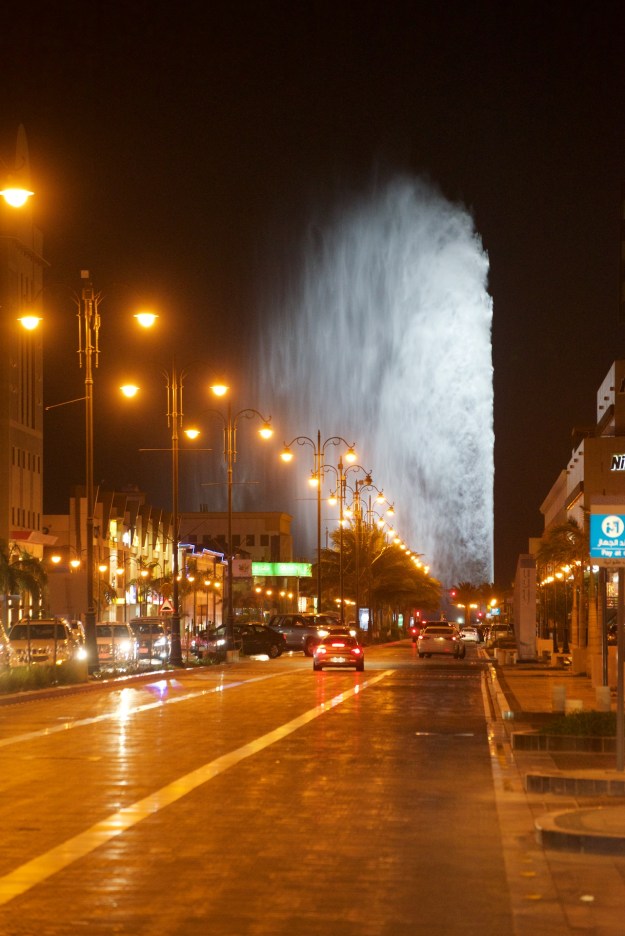
On our third day, we took a drive out of town again trying to find an old Ottoman fort outside Jeddah. This proved difficult so we returned to Jeddah and enjoyed a visit to the Corniche or road along the water, giving us the opportunity to take photos of the floating mosque and the huge fountain nearby, as the sun set.


The final highlight of our stay was a boat ride to show us some of the views from the bay. It felt a little odd to wear both an abayat and lifejacket but we enjoyed it!


Then it was our last day and we were off to the airport for our flight to Amman, Jordan on Royal Jordanian Airlines. We had no local money but found that we could buy a snack and a drink using dollars. As a foreigner in the airport Denise felt very conspicuous and, working on the premise of “when in Rome”, wore her headscarf until we boarded our plane.


Conclusions? Any discussion of Saudi Arabia quickly turns contentious, all the more so because it is a large and surprisingly varied country. We’ll just note:


— Wonderfully welcoming people. Arab hospitality is world famous and we had the impression that many people were especially eager to display it in a country that receives few visitors other than pilgrims. We were fortunate enough to be invited into a private home, but we noticed it on the street as well.


— Amazing scenery ranging from the mountains of Taif to the old and modern cities of Jeddah. There is a lot to see. The stereotypical image of Jeddah is that of steaming heat. Sitting on the Red Sea, Jeddah is warm and humid, but so then is Miami. And Jeddah’s old city shows that it has been a major trading center for a thousand years and in that thousand years, the local folk have built to beat the heat and capitalize on the cool sea breezes.

Jeddah's answer to Rodeo Drive

The “Can You Go Home Again?” Trip Begins


Jordan 010

Fred lived in Amman, Jordan from age six through ten. (OK, most of the time, not counting two six-month evacuations, first to Beirut, Lebanon – Suez war of 1956 – and then to Rome, Italy – Iraqi Revolution of 1958.) Jordan in the mid to late 1950’s was, in many ways, a magical place for a young child and certainly triggered Fred’s lifelong interest in history and religion. It is one of the ironies of the Foreign Service that Fred then went on to spend his entire career in Latin America and Africa, rather than in the Middle East or Asia, where he grew up. One of the goals in the design of Ndeke Luka was an orbit of the Mediterranean Sea, or at least a return to Jordan. Sadly, conditions in Syria and Libya have ruled this out, at least for the immediate future. So, we had to reconsider!


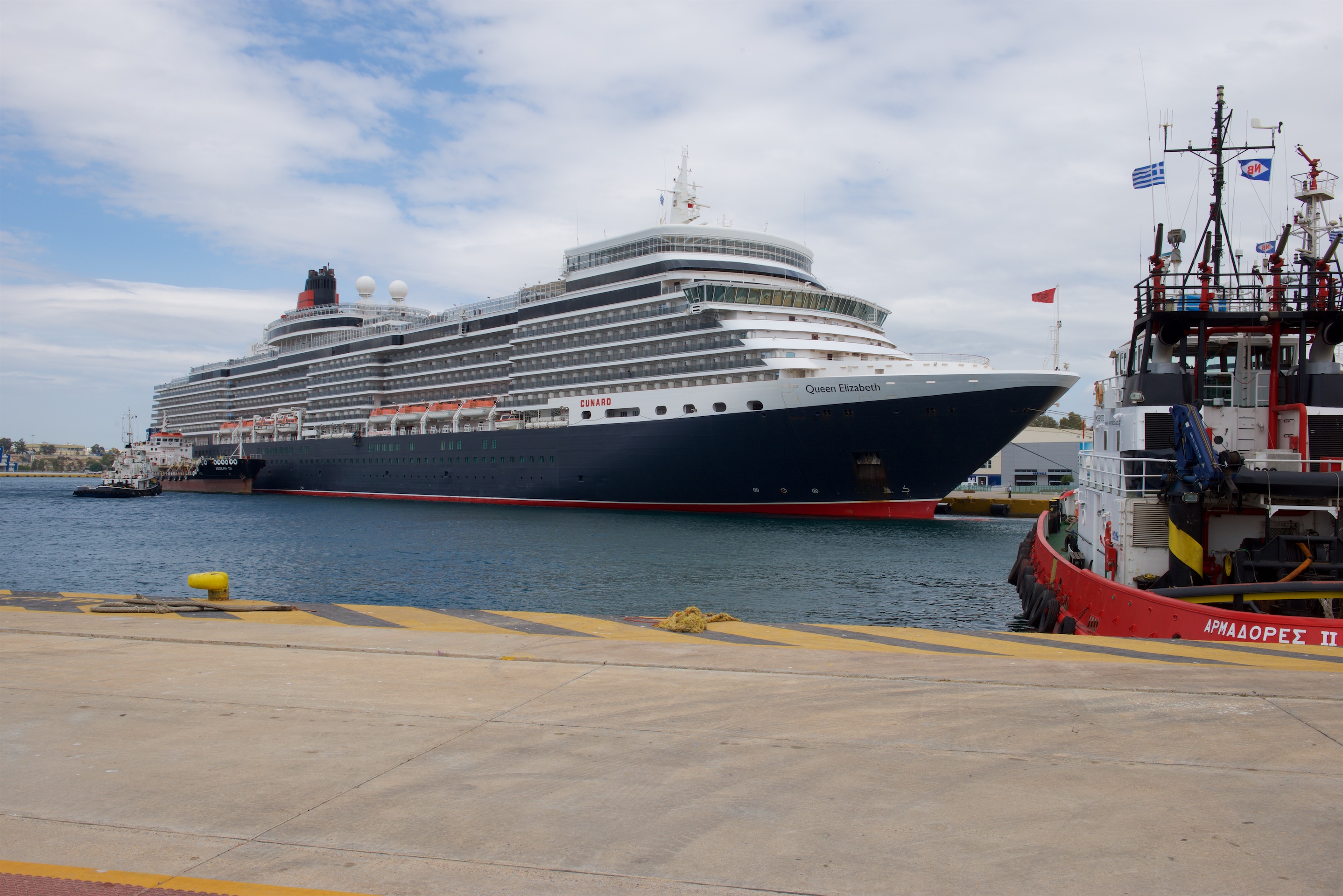
Our story began when Denise noticed that Cunard was offering exceptional prices from Dubai to Southampton, stopping at Aqaba, in Jordan. And the Queen Elizabeth would be stopping in Istanbul and Malta, places that Denise had visited or lived when younger. Hmmm, that would allow a visit to Petra but you can’t go to Petra and spend only one day … By the time the dust settled, Cunard had agreed to let us board in Jordan. And a colleague from our days in Bolivia chimed in that if we were going all the way to Jordan, then we had to come visit her in Jeddah, Saudi Arabia.
Queen E  012


And so the question, “Can you go home again?” Herewith our answer.


The Sunne in Splendour

England is notorious for rainy weather, but as noted here: http://www.pbase.com/diplostrat/uk we have, on occasion, been really lucky with the weather. (Of course, there was always this trip: http://www.pbase.com/diplostrat/wall when it seemed to do nothing but pour.) Our luck held again this year. And we were even able to see the “sunne in splendour.” (More about the “sunne” later.)

NOTE: This post incorporates a new feature; click on any picture and you get all of that grouping as a gallery.

Our trip this year was a family visit and we enjoyed revisiting familiar haunts such as the grounds of Petworth House and Winkworth Arboretum, both National Trust properties in Sussex. These visits were conducted by Lucky, Denise’s sister’s energetic border collie. Lucky assures a vigorous walk and that we pay a lot of attention to whether there are deer nearby, so as to assure that she doesn’t chase them. And one of these days we must take the time to visit the house itself (a “stately home” in true British fashion), especially since part of Washington, DC was named Petworth after it. As always, we found that food played a large part in this trip. Good food that is; the UK is no longer known only for overboiled vegetables, and we found our waistbands expanding with each new food experience, beginning with dinner at Lemongrass, a good Thai restaurant in Horsham, Sussex. http://lghorsham.co.uk

Each time we visit the UK, there is always more to see. For such a small island there is a wealth of different sites to visit. Friends of ours, who live near Bristol, have always been superb guides showing us what is different and unexpected. They live in Thornbury, a beautiful little town.


And they did not fail us during this visit. We began with a day in Bristol, which included a visit to the Bristol Museum, a wonderful visit to Brunel’s SS Great Britain (http://www.ssgreatbritain.org), and ended with an amazing cream tea (fresh scones with clotted cream), enjoyed at the Avon Gorge Hotel with views of the Clifton Suspension Bridge. Fans of ships and history will love the Great Britain, now rescued from her grave in the Falkland Islands, and on incredible display in the very dry dock where she was built.

The following day we went to Tewkesbury, a historical town in Gloucestershire, known for its twelfth century Norman Abbey and for its medieval architecture. The crooked timber wattle and daub houses line both the main and side streets, so turning into an alley has its own special charms. The main street is lined with medieval coats of arms, each of which belongs to a participant in the Battle of Tewkesbury in 1471 during the Wars of the Roses.

The Abbey Church of St. Mary the Virgin, or Tewkesbury Abbey as it is better known, is quite beautiful with an original decorated ceiling still in existence. The ceiling design of “the Sunne in Splendour” and other ceiling decorations reminds us that the use of color was a large part of the original decoration of these cathedrals and churches although now they are uniformly grey. The “sunne in splendour” was a symbol of the house of York and emblem of Richard III, and its position in the ceiling reminds all Lancasterians that the House of York won the Battle of Tewkesbury in 1471. (Those who were not dragged from the Abbey and executed.) True geeks will be fascinated to study “blazoning”, that is, the formal description of coats of arms. The “sunne in splendor” is a blazoning term. (http://en.wikipedia.org/wiki/Blazon)

Interesting also was our visit to the John Moore Museum based in a row of fifteenth century row houses, which included the restored and refurnished Merchant’s House showing living and working conditions for a Tudor merchant’s household.

The rest of the day was spent visiting Berkeley Castle, a unique Norman/medieval castle, which has been lived in by the same family, the Berkeleys, (of Berkeley Square and USC Berkeley fame) for 900 years. It is a magnificent home to visit as it is not in ruins and is full of collections of art, furniture, and tapestries displayed in the original rooms. The Great Hall really looked like a Great Hall and still had the balcony for the minstrels. http://www.berkeley-castle.com/index.php

On to Stourhead, a National Trust property with beautiful gardens around a lake and a wonderful hotel called the Spread Eagle Inn. We enjoyed our stay and found the food plentiful and excellent (we gained at least a pound each here and we only stayed one night!). We were up walking around the lake before breakfast so we could manage to eat it (it was included!). Denise’s father lives near here so we were able to visit him while in the neighbourhood.


The main purpose and highlight of this UK visit was the birthday celebration for Denise’s brother, which took place at “The Feathers” a historic hotel, full of odd staircases and winding passages, in Woodstock, near Oxford. (http://www.feathers.co.uk) As we were staying three nights, they upgraded us to a suite. And what a suite! We were stunned – how often do you have a dining room table with six chairs, two sofas and a couple of armchairs, one and a half bathrooms and a king size bed in a hotel room? It was all quite delightful. Excellent breakfasts were cooked to order, and with the excellent cream teas available at least another pound was gained!. Though to be fair, we did not eat lunch!

The birthday celebration began with a morning of punting on the River Cherwell in Oxford. Fred is now an expert punter, which is a skill that he hopes to put to further use! It was exciting at times but we all survived without a dunking! Then in the evening some nineteen friends and family gathered for a birthday dinner in Woodstock. Great fun.

The final part of the birthday celebration was a daylong outing on the Northern Belle, from Sheffield to the Yorkshire Dales. (http://www.belmond.com/northern-belle-train/) The entire train consists of rebuilt period style restaurant cars of the Victorian era and we were certainly pampered and wined and dined at brunch and at dinner as the train made its way to Oxenholme on the southern border of the Lake District and then back to Sheffield. We visited Wensleydale for cheese samples and purchase as part of our Yorkshire Dales afternoon tour.

On the way to Sheffield, we visited a most interesting National Trust property called Keddleston Hall, dating from 1765. (http://www.nationaltrust.org.uk/kedleston-hall/) The main house was built more as an art gallery than as a family seat. The attached church has some lovely tomb carvings.

We spent the night in Stratford-on-Avon, where we enjoyed a walk along the River Avon and a wonderful dinner at Edward Moon Restaurant. Named for a traveling chef in the British Colonial Service during the early 1900’s, we enjoyed hearing of the history of the name from our waiter, a charming and charismatic gentleman originally from French Guyana who kept us fully entertained for the duration of the meal.

I must also mention the meal we had at Maveli in Sheffield where Fred discovered South Indian food and dosas. And while we are talking of food we must also mention the always wonderful fish and chips from Rockfish in Dartmouth. We were not fortunate enough to arrive on the evening when the local band was performing sea shanties, as happened on our first visit in 2012, but the food is worth it even without music.

Although this trip was not made in Ndeke Luka, it would not be complete without at least some Tiger content. We enjoyed a visit with long time Tiger owners, Rick and Kathy Howe and were able to host the Travelin Tortuga in Devon. (http://www.travelin-tortuga.com/Travelin-Tortuga/index.html)

And to close, some random images of southwestern England.

We arrived home in time for a weeklong diet before heading off to retrieve Ndeke Luka and head for the Overland Expo in Asheville, NC.