Big cities are always a challenge when traveling by camper – driving in a strange city can be hard and, in a city, like Edinburgh, where parking is already difficult for cars, a camper is simply impossible. Thus we carefully picked the Mortonhall Campground in Edinburgh because it is on the number 11 bus route, and the buses run every 10 minutes. (https://www.meadowhead.co.uk/parks/mortonhall/) This is serious transit service! And we got to know the route quite well, as we used it both days we were there to get to and from the tourist area of Edinburgh.
Denise had always wanted to visit Holyrood House Palace. (Fred, on the other hand, had never heard of it.) Holyrood House is, to this day, the residence of the Royal Family in Scotland. The place simply drips history and thus the Wikipedia entry is a LONG read: https://en.wikipedia.org/wiki/Holyrood_Palace , but well worth it. So this was our first goal. Fortunately, we were able to get tickets for the next day. And only the next day, as someone named Charles was coming to visit and would be taking over the whole place! Yes, it is more than just a tourist attraction.
The first day we caught the city bus for the 30 minute ride into town. Once we arrived downtown, we started with a hop on hop off bus with a live guide, which we found so much better than the recorded version. Also a great way to get oriented to the layout of the city. Our first hop off was the palace of Holyrood House.
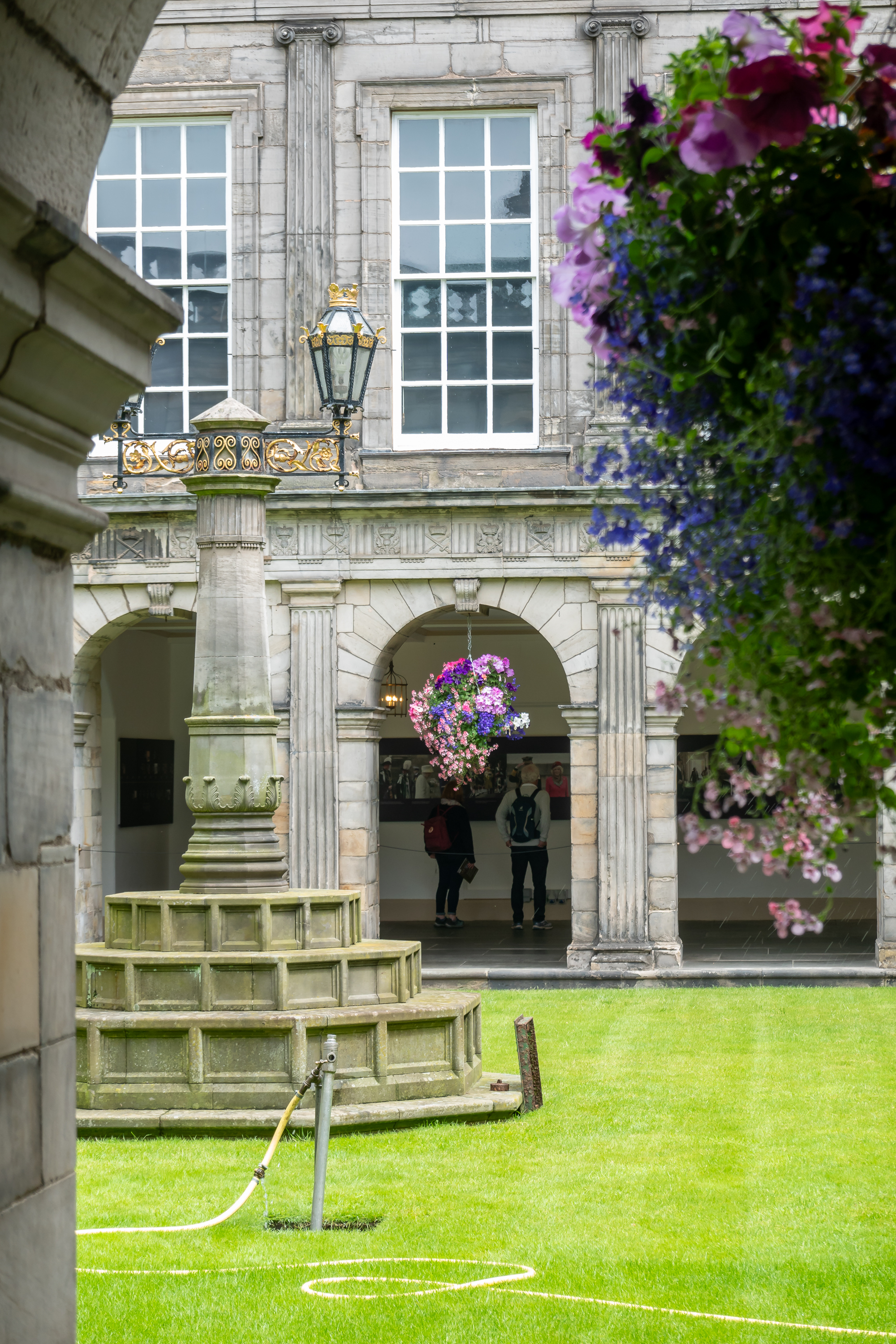
Fred found the design of the Palace unexpected. The palace is built with cloisters around a central atrium, a design dating back to the Romans and commonly found in Mediterranean buildings in a much warmer climate.
Ring the bell and see if there is anyone home.
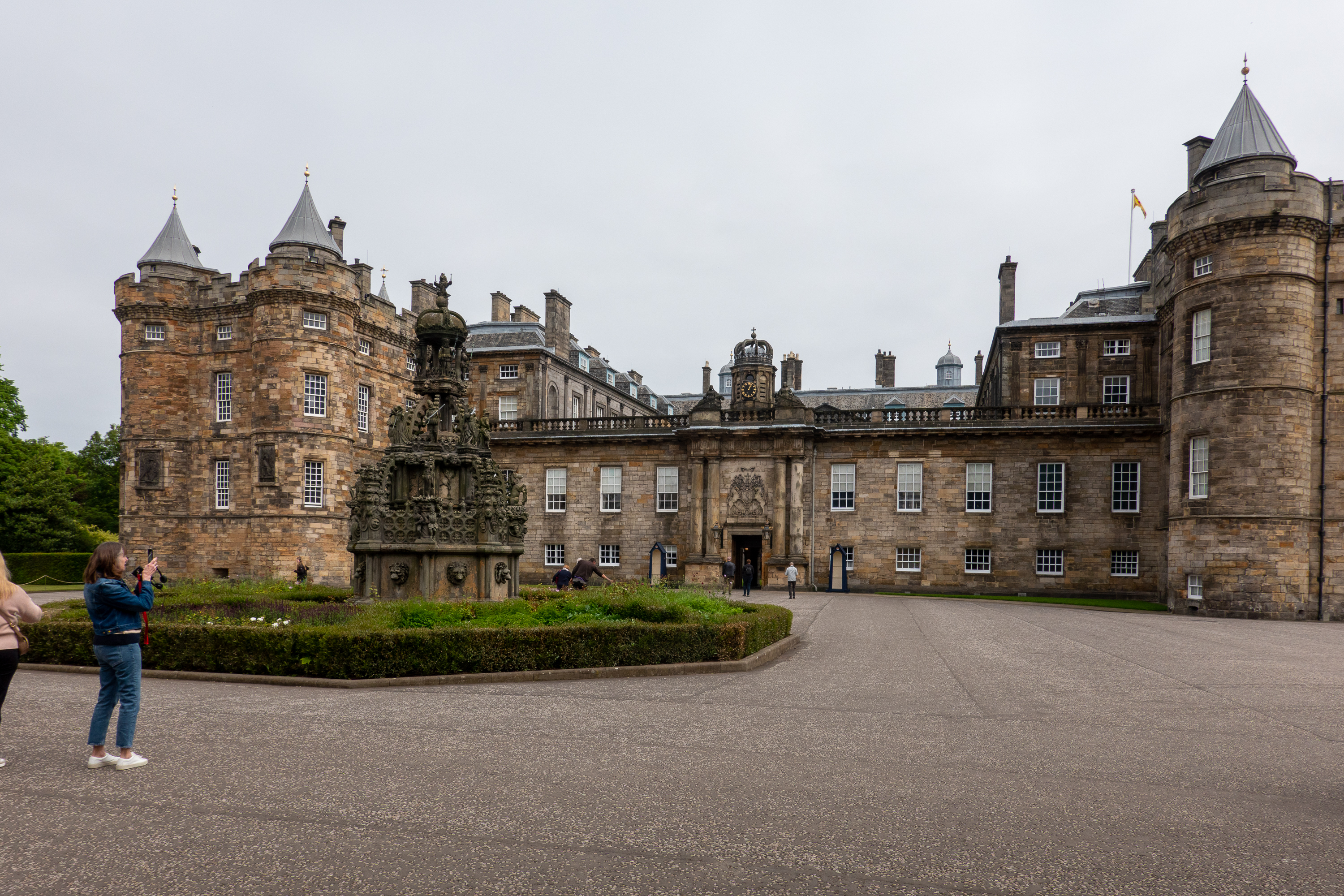
Everything was being prepped for the King’s visit.
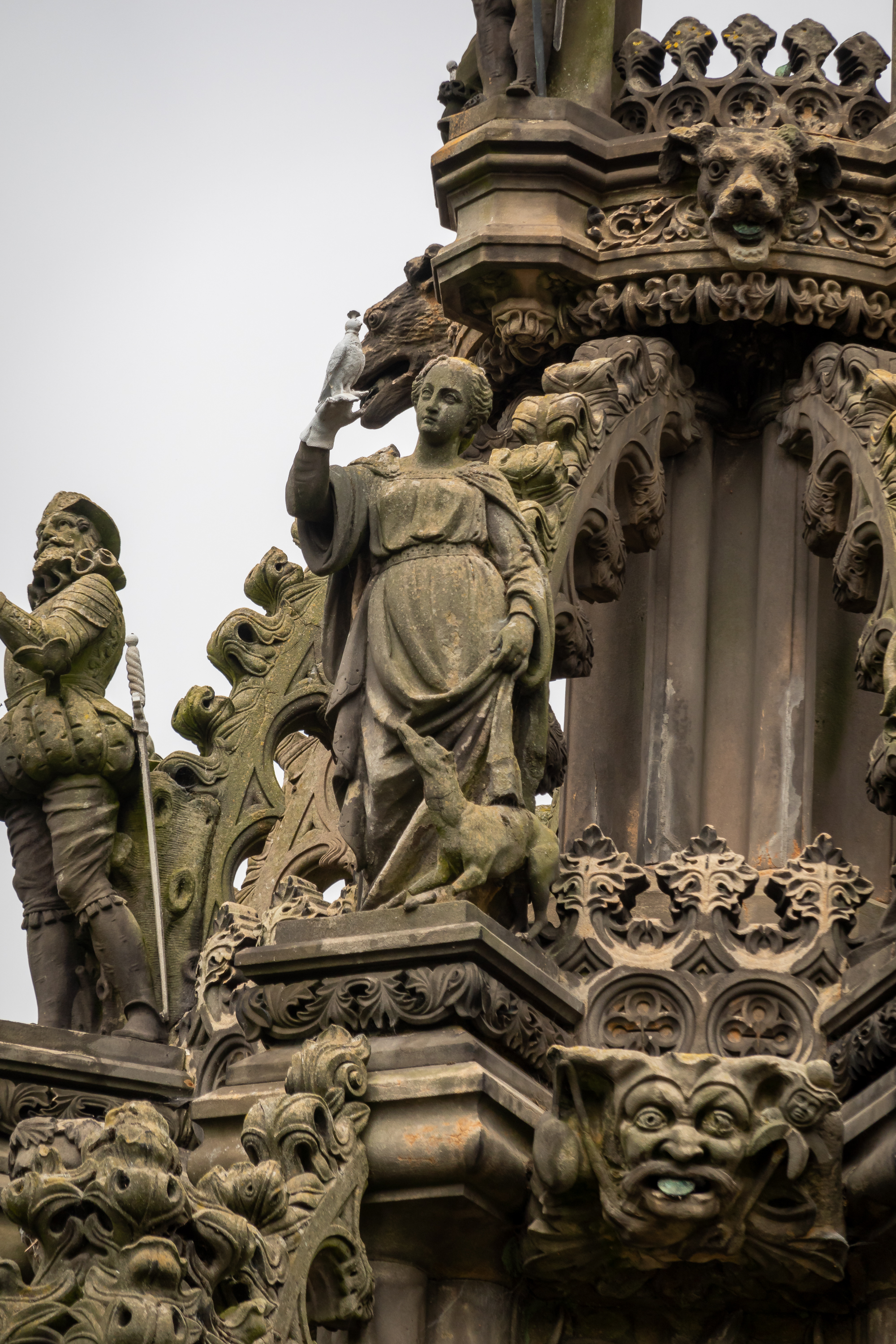
Statues on the fountain in the courtyard before the palace.
Photography is prohibited inside the palace but is is most impressive. The place was build along side an existing abbey. The abbey suffered over the years from wars and religious strife and is now in ruins.
Abbey ruins abutting the palace.
We hopped back on the bus to get back to the bus stop for our bus back to the campground. Waiting for the bus, we could admire the architecture. (Yup, a lot of buses)
Sir Walter Scot’s monument
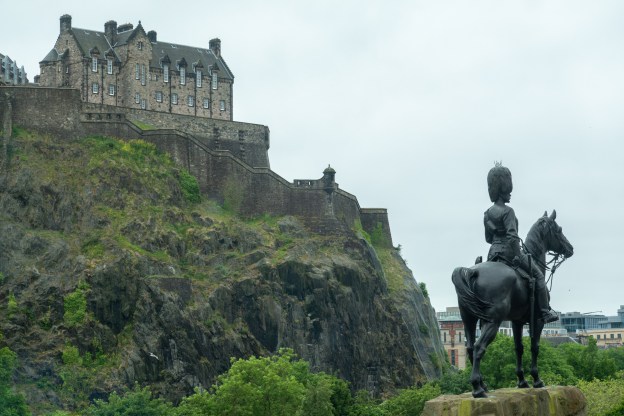
The second day, we had procured tickets for Edinburgh Castle so we were back on the bus, this time getting off a bit up the hill. After fortifying ourselves with a cappuccino, we set off to climb up to the castle, congratulating ourselves on getting off the bus halfway up. Edinburgh castle, too, has a long and complex history, changing hands many, many times. (https://en.wikipedia.org/wiki/Edinburgh_Castle) To be fair, there was a Scottish nobleman who switched sides so many times that he was known as “Bobbing John.” (https://en.wikipedia.org/wiki/John_Erskine,Earl_of_Mar(1675–1732)) Fans of the band Steeleye Span will know him from the song, “Cam ye or’e frae France?” (https://en.wikipedia.org/wiki/Cam_Ye_o%27er_frae_France) And, if you are not a Steeleye Span fan, you should be!
Yup! We gotta get all the way up there!
So the first thing we found was that the road was closed for repairs, and we would have to climb DOWN a million stairs before we could start up the hill again. (Good thing it was a good coffee!) When we finally reached the top, through the heaving crowds, we were fascinated by the fact that they were already constructing the seating for the Edinburgh Tattoo though apparently there was a popular concert also in the near future.
Massive grandstand being constructed in the forecourt. The mountain is a volcanic core known as “Arthur’s Seat.”
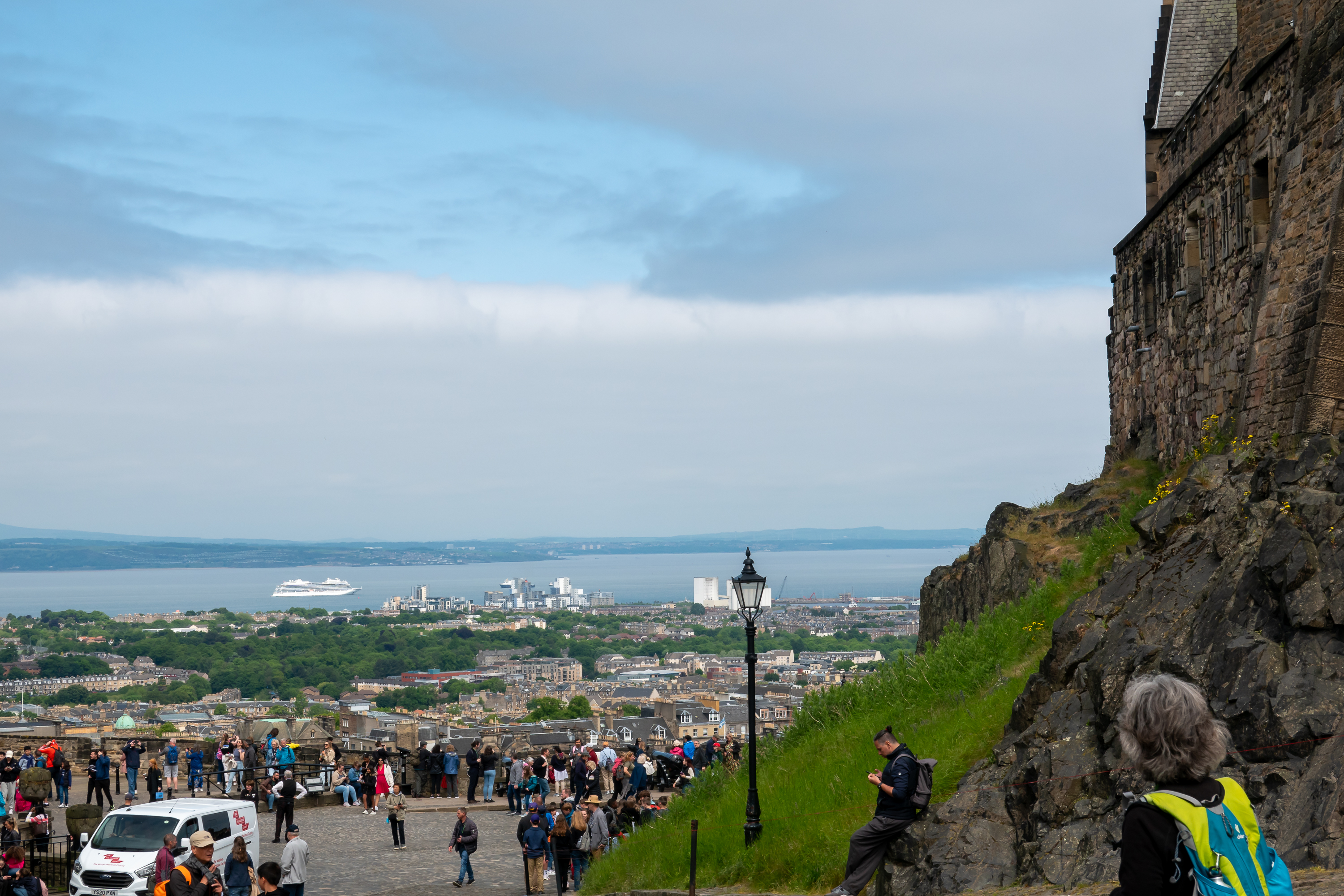
A Viking cruise ship anchored nearby gave a us a hint as to where some of the folks were coming from. We had a bit of nostalgia from Viking trips, but we were quite happy not to be in a group with our ear pieces!
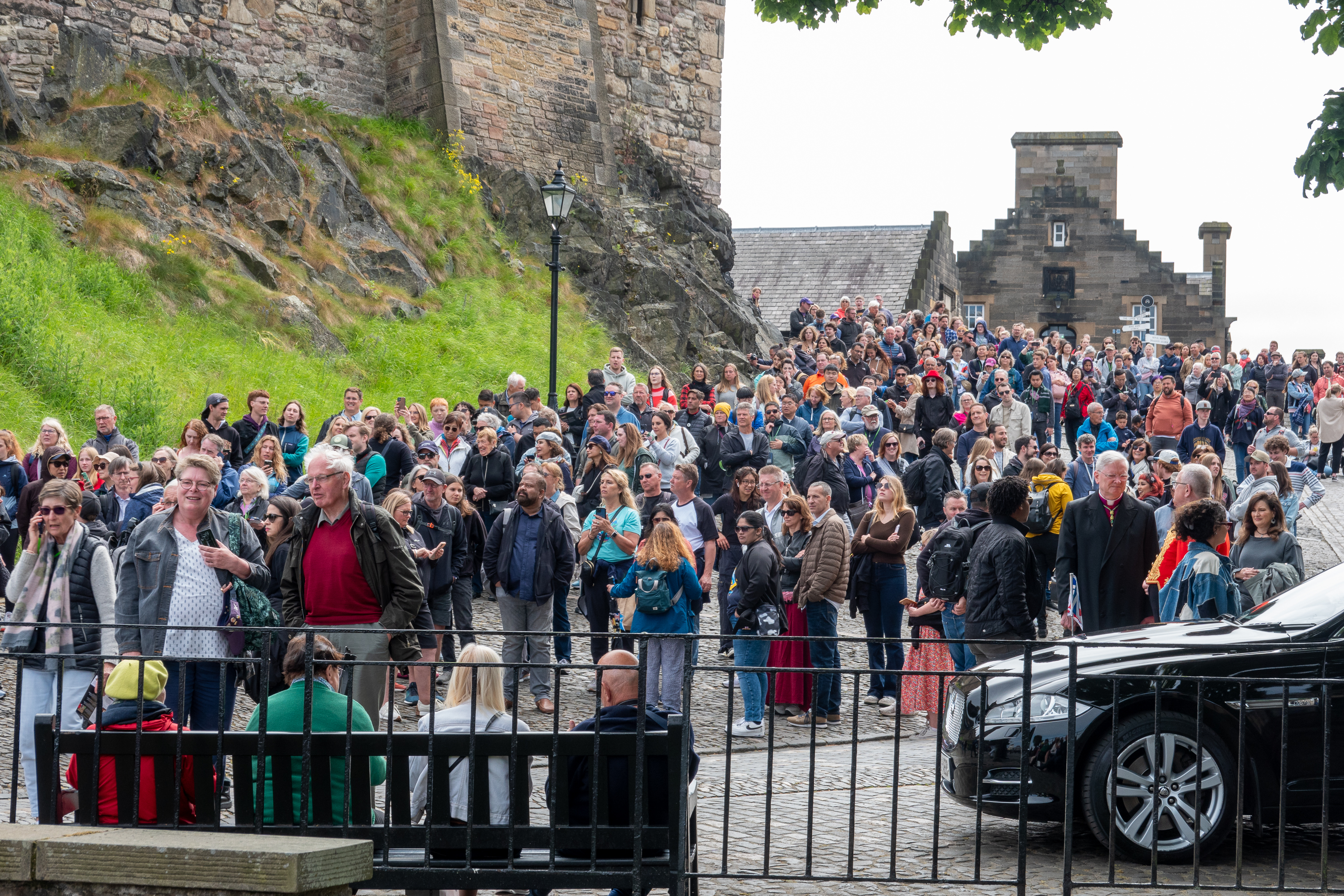
Crowd awaiting the firing of the one o’clock gun.
Viking ship in the harbor.
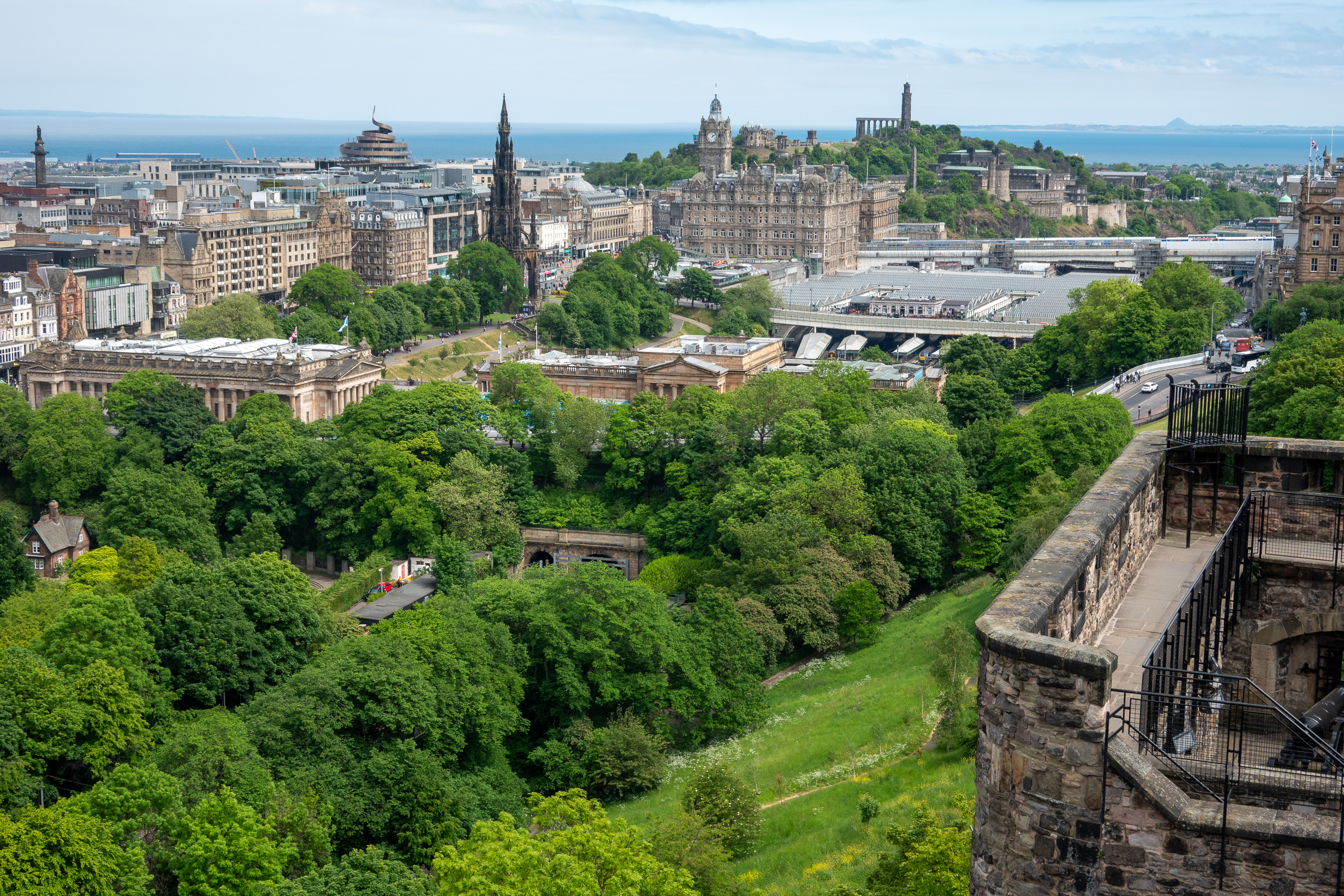
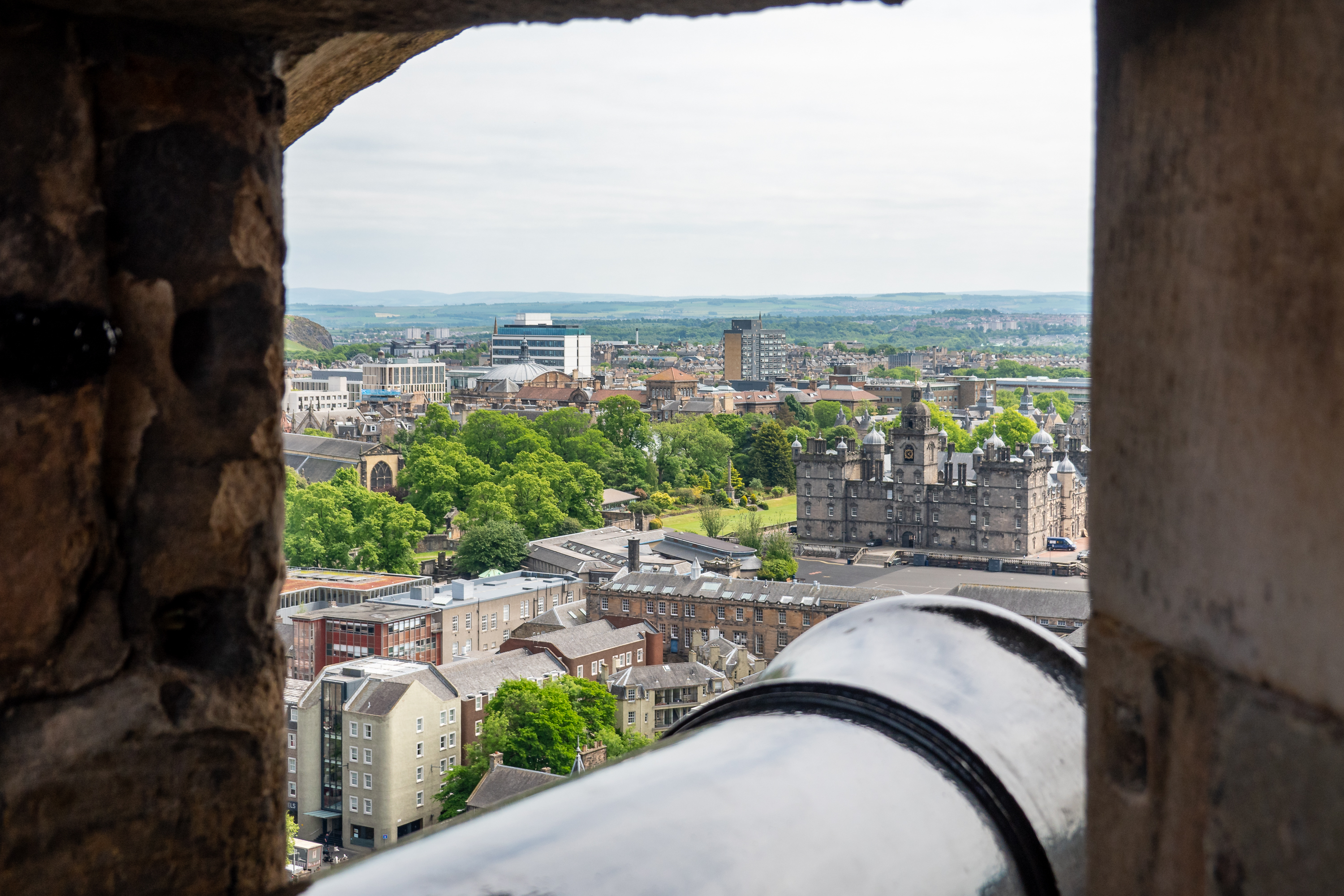
The new town and railway station from the castle.
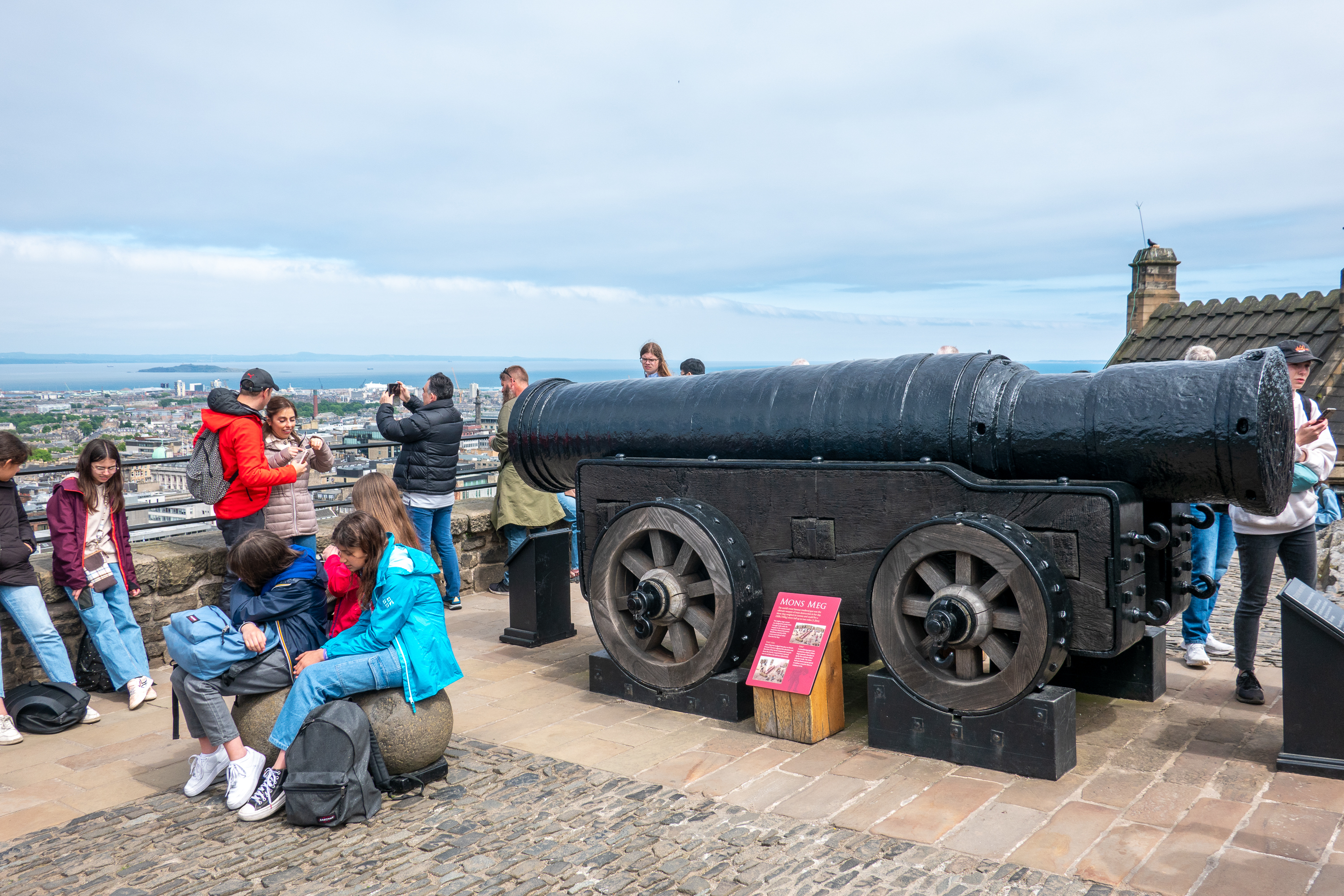
“Mons Meg” has a bore of almost 20 inches, making her one of the largest guns ever made. The gun carriage was only used to move the gun; she was actually fired from an earthen embankment. Like trebuchets of a previous era, she was not aimed at the defenders of a castle, rather used as a form of long range battering ram against the walls. Thus the goal was that each stone ball land in almost the same place in order to break down the wall.
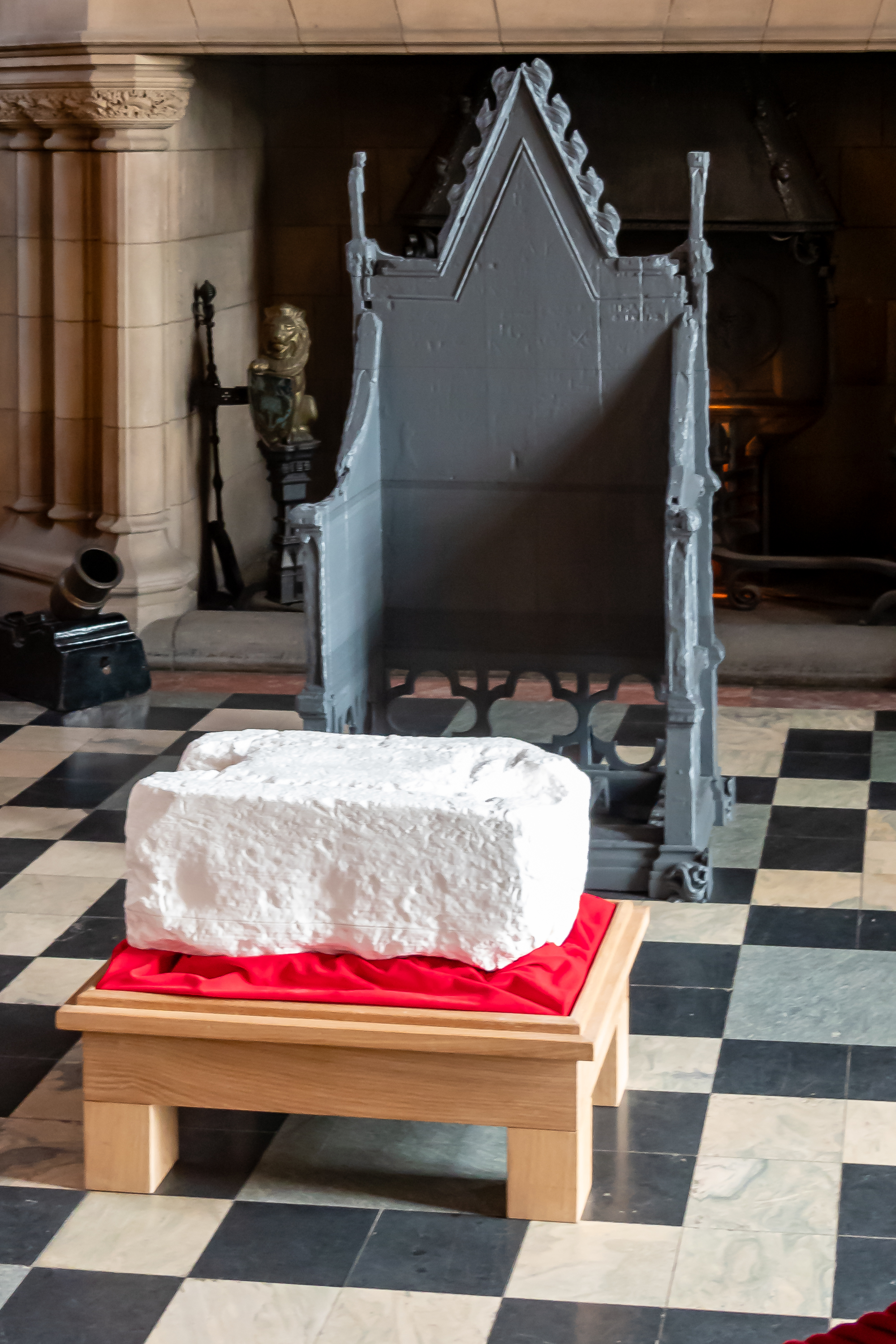
We liked the Great Hall and spent some time discussing it and the copy of the Stone of Destiny on display there with one of the docents. The real one was used in the recent Coronation of King Charles. The stone was originally seized by Edward I, aka “The Hammer of the Scots” or, if you prefer, “Edward Longshanks.” When he took it, it symbolized English domination. When James VI of Scotland became James I of England, the role reversed – you could not be legitimate “unquestioned” king of England unless you sat upon the Scottish stone.
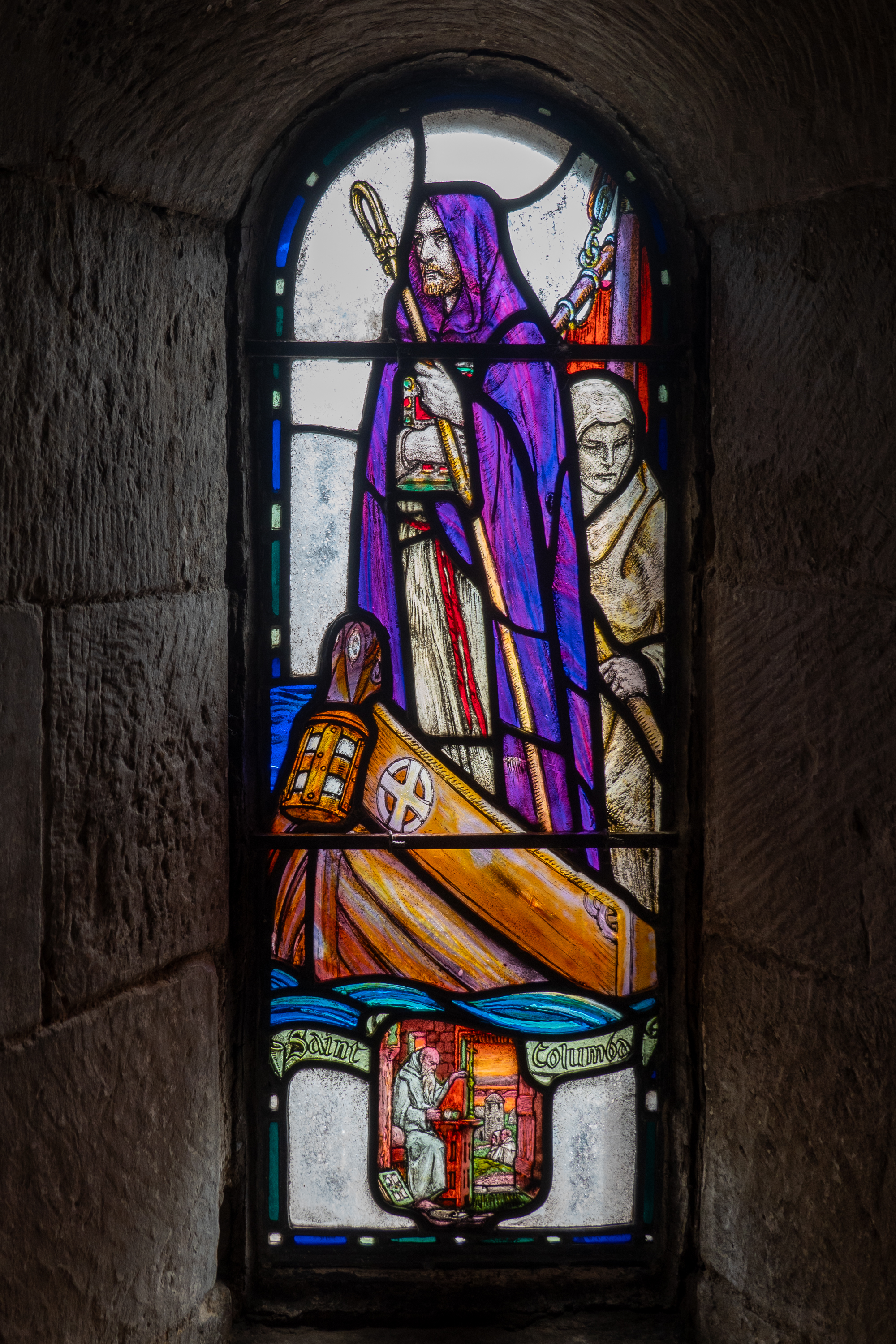
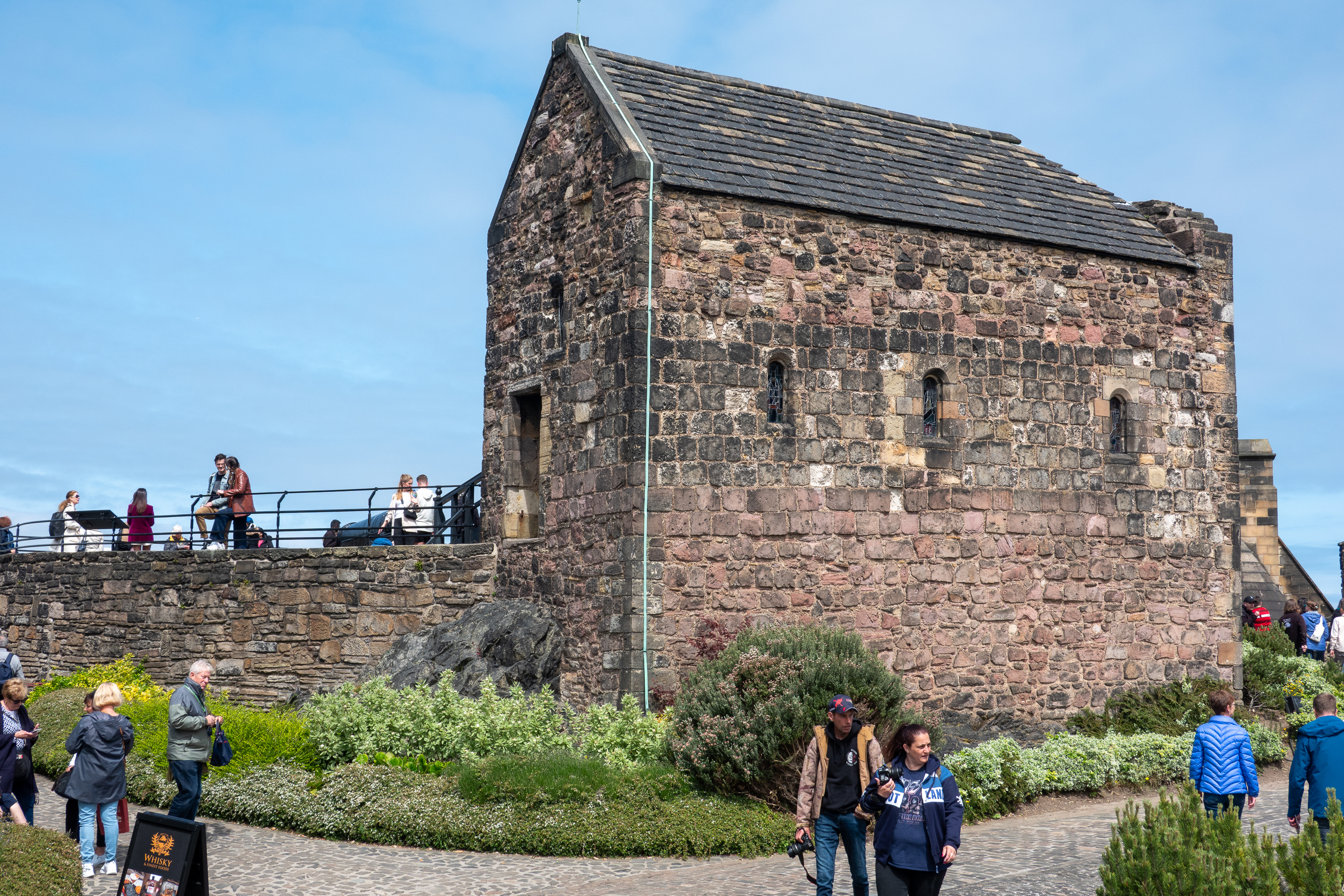
Denise loved the tiny St. Margaret’s Chapel.
The tiny chapel is one of the oldest parts of the castle.
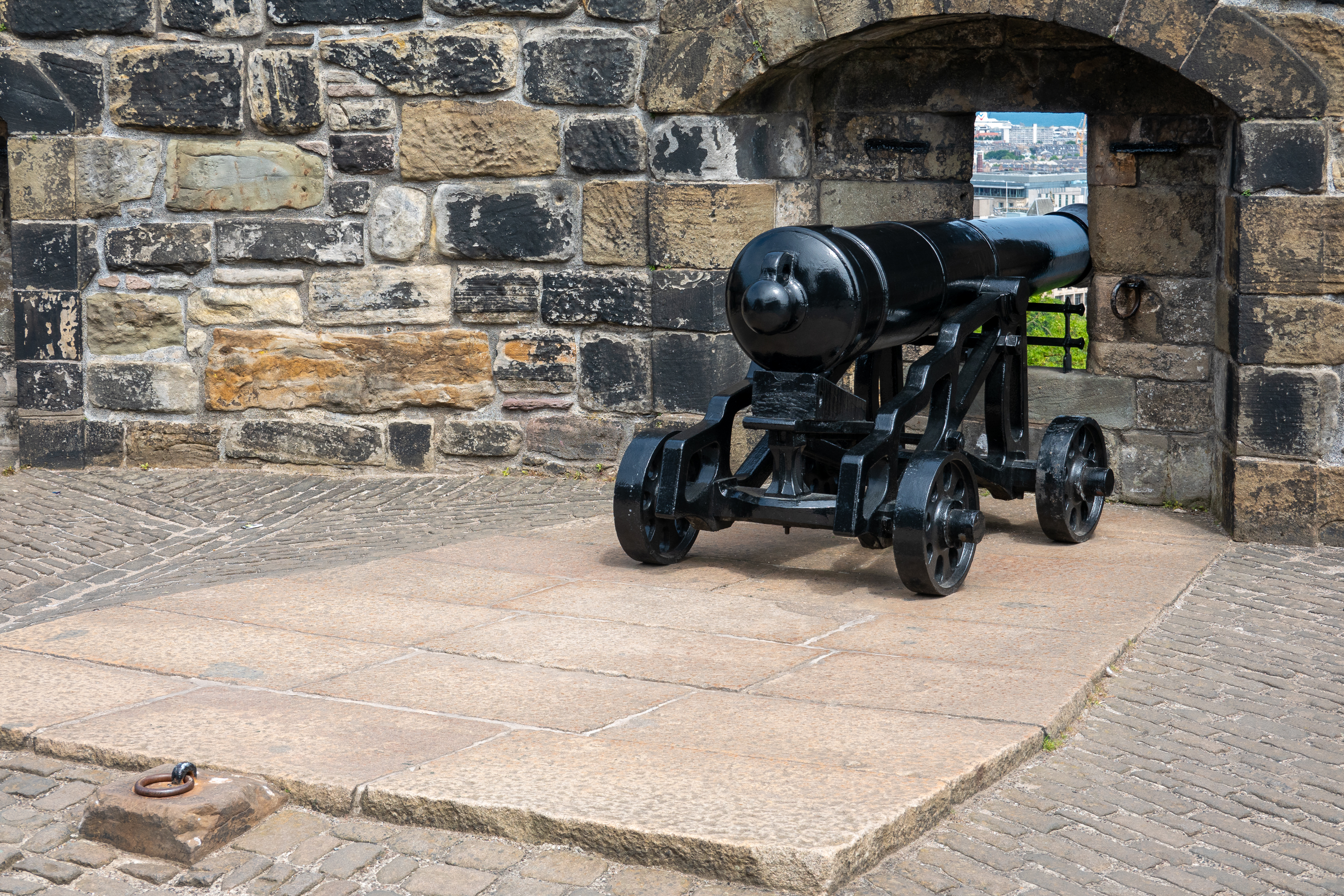
All of the recoil anchors are still in place.
Depending on the war, the cannon were used to defend the castle or to bombard the town.
Then it was time to start the trudge down the mountain to find our bus.
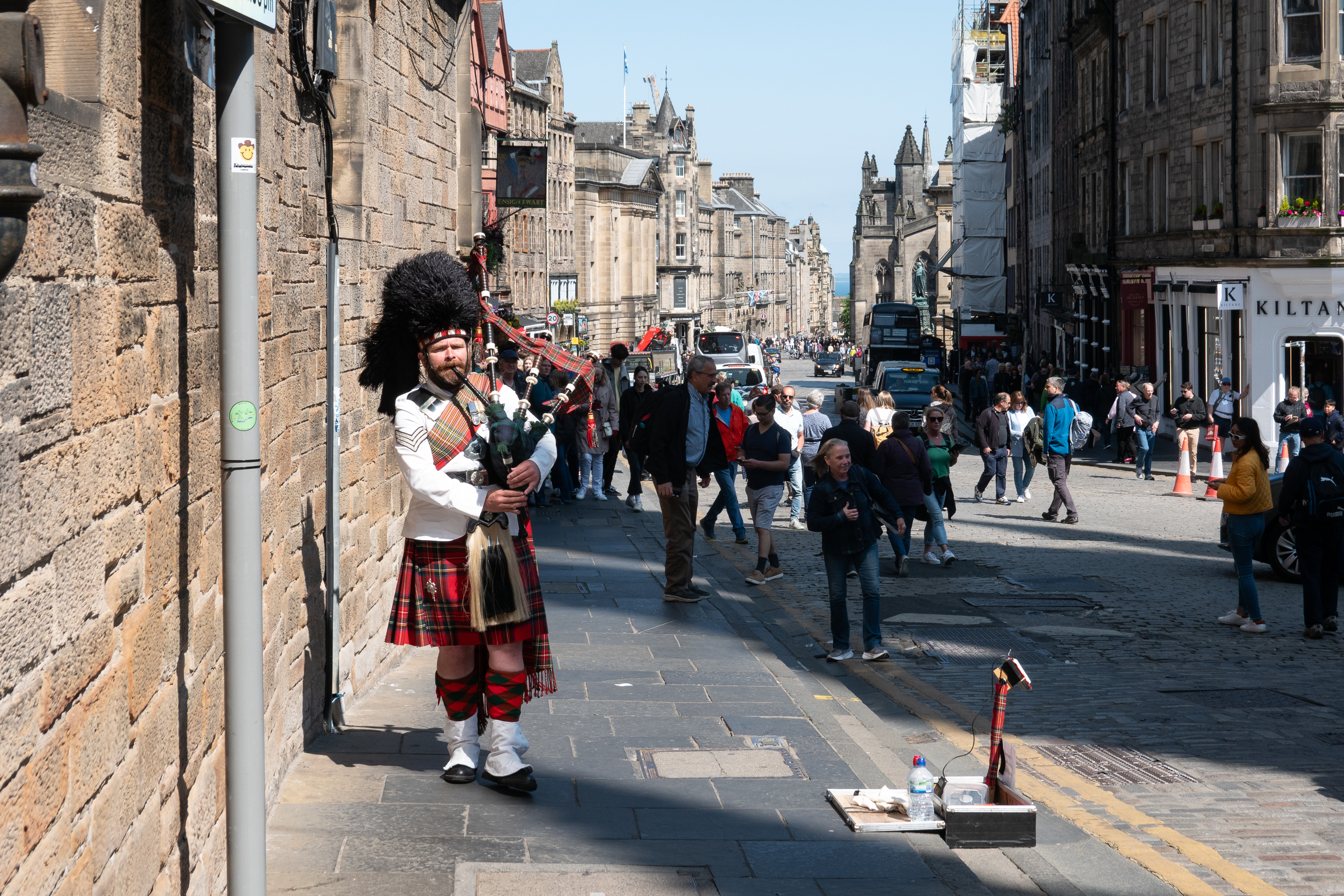
As it is Scotland, the busker was a piper in full regalia. We stopped to listen and made a contribution as he was very good. A wonderful, magical moment.
Bank Holiday weekends finally over, we headed north to revisit Hadrian’s Wall, an area we had visited years previously. The last time we visited it was pouring rain! This time the weather was much better. So much so that, once installed in our campsite, at Brockalee Campground, we decided not to waste the sunny afternoon and set off on our bikes to see if we could find the Roman camp at Vinolanda again.
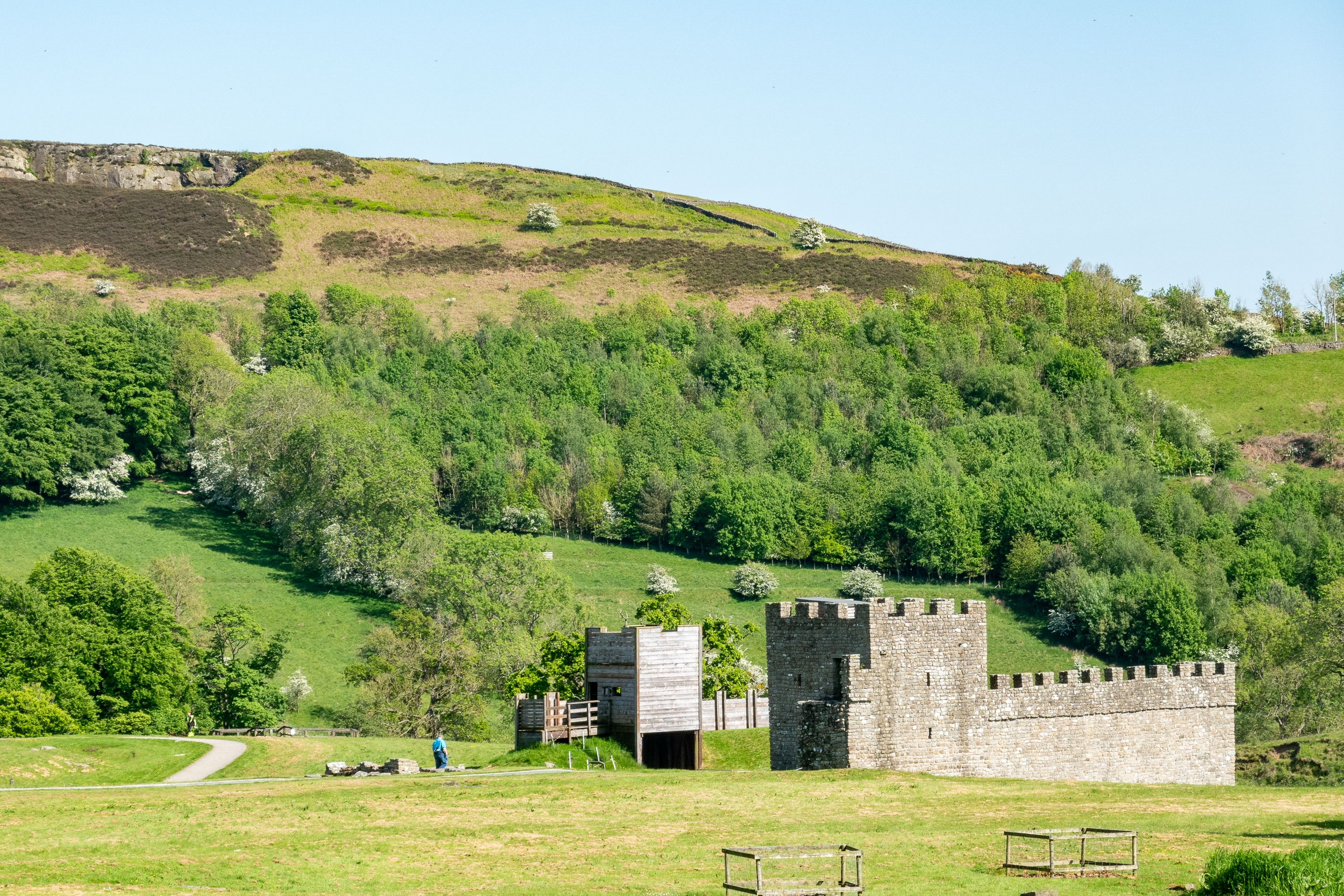
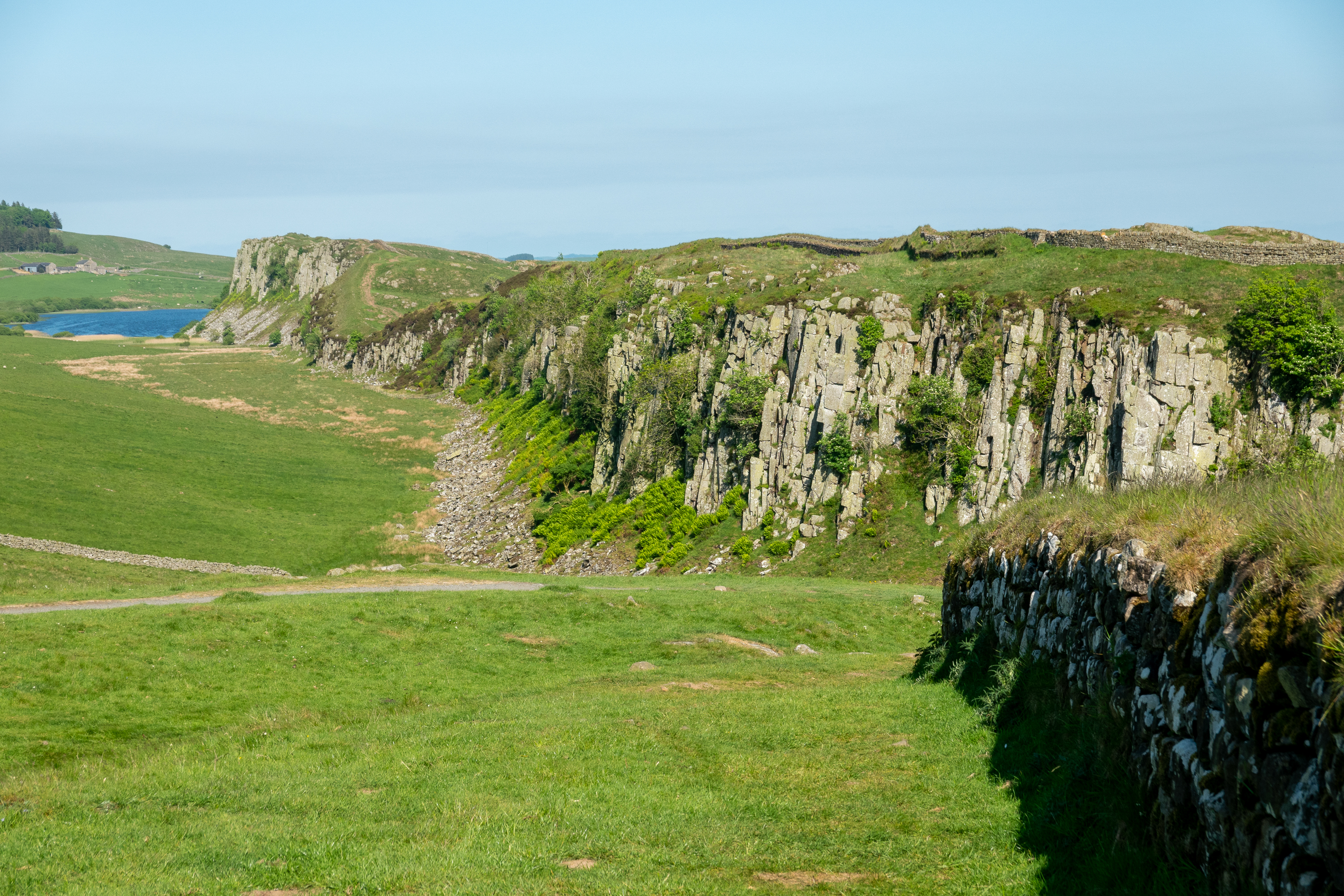
The view from Steel Rig may be the most iconic view of Hadrian’s Wall. You can imagine all of the Roman soldiers (mostly auxiliaries) pulling long boring duty on the wall.
The views on a sunny day were so much better than they had been in mist and rain.
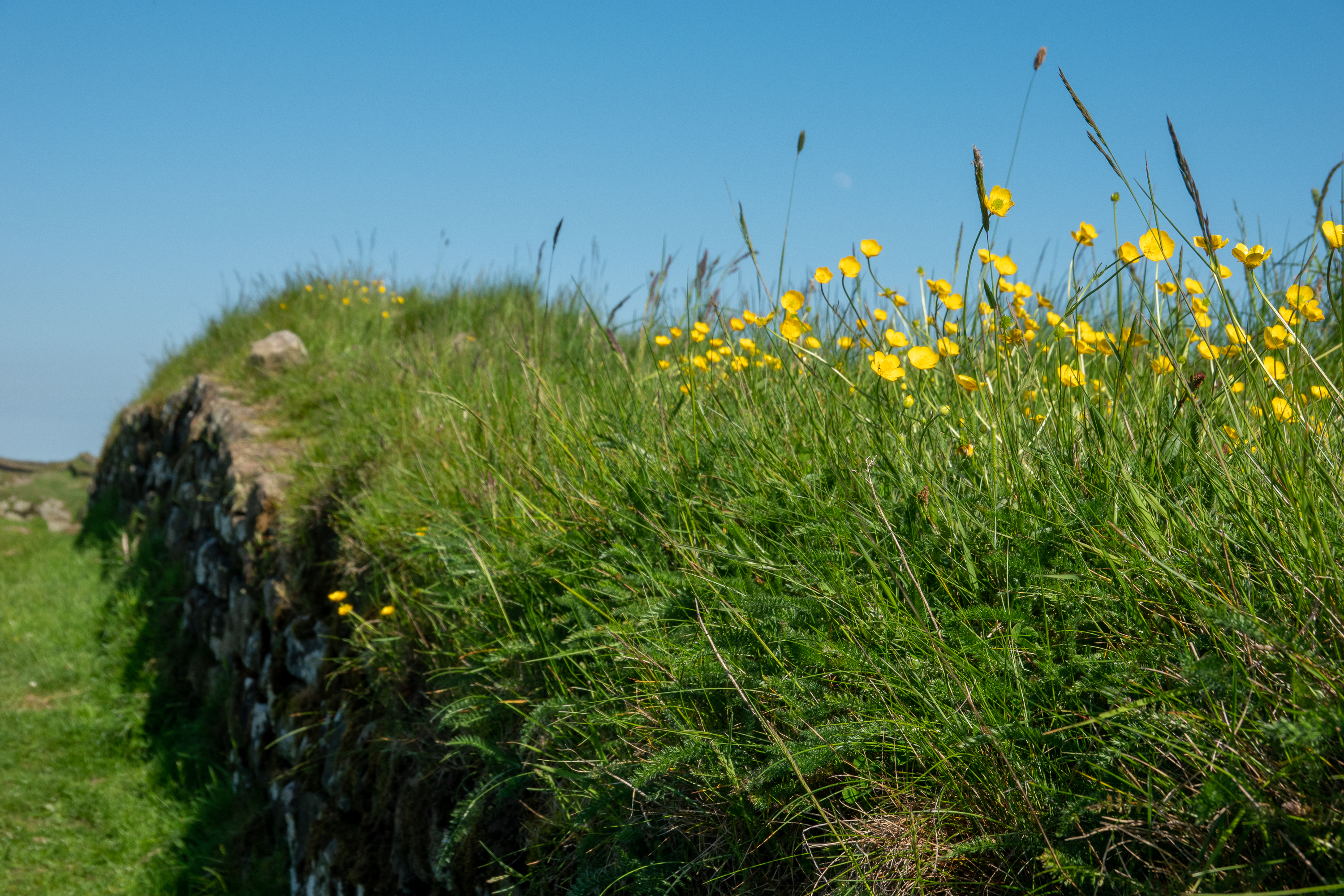
Flowers on the wall, literally.
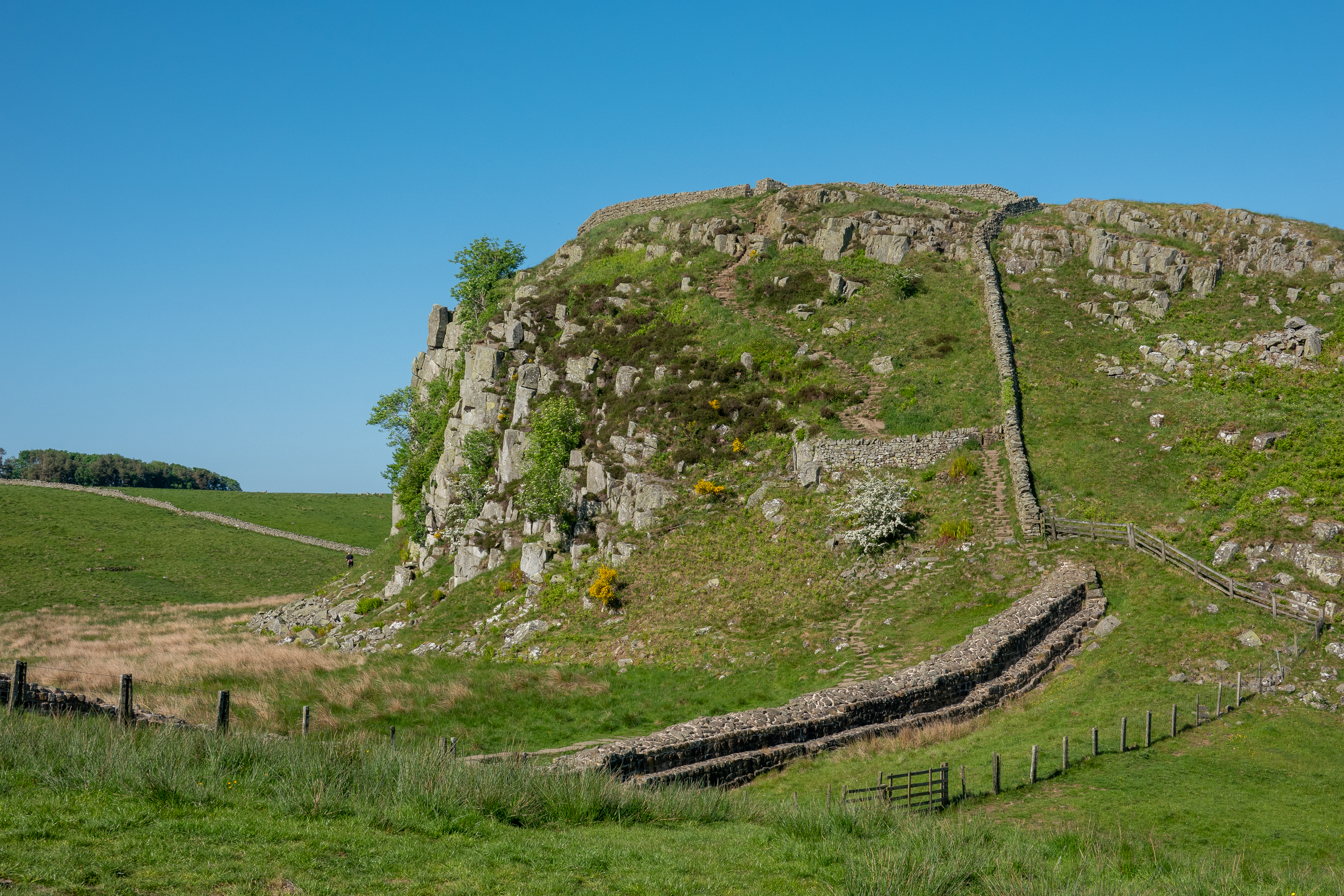
The wall snaking up the hillside.
The Brockalee Campground is a small site with a superb view over the hills and just up the road from Hadrian’s Wall and Vinolanda. We certainly would recommend it. (https://www.campingandcaravanningclub.co.uk/campsites/uk/northumberland/hexham/brockaleefarmcampsite/) On our way out, we decided to revisit the Roman Army Museum. (https://www.vindolanda.com/roman-army-museum) This is a really well done museum with excellent, detailed presentations and recreations; an essential stop for anyone visiting Hadrian’s Wall. We spent a great hour with a medical doctor who, in costume, did a detailed presentation on Roman medicine and surgery.
Today Lindesfarne is home to fewer than 200 people and accessible only by a causeway at low tide, and not a place where you would want to try to park a large truck. So we booked a boat trip to Lindisfarne from the town of Seahouses.
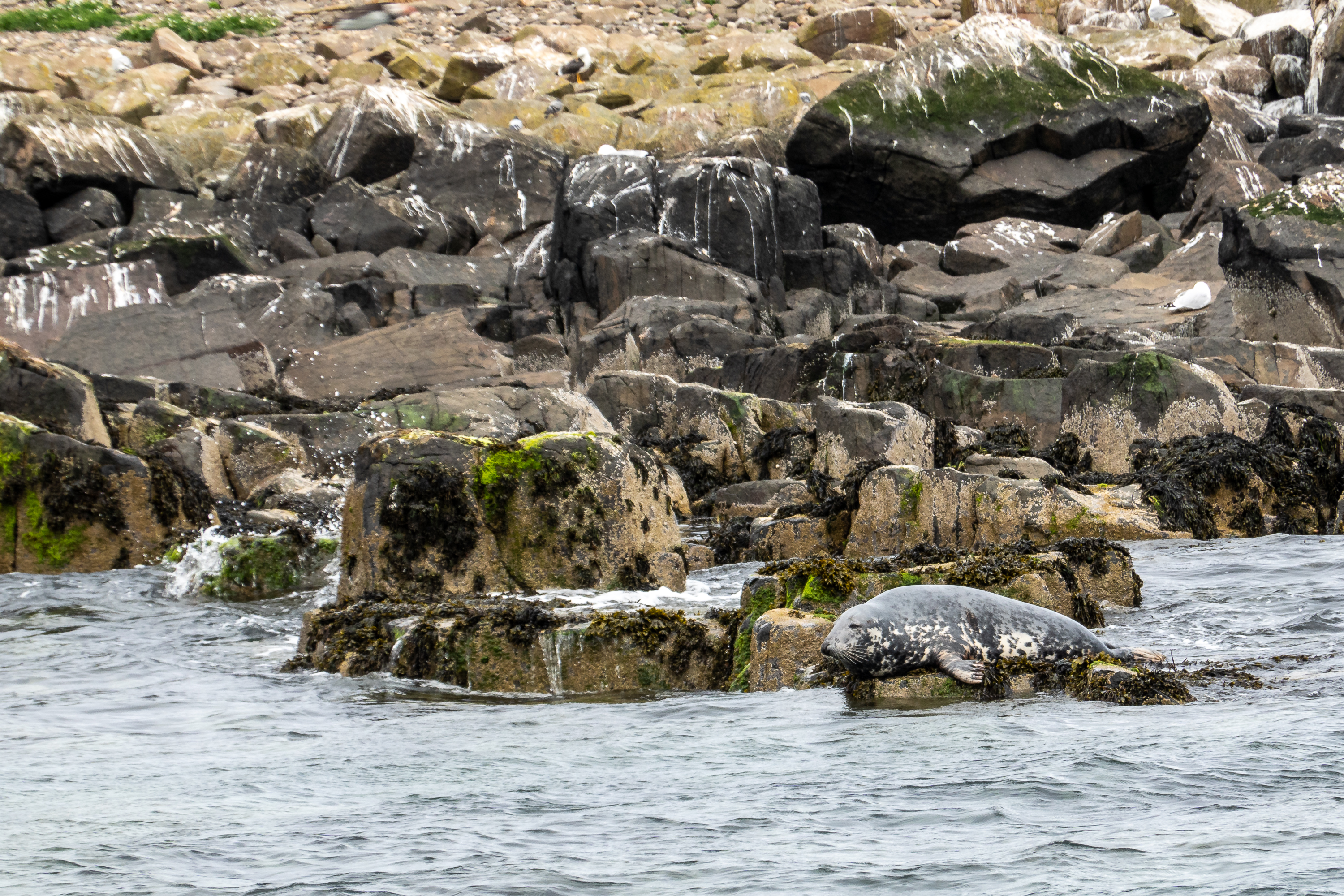
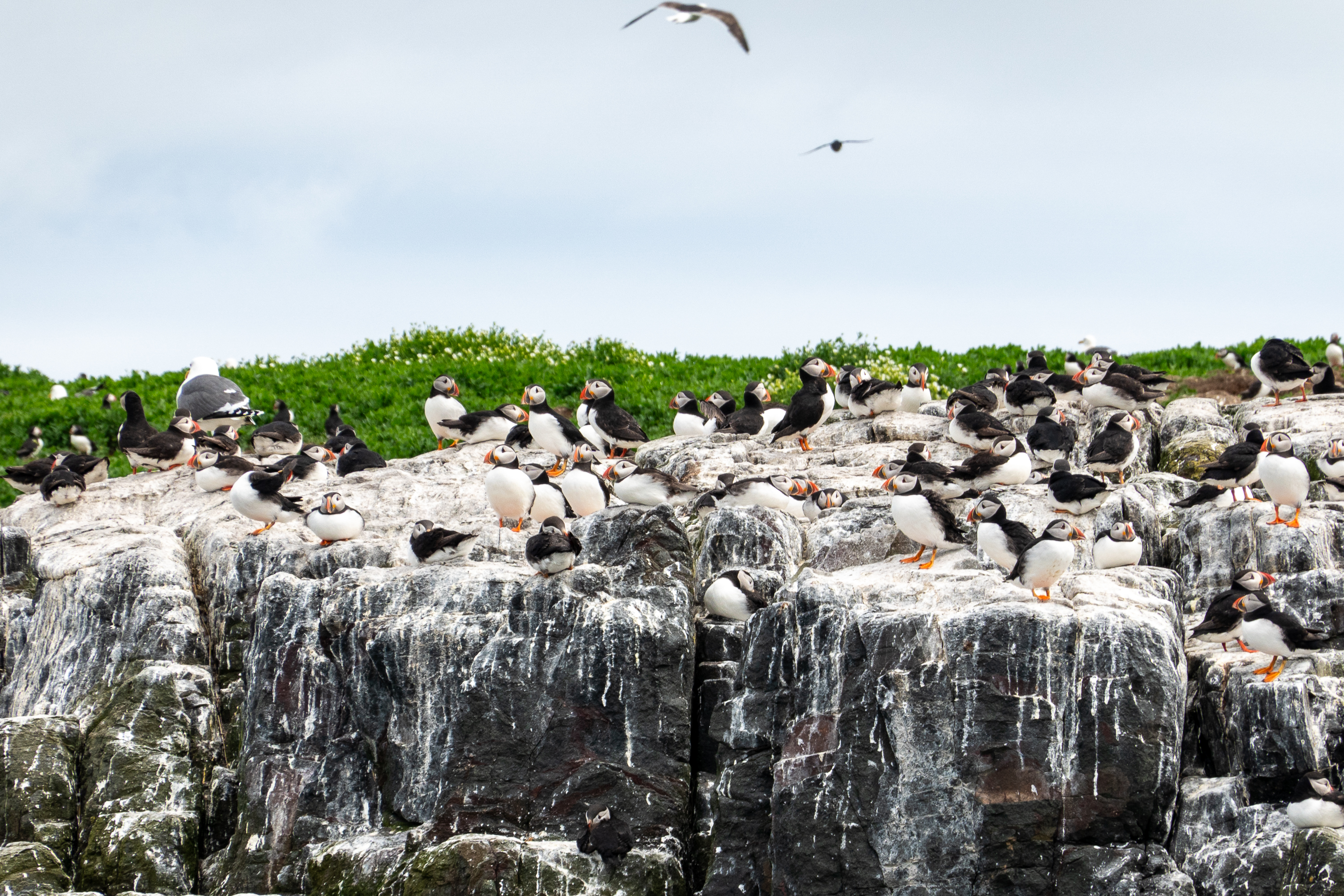
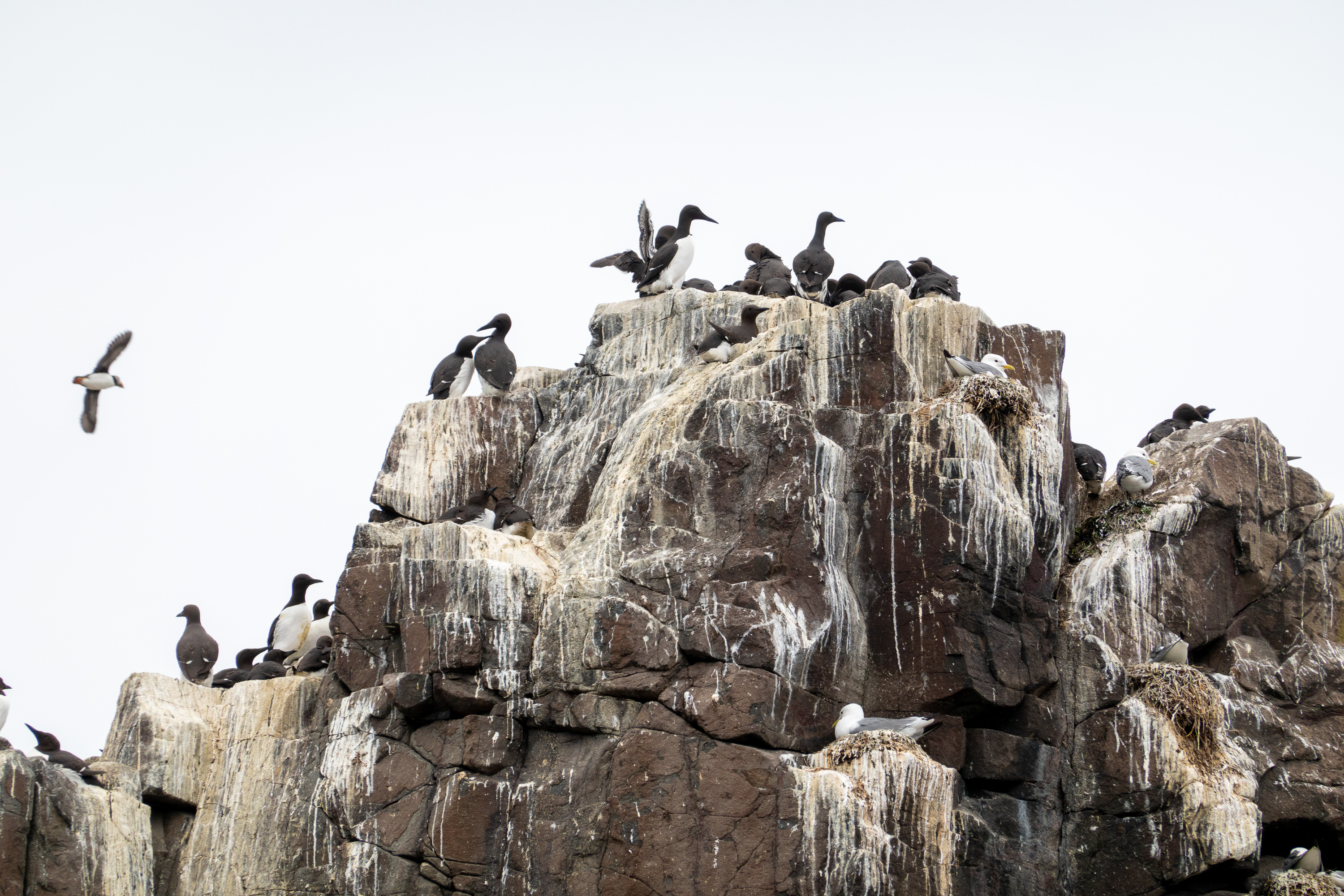
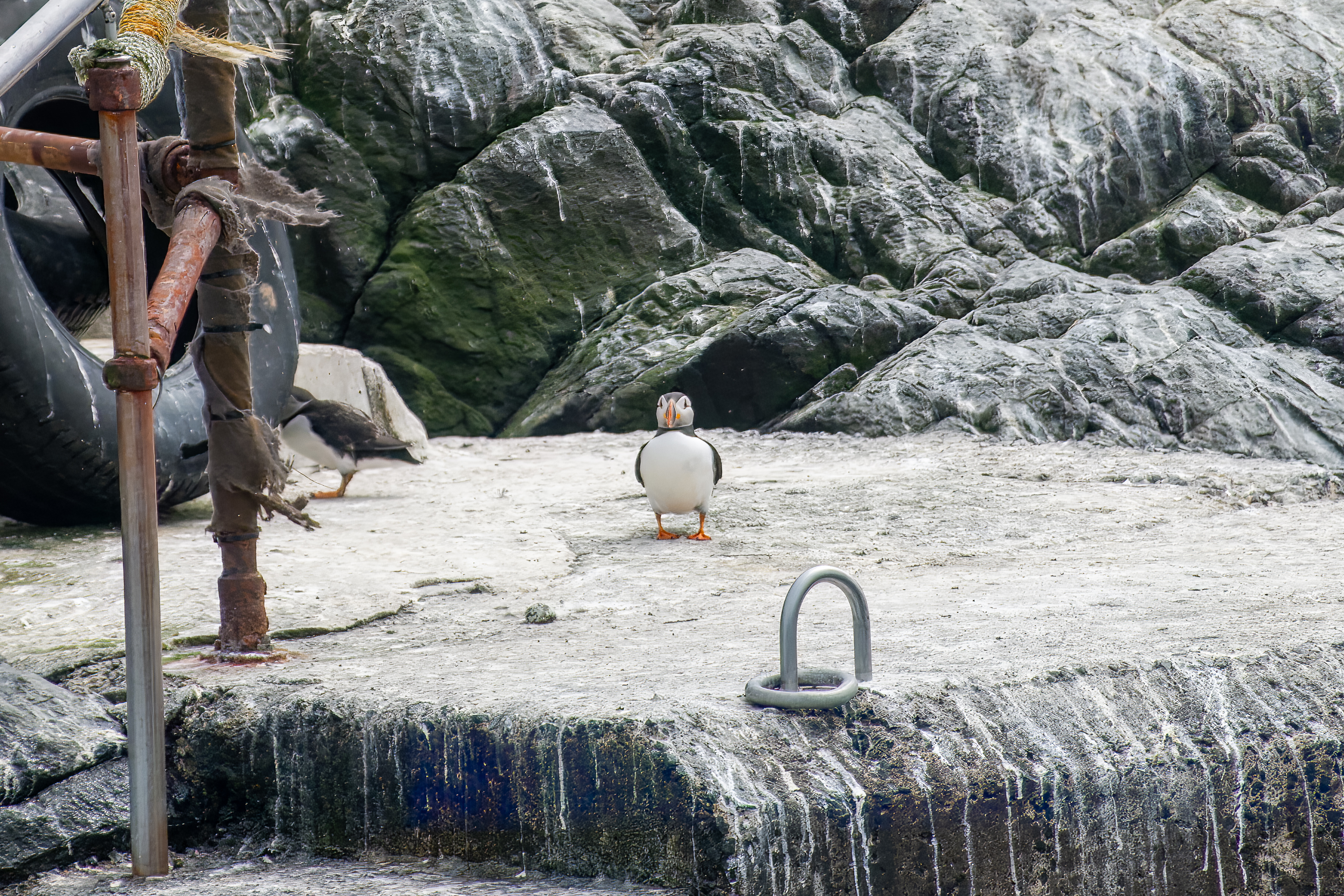
The day dawned grey and cold and the sea was quite rough. We were glad to have dressed warmly for the sea crossing as there was no shelter on the boat. The best part of the trip was passing by the Farne Islands which are closed to landing because of the risk of avian flu. Sailing by, we were able to see thousands of nesting birds, kittiwakes, ghilliemoffs, shags, puffins and a gannet or two. We also saw a number of grey seals.
Sleepy SealEverybody’s favorites, puffins.
Millions of nesting sea birds. The aroma is breathtaking.Don’t even think of landing here!
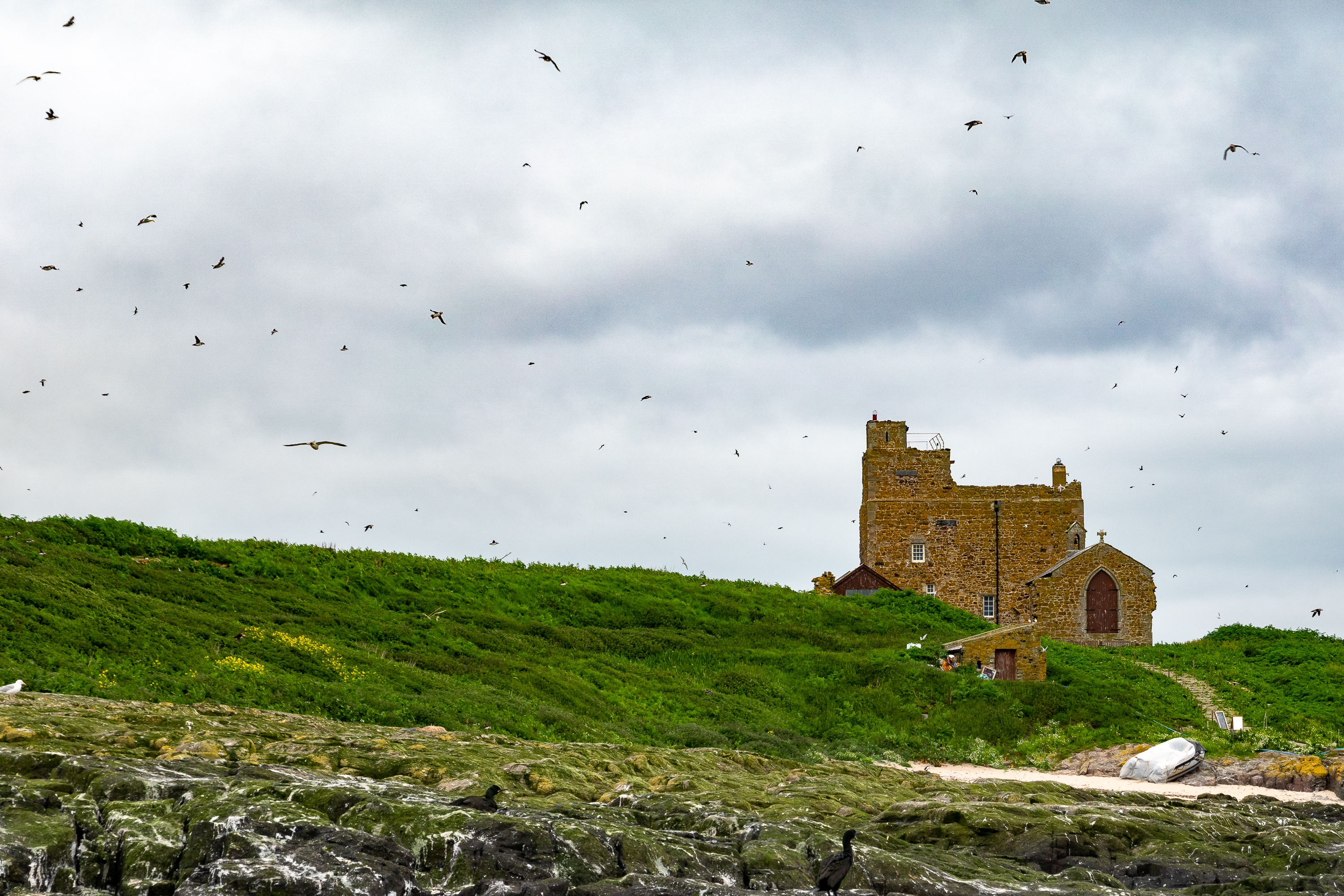
Abby ruinsOld Lighthouse
After about an hour sailing around the islands, we sailed up the coast past Bamburgh castle to Lindesfarne.
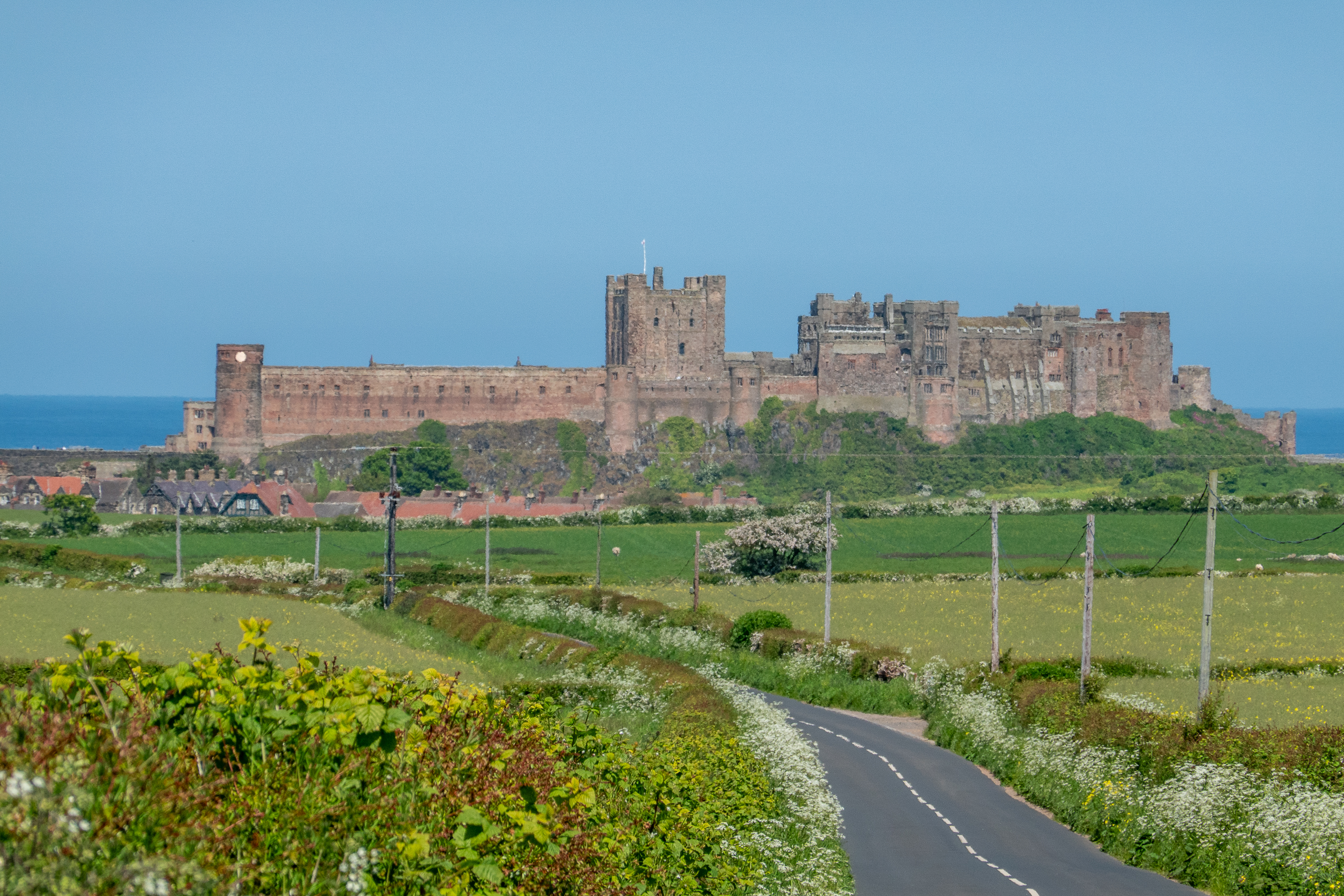
Bamburgh Castle from the sea.
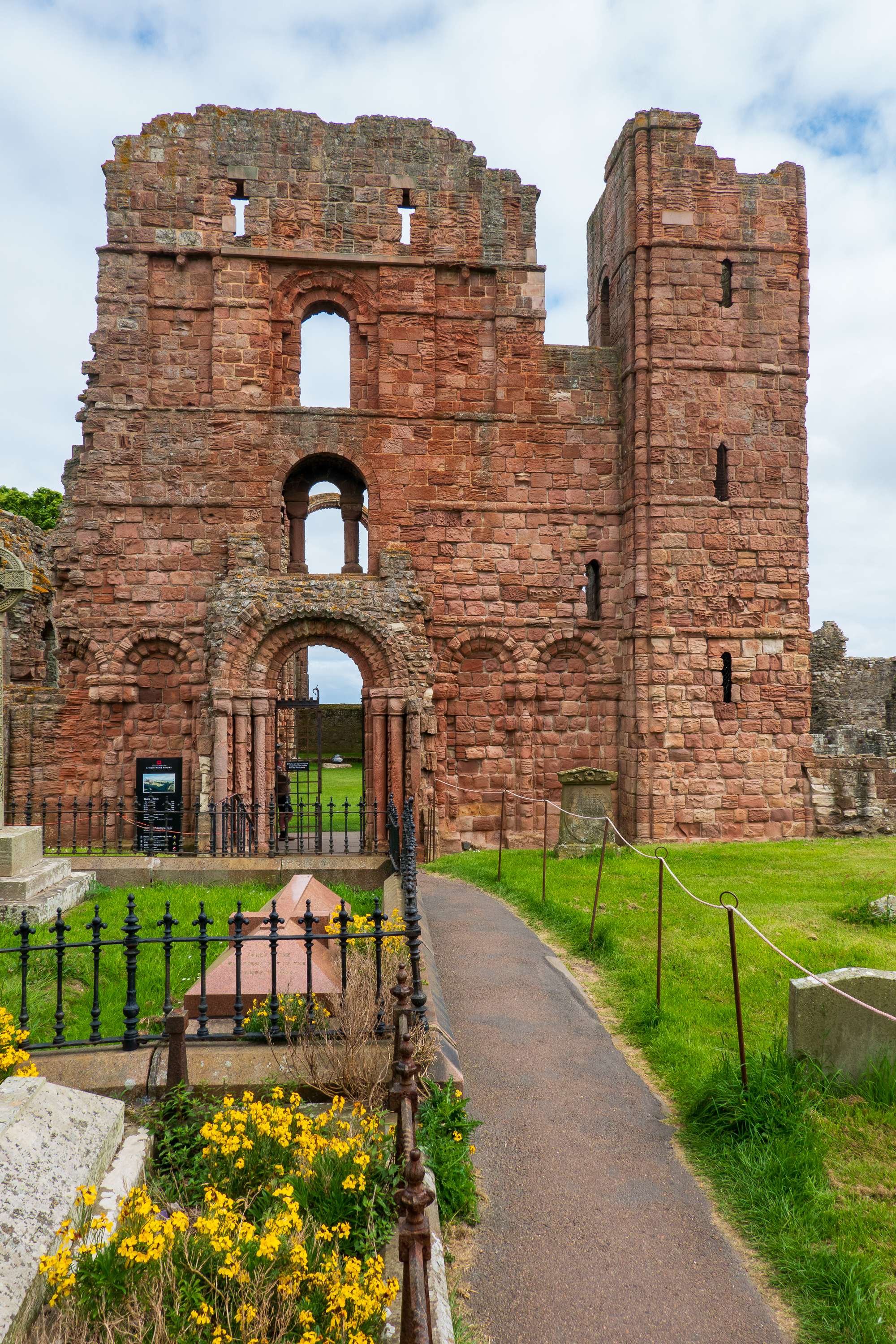
The tide was high in Lindisfarne so tourists could not drive the causeway and thus there were no crowds. We visited the main part of the town, enjoyed lunch in a cafe, and wandered the ruined Priory.
We spent some time in the (relatively) modern church, which provided a lot of information on the history of Christianity on the island. We then returned to the boat and set off for Seahouses. The highlight of the return trip was a pod of dolphins playing in the water just off of Bamburgh Castle. Great fun! Everyone on board was thrilled.
At Seahouses we were greeted with a parking ticket! Grrr! Took three days for them to finally post it so we could pay. Double GRRRR!
The next day we cycled into the town of Bamburg to visit St. Aidan’s Church and Bamburgh Castle.
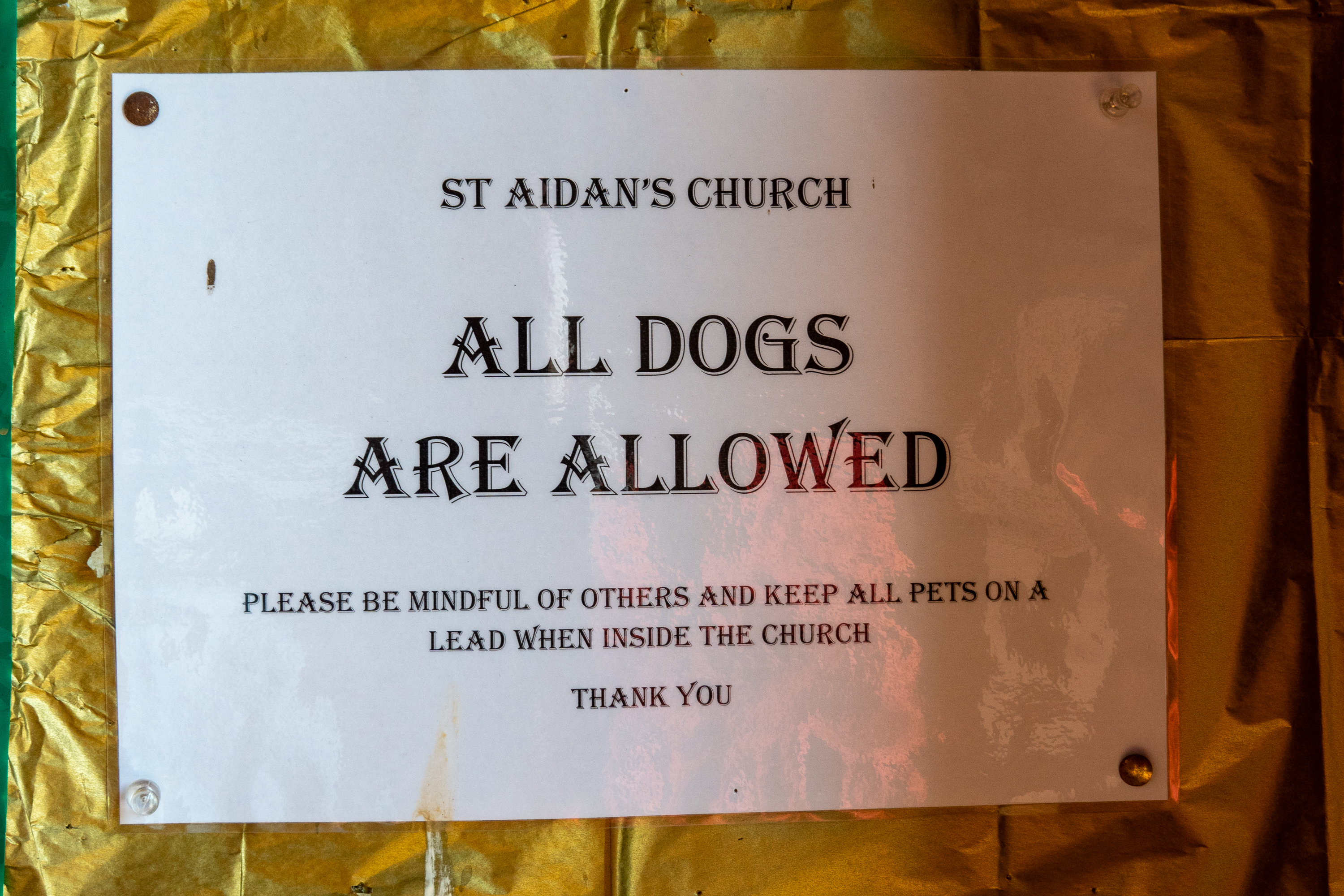
Water to nourish the canine soul.
Beam from the original church, said to have been touched by Saint Aiden himself.Our kind of church!
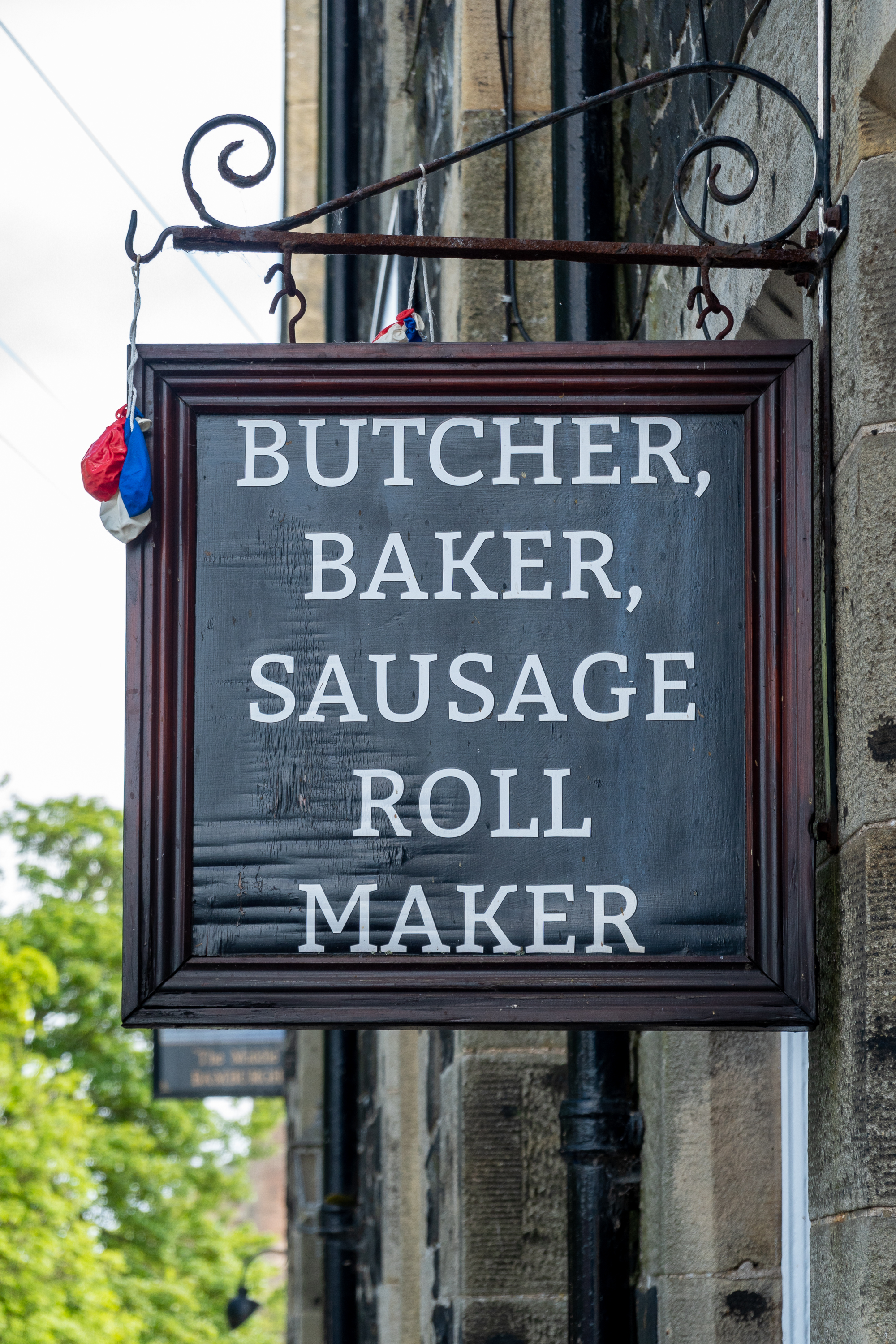
Lunch was a snack pastry and sandwich from a local “Butcher, Baker and Sausage Roll Maker”. (And it was very good.)
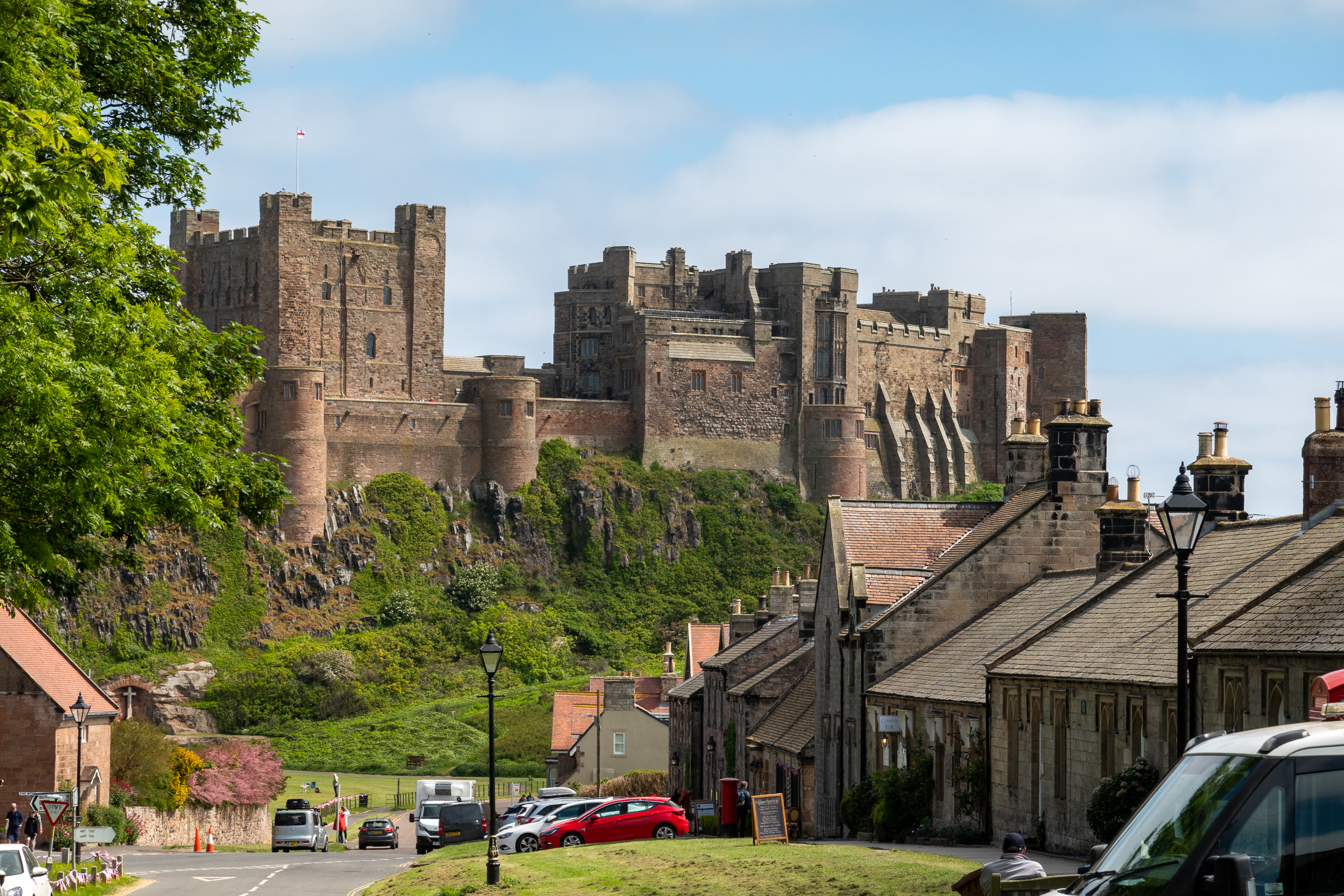
Bamburgh Castle is used, very anachronistically, in the TV series “The Last Kingdom.” Anachronistic not because of location, but because of architecture. The castle you see today is a Victorian fantasy rebuild of a real medieval castle. At the time of “The Last Kingdom,” it would have been a Dark Ages wooden stockade, well within the ability of the Vikings to raid and capture.
Bamburgh Castle from the town.
The foundations of the keep are Norman and authentic.Farne island with lighthouse and ruined abbey.
Town from castle.Castle from further inland.
We confess to enjoying a scone and cappuccino coffee at the Castle also. We even cycled back into Bamburgh town the next day to enjoy some ice-cream.
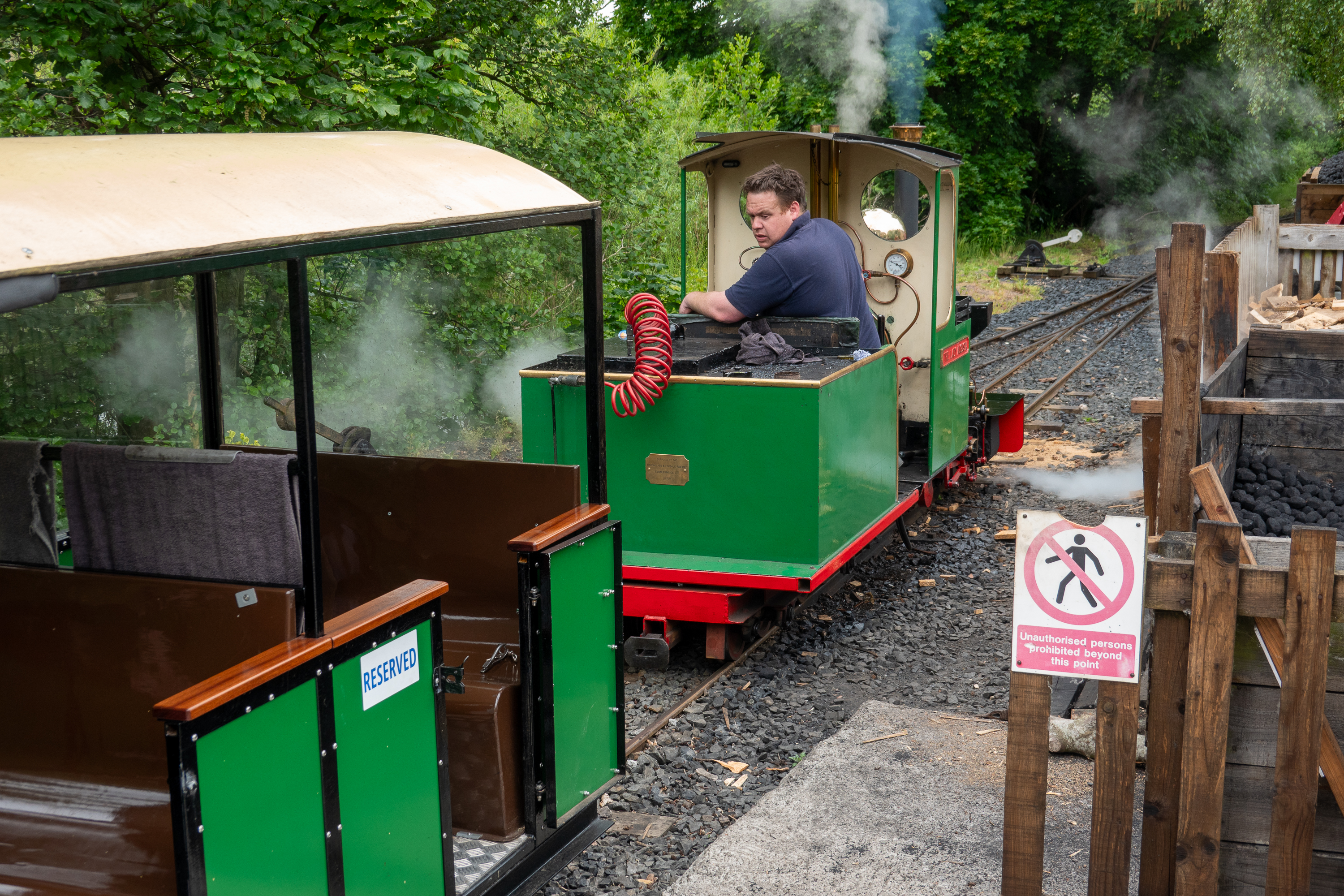
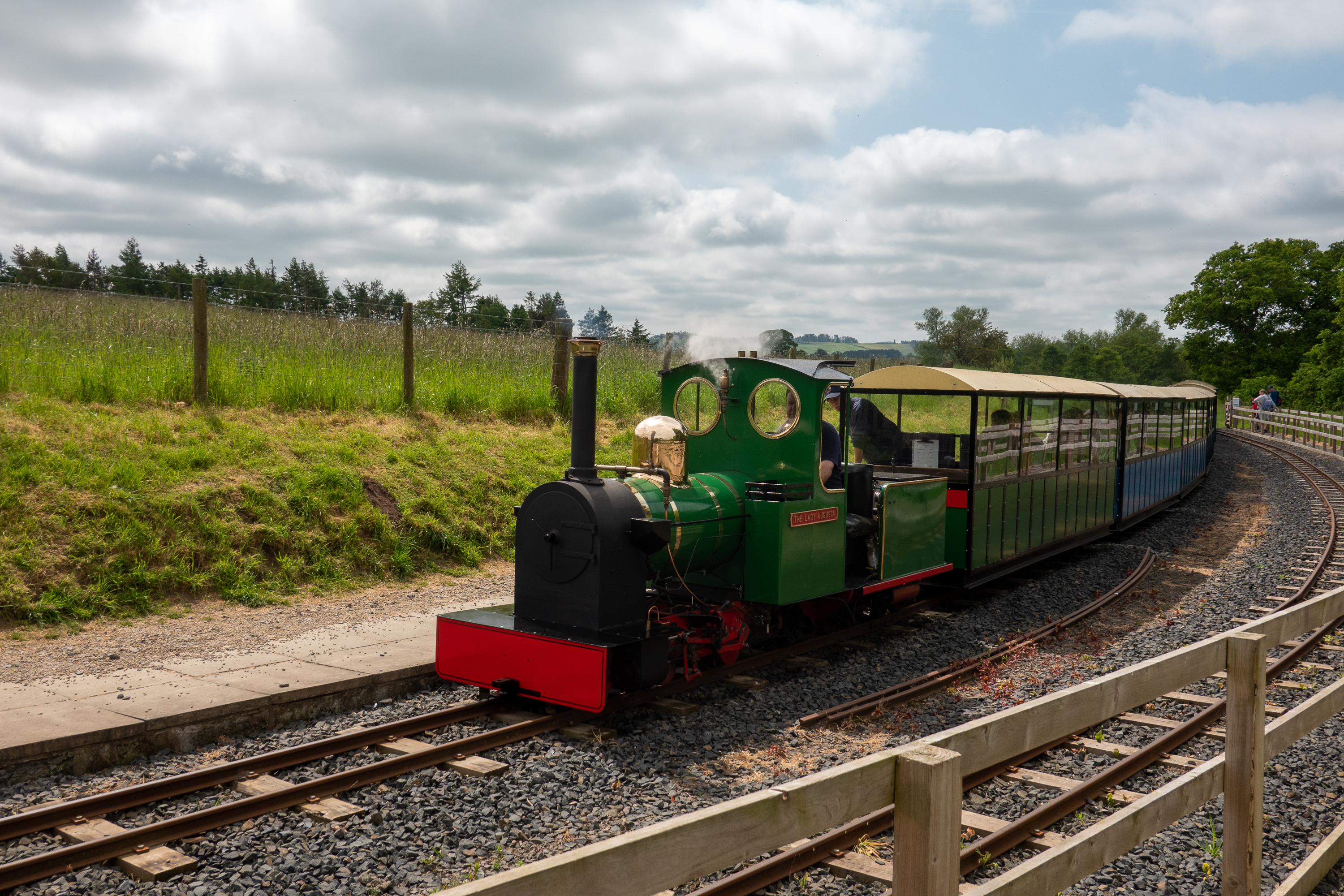
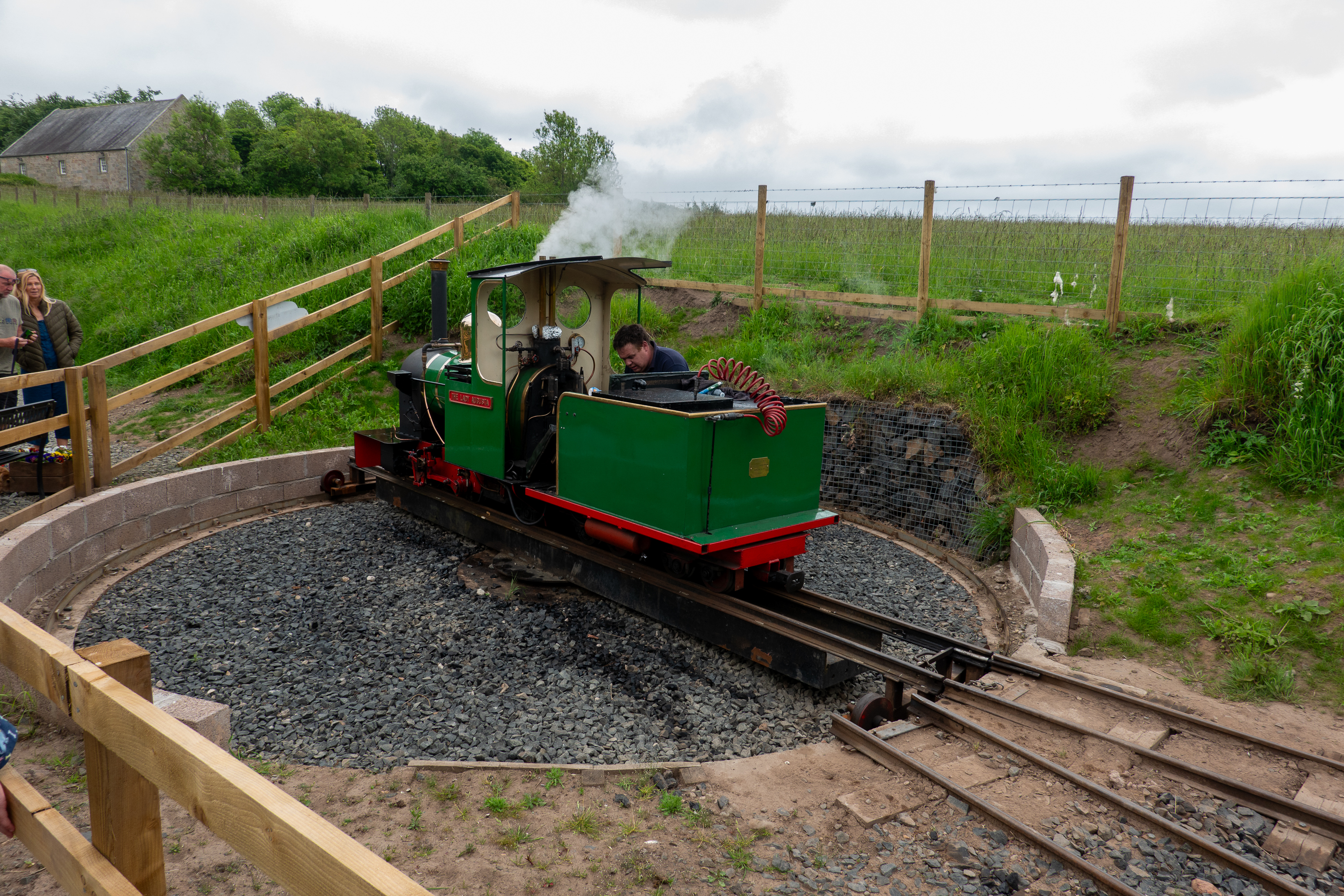
Then it was time to get back on the road to Scotland. On our way to Edinburgh we discovered the Ford and Etal miniature narrow gauge steam railway, so we stopped off for a ride. (https://www.heatherslawlightrailway.co.uk)
Yes, it is a real steam engine.
Coupling up to the train.
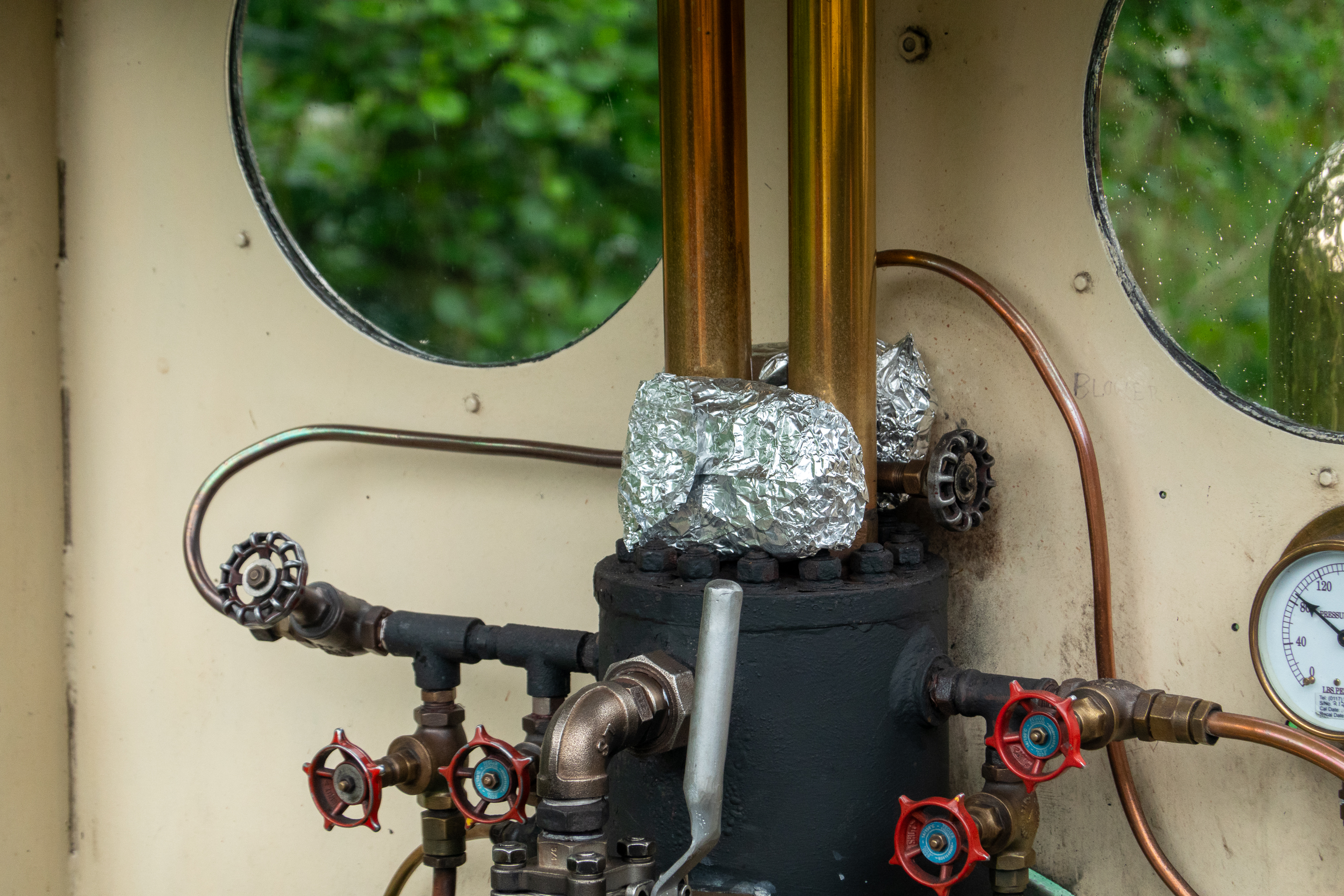
Potato baking for lunch.
With a gauge of only 15 inches, it was almost like riding a toy train, but it was built to do real work. Quite fun and we enjoyed a lovely lunch in the Lavender Tea Room in Etal.
Pulling into Etal Station.
Tiny Turntable
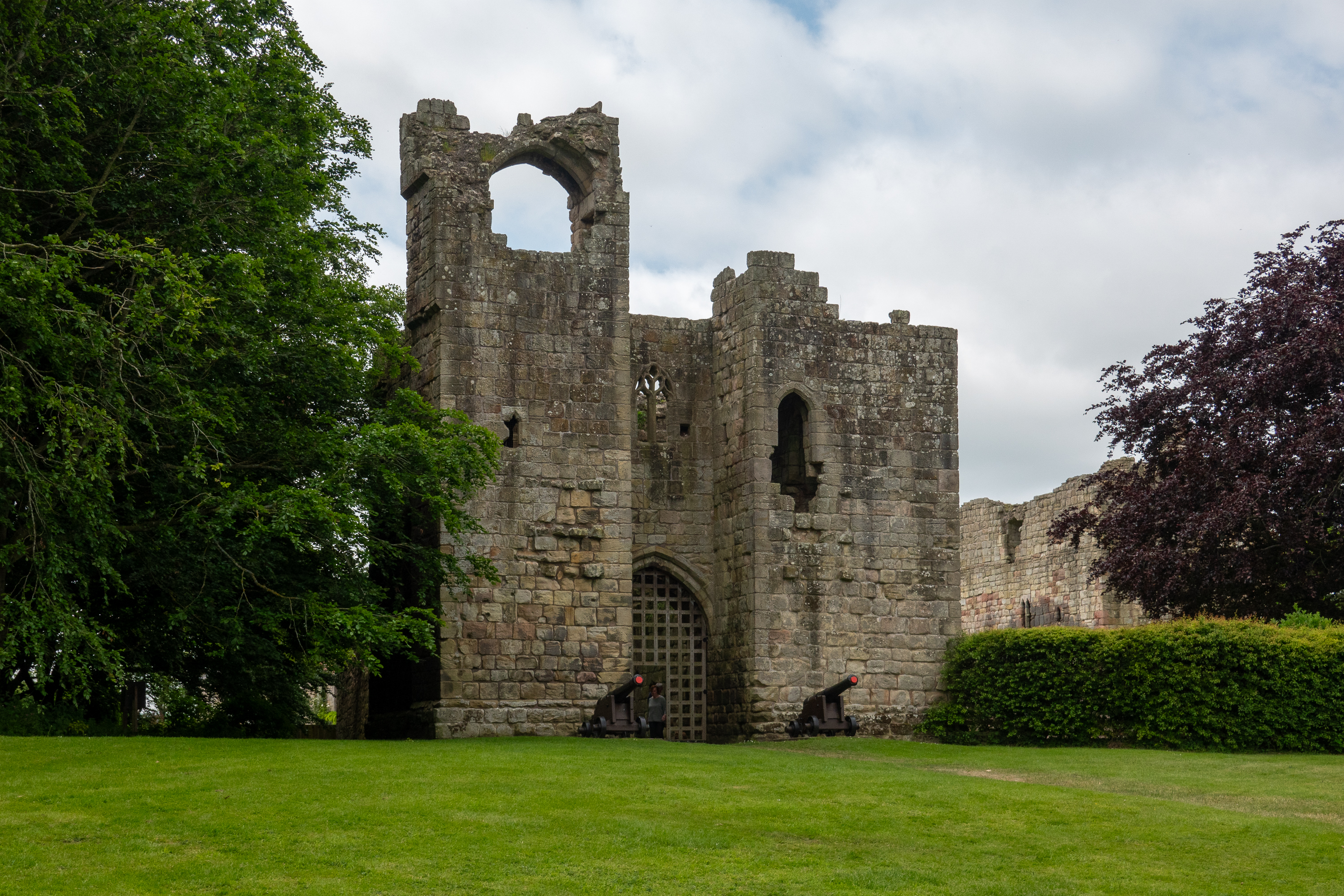
The ruined Etal Castle also provided an interesting visit. This was the medieval English equivalent to the Roman mile castles, set up as a defense against the Scottish reivers.
Impressive gate house.
Denise in the inner ward.
It was an interesting study in a miniature castle, barely larger than a fortified manor house. It could not resist the full Scottish invasion at the time of the Battle of Flooden.(https://en.wikipedia.org/wiki/Etal_Castle)
Well sort of! As we had yet another Bank Holiday long weekend before us, we decided to head towards Liverpool. We both enjoy Beatles music and would have enjoyed visiting the Cavern Club, especially after watching the Mona Lisa Twins performing there, but were disappointed to learn that the old club was destroyed and the new one is but a replica. (https://en.wikipedia.org/wiki/MonaLisa_Twins)
But we still wanted to visit Liverpool as we had once finished a great jigsaw puzzle of the Royal Albert Dock that Denise’s brother had loaned us. So we were thrilled to find a farm campsite that would take us for the four night weekend. Better yet, it was within walking distance of a new railway station with regular trains to Liverpool. N.B. We used to have public transport like this in the US.
This is the older trainset, the newer one is even nicer.
The weather was warm and sunny and we set off on the train to discover Liverpool. The trains run every 20-30 minutes and in less than 30 minutes we were downtown. Fans of gritty old post war English cities will be disappointed; many of the central streets are now reserved for pedestrians and sidewalk cafes.
Old buildings, pretty flowers, and electric scooters to rent.
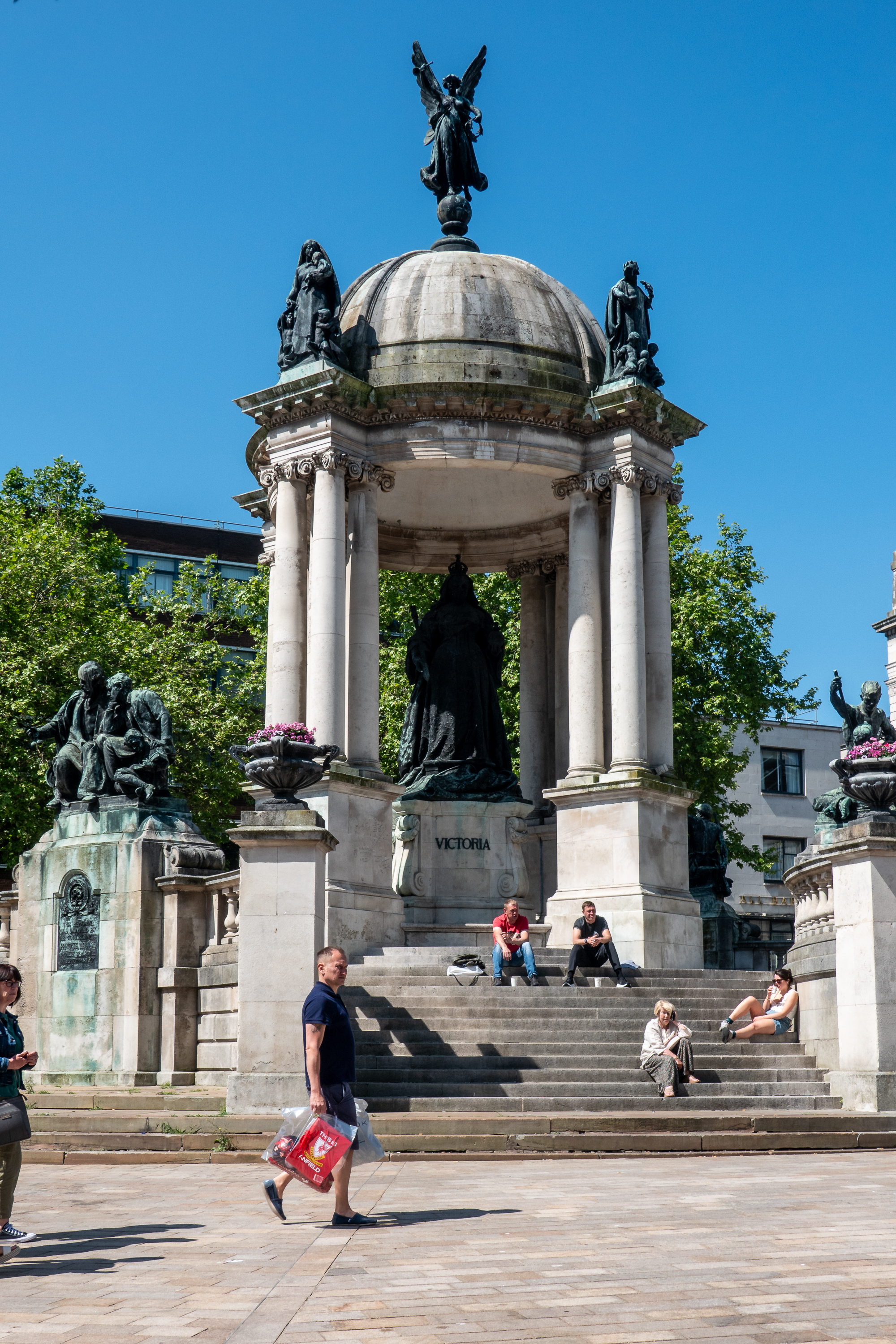
Victoria Regina
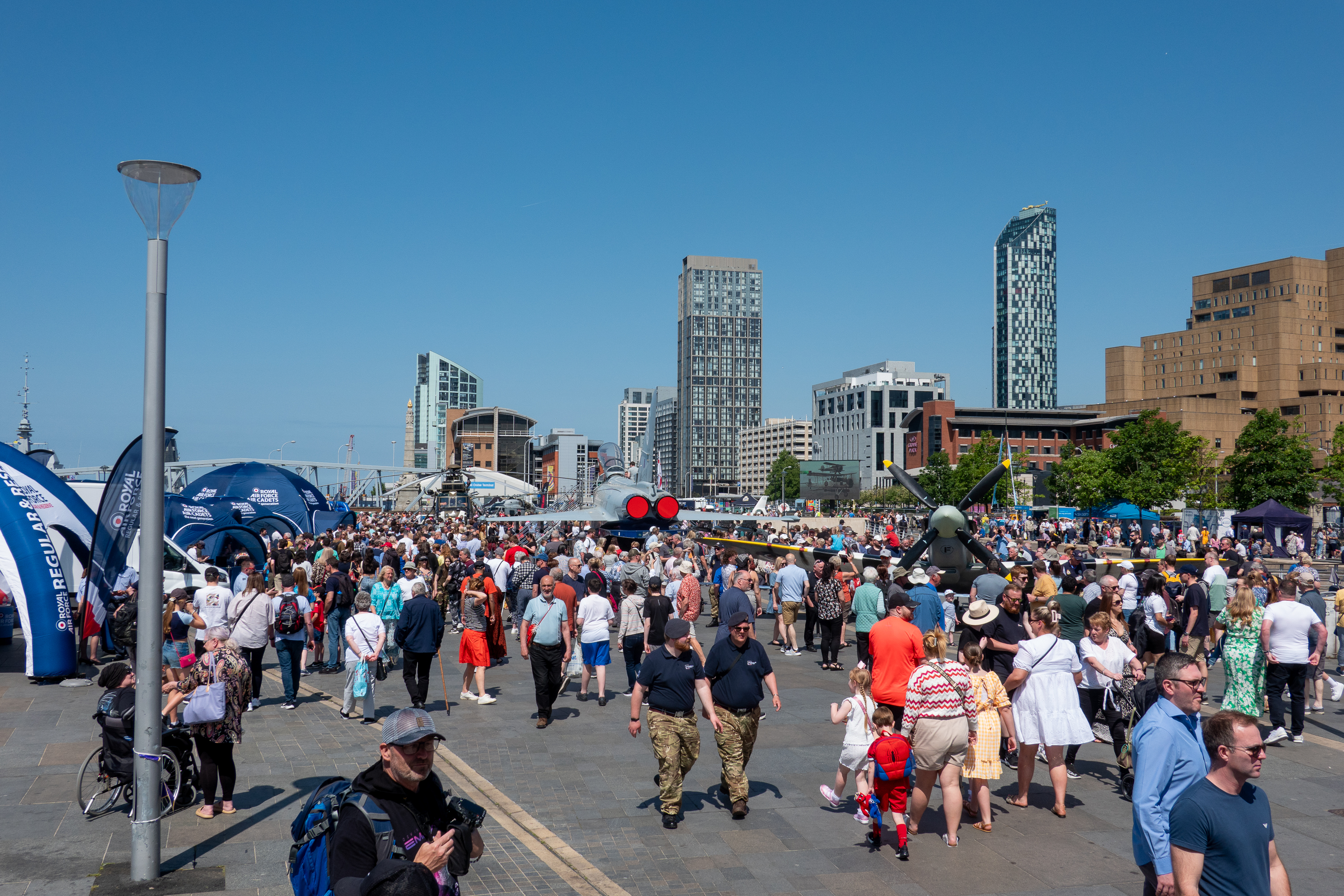
To say Liverpool was busy was an understatement. In celebration of the 80th anniversary of the Battle of the Atlantic, there were displays by all three armed services and hordes and hordes of people.
The big three, left to right, Hurricane, Lancaster, and Spitfire.
There are only so many Spitfires left. Suspect this one has been in many films.
There were big queues for everything, including the hop on hop off buses, and all Beatles tours were fully booked, so we changed rock n roll groups and rode the ferry across the Mersey.
Newer than the inspiration for Gerry and the Pacemakers, but a fun trip none the less.
A very pleasant trip with lots to see. Funny thing. We asked for a round trip ticket and were told that you had to get off on the other side and await the next crossing, an hour later. When we said that we didn’t want to do that and started to walk way, he called us back and said, “Just buy a one way ticket.” So we did and discovered that no one made you disembark – you just rode back.
The waterfront
We then had lunch in a Korean takeout with a few tables, which was excellent. (Not traditional Liverpool fare, but this is the new Liverpool.)
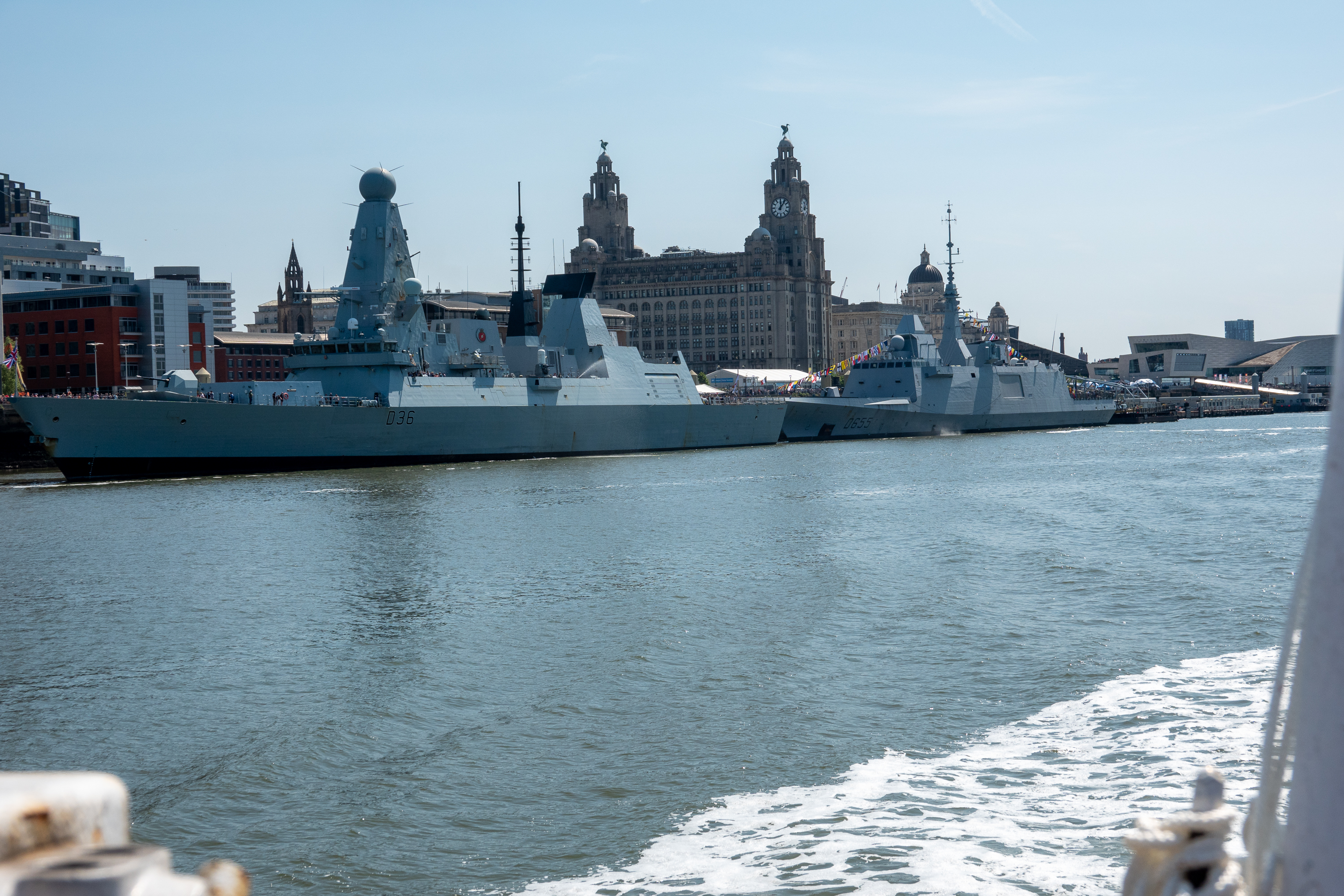
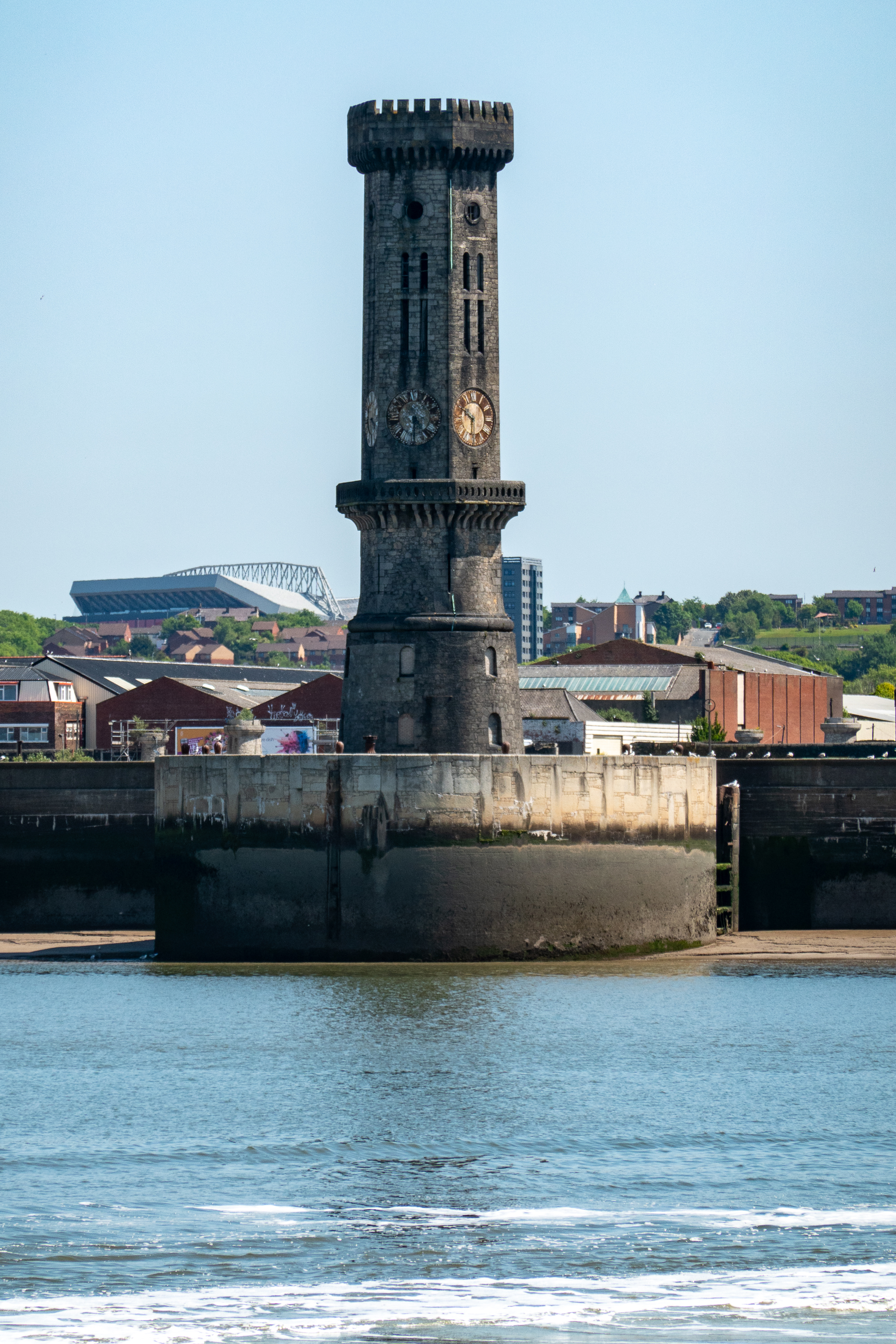
Visiting frigates, British and French. The US ship was not doing tours.The Victoria Tower. The clock let you set your chronometer when leaving port and the bell warned of storms.
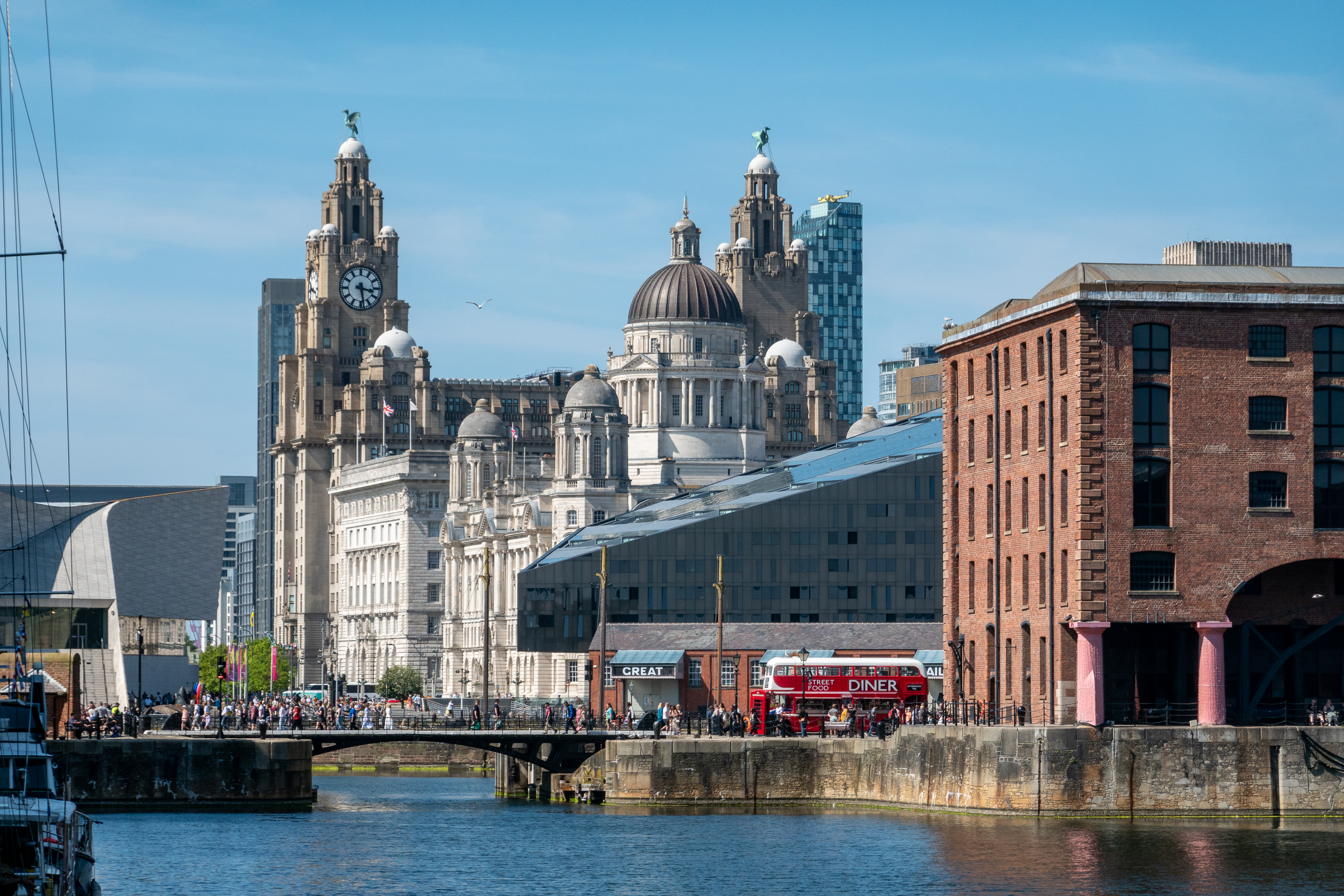
After lunch, we set out to find the site where the picture on our Albert Dock puzzle was taken.
The puzzle and yes, it was a bear to fit all the pieces of the masts and rigging!
It took some walking and looking, but we got it in the end – except for the railing on the right of the picture.
This was as close as I could get. (Sorry about the diner/bus blocking the Great Western Railway warehouse!)
And, of course, Denise demanded a ride on the Ferris wheel. We completed the ride with a 99 soft ice cream.
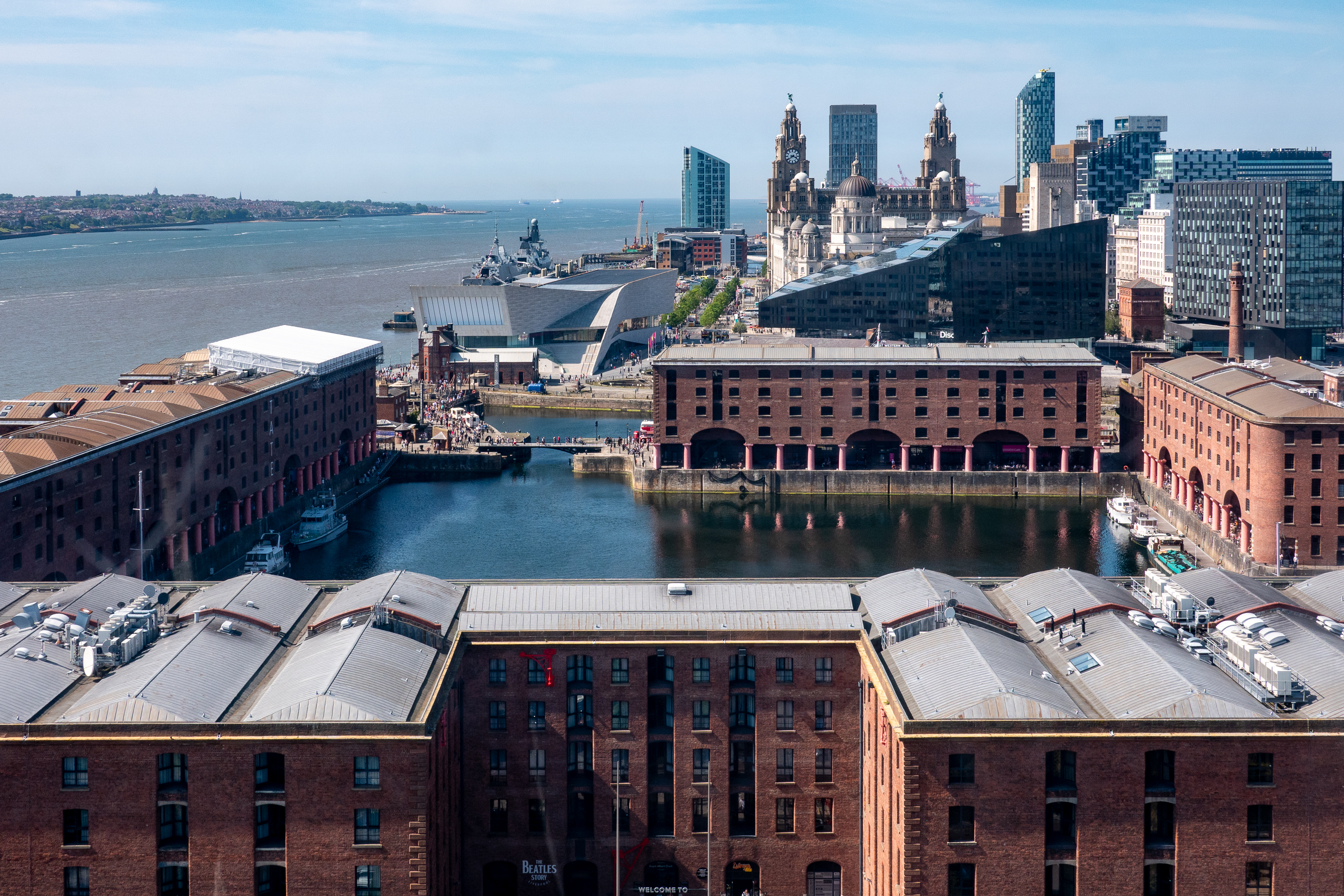
From the top of the Ferris Wheel you can see the brilliance of the Liverpool dock system and its fatal flaw. The enclosed docks protected ships from bad weather and allowed a completely enclosed customs zone. But, sadly, all of the basins and their access locks were too small and by the end of the 19th century, could no longer accommodate the larger ships.
The Royal Albert Dock from the top of the wheel.
Denise has always wanted to visit Chester, so, after a day on our bikes, we hopped on the train again for the slightly longer journey into Liverpool and then out to Chester. We had one change of trains, that went smoothly (both ways), and walked from the station to the town centre.
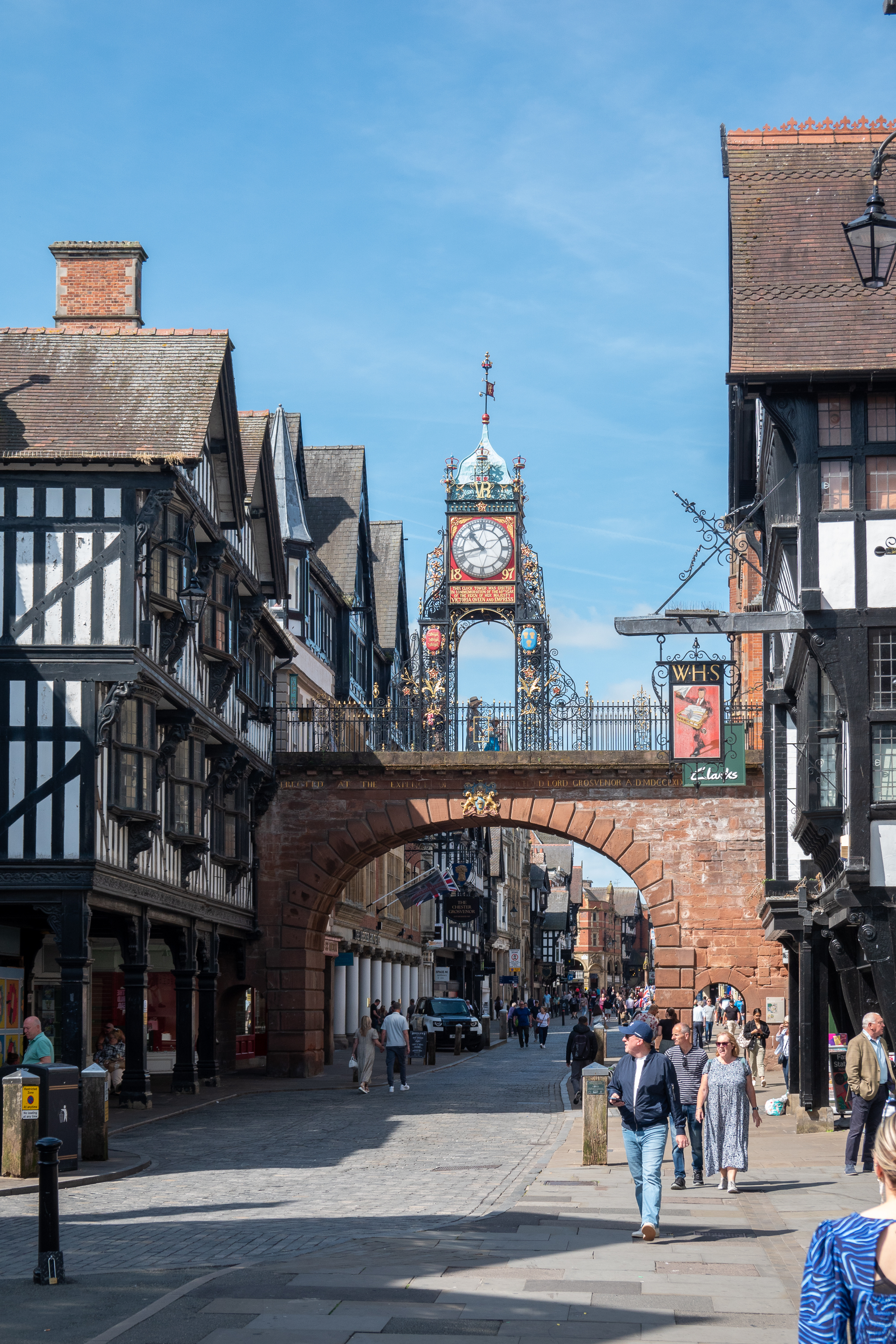
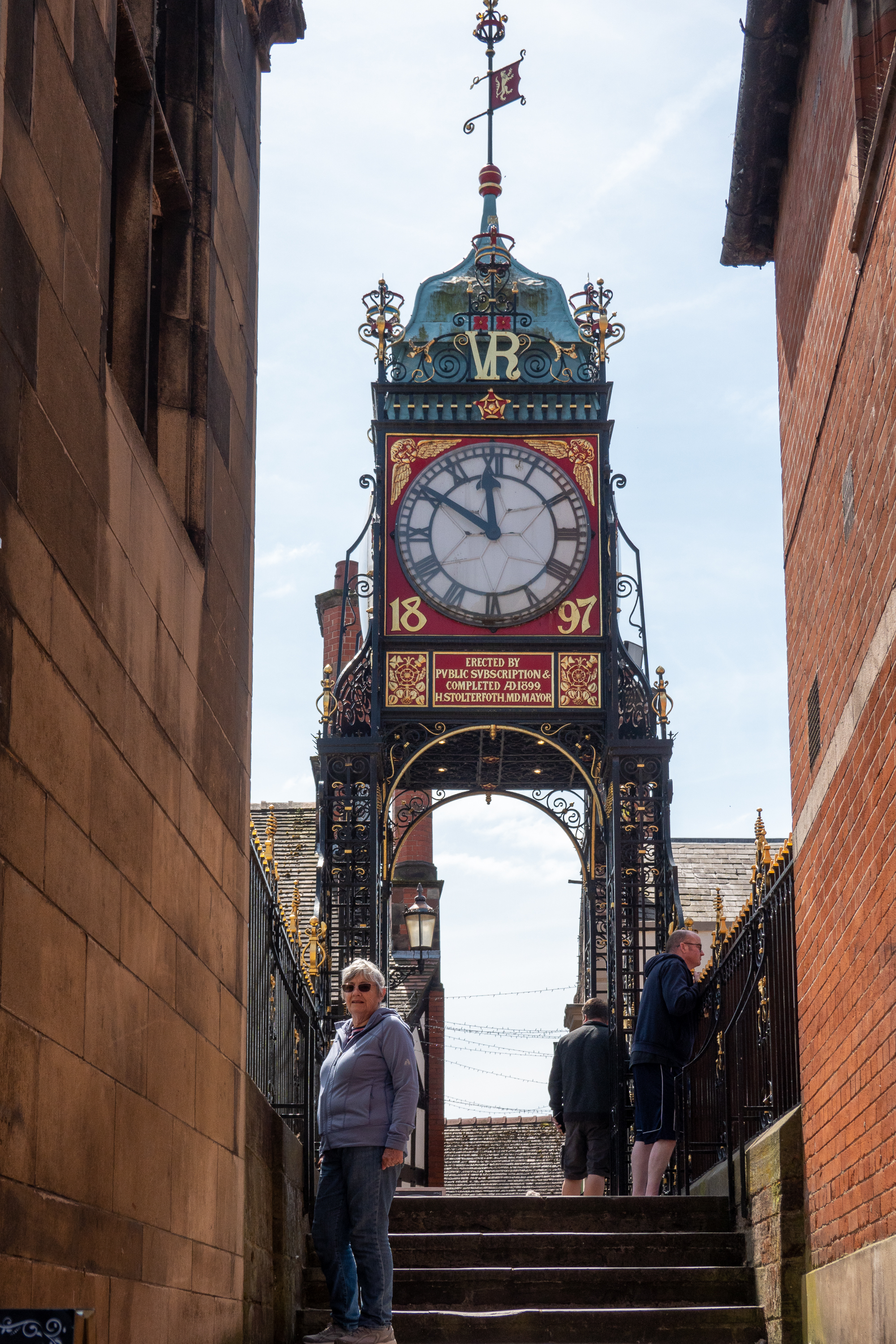
Like many British cities, Chester is an old Roman town. (“Chester” comes from “castra” or fort.)
The Easter gate. (Spot the coffee and ice cream bistro!)
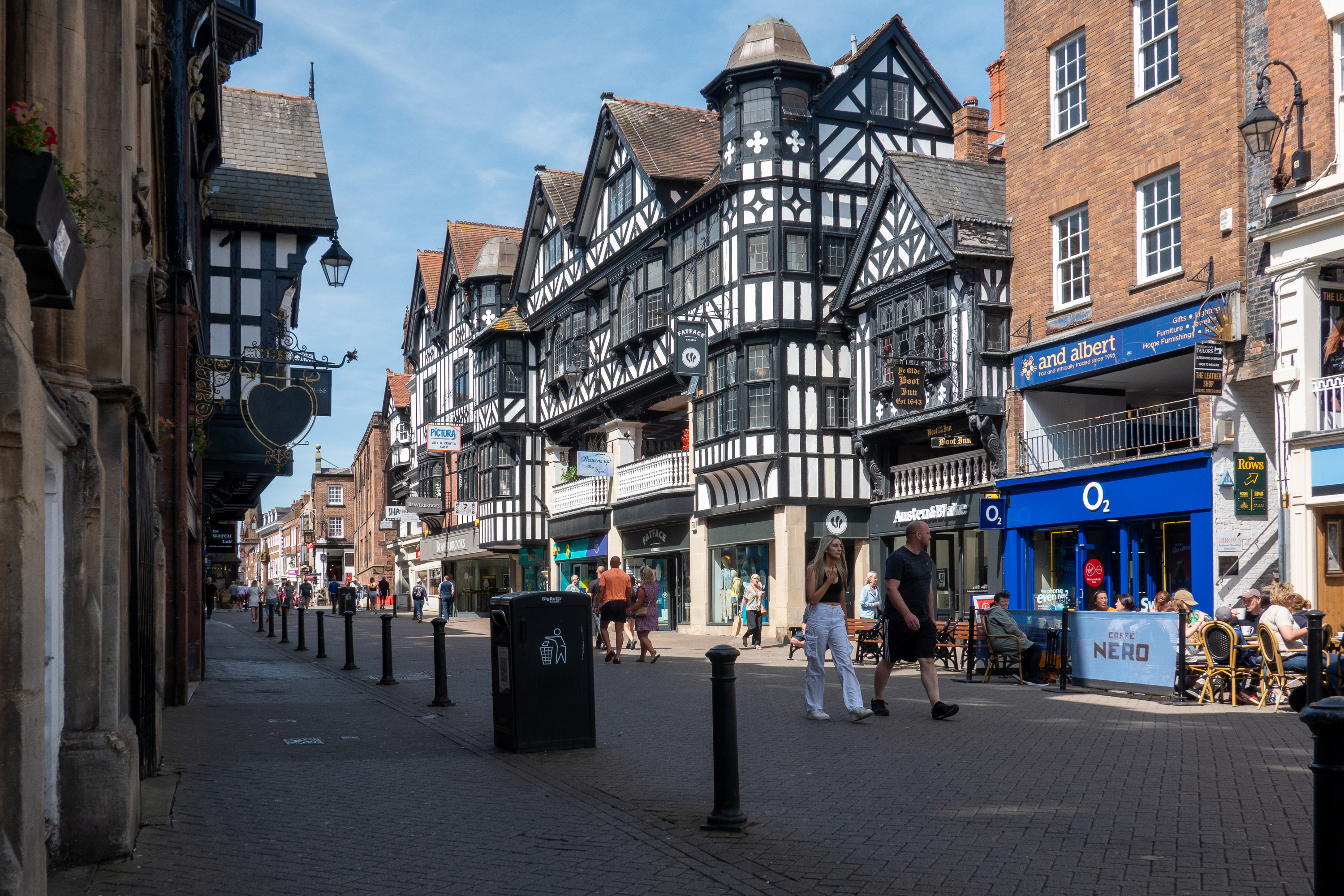
We admired the old houses and the “Rows.” The Rows appear to be unique to Chester, a second sidewalk, up one flight of stairs, giving access to another row of shops. Many of the rows connect building to building, allowing a parallel sidewalk, one flight up.
We then wandered the Castle wall walkway, which proved to be a excellent way to get from one part of town to another without worrying about street names or traffic. The Phoenix Tower is an interesting stop. (https://en.wikipedia.org/wiki/Phoenix_Tower,_Chester)
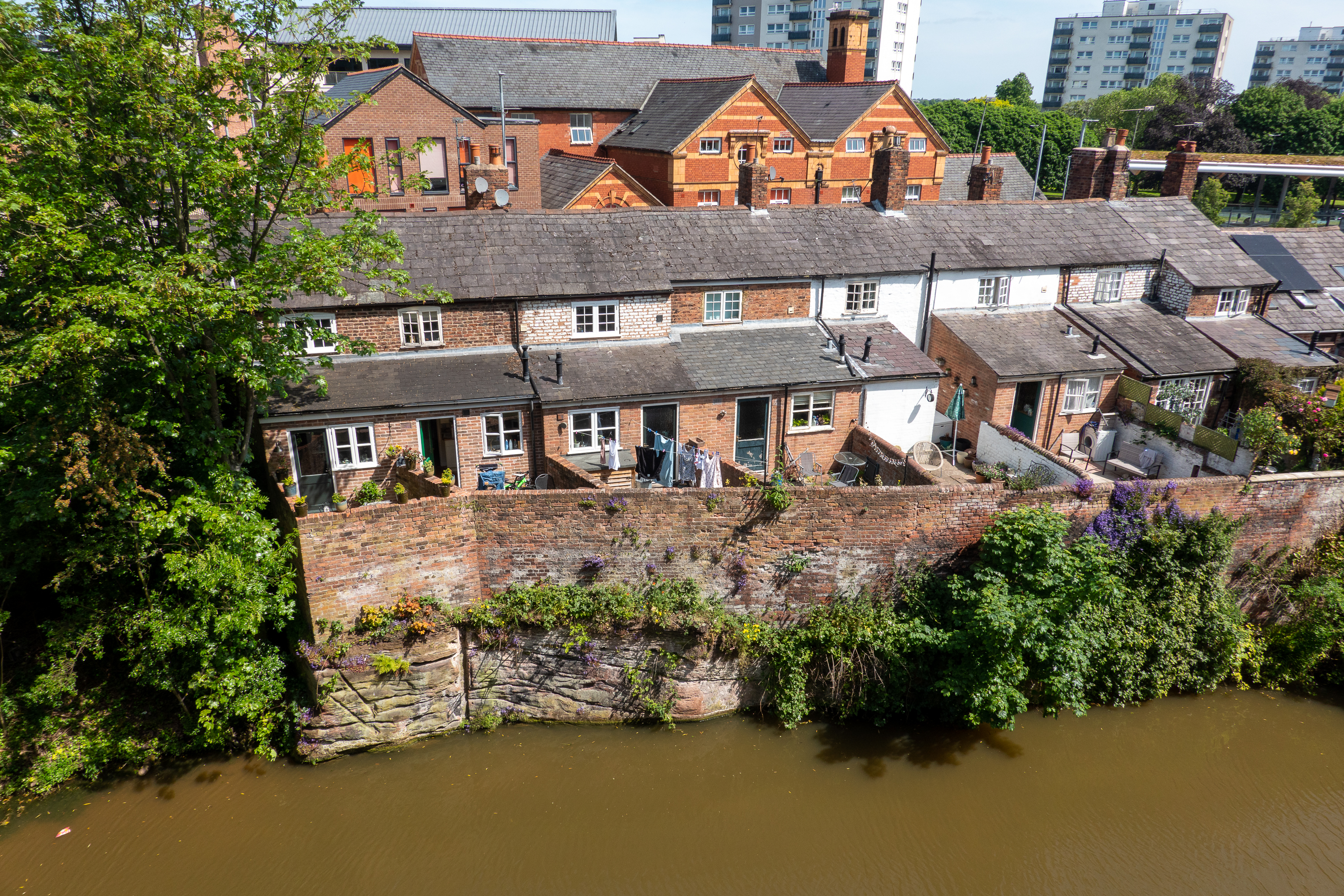
Modernized houses backing on to the river.
The phoenix, emblem of the painters guild.
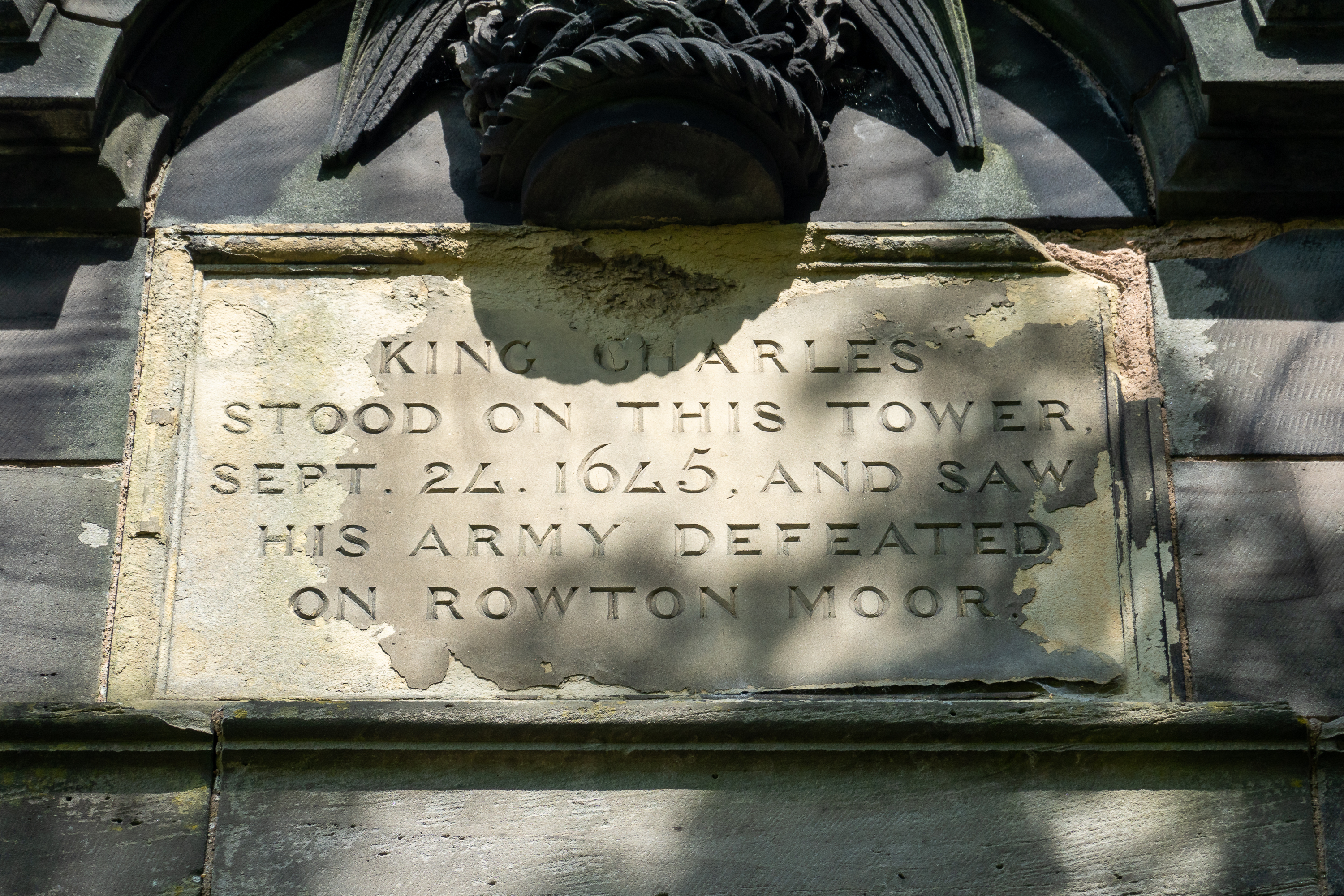
Unless, of course, he stood on the tower of the cathedral. (Wherever he stood, his army still fell.)
We stopped for a coffee and an ice-cream at a wonderful small cafe on the Castle wall. (https://www.instagram.com/huxleys_chester/) If you don’t know it is there, you will never find it at street level.
This way to coffee and ice cream!
Elizabethan to Victorian in one street.
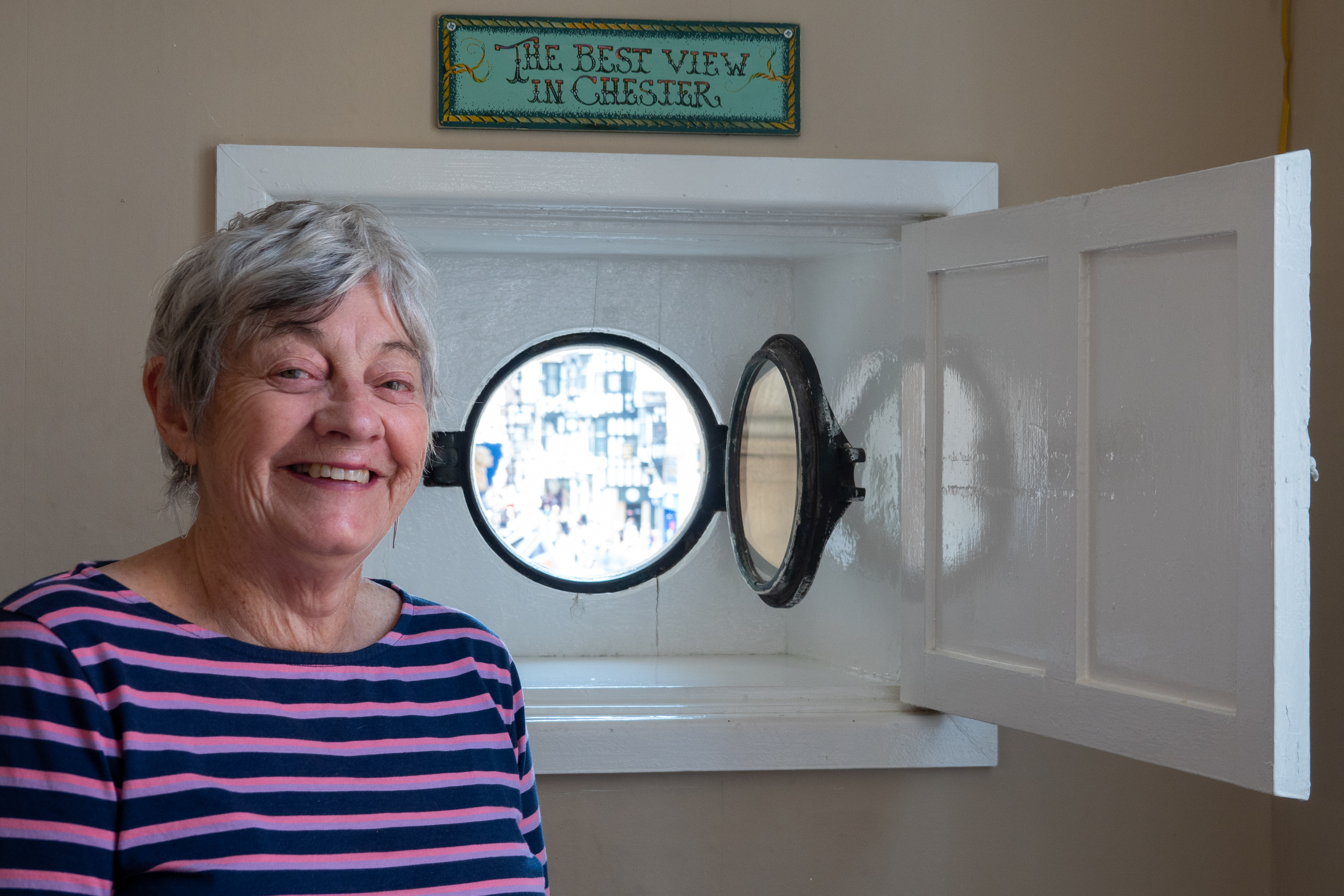
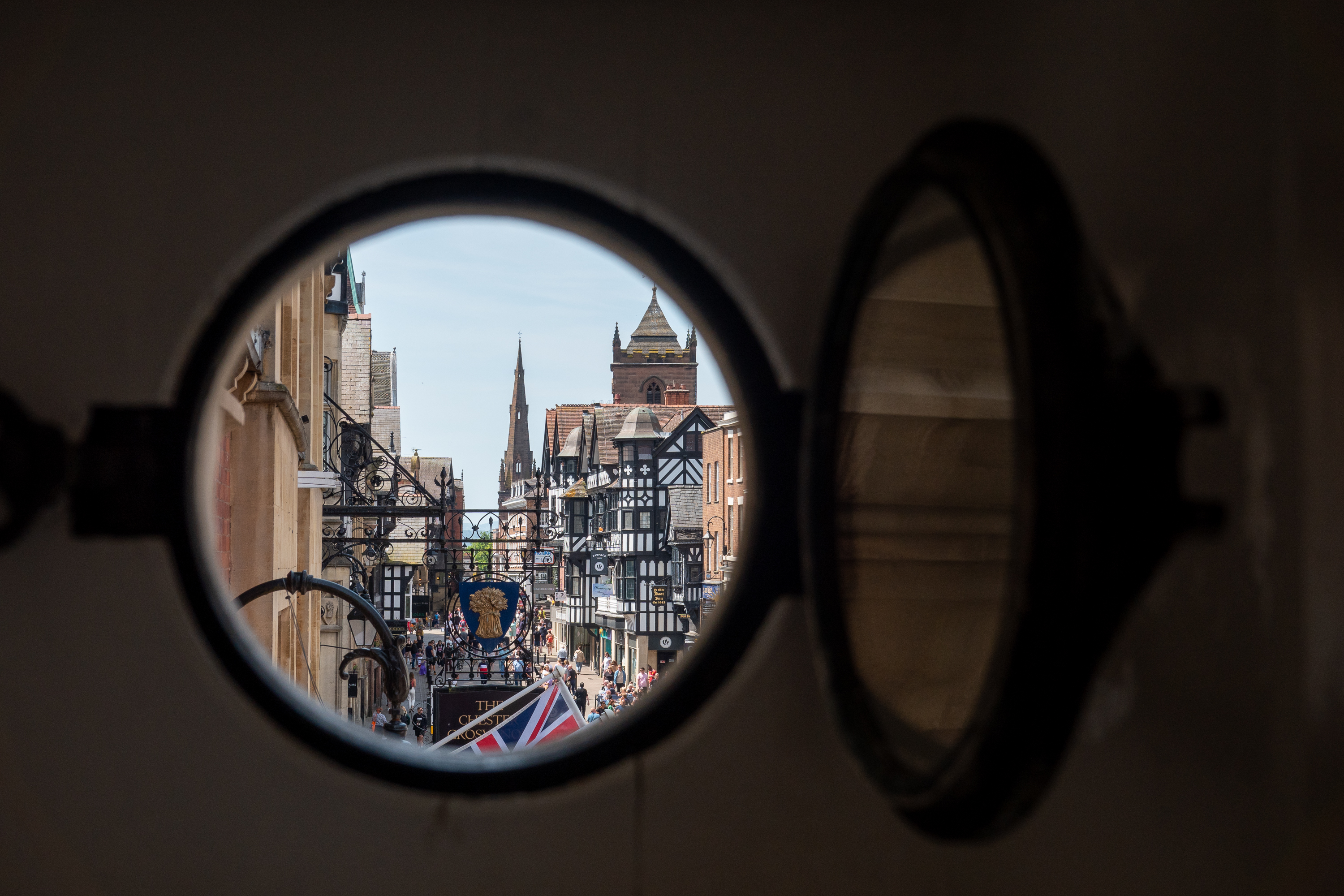
Inside the cafe was a porthole, installed by a former navy captain who had lived in the cottage in the nineteenth century. Quite an eccentric, obviously. Fascinating to think how many people have lived in these old buildings over the years, no, over the centuries.
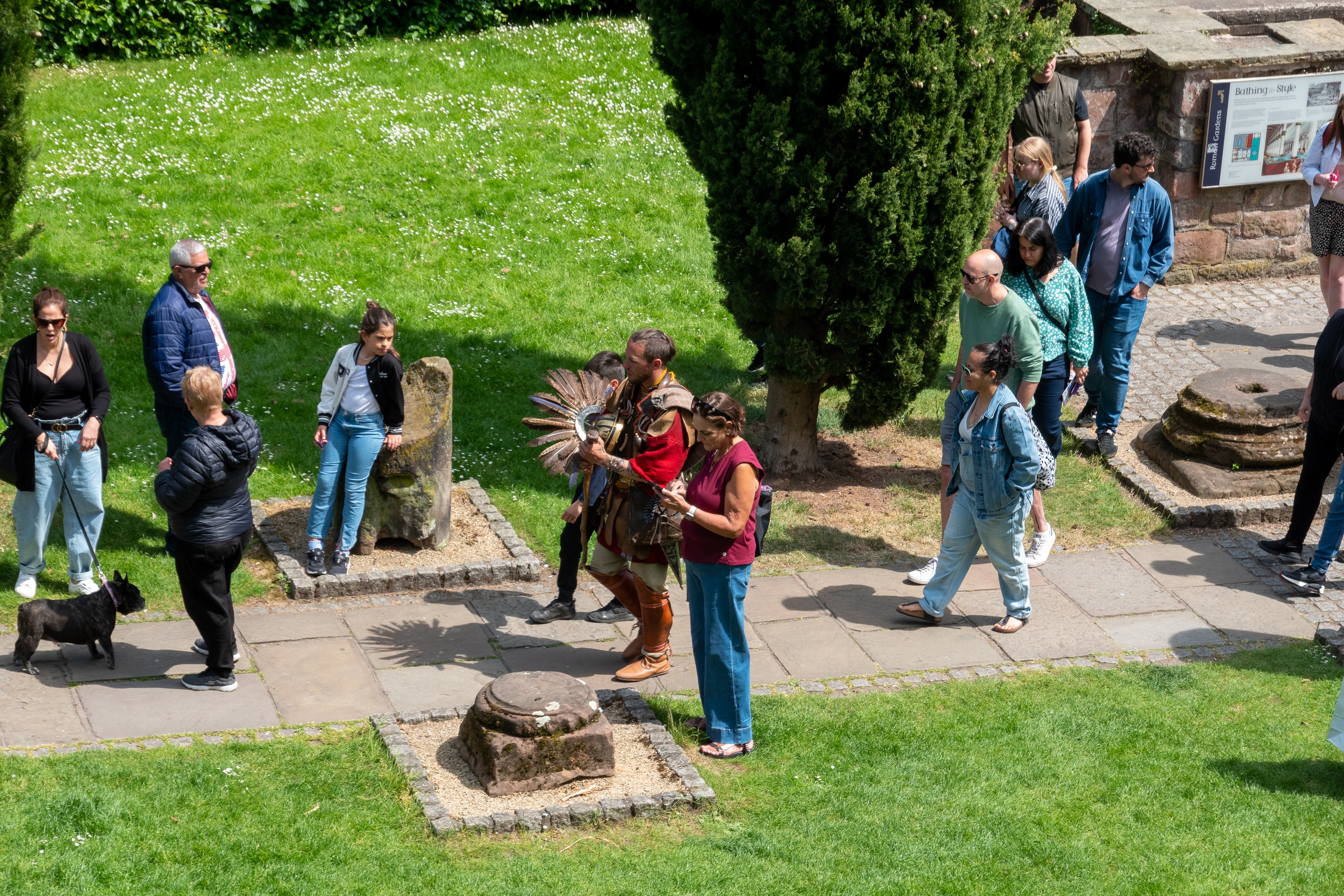
From the wall we could watch the Roman walking tour, conducted by a guide in costume. Ave legionnaire!
Site of Roman amphitheater.
We also took an afternoon boat ride on the River Dee, which was not as relaxing as we had hoped as there were several unhappy toddlers and an unhappy dog nearby! Such is life. But it was a lovely afternoon and the houses along the river were spectacular. Would that we could afford one.
The trip turns around at a replica of the famous “Iron Bridge.”
At that point, we hopped the train and joined the commuters going home.
After a visit to a distant cousin of Denise’s in the lovely Yorkshire town of Wetherby, we headed south to be ready to take the truck to Mansfield to PB Electrics for service on the Webasto Dual Top. It was misbehaving and we had found a Webasto repair station with a special “Dual Top” certification.
Our next stop was near Bakewell, famous for its tarts. We spent the weekend at a campground near the charming village of Youlegreave. The internet was full of horror stories about the road to the campsite, narrow, people parked on both sides, steep, tight curves, a disgrace, should not have a campsite there, and the list went on. We drove it and decided that, for once, the internet had understated the challenge. I really have to admire the people who work their way in (and out) with huge caravans (trailers) pulled by tiny cars!
We rode our bikes back into Youlegreave up the impossible road. Youlgreave is a tiny village, with two pubs and a church and it was heaving with tourists and hordes of cyclists. (Don’t get behind a line of cyclists ordering £60 worth of drinks!) We sat in the sun and enjoyed watching the people – and the bus navigating the narrow street
The Youlgreave church was simply a find, way below the tourist radar. Wonderful commentary and information here: https://greatenglishchurches.co.uk/html/youlgreave.html Amazing that people study these churches in such detail.
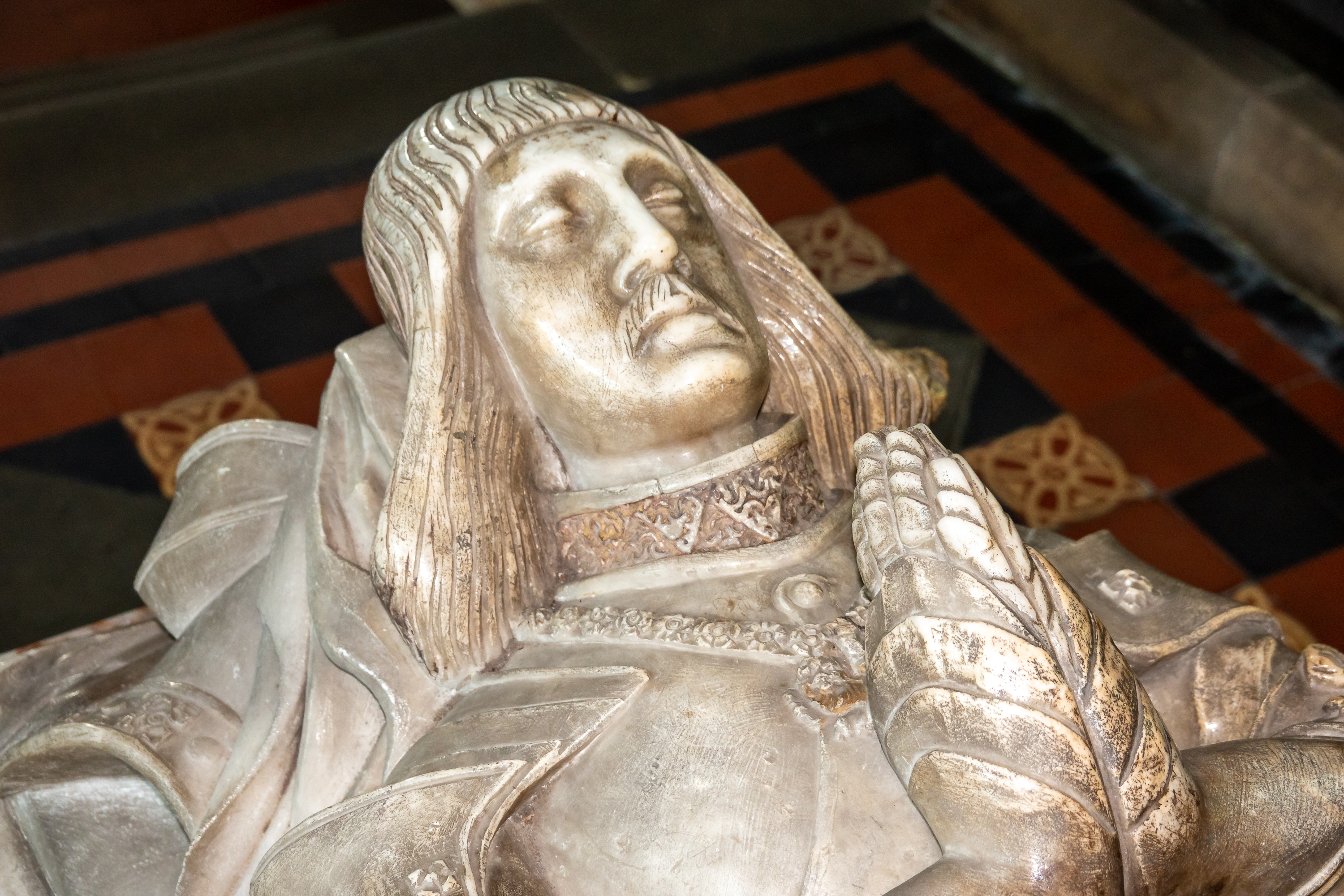
The effigy is Thomas Cockayne, killed in a silly argument. Seems this was found in a barn and placed in the church in the 1870’s.
His effigy is less than life-size as he predeceased his father. Like many of these statues, it is wonderfully detailed and, of course, highly symbolic.
We also found figures representing the Coronation still on display in the village square.
After finishing our drinks at the local pub we cycled back to the camper.
We then headed into Bakewell for some useful shopping. And some badness in the form of Bakewell tarts, both the original and the iced! After pretty much skipping lunch we continued to Rose Cottage, a lovely restaurant in our BritStops book. They did not think that they were members of BritStops but they let us stay anyway and we enjoyed a roast beet carvery dinner with Yorkshire Puddings. It was Mother’s Day US style after all!
We found a campsite gem just outside of Mansfield, the Lurcher Farm Cottage. Surrounded by fields, we found our way to the corner of a large field and settled in. The owner proved to be exceptionally flexible as we came and went over the course of the next week or so. Denise enjoyed the public footpaths that went by the campground, and we also had sunny days so managed some laundry. The heating/hot water repair went smoothly and while waiting for a couple of items to be sorted out in the camper, we took ourselves to Lincoln for the weekend.
Fans of the movie “Battle of Britain” will recognize a spotting station.
The Shackleton was a post WWII maritime patrol bomber, intended to replace Liberators and Lancaster’s. Quite a beast, it boasted radar, magnetic detectors, and arc lights. Its’s piston engines were so powerful that the propeller needed would have touched the ground, hence the counter-rotating propellers. For bonus points, find the two jet engines that hare hidden in there as well!
Beginning of the jet age.
Bit more up to date.
We thoroughly enjoyed Lincoln. Our campsite, surrounded by fields of horses, was close to a bike route, so we cycled into Lincoln on two consecutive days.
The horse was unimpressed.
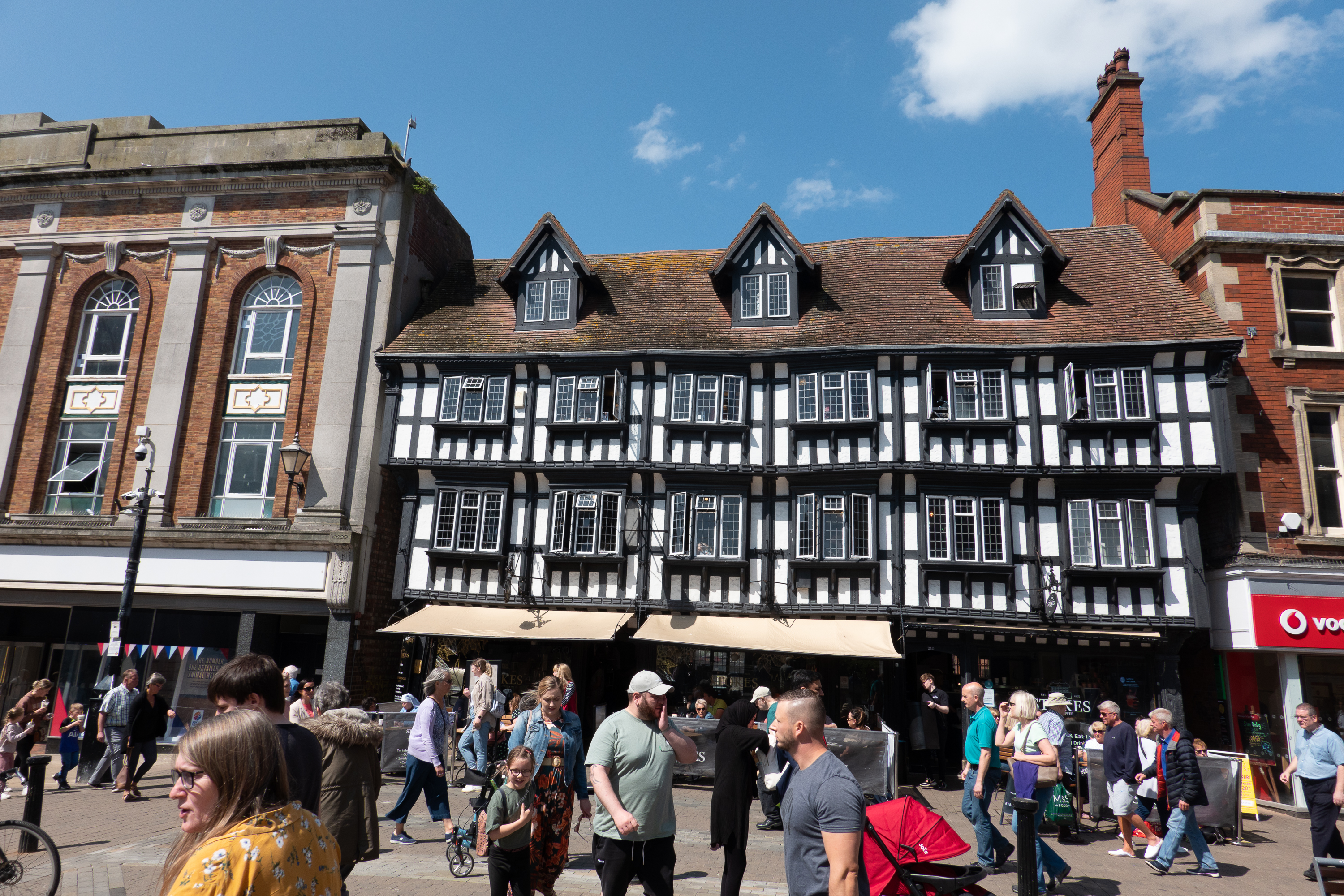
Tourist postcard of an English scene.
Once for research and to find out how to lock up the bikes and once to actually see the town.
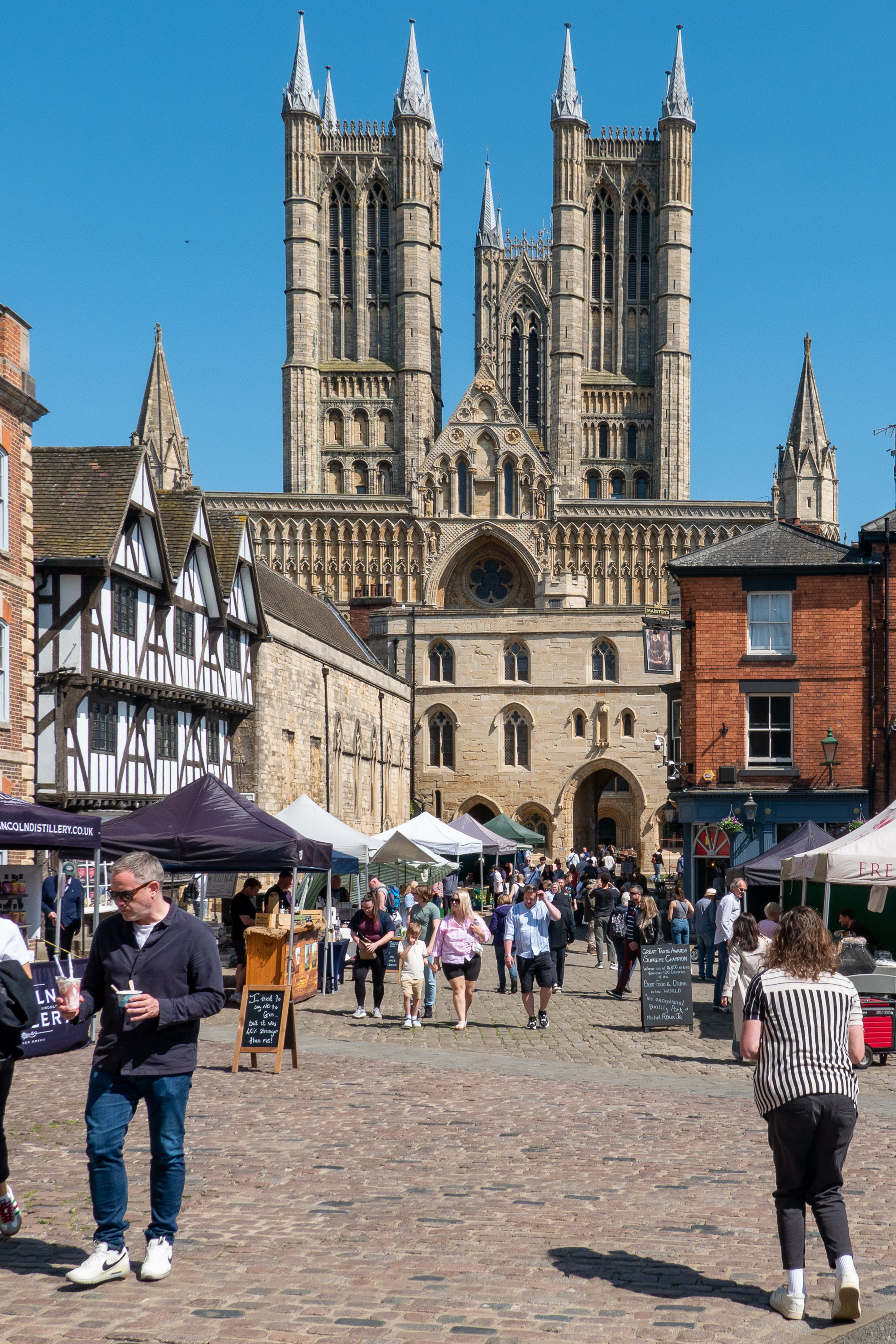
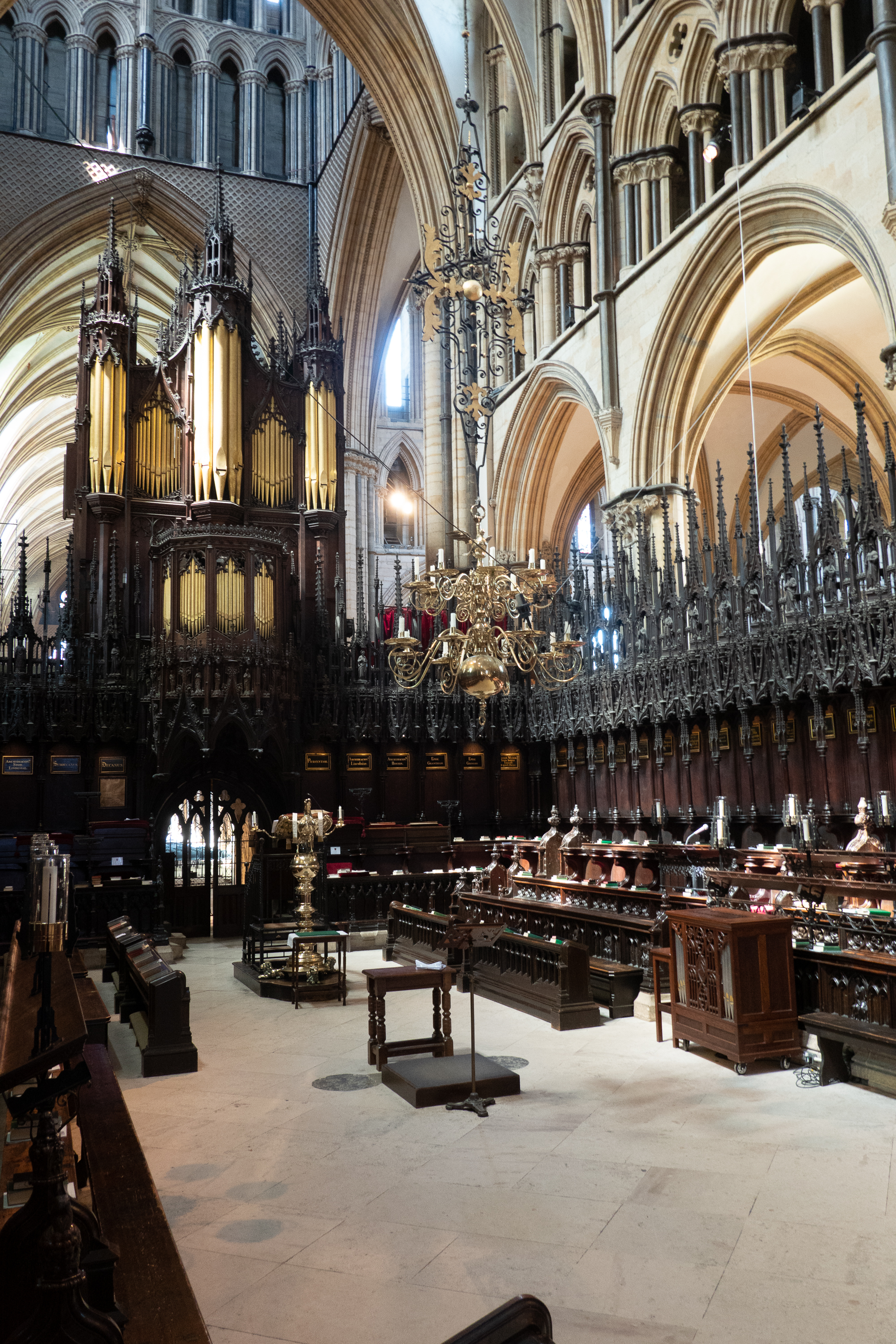
For hundreds of years, Lincoln Cathedral was the tallest building in the world. Even now, with its spires collapsed, it is staggering.Roman north gate. The house is actually built into the Roman wall.
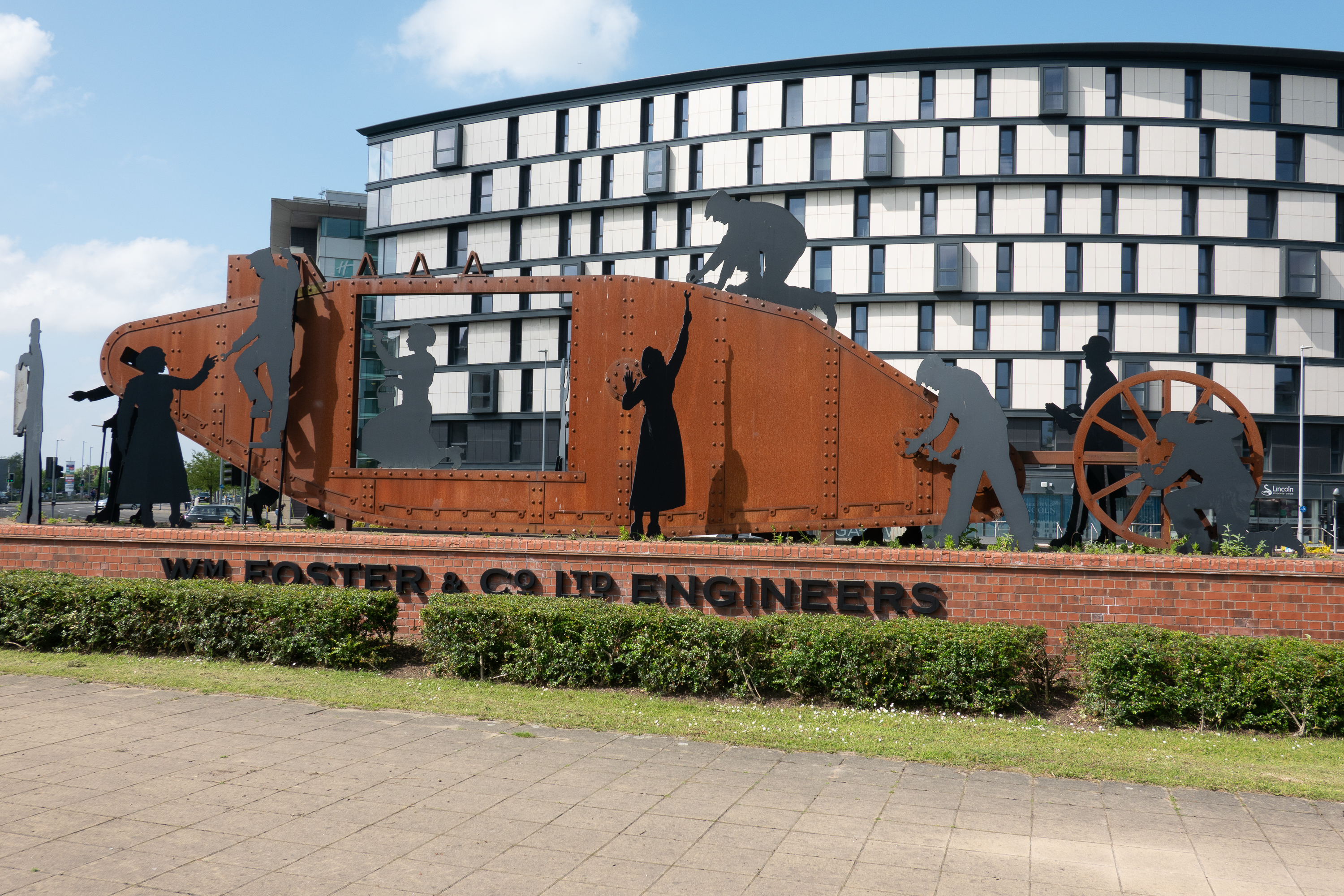
In modern times, it is famous as one of the homes of the tank.
Buildings on the bridge from the river side.
And from the road side.
We were amazed how steep the cobbled streets were in the old part of the town. In fact one of the streets is called Steep Street!
Feels even steeper than it is. And it is steep enough!The Jews House. Like all too many places, Lincoln has its own history of anti Semitic violence. (https://en.wikipedia.org/wiki/Jew%27s_House)
But we made it to the top and thoroughly enjoyed our visit to the Cathedral and a brief visit to the Castle. Our pizza lunch was excellent also!
The Pilgrim’s view.Fans of Steeleye Span will have heard many songs about “Little Sir Hugh” who comes to a sticky end.
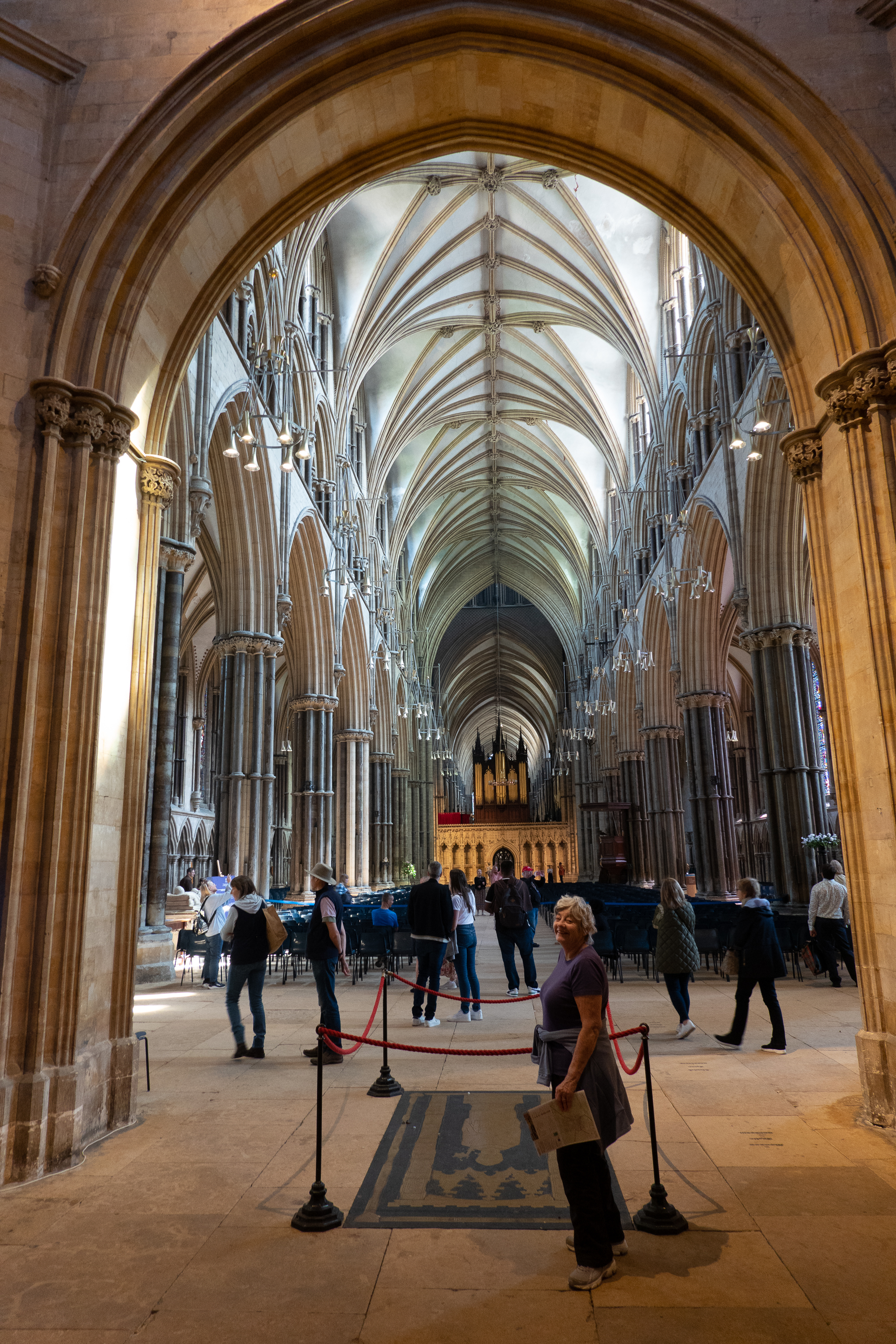
Massive nave.Catholic overtones, the stations of the cross.
Unusual “church within a church.”
Light from the stained glass windows.
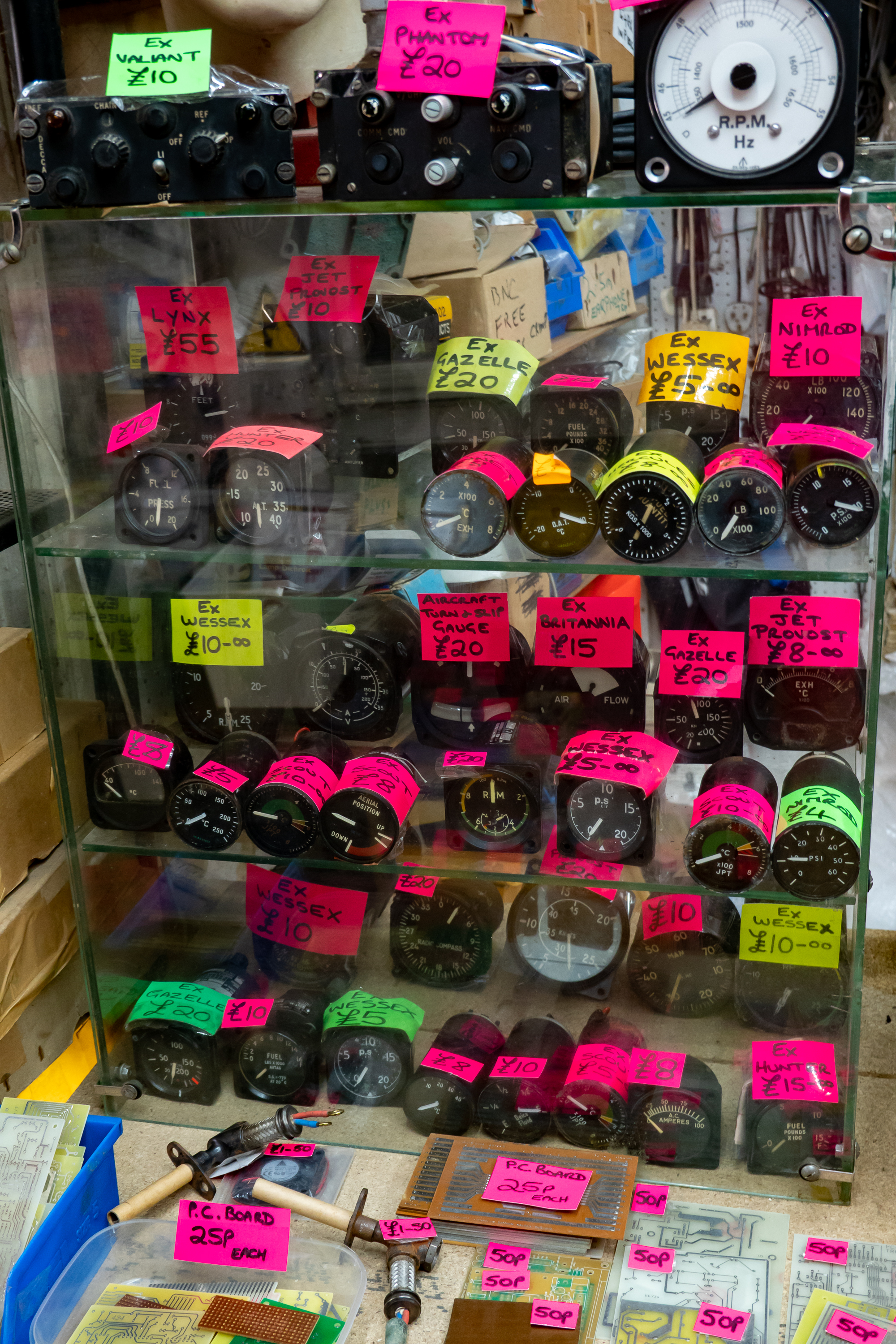
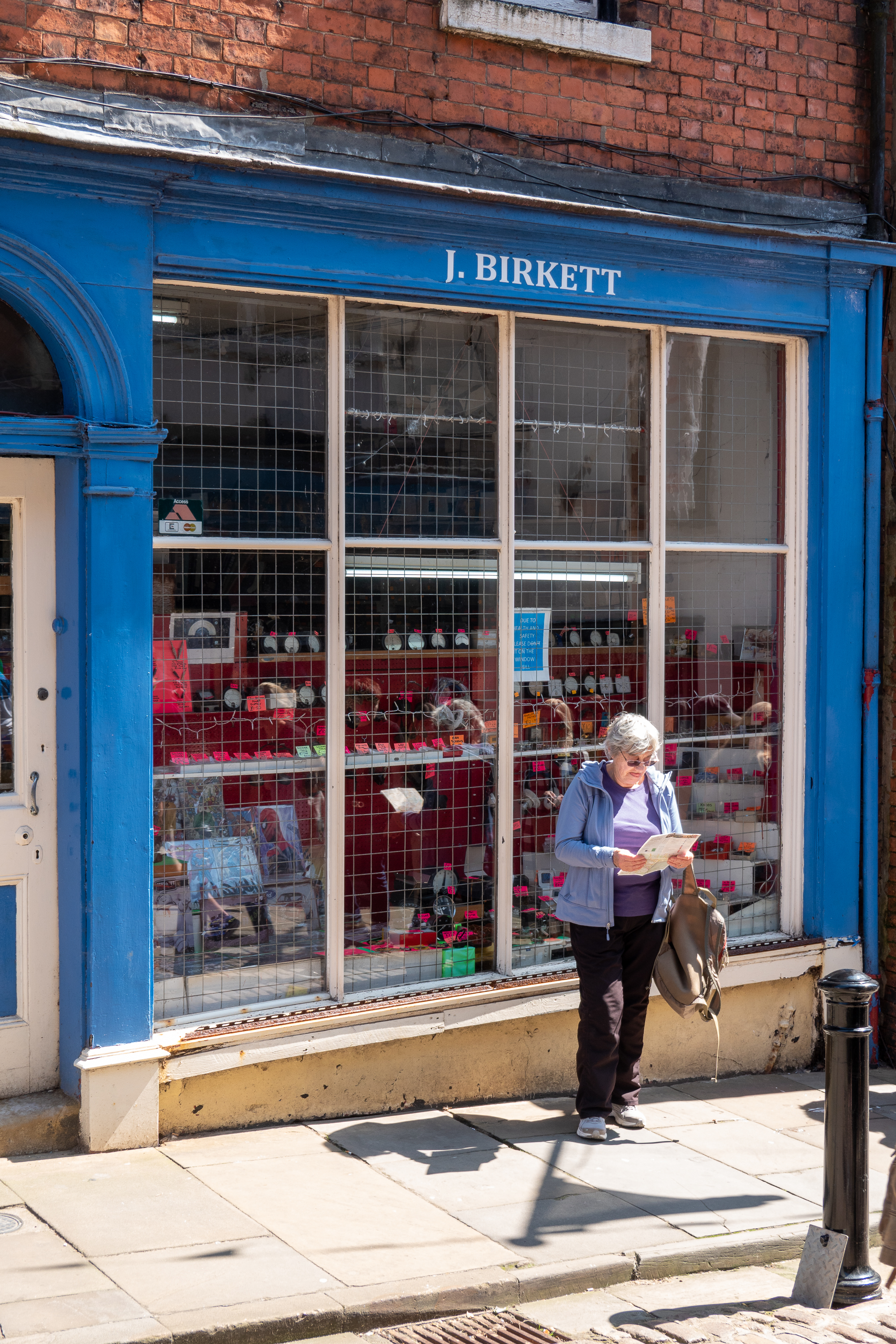
Lincoln had one shop that is unique in our experience. A shop dedicated to selling instruments and other odd items, mostly from airplanes.
Each one labeled as to purpose and source airplane.
Denise checking on the exact model of altimeter needed.
A last view of Lincoln Cathedral from our campsite.
Back in Mansfield, we dropped off the camper and headed to Nottingham by train for a day or two.
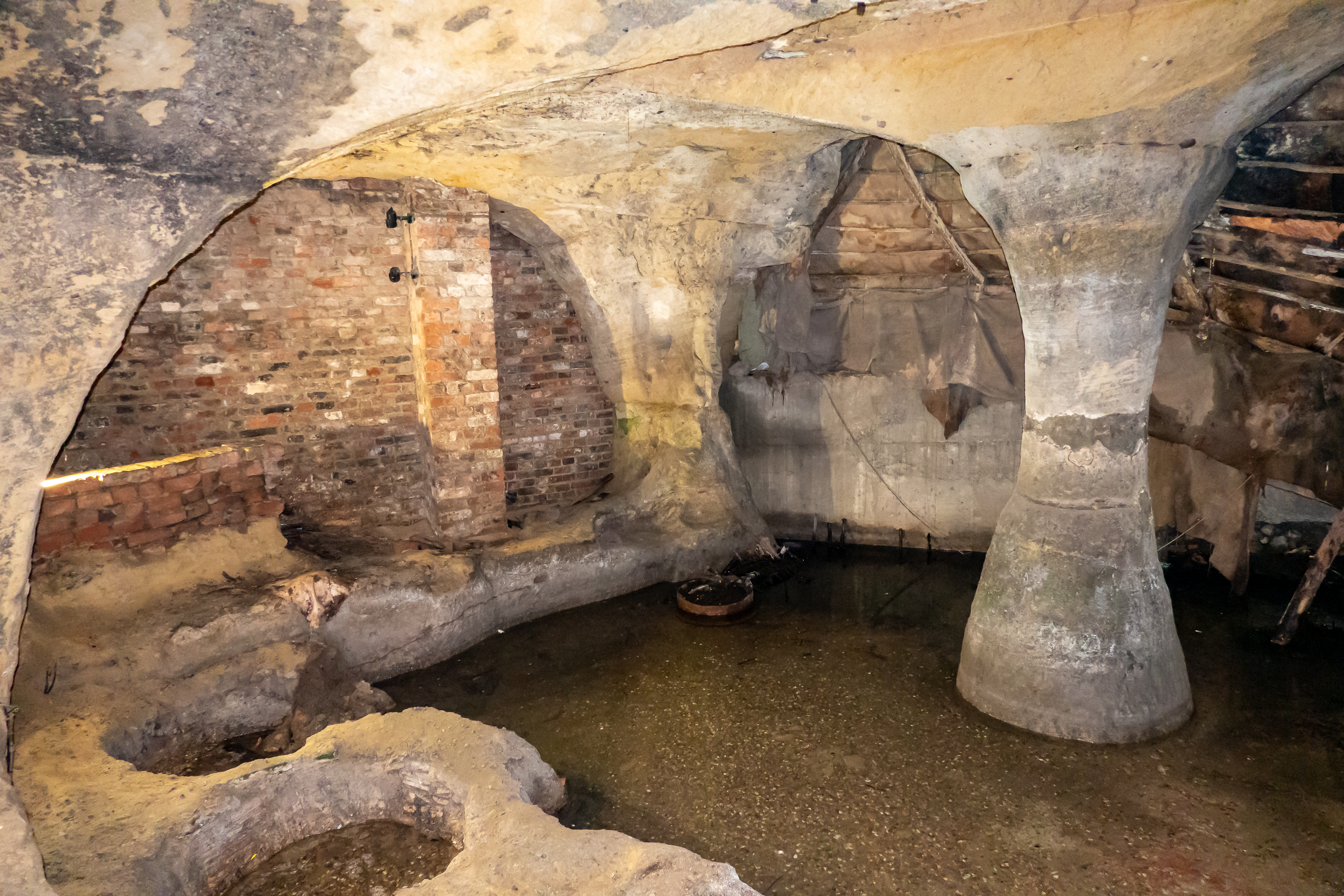
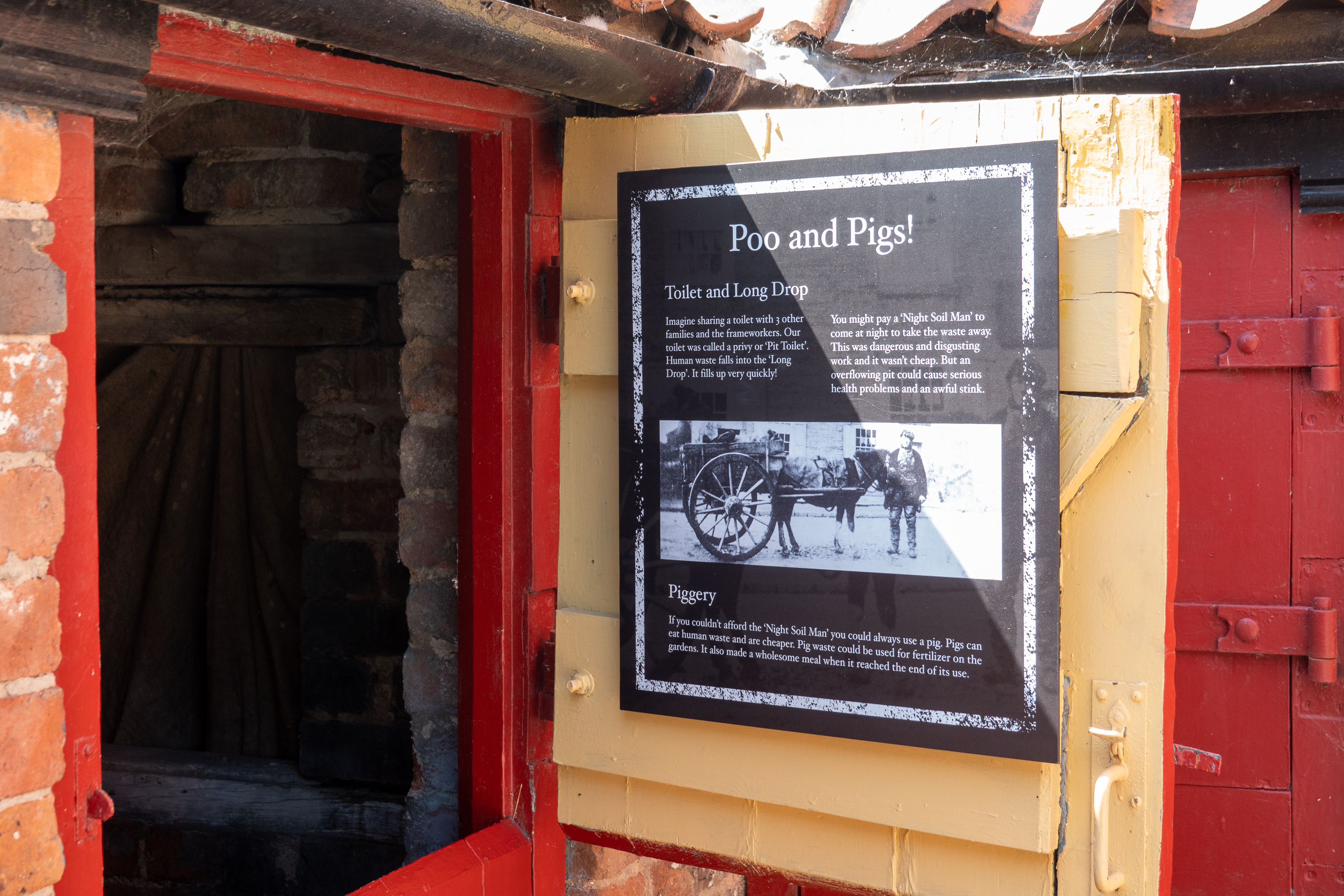
Other than the usual Robin Hood associations, we knew nothing of Nottingham. One of he first things we learned is that Nottingham has a huge network of caves, dating back to the Middle Ages, at least. Over the years they were used as storerooms, Luddite meeting places (complete with alarms – pebbles dropped down a vent), tanneries, and, during WWII, bomb shelters. Many caves have been damaged or lost with the construction of building foundations and railway tunnels. We visited the City of Caves. (https://www.nationaljusticemuseum.org.uk/cityofcaves)
Foundations
Medieval tannery
Denise admires modern pipes, with a Victorian stove in the background.
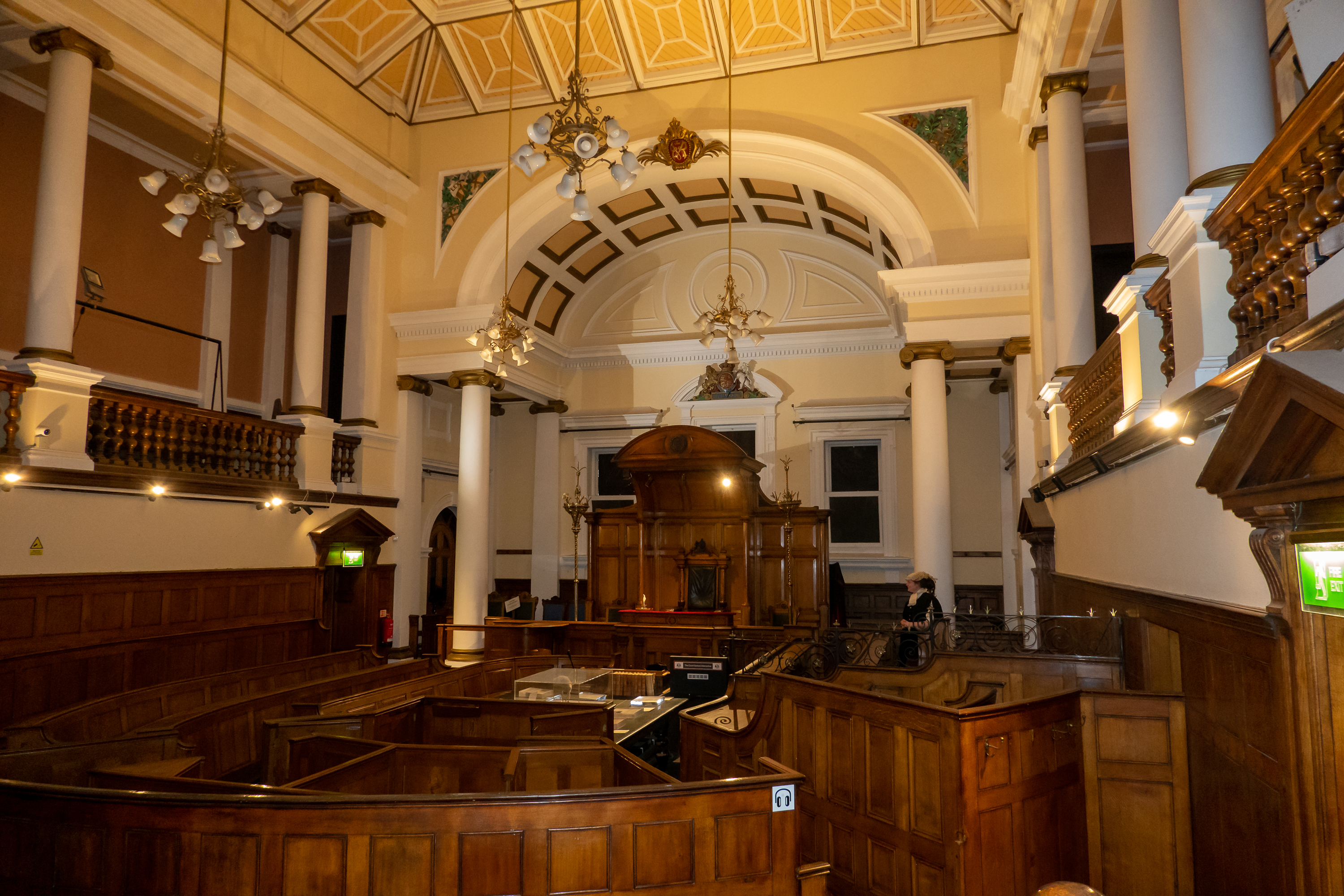
Caves explored, it was time for some horrible history – so we visited the sister Museum of Justice. Let’s just say that juristic procedure has improved since past times!
The actual court room wasn’t that different. But there were some interesting details. The defendant did not have representation, you were on your own – a bit of a challenge for the mostly illiterate young men (and a few women) on trial. The odds were stacked against you with everything from upper class judges to the fact that the defendant entered the court by a special stair that led directly from the dark cells below. So you would enter the court blinking in the glare.
Before Victorian times, imprisonment was not a common punishment. You were only held long enough for trial and execution or transportation. Still, the cells were bad enough and you had to wait for a magistrate to be available.
The literal meaning of being “in the pits.”
While you awaited your fate, you did get to go to the exercise yard where you could spend time carving your details into the wall.
Were told that at least one family came back from Australia and found their ancestor’s carvings on the wall.
Is this a confession, a boast, or merely a statement of fact?
The re-enactor is not only a great comedian, but a serious scholar as well.
Soon enough, it might be your turn to “dance on air.” In the yard, if you were ordinary, or out on the front steps (see image above) if you were special. Executions were nowhere near as common as you might think, and thus the drew a crowd. And, it is recorded, pickpockets. One crowd was so large and unruly that some twenty people were killed. (!!)
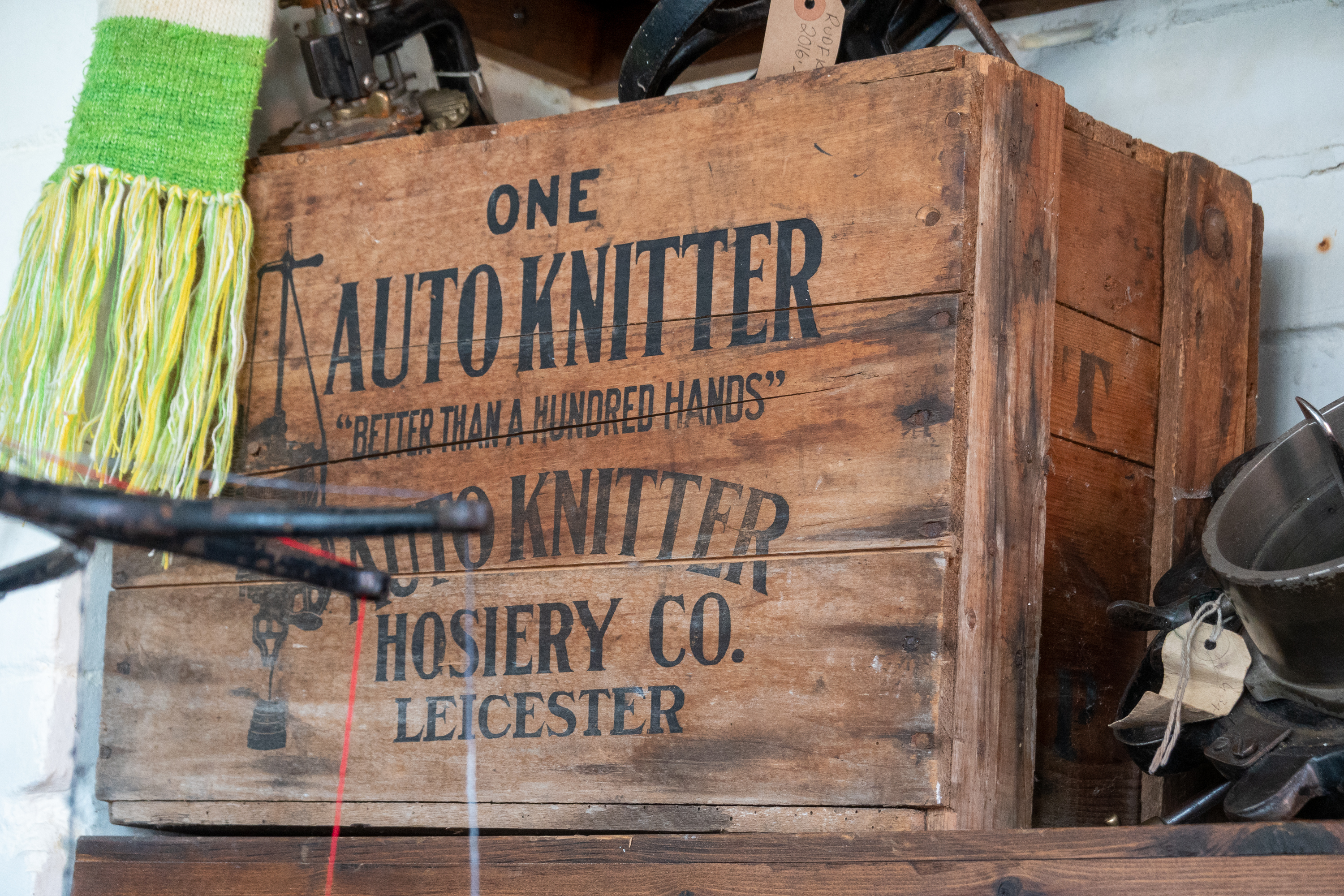
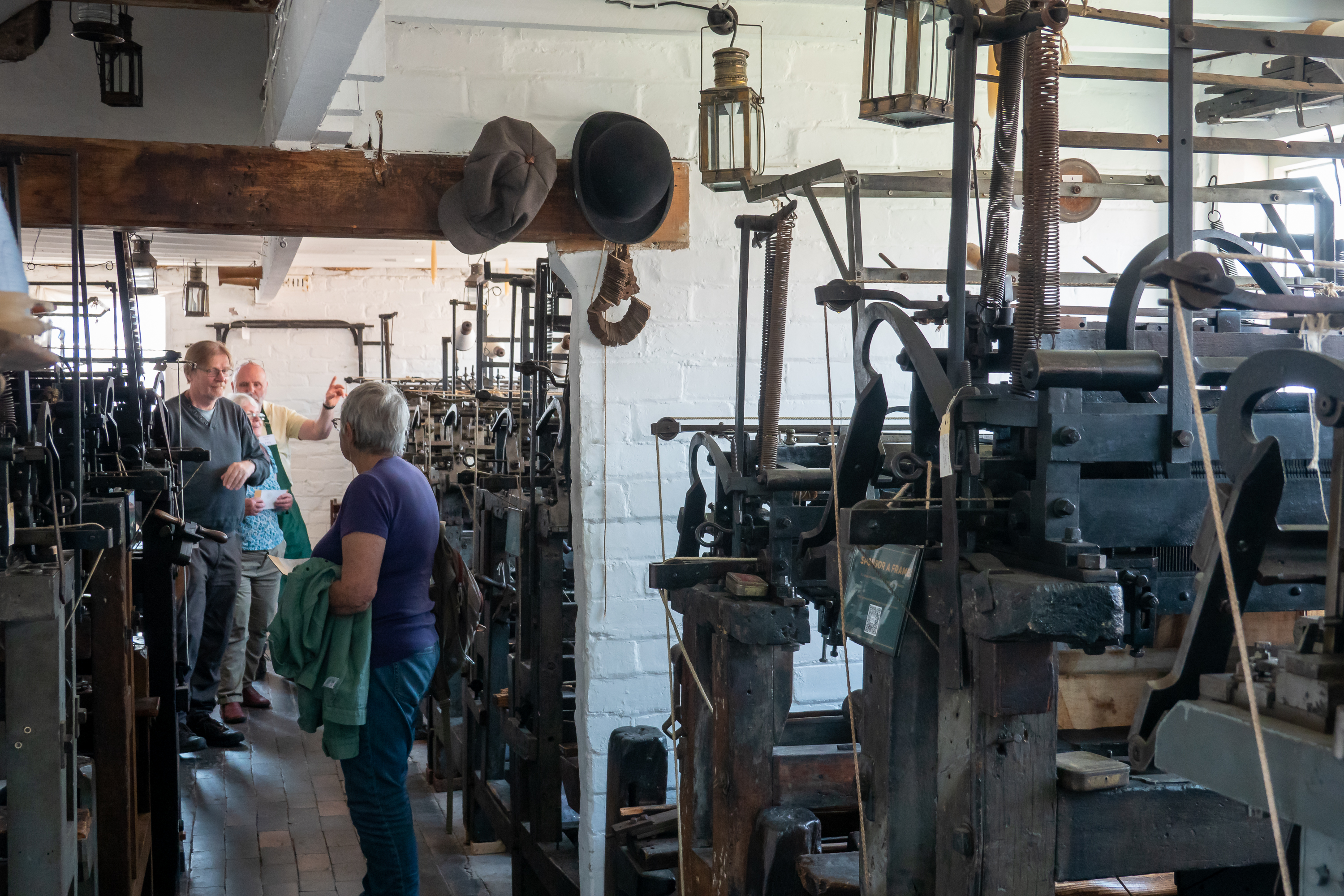
We also took the bus to Roddington to the Framework Knitters Museum. Knitting in wool and then cotton on these framework machines, developed in 1587, was a cottage industry and the whole history was quite amazing. We toured a couple of cottages and watched a demonstration on one of the machines.
Imagine the racket of twenty of the machines jammed into a tiny space. Hearing loss was common among the men (no women) who were knitters. Individual knitters rented their machines and were paid piecework.
Where socks come from. The precision of the hundreds of tiny needles is amazing.
Organic plumbing. One for a hundred or so men.
Some twenty machines in a tiny space.
Not a decoration, but rather a means of increasing the amount of light in the work space.
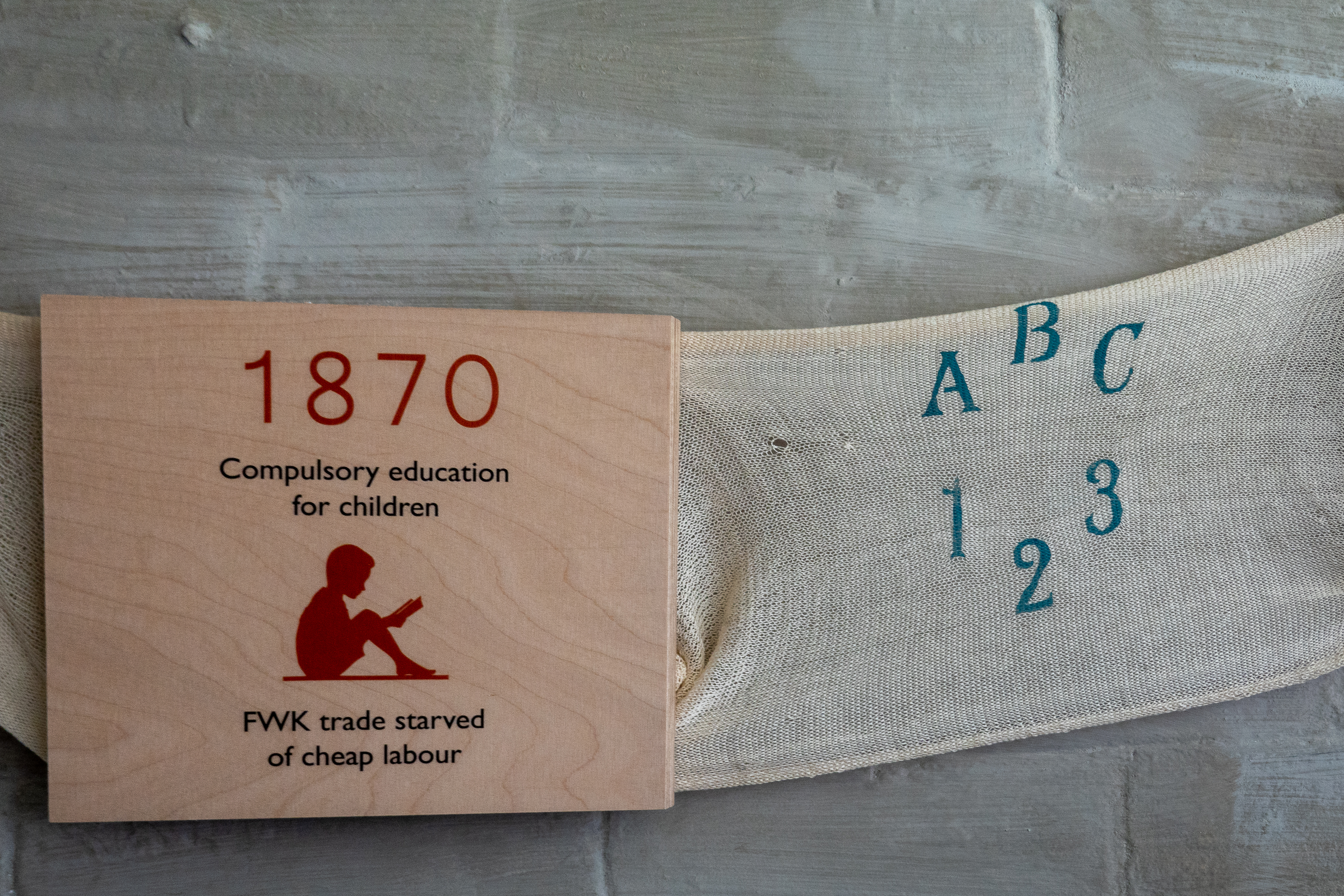
See what happens? Let the kids go to school and socks get expensive. Good to see that some of the Republican legislatures in the United States are trying to bring us back to Victorian times. Not!
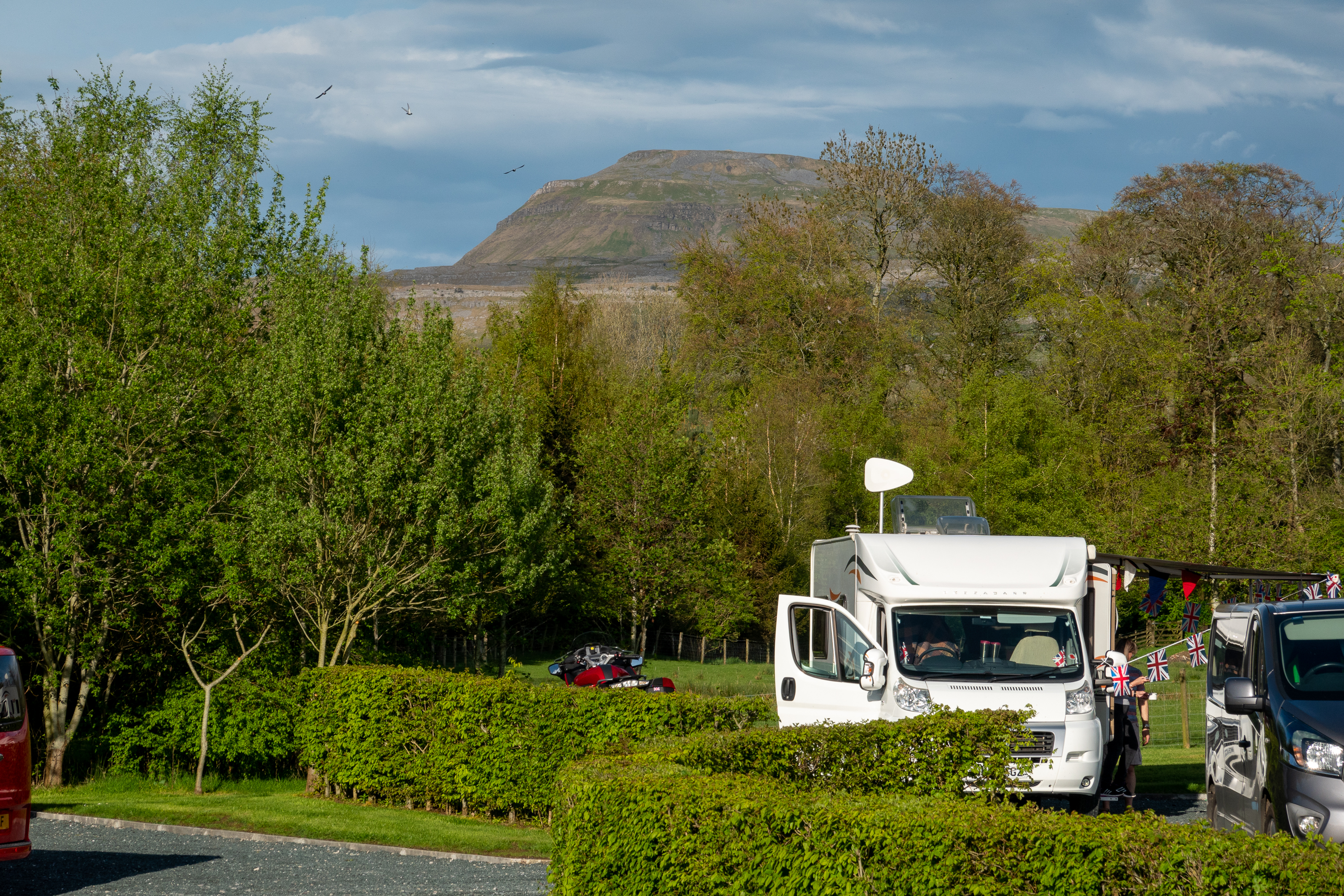
We spent the Coronation in what is perhaps the most beautiful campground we have ever visited – looked like a country club! (https://www.thornbrookbarn.co.uk) Everything you could ever want, save a laundromat! But that is coming.
We had a nice walk into the village of Ingleton, admiring the country road signs, new and old and visiting the local pub. Sadly, they were not doing anything for the Coronation.
Probably the most beautiful campground we have ever visited.
Where do you want to go?
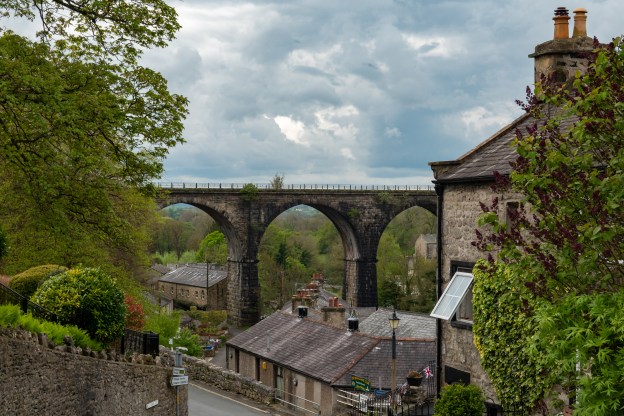
As many towns are very old, they are either deep in the valley for protection from the weather or high on the hill for defense. This meant that the Victorians had to build hundreds of amazing viaducts to get the train lines through. It also means that you have to do a lot of climbing to visit!
Skipton war memorial
Manicured campground.
Not exactly a model clergyman!
Since nothing was happening at the pub, Fred walked to an amazing, eclectic farm/country store for a bottle of bubbly and we sat down to enjoy the pageant.(https://www.country-harvest.co.uk) And we went back for more goodies before leaving. They have a pork pie, topped with turkey and stuffing, that is amazing!
OK, historians gotta comment. It is amazing how almost every element of the ceremony had, at least at one time, a very serious, life or death meaning. Some examples:
— Charles is always referred to at the “unquestioned” monarch.
— The Stone of Destiny was brought back from Scotland so that he could sit on it.
— His son, William, the Prince of Wales, pledged personal fealty. The rest of the nobles did it by acclamation, but in the old days they would have done it each and every one, personally.
Today, it can all seem anachronistic, or merely a show for the tourists, but over the years, bloody wars were fought over these very details.
We moved on to a town named “Settle” which turned out to be a lovely market town with an excellent Booths supermarket. We camped in a field belonging to farmer Jack, who was busy lambing and calving but happy to welcome campers! The weather continued to be pretty miserable with lots of rainstorms and lots of cloudy days. It took ages to dry our towels each day. Fortunately, the Webasto continues to work at least in the morning for an hour or so, so the camper warms up and we can shower.
We visited Atkinson Vos as planned and they reviewed the truck. (https://www.unimogs.co.uk) They were able to fix the radiator hose that was in bad shape on the spot, but we await the full pricing and projected work from them and a future date for completion.
The mother temple of all things Unimog in UK.
One of the trucks under construction belongs to one of Fred’s “imaginary” friends on the Internet. Expedition campers are a small world.
Sometimes you just have to trim the corner of the pub a bit! (Public House in Bentham)
Dinner that night was at the Golden Lion in Settle.
We went to the new place in town, the Golden Lion – just opened – in 1671!
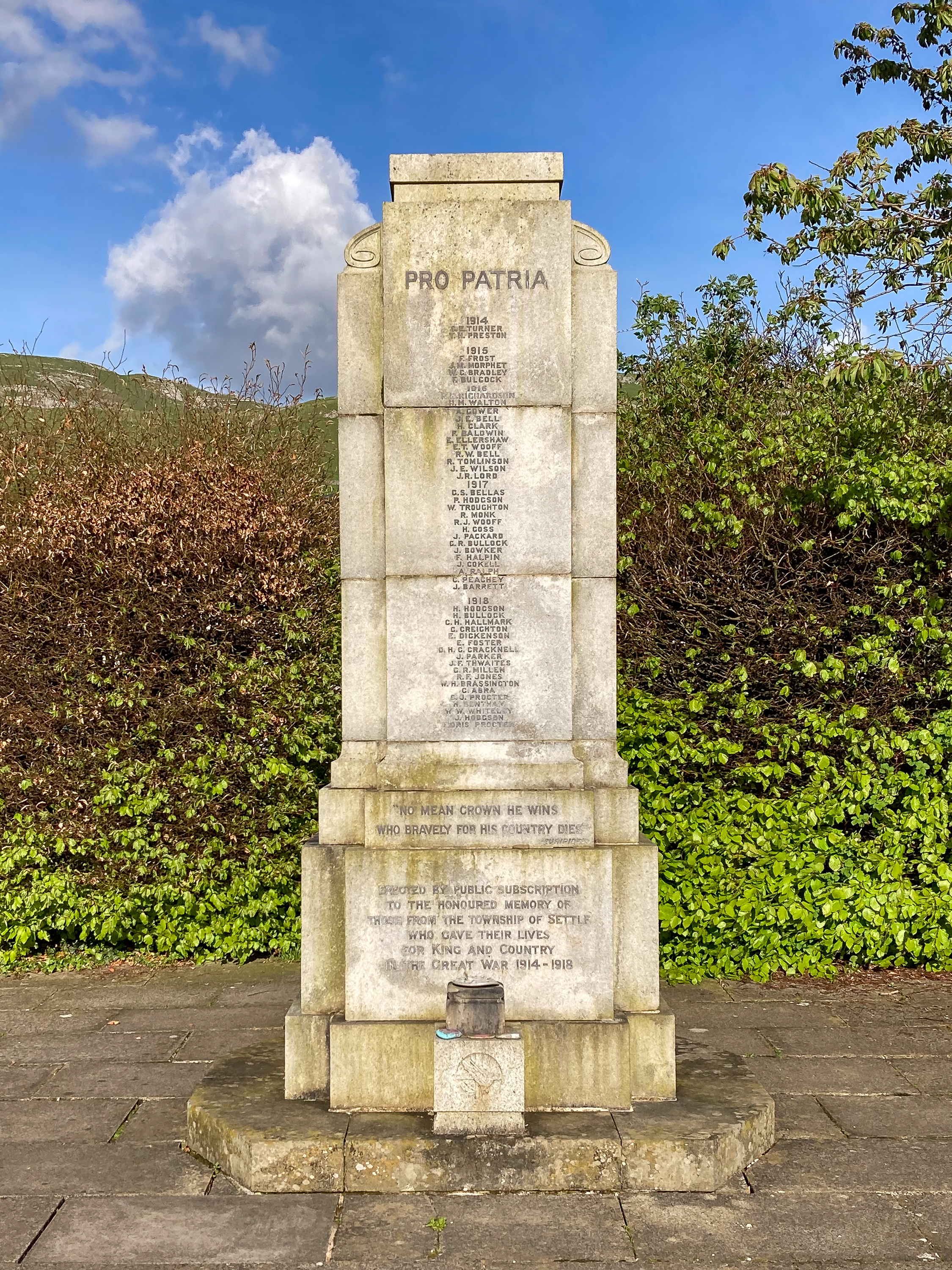
Settle has an interesting war memorial. Pretty standard, until you look at the World War II side and find the names of to US aviators lost in the area. A reminder that the weather was just as bad back then as it is today. (http://settlelibrary.org.uk/talks-two-us-airmen/)
Our next stop was Skipton as we were desperate to find a laundromat. (Language lesson: they are called launderettes.) After an online search, it turned out to be a machine out in the open in the parking lot, attached to a Morrissons supermarket, but it worked and given the inclement weather it made laundry easier than draping half dry clothes around the camper! Clean clothes in hand, we retired to the Town End Farm Shop for tea and, as they are part of BritStops, the night. (https://townendfarmshop.co.uk/town-end-tea-room/)
Campsite. Even had water.
The supervisor of all things sheep.
Vaccination time for the sheep. (No comment on the behavior of some humans.)
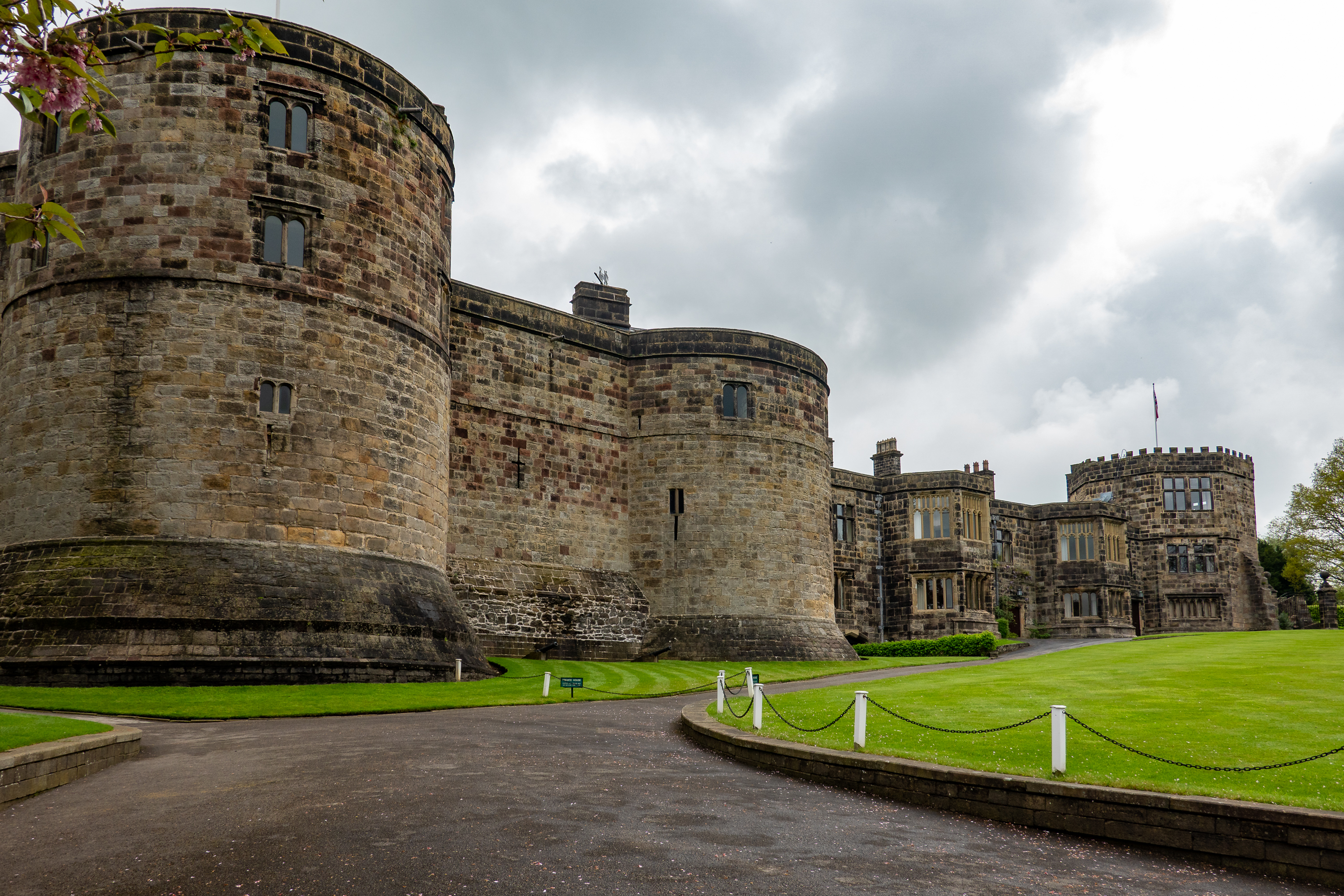
Returning to Skipton we visited the Castle, an amended Norman motte and bailey. Rebuilt in the 1300’s with four meter thick walls and a sloping skirt or sloped wall, the source of the word outskirts, it was a serious military position, largely aimed at preventing raids by the Scots.
The gatehouse.
Skipton was never taken by the Scots, but it fell to Cromwell in 1645, after a three year (!!) siege during the Civil War. It had ample water, but the parliamentary artillery could fire down from a higher position and, most important of all, there was no relief coming from Royalist forces. The keep walls were too thick to be slighted, so the roof was removed. (https://en.wikipedia.org/wiki/Skipton_Castle)
Now we come to the most interesting part of the story. In 1590, Anne Clifford was born in Skipton Castle. Her life story is simply amazing and she actually did some of the things so beloved by modern writers of anachronistic historical romances. (https://en.wikipedia.org/wiki/Lady_Anne_Clifford) Most importantly, for us, at least, she restored her family home after the siege and thus assured that there would be a Skipton Castle for us to visit.
The inner courtyard has a tree planted in 1659 by Lady Anne Clifford which is still healthy and thriving.
“Hereafter” or “From Now On” Motto of the Clifford family.No explanation needed.Denise admires a street. No, this is not a pedestrian passage.
Original drum towers with “outskirts” to the left and “modern” Tudor wing to the right.Original timbering.Narrow boats in a narrow canal, seen from a narrow bridge.
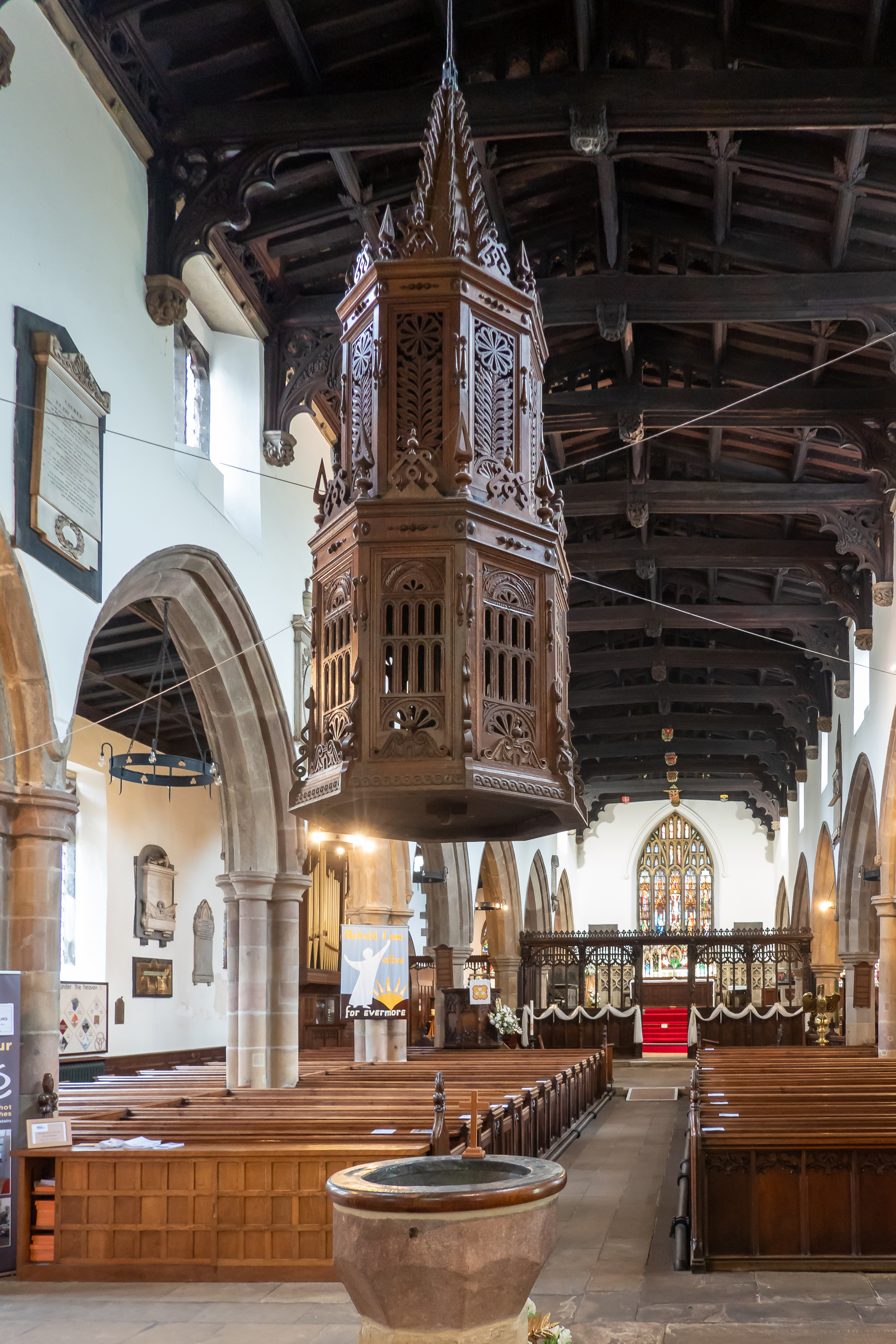
This way to the dungeon. Really.Lovely modern house, across the beck. (Great views of the castle! And not much else.)Never seen a baptismal font with a suspended structure like this.
We loved the pastures, full of sheep, in both the Derbyshire Peaks and Yorkshire Dales. The views have been magnificent! The stone walls dividing the pastures could have been in place, repaired, for hundreds of years. Less fun are the narrow country lanes but we manage as long as there is a chance of passing the cars or buses one meets!
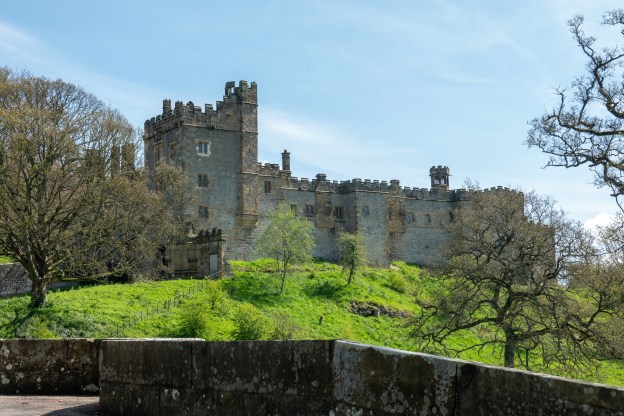
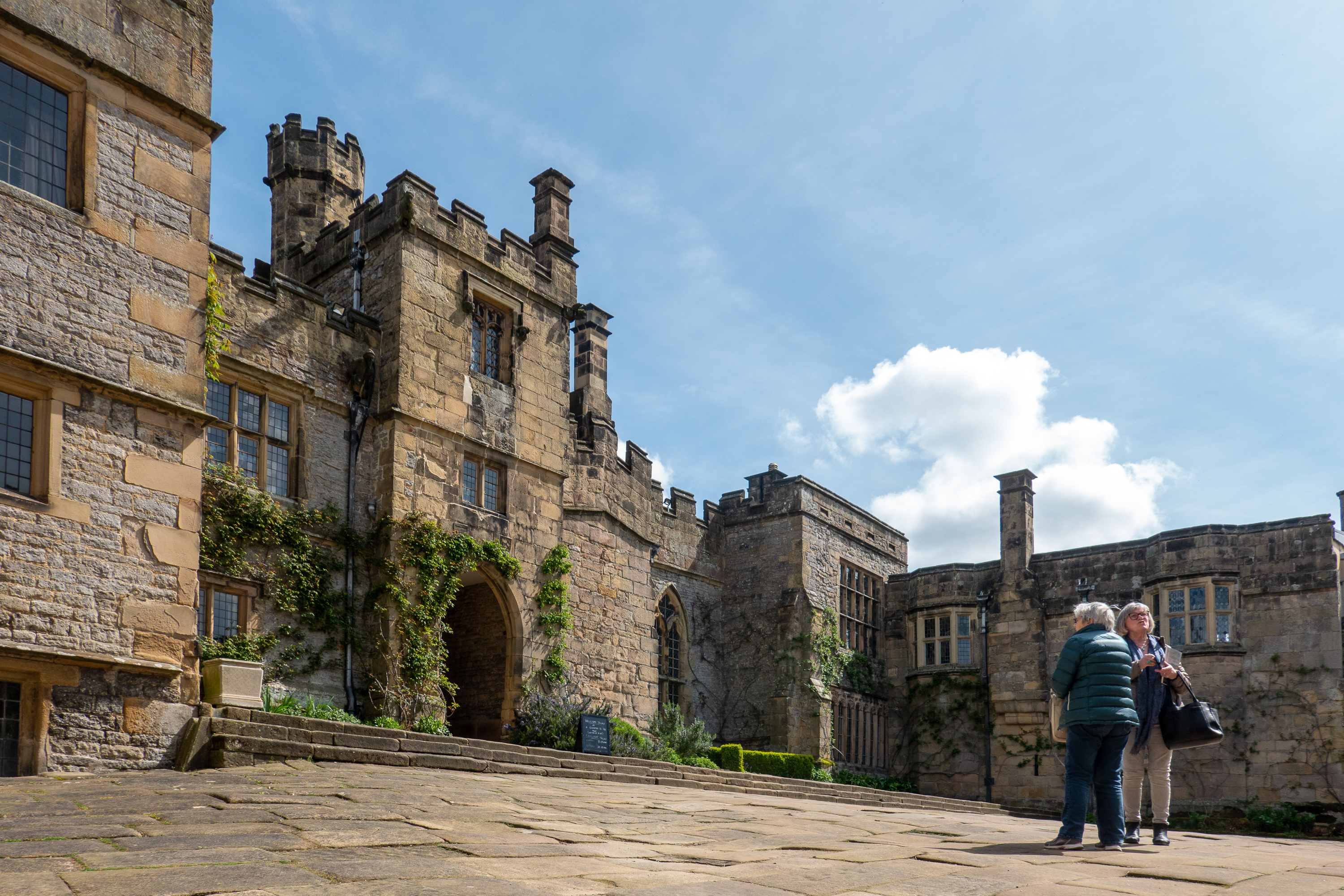
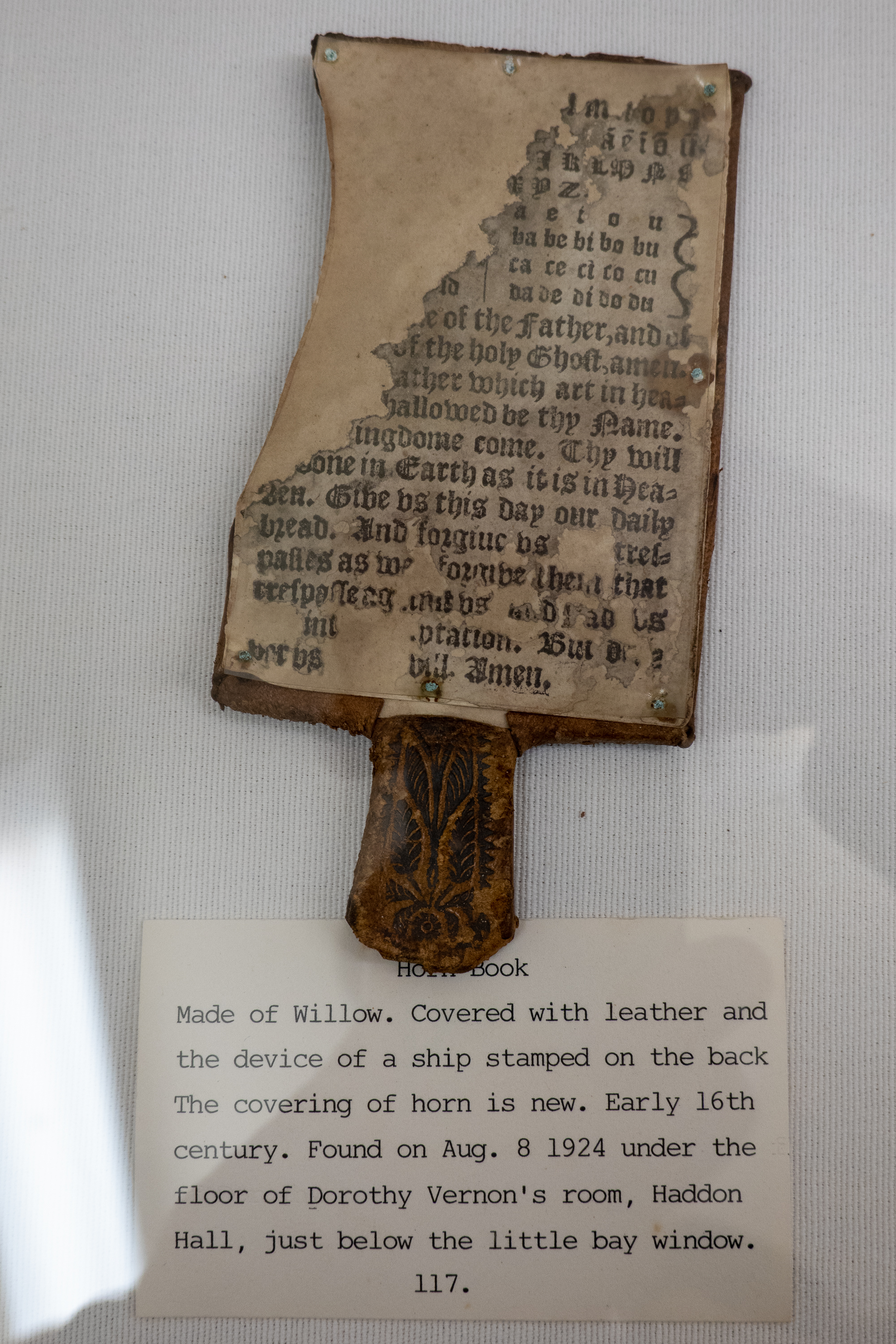
We then headed north to visit a friend from our Botswana days. At her suggestion, we visited Haddon House, another fabulous medieval house, which had retained its “pristine medievalism” because it had been shut up for 200 years (its lord got an upgrade and moved to a bigger house) and it was only reopened in the early 20th century!
So while Hardwick Hall reflected the heights of Elizabethan, rennaissance, sophistication, Haddon Hall took you back to an earlier, more rough edged time. The kitchen, for example was more of a true medieval kitchen with fewer mod cons.
The family is actually still in residence now, but in a modernized section! Absolutely amazing. It was the middle of the week, so we had a very pleasant visit and a lovely lunch.
The first mentions of a house/fort at Haddon date from around 1150. Around 1195, the owner was granted permission by John of Mortain (Later, King John. Yes, THAT John.) to build a low and un-crenellated wall around the buildings – hardly a serious fort. The building grew in fits and starts until 1703, when the owner was elevated in title and moved to Belvoir Castle. (Better view!) The site was then basically abandoned until the early 20th Century when the ninth Duke and Duchess of Rutland began a restoration program. Close to a time capsule.
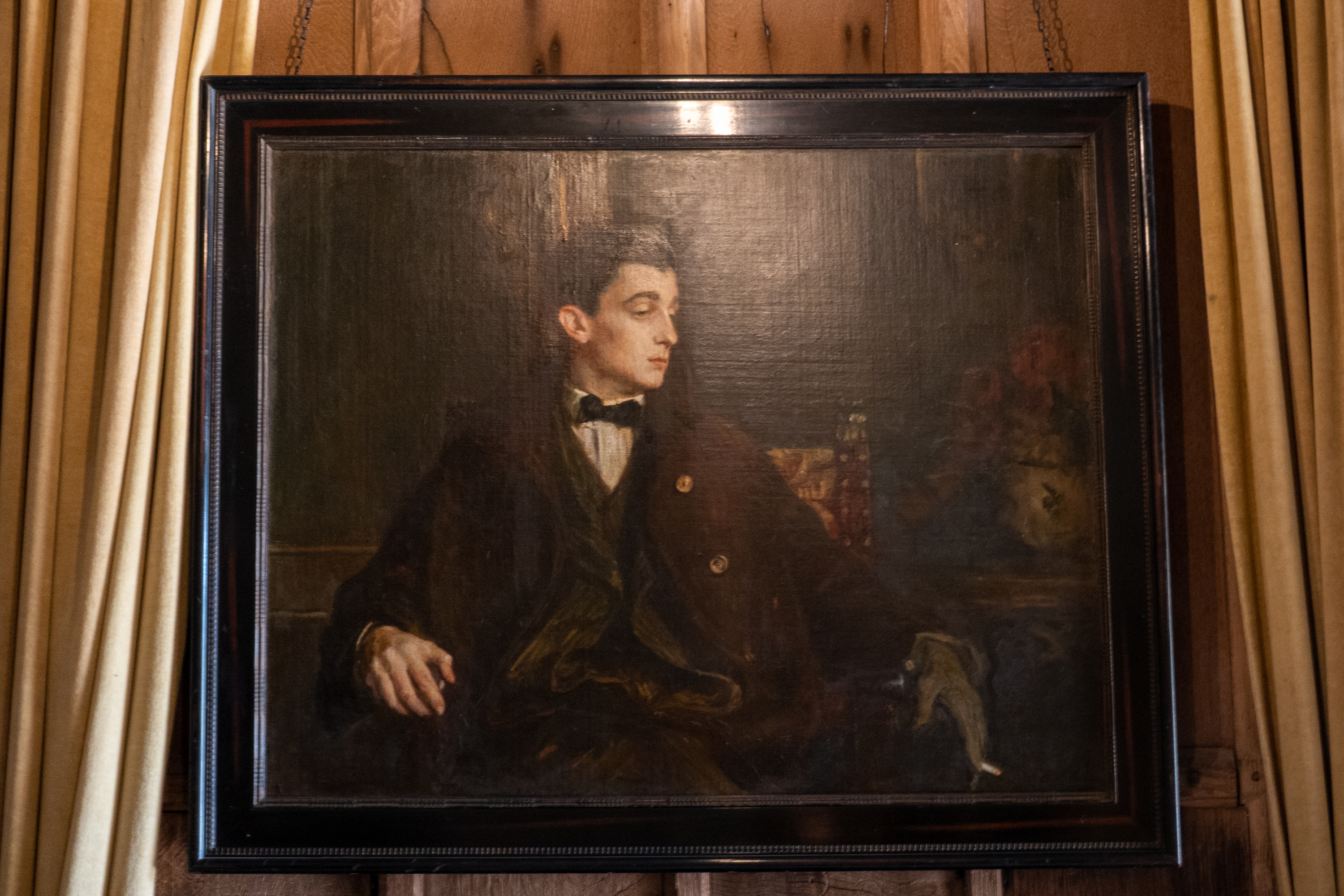
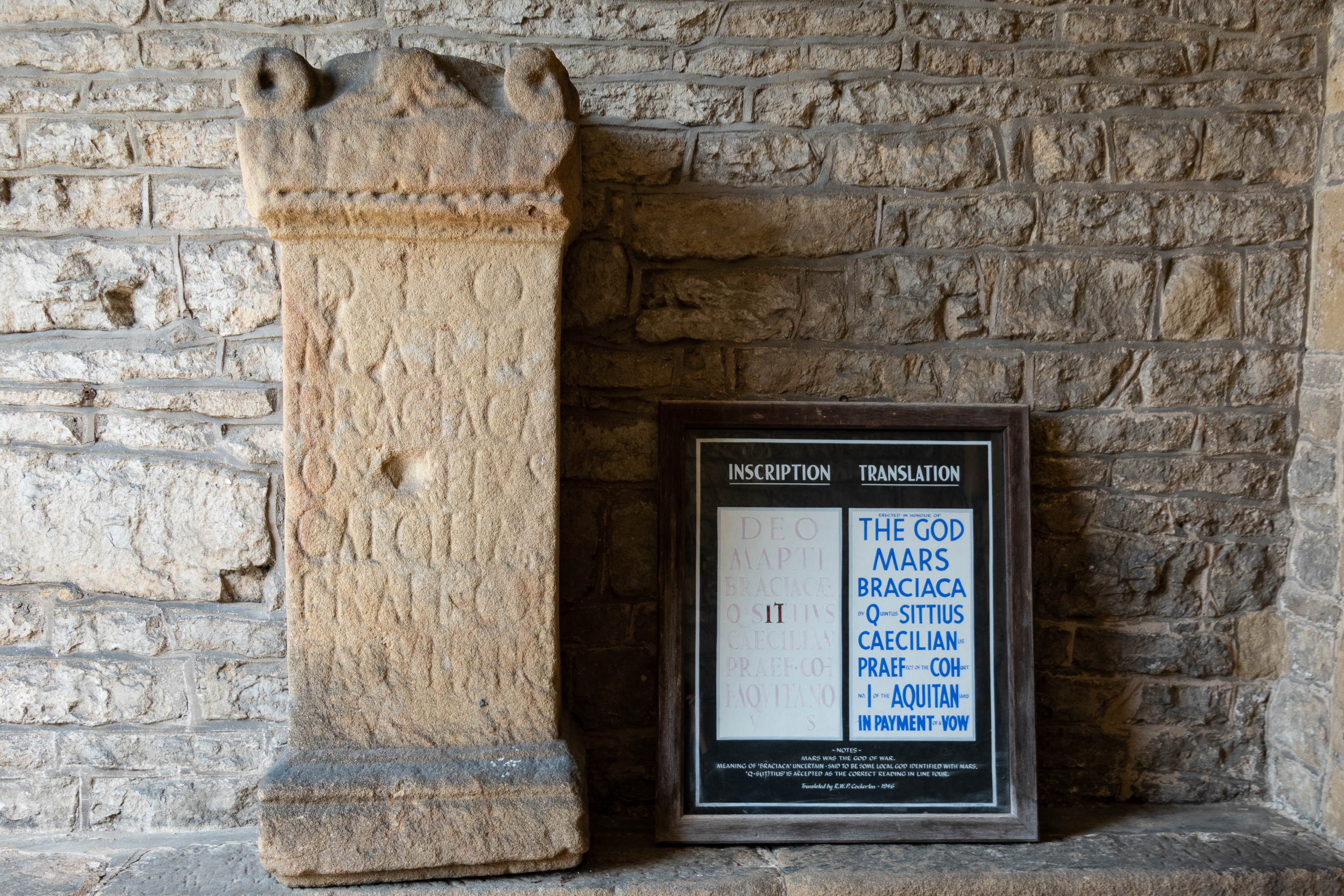
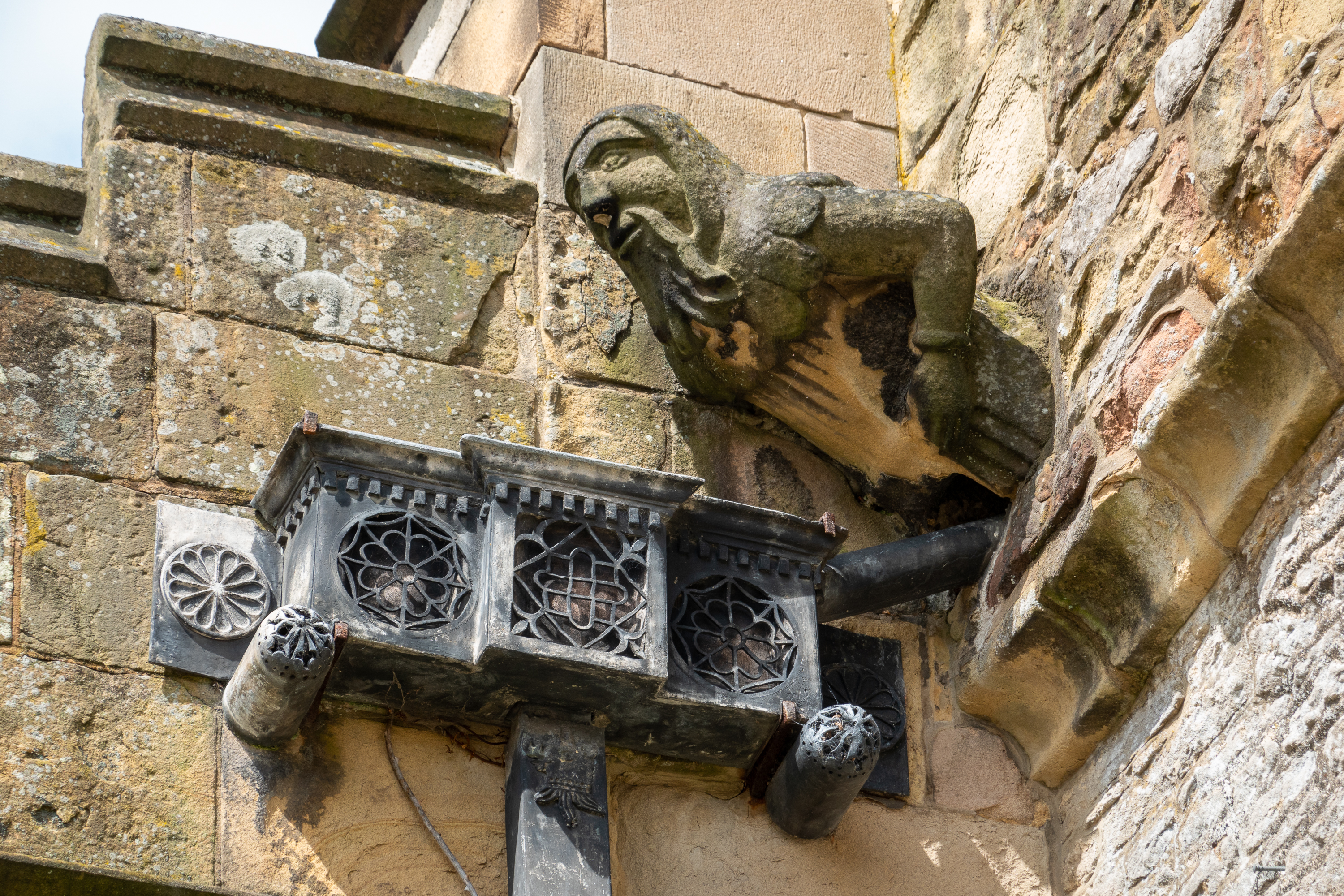
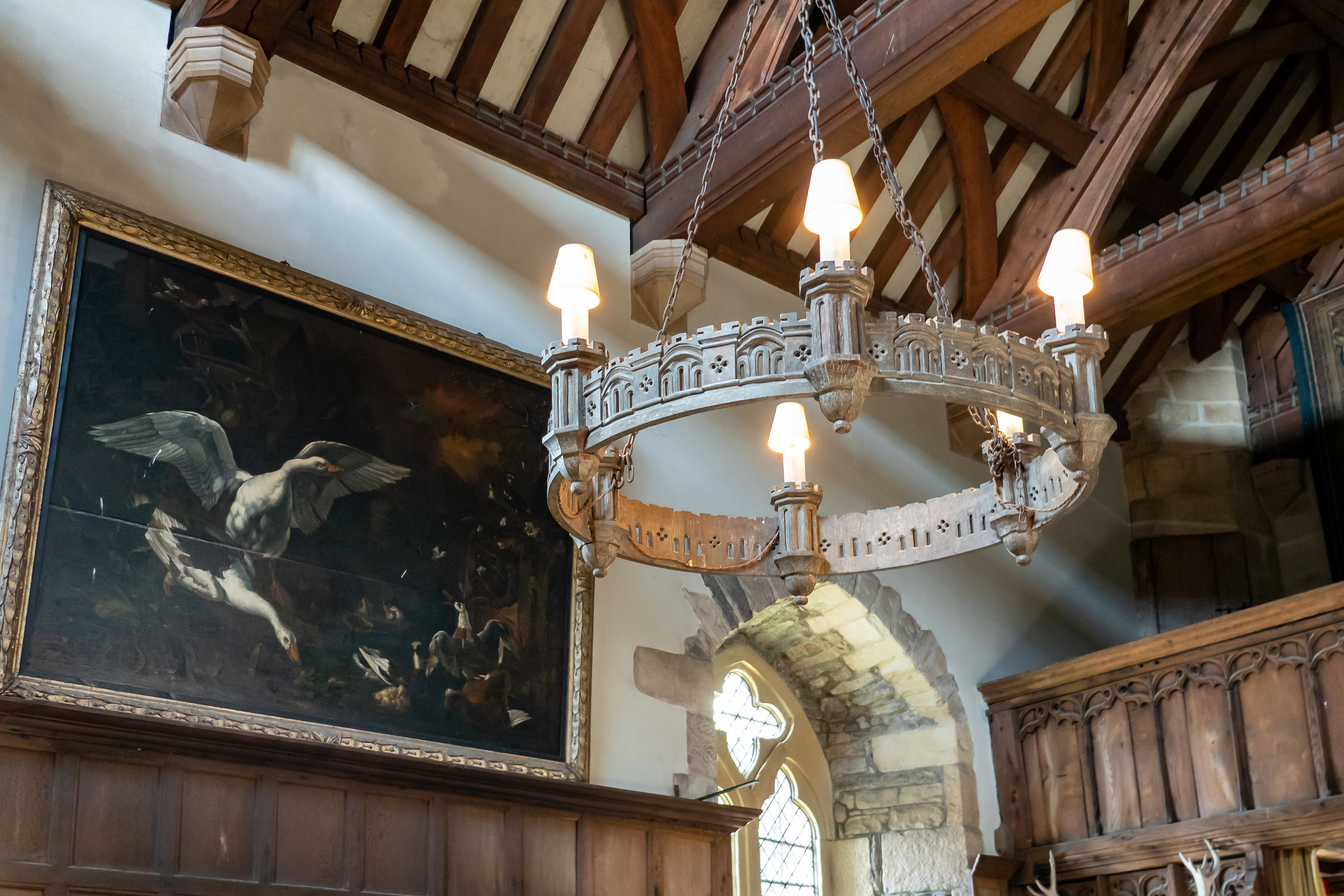
John Henry, the 9th Duke, looking a bit like a fugitive from “Brideshead Revisited.”Lower courtyard with Banqueting Hall entrance.Nifty Roman votive pillar in the entrance way. When you invoke the Gods, remember to acknowledge your debts!Not exactly a gargoyle, but impressive none the less.Great chandler in the Great (Banqueting) Hall.
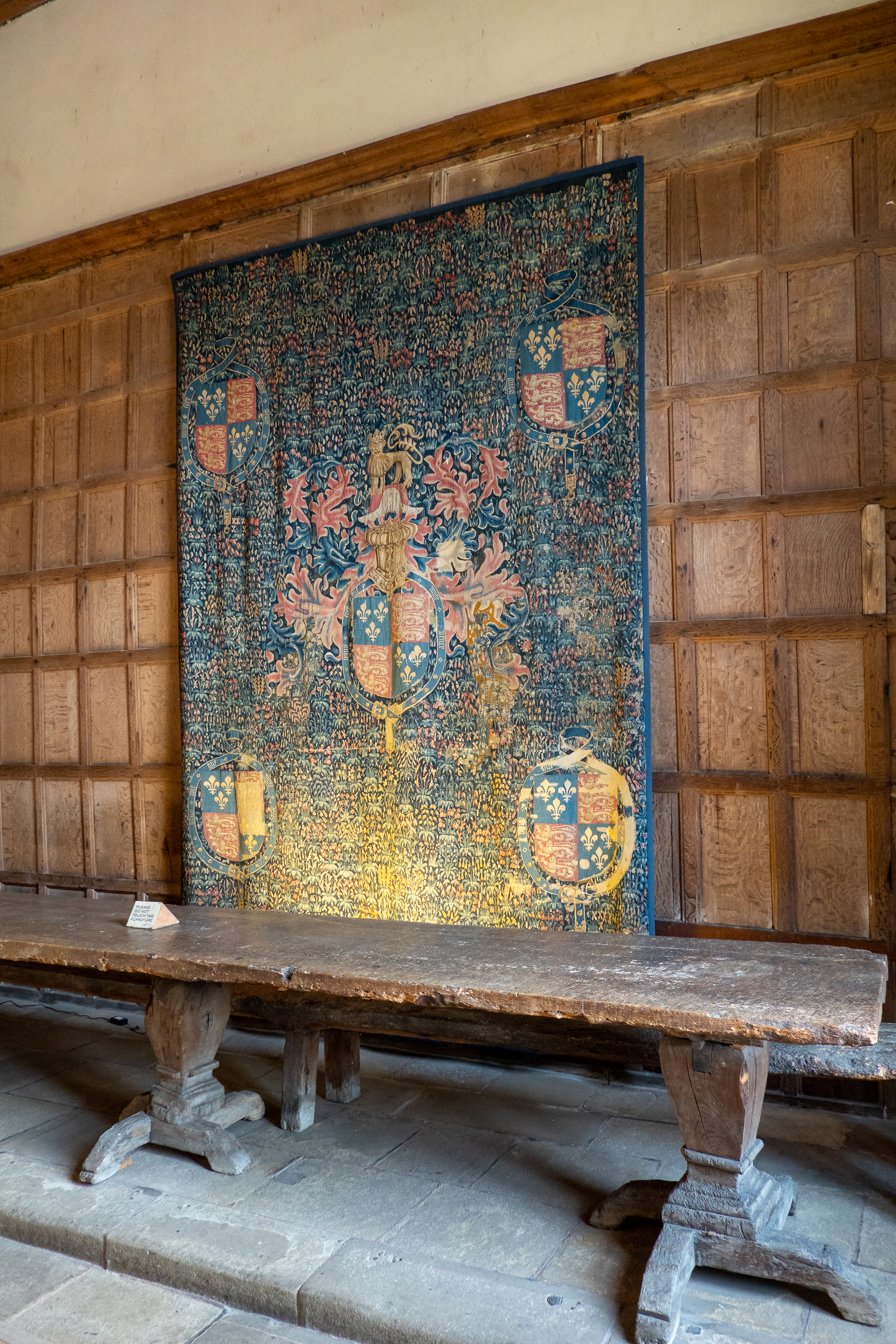
The head table.
All of that eating required a lot of cooking. The kitchens were large and, over time, connected to the Banqueting Hall by a large passage.
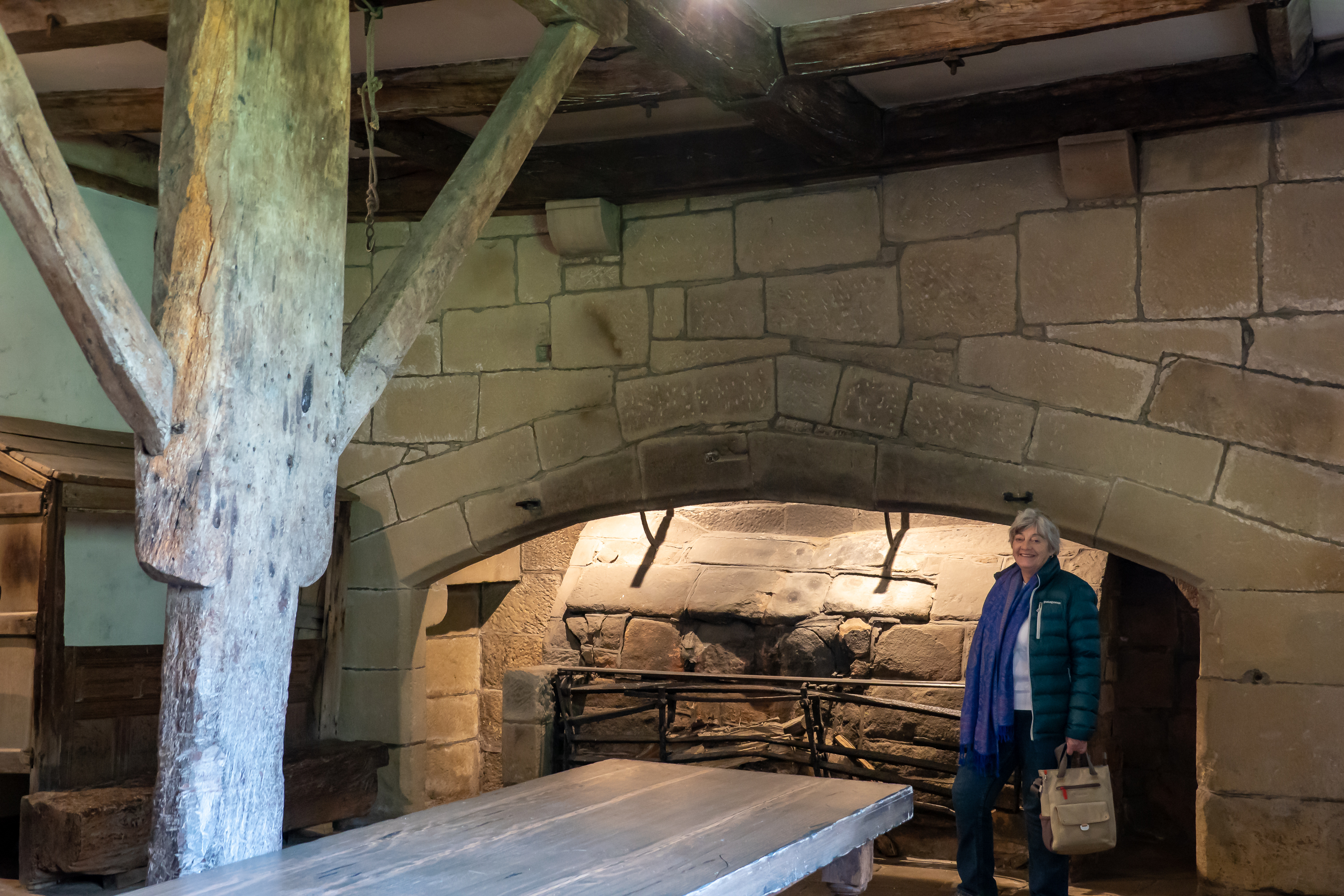
A lot of scullions have raced through this passage to wear down the stone steps!Denise admires the kitchen fire, perfect for roasting whole critters! Nice and warm in winter and unbearable in summer.
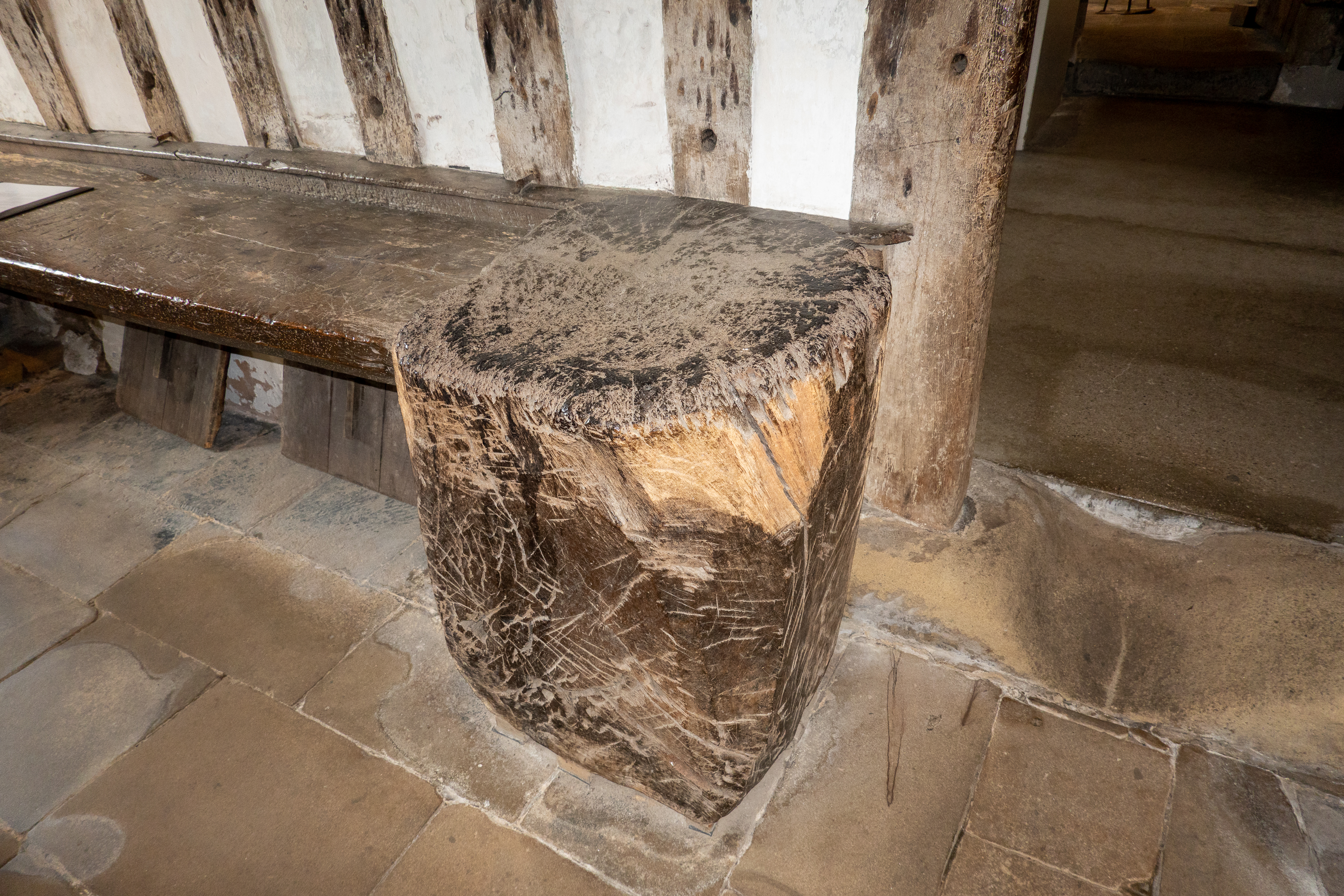
This one is the real deal. Think how many people have sat here over the years.If one did not drink “fayre”, that is, if you drank too much or too little, you would have your wrist manacled here and drink poured down your sleeve. Etiquette has so many rules!PantryVeganism was not a big thing, so you needed a large chopping block to cut up all the various meats.
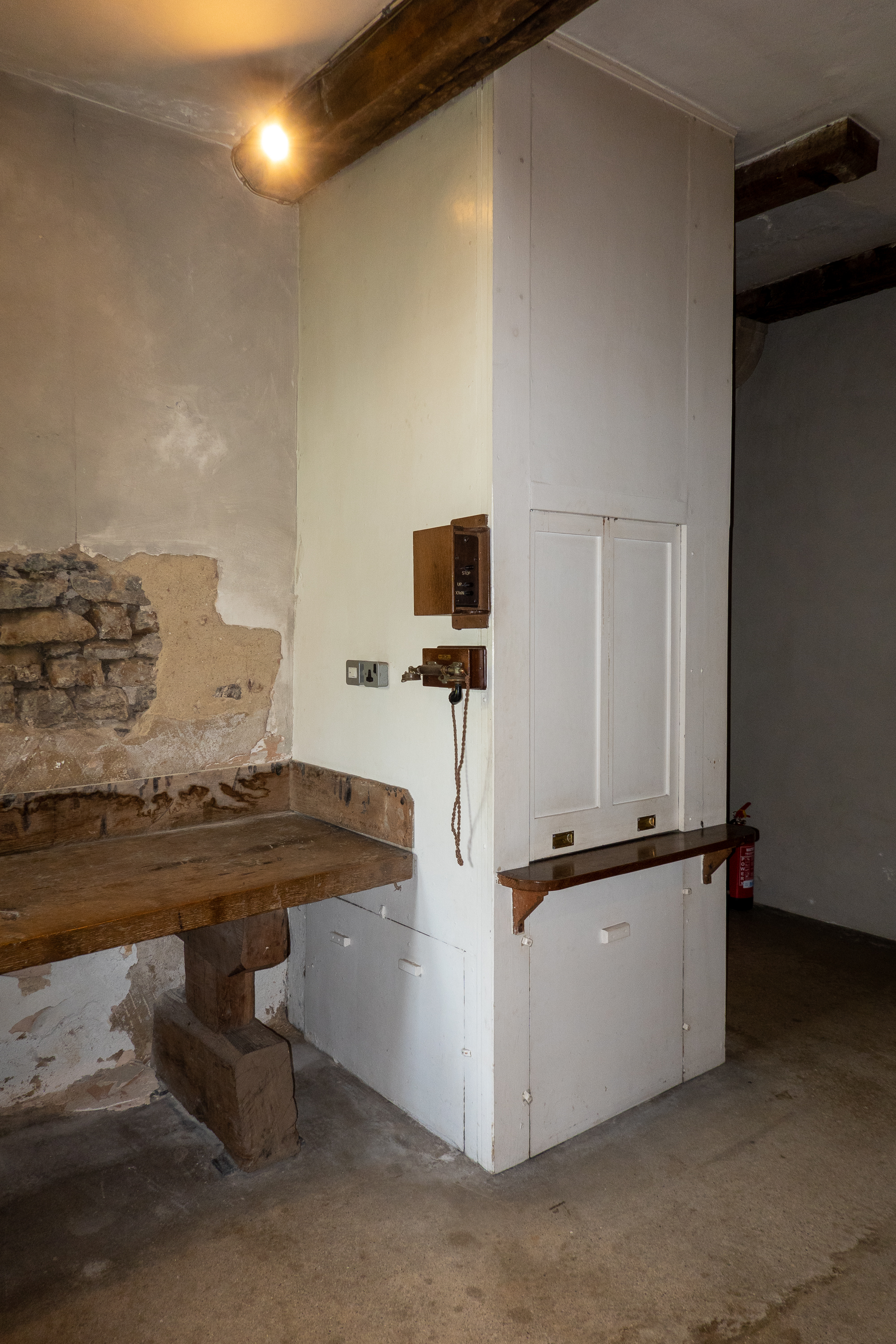
A few modern innovations crept in during the renovations!
Simply amazing laundry listing device, to keep track of items of clothing sent out to be cleaned.
Graffiti from the 1800’s.
The Earl’s Apartment, One of the upstairs bedrooms preserves royal graffiti from over the centuries. Some of it dating way back, and some of it VERY modern!
The Hall has been owned by two families. Their crests are in the left photo and the Order of the Garter is in the right photo. The colored glass still glows on a sunny day. The diamond shaped panes are each set at a different angle to maximize the sparkle.
The Manners on the left and the Vernons on the right.
Both were knight of the garter.
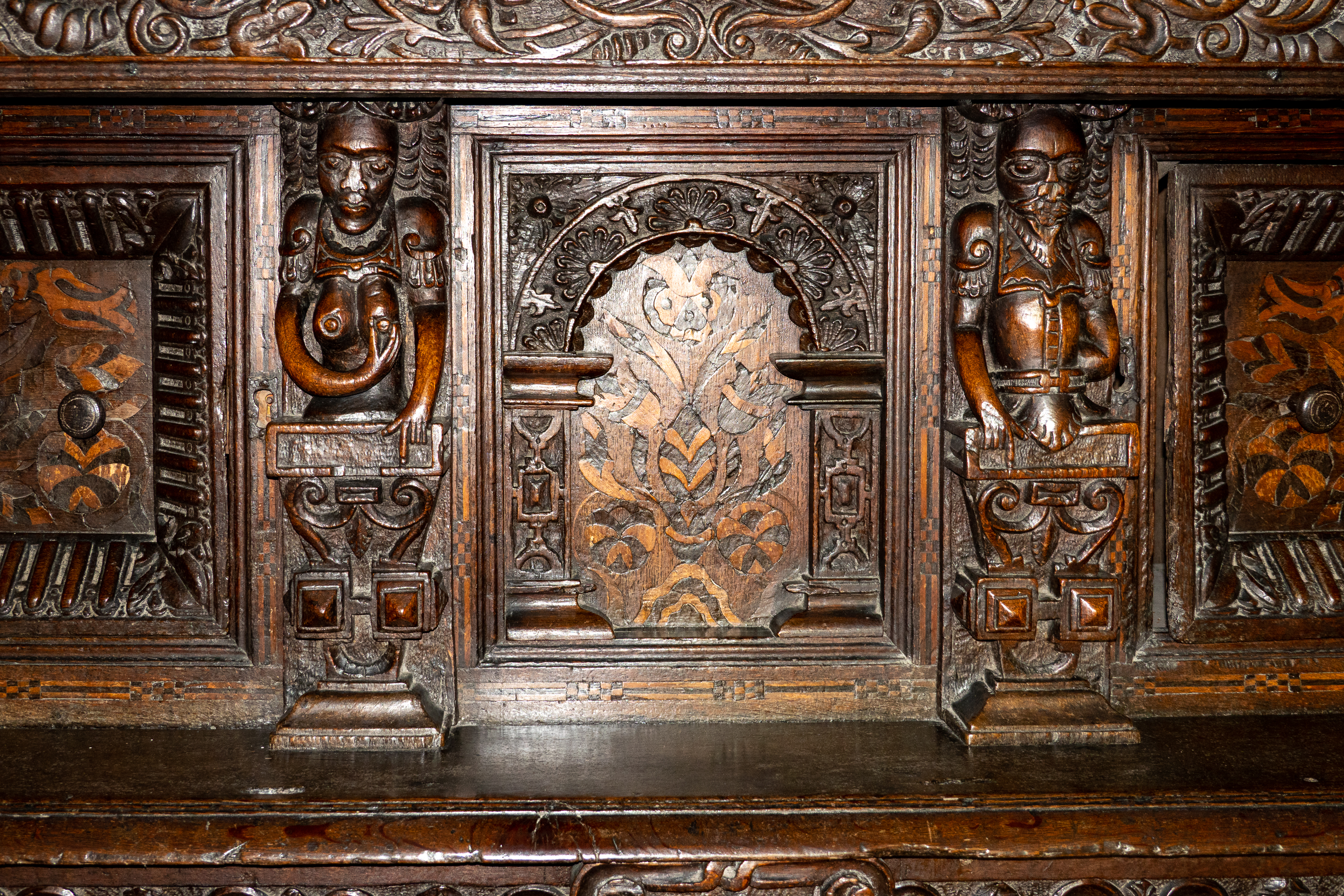
Carved wooden paneling.
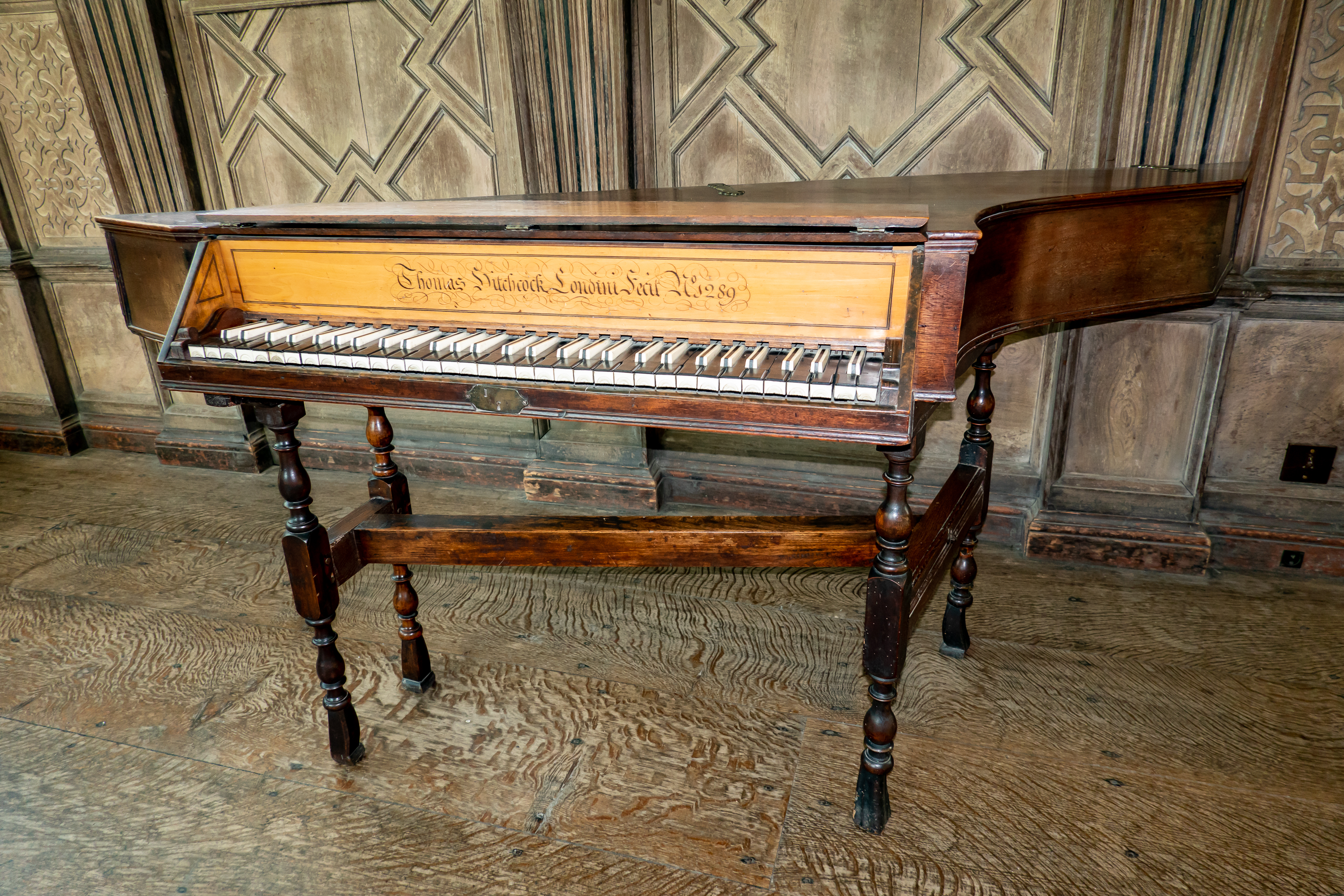
Sadly, not playable.
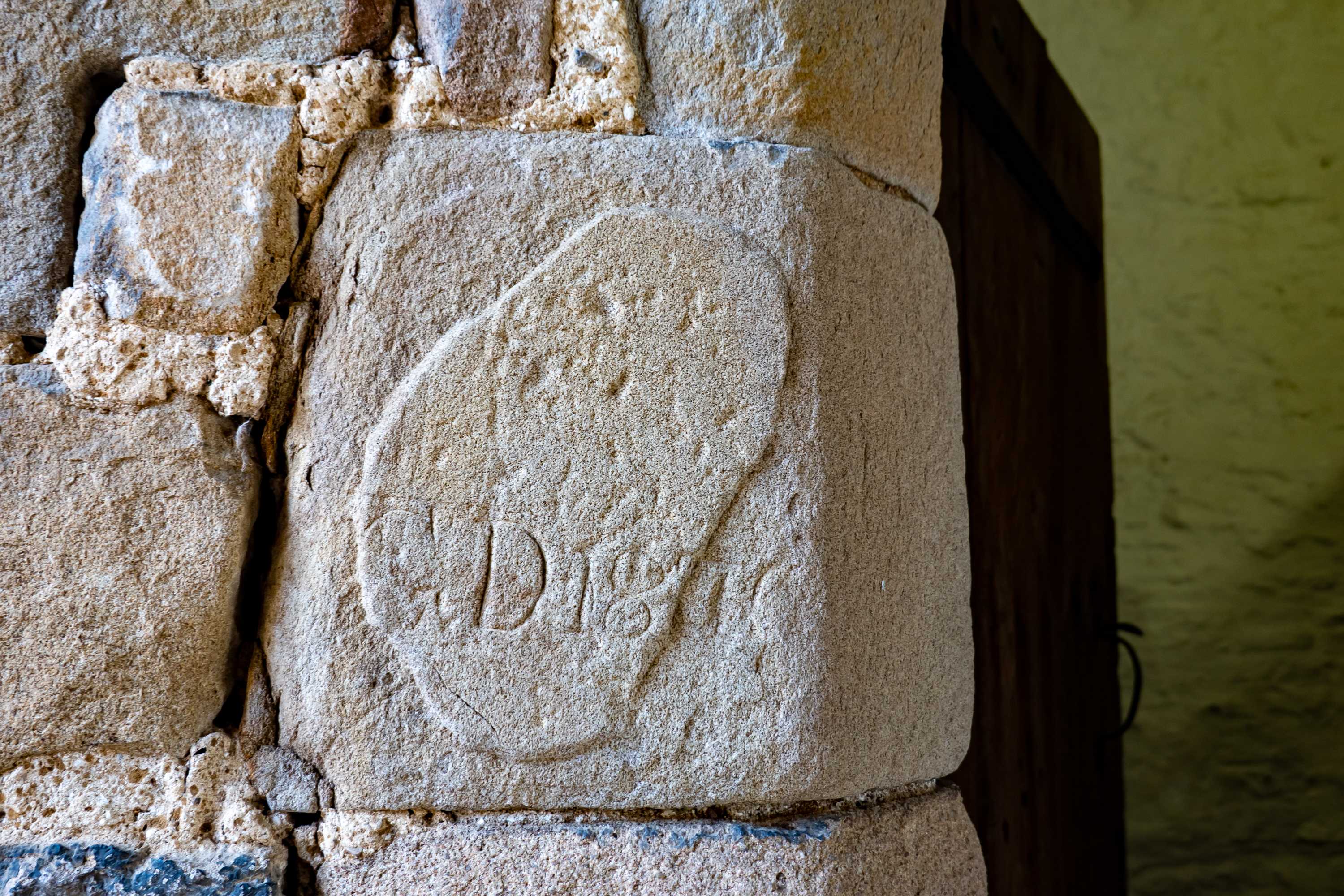
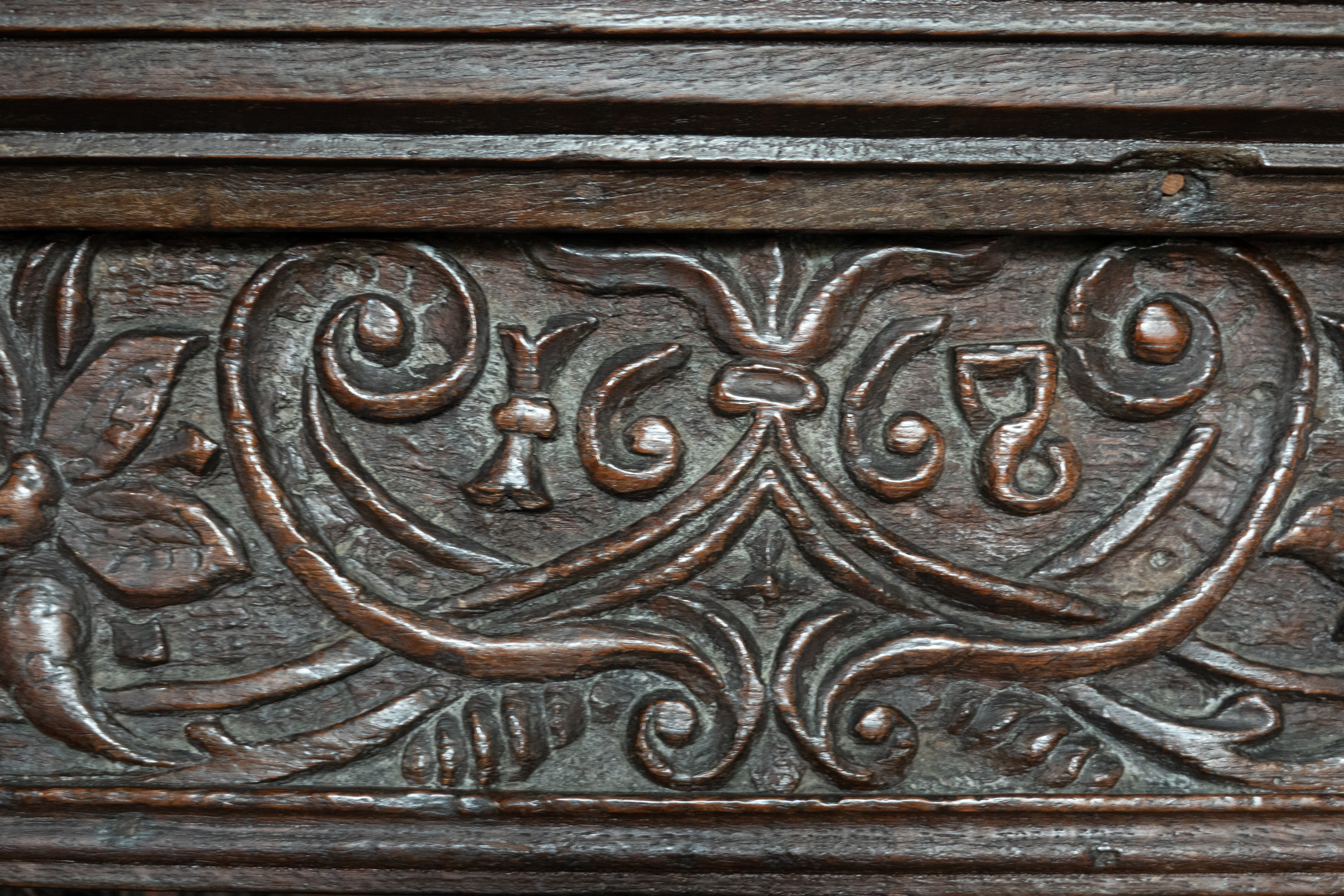
Date is clear.
Beautiful painted alabaseter reredos from behind the altar in the chapel. A modern relocation, may have been part of the original rood screen.The bridge at the bottom of the hill is a classic English post card.
After leaving the south coast, we fought the joys of the M-25 and M-1 on a Bank Holiday weekend. For those who may not be familiar, the M-25 is to London what I-495 is to Washington, D.C. – a ring road.
Only, on a Bank Holiday Weekend, it is simply a multi-hour parking lot. Think lots and lots of clutch pumping. Finally, we were able to join the M-1, the UK’s main north/south axis (think I-95) and start north. This may be a good time to introduce some essential Anglicisms – “tail back” and “queue,” both words usually pronounced with a wide range of select obscenities! That was the bad news. The good news is that UK motorways are excellent with some very nice features.
First, most on ramps are two lanes wide and join at two points on the road. This smooths out the traffic flow immensely.
Secondly, most British drivers are simply more courteous than their American counterparts. For example, regular drivers, not just truckers, routinely move out of the slow lane to let you merge – especially nice if you are driving a heavy and underpowered truck.
Finally, passing on the left, or slow side (Same as passing on the right in the US.) is almost always illegal, so again, with a slower vehicle, you are much, much less likely to get “trapped” in a faster lane should, for example, you move over to allow an HGV (heavy goods vehicle, or “artic” – articulated lorry or, in ‘murican, a semi) to merge. And speaking of HGV’s some are double trailers and some are double height, and lots are foreign; a wild new world. (We will return to this theme later.)
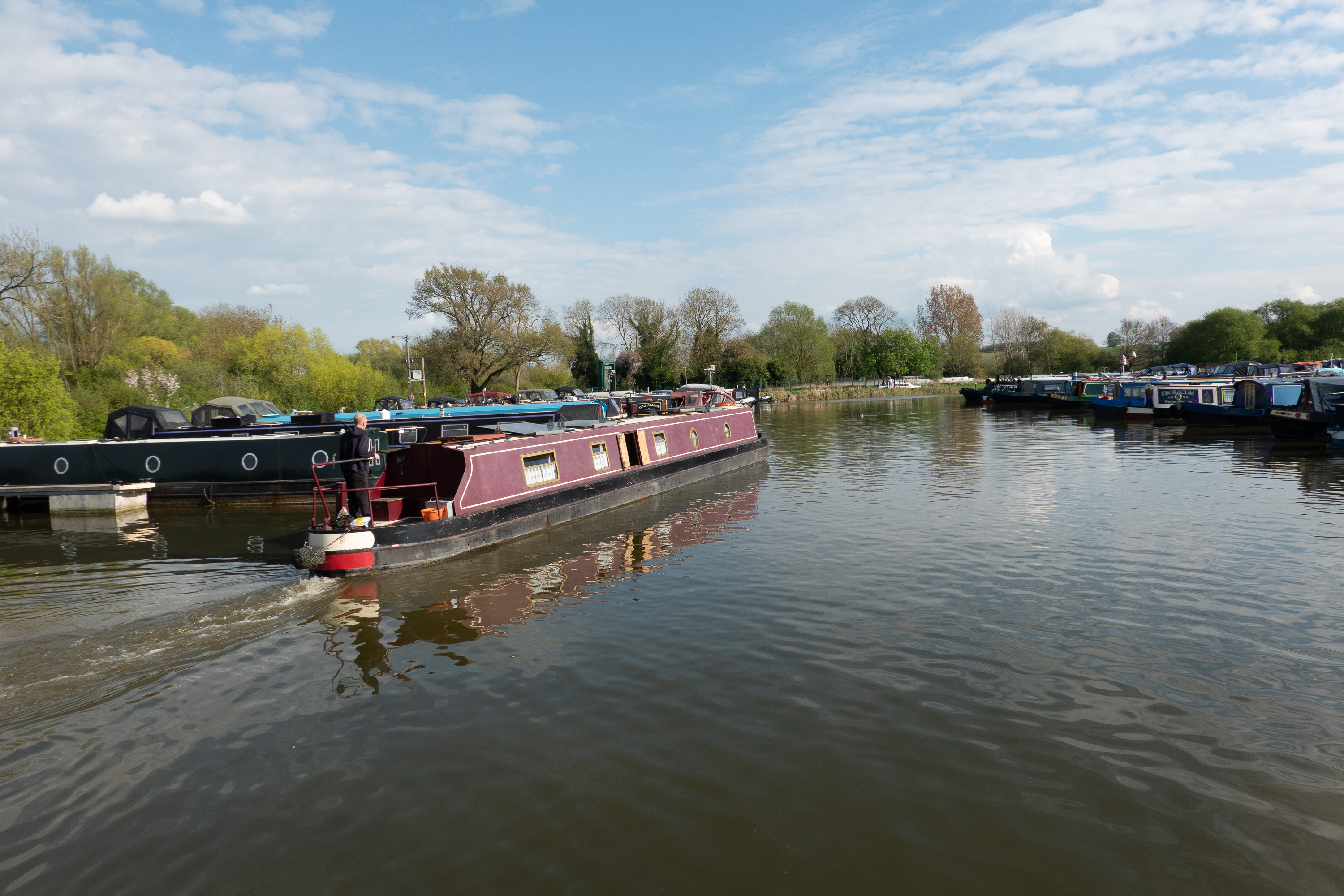
After some hours, we reached our first UK campground, the White Mills Marina just south of Northampton. (https://www.whitemillsmarina.co.uk) A lovely spot to gather ourselves together, take walks along the towpath beside the River Nene and make a shopping trip to complete our supplies.
View down the Nene, with White Mills in the background. Traveling by narrow boat, this would be what you saw looking for a riverine rest stop or service area.
The marina was full of boats of all types.Narrow boat leaving the marina.
The marina was an interesting insight into the parallel world of river boat travel with lots and lots of narrow and wide boats. Some are floating hotels, some are day trippers for tourists, some are rentals, and lots are simply people full timing, just like their cousins in RV’s. And the marinas offer all of the same amenities as an RV campground. White Mills is simply nicer than most.
We first discovered this world when, some years ago, we took a short trip on the “Wessex Rose.” She has new owners, but looks to be as lovely as ever. (https://www.wessexrose.co.uk) Geek note: The Wessex Rose is a “wide” boat. Some of the hotels are two narrow boats, a powered boat with day facilities which tows a second boat which contains the sleeping accommodations. At night, the two tie up side by side.
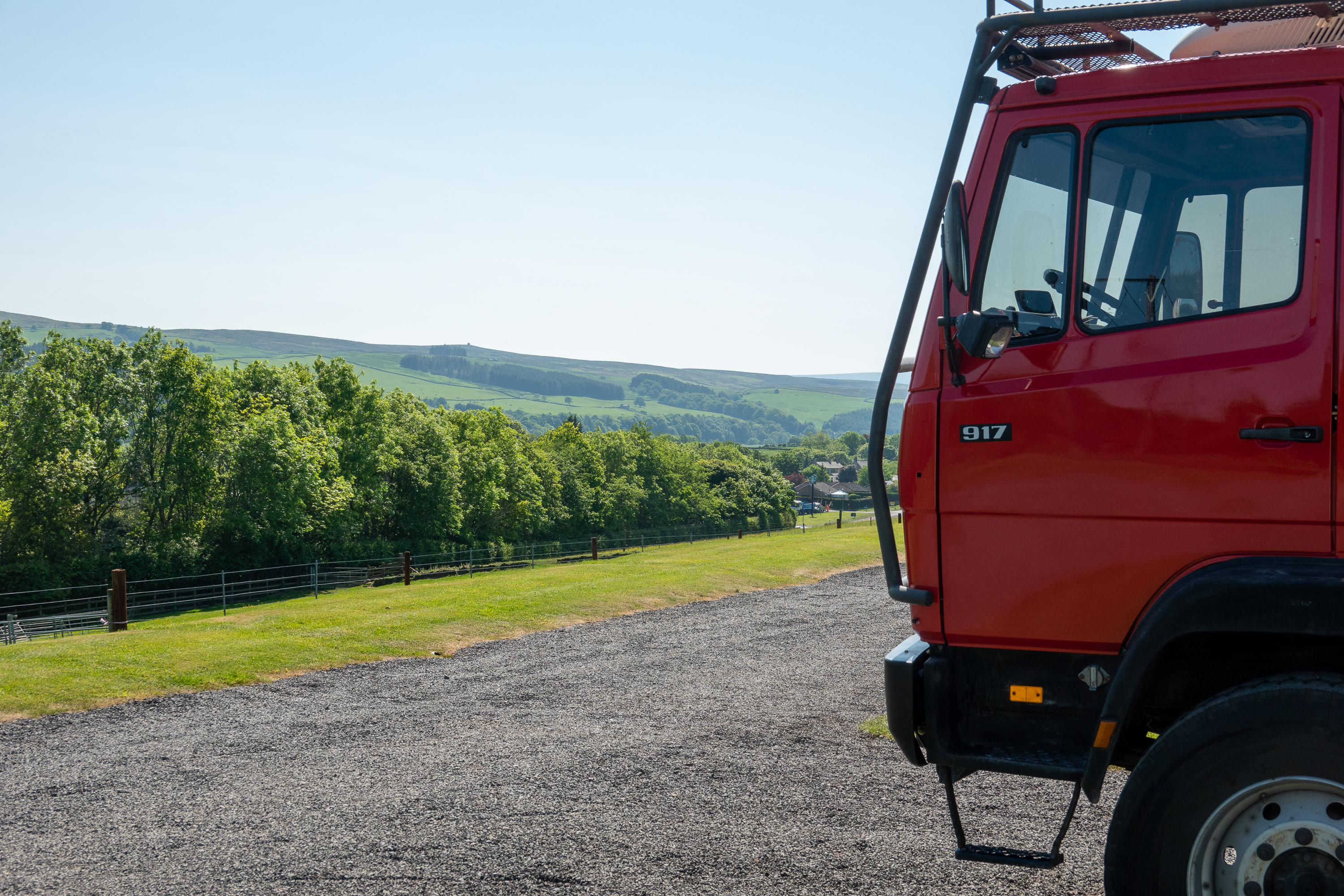
We had expected to wait about a week for our truck to appear, but plans have a habit of going awry and the ship carrying the 917, the Hawaiian Highway, was about 2 weeks late!
Because of the delay, Denise’s brother ended up hosting us for a total of three weeks, which really was above and beyond the call of duty. We were, needless to say, very grateful. And, as always, we had great fun together!
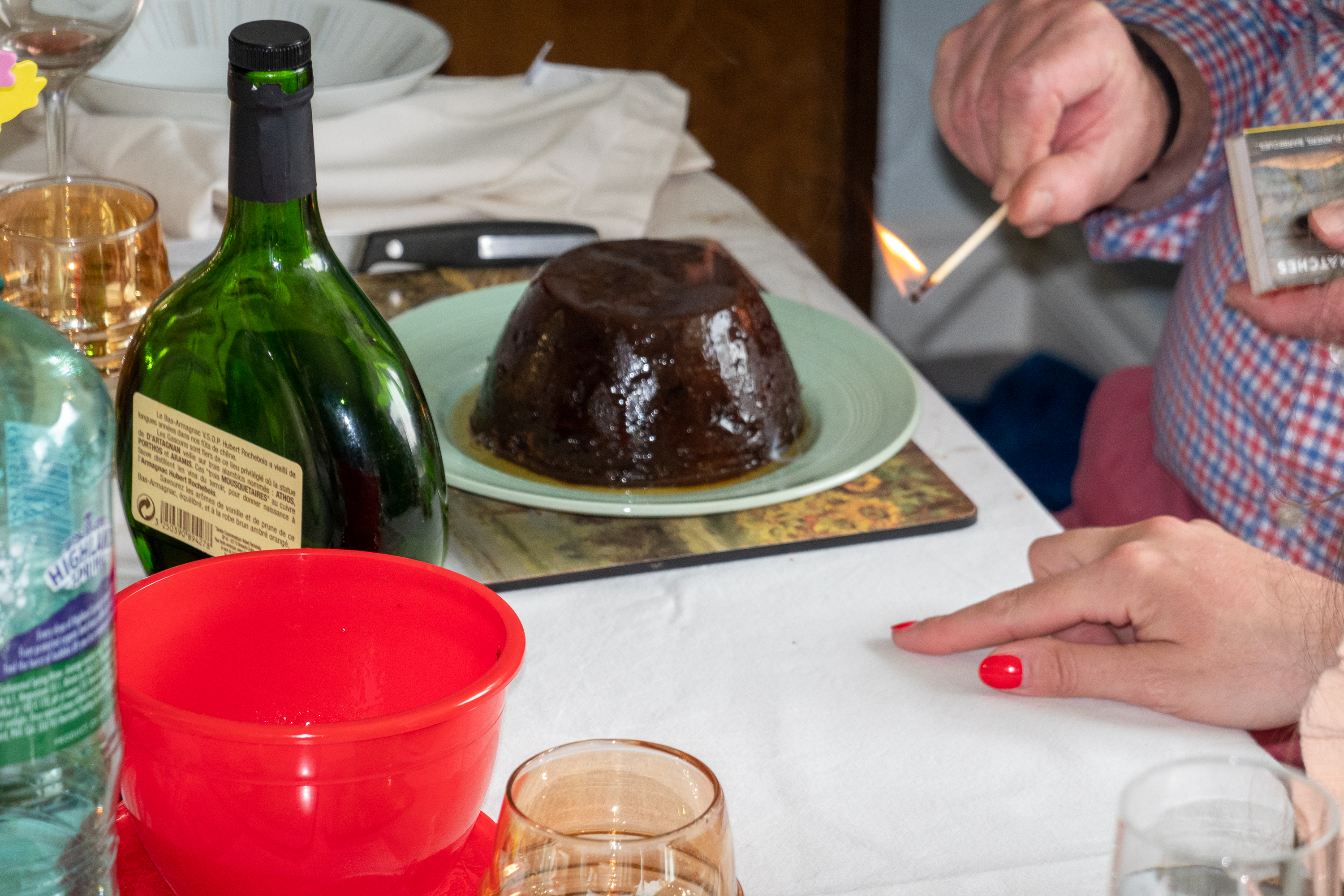
Easter included plum pudding napalm.
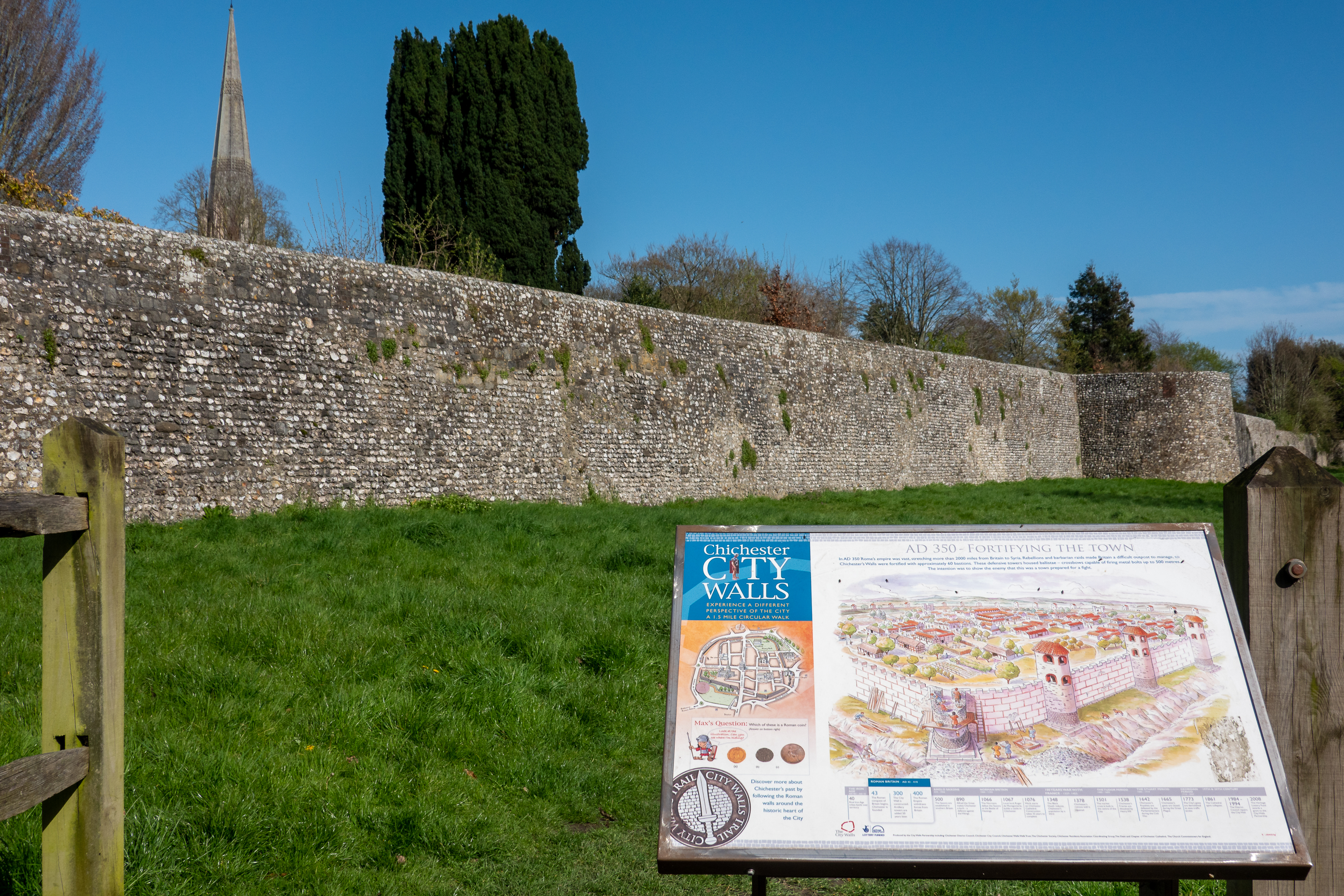
While near Chichester, in Sussex, we were able to explore the area a little. We made several visits to Chichester, a lovely Roman town with fragments of wall still existing and the traditional Roman cardo layout, with four main streets leading to the medieval cross in the center of town. (“Chester” comes from the Latin, “castra” meaning fortress. See also Doncaster, Leicester, and all the rest.) There are lots of fun shops (for a few important purchases) and wonderful coffee shops for a coffee or light lunch.
Little hill in a city park? Yup! Original motte from a motte and bailey castle.
Chichester cathedral
On a rather chilly day we went to the Wetlands Reserve at Arundel, a nearby town, to view its amazing selection of different ducks, coots and swans. They are free to leave if they wish but most obviously do not. They looked quite at home.
Photographing the geese.
Arundel castle as seen from the wetlands.
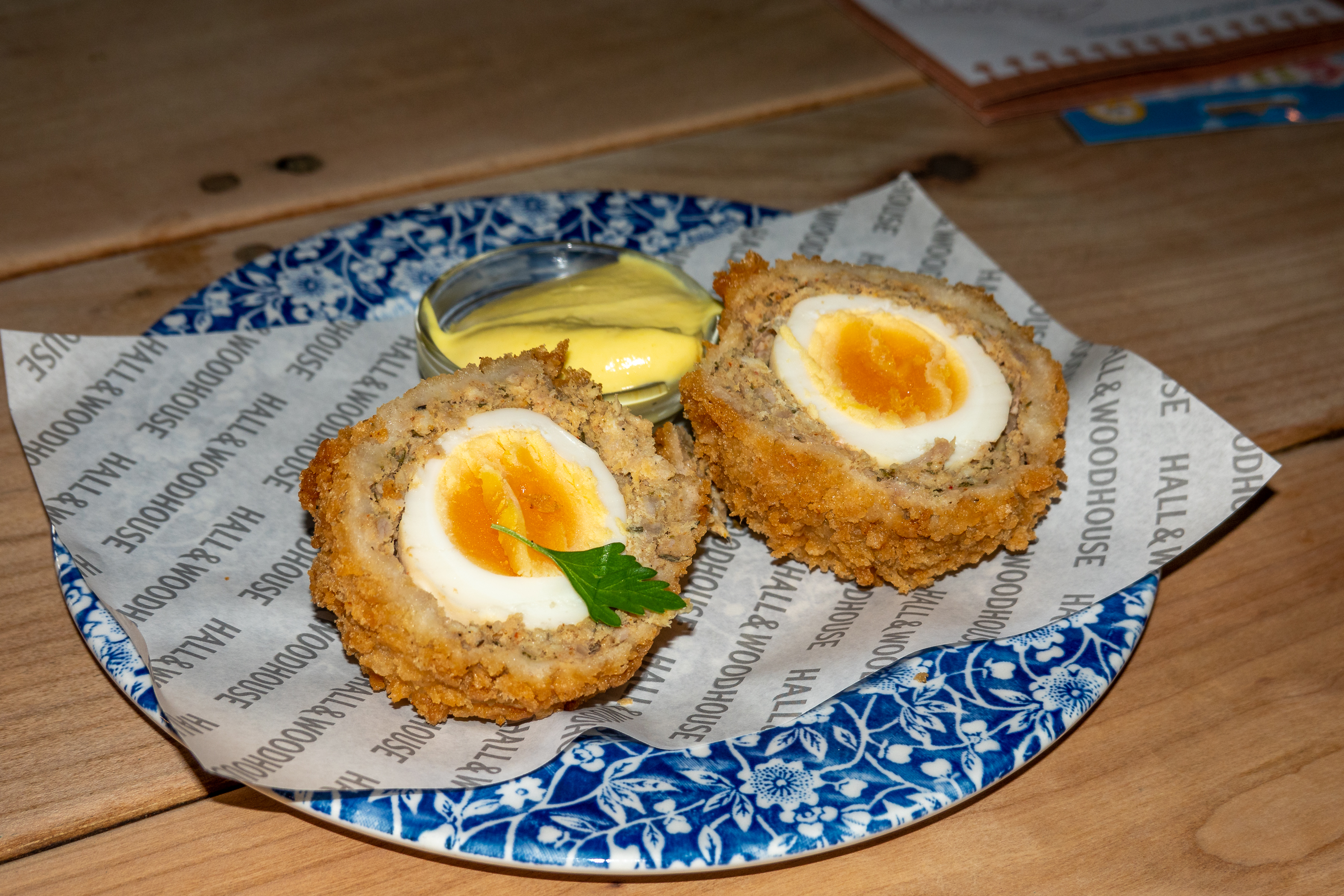
Local pub had Scotch eggs.
Fred and Denise’s brother, Trevor, snuck out for a quick visit to the little Air Museum at Tangmere. Devotees of the Battle of Britain will have heard of Tangmere, one of the many RAF bases. (https://www.tangmere-museum.org.uk) The little museum is well worth a visit for the extensive memorabilia and, next time, the flight simulators!
Crashed Hurricane, dug out of the ground.
Peering into an intake you find the engine inside.Pondering the difference between a Harrier and a Sea Harrier.
In 1937 the Gloucester Gladiator became operational with the RAF; the last biplane. It even served during most of WWII. (https://en.wikipedia.org/wiki/Gloster_Gladiator) In 1943 the Gloucester Meteor became the first operational jet fighter on the allied side – a span of only six years. (https://en.wikipedia.org/wiki/Gloster_Meteor) Considering that the first jets were only conceived of in the late 1930, this was an insanely short time. The Meteor was so secret that pilots were no allowed over German lines least one crash and be recovered. The Meteor was used to intercept V1 flying bombs and to tip them over with the wing so that the gyro would fail and the bomb would crash. That would have been a wild maneuver.
Fred was amazed; he knew that the Allies were working on jets, but did not know that any were ever operational.
Gloucester Meteor. (The Jordanian air force used these as ground attack aircraft into the 1950’s.)
Chichester also has a Ship Canal and we enjoyed a lovely walk along the towpath one morning. In the early 1800’s, there was an idea to connect London with the sea near Chichester. The goal was route to carry heavy cargo that was protected from French raiders on the Channel. The canal never reached London or made any money, but it did make it to Chichester. Quite an interesting little artifact. (https://en.wikipedia.org/wiki/Chichester_Canal) Again, we saw a selection of ducks, coots, and moorhens.
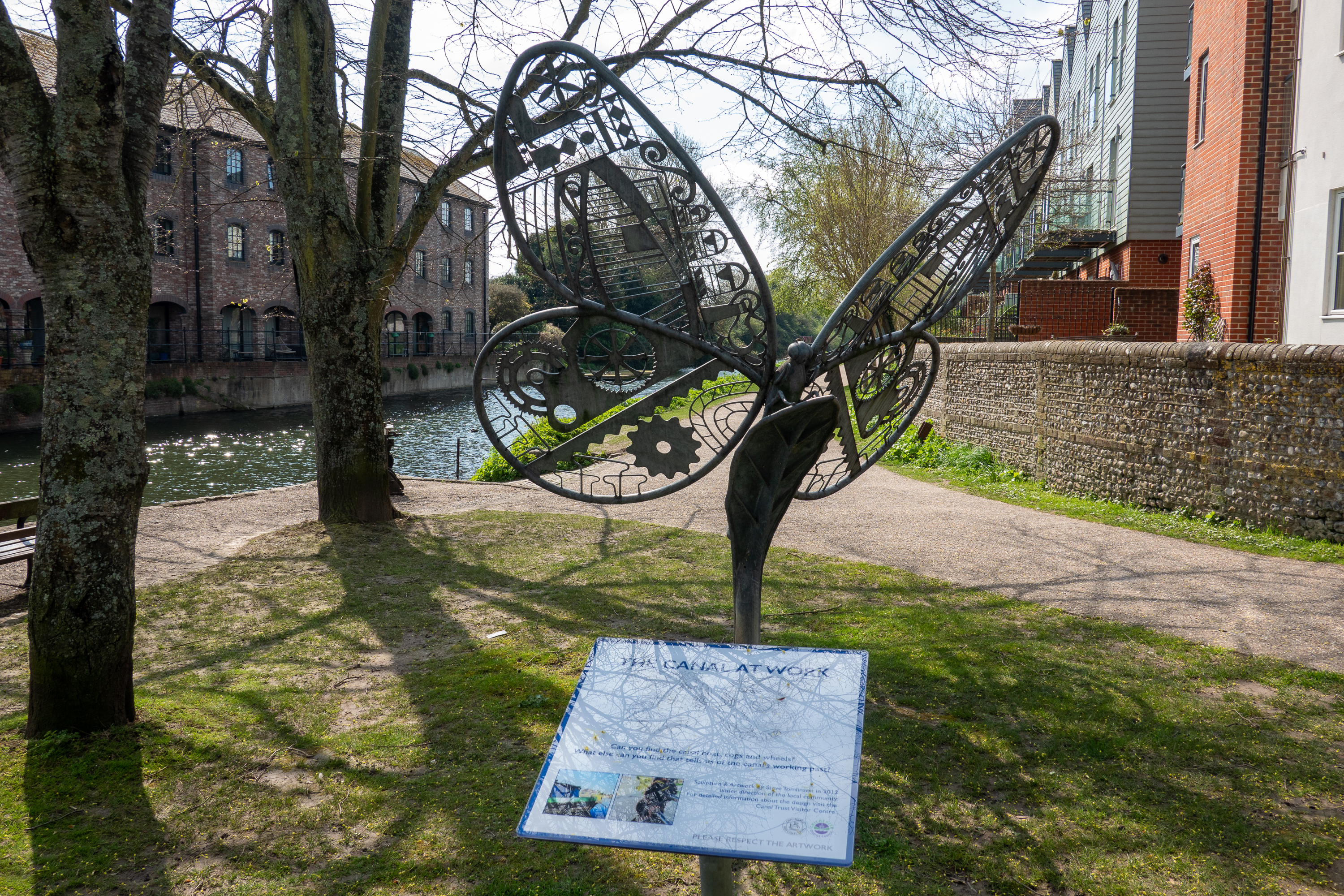
The final basin in Chichester,Clever art. Expand the image and look closely at the wings.
Waling the tow path.
Little tug used to move barges, now only for maintenance.Old machinery
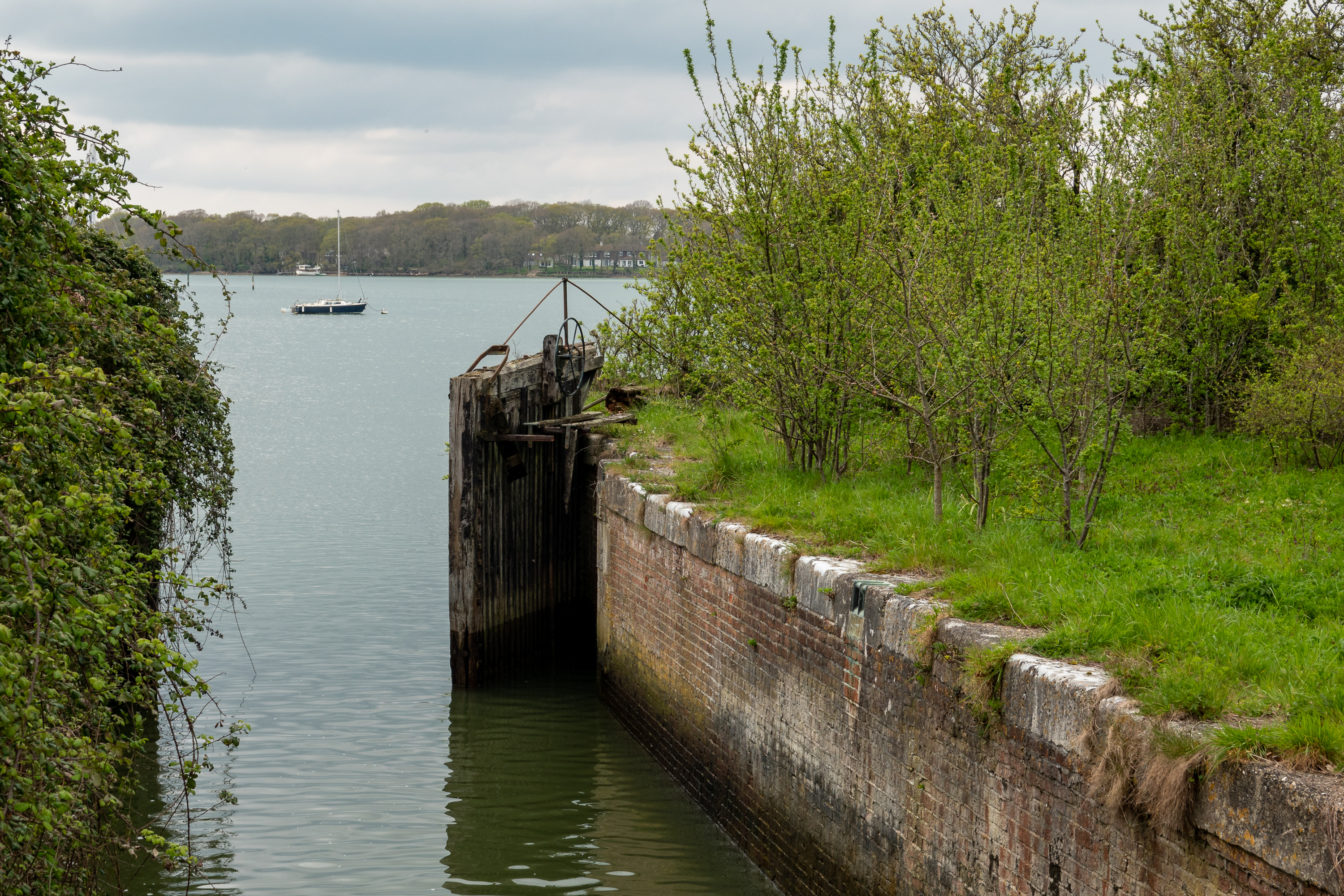
Chichester cathedral from the canal.And in 1828, by Turner.End of the canal near Bosham. The lock gate is due to tides.
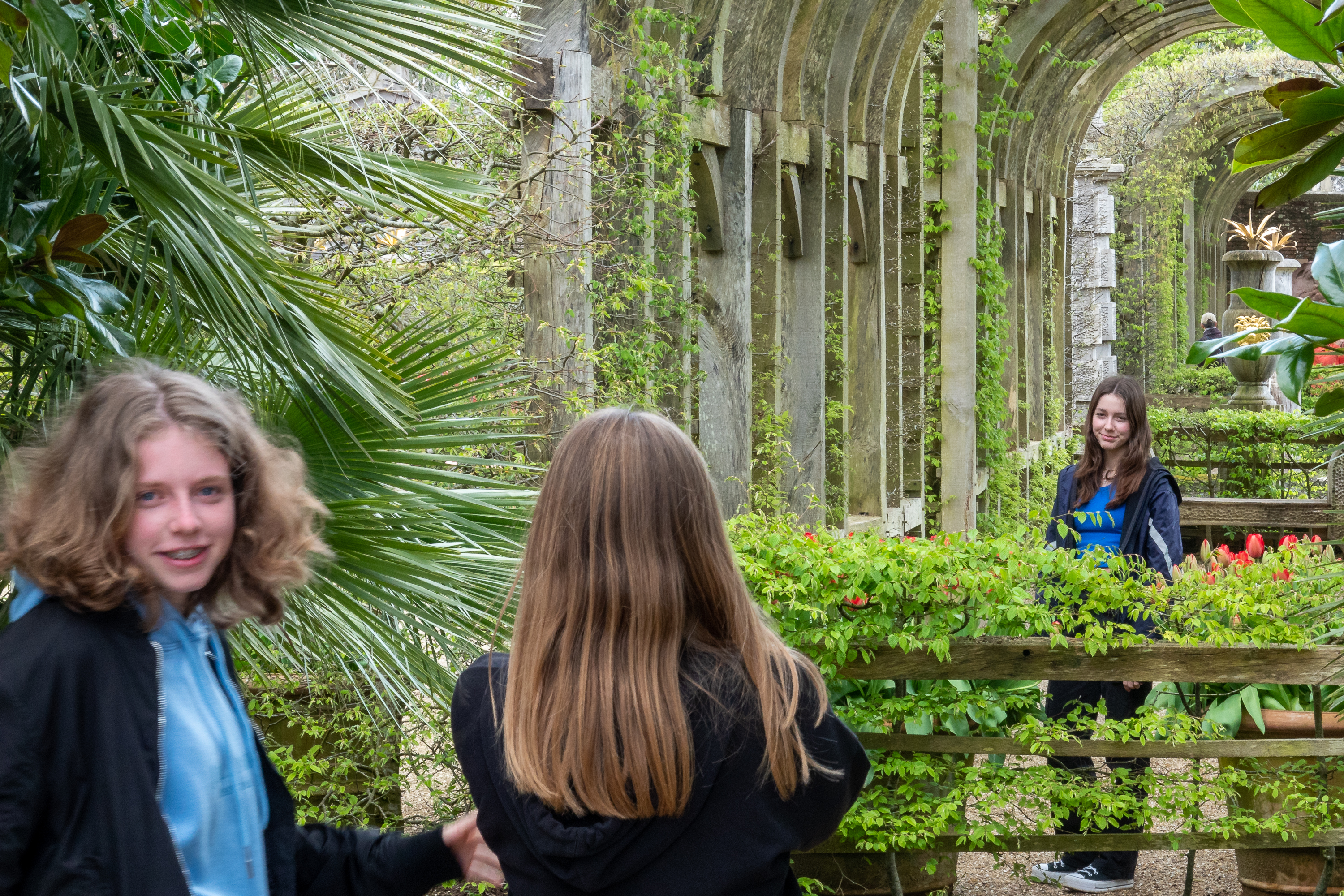
We were back in Arundel a week or so later to visit the Castle and to explore the gardens during the Tulip Festival. The Festival had been delayed for a week as with a chilly spring, the tulips were not flowering!
The displays were wonderful, though some flowers were still not open.
The tour of the Castle, which is the home of the Duke of Norfolk, the Earl Marshal of England, was most interesting. (https://en.wikipedia.org/wiki/Duke_of_Norfolk) (You don’t want to meet the current Duke on the road; he is under a six month driving ban!)
The castle is old, parts are Norman, huge, in good condition, and still occupied by the family. Needless to say, it has been expanded and altered many times. Some of the bedrooms you can visit are still used for guests! This leads to the odd anachronism of telephones and modern magazines in odd places. Arundel should definitely be on your short list of castles to visit, if only for the only intact portcullis the first that we have ever seen. (https://www.arundelcastle.org)
The Dukes of Norfolk are hereditary Earls Marshal. While this used to mean tending to the king’s horses, now the primary duty is to organize major state occasions. For example, the funeral of Elizabeth II and, more recently, the coronation of Charles III. (https://en.wikipedia.org/wiki/Earl_Marshal)
Those are real watch towers, once manned day and night.
The portcullis was the emergency gate to a castle. Should an enemy succeed in arranging a sneak attack, a swing of the sledge hammer and the portcullis would drop to bar entry. This would allow time to close the gates and raise or burn the bridge.
Counterweights made it easier to raise the portcullis. Usually, there were two; outer and inner. In the event of a sneak attack you dropped both to trap the attackers in the gate house where they could be killed with arrows or noxious things dropped through the “murder holes” in the roof and walls.
Looking from the old, Norman tower and walls to the newer living quarters which were added when the castle no longer had a military purpose.
Denise admires the great hall.
Simply stunning stairway.
The third Duke of Norfolk, aged 66.
Victorian loo
The family is still staunch Catholic. There is much Catholic art everywhere.
The Norfolks built a beautiful Catholic cathedral, just across the street from the castle. Castle gardens in the foreground.
Teeny-hopper tourists
Unusual fountain of Mary, Queen of Heaven.
A royal telephone. When not open to tourists, the family use the public parts of the castle for guests.
Denise, celebrating the sun which is peeking out.
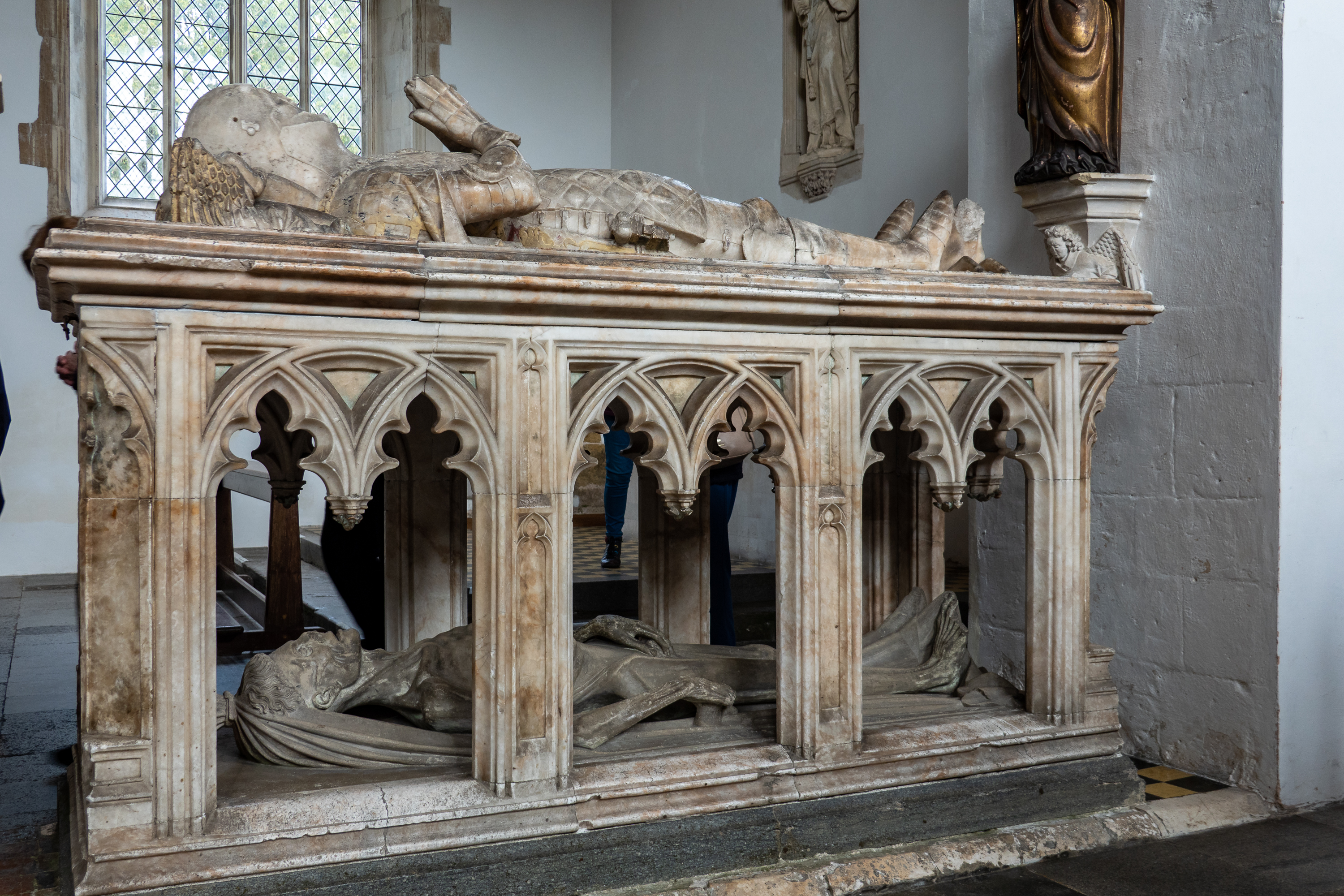
The second effigy, underneath, is the “momento mori,” the reminder of mortality.
The effigy on the top of the tomb is pretty strait forward, dripping with symbolism.
Some of the original color remains, a reminder that these were never cold, stone images.
If you read the Bayeux Tapestry in the original latin (doesn’t everybody?), you will learn that Edward went to the church at Bosham before leaving on his ill-fated trip to what is now Normandy. WE went to Bosham to have fish and chips at a great pub with Denise’s cousin, visiting with his wife from Iceland. (Small world. His wife’s nephew is a great guitar tech at a guitar shop in Arlington and performed an amazing setup on Fred’s Strat!)
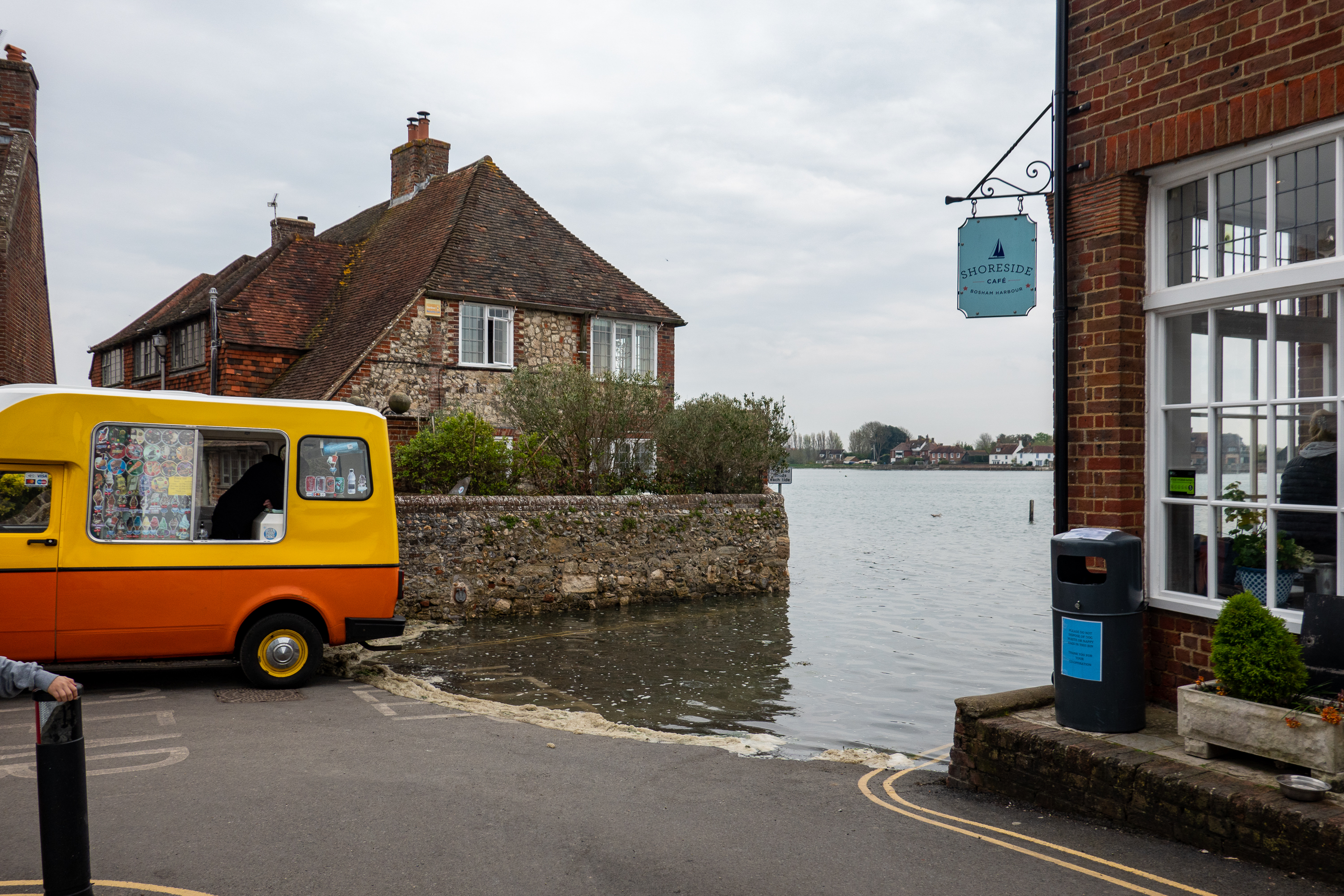
Bosham is an interesting little town as parts of it flood every high tide. And even though it has been doing this since Edward’s time, people still park in the wrong places! And, fish and chips enjoyed, we also visited the church, which is still there, if greatly expanded. (https://boshamchurch.org.uk)
Mary Collins and her son, who died in 1918 at age 24.
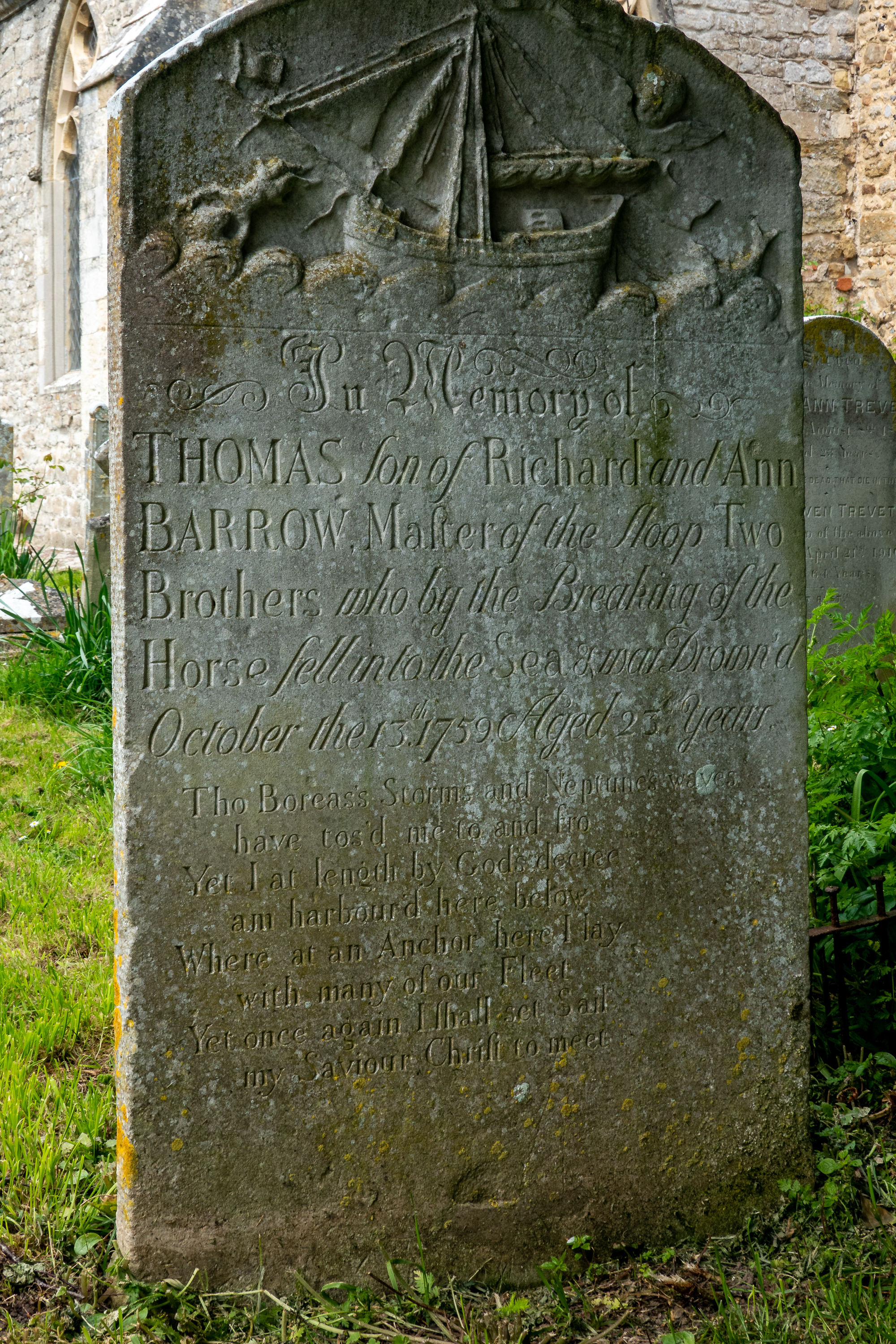
And Thomas, who drowned in a storm in 1759, age 23.
Denise, believing the sign.Ya think?
In this case, the threshold doesn’t hold the thresh, but keeps out the tide.
Ice creams available – limited time offer!
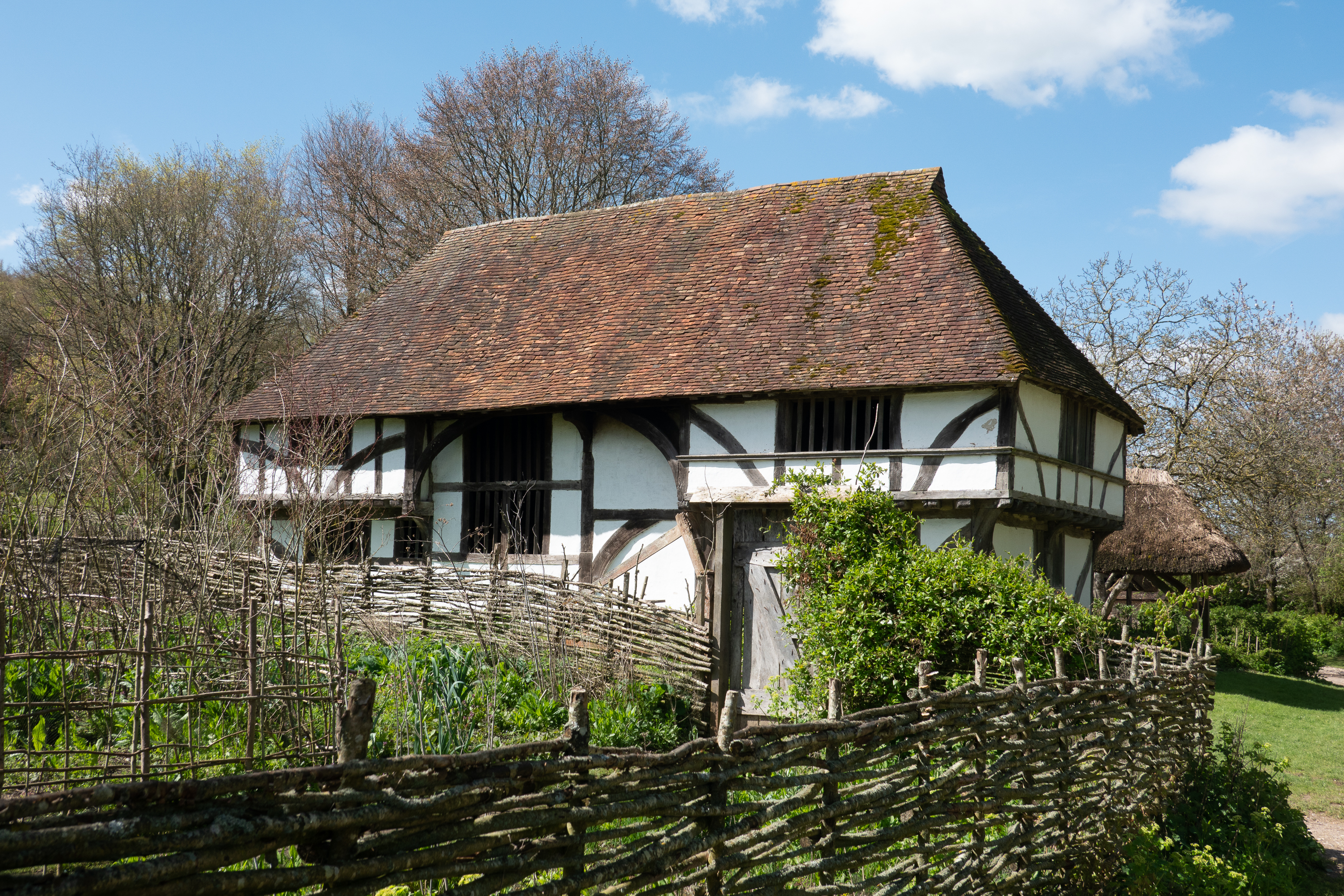
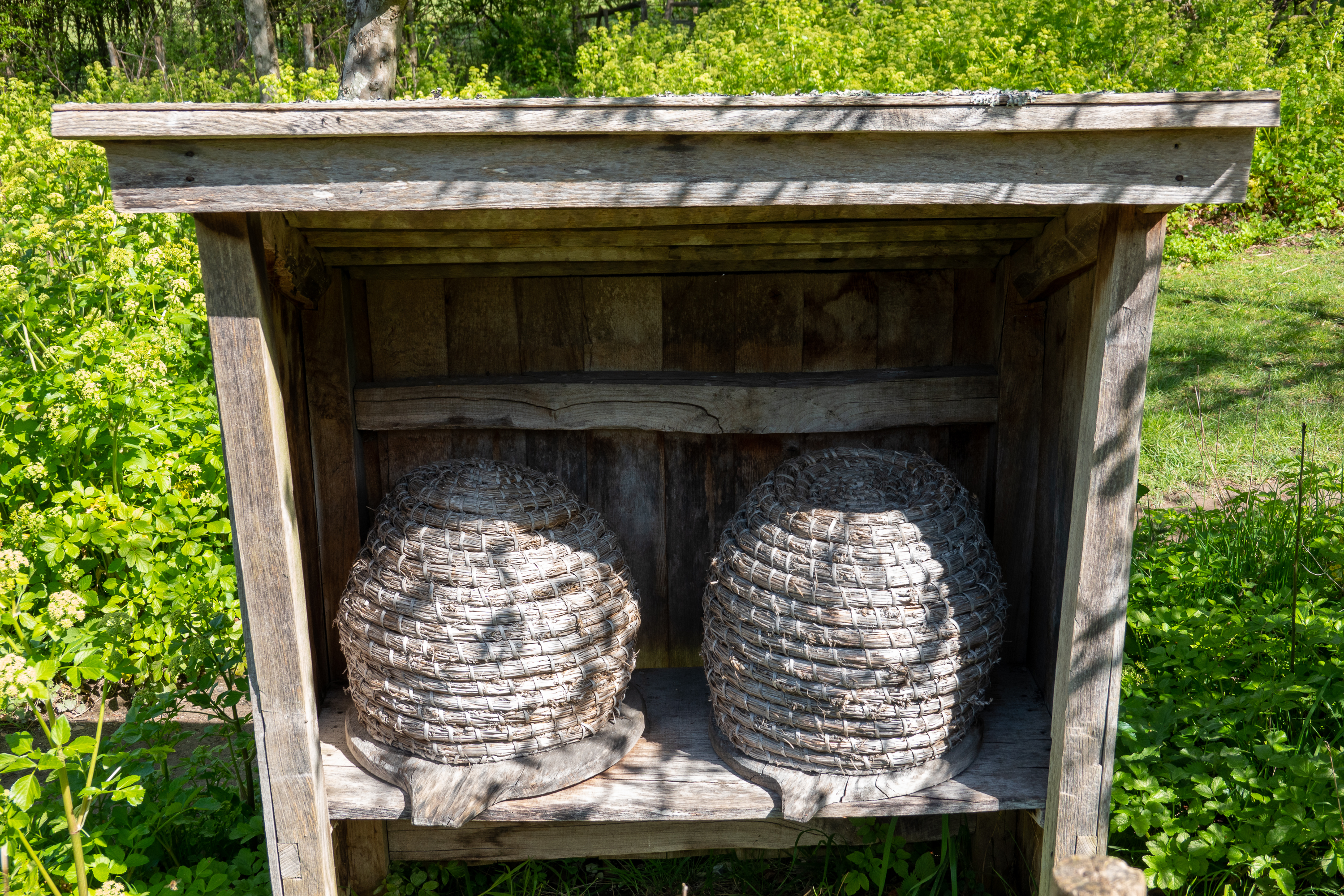
We spent a lovely morning at the Weald and Downland Museum. Our first visit in about 30 years! (https://www.wealddown.co.uk) The Weald and Downland museum is a large, open air collection of “vernacular” buildings from the Middle Ages on. Basically, the buildings in which real people, not the nobility, lived and worked. It has parallels in Colonial Williamsburg and Old Sturbridge Village in Massachusetts. If your image of the past begins with castles and stately homes, this museum completes the picture with houses of more ordinary people. It has expanded a bit and there were new exhibits.
Beautiful roofing work, but no chimney.Bedroom with “bed clothes.”Table set for dinner.Pegs to hold your shingles in place.
House of a wealthy merchant or farmer.Early RV
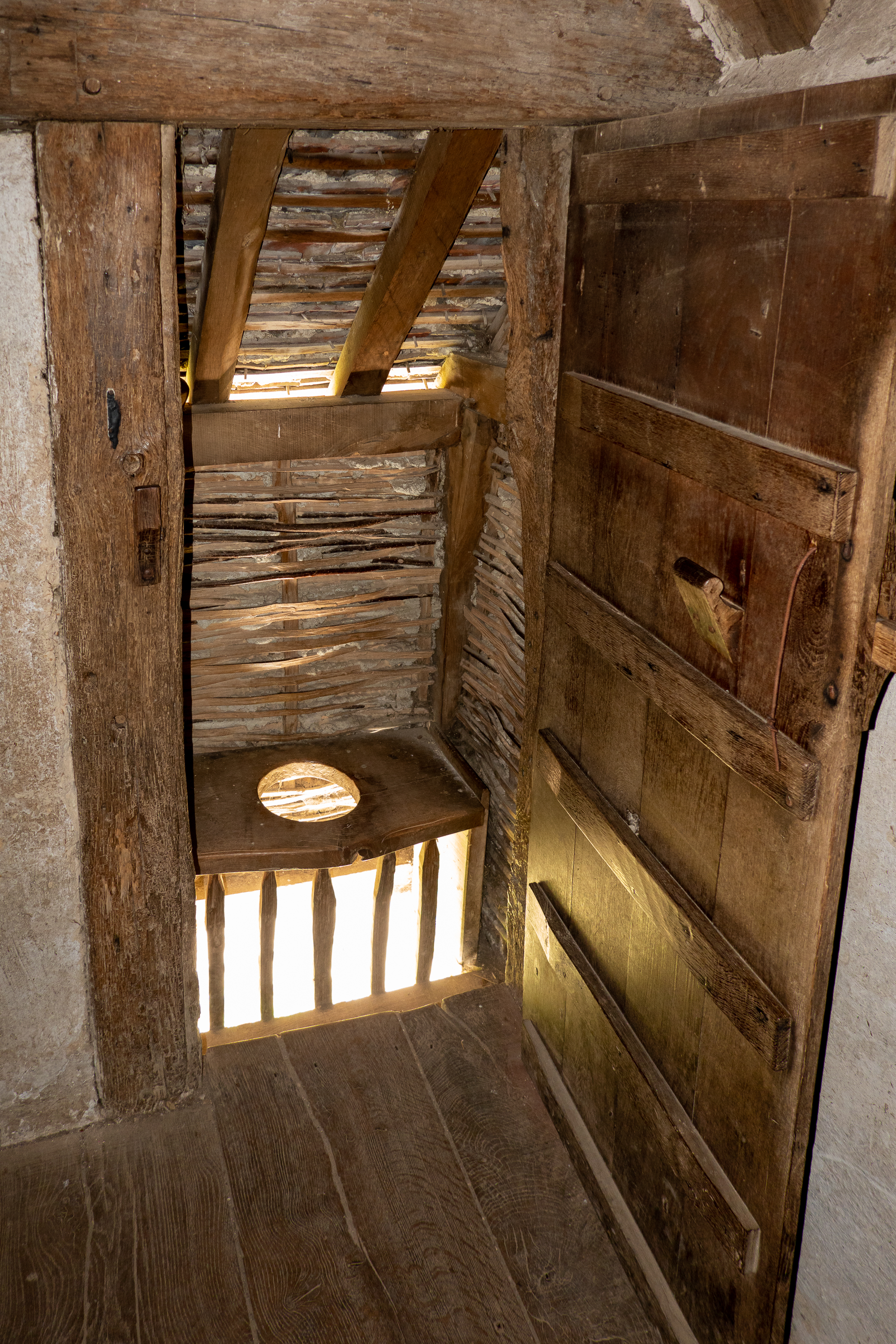
Wealthy merchant, a garderobe.Nasty job, cleaning the cess pit.
One of our family pastimes is noting family names that are actually professions. In this case, Thatcher.This is one of the more modern houses; it has a chimney – required after the fire of London.
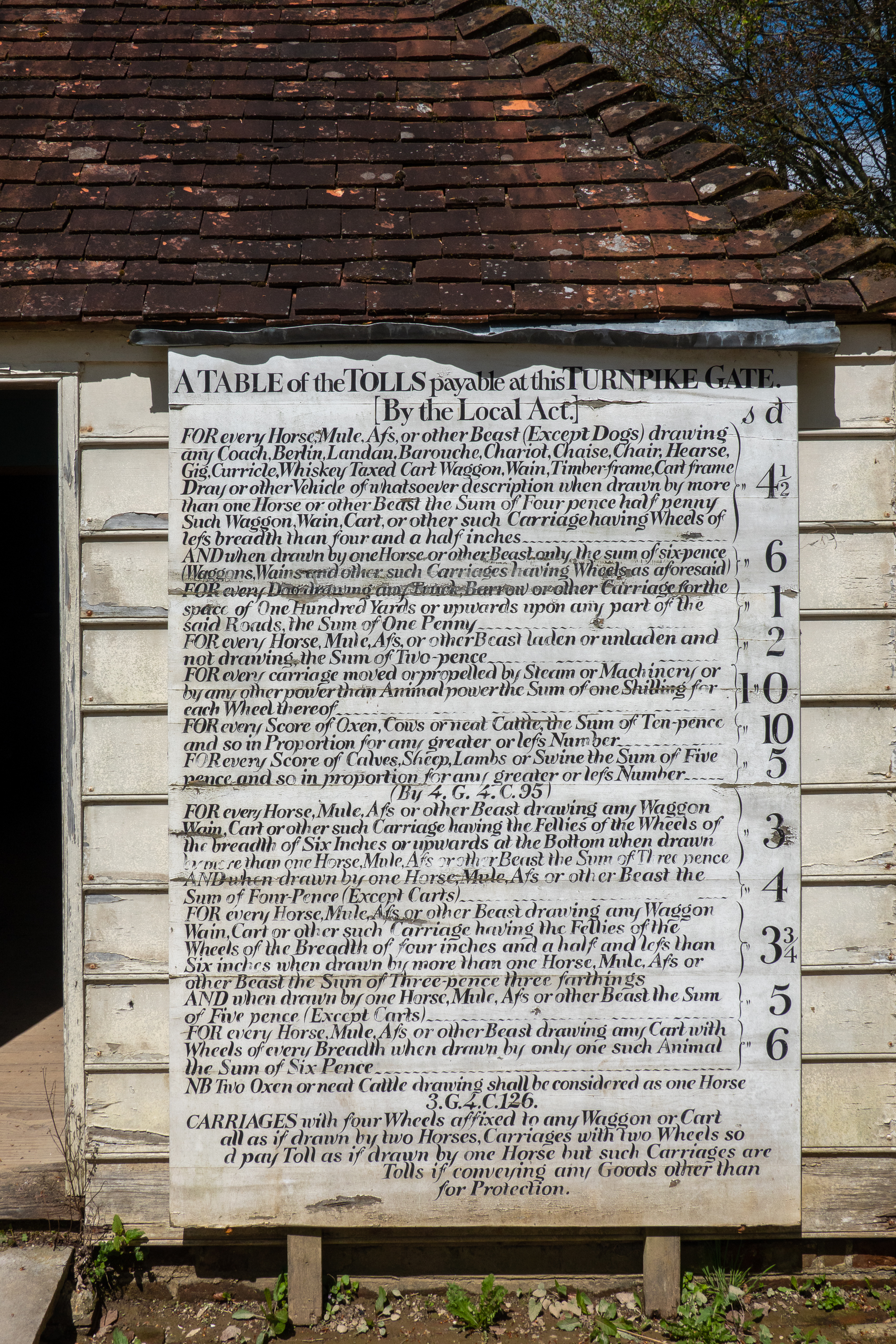
Medieval radioFans of Georgette Hyer will approve of “The Toll Gate.”This is simply one of the houses you can see from the museum.
I suspect that this one has indoor plumbing, heat, and power.
A reminder that when these building are relocated, every single stone and beam has to be marked for reassembly.And here are the tolls to be collected.
Finally, we had word that we could pick up the 917 in Southampton. We really appreciated the train system around that area. We had taken the train from Gatwick Airport to Trevor’s local station, Barnham, when we arrived. Later we took the train from Barnham to Chichester to shop and now we took the train from Barnham to Southampton to pick up the truck. A great system. The Brits always complain about the trains, but would that we had similar service around DC. Oh, we did. And we had street cars in DC – until the great Firestone/General Motors campaign of the 1950’s. Breaks your heart.
And she has arrived, in perfect condition.
We spent a day unpacking our clothes as we had shipped some in the camper. We had also locked most of our possessions in the back garage, so that all needed to be organized and sorted.
Those who know our family know why this was an ESSENTIAL provision for the trip!
Then we visited the camper storage facility that we had thought to use during our returns to the States only to find that they thought us to to be “inappropriate.” So we are currently looking at alternatives – stand by; trains may be involved again! We had our first shopping trip and then headed back to prepare for departure.
After finding our bearings on day one, we had a better idea of what we wanted to see on day two. We started by taking the Hop On Hop Off bus on its second route.
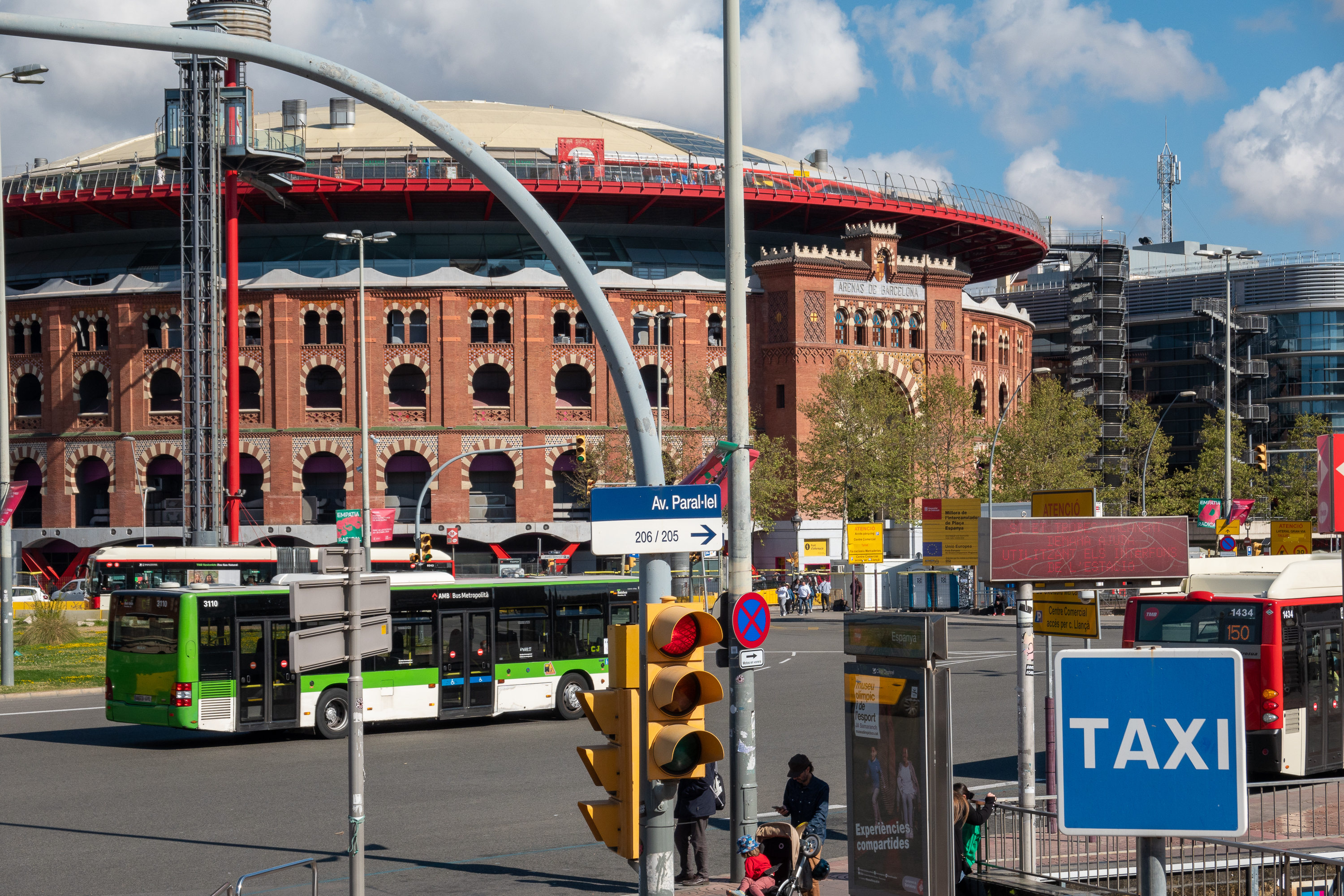
The arches on the bull ring harken back to the Romans and the Moors.
American Cultural Imperialism!
Everyone recommended the Barcelona Maritime Museum (https://www.mmb.cat/en/) So we “hopped” off the bus at the front door. It is an amazing place with a full size reproduction of the galley “Real”, the flagship of the Holy League Fleet at the Battle of Lepanto. (1571)
This beast is massive and, for fans of classical galleys, note that the ram is now well above the water line. This allows the ship to be faster than a Greco/Roman galley. These ships were fitted with cannon in the bow.
The world is divided into two types of people, normal people who have never heard of the Battle of Lepanto and geeks like Fred who love this stuff. (https://en.wikipedia.org/wiki/Battle_of_Lepanto) He remembers a young adult book about the battle which turned on the adventures of a young fisherman who was there, met Miguel de Cervantes, the Spanish author, and had other adventures. Cervantes was badly injured during the battle.
Fred needless to say, knew all about this and was absolutely fascinated by both the small scale model and the full size reconstruction, which had been built for the 300 year anniversary. (Build a few more and we could make a great movie!)
Large scale model
Displays about the life led by the enslaved rowers were interesting, if depressing. While there were some paid rowers, as in Roman times (sorry, Ben-Hur is wrong), most were slaves who spent all their time chained four or five to the oar. When not in battle, the ship was typically rowed by only a quarter of the rowers at a time, but they never left their oars, day or night, while at sea. Moslem scholars noted that you could smell a Christian galley before you saw it.
Denise showing off the fine lines and shallow draft. (Of the galley.)
The Ottoman admiral (amir al-bahr, now you know where the word originated – literally the commander of the fleet), Ali Pasha is supposed to have told his Christian galley slaves, “If I win the battle, I promise you your liberty. If the day is yours, then God has given it to you.” John of Austria, more laconically, warned his crew, “There is no paradise for cowards.”
The building housing the Maritime Museum is itself of great historical interest. It dates back to 1500 and was built as a multi-lane shipyard, where the original ship was built.
Each of the galleries in the shipyard is huge. Amazing to consider that most of the Spanish galleys at Lepanto were built in this very building.
History records that by the Battle of Lepanto in 1571, the galley was being replaced by the galleass. (https://en.wikipedia.org/wiki/Galleass) Most scholars attribute much of the Holy Leagues success against the Ottomans to placement of six galleasses at the front of the fleet where their unique ability to fire broadsides devastated the Ottoman galleys which could only fire forwards.
The reconstruction is beautiful.
By the Battle of the Armada in 1588, almost all of the ships used were galleons with no oars, but lots of cannon on the sides. But, it is reported that there were four great Venetian galleasses that were seaworthy enough to cross the Bay of Biscay.
Outside of the museum, the paving was being repaired. And right underneath was ancient paving. Roman? Medieval?
On a nice bright sunny day we took a cable car from the port up a hill to the south of the city. The views were spectacular and included full city views (See pictures at top of page) plus the loading of a ferry to Morocco. We even saw a Unimog camper being loaded. And enjoyed a nice cappucino coffee with our view!
These ferries go all over the Mediterranean; Italy, Morocco and beyond.
We visited more museums while in Barcelona. The first was the Picasso Museum. The mature Picasso is a specialized form of art. But we had learned that the Picasso museum featured his early work as well, and that aspect of the museum was absolutely fascinating – to watch him evolve from a superb, but very “classic” painter into an avant garde artist. While Fred is not a fan of the avant garde, it is clear that he would never have become as famous had he continued in the traditional vein. (No photos)
But our taste runs to music rather than Picasso and after another wonderful tapas dinner, we enjoyed an excellent Flamenco guitar and dance concert at the Palau de la Musica. The guitarists were stunning and we even bought a CD! (https://www.barcelonaguitartrio.com/en/bcn3-2/) They are a local group and the audience clearly liked and supported them.
Incredible ceiling
The hall was beautiful and had a definite Barcelona/Gaudi vibe.
Your photo with the band.
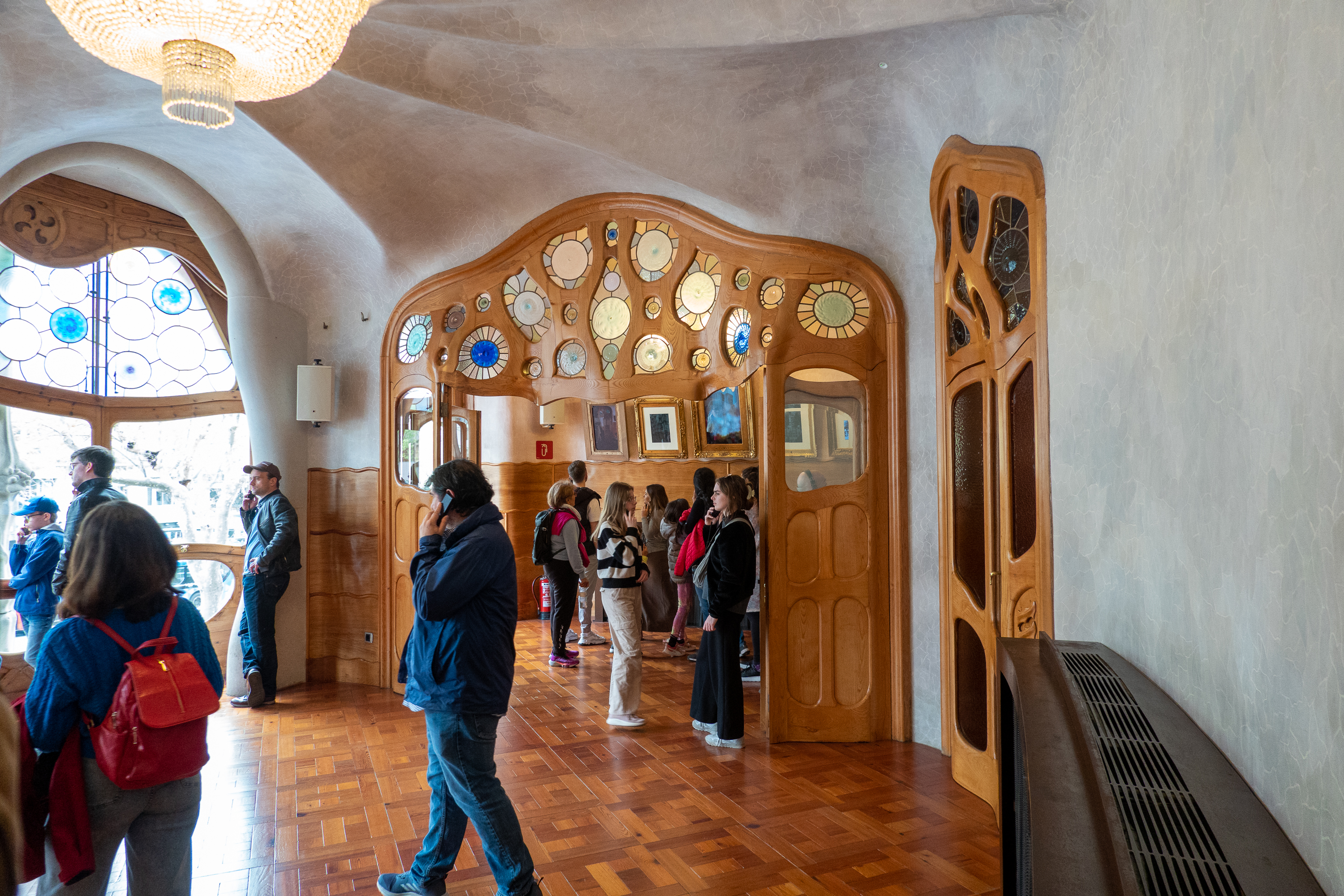
The second Museum was the Casa Batilo, remodeled by Gaudi with a free hand and deep pockets. The result is an absolutely different house design, though based on some very interesting science, with no straight lines anywhere. (https://www.casabatllo.es/en/) Casa Batilo means “bat house” but sometimes it seemed more batspit crazy!
Even the exterior is unusual. Not unique, as there are many buildings in Barcelona with the fantasy curved lines.
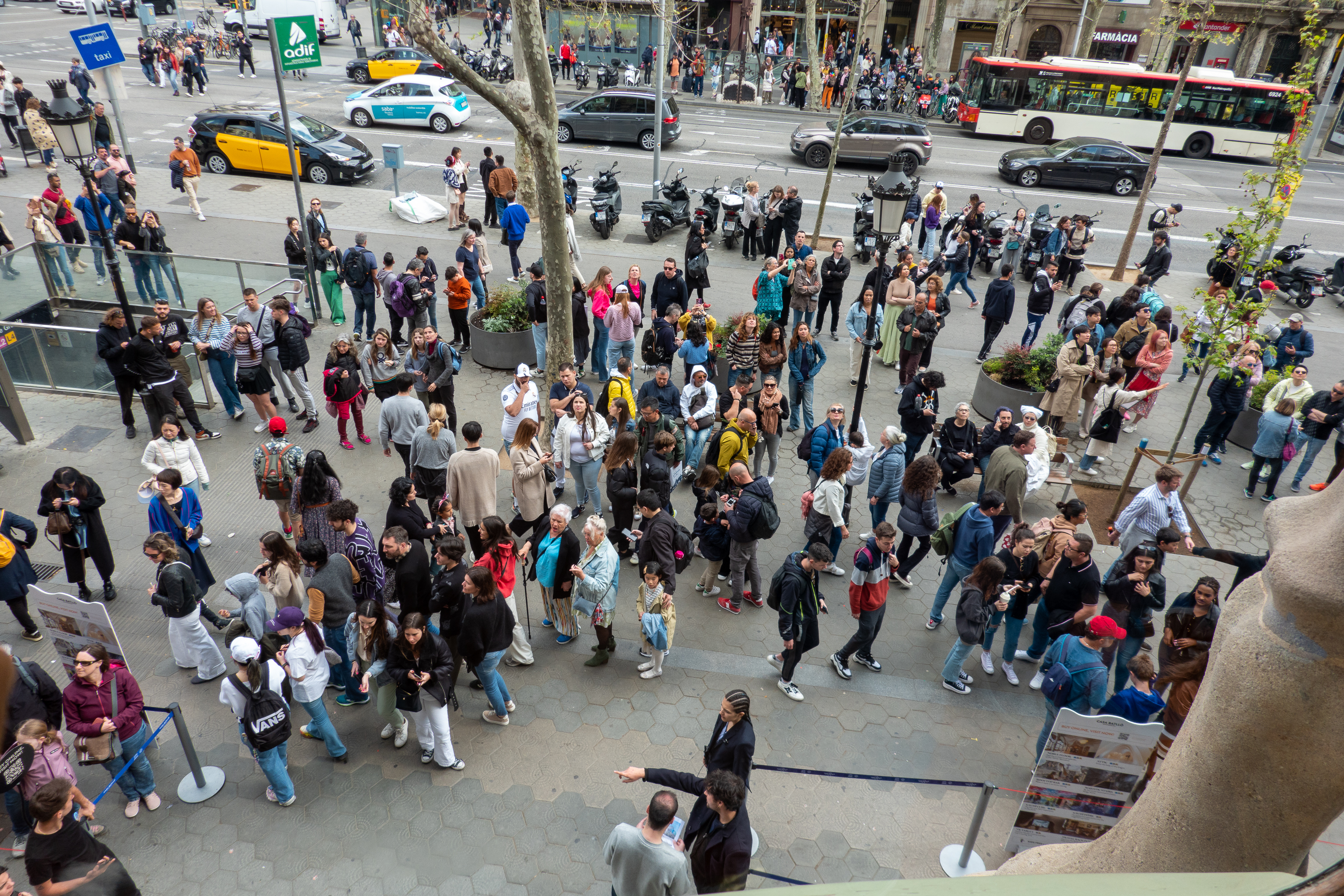
Big crowdBent walls and underwater colors
Wild colors, but this air shaft is actually practical.
Denise, debating whether we need a new front door.
The last hurrah of the visit is a hallucinogenic light show. The ’60’s live!
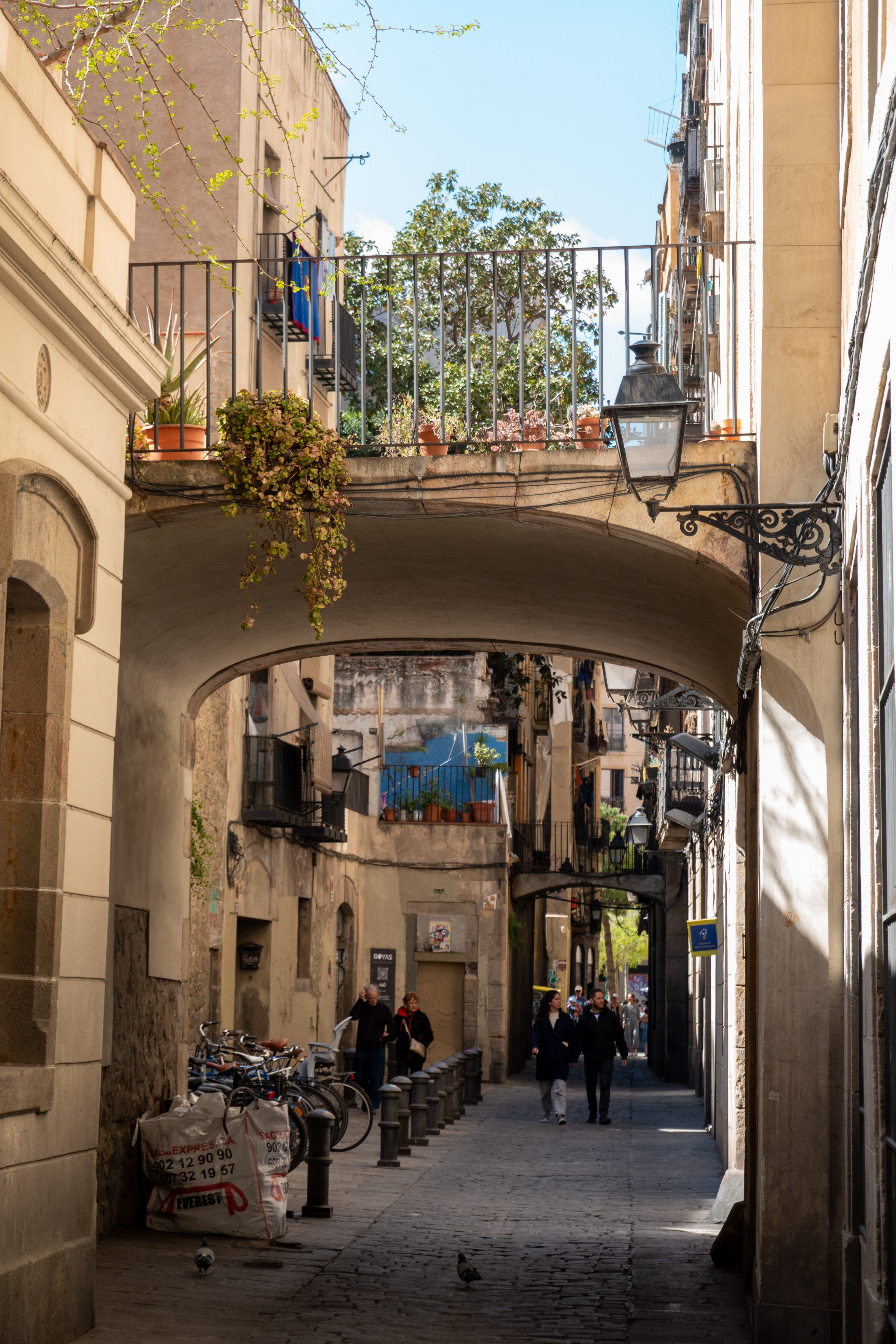
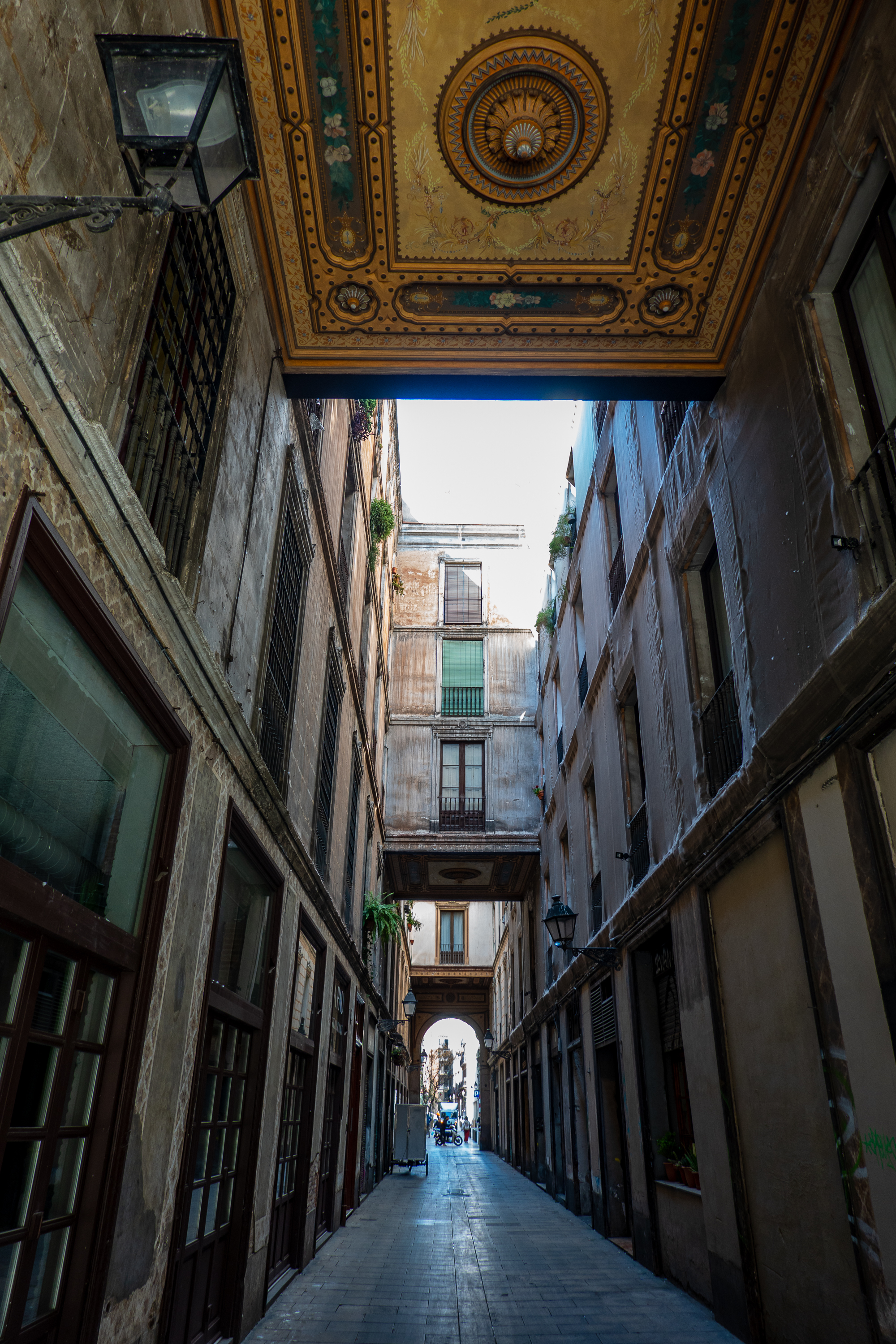
Lastly, we simply enjoyed wandering the tiny streets of the Gothic section near our hotel. You never know what you will find….we found ice cream shops (with wonderful ice cream inside), apartments and bridges built over the streets.
SavorySweet
Sadly, the cathedral was covered with wraps.
A confusion of walls and arches. Always reuse what is already there.
A seminal event of modern Catalan history was the Siege of Barcelona during the War of Spanish Succession. (https://en.wikipedia.org/wiki/Siege_of_Barcelona_%281713%E2%80%931714%29) The results were far reaching in many spheres, and one result was the leveling of the Born district to make a clear fire zone outside the city walls.
When it was restored, a large, modern steel market was built.
And when it reached the end of its commercial life, it was to be razed. When this started it was discovered that the market sat on an extensive range of ruins and, even better, because of municipal records, the exact details of almost every building were known. (https://elbornculturaimemoria.barcelona.cat/)
And, with that, it was time to pack for the flight to Gatwick.


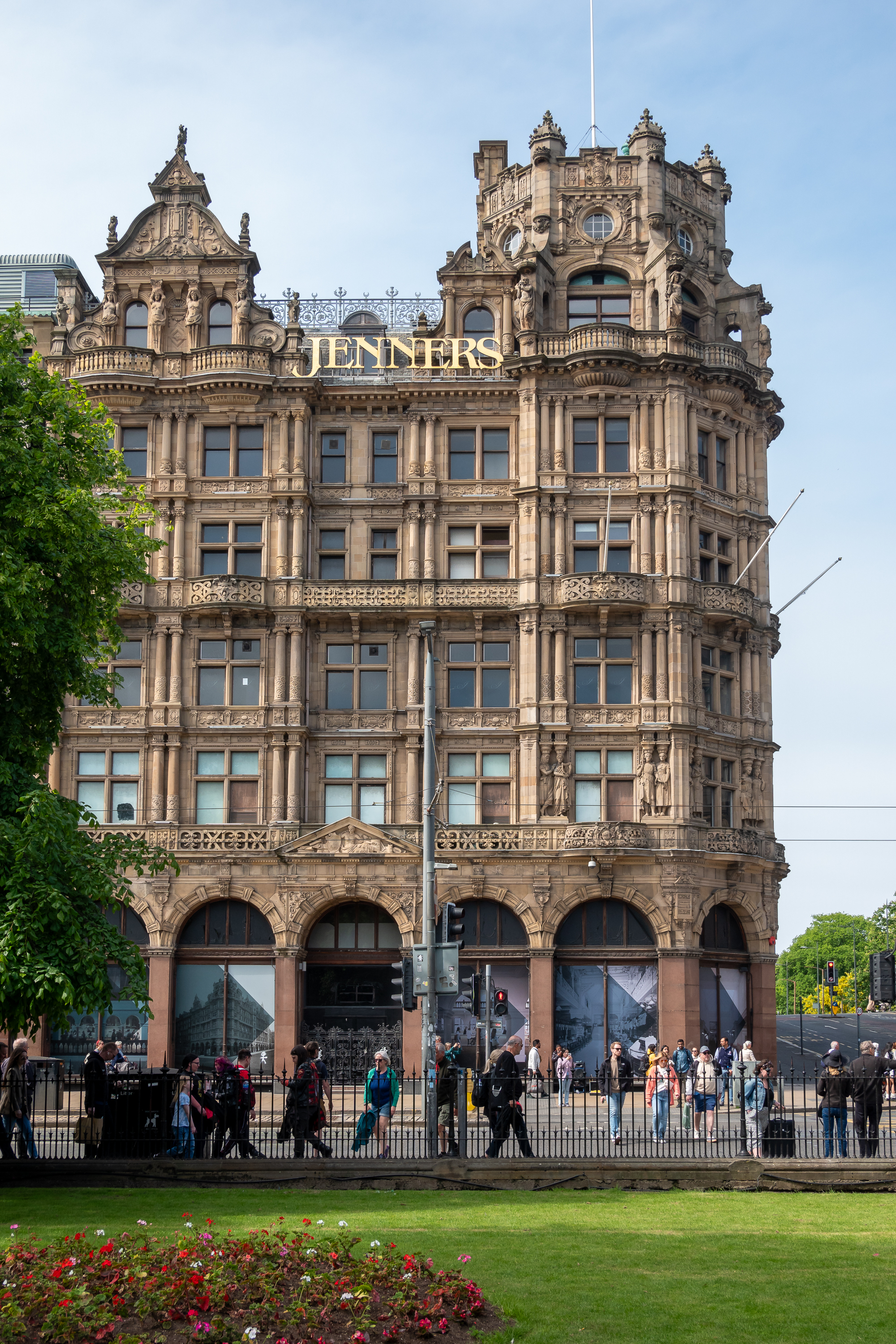
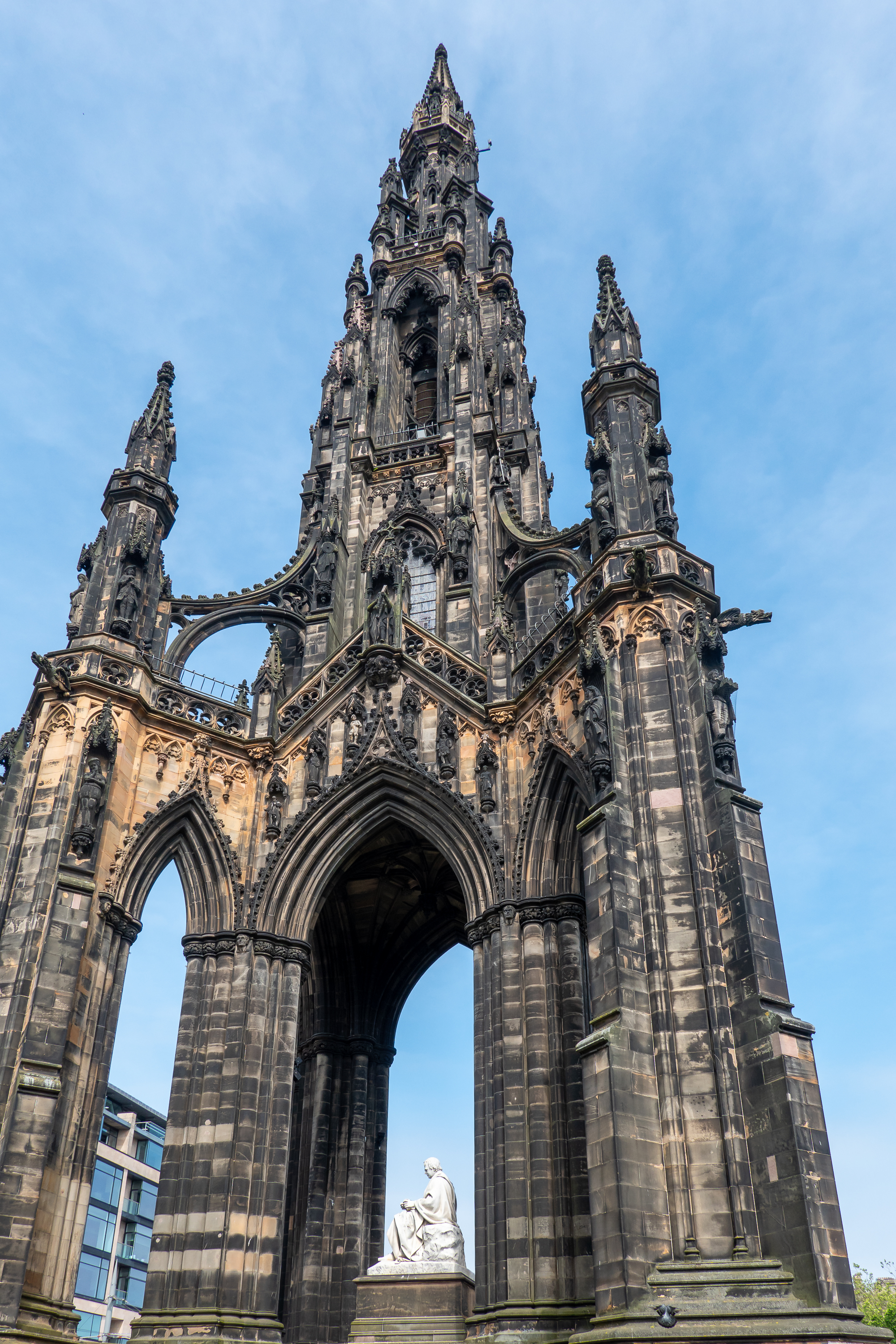
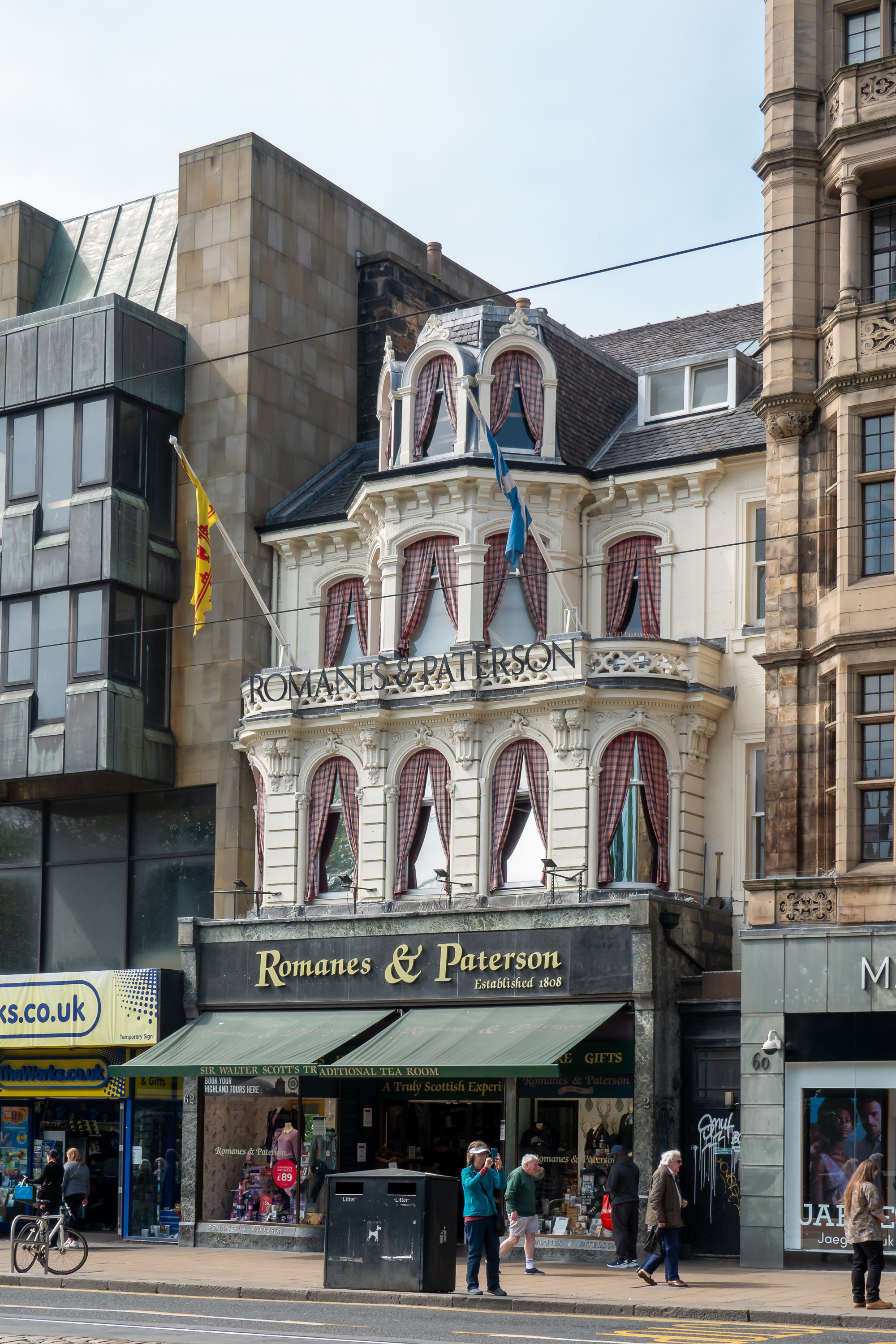

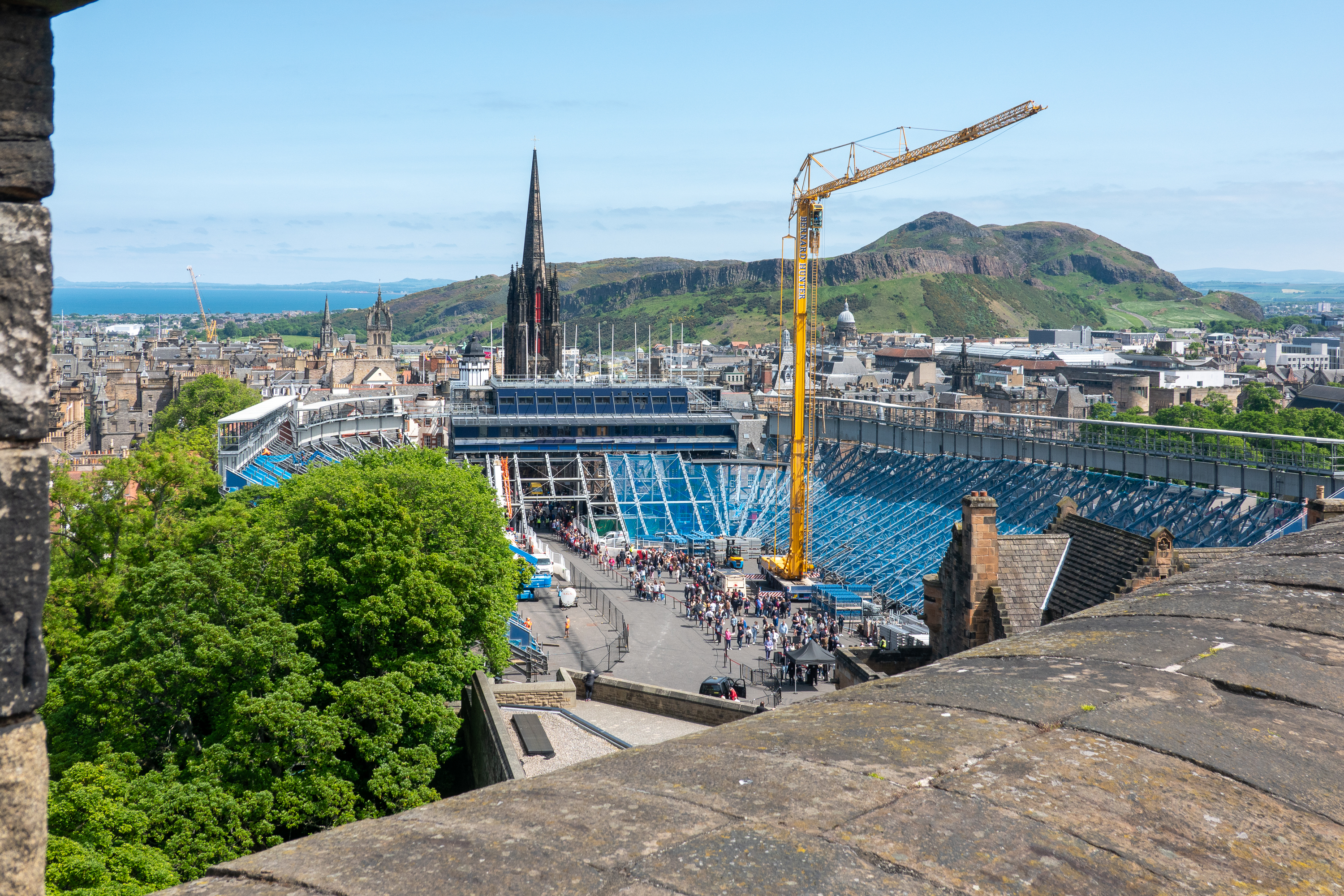

































































































 DiploStrat