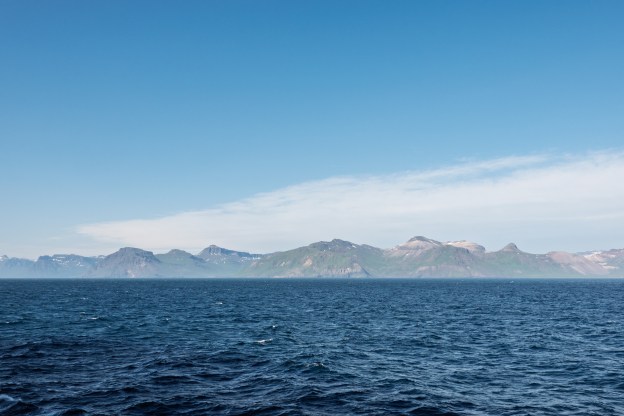
Iceland was not icy but we were very unlucky with our weather. But more of that later.
Isafjordur
Our first stop was Isafjordur in the Westfjords.
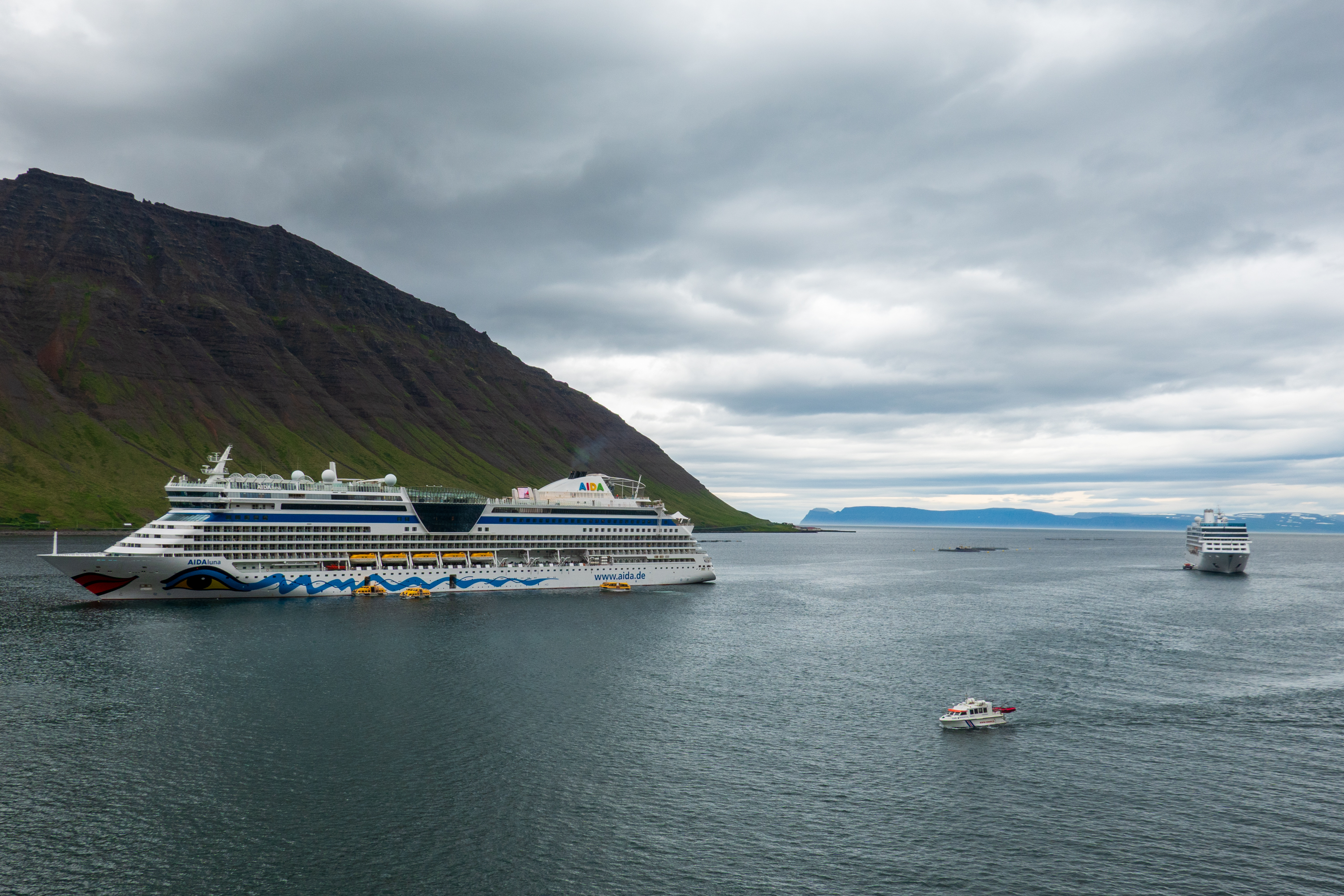
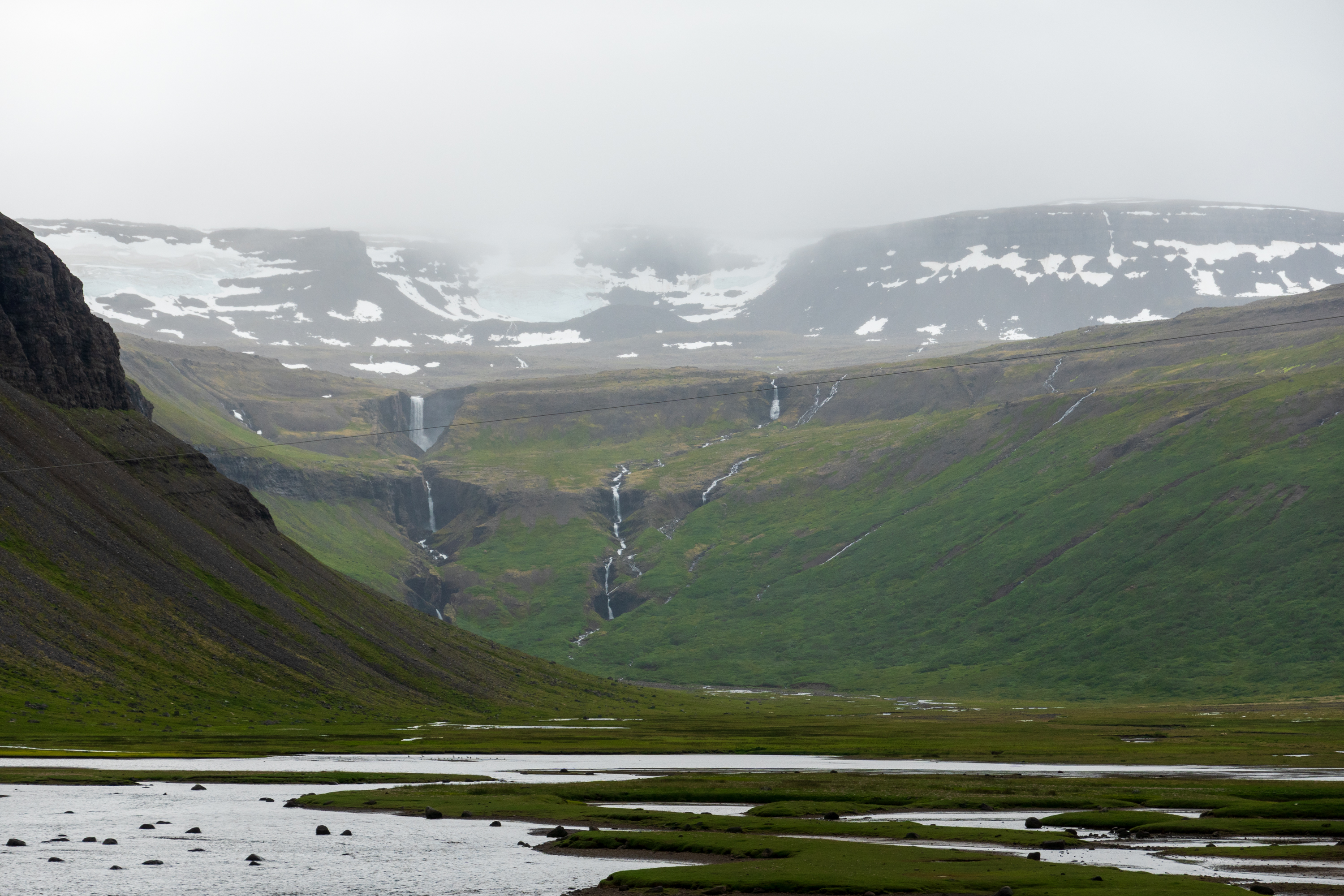
Founded in the 9th century by Vikings, it had been a trading port since the 1600’s. And while it is home to one of the largest fisheries in Iceland, it remains very much a small town. It was also our first exposure to the fjord geography and society. Much in the way that eastern mountain folk in the United States refer to someone as “living in the next holler,” Icelanders talk about someone living “two fjords over.” The steep walls and narrow valleys are said to provoke two, different reactions – some people say they feel protected while others find the geography claustrophobic. Places that are only a mile or two apart across the water or mountain can be hours away by road.
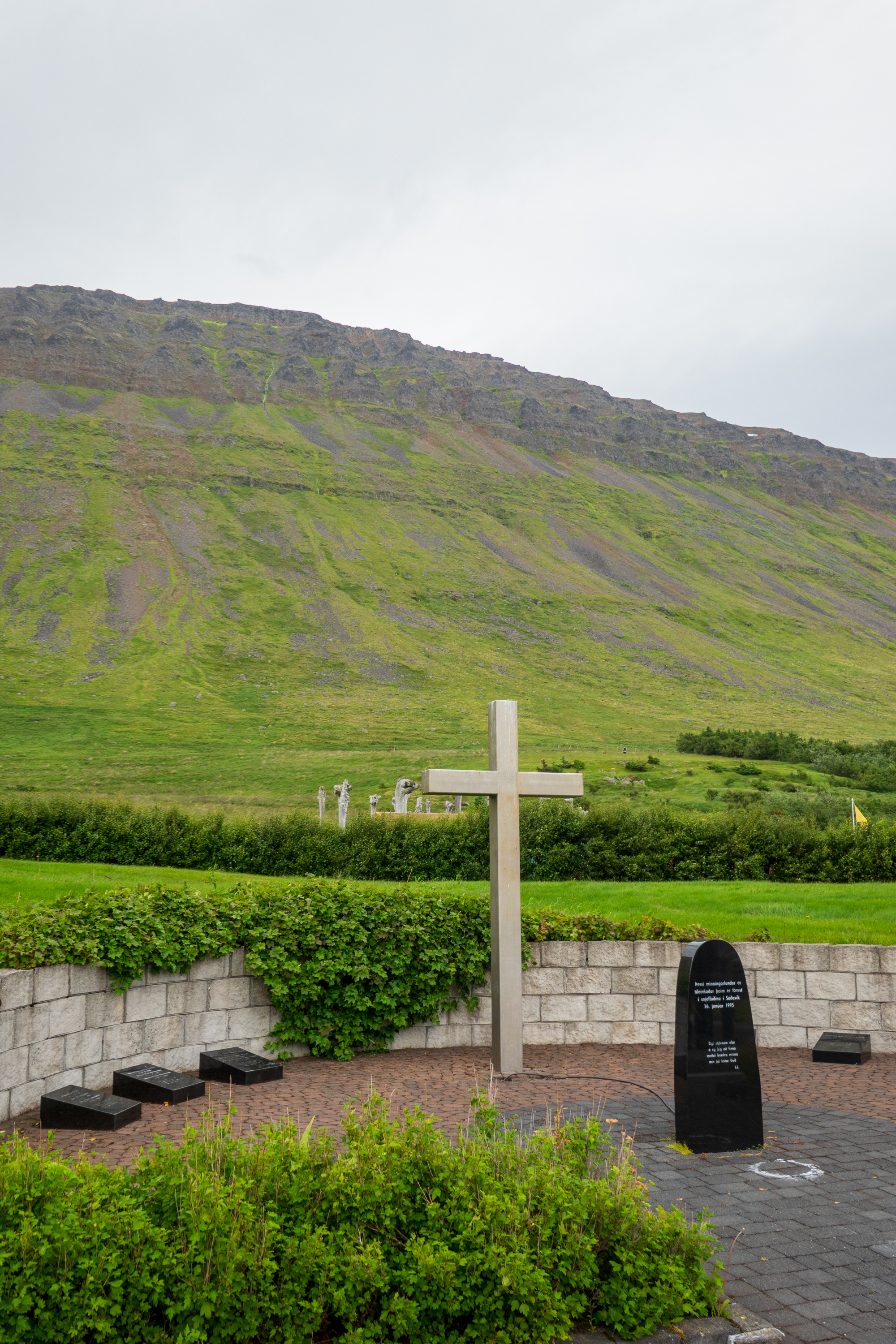
The day was cloudy and misty as we set out to visit Sudavik (Súðavík in Icelandic), the site of a fatal avalanche in 1995, the “Stolen” church, and the arctic fox sanctuary. The avalanche of 1995 swept away most of the houses and killed some fourteen people. Since then the village has been relocated and only “summer” houses are permitted at the old site.
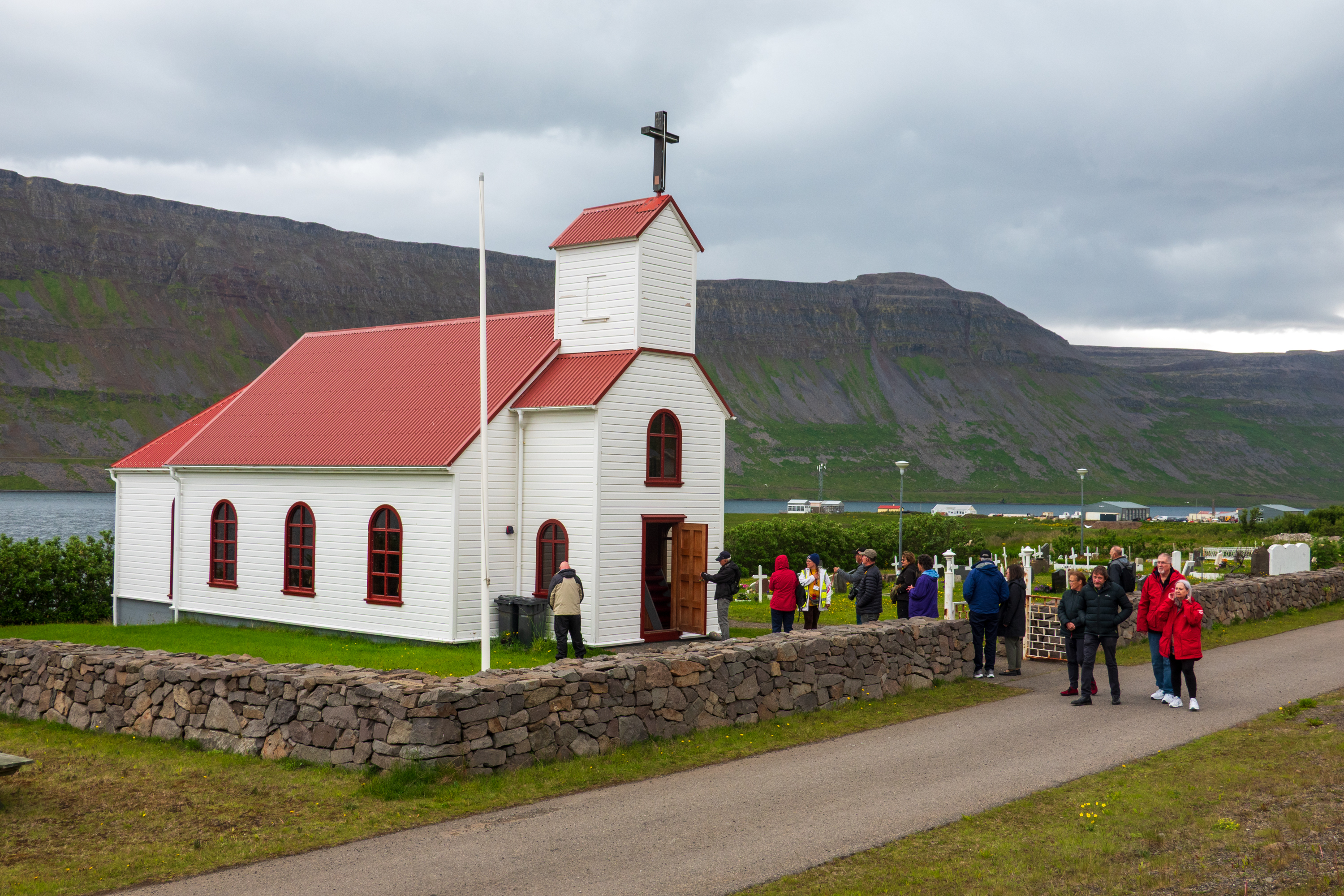
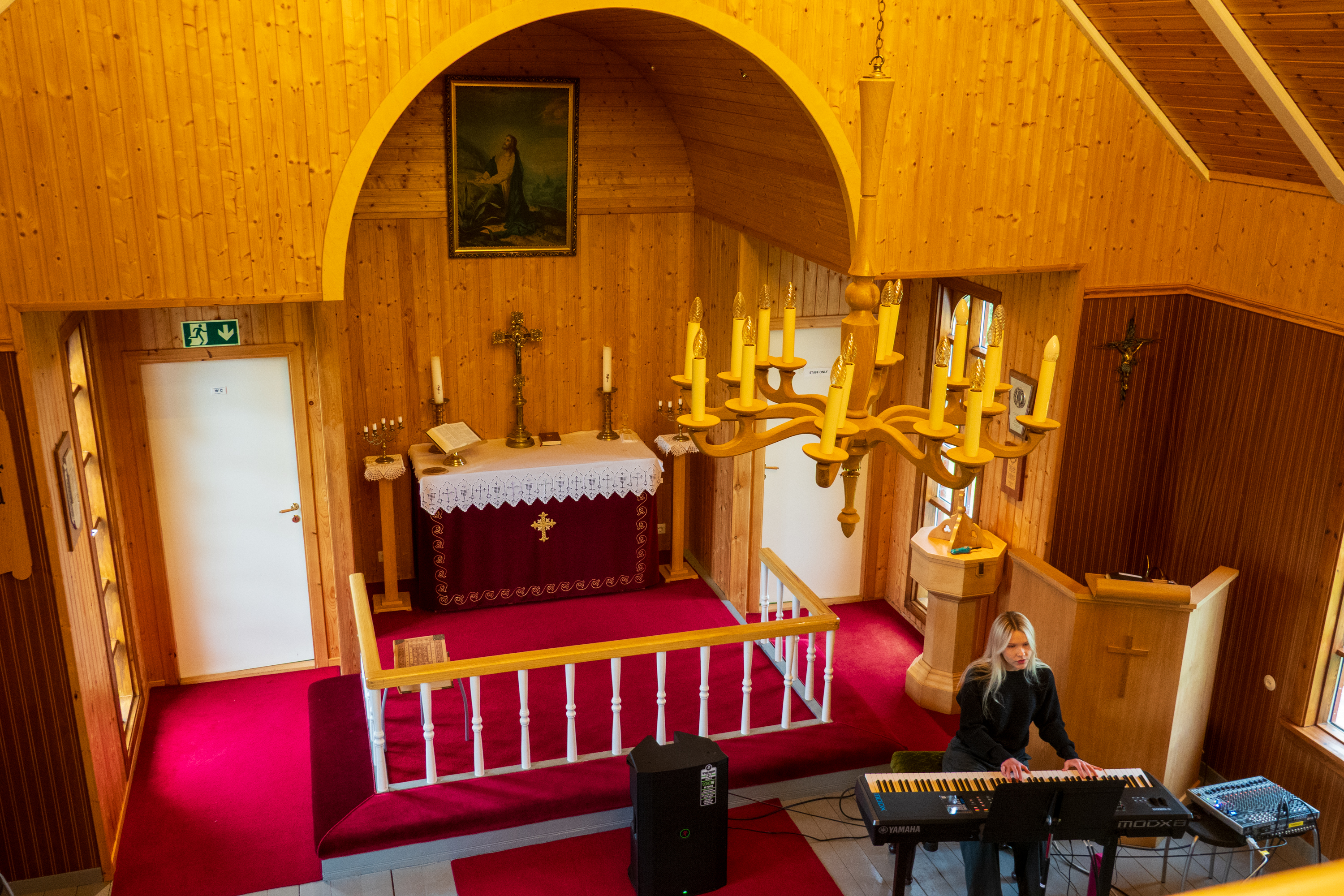
The “Stolen” church (Súðavíkurkirkja – there will be a spelling quiz) was originally built, with very expensive, imported Norwegian timber, in 1899 at a remote fishing village/whaling port. With the decline of fishing and whaling, the site was largely deserted the church fell into disuse. When the Sudavik congregation needed a new sanctuary, the church authorities refused to fund the project and told them to relocate the old building. It was reconsecrated in 1963 and the few remaining inhabitants of the original site claimed it was stolen. We enjoyed a simple concert.
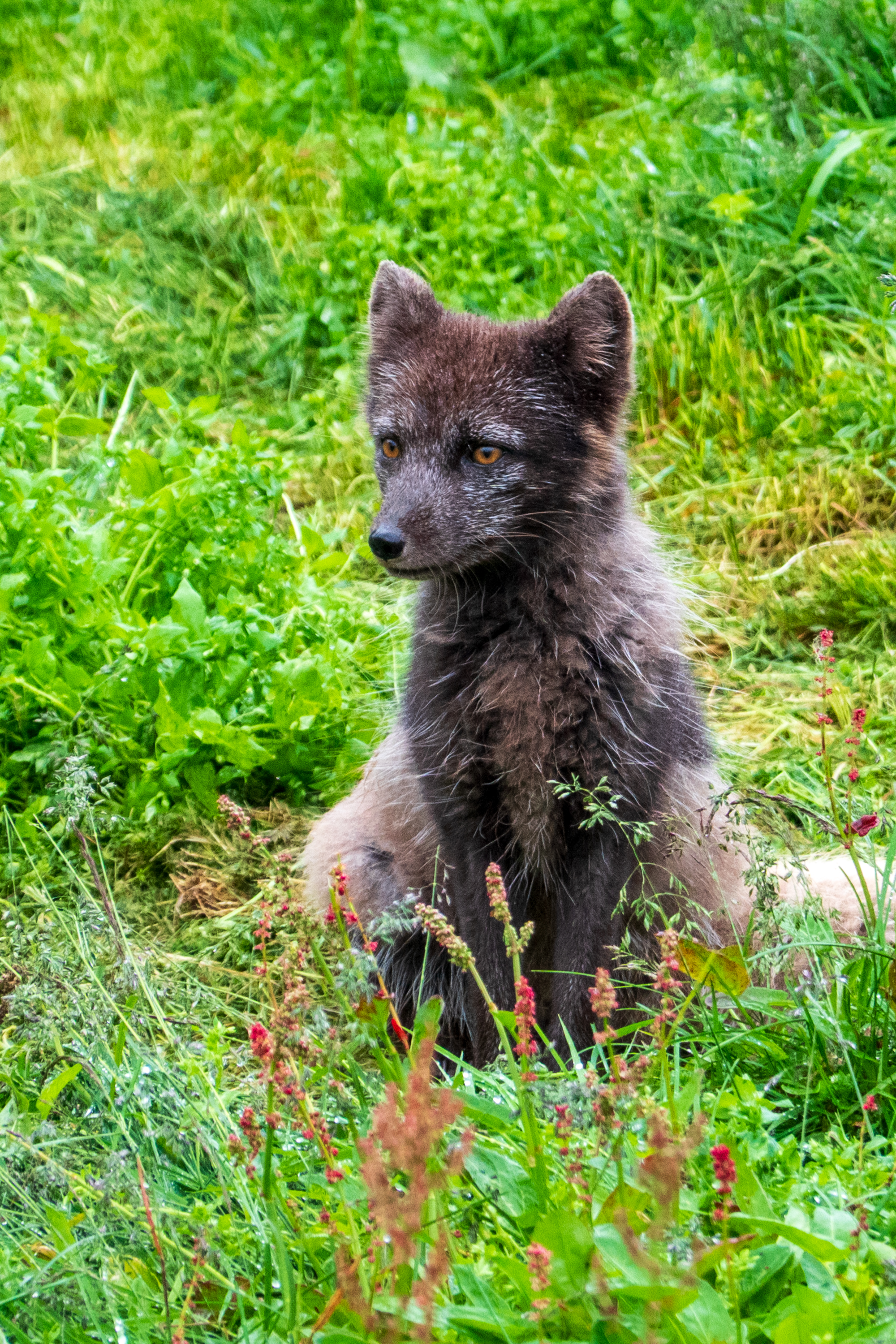
The arctic fox is the only native mammal in Iceland, living on birds, carrion, and, with the arrival of man, the odd sheep, goose, or chicken. These latter activities leading to their being hunted almost to extinction. We visited a small sanctuary where one, found as a cub, is being raised. They are quite small; hard to image them taking on a sheep.
Akureyri
Akureyri, or the capital of the north, was our next stop. Set at the end of the Eyjafjordur at the foot of the mountains, it was founded by Vikings in the ninth century and became a Danish trading post in the 17th century. It really felt like a town, with shops and a church, which still has stained glass windows from Coventry Cathedral which were relocated for safety during World War II.
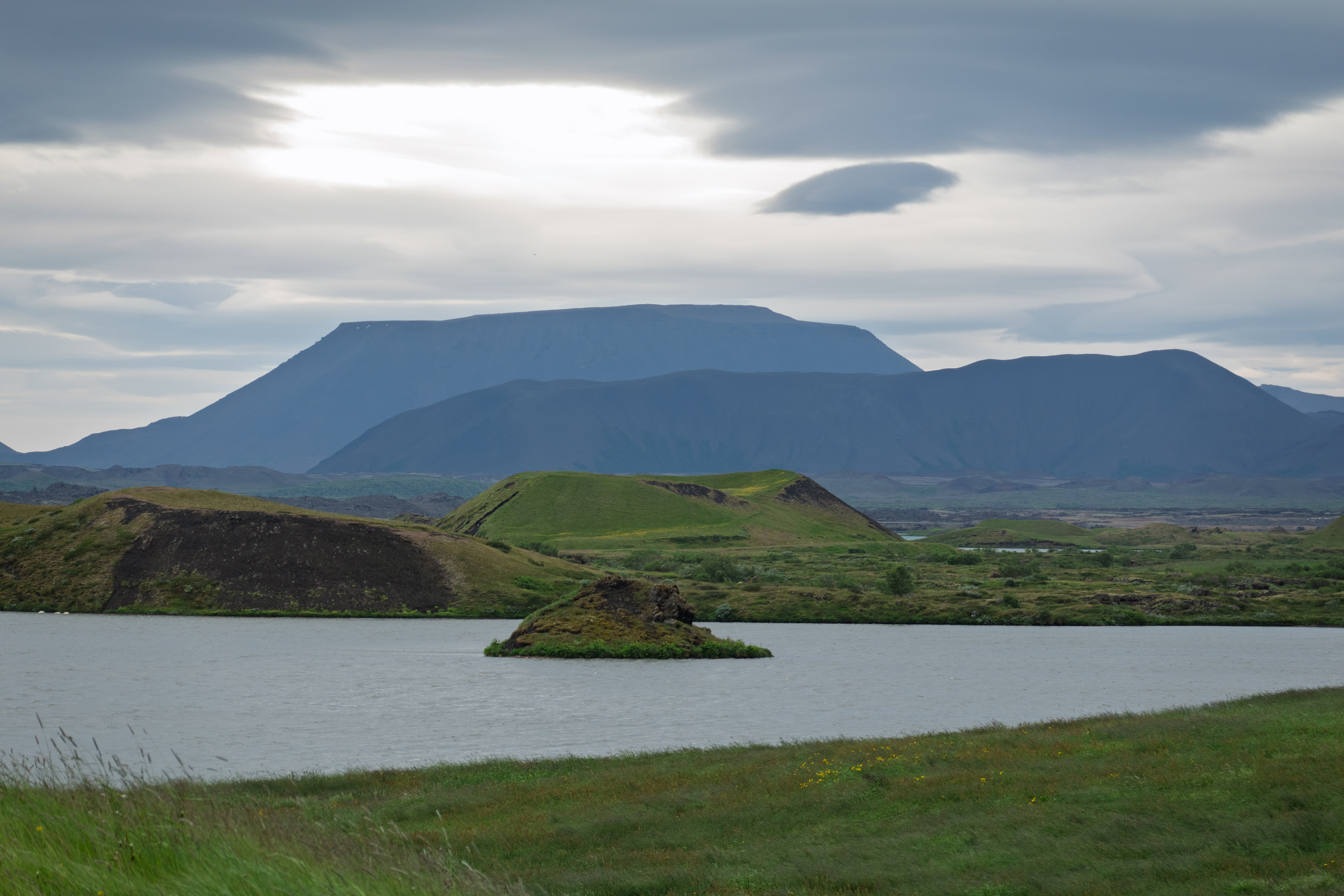
This was our day to see some scenery in the north of the country. We took a full day bus tour and started first at Lake Myvatn where we could see the lake views and the area of pseudo craters at Skutustadagigar. Pseudo craters were formed 2,300 years ago and are not true craters with a magma flow, but the result of hot, flowing lava crossing over wet, waterlogged wetlands. The lava traps the water and the heat turns it to steam. The resulting explosion forms a “fake” crater. Walking paths lead through it all and there is an interesting visitor center, which in addition to geology, discusses birds and, everyone’s favorites, two types of black flies. Hint: One bites.
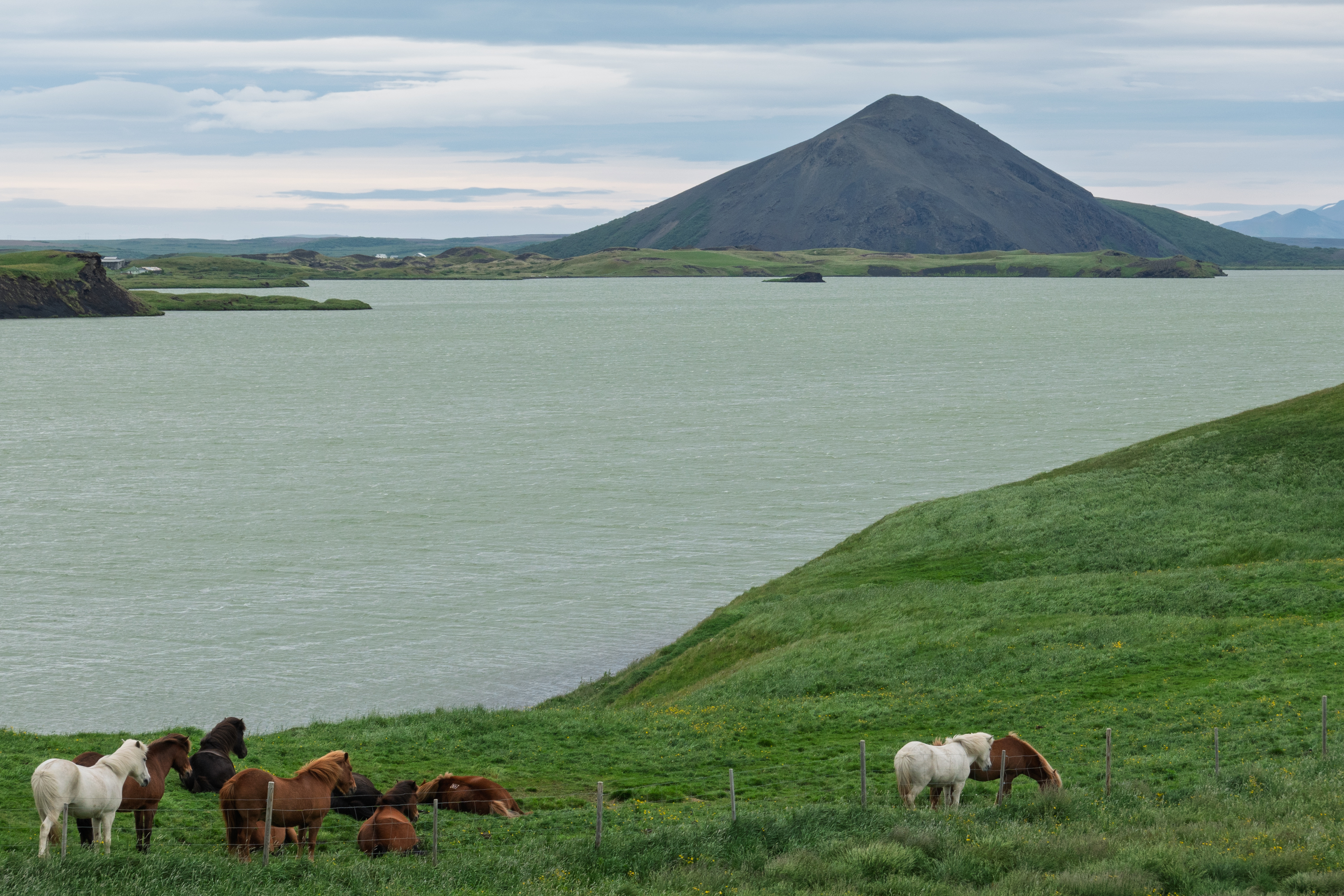
This was our first view of the diminutive Icelandic horses. (https://en.wikipedia.org/wiki/Icelandic_horse) The whole area is part of a large river delta and, as such, has more earth and thus more vegetation than other places.
Our next stop was the Dettifloss Waterfall in Vatnajökull National Park, one of the most powerful in Europe. (https://www.vatnajokulsthjodgardur.is/en/areas/jokulsargljufur/dettifoss )
We started by taking the easier trail up to one of the overlooks but then decided to take the second, harder trail to a second overlook for a better view.
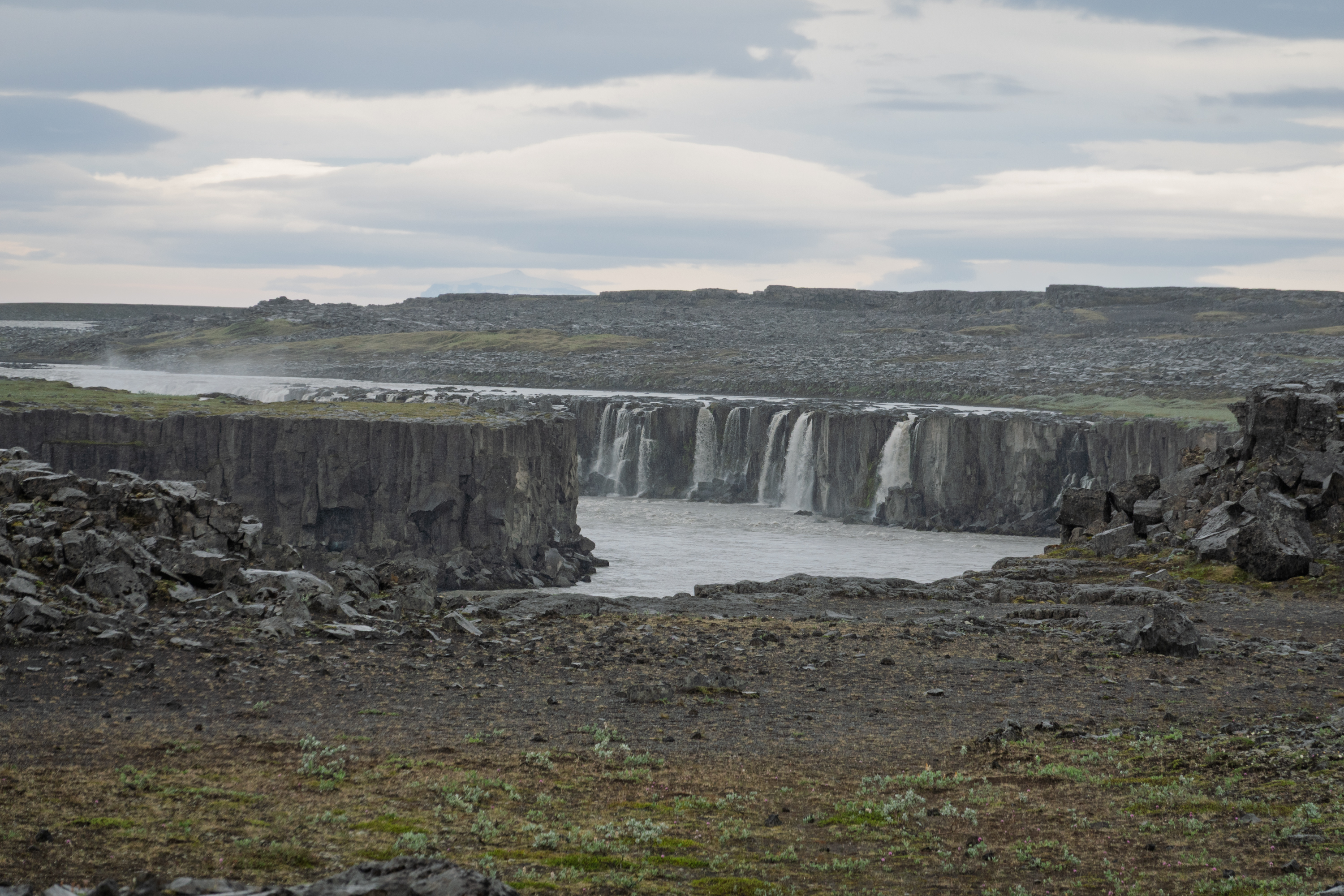
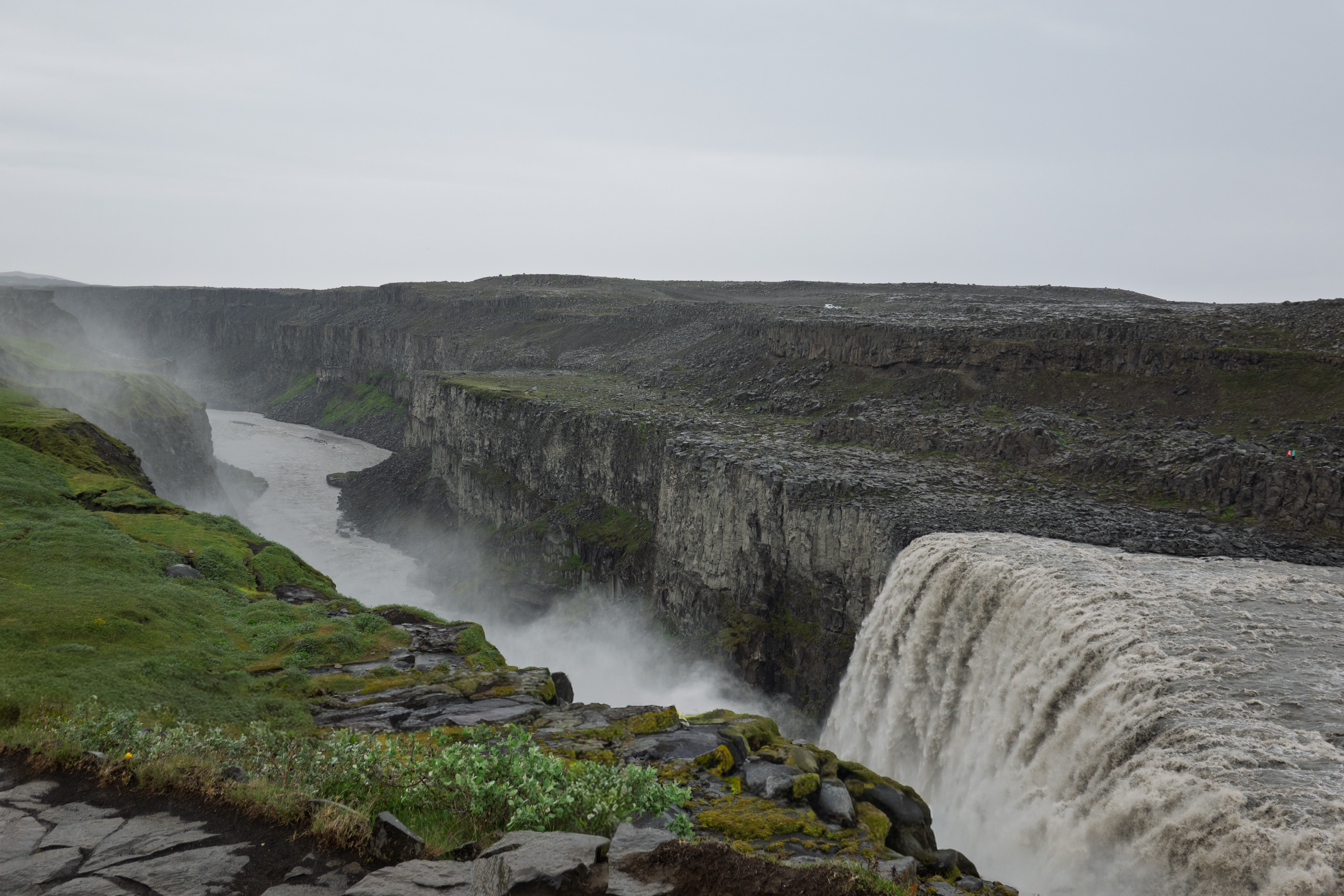
Of course, the heavens then opened and we were quite wet when we got back on the bus.
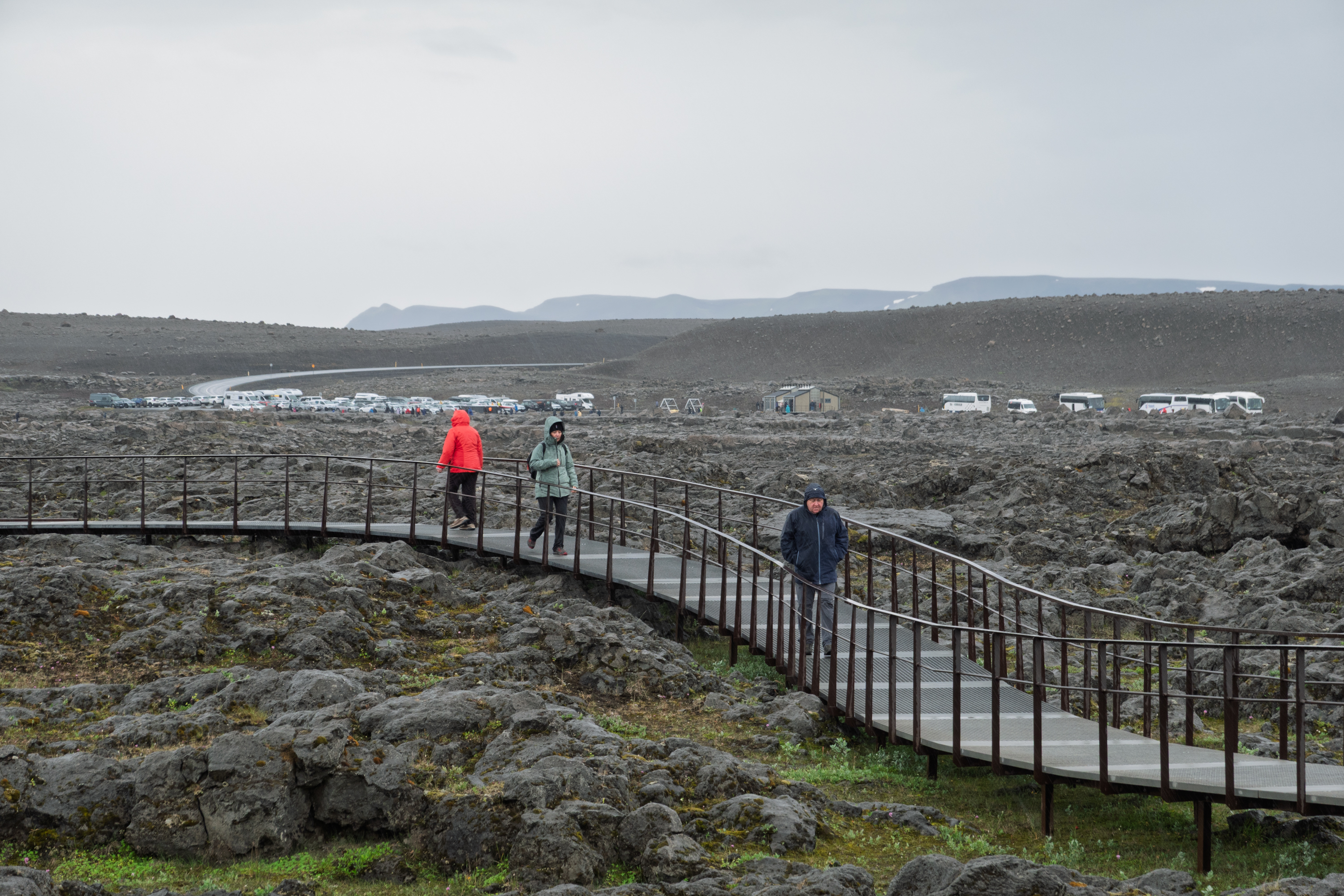
We stopped for a great lunch of soup and salmon. Fred’s favorite, not! But even he admitted that it was very good.
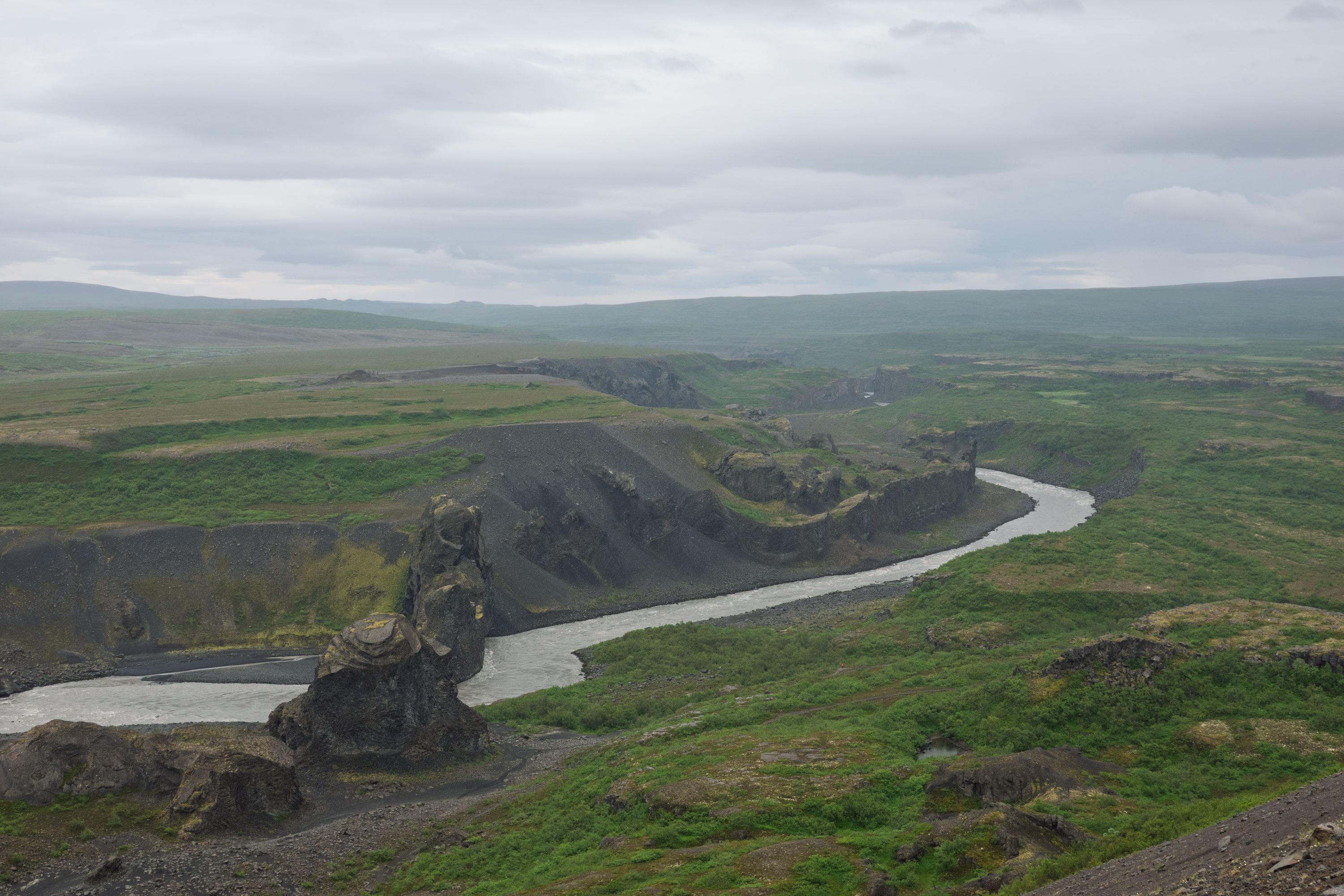
We then moved on to Husavik, an important fishing port and a major tourist center. There are lots of whales in these waters and Husavik is a whale watching boat center. It was almost not raining here, quite a shock!
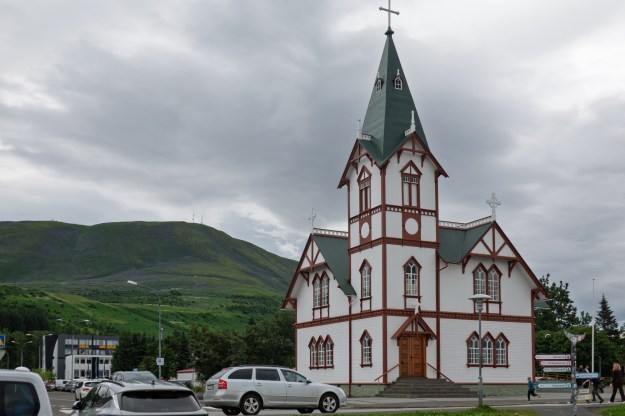

Tired and soggy, we rode back to the ship.
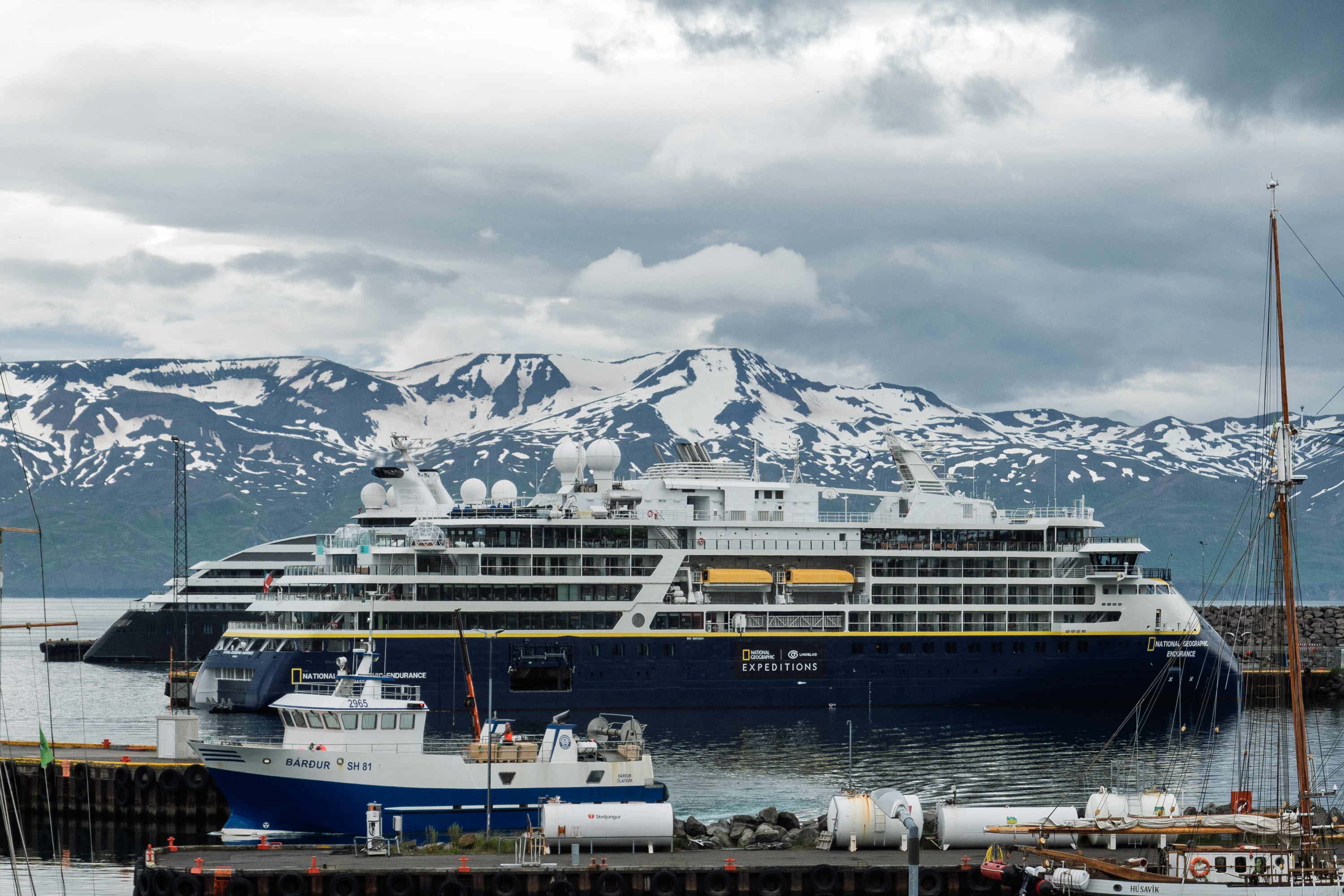
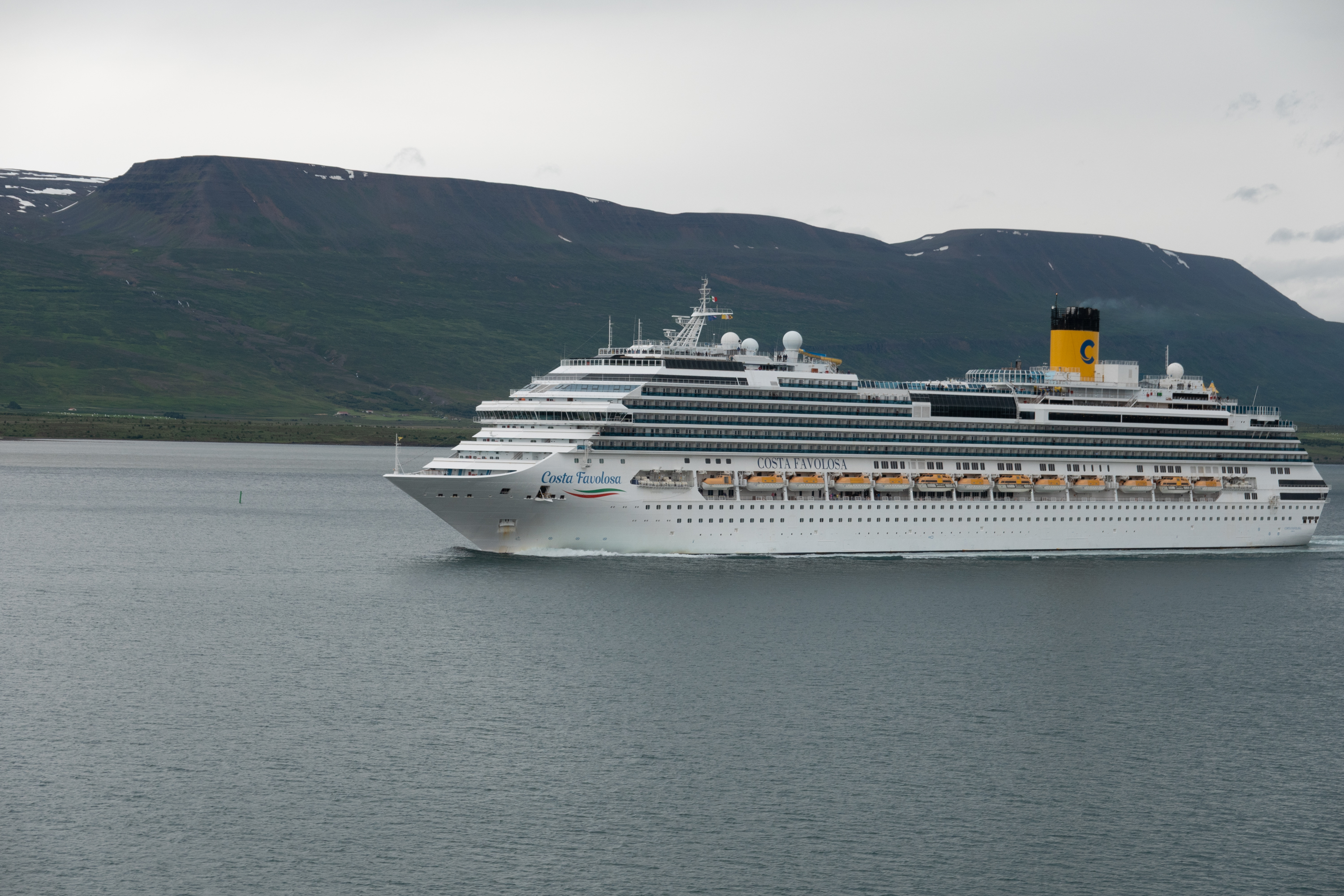
As we sailed away, we noted the two extremes of tourist vessels that we had encountered, the small “expedition” ships and the monster, mass market ships. (Guess 150 to 250 passengers per life boat/tender.)
Seydisfjordur
And on to Seydisfjordur on the eastern side of Iceland. To our amazement we actually saw the sun here! And in fact the town broke its heat record during the afternoon, so they thought we were great visitors. The sidewalk cafes, yes, they have them, were heaving – and not just with tourists!
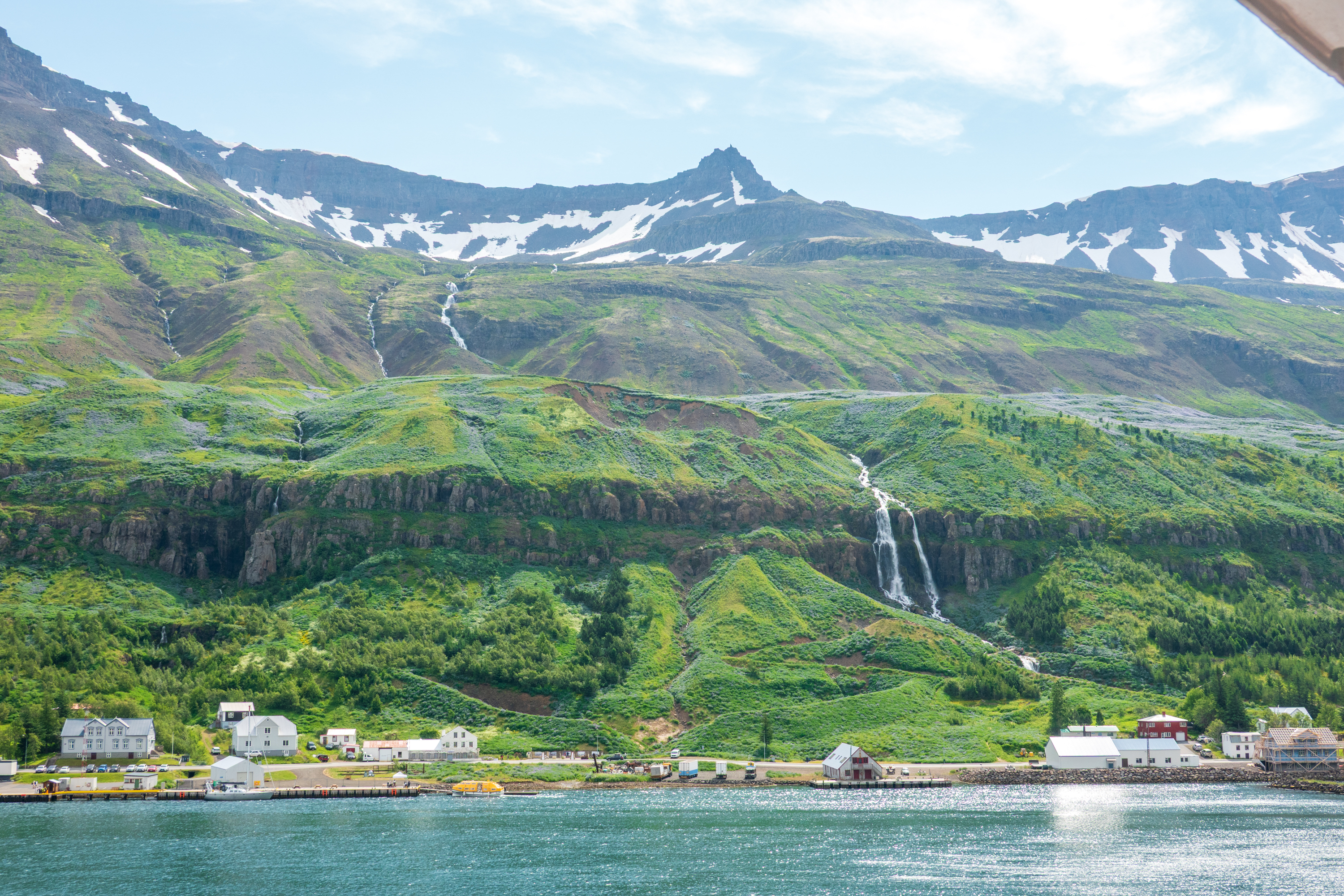
The town was quite small but very vibrant. This is where the ferry from Denmark docks twice a week. Fred was fascinated to see all the campers starting to arrive a the ferry was due the next day. The town was founded, as usual, by Vikings and settled by Norwegian fishermen and merchants in 1848. It had the first telegraph cable linking Iceland to Europe and hosted the world’s first whaling station.
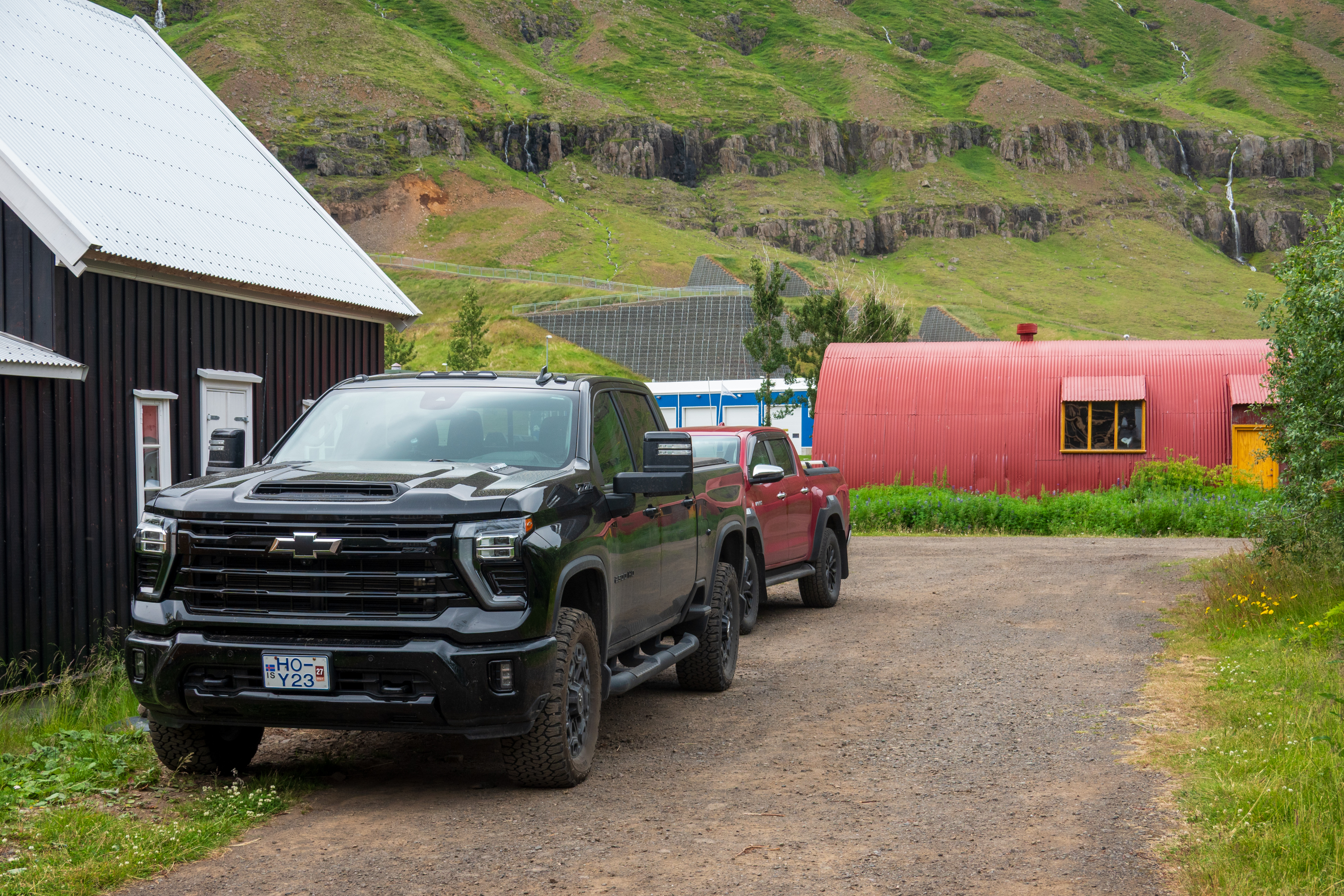
A few old wooden houses and the odd US military Quonset huts remained and were still in use.
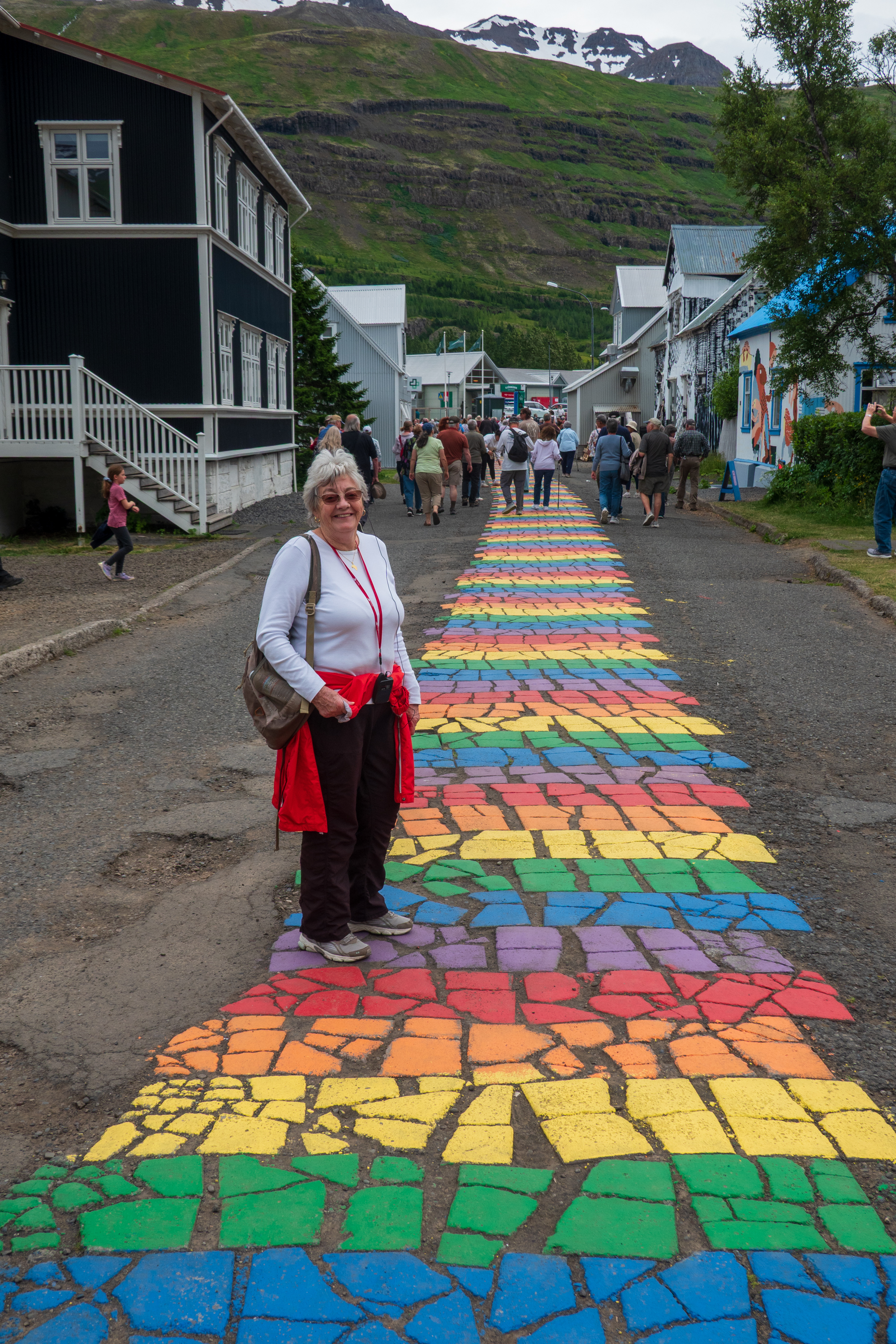
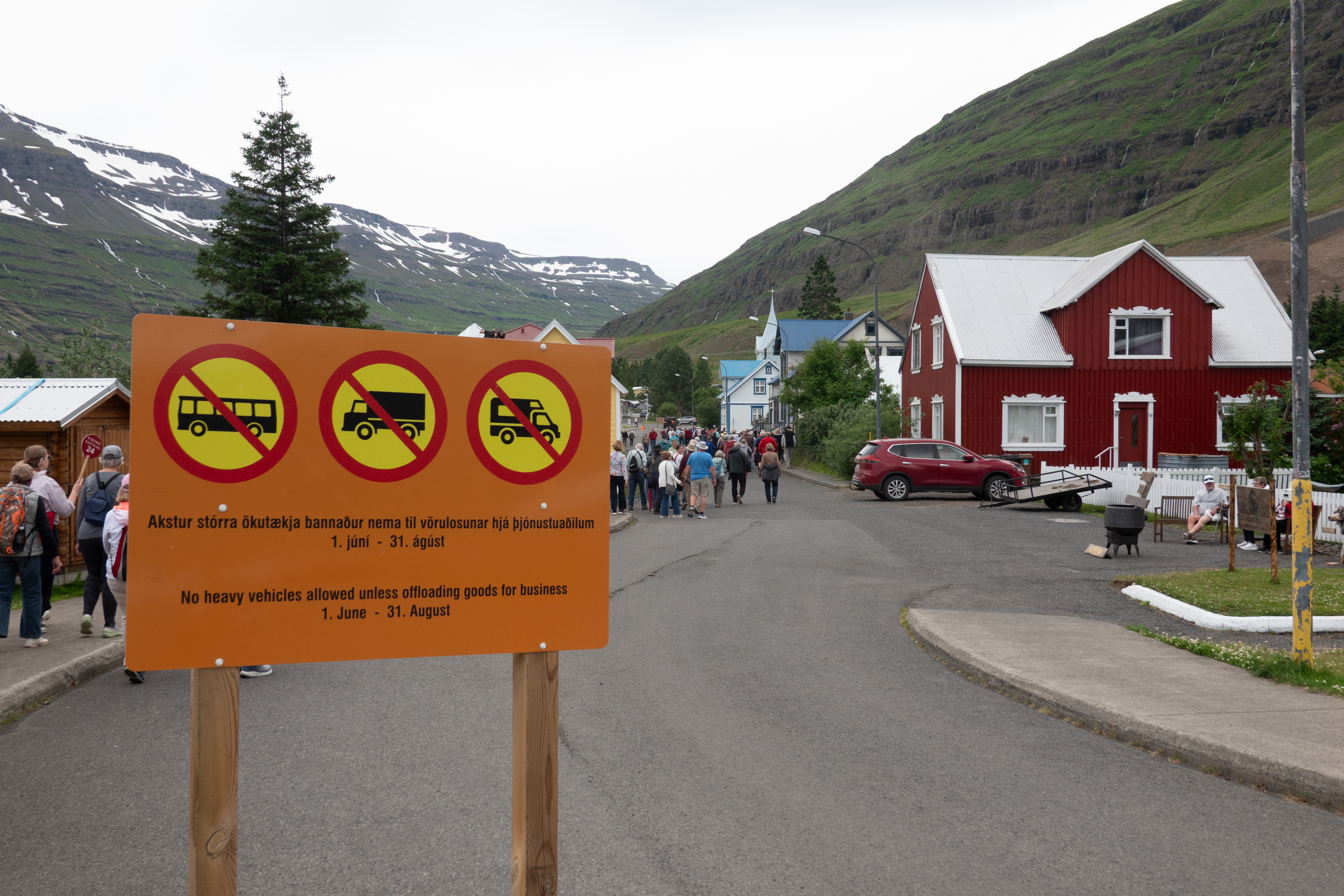
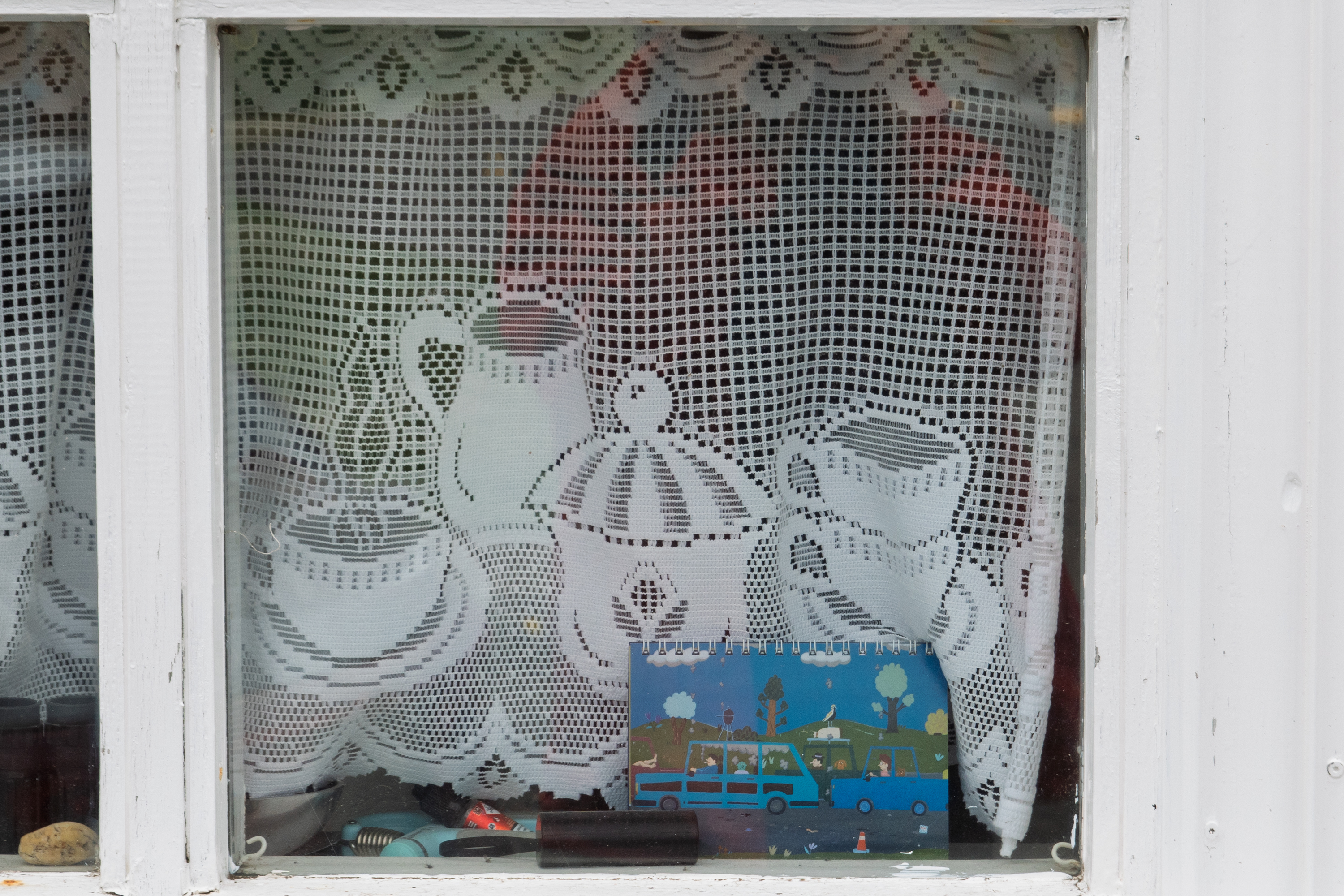
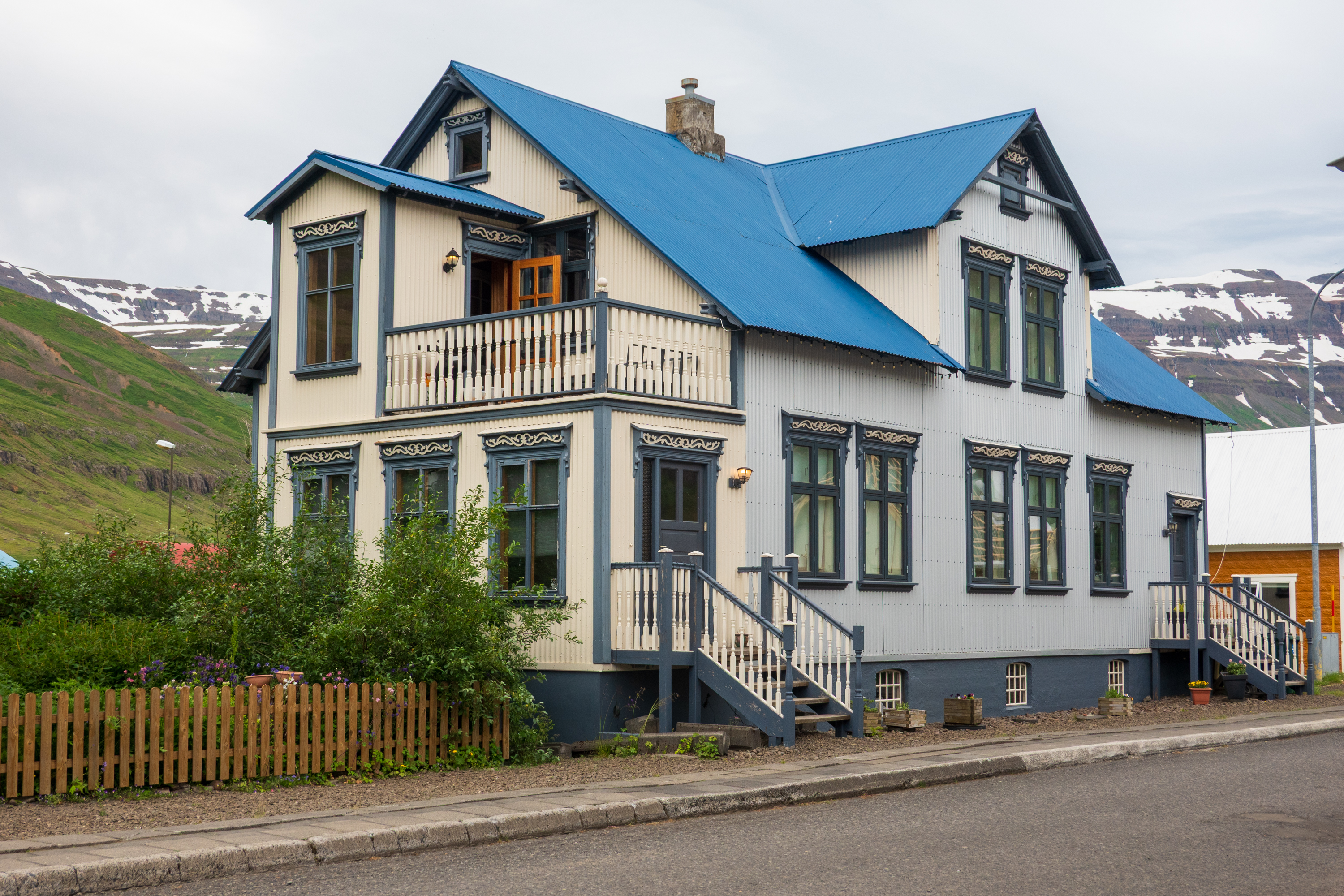
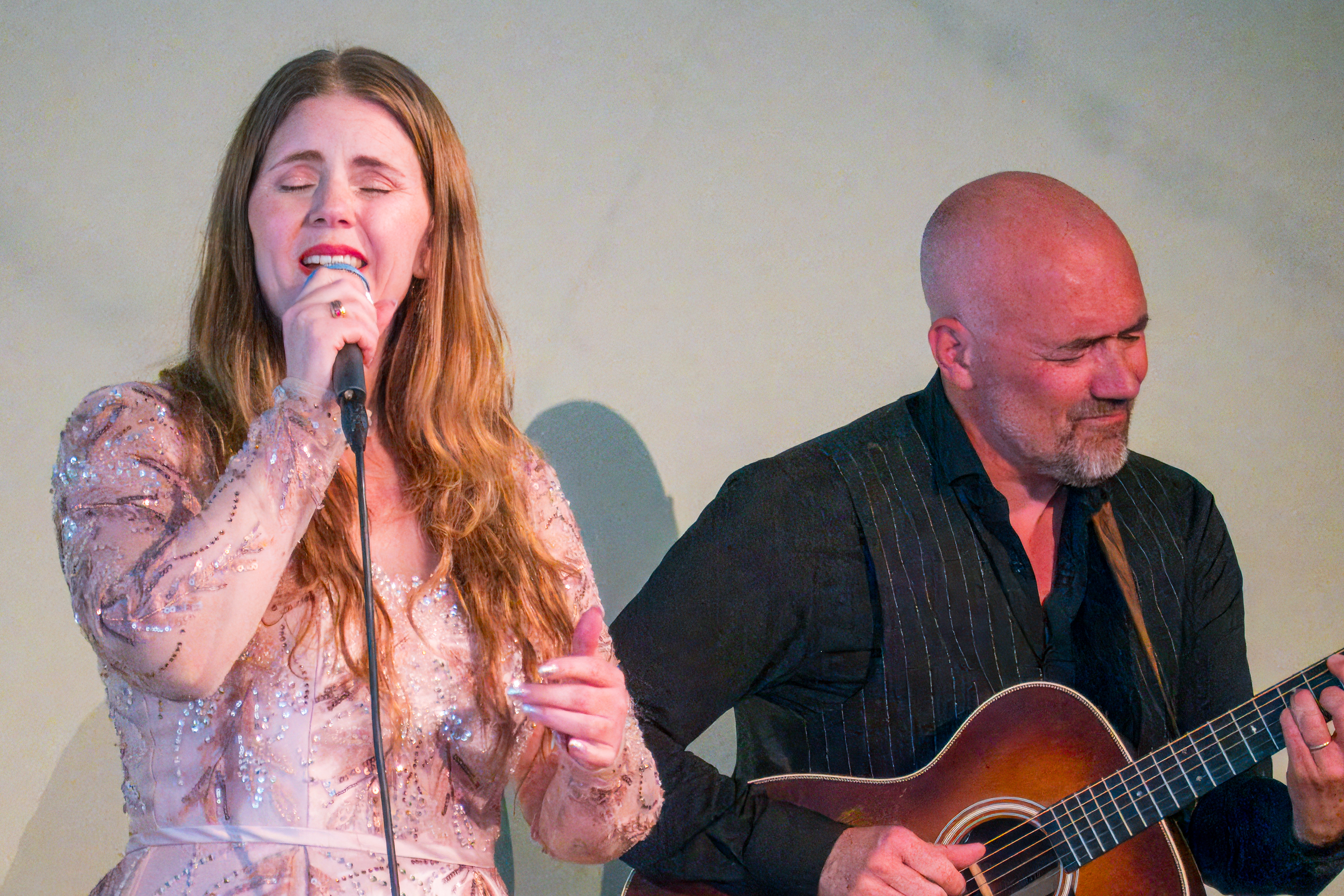
We wandered the town and then enjoyed a short musical performance by a local duo and a selection of local foods was offered.
Djupivogur
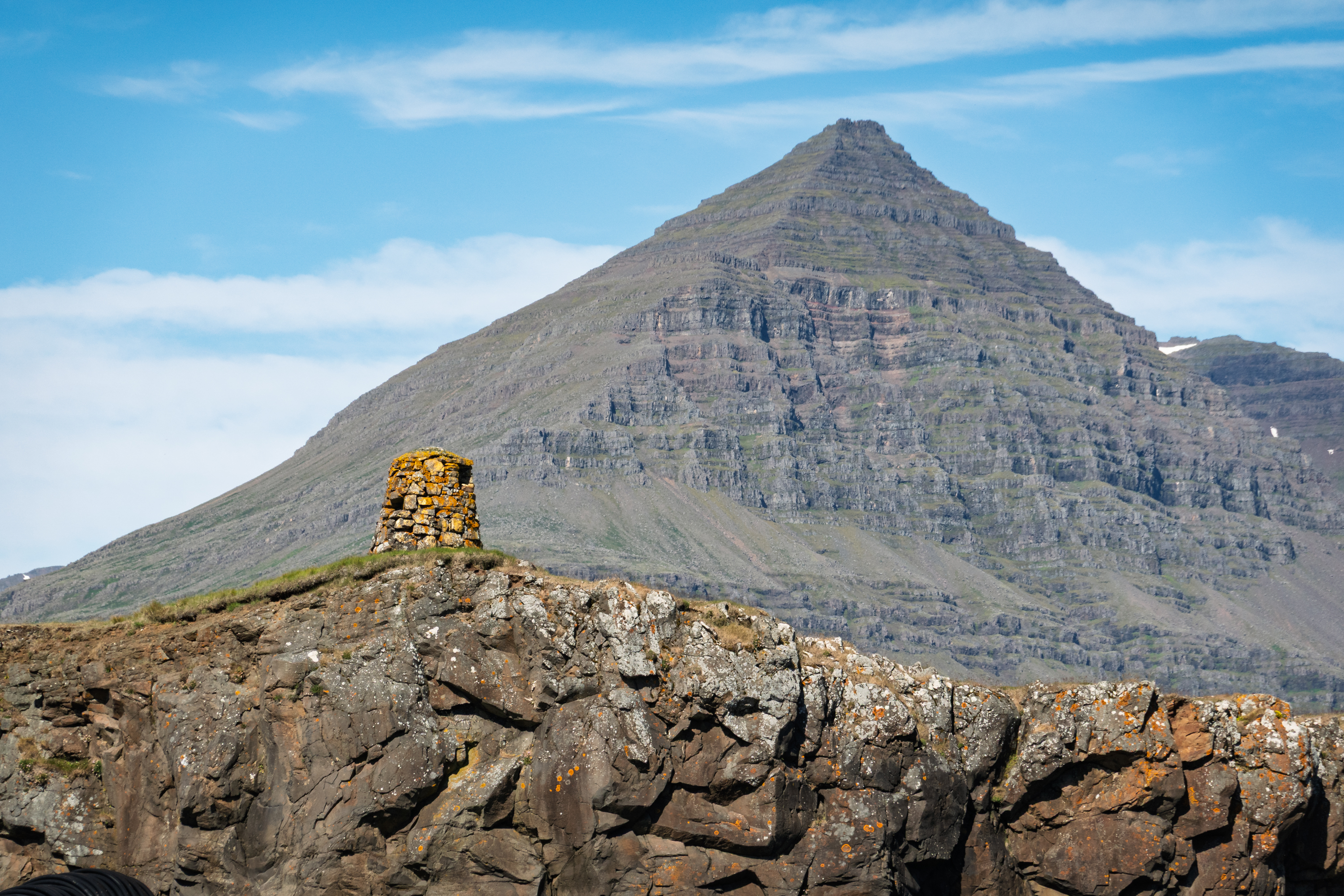
Djupivogur, population 472, our next stop, had been a trading center since the sixteenth century. It sits under the towering Bulandstindur, a mountain famed locally for its ability to grant wishes during the summer solstice. Today it ships a lot of salted cod (bacalao) to Portugal.
We missed the solstice but our wishes for a dry, sunny day were granted. We walked through town and went to see the Eggs of Merry Bay. An outside artwork by the popular Icelandic visual artist, Sigurður Guðmundsson, called Eggin í Gleðivík. (Eggs at Merry Bay) It consists of 34 huge granite eggs, which represent the eggs of each of the nesting birds in this area, many of which are migrating birds, flying over to Iceland from far away to lay their eggs in Iceland. Amazingly, the granite is from China, where the artist lives for part of each year.
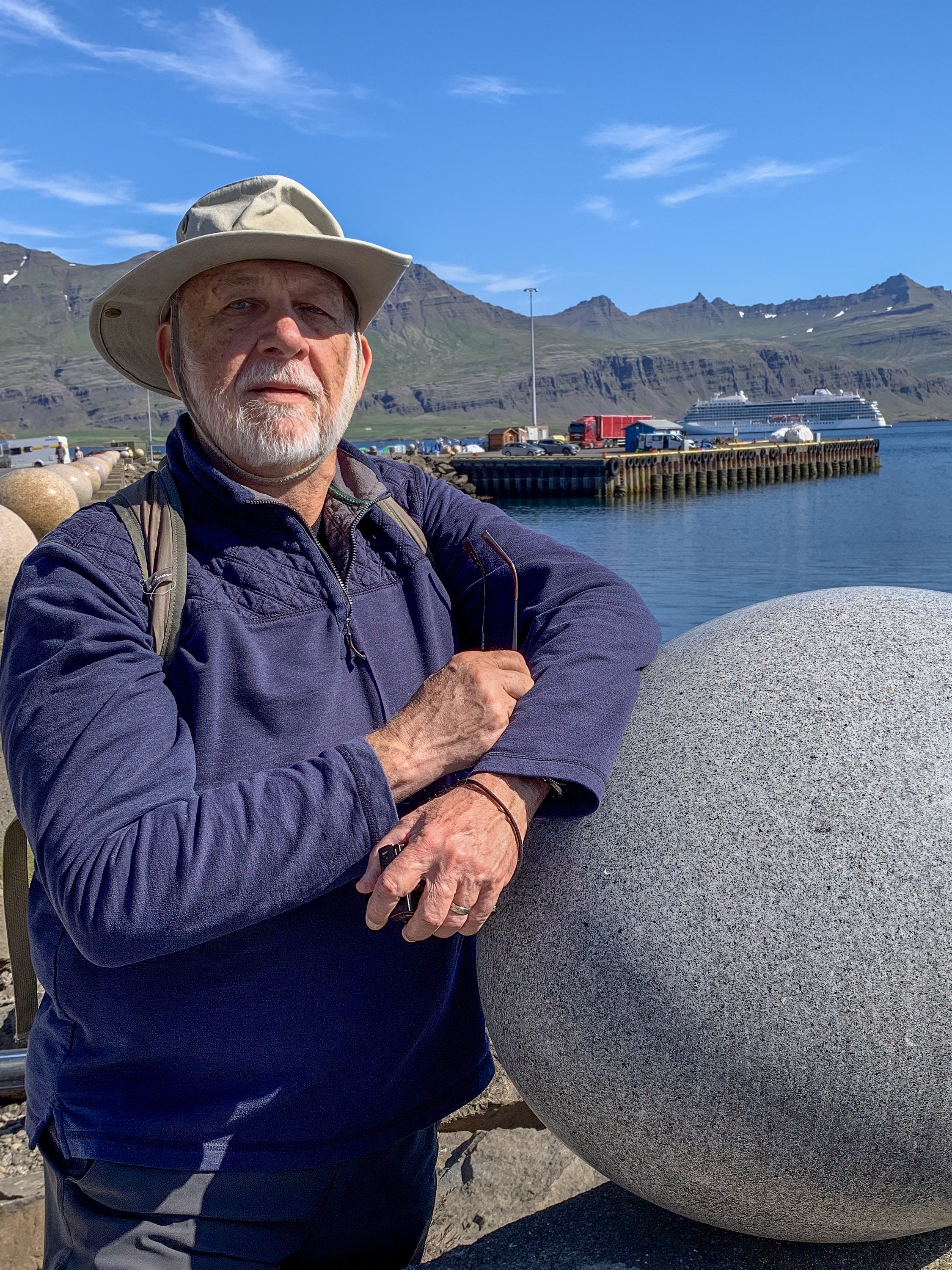
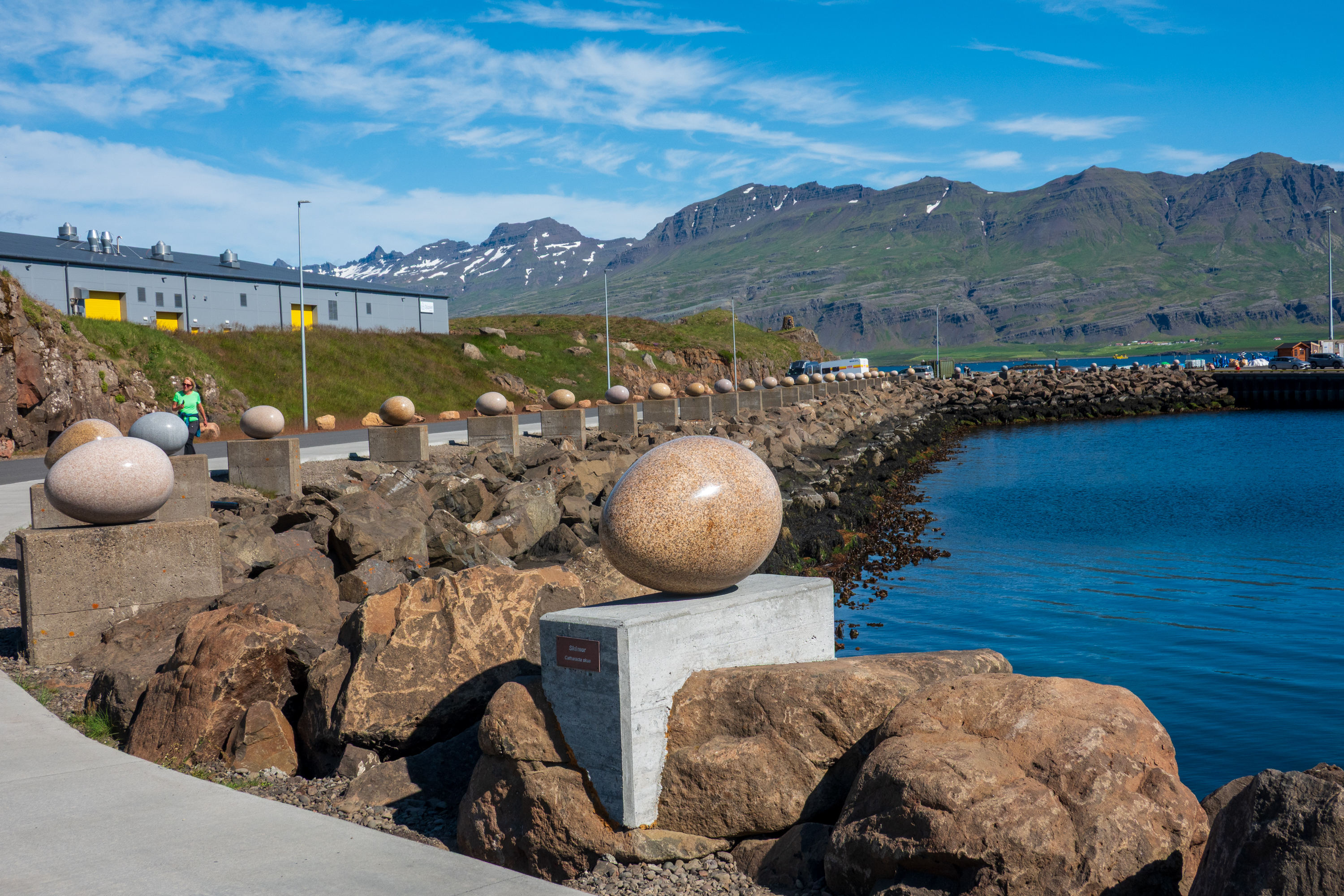
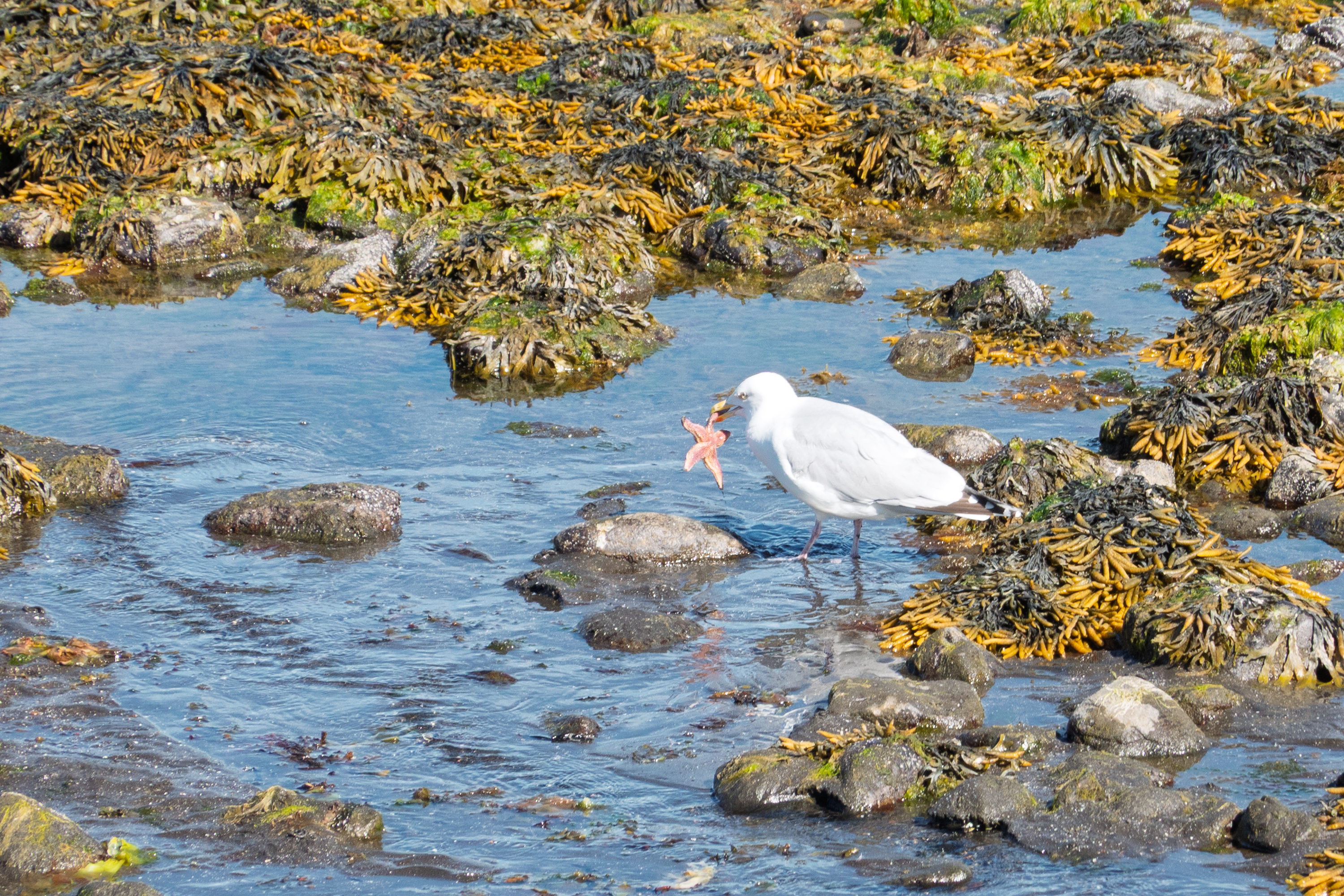
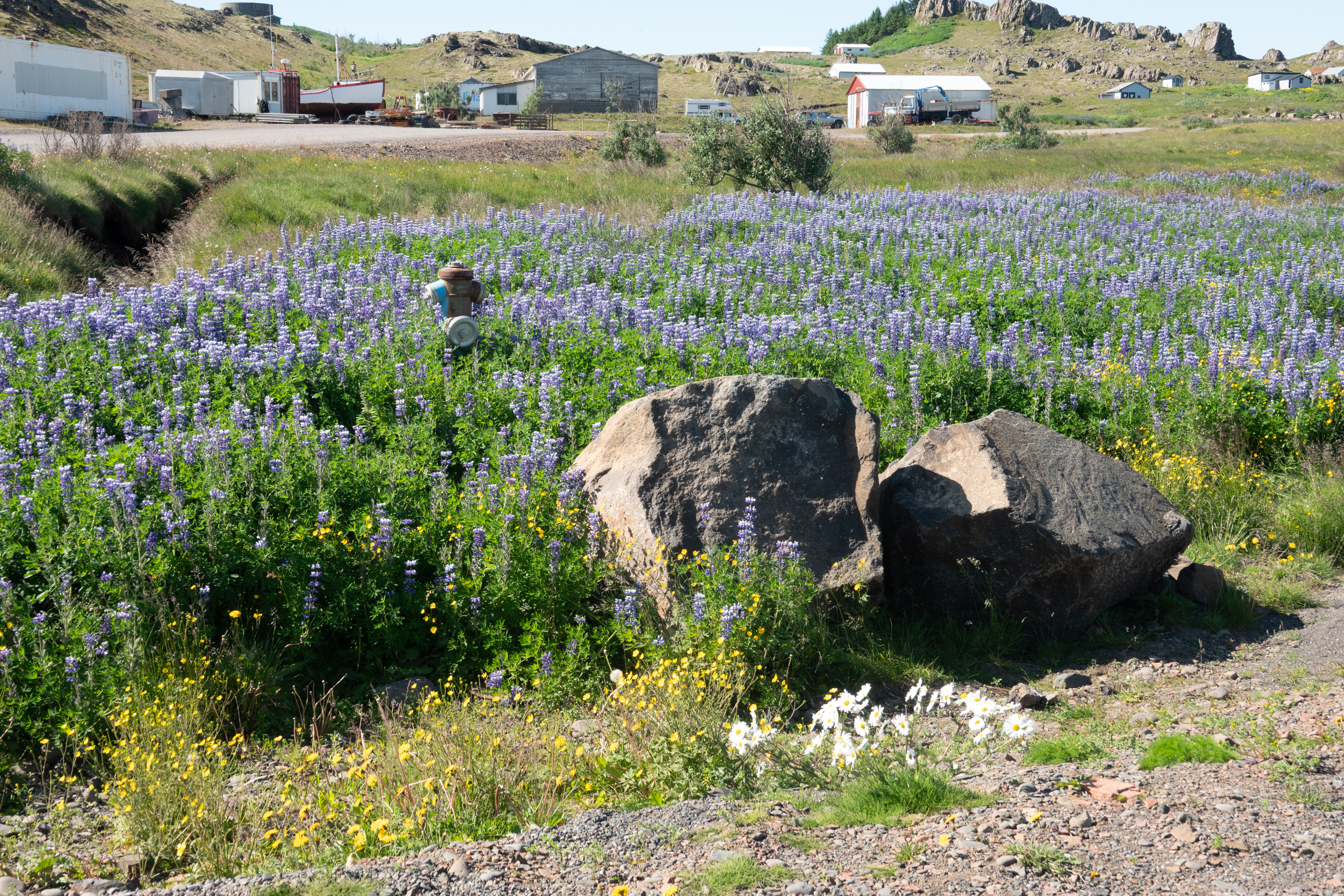
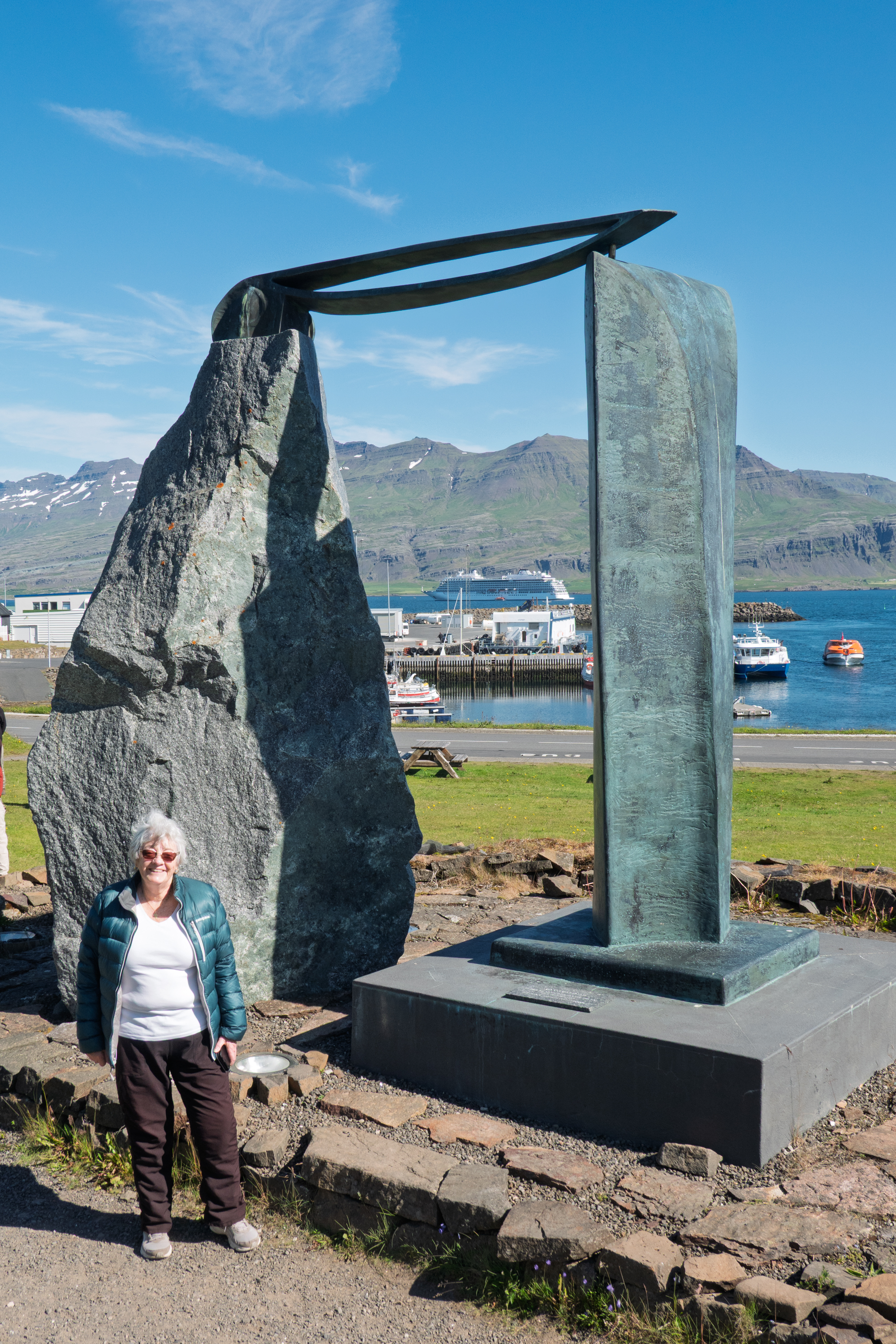
The town is very small and really quite industrial, but, with the sun out at last, it was simply magical. Crowds of people flocking to the tourist shops, cultural center, and hot dog and ice cream stands.
The weather really affects your impressions of a place! Suddenly the little rental summer houses actually looked attractive.
Heimaey
Our final stop on the cruise was the island of Heimaey. It lies off the south coast of Iceland and is 3 km by 12 km long. (https://en.wikipedia.org/wiki/Heimaey)
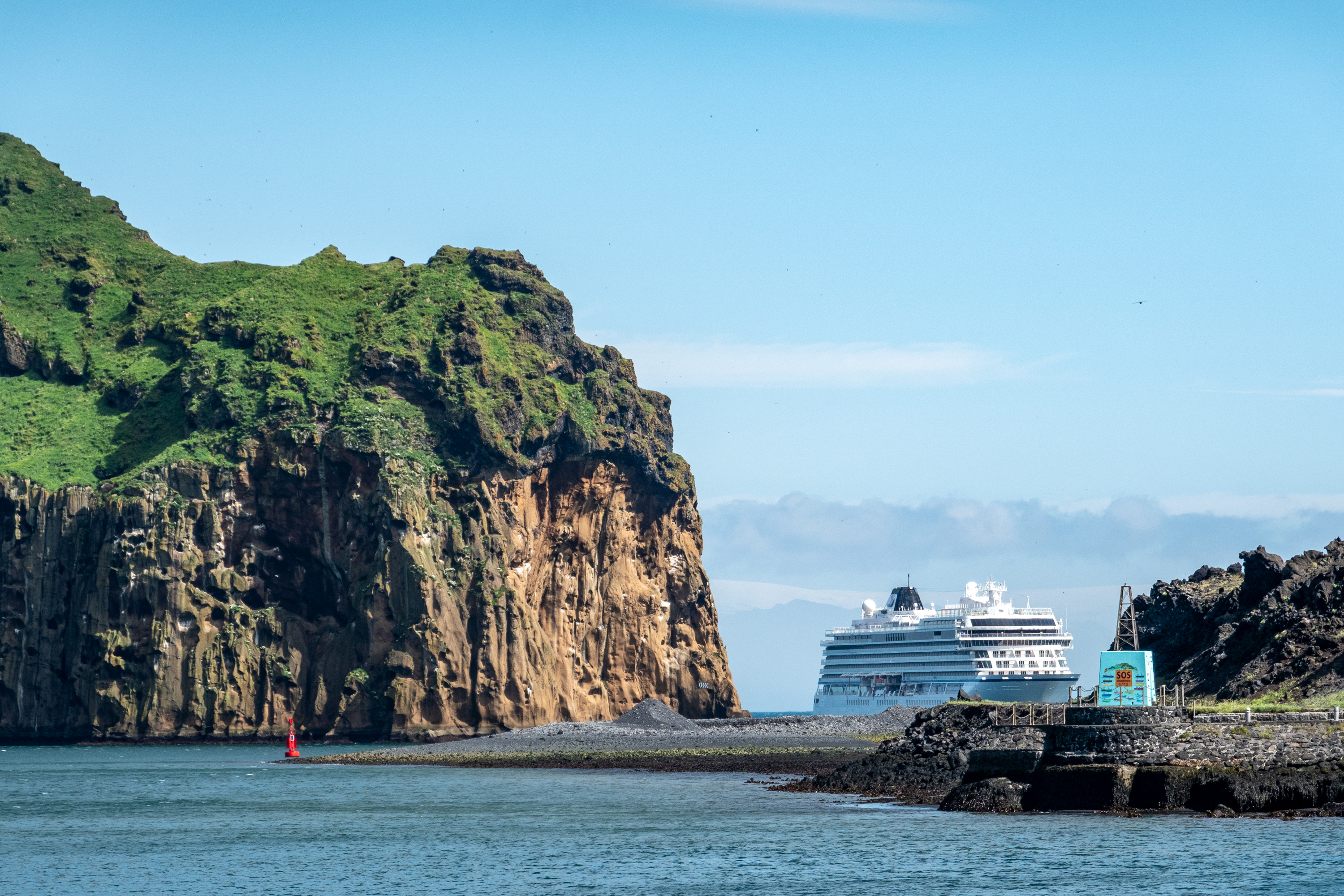
Heimaey is the only inhabited island in Iceland’s Westman Islands, known for its sea cliffs, puffins, and volcanic history. From Viking settlers to the shocking 1627 pirate raid by Barbary pirates, Heimaey has a rich past. (https://en.wikipedia.org/wiki/Turkish_Abductions) As an aside, it is an article of faith among many Euro/American writers that the North African pirates were poor sailors. This is clearly not true.
In 1973, a sudden eruption of the Eldfell volcano reshaped the island and forced a full evacuation. There is a daily ferry to the mainland which runs as much of the year as is possible. Like all of Iceland, fishing is important and in summer, Heimaey’s cliffs become nesting grounds for millions of seabirds, including puffins. There is a sea life rescue organization on Heimaey. We stopped in, but could not see the whales. (https://belugasanctuary.sealifetrust.org/en/)
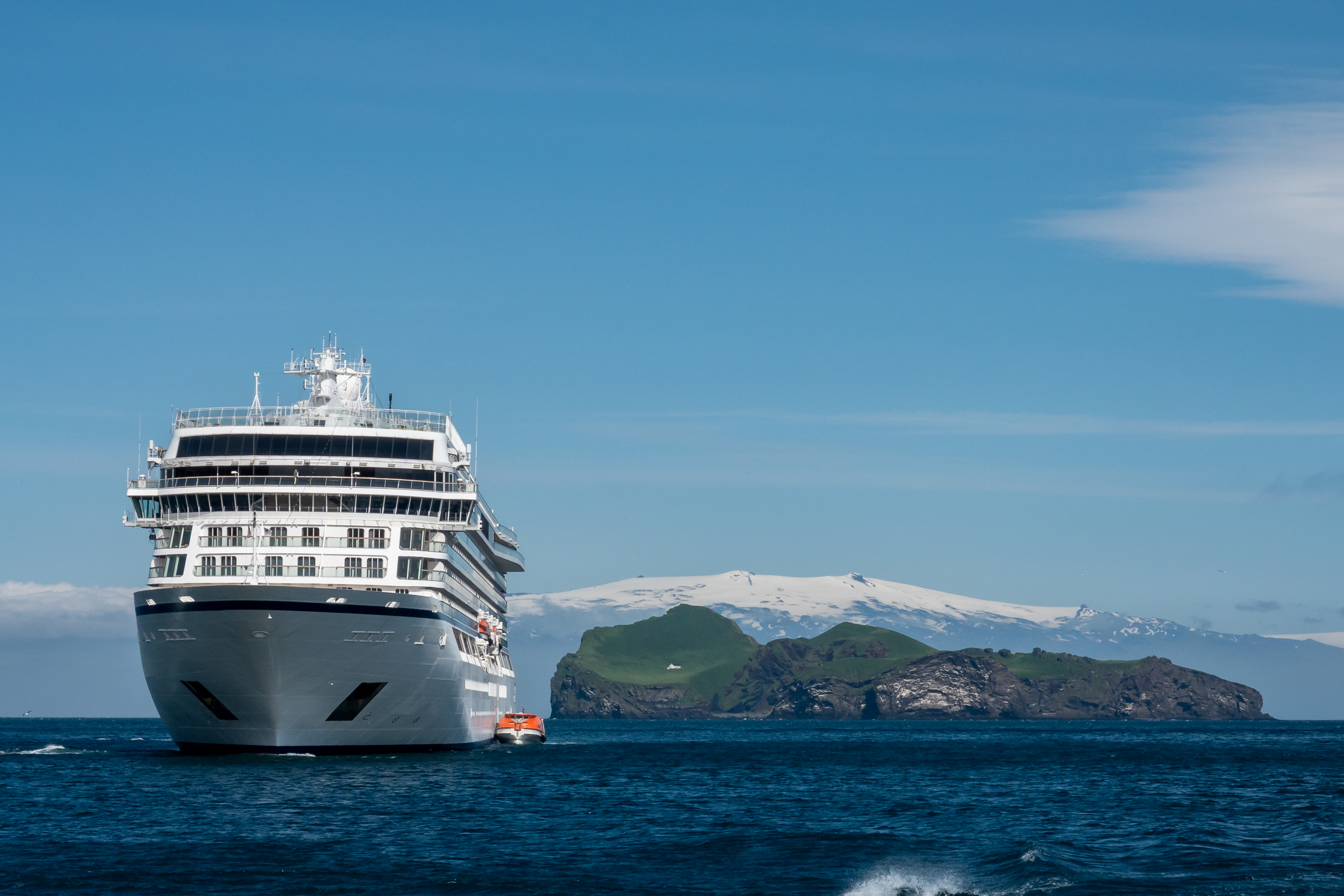
Three neat things in the same photo:
— Notice that both anchors are still aboard. Ship held station all day with engines and thrusters.
— Big island, small house. That is Elliðaey, the island with the loneliest house in the world. It is actually a hunting lodge. Or, if you believe the local wags, a place for men to go drink beer.
— Behind the island, on the mainland, is a white volcano with a famously unpronounceable name. (https://en.wikipedia.org/wiki/Eyjafjallajökull)
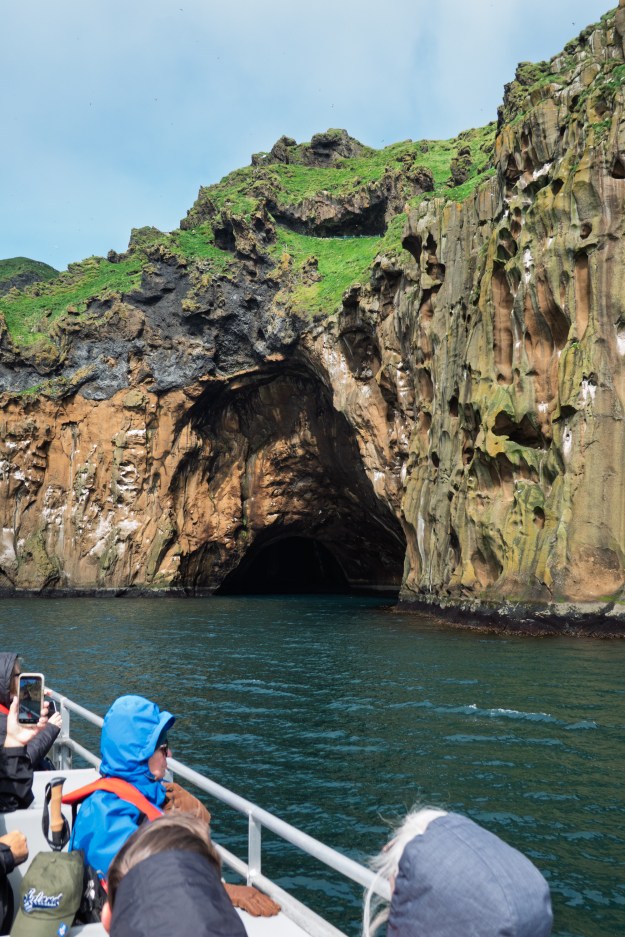
We had picked one of the popular boat tours to see the birds nesting on the cliffs and were lucky to have a wonderfully sunny day. We were disappointed, however, that although we saw thousands of puffins, they were all at a distance up on the cliffs. Our puffin viewing in Northumberland, UK near Holy Isle where we saw puffins up close, had spoiled us!

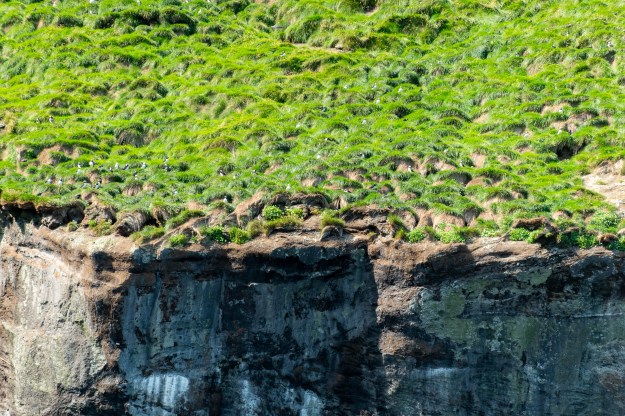
Other than a typical strong wind, the boat ride was enjoyable and we briefly sailed into one of the caves in the cliffs.
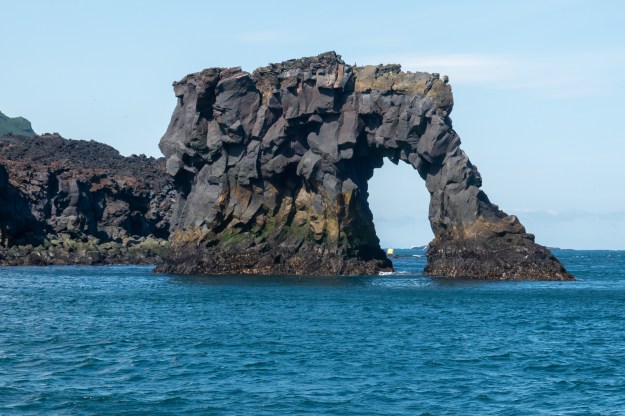
And on to Reykjavik and the end of our cruise.


This report brought me back a few years, or decades.
Surely you were told the joke about what to do if you get lost in an Icelandic forest???
>
We were told to stand up!